EP3985577A1 - System and method for optimal drive configuration using machine learning - Google Patents
System and method for optimal drive configuration using machine learning Download PDFInfo
- Publication number
- EP3985577A1 EP3985577A1 EP20201731.5A EP20201731A EP3985577A1 EP 3985577 A1 EP3985577 A1 EP 3985577A1 EP 20201731 A EP20201731 A EP 20201731A EP 3985577 A1 EP3985577 A1 EP 3985577A1
- Authority
- EP
- European Patent Office
- Prior art keywords
- machine learning
- sets
- configuration
- module
- configuration sets
- Prior art date
- Legal status (The legal status is an assumption and is not a legal conclusion. Google has not performed a legal analysis and makes no representation as to the accuracy of the status listed.)
- Pending
Links
Images


Classifications
-
- G—PHYSICS
- G06—COMPUTING OR CALCULATING; COUNTING
- G06N—COMPUTING ARRANGEMENTS BASED ON SPECIFIC COMPUTATIONAL MODELS
- G06N20/00—Machine learning
-
- G—PHYSICS
- G06—COMPUTING OR CALCULATING; COUNTING
- G06F—ELECTRIC DIGITAL DATA PROCESSING
- G06F18/00—Pattern recognition
- G06F18/20—Analysing
- G06F18/21—Design or setup of recognition systems or techniques; Extraction of features in feature space; Blind source separation
- G06F18/214—Generating training patterns; Bootstrap methods, e.g. bagging or boosting
-
- G—PHYSICS
- G06—COMPUTING OR CALCULATING; COUNTING
- G06F—ELECTRIC DIGITAL DATA PROCESSING
- G06F18/00—Pattern recognition
- G06F18/20—Analysing
- G06F18/21—Design or setup of recognition systems or techniques; Extraction of features in feature space; Blind source separation
- G06F18/217—Validation; Performance evaluation; Active pattern learning techniques
-
- G—PHYSICS
- G06—COMPUTING OR CALCULATING; COUNTING
- G06F—ELECTRIC DIGITAL DATA PROCESSING
- G06F18/00—Pattern recognition
- G06F18/40—Software arrangements specially adapted for pattern recognition, e.g. user interfaces or toolboxes therefor
-
- G—PHYSICS
- G06—COMPUTING OR CALCULATING; COUNTING
- G06F—ELECTRIC DIGITAL DATA PROCESSING
- G06F30/00—Computer-aided design [CAD]
- G06F30/10—Geometric CAD
- G06F30/15—Vehicle, aircraft or watercraft design
-
- G—PHYSICS
- G06—COMPUTING OR CALCULATING; COUNTING
- G06F—ELECTRIC DIGITAL DATA PROCESSING
- G06F30/00—Computer-aided design [CAD]
- G06F30/20—Design optimisation, verification or simulation
- G06F30/27—Design optimisation, verification or simulation using machine learning, e.g. artificial intelligence, neural networks, support vector machines [SVM] or training a model
-
- G—PHYSICS
- G06—COMPUTING OR CALCULATING; COUNTING
- G06N—COMPUTING ARRANGEMENTS BASED ON SPECIFIC COMPUTATIONAL MODELS
- G06N5/00—Computing arrangements using knowledge-based models
- G06N5/04—Inference or reasoning models
Definitions
- the present invention relates a system and a method for optimal drive configuration using machine learning.
- Industrial drives are part of a powertrain, which consists of other devices such as motors and transformers.
- a powertrain which consists of other devices such as motors and transformers.
- HVAC Heating, ventilation, and air conditioning
- water pumping machinery
- motion control motion control
- a separate tool is used for initial powertrain selection based on available product catalogue and initial information available about the application. After the selection of drive/powertrain devices, separate tools are used for simulation and configuration of the drive.
- initial configuration parameters are typically based on partial knowledge and are iteratively adjusted with simulations to achieve a suitable drive configuration which must finally be verified and typically adjusted in the real system. Taking a more holistic approach is desirable to reduce the engineering time and cost. Furthermore, misconfigurations discovered during operational phase can result in even greater impact on cost and productivity.
- the present invention fills this gap with a system concept and corresponding methods for the configuration of drive parameters.
- Machine learning is used to generate optimal configuration parameters of the drive.
- the benefit of this approach is to reduce the engineering time, engineering effort, and maintenance of engineering tools, risks and losses for the customers when designing and operating an industrial drive system.
- a system for optimal drive configuration using machine learning comprising: - a data collector configured to collect data and establish correlations among the collected data; - a training data set generator configured to compute configuration sets based on the collected data and based on the established correlations, further configured to compute measured success values for the configuration sets, further configured to generate training data sets comprising the configuration sets together with corresponding measured success values; - a machine learning module, configured to predict predicted success values for calculated configuration sets using the training data sets provided by the training data set generator using machine learning algorithm; and - an optimization module, configured to order the calculated configuration sets, comprising a simulation module, configured to simulate the calculated configuration sets.
- the system further comprises a user interface module configured to provide configuration of system and to provide a visualization of the machine learning process performed by the machine learning module.
- the system further comprises a user interface module configured to initiate a feedback mechanism used to continually improve the machine learning algorithm.
- the system further comprises a user interface module configured to offer alternatives of machine learning algorithms to the user.
- data collector configured to collect data by adopting text processing approaches or text mining approaches or extracted from customer requirements.
- the optimization module is configured to collect real-time-series data, which are used by the simulation module to simulate the calculated configuration sets.
- the present invention advantageously provides a tool for creating operational parameters for industrial drive systems created based on knowledge from various sources.
- the present invention advantageously provides that the tools can learn from experience embodied in existing expert systems, human expert training as well as knowledge gained from simulations and from installed systems.
- the tool is continually updated with new experience gained from these various sources.
- the user As input, the user describes his application, e.g. the motor load(s), ambient conditions, electrical network parameters etc.
- the tool then presents him the recommended drive operational parameters.
- HVAC Heating, ventilation, and air conditioning
- water pumping machinery
- motion control For the successful configuration of an industrial drive system it is necessary to know the details of the application, for instance HVAC (Heating, ventilation, and air conditioning), water pumping, machinery, and motion control. Based on the application details, it is possible to generate configuration parameters for controllers before the system is assembled.
- HVAC Heating, ventilation, and air conditioning
- the present invention fills this gap with a system concept and corresponding methods for the configuration of drive parameters.
- Machine learning is used to generate optimal configuration parameters of the drive.
- the benefit of this approach is to reduce the engineering time, engineering effort, maintenance of engineering tools, and risks and losses for customers when designing and operating an industrial drive system.
- Step 1 comprises: by adopting text processing approaches such as NLP or text mining approaches, the parameters of interest are extracted from the customer requirements.
- text processing approaches such as NLP or text mining approaches
- Step 2 comprises: Based on identified system description in Step 1, machine learning provides drive configuration parameter sets with highest success values (i.e. above a certain threshold value) known so far (candidates).
- Step 3 comprises: All candidates are evaluated in simulation (either in parallel or iteratively maybe as cloud service).
- Step 4 comprises: a report is generated offering the results of all candidates.
- Step 5 comprises: If the simulation results converge, the best set of drive configuration parameters is offered to the user. Otherwise, the above steps are repeated with better design requirements or constraints in Step 1 or higher success threshold value in Step 2 until convergence is achieved.
- Step 6 comprises: Learning by imitation. Expert engineer takes the automatically selected drive configuration parameter set. The expert might change things during commissioning. These changes are fed back to the machine learning module to learn how to fine tune/configure the real system.
- Step 7 comprises: Simulation improvements: During commission, real-time-series data are collected to improve simulation models (simulation parameter identification and optimization).
- Step 8 comprises: While servicing, Alarm & Events logs are collected and fed back the to the machine learning module, for learning from event patterns.
- Step 9 comprises: Time-series data is used to optimize simulation and learned models.
- Step 10 comprises: This process can at any point in time be stopped, e.g., after first parameterization of drive or after multiple iterations of improvements.
- the method can generate an optimal set of drive configuration parameters in Step 2.
- a computer program element for operating a system which, when being executed by a unit, is adapted to perform the method according to the first aspect.
- a computer-readable medium having stored the computer program element of the fifth aspect.
- the computer-readable medium may be provided as physical data carrier, such as a CD-ROM, a USB stick, or the like, or may be provided digitally via a communications network, such as the Internet.
- the computer program element may also be transmitted by a wireless communications network and/or directly to an on-board receiver on the application device, and/or by means such as Bluetooth, Wireless LAN (Wi-Fi), etc.
- a wireless communications network and/or directly to an on-board receiver on the application device, and/or by means such as Bluetooth, Wireless LAN (Wi-Fi), etc.
- Wi-Fi Wireless LAN
- Fig. 1 shows a schematic illustration of schematic process diagram with a separate tool used for initial powertrain selection based on available product catalogue and initial information available about the application for explaining the present patent application.
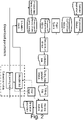
- Fig. 2 shows an example of a method for optimal drive configuration using machine learning according to an exemplary embodiment of the present patent application.
- Fig. 3 shows an example of a method for optimal drive configuration using machine learning according to an exemplary embodiment of the present patent application.
- Fig. 1 shows a DriveSize, DS, connected with a Virtual Drive, VD, simulation engine, and a drive composer, DC.
- HVAC Heating, ventilation, and air conditioning
- water pumping machinery
- motion control Based on the application details, it is possible to generate the configuration parameters for the controllers before the system is assembled.
- Fig. 2 shows an example of a method for optimal drive configuration using machine learning according to an exemplary embodiment of the present patent application.
- a tool for making engineering decisions is provided based on data collected from various sources is created.
- the engineering tool learns the task of making the decisions based on the data, without being explicitly programmed.
- the system improves as more data becomes available over time.
- Sources include existing expert systems, human experts, simulation results, observations from production systems.
- the method includes and is based on easy to obtain training data samples, e.g. from existing expert systems, may be used to initialize the training data set.
- the training data set is continually updated with new samples from other sources.
- the data from different sources may require appropriate weighting in the creation and updating of the training data set.
- the active learning techniques may be used to request more expensive training data samples, e.g. from computationally expensive simulation experiments.
- the supervised learning and appropriate learners are used to create a model for the creation of operational drive parameters from the training data set.
- the engineering data collected over the whole lifecycle of drive system installation is collected and used to create the training data.
- the machine learning is used to create operational drive parameters.
- the learner builds a model using:
- the learner will detect patterns of successful device parameterization over the life-cycle of the system (from engineering, commissioning and operation).
- the learner will detect patterns of wrong/bad configurations.
- the above model would be continually refined and improved during routine engineering tasks and operations to incorporate up-to-date findings and serve as a continually reliable tool.
- the overall system comprises a drive engineering tool (e.g. Drive Composer Pro), a simulation module consisting of process/mechanical Model (motor load), electrical Model (Motor, Inverter, Trafo), thermal Model (motor and Inverter), virtual drive controller
- a drive engineering tool e.g. Drive Composer Pro
- a simulation module consisting of process/mechanical Model (motor load), electrical Model (Motor, Inverter, Trafo), thermal Model (motor and Inverter), virtual drive controller
- the learning module comprising of a data collection module that collects data from: feature extraction from customer documents, such as ambient parameters, technical requirements from the industrial application.
- Example Water pumping station describing the technical requirements, expected input and output water pressure
- the simulation results are provided in a database of working/successful configurations.
- the simulation results are provided as a history of changes of configuration parameters from tools (e.g. Drive Composer Pro, PLM or versioning system)
- tools e.g. Drive Composer Pro, PLM or versioning system
- alarm and/or event logs are logged by the system.
- a training data set generator is configured to get data from data collection, compute configuration success values for different configuration sets based on the information gathered from the Data collection module.
- a training data set generator is configured to generate training data sets comprising of possible configuration sets together with corresponding success values obtained in the step above.
- a training data set generator is configured to a machine learning (data analytics) module is configured to predict success values for new configuration sets using the training data sets provided by the training data set generator.
- a training data set generator is configured to finds the most successful configuration sets for user input data.
- a optimization module is configured to use the hitherto most successful drive configuration sets provided by the machine learning module and tests them in the simulation module.
- a user interface module is used for allowing configuration and visualization of the machine learning process, feedback mechanism used to continually improve the machine learning algorithm, offering alternatives to the user.
- Fig. 3 shows an example of a method for optimal drive configuration.
- simulation parameters may be used, or drive operational parameters.
- the usage of the parameters may be iterated in parallel.
- Simulation results may be given in simulation data, anomalies, or threshold violations.
- the database may comprise successful working configuration parameters or equivalent set of data.
- the DS project may have sets of ambient, topology of loads, and selections constraints.
- Fig. 3 shows an example of a method for optimal drive configuration.
- the machine learning module, ML uses simulation values, installed base, configuration parameters, changes during lifecycle, user knowledge / additional constrains, learning with different weights (bidding, engineering, operation).
- the machine learning module, ML generates drive parameters and simulation parameters.
Landscapes
- Engineering & Computer Science (AREA)
- Theoretical Computer Science (AREA)
- Physics & Mathematics (AREA)
- Evolutionary Computation (AREA)
- General Physics & Mathematics (AREA)
- General Engineering & Computer Science (AREA)
- Computer Vision & Pattern Recognition (AREA)
- Data Mining & Analysis (AREA)
- Artificial Intelligence (AREA)
- Software Systems (AREA)
- Geometry (AREA)
- Medical Informatics (AREA)
- Evolutionary Biology (AREA)
- Life Sciences & Earth Sciences (AREA)
- Bioinformatics & Computational Biology (AREA)
- Bioinformatics & Cheminformatics (AREA)
- Computing Systems (AREA)
- Computer Hardware Design (AREA)
- Mathematical Physics (AREA)
- Human Computer Interaction (AREA)
- Automation & Control Theory (AREA)
- Aviation & Aerospace Engineering (AREA)
- Computational Mathematics (AREA)
- Mathematical Analysis (AREA)
- Mathematical Optimization (AREA)
- Pure & Applied Mathematics (AREA)
- Computational Linguistics (AREA)
- Testing And Monitoring For Control Systems (AREA)
- Feedback Control In General (AREA)
Abstract
Description
- The present invention relates a system and a method for optimal drive configuration using machine learning.
- Industrial drives are part of a powertrain, which consists of other devices such as motors and transformers. For the successful configuration of a powertrain it is necessary to know the details of the application, for instance HVAC (Heating, ventilation, and air conditioning), water pumping, machinery, and motion control. Based on the application details, it is possible to generate the configuration parameters for the controllers before the system is assembled.
- Since drive is a central element in powertrain, proper configuration of drive is crucial for the customers. Wrong configuration parameters have a negative impact on the productivity of the system.
- Successful drive configuration requires knowledge of system design, simulation engineering, and operation. It also requires expert knowledge honed with practical experience. Currently there is no common tool that integrates these various sources of knowledge for drive configuration.
- As depicted in
Figure 1 , a separate tool is used for initial powertrain selection based on available product catalogue and initial information available about the application. After the selection of drive/powertrain devices, separate tools are used for simulation and configuration of the drive. - As a result, initial configuration parameters are typically based on partial knowledge and are iteratively adjusted with simulations to achieve a suitable drive configuration which must finally be verified and typically adjusted in the real system. Taking a more holistic approach is desirable to reduce the engineering time and cost. Furthermore, misconfigurations discovered during operational phase can result in even greater impact on cost and productivity.
- Therefore, it would be advantageous to have an improved technique to improve industrial drives are part of a powertrain.
- The objective of the present invention is solved with the subject matter of the independent claims, wherein further embodiments are incorporated in the dependent claims.
- The present invention fills this gap with a system concept and corresponding methods for the configuration of drive parameters. Machine learning is used to generate optimal configuration parameters of the drive. The benefit of this approach is to reduce the engineering time, engineering effort, and maintenance of engineering tools, risks and losses for the customers when designing and operating an industrial drive system.
- In a first aspect, there is provided a system for optimal drive configuration using machine learning; the system comprising: - a data collector configured to collect data and establish correlations among the collected data; - a training data set generator configured to compute configuration sets based on the collected data and based on the established correlations, further configured to compute measured success values for the configuration sets, further configured to generate training data sets comprising the configuration sets together with corresponding measured success values; - a machine learning module, configured to predict predicted success values for calculated configuration sets using the training data sets provided by the training data set generator using machine learning algorithm; and - an optimization module, configured to order the calculated configuration sets, comprising a simulation module, configured to simulate the calculated configuration sets.
- According to an exemplary embodiment of the present invention, the system further comprises a user interface module configured to provide configuration of system and to provide a visualization of the machine learning process performed by the machine learning module.
- According to an exemplary embodiment of the present invention, the system further comprises a user interface module configured to initiate a feedback mechanism used to continually improve the machine learning algorithm.
- According to an exemplary embodiment of the present invention, the system further comprises a user interface module configured to offer alternatives of machine learning algorithms to the user.
- According to an exemplary embodiment of the present invention, data collector configured to collect data by adopting text processing approaches or text mining approaches or extracted from customer requirements.
- According to an exemplary embodiment of the present invention, the optimization module is configured to collect real-time-series data, which are used by the simulation module to simulate the calculated configuration sets.
- According to second aspect of the present invention, there is provided a method, the method comprising the steps of:
- collecting data and establishing correlations among the collected data by means of a data collector;
- computing configuration sets based on the collected data and based on the established correlations, computing measured success values for the configuration sets, generating training data sets comprising the configuration sets together with corresponding measured success values by means of a training data set generator;
- predicting success values for calculated configuration sets using the training data sets provided by the training data set generator using machine learning algorithm by means of a machine learning module; and
- ordering the calculated configuration sets by means of an optimization module and simulating the calculated configuration sets by means of a simulation module.
- The present invention advantageously provides a tool for creating operational parameters for industrial drive systems created based on knowledge from various sources.
- The present invention advantageously provides that the tools can learn from experience embodied in existing expert systems, human expert training as well as knowledge gained from simulations and from installed systems. The tool is continually updated with new experience gained from these various sources.
- As input, the user describes his application, e.g. the motor load(s), ambient conditions, electrical network parameters etc. The tool then presents him the recommended drive operational parameters.
- Experience is gained at least from the following sources:
- i) Existing expert systems embodied in tools used e.g. during engineering
- ii) Human expert knowledge
- iii) Simulation results for drive systems obtained during engineering and testing, including simulations of electrical, thermal and mechanical aspects of the systems.
- iv) Deployed, in-production systems data, including measurements, observed anomalies during operation and service information
- For the successful configuration of an industrial drive system it is necessary to know the details of the application, for instance HVAC (Heating, ventilation, and air conditioning), water pumping, machinery, and motion control. Based on the application details, it is possible to generate configuration parameters for controllers before the system is assembled.
- Proper configuration is crucial for the customers. Wrong configuration parameters can have adverse impacts on the productivity of the system.
- The present invention fills this gap with a system concept and corresponding methods for the configuration of drive parameters. Machine learning is used to generate optimal configuration parameters of the drive. The benefit of this approach is to reduce the engineering time, engineering effort, maintenance of engineering tools, and risks and losses for customers when designing and operating an industrial drive system.
- In a second aspect, there is provided a method for optimal drive configuration using machine learning.
- Step 1 comprises: by adopting text processing approaches such as NLP or text mining approaches, the parameters of interest are extracted from the customer requirements.
- Step 2 comprises: Based on identified system description in Step 1, machine learning provides drive configuration parameter sets with highest success values (i.e. above a certain threshold value) known so far (candidates).
- Step 3 comprises: All candidates are evaluated in simulation (either in parallel or iteratively maybe as cloud service).
- Step 4 comprises: a report is generated offering the results of all candidates.
- Step 5 comprises: If the simulation results converge, the best set of drive configuration parameters is offered to the user. Otherwise, the above steps are repeated with better design requirements or constraints in Step 1 or higher success threshold value in Step 2 until convergence is achieved.
- Step 6 comprises: Learning by imitation. Expert engineer takes the automatically selected drive configuration parameter set. The expert might change things during commissioning. These changes are fed back to the machine learning module to learn how to fine tune/configure the real system.
- Step 7 comprises: Simulation improvements: During commission, real-time-series data are collected to improve simulation models (simulation parameter identification and optimization).
- Step 8 comprises: While servicing, Alarm & Events logs are collected and fed back the to the machine learning module, for learning from event patterns.
- Step 9 comprises: Time-series data is used to optimize simulation and learned models.
- Step 10 comprises: This process can at any point in time be stopped, e.g., after first parameterization of drive or after multiple iterations of improvements.
- Nevertheless, data collection part from real drive can continue to be use for future systems.
- When done iteratively, the method can generate an optimal set of drive configuration parameters in Step 2.
- According to a further aspect, a computer program element for operating a system is provided, which, when being executed by a unit, is adapted to perform the method according to the first aspect.
- According to a further aspect, there is provided a computer-readable medium having stored the computer program element of the fifth aspect. The computer-readable medium may be provided as physical data carrier, such as a CD-ROM, a USB stick, or the like, or may be provided digitally via a communications network, such as the Internet.
- For example, the computer program element may also be transmitted by a wireless communications network and/or directly to an on-board receiver on the application device, and/or by means such as Bluetooth, Wireless LAN (Wi-Fi), etc.
- Advantageously, the benefits provided by any of the above aspects and examples equally apply to all of the other aspects and examples and vice versa.
- These and other aspects of the present invention will become apparent from and elucidated with reference to the embodiments described hereinafter.
- The above aspects and examples will become apparent from and be elucidated with reference to the embodiments described hereinafter.
- Exemplary embodiments will be described in the following with reference to the following drawings:
-
Fig. 1 shows a schematic illustration of schematic process diagram with a separate tool used for initial powertrain selection based on available product catalogue and initial information available about the application for explaining the present patent application; -
Fig. 2 shows an example of a method for optimal drive configuration using machine learning according to an exemplary embodiment of the present patent application; -
Fig. 3 shows an example of a method for optimal drive configuration using machine learning according to an exemplary embodiment of the present patent application; -
Fig. 1 shows a schematic illustration of schematic process diagram with a separate tool used for initial powertrain selection based on available product catalogue and initial information available about the application for explaining the present patent application. -
Fig. 2 shows an example of a method for optimal drive configuration using machine learning according to an exemplary embodiment of the present patent application. -
Fig. 3 shows an example of a method for optimal drive configuration using machine learning according to an exemplary embodiment of the present patent application. -
Fig. 1 shows a DriveSize, DS, connected with a Virtual Drive, VD, simulation engine, and a drive composer, DC. - For the successful configuration of an industrial drive system it is necessary to know the details of the application, for instance HVAC (Heating, ventilation, and air conditioning), water pumping, machinery, and motion control. Based on the application details, it is possible to generate the configuration parameters for the controllers before the system is assembled.
- Proper configuration is crucial for the customers. Wrong configuration parameters can have negative impacts on the productivity of the system.
-
Fig. 2 shows an example of a method for optimal drive configuration using machine learning according to an exemplary embodiment of the present patent application. - According to an exemplary embodiment of the present patent application a tool for making engineering decisions is provided based on data collected from various sources is created. The engineering tool learns the task of making the decisions based on the data, without being explicitly programmed. The system improves as more data becomes available over time.
- According to an exemplary embodiment of the present patent application data from various sources is used to create a model for industrial engineering decisions. Sources include existing expert systems, human experts, simulation results, observations from production systems.
- According to an exemplary embodiment of the present patent application, the method includes and is based on easy to obtain training data samples, e.g. from existing expert systems, may be used to initialize the training data set.
- According to an exemplary embodiment of the present patent application, the training data set is continually updated with new samples from other sources.
- According to an exemplary embodiment of the present patent application, the data from different sources may require appropriate weighting in the creation and updating of the training data set.
- According to an exemplary embodiment of the present patent application, the active learning techniques may be used to request more expensive training data samples, e.g. from computationally expensive simulation experiments.
- According to an exemplary embodiment of the present patent application, the supervised learning and appropriate learners are used to create a model for the creation of operational drive parameters from the training data set.
- According to an exemplary embodiment of the present patent application, the engineering data collected over the whole lifecycle of drive system installation is collected and used to create the training data.
- According to an exemplary embodiment of the present patent application, the machine learning is used to create operational drive parameters.
- According to an exemplary embodiment of the present patent application, the learner builds a model using:
- Simulation results during engineering
- Configuration parameters before and after commissioning
- Configuration parameters during the life-cycle (servicing)
- Alarms and Event logs
- Time series data
- Changes done by experts
- According to an exemplary embodiment of the present patent application, the learner will detect patterns of successful device parameterization over the life-cycle of the system (from engineering, commissioning and operation).
- According to an exemplary embodiment of the present patent application, the learner will detect patterns of wrong/bad configurations.
- According to an exemplary embodiment of the present patent application, the above model would be continually refined and improved during routine engineering tasks and operations to incorporate up-to-date findings and serve as a continually reliable tool.
- According to an exemplary embodiment of the present patent application, the overall system comprises a drive engineering tool (e.g. Drive Composer Pro), a simulation module consisting of process/mechanical Model (motor load), electrical Model (Motor, Inverter, Trafo), thermal Model (motor and Inverter), virtual drive controller
- According to an exemplary embodiment of the present patent application, the learning module comprising of a data collection module that collects data from: feature extraction from customer documents, such as ambient parameters, technical requirements from the industrial application.
- Example: Water pumping station describing the technical requirements, expected input and output water pressure
- According to an exemplary embodiment of the present patent application, the simulation results are provided in a database of working/successful configurations.
- According to an exemplary embodiment of the present patent application, the simulation results are provided as a history of changes of configuration parameters from tools (e.g. Drive Composer Pro, PLM or versioning system)
- According to an exemplary embodiment of the present patent application, alarm and/or event logs are logged by the system.
- According to an exemplary embodiment of the present patent application, a training data set generator is configured to get data from data collection, compute configuration success values for different configuration sets based on the information gathered from the Data collection module.
- According to an exemplary embodiment of the present patent application, a training data set generator is configured to generate training data sets comprising of possible configuration sets together with corresponding success values obtained in the step above.
- According to an exemplary embodiment of the present patent application, a training data set generator is configured to a machine learning (data analytics) module is configured to predict success values for new configuration sets using the training data sets provided by the training data set generator.
- According to an exemplary embodiment of the present patent application, a training data set generator is configured to finds the most successful configuration sets for user input data.
- According to an exemplary embodiment of the present patent application, a optimization module is configured to use the hitherto most successful drive configuration sets provided by the machine learning module and tests them in the simulation module.
- According to an exemplary embodiment of the present patent application, a user interface module is used for allowing configuration and visualization of the machine learning process, feedback mechanism used to continually improve the machine learning algorithm, offering alternatives to the user.
-
Fig. 3 shows an example of a method for optimal drive configuration. As parameters simulation parameters may be used, or drive operational parameters. The usage of the parameters may be iterated in parallel. Simulation results may be given in simulation data, anomalies, or threshold violations. The database may comprise successful working configuration parameters or equivalent set of data. The DS project may have sets of ambient, topology of loads, and selections constraints. -
Fig. 3 shows an example of a method for optimal drive configuration. The machine learning module, ML, uses simulation values, installed base, configuration parameters, changes during lifecycle, user knowledge / additional constrains, learning with different weights (bidding, engineering, operation). The machine learning module, ML, generates drive parameters and simulation parameters. - While the invention has been illustrated and described in detail in the drawings and foregoing description, such illustration and description are to be considered illustrative or exemplary and not restrictive. The invention is not limited to the disclosed embodiments. Other variations to the disclosed embodiments can be understood and effected by those skilled in the art in practicing a claimed invention, from a study of the drawings, the disclosure, and the dependent claims.
Claims (10)
- A system for optimal drive configuration using machine learning; the system comprising:- a data collector configured to collect data and establish correlations among the collected data;- a training data set generator configured to compute configuration sets based on the collected data and based on the established correlations, further configured to compute measured success values for the configuration sets, further configured to generate training data sets comprising the configuration sets together with corresponding measured success values;- a machine learning module, configured to predict predicted success values for calculated configuration sets using the training data sets provided by the training data set generator using machine learning algorithm; and- an optimization module, configured to order the calculated configuration sets, comprising a simulation module, configured to simulate the calculated configuration sets.
- The system according to claim 1,
wherein the system further comprises a user interface module configured to provide configuration of system and to provide a visualization of the machine learning process performed by the machine learning module. - The system according to any one of claims 1 - 2,
wherein the system further comprises a user interface module configured to initiate a feedback mechanism used to continually improve the machine learning algorithm. - The system according to any of claims 1 - 3,
wherein the system further comprises a user interface module configured to offer alternatives of machine learning algorithms to the user. - The system according to any of claims 1 - 4,
wherein data collector configured to collect data by adopting text processing approaches or text mining approaches or extracted from customer requirements. - The system according to any of claims 1 - 5,
wherein the optimization module is configured to collect real-time-series data, which are used by the simulation module to simulate the calculated configuration sets. - A method, the method comprising the steps of:- collecting data and establishing correlations among the collected data by means of a data collector;- computing configuration sets based on the collected data and based on the established correlations, computing measured success values for the configuration sets, generating training data sets comprising the configuration sets together with corresponding measured success values by means of a training data set generator;- predicting success values for calculated configuration sets using the training data sets provided by the training data set generator using machine learning algorithm by means of a machine learning module; and- ordering the calculated configuration sets by means of an optimization module and simulating the calculated configuration sets by means of a simulation module.
- The system according to claim 7,
wherein the method further comprises the step of providing a configuration of system and providing a visualization of the machine learning process performed by the machine learning module. - The system according to any one of claims 7 - 8,
wherein the method further comprises the step of initiating a feedback mechanism used to continually improve the machine learning algorithm. - A computer program element, which when executed by a system according to any one of claims 7 to 9, is configured to carry out the method according to any one of claims 1 to 6.
Priority Applications (3)
| Application Number | Priority Date | Filing Date | Title |
|---|---|---|---|
| EP20201731.5A EP3985577A1 (en) | 2020-10-14 | 2020-10-14 | System and method for optimal drive configuration using machine learning |
| US17/499,917 US12437234B2 (en) | 2020-10-14 | 2021-10-13 | System and method for optimal drive configuration using machine learning |
| CN202111196475.9A CN114357635B (en) | 2020-10-14 | 2021-10-14 | Systems and methods for optimal driver configurations for using machine learning |
Applications Claiming Priority (1)
| Application Number | Priority Date | Filing Date | Title |
|---|---|---|---|
| EP20201731.5A EP3985577A1 (en) | 2020-10-14 | 2020-10-14 | System and method for optimal drive configuration using machine learning |
Publications (1)
| Publication Number | Publication Date |
|---|---|
| EP3985577A1 true EP3985577A1 (en) | 2022-04-20 |
Family
ID=72885390
Family Applications (1)
| Application Number | Title | Priority Date | Filing Date |
|---|---|---|---|
| EP20201731.5A Pending EP3985577A1 (en) | 2020-10-14 | 2020-10-14 | System and method for optimal drive configuration using machine learning |
Country Status (3)
| Country | Link |
|---|---|
| US (1) | US12437234B2 (en) |
| EP (1) | EP3985577A1 (en) |
| CN (1) | CN114357635B (en) |
Cited By (1)
| Publication number | Priority date | Publication date | Assignee | Title |
|---|---|---|---|---|
| CN118966081A (en) * | 2024-10-16 | 2024-11-15 | 同济大学 | A system and method for determining the optimal H2S monitoring point in a drainage pipe |
Citations (1)
| Publication number | Priority date | Publication date | Assignee | Title |
|---|---|---|---|---|
| WO2019040076A1 (en) * | 2017-08-25 | 2019-02-28 | Siemens Aktiengesellschaft | A cognitive automation engineering system |
Family Cites Families (5)
| Publication number | Priority date | Publication date | Assignee | Title |
|---|---|---|---|---|
| US9731668B2 (en) * | 2013-08-09 | 2017-08-15 | Ford Global Technologies, Llc | Multi-vehicle settings |
| US11544493B2 (en) | 2018-10-25 | 2023-01-03 | The Boeing Company | Machine learning model development with interactive exploratory data analysis |
| US10684598B1 (en) * | 2019-01-04 | 2020-06-16 | Johnson Controls Technology Company | Building management system with efficient model generation for system identification |
| US11144058B2 (en) * | 2019-07-08 | 2021-10-12 | Ford Global Technologies, Llc | Systems and methods for vehicle powertrain calibration selection strategy |
| US11409654B2 (en) * | 2019-09-05 | 2022-08-09 | Micron Technology, Inc. | Intelligent optimization of caching operations in a data storage device |
-
2020
- 2020-10-14 EP EP20201731.5A patent/EP3985577A1/en active Pending
-
2021
- 2021-10-13 US US17/499,917 patent/US12437234B2/en active Active
- 2021-10-14 CN CN202111196475.9A patent/CN114357635B/en active Active
Patent Citations (1)
| Publication number | Priority date | Publication date | Assignee | Title |
|---|---|---|---|---|
| WO2019040076A1 (en) * | 2017-08-25 | 2019-02-28 | Siemens Aktiengesellschaft | A cognitive automation engineering system |
Non-Patent Citations (1)
| Title |
|---|
| ZHAO SHUAI ET AL: "An Overview of Artificial Intelligence Applications for Power Electronics", IEEE TRANSACTIONS ON POWER ELECTRONICS, INSTITUTE OF ELECTRICAL AND ELECTRONICS ENGINEERS, USA, vol. 36, no. 4, 18 September 2020 (2020-09-18), pages 4633 - 4658, XP011823304, ISSN: 0885-8993, [retrieved on 20201201], DOI: 10.1109/TPEL.2020.3024914 * |
Cited By (1)
| Publication number | Priority date | Publication date | Assignee | Title |
|---|---|---|---|---|
| CN118966081A (en) * | 2024-10-16 | 2024-11-15 | 同济大学 | A system and method for determining the optimal H2S monitoring point in a drainage pipe |
Also Published As
| Publication number | Publication date |
|---|---|
| US20220114493A1 (en) | 2022-04-14 |
| CN114357635B (en) | 2025-12-12 |
| CN114357635A (en) | 2022-04-15 |
| US12437234B2 (en) | 2025-10-07 |
Similar Documents
| Publication | Publication Date | Title |
|---|---|---|
| US11783725B2 (en) | Snapshot management architecture for process control operator training system lifecycle | |
| KR102257939B1 (en) | System for automated generative design synthesis using data from design tools and knowledge from digital twin graphs | |
| US12032366B2 (en) | Method and apparatus for simulating the machining on a machine tool using a self-learning system | |
| EP4122654B1 (en) | Prediction model learning method, apparatus and system for an industrial system | |
| JP2017199077A (en) | Cell controller optimizing operation of production system having plurality of industrial machines | |
| CN116449771A (en) | Digital twin modeling method of numerical control machine tool | |
| Doltsinis et al. | A symbiotic human–machine learning approach for production ramp-up | |
| CN117436849A (en) | Medical device maintenance processing methods and systems based on big data technology | |
| US12437234B2 (en) | System and method for optimal drive configuration using machine learning | |
| CN117872969A (en) | An intelligent electromechanical machining system based on digital twin | |
| CN115563786A (en) | Electrochemical energy storage power station fault scene reconstruction method | |
| EP2339418A1 (en) | Method and device for enhancing production facility performances | |
| Si-Mohammed et al. | Stacknet: Iot network simulation as a service | |
| CN116243802B (en) | A virtual world physicalization system | |
| CN117314370A (en) | A data cockpit system and implementation method based on smart energy | |
| WO2019055329A1 (en) | A method of learning robust regression models from limited training data | |
| Lin et al. | A metamodel-based decision support system for shop floor production control | |
| CN118169510A (en) | A distribution network fault location method and system based on artificial intelligence | |
| CN116743803A (en) | Intelligent health monitoring system for turbine simulator data interaction unit based on edge computing | |
| JP2003044547A (en) | Assembly / disassembly process design support system | |
| US20180174248A1 (en) | Apparatus and Method for Deploying Analytics | |
| EP4400919A1 (en) | Control engine system and method | |
| KR102855259B1 (en) | Digital twin-based process optimization system and method | |
| CN117935168B (en) | A method and system for enterprise production safety evaluation based on data mining | |
| JP2002263970A (en) | Assembly and disassembly process design support device |
Legal Events
| Date | Code | Title | Description |
|---|---|---|---|
| PUAI | Public reference made under article 153(3) epc to a published international application that has entered the european phase |
Free format text: ORIGINAL CODE: 0009012 |
|
| STAA | Information on the status of an ep patent application or granted ep patent |
Free format text: STATUS: THE APPLICATION HAS BEEN PUBLISHED |
|
| AK | Designated contracting states |
Kind code of ref document: A1 Designated state(s): AL AT BE BG CH CY CZ DE DK EE ES FI FR GB GR HR HU IE IS IT LI LT LU LV MC MK MT NL NO PL PT RO RS SE SI SK SM TR |
|
| STAA | Information on the status of an ep patent application or granted ep patent |
Free format text: STATUS: REQUEST FOR EXAMINATION WAS MADE |
|
| 17P | Request for examination filed |
Effective date: 20221019 |
|
| RBV | Designated contracting states (corrected) |
Designated state(s): AL AT BE BG CH CY CZ DE DK EE ES FI FR GB GR HR HU IE IS IT LI LT LU LV MC MK MT NL NO PL PT RO RS SE SI SK SM TR |
|
| STAA | Information on the status of an ep patent application or granted ep patent |
Free format text: STATUS: EXAMINATION IS IN PROGRESS |
|
| 17Q | First examination report despatched |
Effective date: 20250404 |