EP3985350B1 - Inclinometer - Google Patents
Inclinometer Download PDFInfo
- Publication number
- EP3985350B1 EP3985350B1 EP20201644.0A EP20201644A EP3985350B1 EP 3985350 B1 EP3985350 B1 EP 3985350B1 EP 20201644 A EP20201644 A EP 20201644A EP 3985350 B1 EP3985350 B1 EP 3985350B1
- Authority
- EP
- European Patent Office
- Prior art keywords
- base
- inclinometer
- circuit board
- sensor
- per
- Prior art date
- Legal status (The legal status is an assumption and is not a legal conclusion. Google has not performed a legal analysis and makes no representation as to the accuracy of the status listed.)
- Active
Links
Images


Classifications
-
- G—PHYSICS
- G01—MEASURING; TESTING
- G01C—MEASURING DISTANCES, LEVELS OR BEARINGS; SURVEYING; NAVIGATION; GYROSCOPIC INSTRUMENTS; PHOTOGRAMMETRY OR VIDEOGRAMMETRY
- G01C9/00—Measuring inclination, e.g. by clinometers, by levels
- G01C9/02—Details
-
- G—PHYSICS
- G01—MEASURING; TESTING
- G01D—MEASURING NOT SPECIALLY ADAPTED FOR A SPECIFIC VARIABLE; ARRANGEMENTS FOR MEASURING TWO OR MORE VARIABLES NOT COVERED IN A SINGLE OTHER SUBCLASS; TARIFF METERING APPARATUS; MEASURING OR TESTING NOT OTHERWISE PROVIDED FOR
- G01D11/00—Component parts of measuring arrangements not specially adapted for a specific variable
- G01D11/24—Housings ; Casings for instruments
- G01D11/245—Housings for sensors
-
- H—ELECTRICITY
- H01—ELECTRIC ELEMENTS
- H01H—ELECTRIC SWITCHES; RELAYS; SELECTORS; EMERGENCY PROTECTIVE DEVICES
- H01H35/00—Switches operated by change of a physical condition
- H01H35/02—Switches operated by change of position, inclination or orientation of the switch itself in relation to gravitational field
Definitions
- the invention relates to a product and process as per the first portion of the independent claims.
- An inclinometer, clinometer, tilt indicator, tilt sensor, tilt meter, slope alert, slope gauge, gradient meter, gradiometer, level gauge, level meter, declinometer, or pitch and roll indicator is an instrument used for measuring angles of slope or tilt, elevation, or depression of an object with respect to gravity's direction.
- PTL1 discloses an inclinometer having a hemispherical body that houses a spirit level and is engaged with a metallic baseplate for mounting.
- NPL1 presents an account of the applications in this area.
- its housing plays a central role. Firstly, it must be designed to meet environmental (sealing, temperature, etc.) and robustness (shock, vibration, impact, etc.) requirements.
- Secondly, for precise operation of an inclination sensor it is essential that it can be mounted on the object to be monitored exactly in the measuring axis or plane and that its position does not change over the lifetime or operating period of the device. This task is complicated by the fact that installation may occur at different locations depending on the characteristics of the object to be monitored. For example, it should be possible to mount an inclination sensor on a flat surface on top of an object, on a flat surface on a side of the object, on an axle or strut of the object, etc.
- Simple inclination switch solutions are usually based on a mechanical sensor element such as a ball switch, pendulum switch, mercury switch, or electrolyte switch, whose signals may be processed electronically.
- a mechanical sensor element such as a ball switch, pendulum switch, mercury switch, or electrolyte switch, whose signals may be processed electronically.
- measurement accuracy is relatively low (> 1° of inclination); therefore, the aforementioned factors relating to measurement accuracy have little effect.
- tilt switches are relatively large, and their use is severely restricted depending on their location relative to the monitored object.
- inclination switches and sensors In the mid-range price segment, inclination switches and sensors often use sensor elements based on microelectromechanical systems (MEMS) whose measurement signal is evaluated by a microcontroller. Sensors on this basis are available with an accuracy of up to approx. 1/10° of inclination. To correct measurement inaccuracies that occur during installation, the zero or switching point of such sensors can usually be readjusted by software upon installation. This readjustment needs to be carried out for each object to be monitored. Quality sensors in this price segment feature a metal housing that guarantees long-term stability of measurement results. However, the mounting options of this type of sensor are limited and depend on the design of its housing. As a rule, sensors of this class must be mounted on top of the object to be monitored.
- MEMS microelectromechanical systems
- sensor elements employing capacitively evaluated measuring levels or high-precision MEMS are applied. These sensors usually have milled metal housings and ground base plates to achieve accuracies of up to approx. 0.01°. Housings are available for mounting upon an object as well as for fitting unto another surface of an object.
- PTL2 discloses a connector with a sensing component which comprises an insulated base, a conductive terminal set, a printed circuit board, an insulated bottom plate and a metal case.
- PTL3 discloses a sensor mounting structure which includes a circuit board on which an inclination sensor is mounted to generate a signal of an inclination angle of a vehicle.
- PTL5 discloses a base for screwing onto the object to be measured.
- PTL6 discloses a sensor of a modular configuration in which customer-specific connection geometries for the sensor can easily be implemented by injection-mold a different retaining part for each customer.
- PTL7 relates to a sensor which is advantageously arranged in a flat tub shaped housing, for example an angle sensor or an inclination sensor.
- the entire housing besides a cover that may be additionally provided is made from metal and not from plastic material.
- the invention is directed at an inclination sensor having a modular design.
- a metallic base element accommodates the sensor element and thus facilitates precise mounting of the sensor on the object to be monitored.
- this base element may take different forms - such as a baseplate, mounting bracket, or screw housing - to permit proper installation.
- the mechanical configuration of the base is kept sufficiently simple to allow for inexpensive fabrication by conventional means, for example, chip machining or punch bending.
- the modular body is designed to be positively connected to any of the metal bases available. It meets any environmental requirements placed on the sensor in terms of tightness, robustness, etc. and comprises the display elements and connector of the sensor, such as a cable outlet or threaded plug.
- the relatively complex structure of the module body can be manufactured cost-effectively in plastic using established fabrication techniques such as injection molding or 3D printing.
- the module body may also be made of metal, for example, by means of aluminum or zinc die casting or 3D printing. Due to the modular architecture of such sensor, high accuracy is achieved at low manufacturing costs.
- the sensor offers various options of mounting on the monitored object thanks to the variations in shape of its base, thus minimizing the effort required for commissioning on a specific machine.
- the modular design of the sensor housing offers the advantage that a customized sensor built specifically for a given function can be configured by customizing the individual circuit boards integrated in each part of the device.
- a board mounted on the base module may be dedicated to precise acquisition of sensor data whereas different boards with various sensor interfaces such as 4 to 20 mA, digital outputs, or an I/O link could be integrated into the main body.
- this approach offers the advantage that the board for acquiring the sensor data only needs to be designed once for different sensor variants.
- the modular structure of the sensor means that the circuit board can be fitted to the base and calibrated at an early stage of production. Since the base also serves to mount the sensor on the object to be monitored once the sensor has been assembled, calibration of the sensor may be performed even with this subcomponent alone. As the circuit board is still readily accessible at this stage and all electrical parameters can easily be recorded, for example, using a needle adapter, calibration is thus considerably simplified.
- the proposed concept reduces the effort involved in developing a novel sensor interface to only that functionality essential for supporting said interface.
- Fig. 1 shows the basic layout and main components of a tilt sensor based on a modular sensor package comprising a metallic baseplate 1 and a modular body 2.
- the metallic baseplate 1 defines the reference plane of the sensor relative to the object to be monitored. To obtain reliable measurements, the baseplate 1 needs to provide for high mechanical accuracy and stability over the entire lifetime of the sensor.
- the baseplate 1 serves to accommodate a circuit board 4 with an integrated sensor element 3. It also encompasses mounting holes 11 for secure fastening of the sensor to the monitored object (not depicted).
- the modular body 2 accommodates a second circuit board and comprises a molded-on connector 6 and display elements 7. Furthermore, it is equipped with detent noses 8 that allow for a form-fit connection to the metallic baseplate 1.
- circuit board 4 and circuit board 5 may be established by other suitable connecting elements such as plugs or flexible conductors.
- circuit board 4 is laid out such as to acquire the measurement data whilst circuit board 5 incorporates function blocks for transmitting the data via connector 6 and visualize it by means of display elements 7.
- Fig. 2 an example of the inclination sensor is illustrated that uses an angular base 12. This design is particularly suitable whenever the inclination sensor is to be mounted on a flat surface on the side of the object to be monitored.
- Figure 3 depicts a version of the inclination sensor using a baseplate with a screw flange 13. This arrangement is best suited for mounting the inclination sensor on an axle of the object to be monitored.
- the invention is applicable, inter alia, throughout the electronics industry.
- NPL1 FRADEN, Jacob. Handbook of Modern Sensors - Physics, Designs and Applications. 5th edition. Cham Heidelberg New York Dordrecht London: Springer, 2016. ISBN 3319193023. p.379-411 .
Landscapes
- Physics & Mathematics (AREA)
- General Physics & Mathematics (AREA)
- Engineering & Computer Science (AREA)
- Radar, Positioning & Navigation (AREA)
- Remote Sensing (AREA)
- Testing Or Calibration Of Command Recording Devices (AREA)
- Details Of Connecting Devices For Male And Female Coupling (AREA)
Description
- The invention relates to a product and process as per the first portion of the independent claims.
- An inclinometer, clinometer, tilt indicator, tilt sensor, tilt meter, slope alert, slope gauge, gradient meter, gradiometer, level gauge, level meter, declinometer, or pitch and roll indicator is an instrument used for measuring angles of slope or tilt, elevation, or depression of an object with respect to gravity's direction. By way of example, PTL1 discloses an inclinometer having a hemispherical body that houses a spirit level and is engaged with a metallic baseplate for mounting.
- In industrial environments, inclinometers are frequently used to prevent, detect, and remedy dangerous or otherwise undesirable operating conditions of machinery and equipment. NPL1 presents an account of the applications in this area. To ensure reliable and accurate functioning of a sensor in such an environment, its housing plays a central role. Firstly, it must be designed to meet environmental (sealing, temperature, etc.) and robustness (shock, vibration, impact, etc.) requirements. Secondly, for precise operation of an inclination sensor, it is essential that it can be mounted on the object to be monitored exactly in the measuring axis or plane and that its position does not change over the lifetime or operating period of the device. This task is complicated by the fact that installation may occur at different locations depending on the characteristics of the object to be monitored. For example, it should be possible to mount an inclination sensor on a flat surface on top of an object, on a flat surface on a side of the object, on an axle or strut of the object, etc.
- In a state-of-the-art industrial setting, tilt switches and sensors based on various operating principles and in several price segments are applied.
- Simple inclination switch solutions are usually based on a mechanical sensor element such as a ball switch, pendulum switch, mercury switch, or electrolyte switch, whose signals may be processed electronically. In this segment, measurement accuracy is relatively low (> 1° of inclination); therefore, the aforementioned factors relating to measurement accuracy have little effect. Owing to their mechanical construction, such tilt switches are relatively large, and their use is severely restricted depending on their location relative to the monitored object.
- In the mid-range price segment, inclination switches and sensors often use sensor elements based on microelectromechanical systems (MEMS) whose measurement signal is evaluated by a microcontroller. Sensors on this basis are available with an accuracy of up to approx. 1/10° of inclination. To correct measurement inaccuracies that occur during installation, the zero or switching point of such sensors can usually be readjusted by software upon installation. This readjustment needs to be carried out for each object to be monitored. Quality sensors in this price segment feature a metal housing that guarantees long-term stability of measurement results. However, the mounting options of this type of sensor are limited and depend on the design of its housing. As a rule, sensors of this class must be mounted on top of the object to be monitored.
- In the high-end price segment, sensor elements employing capacitively evaluated measuring levels or high-precision MEMS are applied. These sensors usually have milled metal housings and ground base plates to achieve accuracies of up to approx. 0.01°. Housings are available for mounting upon an object as well as for fitting unto another surface of an object.
- PTL2 discloses a connector with a sensing component which comprises an insulated base, a conductive terminal set, a printed circuit board, an insulated bottom plate and a metal case. PTL3 discloses a sensor mounting structure which includes a circuit board on which an inclination sensor is mounted to generate a signal of an inclination angle of a vehicle.
- Using spring contacts to provide a flexible electrical connection between two circuit boards is known from PTL4.
- PTL5 discloses a base for screwing onto the object to be measured.
- PTL6 discloses a sensor of a modular configuration in which customer-specific connection geometries for the sensor can easily be implemented by injection-mold a different retaining part for each customer.
- PTL7 relates to a sensor which is advantageously arranged in a flat tub shaped housing, for example an angle sensor or an inclination sensor. In an embodiment, the entire housing besides a cover that may be additionally provided is made from metal and not from plastic material.
- The invention is directed at an inclination sensor having a modular design.
- State-of-the-art solutions as described above generally offer limited options for mounting on the object to be monitored. Only high-grade inclination sensors provide for some degree of installation flexibility. Measurement accuracy of simple inclination sensors and switches is low. Products in this segment find limited use in industrial environments and therefore constitute niche offerings. High-quality solutions are expensive and require complex commissioning on the monitored object. This individual implementation entails considerable effort and increases the risk of faulty configuration for the machine or plant thus equipped.
- The problem is solved as per the second portion of the independent claims.
- A metallic base element accommodates the sensor element and thus facilitates precise mounting of the sensor on the object to be monitored. Depending on the intended mounting conditions on the monitored object, this base element may take different forms - such as a baseplate, mounting bracket, or screw housing - to permit proper installation. Preferably, the mechanical configuration of the base is kept sufficiently simple to allow for inexpensive fabrication by conventional means, for example, chip machining or punch bending.
- The modular body is designed to be positively connected to any of the metal bases available. It meets any environmental requirements placed on the sensor in terms of tightness, robustness, etc. and comprises the display elements and connector of the sensor, such as a cable outlet or threaded plug. The relatively complex structure of the module body can be manufactured cost-effectively in plastic using established fabrication techniques such as injection molding or 3D printing. To meet even higher mechanical specifications, the module body may also be made of metal, for example, by means of aluminum or zinc die casting or 3D printing. Due to the modular architecture of such sensor, high accuracy is achieved at low manufacturing costs. Furthermore, the sensor offers various options of mounting on the monitored object thanks to the variations in shape of its base, thus minimizing the effort required for commissioning on a specific machine.
- Furthermore, the modular design of the sensor housing offers the advantage that a customized sensor built specifically for a given function can be configured by customizing the individual circuit boards integrated in each part of the device.
- For instance, a board mounted on the base module may be dedicated to precise acquisition of sensor data whereas different boards with various sensor interfaces such as 4 to 20 mA, digital outputs, or an I/O link could be integrated into the main body.
- On the one hand, this approach offers the advantage that the board for acquiring the sensor data only needs to be designed once for different sensor variants. Moreover, the modular structure of the sensor means that the circuit board can be fitted to the base and calibrated at an early stage of production. Since the base also serves to mount the sensor on the object to be monitored once the sensor has been assembled, calibration of the sensor may be performed even with this subcomponent alone. As the circuit board is still readily accessible at this stage and all electrical parameters can easily be recorded, for example, using a needle adapter, calibration is thus considerably simplified.
- On the other hand, the proposed concept reduces the effort involved in developing a novel sensor interface to only that functionality essential for supporting said interface.
- Using such module-based architecture, an entire sensor family can be established efficiently and cost-effectively.
-
-
Figure 1 shows the schematic configuration of a tilt sensor based on a modular sensor design. -
Figure 2 shows a variant using an angular base. -
Figure 3 shows a variant using a screw-flanged base. -
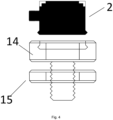
Figure 4 shows a variant using a screw-shaped base. -
Fig. 1 shows the basic layout and main components of a tilt sensor based on a modular sensor package comprising ametallic baseplate 1 and amodular body 2. - The
metallic baseplate 1 defines the reference plane of the sensor relative to the object to be monitored. To obtain reliable measurements, thebaseplate 1 needs to provide for high mechanical accuracy and stability over the entire lifetime of the sensor. Thebaseplate 1 serves to accommodate acircuit board 4 with anintegrated sensor element 3. It also encompasses mountingholes 11 for secure fastening of the sensor to the monitored object (not depicted). - The
modular body 2 accommodates a second circuit board and comprises a molded-onconnector 6 anddisplay elements 7. Furthermore, it is equipped withdetent noses 8 that allow for a form-fit connection to themetallic baseplate 1. - As soon as interlocking between the
metallic baseplate 1 andsensor body 2 is established,spring contacts 9 touch theircontact areas 10, reliably transmitting electrical signals fromcircuit board 4 tocircuit board 5. Alternatively, which is not covered by the scope of the invention, electrical contact betweencircuit board 4 andcircuit board 5 may be established by other suitable connecting elements such as plugs or flexible conductors. - Preferably,
circuit board 4 is laid out such as to acquire the measurement data whilstcircuit board 5 incorporates function blocks for transmitting the data viaconnector 6 and visualize it by means ofdisplay elements 7. - In
Fig. 2 , an example of the inclination sensor is illustrated that uses anangular base 12. This design is particularly suitable whenever the inclination sensor is to be mounted on a flat surface on the side of the object to be monitored. -
Figure 3 depicts a version of the inclination sensor using a baseplate with ascrew flange 13. This arrangement is best suited for mounting the inclination sensor on an axle of the object to be monitored. -
Figure 4 presents the inclination sensor with a screw-shapedbase 14. This model should be considered for applications where the inclination sensor is to be screwed onto the object to be monitored. Alocknut 15 helps align an inclination sensor configured as an anti-tilt switch such that the injection-moldedconnector 6 faces towards the desired direction according to the application at hand. - The invention is applicable, inter alia, throughout the electronics industry.
-
- 1
- Baseplate
- 2
- Body
- 3
- Sensor element
- 4
- First circuit board
- 5
- Second circuit board
- 6
- Connector
- 7
- Display elements
- 8
- Detent noses
- 9
- Spring contacts
- 10
- Contact areas
- 11
- Mounting holes
- 12
- Angular base
- 13
- Screw flange
- 14
- Screw-shaped base
- 15
- Locknut
- The following literature is cited throughout this document.
-
- PTL1:
US 1820791 A (FORREST ROBERT J) 25.08.1931 - PTL2:
US 2013/309880 A1 (CHANG NAI-CHIEN [TW]) 21.11.2013 - PTL3:
EP 2 554 432 A1 (KOITO MFG CO LTD [JP]) 06.02.2013 - PTL4:
US 2020/045840 A1 (KRAUS MATTHIAS [DE]) 06.02.2020 - PTL5:
US 2015/258953 A1 (MURRAY JR NEIL GORDON [US] ET AL) 17.09.2015 - PTL6:
US 2002/172000 A1 (WALTER KLAUS [DE] ET AL) 21.11.2002 - PTL7:
US 2017/311473 A1 (STEINICH KLAUS MANFRED [DE]) 26.10.2017 - NPL1: FRADEN, Jacob. Handbook of Modern Sensors - Physics, Designs and Applications. 5th edition. Cham Heidelberg New York Dordrecht London: Springer, 2016. ISBN 3319193023. p.379-411.
Claims (7)
- Inclinometer, such as a tilt switch, havinga preferably metallic base (1, 12, 14) for mounting the inclinometer anda preferably plastic body (2) engaged with the base (1, 12, 14) and housing a sensor element (3) mounted upon the base (1, 12, 14),the base (1, 12, 14) comprising a first circuit board (4) bearing the sensor element (3) and exhibiting contact areas (10) facing a second circuit board (5),the body (2) containing the second circuit board (5) for processing signals acquired through the first circuit board (4) and, bilaterally, exhibiting detent noses (8) engaging with the base (1, 12, 14),the second circuit board (5) bearing spring contacts (9) biased against the contact areas (10).
- Inclinometer as per Claim 1,
characterized in that
the body (2) comprises a connector (6), such as a threaded plug, preferably molded to the body (2) for outputting the processed signals. - Inclinometer as per Claim 1 or Claim 2,
characterized in that
the body (2) comprises display elements (7) for visualizing the processed signals. - Inclinometer as per any of the preceding claims,
characterized in that
the base (1, 12, 14) is flat (1) or angular (12), preferably having mounting holes (11) or a screw flange (13). - Inclinometer as per any of Claim 1 through Claim 3,
characterized in that
the base (1, 12, 14) is screw-shaped (14) and adapted to be fastened using a locknut (15) upon mounting the inclinometer. - Process for the manufacture of an inclinometer as per any of the preceding claims whereinthe body (2) is selected among a variety of bodies depending on connectivity requirements,the base (1, 12, 14) is selected among a variety of bases depending on mounting conditions andthe selection of the body (2) further depends on operating conditions, namely, dust, shock, vibration, rain, humidity, radiation, altitude, and temperature.
- Process as per Claim 6,
characterized in thatthe bases are manufactured by chip machining or punch bending andthe bodies are manufactured by injection molding, diecasting, or 3D printing.
Priority Applications (1)
| Application Number | Priority Date | Filing Date | Title |
|---|---|---|---|
| EP20201644.0A EP3985350B1 (en) | 2020-10-13 | 2020-10-13 | Inclinometer |
Applications Claiming Priority (1)
| Application Number | Priority Date | Filing Date | Title |
|---|---|---|---|
| EP20201644.0A EP3985350B1 (en) | 2020-10-13 | 2020-10-13 | Inclinometer |
Publications (3)
| Publication Number | Publication Date |
|---|---|
| EP3985350A1 EP3985350A1 (en) | 2022-04-20 |
| EP3985350B1 true EP3985350B1 (en) | 2025-03-12 |
| EP3985350C0 EP3985350C0 (en) | 2025-03-12 |
Family
ID=72852524
Family Applications (1)
| Application Number | Title | Priority Date | Filing Date |
|---|---|---|---|
| EP20201644.0A Active EP3985350B1 (en) | 2020-10-13 | 2020-10-13 | Inclinometer |
Country Status (1)
| Country | Link |
|---|---|
| EP (1) | EP3985350B1 (en) |
Families Citing this family (1)
| Publication number | Priority date | Publication date | Assignee | Title |
|---|---|---|---|---|
| CN115638769B (en) * | 2022-12-21 | 2023-03-31 | 西南交通大学 | Slope inclination angle monitoring device and slope safety coefficient calculation method |
Family Cites Families (7)
| Publication number | Priority date | Publication date | Assignee | Title |
|---|---|---|---|---|
| US1820791A (en) | 1929-05-03 | 1931-08-25 | Robert J Forrest | Angle indicator for aircraft |
| DE10116019B4 (en) * | 2001-03-30 | 2007-12-27 | Robert Bosch Gmbh | Sensor and method for its production |
| JP2013035303A (en) * | 2011-08-03 | 2013-02-21 | Koito Mfg Co Ltd | Sensor mounting structure |
| TWM444650U (en) * | 2012-05-16 | 2013-01-01 | Tuton Technology Co Ltd | Connector having sensing device |
| US9260071B2 (en) * | 2014-03-11 | 2016-02-16 | Trw Automotive U.S. Llc | Apparatus for snap mounting a crash sensor |
| EP3239665A1 (en) * | 2016-04-25 | 2017-11-01 | Weickmann & Weickmann PartmbB | Sensor casing |
| DE102017204338A1 (en) * | 2017-03-15 | 2018-09-20 | Robert Bosch Gmbh | Electronic control module and method of manufacturing an electronic control module |
-
2020
- 2020-10-13 EP EP20201644.0A patent/EP3985350B1/en active Active
Also Published As
| Publication number | Publication date |
|---|---|
| EP3985350A1 (en) | 2022-04-20 |
| EP3985350C0 (en) | 2025-03-12 |
Similar Documents
| Publication | Publication Date | Title |
|---|---|---|
| US8450999B2 (en) | Rotary position sensor | |
| US6119524A (en) | Measuring indicator device | |
| US7234359B2 (en) | Semiconductor force sensor | |
| EP3805710A1 (en) | Combined temperature and pressure sensor | |
| CN101776502B (en) | Capacitance diaphragm gauge and vaccum apparatus | |
| US20120011931A1 (en) | Liquid level detection device | |
| KR102366689B1 (en) | Physical quantity measuring device | |
| EP3985350B1 (en) | Inclinometer | |
| US20110179871A1 (en) | Tilt sensor unit | |
| EP3598583B1 (en) | Electronic device having fixed electric conductive plate and flexible electric conductive plate | |
| WO1999010714A1 (en) | A compensated capacitive liquid level sensor | |
| JP5403356B2 (en) | Liquid level detector | |
| US9116030B2 (en) | Liquid level transducer with isolated sensors | |
| EP1762816B1 (en) | Digital measuring instrument | |
| PL206793B1 (en) | Pressure sensor | |
| EP3273213B1 (en) | Low cost overmolded leadframe force sensor with multiple mounting positions | |
| US7308765B2 (en) | Angle-measuring arrangement | |
| US20240183647A1 (en) | Rotary encoder | |
| CN113615087A (en) | Electronic multi-path force sensor | |
| US20030110859A1 (en) | Acceleration sensors and pedometers using same | |
| KR101940301B1 (en) | Electric horizontal sensor using gravity | |
| CN223678621U (en) | Electronic scale | |
| US5148105A (en) | Electromagnetic rotation sensor | |
| KR20090075783A (en) | Tilt sensor using Hall element | |
| CN121720451A (en) | Electronic type level detection and control device based on bump electrode and conductive liquid |
Legal Events
| Date | Code | Title | Description |
|---|---|---|---|
| PUAI | Public reference made under article 153(3) epc to a published international application that has entered the european phase |
Free format text: ORIGINAL CODE: 0009012 |
|
| STAA | Information on the status of an ep patent application or granted ep patent |
Free format text: STATUS: THE APPLICATION HAS BEEN PUBLISHED |
|
| AK | Designated contracting states |
Kind code of ref document: A1 Designated state(s): AL AT BE BG CH CY CZ DE DK EE ES FI FR GB GR HR HU IE IS IT LI LT LU LV MC MK MT NL NO PL PT RO RS SE SI SK SM TR |
|
| STAA | Information on the status of an ep patent application or granted ep patent |
Free format text: STATUS: REQUEST FOR EXAMINATION WAS MADE |
|
| 17P | Request for examination filed |
Effective date: 20221020 |
|
| RBV | Designated contracting states (corrected) |
Designated state(s): AL AT BE BG CH CY CZ DE DK EE ES FI FR GB GR HR HU IE IS IT LI LT LU LV MC MK MT NL NO PL PT RO RS SE SI SK SM TR |
|
| RAP1 | Party data changed (applicant data changed or rights of an application transferred) |
Owner name: HOEHN NEIGUNGSTECHNIK GMBH |
|
| GRAP | Despatch of communication of intention to grant a patent |
Free format text: ORIGINAL CODE: EPIDOSNIGR1 |
|
| STAA | Information on the status of an ep patent application or granted ep patent |
Free format text: STATUS: GRANT OF PATENT IS INTENDED |
|
| GRAS | Grant fee paid |
Free format text: ORIGINAL CODE: EPIDOSNIGR3 |
|
| GRAA | (expected) grant |
Free format text: ORIGINAL CODE: 0009210 |
|
| STAA | Information on the status of an ep patent application or granted ep patent |
Free format text: STATUS: THE PATENT HAS BEEN GRANTED |
|
| INTG | Intention to grant announced |
Effective date: 20250130 |
|
| AK | Designated contracting states |
Kind code of ref document: B1 Designated state(s): AL AT BE BG CH CY CZ DE DK EE ES FI FR GB GR HR HU IE IS IT LI LT LU LV MC MK MT NL NO PL PT RO RS SE SI SK SM TR |
|
| REG | Reference to a national code |
Ref country code: GB Ref legal event code: FG4D |
|
| REG | Reference to a national code |
Ref country code: CH Ref legal event code: EP |
|
| REG | Reference to a national code |
Ref country code: DE Ref legal event code: R096 Ref document number: 602020047522 Country of ref document: DE |
|
| REG | Reference to a national code |
Ref country code: IE Ref legal event code: FG4D |
|
| U01 | Request for unitary effect filed |
Effective date: 20250325 |
|
| U07 | Unitary effect registered |
Designated state(s): AT BE BG DE DK EE FI FR IT LT LU LV MT NL PT RO SE SI Effective date: 20250328 |
|
| PG25 | Lapsed in a contracting state [announced via postgrant information from national office to epo] |
Ref country code: RS Free format text: LAPSE BECAUSE OF FAILURE TO SUBMIT A TRANSLATION OF THE DESCRIPTION OR TO PAY THE FEE WITHIN THE PRESCRIBED TIME-LIMIT Effective date: 20250612 |
|
| PG25 | Lapsed in a contracting state [announced via postgrant information from national office to epo] |
Ref country code: ES Free format text: LAPSE BECAUSE OF FAILURE TO SUBMIT A TRANSLATION OF THE DESCRIPTION OR TO PAY THE FEE WITHIN THE PRESCRIBED TIME-LIMIT Effective date: 20250312 |
|
| PG25 | Lapsed in a contracting state [announced via postgrant information from national office to epo] |
Ref country code: NO Free format text: LAPSE BECAUSE OF FAILURE TO SUBMIT A TRANSLATION OF THE DESCRIPTION OR TO PAY THE FEE WITHIN THE PRESCRIBED TIME-LIMIT Effective date: 20250612 |
|
| PG25 | Lapsed in a contracting state [announced via postgrant information from national office to epo] |
Ref country code: HR Free format text: LAPSE BECAUSE OF FAILURE TO SUBMIT A TRANSLATION OF THE DESCRIPTION OR TO PAY THE FEE WITHIN THE PRESCRIBED TIME-LIMIT Effective date: 20250312 |
|
| PG25 | Lapsed in a contracting state [announced via postgrant information from national office to epo] |
Ref country code: GR Free format text: LAPSE BECAUSE OF FAILURE TO SUBMIT A TRANSLATION OF THE DESCRIPTION OR TO PAY THE FEE WITHIN THE PRESCRIBED TIME-LIMIT Effective date: 20250613 |
|
| PG25 | Lapsed in a contracting state [announced via postgrant information from national office to epo] |
Ref country code: SM Free format text: LAPSE BECAUSE OF FAILURE TO SUBMIT A TRANSLATION OF THE DESCRIPTION OR TO PAY THE FEE WITHIN THE PRESCRIBED TIME-LIMIT Effective date: 20250312 |
|
| PG25 | Lapsed in a contracting state [announced via postgrant information from national office to epo] |
Ref country code: PL Free format text: LAPSE BECAUSE OF FAILURE TO SUBMIT A TRANSLATION OF THE DESCRIPTION OR TO PAY THE FEE WITHIN THE PRESCRIBED TIME-LIMIT Effective date: 20250312 |
|
| PG25 | Lapsed in a contracting state [announced via postgrant information from national office to epo] |
Ref country code: CZ Free format text: LAPSE BECAUSE OF FAILURE TO SUBMIT A TRANSLATION OF THE DESCRIPTION OR TO PAY THE FEE WITHIN THE PRESCRIBED TIME-LIMIT Effective date: 20250312 |
|
| PG25 | Lapsed in a contracting state [announced via postgrant information from national office to epo] |
Ref country code: SK Free format text: LAPSE BECAUSE OF FAILURE TO SUBMIT A TRANSLATION OF THE DESCRIPTION OR TO PAY THE FEE WITHIN THE PRESCRIBED TIME-LIMIT Effective date: 20250312 |
|
| PG25 | Lapsed in a contracting state [announced via postgrant information from national office to epo] |
Ref country code: IS Free format text: LAPSE BECAUSE OF FAILURE TO SUBMIT A TRANSLATION OF THE DESCRIPTION OR TO PAY THE FEE WITHIN THE PRESCRIBED TIME-LIMIT Effective date: 20250712 |
|
| U20 | Renewal fee for the european patent with unitary effect paid |
Year of fee payment: 6 Effective date: 20251022 |
|
| PLBE | No opposition filed within time limit |
Free format text: ORIGINAL CODE: 0009261 |
|
| STAA | Information on the status of an ep patent application or granted ep patent |
Free format text: STATUS: NO OPPOSITION FILED WITHIN TIME LIMIT |
|
| REG | Reference to a national code |
Ref country code: CH Ref legal event code: L10 Free format text: ST27 STATUS EVENT CODE: U-0-0-L10-L00 (AS PROVIDED BY THE NATIONAL OFFICE) Effective date: 20260121 |
|
| 26N | No opposition filed |
Effective date: 20251215 |