EP3985273B1 - Anti-roll stabilizer device for boats - Google Patents
Anti-roll stabilizer device for boats Download PDFInfo
- Publication number
- EP3985273B1 EP3985273B1 EP21202601.7A EP21202601A EP3985273B1 EP 3985273 B1 EP3985273 B1 EP 3985273B1 EP 21202601 A EP21202601 A EP 21202601A EP 3985273 B1 EP3985273 B1 EP 3985273B1
- Authority
- EP
- European Patent Office
- Prior art keywords
- rotor
- container
- chamber
- cooling
- hollow shaft
- Prior art date
- Legal status (The legal status is an assumption and is not a legal conclusion. Google has not performed a legal analysis and makes no representation as to the accuracy of the status listed.)
- Active
Links
Images



Classifications
-
- B—PERFORMING OPERATIONS; TRANSPORTING
- B63—SHIPS OR OTHER WATERBORNE VESSELS; RELATED EQUIPMENT
- B63B—SHIPS OR OTHER WATERBORNE VESSELS; EQUIPMENT FOR SHIPPING
- B63B39/00—Equipment to decrease pitch, roll, or like unwanted vessel movements; Apparatus for indicating vessel attitude
- B63B39/04—Equipment to decrease pitch, roll, or like unwanted vessel movements; Apparatus for indicating vessel attitude to decrease vessel movements by using gyroscopes directly
-
- F—MECHANICAL ENGINEERING; LIGHTING; HEATING; WEAPONS; BLASTING
- F16—ENGINEERING ELEMENTS AND UNITS; GENERAL MEASURES FOR PRODUCING AND MAINTAINING EFFECTIVE FUNCTIONING OF MACHINES OR INSTALLATIONS; THERMAL INSULATION IN GENERAL
- F16C—SHAFTS; FLEXIBLE SHAFTS; ELEMENTS OR CRANKSHAFT MECHANISMS; ROTARY BODIES OTHER THAN GEARING ELEMENTS; BEARINGS
- F16C35/00—Rigid support of bearing units; Housings, e.g. caps, covers
- F16C35/04—Rigid support of bearing units; Housings, e.g. caps, covers in the case of ball or roller bearings
- F16C35/042—Housings for rolling element bearings for rotary movement
-
- F—MECHANICAL ENGINEERING; LIGHTING; HEATING; WEAPONS; BLASTING
- F16—ENGINEERING ELEMENTS AND UNITS; GENERAL MEASURES FOR PRODUCING AND MAINTAINING EFFECTIVE FUNCTIONING OF MACHINES OR INSTALLATIONS; THERMAL INSULATION IN GENERAL
- F16F—SPRINGS; SHOCK-ABSORBERS; MEANS FOR DAMPING VIBRATION
- F16F15/00—Suppression of vibrations in systems; Means or arrangements for avoiding or reducing out-of-balance forces, e.g. due to motion
- F16F15/02—Suppression of vibrations of non-rotating, e.g. reciprocating systems; Suppression of vibrations of rotating systems by use of members not moving with the rotating systems
-
- F—MECHANICAL ENGINEERING; LIGHTING; HEATING; WEAPONS; BLASTING
- F16—ENGINEERING ELEMENTS AND UNITS; GENERAL MEASURES FOR PRODUCING AND MAINTAINING EFFECTIVE FUNCTIONING OF MACHINES OR INSTALLATIONS; THERMAL INSULATION IN GENERAL
- F16F—SPRINGS; SHOCK-ABSORBERS; MEANS FOR DAMPING VIBRATION
- F16F15/00—Suppression of vibrations in systems; Means or arrangements for avoiding or reducing out-of-balance forces, e.g. due to motion
- F16F15/30—Flywheels
-
- H—ELECTRICITY
- H02—GENERATION; CONVERSION OR DISTRIBUTION OF ELECTRIC POWER
- H02K—DYNAMO-ELECTRIC MACHINES
- H02K5/00—Casings; Enclosures; Supports
- H02K5/04—Casings or enclosures characterised by the shape, form or construction thereof
- H02K5/20—Casings or enclosures characterised by the shape, form or construction thereof with channels or ducts for flow of cooling medium
- H02K5/203—Casings or enclosures characterised by the shape, form or construction thereof with channels or ducts for flow of cooling medium specially adapted for liquids, e.g. cooling jackets
-
- H—ELECTRICITY
- H02—GENERATION; CONVERSION OR DISTRIBUTION OF ELECTRIC POWER
- H02K—DYNAMO-ELECTRIC MACHINES
- H02K7/00—Arrangements for handling mechanical energy structurally associated with dynamo-electric machines, e.g. structural association with mechanical driving motors or auxiliary dynamo-electric machines
- H02K7/02—Additional mass for increasing inertia, e.g. flywheels
-
- F—MECHANICAL ENGINEERING; LIGHTING; HEATING; WEAPONS; BLASTING
- F16—ENGINEERING ELEMENTS AND UNITS; GENERAL MEASURES FOR PRODUCING AND MAINTAINING EFFECTIVE FUNCTIONING OF MACHINES OR INSTALLATIONS; THERMAL INSULATION IN GENERAL
- F16C—SHAFTS; FLEXIBLE SHAFTS; ELEMENTS OR CRANKSHAFT MECHANISMS; ROTARY BODIES OTHER THAN GEARING ELEMENTS; BEARINGS
- F16C19/00—Bearings with rolling contact, for exclusively rotary movement
- F16C19/22—Bearings with rolling contact, for exclusively rotary movement with bearing rollers essentially of the same size in one or more circular rows, e.g. needle bearings
- F16C19/34—Bearings with rolling contact, for exclusively rotary movement with bearing rollers essentially of the same size in one or more circular rows, e.g. needle bearings for both radial and axial load
- F16C19/38—Bearings with rolling contact, for exclusively rotary movement with bearing rollers essentially of the same size in one or more circular rows, e.g. needle bearings for both radial and axial load with two or more rows of rollers
-
- F—MECHANICAL ENGINEERING; LIGHTING; HEATING; WEAPONS; BLASTING
- F16—ENGINEERING ELEMENTS AND UNITS; GENERAL MEASURES FOR PRODUCING AND MAINTAINING EFFECTIVE FUNCTIONING OF MACHINES OR INSTALLATIONS; THERMAL INSULATION IN GENERAL
- F16C—SHAFTS; FLEXIBLE SHAFTS; ELEMENTS OR CRANKSHAFT MECHANISMS; ROTARY BODIES OTHER THAN GEARING ELEMENTS; BEARINGS
- F16C19/00—Bearings with rolling contact, for exclusively rotary movement
- F16C19/54—Systems consisting of a plurality of bearings with rolling friction
- F16C19/541—Systems consisting of juxtaposed rolling bearings including at least one angular contact bearing
-
- F—MECHANICAL ENGINEERING; LIGHTING; HEATING; WEAPONS; BLASTING
- F16—ENGINEERING ELEMENTS AND UNITS; GENERAL MEASURES FOR PRODUCING AND MAINTAINING EFFECTIVE FUNCTIONING OF MACHINES OR INSTALLATIONS; THERMAL INSULATION IN GENERAL
- F16C—SHAFTS; FLEXIBLE SHAFTS; ELEMENTS OR CRANKSHAFT MECHANISMS; ROTARY BODIES OTHER THAN GEARING ELEMENTS; BEARINGS
- F16C23/00—Bearings for exclusively rotary movement adjustable for aligning or positioning
- F16C23/06—Ball or roller bearings
- F16C23/08—Ball or roller bearings self-adjusting
- F16C23/082—Ball or roller bearings self-adjusting by means of at least one substantially spherical surface
- F16C23/086—Ball or roller bearings self-adjusting by means of at least one substantially spherical surface forming a track for rolling elements
-
- F—MECHANICAL ENGINEERING; LIGHTING; HEATING; WEAPONS; BLASTING
- F16—ENGINEERING ELEMENTS AND UNITS; GENERAL MEASURES FOR PRODUCING AND MAINTAINING EFFECTIVE FUNCTIONING OF MACHINES OR INSTALLATIONS; THERMAL INSULATION IN GENERAL
- F16C—SHAFTS; FLEXIBLE SHAFTS; ELEMENTS OR CRANKSHAFT MECHANISMS; ROTARY BODIES OTHER THAN GEARING ELEMENTS; BEARINGS
- F16C2326/00—Articles relating to transporting
- F16C2326/30—Ships, e.g. propelling shafts and bearings therefor
-
- F—MECHANICAL ENGINEERING; LIGHTING; HEATING; WEAPONS; BLASTING
- F16—ENGINEERING ELEMENTS AND UNITS; GENERAL MEASURES FOR PRODUCING AND MAINTAINING EFFECTIVE FUNCTIONING OF MACHINES OR INSTALLATIONS; THERMAL INSULATION IN GENERAL
- F16C—SHAFTS; FLEXIBLE SHAFTS; ELEMENTS OR CRANKSHAFT MECHANISMS; ROTARY BODIES OTHER THAN GEARING ELEMENTS; BEARINGS
- F16C2370/00—Apparatus relating to physics, e.g. instruments
-
- F—MECHANICAL ENGINEERING; LIGHTING; HEATING; WEAPONS; BLASTING
- F16—ENGINEERING ELEMENTS AND UNITS; GENERAL MEASURES FOR PRODUCING AND MAINTAINING EFFECTIVE FUNCTIONING OF MACHINES OR INSTALLATIONS; THERMAL INSULATION IN GENERAL
- F16C—SHAFTS; FLEXIBLE SHAFTS; ELEMENTS OR CRANKSHAFT MECHANISMS; ROTARY BODIES OTHER THAN GEARING ELEMENTS; BEARINGS
- F16C37/00—Cooling of bearings
- F16C37/007—Cooling of bearings of rolling bearings
-
- G—PHYSICS
- G01—MEASURING; TESTING
- G01C—MEASURING DISTANCES, LEVELS OR BEARINGS; SURVEYING; NAVIGATION; GYROSCOPIC INSTRUMENTS; PHOTOGRAMMETRY OR VIDEOGRAMMETRY
- G01C19/00—Gyroscopes; Turn-sensitive devices using vibrating masses; Turn-sensitive devices without moving masses; Measuring angular rate using gyroscopic effects
- G01C19/02—Rotary gyroscopes
-
- H—ELECTRICITY
- H02—GENERATION; CONVERSION OR DISTRIBUTION OF ELECTRIC POWER
- H02K—DYNAMO-ELECTRIC MACHINES
- H02K2201/00—Specific aspects not provided for in the other groups of this subclass relating to the magnetic circuits
- H02K2201/18—Machines moving with multiple degrees of freedom
-
- Y—GENERAL TAGGING OF NEW TECHNOLOGICAL DEVELOPMENTS; GENERAL TAGGING OF CROSS-SECTIONAL TECHNOLOGIES SPANNING OVER SEVERAL SECTIONS OF THE IPC; TECHNICAL SUBJECTS COVERED BY FORMER USPC CROSS-REFERENCE ART COLLECTIONS [XRACs] AND DIGESTS
- Y02—TECHNOLOGIES OR APPLICATIONS FOR MITIGATION OR ADAPTATION AGAINST CLIMATE CHANGE
- Y02E—REDUCTION OF GREENHOUSE GAS [GHG] EMISSIONS, RELATED TO ENERGY GENERATION, TRANSMISSION OR DISTRIBUTION
- Y02E60/00—Enabling technologies; Technologies with a potential or indirect contribution to GHG emissions mitigation
- Y02E60/16—Mechanical energy storage, e.g. flywheels or pressurised fluids
Definitions
- the present invention relates to an anti-roll stabilizer device for boats with improved heat exchange.
- Anti-roll stabilizers are devices installed inside the hulls of boats near the bottom.
- the gyroscope of an anti-roll stabilizer typically comprises a flywheel, i.e. a mass with high moment of inertia, which, driven by an electric motor, rotates around an axis inside a case or a container free to oscillate along a transversal axis with respect to the rotation axis.
- a flywheel i.e. a mass with high moment of inertia
- the gyroscope tends to keep its rotation axis oriented in a fixed direction, opposing in this way to a possible force that tends to make the gyroscope oscillate along the transversal axis.
- the gyroscope tends to keep its rotation axis oriented in a fixed direction, opposing in this way to a possible force that tends to make the gyroscope oscillate along the transversal axis.
- a gyro stabilizer is more effective the greater its angular momentum.
- the angular momentum is directly proportional to the moment of inertia of the rotating rigid body and to its angular velocity.
- the moment of inertia is a function of the mass and geometry of the rigid body.
- a well-known technique involves immersing the rotor, or at least its support bearings, in an oil bath. This achieves the dual effect of reducing friction and draining heat.
- this solution is complex and requires more rotor driving energy to overcome the viscous force due to the presence of oil.
- the vacuum limits thermal transmission, therefore, the possibility of dissipating the heat that accumulates in the sealed chamber that houses the rotor, particularly in correspondence of the bearings that support it.
- patent application CN104578595A shows a FES (flywheel energy storage) provided with a rotating mass in a vacuum-sealed structure and two chambers at the longitudinal ends of the rotor for cooling the rolling bearings; the rotor is hollow in the central part close to the rotation axis and such cavity allows the fluid to pass between the two chambers for cooling the bearings.
- FES flywheel energy storage
- the purpose of the present invention is to realize a boat stabilizer device with optimized heat dissipation.
- the invention achieves the purpose with an anti-roll stabilizer device for boats as defined in claim 1.
- the hollow shaft is stationary with respect to the container while the rotor is installed rotatably around it by means of rolling bearings.
- the fixed hollow shaft avoids the wear of the seals on the heads of it.
- This characteristic brings important benefits with respect to the technique known especially in the field of gyroscopic stabilizers which, having to combine compact dimensions with a high moment of inertia, rotate very quickly so that the forces generated by the gyroscopic effect have an intensity such as to bring concrete stabilizing effects on the boat, a boat which has a mass and volume much greater than the desirable mass and volume for a gyroscope.
- the stationary hollow shaft not only constitutes a conduit for the cooling circuit that allows the fluid to pass from one chamber to another, but also makes it possible to lighten the rotor without significantly affecting the moment of inertia generated and playing an active role in heat exchange with the rotor thanks to the fact that it crosses the container that contains the rotor for its entire longitudinal extension.
- the hollow shaft is then housed in a rotor cavity of cylindrical shape which articulates along the rotation axis Y of the rotor itself; the dimensions of the hollow shaft are such as it is coaxially arranged and contained within this cavity without coming into contact with the rotor. Between the outer shell surface of the hollow shaft and the inner shell surface of the rotor, an annular interstitial chamber separating the rotor from the hollow shaft is thus created.
- said interstitial chamber is placed in a vacuum, similarly to what is intended for the container and through the interstitial chamber, by radiation, heat from the rotor is transferred to the cooling fluid circulating inside the hollow shaft.
- heat from the rotor is transferred to the cooling fluid circulating inside the hollow shaft.
- the gap between the rotor and the hollow shaft is in the form of a cylinder having an annular cross-section and a radial thickness of a few millimeters, preferably from 1 to 5 millimeters and even more preferably of about 2 millimeters so as to allow rotation of the rotor without contact with the hollow shaft but at the same time without preventing the transfer of heat by radiation from the rotor to the hollow shaft and consequently to the fluid circulating therein.
- This effect can also be increased if the exchange surfaces with the fluid inside the device are increased or, alternatively or in combination, the heat exchange with the cooling chambers is facilitated.
- At least one of the two cooling chambers preferably both cooling chambers, comprise one or more walls with an internal finned surface.
- the hollow shaft itself can have a finned surface to increase heat transfer.
- At least one end of the rotor has a disc that rotates integrally with the rotor in proximity to one, preferably both, of the cooling chambers to increase the heat exchange between the rotor and the cooling chambers.
- the disc can be coupled to the rotor so as to rotate outside the corresponding cooling chamber in proximity to a wall of the cooling chamber, specifically the wall having the internal finned surface, thus obtaining both the effect of increasing the heat exchange between the rotor and the cooling chamber and of increasing the surface of exchange with the fluid.
- the device comprises one or more compartments formed in the container of the rotor. These compartments are floodable by the cooling fluid to form additional cooling chambers to the chambers located at the end of the hollow shaft.
- the rotor may advantageously comprise corresponding annular recesses surrounding the cooling chambers so as to increase the exchange surface between the cooling fluid and the rotor.
- the rotor comprises a hub supported by the container by means of one or more bearings disposed in proximity to each of the hub ends, being provided at least one flood chamber in the container that at least partially surrounding at least one of said bearings in proximity to the bearing side integral with the container, said flood chamber comprising an inlet and an outlet connected with the fluid circulation circuit.
- the flooding chambers are two, one at each hub end.
- the flooding chamber or chambers are additional to the chambers located at the ends of the hollow shaft and may be provided in combination with or as an alternative to the compartments/recesses of the container/rotor, and/or to the rotating disc or discs and/or to the finned wall or walls.
- Another way to increase the exchange surface is to use a box-like element integral with the hollow shaft sealed with respect to the rotor and the container of the rotor. If the rotor has a corresponding housing adapted to receive said box-like body so as to be able to rotate around said hollow shaft and said box-like body, the heat exchange between rotor body and fluid flowing in the hollow shaft is increased, in particular if box-like body and hollow shaft are in fluid-dynamic communication so as to allow the box-like body to be flooded by the cooling fluid flowing inside the hollow shaft.
- this embodiment can be provided as an alternative or in combination with other solutions such as flooding chambers, finned wall or walls, rotating disc or discs, compartments/recesses of the container/rotor.
- the container of the rotor is sealed off from the external environment.
- a vacuum pump in communication with the container, it is possible to induce vacuum inside the container so as to reduce friction, whatever type of features are adopted to increase the thermal exchange between the rotor and the cooling fluid as discussed above.
- the stabilizer may advantageously comprise a vacuum breaker device such as a valve or the like which is able to make an inert gas such as air flow on command inside the container.
- a vacuum breaker device such as a valve or the like which is able to make an inert gas such as air flow on command inside the container.
- an actuator device may be employed which sequentially drives the vacuum breaker valve and the vacuum pump with a determined time delay so as to allow the inert gas to enter the container, exchange heat with the rotor and transfer the heat exchanged to the outside when the inert gas is evacuated by the vacuum pump to recreate the vacuum inside the container.
- This controlled cooling effect through the introduction of a gas into the rotor container can obviously be provided as an alternative or in combination with all the other features seen above to increase the heat exchange, such as the flooding chambers at the ends of the hollow shaft and/or the additional flooding chamber(s) and/or the finned wall(s) and/or the rotating disc(s) and/or the compartments/ recesses of the container/rotor and/or the box-like element coupled to the hollow shaft, thus creating an extremely flexible and modular device suitable to satisfy the most varied market requirements.
- the gyro stabilizer device comprises a prismatic frame 1 with transverse support brackets 101, reinforced by means of struts 201, of a container 2 mounted on a suspension so as to be able to oscillate around a first axis X.
- the container 2 comprises two half-shells 102 that are coupled via clamping flanges 202 by bolts 302 according to a direction Y orthogonal to the direction X of oscillation.
- the two half-shells 102 when coupled, form a spherical segment having bases symmetrical with respect to a plane passing through the direction of oscillation X. Each base of the segment represents the open leading end of the container 2.
- the suspension is achieved by means of a pair of pins 402 on flanged supports 502 tightened by nuts 602 on fixing pin stumps provided on corresponding circular flattened surfaces 702.
- Said circular surfaces are formed by corresponding semicircular surfaces disposed, in diametrically opposite positions, in proximity to the coupling flange 202 of each half-shell 102.
- Each pin 402 of the suspension engages in a corresponding housing 301 formed on the transverse support bracket 101 by means of a bearing 802 so as to allow oscillation of the container around the axis X, also known as the precession axis.
- Damping of the oscillations takes place by means of a pair of hydraulic cylinders 401 hinged with an element 501 of the frame 1 and with a corresponding element 902 of one of the two flanged supports 502 of the suspension.
- the cylinders 401 are connected with a hydraulic circuit 601 visible in Fig. 2 .
- a rotor 3 able to rotate around the Y axis, also known as the spin axis, transverse to the precession X axis.
- the rotor 3 includes a mass 103 acting as a flywheel and a hub 203 coupled to the flywheel.
- the mass and hub are typically made of steel.
- the hub 203 has a first end 303 and a second end 403 opposite the first end.
- first support device 503 and a second support device 603 suitable to support, respectively, the first 303 and the second 403 ends of the hub 203 of the rotor 3, so as to allow the relative rotation of the rotor 3 around its rotation axis Y.
- Each support device 503, 603 is provided with a hub coaxial element, that element serves as a seat for the outer ring of a targeted rolling bearing 903 intended to support rotation of the hub to which it is connected via an inner bearing ring.
- Each support device 503, 603 is further provided with a closing flange 112 of one end of the container 2. The hub rotates relative to the coaxial element of the device 503, 603 by means of the rolling bearing 903 held in place by the retaining flange 113 tightened on the closing flange 112 by screws 123 screwed into blind holes.
- the closing flanges 112 are tightened against corresponding end annular surfaces of the two half-shells 102 by screws 122 screwed into blind holes.
- annular spacer element 132 On each closing flange 112 of the container 2 there is an annular spacer element 132 having a raised central portion so as to form a compartment 162 in proximity to the support bearing 903 of the hub 203.
- the spacer element 132 is also responsible for the vacuum-tight closure within the container of the rotor, and an inverted hollow element in the form of a lid 142 is placed thereon, defining a cooling chamber 4, 4' external to the container 2 in the proximity to its leading ends. Both the lid 142 and the annular element 132 are sealed by screws 152 screwed into blind holes.
- the chambers 4, 4' are also identified as upper chamber and lower chamber with reference to their positions in the drawings.
- the hollow shaft 5 may have a surface, at least partially, finned to facilitate heat exchange with the rotor.
- the hollow shaft 5 is disposed in a cavity of the hub 203 of the rotor 3 and is intended to hold one or more cooling fluids and it is stationary with respect to the container 2 while the rotor 3 is installed rotatably around it by means of rolling bearings.
- the fixed hollow shaft avoids the wear of the seals on the heads of it.
- This characteristic brings important benefits with respect to the technique known especially in the field of gyroscopic stabilizers which, having to combine compact dimensions with a high moment of inertia, rotate very quickly so that the forces generated by the gyroscopic effect have an intensity such as to bring concrete stabilizing effects on the boat, a boat which has a mass and volume much greater than the desirable mass and volume for a gyroscope.
- the chambers 4, 4' have an opening hole 104, 104' for connection with a conduit that is part of a cooling fluid circulation circuit.
- the opening hole 104 of the upper chamber 4 constitutes the inlet and the opening hole 104' of the lower chamber 4' constitutes the outlet so that the cooling fluid can circulate from the upper chamber 4 to the lower chamber 4' through the hollow shaft and from the lower chamber 4' to the upper chamber 4 through the pipes 606 and 706 of the circulation circuit.
- the flow may also be in the opposite direction i.e. from the lower chamber 4' to the upper chamber 4 through the hollow shaft 5 and from the upper chamber to the lower chamber through the circulation circuit.
- the circulation circuit includes a pump 106 attached to the frame by collar 206, an expansion tank 306 with a visual level indicator 406 of the cooling fluid (typically water and glycol), and a heat exchanger 506 for heat exchange between the fluid and the external environment.
- a pump 106 attached to the frame by collar 206
- an expansion tank 306 with a visual level indicator 406 of the cooling fluid typically water and glycol
- a heat exchanger 506 for heat exchange between the fluid and the external environment.
- the chambers 4, 4' have the innermost wall 204 finned to facilitate heat exchange with the cooling fluid.
- a disc 133 integral with the hub of the rotor that rotates inside the compartment 162 obtained in the leading end of the container 2.
- the disc 133 is fixed to the hub with screws 143 screwed on blind holes.
- the disc 133 facilitates the heat exchange between the rotor 3, in particular between the bearings 903, and the corresponding cooling chamber 4, 4'.
- a configuration with discs 133 at both ends of the hub 203 of the rotor 3 is shown, but obviously it is also possible to provide for only one or none of them since it is a completely optional component like the fins on one wall of the cooling chambers 4, 4' .
- the fins 204 can be present in only one, in both or in none of the two chambers in the presence of one, two or no disc 133.
- Said interstitial chamber 10 is radially defined by the outer shell surface of the hollow shaft 5 and the inner shell surface of the rotor 203 and thus extends along the axis Y of the device as shown in the figure.
- the interstitial chamber 10 is placed in a vacuum so as to reduce the friction between the rotor and the hollow shaft.
- the radial thickness of said interstitial chamber 10 is such as to prevent contact between hollow shaft 5 and rotor 203, and at the same time the thickness is small so as to facilitate the transfer of heat by radiation to the hollow shaft 5 containing the cooling fluid.
- Figs. 8 and 9 show another embodiment in which the closing flange 112 has an annular recess adapted to forming a flooding chamber 7 in the container 2 that at least partially surrounds at least one of the two bearings in proximity to the bearing side 903 integral with the container 2.
- the flooding chamber 7, which may be present at only one end or at both ends of the rotor 3 and have one or more finned walls 307, includes an inlet 107 and an outlet 207 connected with the fluid circulation circuit.
- the supply pipe 606 illustrated in Fig. 4 instead of being connected directly to the inlet 104 of the cooling chamber 4, is connected to the inlet 107 of the flooding chamber 7. It will then be the outlet 207 of the same flooding chamber 7 that will be connected via a fitting 806 with the inlet 104 of the cooling chamber 4 to close the fluid circulation circuit.
- the rotor 3 may advantageously comprise corresponding annular recesses surrounding the cooling chambers so as to increase the exchange surface between the cooling fluid and the rotor itself.
- FIG. 10 Another way to increase the exchange surface, to be used alternatively or in combination with the solutions described so far, is to use a box-like body 105 integral with the hollow shaft 5 sealed with respect to the rotor 3 and the container 2 of the rotor as shown in Figs. 10 and 11 .
- the rotor 3 has a corresponding housing 143 adapted to receive said box-like body 105 so as to be able to rotate around the hollow shaft 5 and the box-like body 105.
- the heat exchange between the body of the rotor 3 and the fluid flowing in the hollow shaft 5 is increased in particular if the box-like body 105 and the hollow shaft 5 are in fluid-dynamic communication so as to allow the box-like body 105 to be flooded by the cooling fluid flowing inside the hollow shaft 5.
- the rotating disc 133 of the embodiment shown in Fig. 5 is not present but may obviously be equally present at one or both ends of the rotor 3 since it is an entirely optional component.
- the finned surface or surfaces 204 which may be present in one, both or none of the cooling chambers 4, 4'.
- the stabilizer device is completed by a vacuum pump 8 in communication with the container 2 through the pipes 108 visible in Fig. 3 to induce vacuum inside the container so as to reduce friction, whatever type of feature is adopted to increase the heat exchange between the rotor and the cooling fluid as discussed above.
- the stabilizer may advantageously comprise a vacuum breaker device such as a valve or the like which is capable of making an inert gas, such as air, helium or hydrogen, flow on command inside the container 2.
- a vacuum breaker device such as a valve or the like which is capable of making an inert gas, such as air, helium or hydrogen, flow on command inside the container 2.
- an actuator device may be employed driven by a control unit, which sequentially drives the vacuum breaker valve and the vacuum pump 8 with a time delay determined so as to allow the inert gas to enter the container, to exchange heat with the rotor and to transfer the heat exchanged outside when the inert gas is evacuated by the vacuum pump to recreate the vacuum inside the container 2.
- This controlled cooling effect by vacuum breaking within the container of the rotor can obviously be employed in any embodiment of the invention.
- control unit is interfaced not only with the vacuum pump 8 and the vacuum breaker valve but also with the electric motor 9.
- the control unit can thus be configured to open the inert gas inlet valve in the container 2 in correspondence of a command of reducing the rotation of the motor 9.
- the motor is made to run freely during the inert gas inlet. After that, the vacuum is recreated, and the motor is accelerated again to restore the desired angular momentum. This reduces power consumption.
- the braking effect of viscous friction can also be used to achieve a gradual reduction in rotor inertia over a short period of time, for example at the end of navigation.
- the same control unit can advantageously be interfaced with the hydraulic system 601 controlling the cylinders 401 to correspondingly dampen oscillations around the precession axis X. friction can also be used to achieve a gradual reduction in rotor inertia over a short period of time, for example at the end of navigation.
- the same control unit can advantageously be interfaced with the hydraulic system 601 controlling the cylinders 401 to correspondingly dampen oscillations around the precession axis X.
Landscapes
- Engineering & Computer Science (AREA)
- General Engineering & Computer Science (AREA)
- Mechanical Engineering (AREA)
- Chemical & Material Sciences (AREA)
- Combustion & Propulsion (AREA)
- Ocean & Marine Engineering (AREA)
- Power Engineering (AREA)
- Physics & Mathematics (AREA)
- Acoustics & Sound (AREA)
- Aviation & Aerospace Engineering (AREA)
- Motor Or Generator Cooling System (AREA)
- Magnetic Bearings And Hydrostatic Bearings (AREA)
Description
- The present invention relates to an anti-roll stabilizer device for boats with improved heat exchange.
- Anti-roll stabilizers are devices installed inside the hulls of boats near the bottom.
- These devices benefit from the gyroscope physical principle that a rotating mass offers greater opposition to an external force attempting to change its trajectory.
- The gyroscope of an anti-roll stabilizer typically comprises a flywheel, i.e. a mass with high moment of inertia, which, driven by an electric motor, rotates around an axis inside a case or a container free to oscillate along a transversal axis with respect to the rotation axis. By effect of the law of conservation of angular momentum, the gyroscope tends to keep its rotation axis oriented in a fixed direction, opposing in this way to a possible force that tends to make the gyroscope oscillate along the transversal axis. Hence its use in boating to counteract the oscillations to which a boat is subjected, in particular the rolling imposed by wave motion.
- A gyro stabilizer is more effective the greater its angular momentum. The angular momentum is directly proportional to the moment of inertia of the rotating rigid body and to its angular velocity. In turn, the moment of inertia is a function of the mass and geometry of the rigid body.
- Consequently, given the shape of the rotor, in order to obtain large angular moments and, therefore, a greater stabilizing effect, it is necessary to act either on the mass or on the speed of rotation of the rotor.
- In small boats, the rotor mass cannot be too great so the only way to get enough angular momentum to achieve the desired anti-roll effect is to increase the rotational speed.
- This, however, results in high heating of the device due to friction.
- In order to overcome this problem, it is therefore necessary, on the one hand, to reduce friction as much as possible and, on the other hand, to dissipate the heat generated.
- A well-known technique involves immersing the rotor, or at least its support bearings, in an oil bath. This achieves the dual effect of reducing friction and draining heat.
- On the other hand, this solution is complex and requires more rotor driving energy to overcome the viscous force due to the presence of oil.
- For this reason, in more recent devices, friction reduction is typically achieved by housing the rotor in a vacuum chamber. Since at high speeds friction with air is significant, this is certainly a good solution.
- On the other hand, the vacuum limits thermal transmission, therefore, the possibility of dissipating the heat that accumulates in the sealed chamber that houses the rotor, particularly in correspondence of the bearings that support it.
- The document
EP1979708A , on which the preamble of the first claim is based, describes a way of transferring the heat of the rotor towards the outside by employing a pair of discs, one of which is stationary integral with the container housing the rotor and one rotating integral with the rotor, provided with grooves and complementary annular protrusions that engage each other so as to facilitate the heat exchange between the rotor and the external environment. - This technique, although effective, doesn't however provide comparable result in terms of heat dissipation with those solutions that involve heat drainage through the lubrication oil.
- In
US 2018/051988A1 the inventors disclose of a boat stabilizer gyroscope comprising a rotating mass from a shaft 19 and a flywheel 11, two cooling chambers 22 and 24 to contain respective bearings to which a cooling oil circuit is associated. However, this configuration has limitations for the management of the cooling oil flow and the need is further felt to improve the cooling efficiency without complicating but rather simplifying the stabilizer structure. - Extending the field of stabilizers to flywheels used as energy storage, patent application
CN104578595A shows a FES (flywheel energy storage) provided with a rotating mass in a vacuum-sealed structure and two chambers at the longitudinal ends of the rotor for cooling the rolling bearings; the rotor is hollow in the central part close to the rotation axis and such cavity allows the fluid to pass between the two chambers for cooling the bearings. This solution makes it possible to simplify the structure of the cooling system but entails an increase in the constructional complexity required to guarantee the vacuum seal of the structure housing the rotor which, rotating quickly and for long periods, leads to wear of the insulation seals between the vacuum zone and the chamber in which the cooling fluid is under pressure. - The purpose of the present invention is to realize a boat stabilizer device with optimized heat dissipation.
- The invention achieves the purpose with an anti-roll stabilizer device for boats as defined in
claim 1. - The hollow shaft is stationary with respect to the container while the rotor is installed rotatably around it by means of rolling bearings.
- Advantageously, the fixed hollow shaft avoids the wear of the seals on the heads of it. This characteristic brings important benefits with respect to the technique known especially in the field of gyroscopic stabilizers which, having to combine compact dimensions with a high moment of inertia, rotate very quickly so that the forces generated by the gyroscopic effect have an intensity such as to bring concrete stabilizing effects on the boat, a boat which has a mass and volume much greater than the desirable mass and volume for a gyroscope.
- The stationary hollow shaft not only constitutes a conduit for the cooling circuit that allows the fluid to pass from one chamber to another, but also makes it possible to lighten the rotor without significantly affecting the moment of inertia generated and playing an active role in heat exchange with the rotor thanks to the fact that it crosses the container that contains the rotor for its entire longitudinal extension.
- In this way, not only is the heat generated by the rotor support bearings located in correspondence of the ends of the rotor dissipated by heat exchange with the cooling chambers in which the cooling fluid circulates, but also the heat distributed inside the container housing the rotor is effectively drained.
- The hollow shaft is then housed in a rotor cavity of cylindrical shape which articulates along the rotation axis Y of the rotor itself; the dimensions of the hollow shaft are such as it is coaxially arranged and contained within this cavity without coming into contact with the rotor. Between the outer shell surface of the hollow shaft and the inner shell surface of the rotor, an annular interstitial chamber separating the rotor from the hollow shaft is thus created.
- According to a different embodiment, said interstitial chamber is placed in a vacuum, similarly to what is intended for the container and through the interstitial chamber, by radiation, heat from the rotor is transferred to the cooling fluid circulating inside the hollow shaft. In this way, the benefits of reducing friction between a stationary part (the hollow shaft) and a part rotatable around it (the rotor) are obtained.
- The gap between the rotor and the hollow shaft is in the form of a cylinder having an annular cross-section and a radial thickness of a few millimeters, preferably from 1 to 5 millimeters and even more preferably of about 2 millimeters so as to allow rotation of the rotor without contact with the hollow shaft but at the same time without preventing the transfer of heat by radiation from the rotor to the hollow shaft and consequently to the fluid circulating therein.
- This effect can also be increased if the exchange surfaces with the fluid inside the device are increased or, alternatively or in combination, the heat exchange with the cooling chambers is facilitated.
- It is possible to provide that at least one of the two cooling chambers, preferably both cooling chambers, comprise one or more walls with an internal finned surface.
- The hollow shaft itself can have a finned surface to increase heat transfer.
- In an embodiment, at least one end of the rotor has a disc that rotates integrally with the rotor in proximity to one, preferably both, of the cooling chambers to increase the heat exchange between the rotor and the cooling chambers.
- In particular, the disc can be coupled to the rotor so as to rotate outside the corresponding cooling chamber in proximity to a wall of the cooling chamber, specifically the wall having the internal finned surface, thus obtaining both the effect of increasing the heat exchange between the rotor and the cooling chamber and of increasing the surface of exchange with the fluid.
- According to an embodiment, the device comprises one or more compartments formed in the container of the rotor. These compartments are floodable by the cooling fluid to form additional cooling chambers to the chambers located at the end of the hollow shaft. The rotor may advantageously comprise corresponding annular recesses surrounding the cooling chambers so as to increase the exchange surface between the cooling fluid and the rotor.
- According to an embodiment, the rotor comprises a hub supported by the container by means of one or more bearings disposed in proximity to each of the hub ends, being provided at least one flood chamber in the container that at least partially surrounding at least one of said bearings in proximity to the bearing side integral with the container, said flood chamber comprising an inlet and an outlet connected with the fluid circulation circuit. Preferably, the flooding chambers are two, one at each hub end. Also in this case, the flooding chamber or chambers are additional to the chambers located at the ends of the hollow shaft and may be provided in combination with or as an alternative to the compartments/recesses of the container/rotor, and/or to the rotating disc or discs and/or to the finned wall or walls.
- Another way to increase the exchange surface is to use a box-like element integral with the hollow shaft sealed with respect to the rotor and the container of the rotor. If the rotor has a corresponding housing adapted to receive said box-like body so as to be able to rotate around said hollow shaft and said box-like body, the heat exchange between rotor body and fluid flowing in the hollow shaft is increased, in particular if box-like body and hollow shaft are in fluid-dynamic communication so as to allow the box-like body to be flooded by the cooling fluid flowing inside the hollow shaft. Like the others, also this embodiment can be provided as an alternative or in combination with other solutions such as flooding chambers, finned wall or walls, rotating disc or discs, compartments/recesses of the container/rotor.
- In a particularly advantageous configuration, the container of the rotor is sealed off from the external environment. Through the use of a vacuum pump in communication with the container, it is possible to induce vacuum inside the container so as to reduce friction, whatever type of features are adopted to increase the thermal exchange between the rotor and the cooling fluid as discussed above.
- In a particularly advantageous embodiment, it is precisely the friction within the container that is exploited to cool and at the same time to slow down the rotor. For this purpose, the stabilizer may advantageously comprise a vacuum breaker device such as a valve or the like which is able to make an inert gas such as air flow on command inside the container. In this way, the effect due to fluid-dynamic forces, that it is desirable to eliminate, is used to extract heat. In fact, by introducing a gas in a controlled manner into the container, there is a sort of scavenger effect, of washing one, of removal of heat when the gas is subsequently extracted from the container and the vacuum is restored.
- To achieve this effect, an actuator device may be employed which sequentially drives the vacuum breaker valve and the vacuum pump with a determined time delay so as to allow the inert gas to enter the container, exchange heat with the rotor and transfer the heat exchanged to the outside when the inert gas is evacuated by the vacuum pump to recreate the vacuum inside the container.
- This controlled cooling effect through the introduction of a gas into the rotor container can obviously be provided as an alternative or in combination with all the other features seen above to increase the heat exchange, such as the flooding chambers at the ends of the hollow shaft and/or the additional flooding chamber(s) and/or the finned wall(s) and/or the rotating disc(s) and/or the compartments/ recesses of the container/rotor and/or the box-like element coupled to the hollow shaft, thus creating an extremely flexible and modular device suitable to satisfy the most varied market requirements.
- Further features and refinements are the subject of the dependent claims.
- The features of the invention and the advantages derived therefrom will be more evident from the following detailed description of the attached figures, wherein:
-
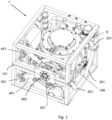
Fig. 1 shows an axonometric view of a device according to the invention mounted on a support frame. -
Figs. 2 and 3 show, respectively, a side and top view of the device of the preceding figure. -
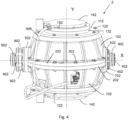
Fig. 4 shows an axonometric detail view of the container shown in the preceding figures without the support frame. -
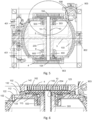
Fig. 5 shows a longitudinal section of a device according to an embodiment of the invention. -
Fig. 6 shows the detail of the upper head of the rotor of the device of the previous figure. -
Fig. 7 shows a view section of the implementation form inFigs. 5 and 6 . -
Fig. 8 shows the same view asFig. 6 , but with reference to another embodiment of the invention. -
Fig. 9 shows a corresponding three-dimensional view of the embodiment in the preceding figure. -
Fig. 10 shows a longitudinal section of a device according to another embodiment of the invention. -
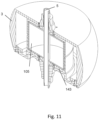
Fig. 11 shows a corresponding three-dimensional view of the embodiment in the preceding figure. - With reference to
Figs. 1 to 4 , the gyro stabilizer device according to an embodiment of the invention comprises aprismatic frame 1 withtransverse support brackets 101, reinforced by means ofstruts 201, of acontainer 2 mounted on a suspension so as to be able to oscillate around a first axis X. - In the illustrated example, the
container 2 comprises two half-shells 102 that are coupled via clampingflanges 202 bybolts 302 according to a direction Y orthogonal to the direction X of oscillation. The two half-shells 102, when coupled, form a spherical segment having bases symmetrical with respect to a plane passing through the direction of oscillation X. Each base of the segment represents the open leading end of thecontainer 2. - The suspension is achieved by means of a pair of
pins 402 onflanged supports 502 tightened bynuts 602 on fixing pin stumps provided on corresponding circular flattened surfaces 702. Said circular surfaces are formed by corresponding semicircular surfaces disposed, in diametrically opposite positions, in proximity to thecoupling flange 202 of each half-shell 102. - Each
pin 402 of the suspension engages in acorresponding housing 301 formed on thetransverse support bracket 101 by means of abearing 802 so as to allow oscillation of the container around the axis X, also known as the precession axis. - Damping of the oscillations takes place by means of a pair of
hydraulic cylinders 401 hinged with anelement 501 of theframe 1 and with acorresponding element 902 of one of the twoflanged supports 502 of the suspension. Thecylinders 401 are connected with ahydraulic circuit 601 visible inFig. 2 . - Inside the
container 2 is housed arotor 3 able to rotate around the Y axis, also known as the spin axis, transverse to the precession X axis. - The
rotor 3 includes amass 103 acting as a flywheel and ahub 203 coupled to the flywheel. The mass and hub are typically made of steel. - The
hub 203 has afirst end 303 and asecond end 403 opposite the first end. - Inside the
container 2 there are afirst support device 503 and asecond support device 603 suitable to support, respectively, the first 303 and the second 403 ends of thehub 203 of therotor 3, so as to allow the relative rotation of therotor 3 around its rotation axis Y. - Each
support device support device flange 112 of one end of thecontainer 2. The hub rotates relative to the coaxial element of thedevice bearing 903 held in place by the retainingflange 113 tightened on the closingflange 112 byscrews 123 screwed into blind holes. - The closing
flanges 112 are tightened against corresponding end annular surfaces of the two half-shells 102 byscrews 122 screwed into blind holes. - Inside the
container 2 there is anelectric motor 9 with a rotor integral with thehub 203. - On each closing
flange 112 of thecontainer 2 there is anannular spacer element 132 having a raised central portion so as to form acompartment 162 in proximity to the support bearing 903 of thehub 203. Thespacer element 132 is also responsible for the vacuum-tight closure within the container of the rotor, and an inverted hollow element in the form of alid 142 is placed thereon, defining acooling chamber 4, 4' external to thecontainer 2 in the proximity to its leading ends. Both thelid 142 and theannular element 132 are sealed byscrews 152 screwed into blind holes. Within the scope of the present specification, thechambers 4, 4' are also identified as upper chamber and lower chamber with reference to their positions in the drawings. - There is further provided a
hollow shaft 5 arranged along the spin axis Y around which therotor 3 rotates, which connects theupper chamber 4 with the lower chamber 4'. Thehollow shaft 5 may have a surface, at least partially, finned to facilitate heat exchange with the rotor. - The
hollow shaft 5 is disposed in a cavity of thehub 203 of therotor 3 and is intended to hold one or more cooling fluids and it is stationary with respect to thecontainer 2 while therotor 3 is installed rotatably around it by means of rolling bearings. - Advantageously, the fixed hollow shaft avoids the wear of the seals on the heads of it. This characteristic brings important benefits with respect to the technique known especially in the field of gyroscopic stabilizers which, having to combine compact dimensions with a high moment of inertia, rotate very quickly so that the forces generated by the gyroscopic effect have an intensity such as to bring concrete stabilizing effects on the boat, a boat which has a mass and volume much greater than the desirable mass and volume for a gyroscope.
- The
chambers 4, 4' have anopening hole 104, 104' for connection with a conduit that is part of a cooling fluid circulation circuit. In the example shown in the figures, theopening hole 104 of theupper chamber 4 constitutes the inlet and the opening hole 104' of the lower chamber 4' constitutes the outlet so that the cooling fluid can circulate from theupper chamber 4 to the lower chamber 4' through the hollow shaft and from the lower chamber 4' to theupper chamber 4 through thepipes - Obviously, the flow may also be in the opposite direction i.e. from the lower chamber 4' to the
upper chamber 4 through thehollow shaft 5 and from the upper chamber to the lower chamber through the circulation circuit. - Referring to
Fig. 2 , the circulation circuit includes apump 106 attached to the frame bycollar 206, anexpansion tank 306 with avisual level indicator 406 of the cooling fluid (typically water and glycol), and aheat exchanger 506 for heat exchange between the fluid and the external environment. - In the embodiment shown in
Figs. 5 to 7 , thechambers 4, 4' have theinnermost wall 204 finned to facilitate heat exchange with the cooling fluid. There is also present adisc 133 integral with the hub of the rotor that rotates inside thecompartment 162 obtained in the leading end of thecontainer 2. Thedisc 133 is fixed to the hub withscrews 143 screwed on blind holes. - The
disc 133 facilitates the heat exchange between therotor 3, in particular between thebearings 903, and thecorresponding cooling chamber 4, 4'. In the figures, a configuration withdiscs 133 at both ends of thehub 203 of therotor 3 is shown, but obviously it is also possible to provide for only one or none of them since it is a completely optional component like the fins on one wall of thecooling chambers 4, 4' . Also in this case, in fact, thefins 204 can be present in only one, in both or in none of the two chambers in the presence of one, two or nodisc 133. - In
Figs. 5 and 6 , the interstitial chamber separating thehub 203 of therotor 3 from thehollow shaft 5 is indicated by thenumerical reference 10. - Said
interstitial chamber 10 is radially defined by the outer shell surface of thehollow shaft 5 and the inner shell surface of therotor 203 and thus extends along the axis Y of the device as shown in the figure. - According to a preferred embodiment which can be realized in combination or sub-combination with other embodiments of the invention, the
interstitial chamber 10 is placed in a vacuum so as to reduce the friction between the rotor and the hollow shaft. The radial thickness of saidinterstitial chamber 10 is such as to prevent contact betweenhollow shaft 5 androtor 203, and at the same time the thickness is small so as to facilitate the transfer of heat by radiation to thehollow shaft 5 containing the cooling fluid. -
Figs. 8 and 9 show another embodiment in which theclosing flange 112 has an annular recess adapted to forming aflooding chamber 7 in thecontainer 2 that at least partially surrounds at least one of the two bearings in proximity to thebearing side 903 integral with thecontainer 2. Theflooding chamber 7, which may be present at only one end or at both ends of therotor 3 and have one or morefinned walls 307, includes aninlet 107 and anoutlet 207 connected with the fluid circulation circuit. In order to obtain the configuration shown inFig. 8 , thesupply pipe 606 illustrated inFig. 4 , instead of being connected directly to theinlet 104 of thecooling chamber 4, is connected to theinlet 107 of theflooding chamber 7. It will then be theoutlet 207 of thesame flooding chamber 7 that will be connected via a fitting 806 with theinlet 104 of thecooling chamber 4 to close the fluid circulation circuit. - Similar connections can be made with additional flooding chambers (not shown in the figures) obtained in the container to increase the heat exchange with the
rotor 3. - The
rotor 3 may advantageously comprise corresponding annular recesses surrounding the cooling chambers so as to increase the exchange surface between the cooling fluid and the rotor itself. - Another way to increase the exchange surface, to be used alternatively or in combination with the solutions described so far, is to use a box-
like body 105 integral with thehollow shaft 5 sealed with respect to therotor 3 and thecontainer 2 of the rotor as shown inFigs. 10 and11 . Therotor 3 has acorresponding housing 143 adapted to receive said box-like body 105 so as to be able to rotate around thehollow shaft 5 and the box-like body 105. In this way, the heat exchange between the body of therotor 3 and the fluid flowing in thehollow shaft 5 is increased in particular if the box-like body 105 and thehollow shaft 5 are in fluid-dynamic communication so as to allow the box-like body 105 to be flooded by the cooling fluid flowing inside thehollow shaft 5. - In this embodiment, the
rotating disc 133 of the embodiment shown inFig. 5 is not present but may obviously be equally present at one or both ends of therotor 3 since it is an entirely optional component. The same with regard to the finned surface or surfaces 204 which may be present in one, both or none of thecooling chambers 4, 4'. - The stabilizer device is completed by a
vacuum pump 8 in communication with thecontainer 2 through thepipes 108 visible inFig. 3 to induce vacuum inside the container so as to reduce friction, whatever type of feature is adopted to increase the heat exchange between the rotor and the cooling fluid as discussed above. - In a particularly advantageous embodiment, it is indeed the friction within the container that is exploited to cool and at the same time to slow down the rotor. For this purpose, the stabilizer may advantageously comprise a vacuum breaker device such as a valve or the like which is capable of making an inert gas, such as air, helium or hydrogen, flow on command inside the
container 2. In this way, precisely the effect due to the fluid-dynamic forces which it is desirable to eliminate is used to extract heat. By introducing, in fact, a gas in a controlled manner into thecontainer 2, a sort of scavenger effect is created, a washing one, a heat removal when the gas is subsequently extracted from the container and the vacuum restored. - To achieve this effect, an actuator device may be employed driven by a control unit, which sequentially drives the vacuum breaker valve and the
vacuum pump 8 with a time delay determined so as to allow the inert gas to enter the container, to exchange heat with the rotor and to transfer the heat exchanged outside when the inert gas is evacuated by the vacuum pump to recreate the vacuum inside thecontainer 2. - This controlled cooling effect by vacuum breaking within the container of the rotor can obviously be employed in any embodiment of the invention.
- It is also possible to provide that the control unit is interfaced not only with the
vacuum pump 8 and the vacuum breaker valve but also with theelectric motor 9. The control unit can thus be configured to open the inert gas inlet valve in thecontainer 2 in correspondence of a command of reducing the rotation of themotor 9. The motor is made to run freely during the inert gas inlet. After that, the vacuum is recreated, and the motor is accelerated again to restore the desired angular momentum. This reduces power consumption. The braking effect of viscous friction can also be used to achieve a gradual reduction in rotor inertia over a short period of time, for example at the end of navigation. - The same control unit can advantageously be interfaced with the
hydraulic system 601 controlling thecylinders 401 to correspondingly dampen oscillations around the precession axis X.
friction can also be used to achieve a gradual reduction in rotor inertia over a short period of time, for example at the end of navigation. - The same control unit can advantageously be interfaced with the
hydraulic system 601 controlling thecylinders 401 to correspondingly dampen oscillations around the precession axis X.
Claims (16)
- Anti-roll stabilizer device for boats comprising:- a container (2) adapted to be mounted on a suspension (301) so as to be able to oscillate around a first axis (X);- a mass (103) rotatably supported inside said container (2) so as to form a rotor (3) which rotates around a second axis (Y), transverse to the first axis (X); - a rotor (3) cooling system by cooling fluid,characterized by that the cooling system includes:- a hollow shaft (5) being stationary with respect to the container (2) around which said rotor (3) rotates by means of rolling bearings (903), said hollow shaft (5) being housed in a cylindrical cavity formed in the rotor (3), said cylindrical cavity and said hollow shaft being arranged along said second axis (Y);- a first (4) and a second (4') cooling chamber sealed with respect to the container (2) of the rotor (3) and towards the outside, arranged at the ends of the hollow shaft (5) and communicating through the hollow shaft (5), the first chamber (4) having an inlet (104) and the second chamber (4') an outlet (104'), said inlet and said outlet being connected to a forced circulation circuit of the cooling fluid, so that the cooling fluid can circulate from the first chamber (4) to the second chamber (4') through the hollow shaft (5), and from the second chamber (4') to the first chamber (4) through the circulation circuit.
- Device according to claim 1, wherein the forced circulation circuit of the cooling fluid comprises a pump (106), a fluid refilling reservoir and/or a heat exchanger for transferring the heat accumulated by the fluid to the external environment.
- Device according to claim 1 or 2, wherein at least one of the two cooling chambers (4, 4') comprises a wall (204, 204') with an internal finned surface to facilitate heat exchange between the wall and the cooling fluid.
- Device according to one or more of the preceding claims, wherein the hollow shaft (5) has a surface, at least partially, finned.
- Device according to one or more of the preceding claims, wherein at least one end of the rotor (303) has a disc (133) which rotates integrally with the rotor in proximity to one of the two cooling chambers (4, 4') to increase the heat exchange between the rotor and the cooling chamber (4, 4').
- Device according to claim 5, wherein the disc (133) is coupled to the rotor (3) so as to rotate outside the corresponding cooling chamber (4, 4') in proximity to a wall (204, 204') of the cooling chamber (4, 4'), in particular the wall having a finned inner surface.
- Device according to one or more of the preceding claims, wherein one or more compartments (7) obtained in the container (2) of the rotor (3) are present, said compartments being floodable by the cooling fluid to form additional cooling chambers.
- Device according to claim 7, wherein the rotor (3) comprises corresponding annular recesses surrounding the additional cooling chambers (7) so as to increase the exchange surface between the cooling fluid and the rotor (3).
- Device according to one or more of the preceding claims, wherein the rotor (3) has a hub (203) supported by the container (2) by means of one or more bearings (903) arranged in proximity to the ends of said hub, at least one flooding chamber (7) being in the container (2) which at least partially surrounds at least one of the bearings (903) in proximity to the side of the bearing (903) integral with the container (2), said flooding chamber (7) comprises an inlet (107) and an outlet (207) connected with the fluid circulation circuit.
- Device according to claim 9, wherein the flooding chamber o chambers (7) have one or more walls (307) with a finned surface.
- Device according to one or more of the preceding claims, wherein there is a box-like element (105) integral with the hollow shaft (5) sealed with respect to the rotor (3) and to the container (2) of the rotor (3), the rotor (3) having a corresponding housing (143) adapted to receive said box-like body (105) so as to be able to rotate around said hollow shaft (5) and said box-like body (105).
- Device according to claim 11, wherein the box-like body (105) and the hollow shaft (5) are in fluid-dynamic communication so that the box-like body (105) is flooded by the cooling fluid flowing in the hollow shaft (5).
- Device according to one or more of the preceding claims, wherein the container (2) of the rotor (3) is sealed with respect to the external environment being a vacuum pump (8) in communication with said container (2) for inducing a vacuum inside the container (2).
- Device according to claim 13, wherein there is a vacuum breaker device such as a valve or the like capable of making flow on command an inert gas such as, for example, the air inside the container (2) for cooling and/or braking of the rotor (3).
- Device according to claim 13 or 14, comprising an actuator device which sequentially controls the vacuum breaker valve and the vacuum pump (8) with a determined time delay so as to allow the inert gas to enter the container (2), to exchange heat with the rotor (3) and to transfer the heat exchanged outside when the inert gas is evacuated by the vacuum pump (8) to recreate the vacuum inside the container (2).
- Device according to one or more of the preceding claims, comprising an electric motor (9) inside the container (2) having a shaft capable of transmitting a torque to one of the two ends (403) of the rotor (3), a control unit interfaced with the vacuum pump (8), the vacuum breaker valve and the electric motor (9), said control unit being configured to open the valve for introducing the inert gas into the container (2) in correspondence of a command of reducing the rotation of the motor (9).
Applications Claiming Priority (1)
| Application Number | Priority Date | Filing Date | Title |
|---|---|---|---|
| IT202000024571 | 2020-10-19 |
Publications (2)
| Publication Number | Publication Date |
|---|---|
| EP3985273A1 EP3985273A1 (en) | 2022-04-20 |
| EP3985273B1 true EP3985273B1 (en) | 2024-07-24 |
Family
ID=74068544
Family Applications (1)
| Application Number | Title | Priority Date | Filing Date |
|---|---|---|---|
| EP21202601.7A Active EP3985273B1 (en) | 2020-10-19 | 2021-10-14 | Anti-roll stabilizer device for boats |
Country Status (2)
| Country | Link |
|---|---|
| US (1) | US11794863B2 (en) |
| EP (1) | EP3985273B1 (en) |
Families Citing this family (4)
| Publication number | Priority date | Publication date | Assignee | Title |
|---|---|---|---|---|
| JP2025533780A (en) * | 2022-09-27 | 2025-10-09 | ヴィーム リミテッド | Gyro Stabilizer Assembly |
| EP4594671A1 (en) * | 2022-09-27 | 2025-08-06 | Veem Ltd | Gyrostabiliser assembly |
| US12227271B1 (en) | 2023-09-11 | 2025-02-18 | Wavetamer Llc | Deceleration of gyroscopic boat roll stabilizer |
| WO2025133845A1 (en) * | 2023-12-20 | 2025-06-26 | Smartgyro S.R.L. | Gyroscope for anti-roll stabilizer and gyroscopic effect anti-roll stabilizer |
Family Cites Families (11)
| Publication number | Priority date | Publication date | Assignee | Title |
|---|---|---|---|---|
| US1342397A (en) * | 1916-01-25 | 1920-06-01 | Sperry Gyroscope Co Ltd | Controlling mechanism for ships' gyroscopes |
| US1605289A (en) * | 1921-06-01 | 1926-11-02 | Sperry Gyroscope Co Ltd | Active gyroscopic stabilizer |
| US2104226A (en) * | 1933-01-25 | 1938-01-04 | Miguel S Gonzales | Gyro stabilizer |
| US3066634A (en) * | 1960-05-06 | 1962-12-04 | Suberkrub Franz | Anti-roll stabilizers of ships |
| US7546782B2 (en) | 2006-01-12 | 2009-06-16 | Seakeeper, Inc. | Cooling bearings, motors and other rotating heat generating components |
| WO2014048228A1 (en) * | 2012-09-26 | 2014-04-03 | 杭州三花研究院有限公司 | Fin of heat exchanger and heat exchanger |
| CN104578595B (en) | 2015-02-10 | 2017-05-31 | 李文圣 | The cooling system of flywheel accumulator |
| AU2017216483B2 (en) | 2016-08-19 | 2023-02-23 | Veem Ltd | Gyrostabilisers |
| US10228198B2 (en) * | 2016-10-03 | 2019-03-12 | Aleksandr Reshetnyak | Multi-disk heat exchanger and fan unit |
| CN110131319B (en) * | 2019-04-03 | 2020-09-25 | 上海矶怃科技有限公司 | Device for cooling heat generating components for supporting or driving rotating parts |
| CN110198092B (en) * | 2019-06-19 | 2020-12-15 | 清华大学 | Heat transfer oil cooling device in hollow shaft of motor rotor and flywheel energy storage motor |
-
2021
- 2021-10-14 US US17/501,975 patent/US11794863B2/en active Active
- 2021-10-14 EP EP21202601.7A patent/EP3985273B1/en active Active
Also Published As
| Publication number | Publication date |
|---|---|
| US20220119079A1 (en) | 2022-04-21 |
| EP3985273A1 (en) | 2022-04-20 |
| US11794863B2 (en) | 2023-10-24 |
Similar Documents
| Publication | Publication Date | Title |
|---|---|---|
| EP3985273B1 (en) | Anti-roll stabilizer device for boats | |
| RU2551050C1 (en) | Power plant | |
| FI82853B (en) | REGLERSYSTEM FOER VINDTURBIN. | |
| CN1989679B (en) | Electric motor with built-in heat exchanger and method for cooling electric motor | |
| ES2638169T3 (en) | Cooling of bearings, motors and other rotating components generating heat | |
| CN115427757B (en) | Gyroscope stabilizer assembly | |
| US20240246644A1 (en) | Braking System for Gyroscopic Boat Roll Stabilizer | |
| CN203627641U (en) | Semi-active hydraulic vibration-absorption thrust bearing | |
| AU2021353490B2 (en) | Gyroscopic roll stabilizer with flywheel shaft through passage | |
| JP2020056321A (en) | Centrifugal compressor | |
| US3904256A (en) | Supporting pivot system for a centrifuge bowl | |
| JPH09144806A (en) | Linear damper type anti-rolling device | |
| CN220586050U (en) | Self-cooling magnetic suspension flywheel energy storage rotor system | |
| JP2501074B2 (en) | Canned motor pump | |
| US5904120A (en) | Viscous heater | |
| CN117748808A (en) | Magnetic suspension motor | |
| JP6858025B2 (en) | Cold fluid pump and cold fluid transfer device | |
| WO2023178699A1 (en) | Electric motor, marine propeller and ship | |
| GB2037939A (en) | A Coaxial Shaft Arrangement with Means for Damping Shaft Vibration | |
| CN222496598U (en) | Anti-rolling top | |
| CN223858956U (en) | Deep sea propulsion motor rotor cooling hollow shaft structure | |
| CN120516751B (en) | Two-stage oil-cooled rotor joint module | |
| US20140196435A1 (en) | Space Impulse Drive | |
| CN120552112A (en) | Oil-cooled rotor joint module | |
| JPH0451213Y2 (en) |
Legal Events
| Date | Code | Title | Description |
|---|---|---|---|
| PUAI | Public reference made under article 153(3) epc to a published international application that has entered the european phase |
Free format text: ORIGINAL CODE: 0009012 |
|
| STAA | Information on the status of an ep patent application or granted ep patent |
Free format text: STATUS: THE APPLICATION HAS BEEN PUBLISHED |
|
| AK | Designated contracting states |
Kind code of ref document: A1 Designated state(s): AL AT BE BG CH CY CZ DE DK EE ES FI FR GB GR HR HU IE IS IT LI LT LU LV MC MK MT NL NO PL PT RO RS SE SI SK SM TR |
|
| STAA | Information on the status of an ep patent application or granted ep patent |
Free format text: STATUS: REQUEST FOR EXAMINATION WAS MADE |
|
| 17P | Request for examination filed |
Effective date: 20220923 |
|
| RBV | Designated contracting states (corrected) |
Designated state(s): AL AT BE BG CH CY CZ DE DK EE ES FI FR GB GR HR HU IE IS IT LI LT LU LV MC MK MT NL NO PL PT RO RS SE SI SK SM TR |
|
| GRAP | Despatch of communication of intention to grant a patent |
Free format text: ORIGINAL CODE: EPIDOSNIGR1 |
|
| STAA | Information on the status of an ep patent application or granted ep patent |
Free format text: STATUS: GRANT OF PATENT IS INTENDED |
|
| INTG | Intention to grant announced |
Effective date: 20240227 |
|
| GRAS | Grant fee paid |
Free format text: ORIGINAL CODE: EPIDOSNIGR3 |
|
| GRAA | (expected) grant |
Free format text: ORIGINAL CODE: 0009210 |
|
| STAA | Information on the status of an ep patent application or granted ep patent |
Free format text: STATUS: THE PATENT HAS BEEN GRANTED |
|
| AK | Designated contracting states |
Kind code of ref document: B1 Designated state(s): AL AT BE BG CH CY CZ DE DK EE ES FI FR GB GR HR HU IE IS IT LI LT LU LV MC MK MT NL NO PL PT RO RS SE SI SK SM TR |
|
| REG | Reference to a national code |
Ref country code: GB Ref legal event code: FG4D |
|
| REG | Reference to a national code |
Ref country code: CH Ref legal event code: EP |
|
| REG | Reference to a national code |
Ref country code: DE Ref legal event code: R096 Ref document number: 602021016059 Country of ref document: DE |
|
| REG | Reference to a national code |
Ref country code: IE Ref legal event code: FG4D |
|
| REG | Reference to a national code |
Ref country code: SE Ref legal event code: TRGR |
|
| REG | Reference to a national code |
Ref country code: NL Ref legal event code: FP |
|
| REG | Reference to a national code |
Ref country code: LT Ref legal event code: MG9D |
|
| PG25 | Lapsed in a contracting state [announced via postgrant information from national office to epo] |
Ref country code: PT Free format text: LAPSE BECAUSE OF FAILURE TO SUBMIT A TRANSLATION OF THE DESCRIPTION OR TO PAY THE FEE WITHIN THE PRESCRIBED TIME-LIMIT Effective date: 20241125 |
|
| REG | Reference to a national code |
Ref country code: AT Ref legal event code: MK05 Ref document number: 1706541 Country of ref document: AT Kind code of ref document: T Effective date: 20240724 |
|
| PG25 | Lapsed in a contracting state [announced via postgrant information from national office to epo] |
Ref country code: PT Free format text: LAPSE BECAUSE OF FAILURE TO SUBMIT A TRANSLATION OF THE DESCRIPTION OR TO PAY THE FEE WITHIN THE PRESCRIBED TIME-LIMIT Effective date: 20241125 |
|
| PG25 | Lapsed in a contracting state [announced via postgrant information from national office to epo] |
Ref country code: NO Free format text: LAPSE BECAUSE OF FAILURE TO SUBMIT A TRANSLATION OF THE DESCRIPTION OR TO PAY THE FEE WITHIN THE PRESCRIBED TIME-LIMIT Effective date: 20241024 |
|
| PG25 | Lapsed in a contracting state [announced via postgrant information from national office to epo] |
Ref country code: FI Free format text: LAPSE BECAUSE OF FAILURE TO SUBMIT A TRANSLATION OF THE DESCRIPTION OR TO PAY THE FEE WITHIN THE PRESCRIBED TIME-LIMIT Effective date: 20240724 Ref country code: GR Free format text: LAPSE BECAUSE OF FAILURE TO SUBMIT A TRANSLATION OF THE DESCRIPTION OR TO PAY THE FEE WITHIN THE PRESCRIBED TIME-LIMIT Effective date: 20241025 Ref country code: PL Free format text: LAPSE BECAUSE OF FAILURE TO SUBMIT A TRANSLATION OF THE DESCRIPTION OR TO PAY THE FEE WITHIN THE PRESCRIBED TIME-LIMIT Effective date: 20240724 |
|
| PG25 | Lapsed in a contracting state [announced via postgrant information from national office to epo] |
Ref country code: BG Free format text: LAPSE BECAUSE OF FAILURE TO SUBMIT A TRANSLATION OF THE DESCRIPTION OR TO PAY THE FEE WITHIN THE PRESCRIBED TIME-LIMIT Effective date: 20240724 |
|
| PG25 | Lapsed in a contracting state [announced via postgrant information from national office to epo] |
Ref country code: LV Free format text: LAPSE BECAUSE OF FAILURE TO SUBMIT A TRANSLATION OF THE DESCRIPTION OR TO PAY THE FEE WITHIN THE PRESCRIBED TIME-LIMIT Effective date: 20240724 |
|
| PG25 | Lapsed in a contracting state [announced via postgrant information from national office to epo] |
Ref country code: IS Free format text: LAPSE BECAUSE OF FAILURE TO SUBMIT A TRANSLATION OF THE DESCRIPTION OR TO PAY THE FEE WITHIN THE PRESCRIBED TIME-LIMIT Effective date: 20241124 Ref country code: AT Free format text: LAPSE BECAUSE OF FAILURE TO SUBMIT A TRANSLATION OF THE DESCRIPTION OR TO PAY THE FEE WITHIN THE PRESCRIBED TIME-LIMIT Effective date: 20240724 |
|
| PG25 | Lapsed in a contracting state [announced via postgrant information from national office to epo] |
Ref country code: HR Free format text: LAPSE BECAUSE OF FAILURE TO SUBMIT A TRANSLATION OF THE DESCRIPTION OR TO PAY THE FEE WITHIN THE PRESCRIBED TIME-LIMIT Effective date: 20240724 |
|
| PG25 | Lapsed in a contracting state [announced via postgrant information from national office to epo] |
Ref country code: ES Free format text: LAPSE BECAUSE OF FAILURE TO SUBMIT A TRANSLATION OF THE DESCRIPTION OR TO PAY THE FEE WITHIN THE PRESCRIBED TIME-LIMIT Effective date: 20240724 Ref country code: RS Free format text: LAPSE BECAUSE OF FAILURE TO SUBMIT A TRANSLATION OF THE DESCRIPTION OR TO PAY THE FEE WITHIN THE PRESCRIBED TIME-LIMIT Effective date: 20241024 |
|
| PG25 | Lapsed in a contracting state [announced via postgrant information from national office to epo] |
Ref country code: RS Free format text: LAPSE BECAUSE OF FAILURE TO SUBMIT A TRANSLATION OF THE DESCRIPTION OR TO PAY THE FEE WITHIN THE PRESCRIBED TIME-LIMIT Effective date: 20241024 Ref country code: PL Free format text: LAPSE BECAUSE OF FAILURE TO SUBMIT A TRANSLATION OF THE DESCRIPTION OR TO PAY THE FEE WITHIN THE PRESCRIBED TIME-LIMIT Effective date: 20240724 Ref country code: NO Free format text: LAPSE BECAUSE OF FAILURE TO SUBMIT A TRANSLATION OF THE DESCRIPTION OR TO PAY THE FEE WITHIN THE PRESCRIBED TIME-LIMIT Effective date: 20241024 Ref country code: LV Free format text: LAPSE BECAUSE OF FAILURE TO SUBMIT A TRANSLATION OF THE DESCRIPTION OR TO PAY THE FEE WITHIN THE PRESCRIBED TIME-LIMIT Effective date: 20240724 Ref country code: IS Free format text: LAPSE BECAUSE OF FAILURE TO SUBMIT A TRANSLATION OF THE DESCRIPTION OR TO PAY THE FEE WITHIN THE PRESCRIBED TIME-LIMIT Effective date: 20241124 Ref country code: HR Free format text: LAPSE BECAUSE OF FAILURE TO SUBMIT A TRANSLATION OF THE DESCRIPTION OR TO PAY THE FEE WITHIN THE PRESCRIBED TIME-LIMIT Effective date: 20240724 Ref country code: GR Free format text: LAPSE BECAUSE OF FAILURE TO SUBMIT A TRANSLATION OF THE DESCRIPTION OR TO PAY THE FEE WITHIN THE PRESCRIBED TIME-LIMIT Effective date: 20241025 Ref country code: FI Free format text: LAPSE BECAUSE OF FAILURE TO SUBMIT A TRANSLATION OF THE DESCRIPTION OR TO PAY THE FEE WITHIN THE PRESCRIBED TIME-LIMIT Effective date: 20240724 Ref country code: ES Free format text: LAPSE BECAUSE OF FAILURE TO SUBMIT A TRANSLATION OF THE DESCRIPTION OR TO PAY THE FEE WITHIN THE PRESCRIBED TIME-LIMIT Effective date: 20240724 Ref country code: BG Free format text: LAPSE BECAUSE OF FAILURE TO SUBMIT A TRANSLATION OF THE DESCRIPTION OR TO PAY THE FEE WITHIN THE PRESCRIBED TIME-LIMIT Effective date: 20240724 Ref country code: AT Free format text: LAPSE BECAUSE OF FAILURE TO SUBMIT A TRANSLATION OF THE DESCRIPTION OR TO PAY THE FEE WITHIN THE PRESCRIBED TIME-LIMIT Effective date: 20240724 |
|
| PG25 | Lapsed in a contracting state [announced via postgrant information from national office to epo] |
Ref country code: SM Free format text: LAPSE BECAUSE OF FAILURE TO SUBMIT A TRANSLATION OF THE DESCRIPTION OR TO PAY THE FEE WITHIN THE PRESCRIBED TIME-LIMIT Effective date: 20240724 Ref country code: DK Free format text: LAPSE BECAUSE OF FAILURE TO SUBMIT A TRANSLATION OF THE DESCRIPTION OR TO PAY THE FEE WITHIN THE PRESCRIBED TIME-LIMIT Effective date: 20240724 Ref country code: RO Free format text: LAPSE BECAUSE OF FAILURE TO SUBMIT A TRANSLATION OF THE DESCRIPTION OR TO PAY THE FEE WITHIN THE PRESCRIBED TIME-LIMIT Effective date: 20240724 |
|
| PG25 | Lapsed in a contracting state [announced via postgrant information from national office to epo] |
Ref country code: EE Free format text: LAPSE BECAUSE OF FAILURE TO SUBMIT A TRANSLATION OF THE DESCRIPTION OR TO PAY THE FEE WITHIN THE PRESCRIBED TIME-LIMIT Effective date: 20240724 |
|
| PG25 | Lapsed in a contracting state [announced via postgrant information from national office to epo] |
Ref country code: CZ Free format text: LAPSE BECAUSE OF FAILURE TO SUBMIT A TRANSLATION OF THE DESCRIPTION OR TO PAY THE FEE WITHIN THE PRESCRIBED TIME-LIMIT Effective date: 20240724 |
|
| REG | Reference to a national code |
Ref country code: DE Ref legal event code: R097 Ref document number: 602021016059 Country of ref document: DE |
|
| PG25 | Lapsed in a contracting state [announced via postgrant information from national office to epo] |
Ref country code: IT Free format text: LAPSE BECAUSE OF FAILURE TO SUBMIT A TRANSLATION OF THE DESCRIPTION OR TO PAY THE FEE WITHIN THE PRESCRIBED TIME-LIMIT Effective date: 20240724 Ref country code: SK Free format text: LAPSE BECAUSE OF FAILURE TO SUBMIT A TRANSLATION OF THE DESCRIPTION OR TO PAY THE FEE WITHIN THE PRESCRIBED TIME-LIMIT Effective date: 20240724 |
|
| REG | Reference to a national code |
Ref country code: DE Ref legal event code: R119 Ref document number: 602021016059 Country of ref document: DE |
|
| PLBE | No opposition filed within time limit |
Free format text: ORIGINAL CODE: 0009261 |
|
| STAA | Information on the status of an ep patent application or granted ep patent |
Free format text: STATUS: NO OPPOSITION FILED WITHIN TIME LIMIT |
|
| REG | Reference to a national code |
Ref country code: CH Ref legal event code: PL |
|
| 26N | No opposition filed |
Effective date: 20250425 |
|
| PG25 | Lapsed in a contracting state [announced via postgrant information from national office to epo] |
Ref country code: MC Free format text: LAPSE BECAUSE OF FAILURE TO SUBMIT A TRANSLATION OF THE DESCRIPTION OR TO PAY THE FEE WITHIN THE PRESCRIBED TIME-LIMIT Effective date: 20240724 |
|
| PG25 | Lapsed in a contracting state [announced via postgrant information from national office to epo] |
Ref country code: DE Free format text: LAPSE BECAUSE OF NON-PAYMENT OF DUE FEES Effective date: 20250501 |
|
| PG25 | Lapsed in a contracting state [announced via postgrant information from national office to epo] |
Ref country code: LU Free format text: LAPSE BECAUSE OF NON-PAYMENT OF DUE FEES Effective date: 20241014 Ref country code: BE Free format text: LAPSE BECAUSE OF NON-PAYMENT OF DUE FEES Effective date: 20241031 |
|
| PG25 | Lapsed in a contracting state [announced via postgrant information from national office to epo] |
Ref country code: FR Free format text: LAPSE BECAUSE OF NON-PAYMENT OF DUE FEES Effective date: 20241031 |
|
| PG25 | Lapsed in a contracting state [announced via postgrant information from national office to epo] |
Ref country code: CH Free format text: LAPSE BECAUSE OF NON-PAYMENT OF DUE FEES Effective date: 20241031 |
|
| REG | Reference to a national code |
Ref country code: BE Ref legal event code: MM Effective date: 20241031 |
|
| PGFP | Annual fee paid to national office [announced via postgrant information from national office to epo] |
Ref country code: GB Payment date: 20250930 Year of fee payment: 5 |
|
| PG25 | Lapsed in a contracting state [announced via postgrant information from national office to epo] |
Ref country code: IE Free format text: LAPSE BECAUSE OF NON-PAYMENT OF DUE FEES Effective date: 20241014 |
|
| PGFP | Annual fee paid to national office [announced via postgrant information from national office to epo] |
Ref country code: NL Payment date: 20251013 Year of fee payment: 5 |
|
| PGFP | Annual fee paid to national office [announced via postgrant information from national office to epo] |
Ref country code: SE Payment date: 20251003 Year of fee payment: 5 |
|
| PG25 | Lapsed in a contracting state [announced via postgrant information from national office to epo] |
Ref country code: CY Free format text: LAPSE BECAUSE OF FAILURE TO SUBMIT A TRANSLATION OF THE DESCRIPTION OR TO PAY THE FEE WITHIN THE PRESCRIBED TIME-LIMIT; INVALID AB INITIO Effective date: 20211014 |
|
| PG25 | Lapsed in a contracting state [announced via postgrant information from national office to epo] |
Ref country code: HU Free format text: LAPSE BECAUSE OF FAILURE TO SUBMIT A TRANSLATION OF THE DESCRIPTION OR TO PAY THE FEE WITHIN THE PRESCRIBED TIME-LIMIT; INVALID AB INITIO Effective date: 20211014 |