EP3985019B1 - Recombinant human collagen and construction method therefor - Google Patents
Recombinant human collagen and construction method therefor Download PDFInfo
- Publication number
- EP3985019B1 EP3985019B1 EP20932054.8A EP20932054A EP3985019B1 EP 3985019 B1 EP3985019 B1 EP 3985019B1 EP 20932054 A EP20932054 A EP 20932054A EP 3985019 B1 EP3985019 B1 EP 3985019B1
- Authority
- EP
- European Patent Office
- Prior art keywords
- human collagen
- recombinant human
- antigenic determinant
- collagen
- region
- Prior art date
- Legal status (The legal status is an assumption and is not a legal conclusion. Google has not performed a legal analysis and makes no representation as to the accuracy of the status listed.)
- Active
Links
Images



Classifications
-
- C—CHEMISTRY; METALLURGY
- C07—ORGANIC CHEMISTRY
- C07K—PEPTIDES
- C07K14/00—Peptides having more than 20 amino acids; Gastrins; Somatostatins; Melanotropins; Derivatives thereof
- C07K14/435—Peptides having more than 20 amino acids; Gastrins; Somatostatins; Melanotropins; Derivatives thereof from animals; from humans
- C07K14/78—Connective tissue peptides, e.g. collagen, elastin, laminin, fibronectin, vitronectin or cold insoluble globulin [CIG]
-
- G—PHYSICS
- G16—INFORMATION AND COMMUNICATION TECHNOLOGY [ICT] SPECIALLY ADAPTED FOR SPECIFIC APPLICATION FIELDS
- G16B—BIOINFORMATICS, i.e. INFORMATION AND COMMUNICATION TECHNOLOGY [ICT] SPECIALLY ADAPTED FOR GENETIC OR PROTEIN-RELATED DATA PROCESSING IN COMPUTATIONAL MOLECULAR BIOLOGY
- G16B15/00—ICT specially adapted for analysing two-dimensional [2D] or three-dimensional [3D] molecular structures, e.g. structural or functional relations or structure alignment
- G16B15/30—Drug targeting using structural data; Docking or binding prediction
-
- Y—GENERAL TAGGING OF NEW TECHNOLOGICAL DEVELOPMENTS; GENERAL TAGGING OF CROSS-SECTIONAL TECHNOLOGIES SPANNING OVER SEVERAL SECTIONS OF THE IPC; TECHNICAL SUBJECTS COVERED BY FORMER USPC CROSS-REFERENCE ART COLLECTIONS [XRACs] AND DIGESTS
- Y02—TECHNOLOGIES OR APPLICATIONS FOR MITIGATION OR ADAPTATION AGAINST CLIMATE CHANGE
- Y02A—TECHNOLOGIES FOR ADAPTATION TO CLIMATE CHANGE
- Y02A50/00—TECHNOLOGIES FOR ADAPTATION TO CLIMATE CHANGE in human health protection, e.g. against extreme weather
- Y02A50/30—Against vector-borne diseases, e.g. mosquito-borne, fly-borne, tick-borne or waterborne diseases whose impact is exacerbated by climate change
Definitions
- the present invention belongs to the field of biotechnologies, and specifically to a recombinant human collagen and a method for building same.
- Collagen is the most abundant protein in mammals, accounts for about 30% of the total protein content, is widely found in animal skin, cartilage, blood vessels, and other tissues and organs, and participates in the growth, development and cellular differentiation of organisms, adhesion, binding of antigen and antibody, and other important life processes. So far, 28 different types of collagen have been identified in vertebrates and higher invertebrates. Among these types of collagen, collagen type I is the most abundant collagen in vertebrates, and is combined with other molecules in different proportions to form various tissue scaffolds such as basement membrane, ligaments, tendons, skin, and blood vessels, to provide such tissue scaffolds with high mechanical strength.
- the most typical structure of collagen is a fibrous protein formed by the twisting of peptide chains with a triple-helical structure.
- the ordered aggregation of the triple-helical molecules makes the molecular structure very stable and provides fibers with high ductility.
- the triple-helical structure allows for better mechanical strength of collagen.
- the amino acid arrangement of the primary structure of collagen presents a periodic pattern "Gly-X-Y (X and Y are any amino acids other than glycine)".
- Collagen is widely applied to food industry, pharmaceutical industry, cosmetic industry, among other industries because of its excellent biological properties such as low immunogenicity, good biocompatibility, and biodegradability.
- collagen has been widely used in medicine in the form of membranes, sponges, injections, plugs, and the like for cosmetic, orthopedic, burn, trauma, hard tissue repair, and the like.
- natural collagen is insoluble in water.
- the nature of collagen extracted from animals is not homogeneous, making further treatment very difficult.
- collagen is mainly obtained by using acid, alkaline, and various enzymatic methods from connective tissues of animals such as pigskin, cowhide or fish skin.
- a technical problem to be resolved by the present invention is to provide a recombinant human collagen and a method for building same.
- the recombinant human collagen has a short peptide segment can be directly synthesized and is suitable for large-scale preparation, operations are simple, water solubility is high, and no antigenic determinant is found.
- a recombinant human collagen is provided.
- the amino acid sequence of the collagen is SEQ ID NO. 1 and is as follows: GPAGARGNDGATGAAGPPGPTGPAGPPGFP.
- the recombinant human collagen has a single-chain single-helix structure, presents a sequence feature of the collagen"Gly-X-Y"(X and Y are any amino acids other than glycine)", has a full length of 30 amino acids, and is a human collagen type I peptide segment.
- the recombinant human collagen has a molecular mass of 2526.71Da and a theoretical isoelectric point of 5.84.
- the recombinant human collagen does not have a signal peptide and a transmembrane domain and is soluble in water.
- the recombinant human collagen is a novel protein, and no subcellular localization is found.
- the present invention further provides a method for building a recombinant human collagen, including:
- the method further includes step (4):analyzingthe determined recombinant human collagen that needs to be synthesized by using the epitope prediction tool Predicted Antigenic Peptides to determine the immunogenicity of the recombinant human collagen.
- the acquiring a sequence of a human collagen type I from an NCBI database in step (1) is as follows: searching "recombinant human collagen”in the NCBI database Gene, and downloading the sequence of the human collagen type I of NP_000079.2, a length of the sequence being 1464 amino acids.
- a process of obtaining the low antigenic determinant region in the foregoing step (2) is as follows: analyzing the foregoing human collagen type I with a length of 1464 amino acids by using the online epitope prediction tool Predicted Antigenic Peptides (URL: http://imed.med.ucm.es/Tools/antigenic.pl) to determine the antigenic determinant of the human collagen type I, to select a low antigenic determinant region of 171 amino acids at the position 230 to the position 400.
- Predicted Antigenic Peptides URL: http://imed.med.ucm.es/Tools/antigenic.pl
- a process of determining the amino acid sequence of the recombinant human-derived collagen that needs to be synthesized in the foregoing step (3) is as follows:
- the recombinant human collagen in the present invention has a short peptide segment, can be directly synthesized, has a high yield, a short cycle, high purity, and no virus risk, and is soluble in water.
- a recombinant DNA sequence for preparing a recombinant human collagen is further provided as follows:
- a method for building a recombinant human collagen includes:
- the acquiring a sequence of a human collagen type I from an NCBI database in step (1) is as follows: searching "recombinant human collagen”in the NCBI database Gene, and downloading the sequence of the human collagen type I of NP_000079.2, a length of the sequence being 1464 amino acids.
- a process of obtaining the low antigenic determinant region in the foregoing step (2) is as follows: analyzing the foregoing human collagen type I with a length of 1464 amino acids by using the online epitope prediction tool Predicted Antigenic Peptides (URL: http://imed.med.ucm.es/Tools/antigenic.p1 ) to determine the antigenic determinant of the human collagen type I, to select a low antigenic determinant region of 171 amino acids at the position 230 to the position 400.
- Predicted Antigenic Peptides URL: http://imed.med.ucm.es/Tools/antigenic.p1
- a process of determining the amino acid sequence of the recombinant human-derived collagen that needs to be synthesized in the foregoing step (3) is as follows:
- a method for synthesizing a recombinant human collagen includes the following steps:
- the purity of the synthesized recombinant human collagen found through high performance liquid chromatography detection is up to 95% (as shown in FIG. 7 ).
- the prepared recombinant human collagen has a random coil structure.
- a water solubility test of the recombinant human collagen is as follows: dissolving 32 mg of the recombinant human collagen in 8 ml of water directly without stirring, to form a clear solution with no color, no precipitation, and no floating matter. It indicates that the recombinant human collagen prepared in the present invention has adequate water solubility, and it is verified that the recombinant human collagen is a hydrophilic protein.
- the recombinant human collagen synthesized by using the method has high purity, no virus risk, and a high expression level.
- the protein can be widely applied to related biomedical products, regenerative medicine products, tissue engineering and beauty products, health care products, cosmetic products, among others.
- a recombinant human collagen has a sequence (SEQ ID NO. 1) as follows: GPAGARGNDGATGAAGPPGPTGPAGPPGFP.
- the recombinant human collagen has a single-chain single-helix structure, presents a sequence feature of the collagen G-X-Y (X and Y are any amino acids other than glycine), has a full length of 30 amino acids, and is a human collagen type I peptide segment.
- the recombinant human collagen has a molecular mass of 2526.71Da and a theoretical isoelectric point of 5.84.
- the recombinant human collagen is analyzed by using a signal peptide prediction tool SignalP, to findthat the protein has no signal peptide.
- the recombinant human collagen is analyzed by using TMHMM prediction to find that the protein does not have a transmembrane domain.
- the recombinant human collagen is analyzed by using ExPASy to find that the protein is a hydrophilic protein.
- online analysis SOPMA is performed on the recombinant human collagen to find that the protein is most likely to form an irregular winding coil (random coil) structure.
- a recombinant human collagen has a sequence (SEQ ID NO. 1) as follows: GPAGARGNDGATGAAGPPGPTGPAGPPGFP.
- the protein is analyzed by using an online epitope prediction tool Predicted Antigenic Peptides (URL: http://imed.med.ucm.es/Tools/antigenic.pl ) to determine an antigenic determinant of the protein.
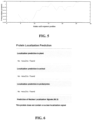
- the average antigenicity of the protein is 0.9687. An antigenic determinant is not found (as shown in FIG. 5 ).
- a recombinant human collagen has a sequence (SEQ ID NO. 1) as follows: GPAGARGNDGATGAAGPPGPTGPAGPPGFP
- the protein is analyzed online by using PredictProtein (URL: https://www.predictprotein.org/home ) to find that the protein is a novel protein. No subcellular localization is found (as shown in FIG. 6 ).
Landscapes
- Health & Medical Sciences (AREA)
- Chemical & Material Sciences (AREA)
- Life Sciences & Earth Sciences (AREA)
- Organic Chemistry (AREA)
- Biophysics (AREA)
- Medicinal Chemistry (AREA)
- General Health & Medical Sciences (AREA)
- Proteomics, Peptides & Aminoacids (AREA)
- Genetics & Genomics (AREA)
- Gastroenterology & Hepatology (AREA)
- Molecular Biology (AREA)
- Zoology (AREA)
- Toxicology (AREA)
- Biochemistry (AREA)
- Spectroscopy & Molecular Physics (AREA)
- Engineering & Computer Science (AREA)
- Bioinformatics & Cheminformatics (AREA)
- Physics & Mathematics (AREA)
- Pharmacology & Pharmacy (AREA)
- Crystallography & Structural Chemistry (AREA)
- Bioinformatics & Computational Biology (AREA)
- Biotechnology (AREA)
- Evolutionary Biology (AREA)
- Medical Informatics (AREA)
- Theoretical Computer Science (AREA)
- Peptides Or Proteins (AREA)
- Preparation Of Compounds By Using Micro-Organisms (AREA)
Description
- The present invention belongs to the field of biotechnologies, and specifically to a recombinant human collagen and a method for building same.
- Collagen is the most abundant protein in mammals, accounts for about 30% of the total protein content, is widely found in animal skin, cartilage, blood vessels, and other tissues and organs, and participates in the growth, development and cellular differentiation of organisms, adhesion, binding of antigen and antibody, and other important life processes. So far, 28 different types of collagen have been identified in vertebrates and higher invertebrates. Among these types of collagen, collagen type I is the most abundant collagen in vertebrates, and is combined with other molecules in different proportions to form various tissue scaffolds such as basement membrane, ligaments, tendons, skin, and blood vessels, to provide such tissue scaffolds with high mechanical strength.
- The most typical structure of collagen is a fibrous protein formed by the twisting of peptide chains with a triple-helical structure. The ordered aggregation of the triple-helical molecules makes the molecular structure very stable and provides fibers with high ductility. In addition, the triple-helical structure allows for better mechanical strength of collagen. The amino acid arrangement of the primary structure of collagen presents a periodic pattern "Gly-X-Y (X and Y are any amino acids other than glycine)".
- Collagen is widely applied to food industry, pharmaceutical industry, cosmetic industry, among other industries because of its excellent biological properties such as low immunogenicity, good biocompatibility, and biodegradability. In recent years, collagen has been widely used in medicine in the form of membranes, sponges, injections, plugs, and the like for cosmetic, orthopedic, burn, trauma, hard tissue repair, and the like. However, natural collagen is insoluble in water. Moreover, the nature of collagen extracted from animals is not homogeneous, making further treatment very difficult. At present, for the production of collagen, collagen is mainly obtained by using acid, alkaline, and various enzymatic methods from connective tissues of animals such as pigskin, cowhide or fish skin. However, animal-derived collagen has many virus risks, and causes xenograft rejection when acting on human body. Next, collagen synthesized by chemical methods cannot avoid the loss of biological activity. In addition, the techniques are relatively complex, and extraction methods cause heavy pollution and have high costs. As a result, the application of collagen to many fields such as the medicine field is greatly restricted.
- With the rapid development of modern molecular biology, people are beginning to turn their attention to the use of genetic engineering techniques, and produce recombinant human collagens by using various host cells from insects, transgenic mice, E. coli, and the like. For example, Fan Dai-di et al. of Northwest University applied high-density fermentation culture of E. coli to produce human-like collagens. However, the expression level of protein is less than 30%. In addition, the bacterial expression system has biosafety issues such as endotoxins and heat sources, and a protein produced by expression is often present in the form of inclusion bodies. As a result, it is relatively difficult to purify the protein, and the product is impure and not easy to be clinically applied. Therefore, nowadays, more and more scholars have started to cultivate recombinant human collagens by fermentation using engineered Yeast Pichia Pastoris. Along with advantages such as no heat source and extracellular secretion of products, there are many deficiencies such as a long fermentation cycle, low production efficiency, and low purity. Therefore, in the field of technologies for preparing recombinant human collagens, there is an urgent need to develop a method with high purity, high safety, a high yield, a short cycle, high hydrophilicity, and easy mass production. In addition, for better clinical application and to avoid rejection in human body, it is necessary to develop a low-immunogenic recombinant human collagen.
- To overcome the deficiencies in the prior art, a technical problem to be resolved by the present invention is to provide a recombinant human collagen and a method for building same. The recombinant human collagen has a short peptide segment can be directly synthesized and is suitable for large-scale preparation, operations are simple, water solubility is high, and no antigenic determinant is found.
- The technical solutions used in the present invention to resolve the foregoing technical problem are as follows:
According to a first aspect, a recombinant human collagen is provided. The amino acid sequence of the collagen is SEQ ID NO. 1 and is as follows:
GPAGARGNDGATGAAGPPGPTGPAGPPGFP. - Also disclosed, but not part of the invention, the recombinant human collagen has a single-chain single-helix structure, presents a sequence feature of the collagen"Gly-X-Y"(X and Y are any amino acids other than glycine)", has a full length of 30 amino acids, and is a human collagen type I peptide segment.
- The recombinant human collagen has a molecular mass of 2526.71Da and a theoretical isoelectric point of 5.84.
- The recombinant human collagen does not have a signal peptide and a transmembrane domain and is soluble in water.
- No antigenic determinant is found in analysis of the recombinant human collagen by using an epitope prediction tool Predicted Antigenic Peptides.
- It is found through online analysis by using SOPMA that the recombinant human collagen is most likely to form an irregular winding coil (randomcoil) structure.
- The recombinant human collagen is a novel protein, and no subcellular localization is found.
- The present invention further provides a method for building a recombinant human collagen, including:
- step (1): acquiring a sequence of a human collagen type I from an NCBI database;
- step (2): analyzing an antigenic determinant of the human collagen type I by using an online epitope prediction tool Predicted Antigenic Peptides, and performing screening to obtain a low antigenic determinant region; and
- step (3): selecting a low antigenic determinant region from the selected low antigenic determinant region by using BitGene online antigenic determinant prediction (in combination with five algorithms: antigenicity, hydrophilicity, flexibility, surface accessibility, and β turn prediction), and determining the amino acid sequence of a recombinant human collagen that needs to be synthesized.
- Further, the method further includes step (4):analyzingthe determined recombinant human collagen that needs to be synthesized by using the epitope prediction tool Predicted Antigenic Peptides to determine the immunogenicity of the recombinant human collagen.
- The acquiring a sequence of a human collagen type I from an NCBI database in step (1) is as follows:
searching "recombinant human collagen"in the NCBI database Gene, and downloading the sequence of the human collagen type I of NP_000079.2, a length of the sequence being 1464 amino acids. - A process of obtaining the low antigenic determinant region in the foregoing step (2) is as follows:
analyzing the foregoing human collagen type I with a length of 1464 amino acids by using the online epitope prediction tool Predicted Antigenic Peptides (URL: http://imed.med.ucm.es/Tools/antigenic.pl) to determine the antigenic determinant of the human collagen type I, to select a low antigenic determinant region of 171 amino acids at the position 230 to theposition 400. - A process of determining the amino acid sequence of the recombinant human-derived collagen that needs to be synthesized in the foregoing step (3) is as follows:
- analyzing the human collagen with a length of the foregoing selected 171 amino acids by using five standard methods of epitope prediction: BitGene online Kolaskar & Tongaonkar Antigenicity, Parker Hydrophilicity, Karplus & Schulz Flexibility, Emini Surface Accessibility, and Chou & Fasman Beta-Turn, to determine an antigenic determinant of the low antigenic determinant region; and
- selecting a low antigenic determinant, high hydrophilicity region, and preferentially selecting, in combination with a sequence feature of the collagen, that is, a presented arrangement pattern "Gly-X-Y (X and Y are any amino acids other than glycine)", a sequence of a low-immunogenic, hydrophilic recombinant human collagen that needs to be prepared.
- The recombinant human collagen in the present invention has a short peptide segment, can be directly synthesized, has a high yield, a short cycle, high purity, and no virus risk, and is soluble in water.
- Further, a recombinant DNA sequence for preparing a recombinant human collagen is further provided as follows:

- The recombinant human collagen and the method for building same provided in the present invention have the following advantages as compared with the prior art:
- 1. The recombinant human collagen in the present invention has a short peptide segment with a length of only 30 amino acids and can be directly synthesized by a company. Prokaryotic or eukaryotic expression is not required. Operations are simple. It is easy to obtain a large amount of protein. There is no virus risk. The purity found through high performance liquid chromatography detection is up to 95%.
- 2. The recombinant human collagen in the present invention has low immunogenicity and is soluble in water. The amino acid composition of the recombinant human collagen is the same as that of a corresponding part of the amino acid sequence of a natural collagen. The collagen does not elicit immunological rejection when applied to human body and can be widely used clinically.
-
-
FIG. 1 is an analysis chart of a signal peptide of a recombinant human collagen according to an embodiment of the present invention; -
FIG. 2 is an analysis chart of a transmembrane domain of a recombinant human collagen according to an embodiment of the present invention; -
FIG. 3 is an analysis chart of hydrophilicity of a recombinant human collagen according to an embodiment of the present invention; -
FIG. 4 is an analysis chart of the structure of a recombinant human collagen according to an embodiment of the present invention; -
FIG. 5 is a predicted chart of an antigenic determinant of a recombinant human collagen according to an embodiment of the present invention; -
FIG. 6 is a cell localization diagram of a recombinant human collagen according to an embodiment of the present invention; and -
FIG. 7 is a high performance liquid chromatograph of a recombinant human collagen according to an embodiment of the present invention. - The present invention is further described below in detail with reference to the accompanying drawings and embodiments.
- A method for building a recombinant human collagen includes:
- (1) acquiring a sequence of a human collagen type I from an NCBI database;
- (2) analyzing an antigenic determinant of the human collagen type I by using an online epitope prediction tool Predicted Antigenic Peptides, and performing screening to obtain a low antigenic determinant region;
- (3) selecting a low antigenic determinant region from the selected region by using BitGene online antigenic determinant prediction (in combination with five algorithms: antigenicity, hydrophilicity, flexibility, surface accessibility, and β turn prediction), and determining a recombinant human collagen that needs to be synthesized; and
- (4) analyzing the determined recombinant human collagen that needs to be synthesized by using the epitope prediction tool Predicted Antigenic Peptides to determine the immunogenicity of the recombinant human collagen.
- The acquiring a sequence of a human collagen type I from an NCBI database in step (1) is as follows:
searching "recombinant human collagen"in the NCBI database Gene, and downloading the sequence of the human collagen type I of NP_000079.2, a length of the sequence being 1464 amino acids. - A process of obtaining the low antigenic determinant region in the foregoing step (2) is as follows:
analyzing the foregoing human collagen type I with a length of 1464 amino acids by using the online epitope prediction tool Predicted Antigenic Peptides (URL: http://imed.med.ucm.es/Tools/antigenic.p1) to determine the antigenic determinant of the human collagen type I, to select a low antigenic determinant region of 171 amino acids at the position 230 to theposition 400. - A process of determining the amino acid sequence of the recombinant human-derived collagen that needs to be synthesized in the foregoing step (3) is as follows:
- analyzing the human collagen with a length of the foregoing selected 171 amino acids by using five standard methods of epitope prediction: BitGene online Kolaskar & Tongaonkar Antigenicity, Parker Hydrophilicity, Karplus & Schulz Flexibility, Emini Surface Accessibility, and Chou & Fasman Beta-Turn, to determine an antigenic determinant of the low antigenic determinant region; and
- selecting a low antigenic determinant, high hydrophilicity region, and preferentially selecting, in combination with a sequence feature of the collagen, that is, a presented arrangement pattern "Gly-X-Y (X and Y are any amino acids other than glycine)", the amino acid sequence of a low-immunogenic, hydrophilic recombinant human collagen that needs to be prepared (SEQ ID NO. 1)as follows: GPAGARGNDGATGAAGPPGPTGPAGPPGFP.
- A method for synthesizing a recombinant human collagen includes the following steps:
- 1. swelling solid phase resin with dichloromethane for 15 minutes, drawing off the solution, releasing fluorenylmethoxycarbonyl with a 20% piperidine/dimethylformamide solution for 15 minutes, performing washing 9 times with dimethylformamide, weighing protected amino acids, O-benzotriazole-tetramethylurea hexafluorophosphate, 1-hydroxybenzotriazole, and N,N-diisopropylethylamine for 40 minutes of condensation reaction, washing the resin 6 times with dimethylformamide after the reaction has been performed for 40 minutes, and taking a small amount of resin for reaction monitoring with a ninhydrin solution, where the reaction is complete when the solution is colorless;
- 2. releasing fluorenylmethoxycarbonyl with a 20% piperidine/dimethylformamide solution for 15 minutes, performing washing 9 times with dimethylformamide, weighing protected amino acids, O-benzotriazole-tetramethylurea hexafluorophosphate, 1-hydroxybenzotriazole, and N,N-diisopropylethylamine for 40 minutes of condensation reaction, washing the resin 6 times with dimethylformamide after the reaction has been performed for 40 minutes, taking a small amount of resin for reaction monitoring with a ninhydrin solution, where the reaction is complete when the solution turns colorless, and this process is repeated until the reaction reaches the last amino acid; and
- 3. performing acid lysis on resin peptides with 95% TFA/water for 2 hours, performing filtering to remove resin, adding a stock solution to ether to precipitate polypeptides, and centrifuging and precipitating the solution to obtain the polypeptides; and performing high performance liquid chromatography purification on the crude polypeptides, and freeze-drying the crude polypeptides to obtain pure polypeptides.
- The purity of the synthesized recombinant human collagen found through high performance liquid chromatography detection is up to 95% (as shown in
FIG. 7 ). - As observed with a microscope, the prepared recombinant human collagen has a random coil structure.
- A water solubility test of the recombinant human collagen is as follows:
dissolving 32 mg of the recombinant human collagen in 8 ml of water directly without stirring, to form a clear solution with no color, no precipitation, and no floating matter. It indicates that the recombinant human collagen prepared in the present invention has adequate water solubility, and it is verified that the recombinant human collagen is a hydrophilic protein. - The recombinant human collagen synthesized by using the method has high purity, no virus risk, and a high expression level. The protein can be widely applied to related biomedical products, regenerative medicine products, tissue engineering and beauty products, health care products, cosmetic products, among others.
- A recombinant human collagen has a sequence (SEQ ID NO. 1) as follows:
GPAGARGNDGATGAAGPPGPTGPAGPPGFP. - The recombinant human collagen has a single-chain single-helix structure, presents a sequence feature of the collagen G-X-Y (X and Y are any amino acids other than glycine), has a full length of 30 amino acids, and is a human collagen type I peptide segment.
- The recombinant human collagen has a molecular mass of 2526.71Da and a theoretical isoelectric point of 5.84.
- As shown in
FIG. 1 , the recombinant human collagen is analyzed by using a signal peptide prediction tool SignalP, to findthat the protein has no signal peptide. As shown inFIG. 2 , the recombinant human collagen is analyzed by using TMHMM prediction to find that the protein does not have a transmembrane domain. As shown inFIG. 3 , the recombinant human collagen is analyzed by using ExPASy to find that the protein is a hydrophilic protein. As shown inFIG. 4 , online analysis SOPMA is performed on the recombinant human collagen to find that the protein is most likely to form an irregular winding coil (random coil) structure. - A recombinant human collagen has a sequence (SEQ ID NO. 1) as follows:
GPAGARGNDGATGAAGPPGPTGPAGPPGFP. - The protein is analyzed by using an online epitope prediction tool Predicted Antigenic Peptides (URL: http://imed.med.ucm.es/Tools/antigenic.pl) to determine an antigenic determinant of the protein. The average antigenicity of the protein is 0.9687. An antigenic determinant is not found (as shown in
FIG. 5 ). - A recombinant human collagen has a sequence (SEQ ID NO. 1) as follows:
GPAGARGNDGATGAAGPPGPTGPAGPPGFP - The protein is analyzed online by using PredictProtein (URL: https://www.predictprotein.org/home) to find that the protein is a novel protein. No subcellular localization is found (as shown in
FIG. 6 ). -
- <110> Yaoshunze Biological Medicine (Nanjing) Co., Ltd.
- <120>Recombinant human collagen and method for building same
- <160>1
- <170>SIPOSequenceListing 1.0
- <210>1
<211>30
<212>PRT
<213>Artificial Sequence - <400>1


Claims (9)
- A recombinant human collagen, wherein the amino acid sequence of the recombinant human collagen is SEQ ID NO. 1: GPAGARGNDGATGAAGPPGPTGPAGPPGFP.
- The recombinant human collagen according to claim 1, wherein the recombinant human collagen has a molecular mass of 2526.71Da and a theoretical isoelectric point of 5.84.
- The recombinant human collagen according to claim 1, wherein the recombinant human collagen does not have a signal peptide and a transmembrane domain and is a hydrophilic protein.
- The recombinant human collagen according to claim 1, wherein the recombinant human collagen is free of an antigenic determinant and is a low-immunogenic protein.
- The recombinant human collagen according to claim 1, wherein the recombinant human collagen is capable of forming a random coil structure.
- A method for building a recombinant human collagen according to claim 1, comprising:step (1): acquiring a sequence of a human collagen type I from an NCBI database;step (2): analyzing an antigenic determinant of the human collagen type I by using an online epitope prediction tool Predicted Antigenic Peptides, and performing screening to select a low antigenic determinant region; andstep (3): selecting a low antigenic determinant, hydrophilic region from the selected low antigenic determinant region by using BitGene online antigenic determinant prediction and in combination with five algorithms: hydrophilicity, flexibility, surface accessibility, antigenicity, and β turn prediction, and determining, in combination with a sequence feature of the collagen, the amino acid sequence of a recombinant human collagen that needs to be synthesized.
- The method for building a recombinant human collagen according to claim 6, wherein the human collagen type I has a sequence number of NP_000079.2 and has a length of 1464 amino acids.
- The method for building a recombinant human collagen according to claim 7, wherein in step (2), the selected low antigenic determinant region is 171 amino acids at the position 230 to the position 400 in the human collagen type I.
- The method for building a recombinant human collagen according to claim 8, wherein in step (2), a low antigenic determinant region of 171 amino acids is analyzed by using five standard methods of epitope prediction: BitGene online antigenicity, hydrophilicity, flexibility, surface accessibility, and β turn, to determine an antigenic determinant of the low antigenic determinant region; and
a low antigenic determinant, high hydrophilicity region is selected, and the amino acid sequence of the recombinant human-derived collagen that needs to be synthesized is determined in combination with the sequence feature of the collagen, that is, a presented arrangement pattern "Gly-X-Y, X and Y being any amino acids other than glycine".
Applications Claiming Priority (2)
| Application Number | Priority Date | Filing Date | Title |
|---|---|---|---|
| CN202010331037.8A CN111499730B (en) | 2020-04-24 | 2020-04-24 | A kind of recombinant human collagen and its construction method |
| PCT/CN2020/095014 WO2021212627A1 (en) | 2020-04-24 | 2020-06-09 | Recombinant human collagen and construction method therefor |
Publications (3)
| Publication Number | Publication Date |
|---|---|
| EP3985019A1 EP3985019A1 (en) | 2022-04-20 |
| EP3985019A4 EP3985019A4 (en) | 2022-11-30 |
| EP3985019B1 true EP3985019B1 (en) | 2024-09-18 |
Family
ID=71866067
Family Applications (1)
| Application Number | Title | Priority Date | Filing Date |
|---|---|---|---|
| EP20932054.8A Active EP3985019B1 (en) | 2020-04-24 | 2020-06-09 | Recombinant human collagen and construction method therefor |
Country Status (5)
| Country | Link |
|---|---|
| US (1) | US20250320274A1 (en) |
| EP (1) | EP3985019B1 (en) |
| JP (1) | JP7261511B2 (en) |
| CN (1) | CN111499730B (en) |
| WO (1) | WO2021212627A1 (en) |
Families Citing this family (6)
| Publication number | Priority date | Publication date | Assignee | Title |
|---|---|---|---|---|
| CN114369156B (en) * | 2022-01-27 | 2023-04-25 | 陕西巨子生物技术有限公司 | Injection containing stabilized macromolecular type I recombinant collagen |
| CN114316029B (en) * | 2022-01-27 | 2023-06-27 | 西安巨子生物基因技术股份有限公司 | Transdermal absorptive peptide and recombinant collagen constructed by repetition of the same |
| CN114316030B (en) * | 2022-01-27 | 2023-06-30 | 西安巨子生物基因技术股份有限公司 | Transdermal absorptive type I recombinant collagen and application thereof |
| CN116333094B (en) * | 2023-02-04 | 2024-03-29 | 山东多美康生物医药有限公司 | A recombinant humanized type I collagen α1 and its expression vector and application |
| EP4717271A1 (en) * | 2023-07-19 | 2026-04-01 | Shanxi Jinbo Bio-Pharmaceutical Co., Ltd. | 164.88-degree recombinant humanized type iii collagen for vascular repair |
| CN117384276A (en) * | 2023-12-11 | 2024-01-12 | 上海昱菘医药科技有限公司 | Recombinant collagen and preparation method and use thereof |
Family Cites Families (10)
| Publication number | Priority date | Publication date | Assignee | Title |
|---|---|---|---|---|
| US5710252A (en) * | 1995-02-03 | 1998-01-20 | Eastman Kodak Company | Method for recombinant yeast expression and isolation of water-soluble collagen-type polypeptides |
| US6992172B1 (en) * | 1999-11-12 | 2006-01-31 | Fibrogen, Inc. | Recombinant gelatins |
| US20060100138A1 (en) * | 2004-11-10 | 2006-05-11 | Olsen David R | Implantable collagen compositions |
| WO2009053985A1 (en) * | 2007-10-26 | 2009-04-30 | Collplant Ltd. | Methods of processing recombinant procollagen |
| JP5737597B2 (en) | 2009-11-19 | 2015-06-17 | 浙江大学 | Non-natural collagen-like protein and its application |
| CN102925451B (en) | 2012-05-07 | 2014-06-04 | 陕西东大生化科技有限责任公司 | Gene recombinant human growth hormone preparation method |
| CN104474535A (en) * | 2014-12-10 | 2015-04-01 | 成都新际生物活性胶原开发有限公司 | Water-soluble gel for treating diabetic foot |
| CN109988234A (en) * | 2019-02-20 | 2019-07-09 | 江苏悦智生物医药有限公司 | 1 catenin of yeast recombination human source type i collagen α, synthetic method and its application |
| CN110003324A (en) * | 2019-03-19 | 2019-07-12 | 江苏悦智生物医药有限公司 | Recombination human source collagen and its application |
| CN110194795A (en) * | 2019-06-13 | 2019-09-03 | 郭伟 | A kind of recombination human source collagen and its application |
-
2020
- 2020-04-24 CN CN202010331037.8A patent/CN111499730B/en active Active
- 2020-06-09 US US17/619,554 patent/US20250320274A1/en active Pending
- 2020-06-09 EP EP20932054.8A patent/EP3985019B1/en active Active
- 2020-06-09 WO PCT/CN2020/095014 patent/WO2021212627A1/en not_active Ceased
- 2020-06-09 JP JP2021576296A patent/JP7261511B2/en active Active
Also Published As
| Publication number | Publication date |
|---|---|
| CN111499730B (en) | 2021-07-20 |
| EP3985019A1 (en) | 2022-04-20 |
| US20250320274A1 (en) | 2025-10-16 |
| JP7261511B2 (en) | 2023-04-20 |
| CN111499730A (en) | 2020-08-07 |
| WO2021212627A1 (en) | 2021-10-28 |
| EP3985019A4 (en) | 2022-11-30 |
| JP2022538087A (en) | 2022-08-31 |
Similar Documents
| Publication | Publication Date | Title |
|---|---|---|
| EP3985019A1 (en) | Recombinant human collagen and construction method therefor | |
| KR102559311B1 (en) | Recombinant human type XVII collagen, manufacturing method and application | |
| CN110606896B (en) | Recombinant human III-type collagen alpha 1 chain and application thereof | |
| CN110845603B (en) | Human collagen type 17 polypeptide, production method and use thereof | |
| CN109593126B (en) | Polypeptides, methods for their production and uses | |
| CN105061589B (en) | A kind of method of recombined human NTx albumen and its immobilization fermentation production | |
| CN102443057B (en) | Recombinant humanized collagen and its preparation method | |
| CN114276435B (en) | Recombinant humanized III type collagen and application thereof | |
| US7396912B2 (en) | Collagen production method | |
| CN116874589B (en) | A type III humanized collagen, its preparation method and application | |
| CN117126874B (en) | Biological method for preparing 164.88 DEG triple-helix structure collagen on large scale | |
| JP7459362B1 (en) | Recombinant humanized collagen and its applications | |
| CN120157755B (en) | Recombinant III type humanized collagen and encoding gene thereof, protein preparation, preparation method of protein preparation, application of recombinant III type humanized collagen and skin care product | |
| JPWO2015167003A1 (en) | Collagen or atelocollagen degradation product, method for producing the degradation product, and use of the degradation product | |
| CN102772822A (en) | Application of collagen matrix as tissue engineering scaffold | |
| JP2006257013A (en) | Fish scale collagen gel and method for producing the same | |
| CN115925986A (en) | A kind of recombinant fusion elastin, preparation method and application | |
| CN119462970A (en) | A novel recombinant protein TAT-FLG2 with cell membrane penetration ability and its application | |
| CN119874880A (en) | Preparation method of recombinant type III human collagen | |
| EA044700B1 (en) | RECOMBINANT HUMAN COLLAGEN AND METHOD FOR ITS CONSTRUCTION | |
| CN121064345B (en) | Triple helix recombinant humanized III type collagen, preparation method and application | |
| CN118955692B (en) | A recombinant collagen with transdermal effect and its preparation method and application | |
| CN119552267A (en) | Recombinant humanized type III collagen and preparation method and application thereof | |
| CN121779577A (en) | Recombinant III type collagen with transdermal function and preparation method and application thereof | |
| KR20240004264A (en) | Method for producing materials using collagen from cultured animal cells |
Legal Events
| Date | Code | Title | Description |
|---|---|---|---|
| STAA | Information on the status of an ep patent application or granted ep patent |
Free format text: STATUS: THE INTERNATIONAL PUBLICATION HAS BEEN MADE |
|
| PUAI | Public reference made under article 153(3) epc to a published international application that has entered the european phase |
Free format text: ORIGINAL CODE: 0009012 |
|
| STAA | Information on the status of an ep patent application or granted ep patent |
Free format text: STATUS: REQUEST FOR EXAMINATION WAS MADE |
|
| 17P | Request for examination filed |
Effective date: 20220114 |
|
| AK | Designated contracting states |
Kind code of ref document: A1 Designated state(s): AL AT BE BG CH CY CZ DE DK EE ES FI FR GB GR HR HU IE IS IT LI LT LU LV MC MK MT NL NO PL PT RO RS SE SI SK SM TR |
|
| A4 | Supplementary search report drawn up and despatched |
Effective date: 20221102 |
|
| RIC1 | Information provided on ipc code assigned before grant |
Ipc: C07K 14/78 20060101AFI20221026BHEP |
|
| DAV | Request for validation of the european patent (deleted) | ||
| DAX | Request for extension of the european patent (deleted) | ||
| GRAP | Despatch of communication of intention to grant a patent |
Free format text: ORIGINAL CODE: EPIDOSNIGR1 |
|
| STAA | Information on the status of an ep patent application or granted ep patent |
Free format text: STATUS: GRANT OF PATENT IS INTENDED |
|
| INTG | Intention to grant announced |
Effective date: 20240604 |
|
| GRAS | Grant fee paid |
Free format text: ORIGINAL CODE: EPIDOSNIGR3 |
|
| GRAA | (expected) grant |
Free format text: ORIGINAL CODE: 0009210 |
|
| STAA | Information on the status of an ep patent application or granted ep patent |
Free format text: STATUS: THE PATENT HAS BEEN GRANTED |
|
| RAP3 | Party data changed (applicant data changed or rights of an application transferred) |
Owner name: NANTONG UNIVERSITY |
|
| AK | Designated contracting states |
Kind code of ref document: B1 Designated state(s): AL AT BE BG CH CY CZ DE DK EE ES FI FR GB GR HR HU IE IS IT LI LT LU LV MC MK MT NL NO PL PT RO RS SE SI SK SM TR |
|
| P01 | Opt-out of the competence of the unified patent court (upc) registered |
Free format text: CASE NUMBER: APP_46538/2024 Effective date: 20240811 |
|
| REG | Reference to a national code |
Ref country code: GB Ref legal event code: FG4D |
|
| REG | Reference to a national code |
Ref country code: CH Ref legal event code: EP |
|
| REG | Reference to a national code |
Ref country code: DE Ref legal event code: R096 Ref document number: 602020038159 Country of ref document: DE |
|
| REG | Reference to a national code |
Ref country code: IE Ref legal event code: FG4D |
|
| REG | Reference to a national code |
Ref country code: LT Ref legal event code: MG9D |
|
| PG25 | Lapsed in a contracting state [announced via postgrant information from national office to epo] |
Ref country code: NO Free format text: LAPSE BECAUSE OF FAILURE TO SUBMIT A TRANSLATION OF THE DESCRIPTION OR TO PAY THE FEE WITHIN THE PRESCRIBED TIME-LIMIT Effective date: 20241218 |
|
| PG25 | Lapsed in a contracting state [announced via postgrant information from national office to epo] |
Ref country code: GR Free format text: LAPSE BECAUSE OF FAILURE TO SUBMIT A TRANSLATION OF THE DESCRIPTION OR TO PAY THE FEE WITHIN THE PRESCRIBED TIME-LIMIT Effective date: 20241219 Ref country code: FI Free format text: LAPSE BECAUSE OF FAILURE TO SUBMIT A TRANSLATION OF THE DESCRIPTION OR TO PAY THE FEE WITHIN THE PRESCRIBED TIME-LIMIT Effective date: 20240918 |
|
| PG25 | Lapsed in a contracting state [announced via postgrant information from national office to epo] |
Ref country code: BG Free format text: LAPSE BECAUSE OF FAILURE TO SUBMIT A TRANSLATION OF THE DESCRIPTION OR TO PAY THE FEE WITHIN THE PRESCRIBED TIME-LIMIT Effective date: 20240918 |
|
| PG25 | Lapsed in a contracting state [announced via postgrant information from national office to epo] |
Ref country code: LV Free format text: LAPSE BECAUSE OF FAILURE TO SUBMIT A TRANSLATION OF THE DESCRIPTION OR TO PAY THE FEE WITHIN THE PRESCRIBED TIME-LIMIT Effective date: 20240918 |
|
| PG25 | Lapsed in a contracting state [announced via postgrant information from national office to epo] |
Ref country code: HR Free format text: LAPSE BECAUSE OF FAILURE TO SUBMIT A TRANSLATION OF THE DESCRIPTION OR TO PAY THE FEE WITHIN THE PRESCRIBED TIME-LIMIT Effective date: 20240918 |
|
| REG | Reference to a national code |
Ref country code: NL Ref legal event code: MP Effective date: 20240918 |
|
| PG25 | Lapsed in a contracting state [announced via postgrant information from national office to epo] |
Ref country code: RS Free format text: LAPSE BECAUSE OF FAILURE TO SUBMIT A TRANSLATION OF THE DESCRIPTION OR TO PAY THE FEE WITHIN THE PRESCRIBED TIME-LIMIT Effective date: 20241218 |
|
| PG25 | Lapsed in a contracting state [announced via postgrant information from national office to epo] |
Ref country code: RS Free format text: LAPSE BECAUSE OF FAILURE TO SUBMIT A TRANSLATION OF THE DESCRIPTION OR TO PAY THE FEE WITHIN THE PRESCRIBED TIME-LIMIT Effective date: 20241218 Ref country code: NO Free format text: LAPSE BECAUSE OF FAILURE TO SUBMIT A TRANSLATION OF THE DESCRIPTION OR TO PAY THE FEE WITHIN THE PRESCRIBED TIME-LIMIT Effective date: 20241218 Ref country code: LV Free format text: LAPSE BECAUSE OF FAILURE TO SUBMIT A TRANSLATION OF THE DESCRIPTION OR TO PAY THE FEE WITHIN THE PRESCRIBED TIME-LIMIT Effective date: 20240918 Ref country code: HR Free format text: LAPSE BECAUSE OF FAILURE TO SUBMIT A TRANSLATION OF THE DESCRIPTION OR TO PAY THE FEE WITHIN THE PRESCRIBED TIME-LIMIT Effective date: 20240918 Ref country code: GR Free format text: LAPSE BECAUSE OF FAILURE TO SUBMIT A TRANSLATION OF THE DESCRIPTION OR TO PAY THE FEE WITHIN THE PRESCRIBED TIME-LIMIT Effective date: 20241219 Ref country code: FI Free format text: LAPSE BECAUSE OF FAILURE TO SUBMIT A TRANSLATION OF THE DESCRIPTION OR TO PAY THE FEE WITHIN THE PRESCRIBED TIME-LIMIT Effective date: 20240918 Ref country code: BG Free format text: LAPSE BECAUSE OF FAILURE TO SUBMIT A TRANSLATION OF THE DESCRIPTION OR TO PAY THE FEE WITHIN THE PRESCRIBED TIME-LIMIT Effective date: 20240918 |
|
| REG | Reference to a national code |
Ref country code: AT Ref legal event code: MK05 Ref document number: 1724636 Country of ref document: AT Kind code of ref document: T Effective date: 20240918 |
|
| PG25 | Lapsed in a contracting state [announced via postgrant information from national office to epo] |
Ref country code: NL Free format text: LAPSE BECAUSE OF FAILURE TO SUBMIT A TRANSLATION OF THE DESCRIPTION OR TO PAY THE FEE WITHIN THE PRESCRIBED TIME-LIMIT Effective date: 20240918 |
|
| PG25 | Lapsed in a contracting state [announced via postgrant information from national office to epo] |
Ref country code: PT Free format text: LAPSE BECAUSE OF FAILURE TO SUBMIT A TRANSLATION OF THE DESCRIPTION OR TO PAY THE FEE WITHIN THE PRESCRIBED TIME-LIMIT Effective date: 20250120 Ref country code: IS Free format text: LAPSE BECAUSE OF FAILURE TO SUBMIT A TRANSLATION OF THE DESCRIPTION OR TO PAY THE FEE WITHIN THE PRESCRIBED TIME-LIMIT Effective date: 20250118 |
|
| PG25 | Lapsed in a contracting state [announced via postgrant information from national office to epo] |
Ref country code: RO Free format text: LAPSE BECAUSE OF FAILURE TO SUBMIT A TRANSLATION OF THE DESCRIPTION OR TO PAY THE FEE WITHIN THE PRESCRIBED TIME-LIMIT Effective date: 20240918 Ref country code: SM Free format text: LAPSE BECAUSE OF FAILURE TO SUBMIT A TRANSLATION OF THE DESCRIPTION OR TO PAY THE FEE WITHIN THE PRESCRIBED TIME-LIMIT Effective date: 20240918 |
|
| PG25 | Lapsed in a contracting state [announced via postgrant information from national office to epo] |
Ref country code: ES Free format text: LAPSE BECAUSE OF FAILURE TO SUBMIT A TRANSLATION OF THE DESCRIPTION OR TO PAY THE FEE WITHIN THE PRESCRIBED TIME-LIMIT Effective date: 20240918 |
|
| PG25 | Lapsed in a contracting state [announced via postgrant information from national office to epo] |
Ref country code: AT Free format text: LAPSE BECAUSE OF FAILURE TO SUBMIT A TRANSLATION OF THE DESCRIPTION OR TO PAY THE FEE WITHIN THE PRESCRIBED TIME-LIMIT Effective date: 20240918 Ref country code: EE Free format text: LAPSE BECAUSE OF FAILURE TO SUBMIT A TRANSLATION OF THE DESCRIPTION OR TO PAY THE FEE WITHIN THE PRESCRIBED TIME-LIMIT Effective date: 20240918 |
|
| PG25 | Lapsed in a contracting state [announced via postgrant information from national office to epo] |
Ref country code: CZ Free format text: LAPSE BECAUSE OF FAILURE TO SUBMIT A TRANSLATION OF THE DESCRIPTION OR TO PAY THE FEE WITHIN THE PRESCRIBED TIME-LIMIT Effective date: 20240918 Ref country code: PL Free format text: LAPSE BECAUSE OF FAILURE TO SUBMIT A TRANSLATION OF THE DESCRIPTION OR TO PAY THE FEE WITHIN THE PRESCRIBED TIME-LIMIT Effective date: 20240918 |
|
| PG25 | Lapsed in a contracting state [announced via postgrant information from national office to epo] |
Ref country code: IT Free format text: LAPSE BECAUSE OF FAILURE TO SUBMIT A TRANSLATION OF THE DESCRIPTION OR TO PAY THE FEE WITHIN THE PRESCRIBED TIME-LIMIT Effective date: 20240918 Ref country code: SK Free format text: LAPSE BECAUSE OF FAILURE TO SUBMIT A TRANSLATION OF THE DESCRIPTION OR TO PAY THE FEE WITHIN THE PRESCRIBED TIME-LIMIT Effective date: 20240918 |
|
| REG | Reference to a national code |
Ref country code: DE Ref legal event code: R097 Ref document number: 602020038159 Country of ref document: DE |
|
| PGFP | Annual fee paid to national office [announced via postgrant information from national office to epo] |
Ref country code: DE Payment date: 20250617 Year of fee payment: 6 |
|
| PG25 | Lapsed in a contracting state [announced via postgrant information from national office to epo] |
Ref country code: DK Free format text: LAPSE BECAUSE OF FAILURE TO SUBMIT A TRANSLATION OF THE DESCRIPTION OR TO PAY THE FEE WITHIN THE PRESCRIBED TIME-LIMIT Effective date: 20240918 |
|
| PGFP | Annual fee paid to national office [announced via postgrant information from national office to epo] |
Ref country code: GB Payment date: 20250625 Year of fee payment: 6 |
|
| PGFP | Annual fee paid to national office [announced via postgrant information from national office to epo] |
Ref country code: FR Payment date: 20250630 Year of fee payment: 6 |
|
| PLBE | No opposition filed within time limit |
Free format text: ORIGINAL CODE: 0009261 |
|
| STAA | Information on the status of an ep patent application or granted ep patent |
Free format text: STATUS: NO OPPOSITION FILED WITHIN TIME LIMIT |
|
| 26N | No opposition filed |
Effective date: 20250619 |
|
| PG25 | Lapsed in a contracting state [announced via postgrant information from national office to epo] |
Ref country code: SE Free format text: LAPSE BECAUSE OF FAILURE TO SUBMIT A TRANSLATION OF THE DESCRIPTION OR TO PAY THE FEE WITHIN THE PRESCRIBED TIME-LIMIT Effective date: 20240918 |
|
| REG | Reference to a national code |
Ref country code: CH Ref legal event code: H13 Free format text: ST27 STATUS EVENT CODE: U-0-0-H10-H13 (AS PROVIDED BY THE NATIONAL OFFICE) Effective date: 20260127 |
|
| PG25 | Lapsed in a contracting state [announced via postgrant information from national office to epo] |
Ref country code: MC Free format text: LAPSE BECAUSE OF FAILURE TO SUBMIT A TRANSLATION OF THE DESCRIPTION OR TO PAY THE FEE WITHIN THE PRESCRIBED TIME-LIMIT Effective date: 20240918 |
|
| PG25 | Lapsed in a contracting state [announced via postgrant information from national office to epo] |
Ref country code: LU Free format text: LAPSE BECAUSE OF NON-PAYMENT OF DUE FEES Effective date: 20250609 |
|
| REG | Reference to a national code |
Ref country code: BE Ref legal event code: MM Effective date: 20250630 |
|
| PG25 | Lapsed in a contracting state [announced via postgrant information from national office to epo] |
Ref country code: IE Free format text: LAPSE BECAUSE OF NON-PAYMENT OF DUE FEES Effective date: 20250609 |
|
| PG25 | Lapsed in a contracting state [announced via postgrant information from national office to epo] |
Ref country code: BE Free format text: LAPSE BECAUSE OF NON-PAYMENT OF DUE FEES Effective date: 20250630 |
|
| PG25 | Lapsed in a contracting state [announced via postgrant information from national office to epo] |
Ref country code: CH Free format text: LAPSE BECAUSE OF NON-PAYMENT OF DUE FEES Effective date: 20250630 |