EP3982311A1 - Transportation system and operation method thereof - Google Patents
Transportation system and operation method thereof Download PDFInfo
- Publication number
- EP3982311A1 EP3982311A1 EP21200778.5A EP21200778A EP3982311A1 EP 3982311 A1 EP3982311 A1 EP 3982311A1 EP 21200778 A EP21200778 A EP 21200778A EP 3982311 A1 EP3982311 A1 EP 3982311A1
- Authority
- EP
- European Patent Office
- Prior art keywords
- transportation
- passenger
- information
- server
- movement
- Prior art date
- Legal status (The legal status is an assumption and is not a legal conclusion. Google has not performed a legal analysis and makes no representation as to the accuracy of the status listed.)
- Granted
Links
Images



Classifications
-
- G—PHYSICS
- G06—COMPUTING OR CALCULATING; COUNTING
- G06Q—INFORMATION AND COMMUNICATION TECHNOLOGY [ICT] SPECIALLY ADAPTED FOR ADMINISTRATIVE, COMMERCIAL, FINANCIAL, MANAGERIAL OR SUPERVISORY PURPOSES; SYSTEMS OR METHODS SPECIALLY ADAPTED FOR ADMINISTRATIVE, COMMERCIAL, FINANCIAL, MANAGERIAL OR SUPERVISORY PURPOSES, NOT OTHERWISE PROVIDED FOR
- G06Q30/00—Commerce
- G06Q30/06—Buying, selling or leasing transactions
- G06Q30/08—Auctions
-
- G—PHYSICS
- G06—COMPUTING OR CALCULATING; COUNTING
- G06Q—INFORMATION AND COMMUNICATION TECHNOLOGY [ICT] SPECIALLY ADAPTED FOR ADMINISTRATIVE, COMMERCIAL, FINANCIAL, MANAGERIAL OR SUPERVISORY PURPOSES; SYSTEMS OR METHODS SPECIALLY ADAPTED FOR ADMINISTRATIVE, COMMERCIAL, FINANCIAL, MANAGERIAL OR SUPERVISORY PURPOSES, NOT OTHERWISE PROVIDED FOR
- G06Q10/00—Administration; Management
- G06Q10/06—Resources, workflows, human or project management; Enterprise or organisation planning; Enterprise or organisation modelling
- G06Q10/063—Operations research, analysis or management
- G06Q10/0631—Resource planning, allocation, distributing or scheduling for enterprises or organisations
- G06Q10/06315—Needs-based resource requirements planning or analysis
-
- G—PHYSICS
- G08—SIGNALLING
- G08G—TRAFFIC CONTROL SYSTEMS
- G08G1/00—Traffic control systems for road vehicles
- G08G1/123—Traffic control systems for road vehicles indicating the position of vehicles, e.g. scheduled vehicles; Managing passenger vehicles circulating according to a fixed timetable, e.g. buses, trains, trams
- G08G1/127—Traffic control systems for road vehicles indicating the position of vehicles, e.g. scheduled vehicles; Managing passenger vehicles circulating according to a fixed timetable, e.g. buses, trains, trams to a central station ; Indicators in a central station
-
- G—PHYSICS
- G06—COMPUTING OR CALCULATING; COUNTING
- G06Q—INFORMATION AND COMMUNICATION TECHNOLOGY [ICT] SPECIALLY ADAPTED FOR ADMINISTRATIVE, COMMERCIAL, FINANCIAL, MANAGERIAL OR SUPERVISORY PURPOSES; SYSTEMS OR METHODS SPECIALLY ADAPTED FOR ADMINISTRATIVE, COMMERCIAL, FINANCIAL, MANAGERIAL OR SUPERVISORY PURPOSES, NOT OTHERWISE PROVIDED FOR
- G06Q50/00—Information and communication technology [ICT] specially adapted for implementation of business processes of specific business sectors, e.g. utilities or tourism
- G06Q50/40—Business processes related to the transportation industry
-
- G—PHYSICS
- G08—SIGNALLING
- G08G—TRAFFIC CONTROL SYSTEMS
- G08G1/00—Traffic control systems for road vehicles
- G08G1/123—Traffic control systems for road vehicles indicating the position of vehicles, e.g. scheduled vehicles; Managing passenger vehicles circulating according to a fixed timetable, e.g. buses, trains, trams
-
- G—PHYSICS
- G08—SIGNALLING
- G08G—TRAFFIC CONTROL SYSTEMS
- G08G5/00—Traffic control systems for aircraft
-
- G—PHYSICS
- G08—SIGNALLING
- G08G—TRAFFIC CONTROL SYSTEMS
- G08G5/00—Traffic control systems for aircraft
- G08G5/50—Navigation or guidance aids
- G08G5/56—Navigation or guidance aids for two or more aircraft
-
- H—ELECTRICITY
- H04—ELECTRIC COMMUNICATION TECHNIQUE
- H04L—TRANSMISSION OF DIGITAL INFORMATION, e.g. TELEGRAPHIC COMMUNICATION
- H04L67/00—Network arrangements or protocols for supporting network services or applications
- H04L67/01—Protocols
- H04L67/12—Protocols specially adapted for proprietary or special-purpose networking environments, e.g. medical networks, sensor networks, networks in vehicles or remote metering networks
Definitions
- the present invention relates to a transportation system configured such that a plurality of hubs is provided in corresponding areas and transportation means are parked in connection slots or landing pads provided at each hub and such that a server determines the number or type of transportation means to be allocated to each hub based on data about population movement between the areas and allocates the transportation means to each hub and an operation method thereof.
- the passenger In the case in which a passenger is late for departure, the passenger must wait for the next departure time. In the case in which the passenger moves to a destination while transferring from a vehicle, a train, an airplane, or a ship to another vehicle, another train, another airplane, or another ship, the passenger must move to a terminal, a railroad station, an airport, or a port at which a transportation means for transfer is located. In the case in which the number of passengers who wish to move to a specific area at a specific time abruptly increases, some passengers cannot move to the specific area at the specific time due to more than the fixed number for a vehicle, a train, an airplane, or a ship departed at the time.
- a transportation system includes a plurality of hubs, each of the hubs corresponding to an area and including a plurality of connection slots or one or more landing pads, each of the connection slots and the landing pads being configured to accommodate a transportation unit; and a server configured to determine a number or type of transportations units to be allocated to each of the hubs based on movement data related to population movement between the areas and to allocate each of the transportation units to a respective hub.
- the transportation units may include air mobilities or vehicles, the vehicles may be categorized by use, the plurality of connection slots, in which the vehicles are accommodated, may be grouped by category, and the grouped connection slots may be adjacent to each other.
- the transportation units may be vehicles, and in a case in which the vehicles are accommodated in the connection slots, each hub may be connected to interior spaces of the respective vehicles through the connection slots.
- the movement data may include route data related to a population movement route or quantity data related to a number of floating population, and the server may be configured to generate the route data or the quantity data based on integrated information including climates, issues, health, trends, or events by area.
- the route data may be data related to a route along which population moves between the areas by period, and the server may be configured to allocate a larger number of transportation units to a hub located on a route on which population movement is more frequent.
- the quantity data may be data related to a number of population moving between the areas by period, and the server may be configured to allocate a larger number of transportation units to a hub located in an area having higher population movement.
- the server may be configured to modify previously generated movement data based on the changed integrated information and to change the number or type of transportation units to be allocated to the respective hub based on the modified movement data.
- the server may be configured to set allocation intervals of the transportation units allocated to the respective hub based on the movement data and to determine the number or type of transportation units to be allocated to the respective hub at the allocation intervals.
- the server may be configured to collect passenger information related to a use of the transportation units preferred by a passenger, to match the passenger with the connection slot or the transportation units based on the passenger information, and to guide the passenger to the matched connection slot or transportation units.
- the server may be configured to request consent for collection of passenger information upon receiving a request for allocation of the transportation units from a terminal of the passenger, and in a case in which the consent for collection of passenger information is obtained from the terminal of the passenger, the server may be configured to collect the passenger information from the terminal of the passenger.
- the passenger information may include retrieval information of the terminal of the passenger, location information, health information, picture information, or purchase information
- the server may be configured to select a use of the transportation units to be matched with the passenger based on the retrieval information of the terminal of the passenger, the location information, the health information, the picture information, or the purchase information.
- the server may be configured to set a movement route of the transportation units based on the use of the transportation units matched with the passenger, and to control the transportation units to move along the set movement route after boarding of the passenger.
- Articles provided in the plurality of vehicles or air mobilities may be replaced depending on a use or category thereof.
- the server may be configured to give an order such that articles to be provided in the vehicles or the air mobilities allocated to the respective hub are delivered to the respective hub.
- an operation method of a transportation system that includes a plurality of hubs, each of the hubs corresponding to an area and including a plurality of connection slots or one or more landing pads, each of the connection slots and the landing pads being configured to accommodate a transportation unit, the operation method including: determining a number or type of transportation units to be allocated to each of the hubs based on movement data related to population movement between each of the areas; and allocating the transportation units to a respective hub.
- the operation method may include generating movement data based on integrated information including climates, issues, health, trends, or events by area before the determining the number or type of transportation units.
- the operation method may include, in a case in which the integrated information is changed, modifying previously generated movement data based on the changed integrated information and changing the number or type of transportation units to be allocated to the respective hub based on the modified movement data after the allocating the transportation units to the respective hub.
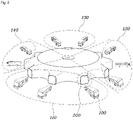
- FIG. 1 is a view showing vehicles and connection slots in a hub of a transportation system according to an embodiment of the present invention.
- FIG. 2 is a view showing that a plurality of vehicles is categorized into grouped connection slots by use in the hub of the transportation system according to the embodiment of the present invention.
- FIG. 3 is a view showing that transportation means are allocated to a hub located in each area based on movement data in the transportation system according to the embodiment of the present invention.
- FIG. 4 is a flowchart showing an operation method of the transportation system according to the embodiment of the present invention.
- FIG. 1 is a view showing vehicles and connection slots in a hub of a transportation system according to an embodiment of the present invention.
- FIG. 2 is a view showing that a plurality of vehicles is categorized into grouped connection slots by use in the hub of the transportation system according to the embodiment of the present invention.
- the transportation system according to the embodiment of the present invention includes a plurality of hubs, each of the hubs being located at a corresponding area, each of the hubs being provided with a plurality of connection slots 200 or one or more landing pads, transportation means being parked in the connection slots 200 or the landing pads, and a server configured to determine the number or type of transportation means to be allocated to a hub located in each area based on movement data about population movement between areas and to allocate the transportation means to each hub.
- the transportation means may be air mobilities or vehicles 100, the vehicles 100 may be categorized by use, the plurality of connection slots 200, in which the vehicles 100 are parked, may be grouped by category, and each of the connection slots 200 in the grouped connection slots 110, 120, 130 and 140 may be disposed adjacent to each other.
- the one or more landing pads may be provided above the plurality of connection slots 200, and air mobilities may be landed on the landing pads. In the case in which a plurality of landing pads is provided, a plurality of air mobilities may be simultaneously landed.
- the plurality of air mobilities may be categorized by use, a plurality of landing pads, on which the air mobilities are parked, may be grouped by category, and the grouped landing pads may be disposed adjacent to each other.
- the transportation means may be vehicles.
- the hub In the case in which vehicles are parked in the connection slots, the hub may be connected to interior spaces of the vehicles through the connection slots.
- the hub may perform control such that the vehicles 100 or the air mobilities are provided with articles necessary for various activities and such that the vehicles 100 or the air mobilities are disposed in the connection slots 200 or the landing pads in the hub depending on demand or preference of the passengers.
- the hub is a complex terminal. The passengers may board the vehicles 100 or the air mobilities in the hub, or may also use the hub as transfer passages. In the case in which connection slots 200 or landing pads grouped by category are disposed adjacent to each other, therefore, passengers belonging to the same categories may more easily and rapidly move to and board the vehicles.
- FIG. 3 is a view showing that transportation means are allocated to a hub located in each area based on movement data in the transportation system according to the embodiment of the present invention.
- the movement data may include route data about a population movement route or quantity data about the number of floating population
- the server may generate the route data or the quantity data based on integrated information including climates, issues, health, trends, or events by area.
- the server may predict population movement based on climate information, such as weather, seasons, abnormal climates (heavy rain and heat wave), and typhoons, by period or area to generate route data or quantity data, or may predict population movement based on issue information, such as social, economic, cultural, and political issues, to generate route data or quantity data.
- the server may predict population movement based on health information, such as diseases, contagious diseases, and personal hygiene management, trend information, such as broadcasting, travel, and culture, or event information, such as local events, traditional events, film festivals, cultural events, and seasonal events, to generate route data or quantity data.
- health information such as diseases, contagious diseases, and personal hygiene management
- trend information such as broadcasting, travel, and culture
- event information such as local events, traditional events, film festivals, cultural events, and seasonal events
- the server predicts the population movement route and the number of floating population using a big data analysis-based technique (Al) based on integrated information to allocate vehicles or air mobilities to each local hub.
- Al big data analysis-based technique
- route data are data about a route along which population moves between areas by period
- the server may allocate a larger number of transportation means to a hub located on a route on which population movement is more frequent.
- the frequency of population movement in hub C is higher, since hub C becomes a movement route of hub A, hub E, and hub F, unlike hub B or hub E.
- the server allocate a larger number of vehicles or air mobilities to a hub located at a transit area, like hub C.
- quantity data are data about the number of population moving between areas by period
- the server may allocate a larger number of transportation means to a hub located at an area having higher population movement.
- the number of population moving between hub A and hub B is greater than the number of population moving between hub A and hub B, and therefore demand for movement at an area at which hub D is located is higher than demand for movement at an area at which hub B is located. Consequently, the server allocates a larger number of vehicles or air mobilities to hub D.
- the server predicts population movement means and demand by day, week, month, and quarter based on the route data and quantity data to allocate vehicles or air mobilities to a hub located in each area.
- the server may modify previously generated movement data based on the changed integrated information and may change the number or type of transportation means to be allocated to the hub located in each area based on the modified movement data.
- the server collects information about climates, issues, health, trends, or events by date or area at predetermined intervals, analyzes the boarding rate and error of vehicles or air mobilities allocated based on the predicted demand for movement in each area to update population movement means and demand predicted by area or by day, week, month, and quarter, and change the number or type of vehicles or air mobilities disposed in the hub of each area based on the result of update in order to allocate vehicles or air mobilities again.
- the server may set allocation intervals of the transportation means allocated to the hub located in each area based on the movement data, and may determine the number or type of transportation means to be allocated to the hub at the allocation intervals.
- the server allocates a larger number of vehicles or air mobilities at an area at which population movement is intensive or at a time at which population movement is intensive, whereby it is possible to minimize waiting time of passengers who wish to move and to enable the passengers to rapidly move to desired areas.
- the server may collect passenger information related to the use of transportation means preferred by passengers, may match the passengers with the connection slots or the transportation means based on the passenger information, and may guide the passengers to the matched connection slots or transportation means.
- the server Upon receiving a request for a necessary transportation means from a passenger, the server allows the passenger to select whether the transportation means is a vehicle 100 or an air mobility and whether the purpose of movement is simple movement, movement for business, or urgent movement. Subsequently, the passenger directly selects the use of the vehicle 100 provided in the hub, or the server may analyze the tendency or preference of the passenger to select the use of the vehicle.
- the server may park the vehicle 100 in the connection slots 200 grouped by category, and may guide the passenger to the matched vehicle 100 or connection slot 200.
- the passenger may board the provided vehicle 100 to move to a destination. During movement, the passenger may perform various activities by use in the vehicle.
- the server may request consent for collection of passenger information upon receiving a request for allocation of a transportation means from a terminal of the passenger.
- the server may collect the passenger information from the terminal of the passenger.
- the passenger information may include retrieval information of the terminal of the passenger, location information, health information, picture information, or purchase information, and the server may select the use of a transportation means to be matched with the passenger based on the retrieval information of the terminal of the passenger, the location information, the health information, the picture information, or the purchase information.
- the server collects retrieval, picture, or location information of an electronic device, such as a personal mobile phone or a desktop computer, receives health information of the passenger, or collects reservation information, such as public performances, movies, personal articles, hotels, resorts, and lodging.
- the server analyzes or classifies the tendency or preference of the passenger using a big data analysis-based technique (Al) based on the passenger information in order to sort hub zones or to select the use or purpose of the vehicle 100 or the air mobility.
- Al big data analysis-based technique
- the server may set a movement route of the transportation means based on the use of the transportation means matched with the passenger, and may perform control such that the transportation means moves along the set movement route after boarding of the passenger.
- the server may calculate a necessary time, may set the movement route of the vehicle 100 or the air mobility based thereon, and may perform control such that the vehicle 100 or the air mobility moves along the set movement route.
- articles provided in a plurality of vehicles 100 or air mobilities may be replaced depending on the use or category thereof.
- the server may give an order such that articles to be provided in vehicles 100 or air mobilities allocated to the hub of each area are delivered to the hub of the area.
- Demand for the vehicles 100 or the air mobilities disposed in the hub is changed depending on the use or category based on tendency or preference of passengers.
- the hub predicts demand for vehicles 100 or air mobilities belonging to the use or category based on tendency or preference of passengers, and performs control such that the vehicles 100 or the air mobilities wait in the connection slots 200 or on the landing pads.
- the server may give an order such that new articles are delivered to the hub, whereby it is possible to improve convenience in use of the passengers and maintenance of the vehicles 100 or the air mobilities.
- FIG. 4 is a flowchart showing an operation method of the transportation system according to the embodiment of the present invention.
- the operation method of the transportation system according to the embodiment of the present invention includes a step (S110) of determining the number or type of transportation means to be allocated to a hub located in each area based on movement data about population movement between areas and a step (S120) of allocating the transportation means to the hub of each area.
- the operation method of the transportation system according to the embodiment of the present invention may further include a step (S100) of generating movement data based on integrated information including climates, issues, health, trends, or events by area before the step (S110) of determining the number or type of transportation means.
- the operation method of the transportation system according to the embodiment of the present invention may further include a step (S130) of, in the case in which the integrated information is changed, modifying previously generated movement data based on the changed integrated information and changing the number or type of transportation means to be allocated to the hub located in each area based on the modified movement data after the step (S120) of allocating the transportation means to the hub of each area.
- the server may predict demand for population movement between areas and allocates vehicles or air mobilities to a hub of each area based on the predicted demand, whereby it is possible for passengers to easily and rapidly move between the areas.
- this may be immediately updated such that the number or type of vehicles or air mobilities allocated to the hub of each area is changed, whereby it is possible for the passengers to move between the areas without inconvenience.
- a plurality of hubs is provided in corresponding areas, vehicles and air mobilities are parked in connection slots and on landing pads provided at each hub, whereby transfer between the vehicles and the air mobilities is easily achieved.
- the number or type of transportation means to be allocated to each hub is determined based on data about population movement between the areas, and the transportation means are allocated to each hub based thereon, whereby smooth population movement between the areas is achieved.
Landscapes
- Business, Economics & Management (AREA)
- Engineering & Computer Science (AREA)
- Human Resources & Organizations (AREA)
- Physics & Mathematics (AREA)
- General Physics & Mathematics (AREA)
- Economics (AREA)
- Strategic Management (AREA)
- Entrepreneurship & Innovation (AREA)
- General Business, Economics & Management (AREA)
- Theoretical Computer Science (AREA)
- Marketing (AREA)
- Tourism & Hospitality (AREA)
- Development Economics (AREA)
- Radar, Positioning & Navigation (AREA)
- Remote Sensing (AREA)
- Accounting & Taxation (AREA)
- Operations Research (AREA)
- Finance (AREA)
- Quality & Reliability (AREA)
- Educational Administration (AREA)
- Game Theory and Decision Science (AREA)
- Aviation & Aerospace Engineering (AREA)
- Health & Medical Sciences (AREA)
- General Health & Medical Sciences (AREA)
- Primary Health Care (AREA)
- Management, Administration, Business Operations System, And Electronic Commerce (AREA)
- Traffic Control Systems (AREA)
Abstract
Description
- The present invention relates to a transportation system configured such that a plurality of hubs is provided in corresponding areas and transportation means are parked in connection slots or landing pads provided at each hub and such that a server determines the number or type of transportation means to be allocated to each hub based on data about population movement between the areas and allocates the transportation means to each hub and an operation method thereof.
- Conventionally, movement between areas is performed through vehicles, trains, airplanes, and ships at a terminal, a railroad station, an airport, and a port. At a terminal, a railroad station, an airport, and a port located in each area, vehicles, trains, airplanes, and ships are allocated at predetermined intervals, and passengers board the vehicles, trains, airplanes, and ships on departure time.
- In the case in which a passenger is late for departure, the passenger must wait for the next departure time. In the case in which the passenger moves to a destination while transferring from a vehicle, a train, an airplane, or a ship to another vehicle, another train, another airplane, or another ship, the passenger must move to a terminal, a railroad station, an airport, or a port at which a transportation means for transfer is located. In the case in which the number of passengers who wish to move to a specific area at a specific time abruptly increases, some passengers cannot move to the specific area at the specific time due to more than the fixed number for a vehicle, a train, an airplane, or a ship departed at the time.
- Therefore, there is a need for a system capable of allowing easy transfer between transportation means, collecting data about movement between areas to predict and departure transportation means to be moved by area, whereby it is possible to maximally satisfy demand for passengers who wish to move, thereby solving the above problems.
- The matters disclosed in this section are merely for enhancement of understanding of the general background of the invention and should not be taken as an acknowledgment or any form of suggestion that the matters form the related art already known to a person skilled in the art.
- This Summary is provided to introduce a selection of concepts in simplified form that are further described below in the Detailed Description. This Summary is not intended to identify key features or essential features of the claimed subject matter, nor is it intended to be used as an aid in determining the scope of the claimed subject matter.
- In one general aspect, a transportation system includes a plurality of hubs, each of the hubs corresponding to an area and including a plurality of connection slots or one or more landing pads, each of the connection slots and the landing pads being configured to accommodate a transportation unit; and a server configured to determine a number or type of transportations units to be allocated to each of the hubs based on movement data related to population movement between the areas and to allocate each of the transportation units to a respective hub.
- The transportation units may include air mobilities or vehicles, the vehicles may be categorized by use, the plurality of connection slots, in which the vehicles are accommodated, may be grouped by category, and the grouped connection slots may be adjacent to each other.
- The transportation units may be vehicles, and in a case in which the vehicles are accommodated in the connection slots, each hub may be connected to interior spaces of the respective vehicles through the connection slots.
- The movement data may include route data related to a population movement route or quantity data related to a number of floating population, and the server may be configured to generate the route data or the quantity data based on integrated information including climates, issues, health, trends, or events by area.
- The route data may be data related to a route along which population moves between the areas by period, and the server may be configured to allocate a larger number of transportation units to a hub located on a route on which population movement is more frequent.
- The quantity data may be data related to a number of population moving between the areas by period, and the server may be configured to allocate a larger number of transportation units to a hub located in an area having higher population movement.
- In a case in which the integrated information is changed, the server may be configured to modify previously generated movement data based on the changed integrated information and to change the number or type of transportation units to be allocated to the respective hub based on the modified movement data.
- The server may be configured to set allocation intervals of the transportation units allocated to the respective hub based on the movement data and to determine the number or type of transportation units to be allocated to the respective hub at the allocation intervals.
- The server may be configured to collect passenger information related to a use of the transportation units preferred by a passenger, to match the passenger with the connection slot or the transportation units based on the passenger information, and to guide the passenger to the matched connection slot or transportation units.
- The server may be configured to request consent for collection of passenger information upon receiving a request for allocation of the transportation units from a terminal of the passenger, and in a case in which the consent for collection of passenger information is obtained from the terminal of the passenger, the server may be configured to collect the passenger information from the terminal of the passenger.
- The passenger information may include retrieval information of the terminal of the passenger, location information, health information, picture information, or purchase information, and the server may be configured to select a use of the transportation units to be matched with the passenger based on the retrieval information of the terminal of the passenger, the location information, the health information, the picture information, or the purchase information.
- The server may be configured to set a movement route of the transportation units based on the use of the transportation units matched with the passenger, and to control the transportation units to move along the set movement route after boarding of the passenger.
- Articles provided in the plurality of vehicles or air mobilities may be replaced depending on a use or category thereof.
- The server may be configured to give an order such that articles to be provided in the vehicles or the air mobilities allocated to the respective hub are delivered to the respective hub.
- In another general aspect, an operation method of a transportation system that includes a plurality of hubs, each of the hubs corresponding to an area and including a plurality of connection slots or one or more landing pads, each of the connection slots and the landing pads being configured to accommodate a transportation unit, the operation method including: determining a number or type of transportation units to be allocated to each of the hubs based on movement data related to population movement between each of the areas; and allocating the transportation units to a respective hub.
- The operation method may include generating movement data based on integrated information including climates, issues, health, trends, or events by area before the determining the number or type of transportation units.
- The operation method may include, in a case in which the integrated information is changed, modifying previously generated movement data based on the changed integrated information and changing the number or type of transportation units to be allocated to the respective hub based on the modified movement data after the allocating the transportation units to the respective hub.
- Other features and aspects will be apparent from the following detailed description, the drawings, and the claims.
- The above and other objects, features and other advantages of the present invention will be more clearly understood from the following detailed description taken in conjunction with the accompanying drawings, in which:
-
FIG. 1 is a view showing vehicles and connection slots in a hub of a transportation system according to an embodiment of the present invention; -
FIG. 2 is a view showing that a plurality of vehicles is categorized into grouped connection slots by use in the hub of the transportation system according to the embodiment of the present invention; -
FIG. 3 is a view showing that transportation means are allocated to a hub located in each area based on movement data in the transportation system according to the embodiment of the present invention; and -
FIG. 4 is a flowchart showing an operation method of the transportation system according to the embodiment of the present invention. -
FIG. 1 is a view showing vehicles and connection slots in a hub of a transportation system according to an embodiment of the present invention.FIG. 2 is a view showing that a plurality of vehicles is categorized into grouped connection slots by use in the hub of the transportation system according to the embodiment of the present invention.FIG. 3 is a view showing that transportation means are allocated to a hub located in each area based on movement data in the transportation system according to the embodiment of the present invention.FIG. 4 is a flowchart showing an operation method of the transportation system according to the embodiment of the present invention. -
FIG. 1 is a view showing vehicles and connection slots in a hub of a transportation system according to an embodiment of the present invention.FIG. 2 is a view showing that a plurality of vehicles is categorized into grouped connection slots by use in the hub of the transportation system according to the embodiment of the present invention. The transportation system according to the embodiment of the present invention includes a plurality of hubs, each of the hubs being located at a corresponding area, each of the hubs being provided with a plurality ofconnection slots 200 or one or more landing pads, transportation means being parked in theconnection slots 200 or the landing pads, and a server configured to determine the number or type of transportation means to be allocated to a hub located in each area based on movement data about population movement between areas and to allocate the transportation means to each hub. - Also, in the transportation system according to the embodiment of the present invention, the transportation means may be air mobilities or
vehicles 100, thevehicles 100 may be categorized by use, the plurality ofconnection slots 200, in which thevehicles 100 are parked, may be grouped by category, and each of theconnection slots 200 in the groupedconnection slots connection slots 200, and air mobilities may be landed on the landing pads. In the case in which a plurality of landing pads is provided, a plurality of air mobilities may be simultaneously landed. The plurality of air mobilities may be categorized by use, a plurality of landing pads, on which the air mobilities are parked, may be grouped by category, and the grouped landing pads may be disposed adjacent to each other. In the transportation system according to the embodiment of the present invention, the transportation means may be vehicles. In the case in which vehicles are parked in the connection slots, the hub may be connected to interior spaces of the vehicles through the connection slots. - In the case in which autonomous driving is commercialized from now on, passengers may not directly drive the
vehicles 100 or the air mobilities, and may perform various activities in thevehicles 100 or the air mobilities for specific purposes while thevehicles 100 or the air mobilities move to predetermined destinations. In order for the passengers to perform various activities in thevehicles 100 or the air mobilities for specific purposes, therefore, the hub may perform control such that thevehicles 100 or the air mobilities are provided with articles necessary for various activities and such that thevehicles 100 or the air mobilities are disposed in theconnection slots 200 or the landing pads in the hub depending on demand or preference of the passengers. The hub is a complex terminal. The passengers may board thevehicles 100 or the air mobilities in the hub, or may also use the hub as transfer passages. In the case in whichconnection slots 200 or landing pads grouped by category are disposed adjacent to each other, therefore, passengers belonging to the same categories may more easily and rapidly move to and board the vehicles. -
FIG. 3 is a view showing that transportation means are allocated to a hub located in each area based on movement data in the transportation system according to the embodiment of the present invention. In the transportation system according to the embodiment of the present invention, the movement data may include route data about a population movement route or quantity data about the number of floating population, and the server may generate the route data or the quantity data based on integrated information including climates, issues, health, trends, or events by area. For example, the server may predict population movement based on climate information, such as weather, seasons, abnormal climates (heavy rain and heat wave), and typhoons, by period or area to generate route data or quantity data, or may predict population movement based on issue information, such as social, economic, cultural, and political issues, to generate route data or quantity data. - In addition, the server may predict population movement based on health information, such as diseases, contagious diseases, and personal hygiene management, trend information, such as broadcasting, travel, and culture, or event information, such as local events, traditional events, film festivals, cultural events, and seasonal events, to generate route data or quantity data. In order to predict the population movement route and the number of floating population by day, week, month, and quarter, the server predicts the population movement route and the number of floating population using a big data analysis-based technique (Al) based on integrated information to allocate vehicles or air mobilities to each local hub.
- Specifically, in the transportation system according to the embodiment of the present invention, route data are data about a route along which population moves between areas by period, and the server may allocate a larger number of transportation means to a hub located on a route on which population movement is more frequent. For example, referring to
FIG. 3 , in the case in which population moves from hub A to hub E or hub F, the frequency of population movement in hub C is higher, since hub C becomes a movement route of hub A, hub E, and hub F, unlike hub B or hub E. Consequently, for an area becoming a transit point for population movement, like an area in which hub C is located, much more demand for movement than other areas is predicted, and therefore the server allocate a larger number of vehicles or air mobilities to a hub located at a transit area, like hub C. - Also, in the transportation system according to the embodiment of the present invention, quantity data are data about the number of population moving between areas by period, and the server may allocate a larger number of transportation means to a hub located at an area having higher population movement. For example, referring to
FIG. 3 , when comparing the number of population moving between hub A and hub B and the number of population moving between hub A and hub D with each other, the number of population moving between hub A and hub D is greater than the number of population moving between hub A and hub B, and therefore demand for movement at an area at which hub D is located is higher than demand for movement at an area at which hub B is located. Consequently, the server allocates a larger number of vehicles or air mobilities to hub D. - Eventually, the server predicts population movement means and demand by day, week, month, and quarter based on the route data and quantity data to allocate vehicles or air mobilities to a hub located in each area.
- Meanwhile, in the transportation system according to the embodiment of the present invention, in the case in which the integrated information is changed, the server may modify previously generated movement data based on the changed integrated information and may change the number or type of transportation means to be allocated to the hub located in each area based on the modified movement data. In order to sense change of the integrated information, the server collects information about climates, issues, health, trends, or events by date or area at predetermined intervals, analyzes the boarding rate and error of vehicles or air mobilities allocated based on the predicted demand for movement in each area to update population movement means and demand predicted by area or by day, week, month, and quarter, and change the number or type of vehicles or air mobilities disposed in the hub of each area based on the result of update in order to allocate vehicles or air mobilities again.
- Also, in the transportation system according to the embodiment of the present invention, the server may set allocation intervals of the transportation means allocated to the hub located in each area based on the movement data, and may determine the number or type of transportation means to be allocated to the hub at the allocation intervals. The server allocates a larger number of vehicles or air mobilities at an area at which population movement is intensive or at a time at which population movement is intensive, whereby it is possible to minimize waiting time of passengers who wish to move and to enable the passengers to rapidly move to desired areas.
- Meanwhile, in the transportation system according to the embodiment of the present invention, the server may collect passenger information related to the use of transportation means preferred by passengers, may match the passengers with the connection slots or the transportation means based on the passenger information, and may guide the passengers to the matched connection slots or transportation means. Upon receiving a request for a necessary transportation means from a passenger, the server allows the passenger to select whether the transportation means is a
vehicle 100 or an air mobility and whether the purpose of movement is simple movement, movement for business, or urgent movement. Subsequently, the passenger directly selects the use of thevehicle 100 provided in the hub, or the server may analyze the tendency or preference of the passenger to select the use of the vehicle. The server may park thevehicle 100 in theconnection slots 200 grouped by category, and may guide the passenger to the matchedvehicle 100 orconnection slot 200. The passenger may board the providedvehicle 100 to move to a destination. During movement, the passenger may perform various activities by use in the vehicle. - Also, in the transportation system according to the embodiment of the present invention, the server may request consent for collection of passenger information upon receiving a request for allocation of a transportation means from a terminal of the passenger. In the case in which the consent for collection of passenger information is obtained, the server may collect the passenger information from the terminal of the passenger. In the transportation system according to the embodiment of the present invention, the passenger information may include retrieval information of the terminal of the passenger, location information, health information, picture information, or purchase information, and the server may select the use of a transportation means to be matched with the passenger based on the retrieval information of the terminal of the passenger, the location information, the health information, the picture information, or the purchase information.
- Specifically, in the case in which the passenger consents to provision of personal information, the server collects retrieval, picture, or location information of an electronic device, such as a personal mobile phone or a desktop computer, receives health information of the passenger, or collects reservation information, such as public performances, movies, personal articles, hotels, resorts, and lodging. The server analyzes or classifies the tendency or preference of the passenger using a big data analysis-based technique (Al) based on the passenger information in order to sort hub zones or to select the use or purpose of the
vehicle 100 or the air mobility. - Meanwhile, in the transportation system according to the embodiment of the present invention, the server may set a movement route of the transportation means based on the use of the transportation means matched with the passenger, and may perform control such that the transportation means moves along the set movement route after boarding of the passenger. For example, in the case in which the passenger must urgently move, the transportation means must move via a specific place, or a time for the passenger to perform various activities in the
vehicle 100 or the air mobility based on the purpose or use of thevehicle 100 or the air mobility is necessary, the server may calculate a necessary time, may set the movement route of thevehicle 100 or the air mobility based thereon, and may perform control such that thevehicle 100 or the air mobility moves along the set movement route. - Also, in the transportation system according to the embodiment of the present invention, articles provided in a plurality of
vehicles 100 or air mobilities may be replaced depending on the use or category thereof. In the transportation system according to the embodiment of the present invention, the server may give an order such that articles to be provided invehicles 100 or air mobilities allocated to the hub of each area are delivered to the hub of the area. Demand for thevehicles 100 or the air mobilities disposed in the hub is changed depending on the use or category based on tendency or preference of passengers. When there is a request for boarding of passengers, the hub predicts demand forvehicles 100 or air mobilities belonging to the use or category based on tendency or preference of passengers, and performs control such that thevehicles 100 or the air mobilities wait in theconnection slots 200 or on the landing pads. In the case in which demand is higher or lower than predicted, articles provided in eachvehicle 100 or each air mobility are replaced, whereby the use or category of thevehicles 100 is changed, and therefore the demands of passengers are satisfied. As a result, during movement after the passenger boards thevehicle 100 or the air mobility, the passenger may perform various activities using the articles provided in thevehicle 100 or the air mobility. In the case in which there is a category having high demand, the server may give an order such that new articles are delivered to the hub, whereby it is possible to improve convenience in use of the passengers and maintenance of thevehicles 100 or the air mobilities. -
FIG. 4 is a flowchart showing an operation method of the transportation system according to the embodiment of the present invention. The operation method of the transportation system according to the embodiment of the present invention includes a step (S110) of determining the number or type of transportation means to be allocated to a hub located in each area based on movement data about population movement between areas and a step (S120) of allocating the transportation means to the hub of each area. - The operation method of the transportation system according to the embodiment of the present invention may further include a step (S100) of generating movement data based on integrated information including climates, issues, health, trends, or events by area before the step (S110) of determining the number or type of transportation means.
- The operation method of the transportation system according to the embodiment of the present invention may further include a step (S130) of, in the case in which the integrated information is changed, modifying previously generated movement data based on the changed integrated information and changing the number or type of transportation means to be allocated to the hub located in each area based on the modified movement data after the step (S120) of allocating the transportation means to the hub of each area.
- In the case in which the transportation system according to the embodiment of the present invention is used, the server may predict demand for population movement between areas and allocates vehicles or air mobilities to a hub of each area based on the predicted demand, whereby it is possible for passengers to easily and rapidly move between the areas. In the case in which the predicted demand is changed, this may be immediately updated such that the number or type of vehicles or air mobilities allocated to the hub of each area is changed, whereby it is possible for the passengers to move between the areas without inconvenience.
- As is apparent from the above description, in a transportation system according to the present invention and an operation method thereof, a plurality of hubs is provided in corresponding areas, vehicles and air mobilities are parked in connection slots and on landing pads provided at each hub, whereby transfer between the vehicles and the air mobilities is easily achieved. In addition, the number or type of transportation means to be allocated to each hub is determined based on data about population movement between the areas, and the transportation means are allocated to each hub based thereon, whereby smooth population movement between the areas is achieved.
- Although the preferred embodiments of the present invention have been described above with reference to the accompanying drawings, those skilled in the art will appreciate that the present invention can be implemented in various other embodiments without changing the technical ideas or features thereof.
Claims (15)
- A transportation system comprising:a plurality of hubs, each of the hubs corresponding to an area and comprising a plurality of connection slots or one or more landing pads, each of the connection slots and the landing pads being configured to accommodate a transportation unit; anda server configured to determine a number or type of transportations units to be allocated to each of the hubs based on movement data related to population movement between the areas and to allocate each of the transportation units to a respective hub.
- The transportation system according to claim 1, wherein the transportation units include air mobilities or vehicles, the vehicles are categorized by use, the plurality of connection slots, in which the vehicles are accommodated, is grouped by category, and the grouped connection slots are adjacent to each other.
- The transportation system according to claim 1, whereinthe movement data comprise route data related to a population movement route or quantity data related to a number of floating population, andthe server is configured to generate the route data or the quantity data based on integrated information comprising climates, issues, health, trends, or events by area.
- The transportation system according to claim 3, whereinthe route data are data related to a route along which population moves between the areas by period, andthe server is configured to allocate a larger number of transportation units to a hub located on a route on which population movement is more frequent.
- The transportation system according to claim 3, whereinthe quantity data are data related to a number of population moving between the areas by period, andthe server is configured to allocate a larger number of transportation units to a hub located in an area having higher population movement.
- The transportation system according to claim 3, wherein, in a case in which the integrated information is changed, the server is configured to modify previously generated movement data based on the changed integrated information and to change the number or type of transportation units to be allocated to the respective hub based on the modified movement data.
- The transportation system according to claim 1, wherein the server is configured to set allocation intervals of the transportation units allocated to the respective hub based on the movement data and to determine the number or type of transportation units to be allocated to the respective hub at the allocation intervals.
- The transportation system according to claim 1, wherein the server is configured to collect passenger information related to a use of the transportation units preferred by a passenger, to match the passenger with the connection slot or the transportation units based on the passenger information, and to guide the passenger to the matched connection slot or transportation units.
- The transportation system according to claim 8, whereinthe server is configured to request consent for collection of passenger information upon receiving a request for allocation of the transportation units from a terminal of the passenger, andin a case in which the consent for collection of passenger information is obtained from the terminal of the passenger, the server is configured to collect the passenger information from the terminal of the passenger.
- The transportation system according to claim 8, whereinthe passenger information comprises retrieval information of the terminal of the passenger, location information, health information, picture information, or purchase information, andthe server is configured to select a use of the transportation units to be matched with the passenger based on the retrieval information of the terminal of the passenger, the location information, the health information, the picture information, or the purchase information.
- The transportation system according to claim 8, wherein the server is configured to set a movement route of the transportation units based on the use of the transportation units matched with the passenger, and to control the transportation units to move along the set movement route after boarding of the passenger.
- The transportation system according to claim 2, wherein articles provided in the plurality of vehicles or air mobilities are replaced depending on a use or category thereof.
- An operation method of a transportation system that includes a plurality of hubs, each of the hubs corresponding to an area and including a plurality of connection slots or one or more landing pads, each of the connection slots and the landing pads being configured to accommodate a transportation unit, the operation method comprising:determining a number or type of transportation units to be allocated to each of the hubs based on movement data related to population movement between each of the areas; andallocating the transportation units to a respective hub.
- The operation method according to claim 13, further comprising generating movement data based on integrated information comprising climates, issues, health, trends, or events by area before the determining the number or type of transportation units.
- The operation method according to claim 14, further comprising, in a case in which the integrated information is changed, modifying previously generated movement data based on the changed integrated information and changing the number or type of transportation units to be allocated to the respective hub based on the modified movement data after the allocating the transportation units to the respective hub.
Applications Claiming Priority (1)
| Application Number | Priority Date | Filing Date | Title |
|---|---|---|---|
| KR1020200130250A KR20220046938A (en) | 2020-10-08 | 2020-10-08 | Transportation system and operation method thereof |
Publications (2)
| Publication Number | Publication Date |
|---|---|
| EP3982311A1 true EP3982311A1 (en) | 2022-04-13 |
| EP3982311B1 EP3982311B1 (en) | 2023-12-06 |
Family
ID=78073859
Family Applications (1)
| Application Number | Title | Priority Date | Filing Date |
|---|---|---|---|
| EP21200778.5A Active EP3982311B1 (en) | 2020-10-08 | 2021-10-04 | Transportation system and operation method thereof |
Country Status (4)
| Country | Link |
|---|---|
| US (1) | US12008901B2 (en) |
| EP (1) | EP3982311B1 (en) |
| KR (1) | KR20220046938A (en) |
| CN (1) | CN114298449A (en) |
Families Citing this family (1)
| Publication number | Priority date | Publication date | Assignee | Title |
|---|---|---|---|---|
| US12333620B2 (en) * | 2020-02-20 | 2025-06-17 | Nec Corporation | Operation control apparatus, operation control method, and non-transitory computer readable medium |
Family Cites Families (32)
| Publication number | Priority date | Publication date | Assignee | Title |
|---|---|---|---|---|
| US6317720B1 (en) * | 1998-06-16 | 2001-11-13 | Honda Giken Kogyo Kabushiki Kaisha | Shared vehicle deployment and reallocation using predicted and current demand location and transit data |
| US6453298B2 (en) * | 1998-07-10 | 2002-09-17 | Honda Giken Kogyo Kabushiki Kaisha | Method of operating a vehicle redistribution system based upon predicted ride demands |
| US20070282520A1 (en) | 2006-06-02 | 2007-12-06 | Cradick Ryan K | Systems and Methods for Affecting a Performance Characteristic of Vehicles Using Data Distribution |
| CN101652789A (en) * | 2007-02-12 | 2010-02-17 | 肖恩·奥沙利文 | Shared transportation system and service network |
| US8364607B2 (en) * | 2009-08-19 | 2013-01-29 | United Parcel Service Of America, Inc. | Shipment flow validation systems and methods |
| US8825255B2 (en) * | 2010-03-02 | 2014-09-02 | International Business Machines Corporation | Reconciling service class-based routing affecting user service within a controllable transit system |
| US9181722B2 (en) | 2011-03-31 | 2015-11-10 | Criterion Manufacturing Solutions, Inc. | Automatic storage system for vehicles |
| US8805605B2 (en) * | 2011-05-09 | 2014-08-12 | General Electric Company | Scheduling system and method for a transportation network |
| US9234765B1 (en) | 2013-06-05 | 2016-01-12 | Google Inc. | Discovering theme and attribute oriented travel routes and relevant geographic entities along a route |
| US9984574B2 (en) * | 2014-01-21 | 2018-05-29 | Tribal Rides, Inc. | Method and system for anticipatory deployment of autonomously controlled vehicles |
| FR3017229A1 (en) * | 2014-01-31 | 2015-08-07 | Bluecarsharing | METHOD AND SYSTEM FOR REBALANCING A SHARED VEHICLE USAGE INSTALLATION, INSTALLATION USING SUCH METHOD AND / OR SYSTEM |
| US9218744B2 (en) * | 2014-01-31 | 2015-12-22 | General Electric Company | System and method for managing aircraft ground operations |
| US9741247B2 (en) | 2015-05-01 | 2017-08-22 | Abdulla Ebraheim Mohamed E. Al Suwaidi | Parking monitoring system |
| CN108475466B (en) * | 2016-01-27 | 2022-07-12 | 北京嘀嘀无限科技发展有限公司 | System and method for matching and displaying service requests and available vehicles |
| KR20180003831A (en) | 2016-07-01 | 2018-01-10 | 서강대학교산학협력단 | Allocation management apparatus and method for service cars using location information |
| US20190228358A1 (en) * | 2016-11-08 | 2019-07-25 | Hitachi, Ltd. | Transportation System, Schedule Proposal System, and Train Operations System |
| KR102003940B1 (en) | 2016-11-11 | 2019-10-01 | 엘지전자 주식회사 | Autonomous vehicle and control method thereof |
| US10293699B2 (en) | 2017-02-06 | 2019-05-21 | GM Global Technology Operations LLC | Smart-charging apparatus for use with electric-vehicle-sharing stations |
| US10467915B2 (en) * | 2017-06-09 | 2019-11-05 | Wayfarer, Inc. | Autonomous vehicle system employing time domain dynamic buffers when matching passengers and vehicles |
| US11493348B2 (en) | 2017-06-23 | 2022-11-08 | Direct Current Capital LLC | Methods for executing autonomous rideshare requests |
| US20190108468A1 (en) * | 2017-10-10 | 2019-04-11 | Khanh Vinh Nguyen | Method and apparatus to operate smart mass transit systems with on-demand rides, dynamic routes and coordinated transfers |
| US12236359B2 (en) * | 2018-03-16 | 2025-02-25 | Ford Global Technologies, Llc | Optimizing and predicting availability of resources in a shared vehicle environment |
| JP7063739B2 (en) * | 2018-06-15 | 2022-05-09 | 本田技研工業株式会社 | Shared car management system |
| US11022448B2 (en) * | 2019-01-03 | 2021-06-01 | International Business Machines Corporation | Cognitive contextual route navigation |
| US20200226498A1 (en) * | 2019-01-11 | 2020-07-16 | ANI Technologies Private Limited | Allocation of vehicles to passengers using route preferences |
| US11493345B1 (en) * | 2019-02-15 | 2022-11-08 | State Farm Mutual Automobile Insurance Company | Systems and methods for dynamically generating optimal routes for vehicle delivery management |
| KR20200114825A (en) * | 2019-03-29 | 2020-10-07 | 아이피랩 주식회사 | Method and server for logistics transportation with carrying passengers |
| US20210166164A1 (en) | 2019-12-02 | 2021-06-03 | Motorola Solutions, Inc. | Method and apparatus for boarding a vehicle |
| CN111639854B (en) * | 2020-05-28 | 2023-10-10 | 百度在线网络技术(北京)有限公司 | Vehicle distribution method, device, electronic equipment and storage medium |
| US11648855B2 (en) | 2020-06-04 | 2023-05-16 | Uatc, Llc | Systems and methods for seat reconfiguration for autonomous vehicles |
| KR20220046936A (en) * | 2020-10-08 | 2022-04-15 | 현대모비스 주식회사 | Transportation system and operation method thereof |
| KR20220046937A (en) * | 2020-10-08 | 2022-04-15 | 현대모비스 주식회사 | Transportation system and operation method thereof |
-
2020
- 2020-10-08 KR KR1020200130250A patent/KR20220046938A/en not_active Ceased
-
2021
- 2021-09-07 US US17/467,993 patent/US12008901B2/en active Active
- 2021-09-30 CN CN202111165333.6A patent/CN114298449A/en active Pending
- 2021-10-04 EP EP21200778.5A patent/EP3982311B1/en active Active
Non-Patent Citations (1)
| Title |
|---|
| ANONYMOUS: "Hyundai Motor Presents Smart Mobility Solution 'UAM-PBV-Hub' to Vitalize Future Cities", 7 January 2020 (2020-01-07), XP055884829, Retrieved from the Internet <URL:https://www.hyundai.com/worldwide/en/company/newsroom/worldwide/en/company/newsroom/worldwide/en/company/newsroom/worldwide/en/company/newsroom/hyundai-motor-presents-smart-mobility-solution-'uam-pbv-hub'-to-vitalize-future-cities-0000016368> [retrieved on 20220128] * |
Also Published As
| Publication number | Publication date |
|---|---|
| KR20220046938A (en) | 2022-04-15 |
| CN114298449A (en) | 2022-04-08 |
| EP3982311B1 (en) | 2023-12-06 |
| US12008901B2 (en) | 2024-06-11 |
| US20220114892A1 (en) | 2022-04-14 |
Similar Documents
| Publication | Publication Date | Title |
|---|---|---|
| JP7378831B2 (en) | Information processing device, information processing method and program | |
| US11674811B2 (en) | Assigning on-demand vehicles based on ETA of fixed-line vehicles | |
| US20190108468A1 (en) | Method and apparatus to operate smart mass transit systems with on-demand rides, dynamic routes and coordinated transfers | |
| Janic | Air transport system analysis and modelling | |
| US12461537B2 (en) | Accounting for driver reaction time when providing driving instructions | |
| US20100257168A1 (en) | Hotspot analysis systems and methods | |
| KR20040057997A (en) | Navigation System And Program Of Method For Searching Path | |
| US12417414B2 (en) | Transportation system and operation method thereof | |
| CN101076816A (en) | Empty seat route search system, vacant seat route search device and terminal device | |
| WO2016079778A1 (en) | Traffic flow control system and traffic flow control method | |
| JP2023168407A (en) | Vehicle operation support device, vehicle operation support system, terminal device, vehicle, vehicle operation support method, and vehicle operation support program | |
| EP3982311B1 (en) | Transportation system and operation method thereof | |
| JP7555813B2 (en) | Data processing method and data processing system | |
| CN113287144A (en) | Mobile service system and mobile service providing method | |
| US20240005226A1 (en) | Information processing apparatus and information processing method | |
| JP2012076708A (en) | Device and method for preparing operation plan | |
| JP7552451B2 (en) | Information processing device | |
| JP4281351B2 (en) | Navigation system and program | |
| WO2023175853A1 (en) | Operation plan creation system, transportation service cooperation system, operation plan creation method, and operation plan creation program | |
| CN116432800A (en) | A shuttle bus optimization method, device, electronic equipment and storage medium | |
| CN113536128A (en) | Recommendation method for transportation hub transfer mode and electronic equipment | |
| JP7781984B1 (en) | Information processing device and information processing method | |
| JP7840791B2 (en) | Station occupancy estimation system and station occupancy estimation method | |
| CN113988492A (en) | Rail transit method and system and rail transit | |
| JP7669464B1 (en) | Vehicle allocation processing device, vehicle allocation processing method, and vehicle allocation processing system |
Legal Events
| Date | Code | Title | Description |
|---|---|---|---|
| PUAI | Public reference made under article 153(3) epc to a published international application that has entered the european phase |
Free format text: ORIGINAL CODE: 0009012 |
|
| STAA | Information on the status of an ep patent application or granted ep patent |
Free format text: STATUS: REQUEST FOR EXAMINATION WAS MADE |
|
| 17P | Request for examination filed |
Effective date: 20211004 |
|
| AK | Designated contracting states |
Kind code of ref document: A1 Designated state(s): AL AT BE BG CH CY CZ DE DK EE ES FI FR GB GR HR HU IE IS IT LI LT LU LV MC MK MT NL NO PL PT RO RS SE SI SK SM TR |
|
| STAA | Information on the status of an ep patent application or granted ep patent |
Free format text: STATUS: EXAMINATION IS IN PROGRESS |
|
| RBV | Designated contracting states (corrected) |
Designated state(s): AL AT BE BG CH CY CZ DE DK EE ES FI FR GB GR HR HU IE IS IT LI LT LU LV MC MK MT NL NO PL PT RO RS SE SI SK SM TR |
|
| 17Q | First examination report despatched |
Effective date: 20221111 |
|
| REG | Reference to a national code |
Ref country code: DE Ipc: G06Q0010063100 Ref country code: DE Ref legal event code: R079 Ref document number: 602021007449 Country of ref document: DE Free format text: PREVIOUS MAIN CLASS: G06Q0010060000 Ipc: G06Q0010063100 |
|
| GRAP | Despatch of communication of intention to grant a patent |
Free format text: ORIGINAL CODE: EPIDOSNIGR1 |
|
| STAA | Information on the status of an ep patent application or granted ep patent |
Free format text: STATUS: GRANT OF PATENT IS INTENDED |
|
| RIC1 | Information provided on ipc code assigned before grant |
Ipc: G06Q 50/30 20120101ALI20230502BHEP Ipc: G06Q 10/0631 20230101AFI20230502BHEP |
|
| INTG | Intention to grant announced |
Effective date: 20230602 |
|
| RAP3 | Party data changed (applicant data changed or rights of an application transferred) |
Owner name: HYUNDAI MOBIS CO., LTD. |
|
| P01 | Opt-out of the competence of the unified patent court (upc) registered |
Effective date: 20230628 |
|
| GRAS | Grant fee paid |
Free format text: ORIGINAL CODE: EPIDOSNIGR3 |
|
| GRAA | (expected) grant |
Free format text: ORIGINAL CODE: 0009210 |
|
| STAA | Information on the status of an ep patent application or granted ep patent |
Free format text: STATUS: THE PATENT HAS BEEN GRANTED |
|
| AK | Designated contracting states |
Kind code of ref document: B1 Designated state(s): AL AT BE BG CH CY CZ DE DK EE ES FI FR GB GR HR HU IE IS IT LI LT LU LV MC MK MT NL NO PL PT RO RS SE SI SK SM TR |
|
| REG | Reference to a national code |
Ref country code: GB Ref legal event code: FG4D |
|
| REG | Reference to a national code |
Ref country code: CH Ref legal event code: EP |
|
| REG | Reference to a national code |
Ref country code: DE Ref legal event code: R096 Ref document number: 602021007449 Country of ref document: DE |
|
| REG | Reference to a national code |
Ref country code: IE Ref legal event code: FG4D |
|
| REG | Reference to a national code |
Ref country code: LT Ref legal event code: MG9D |
|
| PG25 | Lapsed in a contracting state [announced via postgrant information from national office to epo] |
Ref country code: GR Free format text: LAPSE BECAUSE OF FAILURE TO SUBMIT A TRANSLATION OF THE DESCRIPTION OR TO PAY THE FEE WITHIN THE PRESCRIBED TIME-LIMIT Effective date: 20240307 |
|
| REG | Reference to a national code |
Ref country code: NL Ref legal event code: MP Effective date: 20231206 |
|
| PG25 | Lapsed in a contracting state [announced via postgrant information from national office to epo] |
Ref country code: LT Free format text: LAPSE BECAUSE OF FAILURE TO SUBMIT A TRANSLATION OF THE DESCRIPTION OR TO PAY THE FEE WITHIN THE PRESCRIBED TIME-LIMIT Effective date: 20231206 |
|
| PG25 | Lapsed in a contracting state [announced via postgrant information from national office to epo] |
Ref country code: ES Free format text: LAPSE BECAUSE OF FAILURE TO SUBMIT A TRANSLATION OF THE DESCRIPTION OR TO PAY THE FEE WITHIN THE PRESCRIBED TIME-LIMIT Effective date: 20231206 |
|
| PG25 | Lapsed in a contracting state [announced via postgrant information from national office to epo] |
Ref country code: LT Free format text: LAPSE BECAUSE OF FAILURE TO SUBMIT A TRANSLATION OF THE DESCRIPTION OR TO PAY THE FEE WITHIN THE PRESCRIBED TIME-LIMIT Effective date: 20231206 Ref country code: GR Free format text: LAPSE BECAUSE OF FAILURE TO SUBMIT A TRANSLATION OF THE DESCRIPTION OR TO PAY THE FEE WITHIN THE PRESCRIBED TIME-LIMIT Effective date: 20240307 Ref country code: ES Free format text: LAPSE BECAUSE OF FAILURE TO SUBMIT A TRANSLATION OF THE DESCRIPTION OR TO PAY THE FEE WITHIN THE PRESCRIBED TIME-LIMIT Effective date: 20231206 Ref country code: BG Free format text: LAPSE BECAUSE OF FAILURE TO SUBMIT A TRANSLATION OF THE DESCRIPTION OR TO PAY THE FEE WITHIN THE PRESCRIBED TIME-LIMIT Effective date: 20240306 |
|
| REG | Reference to a national code |
Ref country code: AT Ref legal event code: MK05 Ref document number: 1639116 Country of ref document: AT Kind code of ref document: T Effective date: 20231206 |
|
| PG25 | Lapsed in a contracting state [announced via postgrant information from national office to epo] |
Ref country code: NL Free format text: LAPSE BECAUSE OF FAILURE TO SUBMIT A TRANSLATION OF THE DESCRIPTION OR TO PAY THE FEE WITHIN THE PRESCRIBED TIME-LIMIT Effective date: 20231206 |
|
| PG25 | Lapsed in a contracting state [announced via postgrant information from national office to epo] |
Ref country code: SE Free format text: LAPSE BECAUSE OF FAILURE TO SUBMIT A TRANSLATION OF THE DESCRIPTION OR TO PAY THE FEE WITHIN THE PRESCRIBED TIME-LIMIT Effective date: 20231206 Ref country code: RS Free format text: LAPSE BECAUSE OF FAILURE TO SUBMIT A TRANSLATION OF THE DESCRIPTION OR TO PAY THE FEE WITHIN THE PRESCRIBED TIME-LIMIT Effective date: 20231206 Ref country code: NO Free format text: LAPSE BECAUSE OF FAILURE TO SUBMIT A TRANSLATION OF THE DESCRIPTION OR TO PAY THE FEE WITHIN THE PRESCRIBED TIME-LIMIT Effective date: 20240306 Ref country code: NL Free format text: LAPSE BECAUSE OF FAILURE TO SUBMIT A TRANSLATION OF THE DESCRIPTION OR TO PAY THE FEE WITHIN THE PRESCRIBED TIME-LIMIT Effective date: 20231206 Ref country code: LV Free format text: LAPSE BECAUSE OF FAILURE TO SUBMIT A TRANSLATION OF THE DESCRIPTION OR TO PAY THE FEE WITHIN THE PRESCRIBED TIME-LIMIT Effective date: 20231206 Ref country code: HR Free format text: LAPSE BECAUSE OF FAILURE TO SUBMIT A TRANSLATION OF THE DESCRIPTION OR TO PAY THE FEE WITHIN THE PRESCRIBED TIME-LIMIT Effective date: 20231206 |
|
| PG25 | Lapsed in a contracting state [announced via postgrant information from national office to epo] |
Ref country code: IS Free format text: LAPSE BECAUSE OF FAILURE TO SUBMIT A TRANSLATION OF THE DESCRIPTION OR TO PAY THE FEE WITHIN THE PRESCRIBED TIME-LIMIT Effective date: 20240406 |
|
| PG25 | Lapsed in a contracting state [announced via postgrant information from national office to epo] |
Ref country code: CZ Free format text: LAPSE BECAUSE OF FAILURE TO SUBMIT A TRANSLATION OF THE DESCRIPTION OR TO PAY THE FEE WITHIN THE PRESCRIBED TIME-LIMIT Effective date: 20231206 Ref country code: AT Free format text: LAPSE BECAUSE OF FAILURE TO SUBMIT A TRANSLATION OF THE DESCRIPTION OR TO PAY THE FEE WITHIN THE PRESCRIBED TIME-LIMIT Effective date: 20231206 |
|
| PG25 | Lapsed in a contracting state [announced via postgrant information from national office to epo] |
Ref country code: SK Free format text: LAPSE BECAUSE OF FAILURE TO SUBMIT A TRANSLATION OF THE DESCRIPTION OR TO PAY THE FEE WITHIN THE PRESCRIBED TIME-LIMIT Effective date: 20231206 |
|
| PG25 | Lapsed in a contracting state [announced via postgrant information from national office to epo] |
Ref country code: SM Free format text: LAPSE BECAUSE OF FAILURE TO SUBMIT A TRANSLATION OF THE DESCRIPTION OR TO PAY THE FEE WITHIN THE PRESCRIBED TIME-LIMIT Effective date: 20231206 Ref country code: SK Free format text: LAPSE BECAUSE OF FAILURE TO SUBMIT A TRANSLATION OF THE DESCRIPTION OR TO PAY THE FEE WITHIN THE PRESCRIBED TIME-LIMIT Effective date: 20231206 Ref country code: RO Free format text: LAPSE BECAUSE OF FAILURE TO SUBMIT A TRANSLATION OF THE DESCRIPTION OR TO PAY THE FEE WITHIN THE PRESCRIBED TIME-LIMIT Effective date: 20231206 Ref country code: IT Free format text: LAPSE BECAUSE OF FAILURE TO SUBMIT A TRANSLATION OF THE DESCRIPTION OR TO PAY THE FEE WITHIN THE PRESCRIBED TIME-LIMIT Effective date: 20231206 Ref country code: IS Free format text: LAPSE BECAUSE OF FAILURE TO SUBMIT A TRANSLATION OF THE DESCRIPTION OR TO PAY THE FEE WITHIN THE PRESCRIBED TIME-LIMIT Effective date: 20240406 Ref country code: EE Free format text: LAPSE BECAUSE OF FAILURE TO SUBMIT A TRANSLATION OF THE DESCRIPTION OR TO PAY THE FEE WITHIN THE PRESCRIBED TIME-LIMIT Effective date: 20231206 Ref country code: CZ Free format text: LAPSE BECAUSE OF FAILURE TO SUBMIT A TRANSLATION OF THE DESCRIPTION OR TO PAY THE FEE WITHIN THE PRESCRIBED TIME-LIMIT Effective date: 20231206 Ref country code: AT Free format text: LAPSE BECAUSE OF FAILURE TO SUBMIT A TRANSLATION OF THE DESCRIPTION OR TO PAY THE FEE WITHIN THE PRESCRIBED TIME-LIMIT Effective date: 20231206 |
|
| PG25 | Lapsed in a contracting state [announced via postgrant information from national office to epo] |
Ref country code: PT Free format text: LAPSE BECAUSE OF FAILURE TO SUBMIT A TRANSLATION OF THE DESCRIPTION OR TO PAY THE FEE WITHIN THE PRESCRIBED TIME-LIMIT Effective date: 20240408 Ref country code: PL Free format text: LAPSE BECAUSE OF FAILURE TO SUBMIT A TRANSLATION OF THE DESCRIPTION OR TO PAY THE FEE WITHIN THE PRESCRIBED TIME-LIMIT Effective date: 20231206 |
|
| PG25 | Lapsed in a contracting state [announced via postgrant information from national office to epo] |
Ref country code: PT Free format text: LAPSE BECAUSE OF FAILURE TO SUBMIT A TRANSLATION OF THE DESCRIPTION OR TO PAY THE FEE WITHIN THE PRESCRIBED TIME-LIMIT Effective date: 20240408 Ref country code: PL Free format text: LAPSE BECAUSE OF FAILURE TO SUBMIT A TRANSLATION OF THE DESCRIPTION OR TO PAY THE FEE WITHIN THE PRESCRIBED TIME-LIMIT Effective date: 20231206 |
|
| REG | Reference to a national code |
Ref country code: DE Ref legal event code: R097 Ref document number: 602021007449 Country of ref document: DE |
|
| PG25 | Lapsed in a contracting state [announced via postgrant information from national office to epo] |
Ref country code: DK Free format text: LAPSE BECAUSE OF FAILURE TO SUBMIT A TRANSLATION OF THE DESCRIPTION OR TO PAY THE FEE WITHIN THE PRESCRIBED TIME-LIMIT Effective date: 20231206 |
|
| PLBE | No opposition filed within time limit |
Free format text: ORIGINAL CODE: 0009261 |
|
| STAA | Information on the status of an ep patent application or granted ep patent |
Free format text: STATUS: NO OPPOSITION FILED WITHIN TIME LIMIT |
|
| PG25 | Lapsed in a contracting state [announced via postgrant information from national office to epo] |
Ref country code: SI Free format text: LAPSE BECAUSE OF FAILURE TO SUBMIT A TRANSLATION OF THE DESCRIPTION OR TO PAY THE FEE WITHIN THE PRESCRIBED TIME-LIMIT Effective date: 20231206 |
|
| PG25 | Lapsed in a contracting state [announced via postgrant information from national office to epo] |
Ref country code: SI Free format text: LAPSE BECAUSE OF FAILURE TO SUBMIT A TRANSLATION OF THE DESCRIPTION OR TO PAY THE FEE WITHIN THE PRESCRIBED TIME-LIMIT Effective date: 20231206 Ref country code: DK Free format text: LAPSE BECAUSE OF FAILURE TO SUBMIT A TRANSLATION OF THE DESCRIPTION OR TO PAY THE FEE WITHIN THE PRESCRIBED TIME-LIMIT Effective date: 20231206 |
|
| 26N | No opposition filed |
Effective date: 20240909 |
|
| REG | Reference to a national code |
Ref country code: CH Ref legal event code: PL |
|
| PG25 | Lapsed in a contracting state [announced via postgrant information from national office to epo] |
Ref country code: MC Free format text: LAPSE BECAUSE OF FAILURE TO SUBMIT A TRANSLATION OF THE DESCRIPTION OR TO PAY THE FEE WITHIN THE PRESCRIBED TIME-LIMIT Effective date: 20231206 |
|
| PG25 | Lapsed in a contracting state [announced via postgrant information from national office to epo] |
Ref country code: BE Free format text: LAPSE BECAUSE OF NON-PAYMENT OF DUE FEES Effective date: 20241031 Ref country code: LU Free format text: LAPSE BECAUSE OF NON-PAYMENT OF DUE FEES Effective date: 20241004 |
|
| PG25 | Lapsed in a contracting state [announced via postgrant information from national office to epo] |
Ref country code: CH Free format text: LAPSE BECAUSE OF NON-PAYMENT OF DUE FEES Effective date: 20241031 |
|
| REG | Reference to a national code |
Ref country code: BE Ref legal event code: MM Effective date: 20241031 |
|
| PG25 | Lapsed in a contracting state [announced via postgrant information from national office to epo] |
Ref country code: FI Free format text: LAPSE BECAUSE OF FAILURE TO SUBMIT A TRANSLATION OF THE DESCRIPTION OR TO PAY THE FEE WITHIN THE PRESCRIBED TIME-LIMIT Effective date: 20231207 |
|
| PGFP | Annual fee paid to national office [announced via postgrant information from national office to epo] |
Ref country code: GB Payment date: 20250820 Year of fee payment: 5 |
|
| PGFP | Annual fee paid to national office [announced via postgrant information from national office to epo] |
Ref country code: FR Payment date: 20250821 Year of fee payment: 5 |
|
| PG25 | Lapsed in a contracting state [announced via postgrant information from national office to epo] |
Ref country code: IE Free format text: LAPSE BECAUSE OF NON-PAYMENT OF DUE FEES Effective date: 20241004 |
|
| PGFP | Annual fee paid to national office [announced via postgrant information from national office to epo] |
Ref country code: DE Payment date: 20250820 Year of fee payment: 5 |
|
| PG25 | Lapsed in a contracting state [announced via postgrant information from national office to epo] |
Ref country code: CY Free format text: LAPSE BECAUSE OF FAILURE TO SUBMIT A TRANSLATION OF THE DESCRIPTION OR TO PAY THE FEE WITHIN THE PRESCRIBED TIME-LIMIT; INVALID AB INITIO Effective date: 20211004 |
|
| PG25 | Lapsed in a contracting state [announced via postgrant information from national office to epo] |
Ref country code: HU Free format text: LAPSE BECAUSE OF FAILURE TO SUBMIT A TRANSLATION OF THE DESCRIPTION OR TO PAY THE FEE WITHIN THE PRESCRIBED TIME-LIMIT; INVALID AB INITIO Effective date: 20211004 |
|
| PG25 | Lapsed in a contracting state [announced via postgrant information from national office to epo] |
Ref country code: TR Free format text: LAPSE BECAUSE OF FAILURE TO SUBMIT A TRANSLATION OF THE DESCRIPTION OR TO PAY THE FEE WITHIN THE PRESCRIBED TIME-LIMIT Effective date: 20231206 |