EP3979743A1 - Sidelink implementation method and related product - Google Patents
Sidelink implementation method and related product Download PDFInfo
- Publication number
- EP3979743A1 EP3979743A1 EP19935797.1A EP19935797A EP3979743A1 EP 3979743 A1 EP3979743 A1 EP 3979743A1 EP 19935797 A EP19935797 A EP 19935797A EP 3979743 A1 EP3979743 A1 EP 3979743A1
- Authority
- EP
- European Patent Office
- Prior art keywords
- bsr
- contained
- mac pdu
- satisfying
- condition
- Prior art date
- Legal status (The legal status is an assumption and is not a legal conclusion. Google has not performed a legal analysis and makes no representation as to the accuracy of the status listed.)
- Granted
Links
Images



Classifications
-
- H—ELECTRICITY
- H04—ELECTRIC COMMUNICATION TECHNIQUE
- H04W—WIRELESS COMMUNICATION NETWORKS
- H04W28/00—Network traffic management; Network resource management
- H04W28/02—Traffic management, e.g. flow control or congestion control
- H04W28/0278—Traffic management, e.g. flow control or congestion control using buffer status reports
-
- H—ELECTRICITY
- H04—ELECTRIC COMMUNICATION TECHNIQUE
- H04W—WIRELESS COMMUNICATION NETWORKS
- H04W72/00—Local resource management
- H04W72/20—Control channels or signalling for resource management
- H04W72/21—Control channels or signalling for resource management in the uplink direction of a wireless link, i.e. towards the network
-
- H—ELECTRICITY
- H04—ELECTRIC COMMUNICATION TECHNIQUE
- H04W—WIRELESS COMMUNICATION NETWORKS
- H04W72/00—Local resource management
- H04W72/20—Control channels or signalling for resource management
- H04W72/23—Control channels or signalling for resource management in the downlink direction of a wireless link, i.e. towards a terminal
-
- H—ELECTRICITY
- H04—ELECTRIC COMMUNICATION TECHNIQUE
- H04W—WIRELESS COMMUNICATION NETWORKS
- H04W72/00—Local resource management
- H04W72/20—Control channels or signalling for resource management
- H04W72/25—Control channels or signalling for resource management between terminals via a wireless link, e.g. sidelink
-
- H—ELECTRICITY
- H04—ELECTRIC COMMUNICATION TECHNIQUE
- H04W—WIRELESS COMMUNICATION NETWORKS
- H04W72/00—Local resource management
- H04W72/50—Allocation or scheduling criteria for wireless resources
- H04W72/56—Allocation or scheduling criteria for wireless resources based on priority criteria
-
- H—ELECTRICITY
- H04—ELECTRIC COMMUNICATION TECHNIQUE
- H04W—WIRELESS COMMUNICATION NETWORKS
- H04W80/00—Wireless network protocols or protocol adaptations to wireless operation
- H04W80/02—Data link layer protocols
-
- H—ELECTRICITY
- H04—ELECTRIC COMMUNICATION TECHNIQUE
- H04W—WIRELESS COMMUNICATION NETWORKS
- H04W92/00—Interfaces specially adapted for wireless communication networks
- H04W92/16—Interfaces between hierarchically similar devices
- H04W92/18—Interfaces between hierarchically similar devices between terminal devices
Definitions
- Implementations of the present disclosure relate to the field of terminal technology, and in particular, to a method for sidelink (SL) implementation and related products.
- SL sidelink
- D2D communication is a D2D-based sidelink (SL) transmission technology.
- SL sidelink
- IoV internet of vehicles
- the existing network cannot get an SL buffer status report (BSR) in time, which affects transmission of SL data.
- BSR SL buffer status report
- the present disclosure provides a method for sidelink (SL) implementation and related products, which realize preferential transmission of an SL buffer status report (BSR) and support preferential transmission of SL data.
- SL sidelink
- BSR SL buffer status report
- implementations of the present disclosure provide a method for SL implementation based on device communication.
- the method includes reporting an SL BSR in preference to an uplink (UL) BSR.
- an apparatus in a second aspect, includes a reporting unit configured to report an SL BSR in preference to a UL BSR.
- a system for SL implementation based on device communication includes a first terminal and a second terminal.
- the first terminal is configured to report an SL BSR in preference to a UL BSR.
- an electronic device in a fourth aspect, includes a processor and a memory.
- the memory is configured to store one or more programs configured to be executed by the processor.
- the program includes instructions for executing the operation in the method in the first aspect.
- a computer-readable storage medium stores a computer program for electronic data exchange.
- the computer program enables a computer to execute the method provided in the first aspect.
- a computer program product in a sixth aspect, includes a non-transitory computer-readable storage medium that stores a computer program.
- the computer program is operable with a computer to execute the method provided in the first aspect.
- Electronic devices involved in the implementations of the present disclosure may include various devices with wireless communication functions such as handheld devices (such as smart phones), in-vehicle devices, wearable devices, and computing devices, or other processing devices coupled to wireless modems, as well as various user equipment (UE), mobile stations (MS), terminal devices, R&D/test platforms, servers, etc.
- handheld devices such as smart phones
- in-vehicle devices such as smart phones
- wearable devices such as wearable devices
- computing devices or other processing devices coupled to wireless modems
- UE user equipment
- MS mobile stations
- terminal devices such as terminal devices, R&D/test platforms, servers, etc.
- D2D refers to a device-to-device communication.
- 3GPP 3rd generation partnership project
- Proximity based service in Rel-12/13, the D2D communication is researched for a ProSe scenario, which is mainly for public safety services.
- V2X Vehicle to everything
- FeD2D long term evolution device to device
- LTE long term evolution
- FeD2D FeD2D
- Rel-14 FeD2D is researched for a scenario where a wearable device accesses a network through a mobile phone, which is mainly oriented to scenarios with a low movement speed and low power access.
- D2D in the 3GPP can be divided into two mode architectures, namely a mode A architecture and a mode B architecture.
- the mode A architecture includes a terminal 1, a terminal 2, and an evolved node B (eNB), where the terminal 1 and the terminal 2 are respectively connected to the eNB, and the terminal 1 and the terminal 2 are also connected.
- a connection link between the terminal 1 and the terminal 2 is a sidelink (SL)
- a connection link between the terminal 1 and the eNB is a downlink (DL)
- a connection link between the terminal 2 and the eNB is a DL.
- the mode B architecture includes the terminal 1, the terminal 2, and the eNB, where the terminal 1 and the terminal 2 are not connected to the eNB, but the terminal 1 and the terminal 2 are connected.
- a connection link between the terminal 1 and the terminal 2 is an SL.
- a buffer status report For the D2D communication, a buffer status report (BSR) needs to be reported. Performing the D2D or V2X communication by the UE is reported via the BSR.
- the BSR may include an uplink (UL) BSR and an SL BSR.
- a method for SL implementation is provided in an implementation of the present disclosure.
- the method is implemented by a terminal.
- the terminal may be the terminal 1 or the terminal 2 illustrated in FIG. 1a or FIG. 1b .
- the method includes the following.
- the terminal reports an SL BSR in preference to a UL BSR.
- a reporting object at block S201a may vary.
- the terminal that performs the operation at block S201a is located in the architecture illustrated in FIG. 1a , and the reporting object at block S201a may be the terminal 2 or the eNB.
- the terminal that performs the operation at block S201a is located in the architecture illustrated in FIG. 1b , and the reporting object at block S201a may be the terminal 2.
- a specific implementation manner is not limited to the specific reporting manner described above.
- the SL BSR is set to be reported in preference to the UL BSR.
- a network side can obtain the SL BSR in time, thereby supporting preferential transmission of SL data.
- reporting the SL BSR in preference to the UL BSR may include any of the following cases.
- Case A in a medium access control (MAC) protocol data unit (PDU), the SL BSR is first contained, and then the UL BSR is contained.
- MAC medium access control
- the SL BSR is added first, and then the UL BSR is added.
- the SL BSR being contained first in the MAC PDU refers to that the SL BSR has a higher priority than the UL BSR, and has no effect on a priority relationship between other data in the MAC PDU and the BSR. For example, if the MAC PDU contains data ⁇ with a priority higher than a priority of the BSR, the priority of data ⁇ is still higher than that of the SL BSR and the UL BSR.
- Case B in the MAC PDU, a first partial SL BSR is contained first, and then the UL BSR is contained.
- the first partial SL BSR in case B refers to partial data of the SL BSR in case A.
- the first partial SL BSR in case B may include a first SL BSR.
- the first partial SL BSR in case B may include the first SL BSR and part of a second SL BSR.
- the first SL BSR refers to data of the SL BSR that satisfies a set condition
- the second SL BSR refers to data of the SL BSR that does not satisfy the set condition.
- the part of the second SL BSR may include partial data of the second BSR.
- the second partial SL BSR in case C may include partial data of the SL BSR in case A.
- the first partial SL BSR may be the same as the second partial SL BSR.
- the first partial SL BSR may be different from the second partial SL BSR.
- the second partial SL BSR may include the first SL BSR.
- the second partial SL BSR may include a part of the first SL BSR.
- the second partial SL BSR in case C may include the first SL BSR and part of the second SL BSR.
- Case D in the MAC PDU, the first SL BSR is contained first, then the UL BSR is contained, and then the second SL BSR is contained.
- case D may be as follows. In the resource of the MAC PDU in which the BSR can be added, the SL BSR is added first, then the UL BSR is added, and finally the second SL BSR is added.
- Case E in the MAC PDU, the first SL BSR is contained first, then the UL BSR is contained, and then part of the second SL BSR is contained.
- case E may be as follows. In the resource of the MAC PDU in which the BSR can be added, the SL BSR is added first, then the UL BSR is added, and finally part of the second SL BSR is added.
- a method for SL implementation is provided in another implementation of the present disclosure.
- the method is implemented by a terminal.
- the terminal may be the terminal 1 or the terminal 2 illustrated in FIG. 1a or 1b .
- the method includes the following.
- the terminal obtains the number of resource bits.
- the terminal determines that an SL BSR is reported in preference to the UL BSR according to the number of the resource bits.
- the SL BSR is set to be reported in preference to the UL BSR. In this way, in actual applications, if the number of the resource bits is limited, a network side can obtain the SL BSR first, thereby supporting preferential transmission of SL data.
- an implementation manner of the operation at block S202b may include any of the following cases.
- the number of resource bits satisfies a condition that the SL BSR and the UL BSR can be carried, i.e., the number of the resource bits ⁇ (the number of bits of the SL BSR + the number of bits of the UL BSR), and it is determined that in an MAC PDU, the SL BSR is contained first, and then the UL BSR is contained.
- Case a1 mentioned above is for a network status in which the number of the resource bits is relatively large. In this case, the number of the resource bits satisfies the condition that the SL BSR and the UL BSR can be fully carried. In case a1, in the MAC PDU, the SL BSR is carried first, and then the UL BSR is carried.
- the number of resource bits satisfies the condition that the SL BSR and the UL BSR can be carried, i.e., the number of the resource bits ⁇ (the number of the bits of the SL BSR + the number of the bits of the UL BSR), and it is determined that in the MAC PDU, a first SL BSR is contained first, then the UL BSR is contained, and then a second SL BSR is contained.
- Case a2 is for a network status in which the number of the resource bits is relatively large. In this case, the number of the resource bits satisfies the condition that the SL BSR and the UL BSR can be fully carried.
- the first SL BSR is first carried, then the UL BSR is carried, and finally the second SL BSR is carried.
- it mainly ensures that the first SL BSR with a relatively high priority can be reported to the network side, then it ensures that the UL BSR can be reported to the network side, and finally it ensures the second SL BSR with a relatively low priority can be reported to the network side.
- the number of resource bits satisfies a condition that the first SL BSR and the UL BSR can be carried and/or does not satisfy a condition that the SL BSR and the UL BSR can be fully carried, i.e., (the number of bits of the first SL BSR + the number of the bits of the UL BSR) ⁇ the number of the resource bits ⁇ (the number of the bits of the SL BSR + the number of the bits of the UL BSR), (the number of the bits of the first SL BSR + the number of the bits of the UL BSR) ⁇ the number of the resource bits, or the number of the resource bits ⁇ (the number of the bits of the SL BSR + the number of the bits of the UL BSR), and it is determined that in the MAC PDU, the first SL BSR is contained first, then the UL BSR is contained, and then part of the second SL BSR is contained.
- Case b1 mentioned above is for a network status in which the number of the resource bits is relatively large (the number of the resource bits in case b1 is smaller than that in case a1 or case a2).
- the number of the resource bits does not satisfy the condition that the SL BSR and the UL BSR can be fully carried, but satisfies the condition that the first SL BSR and the UL BSR can be fully carried.
- the first SL BSR is carried first, and then the UL BSR is carried. Since the number of the resource bits does not satisfy a condition that the second SL BSR with the relatively low priority can be fully carried, and thus finally a part of the second SL BSR is carried.
- case b1 it mainly ensures that the first SL BSR with the relatively high priority can be reported to the network side, then it ensures that the UL BSR can be reported to the network side, and finally it ensures that a part of the second SL BSR with the relatively low priority can be reported to the network side.
- the number of resource bits satisfies the condition that the first SL BSR and the UL BSR can be carried and/or does not satisfy the condition that the SL BSR and the UL BSR can be fully carried, i.e., (the number of the bits of the first SL BSR + the number of the bits of the UL BSR) ⁇ the number of the resource bits ⁇ (the number of the bits of the SL BSR + the number of the bits of the UL BSR), (the number of the bits of the first SL BSR + the number of the bits of the UL BSR) ⁇ the number of the resource bits, or the number of the resource bits ⁇ (the number of the bits of the SL BSR + the number of the bits of the UL BSR), and it is determined that in the MAC PDU, the first SL BSR is contained first, and then the UL BSR is contained.
- the number of the resource bits in case b2 is smaller than that in case b1. Under this condition, although the number of the resource bits in case b2 satisfies the condition that the first SL BSR and the UL BSR can be fully carried, in the MAC PDU, except the resource bits that carry the first SL BSR and the UL BSR, the number of remaining resource bits is relatively small or there is no remaining resource bit, and thus the second SL BSR cannot be carried.
- the number of resource bits satisfies a condition that the first SL BSR can be carried and/or does not satisfy the condition that the first SL BSR and the UL BSR can be fully carried, i.e., the number of the bits of the first SL BSR ⁇ the number of the resource bits ⁇ (the number of the bits of the first SL BSR + the number of the bits of the UL BSR), the number of the bits of the first SL BSR ⁇ the number of the resource bits, or the number of the resource bits ⁇ (the number of the bits of the first SL BSR + the number of the bits of the UL BSR), and it is determined that in the MAC PDU, the first SL BSR is contained first, and then a part of the UL BSR is contained.
- the number of the resource bits in case c1 is smaller than that in case b2.
- the number of the resource bits satisfies the condition that the first SL BSR can be fully carried, but does not satisfy the condition that the first SL BSR and the UL BSR can be fully carried.
- the first SL BSR with the relatively high priority is carried first.
- the MAC PDU remaining resource bits cannot carry all of the UL BSR, and thus in the MAC PDU a part of the UL BSR is carried.
- the number of resource bits satisfies the condition that the first SL BSR can be carried and/or does not satisfy the condition that the first SL BSR and the UL BSR can be fully carried, i.e., the number of the bits of the first SL BSR ⁇ the number of the resource bits ⁇ (the number of the bits of the first SL BSR + the number of the bits of the UL BSR), the number of the bits of the first SL BSR ⁇ the number of the resource bits, or the number of the resource bits ⁇ (the number of the bits of the first SL BSR + the number of the bits of the UL BSR), and it is determined that in the MAC PDU, the first SL BSR is contained first, and then the second SL BSR is contained.
- the number of the resource bits in case c2 is smaller than that in case b2. Under this condition, in case c2, the number of the resource bits satisfies the condition that the first SL BSR can be fully carried, but does not satisfy the condition that the first SL BSR and the UL BSR can be fully carried. In this case, in the MAC PDU, the first SL BSR with the relatively high priority is carried first. In this case, if there are more remaining resource bits in the MAC PDU, in the MAC PDU the second SL BSR is carried.
- the number of resource bits satisfies the condition that the first SL BSR can be carried and/or does not satisfy the condition that the first SL BSR and the UL BSR can be fully carried, i.e., the number of the bits of the first SL BSR ⁇ the number of the resource bits ⁇ (the number of the bits of the first SL BSR + the number of the bits of the UL BSR), the number of the bits of the first SL BSR ⁇ the number of the resource bits, or the number of the resource bits ⁇ (the number of the bits of the first SL BSR + the number of the bits of the UL BSR), and it is determined that in the MAC PDU, only the first SL BSR is contained.
- the number of the resource bits in case c3 is smaller than that in case c1 or case c2 . Under this condition, the number of the resource bits in case c3 satisfies the condition that the first SL BSR can be fully carried, but does not satisfy the condition that the UL BSR or the second SL BSR can be fully carried. In this case, in the MAC PDU, the first SL BSR with the relatively high priority is carried first. In this case, there is less or no remaining bits in the MAC PDU, and the remaining bits in the MAC PDU can be filled. Thus, in the MAC PDU, the UL BSR and the second SL BSR cannot be both contained.
- the number of resource bits does not satisfy the condition that the first SL BSR can be fully carried, i.e, the number of the resource bits ⁇ the number of the bits of the first SL BSR, and it is determined that in the MAC PDU only part of the first SL BSR is contained.
- the number of the resource bits in case d is smaller than that in case c3. Under this condition, the number of the resource bits in case d does not satisfy the condition that the first SL BSR can be fully carried, and thus in the MAC PDU only part of the first SL BSR is contained.
- the part of the first SL BSR mentioned above may be obtained by truncating the first SL BSR. Of course, in practical applications, other manners may also be used to obtain the part of the first SL BSR. Of course, the part of the second SL BSR mentioned above can also be obtained in the manner of obtaining the part of the first SL BSR mentioned above.
- the set condition in the implementation illustrated in FIG. 2a and FIG. 2b may refer to that if an attribute associated with the SL BSR satisfies an attribute requirement, it is determined that the set condition is satisfied.
- the attribute associated with the above SL BSR may be one or any combination of: an attribute of to-be-transmitted data, an attribute of a logical channel, an attribute of a logical channel group, and an attribute of a destination address.
- the above attribute requirement may be an attribute requirement of a network configuration, an attribute requirement of an upper layer indication, or a pre-configured attribute requirement.
- the attribute requirement of the network configuration may refer to that, for a network scenario illustrated in FIG. 1a , the attribute requirement of the network configuration may be an attribute requirement of a network configuration sent by the eNB to the terminal.
- the attribute requirement of the upper layer indication may refer to that for a network scenario illustrated in FIG. 1b , the upper layer indication may include the number of resource bits selected from a resource pool by the terminal 1 or the terminal 2. Then the terminal 1 determines the number of resource bits via the upper layer indication.
- the pre-configured attribute requirement may be included in factory setting. Of course, the pre-configured attribute requirement may be pre-configured by a user.
- FIG. 3 another implementation of the present disclosure provides a BSR timer scheme for the implementation illustrated in FIG. 2a and the implementation illustrated in FIG. 2b . Since an SL BSR in a protocol is different in one implementation and another implementation, an original BSR timer scheme may be modified. Therefore, based on the implementations illustrated in FIG. 2a and FIG. 2b , in the other implementation of the present disclosure, the following operations are added.
- the operation at block S301 may be executed before or after the operation at block S201a in the implementation illustrated in FIG. 2a , and may be executed before or after any operation in the implementation illustrated in FIG. 2b . That is, there is no logical sequence between execution of the operation at block S301 and execution of any operation in the implementation illustrated in FIG. 2a or FIG. 2b .
- the operation at block S301 can be implemented as follows.
- a BSR timer is restarted in response to transmission of the first BSR or part of the first BSR, the first BSR is triggered in response to expiration of the BSR timer, and the BSR timer is restarted in response to reception of the SL grant.
- Triggering the first BSR includes but is not limited to triggering a first BSR event. Triggering the first BSR event includes but is not limited to that the terminal starts preparing or prepares related data of the first BSR, or the terminal starts preparing or prepares related data of part of the first BSR.
- the operation at block S301 can be implemented as follows.
- the BSR timer is restarted in response to transmission of the first BSR or part of the first BSR, and the SL BSR is triggered in response to expiration of the BSR timer.
- Triggering the SL BSR includes but is not limited to triggering an SL BSR event. Triggering the SL BSR event includes but is not limited to that the terminal starts preparing or prepares related data of the SL BSR, or the terminal starts preparing or prepares related data of part of the SL BSR. The part of the SL BSR may be the first SL BSR mentioned above.
- a further implementation of the present disclosure provides an SL BSR event processing scheme for the implementation illustrated in FIG. 2a and the implementation illustrated in FIG. 2b . Since an SL BSR in a protocol is different in one implementation and another implementation, an original BSR processing scheme may be modified. Therefore, based on the implementations in FIG. 2a and FIG. 2b , in the further implementation of the present disclosure, the following operations are added.
- Triggering the first SL BSR at block S401 includes but is not limited to that start preparing or prepare related data of the first BSR or related data of part of the first BSR.
- the operations at blocks S401 and S402 may be executed before or after the operation at block S201a.
- the operations at blocks S401 and S402 may be executed before or after the operation at block S202b.
- FIG. 5 illustrates an apparatus.
- the apparatus includes a reporting unit 501 configured to report an SL BSR in preference to a UL BSR.
- reporting unit 501 reports the SL BSR in preference to the UL BSR
- the apparatus may further include an executing unit 502 configured to execute a BSR timer scheme matching a first SL BSR.
- FIG. 6 provides a system for SL implementation.
- the system include a first terminal 601 and a second terminal 602.
- the first terminal 601 or the second terminal 602 is configured to report an SL BSR in preference to a UL BSR.
- a method for SL implementation is provided in an implementation of the present disclosure.
- the method is implemented by a network topology structure illustrated in FIG. 1a .
- a protocol of a communication between the terminal 1 and the terminal 2 may be based on LET, and a protocol of a communication between the terminal 1 and the eNB or between the terminal 2 and the eNB may also be based on LET.
- the protocol of the communication between the terminal 1 and the terminal 2 may also be based on new radio (NR).
- NR new radio
- the protocol of the communication between the terminal 1 and the eNB or between the terminal 2 and the eNB may also be based on NR.
- the method may include the following.
- the terminal 1 transmits a resource request message to the eNB.
- the eNB transmits a grant resource to the terminal 1, where the grant resource may be indicative of the number of resource bits that the terminal 1 can be transmitted.
- the terminal 1 determines, according to a triggered BSR event, at least one of the following: first bit quantity x1 required by a first SL BSR, second bit quantity x2 required by an SL BSR, and third bit quantity x3 required by a UL BSR.
- a format of the SL BSR varies according to different protocol formats. For example, if based on the LET protocol, the format of the SL BSR is illustrated as Table 1. Table 1 Destination index 1 LCG ID 1 Buffer Sizei Buffer Sizei Destination index2 LCG ID2 Buffer Size2
- Destination index 1 represents destination address 1
- LCG ID 1 represents a logical channel group identifier
- buffer size 1 represents buffer capacity 1.
- Dest index in Table 2 represents a destination address.
- the terminal 1 determines that (x2+x3)>the number of bits that can be used to carry a BSR among resource bits ⁇ ( x1 + x3 ) , and generates a MAC PDU, where in the MAC PDU the first SL BSR is contained first, and then the UL BSR is contained.
- the terminal 1 transmits the MAC PDU to the eNB and starts a BSR timer.
- the eNB transmits a response of the MAC PDU to the terminal 1.
- the terminal 1 receives the response of the MAC PDU from the eNB, and restarts the BSR timer and cancels the BSR event if the response of the MAC PDU contains an SL grant.
- the SL BSR is set to be reported in preference to the UL BSR.
- a network side can be enabled to obtain the SL BSR first, thereby supporting transmission of SL data.
- a method for SL implementation based on device communication is provided in an implementation of the present disclosure.
- the method is implemented by a network topology structure illustrated in FIG. 1b .
- a protocol of a communication between the terminal 1 and the terminal 2 may be based on LET or NR.
- the method may include the following.
- the terminal 1 transmits a resource request message to the terminal 2.
- the terminal 2 transmits a grant resource to the terminal 1 (the grant resource may be selected from a resource pool), where the grant resource may be indicative of the number of resource bits that can be transmitted by the terminal 1.
- the terminal 1 determines, according to a triggered BSR event, at least one of the following: first bit quantity x1 required by a first SL BSR, second bit quantity x2 required by an SL BSR, and third bit quantity x3 required by a UL BSR.
- the terminal 1 determines that ( x1 + x3 )>the number of bits that can be used to carry a BSR among resource bits ⁇ x1, and generates a MAC PDU, where in the MAC PDU the first SL BSR is contained first, and then part of the UL BSR is contained.
- the terminal 1 transmits the MAC PDU to the terminal 2.
- the terminal 1 cancels the BSR event in response to reception of an SL grant transmitted by the terminal 2.
- the SL BSR is set to be reported in preference to the UL BSR.
- a network side can be enabled to obtain the SL BSR first, thereby supporting transmission of SL data.
- Implementations of the present disclosure further provide an electronic device.
- the electronic device includes a processor and a memory.
- the memory is configured to store one or more programs which are configured to be executed by the processor.
- the one or more programs include instructions for performing any operation in any of the above methods.
- Implementations of the present disclosure further provide a computer-readable storage medium storing a computer program for electronic data exchange.
- the computer program enables a computer to perform any operation in any of the above methods.
- Implementations of the present disclosure further provide a computer program product.
- the computer program product includes a non-transitory computer-readable storage medium that stores a computer program.
- the computer program may be operable with a computer to perform any of the above methods.
- the apparatuses disclosed in the implementations herein may be implemented in other manners.
- the above apparatus implementations are merely illustrative, e.g., the division of units is only a division of logical functions, and there may exist other manners of division in practice, e.g., multiple units or assemblies may be combined or may be integrated into another system, or some features may be ignored or skipped.
- the coupling or direct coupling or communication connection as illustrated or discussed may be an indirect coupling or communication connection between devices or units through some interfaces, and may be electrical coupling or the like.
- Units illustrated as separated parts may or may not be physically separated. Parts displayed as units may or may not be physical units, and may reside at one location or may be distributed to multiple networked units. Some of or all the units may be selected according to practical needs to achieve objectives of the solutions of the present disclosure.
- the functional units in the various implementations of the present disclosure may be integrated into one processing unit, or each unit may exist alone physically, or two or more units may be integrated into one unit.
- the above-mentioned integrated units can be implemented in the form of hardware or software program modules.
- the integrated units are implemented as software functional modules and sold or used as standalone products, they may be stored in a computer-readable storage medium.
- the computer software products can be stored in a memory and may include multiple instructions used to cause a computing device, e.g., a personal computer, a server, a network device, etc., to execute some of or all operations in the methods described in various implementations of the present disclosure.
- the above memory may include various kinds of media that can store program codes, such as a universal serial bus (USB) flash disk, a read only memory (ROM), a random access memory (RAM), a mobile hard disc drive, a magnetic disk, or an optical disk.
- USB universal serial bus
- ROM read only memory
- RAM random access memory
- mobile hard disc drive a magnetic disk, or an optical disk.
- the program can be stored in a computer-readable memory.
- the memory can include a flash disk, a ROM, a RAM, a magnetic disk, a CD, etc.
Landscapes
- Engineering & Computer Science (AREA)
- Computer Networks & Wireless Communication (AREA)
- Signal Processing (AREA)
- Mobile Radio Communication Systems (AREA)
Abstract
Description
- Implementations of the present disclosure relate to the field of terminal technology, and in particular, to a method for sidelink (SL) implementation and related products.
- Device-to-device (D2D) communication is a D2D-based sidelink (SL) transmission technology. Different from a typical cellular system in which communication data is received or sent through a base station, an internet of vehicles (IoV) system adopts a terminal-to-terminal direct communication, thereby achieving a higher spectrum efficiency and a lower transmission delay.
- The existing network cannot get an SL buffer status report (BSR) in time, which affects transmission of SL data.
- The present disclosure provides a method for sidelink (SL) implementation and related products, which realize preferential transmission of an SL buffer status report (BSR) and support preferential transmission of SL data.
- In a first aspect, implementations of the present disclosure provide a method for SL implementation based on device communication. The method includes reporting an SL BSR in preference to an uplink (UL) BSR.
- In a second aspect, an apparatus is provided. The apparatus includes a reporting unit configured to report an SL BSR in preference to a UL BSR.
- In a third aspect, a system for SL implementation based on device communication is provided. The system includes a first terminal and a second terminal. The first terminal is configured to report an SL BSR in preference to a UL BSR.
- In a fourth aspect, an electronic device is provided. The electronic device includes a processor and a memory. The memory is configured to store one or more programs configured to be executed by the processor. The program includes instructions for executing the operation in the method in the first aspect.
- In a fifth aspect, a computer-readable storage medium is provided. The storage medium stores a computer program for electronic data exchange. The computer program enables a computer to execute the method provided in the first aspect.
- In a sixth aspect, a computer program product is provided. The computer program product includes a non-transitory computer-readable storage medium that stores a computer program. The computer program is operable with a computer to execute the method provided in the first aspect.
- To illustrate technical solutions in implementations of the present disclosure more clearly, the following briefly introduces accompanying drawings required for describing the implementations. Apparently, the accompanying drawings described in the following illustrate some implementations of the present disclosure. Those of ordinary skill in the art may also obtain other accompanying drawings based on these accompanying drawings without creative efforts.
-
FIG. 1a is a schematic diagram illustrating a network structure of mode A provided by an implementation of the present disclosure. -
FIG. 1b is a schematic diagram illustrating a network structure of mode B provided by an implementation of the present disclosure. -
FIG. 2a is a schematic flow chart illustrating a method for sidelink (SL) implementation provided by an implementation of the present disclosure. -
FIG. 2b is a schematic flow chart illustrating a method for SL implementation provided an implementation of the present disclosure. -
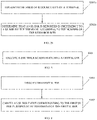
FIG. 3 is a schematic flow chart illustrating a buffer status report (BSR) timer scheme provided by an implementation of the present disclosure. -
FIG. 4 is a schematic flow chart illustrating an event processing scheme provided by an implementation of the present disclosure. -
FIG. 5 is a schematic structural diagram illustrating an apparatus provided by an implementation of the present disclosure. -
FIG. 6 is a schematic structural diagram illustrating an apparatus for SL implementation provided by an implementation of the present disclosure. -
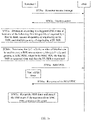
FIG. 7a is a schematic flow chart illustrating a method for SL implementation provided by an implementation of the present disclosure. -
FIG. 7b is a schematic flow chart illustrating a method for SL implementation provided by another implementation of the present disclosure. - The present disclosure will be further illustrated in detail in the following with reference to accompanying drawings and implementations. It can be understood that the specific implementations described herein are only used to explain the present disclosure, rather than to limit the present disclosure. In addition, it can be noted that, for ease of illustration, in the accompany drawings only a part of structures related to the present disclosure instead of all the structures are illustrated.
- Electronic devices involved in the implementations of the present disclosure may include various devices with wireless communication functions such as handheld devices (such as smart phones), in-vehicle devices, wearable devices, and computing devices, or other processing devices coupled to wireless modems, as well as various user equipment (UE), mobile stations (MS), terminal devices, R&D/test platforms, servers, etc. For ease of illustration, the devices mentioned above are collectively referred to as electronic devices.
- D2D refers to a device-to-device communication. In the 3rd generation partnership project (3GPP), D2D is divided into 3 stages illustrated as follows.
- Proximity based service (ProSe): in Rel-12/13, the D2D communication is researched for a ProSe scenario, which is mainly for public safety services.
- Vehicle to everything (V2X): in Rel-14/15, the V2X system is researched for a scenario of vehicle-to-vehicle communication, which is mainly oriented to services of vehicle-vehicle communication and vehicle-to-people communication with a relatively high movement speed.
- Further enhancements to long term evolution (LTE) device to device (FeD2D) for wearable devices: in Rel-14, FeD2D is researched for a scenario where a wearable device accesses a network through a mobile phone, which is mainly oriented to scenarios with a low movement speed and low power access.
- D2D in the 3GPP can be divided into two mode architectures, namely a mode A architecture and a mode B architecture.
- As illustrated in
FIG. 1a , the mode A architecture includes aterminal 1, aterminal 2, and an evolved node B (eNB), where theterminal 1 and theterminal 2 are respectively connected to the eNB, and theterminal 1 and theterminal 2 are also connected. A connection link between theterminal 1 and theterminal 2 is a sidelink (SL), a connection link between theterminal 1 and the eNB is a downlink (DL), and a connection link between theterminal 2 and the eNB is a DL. - As illustrated in
FIG. 1b , the mode B architecture includes theterminal 1, theterminal 2, and the eNB, where theterminal 1 and theterminal 2 are not connected to the eNB, but theterminal 1 and theterminal 2 are connected. A connection link between theterminal 1 and theterminal 2 is an SL. - For the D2D communication, a buffer status report (BSR) needs to be reported. Performing the D2D or V2X communication by the UE is reported via the BSR. For different services the BSR may include an uplink (UL) BSR and an SL BSR.
- A method for SL implementation is provided in an implementation of the present disclosure. The method is implemented by a terminal. The terminal may be the terminal 1 or the
terminal 2 illustrated inFIG. 1a or FIG. 1b . As illustrated inFIG. 2a , the method includes the following. - At block S201a, the terminal reports an SL BSR in preference to a UL BSR.
- A reporting object at block S201a may vary. For example, in an implementation, the terminal that performs the operation at block S201a is located in the architecture illustrated in
FIG. 1a , and the reporting object at block S201a may be the terminal 2 or the eNB. For another example, in another implementation, the terminal that performs the operation at block S201a is located in the architecture illustrated inFIG. 1b , and the reporting object at block S201a may be theterminal 2. Of course, a specific implementation manner is not limited to the specific reporting manner described above. - According to the technical solution provided by the implementation of the present disclosure, the SL BSR is set to be reported in preference to the UL BSR. In this way, in actual applications, a network side can obtain the SL BSR in time, thereby supporting preferential transmission of SL data.
- In an implementation of the present disclosure, reporting the SL BSR in preference to the UL BSR may include any of the following cases.
- Case A, in a medium access control (MAC) protocol data unit (PDU), the SL BSR is first contained, and then the UL BSR is contained.
- In actual applications, in a resource of the MAC PDU in which a BSR can be added, the SL BSR is added first, and then the UL BSR is added. It can be noted that, the SL BSR being contained first in the MAC PDU refers to that the SL BSR has a higher priority than the UL BSR, and has no effect on a priority relationship between other data in the MAC PDU and the BSR. For example, if the MAC PDU contains data α with a priority higher than a priority of the BSR, the priority of data α is still higher than that of the SL BSR and the UL BSR.
- Case B, in the MAC PDU, a first partial SL BSR is contained first, and then the UL BSR is contained.
- The first partial SL BSR in case B refers to partial data of the SL BSR in case A.
- In an implementation solution, the first partial SL BSR in case B may include a first SL BSR. Of course, in another implementation, the first partial SL BSR in case B may include the first SL BSR and part of a second SL BSR.
- The first SL BSR refers to data of the SL BSR that satisfies a set condition, and the second SL BSR refers to data of the SL BSR that does not satisfy the set condition. The part of the second SL BSR may include partial data of the second BSR.
- Case C, in the MAC PDU merely a second partial SL BSR is contained.
- The second partial SL BSR in case C may include partial data of the SL BSR in case A. The first partial SL BSR may be the same as the second partial SL BSR. Of course, in different network cases, the first partial SL BSR may be different from the second partial SL BSR.
- In case C, the second partial SL BSR may include the first SL BSR. Of course, in case C, the second partial SL BSR may include a part of the first SL BSR. The second partial SL BSR in case C may include the first SL BSR and part of the second SL BSR.
- Case D, in the MAC PDU, the first SL BSR is contained first, then the UL BSR is contained, and then the second SL BSR is contained.
- In actual operations, case D may be as follows. In the resource of the MAC PDU in which the BSR can be added, the SL BSR is added first, then the UL BSR is added, and finally the second SL BSR is added.
- Case E, in the MAC PDU, the first SL BSR is contained first, then the UL BSR is contained, and then part of the second SL BSR is contained.
- In actual operations, case E may be as follows. In the resource of the MAC PDU in which the BSR can be added, the SL BSR is added first, then the UL BSR is added, and finally part of the second SL BSR is added.
- A method for SL implementation is provided in another implementation of the present disclosure. The method is implemented by a terminal. The terminal may be the terminal 1 or the
terminal 2 illustrated inFIG. 1a or 1b . As illustrated inFIG. 2b , the method includes the following. - At block S201b, the terminal obtains the number of resource bits.
- At block S202b, the terminal determines that an SL BSR is reported in preference to the UL BSR according to the number of the resource bits.
- According to the technical solution provided in the other implementation of the present disclosure, the SL BSR is set to be reported in preference to the UL BSR. In this way, in actual applications, if the number of the resource bits is limited, a network side can obtain the SL BSR first, thereby supporting preferential transmission of SL data.
- According to a solution in another implementation, an implementation manner of the operation at block S202b may include any of the following cases.
- Case a1, the number of resource bits satisfies a condition that the SL BSR and the UL BSR can be carried, i.e., the number of the resource bits ≥(the number of bits of the SL BSR + the number of bits of the UL BSR), and it is determined that in an MAC PDU, the SL BSR is contained first, and then the UL BSR is contained.
- Case a1 mentioned above is for a network status in which the number of the resource bits is relatively large. In this case, the number of the resource bits satisfies the condition that the SL BSR and the UL BSR can be fully carried. In case a1, in the MAC PDU, the SL BSR is carried first, and then the UL BSR is carried.
- Case a2, the number of resource bits satisfies the condition that the SL BSR and the UL BSR can be carried, i.e., the number of the resource bits ≥(the number of the bits of the SL BSR + the number of the bits of the UL BSR), and it is determined that in the MAC PDU, a first SL BSR is contained first, then the UL BSR is contained, and then a second SL BSR is contained.
- For definitions of the first SL BSR and the second SL BSR, reference can be made to illustrations for case B.
- Case a2 is for a network status in which the number of the resource bits is relatively large. In this case, the number of the resource bits satisfies the condition that the SL BSR and the UL BSR can be fully carried. In case a1, in the MAC PDU, the first SL BSR is first carried, then the UL BSR is carried, and finally the second SL BSR is carried. In case a2, it mainly ensures that the first SL BSR with a relatively high priority can be reported to the network side, then it ensures that the UL BSR can be reported to the network side, and finally it ensures the second SL BSR with a relatively low priority can be reported to the network side.
- Case b1, the number of resource bits satisfies a condition that the first SL BSR and the UL BSR can be carried and/or does not satisfy a condition that the SL BSR and the UL BSR can be fully carried, i.e., (the number of bits of the first SL BSR + the number of the bits of the UL BSR) ≤ the number of the resource bits < (the number of the bits of the SL BSR + the number of the bits of the UL BSR), (the number of the bits of the first SL BSR + the number of the bits of the UL BSR) ≤ the number of the resource bits, or the number of the resource bits < (the number of the bits of the SL BSR + the number of the bits of the UL BSR), and it is determined that in the MAC PDU, the first SL BSR is contained first, then the UL BSR is contained, and then part of the second SL BSR is contained.
- Case b1 mentioned above is for a network status in which the number of the resource bits is relatively large (the number of the resource bits in case b1 is smaller than that in case a1 or case a2). In this case, the number of the resource bits does not satisfy the condition that the SL BSR and the UL BSR can be fully carried, but satisfies the condition that the first SL BSR and the UL BSR can be fully carried. In case b1, in the MAC PDU, the first SL BSR is carried first, and then the UL BSR is carried. Since the number of the resource bits does not satisfy a condition that the second SL BSR with the relatively low priority can be fully carried, and thus finally a part of the second SL BSR is carried. In case b1, it mainly ensures that the first SL BSR with the relatively high priority can be reported to the network side, then it ensures that the UL BSR can be reported to the network side, and finally it ensures that a part of the second SL BSR with the relatively low priority can be reported to the network side.
- Case b2, the number of resource bits satisfies the condition that the first SL BSR and the UL BSR can be carried and/or does not satisfy the condition that the SL BSR and the UL BSR can be fully carried, i.e., (the number of the bits of the first SL BSR + the number of the bits of the UL BSR) ≤ the number of the resource bits < (the number of the bits of the SL BSR + the number of the bits of the UL BSR), (the number of the bits of the first SL BSR + the number of the bits of the UL BSR) ≤ the number of the resource bits, or the number of the resource bits < (the number of the bits of the SL BSR + the number of the bits of the UL BSR), and it is determined that in the MAC PDU, the first SL BSR is contained first, and then the UL BSR is contained.
- The number of the resource bits in case b2 is smaller than that in case b1. Under this condition, although the number of the resource bits in case b2 satisfies the condition that the first SL BSR and the UL BSR can be fully carried, in the MAC PDU, except the resource bits that carry the first SL BSR and the UL BSR, the number of remaining resource bits is relatively small or there is no remaining resource bit, and thus the second SL BSR cannot be carried.
- Case c1, the number of resource bits satisfies a condition that the first SL BSR can be carried and/or does not satisfy the condition that the first SL BSR and the UL BSR can be fully carried, i.e., the number of the bits of the first SL BSR ≤ the number of the resource bits < (the number of the bits of the first SL BSR + the number of the bits of the UL BSR), the number of the bits of the first SL BSR≤ the number of the resource bits, or the number of the resource bits < (the number of the bits of the first SL BSR + the number of the bits of the UL BSR), and it is determined that in the MAC PDU, the first SL BSR is contained first, and then a part of the UL BSR is contained.
- The number of the resource bits in case c1 is smaller than that in case b2.
- Under this condition, in case c1, the number of the resource bits satisfies the condition that the first SL BSR can be fully carried, but does not satisfy the condition that the first SL BSR and the UL BSR can be fully carried. In this case, in the MAC PDU, the first SL BSR with the relatively high priority is carried first. In this case, in the MAC PDU remaining resource bits cannot carry all of the UL BSR, and thus in the MAC PDU a part of the UL BSR is carried.
- Case c2, the number of resource bits satisfies the condition that the first SL BSR can be carried and/or does not satisfy the condition that the first SL BSR and the UL BSR can be fully carried, i.e., the number of the bits of the first SL BSR ≤ the number of the resource bits < (the number of the bits of the first SL BSR + the number of the bits of the UL BSR), the number of the bits of the first SL BSR≤ the number of the resource bits, or the number of the resource bits < (the number of the bits of the first SL BSR + the number of the bits of the UL BSR), and it is determined that in the MAC PDU, the first SL BSR is contained first, and then the second SL BSR is contained.
- The number of the resource bits in case c2 is smaller than that in case b2. Under this condition, in case c2, the number of the resource bits satisfies the condition that the first SL BSR can be fully carried, but does not satisfy the condition that the first SL BSR and the UL BSR can be fully carried. In this case, in the MAC PDU, the first SL BSR with the relatively high priority is carried first. In this case, if there are more remaining resource bits in the MAC PDU, in the MAC PDU the second SL BSR is carried.
- Case c3, the number of resource bits satisfies the condition that the first SL BSR can be carried and/or does not satisfy the condition that the first SL BSR and the UL BSR can be fully carried, i.e., the number of the bits of the first SL BSR ≤ the number of the resource bits < (the number of the bits of the first SL BSR + the number of the bits of the UL BSR), the number of the bits of the first SL BSR ≤ the number of the resource bits, or the number of the resource bits < (the number of the bits of the first SL BSR + the number of the bits of the UL BSR), and it is determined that in the MAC PDU, only the first SL BSR is contained.
- The number of the resource bits in case c3 is smaller than that in case c1 or case c2. Under this condition, the number of the resource bits in case c3 satisfies the condition that the first SL BSR can be fully carried, but does not satisfy the condition that the UL BSR or the second SL BSR can be fully carried. In this case, in the MAC PDU, the first SL BSR with the relatively high priority is carried first. In this case, there is less or no remaining bits in the MAC PDU, and the remaining bits in the MAC PDU can be filled. Thus, in the MAC PDU, the UL BSR and the second SL BSR cannot be both contained.
- Case d, the number of resource bits does not satisfy the condition that the first SL BSR can be fully carried, i.e, the number of the resource bits < the number of the bits of the first SL BSR, and it is determined that in the MAC PDU only part of the first SL BSR is contained.
- The number of the resource bits in case d is smaller than that in case c3. Under this condition, the number of the resource bits in case d does not satisfy the condition that the first SL BSR can be fully carried, and thus in the MAC PDU only part of the first SL BSR is contained.
- The part of the first SL BSR mentioned above may be obtained by truncating the first SL BSR. Of course, in practical applications, other manners may also be used to obtain the part of the first SL BSR. Of course, the part of the second SL BSR mentioned above can also be obtained in the manner of obtaining the part of the first SL BSR mentioned above.
- The set condition in the implementation illustrated in
FIG. 2a andFIG. 2b may refer to that if an attribute associated with the SL BSR satisfies an attribute requirement, it is determined that the set condition is satisfied. The attribute associated with the above SL BSR may be one or any combination of: an attribute of to-be-transmitted data, an attribute of a logical channel, an attribute of a logical channel group, and an attribute of a destination address. The above attribute requirement may be an attribute requirement of a network configuration, an attribute requirement of an upper layer indication, or a pre-configured attribute requirement. - The attribute requirement of the network configuration may refer to that, for a network scenario illustrated in
FIG. 1a , the attribute requirement of the network configuration may be an attribute requirement of a network configuration sent by the eNB to the terminal. The attribute requirement of the upper layer indication may refer to that for a network scenario illustrated inFIG. 1b , the upper layer indication may include the number of resource bits selected from a resource pool by theterminal 1 or theterminal 2. Then theterminal 1 determines the number of resource bits via the upper layer indication. The pre-configured attribute requirement may be included in factory setting. Of course, the pre-configured attribute requirement may be pre-configured by a user. - Referring to
FIG. 3 , another implementation of the present disclosure provides a BSR timer scheme for the implementation illustrated inFIG. 2a and the implementation illustrated inFIG. 2b . Since an SL BSR in a protocol is different in one implementation and another implementation, an original BSR timer scheme may be modified. Therefore, based on the implementations illustrated inFIG. 2a andFIG. 2b , in the other implementation of the present disclosure, the following operations are added. - At block S301, execute a BSR timer scheme matching the first SL BSR.
- It can be noted that the operation at block S301 may be executed before or after the operation at block S201a in the implementation illustrated in
FIG. 2a , and may be executed before or after any operation in the implementation illustrated inFIG. 2b . That is, there is no logical sequence between execution of the operation at block S301 and execution of any operation in the implementation illustrated inFIG. 2a orFIG. 2b . - According to a technical solution in the other implementation, the operation at block S301 can be implemented as follows. A BSR timer is restarted in response to transmission of the first BSR or part of the first BSR, the first BSR is triggered in response to expiration of the BSR timer, and the BSR timer is restarted in response to reception of the SL grant.
- Triggering the first BSR includes but is not limited to triggering a first BSR event. Triggering the first BSR event includes but is not limited to that the terminal starts preparing or prepares related data of the first BSR, or the terminal starts preparing or prepares related data of part of the first BSR.
- According to another solution in the other implementation, the operation at block S301 can be implemented as follows. The BSR timer is restarted in response to transmission of the first BSR or part of the first BSR, and the SL BSR is triggered in response to expiration of the BSR timer.
- Triggering the SL BSR includes but is not limited to triggering an SL BSR event. Triggering the SL BSR event includes but is not limited to that the terminal starts preparing or prepares related data of the SL BSR, or the terminal starts preparing or prepares related data of part of the SL BSR. The part of the SL BSR may be the first SL BSR mentioned above.
- Referring to
FIG. 4 , a further implementation of the present disclosure provides an SL BSR event processing scheme for the implementation illustrated inFIG. 2a and the implementation illustrated inFIG. 2b . Since an SL BSR in a protocol is different in one implementation and another implementation, an original BSR processing scheme may be modified. Therefore, based on the implementations inFIG. 2a andFIG. 2b , in the further implementation of the present disclosure, the following operations are added. - At block S401, trigger the first SL BSR.
- Triggering the first SL BSR at block S401 includes but is not limited to that start preparing or prepare related data of the first BSR or related data of part of the first BSR.
- At block S402, cancel an SL BSR event corresponding to the first SL BSR in response to triggering of the first SL BSR.
- The operations at blocks S401 and S402 may be executed before or after the operation at block S201a. The operations at blocks S401 and S402 may be executed before or after the operation at block S202b.
- Referring to
FIG. 5, FIG. 5 illustrates an apparatus. The apparatus includes areporting unit 501 configured to report an SL BSR in preference to a UL BSR. - For a manner in which the
reporting unit 501 reports the SL BSR in preference to the UL BSR, reference can be made to illustration of the implementation illustrated inFIG. 2a orFIG. 2b , which will not be repeated herein. - In an implementation, the apparatus may further include an executing
unit 502 configured to execute a BSR timer scheme matching a first SL BSR. - For the above BSR timer scheme, reference can be made to illustration of the implementation illustrated in
FIG. 3 . - Referring to
FIG. 6, FIG. 6 provides a system for SL implementation. The system include afirst terminal 601 and asecond terminal 602. Thefirst terminal 601 or thesecond terminal 602 is configured to report an SL BSR in preference to a UL BSR. - Referring to
FIG. 7a , a method for SL implementation is provided in an implementation of the present disclosure. The method is implemented by a network topology structure illustrated inFIG. 1a . As illustrated inFIG. 1a , a protocol of a communication between the terminal 1 and theterminal 2 may be based on LET, and a protocol of a communication between the terminal 1 and the eNB or between the terminal 2 and the eNB may also be based on LET. Of course, in actual applications, the protocol of the communication between the terminal 1 and theterminal 2 may also be based on new radio (NR). Of course, the protocol of the communication between the terminal 1 and the eNB or between the terminal 2 and the eNB may also be based on NR. As illustrated inFIG. 7a , the method may include the following. - At block S701a, the
terminal 1 transmits a resource request message to the eNB. - At block S702, the eNB transmits a grant resource to the
terminal 1, where the grant resource may be indicative of the number of resource bits that theterminal 1 can be transmitted. - At block S703a, the
terminal 1 determines, according to a triggered BSR event, at least one of the following: first bit quantity x1 required by a first SL BSR, second bit quantity x2 required by an SL BSR, and third bit quantity x3 required by a UL BSR. - A format of the SL BSR varies according to different protocol formats. For example, if based on the LET protocol, the format of the SL BSR is illustrated as Table 1.
Table 1 Destination index1 LCG ID1 Buffer Sizei Buffer Sizei Destination index2 LCG ID2 Buffer Size2 - Destination index1 represents
destination address 1, LCG ID1 represents a logical channel group identifier, and buffer size1 representsbuffer capacity 1. - For example, if based on the NR protocol, the format of the SL BSR is illustrated as Table 2.
Table 2 Dest index LCG ID Buffer Sizei Dest index LCG ID Buffer Size - Dest index in Table 2 represents a destination address.
- At block S704a, the
terminal 1 determines that (x2+x3)>the number of bits that can be used to carry a BSR among resource bits ≥ (x1 +x3), and generates a MAC PDU, where in the MAC PDU the first SL BSR is contained first, and then the UL BSR is contained. - At block S705a, the
terminal 1 transmits the MAC PDU to the eNB and starts a BSR timer. - At block S706a, the eNB transmits a response of the MAC PDU to the
terminal 1. - At block S707a, the
terminal 1 receives the response of the MAC PDU from the eNB, and restarts the BSR timer and cancels the BSR event if the response of the MAC PDU contains an SL grant. - According to the technical solution provided by the other implementation of the present disclosure, the SL BSR is set to be reported in preference to the UL BSR. In this case, in actual applications, if the number of resource bits is limited, a network side can be enabled to obtain the SL BSR first, thereby supporting transmission of SL data.
- Referring to
FIG. 7b , a method for SL implementation based on device communication is provided in an implementation of the present disclosure. The method is implemented by a network topology structure illustrated inFIG. 1b . As illustrated inFIG. 1b , a protocol of a communication between the terminal 1 and theterminal 2 may be based on LET or NR. As illustrated inFIG. 7b , the method may include the following. - At block S701b, the
terminal 1 transmits a resource request message to theterminal 2. - At block S702b, the
terminal 2 transmits a grant resource to the terminal 1 (the grant resource may be selected from a resource pool), where the grant resource may be indicative of the number of resource bits that can be transmitted by theterminal 1. - At block S703b, the
terminal 1 determines, according to a triggered BSR event, at least one of the following: first bit quantity x1 required by a first SL BSR, second bit quantity x2 required by an SL BSR, and third bit quantity x3 required by a UL BSR. - At block S704b, the
terminal 1 determines that (x1 +x3)>the number of bits that can be used to carry a BSR among resource bits ≥ x1, and generates a MAC PDU, where in the MAC PDU the first SL BSR is contained first, and then part of the UL BSR is contained. - At block S705b, the
terminal 1 transmits the MAC PDU to theterminal 2. - At block S706b, the
terminal 1 cancels the BSR event in response to reception of an SL grant transmitted by theterminal 2. - According to the technical solution provided by the other implementation of the present disclosure, the SL BSR is set to be reported in preference to the UL BSR. In this case, in actual applications, if the number of resource bits is limited, a network side can be enabled to obtain the SL BSR first, thereby supporting transmission of SL data.
- Implementations of the present disclosure further provide an electronic device. The electronic device includes a processor and a memory. The memory is configured to store one or more programs which are configured to be executed by the processor. The one or more programs include instructions for performing any operation in any of the above methods.
- Implementations of the present disclosure further provide a computer-readable storage medium storing a computer program for electronic data exchange. The computer program enables a computer to perform any operation in any of the above methods.
- Implementations of the present disclosure further provide a computer program product. The computer program product includes a non-transitory computer-readable storage medium that stores a computer program. The computer program may be operable with a computer to perform any of the above methods.
- It is to be noted that for the foregoing method implementations, for the sake of simple illustration, the method implementations are all expressed as a series of action combinations, but those skilled in the art can know that the present disclosure is not limited by the described action sequence. Because according to the present disclosure, some operations can be performed in other order or at the same time. Secondly, those skilled in the art can also know that the implementations described in the specification are all preferred implementations, and the actions and modules involved are not necessarily required by the present disclosure.
- In the above-mentioned implementations, the illustrations of each implementation has its own emphasis. For parts that are not described in detail in an implementation, reference may be made to related illustrations in other implementations.
- According to several implementations provided in the present disclosure, it can be appreciated that the apparatuses disclosed in the implementations herein may be implemented in other manners. For example, the above apparatus implementations are merely illustrative, e.g., the division of units is only a division of logical functions, and there may exist other manners of division in practice, e.g., multiple units or assemblies may be combined or may be integrated into another system, or some features may be ignored or skipped. In other respects, the coupling or direct coupling or communication connection as illustrated or discussed may be an indirect coupling or communication connection between devices or units through some interfaces, and may be electrical coupling or the like.
- Units illustrated as separated parts may or may not be physically separated. Parts displayed as units may or may not be physical units, and may reside at one location or may be distributed to multiple networked units. Some of or all the units may be selected according to practical needs to achieve objectives of the solutions of the present disclosure.
- In addition, the functional units in the various implementations of the present disclosure may be integrated into one processing unit, or each unit may exist alone physically, or two or more units may be integrated into one unit. The above-mentioned integrated units can be implemented in the form of hardware or software program modules.
- If the integrated units are implemented as software functional modules and sold or used as standalone products, they may be stored in a computer-readable storage medium. Based on such an understanding, the essential technical solution, or the portion that contributes to the relate art, or all or part of the technical solution of the present disclosure may be embodied as software products. The computer software products can be stored in a memory and may include multiple instructions used to cause a computing device, e.g., a personal computer, a server, a network device, etc., to execute some of or all operations in the methods described in various implementations of the present disclosure. The above memory may include various kinds of media that can store program codes, such as a universal serial bus (USB) flash disk, a read only memory (ROM), a random access memory (RAM), a mobile hard disc drive, a magnetic disk, or an optical disk.
- Those of ordinary skill in the art can understand that all or part of the operations in the various methods in the above-mentioned implementations can be completed by a program instructing relevant hardware. The program can be stored in a computer-readable memory. The memory can include a flash disk, a ROM, a RAM, a magnetic disk, a CD, etc.
- The implementations of the present disclosure are described in detail above, and specific examples are used in this specification to illustrate the principles and implementation manners of the present disclosure. The illustrations of the above implementations are only used to help understand the methods and core ideas of the present disclosure. Meanwhile, for those of ordinary skill in the art, based on the ideas of the present disclosure, there may be changes on the specific implementations and application scopes. In summary, the content of this specification cannot be construed as limiting the present disclosure.
Claims (20)
- A method for sidelink (SL) implementation, comprising:
reporting an SL buffer status report (BSR) in preference to an uplink (UL) BSR. - The method of claim 1, wherein in a medium access control (MAC) protocol data unit (PDU),the SL BSR is contained first, and then the UL BSR is contained;a first partial SL BSR is contained first, and then the UL BSR is contained; ormerely a second partial SL BSR is contained.
- The method of claim 2, whereinthe first partial SL BSR and the UL BSR comprise a first SL BSR and the UL BSR; orthe first partial SL BSR and the UL BSR comprise the first SL BSR, part of a second SL BSR, and the UL BSR;wherein the first SL BSR is an SL BSR satisfying a set condition, and the second SL BSR is an SL BSR not satisfying the set condition.
- The method of claim 2, wherein the second partial SL BSR comprises:a first SL BSR;part of the first SL BSR; orthe first SL BSR and part of a second SL BSR;wherein the first SL BSR is an SL BSR satisfying a set condition.
- The method of claim 1, wherein in the MAC PDU,a first SL BSR is contained first, then the UL BSR is contained, and then a second SL BSR is contained; orthe first SL BSR is contained first, then the UL BSR is contained, and then part of the second SL BSR is contained;wherein the first SL BSR is an SL BSR satisfying a set condition, and the second SL BSR is an SL BSR not satisfying the set condition.
- The method of any of claims 1 to 5, comprising:in case that the number of resource bits satisfies a condition that the SL BSR and the UL BSR are able to be carried,determining that in a MAC PDU the SL BSR is contained first and then the UL BSR is contained; ordetermining that in the MAC PDU a first SL BSR is contained first, then the UL BSR is contained, and then a second SL BSR is contained;wherein the first SL BSR is an SL BSR satisfying a set condition, and the second SL BSR is an SL BSR not satisfying the set condition.
- The method of any of claims 1 to 5, comprising:in case that the number of resource bits satisfies a condition that a first SL BSR and the UL BSR are able to be carried and/or does not satisfy a condition that the SL BSR and UL BSR are able to be fully carried,determining that in a MAC PDU the first SL BSR is contained first, then the UL BSR is contained, and then part of a second SL BSR is contained; ordetermining that in the MAC PDU the first SL BSR is contained and then the UL BSR is contained;wherein the first SL BSR is an SL BSR satisfying a set condition, and the second SL BSR is an SL BSR not satisfying the set condition.
- The method of any of claims 1 to 5, comprising:in case that the number of resource bits satisfies a condition that a first SL BSR is able to be carried and/or does not satisfy a condition that the first SL BSR and the UL BSR are able to be fully carried,determining that in a MAC PDU the first SL BSR is contained first and then part of the UL BSR is contained;determining that in the MAC PDU the first SL BSR is contained first and then a second SL BSR is contained;determining that in the MAC PDU the first SL BSR is contained first and then part of the second SL BSR is contained; ordetermining that in the MAC PDU merely the first SL BSR is contained;wherein the first SL BSR is an SL BSR satisfying a set condition, and the second SL BSR is an SL BSR not satisfying the set condition.
- The method of any of claims 1 to 5, comprising:
in case that the number of resource bits does not satisfy a condition that a first SL BSR is able be fully carried, determining that in the MAC PDU merely part of the first SL BSR is contained, wherein the first SL BSR is an SL BSR satisfying a set condition. - The method of any of claims 3 to 9, wherein the set condition comprises that an attribute associated with the SL BSR satisfies an attribute requirement, wherein the attribute associated with the SL BSR comprises one or a combination of: an attribute of to-be-transmitted data, an attribute of a logical channel, an attribute of a logical channel group, and an attribute of a destination address.
- The method of claim 10, wherein the attribute requirement comprises an attribute requirement of a network configuration, an attribute requirement of an upper layer indication, or pre-configured attribute requirement.
- The method of any of claims 1 to 11, further comprising:
executing a BSR timer scheme matching a first SL BSR. - The method of claim 12, wherein the BSR timer scheme comprises:
restarting a BSR timer in response to transmission of the first BSR or part of the first BSR, triggering the first BSR in response to expiration of the BSR timer, and restarting the BSR timer in response to reception of an SL grant, wherein the first SL BSR is an SL BSR satisfying a set condition. - The method of claim 12, wherein the BSR timer scheme comprises:
restarting a BSR timer in response to transmission of the first BSR or part of the first BSR, and triggering the SL BSR in response to expiration of the BSR timer. - The method of any of claims 1 to 9, further comprising:
canceling an SL BSR event corresponding to a first SL BSR in response to triggering of the first SL BSR. - An apparatus, comprising:
a reporting unit configured to report a sidelink (SL) buffer status report (BSR) in preference to an uplink (UL) BSR. - The apparatus of claim 16, wherein the SL BSR is determined to be reported in preference to the UL BSR according to the number of grant resources.
- An electronic device, comprising:a processor; anda memory configured to store one or more programs which are configured to be executed by the processor, wherein the one or more programs comprise instructions used for executing the operations in the method of any of claims 1 to 15.
- A computer-readable storage medium storing a computer program for electronic data exchange, wherein the computer program enables a computer to perform the method of any of claims 1 to 15.
- A computer program product comprising a non-transitory computer-readable storage medium that stores a computer program, the computer program being operable with a computer to perform the method of any of claims 1 to 15.
Applications Claiming Priority (1)
| Application Number | Priority Date | Filing Date | Title |
|---|---|---|---|
| PCT/CN2019/094627 WO2021000306A1 (en) | 2019-07-03 | 2019-07-03 | Sidelink implementation method and related product |
Publications (3)
| Publication Number | Publication Date |
|---|---|
| EP3979743A1 true EP3979743A1 (en) | 2022-04-06 |
| EP3979743A4 EP3979743A4 (en) | 2022-06-08 |
| EP3979743B1 EP3979743B1 (en) | 2023-12-13 |
Family
ID=74100269
Family Applications (1)
| Application Number | Title | Priority Date | Filing Date |
|---|---|---|---|
| EP19935797.1A Active EP3979743B1 (en) | 2019-07-03 | 2019-07-03 | Sidelink implementation method and related product |
Country Status (6)
| Country | Link |
|---|---|
| US (1) | US12167401B2 (en) |
| EP (1) | EP3979743B1 (en) |
| JP (1) | JP7490005B2 (en) |
| KR (1) | KR102859111B1 (en) |
| CN (2) | CN113728711A (en) |
| WO (1) | WO2021000306A1 (en) |
Families Citing this family (1)
| Publication number | Priority date | Publication date | Assignee | Title |
|---|---|---|---|---|
| WO2021062849A1 (en) | 2019-09-30 | 2021-04-08 | 华为技术有限公司 | Buffer status report reporting method and communication apparatus |
Family Cites Families (21)
| Publication number | Priority date | Publication date | Assignee | Title |
|---|---|---|---|---|
| US10057918B2 (en) * | 2014-08-08 | 2018-08-21 | Telefonaktiebolaget Lm Ericsson (Publ) | Coordination between prose BSR and cellular BSR |
| WO2016047900A1 (en) * | 2014-09-23 | 2016-03-31 | Lg Electronics Inc. | Method for priority handling for buffer status reporting in a d2d communication system and device therefor |
| EP3216296B1 (en) * | 2014-11-05 | 2020-09-30 | LG Electronics Inc. | Method for canceling scheduling requests triggered by a sidelink buffer status report in a d2d communication system and device therefor |
| JP6521541B2 (en) | 2014-12-31 | 2019-05-29 | 華為技術有限公司Huawei Technologies Co.,Ltd. | INTERNET-OF-VEHICLES communication method and apparatus |
| EP3051736B1 (en) * | 2015-01-30 | 2020-04-29 | Panasonic Intellectual Property Corporation of America | Prioritization in the logical channel prioritization procedure for sidelink logical channels in ProSe direct communications |
| US10356656B2 (en) * | 2015-04-07 | 2019-07-16 | Lg Electronics Inc. | Method and apparatus for performing buffer status reporting procedure for relaying in wireless communication system |
| WO2017052106A1 (en) * | 2015-09-24 | 2017-03-30 | Lg Electronics Inc. | Method for transmitting a buffer status report in a d2d communication system and device therefor |
| JP6628165B2 (en) * | 2015-11-06 | 2020-01-08 | サン パテント トラスト | Sender user equipment and method |
| US10869329B2 (en) * | 2016-09-30 | 2020-12-15 | Huawei Technologies Co., Ltd. | Resource request method and system, and device |
| KR20190067242A (en) * | 2016-11-04 | 2019-06-14 | 텔레폰악티에볼라겟엘엠에릭슨(펍) | Method and apparatus for transmission scheduling in a wireless communication system |
| JP6869368B6 (en) * | 2017-05-04 | 2021-06-30 | パナソニック インテレクチュアル プロパティ コーポレーション オブ アメリカPanasonic Intellectual Property Corporation of America | User equipment, base stations, and wireless communication methods |
| CN109219024B (en) * | 2017-06-30 | 2021-08-13 | 华为技术有限公司 | Data transmission method and device |
| CN114430539B (en) * | 2018-09-12 | 2023-07-25 | Oppo广东移动通信有限公司 | User equipment, base station and vehicle-to-everything communication method thereof |
| JP2022500941A (en) * | 2018-09-20 | 2022-01-04 | オッポ広東移動通信有限公司Guangdong Oppo Mobile Telecommunications Corp., Ltd. | Vehicle-to-everything communication user equipment, base stations and methods |
| WO2020056696A1 (en) * | 2018-09-20 | 2020-03-26 | Oppo广东移动通信有限公司 | Resource allocation method and apparatus, and terminal |
| CN111328105A (en) * | 2018-12-17 | 2020-06-23 | 华为技术有限公司 | A BSR reporting method and device |
| CN111436079A (en) * | 2019-01-11 | 2020-07-21 | 华硕电脑股份有限公司 | Method and apparatus for sidelink resource allocation pattern configuration in wireless communications |
| EP3949617A1 (en) * | 2019-03-27 | 2022-02-09 | Telefonaktiebolaget LM Ericsson (publ) | Methods for sl sr/bsr handling |
| WO2020222563A1 (en) * | 2019-05-02 | 2020-11-05 | Lg Electronics Inc. | Method and apparatus for control sl bsr based on different direct links in sidelink communication system |
| EP3962216B1 (en) * | 2019-05-29 | 2024-03-13 | Guangdong Oppo Mobile Telecommunications Corp., Ltd. | Information transmission method and terminal apparatus |
| WO2022205174A1 (en) * | 2021-03-31 | 2022-10-06 | Oppo广东移动通信有限公司 | Timer control method and apparatus, and terminal device |
-
2019
- 2019-07-03 CN CN201980095831.2A patent/CN113728711A/en active Pending
- 2019-07-03 EP EP19935797.1A patent/EP3979743B1/en active Active
- 2019-07-03 KR KR1020217042917A patent/KR102859111B1/en active Active
- 2019-07-03 WO PCT/CN2019/094627 patent/WO2021000306A1/en not_active Ceased
- 2019-07-03 CN CN202210022277.9A patent/CN114364043A/en active Pending
- 2019-07-03 JP JP2021576721A patent/JP7490005B2/en active Active
-
2021
- 2021-12-28 US US17/563,752 patent/US12167401B2/en active Active
Also Published As
| Publication number | Publication date |
|---|---|
| CN114364043A (en) | 2022-04-15 |
| US12167401B2 (en) | 2024-12-10 |
| WO2021000306A1 (en) | 2021-01-07 |
| EP3979743A4 (en) | 2022-06-08 |
| JP2022543342A (en) | 2022-10-12 |
| EP3979743B1 (en) | 2023-12-13 |
| KR102859111B1 (en) | 2025-09-12 |
| CN113728711A (en) | 2021-11-30 |
| KR20220030951A (en) | 2022-03-11 |
| US20220124778A1 (en) | 2022-04-21 |
| JP7490005B2 (en) | 2024-05-24 |
Similar Documents
| Publication | Publication Date | Title |
|---|---|---|
| US20180317218A1 (en) | Data scheduling method, base station, and system | |
| EP3399784A1 (en) | Tti configuration method, device and system | |
| EP3621360B1 (en) | System information transmission method and related device | |
| CN109392178B (en) | MPDU transmission method, user side device and network side device | |
| TW201831002A (en) | Device and Method for Handling New Radio Capacities | |
| US11974317B2 (en) | Data transmission method and apparatus, computer device, and system | |
| EP4175404A1 (en) | State switching method, indication method and apparatus for connected-state mtch, and storage medium, terminal and base station | |
| US10813147B2 (en) | Data transmission method, terminal, and base station | |
| CN113613215A (en) | Data scheduling method, base station and system | |
| CN110100491B (en) | Information transmission method, terminal equipment and network equipment | |
| JP2019506788A (en) | Method, base station, and terminal device for transmitting downlink feedback information | |
| WO2019223792A1 (en) | Data transmission method, device, base station, terminal, and readable storage medium | |
| EP3661311A1 (en) | Resource indication method, communication device and network device | |
| US11246169B2 (en) | Communication method, related device, and system | |
| JP6035622B2 (en) | Resource allocation method and device for direct communication between user devices | |
| JP2025512714A (en) | Communication method and device, and storage medium | |
| US12167401B2 (en) | Method for SL BSR implementation and related products | |
| EP3661300B1 (en) | Method and apparatus for transmitting system information | |
| WO2016002332A1 (en) | Device, method, and program | |
| CN101741456A (en) | A method, device and system for selecting an access carrier frequency | |
| CN103249161B (en) | Resource scheduling method and device | |
| CN118524508A (en) | Timing related status updates | |
| CN120835383A (en) | Communication method and device, computer-readable storage medium, and computer program product | |
| CN121773634A (en) | Communication method, terminal device and network device | |
| CN120659165A (en) | Communication method and device, and computer readable storage medium |
Legal Events
| Date | Code | Title | Description |
|---|---|---|---|
| STAA | Information on the status of an ep patent application or granted ep patent |
Free format text: STATUS: THE INTERNATIONAL PUBLICATION HAS BEEN MADE |
|
| PUAI | Public reference made under article 153(3) epc to a published international application that has entered the european phase |
Free format text: ORIGINAL CODE: 0009012 |
|
| STAA | Information on the status of an ep patent application or granted ep patent |
Free format text: STATUS: REQUEST FOR EXAMINATION WAS MADE |
|
| 17P | Request for examination filed |
Effective date: 20211230 |
|
| AK | Designated contracting states |
Kind code of ref document: A1 Designated state(s): AL AT BE BG CH CY CZ DE DK EE ES FI FR GB GR HR HU IE IS IT LI LT LU LV MC MK MT NL NO PL PT RO RS SE SI SK SM TR |
|
| A4 | Supplementary search report drawn up and despatched |
Effective date: 20220510 |
|
| RIC1 | Information provided on ipc code assigned before grant |
Ipc: H04W 80/02 20090101ALN20220503BHEP Ipc: H04W 72/12 20090101ALI20220503BHEP Ipc: H04W 28/02 20090101ALI20220503BHEP Ipc: H04W 72/10 20090101AFI20220503BHEP |
|
| DAV | Request for validation of the european patent (deleted) | ||
| DAX | Request for extension of the european patent (deleted) | ||
| STAA | Information on the status of an ep patent application or granted ep patent |
Free format text: STATUS: EXAMINATION IS IN PROGRESS |
|
| 17Q | First examination report despatched |
Effective date: 20230125 |
|
| REG | Reference to a national code |
Ref country code: DE Ref legal event code: R079 Free format text: PREVIOUS MAIN CLASS: H04W0072100000 Ipc: H04W0028020000 Ref document number: 602019043434 Country of ref document: DE |
|
| GRAP | Despatch of communication of intention to grant a patent |
Free format text: ORIGINAL CODE: EPIDOSNIGR1 |
|
| STAA | Information on the status of an ep patent application or granted ep patent |
Free format text: STATUS: GRANT OF PATENT IS INTENDED |
|
| RIC1 | Information provided on ipc code assigned before grant |
Ipc: H04W 80/02 20090101ALN20230615BHEP Ipc: H04W 72/21 20230101ALI20230615BHEP Ipc: H04W 28/02 20090101AFI20230615BHEP |
|
| RIC1 | Information provided on ipc code assigned before grant |
Ipc: H04W 80/02 20090101ALN20230629BHEP Ipc: H04W 72/21 20230101ALI20230629BHEP Ipc: H04W 28/02 20090101AFI20230629BHEP |
|
| INTG | Intention to grant announced |
Effective date: 20230718 |
|
| GRAS | Grant fee paid |
Free format text: ORIGINAL CODE: EPIDOSNIGR3 |
|
| GRAA | (expected) grant |
Free format text: ORIGINAL CODE: 0009210 |
|
| STAA | Information on the status of an ep patent application or granted ep patent |
Free format text: STATUS: THE PATENT HAS BEEN GRANTED |
|
| AK | Designated contracting states |
Kind code of ref document: B1 Designated state(s): AL AT BE BG CH CY CZ DE DK EE ES FI FR GB GR HR HU IE IS IT LI LT LU LV MC MK MT NL NO PL PT RO RS SE SI SK SM TR |
|
| REG | Reference to a national code |
Ref country code: GB Ref legal event code: FG4D |
|
| REG | Reference to a national code |
Ref country code: CH Ref legal event code: EP |
|
| REG | Reference to a national code |
Ref country code: DE Ref legal event code: R096 Ref document number: 602019043434 Country of ref document: DE |
|
| REG | Reference to a national code |
Ref country code: IE Ref legal event code: FG4D |
|
| P01 | Opt-out of the competence of the unified patent court (upc) registered |
Effective date: 20240110 |
|
| PG25 | Lapsed in a contracting state [announced via postgrant information from national office to epo] |
Ref country code: GR Free format text: LAPSE BECAUSE OF FAILURE TO SUBMIT A TRANSLATION OF THE DESCRIPTION OR TO PAY THE FEE WITHIN THE PRESCRIBED TIME-LIMIT Effective date: 20240314 |
|
| REG | Reference to a national code |
Ref country code: LT Ref legal event code: MG9D |
|
| PG25 | Lapsed in a contracting state [announced via postgrant information from national office to epo] |
Ref country code: LT Free format text: LAPSE BECAUSE OF FAILURE TO SUBMIT A TRANSLATION OF THE DESCRIPTION OR TO PAY THE FEE WITHIN THE PRESCRIBED TIME-LIMIT Effective date: 20231213 |
|
| REG | Reference to a national code |
Ref country code: NL Ref legal event code: MP Effective date: 20231213 |
|
| PG25 | Lapsed in a contracting state [announced via postgrant information from national office to epo] |
Ref country code: ES Free format text: LAPSE BECAUSE OF FAILURE TO SUBMIT A TRANSLATION OF THE DESCRIPTION OR TO PAY THE FEE WITHIN THE PRESCRIBED TIME-LIMIT Effective date: 20231213 |
|
| PG25 | Lapsed in a contracting state [announced via postgrant information from national office to epo] |
Ref country code: LT Free format text: LAPSE BECAUSE OF FAILURE TO SUBMIT A TRANSLATION OF THE DESCRIPTION OR TO PAY THE FEE WITHIN THE PRESCRIBED TIME-LIMIT Effective date: 20231213 Ref country code: GR Free format text: LAPSE BECAUSE OF FAILURE TO SUBMIT A TRANSLATION OF THE DESCRIPTION OR TO PAY THE FEE WITHIN THE PRESCRIBED TIME-LIMIT Effective date: 20240314 Ref country code: ES Free format text: LAPSE BECAUSE OF FAILURE TO SUBMIT A TRANSLATION OF THE DESCRIPTION OR TO PAY THE FEE WITHIN THE PRESCRIBED TIME-LIMIT Effective date: 20231213 Ref country code: BG Free format text: LAPSE BECAUSE OF FAILURE TO SUBMIT A TRANSLATION OF THE DESCRIPTION OR TO PAY THE FEE WITHIN THE PRESCRIBED TIME-LIMIT Effective date: 20240313 |
|
| REG | Reference to a national code |
Ref country code: AT Ref legal event code: MK05 Ref document number: 1641519 Country of ref document: AT Kind code of ref document: T Effective date: 20231213 |
|
| PG25 | Lapsed in a contracting state [announced via postgrant information from national office to epo] |
Ref country code: NL Free format text: LAPSE BECAUSE OF FAILURE TO SUBMIT A TRANSLATION OF THE DESCRIPTION OR TO PAY THE FEE WITHIN THE PRESCRIBED TIME-LIMIT Effective date: 20231213 |
|
| PG25 | Lapsed in a contracting state [announced via postgrant information from national office to epo] |
Ref country code: SE Free format text: LAPSE BECAUSE OF FAILURE TO SUBMIT A TRANSLATION OF THE DESCRIPTION OR TO PAY THE FEE WITHIN THE PRESCRIBED TIME-LIMIT Effective date: 20231213 Ref country code: RS Free format text: LAPSE BECAUSE OF FAILURE TO SUBMIT A TRANSLATION OF THE DESCRIPTION OR TO PAY THE FEE WITHIN THE PRESCRIBED TIME-LIMIT Effective date: 20231213 Ref country code: NO Free format text: LAPSE BECAUSE OF FAILURE TO SUBMIT A TRANSLATION OF THE DESCRIPTION OR TO PAY THE FEE WITHIN THE PRESCRIBED TIME-LIMIT Effective date: 20240313 Ref country code: NL Free format text: LAPSE BECAUSE OF FAILURE TO SUBMIT A TRANSLATION OF THE DESCRIPTION OR TO PAY THE FEE WITHIN THE PRESCRIBED TIME-LIMIT Effective date: 20231213 Ref country code: LV Free format text: LAPSE BECAUSE OF FAILURE TO SUBMIT A TRANSLATION OF THE DESCRIPTION OR TO PAY THE FEE WITHIN THE PRESCRIBED TIME-LIMIT Effective date: 20231213 Ref country code: HR Free format text: LAPSE BECAUSE OF FAILURE TO SUBMIT A TRANSLATION OF THE DESCRIPTION OR TO PAY THE FEE WITHIN THE PRESCRIBED TIME-LIMIT Effective date: 20231213 |
|
| PG25 | Lapsed in a contracting state [announced via postgrant information from national office to epo] |
Ref country code: IS Free format text: LAPSE BECAUSE OF FAILURE TO SUBMIT A TRANSLATION OF THE DESCRIPTION OR TO PAY THE FEE WITHIN THE PRESCRIBED TIME-LIMIT Effective date: 20240413 |
|
| PG25 | Lapsed in a contracting state [announced via postgrant information from national office to epo] |
Ref country code: CZ Free format text: LAPSE BECAUSE OF FAILURE TO SUBMIT A TRANSLATION OF THE DESCRIPTION OR TO PAY THE FEE WITHIN THE PRESCRIBED TIME-LIMIT Effective date: 20231213 Ref country code: AT Free format text: LAPSE BECAUSE OF FAILURE TO SUBMIT A TRANSLATION OF THE DESCRIPTION OR TO PAY THE FEE WITHIN THE PRESCRIBED TIME-LIMIT Effective date: 20231213 |
|
| PG25 | Lapsed in a contracting state [announced via postgrant information from national office to epo] |
Ref country code: SK Free format text: LAPSE BECAUSE OF FAILURE TO SUBMIT A TRANSLATION OF THE DESCRIPTION OR TO PAY THE FEE WITHIN THE PRESCRIBED TIME-LIMIT Effective date: 20231213 |
|
| PG25 | Lapsed in a contracting state [announced via postgrant information from national office to epo] |
Ref country code: SM Free format text: LAPSE BECAUSE OF FAILURE TO SUBMIT A TRANSLATION OF THE DESCRIPTION OR TO PAY THE FEE WITHIN THE PRESCRIBED TIME-LIMIT Effective date: 20231213 Ref country code: SK Free format text: LAPSE BECAUSE OF FAILURE TO SUBMIT A TRANSLATION OF THE DESCRIPTION OR TO PAY THE FEE WITHIN THE PRESCRIBED TIME-LIMIT Effective date: 20231213 Ref country code: RO Free format text: LAPSE BECAUSE OF FAILURE TO SUBMIT A TRANSLATION OF THE DESCRIPTION OR TO PAY THE FEE WITHIN THE PRESCRIBED TIME-LIMIT Effective date: 20231213 Ref country code: IT Free format text: LAPSE BECAUSE OF FAILURE TO SUBMIT A TRANSLATION OF THE DESCRIPTION OR TO PAY THE FEE WITHIN THE PRESCRIBED TIME-LIMIT Effective date: 20231213 Ref country code: IS Free format text: LAPSE BECAUSE OF FAILURE TO SUBMIT A TRANSLATION OF THE DESCRIPTION OR TO PAY THE FEE WITHIN THE PRESCRIBED TIME-LIMIT Effective date: 20240413 Ref country code: EE Free format text: LAPSE BECAUSE OF FAILURE TO SUBMIT A TRANSLATION OF THE DESCRIPTION OR TO PAY THE FEE WITHIN THE PRESCRIBED TIME-LIMIT Effective date: 20231213 Ref country code: CZ Free format text: LAPSE BECAUSE OF FAILURE TO SUBMIT A TRANSLATION OF THE DESCRIPTION OR TO PAY THE FEE WITHIN THE PRESCRIBED TIME-LIMIT Effective date: 20231213 Ref country code: AT Free format text: LAPSE BECAUSE OF FAILURE TO SUBMIT A TRANSLATION OF THE DESCRIPTION OR TO PAY THE FEE WITHIN THE PRESCRIBED TIME-LIMIT Effective date: 20231213 |
|
| PG25 | Lapsed in a contracting state [announced via postgrant information from national office to epo] |
Ref country code: PT Free format text: LAPSE BECAUSE OF FAILURE TO SUBMIT A TRANSLATION OF THE DESCRIPTION OR TO PAY THE FEE WITHIN THE PRESCRIBED TIME-LIMIT Effective date: 20240415 Ref country code: PL Free format text: LAPSE BECAUSE OF FAILURE TO SUBMIT A TRANSLATION OF THE DESCRIPTION OR TO PAY THE FEE WITHIN THE PRESCRIBED TIME-LIMIT Effective date: 20231213 |
|
| PG25 | Lapsed in a contracting state [announced via postgrant information from national office to epo] |
Ref country code: PT Free format text: LAPSE BECAUSE OF FAILURE TO SUBMIT A TRANSLATION OF THE DESCRIPTION OR TO PAY THE FEE WITHIN THE PRESCRIBED TIME-LIMIT Effective date: 20240415 Ref country code: PL Free format text: LAPSE BECAUSE OF FAILURE TO SUBMIT A TRANSLATION OF THE DESCRIPTION OR TO PAY THE FEE WITHIN THE PRESCRIBED TIME-LIMIT Effective date: 20231213 |
|
| REG | Reference to a national code |
Ref country code: DE Ref legal event code: R097 Ref document number: 602019043434 Country of ref document: DE |
|
| PG25 | Lapsed in a contracting state [announced via postgrant information from national office to epo] |
Ref country code: DK Free format text: LAPSE BECAUSE OF FAILURE TO SUBMIT A TRANSLATION OF THE DESCRIPTION OR TO PAY THE FEE WITHIN THE PRESCRIBED TIME-LIMIT Effective date: 20231213 |
|
| PLBE | No opposition filed within time limit |
Free format text: ORIGINAL CODE: 0009261 |
|
| STAA | Information on the status of an ep patent application or granted ep patent |
Free format text: STATUS: NO OPPOSITION FILED WITHIN TIME LIMIT |
|
| PG25 | Lapsed in a contracting state [announced via postgrant information from national office to epo] |
Ref country code: SI Free format text: LAPSE BECAUSE OF FAILURE TO SUBMIT A TRANSLATION OF THE DESCRIPTION OR TO PAY THE FEE WITHIN THE PRESCRIBED TIME-LIMIT Effective date: 20231213 |
|
| PG25 | Lapsed in a contracting state [announced via postgrant information from national office to epo] |
Ref country code: SI Free format text: LAPSE BECAUSE OF FAILURE TO SUBMIT A TRANSLATION OF THE DESCRIPTION OR TO PAY THE FEE WITHIN THE PRESCRIBED TIME-LIMIT Effective date: 20231213 Ref country code: DK Free format text: LAPSE BECAUSE OF FAILURE TO SUBMIT A TRANSLATION OF THE DESCRIPTION OR TO PAY THE FEE WITHIN THE PRESCRIBED TIME-LIMIT Effective date: 20231213 |
|
| 26N | No opposition filed |
Effective date: 20240916 |
|
| PG25 | Lapsed in a contracting state [announced via postgrant information from national office to epo] |
Ref country code: MC Free format text: LAPSE BECAUSE OF FAILURE TO SUBMIT A TRANSLATION OF THE DESCRIPTION OR TO PAY THE FEE WITHIN THE PRESCRIBED TIME-LIMIT Effective date: 20231213 |
|
| REG | Reference to a national code |
Ref country code: CH Ref legal event code: PL |
|
| PG25 | Lapsed in a contracting state [announced via postgrant information from national office to epo] |
Ref country code: LU Free format text: LAPSE BECAUSE OF NON-PAYMENT OF DUE FEES Effective date: 20240703 |
|
| PG25 | Lapsed in a contracting state [announced via postgrant information from national office to epo] |
Ref country code: LU Free format text: LAPSE BECAUSE OF NON-PAYMENT OF DUE FEES Effective date: 20240703 |
|
| PG25 | Lapsed in a contracting state [announced via postgrant information from national office to epo] |
Ref country code: CH Free format text: LAPSE BECAUSE OF NON-PAYMENT OF DUE FEES Effective date: 20240731 Ref country code: BE Free format text: LAPSE BECAUSE OF NON-PAYMENT OF DUE FEES Effective date: 20240731 |
|
| REG | Reference to a national code |
Ref country code: BE Ref legal event code: MM Effective date: 20240731 |
|
| PG25 | Lapsed in a contracting state [announced via postgrant information from national office to epo] |
Ref country code: IE Free format text: LAPSE BECAUSE OF NON-PAYMENT OF DUE FEES Effective date: 20240703 |
|
| PG25 | Lapsed in a contracting state [announced via postgrant information from national office to epo] |
Ref country code: FI Free format text: LAPSE BECAUSE OF FAILURE TO SUBMIT A TRANSLATION OF THE DESCRIPTION OR TO PAY THE FEE WITHIN THE PRESCRIBED TIME-LIMIT Effective date: 20231213 |
|
| PGFP | Annual fee paid to national office [announced via postgrant information from national office to epo] |
Ref country code: DE Payment date: 20250724 Year of fee payment: 7 |
|
| PGFP | Annual fee paid to national office [announced via postgrant information from national office to epo] |
Ref country code: GB Payment date: 20250722 Year of fee payment: 7 |
|
| PGFP | Annual fee paid to national office [announced via postgrant information from national office to epo] |
Ref country code: FR Payment date: 20250722 Year of fee payment: 7 |
|
| PG25 | Lapsed in a contracting state [announced via postgrant information from national office to epo] |
Ref country code: CY Free format text: LAPSE BECAUSE OF FAILURE TO SUBMIT A TRANSLATION OF THE DESCRIPTION OR TO PAY THE FEE WITHIN THE PRESCRIBED TIME-LIMIT; INVALID AB INITIO Effective date: 20190703 |
|
| PG25 | Lapsed in a contracting state [announced via postgrant information from national office to epo] |
Ref country code: HU Free format text: LAPSE BECAUSE OF FAILURE TO SUBMIT A TRANSLATION OF THE DESCRIPTION OR TO PAY THE FEE WITHIN THE PRESCRIBED TIME-LIMIT; INVALID AB INITIO Effective date: 20190703 |