EP3979704A1 - Method for determining network switching resource and method for configuring network switching resource - Google Patents
Method for determining network switching resource and method for configuring network switching resource Download PDFInfo
- Publication number
- EP3979704A1 EP3979704A1 EP19930451.0A EP19930451A EP3979704A1 EP 3979704 A1 EP3979704 A1 EP 3979704A1 EP 19930451 A EP19930451 A EP 19930451A EP 3979704 A1 EP3979704 A1 EP 3979704A1
- Authority
- EP
- European Patent Office
- Prior art keywords
- operator network
- information
- network
- operator
- terminal
- Prior art date
- Legal status (The legal status is an assumption and is not a legal conclusion. Google has not performed a legal analysis and makes no representation as to the accuracy of the status listed.)
- Granted
Links
Images



Classifications
-
- H—ELECTRICITY
- H04—ELECTRIC COMMUNICATION TECHNIQUE
- H04W—WIRELESS COMMUNICATION NETWORKS
- H04W76/00—Connection management
- H04W76/10—Connection setup
- H04W76/15—Setup of multiple wireless link connections
- H04W76/16—Involving different core network technologies, e.g. a packet-switched [PS] bearer in combination with a circuit-switched [CS] bearer
-
- H—ELECTRICITY
- H04—ELECTRIC COMMUNICATION TECHNIQUE
- H04W—WIRELESS COMMUNICATION NETWORKS
- H04W76/00—Connection management
- H04W76/30—Connection release
- H04W76/38—Connection release triggered by timers
-
- H—ELECTRICITY
- H04—ELECTRIC COMMUNICATION TECHNIQUE
- H04W—WIRELESS COMMUNICATION NETWORKS
- H04W36/00—Hand-off or reselection arrangements
- H04W36/0005—Control or signalling for completing the hand-off
- H04W36/0055—Transmission or use of information for re-establishing the radio link
- H04W36/0072—Transmission or use of information for re-establishing the radio link of resource information of target access point
-
- H—ELECTRICITY
- H04—ELECTRIC COMMUNICATION TECHNIQUE
- H04W—WIRELESS COMMUNICATION NETWORKS
- H04W36/00—Hand-off or reselection arrangements
- H04W36/14—Reselecting a network or an air interface
-
- H—ELECTRICITY
- H04—ELECTRIC COMMUNICATION TECHNIQUE
- H04W—WIRELESS COMMUNICATION NETWORKS
- H04W36/00—Hand-off or reselection arrangements
- H04W36/16—Performing reselection for specific purposes
-
- H—ELECTRICITY
- H04—ELECTRIC COMMUNICATION TECHNIQUE
- H04W—WIRELESS COMMUNICATION NETWORKS
- H04W60/00—Affiliation to network, e.g. registration; Terminating affiliation with the network, e.g. de-registration
- H04W60/04—Affiliation to network, e.g. registration; Terminating affiliation with the network, e.g. de-registration using triggered events
-
- H—ELECTRICITY
- H04—ELECTRIC COMMUNICATION TECHNIQUE
- H04W—WIRELESS COMMUNICATION NETWORKS
- H04W72/00—Local resource management
- H04W72/04—Wireless resource allocation
- H04W72/044—Wireless resource allocation based on the type of the allocated resource
- H04W72/0446—Resources in time domain, e.g. slots or frames
-
- H—ELECTRICITY
- H04—ELECTRIC COMMUNICATION TECHNIQUE
- H04W—WIRELESS COMMUNICATION NETWORKS
- H04W72/00—Local resource management
- H04W72/50—Allocation or scheduling criteria for wireless resources
- H04W72/53—Allocation or scheduling criteria for wireless resources based on regulatory allocation policies
-
- H—ELECTRICITY
- H04—ELECTRIC COMMUNICATION TECHNIQUE
- H04W—WIRELESS COMMUNICATION NETWORKS
- H04W76/00—Connection management
- H04W76/20—Manipulation of established connections
- H04W76/28—Discontinuous transmission [DTX]; Discontinuous reception [DRX]
-
- H—ELECTRICITY
- H04—ELECTRIC COMMUNICATION TECHNIQUE
- H04W—WIRELESS COMMUNICATION NETWORKS
- H04W88/00—Devices specially adapted for wireless communication networks, e.g. terminals, base stations or access point devices
- H04W88/02—Terminal devices
- H04W88/06—Terminal devices adapted for operation in multiple networks or having at least two operational modes, e.g. multi-mode terminals
-
- H—ELECTRICITY
- H10—SEMICONDUCTOR DEVICES; ELECTRIC SOLID-STATE DEVICES NOT OTHERWISE PROVIDED FOR
- H10K—ORGANIC ELECTRIC SOLID-STATE DEVICES
- H10K59/00—Integrated devices, or assemblies of multiple devices, comprising at least one organic light-emitting element covered by group H10K50/00
- H10K59/10—OLED displays
- H10K59/12—Active-matrix OLED [AMOLED] displays
- H10K59/128—Active-matrix OLED [AMOLED] displays comprising two independent displays, e.g. for emitting information from two major sides of the display
-
- G—PHYSICS
- G09—EDUCATION; CRYPTOGRAPHY; DISPLAY; ADVERTISING; SEALS
- G09G—ARRANGEMENTS OR CIRCUITS FOR CONTROL OF INDICATING DEVICES USING STATIC MEANS TO PRESENT VARIABLE INFORMATION
- G09G3/00—Control arrangements or circuits, of interest only in connection with visual indicators other than cathode-ray tubes
- G09G3/20—Control arrangements or circuits, of interest only in connection with visual indicators other than cathode-ray tubes for presentation of an assembly of a number of characters, e.g. a page, by composing the assembly by combination of individual elements arranged in a matrix no fixed position being assigned to or needed to be assigned to the individual characters or partial characters
- G09G3/22—Control arrangements or circuits, of interest only in connection with visual indicators other than cathode-ray tubes for presentation of an assembly of a number of characters, e.g. a page, by composing the assembly by combination of individual elements arranged in a matrix no fixed position being assigned to or needed to be assigned to the individual characters or partial characters using controlled light sources
- G09G3/30—Control arrangements or circuits, of interest only in connection with visual indicators other than cathode-ray tubes for presentation of an assembly of a number of characters, e.g. a page, by composing the assembly by combination of individual elements arranged in a matrix no fixed position being assigned to or needed to be assigned to the individual characters or partial characters using controlled light sources using electroluminescent panels
- G09G3/32—Control arrangements or circuits, of interest only in connection with visual indicators other than cathode-ray tubes for presentation of an assembly of a number of characters, e.g. a page, by composing the assembly by combination of individual elements arranged in a matrix no fixed position being assigned to or needed to be assigned to the individual characters or partial characters using controlled light sources using electroluminescent panels semiconductive, e.g. using light-emitting diodes [LED]
- G09G3/3208—Control arrangements or circuits, of interest only in connection with visual indicators other than cathode-ray tubes for presentation of an assembly of a number of characters, e.g. a page, by composing the assembly by combination of individual elements arranged in a matrix no fixed position being assigned to or needed to be assigned to the individual characters or partial characters using controlled light sources using electroluminescent panels semiconductive, e.g. using light-emitting diodes [LED] organic, e.g. using organic light-emitting diodes [OLED]
- G09G3/3225—Control arrangements or circuits, of interest only in connection with visual indicators other than cathode-ray tubes for presentation of an assembly of a number of characters, e.g. a page, by composing the assembly by combination of individual elements arranged in a matrix no fixed position being assigned to or needed to be assigned to the individual characters or partial characters using controlled light sources using electroluminescent panels semiconductive, e.g. using light-emitting diodes [LED] organic, e.g. using organic light-emitting diodes [OLED] using an active matrix
- G09G3/3233—Control arrangements or circuits, of interest only in connection with visual indicators other than cathode-ray tubes for presentation of an assembly of a number of characters, e.g. a page, by composing the assembly by combination of individual elements arranged in a matrix no fixed position being assigned to or needed to be assigned to the individual characters or partial characters using controlled light sources using electroluminescent panels semiconductive, e.g. using light-emitting diodes [LED] organic, e.g. using organic light-emitting diodes [OLED] using an active matrix with pixel circuitry controlling the current through the light-emitting element
-
- H—ELECTRICITY
- H04—ELECTRIC COMMUNICATION TECHNIQUE
- H04W—WIRELESS COMMUNICATION NETWORKS
- H04W68/00—User notification, e.g. alerting and paging, for incoming communication, change of service or the like
- H04W68/005—Transmission of information for alerting of incoming communication
-
- H—ELECTRICITY
- H10—SEMICONDUCTOR DEVICES; ELECTRIC SOLID-STATE DEVICES NOT OTHERWISE PROVIDED FOR
- H10K—ORGANIC ELECTRIC SOLID-STATE DEVICES
- H10K59/00—Integrated devices, or assemblies of multiple devices, comprising at least one organic light-emitting element covered by group H10K50/00
- H10K59/10—OLED displays
- H10K59/12—Active-matrix OLED [AMOLED] displays
- H10K59/122—Pixel-defining structures or layers, e.g. banks
-
- H—ELECTRICITY
- H10—SEMICONDUCTOR DEVICES; ELECTRIC SOLID-STATE DEVICES NOT OTHERWISE PROVIDED FOR
- H10K—ORGANIC ELECTRIC SOLID-STATE DEVICES
- H10K59/00—Integrated devices, or assemblies of multiple devices, comprising at least one organic light-emitting element covered by group H10K50/00
- H10K59/80—Constructional details
- H10K59/805—Electrodes
- H10K59/8052—Cathodes
Definitions
- the present disclosure relates to the field of communication technologies, and in particular, to a method for determining a network switching resource, a method for configuring a network switching resource, a device for determining a network switching resource, a device for configuring a network switching resource, an electronic device and a computer-readable storage medium.
- SIM subscriber identity module
- the operator A's network Since the operator A's network does not know that this is caused by the activities of SIM card 2 in the mobile phone in the operator B's network, it will generally be determined that there is a problem with the communication connection with the mobile phone. Accordingly, the operator A's network will increase the power, or even trigger a wireless link recovery mechanism when determining that the wireless link is failure.
- the operator A's network increases the power or even triggers the wireless link recovery mechanism, since the mobile phone is performing activities in the operator B's network through SIM card 2, during this period, it will not recovery activities in the operator A's network. As a result, the operator A's network performs an invalid operation, leading to a waste of the resources of the operator A's network.
- the present disclosure provides a method for determining a network switching resource, a method for configuring a network switching resource, a device for determining a network switching resource, a device for configuring a network switching resource, an electronic device and a computer-readable storage medium, to solve the technical problems existed in the art.
- a method for determining a network switching resource is provided.
- the method is applied to a terminal configured to be connected to at least two operator networks, the method includes:
- the method further includes: disconnecting, on the time domain resource, from the first operator network and performing activities in the second operator network.
- the method further includes: transmitting indication information to the first operator network, where the indication information is used for indicating that the terminal is configured to be connected to at least two operator networks.
- the system time information includes a system frame number.
- the time reference information includes at least one of: a system message transmission period, a tracking area updating period and a paging period.
- a type of activities performed in the second operator network includes at least one of: monitoring a paging message transmitted from the second operator network, responding to the paging message transmitted from the second operator network, measuring communication information of the second operator network, receiving a system message transmitted from the second operator network, and updating a tracking area in the second operator network.
- a method for configuring a network switching resource is provided.
- the method is applied to a terminal configured to be connected to at least two operator networks, the method includes:
- the method further includes:
- the system time information includes a system frame number.
- the time reference information includes at least one of: a system message transmission period, a tracking area updating period, a paging period.
- a type of activities performed in the second operator network includes at least one of: monitoring a paging message transmitted from the second operator network, responding to the paging message transmitted from the second operator network, measuring communication information of the second operator network, receiving a system message transmitted from the second operator network, and updating a tracking area in the second operator network.
- a device for determining a network switching resource is provided.
- the device is applied to a terminal configured to be connected to at least two operator networks, the device includes:
- the device further includes: a network switching module, configured to disconnect from the first operator network and perform activities in the second operator network, on the time domain resource.
- a network switching module configured to disconnect from the first operator network and perform activities in the second operator network, on the time domain resource.
- the device further includes: an indication transmission module, configured to transmit indication information to the first operator network, and the indication information is used for indicating that the terminal is configured to be connected to at least two operator networks.
- an indication transmission module configured to transmit indication information to the first operator network, and the indication information is used for indicating that the terminal is configured to be connected to at least two operator networks.
- the system time information includes a system frame number.
- the time reference information includes at least one of: a system message transmission period, a tracking area updating period, a paging period.
- a type of activities performed in the second operator network includes at least one of: monitoring a paging message transmitted from the second operator network, responding to the paging message transmitted from the second operator network, measuring communication information of the second operator network, receiving a system message transmitted from the second operator network, and updating a tracking area in the second operator network.
- a device for configuring a network switching resource is provided.
- the device is applied to a first operator network, the device includes:
- the device further includes:
- the system time information includes a system frame number.
- the time reference information includes at least one of: a system message transmission period, a tracking area updating period, a paging period.
- a type of activities performed in the second operator network includes at least one of: monitoring a paging message transmitted from the second operator network, responding to the paging message transmitted from the second operator network, measuring communication information of the second operator network, receiving a system message transmitted from the second operator network, and updating a tracking area in the second operator network.
- an electronic device includes:
- an electronic device includes:
- a computer-readable storage medium is provided.
- a computer program is stored on the computer-readable storage medium, and the program, when executed by a processor, is used to implement the steps in the method for determining a network switching resource according to any embodiment described above.
- a computer-readable storage medium is provided.
- a computer program is stored on the computer-readable storage medium, and the program, when executed by a processor, is used to implement the steps in the method for configuring a network switching resource according to any embodiment described above.
- the terminal transmits the second system time information and the time reference information to the first operator network, so that the first operator network can relatively accurately configure the time domain resource for the terminal.
- the first operator network does not need to interact with the second operator network, and the consumption caused by interaction between the operator networks can be reduced.
- the time domain resource is configured by the first operator network to the terminal, thus the configured time domain resource is known by the first operator network. Accordingly, when the terminal is disconnected from the first operator network on the time domain resource and performs activities in the second operator network, the first operator network will not mistakenly believe that there is a problem with the communication connection with the terminal, and will not increase the power, or even trigger wrong operation such as the wireless link recovery mechanism, thus effectively avoiding the waste of the network resource of the first operator.
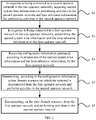
- FIG. 1 is a schematic flowchart illustrating a method for determining a network switching resource according to some embodiments of the present disclosure.
- the paging response method shown in the embodiments of the present disclosure may be applicable to a terminal.
- the terminal may perform communications based on a multi-card single standby (for example, dual-card single-standby) mode, a multi-card multi-standby (for example, dual-card dual-standby) mode, or a multi-card multi-standby multi-pass (for example, dual-card dual-standby dual-pass) mode.
- a multi-card single standby for example, dual-card single-standby
- a multi-card multi-standby for example, dual-card dual-standby
- a multi-card multi-standby multi-pass for example, dual-card dual-standby dual-pass
- the terminal is configured to connect to at least two operator networks, for example, the terminal may be used as user equipment to communicate with a base station in an operator network.
- the terminal may be provided with a plurality of SIM cards, specifically USIM (Universal Subscriber Identity Module).
- SIM card 1 in the plurality of SIM cards may be connected to a first operator network
- SIM card 2 in the plurality of SIM cards may be connected to a second operator network.
- the first operator network and the second operator network are networks provided by different operators, for example, the first operator network may be a mobile network, and the second operator network may be a network of China Unicom or China Telecom.
- the method for determining a network switching resource includes steps described below.
- step S1 in response to being connected to a second operator network in the two operator networks, the following information is acquired: second system time information of performing activities in the second operator network; and time reference information of performing activities in the second operator network.
- the terminal when being connected to the second operator network, may acquire the second system time information of the second operator network and the time reference information of performing activities in the second operator network.
- SIM card 2 in the terminal may acquire and store the second system time information and the time reference information.
- step S2 in response to being connected to a first operator network in the two operator networks, the second system time information and the time reference information are transmitted to the first operator network.
- the terminal when being connected to the first operator network, may transmit the second system time information of the second operator network and the time reference information of performing activities in the second operator network to the first operator network.
- SIM card 2 in the terminal may transmit the stored second system time information and the time reference information to SIM card 1, and then the second system time information and the time reference information are transmitted to the first operator network by the SIM card 1.
- step S3 configuration information is received, and the configuration information is generated by the first operator network according to the second system time information and/or the time reference information.
- the first operator network after receiving the second system time information and the time reference information, can determine the time domain resource according to the second system time information and/or the time reference information, and then generate the configuration information according to the time domain resource.
- the second system time information is used to represent a relative time for the terminal to perform activities in the second operator network.
- the second system time information is a system frame number (SFN)
- the activity is receiving the system message transmitted from the second operator network
- the time reference information is a system message transmission period.
- a system frame at which the terminal receives the system message in the second operator network is the 6th frame, and the system message transmission period is 5 milliseconds.
- the determined time domain resource is the 6th frame+nx5 milliseconds in the second operator network, and then the configuration information is generated according to the determined time domain resource, and the user equipment receives the system message transmitted from the second operator network according to a time domain resource configured by the configuration information.
- the time domain resource is determined according to the relative time of the second operator network
- the configured time domain resources are made to meet the requirements of the terminal's activities in the second operator network, ensuring that the terminal can quickly receive the system message transmitted from the second operator network after being disconnected from the first operator network according to the configuration information, without waiting for a long time for the action of the second operator network, and can complete the activities in the second operator network as soon as possible.
- the connection to the first operator network can be restored as soon as possible, which is beneficial to ensure the good effect of communication between the first operator network and the terminal.
- conditions of the terminal's activities in the first operator network may be considered. For example, the communication quality of the terminal with the first operator network, a type of business that the terminal communicates with the first operator network, etc. Take the type of business that the terminal communicates with the first operator network as an example, if the type of business of the communication between the terminal and the first operator network has lower latency requirements at the time t1 after the 6th frame in the second operator network, then the time domain resource can be determined to be the 6th frame+t1 in the second operator network, and then the configuration information is generated according to the determined time domain resource.
- the time domain resource is determined according to the relative time of the second operator network
- the configured time domain resources are made to meet the requirements of the terminal's activities in the first operator network.
- the time domain resource corresponding to the 6th frame+t1 in the second operator network the type of business of the communication between the terminal and the first operator network has lower latency requirements, thus the user equipment is configured according to the configuration information to receive the system message transmitted from the second operator network on the time domain resource, so that the impact on the business due to disconnection from the first operator network is low.
- a relative time of the first operator network that is, first system time information of the first operator network
- first system time information of the first operator network can be considered. For example, when the terminal received the system message in the second operator network last time, the system frame number of the first operator network was the 13th frame, then the determined time domain resource was the 13th frame+nx5 milliseconds in the first operator network, and then the configuration information is generated according to the determined time domain resource.
- the user equipment receives the system message transmitted from the second operator network according to the time domain resource configured by the configuration information.
- the time domain resources are determined according to the relative time of the first operator network
- the configured time domain resources are made to meet the requirements of the terminal's activities in the second operator network, ensuring that the terminal can quickly receive the system message transmitted from the second operator network after being disconnected from the first operator network according to the configuration information, without waiting for a long time for the action of the second operator network, and can complete the activities in the second operator network as soon as possible.
- the connection to the first operator network can be restored as soon as possible, which is beneficial to ensure the good effect of communication between the first operator network and the terminal.
- the first operator network in addition to the second system time information and/or the time reference information, other factors can also be used by the first operator network to determine the time domain resource and generate the configuration information, which may be specifically provided as needed.
- step S4 a time domain resource, on which the terminal is disconnected from the first operator network and performs activities in the second operator network, is determined according to the configuration information.
- the terminal transmits the second system time information and the time reference information to the first operator network, so that the first operator network can relatively accurately configure the time domain resource for the terminal.
- the first operator network does not need to interact with the second operator network, and the consumption caused by interaction between the operator networks can be reduced.
- the time domain resource is configured by the first operator network to the terminal
- the configured time domain resource is known by the first operator network, thus when the terminal is disconnected from the first operator network on the time domain resource and performs activities in the second operator network, the first operator network will not mistakenly believe that there is a problem with the communication connection with the terminal, and will not increase the power, or even trigger the wrong operation of the wireless link recovery mechanism, thus effectively avoiding the waste of the network resource of the first operator.
- FIG. 2 is a schematic flowchart illustrating another method for determining a network switching resource according to some embodiments of the present disclosure. As shown in FIG. 2 , the method further includes step S5.
- step S5 on the time domain resource, the terminal is disconnected from the first operator network and performs activities in the second operator network.
- the first terminal may disconnect from the first operator network on the time domain resource, and perform activities in the second operator network.
- the terminal may determine whether to disconnect from the first operator network on the time domain resource and perform activities in the second operator network according to actual situations at the time domain resource. If so, the terminal disconnects from the first operator network on the time domain resource, and performs activities in the second operator network.
- the actual situation includes but is not limited to: a priority of the communication between the first terminal and the first operator network, whether the SIM card 2 is still in the terminal, and remaining capacity of the terminal or the like.
- the priority of the communication between the first terminal and the first operator network is the highest, then it is determined that there is no need to disconnect the first terminal from the first operator network on the time domain resource to perform activities in the second operator network, so as to ensure that the highest level of communication can continue, where the priority of the communication between the first terminal and the first operator network can be determined based on the type of business the first terminal communicates with the first operator network, quality of service, quality of service class identifier, etc., for example, if the service quality level identifier is 1, the priority is the highest.
- SIM card 2 is not in the terminal, it can also be determined that there is no need to disconnect the terminal from the first operator network on the time domain resource to perform activities in the second operator network, so as to avoid invalid operations and waste terminal resources.
- the time domain resource does not need to disconnect the terminal from the first operator network on the time domain resource to perform activities in the second operator network, so as to avoid excessive power consumption of the terminal.
- FIG. 3 is a schematic flowchart illustrating another method for determining a network switching resource according to some embodiments of the present disclosure. As shown in FIG. 3 , the method further includes step S6.
- step S6 indication information is transmitted to the first operator network, and the indication information is used for indicating that the terminal is configured to be connected to at least two operator networks.
- the terminal may transmit the indication information to the first operator network to indicate the first operator network that the terminal is used to connect to at least two operator networks, that is, to inform the first operator that the terminal itself is a multi-card multi-standby terminal, so that the first operator network may generate and transmit the configuration information to the terminal only when it is determined that the terminal is a multi-card multi-standby terminal.
- the system time information includes a system frame number.
- the second system time information is used to represent the relative time for the terminal performing the activity in the second operator network, and in addition to the system frame number, other information may be selected as the second system time information according to requirements.
- the time reference information includes at least one of: a system message transmission period, a tracking area updating period, a paging period.
- the time reference information may be configured according to the type of the activity. For example, if the type of the activity is receiving a system message, then the time reference information may be a system message transmission period. If the type of the activity is monitoring paging, then the time reference information may be a paging period. If the type of the activity is tracking area updating, then the time reference information may be a tracking area updating period.
- type of activities performed in the second operator network includes at least one of: monitoring a paging message transmitted from the second operator network, responding to the paging message transmitted from the second operator network, measuring communication information of the second operator network, receiving system a message transmitted from the second operator network, and updating a tracking area in the second operator network.
- FIG. 4 is a schematic flowchart illustrating a method for configuring a network switching resource according to some embodiments of the present disclosure.
- the method for configuring a network switching resource shown in the embodiments of the present disclosure may be applicable to the first operator network, for example, the first operator network in the above embodiment.
- the first operator network can establish communication connection with the terminal, for example, it can establish connection with SIM card 1 of a plurality of SIM cards in the terminal.
- the method for configuring a network switching resource can include steps described below.
- step S1' the following information transmitted from the terminal is received: system time information of the second operator network; and time reference information of the terminal performing activities in the second operator network.
- the terminal when being connected to the second operator network, may acquire the second system time information of the second operator network and the time reference information of performing activities in the second operator network.
- SIM card 2 in the terminal may acquire and store the second system time information and the time reference information.
- step S2' a time domain resource is determined according to the second system time information and/or the time reference information, on the time domain resource, the terminal is disconnected from the first operator network and performs activities in the second operator network.
- the terminal when being connected to the first operator network, may transmit the second system time information of the second operator network and the time reference information of performing activities in the second operator network to the first operator network.
- SIM card 2 in the terminal may transmit the stored second system time information and the time reference information to SIM card 1, and then the second system time information and the time reference information are transmitted to the first operator network by SIM card 1.
- the first operator network after receiving the second system time information and the time reference information, can determine the time domain resource according to the second system time information and/or the time reference information, and then generate the configuration information according to the time domain resource.
- the second system time information is used to represent the relative time for the terminal to perform activities in the second operator network.
- the second system time information is a system frame number
- the activity is receiving the system message transmitted from the second operator network
- the time reference information is the system message transmission period.
- the terminal receives the system message in the second operator network at the 6th system frame number, and the system message transmission period is 5 milliseconds.
- the determined time domain resource is the 6th frame+nx5 milliseconds in the second operator network, and then the configuration information is generated according to the determined time domain resource.
- the user equipment receives the system message transmitted from the second operator network according to the time domain resource configured by the configuration information.
- the time domain resource is determined according to the relative time of the second operator network
- the configured time domain resources are made to meet the requirements of the terminal's activities in the second operator network, ensuring that the terminal can quickly receive the system message transmitted from the second operator network after being disconnected from the first operator network according to the configuration information, without waiting for a long time for the action of the second operator network, and can complete the activities in the second operator network as soon as possible.
- the connection to the first operator network can be restored as soon as possible, which is beneficial to ensure the good effect of communication between the first operator network and the terminal.
- conditions of activities of the terminal in the first operator network may be considered. For example, the communication quality between the terminal and the first operator network, the type of business that the terminal communicates with the first operator network, etc.. Take the type of business that the terminal communicates with the first operator network as an example, if the type of business of the communication between the terminal and the first operator network has lower latency requirements at the time t1 after the 6th frame in the second operator network, then the time domain resource can be determined to be the 6th frame+t1 in the second operator network, and then the configuration information is generated according to the determined time domain resource.
- the time domain resource is determined according to the relative time of the second operator network
- the configured time domain resources are made to meet the requirements of the terminal's activities in the first operator network. Since the type of business of the communication between the terminal and the first operator network has lower latency requirements on the time domain resource corresponding to the 6th frame+t1 in the second operator network, the user equipment is configured according to the configuration information to receive the system message transmitted from the second operator network on this time domain resource, and an impact on the business due to being disconnected from the first operator network is low.
- the relative time of the first operator network that is, the first system time information of the first operator network
- the relative time of the first operator network can be considered. For example, when the terminal received the system message in the second operator network last time, the system frame number of the first operator network was the 13th frame, thus the determined time domain resource is the 13th frame+nx5 milliseconds in the first operator network, and then the configuration information is generated according to the determined time domain resource, and the user equipment receives the system message transmitted from the second operator network according to the time domain resource configured by the configuration information.
- the time domain resource is determined according to the relative time of the first operator network
- the configured time domain resources are made to meet the requirements of the terminal's activities in the second operator network, ensuring that the terminal can quickly receive the system message transmitted from the second operator network after being disconnected from the first operator network according to the configuration information, without waiting for a long time for the action of the second operator network, and can complete the activities in the second operator network as soon as possible.
- the connection to the first operator network can be restored as soon as possible, which is beneficial to ensure the good effect of communication between the first operator network and the terminal.
- the first operator network in addition to the second system time information and/or the time reference information, other factors can also be used by the first operator network to determine the time domain resource and generate the configuration information, which may be specifically provided as needed.
- step S3' configuration information is generated according to the time domain resource.
- step S4' the configuration information is transmitted to the terminal.
- the terminal transmits the second system time information and the time reference information to the first operator network, so that the first operator network can relatively accurately configure the time domain resource for the terminal.
- the first operator network does not need to interact with the second operator network, and the consumption caused by interaction between the operator networks can be reduced.
- the time domain resource is configured for the terminal by the first operator network
- the configured time domain resource is known by the first operator network, thus when the terminal is disconnected from the first operator network and performs activities in the second operator network on the time domain resource, the first operator network will not mistakenly believe that there is a problem with the communication connection with the terminal, and will not increase the power, or even trigger the wrong operation of the wireless link recovery mechanism, thus effectively avoiding the waste of the network resource of the first operator.
- FIG. 5 is a schematic flowchart illustrating another method for configuring a network switching resource according to embodiments of the present disclosure. As shown in FIG. 5 , the method further includes step S5'.
- step S5' it is determined whether indication information transmitted from the terminal is received, and the indication information is used for indicating the terminal is configured to be connected to at least two operator networks.
- step S2' is performed, that is, determining, according to the first system time information of the first operator network, the second system time information and the time reference information, the time domain resource on which the terminal is disconnected from the first operator network and performs activities in the second operator network.
- the terminal may transmit indication information to the first operator network to indicate that the first operator network that the terminal is configured to be connected to at least two operator networks, that is, to inform the first operator that the terminal itself is a multi-card multi-standby terminal, so that the first operator network may generate and transmit the configuration information to the terminal only when it is determined that the terminal is a multi-card multi-standby terminal.
- the system time information includes a system frame number.
- the time reference information includes at least one of: a system message transmission period, a tracking area updating period and a paging period.
- a type of activities performed in the second operator network includes at least one of: monitoring a paging message transmitted from the second operator network, responding to the paging message transmitted from the second operator network, measuring communication information of the second operator network, receiving a system message transmitted from the second operator network, and updating a tracking area in the second operator network.
- the present disclosure further provides embodiments of a device for determining a network switching resource and a device for configuring a network switching resource.
- FIG. 6 is a schematic block diagram illustrating a device for determining a network switching resource according to some embodiments of the present disclosure.
- the paging response device shown in the embodiments of the present disclosure may be applicable to a terminal, and the terminal may perform communications based on a multi-card single-standby (for example, dual-card single-standby) mode, or a multi-card and multi-standby (for example, dual-card dual-standby) mode, or Multi-card multi-standby multi-pass (for example, dual-card dual-standby dual-pass) mode.
- a multi-card single-standby for example, dual-card single-standby
- a multi-card and multi-standby for example, dual-card dual-standby
- Multi-card multi-standby multi-pass for example, dual-card dual-standby dual-pass
- the terminal is configured to be connected to at least two operator networks, for example, the terminal may be used as user equipment to communicate with a base station in an operator network, and the terminal may be provided with a plurality of SIM cards, specifically USIM.
- SIM card 1 in the plurality of SIM cards may be connected to a first operator network
- SIM card 2 in the plurality of SIM cards may be connected to a second operator network.
- the first operator network and the second operator network are networks provided by different operators, for example, the first operator network may be a mobile network, and the second operator network may be a network of China Unicom or China Telecom.
- the device for determining a network switching resource includes:
- FIG. 7 is a schematic block diagram illustrating another device for determining the network switching resource according to some embodiments of the present disclosure. As shown in FIG. 7 , the device further includes: a network switching module 5, configured to disconnect from the first operator network and perform activities in the second operator network on the time domain resource.
- a network switching module 5 configured to disconnect from the first operator network and perform activities in the second operator network on the time domain resource.
- FIG. 8 is a schematic block diagram illustrating another device for determining the network switching resource according to some embodiments of the present disclosure. As shown in FIG. 8 , the device further includes: an indication transmission module 6, configured to transmit indication information to the first operator network, and the indication information is used for indicating that the terminal is configured to be connected to at least two operator networks.
- an indication transmission module 6 configured to transmit indication information to the first operator network, and the indication information is used for indicating that the terminal is configured to be connected to at least two operator networks.
- the system time information includes a system frame number.
- the time reference information includes at least one of: a system message transmission period, a tracking area updating period, a paging period.
- a type of activities performed in the second operator network includes at least one of: monitoring a paging message transmitted from the second operator network, responding to the paging message transmitted from the second operator network, measuring communication information of the second operator network, receiving a system message transmitted from the second operator network, and updating a tracking area in the second operator network.
- FIG. 9 is a schematic block diagram illustrating a device for configuring a network switching resource according to some embodiments of the present disclosure.
- the device for configuring a network switching resource shown in the embodiments of the present disclosure may be applicable to the second operator network, for example, the second operator network in the above embodiment, the second operator network can establish communication connection with the terminal, for example, it can establish connection with SIM card 2 among multiple SIM cards in the terminal.
- the device for configuring a network switching resource can include:
- FIG. 10 is a schematic block diagram illustrating another device for configuring a network switching resource according to some embodiments of the present disclosure. As shown in FIG. 10 , the device further includes: an indication determination module 5', configured to determine whether indication information transmitted from the terminal is received, and the indication information is used for indicating that the terminal is configured to be connected to at least two operator networks.
- an indication determination module 5' configured to determine whether indication information transmitted from the terminal is received, and the indication information is used for indicating that the terminal is configured to be connected to at least two operator networks.
- the resource determination module 2' is configured to: in response to determining that the indication information is received, determine, according to first system time information of the first operator network, the second system time information and the time reference information, the time domain resource on which the terminal is disconnected from the first operator network and perform activities in the second operator network.
- the system time information includes a system frame number.
- the time reference information includes at least one of: a system message transmission period, a tracking area updating period and a paging period.
- a type of activities performed in the second operator network includes at least one of: monitoring a paging message transmitted from the second operator network, responding to the paging message transmitted from the second operator network, measuring communication information of the second operator network, receiving a system message transmitted from the second operator network, and updating a tracking area in the second operator network.
- the device embodiments basically correspond to the method embodiments, reference may be made to the partial description of the method embodiments.
- the device embodiments described above are merely illustrative, and the modules described as separate components may or may not be physically separate, and the components displayed as modules may or may not be physical units, i.e. may be located a place, or it can be distributed to multiple network modules. Some or all of the modules may be selected according to actual needs to achieve the purpose of the solution of the embodiment. Those of ordinary skill in the art can understand and implement without any creative effort.
- An embodiment of the present disclosure further provides an electronic device, including:
- An embodiment of the present disclosure further provides an electronic device, including:
- An embodiment of the present disclosure further provides a computer-readable storage medium having a computer program stored thereon, the program is executed by a processor to implement the steps in the method for determining a network switching resource described above according to any of the embodiments.
- An embodiment of the present disclosure also provides a computer-readable storage medium having a computer program stored thereon, the program is executed by a processor to implement the steps in the method for configuring a network switching resource according to any of the embodiments described above.
- FIG. 11 is a schematic block diagram illustrating a device 1100 for determining a network switching resource according to an embodiment of the present disclosure.
- the device 1100 can be a mobile phone, a computer, a digital broadcast terminal, a messaging device, a gaming console, a tablet device, a medical device, a fitness device, a personal digital assistant or the like.
- the device 1100 can include one or more of the following components: a processing component 1102, a memory 1104, a power supply component 1106, a multimedia component 1108, an audio component 1110, an I/O interface 1112, a sensor component 1114, and a communication component 1116.
- the processing component 1102 typically is configured to control the overall operation of the device 1100, such as operations associated with displaying, telephone calling, data communications, camera operations, and recording operations.
- the processing component 1102 can include one or more processors 1120 to execute instructions, to perform all or part of the steps of the method for determining a network switching resource described above.
- the processing component 1102 can include one or more modules to facilitate interaction between the processing component 1102 and other components.
- the processing component 1102 can include a multimedia module to facilitate interaction between the multimedia component 1108 and the processing component 1102.
- the memory 1104 is configured to store various data to support operations of the device 1100. Examples of the data include instructions of any application or method that can be run on the device 1100, contact data, phonebook data, messages, pictures and videos and the like.
- the memory 1104 can be implemented by any type of volatile or non-volatile storage device or their combination, such as static random access memory (SRAM), electrically erasable programmable read-only memory (EEPROM), erasable and Programmable read-only memory (EPROM), programmable read-only memory (PROM), read-only memory (ROM), magnetic memory, flash memory, magnetic disk or optical disk.
- SRAM static random access memory
- EEPROM electrically erasable programmable read-only memory
- EPROM erasable and Programmable read-only memory
- PROM programmable read-only memory
- ROM read-only memory
- magnetic memory flash memory
- flash memory magnetic disk or optical disk.
- the power supply component 1106 is configured to supply power to various components of the device 1100.
- the power supply component 1106 may include a power management system, one or more power supplies, and other components associated with generating, managing, and distributing power for the device 1100.
- the multimedia component 1108 includes a screen that provides an output interface between the device 1100 and the user.
- the screen may include a liquid crystal display (LCD) and a touch panel (TP). If the screen includes a touch panel, the screen may be implemented as a touch screen to receive input signals from the user.
- the touch panel includes one or more touch sensors to sense touch, swiping, and gestures on the touch panel. The touch sensor may not only sense the boundary of the touch or swipe action, but also detect the duration and pressure related to the touch or swipe operation.
- the multimedia component 1108 includes a front camera and/or a rear camera. When the device 1100 is in an operation mode, such as a shooting mode or a video mode, the front camera and/or the rear camera can receive external multimedia data. Each front camera and rear camera can be a fixed optical lens system or have focal length and optical zoom capabilities.
- the audio component 1110 is configured to output and/or input audio signals.
- the audio component 1110 includes a microphone (MIC), and when the mobile device 1100 is in an operation mode, such as a call mode, a recording mode, and a voice recognition mode, the microphone is configured to receive external audio signals.
- the received audio signal may be further stored in the memory 1104 or transmitted via the communication component 1116.
- the audio component 1110 further includes a speaker for outputting audio signals.
- the I/O interface 1112 provides an interface between the processing component 1102 and a peripheral interface module.
- the peripheral interface module may be a keyboard, a click wheel, a button, and the like.
- the button includes but not limits to a home button, a volume button, a start button and a lock button.
- the sensor component 1114 includes one or more sensors for providing the device 1100 with state evaluation in various aspects.
- the sensor component 1114 can detect the on/off state of the device 1100 and relative positioning of components, such as the display and keypad of the mobile device 1100.
- the sensor component 1114 can also detect the position change of the mobile device 1100 or a component of the mobile device 1100, the presence or absence of contact between the user and the mobile device 1100, the orientation or acceleration/deceleration of the mobile device 1100, and the temperature change of the mobile device 1100.
- the sensor component 1114 may include a proximity sensor configured to detect the presence of nearby objects without physical contact.
- the sensor component 1114 may also include a light sensor used for imaging application, such as a complementary metal oxide semiconductor (CMOS) or a charge coupled device (CCD) image sensor.
- CMOS complementary metal oxide semiconductor
- CCD charge coupled device
- the sensor component 1114 may also include an acceleration sensor, a gyroscope sensor, a magnetic sensor, a pressure sensor or a temperature sensor.
- the communication component 1116 is configured to facilitate wired or wireless communication between the device 1100 and other devices.
- the device 1100 can access a wireless network based on a communication standard, such as Wi-Fi, 2G, or 3G, or a combination thereof.
- the communication component 816 receives a broadcast signal or broadcast related information from an external broadcast management system via a broadcast channel.
- the communication component 1116 further includes a near field communication (NFC) module to facilitate short-range communication.
- the NFC module can be implemented based on radio frequency identification (RFID) technology, infrared data association (IrDA) technology, ultra-wideband (UWB) technology, Bluetooth (BT) technology and other technologies.
- RFID radio frequency identification
- IrDA infrared data association
- UWB ultra-wideband
- Bluetooth Bluetooth
- the device 1100 may be implemented by one or more application specific integrated circuits (ASIC), digital signal processors (DSP), digital signal processing devices (DSPD), programmable logic devices (PLD), field programmable gate array (FPGA), a controller, a microcontroller, a microprocessor, or other electronic components, to execute the foregoing method.
- ASIC application specific integrated circuits
- DSP digital signal processors
- DSPD digital signal processing devices
- PLD programmable logic devices
- FPGA field programmable gate array
- controller a microcontroller, a microprocessor, or other electronic components, to execute the foregoing method.
- a non-transitory computer-readable storage medium including instructions, such as a memory 1104 including instructions, which may be executed by the processor 1120 of the device 1100 to complete the foregoing method for determining a network switching resource.
- the non-transitory computer-readable storage medium may be a ROM, a random access memory (RAM), a CD-ROM, a magnetic tape, a floppy disk, an optical data storage device, etc.
- FIG. 12 is a schematic block diagram illustrating a device 1200 for configuring a network switching resource according to an embodiment of the present disclosure.
- the device 1200 includes a processing component 1222, a radio transmitting/receiving component 1224, an antenna component 1226, and a signal processing portion specific to the wireless interface.
- the processing component 1222 can further include one or more processors.
- One of the processors in the processing component 1222 may be configured to implement the method described in any of the above embodiments for configuring a network switching resource.
Landscapes
- Engineering & Computer Science (AREA)
- Computer Networks & Wireless Communication (AREA)
- Signal Processing (AREA)
- Microelectronics & Electronic Packaging (AREA)
- Mobile Radio Communication Systems (AREA)
Abstract
Description
- The present disclosure relates to the field of communication technologies, and in particular, to a method for determining a network switching resource, a method for configuring a network switching resource, a device for determining a network switching resource, a device for configuring a network switching resource, an electronic device and a computer-readable storage medium.
- For a multi-card mobile phone, taking a dual-card mobile phone as an example, In the case where subscriber identity module (SIM)
card 1 is connected to an operator A's network,SIM card 2 needs to perform activities in an operator B's network sometimes, which may lead the mobile phone to interrupt activities in the operator A's network. - Since the operator A's network does not know that this is caused by the activities of
SIM card 2 in the mobile phone in the operator B's network, it will generally be determined that there is a problem with the communication connection with the mobile phone. Accordingly, the operator A's network will increase the power, or even trigger a wireless link recovery mechanism when determining that the wireless link is failure. - However, even if the operator A's network increases the power or even triggers the wireless link recovery mechanism, since the mobile phone is performing activities in the operator B's network through
SIM card 2, during this period, it will not recovery activities in the operator A's network. As a result, the operator A's network performs an invalid operation, leading to a waste of the resources of the operator A's network. - In view of the above, the present disclosure provides a method for determining a network switching resource, a method for configuring a network switching resource, a device for determining a network switching resource, a device for configuring a network switching resource, an electronic device and a computer-readable storage medium, to solve the technical problems existed in the art.
- According to a first aspect of embodiments of the present disclosure, a method for determining a network switching resource is provided. The method is applied to a terminal configured to be connected to at least two operator networks, the method includes:
- in response to being connected to a second operator network in the two operator networks, acquiring second system time information for performing activities in the second operator network and time reference information for performing activities in the second operator network;
- in response to being connected to a first operator network in the two operator networks, transmitting the second system time information and the time reference information to the first operator network;
- receiving configuration information generated, according to at least one of the second system time information and the time reference information, by the first operator network;
- determining, according to the configuration information, a time domain resource on which the terminal is disconnected from the first operator network and performs activities in the second operator network.
- Optionally, the method further includes:
disconnecting, on the time domain resource, from the first operator network and performing activities in the second operator network. - Optionally, the method further includes:
transmitting indication information to the first operator network, where the indication information is used for indicating that the terminal is configured to be connected to at least two operator networks. - Optionally, the system time information includes a system frame number.
- Optionally, the time reference information includes at least one of:
a system message transmission period, a tracking area updating period and a paging period. - Optionally, a type of activities performed in the second operator network includes at least one of:
monitoring a paging message transmitted from the second operator network, responding to the paging message transmitted from the second operator network, measuring communication information of the second operator network, receiving a system message transmitted from the second operator network, and updating a tracking area in the second operator network. - According to a second aspect of embodiments of the present disclosure, a method for configuring a network switching resource is provided. The method is applied to a terminal configured to be connected to at least two operator networks, the method includes:
- receiving system time information of a second operator network and time reference information of a terminal performing activities in the second operator network that are transmitted from the terminal;
- determining, according to the second system time information and the time reference information, a time domain resource on which the terminal is disconnected from the first operator network and performs activities in the second operator network;
- generating configuration information according to the time domain resource; and
- transmitting the configuration information to the terminal.
- Optionally, the method further includes:
- determining whether indication information transmitted from the terminal is received, where the indication information is used for indicating that the terminal is configured to be connected to at least two operator networks;
- in response to the indication information being received, determining, according to first system time information of the first operator network, the second system time information and the time reference information, the time domain resource on which the terminal is disconnected from the first operator network and performs activities in the second operator network.
- Optionally, the system time information includes a system frame number.
- Optionally, the time reference information includes at least one of:
a system message transmission period, a tracking area updating period, a paging period. - Optionally, a type of activities performed in the second operator network includes at least one of:
monitoring a paging message transmitted from the second operator network, responding to the paging message transmitted from the second operator network, measuring communication information of the second operator network, receiving a system message transmitted from the second operator network, and updating a tracking area in the second operator network. - According to a third aspect of the embodiments of the present disclosure, a device for determining a network switching resource is provided. The device is applied to a terminal configured to be connected to at least two operator networks, the device includes:
- an information acquisition module, configured to: in response to being connected to a second operator network in the two operator networks, acquire second system time information for performing activities in the second operator network and time reference information for performing activities in the second operator network;
- an information transmission module, configured to: in response to being connected to a first operator network in the two operator networks, transmit the second system time information and the time reference information to the first operator network;
- a configuration reception module, configured to receive configuration information generated, according to at least one of the second system time information and the time reference information, by the first operator network; and
- a resource determination module, configured to determine, according to the configuration information, a time domain resource on which the terminal is disconnected from the first operator network and performs activities in the second operator network.
- Optionally, the device further includes:
a network switching module, configured to disconnect from the first operator network and perform activities in the second operator network, on the time domain resource. - Optionally, the device further includes:
an indication transmission module, configured to transmit indication information to the first operator network, and the indication information is used for indicating that the terminal is configured to be connected to at least two operator networks. - Optionally, the system time information includes a system frame number.
- Optionally, the time reference information includes at least one of:
a system message transmission period, a tracking area updating period, a paging period. - Optionally, a type of activities performed in the second operator network includes at least one of:
monitoring a paging message transmitted from the second operator network, responding to the paging message transmitted from the second operator network, measuring communication information of the second operator network, receiving a system message transmitted from the second operator network, and updating a tracking area in the second operator network. - According to a fourth aspect of embodiments of the present disclosure, a device for configuring a network switching resource is provided. The device is applied to a first operator network, the device includes:
- an information reception module, configured to receive system time information of a second operator network and time reference information of a terminal performing activities in the second operator network that are transmitted from the terminal;
- a resource determination module, configured to determine, according to at least one of the second system time information and the time reference information, a time domain resource on which the terminal is disconnected from the first operator network and performs activities in the second operator network;
- a configuration generation module, configured to generate configuration information according to the time domain resource; and
- a configuration transmission module, configured to transmit the configuration information to the terminal.
- Optionally, the device further includes:
- an indication determination module, configured to determine whether indication information transmitted from the terminal is received, and the indication information is used for indicating that the terminal is configured to be connected to at least two operator networks;
- the resource determination module is configured to: in response to determining that the indication information is received, determine, according to first system time information of the first operator network, the second system time information and the time reference information, the time domain resource on which the terminal is disconnected from the first operator network and performs activities in the second operator network.
- Optionally, the system time information includes a system frame number.
- Optionally, the time reference information includes at least one of:
a system message transmission period, a tracking area updating period, a paging period. - Optionally, a type of activities performed in the second operator network includes at least one of:
monitoring a paging message transmitted from the second operator network, responding to the paging message transmitted from the second operator network, measuring communication information of the second operator network, receiving a system message transmitted from the second operator network, and updating a tracking area in the second operator network. - According to a fifth aspect of the embodiments of the present disclosure, an electronic device is provided. The electronic device includes:
- a processor; and
- a memory for storing instructions executable by the processor;
- the processor is configured to implement the method for determining the network switching resource according to any embodiment described above.
- According to a sixth aspect of the embodiments of the present disclosure, an electronic device is provided. The electronic device includes:
- a processor; and
- a memory for storing instructions executable by the processor;
- the processor is configured to implement the method for configuring the network switching resource according to any embodiment described above.
- According to a seventh aspect of the embodiments of the present disclosure, a computer-readable storage medium is provided. A computer program is stored on the computer-readable storage medium, and the program, when executed by a processor, is used to implement the steps in the method for determining a network switching resource according to any embodiment described above.
- According to an eighth aspect of the embodiments of the present disclosure, a computer-readable storage medium is provided. A computer program is stored on the computer-readable storage medium, and the program, when executed by a processor, is used to implement the steps in the method for configuring a network switching resource according to any embodiment described above.
- According to embodiments of the present disclosure, the terminal transmits the second system time information and the time reference information to the first operator network, so that the first operator network can relatively accurately configure the time domain resource for the terminal. During this process, the first operator network does not need to interact with the second operator network, and the consumption caused by interaction between the operator networks can be reduced.
- Moreover, the time domain resource is configured by the first operator network to the terminal, thus the configured time domain resource is known by the first operator network. Accordingly, when the terminal is disconnected from the first operator network on the time domain resource and performs activities in the second operator network, the first operator network will not mistakenly believe that there is a problem with the communication connection with the terminal, and will not increase the power, or even trigger wrong operation such as the wireless link recovery mechanism, thus effectively avoiding the waste of the network resource of the first operator.
- In order to more clearly describe the technical solutions in the embodiments of the present disclosure, the following will briefly introduce the accompanying drawings used in the description of the embodiments. Apparently, the accompanying drawings in the following description are only some embodiments of the present disclosure. For those of ordinary skill in the art, other drawings can be obtained based on these drawings without creative labor.
-
FIG. 1 is a schematic flowchart illustrating a method for determining a network switching resource according to some embodiments of the present disclosure. -
FIG. 2 is a schematic flowchart illustrating another method for determining a network switching resource according to some embodiments of the present disclosure. -
FIG. 3 is a schematic flowchart illustrating another method for determining a network switching resource according to some embodiments of the present disclosure. -
FIG. 4 is a schematic flowchart illustrating a method for configuring a network switching resource according to some embodiments of the present disclosure. -
FIG. 5 is a schematic flowchart illustrating another method for configuring a network switching resource according to some embodiments of the present disclosure. -
FIG. 6 is a schematic block diagram illustrating a device for determining a network switching resource according to some embodiments of the present disclosure. -
FIG. 7 is a schematic block diagram illustrating another device for determining the network switching resource according to an embodiment of the present disclosure. -
FIG. 8 is a schematic block diagram illustrating another apparatus for determining the network switching resource according to some embodiments of the present disclosure. -
FIG. 9 is a schematic block diagram illustrating a device for configuring a network switching resource according to some embodiments of the present disclosure. -
FIG. 10 is a schematic block diagram illustrating another device for configuring a network switching resource according to some embodiments of the present disclosure. -
FIG. 11 is a schematic block diagram illustrating a device for determining a network switching resource according to some embodiments of the present disclosure. -
FIG. 12 is a schematic block diagram illustrating a device for configuring a network switching resource according to some embodiments of the present disclosure. - The technical solutions in the embodiments of the present disclosure will be clearly and completely described below in conjunction with the accompanying drawings in the embodiments of the present disclosure. Apparently, the described embodiments are only a part of the embodiments of the present disclosure, not all of the embodiments. Based on the embodiments in the present disclosure, all other embodiments obtained by those of ordinary skill in the art without creative work belong to the protection scope of the present disclosure.
-
FIG. 1 is a schematic flowchart illustrating a method for determining a network switching resource according to some embodiments of the present disclosure. The paging response method shown in the embodiments of the present disclosure may be applicable to a terminal. The terminal may perform communications based on a multi-card single standby (for example, dual-card single-standby) mode, a multi-card multi-standby (for example, dual-card dual-standby) mode, or a multi-card multi-standby multi-pass (for example, dual-card dual-standby dual-pass) mode. - The terminal is configured to connect to at least two operator networks, for example, the terminal may be used as user equipment to communicate with a base station in an operator network. The terminal may be provided with a plurality of SIM cards, specifically USIM (Universal Subscriber Identity Module).
SIM card 1 in the plurality of SIM cards may be connected to a first operator network, andSIM card 2 in the plurality of SIM cards may be connected to a second operator network. The first operator network and the second operator network are networks provided by different operators, for example, the first operator network may be a mobile network, and the second operator network may be a network of China Unicom or China Telecom. - As shown in
FIG. 1 , the method for determining a network switching resource includes steps described below. - In step S1, in response to being connected to a second operator network in the two operator networks, the following information is acquired: second system time information of performing activities in the second operator network; and time reference information of performing activities in the second operator network.
- In an embodiment, when being connected to the second operator network, the terminal may acquire the second system time information of the second operator network and the time reference information of performing activities in the second operator network. For example,
SIM card 2 in the terminal may acquire and store the second system time information and the time reference information. - In step S2, in response to being connected to a first operator network in the two operator networks, the second system time information and the time reference information are transmitted to the first operator network.
- In an embodiment, when being connected to the first operator network, the terminal may transmit the second system time information of the second operator network and the time reference information of performing activities in the second operator network to the first operator network. For example,
SIM card 2 in the terminal may transmit the stored second system time information and the time reference information toSIM card 1, and then the second system time information and the time reference information are transmitted to the first operator network by theSIM card 1. - In step S3, configuration information is received, and the configuration information is generated by the first operator network according to the second system time information and/or the time reference information.
- In an embodiment, after receiving the second system time information and the time reference information, the first operator network can determine the time domain resource according to the second system time information and/or the time reference information, and then generate the configuration information according to the time domain resource.
- The second system time information is used to represent a relative time for the terminal to perform activities in the second operator network. For example, the second system time information is a system frame number (SFN), the activity is receiving the system message transmitted from the second operator network, and the time reference information is a system message transmission period.
- For example, a system frame at which the terminal receives the system message in the second operator network is the 6th frame, and the system message transmission period is 5 milliseconds.
- In the case where the first operator network generates the configuration information according to the second system time information and the time reference information, for example, the determined time domain resource is the 6th frame+nx5 milliseconds in the second operator network, and then the configuration information is generated according to the determined time domain resource, and the user equipment receives the system message transmitted from the second operator network according to a time domain resource configured by the configuration information.
- Accordingly, on the one hand, the time domain resource is determined according to the relative time of the second operator network, on the other hand, the configured time domain resources are made to meet the requirements of the terminal's activities in the second operator network, ensuring that the terminal can quickly receive the system message transmitted from the second operator network after being disconnected from the first operator network according to the configuration information, without waiting for a long time for the action of the second operator network, and can complete the activities in the second operator network as soon as possible. After performing activities in the second operator network, when it is necessary to reconnect to the second operator network, the connection to the first operator network can be restored as soon as possible, which is beneficial to ensure the good effect of communication between the first operator network and the terminal.
- In the case where the first operator network generates the configuration information according to the second system time information, conditions of the terminal's activities in the first operator network may be considered. For example, the communication quality of the terminal with the first operator network, a type of business that the terminal communicates with the first operator network, etc. Take the type of business that the terminal communicates with the first operator network as an example, if the type of business of the communication between the terminal and the first operator network has lower latency requirements at the time t1 after the 6th frame in the second operator network, then the time domain resource can be determined to be the 6th frame+t1 in the second operator network, and then the configuration information is generated according to the determined time domain resource.
- Accordingly, on the one hand, the time domain resource is determined according to the relative time of the second operator network, on the other hand, the configured time domain resources are made to meet the requirements of the terminal's activities in the first operator network. At the time domain resource corresponding to the 6th frame+t1 in the second operator network, the type of business of the communication between the terminal and the first operator network has lower latency requirements, thus the user equipment is configured according to the configuration information to receive the system message transmitted from the second operator network on the time domain resource, so that the impact on the business due to disconnection from the first operator network is low.
- In the case where the first operator network generates the configuration information according to the time reference information, a relative time of the first operator network, that is, first system time information of the first operator network, can be considered. For example, when the terminal received the system message in the second operator network last time, the system frame number of the first operator network was the 13th frame, then the determined time domain resource was the 13th frame+nx5 milliseconds in the first operator network, and then the configuration information is generated according to the determined time domain resource. The user equipment receives the system message transmitted from the second operator network according to the time domain resource configured by the configuration information.
- Accordingly, on the one hand, the time domain resources are determined according to the relative time of the first operator network, on the other hand, the configured time domain resources are made to meet the requirements of the terminal's activities in the second operator network, ensuring that the terminal can quickly receive the system message transmitted from the second operator network after being disconnected from the first operator network according to the configuration information, without waiting for a long time for the action of the second operator network, and can complete the activities in the second operator network as soon as possible. After performing activities in the second operator network, when it is necessary to reconnect to the second operator network, the connection to the first operator network can be restored as soon as possible, which is beneficial to ensure the good effect of communication between the first operator network and the terminal.
- It should be noted that, in addition to the second system time information and/or the time reference information, other factors can also be used by the first operator network to determine the time domain resource and generate the configuration information, which may be specifically provided as needed.
- In step S4, a time domain resource, on which the terminal is disconnected from the first operator network and performs activities in the second operator network, is determined according to the configuration information.
- According to the embodiments of the present disclosure, the terminal transmits the second system time information and the time reference information to the first operator network, so that the first operator network can relatively accurately configure the time domain resource for the terminal. During this process, the first operator network does not need to interact with the second operator network, and the consumption caused by interaction between the operator networks can be reduced.
- Moreover, since the time domain resource is configured by the first operator network to the terminal, the configured time domain resource is known by the first operator network, thus when the terminal is disconnected from the first operator network on the time domain resource and performs activities in the second operator network, the first operator network will not mistakenly believe that there is a problem with the communication connection with the terminal, and will not increase the power, or even trigger the wrong operation of the wireless link recovery mechanism, thus effectively avoiding the waste of the network resource of the first operator.
-
FIG. 2 is a schematic flowchart illustrating another method for determining a network switching resource according to some embodiments of the present disclosure. As shown inFIG. 2 , the method further includes step S5. - In step S5, on the time domain resource, the terminal is disconnected from the first operator network and performs activities in the second operator network.
- In an embodiment, after determining the time domain resource, the first terminal may disconnect from the first operator network on the time domain resource, and perform activities in the second operator network. Alternatively, the terminal may determine whether to disconnect from the first operator network on the time domain resource and perform activities in the second operator network according to actual situations at the time domain resource. If so, the terminal disconnects from the first operator network on the time domain resource, and performs activities in the second operator network.
- The actual situation includes but is not limited to: a priority of the communication between the first terminal and the first operator network, whether the
SIM card 2 is still in the terminal, and remaining capacity of the terminal or the like. - For example, on the time domain resource, the priority of the communication between the first terminal and the first operator network is the highest, then it is determined that there is no need to disconnect the first terminal from the first operator network on the time domain resource to perform activities in the second operator network, so as to ensure that the highest level of communication can continue, where the priority of the communication between the first terminal and the first operator network can be determined based on the type of business the first terminal communicates with the first operator network, quality of service, quality of service class identifier, etc., for example, if the service quality level identifier is 1, the priority is the highest.
- For example, if
SIM card 2 is not in the terminal, it can also be determined that there is no need to disconnect the terminal from the first operator network on the time domain resource to perform activities in the second operator network, so as to avoid invalid operations and waste terminal resources. - For example, if the remaining capacity of the terminal is lower than a preset capacity, it can also be determined that the time domain resource does not need to disconnect the terminal from the first operator network on the time domain resource to perform activities in the second operator network, so as to avoid excessive power consumption of the terminal.
-
FIG. 3 is a schematic flowchart illustrating another method for determining a network switching resource according to some embodiments of the present disclosure. As shown inFIG. 3 , the method further includes step S6. - In step S6, indication information is transmitted to the first operator network, and the indication information is used for indicating that the terminal is configured to be connected to at least two operator networks.
- In an embodiment, the terminal may transmit the indication information to the first operator network to indicate the first operator network that the terminal is used to connect to at least two operator networks, that is, to inform the first operator that the terminal itself is a multi-card multi-standby terminal, so that the first operator network may generate and transmit the configuration information to the terminal only when it is determined that the terminal is a multi-card multi-standby terminal.
- Optionally, the system time information includes a system frame number.
- In an embodiment, the second system time information is used to represent the relative time for the terminal performing the activity in the second operator network, and in addition to the system frame number, other information may be selected as the second system time information according to requirements.
- Optionally, the time reference information includes at least one of:
a system message transmission period, a tracking area updating period, a paging period. - In an embodiment, the time reference information may be configured according to the type of the activity. For example, if the type of the activity is receiving a system message, then the time reference information may be a system message transmission period. If the type of the activity is monitoring paging, then the time reference information may be a paging period. If the type of the activity is tracking area updating, then the time reference information may be a tracking area updating period.
- Optionally, type of activities performed in the second operator network includes at least one of:
monitoring a paging message transmitted from the second operator network, responding to the paging message transmitted from the second operator network, measuring communication information of the second operator network, receiving system a message transmitted from the second operator network, and updating a tracking area in the second operator network. -
FIG. 4 is a schematic flowchart illustrating a method for configuring a network switching resource according to some embodiments of the present disclosure. The method for configuring a network switching resource shown in the embodiments of the present disclosure may be applicable to the first operator network, for example, the first operator network in the above embodiment. The first operator network can establish communication connection with the terminal, for example, it can establish connection withSIM card 1 of a plurality of SIM cards in the terminal. - As shown in
FIG. 4 , the method for configuring a network switching resource can include steps described below. - In step S1' the following information transmitted from the terminal is received: system time information of the second operator network; and time reference information of the terminal performing activities in the second operator network.
- In an embodiment, when being connected to the second operator network, the terminal may acquire the second system time information of the second operator network and the time reference information of performing activities in the second operator network. For example,
SIM card 2 in the terminal may acquire and store the second system time information and the time reference information. - In step S2', a time domain resource is determined according to the second system time information and/or the time reference information, on the time domain resource, the terminal is disconnected from the first operator network and performs activities in the second operator network.
- In an embodiment, when being connected to the first operator network, the terminal may transmit the second system time information of the second operator network and the time reference information of performing activities in the second operator network to the first operator network. For example,
SIM card 2 in the terminal may transmit the stored second system time information and the time reference information toSIM card 1, and then the second system time information and the time reference information are transmitted to the first operator network bySIM card 1. - In an embodiment, after receiving the second system time information and the time reference information, the first operator network can determine the time domain resource according to the second system time information and/or the time reference information, and then generate the configuration information according to the time domain resource.
- The second system time information is used to represent the relative time for the terminal to perform activities in the second operator network. For example, the second system time information is a system frame number, the activity is receiving the system message transmitted from the second operator network, and the time reference information is the system message transmission period.
- For example, the terminal receives the system message in the second operator network at the 6th system frame number, and the system message transmission period is 5 milliseconds.
- In the case where the first operator network generates the configuration information according to the second system time information and the time reference information, for example, the determined time domain resource is the 6th frame+nx5 milliseconds in the second operator network, and then the configuration information is generated according to the determined time domain resource. The user equipment receives the system message transmitted from the second operator network according to the time domain resource configured by the configuration information.
- Accordingly, on the one hand, the time domain resource is determined according to the relative time of the second operator network, on the other hand, the configured time domain resources are made to meet the requirements of the terminal's activities in the second operator network, ensuring that the terminal can quickly receive the system message transmitted from the second operator network after being disconnected from the first operator network according to the configuration information, without waiting for a long time for the action of the second operator network, and can complete the activities in the second operator network as soon as possible. After performing activities in the second operator network, when it is necessary to reconnect to the second operator network, the connection to the first operator network can be restored as soon as possible, which is beneficial to ensure the good effect of communication between the first operator network and the terminal.
- In the case where the first operator network generates the configuration information according to the second system time information, conditions of activities of the terminal in the first operator network may be considered. For example, the communication quality between the terminal and the first operator network, the type of business that the terminal communicates with the first operator network, etc.. Take the type of business that the terminal communicates with the first operator network as an example, if the type of business of the communication between the terminal and the first operator network has lower latency requirements at the time t1 after the 6th frame in the second operator network, then the time domain resource can be determined to be the 6th frame+t1 in the second operator network, and then the configuration information is generated according to the determined time domain resource.
- Accordingly, on the one hand, the time domain resource is determined according to the relative time of the second operator network, on the other hand, the configured time domain resources are made to meet the requirements of the terminal's activities in the first operator network. Since the type of business of the communication between the terminal and the first operator network has lower latency requirements on the time domain resource corresponding to the 6th frame+t1 in the second operator network, the user equipment is configured according to the configuration information to receive the system message transmitted from the second operator network on this time domain resource, and an impact on the business due to being disconnected from the first operator network is low.
- In the case where the first operator network generates configuration information according to the time reference information, the relative time of the first operator network, that is, the first system time information of the first operator network, can be considered. For example, when the terminal received the system message in the second operator network last time, the system frame number of the first operator network was the 13th frame, thus the determined time domain resource is the 13th frame+nx5 milliseconds in the first operator network, and then the configuration information is generated according to the determined time domain resource, and the user equipment receives the system message transmitted from the second operator network according to the time domain resource configured by the configuration information.
- Accordingly, on the one hand, the time domain resource is determined according to the relative time of the first operator network, on the other hand, the configured time domain resources are made to meet the requirements of the terminal's activities in the second operator network, ensuring that the terminal can quickly receive the system message transmitted from the second operator network after being disconnected from the first operator network according to the configuration information, without waiting for a long time for the action of the second operator network, and can complete the activities in the second operator network as soon as possible. After performing activities in the second operator network, when it is necessary to reconnect to the second operator network, the connection to the first operator network can be restored as soon as possible, which is beneficial to ensure the good effect of communication between the first operator network and the terminal.
- It should be noted that, in addition to the second system time information and/or the time reference information, other factors can also be used by the first operator network to determine the time domain resource and generate the configuration information, which may be specifically provided as needed.
- In step S3', configuration information is generated according to the time domain resource.
- In step S4', the configuration information is transmitted to the terminal.
- According to embodiments of the present disclosure, the terminal transmits the second system time information and the time reference information to the first operator network, so that the first operator network can relatively accurately configure the time domain resource for the terminal. During this process, the first operator network does not need to interact with the second operator network, and the consumption caused by interaction between the operator networks can be reduced.
- Moreover, since the time domain resource is configured for the terminal by the first operator network, the configured time domain resource is known by the first operator network, thus when the terminal is disconnected from the first operator network and performs activities in the second operator network on the time domain resource, the first operator network will not mistakenly believe that there is a problem with the communication connection with the terminal, and will not increase the power, or even trigger the wrong operation of the wireless link recovery mechanism, thus effectively avoiding the waste of the network resource of the first operator.
-
FIG. 5 is a schematic flowchart illustrating another method for configuring a network switching resource according to embodiments of the present disclosure. As shown inFIG. 5 , the method further includes step S5'. - In step S5', it is determined whether indication information transmitted from the terminal is received, and the indication information is used for indicating the terminal is configured to be connected to at least two operator networks.
- In response to the indication information being received, step S2' is performed, that is, determining, according to the first system time information of the first operator network, the second system time information and the time reference information, the time domain resource on which the terminal is disconnected from the first operator network and performs activities in the second operator network.
- In an embodiment, the terminal may transmit indication information to the first operator network to indicate that the first operator network that the terminal is configured to be connected to at least two operator networks, that is, to inform the first operator that the terminal itself is a multi-card multi-standby terminal, so that the first operator network may generate and transmit the configuration information to the terminal only when it is determined that the terminal is a multi-card multi-standby terminal.
- Optionally, the system time information includes a system frame number.
- Optionally, the time reference information includes at least one of:
a system message transmission period, a tracking area updating period and a paging period. - Optionally, a type of activities performed in the second operator network includes at least one of:
monitoring a paging message transmitted from the second operator network, responding to the paging message transmitted from the second operator network, measuring communication information of the second operator network, receiving a system message transmitted from the second operator network, and updating a tracking area in the second operator network. - Corresponding to the embodiments of the method for determining a network switching resource and the method for configuring a network switching resource, the present disclosure further provides embodiments of a device for determining a network switching resource and a device for configuring a network switching resource.
-
FIG. 6 is a schematic block diagram illustrating a device for determining a network switching resource according to some embodiments of the present disclosure. The paging response device shown in the embodiments of the present disclosure may be applicable to a terminal, and the terminal may perform communications based on a multi-card single-standby (for example, dual-card single-standby) mode, or a multi-card and multi-standby (for example, dual-card dual-standby) mode, or Multi-card multi-standby multi-pass (for example, dual-card dual-standby dual-pass) mode. - The terminal is configured to be connected to at least two operator networks, for example, the terminal may be used as user equipment to communicate with a base station in an operator network, and the terminal may be provided with a plurality of SIM cards, specifically USIM.
SIM card 1 in the plurality of SIM cards may be connected to a first operator network, andSIM card 2 in the plurality of SIM cards may be connected to a second operator network. The first operator network and the second operator network are networks provided by different operators, for example, the first operator network may be a mobile network, and the second operator network may be a network of China Unicom or China Telecom. - As shown in
FIG. 6 , the device for determining a network switching resource includes: - an
information acquisition module 1, configured to: in response to being connected to a second operator network in the two operator networks, acquire second system time information for performing activities in the second operator network and time reference information for performing activities in the second operator network; - an
information transmission module 2, configured to: in response to being connected to a first operator network in the two operator networks, transmit the second system time information and the time reference information to the first operator network; - a
configuration reception module 3, configured to receive configuration information generated, according to the second system time information and/or the time reference information, by the first operator network; - a
resource determination module 4, configured to determine, according to the configuration information, a time domain resource on which it is disconnected from the first operator network and performs activities in the second operator network. -
FIG. 7 is a schematic block diagram illustrating another device for determining the network switching resource according to some embodiments of the present disclosure. As shown inFIG. 7 , the device further includes:
anetwork switching module 5, configured to disconnect from the first operator network and perform activities in the second operator network on the time domain resource. -
FIG. 8 is a schematic block diagram illustrating another device for determining the network switching resource according to some embodiments of the present disclosure. As shown inFIG. 8 , the device further includes:
anindication transmission module 6, configured to transmit indication information to the first operator network, and the indication information is used for indicating that the terminal is configured to be connected to at least two operator networks. - Optionally, the system time information includes a system frame number.
- Optionally, the time reference information includes at least one of:
a system message transmission period, a tracking area updating period, a paging period. - Optionally, a type of activities performed in the second operator network includes at least one of:
monitoring a paging message transmitted from the second operator network, responding to the paging message transmitted from the second operator network, measuring communication information of the second operator network, receiving a system message transmitted from the second operator network, and updating a tracking area in the second operator network. -
FIG. 9 is a schematic block diagram illustrating a device for configuring a network switching resource according to some embodiments of the present disclosure. The device for configuring a network switching resource shown in the embodiments of the present disclosure may be applicable to the second operator network, for example, the second operator network in the above embodiment, the second operator network can establish communication connection with the terminal, for example, it can establish connection withSIM card 2 among multiple SIM cards in the terminal. - As shown in
FIG. 9 , the device for configuring a network switching resource can include: - an information reception module 1', configured to receive system time information of the second operator network transmitted from the terminal and time reference information of the terminal performing activities in the second operator network;
- a resource determination module 2', configured to determine, according to the second system time information and/or the time reference information, a time domain resource on which the terminal is disconnected from the first operator network and performs activities in the second operator network;
- a configuration generation module 3', configured to generate configuration information according to the time domain resource;
- a configuration transmission module 4', configured to transmit the configuration information to the terminal.
-
FIG. 10 is a schematic block diagram illustrating another device for configuring a network switching resource according to some embodiments of the present disclosure. As shown inFIG. 10 , the device further includes:
an indication determination module 5', configured to determine whether indication information transmitted from the terminal is received, and the indication information is used for indicating that the terminal is configured to be connected to at least two operator networks. - The resource determination module 2' is configured to: in response to determining that the indication information is received, determine, according to first system time information of the first operator network, the second system time information and the time reference information, the time domain resource on which the terminal is disconnected from the first operator network and perform activities in the second operator network.
- Optionally, the system time information includes a system frame number.
- Optionally, the time reference information includes at least one of:
a system message transmission period, a tracking area updating period and a paging period. - Optionally, a type of activities performed in the second operator network includes at least one of:
monitoring a paging message transmitted from the second operator network, responding to the paging message transmitted from the second operator network, measuring communication information of the second operator network, receiving a system message transmitted from the second operator network, and updating a tracking area in the second operator network. - As for the device provided in the above embodiments, the specific manner in which the respective modules perform the operations has been described in detail in the embodiment relating to the method, and will not be explained in detail herein.
- Since the device embodiments basically correspond to the method embodiments, reference may be made to the partial description of the method embodiments. The device embodiments described above are merely illustrative, and the modules described as separate components may or may not be physically separate, and the components displayed as modules may or may not be physical units, i.e. may be located a place, or it can be distributed to multiple network modules. Some or all of the modules may be selected according to actual needs to achieve the purpose of the solution of the embodiment. Those of ordinary skill in the art can understand and implement without any creative effort.
- An embodiment of the present disclosure further provides an electronic device, including:
- a processor;
- a memory for storing an instruction executable by the processor;
- and the processor is configured to implement the method for determining a network switching resource according to any of the embodiments described above.
- An embodiment of the present disclosure further provides an electronic device, including:
- a processor;
- a memory for storing an instruction executable by the processor;
- and the processor is configured to implement the method for configuring a network switching resource according to any of the embodiments described above.
- An embodiment of the present disclosure further provides a computer-readable storage medium having a computer program stored thereon, the program is executed by a processor to implement the steps in the method for determining a network switching resource described above according to any of the embodiments.
- An embodiment of the present disclosure also provides a computer-readable storage medium having a computer program stored thereon, the program is executed by a processor to implement the steps in the method for configuring a network switching resource according to any of the embodiments described above.
-
FIG. 11 is a schematic block diagram illustrating adevice 1100 for determining a network switching resource according to an embodiment of the present disclosure. For example, thedevice 1100 can be a mobile phone, a computer, a digital broadcast terminal, a messaging device, a gaming console, a tablet device, a medical device, a fitness device, a personal digital assistant or the like. - Referring to
FIG. 11 , thedevice 1100 can include one or more of the following components: aprocessing component 1102, amemory 1104, apower supply component 1106, amultimedia component 1108, anaudio component 1110, an I/O interface 1112, asensor component 1114, and acommunication component 1116. - The
processing component 1102 typically is configured to control the overall operation of thedevice 1100, such as operations associated with displaying, telephone calling, data communications, camera operations, and recording operations. Theprocessing component 1102 can include one ormore processors 1120 to execute instructions, to perform all or part of the steps of the method for determining a network switching resource described above. Moreover, theprocessing component 1102 can include one or more modules to facilitate interaction between theprocessing component 1102 and other components. For example, theprocessing component 1102 can include a multimedia module to facilitate interaction between themultimedia component 1108 and theprocessing component 1102. - The
memory 1104 is configured to store various data to support operations of thedevice 1100. Examples of the data include instructions of any application or method that can be run on thedevice 1100, contact data, phonebook data, messages, pictures and videos and the like. Thememory 1104 can be implemented by any type of volatile or non-volatile storage device or their combination, such as static random access memory (SRAM), electrically erasable programmable read-only memory (EEPROM), erasable and Programmable read-only memory (EPROM), programmable read-only memory (PROM), read-only memory (ROM), magnetic memory, flash memory, magnetic disk or optical disk. - The
power supply component 1106 is configured to supply power to various components of thedevice 1100. Thepower supply component 1106 may include a power management system, one or more power supplies, and other components associated with generating, managing, and distributing power for thedevice 1100. - The
multimedia component 1108 includes a screen that provides an output interface between thedevice 1100 and the user. In some embodiments, the screen may include a liquid crystal display (LCD) and a touch panel (TP). If the screen includes a touch panel, the screen may be implemented as a touch screen to receive input signals from the user. The touch panel includes one or more touch sensors to sense touch, swiping, and gestures on the touch panel. The touch sensor may not only sense the boundary of the touch or swipe action, but also detect the duration and pressure related to the touch or swipe operation. In some embodiments, themultimedia component 1108 includes a front camera and/or a rear camera. When thedevice 1100 is in an operation mode, such as a shooting mode or a video mode, the front camera and/or the rear camera can receive external multimedia data. Each front camera and rear camera can be a fixed optical lens system or have focal length and optical zoom capabilities. - The
audio component 1110 is configured to output and/or input audio signals. For example, theaudio component 1110 includes a microphone (MIC), and when themobile device 1100 is in an operation mode, such as a call mode, a recording mode, and a voice recognition mode, the microphone is configured to receive external audio signals. The received audio signal may be further stored in thememory 1104 or transmitted via thecommunication component 1116. In some embodiments, theaudio component 1110 further includes a speaker for outputting audio signals. - The I/
O interface 1112 provides an interface between theprocessing component 1102 and a peripheral interface module. The peripheral interface module may be a keyboard, a click wheel, a button, and the like. The button includes but not limits to a home button, a volume button, a start button and a lock button. - The
sensor component 1114 includes one or more sensors for providing thedevice 1100 with state evaluation in various aspects. For example, thesensor component 1114 can detect the on/off state of thedevice 1100 and relative positioning of components, such as the display and keypad of themobile device 1100. Thesensor component 1114 can also detect the position change of themobile device 1100 or a component of themobile device 1100, the presence or absence of contact between the user and themobile device 1100, the orientation or acceleration/deceleration of themobile device 1100, and the temperature change of themobile device 1100. Thesensor component 1114 may include a proximity sensor configured to detect the presence of nearby objects without physical contact. Thesensor component 1114 may also include a light sensor used for imaging application, such as a complementary metal oxide semiconductor (CMOS) or a charge coupled device (CCD) image sensor. In some embodiments, thesensor component 1114 may also include an acceleration sensor, a gyroscope sensor, a magnetic sensor, a pressure sensor or a temperature sensor. - The
communication component 1116 is configured to facilitate wired or wireless communication between thedevice 1100 and other devices. Thedevice 1100 can access a wireless network based on a communication standard, such as Wi-Fi, 2G, or 3G, or a combination thereof. In an exemplary embodiment, the communication component 816 receives a broadcast signal or broadcast related information from an external broadcast management system via a broadcast channel. In an exemplary embodiment, thecommunication component 1116 further includes a near field communication (NFC) module to facilitate short-range communication. For example, the NFC module can be implemented based on radio frequency identification (RFID) technology, infrared data association (IrDA) technology, ultra-wideband (UWB) technology, Bluetooth (BT) technology and other technologies. - In an exemplary embodiment, the
device 1100 may be implemented by one or more application specific integrated circuits (ASIC), digital signal processors (DSP), digital signal processing devices (DSPD), programmable logic devices (PLD), field programmable gate array (FPGA), a controller, a microcontroller, a microprocessor, or other electronic components, to execute the foregoing method. - In an exemplary embodiment, there is further provided a non-transitory computer-readable storage medium including instructions, such as a
memory 1104 including instructions, which may be executed by theprocessor 1120 of thedevice 1100 to complete the foregoing method for determining a network switching resource. For example, the non-transitory computer-readable storage medium may be a ROM, a random access memory (RAM), a CD-ROM, a magnetic tape, a floppy disk, an optical data storage device, etc. - As shown in
FIG. 12, FIG. 12 is a schematic block diagram illustrating adevice 1200 for configuring a network switching resource according to an embodiment of the present disclosure. Referring toFIG. 12 , thedevice 1200 includes aprocessing component 1222, a radio transmitting/receiving component 1224, anantenna component 1226, and a signal processing portion specific to the wireless interface. Theprocessing component 1222 can further include one or more processors. One of the processors in theprocessing component 1222 may be configured to implement the method described in any of the above embodiments for configuring a network switching resource. - Other embodiments of the present disclosure will be apparent to those skilled in the art from consideration of the specification and practice of the present disclosure disclosed here. The present disclosure is intended to cover any variations, uses, or adaptations of the present disclosure following the general principles of the present disclosure and including the common general knowledge in the art or the conventional technical means not disclosed in the present disclosure. It is intended that the specification and embodiments be considered as exemplary only, with a true scope and spirit of the present disclosure being indicated by the following claims.
- It will be appreciated that the present disclosure is not limited to the exact construction that has been described above and illustrated in the accompanying drawings, and that various modifications and changes can be made without departing from the scope thereof. It is intended that the scope of the present disclosure only be limited by the appended claims.
- It should be noted that, in this context, relational terms such as "first" and "second" are used merely to distinguish one entity or operation from another entity or operation, and do not necessarily require or imply any such actual relationship or order between such entities or operations. The terms "including", "comprising" or any other variation thereof are intended to cover a non-exclusive inclusion, such that a process, method, article or apparatus that includes a series of elements does not include only those elements but may include other elements not expressly listed, or elements that are inherent to such a process, method, article or apparatus. Without further restrictions, an element that is defined by the phrase "comprising a ..." does not exclude the presence of additional equivalent elements in the process, method, article or apparatus that includes the element.
- The method and device provided by the embodiments of the present disclosure are described in detail above, the principles and implementations of the present disclosure are described in the specific examples, the description of the above embodiments is only used to help understand the method of the present disclosure and core ideas thereof; at the same time, for those skilled in the art, there will be changes in the specific embodiments and the scope of application according to the idea of the present disclosure, and in summary, the contents of the present specification should not be construed as limiting the present disclosure.
Claims (26)
- A method for determining a network switching resource, applied to a terminal configured to be connected to at least two operator networks, the method comprising:in response to being connected to a second operator network in the two operator networks, acquiring second system time information for performing activities in the second operator network and time reference information for performing activities in the second operator network;in response to being connected to a first operator network in the two operator networks, transmitting the second system time information and the time reference information to the first operator network;receiving configuration information generated, according to at least one of the second system time information and the time reference information, by the first operator network;determining, according to the configuration information, a time domain resource on which the terminal is disconnected from the first operator network and performs activities in the second operator network.
- The method according to claim 1, further comprising:
disconnecting , on the time domain resource, from the first operator network and performing activities in the second operator network. - The method according to claim 1, further comprising:
transmitting indication information to the first operator network, wherein the indication information is used for indicating that the terminal is configured to be connected to at least two operator networks. - The method according to any one of claims 1 to 3, wherein the system time information comprises a system frame number.
- The method according to any one of claims 1 to 3, wherein the time reference information comprises a system message transmission period, a tracking area updating period and a paging period.
- The method according to any one of claims 1 to 3, wherein a type of activities performed in the second operator network comprises at least one of:
monitoring a paging message transmitted from the second operator network, responding to the paging message transmitted from the second operator network, measuring communication information of the second operator network, receiving a system message transmitted from the second operator network, and updating a tracking area in the second operator network. - A method for configuring a network switching resource, applied to a first operator network, the method comprising:receiving system time information of a second operator network and time reference information of a terminal performing activities in the second operator network that are transmitted from the terminal;determining, according to the second system time information and the time reference information, a time domain resource on which the terminal is disconnected from the first operator network and performs activities in the second operator network;generating configuration information according to the time domain resource; andtransmitting the configuration information to the terminal.
- The method according to claim 7, further comprising:determining whether indication information transmitted from the terminal is received, wherein the indication information is used for indicating that the terminal is configured to be connected to at least two operator networks;wherein in response to the indication information being received, determining, according to first system time information of the first operator network, the second system time information and the time reference information, the time domain resource on which the terminal is disconnected from the first operator network and performs activities in the second operator network.
- The method according to any one of claims 7 to 8, wherein the system time information comprises a system frame number.
- The method according to any one of claims 7 to 8, wherein the time reference information comprises at least one of:
a system message transmission period, a tracking area updating period, a paging period. - The method according to any one of claims 7 to 8, wherein a type of activities performed in the second operator network comprises at least one of:
monitoring a paging message transmitted from the second operator network, responding to the paging message transmitted from the second operator network, measuring communication information of the second operator network, receiving a system message transmitted from the second operator network, and updating a tracking area in the second operator network. - A device for determining a network switching resource, applied to a terminal configured to be connected to at least two operator networks, the device comprising:an information acquisition module, configured to: in response to being connected to a second operator network in the two operator networks, acquire second system time information for performing activities in the second operator network and time reference information for performing activities in the second operator network;an information transmission module, configured to: in response to being connected to a first operator network in the two operator networks, transmit the second system time information and the time reference information to the first operator network;a configuration reception module, configured to receive configuration information generated, according to at least one of the second system time information and the time reference information, by the first operator network; anda resource determination module, configured to determine, according to the configuration information, a time domain resource on which the terminal is disconnected from the first operator network and performs activities in the second operator network.
- The device according to claim 12, further comprising:
a network switching module, configured to disconnect from the first operator network and perform activities in the second operator network, on the time domain resource. - The device according to claim 12, further comprising:
an indication transmission module, configured to transmit indication information to the first operator network, wherein the indication information is used for indicating that the terminal is configured to be connected to at least two operator networks. - The device according to any one of claims 13 to 14, wherein the system time information comprises a system frame number.
- The device according to any one of claims 13 to 14, wherein the time reference information comprises at least one of:
a system message transmission period, a tracking area updating period, a paging period. - The device according to any one of claims 13 to 14, wherein a type of activities performed in the second operator network comprises at least one of:
monitoring a paging message transmitted from the second operator network, responding to the paging message transmitted from the second operator network, measuring communication information of the second operator network, receiving a system message transmitted from the second operator network, and updating a tracking area in the second operator network. - A device for configuring a network switching resource, applied to a first operator network, the device comprising:an information reception module, configured to receive system time information of a second operator network and time reference information of a terminal performing activities in the second operator network that are transmitted from the terminal;a resource determination module, configured to determine, according to at least one of the second system time information and the time reference information, a time domain resource on which the terminal is disconnected from the first operator network and performs activities in the second operator network;a configuration generation module, configured to generate configuration information according to the time domain resource; anda configuration transmission module, configured to transmit the configuration information to the terminal.
- The device according to claim 18, further comprising:an indication determination module, configured to determine whether indication information transmitted from the terminal is received, wherein the indication information is used for indicating that the terminal is configured to be connected to at least two operator networks;wherein the resource determination module is configured to: in response to determining that the indication information is received, determine, according to first system time information of the first operator network, the second system time information and the time reference information, the time domain resource on which the terminal is disconnected from the first operator network and performs activities in the second operator network.
- The device according to any one of claims 18 to 19, wherein the system time information comprises a system frame number.
- The device according to any one of claims 18 to 19, wherein the time reference information comprises at least one of:
a system message transmission period, a tracking area updating period, a paging period. - The device according to any one of claims 18 to 19, wherein a type of activities performed in the second operator network comprises at least one of:
monitoring a paging message transmitted from the second operator network, responding to the paging message transmitted from the second operator network, measuring communication information of the second operator network, receiving a system message transmitted from the second operator network, and updating a tracking area in the second operator network. - An electronic device, comprising:a processor; anda memory for storing instructions executable by the processor;wherein the processor is configured to implement the method for determining the network switching resource according to any one of claims 1 to 6.
- An electronic device, comprising:a processor; anda memory for storing instructions executable by the processor;wherein the processor is configured to implement the method for configuring the network switching resource according to any one of claims 7 to 11.
- A computer-readable storage medium having a computer program stored thereon, wherein the program, when executed by a processor, is used to implement the steps in the method for determining a network switching resource according to any one of claims 1 to 6.
- A computer-readable storage medium having a computer program stored thereon, wherein the program, when executed by a processor, is used to implement the steps in the method for configuring a network switching resource according to any one of claims 7 to 11.
Applications Claiming Priority (1)
| Application Number | Priority Date | Filing Date | Title |
|---|---|---|---|
| PCT/CN2019/088988 WO2020237523A1 (en) | 2019-05-29 | 2019-05-29 | Method for determining network switching resource and method for configuring network switching resource |
Publications (3)
| Publication Number | Publication Date |
|---|---|
| EP3979704A1 true EP3979704A1 (en) | 2022-04-06 |
| EP3979704A4 EP3979704A4 (en) | 2023-01-18 |
| EP3979704B1 EP3979704B1 (en) | 2025-10-08 |
Family
ID=68261512
Family Applications (1)
| Application Number | Title | Priority Date | Filing Date |
|---|---|---|---|
| EP19930451.0A Active EP3979704B1 (en) | 2019-05-29 | 2019-05-29 | Method for determining network switching resource and method for configuring network switching resource |
Country Status (5)
| Country | Link |
|---|---|
| US (1) | US12363795B2 (en) |
| EP (1) | EP3979704B1 (en) |
| CN (2) | CN113825196B (en) |
| ES (1) | ES3055771T3 (en) |
| WO (1) | WO2020237523A1 (en) |
Families Citing this family (5)
| Publication number | Priority date | Publication date | Assignee | Title |
|---|---|---|---|---|
| ES3055771T3 (en) * | 2019-05-29 | 2026-02-16 | Beijing Xiaomi Mobile Software Co Ltd | Method for determining network switching resource and method for configuring network switching resource |
| CN111836318B (en) * | 2019-08-21 | 2021-12-03 | 维沃移动通信有限公司 | Method and communication equipment for processing link failure |
| CN112788790B (en) * | 2019-11-08 | 2022-12-27 | 华为技术有限公司 | Communication method and related equipment |
| CN113518395B (en) * | 2020-04-10 | 2025-11-18 | 华为技术有限公司 | A method and apparatus for information transmission |
| EP4358557A4 (en) * | 2021-06-17 | 2025-04-09 | Beijing Xiaomi Mobile Software Co., Ltd. | Method and apparatus for controlling connection switching |
Family Cites Families (44)
| Publication number | Priority date | Publication date | Assignee | Title |
|---|---|---|---|---|
| US8849276B2 (en) | 2000-12-29 | 2014-09-30 | At&T Mobility Ii Llc | Intelligent network selection based on quality of service and applications over different wireless networks |
| KR101530789B1 (en) * | 2006-10-27 | 2015-06-22 | 인터디지탈 테크날러지 코포레이션 | Method and apparatus for enhancing discontinuous reception in wireless systems |
| JP5147946B2 (en) * | 2007-09-03 | 2013-02-20 | テレフオンアクチーボラゲット エル エム エリクソン(パブル) | Discontinuous transmission / reception |
| US8886196B2 (en) | 2007-12-24 | 2014-11-11 | Samsung Electronics Co., Ltd. | Service connection apparatus and method in portable terminal |
| WO2009108768A1 (en) * | 2008-02-28 | 2009-09-03 | Interdigital Patent Holdings, Inc. | Method and apparatus for lte system information update in connected mode |
| US8825049B2 (en) * | 2009-02-26 | 2014-09-02 | Qualcomm Incorporated | Methods and systems using unified operator and rat mapping and selection scheme |
| WO2011056252A1 (en) * | 2009-11-03 | 2011-05-12 | Qualcomm Incorporated | Method and apparatus for the multimode terminal in idle mode operation in cdma 1xrtt and frame asynchronous td-scdma networks |
| CN101754150B (en) | 2009-12-22 | 2012-10-03 | 华为终端有限公司 | Method and device for receiving system information in neighboring area |
| CN102111853B (en) | 2009-12-25 | 2015-11-25 | 联想(北京)有限公司 | A kind of method that automatically switching network connects, device and mobile terminal |
| US8711721B2 (en) | 2010-07-15 | 2014-04-29 | Rivada Networks Llc | Methods and systems for dynamic spectrum arbitrage |
| CN101951653B (en) * | 2010-08-27 | 2016-02-17 | 展讯通信(上海)有限公司 | The contention resolution of multi-card multi-standby mobile communication terminal and device |
| CN102917448B (en) * | 2011-08-03 | 2017-04-12 | 中兴通讯股份有限公司 | System, device and method for transmitting cell information |
| US10757627B2 (en) | 2011-09-16 | 2020-08-25 | Alcatel Lucent | System and method for seamless switching between operator networks |
| US8964672B2 (en) * | 2011-11-04 | 2015-02-24 | Blackberry Limited | Paging in heterogeneous networks with discontinuous reception |
| US8526946B2 (en) * | 2011-12-12 | 2013-09-03 | Broadcom Corporation | Periodic registration updates for multiple SIM user equipment |
| EP2807897B1 (en) * | 2012-01-23 | 2017-06-21 | Deutsche Telekom AG | Method for using a user equipment with a first public land mobile network and with a second public land mobile network, user equipment, program and computer program product |
| EP2627140B1 (en) | 2012-02-09 | 2015-09-16 | Alcatel Lucent | A method for scheduling of radio resources to user terminals of different network operators, and a base station therefor |
| WO2013170140A2 (en) | 2012-05-10 | 2013-11-14 | Interdigital Patent Holdings, Inc. | Paging and system information broadcast handling in virtualized networks |
| US9295022B2 (en) * | 2012-05-18 | 2016-03-22 | Comcast Cable Communications, LLC. | Wireless network supporting extended coverage of service |
| CN103634791B (en) | 2012-08-27 | 2018-03-09 | 华为终端(东莞)有限公司 | Method, user equipment and the remote management platform of switch operators network |
| US8996044B2 (en) * | 2012-09-09 | 2015-03-31 | Apple Inc. | Conflict avoidance in a device configured to operate according to multiple cellular communication protocols |
| US9521701B2 (en) * | 2012-09-09 | 2016-12-13 | Apple Inc. | Conflict handling in a device configured to operate according to multiple cellular communication protocols |
| CN103702377B (en) * | 2012-09-27 | 2017-04-12 | 华为终端有限公司 | Network switch method and equipment |
| US10070363B2 (en) | 2012-09-27 | 2018-09-04 | Kyocera Corporation | Mobile communication system having radio terminal(s) that communicate directly with other radio terminal(s) |
| CN103518401B (en) * | 2012-10-31 | 2017-06-27 | 华为终端有限公司 | Method for switching network and equipment |
| US9072070B2 (en) | 2012-11-29 | 2015-06-30 | Intel Mobile Communications GmbH | Mobile wireless devices and methods of operation |
| US9935730B1 (en) * | 2014-05-12 | 2018-04-03 | Google Llc | Systems and methods for using radio layer information to enhance network transfer protocols |
| US9374781B2 (en) * | 2014-07-14 | 2016-06-21 | Amazon Technologies, Inc. | Method for discontinuous reception (DRX) in dual connectivity |
| US20160295439A1 (en) * | 2015-04-01 | 2016-10-06 | Qualcomm Incorporated | Measurement procedures during connected mode discontinuous reception cycle based on blocking low priority data activities |
| US9942896B2 (en) | 2015-11-11 | 2018-04-10 | Verizon Patent And Licensing Inc. | Allocating resources of an unlicensed radio frequency spectrum band among multiple operator networks for carrier aggregation |
| US10728783B2 (en) * | 2015-11-19 | 2020-07-28 | Qualcomm Incorporated | Methods and apparatus for improving inter-radio access technology measurements |
| CN105611631B (en) | 2015-12-24 | 2019-02-22 | 努比亚技术有限公司 | Mobile phone radio frequency resource allocation methods and device |
| US20170230932A1 (en) * | 2016-02-04 | 2017-08-10 | Qualcomm Incorporated | Paging conflict management for multi-sim wireless communication device |
| CN107294579A (en) | 2016-03-30 | 2017-10-24 | 索尼公司 | Apparatus and method and wireless communication system in wireless communication system |
| CN105813061B (en) | 2016-04-07 | 2019-09-20 | 青岛海信移动通信技术股份有限公司 | A multi-card terminal resource acquisition method and multi-card terminal |
| CN105916149A (en) * | 2016-05-27 | 2016-08-31 | 努比亚技术有限公司 | Operator network switching method and communication terminal |
| CN106068015A (en) | 2016-08-19 | 2016-11-02 | 宇龙计算机通信科技(深圳)有限公司 | Method for switching network and system |
| US20180220329A1 (en) * | 2017-01-28 | 2018-08-02 | Qualcomm Incorporated | System and Methods for Improving Performance in a Multi-SIM Wireless Communication Device Using Voice-Over-Wireless Local Area Network Service |
| JP6888113B2 (en) | 2017-03-25 | 2021-06-16 | 華為技術有限公司Huawei Technologies Co.,Ltd. | Communication methods and terminals for implementing dual SIM dual active |
| KR102381345B1 (en) | 2017-08-23 | 2022-03-31 | 삼성전자주식회사 | A wireless communication apparatus for managing access to a plurality of wireless networks and a method thereof |
| WO2020167072A1 (en) * | 2019-02-14 | 2020-08-20 | Samsung Electronics Co., Ltd. | Operating user equipment in 5g nr communications system |
| WO2020215278A1 (en) | 2019-04-25 | 2020-10-29 | 北京小米移动软件有限公司 | Network switching resource determining method and network switching resource configuration method |
| ES3055771T3 (en) | 2019-05-29 | 2026-02-16 | Beijing Xiaomi Mobile Software Co Ltd | Method for determining network switching resource and method for configuring network switching resource |
| US11330556B2 (en) * | 2019-07-18 | 2022-05-10 | Qualcomm Incorporated | Persistent paging occasion collision avoidance for multi-sim user equipments |
-
2019
- 2019-05-29 ES ES19930451T patent/ES3055771T3/en active Active
- 2019-05-29 CN CN202111188889.7A patent/CN113825196B/en active Active
- 2019-05-29 CN CN201980000954.3A patent/CN110383891B/en active Active
- 2019-05-29 WO PCT/CN2019/088988 patent/WO2020237523A1/en not_active Ceased
- 2019-05-29 EP EP19930451.0A patent/EP3979704B1/en active Active
- 2019-05-29 US US17/614,513 patent/US12363795B2/en active Active
Also Published As
| Publication number | Publication date |
|---|---|
| US12363795B2 (en) | 2025-07-15 |
| CN110383891B (en) | 2021-10-26 |
| CN113825196B (en) | 2024-09-13 |
| US20220210705A1 (en) | 2022-06-30 |
| EP3979704A4 (en) | 2023-01-18 |
| WO2020237523A1 (en) | 2020-12-03 |
| EP3979704B1 (en) | 2025-10-08 |
| ES3055771T3 (en) | 2026-02-16 |
| CN110383891A (en) | 2019-10-25 |
| CN113825196A (en) | 2021-12-21 |
Similar Documents
| Publication | Publication Date | Title |
|---|---|---|
| US12127240B2 (en) | Methods and apparatuses for triggering bandwidth part handover, and methods and apparatuses for information configuration | |
| US12363795B2 (en) | Method for determining network switching resource and method for configuring network switching resource | |
| US12101738B2 (en) | Paging response method and device, paging method and device | |
| US12328706B2 (en) | Methods and apparatuses for receiving paging signaling, and methods and apparatuses for transmitting paging signaling | |
| US12615508B2 (en) | Method for sending MDT information, method for receiving MDT information, electronic device and storage medium | |
| EP4021040B1 (en) | Mdt information notifying method and apparatus, and mdt information receiving method and apparatus | |
| US12133129B2 (en) | Method for determining network switch resource and method for configuring network switch resource | |
| KR102328431B1 (en) | Method, device and storage medium for processing paging collision in dual sim card mobile phone | |
| US12279164B2 (en) | Method and apparatus for updating radio notification area | |
| EP3771232A1 (en) | Information reporting and configuration method and device, user equipment and base station | |
| US12445921B2 (en) | Information sending method, base station switching method, information reception method and apparatus | |
| US12185415B2 (en) | Network switching resource determining method and network switching resource configuration method | |
| US20250088915A1 (en) | Methods and apparatuses for reconfiguring a cell | |
| EP4027707A1 (en) | Method and apparatus for determining support information | |
| US11064415B2 (en) | Wireless communication method and apparatus | |
| WO2022198417A1 (en) | Information sending method and apparatus, and information receiving method and apparatus | |
| US20240073861A1 (en) | Capability sending method and apparatus, and capability determination method and apparatus |
Legal Events
| Date | Code | Title | Description |
|---|---|---|---|
| STAA | Information on the status of an ep patent application or granted ep patent |
Free format text: STATUS: THE INTERNATIONAL PUBLICATION HAS BEEN MADE |
|
| PUAI | Public reference made under article 153(3) epc to a published international application that has entered the european phase |
Free format text: ORIGINAL CODE: 0009012 |
|
| STAA | Information on the status of an ep patent application or granted ep patent |
Free format text: STATUS: REQUEST FOR EXAMINATION WAS MADE |
|
| 17P | Request for examination filed |
Effective date: 20211229 |
|
| AK | Designated contracting states |
Kind code of ref document: A1 Designated state(s): AL AT BE BG CH CY CZ DE DK EE ES FI FR GB GR HR HU IE IS IT LI LT LU LV MC MK MT NL NO PL PT RO RS SE SI SK SM TR |
|
| DAV | Request for validation of the european patent (deleted) | ||
| DAX | Request for extension of the european patent (deleted) | ||
| A4 | Supplementary search report drawn up and despatched |
Effective date: 20221220 |
|
| RIC1 | Information provided on ipc code assigned before grant |
Ipc: H04W 88/06 20090101ALN20221214BHEP Ipc: H04W 36/14 20090101AFI20221214BHEP |
|
| REG | Reference to a national code |
Ref country code: DE Ref legal event code: R079 Free format text: PREVIOUS MAIN CLASS: H04W0036140000 Ipc: H04W0076160000 Ref country code: DE Ref legal event code: R079 Ref document number: 602019076766 Country of ref document: DE Free format text: PREVIOUS MAIN CLASS: H04W0036140000 Ipc: H04W0076160000 |
|
| GRAP | Despatch of communication of intention to grant a patent |
Free format text: ORIGINAL CODE: EPIDOSNIGR1 |
|
| STAA | Information on the status of an ep patent application or granted ep patent |
Free format text: STATUS: GRANT OF PATENT IS INTENDED |
|
| RIC1 | Information provided on ipc code assigned before grant |
Ipc: H04W 36/14 20090101ALN20250429BHEP Ipc: H04W 88/06 20090101ALN20250429BHEP Ipc: H04W 36/00 20090101ALI20250429BHEP Ipc: H04W 76/28 20180101ALI20250429BHEP Ipc: H04W 76/16 20180101AFI20250429BHEP |
|
| INTG | Intention to grant announced |
Effective date: 20250513 |
|
| GRAS | Grant fee paid |
Free format text: ORIGINAL CODE: EPIDOSNIGR3 |
|
| P01 | Opt-out of the competence of the unified patent court (upc) registered |
Free format text: CASE NUMBER: UPC_APP_0974_3979704/2025 Effective date: 20250724 |
|
| GRAA | (expected) grant |
Free format text: ORIGINAL CODE: 0009210 |
|
| STAA | Information on the status of an ep patent application or granted ep patent |
Free format text: STATUS: THE PATENT HAS BEEN GRANTED |
|
| AK | Designated contracting states |
Kind code of ref document: B1 Designated state(s): AL AT BE BG CH CY CZ DE DK EE ES FI FR GB GR HR HU IE IS IT LI LT LU LV MC MK MT NL NO PL PT RO RS SE SI SK SM TR |
|
| REG | Reference to a national code |
Ref country code: GB Ref legal event code: FG4D Ref country code: CH Ref legal event code: F10 Free format text: ST27 STATUS EVENT CODE: U-0-0-F10-F00 (AS PROVIDED BY THE NATIONAL OFFICE) Effective date: 20251008 |
|
| REG | Reference to a national code |
Ref country code: DE Ref legal event code: R096 Ref document number: 602019076766 Country of ref document: DE |
|
| REG | Reference to a national code |
Ref country code: IE Ref legal event code: FG4D |
|
| REG | Reference to a national code |
Ref country code: NL Ref legal event code: FP |
|
| REG | Reference to a national code |
Ref country code: ES Ref legal event code: FG2A Ref document number: 3055771 Country of ref document: ES Kind code of ref document: T3 Effective date: 20260216 |
|
| REG | Reference to a national code |
Ref country code: AT Ref legal event code: MK05 Ref document number: 1845994 Country of ref document: AT Kind code of ref document: T Effective date: 20251008 |
|
| PGFP | Annual fee paid to national office [announced via postgrant information from national office to epo] |
Ref country code: GB Payment date: 20260324 Year of fee payment: 8 |
|
| REG | Reference to a national code |
Ref country code: LT Ref legal event code: MG9D |
|
| PG25 | Lapsed in a contracting state [announced via postgrant information from national office to epo] |
Ref country code: NO Free format text: LAPSE BECAUSE OF FAILURE TO SUBMIT A TRANSLATION OF THE DESCRIPTION OR TO PAY THE FEE WITHIN THE PRESCRIBED TIME-LIMIT Effective date: 20260108 |
|
| PG25 | Lapsed in a contracting state [announced via postgrant information from national office to epo] |
Ref country code: HR Free format text: LAPSE BECAUSE OF FAILURE TO SUBMIT A TRANSLATION OF THE DESCRIPTION OR TO PAY THE FEE WITHIN THE PRESCRIBED TIME-LIMIT Effective date: 20251008 Ref country code: AT Free format text: LAPSE BECAUSE OF FAILURE TO SUBMIT A TRANSLATION OF THE DESCRIPTION OR TO PAY THE FEE WITHIN THE PRESCRIBED TIME-LIMIT Effective date: 20251008 Ref country code: FI Free format text: LAPSE BECAUSE OF FAILURE TO SUBMIT A TRANSLATION OF THE DESCRIPTION OR TO PAY THE FEE WITHIN THE PRESCRIBED TIME-LIMIT Effective date: 20251008 |
|
| PG25 | Lapsed in a contracting state [announced via postgrant information from national office to epo] |
Ref country code: RS Free format text: LAPSE BECAUSE OF FAILURE TO SUBMIT A TRANSLATION OF THE DESCRIPTION OR TO PAY THE FEE WITHIN THE PRESCRIBED TIME-LIMIT Effective date: 20260108 |
|
| PG25 | Lapsed in a contracting state [announced via postgrant information from national office to epo] |
Ref country code: IS Free format text: LAPSE BECAUSE OF FAILURE TO SUBMIT A TRANSLATION OF THE DESCRIPTION OR TO PAY THE FEE WITHIN THE PRESCRIBED TIME-LIMIT Effective date: 20260208 |
|
| PG25 | Lapsed in a contracting state [announced via postgrant information from national office to epo] |
Ref country code: PT Free format text: LAPSE BECAUSE OF FAILURE TO SUBMIT A TRANSLATION OF THE DESCRIPTION OR TO PAY THE FEE WITHIN THE PRESCRIBED TIME-LIMIT Effective date: 20260209 |
|
| PG25 | Lapsed in a contracting state [announced via postgrant information from national office to epo] |
Ref country code: PL Free format text: LAPSE BECAUSE OF FAILURE TO SUBMIT A TRANSLATION OF THE DESCRIPTION OR TO PAY THE FEE WITHIN THE PRESCRIBED TIME-LIMIT Effective date: 20251008 |
|
| PG25 | Lapsed in a contracting state [announced via postgrant information from national office to epo] |
Ref country code: LV Free format text: LAPSE BECAUSE OF FAILURE TO SUBMIT A TRANSLATION OF THE DESCRIPTION OR TO PAY THE FEE WITHIN THE PRESCRIBED TIME-LIMIT Effective date: 20251008 |
|
| PG25 | Lapsed in a contracting state [announced via postgrant information from national office to epo] |
Ref country code: BG Free format text: LAPSE BECAUSE OF FAILURE TO SUBMIT A TRANSLATION OF THE DESCRIPTION OR TO PAY THE FEE WITHIN THE PRESCRIBED TIME-LIMIT Effective date: 20251008 |