EP3978594A1 - Information processing device, screening device, information processing method, screening method, and program - Google Patents
Information processing device, screening device, information processing method, screening method, and program Download PDFInfo
- Publication number
- EP3978594A1 EP3978594A1 EP20812823.1A EP20812823A EP3978594A1 EP 3978594 A1 EP3978594 A1 EP 3978594A1 EP 20812823 A EP20812823 A EP 20812823A EP 3978594 A1 EP3978594 A1 EP 3978594A1
- Authority
- EP
- European Patent Office
- Prior art keywords
- neurological disease
- cells
- intractable neurological
- images
- intractable
- Prior art date
- Legal status (The legal status is an assumption and is not a legal conclusion. Google has not performed a legal analysis and makes no representation as to the accuracy of the status listed.)
- Pending
Links
Images






Classifications
-
- G—PHYSICS
- G16—INFORMATION AND COMMUNICATION TECHNOLOGY [ICT] SPECIALLY ADAPTED FOR SPECIFIC APPLICATION FIELDS
- G16H—HEALTHCARE INFORMATICS, i.e. INFORMATION AND COMMUNICATION TECHNOLOGY [ICT] SPECIALLY ADAPTED FOR THE HANDLING OR PROCESSING OF MEDICAL OR HEALTHCARE DATA
- G16H30/00—ICT specially adapted for the handling or processing of medical images
- G16H30/40—ICT specially adapted for the handling or processing of medical images for processing medical images, e.g. editing
-
- G—PHYSICS
- G06—COMPUTING OR CALCULATING; COUNTING
- G06T—IMAGE DATA PROCESSING OR GENERATION, IN GENERAL
- G06T7/00—Image analysis
- G06T7/0002—Inspection of images, e.g. flaw detection
- G06T7/0012—Biomedical image inspection
-
- C—CHEMISTRY; METALLURGY
- C12—BIOCHEMISTRY; BEER; SPIRITS; WINE; VINEGAR; MICROBIOLOGY; ENZYMOLOGY; MUTATION OR GENETIC ENGINEERING
- C12M—APPARATUS FOR ENZYMOLOGY OR MICROBIOLOGY; APPARATUS FOR CULTURING MICROORGANISMS FOR PRODUCING BIOMASS, FOR GROWING CELLS OR FOR OBTAINING FERMENTATION OR METABOLIC PRODUCTS, i.e. BIOREACTORS OR FERMENTERS
- C12M41/00—Means for regulation, monitoring, measurement or control, e.g. flow regulation
- C12M41/30—Means for regulation, monitoring, measurement or control, e.g. flow regulation of concentration
- C12M41/36—Means for regulation, monitoring, measurement or control, e.g. flow regulation of concentration of biomass, e.g. colony counters or by turbidity measurements
-
- C—CHEMISTRY; METALLURGY
- C12—BIOCHEMISTRY; BEER; SPIRITS; WINE; VINEGAR; MICROBIOLOGY; ENZYMOLOGY; MUTATION OR GENETIC ENGINEERING
- C12M—APPARATUS FOR ENZYMOLOGY OR MICROBIOLOGY; APPARATUS FOR CULTURING MICROORGANISMS FOR PRODUCING BIOMASS, FOR GROWING CELLS OR FOR OBTAINING FERMENTATION OR METABOLIC PRODUCTS, i.e. BIOREACTORS OR FERMENTERS
- C12M41/00—Means for regulation, monitoring, measurement or control, e.g. flow regulation
- C12M41/48—Automatic or computerized control
-
- G—PHYSICS
- G16—INFORMATION AND COMMUNICATION TECHNOLOGY [ICT] SPECIALLY ADAPTED FOR SPECIFIC APPLICATION FIELDS
- G16H—HEALTHCARE INFORMATICS, i.e. INFORMATION AND COMMUNICATION TECHNOLOGY [ICT] SPECIALLY ADAPTED FOR THE HANDLING OR PROCESSING OF MEDICAL OR HEALTHCARE DATA
- G16H30/00—ICT specially adapted for the handling or processing of medical images
- G16H30/20—ICT specially adapted for the handling or processing of medical images for handling medical images, e.g. DICOM, HL7 or PACS
-
- G—PHYSICS
- G16—INFORMATION AND COMMUNICATION TECHNOLOGY [ICT] SPECIALLY ADAPTED FOR SPECIFIC APPLICATION FIELDS
- G16H—HEALTHCARE INFORMATICS, i.e. INFORMATION AND COMMUNICATION TECHNOLOGY [ICT] SPECIALLY ADAPTED FOR THE HANDLING OR PROCESSING OF MEDICAL OR HEALTHCARE DATA
- G16H50/00—ICT specially adapted for medical diagnosis, medical simulation or medical data mining; ICT specially adapted for detecting, monitoring or modelling epidemics or pandemics
- G16H50/20—ICT specially adapted for medical diagnosis, medical simulation or medical data mining; ICT specially adapted for detecting, monitoring or modelling epidemics or pandemics for computer-aided diagnosis, e.g. based on medical expert systems
-
- G—PHYSICS
- G06—COMPUTING OR CALCULATING; COUNTING
- G06T—IMAGE DATA PROCESSING OR GENERATION, IN GENERAL
- G06T2207/00—Indexing scheme for image analysis or image enhancement
- G06T2207/10—Image acquisition modality
- G06T2207/10056—Microscopic image
-
- G—PHYSICS
- G06—COMPUTING OR CALCULATING; COUNTING
- G06T—IMAGE DATA PROCESSING OR GENERATION, IN GENERAL
- G06T2207/00—Indexing scheme for image analysis or image enhancement
- G06T2207/20—Special algorithmic details
- G06T2207/20081—Training; Learning
-
- G—PHYSICS
- G06—COMPUTING OR CALCULATING; COUNTING
- G06T—IMAGE DATA PROCESSING OR GENERATION, IN GENERAL
- G06T2207/00—Indexing scheme for image analysis or image enhancement
- G06T2207/30—Subject of image; Context of image processing
- G06T2207/30004—Biomedical image processing
- G06T2207/30024—Cell structures in vitro; Tissue sections in vitro
Definitions
- the present invention relates to an information processing device, a screening device, an information processing method, a screening method, and a program.
- Non-Patent Document 1 states that it was possible to identify the nuclei, life and death of cells, and cell types (whether or not the cells were nerve cells) by a trained machine learning model of microscopic images of cultured cells.
- Non-Patent Document 2 describes that it was possible to identify lung adenocarcinoma, squamous cell carcinoma, and healthy lung tissues by a trained machine learning model of microscopic images of pathologic tissues of lung cancer.
- ALS amyotrophic lateral sclerosis
- presymptomatic status refers to a state where mild symptoms appear, although the symptoms have not yet developed.
- the trained models described in Non-Patent Document 1 and 2 determine the current state of cells and tissues, but do not predict whether or not the subject is in a presymptomatic status of an intractable neurological disease. In other words, the trained models described in Non-Patent Documents 1 and 2 do not predict that a subject will develop an intractable neurological disease at some point in the future, although the subject does not have an intractable neurological disease at the current time.
- An object of the present invention is to provide an information processing device, a screening device, an information processing method, a screening method, and a program capable of accurately predicting that a subject will develop an intractable neurological disease based on images of cells differentiated from pluripotent stem cells derived from the subj ect.
- an information processing device including: an acquirer configured to acquire images obtained by imaging cells differentiated from pluripotent stem cells derived from a subject; and a predictor configured to input the images acquired by the acquirer to a model trained on data in which information indicating at least an intractable neurological disease is associated with an image obtained by imaging cells of the intractable neurological disease differentiated from pluripotent stem cells, and predict an onset of the intractable neurological disease of the subject based on output results of the model to which the images were input.
- Fig. 1 is a view illustrating an example of an information processing system 1 including an information processing device 100 according to a first embodiment.
- the information processing system 1 according to the first embodiment includes, for example, one or more terminal devices 10 and the information processing device 100. These devices are connected to each other via a network NW.
- the network NW includes, for example, the Internet, a wide area network (WAN), a local area network (LAN), a provider terminal, a wireless communication network, a wireless base station, a dedicated line, and the like. All of the devices illustrated in Fig. 1 in a combination need not be able to communicate with each other, and the network NW may include some local networks.
- the terminal device 10 is, for example, a terminal device including an input device, a display device, a communication device, a storage device, and a computing device.
- the terminal device 10 can be a personal computer, a cell phone, or a tablet terminal.
- the communication device includes a network card such as a network interface card (NIC), a wireless communication module, and the like.
- the terminal device 10 may be installed in a facility (for example, a research institute, a university, or a company) that conducts research and development of new drugs using pluripotent stem cells.
- the pluripotent stem cells mentioned above include, for example, embryonic stem cells (ES cells), induced pluripotent stem cells (iPS cells), embryonic stem (ntES) cells derived from cloned embryos obtained by nuclear transplantation, sperm stem cells ("GS cells”), embryonic germ cells (“EG cells”), induced pluripotent stem (iPS) cells, and the like.
- ES cells embryonic stem cells
- iPS cells induced pluripotent stem cells
- ntES embryonic stem cells derived from cloned embryos obtained by nuclear transplantation
- GS cells sperm stem cells
- EG cells embryonic germ cells
- iPS induced pluripotent stem
- Preferred pluripotent stem cells are ES cells, iPS cells, and ntES cells.
- More preferred pluripotent stem cells are human pluripotent stem cells, particularly human ES cells and human iPS cells.
- the cells that can be used in the present invention are not only pluripotent stem cells, but also a group of cells induced by so-called “direct reprogramming", in which the cells are directly induced to differentiate into desired cells without going through pluripotent stem cells.
- an employee or the like working at a facility may capture an image of a desired cell induced to differentiate from pluripotent stem cells using a microscope or the like, and transmit the captured digital image (hereinafter, referred to as a cell image IMG) to the information processing device 100 via the terminal device 10.
- a cell image IMG captured digital image
- the information processing device 100 receives the cell image IMG from the terminal device 10, by using deep learning, based on the cell image IMG, it is predicted that the subject from whom the pluripotent stem cells were extracted before differentiation induction will develop an intractable neurological disease such as ALS at some point in the future.
- the cells induced to differentiate from pluripotent stem cells may be, for example, cells related to the intractable neurological disease such as ALS, and specifically, may be, for example, nerve cells, glial cells, vascular endothelial cells, pericytes, choroid plexus cells, immune system cells, and the like.
- the neurodegenerative diseases include Alzheimer's disease, Parkinson's disease, amyotrophic lateral sclerosis (ALS), spinocerebellar degeneration, frontotemporal lobar degeneration, Lewy body dementia, multiple system atrophy, Huntington's disease, progressive supranuclear palsy, or corticobasal degeneration.
- the cells induced to differentiate from pluripotent stem cells may be imaged alive or may be imaged after being fixed and immunochemically stained.
- the cells of intractable neurological diseases differentiated from pluripotent stem cells are referred to as cells differentiated from pluripotent stem cells and cells that show a phenotype of an intractable neurological disease.
- cells differentiated from pluripotent stem cells for example, cells differentiated from pluripotent stem cells derived from patients with intractable neurological diseases such as ALS, or cells differentiated from pluripotent stem cells derived from healthy subjects in which genetic mutations that cause the onset of intractable neurological diseases such as ALS are introduced, can be used.
- the information processing device 100 predicts that the subject from whom the pluripotent stem cells were extracted will develop ALS which is one of the intractable neurological diseases at some point in the future.
- ALS is a disease in which the motor nervous system is damaged by the gradual death or loss of function of nerve cells.
- the information processing device 100 determines whether or not the subject will develop the intractable neurological diseases such as ALS at some point in the future.
- a phenotype is a genotype of an organism expressed as a trait, and includes, for example, the morphology, structure, behavior, and physiological properties of the organism. Examples of the phenotype of the intractable neurological disease include cell morphology. In the following, as an example, a case is described where the cells induced to differentiate from pluripotent stem cells are nerve cells.
- Fig. 2 is a view illustrating an example of a configuration of the information processing device 100 according to the first embodiment.
- the information processing device 100 includes, for example, a communicator 102, a controller 110, and a storage 130.
- the communicator 102 includes a communication interface, such as an NIC.
- the communicator 102 communicates with the terminal device 10 and the like via the network NW
- the controller 110 includes, for example, an acquirer 112, a predictor 114, a communication controller 116, and a learner 118.
- the components of the controller 110 are realized, for example, by a processor such as a central processing unit (CPU) or a graphics processing unit (GPU) executing a program stored in the storage 130. Some or all of the components of the controller 110 may be realized by hardware (circuitry) such as a large-scale integration (LSI), an application specific integrated circuit (ASIC), or a field-programmable gate array (FPGA), or may be realized by the cooperation of software and hardware.
- LSI large-scale integration
- ASIC application specific integrated circuit
- FPGA field-programmable gate array
- the storage 130 is realized, for example, by a storage device such as a hard disk drive (HDD), a flash memory, an electrically erasable programmable read only memory (EEPROM), a read only memory (ROM), a random access memory (RAM), and the like.
- a storage device such as a hard disk drive (HDD), a flash memory, an electrically erasable programmable read only memory (EEPROM), a read only memory (ROM), a random access memory (RAM), and the like.
- model information 132 is stored in the storage 130. The model information 132 will be described later.
- Runtime is a state where a prediction model MDL that has already been trained is used.
- Fig. 3 is a flowchart illustrating a flow of a series of runtime processing by the controller 110 according to the first embodiment. The process in the present flowchart may be repeated in a predetermined cycle, for example.
- the acquirer 112 acquires the cell image IMG of a nerve cell from the terminal device 10 via the communicator 102 (step S100).
- the nerve cells to be imaged may be fixed and immunostained.
- the nerve cells to be imaged may be, for example, nerve cells that have been immunostained with an anti-neurofilament H antibody or the like after being fixed with reagents such as formaldehyde or paraformaldehyde.
- the predictor 114 inputs the cell image IMG acquired by the acquirer 112 to the prediction model MDL indicated by the model information 132 (step S102).
- the model information 132 is information (program or data structure) that defines the prediction model MDL for predicting that a nerve cell will exhibit the phenotype of the intractable neurological disease such as ALS, based on the cell image IMG of the nerve cells.
- the prediction model MDL is implemented, for example, by one or a plurality of neural networks.
- the neural network can be, for example, a convolutional neural network (CNN).
- the model information 132 includes, for example, various types of information such as coupling information on how the units included in each of an input layer, one or more hidden layers (intermediate layers), and an output layer that configure each neural network are coupled with each other, coupling coefficients given to the data input and output between the coupled units, and the like.
- the coupling information includes, for example, the number of units included in each layer, information specifying the type of the units to which each unit is coupled, the activation function that realizes each unit, and the gates provided between the units in the hidden layer.
- the activation function that realizes the units may be, for example, a normalized linear function (ReLU function), a sigmoid function, a step function, or any other function.
- the gates for example, selectively pass or weight the data transmitted between the units depending on the value (for example, 1 or 0) returned by the activation function.
- the coupling coefficients include, for example, the weight given to the output data when the data is output from a unit in one layer to a unit in a deeper layer, in the hidden layer of the neural network.
- the coupling coefficients may include the inherent bias component of each layer, and the like.
- Fig. 4 is a view illustrating an example of the prediction model MDL according to the first embodiment.
- the prediction model MDL is a single neural network that has learned to output a score indicating the likelihood that the nerve cell will show a phenotype of the intractable neurological disease as a likelihood or a probability, when the cell image IMG of the nerve cell is input.
- the neural network includes the CNN
- the prediction model MDL is a neural network that includes a plurality (for example, thirteen or sixteen layers) of convolutional layers and a plurality (for example, three layers) of fully-connected layers.
- the score may be represented by a two-dimensional vector of which elements are respectively a probability P1 indicating the phenotype of the intractable neurological disease, for example, indicating the nerve cell death and the onset of the intractable neurological disease, and a probability P2 indicating that the phenotype of intractable neurological disease is not shown, for example, indicating that nerve cells do not die and do not develop the intractable neurological disease.
- the predictor 114 determines whether or not the probability P1 which is included as an element in the score output by the prediction model MDL is equal to or greater than a threshold value (step S104).
- the predictor 114 predicts the onset of the intractable neurological disease since the nerve cells have a high probability of showing the phenotype of the intractable neurological disease (step S106), and in a case where the probability P1 is less than the threshold value, the predictor 114 predicts that the intractable neurological disease will not develop since nerve cells have a low probability of showing the phenotype of the intractable neurological disease (step S108).
- the communication controller 116 transmits the prediction results by the predictor 114 to the terminal device 10 via the communicator 102 (step S110).
- the communication controller 116 may transmit the information indicating whether or not the nerve cells show the phenotype of the intractable neurological disease, or may transmit the information indicating the presence or absence of the onset of the intractable neurological disease.
- the user operating the terminal device 10 can ascertain whether the nerve cells shown in the cell image IMG transmitted to the information processing device 100 are destined to show the phenotype of the intractable neurological diseases such as ALS at some point in the future, or are destined not to show the phenotype of the intractable neurological diseases such as ALS.
- the user can know whether or not the subject from whom the pluripotent stem cells before differentiation induction into the nerve cells were extracted will develop the intractable neurological disease such as ALS in the future.
- Training is a state where the prediction model MDL used in runtime is trained.
- Fig. 5 is a flowchart illustrating a series of training processing by the controller 110 according to the first embodiment.
- the learner 118 selects one cell image IMG from among the plurality of cell images IMG included in the training data in order to train the prediction model MDL (step S200).
- the training data is data in which information indicating that the nerve cells show the phenotype of the intractable neurological disease such as ALS at some point in the future is associated with the cell image IMG obtained by imaging the nerve cells induced to differentiate from pluripotent stem cells, as a teaching label (also referred to as a target).
- the training data is a dataset that combines input data and output data
- the cell image IMG obtained by imaging the nerve cells induced to differentiate from pluripotent stem cells is input data
- the information indicating the phenotype of the intractable neurological disease is correct output data.
- the phenotype of the intractable neurological disease at some point in the future represents a more prominent phenotype of the neurodegenerative disease than that at the time when the cell image IMG was captured.
- the pluripotent stem cells of the patient with the intractable neurological disease are induced to differentiate to prepare a plurality of nerve cells, and each of the plurality of prepared nerve cells is imaged to generate the plurality of cell images IMG.
- the pluripotent stem cells of the healthy subject are induced to differentiate to prepare a plurality of nerve cells, and each of the plurality of prepared nerve cells is imaged to generate the plurality of cell images IMG.
- the learner 118 inputs the selected cell image IMG to the prediction model MDL (step S202).
- the learner 118 acquires the score, which is the output result of the prediction model MDL to which the cell image IMG is input (step S204).
- the learner 118 computes the error (also referred to as loss) between the score output by the prediction model MDL and the score associated with the cell image IMG input to the prediction model MDL as a teaching label (step S206).
- the learner 118 determines the parameters of the prediction model MDL such that the error is reduced based on a gradient method such as error inverse propagation (step S208).
- the learner 118 determines whether or not the training of the prediction model MDL has been repeated a predetermined number of times E (for example, approximately 30 times) (step S210), and in a case where the predetermined number of times E has not been reached, the processing returns to S202, and the same cell image IMG used for training in the previous processing is input to the prediction model MDL to repeatedly train the prediction model MDL.
- a predetermined number of times E for example, approximately 30 times
- the learner 118 selects all the cell images IMG included in the training data and determines whether or not the prediction model MDL has been trained (step S212), and in a case where not all the cell images IMGs have been selected yet, the process returns to S200, and the cell images IMG different from the previously selected cell images IMG are reselected to repeatedly train the prediction model MDL for a predetermined number of times E. Meanwhile, in a case where the learner 118 selects all the cell images IMG, the process of this flowchart is ended.
- the information processing device 100 trains the prediction model MDL based on the training data in which the information indicating at least the intractable neurological disease such as ALS is associated with the image obtained by imaging the cells of the intractable neurological disease such as ALS induced to differentiate from pluripotent stem cells, as the teaching label. Then, the information processing device 100 acquires the cell images IMG obtained by imaging the cells differentiated from the pluripotent stem cells derived from the subject, and inputs the acquired images to the prediction model MDL that has been trained, and predicts the onset of the intractable neurological disease such as ALS of the subject based on the output results of the prediction model MDL. Therefore, it is possible to accurately predict that the subject will develop an intractable neurological disease such as ALS in the future.
- the prediction model MDL is described as a single neural network, but is not limited thereto.
- the prediction model MDL may be a model that combines the plurality of neural networks.
- Fig. 6 is a view illustrating another example of the prediction model MDL according to the first embodiment.
- the prediction model MDL includes, for example, K models WL-1 to WL-K.
- Each of the models WL is a weak learner that has learned to output a score indicating the likelihood that the nerve cell will show a phenotype of the intractable neurological disease when the cell image IMG of the nerve cell is input.
- the model WL includes the CNN
- Each model WL is in a parallel relationship with each other. The method of combining multiple weak learners to generate a single learning model in this manner is called ensemble learning.
- the prediction model MDL normalizes the scores of each model WL, which is a weak learner, and outputs the normalized score.
- the normalization of the score is shown in Equation (1). Equation (1) is implemented, for example, by a fully-connected layer.
- the prediction model MDL may normalize the scores by dividing the sum of the scores of all models WL by K which is the total number of models WL.
- the training data is described as data in which a score indicating whether or not the nerve cells show the phenotype of the intractable neurological disease at some point in the future is associated with the cell image IMG, as the teaching label, but the present invention is not limited thereto.
- the training data may be data in which, in addition to the above-described score, the age at the onset of the intractable neurological disease, the symptomatic period of the intractable neurological disease, or the like is further associated with the cell image IMG.
- the symptomatic period is, for example, a period from the onset of the intractable neurological disease until the symptoms reach a predetermined state (for example, a state that requires a respirator).
- the prediction model MDL outputs the age of the onset of the intractable neurological disease in addition to the score when the cell image IMG is input.
- the predictor 114 predicts the time (period) until the subject develops the intractable neurological disease, based on the age output by the prediction model MDL.
- the prediction model MDL outputs the symptomatic period of the intractable neurological disease in addition to the score when the cell image IMG is input.
- the predictor 114 predicts the progression rate of the symptoms of the intractable neurological disease in a case where the subject develops the intractable neurological disease, based on the symptomatic period output by the prediction model MDL.
- a score S [1.0, 0.0, 0.0]) may be associated with the cell image IMG of the nerve cells prepared by differentiation induction of the pluripotent stem cells from the patient with inherited ALS as a teaching label
- a score S [1.0, 0.0, 0.0]) may be associated with the cell image IMG of the nerve cells prepared by differentiation induction of the pluripotent stem cells from the patient with sporadic ALS as a teaching label.
- the prediction model MDL By training the prediction model MDL using such training data, it is possible not only to predict whether or not the intractable neurological disease such as ALS will develop, but also to predict what type of intractable neurological disease will develop.
- the training data may further be data in which, in addition to the cell image IMG, the teaching label is associated with personal information indicating the sex or the presence or absence of genetic polymorphisms or specific genes (for example, SOD1 gene) of the patient with the intractable neurological disease.
- personal information may further include a variety of information, such as age, weight, height, lifestyle, presence or absence of disease, and family medical history.
- the acquirer 112 acquires the cell images IMG of the nerve cells and also acquires the personal information indicating the sex of the subject, the presence or absence of genetic polymorphism or a specific gene.
- the predictor 114 inputs the cell image IMG and the personal information to the prediction model MDL that has been trained, and predicts that the subject will develop the intractable neurological disease such as ALS based on the output results of the prediction model MDL.
- the intractable neurological disease such as sporadic ALS described above have been considered to be developed without genetic influence.
- the other will also develop sporadic ALS, and this means that even sporadic ALS has some genetic factors. Therefore, by inputting the genetic polymorphism to the prediction model MDL, it is possible to expect that the prediction model MDL learns some causal relation between the onset of sporadic ALS and genetic factors.
- the prediction model MDL may include, for example, a recurrent neural network (RNN) of which the intermediate layer is a long short-term memory (LSTM).
- RNN recurrent neural network
- LSTM long short-term memory
- the second embodiment describes a screening device 100A that inputs the cell images IMG of the cells which are differentiated from the pluripotent stem cells derived from the patient with the intractable neurological disease such as ALS and are in contact with the test substance to the prediction model MDL, and determines whether or not the test substance is a preventive or a therapeutic agent for the intractable neurological diseases based on the output results of the prediction model MDL.
- the following description focuses on the differences from the first embodiment, and the points in common with the first embodiment will be omitted.
- the same reference numerals will be given to the same parts as those of the first embodiment.
- Fig. 7 is a view illustrating an example of a configuration of the screening device 100A according to the second embodiment.
- the screening device 100A includes the configuration of the information processing device 100 according to the above-described first embodiment.
- the screening device 100A includes the communicator 102, a controller 110A, and the storage 130.
- the controller 110A further includes a drug determiner 120 in addition to the above-described acquirer 112, predictor 114, communication controller 116, and learner 118.
- the acquirer 112 acquires the images obtained by imaging the cells of the intractable neurological disease, which are in contact with the test substance and differentiated from the pluripotent stem cells derived from the patient with the intractable neurological disease such as ALS.
- the test substance is not particularly limited, and examples thereof include natural compound libraries, synthetic compound libraries, existing drug libraries, metabolite libraries, and the like.
- a preventive for the intractable neurological disease is a drug that can suppress the onset of the intractable neurological disease or reduce the symptoms when administered to a target before the onset of the intractable neurological disease.
- a therapeutic agent for the intractable neurological disease is a drug that can reduce the symptoms of the intractable neurological disease when administered to a patient after the onset of the intractable neurological disease.
- the learner 118 trains the prediction model MDL based on the training data in the same manner as that of the above-described first embodiment.
- the predictor 114 inputs the images acquired by the acquirer 112 to the prediction model MDL that has been trained. In addition, the predictor 114 predicts whether or not the phenotype (for example, cell death) of the intractable neurological disease such as ALS will appear in the cells to which the test substance was administered, based on the output results of the prediction model MDL with the image input.
- the phenotype for example, cell death
- the drug determiner 120 determines whether the test substance is a preventive or a therapeutic agent for the neurodegenerative disease based on the prediction results of the predictor 114.
- the drug determiner 120 may determine that the test substance is a preventive or a therapeutic agent for the intractable neurological disease such as ALS in a case where the following condition (1) is satisfied, and may determine that the test substance is neither a preventive nor a therapeutic agent for the intractable neurological disease such as ALS in a case where the condition (2) is satisfied.
- Condition (1) The score output by the prediction model MDL to which the image is input is equal to or less than a threshold value, and it is predicted that the phenotype of the intractable neurological disease such as ALS will not appear in the cells to which the test substance is administered.
- Condition (2) The score output by the prediction model MDL to which the image is input is equal to or greater than a threshold value, and it is predicted that the phenotype of the intractable neurological disease such as ALS will appear in the cells to which the test substance is administered.
- the screening device 100A acquires images obtained by imaging cells of intractable neurological disease such as ALS, which are in contact with the test substance and differentiated from pluripotent stem cells, inputs the acquired images to the prediction model MDL that has been trained, and predicts whether or not the phenotype of the intractable neurological disease such as ALS will appear in the cells of the intractable neurological disease such as ALS which are in contact with the test substance, based on output results of the prediction model MDL to which the images were input, and determines whether the test substance is a preventive or a therapeutic agent for the intractable neurological disease such as ALS based on prediction results of whether or not the phenotype will appear in the cells.
- the prediction model MDL that has been trained
- the prediction model MDL to which the images were input
- Fig. 8 is a view illustrating an example of the hardware configuration of the information processing device 100 and the screening device 100A of the embodiments.
- the information processing device 100 has a configuration in which a NIC 100-1, a CPU 100-2, a RAM 100-3, a ROM 100-4, a secondary storage device 100-5 such as a flash memory or an HDD, and a drive device 100-6 are connected to each other by an internal bus or a dedicated communication line.
- a portable storage medium such as an optical disk, is attached to the drive device 100-6.
- a program stored in a portable storage medium attached to the secondary storage device 100-5 or the drive device 100-6 is expanded into the RAM 100-3 by a DMA controller (not illustrated) or the like, and executed by the CPU 100-2 to realize the controllers 110 and 110A.
- the program that the controller 110 or 110A refers to may be downloaded from another device via the network NW
- An information processing device including: a processor; and a memory for storing a program, the device configured to, by executing the program by the processor, acquire images obtained by imaging cells differentiated from pluripotent stem cells derived from a subject, and input the acquired images to a model trained on data in which information indicating at least an intractable neurological disease is associated with the image obtained by imaging the cells of the intractable neurological disease differentiated from the pluripotent stem cells, and predict an onset of the intractable neurological disease of the subject based on output results of the model to which the images were input.
- a screening device including: a processor; and a memory for storing the program, the device configured to, by executing the program by the processor, acquire images obtained by imaging cells of an intractable neurological disease, which are in contact with a test substance and differentiated from pluripotent stem cells, inputs the acquired images to a model trained on data in which information indicating at least a phenotype of the intractable neurological disease is associated with the image obtained by imaging the cells of the intractable neurological disease differentiated from the pluripotent stem cells, and predict whether or not the phenotype of the intractable neurological disease will appear in the cells of the intractable neurological disease which are in contact with the test substance, based on the output results of the model to which the images were input, and determine whether the test substance is a preventive or a therapeutic agent for the neurodegenerative disease based on prediction results.
- motoneurons were prepared using iPS cells prepared from sixteen healthy subjects and iPS cells prepared from sixteen ALS patients with SOD1 mutations.
- the cell images of the prepared motoneurons were acquired using InCell 6000 (GE healthcare).
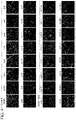
- Fig. 9 is a view illustrating an example of a cell image.
- the sixteen cell images included in the category "Control” illustrated in the drawing are images obtained by imaging the spinal motoneurons prepared from the iPS cells derived from sixteen healthy subjects.
- the sixteen cell images included in the category "SOD1 ALS” are images obtained by imaging the spinal motoneurons prepared from the iPS cells derived from sixteen ALS patients with SOD1 mutations.
- Each cell image is obtained by imaging the spinal motoneurons that was fixed with PFA and then stained with antibodies against neurofilament H which is a skeletal protein of nerve cells.
- the prediction model MDL was trained using 225 images per iPS cell strain from sixteen healthy subjects and sixteen ALS patients, respectively, as training data.
- the program used as the prediction model MDL was VGG16 of Tensorflow/Keras.
- Fig. 10 is a view illustrating an example of the prediction model MDL using Tensorflow/Keras.
- the prediction model MDL is a neural network that includes thirteen convolutional layers (CNN in the drawing) and three fully-connected layers (FC in the drawing).
- the prediction model MDL was trained using a total of 5,400 images of motoneurons derived from twelve healthy subjects and twelve ALS patients as training data, and the validation of prediction accuracy was performed using a total of 1,350 images of motoneurons derived from another three healthy subjects and twelve ALS patients. Accordingly, the optimal parameters were set, and further, another healthy subjects and ALS patients were identified.
- Fig. 11 is a view showing Experiment Example 3.
- sixteen strains of motoneurons were first prepared by differentiation induction of each of the iPS cells of sixteen healthy subjects, and sixteen strains of motoneurons were prepared by differentiation induction of each of the iPS cells of sixteen ALS patients with SOD1 mutations.
- the motoneurons prepared from the iPS cells derived from healthy subjects will be referred to as "healthy control clones”
- the motoneurons prepared from the iPS cells derived from ALS patients will be referred to as "ALS clones”.
- the prediction model MDL has been trained such that it is possible to identify a healthy subject and an ALS patient based on the motoneuron images by using images of eleven strains of healthy control clones for training, images of eleven strains of ALS clones for training, images of three strains of healthy control clones for validation, and images of three strains of ALS clones for validation.
- the number of images for each clone (motoneuron) was set to 225 per strain of motoneuron.
- the prediction model MDL was tested using the images of two strains of healthy control clones derived from healthy subjects and two strains of ALS clones derived from ALS patients, which had been selected for testing.
- Fig. 12 is a view illustrating an example of the motoneuron image used as a healthy control clonal strain
- Fig. 13 is a view illustrating an example of the motoneuron image used as the ALS clonal strain.
- Fig. 14 is a view illustrating an example of a test result of the prediction model MDL.
- the horizontal axis in the drawing represents the false positive rate, and the vertical axis represents the true positive rate.
- AUC area under the curve
- Fig. 15 is a view illustrating an example of image identification results by the prediction model MDL.
- the prediction model MDL implemented by the CNN is being identified using gradient-weighted class activation mapping (Grad-CAM). This means that, according to Grad-CAM, the prediction model MDL focuses on characteristic parts such as cell bodies and neurites of motoneurons.
- Grad-CAM gradient-weighted class activation mapping
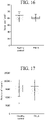
- Fig. 16 is a view illustrating comparison results of areas of cell bodies of a healthy control clone and an ALS clone.
- Fig. 17 is a view illustrating comparison results of the number of cells of the healthy control clone and the ALS clone. Using image analysis software, the area of cell bodies and the number of cells in the images are investigated, and no difference was found between the healthy control clones and the ALS clones.
- Experiment Example 4 similar to Experiment Example 3, sixteen strains of motoneurons were first prepared by differentiation induction of each of the iPS cells of sixteen healthy subjects, and sixteen strains of motoneurons were prepared by differentiation induction of each of the iPS cells of sixteen sporadic ALS patients.
- the prediction model MDL has been trained such that it is possible to identify the healthy subject and the sporadic ALS patient based on the motoneuron images by using images of eleven strains of healthy control clones for training, images of eleven strains of ALS clones for training, images of three strains of healthy control clones for validation, and images of three strains of ALS clones for validation.
- the number of images for each clone (motoneuron) was set to 225 per strain of motoneuron.
- the prediction model MDL was tested using the images of two strains of healthy control clones derived from healthy subjects and two strains of sporadic ALS clones derived from ALS patients, which had been selected for testing.
- Fig. 18 is a view illustrating an example of a motoneuron image used as a sporadic ALS clonal strain.
- Fig. 19 is a view illustrating another example of a test result of the prediction model MDL. Similar to Fig. 14 , the horizontal axis of Fig. 19 represents the false positive rate, and the vertical axis represents the true positive rate. As illustrated in the drawing, in a case where the ROC curve was calculated, the AUC, which is the area under the ROC curve, was 0.965, indicating that sporadic ALS could be diagnosed with sufficient accuracy.
- Fig. 20 is a view illustrating another example of image identification results by the prediction model MDL. Similar to Fig. 15 , in the example in Fig. 20 , it was visualized where in the image the prediction model MDL implemented by the CNN is being identified using the Grad-CAM This means that, according to Grad-CAM, the prediction model MDL focuses on characteristic parts such as cell bodies and neurites of motoneurons.
Landscapes
- Engineering & Computer Science (AREA)
- Health & Medical Sciences (AREA)
- Medical Informatics (AREA)
- General Health & Medical Sciences (AREA)
- Chemical & Material Sciences (AREA)
- Public Health (AREA)
- Biomedical Technology (AREA)
- Primary Health Care (AREA)
- Epidemiology (AREA)
- Life Sciences & Earth Sciences (AREA)
- Organic Chemistry (AREA)
- Zoology (AREA)
- Wood Science & Technology (AREA)
- Bioinformatics & Cheminformatics (AREA)
- Nuclear Medicine, Radiotherapy & Molecular Imaging (AREA)
- Radiology & Medical Imaging (AREA)
- Analytical Chemistry (AREA)
- Pathology (AREA)
- Databases & Information Systems (AREA)
- Data Mining & Analysis (AREA)
- Microbiology (AREA)
- Biochemistry (AREA)
- Genetics & Genomics (AREA)
- Biotechnology (AREA)
- General Engineering & Computer Science (AREA)
- Sustainable Development (AREA)
- General Physics & Mathematics (AREA)
- Computer Vision & Pattern Recognition (AREA)
- Physics & Mathematics (AREA)
- Theoretical Computer Science (AREA)
- Quality & Reliability (AREA)
- Computer Hardware Design (AREA)
- Image Analysis (AREA)
- Investigating Or Analysing Biological Materials (AREA)
- Measuring Or Testing Involving Enzymes Or Micro-Organisms (AREA)
Abstract
Description
- The present invention relates to an information processing device, a screening device, an information processing method, a screening method, and a program.
- Priority is claimed on
Japanese Patent Application No. 2019-103294, filed May 31, 2019 - Technology that uses machine learning to determine microscopic images of cells and tissues is being studied. For example, Non-Patent
Document 1 states that it was possible to identify the nuclei, life and death of cells, and cell types (whether or not the cells were nerve cells) by a trained machine learning model of microscopic images of cultured cells. Non-PatentDocument 2 describes that it was possible to identify lung adenocarcinoma, squamous cell carcinoma, and healthy lung tissues by a trained machine learning model of microscopic images of pathologic tissues of lung cancer. -
- [Non-Patent Document 1]
Christiansen E. M., et al., In Silico Labeling: Predicting Fluorescent Labels in Unlabeled Images, Cell, 173 (3), 792-803, 2018. - [Non-Patent Document 2]
Coudray N. et al., Classification and mutation prediction from non-small cell lung cancer histopathology images using deep learning, Nat Med., 24 (10), 1559-1567, 2018. - Intractable neurological diseases such as amyotrophic lateral sclerosis (ALS) require early diagnosis and early treatment. Therefore, it is required to diagnose a presymptomatic status before a subject is diagnosed as having an intractable neurological disease using conventional diagnostic methods. The term "presymptomatic status" refers to a state where mild symptoms appear, although the symptoms have not yet developed.
- However, the trained models described in
Non-Patent Document Non-Patent Documents - An object of the present invention is to provide an information processing device, a screening device, an information processing method, a screening method, and a program capable of accurately predicting that a subject will develop an intractable neurological disease based on images of cells differentiated from pluripotent stem cells derived from the subj ect.
- According to an aspect of the present invention, there is provided an information processing device including: an acquirer configured to acquire images obtained by imaging cells differentiated from pluripotent stem cells derived from a subject; and a predictor configured to input the images acquired by the acquirer to a model trained on data in which information indicating at least an intractable neurological disease is associated with an image obtained by imaging cells of the intractable neurological disease differentiated from pluripotent stem cells, and predict an onset of the intractable neurological disease of the subject based on output results of the model to which the images were input.
- According to an aspect of the present invention, it is possible to accurately predict that a subject will develop an intractable neurological disease based on images of cells differentiated from pluripotent stem cells derived from the subject.
-
-
Fig. 1 is a view illustrating an example of an information processing system including an information processing device according to a first embodiment. -
Fig. 2 is a view illustrating an example of a configuration of the information processing device according to the first embodiment. -
Fig. 3 is a flowchart illustrating a flow of a sequence of runtime processing by a controller according to the first embodiment. -
Fig. 4 is a view illustrating an example of a prediction model according to the first embodiment. -
Fig. 5 is a flowchart illustrating a series of training processing by a controller according to the first embodiment. -
Fig. 6 is a view illustrating another example of the prediction model according to the first embodiment. -
Fig. 7 is a view illustrating an example of a configuration of a screening device according to a second embodiment. -
Fig. 8 is a view illustrating an example of a hardware configuration of the information processing device and the screening device of the embodiments. -
Fig. 9 is a view illustrating an example of a cell image. -
Fig. 10 is a view illustrating an example of the prediction model using Tensorflow/Keras. -
Fig. 11 is a view showing Experiment Example 3. -
Fig. 12 is a view illustrating an example of a motor neuron image used as a healthy control clonal strain. -
Fig. 13 is a view illustrating an example of a motoneuron image used as an ALS clonal strain. -
Fig. 14 is a view illustrating an example of a test result of the prediction model. -
Fig. 15 is a view illustrating an example of image identification results of the prediction model. -
Fig. 16 is a view illustrating comparison results of areas of cell bodies of a healthy control clone and an ALS clone. -
Fig. 17 is a view illustrating comparison results of the number of cells of the healthy control clone and the ALS clone. -
Fig. 18 is a view illustrating an example of a motoneuron image used as a sporadic ALS clonal strain. -
Fig. 19 is a view illustrating another example of a test result of the prediction model. -
Fig. 20 is a view illustrating another example of image identification results by the prediction model. - Hereinafter, an information processing device, a screening device, an information processing method, a screening method, and a program according to the present embodiment will be described with reference to the drawings.
-
Fig. 1 is a view illustrating an example of aninformation processing system 1 including aninformation processing device 100 according to a first embodiment. Theinformation processing system 1 according to the first embodiment includes, for example, one or moreterminal devices 10 and theinformation processing device 100. These devices are connected to each other via a network NW. The network NW includes, for example, the Internet, a wide area network (WAN), a local area network (LAN), a provider terminal, a wireless communication network, a wireless base station, a dedicated line, and the like. All of the devices illustrated inFig. 1 in a combination need not be able to communicate with each other, and the network NW may include some local networks. - The
terminal device 10 is, for example, a terminal device including an input device, a display device, a communication device, a storage device, and a computing device. Specifically, theterminal device 10 can be a personal computer, a cell phone, or a tablet terminal. The communication device includes a network card such as a network interface card (NIC), a wireless communication module, and the like. For example, theterminal device 10 may be installed in a facility (for example, a research institute, a university, or a company) that conducts research and development of new drugs using pluripotent stem cells. - The pluripotent stem cells mentioned above include, for example, embryonic stem cells (ES cells), induced pluripotent stem cells (iPS cells), embryonic stem (ntES) cells derived from cloned embryos obtained by nuclear transplantation, sperm stem cells ("GS cells"), embryonic germ cells ("EG cells"), induced pluripotent stem (iPS) cells, and the like. Preferred pluripotent stem cells are ES cells, iPS cells, and ntES cells. More preferred pluripotent stem cells are human pluripotent stem cells, particularly human ES cells and human iPS cells. Furthermore, the cells that can be used in the present invention are not only pluripotent stem cells, but also a group of cells induced by so-called "direct reprogramming", in which the cells are directly induced to differentiate into desired cells without going through pluripotent stem cells.
- For example, an employee or the like working at a facility may capture an image of a desired cell induced to differentiate from pluripotent stem cells using a microscope or the like, and transmit the captured digital image (hereinafter, referred to as a cell image IMG) to the
information processing device 100 via theterminal device 10. - When the
information processing device 100 receives the cell image IMG from theterminal device 10, by using deep learning, based on the cell image IMG, it is predicted that the subject from whom the pluripotent stem cells were extracted before differentiation induction will develop an intractable neurological disease such as ALS at some point in the future. - The cells induced to differentiate from pluripotent stem cells may be, for example, cells related to the intractable neurological disease such as ALS, and specifically, may be, for example, nerve cells, glial cells, vascular endothelial cells, pericytes, choroid plexus cells, immune system cells, and the like. Examples of the neurodegenerative diseases include Alzheimer's disease, Parkinson's disease, amyotrophic lateral sclerosis (ALS), spinocerebellar degeneration, frontotemporal lobar degeneration, Lewy body dementia, multiple system atrophy, Huntington's disease, progressive supranuclear palsy, or corticobasal degeneration. The cells induced to differentiate from pluripotent stem cells may be imaged alive or may be imaged after being fixed and immunochemically stained.
- The cells of intractable neurological diseases differentiated from pluripotent stem cells are referred to as cells differentiated from pluripotent stem cells and cells that show a phenotype of an intractable neurological disease. As the cells of intractable neurological diseases differentiated from pluripotent stem cells, for example, cells differentiated from pluripotent stem cells derived from patients with intractable neurological diseases such as ALS, or cells differentiated from pluripotent stem cells derived from healthy subjects in which genetic mutations that cause the onset of intractable neurological diseases such as ALS are introduced, can be used.
- For example, in a case where the cells induced to differentiate from pluripotent stem cells are nerve cells such as motor nerve cells, the
information processing device 100 predicts that the subject from whom the pluripotent stem cells were extracted will develop ALS which is one of the intractable neurological diseases at some point in the future. ALS is a disease in which the motor nervous system is damaged by the gradual death or loss of function of nerve cells. - Therefore, by predicting that the nerve cells induced to differentiate from pluripotent stem cells will show a phenotype of the intractable neurological disease such as ALS at some point in the future, the
information processing device 100 determines whether or not the subject will develop the intractable neurological diseases such as ALS at some point in the future. A phenotype is a genotype of an organism expressed as a trait, and includes, for example, the morphology, structure, behavior, and physiological properties of the organism. Examples of the phenotype of the intractable neurological disease include cell morphology. In the following, as an example, a case is described where the cells induced to differentiate from pluripotent stem cells are nerve cells. -
Fig. 2 is a view illustrating an example of a configuration of theinformation processing device 100 according to the first embodiment. As illustrated in the drawing, theinformation processing device 100 includes, for example, acommunicator 102, acontroller 110, and astorage 130. - The
communicator 102 includes a communication interface, such as an NIC. Thecommunicator 102 communicates with theterminal device 10 and the like via the network NW - The
controller 110 includes, for example, anacquirer 112, apredictor 114, acommunication controller 116, and alearner 118. - The components of the
controller 110 are realized, for example, by a processor such as a central processing unit (CPU) or a graphics processing unit (GPU) executing a program stored in thestorage 130. Some or all of the components of thecontroller 110 may be realized by hardware (circuitry) such as a large-scale integration (LSI), an application specific integrated circuit (ASIC), or a field-programmable gate array (FPGA), or may be realized by the cooperation of software and hardware. - The
storage 130 is realized, for example, by a storage device such as a hard disk drive (HDD), a flash memory, an electrically erasable programmable read only memory (EEPROM), a read only memory (ROM), a random access memory (RAM), and the like. In addition to various programs such as firmware and application programs,model information 132 is stored in thestorage 130. Themodel information 132 will be described later. - Hereinafter, a flow of a series of runtime processing by the
controller 110 according to the first embodiment will be described with reference to a flowchart. Runtime is a state where a prediction model MDL that has already been trained is used.Fig. 3 is a flowchart illustrating a flow of a series of runtime processing by thecontroller 110 according to the first embodiment. The process in the present flowchart may be repeated in a predetermined cycle, for example. - First, the
acquirer 112 acquires the cell image IMG of a nerve cell from theterminal device 10 via the communicator 102 (step S100). The nerve cells to be imaged may be fixed and immunostained. Specifically, the nerve cells to be imaged may be, for example, nerve cells that have been immunostained with an anti-neurofilament H antibody or the like after being fixed with reagents such as formaldehyde or paraformaldehyde. - Next, the
predictor 114 inputs the cell image IMG acquired by theacquirer 112 to the prediction model MDL indicated by the model information 132 (step S102). - The
model information 132 is information (program or data structure) that defines the prediction model MDL for predicting that a nerve cell will exhibit the phenotype of the intractable neurological disease such as ALS, based on the cell image IMG of the nerve cells. The prediction model MDL is implemented, for example, by one or a plurality of neural networks. The neural network can be, for example, a convolutional neural network (CNN). - The
model information 132 includes, for example, various types of information such as coupling information on how the units included in each of an input layer, one or more hidden layers (intermediate layers), and an output layer that configure each neural network are coupled with each other, coupling coefficients given to the data input and output between the coupled units, and the like. The coupling information includes, for example, the number of units included in each layer, information specifying the type of the units to which each unit is coupled, the activation function that realizes each unit, and the gates provided between the units in the hidden layer. The activation function that realizes the units may be, for example, a normalized linear function (ReLU function), a sigmoid function, a step function, or any other function. The gates, for example, selectively pass or weight the data transmitted between the units depending on the value (for example, 1 or 0) returned by the activation function. The coupling coefficients include, for example, the weight given to the output data when the data is output from a unit in one layer to a unit in a deeper layer, in the hidden layer of the neural network. The coupling coefficients may include the inherent bias component of each layer, and the like. -
Fig. 4 is a view illustrating an example of the prediction model MDL according to the first embodiment. As illustrated in the drawing, the prediction model MDL is a single neural network that has learned to output a score indicating the likelihood that the nerve cell will show a phenotype of the intractable neurological disease as a likelihood or a probability, when the cell image IMG of the nerve cell is input. The neural network includes the CNN Specifically, the prediction model MDL is a neural network that includes a plurality (for example, thirteen or sixteen layers) of convolutional layers and a plurality (for example, three layers) of fully-connected layers. The score may be represented by a two-dimensional vector of which elements are respectively a probability P1 indicating the phenotype of the intractable neurological disease, for example, indicating the nerve cell death and the onset of the intractable neurological disease, and a probability P2 indicating that the phenotype of intractable neurological disease is not shown, for example, indicating that nerve cells do not die and do not develop the intractable neurological disease. - Description will return to the flowchart in
Fig. 3 . Next, thepredictor 114 determines whether or not the probability P1 which is included as an element in the score output by the prediction model MDL is equal to or greater than a threshold value (step S104). - In a case where the probability P1 is equal to or greater than the threshold value, the
predictor 114 predicts the onset of the intractable neurological disease since the nerve cells have a high probability of showing the phenotype of the intractable neurological disease (step S106), and in a case where the probability P1 is less than the threshold value, thepredictor 114 predicts that the intractable neurological disease will not develop since nerve cells have a low probability of showing the phenotype of the intractable neurological disease (step S108). - Next, the
communication controller 116 transmits the prediction results by thepredictor 114 to theterminal device 10 via the communicator 102 (step S110). For example, thecommunication controller 116 may transmit the information indicating whether or not the nerve cells show the phenotype of the intractable neurological disease, or may transmit the information indicating the presence or absence of the onset of the intractable neurological disease. - For example, in a case where the information indicating that the nerve cells show the phenotype of the intractable neurological disease is transmitted to the
terminal device 10, the user operating theterminal device 10 can ascertain whether the nerve cells shown in the cell image IMG transmitted to theinformation processing device 100 are destined to show the phenotype of the intractable neurological diseases such as ALS at some point in the future, or are destined not to show the phenotype of the intractable neurological diseases such as ALS. In other words, the user can know whether or not the subject from whom the pluripotent stem cells before differentiation induction into the nerve cells were extracted will develop the intractable neurological disease such as ALS in the future. - Hereinafter, a flow of a series of training processing by the
controller 110 according to the first embodiment will be described with reference to a flowchart. Training is a state where the prediction model MDL used in runtime is trained.Fig. 5 is a flowchart illustrating a series of training processing by thecontroller 110 according to the first embodiment. - First, the
learner 118 selects one cell image IMG from among the plurality of cell images IMG included in the training data in order to train the prediction model MDL (step S200). For example, the training data is data in which information indicating that the nerve cells show the phenotype of the intractable neurological disease such as ALS at some point in the future is associated with the cell image IMG obtained by imaging the nerve cells induced to differentiate from pluripotent stem cells, as a teaching label (also referred to as a target). In other words, the training data is a dataset that combines input data and output data, while the cell image IMG obtained by imaging the nerve cells induced to differentiate from pluripotent stem cells is input data, and the information indicating the phenotype of the intractable neurological disease is correct output data. The phenotype of the intractable neurological disease at some point in the future represents a more prominent phenotype of the neurodegenerative disease than that at the time when the cell image IMG was captured. - For example, the pluripotent stem cells of the patient with the intractable neurological disease are induced to differentiate to prepare a plurality of nerve cells, and each of the plurality of prepared nerve cells is imaged to generate the plurality of cell images IMG. Meanwhile, the pluripotent stem cells of the healthy subject are induced to differentiate to prepare a plurality of nerve cells, and each of the plurality of prepared nerve cells is imaged to generate the plurality of cell images IMG.
- Information (for example, score S = [1.0, 0.0]) indicating the phenotype of the intractable neurological disease is associated with the cell images IMG obtained by imaging the nerve cells derived from the patients with the intractable neurological disease as a teaching label, and information (for example, score S = [0.0, 1.0]) indicating that the phenotype of the intractable neurological disease is not shown is associated with the cell images IMG obtained by imaging the nerve cells derived from the healthy subject as a teaching label. In this manner, the plurality of cell images IMG with which the teaching labels are associated are prepared as training data.
- Next, the
learner 118 inputs the selected cell image IMG to the prediction model MDL (step S202). - Next, the
learner 118 acquires the score, which is the output result of the prediction model MDL to which the cell image IMG is input (step S204). - Next, the
learner 118 computes the error (also referred to as loss) between the score output by the prediction model MDL and the score associated with the cell image IMG input to the prediction model MDL as a teaching label (step S206). - Next, the
learner 118 determines the parameters of the prediction model MDL such that the error is reduced based on a gradient method such as error inverse propagation (step S208). - Next, the
learner 118 determines whether or not the training of the prediction model MDL has been repeated a predetermined number of times E (for example, approximately 30 times) (step S210), and in a case where the predetermined number of times E has not been reached, the processing returns to S202, and the same cell image IMG used for training in the previous processing is input to the prediction model MDL to repeatedly train the prediction model MDL. - Next, the
learner 118 selects all the cell images IMG included in the training data and determines whether or not the prediction model MDL has been trained (step S212), and in a case where not all the cell images IMGs have been selected yet, the process returns to S200, and the cell images IMG different from the previously selected cell images IMG are reselected to repeatedly train the prediction model MDL for a predetermined number of times E. Meanwhile, in a case where thelearner 118 selects all the cell images IMG, the process of this flowchart is ended. - According to the above-described first embodiment, the
information processing device 100 trains the prediction model MDL based on the training data in which the information indicating at least the intractable neurological disease such as ALS is associated with the image obtained by imaging the cells of the intractable neurological disease such as ALS induced to differentiate from pluripotent stem cells, as the teaching label. Then, theinformation processing device 100 acquires the cell images IMG obtained by imaging the cells differentiated from the pluripotent stem cells derived from the subject, and inputs the acquired images to the prediction model MDL that has been trained, and predicts the onset of the intractable neurological disease such as ALS of the subject based on the output results of the prediction model MDL. Therefore, it is possible to accurately predict that the subject will develop an intractable neurological disease such as ALS in the future. - In general, even in a case of cell images of cells in which a phenotype (for example, cell death) of an intractable neurological disease will appear at some point in the future, it is difficult to observe changes in phenotype in cell images in the early stages when the intractable neurological disease has not yet developed. On the other hand, in the present embodiment, since a prediction model MDL implemented by the CNN or the like is used, it is possible to expect that features such as minute changes in the cell structure and relative positional relationships between cells, which are difficult to observe with the naked eye in the cell images, can be calculated as convolutional feature amounts in the hidden layer. Accordingly, intractable neurological diseases that cannot be caught by humans visually checking cell images can be discovered at an early stage. In other words, it can be predicted that patients with a presymptomatic status who have not been diagnosed as having an intractable neurological disease by conventional diagnostic methods will develop the intractable neurological disease. As a result, treatment can be started at an early stage.
- Hereinafter, a modification example of the first embodiment will be described. In the above-described first embodiment, the prediction model MDL is described as a single neural network, but is not limited thereto. For example, the prediction model MDL may be a model that combines the plurality of neural networks.
-
Fig. 6 is a view illustrating another example of the prediction model MDL according to the first embodiment. As illustrated in the drawing, the prediction model MDL includes, for example, K models WL-1 to WL-K. Each of the models WL is a weak learner that has learned to output a score indicating the likelihood that the nerve cell will show a phenotype of the intractable neurological disease when the cell image IMG of the nerve cell is input. For example, the model WL includes the CNN Each model WL is in a parallel relationship with each other. The method of combining multiple weak learners to generate a single learning model in this manner is called ensemble learning. - For example, the prediction model MDL normalizes the scores of each model WL, which is a weak learner, and outputs the normalized score. The normalization of the score is shown in Equation (1). Equation (1) is implemented, for example, by a fully-connected layer.
- [Math. 1]

- S in the equation represents the normalized score, and si represents the score of the i-th model WL. The scores si and S are two-dimensional vectors (= [PI, P2]) of which elements are, for example, respectively, the probability P1 indicating the phenotype of the intractable neurological disease, for example, indicating cell death, and the probability P2 indicating that the phenotype of the intractable neurological disease is not shown, for example, indicating that the nerve cells will not die. As shown in Equation (1), the prediction model MDL may normalize the scores by dividing the sum of the scores of all models WL by K which is the total number of models WL. By using ensemble learning in this manner, we can improve the prediction accuracy of cell death for unknown (unlabeled) data that was not used in the training.
- In the above-described first embodiment, the training data is described as data in which a score indicating whether or not the nerve cells show the phenotype of the intractable neurological disease at some point in the future is associated with the cell image IMG, as the teaching label, but the present invention is not limited thereto. For example, the training data may be data in which, in addition to the above-described score, the age at the onset of the intractable neurological disease, the symptomatic period of the intractable neurological disease, or the like is further associated with the cell image IMG. The symptomatic period is, for example, a period from the onset of the intractable neurological disease until the symptoms reach a predetermined state (for example, a state that requires a respirator).
- For example, in a case where the prediction model MDL is trained using the training data in which the age of the onset of the intractable neurological disease is associated with the cell image IMG, the prediction model MDL outputs the age of the onset of the intractable neurological disease in addition to the score when the cell image IMG is input. In this case, the
predictor 114 predicts the time (period) until the subject develops the intractable neurological disease, based on the age output by the prediction model MDL. - For example, in a case where the prediction model MDL is trained using the training data in which the symptomatic period of the intractable neurological disease is associated with the cell image IMG, the prediction model MDL outputs the symptomatic period of the intractable neurological disease in addition to the score when the cell image IMG is input. The
predictor 114 predicts the progression rate of the symptoms of the intractable neurological disease in a case where the subject develops the intractable neurological disease, based on the symptomatic period output by the prediction model MDL. - In ALS, which is one of the intractable neurological diseases, there are two types: inherited and sporadic. Therefore, the training data may be data in which a three-dimensional score (= [P1(H), P1(S), P2]), of which elements are a probability P1(H) indicating the likelihood of having inherited ALS, a probability P1(S) indicating the likelihood of having sporadic ALS, and a probability P2 indicating the likelihood of not having any ALS, is associated with the cell image IMG as a teaching label.
- For example, a score S = [1.0, 0.0, 0.0]) may be associated with the cell image IMG of the nerve cells prepared by differentiation induction of the pluripotent stem cells from the patient with inherited ALS as a teaching label, and a score S = [1.0, 0.0, 0.0]) may be associated with the cell image IMG of the nerve cells prepared by differentiation induction of the pluripotent stem cells from the patient with sporadic ALS as a teaching label.
- By training the prediction model MDL using such training data, it is possible not only to predict whether or not the intractable neurological disease such as ALS will develop, but also to predict what type of intractable neurological disease will develop.
- The training data may further be data in which, in addition to the cell image IMG, the teaching label is associated with personal information indicating the sex or the presence or absence of genetic polymorphisms or specific genes (for example, SOD1 gene) of the patient with the intractable neurological disease. Personal information may further include a variety of information, such as age, weight, height, lifestyle, presence or absence of disease, and family medical history.
- In a case of using the prediction model MDL that has been trained using the cell image IMG and the personal information with which such a teaching label is associated, the
acquirer 112 acquires the cell images IMG of the nerve cells and also acquires the personal information indicating the sex of the subject, the presence or absence of genetic polymorphism or a specific gene. In addition, thepredictor 114 inputs the cell image IMG and the personal information to the prediction model MDL that has been trained, and predicts that the subject will develop the intractable neurological disease such as ALS based on the output results of the prediction model MDL. - Until now, the intractable neurological disease such as sporadic ALS described above have been considered to be developed without genetic influence. However, it is known that, in a case where one of identical twins develops sporadic ALS, the other will also develop sporadic ALS, and this means that even sporadic ALS has some genetic factors. Therefore, by inputting the genetic polymorphism to the prediction model MDL, it is possible to expect that the prediction model MDL learns some causal relation between the onset of sporadic ALS and genetic factors.
- In addition to the CNN, the prediction model MDL may include, for example, a recurrent neural network (RNN) of which the intermediate layer is a long short-term memory (LSTM).
- Hereinafter, a second embodiment will be described. The second embodiment describes a
screening device 100A that inputs the cell images IMG of the cells which are differentiated from the pluripotent stem cells derived from the patient with the intractable neurological disease such as ALS and are in contact with the test substance to the prediction model MDL, and determines whether or not the test substance is a preventive or a therapeutic agent for the intractable neurological diseases based on the output results of the prediction model MDL. Hereinafter, the following description focuses on the differences from the first embodiment, and the points in common with the first embodiment will be omitted. In the description of the second embodiment, the same reference numerals will be given to the same parts as those of the first embodiment. -
Fig. 7 is a view illustrating an example of a configuration of thescreening device 100A according to the second embodiment. As illustrated in the drawing, thescreening device 100A includes the configuration of theinformation processing device 100 according to the above-described first embodiment. Specifically, thescreening device 100A includes thecommunicator 102, a controller 110A, and thestorage 130. - The controller 110A according to the second embodiment further includes a
drug determiner 120 in addition to the above-describedacquirer 112,predictor 114,communication controller 116, andlearner 118. - The
acquirer 112 according to the second embodiment acquires the images obtained by imaging the cells of the intractable neurological disease, which are in contact with the test substance and differentiated from the pluripotent stem cells derived from the patient with the intractable neurological disease such as ALS. The test substance is not particularly limited, and examples thereof include natural compound libraries, synthetic compound libraries, existing drug libraries, metabolite libraries, and the like. In the present embodiment, a preventive for the intractable neurological disease is a drug that can suppress the onset of the intractable neurological disease or reduce the symptoms when administered to a target before the onset of the intractable neurological disease. A therapeutic agent for the intractable neurological disease is a drug that can reduce the symptoms of the intractable neurological disease when administered to a patient after the onset of the intractable neurological disease. - The
learner 118 according to the second embodiment trains the prediction model MDL based on the training data in the same manner as that of the above-described first embodiment. - The
predictor 114 according to the second embodiment inputs the images acquired by theacquirer 112 to the prediction model MDL that has been trained. In addition, thepredictor 114 predicts whether or not the phenotype (for example, cell death) of the intractable neurological disease such as ALS will appear in the cells to which the test substance was administered, based on the output results of the prediction model MDL with the image input. - The
drug determiner 120 determines whether the test substance is a preventive or a therapeutic agent for the neurodegenerative disease based on the prediction results of thepredictor 114. - For example, the
drug determiner 120 may determine that the test substance is a preventive or a therapeutic agent for the intractable neurological disease such as ALS in a case where the following condition (1) is satisfied, and may determine that the test substance is neither a preventive nor a therapeutic agent for the intractable neurological disease such as ALS in a case where the condition (2) is satisfied. - Condition (1): The score output by the prediction model MDL to which the image is input is equal to or less than a threshold value, and it is predicted that the phenotype of the intractable neurological disease such as ALS will not appear in the cells to which the test substance is administered.
- Condition (2): The score output by the prediction model MDL to which the image is input is equal to or greater than a threshold value, and it is predicted that the phenotype of the intractable neurological disease such as ALS will appear in the cells to which the test substance is administered.
- According to the above-described second embodiment, the
screening device 100A acquires images obtained by imaging cells of intractable neurological disease such as ALS, which are in contact with the test substance and differentiated from pluripotent stem cells, inputs the acquired images to the prediction model MDL that has been trained, and predicts whether or not the phenotype of the intractable neurological disease such as ALS will appear in the cells of the intractable neurological disease such as ALS which are in contact with the test substance, based on output results of the prediction model MDL to which the images were input, and determines whether the test substance is a preventive or a therapeutic agent for the intractable neurological disease such as ALS based on prediction results of whether or not the phenotype will appear in the cells. As a result, based on the images of the cells differentiated from the pluripotent stem cells, it is possible to efficiently discover new drugs that can be a preventive or a therapeutic agent for the intractable neurological disease such as ALS. - The
information processing device 100 and thescreening device 100A of the above-described embodiment are realized, for example, by a hardware configuration as illustrated inFig. 8. Fig. 8 is a view illustrating an example of the hardware configuration of theinformation processing device 100 and thescreening device 100A of the embodiments. - The
information processing device 100 has a configuration in which a NIC 100-1, a CPU 100-2, a RAM 100-3, a ROM 100-4, a secondary storage device 100-5 such as a flash memory or an HDD, and a drive device 100-6 are connected to each other by an internal bus or a dedicated communication line. A portable storage medium, such as an optical disk, is attached to the drive device 100-6. A program stored in a portable storage medium attached to the secondary storage device 100-5 or the drive device 100-6 is expanded into the RAM 100-3 by a DMA controller (not illustrated) or the like, and executed by the CPU 100-2 to realize thecontrollers 110 and 110A. The program that thecontroller 110 or 110A refers to may be downloaded from another device via the network NW - The above-described embodiments can be expressed as follows.
- An information processing device including: a processor; and a memory for storing a program, the device configured to, by executing the program by the processor, acquire images obtained by imaging cells differentiated from pluripotent stem cells derived from a subject, and input the acquired images to a model trained on data in which information indicating at least an intractable neurological disease is associated with the image obtained by imaging the cells of the intractable neurological disease differentiated from the pluripotent stem cells, and predict an onset of the intractable neurological disease of the subject based on output results of the model to which the images were input.
- The above-described embodiments can also be expressed as follows.
- A screening device including: a processor; and a memory for storing the program, the device configured to, by executing the program by the processor, acquire images obtained by imaging cells of an intractable neurological disease, which are in contact with a test substance and differentiated from pluripotent stem cells, inputs the acquired images to a model trained on data in which information indicating at least a phenotype of the intractable neurological disease is associated with the image obtained by imaging the cells of the intractable neurological disease differentiated from the pluripotent stem cells, and predict whether or not the phenotype of the intractable neurological disease will appear in the cells of the intractable neurological disease which are in contact with the test substance, based on the output results of the model to which the images were input, and determine whether the test substance is a preventive or a therapeutic agent for the neurodegenerative disease based on prediction results.
- Above, although the aspects for carrying out the present invention have been described using the embodiments, the present invention is not limited to the above-described embodiments, and various modifications and substitutions can be made without departing from the gist of the present invention.
- Spinal motoneurons were prepared using iPS cells prepared from sixteen healthy subjects and iPS cells prepared from sixteen ALS patients with SOD1 mutations. The cell images of the prepared motoneurons were acquired using InCell 6000 (GE healthcare).
-
Fig. 9 is a view illustrating an example of a cell image. The sixteen cell images included in the category "Control" illustrated in the drawing are images obtained by imaging the spinal motoneurons prepared from the iPS cells derived from sixteen healthy subjects. The sixteen cell images included in the category "SOD1 ALS" are images obtained by imaging the spinal motoneurons prepared from the iPS cells derived from sixteen ALS patients with SOD1 mutations. Each cell image is obtained by imaging the spinal motoneurons that was fixed with PFA and then stained with antibodies against neurofilament H which is a skeletal protein of nerve cells. - The prediction model MDL was trained using 225 images per iPS cell strain from sixteen healthy subjects and sixteen ALS patients, respectively, as training data. The program used as the prediction model MDL was VGG16 of Tensorflow/Keras.
-
Fig. 10 is a view illustrating an example of the prediction model MDL using Tensorflow/Keras. As illustrated in the drawing, the prediction model MDL is a neural network that includes thirteen convolutional layers (CNN in the drawing) and three fully-connected layers (FC in the drawing). The prediction model MDL was trained using a total of 5,400 images of motoneurons derived from twelve healthy subjects and twelve ALS patients as training data, and the validation of prediction accuracy was performed using a total of 1,350 images of motoneurons derived from another three healthy subjects and twelve ALS patients. Accordingly, the optimal parameters were set, and further, another healthy subjects and ALS patients were identified. As a result, the diagnostic results that showed high accuracy values for motoneuron images of healthy subjects and motoneuron images of ALS patients were obtained. Furthermore, it is possible to distinguish the images of motoneurons derived from the iPS cells of ALS patients and the images of motoneurons derived from the iPS cells to which gene restoration of the same person was performed, with high accuracy values. -
Fig. 11 is a view showing Experiment Example 3. As illustrated inFig. 11 , in Experiment Example 3, sixteen strains of motoneurons were first prepared by differentiation induction of each of the iPS cells of sixteen healthy subjects, and sixteen strains of motoneurons were prepared by differentiation induction of each of the iPS cells of sixteen ALS patients with SOD1 mutations. Hereinafter, the motoneurons prepared from the iPS cells derived from healthy subjects will be referred to as "healthy control clones", and the motoneurons prepared from the iPS cells derived from ALS patients will be referred to as "ALS clones". - Then, among the sixteen strains of healthy control clones, eleven strains were selected for training, three strains were selected for validation, and two strains were selected for testing. Similarly, among the sixteen ALS clones, eleven strains were selected for training, three strains were selected for validation, and two strains were selected for testing.
- The prediction model MDL has been trained such that it is possible to identify a healthy subject and an ALS patient based on the motoneuron images by using images of eleven strains of healthy control clones for training, images of eleven strains of ALS clones for training, images of three strains of healthy control clones for validation, and images of three strains of ALS clones for validation. The number of images for each clone (motoneuron) was set to 225 per strain of motoneuron. Then, by using the sufficiently trained prediction model MDL, the prediction model MDL was tested using the images of two strains of healthy control clones derived from healthy subjects and two strains of ALS clones derived from ALS patients, which had been selected for testing.
-
Fig. 12 is a view illustrating an example of the motoneuron image used as a healthy control clonal strain, andFig. 13 is a view illustrating an example of the motoneuron image used as the ALS clonal strain. -
Fig. 14 is a view illustrating an example of a test result of the prediction model MDL. The horizontal axis in the drawing represents the false positive rate, and the vertical axis represents the true positive rate. As illustrated in the drawing, in a case where a receiver operating characteristic (ROC) curve was obtained, an area under the curve (AUC), which is the area under the ROC curve, was 0.942, indicating that ALS could be diagnosed with sufficient accuracy. -
Fig. 15 is a view illustrating an example of image identification results by the prediction model MDL. In the example illustrated in the drawing, it was visualized where in the image the prediction model MDL implemented by the CNN is being identified using gradient-weighted class activation mapping (Grad-CAM). This means that, according to Grad-CAM, the prediction model MDL focuses on characteristic parts such as cell bodies and neurites of motoneurons. -
Fig. 16 is a view illustrating comparison results of areas of cell bodies of a healthy control clone and an ALS clone.Fig. 17 is a view illustrating comparison results of the number of cells of the healthy control clone and the ALS clone. Using image analysis software, the area of cell bodies and the number of cells in the images are investigated, and no difference was found between the healthy control clones and the ALS clones. - In Experiment Example 4, similar to Experiment Example 3, sixteen strains of motoneurons were first prepared by differentiation induction of each of the iPS cells of sixteen healthy subjects, and sixteen strains of motoneurons were prepared by differentiation induction of each of the iPS cells of sixteen sporadic ALS patients.
- Then, among the sixteen strains of healthy control clones, which are motoneurons prepared from the iPS cells derived from the healthy subjects, eleven strains were selected for training, three strains were selected for validation, and two strains were selected for testing. Similarly, among the sixteen strains of ALS clones, which are motoneurons prepared from the iPS cells derived from the sporadic ALS patients, eleven strains were selected for training, three strains were selected for validation, and two strains were selected for testing.
- The prediction model MDL has been trained such that it is possible to identify the healthy subject and the sporadic ALS patient based on the motoneuron images by using images of eleven strains of healthy control clones for training, images of eleven strains of ALS clones for training, images of three strains of healthy control clones for validation, and images of three strains of ALS clones for validation. The number of images for each clone (motoneuron) was set to 225 per strain of motoneuron. Then, by using the sufficiently trained prediction model MDL, the prediction model MDL was tested using the images of two strains of healthy control clones derived from healthy subjects and two strains of sporadic ALS clones derived from ALS patients, which had been selected for testing.
-
Fig. 18 is a view illustrating an example of a motoneuron image used as a sporadic ALS clonal strain. -
Fig. 19 is a view illustrating another example of a test result of the prediction model MDL. Similar toFig. 14 , the horizontal axis ofFig. 19 represents the false positive rate, and the vertical axis represents the true positive rate. As illustrated in the drawing, in a case where the ROC curve was calculated, the AUC, which is the area under the ROC curve, was 0.965, indicating that sporadic ALS could be diagnosed with sufficient accuracy. -
Fig. 20 is a view illustrating another example of image identification results by the prediction model MDL. Similar toFig. 15 , in the example inFig. 20 , it was visualized where in the image the prediction model MDL implemented by the CNN is being identified using the Grad-CAM This means that, according to Grad-CAM, the prediction model MDL focuses on characteristic parts such as cell bodies and neurites of motoneurons.
Claims (15)
- An information processing device comprising:an acquirer configured to acquire images obtained by imaging cells differentiated from pluripotent stem cells derived from a subject; anda predictor configured to input the images acquired by the acquirer to a model trained on data in which information indicating at least an intractable neurological disease is associated with an image obtained by imaging cells of the intractable neurological disease differentiated from the pluripotent stem cells, and predict an onset of the intractable neurological disease of the subject based on output results of the model to which the images were input.
- The information processing device according to claim 1, whereinthe data used for training the model is data in which age at the onset of the intractable neurological disease is further associated with the image obtained by imaging the cells of the intractable neurological disease,the model outputs the age when the images obtained by imaging the cells are input, andthe predictor further predicts a time period until the onset of the intractable neurological disease of the subject based on the age output by the model.
- The information processing device according to claim 1 or 2, whereinthe data used for training the model is data in which a symptomatic period of the intractable neurological disease is further associated with the image obtained by imaging the cells of the intractable neurological disease,the model outputs the symptomatic period when the images obtained by imaging the cells are input, andthe predictor further predicts a progression rate of the intractable neurological disease that the subject develops based on the symptomatic period output by the model.
- The information processing device according to any one of claims 1 to 3, wherein
the data used for training the model further includes data in which information indicating that the cell does not show the intractable neurological disease is associated with the image obtained by imaging the cells differentiated from the pluripotent stem cells derived from a healthy subject. - The information processing device according to any one of claims 1 to 4, whereinthe data used for training the model further includes, in addition to the images obtained by imaging the cells of the intractable neurological disease, data in which information indicating the intractable neurological disease is associated with personal information indicating the sex and presence or absence of genetic polymorphism or a specific gene of the patient with the intractable neurological disease,the acquirer further acquires personal information on the sex and the presence or absence of genetic polymorphism or a specific gene of the subject, andthe predictor inputs the images and the personal information which are acquired by the acquirer to the model, and predicts the onset of the intractable neurological disease of the subject based on output results of the model to which the images and the personal information were input.
- The information processing device according to any one of claims 1 to 5, further comprising:
a learner configured to train the model based on the data. - The information processing device according to any one of claims 1 to 6, wherein
the cells differentiated from the pluripotent stem cells are nerve cells, glial cells, vascular endothelial cells, pericytes, choroid plexus cells, or immune system cells. - The information processing device according to any one of claims 1 to 7, wherein the intractable neurological diseases are amyotrophic lateral sclerosis (ALS), Alzheimer's disease, Parkinson's disease, spinocerebellar degeneration, frontotemporal lobar degeneration, Lewy body dementia, multiple system atrophy, Huntington's disease, progressive supranuclear palsy, or Corticobasal degeneration.
- A screening device comprising:an acquirer configured to acquire images obtained by imaging cells of an intractable neurological disease, which are in contact with a test substance and differentiated from pluripotent stem cells;a predictor configured to input the images acquired by the acquirer to a model trained on data in which information indicating at least a phenotype of the intractable neurological disease is associated with an image obtained by imaging the cells of the intractable neurological disease differentiated from the pluripotent stem cells, and predict whether or not the phenotype of the intractable neurological disease will appear in the cells of the intractable neurological disease which are in contact with the test substance, based on output results of the model to which the images were input; anda determiner configured to determine whether the test substance is a preventive or a therapeutic agent for the intractable neurological disease based on prediction results of the predictor.
- The screening device according to claim 9, wherein
the determiner determines that the test substance is a preventive or a therapeutic agent for the intractable neurological disease in a case where the predictor predicts that the phenotype will not appear in the cells of the intractable neurological disease which are in contact with the test substance. - The screening device according to claim 9 or 10,
wherein the intractable neurological diseases are amyotrophic lateral sclerosis (ALS), Alzheimer's disease, Parkinson's disease, spinocerebellar degeneration, frontotemporal lobar degeneration, Lewy body dementia, multiple system atrophy, Huntington's disease, progressive supranuclear palsy, or Corticobasal degeneration. - An information processing method in which a computeracquires images obtained by imaging cells differentiated from pluripotent stem cells derived from a subject, andinputs the acquired images to a model trained on data in which information indicating at least an intractable neurological disease is associated with an image obtained by imaging the cells of the intractable neurological disease differentiated from the pluripotent stem cells, and predicts an onset of the intractable neurological disease of the subject based on output results of the model to which the images were input.
- A screening method in which a computeracquires images obtained by imaging cells of an intractable neurological disease, which are in contact with a test substance and differentiated from pluripotent stem cells;inputs the acquired images to a model trained on data in which information indicating at least a phenotype of the intractable neurological disease is associated with an image obtained by imaging the cells of the intractable neurological disease differentiated from the pluripotent stem cells, and predicts whether or not the phenotype of the intractable neurological disease will appear in the cells of the intractable neurological disease which are in contact with the test substance, based on output results of the model to which the images were input; anddetermines whether the test substance is a preventive or a therapeutic agent for the intractable neurological disease based on prediction results.
- A program causing a computer to executeacquires images obtained by imaging cells differentiated from pluripotent stem cells derived from a subject, andinputs the acquired images to a model trained on data in which information indicating at least an intractable neurological disease is associated with an image obtained by imaging the cells of the intractable neurological disease differentiated from the pluripotent stem cells, and predicts an onset of the intractable neurological disease of the subject based on output results of the model to which the images were input.
- A program executed by a computer thatacquires images obtained by imaging cells derived from a patient with an intractable neurological disease, which are in contact with a test substance and differentiated from pluripotent stem cells;inputs the acquired images to a model trained on data in which information indicating at least a phenotype of the intractable neurological disease is associated with an image obtained by imaging the cells of the intractable neurological disease differentiated from the pluripotent stem cells, and predicts whether or not the phenotype of the intractable neurological disease will appear in the cells derived from the patient with the intractable neurological disease which are in contact with the test substance, based on output results of the model to which the images were input; anddetermines whether the test substance is a preventive or a therapeutic agent for the intractable neurological disease based on prediction results.
Applications Claiming Priority (2)
| Application Number | Priority Date | Filing Date | Title |
|---|---|---|---|
| JP2019103294 | 2019-05-31 | ||
| PCT/JP2020/021384 WO2020241836A1 (en) | 2019-05-31 | 2020-05-29 | Information processing device, screening device, information processing method, screening method, and program |
Publications (2)
| Publication Number | Publication Date |
|---|---|
| EP3978594A1 true EP3978594A1 (en) | 2022-04-06 |
| EP3978594A4 EP3978594A4 (en) | 2023-10-11 |
Family
ID=73553188
Family Applications (1)
| Application Number | Title | Priority Date | Filing Date |
|---|---|---|---|
| EP20812823.1A Pending EP3978594A4 (en) | 2019-05-31 | 2020-05-29 | INFORMATION PROCESSING DEVICE, SCREENING DEVICE, INFORMATION PROCESSING METHOD, SCREENING METHOD, AND PROGRAM |
Country Status (5)
| Country | Link |
|---|---|
| US (1) | US12412266B2 (en) |
| EP (1) | EP3978594A4 (en) |
| JP (1) | JP7678577B2 (en) |
| SG (1) | SG11202113100TA (en) |
| WO (1) | WO2020241836A1 (en) |
Family Cites Families (16)
| Publication number | Priority date | Publication date | Assignee | Title |
|---|---|---|---|---|
| US7711174B2 (en) * | 2004-05-13 | 2010-05-04 | The Charles Stark Draper Laboratory, Inc. | Methods and systems for imaging cells |
| US8515150B2 (en) * | 2009-10-13 | 2013-08-20 | The Charles Stark Draper Laboratory, Inc. | Mathematical image analysis based cell reprogramming with applications for epigenetic and non-epigenetic base induced pluripotent stem cell derivation |
| WO2011108766A1 (en) | 2010-03-03 | 2011-09-09 | Kyoto University | METHOD FOR DIAGNOSING A PROTEIN MISFOLDING DISEASE USING NERVE CELLS DERIVED FROM iPS CELLS |
| CA2946378A1 (en) * | 2014-04-22 | 2015-10-29 | Q-State Biosciences, Inc. | Analysis of compounds for pain and sensory disorders |
| CA2972598C (en) | 2014-12-31 | 2024-03-12 | Wisconsin Alumni Research Foundation | Human pluripotent stem cell-based models for predictive developmental neural toxicity |
| EP3265810A1 (en) | 2015-03-06 | 2018-01-10 | Blanchette Rockefeller Neurosciences, Institute | Methods for classifying populations including alzheimer's disease populations |
| JP6143233B2 (en) | 2015-08-05 | 2017-06-07 | 国立大学法人京都大学 | Method for examining motor neuron disease and method for screening therapeutic agent |
| US11564615B2 (en) * | 2016-02-01 | 2023-01-31 | The Board of Trastees of the Leland | Method and systems for analyzing functional imaging data |
| JP6839342B2 (en) | 2016-09-16 | 2021-03-10 | 富士通株式会社 | Information processing equipment, information processing methods and programs |
| JP6837493B2 (en) * | 2016-12-06 | 2021-03-03 | 富士フイルム株式会社 | Cell image evaluation device and cell image evaluation control program |
| US10249389B2 (en) * | 2017-05-12 | 2019-04-02 | The Regents Of The University Of Michigan | Individual and cohort pharmacological phenotype prediction platform |
| WO2018211687A1 (en) | 2017-05-19 | 2018-11-22 | 株式会社オプティム | Computer system, subject diagnosis method, and support program |
| JPWO2018216705A1 (en) | 2017-05-23 | 2020-03-26 | 国立大学法人京都大学 | Agent for preventing and / or treating neurodegenerative diseases |
| JP2019103294A (en) | 2017-12-05 | 2019-06-24 | マブチモーター株式会社 | Single-phase motor |
| US20220028488A1 (en) * | 2018-12-07 | 2022-01-27 | President And Fellows Of Harvard College | Drug discovery and early disease identification platform using electronic health records, genetics and stem cells |
| EP3978595A4 (en) * | 2019-05-31 | 2023-07-05 | Kyoto University | INFORMATION PROCESSING DEVICE, SCREENING DEVICE, INFORMATION PROCESSING METHOD, SCREENING METHOD, AND PROGRAM |
-
2020
- 2020-05-29 WO PCT/JP2020/021384 patent/WO2020241836A1/en not_active Ceased
- 2020-05-29 EP EP20812823.1A patent/EP3978594A4/en active Pending
- 2020-05-29 SG SG11202113100TA patent/SG11202113100TA/en unknown
- 2020-05-29 US US17/614,243 patent/US12412266B2/en active Active
- 2020-05-29 JP JP2021522905A patent/JP7678577B2/en active Active
Also Published As
| Publication number | Publication date |
|---|---|
| JPWO2020241836A1 (en) | 2020-12-03 |
| JP7678577B2 (en) | 2025-05-16 |
| US12412266B2 (en) | 2025-09-09 |
| US20220215544A1 (en) | 2022-07-07 |
| WO2020241836A1 (en) | 2020-12-03 |
| SG11202113100TA (en) | 2021-12-30 |
| EP3978594A4 (en) | 2023-10-11 |
Similar Documents
| Publication | Publication Date | Title |
|---|---|---|
| US12462378B2 (en) | Information processing device, screening device, information processing method, screening method, and program | |
| Zhang et al. | Detection of autism spectrum disorder using fMRI functional connectivity with feature selection and deep learning | |
| CN109447183B (en) | Prediction model training method, device, equipment and medium | |
| Dou et al. | Unbiased integration of single cell multi-omics data | |
| US20230215571A1 (en) | Automated classification of immunophenotypes represented in flow cytometry data | |
| WO2022061176A1 (en) | Methods and systems for predicting neurodegenerative disease state | |
| Salih et al. | Deep learning classification integrating embryo images with associated clinical information from ART cycles | |
| JP2025518720A (en) | Systems and methods for predicting transplant rejection - Patents.com | |
| Tiwari et al. | Machine learning classification of Alzheimer's disease stages using cerebrospinal fluid biomarkers alone | |
| Patil et al. | Early detection of dementia using deep learning and image processing | |
| Hammonds et al. | Unraveling gender fairness analysis in deep learning prediction of alzheimer’s disease | |
| Singh et al. | Evaluating Machine Learning Algorithms for Early Detection of Alzheimer's Disease | |
| US20230228756A1 (en) | Transfer learning across hematological malignancies | |
| Khan et al. | Transfer learning-assisted prognosis of alzheimer's disease and mild cognitive impairment using structural-mri | |
| JP2025533816A (en) | Systems and methods for multimodal prediction of patient outcomes | |
| Chu et al. | A correlative classification study of schizophrenic patients with results of clinical evaluation and structural magnetic resonance images | |
| Coronel-Oliveros et al. | An integrated computational framework for diversity-sensitive personalized medicine | |
| US12412266B2 (en) | Information processing device, screening device, information processing method, screening method, and program | |
| Balamurugan et al. | Deep learning-driven drug development by identifying human protein targets | |
| Riad | IoT-based intelligent system for Alzheimer's Disease Detection & Monitoring | |
| Hasan et al. | A modified CNN model for diagnosing schizophrenia disease using fMRI data | |
| Ogg et al. | Optimizing artificial neural network models to predict brain-age from functional mri | |
| Ji et al. | Genetic mechanisms underlying gray matter atrophy in Parkinson’s disease: a combined transcriptome and neuroimaging study | |
| Ramesh et al. | Alzheimer's Disease (AD) Diagnosis from Brain MRI Image using Neural Network Algorithm | |
| Baraban et al. | Identifying Gene-wise Differences in Latent Space Projections Across Cell Types and Species in Single Cell Data using scProject |
Legal Events
| Date | Code | Title | Description |
|---|---|---|---|
| STAA | Information on the status of an ep patent application or granted ep patent |
Free format text: STATUS: THE INTERNATIONAL PUBLICATION HAS BEEN MADE |
|
| PUAI | Public reference made under article 153(3) epc to a published international application that has entered the european phase |
Free format text: ORIGINAL CODE: 0009012 |
|
| STAA | Information on the status of an ep patent application or granted ep patent |
Free format text: STATUS: REQUEST FOR EXAMINATION WAS MADE |
|
| 17P | Request for examination filed |
Effective date: 20211129 |
|
| AK | Designated contracting states |
Kind code of ref document: A1 Designated state(s): AL AT BE BG CH CY CZ DE DK EE ES FI FR GB GR HR HU IE IS IT LI LT LU LV MC MK MT NL NO PL PT RO RS SE SI SK SM TR |
|
| DAV | Request for validation of the european patent (deleted) | ||
| DAX | Request for extension of the european patent (deleted) | ||
| REG | Reference to a national code |
Ref country code: DE Ref legal event code: R079 Free format text: PREVIOUS MAIN CLASS: C12M0003000000 Ipc: G16H0030200000 |
|
| RIC1 | Information provided on ipc code assigned before grant |
Ipc: G01N 33/48 20060101ALI20230501BHEP Ipc: C12Q 1/02 20060101ALI20230501BHEP Ipc: C12M 3/00 20060101ALI20230501BHEP Ipc: G16H 30/20 20180101AFI20230501BHEP |
|
| RIC1 | Information provided on ipc code assigned before grant |
Ipc: G01N 33/48 20060101ALI20230803BHEP Ipc: C12Q 1/02 20060101ALI20230803BHEP Ipc: C12M 3/00 20060101ALI20230803BHEP Ipc: G16H 30/20 20180101AFI20230803BHEP |
|
| RIC1 | Information provided on ipc code assigned before grant |
Ipc: G01N 33/48 20060101ALI20230804BHEP Ipc: C12Q 1/02 20060101ALI20230804BHEP Ipc: C12M 3/00 20060101ALI20230804BHEP Ipc: G16H 30/20 20180101AFI20230804BHEP |
|
| RIC1 | Information provided on ipc code assigned before grant |
Ipc: G01N 33/48 20060101ALI20230831BHEP Ipc: C12Q 1/02 20060101ALI20230831BHEP Ipc: C12M 3/00 20060101ALI20230831BHEP Ipc: G16H 30/20 20180101AFI20230831BHEP |
|
| A4 | Supplementary search report drawn up and despatched |
Effective date: 20230907 |
|
| RIC1 | Information provided on ipc code assigned before grant |
Ipc: G01N 33/48 20060101ALI20230901BHEP Ipc: C12Q 1/02 20060101ALI20230901BHEP Ipc: C12M 3/00 20060101ALI20230901BHEP Ipc: G16H 30/20 20180101AFI20230901BHEP |
|
| STAA | Information on the status of an ep patent application or granted ep patent |
Free format text: STATUS: EXAMINATION IS IN PROGRESS |
|
| 17Q | First examination report despatched |
Effective date: 20260211 |