EP3978301B1 - Power allocation method of bielectric system and vehicle - Google Patents
Power allocation method of bielectric system and vehicle Download PDFInfo
- Publication number
- EP3978301B1 EP3978301B1 EP20814531.8A EP20814531A EP3978301B1 EP 3978301 B1 EP3978301 B1 EP 3978301B1 EP 20814531 A EP20814531 A EP 20814531A EP 3978301 B1 EP3978301 B1 EP 3978301B1
- Authority
- EP
- European Patent Office
- Prior art keywords
- motor
- power
- vehicle
- temperature
- initially allocated
- Prior art date
- Legal status (The legal status is an assumption and is not a legal conclusion. Google has not performed a legal analysis and makes no representation as to the accuracy of the status listed.)
- Active
Links
Images

Classifications
-
- B—PERFORMING OPERATIONS; TRANSPORTING
- B60—VEHICLES IN GENERAL
- B60L—PROPULSION OF ELECTRICALLY-PROPELLED VEHICLES; SUPPLYING ELECTRIC POWER FOR AUXILIARY EQUIPMENT OF ELECTRICALLY-PROPELLED VEHICLES; ELECTRODYNAMIC BRAKE SYSTEMS FOR VEHICLES IN GENERAL; MAGNETIC SUSPENSION OR LEVITATION FOR VEHICLES; MONITORING OPERATING VARIABLES OF ELECTRICALLY-PROPELLED VEHICLES; ELECTRIC SAFETY DEVICES FOR ELECTRICALLY-PROPELLED VEHICLES
- B60L15/00—Methods, circuits, or devices for controlling the traction-motor speed of electrically-propelled vehicles
- B60L15/20—Methods, circuits, or devices for controlling the traction-motor speed of electrically-propelled vehicles for control of the vehicle or its driving motor to achieve a desired performance, e.g. speed, torque, programmed variation of speed
-
- B—PERFORMING OPERATIONS; TRANSPORTING
- B60—VEHICLES IN GENERAL
- B60L—PROPULSION OF ELECTRICALLY-PROPELLED VEHICLES; SUPPLYING ELECTRIC POWER FOR AUXILIARY EQUIPMENT OF ELECTRICALLY-PROPELLED VEHICLES; ELECTRODYNAMIC BRAKE SYSTEMS FOR VEHICLES IN GENERAL; MAGNETIC SUSPENSION OR LEVITATION FOR VEHICLES; MONITORING OPERATING VARIABLES OF ELECTRICALLY-PROPELLED VEHICLES; ELECTRIC SAFETY DEVICES FOR ELECTRICALLY-PROPELLED VEHICLES
- B60L15/00—Methods, circuits, or devices for controlling the traction-motor speed of electrically-propelled vehicles
- B60L15/20—Methods, circuits, or devices for controlling the traction-motor speed of electrically-propelled vehicles for control of the vehicle or its driving motor to achieve a desired performance, e.g. speed, torque, programmed variation of speed
- B60L15/2045—Methods, circuits, or devices for controlling the traction-motor speed of electrically-propelled vehicles for control of the vehicle or its driving motor to achieve a desired performance, e.g. speed, torque, programmed variation of speed for optimising the use of energy
-
- B—PERFORMING OPERATIONS; TRANSPORTING
- B60—VEHICLES IN GENERAL
- B60L—PROPULSION OF ELECTRICALLY-PROPELLED VEHICLES; SUPPLYING ELECTRIC POWER FOR AUXILIARY EQUIPMENT OF ELECTRICALLY-PROPELLED VEHICLES; ELECTRODYNAMIC BRAKE SYSTEMS FOR VEHICLES IN GENERAL; MAGNETIC SUSPENSION OR LEVITATION FOR VEHICLES; MONITORING OPERATING VARIABLES OF ELECTRICALLY-PROPELLED VEHICLES; ELECTRIC SAFETY DEVICES FOR ELECTRICALLY-PROPELLED VEHICLES
- B60L2220/00—Electrical machine types; Structures or applications thereof
- B60L2220/40—Electrical machine applications
- B60L2220/42—Electrical machine applications with use of more than one motor
-
- B—PERFORMING OPERATIONS; TRANSPORTING
- B60—VEHICLES IN GENERAL
- B60L—PROPULSION OF ELECTRICALLY-PROPELLED VEHICLES; SUPPLYING ELECTRIC POWER FOR AUXILIARY EQUIPMENT OF ELECTRICALLY-PROPELLED VEHICLES; ELECTRODYNAMIC BRAKE SYSTEMS FOR VEHICLES IN GENERAL; MAGNETIC SUSPENSION OR LEVITATION FOR VEHICLES; MONITORING OPERATING VARIABLES OF ELECTRICALLY-PROPELLED VEHICLES; ELECTRIC SAFETY DEVICES FOR ELECTRICALLY-PROPELLED VEHICLES
- B60L2240/00—Control parameters of input or output; Target parameters
- B60L2240/40—Drive Train control parameters
- B60L2240/42—Drive Train control parameters related to electric machines
-
- B—PERFORMING OPERATIONS; TRANSPORTING
- B60—VEHICLES IN GENERAL
- B60L—PROPULSION OF ELECTRICALLY-PROPELLED VEHICLES; SUPPLYING ELECTRIC POWER FOR AUXILIARY EQUIPMENT OF ELECTRICALLY-PROPELLED VEHICLES; ELECTRODYNAMIC BRAKE SYSTEMS FOR VEHICLES IN GENERAL; MAGNETIC SUSPENSION OR LEVITATION FOR VEHICLES; MONITORING OPERATING VARIABLES OF ELECTRICALLY-PROPELLED VEHICLES; ELECTRIC SAFETY DEVICES FOR ELECTRICALLY-PROPELLED VEHICLES
- B60L2240/00—Control parameters of input or output; Target parameters
- B60L2240/40—Drive Train control parameters
- B60L2240/42—Drive Train control parameters related to electric machines
- B60L2240/423—Torque
-
- B—PERFORMING OPERATIONS; TRANSPORTING
- B60—VEHICLES IN GENERAL
- B60L—PROPULSION OF ELECTRICALLY-PROPELLED VEHICLES; SUPPLYING ELECTRIC POWER FOR AUXILIARY EQUIPMENT OF ELECTRICALLY-PROPELLED VEHICLES; ELECTRODYNAMIC BRAKE SYSTEMS FOR VEHICLES IN GENERAL; MAGNETIC SUSPENSION OR LEVITATION FOR VEHICLES; MONITORING OPERATING VARIABLES OF ELECTRICALLY-PROPELLED VEHICLES; ELECTRIC SAFETY DEVICES FOR ELECTRICALLY-PROPELLED VEHICLES
- B60L2240/00—Control parameters of input or output; Target parameters
- B60L2240/40—Drive Train control parameters
- B60L2240/42—Drive Train control parameters related to electric machines
- B60L2240/425—Temperature
-
- Y—GENERAL TAGGING OF NEW TECHNOLOGICAL DEVELOPMENTS; GENERAL TAGGING OF CROSS-SECTIONAL TECHNOLOGIES SPANNING OVER SEVERAL SECTIONS OF THE IPC; TECHNICAL SUBJECTS COVERED BY FORMER USPC CROSS-REFERENCE ART COLLECTIONS [XRACs] AND DIGESTS
- Y02—TECHNOLOGIES OR APPLICATIONS FOR MITIGATION OR ADAPTATION AGAINST CLIMATE CHANGE
- Y02T—CLIMATE CHANGE MITIGATION TECHNOLOGIES RELATED TO TRANSPORTATION
- Y02T10/00—Road transport of goods or passengers
- Y02T10/60—Other road transportation technologies with climate change mitigation effect
- Y02T10/64—Electric machine technologies in electromobility
-
- Y—GENERAL TAGGING OF NEW TECHNOLOGICAL DEVELOPMENTS; GENERAL TAGGING OF CROSS-SECTIONAL TECHNOLOGIES SPANNING OVER SEVERAL SECTIONS OF THE IPC; TECHNICAL SUBJECTS COVERED BY FORMER USPC CROSS-REFERENCE ART COLLECTIONS [XRACs] AND DIGESTS
- Y02—TECHNOLOGIES OR APPLICATIONS FOR MITIGATION OR ADAPTATION AGAINST CLIMATE CHANGE
- Y02T—CLIMATE CHANGE MITIGATION TECHNOLOGIES RELATED TO TRANSPORTATION
- Y02T10/00—Road transport of goods or passengers
- Y02T10/60—Other road transportation technologies with climate change mitigation effect
- Y02T10/72—Electric energy management in electromobility
Definitions
- the present invention relates to a power allocation method of a bi-electric system and a vehicle.
- electric vehicles mostly adopt a drive mode of dual motors + planetary gear set + main reducer, to split the required high-power motor into two lower-power motors, thereby meeting demands with lower power system costs. This also prevents the use of a motor with extreme power from causing various problems such as high manufacturing cost of vehicles, poor vehicle reliability, and bulky size that affects the vehicle layout.
- a permanent magnet synchronous motor has advantages of large starting torque and high energy conversion rate, so that new energy vehicles mostly use the permanent magnet synchronous motor as a drive motor.
- the permanent magnet synchronous motor mostly adopts a closed structure, and is prone to generate a lot of heat during operation. Extremely high temperatures may cause irreversible demagnetization of permanent magnets, and accelerate the aging of the insulating materials inside the motor, thus reducing the performance and service life of the motor.
- the rated power of a power system with dual motors and planetary gear set can meet the most basic use needs of users. However, in some special conditions such as large slopes, full-throttle acceleration, and etc., peak power is required to meet the use needs, but the output of the peak power may cause the temperature of the motor to increase too quickly, which impacts the motor to some extent.
- the Chinese patent with the publication No. CN104859486B discloses a torque distribution method, system for a dual-motor electric vehicle and a vehicle, to distribute the required torque to a first drive motor and a second drive motor according to multiple distribution proportions, calculate corresponding motor efficiency sums, and control output torques of the first drive motor and the second drive motor at a distribution proportion corresponding to the largest motor efficiency sum.
- the required power of the vehicle is high, especially when the required power exceeds the sum of rated powers of the two motors, the vehicle requires relatively high dynamic quality.
- the foregoing torque distribution method can only provide a better economy, but cannot meet the requirements for the dynamic quality. Therefore, the torque distribution method has limited applicability, and cannot provide effective power or make a proper distribution to meet the needs of drivers when the vehicle requires high power.
- the present invention is intended to provide a power allocation method of a bi-electric system and a vehicle, to solve a problem of poor dynamic quality caused by improper power allocation of an existing dual-motor drive system when the vehicle requires high power.
- the present invention provides a power allocation method of a bi-electric system.
- the beneficial effect is as follows: when the required power of the vehicle is high, the current temperature and temperature rise rate are introduced to determine the temperatures of the two motors at subsequent moments. To make the temperatures of the two motors the same, one correction factor is matched to each motor, and the output powers of the two motors are determined based on the correction factors and the initially allocated powers. This not only ensures that the temperatures of the two motors are equal at the subsequent moments, but also ensures the dynamic quality of the vehicle by preventing a dynamic quality decline of the vehicle caused by overheating ahead of time in one of the motors, thereby ensuring the dynamic balance of the two motors under extreme conditions. This power allocation manner is more reasonable, and can ensure safety while meeting driving needs.
- Q q 1 is a temperature at a cooling water inlet of the motor
- Q q 2 is a temperature at a cooling water outlet of the motor
- q q is flux of a coolant flowing through the motor per unit sampling time
- ⁇ density of the coolant
- C is a specific heat capacity of the coolant.
- the initially allocated power of the first motor is: P qr + P qp ⁇ P qr * P r ⁇ P qr ⁇ P zr P qp + P zp ⁇ P qr + P zr
- the initially allocated power of the second motor is: P zr + P zp ⁇ P zr * P r ⁇ P qr ⁇ P zr P qp + P zp ⁇ P qr + P zr
- P qr is a rated power of the first motor
- P zr is a rated power of the second motor
- P qp is a peak power of the first motor
- P zp is a peak power of the second motor
- P r is a required power of the vehicle.
- the required power of the vehicle is greater than the sum of the rated power of the first motor and the rated power of the second motor.
- the present invention provides a vehicle, including a vehicle body, a memory and a processor that are provided in the vehicle body, and a computer program stored in the memory and running in the processor.
- the beneficial effect is as follows: when the required power of the vehicle is high, the current temperature and temperature rise rate are introduced to determine the temperatures of the two motors at subsequent moments. To make the temperatures of the two motors the same, one correction factor is matched to each motor, and the output powers of the two motors are determined based on the correction factors and the initially allocated powers. This not only ensures that the temperatures of the two motors are equal at the subsequent moments, but also ensures the dynamic quality of the vehicle by preventing a dynamic quality decline of the vehicle caused by overheating ahead of time in one of the motors, thereby ensuring the dynamic balance of the two motors under extreme conditions. This power allocation manner is more reasonable, and can ensure safety while meeting driving needs.
- Q q 1 is a temperature at a cooling water inlet of the motor
- Q q 2 is a temperature at a cooling water outlet of the motor
- q q is flux of a coolant flowing through the motor per unit sampling time
- ⁇ density of the coolant
- C is a specific heat capacity of the coolant.
- the initially allocated power of the first motor in the vehicle is: P qr + P qp ⁇ P qr * P r ⁇ P qr ⁇ P zr P qp + P zp ⁇ P qr + P zr
- the initially allocated power of the second motor is: P zr + P zp ⁇ P zr * P r ⁇ P qr ⁇ P zr P qp + P zp ⁇ P qr + P zr
- P qr is a rated power of the first motor
- P zr is a rated power of the second motor
- P qp is a peak power of the first motor
- P zp is a peak power of the second motor
- P r is a required power of the vehicle.
- the required power of the vehicle is greater than the sum of the rated power of the first motor and the rated power of the second motor in the vehicle.
- FIG. 1 is a schematic flowchart of a power allocation method of a bi-electric system according to the present invention.
- the present invention provides a power allocation method of a bi-electric system. The following steps are performed when a required power of a vehicle is high and two motors of the vehicle are both running.
- the initially allocated power of the first motor is: P qr + P qp ⁇ P qr * P r ⁇ P qr ⁇ P zr P qp + P zp ⁇ P qr + P zr
- the initially allocated power of the second motor is: P zr + P zp ⁇ P zr * P r ⁇ P qr ⁇ P zr P qp + P zp ⁇ P qr + P zr
- P qr is a rated power of the first motor
- P zr is a rated power of the second motor
- P qp is a peak power of the first motor
- P zp is a peak power of the second motor
- P r is a required power of the vehicle.
- the initially allocated powers of the first motor and the second motor may be fixed values determined according to the actual vehicle; or may be values determined according to other existing measures.
- the heat resulting from the copper loss accounts for about 45% of the total heat quantity, and then total heat quantities Q mq and Q mz of the motors can be inversely deduced.
- the total heat quantity of the motor may also be obtained according to other existing measures, for example, by using a calibration relationship between an operating power of the motor and the heat quantity.
- Q q 1 is a temperature at a cooling water inlet of the motor
- Q q 2 is a temperature at a cooling water outlet of the motor
- q q is flux of a coolant flowing through the motor per unit sampling time
- ⁇ density of the coolant
- C is a specific heat capacity of the coolant.
- the heat exchange quantity may be calculated according to other existing formulas.
- the temperature rise rate of the motor may be looked up in its calibration table, where the table is defined according to the factory-set characteristics of the motor, and can be directly used in the present invention, that is, Q q corresponds to k dq and Q z corresponds to k dz .
- ⁇ 1 is the correction factor of the first motor
- ⁇ 2 is the correction factor of the second motor
- T 1 is the current temperature of the first motor
- T 2 is the current temperature of the second motor
- k dq is the temperature rise rate of the first motor
- k dz is the temperature rise rate of the second motor
- P r is the required power of the vehicle, where t 1 and t 2 represent sampling time.
- the rated power and peak power of the first motor are P qr and P qp respectively, and the rated power and peak power of the second motor are P zr and P zp respectively.
- the required power of the vehicle is greater than a sum of the rated powers of the two motors, that is, P r >P qr +P zr . Generally, P r cannot exceed a sum of the peak powers.
- the required power of the vehicle is greater than the sum of the rated powers of the two motors.
- the required power of the vehicle may alternatively be less than the sum of the rated powers of the two motors.
- the motor can long operate under the rated power without being overheated. Once the output power exceeds the rated power, the temperature of the motor will rise rapidly. Therefore, when the required power of the vehicle is less than the sum of the rated powers of the two motors, the power allocation method in the prior art may be used, or the method that keeps the two motors below the rated powers may be used.
- the present invention provides a vehicle, including a vehicle body, a memory and a processor that are provided in the vehicle body, and a computer program stored in memory and running in the processor.
- the processor runs the program, the power allocation method of a bi-electric system in the foregoing method embodiment is implemented, which is not repeated herein.
- the power allocation method of a bi-electric system of the present invention can be applied to a vehicle composed of a dual motor and planetary gear set coupling mechanism. Parameters of the two motors may be the same or different.
- the present invention can solve the problem of power allocation of two motors with different parameters when a driver-required power exceeds rated powers of the dual motors, achieving more reasonable power allocation.
Landscapes
- Engineering & Computer Science (AREA)
- Power Engineering (AREA)
- Transportation (AREA)
- Mechanical Engineering (AREA)
- Electric Propulsion And Braking For Vehicles (AREA)
- Control Of Multiple Motors (AREA)
Description
- The present invention relates to a power allocation method of a bi-electric system and a vehicle.
- At present, electric vehicles mostly adopt a drive mode of dual motors + planetary gear set + main reducer, to split the required high-power motor into two lower-power motors, thereby meeting demands with lower power system costs. This also prevents the use of a motor with extreme power from causing various problems such as high manufacturing cost of vehicles, poor vehicle reliability, and bulky size that affects the vehicle layout.
- A permanent magnet synchronous motor has advantages of large starting torque and high energy conversion rate, so that new energy vehicles mostly use the permanent magnet synchronous motor as a drive motor. The permanent magnet synchronous motor mostly adopts a closed structure, and is prone to generate a lot of heat during operation. Extremely high temperatures may cause irreversible demagnetization of permanent magnets, and accelerate the aging of the insulating materials inside the motor, thus reducing the performance and service life of the motor. The rated power of a power system with dual motors and planetary gear set can meet the most basic use needs of users. However, in some special conditions such as large slopes, full-throttle acceleration, and etc., peak power is required to meet the use needs, but the output of the peak power may cause the temperature of the motor to increase too quickly, which impacts the motor to some extent.
- In view of this, the Chinese patent with the publication No.
CN104859486B discloses a torque distribution method, system for a dual-motor electric vehicle and a vehicle, to distribute the required torque to a first drive motor and a second drive motor according to multiple distribution proportions, calculate corresponding motor efficiency sums, and control output torques of the first drive motor and the second drive motor at a distribution proportion corresponding to the largest motor efficiency sum. However, when the required power of the vehicle is high, especially when the required power exceeds the sum of rated powers of the two motors, the vehicle requires relatively high dynamic quality. Obviously, the foregoing torque distribution method can only provide a better economy, but cannot meet the requirements for the dynamic quality. Therefore, the torque distribution method has limited applicability, and cannot provide effective power or make a proper distribution to meet the needs of drivers when the vehicle requires high power. - Conventional power allocation methods for bi-electric systems and vehicles using the same are disclosed in
EP 2 080 660 A1 ,EP 2 444 273 A2 CN 108569168 A andUS 2018/162379 A1 . - The present invention is intended to provide a power allocation method of a bi-electric system and a vehicle, to solve a problem of poor dynamic quality caused by improper power allocation of an existing dual-motor drive system when the vehicle requires high power.
- The invention is defined by the appended set of claims. The description that follows is subjected to this limitation. Any disclosure lying outside the scope of said claims is only intended for illustrative as well as comparative purposes.
- To achieve the foregoing objective, the present invention provides a power allocation method of a bi-electric system.
- The beneficial effect is as follows: when the required power of the vehicle is high, the current temperature and temperature rise rate are introduced to determine the temperatures of the two motors at subsequent moments. To make the temperatures of the two motors the same, one correction factor is matched to each motor, and the output powers of the two motors are determined based on the correction factors and the initially allocated powers. This not only ensures that the temperatures of the two motors are equal at the subsequent moments, but also ensures the dynamic quality of the vehicle by preventing a dynamic quality decline of the vehicle caused by overheating ahead of time in one of the motors, thereby ensuring the dynamic balance of the two motors under extreme conditions. This power allocation manner is more reasonable, and can ensure safety while meeting driving needs.
- Further, to accurately calculate the heat exchange quantity of the motor in the current cooling system, a formula for calculating a heat exchange quantity Qe of a cooling system of any motor in the current state is:

where Q q1 is a temperature at a cooling water inlet of the motor, Q q2 is a temperature at a cooling water outlet of the motor, qq is flux of a coolant flowing through the motor per unit sampling time, ρ is density of the coolant, and C is a specific heat capacity of the coolant. - Further, to obtain a better power allocation effect, the initially allocated power of the first motor is:

the initially allocated power of the second motor is:
where Pqr is a rated power of the first motor, Pzr is a rated power of the second motor, Pqp is a peak power of the first motor, Pzp is a peak power of the second motor, and Pr is a required power of the vehicle. - Further, to obtain the heat quantity of any motor easily and accurately, a current of the motor at this moment is inversely deduced from P=UI, then heat resulting from copper loss of the motor is deduced from Q=I2RT, and the heat quantity of the motor is inversely deduced from a proportion of the heat resulting from copper loss to the heat quantity of the motor.
- Further, to make a motor power allocation control condition more reasonable, the required power of the vehicle is greater than the sum of the rated power of the first motor and the rated power of the second motor.
- The present invention provides a vehicle, including a vehicle body, a memory and a processor that are provided in the vehicle body, and a computer program stored in the memory and running in the processor.
- The beneficial effect is as follows: when the required power of the vehicle is high, the current temperature and temperature rise rate are introduced to determine the temperatures of the two motors at subsequent moments. To make the temperatures of the two motors the same, one correction factor is matched to each motor, and the output powers of the two motors are determined based on the correction factors and the initially allocated powers. This not only ensures that the temperatures of the two motors are equal at the subsequent moments, but also ensures the dynamic quality of the vehicle by preventing a dynamic quality decline of the vehicle caused by overheating ahead of time in one of the motors, thereby ensuring the dynamic balance of the two motors under extreme conditions. This power allocation manner is more reasonable, and can ensure safety while meeting driving needs.
- Further, to accurately calculate the heat exchange quantity of the motor in the current cooling system, a formula for calculating a heat exchange quantity Qe of a cooling system of any motor in the vehicle in the current state is:

where Q q1 is a temperature at a cooling water inlet of the motor, Q q2 is a temperature at a cooling water outlet of the motor, qq is flux of a coolant flowing through the motor per unit sampling time, ρ is density of the coolant, and C is a specific heat capacity of the coolant. - Further, to obtain a better power allocation effect, the initially allocated power of the first motor in the vehicle is:

the initially allocated power of the second motor is:
where Pqr is a rated power of the first motor, Pzr is a rated power of the second motor, Pqp is a peak power of the first motor, Pzp is a peak power of the second motor, and Pr is a required power of the vehicle. - Further, to obtain the heat quantity of any motor in the vehicle easily and accurately, a current of the motor at this moment is inversely deduced from P=UI, then heat resulting from copper loss of the motor is deduced from Q=I2RT, and the heat quantity of the motor is inversely deduced from a proportion of the heat resulting from copper loss to the heat quantity of the motor.
- Further, to make a motor power allocation control condition more reasonable, the required power of the vehicle is greater than the sum of the rated power of the first motor and the rated power of the second motor in the vehicle.
-
FIG. 1 is a schematic flowchart of a power allocation method of a bi-electric system according to the present invention. - The present invention is described in detail below with reference to the accompanying drawings.
- The present invention provides a power allocation method of a bi-electric system. The following steps are performed when a required power of a vehicle is high and two motors of the vehicle are both running.
- (1) Allocate an initially allocated power to a first motor and a second motor, wherein the initially allocated power of the first motor is P 1, and the initially allocated power of the second motor is P 2.
- To obtain a better power allocation effect, the initially allocated power of the first motor is:

the initially allocated power of the second motor is:
where Pqr is a rated power of the first motor, Pzr is a rated power of the second motor, Pqp is a peak power of the first motor, Pzp is a peak power of the second motor, and Pr is a required power of the vehicle. - In addition, in another implementation, the initially allocated powers of the first motor and the second motor may be fixed values determined according to the actual vehicle; or may be values determined according to other existing measures.
- (2) Calculate a heat quantity of the first motor and the second motor based on the initially allocated power of corresponding motors, collecting a heat exchange quantity of a cooling system of the first motor and the second motor in a current state, and the heat quantity of the first motor and the second motor respectively minus the heat exchange quantity of the cooling system of corresponding motors to obtain an absolute temperature rise heat quantity of corresponding motors.
- To obtain the heat quantity of any motor, a current of the motor at this moment is inversely deduced from P=UI, then heat resulting from copper loss of the motor is deduced from Q=I2RT, and the heat quantity of the motor is inversely deduced from a proportion of the heat resulting from copper loss to the heat quantity of the motor. In this case, the current of the first motor is Iq and the current of the second motor is Iz; and the heat resulting from copper loss of the first motor and the second motor can be deduced from Q=I2RT. The heat resulting from the copper loss accounts for about 45% of the total heat quantity, and then total heat quantities Qmq and Qmz of the motors can be inversely deduced. In another implementation, the total heat quantity of the motor may also be obtained according to other existing measures, for example, by using a calibration relationship between an operating power of the motor and the heat quantity.
- The formula for calculating the heat exchange quantity Qe of the cooling system of any motor in the current state is:

where Q q1 is a temperature at a cooling water inlet of the motor, Q q2 is a temperature at a cooling water outlet of the motor, qq is flux of a coolant flowing through the motor per unit sampling time, ρ is density of the coolant, and C is a specific heat capacity of the coolant. In another implementation, if the cooling system of the motor adopts air cooling or other cooling methods, the heat exchange quantity may be calculated according to other existing formulas. - If the heat exchange quantity of the first motor is Qeq and the heat exchange quantity of the second motor is Qez, the absolute temperature rise heat quantity of the first motor is Qq=Qmq-Qeq, and the absolute temperature rise heat quantity of the second motor is Qz=Qmz-Qez.
- (3) Obtain a temperature rise rate of the first motor and the second motor based on the absolute temperature rise heat quantity of corresponding motors and corresponding motor characteristics.
- The temperature rise rate of the motor may be looked up in its calibration table, where the table is defined according to the factory-set characteristics of the motor, and can be directly used in the present invention, that is, Qq corresponds to kdq and Qz corresponds to kdz .
- (4) Obtain a current temperature of the first motor T 1 and a current temperature of the second motor T 2, and determine an output power of the first motor and an output power of the second motor according to the following two relationships:
- a first relationship: a temperature of the first motor at a next moment and a temperature of the second motor at the next moment are adjusted to be equal based on the current temperature of the first motor, T 1 and the current temperature of the second motor, T 2 in combination with a temperature rise rate of the first motor, kdq, a temperature rise rate of the second motor, kdz, a correction factor of the first motor, α 1 and a correction factor of the second motor, α 2,

- where t 1 and t 2 represent sampling time; and
- a second relationship: a sum of the output power of the first motor and the output power of the second motor is equal to a required power of a vehicle, Pr , wherein the output power of the first motor is the correction factor of the first motor, α 1 multiplied by the initially allocated power of the first motor, P 1, and the output power of the second motor is the correction factor of the second motor, α 2 multiplied by the initially allocated power of the second motor, P 2,

- The first relationship and the second relationship in step (4) are transformed into formulas:


where α 1 is the correction factor of the first motor, α 2 is the correction factor of the second motor, T 1 is the current temperature of the first motor, T 2 is the current temperature of the second motor, kdq is the temperature rise rate of the first motor, kdz is the temperature rise rate of the second motor, and Pr is the required power of the vehicle, where t1 and t 2 represent sampling time. - The first relationship not only can be transformed into the formula

- As shown in
FIG. 1 , a required torque Tout may be obtained by looking up a MAP table based on a current output shaft speed nout , accelerator pedal opening, and a vehicle speed, and the required power of the vehicle may also be obtained: Pr = (nout * T out) / 9550. - The rated power and peak power of the first motor are Pqr and Pqp respectively, and the rated power and peak power of the second motor are Pzr and Pzp respectively. The required power of the vehicle is greater than a sum of the rated powers of the two motors, that is, Pr>Pqr+Pzr. Generally, Pr cannot exceed a sum of the peak powers.
- In this method embodiment, the required power of the vehicle is greater than the sum of the rated powers of the two motors. Certainly, in another implementation, the required power of the vehicle may alternatively be less than the sum of the rated powers of the two motors. The motor can long operate under the rated power without being overheated. Once the output power exceeds the rated power, the temperature of the motor will rise rapidly. Therefore, when the required power of the vehicle is less than the sum of the rated powers of the two motors, the power allocation method in the prior art may be used, or the method that keeps the two motors below the rated powers may be used.
- The present invention provides a vehicle, including a vehicle body, a memory and a processor that are provided in the vehicle body, and a computer program stored in memory and running in the processor. When the processor runs the program, the power allocation method of a bi-electric system in the foregoing method embodiment is implemented, which is not repeated herein.
- The power allocation method of a bi-electric system of the present invention can be applied to a vehicle composed of a dual motor and planetary gear set coupling mechanism. Parameters of the two motors may be the same or different. The present invention can solve the problem of power allocation of two motors with different parameters when a driver-required power exceeds rated powers of the dual motors, achieving more reasonable power allocation.
Claims (10)
- A power allocation method of a bi-electric system, comprising the following steps:(1) allocating an initially allocated power to a first motor and a second motor, wherein the initially allocated power of the first motor is P 1, and the initially allocated power of the second motor is P 2, calculating a heat quantity of the first motor and the second motor based on the initially allocated power of corresponding motors, collecting a heat exchange quantity of a cooling system of the first motor and the second motor in a current state, and the heat quantity of the first motor and the second motor respectively minus the heat exchange quantity of the cooling system of corresponding motors to obtain an absolute temperature rise heat quantity of corresponding motors;(2) obtaining a temperature rise rate of the first motor and the second motor based on the absolute temperature rise heat quantity of corresponding motors and corresponding motor characteristics; and(3) obtaining a current temperature of the first motor, T 1 and a current temperature of the second motor, T 2, and determining an output power of the first motor and an output power of the second motor according to the following two relationships:a first relationship: a temperature of the first motor at a next moment and a temperature of the second motor at the next moment are adjusted to be equal based on the current temperature of the first motor, T 1 and the current temperature of the second motor, T 2 in combination with a temperature rise rate of the first motor, kdq, a temperature rise rate of the second motor, kdz, a correction factor of the first motor, α 1 and a correction factor of the second motor, α 2,
 where t 1 and t 2 represent sampling time; anda second relationship: a sum of the output power of the first motor and the output power of the second motor is equal to a required power of a vehicle comprising the first motor and the second motor, Pr , wherein the output power of the first motor is the correction factor of the first motor, α 1 multiplied by the initially allocated power of the first motor, P 1, and the output power of the second motor is the correction factor of the second motor, α 2 multiplied by the initially allocated power of the second motor, P 2,
- The power allocation method of the bi-electric system according to claim 1, characterized in that a formula for calculating the heat exchange quantity Qe of the cooling system of the first motor and the second motor in the current state is:

- The power allocation method of the bi-electric system according to claim 1, characterized in that the initially allocated power of the first motor is:


- The power allocation method of the bi-electric system according to claim 2, characterized in that to obtain a heat quantity of the first motor and the second motor, a current of the first motor and the second motor at this moment is inversely deduced from P=UI, then a heat quantity resulting from copper loss of the first motor and the second motor is deduced from Q=I2RT, and the heat quantity of the first motor and the second motor is inversely deduced from a proportion of the heat quantity resulting from copper loss to the heat quantity of corresponding motors.
- The power allocation method of the bi-electric system according to claim 1, 2, 3, or 4, characterized in that the required power of the vehicle is greater than a sum of a rated power of the first motor and a rated power of the second motor.
- A vehicle, comprising a vehicle body, a first motor, a second motor, a cooling system of the first motor and a cooling system of the second motor, means for obtaining a current temperature of the first motor, T1, means for obtaining a current temperature of the second motor, T2, a memory and a processor that are provided in the vehicle body, and a computer program stored in the memory and running in the processor, characterized in that when the processor runs the program, the following steps are implemented:(1) allocating an initially allocated power to the first motor and the second motor, wherein the initially allocated power of the first motor is P 1, and the initially allocated power of the second motor is P 2, calculating a heat quantity of the first motor and the second motor based on the initially allocated power of corresponding motors, collecting a heat exchange quantity of a cooling system of the first motor and the second motor in a current state, and the heat quantity of the first motor and the second motor respectively minus the heat exchange quantity of the cooling system of corresponding motors to obtain an absolute temperature rise heat quantity of corresponding motors;(2) obtaining a temperature rise rate of the first motor and the second motor based on the absolute temperature rise heat quantity of corresponding motors and corresponding motor characteristics; and(3) obtaining a current temperature of the first motor, T 1 and a current temperature of the second motor, T 2, and determining an output power of the first motor and an output power of the second motor according to the following two relationships:a first relationship: a temperature of the first motor at a next moment and a temperature of the second motor at the next moment are adjusted to be equal based on the current temperature of the first motor, T 1 and the current temperature of the second motor, T 2 in combination with a temperature rise rate of the first motor, kdq, a temperature rise rate of the second motor, kdz, a correction factor of the first motor, α 1 and a correction factor of the second motor, α 2,
 where t 1 and t 2 represent sampling time; anda second relationship: a sum of the output power of the first motor and the output power of the second motor is equal to a required power of the vehicle, Pr , wherein the output power of the first motor is the correction factor of the first motor, α 1 multiplied by the initially allocated power of the first motor, P 1, and the output power of the second motor is the correction factor of the second motor, α 2 multiplied by the initially allocated power of the second motor, P 2,
- The vehicle according to claim 6, characterized in that a formula for calculating the heat exchange quantity Qe of the cooling system of the first motor and the second motor in the vehicle in the current state is:

- The vehicle according to claim 6, characterized in that the initially allocated power of the first motor in the vehicle is:

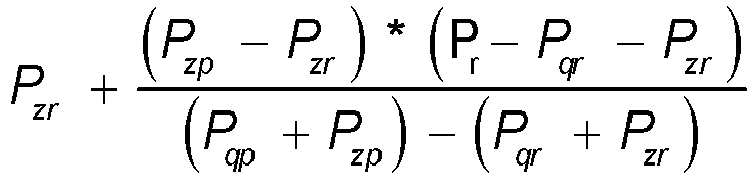
- The vehicle according to claim 7, characterized in that to obtain a heat quantity of the first motor and the second motor in the vehicle, a current of the first motor and the second motor at this moment is inversely deduced from P=UI, then a heat quantity resulting from copper loss of the first motor and the second motor is deduced from Q=I2RT, and the heat quantity of the first motor and the second motor is inversely deduced from a proportion of the heat quantity resulting from copper loss to the heat quantity of corresponding motors.
- The vehicle according to claim 6, 7, 8, or 9, characterized in that the required power of the vehicle is greater than a sum of a rated power of the first motor and a rated power of the second motor.
Applications Claiming Priority (2)
| Application Number | Priority Date | Filing Date | Title |
|---|---|---|---|
| CN201910444624.5A CN111993901B (en) | 2019-05-27 | 2019-05-27 | Power distribution method of double electric systems and vehicle |
| PCT/CN2020/092098 WO2020238849A1 (en) | 2019-05-27 | 2020-05-25 | Power allocation method of bioelectric system and vehicle |
Publications (5)
| Publication Number | Publication Date |
|---|---|
| EP3978301A1 EP3978301A1 (en) | 2022-04-06 |
| EP3978301A4 EP3978301A4 (en) | 2022-07-27 |
| EP3978301C0 EP3978301C0 (en) | 2024-05-01 |
| EP3978301B1 true EP3978301B1 (en) | 2024-05-01 |
| EP3978301B9 EP3978301B9 (en) | 2024-08-07 |
Family
ID=73461615
Family Applications (1)
| Application Number | Title | Priority Date | Filing Date |
|---|---|---|---|
| EP20814531.8A Active EP3978301B9 (en) | 2019-05-27 | 2020-05-25 | Power allocation method of bielectric system and vehicle |
Country Status (3)
| Country | Link |
|---|---|
| EP (1) | EP3978301B9 (en) |
| CN (1) | CN111993901B (en) |
| WO (1) | WO2020238849A1 (en) |
Families Citing this family (2)
| Publication number | Priority date | Publication date | Assignee | Title |
|---|---|---|---|---|
| CN116691366B (en) * | 2023-06-30 | 2025-12-26 | 潍柴动力股份有限公司 | Power distribution optimization methods, devices, storage media, and vehicles for dual-motor systems |
| WO2025109431A1 (en) * | 2023-11-22 | 2025-05-30 | Maserati S.P.A. | A method for determining a torque distribution between a front axle and a rear axle in a vehicle having an electric powertrain |
Citations (1)
| Publication number | Priority date | Publication date | Assignee | Title |
|---|---|---|---|---|
| CN108569168A (en) * | 2017-11-08 | 2018-09-25 | 蔚来汽车有限公司 | Electric vehicle driving system control method and system |
Family Cites Families (18)
| Publication number | Priority date | Publication date | Assignee | Title |
|---|---|---|---|---|
| JP4512075B2 (en) * | 2006-10-11 | 2010-07-28 | トヨタ自動車株式会社 | POWER OUTPUT DEVICE, ITS CONTROL METHOD, AND VEHICLE |
| JP2012095378A (en) * | 2010-10-25 | 2012-05-17 | Mitsubishi Motors Corp | Motor control device of electric vehicle |
| JP2013074643A (en) * | 2011-09-26 | 2013-04-22 | Toyota Motor Corp | Electric vehicle control device |
| JP5880568B2 (en) * | 2011-10-06 | 2016-03-09 | トヨタ自動車株式会社 | Control device for hybrid vehicle |
| JP2013126366A (en) * | 2011-12-16 | 2013-06-24 | Toyota Motor Corp | Vehicle |
| JP6102753B2 (en) * | 2014-01-08 | 2017-03-29 | トヨタ自動車株式会社 | Control device for hybrid vehicle |
| CN104319969A (en) * | 2014-11-19 | 2015-01-28 | 芜湖杰诺瑞汽车电器系统有限公司 | Optimization design method for high-efficiency synchronous motor of new energy automobile |
| CN104859486B (en) | 2015-04-30 | 2017-03-15 | 北汽福田汽车股份有限公司 | There is moment of torsion distribution method, system and the vehicle of the electric automobile of bi-motor |
| CN104786804B (en) * | 2015-04-30 | 2017-12-15 | 郑州宇通客车股份有限公司 | A kind of vehicle and its Direct wheel drives system and Direct wheel drives moment of torsion distribution method |
| CN106671827A (en) * | 2016-10-26 | 2017-05-17 | 哈尔滨理工大学 | Dual-motor electric motor coach power system and method for optimal distribution of torque of system |
| CN108016422B (en) * | 2016-10-28 | 2020-09-04 | 长城汽车股份有限公司 | Vehicle torque control method, system and vehicle |
| JP2018088768A (en) * | 2016-11-29 | 2018-06-07 | Ntn株式会社 | Drive control device of motor-mounted automobile |
| JP6741904B2 (en) * | 2016-12-09 | 2020-08-19 | 株式会社デンソー | Drive and car |
| CN106515511A (en) * | 2016-12-14 | 2017-03-22 | 重庆大学 | Control strategy for energy consumption of double-motor power system |
| CN107487225A (en) * | 2016-12-23 | 2017-12-19 | 宝沃汽车(中国)有限公司 | Torque distribution method, system and the electric automobile of electric automobile |
| CN108237950B (en) * | 2016-12-26 | 2020-06-16 | 北汽福田汽车股份有限公司 | Vehicle control method and system and vehicle |
| CN108621861A (en) * | 2018-04-17 | 2018-10-09 | 德威(苏州)新能源有限公司 | A kind of electric vehicle of the intelligent and high-efficiency safety of dual-motor combination takes turns control method entirely |
| CN109367403B (en) * | 2018-11-27 | 2021-01-05 | 奇瑞汽车股份有限公司 | Motor torque control method and device for hybrid electric vehicle and storage medium |
-
2019
- 2019-05-27 CN CN201910444624.5A patent/CN111993901B/en active Active
-
2020
- 2020-05-25 WO PCT/CN2020/092098 patent/WO2020238849A1/en not_active Ceased
- 2020-05-25 EP EP20814531.8A patent/EP3978301B9/en active Active
Patent Citations (1)
| Publication number | Priority date | Publication date | Assignee | Title |
|---|---|---|---|---|
| CN108569168A (en) * | 2017-11-08 | 2018-09-25 | 蔚来汽车有限公司 | Electric vehicle driving system control method and system |
Also Published As
| Publication number | Publication date |
|---|---|
| EP3978301C0 (en) | 2024-05-01 |
| EP3978301A4 (en) | 2022-07-27 |
| WO2020238849A1 (en) | 2020-12-03 |
| EP3978301B9 (en) | 2024-08-07 |
| EP3978301A1 (en) | 2022-04-06 |
| CN111993901B (en) | 2022-04-08 |
| CN111993901A (en) | 2020-11-27 |
Similar Documents
| Publication | Publication Date | Title |
|---|---|---|
| EP4297269B1 (en) | Electric drive system, drivetrain, heating method, and electric vehicle | |
| CN101400557B (en) | Hybrid vehicle | |
| EP2177390B1 (en) | Flux controlled motor management | |
| US6831429B2 (en) | Prediction of available torque and power from battery-powered traction motor | |
| CN104159774B (en) | Electrical power dissipation control method and device | |
| CN113715597B (en) | Powertrains and Vehicles | |
| CN108674410B (en) | Distributed hybrid power system and control method thereof | |
| EP3978301B1 (en) | Power allocation method of bielectric system and vehicle | |
| CN101417618A (en) | Controlling propulsion of a hybrid vehicle according to coolant temperature | |
| US11912164B2 (en) | Electrified vehicle with battery thermal management system configured to adjust temperature thresholds based on battery state of health | |
| CN101122262A (en) | Hybrid power automobile motor warm-up control method | |
| CN108340901A (en) | More power combination drive engineering transportation vehicle controls and its control method | |
| CN104972903B (en) | A kind of motor driven systems and its control method with automatic switching capabilities | |
| US8928263B2 (en) | Control apparatus in motor drive system and method of controlling motor drive system | |
| CN107839471A (en) | A kind of hub motor for electric automobile intelligent heat dissipation system and control method | |
| CN107623421B (en) | A kind of optimum design method of the automobile drive motor based on more operating conditions | |
| CN109890653B (en) | Apparatus and method for controlling temperature of battery according to gradient of delivered electric power | |
| CN110877533A (en) | Electric automobile power control system and method | |
| CN119590287A (en) | A thermal management method and device for dual refrigeration of electric vehicles | |
| CN115864742A (en) | Transient temperature control method, device and storage medium for oil-cooled electric drive system | |
| CN210062657U (en) | Wheel hub motor cooling system for electric automobile | |
| CN115056762A (en) | Driving power limit control method for extended range type hybrid all-terrain vehicle | |
| CN120382825B (en) | Battery heating method, device, system, motor controller and vehicle | |
| JP7599491B2 (en) | Battery-powered motor and motor drive system | |
| CN107234983B (en) | Energy peak-shifting control device for pure electric vehicle |
Legal Events
| Date | Code | Title | Description |
|---|---|---|---|
| STAA | Information on the status of an ep patent application or granted ep patent |
Free format text: STATUS: THE INTERNATIONAL PUBLICATION HAS BEEN MADE |
|
| PUAI | Public reference made under article 153(3) epc to a published international application that has entered the european phase |
Free format text: ORIGINAL CODE: 0009012 |
|
| STAA | Information on the status of an ep patent application or granted ep patent |
Free format text: STATUS: REQUEST FOR EXAMINATION WAS MADE |
|
| 17P | Request for examination filed |
Effective date: 20211227 |
|
| AK | Designated contracting states |
Kind code of ref document: A1 Designated state(s): AL AT BE BG CH CY CZ DE DK EE ES FI FR GB GR HR HU IE IS IT LI LT LU LV MC MK MT NL NO PL PT RO RS SE SI SK SM TR |
|
| A4 | Supplementary search report drawn up and despatched |
Effective date: 20220629 |
|
| RIC1 | Information provided on ipc code assigned before grant |
Ipc: B60W 30/184 20120101ALI20220623BHEP Ipc: B60W 30/18 20120101ALI20220623BHEP Ipc: B60L 15/38 20060101ALI20220623BHEP Ipc: B60L 15/20 20060101AFI20220623BHEP |
|
| DAV | Request for validation of the european patent (deleted) | ||
| DAX | Request for extension of the european patent (deleted) | ||
| STAA | Information on the status of an ep patent application or granted ep patent |
Free format text: STATUS: EXAMINATION IS IN PROGRESS |
|
| 17Q | First examination report despatched |
Effective date: 20230831 |
|
| GRAP | Despatch of communication of intention to grant a patent |
Free format text: ORIGINAL CODE: EPIDOSNIGR1 |
|
| STAA | Information on the status of an ep patent application or granted ep patent |
Free format text: STATUS: GRANT OF PATENT IS INTENDED |
|
| INTG | Intention to grant announced |
Effective date: 20240125 |
|
| GRAS | Grant fee paid |
Free format text: ORIGINAL CODE: EPIDOSNIGR3 |
|
| GRAA | (expected) grant |
Free format text: ORIGINAL CODE: 0009210 |
|
| STAA | Information on the status of an ep patent application or granted ep patent |
Free format text: STATUS: THE PATENT HAS BEEN GRANTED |
|
| RAP3 | Party data changed (applicant data changed or rights of an application transferred) |
Owner name: YUTONG BUS CO., LTD. |
|
| AK | Designated contracting states |
Kind code of ref document: B1 Designated state(s): AL AT BE BG CH CY CZ DE DK EE ES FI FR GB GR HR HU IE IS IT LI LT LU LV MC MK MT NL NO PL PT RO RS SE SI SK SM TR |
|
| REG | Reference to a national code |
Ref country code: GB Ref legal event code: FG4D |
|
| REG | Reference to a national code |
Ref country code: CH Ref legal event code: EP |
|
| REG | Reference to a national code |
Ref country code: IE Ref legal event code: FG4D |
|
| REG | Reference to a national code |
Ref country code: DE Ref legal event code: R096 Ref document number: 602020030317 Country of ref document: DE |
|
| U01 | Request for unitary effect filed |
Effective date: 20240515 |
|
| U07 | Unitary effect registered |
Designated state(s): AT BE BG DE DK EE FI FR IT LT LU LV MT NL PT SE SI Effective date: 20240528 |
|
| REG | Reference to a national code |
Ref country code: CH Ref legal event code: PK Free format text: BERICHTIGUNG B9 |
|
| U20 | Renewal fee for the european patent with unitary effect paid |
Year of fee payment: 5 Effective date: 20240729 |
|
| PG25 | Lapsed in a contracting state [announced via postgrant information from national office to epo] |
Ref country code: IS Free format text: LAPSE BECAUSE OF FAILURE TO SUBMIT A TRANSLATION OF THE DESCRIPTION OR TO PAY THE FEE WITHIN THE PRESCRIBED TIME-LIMIT Effective date: 20240901 |
|
| PG25 | Lapsed in a contracting state [announced via postgrant information from national office to epo] |
Ref country code: HR Free format text: LAPSE BECAUSE OF FAILURE TO SUBMIT A TRANSLATION OF THE DESCRIPTION OR TO PAY THE FEE WITHIN THE PRESCRIBED TIME-LIMIT Effective date: 20240501 |
|
| PG25 | Lapsed in a contracting state [announced via postgrant information from national office to epo] |
Ref country code: GR Free format text: LAPSE BECAUSE OF FAILURE TO SUBMIT A TRANSLATION OF THE DESCRIPTION OR TO PAY THE FEE WITHIN THE PRESCRIBED TIME-LIMIT Effective date: 20240802 |
|
| PG25 | Lapsed in a contracting state [announced via postgrant information from national office to epo] |
Ref country code: ES Free format text: LAPSE BECAUSE OF FAILURE TO SUBMIT A TRANSLATION OF THE DESCRIPTION OR TO PAY THE FEE WITHIN THE PRESCRIBED TIME-LIMIT Effective date: 20240501 |
|
| PG25 | Lapsed in a contracting state [announced via postgrant information from national office to epo] |
Ref country code: PL Free format text: LAPSE BECAUSE OF FAILURE TO SUBMIT A TRANSLATION OF THE DESCRIPTION OR TO PAY THE FEE WITHIN THE PRESCRIBED TIME-LIMIT Effective date: 20240501 |
|
| PG25 | Lapsed in a contracting state [announced via postgrant information from national office to epo] |
Ref country code: PL Free format text: LAPSE BECAUSE OF FAILURE TO SUBMIT A TRANSLATION OF THE DESCRIPTION OR TO PAY THE FEE WITHIN THE PRESCRIBED TIME-LIMIT Effective date: 20240501 Ref country code: NO Free format text: LAPSE BECAUSE OF FAILURE TO SUBMIT A TRANSLATION OF THE DESCRIPTION OR TO PAY THE FEE WITHIN THE PRESCRIBED TIME-LIMIT Effective date: 20240801 Ref country code: IS Free format text: LAPSE BECAUSE OF FAILURE TO SUBMIT A TRANSLATION OF THE DESCRIPTION OR TO PAY THE FEE WITHIN THE PRESCRIBED TIME-LIMIT Effective date: 20240901 Ref country code: HR Free format text: LAPSE BECAUSE OF FAILURE TO SUBMIT A TRANSLATION OF THE DESCRIPTION OR TO PAY THE FEE WITHIN THE PRESCRIBED TIME-LIMIT Effective date: 20240501 Ref country code: GR Free format text: LAPSE BECAUSE OF FAILURE TO SUBMIT A TRANSLATION OF THE DESCRIPTION OR TO PAY THE FEE WITHIN THE PRESCRIBED TIME-LIMIT Effective date: 20240802 Ref country code: ES Free format text: LAPSE BECAUSE OF FAILURE TO SUBMIT A TRANSLATION OF THE DESCRIPTION OR TO PAY THE FEE WITHIN THE PRESCRIBED TIME-LIMIT Effective date: 20240501 Ref country code: RS Free format text: LAPSE BECAUSE OF FAILURE TO SUBMIT A TRANSLATION OF THE DESCRIPTION OR TO PAY THE FEE WITHIN THE PRESCRIBED TIME-LIMIT Effective date: 20240801 |
|
| REG | Reference to a national code |
Ref country code: CH Ref legal event code: PL |
|
| PG25 | Lapsed in a contracting state [announced via postgrant information from national office to epo] |
Ref country code: CZ Free format text: LAPSE BECAUSE OF FAILURE TO SUBMIT A TRANSLATION OF THE DESCRIPTION OR TO PAY THE FEE WITHIN THE PRESCRIBED TIME-LIMIT Effective date: 20240501 |
|
| PG25 | Lapsed in a contracting state [announced via postgrant information from national office to epo] |
Ref country code: RO Free format text: LAPSE BECAUSE OF FAILURE TO SUBMIT A TRANSLATION OF THE DESCRIPTION OR TO PAY THE FEE WITHIN THE PRESCRIBED TIME-LIMIT Effective date: 20240501 Ref country code: SK Free format text: LAPSE BECAUSE OF FAILURE TO SUBMIT A TRANSLATION OF THE DESCRIPTION OR TO PAY THE FEE WITHIN THE PRESCRIBED TIME-LIMIT Effective date: 20240501 |
|
| PG25 | Lapsed in a contracting state [announced via postgrant information from national office to epo] |
Ref country code: SM Free format text: LAPSE BECAUSE OF FAILURE TO SUBMIT A TRANSLATION OF THE DESCRIPTION OR TO PAY THE FEE WITHIN THE PRESCRIBED TIME-LIMIT Effective date: 20240501 |
|
| PG25 | Lapsed in a contracting state [announced via postgrant information from national office to epo] |
Ref country code: SM Free format text: LAPSE BECAUSE OF FAILURE TO SUBMIT A TRANSLATION OF THE DESCRIPTION OR TO PAY THE FEE WITHIN THE PRESCRIBED TIME-LIMIT Effective date: 20240501 Ref country code: SK Free format text: LAPSE BECAUSE OF FAILURE TO SUBMIT A TRANSLATION OF THE DESCRIPTION OR TO PAY THE FEE WITHIN THE PRESCRIBED TIME-LIMIT Effective date: 20240501 Ref country code: RO Free format text: LAPSE BECAUSE OF FAILURE TO SUBMIT A TRANSLATION OF THE DESCRIPTION OR TO PAY THE FEE WITHIN THE PRESCRIBED TIME-LIMIT Effective date: 20240501 Ref country code: CZ Free format text: LAPSE BECAUSE OF FAILURE TO SUBMIT A TRANSLATION OF THE DESCRIPTION OR TO PAY THE FEE WITHIN THE PRESCRIBED TIME-LIMIT Effective date: 20240501 Ref country code: MC Free format text: LAPSE BECAUSE OF FAILURE TO SUBMIT A TRANSLATION OF THE DESCRIPTION OR TO PAY THE FEE WITHIN THE PRESCRIBED TIME-LIMIT Effective date: 20240501 Ref country code: CH Free format text: LAPSE BECAUSE OF NON-PAYMENT OF DUE FEES Effective date: 20240531 |
|
| REG | Reference to a national code |
Ref country code: DE Ref legal event code: R097 Ref document number: 602020030317 Country of ref document: DE |
|
| PLBE | No opposition filed within time limit |
Free format text: ORIGINAL CODE: 0009261 |
|
| STAA | Information on the status of an ep patent application or granted ep patent |
Free format text: STATUS: NO OPPOSITION FILED WITHIN TIME LIMIT |
|
| 26N | No opposition filed |
Effective date: 20250204 |
|
| PG25 | Lapsed in a contracting state [announced via postgrant information from national office to epo] |
Ref country code: IE Free format text: LAPSE BECAUSE OF NON-PAYMENT OF DUE FEES Effective date: 20240525 |
|
| U20 | Renewal fee for the european patent with unitary effect paid |
Year of fee payment: 6 Effective date: 20250528 |
|
| PG25 | Lapsed in a contracting state [announced via postgrant information from national office to epo] |
Ref country code: HU Free format text: LAPSE BECAUSE OF FAILURE TO SUBMIT A TRANSLATION OF THE DESCRIPTION OR TO PAY THE FEE WITHIN THE PRESCRIBED TIME-LIMIT; INVALID AB INITIO Effective date: 20200525 |
|
| PG25 | Lapsed in a contracting state [announced via postgrant information from national office to epo] |
Ref country code: CY Free format text: LAPSE BECAUSE OF FAILURE TO SUBMIT A TRANSLATION OF THE DESCRIPTION OR TO PAY THE FEE WITHIN THE PRESCRIBED TIME-LIMIT; INVALID AB INITIO Effective date: 20200525 |
|
| PGFP | Annual fee paid to national office [announced via postgrant information from national office to epo] |
Ref country code: GB Payment date: 20260304 Year of fee payment: 7 |