EP3977842A1 - Forage harvester - Google Patents
Forage harvester Download PDFInfo
- Publication number
- EP3977842A1 EP3977842A1 EP21196559.5A EP21196559A EP3977842A1 EP 3977842 A1 EP3977842 A1 EP 3977842A1 EP 21196559 A EP21196559 A EP 21196559A EP 3977842 A1 EP3977842 A1 EP 3977842A1
- Authority
- EP
- European Patent Office
- Prior art keywords
- aspects
- crop
- crop flow
- data relating
- data
- Prior art date
- Legal status (The legal status is an assumption and is not a legal conclusion. Google has not performed a legal analysis and makes no representation as to the accuracy of the status listed.)
- Withdrawn
Links
- 239000004459 forage Substances 0.000 title claims abstract description 31
- 238000000034 method Methods 0.000 claims description 8
- 230000000007 visual effect Effects 0.000 claims description 6
- 238000004891 communication Methods 0.000 description 5
- 241001124569 Lycaenidae Species 0.000 description 3
- 238000012986 modification Methods 0.000 description 3
- 230000004048 modification Effects 0.000 description 3
- 230000006835 compression Effects 0.000 description 2
- 238000007906 compression Methods 0.000 description 2
- 239000000835 fiber Substances 0.000 description 2
- 244000025254 Cannabis sativa Species 0.000 description 1
- 240000008042 Zea mays Species 0.000 description 1
- 235000005824 Zea mays ssp. parviglumis Nutrition 0.000 description 1
- 235000002017 Zea mays subsp mays Nutrition 0.000 description 1
- 235000005822 corn Nutrition 0.000 description 1
- 238000010586 diagram Methods 0.000 description 1
- 239000000446 fuel Substances 0.000 description 1
- 230000001960 triggered effect Effects 0.000 description 1
Images


Classifications
-
- A—HUMAN NECESSITIES
- A01—AGRICULTURE; FORESTRY; ANIMAL HUSBANDRY; HUNTING; TRAPPING; FISHING
- A01D—HARVESTING; MOWING
- A01D34/00—Mowers; Mowing apparatus of harvesters
- A01D34/006—Control or measuring arrangements
-
- A—HUMAN NECESSITIES
- A01—AGRICULTURE; FORESTRY; ANIMAL HUSBANDRY; HUNTING; TRAPPING; FISHING
- A01D—HARVESTING; MOWING
- A01D34/00—Mowers; Mowing apparatus of harvesters
- A01D34/01—Mowers; Mowing apparatus of harvesters characterised by features relating to the type of cutting apparatus
- A01D34/412—Mowers; Mowing apparatus of harvesters characterised by features relating to the type of cutting apparatus having rotating cutters
- A01D34/42—Mowers; Mowing apparatus of harvesters characterised by features relating to the type of cutting apparatus having rotating cutters having cutters rotating about a horizontal axis, e.g. cutting-cylinders
- A01D34/52—Cutting apparatus
-
- A—HUMAN NECESSITIES
- A01—AGRICULTURE; FORESTRY; ANIMAL HUSBANDRY; HUNTING; TRAPPING; FISHING
- A01D—HARVESTING; MOWING
- A01D75/00—Accessories for harvesters or mowers
- A01D75/08—Sharpening apparatus fixed to the harvester or mower
-
- A—HUMAN NECESSITIES
- A01—AGRICULTURE; FORESTRY; ANIMAL HUSBANDRY; HUNTING; TRAPPING; FISHING
- A01D—HARVESTING; MOWING
- A01D34/00—Mowers; Mowing apparatus of harvesters
- A01D34/01—Mowers; Mowing apparatus of harvesters characterised by features relating to the type of cutting apparatus
- A01D34/412—Mowers; Mowing apparatus of harvesters characterised by features relating to the type of cutting apparatus having rotating cutters
- A01D34/42—Mowers; Mowing apparatus of harvesters characterised by features relating to the type of cutting apparatus having rotating cutters having cutters rotating about a horizontal axis, e.g. cutting-cylinders
- A01D34/49—Mowers; Mowing apparatus of harvesters characterised by features relating to the type of cutting apparatus having rotating cutters having cutters rotating about a horizontal axis, e.g. cutting-cylinders with means for discharging mown material
Definitions
- the present invention relates to an agricultural harvester, in particular to a self-propelled forage harvester for use in cutting an agricultural crop, for example in cutting corn and grass for stock feed.
- Self-propelled forage harvesters are usually provided with a rotatable cylindrical cutter drum having a plurality of knives which chop the crop as it is processed by the machine.
- the knives must be sharpened from time to time. How often depends on the type of crop being harvested. Sharpening often requires an operator to stop the forage harvester in order to allow a knife grinding process to take place.
- a forage harvester comprises a chopping drum having a plurality of knife blades, a knife sharpening apparatus, a discharge spout, image capture apparatus for generating a series of captured images of processed crop in the discharge spout, an electronic control unit adapted to determine data relating to aspects of the crop flow from the series of captured images, a memory for storing initial data relating to the aspects of crop flow as control data, the electronic control unit being adapted to compare subsequently determined data with the control data and in the event of determining a predetermined deviation of the subsequently determined data from the control data, the control unit being adapted to generate a signal indicating that sharpening of the knife blades is required.
- the aspects of the crop flow relate to the size, length or type of the processed crop, for example kernels or fibre components.
- the forage harvester further comprises a user terminal and the signal indicating that sharpening of the knife blades is required is a signal to the user terminal to generate an alert to the operator.
- the signal indicating that sharpening of the knife blades is required is a signal to the user terminal to generate a signal to actuate the knife sharpening apparatus and additionally the electronic control unit generates a signal to the user terminal to generate an alert to the operator.
- the alert to the operator comprises a visual indication, an audible indication or both.
- a method of determining a need for actuating a knife sharpening apparatus in a forage harvester in accordance with the first aspect of the present invention comprises the steps of capturing a series of images of processed crop flowing in the discharge spout, processing a first image or a first set of images in the series of captured images to acquire initial data relating to the aspects of crop flow from the first image or first set of images and storing this as control data, periodically processing subsequent images in the series of captured images to determine subsequent data relating to aspects of the crop flow, comparing the subsequent data relating to aspects of the crop flow with the control data to determine whether any detected deviation between the subsequent data and the control data exceeds a predetermined deviation and if any detected deviation detected exceeds the predetermined deviation then causing a signal to be generated indicating a need for actuating a knife sharpening apparatus.
- a computer implemented method comprises the steps of acquiring initial data relating to aspects of crop flow, storing the initial data as control data, periodically determining subsequent data relating to aspects of the crop flow, comparing the subsequent data relating to aspects of the crop flow with the control data to determine whether any deviation detected exceeds a predetermined deviation and if any deviation detected exceeds a predetermined deviation then causing a signal to be generated indicating a need for actuating a knife sharpening apparatus.
- FIG. 1 in a schematic side view the main components of a forage harvester 2 are shown.
- the forage harvester 2 is provided with a front attachment 4 which contains cutting equipment for cutting a crop.
- the cut crop is then fed through a series of compression rollers 6 in a compression roller housing 8 to a chopper drum 10 where the crop is chopped into smaller pieces between a shear bar and a plurality of chopper knives mounted on the chopper drum 10.
- the chopped crop next passes through a first duct 12 and, in the illustrated embodiment, is fed through a cracker unit 14 where the crop is further crushed and threshed.
- the harvested crop is then blown upwards along a second duct 16 by an accelerator 18 and exits through a spout 20.
- the chopped crop may optionally pass directly from the chopper drum 10 to the second duct 16.
- a user terminal 30 communicates with an electronic control unit 32.
- the user terminal is conveniently located within a cab of the forage harvester.
- the electronic control unit 32 is also in electronic or other communication with various components and devices of the forage harvester. Conveniently such communication may be enabled by way of a suitable data communication network 34 such as one compliant with the ISOBUS standard (a network in conformance to ISO 11783).
- the electronic control unit 32 may be in electronic communication with various actuators, sensors, and other devices within (or outside of) the forage harvester.
- the electronic control unit 32 may communicate with various other components (including other controllers) in various known ways, including wirelessly.
- the electronic control unit may be a hardware, software, or hardware and software computing device, and may be configured to execute various computational and control functionality with respect to the forage harvester.
- the electronic control unit 32 is also able to access a suitable memory 36.
- the memory 36 may take any suitable form and is in electronic communication with the electronic control unit 32.
- the memory 36 is adapted to store, in any suitable manner such as a database or look up table, reference values for a desired parameter.
- An image acquisition device 40 such as a camera or a video camera, is located so as to be able to capture images of the crop flowing through the spout 20.
- the image acquisition device 40 is provided with access to image processing software.
- image processing software may be provided on a processor associated with the image acquisition device or with such a processor forming a part of the electronic control unit 32 as described above.
- the image processing software is adapted to enable processing of a captured image to determine one or more aspects of the crop flow. These aspects include on or more of the size, length or type of chopped crop, for example kernels or fibre components.
- the average length of the chopped crop may be used as a measure or indication of the sharpness of the cutting knives.
- the size of the chopped feed becomes inconsistent such that the average crop size of the chopped crop increases.
- Other aspects of the crop flow may be used to judge the effective sharpness of the blades.
- the forage harvester is operated and an initial image or an initial series of images of the chopped crop in the spout is acquired (step 100).
- the initial or initial series of images is then processed to determine a value(s) for the one or more aspects of the crop flow (step 102). These value(s) are then stored as control data for the one or more aspects of the crop flow (step 104).
- a further image or a further series of images of the crop flow in the spout are captured (step 106) and the further image or a further series of images processed to generate new value(s) for the one or more aspects of the crop flow (step 108).
- These new value(s) for the one or more aspects of the crop flow are then compared with the control values for the one or more aspects of the crop flow and any deviation determined (step 110).
- the determined deviation is then compared with one or more stored values for critical deviations (step 112).
- the electronic control unit causes a signal to be generated indicative of a need for actuating a knife sharpening apparatus (step 114). If no such deviation is determined a further image or a further series of images of the crop flow in the spout are captured and the process repeated.
- the signal may cause the user terminal 30 to cause an operator of the forage harvester to be alerted to the need for actuating an on-board knife sharpening apparatus 22.
- the user terminal 30 may indicate this in any suitable manner, for example by way of a visual signal and/or an audible signal.
- the visual signal may, by way of example, take the form of an icon displayed on the user terminal 30.
- the audible signal may, by way of example, take the form of a tone or spoken message issuing from the user terminal 30. The operator can then arrange for sharpening or replacement of the chopper knives at a convenient opportunity.
- the signal may cause the knife sharpening apparatus 22 to be actuated and a further signal may be sent to cause the user terminal 30 to cause an operator of the forage harvester to be alerted to the actuation of the knife sharpening apparatus 22.
- the user terminal 30 may indicate this in any suitable manner, for example by way of a visual signal and/or an audible signal.
- the visual signal may, by way of example, take the form of an icon displayed on the user terminal 30.
- the audible signal may, by way of example, take the form of a tone or spoken message issuing from the user terminal 30.
Landscapes
- Life Sciences & Earth Sciences (AREA)
- Environmental Sciences (AREA)
- Management, Administration, Business Operations System, And Electronic Commerce (AREA)
Abstract
Description
- The present invention relates to an agricultural harvester, in particular to a self-propelled forage harvester for use in cutting an agricultural crop, for example in cutting corn and grass for stock feed.
- Self-propelled forage harvesters are usually provided with a rotatable cylindrical cutter drum having a plurality of knives which chop the crop as it is processed by the machine. The knives must be sharpened from time to time. How often depends on the type of crop being harvested. Sharpening often requires an operator to stop the forage harvester in order to allow a knife grinding process to take place.
- In the absence of sensor systems in order to measure knife wear this process is typically triggered by a timer operating within an on-board user terminal, based on the average knowledge of the wear on the knife grinding system. Thus any deviation for the average time between grinding either causes additional down-time and wear on the cutting system, or alternatively increased fuel consumption and creation of a suboptimal quality of stock feed.
- It is an advantage of the present invention that it addresses these problems.
- According to a first aspect of the present invention, a forage harvester comprises a chopping drum having a plurality of knife blades, a knife sharpening apparatus, a discharge spout, image capture apparatus for generating a series of captured images of processed crop in the discharge spout, an electronic control unit adapted to determine data relating to aspects of the crop flow from the series of captured images, a memory for storing initial data relating to the aspects of crop flow as control data, the electronic control unit being adapted to compare subsequently determined data with the control data and in the event of determining a predetermined deviation of the subsequently determined data from the control data, the control unit being adapted to generate a signal indicating that sharpening of the knife blades is required.
- Preferably the aspects of the crop flow relate to the size, length or type of the processed crop, for example kernels or fibre components.
- Preferably the forage harvester further comprises a user terminal and the signal indicating that sharpening of the knife blades is required is a signal to the user terminal to generate an alert to the operator.
- Alternatively, the signal indicating that sharpening of the knife blades is required is a signal to the user terminal to generate a signal to actuate the knife sharpening apparatus and additionally the electronic control unit generates a signal to the user terminal to generate an alert to the operator.
- Preferably, the alert to the operator comprises a visual indication, an audible indication or both.
- According to a second aspect of the invention, a method of determining a need for actuating a knife sharpening apparatus in a forage harvester in accordance with the first aspect of the present invention comprises the steps of capturing a series of images of processed crop flowing in the discharge spout, processing a first image or a first set of images in the series of captured images to acquire initial data relating to the aspects of crop flow from the first image or first set of images and storing this as control data, periodically processing subsequent images in the series of captured images to determine subsequent data relating to aspects of the crop flow, comparing the subsequent data relating to aspects of the crop flow with the control data to determine whether any detected deviation between the subsequent data and the control data exceeds a predetermined deviation and if any detected deviation detected exceeds the predetermined deviation then causing a signal to be generated indicating a need for actuating a knife sharpening apparatus.
- According to a third aspect of the present invention, a computer implemented method comprises the steps of acquiring initial data relating to aspects of crop flow, storing the initial data as control data, periodically determining subsequent data relating to aspects of the crop flow, comparing the subsequent data relating to aspects of the crop flow with the control data to determine whether any deviation detected exceeds a predetermined deviation and if any deviation detected exceeds a predetermined deviation then causing a signal to be generated indicating a need for actuating a knife sharpening apparatus.
- The invention will now be described, by way of example only, with reference to the accompanying drawings, in which:
-
Figure 1 shows a schematic side view of a forage harvester for use with the present invention; -
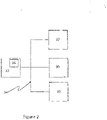
Figure 2 shows elements of a forage harvester for use in the present invention and -
Figure 3 shows a flow diagram illustrating steps in a method in accordance with the present invention. - The invention will now be described in the following detailed description with reference to the drawings, wherein preferred embodiments are described in detail to enable practice of the invention. Although the invention is described with reference to these specific preferred embodiments, it will be understood that the invention is not limited to these preferred embodiments. But to the contrary, the invention includes numerous alternatives, modifications and equivalents as will become apparent from consideration of the following detailed description.
- Reference to terms such as longitudinal, transverse and vertical are made with respect to a longitudinal vehicle axis which is parallel to a normal forward direction of travel.
- With reference to
Figure 1 , in a schematic side view the main components of aforage harvester 2 are shown. Theforage harvester 2 is provided with a front attachment 4 which contains cutting equipment for cutting a crop. The cut crop is then fed through a series of compression rollers 6 in acompression roller housing 8 to a chopper drum 10 where the crop is chopped into smaller pieces between a shear bar and a plurality of chopper knives mounted on the chopper drum 10. The chopped crop next passes through a first duct 12 and, in the illustrated embodiment, is fed through acracker unit 14 where the crop is further crushed and threshed. The harvested crop is then blown upwards along a second duct 16 by anaccelerator 18 and exits through aspout 20. In an alternative embodiment, the chopped crop may optionally pass directly from the chopper drum 10 to the second duct 16. - As noted, over time chopping of the incoming crop causes wear on the chopper knives in the chopper drum. It is known to provide knife sharpening apparatus within such forage harvesters, which is operated from time to time to maintain the sharpness of the cutting knives.
- A
user terminal 30 communicates with anelectronic control unit 32. The user terminal is conveniently located within a cab of the forage harvester. Theelectronic control unit 32 is also in electronic or other communication with various components and devices of the forage harvester. Conveniently such communication may be enabled by way of a suitabledata communication network 34 such as one compliant with the ISOBUS standard (a network in conformance to ISO 11783). For example, theelectronic control unit 32 may be in electronic communication with various actuators, sensors, and other devices within (or outside of) the forage harvester. Theelectronic control unit 32 may communicate with various other components (including other controllers) in various known ways, including wirelessly. - Various alternative locations for the electronic control unit may be utilized. It will be understood that one or more electronic control units may be employed and that the electronic control unit(s) 32 may be mounted at various locations on the forage harvester or elsewhere. The electronic control unit(s) may be a hardware, software, or hardware and software computing device, and may be configured to execute various computational and control functionality with respect to the forage harvester.
- The
electronic control unit 32 is also able to access asuitable memory 36. Thememory 36 may take any suitable form and is in electronic communication with theelectronic control unit 32. Thememory 36 is adapted to store, in any suitable manner such as a database or look up table, reference values for a desired parameter. - An
image acquisition device 40, such as a camera or a video camera, is located so as to be able to capture images of the crop flowing through thespout 20. Theimage acquisition device 40 is provided with access to image processing software. Such image processing software may be provided on a processor associated with the image acquisition device or with such a processor forming a part of theelectronic control unit 32 as described above. The image processing software is adapted to enable processing of a captured image to determine one or more aspects of the crop flow. These aspects include on or more of the size, length or type of chopped crop, for example kernels or fibre components. - In particular for chopped crop, the average length of the chopped crop may be used as a measure or indication of the sharpness of the cutting knives. In particular, as the knives become blunt, the size of the chopped feed becomes inconsistent such that the average crop size of the chopped crop increases. Other aspects of the crop flow may be used to judge the effective sharpness of the blades.
- When the knives are of a desired sharpness, for example because the knives have just been replaced or just been sharpened, the forage harvester is operated and an initial image or an initial series of images of the chopped crop in the spout is acquired (step 100). The initial or initial series of images is then processed to determine a value(s) for the one or more aspects of the crop flow (step 102). These value(s) are then stored as control data for the one or more aspects of the crop flow (step 104).
- During future operation of the forage harvester, a further image or a further series of images of the crop flow in the spout are captured (step 106) and the further image or a further series of images processed to generate new value(s) for the one or more aspects of the crop flow (step 108).
- These new value(s) for the one or more aspects of the crop flow are then compared with the control values for the one or more aspects of the crop flow and any deviation determined (step 110). The determined deviation is then compared with one or more stored values for critical deviations (step 112). In the event that the determined deviation meets or exceeds the relevant critical deviation, the electronic control unit causes a signal to be generated indicative of a need for actuating a knife sharpening apparatus (step 114). If no such deviation is determined a further image or a further series of images of the crop flow in the spout are captured and the process repeated.
- In a first embodiment, the signal may cause the
user terminal 30 to cause an operator of the forage harvester to be alerted to the need for actuating an on-boardknife sharpening apparatus 22. Theuser terminal 30 may indicate this in any suitable manner, for example by way of a visual signal and/or an audible signal. The visual signal may, by way of example, take the form of an icon displayed on theuser terminal 30. The audible signal may, by way of example, take the form of a tone or spoken message issuing from theuser terminal 30. The operator can then arrange for sharpening or replacement of the chopper knives at a convenient opportunity. - In a second embodiment, the signal may cause the
knife sharpening apparatus 22 to be actuated and a further signal may be sent to cause theuser terminal 30 to cause an operator of the forage harvester to be alerted to the actuation of theknife sharpening apparatus 22. As in the previous embodiment, theuser terminal 30 may indicate this in any suitable manner, for example by way of a visual signal and/or an audible signal. The visual signal may, by way of example, take the form of an icon displayed on theuser terminal 30. The audible signal may, by way of example, take the form of a tone or spoken message issuing from theuser terminal 30. - It will be understood that regular sharpening in the manner described above will lead to more uniform chopping of the crop and consequently a more uniform quality of feed produced by the forage harvester.
- From reading the present disclosure, other modifications will be apparent to persons skilled in the art. Such modifications may involve other features which are already known in the field of self-propelled forage harvesters and component parts therefore and which may be used instead of or in addition to features already described herein.
Claims (7)
- A forage harvester comprising a chopping drum having a plurality of knife blades, a knife sharpening apparatus, a discharge spout, image capture apparatus for generating a series of captured images of processed crop in the discharge spout, an electronic control unit adapted to determine data relating to aspects of the crop flow from the series of captured images, a memory for storing initial data relating to the aspects of crop flow as control data, the electronic control unit being adapted to compare subsequently determined data with the control data and in the event of determining a predetermined deviation of the subsequently determined data from the control data, the control unit being adapted to generate a signal indicating that sharpening of the knife blades is required.
- A forage harvester according to claim 1, characterised in that the aspects of the crop flow relate to the size, length or type of the processed crop.
- A forage harvester according to claim 1 or claim 2, characterised in that the forage harvester further comprises a user terminal and the signal indicating that sharpening of the knife blades is required is a signal to the user terminal to generate an alert to the operator.
- A forage harvester according to claim 1 or claim 2, characterised in that the signal indicating that sharpening of the knife blades is required is a signal to the user terminal to generate a signal to actuate the knife sharpening apparatus and additionally the electronic control unit generates a signal to the user terminal to generate an alert to the operator.
- A forage harvester according to claim 3 or claim 4, characterised in that the alert to the operator comprises a visual indication, an audible indication or both.
- A method of determining a need for actuating a knife sharpening apparatus in a forage harvester comprising a chopping drum having a plurality of knife blades, a knife sharpening apparatus, a discharge spout, image capture apparatus for generating a captured image of processed crop in the discharge spout, an electronic control unit adapted to determine data relating to aspects of the crop flow from the captured image, and a memory for storing data relating to the aspects of crop flow as control data, comprises the steps of capturing a series of images of processed crop flowing in the discharge spout, processing a first image or a first set of images in the series of captured images to acquire initial data relating to the aspects of crop flow from the first image or first set of images and storing this as control data, periodically processing subsequent images in the series of captured images to determine subsequent data relating to aspects of the crop flow, comparing the subsequent data relating to aspects of the crop flow with the control data to determine whether any detected deviation between the subsequent data and the control data exceeds a predetermined deviation and if any detected deviation detected exceeds the predetermined deviation then causing a signal to be generated indicating a need for actuating a knife sharpening apparatus.
- A computer implemented method comprises the steps of acquiring initial data relating to aspects of crop flow, storing the initial data as control data, periodically determining subsequent data relating to aspects of the crop flow, comparing the subsequent data relating to aspects of the crop flow with the control data to determine whether any deviation detected exceeds a predetermined deviation and if any deviation detected exceeds a predetermined deviation then causing a signal to be generated indicating a need for actuating a knife sharpening apparatus.
Applications Claiming Priority (1)
| Application Number | Priority Date | Filing Date | Title |
|---|---|---|---|
| GBGB2015697.2A GB202015697D0 (en) | 2020-10-03 | 2020-10-03 | Forage harvester |
Publications (1)
| Publication Number | Publication Date |
|---|---|
| EP3977842A1 true EP3977842A1 (en) | 2022-04-06 |
Family
ID=73223899
Family Applications (1)
| Application Number | Title | Priority Date | Filing Date |
|---|---|---|---|
| EP21196559.5A Withdrawn EP3977842A1 (en) | 2020-10-03 | 2021-09-14 | Forage harvester |
Country Status (3)
| Country | Link |
|---|---|
| US (1) | US20220104429A1 (en) |
| EP (1) | EP3977842A1 (en) |
| GB (1) | GB202015697D0 (en) |
Citations (4)
| Publication number | Priority date | Publication date | Assignee | Title |
|---|---|---|---|---|
| US6119442A (en) * | 1999-05-14 | 2000-09-19 | Case Corporation | Combine setting autoadjust with machine vision |
| US6931828B2 (en) * | 2003-10-07 | 2005-08-23 | Deere & Company | Harvesting machine comprising a monitoring device for monitoring the sharpness of cutting blades and/or their distance to a counter-cutter |
| EP2225931B1 (en) * | 2009-03-02 | 2012-05-09 | CLAAS Selbstfahrende Erntemaschinen GmbH | Agricultural harvester |
| US20140215985A1 (en) * | 2013-02-07 | 2014-08-07 | Claas Selbstfahrende Erntemaschinen Gmbh | Agricultural harvesting machine |
-
2020
- 2020-10-03 GB GBGB2015697.2A patent/GB202015697D0/en not_active Ceased
-
2021
- 2021-09-14 EP EP21196559.5A patent/EP3977842A1/en not_active Withdrawn
- 2021-09-29 US US17/449,302 patent/US20220104429A1/en not_active Abandoned
Patent Citations (4)
| Publication number | Priority date | Publication date | Assignee | Title |
|---|---|---|---|---|
| US6119442A (en) * | 1999-05-14 | 2000-09-19 | Case Corporation | Combine setting autoadjust with machine vision |
| US6931828B2 (en) * | 2003-10-07 | 2005-08-23 | Deere & Company | Harvesting machine comprising a monitoring device for monitoring the sharpness of cutting blades and/or their distance to a counter-cutter |
| EP2225931B1 (en) * | 2009-03-02 | 2012-05-09 | CLAAS Selbstfahrende Erntemaschinen GmbH | Agricultural harvester |
| US20140215985A1 (en) * | 2013-02-07 | 2014-08-07 | Claas Selbstfahrende Erntemaschinen Gmbh | Agricultural harvesting machine |
Also Published As
| Publication number | Publication date |
|---|---|
| GB202015697D0 (en) | 2020-11-18 |
| US20220104429A1 (en) | 2022-04-07 |
Similar Documents
| Publication | Publication Date | Title |
|---|---|---|
| US9600872B2 (en) | System and method for detecting and documenting straw quality | |
| US20250063987A1 (en) | Autonomous control of a crop harvesting header | |
| US6863604B2 (en) | Method and apparatus for determining optimal adjustments of work units in an agricultural harvesting machine | |
| EP2944179B1 (en) | Multi-sensor crop yield determination | |
| EP2436258B1 (en) | Agricultural selfpropelled chopper having device for determining the sharpness of cutting blades | |
| EP1522214B1 (en) | Harvester with a controle device for controlling the sharpness of cutting knifes and/or their clearance to the counterknife | |
| US20210015040A1 (en) | Agricultural harvesting machine | |
| US11191211B2 (en) | Residue monitoring system for an agricultural harvester and agricultural harvester | |
| US12052949B2 (en) | Agricultural harvesting machine, and method for operating an agricultural harvesting machine | |
| EP1839478A1 (en) | Impact sound sensor unit | |
| US11324164B2 (en) | System and device for monitoring a condition of a sickle section of an agricultural machine | |
| US7024924B2 (en) | Method and arrangement for determination of sharpness of chopping blades | |
| WO2021086607A1 (en) | Ai-optimized harvester configured to detect and minimize impurities | |
| US12586194B2 (en) | Arrangement and method for the optical assessment of crop in a harvesting machine | |
| DE102021106067A1 (en) | REAL-TIME DETECTION OF BELT FAILURE | |
| US11980127B2 (en) | Forage harvester | |
| US20250255217A1 (en) | Agricultural operation evaluation system and method | |
| US20220104429A1 (en) | Forage harvester | |
| US20220361405A1 (en) | System and method determining whether to grind chopping blades of a chopping device | |
| EP3932181A1 (en) | Twine tension control assembly | |
| EP3756441A1 (en) | Adjustable cutter head wear plate for a forage harvester | |
| EP4696128A1 (en) | Harvesting machine monitoring | |
| US20250072326A1 (en) | Forage harvester and method for operating a forage harvester | |
| JP2022002477A (en) | Harvester | |
| EP4616698A1 (en) | Straw chopper knife wear detection |
Legal Events
| Date | Code | Title | Description |
|---|---|---|---|
| PUAI | Public reference made under article 153(3) epc to a published international application that has entered the european phase |
Free format text: ORIGINAL CODE: 0009012 |
|
| STAA | Information on the status of an ep patent application or granted ep patent |
Free format text: STATUS: THE APPLICATION HAS BEEN PUBLISHED |
|
| AK | Designated contracting states |
Kind code of ref document: A1 Designated state(s): AL AT BE BG CH CY CZ DE DK EE ES FI FR GB GR HR HU IE IS IT LI LT LU LV MC MK MT NL NO PL PT RO RS SE SI SK SM TR |
|
| STAA | Information on the status of an ep patent application or granted ep patent |
Free format text: STATUS: REQUEST FOR EXAMINATION WAS MADE |
|
| 17P | Request for examination filed |
Effective date: 20221006 |
|
| RBV | Designated contracting states (corrected) |
Designated state(s): AL AT BE BG CH CY CZ DE DK EE ES FI FR GB GR HR HU IE IS IT LI LT LU LV MC MK MT NL NO PL PT RO RS SE SI SK SM TR |
|
| P01 | Opt-out of the competence of the unified patent court (upc) registered |
Effective date: 20230518 |
|
| STAA | Information on the status of an ep patent application or granted ep patent |
Free format text: STATUS: EXAMINATION IS IN PROGRESS |
|
| 17Q | First examination report despatched |
Effective date: 20230920 |
|
| STAA | Information on the status of an ep patent application or granted ep patent |
Free format text: STATUS: THE APPLICATION IS DEEMED TO BE WITHDRAWN |
|
| 18D | Application deemed to be withdrawn |
Effective date: 20240403 |