EP3975620A1 - Data transmission method, apparatus, device, and storage medium - Google Patents
Data transmission method, apparatus, device, and storage medium Download PDFInfo
- Publication number
- EP3975620A1 EP3975620A1 EP19930106.0A EP19930106A EP3975620A1 EP 3975620 A1 EP3975620 A1 EP 3975620A1 EP 19930106 A EP19930106 A EP 19930106A EP 3975620 A1 EP3975620 A1 EP 3975620A1
- Authority
- EP
- European Patent Office
- Prior art keywords
- frame
- capability information
- message frame
- message
- frequency bands
- Prior art date
- Legal status (The legal status is an assumption and is not a legal conclusion. Google has not performed a legal analysis and makes no representation as to the accuracy of the status listed.)
- Pending
Links
- 230000005540 biological transmission Effects 0.000 title claims abstract description 87
- 238000000034 method Methods 0.000 title claims abstract description 49
- 230000004044 response Effects 0.000 claims description 46
- 238000004891 communication Methods 0.000 claims description 41
- 239000000523 sample Substances 0.000 claims description 22
- 238000012545 processing Methods 0.000 claims description 12
- 238000010586 diagram Methods 0.000 description 9
- 230000006855 networking Effects 0.000 description 3
- 230000002776 aggregation Effects 0.000 description 2
- 238000004220 aggregation Methods 0.000 description 2
- 230000006870 function Effects 0.000 description 2
- 230000003287 optical effect Effects 0.000 description 2
- OVGWMUWIRHGGJP-WVDJAODQSA-N (z)-7-[(1s,3r,4r,5s)-3-[(e,3r)-3-hydroxyoct-1-enyl]-6-thiabicyclo[3.1.1]heptan-4-yl]hept-5-enoic acid Chemical compound OC(=O)CCC\C=C/C[C@@H]1[C@@H](/C=C/[C@H](O)CCCCC)C[C@@H]2S[C@H]1C2 OVGWMUWIRHGGJP-WVDJAODQSA-N 0.000 description 1
- 101100161473 Arabidopsis thaliana ABCB25 gene Proteins 0.000 description 1
- 101000988961 Escherichia coli Heat-stable enterotoxin A2 Proteins 0.000 description 1
- 101100096893 Mus musculus Sult2a1 gene Proteins 0.000 description 1
- 101150081243 STA1 gene Proteins 0.000 description 1
- 230000003190 augmentative effect Effects 0.000 description 1
- 230000009286 beneficial effect Effects 0.000 description 1
- 230000008859 change Effects 0.000 description 1
- 238000005516 engineering process Methods 0.000 description 1
- 230000006872 improvement Effects 0.000 description 1
- 230000010365 information processing Effects 0.000 description 1
- 230000004048 modification Effects 0.000 description 1
- 238000012986 modification Methods 0.000 description 1
- 238000011160 research Methods 0.000 description 1
- 230000003068 static effect Effects 0.000 description 1
Images

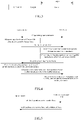

Classifications
-
- H—ELECTRICITY
- H04—ELECTRIC COMMUNICATION TECHNIQUE
- H04W—WIRELESS COMMUNICATION NETWORKS
- H04W8/00—Network data management
- H04W8/22—Processing or transfer of terminal data, e.g. status or physical capabilities
- H04W8/24—Transfer of terminal data
-
- H—ELECTRICITY
- H04—ELECTRIC COMMUNICATION TECHNIQUE
- H04B—TRANSMISSION
- H04B1/00—Details of transmission systems, not covered by a single one of groups H04B3/00 - H04B13/00; Details of transmission systems not characterised by the medium used for transmission
- H04B1/005—Details of transmission systems, not covered by a single one of groups H04B3/00 - H04B13/00; Details of transmission systems not characterised by the medium used for transmission adapting radio receivers, transmitters andtransceivers for operation on two or more bands, i.e. frequency ranges
-
- H—ELECTRICITY
- H04—ELECTRIC COMMUNICATION TECHNIQUE
- H04L—TRANSMISSION OF DIGITAL INFORMATION, e.g. TELEGRAPHIC COMMUNICATION
- H04L5/00—Arrangements affording multiple use of the transmission path
- H04L5/003—Arrangements for allocating sub-channels of the transmission path
- H04L5/0037—Inter-user or inter-terminal allocation
- H04L5/0041—Frequency-non-contiguous
-
- H—ELECTRICITY
- H04—ELECTRIC COMMUNICATION TECHNIQUE
- H04L—TRANSMISSION OF DIGITAL INFORMATION, e.g. TELEGRAPHIC COMMUNICATION
- H04L5/00—Arrangements affording multiple use of the transmission path
- H04L5/003—Arrangements for allocating sub-channels of the transmission path
- H04L5/0044—Allocation of payload; Allocation of data channels, e.g. PDSCH or PUSCH
-
- H—ELECTRICITY
- H04—ELECTRIC COMMUNICATION TECHNIQUE
- H04L—TRANSMISSION OF DIGITAL INFORMATION, e.g. TELEGRAPHIC COMMUNICATION
- H04L5/00—Arrangements affording multiple use of the transmission path
- H04L5/003—Arrangements for allocating sub-channels of the transmission path
- H04L5/0053—Allocation of signalling, i.e. of overhead other than pilot signals
- H04L5/0055—Physical resource allocation for ACK/NACK
-
- H—ELECTRICITY
- H04—ELECTRIC COMMUNICATION TECHNIQUE
- H04W—WIRELESS COMMUNICATION NETWORKS
- H04W72/00—Local resource management
- H04W72/50—Allocation or scheduling criteria for wireless resources
- H04W72/51—Allocation or scheduling criteria for wireless resources based on terminal or device properties
-
- H—ELECTRICITY
- H04—ELECTRIC COMMUNICATION TECHNIQUE
- H04L—TRANSMISSION OF DIGITAL INFORMATION, e.g. TELEGRAPHIC COMMUNICATION
- H04L1/00—Arrangements for detecting or preventing errors in the information received
- H04L1/0001—Systems modifying transmission characteristics according to link quality, e.g. power backoff
- H04L1/0009—Systems modifying transmission characteristics according to link quality, e.g. power backoff by adapting the channel coding
-
- H—ELECTRICITY
- H04—ELECTRIC COMMUNICATION TECHNIQUE
- H04W—WIRELESS COMMUNICATION NETWORKS
- H04W72/00—Local resource management
- H04W72/04—Wireless resource allocation
- H04W72/044—Wireless resource allocation based on the type of the allocated resource
- H04W72/0453—Resources in frequency domain, e.g. a carrier in FDMA
-
- H—ELECTRICITY
- H04—ELECTRIC COMMUNICATION TECHNIQUE
- H04W—WIRELESS COMMUNICATION NETWORKS
- H04W84/00—Network topologies
- H04W84/02—Hierarchically pre-organised networks, e.g. paging networks, cellular networks, WLAN [Wireless Local Area Network] or WLL [Wireless Local Loop]
- H04W84/10—Small scale networks; Flat hierarchical networks
- H04W84/12—WLAN [Wireless Local Area Networks]
Definitions
- the present disclosure relates to the field of communications, and in particular to a data transmission method, an apparatus, a device, and a storage medium.
- a research scope includes: 320MHz bandwidth transmission, aggregation and coordination of multiple frequency bands, etc..
- the proposed vision improves speed and throughput by at least four times compared with the existing Institute of Electrical and Electronics Engineers (IEEE) 802.11ax.
- Main application scenarios include video transmission, augmented reality (AR), virtual reality (VR), etc..
- the aggregation and coordination of multiple frequency bands refer to simultaneous communication between devices on frequency bands of 2.4GHz, 5.8GHz, and 6-7GHz.
- the multiple frequency bands can also be millimeter wave frequency bands, such as 45GHz and 60GHz frequency bands.
- Embodiments of the present disclosure provide a data transmission method, an apparatus, a device, and a storage medium, which can be used to solve a problem of how to simultaneously perform data transmission on multiple frequency bands.
- the technical solution is as follows:
- a data transmission method includes:
- the first capability information and the second capability information include the following information item: frequency band identifications of the at least two frequency bands.
- the first capability information and the second capability information further include at least one of the following information items:
- the information item is represented in a form of an information element (IE).
- IE information element
- the first message frame is a multi-band operation request frame
- the second message frame is a multi-band operation response frame
- the first message frame is a beacon frame
- the second message frame is an association request frame
- a data frame is received by the first device, and the second capability information is carried by a MAC frame header of the data frame;
- a data transmission method includes:
- the first capability information and the second capability information include the following information item: frequency band identifications of the at least two frequency bands.
- the first capability information and the second capability information further include at least one of the following information items:
- the information item is represented in a form of an information element (IE).
- IE information element
- the first message frame is a multi-band operation request frame
- the second message frame is a multi-band operation response frame
- the first message frame is a beacon frame, and the second message frame is an association request frame; or, the first message frame is a probe request frame, and the second message frame is a probe response frame; or, the first message frame is an association request frame, and the second message frame is an association response frame; or, the first message frame is an authentication request frame, and the second message frame is an authentication response frame.
- the method further includes:
- an apparatus for establishing data transmission includes:
- the first capability information and the second capability information include the following information item: frequency band identifications of the at least two frequency bands.
- the first capability information and the second capability information further include at least one of the following information items:
- the information item is represented in a form of an information element (IE).
- IE information element
- the first message frame is a multi-band operation request frame
- the second message frame is a multi-band operation response frame
- the first device is a STA, and the first message frame is any one of a probe request frame, an association request frame, and an authentication request frame; or, the first device is an AP, and the first message frame is any one of a probe response frame, an association response frame, an authentication response frame and a beacon frame.
- the apparatus further includes:
- a data transmission apparatus and the apparatus includes:
- the first capability information and the second capability information include the following information item: frequency band identifications of the at least two frequency bands.
- the first capability information and the second capability information further include at least one of the following information items:
- the information item is represented in a form of an information element (IE).
- IE information element
- the first message frame is a multi-band operation request frame
- the second message frame is a multi-band operation response frame
- the second device is a STA, and the second message frame is any one of a probe request frame, an association request frame, and an authentication request frame; or, the second device is an AP, and the second message frame is any one of a probe response frame, an association response frame, an authentication response frame and a beacon frame.
- the apparatus further includes:
- a wireless communication device and the wireless communication device includes:
- a wireless communication device and the wireless communication device includes:
- a computer-readable storage medium having stored therein at least one instruction, at least one program, a code set or an instruction set, wherein the at least one instruction, the at least one program, the code set or the instruction set is loaded and executed by a processor to implement the data transmission method in any aspect and any optional implementation thereof described above.
- the first message frame carrying the first capability information is sent to the second device by the first device, and the second message frame carrying the second capability information is replied to the first device by the second device, and then the first device and the second device transmit the data on the at least two frequency bands according to the first capability information and the second capability information, so that the two devices with different capabilities can simultaneously transmit the data on multiple frequency bands through negotiation, thereby achieving greater transmission rate and throughput.
- a communication system and a business scenario described in the embodiments of the present disclosure are intended to explain the technical solutions of embodiments of the present disclosure more clearly, and do not constitute a limitation to the technical solutions provided by the embodiments of the present disclosure.
- the ordinary technicians in the art know that, with the evolution of the communication system and the emergence of new business scenarios, the technical solutions provided in the embodiments of the present disclosure are equally applied to similar technical issues.
- FIG. 1 shows a block diagram of a communication system provided by an exemplary embodiment of the present disclosure, and the communication system includes: a wireless access point (AP) 120 and a station 140.
- AP wireless access point
- the wireless access point 120 is used to provide a wireless access function, and may be a wireless router, a base station with a Wi-Fi function, or the like. Multiple stations 140 can access one wireless access point 120.
- the station 140 is used to access the wireless access point 120, and may be an apparatus such as a mobile phone, a tablet, a laptop, an e-book and an industrial machine.
- the communication system may be an Institute of Electrical and Electronics Engineers (IEEE) 802.11a/b/g/n/ac/ax/be communication network.
- IEEE Institute of Electrical and Electronics Engineers
- the communication system being IEEE 802.11 be is taken as an example for description.
- the communication system includes two networking forms:
- an underlying wireless network organized based on the AP 120 also called an infrastructure network
- the AP 120 also called an infrastructure network
- characteristics of such network are in that the AP 120 is the center of the entire network, and all communications in the network are forwarded through the AP 120.
- a first device in the present disclosure may be one of the wireless access point 120 and the station 140, and a second device may be the other of the wireless access point 120 and the station 140.
- a second form a wireless network based on an ad-hoc network (also called an ad-hoc network), which is a network composed of only two or more STAs 140 themselves, and there is no AP 120 in the network; such network has a loose structure, and all STAs 140 in the network can communicate directly.
- an ad-hoc network also called an ad-hoc network
- the first device in the present disclosure may be a first station 140, and the second device may be a second station 140.
- FIG. 2 shows a flowchart of a data transmission method provided by an exemplary embodiment of the present disclosure.
- the method can be applied to the communication system shown in FIG. 1 , and the method includes:
- the first device In step 201, the first device generates a first message frame, and the first message frame carries first capability information, and the first capability information is used to indicate that simultaneous data transmission on at least two frequency bands is supported by the first device.
- the at least two frequency bands include: at least two frequency bands of the 2.4 GHz frequency band, the 5.8 GHz frequency band, and the 6-7 GHz frequency band.
- the at least two frequency bands also include other communication frequency bands supported by a Wi-Fi protocol, and these other communication frequency bands may include millimeter wave frequency bands, such as the 45 GHz and 60 GHz frequency bands.
- the 2.4 GHz frequency band is referred to as frequency band A for short
- the 5.8 GHz frequency band is referred to as frequency band B for short
- the 6-7 GHz frequency band is referred to as frequency band C for short.
- the first message frame is a multi-band operation request frame.
- the first device when there is a large amount of data needed to be sent by the first device, the first device generates the first message frame.
- step 202 the first device sends the first message frame.
- the first device sends the first message frame on a single frequency band.
- the single frequency band may be a first frequency band, and the single frequency band is a frequency band with which the first device and the second device have established an association.
- the second device receives the first message frame, and the first message frame carries the first capability information, and the first capability information is used to indicate that the simultaneous data transmission on the at least two frequency bands is supported by the first device.
- the second device receives the first message frame on the single frequency band. For example, the second device receives the first message frame on the first frequency band.
- the second device In step 204, the second device generates a second message frame, and the second message frame carries second capability information, and the second capability information is used to indicate that the simultaneous data transmission on the at least two frequency bands is supported by the second device.
- the second message frame is a multi-band operation response frame.
- step 205 the second device sends the second message frame.
- the second device sends the second message frame on the single frequency band, and the single frequency band may be the first frequency band.
- the first device receives the second message frame, and the second message frame carries the second capability information, and the second capability information is used to indicate that the simultaneous data transmission on the at least two frequency bands is supported by the second device.
- the first device receives the second message frame on the single frequency band. For example, the first device receives the second message frame on the first frequency band.
- step 207 the first device sends data on the at least two frequency bands according to the first capability information and the second capability information.
- the first device determines a transmission capability supported by both the first device and the second device according to the first capability information and the second capability information.
- the data is sent on the at least two frequency bands according to the transmission capacity supported by both the first device and the second device.
- the data is sent on the at least two frequency bands according to an optimal transmission capability supported by both the first device and the second device.
- the at least two frequency bands include the first frequency band and a second frequency band
- the first frequency band is a frequency band used to send the first message frame and the second message frame
- the second frequency band is a frequency band different from the first frequency band
- the second device receives the data on the at least two frequency bands according to the first capability information and the second capability information.
- the second device determines a capability supported by both the first device and the second device according to the first capability information and the second capability information.
- the data is received on the at least two frequency bands according to the transmission capacity supported by both the first device and the second device.
- the data is received on the at least two frequency bands according to the optimal transmission capability supported by both the first device and the second device.
- the first capability information and the second capability information may be the same or different.
- the first device supports simultaneous communication on the frequency band A, the frequency band B, and the frequency band C
- the second device supports the simultaneous communication on the frequency band A and the frequency band B.
- the first device determines that the frequency band A and the frequency band B are frequency bands supported by both devices, and sends the data on the frequency band A and the frequency band B.
- the second device simultaneously receives the data on the frequency band A and the frequency band B.
- the first message frame carrying the first capability information is sent to the second device by the first device, and the second message frame carrying the second capability information is replied to the first device by the second device, and then the first device and the second device transmit the data on the at least two frequency bands according to the first capability information and the second capability information, so that the two devices with different capabilities can simultaneously transmit the data on multiple frequency bands through negotiation, thereby achieving greater transmission rate and throughput.
- steps executed by the first device can be separately implemented as a data transmission method on the first device side
- steps executed by the second device can be separately implemented as a data transmission method on the second device side.
- the first capability information and the second capability information include the following information item: frequency band identifications of the at least two frequency bands.
- the first capability information further includes: at least one of an operating bandwidth supported by the first device, a MCS or key reuse information.
- the second capability information further includes: at least one of the operating bandwidth supported by the second device, the MCS or key reuse acknowledgement information.
- the operating bandwidth is at least one of a combination of 20MHz, 40MHz, 80MHz, 80+80MHz (discontinuous, non-overlapping)/160MHz (continuous), 160+160MHz (discontinuous, non-overlapping)/320MHz.
- the key reuse information is used to indicate that an existing key (a key on the first frequency band) is reused for data encryption.
- 8 bits are used to indicate the frequency band and the operating bandwidth.
- the number of frequency band identifications is the same as the number of frequency bands. Taking the frequency bands including the 2.4GHz frequency band, the 5.8GHz frequency band and the 6-7GHz frequency band as an example, the frequency band identifications occupy the first 3 bits of the 8 bits, and a first bit of the first 3 bits corresponds to the 2.4GHz frequency band, a second bit corresponds to the 5.8GHz frequency band, and a third bit corresponds to the 6-7GHz frequency band.
- a value of the first bit When a value of the first bit is 1, it means that the communication on the 2.4GHz frequency band is supported, and when the value of the first bit is 0, it means that the communication on the 2.4GHz frequency band is not supported.
- a value of the second bit When a value of the second bit is 1, it means that the communication on the 5.8GHz frequency band is supported, and when the value of the second bit is 0, it means that the communication on the 5.8GHz frequency band is not supported.
- a value of the third bit When a value of the third bit is 1, it means that the communication on the 6-7GHz frequency band is supported, and when the value of the third bit is 0, it means that the communication on the 6-7GHz frequency band is not supported.
- a fourth bit corresponds to 20MHz
- a fifth bit corresponds to 40MHz
- a sixth bit corresponds to 80MHz
- a seventh bit corresponds to 80+80MHz (discontinuous, non-overlapping)/160MHz (continuous)
- an eighth bit corresponds to 160+160MHz (discontinuous, non-overlapping)/320MHz.
- each of the foregoing information items is represented by an information element (IE).
- the IE is a component of a frame (such as a management message frame) with a variable length.
- the IE includes an element ID bit, a length bit, and a content bit with a variable length.
- the length bit is used to indicate the number of content bits.
- Each information item among the above-mentioned information items may occupy one IE, or two or more information items may occupy the same IE.
- the element ID of the IE can be represented by a reserved bit in related art, such as 11-15, 43-49, 50-255, etc..
- the first message frame is a beacon frame, and the second message frame is an association request frame; or, the first message frame is a probe request frame, and the second message frame is a probe response frame; or, the first message frame is an association request frame, and the second message frame is an association response frame; or, the first message frame is an authentication request frame, and the second message frame is an authentication response frame.
- the first device sends the same data frame on the at least two frequency bands; or, the first device sends different data frames on the at least two frequency bands, and the different data frames are obtained after the data to be sent is divided into blocks.
- a data frame 1 is sent on the frequency band A, a data frame 2 is sent on the frequency band B, and a data frame 3 is sent on the frequency band C;
- a data frame 4 is sent on the frequency band A, a data frame 5 is sent on the frequency band B, and a data frame 6 is sent on the frequency band C;
- a data frame 7 is sent on the frequency band A, a data frame 8 is sent on the frequency band B, and a data frame 9 is sent on the frequency band C.
- FIG. 4 shows a flowchart of a data transmission method provided by another exemplary embodiment of the present disclosure.
- the method can be applied to the communication system shown in FIG. 1 , and the method includes:
- step 401 the first device and the second device perform data transmission.
- the first device and the second device establish a data transmission connection according to the Wi-Fi protocol, and perform the data transmission on the single frequency band.
- the first device and the second device establish the data transmission connection according to the embodiment shown in FIG. 2 , and the first device sends the data to the second device on the multiple frequency bands.
- the transmission connection has been established between the first device and the second device, and the second device can send the data frame to the first device.
- step 402 the second device sends the data frame, and a MAC frame header of the data frame carries the second capability information.
- the second device When there is a large amount of data to be sent by the second device, the second device generates the data frame, and sends the data frame to the first device.
- the MAC frame header of the data frame carries the second capability information.
- the second capability information For the related description of the second capability information, reference may be made to the foregoing embodiments.
- the data frame is a physical layer (PHY) protocol data unit (PPDU).
- PHY physical layer protocol data unit
- the first device receives the data frame, and the media access control (MAC) frame header of the data frame carries the second capability information.
- MAC media access control
- step 404 the first device sends an acknowledgment frame, and the acknowledgment frame carries the first capability information.
- the acknowledgement frame is an acknowledgement (ACK) feedback frame.
- ACK acknowledgement
- step 405 the second device receives the acknowledgment frame, and the acknowledgment frame carries the first capability information.
- step 406 the second device sends the data on the at least two frequency bands according to the first capability information and the second capability information.
- the second device determines the transmission capability supported by both the first device and the second device according to the first capability information and the second capability information.
- the data is sent on the at least two frequency bands according to the transmission capacity supported by both the first device and the second device.
- the data is sent on the at least two frequency bands according to the optimal transmission capability supported by both the first device and the second device.
- the first device receives the data on the at least two frequency bands according to the first capability information and the second capability information.
- the first device determines the capability supported by both the first device and the second device according to the first capability information and the second capability information.
- the data is received on the at least two frequency bands according to the transmission capacity supported by both the first device and the second device.
- the data is received on the at least two frequency bands according to the optimal transmission capability supported by both the first device and the second device.
- the second device sends the data frame carrying the first capability information to the first device, and the first device replies the acknowledgment frame carrying the second capability information to the second device, and then the second device and the first device transmit the data on the at least two frequency bands according to the first capability information and the second capability information, so that the two devices after having started the data transmission can simultaneously transmit the data on the multiple frequency bands through negotiation, thereby achieving greater transmission rate and throughput.
- the two devices in order to enable two devices (STA1+STA2 or STA+AP) to communicate with each other on the multiple frequency bands at the same time, firstly, the two devices need to support a capability of the simultaneous communication on the multiple frequency bands; secondly, if the two devices perform an associated and authenticated connection as well as key negotiation on the single frequency band (such as the first frequency band), they may use the same key to encrypt the data when performing the data transmission on another frequency band; thirdly, before the first data transmission on the multiple frequency bands is performed, the negotiation can be performed in two manners: a.
- the management message frame is sent between the two devices for negotiation, for example, the first device sends the multi-band operation request frame to the second device, and negotiates the information on performing the multi-band communication in this management message frame (except for an operating frequency band used to send the multi-band operation request message frame itself), such as 5.8GHz or 6-7GHz; in addition, the operating bandwidth information for the multi-band communication, such as 20MHz or 40MHz, the key reuse information and the MCS of the data transmission are also carried; the second device replies with the multi-band operation response frame to the first device; b.
- the first device sends the multi-band operation request frame to the second device, and negotiates the information on performing the multi-band communication in this management message frame (except for an operating frequency band used to send the multi-band operation request message frame itself), such as 5.8GHz or 6-7GHz; in addition, the operating bandwidth information for the multi-band communication, such as 20MHz or 40MHz, the key reuse information and the MCS of the data transmission are also carried; the second device replies with the multi-band operation response frame
- the data frame (PPDU) sent by the second device to the first device carries the second capability information to indicate to perform the data transmission on the multiple frequency bands, and the first device replies with the acknowledgment (ACK) frame to the second device, and the acknowledgment frame indicates that data transmission will be performed on the multiple frequency bands.
- PPDU data frame
- ACK acknowledgment
- a duration of the subsequent communication to be carried out on the multiple frequency bands is set in the multi-band operation response frame (or a duration field of the MAC frame header of the data frame), but the responder may change the duration.
- a duration value of a network allocation vector (NAV) set by these other stations is based on the subsequent acknowledgment.
- NAV network allocation vector
- FIG. 6 shows a block diagram of a data transmission apparatus provided by an exemplary embodiment of the present disclosure.
- the data transmission apparatus can be implemented as all or part of the first device by means of software, hardware or a combination of the software and the hardware.
- the apparatus includes: a first processing module 620, a first sending module 640, and a first receiving module 660.
- the first receiving module 660 and the first sending module 640 may be hardware devices such as radio frequency antennas, and the first processing module 620 may be a hardware device such as a central processing unit or a baseband processor.
- the first processing module 620 is configured to generate a first message frame, and first capability information is carried by the first message frame, and the first capability information is used to indicate that simultaneous data transmission on at least two frequency bands is supported by a first device.
- the first sending module 640 is configured to send the first message frame.
- the first receiving module 660 is configured to receive a second message frame, and second capability information is carried by the second message frame, and the second capability information is used to indicate that the simultaneous data transmission on the at least two frequency bands is supported by a second device.
- the first sending module is configured to send data on the at least two frequency bands according to the first capability information and the second capability information.
- the first capability information and the second capability information include the following information item:
- the first capability information and the second capability information further include at least one of the following information items: an operating bandwidth; a modulation and coding scheme; and key reuse information.
- the information item is represented in a form of an information element.
- the first message frame is a multi-band operation request frame
- the second message frame is a multi-band operation response frame
- the first message frame is a beacon frame, and the second message frame is an association request frame; or, the first message frame is a probe request frame, and the second message frame is a probe response frame; or, the first message frame is an association request frame, and the second message frame is an association response frame; or, the first message frame is an authentication request frame, and the second message frame is an authentication response frame.
- the first receiving module 660 is configured to receive a data frame, and the second capability information is carried by a MAC frame header of the data frame.
- the first sending module 640 is configured to send an acknowledgement frame, and the first capability information is carried by the acknowledgment frame.
- the first receiving module 660 is configured to receive the data on the at least two frequency bands according to the first capability information and the second capability information.
- FIG. 7 shows a block diagram of a data transmission apparatus provided by an exemplary embodiment of the present disclosure.
- the data transmission apparatus can be implemented as all or part of the second device by means of software, hardware or a combination of the software and the hardware.
- the apparatus includes: a second processing module 720, a second sending module 740, and a second receiving module 760.
- the second receiving module 760 and the second sending module 740 may be hardware devices such as the radio frequency antennas, and the second processing module 720 may be a hardware device such as the central processing unit or the baseband processor.
- the second receiving module 760 is configured to receive a first message frame, and first capability information is carried by the first message frame, and the first capability information is used to indicate that simultaneous data transmission on at least two frequency bands is supported by a first device.
- the second processing module 720 is configured to generate a second message frame, and second capability information is carried by the second message frame, and the second capability information is used to indicate that the simultaneous data transmission on the at least two frequency bands is supported by a second device.
- the second sending module 740 is configured to send the second message frame.
- the second receiving module 760 is configured to receive data on the at least two frequency bands according to the first capability information and the second capability information.
- the first capability information and the second capability information include the following information item: frequency band identifications of the at least two frequency bands.
- the first capability information and the second capability information further include at least one of the following information items:
- the information item is represented in a form of an information element.
- the first message frame is a multi-band operation request frame
- the second message frame is a multi-band operation response frame
- the first message frame is a beacon frame, and the second message frame is an association request frame; or, the first message frame is a probe request frame, and the second message frame is a probe response frame; or, the first message frame is an association request frame, and the second message frame is an association response frame; or, the first message frame is an authentication request frame, and the second message frame is an authentication response frame.
- the second sending module 740 is configured to send a data frame, and the second capability information is carried by a MAC frame header of the data frame.
- the second receiving module 760 is configured to receive an acknowledgement frame, and the first capability information is carried by the acknowledgment frame.
- the second sending module 740 is configured to send the data on the at least two frequency bands according to the first capability information and the second capability information.
- FIG. 8 shows a schematic structural diagram of a wireless communication device provided by an exemplary embodiment of the present disclosure.
- the wireless communication device may be the first device or the second device.
- the wireless communication device includes: a processor 101, a receiver 102, a transmitter 103, a memory 104, and a bus 105.
- the processor 101 includes one or more processing cores, and the processor 101 executes various functional applications and information processing by running software programs and modules.
- the receiver 102 and the transmitter 103 may be implemented as one communication component, and the communication component may be a communication chip.
- the memory 104 is connected to the processor 101 through the bus 105.
- the memory 104 may be configured to store at least one instruction, and the processor 101 is configured to execute the at least one instruction, so as to implement each step in the foregoing method embodiments.
- the memory 104 can be implemented by any type of volatile or non-volatile storage device or a combination of these storage devices.
- the volatile or non-volatile storage device includes, but is not limited to: a magnetic disk or an optical disk, an electrically erasable and programmable read-only memory (EEPROM), an erasable programmable read-only memory (EPROM), a static random access memory (SRAM), a read-only memory (ROM), a magnetic memory, a flash memory, a programmable read-only memory (PROM).
- An exemplary embodiment of the present disclosure also provides a computer-readable storage medium in which at least one instruction, at least one program, a code set or an instruction set is stored, and the at least one instruction, the at least one program, the code set or the instruction set is loaded and executed by a processor to implement each step in the foregoing method embodiments.
- the program may be stored in a computer-readable storage medium.
- the storage medium may be a read-only memory, a magnetic disk, an optical disc or the like.
Landscapes
- Engineering & Computer Science (AREA)
- Signal Processing (AREA)
- Computer Networks & Wireless Communication (AREA)
- Databases & Information Systems (AREA)
- Mobile Radio Communication Systems (AREA)
Abstract
Description
- The present disclosure relates to the field of communications, and in particular to a data transmission method, an apparatus, a device, and a storage medium.
- In the next generation of wireless fidelity (Wi-Fi) technologies, a research scope includes: 320MHz bandwidth transmission, aggregation and coordination of multiple frequency bands, etc.. The proposed vision improves speed and throughput by at least four times compared with the existing Institute of Electrical and Electronics Engineers (IEEE) 802.11ax. Main application scenarios include video transmission, augmented reality (AR), virtual reality (VR), etc..
- The aggregation and coordination of multiple frequency bands refer to simultaneous communication between devices on frequency bands of 2.4GHz, 5.8GHz, and 6-7GHz. In addition, the multiple frequency bands can also be millimeter wave frequency bands, such as 45GHz and 60GHz frequency bands.
- Embodiments of the present disclosure provide a data transmission method, an apparatus, a device, and a storage medium, which can be used to solve a problem of how to simultaneously perform data transmission on multiple frequency bands. The technical solution is as follows:
- According to an aspect of the present disclosure, there is provided a data transmission method, and the method includes:
- generating, by a first device, a first message frame, wherein first capability information is carried by the first message frame, and the first capability information is used to indicate that simultaneous data transmission on at least two frequency bands is supported by the first device;
- sending, by the first device, the first message frame;
- receiving, by the first device, a second message frame, wherein second capability information is carried by the second message frame, and the second capability information is used to indicate that the simultaneous data transmission on the at least two frequency bands is supported by a second device; and
- sending, by the first device, data on the at least two frequency bands according to the first capability information and the second capability information.
- In an optional implementation, the first capability information and the second capability information include the following information item:
frequency band identifications of the at least two frequency bands. - In an optional implementation, the first capability information and the second capability information further include at least one of the following information items:
- an operating bandwidth;
- a modulation and coding scheme (MCS); and
- key reuse information.
- In an optional implementation, the information item is represented in a form of an information element (IE).
- In an optional implementation, the first message frame is a multi-band operation request frame, and the second message frame is a multi-band operation response frame.
- In an optional implementation, the first message frame is a beacon frame, and the second message frame is an association request frame;
- or, the first message frame is a probe request frame, and the second message frame is a probe response frame;
- or, the first message frame is an association request frame, and the second message frame is an association response frame;
- or, the first message frame is an authentication request frame, and the second message frame is an authentication response frame.
- In an optional implementation, a data frame is received by the first device, and the second capability information is carried by a MAC frame header of the data frame;
- an acknowledgment frame is sent by the first device, and the first capability information is carried by the acknowledgment frame; and
- the data is received by the first device on the at least two frequency bands according to the first capability information and the second capability information.
- According to another aspect of the present disclosure, there is provided a data transmission method, and the method includes:
- receiving, by a second device, a first message frame, wherein first capability information is carried by the first message frame, and the first capability information is used to indicate that simultaneous data transmission on at least two frequency bands is supported by a first device;
- generating, by the second device, a second message frame, wherein second capability information is carried by the second message frame, and the second capability information is used to indicate that the simultaneous data transmission on the at least two frequency bands is supported by the second device;
- sending, by the second device, the second message frame; and
- receiving, by the second device, data on the at least two frequency bands according to the first capability information and the second capability information.
- In an optional implementation, the first capability information and the second capability information include the following information item:
frequency band identifications of the at least two frequency bands. - In an optional implementation, the first capability information and the second capability information further include at least one of the following information items:
- an operating bandwidth;
- a MCS; and
- key reuse information.
- In an optional implementation, the information item is represented in a form of an information element (IE).
- In an optional implementation, the first message frame is a multi-band operation request frame, and the second message frame is a multi-band operation response frame.
- In an optional implementation, the first message frame is a beacon frame, and the second message frame is an association request frame; or, the first message frame is a probe request frame, and the second message frame is a probe response frame; or, the first message frame is an association request frame, and the second message frame is an association response frame; or, the first message frame is an authentication request frame, and the second message frame is an authentication response frame.
- In an optional implementation, the method further includes:
- sending, by the second device, a data frame, wherein the second capability information is carried by a medium access control (MAC) frame header of the data frame;
- receiving, by the second device, an acknowledgment frame, wherein the first capability information is carried by the acknowledgment frame; and
- sending, by the second device, the data on the at least two frequency bands according to the first capability information and the second capability information.
- According to another aspect of the present disclosure, there is provided an apparatus for establishing data transmission, and the apparatus includes:
- a first device, configured to generate a first message frame, wherein first capability information is carried by the first message frame, and the first capability information is used to indicate that simultaneous data transmission on at least two frequency bands is supported by the first device; and
- the first device is further configured to send the first message frame;
- the first device is further configured to receive a second message frame, wherein second capability information is carried by the second message frame, and the second capability information is used to indicate that the simultaneous data transmission on the at least two frequency bands is supported by a second device;
- the first device is further configured to send data on the at least two frequency bands according to the first capability information and the second capability information.
- In an optional implementation, the first capability information and the second capability information include the following information item:
frequency band identifications of the at least two frequency bands. - In an optional implementation, the first capability information and the second capability information further include at least one of the following information items:
- an operating bandwidth;
- a MCS; and
- key reuse information.
- In an optional implementation, the information item is represented in a form of an information element (IE).
- In an optional implementation, the first message frame is a multi-band operation request frame, and the second message frame is a multi-band operation response frame.
- In an optional implementation, the first device is a STA, and the first message frame is any one of a probe request frame, an association request frame, and an authentication request frame; or, the first device is an AP, and the first message frame is any one of a probe response frame, an association response frame, an authentication response frame and a beacon frame.
- In an optional implementation, the apparatus further includes:
- a first receiving module, configured to receive a data frame, wherein the second capability information is carried by a MAC frame header of the data frame; and
- a first sending module, configured to send an acknowledgement frame, wherein the first capability information is carried by the acknowledgment frame;
- the data is received on the at least two frequency bands according to the first capability information and the second capability information.
- According to another aspect of the present disclosure, there is provided a data transmission apparatus, and the apparatus includes:
- a second receiving module, configured to receive a first message frame, wherein first capability information is carried by the first message frame, and the first capability information is used to indicate that simultaneous data transmission on at least two frequency bands is supported by a first device;
- a second processing module, configured to generate a second message frame, wherein second capability information is carried by the second message frame, and the second capability information is used to indicate that the simultaneous data transmission on the at least two frequency bands is supported by a second device; and
- a second sending module, configured to send a second message frame;
- wherein the second receiving module is further configured to receive data on the at least two frequency bands according to the first capability information and the second capability information.
- In an optional implementation, the first capability information and the second capability information include the following information item:
frequency band identifications of the at least two frequency bands. - In an optional implementation, the first capability information and the second capability information further include at least one of the following information items:
- an operating bandwidth;
- a MCS; and
- key reuse information.
- In an optional implementation, the information item is represented in a form of an information element (IE).
- In an optional implementation, the first message frame is a multi-band operation request frame, and the second message frame is a multi-band operation response frame.
- In an optional implementation, the second device is a STA, and the second message frame is any one of a probe request frame, an association request frame, and an authentication request frame; or, the second device is an AP, and the second message frame is any one of a probe response frame, an association response frame, an authentication response frame and a beacon frame.
- In an optional embodiment, the apparatus further includes:
- the second sending module is further configured to send a data frame, wherein the second capability information is carried by a MAC frame header of the data frame;
- the second receiving module is further configured to receive an acknowledgment frame, wherein the first capability information is carried by the acknowledgment frame; and
- the second receiving module is further configured to send the data on the at least two frequency bands according to the first capability information and the second capability information.
- According to an aspect of the present disclosure, there is provided a wireless communication device, and the wireless communication device includes:
- a processor;
- a transceiver connected to the processor; and
- a memory configured to store executable instructions of the processor.;
- wherein the processor is configured to load and execute the executable instructions to implement the data transmission method in any aspect and any optional implementation thereof described above.
- According to an aspect of the present disclosure, there is provided a wireless communication device, and the wireless communication device includes:
- a processor;
- a transceiver connected to the processor; and
- a memory configured to store executable instructions of the processor.;
- wherein the processor is configured to load and execute the executable instructions to implement the data transmission method in any aspect and any optional implementation thereof described above.
- According to an aspect of the present disclosure, there is provided a computer-readable storage medium having stored therein at least one instruction, at least one program, a code set or an instruction set, wherein the at least one instruction, the at least one program, the code set or the instruction set is loaded and executed by a processor to implement the data transmission method in any aspect and any optional implementation thereof described above.
- The beneficial effects brought by the technical solutions provided by the embodiments of the present disclosure include at least:
- the first message frame carrying the first capability information is sent to the second device by the first device, and the second message frame carrying the second capability information is replied to the first device by the second device, and then the first device and the second device transmit the data on the at least two frequency bands according to the first capability information and the second capability information, so that the two devices with different capabilities can simultaneously transmit the data on multiple frequency bands through negotiation, thereby achieving greater transmission rate and throughput.
- In order to explain technical solutions in embodiments of the present disclosure more clearly, the following will briefly introduce drawings needed in the description of the embodiments. Obviously, the drawings in the following description are only some embodiments of the present disclosure. For those of ordinary skill in the art, other drawings can be obtained from these drawings without creative labor.
-
FIG. 1 is a block diagram of a communication system provided by an exemplary embodiment of the present disclosure; -
FIG. 2 is a flowchart of a data transmission method provided by an exemplary embodiment of the present disclosure; -
FIG. 3 is a structural block diagram of information elements provided by an exemplary embodiment of the present disclosure; -
FIG. 4 is a flowchart of a data transmission method provided by another exemplary embodiment of the present disclosure; -
FIG. 5 is a flowchart of a data transmission method provided by another exemplary embodiment of the present disclosure; -
FIG. 6 is a schematic structural diagram of a data transmission apparatus provided by an exemplary embodiment of the present disclosure; -
FIG. 7 is a schematic structural diagram of a data transmission apparatus provided by another exemplary embodiment of the present disclosure; and -
FIG. 8 is a schematic structural diagram of a wireless communication device provided by another exemplary embodiment of the present disclosure. - In order to make objectives, technical solutions, and advantages of the present disclosure clearer, the following will further describe embodiments of the present disclosure in detail with reference to the drawings.
- A communication system and a business scenario described in the embodiments of the present disclosure are intended to explain the technical solutions of embodiments of the present disclosure more clearly, and do not constitute a limitation to the technical solutions provided by the embodiments of the present disclosure. The ordinary technicians in the art know that, with the evolution of the communication system and the emergence of new business scenarios, the technical solutions provided in the embodiments of the present disclosure are equally applied to similar technical issues.
-
FIG. 1 shows a block diagram of a communication system provided by an exemplary embodiment of the present disclosure, and the communication system includes: a wireless access point (AP) 120 and astation 140. - The
wireless access point 120 is used to provide a wireless access function, and may be a wireless router, a base station with a Wi-Fi function, or the like.Multiple stations 140 can access onewireless access point 120. - The
station 140 is used to access thewireless access point 120, and may be an apparatus such as a mobile phone, a tablet, a laptop, an e-book and an industrial machine. - The communication system may be an Institute of Electrical and Electronics Engineers (IEEE) 802.11a/b/g/n/ac/ax/be communication network. In the embodiments of the present disclosure, the communication system being IEEE 802.11 be is taken as an example for description.
- The communication system includes two networking forms:
- a first form: an underlying wireless network organized based on the AP 120 (also called an infrastructure network), which is a wireless network which is created by the
AP 120 andmany STAs 140 join; characteristics of such network are in that theAP 120 is the center of the entire network, and all communications in the network are forwarded through theAP 120. - In this networking situation, a first device in the present disclosure may be one of the
wireless access point 120 and thestation 140, and a second device may be the other of thewireless access point 120 and thestation 140. - A second form: a wireless network based on an ad-hoc network (also called an ad-hoc network), which is a network composed of only two or more STAs 140 themselves, and there is no
AP 120 in the network; such network has a loose structure, and allSTAs 140 in the network can communicate directly. - In this networking situation, the first device in the present disclosure may be a
first station 140, and the second device may be asecond station 140. -
FIG. 2 shows a flowchart of a data transmission method provided by an exemplary embodiment of the present disclosure. The method can be applied to the communication system shown inFIG. 1 , and the method includes: - In
step 201, the first device generates a first message frame, and the first message frame carries first capability information, and the first capability information is used to indicate that simultaneous data transmission on at least two frequency bands is supported by the first device. - The at least two frequency bands include: at least two frequency bands of the 2.4 GHz frequency band, the 5.8 GHz frequency band, and the 6-7 GHz frequency band. Optionally, the at least two frequency bands also include other communication frequency bands supported by a Wi-Fi protocol, and these other communication frequency bands may include millimeter wave frequency bands, such as the 45 GHz and 60 GHz frequency bands. In the following embodiments, the 2.4 GHz frequency band is referred to as frequency band A for short, the 5.8 GHz frequency band is referred to as frequency band B for short, and the 6-7 GHz frequency band is referred to as frequency band C for short.
- Optionally, the first message frame is a multi-band operation request frame.
- Exemplarily, when there is a large amount of data needed to be sent by the first device, the first device generates the first message frame.
- In
step 202, the first device sends the first message frame. - The first device sends the first message frame on a single frequency band. The single frequency band may be a first frequency band, and the single frequency band is a frequency band with which the first device and the second device have established an association.
- In
step 203, the second device receives the first message frame, and the first message frame carries the first capability information, and the first capability information is used to indicate that the simultaneous data transmission on the at least two frequency bands is supported by the first device. - The second device receives the first message frame on the single frequency band. For example, the second device receives the first message frame on the first frequency band.
- In
step 204, the second device generates a second message frame, and the second message frame carries second capability information, and the second capability information is used to indicate that the simultaneous data transmission on the at least two frequency bands is supported by the second device. - Optionally, the second message frame is a multi-band operation response frame.
- In
step 205, the second device sends the second message frame. - The second device sends the second message frame on the single frequency band, and the single frequency band may be the first frequency band.
- In
step 206, the first device receives the second message frame, and the second message frame carries the second capability information, and the second capability information is used to indicate that the simultaneous data transmission on the at least two frequency bands is supported by the second device. - The first device receives the second message frame on the single frequency band. For example, the first device receives the second message frame on the first frequency band.
- In
step 207, the first device sends data on the at least two frequency bands according to the first capability information and the second capability information. - The first device determines a transmission capability supported by both the first device and the second device according to the first capability information and the second capability information. The data is sent on the at least two frequency bands according to the transmission capacity supported by both the first device and the second device.
- Optionally, the data is sent on the at least two frequency bands according to an optimal transmission capability supported by both the first device and the second device.
- Optionally, the at least two frequency bands include the first frequency band and a second frequency band, the first frequency band is a frequency band used to send the first message frame and the second message frame, and the second frequency band is a frequency band different from the first frequency band.
- In
step 208, the second device receives the data on the at least two frequency bands according to the first capability information and the second capability information. - The second device determines a capability supported by both the first device and the second device according to the first capability information and the second capability information. The data is received on the at least two frequency bands according to the transmission capacity supported by both the first device and the second device.
- Optionally, the data is received on the at least two frequency bands according to the optimal transmission capability supported by both the first device and the second device.
- The first capability information and the second capability information may be the same or different. When the first device and the second device
- In an example, the first device supports simultaneous communication on the frequency band A, the frequency band B, and the frequency band C, and the second device supports the simultaneous communication on the frequency band A and the frequency band B. In this case, the first device determines that the frequency band A and the frequency band B are frequency bands supported by both devices, and sends the data on the frequency band A and the frequency band B. Correspondingly, the second device simultaneously receives the data on the frequency band A and the frequency band B.
- In summary, in the method provided by the embodiments of the present disclosure, the first message frame carrying the first capability information is sent to the second device by the first device, and the second message frame carrying the second capability information is replied to the first device by the second device, and then the first device and the second device transmit the data on the at least two frequency bands according to the first capability information and the second capability information, so that the two devices with different capabilities can simultaneously transmit the data on multiple frequency bands through negotiation, thereby achieving greater transmission rate and throughput.
- In the embodiments of the present disclosure, steps executed by the first device can be separately implemented as a data transmission method on the first device side, and steps executed by the second device can be separately implemented as a data transmission method on the second device side.
- In an optional embodiment based on
FIG. 2 , the first capability information and the second capability information include the following information item: frequency band identifications of the at least two frequency bands. - Optionally, the first capability information further includes: at least one of an operating bandwidth supported by the first device, a MCS or key reuse information.
- Optionally, the second capability information further includes: at least one of the operating bandwidth supported by the second device, the MCS or key reuse acknowledgement information.
- The operating bandwidth is at least one of a combination of 20MHz, 40MHz, 80MHz, 80+80MHz (discontinuous, non-overlapping)/160MHz (continuous), 160+160MHz (discontinuous, non-overlapping)/320MHz.
- The key reuse information is used to indicate that an existing key (a key on the first frequency band) is reused for data encryption.
- In an example, 8 bits are used to indicate the frequency band and the operating bandwidth. The number of frequency band identifications is the same as the number of frequency bands. Taking the frequency bands including the 2.4GHz frequency band, the 5.8GHz frequency band and the 6-7GHz frequency band as an example, the frequency band identifications occupy the first 3 bits of the 8 bits, and a first bit of the first 3 bits corresponds to the 2.4GHz frequency band, a second bit corresponds to the 5.8GHz frequency band, and a third bit corresponds to the 6-7GHz frequency band.
- When a value of the first bit is 1, it means that the communication on the 2.4GHz frequency band is supported, and when the value of the first bit is 0, it means that the communication on the 2.4GHz frequency band is not supported. When a value of the second bit is 1, it means that the communication on the 5.8GHz frequency band is supported, and when the value of the second bit is 0, it means that the communication on the 5.8GHz frequency band is not supported. When a value of the third bit is 1, it means that the communication on the 6-7GHz frequency band is supported, and when the value of the third bit is 0, it means that the communication on the 6-7GHz frequency band is not supported.
- The last 5 bits of the 8 bits are used to indicate the operating bandwidth. A fourth bit corresponds to 20MHz, a fifth bit corresponds to 40MHz, a sixth bit corresponds to 80MHz, a seventh bit corresponds to 80+80MHz (discontinuous, non-overlapping)/160MHz (continuous), and an eighth bit corresponds to 160+160MHz (discontinuous, non-overlapping)/320MHz. When a bit value is 1, it means that the corresponding operating bandwidth is supported, and when the bit value is 0, it means that the corresponding operating bandwidth is not supported.
- In an example, each of the foregoing information items is represented by an information element (IE). The IE is a component of a frame (such as a management message frame) with a variable length. Exemplarily, the IE includes an element ID bit, a length bit, and a content bit with a variable length. The length bit is used to indicate the number of content bits. Each information item among the above-mentioned information items may occupy one IE, or two or more information items may occupy the same IE. The element ID of the IE can be represented by a reserved bit in related art, such as 11-15, 43-49, 50-255, etc..
- In an optional embodiment based on
FIG. 2 , the first message frame is a beacon frame, and the second message frame is an association request frame; or, the first message frame is a probe request frame, and the second message frame is a probe response frame; or, the first message frame is an association request frame, and the second message frame is an association response frame; or, the first message frame is an authentication request frame, and the second message frame is an authentication response frame. - In an optional embodiment based on
FIG. 2 , the first device sends the same data frame on the at least two frequency bands; or, the first device sends different data frames on the at least two frequency bands, and the different data frames are obtained after the data to be sent is divided into blocks. - For example, at a first time, a data frame 1 is sent on the frequency band A, a
data frame 2 is sent on the frequency band B, and a data frame 3 is sent on the frequency band C; at a second time, a data frame 4 is sent on the frequency band A, a data frame 5 is sent on the frequency band B, and a data frame 6 is sent on the frequency band C; and at a third time, a data frame 7 is sent on the frequency band A, a data frame 8 is sent on the frequency band B, and a data frame 9 is sent on the frequency band C. -
FIG. 4 shows a flowchart of a data transmission method provided by another exemplary embodiment of the present disclosure. The method can be applied to the communication system shown inFIG. 1 , and the method includes: - In
step 401, the first device and the second device perform data transmission. - In an embodiment, the first device and the second device establish a data transmission connection according to the Wi-Fi protocol, and perform the data transmission on the single frequency band.
- In an embodiment, the first device and the second device establish the data transmission connection according to the embodiment shown in
FIG. 2 , and the first device sends the data to the second device on the multiple frequency bands. - That is, the transmission connection has been established between the first device and the second device, and the second device can send the data frame to the first device.
- In
step 402, the second device sends the data frame, and a MAC frame header of the data frame carries the second capability information. - When there is a large amount of data to be sent by the second device, the second device generates the data frame, and sends the data frame to the first device.
- The MAC frame header of the data frame carries the second capability information. For the related description of the second capability information, reference may be made to the foregoing embodiments.
- Optionally, the data frame is a physical layer (PHY) protocol data unit (PPDU).
- In
step 403, the first device receives the data frame, and the media access control (MAC) frame header of the data frame carries the second capability information. - In
step 404, the first device sends an acknowledgment frame, and the acknowledgment frame carries the first capability information. - Optionally, the acknowledgement frame is an acknowledgement (ACK) feedback frame.
- In
step 405, the second device receives the acknowledgment frame, and the acknowledgment frame carries the first capability information. - In
step 406, the second device sends the data on the at least two frequency bands according to the first capability information and the second capability information. - The second device determines the transmission capability supported by both the first device and the second device according to the first capability information and the second capability information. The data is sent on the at least two frequency bands according to the transmission capacity supported by both the first device and the second device.
- Optionally, the data is sent on the at least two frequency bands according to the optimal transmission capability supported by both the first device and the second device.
- In
step 407, the first device receives the data on the at least two frequency bands according to the first capability information and the second capability information. - The first device determines the capability supported by both the first device and the second device according to the first capability information and the second capability information. The data is received on the at least two frequency bands according to the transmission capacity supported by both the first device and the second device.
- Optionally, the data is received on the at least two frequency bands according to the optimal transmission capability supported by both the first device and the second device.
- In summary, in the method provided by the embodiments of the present disclosure, the second device sends the data frame carrying the first capability information to the first device, and the first device replies the acknowledgment frame carrying the second capability information to the second device, and then the second device and the first device transmit the data on the at least two frequency bands according to the first capability information and the second capability information, so that the two devices after having started the data transmission can simultaneously transmit the data on the multiple frequency bands through negotiation, thereby achieving greater transmission rate and throughput.
- In combination with the embodiments shown in
FIG. 5 , in order to enable two devices (STA1+STA2 or STA+AP) to communicate with each other on the multiple frequency bands at the same time, firstly, the two devices need to support a capability of the simultaneous communication on the multiple frequency bands; secondly, if the two devices perform an associated and authenticated connection as well as key negotiation on the single frequency band (such as the first frequency band), they may use the same key to encrypt the data when performing the data transmission on another frequency band; thirdly, before the first data transmission on the multiple frequency bands is performed, the negotiation can be performed in two manners: a. the management message frame is sent between the two devices for negotiation, for example, the first device sends the multi-band operation request frame to the second device, and negotiates the information on performing the multi-band communication in this management message frame (except for an operating frequency band used to send the multi-band operation request message frame itself), such as 5.8GHz or 6-7GHz; in addition, the operating bandwidth information for the multi-band communication, such as 20MHz or 40MHz, the key reuse information and the MCS of the data transmission are also carried; the second device replies with the multi-band operation response frame to the first device; b. after the data transmission on the single frequency band has started, the data frame (PPDU) sent by the second device to the first device carries the second capability information to indicate to perform the data transmission on the multiple frequency bands, and the first device replies with the acknowledgment (ACK) frame to the second device, and the acknowledgment frame indicates that data transmission will be performed on the multiple frequency bands. - In an optional embodiment based on
FIG. 2 orFIG. 4 , in order to ensure that the data transmission on the multiple frequency bands is not interfered, a duration of the subsequent communication to be carried out on the multiple frequency bands is set in the multi-band operation response frame (or a duration field of the MAC frame header of the data frame), but the responder may change the duration. For other stations, a duration value of a network allocation vector (NAV) set by these other stations is based on the subsequent acknowledgment. - The following are apparatus embodiments provided by the embodiments of the present disclosure. For details that are not described in detail in the apparatus embodiments, reference may be made to the above-mentioned method embodiments in a one-to-one correspondence.
-
FIG. 6 shows a block diagram of a data transmission apparatus provided by an exemplary embodiment of the present disclosure. The data transmission apparatus can be implemented as all or part of the first device by means of software, hardware or a combination of the software and the hardware. The apparatus includes: afirst processing module 620, afirst sending module 640, and afirst receiving module 660. Thefirst receiving module 660 and thefirst sending module 640 may be hardware devices such as radio frequency antennas, and thefirst processing module 620 may be a hardware device such as a central processing unit or a baseband processor. - The
first processing module 620 is configured to generate a first message frame, and first capability information is carried by the first message frame, and the first capability information is used to indicate that simultaneous data transmission on at least two frequency bands is supported by a first device. - The
first sending module 640 is configured to send the first message frame. - The
first receiving module 660 is configured to receive a second message frame, and second capability information is carried by the second message frame, and the second capability information is used to indicate that the simultaneous data transmission on the at least two frequency bands is supported by a second device. - The first sending module is configured to send data on the at least two frequency bands according to the first capability information and the second capability information.
- In an optional embodiment, the first capability information and the second capability information include the following information item:
- frequency band identifications of the at least two frequency bands.
- In an optional embodiment, the first capability information and the second capability information further include at least one of the following information items: an operating bandwidth; a modulation and coding scheme; and key reuse information.
- In an optional embodiment, the information item is represented in a form of an information element.
- In an optional implementation, the first message frame is a multi-band operation request frame, and the second message frame is a multi-band operation response frame.
- In an optional embodiment, the first message frame is a beacon frame, and the second message frame is an association request frame; or, the first message frame is a probe request frame, and the second message frame is a probe response frame; or, the first message frame is an association request frame, and the second message frame is an association response frame; or, the first message frame is an authentication request frame, and the second message frame is an authentication response frame.
- In an optional embodiment, the
first receiving module 660 is configured to receive a data frame, and the second capability information is carried by a MAC frame header of the data frame. - The
first sending module 640 is configured to send an acknowledgement frame, and the first capability information is carried by the acknowledgment frame. - The
first receiving module 660 is configured to receive the data on the at least two frequency bands according to the first capability information and the second capability information. -
FIG. 7 shows a block diagram of a data transmission apparatus provided by an exemplary embodiment of the present disclosure. The data transmission apparatus can be implemented as all or part of the second device by means of software, hardware or a combination of the software and the hardware. The apparatus includes: asecond processing module 720, asecond sending module 740, and asecond receiving module 760. Thesecond receiving module 760 and thesecond sending module 740 may be hardware devices such as the radio frequency antennas, and thesecond processing module 720 may be a hardware device such as the central processing unit or the baseband processor. - The
second receiving module 760 is configured to receive a first message frame, and first capability information is carried by the first message frame, and the first capability information is used to indicate that simultaneous data transmission on at least two frequency bands is supported by a first device. - The
second processing module 720 is configured to generate a second message frame, and second capability information is carried by the second message frame, and the second capability information is used to indicate that the simultaneous data transmission on the at least two frequency bands is supported by a second device. - The
second sending module 740 is configured to send the second message frame. - The
second receiving module 760 is configured to receive data on the at least two frequency bands according to the first capability information and the second capability information. - In an optional embodiment, the first capability information and the second capability information include the following information item:
frequency band identifications of the at least two frequency bands. - In an optional embodiment, the first capability information and the second capability information further include at least one of the following information items:
- an operating bandwidth;
- a modulation and coding scheme; and
- key reuse information.
- In an optional embodiment, the information item is represented in a form of an information element.
- In an optional embodiment, the first message frame is a multi-band operation request frame, and the second message frame is a multi-band operation response frame.
- In an optional embodiment, the first message frame is a beacon frame, and the second message frame is an association request frame; or, the first message frame is a probe request frame, and the second message frame is a probe response frame; or, the first message frame is an association request frame, and the second message frame is an association response frame; or, the first message frame is an authentication request frame, and the second message frame is an authentication response frame.
- In an optional embodiment, the
second sending module 740 is configured to send a data frame, and the second capability information is carried by a MAC frame header of the data frame. - The
second receiving module 760 is configured to receive an acknowledgement frame, and the first capability information is carried by the acknowledgment frame. - The
second sending module 740 is configured to send the data on the at least two frequency bands according to the first capability information and the second capability information. -
FIG. 8 shows a schematic structural diagram of a wireless communication device provided by an exemplary embodiment of the present disclosure. The wireless communication device may be the first device or the second device. The wireless communication device includes: aprocessor 101, areceiver 102, atransmitter 103, amemory 104, and abus 105. - The
processor 101 includes one or more processing cores, and theprocessor 101 executes various functional applications and information processing by running software programs and modules. - The
receiver 102 and thetransmitter 103 may be implemented as one communication component, and the communication component may be a communication chip. - The
memory 104 is connected to theprocessor 101 through thebus 105. - The
memory 104 may be configured to store at least one instruction, and theprocessor 101 is configured to execute the at least one instruction, so as to implement each step in the foregoing method embodiments. - In addition, the
memory 104 can be implemented by any type of volatile or non-volatile storage device or a combination of these storage devices. The volatile or non-volatile storage device includes, but is not limited to: a magnetic disk or an optical disk, an electrically erasable and programmable read-only memory (EEPROM), an erasable programmable read-only memory (EPROM), a static random access memory (SRAM), a read-only memory (ROM), a magnetic memory, a flash memory, a programmable read-only memory (PROM). - An exemplary embodiment of the present disclosure also provides a computer-readable storage medium in which at least one instruction, at least one program, a code set or an instruction set is stored, and the at least one instruction, the at least one program, the code set or the instruction set is loaded and executed by a processor to implement each step in the foregoing method embodiments.
- Those of ordinary skill in the art should know that all or part of the steps described in the above embodiments can be completed through hardware, and may also be completed through related hardware instructed by a program. The program may be stored in a computer-readable storage medium. The storage medium may be a read-only memory, a magnetic disk, an optical disc or the like.
- The above descriptions are only preferred embodiments of the present disclosure and are not intended to limit the present disclosure. Any modification, equivalent replacement, improvement and the like within the spirit and principle of the present disclosure shall be included in the protection scope of the present disclosure.
Claims (31)
- A data transmission method, comprising:generating, by a first device, a first message frame, wherein first capability information is carried by the first message frame, and the first capability information is used to indicate that simultaneous data transmission on at least two frequency bands is supported by the first device;sending, by the first device, the first message frame;receiving, by the first device, a second message frame, wherein second capability information is carried by the second message frame, and the second capability information is used to indicate that the simultaneous data transmission on the at least two frequency bands is supported by a second device; andsending, by the first device, data on the at least two frequency bands according to the first capability information and the second capability information.
- The method according to claim 1, wherein the first capability information and the second capability information comprise the following information item:
frequency band identifications of the at least two frequency bands. - The method according to claim 2, wherein the first capability information and the second capability information further comprise at least one of the following information items:an operating bandwidth;a modulation and coding scheme (MCS); andkey reuse information.
- The method according to claim 2 or 3, wherein the information item is represented in a form of an information element (IE).
- The method according to any one of claims 1 to 3, wherein:
the first message frame is a multi-band operation request frame, and the second message frame is a multi-band operation response frame. - The method according to any one of claims 1 to 3, wherein:the first message frame is a beacon frame, and the second message frame is an association request frame;or, the first message frame is a probe request frame, and the second message frame is a probe response frame;or, the first message frame is an association request frame, and the second message frame is an association response frame;or, the first message frame is an authentication request frame, and the second message frame is an authentication response frame.
- The method according to any one of claims 1 to 3, wherein the method further comprises:receiving, by the first device, a data frame, wherein the second capability information is carried by a medium access control (MAC) frame header of the data frame;sending, by the first device, an acknowledgment frame, wherein the first capability information is carried by the acknowledgment frame; andreceiving, by the first device, the data on the at least two frequency bands according to the first capability information and the second capability information.
- A data transmission method, comprising:receiving, by a second device, a first message frame, wherein first capability information is carried by the first message frame, and the first capability information is used to indicate that simultaneous data transmission on at least two frequency bands is supported by a first device;generating, by the second device, a second message frame, wherein second capability information is carried by the second message frame, and the second capability information is used to indicate that the simultaneous data transmission on the at least two frequency bands is supported by the second device;sending, by the second device, the second message frame; andreceiving, by the second device, the data on the at least two frequency bands according to the first capability information and the second capability information.
- The method according to claim 8, wherein the first capability information and the second capability information comprise the following information item:
frequency band identifications of the at least two frequency bands. - The method according to claim 9, wherein the first capability information and the second capability information further comprise at least one of the following information items:an operating bandwidth;a modulation and coding scheme; andkey reuse information.
- The method according to claim 9 or 10, wherein the information item is represented in a form of an information element (IE).
- The method according to any one of claims 9 to 10, wherein:
the first message frame is a multi-band operation request frame, and the second message frame is a multi-band operation response frame. - The method according to any one of claims 8 to 10, wherein:the first message frame is a beacon frame, and the second message frame is an association request frame;or, the first message frame is a probe request frame, and the second message frame is a probe response frame;or, the first message frame is an association request frame, and the second message frame is an association response frame;or, the first message frame is an authentication request frame, and the second message frame is an authentication response frame.
- The method according to any one of claims 8 to 10, wherein the method further comprises:sending, by the second device, a data frame, wherein the second capability information is carried by a MAC frame header of the data frame;receiving, by the second device, an acknowledgment frame, wherein the first capability information is carried by the acknowledgment frame; andsending, by the second device, the data on the at least two frequency bands according to the first capability information and the second capability information.
- A data transmission apparatus, comprising:a first processing module, configured to generate a first message frame, wherein first capability information is carried by the first message frame, and the first capability information is used to indicate that simultaneous data transmission on at least two frequency bands is supported by a first device;a first sending module, configured to send the first message frame; anda first receiving module, configured to receive a second message frame, wherein second capability information is carried by the second message frame, and the second capability information is used to indicate that the simultaneous data transmission on the at least two frequency bands is supported by a second device;wherein the first sending module is further configured to send data on the at least two frequency bands according to the first capability information and the second capability information.
- The apparatus according to claim 15, wherein the first capability information and the second capability information comprise the following information item:
frequency band identifications of the at least two frequency bands. - The apparatus according to claim 16, wherein the first capability information and the second capability information further comprise at least one of the following information items:an operating bandwidth;a modulation and coding scheme; andkey reuse information.
- The apparatus according to claim 16 or 17, wherein the information item is represented in a form of an information element (IE).
- The apparatus according to any one of claims 15 to 17, wherein:
the first message frame is a multi-band operation request frame, and the second message frame is a multi-band operation response frame. - The apparatus according to any one of claims 15 to 17, wherein:the first message frame is a beacon frame, and the second message frame is an association request frame;or, the first message frame is a probe request frame, and the second message frame is a probe response frame;or, the first message frame is an association request frame, and the second message frame is an association response frame;or, the first message frame is an authentication request frame, and the second message frame is an authentication response frame.
- The apparatus according to any one of claims 15 to 17, wherein:the first receiving module is configured to receive a data frame, wherein the second capability information is carried by a medium access control (MAC) frame header of the data frame;the first sending module is configured to send an acknowledgement frame, wherein the first capability information is carried by the acknowledgment frame; andthe first receiving module is configured to receive the data on the at least two frequency bands according to the first capability information and the second capability information.
- A data transmission apparatus, comprising:a second receiving module, configured to receive a first message frame, wherein first capability information is carried by the first message frame, and the first capability information is used to indicate that simultaneous data transmission on at least two frequency bands is supported by a first device;a second processing module, configured to generate a second message frame, wherein second capability information is carried by the second message frame, and the second capability information is used to indicate that the simultaneous data transmission on the at least two frequency bands is supported by a second device; anda second sending module, configured to send a second message frame;wherein the second receiving module is further configured to receive data on the at least two frequency bands according to the first capability information and the second capability information.
- The apparatus according to claim 22, wherein the first capability information and the second capability information comprise the following information item:
frequency band identifications of the at least two frequency bands. - The apparatus according to claim 23, wherein the first capability information and the second capability information further comprise at least one of the following information items:an operating bandwidth;a modulation and coding scheme; andkey reuse information.
- The apparatus according to claim 23 or 24, wherein the information item is represented in a form of an information element (IE).
- The apparatus according to any one of claims 23 to 24, wherein:
the first message frame is a multi-band operation request frame, and the second message frame is a multi-band operation response frame. - The apparatus according to any one of claims 22 to 24, wherein:the first message frame is a beacon frame, and the second message frame is an association request frame;or, the first message frame is a probe request frame, and the second message frame is a probe response frame;or, the first message frame is an association request frame, and the second message frame is an association response frame;or, the first message frame is an authentication request frame, and the second message frame is an authentication response frame.
- The apparatus according to any one of claims 22 to 24, wherein:the second sending module is configured to send a data frame, wherein the second capability information is carried by a MAC frame header of the data frame;the second receiving module is configured to receive an acknowledgement frame, wherein the first capability information is carried by the acknowledgment frame; andthe second sending module is configured to send the data on the at least two frequency bands according to the first capability information and the second capability information.
- A wireless communication device, comprising:a processor;a transceiver connected to the processor; anda memory configured to store executable instructions of the processor.;wherein the processor is configured to load and execute the executable instructions to implement the data transmission method according to any one of claims 1 to 7.
- A wireless communication device, comprising:a processor;a transceiver connected to the processor; anda memory configured to store executable instructions of the processor.;wherein the processor is configured to load and execute the executable instructions to implement the data transmission method according to any one of claims 8 to 14.
- A computer-readable storage medium having stored therein at least one instruction, at least one program, a code set or an instruction set, wherein the at least one instruction, the at least one program, the code set or the instruction set is loaded and executed by a processor to implement the data transmission method according to any one of claims 1 to 7, and/or the data transmission method according to any one of claims 8 to 14.
Applications Claiming Priority (1)
| Application Number | Priority Date | Filing Date | Title |
|---|---|---|---|
| PCT/CN2019/088138 WO2020232700A1 (en) | 2019-05-23 | 2019-05-23 | Data transmission method, apparatus, device, and storage medium |
Publications (2)
| Publication Number | Publication Date |
|---|---|
| EP3975620A1 true EP3975620A1 (en) | 2022-03-30 |
| EP3975620A4 EP3975620A4 (en) | 2023-01-18 |
Family
ID=73459325
Family Applications (1)
| Application Number | Title | Priority Date | Filing Date |
|---|---|---|---|
| EP19930106.0A Pending EP3975620A4 (en) | 2019-05-23 | 2019-05-23 | DATA TRANSMISSION METHOD, APPARATUS, DEVICE, AND STORAGE MEDIA |
Country Status (4)
| Country | Link |
|---|---|
| US (1) | US12255672B2 (en) |
| EP (1) | EP3975620A4 (en) |
| CN (1) | CN112292885A (en) |
| WO (1) | WO2020232700A1 (en) |
Families Citing this family (5)
| Publication number | Priority date | Publication date | Assignee | Title |
|---|---|---|---|---|
| CN115039507B (en) * | 2021-01-06 | 2024-10-01 | 北京小米移动软件有限公司 | Communication method and communication device |
| EP4432768A4 (en) * | 2021-11-08 | 2024-12-25 | Beijing Xiaomi Mobile Software Co., Ltd. | WIRELESS COMMUNICATION METHOD AND APPARATUS, DEVICE AND STORAGE MEDIUM |
| WO2023212924A1 (en) * | 2022-05-06 | 2023-11-09 | 北京小米移动软件有限公司 | Communication method for sensing session establishment, and communication apparatus |
| WO2024077558A1 (en) * | 2022-10-13 | 2024-04-18 | 北京小米移动软件有限公司 | Communication method, electronic device, and storage medium |
| CN118202784A (en) * | 2022-10-13 | 2024-06-14 | 北京小米移动软件有限公司 | Communication method, device, equipment and storage medium |
Family Cites Families (16)
| Publication number | Priority date | Publication date | Assignee | Title |
|---|---|---|---|---|
| US8812833B2 (en) | 2009-06-24 | 2014-08-19 | Marvell World Trade Ltd. | Wireless multiband security |
| WO2014067131A1 (en) | 2012-11-02 | 2014-05-08 | Broadcom Corporation | Signaling notification scheme for in-device coexistence interference |
| CN103813410B (en) * | 2012-11-15 | 2017-10-31 | 深圳国人通信有限公司 | A kind of method for controlling wireless terminal to access and WAP |
| CN102984818B (en) * | 2012-12-03 | 2016-05-04 | 东莞宇龙通信科技有限公司 | Data communication equipment and data communications method |
| CN104812088B (en) | 2014-01-28 | 2019-05-17 | 上海诺基亚贝尔股份有限公司 | A method and network node that enhances the direct communication interface to support dual connectivity |
| US9763247B2 (en) | 2014-06-02 | 2017-09-12 | Belkin International Inc. | Optimizing network performance using band-switching operations |
| EP3457756B8 (en) * | 2016-05-31 | 2021-06-16 | Honor Device Co., Ltd. | Access point switching method and terminal device |
| US9930713B2 (en) * | 2016-08-19 | 2018-03-27 | Intel IP Corporation | Multi-band link aggregation setup frames |
| CN106851683B (en) * | 2017-01-10 | 2020-06-16 | 青岛海信移动通信技术股份有限公司 | Multi-frequency carrier aggregation WIFI data transmission method and device and terminal equipment |
| US10856203B2 (en) * | 2017-01-19 | 2020-12-01 | Qualcomm Incorporated | Signaling for link aggregation setup and reconfiguration |
| WO2018217901A1 (en) * | 2017-05-24 | 2018-11-29 | Intel IP Corporation | Multi-connectivity coordination |
| US10959153B2 (en) * | 2017-09-11 | 2021-03-23 | Qualcomm Incorporated | Techniques for multi-link aggregation signaling |
| US10880895B2 (en) * | 2018-05-27 | 2020-12-29 | Brian Gordaychik | Variable length downlink control information formats for next generation radio technologies |
| CN108990027A (en) | 2018-08-29 | 2018-12-11 | 深圳市零度智控科技有限公司 | Document transmission method, equipment and storage medium between double frequency double antenna equipment |
| DE102019213955A1 (en) * | 2018-09-12 | 2020-03-12 | Marvell World Trade Ltd. | SIGNALING OF WIRELESS STATION CAPABILITIES |
| CN109673001A (en) | 2019-02-12 | 2019-04-23 | Oppo广东移动通信有限公司 | Data transfer control method and Related product |
-
2019
- 2019-05-23 US US17/612,908 patent/US12255672B2/en active Active
- 2019-05-23 CN CN201980000900.7A patent/CN112292885A/en active Pending
- 2019-05-23 EP EP19930106.0A patent/EP3975620A4/en active Pending
- 2019-05-23 WO PCT/CN2019/088138 patent/WO2020232700A1/en not_active Ceased
Also Published As
| Publication number | Publication date |
|---|---|
| WO2020232700A1 (en) | 2020-11-26 |
| US12255672B2 (en) | 2025-03-18 |
| EP3975620A4 (en) | 2023-01-18 |
| US20220278699A1 (en) | 2022-09-01 |
| CN112292885A (en) | 2021-01-29 |
Similar Documents
| Publication | Publication Date | Title |
|---|---|---|
| US12063092B2 (en) | Multi-band communication, interface parameter update method, and related device | |
| EP3975620A1 (en) | Data transmission method, apparatus, device, and storage medium | |
| EP3713122B1 (en) | Method for replying with acknowledgement frame, apparatus, and data transmission system | |
| EP3975657B1 (en) | Data transmission method, apparatus, and storage medium | |
| US11979772B2 (en) | Wireless communication method for transmitting ACK and wireless communication terminal using same | |
| EP2793448B1 (en) | Method, device, and system for short address use in wireless data communication networks | |
| CN112821996A (en) | A link identification and sending and receiving capability indication method and related equipment | |
| CN110461033B (en) | Receive operation mode indication for power saving | |
| US12212963B2 (en) | Methods and devices for multi-link device (MLD) address discovery in a wireless network | |
| US12593243B2 (en) | Wireless communication method using fragmentation and wireless communication terminal using same | |
| WO2022252027A1 (en) | Multi-link communication method and communication apparatus | |
| US10939253B2 (en) | Radio communication sytem and access control method | |
| WO2024060241A1 (en) | Frequency domain resource allocation type determination method and apparatus, and device and storage medium | |
| US12446090B2 (en) | Multi-link operation |
Legal Events
| Date | Code | Title | Description |
|---|---|---|---|
| STAA | Information on the status of an ep patent application or granted ep patent |
Free format text: STATUS: THE INTERNATIONAL PUBLICATION HAS BEEN MADE |
|
| PUAI | Public reference made under article 153(3) epc to a published international application that has entered the european phase |
Free format text: ORIGINAL CODE: 0009012 |
|
| STAA | Information on the status of an ep patent application or granted ep patent |
Free format text: STATUS: REQUEST FOR EXAMINATION WAS MADE |
|
| 17P | Request for examination filed |
Effective date: 20211221 |
|
| AK | Designated contracting states |
Kind code of ref document: A1 Designated state(s): AL AT BE BG CH CY CZ DE DK EE ES FI FR GB GR HR HU IE IS IT LI LT LU LV MC MK MT NL NO PL PT RO RS SE SI SK SM TR |
|
| DAV | Request for validation of the european patent (deleted) | ||
| DAX | Request for extension of the european patent (deleted) | ||
| REG | Reference to a national code |
Ref country code: DE Ref legal event code: R079 Free format text: PREVIOUS MAIN CLASS: H04W0036280000 Ipc: H04L0051000000 |
|
| A4 | Supplementary search report drawn up and despatched |
Effective date: 20221220 |
|
| RIC1 | Information provided on ipc code assigned before grant |
Ipc: H04W 76/15 20180101ALN20221214BHEP Ipc: H04W 84/12 20090101ALN20221214BHEP Ipc: H04W 72/04 20090101ALI20221214BHEP Ipc: H04W 8/24 20090101ALI20221214BHEP Ipc: H04L 5/00 20060101ALI20221214BHEP Ipc: H04L 1/00 20060101ALI20221214BHEP Ipc: H04L 51/00 20220101AFI20221214BHEP |
|
| STAA | Information on the status of an ep patent application or granted ep patent |
Free format text: STATUS: EXAMINATION IS IN PROGRESS |
|
| 17Q | First examination report despatched |
Effective date: 20250102 |