EP3975113A1 - Information processing device - Google Patents
Information processing device Download PDFInfo
- Publication number
- EP3975113A1 EP3975113A1 EP20836374.7A EP20836374A EP3975113A1 EP 3975113 A1 EP3975113 A1 EP 3975113A1 EP 20836374 A EP20836374 A EP 20836374A EP 3975113 A1 EP3975113 A1 EP 3975113A1
- Authority
- EP
- European Patent Office
- Prior art keywords
- cultivation area
- image
- growth
- plant
- index
- Prior art date
- Legal status (The legal status is an assumption and is not a legal conclusion. Google has not performed a legal analysis and makes no representation as to the accuracy of the status listed.)
- Granted
Links
Images

Classifications
-
- G—PHYSICS
- G06—COMPUTING OR CALCULATING; COUNTING
- G06T—IMAGE DATA PROCESSING OR GENERATION, IN GENERAL
- G06T7/00—Image analysis
- G06T7/0002—Inspection of images, e.g. flaw detection
- G06T7/0012—Biomedical image inspection
- G06T7/0014—Biomedical image inspection using an image reference approach
- G06T7/0016—Biomedical image inspection using an image reference approach involving temporal comparison
-
- G—PHYSICS
- G06—COMPUTING OR CALCULATING; COUNTING
- G06T—IMAGE DATA PROCESSING OR GENERATION, IN GENERAL
- G06T7/00—Image analysis
- G06T7/0002—Inspection of images, e.g. flaw detection
-
- G—PHYSICS
- G06—COMPUTING OR CALCULATING; COUNTING
- G06T—IMAGE DATA PROCESSING OR GENERATION, IN GENERAL
- G06T7/00—Image analysis
- G06T7/0002—Inspection of images, e.g. flaw detection
- G06T7/0012—Biomedical image inspection
-
- G—PHYSICS
- G06—COMPUTING OR CALCULATING; COUNTING
- G06N—COMPUTING ARRANGEMENTS BASED ON SPECIFIC COMPUTATIONAL MODELS
- G06N3/00—Computing arrangements based on biological models
- G06N3/02—Neural networks
- G06N3/04—Architecture, e.g. interconnection topology
-
- G—PHYSICS
- G06—COMPUTING OR CALCULATING; COUNTING
- G06N—COMPUTING ARRANGEMENTS BASED ON SPECIFIC COMPUTATIONAL MODELS
- G06N3/00—Computing arrangements based on biological models
- G06N3/02—Neural networks
- G06N3/04—Architecture, e.g. interconnection topology
- G06N3/0464—Convolutional networks [CNN, ConvNet]
-
- G—PHYSICS
- G06—COMPUTING OR CALCULATING; COUNTING
- G06N—COMPUTING ARRANGEMENTS BASED ON SPECIFIC COMPUTATIONAL MODELS
- G06N3/00—Computing arrangements based on biological models
- G06N3/02—Neural networks
- G06N3/08—Learning methods
- G06N3/09—Supervised learning
-
- G—PHYSICS
- G06—COMPUTING OR CALCULATING; COUNTING
- G06T—IMAGE DATA PROCESSING OR GENERATION, IN GENERAL
- G06T7/00—Image analysis
- G06T7/10—Segmentation; Edge detection
- G06T7/11—Region-based segmentation
-
- G—PHYSICS
- G06—COMPUTING OR CALCULATING; COUNTING
- G06V—IMAGE OR VIDEO RECOGNITION OR UNDERSTANDING
- G06V10/00—Arrangements for image or video recognition or understanding
- G06V10/70—Arrangements for image or video recognition or understanding using pattern recognition or machine learning
- G06V10/82—Arrangements for image or video recognition or understanding using pattern recognition or machine learning using neural networks
-
- G—PHYSICS
- G06—COMPUTING OR CALCULATING; COUNTING
- G06N—COMPUTING ARRANGEMENTS BASED ON SPECIFIC COMPUTATIONAL MODELS
- G06N3/00—Computing arrangements based on biological models
- G06N3/02—Neural networks
- G06N3/04—Architecture, e.g. interconnection topology
- G06N3/045—Combinations of networks
-
- G—PHYSICS
- G06—COMPUTING OR CALCULATING; COUNTING
- G06N—COMPUTING ARRANGEMENTS BASED ON SPECIFIC COMPUTATIONAL MODELS
- G06N3/00—Computing arrangements based on biological models
- G06N3/02—Neural networks
- G06N3/08—Learning methods
-
- G—PHYSICS
- G06—COMPUTING OR CALCULATING; COUNTING
- G06T—IMAGE DATA PROCESSING OR GENERATION, IN GENERAL
- G06T2207/00—Indexing scheme for image analysis or image enhancement
- G06T2207/20—Special algorithmic details
- G06T2207/20081—Training; Learning
-
- G—PHYSICS
- G06—COMPUTING OR CALCULATING; COUNTING
- G06T—IMAGE DATA PROCESSING OR GENERATION, IN GENERAL
- G06T2207/00—Indexing scheme for image analysis or image enhancement
- G06T2207/20—Special algorithmic details
- G06T2207/20084—Artificial neural networks [ANN]
-
- G—PHYSICS
- G06—COMPUTING OR CALCULATING; COUNTING
- G06T—IMAGE DATA PROCESSING OR GENERATION, IN GENERAL
- G06T2207/00—Indexing scheme for image analysis or image enhancement
- G06T2207/30—Subject of image; Context of image processing
- G06T2207/30181—Earth observation
- G06T2207/30188—Vegetation; Agriculture
Definitions
- the present invention relates to an information processing apparatus that calculates an index for the growth state of a plant through image analysis using artificial intelligence (Al).
- Image analysis using Al has been used to calculate an index for the growth state of a plant (refer to, for example, Patent Literature 1).
- Patent Literature 1 Japanese Unexamined Patent Application Publication No. 2018-29568
- a neural network such as a convolutional neural network (CNN) for training.
- CNN convolutional neural network
- plants change their appearance greatly as they grow.
- training a neural network for calculating an index for the growth state of the plant uses numerous images.
- one or more aspects of the present invention are directed to an information processing apparatus that calculates an index for the growth state of a plant with a neural network using fewer images to achieve training of the neural network.
- An information processing apparatus includes first to N-th image analyzers, where N ⁇ 2, and a selector.
- Each of the first to N-th image analyzers analyzes a cultivation area image of a cultivation area of a plant with a neural network to calculate a state index indicating a growth state of the plant in the plant cultivation area.
- Each of the first to N-th image analyzers includes the neural network trained using a plurality of cultivation area images each having a predetermined growth index classified into a corresponding class of first to N-th growth index classes.
- the selector receives an input of a cultivation area image for which the state index is to be calculated and causes an image analyzer of the first to N-th image analyzers to analyze the input cultivation area image.
- the image analyzer is trained using a plurality of cultivation area images classified into the same growth index class as the input cultivation area image.
- the information processing apparatus includes the neural networks (image analyzers) each for a different growth index class to calculate the state index indicating the growth state of the plant in a cultivation area. Training a single neural network to accurately calculate the state index for any rate of plant growth uses numerous images. However, the neural networks each for a different growth index class can be trained without using images unsuited to the training of the neural network. The information processing apparatus with the above structure can thus achieve training of the neural network in each image analyzer using fewer images.
- the neural network included in an i-th image analyzer may be a neural network #i that receives an input of an image having a vertical pixel count of H i and a horizontal pixel count of W i , where i is an integer from 1 to N.
- the i-th image analyzer may extract, from cultivation area images to be analyzed, a plurality of images with an aspect ratio of H i :W i , where i is an integer from 1 to N.
- the i-th image analyzer may adjust a pixel count of each of the extracted plurality of images for input into the neural network #i. Plants typically grow in height.
- a (k + 1)-th growth index class may indicate a higher rate of growth than a k-th growth index class, where k is an integer from 1 to N - 1.
- the neural networks #i to #N may each receive an input of an image with dimensions satisfying H i + 1 /W i + 1 > H i /W i for an integer i from 1 to N - 1.
- the predetermined growth index may be a representative value of a height of the plant (the average or the mode of the plant heights) in the plant cultivation area.
- the representative value may be provided separately from the cultivation area image or calculated through analysis of the cultivation area image.
- An information processing apparatus (hereafter, a second information processing apparatus) is an apparatus for calculating a state index indicating a growth state of a plant.
- the apparatus includes a neural network and a calculator.
- the neural network calculates the state index.
- the neural network is trained by receiving inputs of cultivation area images extracted from a plurality of cultivation area images of a cultivation area of the plant. Each of the plurality of cultivation area images is classified into a corresponding growth index class of first to N-th growth index classes, where N ⁇ 2.
- Each of the extracted cultivation area images has dimensions corresponding to a growth index class of a growth rate of the plant in the extracted cultivation area image.
- the calculator calculates the state index by extracting, from cultivation area images for which the state index is to be calculated, a cultivation area image having dimensions corresponding to a growth index class of a growth rate of the plant in the cultivation area image and inputting the extracted cultivation area image into the neural network.
- the information processing apparatus extracts, from multiple cultivation area images of a plant cultivation area, a cultivation area image with dimensions corresponding to the growth index class of the growth rate of the plant in the cultivation area image and inputs the extracted image into the neural network such as a fully convolutional network (FCN).
- the neural network can thus be trained without using images unsuited to the training.
- the second information processing apparatus can thus achieve training of the neural network in the image analyzer using fewer images.
- a (k + 1)-th growth index class may indicate a higher rate of growth than a k-th growth index class, where k is an integer from 1 to N - 1.
- the dimensions corresponding to each of the first to N-th growth index classes may satisfy H i + i /W i + 1 > H i /W i for an integer i from 1 to N - 1, where H i and W i are vertical and horizontal pixel counts of dimensions corresponding to an i-th growth index class.
- the information processing apparatus calculates an index for the growth state of a plant with a neural network using fewer images to achieve training of the neural network.
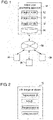
- FIG. 1 is a diagram of an information processing apparatus 10 according to a first embodiment of the present invention, describing its structure and use.
- the information processing apparatus 10 calculates an index for the growth state of a plant in a plant cultivation area of each user based on a result of imaging of the plant cultivation area transmitted from a user terminal 30 of each user through the Internet 50.
- the information processing apparatus 10 includes multiple image analyzers 12, an analysis controller 13, and a cultivation area management database 14.
- the information processing apparatus 10 is a relatively advanced computer, or for example, a computer including one or more high performance graphics processing units (GPUs) programmed to function as an apparatus that includes the multiple image analyzers 12, the analysis controller 13, and the cultivation area management database 14.
- the specific hardware configuration of the information processing apparatus 10 is not described.
- the multiple image analyzers 12 included in the information processing apparatus 10 may hereafter be referred to as first to N-th image analyzers 12 (N is the total number of image analyzers 12 included in the information processing apparatus 10).
- the cultivation area management database 14 is a database for managing information about the cultivation area of each user.
- the cultivation area management database 14 also stores authentication information (e.g., a user ID and a password) set for each user.
- the neural network #i is, for example, a convolutional neural network (CNN) that receives inputs of images with a vertical pixel count of H i and a horizontal pixel count of W i .
- the dimensions of the images input into each of the neural networks #1 to #N are defined to satisfy H j + 1 /W j + 1 > H j /W j , for each of integers j from 1 to N - 1.
- the postprocessor #i stores, into the cultivation area management database 14, the average of a group of indices output from the neural network #i in response to every input of an image performed by the preprocessor #i. The average is stored as the state index for a processing target area.
- the growth index herein refers to the rate (high or low) of growth of a plant in a cultivation area.
- the growth index is a representative height (the average or the mode of the plant heights) of the plant in the cultivation area.
- the first to N-th growth index classes are predetermined to have greater class numbers (the i value in the i-th growth index class) for greater growth indices (higher rates of growth).
- Training the neural network #i refers to determining the weight and bias of each node in the neural network #i to minimize a predetermined evaluation function.
- the learning processor #i extracts, from cultivation area images, multiple images with an aspect ratio of H i :W i and converts each extracted image into an image with the vertical pixel count of H i and the horizontal pixel count of W i for input into the neural network #i.
- the analysis controller 13 receives, through a process including user authentication, cultivation area images transmitted from the user terminals 30 as cultivation area images (hereafter, processing target images) of cultivation areas for which the state indices are to be calculated (hereafter, processing target areas).
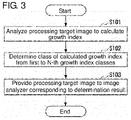
- the analysis controller 13 performs an analyzer selection process with the procedure shown in FIG. 3 upon receiving an input of a processing target image.
- the analysis controller 13 receiving the input of the processing target image first analyzes the processing target image to calculate the growth index (the average or the mode of the plant heights) (step S101). The analysis controller 13 then determines the class of the calculated growth index from the first to N-th growth index classes (step S102). The analysis controller 13 provides the processing target image to an image analyzer 12 corresponding to the determination result (step S103). More specifically, the analysis controller 13 provides a processing target image having a growth index classified into a k-th growth index class to a k-th image analyzer 12 and causes the k-th image analyzer 12 to calculate the state index for the processing target image. After step S103, the analysis controller 13 ends the analyzer selection process.
- the analysis controller 13 ends the analyzer selection process.
- the information processing apparatus 10 includes the neural networks (image analyzers 12) each for a different growth index class to calculate the state index for a cultivation area (index for the growth state of the plant in a cultivation area).
- the information processing apparatus 10 uses a neural network that receives vertically longer input images in response to a higher rate of growth in the area for which the state index is to be calculated. Training a single neural network to accurately calculate the state index for any rate of plant growth uses numerous images.
- the neural networks each for a different growth index class and for different input image dimensions in accordance with the growth index class as described above can each be trained without using images unsuited to the training of the neural network.
- the information processing apparatus 10 according to the present embodiment can thus achieve training of the neural network in each image analyzer 12 using fewer images.
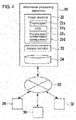
- FIG. 4 is a schematic diagram of an information processing apparatus 20 according to a second embodiment of the present invention, describing its structure and use. Similarly to the information processing apparatus 10, the information processing apparatus 20 according to the present embodiment calculates an index for the growth state of a plant in the plant cultivation area of each user based on a result of imaging of the plant cultivation area transmitted from a user terminal 30 of each user through the Internet 50.
- the information processing apparatus 20 includes an image analyzer 22, an analysis controller 23, and a cultivation area management database 24.
- the cultivation area management database 24 is a database for managing information about the cultivation area of each user.
- the cultivation area management database 24 also stores authentication information (e.g., a user ID and password) set for each user.
- the image analyzer 22 analyzes the imaging result of a plant cultivation area (hereafter, a cultivation area image) to calculate an index for the growth state of a plant (hereafter, a state index) in the cultivation area.
- the image analyzer 22 includes a preprocessor 22a, a fully convolutional network (FCN) 22b, a postprocessor 22c, and a learning processor 22d.
- FCN fully convolutional network
- the FCN 22b is a neural network with all of its layers being convolutional layers, into which images with various dimensions can be input.
- the FCN 22b in the information processing apparatus 20 according to the present embodiment is implemented by multiple GPUs.
- the preprocessor 22a extracts multiple images having an aspect ratio of H i :W i from cultivation area images each input together with a class number i (1 ⁇ i ⁇ N) from the analysis controller 23 or the learning processor 22d and converts each extracted image into an image having a vertical pixel count of H i and a horizontal pixel count of W i for input into the FCN 22b.
- the class number i input into the preprocessor 22a together with a cultivation area image, is a value indicating a growth index class of a growth index for the cultivation area image among first to N-th growth index classes (or is the i value in the i-th growth index class).
- the growth index refers to the rate (high or low) of growth of a plant in a cultivation area.
- the growth index is a representative height (the average or the mode of the plant heights) of the plant in the cultivation area.
- the first to N-th growth index classes are predetermined to have greater class numbers for greater growth indices (higher rates of growth).
- the dimensions of the images extracted from the cultivation area images in each of the first to N-th growth index classes are defined to satisfy H j + 1 /W j + 1 > H j /W j for each of integers j from 1 to N - 1, where H i and W i are vertical and horizontal pixel counts of each image extracted from the cultivation area images included in an i-th (1 ⁇ i ⁇ N) growth index class.
- the postprocessor 22c While the preprocessor 22a is processing the cultivation area images of a cultivation area input from the analysis controller 23, the postprocessor 22c stores, into the cultivation area management database 24, the average of a group of indices output from the FCN 22b as the state index for the cultivation area.
- the learning processor 22d trains the FCN 22b using training data including many cultivation area images and state indices each to be calculated from a corresponding cultivation area image. Training the FCN 22b herein refers to determining the weight and the bias of each node in the FCN 22b to minimize a predetermined evaluation function.
- the learning processor 22d trains the FCN 22b by determining, with the same procedure as in a growth index class determination process ( FIG. 5 ) described later, the growth index class number of each cultivation area image and providing the determination result to the preprocessor 22a together with the cultivation area image.
- the analysis controller 23 receives, through a process including user authentication, cultivation area images transmitted from the user terminals 30 as cultivation area images (hereafter, processing target images) of cultivation areas for which the state indices are to be calculated (hereafter, processing target areas).
- the analysis controller 23 performs the growth index class determination process with the procedure shown in FIG. 5 upon receiving an input of a processing target image.
- the analysis controller 23 receiving the input of the processing target image first analyzes the processing target image to calculate the growth index (the average or the mode of the plant heights) (step S201). The analysis controller 23 then determines the class of the calculated growth index from the first to N-th growth index classes (step S202). The analysis controller 23 provides the determination result (growth index class number) and the processing target image to the image analyzer 22 (preprocessor 22a) (step S203) to cause the image analyzer 22 to calculate the state index for the processing target image. After step S203, the analysis controller 23 ends the growth index class determination process.
- the information processing apparatus 20 has the structure described above.
- the information processing apparatus 20 extracts, from multiple cultivation area images of a plant cultivation area, cultivation area images each with dimensions corresponding to the growth index class of the growth rate of the plant in the cultivation area image and inputs the extracted images into the FCN 22b.
- the FCN 22b can thus be trained without using images unsuited to the training.
- the information processing apparatus 20 according to the present embodiment can thus achieve training of the neural network (FCN 22b) in the image analyzer using fewer images.
- each image analyzer 12 in the information processing apparatus 10 according to the first embodiment may receive inputs of images with the same dimensions into the neural network, although more images are used in the training of each neural network.
- the information processing apparatus 20 may include a neural network that includes one (one type of) convolutional layer and multiple fully connected layers (dense layers) to calculate the state index. Although the information processing apparatuses 10 and 20 calculate the growth indices through analysis of cultivation area images, the information processing apparatus 10 may receive inputs of cultivation area images and cultivation indices from the user terminals 30.
- An information processing apparatus (20) for calculating a state index indicating a growth state of a plant comprising:
Landscapes
- Engineering & Computer Science (AREA)
- Theoretical Computer Science (AREA)
- Physics & Mathematics (AREA)
- General Physics & Mathematics (AREA)
- Health & Medical Sciences (AREA)
- General Health & Medical Sciences (AREA)
- Evolutionary Computation (AREA)
- Computer Vision & Pattern Recognition (AREA)
- Artificial Intelligence (AREA)
- Computing Systems (AREA)
- Software Systems (AREA)
- Data Mining & Analysis (AREA)
- Mathematical Physics (AREA)
- General Engineering & Computer Science (AREA)
- Life Sciences & Earth Sciences (AREA)
- Biomedical Technology (AREA)
- Biophysics (AREA)
- Computational Linguistics (AREA)
- Molecular Biology (AREA)
- Medical Informatics (AREA)
- Quality & Reliability (AREA)
- Nuclear Medicine, Radiotherapy & Molecular Imaging (AREA)
- Radiology & Medical Imaging (AREA)
- Databases & Information Systems (AREA)
- Multimedia (AREA)
- Image Analysis (AREA)
Abstract
Description
- The present invention relates to an information processing apparatus that calculates an index for the growth state of a plant through image analysis using artificial intelligence (Al).
- Image analysis using Al has been used to calculate an index for the growth state of a plant (refer to, for example, Patent Literature 1).
- Patent Literature 1:
Japanese Unexamined Patent Application Publication No. 2018-29568 - To calculate an index for the growth state of a plant through Al image analysis, multiple images with predetermined dimensions are input into a neural network such as a convolutional neural network (CNN) for training. However, plants change their appearance greatly as they grow. Thus, training a neural network for calculating an index for the growth state of the plant uses numerous images.
- In response to the above issue, one or more aspects of the present invention are directed to an information processing apparatus that calculates an index for the growth state of a plant with a neural network using fewer images to achieve training of the neural network.
- An information processing apparatus according to one aspect of the present invention includes first to N-th image analyzers, where N ≥ 2, and a selector. Each of the first to N-th image analyzers analyzes a cultivation area image of a cultivation area of a plant with a neural network to calculate a state index indicating a growth state of the plant in the plant cultivation area. Each of the first to N-th image analyzers includes the neural network trained using a plurality of cultivation area images each having a predetermined growth index classified into a corresponding class of first to N-th growth index classes. The selector receives an input of a cultivation area image for which the state index is to be calculated and causes an image analyzer of the first to N-th image analyzers to analyze the input cultivation area image. The image analyzer is trained using a plurality of cultivation area images classified into the same growth index class as the input cultivation area image.
- More specifically, the information processing apparatus includes the neural networks (image analyzers) each for a different growth index class to calculate the state index indicating the growth state of the plant in a cultivation area. Training a single neural network to accurately calculate the state index for any rate of plant growth uses numerous images. However, the neural networks each for a different growth index class can be trained without using images unsuited to the training of the neural network. The information processing apparatus with the above structure can thus achieve training of the neural network in each image analyzer using fewer images.
- In the information processing apparatus, the neural network included in an i-th image analyzer may be a neural network #i that receives an input of an image having a vertical pixel count of Hi and a horizontal pixel count of Wi, where i is an integer from 1 to N. The i-th image analyzer may extract, from cultivation area images to be analyzed, a plurality of images with an aspect ratio of Hi:Wi, where i is an integer from 1 to N. The i-th image analyzer may adjust a pixel count of each of the extracted plurality of images for input into the neural network #i. Plants typically grow in height. Thus, in the information processing apparatus, a (k + 1)-th growth index class may indicate a higher rate of growth than a k-th growth index class, where k is an integer from 1 to N - 1. The neural networks #i to #N may each receive an input of an image with dimensions satisfying Hi + 1/Wi + 1 > Hi/Wi for an integer i from 1 to N - 1.
- The predetermined growth index may be a representative value of a height of the plant (the average or the mode of the plant heights) in the plant cultivation area. The representative value may be provided separately from the cultivation area image or calculated through analysis of the cultivation area image.
- An information processing apparatus according to another aspect of the present invention (hereafter, a second information processing apparatus) is an apparatus for calculating a state index indicating a growth state of a plant. The apparatus includes a neural network and a calculator. The neural network calculates the state index. The neural network is trained by receiving inputs of cultivation area images extracted from a plurality of cultivation area images of a cultivation area of the plant. Each of the plurality of cultivation area images is classified into a corresponding growth index class of first to N-th growth index classes, where N ≥ 2. Each of the extracted cultivation area images has dimensions corresponding to a growth index class of a growth rate of the plant in the extracted cultivation area image. The calculator calculates the state index by extracting, from cultivation area images for which the state index is to be calculated, a cultivation area image having dimensions corresponding to a growth index class of a growth rate of the plant in the cultivation area image and inputting the extracted cultivation area image into the neural network.
- More specifically, the information processing apparatus extracts, from multiple cultivation area images of a plant cultivation area, a cultivation area image with dimensions corresponding to the growth index class of the growth rate of the plant in the cultivation area image and inputs the extracted image into the neural network such as a fully convolutional network (FCN). The neural network can thus be trained without using images unsuited to the training. The second information processing apparatus can thus achieve training of the neural network in the image analyzer using fewer images.
- In the second information processing apparatus, a (k + 1)-th growth index class may indicate a higher rate of growth than a k-th growth index class, where k is an integer from 1 to N - 1. The dimensions corresponding to each of the first to N-th growth index classes may satisfy Hi + i/Wi + 1 > Hi/Wi for an integer i from 1 to N - 1, where Hi and Wi are vertical and horizontal pixel counts of dimensions corresponding to an i-th growth index class.
- The information processing apparatus according to the above aspects of the present invention calculates an index for the growth state of a plant with a neural network using fewer images to achieve training of the neural network.
-
-
FIG. 1 is a diagram of an information processing apparatus according to a first embodiment of the present invention, describing its structure and use. -
FIG. 2 is a diagram of an image analyzer included in the information processing apparatus according to the first embodiment. -
FIG. 3 is a flowchart showing an analyzer selection process performed by an analysis controller in the information processing apparatus according to the first embodiment. -
FIG. 4 is a diagram of an information processing apparatus according to a second embodiment of the present invention, describing its structure and use. -
FIG. 5 is a flowchart showing a growth index class determination process performed by an analysis controller in the information processing apparatus according to the second embodiment. - Embodiments of the present invention will now be described with reference to the drawings.
-
FIG. 1 is a diagram of aninformation processing apparatus 10 according to a first embodiment of the present invention, describing its structure and use. - The
information processing apparatus 10 according to the present embodiment calculates an index for the growth state of a plant in a plant cultivation area of each user based on a result of imaging of the plant cultivation area transmitted from auser terminal 30 of each user through the Internet 50. As illustrated, theinformation processing apparatus 10 includesmultiple image analyzers 12, ananalysis controller 13, and a cultivationarea management database 14. Theinformation processing apparatus 10 is a relatively advanced computer, or for example, a computer including one or more high performance graphics processing units (GPUs) programmed to function as an apparatus that includes themultiple image analyzers 12, theanalysis controller 13, and the cultivationarea management database 14. The specific hardware configuration of theinformation processing apparatus 10 is not described. Themultiple image analyzers 12 included in theinformation processing apparatus 10 may hereafter be referred to as first to N-th image analyzers 12 (N is the total number ofimage analyzers 12 included in the information processing apparatus 10). - The cultivation
area management database 14 is a database for managing information about the cultivation area of each user. The cultivationarea management database 14 also stores authentication information (e.g., a user ID and a password) set for each user. - An i-th (i = 1 to N)
image analyzer 12 analyzes a result of imaging of a plant cultivation area (hereafter, a cultivation area image) with a neural network #i to calculate an index for the growth state of the plant (hereafter, a state index) in the cultivation area. - More specifically, as shown schematically in
FIG. 2 , the i-th (i = 1 to N)image analyzer 12 includes a preprocessor #i, a neural network (NN) #i, a postprocessor #i, and a learning processor #i. - The neural network #i is, for example, a convolutional neural network (CNN) that receives inputs of images with a vertical pixel count of Hi and a horizontal pixel count of Wi. The dimensions of the images input into each of the neural networks #1 to #N are defined to satisfy Hj + 1/Wj + 1 > Hj/Wj, for each of integers j from 1 to N - 1. When the neural networks #1 to #N are implemented by one or more GPUs, the input image dimensions (total count of pixels) for the neural networks #1 to #N may be specifically set to allow the GPUs to perform sufficiently. Examples of such input image dimensions include H1 = 256, W1 = 256, H2 = 128, W2 = 512, H3 = 64, W3 = 1028 when N = 3.
- The preprocessor #i (i = 1 to N) extracts, from cultivation area images provided from the analysis controller 13 (described in detail later) as processing targets, multiple images with an aspect ratio of Hi:Wi and converts each extracted image into an image with the vertical pixel count of Hi and the horizontal pixel count of Wi for input into the neural network #i. The postprocessor #i stores, into the cultivation
area management database 14, the average of a group of indices output from the neural network #i in response to every input of an image performed by the preprocessor #i. The average is stored as the state index for a processing target area. - The learning processor #i (i = 1 to N) trains the neural network #i using training data including many cultivation area images each having a growth index classified into an i-th growth index class and state indices each to be calculated from a corresponding cultivation area image.
- The growth index herein refers to the rate (high or low) of growth of a plant in a cultivation area. For example, the growth index is a representative height (the average or the mode of the plant heights) of the plant in the cultivation area. The first to N-th growth index classes are predetermined to have greater class numbers (the i value in the i-th growth index class) for greater growth indices (higher rates of growth). Training the neural network #i refers to determining the weight and bias of each node in the neural network #i to minimize a predetermined evaluation function. Similarly to the preprocessor #i, the learning processor #i extracts, from cultivation area images, multiple images with an aspect ratio of Hi:Wi and converts each extracted image into an image with the vertical pixel count of Hi and the horizontal pixel count of Wi for input into the neural network #i.
- The
analysis controller 13 receives, through a process including user authentication, cultivation area images transmitted from theuser terminals 30 as cultivation area images (hereafter, processing target images) of cultivation areas for which the state indices are to be calculated (hereafter, processing target areas). - The
analysis controller 13 performs an analyzer selection process with the procedure shown inFIG. 3 upon receiving an input of a processing target image. - In other words, the
analysis controller 13 receiving the input of the processing target image first analyzes the processing target image to calculate the growth index (the average or the mode of the plant heights) (step S101). Theanalysis controller 13 then determines the class of the calculated growth index from the first to N-th growth index classes (step S102). Theanalysis controller 13 provides the processing target image to animage analyzer 12 corresponding to the determination result (step S103). More specifically, theanalysis controller 13 provides a processing target image having a growth index classified into a k-th growth index class to a k-th image analyzer 12 and causes the k-th image analyzer 12 to calculate the state index for the processing target image. After step S103, theanalysis controller 13 ends the analyzer selection process. - As described above, the
information processing apparatus 10 according to the present embodiment includes the neural networks (image analyzers 12) each for a different growth index class to calculate the state index for a cultivation area (index for the growth state of the plant in a cultivation area). Theinformation processing apparatus 10 uses a neural network that receives vertically longer input images in response to a higher rate of growth in the area for which the state index is to be calculated. Training a single neural network to accurately calculate the state index for any rate of plant growth uses numerous images. However, the neural networks each for a different growth index class and for different input image dimensions in accordance with the growth index class as described above can each be trained without using images unsuited to the training of the neural network. Theinformation processing apparatus 10 according to the present embodiment can thus achieve training of the neural network in eachimage analyzer 12 using fewer images. -
FIG. 4 is a schematic diagram of aninformation processing apparatus 20 according to a second embodiment of the present invention, describing its structure and use. Similarly to theinformation processing apparatus 10, theinformation processing apparatus 20 according to the present embodiment calculates an index for the growth state of a plant in the plant cultivation area of each user based on a result of imaging of the plant cultivation area transmitted from auser terminal 30 of each user through theInternet 50. - As illustrated, the
information processing apparatus 20 includes animage analyzer 22, ananalysis controller 23, and a cultivationarea management database 24. - The cultivation
area management database 24 is a database for managing information about the cultivation area of each user. The cultivationarea management database 24 also stores authentication information (e.g., a user ID and password) set for each user. - The
image analyzer 22 analyzes the imaging result of a plant cultivation area (hereafter, a cultivation area image) to calculate an index for the growth state of a plant (hereafter, a state index) in the cultivation area. As illustrated, theimage analyzer 22 includes apreprocessor 22a, a fully convolutional network (FCN) 22b, apostprocessor 22c, and alearning processor 22d. - The
FCN 22b is a neural network with all of its layers being convolutional layers, into which images with various dimensions can be input. TheFCN 22b in theinformation processing apparatus 20 according to the present embodiment is implemented by multiple GPUs. - The
preprocessor 22a extracts multiple images having an aspect ratio of Hi:Wi from cultivation area images each input together with a class number i (1 ≤ i ≤ N) from theanalysis controller 23 or thelearning processor 22d and converts each extracted image into an image having a vertical pixel count of Hi and a horizontal pixel count of Wi for input into theFCN 22b. - The class number i, input into the
preprocessor 22a together with a cultivation area image, is a value indicating a growth index class of a growth index for the cultivation area image among first to N-th growth index classes (or is the i value in the i-th growth index class). The growth index refers to the rate (high or low) of growth of a plant in a cultivation area. For example, the growth index is a representative height (the average or the mode of the plant heights) of the plant in the cultivation area. - The first to N-th growth index classes are predetermined to have greater class numbers for greater growth indices (higher rates of growth). The dimensions of the images extracted from the cultivation area images in each of the first to N-th growth index classes are defined to satisfy Hj + 1/Wj + 1 > Hj/Wj for each of integers j from 1 to N - 1, where Hi and Wi are vertical and horizontal pixel counts of each image extracted from the cultivation area images included in an i-th (1 ≤ i ≤ N) growth index class. Hi and Wi (i = 1 to N) are also defined to have a constant value for Hi × Wi for any i value.
- While the
preprocessor 22a is processing the cultivation area images of a cultivation area input from theanalysis controller 23, thepostprocessor 22c stores, into the cultivationarea management database 24, the average of a group of indices output from theFCN 22b as the state index for the cultivation area. - The learning
processor 22d trains theFCN 22b using training data including many cultivation area images and state indices each to be calculated from a corresponding cultivation area image. Training theFCN 22b herein refers to determining the weight and the bias of each node in theFCN 22b to minimize a predetermined evaluation function. The learningprocessor 22d trains theFCN 22b by determining, with the same procedure as in a growth index class determination process (FIG. 5 ) described later, the growth index class number of each cultivation area image and providing the determination result to thepreprocessor 22a together with the cultivation area image. - The
analysis controller 23 receives, through a process including user authentication, cultivation area images transmitted from theuser terminals 30 as cultivation area images (hereafter, processing target images) of cultivation areas for which the state indices are to be calculated (hereafter, processing target areas). - The
analysis controller 23 performs the growth index class determination process with the procedure shown inFIG. 5 upon receiving an input of a processing target image. - In other words, the
analysis controller 23 receiving the input of the processing target image first analyzes the processing target image to calculate the growth index (the average or the mode of the plant heights) (step S201). Theanalysis controller 23 then determines the class of the calculated growth index from the first to N-th growth index classes (step S202). Theanalysis controller 23 provides the determination result (growth index class number) and the processing target image to the image analyzer 22 (preprocessor 22a) (step S203) to cause theimage analyzer 22 to calculate the state index for the processing target image. After step S203, theanalysis controller 23 ends the growth index class determination process. - The
information processing apparatus 20 according to the present embodiment has the structure described above. Theinformation processing apparatus 20 extracts, from multiple cultivation area images of a plant cultivation area, cultivation area images each with dimensions corresponding to the growth index class of the growth rate of the plant in the cultivation area image and inputs the extracted images into theFCN 22b. TheFCN 22b can thus be trained without using images unsuited to the training. Theinformation processing apparatus 20 according to the present embodiment can thus achieve training of the neural network (FCN 22b) in the image analyzer using fewer images. - The
information processing apparatuses image analyzer 12 in theinformation processing apparatus 10 according to the first embodiment may receive inputs of images with the same dimensions into the neural network, although more images are used in the training of each neural network. - The
information processing apparatus 20 may include a neural network that includes one (one type of) convolutional layer and multiple fully connected layers (dense layers) to calculate the state index. Although theinformation processing apparatuses information processing apparatus 10 may receive inputs of cultivation area images and cultivation indices from theuser terminals 30. - An information processing apparatus (10), comprising:
- first to N-th image analyzers (12), where N ≥ 2, the first to N-th image analyzers (12) each being configured to analyze a cultivation area image of a cultivation area of a plant with a neural network to calculate a state index indicating a growth state of the plant in the plant cultivation area, each of the first to N-th image analyzers (12) including the neural network trained using a plurality of cultivation area images each having a predetermined growth index classified into a corresponding class of first to N-th growth index classes; and
- a selector (13) configured to receive an input of a cultivation area image for which the state index is to be calculated and to cause an image analyzer (12) of the first to N-th image analyzers (12) to analyze the input cultivation area image, the image analyzer (12) being trained using a plurality of cultivation area images classified into the same growth index class as the input cultivation area image.
- An information processing apparatus (20) for calculating a state index indicating a growth state of a plant, the apparatus (20) comprising:
- a neural network (22b) configured to calculate the state index, the neural network (22b) being trained by receiving inputs of cultivation area images extracted from a plurality of cultivation area images of a cultivation area of the plant, each of the plurality of cultivation area images being classified into a corresponding growth index class of first to N-th growth index classes, where N ≥ 2, each of the extracted cultivation area images having dimensions corresponding to a growth index class of a growth rate of the plant in the extracted cultivation area image; and
- a calculator (22a, 23) configured to calculate the state index by extracting, from cultivation area images for which the state index is to be calculated, a cultivation area image having dimensions corresponding to a growth index class of a growth rate of the plant in the cultivation area image and inputting the extracted cultivation area image into the neural network (22b).
-
- 10, 20
- information processing apparatus
- 12, 22
- image analyzer
- 13, 23
- analysis controller
- 14, 24
- cultivation area management database
- 30
- user terminal
- 50
- Internet
Claims (7)
- An information processing apparatus, comprising:first to N-th image analyzers, where N ≥ 2, the first to N-th image analyzers each being configured to analyze a cultivation area image of a cultivation area of a plant with a neural network to calculate a state index indicating a growth state of the plant in the plant cultivation area, each of the first to N-th image analyzers including the neural network trained using a plurality of cultivation area images each having a predetermined growth index classified into a corresponding class of first to N-th growth index classes; anda selector configured to receive an input of a cultivation area image for which the state index is to be calculated and to cause an image analyzer of the first to N-th image analyzers to analyze the input cultivation area image, the image analyzer being trained using a plurality of cultivation area images classified into the same growth index class as the input cultivation area image.
- The information processing apparatus according to claim 1, whereinthe neural network included in an i-th image analyzer is a neural network #i configured to receive an input of an image having a vertical pixel count of Hi and a horizontal pixel count of Wi, where i is an integer from 1 to N, andthe i-th image analyzer extracts, from cultivation area images to be analyzed, a plurality of images with an aspect ratio of Hi:Wi, where i is an integer from 1 to N, and the i-th image analyzer adjusts a pixel count of each of the extracted plurality of images for input into the neural network #i.
- The information processing apparatus according to claim 2, whereina (k + 1)-th growth index class indicates a higher rate of growth than a k-th growth index class, where k is an integer from 1 to N - 1, andthe neural networks #i to #N each receive an input of an image with dimensions satisfying Hi + 1/Wi + 1 > Hi/Wi for an integer i from 1 to N - 1.
- The information processing apparatus according to any one of claims 1 to 3, wherein
the predetermined growth index is a representative value of a height of the plant in the plant cultivation area. - The information processing apparatus according to any one of claims 1 to 3, wherein
the predetermined growth index is a representative value of a height of the plant in the plant cultivation area calculated through analysis of the cultivation area image. - An information processing apparatus for calculating a state index indicating a growth state of a plant, the apparatus comprising:a neural network configured to calculate the state index, the neural network being trained by receiving inputs of cultivation area images extracted from a plurality of cultivation area images of a cultivation area of the plant, each of the plurality of cultivation area images being classified into a corresponding growth index class of first to N-th growth index classes, where N ≥ 2, each of the extracted cultivation area images having dimensions corresponding to a growth index class of a growth rate of the plant in the extracted cultivation area image; anda calculator configured to calculate the state index by extracting, from cultivation area images for which the state index is to be calculated, a cultivation area image having dimensions corresponding to a growth index class of a growth rate of the plant in the cultivation area image and inputting the extracted cultivation area image into the neural network.
- The information processing apparatus according to claim 6, whereina (k + 1)-th growth index class indicates a higher rate of growth than a k-th growth index class, where k is an integer from 1 to N - 1, andthe dimensions corresponding to each of the first to N-th growth index classes satisfy Hi + 1/Wi + 1 > Hi/Wi for an integer i from 1 to N - 1, where Hi and Wi are vertical and horizontal pixel counts of dimensions corresponding to an i-th growth index class.
Applications Claiming Priority (2)
| Application Number | Priority Date | Filing Date | Title |
|---|---|---|---|
| JP2019127655A JP7243496B2 (en) | 2019-07-09 | 2019-07-09 | Information processing equipment |
| PCT/JP2020/024568 WO2021006030A1 (en) | 2019-07-09 | 2020-06-23 | Information processing device |
Publications (4)
| Publication Number | Publication Date |
|---|---|
| EP3975113A1 true EP3975113A1 (en) | 2022-03-30 |
| EP3975113A4 EP3975113A4 (en) | 2023-07-05 |
| EP3975113C0 EP3975113C0 (en) | 2025-12-24 |
| EP3975113B1 EP3975113B1 (en) | 2025-12-24 |
Family
ID=74114696
Family Applications (1)
| Application Number | Title | Priority Date | Filing Date |
|---|---|---|---|
| EP20836374.7A Active EP3975113B1 (en) | 2019-07-09 | 2020-06-23 | Information processing device |
Country Status (5)
| Country | Link |
|---|---|
| US (1) | US12131463B2 (en) |
| EP (1) | EP3975113B1 (en) |
| JP (1) | JP7243496B2 (en) |
| CN (1) | CN113994379B (en) |
| WO (1) | WO2021006030A1 (en) |
Families Citing this family (2)
| Publication number | Priority date | Publication date | Assignee | Title |
|---|---|---|---|---|
| JP7638491B2 (en) * | 2021-03-23 | 2025-03-04 | 国立大学法人東海国立大学機構 | Information processing device, information processing system, information processing method, and computer program |
| CN116453003B (en) * | 2023-06-14 | 2023-09-01 | 之江实验室 | Method and system for intelligently identifying rice growth vigor based on unmanned aerial vehicle monitoring |
Family Cites Families (9)
| Publication number | Priority date | Publication date | Assignee | Title |
|---|---|---|---|---|
| CN104866970B (en) * | 2015-05-26 | 2018-07-24 | 徐吉祥 | Intelligent Cultivate administration method and intelligent planting equipment |
| EP3387894A4 (en) | 2015-12-16 | 2018-12-12 | Plantio, Inc. | Information processing device, information processing method, and program |
| CN105652923B (en) * | 2016-03-22 | 2017-11-07 | 华南理工大学 | A kind of adaptive plant culture dimming control system based on machine vision |
| JP6305473B2 (en) * | 2016-08-18 | 2018-04-04 | ヤフー株式会社 | Classification support device, classification support method, and classification support program |
| JP6839433B2 (en) | 2016-08-26 | 2021-03-10 | 国立大学法人静岡大学 | Wither condition prediction system and wither condition prediction method |
| JP6971453B2 (en) * | 2017-10-13 | 2021-11-24 | 有限会社竹内園芸 | Seedling data generation system, seedling discrimination system, seedling data generation program, seedling discrimination program, seedling data generation device, seedling discrimination device |
| JP6638121B1 (en) * | 2018-08-30 | 2020-01-29 | 株式会社エヌ・ティ・ティ・データCcs | Server device of crop growth stage determination system, growth stage determination method and program |
| WO2020049576A2 (en) * | 2018-09-09 | 2020-03-12 | Viewnetic Ltd. | System and method for monitoring plants in plant growing areas |
| JP7162550B2 (en) * | 2019-02-15 | 2022-10-28 | オムロン株式会社 | Model generation device, prediction device, model generation method, and model generation program |
-
2019
- 2019-07-09 JP JP2019127655A patent/JP7243496B2/en active Active
-
2020
- 2020-06-23 EP EP20836374.7A patent/EP3975113B1/en active Active
- 2020-06-23 CN CN202080045150.8A patent/CN113994379B/en active Active
- 2020-06-23 US US17/621,391 patent/US12131463B2/en active Active
- 2020-06-23 WO PCT/JP2020/024568 patent/WO2021006030A1/en not_active Ceased
Also Published As
| Publication number | Publication date |
|---|---|
| EP3975113C0 (en) | 2025-12-24 |
| CN113994379B (en) | 2025-10-10 |
| EP3975113B1 (en) | 2025-12-24 |
| JP7243496B2 (en) | 2023-03-22 |
| US20220358642A1 (en) | 2022-11-10 |
| CN113994379A (en) | 2022-01-28 |
| JP2021012634A (en) | 2021-02-04 |
| US12131463B2 (en) | 2024-10-29 |
| EP3975113A4 (en) | 2023-07-05 |
| WO2021006030A1 (en) | 2021-01-14 |
Similar Documents
| Publication | Publication Date | Title |
|---|---|---|
| Schäfer et al. | Detection of gravitational-wave signals from binary neutron star mergers using machine learning | |
| CN111079655B (en) | Method for recognizing human body behaviors in video based on fusion neural network | |
| CN111526119B (en) | Abnormal flow detection method and device, electronic equipment and computer readable medium | |
| US11240121B2 (en) | Methods and systems for controlling data backup | |
| WO2022105173A1 (en) | Model distillation method and apparatus, and storage medium and device | |
| EP4198775B1 (en) | Method and apparatus for determining abnormal users, electronic device, and storage medium | |
| CN108399431A (en) | Disaggregated model training method and sorting technique | |
| CN108805174A (en) | clustering method and device | |
| CN106203103B (en) | File virus detection method and device | |
| US12131463B2 (en) | Information processing device | |
| Holmes et al. | Complex axial growth patterns in an early Cambrian trilobite from South Australia | |
| CN116563547B (en) | A method, apparatus, device, and readable storage medium for acquiring semantic segmentation graphs. | |
| WO2023207039A1 (en) | Data processing method and apparatus, and device and storage medium | |
| WO2020153597A1 (en) | Method and apparatus for generating multi-level classification model | |
| Hui et al. | Meta channel masking for cross-domain few-shot image classification | |
| CN116662904B (en) | Data type variation detection method, device, computer equipment and medium | |
| CN116152597B (en) | Training method and device for target detection model | |
| EP3979085A1 (en) | Learning device, detection system, learning method, and learning program | |
| CN113962335B (en) | Flexibly configurable data whole-process processing method | |
| CN115439661A (en) | Theme color determination method, picture display method, model training method and device | |
| Timchenko et al. | Processing laser beam spot images using the parallel-hierarchical network for classification and forecasting their energy center coordinates | |
| Ginantra et al. | Optimizing convolutional neural networks-based ensemble learning for effective herbal leaf disease detection | |
| CN120832676B (en) | AI large model safety evaluation method, AI large model safety evaluation device, electronic equipment and program product | |
| Kuwata et al. | Quantifying the impact of different forms of stress on fungal growth: an inference method based on high-resolution pictures of the mycelial network | |
| CN119693333B (en) | A production detection method for dynamic refresh rate of display screen |
Legal Events
| Date | Code | Title | Description |
|---|---|---|---|
| STAA | Information on the status of an ep patent application or granted ep patent |
Free format text: STATUS: THE INTERNATIONAL PUBLICATION HAS BEEN MADE |
|
| PUAI | Public reference made under article 153(3) epc to a published international application that has entered the european phase |
Free format text: ORIGINAL CODE: 0009012 |
|
| STAA | Information on the status of an ep patent application or granted ep patent |
Free format text: STATUS: REQUEST FOR EXAMINATION WAS MADE |
|
| 17P | Request for examination filed |
Effective date: 20211223 |
|
| AK | Designated contracting states |
Kind code of ref document: A1 Designated state(s): AL AT BE BG CH CY CZ DE DK EE ES FI FR GB GR HR HU IE IS IT LI LT LU LV MC MK MT NL NO PL PT RO RS SE SI SK SM TR |
|
| DAV | Request for validation of the european patent (deleted) | ||
| DAX | Request for extension of the european patent (deleted) | ||
| A4 | Supplementary search report drawn up and despatched |
Effective date: 20230605 |
|
| RIC1 | Information provided on ipc code assigned before grant |
Ipc: A01G 7/00 20060101ALI20230530BHEP Ipc: G06N 3/04 20060101ALI20230530BHEP Ipc: G06T 7/00 20170101AFI20230530BHEP |
|
| GRAP | Despatch of communication of intention to grant a patent |
Free format text: ORIGINAL CODE: EPIDOSNIGR1 |
|
| STAA | Information on the status of an ep patent application or granted ep patent |
Free format text: STATUS: GRANT OF PATENT IS INTENDED |
|
| RIC1 | Information provided on ipc code assigned before grant |
Ipc: G06T 7/00 20170101AFI20250710BHEP Ipc: G06N 3/04 20060101ALI20250710BHEP Ipc: G06N 3/08 20060101ALI20250710BHEP Ipc: A01G 7/00 20060101ALI20250710BHEP |
|
| INTG | Intention to grant announced |
Effective date: 20250806 |
|
| GRAS | Grant fee paid |
Free format text: ORIGINAL CODE: EPIDOSNIGR3 |
|
| GRAA | (expected) grant |
Free format text: ORIGINAL CODE: 0009210 |
|
| STAA | Information on the status of an ep patent application or granted ep patent |
Free format text: STATUS: THE PATENT HAS BEEN GRANTED |
|
| AK | Designated contracting states |
Kind code of ref document: B1 Designated state(s): AL AT BE BG CH CY CZ DE DK EE ES FI FR GB GR HR HU IE IS IT LI LT LU LV MC MK MT NL NO PL PT RO RS SE SI SK SM TR |
|
| REG | Reference to a national code |
Ref country code: CH Ref legal event code: F10 Free format text: ST27 STATUS EVENT CODE: U-0-0-F10-F00 (AS PROVIDED BY THE NATIONAL OFFICE) Effective date: 20251224 Ref country code: GB Ref legal event code: FG4D |
|
| REG | Reference to a national code |
Ref country code: DE Ref legal event code: R096 Ref document number: 602020064517 Country of ref document: DE |
|
| U01 | Request for unitary effect filed |
Effective date: 20260107 |
|
| U07 | Unitary effect registered |
Designated state(s): AT BE BG DE DK EE FI FR IT LT LU LV MT NL PT RO SE SI Effective date: 20260114 |
|
| PG25 | Lapsed in a contracting state [announced via postgrant information from national office to epo] |
Ref country code: NO Free format text: LAPSE BECAUSE OF FAILURE TO SUBMIT A TRANSLATION OF THE DESCRIPTION OR TO PAY THE FEE WITHIN THE PRESCRIBED TIME-LIMIT Effective date: 20260324 |
|
| PG25 | Lapsed in a contracting state [announced via postgrant information from national office to epo] |
Ref country code: HR Free format text: LAPSE BECAUSE OF FAILURE TO SUBMIT A TRANSLATION OF THE DESCRIPTION OR TO PAY THE FEE WITHIN THE PRESCRIBED TIME-LIMIT Effective date: 20251224 |
|
| PG25 | Lapsed in a contracting state [announced via postgrant information from national office to epo] |
Ref country code: RS Free format text: LAPSE BECAUSE OF FAILURE TO SUBMIT A TRANSLATION OF THE DESCRIPTION OR TO PAY THE FEE WITHIN THE PRESCRIBED TIME-LIMIT Effective date: 20260324 |
|
| PG25 | Lapsed in a contracting state [announced via postgrant information from national office to epo] |
Ref country code: SM Free format text: LAPSE BECAUSE OF FAILURE TO SUBMIT A TRANSLATION OF THE DESCRIPTION OR TO PAY THE FEE WITHIN THE PRESCRIBED TIME-LIMIT Effective date: 20251224 |
|
| PG25 | Lapsed in a contracting state [announced via postgrant information from national office to epo] |
Ref country code: ES Free format text: LAPSE BECAUSE OF FAILURE TO SUBMIT A TRANSLATION OF THE DESCRIPTION OR TO PAY THE FEE WITHIN THE PRESCRIBED TIME-LIMIT Effective date: 20251224 |
|
| PG25 | Lapsed in a contracting state [announced via postgrant information from national office to epo] |
Ref country code: PL Free format text: LAPSE BECAUSE OF FAILURE TO SUBMIT A TRANSLATION OF THE DESCRIPTION OR TO PAY THE FEE WITHIN THE PRESCRIBED TIME-LIMIT Effective date: 20251224 |
|
| PG25 | Lapsed in a contracting state [announced via postgrant information from national office to epo] |
Ref country code: IS Free format text: LAPSE BECAUSE OF FAILURE TO SUBMIT A TRANSLATION OF THE DESCRIPTION OR TO PAY THE FEE WITHIN THE PRESCRIBED TIME-LIMIT Effective date: 20260424 |
|
| PG25 | Lapsed in a contracting state [announced via postgrant information from national office to epo] |
Ref country code: CZ Free format text: LAPSE BECAUSE OF FAILURE TO SUBMIT A TRANSLATION OF THE DESCRIPTION OR TO PAY THE FEE WITHIN THE PRESCRIBED TIME-LIMIT Effective date: 20251224 |
|
| PG25 | Lapsed in a contracting state [announced via postgrant information from national office to epo] |
Ref country code: SK Free format text: LAPSE BECAUSE OF FAILURE TO SUBMIT A TRANSLATION OF THE DESCRIPTION OR TO PAY THE FEE WITHIN THE PRESCRIBED TIME-LIMIT Effective date: 20251224 |
|
| U20 | Renewal fee for the european patent with unitary effect paid |
Year of fee payment: 7 Effective date: 20260630 |