EP3974273B1 - Motorcycle - Google Patents
Motorcycle Download PDFInfo
- Publication number
- EP3974273B1 EP3974273B1 EP21198352.3A EP21198352A EP3974273B1 EP 3974273 B1 EP3974273 B1 EP 3974273B1 EP 21198352 A EP21198352 A EP 21198352A EP 3974273 B1 EP3974273 B1 EP 3974273B1
- Authority
- EP
- European Patent Office
- Prior art keywords
- torque
- vehicle speed
- limit
- limit value
- motorcycle
- Prior art date
- Legal status (The legal status is an assumption and is not a legal conclusion. Google has not performed a legal analysis and makes no representation as to the accuracy of the status listed.)
- Active
Links
Images



Classifications
-
- B—PERFORMING OPERATIONS; TRANSPORTING
- B60—VEHICLES IN GENERAL
- B60W—CONJOINT CONTROL OF VEHICLE SUB-UNITS OF DIFFERENT TYPE OR DIFFERENT FUNCTION; CONTROL SYSTEMS SPECIALLY ADAPTED FOR HYBRID VEHICLES; ROAD VEHICLE DRIVE CONTROL SYSTEMS FOR PURPOSES NOT RELATED TO THE CONTROL OF A PARTICULAR SUB-UNIT
- B60W30/00—Purposes of road vehicle drive control systems not related to the control of a particular sub-unit, e.g. of systems using conjoint control of vehicle sub-units
- B60W30/14—Adaptive cruise control
- B60W30/143—Speed control
- B60W30/146—Speed limiting
-
- B—PERFORMING OPERATIONS; TRANSPORTING
- B60—VEHICLES IN GENERAL
- B60W—CONJOINT CONTROL OF VEHICLE SUB-UNITS OF DIFFERENT TYPE OR DIFFERENT FUNCTION; CONTROL SYSTEMS SPECIALLY ADAPTED FOR HYBRID VEHICLES; ROAD VEHICLE DRIVE CONTROL SYSTEMS FOR PURPOSES NOT RELATED TO THE CONTROL OF A PARTICULAR SUB-UNIT
- B60W50/00—Details of control systems for road vehicle drive control not related to the control of a particular sub-unit, e.g. process diagnostic or vehicle driver interfaces
- B60W50/08—Interaction between the driver and the control system
- B60W50/082—Selecting or switching between different modes of propelling
-
- B—PERFORMING OPERATIONS; TRANSPORTING
- B60—VEHICLES IN GENERAL
- B60W—CONJOINT CONTROL OF VEHICLE SUB-UNITS OF DIFFERENT TYPE OR DIFFERENT FUNCTION; CONTROL SYSTEMS SPECIALLY ADAPTED FOR HYBRID VEHICLES; ROAD VEHICLE DRIVE CONTROL SYSTEMS FOR PURPOSES NOT RELATED TO THE CONTROL OF A PARTICULAR SUB-UNIT
- B60W2300/00—Indexing codes relating to the type of vehicle
- B60W2300/36—Cycles; Motorcycles; Scooters
-
- B—PERFORMING OPERATIONS; TRANSPORTING
- B60—VEHICLES IN GENERAL
- B60W—CONJOINT CONTROL OF VEHICLE SUB-UNITS OF DIFFERENT TYPE OR DIFFERENT FUNCTION; CONTROL SYSTEMS SPECIALLY ADAPTED FOR HYBRID VEHICLES; ROAD VEHICLE DRIVE CONTROL SYSTEMS FOR PURPOSES NOT RELATED TO THE CONTROL OF A PARTICULAR SUB-UNIT
- B60W2520/00—Input parameters relating to overall vehicle dynamics
- B60W2520/10—Longitudinal speed
-
- B—PERFORMING OPERATIONS; TRANSPORTING
- B60—VEHICLES IN GENERAL
- B60W—CONJOINT CONTROL OF VEHICLE SUB-UNITS OF DIFFERENT TYPE OR DIFFERENT FUNCTION; CONTROL SYSTEMS SPECIALLY ADAPTED FOR HYBRID VEHICLES; ROAD VEHICLE DRIVE CONTROL SYSTEMS FOR PURPOSES NOT RELATED TO THE CONTROL OF A PARTICULAR SUB-UNIT
- B60W2520/00—Input parameters relating to overall vehicle dynamics
- B60W2520/18—Roll
-
- B—PERFORMING OPERATIONS; TRANSPORTING
- B60—VEHICLES IN GENERAL
- B60W—CONJOINT CONTROL OF VEHICLE SUB-UNITS OF DIFFERENT TYPE OR DIFFERENT FUNCTION; CONTROL SYSTEMS SPECIALLY ADAPTED FOR HYBRID VEHICLES; ROAD VEHICLE DRIVE CONTROL SYSTEMS FOR PURPOSES NOT RELATED TO THE CONTROL OF A PARTICULAR SUB-UNIT
- B60W2540/00—Input parameters relating to occupants
- B60W2540/10—Accelerator pedal position
-
- B—PERFORMING OPERATIONS; TRANSPORTING
- B60—VEHICLES IN GENERAL
- B60W—CONJOINT CONTROL OF VEHICLE SUB-UNITS OF DIFFERENT TYPE OR DIFFERENT FUNCTION; CONTROL SYSTEMS SPECIALLY ADAPTED FOR HYBRID VEHICLES; ROAD VEHICLE DRIVE CONTROL SYSTEMS FOR PURPOSES NOT RELATED TO THE CONTROL OF A PARTICULAR SUB-UNIT
- B60W2540/00—Input parameters relating to occupants
- B60W2540/215—Selection or confirmation of options
-
- B—PERFORMING OPERATIONS; TRANSPORTING
- B60—VEHICLES IN GENERAL
- B60W—CONJOINT CONTROL OF VEHICLE SUB-UNITS OF DIFFERENT TYPE OR DIFFERENT FUNCTION; CONTROL SYSTEMS SPECIALLY ADAPTED FOR HYBRID VEHICLES; ROAD VEHICLE DRIVE CONTROL SYSTEMS FOR PURPOSES NOT RELATED TO THE CONTROL OF A PARTICULAR SUB-UNIT
- B60W2710/00—Output or target parameters relating to a particular sub-units
- B60W2710/06—Combustion engines, Gas turbines
- B60W2710/0666—Engine torque
- B60W2710/0672—Torque change rate
-
- B—PERFORMING OPERATIONS; TRANSPORTING
- B60—VEHICLES IN GENERAL
- B60W—CONJOINT CONTROL OF VEHICLE SUB-UNITS OF DIFFERENT TYPE OR DIFFERENT FUNCTION; CONTROL SYSTEMS SPECIALLY ADAPTED FOR HYBRID VEHICLES; ROAD VEHICLE DRIVE CONTROL SYSTEMS FOR PURPOSES NOT RELATED TO THE CONTROL OF A PARTICULAR SUB-UNIT
- B60W2710/00—Output or target parameters relating to a particular sub-units
- B60W2710/10—Change speed gearings
-
- B—PERFORMING OPERATIONS; TRANSPORTING
- B60—VEHICLES IN GENERAL
- B60W—CONJOINT CONTROL OF VEHICLE SUB-UNITS OF DIFFERENT TYPE OR DIFFERENT FUNCTION; CONTROL SYSTEMS SPECIALLY ADAPTED FOR HYBRID VEHICLES; ROAD VEHICLE DRIVE CONTROL SYSTEMS FOR PURPOSES NOT RELATED TO THE CONTROL OF A PARTICULAR SUB-UNIT
- B60W2710/00—Output or target parameters relating to a particular sub-units
- B60W2710/10—Change speed gearings
- B60W2710/105—Output torque
-
- B—PERFORMING OPERATIONS; TRANSPORTING
- B60—VEHICLES IN GENERAL
- B60W—CONJOINT CONTROL OF VEHICLE SUB-UNITS OF DIFFERENT TYPE OR DIFFERENT FUNCTION; CONTROL SYSTEMS SPECIALLY ADAPTED FOR HYBRID VEHICLES; ROAD VEHICLE DRIVE CONTROL SYSTEMS FOR PURPOSES NOT RELATED TO THE CONTROL OF A PARTICULAR SUB-UNIT
- B60W2710/00—Output or target parameters relating to a particular sub-units
- B60W2710/10—Change speed gearings
- B60W2710/105—Output torque
- B60W2710/1055—Output torque change rate
Definitions
- the present invention relates to a motorcycle capable of executing vehicle speed control that at least prevents vehicle speed from exceeding set vehicle speed.
- vehicles that perform vehicle speed control that at least prevents vehicle speed from exceeding set vehicle speed have been known.
- vehicles that include a speed limiter that limits vehicle speed such that the vehicle speed does not exceed an upper limit have been known.
- vehicles that perform control such as a so-called cruise control, to control an engine torque such that vehicle speed is kept at a constant value set by a user have been known.
- the above-described vehicle speed control is started during traveling in some cases.
- a controller suddenly limits an engine torque.
- the vehicle speed V sharply drops.
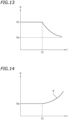
- FIG. 14 there are also cases where the above-described vehicle speed control is released during traveling. In such a case, the engine torque is no longer limited, and the engine torque is suddenly increased in some cases. As a result, the vehicle speed V abruptly rises.
- a motorcycle has a lighter vehicle weight than that of an automobile.
- an engine torque is suddenly limited at a start of vehicle speed control, there is a tendency that a degree of deceleration that a rider feels is higher than that in an automobile. Therefore, there is a probability that the riding feeling is deteriorated.
- the engine torque is suddenly increased at a release of vehicle speed control, there is a tendency that a degree of acceleration that the rider feels is higher than that in the automobile. In this case, there is also a probability that the riding feeling is deteriorated.
- EP-A-2857301 discloses a vehicle, wherein a rotation speed of an engine detected by a rotation speed sensor, a change gear ratio detected by a change gear ratio sensor, a roll angle of a body detected by a roll angle sensor and a content of operation of a setting switch by a driver are supplied to a CPU of an ECU. Further, an accelerator opening detected by an accelerator opening sensor of an accelerator grip device is supplied to the CPU of the ECU. The CPU adjusts reaction force applied from the accelerator grip device to the driver by controlling a motor of the accelerator grip device.
- US-A-2012/067122 discloses a bank angle detecting device for a vehicle.
- the detecting device includes an angular velocity sensor for detecting a roll rate and a yaw rate of the vehicle, a roll rate estimating circuit for calculating an estimated roll rate, which is an angular velocity about a forward and rearward axis, on the basis of the roll rate, the yaw rate and a travelling speed, a bank angle estimator for calculating an estimated bank angle from the estimated roll rate, a straightforward travel determiner for determining a straightforward travelling condition on the basis of the estimated roll rate and an estimated yaw rate, a time-of-straight-forward-travel drift amount estimator for estimating a time-of-straight-forward drift amount from an output of the angular sensor in the event that the straightforward travel determiner determines a straightforward travel, and an angular velocity corrector for correcting the output of the angular velocity sensor with the time-of-straight-forward drift amount.
- a motorcycle disclosed herein includes a front wheel, a rear wheel, a vehicle body supported by the front wheel and the rear wheel, a driving source supported by the vehicle body and configured to output a torque that drives the rear wheel, an accelerator operator that is operated by a rider, an accelerator detector configured to detect an operation amount of the accelerator operator, a vehicle speed detector configured to detect vehicle speed, a driving source controller configured to control the driving source such that an output torque of the driving source is a target torque, a vehicle speed controller configured to perform vehicle speed control that at least prevents the vehicle speed from exceeding set vehicle speed, and a torque change reducer configured to reduce a change of the output torque of the driving source when the vehicle speed control is turned on or off or the set vehicle speed is changed during travelling.
- the vehicle speed controller includes a memory that stores the set vehicle speed, a deviation calculator configured to calculate a deviation from the set vehicle speed of the vehicle speed detected by the vehicle speed detector, and a limit torque calculator configured to calculate a limit torque, based on the deviation.
- the torque change reducer includes a limit value setter configured to set a limit value of a change amount of the limit torque in accordance with a vehicle state and a limit torque adjuster configured to receive the limit torque from the limit torque calculator and adjust the limit torque such that the change amount of the limit torque does not exceed the limit value.
- the driving source controller includes a rider request torque calculator configured to calculate a rider request torque, based on the operation amount of the accelerator operator and a target torque calculator configured to receive an adjusted limit torque from the limit torque adjuster and calculate the target torque, based on the adjusted limit torque and the rider request torque.
- the limit torque is calculated during execution of the vehicle control and, when the limit torque is equal to or less than the rider request torque, the limit torque is set to the target torque.
- the driving source is controlled such that the vehicle speed does not exceed the set vehicle speed.
- the change amount of the limit torque is limited in accordance with the vehicle state.
- a rapid change of the target torque is reduced, and accordingly, a change of the output torque of the driving source is reduced. Therefore, a riding feeling can be improved.
- the target torque calculator is configured to, if the vehicle speed control is turned on or if the set vehicle speed is changed to be lower during traveling, set the rider request torque to the target torque when the adjusted limit torque is larger than the rider request torque and set the adjusted limit torque to the target torque when the adjusted limit torque is equal to or less than the rider request torque.
- the target torque calculator is configured to, if the vehicle speed control is turned off or if the set vehicle speed is changed to be higher during traveling, set the adjusted limit torque to the target torque when the adjusted limit torque is smaller than the rider request torque and set the rider request torque to the target torque when the adjusted limit torque is equal to or more than the rider request torque.
- an excessive increase of the output torque of the driving source is reduced during acceleration. Therefore, the riding feeling during acceleration can be improved.
- the motorcycle includes a transmission including a driving member connected to the driving source and a driven member connected to the rear wheel and configured to change a deceleration rate between the driving member and the driven member, and a deceleration rate detector configured to detect a deceleration rate of the transmission.
- the limit value setter is configured to set the limit value in accordance with the deceleration rate of the transmission.
- the riding feeling can be improved in accordance with a deceleration rate.
- the limit value setter is configured to set a first limit value as the limit value if the deceleration rate of the transmission is a first deceleration rate, and set a second limit value that is smaller than the first limit value as the limit value if the deceleration rate of the transmission is a second deceleration rate that is higher than the first deceleration rate.
- the motorcycle further includes a lean state detector configured to detect a lean parameter related to a lean state of the vehicle body.
- the limit value setter is configured to set the limit value in accordance with a value of the lean parameter.
- the riding feeling in turning left or right can be improved.
- the lean parameter is a bank angle of the vehicle body or an angular velocity of the bank angle
- the limit value setter may be configured to set a third limit value as the limit value if the value of the lean parameter is a first value, and set a fourth limit value that is smaller than the third limit value as the limit value if the value of the lean parameter is a second value that is larger than the first value.
- the vehicle speed controller may be configured to calculate the limit torque such that the vehicle speed is equal to or less than the set vehicle speed.
- the vehicle speed controller may be configured to calculate the limit torque such that the vehicle speed matches the set vehicle speed.
- a riding feeling when the vehicle speed control is turned on or off or the set vehicle speed is changed during traveling can be improved better than in a conventional motorcycle.
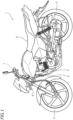
- FIG. 1 is a side view of a motorcycle 1 according to an embodiment.
- the motorcycle 1 includes a front wheel 2, a rear wheel 3, a vehicle body 4 supported by the front wheel 2 and the rear wheel 3, and an internal combustion engine (which will be hereinafter referred to as an engine) 5 supported by the vehicle body 4.
- the engine 5 is an example of a "driving source” that outputs a torque that drives the rear wheel 3.
- the vehicle body 4 includes a steering shaft 8 with a handle 7 attached thereto and a seat 9 on which a rider sits.
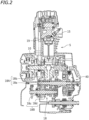
- the engine 5 includes a piston 19 and a crank shaft 10 connected to the piston 19.
- a clutch 40 is coupled to the crank shaft 10.
- a transmission 18 is coupled to the clutch 40.
- the transmission 18 includes a driving member 18A coupled to the engine 5 and a driven member 18B connected to the rear wheel 3.
- the transmission 18 is a multistep transmission.
- the driving member 18A includes a driving shaft 18a and a plurality of driving gears 18b.
- the driven member 18B includes a driven shaft 18c and a plurality of driven gears 18d.
- a torque is transmitted from the driving member 18A to the driven member 18B.
- the transmission 18 is configured to change a deceleration rate.
- the driven member 18B of the transmission 18 and the rear wheel 3 are connected to each other via a power transmission member, such as a chain or the like.
- a power transmission member such as a chain or the like.
- the transmission 18 is not limited to a multistep transmission and may be a continuously variable transmission, such as a CVT or the like.
- a rotatable accelerator grip 11 is provided in a right end portion of the handle 7.
- the accelerator grip 11 is an example of an "accelerator operator" operated by a rider.
- the accelerator grip 11 is rotatable in an opening direction A1 and a closing direction A2.
- the opening direction A1 is a counterclockwise direction when viewed from a right side.
- the closing direction A2 is a direction opposite to the opening direction A1, that is, a clockwise direction when viewed from a right side.
- a return spring 14 that energizes the accelerator grip 11 to a full close position is provided in the accelerator grip 11. When the rider releases his or her hand from the accelerator grip 11, the accelerator grip 11 automatically returns to the full close position.
- a nonrotatable fixed grip 12 and a switch box 13 are provided in a left end portion of the handle 7.
- the switch box 13 is arranged rightward of the fixed grip 12 and leftward of a vehicle center line CL.
- a selection switch 41, a set switch 42, an up switch 43, and a down switch 44 are provided in the switch box 13, .
- the switches 41 to 44 are constituted by button type switches herein.
- the selection switch 41 is a switch used for selecting a type of operation. Herein, each time the selection switch 41 is pressed, the normal operation and the speed limit operation are selected in order.
- the set switch 42 is a switch used for switching on and off of a selected operation. For example, when the set switch 42 is pressed in a state where the speed limit operation is selected, the speed limit operation is executed. When the set switch 42 is pressed during the speed limit operation, the speed limit operation is released.
- the up switch 43 and the down switch 44 are used to set or change set vehicle speed. When the rider operates the up switch 43, the set vehicle speed is increased and, when the rider operates the down switch 44, the set vehicle speed is reduced.
- the engine 5 includes an ignition device 15, a fuel injector 16, and an electric throttle valve 17.
- the ignition device 15, the fuel injector 16, and the electric throttle valve 17 are operated, so that a torque output by the engine 5 (which will be hereinafter referred to as an output torque) is controlled.
- the motorcycle 1 includes an accelerator sensor 21 that detects an operation amount of the accelerator grip 11, a vehicle speed sensor 22 that detects vehicle speed, a rotation speed sensor 23 that detects rotation speed of the engine 5, a throttle sensor 24 that detects an opening of the electric throttle valve 17 (which will be hereinafter referred to as a throttle opening), a gear position sensor 25 that detects a gear position of the transmission 18, and a bank angle sensor 26 that detects a bank angle.
- the operation amount of the accelerator grip 11 means a rotation angle of the accelerator grip 11 from the full close position in the opening direction A1. As the rotation angle of the accelerator grip 11 increases, the operation amount of the accelerator grip 11 increases.
- the rotation speed of the engine 5 is rotation speed of the crank shaft 10.
- the accelerator sensor 21, the vehicle speed sensor 22, the gear position sensor 25, and the bank angle sensor 26 are examples of "an accelerator detector,” “a vehicle speed detector,” “a deceleration rate detector,” and “a lean state detector,” respectively.
- the motorcycle 1 includes an electronic control unit (ECU) 30 as a control unit that performs various controls.
- the ECU 30 includes a CPU, a ROM, a RAM, or the like.
- the ECU 30 is communicably coupled to the accelerator sensor 21, the vehicle speed sensor 22, the rotation speed sensor 23, the throttle sensor 24, the gear position sensor 25, and the bank angle sensor 26 and is configured to receive signals from the sensors.
- the ECU 30 is also communicably coupled to the selection switch 41, the set switch 42 the up switch 43, and the down switch 44 and is configured to receive signals from the switches.
- the ECU 30 is communicably coupled to the ignition device 15, the fuel injector 16, and the electric throttle valve 17 and is configured to transmit signals to these components. By controlling the ignition device 15, the fuel injector 16, and the electric throttle valve 17, the ECU 30 controls the output torque of the engine 5.
- FIG. 5 is a functional block diagram of the ECU 30.
- the ECU 30 executes a computer program stored in the ROM or the like to function as a driving source controller 31, a vehicle speed controller 32, and a torque change reducer 33.
- the driving source controller 31 controls the engine 5 such that the output torque of the engine 5 becomes a target torque Tt described later.
- the vehicle speed controller 32 performs speed limit control that prevents vehicle speed V from exceeding set vehicle speed Vs described later.
- the torque change reducer 33 reduces a change of the output torque of the engine 5 when the speed limit control is turned on or off or the set vehicle speed Vs is changed during traveling.
- the memory 321 is configured such that the set vehicle speed Vs is rewritable therein. When the rider operates the up switch 43 or the down switch 44 to change the set vehicle speed Vs, the memory 321 stores the changed set vehicle speed Vs.
- the torque change reducer 33 reduces a degree of acceleration or deceleration when the speed limit control is turned on or off or the set vehicle speed Vs is changed during traveling. As described above, the limit torque Tm changes with a lapse of time.
- the torque change reducer 33 limits a change amount of the limit torque Tm.
- the torque change reducer 33 includes a limit value setter 331 and a limit torque adjuster 332.
- the limit value setter 331 sets a limit value Ta of the change amount of the limit torque Tm in accordance with a vehicle state.
- the limit value Ta is set for the change amount of the limit torque Tm such that the limit torque Tm is not excessively increased or reduced in a short time.
- the limit torque Tm is input to the limit torque adjuster 332 from the limit torque calculator 322, and the limit value Ta is input to the limit torque adjuster 332 from the limit value setter 331.
- the limit torque adjuster 332 calculates an adjusted limit torque Tf in accordance with procedures described below in every predetermined cycle.
- the limit torque adjuster 332 calculates a limit torque change amount in accordance with Expression 1 below.
- Change amount of Limit torque Limit torque Tm ⁇ Previous calculation value of Adjusted limit torque Tf
- the limit torque adjuster 332 determines whether an absolute value of the change amount of the limit torque is larger than the limit value Ta. If the absolute value of the change amount of the limit torque is larger than the limit value Ta, the limit torque adjuster 332 adjusts the limit torque such that the absolute value of the change amount of the limit torque does not exceed the limit value Ta. That is, the limit torque adjuster 332 adjusts the limit torque such that
- Adjusted limit torque Tf Previous value of Adjusted limit torque Tf + Change amount of Limit torque
- the driving source controller 31 includes a rider request torque calculator 311 that calculates the rider request torque Tr, based on the operation amount of the accelerator grip 11 (which will be hereinafter referred to as an accelerator operation amount), a target torque calculator 312 that calculates the target torque Tt, and a driving controller 313 that controls the engine 5 such that the output torque of the engine 5 becomes the target torque Tt.
- the rider request torque Tr is input to the target torque calculator 312 from the rider request torque calculator 311 and the adjusted limit torque Tf is input to the target torque calculator 312 from the limit torque adjuster 332.
- the target torque calculator 312 sets the adjusted limit torque Tf to the target torque Tt if it is needed to impose a limit on the rider request torque Tr and sets the rider request torque Tr to the target torque Tt if it is not needed to impose a limit on the rider request torque Tr.
- the target torque calculator 312 sets the rider request torque Tr to the target torque Tt when the adjusted limit torque Tf is larger than the rider request torque Tr and sets the adjusted limit torque Tf to the target torque Tt when the adjusted limit torque Tf is equal to or less than the rider request torque Tr.
- the target torque calculator 312 sets the adjusted limit torque Tf to the target torque Tt if the adjusted limit torque Tf is smaller than the rider request torque Tr and sets the rider request torque Tr to the target torque Tt if the adjusted limit torque Tf is equal to or more than the rider request torque Tr.
- the target torque Tt calculated in the above-described manner is input to the driving controller 313.
- the driving controller 313 controls the engine 5 such that the engine output torque becomes the target torque Tt.
- a condition of the speed limit control is changed encompasses a case where the speed limit control is switched from off to on, a case where the speed limit control is switched from on to off, and a case where the set vehicle speed Vs is changed while the speed limit control is on.
- the "vehicle state" can be specified by values of various parameters detected by the various sensors (see the sensors 21 to 26 in FIG. 4 ) of the motorcycle 1. For example, when a gear position is detected by the gear position sensor 25, a deceleration rate of the transmission 18 is specified. For example, the vehicle state is specified by the deceleration rate of the transmission 18. The vehicle state is specified by the bank angle detected by the bank angle sensor 26. Alternatively, the vehicle state is specified by an angular velocity of the bank angle. Note that the vehicle state may be specified based on a value of a single parameter and may be specified based on values of a plurality of parameters.
- the torque change reducing control is executed to suppress reduction of the riding feeling when a condition of the speed limit control is changed during traveling of the motorcycle 1. That is, the torque change reducing control is executed to improve the riding feeling better than in a conventional motorcycle.
- the limit torque calculator 322 of the vehicle speed controller 32 calculates the limit torque Tm in order to cause the vehicle speed V to be the set vehicle speed Vs. If the torque change reducer 33 is not provided, the limit torque Tm (see FIG. 5 ) is input to the target torque calculator 312 from the limit torque calculator 322. Since the vehicle speed V1 at the time t1 is larger than the set vehicle speed Vs, the limit torque Tm is equal to or less than the rider request torque Tr. Therefore, the target torque calculator 312 sets the limit torque Tm to the target torque Tt. As a result, the target torque Tt is reduced from Tr to Tm.
- the motorcycle 1 includes the torque change reducer 33. If the speed limit control is switched from off to on during traveling and the vehicle speed V1 at that time is larger than the set vehicle speed Vs, the limit torque is adjusted such that an absolute value of a change amount of the limit torque (unless specifically stated otherwise, the absolute value of the change amount of the limit torque will be simply referred to as a change amount of the limit torque) does not exceed the limit value Ta.
- the adjusted limit torque Tf is input to the target torque calculator 312 and the target torque Tt is changed to the adjusted limit torque Tf.
- the adjusted limit torque Tf is larger than the limit torque Tm before adjustment. Therefore, as indicated by a solid line in FIG. 7 , rapid reduction of the output torque T of the engine 5 can be avoided.
- the degree of deceleration of the vehicle body is reduced and the riding feeling is improved.
- an aspect of change of the output torque indicated by the solid line in FIG. 7 is merely an example.
- the change amount of the output torque per unit time may be constant and may not be constant.
- the line indicating the change of the output torque may be a straight line and may be a curved line.
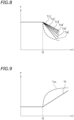
- the limit value Ta of the change amount of the limit torque is set such that, as the deceleration rate increases, the limit value Ta reduces.
- the deceleration rate reduces in an order of first speed, second speed, third speed, fourth speed, fifth speed, and sixth speed, and therefore, when respective limit values at the first speed to the sixth speed are Ta1 to Ta6, Ta1 ⁇ Ta2 ⁇ Ta3 ⁇ Ta4 ⁇ Ta5 ⁇ Ta6.
- the limit values Ta2 to Ta6 at the second speed to the sixth speed may be set using the limit value Ta1 at the first speed.
- a map that defines a relationship between the deceleration rate and the limit value Ta may be stored in the ECU 30 in advance and the limit value setter 331 may be configured to read the limit values Ta 1 to Ta6 at the first speed to the sixth speed from the map.
- the rider operates the down switch 44 or the like to reduce the set vehicle speed while speed limit control is executed.
- the set vehicle speed is changed to a smaller value than V1 at the time t1 while the motorcycle 1 travels at the set vehicle speed V1 in some cases.
- the output torque T of the engine 5 is rapidly reduced (see FIG. 7 ), and therefore, there is a probability that the riding feeling is deteriorated.
- the motorcycle 1 includes the torque change reducer 33, and therefore, similar to the first control example, a rapid change of the target torque is reduced. Accordingly, a rapid change of the output torque T of the engine 5 is reduced and the riding feeling is improved.
- the degree of reduction is caused to increase as the deceleration rate increases.
- the limit value Ta is set such that, as the deceleration rate increases, the limit value Ta reduces.
- the limit values Ta1 to Ta6 at the first speed to the sixth speed can be set using an operational expression, a map, or the like.
- the motorcycle 1 includes the torque change reducer 33, and therefore, a rapid increase of the target torque can be avoided. Accordingly, for example, as indicated by a solid line in FIG. 9 , a rapid change of the output torque T of the engine 5 is reduced. Thus, the riding feeling is improved.
- the motorcycle 1 includes the torque change reducer 33, and therefore, similar to the third control example, a rapid change of the output torque T of the engine 5 is reduced. Accordingly, the riding feeling is improved.
- the rider when turning left or right, the rider leans the vehicle body. There are cases where the rider starts speed limit control in middle of turning left or right. For example, the rider starts speed limit control at the time t1 (see FIG. 6 ) during turning left or right in some cases. If the vehicle speed V1 at a start of the speed limit control is higher than the set vehicle speed Vs, the target torque is rapidly reduced in some cases. If the torque change reducer 33 is not provided, the output torque T of the engine 5 is rapidly reduced. Thus, the riding feeling is deteriorated. Moreover, oversteering tends to occur.
- the speed limit control is started in turning left or right and, if the vehicle speed V1 at that time is higher than set vehicle speed Vs, a rapid change of the target torque is reduced. Accordingly, a rapid change of the output torque T of the engine 5 can be avoided, and therefore, the riding feeling is improved. Moreover, oversteering is suppressed.
- the bank angle is an example of a lean parameter indicating a lean state of the vehicle body.
- the limit value setter 331 sets the limit value Ta such that, as the bank angle increases, the limit value Ta reduces.
- the limit value setter 331 sets the limit value to Ta11 if the bank angle is a first value, and sets the limit value to Ta12 that is smaller than Ta11 if the bank angle is a second value that is larger than the first value.
- Ta11 and Ta12 are an example of "a third limit value" and an example of "a fourth limit value,” respectively.
- a change of the output torque T of the engine 5 is more largely reduced as the bank angle increases.
- the limit value Ta can be set using an operational expression, a map, or the like.
- the limit value setter 331 may be configured to set the limit value Ta in accordance with the angular velocity of the bank angle, instead of the bank angle.
- the angular velocity of the bank angle is another example of the lean parameter. In this case, a rapid change of the output torque T of the engine 5 is reduced, and the riding feeling is improved. Moreover, oversteering is suppressed.
- the limit value setter 331 may be configured to set the limit value Ta such that, as the angular velocity of the bank angle increases, the limit value Ta reduces.
- the limit value setter 331 may be configured to set the limit value to Ta21 if the angular velocity of the bank angle is a first value, and set the limit value to Ta22 if the angular velocity of the bank angle is a second value that is larger than the first value.
- the limit value Ta can be set using an operational expression, a map, or the like.
- the limit value setter 331 may be configured to set the limit value Ta, based on only the bank angle or only the angular velocity of the bank angle, and may be configured to set the limit value Ta, based on the bank angle or the angular velocity of the bank angle and the deceleration rate.
- the motorcycle 1 includes the torque change reducer 33, and therefore, similar to the fifth control example, a rapid change of the output torque T of the engine 5 is reduced. Accordingly, the riding feeling is improved. Moreover, oversteering is suppressed.
- the degree of reduction is caused to increase as the bank angle or the angular velocity of the bank angle increases.
- the limit value Ta is set such that, as the bank angle or the angular velocity of the bank angle increases, the limit value Ta reduces.
- the limit value Ta can be set using an operational expression, a map, or the like.
- the motorcycle 1 includes the torque change reducer 33, and therefore, a rapid change of the output torque T of the engine 5 is reduced. Accordingly, the riding feeling is improved.
- the limit value setter 331 causes the degree of reduction to increase as the bank angle or the angular velocity of the bank angle increases.
- the limit value Ta is set such that, as the bank angle or the angular velocity of the bank angle increases, the limit value Ta reduces.
- the limit value setter 331 sets the limit value to Ta21 if the bank angle or the angular velocity of the bank angle is a first value and sets limit value to Ta22 that is a smaller value than Ta21 if the bank angle is a second value that is larger than the first value.
- the limit value Ta can be set using an operational expression, a map, or the like.
- the rider operates the up switch 43 or the like to increase the set vehicle speed while the motorcycle 1 turns left or right at the set vehicle speed with a vehicle speed limit imposed on the motorcycle 1 by speed limit control.
- the set vehicle speed is changed to a larger value than V1 while the motorcycle 1 turns left or right at the vehicle speed V1 in some cases.
- the output torque T of the engine 5 is rapidly increased, and there is a probability that the riding feeling is deteriorated.
- the motorcycle 1 includes the torque change reducer 33, and therefore, a rapid change of the output torque T of the engine 5 is reduced. Accordingly, the riding feeling is improved.
- the limit value Ta is set such that, as the bank angle or the angular velocity of the bank angle increases, the limit value Ta reduces. Also, in the eighth control example, the degree of reduction may be caused to increase as the deceleration rate increases.
- the limit value setter 331 may be configured to set the limit value Ta, based on only the bank angle or only the angular velocity of the bank angle, and may be configured to set the limit value Ta, based on the bank angle or the angular velocity of the bank angle and the deceleration rate.
- the limit value Ta can be set using an operational expression, a map, or the like.
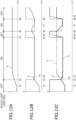
- FIG. 12A illustrates a change of a throttle opening S.
- FIG. 12B illustrates changes of the limit vehicle speed Vs and the vehicle speed (actual vehicle speed) V of the motorcycle 1.
- FIG. 12C illustrates changes of the rider request torque Tr, the limit torque Tm before adjustment, the adjusted limit torque Tf, and the target torque Tt.
- the target torque Tt gradually increases, so that the vehicle speed V increases.
- speed limit control is started at a time t2
- the target torque reduces due to a restriction of the limit torque even while the rider keeps opening the accelerator grip 11.
- the change amount of the limit torque is limited, and therefore, a rapid change of the target torque is reduced (the time t2 to a time t3).
- the vehicle speed V becomes the set vehicle speed Vs at the time t3
- the change amount of the limit torque stays at the limit value or less, and the limit torque Tm becomes the target torque Tt.
- the motorcycle 1 travels at the set vehicle speed Vs.
- the target torque Tt increases to match the rider request torque Tr. However, the rapid increase of the target torque Tt is reduced (the time t4 to a time t5). As the target torque Tt increases, the vehicle speed V increases (the time t4 to a time t6).
- the target torque reduces due to the restriction of the limit torque again.
- the rapid change of the target torque is reduced (the time t6 to a time t7).
- the limit torque Tm becomes a target.
- the motorcycle 1 travels at the set vehicle speed Vs again.
- the target torque Tt increases to match the rider request torque Tr. However, the rapid increase of the target torque Tt is reduced (the time t8 to a time t9). As the target torque Tt increases, the vehicle speed V increases (from the time t9).
- the limit value is set in accordance with the vehicle state and the limit torque is adjusted such that the change amount of the limit torque does not exceed the limit value.
- a change of the output torque of the engine 5 is reduced. Therefore, the riding feeling can be improved better than a conventional motorcycle.
- the limit value setter 331 sets the limit value in accordance with the vehicle state, but the vehicle state is not limited to the deceleration rate or the lean parameter related to the lean state of the vehicle body.
- the number of parameters indicating the vehicle state is not limited to one and may be two or more.
- the driving source of the motorcycle 1 is not limited to an internal combustion engine and may be an electric motor.
- Changing of on and off of speed limit control or the set vehicle speed may not be based on operations of the switches 41 to 44 of the switch box 13.
- the speed limit control may be switchable from on to off by an operation of the accelerator grip 11.
- the vehicle speed controller 32 is configured to calculate the limit torque Tm such that the vehicle speed V is equal to or less than the set vehicle speed Vs.
- the vehicle speed control performed by the motorcycle is not limited to speed limit control.
- the vehicle speed control performed by the motorcycle 1 may be cruise control in which the motorcycle 1 travels at constant set vehicle speed Vs.
- the vehicle speed controller 32 may be configured to calculate the limit torque Tm such that the vehicle speed V matches the set vehicle speed Vs.
- the vehicle speed control that at least prevents the vehicle speed from exceeding the set vehicle speed includes not only speed limit control but also cruise control.
Landscapes
- Engineering & Computer Science (AREA)
- Automation & Control Theory (AREA)
- Transportation (AREA)
- Mechanical Engineering (AREA)
- Human Computer Interaction (AREA)
- Control Of Vehicle Engines Or Engines For Specific Uses (AREA)
Description
- The present invention relates to a motorcycle capable of executing vehicle speed control that at least prevents vehicle speed from exceeding set vehicle speed.
- Conventionally, vehicles that perform vehicle speed control that at least prevents vehicle speed from exceeding set vehicle speed have been known. For example, as disclosed in
Japanese Patent Application Publication No. 2007-100639 - Incidentally, as illustrated in
FIG. 13 , the above-described vehicle speed control is started during traveling in some cases. In such a case, when set vehicle speed Vs is lower than vehicle speed V1 at a control start time t1, a controller suddenly limits an engine torque. As a result, the vehicle speed V sharply drops. As illustrated inFIG. 14 , there are also cases where the above-described vehicle speed control is released during traveling. In such a case, the engine torque is no longer limited, and the engine torque is suddenly increased in some cases. As a result, the vehicle speed V abruptly rises. - A motorcycle has a lighter vehicle weight than that of an automobile. In a motorcycle, when an engine torque is suddenly limited at a start of vehicle speed control, there is a tendency that a degree of deceleration that a rider feels is higher than that in an automobile. Therefore, there is a probability that the riding feeling is deteriorated. When the engine torque is suddenly increased at a release of vehicle speed control, there is a tendency that a degree of acceleration that the rider feels is higher than that in the automobile. In this case, there is also a probability that the riding feeling is deteriorated.
- Moreover, unlike an automobile, in a motor cycle, when turning left or right, a vehicle body of a motorcycle is leaned. When vehicle speed control is started in middle of turning left or right or when vehicle speed control is released in middle of turning left or right, there is a probability that a riding feeling is deteriorated.
US-A-2020/207205 shows a motorcycle speed limiter and gradually releases torque limits when the speed limiter is deactivated.
DE-A-102015220658 discloses, in order to prevent a vehicle from rolling over, the detection of a speed of the vehicle is detected and the limitation of an acceleration of the vehicle as a function of the detected speed.
EP-A-2857301 discloses a vehicle, wherein a rotation speed of an engine detected by a rotation speed sensor, a change gear ratio detected by a change gear ratio sensor, a roll angle of a body detected by a roll angle sensor and a content of operation of a setting switch by a driver are supplied to a CPU of an ECU. Further, an accelerator opening detected by an accelerator opening sensor of an accelerator grip device is supplied to the CPU of the ECU. The CPU adjusts reaction force applied from the accelerator grip device to the driver by controlling a motor of the accelerator grip device.
US-A-2012/067122 discloses a bank angle detecting device for a vehicle. The detecting device includes an angular velocity sensor for detecting a roll rate and a yaw rate of the vehicle, a roll rate estimating circuit for calculating an estimated roll rate, which is an angular velocity about a forward and rearward axis, on the basis of the roll rate, the yaw rate and a travelling speed, a bank angle estimator for calculating an estimated bank angle from the estimated roll rate, a straightforward travel determiner for determining a straightforward travelling condition on the basis of the estimated roll rate and an estimated yaw rate, a time-of-straight-forward-travel drift amount estimator for estimating a time-of-straight-forward drift amount from an output of the angular sensor in the event that the straightforward travel determiner determines a straightforward travel, and an angular velocity corrector for correcting the output of the angular velocity sensor with the time-of-straight-forward drift amount. - It is therefore an object of the present invention to improve, in a motorcycle in which vehicle speed control for at least preventing vehicle speed from exceeding set vehicle speed is performed, a riding feeling when the vehicle speed control is turned on or off or the set vehicle speed is changed during traveling better than in a conventional motorcycle.
- A motorcycle disclosed herein includes a front wheel, a rear wheel, a vehicle body supported by the front wheel and the rear wheel, a driving source supported by the vehicle body and configured to output a torque that drives the rear wheel, an accelerator operator that is operated by a rider, an accelerator detector configured to detect an operation amount of the accelerator operator, a vehicle speed detector configured to detect vehicle speed, a driving source controller configured to control the driving source such that an output torque of the driving source is a target torque, a vehicle speed controller configured to perform vehicle speed control that at least prevents the vehicle speed from exceeding set vehicle speed, and a torque change reducer configured to reduce a change of the output torque of the driving source when the vehicle speed control is turned on or off or the set vehicle speed is changed during travelling. The vehicle speed controller includes a memory that stores the set vehicle speed, a deviation calculator configured to calculate a deviation from the set vehicle speed of the vehicle speed detected by the vehicle speed detector, and a limit torque calculator configured to calculate a limit torque, based on the deviation. The torque change reducer includes a limit value setter configured to set a limit value of a change amount of the limit torque in accordance with a vehicle state and a limit torque adjuster configured to receive the limit torque from the limit torque calculator and adjust the limit torque such that the change amount of the limit torque does not exceed the limit value. The driving source controller includes a rider request torque calculator configured to calculate a rider request torque, based on the operation amount of the accelerator operator and a target torque calculator configured to receive an adjusted limit torque from the limit torque adjuster and calculate the target torque, based on the adjusted limit torque and the rider request torque.
- According to the motorcycle, the limit torque is calculated during execution of the vehicle control and, when the limit torque is equal to or less than the rider request torque, the limit torque is set to the target torque. Thus, the driving source is controlled such that the vehicle speed does not exceed the set vehicle speed. Moreover, according to the above-described motorcycle, when the vehicle speed control is turned on or off or the set vehicle value is changed during traveling, the change amount of the limit torque is limited in accordance with the vehicle state. Thus, a rapid change of the target torque is reduced, and accordingly, a change of the output torque of the driving source is reduced. Therefore, a riding feeling can be improved.
- According to the invention, the target torque calculator is configured to, if the vehicle speed control is turned on or if the set vehicle speed is changed to be lower during traveling, set the rider request torque to the target torque when the adjusted limit torque is larger than the rider request torque and set the adjusted limit torque to the target torque when the adjusted limit torque is equal to or less than the rider request torque.
- Therefore, a rapid reduction of the output torque of the driving source is reduced during deceleration. Therefore, the riding feeling during deceleration can be improved.
- According to one preferred aspect, the target torque calculator is configured to, if the vehicle speed control is turned off or if the set vehicle speed is changed to be higher during traveling, set the adjusted limit torque to the target torque when the adjusted limit torque is smaller than the rider request torque and set the rider request torque to the target torque when the adjusted limit torque is equal to or more than the rider request torque.
- According to the aspect, an excessive increase of the output torque of the driving source is reduced during acceleration. Therefore, the riding feeling during acceleration can be improved.
- According to the invention, the motorcycle includes a transmission including a driving member connected to the driving source and a driven member connected to the rear wheel and configured to change a deceleration rate between the driving member and the driven member, and a deceleration rate detector configured to detect a deceleration rate of the transmission. The limit value setter is configured to set the limit value in accordance with the deceleration rate of the transmission.
- Therefore, the riding feeling can be improved in accordance with a deceleration rate.
- The limit value setter is configured to set a first limit value as the limit value if the deceleration rate of the transmission is a first deceleration rate, and set a second limit value that is smaller than the first limit value as the limit value if the deceleration rate of the transmission is a second deceleration rate that is higher than the first deceleration rate.
- According to one preferred aspect, the motorcycle further includes a lean state detector configured to detect a lean parameter related to a lean state of the vehicle body. The limit value setter is configured to set the limit value in accordance with a value of the lean parameter.
- According to the aspect, the riding feeling in turning left or right can be improved.
- The lean parameter is a bank angle of the vehicle body or an angular velocity of the bank angle, and the limit value setter may be configured to set a third limit value as the limit value if the value of the lean parameter is a first value, and set a fourth limit value that is smaller than the third limit value as the limit value if the value of the lean parameter is a second value that is larger than the first value.
- The vehicle speed controller may be configured to calculate the limit torque such that the vehicle speed is equal to or less than the set vehicle speed.
- The vehicle speed controller may be configured to calculate the limit torque such that the vehicle speed matches the set vehicle speed.
- According to the present invention, in a motorcycle in which vehicle speed control for at least preventing vehicle speed from exceeding set vehicle speed is performed, a riding feeling when the vehicle speed control is turned on or off or the set vehicle speed is changed during traveling can be improved better than in a conventional motorcycle.
-
-
FIG. 1 is a side view of a motorcycle according to an embodiment. -
FIG. 2 is a cross-sectional view of an internal combustion engine. -
FIG. 3 is a plan view of a handle. -
FIG. 4 is a block diagram illustrating sensors, switches, an ECU, and target devices to be controlled. -
FIG. 5 is a functional block diagram of a control system. -
FIG. 6 is a graph illustrating an example of a change of vehicle speed. -
FIG. 7 is a graph illustrating an example of a change of an output torque. -
FIG. 8 is a graph illustrating an example of a change of the output torque for each deceleration rate. -
FIG. 9 is a graph illustrating another example of a change of the output torque. -
FIG. 10 is a graph illustrating an example of a change of the output torque for each bank angle. -
FIG. 11 is a graph illustrating another example of a change of the output torque for each bank angle. -
FIGS. 12A to 12C are graphs illustrating operation examples,FIG. 12A illustrates a change of a throttle opening,FIG. 12B illustrates changes of vehicle speed and limit vehicle speed, andFIG. 12C illustrates changes of a rider request torque, a limit torque before adjustment, an adjusted limit torque, and a target torque. -
FIG. 13 is a graph illustrating a change of vehicle speed in a case where vehicle speed control is started during traveling in a conventional motorcycle. -
FIG. 14 is a graph illustrating a change of vehicle speed in a case where vehicle speed control is released during traveling in a conventional motorcycle. - With reference to the attached drawings, embodiments will be described below.
FIG. 1 is a side view of a motorcycle 1 according to an embodiment. The motorcycle 1 includes a front wheel 2, a rear wheel 3, a vehicle body 4 supported by the front wheel 2 and the rear wheel 3, and an internal combustion engine (which will be hereinafter referred to as an engine) 5 supported by the vehicle body 4. Theengine 5 is an example of a "driving source" that outputs a torque that drives the rear wheel 3. The vehicle body 4 includes a steering shaft 8 with ahandle 7 attached thereto and a seat 9 on which a rider sits. - As illustrated in
FIG. 2 , theengine 5 includes apiston 19 and acrank shaft 10 connected to thepiston 19. A clutch 40 is coupled to thecrank shaft 10. Atransmission 18 is coupled to the clutch 40. - The
transmission 18 includes a drivingmember 18A coupled to theengine 5 and a drivenmember 18B connected to the rear wheel 3. In this embodiment, thetransmission 18 is a multistep transmission. The drivingmember 18A includes a drivingshaft 18a and a plurality of drivinggears 18b. The drivenmember 18B includes a drivenshaft 18c and a plurality of drivengears 18d. In thetransmission 18, a torque is transmitted from the drivingmember 18A to the drivenmember 18B. Thetransmission 18 is configured to change a deceleration rate. The deceleration rate herein is a ratio of rotation speed of the drivingmember 18A to rotation speed of the drivenmember 18B. That is, the deceleration rate = (the rotation speed of the drivingmember 18A)/(the rotation speed of the drivenmember 18B). The drivenmember 18B of thetransmission 18 and the rear wheel 3 are connected to each other via a power transmission member, such as a chain or the like. Note that there is no particular limitation on the number of shift steps of thetransmission 18 but the number of shift steps is, for example, six. Thetransmission 18 is not limited to a multistep transmission and may be a continuously variable transmission, such as a CVT or the like. - As illustrated in
FIG. 3 , arotatable accelerator grip 11 is provided in a right end portion of thehandle 7. Theaccelerator grip 11 is an example of an "accelerator operator" operated by a rider. Theaccelerator grip 11 is rotatable in an opening direction A1 and a closing direction A2. Herein, the opening direction A1 is a counterclockwise direction when viewed from a right side. The closing direction A2 is a direction opposite to the opening direction A1, that is, a clockwise direction when viewed from a right side. Areturn spring 14 that energizes theaccelerator grip 11 to a full close position is provided in theaccelerator grip 11. When the rider releases his or her hand from theaccelerator grip 11, theaccelerator grip 11 automatically returns to the full close position. - A nonrotatable
fixed grip 12 and aswitch box 13 are provided in a left end portion of thehandle 7. Theswitch box 13 is arranged rightward of the fixedgrip 12 and leftward of a vehicle center line CL. In theswitch box 13, aselection switch 41, aset switch 42, an upswitch 43, and adown switch 44 are provided. There is no particular limitation on forms of theswitches 41 to 44, but theswitches 41 to 44 are constituted by button type switches herein. - In the motorcycle 1 according to this embodiment, at least a normal operation in which vehicle speed is not limited and an operation (a speed limit operation) in which speed limit control that limits vehicle speed are possible. The
selection switch 41 is a switch used for selecting a type of operation. Herein, each time theselection switch 41 is pressed, the normal operation and the speed limit operation are selected in order. Theset switch 42 is a switch used for switching on and off of a selected operation. For example, when theset switch 42 is pressed in a state where the speed limit operation is selected, the speed limit operation is executed. When theset switch 42 is pressed during the speed limit operation, the speed limit operation is released. The upswitch 43 and thedown switch 44 are used to set or change set vehicle speed. When the rider operates theup switch 43, the set vehicle speed is increased and, when the rider operates thedown switch 44, the set vehicle speed is reduced. - As illustrated in
FIG. 4 , theengine 5 includes anignition device 15, afuel injector 16, and anelectric throttle valve 17. Theignition device 15, thefuel injector 16, and theelectric throttle valve 17 are operated, so that a torque output by the engine 5 (which will be hereinafter referred to as an output torque) is controlled. - The motorcycle 1 includes an
accelerator sensor 21 that detects an operation amount of theaccelerator grip 11, avehicle speed sensor 22 that detects vehicle speed, arotation speed sensor 23 that detects rotation speed of theengine 5, athrottle sensor 24 that detects an opening of the electric throttle valve 17 (which will be hereinafter referred to as a throttle opening), agear position sensor 25 that detects a gear position of thetransmission 18, and abank angle sensor 26 that detects a bank angle. In this embodiment, the operation amount of theaccelerator grip 11 means a rotation angle of theaccelerator grip 11 from the full close position in the opening direction A1. As the rotation angle of theaccelerator grip 11 increases, the operation amount of theaccelerator grip 11 increases. The rotation speed of theengine 5 is rotation speed of thecrank shaft 10. Theaccelerator sensor 21, thevehicle speed sensor 22, thegear position sensor 25, and thebank angle sensor 26 are examples of "an accelerator detector," "a vehicle speed detector," "a deceleration rate detector," and "a lean state detector," respectively. - The motorcycle 1 includes an electronic control unit (ECU) 30 as a control unit that performs various controls. Although not illustrated in the drawings, the
ECU 30 includes a CPU, a ROM, a RAM, or the like. TheECU 30 is communicably coupled to theaccelerator sensor 21, thevehicle speed sensor 22, therotation speed sensor 23, thethrottle sensor 24, thegear position sensor 25, and thebank angle sensor 26 and is configured to receive signals from the sensors. TheECU 30 is also communicably coupled to theselection switch 41, theset switch 42 theup switch 43, and thedown switch 44 and is configured to receive signals from the switches. TheECU 30 is communicably coupled to theignition device 15, thefuel injector 16, and theelectric throttle valve 17 and is configured to transmit signals to these components. By controlling theignition device 15, thefuel injector 16, and theelectric throttle valve 17, theECU 30 controls the output torque of theengine 5. -
FIG. 5 is a functional block diagram of theECU 30. TheECU 30 executes a computer program stored in the ROM or the like to function as a drivingsource controller 31, avehicle speed controller 32, and atorque change reducer 33. The drivingsource controller 31 controls theengine 5 such that the output torque of theengine 5 becomes a target torque Tt described later. Thevehicle speed controller 32 performs speed limit control that prevents vehicle speed V from exceeding set vehicle speed Vs described later. Thetorque change reducer 33 reduces a change of the output torque of theengine 5 when the speed limit control is turned on or off or the set vehicle speed Vs is changed during traveling. - The
vehicle speed controller 32 includes amemory 321 that stores the set vehicle speed Vs, adeviation calculator 323 that calculates a deviation ΔV = Vs - V from the set vehicle speed Vs of the vehicle speed V, and alimit torque calculator 322 that calculates a limit torque Tm, at least based on the deviation ΔV. Thememory 321 is configured such that the set vehicle speed Vs is rewritable therein. When the rider operates theup switch 43 or thedown switch 44 to change the set vehicle speed Vs, thememory 321 stores the changed set vehicle speed Vs. There is no particular limitation on a method for calculating the limit torque Tm in thelimit torque calculator 322. Herein, the limit torque Tm is calculated as the limit torque Tm = a predetermined feedback gain × the deviation ΔV + a predetermined travel resistance feedforward torque. Note that the limit torque Tm is a parameter that changes with a lapse of time. - The
torque change reducer 33 reduces a degree of acceleration or deceleration when the speed limit control is turned on or off or the set vehicle speed Vs is changed during traveling. As described above, the limit torque Tm changes with a lapse of time. Thetorque change reducer 33 limits a change amount of the limit torque Tm. Thetorque change reducer 33 includes alimit value setter 331 and alimit torque adjuster 332. When a condition of the speed limit control is changed during traveling of the motorcycle 1, thelimit value setter 331 sets a limit value Ta of the change amount of the limit torque Tm in accordance with a vehicle state. The limit value Ta is set for the change amount of the limit torque Tm such that the limit torque Tm is not excessively increased or reduced in a short time. - The limit torque Tm is input to the
limit torque adjuster 332 from thelimit torque calculator 322, and the limit value Ta is input to thelimit torque adjuster 332 from thelimit value setter 331. Thelimit torque adjuster 332 calculates an adjusted limit torque Tf in accordance with procedures described below in every predetermined cycle. - First, the
limit torque adjuster 332 calculates a limit torque change amount in accordance with Expression 1 below.
- Note that there is no previous calculation value of the adjusted limit torque Tf at a start of control. Therefore, a rider request torque Tr is regarded as the previous calculation value of the adjusted limit torque Tf.
- Next, the
limit torque adjuster 332 determines whether an absolute value of the change amount of the limit torque is larger than the limit value Ta. If the absolute value of the change amount of the limit torque is larger than the limit value Ta, thelimit torque adjuster 332 adjusts the limit torque such that the absolute value of the change amount of the limit torque does not exceed the limit value Ta. That is, thelimit torque adjuster 332 adjusts the limit torque such that |the change amount of the limit torque| ≤ the limit value Ta. - Lastly, the
limit torque adjuster 332 calculates the adjusted limit torque Tf in accordance with Expression 2 described below.
- The driving
source controller 31 includes a riderrequest torque calculator 311 that calculates the rider request torque Tr, based on the operation amount of the accelerator grip 11 (which will be hereinafter referred to as an accelerator operation amount), atarget torque calculator 312 that calculates the target torque Tt, and a drivingcontroller 313 that controls theengine 5 such that the output torque of theengine 5 becomes the target torque Tt. The rider request torque Tr is input to thetarget torque calculator 312 from the riderrequest torque calculator 311 and the adjusted limit torque Tf is input to thetarget torque calculator 312 from thelimit torque adjuster 332. Thetarget torque calculator 312 sets the adjusted limit torque Tf to the target torque Tt if it is needed to impose a limit on the rider request torque Tr and sets the rider request torque Tr to the target torque Tt if it is not needed to impose a limit on the rider request torque Tr. - That is, if the speed limit control is turned on or if the set vehicle speed is changed to be lower (for example, if the vehicle speed is reduced in accordance with a vehicle speed limit imposed thereon) during traveling, the
target torque calculator 312 sets the rider request torque Tr to the target torque Tt when the adjusted limit torque Tf is larger than the rider request torque Tr and sets the adjusted limit torque Tf to the target torque Tt when the adjusted limit torque Tf is equal to or less than the rider request torque Tr. If the speed limit control is turned off or if the set vehicle speed is changed to be higher (for example, if the vehicle speed limit is released and thus the vehicle speed is increased) during traveling, thetarget torque calculator 312 sets the adjusted limit torque Tf to the target torque Tt if the adjusted limit torque Tf is smaller than the rider request torque Tr and sets the rider request torque Tr to the target torque Tt if the adjusted limit torque Tf is equal to or more than the rider request torque Tr. - The target torque Tt calculated in the above-described manner is input to the driving
controller 313. The drivingcontroller 313 controls theengine 5 such that the engine output torque becomes the target torque Tt. - Note that the phrase "a condition of the speed limit control is changed" above encompasses a case where the speed limit control is switched from off to on, a case where the speed limit control is switched from on to off, and a case where the set vehicle speed Vs is changed while the speed limit control is on.
- The "vehicle state" can be specified by values of various parameters detected by the various sensors (see the
sensors 21 to 26 inFIG. 4 ) of the motorcycle 1. For example, when a gear position is detected by thegear position sensor 25, a deceleration rate of thetransmission 18 is specified. For example, the vehicle state is specified by the deceleration rate of thetransmission 18. The vehicle state is specified by the bank angle detected by thebank angle sensor 26. Alternatively, the vehicle state is specified by an angular velocity of the bank angle. Note that the vehicle state may be specified based on a value of a single parameter and may be specified based on values of a plurality of parameters. - A configuration of the motorcycle 1 has been described above. Next, an example of torque change reducing control executed by the motorcycle 1 will be described. The torque change reducing control is executed to suppress reduction of the riding feeling when a condition of the speed limit control is changed during traveling of the motorcycle 1. That is, the torque change reducing control is executed to improve the riding feeling better than in a conventional motorcycle.
- As illustrated in
FIG. 6 , when the motorcycle 1 travels at the vehicle speed V1, the rider starts speed limit operation at a time t1 in some cases. That is, while the motorcycle 1 travels at the vehicle speed V1, speed limit control is switched from off to on in some cases. In this case, if the vehicle speed V1 is higher than the set vehicle speed Vs, the output torque of theengine 5 is limited by thevehicle speed controller 32 such that the vehicle speed V becomes the set vehicle speed Vs. Note that, inFIG. 6 , "t" denotes a time and "V" denotes vehicle speed. - Specifically, when the set vehicle speed Vs is lower than the current vehicle speed V1, the
limit torque calculator 322 of thevehicle speed controller 32 calculates the limit torque Tm in order to cause the vehicle speed V to be the set vehicle speed Vs. If thetorque change reducer 33 is not provided, the limit torque Tm (seeFIG. 5 ) is input to thetarget torque calculator 312 from thelimit torque calculator 322. Since the vehicle speed V1 at the time t1 is larger than the set vehicle speed Vs, the limit torque Tm is equal to or less than the rider request torque Tr. Therefore, thetarget torque calculator 312 sets the limit torque Tm to the target torque Tt. As a result, the target torque Tt is reduced from Tr to Tm. Herein, if a difference between V1 and Vs is large, a difference between Tr and Tm is large. Therefore, for example as indicated by a broken line inFIG. 7 , the output torque T of theengine 5 rapidly reduces. Thus, the riding feeling is deteriorated. - However, the motorcycle 1 according to this embodiment includes the
torque change reducer 33. If the speed limit control is switched from off to on during traveling and the vehicle speed V1 at that time is larger than the set vehicle speed Vs, the limit torque is adjusted such that an absolute value of a change amount of the limit torque (unless specifically stated otherwise, the absolute value of the change amount of the limit torque will be simply referred to as a change amount of the limit torque) does not exceed the limit value Ta. The adjusted limit torque Tf is input to thetarget torque calculator 312 and the target torque Tt is changed to the adjusted limit torque Tf. Herein, the adjusted limit torque Tf is larger than the limit torque Tm before adjustment. Therefore, as indicated by a solid line inFIG. 7 , rapid reduction of the output torque T of theengine 5 can be avoided. Thus, the degree of deceleration of the vehicle body is reduced and the riding feeling is improved. Note that an aspect of change of the output torque indicated by the solid line inFIG. 7 is merely an example. The change amount of the output torque per unit time may be constant and may not be constant. InFIG. 7 , the line indicating the change of the output torque may be a straight line and may be a curved line. - Incidentally, there is a tendency that, as the deceleration rate increases, an influence of change of the condition of the speed limit control on the riding feeling increases. Therefore, herein, a degree of reduction is caused to increase as the deceleration rate increases. In this control example, the limit value Ta of the change amount of the limit torque is set such that, as the deceleration rate increases, the limit value Ta reduces. The deceleration rate reduces in an order of first speed, second speed, third speed, fourth speed, fifth speed, and sixth speed, and therefore, when respective limit values at the first speed to the sixth speed are Ta1 to Ta6, Ta1 < Ta2 < Ta3 < Ta4 < Ta5 < Ta6. When respective target torques Tt' after reduction at the first speed to the sixth speed are Tt1' to Tt6', Tt1' > Tt2' > Tt3' > Tt4' > Tt5' > Tt6'. Thus, as illustrated in
FIG. 8 , as the deceleration rate increases (in other words, as the gear position reduces), a reduction rate of the output torque T reduces. Accordingly, a behavior of the vehicle body is optimized and the riding feeling is improved. - There is no particular limitation on a specific method for setting the limit value Ta and a specific value of the limit value Ta. For example, the limit values Ta2 to Ta6 at the second speed to the sixth speed may be set using the limit value Ta1 at the first speed. For example, using coefficients K2 to K6 each of which is larger than 1 satisfying a relationship of K2 < K3 < K4 < K5 < K6, Ta2 = K2·Ta1, Ta3 = K3·Ta1, Ta4 = K4·Ta1, Ta5 = K5·Ta1, Ta6 = K6·Ta1 may be set to the limit values Ta2 to Ta6 at the second speed to the sixth speed. Alternatively, a map that defines a relationship between the deceleration rate and the limit value Ta may be stored in the
ECU 30 in advance and thelimit value setter 331 may be configured to read the limit values Ta 1 to Ta6 at the first speed to the sixth speed from the map. - There are cases where the rider operates the
down switch 44 or the like to reduce the set vehicle speed while speed limit control is executed. For example, the set vehicle speed is changed to a smaller value than V1 at the time t1 while the motorcycle 1 travels at the set vehicle speed V1 in some cases. In this case, similar to the first control example (seeFIG. 6 ), without any action taken, the output torque T of theengine 5 is rapidly reduced (seeFIG. 7 ), and therefore, there is a probability that the riding feeling is deteriorated. - However, the motorcycle 1 includes the
torque change reducer 33, and therefore, similar to the first control example, a rapid change of the target torque is reduced. Accordingly, a rapid change of the output torque T of theengine 5 is reduced and the riding feeling is improved. - Note that, in the second control example and third and fourth control examples described later, similar to the first control example, the degree of reduction is caused to increase as the deceleration rate increases. The limit value Ta is set such that, as the deceleration rate increases, the limit value Ta reduces. Similar to the first control example, the limit values Ta1 to Ta6 at the first speed to the sixth speed can be set using an operational expression, a map, or the like.
- There are cases where speed limit control is switched from on to off while the motorcycle 1 travels at the set vehicle speed Vs with a vehicle speed limit imposed on the motorcycle 1 by speed limit control. When the speed limit control is turned off, without any action taken, the target torque is rapidly increased in some cases and, for example, as indicated by a broken line in
FIG. 9 , the output torque T of theengine 5 is rapidly increased. Thus, a degree of acceleration of the vehicle body is increased, and there is a probability that the riding feeling is deteriorated. - However, the motorcycle 1 includes the
torque change reducer 33, and therefore, a rapid increase of the target torque can be avoided. Accordingly, for example, as indicated by a solid line inFIG. 9 , a rapid change of the output torque T of theengine 5 is reduced. Thus, the riding feeling is improved. - There are cases where the rider operates the
up switch 43 or the like to increase the set vehicle speed while the motorcycle 1 travels at the set vehicle speed Vs with a vehicle speed limit imposed on the motorcycle 1 by speed limit control. In this case, similar to the third control example, without any action taken, the output torque of theengine 5 is rapidly increased (see the broken line inFIG. 9 ) and there is a probability that the riding feeling is deteriorated. - However, the motorcycle 1 includes the
torque change reducer 33, and therefore, similar to the third control example, a rapid change of the output torque T of theengine 5 is reduced. Accordingly, the riding feeling is improved. - In the motorcycle 1, when turning left or right, the rider leans the vehicle body. There are cases where the rider starts speed limit control in middle of turning left or right. For example, the rider starts speed limit control at the time t1 (see
FIG. 6 ) during turning left or right in some cases. If the vehicle speed V1 at a start of the speed limit control is higher than the set vehicle speed Vs, the target torque is rapidly reduced in some cases. If thetorque change reducer 33 is not provided, the output torque T of theengine 5 is rapidly reduced. Thus, the riding feeling is deteriorated. Moreover, oversteering tends to occur. - However, in the motorcycle 1, because the change amount of the limit toque is limited, the speed limit control is started in turning left or right and, if the vehicle speed V1 at that time is higher than set vehicle speed Vs, a rapid change of the target torque is reduced. Accordingly, a rapid change of the output torque T of the
engine 5 can be avoided, and therefore, the riding feeling is improved. Moreover, oversteering is suppressed. - The bank angle is an example of a lean parameter indicating a lean state of the vehicle body. The
limit value setter 331 sets the limit value Ta such that, as the bank angle increases, the limit value Ta reduces. For example, thelimit value setter 331 sets the limit value to Ta11 if the bank angle is a first value, and sets the limit value to Ta12 that is smaller than Ta11 if the bank angle is a second value that is larger than the first value. Note that Ta11 and Ta12 are an example of "a third limit value" and an example of "a fourth limit value," respectively. Thus, a change of the output torque T of theengine 5 is more largely reduced as the bank angle increases. When the output torques when the bank angle is the first value and the second value are Tt11' and Tt12', for example, as illustrated inFIG. 10 , a reduction rate of Tt12' is lower than a reduction rate of Tt11'. Note that, similar to the first control example, the limit value Ta can be set using an operational expression, a map, or the like. - The
limit value setter 331 may be configured to set the limit value Ta in accordance with the angular velocity of the bank angle, instead of the bank angle. The angular velocity of the bank angle is another example of the lean parameter. In this case, a rapid change of the output torque T of theengine 5 is reduced, and the riding feeling is improved. Moreover, oversteering is suppressed. Thelimit value setter 331 may be configured to set the limit value Ta such that, as the angular velocity of the bank angle increases, the limit value Ta reduces. For example, thelimit value setter 331 may be configured to set the limit value to Ta21 if the angular velocity of the bank angle is a first value, and set the limit value to Ta22 if the angular velocity of the bank angle is a second value that is larger than the first value. Note that Ta21 > Ta22. The limit value Ta can be set using an operational expression, a map, or the like. - In the fifth control example and sixth and seventh control examples described later, the degree of reduction may be caused to increase as the deceleration rate increases. The
limit value setter 331 may be configured to set the limit value Ta, based on only the bank angle or only the angular velocity of the bank angle, and may be configured to set the limit value Ta, based on the bank angle or the angular velocity of the bank angle and the deceleration rate. - There are cases where the set vehicle speed is changed to a smaller value than V1 while the motorcycle 1 turns left or right at the vehicle speed V1 with a vehicle speed limit imposed on the motorcycle 1 by speed limit control. In this case, similar to the fifth control example, without any action taken, the output torque of the
engine 5 is rapidly reduced, and there is a probability that the riding feeling is deteriorated. Moreover, oversteering tends to occur. - However, the motorcycle 1 includes the
torque change reducer 33, and therefore, similar to the fifth control example, a rapid change of the output torque T of theengine 5 is reduced. Accordingly, the riding feeling is improved. Moreover, oversteering is suppressed. - Also, in the sixth control example, the degree of reduction is caused to increase as the bank angle or the angular velocity of the bank angle increases. Similar to the fifth control example, the limit value Ta is set such that, as the bank angle or the angular velocity of the bank angle increases, the limit value Ta reduces. The limit value Ta can be set using an operational expression, a map, or the like.
- There are cases where speed limit control is switched from on to off while the motorcycle 1 turns left or right at the set vehicle speed Vs with a vehicle speed limit imposed on the motorcycle 1 by speed limit control. In this case, without any action taken, the output torque T of the
engine 5 is rapidly increased in some cases (see the broken line inFIG. 9 ). In that case, the degree of acceleration of the vehicle body is increased, and there is a probability that the riding feeling is deteriorated. - However, the motorcycle 1 includes the
torque change reducer 33, and therefore, a rapid change of the output torque T of theengine 5 is reduced. Accordingly, the riding feeling is improved. - Also, in the seventh control example, similar to the fifth control example, the
limit value setter 331 causes the degree of reduction to increase as the bank angle or the angular velocity of the bank angle increases. The limit value Ta is set such that, as the bank angle or the angular velocity of the bank angle increases, the limit value Ta reduces. For example, thelimit value setter 331 sets the limit value to Ta21 if the bank angle or the angular velocity of the bank angle is a first value and sets limit value to Ta22 that is a smaller value than Ta21 if the bank angle is a second value that is larger than the first value. When the output torques when the bank angle or the angular velocity of the bank angle is the first value and the second value are Tt21' and Tt22', for example, as illustrated inFIG. 11 , an increase rate of Tt22' is lower than an increase rate of Tt21'. A change of the output torque T of theengine 5 is more largely reduced as the bank angle or the angular velocity of the bank angle increases. Note that, also in this control example, the limit value Ta can be set using an operational expression, a map, or the like. - There are cases where the rider operates the
up switch 43 or the like to increase the set vehicle speed while the motorcycle 1 turns left or right at the set vehicle speed with a vehicle speed limit imposed on the motorcycle 1 by speed limit control. For example, the set vehicle speed is changed to a larger value than V1 while the motorcycle 1 turns left or right at the vehicle speed V1 in some cases. In this case, without any action taken, the output torque T of theengine 5 is rapidly increased, and there is a probability that the riding feeling is deteriorated. - However, the motorcycle 1 includes the
torque change reducer 33, and therefore, a rapid change of the output torque T of theengine 5 is reduced. Accordingly, the riding feeling is improved. - Similar to the seventh control example, the limit value Ta is set such that, as the bank angle or the angular velocity of the bank angle increases, the limit value Ta reduces. Also, in the eighth control example, the degree of reduction may be caused to increase as the deceleration rate increases. The
limit value setter 331 may be configured to set the limit value Ta, based on only the bank angle or only the angular velocity of the bank angle, and may be configured to set the limit value Ta, based on the bank angle or the angular velocity of the bank angle and the deceleration rate. The limit value Ta can be set using an operational expression, a map, or the like. - Next, with reference to
FIGS. 12A to 12C , one operation example of the motorcycle 1 will be described.FIG. 12A illustrates a change of a throttle opening S.FIG. 12B illustrates changes of the limit vehicle speed Vs and the vehicle speed (actual vehicle speed) V of the motorcycle 1.FIG. 12C illustrates changes of the rider request torque Tr, the limit torque Tm before adjustment, the adjusted limit torque Tf, and the target torque Tt. - When the rider opens the
accelerator grip 11 at the time t1, the target torque Tt gradually increases, so that the vehicle speed V increases. When speed limit control is started at a time t2, the target torque reduces due to a restriction of the limit torque even while the rider keeps opening theaccelerator grip 11. However, the change amount of the limit torque is limited, and therefore, a rapid change of the target torque is reduced (the time t2 to a time t3). When the vehicle speed V becomes the set vehicle speed Vs at the time t3, the change amount of the limit torque stays at the limit value or less, and the limit torque Tm becomes the target torque Tt. At or after the time t3, the motorcycle 1 travels at the set vehicle speed Vs. - When the speed limit control ends at a time t4, the target torque Tt increases to match the rider request torque Tr. However, the rapid increase of the target torque Tt is reduced (the time t4 to a time t5). As the target torque Tt increases, the vehicle speed V increases (the time t4 to a time t6).
- When the speed limit control is restarted at the time t6, the target torque reduces due to the restriction of the limit torque again. However, the rapid change of the target torque is reduced (the time t6 to a time t7). When the vehicle speed becomes the set vehicle speed Vs at the time t7, the limit torque Tm becomes a target. At and after the time t7, the motorcycle 1 travels at the set vehicle speed Vs again.
- When the speed limit control ends at a time t8, the target torque Tt increases to match the rider request torque Tr. However, the rapid increase of the target torque Tt is reduced (the time t8 to a time t9). As the target torque Tt increases, the vehicle speed V increases (from the time t9).
- As described above, according to the motorcycle 1 according to this embodiment, when limit speed control is turned on or off or the set vehicle speed is changed during traveling, the limit value is set in accordance with the vehicle state and the limit torque is adjusted such that the change amount of the limit torque does not exceed the limit value. Thus, a change of the output torque of the
engine 5 is reduced. Therefore, the riding feeling can be improved better than a conventional motorcycle. - Note that the above-described embodiment is merely an example and the present invention can be implemented in various other modes.
- The
limit value setter 331 sets the limit value in accordance with the vehicle state, but the vehicle state is not limited to the deceleration rate or the lean parameter related to the lean state of the vehicle body. The number of parameters indicating the vehicle state is not limited to one and may be two or more. - The driving source of the motorcycle 1 is not limited to an internal combustion engine and may be an electric motor.
- Changing of on and off of speed limit control or the set vehicle speed may not be based on operations of the
switches 41 to 44 of theswitch box 13. For example, the speed limit control may be switchable from on to off by an operation of theaccelerator grip 11. - In the above-described embodiment, the vehicle speed control performed by the motorcycle 1 is speed limit control for regulating the vehicle speed V such that the vehicle speed V does not exceed an upper limit (= the set vehicle speed Vs). The
vehicle speed controller 32 is configured to calculate the limit torque Tm such that the vehicle speed V is equal to or less than the set vehicle speed Vs. However, the vehicle speed control performed by the motorcycle is not limited to speed limit control. The vehicle speed control performed by the motorcycle 1 may be cruise control in which the motorcycle 1 travels at constant set vehicle speed Vs. Thevehicle speed controller 32 may be configured to calculate the limit torque Tm such that the vehicle speed V matches the set vehicle speed Vs. As for cruise control, if on and off or the set vehicle speed is changed during traveling, depending on the vehicle state, the output torque of theengine 5 is rapidly changed, and there is a probability that the riding feeling is deteriorated. Therefore, for cruise control, the above-described torque change reducing control may be performed. The vehicle speed control that at least prevents the vehicle speed from exceeding the set vehicle speed includes not only speed limit control but also cruise control. - 1 Motorcycle, 2 Front wheel, 3 Rear wheel, 4 Vehicle body, 5 Internal combustion engine (driving source), 11 Accelerator grip (accelerator operator), 18 Transmission, 18A Driving member, 18B Driven member, 21 Accelerator sensor (accelerator detector), 22 Vehicle speed sensor (vehicle speed detector), 25 Gear position sensor (deceleration rate detector), 26 Bank angle sensor (lean state detector), 31 Driving source controller, 32 Vehicle speed controller, 33 Torque change reducer, 311 Rider request torque calculator, 312 Target torque calculator, 313 Driving controller, 321 Memory, 322 Limit torque calculator, 323 Deviation calculator, 331 Limit value setter, 332 Limit torque adjuster
Claims (7)
- A motorcycle (1) comprising:a front wheel (2);a rear wheel (3);a vehicle body (4) supported by the front wheel (2) and the rear wheel (3);a driving source (5) supported by the vehicle body (4) and configured to output a torque that drives the rear wheel (3);an accelerator operator (11) that is operated by a rider;an accelerator detector (21) configured to detect an operation amount of the accelerator operator (11);a vehicle speed detector (22) configured to detect vehicle speed (V);a driving source controller (31) configured to control the driving source (5) such that an output torque of the driving source (5) becomes a target torque (Tt);a vehicle speed controller (32) configured to perform vehicle speed control that at least prevents the vehicle speed (V) from exceeding set vehicle speed (Vs); anda torque change reducer (33) configured to reduce a change of the output torque of the driving source (5),wherein the vehicle speed controller (32) includes a memory (321) that stores the set vehicle speed (Vs), a deviation calculator (323) configured to calculate a deviation (ΔV) from the set vehicle speed (Vs) of the vehicle speed (V) detected by the vehicle speed detector (22), and a limit torque calculator (322) configured to calculate a limit torque (Tm), based on the deviation (ΔV);
the driving source controller (31) includes a rider request torque calculator (311) configured to calculate a rider request torque (Tr), based on the operation amount of the accelerator operator (11) and a target torque calculator (312) configured to receive an adjusted limit torque (Tf) from a limit torque adjuster (332) and calculate the target torque (Tt), based on the adjusted limit torque (Tf) and the rider request torque (Tr);wherein said torque change reducer (33) is configured to reduce a change of the output torque of the driving source (5) when the vehicle speed control is turned on or off or the set vehicle speed (Vs) is changed during travelling;wherein the torque change reducer (33) includes a limit value setter (331) configured to set a limit value (Ta) of a change amount of the limit torque (Tm) in accordance with a vehicle state and wherein the limit torque adjuster (332) is configured to receive the limit torque (Tm) from the limit torque calculator (322) and adjust the limit torque (Tm) such that the change amount of the limit torque (Tm) does not exceed the limit value (Ta),the motorcycle (1) further comprising:a transmission (18) including a driving member (18A) connected to the driving source (5) and a driven member (18B) connected to the rear wheel (3) and configured to change a deceleration rate of the driving member (18A) and the driven member (18B); anda deceleration rate detector (25) configured to detect a deceleration rate of the transmission (18),wherein the limit value setter (331) is configured to set the limit value (Ta) in accordance with the deceleration rate of the transmission (18), andthe limit value setter (331) is configured toset a first limit value as the limit value if the deceleration rate of the transmission (18) is a first deceleration rate, andset a second limit value that is smaller than the first limit value as the limit value if the deceleration rate of the transmission (18) is a second deceleration rate that is higher than the first deceleration rate. - The motorcycle (1) according to claim 1,
wherein the target torque calculator (312) is configured to, if the vehicle speed control is turned on or if the set vehicle speed (Vs) is changed to be lower during traveling, set the rider request torque (Tr) to the target torque when the adjusted limit torque (Tf) is larger than the rider request torque (Tr) and set the adjusted limit torque (Tf) to the target torque when the adjusted limit torque (Tf) is equal to or less than the rider request torque (Tr). - The motorcycle (1) according to claim 1 or 2,
wherein the target torque calculator (312) is configured to, if the vehicle speed control is turned off or if the set vehicle speed (Vs) is changed to be higher during traveling, set the adjusted limit torque (Tf) to the target torque when the adjusted limit torque (Tf) is smaller than the rider request torque (Tr) and set the rider request torque (Tr) to the target torque when the adjusted limit torque (Tf) is equal to or more than the rider request torque (Tf). - The motorcycle (1) according to any one of claims 1 to 3, further comprising:a lean state detector (26) configured to detect a lean parameter related to a lean state of the vehicle body (4),wherein the limit value setter (331) is configured to set the limit value (Ta) in accordance with a value of the lean parameter.
- The motorcycle (1) according to claim 4, whereinthe lean parameter is a bank angle of the vehicle body (4) or an angular velocity of the bank angle, andthe limit value setter (331) is configured toset a third limit value as the limit value (Ta) if the value of the lean parameter is a first value, andset a fourth limit value that is smaller than the third limit value as the limit value (Ta) if the value of the lean parameter is a second value that is larger than the first value.
- The motorcycle (1) according to any one of claims 1 to 5,
wherein the vehicle speed controller (32) is configured to calculate the limit torque (Tm) such that the vehicle speed (V) is equal to or less than the set vehicle speed (Vs). - The motorcycle (1) according to any one of claims 1 to 5,
wherein the vehicle speed controller (32) is configured to calculate the limit torque (Tm) such that the vehicle speed (V) matches the set vehicle speed (Vs).
Applications Claiming Priority (1)
| Application Number | Priority Date | Filing Date | Title |
|---|---|---|---|
| JP2020159640A JP2022053052A (en) | 2020-09-24 | 2020-09-24 | Motorcycle |
Publications (2)
| Publication Number | Publication Date |
|---|---|
| EP3974273A1 EP3974273A1 (en) | 2022-03-30 |
| EP3974273B1 true EP3974273B1 (en) | 2024-01-17 |
Family
ID=77910609
Family Applications (1)
| Application Number | Title | Priority Date | Filing Date |
|---|---|---|---|
| EP21198352.3A Active EP3974273B1 (en) | 2020-09-24 | 2021-09-22 | Motorcycle |
Country Status (2)
| Country | Link |
|---|---|
| EP (1) | EP3974273B1 (en) |
| JP (1) | JP2022053052A (en) |
Family Cites Families (6)
| Publication number | Priority date | Publication date | Assignee | Title |
|---|---|---|---|---|
| JP4566110B2 (en) | 2005-10-06 | 2010-10-20 | トヨタ自動車株式会社 | Vehicle, power output device, vehicle control method, and power output device control method |
| EP2138367B1 (en) * | 2008-06-26 | 2015-05-13 | Kawasaki Jukogyo Kabushiki Kaisha | Slip suppression control system for vehicle |
| JP5752379B2 (en) * | 2010-09-22 | 2015-07-22 | 川崎重工業株式会社 | Vehicle bank angle detector |
| EP2857301B1 (en) * | 2012-05-25 | 2017-05-03 | Yamaha Hatsudoki Kabushiki Kaisha | Vehicle |
| DE102015220658B4 (en) * | 2015-10-22 | 2018-04-19 | Volkswagen Aktiengesellschaft | Avoiding a rollover of a vehicle |
| FR3069511B1 (en) * | 2017-07-25 | 2019-08-02 | Continental Automotive France | METHOD FOR LIMITING THE SPEED OF A MOTORCYCLE |
-
2020
- 2020-09-24 JP JP2020159640A patent/JP2022053052A/en active Pending
-
2021
- 2021-09-22 EP EP21198352.3A patent/EP3974273B1/en active Active
Also Published As
| Publication number | Publication date |
|---|---|
| EP3974273A1 (en) | 2022-03-30 |
| JP2022053052A (en) | 2022-04-05 |
Similar Documents
| Publication | Publication Date | Title |
|---|---|---|
| US10220837B2 (en) | Vehicle behavior control device | |
| EP3800381B1 (en) | Quickshifter-equipped vehicle control unit and quickshifter-equipped motorcycle | |
| JP2021006709A (en) | Saddle riding type vehicle | |
| JP2019172013A (en) | Control apparatus for vehicle | |
| EP2299095B1 (en) | Engine control system for a vehicle | |
| US8751120B2 (en) | Driving control system for vehicle | |
| KR100196762B1 (en) | Control device of continuously variable transmission | |
| EP3974274B1 (en) | Motorcycle | |
| EP3974273B1 (en) | Motorcycle | |
| JP6388259B2 (en) | Vehicle behavior control device | |
| JP2669653B2 (en) | Automotive slip control device | |
| JP2008174211A (en) | Vehicle steering control device | |
| JP5626471B2 (en) | Speed change control device and speed change control method for continuously variable transmission | |
| JP6082805B2 (en) | VEHICLE CONTROL DEVICE AND MOTORCYCLE EQUIPPED WITH THE SAME | |
| JP3988654B2 (en) | Vehicle control device | |
| JP2006219066A (en) | Vehicle control apparatus and vehicle control method | |
| JP2581990B2 (en) | Drive wheel slip control device | |
| JP2536309B2 (en) | Vehicle output control device | |
| JP2576658B2 (en) | Vehicle turning control device | |
| JP5810870B2 (en) | Vehicle drive control device | |
| JP3319278B2 (en) | Vehicle driving force control device | |
| JP2518446B2 (en) | Vehicle output control device | |
| JP6350371B2 (en) | Vehicle drive device | |
| US12025192B2 (en) | Mobile body and mobile body control method | |
| JP2536310B2 (en) | Vehicle output control device |
Legal Events
| Date | Code | Title | Description |
|---|---|---|---|
| PUAI | Public reference made under article 153(3) epc to a published international application that has entered the european phase |
Free format text: ORIGINAL CODE: 0009012 |
|
| STAA | Information on the status of an ep patent application or granted ep patent |
Free format text: STATUS: REQUEST FOR EXAMINATION WAS MADE |
|
| 17P | Request for examination filed |
Effective date: 20210922 |
|
| AK | Designated contracting states |
Kind code of ref document: A1 Designated state(s): AL AT BE BG CH CY CZ DE DK EE ES FI FR GB GR HR HU IE IS IT LI LT LU LV MC MK MT NL NO PL PT RO RS SE SI SK SM TR |
|
| STAA | Information on the status of an ep patent application or granted ep patent |
Free format text: STATUS: EXAMINATION IS IN PROGRESS |
|
| 17Q | First examination report despatched |
Effective date: 20230117 |
|
| P01 | Opt-out of the competence of the unified patent court (upc) registered |
Effective date: 20230527 |
|
| GRAP | Despatch of communication of intention to grant a patent |
Free format text: ORIGINAL CODE: EPIDOSNIGR1 |
|
| STAA | Information on the status of an ep patent application or granted ep patent |
Free format text: STATUS: GRANT OF PATENT IS INTENDED |
|
| INTG | Intention to grant announced |
Effective date: 20230809 |
|
| GRAS | Grant fee paid |
Free format text: ORIGINAL CODE: EPIDOSNIGR3 |
|
| GRAA | (expected) grant |
Free format text: ORIGINAL CODE: 0009210 |
|
| STAA | Information on the status of an ep patent application or granted ep patent |
Free format text: STATUS: THE PATENT HAS BEEN GRANTED |
|
| AK | Designated contracting states |
Kind code of ref document: B1 Designated state(s): AL AT BE BG CH CY CZ DE DK EE ES FI FR GB GR HR HU IE IS IT LI LT LU LV MC MK MT NL NO PL PT RO RS SE SI SK SM TR |
|
| REG | Reference to a national code |
Ref country code: GB Ref legal event code: FG4D |
|
| REG | Reference to a national code |
Ref country code: DE Ref legal event code: R096 Ref document number: 602021008695 Country of ref document: DE |
|
| REG | Reference to a national code |
Ref country code: CH Ref legal event code: EP |
|
| REG | Reference to a national code |
Ref country code: IE Ref legal event code: FG4D |
|
| REG | Reference to a national code |
Ref country code: LT Ref legal event code: MG9D |
|
| REG | Reference to a national code |
Ref country code: NL Ref legal event code: MP Effective date: 20240117 |
|
| REG | Reference to a national code |
Ref country code: AT Ref legal event code: MK05 Ref document number: 1650362 Country of ref document: AT Kind code of ref document: T Effective date: 20240117 |
|
| PG25 | Lapsed in a contracting state [announced via postgrant information from national office to epo] |
Ref country code: NL Free format text: LAPSE BECAUSE OF FAILURE TO SUBMIT A TRANSLATION OF THE DESCRIPTION OR TO PAY THE FEE WITHIN THE PRESCRIBED TIME-LIMIT Effective date: 20240117 |
|
| PG25 | Lapsed in a contracting state [announced via postgrant information from national office to epo] |
Ref country code: NL Free format text: LAPSE BECAUSE OF FAILURE TO SUBMIT A TRANSLATION OF THE DESCRIPTION OR TO PAY THE FEE WITHIN THE PRESCRIBED TIME-LIMIT Effective date: 20240117 |
|
| PG25 | Lapsed in a contracting state [announced via postgrant information from national office to epo] |
Ref country code: IS Free format text: LAPSE BECAUSE OF FAILURE TO SUBMIT A TRANSLATION OF THE DESCRIPTION OR TO PAY THE FEE WITHIN THE PRESCRIBED TIME-LIMIT Effective date: 20240517 |
|
| PG25 | Lapsed in a contracting state [announced via postgrant information from national office to epo] |
Ref country code: LT Free format text: LAPSE BECAUSE OF FAILURE TO SUBMIT A TRANSLATION OF THE DESCRIPTION OR TO PAY THE FEE WITHIN THE PRESCRIBED TIME-LIMIT Effective date: 20240117 |
|
| PG25 | Lapsed in a contracting state [announced via postgrant information from national office to epo] |
Ref country code: GR Free format text: LAPSE BECAUSE OF FAILURE TO SUBMIT A TRANSLATION OF THE DESCRIPTION OR TO PAY THE FEE WITHIN THE PRESCRIBED TIME-LIMIT Effective date: 20240418 |
|
| PG25 | Lapsed in a contracting state [announced via postgrant information from national office to epo] |
Ref country code: HR Free format text: LAPSE BECAUSE OF FAILURE TO SUBMIT A TRANSLATION OF THE DESCRIPTION OR TO PAY THE FEE WITHIN THE PRESCRIBED TIME-LIMIT Effective date: 20240117 Ref country code: RS Free format text: LAPSE BECAUSE OF FAILURE TO SUBMIT A TRANSLATION OF THE DESCRIPTION OR TO PAY THE FEE WITHIN THE PRESCRIBED TIME-LIMIT Effective date: 20240417 |
|
| PG25 | Lapsed in a contracting state [announced via postgrant information from national office to epo] |
Ref country code: ES Free format text: LAPSE BECAUSE OF FAILURE TO SUBMIT A TRANSLATION OF THE DESCRIPTION OR TO PAY THE FEE WITHIN THE PRESCRIBED TIME-LIMIT Effective date: 20240117 |
|
| PG25 | Lapsed in a contracting state [announced via postgrant information from national office to epo] |
Ref country code: AT Free format text: LAPSE BECAUSE OF FAILURE TO SUBMIT A TRANSLATION OF THE DESCRIPTION OR TO PAY THE FEE WITHIN THE PRESCRIBED TIME-LIMIT Effective date: 20240117 |
|
| PG25 | Lapsed in a contracting state [announced via postgrant information from national office to epo] |
Ref country code: RS Free format text: LAPSE BECAUSE OF FAILURE TO SUBMIT A TRANSLATION OF THE DESCRIPTION OR TO PAY THE FEE WITHIN THE PRESCRIBED TIME-LIMIT Effective date: 20240417 Ref country code: NO Free format text: LAPSE BECAUSE OF FAILURE TO SUBMIT A TRANSLATION OF THE DESCRIPTION OR TO PAY THE FEE WITHIN THE PRESCRIBED TIME-LIMIT Effective date: 20240417 Ref country code: LT Free format text: LAPSE BECAUSE OF FAILURE TO SUBMIT A TRANSLATION OF THE DESCRIPTION OR TO PAY THE FEE WITHIN THE PRESCRIBED TIME-LIMIT Effective date: 20240117 Ref country code: IS Free format text: LAPSE BECAUSE OF FAILURE TO SUBMIT A TRANSLATION OF THE DESCRIPTION OR TO PAY THE FEE WITHIN THE PRESCRIBED TIME-LIMIT Effective date: 20240517 Ref country code: HR Free format text: LAPSE BECAUSE OF FAILURE TO SUBMIT A TRANSLATION OF THE DESCRIPTION OR TO PAY THE FEE WITHIN THE PRESCRIBED TIME-LIMIT Effective date: 20240117 Ref country code: GR Free format text: LAPSE BECAUSE OF FAILURE TO SUBMIT A TRANSLATION OF THE DESCRIPTION OR TO PAY THE FEE WITHIN THE PRESCRIBED TIME-LIMIT Effective date: 20240418 Ref country code: FI Free format text: LAPSE BECAUSE OF FAILURE TO SUBMIT A TRANSLATION OF THE DESCRIPTION OR TO PAY THE FEE WITHIN THE PRESCRIBED TIME-LIMIT Effective date: 20240117 Ref country code: ES Free format text: LAPSE BECAUSE OF FAILURE TO SUBMIT A TRANSLATION OF THE DESCRIPTION OR TO PAY THE FEE WITHIN THE PRESCRIBED TIME-LIMIT Effective date: 20240117 Ref country code: BG Free format text: LAPSE BECAUSE OF FAILURE TO SUBMIT A TRANSLATION OF THE DESCRIPTION OR TO PAY THE FEE WITHIN THE PRESCRIBED TIME-LIMIT Effective date: 20240117 Ref country code: AT Free format text: LAPSE BECAUSE OF FAILURE TO SUBMIT A TRANSLATION OF THE DESCRIPTION OR TO PAY THE FEE WITHIN THE PRESCRIBED TIME-LIMIT Effective date: 20240117 |
|
| PG25 | Lapsed in a contracting state [announced via postgrant information from national office to epo] |
Ref country code: PL Free format text: LAPSE BECAUSE OF FAILURE TO SUBMIT A TRANSLATION OF THE DESCRIPTION OR TO PAY THE FEE WITHIN THE PRESCRIBED TIME-LIMIT Effective date: 20240117 Ref country code: PT Free format text: LAPSE BECAUSE OF FAILURE TO SUBMIT A TRANSLATION OF THE DESCRIPTION OR TO PAY THE FEE WITHIN THE PRESCRIBED TIME-LIMIT Effective date: 20240517 |
|
| PG25 | Lapsed in a contracting state [announced via postgrant information from national office to epo] |
Ref country code: SE Free format text: LAPSE BECAUSE OF FAILURE TO SUBMIT A TRANSLATION OF THE DESCRIPTION OR TO PAY THE FEE WITHIN THE PRESCRIBED TIME-LIMIT Effective date: 20240117 Ref country code: PT Free format text: LAPSE BECAUSE OF FAILURE TO SUBMIT A TRANSLATION OF THE DESCRIPTION OR TO PAY THE FEE WITHIN THE PRESCRIBED TIME-LIMIT Effective date: 20240517 Ref country code: PL Free format text: LAPSE BECAUSE OF FAILURE TO SUBMIT A TRANSLATION OF THE DESCRIPTION OR TO PAY THE FEE WITHIN THE PRESCRIBED TIME-LIMIT Effective date: 20240117 Ref country code: LV Free format text: LAPSE BECAUSE OF FAILURE TO SUBMIT A TRANSLATION OF THE DESCRIPTION OR TO PAY THE FEE WITHIN THE PRESCRIBED TIME-LIMIT Effective date: 20240117 |
|
| PG25 | Lapsed in a contracting state [announced via postgrant information from national office to epo] |
Ref country code: DK Free format text: LAPSE BECAUSE OF FAILURE TO SUBMIT A TRANSLATION OF THE DESCRIPTION OR TO PAY THE FEE WITHIN THE PRESCRIBED TIME-LIMIT Effective date: 20240117 |
|
| PG25 | Lapsed in a contracting state [announced via postgrant information from national office to epo] |
Ref country code: SM Free format text: LAPSE BECAUSE OF FAILURE TO SUBMIT A TRANSLATION OF THE DESCRIPTION OR TO PAY THE FEE WITHIN THE PRESCRIBED TIME-LIMIT Effective date: 20240117 |
|
| REG | Reference to a national code |
Ref country code: DE Ref legal event code: R097 Ref document number: 602021008695 Country of ref document: DE |
|
| PG25 | Lapsed in a contracting state [announced via postgrant information from national office to epo] |
Ref country code: EE Free format text: LAPSE BECAUSE OF FAILURE TO SUBMIT A TRANSLATION OF THE DESCRIPTION OR TO PAY THE FEE WITHIN THE PRESCRIBED TIME-LIMIT Effective date: 20240117 Ref country code: CZ Free format text: LAPSE BECAUSE OF FAILURE TO SUBMIT A TRANSLATION OF THE DESCRIPTION OR TO PAY THE FEE WITHIN THE PRESCRIBED TIME-LIMIT Effective date: 20240117 |
|
| PG25 | Lapsed in a contracting state [announced via postgrant information from national office to epo] |
Ref country code: SK Free format text: LAPSE BECAUSE OF FAILURE TO SUBMIT A TRANSLATION OF THE DESCRIPTION OR TO PAY THE FEE WITHIN THE PRESCRIBED TIME-LIMIT Effective date: 20240117 |
|
| PG25 | Lapsed in a contracting state [announced via postgrant information from national office to epo] |
Ref country code: SM Free format text: LAPSE BECAUSE OF FAILURE TO SUBMIT A TRANSLATION OF THE DESCRIPTION OR TO PAY THE FEE WITHIN THE PRESCRIBED TIME-LIMIT Effective date: 20240117 Ref country code: SK Free format text: LAPSE BECAUSE OF FAILURE TO SUBMIT A TRANSLATION OF THE DESCRIPTION OR TO PAY THE FEE WITHIN THE PRESCRIBED TIME-LIMIT Effective date: 20240117 Ref country code: RO Free format text: LAPSE BECAUSE OF FAILURE TO SUBMIT A TRANSLATION OF THE DESCRIPTION OR TO PAY THE FEE WITHIN THE PRESCRIBED TIME-LIMIT Effective date: 20240117 Ref country code: EE Free format text: LAPSE BECAUSE OF FAILURE TO SUBMIT A TRANSLATION OF THE DESCRIPTION OR TO PAY THE FEE WITHIN THE PRESCRIBED TIME-LIMIT Effective date: 20240117 Ref country code: DK Free format text: LAPSE BECAUSE OF FAILURE TO SUBMIT A TRANSLATION OF THE DESCRIPTION OR TO PAY THE FEE WITHIN THE PRESCRIBED TIME-LIMIT Effective date: 20240117 Ref country code: CZ Free format text: LAPSE BECAUSE OF FAILURE TO SUBMIT A TRANSLATION OF THE DESCRIPTION OR TO PAY THE FEE WITHIN THE PRESCRIBED TIME-LIMIT Effective date: 20240117 |
|
| PLBE | No opposition filed within time limit |
Free format text: ORIGINAL CODE: 0009261 |
|
| STAA | Information on the status of an ep patent application or granted ep patent |
Free format text: STATUS: NO OPPOSITION FILED WITHIN TIME LIMIT |
|
| 26N | No opposition filed |
Effective date: 20241018 |
|
| PG25 | Lapsed in a contracting state [announced via postgrant information from national office to epo] |
Ref country code: MC Free format text: LAPSE BECAUSE OF FAILURE TO SUBMIT A TRANSLATION OF THE DESCRIPTION OR TO PAY THE FEE WITHIN THE PRESCRIBED TIME-LIMIT Effective date: 20240117 Ref country code: SI Free format text: LAPSE BECAUSE OF FAILURE TO SUBMIT A TRANSLATION OF THE DESCRIPTION OR TO PAY THE FEE WITHIN THE PRESCRIBED TIME-LIMIT Effective date: 20240117 |
|
| REG | Reference to a national code |
Ref country code: CH Ref legal event code: PL |
|
| PG25 | Lapsed in a contracting state [announced via postgrant information from national office to epo] |
Ref country code: LU Free format text: LAPSE BECAUSE OF NON-PAYMENT OF DUE FEES Effective date: 20240922 |
|
| REG | Reference to a national code |
Ref country code: BE Ref legal event code: MM Effective date: 20240930 |
|
| PG25 | Lapsed in a contracting state [announced via postgrant information from national office to epo] |
Ref country code: BE Free format text: LAPSE BECAUSE OF NON-PAYMENT OF DUE FEES Effective date: 20240930 |
|
| PG25 | Lapsed in a contracting state [announced via postgrant information from national office to epo] |
Ref country code: CH Free format text: LAPSE BECAUSE OF NON-PAYMENT OF DUE FEES Effective date: 20240930 |
|
| PG25 | Lapsed in a contracting state [announced via postgrant information from national office to epo] |
Ref country code: IE Free format text: LAPSE BECAUSE OF NON-PAYMENT OF DUE FEES Effective date: 20240922 |
|
| PGFP | Annual fee paid to national office [announced via postgrant information from national office to epo] |
Ref country code: DE Payment date: 20250919 Year of fee payment: 5 |
|
| PGFP | Annual fee paid to national office [announced via postgrant information from national office to epo] |
Ref country code: IT Payment date: 20250923 Year of fee payment: 5 |
|
| PGFP | Annual fee paid to national office [announced via postgrant information from national office to epo] |
Ref country code: FR Payment date: 20250922 Year of fee payment: 5 |
|
| PG25 | Lapsed in a contracting state [announced via postgrant information from national office to epo] |
Ref country code: CY Free format text: LAPSE BECAUSE OF FAILURE TO SUBMIT A TRANSLATION OF THE DESCRIPTION OR TO PAY THE FEE WITHIN THE PRESCRIBED TIME-LIMIT; INVALID AB INITIO Effective date: 20210922 |
|
| PG25 | Lapsed in a contracting state [announced via postgrant information from national office to epo] |
Ref country code: HU Free format text: LAPSE BECAUSE OF FAILURE TO SUBMIT A TRANSLATION OF THE DESCRIPTION OR TO PAY THE FEE WITHIN THE PRESCRIBED TIME-LIMIT; INVALID AB INITIO Effective date: 20210922 |