EP3972293A1 - Bluetooth device connection methods and bluetooth devices - Google Patents
Bluetooth device connection methods and bluetooth devices Download PDFInfo
- Publication number
- EP3972293A1 EP3972293A1 EP21181424.9A EP21181424A EP3972293A1 EP 3972293 A1 EP3972293 A1 EP 3972293A1 EP 21181424 A EP21181424 A EP 21181424A EP 3972293 A1 EP3972293 A1 EP 3972293A1
- Authority
- EP
- European Patent Office
- Prior art keywords
- bluetooth
- bluetooth device
- additional code
- connection
- ciphertext
- Prior art date
- Legal status (The legal status is an assumption and is not a legal conclusion. Google has not performed a legal analysis and makes no representation as to the accuracy of the status listed.)
- Granted
Links
Images


Classifications
-
- H—ELECTRICITY
- H04—ELECTRIC COMMUNICATION TECHNIQUE
- H04W—WIRELESS COMMUNICATION NETWORKS
- H04W12/00—Security arrangements; Authentication; Protecting privacy or anonymity
- H04W12/50—Secure pairing of devices
-
- H—ELECTRICITY
- H04—ELECTRIC COMMUNICATION TECHNIQUE
- H04L—TRANSMISSION OF DIGITAL INFORMATION, e.g. TELEGRAPHIC COMMUNICATION
- H04L63/00—Network architectures or network communication protocols for network security
- H04L63/04—Network architectures or network communication protocols for network security for providing a confidential data exchange among entities communicating through data packet networks
- H04L63/0428—Network architectures or network communication protocols for network security for providing a confidential data exchange among entities communicating through data packet networks wherein the data content is protected, e.g. by encrypting or encapsulating the payload
-
- H—ELECTRICITY
- H04—ELECTRIC COMMUNICATION TECHNIQUE
- H04W—WIRELESS COMMUNICATION NETWORKS
- H04W12/00—Security arrangements; Authentication; Protecting privacy or anonymity
- H04W12/03—Protecting confidentiality, e.g. by encryption
-
- H—ELECTRICITY
- H04—ELECTRIC COMMUNICATION TECHNIQUE
- H04W—WIRELESS COMMUNICATION NETWORKS
- H04W72/00—Local resource management
- H04W72/30—Resource management for broadcast services
-
- H—ELECTRICITY
- H04—ELECTRIC COMMUNICATION TECHNIQUE
- H04W—WIRELESS COMMUNICATION NETWORKS
- H04W76/00—Connection management
- H04W76/10—Connection setup
- H04W76/14—Direct-mode setup
-
- H—ELECTRICITY
- H04—ELECTRIC COMMUNICATION TECHNIQUE
- H04W—WIRELESS COMMUNICATION NETWORKS
- H04W4/00—Services specially adapted for wireless communication networks; Facilities therefor
- H04W4/80—Services using short range communication, e.g. near-field communication [NFC], radio-frequency identification [RFID] or low energy communication
Definitions
- One or more embodiments of the present specification relate to the field of Bluetooth technologies, and in particular, to Bluetooth device connection methods and Bluetooth devices.
- the Bluetooth technology is a special short-range wireless connection technology for creating a communication environment for Bluetooth devices and main control devices based on cost-effective short-range wireless connections.
- the Bluetooth device sends related data. If the related data is intercepted by an attacker, information about the Bluetooth device is leaked, reducing the security of the Bluetooth device connection process. Therefore, for the previous disadvantage, a more reliable Bluetooth device connection solution needs to be provided.
- One or more embodiments of the present specification describe Bluetooth device connection methods and Bluetooth devices, which can improve the security of the Bluetooth device connection process.
- a Bluetooth device connection method including the following:
- An additional code is generated; the additional code is encrypted to generate a first ciphertext after it is detected that a Bluetooth connection is disconnected; a Bluetooth protocol-based broadcast packet is generated based on the first ciphertext, and the broadcast packet is sent; a scanning request sent by an external Bluetooth device is received; a Bluetooth protocol-based scanning response is sent to the external Bluetooth device based on a random private address included in the scanning request, where the random private address is an address generated by the external Bluetooth device for the scanning request; and a Bluetooth connection is established to the external Bluetooth device when a connection request sent by the external Bluetooth device is received.
- the generating an additional code includes: generating a random number to obtain the additional code; and the generating a Bluetooth protocol-based broadcast packet based on the first ciphertext further includes: adding an additional code in a plaintext form to the broadcast packet.
- the generating an additional code includes: periodically generating additional codes by using a predetermined additional code algorithm, where the additional code algorithm is an algorithm agreed upon jointly with the Bluetooth device connected through the Bluetooth connection; and the encrypting the additional code includes: encrypting an additional code generated in a current period.
- the encrypting the additional code to generate a first ciphertext includes: encrypting the additional code and a locally-stored key by using a first encryption algorithm to obtain the first ciphertext, where the first encryption algorithm is a unidirectional function, the local key is a key agreed upon jointly with the Bluetooth device connected through the Bluetooth connection, and the first encryption algorithm is an algorithm agreed upon jointly with the Bluetooth device connected through the Bluetooth connection.
- the method further includes the following:
- the random private address included in the scanning request is decrypted by using a second decryption algorithm based on the additional code and a locally-stored key, to obtain a fixed address; it is determined whether a fixed address stored is the same as the decrypted fixed address, where the fixed address stored is an address agreed upon jointly with the Bluetooth device connected through the Bluetooth connection, the local key is a key agreed upon jointly with the Bluetooth device connected through the Bluetooth connection, and the second decryption algorithm is an algorithm agreed upon jointly with the Bluetooth device connected through the Bluetooth connection; and if yes, the step of sending a Bluetooth protocol-based scanning response to the external Bluetooth device is performed.
- the sending a Bluetooth protocol-based scanning response to the external Bluetooth device based on a random private address included in the scanning request includes: encrypting the random private address included in the scanning request and the locally-stored key by using a third encryption algorithm, to obtain a second ciphertext, where the second encryption algorithm is a unidirectional function, and the local key is a key agreed upon jointly with the Bluetooth device connected through the Bluetooth connection; generating the Bluetooth protocol-based scanning response by using the second ciphertext; and sending the scanning response to the external Bluetooth device by using the random private address.
- a Bluetooth device connection method including the following:
- a Bluetooth connection It is detected that a Bluetooth connection is disconnected; an additional code is obtained when a broadcast packet is monitored; validity of the broadcast packet is verified by using the additional code obtained; the additional code is encrypted to generate a random private address when it is determined that the broadcast packet is valid; the random private address is added to a Bluetooth protocol-based scanning request, and the scanning request is sent to an external Bluetooth device that sends the broadcast packet; and sending a connection request to the external Bluetooth device based on the random private address when a scanning response sent by the external Bluetooth device based on the random private address is received, to establish a connection to the external Bluetooth device by using the connection request.
- the broadcast packet includes an additional code in a plaintext form; and the obtaining an additional code includes: obtaining the additional code from the broadcast packet.
- additional codes are periodically generated by using a predetermined additional code algorithm, where the additional code algorithm is an algorithm agreed upon jointly with the Bluetooth device connected through the Bluetooth connection; and an additional code generated in a current period is obtained.
- the verifying validity of the broadcast packet by using the additional code obtained includes: encrypting the additional code obtained and a locally-stored key by using a first encryption algorithm to obtain a third ciphertext, where the first encryption algorithm is a unidirectional function, and the local key is a key agreed upon jointly with the Bluetooth device connected through the Bluetooth connection; determining whether the third ciphertext is the same as a first ciphertext in the broadcast packet; and if yes, determining that the broadcast packet is valid.
- the encrypting the additional code to generate a random private address includes: encrypting the additional code, a fixed address stored, and a locally-stored key by using a second encryption algorithm to obtain the random private address, where the fixed address is an address agreed upon jointly with the Bluetooth device connected through the Bluetooth connection, the local key is a key agreed upon jointly with the Bluetooth device connected through the Bluetooth connection, and the second encryption algorithm is an algorithm agreed upon jointly with the Bluetooth device connected through the Bluetooth connection.
- the method before the sending a connection request to the external Bluetooth device based on the random private address when a scanning response sent by the external Bluetooth device based on the random private address is received, the method further includes the following:
- the random private address and the local key are encrypted by using a third encryption algorithm to obtain a fourth ciphertext; it is determined whether the fourth ciphertext is the same as a second ciphertext in the scanning response; and if yes, the step of sending a connection request to the external Bluetooth device based on the random private address is performed, where the local key is a key agreed upon jointly with the Bluetooth device connected through the Bluetooth connection, and the third encryption algorithm is an algorithm agreed upon jointly with the Bluetooth device connected through the Bluetooth connection.
- a Bluetooth device including: an additional code generation module, configured to generate an additional code; a packet generation module, configured to encrypt the additional code generated by the additional code generation module to generate a first ciphertext after it is detected that a Bluetooth connection is disconnected; and generate a Bluetooth protocol-based broadcast packet based on the first ciphertext, and send the broadcast packet; and a request processing module, configured to receive a scanning request from an external Bluetooth device; send a Bluetooth protocol-based scanning response to the external Bluetooth device based on a random private address included in the scanning request, where the random private address is an address generated by the external Bluetooth device for the scanning request; and establish a Bluetooth connection to the external Bluetooth device when a connection request sent by the external Bluetooth device is received.
- the additional code generation module is configured to generate a random number to obtain the additional code; and the packet generation module is further configured to add an additional code in a plaintext form to the broadcast packet.
- the additional code generation module is configured to periodically generate additional codes by using a predetermined additional code algorithm, where the additional code algorithm is an algorithm agreed upon jointly with the Bluetooth device connected through the Bluetooth connection; and the packet generation module is configured to encrypt an additional code generated in a current period.
- the packet generation module is configured to encrypt the additional code and a locally-stored key by using a first encryption algorithm to obtain the first ciphertext, where the first encryption algorithm is a unidirectional function, the local key is a key agreed upon jointly with the Bluetooth device connected through the Bluetooth connection, and the first encryption algorithm is an algorithm agreed upon jointly with the Bluetooth device connected through the Bluetooth connection.
- the first encryption algorithm is a unidirectional function
- the local key is a key agreed upon jointly with the Bluetooth device connected through the Bluetooth connection
- the first encryption algorithm is an algorithm agreed upon jointly with the Bluetooth device connected through the Bluetooth connection.
- the request processing module is configured to decrypt the random private address included in the scanning request by using a second decryption algorithm based on the additional code and a locally-stored key, to obtain a fixed address; determine whether a fixed address stored is the same as the decrypted fixed address, where the fixed address stored is an address agreed upon jointly with the Bluetooth device connected through the Bluetooth connection, the local key is a key agreed upon jointly with the Bluetooth device connected through the Bluetooth connection, and the second decryption algorithm is an algorithm agreed upon jointly with the Bluetooth device connected through the Bluetooth connection; and if yes, perform the step of sending a Bluetooth protocol-based scanning response to the external Bluetooth device.
- the request processing module is configured to encrypt the random private address included in the scanning request and the locally-stored key by using a third encryption algorithm to obtain a second ciphertext, where the second encryption algorithm is a unidirectional function, and the local key is a key agreed upon jointly with the Bluetooth device connected through the Bluetooth connection; generate the Bluetooth protocol-based scanning response by using the second ciphertext; and send the scanning response to the external Bluetooth device by using the random private address.
- a Bluetooth device including: a connection detection module, configured to detect that a Bluetooth connection is disconnected; an additional code acquisition module, configured to obtain an additional code when a broadcast packet is monitored; a packet verification module, configured to verify validity of the broadcast packet by using the additional code obtained; and a connection processing module, configured to encrypt the additional code to generate a random private address when it is determined that the broadcast packet is valid; add the random private address to a Bluetooth protocol-based scanning request, and send the scanning request to an external Bluetooth device that sends the broadcast packet; and send, when a scanning response sent by the external Bluetooth device based on the random private address is received, a connection request to the external Bluetooth device based on the random private address, to establish a connection to the external Bluetooth device by using the connection request.
- the broadcast packet includes an additional code in a plaintext form; and the additional code acquisition module is configured to obtain the additional code from the broadcast packet.
- the additional code acquisition module is configured to periodically generate additional codes by using a predetermined additional code algorithm, where the additional code algorithm is an algorithm agreed upon jointly with the Bluetooth device connected through the Bluetooth connection; and obtain an additional code generated in a current period.
- the packet verification module is configured to encrypt the additional code obtained and a locally-stored key by using a first encryption algorithm to obtain a third ciphertext, where the first encryption algorithm is a unidirectional function, and the local key is a key agreed upon jointly with the Bluetooth device connected through the Bluetooth connection; determine whether the third ciphertext is the same as a first ciphertext in the broadcast packet; and if yes, determine that the broadcast packet is valid.
- the connection processing module is configured to encrypt the additional code, a fixed address stored, and a locally-stored key by using a second encryption algorithm to obtain the random private address, where the fixed address is an address agreed upon jointly with the Bluetooth device connected through the Bluetooth connection, the local key is a key agreed upon jointly with the Bluetooth device connected through the Bluetooth connection, and the second encryption algorithm is an algorithm agreed upon jointly with the Bluetooth device connected through the Bluetooth connection.
- the connection processing module is configured to encrypt the random private address and the local key by using a third encryption algorithm to obtain a fourth ciphertext; determine whether the fourth ciphertext is the same as a second ciphertext in the scanning response; and if yes, perform the step of sending a connection request to the external Bluetooth device based on the random private address, where the local key is a key agreed upon jointly with the Bluetooth device connected through the Bluetooth connection, and the third encryption algorithm is an algorithm agreed upon jointly with the Bluetooth device connected through the Bluetooth connection.
- a computer-readable storage medium stores computer programs, and when being executed on a computer, the computer programs enable the computer to perform the method in any one of the previous embodiments.
- a computing device including a memory and a processor.
- the memory stores executable code
- the processor implements the method in any one of the previous embodiments when executing the executable code.
- a Bluetooth protocol-based broadcast packet can be first generated based on an additional code generated on site, and the broadcast packet is broadcast so that an external Bluetooth device that monitors the broadcast packet can return a random private address for a current scanning request, and a Bluetooth connection can be established, by using the private address, to the external Bluetooth device that sends the scanning request.
- the additional code is not a fixed value but is generated on site, the broadcast packet is not a fixed packet.
- the random private address sent by the external Bluetooth device is also an address for the scanning request, the random private address for communicating with the external Bluetooth device that sends the scanning request is not fixed. Therefore, it can effectively alleviate the leakage of information transmitted between Bluetooth devices after Bluetooth device information is stolen and a connection is established to other Bluetooth devices, so that the security of the Bluetooth device connection process can be improved.
- a Bluetooth device is a device that communicates based on a Bluetooth technology.
- various Bluetooth devices when performing data exchange, various Bluetooth devices usually send fixed Bluetooth addresses of the Bluetooth devices, or return fixed attribute information used to represent attributes of the Bluetooth devices during scanning.
- the attacker may establish, based on the information intercepted, a connection to a device to which the Bluetooth device is to connect, to masquerade as the Bluetooth device to obtain communication data between the two devices, or the attacker uses the information intercepted for other purposes, which causes the leakage of the information of the Bluetooth device and reduces the security of the Bluetooth device connection process.
- the Bluetooth device cannot establish a connection to the device to be connected, which affects communication between the Bluetooth devices.
- a dynamic additional code is generally used to perform verification between Bluetooth devices that communicate based on the Bluetooth technology. Because the additional code is not fixed, after the Bluetooth device is disconnected from a Bluetooth connection, the Bluetooth device is connected to the device to be connected by using the dynamic additional code, which can prevent attackers from masquerading as the Bluetooth device and establishing a connection to another Bluetooth device by using the fixed verification information, so that the security of the Bluetooth device connection process can be improved, and a connection between Bluetooth devices is more reliable.
- the initiator Bluetooth device is a device that will actively send a broadcast packet to actively initiate re-establishment of a Bluetooth connection after the Bluetooth connection is disconnected.
- the method can specifically include the following steps:
- a Bluetooth protocol-based broadcast packet can be first generated based on an additional code generated on site, and the broadcast packet is broadcast so that an external Bluetooth device that monitors the broadcast packet can return a random private address for a current scanning request, and a Bluetooth connection can be established, by using the private address, to the external Bluetooth device that sends the scanning request.
- the additional code is not a fixed value but is generated on site, the broadcast packet is not a fixed packet.
- the random private address sent by the external Bluetooth device is also an address for the scanning request, the random private address for communicating with the external Bluetooth device that sends the scanning request is not fixed. Therefore, it can effectively alleviate the leakage of information transmitted between Bluetooth devices after Bluetooth device information is stolen and a connection is established to other Bluetooth devices, so that the security of the Bluetooth device connection process can be improved.
- Bluetooth devices connected through the Bluetooth connection can pre-agree upon a party that will actively send the broadcast packet after the Bluetooth connection is disconnected.
- the embodiments of the present specification provide two additional code acquisition methods.
- method 1 the Bluetooth device that will actively send the broadcast packet generates the additional code.
- method 2 both the sender and the receiver of the broadcast packet generate additional codes simultaneously in an agreed way.
- a common local key and a first encryption algorithm F 1 ( x 1 , y 1 ) used to generate the first ciphertext can be agreed upon with the Bluetooth device connected through the Bluetooth connection, and stored respectively, where x 1 represents a first variable of the first encryption algorithm, and y 1 represents a second variable of the first encryption algorithm.
- the first encryption algorithm can be a unidirectional function. Based on this, the first ciphertext can be obtained by encrypting the additional code and the local key by using the first encryption algorithm.
- the local key cannot be deduced by using the first encryption algorithm.
- the additional code cannot be deduced by using the first encryption algorithm. Therefore, the first ciphertext can be obtained only after the additional code, the first encryption algorithm, and the local key are all obtained so as to generate the broadcast packet.
- the additional code is a dynamic code, the attacker can be prevented from being connected to the Bluetooth device for a long time.
- the first ciphertext can be obtained in the following way: If the value of the additional code is assigned to the first variable x 1 of the first encryption algorithm F 1 ( x 1 , y 1 ) , the value of the local key is assigned to the second variable y 1 of the first encryption algorithm F 1 ( x 1 , y 1 ) . If the value of the additional code is assigned to the second variable y 1 , the value of the local key is assigned to the first variable x 1 . Then, the first ciphertext is generated by using the first encryption algorithm with assigned values.
- a second encryption algorithm F 2e ( x 2e , y 2e , z 2e ) used to generate the random private address
- a second decryption algorithm F 2d ( x 2d , y 2d , z 2d ) used to verify the random private address, a local key, and a fixed address of the Bluetooth device are agreed upon jointly with the Bluetooth device connected through the Bluetooth device, where x 2d represents a first variable of the second decryption algorithm, y 2d represents a second variable of the second decryption algorithm, z 2d represents a third variable of the second decryption algorithm, x 2e represents a first variable of the second encryption algorithm, y 2e represents a second variable of the second encryption algorithm, and z 2e represents a third variable of the second encryption algorithm.
- the random private address included in the scanning request is decrypted based on the additional code and the local key by using the second decryption algorithm stored, to obtain a decrypted fixed address.
- the fixed address stored is compared with the decrypted fixed address to determine whether the two are the same. If the two are the same, it can be determined that the random private address included in the scanning request is not forged, that is, the random private address is trusted. Therefore, the random private address can be used to communicate with the Bluetooth device that sends the random private address.
- the attacker cannot generate a correct random private address when failing to obtain the local key, the fixed address, the additional code, and the second encryption algorithm used to generate the private random address. Therefore, an incorrect address is obtained after an incorrect random private address included in a scanning request sent by the attacker is decrypted.
- the attacker masquerading as the Bluetooth device can be filtered out, and the attacker fails to attack.
- a third encryption algorithm F 3 ( x 3 , y 3 ) used to encrypt the random private address and a local key can be agreed upon with the Bluetooth device connected through the Bluetooth connection. Therefore, after the scanning request is received, if the value of the random private address is assigned to a first variable of the third encryption algorithm F 3 ( x 3 , y 3 ), the local password is assigned to a second variable of the third encryption algorithm F 3 ( x 3 , y 3 ); otherwise, the local password is assigned to a first variable of F 3 ( x 3 , y 3 ).
- a second ciphertext is generated by using the third encryption algorithm with assigned values.
- the third encryption algorithm is a unidirectional function. Based on this, the attacker needs to obtain the third encryption algorithm and the local key to calculate the real second ciphertext. As such, the attacker masquerading as the Bluetooth device can be filtered out, and the attacker fails to attack, so that the security of the Bluetooth device connection process can be improved.
- the receiver Bluetooth device is a device that will not actively initiate re-establishment of a Bluetooth connection but monitor a broadcast packet to re-establish the Bluetooth connection after the Bluetooth connection is disconnected.
- the method can specifically include the following steps:
- the additional code can be first obtained based on the broadcast packet monitored, and then the broadcast packet monitored is verified to determine whether the broadcast packet is a packet forged by an attacker. After it is determined that the broadcast packet is not a packet forged by an attacker, the additional code can be encrypted, and then the random private address generated is added to the scanning request, and is sent to the external Bluetooth device that sends the broadcast packet. Because the random private address is an address generated based on a dynamic additional code, the random private address generated based on the additional code is not a fixed address.
- the external Bluetooth device that sends the broadcast packet establishes a connection by using the random private address, which can effectively alleviate the leakage of information transmitted between Bluetooth devices after Bluetooth device information is stolen and a connection is established to other Bluetooth devices, so that the security of the Bluetooth device connection process can be improved.
- Bluetooth devices connected through the Bluetooth connection can pre-agree upon a party that will actively send the broadcast packet after the Bluetooth connection is disconnected.
- the embodiments of the present specification provide two additional code acquisition methods for the Bluetooth device that monitors the broadcast packet.
- a local key and a first encryption algorithm F 1 (x 1 , y 1 ) used to generate a first ciphertext can be agreed upon between the Bluetooth devices connected through the Bluetooth connection, and stored respectively, where x 1 represents a first variable of the first encryption algorithm, and y 1 represents a second variable of the first encryption algorithm.
- the first encryption algorithm can be a unidirectional function. Based on this, the attacker needs to obtain the local key and the first encryption algorithm to calculate a correct first ciphertext, so as to generate a broadcast packet.
- the attacker cannot generate a correct broadcast packet.
- the additional code is a dynamic code and is a code generated on site, the attacker cannot establish a long-time connection to the Bluetooth device connected through the Bluetooth connection after obtaining one additional code. Therefore, the difficulty of the attacker in masquerading as the device can be further increased, and the security of the Bluetooth device can be improved.
- the receiver Bluetooth device can further interact with the Bluetooth device that sends the broadcast packet. If the two are different, it can be determined that the broadcast packet is forged, and therefore, the receiver Bluetooth device does not need to further interact with the Bluetooth device that sends the broadcast packet.
- the locally-stored key can be a key agreed upon when the Bluetooth devices establish the Bluetooth connection for the first time, or can be a key agreed upon again after the Bluetooth devices establish the Bluetooth connection for the n th time, where n is greater than 1.
- a common local key, a fixed address, a second encryption algorithm F 2e ( x 2e , y 2e ) used to generate the random private address, and a second decryption algorithm F 2d ( x2d , y 2d , z 2d ) used to verify the random private address can be agreed upon jointly with the Bluetooth device connected through the Bluetooth device, where x 2d represents a first variable of the second decryption algorithm, y 2d represents a second variable of the second decryption algorithm, z 2d represents a third variable of the second decryption algorithm, x 2e represents a first variable of the second encryption algorithm, y 2e represents a second variable of the second encryption algorithm, and z 2e represents a third variable of the second encryption algorithm.
- the random private address can be generated when it is determined that the broadcast packet monitored is valid.
- the random private address can be generated in the following way: Values of the additional code, the local key, and the fixed addresses are assigned to the variables of the second encryption algorithm, and then the random private address is generated by using the second encryption algorithm with assigned values. If the attacker masquerades as the Bluetooth device that monitors the broadcast packet, the attacker cannot generate a correct random private address when failing to obtain the local key, the fixed address, and the second encryption algorithm. Therefore, after receiving the scanning request and verifying the random private address, the external Bluetooth device can identify whether the scanning request is a request sent by the attacker.
- a common local key and a third encryption algorithm F 3 used to verify the scanning response can be agreed upon with the Bluetooth device connected through the Bluetooth connection, where x 3 represents a first variable of the third encryption algorithm, and y 3 represents a second variable of the third encryption algorithm.
- values of the random private address and the locally-stored key can be assigned to the third encryption algorithm, and then a fourth ciphertext is generated by using the third encryption algorithm with assigned values.
- the scanning response is a response forged by the attacker. If the scanning response is not forged by the attacker, a connection can be established to the external Bluetooth device that sends the scanning response. Otherwise, there is no need to interact with the external Bluetooth device that sends the scanning response.
- Bluetooth devices "dragonfly” and “keyboard” that perform data exchange based on a Bluetooth technology are used as examples below to describe the Bluetooth device connection method provided in the embodiments of the present specification. As shown in FIG. 3 , the method can specifically include the following steps:
- Step 301 The keyboard generates an additional code, and encrypts a local key and the additional code by using a first encryption algorithm pre-agreed upon with the dragonfly to obtain a first ciphertext and sends a broadcast packet generated based on the first ciphertext, after identifying that a Bluetooth connection between the keyboard and the dragonfly is disconnected.
- the keyboard and the dragonfly can agree that the keyboard will actively send the broadcast packet after the Bluetooth connection is disconnected, and agree upon whether an additional code for generating the broadcast packet is generated by the keyboard alone or periodically generated by both parties based on the same algorithm.
- the additional code is generated on site, and is not a fixed code. Therefore, the broadcast packet obtained after the Bluetooth connection is disconnected is not a fixed packet, so that the difficulty of stealing data of the Bluetooth device by an attacker can be increased.
- Step 302 After monitoring the broadcast packet, the dragonfly obtains the additional code, and verifies the first ciphertext in the broadcast packet by using the first encryption algorithm, the local key, and the additional code pre-agreed upon with the keyboard. If the broadcast packet is valid, the dragonfly generates a random private address by using a second encryption algorithm, the local key, and a fixed address agreed upon with the keyboard, and then sends a scanning request including the random private address to the keyboard.
- the dragonfly can obtain a corresponding additional code based on a pre-agreed additional code acquisition method. For example, if the agreed additional code acquisition method is that the broadcast packet includes an additional code in a plaintext form, the dragonfly reads the additional code from the broadcast packet. Or, if the agreed additional code acquisition method is that both parties periodically generate additional codes based on the additional code algorithm, the dragonfly can verify the broadcast packet by using an additional code generated in a current period.
- the dragonfly verifies that the broadcast packet is valid, which is a third ciphertext obtained by using the first encryption algorithm based on the additional code and the local key agreed upon with the keyboard is the same as that in the broadcast packet, the dragonfly determines that the broadcast packet is valid. Then, the dragonfly generates the random private address by using the second encryption algorithm agreed upon with the keyboard based on the local key, the fixed address, and the additional code, adds the random private address to the scanning request, and sends the scanning request to the keyboard.
- Step 303 The keyboard decrypts the random private address in the scanning request by using a second decryption algorithm agreed upon with the dragonfly and the local key, and if a fixed address obtained is the same as a fixed address stored, generates a third ciphertext by using a third encryption algorithm agreed upon with the dragonfly, the local key, and the random private address, then generates a scanning response, and sends the scanning response to the dragonfly by using the random private address.
- the keyboard after receiving the scanning request, the keyboard needs to verify the random private address in the scanning request, to be specific, decrypt the random private address by using the second decryption algorithm agreed upon with the dragonfly and the additional code generated by the keyboard. If the fixed address obtained is the same as the agreed fixed address, it indicates that the random private address is an address generated by the dragonfly. Therefore, the keyboard can encrypt the random private address and the local key by using the third encryption algorithm to obtain the scanning response and send the scanning response to the dragonfly.
- Step 304 The dragonfly monitors the random private address, and after receiving the scanning response, the dragonfly generates a fourth ciphertext by using the third encryption algorithm agreed upon with the keyboard, the local key, and the random private address generated by the dragonfly, compares the fourth ciphertext with a second ciphertext in the scanning response, and sends a connection request to the keyboard when determining that the two are the same.
- the dragonfly after receiving the scanning response, the dragonfly further needs to verify the scanning response, to be specific, encrypt, by using the third encryption algorithm, the locally-stored key by the dragonfly and the random private address generated by the dragonfly. If the fourth ciphertext obtained is the same as the second ciphertext in the scanning response, it represents that the scanning response is a response sent by the keyboard, and therefore, the dragonfly can establish a Bluetooth connection to the keyboard.
- Step 305 The keyboard establishes a Bluetooth connection to the dragonfly after receiving the connection request.
- the attacker cannot forge a correct broadcast packet, random private address, scanning request, and scanning response when failing to obtain the previously agreed content. Therefore, the attacker can be effectively prevented from masquerading as the Bluetooth device to establish a connection to other devices by using intercepted information, so that the security of the Bluetooth device connection process can be improved.
- the broadcast packet includes Bluetooth protocol-based ADV_IND
- the scanning request includes Bluetooth protocol-based SCAN REQ
- the scanning response includes Bluetooth protocol-based SCAN RSP.
- the first encryption algorithm and the third encryption algorithm in any one of the previous embodiments include any one of a hash algorithm, an advanced encryption standard (AES) algorithm, an MD5 algorithm, a message authentication code (MAC) algorithm, and a cyclic redundancy code (CRC) algorithm, but are not limited thereto.
- AES advanced encryption standard
- MD5 message authentication code
- MAC message authentication code
- CRC cyclic redundancy code
- the Bluetooth device can initiate re-establishment of a Bluetooth connection
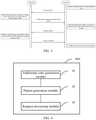
- the Bluetooth device 400 includes:
- the additional code generation module 41 is configured to generate a random number to obtain the additional code; and the packet generation module 42 is further configured to add an additional code in a plaintext form to the broadcast packet.
- the additional code generation module 41 is configured to periodically generate additional codes by using a predetermined additional code algorithm, where the additional code algorithm is an algorithm agreed upon jointly with the Bluetooth device connected through the Bluetooth connection; and the packet generation module 42 is configured to encrypt an additional code generated in a current period.
- the packet generation module 42 is configured to encrypt the additional code and a locally-stored key by using a first encryption algorithm to obtain the first ciphertext, where the first encryption algorithm is a unidirectional function, the local key is a key agreed upon jointly with the Bluetooth device connected through the Bluetooth connection, and the first encryption algorithm is an algorithm agreed upon jointly with the Bluetooth device connected through the Bluetooth connection.
- the first encryption algorithm is a unidirectional function
- the local key is a key agreed upon jointly with the Bluetooth device connected through the Bluetooth connection
- the first encryption algorithm is an algorithm agreed upon jointly with the Bluetooth device connected through the Bluetooth connection.
- the request processing module 43 is configured to decrypt the random private address included in the scanning request by using a second decryption algorithm based on the additional code and a locally-stored key, to obtain a fixed address; determine whether a fixed address stored is the same as the decrypted fixed address, where the fixed address stored is an address agreed upon jointly with the Bluetooth device connected through the Bluetooth connection, the local key is a key agreed upon jointly with the Bluetooth device connected through the Bluetooth connection, and the second decryption algorithm is an algorithm agreed upon jointly with the Bluetooth device connected through the Bluetooth connection; and if yes, perform the step of sending a Bluetooth protocol-based scanning response to the external Bluetooth device.
- the request processing module 43 is configured to encrypt the random private address included in the scanning request and the locally-stored key by using a third encryption algorithm to obtain a second ciphertext, where the second encryption algorithm is a unidirectional function, and the local key is a key agreed upon jointly with the Bluetooth device connected through the Bluetooth connection; generate the Bluetooth protocol-based scanning response by using the second ciphertext; and send the scanning response to the external Bluetooth device by using the random private address.
- the Bluetooth device does not actively initiate re-establishment of a Bluetooth connection.
- the Bluetooth device 500 includes:
- the broadcast packet includes an additional code in a plaintext form; and the additional code acquisition module 52 is configured to obtain the additional code from the broadcast packet.
- the additional code acquisition module 52 is configured to periodically generate additional codes by using a predetermined additional code algorithm, where the additional code algorithm is an algorithm agreed upon jointly with the Bluetooth device connected through the Bluetooth connection; and obtain an additional code generated in a current period.
- the packet verification module 53 is configured to encrypt the additional code obtained and a locally-stored key by using a first encryption algorithm to obtain a third ciphertext, where the first encryption algorithm is a unidirectional function, and the local key is a key agreed upon jointly with the Bluetooth device connected through the Bluetooth connection; determine whether the third ciphertext is the same as a first ciphertext in the broadcast packet; and if yes, determine that the broadcast packet is valid.
- connection processing module 54 is configured to encrypt the additional code, a fixed address stored, and a locally-stored key by using a second encryption algorithm to obtain the random private address, where the fixed address is an address agreed upon jointly with the Bluetooth device connected through the Bluetooth connection, the local key is a key agreed upon jointly with the Bluetooth device connected through the Bluetooth connection, and the second encryption algorithm is an algorithm agreed upon jointly with the Bluetooth device connected through the Bluetooth connection.
- the connection processing module 54 is configured to encrypt the random private address and the local key by using a third encryption algorithm to obtain a fourth ciphertext; determine whether the fourth ciphertext is the same as a second ciphertext in the scanning response; and if yes, perform the step of sending a connection request to the external Bluetooth device based on the random private address, where the local key is a key agreed upon jointly with the Bluetooth device connected through the Bluetooth connection, and the third encryption algorithm is an algorithm agreed upon jointly with the Bluetooth device connected through the Bluetooth connection.
- the structure shown in the embodiments of the present specification does not constitute a specific limitation on the Bluetooth device.
- the Bluetooth device can include more or fewer components than those shown in the figure, or can combine some components, or can split some components, or can have different component arrangements.
- the components shown can be implemented by hardware, software, or a combination of software and hardware.
- the present specification further provides a computer-readable storage medium storing computer programs.
- the computer programs are executed on a computer, the method in any one of the embodiments of the present specification is performed.
- One or more embodiments of the present specification further provide a computing device including a memory and a processor.
- the memory stores executable code
- the processor implements the method in any one of the embodiments when executing the executable code.
Landscapes
- Engineering & Computer Science (AREA)
- Computer Networks & Wireless Communication (AREA)
- Signal Processing (AREA)
- Computer Security & Cryptography (AREA)
- Computer Hardware Design (AREA)
- Computing Systems (AREA)
- General Engineering & Computer Science (AREA)
- Small-Scale Networks (AREA)
- Mobile Radio Communication Systems (AREA)
Abstract
Description
- One or more embodiments of the present specification relate to the field of Bluetooth technologies, and in particular, to Bluetooth device connection methods and Bluetooth devices.
- The Bluetooth technology is a special short-range wireless connection technology for creating a communication environment for Bluetooth devices and main control devices based on cost-effective short-range wireless connections.
- During communication, the Bluetooth device sends related data. If the related data is intercepted by an attacker, information about the Bluetooth device is leaked, reducing the security of the Bluetooth device connection process. Therefore, for the previous disadvantage, a more reliable Bluetooth device connection solution needs to be provided.
- One or more embodiments of the present specification describe Bluetooth device connection methods and Bluetooth devices, which can improve the security of the Bluetooth device connection process.
- According to a first aspect, a Bluetooth device connection method is provided, including the following:
- An additional code is generated; the additional code is encrypted to generate a first ciphertext after it is detected that a Bluetooth connection is disconnected; a Bluetooth protocol-based broadcast packet is generated based on the first ciphertext, and the broadcast packet is sent; a scanning request sent by an external Bluetooth device is received; a Bluetooth protocol-based scanning response is sent to the external Bluetooth device based on a random private address included in the scanning request, where the random private address is an address generated by the external Bluetooth device for the scanning request; and a Bluetooth connection is established to the external Bluetooth device when a connection request sent by the external Bluetooth device is received.
- In one or more embodiments, the generating an additional code includes: generating a random number to obtain the additional code; and the generating a Bluetooth protocol-based broadcast packet based on the first ciphertext further includes: adding an additional code in a plaintext form to the broadcast packet.
- With reference to the first aspect, in a second possible implementation, the generating an additional code includes: periodically generating additional codes by using a predetermined additional code algorithm, where the additional code algorithm is an algorithm agreed upon jointly with the Bluetooth device connected through the Bluetooth connection; and the encrypting the additional code includes: encrypting an additional code generated in a current period.
- In one or more embodiments, the encrypting the additional code to generate a first ciphertext includes: encrypting the additional code and a locally-stored key by using a first encryption algorithm to obtain the first ciphertext, where the first encryption algorithm is a unidirectional function, the local key is a key agreed upon jointly with the Bluetooth device connected through the Bluetooth connection, and the first encryption algorithm is an algorithm agreed upon jointly with the Bluetooth device connected through the Bluetooth connection.
- In one or more embodiments, after the receiving a scanning request from an external Bluetooth device, and before the sending a Bluetooth protocol-based scanning response to the external Bluetooth device, the method further includes the following:
- The random private address included in the scanning request is decrypted by using a second decryption algorithm based on the additional code and a locally-stored key, to obtain a fixed address; it is determined whether a fixed address stored is the same as the decrypted fixed address, where the fixed address stored is an address agreed upon jointly with the Bluetooth device connected through the Bluetooth connection, the local key is a key agreed upon jointly with the Bluetooth device connected through the Bluetooth connection, and the second decryption algorithm is an algorithm agreed upon jointly with the Bluetooth device connected through the Bluetooth connection; and if yes, the step of sending a Bluetooth protocol-based scanning response to the external Bluetooth device is performed.
- In one or more embodiments, the sending a Bluetooth protocol-based scanning response to the external Bluetooth device based on a random private address included in the scanning request includes: encrypting the random private address included in the scanning request and the locally-stored key by using a third encryption algorithm, to obtain a second ciphertext, where the second encryption algorithm is a unidirectional function, and the local key is a key agreed upon jointly with the Bluetooth device connected through the Bluetooth connection; generating the Bluetooth protocol-based scanning response by using the second ciphertext; and sending the scanning response to the external Bluetooth device by using the random private address.
- According to a second aspect, a Bluetooth device connection method is provided, including the following:
- It is detected that a Bluetooth connection is disconnected; an additional code is obtained when a broadcast packet is monitored; validity of the broadcast packet is verified by using the additional code obtained; the additional code is encrypted to generate a random private address when it is determined that the broadcast packet is valid; the random private address is added to a Bluetooth protocol-based scanning request, and the scanning request is sent to an external Bluetooth device that sends the broadcast packet; and sending a connection request to the external Bluetooth device based on the random private address when a scanning response sent by the external Bluetooth device based on the random private address is received, to establish a connection to the external Bluetooth device by using the connection request.
- In one or more embodiments, the broadcast packet includes an additional code in a plaintext form; and the obtaining an additional code includes: obtaining the additional code from the broadcast packet.
- With reference to the second aspect, in a second possible implementation, additional codes are periodically generated by using a predetermined additional code algorithm, where the additional code algorithm is an algorithm agreed upon jointly with the Bluetooth device connected through the Bluetooth connection; and an additional code generated in a current period is obtained.
- In one or more embodiments, the verifying validity of the broadcast packet by using the additional code obtained includes: encrypting the additional code obtained and a locally-stored key by using a first encryption algorithm to obtain a third ciphertext, where the first encryption algorithm is a unidirectional function, and the local key is a key agreed upon jointly with the Bluetooth device connected through the Bluetooth connection; determining whether the third ciphertext is the same as a first ciphertext in the broadcast packet; and if yes, determining that the broadcast packet is valid.
- In one or more embodiments, the encrypting the additional code to generate a random private address includes: encrypting the additional code, a fixed address stored, and a locally-stored key by using a second encryption algorithm to obtain the random private address, where the fixed address is an address agreed upon jointly with the Bluetooth device connected through the Bluetooth connection, the local key is a key agreed upon jointly with the Bluetooth device connected through the Bluetooth connection, and the second encryption algorithm is an algorithm agreed upon jointly with the Bluetooth device connected through the Bluetooth connection.
- In one or more embodiments, before the sending a connection request to the external Bluetooth device based on the random private address when a scanning response sent by the external Bluetooth device based on the random private address is received, the method further includes the following:
- The random private address and the local key are encrypted by using a third encryption algorithm to obtain a fourth ciphertext; it is determined whether the fourth ciphertext is the same as a second ciphertext in the scanning response; and if yes, the step of sending a connection request to the external Bluetooth device based on the random private address is performed, where the local key is a key agreed upon jointly with the Bluetooth device connected through the Bluetooth connection, and the third encryption algorithm is an algorithm agreed upon jointly with the Bluetooth device connected through the Bluetooth connection.
- According to a third aspect, a Bluetooth device is provided, including: an additional code generation module, configured to generate an additional code; a packet generation module, configured to encrypt the additional code generated by the additional code generation module to generate a first ciphertext after it is detected that a Bluetooth connection is disconnected; and generate a Bluetooth protocol-based broadcast packet based on the first ciphertext, and send the broadcast packet; and a request processing module, configured to receive a scanning request from an external Bluetooth device; send a Bluetooth protocol-based scanning response to the external Bluetooth device based on a random private address included in the scanning request, where the random private address is an address generated by the external Bluetooth device for the scanning request; and establish a Bluetooth connection to the external Bluetooth device when a connection request sent by the external Bluetooth device is received.
- In one or more embodiments, the additional code generation module is configured to generate a random number to obtain the additional code; and the packet generation module is further configured to add an additional code in a plaintext form to the broadcast packet.
- In one or more embodiments, the additional code generation module is configured to periodically generate additional codes by using a predetermined additional code algorithm, where the additional code algorithm is an algorithm agreed upon jointly with the Bluetooth device connected through the Bluetooth connection; and the packet generation module is configured to encrypt an additional code generated in a current period.
- In one or more embodiments, the packet generation module is configured to encrypt the additional code and a locally-stored key by using a first encryption algorithm to obtain the first ciphertext, where the first encryption algorithm is a unidirectional function, the local key is a key agreed upon jointly with the Bluetooth device connected through the Bluetooth connection, and the first encryption algorithm is an algorithm agreed upon jointly with the Bluetooth device connected through the Bluetooth connection.
- In one or more embodiments, the request processing module is configured to decrypt the random private address included in the scanning request by using a second decryption algorithm based on the additional code and a locally-stored key, to obtain a fixed address; determine whether a fixed address stored is the same as the decrypted fixed address, where the fixed address stored is an address agreed upon jointly with the Bluetooth device connected through the Bluetooth connection, the local key is a key agreed upon jointly with the Bluetooth device connected through the Bluetooth connection, and the second decryption algorithm is an algorithm agreed upon jointly with the Bluetooth device connected through the Bluetooth connection; and if yes, perform the step of sending a Bluetooth protocol-based scanning response to the external Bluetooth device.
- In one or more embodiments, the request processing module is configured to encrypt the random private address included in the scanning request and the locally-stored key by using a third encryption algorithm to obtain a second ciphertext, where the second encryption algorithm is a unidirectional function, and the local key is a key agreed upon jointly with the Bluetooth device connected through the Bluetooth connection; generate the Bluetooth protocol-based scanning response by using the second ciphertext; and send the scanning response to the external Bluetooth device by using the random private address.
- According to a fourth aspect, a Bluetooth device is provided, including: a connection detection module, configured to detect that a Bluetooth connection is disconnected; an additional code acquisition module, configured to obtain an additional code when a broadcast packet is monitored; a packet verification module, configured to verify validity of the broadcast packet by using the additional code obtained; and a connection processing module, configured to encrypt the additional code to generate a random private address when it is determined that the broadcast packet is valid; add the random private address to a Bluetooth protocol-based scanning request, and send the scanning request to an external Bluetooth device that sends the broadcast packet; and send, when a scanning response sent by the external Bluetooth device based on the random private address is received, a connection request to the external Bluetooth device based on the random private address, to establish a connection to the external Bluetooth device by using the connection request.
- In one or more embodiments, the broadcast packet includes an additional code in a plaintext form; and the additional code acquisition module is configured to obtain the additional code from the broadcast packet.
- In one or more embodiments, the additional code acquisition module is configured to periodically generate additional codes by using a predetermined additional code algorithm, where the additional code algorithm is an algorithm agreed upon jointly with the Bluetooth device connected through the Bluetooth connection; and obtain an additional code generated in a current period.
- In one or more embodiments, the packet verification module is configured to encrypt the additional code obtained and a locally-stored key by using a first encryption algorithm to obtain a third ciphertext, where the first encryption algorithm is a unidirectional function, and the local key is a key agreed upon jointly with the Bluetooth device connected through the Bluetooth connection; determine whether the third ciphertext is the same as a first ciphertext in the broadcast packet; and if yes, determine that the broadcast packet is valid.
- In one or more embodiments, the connection processing module is configured to encrypt the additional code, a fixed address stored, and a locally-stored key by using a second encryption algorithm to obtain the random private address, where the fixed address is an address agreed upon jointly with the Bluetooth device connected through the Bluetooth connection, the local key is a key agreed upon jointly with the Bluetooth device connected through the Bluetooth connection, and the second encryption algorithm is an algorithm agreed upon jointly with the Bluetooth device connected through the Bluetooth connection.
- In one or more embodiments, the connection processing module is configured to encrypt the random private address and the local key by using a third encryption algorithm to obtain a fourth ciphertext; determine whether the fourth ciphertext is the same as a second ciphertext in the scanning response; and if yes, perform the step of sending a connection request to the external Bluetooth device based on the random private address, where the local key is a key agreed upon jointly with the Bluetooth device connected through the Bluetooth connection, and the third encryption algorithm is an algorithm agreed upon jointly with the Bluetooth device connected through the Bluetooth connection.
- According to a fifth aspect, a computer-readable storage medium is provided. The computer-readable storage medium stores computer programs, and when being executed on a computer, the computer programs enable the computer to perform the method in any one of the previous embodiments.
- According to a sixth aspect, a computing device is provided, including a memory and a processor. The memory stores executable code, and the processor implements the method in any one of the previous embodiments when executing the executable code.
- According to the methods and the devices provided in the embodiments of the present specification, if it is detected that a Bluetooth connection is disconnected, a Bluetooth protocol-based broadcast packet can be first generated based on an additional code generated on site, and the broadcast packet is broadcast so that an external Bluetooth device that monitors the broadcast packet can return a random private address for a current scanning request, and a Bluetooth connection can be established, by using the private address, to the external Bluetooth device that sends the scanning request. Because the additional code is not a fixed value but is generated on site, the broadcast packet is not a fixed packet. In addition, because the random private address sent by the external Bluetooth device is also an address for the scanning request, the random private address for communicating with the external Bluetooth device that sends the scanning request is not fixed. Therefore, it can effectively alleviate the leakage of information transmitted between Bluetooth devices after Bluetooth device information is stolen and a connection is established to other Bluetooth devices, so that the security of the Bluetooth device connection process can be improved.
- To describe the technical solutions in the embodiments of the present specification or in the existing technology more clearly, the following briefly describes the accompanying drawings needed for describing the embodiments or the existing technology. Clearly, the accompanying drawings in the following description show some embodiments of the present specification, and a person of ordinary skill in the art can still derive other drawings from these accompanying drawings without creative efforts.
-
FIG. 1 is a flowchart illustrating a Bluetooth device connection method, according to one or more embodiments of the present specification; -
FIG. 2 is a flowchart illustrating a Bluetooth device connection method, according to other embodiments of the present specification; -
FIG. 3 is a schematic diagram illustrating a connection between two Bluetooth devices, according to one or more embodiments of the present specification; -
FIG. 4 is a schematic diagram illustrating a Bluetooth device, according to one or more embodiments of the present specification; and -
FIG. 5 is a schematic diagram illustrating a Bluetooth device, according to other embodiments of the present specification. - As described above, a Bluetooth device is a device that communicates based on a Bluetooth technology. Currently, when performing data exchange, various Bluetooth devices usually send fixed Bluetooth addresses of the Bluetooth devices, or return fixed attribute information used to represent attributes of the Bluetooth devices during scanning.
- After the information sent by the Bluetooth device is intercepted by an attacker, the attacker may establish, based on the information intercepted, a connection to a device to which the Bluetooth device is to connect, to masquerade as the Bluetooth device to obtain communication data between the two devices, or the attacker uses the information intercepted for other purposes, which causes the leakage of the information of the Bluetooth device and reduces the security of the Bluetooth device connection process.
- In addition, if the attacker has occupied a connection between the Bluetooth device and the device to be connected for a long time, the Bluetooth device cannot establish a connection to the device to be connected, which affects communication between the Bluetooth devices.
- Therefore, according to the embodiments of the present specification, a dynamic additional code is generally used to perform verification between Bluetooth devices that communicate based on the Bluetooth technology. Because the additional code is not fixed, after the Bluetooth device is disconnected from a Bluetooth connection, the Bluetooth device is connected to the device to be connected by using the dynamic additional code, which can prevent attackers from masquerading as the Bluetooth device and establishing a connection to another Bluetooth device by using the fixed verification information, so that the security of the Bluetooth device connection process can be improved, and a connection between Bluetooth devices is more reliable.
- Through the previously described description, a connection between Bluetooth devices in the existing technology is not secure. In view of this, one or more embodiments of the present specification provide a Bluetooth device connection method, applied to an initiator Bluetooth device. The initiator Bluetooth device is a device that will actively send a broadcast packet to actively initiate re-establishment of a Bluetooth connection after the Bluetooth connection is disconnected. As shown in
FIG. 1 , the method can specifically include the following steps: - Step 101: Generate an additional code.
- Step 102: Encrypt the additional code to generate a first ciphertext after it is detected that a Bluetooth connection is disconnected.
- Step 103: Generate a Bluetooth protocol-based broadcast packet based on the first ciphertext, and send the broadcast packet.
- Step 104: Receive a scanning request sent by an external Bluetooth device.
- Step 105: Send a Bluetooth protocol-based scanning response to the external Bluetooth device based on a random private address included in the scanning request, where the random private address is an address generated by the external Bluetooth device for the scanning request.
- Step 106: Establish a Bluetooth connection to the external Bluetooth device when a connection request sent by the external Bluetooth device is received.
- In the embodiments, if it is detected that a Bluetooth connection is disconnected, a Bluetooth protocol-based broadcast packet can be first generated based on an additional code generated on site, and the broadcast packet is broadcast so that an external Bluetooth device that monitors the broadcast packet can return a random private address for a current scanning request, and a Bluetooth connection can be established, by using the private address, to the external Bluetooth device that sends the scanning request. Because the additional code is not a fixed value but is generated on site, the broadcast packet is not a fixed packet. In addition, because the random private address sent by the external Bluetooth device is also an address for the scanning request, the random private address for communicating with the external Bluetooth device that sends the scanning request is not fixed. Therefore, it can effectively alleviate the leakage of information transmitted between Bluetooth devices after Bluetooth device information is stolen and a connection is established to other Bluetooth devices, so that the security of the Bluetooth device connection process can be improved.
- It can be understood that before the Bluetooth connection is disconnected, Bluetooth devices connected through the Bluetooth connection can pre-agree upon a party that will actively send the broadcast packet after the Bluetooth connection is disconnected.
- To improve the security of connection between Bluetooth devices, for the Bluetooth device that sends the broadcast packet, the embodiments of the present specification provide two additional code acquisition methods. In method 1, the Bluetooth device that will actively send the broadcast packet generates the additional code. In method 2, both the sender and the receiver of the broadcast packet generate additional codes simultaneously in an agreed way.
- Method 1: A random number generated randomly is used as the additional code, and the additional code in the plaintext form is included in the broadcast packet. Because the additional code is generated randomly and cannot be predicted in advance, it can be more difficult to forge a broadcast packet. Then, the additional code in the plaintext form is included in the broadcast packet so that the external Bluetooth device that monitors the broadcast packet can verify the first ciphertext in the broadcast packet based on the additional code in the plaintext form, and determine whether the first ciphertext is a forged ciphertext, so as to determine the validity of the monitored broadcast packet, thereby improving the security of the Bluetooth device connection process.
- Method 2: Before the Bluetooth connection is disconnected, an additional code algorithm is pre-agreed upon jointly with the Bluetooth device connected through the Bluetooth connection, and additional codes are generated by using the additional code algorithm at specified intervals, for example, 30 minutes, 120 minutes, or 500 minutes. Because the additional code algorithm is agreed upon with the Bluetooth device connected, the two devices can generate the same additional code at the same time point. Therefore, after the Bluetooth device monitors the broadcast packet, the Bluetooth device can verify the broadcast packet by using the additional code generated by the Bluetooth device, and determine whether the first ciphertext in the broadcast packet is the same as a ciphertext obtained by using the additional code generated by the Bluetooth device, so as to determine whether the broadcast packet is a packet sent by an attacker, thereby improving the security of the Bluetooth device connection process.
- To further increase the difficulty for the attacker to forge a broadcast packet, in other embodiments, before the Bluetooth connection is disconnected, a common local key and a first encryption algorithm F1 (x1, y1 ) used to generate the first ciphertext can be agreed upon with the Bluetooth device connected through the Bluetooth connection, and stored respectively, where x1 represents a first variable of the first encryption algorithm, and y1 represents a second variable of the first encryption algorithm. To further increase the difficulty of forging a broadcast packet and filter out the attacker by verifying the broadcast packet, the first encryption algorithm can be a unidirectional function. Based on this, the first ciphertext can be obtained by encrypting the additional code and the local key by using the first encryption algorithm. However, based on the first ciphertext and the additional code, the local key cannot be deduced by using the first encryption algorithm. Similarly, based on the first ciphertext and the local key, the additional code cannot be deduced by using the first encryption algorithm. Therefore, the first ciphertext can be obtained only after the additional code, the first encryption algorithm, and the local key are all obtained so as to generate the broadcast packet. In addition, because the additional code is a dynamic code, the attacker can be prevented from being connected to the Bluetooth device for a long time.
- Specifically, the first ciphertext can be obtained in the following way: If the value of the additional code is assigned to the first variable x1 of the first encryption algorithm F1 (x1, y1), the value of the local key is assigned to the second variable y1 of the first encryption algorithm F1 (x1, y1 ). If the value of the additional code is assigned to the second variable y1 , the value of the local key is assigned to the first variable x1 . Then, the first ciphertext is generated by using the first encryption algorithm with assigned values.
- To prevent the attacker from masquerading as the Bluetooth device connected before the Bluetooth connection is disconnected, in other embodiments, before the Bluetooth connection is disconnected, a second encryption algorithm F2e (x2e, y2e, z2e ) used to generate the random private address, a second decryption algorithm F2d (x2d, y2d, z2d ) used to verify the random private address, a local key, and a fixed address of the Bluetooth device are agreed upon jointly with the Bluetooth device connected through the Bluetooth device, where x2d represents a first variable of the second decryption algorithm, y2d represents a second variable of the second decryption algorithm, z2d represents a third variable of the second decryption algorithm, x2e represents a first variable of the second encryption algorithm, y2e represents a second variable of the second encryption algorithm, and z2e represents a third variable of the second encryption algorithm. Therefore, after the scanning request sent by the external Bluetooth device is received, the random private address included in the scanning request is decrypted based on the additional code and the local key by using the second decryption algorithm stored, to obtain a decrypted fixed address. The fixed address stored is compared with the decrypted fixed address to determine whether the two are the same. If the two are the same, it can be determined that the random private address included in the scanning request is not forged, that is, the random private address is trusted. Therefore, the random private address can be used to communicate with the Bluetooth device that sends the random private address.
- The attacker cannot generate a correct random private address when failing to obtain the local key, the fixed address, the additional code, and the second encryption algorithm used to generate the private random address. Therefore, an incorrect address is obtained after an incorrect random private address included in a scanning request sent by the attacker is decrypted. By comparing the address with the fixed address stored, the attacker masquerading as the Bluetooth device can be filtered out, and the attacker fails to attack.
- To further increase the difficulty of obtaining information of the Bluetooth device by the attacker, in other embodiments, before the Bluetooth connection is disconnected, a third encryption algorithm F3 (x3, y3 ) used to encrypt the random private address and a local key can be agreed upon with the Bluetooth device connected through the Bluetooth connection. Therefore, after the scanning request is received, if the value of the random private address is assigned to a first variable of the third encryption algorithm F3 (x3, y3 ), the local password is assigned to a second variable of the third encryption algorithm F3 (x3, y3 ); otherwise, the local password is assigned to a first variable of F3 (x3, y3 ). Then, a second ciphertext is generated by using the third encryption algorithm with assigned values. To ensure the security of the second ciphertext, the third encryption algorithm is a unidirectional function. Based on this, the attacker needs to obtain the third encryption algorithm and the local key to calculate the real second ciphertext. As such, the attacker masquerading as the Bluetooth device can be filtered out, and the attacker fails to attack, so that the security of the Bluetooth device connection process can be improved.
- One or more embodiments of the present specification provide a Bluetooth device connection method, applied to a receiver Bluetooth device. The receiver Bluetooth device is a device that will not actively initiate re-establishment of a Bluetooth connection but monitor a broadcast packet to re-establish the Bluetooth connection after the Bluetooth connection is disconnected. As shown in
FIG. 2 , the method can specifically include the following steps: - Step 201: Detect that a Bluetooth connection is disconnected.
- Step 202: Obtain an additional code when a broadcast packet is monitored.
- Step 203: Verify validity of the broadcast packet by using the additional code obtained.
- Step 204: Encrypt the additional code to generate a random private address, when it is determined that the broadcast packet is valid.
- Step 205: Add the random private address to a Bluetooth protocol-based scanning request, and send the scanning request to an external Bluetooth device that sends the broadcast packet.
- Step 206: Send a connection request to the external Bluetooth device based on the random private address when a scanning response sent by the external Bluetooth device based on the random private address is received, to establish a connection to the external Bluetooth device by using the connection request.
- In the embodiments, after it is detected that the Bluetooth connection is disconnected, the additional code can be first obtained based on the broadcast packet monitored, and then the broadcast packet monitored is verified to determine whether the broadcast packet is a packet forged by an attacker. After it is determined that the broadcast packet is not a packet forged by an attacker, the additional code can be encrypted, and then the random private address generated is added to the scanning request, and is sent to the external Bluetooth device that sends the broadcast packet. Because the random private address is an address generated based on a dynamic additional code, the random private address generated based on the additional code is not a fixed address. Therefore, the external Bluetooth device that sends the broadcast packet establishes a connection by using the random private address, which can effectively alleviate the leakage of information transmitted between Bluetooth devices after Bluetooth device information is stolen and a connection is established to other Bluetooth devices, so that the security of the Bluetooth device connection process can be improved.
- It can be understood that before the Bluetooth connection is disconnected, Bluetooth devices connected through the Bluetooth connection can pre-agree upon a party that will actively send the broadcast packet after the Bluetooth connection is disconnected.
- To improve the security of the Bluetooth device connection process, the embodiments of the present specification provide two additional code acquisition methods for the Bluetooth device that monitors the broadcast packet.
- Method 1: The broadcast packet monitored includes an additional code in a plaintext form. Therefore, the additional code can be obtained from the broadcast packet, and the validity of the broadcast packet is verified by using the additional code, without a need to generate an additional code by the receiver Bluetooth device, so that processing operations of the Bluetooth device that receives the broadcast packet can be reduced.
- Method 2: Before the Bluetooth connection is disconnected, an additional code algorithm used to generate an additional code and a period for generating an additional code are agreed upon jointly with the Bluetooth device connected through the Bluetooth connection. Therefore, the Bluetooth devices reaching the agreement can generate the same additional code by using the additional code algorithm based on the agreed period. For example, the Bluetooth devices generate one additional code every 180 minutes. Therefore, the agreed Bluetooth device that will actively send the broadcast packet generates the broadcast packet by using the additional code and broadcasts the broadcast packet. The agreed receiver Bluetooth device can verify the broadcast packet monitored by using an additional code generated by the receiver Bluetooth device in a period when the broadcast packet is monitored. If the broadcast packet is a packet generated by using an additional code obtained by using the agreed algorithm, it can be verified that the broadcast packet is valid; otherwise, it can be determined that the broadcast packet is a packet forged by an attacker.
- To further increase the difficulty for the attacker to forge a broadcast packet, in other embodiments of the present specification, before the Bluetooth connection is disconnected, a local key and a first encryption algorithm F1(x1, y1 ) used to generate a first ciphertext can be agreed upon between the Bluetooth devices connected through the Bluetooth connection, and stored respectively, where x1 represents a first variable of the first encryption algorithm, and y1 represents a second variable of the first encryption algorithm. To further increase the difficulty of forging a broadcast packet and filter out the attacker by verifying the broadcast packet, the first encryption algorithm can be a unidirectional function. Based on this, the attacker needs to obtain the local key and the first encryption algorithm to calculate a correct first ciphertext, so as to generate a broadcast packet. Otherwise, the attacker cannot generate a correct broadcast packet. In addition, because the additional code is a dynamic code and is a code generated on site, the attacker cannot establish a long-time connection to the Bluetooth device connected through the Bluetooth connection after obtaining one additional code. Therefore, the difficulty of the attacker in masquerading as the device can be further increased, and the security of the Bluetooth device can be improved.
- Therefore, after the broadcast packet is monitored, if the value of the additional code obtained is assigned to the first variable x1 of the first encryption algorithm, the value of the locally-stored key is assigned to the second variable y1 of the first encryption algorithm F1 (x1, y1 ). If the value of the additional code obtained is assigned to the second variable y1 , the local key is assigned to the first variable x1 . Then, a third ciphertext can be generated by using the first encryption algorithm with assigned values. The third ciphertext is compared with the first ciphertext in the broadcast packet. If the two are the same, it can be determined that the broadcast packet is not forged, and the broadcast packet is valid. Therefore, the receiver Bluetooth device can further interact with the Bluetooth device that sends the broadcast packet. If the two are different, it can be determined that the broadcast packet is forged, and therefore, the receiver Bluetooth device does not need to further interact with the Bluetooth device that sends the broadcast packet.
- Specifically, the locally-stored key can be a key agreed upon when the Bluetooth devices establish the Bluetooth connection for the first time, or can be a key agreed upon again after the Bluetooth devices establish the Bluetooth connection for the nth time, where n is greater than 1.
- To prevent the attacker from forging the random private address, in other embodiments of the present specification, before the Bluetooth connection is disconnected, a common local key, a fixed address, a second encryption algorithm F2e (x2e, y2e ) used to generate the random private address, and a second decryption algorithm F2d ( x2d, y2d, z2d ) used to verify the random private address can be agreed upon jointly with the Bluetooth device connected through the Bluetooth device, where x2d represents a first variable of the second decryption algorithm, y2d represents a second variable of the second decryption algorithm, z2d represents a third variable of the second decryption algorithm, x2e represents a first variable of the second encryption algorithm, y2e represents a second variable of the second encryption algorithm, and z2e represents a third variable of the second encryption algorithm. The random private address can be generated when it is determined that the broadcast packet monitored is valid. The random private address can be generated in the following way: Values of the additional code, the local key, and the fixed addresses are assigned to the variables of the second encryption algorithm, and then the random private address is generated by using the second encryption algorithm with assigned values. If the attacker masquerades as the Bluetooth device that monitors the broadcast packet, the attacker cannot generate a correct random private address when failing to obtain the local key, the fixed address, and the second encryption algorithm. Therefore, after receiving the scanning request and verifying the random private address, the external Bluetooth device can identify whether the scanning request is a request sent by the attacker.
- To prevent the attacker from forging a scanning response, in other embodiments of the present specification, before the Bluetooth connection is disconnected, a common local key and a third encryption algorithm F3 (x3, y3 ) used to verify the scanning response can be agreed upon with the Bluetooth device connected through the Bluetooth connection, where x3 represents a first variable of the third encryption algorithm, and y3 represents a second variable of the third encryption algorithm. After the scanning response is received, values of the random private address and the locally-stored key can be assigned to the third encryption algorithm, and then a fourth ciphertext is generated by using the third encryption algorithm with assigned values. By comparing the fourth ciphertext with the second ciphertext in the scanning response, it can be determined whether the scanning response is a response forged by the attacker. If the scanning response is not forged by the attacker, a connection can be established to the external Bluetooth device that sends the scanning response. Otherwise, there is no need to interact with the external Bluetooth device that sends the scanning response.
- Bluetooth devices "dragonfly" and "keyboard" that perform data exchange based on a Bluetooth technology are used as examples below to describe the Bluetooth device connection method provided in the embodiments of the present specification. As shown in
FIG. 3 , the method can specifically include the following steps: - Step 301: The keyboard generates an additional code, and encrypts a local key and the additional code by using a first encryption algorithm pre-agreed upon with the dragonfly to obtain a first ciphertext and sends a broadcast packet generated based on the first ciphertext, after identifying that a Bluetooth connection between the keyboard and the dragonfly is disconnected.
- Specifically, before the Bluetooth connection is disconnected, the keyboard and the dragonfly can agree that the keyboard will actively send the broadcast packet after the Bluetooth connection is disconnected, and agree upon whether an additional code for generating the broadcast packet is generated by the keyboard alone or periodically generated by both parties based on the same algorithm. The additional code is generated on site, and is not a fixed code. Therefore, the broadcast packet obtained after the Bluetooth connection is disconnected is not a fixed packet, so that the difficulty of stealing data of the Bluetooth device by an attacker can be increased.
- Step 302: After monitoring the broadcast packet, the dragonfly obtains the additional code, and verifies the first ciphertext in the broadcast packet by using the first encryption algorithm, the local key, and the additional code pre-agreed upon with the keyboard. If the broadcast packet is valid, the dragonfly generates a random private address by using a second encryption algorithm, the local key, and a fixed address agreed upon with the keyboard, and then sends a scanning request including the random private address to the keyboard.
- Specifically, after monitoring the broadcast packet, the dragonfly can obtain a corresponding additional code based on a pre-agreed additional code acquisition method. For example, if the agreed additional code acquisition method is that the broadcast packet includes an additional code in a plaintext form, the dragonfly reads the additional code from the broadcast packet. Or, if the agreed additional code acquisition method is that both parties periodically generate additional codes based on the additional code algorithm, the dragonfly can verify the broadcast packet by using an additional code generated in a current period.
- When the dragonfly verifies that the broadcast packet is valid, which is a third ciphertext obtained by using the first encryption algorithm based on the additional code and the local key agreed upon with the keyboard is the same as that in the broadcast packet, the dragonfly determines that the broadcast packet is valid. Then, the dragonfly generates the random private address by using the second encryption algorithm agreed upon with the keyboard based on the local key, the fixed address, and the additional code, adds the random private address to the scanning request, and sends the scanning request to the keyboard.
- Step 303: The keyboard decrypts the random private address in the scanning request by using a second decryption algorithm agreed upon with the dragonfly and the local key, and if a fixed address obtained is the same as a fixed address stored, generates a third ciphertext by using a third encryption algorithm agreed upon with the dragonfly, the local key, and the random private address, then generates a scanning response, and sends the scanning response to the dragonfly by using the random private address.
- Specifically, after receiving the scanning request, the keyboard needs to verify the random private address in the scanning request, to be specific, decrypt the random private address by using the second decryption algorithm agreed upon with the dragonfly and the additional code generated by the keyboard. If the fixed address obtained is the same as the agreed fixed address, it indicates that the random private address is an address generated by the dragonfly. Therefore, the keyboard can encrypt the random private address and the local key by using the third encryption algorithm to obtain the scanning response and send the scanning response to the dragonfly.
- Step 304: The dragonfly monitors the random private address, and after receiving the scanning response, the dragonfly generates a fourth ciphertext by using the third encryption algorithm agreed upon with the keyboard, the local key, and the random private address generated by the dragonfly, compares the fourth ciphertext with a second ciphertext in the scanning response, and sends a connection request to the keyboard when determining that the two are the same.
- Specifically, after receiving the scanning response, the dragonfly further needs to verify the scanning response, to be specific, encrypt, by using the third encryption algorithm, the locally-stored key by the dragonfly and the random private address generated by the dragonfly. If the fourth ciphertext obtained is the same as the second ciphertext in the scanning response, it represents that the scanning response is a response sent by the keyboard, and therefore, the dragonfly can establish a Bluetooth connection to the keyboard.
- Step 305: The keyboard establishes a Bluetooth connection to the dragonfly after receiving the connection request.
- In conclusion, because the additional code is dynamically generated, and the first encryption algorithm, the second encryption algorithm, the second decryption algorithm, the third encryption algorithm, the local key, and the fixed address are agreed upon between the Bluetooth devices that establish a Bluetooth connection, the attacker cannot forge a correct broadcast packet, random private address, scanning request, and scanning response when failing to obtain the previously agreed content. Therefore, the attacker can be effectively prevented from masquerading as the Bluetooth device to establish a connection to other devices by using intercepted information, so that the security of the Bluetooth device connection process can be improved.
- It is worthwhile to note that the broadcast packet includes Bluetooth protocol-based ADV_IND, the scanning request includes Bluetooth protocol-based SCAN REQ, and the scanning response includes Bluetooth protocol-based SCAN RSP.
- The first encryption algorithm and the third encryption algorithm in any one of the previous embodiments include any one of a hash algorithm, an advanced encryption standard (AES) algorithm, an MD5 algorithm, a message authentication code (MAC) algorithm, and a cyclic redundancy code (CRC) algorithm, but are not limited thereto.
- One or more embodiments of the present specification provide a Bluetooth device. As shown in
FIG. 4 , the Bluetooth device can initiate re-establishment of a Bluetooth connection, and theBluetooth device 400 includes: - an additional
code generation module 41, configured to generate an additional code; - a
packet generation module 42, configured to encrypt the additional code generated by the additionalcode generation module 41 to generate a first ciphertext after it is detected that a Bluetooth connection is disconnected; and generate a Bluetooth protocol-based broadcast packet based on the first ciphertext, and send the broadcast packet; and - a
request processing module 43, configured to receive a scanning request from an external Bluetooth device; send a Bluetooth protocol-based scanning response to the external Bluetooth device based on a random private address included in the scanning request, where the random private address is an address generated by the external Bluetooth device for the scanning request; and establish a Bluetooth connection to the external Bluetooth device when a connection request sent by the external Bluetooth device is received. - In other embodiments of the present specification, the additional
code generation module 41 is configured to generate a random number to obtain the additional code; and
thepacket generation module 42 is further configured to add an additional code in a plaintext form to the broadcast packet. - In other embodiments of the present specification, the additional
code generation module 41 is configured to periodically generate additional codes by using a predetermined additional code algorithm, where the additional code algorithm is an algorithm agreed upon jointly with the Bluetooth device connected through the Bluetooth connection; and
thepacket generation module 42 is configured to encrypt an additional code generated in a current period. - In other embodiments of the present specification, the
packet generation module 42 is configured to encrypt the additional code and a locally-stored key by using a first encryption algorithm to obtain the first ciphertext, where the first encryption algorithm is a unidirectional function, the local key is a key agreed upon jointly with the Bluetooth device connected through the Bluetooth connection, and the first encryption algorithm is an algorithm agreed upon jointly with the Bluetooth device connected through the Bluetooth connection. - In other embodiments of the present specification, the
request processing module 43 is configured to decrypt the random private address included in the scanning request by using a second decryption algorithm based on the additional code and a locally-stored key, to obtain a fixed address; determine whether a fixed address stored is the same as the decrypted fixed address, where the fixed address stored is an address agreed upon jointly with the Bluetooth device connected through the Bluetooth connection, the local key is a key agreed upon jointly with the Bluetooth device connected through the Bluetooth connection, and the second decryption algorithm is an algorithm agreed upon jointly with the Bluetooth device connected through the Bluetooth connection; and if yes, perform the step of sending a Bluetooth protocol-based scanning response to the external Bluetooth device. - In other embodiments of the present specification, the
request processing module 43 is configured to encrypt the random private address included in the scanning request and the locally-stored key by using a third encryption algorithm to obtain a second ciphertext, where the second encryption algorithm is a unidirectional function, and the local key is a key agreed upon jointly with the Bluetooth device connected through the Bluetooth connection; generate the Bluetooth protocol-based scanning response by using the second ciphertext; and send the scanning response to the external Bluetooth device by using the random private address. - One or more embodiments of the present specification provide a Bluetooth device. The Bluetooth device does not actively initiate re-establishment of a Bluetooth connection. As shown in
FIG. 5 , theBluetooth device 500 includes: - a
connection detection module 51, configured to detect that a Bluetooth connection is disconnected; - an additional
code acquisition module 52, configured to obtain an additional code when a broadcast packet is monitored; - a
packet verification module 53, configured to verify validity of the broadcast packet by using the additional code obtained by the additionalcode acquisition module 52; and - a
connection processing module 54, configured to encrypt the additional code to generate a random private address when thepacket verification module 53 determines that the broadcast packet is valid; add the random private address to a Bluetooth protocol-based scanning request, and send the scanning request to an external Bluetooth device that sends the broadcast packet; and send a connection request to the external Bluetooth device based on the random private address when a scanning response sent by the external Bluetooth device based on the random private address is received, to establish a connection to the external Bluetooth device by using the connection request. - In other embodiments of the present specification, the broadcast packet includes an additional code in a plaintext form; and
the additionalcode acquisition module 52 is configured to obtain the additional code from the broadcast packet. - In other embodiments of the present specification, the additional
code acquisition module 52 is configured to periodically generate additional codes by using a predetermined additional code algorithm, where the additional code algorithm is an algorithm agreed upon jointly with the Bluetooth device connected through the Bluetooth connection; and obtain an additional code generated in a current period. - In other embodiments of the present specification, the
packet verification module 53 is configured to encrypt the additional code obtained and a locally-stored key by using a first encryption algorithm to obtain a third ciphertext, where the first encryption algorithm is a unidirectional function, and the local key is a key agreed upon jointly with the Bluetooth device connected through the Bluetooth connection; determine whether the third ciphertext is the same as a first ciphertext in the broadcast packet; and if yes, determine that the broadcast packet is valid. - In other embodiments of the present specification, the
connection processing module 54 is configured to encrypt the additional code, a fixed address stored, and a locally-stored key by using a second encryption algorithm to obtain the random private address, where the fixed address is an address agreed upon jointly with the Bluetooth device connected through the Bluetooth connection, the local key is a key agreed upon jointly with the Bluetooth device connected through the Bluetooth connection, and the second encryption algorithm is an algorithm agreed upon jointly with the Bluetooth device connected through the Bluetooth connection. - In other embodiments of the present specification, the
connection processing module 54 is configured to encrypt the random private address and the local key by using a third encryption algorithm to obtain a fourth ciphertext; determine whether the fourth ciphertext is the same as a second ciphertext in the scanning response; and if yes, perform the step of sending a connection request to the external Bluetooth device based on the random private address, where the local key is a key agreed upon jointly with the Bluetooth device connected through the Bluetooth connection, and the third encryption algorithm is an algorithm agreed upon jointly with the Bluetooth device connected through the Bluetooth connection. - It can be understood that the structure shown in the embodiments of the present specification does not constitute a specific limitation on the Bluetooth device. In other embodiments of the present specification, the Bluetooth device can include more or fewer components than those shown in the figure, or can combine some components, or can split some components, or can have different component arrangements. The components shown can be implemented by hardware, software, or a combination of software and hardware.
- Content such as information exchange between units in the previous apparatus and execution processes is based on the same concept as the method embodiments of the present specification. For specific content, references can be made to the description in the method embodiments of the present specification. Details are omitted here for simplicity.
- The present specification further provides a computer-readable storage medium storing computer programs. When the computer programs are executed on a computer, the method in any one of the embodiments of the present specification is performed.
- One or more embodiments of the present specification further provide a computing device including a memory and a processor. The memory stores executable code, and the processor implements the method in any one of the embodiments when executing the executable code.
- A person skilled in the art should be aware that in the above one or more examples, functions described in the present disclosure can be implemented by hardware, software, firmware, or any combination thereof. When the functions are implemented by software, the functions can be stored in a computer-readable medium or transmitted as one or more instructions or code in the computer-readable medium.
- The objectives, technical solutions, and benefits of the present disclosure are further described in detail in the earlier-described specific implementations. It should be understood that the earlier-described descriptions are merely specific implementations of the present disclosure, but are not intended to limit the protection scope of the present disclosure. Any modification, equivalent replacement, or improvement made within the spirit and principle of the present disclosure shall fall within the protection scope of the present disclosure.
-
- 1. A Bluetooth device connection method, comprising:
- generating an additional code;
- encrypting the additional code to generate a first ciphertext after it is detected that a Bluetooth connection is disconnected;
- generating a Bluetooth protocol-based broadcast packet based on the first ciphertext, and sending the broadcast packet;
- receiving a scanning request from an external Bluetooth device;
- sending a Bluetooth protocol-based scanning response to the external Bluetooth device based on a random private address comprised in the scanning request, wherein the random private address is an address generated by the external Bluetooth device for the scanning request; and
- establishing a Bluetooth connection to the external Bluetooth device when a connection request sent by the external Bluetooth device is received.
- 2. The method according to embodiment 1, wherein the generating an additional code comprises:
- generating a random number to obtain the additional code; and
- the generating a Bluetooth protocol-based broadcast packet based on the first ciphertext further comprises:
adding an additional code in a plaintext form to the broadcast packet.
- 3. The method according to embodiment 1, wherein the generating an additional code comprises:
periodically generating additional codes by using a predetermined additional code algorithm, wherein the additional code algorithm is an algorithm agreed upon jointly with the Bluetooth device connected through the Bluetooth connection; and
the encrypting the additional code comprises: encrypting an additional code generated in a current period. - 4. The method according to embodiment 1, wherein
the encrypting the additional code to generate a first ciphertext comprises:
encrypting the additional code and a locally-stored key by using a first encryption algorithm to obtain the first ciphertext, wherein the first encryption algorithm is a unidirectional function, the local key is a key agreed upon jointly with the Bluetooth device connected through the Bluetooth connection, and the first encryption algorithm is an algorithm agreed upon jointly with the Bluetooth device connected through the Bluetooth connection. - 5. The method according to embodiment 1, after the receiving a scanning request from an external Bluetooth device, and before the sending a Bluetooth protocol-based scanning response to the external Bluetooth device, further comprising:
- decrypting the random private address comprised in the scanning request by using a second decryption algorithm based on the additional code and a locally-stored key, to obtain a fixed address;
- determining whether a fixed address stored is the same as the decrypted fixed address, wherein the fixed address stored is an address agreed upon jointly with the Bluetooth device connected through the Bluetooth connection, the local key is a key agreed upon jointly with the Bluetooth device connected through the Bluetooth connection, and the second decryption algorithm is an algorithm agreed upon jointly with the Bluetooth device connected through the Bluetooth connection; and
- in response to determining that the fixed address stored is the same as the decrypted fixed address, performing the step of sending a Bluetooth protocol-based scanning response to the external Bluetooth device.
- 6. The method according to any one of embodiments 1 to 5, wherein the sending a Bluetooth protocol-based scanning response to the external Bluetooth device based on a random private address comprised in the scanning request comprises:
- encrypting the random private address comprised in the scanning request and the locally-stored key by using a third encryption algorithm to obtain a second ciphertext, wherein the second encryption algorithm is a unidirectional function, and the local key is a key agreed upon jointly with the Bluetooth device connected through the Bluetooth connection;
- generating the Bluetooth protocol-based scanning response by using the second ciphertext; and
- sending the scanning response to the external Bluetooth device by using the random private address.
- 7. A Bluetooth device connection method, comprising:
- detecting that a Bluetooth connection is disconnected;
- obtaining an additional code when a broadcast packet is monitored;
- verifying validity of the broadcast packet by using the additional code obtained;
- encrypting the additional code to generate a random private address when it is determined that the broadcast packet is valid;
- adding the random private address to a Bluetooth protocol-based scanning request, and sending the scanning request to an external Bluetooth device that sends the broadcast packet; and
- sending a connection request to the external Bluetooth device based on the random private address when a scanning response sent by the external Bluetooth device based on the random private address is received, to establish a connection to the external Bluetooth device by using the connection request.
- 8. The method according to embodiment 7, wherein the broadcast packet comprises an additional code in a plaintext form; and the obtaining an additional code comprises: obtaining the additional code from the broadcast packet.
- 9. The method according to embodiment 7, wherein the obtaining an additional code comprises:
- periodically generating additional codes by using a predetermined additional code algorithm, wherein the additional code algorithm is an algorithm agreed upon jointly with the Bluetooth device connected through the Bluetooth connection; and
- obtaining an additional code generated in a current period.
- 10. The method according to embodiment 7, wherein the verifying validity of the broadcast packet by using the additional code obtained comprises:
- encrypting the additional code obtained and a locally-stored key by using a first encryption algorithm to obtain a third ciphertext, wherein the first encryption algorithm is a unidirectional function, and the local key is a key agreed upon jointly with the Bluetooth device connected through the Bluetooth connection;
- determining whether the third ciphertext is the same as a first ciphertext in the broadcast packet; and
- in response to determining that the third ciphertext is the same as the first ciphertext in the broadcast packet, determining that the broadcast packet is valid.
- 11. The method according to embodiment 7, wherein the encrypting the additional code to generate a random private address comprises:
encrypting the additional code, a fixed address stored, and a locally-stored key by using a second encryption algorithm to obtain the random private address, wherein the fixed address is an address agreed upon jointly with the Bluetooth device connected through the Bluetooth connection, the local key is a key agreed upon jointly with the Bluetooth device connected through the Bluetooth connection, and the second encryption algorithm is an algorithm agreed upon jointly with the Bluetooth device connected through the Bluetooth connection. - 12. The method according to any one of embodiments 7 to 11, before the sending a connection request to the external Bluetooth device based on the random private address when a scanning response sent by the external Bluetooth device based on the random private address is received, further comprising:
- encrypting the random private address and the local key by using a third encryption algorithm to obtain a fourth ciphertext;
- determining whether the fourth ciphertext is the same as a second ciphertext in the scanning response; and
- in response to determining that the fourth ciphertext is the same as the second ciphertext in the scanning response, performing the step of sending a connection request to the external Bluetooth device based on the random private address, wherein the local key is a key agreed upon jointly with the Bluetooth device connected through the Bluetooth connection, and the third encryption algorithm is an algorithm agreed upon jointly with the Bluetooth device connected through the Bluetooth connection.
- 13. A Bluetooth device, comprising:
- an additional code generation module, configured to generate an additional code;
- a packet generation module, configured to encrypt the additional code generated by the additional code generation module to generate a first ciphertext after it is detected that a Bluetooth connection is disconnected; and generate a Bluetooth protocol-based broadcast packet based on the first ciphertext, and send the broadcast packet; and
- a request processing module, configured to receive a scanning request from an external Bluetooth device; send a Bluetooth protocol-based scanning response to the external Bluetooth device based on a random private address comprised in the scanning request, wherein the random private address is an address generated by the external Bluetooth device for the scanning request; and establish a Bluetooth connection to the external Bluetooth device when a connection request sent by the external Bluetooth device is received.
- 14. The device according to embodiment 13, wherein the additional code generation module is configured to generate a random number to obtain the additional code; and
the packet generation module is further configured to add an additional code in a plaintext form to the broadcast packet. - 15. The device according to embodiment 13, wherein the additional code generation module is configured to periodically generate additional codes by using a predetermined additional code algorithm, wherein the additional code algorithm is an algorithm agreed upon jointly with the Bluetooth device connected through the Bluetooth connection; and
the packet generation module is configured to encrypt an additional code generated in a current period. - 16. The device according to embodiment 13, wherein the packet generation module is configured to encrypt the additional code and a locally-stored key by using a first encryption algorithm to obtain the first ciphertext, wherein the first encryption algorithm is a unidirectional function, the local key is a key agreed upon jointly with the Bluetooth device connected through the Bluetooth connection, and the first encryption algorithm is an algorithm agreed upon jointly with the Bluetooth device connected through the Bluetooth connection.
- 17. The device according to embodiment 13, wherein the request processing module is configured to decrypt the random private address comprised in the scanning request by using a second decryption algorithm based on the additional code and a locally-stored key, to obtain a fixed address; determine whether a fixed address stored is the same as the decrypted fixed address, wherein the fixed address stored is an address agreed upon jointly with the Bluetooth device connected through the Bluetooth connection, the local key is a key agreed upon jointly with the Bluetooth device connected through the Bluetooth connection, and the second decryption algorithm is an algorithm agreed upon jointly with the Bluetooth device connected through the Bluetooth connection; and in response to determining that the fixed address stored is the same as the decrypted fixed address, perform the step of sending a Bluetooth protocol-based scanning response to the external Bluetooth device.
- 18. The device according to any one of embodiments 13 to 17, wherein
the request processing module is configured to encrypt the random private address comprised in the scanning request and the locally-stored key by using a third encryption algorithm to obtain a second ciphertext, wherein the second encryption algorithm is a unidirectional function, and the local key is a key agreed upon jointly with the Bluetooth device connected through the Bluetooth connection; generate the Bluetooth protocol-based scanning response by using the second ciphertext; and send the scanning response to the external Bluetooth device by using the random private address. - 19. A Bluetooth device, comprising:
- a connection detection module, configured to detect that a Bluetooth connection is disconnected;
- an additional code acquisition module, configured to obtain an additional code when a broadcast packet is monitored;
- a packet verification module, configured to verify validity of the broadcast packet by using the additional code obtained; and
- a connection processing module, configured to encrypt the additional code to generate a random private address when it is determined that the broadcast packet is valid; add the random private address to a Bluetooth protocol-based scanning request, and send the scanning request to an external Bluetooth device that sends the broadcast packet; and send a connection request to the external Bluetooth device based on the random private address when a scanning response sent by the external Bluetooth device based on the random private address is received, to establish a connection to the external Bluetooth device by using the connection request.
- 20. The device according to embodiment 19, wherein the broadcast packet comprises an additional code in a plaintext form; and
the additional code acquisition module is configured to obtain the additional code from the broadcast packet. - 21. The device according to embodiment 19, wherein the additional code acquisition module is configured to periodically generate additional codes by using a predetermined additional code algorithm, wherein the additional code algorithm is an algorithm agreed upon jointly with the Bluetooth device connected through the Bluetooth connection; and obtain an additional code generated in a current period.
- 22. The device according to embodiment 19, wherein the packet verification module packet is configured to encrypt the additional code obtained and a locally-stored key by using a first encryption algorithm to obtain a third ciphertext, wherein the first encryption algorithm is a unidirectional function, and the local key is a key agreed upon jointly with the Bluetooth device connected through the Bluetooth connection; determine whether the third ciphertext is the same as a first ciphertext in the broadcast packet; and in response to determining that the third ciphertext is the same as the first ciphertext in the broadcast packet, determine that the broadcast packet is valid.
- 22. The device according to embodiment 19, wherein the connection processing module is configured to encrypt the additional code, a fixed address stored, and a locally-stored key by using a second encryption algorithm to obtain the random private address, wherein the fixed address is an address agreed upon jointly with the Bluetooth device connected through the Bluetooth connection, the local key is a key agreed upon jointly with the Bluetooth device connected through the Bluetooth connection, and the second encryption algorithm is an algorithm agreed upon jointly with the Bluetooth device connected through the Bluetooth connection.
- 23. The device according to any one of embodiments 19 to 22, wherein the connection processing module is configured to encrypt the random private address and the local key by using a third encryption algorithm to obtain a fourth ciphertext; determine whether the fourth ciphertext is the same as a second ciphertext in the scanning response; and in response to determining that the fourth ciphertext is the same as the second ciphertext in the scanning response, perform the step of sending a connection request to the external Bluetooth device based on the random private address, wherein the local key is a key agreed upon jointly with the Bluetooth device connected through the Bluetooth connection, and the third encryption algorithm is an algorithm agreed upon jointly with the Bluetooth device connected through the Bluetooth connection.
- 24. A computer-readable storage medium, wherein the computer-readable storage medium stores computer programs, and when being executed on a computer, the computer programs enable the computer to perform the method according to any one of embodiments 1 to 12.
- 25. A computing device, comprising a memory and a processor, wherein the memory stores executable code, and the processor implements the method according to any one of embodiments 1 to 12 when executing the executable code.
Claims (14)
- A Bluetooth device connection method, comprising:generating an additional code;encrypting the additional code to generate a first ciphertext after it is detected that a Bluetooth connection is disconnected;generating a Bluetooth protocol-based broadcast packet based on the first ciphertext, and sending the broadcast packet;receiving a scanning request from an external Bluetooth device;sending a Bluetooth protocol-based scanning response to the external Bluetooth device based on a random private address comprised in the scanning request, wherein the random private address is an address generated by the external Bluetooth device for the scanning request; andestablishing a Bluetooth connection to the external Bluetooth device when a connection request sent by the external Bluetooth device is received.
- The method according to claim 1, wherein the generating an additional code comprises:generating a random number to obtain the additional code; andthe generating a Bluetooth protocol-based broadcast packet based on the first ciphertext further comprises:
adding an additional code in a plaintext form to the broadcast packet. - The method according to claim 1, wherein the generating an additional code comprises:
periodically generating additional codes by using a predetermined additional code algorithm, wherein the additional code algorithm is an algorithm agreed upon jointly with the Bluetooth device connected through the Bluetooth connection; and
the encrypting the additional code comprises: encrypting an additional code generated in a current period. - The method according to claim 1, wherein
the encrypting the additional code to generate a first ciphertext comprises:
encrypting the additional code and a locally-stored key by using a first encryption algorithm to obtain the first ciphertext, wherein the first encryption algorithm is a unidirectional function, the local key is a key agreed upon jointly with the Bluetooth device connected through the Bluetooth connection, and the first encryption algorithm is an algorithm agreed upon jointly with the Bluetooth device connected through the Bluetooth connection. - The method according to claim 1, after the receiving a scanning request from an external Bluetooth device, and before the sending a Bluetooth protocol-based scanning response to the external Bluetooth device, further comprising:decrypting the random private address comprised in the scanning request by using a second decryption algorithm based on the additional code and a locally-stored key, to obtain a fixed address;determining whether a fixed address stored is the same as the decrypted fixed address, wherein the fixed address stored is an address agreed upon jointly with the Bluetooth device connected through the Bluetooth connection, the local key is a key agreed upon jointly with the Bluetooth device connected through the Bluetooth connection, and the second decryption algorithm is an algorithm agreed upon jointly with the Bluetooth device connected through the Bluetooth connection; andin response to determining that the fixed address stored is the same as the decrypted fixed address, performing the step of sending a Bluetooth protocol-based scanning response to the external Bluetooth device.
- The method according to any one of claims 1 to 5, wherein the sending a Bluetooth protocol-based scanning response to the external Bluetooth device based on a random private address comprised in the scanning request comprises:encrypting the random private address comprised in the scanning request and the locally-stored key by using a third encryption algorithm to obtain a second ciphertext, wherein the second encryption algorithm is a unidirectional function, and the local key is a key agreed upon jointly with the Bluetooth device connected through the Bluetooth connection;generating the Bluetooth protocol-based scanning response by using the second ciphertext; andsending the scanning response to the external Bluetooth device by using the random private address.
- A Bluetooth device connection method, comprising:detecting that a Bluetooth connection is disconnected;obtaining an additional code when a broadcast packet is monitored;verifying validity of the broadcast packet by using the additional code obtained;encrypting the additional code to generate a random private address when it is determined that the broadcast packet is valid;adding the random private address to a Bluetooth protocol-based scanning request, and sending the scanning request to an external Bluetooth device that sends the broadcast packet; andsending a connection request to the external Bluetooth device based on the random private address when a scanning response sent by the external Bluetooth device based on the random private address is received, to establish a connection to the external Bluetooth device by using the connection request.
- The method according to claim 7, wherein the broadcast packet comprises an additional code in a plaintext form; and the obtaining an additional code comprises:
obtaining the additional code from the broadcast packet. - The method according to claim 7, wherein the obtaining an additional code comprises:periodically generating additional codes by using a predetermined additional code algorithm, wherein the additional code algorithm is an algorithm agreed upon jointly with the Bluetooth device connected through the Bluetooth connection; andobtaining an additional code generated in a current period.
- The method according to claim 7, wherein the verifying validity of the broadcast packet by using the additional code obtained comprises:encrypting the additional code obtained and a locally-stored key by using a first encryption algorithm to obtain a third ciphertext, wherein the first encryption algorithm is a unidirectional function, and the local key is a key agreed upon jointly with the Bluetooth device connected through the Bluetooth connection;determining whether the third ciphertext is the same as a first ciphertext in the broadcast packet; andin response to determining that the third ciphertext is the same as the first ciphertext in the broadcast packet, determining that the broadcast packet is valid.
- The method according to claim 7, wherein the encrypting the additional code to generate a random private address comprises:
encrypting the additional code, a fixed address stored, and a locally-stored key by using a second encryption algorithm to obtain the random private address, wherein the fixed address is an address agreed upon jointly with the Bluetooth device connected through the Bluetooth connection, the local key is a key agreed upon jointly with the Bluetooth device connected through the Bluetooth connection, and the second encryption algorithm is an algorithm agreed upon jointly with the Bluetooth device connected through the Bluetooth connection. - The method according to any one of claims 7 to 11, before the sending a connection request to the external Bluetooth device based on the random private address when a scanning response sent by the external Bluetooth device based on the random private address is received, further comprising:encrypting the random private address and the local key by using a third encryption algorithm to obtain a fourth ciphertext;determining whether the fourth ciphertext is the same as a second ciphertext in the scanning response; andin response to determining that the fourth ciphertext is the same as the second ciphertext in the scanning response, performing the step of sending a connection request to the external Bluetooth device based on the random private address, wherein the local key is a key agreed upon jointly with the Bluetooth device connected through the Bluetooth connection, and the third encryption algorithm is an algorithm agreed upon jointly with the Bluetooth device connected through the Bluetooth connection.
- A computer-readable storage medium, wherein the computer-readable storage medium stores computer programs, and when being executed on a computer, the computer programs enable the computer to perform the method according to any one of claims 1 to 12.
- A computing device, comprising a memory and a processor, wherein the memory stores executable code, and the processor implements the method according to any one of claims 1 to 12 when executing the executable code.
Applications Claiming Priority (1)
| Application Number | Priority Date | Filing Date | Title |
|---|---|---|---|
| CN202010872748.6A CN111935693B (en) | 2020-08-26 | 2020-08-26 | Bluetooth device connection method and Bluetooth device |
Publications (3)
| Publication Number | Publication Date |
|---|---|
| EP3972293A1 true EP3972293A1 (en) | 2022-03-23 |
| EP3972293C0 EP3972293C0 (en) | 2023-11-01 |
| EP3972293B1 EP3972293B1 (en) | 2023-11-01 |
Family
ID=73305760
Family Applications (1)
| Application Number | Title | Priority Date | Filing Date |
|---|---|---|---|
| EP21181424.9A Active EP3972293B1 (en) | 2020-08-26 | 2021-06-24 | Bluetooth device connection methods and bluetooth devices |
Country Status (4)
| Country | Link |
|---|---|
| US (1) | US11240671B1 (en) |
| EP (1) | EP3972293B1 (en) |
| CN (1) | CN111935693B (en) |
| TW (1) | TWI772006B (en) |
Families Citing this family (14)
| Publication number | Priority date | Publication date | Assignee | Title |
|---|---|---|---|---|
| CN114980099B (en) * | 2020-12-02 | 2023-11-17 | 支付宝(杭州)信息技术有限公司 | Method, device and equipment for connecting equipment |
| CN112636901B (en) * | 2020-12-17 | 2023-09-29 | 拉扎斯网络科技(上海)有限公司 | Identity recognition method, device, storage medium and electronic equipment |
| CN115514396B (en) * | 2021-06-23 | 2023-06-13 | 广州视源电子科技股份有限公司 | NFC-based screen transmission device connection method, device and computer equipment |
| CN113301572B (en) * | 2021-06-25 | 2022-09-30 | 展讯通信(上海)有限公司 | Connection method and device of Bluetooth equipment, storage medium and Bluetooth equipment |
| CN113473435B (en) * | 2021-08-19 | 2024-06-21 | Oppo广东移动通信有限公司 | Device connection method, device, electronic device and storage medium based on Bluetooth |
| CN113810892A (en) * | 2021-09-26 | 2021-12-17 | 深圳市芯中芯科技有限公司 | Bluetooth automatic reconnection method based on APP |
| EP4216083A1 (en) * | 2022-01-25 | 2023-07-26 | EM Microelectronic-Marin SA | A bluetooth communication method and system |
| CN114928816B (en) * | 2022-04-24 | 2023-06-23 | 深圳数马电子技术有限公司 | Device connection method, system, terminal device, detection apparatus, and storage medium |
| US20230362137A1 (en) * | 2022-05-09 | 2023-11-09 | Juniper Networks, Inc. | Utilizing a removable quantum random number generator for a network device |
| CN115134764B (en) * | 2022-05-27 | 2024-06-04 | 阿里云计算有限公司 | Bluetooth-based communication method and device |
| CN115776648B (en) * | 2022-11-21 | 2024-12-20 | 深圳凯晖电子科技有限公司 | Bluetooth broadcast method, device and computer equipment |
| CN116017381B (en) * | 2022-12-06 | 2026-02-17 | 珠海格力电器股份有限公司 | Bluetooth connection method, device and medium for air conditioner |
| CN116056011B (en) * | 2023-01-10 | 2023-09-15 | 厦门中卡科技股份有限公司 | A vehicle positioning method and system based on Bluetooth technology |
| CN116546161B (en) * | 2023-05-29 | 2025-12-19 | 厦门亿联网络技术股份有限公司 | Video conference system and automatic equipment recovery linkage method and device thereof |
Citations (2)
| Publication number | Priority date | Publication date | Assignee | Title |
|---|---|---|---|---|
| US20170118645A1 (en) * | 2015-04-14 | 2017-04-27 | Capital One Services, Llc | Automated bluetooth pairing |
| US10212136B1 (en) * | 2014-07-07 | 2019-02-19 | Microstrategy Incorporated | Workstation log-in |
Family Cites Families (46)
| Publication number | Priority date | Publication date | Assignee | Title |
|---|---|---|---|---|
| US11089441B2 (en) * | 2006-05-16 | 2021-08-10 | RedSky Technologies, Inc. | Method and system for locating a network device in an emergency situation including public location information with device verification |
| US8341397B2 (en) * | 2006-06-26 | 2012-12-25 | Mlr, Llc | Security system for handheld wireless devices using-time variable encryption keys |
| GB0910897D0 (en) * | 2009-06-24 | 2009-08-05 | Vierfire Software Ltd | Authentication method and system |
| US8509449B2 (en) * | 2009-07-24 | 2013-08-13 | Microsoft Corporation | Key protector for a storage volume using multiple keys |
| US9141823B2 (en) * | 2013-03-15 | 2015-09-22 | Veridicom, Sa De Cv | Abstraction layer for default encryption with orthogonal encryption logic session object; and automated authentication, with a method for online litigation |
| WO2014201059A1 (en) * | 2013-06-10 | 2014-12-18 | Certimix, Llc | Secure storing and offline transfering of digitally transferable assets |
| US9226119B2 (en) * | 2013-11-20 | 2015-12-29 | Qualcomm Incorporated | Using sensor data to provide information for proximally-relevant group communications |
| US9258695B2 (en) * | 2013-12-16 | 2016-02-09 | Nokia Technologies Oy | Method, apparatus, and computer program product for service discovery in short-range communication environment |
| US11257074B2 (en) * | 2014-09-29 | 2022-02-22 | Visa International Service Association | Transaction risk based token |
| US9763063B2 (en) * | 2014-10-06 | 2017-09-12 | Derek D. Kumar | Secure broadcast beacon communications |
| CN105704837B (en) * | 2014-11-28 | 2020-02-14 | 华为终端有限公司 | Method and equipment for establishing wireless connection |
| US10630647B2 (en) * | 2015-02-05 | 2020-04-21 | Apple Inc. | Secure wireless communication between controllers and accessories |
| GB2535165B (en) * | 2015-02-09 | 2021-09-29 | Arm Ip Ltd | A method of establishing trust between a device and an apparatus |
| EP3073704A1 (en) * | 2015-03-23 | 2016-09-28 | Comarch Technologies Spólka z Ograniczona Odpowiedzialnoscia | Method of data securing transmitted over bluetooth and transmitter device transmitting secured data over bluetooth |
| US10263779B2 (en) * | 2015-09-24 | 2019-04-16 | Jonetix Corporation | Secure communications using loop-based authentication flow |
| KR20170052273A (en) * | 2015-11-04 | 2017-05-12 | 삼성전자주식회사 | Apparatus and method for controlling connection interval in wireless communication system supporting bluetooth scheme |
| EP3190747B1 (en) * | 2016-01-08 | 2018-11-14 | Apple Inc. | Secure wireless communication between controllers and accessories |
| CN105933039B (en) * | 2016-06-24 | 2018-06-29 | 飞天诚信科技股份有限公司 | A kind of bluetooth equipment and its method of work |
| EP3462802B1 (en) * | 2016-06-27 | 2020-06-24 | Huawei Technologies Co., Ltd. | Bluetooth connection method and terminal |
| CN107689944A (en) * | 2016-08-05 | 2018-02-13 | 阿里巴巴集团控股有限公司 | Identity identifying method, device and system |
| US10205713B2 (en) * | 2017-04-05 | 2019-02-12 | Fujitsu Limited | Private and mutually authenticated key exchange |
| KR102269320B1 (en) * | 2017-04-28 | 2021-06-25 | 삼성전자주식회사 | Electronic device and proximity discovery method thereof |
| US11425109B2 (en) * | 2017-09-12 | 2022-08-23 | Visa International Service Association | Secure and accurate provisioning system and method |
| US10397186B2 (en) * | 2017-10-06 | 2019-08-27 | Stealthpath, Inc. | Methods for internet communication security |
| US10375019B2 (en) * | 2017-10-06 | 2019-08-06 | Stealthpath, Inc. | Methods for internet communication security |
| US10630642B2 (en) * | 2017-10-06 | 2020-04-21 | Stealthpath, Inc. | Methods for internet communication security |
| CN107872800A (en) * | 2018-01-08 | 2018-04-03 | 深圳市芯中芯科技有限公司 | A kind of bluetooth equipment BLE cut-in methods based on software double factor authentication |
| US10819510B2 (en) * | 2018-02-06 | 2020-10-27 | Wickr Inc. | Facilitating communications using hybrid cryptography |
| US10841086B2 (en) * | 2018-02-06 | 2020-11-17 | Wickr, Inc. | Facilitating communications using hybrid cryptography |
| EP4160988A1 (en) * | 2018-03-16 | 2023-04-05 | IOT and M2M Technologies, LLC | Configuration systems and methods for secure operation of networked transducers |
| US20190313246A1 (en) * | 2018-04-06 | 2019-10-10 | Iot And M2M Technologies, Llc | Device default wifi credentials for simplified and secure configuration of networked transducers |
| US10169587B1 (en) * | 2018-04-27 | 2019-01-01 | John A. Nix | Hosted device provisioning protocol with servers and a networked initiator |
| US10958425B2 (en) * | 2018-05-17 | 2021-03-23 | lOT AND M2M TECHNOLOGIES, LLC | Hosted dynamic provisioning protocol with servers and a networked responder |
| CN117082455A (en) * | 2018-06-01 | 2023-11-17 | X开发有限责任公司 | Intelligent tracking system and method and system thereof |
| WO2020001652A1 (en) * | 2018-06-29 | 2020-01-02 | Yunding Network Technology (Beijing) Co., Ltd. | Systems and methods for informarion management |
| US10939295B1 (en) * | 2018-08-21 | 2021-03-02 | HYPR Corp. | Secure mobile initiated authentications to web-services |
| US10764752B1 (en) * | 2018-08-21 | 2020-09-01 | HYPR Corp. | Secure mobile initiated authentication |
| US11178148B2 (en) * | 2018-08-21 | 2021-11-16 | HYPR Corp. | Out-of-band authentication to access web-service with indication of physical access to client device |
| US10601828B2 (en) * | 2018-08-21 | 2020-03-24 | HYPR Corp. | Out-of-band authentication based on secure channel to trusted execution environment on client device |
| US11113754B2 (en) * | 2018-12-07 | 2021-09-07 | Nike, Inc. | Event-based distribution of cryptographically secured digital assets |
| US10574466B1 (en) * | 2019-07-11 | 2020-02-25 | Clover Network, Inc. | Authenticated external biometric reader and verification device |
| CN110489958B (en) * | 2019-08-27 | 2021-03-05 | 上海银基信息安全技术股份有限公司 | Identity authentication method, positioning device and terminal to be unlocked |
| US11387978B2 (en) * | 2019-09-23 | 2022-07-12 | Live Nation Entertainment, Inc. | Systems and methods for securing access rights to resources using cryptography and the blockchain |
| US11558423B2 (en) * | 2019-09-27 | 2023-01-17 | Stealthpath, Inc. | Methods for zero trust security with high quality of service |
| CN110891298A (en) * | 2019-12-18 | 2020-03-17 | 惠州拓邦电气技术有限公司 | Bluetooth connection method, device, Bluetooth equipment and system |
| CN111132154B (en) * | 2019-12-26 | 2022-10-21 | 飞天诚信科技股份有限公司 | Method and system for negotiating session key |
-
2020
- 2020-08-26 CN CN202010872748.6A patent/CN111935693B/en active Active
-
2021
- 2021-04-28 TW TW110115339A patent/TWI772006B/en not_active IP Right Cessation
- 2021-06-23 US US17/356,457 patent/US11240671B1/en active Active
- 2021-06-24 EP EP21181424.9A patent/EP3972293B1/en active Active
Patent Citations (2)
| Publication number | Priority date | Publication date | Assignee | Title |
|---|---|---|---|---|
| US10212136B1 (en) * | 2014-07-07 | 2019-02-19 | Microstrategy Incorporated | Workstation log-in |
| US20170118645A1 (en) * | 2015-04-14 | 2017-04-27 | Capital One Services, Llc | Automated bluetooth pairing |
Also Published As
| Publication number | Publication date |
|---|---|
| EP3972293C0 (en) | 2023-11-01 |
| TWI772006B (en) | 2022-07-21 |
| US11240671B1 (en) | 2022-02-01 |
| EP3972293B1 (en) | 2023-11-01 |
| CN111935693A (en) | 2020-11-13 |
| CN111935693B (en) | 2022-05-06 |
| TW202209907A (en) | 2022-03-01 |
Similar Documents
| Publication | Publication Date | Title |
|---|---|---|
| US11240671B1 (en) | Bluetooth device connection methods and bluetooth devices | |
| Vanhoef et al. | Key reinstallation attacks: Forcing nonce reuse in WPA2 | |
| CN112702318A (en) | Communication encryption method, decryption method, client and server | |
| US12537695B2 (en) | Identity authentication method and apparatus, and storage medium, program and program product | |
| CN113132087B (en) | Internet of things, identity authentication and secret communication method, chip, equipment and medium | |
| CN111614621B (en) | Internet of things communication method and system | |
| CN117640109B (en) | API interface secure access method, device, electronic device and storage medium | |
| EP4270866A1 (en) | Identity authentication method and apparatus, device, chip, storage medium, and program | |
| EP4525366A1 (en) | Key agreement method and apparatus for applet | |
| US12615134B2 (en) | Identity authentication method and apparatus, storage medium, program, and program product | |
| US12438878B2 (en) | Method and device for identity authentication | |
| US12445301B2 (en) | Identity authentication method and apparatus | |
| CN104243452A (en) | Method and system for cloud computing access control | |
| US20240064011A1 (en) | Identity authentication method and apparatus, device, chip, storage medium, and program | |
| US20220360981A1 (en) | Wireless device and network node for verification of a device as well as corresponding methods in a wireless communication system | |
| CN111262693B (en) | Information processing method and system | |
| CN101547091A (en) | Method and device for transmitting information | |
| CN112437436A (en) | Identity authentication method and device | |
| US12526157B2 (en) | Identity authentication method and apparatus, and device, chip, storage medium and program | |
| US8666073B2 (en) | Safe handover method and system | |
| CN116827556A (en) | Authentication method, system, equipment and medium based on challenge response mechanism cryptography | |
| HK40041063A (en) | Bluetooth device connection method and bluetooth device | |
| HK40041063B (en) | Bluetooth device connection method and bluetooth device | |
| CN119232377B (en) | Network node authentication and key exchange protocol method for smart grid scenarios | |
| US20240064025A1 (en) | Identity authentication method and apparatus, device, chip, storage medium, and program |
Legal Events
| Date | Code | Title | Description |
|---|---|---|---|
| PUAI | Public reference made under article 153(3) epc to a published international application that has entered the european phase |
Free format text: ORIGINAL CODE: 0009012 |
|
| STAA | Information on the status of an ep patent application or granted ep patent |
Free format text: STATUS: REQUEST FOR EXAMINATION WAS MADE |
|
| 17P | Request for examination filed |
Effective date: 20210624 |
|
| AK | Designated contracting states |
Kind code of ref document: A1 Designated state(s): AL AT BE BG CH CY CZ DE DK EE ES FI FR GB GR HR HU IE IS IT LI LT LU LV MC MK MT NL NO PL PT RO RS SE SI SK SM TR |
|
| RBV | Designated contracting states (corrected) |
Designated state(s): AL AT BE BG CH CY CZ DE DK EE ES FI FR GB GR HR HU IE IS IT LI LT LU LV MC MK MT NL NO PL PT RO RS SE SI SK SM TR |
|
| REG | Reference to a national code |
Ref country code: DE Ref legal event code: R079 Free format text: PREVIOUS MAIN CLASS: H04W0004000000 Ipc: H04L0009400000 Ref document number: 602021006348 Country of ref document: DE |
|
| GRAP | Despatch of communication of intention to grant a patent |
Free format text: ORIGINAL CODE: EPIDOSNIGR1 |
|
| STAA | Information on the status of an ep patent application or granted ep patent |
Free format text: STATUS: GRANT OF PATENT IS INTENDED |
|
| RIC1 | Information provided on ipc code assigned before grant |
Ipc: H04W 12/50 20210101ALI20221211BHEP Ipc: H04L 9/40 20220101AFI20221211BHEP |
|
| INTG | Intention to grant announced |
Effective date: 20230116 |
|
| GRAJ | Information related to disapproval of communication of intention to grant by the applicant or resumption of examination proceedings by the epo deleted |
Free format text: ORIGINAL CODE: EPIDOSDIGR1 |
|
| STAA | Information on the status of an ep patent application or granted ep patent |
Free format text: STATUS: REQUEST FOR EXAMINATION WAS MADE |
|
| INTC | Intention to grant announced (deleted) | ||
| GRAP | Despatch of communication of intention to grant a patent |
Free format text: ORIGINAL CODE: EPIDOSNIGR1 |
|
| STAA | Information on the status of an ep patent application or granted ep patent |
Free format text: STATUS: GRANT OF PATENT IS INTENDED |
|
| INTG | Intention to grant announced |
Effective date: 20230525 |
|
| GRAS | Grant fee paid |
Free format text: ORIGINAL CODE: EPIDOSNIGR3 |
|
| GRAA | (expected) grant |
Free format text: ORIGINAL CODE: 0009210 |
|
| STAA | Information on the status of an ep patent application or granted ep patent |
Free format text: STATUS: THE PATENT HAS BEEN GRANTED |
|
| AK | Designated contracting states |
Kind code of ref document: B1 Designated state(s): AL AT BE BG CH CY CZ DE DK EE ES FI FR GB GR HR HU IE IS IT LI LT LU LV MC MK MT NL NO PL PT RO RS SE SI SK SM TR |
|
| REG | Reference to a national code |
Ref country code: GB Ref legal event code: FG4D |
|
| REG | Reference to a national code |
Ref country code: CH Ref legal event code: EP |
|
| REG | Reference to a national code |
Ref country code: DE Ref legal event code: R096 Ref document number: 602021006348 Country of ref document: DE |
|
| REG | Reference to a national code |
Ref country code: IE Ref legal event code: FG4D |
|
| U01 | Request for unitary effect filed |
Effective date: 20231121 |
|
| U07 | Unitary effect registered |
Designated state(s): AT BE BG DE DK EE FI FR IT LT LU LV MT NL PT SE SI Effective date: 20231128 |
|
| PG25 | Lapsed in a contracting state [announced via postgrant information from national office to epo] |
Ref country code: GR Free format text: LAPSE BECAUSE OF FAILURE TO SUBMIT A TRANSLATION OF THE DESCRIPTION OR TO PAY THE FEE WITHIN THE PRESCRIBED TIME-LIMIT Effective date: 20240202 |
|
| PG25 | Lapsed in a contracting state [announced via postgrant information from national office to epo] |
Ref country code: IS Free format text: LAPSE BECAUSE OF FAILURE TO SUBMIT A TRANSLATION OF THE DESCRIPTION OR TO PAY THE FEE WITHIN THE PRESCRIBED TIME-LIMIT Effective date: 20240301 |
|
| PG25 | Lapsed in a contracting state [announced via postgrant information from national office to epo] |
Ref country code: ES Free format text: LAPSE BECAUSE OF FAILURE TO SUBMIT A TRANSLATION OF THE DESCRIPTION OR TO PAY THE FEE WITHIN THE PRESCRIBED TIME-LIMIT Effective date: 20231101 |
|
| PG25 | Lapsed in a contracting state [announced via postgrant information from national office to epo] |
Ref country code: IS Free format text: LAPSE BECAUSE OF FAILURE TO SUBMIT A TRANSLATION OF THE DESCRIPTION OR TO PAY THE FEE WITHIN THE PRESCRIBED TIME-LIMIT Effective date: 20240301 Ref country code: GR Free format text: LAPSE BECAUSE OF FAILURE TO SUBMIT A TRANSLATION OF THE DESCRIPTION OR TO PAY THE FEE WITHIN THE PRESCRIBED TIME-LIMIT Effective date: 20240202 Ref country code: ES Free format text: LAPSE BECAUSE OF FAILURE TO SUBMIT A TRANSLATION OF THE DESCRIPTION OR TO PAY THE FEE WITHIN THE PRESCRIBED TIME-LIMIT Effective date: 20231101 |
|
| PG25 | Lapsed in a contracting state [announced via postgrant information from national office to epo] |
Ref country code: RS Free format text: LAPSE BECAUSE OF FAILURE TO SUBMIT A TRANSLATION OF THE DESCRIPTION OR TO PAY THE FEE WITHIN THE PRESCRIBED TIME-LIMIT Effective date: 20231101 Ref country code: PL Free format text: LAPSE BECAUSE OF FAILURE TO SUBMIT A TRANSLATION OF THE DESCRIPTION OR TO PAY THE FEE WITHIN THE PRESCRIBED TIME-LIMIT Effective date: 20231101 Ref country code: NO Free format text: LAPSE BECAUSE OF FAILURE TO SUBMIT A TRANSLATION OF THE DESCRIPTION OR TO PAY THE FEE WITHIN THE PRESCRIBED TIME-LIMIT Effective date: 20240201 Ref country code: HR Free format text: LAPSE BECAUSE OF FAILURE TO SUBMIT A TRANSLATION OF THE DESCRIPTION OR TO PAY THE FEE WITHIN THE PRESCRIBED TIME-LIMIT Effective date: 20231101 |
|
| U20 | Renewal fee for the european patent with unitary effect paid |
Year of fee payment: 4 Effective date: 20240509 |
|
| PG25 | Lapsed in a contracting state [announced via postgrant information from national office to epo] |
Ref country code: CZ Free format text: LAPSE BECAUSE OF FAILURE TO SUBMIT A TRANSLATION OF THE DESCRIPTION OR TO PAY THE FEE WITHIN THE PRESCRIBED TIME-LIMIT Effective date: 20231101 |
|
| PG25 | Lapsed in a contracting state [announced via postgrant information from national office to epo] |
Ref country code: SK Free format text: LAPSE BECAUSE OF FAILURE TO SUBMIT A TRANSLATION OF THE DESCRIPTION OR TO PAY THE FEE WITHIN THE PRESCRIBED TIME-LIMIT Effective date: 20231101 |
|
| PG25 | Lapsed in a contracting state [announced via postgrant information from national office to epo] |
Ref country code: SM Free format text: LAPSE BECAUSE OF FAILURE TO SUBMIT A TRANSLATION OF THE DESCRIPTION OR TO PAY THE FEE WITHIN THE PRESCRIBED TIME-LIMIT Effective date: 20231101 Ref country code: SK Free format text: LAPSE BECAUSE OF FAILURE TO SUBMIT A TRANSLATION OF THE DESCRIPTION OR TO PAY THE FEE WITHIN THE PRESCRIBED TIME-LIMIT Effective date: 20231101 Ref country code: CZ Free format text: LAPSE BECAUSE OF FAILURE TO SUBMIT A TRANSLATION OF THE DESCRIPTION OR TO PAY THE FEE WITHIN THE PRESCRIBED TIME-LIMIT Effective date: 20231101 |
|
| REG | Reference to a national code |
Ref country code: DE Ref legal event code: R097 Ref document number: 602021006348 Country of ref document: DE |
|
| PLBE | No opposition filed within time limit |
Free format text: ORIGINAL CODE: 0009261 |
|
| STAA | Information on the status of an ep patent application or granted ep patent |
Free format text: STATUS: NO OPPOSITION FILED WITHIN TIME LIMIT |
|
| 26N | No opposition filed |
Effective date: 20240802 |
|
| PG25 | Lapsed in a contracting state [announced via postgrant information from national office to epo] |
Ref country code: MC Free format text: LAPSE BECAUSE OF FAILURE TO SUBMIT A TRANSLATION OF THE DESCRIPTION OR TO PAY THE FEE WITHIN THE PRESCRIBED TIME-LIMIT Effective date: 20231101 |
|
| REG | Reference to a national code |
Ref country code: CH Ref legal event code: PL |
|
| PG25 | Lapsed in a contracting state [announced via postgrant information from national office to epo] |
Ref country code: IE Free format text: LAPSE BECAUSE OF NON-PAYMENT OF DUE FEES Effective date: 20240624 |
|
| PG25 | Lapsed in a contracting state [announced via postgrant information from national office to epo] |
Ref country code: CH Free format text: LAPSE BECAUSE OF NON-PAYMENT OF DUE FEES Effective date: 20240630 |
|
| U20 | Renewal fee for the european patent with unitary effect paid |
Year of fee payment: 5 Effective date: 20250509 |
|
| PG25 | Lapsed in a contracting state [announced via postgrant information from national office to epo] |
Ref country code: RO Free format text: LAPSE BECAUSE OF FAILURE TO SUBMIT A TRANSLATION OF THE DESCRIPTION OR TO PAY THE FEE WITHIN THE PRESCRIBED TIME-LIMIT Effective date: 20231101 |
|
| PG25 | Lapsed in a contracting state [announced via postgrant information from national office to epo] |
Ref country code: CY Free format text: LAPSE BECAUSE OF FAILURE TO SUBMIT A TRANSLATION OF THE DESCRIPTION OR TO PAY THE FEE WITHIN THE PRESCRIBED TIME-LIMIT; INVALID AB INITIO Effective date: 20210624 |
|
| GBPC | Gb: european patent ceased through non-payment of renewal fee |
Effective date: 20250624 |
|
| PG25 | Lapsed in a contracting state [announced via postgrant information from national office to epo] |
Ref country code: HU Free format text: LAPSE BECAUSE OF FAILURE TO SUBMIT A TRANSLATION OF THE DESCRIPTION OR TO PAY THE FEE WITHIN THE PRESCRIBED TIME-LIMIT; INVALID AB INITIO Effective date: 20210624 |
|
| PG25 | Lapsed in a contracting state [announced via postgrant information from national office to epo] |
Ref country code: GB Free format text: LAPSE BECAUSE OF NON-PAYMENT OF DUE FEES Effective date: 20250624 |