EP3972237A1 - Light compensation method for capturing picture, intelligent television and computer readable storage medium - Google Patents
Light compensation method for capturing picture, intelligent television and computer readable storage medium Download PDFInfo
- Publication number
- EP3972237A1 EP3972237A1 EP20880786.7A EP20880786A EP3972237A1 EP 3972237 A1 EP3972237 A1 EP 3972237A1 EP 20880786 A EP20880786 A EP 20880786A EP 3972237 A1 EP3972237 A1 EP 3972237A1
- Authority
- EP
- European Patent Office
- Prior art keywords
- supplementing
- light
- shooting
- shooting picture
- brightness
- Prior art date
- Legal status (The legal status is an assumption and is not a legal conclusion. Google has not performed a legal analysis and makes no representation as to the accuracy of the status listed.)
- Withdrawn
Links
- 238000000034 method Methods 0.000 title claims abstract description 44
- 230000001502 supplementing effect Effects 0.000 claims abstract description 147
- 239000011324 bead Substances 0.000 claims abstract description 124
- 230000001960 triggered effect Effects 0.000 claims abstract description 11
- 239000003086 colorant Substances 0.000 claims description 34
- 239000013589 supplement Substances 0.000 claims description 12
- 238000010586 diagram Methods 0.000 description 10
- 230000000694 effects Effects 0.000 description 10
- 238000004891 communication Methods 0.000 description 6
- 230000006870 function Effects 0.000 description 6
- 238000005034 decoration Methods 0.000 description 4
- 230000005540 biological transmission Effects 0.000 description 1
- 238000004364 calculation method Methods 0.000 description 1
- 238000006243 chemical reaction Methods 0.000 description 1
- 238000010191 image analysis Methods 0.000 description 1
- 230000001795 light effect Effects 0.000 description 1
- 230000003287 optical effect Effects 0.000 description 1
- 230000009466 transformation Effects 0.000 description 1
Images

Classifications
-
- H—ELECTRICITY
- H04—ELECTRIC COMMUNICATION TECHNIQUE
- H04N—PICTORIAL COMMUNICATION, e.g. TELEVISION
- H04N23/00—Cameras or camera modules comprising electronic image sensors; Control thereof
- H04N23/70—Circuitry for compensating brightness variation in the scene
- H04N23/74—Circuitry for compensating brightness variation in the scene by influencing the scene brightness using illuminating means
-
- G—PHYSICS
- G09—EDUCATION; CRYPTOGRAPHY; DISPLAY; ADVERTISING; SEALS
- G09G—ARRANGEMENTS OR CIRCUITS FOR CONTROL OF INDICATING DEVICES USING STATIC MEANS TO PRESENT VARIABLE INFORMATION
- G09G3/00—Control arrangements or circuits, of interest only in connection with visual indicators other than cathode-ray tubes
- G09G3/20—Control arrangements or circuits, of interest only in connection with visual indicators other than cathode-ray tubes for presentation of an assembly of a number of characters, e.g. a page, by composing the assembly by combination of individual elements arranged in a matrix no fixed position being assigned to or needed to be assigned to the individual characters or partial characters
- G09G3/34—Control arrangements or circuits, of interest only in connection with visual indicators other than cathode-ray tubes for presentation of an assembly of a number of characters, e.g. a page, by composing the assembly by combination of individual elements arranged in a matrix no fixed position being assigned to or needed to be assigned to the individual characters or partial characters by control of light from an independent source
- G09G3/3406—Control of illumination source
-
- H—ELECTRICITY
- H04—ELECTRIC COMMUNICATION TECHNIQUE
- H04N—PICTORIAL COMMUNICATION, e.g. TELEVISION
- H04N21/00—Selective content distribution, e.g. interactive television or video on demand [VOD]
- H04N21/40—Client devices specifically adapted for the reception of or interaction with content, e.g. set-top-box [STB]; Operations thereof
- H04N21/41—Structure of client; Structure of client peripherals
- H04N21/422—Input-only peripherals, i.e. input devices connected to specially adapted client devices, e.g. global positioning system [GPS]
- H04N21/4223—Cameras
-
- H—ELECTRICITY
- H04—ELECTRIC COMMUNICATION TECHNIQUE
- H04N—PICTORIAL COMMUNICATION, e.g. TELEVISION
- H04N21/00—Selective content distribution, e.g. interactive television or video on demand [VOD]
- H04N21/40—Client devices specifically adapted for the reception of or interaction with content, e.g. set-top-box [STB]; Operations thereof
- H04N21/43—Processing of content or additional data, e.g. demultiplexing additional data from a digital video stream; Elementary client operations, e.g. monitoring of home network or synchronising decoder's clock; Client middleware
- H04N21/443—OS processes, e.g. booting an STB, implementing a Java virtual machine in an STB or power management in an STB
-
- H—ELECTRICITY
- H04—ELECTRIC COMMUNICATION TECHNIQUE
- H04N—PICTORIAL COMMUNICATION, e.g. TELEVISION
- H04N23/00—Cameras or camera modules comprising electronic image sensors; Control thereof
- H04N23/70—Circuitry for compensating brightness variation in the scene
- H04N23/71—Circuitry for evaluating the brightness variation
-
- G—PHYSICS
- G09—EDUCATION; CRYPTOGRAPHY; DISPLAY; ADVERTISING; SEALS
- G09G—ARRANGEMENTS OR CIRCUITS FOR CONTROL OF INDICATING DEVICES USING STATIC MEANS TO PRESENT VARIABLE INFORMATION
- G09G2354/00—Aspects of interface with display user
-
- H—ELECTRICITY
- H04—ELECTRIC COMMUNICATION TECHNIQUE
- H04N—PICTORIAL COMMUNICATION, e.g. TELEVISION
- H04N5/00—Details of television systems
- H04N5/44—Receiver circuitry for the reception of television signals according to analogue transmission standards
- H04N5/57—Control of contrast or brightness
Definitions
- the present application relates to the technical field of smart TVs, in particular to a light supplementing method for shooting pictures, a smart TV and a computer-readable storage medium.
- the main purpose of the present application is to provide a light supplementing method for shooting pictures, a smart TV and a computer-readable storage medium, aiming at solving the technical problems of single supplementing light mode and inobvious supplementing light effect in the related art.
- the present application provides a light-supplementing method for shooting a picture, which is applied to a smart TV with a camera, a backlight unit of the smart TV includes a plurality of RGB tricolor lamp beads, and the light supplementing method for shooting pictures includes:
- control instruction is a shooting instruction
- the operations of collecting a shooting picture through the camera and acquiring image features of the shooting picture; matching the acquired image features with image features in a preset model, and determining a supplementing light mode includes:
- the operation of controlling each RGB tricolor lamp bead in the backlight unit to emit light according to the supplementing light mode, thereby the backlight unit supplementing light to the shooting picture includes: adjusting brightness values of RGB tricolor lamp beads in the regions to be supplemented to the brightness threshold value according to the supplementing light mode.
- the operation of adjusting brightness values of RGB tricolor lamp beads in the regions to be supplemented to the brightness threshold value according to the supplementing light mode includes:
- control instruction is a video instruction
- the operations of collecting a shooting picture through the camera and acquiring image features of the shooting picture; matching the acquired image features with image features in a preset model, and determining a supplementing light mode include:
- the operation of controlling each RGB tricolor lamp bead in the backlight unit to emit light according to the supplementing light mode, thereby the backlight unit supplementing light to the shooting picture includes:
- control instruction is a video instruction
- the operations of collecting a shooting picture through the camera and acquiring image features of the shooting picture; matching the acquired image features with image features in a preset model, and determining a supplementing light mode further include:
- the operation of controlling each RGB tricolor lamp bead in the backlight unit to emit light according to the supplementing light mode, thereby the backlight unit supplementing light to the shooting picture includes:
- dividing the shooting picture into a plurality of regions includes: dividing the shooting picture into a plurality of regions evenly according to a number of pixels, or dividing each of a user region and a background region in the shooting picture into a plurality of regions.
- the regions have an one-to-one correspondence with positions of the RGB tricolor lamp beads in the backlight unit.
- the present application also provides a smart TV, which a camera, a backlight unit, a memory, a processor, and a light supplementing program for shooting pictures stored in the memory and executable by the processor;
- the present application also provides a computer-readable storage medium storing a light supplementing program for shooting pictures, wherein, when the light supplementing program for shooting pictures is executed by a processor, operations of the light supplementing method for shooting pictures as described above is implemented.
- the present application controls the camera to start according to a control instruction triggered by a user, collects a shooting picture through the camera and acquire image features of the shooting picture, matches the acquired image features with image features in a preset model to determine a supplementing light mode, and controls each RGB tricolor lamp bead in a backlight unit to emit light according to the supplementing light mode, so that the backlight unit can supplement light to the shooting picture.
- the present application matches the image features in the shooting picture acquired by the camera with the image features in the preset model to determine the supplementing light mode. After the supplementing light mode is determined, the brightness and color of each RGB tricolor lamp bead in the backlight are controlled to adjust the brightness and color of the shooting picture, thereby improving the display effect of the shooting picture and improving the stickiness of users.
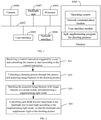
- Fig. 1 is a structural schematic diagram of an embodiment of a smart TV of the present application.
- a device of embodiments of the present application may be a smart TV, or a terminal device with display function such as a smart phone, a tablet computer, a portable computer, or the like.
- the smart TV is preferred as the device of this embodiment.
- the smart TV may include a processor 1001, such as a CPU, a communication bus 1002, a user interface 1003, a network interface 1004, a memory 1005, a camera 1006, and a backlight unit 1007.
- the communication bus 1002 is used to realize connection and communication between these components.
- the user interface 1003 may include a display screen (Display), an input unit such as a keyboard (Keyboard), and the user interface 1003 may optionally include a standard wired interface, and a wireless interface.
- the network interface 1004 may optionally include a standard wired interface a wireless interface (e.g., a WI-FI interface).
- the memory 1005 may be a highspeed RAM memory or a non-volatile memory such as a disk memory.
- the memory 1005 may optionally be a storage device independent of the processor 1001 described above.
- the camera 1006 may be a built-in camera or an external camera for collecting a shooting picture in front of the camera.
- the backlight unit 1007 includes a plurality of RGB tricolor lamp beads for supplying light to the shooting pictures by emitting light from the plurality of RGB tricolor lamp beads.
- Fig. 1 does not constitute a limitation to the smart TV, which may include more or fewer components than illustrated, or a combination of certain components, or different component arrangements.
- the memory 1005 can include an operation system, a network communication module, a user interface module and a light supplementing program for shooting pictures.
- the network interface 1004 is mainly configured for connecting a background server and performing data communication with the background server.
- the user interface 1003 is mainly configured for connecting a client (User) and performing data communication with the client.
- the processor 1001 can be configured to invoke the light supplementing program for shooting pictures stored in the memory 1005 and perform the following operations:
- the processor 1001 can invoke the light supplementing program for shooting pictures stored in the memory 1005 and also perform the following operations:
- the processor 1001 can invoke the light supplementing program for shooting pictures stored in the memory 1005 and also perform the following operations: adjusting brightness values of RGB tricolor lamp beads in the regions to be supplemented to the brightness threshold value according to the supplementing light mode.
- the processor 1001 can invoke the light supplementing program for shooting pictures stored in the memory 1005 and also perform the following operations:
- the processor 1001 can invoke the light supplementing program for shooting pictures stored in the memory 1005 and also perform the following operations:
- the processor 1001 can invoke the light supplementing program for shooting pictures stored in the memory 1005 and also perform the following operations:
- the processor 1001 can invoke the light supplementing program for shooting pictures stored in the memory 1005 and also perform the following operations:
- the processor 1001 can invoke the light supplementing program for shooting pictures stored in the memory 1005 and also perform the following operations:
- Fig. 2 is a flow diagram of a first embodiment of a light supplementing method for shooting pictures of the present application.
- the light supplementing method for shooting pictures is applied to a smart TV with a camera.
- a backlight unit of the smart TV includes a plurality of RGB tricolor lamp beads.
- the light supplementing method for shooting pictures includes: Operation S10, receiving a control instruction triggered by a user, and controlling the camera to start according to the control instruction.
- the device of this embodiment of the present application can be a smart TV, a smart phone, a tablet computer, a portable computer or the like.
- the subsequent embodiments all take the smart TV as an example.
- the smart TV has its own camera or is externally connected with a camera, and the backlight unit of the smart TV includes a plurality of RGB tricolor lamp beads.
- the smart TV can receive a control instruction triggered by a user in real time. When the control instruction is to start the camera to enter a shooting or video mode, the smart TV starts the camera to obtain shooting pictures in front of the camera according to the control instruction.
- the user can trigger the control instruction of starting the camera by sending infrared remote control codes through a remote controller, sending a voice instruction or a gesture instruction, or triggering physical keys or virtual keys on the smart TV, which is not specifically limited in the present application.
- Operation S20 collecting a shooting picture through the camera and acquiring image features of the shooting picture.
- the camera collects shooting pictures in real time, and analyzes the collected shooting pictures to obtain the image features of the shooting pictures.
- the image features can be brightness, hue, user information or background information of the pictures.
- the image analysis may be to calculate the brightness and hue of each pixel according to RGB data of each pixel in the captured pictures, or to identify the user information and background information in the captured pictures using an existing image recognition algorithm.
- Operation S30 matching the acquired image features with image features in a preset model, and determining a supplementing light mode.
- An image feature matching model is preset in the smart TV, which stores a brightness threshold value of an ideal shooting picture, tone preferences of different users and tones for different backgrounds through training and learning. After the smart TV acquires image features of a shooting picture, the smart TV can match the acquired image features of the shooting picture with image features in the preset model based on one or a combination of the above image features, so as to determine a supplementing light mode of the shooting picture.
- Operation S40 controlling each RGB tricolor lamp bead in the backlight unit to emit light according to the supplementing light mode, so that the backlight unit supplements light to the shooting picture.
- An image display system of the smart TV mainly involves a TV main control unit, an MCU (Micro controller Unit), a constant current circuit, the backlight unit and a T-CON board.
- the TV main control unit is connected with the MCU through SPI interfaces, and the MCU controls a driving logic of the constant current circuit to control each RGB color lamp of each lamp bead in the backlight unit.
- the TV main control unit is connected with the T-CON board through a shooting picture transmission interface such as a VBYO interface, and transmits image information to the T-CON board.
- the T-CON board is used for displaying the image information after conversion and processing.
- the TV main control unit decodes the shooting picture, acquires brightness information, chrominance information and the like, processes the brightness information of each shooting picture and transmits the processed brightness information to the MCU through the SPI mode.
- the shooting picture is transmitted to the T-CON board.
- the MCU controls each RGB tricolor lamp bead of the backlight unit to emit light according to the brightness information of the current picture.
- each RGB tricolor lamp bead in the backlight unit of the smart TV is controlled to emit light according to the supplementing light mode, so that the backlight unit can supplement light to the shooting picture.
- current values and proportions of red light, green light and blue light in each RGB tricolor lamp bead can be determined according to the supplementing light mode.
- the driving logic of the constant current circuit connected with the RGB tricolor lamp bead is controlled according to the current values and the proportions of the red light, the green light and the blue light in each RGB tricolor lamp bead, thereby realizing the control of the brightness and color tone of each RGB tricolor lamp bead.
- image features of a shooting picture are obtained, and a supplementing light mode is determined according to the image features, a brightness and a color of the shooting picture are controlled according to the supplementing light mode, thereby realizing automatically adjustment of the brightness and color of the shooting picture, and achieving the effect of improving the display effect of the shooting picture and improving the stickiness of users.
- Fig. 3 is a flow diagram of a second embodiment of the light supplementing method for shooting pictures. Based on the embodiment shown in Fig. 2 , when the control instruction is a shooting instruction, after the operation of receiving a control instruction triggered by a user, and controlling the camera to start according to the control instruction, the following operations are included:
- the shooting picture in front of the camera is collected by the camera, and the shooting picture is divided into a plurality of regions, for example, the shooting picture is divided into a plurality of regions evenly according to the number of pixels, or each of the user region and the background region in the shooting picture is divided into a plurality of regions.
- the regions have an one-to-one correspondence with positions of the RGB tricolor lamp beads in the backlight unit. After dividing, RGB values of each pixel in each region is obtained, and an average brightness value of each region is calculated according to the RGB values of each pixel.
- Operation S203 comparing the acquired brightness value of each region with a brightness threshold value in a preset model, and determining whether the brightness value of each region is less than the brightness threshold value.
- the acquired brightness value of each region is compared with a brightness threshold value in a preset model, whether the brightness value of each region is less than the brightness threshold value is determined, operation S204 is executed when a brightness value of a certain region is less than the brightness threshold value; and the shooting picture is directly displayed when there is no region whose brightness value is less than the brightness threshold value.
- the brightness threshold value can be specifically set according to the actual situation and is not specifically limited in the present application.
- the brightness threshold value is set to 128 which is half of the maximum brightness value
- the calculated brightness value of a certain region is lower than 128, it is considered that this region is dark and needs to be supplemented with light.
- the calculated brightness value of a certain region is greater than or equal to 128, it is considered that this region is bright and no need to supplement light.
- Operation S204 if the brightness value of each region is less than the brightness threshold value, recording regions to be supplemented, and calculating difference values between the brightness values of the regions to be supplemented and the brightness threshold value.
- Operation S205 determining the supplementing light mode according to the regions to be supplemented and the difference values.
- Operation S206 adjusting brightness values of RGB tricolor lamp beads in the regions to be supplemented to the brightness threshold value according to the supplementing light mode.
- a current value of each RGB tricolor lamp bead in the backlight unit is calculated, and then the RGB tricolor lamp bead in the backlight unit is controlled according to the current value.
- Operation S206 includes:
- the current values of red light, green light and blue light can be appropriately adjusted according to the difference values between the brightness values of the regions to be supplemented and the brightness threshold value, so that the brightness values of the regions to be supplemented reaches the brightness threshold value.
- the brightnesses of the regions to be supplemented can be increased to a maximum value within an allowable range. For example, according to the peak current that each lamp bead can bear, and under the condition of maintain the performance, the current can be raised to be higher than the maximum current for normal operation. For example, if the normal operation current of the lamp bead is 120mA, the bearable peak current is 350mA, and the verified safe increased current is 200mA, the maximum current that can be raised during shooting can reach 200mA, so as to make the effect of shooting best.
- brightness values of different regions of the shooting picture are obtained, and brightness values of regions to be supplemented and difference values between the brightness values of the regions to be supplemented and the brightness threshold value are determined according to the brightness values, thereby controlling the brightnesses of the RGB tricolor lamp beads in each region, and realizing better effect of shooting.
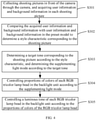
- Fig. 4 is a flow diagram of a third embodiment of the method for supplementing light for shooting pictures. Based on the embodiment shown in Fig. 2 , when the control instruction is a video instruction, after the operation of receiving a control instruction triggered by a user, and controlling the camera to start according to the control instruction, the following operations are included:
- the control instruction is a video instruction
- shooting pictures in front of the camera are collected by the camera, and user information and background information in each shooting picture are acquired through an image recognition algorithm, for example a user identity, a user gender, a background decoration style and the like in the shooting picture are determined.
- the user information and background information are matched with user information and background information in a preset model. Because different color preferences for different user identities, color preferences for different genders of users and colors corresponding to different background decoration styles are obtained through training and learning in the preset model, the acquired user information and background information are compared with the user information and background information in the preset model, and the corresponding style characteristic of the shooting picture is determined.
- Operation S303 determining a target tone corresponding to the shooting picture according to the style characteristic, and determining the supplementing light mode according to the target tone.
- Operation S304 controlling proportions of colors of each RGB tricolor lamp bead in the backlight unit according to the supplementing light mode.
- Operation S305 controlling a luminous tone of each RGB tricolor lamp bead in the backlight unit according to the proportions of colors of the RGB tricolor lamp bead.
- the RGB tricolor lamp beads can be controlled to emit different colors of light according to different proportions of R, G and B colors. For example, when the shooting picture needs to be supplemented with blue light, then, the current values of the blue lamps in the RGB tricolor lamp beads in some regions are correspondingly raised for blue light supplement according to the overcurrent ways. If it is necessary to add colors other than red, green, blue and white, the brightness values of red, green and blue of some or all lamp beads are adjusted according to different proportions of R, G and B colors. Then, the image shows the combined colors of the corresponding backlights, thus adding corresponding colors to the environment.
- a target tone corresponding to the shooting picture is determined according to the user information and background information, thereby controlling a luminous tone of each RGB tricolor lamp bead, and realizing better effect of the video and achieving personalized customization function.
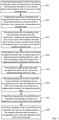
- Fig. 5 is a flow diagram of a fourth embodiment of the method for supplementing light for shooting pictures.
- the control instruction is a video instruction
- the following operations are included: Operation S401, collecting shooting pictures in front of the camera through the camera, and acquiring user information and background information in each shooting picture and a brightness value of each region in each shooting picture.
- the camera collects the shooting picture in front of the camera.
- User information and background information in each shooting picture are obtained through an image recognition algorithm, for example a user identity, a user gender, a background decoration style and the like in the shooting picture are obtained.
- each shooting picture is divided into a plurality of regions, for example, the shooting picture is divided into a plurality of regions evenly according to the number of pixels. It should be noted that the regions have an one-to-one correspondence with positions of the RGB tricolor lamp beads in the backlight unit. After dividing, RGB values of each pixel in each region is obtained, and an average brightness value of each region is calculated according to the RGB values of each pixel.
- the user information, background information and brightness value of each region are obtained, the user information, background information and brightness value of each region are matched with user information, background information and brightness values of each region in a preset model. Because different color preferences for different user identities, color preferences for different genders of users and color corresponding to different background decoration styles are obtained through training and learning in the preset model, the acquired user information and background information are compared with the user information and background information in the preset model, and the corresponding style characteristic of the shooting picture is determined. At the same time, the acquired brightness value of each region is compared with a brightness threshold value in the preset model, and whether the brightness value of each region is less than the brightness threshold value is determined, thereby determining regions to be supplemented.
- Operation S402 comparing the acquired user information and background information with user information and background information in the preset model to determine a style characteristic corresponding to the shooting picture.
- Operation S403 determining a target tone corresponding to the shooting picture according to the style characteristic, comparing the acquired brightness value of each region with a brightness threshold value in the preset model, and determining whether the brightness value of each region is less than the brightness threshold value.
- Operation S404 if the brightness value of each region is less than the brightness threshold value, recording regions to be supplemented and calculating difference values between brightness values of the regions to be supplemented and the brightness threshold value.
- Operation S405 determining the supplementing light mode according to the target tone, the regions to be supplemented and the difference values.
- Operation S406 determining proportions of colors of each RGB tricolor lamp bead in the backlight unit and corresponding current values after adjustment of the RGB tricolor lamp beads in each region to be supplemented according to the supplementing light mode.
- Operation S407 controlling a luminous tone of each RGB tricolor lamp bead in the backlight according to the proportions of colors of the RGB tricolor lamp bead.
- the RGB tricolor lamp beads can be controlled to emit different colors of light according to different proportions of R, G and B colors. For example, when the shooting picture needs to be supplemented with blue light, then, the current values of the blue lamps in the RGB tricolor lamp beads in some regions are correspondingly raised for blue light supplement according to the overcurrent ways. If it is necessary to add colors other than red, green, blue and white, the brightness values of red, green and blue of some or all lamp beads are adjusted according to different proportions of R, G and B colors. Then, the image shows the combined colors of the corresponding backlights, thus adding corresponding colors to the whole shooting picture.
- Operation S408 controlling a brightness value of each RGB tricolor lamp bead in the regions to be supplemented to be the brightness threshold value according to a corresponding current value after adjustment of the RGB tricolor lamp bead.
- the current value of each RGB tricolor lamp bead in the backlight unit is calculated, and then the RGB tricolor lamp bead in the backlight unit is controlled according to the current value.
- the current values of red light, green light and blue light can be appropriately adjusted according to the difference values between the brightness values of the regions to be supplemented and the brightness threshold value, so that the brightness values of the regions to be supplemented reaches the brightness threshold value.
- the operations S407 and S408 can be combined for calculation, namely, at the time of controlling the luminous tone of each RGB tricolor lamp bead in the backlight according to the proportions of colors of the RGB tricolor lamp bead, the brightness value of each RGB tricolor lamp bead in the regions to be supplemented is controlled to the brightness threshold value according to the corresponding current value after adjustment of the RGB tricolor lamp bead.
- the reason is that adjusting the ratios of red light, green light and blue light is also determined according to the current value ratios of the three color lights. After the current value ratios of the three color lights is determined, the current values of the three color lights can be synchronously increased or reduced to adjust their brightnesses. Therefore, in this embodiment, after the target tone is determined based on the user information and the background information, the brightnesses of the regions to be supplemented is synchronously adjusted to the brightness threshold value.
- a target tone corresponding to the shooting picture and brightnesses of the regions to be supplemented are determined according to the user information, background information and the brightness value of each region, and then the luminous tone and brightness of each RGB tricolor lamp bead are controlled, thus realizing better effect of the video and achieving personalized customization function.
- the embodiments of the present application also provides a computer-readable storage medium.
- the computer-readable storage medium stores a light supplementing program for shooting pictures.
- the light supplementing program for shooting pictures is executed by a processor, the following operations are realized:
- the following operations are also realized: adjusting brightness values of RGB tricolor lamp beads in the regions to be supplemented to be the brightness threshold value according to the supplementing light mode.
- the computer software product is stored in a storage medium (e.g. ROM/RAM, magnetic disk, optical disk) as described above and includes instructions for causing a terminal device (which may be a mobile phone, a computer, server, an air conditioner, or a network device, etc.) to perform the methods described in various embodiments of the present application.
- a storage medium e.g. ROM/RAM, magnetic disk, optical disk
Landscapes
- Engineering & Computer Science (AREA)
- Multimedia (AREA)
- Signal Processing (AREA)
- Software Systems (AREA)
- Physics & Mathematics (AREA)
- Computer Hardware Design (AREA)
- General Physics & Mathematics (AREA)
- Theoretical Computer Science (AREA)
- Studio Devices (AREA)
- Control Of Indicators Other Than Cathode Ray Tubes (AREA)
Abstract
Description
- The present application claims the priority of a Chinese patent application
NO. 201911063435. X, filed with the Patent Office of China on November 1, 2019 - The present application relates to the technical field of smart TVs, in particular to a light supplementing method for shooting pictures, a smart TV and a computer-readable storage medium.
- Applying cameras to smart TVs and improving TV AI capabilities based on the cameras have become a way for TV manufacturers to enrich TV applications and improve the viscosity of TV users, such as developing online video interconnection, selfie and other functions. However, due to the limitation of users' use environment, when using photo-taking and video functions, the image effect is always not ideal, so it is necessary to supplement light for the user's environment through TV backlight. However, because the backlight of the existing smart TVs is a white light source, the way of supplementing light is relatively simple, and the effect of supplementing light is not obvious.
- Therefore, in order to improve the photo-taking and video image presentation effect of smart TVs, to realize an intelligent light supplement function of TVs has become an urgent technical problem to be solved.
- The main purpose of the present application is to provide a light supplementing method for shooting pictures, a smart TV and a computer-readable storage medium, aiming at solving the technical problems of single supplementing light mode and inobvious supplementing light effect in the related art.
- In order to achieve the above purpose, the present application provides a light-supplementing method for shooting a picture, which is applied to a smart TV with a camera, a backlight unit of the smart TV includes a plurality of RGB tricolor lamp beads, and the light supplementing method for shooting pictures includes:
- receiving a control instruction triggered by a user, and controlling the camera to start according to the control instruction;
- collecting a shooting picture through the camera and acquiring image features of the shooting picture;
- matching the acquired image features with image features in a preset model, and determining a supplementing light mode; and
- controlling each RGB tricolor lamp bead in the backlight unit to emit light according to the supplementing light mode, thereby the backlight unit supplementing light to the shooting picture.
- In an embodiment, the control instruction is a shooting instruction, and the operations of collecting a shooting picture through the camera and acquiring image features of the shooting picture; matching the acquired image features with image features in a preset model, and determining a supplementing light mode includes:
- collecting the shooting picture through the camera in front of the camera and dividing the shooting picture into a plurality of regions;
- calculating a brightness value of each region according to RGB values of each pixel in each region;
- comparing the acquired brightness value of each region with a brightness threshold value in a preset model, and determining whether the brightness value of each region is less than the brightness threshold value;
- if the brightness value of each region is less than the brightness threshold value, recording regions to be supplemented, and calculating difference values between the brightness values of the regions to be supplemented and the brightness threshold value; and
- determining the supplementing light mode according to the regions to be supplemented and the difference values.
- In an embodiment, the operation of controlling each RGB tricolor lamp bead in the backlight unit to emit light according to the supplementing light mode, thereby the backlight unit supplementing light to the shooting picture includes:
adjusting brightness values of RGB tricolor lamp beads in the regions to be supplemented to the brightness threshold value according to the supplementing light mode. - In an embodiment, the operation of adjusting brightness values of RGB tricolor lamp beads in the regions to be supplemented to the brightness threshold value according to the supplementing light mode includes:
- determining current values corresponding to RGB tricolor lamp beads in each region to be supplemented according to the supplementing light mode; and
- controlling a brightness value of each RGB tricolor lamp bead in the regions to be supplemented to the brightness threshold value according to a corresponding current value after adjustment of the RGB tricolor lamp bead.
- In an embodiment, the control instruction is a video instruction, and the operations of collecting a shooting picture through the camera and acquiring image features of the shooting picture; matching the acquired image features with image features in a preset model, and determining a supplementing light mode include:
- collecting shooting pictures in front of the camera through the camera, and acquiring user information and background information in each shooting picture;
- comparing the acquired user information and background information with user information and background information in the preset model to determine a style characteristic corresponding to the shooting picture; and
- determining a target tone corresponding to the shooting picture according to the style characteristic, and determining the supplementing light mode according to the target tone.
- In an embodiment, the operation of controlling each RGB tricolor lamp bead in the backlight unit to emit light according to the supplementing light mode, thereby the backlight unit supplementing light to the shooting picture includes:
- controlling proportions of colors of each RGB tricolor lamp bead in the backlight unit according to the supplementing light mode;
- controlling a luminous tone of each RGB tricolor lamp bead in the backlight unit according to the proportions of colors of the RGB tricolor lamp bead.
- In an embodiment, the control instruction is a video instruction, and the operations of collecting a shooting picture through the camera and acquiring image features of the shooting picture; matching the acquired image features with image features in a preset model, and determining a supplementing light mode further include:
- collecting shooting pictures in front of the camera through the camera, and acquiring user information and background information in each shooting picture and a brightness value of each region in each shooting picture;
- comparing the acquired user information and background information with user information and background information in the preset model to determine a style characteristic corresponding to the shooting picture;
- determining a target tone corresponding to the shooting picture according to the style characteristic, comparing the acquired brightness value of each region with a brightness threshold value in the preset model, and determining whether the brightness value of each region is less than the brightness threshold value;
- if the brightness value of each region is less than the brightness threshold value, recording regions to be supplemented and calculating difference values between brightness values of the regions to be supplemented and the brightness threshold value; and
- determining the supplementing light mode according to the target tone, the regions to be supplemented and the difference values.
- In an embodiment, the operation of controlling each RGB tricolor lamp bead in the backlight unit to emit light according to the supplementing light mode, thereby the backlight unit supplementing light to the shooting picture includes:
- determining proportions of colors of each RGB tricolor lamp bead in the backlight unit and corresponding current values after adjustment of the RGB tricolor lamp beads in each region to be supplemented according to the supplementing light mode;
- controlling a luminous tone of each RGB tricolor lamp bead in the backlight according to the proportions of colors of the RGB tricolor lamp bead; and
- controlling a brightness value of each RGB tricolor lamp bead in the regions to be supplemented to the brightness threshold value according to a corresponding current value after adjustment of the RGB tricolor lamp bead.
- In an embodiment, dividing the shooting picture into a plurality of regions includes: dividing the shooting picture into a plurality of regions evenly according to a number of pixels, or dividing each of a user region and a background region in the shooting picture into a plurality of regions.
- In an embodiment, the regions have an one-to-one correspondence with positions of the RGB tricolor lamp beads in the backlight unit.
- In addition, in order to achieve the above purpose, the present application also provides a smart TV, which a camera, a backlight unit, a memory, a processor, and a light supplementing program for shooting pictures stored in the memory and executable by the processor;
- the camera is configured for collecting a shooting picture in front of the camera;
- the backlight unit is configured for supplement light to the shooting picture through lights of a plurality of RGB tricolor lamp beads;
- when the light supplementing program for shooting pictures is executed by the processor, operations of the light supplementing method for shooting pictures as described above is implemented.
- In addition, in order to achieve the above purpose, the present application also provides a computer-readable storage medium storing a light supplementing program for shooting pictures, wherein, when the light supplementing program for shooting pictures is executed by a processor, operations of the light supplementing method for shooting pictures as described above is implemented.
- The present application controls the camera to start according to a control instruction triggered by a user, collects a shooting picture through the camera and acquire image features of the shooting picture, matches the acquired image features with image features in a preset model to determine a supplementing light mode, and controls each RGB tricolor lamp bead in a backlight unit to emit light according to the supplementing light mode, so that the backlight unit can supplement light to the shooting picture. According to the above embodiments, the present application matches the image features in the shooting picture acquired by the camera with the image features in the preset model to determine the supplementing light mode. After the supplementing light mode is determined, the brightness and color of each RGB tricolor lamp bead in the backlight are controlled to adjust the brightness and color of the shooting picture, thereby improving the display effect of the shooting picture and improving the stickiness of users.
-
-
Fig. 1 is a schematic structural diagram of an embodiment of a smart TV of the present application. -
Fig. 2 is a flow diagram of a first embodiment of a light supplementing method for shooting pictures according to the present application; -
Fig. 3 is a flow diagram of a second embodiment of the light supplementing method for shooting pictures according to the present application; -
Fig. 4 is a flow diagram of a third embodiment of the light supplementing method for shooting pictures according to the present application; -
Fig. 5 is a flow diagram of a fourth embodiment of the light supplementing method for shooting pictures according to the present application. - It should be understood that the specific embodiments described herein are for explanatory purposes only and are not intended to limit the present application.
- As shown in
Fig. 1, Fig. 1 is a structural schematic diagram of an embodiment of a smart TV of the present application. - A device of embodiments of the present application may be a smart TV, or a terminal device with display function such as a smart phone, a tablet computer, a portable computer, or the like. In this embodiment of the present application, the smart TV is preferred as the device of this embodiment.
- As shown in
Fig. 1 , the smart TV may include aprocessor 1001, such as a CPU, acommunication bus 1002, auser interface 1003, anetwork interface 1004, amemory 1005, acamera 1006, and abacklight unit 1007. Thecommunication bus 1002 is used to realize connection and communication between these components. Theuser interface 1003 may include a display screen (Display), an input unit such as a keyboard (Keyboard), and theuser interface 1003 may optionally include a standard wired interface, and a wireless interface. Thenetwork interface 1004 may optionally include a standard wired interface a wireless interface (e.g., a WI-FI interface). Thememory 1005 may be a highspeed RAM memory or a non-volatile memory such as a disk memory. Thememory 1005 may optionally be a storage device independent of theprocessor 1001 described above. Thecamera 1006 may be a built-in camera or an external camera for collecting a shooting picture in front of the camera. Thebacklight unit 1007 includes a plurality of RGB tricolor lamp beads for supplying light to the shooting pictures by emitting light from the plurality of RGB tricolor lamp beads. - Those skilled in the art will appreciate that the architecture of the smart TV shown in
Fig. 1 does not constitute a limitation to the smart TV, which may include more or fewer components than illustrated, or a combination of certain components, or different component arrangements. - As shown in
Fig. 1 , thememory 1005, as a computer storage medium, can include an operation system, a network communication module, a user interface module and a light supplementing program for shooting pictures. - In the smart TV shown in
Fig. 1 , thenetwork interface 1004 is mainly configured for connecting a background server and performing data communication with the background server. Theuser interface 1003 is mainly configured for connecting a client (User) and performing data communication with the client. Theprocessor 1001 can be configured to invoke the light supplementing program for shooting pictures stored in thememory 1005 and perform the following operations: - receiving a control instruction triggered by a user and controlling the camera to start according to the control instruction;
- collecting a shooting picture through the camera and acquiring image features of the shooting picture;
- matching the acquired image features with image features in a preset model to determine a supplementing light mode;
- controlling each RGB tricolor lamp bead in the backlight unit to emit light according to the supplementing light mode, so that the backlight unit can supplement light to the shooting picture.
- In an embodiment, the
processor 1001 can invoke the light supplementing program for shooting pictures stored in thememory 1005 and also perform the following operations: - collecting a shooting picture in front of the camera through the camera and dividing the shooting picture into a plurality of regions;
- calculating a brightness value of each region according to RGB values of each pixel in each region;
- the operation of matching the acquired image features with image features in a preset model and determining the supplementing light mode includes:
- comparing the acquired brightness value of each region with a brightness threshold value in the preset model to judge whether the brightness value of each region is less than the brightness threshold value;
- if the brightness value of each region is less than the brightness threshold value, recording regions to be supplemented, and calculating differences between brightness values of the regions to be supplemented and the brightness threshold value;
- determining the supplementing light mode according to the regions to be supplemented and the difference values.
- In an embodiment, the
processor 1001 can invoke the light supplementing program for shooting pictures stored in thememory 1005 and also perform the following operations:
adjusting brightness values of RGB tricolor lamp beads in the regions to be supplemented to the brightness threshold value according to the supplementing light mode. - In an embodiment, the
processor 1001 can invoke the light supplementing program for shooting pictures stored in thememory 1005 and also perform the following operations: - determining current values corresponding to the adjusted RGB tricolor lamp beads in each region to be supplemented according to the supplementing light mode;
- controlling a brightness value of each RGB tricolor lamp bead in the regions to be supplemented to the brightness threshold value according to the corresponding current values after adjustment of the RGB tricolor lamp bead.
- In an embodiment, the
processor 1001 can invoke the light supplementing program for shooting pictures stored in thememory 1005 and also perform the following operations: - collecting shooting pictures in front of the camera through the camera, and obtaining user information and background information in each shooting picture;
- the operation of matching the acquired image features with image features in a preset model to determine a supplementing light mode includes:
- comparing the acquired user information and background information with user information and background information in the preset model to determine a style characteristic corresponding to the shooting picture;
- determining a target tone corresponding to the shooting picture according to the style characteristic, and determining the supplementing light mode according to the target tone.
- In an embodiment, the
processor 1001 can invoke the light supplementing program for shooting pictures stored in thememory 1005 and also perform the following operations: - controlling proportions of colors of each RGB tricolor lamp bead in the backlight unit according to the supplementing light mode;
- controlling a luminous tone of each RGB tricolor lamp bead in the backlight unit according to the proportions of colors of the RGB tricolor lamp bead.
- In an embodiment, the
processor 1001 can invoke the light supplementing program for shooting pictures stored in thememory 1005 and also perform the following operations: - collecting shooting pictures in front of the camera through the camera, and obtaining user information, background information of each shooting picture and a brightness value of each region of each shooting picture;
- the operation of matching the acquired image features with image features in a preset model and determining a supplementing light mode includes:
- comparing the acquired user information and background information with user information and background information in the preset model to determine a style characteristic corresponding to the shooting picture;
- determining a target tone corresponding to the shooting picture according to the style characteristic, comparing the acquired brightness value of each region with a brightness threshold value in the preset model, and determining whether the brightness value of each region is less than the brightness threshold value;
- if the brightness value of each region is less than the brightness threshold value, recording regions to be supplemented, and calculating difference values between brightness values of the regions to be supplemented and the brightness threshold value;
- determining the supplementing light mode according to the target tone, the regions to be supplemented and the difference values.
- In an embodiment, the
processor 1001 can invoke the light supplementing program for shooting pictures stored in thememory 1005 and also perform the following operations: - determining proportions of colors of each RGB tricolor lamp bead in the backlight unit and a corresponding current value after adjustment of the RGB tricolor lamp bead in each region to be supplemented according to the supplementing light mode;
- controlling a luminous tone of each RGB tricolor lamp bead in the backlight unit according to the proportions of colors of the RGB tricolor lamp bead;
- controlling a brightness value of each RGB tricolor lamp bead in the regions to be supplemented to be the brightness threshold value according to a corresponding current value after adjustment of the RGB tricolor lamp bead.
- The specific embodiments of the smart TV of the present application are basically the same as each embodiment of the light supplementing method for shooting pictures described below and will not be described here.
- Referring to
Fig. 2, Fig. 2 is a flow diagram of a first embodiment of a light supplementing method for shooting pictures of the present application. The light supplementing method for shooting pictures is applied to a smart TV with a camera. A backlight unit of the smart TV includes a plurality of RGB tricolor lamp beads. The light supplementing method for shooting pictures includes:
Operation S10, receiving a control instruction triggered by a user, and controlling the camera to start according to the control instruction. - The device of this embodiment of the present application can be a smart TV, a smart phone, a tablet computer, a portable computer or the like. For convenience of explanation, the subsequent embodiments all take the smart TV as an example. The smart TV has its own camera or is externally connected with a camera, and the backlight unit of the smart TV includes a plurality of RGB tricolor lamp beads. The smart TV can receive a control instruction triggered by a user in real time. When the control instruction is to start the camera to enter a shooting or video mode, the smart TV starts the camera to obtain shooting pictures in front of the camera according to the control instruction. It should be noted that the user can trigger the control instruction of starting the camera by sending infrared remote control codes through a remote controller, sending a voice instruction or a gesture instruction, or triggering physical keys or virtual keys on the smart TV, which is not specifically limited in the present application.
- Operation S20, collecting a shooting picture through the camera and acquiring image features of the shooting picture.
- After the camera is started, the camera collects shooting pictures in real time, and analyzes the collected shooting pictures to obtain the image features of the shooting pictures. The image features can be brightness, hue, user information or background information of the pictures. Specifically, the image analysis may be to calculate the brightness and hue of each pixel according to RGB data of each pixel in the captured pictures, or to identify the user information and background information in the captured pictures using an existing image recognition algorithm.
- Operation S30, matching the acquired image features with image features in a preset model, and determining a supplementing light mode.
- An image feature matching model is preset in the smart TV, which stores a brightness threshold value of an ideal shooting picture, tone preferences of different users and tones for different backgrounds through training and learning. After the smart TV acquires image features of a shooting picture, the smart TV can match the acquired image features of the shooting picture with image features in the preset model based on one or a combination of the above image features, so as to determine a supplementing light mode of the shooting picture.
- Operation S40, controlling each RGB tricolor lamp bead in the backlight unit to emit light according to the supplementing light mode, so that the backlight unit supplements light to the shooting picture.
- An image display system of the smart TV mainly involves a TV main control unit, an MCU (Micro controller Unit), a constant current circuit, the backlight unit and a T-CON board. The TV main control unit is connected with the MCU through SPI interfaces, and the MCU controls a driving logic of the constant current circuit to control each RGB color lamp of each lamp bead in the backlight unit. On the other hand, the TV main control unit is connected with the T-CON board through a shooting picture transmission interface such as a VBYO interface, and transmits image information to the T-CON board. The T-CON board is used for displaying the image information after conversion and processing. When working normally, the TV main control unit decodes the shooting picture, acquires brightness information, chrominance information and the like, processes the brightness information of each shooting picture and transmits the processed brightness information to the MCU through the SPI mode. The shooting picture is transmitted to the T-CON board. Under the synchronization of the synchronization signal, when a picture is displayed on a display screen, the MCU controls each RGB tricolor lamp bead of the backlight unit to emit light according to the brightness information of the current picture.
- After the smart TV acquires the supplementing light mode, each RGB tricolor lamp bead in the backlight unit of the smart TV is controlled to emit light according to the supplementing light mode, so that the backlight unit can supplement light to the shooting picture. Specifically, current values and proportions of red light, green light and blue light in each RGB tricolor lamp bead can be determined according to the supplementing light mode. The driving logic of the constant current circuit connected with the RGB tricolor lamp bead is controlled according to the current values and the proportions of the red light, the green light and the blue light in each RGB tricolor lamp bead, thereby realizing the control of the brightness and color tone of each RGB tricolor lamp bead.
- In this embodiment, image features of a shooting picture are obtained, and a supplementing light mode is determined according to the image features, a brightness and a color of the shooting picture are controlled according to the supplementing light mode, thereby realizing automatically adjustment of the brightness and color of the shooting picture, and achieving the effect of improving the display effect of the shooting picture and improving the stickiness of users.
- Further, referring to
Fig. 3, Fig. 3 is a flow diagram of a second embodiment of the light supplementing method for shooting pictures. Based on the embodiment shown inFig. 2 , when the control instruction is a shooting instruction, after the operation of receiving a control instruction triggered by a user, and controlling the camera to start according to the control instruction, the following operations are included: - Operation S201, collecting the shooting picture through the camera in front of the camera and dividing the shooting picture into a plurality of regions.
- Operation S202, calculating a brightness value of each region according to RGB values of each pixel in each region.
- When the control instruction is a shooting instruction, the shooting picture in front of the camera is collected by the camera, and the shooting picture is divided into a plurality of regions, for example, the shooting picture is divided into a plurality of regions evenly according to the number of pixels, or each of the user region and the background region in the shooting picture is divided into a plurality of regions. It should be noted that the regions have an one-to-one correspondence with positions of the RGB tricolor lamp beads in the backlight unit. After dividing, RGB values of each pixel in each region is obtained, and an average brightness value of each region is calculated according to the RGB values of each pixel.
- Operation S203, comparing the acquired brightness value of each region with a brightness threshold value in a preset model, and determining whether the brightness value of each region is less than the brightness threshold value.
- The acquired brightness value of each region is compared with a brightness threshold value in a preset model, whether the brightness value of each region is less than the brightness threshold value is determined, operation S204 is executed when a brightness value of a certain region is less than the brightness threshold value; and the shooting picture is directly displayed when there is no region whose brightness value is less than the brightness threshold value. It should be noted that the brightness threshold value can be specifically set according to the actual situation and is not specifically limited in the present application. Assuming that the number of bits of RGB data of the shooting picture is 8 bits, that is, the maximum value of pixels is 256, when the brightness threshold value is set to 128 which is half of the maximum brightness value, when the calculated brightness value of a certain region is lower than 128, it is considered that this region is dark and needs to be supplemented with light. When the calculated brightness value of a certain region is greater than or equal to 128, it is considered that this region is bright and no need to supplement light.
- Operation S204, if the brightness value of each region is less than the brightness threshold value, recording regions to be supplemented, and calculating difference values between the brightness values of the regions to be supplemented and the brightness threshold value.
- Operation S205, determining the supplementing light mode according to the regions to be supplemented and the difference values.
- Operation S206, adjusting brightness values of RGB tricolor lamp beads in the regions to be supplemented to the brightness threshold value according to the supplementing light mode.
- After the regions to be supplemented and the difference values between the brightness values of the regions to be supplemented and the brightness threshold value are determined, a current value of each RGB tricolor lamp bead in the backlight unit is calculated, and then the RGB tricolor lamp bead in the backlight unit is controlled according to the current value.
- Specifically, Operation S206 includes:
- Operation S210, determining current values corresponding to RGB tricolor lamp beads in each region to be supplemented according to the supplementing light mode.
- Operation S211, controlling the brightness value of each RGB tricolor lamp bead in the regions to be supplemented to be the brightness threshold value according to a corresponding current value after adjustment of the RGB tricolor lamp bead.
- According to the corresponding relationship between the current values of red light, green light and blue light and the brightnesses of red light, green light and blue light in the RGB tricolor lamp beads obtained from training and learning in the model, the current values of red light, green light and blue light can be appropriately adjusted according to the difference values between the brightness values of the regions to be supplemented and the brightness threshold value, so that the brightness values of the regions to be supplemented reaches the brightness threshold value.
- As another embodiment, since a strong white light is required as a flash light when shooting, the brightnesses of the regions to be supplemented can be increased to a maximum value within an allowable range. For example, according to the peak current that each lamp bead can bear, and under the condition of maintain the performance, the current can be raised to be higher than the maximum current for normal operation. For example, if the normal operation current of the lamp bead is 120mA, the bearable peak current is 350mA, and the verified safe increased current is 200mA, the maximum current that can be raised during shooting can reach 200mA, so as to make the effect of shooting best.
- In the embodiment, brightness values of different regions of the shooting picture are obtained, and brightness values of regions to be supplemented and difference values between the brightness values of the regions to be supplemented and the brightness threshold value are determined according to the brightness values, thereby controlling the brightnesses of the RGB tricolor lamp beads in each region, and realizing better effect of shooting.
- Referring to
Fig. 4, Fig. 4 is a flow diagram of a third embodiment of the method for supplementing light for shooting pictures. Based on the embodiment shown inFig. 2 , when the control instruction is a video instruction, after the operation of receiving a control instruction triggered by a user, and controlling the camera to start according to the control instruction, the following operations are included: - Operation S301, collecting shooting pictures in front of the camera through the camera, and acquiring user information and background information in each shooting picture.
- Operation S302, comparing the acquired user information and background information with user information and background information in the preset model to determine a style characteristic corresponding to the shooting picture.
- When the control instruction is a video instruction, shooting pictures in front of the camera are collected by the camera, and user information and background information in each shooting picture are acquired through an image recognition algorithm, for example a user identity, a user gender, a background decoration style and the like in the shooting picture are determined. After the user information and background information are obtained, the user information and background information are matched with user information and background information in a preset model. Because different color preferences for different user identities, color preferences for different genders of users and colors corresponding to different background decoration styles are obtained through training and learning in the preset model, the acquired user information and background information are compared with the user information and background information in the preset model, and the corresponding style characteristic of the shooting picture is determined.
- Operation S303, determining a target tone corresponding to the shooting picture according to the style characteristic, and determining the supplementing light mode according to the target tone.
- Operation S304, controlling proportions of colors of each RGB tricolor lamp bead in the backlight unit according to the supplementing light mode.
- Operation S305, controlling a luminous tone of each RGB tricolor lamp bead in the backlight unit according to the proportions of colors of the RGB tricolor lamp bead.
- Based on the luminous principle of the RGB tricolor lamp beads, the RGB tricolor lamp beads can be controlled to emit different colors of light according to different proportions of R, G and B colors. For example, when the shooting picture needs to be supplemented with blue light, then, the current values of the blue lamps in the RGB tricolor lamp beads in some regions are correspondingly raised for blue light supplement according to the overcurrent ways. If it is necessary to add colors other than red, green, blue and white, the brightness values of red, green and blue of some or all lamp beads are adjusted according to different proportions of R, G and B colors. Then, the image shows the combined colors of the corresponding backlights, thus adding corresponding colors to the environment.
- In this embodiment, user information and background information in the shooting picture are obtained, and a target tone corresponding to the shooting picture is determined according to the user information and background information, thereby controlling a luminous tone of each RGB tricolor lamp bead, and realizing better effect of the video and achieving personalized customization function.
- Referring to
Fig. 5, Fig. 5 is a flow diagram of a fourth embodiment of the method for supplementing light for shooting pictures. Based on the embodiment shown inFig. 2 , when the control instruction is a video instruction, after the operation of receiving a control instruction triggered by a user, and controlling the camera to start according to the control instruction, the following operations are included:
Operation S401, collecting shooting pictures in front of the camera through the camera, and acquiring user information and background information in each shooting picture and a brightness value of each region in each shooting picture. - When the control instruction is a video instruction, the camera collects the shooting picture in front of the camera. User information and background information in each shooting picture are obtained through an image recognition algorithm, for example a user identity, a user gender, a background decoration style and the like in the shooting picture are obtained. At the same time, each shooting picture is divided into a plurality of regions, for example, the shooting picture is divided into a plurality of regions evenly according to the number of pixels. It should be noted that the regions have an one-to-one correspondence with positions of the RGB tricolor lamp beads in the backlight unit. After dividing, RGB values of each pixel in each region is obtained, and an average brightness value of each region is calculated according to the RGB values of each pixel.
- After the user information, background information and brightness value of each region are obtained, the user information, background information and brightness value of each region are matched with user information, background information and brightness values of each region in a preset model. Because different color preferences for different user identities, color preferences for different genders of users and color corresponding to different background decoration styles are obtained through training and learning in the preset model, the acquired user information and background information are compared with the user information and background information in the preset model, and the corresponding style characteristic of the shooting picture is determined. At the same time, the acquired brightness value of each region is compared with a brightness threshold value in the preset model, and whether the brightness value of each region is less than the brightness threshold value is determined, thereby determining regions to be supplemented.
- Operation S402, comparing the acquired user information and background information with user information and background information in the preset model to determine a style characteristic corresponding to the shooting picture.
- Operation S403, determining a target tone corresponding to the shooting picture according to the style characteristic, comparing the acquired brightness value of each region with a brightness threshold value in the preset model, and determining whether the brightness value of each region is less than the brightness threshold value.
- Operation S404, if the brightness value of each region is less than the brightness threshold value, recording regions to be supplemented and calculating difference values between brightness values of the regions to be supplemented and the brightness threshold value.
- Operation S405, determining the supplementing light mode according to the target tone, the regions to be supplemented and the difference values.
- Operation S406, determining proportions of colors of each RGB tricolor lamp bead in the backlight unit and corresponding current values after adjustment of the RGB tricolor lamp beads in each region to be supplemented according to the supplementing light mode.
- Operation S407, controlling a luminous tone of each RGB tricolor lamp bead in the backlight according to the proportions of colors of the RGB tricolor lamp bead.
- Based on the luminous principle of the RGB tricolor lamp beads, the RGB tricolor lamp beads can be controlled to emit different colors of light according to different proportions of R, G and B colors. For example, when the shooting picture needs to be supplemented with blue light, then, the current values of the blue lamps in the RGB tricolor lamp beads in some regions are correspondingly raised for blue light supplement according to the overcurrent ways. If it is necessary to add colors other than red, green, blue and white, the brightness values of red, green and blue of some or all lamp beads are adjusted according to different proportions of R, G and B colors. Then, the image shows the combined colors of the corresponding backlights, thus adding corresponding colors to the whole shooting picture.
- Operation S408, controlling a brightness value of each RGB tricolor lamp bead in the regions to be supplemented to be the brightness threshold value according to a corresponding current value after adjustment of the RGB tricolor lamp bead.
- After the regions to be supplemented and the difference values between the brightness values of the regions to be supplemented and the brightness threshold value are determined, the current value of each RGB tricolor lamp bead in the backlight unit is calculated, and then the RGB tricolor lamp bead in the backlight unit is controlled according to the current value. According to the corresponding relationship between the current values of red light, green light and blue light and the brightnesses of red light, green light and blue light in the RGB tricolor lamp beads obtained from training and learning in the model, the current values of red light, green light and blue light can be appropriately adjusted according to the difference values between the brightness values of the regions to be supplemented and the brightness threshold value, so that the brightness values of the regions to be supplemented reaches the brightness threshold value.
- Of course, as another embodiment, the operations S407 and S408 can be combined for calculation, namely, at the time of controlling the luminous tone of each RGB tricolor lamp bead in the backlight according to the proportions of colors of the RGB tricolor lamp bead, the brightness value of each RGB tricolor lamp bead in the regions to be supplemented is controlled to the brightness threshold value according to the corresponding current value after adjustment of the RGB tricolor lamp bead. The reason is that adjusting the ratios of red light, green light and blue light is also determined according to the current value ratios of the three color lights. After the current value ratios of the three color lights is determined, the current values of the three color lights can be synchronously increased or reduced to adjust their brightnesses. Therefore, in this embodiment, after the target tone is determined based on the user information and the background information, the brightnesses of the regions to be supplemented is synchronously adjusted to the brightness threshold value.
- In this embodiment, user information, background information and a brightness value of each region in the shooting picture are acquired, a target tone corresponding to the shooting picture and brightnesses of the regions to be supplemented are determined according to the user information, background information and the brightness value of each region, and then the luminous tone and brightness of each RGB tricolor lamp bead are controlled, thus realizing better effect of the video and achieving personalized customization function.
- In addition, the embodiments of the present application also provides a computer-readable storage medium. The computer-readable storage medium stores a light supplementing program for shooting pictures. When the light supplementing program for shooting pictures is executed by a processor, the following operations are realized:
- receiving a control instruction triggered by a user and controlling a camera to start according to the control instruction;
- collecting a shooting picture through the camera and acquiring image features of the shooting picture;
- matching the acquired image features with image features in a preset model to determine a supplementing light mode;
- controlling each RGB tricolor lamp bead in a backlight unit to emit light according to the supplementing light mode, so that the backlight unit supplements light to the shooting picture.
- In one embodiment, when the light supplementing program for shooting pictures is executed by the processor, the following operations are also realized:
- collecting the shooting picture in front of the camera through the camera and dividing the shooting picture into a plurality of regions;
- calculating a brightness values of each region according to RGB values of each image pixel in each region;
- the operation of matching the acquired image features with image features in a preset model to determine a supplementing light mode include:
- comparing the acquired brightness value of each region with a brightness threshold value in the preset model to determine whether the brightness value of each region is less than the brightness threshold value;
- if the brightness value of each region is less than the brightness threshold value, recording regions to be supplemented, and calculating difference values between brightness values of the regions to be supplemented and the brightness threshold value;
- determining the supplementing light mode according to the regions to be supplemented and the difference values.
- In one embodiment, when the light supplementing program for shooting pictures is executed by the processor, the following operations are also realized:
adjusting brightness values of RGB tricolor lamp beads in the regions to be supplemented to be the brightness threshold value according to the supplementing light mode. - In one embodiment, when the light supplementing program for shooting pictures is executed by the processor, the following operations are also realized:
- determining current values corresponding to the adjusted RGB tricolor lamp beads in each region to be supplemented according to the supplementing light mode;
- controlling a brightness value of each RGB tricolor lamp bead in the regions to be supplemented to the brightness threshold value according to the current values corresponding to the adjusted RGB tricolor lamp beads.
- In one embodiment, when the light supplementing program for shooting pictures is executed by the processor, the following operations are also realized:
- collecting shooting pictures in front of the camera through the camera, and obtaining user information and background information in each shooting picture;
- the operation of matching the acquired image features with image features in a preset model to determine a supplementing light mode includes:
- comparing the acquired user information and background information with user information and background information in the preset model to determine a style characteristic corresponding to the shooting picture;
- determining a target tone corresponding to the shooting picture according to the style characteristic, and determining the supplementing light mode according to the target tone.
- In one embodiment, when the light supplementing program for shooting pictures is executed by the processor, the following operations are also realized:
- controlling proportions of colors of each RGB tricolor lamp bead in the backlight unit according to the supplementing light mode;
- controlling a luminous tone of each RGB tricolor lamp bead in the backlight unit according to the proportions of colors of the RGB tricolor lamp bead.
- In one embodiment, when the light supplementing program for shooting pictures is executed by the processor, the following operations are also realized:
- collecting shooting pictures in front of the camera through the camera, and obtaining user information, background information of each shooting picture and a brightness value of each region of each shooting picture;
- the operation of matching the acquired image features with image features in a preset model and determining a supplementing light mode includes:
- comparing the acquired user information and background information with user information and background information in the preset model to determine a style characteristic corresponding to the shooting picture;
- determining a target tone corresponding to the shooting picture according to the style characteristic, comparing the acquired brightness value of each region with a brightness threshold value in the preset model, and determining whether the brightness value of each region is less than the brightness threshold value;
- if the brightness value of each region is less than the brightness threshold value, recording regions to be supplemented, and calculating differences between brightness values of the regions to be supplemented and the brightness threshold value;
- determining the supplementing light mode according to the target tone, the regions to be supplemented and the difference values.
- In one embodiment, when the light supplementing program for shooting pictures is executed by the processor, the following operations are also realized:
- determining proportions of colors of each RGB tricolor lamp bead in the backlight unit and a corresponding current value after adjustment of the RGB tricolor lamp bead in each region to be supplemented according to the supplementing light mode;
- controlling a luminous tone of each RGB tricolor lamp bead in the backlight unit according to the proportions of colors of the RGB tricolor lamp bead;
- controlling a brightness value of each RGB tricolor lamp bead in the regions to be supplemented to be the brightness threshold value according to the corresponding current value after adjustment of the RGB tricolor lamp bead.
- The specific embodiments of the computer-readable storage medium of the present application are basically the same as embodiments of the light supplementing method for shooting pictures and are not described here.
- It should be noted that in this article, the terms "including", "comprising" or any other variation thereof are intended to encompass non-exclusive inclusion, so that a process, method, article or system that includes a set of elements includes not only those elements but also other elements that are not explicitly listed or that are inherent to such process, method, article or system. In the absence of further limitations, an element defined by the sentence "including an ..." does not preclude the existence of another identical element in the process, method, article or system in which the element is included.
- The above-mentioned serial numbers of the embodiments of the present application are for description only and do not represent the superiority and inferiority of the embodiments.
- From the above description of the embodiments, it will be apparent to those skilled in the art that the methods of the above embodiments can be implemented by means of software plus the necessary general hardware platform, and of course also by means of hardware, but in many cases the former is a preferred embodiment. Based on this understanding, the technical proposal of the present application can be embodied in the form of software products in essence or the part that contributes to the prior art. The computer software product is stored in a storage medium (e.g. ROM/RAM, magnetic disk, optical disk) as described above and includes instructions for causing a terminal device (which may be a mobile phone, a computer, server, an air conditioner, or a network device, etc.) to perform the methods described in various embodiments of the present application.
- The above are only preferred embodiments of the present application, and do not limit the scope of the present application. Any equivalent structure or equivalent process transformation made using the contents of the specification and drawings of the present application, or directly or indirectly applying in other related technical fields, are all included in the claimed scope of the present application.
Claims (12)
- A light supplementing method for shooting pictures, wherein, the light supplementing method for shooting pictures is applied to a smart TV with a camera, a backlight unit of the smart TV comprises a plurality of RGB tricolor lamp beads, and the light supplementing method for shooting pictures comprises:receiving a control instruction triggered by a user, and controlling the camera to start according to the control instruction;collecting a shooting picture through the camera and acquiring image features of the shooting picture;matching the acquired image features with image features in a preset model, and determining a supplementing light mode; andcontrolling each RGB tricolor lamp bead in the backlight unit to emit light according to the supplementing light mode, thereby the backlight unit supplementing light to the shooting picture.
- The light supplementing method for shooting pictures as claimed in claim 1, wherein the control instruction is a shooting instruction, and the operations of collecting a shooting picture through the camera and acquiring image features of the shooting picture; matching the acquired image features with image features in a preset model, and determining a supplementing light mode comprises:collecting the shooting picture through the camera in front of the camera and dividing the shooting picture into a plurality of regions;calculating a brightness value of each region according to RGB values of each pixel in each region;comparing the acquired brightness value of each region with a brightness threshold value in a preset model, and determining whether the brightness value of each region is less than the brightness threshold value;if the brightness value of each region is less than the brightness threshold value, recording regions to be supplemented, and calculating difference values between the brightness values of the regions to be supplemented and the brightness threshold value; anddetermining the supplementing light mode according to the regions to be supplemented and the difference values.
- The light supplementing method for shooting pictures as claimed in claim 2, wherein the operation of controlling each RGB tricolor lamp bead in the backlight unit to emit light according to the supplementing light mode, thereby the backlight unit supplementing light to the shooting picture comprises:
adjusting brightness values of RGB tricolor lamp beads in the regions to be supplemented to the brightness threshold value according to the supplementing light mode. - The light supplementing method for shooting pictures as claimed in claim 3, wherein, the operation of adjusting brightness values of RGB tricolor lamp beads in the regions to be supplemented to the brightness threshold value according to the supplementing light mode comprises:determining current values corresponding to RGB tricolor lamp beads in each region to be supplemented according to the supplementing light mode; andcontrolling a brightness value of each RGB tricolor lamp bead in the regions to be supplemented to the brightness threshold value according to a corresponding current value after adjustment of the RGB tricolor lamp bead.
- The light supplementing method for shooting pictures as claimed in claim 1, wherein the control instruction is a video instruction, and the operations of collecting a shooting picture through the camera and acquiring image features of the shooting picture; matching the acquired image features with image features in a preset model, and determining a supplementing light mode comprise:collecting shooting pictures in front of the camera through the camera, and acquiring user information and background information in each shooting picture;comparing the acquired user information and background information with user information and background information in the preset model to determine a style characteristic corresponding to the shooting picture; anddetermining a target tone corresponding to the shooting picture according to the style characteristic, and determining the supplementing light mode according to the target tone.
- The light supplementing method for shooting pictures as claimed in claim 5, wherein the operation of controlling each RGB tricolor lamp bead in the backlight unit to emit light according to the supplementing light mode, thereby the backlight unit supplementing light to the shooting picture comprises:controlling proportions of colors of each RGB tricolor lamp bead in the backlight unit according to the supplementing light mode;controlling a luminous tone of each RGB tricolor lamp bead in the backlight unit according to the proportions of colors of the RGB tricolor lamp bead.
- The light supplementing method for shooting pictures as claimed in claim 5, wherein the control instruction is a video instruction, and the operations of collecting a shooting picture through the camera and acquiring image features of the shooting picture; matching the acquired image features with image features in a preset model, and determining a supplementing light mode further comprises:collecting shooting pictures in front of the camera through the camera, and acquiring user information and background information in each shooting picture and a brightness value of each region in each shooting picture;comparing the acquired user information and background information with user information and background information in the preset model to determine a style characteristic corresponding to the shooting picture;determining a target tone corresponding to the shooting picture according to the style characteristic, comparing the acquired brightness value of each region with a brightness threshold value in the preset model, and determining whether the brightness value of each region is less than the brightness threshold value;if the brightness value of each region is less than the brightness threshold value, recording regions to be supplemented and calculating difference values between brightness values of the regions to be supplemented and the brightness threshold value; anddetermining the supplementing light mode according to the target tone, the regions to be supplemented and the difference values.
- The light supplementing method for shooting pictures as claimed in claim 7, wherein the operation of controlling each RGB tricolor lamp bead in the backlight unit to emit light according to the supplementing light mode, thereby the backlight unit supplementing light to the shooting picture comprises:determining proportions of colors of each RGB tricolor lamp bead in the backlight unit and corresponding current values after adjustment of the RGB tricolor lamp beads in each region to be supplemented according to the supplementing light mode;controlling a luminous tone of each RGB tricolor lamp bead in the backlight according to the proportions of colors of the RGB tricolor lamp bead; andcontrolling a brightness value of each RGB tricolor lamp bead in the regions to be supplemented to the brightness threshold value according to a corresponding current value after adjustment of the RGB tricolor lamp bead.
- The smart TV as claimed in claim 2, wherein dividing the shooting picture into a plurality of regions comprises: dividing the shooting picture into a plurality of regions evenly according to a number of pixels, or dividing each of a user region and a background region in the shooting picture into a plurality of regions.
- The smart TV as claimed in claim 9, wherein the regions have an one-to-one correspondence with positions of the RGB tricolor lamp beads in the backlight unit.
- A smart TV, wherein the smart TV comprises a camera, a backlight unit, a memory, a processor, and a light supplementing program for shooting pictures stored in the memory and executable by the processor, wherein:the camera is configured for collecting a shooting picture in front of the camera;the backlight unit is configured for supplement light to the shooting picture through lights of a plurality of RGB tricolor lamp beads;when the light supplementing program for shooting pictures is executed by the processor, operations of the light supplementing method for shooting pictures as claimed in any one of claims 1 to 11 is implemented.
- A computer-readable storage medium storing a light supplementing program for shooting pictures, wherein, when the light supplementing program for shooting pictures is executed by a processor, operations of the light supplementing method for shooting pictures as claimed in any one of claims 1 to 11 is implemented.
Applications Claiming Priority (2)
| Application Number | Priority Date | Filing Date | Title |
|---|---|---|---|
| CN201911063435.XA CN110809120B (en) | 2019-11-01 | 2019-11-01 | Lighting method for shooting picture, smart TV and computer-readable storage medium |
| PCT/CN2020/105847 WO2021082569A1 (en) | 2019-11-01 | 2020-07-30 | Light compensation method for capturing picture, intelligent television and computer readable storage medium |
Publications (2)
| Publication Number | Publication Date |
|---|---|
| EP3972237A1 true EP3972237A1 (en) | 2022-03-23 |
| EP3972237A4 EP3972237A4 (en) | 2023-10-04 |
Family
ID=69501310
Family Applications (1)
| Application Number | Title | Priority Date | Filing Date |
|---|---|---|---|
| EP20880786.7A Withdrawn EP3972237A4 (en) | 2019-11-01 | 2020-07-30 | Light compensation method for capturing picture, intelligent television and computer readable storage medium |
Country Status (4)
| Country | Link |
|---|---|
| US (1) | US20220116529A1 (en) |
| EP (1) | EP3972237A4 (en) |
| CN (1) | CN110809120B (en) |
| WO (1) | WO2021082569A1 (en) |
Families Citing this family (9)
| Publication number | Priority date | Publication date | Assignee | Title |
|---|---|---|---|---|
| CN110809120B (en) * | 2019-11-01 | 2021-04-27 | 深圳创维-Rgb电子有限公司 | Lighting method for shooting picture, smart TV and computer-readable storage medium |
| CN112869499A (en) * | 2021-01-19 | 2021-06-01 | 怀化学院 | Dress designing sample display device |
| CN113099278A (en) * | 2021-03-31 | 2021-07-09 | 深圳创维-Rgb电子有限公司 | Method and device for supplementing light of picture, television equipment and computer readable storage medium |
| CN114051085A (en) * | 2021-11-09 | 2022-02-15 | 普天鸿雁物联网技术有限公司 | Camera fill light control method and device |
| CN114324366A (en) * | 2022-01-11 | 2022-04-12 | 武汉精立电子技术有限公司 | An imaging detection method and system |
| CN114474157A (en) * | 2022-02-18 | 2022-05-13 | 坎德拉(深圳)科技创新有限公司 | Light filling device and robot |
| CN115118888B (en) * | 2022-05-11 | 2024-06-07 | 深圳市启鹏天辰科技有限公司 | Intelligent mirror using method, intelligent mirror, electronic equipment and storage medium |
| CN114898081B (en) * | 2022-06-13 | 2024-04-05 | 北京计算机技术及应用研究所 | Illumination compensation method for object image identification |
| CN119767129A (en) * | 2024-12-31 | 2025-04-04 | 深圳市丰泽信信息技术有限公司 | A dynamic image processing method, device, electronic device and storage medium |
Family Cites Families (35)
| Publication number | Priority date | Publication date | Assignee | Title |
|---|---|---|---|---|
| JP2003215441A (en) * | 2002-01-25 | 2003-07-30 | Minolta Co Ltd | Camera |
| US7568628B2 (en) * | 2005-03-11 | 2009-08-04 | Hand Held Products, Inc. | Bar code reading device with global electronic shutter control |
| US20090150199A1 (en) * | 2005-07-01 | 2009-06-11 | Searete Llc, A Limited Liability Corporation Of The State Of Delaware | Visual substitution options in media works |
| KR20080058820A (en) * | 2006-12-22 | 2008-06-26 | 삼성전자주식회사 | Display device and control method |
| CN101290414B (en) * | 2007-04-20 | 2011-07-27 | 鸿富锦精密工业(深圳)有限公司 | Electronic equipment and its background light control method |
| US20080266214A1 (en) * | 2007-04-24 | 2008-10-30 | Leadis Technology, Inc. | Sub-pixel current measurement for oled display |
| US8922672B2 (en) * | 2008-01-03 | 2014-12-30 | Apple Inc. | Illumination systems and methods for imagers |
| US8446450B2 (en) * | 2008-04-30 | 2013-05-21 | Cisco Technology, Inc. | Method of lighting |
| US20090322889A1 (en) * | 2008-06-27 | 2009-12-31 | Motorola, Inc. | Method and apparatus for illuminating users of video communication devices |
| JP2009239974A (en) * | 2009-07-21 | 2009-10-15 | Casio Comput Co Ltd | Automatic exposing device and method |
| KR101062977B1 (en) * | 2009-07-24 | 2011-09-07 | 삼성전기주식회사 | Portable terminal and flash control method for the camera comprising a flash for the camera |
| KR101051509B1 (en) * | 2010-06-28 | 2011-07-22 | 삼성전기주식회사 | Light quantity control device and method of camera |
| US9513724B2 (en) * | 2011-08-30 | 2016-12-06 | Blackberry Limited | Device and method for adjusting object illumination |
| CN202434193U (en) * | 2011-11-25 | 2012-09-12 | 北京京东方光电科技有限公司 | Image display device |
| US8922673B2 (en) * | 2011-12-21 | 2014-12-30 | Xerox Corporation | Color correction of digital color image |
| CN103905711A (en) * | 2012-12-26 | 2014-07-02 | 鸿富锦精密工业(深圳)有限公司 | Electronic device for automatically adjusting image-photographing brightness value and method thereof |
| CN103152523A (en) * | 2013-02-27 | 2013-06-12 | 华为终端有限公司 | Electronic equipment and shooting method and device for electronic equipment |
| US9525811B2 (en) * | 2013-07-01 | 2016-12-20 | Qualcomm Incorporated | Display device configured as an illumination source |
| KR102103984B1 (en) * | 2013-07-15 | 2020-04-23 | 삼성전자주식회사 | Method and apparatus processing a depth image |
| CN104050934B (en) * | 2014-05-28 | 2016-03-23 | 京东方科技集团股份有限公司 | Backlight adjusting method, backlight regulating system and display device |
| CN104468578B (en) * | 2014-12-10 | 2017-12-26 | 怀效宁 | The priority traffic system and the means of communication of a kind of wireless telecommunications |
| CN107948539B (en) * | 2015-04-30 | 2020-07-17 | Oppo广东移动通信有限公司 | Flash lamp control method and terminal |
| CN105446057A (en) * | 2015-12-02 | 2016-03-30 | 广东欧珀移动通信有限公司 | Fill light and RGB sensor module and mobile terminal |
| US9762807B1 (en) * | 2016-03-10 | 2017-09-12 | Intel Corporation | Using display light to improve front facing camera performance |
| CN106791468A (en) * | 2016-12-28 | 2017-05-31 | 深圳天珑无线科技有限公司 | A kind of mobile terminal and its shooting light compensation method |
| CN106973225A (en) * | 2017-03-17 | 2017-07-21 | 惠州Tcl移动通信有限公司 | Photographic method and system of a kind of mobile terminal based on screen light filling |
| CN107123665A (en) * | 2017-05-11 | 2017-09-01 | 京东方科技集团股份有限公司 | A kind of display panel and preparation method thereof, display device |
| CN107302669A (en) * | 2017-08-25 | 2017-10-27 | 上海鼎为电子科技(集团)有限公司 | Light compensation method, device and mobile terminal |
| CN107995436A (en) * | 2017-12-19 | 2018-05-04 | 浙江大华技术股份有限公司 | A kind of light compensation method and device |
| TWI665649B (en) * | 2018-02-27 | 2019-07-11 | Hon Hai Precision Industry Co., Ltd. | Micro led array, display and electronic device |
| CN109561258B (en) * | 2018-11-15 | 2020-11-13 | 维沃移动通信有限公司 | Light supplementing method and terminal equipment |
| WO2020182708A1 (en) * | 2019-03-08 | 2020-09-17 | Ams International Ag | Spectral decomposition of ambient light measurements |
| CN112019824B (en) * | 2019-05-30 | 2023-04-11 | 深圳光峰科技股份有限公司 | Display device |
| CN110745000B (en) * | 2019-10-29 | 2021-09-28 | 上海天马有机发光显示技术有限公司 | Vehicle instrument and display method thereof, and vehicle speed monitoring display system |
| CN110809120B (en) * | 2019-11-01 | 2021-04-27 | 深圳创维-Rgb电子有限公司 | Lighting method for shooting picture, smart TV and computer-readable storage medium |
-
2019
- 2019-11-01 CN CN201911063435.XA patent/CN110809120B/en active Active
-
2020
- 2020-07-30 WO PCT/CN2020/105847 patent/WO2021082569A1/en not_active Ceased
- 2020-07-30 EP EP20880786.7A patent/EP3972237A4/en not_active Withdrawn
-
2021
- 2021-12-20 US US17/555,746 patent/US20220116529A1/en not_active Abandoned
Also Published As
| Publication number | Publication date |
|---|---|
| WO2021082569A1 (en) | 2021-05-06 |
| EP3972237A4 (en) | 2023-10-04 |
| CN110809120B (en) | 2021-04-27 |
| CN110809120A (en) | 2020-02-18 |
| US20220116529A1 (en) | 2022-04-14 |
Similar Documents
| Publication | Publication Date | Title |
|---|---|---|
| US20220116529A1 (en) | Light supplementing method for shooting pictures, smart tv and computer-readable storage medium | |
| AU2014223107B2 (en) | Shooting method and apparatus of electronic device, and electronic device | |
| US9030600B2 (en) | Method and apparatus for controlling flash | |
| CN112543969B (en) | Brightness and chromaticity correction method, device, system, storage medium and display | |
| KR102549537B1 (en) | Mobile terminal adjusting quality of display, and method thereof | |
| CN111601373B (en) | Backlight brightness control method, device, mobile terminal and storage medium | |
| US10061479B2 (en) | Display system, information processing apparatus, computer readable recording medium, and power source control method | |
| US9907143B2 (en) | Lighting control device, lighting system, and program | |
| CN111131720A (en) | Television control method, television and storage medium | |
| WO2020165331A1 (en) | Determining light effects based on a light script and/or media content and light rendering properties of a display device | |
| CN107483816B (en) | Image processing method and device and electronic equipment | |
| US9300905B2 (en) | Projector, projector control method, and recording medium storing projector control program | |
| WO2016078440A1 (en) | Method and apparatus for controlling screen of mobile terminal | |
| US20190268516A1 (en) | Miniature led array and electronic device using the same | |
| US10506209B2 (en) | Image output control device, image output control method, image output system, and recording medium | |
| CN106506991A (en) | Video data loading method and charger | |
| US11410622B2 (en) | Display method and device, and storage medium | |
| CN107578753B (en) | Mobile terminal, display screen brightness adjusting method and storage medium | |
| CN113099278A (en) | Method and device for supplementing light of picture, television equipment and computer readable storage medium | |
| EP3140982B1 (en) | Device with a camera and a screen | |
| US10365881B2 (en) | Image supplying apparatus, method for controlling image supplying apparatus, and program | |
| US20210378076A1 (en) | Creating a combined image by sequentially turning on light sources | |
| WO2015154533A1 (en) | Projection method and device, terminal and server | |
| CN114760741A (en) | RGB lamp correction method and device, electronic equipment, storage medium and chip | |
| US12475827B2 (en) | Method for processing color data, light source system, device, equipment, and storage medium |
Legal Events
| Date | Code | Title | Description |
|---|---|---|---|
| STAA | Information on the status of an ep patent application or granted ep patent |
Free format text: STATUS: THE INTERNATIONAL PUBLICATION HAS BEEN MADE |
|
| PUAI | Public reference made under article 153(3) epc to a published international application that has entered the european phase |
Free format text: ORIGINAL CODE: 0009012 |
|
| STAA | Information on the status of an ep patent application or granted ep patent |
Free format text: STATUS: REQUEST FOR EXAMINATION WAS MADE |
|
| 17P | Request for examination filed |
Effective date: 20211213 |
|
| AK | Designated contracting states |
Kind code of ref document: A1 Designated state(s): AL AT BE BG CH CY CZ DE DK EE ES FI FR GB GR HR HU IE IS IT LI LT LU LV MC MK MT NL NO PL PT RO RS SE SI SK SM TR |
|
| DAV | Request for validation of the european patent (deleted) | ||
| DAX | Request for extension of the european patent (deleted) | ||
| REG | Reference to a national code |
Ref country code: DE Ref legal event code: R079 Free format text: PREVIOUS MAIN CLASS: H04N0005235000 Ipc: H04N0023710000 |
|
| RIC1 | Information provided on ipc code assigned before grant |
Ipc: H04N 5/57 20060101ALI20230522BHEP Ipc: G09G 5/02 20060101ALI20230522BHEP Ipc: H04N 23/74 20230101ALI20230522BHEP Ipc: H04N 23/71 20230101AFI20230522BHEP |
|
| A4 | Supplementary search report drawn up and despatched |
Effective date: 20230831 |
|
| RIC1 | Information provided on ipc code assigned before grant |
Ipc: H04N 5/57 20060101ALI20230825BHEP Ipc: G09G 5/02 20060101ALI20230825BHEP Ipc: H04N 23/74 20230101ALI20230825BHEP Ipc: H04N 23/71 20230101AFI20230825BHEP |
|
| STAA | Information on the status of an ep patent application or granted ep patent |
Free format text: STATUS: THE APPLICATION IS DEEMED TO BE WITHDRAWN |
|
| 18D | Application deemed to be withdrawn |
Effective date: 20240403 |