EP3972021A1 - Device for producing energy and use thereof - Google Patents
Device for producing energy and use thereof Download PDFInfo
- Publication number
- EP3972021A1 EP3972021A1 EP20382828.0A EP20382828A EP3972021A1 EP 3972021 A1 EP3972021 A1 EP 3972021A1 EP 20382828 A EP20382828 A EP 20382828A EP 3972021 A1 EP3972021 A1 EP 3972021A1
- Authority
- EP
- European Patent Office
- Prior art keywords
- producing
- energy according
- producing energy
- compartment
- cathode
- Prior art date
- Legal status (The legal status is an assumption and is not a legal conclusion. Google has not performed a legal analysis and makes no representation as to the accuracy of the status listed.)
- Withdrawn
Links
Images



Classifications
-
- H—ELECTRICITY
- H01—ELECTRIC ELEMENTS
- H01M—PROCESSES OR MEANS, e.g. BATTERIES, FOR THE DIRECT CONVERSION OF CHEMICAL ENERGY INTO ELECTRICAL ENERGY
- H01M8/00—Fuel cells; Manufacture thereof
- H01M8/16—Biochemical fuel cells, i.e. cells in which microorganisms function as catalysts
-
- C—CHEMISTRY; METALLURGY
- C25—ELECTROLYTIC OR ELECTROPHORETIC PROCESSES; APPARATUS THEREFOR
- C25B—ELECTROLYTIC OR ELECTROPHORETIC PROCESSES FOR THE PRODUCTION OF COMPOUNDS OR NON-METALS; APPARATUS THEREFOR
- C25B1/00—Electrolytic production of inorganic compounds or non-metals
- C25B1/01—Products
- C25B1/02—Hydrogen or oxygen
-
- C—CHEMISTRY; METALLURGY
- C25—ELECTROLYTIC OR ELECTROPHORETIC PROCESSES; APPARATUS THEREFOR
- C25B—ELECTROLYTIC OR ELECTROPHORETIC PROCESSES FOR THE PRODUCTION OF COMPOUNDS OR NON-METALS; APPARATUS THEREFOR
- C25B5/00—Electrogenerative processes, i.e. processes for producing compounds in which electricity is generated simultaneously
-
- H—ELECTRICITY
- H01—ELECTRIC ELEMENTS
- H01M—PROCESSES OR MEANS, e.g. BATTERIES, FOR THE DIRECT CONVERSION OF CHEMICAL ENERGY INTO ELECTRICAL ENERGY
- H01M4/00—Electrodes
- H01M4/86—Inert electrodes with catalytic activity, e.g. for fuel cells
- H01M4/96—Carbon-based electrodes
-
- H—ELECTRICITY
- H01—ELECTRIC ELEMENTS
- H01M—PROCESSES OR MEANS, e.g. BATTERIES, FOR THE DIRECT CONVERSION OF CHEMICAL ENERGY INTO ELECTRICAL ENERGY
- H01M2250/00—Fuel cells for particular applications; Specific features of fuel cell system
- H01M2250/10—Fuel cells in stationary systems, e.g. emergency power source in plant
-
- Y—GENERAL TAGGING OF NEW TECHNOLOGICAL DEVELOPMENTS; GENERAL TAGGING OF CROSS-SECTIONAL TECHNOLOGIES SPANNING OVER SEVERAL SECTIONS OF THE IPC; TECHNICAL SUBJECTS COVERED BY FORMER USPC CROSS-REFERENCE ART COLLECTIONS [XRACs] AND DIGESTS
- Y02—TECHNOLOGIES OR APPLICATIONS FOR MITIGATION OR ADAPTATION AGAINST CLIMATE CHANGE
- Y02E—REDUCTION OF GREENHOUSE GAS [GHG] EMISSIONS, RELATED TO ENERGY GENERATION, TRANSMISSION OR DISTRIBUTION
- Y02E60/00—Enabling technologies; Technologies with a potential or indirect contribution to GHG emissions mitigation
- Y02E60/30—Hydrogen technology
- Y02E60/50—Fuel cells
Definitions
- the present invention relates to the field of energy.
- the present invention relates to a device capable of producing and/or storing energy and the use thereof.
- PMFCs are limited to non-portable systems and the technology should be adapted to the place where it will be used. Thus, for closed and portable power devices, PMFCs are not useful due to the growth of the roots that ends up providing oxygen to the anode as well as causing damage to the electrode.
- the present inventors have developed a device suitable for producing and/or storing energy with a number of advantages over those already disclosed.
- the device as disclosed herein with a double compartment allows to obtain a clean and non-polluting form of energy.
- this device is able to work underground, so that it is protected from sudden changes in temperature and adverse weather conditions. This avoids a decrease in energy production and, therefore, allows a greater energy stability in addition to an increase in the durability of the system.
- the double compartment protects the device from erosion by roots or soil organisms and its configuration (upper compartment) allows an extra supply of nutrients and microorganisms. Thus, the depletion of nutrients is prevented, being a system capable of producing energy continuously.
- the lower compartment is configured so that it allows a greater control over the variability of the operation, achieving thereby a more stable and controlled energy production.
- This device allows to obtain a ready-to-use technology that can be used in any environment and place, without the need to adapt the system to the existing soil conditions.
- the present invention relates to a device for producing energy as further defined in detail herein.
- the present invention relates to the use of a device as defined in the first aspect for producing and/or storing energy.
- the present invention relates to a device for producing energy, comprising:
- the liquid to be transferred to the lower compartment is selected from water, leachate from the substrate or a combination thereof.
- said at least one electron donor includes, but is not limited to, organic matter, phosphites, sulphur, hydrogen, nitrites, ferrous ion.
- said electron donor is organic matter.
- said at least one electron acceptor includes, but not limited to oxygen alone or included in a gas composition, manganese and iron compounds, and nitrates.
- said electron acceptor is air containing oxygen or only oxygen.
- the anode is made of, but not limited to, carbon/graphite cloth, carbon/graphite felt, carbon paper, carbon rods and carbon fibers.
- the anode is made of graphite felt or carbon (in any of the mentioned forms)
- the cathode is made of, but not limited to, the same materials as those mentioned for the anode, platinum alone or combined with carbon, stainless steel mess, carbon nanotubes and cobalt-based materials.
- the cathode is made of graphite felt, platinum or platinum combined with carbon.
- said device further comprises at least one alive or non-alive organism in said upper compartment.
- said organism may include archaea, bacteria, actinomycetes, fungi, algae, protozoa, and larger soil fauna, for example springtails, mites, nematodes, earthworms, ants or insects.
- the device further comprises at least one non-electrogenic microorganism.
- Said non-electrogenic microorganisms are well known in the art.
- said at least one electrogenic microorganism and/or said at least one non-electrogenic microorganism is from a single genus or, if more than one, is a combination of microorganisms from different genera.
- the electrogenic microorganism as used in the present invention can be selected from, but not limited to, the species: Shewanella, Geobacter, Pseudomonas, Rhodoferax, Bacillus and Clostridium.
- electrogenic microorganism can work both in the anode producing energy and in the cathode catalyzing the reduction reaction.
- the device further comprises a separator between said anode and said cathode in the lower compartment, preferably being said separator an ion exchange membrane.
- Said separator can be made of glass, plastic or any other suitable material.
- the device further comprises at least one of:
- Said at least one filter can be located in the upper and/or lower compartment.
- the filter In the upper compartment it is located under the substrate, just above the area where the liquid comes out (leachate) to prevent dirt, stones or other substances or organisms that can clog the conductive means.
- the filter At the lower compartment, the filter is usually located under the cathode, protecting it from the substrate which is found below in order to prevent it from becoming excessively dirty, reducing thereby the active surface area.
- These filters do allow the passage of liquids.
- the pore size of these filters can vary, but they are always above 0.2 ⁇ m to allow the passage of microorganisms.
- Said at least one piston allow the device to be opened in order to make modifications inside the device.
- Said at least one valve can be any suitable for the present system, such as electrovalves, ball regulating valves and needle regulating valves.
- the device further comprises an energy storage system.
- This storage system allows to store the energy produced by the system on a continuous basis, which can allow to supply energy in a timely manner to other external devices.
- the device is arranged so that at least one plant is deposited over the upper compartment for protecting the device from atmospheric and/or humidity changes. Said plant over the upper compartment may even be placed as a decorative element only.
- the device is enclosed in an underground box with an outdoor opened upper side.
- Said box may have a size, for example, between 15 and 50 cm depending on the final purpose and the material could be for example PVC.
- the present invention relates to a device able to produce energy consisting of two compartments.
- the biological battery converts electrochemically the chemical energy of organic matter into electricity by means of bacteria metabolism.
- the anode is embedded in soil. Soil is a place for living of a great number of microorganisms, including those capable of energy generation named electrogenic microorganisms.
- electrogenic bacteria oxidize organic matter and generate electrons and protons. Because organic matter is more plentiful in soil and sediments, electron production by bacterial degradation is high.
- Electrogenic bacteria can transfer electrons to extracellular electron acceptors in this case, the anode.
- the anode absorbs the electrons and are transported through an external circuit to the cathode. At the same time, protons migrate throughout the soil to the cathode where combine with the electrons and oxygen that is reduced at the cathode surface producing current.
- the soil and plants present in the upper compartment provide an extra source of organic matter and microorganisms thanks to the different conduction means that connect both, upper and lower compartments.
- the upper compartment allows the protection of the biological battery from environmental changes and minimizes the environmental and visual impact of the device.
- the present invention relates to the use of the device according to any of the embodiments disclosed herein alone or in combination for producing and/or storing energy.
- the device as disclosed herein in any of the embodiment alone or in combination is used for producing gases, such as methane, at the same time as producing and/or storing energy as previously defined, or for producing gases, such as hydrogen, when an external electric current is applied to said device.
- gases such as methane
- the device as shown in figure 1 can be used for example on roofs, terraces or gardens, being able to power self-watering systems or light points; whereas that as shown in figure 2 is more suitable for use in powering low consumption electronic devices, such as a sensor.
- the present disclosure also relates to a process for producing and/or storing energy comprising the step of using the device according to any of the embodiments disclosed herein.
- Example 1 Comparison of PMFC and SMFC performance in closed devices
- the sole purpose of plants in the upper compartment is maintaining the natural biosphere and reducing the visual impact that can produce the energy production device on the natural environment, being an optional component in this system.
- Example 2 Electrical performance of the power device
- the demonstration of the viability of the present invention has been carried out using a two-compartment device of a total size of 37 cm per side and a volume per compartment of about 11 cm 3 filled with a rich horticultural substrate. Electrodes (anode and cathode) made of graphite felt had an area of 0.36 m 2 . The device was tested over time by performing IV and power curves. The results demonstrate the viability and good performance of the device producing 3085 J of energy for 1 month.
- Figure 6 shows a good anode performance with very small variations of the anode potential with the increase of current.
Landscapes
- Chemical & Material Sciences (AREA)
- Chemical Kinetics & Catalysis (AREA)
- Electrochemistry (AREA)
- Engineering & Computer Science (AREA)
- Life Sciences & Earth Sciences (AREA)
- General Chemical & Material Sciences (AREA)
- Materials Engineering (AREA)
- Metallurgy (AREA)
- Organic Chemistry (AREA)
- Manufacturing & Machinery (AREA)
- Biochemistry (AREA)
- Microbiology (AREA)
- Sustainable Development (AREA)
- Sustainable Energy (AREA)
- Inorganic Chemistry (AREA)
- Apparatus Associated With Microorganisms And Enzymes (AREA)
Abstract
The present invention relates to a device for producing energy and to the use of said device for producing and/or storing energy.
Description
- The present invention relates to the field of energy. In particular, the present invention relates to a device capable of producing and/or storing energy and the use thereof.
- The principle of electricity generation by microbial degradation has been adopted in terms of different methodologies and technologies. The so-called Soil-MFC (SMFC) and Plant-MFC (PMFC) are two of the most attractive since they allow to obtain energy from nature itself, soil or plant respectively, at a low cost and without damaging the environment. However, these systems have certain disadvantages. In the natural environment, it has been shown that PMFCs can produce more power than SMFCs since plants provide nutrients that are used by the electrogenic microorganisms for energy production, creating an inexhaustible source of energy. On contrary, in the case of SMFCs, the continuous supply of organic matter is still a challenge to sustain long-term operations. However, PMFCs are limited to non-portable systems and the technology should be adapted to the place where it will be used. Thus, for closed and portable power devices, PMFCs are not useful due to the growth of the roots that ends up providing oxygen to the anode as well as causing damage to the electrode.
- The present inventors have developed a device suitable for producing and/or storing energy with a number of advantages over those already disclosed. The device as disclosed herein with a double compartment allows to obtain a clean and non-polluting form of energy. In addition, this device is able to work underground, so that it is protected from sudden changes in temperature and adverse weather conditions. This avoids a decrease in energy production and, therefore, allows a greater energy stability in addition to an increase in the durability of the system. The double compartment protects the device from erosion by roots or soil organisms and its configuration (upper compartment) allows an extra supply of nutrients and microorganisms. Thus, the depletion of nutrients is prevented, being a system capable of producing energy continuously. Furthermore, the lower compartment is configured so that it allows a greater control over the variability of the operation, achieving thereby a more stable and controlled energy production. This device allows to obtain a ready-to-use technology that can be used in any environment and place, without the need to adapt the system to the existing soil conditions.
- In a first aspect, the present invention relates to a device for producing energy as further defined in detail herein.
- In a second aspect, the present invention relates to the use of a device as defined in the first aspect for producing and/or storing energy.
-
-
Fig. 1 shows schematically an example of a device according to the present invention including optional elements. wherein: 1. Air inlet; 2. Soil; 3. Leachate; 4. Cathode; 5. Filter; 6. Anode; 7. Leachate distribution pipes; 8. Piston; 9. Plastic Grill; 10. Excess leachate outlet; 11. Electronics. In this case, the battery designed in a larger size is formed in its upper compartment by soil and/or plants and can be used for example on roofs, terraces or gardens, being able to power self-watering systems or light points. -
Fig. 2 shows a different version of an example of the device according to the present invention including optional elements, wherein: 1. Electronics; 2. Cathode; 3. Organic matter; 4. Anode; 5. Sensor. This figure represents a small version of the double compartment biological battery. In this case, the biological battery is underground and the upper compartment is formed by the surrounding soil. This version can be applied to power a small device, for example a sensor. -
Fig. 3 shows Intensity-Voltage (IV) curves and power curves obtained by one of the PMFC and SMFC devices at the beginning of the experiment (A) and after 3 weeks of operation. -
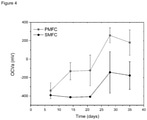
Fig 4 shows the variation over time of the anode potential of PMFCs and SMFCs. -
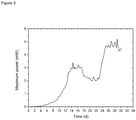
Fig. 5 shows the maximum power value obtained from power curves performed during the experiment (example 2). -
Fig. 6 shows IV-curve of the device after 31 days of operation and anode and cathode potentials measured during the IV-curve. - In a first aspect, the present invention relates to a device for producing energy, comprising:
- a lower compartment, having said compartment a lower part which is the anode and a higher part which is the cathode, and further containing wet substrate between said lower part and said higher part, wherein said wet substrate contains at least one electrogenic microorganism and at least one electron donor;
- an outdoor opened upper compartment in contact with an environment capable of supplying at least one electron donor and configured to transfer a liquid to the lower compartment through conductive means and;
- conductive means for delivering at least one electron acceptor from outdoors to said cathode of the lower compartment through a gap between the lower and the upper compartment.
- In this disclosure and in the claims, terms such as "comprises," "comprising," "containing" and "having" are open-ended terms and can mean "includes," "including," and the like; while terms like "consisting of" or "consists of" refer to the mentioned elements after these terms and others which are not mentioned are excluded.
- Unless otherwise explained, all technical and scientific terms used herein have the same meaning as commonly understood by one of ordinary skill in the art to which this disclosure belongs. The singular terms "a", "an", and "the" include plural referents unless context clearly indicates otherwise. Similarly, the word "or" is intended to include "and" unless the context clearly indicate otherwise.
- In a preferred embodiment, the liquid to be transferred to the lower compartment is selected from water, leachate from the substrate or a combination thereof.
- In another preferred embodiment, said at least one electron donor includes, but is not limited to, organic matter, phosphites, sulphur, hydrogen, nitrites, ferrous ion. Preferably, said electron donor is organic matter.
- In another preferred embodiment, said at least one electron acceptor includes, but not limited to oxygen alone or included in a gas composition, manganese and iron compounds, and nitrates. Preferably, said electron acceptor is air containing oxygen or only oxygen.
- In another preferred embodiment, the anode is made of, but not limited to, carbon/graphite cloth, carbon/graphite felt, carbon paper, carbon rods and carbon fibers. Preferably, the anode is made of graphite felt or carbon (in any of the mentioned forms)
- In another preferred embodiment, the cathode is made of, but not limited to, the same materials as those mentioned for the anode, platinum alone or combined with carbon, stainless steel mess, carbon nanotubes and cobalt-based materials. Preferably, the cathode is made of graphite felt, platinum or platinum combined with carbon.
- In another preferred embodiment, said device further comprises at least one alive or non-alive organism in said upper compartment. Non limiting examples of said organism may include archaea, bacteria, actinomycetes, fungi, algae, protozoa, and larger soil fauna, for example springtails, mites, nematodes, earthworms, ants or insects.
- In another preferred embodiment, the device further comprises at least one non-electrogenic microorganism. Said non-electrogenic microorganisms are well known in the art.
- In another preferred embodiment, said at least one electrogenic microorganism and/or said at least one non-electrogenic microorganism is from a single genus or, if more than one, is a combination of microorganisms from different genera.
- In a more preferred embodiment, the electrogenic microorganism as used in the present invention can be selected from, but not limited to, the species: Shewanella, Geobacter, Pseudomonas, Rhodoferax, Bacillus and Clostridium.
- It is further noted that the electrogenic microorganism can work both in the anode producing energy and in the cathode catalyzing the reduction reaction.
- In another preferred embodiment, the device further comprises a separator between said anode and said cathode in the lower compartment, preferably being said separator an ion exchange membrane. Said separator can be made of glass, plastic or any other suitable material.
- In another preferred embodiment, the device further comprises at least one of:
- conduction means for driving the liquid out of the device in case of an excess thereof;
- at least one filter;
- at least one piston;
- at least one valve;
- a combination thereof.
- Obviously, although not specifically mentioned when defining the device, an electronic part is also included in order to start up the system.
- Said at least one filter can be located in the upper and/or lower compartment. In the upper compartment it is located under the substrate, just above the area where the liquid comes out (leachate) to prevent dirt, stones or other substances or organisms that can clog the conductive means. At the lower compartment, the filter is usually located under the cathode, protecting it from the substrate which is found below in order to prevent it from becoming excessively dirty, reducing thereby the active surface area. These filters, however, do allow the passage of liquids. The pore size of these filters can vary, but they are always above 0.2 µm to allow the passage of microorganisms.
- Said at least one piston allow the device to be opened in order to make modifications inside the device.
- Said at least one valve can be any suitable for the present system, such as electrovalves, ball regulating valves and needle regulating valves.
- In another preferred embodiment, the device further comprises an energy storage system. This storage system allows to store the energy produced by the system on a continuous basis, which can allow to supply energy in a timely manner to other external devices.
- In another preferred embodiment, the device is arranged so that at least one plant is deposited over the upper compartment for protecting the device from atmospheric and/or humidity changes. Said plant over the upper compartment may even be placed as a decorative element only.
- In another preferred embodiment, the device is enclosed in an underground box with an outdoor opened upper side. Said box may have a size, for example, between 15 and 50 cm depending on the final purpose and the material could be for example PVC.
- It is noted that any of the embodiments disclosed herein for the device according to the first aspect of the invention can be taken alone or combined with any other embodiment disclosed herein unless the context specifies otherwise.
- As mentioned above, the present invention relates to a device able to produce energy consisting of two compartments. As an example of the technical working operation, in the lower part, the biological battery converts electrochemically the chemical energy of organic matter into electricity by means of bacteria metabolism. In this compartment, the anode is embedded in soil. Soil is a place for living of a great number of microorganisms, including those capable of energy generation named electrogenic microorganisms. Thus, electrogenic bacteria oxidize organic matter and generate electrons and protons. Because organic matter is more plentiful in soil and sediments, electron production by bacterial degradation is high. Electrogenic bacteria can transfer electrons to extracellular electron acceptors in this case, the anode. The anode absorbs the electrons and are transported through an external circuit to the cathode. At the same time, protons migrate throughout the soil to the cathode where combine with the electrons and oxygen that is reduced at the cathode surface producing current.
- At the same time, the soil and plants present in the upper compartment provide an extra source of organic matter and microorganisms thanks to the different conduction means that connect both, upper and lower compartments. In turn, the upper compartment allows the protection of the biological battery from environmental changes and minimizes the environmental and visual impact of the device.
- In a second aspect, the present invention relates to the use of the device according to any of the embodiments disclosed herein alone or in combination for producing and/or storing energy.
- In a preferred embodiment, the device as disclosed herein in any of the embodiment alone or in combination is used for producing gases, such as methane, at the same time as producing and/or storing energy as previously defined, or for producing gases, such as hydrogen, when an external electric current is applied to said device.
- Furthermore, and as already explained for
figures 1 and2 , the device as shown infigure 1 can be used for example on roofs, terraces or gardens, being able to power self-watering systems or light points; whereas that as shown infigure 2 is more suitable for use in powering low consumption electronic devices, such as a sensor. - The present disclosure also relates to a process for producing and/or storing energy comprising the step of using the device according to any of the embodiments disclosed herein.
- A number of examples will be provided below that are intended to illustrate the invention and in no way limit the scope of the invention, which is established by the attached claims.
- The performance in a long-term operation of 1 month has been compared between three PMFCs using Canna Indica and three SMFCs.
- In general, PMFC performance has been proved lower than soil-MFC's in our set-up comprising a small and closed pot. As it can be observed in
Figure 1 , although performance in terms of maximum power and current was very similar at the beginning of the experiment (Figure 3A ), after 3 week of operation PMFC performance was substantially less (Figure 3B ). - It was demonstrated that the roots of the plants completely entangle the anode and tear the electrode fabric. Additionally, the roots of the plant species that tolerate a flooded soil, which is needed to the PMFC operation, are proven able to develop an aerenchyma: a specialized tissue that allows the flow of oxygen from the top of the plant to the roots that are underwater to prevent hypoxia; this tissue lets the oxygen flow outside the root to the external medium. Consequently, the anaerobic conditions required in the anode are disturbed by the oxygen flow from the close aerenchyma.
- All this leads to a loss of the anode potential (
Figure 4 ) which tends to more positive potentials and therefore, a low energy production. - In conclusion, in our device, the sole purpose of plants in the upper compartment is maintaining the natural biosphere and reducing the visual impact that can produce the energy production device on the natural environment, being an optional component in this system.
- The demonstration of the viability of the present invention has been carried out using a two-compartment device of a total size of 37 cm per side and a volume per compartment of about 11 cm3 filled with a rich horticultural substrate. Electrodes (anode and cathode) made of graphite felt had an area of 0.36 m2. The device was tested over time by performing IV and power curves. The results demonstrate the viability and good performance of the device producing 3085 J of energy for 1 month.
- In
Figure 5 maximum power values obtained by daily power curves are represented showing and increase along the time, indicating a good growth of bacteria on the anode. - Additionally,
Figure 6 shows a good anode performance with very small variations of the anode potential with the increase of current.
Claims (15)
- Device for producing energy, comprising:- a lower compartment, having said compartment a lower part which is the anode and a higher part which is the cathode, and further containing wet substrate between said lower part and said higher part, wherein said wet substrate contains at least one electrogenic microorganism and at least one electron donor;- an outdoor opened upper compartment in contact with an environment capable of supplying at least one electron donor and configured to transfer a liquid to the lower compartment through conductive means and;- conductive means for delivering at least one electron acceptor from outdoors to said cathode of the lower compartment through a gap between the lower and the upper compartment.
- Device for producing energy according to claim 1, wherein the liquid to be transferred to the lower compartment is selected from water, leachate from the substrate or a combination thereof.
- Device for producing energy according to claim 1 or 2, wherein said at least one electron donor is organic matter.
- Device for producing energy according to of claims 1 to 3, wherein said at least one electron acceptor is air containing oxygen or only oxygen.
- Device for producing energy according to any of claims 1 to 4, wherein the anode is made of graphite felt or carbon and the cathode is made of graphite felt, platinum or platinum combined with carbon.
- Device for producing energy according to any of the preceding claims, further comprising at least one alive or non-alive organism in said upper compartment.
- Device for producing energy according to any of the preceding claims, further comprising at least one non-electrogenic microorganism
- Device for producing energy according to any of the preceding claims, wherein said at least one electrogenic microorganism and/or said at least one non-electrogenic microorganism is from a single genus or, if more than one, is a combination of microorganisms from different genera.
- Device for producing energy according to any of the preceding claims, wherein a separator is present between said anode and said cathode in the lower compartment, preferably said separator is an ion exchange membrane.
- Device for producing energy according to any of the preceding claims, further comprising at least one of:- conduction means for driving the liquid out of the device in case of an excess thereof;- at least one filter;- at least one piston;- at least one valve;- a combination thereof.
- Device for producing energy according to any of the preceding claims, further comprising an energy storage system.
- Device for producing energy according to any of the preceding claims, which is arranged so that at least one plant is deposited over the upper compartment for protecting the device from atmospheric and/or humidity changes.
- Device for producing energy according to any of the preceding claims, which is enclosed in an underground box with an outdoor opened upper side.
- Use of the device according to any of claims 1 to 13 for producing and/or storing energy.
- Use of the device according to any of claims 1 to 13 for producing gases, such as methane, at the same time as producing and/or storing energy as defined in claim 14, or for producing gases, such as hydrogen, when an external electric current is applied to said device.
Priority Applications (5)
| Application Number | Priority Date | Filing Date | Title |
|---|---|---|---|
| EP20382828.0A EP3972021A1 (en) | 2020-09-18 | 2020-09-18 | Device for producing energy and use thereof |
| US18/245,751 US20240266573A1 (en) | 2020-09-18 | 2021-09-17 | Device for producing energy and use thereof |
| EP21773846.7A EP4214785A1 (en) | 2020-09-18 | 2021-09-17 | Device for producing energy and use thereof |
| PCT/EP2021/075621 WO2022058500A1 (en) | 2020-09-18 | 2021-09-17 | Device for producing energy and use thereof |
| CN202180063999.2A CN116210106B (en) | 2020-09-18 | 2021-09-17 | Devices for generating energy and their uses |
Applications Claiming Priority (1)
| Application Number | Priority Date | Filing Date | Title |
|---|---|---|---|
| EP20382828.0A EP3972021A1 (en) | 2020-09-18 | 2020-09-18 | Device for producing energy and use thereof |
Publications (1)
| Publication Number | Publication Date |
|---|---|
| EP3972021A1 true EP3972021A1 (en) | 2022-03-23 |
Family
ID=72709301
Family Applications (2)
| Application Number | Title | Priority Date | Filing Date |
|---|---|---|---|
| EP20382828.0A Withdrawn EP3972021A1 (en) | 2020-09-18 | 2020-09-18 | Device for producing energy and use thereof |
| EP21773846.7A Pending EP4214785A1 (en) | 2020-09-18 | 2021-09-17 | Device for producing energy and use thereof |
Family Applications After (1)
| Application Number | Title | Priority Date | Filing Date |
|---|---|---|---|
| EP21773846.7A Pending EP4214785A1 (en) | 2020-09-18 | 2021-09-17 | Device for producing energy and use thereof |
Country Status (4)
| Country | Link |
|---|---|
| US (1) | US20240266573A1 (en) |
| EP (2) | EP3972021A1 (en) |
| CN (1) | CN116210106B (en) |
| WO (1) | WO2022058500A1 (en) |
Families Citing this family (1)
| Publication number | Priority date | Publication date | Assignee | Title |
|---|---|---|---|---|
| JP7807411B2 (en) * | 2023-04-27 | 2026-01-27 | 株式会社クボタ | Power generation sheet |
Citations (1)
| Publication number | Priority date | Publication date | Assignee | Title |
|---|---|---|---|---|
| US20170077541A1 (en) * | 2014-09-03 | 2017-03-16 | Sharp Kabushiki Kaisha | Microbial fuel cell |
Family Cites Families (2)
| Publication number | Priority date | Publication date | Assignee | Title |
|---|---|---|---|---|
| KR100911658B1 (en) * | 2007-11-13 | 2009-08-10 | 건국대학교 산학협력단 | Power supply system using microbial fuel cell and method thereof |
| US10700375B2 (en) * | 2015-08-06 | 2020-06-30 | Teledyne Scientific & Imaging, Llc | Biohybrid fuel cell and method |
-
2020
- 2020-09-18 EP EP20382828.0A patent/EP3972021A1/en not_active Withdrawn
-
2021
- 2021-09-17 WO PCT/EP2021/075621 patent/WO2022058500A1/en not_active Ceased
- 2021-09-17 EP EP21773846.7A patent/EP4214785A1/en active Pending
- 2021-09-17 CN CN202180063999.2A patent/CN116210106B/en active Active
- 2021-09-17 US US18/245,751 patent/US20240266573A1/en active Pending
Patent Citations (1)
| Publication number | Priority date | Publication date | Assignee | Title |
|---|---|---|---|---|
| US20170077541A1 (en) * | 2014-09-03 | 2017-03-16 | Sharp Kabushiki Kaisha | Microbial fuel cell |
Also Published As
| Publication number | Publication date |
|---|---|
| US20240266573A1 (en) | 2024-08-08 |
| EP4214785A1 (en) | 2023-07-26 |
| WO2022058500A1 (en) | 2022-03-24 |
| CN116210106B (en) | 2026-03-13 |
| CN116210106A (en) | 2023-06-02 |
Similar Documents
| Publication | Publication Date | Title |
|---|---|---|
| Wu et al. | Construction and operation of microbial fuel cell with Chlorella vulgaris biocathode for electricity generation | |
| Timmers et al. | Long-term performance of a plant microbial fuel cell with Spartina anglica | |
| Arends et al. | Greenhouse gas emissions from rice microcosms amended with a plant microbial fuel cell | |
| Cercado-Quezada et al. | Testing various food-industry wastes for electricity production in microbial fuel cell | |
| Wetser et al. | Electricity from wetlands: Tubular plant microbial fuels with silicone gas-diffusion biocathodes | |
| Deng et al. | Energy from plants and microorganisms: progress in plant–microbial fuel cells | |
| US10347931B2 (en) | Microbial fuel cell | |
| Wetser et al. | Electricity generation by a plant microbial fuel cell with an integrated oxygen reducing biocathode | |
| Lefebvre et al. | A microbial fuel cell equipped with a biocathode for organic removal and denitrification | |
| Erable et al. | Single medium microbial fuel cell: stainless steel and graphite electrode materials select bacterial communities resulting in opposite electrocatalytic activities | |
| CN103931037B (en) | Microbial power generation device, electrode for microbial power generation device, and method for producing same | |
| Erable et al. | Marine floating microbial fuel cell involving aerobic biofilm on stainless steel cathodes | |
| Chong et al. | Plant microbial fuel cells: A comprehensive review of influential factors, innovative configurations, diverse applications, persistent challenges, and promising prospects | |
| JP2016054048A (en) | Microbial fuel cell | |
| Liu et al. | The role of microbial electrogenesis in regulating methane and nitrous oxide emissions from constructed wetland-microbial fuel cell | |
| Uria-Molto et al. | Self-contained and integral microbial fuel cells as portable and sustainable energy sources for low-power field devices | |
| Winfield et al. | Response of ceramic microbial fuel cells to direct anodic airflow and novel hydrogel cathodes | |
| EP3972021A1 (en) | Device for producing energy and use thereof | |
| CN109261713A (en) | A kind of method that plant-microorganism fuel cell stops the circulation of soil nano particle source metal ion | |
| Wetser | Electricity from wetlands | |
| Nguyen et al. | A portable soil microbial fuel cell for sensing soil water content | |
| JP7555699B2 (en) | Microbial fuel cell and power storage system | |
| Sudirjo et al. | Electricity generation from wetlands with activated carbon bioanode | |
| Kothapalli | Sediment microbial fuel cell as sustainable power resource | |
| Tender | Microbial fuel cells for powering Navy devices |
Legal Events
| Date | Code | Title | Description |
|---|---|---|---|
| PUAI | Public reference made under article 153(3) epc to a published international application that has entered the european phase |
Free format text: ORIGINAL CODE: 0009012 |
|
| STAA | Information on the status of an ep patent application or granted ep patent |
Free format text: STATUS: THE APPLICATION HAS BEEN PUBLISHED |
|
| AK | Designated contracting states |
Kind code of ref document: A1 Designated state(s): AL AT BE BG CH CY CZ DE DK EE ES FI FR GB GR HR HU IE IS IT LI LT LU LV MC MK MT NL NO PL PT RO RS SE SI SK SM TR |
|
| STAA | Information on the status of an ep patent application or granted ep patent |
Free format text: STATUS: THE APPLICATION IS DEEMED TO BE WITHDRAWN |
|
| 18D | Application deemed to be withdrawn |
Effective date: 20220924 |