EP3971686A1 - Ar scenario-based gesture interaction method and apparatus, storage medium, and communication terminal - Google Patents
Ar scenario-based gesture interaction method and apparatus, storage medium, and communication terminal Download PDFInfo
- Publication number
- EP3971686A1 EP3971686A1 EP20806092.1A EP20806092A EP3971686A1 EP 3971686 A1 EP3971686 A1 EP 3971686A1 EP 20806092 A EP20806092 A EP 20806092A EP 3971686 A1 EP3971686 A1 EP 3971686A1
- Authority
- EP
- European Patent Office
- Prior art keywords
- information
- hand
- virtual object
- coordinate system
- image
- Prior art date
- Legal status (The legal status is an assumption and is not a legal conclusion. Google has not performed a legal analysis and makes no representation as to the accuracy of the status listed.)
- Granted
Links
Images
Classifications
-
- G—PHYSICS
- G06—COMPUTING OR CALCULATING; COUNTING
- G06T—IMAGE DATA PROCESSING OR GENERATION, IN GENERAL
- G06T7/00—Image analysis
- G06T7/70—Determining position or orientation of objects or cameras
- G06T7/73—Determining position or orientation of objects or cameras using feature-based methods
-
- G—PHYSICS
- G06—COMPUTING OR CALCULATING; COUNTING
- G06F—ELECTRIC DIGITAL DATA PROCESSING
- G06F3/00—Input arrangements for transferring data to be processed into a form capable of being handled by the computer; Output arrangements for transferring data from processing unit to output unit, e.g. interface arrangements
- G06F3/01—Input arrangements or combined input and output arrangements for interaction between user and computer
- G06F3/011—Arrangements for interaction with the human body, e.g. for user immersion in virtual reality
-
- G—PHYSICS
- G06—COMPUTING OR CALCULATING; COUNTING
- G06F—ELECTRIC DIGITAL DATA PROCESSING
- G06F3/00—Input arrangements for transferring data to be processed into a form capable of being handled by the computer; Output arrangements for transferring data from processing unit to output unit, e.g. interface arrangements
- G06F3/01—Input arrangements or combined input and output arrangements for interaction between user and computer
- G06F3/017—Gesture based interaction, e.g. based on a set of recognized hand gestures
-
- G—PHYSICS
- G06—COMPUTING OR CALCULATING; COUNTING
- G06F—ELECTRIC DIGITAL DATA PROCESSING
- G06F3/00—Input arrangements for transferring data to be processed into a form capable of being handled by the computer; Output arrangements for transferring data from processing unit to output unit, e.g. interface arrangements
- G06F3/01—Input arrangements or combined input and output arrangements for interaction between user and computer
- G06F3/03—Arrangements for converting the position or the displacement of a member into a coded form
- G06F3/0304—Detection arrangements using opto-electronic means
-
- G—PHYSICS
- G06—COMPUTING OR CALCULATING; COUNTING
- G06T—IMAGE DATA PROCESSING OR GENERATION, IN GENERAL
- G06T19/00—Manipulating three-dimensional [3D] models or images for computer graphics
- G06T19/006—Mixed reality
-
- G—PHYSICS
- G06—COMPUTING OR CALCULATING; COUNTING
- G06T—IMAGE DATA PROCESSING OR GENERATION, IN GENERAL
- G06T5/00—Image enhancement or restoration
- G06T5/80—Geometric correction
-
- G—PHYSICS
- G06—COMPUTING OR CALCULATING; COUNTING
- G06T—IMAGE DATA PROCESSING OR GENERATION, IN GENERAL
- G06T7/00—Image analysis
- G06T7/50—Depth or shape recovery
-
- G—PHYSICS
- G06—COMPUTING OR CALCULATING; COUNTING
- G06T—IMAGE DATA PROCESSING OR GENERATION, IN GENERAL
- G06T7/00—Image analysis
- G06T7/70—Determining position or orientation of objects or cameras
- G06T7/73—Determining position or orientation of objects or cameras using feature-based methods
- G06T7/74—Determining position or orientation of objects or cameras using feature-based methods involving reference images or patches
-
- G—PHYSICS
- G06—COMPUTING OR CALCULATING; COUNTING
- G06V—IMAGE OR VIDEO RECOGNITION OR UNDERSTANDING
- G06V10/00—Arrangements for image or video recognition or understanding
- G06V10/20—Image preprocessing
- G06V10/28—Quantising the image, e.g. histogram thresholding for discrimination between background and foreground patterns
-
- G—PHYSICS
- G06—COMPUTING OR CALCULATING; COUNTING
- G06V—IMAGE OR VIDEO RECOGNITION OR UNDERSTANDING
- G06V10/00—Arrangements for image or video recognition or understanding
- G06V10/40—Extraction of image or video features
- G06V10/44—Local feature extraction by analysis of parts of the pattern, e.g. by detecting edges, contours, loops, corners, strokes or intersections; Connectivity analysis, e.g. of connected components
-
- G—PHYSICS
- G06—COMPUTING OR CALCULATING; COUNTING
- G06V—IMAGE OR VIDEO RECOGNITION OR UNDERSTANDING
- G06V20/00—Scenes; Scene-specific elements
- G06V20/20—Scenes; Scene-specific elements in augmented reality scenes
-
- G—PHYSICS
- G06—COMPUTING OR CALCULATING; COUNTING
- G06V—IMAGE OR VIDEO RECOGNITION OR UNDERSTANDING
- G06V20/00—Scenes; Scene-specific elements
- G06V20/60—Type of objects
- G06V20/64—Three-dimensional [3D] objects
- G06V20/647—Three-dimensional [3D] objects by matching two-dimensional images to three-dimensional objects
-
- G—PHYSICS
- G06—COMPUTING OR CALCULATING; COUNTING
- G06V—IMAGE OR VIDEO RECOGNITION OR UNDERSTANDING
- G06V40/00—Recognition of biometric, human-related or animal-related patterns in image or video data
- G06V40/10—Human or animal bodies, e.g. vehicle occupants or pedestrians; Body parts, e.g. hands
- G06V40/107—Static hand or arm
-
- G—PHYSICS
- G06—COMPUTING OR CALCULATING; COUNTING
- G06V—IMAGE OR VIDEO RECOGNITION OR UNDERSTANDING
- G06V40/00—Recognition of biometric, human-related or animal-related patterns in image or video data
- G06V40/20—Movements or behaviour, e.g. gesture recognition
- G06V40/28—Recognition of hand or arm movements, e.g. recognition of deaf sign language
-
- G—PHYSICS
- G06—COMPUTING OR CALCULATING; COUNTING
- G06T—IMAGE DATA PROCESSING OR GENERATION, IN GENERAL
- G06T2207/00—Indexing scheme for image analysis or image enhancement
- G06T2207/10—Image acquisition modality
- G06T2207/10024—Color image
-
- G—PHYSICS
- G06—COMPUTING OR CALCULATING; COUNTING
- G06T—IMAGE DATA PROCESSING OR GENERATION, IN GENERAL
- G06T2207/00—Indexing scheme for image analysis or image enhancement
- G06T2207/10—Image acquisition modality
- G06T2207/10028—Range image; Depth image; 3D point clouds
-
- G—PHYSICS
- G06—COMPUTING OR CALCULATING; COUNTING
- G06T—IMAGE DATA PROCESSING OR GENERATION, IN GENERAL
- G06T2207/00—Indexing scheme for image analysis or image enhancement
- G06T2207/10—Image acquisition modality
- G06T2207/10048—Infrared image
-
- G—PHYSICS
- G06—COMPUTING OR CALCULATING; COUNTING
- G06T—IMAGE DATA PROCESSING OR GENERATION, IN GENERAL
- G06T2207/00—Indexing scheme for image analysis or image enhancement
- G06T2207/20—Special algorithmic details
- G06T2207/20024—Filtering details
- G06T2207/20028—Bilateral filtering
-
- G—PHYSICS
- G06—COMPUTING OR CALCULATING; COUNTING
- G06T—IMAGE DATA PROCESSING OR GENERATION, IN GENERAL
- G06T2207/00—Indexing scheme for image analysis or image enhancement
- G06T2207/20—Special algorithmic details
- G06T2207/20024—Filtering details
- G06T2207/20032—Median filtering
-
- G—PHYSICS
- G06—COMPUTING OR CALCULATING; COUNTING
- G06T—IMAGE DATA PROCESSING OR GENERATION, IN GENERAL
- G06T2207/00—Indexing scheme for image analysis or image enhancement
- G06T2207/30—Subject of image; Context of image processing
- G06T2207/30196—Human being; Person
Definitions
- the present disclosure relates to the field of augmented reality technologies, and in particular to an AR scenario-based gesture interaction method and an apparatus, a storage medium, and a communication terminal.
- Augmented reality is a method of applying virtual information to the real world through information technology and superimposing the real environment and virtual objects on the same screen or space in real time.
- interaction with AR gestures can be implemented on terminal devices.
- a gesture recognition result of a two-dimensional (2D) image simple interaction with virtual objects in the AR scene can be realized through a 2D simultaneous localization and mapping (SLAM) model.
- SLAM simultaneous localization and mapping
- the interaction with the virtual objects in the AR scene can be realized through the 2D SLAM model.
- the purpose of the present disclosure is to propose an AR scenario-based gesture interaction method, an AR scenario-based gesture interaction apparatus, a computer-readable medium, and a communication terminal.
- the present disclosure provides an augmented reality scenario-based gesture interaction method, including:
- an augmented reality scenario-based gesture interaction apparatus including:
- the present disclosure provides a computer-readable storage medium, storing a computer program; wherein the computer program is executed by a processor to perform the above augmented reality scenario-based gesture interaction method.
- the present disclosure provides a wireless communication terminal, including:
- Augmented reality is a method of applying virtual information to the real world through information technology and superimposing the real environment and virtual objects on the same screen or space in real time.
- interaction with AR gestures can be implemented on terminal devices.
- a gesture recognition result of a two-dimensional (2D) image simple interaction with virtual objects in the AR scene can be realized through a 2D simultaneous localization and mapping (SLAM) model.
- SLAM simultaneous localization and mapping
- the interaction with the virtual objects in the AR scene can be realized through the 2D SLAM model.
- the AR gesture interaction solution based on the mobile phone platform still has some problems and deficiencies in the process of gestures interacting with the virtual objects.
- the related solutions mostly drive actions or behaviors of the virtual objects based on the results of gesture recognition, but an occlusion relationship between the hands and the virtual objects in the AR scene cannot be realized, and the "contact" with the virtual objects cannot be realized, which may cause that the user's interactive experience with virtual objects in the AR scene is not realistic enough.
- the application of a gesture recognition algorithm based on 2D images combined with the 2D SLAM algorithm, or the application of a gesture recognition algorithm based on 3D images combined with the 2D SLAM algorithm is to drive some actions or behaviors of the virtual objects in the AR scene based on the results of gesture recognition, while being unable to accurately realize and display the occlusion relationship between the hands and the virtual objects in the AR scene.
- the embodiments provide an AR scenario-based gesture interaction method, which can be applied to terminal devices equipped with rear cameras, such as a mobile phone, a tablet, and a smart television with a camera, a personal computer, etc.; or, can also be applied to AR glasses or AR helmets equipped with cameras.
- the AR scenario-based gesture interaction method may include the following operations.
- a red-green-blue (RGB) image, a depth image, and corresponding inertial measurement unit (IMU) data of a current frame are collected.
- Posture information and hand information of the current frame are obtained by processing the RGB image, the depth image, and the IMU data.
- Three-dimensional point cloud information of a hand in a reference coordinate system is obtained by performing three-dimensional dense modeling based on the posture information and the hand information of the current frame.
- An occlusion relationship between the hand and the virtual object is obtained by rendering the hand and the virtual object based on the three-dimensional point cloud information of the hand, the pose information of the virtual object, and preset point cloud information of the virtual object in the reference coordinate system.
- the RGB image and the depth image of the current frame are obtained at the same time.
- a hand area is 3D dense modeled to obtain the 3D point cloud information of the hand area in the AR scene, and rendering is performed based on the 3D point cloud information and the pose information of the hand area to obtain the occlusion relationship between the hand area and the virtual object, such that the hand and the virtual object can have more accurate contact effects and relative position display effects in the AR scene, and more interactive actions can thus be performed between the hand and the virtual object.
- two cameras may be configured on a same side of the terminal device, for example, on the back of the terminal device to collect images on the same side.
- One camera may be a plane camera configured to collect RGB images
- the other camera may be a depth camera configured to collect depth images, such as a ToF camera module.
- the two cameras may be cameras or camera modules embedded in the terminal device, and may also be lifting or external camera modules, which are not specifically limited in the present disclosure.
- a red-green-blue (RGB) image, a depth image, and corresponding inertial measurement unit (IMU) data of a current frame are collected.
- the planar imaging camera of the terminal device may be arranged to collect the RGB image of the current frame including the hand in real time, and the ToF camera module may be arranged to collect the depth image of the current frame including the hand. Morever, the IMU data of the terminal device at the corresponding time of each frame of image can also be collected, such as gyroscope information and accelerometer information.
- Posture information and hand information of the current frame are obtained by processing the RGB image, the depth image, and the IMU data.
- the hand information and the corresponding posture information in the current frame image can be recognized and extracted.
- a preset SLAM model can be input based on the RGB image and IMU data as input parameters to obtain the posture information of the current frame; and the RGB image and the depth image can be recognized to obtain the hand information; wherein the hand information may include: hand contour information and hand depth information.
- the obtaining the pose information of the current frame by inputting the preset SLAM model based on the RGB image and IMU data as input parameters may include operations as followed.
- a feature point is extracted from the RGB image, and a descriptor corresponding to the feature point is calculated.
- Feature point matching and IMU pre-integration calculation are performed on the current frame based on the feature point and the corresponding descriptor.
- a Difference of Gaussian (DoG, corner detection) method may be applied for the feature point extraction of the RGB image. And each feature point may be described through the corresponding descriptor. After obtaining the feature points and corresponding descriptors of consecutive multiple frames of images, the feature point matching of the current frame image can be performed, and the IMU pre-integration calculation can be performed. Moreover, a visual inertial odometry (VIO) process may be performed based on the RGB image and corresponding IMU data of the current frame to estimate its position and rotation changes. Then the feature point matching result and IMU pre-integration are further combined to calculate the posture information of the camera module for each frame.
- VIO visual inertial odometry
- the method may further include operations as followed.
- the pose information of the current frame can be combined with the map point information corresponding to the feature point to construct a cost function, and the posture information of the current frame can be optimized through the cost function.
- the above recognizing the RGB image and the depth image to obtain hand information may further include operations as followed.
- the depth image is registered to an RGB image coordinate system.
- the depth image is post-processed based on the RGB image.
- Hand contour information and hand depth information are extracted from the post-processed depth image in the RGB image coordinate system.
- the depth image When registering the depth image, for example, the depth image may be first subjected to distortion removal processing according to internal parameters of the depth image; 3) coordinate points of the depth image are traversed in a loop, and a three-dimensional coordinate X3d_tof of a corresponding coordinate point in the depth camera coordinate system is obtained by combining a depth value of the corresponding coordinate point; then based on the external parameters of the depth image, the external parameters of the RGB image, and the internal parameters of the RGB image, the three-dimensional coordinate is projected to the RGB image coordinate system to obtain a coordinate of the corresponding coordinate point in the RGB image coordinate system.
- the coordinate conversion can be performed according to the following formula.
- X2d_rgb is the coordinate of a coordinate point in the RGB image coordinate system
- X3d_tof is the three-dimensional coordinate of the coordinate point in a depth camera coordinate system
- K_rgb is an internal parameter matrix of the RGB Camera
- R_tof2rgb is a rotation between the RGB Camera and the TOF module (from a TOF coordinate system to the RGB image coordinate system)
- t_tof2rgb is a translation amount between RGB Camera and TOF module (i.e., representing of an origin of TOF module coordinate system in the RGB Camera coordinate system).
- the coordinate of the corresponding coordinate point in the RGB image coordinate system may be de-distorted to obtain the corresponding X2d_rgb' coordinate, and the corresponding depth value takes the z-axis coordinate of X3d_rgb to obtain a depth map registered in the RGB image coordinate system.
- the depth image can also be post-processed, for example, operations such as noise removal, bilateral filtering, or hole filling can be performed.
- the hand contour information can be extracted from the post-processed depth image.
- binarization processing may be performed according to an infrared (IR) image corresponding to the depth image, and then the binarized hand edge contour information may be extracted.
- IR infrared
- the depth image before the depth image is registered to the RGB image coordinate system, the depth image may be preprocessed; wherein, the preprocessing includes: any one of median filtering, bilateral filtering, and hole filling.
- the internal parameters of the depth image and of the RGB image may include: the position of an optical center of a camera perpendicular to an image plane (i.e., pixel coordinates, which can be expressed by cx, cy); a focal length of the camera (respectively expressed by fx, fy), a radial distortion (represented by p1, p2, p3, etc.) and a tangential distortion coefficient (represented by k1, k2) of the camera.
- the external parameters between the depth image and the RGB image may include: the translation and rotation relationship between a three-dimensional coordinate system of the camera with an optical center of the depth image as the coordinate origin and a three-dimensional coordinate system of the camera with an optical center of the RGB image as the coordinate origin.
- Three-dimensional point cloud information of a hand in a reference coordinate system is obtained by performing three-dimensional dense modeling based on the posture information and the hand information of the current frame.
- an embodiment of the operation S13 may include operations as followed.
- a 3D coordinate of a corresponding pixel in a hand contour is obtained by combining a RGB image coordinate of the corresponding pixel with a depth value of the corresponding pixel.
- the three-dimensional point cloud information of the hand in the reference coordinate system is obtained by converting the 3D coordinates to the reference coordinate system based on the posture information.
- the hand contour information is obtained.
- the 2D image coordinates (RGB image coordinates) of all pixels in the hand contour area are combined with the corresponding depth values to obtain the corresponding 3D coordinates, and further combining the posture information of the current frame (6DOF posture information) to convert the 3D coordinates to the SLAM reference coordinate system to obtain the corresponding dense point cloud information, thereby completing the dense 3D reconstruction process of the hand area.
- a hit test on the virtual object may be triggered based on a control instruction triggered on the terminal device by a user, so as to obtain the posture information of the virtual object (i.e., an anchor) in the SLAM reference coordinate system.
- the posture information of the virtual object i.e., an anchor
- the position and orientation of the virtual object in the SLAM reference coordinate system can be obtained.
- the above operations S13 and S14 may also be performed at the same time, such that the pose information of the virtual object and the three-dimensional point cloud information of the hand in the reference coordinate system can be obtained at the same time.
- the hit test on the virtual object can also be triggered when the image and IMU data are collected.
- the present disclosure does not specifically limit the execution order of S13.
- An occlusion relationship between the hand and the virtual object is obtained by rendering the hand and the virtual object based on the three-dimensional point cloud information of the hand, the pose information of the virtual object, and preset point cloud information of the virtual object in the reference coordinate system.
- the three-dimensional point cloud information of the hand and the preset point cloud of the virtual object may be gridded to obtain a hand grid and a virtual object grid, and the hand grid and the virtual object grid may be rendered according to the pose information of the virtual object in the reference coordinate system.
- the three-dimensional point cloud of the hand area can be converted to the SLAM reference coordinate system through the posture information corresponding to the current frame.
- perspectives of the virtual camera and the real camera can also be aligned in a Unity rendering engine, and the virtual object can be converted to the SLAM reference coordinate system after aligning the perspective.
- the Unity rendering engine can be configured to combine the grid information of the hand area and the pose information of the virtual object for rendering to obtain the occlusion effect and positional relationship between the hand and the virtual object.
- the method may further include operations as followed.
- a gesture recognition result of the current frame is obtained by recognizing the depth image.
- the gesture of the current frame can also be recognized through the depth image.
- hand calibration data (at hand skeleton point position) of the TOF depth image can be configured as a training sample to train a deep learning model. Therefore, the trained model is applied combining with a circumscribed rectangular area of the hand to extract the key points of the hand (i.e., the coordinate of the hand skeleton point), and the gesture recognition result is determined by the relative position relationship between the skeleton points.
- the occlusion relationship between the hand and the virtual object can be obtained, and the motion of the virtual object can be driven according to the gesture to achieve the "physical contact" between the hand and the virtual object and realize the effect of real interaction.
- the gesture information, hand contour information, and hand depth information are extracted for perform gesture recognition, so as to perform three-dimensional dense modeling of the hand under the coordinate system to obtain the three-dimensional point cloud information of the hand, render hand and the virtual object the according to the three-dimensional point cloud information of the hand and the pose information of the virtual object and the preset point cloud information of the virtual object, accurately obtain the occlusion relationship between the hand and the virtual object, and drive the motion of the virtual object according to the gesture recognition result.
- the display effect of the occlusion of real still scenes and virtual scenes is optimized, and the occlusion relationship between the hand area and the virtual object in sports scenes are accurately rendered and displayed, thereby enabling more accurate "physical contact” and interaction with virtual objects through gestures, effectively enhancing the realistic experience of AR scenes.
- an AR scenario-based gesture interaction apparatus 30 including: a data collection module 301, a basic data calculation module 302, a point cloud data generation module 303, and a virtual object pose-information calculation module 304 and a rendering execution module 305.
- the data collection module 301 may be configured to collect a RGB image, a depth image and corresponding IMU data of a current frame.
- the basic data calculation module 302 may be configured to obtain posture information and hand information of the current frame based on the RGB image, the depth image, and the IMU data.
- the point cloud data generation module 303 may be configured to perform three-dimensional dense modeling of a hand area based on the posture information and the hand information to obtain three-dimensional point cloud data of the hand area.
- the virtual object pose-information calculation module 304 may be configured to obtain the pose information of a virtual object in the current frame.
- the rendering execution module 305 may be configured to render the current frame based on the pose information of the current frame, the pose information of the virtual object, and the three-dimensional point cloud information of the hand area.
- the basic data calculation module 302 includes a pose calculation module and a hand information extraction module (not shown).
- the pose calculation module may be configured to input a preset SLAM model based on the RGB image and IMU data as input parameters to obtain the pose information of the current frame.
- the hand information extraction module may be configured to recognize the RGB image and the depth image to obtain the hand information; wherein the hand information includes: hand contour information and hand depth information.
- the pose calculation module may include: a feature point extraction module, a feature point matching module, and a posture information calculation module (not shown).
- the feature point extraction module may be configured to perform feature point extraction on the RGB image and calculate a descriptor corresponding to the feature point.
- the feature point matching module may be configured to perform feature point matching and IMU pre-integration calculation on the current frame image based on the feature point and the corresponding descriptor.
- the posture information calculation module may be configured to perform visual inertial odometry processing on the RGB image and the IMU data to obtain a processing result, and combine the processing result with a feature point matching result of the current frame and the IMU pre-integration to calculate the posture information.
- the pose calculation module further includes: a pose optimization module (not shown).
- the pose optimization module may be configured to perform local nonlinear optimization on the pose information based on the feature point.
- the hand information extraction module may include: a coordinate system registration module, a post-processing module, and a contour extraction module (not shown).
- the coordinate system registration module may be configured to register the depth image to an RGB image coordinate system.
- the post-processing module may be configured to perform post-processing on the depth image based on the RGB image.
- the contour extraction module may be configured to extract hand contour information and hand depth information on the post-processed depth image in the RGB image coordinate system.
- the contour extraction module may include: an IR image processing module (not shown).
- the IR image processing module may be configured to obtain an IR image corresponding to the depth image, and perform binarization processing on the IR image to extract the hand edge contour information.
- the hand information extraction module may further include: a preprocessing module (not shown).
- the preprocessing module may be configured to preprocess the depth image; wherein, the preprocessing includes any one of median filtering, bilateral filtering, and hole filling.
- the point cloud data generating module may include: a 3D coordinate calculation module and a coordinate system conversion module (not shown).
- the 3D coordinate calculation module may be configured to obtain a 3D coordinate of a corresponding pixel in a hand contour is obtained by combining a RGB image coordinate of the corresponding pixel with a depth value of the corresponding pixel.
- the coordinate system conversion module may be configured to obtain the three-dimensional point cloud information of the hand in the reference coordinate system by converting the 3D coordinates to the reference coordinate system based on the posture information.
- the rendering execution module may include: a grid processing module and a grid rendering module (not shown).
- the grid processing module may be configured to perform grid processing on the three-dimensional point cloud of the hand and the preset point cloud of the virtual object to obtain a hand grid and a virtual object grid.
- the grid rendering module may be configured to render the hand grid and the virtual object grid in the reference coordinate system based on the pose information of the virtual object.
- the virtual object pose information calculation module 304 may include: a hit test module (not shown).
- the hit test module may be configured to trigger a hit test on the virtual object in response to a control instruction to obtain the pose information of the virtual object in the reference coordinate system.
- the apparatus may further include a gesture recognition module and a virtual object driving module (not shown).
- the gesture recognition module may be configured to recognize the depth image to obtain a gesture recognition result of the current frame.
- the virtual object driving module may be configured to drive the virtual object based on the gesture recognition result.
- modules or units of the apparatus for action execution are mentioned in the above detailed description, this division is not mandatory.
- the features and functions of two or more modules or units described above may be embodied in one module or unit.
- the features and functions of a module or unit described above can be further divided into multiple modules or units to be embodied.
- FIG. 4 is a structural schematic view of a computer system of a wireless communication device according to an embodiment of the present disclosure.
- the computer system 700 includes a central processing unit (CPU) 701, which can be loaded into a random storage unit according to a program stored in a read-only memory (ROM) 702 or from a storage part 708.
- the program in a random access memory (RAM) 703 is accessed to execute various appropriate actions and processing.
- RAM 703 various programs and data required for system operation are also stored.
- the CPU 701, ROM 702, and RAM 703 are connected to each other through a bus 704.
- An input/output (I/O) interface 705 is also connected to the bus 704.
- the following components are connected to the I/O interface 705: an input part 706 including a keyboard, a mouse, etc.; and an output part 707 such as a cathode ray tube (CRT), a liquid crystal display (LCD), and speakers, etc.; a storage part 708 including a hard disk, etc.; and a communication part 709 including a network interface card such as a local area network (LAN) card and a modem.
- the communication part 709 performs communication processing via a network such as the Internet.
- the drive 710 is also connected to the I/O interface 705 as needed.
- a detachable medium 711 such as a magnetic disk, an optical disk, a magneto-optical disk, a semiconductor memory, etc., is installed on the drive 710 as needed, such that the computer program read therefrom is installed into the storage part 708 as needed.
- the process described below with reference to the flowchart can be implemented as a computer software program.
- some embodiments includes a computer program product, which includes a computer program carried on a computer-readable medium, and the computer program contains program code for executing the method shown in the flowchart.
- the computer program may be downloaded and installed from the network through the communication part 709, and/or installed from the detachable medium 711.
- the CPU 701 various functions defined in the system of the present disclosure are executed.
- the computer-readable medium shown in the embodiments of the present disclosure may be a computer-readable signal medium or a computer-readable storage medium, or any combination of the two.
- the computer-readable storage medium may be, for example, but not limited to, an electrical, magnetic, optical, electromagnetic, infrared, or semiconductor system, apparatus, or device, or any combination of the above. More specific examples of computer-readable storage media may include, but are not limited to: electrical connections with one or more wires, portable computer disks, hard disks, random access memory (RAM), read-only memory (ROM), erasable programmable read only memory (EPROM), flash memory, optical fiber, portable compact disk read-only memory (CD-ROM), optical storage device, magnetic storage device, or any suitable combination of the above.
- the computer-readable storage medium may be any tangible medium that contains or stores a program, and the program may be used by or in combination with an instruction execution system, apparatus, or device.
- a computer-readable signal medium may include a data signal propagated in a baseband or as a part of a carrier wave, and a computer-readable program code is carried therein. This propagated data signal can take many forms, including but not limited to electromagnetic signals, optical signals, or any suitable combination of the foregoing.
- the computer-readable signal medium may also be any computer-readable medium other than the computer-readable storage medium.
- the computer-readable medium may send, propagate, or transmit the program for use by or in combination with the instruction execution system, apparatus, or device.
- the program code contained on the computer-readable medium can be transmitted by any suitable medium, including but not limited to: wireless, wired, etc., or any suitable combination of the above.
- each block in the flowchart or block diagram can represent a module, program segment, or part of code, and the above module, program segment, or part of code contains one or more executable instructions for realizing the specified logical function.
- the functions marked in the block may also occur in a different order from the order marked in the drawings. For example, two blocks shown one after another can actually be executed substantially in parallel, or they can sometimes be executed in the reverse order, depending on the functions involved.
- each block in the block diagram or flowchart, and the combination of blocks in the block diagram or flowchart can be implemented by a dedicated hardware-based system that performs the specified function or operation, or can be realized by a combination of dedicated hardware and computer instructions.
- the units involved in the embodiments described in the present disclosure may be implemented in software or hardware, and the described units may also be provided in a processor.
- the names of these units do not constitute a limitation on the units themselves under certain circumstances.
- the present disclosure also provides a computer-readable medium.
- the computer-readable medium may be included in the electronic device described in the above embodiments; or it may exist alone without being assembled into the electronic device.
- the computer-readable medium carries one or more programs, and when the one or more programs are executed by an electronic device, the electronic device realizes the method described in the following embodiments. For example, the electronic device can implement the operations shown in FIG. 1 .
Landscapes
- Engineering & Computer Science (AREA)
- Theoretical Computer Science (AREA)
- Physics & Mathematics (AREA)
- General Physics & Mathematics (AREA)
- General Engineering & Computer Science (AREA)
- Multimedia (AREA)
- Human Computer Interaction (AREA)
- Computer Vision & Pattern Recognition (AREA)
- Psychiatry (AREA)
- Social Psychology (AREA)
- General Health & Medical Sciences (AREA)
- Health & Medical Sciences (AREA)
- Computer Graphics (AREA)
- Computer Hardware Design (AREA)
- Software Systems (AREA)
- User Interface Of Digital Computer (AREA)
- Processing Or Creating Images (AREA)
- Geometry (AREA)
- Image Analysis (AREA)
Abstract
Description
- The present application claims priority of
China Patent Application No. 201910395297.9, filed on May 13, 2019 - The present disclosure relates to the field of augmented reality technologies, and in particular to an AR scenario-based gesture interaction method and an apparatus, a storage medium, and a communication terminal.
- Augmented reality (AR) is a method of applying virtual information to the real world through information technology and superimposing the real environment and virtual objects on the same screen or space in real time. With the rapid development of smart mobile terminals, interaction with AR gestures can be implemented on terminal devices. In a related solution, based on a gesture recognition result of a two-dimensional (2D) image, simple interaction with virtual objects in the AR scene can be realized through a 2D simultaneous localization and mapping (SLAM) model. In another solution, based on a gesture recognition result of a three-dimensional (3D) image, the interaction with the virtual objects in the AR scene can be realized through the 2D SLAM model.
- It should be noted that the information disclosed in the background art section above is only to enhance the understanding of the background of the present disclosure, and therefore may include information that does not constitute the prior art known to those skilled in the art.
- The purpose of the present disclosure is to propose an AR scenario-based gesture interaction method, an AR scenario-based gesture interaction apparatus, a computer-readable medium, and a communication terminal.
- Other features and advantages of the present disclosure will become apparent through the following detailed description, or will be learned in part through the practice of the present disclosure.
- In a first aspect, the present disclosure provides an augmented reality scenario-based gesture interaction method, including:
- collecting a red-green-blue (RGB) image, a depth image, and corresponding inertial measurement unit (IMU) data of a current frame;
- obtaining posture information and hand information of the current frame by processing the RGB image, the depth image, and the IMU data;
- obtaining three-dimensional point cloud information of a hand in a reference coordinate system by performing three-dimensional dense modeling based on the posture information and the hand information of the current frame;
- obtaining pose information of a virtual object in the reference coordinate system; and
- obtaining an occlusion relationship between the hand and the virtual object by rendering the hand and the virtual object based on the three-dimensional point cloud information of the hand, the pose information of the virtual object, and preset point cloud information of the virtual object in the reference coordinate system.
- In a second aspect, the present disclosure provides an augmented reality scenario-based gesture interaction apparatus, including:
- a data collection module, configured to collect a red-green-blue (RGB) image, a depth image, and corresponding inertial measurement unit (IMU) data of a current frame;
- a basic data calculation module, configured to obtain posture information and hand information of the current frame by processing the RGB image, the depth image, and the IMU data;
- a point cloud data generation module, configured to obtain three-dimensional point cloud information of a hand in a reference coordinate system by performing three-dimensional dense modeling based on the posture information and the hand information of the current frame;
- a virtual object pose-information calculation module, configured to obtain pose information of a virtual object in the reference coordinate system; and
- a rendering execution module, configured to render the hand and the virtual object based on the three-dimensional point cloud information of the hand, the pose information of the virtual object, and preset point cloud information of the virtual object in the reference coordinate system.
- In a third aspect, the present disclosure provides a computer-readable storage medium, storing a computer program; wherein the computer program is executed by a processor to perform the above augmented reality scenario-based gesture interaction method.
- In a fourth aspect, the present disclosure provides a wireless communication terminal, including:
- one or more processors; and
- a storage device, configured to store one or more programs, when the one or more programs are executed by the one or more processors, the one or more processors perform the above augmented reality scenario-based gesture interaction method.
- It should be understood that the above general description and the later detailed descriptions are exemplary and explanatory only and do not limit the present disclosure.
- The drawings herein are incorporated into the specification and constitute a part of the specification, show embodiments that conform to the present disclosure, and together with the specification are to explain the principle of the present disclosure. Obviously, the drawings in the following description are only some embodiments of the present disclosure. For those skilled in the art, other drawings can be obtained from these drawings without creative work.
-
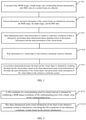
FIG. 1 is a schematic view of an AR scenario-based gesture interaction method according to an embodiment of the present disclosure. -
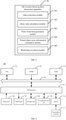
FIG. 2 is a schematic view of method for obtaining three-dimensional point cloud data of a hand area according to an embodiment of the present disclosure. -
FIG. 3 is a schematic view of a composition of a wireless network access apparatus according to an embodiment of the present disclosure. -
FIG. 4 is a structural schematic view of a computer system of a wireless communication device according to an embodiment of the present disclosure. - Embodiments will be described more fully with reference to the accompanying drawings. However, the embodiments can be implemented in various forms, and should not be construed as being limited to the examples set forth herein; on the contrary, the provision of these embodiments makes the present disclosure more comprehensive and complete, and fully conveys the concept of the embodiments to those skilled in the art. The described features, structures or characteristics can be combined in one or more embodiments in any suitable way.
- In addition, the drawings are only schematic illustrations of the present disclosure, and are not necessarily drawn to scale. Same reference numerals in the figures denote same or similar parts, and thus their repeated description will be omitted. Some of the block diagrams shown in the drawings are functional entities and do not necessarily correspond to physically or logically independent entities. These functional entities may be implemented in the form of software, or implemented in one or more hardware modules or integrated circuits, or implemented in different networks and/or processor devices and/or microcontroller devices.
- Augmented reality (AR) is a method of applying virtual information to the real world through information technology and superimposing the real environment and virtual objects on the same screen or space in real time. With the rapid development of smart mobile terminals, interaction with AR gestures can be implemented on terminal devices. In a related solution, based on a gesture recognition result of a two-dimensional (2D) image, simple interaction with virtual objects in the AR scene can be realized through a 2D simultaneous localization and mapping (SLAM) model. In another solution, based on a gesture recognition result of a three-dimensional (3D) image, the interaction with the virtual objects in the AR scene can be realized through the 2D SLAM model.
- Among the above-mentioned related solutions, the AR gesture interaction solution based on the mobile phone platform still has some problems and deficiencies in the process of gestures interacting with the virtual objects. For example, the related solutions mostly drive actions or behaviors of the virtual objects based on the results of gesture recognition, but an occlusion relationship between the hands and the virtual objects in the AR scene cannot be realized, and the "contact" with the virtual objects cannot be realized, which may cause that the user's interactive experience with virtual objects in the AR scene is not realistic enough. For another example, the application of a gesture recognition algorithm based on 2D images combined with the 2D SLAM algorithm, or the application of a gesture recognition algorithm based on 3D images combined with the 2D SLAM algorithm, is to drive some actions or behaviors of the virtual objects in the AR scene based on the results of gesture recognition, while being unable to accurately realize and display the occlusion relationship between the hands and the virtual objects in the AR scene.
- In view of the shortcomings and deficiencies of the above related solutions, the embodiments provide an AR scenario-based gesture interaction method, which can be applied to terminal devices equipped with rear cameras, such as a mobile phone, a tablet, and a smart television with a camera, a personal computer, etc.; or, can also be applied to AR glasses or AR helmets equipped with cameras. Referring to
FIG. 1 , the AR scenario-based gesture interaction method may include the following operations. - At block S11: A red-green-blue (RGB) image, a depth image, and corresponding inertial measurement unit (IMU) data of a current frame are collected.
- At block S12: Posture information and hand information of the current frame are obtained by processing the RGB image, the depth image, and the IMU data.
- At block S13: Three-dimensional point cloud information of a hand in a reference coordinate system is obtained by performing three-dimensional dense modeling based on the posture information and the hand information of the current frame.
- At block S14: Pose information of a virtual object in the reference coordinate system is obtained.
- At block S15: An occlusion relationship between the hand and the virtual object is obtained by rendering the hand and the virtual object based on the three-dimensional point cloud information of the hand, the pose information of the virtual object, and preset point cloud information of the virtual object in the reference coordinate system.
- In the AR scenario-based gesture interaction method provided by the embodiment, the RGB image and the depth image of the current frame are obtained at the same time. After obtaining the information of the hand in the current frame, a hand area is 3D dense modeled to obtain the 3D point cloud information of the hand area in the AR scene, and rendering is performed based on the 3D point cloud information and the pose information of the hand area to obtain the occlusion relationship between the hand area and the virtual object, such that the hand and the virtual object can have more accurate contact effects and relative position display effects in the AR scene, and more interactive actions can thus be performed between the hand and the virtual object.
- In the following, a mobile phone is taken as an example, and each operations of the AR scenario-based gesture interaction method will be described in more detail in conjunction with the accompanying drawings and embodiments.
- For the above terminal device, two cameras may be configured on a same side of the terminal device, for example, on the back of the terminal device to collect images on the same side. One camera may be a plane camera configured to collect RGB images, and the other camera may be a depth camera configured to collect depth images, such as a ToF camera module. In addition, the two cameras may be cameras or camera modules embedded in the terminal device, and may also be lifting or external camera modules, which are not specifically limited in the present disclosure.
- At block S11: A red-green-blue (RGB) image, a depth image, and corresponding inertial measurement unit (IMU) data of a current frame are collected.
- The planar imaging camera of the terminal device may be arranged to collect the RGB image of the current frame including the hand in real time, and the ToF camera module may be arranged to collect the depth image of the current frame including the hand. Morever, the IMU data of the terminal device at the corresponding time of each frame of image can also be collected, such as gyroscope information and accelerometer information.
- At block S12: Posture information and hand information of the current frame are obtained by processing the RGB image, the depth image, and the IMU data.
- After obtaining the above parameters, the hand information and the corresponding posture information in the current frame image can be recognized and extracted. In some embodiments, a preset SLAM model can be input based on the RGB image and IMU data as input parameters to obtain the posture information of the current frame; and the RGB image and the depth image can be recognized to obtain the hand information; wherein the hand information may include: hand contour information and hand depth information.
- In some embodiments, the obtaining the pose information of the current frame by inputting the preset SLAM model based on the RGB image and IMU data as input parameters may include operations as followed.
- At block S1211: A feature point is extracted from the RGB image, and a descriptor corresponding to the feature point is calculated.
- At block S1212: Feature point matching and IMU pre-integration calculation are performed on the current frame based on the feature point and the corresponding descriptor.
- At block S1213: Visual inertial odometry processing is performed on the RGB image and the IMU data to obtain a processing result, and the posture information is calculated by combining the processing result with a feature point matching result and the IMU pre-integration of the current frame.
- A Difference of Gaussian (DoG, corner detection) method may be applied for the feature point extraction of the RGB image. And each feature point may be described through the corresponding descriptor. After obtaining the feature points and corresponding descriptors of consecutive multiple frames of images, the feature point matching of the current frame image can be performed, and the IMU pre-integration calculation can be performed. Moreover, a visual inertial odometry (VIO) process may be performed based on the RGB image and corresponding IMU data of the current frame to estimate its position and rotation changes. Then the feature point matching result and IMU pre-integration are further combined to calculate the posture information of the camera module for each frame.
- In addition, in some embodiments, the method may further include operations as followed.
- At block S1214: Local nonlinear optimization is performed on the posture information based on the feature point.
- After obtaining the posture information of each frame, it is also possible to perform local linear optimization in combination with the feature point information of the image, so as to optimize the posture information of each frame. For example, through the existing g2o optimization library or ceres optimization library, the pose information of the current frame can be combined with the map point information corresponding to the feature point to construct a cost function, and the posture information of the current frame can be optimized through the cost function.
- Of course, in other embodiments, it is also possible to combine the posture information of each frame and select a key frame for map reconstruction to optimize the posture information of the key frame in the form of a partial window; and to perform closed-loop detection on all key frames to optimize accumulate errors to further optimize the posture information.
- In addition, in some embodiments, the above recognizing the RGB image and the depth image to obtain hand information may further include operations as followed.
- At block S1221: The depth image is registered to an RGB image coordinate system.
- At block S1222: The depth image is post-processed based on the RGB image.
- At block S1223: Hand contour information and hand depth information are extracted from the post-processed depth image in the RGB image coordinate system.
- When registering the depth image, for example, the depth image may be first subjected to distortion removal processing according to internal parameters of the depth image; 3) coordinate points of the depth image are traversed in a loop, and a three-dimensional coordinate X3d_tof of a corresponding coordinate point in the depth camera coordinate system is obtained by combining a depth value of the corresponding coordinate point; then based on the external parameters of the depth image, the external parameters of the RGB image, and the internal parameters of the RGB image, the three-dimensional coordinate is projected to the RGB image coordinate system to obtain a coordinate of the corresponding coordinate point in the RGB image coordinate system. In some embodiments, the coordinate conversion can be performed according to the following formula.

wherein X2d_rgb is the coordinate of a coordinate point in the RGB image coordinate system; X3d_tof is the three-dimensional coordinate of the coordinate point in a depth camera coordinate system; K_rgb is an internal parameter matrix of the RGB Camera; R_tof2rgb is a rotation between the RGB Camera and the TOF module (from a TOF coordinate system to the RGB image coordinate system); t_tof2rgb is a translation amount between RGB Camera and TOF module (i.e., representing of an origin of TOF module coordinate system in the RGB Camera coordinate system). - The coordinate of the corresponding coordinate point in the RGB image coordinate system may be de-distorted to obtain the corresponding X2d_rgb' coordinate, and the corresponding depth value takes the z-axis coordinate of X3d_rgb to obtain a depth map registered in the RGB image coordinate system.
- After the depth image is registered to the RGB image coordinate system, the depth image can also be post-processed, for example, operations such as noise removal, bilateral filtering, or hole filling can be performed. Then, the hand contour information can be extracted from the post-processed depth image. In some embodiments, binarization processing may be performed according to an infrared (IR) image corresponding to the depth image, and then the binarized hand edge contour information may be extracted.
- In other embodiments, before the depth image is registered to the RGB image coordinate system, the depth image may be preprocessed; wherein, the preprocessing includes: any one of median filtering, bilateral filtering, and hole filling.
- The internal parameters of the depth image and of the RGB image may include: the position of an optical center of a camera perpendicular to an image plane (i.e., pixel coordinates, which can be expressed by cx, cy); a focal length of the camera (respectively expressed by fx, fy), a radial distortion (represented by p1, p2, p3, etc.) and a tangential distortion coefficient (represented by k1, k2) of the camera. The external parameters between the depth image and the RGB image may include: the translation and rotation relationship between a three-dimensional coordinate system of the camera with an optical center of the depth image as the coordinate origin and a three-dimensional coordinate system of the camera with an optical center of the RGB image as the coordinate origin.
- At block S13: Three-dimensional point cloud information of a hand in a reference coordinate system is obtained by performing three-dimensional dense modeling based on the posture information and the hand information of the current frame.
- Referring to
FIG. 2 , an embodiment of the operation S13 may include operations as followed. - At block S131: A 3D coordinate of a corresponding pixel in a hand contour is obtained by combining a RGB image coordinate of the corresponding pixel with a depth value of the corresponding pixel.
- At block S132: The three-dimensional point cloud information of the hand in the reference coordinate system is obtained by converting the 3D coordinates to the reference coordinate system based on the posture information.
- Through the extraction of the hand area, the hand contour information is obtained. The 2D image coordinates (RGB image coordinates) of all pixels in the hand contour area are combined with the corresponding depth values to obtain the corresponding 3D coordinates, and further combining the posture information of the current frame (6DOF posture information) to convert the 3D coordinates to the SLAM reference coordinate system to obtain the corresponding dense point cloud information, thereby completing the dense 3D reconstruction process of the hand area.
- At block S14: Pose information of a virtual object in the reference coordinate system is obtained.
- A hit test on the virtual object may be triggered based on a control instruction triggered on the terminal device by a user, so as to obtain the posture information of the virtual object (i.e., an anchor) in the SLAM reference coordinate system. Through a collision detection algorithm, the position and orientation of the virtual object in the SLAM reference coordinate system can be obtained.
- In other embodiments, the above operations S13 and S14 may also be performed at the same time, such that the pose information of the virtual object and the three-dimensional point cloud information of the hand in the reference coordinate system can be obtained at the same time. Alternatively, the hit test on the virtual object can also be triggered when the image and IMU data are collected. The present disclosure does not specifically limit the execution order of S13.
- At block S15: An occlusion relationship between the hand and the virtual object is obtained by rendering the hand and the virtual object based on the three-dimensional point cloud information of the hand, the pose information of the virtual object, and preset point cloud information of the virtual object in the reference coordinate system.
- The three-dimensional point cloud information of the hand and the preset point cloud of the virtual object may be gridded to obtain a hand grid and a virtual object grid, and the hand grid and the virtual object grid may be rendered according to the pose information of the virtual object in the reference coordinate system.
- In some embodiments, the three-dimensional point cloud of the hand area can be converted to the SLAM reference coordinate system through the posture information corresponding to the current frame. After obtaining the posture information of the virtual object in the SLAM reference coordinate system through the hit test, perspectives of the virtual camera and the real camera can also be aligned in a Unity rendering engine, and the virtual object can be converted to the SLAM reference coordinate system after aligning the perspective. After obtaining the grid information of the hand area, the Unity rendering engine can be configured to combine the grid information of the hand area and the pose information of the virtual object for rendering to obtain the occlusion effect and positional relationship between the hand and the virtual object.
- Based on the foregoing, in other embodiments, the method may further include operations as followed.
- At block S21: A gesture recognition result of the current frame is obtained by recognizing the depth image.
- At block S22: The virtual object is driven based on the gesture recognition result.
- After obtaining the depth image, while extracting the hand area, the gesture of the current frame can also be recognized through the depth image. For example, hand calibration data (at hand skeleton point position) of the TOF depth image can be configured as a training sample to train a deep learning model. Therefore, the trained model is applied combining with a circumscribed rectangular area of the hand to extract the key points of the hand (i.e., the coordinate of the hand skeleton point), and the gesture recognition result is determined by the relative position relationship between the skeleton points.
- After the gesture recognition result is obtained, the occlusion relationship between the hand and the virtual object can be obtained, and the motion of the virtual object can be driven according to the gesture to achieve the "physical contact" between the hand and the virtual object and realize the effect of real interaction.
- In the method provided by the embodiments of the present disclosure, through the RGB image, depth image, and corresponding IMU data, the gesture information, hand contour information, and hand depth information are extracted for perform gesture recognition, so as to perform three-dimensional dense modeling of the hand under the coordinate system to obtain the three-dimensional point cloud information of the hand, render hand and the virtual object the according to the three-dimensional point cloud information of the hand and the pose information of the virtual object and the preset point cloud information of the virtual object, accurately obtain the occlusion relationship between the hand and the virtual object, and drive the motion of the virtual object according to the gesture recognition result. Therefore, the display effect of the occlusion of real still scenes and virtual scenes is optimized, and the occlusion relationship between the hand area and the virtual object in sports scenes are accurately rendered and displayed, thereby enabling more accurate "physical contact" and interaction with virtual objects through gestures, effectively enhancing the realistic experience of AR scenes.
- It should be noted that the above drawings are only schematic illustrations of the processing included in the method according to the embodiments of the present disclosure, and are not intended for limitation. It is easy to understand that the processing shown in the above drawings does not indicate or limit the time sequence of the processing. In addition, it is easy to understand that these processes can be executed synchronously or asynchronously in multiple modules, for example.
- Further, referring to
FIG. 3 , the present disclosure also provides an AR scenario-basedgesture interaction apparatus 30, including: adata collection module 301, a basicdata calculation module 302, a point clouddata generation module 303, and a virtual object pose-information calculation module 304 and arendering execution module 305. - The
data collection module 301 may be configured to collect a RGB image, a depth image and corresponding IMU data of a current frame. - The basic
data calculation module 302 may be configured to obtain posture information and hand information of the current frame based on the RGB image, the depth image, and the IMU data. - The point cloud
data generation module 303 may be configured to perform three-dimensional dense modeling of a hand area based on the posture information and the hand information to obtain three-dimensional point cloud data of the hand area. - The virtual object pose-information calculation module 304 may be configured to obtain the pose information of a virtual object in the current frame.
- The
rendering execution module 305 may be configured to render the current frame based on the pose information of the current frame, the pose information of the virtual object, and the three-dimensional point cloud information of the hand area. - In some embodiments, the basic
data calculation module 302 includes a pose calculation module and a hand information extraction module (not shown). - The pose calculation module may be configured to input a preset SLAM model based on the RGB image and IMU data as input parameters to obtain the pose information of the current frame.
- The hand information extraction module may be configured to recognize the RGB image and the depth image to obtain the hand information; wherein the hand information includes: hand contour information and hand depth information.
- In some embodiments, the pose calculation module may include: a feature point extraction module, a feature point matching module, and a posture information calculation module (not shown).
- The feature point extraction module may be configured to perform feature point extraction on the RGB image and calculate a descriptor corresponding to the feature point.
- The feature point matching module may be configured to perform feature point matching and IMU pre-integration calculation on the current frame image based on the feature point and the corresponding descriptor.
- The posture information calculation module may be configured to perform visual inertial odometry processing on the RGB image and the IMU data to obtain a processing result, and combine the processing result with a feature point matching result of the current frame and the IMU pre-integration to calculate the posture information.
- In some embodiments, the pose calculation module further includes: a pose optimization module (not shown).
- The pose optimization module may be configured to perform local nonlinear optimization on the pose information based on the feature point.
- In some embodiments, the hand information extraction module may include: a coordinate system registration module, a post-processing module, and a contour extraction module (not shown).
- The coordinate system registration module may be configured to register the depth image to an RGB image coordinate system.
- The post-processing module may be configured to perform post-processing on the depth image based on the RGB image.
- The contour extraction module may be configured to extract hand contour information and hand depth information on the post-processed depth image in the RGB image coordinate system.
- In some embodiments, the contour extraction module may include: an IR image processing module (not shown).
- The IR image processing module may be configured to obtain an IR image corresponding to the depth image, and perform binarization processing on the IR image to extract the hand edge contour information.
- In some embodiments, the hand information extraction module may further include: a preprocessing module (not shown).
- The preprocessing module may be configured to preprocess the depth image; wherein, the preprocessing includes any one of median filtering, bilateral filtering, and hole filling.
- In some embodiments, the point cloud data generating module may include: a 3D coordinate calculation module and a coordinate system conversion module (not shown).
- The 3D coordinate calculation module may be configured to obtain a 3D coordinate of a corresponding pixel in a hand contour is obtained by combining a RGB image coordinate of the corresponding pixel with a depth value of the corresponding pixel.
- The coordinate system conversion module may be configured to obtain the three-dimensional point cloud information of the hand in the reference coordinate system by converting the 3D coordinates to the reference coordinate system based on the posture information.
- In some embodiments, the rendering execution module may include: a grid processing module and a grid rendering module (not shown).
- The grid processing module may be configured to perform grid processing on the three-dimensional point cloud of the hand and the preset point cloud of the virtual object to obtain a hand grid and a virtual object grid.
- The grid rendering module may be configured to render the hand grid and the virtual object grid in the reference coordinate system based on the pose information of the virtual object.
- In some embodiments, the virtual object pose information calculation module 304 may include: a hit test module (not shown).
- The hit test module may be configured to trigger a hit test on the virtual object in response to a control instruction to obtain the pose information of the virtual object in the reference coordinate system.
- In some embodiments, the apparatus may further include a gesture recognition module and a virtual object driving module (not shown).
- The gesture recognition module may be configured to recognize the depth image to obtain a gesture recognition result of the current frame.
- The virtual object driving module may be configured to drive the virtual object based on the gesture recognition result.
- The specific details of each module in the AR scenario-based gesture interaction apparatus have been described in detail in the corresponding AR scenario-based gesture interaction method, and therefore will not be repeated here.
- It should be noted that although several modules or units of the apparatus for action execution are mentioned in the above detailed description, this division is not mandatory. In fact, according to the embodiments of the present disclosure, the features and functions of two or more modules or units described above may be embodied in one module or unit. Conversely, the features and functions of a module or unit described above can be further divided into multiple modules or units to be embodied.
-
FIG. 4 is a structural schematic view of a computer system of a wireless communication device according to an embodiment of the present disclosure. - It should be noted that the
computer system 700 of an electronic device shown inFIG. 4 is only an example, and should not bring any limitation to the function and application scope of the embodiments of the present disclosure. - As shown in
FIG. 4 , thecomputer system 700 includes a central processing unit (CPU) 701, which can be loaded into a random storage unit according to a program stored in a read-only memory (ROM) 702 or from astorage part 708. The program in a random access memory (RAM) 703 is accessed to execute various appropriate actions and processing. In theRAM 703, various programs and data required for system operation are also stored. The CPU 701, ROM 702, andRAM 703 are connected to each other through abus 704. An input/output (I/O)interface 705 is also connected to thebus 704. - The following components are connected to the I/O interface 705: an
input part 706 including a keyboard, a mouse, etc.; and anoutput part 707 such as a cathode ray tube (CRT), a liquid crystal display (LCD), and speakers, etc.; astorage part 708 including a hard disk, etc.; and a communication part 709 including a network interface card such as a local area network (LAN) card and a modem. The communication part 709 performs communication processing via a network such as the Internet. Thedrive 710 is also connected to the I/O interface 705 as needed. Adetachable medium 711, such as a magnetic disk, an optical disk, a magneto-optical disk, a semiconductor memory, etc., is installed on thedrive 710 as needed, such that the computer program read therefrom is installed into thestorage part 708 as needed. - In particular, in some embodiments of the present disclosure, the process described below with reference to the flowchart can be implemented as a computer software program. For example, some embodiments includes a computer program product, which includes a computer program carried on a computer-readable medium, and the computer program contains program code for executing the method shown in the flowchart. In the embodiments, the computer program may be downloaded and installed from the network through the communication part 709, and/or installed from the
detachable medium 711. When the computer program is executed by the CPU 701, various functions defined in the system of the present disclosure are executed. - It should be noted that the computer-readable medium shown in the embodiments of the present disclosure may be a computer-readable signal medium or a computer-readable storage medium, or any combination of the two. The computer-readable storage medium may be, for example, but not limited to, an electrical, magnetic, optical, electromagnetic, infrared, or semiconductor system, apparatus, or device, or any combination of the above. More specific examples of computer-readable storage media may include, but are not limited to: electrical connections with one or more wires, portable computer disks, hard disks, random access memory (RAM), read-only memory (ROM), erasable programmable read only memory (EPROM), flash memory, optical fiber, portable compact disk read-only memory (CD-ROM), optical storage device, magnetic storage device, or any suitable combination of the above. In the present disclosure, the computer-readable storage medium may be any tangible medium that contains or stores a program, and the program may be used by or in combination with an instruction execution system, apparatus, or device. In the present disclosure, a computer-readable signal medium may include a data signal propagated in a baseband or as a part of a carrier wave, and a computer-readable program code is carried therein. This propagated data signal can take many forms, including but not limited to electromagnetic signals, optical signals, or any suitable combination of the foregoing. The computer-readable signal medium may also be any computer-readable medium other than the computer-readable storage medium. The computer-readable medium may send, propagate, or transmit the program for use by or in combination with the instruction execution system, apparatus, or device. The program code contained on the computer-readable medium can be transmitted by any suitable medium, including but not limited to: wireless, wired, etc., or any suitable combination of the above.
- The flowcharts and block diagrams in the accompanying drawings illustrate the possible implementation architecture, functions, and operations of the system, method, and computer program product according to various embodiments of the present disclosure. In this regard, each block in the flowchart or block diagram can represent a module, program segment, or part of code, and the above module, program segment, or part of code contains one or more executable instructions for realizing the specified logical function. It should also be noted that, in some alternative implementations, the functions marked in the block may also occur in a different order from the order marked in the drawings. For example, two blocks shown one after another can actually be executed substantially in parallel, or they can sometimes be executed in the reverse order, depending on the functions involved. It should also be noted that each block in the block diagram or flowchart, and the combination of blocks in the block diagram or flowchart, can be implemented by a dedicated hardware-based system that performs the specified function or operation, or can be realized by a combination of dedicated hardware and computer instructions.
- The units involved in the embodiments described in the present disclosure may be implemented in software or hardware, and the described units may also be provided in a processor. The names of these units do not constitute a limitation on the units themselves under certain circumstances.
- As another aspect, the present disclosure also provides a computer-readable medium. The computer-readable medium may be included in the electronic device described in the above embodiments; or it may exist alone without being assembled into the electronic device. The computer-readable medium carries one or more programs, and when the one or more programs are executed by an electronic device, the electronic device realizes the method described in the following embodiments. For example, the electronic device can implement the operations shown in
FIG. 1 . - In addition, the above drawings are merely schematic illustrations of the processing included in the method according to the exemplary embodiments of the present disclosure, and are not intended for limitation. It is easy to understand that the processing shown in the above drawings does not indicate or limit the time sequence of the processing. In addition, it is easy to understand that these processes can be executed synchronously or asynchronously in multiple modules, for example.
- Those skilled in the art will easily think of other embodiments of the present disclosure after considering the specification and practicing the present disclosure disclosed herein. The present disclosure is intended to cover any variations, uses, or adaptive changes of the present disclosure. These variations, uses, or adaptive changes follow the general principles of the present disclosure and include common knowledge or conventional technical means in the technical field not disclosed in the present disclosure. The description and the embodiments are only regarded as exemplary, and the true scope and spirit of the present disclosure are pointed out by the claims.
- It should be understood that the present disclosure is not limited to the precise structure that has been described above and shown in the drawings, and various modifications and changes can be made without departing from its scope. The scope of the present disclosure is only limited by the appended claims.
Claims (14)
- An augmented reality scenario-based gesture interaction method, applied to an electronic device and characterized by comprising:collecting a red-green-blue (RGB) image, a depth image, and corresponding inertial measurement unit (IMU) data of a current frame;obtaining posture information and hand information of the current frame by processing the RGB image, the depth image, and the IMU data;obtaining three-dimensional point cloud information of a hand in a reference coordinate system by performing three-dimensional dense modeling based on the posture information and the hand information of the current frame;obtaining pose information of a virtual object in the reference coordinate system; andobtaining an occlusion relationship between the hand and the virtual object by rendering the hand and the virtual object based on the three-dimensional point cloud information of the hand, the pose information of the virtual object, and preset point cloud information of the virtual object in the reference coordinate system.
- The method according to claim 1, wherein the obtaining the posture information and the hand information of the current frame by processing the RGB image, the depth image, and the IMU data comprises:obtaining the posture information of the current frame by inputting a preset simultaneous localization and mapping (SLAM) model based on the RGB image and IMU data as input parameters; andobtaining the hand information by recognizing the RGB image and the depth image; wherein the hand information comprises: hand contour information and hand depth information.
- The method according to claim 2, wherein the obtaining the posture information and the hand information of the current frame by processing the RGB image, the depth image, and the IMU data comprises:extracting a feature point from the RGB image, and calculating a descriptor corresponding to the feature point;performing feature point matching and IMU pre-integration calculation on the current frame based on the feature point and the corresponding descriptor; andperforming visual inertial odometry processing on the RGB image and the IMU data to obtain a processing result, and calculating the posture information by combining the processing result with a feature point matching result and an IMU pre-integration result of the current frame.
- The method according to claim 3, further comprising:
performing local nonlinear optimization on the posture information based on the feature point. - The method according to claim 2, wherein the obtaining the hand information by recognizing the RGB image and the depth image comprises:registering the depth image to an RGB image coordinate system;post-processing the depth image based on the RGB image; andextracting the hand contour information and the hand depth information from the post-processed depth image in the RGB image coordinate system.
- The method according to claim 5, wherein the extracting the hand contour information from the post-processed depth image comprises:
obtaining an infrared image corresponding to the depth image, and performing binarization processing on the infrared image to extract the hand edge contour information. - The method according to claim 5, before the registering the depth image to an RGB image coordinate system, further comprising:
pre-processing the depth image; wherein the pre-processing comprises one of: median filtering, bilateral filtering, and hole filling. - The method according to claim 1, wherein the obtaining three-dimensional point cloud information of the hand in the reference coordinate system by performing the three-dimensional dense modeling based on the posture information and the hand information of the current frame comprises:obtaining a three-dimensional coordinate of a corresponding pixel in a hand contour by combining a RGB image coordinate of the corresponding pixel with a depth value of the corresponding pixel; andobtaining the three-dimensional point cloud information of the hand in the reference coordinate system by converting the three-dimensional coordinates to the reference coordinate system based on the posture information.
- The method according to claim 1, wherein the rendering the hand and the virtual object based on the three-dimensional point cloud information of the hand, the pose information of the virtual object, and the preset point cloud information of the virtual object in the reference coordinate system comprises:obtaining a hand grid and a virtual object grid by gridding the three-dimensional point cloud information of the hand and the preset point cloud information of the virtual object; andrendering the hand grid and the virtual object grid based on the pose information of the virtual object in the reference coordinate system.
- The method according to claim 1, wherein the obtaining the pose information of the virtual object in the reference coordinate system comprises:
obtaining the pose information of the virtual object in the reference coordinate system by triggering a hit test on the virtual object in response to a control instruction. - The method according to claim 1, further comprising:obtaining a gesture recognition result of the current frame by recognizing the depth image; anddriving the virtual object based on the gesture recognition result.
- An augmented reality scenario-based gesture interaction apparatus, characterized by comprising:a data collection module, configured to collect a red-green-blue (RGB) image, a depth image, and corresponding inertial measurement unit (IMU) data of a current frame;a basic data calculation module, configured to obtain posture information and hand information of the current frame by processing the RGB image, the depth image, and the IMU data;a point cloud data generation module, configured to obtain three-dimensional point cloud information of a hand in a reference coordinate system by performing three-dimensional dense modeling based on the posture information and the hand information of the current frame;a virtual object pose-information calculation module, configured to obtain pose information of a virtual object in the reference coordinate system; anda rendering execution module, configured to render the hand and the virtual object based on the three-dimensional point cloud information of the hand, the pose information of the virtual object, and preset point cloud information of the virtual object in the reference coordinate system.
- A computer-readable storage medium, storing a computer program; characterized in that the computer program is executed by a processor to perform the augmented reality scenario-based gesture interaction method according to any one of claims 1-11.
- A wireless communication terminal, comprising:one or more processors; anda storage device, configured to store one or more programs; characterized in that, when the one or more programs are executed by the one or more processors, the one or more processors perform the augmented reality scenario-based gesture interaction method according to any one of claims 1-11.
Applications Claiming Priority (2)
| Application Number | Priority Date | Filing Date | Title |
|---|---|---|---|
| CN201910395297.9A CN110221690B (en) | 2019-05-13 | 2019-05-13 | Gesture interaction method and device based on AR scene, storage medium and communication terminal |
| PCT/CN2020/089449 WO2020228644A1 (en) | 2019-05-13 | 2020-05-09 | Ar scenario-based gesture interaction method and apparatus, storage medium, and communication terminal |
Publications (3)
| Publication Number | Publication Date |
|---|---|
| EP3971686A1 true EP3971686A1 (en) | 2022-03-23 |
| EP3971686A4 EP3971686A4 (en) | 2022-07-27 |
| EP3971686B1 EP3971686B1 (en) | 2025-11-19 |
Family
ID=67820972
Family Applications (1)
| Application Number | Title | Priority Date | Filing Date |
|---|---|---|---|
| EP20806092.1A Active EP3971686B1 (en) | 2019-05-13 | 2020-05-09 | Ar scenario-based gesture interaction method and apparatus, storage medium, and communication terminal |
Country Status (4)
| Country | Link |
|---|---|
| US (1) | US11762475B2 (en) |
| EP (1) | EP3971686B1 (en) |
| CN (1) | CN110221690B (en) |
| WO (1) | WO2020228644A1 (en) |
Cited By (1)
| Publication number | Priority date | Publication date | Assignee | Title |
|---|---|---|---|---|
| EP4286993A4 (en) * | 2021-01-28 | 2024-07-31 | Sony Semiconductor Solutions Corporation | INFORMATION PROCESSING METHOD, INFORMATION PROCESSING DEVICE AND NON-VOLATILE STORAGE MEDIUM |
Families Citing this family (77)
| Publication number | Priority date | Publication date | Assignee | Title |
|---|---|---|---|---|
| EP3861387B1 (en) | 2018-10-05 | 2025-05-21 | Magic Leap, Inc. | Rendering location specific virtual content in any location |
| CN110221690B (en) | 2019-05-13 | 2022-01-04 | Oppo广东移动通信有限公司 | Gesture interaction method and device based on AR scene, storage medium and communication terminal |
| CN110780734B (en) * | 2019-09-25 | 2023-11-03 | 深圳清元文化科技有限公司 | Gesture interaction AR projection method and device based on radar |
| CN110780735B (en) * | 2019-09-25 | 2023-07-21 | 上海芯龙光电科技股份有限公司 | Gesture interaction AR projection method and device |
| EP4046070A4 (en) | 2019-10-15 | 2023-10-18 | Magic Leap, Inc. | EXTENDED REALITY SYSTEM SUPPORTING MULTIPLE DEVICE TYPES |
| CN112711324B (en) * | 2019-10-24 | 2024-03-26 | 浙江舜宇智能光学技术有限公司 | Gesture interaction method and system based on TOF camera |
| JP7604478B2 (en) * | 2019-10-31 | 2024-12-23 | マジック リープ, インコーポレイテッド | Cross reality systems with quality information about persistent coordinate frames. |
| CN114556268B (en) * | 2019-11-20 | 2023-10-27 | Oppo广东移动通信有限公司 | Gesture recognition method, device and storage medium |
| CN110859630B (en) * | 2019-11-26 | 2022-07-19 | 塔普翊海(上海)智能科技有限公司 | Posture corrector based on AR technology and correction method thereof |
| CN114762008A (en) | 2019-12-09 | 2022-07-15 | 奇跃公司 | Simplified virtual content programmed cross reality system |
| CN111260789B (en) * | 2020-01-07 | 2024-01-16 | 青岛小鸟看看科技有限公司 | Obstacle avoidance methods, virtual reality headsets and storage media |
| CN111273772B (en) * | 2020-01-17 | 2022-07-08 | 江苏艾佳家居用品有限公司 | Augmented reality interaction method and device based on slam mapping method |
| JP7768888B2 (en) | 2020-02-13 | 2025-11-12 | マジック リープ, インコーポレイテッド | Cross-reality system with map processing using multi-resolution frame descriptors |
| CN115104135B (en) * | 2020-02-14 | 2025-02-18 | Oppo广东移动通信有限公司 | Object detection system and method for augmented reality |
| JP7671769B2 (en) | 2020-02-26 | 2025-05-02 | マジック リープ, インコーポレイテッド | Cross reality system with fast localization |
| US11107280B1 (en) * | 2020-02-28 | 2021-08-31 | Facebook Technologies, Llc | Occlusion of virtual objects in augmented reality by physical objects |
| WO2021179919A1 (en) * | 2020-03-10 | 2021-09-16 | Guangdong Oppo Mobile Telecommunications Corp., Ltd. | System and method for virtual fitting during live streaming |
| CN111462339B (en) * | 2020-03-30 | 2023-08-08 | 网易(杭州)网络有限公司 | Display method and device in augmented reality, medium and electronic equipment |
| CN111401318B (en) * | 2020-04-14 | 2022-10-04 | 支付宝(杭州)信息技术有限公司 | Action recognition method and device |
| CN111476907A (en) * | 2020-04-14 | 2020-07-31 | 青岛小鸟看看科技有限公司 | Device and method for positioning and three-dimensional scene reconstruction based on virtual reality technology |
| CN113643342B (en) * | 2020-04-27 | 2023-11-14 | 北京达佳互联信息技术有限公司 | Image processing method and device, electronic equipment and storage medium |
| CN111723688B (en) * | 2020-06-02 | 2024-03-12 | 合肥的卢深视科技有限公司 | Evaluation method, device and electronic equipment for human action recognition results |
| CN111753696B (en) * | 2020-06-17 | 2024-04-02 | 济南大学 | Method for sensing scene information, simulation device and robot |
| CN111930231B (en) * | 2020-07-27 | 2022-02-25 | 歌尔光学科技有限公司 | Interaction control method, terminal device and storage medium |
| CN111897429B (en) * | 2020-07-30 | 2025-08-26 | 腾讯科技(深圳)有限公司 | Image display method, device, computer equipment and storage medium |
| CN114141230A (en) * | 2020-08-14 | 2022-03-04 | 华为终端有限公司 | Electronic device, and voice recognition method and medium thereof |
| CN111950521A (en) * | 2020-08-27 | 2020-11-17 | 深圳市慧鲤科技有限公司 | A method, device, electronic device and storage medium for augmented reality interaction |
| CN112132909B (en) * | 2020-09-23 | 2023-12-22 | 字节跳动有限公司 | Parameter acquisition method and device, media data processing method and storage medium |
| CN111899293B (en) * | 2020-09-29 | 2021-01-08 | 成都索贝数码科技股份有限公司 | Virtual and real shielding processing method in AR application |
| CN112232183B (en) * | 2020-10-14 | 2023-04-28 | 抖音视界有限公司 | Virtual wearing object matching method, device, electronic equipment and computer readable medium |
| CN112346564B (en) * | 2020-10-26 | 2021-12-03 | 江南大学 | Method for grabbing and releasing virtual object by hand |
| CN112365530B (en) * | 2020-11-04 | 2024-09-03 | Oppo广东移动通信有限公司 | Augmented reality processing method and device, storage medium and electronic equipment |
| CN112270709B (en) * | 2020-11-12 | 2024-05-14 | Oppo广东移动通信有限公司 | Map construction method and device, computer readable storage medium and electronic equipment |
| CN114842497A (en) * | 2021-02-01 | 2022-08-02 | 中国移动通信有限公司研究院 | Information processing method, device, equipment and readable storage medium |
| CN114943816B (en) * | 2021-02-10 | 2026-03-24 | 北京字跳网络技术有限公司 | Image display methods, apparatus, devices and media |
| CN112950667B (en) * | 2021-02-10 | 2023-12-22 | 中国科学院深圳先进技术研究院 | A video annotation method, device, equipment and computer-readable storage medium |
| CN112927290A (en) * | 2021-02-18 | 2021-06-08 | 青岛小鸟看看科技有限公司 | Bare hand data labeling method and system based on sensor |
| CN113066125B (en) * | 2021-02-27 | 2025-07-29 | 华为技术有限公司 | Augmented reality method and related equipment thereof |
| CN112884888B (en) * | 2021-03-23 | 2024-06-04 | 中德(珠海)人工智能研究院有限公司 | Exhibition display method, system, equipment and medium based on mixed reality |
| CN112882577B (en) * | 2021-03-26 | 2023-04-18 | 歌尔科技有限公司 | Gesture control method, device and system |
| CN113010018B (en) * | 2021-04-20 | 2022-09-20 | 歌尔股份有限公司 | Interaction control method, terminal device and storage medium |
| CN113536931B (en) * | 2021-06-16 | 2025-05-13 | 海信视像科技股份有限公司 | A method and device for estimating hand posture |
| US12608826B2 (en) | 2021-06-17 | 2026-04-21 | Fyusion, Inc. | Viewpoint path modeling |
| US20220406003A1 (en) * | 2021-06-17 | 2022-12-22 | Fyusion, Inc. | Viewpoint path stabilization |
| CN115543066A (en) * | 2021-06-29 | 2022-12-30 | 欧普照明股份有限公司 | Human-shadow interactive method, main controller, and human-shadow interactive system |
| WO2023000119A1 (en) * | 2021-07-17 | 2023-01-26 | 华为技术有限公司 | Gesture recognition method and apparatus, system, and vehicle |
| CN115712339B (en) * | 2021-08-19 | 2025-08-26 | Oppo广东移动通信有限公司 | Virtual image interaction method, virtual image interaction device, medium and electronic device |
| CN115731570A (en) * | 2021-08-27 | 2023-03-03 | 北京字跳网络技术有限公司 | Image recognition method and device and electronic equipment |
| CN114200364A (en) * | 2021-12-08 | 2022-03-18 | 深圳市联影高端医疗装备创新研究院 | Pose detection method, pose detection device and pose detection system |
| CN116258812A (en) * | 2021-12-10 | 2023-06-13 | 杭州海康威视数字技术股份有限公司 | Object model building method, device, electronic equipment and storage medium |
| CN114419230B (en) * | 2022-01-21 | 2025-03-25 | 北京字跳网络技术有限公司 | Image rendering method, device, electronic device and storage medium |
| CN114612556B (en) * | 2022-03-01 | 2024-12-06 | 北京市商汤科技开发有限公司 | Training method, pose estimation method and device for visual inertial odometry model |
| CN114596399B (en) * | 2022-03-16 | 2025-12-30 | 北京字跳网络技术有限公司 | Image processing methods, apparatus and electronic equipment |
| CN116935432B (en) * | 2022-03-29 | 2025-10-17 | 海信电子科技(深圳)有限公司 | Gesture recognition method and display device |
| CN116994326A (en) * | 2022-04-25 | 2023-11-03 | 广州视源电子科技股份有限公司 | Gesture recognition method, device, system and readable storage medium for wearable system |
| CN114978333B (en) * | 2022-05-25 | 2024-01-23 | 深圳玩智商科技有限公司 | Identification equipment, system and method |
| CN117173756A (en) * | 2022-05-28 | 2023-12-05 | 浙江商汤科技开发有限公司 | An augmented reality AR system, computer equipment and storage medium |
| CN114694263B (en) * | 2022-05-30 | 2022-09-02 | 深圳智华科技发展有限公司 | Action recognition method, device, equipment and storage medium |
| CN114967943B (en) * | 2022-06-02 | 2025-08-29 | 海信电子科技(深圳)有限公司 | Method and device for determining 6DOF posture based on 3D gesture recognition |
| CN115393497B (en) * | 2022-07-29 | 2024-06-14 | 中国第一汽车股份有限公司 | Virtual imaging method, device, non-volatile storage medium and computer equipment |
| CN115345937B (en) * | 2022-08-04 | 2025-11-21 | 南昌虚拟现实研究院股份有限公司 | Three-dimensional coordinate determination method and device, electronic equipment and storage medium |
| CN115424298A (en) * | 2022-08-30 | 2022-12-02 | 浙江吉利控股集团有限公司 | Gesture recognition method and device and vehicle |
| CN115437498A (en) * | 2022-08-31 | 2022-12-06 | 深圳布莱克实验室科技有限公司 | Virtual scene control method, device and storage medium |
| CN115471873B (en) * | 2022-09-28 | 2026-02-27 | 海信电子科技(深圳)有限公司 | Gesture dataset generation method and client devices |
| CN115439634B (en) * | 2022-09-30 | 2024-02-23 | 如你所视(北京)科技有限公司 | Interactive presentation method and storage medium of point cloud data |
| CN115512443A (en) * | 2022-10-17 | 2022-12-23 | 北京字跳网络技术有限公司 | Data processing method, device, terminal and storage medium |
| CN116299544A (en) * | 2023-03-14 | 2023-06-23 | 歌尔股份有限公司 | A head-mounted display device and its positioning method, device and storage medium |
| US20240354988A1 (en) * | 2023-04-21 | 2024-10-24 | Samsung Electronics Co., Ltd. | System and method for learning to synthesize hand-object interaction scene |
| CN116954383B (en) * | 2023-09-20 | 2023-12-12 | 中物联讯(北京)科技有限公司 | AR-based object interaction display method and system |
| CN117115358B (en) * | 2023-10-11 | 2024-07-12 | 世优(北京)科技有限公司 | Digital human automatic modeling method and device |
| CN117084835B (en) * | 2023-10-20 | 2024-03-12 | 北京大学 | Intelligent artificial limb system and control method |
| CN117456550B (en) * | 2023-12-21 | 2024-03-15 | 绘见科技(深圳)有限公司 | MR-based CAD file viewing method, device, medium and equipment |
| CN119006702B (en) * | 2024-07-25 | 2025-05-06 | 中山大学 | Hand image generation method, device and storage medium according to single-frame input image |
| CN118952196B (en) * | 2024-08-07 | 2025-03-21 | 长春理工大学 | A robotic arm teleoperation interaction method based on digital twin of target object |
| CN119311123A (en) * | 2024-12-17 | 2025-01-14 | 中仪英斯泰克科技有限公司 | Immersive space virtual-reality interaction method and system |
| CN119600518A (en) * | 2024-12-17 | 2025-03-11 | 武汉新钜物联网科技有限公司 | AR video overlay river and lake management system and method based on machine vision recognition |
| CN120928950A (en) * | 2025-07-28 | 2025-11-11 | 湖北文理学院 | Deep learning optimized wireless gesture recognition interaction system |
Family Cites Families (38)
| Publication number | Priority date | Publication date | Assignee | Title |
|---|---|---|---|---|
| JP4789745B2 (en) * | 2006-08-11 | 2011-10-12 | キヤノン株式会社 | Image processing apparatus and method |
| US9122053B2 (en) * | 2010-10-15 | 2015-09-01 | Microsoft Technology Licensing, Llc | Realistic occlusion for a head mounted augmented reality display |
| CN102129708A (en) * | 2010-12-10 | 2011-07-20 | 北京邮电大学 | Fast multi-level virtual and real occlusion processing method in augmented reality environment |
| US20130215230A1 (en) * | 2012-02-22 | 2013-08-22 | Matt Miesnieks | Augmented Reality System Using a Portable Device |
| US9552673B2 (en) * | 2012-10-17 | 2017-01-24 | Microsoft Technology Licensing, Llc | Grasping virtual objects in augmented reality |
| US9076257B2 (en) * | 2013-01-03 | 2015-07-07 | Qualcomm Incorporated | Rendering augmented reality based on foreground object |
| US10186087B2 (en) * | 2013-12-06 | 2019-01-22 | Hewlett-Packard Development Company, L. P. | Occluding augmented reality objects |
| KR101687017B1 (en) * | 2014-06-25 | 2016-12-16 | 한국과학기술원 | Hand localization system and the method using head worn RGB-D camera, user interaction system |
| JP6554631B2 (en) * | 2014-12-18 | 2019-08-07 | フェイスブック・テクノロジーズ・リミテッド・ライアビリティ・カンパニーFacebook Technologies, Llc | Method, system, and apparatus for navigating in a virtual reality environment |
| US9696795B2 (en) * | 2015-02-13 | 2017-07-04 | Leap Motion, Inc. | Systems and methods of creating a realistic grab experience in virtual reality/augmented reality environments |
| US9536136B2 (en) * | 2015-03-24 | 2017-01-03 | Intel Corporation | Multi-layer skin detection and fused hand pose matching |
| KR102317247B1 (en) * | 2015-06-15 | 2021-10-26 | 한국전자통신연구원 | The bare hand interaction apparatus and method for augmented rearity using rgb-d images |
| CN105528082B (en) | 2016-01-08 | 2018-11-06 | 北京暴风魔镜科技有限公司 | Three dimensions and gesture identification tracking exchange method, device and system |
| KR20180101496A (en) * | 2016-02-18 | 2018-09-12 | 애플 인크. | Head-mounted display for virtual and mixed reality with inside-out location, user body and environment tracking |
| US10168768B1 (en) * | 2016-03-02 | 2019-01-01 | Meta Company | Systems and methods to facilitate interactions in an interactive space |
| CN106056664B (en) * | 2016-05-23 | 2018-09-21 | 武汉盈力科技有限公司 | A kind of real-time three-dimensional scene reconstruction system and method based on inertia and deep vision |
| US20190258318A1 (en) * | 2016-06-28 | 2019-08-22 | Huawei Technologies Co., Ltd. | Terminal for controlling electronic device and processing method thereof |
| CN106875482B (en) * | 2017-01-13 | 2020-04-28 | 浙江大学 | Method for simultaneous positioning and dense three-dimensional reconstruction |
| JP6275310B1 (en) * | 2017-05-26 | 2018-02-07 | 株式会社テクテック | Augmented reality display system, program and method |
| CN108986223A (en) * | 2017-05-31 | 2018-12-11 | 上海拆名晃信息科技有限公司 | A kind of method and apparatus of 3 D scene rebuilding |
| US10614591B2 (en) * | 2017-05-31 | 2020-04-07 | Google Llc | Hand tracking based on articulated distance field |
| JP6942566B2 (en) * | 2017-08-30 | 2021-09-29 | キヤノン株式会社 | Information processing equipment, information processing methods and computer programs |
| US10572072B2 (en) * | 2017-09-29 | 2020-02-25 | Apple Inc. | Depth-based touch detection |
| CN107869989B (en) * | 2017-11-06 | 2020-02-07 | 东北大学 | Positioning method and system based on visual inertial navigation information fusion |
| KR102689931B1 (en) * | 2018-02-06 | 2024-07-29 | 매직 립, 인코포레이티드 | Systems and methods for augmented reality |
| CN110554770A (en) * | 2018-06-01 | 2019-12-10 | 苹果公司 | Static shelter |
| US10909762B2 (en) * | 2018-08-24 | 2021-02-02 | Microsoft Technology Licensing, Llc | Gestures for facilitating interaction with pages in a mixed reality environment |
| CN109471521A (en) * | 2018-09-05 | 2019-03-15 | 华东计算技术研究所(中国电子科技集团公司第三十二研究所) | Virtual and real shielding interaction method and system in AR environment |
| JP2020042592A (en) * | 2018-09-11 | 2020-03-19 | ソニー株式会社 | Information processing apparatus, drawing control method, and recording medium recording program thereof |
| CN110942479B (en) * | 2018-09-25 | 2023-06-02 | Oppo广东移动通信有限公司 | Virtual object control method, storage medium and electronic device |
| US11073898B2 (en) * | 2018-09-28 | 2021-07-27 | Apple Inc. | IMU for touch detection |
| WO2020072905A1 (en) * | 2018-10-04 | 2020-04-09 | Google Llc | Depth from motion for augmented reality for handheld user devices |
| US20200182623A1 (en) * | 2018-12-10 | 2020-06-11 | Zebra Technologies Corporation | Method, system and apparatus for dynamic target feature mapping |
| CN109739356B (en) * | 2018-12-29 | 2020-09-11 | 歌尔股份有限公司 | Control method and device for image display in VR system and VR head-mounted equipment |
| CN113748445B (en) * | 2019-04-24 | 2025-05-27 | 奇跃公司 | Boundary Estimation from Posed Monocular Video |
| CN110221690B (en) * | 2019-05-13 | 2022-01-04 | Oppo广东移动通信有限公司 | Gesture interaction method and device based on AR scene, storage medium and communication terminal |
| US11170578B1 (en) * | 2019-11-08 | 2021-11-09 | Apple Inc. | Occlusion detection |
| US11657485B2 (en) * | 2020-04-09 | 2023-05-23 | Mobile Drive Netherlands B.V. | Method for expanding image depth and electronic device |
-
2019
- 2019-05-13 CN CN201910395297.9A patent/CN110221690B/en active Active
-
2020
- 2020-05-09 WO PCT/CN2020/089449 patent/WO2020228644A1/en not_active Ceased
- 2020-05-09 EP EP20806092.1A patent/EP3971686B1/en active Active
-
2021
- 2021-11-11 US US17/524,721 patent/US11762475B2/en active Active
Cited By (1)
| Publication number | Priority date | Publication date | Assignee | Title |
|---|---|---|---|---|
| EP4286993A4 (en) * | 2021-01-28 | 2024-07-31 | Sony Semiconductor Solutions Corporation | INFORMATION PROCESSING METHOD, INFORMATION PROCESSING DEVICE AND NON-VOLATILE STORAGE MEDIUM |
Also Published As
| Publication number | Publication date |
|---|---|
| CN110221690A (en) | 2019-09-10 |
| US11762475B2 (en) | 2023-09-19 |
| WO2020228644A1 (en) | 2020-11-19 |
| EP3971686B1 (en) | 2025-11-19 |
| CN110221690B (en) | 2022-01-04 |
| EP3971686A4 (en) | 2022-07-27 |
| US20220075453A1 (en) | 2022-03-10 |
Similar Documents
| Publication | Publication Date | Title |
|---|---|---|
| EP3971686B1 (en) | Ar scenario-based gesture interaction method and apparatus, storage medium, and communication terminal | |
| CN113034652B (en) | Virtual image driving method, device, equipment and storage medium | |
| CN110866977B (en) | Augmented reality processing method and device, system, storage medium and electronic equipment | |
| EP2531979B1 (en) | Depth camera compatibility | |
| WO2020010979A1 (en) | Method and apparatus for training model for recognizing key points of hand, and method and apparatus for recognizing key points of hand | |
| EP3968131B1 (en) | Object interaction method, computer-readable medium, and electronic device | |
| CN106325509A (en) | Three-dimensional gesture recognition method and system | |
| CN108509026A (en) | Tele-Maintenance Support System and method based on enhancing interactive mode | |
| CN109961522A (en) | Image projection method, apparatus, device and storage medium | |
| CN111368668B (en) | Three-dimensional hand recognition method and device, electronic equipment and storage medium | |
| JP2017505965A (en) | Real-time 3D gesture recognition and tracking system for mobile devices | |
| CN115994944A (en) | Three-dimensional key point prediction method, training method and related equipment | |
| CN111199198A (en) | Image target positioning method, image target positioning device and mobile robot | |
| CN114694257B (en) | Multi-user real-time three-dimensional action recognition evaluation method, device, equipment and medium | |
| WO2023038369A1 (en) | Semantic three-dimensional (3d) building augmentation | |
| CN109816791B (en) | Method and apparatus for generating information | |
| CN107577334A (en) | A kind of somatosensory operation method and device of mobile terminal | |
| EP4668234A1 (en) | Action recognition method and apparatus, and electronic device, medium and computer program product | |
| WO2025036325A1 (en) | Pose detection method and apparatus, electronic device, storage medium, and computer program product | |
| TW202203156A (en) | Device and method for depth calculation in augmented reality | |
| CN116959044B (en) | Target object detection method, device, computer-readable medium, and electronic device | |
| CN115457094B (en) | A method, apparatus, computer device, and storage medium for extracting homonyms. | |
| CN110276751A (en) | Determine method, apparatus, electronic equipment and the computer readable storage medium of image parameter | |
| EP4600905A1 (en) | Method and apparatus for determining three-dimensional layout information, device, and storage medium | |
| CN114125304A (en) | Shooting method and device thereof |
Legal Events
| Date | Code | Title | Description |
|---|---|---|---|
| STAA | Information on the status of an ep patent application or granted ep patent |
Free format text: STATUS: THE INTERNATIONAL PUBLICATION HAS BEEN MADE |
|
| PUAI | Public reference made under article 153(3) epc to a published international application that has entered the european phase |
Free format text: ORIGINAL CODE: 0009012 |
|
| STAA | Information on the status of an ep patent application or granted ep patent |
Free format text: STATUS: REQUEST FOR EXAMINATION WAS MADE |
|
| 17P | Request for examination filed |
Effective date: 20211213 |
|
| AK | Designated contracting states |
Kind code of ref document: A1 Designated state(s): AL AT BE BG CH CY CZ DE DK EE ES FI FR GB GR HR HU IE IS IT LI LT LU LV MC MK MT NL NO PL PT RO RS SE SI SK SM TR |
|
| A4 | Supplementary search report drawn up and despatched |
Effective date: 20220629 |
|
| RIC1 | Information provided on ipc code assigned before grant |
Ipc: G06V 20/20 20220101ALI20220623BHEP Ipc: G06T 15/40 20110101ALI20220623BHEP Ipc: G06K 9/00 20220101ALI20220623BHEP Ipc: G06F 3/01 20060101AFI20220623BHEP |
|
| DAV | Request for validation of the european patent (deleted) | ||
| DAX | Request for extension of the european patent (deleted) | ||
| STAA | Information on the status of an ep patent application or granted ep patent |
Free format text: STATUS: EXAMINATION IS IN PROGRESS |
|
| 17Q | First examination report despatched |
Effective date: 20240130 |
|
| GRAP | Despatch of communication of intention to grant a patent |
Free format text: ORIGINAL CODE: EPIDOSNIGR1 |
|
| STAA | Information on the status of an ep patent application or granted ep patent |
Free format text: STATUS: GRANT OF PATENT IS INTENDED |
|
| RIC1 | Information provided on ipc code assigned before grant |
Ipc: G06F 3/01 20060101AFI20250729BHEP Ipc: G06T 15/40 20110101ALI20250729BHEP Ipc: G06V 20/20 20220101ALI20250729BHEP |
|
| INTG | Intention to grant announced |
Effective date: 20250820 |
|
| GRAS | Grant fee paid |
Free format text: ORIGINAL CODE: EPIDOSNIGR3 |
|
| GRAA | (expected) grant |
Free format text: ORIGINAL CODE: 0009210 |
|
| STAA | Information on the status of an ep patent application or granted ep patent |
Free format text: STATUS: THE PATENT HAS BEEN GRANTED |
|
| AK | Designated contracting states |
Kind code of ref document: B1 Designated state(s): AL AT BE BG CH CY CZ DE DK EE ES FI FR GB GR HR HU IE IS IT LI LT LU LV MC MK MT NL NO PL PT RO RS SE SI SK SM TR |
|
| REG | Reference to a national code |
Ref country code: CH Ref legal event code: F10 Free format text: ST27 STATUS EVENT CODE: U-0-0-F10-F00 (AS PROVIDED BY THE NATIONAL OFFICE) Effective date: 20251119 Ref country code: GB Ref legal event code: FG4D |
|
| REG | Reference to a national code |
Ref country code: DE Ref legal event code: R096 Ref document number: 602020062494 Country of ref document: DE |
|
| REG | Reference to a national code |
Ref country code: IE Ref legal event code: FG4D |
|
| P01 | Opt-out of the competence of the unified patent court (upc) registered |
Free format text: CASE NUMBER: UPC_APP_0001996_3971686/2026 Effective date: 20260120 |
|
| REG | Reference to a national code |
Ref country code: NL Ref legal event code: MP Effective date: 20251119 |
|
| PG25 | Lapsed in a contracting state [announced via postgrant information from national office to epo] |
Ref country code: ES Free format text: LAPSE BECAUSE OF FAILURE TO SUBMIT A TRANSLATION OF THE DESCRIPTION OR TO PAY THE FEE WITHIN THE PRESCRIBED TIME-LIMIT Effective date: 20251119 |
|
| REG | Reference to a national code |
Ref country code: LT Ref legal event code: MG9D |
|
| PG25 | Lapsed in a contracting state [announced via postgrant information from national office to epo] |
Ref country code: NO Free format text: LAPSE BECAUSE OF FAILURE TO SUBMIT A TRANSLATION OF THE DESCRIPTION OR TO PAY THE FEE WITHIN THE PRESCRIBED TIME-LIMIT Effective date: 20260219 |
|
| PG25 | Lapsed in a contracting state [announced via postgrant information from national office to epo] |
Ref country code: FI Free format text: LAPSE BECAUSE OF FAILURE TO SUBMIT A TRANSLATION OF THE DESCRIPTION OR TO PAY THE FEE WITHIN THE PRESCRIBED TIME-LIMIT Effective date: 20251119 Ref country code: AT Free format text: LAPSE BECAUSE OF FAILURE TO SUBMIT A TRANSLATION OF THE DESCRIPTION OR TO PAY THE FEE WITHIN THE PRESCRIBED TIME-LIMIT Effective date: 20251119 Ref country code: HR Free format text: LAPSE BECAUSE OF FAILURE TO SUBMIT A TRANSLATION OF THE DESCRIPTION OR TO PAY THE FEE WITHIN THE PRESCRIBED TIME-LIMIT Effective date: 20251119 |
|
| REG | Reference to a national code |
Ref country code: AT Ref legal event code: MK05 Ref document number: 1859375 Country of ref document: AT Kind code of ref document: T Effective date: 20251119 |
|
| PG25 | Lapsed in a contracting state [announced via postgrant information from national office to epo] |
Ref country code: NL Free format text: LAPSE BECAUSE OF FAILURE TO SUBMIT A TRANSLATION OF THE DESCRIPTION OR TO PAY THE FEE WITHIN THE PRESCRIBED TIME-LIMIT Effective date: 20251119 |
|
| PG25 | Lapsed in a contracting state [announced via postgrant information from national office to epo] |
Ref country code: RS Free format text: LAPSE BECAUSE OF FAILURE TO SUBMIT A TRANSLATION OF THE DESCRIPTION OR TO PAY THE FEE WITHIN THE PRESCRIBED TIME-LIMIT Effective date: 20260219 |
|
| PG25 | Lapsed in a contracting state [announced via postgrant information from national office to epo] |
Ref country code: IS Free format text: LAPSE BECAUSE OF FAILURE TO SUBMIT A TRANSLATION OF THE DESCRIPTION OR TO PAY THE FEE WITHIN THE PRESCRIBED TIME-LIMIT Effective date: 20260319 |
|
| PG25 | Lapsed in a contracting state [announced via postgrant information from national office to epo] |
Ref country code: PT Free format text: LAPSE BECAUSE OF FAILURE TO SUBMIT A TRANSLATION OF THE DESCRIPTION OR TO PAY THE FEE WITHIN THE PRESCRIBED TIME-LIMIT Effective date: 20260319 |
|
| PG25 | Lapsed in a contracting state [announced via postgrant information from national office to epo] |
Ref country code: PL Free format text: LAPSE BECAUSE OF FAILURE TO SUBMIT A TRANSLATION OF THE DESCRIPTION OR TO PAY THE FEE WITHIN THE PRESCRIBED TIME-LIMIT Effective date: 20251119 |
|
| PG25 | Lapsed in a contracting state [announced via postgrant information from national office to epo] |
Ref country code: LV Free format text: LAPSE BECAUSE OF FAILURE TO SUBMIT A TRANSLATION OF THE DESCRIPTION OR TO PAY THE FEE WITHIN THE PRESCRIBED TIME-LIMIT Effective date: 20251119 |