EP3971659A1 - Radar resource management system, apparatus to train an agent in a radar system using reinforcement learning, method for managing radar resources, and method to train an agent in a radar system using reinforcement learning - Google Patents
Radar resource management system, apparatus to train an agent in a radar system using reinforcement learning, method for managing radar resources, and method to train an agent in a radar system using reinforcement learning Download PDFInfo
- Publication number
- EP3971659A1 EP3971659A1 EP20197187.6A EP20197187A EP3971659A1 EP 3971659 A1 EP3971659 A1 EP 3971659A1 EP 20197187 A EP20197187 A EP 20197187A EP 3971659 A1 EP3971659 A1 EP 3971659A1
- Authority
- EP
- European Patent Office
- Prior art keywords
- task
- radar
- task configuration
- agent
- management system
- Prior art date
- Legal status (The legal status is an assumption and is not a legal conclusion. Google has not performed a legal analysis and makes no representation as to the accuracy of the status listed.)
- Pending
Links
Images



Classifications
-
- G—PHYSICS
- G01—MEASURING; TESTING
- G01S—RADIO DIRECTION-FINDING; RADIO NAVIGATION; DETERMINING DISTANCE OR VELOCITY BY USE OF RADIO WAVES; LOCATING OR PRESENCE-DETECTING BY USE OF THE REFLECTION OR RERADIATION OF RADIO WAVES; ANALOGOUS ARRANGEMENTS USING OTHER WAVES
- G01S7/00—Details of systems according to groups G01S13/00, G01S15/00, G01S17/00
- G01S7/02—Details of systems according to groups G01S13/00, G01S15/00, G01S17/00 of systems according to group G01S13/00
-
- G—PHYSICS
- G06—COMPUTING OR CALCULATING; COUNTING
- G06N—COMPUTING ARRANGEMENTS BASED ON SPECIFIC COMPUTATIONAL MODELS
- G06N20/00—Machine learning
-
- G—PHYSICS
- G06—COMPUTING OR CALCULATING; COUNTING
- G06N—COMPUTING ARRANGEMENTS BASED ON SPECIFIC COMPUTATIONAL MODELS
- G06N3/00—Computing arrangements based on biological models
- G06N3/004—Artificial life, i.e. computing arrangements simulating life
- G06N3/006—Artificial life, i.e. computing arrangements simulating life based on simulated virtual individual or collective life forms, e.g. social simulations or particle swarm optimisation [PSO]
-
- G—PHYSICS
- G06—COMPUTING OR CALCULATING; COUNTING
- G06N—COMPUTING ARRANGEMENTS BASED ON SPECIFIC COMPUTATIONAL MODELS
- G06N3/00—Computing arrangements based on biological models
- G06N3/02—Neural networks
- G06N3/08—Learning methods
- G06N3/092—Reinforcement learning
-
- G—PHYSICS
- G06—COMPUTING OR CALCULATING; COUNTING
- G06N—COMPUTING ARRANGEMENTS BASED ON SPECIFIC COMPUTATIONAL MODELS
- G06N7/00—Computing arrangements based on specific mathematical models
- G06N7/01—Probabilistic graphical models, e.g. probabilistic networks
-
- G—PHYSICS
- G06—COMPUTING OR CALCULATING; COUNTING
- G06N—COMPUTING ARRANGEMENTS BASED ON SPECIFIC COMPUTATIONAL MODELS
- G06N3/00—Computing arrangements based on biological models
- G06N3/02—Neural networks
- G06N3/08—Learning methods
Definitions
- Examples relate to radar resource management systems, apparatuses to train an agent in a radar system, and to methods and computer programs for managing radar resources and to train an agent in a radar system.
- the evolution of radar and antenna technology may enable modern radar systems to simultaneously perform different tasks using the available resources, which is why resource management including prioritization, parameter selection and scheduling of observation tasks is an essential part of a modern radar system. While a single task, such as for example tracking a target, searching for new targets or jamming another radar system can be fulfilled with multiple different resources allocated as a task configuration, the available resources should be distributed amongst the tasks such that every task can be fulfilled successfully. If more tasks are requested than can be executed by the available resources, the radar resource management system needs to decide which tasks to ignore.
- a radar resource management system may so have a list of tasks to fulfil, each of which may be performed using multiple possible configurations.
- Conventional methods follow a brute force or heuristic approach to determine the chosen task configurations used for each task in the list in that every possible task configuration is determined for every individual task of the list before a global optimization and scheduling is performed.
- the optimization results in a chosen task configuration for every task of the list.
- Considering abundant possible task configurations may be very time consuming and computationally expensive, which may in turn result in the inability to perform the resource allocation in real time.
- An embodiment relates to a radar resource management system, comprising a processing circuit comprising a trained agent, which is configured to determine a task configuration having a high utility, and set the task configuration as a record on a job list.
- a trained agent may serve to determine only those task configurations that have a high utility making them good candidates for being chosen as a selected task configuration during a subsequent optimization. Disregarding multiple other possible task configurations not having a high utility by using the trained agent may result in a significant reduction of computational complexity and a strong increase in processing speed without overall performance sacrifice.
- An embodiment relates to an apparatus to train an agent in a radar system using reinforcement learning, comprising a processing circuit comprising a model of an environment configured to receive a task configuration as input data from the agent.
- the processing circuit is further configured to determine a reward signal and a new task configuration based on the task configuration, and to output the reward signal and the new task configuration.
- a further embodiment relates to a radar resource management system comprising a processing circuit comprising a trained agent, which is configured to determine a selected task configuration from multiple possible task configurations for a task, the selected task configuration resulting in high utility for the resources used.
- a further embodiment relates to a radar resource management system, comprising a processing circuit comprising a trained agent, which is configured to schedule selected task configurations into a sequence, each selected task configuration being determined from multiple possible task configurations for a task such that a selected task configuration results in a high utility for the resources used.
- An embodiment of a method for managing radar resources comprises determining a task configuration having a high utility and set the task configuration as a record on a job list.
- An embodiment of a method to train an agent in a radar system using reinforcement learning comprises receiving a task configuration as input data for a model of an environment from the agent and determining a reward signal and a new task configuration by the model of the environment based on the task configuration.
- Embodiments of the present disclosure train an agent or use a trained agent to determine a task configurations for tasks to be performed by a radar system that have a high utility, thereby significantly saving on computational complexity for scheduling radar resources.
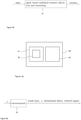
- FIG. 1a shows a block diagram of a radar resource management system 10 according to a first embodiment of the present disclosure.
- the radar resource management system 10 according to the first embodiment comprises a processing circuit 11 comprising a trained agent 12.
- the trained agent 12 may be for example a trained RL, reinforcement learning, agent.
- the concept of reinforcement learning comprises training an agent using an environment, which outputs a reward signal to improve the performance of the agent.
- the trained agent 12 is configured to determine a task configuration having a high utility and to set the task configuration as a record on a job list.
- a radar system may have some parameters that are configurable for every task, such as for example radar transmit energy, pulse repetition rate, integration time, antenna beamwidth to just name some of the possible parameters that may be varied during operation of a radar system.
- a task configuration may be a complete set of parameters that are to be set to operate the radar system.
- a task configuration may comprise all parameters of a radar system that are to be set to operate the radar system.
- a high utility may be defined as a superior utility achieved by a task configuration as compared to alternative task configurations that are principally also usable to fulfill the same task.
- a utility may be rated as high if it is higher than the average utility of all possible task configuration or if it is higher than 80 % of the utilities of all possible tasks configurations.
- the utility may, for example, be a quantity that describes the usefulness of the task configuration according to a predetermined criterion and in a reproducible manner.
- Using a trained agent to determine only those task configurations that have a high utility making them a promising candidate to be chosen in a subsequent global optimization as illustrated in fig. 1.c may result in a significant reduction of computational complexity and a strong increase in processing speed.
- the trained agent may be configured to receive as input data at least one task configuration indicating a use of radar resources. This may enable the trained agent to improve the use of radar resources by determining a task configuration usable subsequently.
- the trained agent may be configured to receive as input data at least one task type indicating a task to be performed using the radar resource.
- the trained agent may be configured to receive as input data situational data indicating properties of an object to be observed or the current radar propagation conditions. This may enable to obtain better results in determining task configurations as compared to an approach where an agent is not aware of any property of the target or of the task to be performed.
- the trained agent may be configured to determine a task configuration having a high utility resource ratio.
- the determination of the utility resource ratio may provide a suitable measure to determine the task configuration. Determining task configurations having a high utility resource ratio may serve as a proper criterion to finally end up with a nearly optimal use of the available resources for the multiple tasks to be fulfilled.
- the trained agent may be configured to determine a task configuration having the high utility resource ratio according to the following equation: u c ⁇ u c in r c ⁇ r c in wherein u is a function modelling task utility, r is a scalar measure for resource consumption and c in is an input task configuration. This may enable to provide a measure for the determination of task configuration.
- the trained agent is based on a network topology having at least two interconnected layers of nodes, wherein the network topology is configured to not interconnect nodes associated to task configurations and to situational data between the first layer and the second layer.
- the network topology is configured to not interconnect nodes associated to task configurations and to situational data between the first layer and the second layer.
- processing circuit may further comprise a global optimizer, which is configured to determine a selected task configuration from task configurations in a job list by maximizing a utility for available resources. Thereby the resources may be allocated to all tasks in an optimal way.
- a global optimizer configured to determine a selected task configuration from task configurations in a job list by maximizing a utility for available resources. Thereby the resources may be allocated to all tasks in an optimal way.
- Figure 1b shows a block diagram of a particular implementation of a trained agent 12 according to the first embodiment of the present disclosure.
- the trained agent 12 receives, as an input, a tuple comprising at least one task configuration indicating a use of radar resources, at least one task type indicating a task to be performed using the radar resource and situational data indicating properties of an object to be observed using the radar resource.
- the task type defines the task to be performed using the radar system or the goal to be achieved by its use.
- Tasks may principally be arbitrary, such as for example tracking an already known target, cooperative or non-cooperative identification of targets or scanning the hemisphere to find new targets. Tasks may not only be limited to tasks in connection of observing obj ects.
- Further tasks may, for example be jamming another radar system or communicating by means of the radar beam.
- Situational data may be any information on the environment the radar system is operated on or on the target the task is to be performed for.
- An example for situational data may be a previously determined speed or distance of the target to be observed.
- the trained agent 12 further receives a task configuration c in as previously determined for the same task as an input. Based on those input parameters, the trained agent 12 outputs a new task configuration c capable to perform the task and having a high utility.
- Figure 1c shows a block diagram of a radar resource management system 10 comprising the trained agent 12, a global optimizer 13 and a scheduler 14.
- the trained agent 12 receives tasks. For every task to be fulfilled by a radar system, the trained agent 12 creates a job ist comprising multiple task configurations having a high utility.
- the job lists for all tasks are used as an input to a global optimizer 13.
- the global optimizer 13 is configured to determine a selected task configuration from the task configurations of every job list. As a result, the selected task configuration used for every task is determined by the global optimizer so that the radar system can be operated using the resource distribution given by the selected tasks.
- the selection of the selected tasks (the global optimization) from the job lists can principally be based on arbitrary criteria.
- One approach is maximizing the utility for the available resources, i.e. the global optimizer 13 may try to achieve the highest utility with the available resources by appropriately selecting the task configurations from the job list.
- the selected jobs as resulting configurations may be given to the scheduler 14, which may sort the selected jobs timewise on a radar timeline and ultimately output the radar timeline.
- Fig. 1d shows a flow chart of an example of a corresponding method for managing radar resources according to a first embodiment of the present disclosure.
- the method may comprise determine a task configuration having a high utility 101 by a trained agent 12 and setting the task configuration as a record on a job list 102.
- FIG. 2a shows a block diagram of a radar resource management system 20 according to a second embodiment of the present disclosure.
- the radar resource management system 20 according to the second embodiment comprises a processing circuit 21 comprising a trained agent 22.
- the trained agent 22 is configured to determine a selected task configuration from multiple possible task configurations for a task. The selected task configuration resulting in high utility for the resources used. Usually this step is performed for several tasks. Nevertheless, it is possible to perform this step also for one task.
- the radar resource management system 20 according to the second embodiment differs from the radar resource management system 10 according to the first embodiment in that the trained agent 22 also performs resource allocation. Thus, there is no need for a global optimizer in the radar resource management system 20 according to the second embodiment.
- the trained agent 22 may receive a tuple comprising at least one task configuration indicating a use of radar resources, at least one task type indicating a task to be performed using the radar resource and situational data indicating properties of an object to be observed using the radar resource.
- Figure 2b shows a block diagram of a resource allocation performed by a trained agent 22 and a scheduler 23 according to the second embodiment of the present disclosure.
- the trained agent 22 receives tasks.
- the trained agent 22 may perform resource allocation and may determine selected task configurations, which may be transmitted to the scheduler 23 as selected jobs, which may place the selected task configurations on a radar timeline.
- the scheduler 23 may output the radar timeline.
- FIG. 3a shows a block diagram of a radar resource management system 30 according to a third embodiment of the present disclosure.
- the radar resource management system 30 according to the third embodiment comprises a processing circuit 31.
- the processing circuit 31 comprises a trained agent 32, which is configured to schedule selected task configurations into a sequence. Each selected task configuration being determined from multiple possible task configurations for a task such that a selected task configuration results in a high utility for the resources used.
- the trained agent 32 schedules selected task configurations under consideration of an execution time of the task.
- the radar resource management system 30 according to the third embodiment differs from the radar resource management system 10 according to the first embodiment in that the trained agent 32 also perform resource allocation and scheduling. Thus, there is no need for a global optimizer and a scheduler in the radar resource management system 30 according to the third embodiment.
- the trained agent 32 may receive a tuple comprising at least one task configuration indicating a use of radar resources, at least one task type indicating a task to be performed using the radar resource and situational data indicating properties of an object to be observed using the radar resource.
- Fig. 3b shows a block diagram of a combined resource allocation and scheduling performed by a trained agent according to the third embodiment of the present disclosure.
- the trained agent 32 may receive tasks.
- the trained agent 32 may perform resource allocation and scheduling jointly.
- the trained agent 32 may output a radar timeline.
- the following description relates to both the radar resource management system and to the corresponding method (and computer program) for the first embodiment, the second embodiment and the third embodiment of the present disclosure.
- the trained agent 12, 22, 32 may be configured to determine a task configuration having a high utility resource ratio according to the following equation: u c ⁇ u c in r c ⁇ r c in wherein u may be a function modelling task utility, r may be a scalar measure for resource consumption and c in may be an input task configuration.
- the trained agent 12, 22, 32 may be based on a network topology having at least two interconnected layers of nodes, wherein the network topology may be configured to not interconnect nodes associated to task configurations and to situational data between the first layer and the second layer.
- Figure 4a shows a block diagram of an apparatus 40 to train an agent 12, 22, 32 in a radar system using reinforcement learning according to a first embodiment.
- the apparatus 40 to train the agent 12, 22, 32 in the radar system comprises a processing circuit 41 comprising a model of an environment 42 and an output interface 43.
- the model of the environment 42 is configured to receive a task configuration as input data from the agent 12, 22, 32, determine a reward signal and a new task configuration based on the task configuration.
- the output interface 43 is configured to output the reward signal and the new task configuration.
- the model of the environment may be configured to determine the reward signal based on a utility resource ratio.
- the model of the environment may be configured to determine the reward signal, which is defined as the ratio of a change in utility du and a change in resource dr. This may enhance the training performance.
- the model of the environment may comprise performance models and functions to determine resource requirements and utility evaluation of a task configuration.
- the processing circuit may further be configured to train the model of the environment based on task configurations used by a radar system and a response received from an environment using the task configuration.
- the model may be trained further based on data determined while using the radar system to continuously increase performance of the trained agent.
- the output interface may be configured to output a task type and situational data.
- Fig. 4b shows a block diagram of a model of an environment 42 according to the first embodiment of the present disclosure.
- the model of the environment 42 may receive task configurations and may output the reward signal and a tuple may comprise at least one task configuration indicating a use of radar resources, at least one task type indicating a task to be performed using the radar resource and situational data indicating properties of an object to be observed using the radar resource.
- Fig. 4c shows a block diagram of a trained agent 12, 22, 32 interacting with the model of the environment 42 according to the first embodiment of the present disclosure.
- the model of the environment 42 may transmit the reward signal as the ratio of the change in utility du and the change in resource dr and a state as a tuple comprising task type, task configurations, situational data to the trained agent 12, 22, 32.
- r indicates a resource consumption.
- the quantity r may be determined with an arbitrary but reproducible method.
- the trained agent 12, 22, 23 may transmit an action as a task configuration with a high utility to the model of the environment 42.
- Fig. 4d shows a flow chart of an example of a corresponding method to train an agent in a radar system using reinforcement learning.
- the method comprises receive a task configuration as input data from the agent by a model of an environment 401, determine a reward signal and a new task configuration by the model of the environment based on the task configuration 402.
- the model of the environment 42 may be configured to determine the reward signal based on a utility resource ratio.
- the utility to resource ratio may be defined as the ratio of a change in utility du and a change in resource dr.
- the model of the environment 42 may comprise performance models and functions to determine resource requirements and utility evaluation of a task configuration.
- the processing circuit 41 may be further configured to train the model of the environment 42 based on task configurations used by a radar system and a response received from the model of the environment 42 using the task configuration.
- Examples may further relate to a computer program comprising a plurality of instructions that in response to being executed result in a computing device performing one or more of the above methods.
- Examples may further be or relate to a (computer) program including a program code to execute one or more of the above methods when the program is executed on a computer, processor or other programmable hardware component.
- steps, operations or processes of different ones of the methods described above may also be executed by programmed computers, processors or other programmable hardware components.
- Examples may also cover program storage devices, such as digital data storage media, which are machine-, processor- or computer-readable and encode and/or contain machine-executable, processor-executable or computer-executable programs and instructions.
- Program storage devices may include or be digital storage devices, magnetic storage media such as magnetic disks and magnetic tapes, hard disk drives, or optically readable digital data storage media, for example.
- Other examples may also include computers, processors, control units, (field) programmable logic arrays ((F)PLAs), (field) programmable gate arrays ((F)PGAs), graphics processor units (GPU), application-specific integrated circuits (ASICs), integrated circuits (ICs) or system-on-a-chip (SoCs) systems programmed to execute the steps of the methods described above.
- FPLAs field programmable logic arrays
- F field) programmable gate arrays
- GPU graphics processor units
- ASICs application-specific integrated circuits
- ICs integrated circuits
- SoCs system-on-a-chip
- aspects described in relation to a device or system should also be understood as a description of the corresponding method.
- a block, device or functional aspect of the device or system may correspond to a feature, such as a method step, of the corresponding method.
- aspects described in relation to a method shall also be understood as a description of a corresponding block, a corresponding element, a property or a functional feature of a corresponding device or a corresponding system.
Landscapes
- Engineering & Computer Science (AREA)
- Physics & Mathematics (AREA)
- Theoretical Computer Science (AREA)
- General Physics & Mathematics (AREA)
- Software Systems (AREA)
- Mathematical Physics (AREA)
- Computing Systems (AREA)
- Evolutionary Computation (AREA)
- Data Mining & Analysis (AREA)
- Artificial Intelligence (AREA)
- General Engineering & Computer Science (AREA)
- Life Sciences & Earth Sciences (AREA)
- Biomedical Technology (AREA)
- Molecular Biology (AREA)
- General Health & Medical Sciences (AREA)
- Computational Linguistics (AREA)
- Biophysics (AREA)
- Health & Medical Sciences (AREA)
- Probability & Statistics with Applications (AREA)
- Computational Mathematics (AREA)
- Pure & Applied Mathematics (AREA)
- Algebra (AREA)
- Mathematical Analysis (AREA)
- Mathematical Optimization (AREA)
- Computer Vision & Pattern Recognition (AREA)
- Medical Informatics (AREA)
- Computer Networks & Wireless Communication (AREA)
- Radar, Positioning & Navigation (AREA)
- Remote Sensing (AREA)
- Traffic Control Systems (AREA)
Abstract
Description
- Examples relate to radar resource management systems, apparatuses to train an agent in a radar system, and to methods and computer programs for managing radar resources and to train an agent in a radar system.
- The evolution of radar and antenna technology may enable modern radar systems to simultaneously perform different tasks using the available resources, which is why resource management including prioritization, parameter selection and scheduling of observation tasks is an essential part of a modern radar system. While a single task, such as for example tracking a target, searching for new targets or jamming another radar system can be fulfilled with multiple different resources allocated as a task configuration, the available resources should be distributed amongst the tasks such that every task can be fulfilled successfully. If more tasks are requested than can be executed by the available resources, the radar resource management system needs to decide which tasks to ignore.
- A radar resource management system may so have a list of tasks to fulfil, each of which may be performed using multiple possible configurations. Conventional methods follow a brute force or heuristic approach to determine the chosen task configurations used for each task in the list in that every possible task configuration is determined for every individual task of the list before a global optimization and scheduling is performed. The optimization results in a chosen task configuration for every task of the list. Considering abundant possible task configurations may be very time consuming and computationally expensive, which may in turn result in the inability to perform the resource allocation in real time.
- Therefore, there is a need to provide a more efficient way to determine chosen task configurations and to schedule radar resources.
- This need is addressed by the subject matter of the independent claims.
- An embodiment relates to a radar resource management system, comprising a processing circuit comprising a trained agent, which is configured to determine a task configuration having a high utility, and set the task configuration as a record on a job list. Using a trained agent may serve to determine only those task configurations that have a high utility making them good candidates for being chosen as a selected task configuration during a subsequent optimization. Disregarding multiple other possible task configurations not having a high utility by using the trained agent may result in a significant reduction of computational complexity and a strong increase in processing speed without overall performance sacrifice.
- An embodiment relates to an apparatus to train an agent in a radar system using reinforcement learning, comprising a processing circuit comprising a model of an environment configured to receive a task configuration as input data from the agent. The processing circuit is further configured to determine a reward signal and a new task configuration based on the task configuration, and to output the reward signal and the new task configuration.
- A further embodiment relates to a radar resource management system comprising a processing circuit comprising a trained agent, which is configured to determine a selected task configuration from multiple possible task configurations for a task, the selected task configuration resulting in high utility for the resources used.
- A further embodiment relates to a radar resource management system, comprising a processing circuit comprising a trained agent, which is configured to schedule selected task configurations into a sequence, each selected task configuration being determined from multiple possible task configurations for a task such that a selected task configuration results in a high utility for the resources used.
- An embodiment of a method for managing radar resources comprises determining a task configuration having a high utility and set the task configuration as a record on a job list.
- An embodiment of a method to train an agent in a radar system using reinforcement learning comprises receiving a task configuration as input data for a model of an environment from the agent and determining a reward signal and a new task configuration by the model of the environment based on the task configuration.
- Embodiments of the present disclosure train an agent or use a trained agent to determine a task configurations for tasks to be performed by a radar system that have a high utility, thereby significantly saving on computational complexity for scheduling radar resources.
- Some examples of radar resource management systems, apparatuses and/or methods will be described in the following by way of example only, and with reference to the accompanying figures, in which
-
Fig. 1a shows a block diagram of a radar resource management system according to a first embodiment of the present disclosure; -
Fig. 1b shows a block diagram of a trained agent according to the first embodiment of the present disclosure; -
Fig. 1c shows a block diagram of a radar resource management comprising a trained agent, a global optimizer and a scheduler according to the first embodiment of the present disclosure; -
Fig. 1d shows a flow chart of a corresponding method for managing radar resources according to a first embodiment of the present disclosure; -
Fig. 2a shows a block diagram of a radar resource management system according to a second embodiment of the present disclosure; -
Fig. 2b shows resource allocation performed by a trained agent and a scheduler according to an embodiment of the present disclosure; -
Fig. 3a shows a block diagram of a radar resource management system according to a third embodiment of the present disclosure; -
Fig. 3b shows a block diagram of combined resource allocation and scheduling performed by a trained agent according to the third embodiment of the present disclosure; -
Fig. 4a shows a block diagram of an apparatus to train an agent in a radar system using reinforcement learning according to a first embodiment of the present disclosure; -
Fig. 4b shows a block diagram of a model of an environment according to the first embodiment of the present disclosure; -
Fig. 4c shows a block diagram of a trained agent interacting with the model of the environment according to the first embodiment of the present disclosure; and -
Fig. 4d shows a flow chart of a method to train an agent in a radar system using reinforcement learning according to the first embodiment of the present disclosure. - Some examples are now described in more detail with reference to the enclosed figures. However, other possible examples are not limited to the features of these embodiments described in detail. Other examples may include modifications of the features as well as equivalents and alternatives to the features. Furthermore, the terminology used herein to describe certain examples should not be restrictive of further possible examples.
- Throughout the description of the figures same or similar reference numerals refer to same or similar elements and/or features, which may be identical or implemented in a modified form while providing the same or a similar function. The thickness of lines, layers and/or areas in the figures may also be exaggerated for clarification.
- When two elements A and B are combined using an 'or', this is to be understood as disclosing all possible combinations, i.e. only A, only B as well as A and B, unless expressly defined otherwise in the individual case. As an alternative wording for the same combinations, "at least one of A and B" or "A and/or B" may be used. This applies equivalently to combinations of more than two elements.
- If a singular form, such as "a", "an" and "the" is used and the use of only a single element is not defined as mandatory either explicitly or implicitly, further examples may also use several elements to implement the same function. If a function is described below as implemented using multiple elements, further examples may implement the same function using a single element or a single processing entity. It is further understood that the terms "include", "including", "comprise" and/or "comprising", when used, describe the presence of the specified features, integers, steps, operations, processes, elements, components and/or a group thereof, but do not exclude the presence or addition of one or more other features, integers, steps, operations, processes, elements, components and/or a group thereof.
-
Figure 1a shows a block diagram of a radarresource management system 10 according to a first embodiment of the present disclosure. The radarresource management system 10 according to the first embodiment comprises aprocessing circuit 11 comprising a trainedagent 12. The trainedagent 12 may be for example a trained RL, reinforcement learning, agent. The concept of reinforcement learning comprises training an agent using an environment, which outputs a reward signal to improve the performance of the agent. The trainedagent 12 is configured to determine a task configuration having a high utility and to set the task configuration as a record on a job list. A radar system may have some parameters that are configurable for every task, such as for example radar transmit energy, pulse repetition rate, integration time, antenna beamwidth to just name some of the possible parameters that may be varied during operation of a radar system. A task configuration may be a complete set of parameters that are to be set to operate the radar system. In other words, a task configuration may comprise all parameters of a radar system that are to be set to operate the radar system. A high utility may be defined as a superior utility achieved by a task configuration as compared to alternative task configurations that are principally also usable to fulfill the same task. For example, a utility may be rated as high if it is higher than the average utility of all possible task configuration or if it is higher than 80 % of the utilities of all possible tasks configurations. The utility may, for example, be a quantity that describes the usefulness of the task configuration according to a predetermined criterion and in a reproducible manner. - Using a trained agent to determine only those task configurations that have a high utility making them a promising candidate to be chosen in a subsequent global optimization as illustrated in
fig. 1.c may result in a significant reduction of computational complexity and a strong increase in processing speed. - In some embodiments, the trained agent may be configured to receive as input data at least one task configuration indicating a use of radar resources. This may enable the trained agent to improve the use of radar resources by determining a task configuration usable subsequently.
- In some embodiments, the trained agent may be configured to receive as input data at least one task type indicating a task to be performed using the radar resource.
- In some embodiments, the trained agent may be configured to receive as input data situational data indicating properties of an object to be observed or the current radar propagation conditions. This may enable to obtain better results in determining task configurations as compared to an approach where an agent is not aware of any property of the target or of the task to be performed.
- In some embodiments the trained agent may be configured to determine a task configuration having a high utility resource ratio. The determination of the utility resource ratio may provide a suitable measure to determine the task configuration. Determining task configurations having a high utility resource ratio may serve as a proper criterion to finally end up with a nearly optimal use of the available resources for the multiple tasks to be fulfilled.
- In some embodiments, the trained agent may be configured to determine a task configuration having the high utility resource ratio according to the following equation:

- According to some embodiments, the trained agent is based on a network topology having at least two interconnected layers of nodes, wherein the network topology is configured to not interconnect nodes associated to task configurations and to situational data between the first layer and the second layer. As compared to other network topologies, not interrelating the task configuration and the situational data while transiting into the second layer of the network topology constituting the trained agent prove to provide superior results.
- In some embodiments the, processing circuit may further comprise a global optimizer, which is configured to determine a selected task configuration from task configurations in a job list by maximizing a utility for available resources. Thereby the resources may be allocated to all tasks in an optimal way.
-
Figure 1b shows a block diagram of a particular implementation of a trainedagent 12 according to the first embodiment of the present disclosure. The trainedagent 12 receives, as an input, a tuple comprising at least one task configuration indicating a use of radar resources, at least one task type indicating a task to be performed using the radar resource and situational data indicating properties of an object to be observed using the radar resource. The task type defines the task to be performed using the radar system or the goal to be achieved by its use. Tasks may principally be arbitrary, such as for example tracking an already known target, cooperative or non-cooperative identification of targets or scanning the hemisphere to find new targets. Tasks may not only be limited to tasks in connection of observing obj ects. Further tasks may, for example be jamming another radar system or communicating by means of the radar beam. Situational data may be any information on the environment the radar system is operated on or on the target the task is to be performed for. An example for situational data may be a previously determined speed or distance of the target to be observed. As illustrated infig. 1b , the trainedagent 12 further receives a task configuration cin as previously determined for the same task as an input. Based on those input parameters, the trainedagent 12 outputs a new task configuration c capable to perform the task and having a high utility. -
Figure 1c shows a block diagram of a radarresource management system 10 comprising the trainedagent 12, aglobal optimizer 13 and ascheduler 14. The trainedagent 12 receives tasks. For every task to be fulfilled by a radar system, the trainedagent 12 creates a job ist comprising multiple task configurations having a high utility. The job lists for all tasks are used as an input to aglobal optimizer 13. Theglobal optimizer 13 is configured to determine a selected task configuration from the task configurations of every job list. As a result, the selected task configuration used for every task is determined by the global optimizer so that the radar system can be operated using the resource distribution given by the selected tasks. The selection of the selected tasks (the global optimization) from the job lists can principally be based on arbitrary criteria. One approach is maximizing the utility for the available resources, i.e. theglobal optimizer 13 may try to achieve the highest utility with the available resources by appropriately selecting the task configurations from the job list. The selected jobs as resulting configurations may be given to thescheduler 14, which may sort the selected jobs timewise on a radar timeline and ultimately output the radar timeline. - For the sake of completeness,
Fig. 1d shows a flow chart of an example of a corresponding method for managing radar resources according to a first embodiment of the present disclosure. The method may comprise determine a task configuration having ahigh utility 101 by a trainedagent 12 and setting the task configuration as a record on ajob list 102. -
Figure 2a shows a block diagram of a radarresource management system 20 according to a second embodiment of the present disclosure. The radarresource management system 20 according to the second embodiment comprises aprocessing circuit 21 comprising a trainedagent 22. The trainedagent 22 is configured to determine a selected task configuration from multiple possible task configurations for a task. The selected task configuration resulting in high utility for the resources used. Usually this step is performed for several tasks. Nevertheless, it is possible to perform this step also for one task. The radarresource management system 20 according to the second embodiment differs from the radarresource management system 10 according to the first embodiment in that the trainedagent 22 also performs resource allocation. Thus, there is no need for a global optimizer in the radarresource management system 20 according to the second embodiment. - The trained
agent 22 according to the second embodiment may receive a tuple comprising at least one task configuration indicating a use of radar resources, at least one task type indicating a task to be performed using the radar resource and situational data indicating properties of an object to be observed using the radar resource. -
Figure 2b shows a block diagram of a resource allocation performed by a trainedagent 22 and ascheduler 23 according to the second embodiment of the present disclosure. The trainedagent 22 receives tasks. The trainedagent 22 may perform resource allocation and may determine selected task configurations, which may be transmitted to thescheduler 23 as selected jobs, which may place the selected task configurations on a radar timeline. Thescheduler 23 may output the radar timeline. -
Figure 3a shows a block diagram of a radarresource management system 30 according to a third embodiment of the present disclosure. The radarresource management system 30 according to the third embodiment comprises aprocessing circuit 31. Theprocessing circuit 31 comprises a trainedagent 32, which is configured to schedule selected task configurations into a sequence. Each selected task configuration being determined from multiple possible task configurations for a task such that a selected task configuration results in a high utility for the resources used. The trainedagent 32 schedules selected task configurations under consideration of an execution time of the task. The radarresource management system 30 according to the third embodiment differs from the radarresource management system 10 according to the first embodiment in that the trainedagent 32 also perform resource allocation and scheduling. Thus, there is no need for a global optimizer and a scheduler in the radarresource management system 30 according to the third embodiment. - The trained
agent 32 according to the third embodiment may receive a tuple comprising at least one task configuration indicating a use of radar resources, at least one task type indicating a task to be performed using the radar resource and situational data indicating properties of an object to be observed using the radar resource. -
Fig. 3b shows a block diagram of a combined resource allocation and scheduling performed by a trained agent according to the third embodiment of the present disclosure. The trainedagent 32 may receive tasks. The trainedagent 32 may perform resource allocation and scheduling jointly. The trainedagent 32 may output a radar timeline. - The following description relates to both the radar resource management system and to the corresponding method (and computer program) for the first embodiment, the second embodiment and the third embodiment of the present disclosure.
- The trained
agent 
- The trained
agent -
Figure 4a shows a block diagram of anapparatus 40 to train anagent apparatus 40 to train theagent processing circuit 41 comprising a model of anenvironment 42 and anoutput interface 43. The model of theenvironment 42 is configured to receive a task configuration as input data from theagent output interface 43 is configured to output the reward signal and the new task configuration. - According to some embodiments, the model of the environment may be configured to determine the reward signal based on a utility resource ratio. In some embodiments the model of the environment may be configured to determine the reward signal, which is defined as the ratio of a change in utility du and a change in resource dr. This may enhance the training performance.
- In some embodiments, the model of the environment may comprise performance models and functions to determine resource requirements and utility evaluation of a task configuration. According to some embodiments, the processing circuit may further be configured to train the model of the environment based on task configurations used by a radar system and a response received from an environment using the task configuration. In other words, the model may be trained further based on data determined while using the radar system to continuously increase performance of the trained agent.
- In some embodiments, the output interface may be configured to output a task type and situational data.
-
Fig. 4b shows a block diagram of a model of anenvironment 42 according to the first embodiment of the present disclosure. The model of theenvironment 42 may receive task configurations and may output the reward signal and a tuple may comprise at least one task configuration indicating a use of radar resources, at least one task type indicating a task to be performed using the radar resource and situational data indicating properties of an object to be observed using the radar resource. -
Fig. 4c shows a block diagram of a trainedagent environment 42 according to the first embodiment of the present disclosure. The model of theenvironment 42 may transmit the reward signal as the ratio of the change in utility du and the change in resource dr and a state as a tuple comprising task type, task configurations, situational data to the trainedagent agent environment 42. - For the sake of completeness,
Fig. 4d shows a flow chart of an example of a corresponding method to train an agent in a radar system using reinforcement learning. The method comprises receive a task configuration as input data from the agent by a model of anenvironment 401, determine a reward signal and a new task configuration by the model of the environment based on thetask configuration 402. - The model of the
environment 42 may be configured to determine the reward signal based on a utility resource ratio. The utility to resource ratio may be defined as the ratio of a change in utility du and a change in resource dr. - The model of the
environment 42 may comprise performance models and functions to determine resource requirements and utility evaluation of a task configuration. - The
processing circuit 41 may be further configured to train the model of theenvironment 42 based on task configurations used by a radar system and a response received from the model of theenvironment 42 using the task configuration. - Examples may further relate to a computer program comprising a plurality of instructions that in response to being executed result in a computing device performing one or more of the above methods.
- The aspects and features described in relation to a particular one of the previous examples may also be combined with one or more of the further examples to replace an identical or similar feature of that further example or to additionally introduce the features into the further example.
- Examples may further be or relate to a (computer) program including a program code to execute one or more of the above methods when the program is executed on a computer, processor or other programmable hardware component. Thus, steps, operations or processes of different ones of the methods described above may also be executed by programmed computers, processors or other programmable hardware components. Examples may also cover program storage devices, such as digital data storage media, which are machine-, processor- or computer-readable and encode and/or contain machine-executable, processor-executable or computer-executable programs and instructions. Program storage devices may include or be digital storage devices, magnetic storage media such as magnetic disks and magnetic tapes, hard disk drives, or optically readable digital data storage media, for example. Other examples may also include computers, processors, control units, (field) programmable logic arrays ((F)PLAs), (field) programmable gate arrays ((F)PGAs), graphics processor units (GPU), application-specific integrated circuits (ASICs), integrated circuits (ICs) or system-on-a-chip (SoCs) systems programmed to execute the steps of the methods described above.
- It is further understood that the disclosure of several steps, processes, operations or functions disclosed in the description or claims shall not be construed to imply that these operations are necessarily dependent on the order described, unless explicitly stated in the individual case or necessary for technical reasons. Therefore, the previous description does not limit the execution of several steps or functions to a certain order. Furthermore, in further examples, a single step, function, process or operation may include and/or be broken up into several sub-steps, - functions, -processes or -operations.
- If some aspects have been described in relation to a device or system, these aspects should also be understood as a description of the corresponding method. For example, a block, device or functional aspect of the device or system may correspond to a feature, such as a method step, of the corresponding method. Accordingly, aspects described in relation to a method shall also be understood as a description of a corresponding block, a corresponding element, a property or a functional feature of a corresponding device or a corresponding system.
- The following claims are hereby incorporated in the detailed description, wherein each claim may stand on its own as a separate example. It should also be noted that although in the claims a dependent claim refers to a particular combination with one or more other claims, other examples may also include a combination of the dependent claim with the subject matter of any other dependent or independent claim. Such combinations are hereby explicitly proposed, unless it is stated in the individual case that a particular combination is not intended. Furthermore, features of a claim should also be included for any other independent claim, even if that claim is not directly defined as dependent on that other independent claim.
Claims (18)
- A radar resource management system, comprising
a processing circuit comprising a trained agent, which is configured to:
determine a task configuration having a high utility, and set the task configuration as a record on a job list. - The radar resource management system according to claim 1 wherein the trained agent is configured to receive as input data at least one task configuration indicating a use of radar resources and/or at least one task type indicating a task to be performed using the radar resource.
- The radar resource management system according to anyone of the preceding claims, wherein the trained agent is configured to receive as input data situational data indicating properties of an object to be observed using the radar resource.
- The radar resource management system according to anyone of the preceding claims, wherein the trained agent is configured to determine a task configuration having a high utility resource ratio.
- The radar resource management system according to claim 4, wherein the trained agent is configured to determine a task configuration having the high utility resource ratio according to the following equation:

- The radar resource management system according to anyone of the preceding claims, wherein the trained agent is based on a network topology having at least two interconnected layers of nodes, wherein the network topology is configured to not interconnect nodes associated to task configurations and to situational data between the first layer and the second layer.
- The radar resource management system according to anyone of the preceding claims,
wherein the processing circuit further comprising a global optimizer, which is configured to:
determine a selected task configuration from task configurations in the job list by maximizing a utility for available resources. - The radar resource management system according to claims 1 to 7, wherein the trained agent is configured to:
determine a selected task configuration from task configurations in a job list by maximizing a utility for available resources. - An apparatus to train an agent in a radar system using reinforcement learning, comprising:
a processing circuit comprising a model of an environment configured to:receive a task configuration as input data from the agent,determine a reward signal and a new task configuration based on the task configuration, andan output interface configured to output the reward signal and the new task configuration. - The apparatus according to claim 9, wherein the model of the environment is configured to determine the reward signal based on a utility resource ratio.
- The apparatus according to claim 9 or 10, wherein the model of the environment is configured to determine the reward signal r, which is defined as the ratio of a change in utility du and a change in resource dr.
- The apparatus according to claims 9 to 11, wherein the model of the environment comprises performance models and functions to determine resource requirements and utility evaluation of a task configuration.
- The apparatus according to claim 9 to 12, wherein the a processing circuit is further configured to train the model of the environment based on task configurations used by a radar systems and a response received from an environment using the task configuration.
- The apparatus according to claims 9 to 13, wherein the output interface is configured to output a task type and situational data.
- A radar resource management system, comprising
a processing circuit comprising a trained agent, which is configured to:
determine a selected task configuration from multiple possible task configurations for a task, the selected task configuration resulting in a high utility for the resources used. - A radar resource management system, comprising
a processing circuit comprising a trained agent, which is configured to:
schedule selected task configurations into a sequence, each selected task configuration being determined from multiple possible task configurations for a task such that a selected task configuration results in a high utility for the resources used. - A Method for managing radar resources, comprising
determine a task configuration having a high utility and set the task configuration as a record on a job list. - A Method to train an agent in a radar system using reinforcement learning, comprising:receive a task configuration as input data from the agent by a model of an environment,determine a reward signal and a new task configuration by the model of the environment based on the task configuration.
Priority Applications (1)
| Application Number | Priority Date | Filing Date | Title |
|---|---|---|---|
| EP20197187.6A EP3971659A1 (en) | 2020-09-21 | 2020-09-21 | Radar resource management system, apparatus to train an agent in a radar system using reinforcement learning, method for managing radar resources, and method to train an agent in a radar system using reinforcement learning |
Applications Claiming Priority (1)
| Application Number | Priority Date | Filing Date | Title |
|---|---|---|---|
| EP20197187.6A EP3971659A1 (en) | 2020-09-21 | 2020-09-21 | Radar resource management system, apparatus to train an agent in a radar system using reinforcement learning, method for managing radar resources, and method to train an agent in a radar system using reinforcement learning |
Publications (1)
| Publication Number | Publication Date |
|---|---|
| EP3971659A1 true EP3971659A1 (en) | 2022-03-23 |
Family
ID=72603417
Family Applications (1)
| Application Number | Title | Priority Date | Filing Date |
|---|---|---|---|
| EP20197187.6A Pending EP3971659A1 (en) | 2020-09-21 | 2020-09-21 | Radar resource management system, apparatus to train an agent in a radar system using reinforcement learning, method for managing radar resources, and method to train an agent in a radar system using reinforcement learning |
Country Status (1)
| Country | Link |
|---|---|
| EP (1) | EP3971659A1 (en) |
Citations (4)
| Publication number | Priority date | Publication date | Assignee | Title |
|---|---|---|---|---|
| US20180302800A1 (en) * | 2017-04-17 | 2018-10-18 | DeepSig Inc. | Placement and scheduling of radio signal processing dataflow operations |
| US20190324822A1 (en) | 2018-04-24 | 2019-10-24 | EMC IP Holding Company LLC | Deep Reinforcement Learning for Workflow Optimization Using Provenance-Based Simulation |
| US20200019435A1 (en) * | 2018-07-13 | 2020-01-16 | Raytheon Company | Dynamic optimizing task scheduling |
| US20200257968A1 (en) * | 2019-02-08 | 2020-08-13 | Adobe Inc. | Self-learning scheduler for application orchestration on shared compute cluster |
-
2020
- 2020-09-21 EP EP20197187.6A patent/EP3971659A1/en active Pending
Patent Citations (4)
| Publication number | Priority date | Publication date | Assignee | Title |
|---|---|---|---|---|
| US20180302800A1 (en) * | 2017-04-17 | 2018-10-18 | DeepSig Inc. | Placement and scheduling of radio signal processing dataflow operations |
| US20190324822A1 (en) | 2018-04-24 | 2019-10-24 | EMC IP Holding Company LLC | Deep Reinforcement Learning for Workflow Optimization Using Provenance-Based Simulation |
| US20200019435A1 (en) * | 2018-07-13 | 2020-01-16 | Raytheon Company | Dynamic optimizing task scheduling |
| US20200257968A1 (en) * | 2019-02-08 | 2020-08-13 | Adobe Inc. | Self-learning scheduler for application orchestration on shared compute cluster |
Non-Patent Citations (1)
| Title |
|---|
| ANONYMOUS: "Reinforcement learning - Wikipedia", 23 September 2019 (2019-09-23), XP055644207, Retrieved from the Internet <URL:https://en.wikipedia.org/w/index.php?title=Reinforcement_learning&oldid=917446307> [retrieved on 20191119] * |
Similar Documents
| Publication | Publication Date | Title |
|---|---|---|
| Nurmi et al. | QBETS: Queue bounds estimation from time series | |
| Fan et al. | Dras: Deep reinforcement learning for cluster scheduling in high performance computing | |
| CN116069512A (en) | A serverless efficient resource allocation method and system based on reinforcement learning | |
| CN106682820B (en) | An Optimal Scheduling Method for Digital Array Radar Tasks Based on Pulse Interleaving | |
| CN113157422A (en) | Cloud data center cluster resource scheduling method and device based on deep reinforcement learning | |
| CN109271015A (en) | Method for reducing energy consumption of large-scale distributed machine learning system | |
| CN110717142B (en) | An Adaptive Beam Dwelling Scheduling Method for Phased Array Radar Based on Novel Pulse Interleaving Technology | |
| CN112749804B (en) | Phased array radar pulse staggered beam resident scheduling algorithm based on genetic algorithm | |
| CN111861012B (en) | A test task execution time prediction method and optimal execution node selection method | |
| US20230195531A1 (en) | Energy-aware task scheduling | |
| CN114742644A (en) | Method and device for training multi-scene wind control system and predicting business object risk | |
| CN113568747A (en) | Cloud robot resource scheduling method and system based on task classification and time series prediction | |
| CN117492929A (en) | Scheduling method, device, scheduler and readable storage medium | |
| Tan et al. | Online adaptive dwell scheduling based on dynamic template for PAR | |
| CN119135533B (en) | A method and apparatus for optimizing server parameters | |
| CN116227647A (en) | A new power system digital twin derivation optimization method and system | |
| Iglesias et al. | Increasing task consolidation efficiency by using more accurate resource estimations | |
| CN120256065A (en) | Agent-based cloud task scheduling method, device, equipment and medium | |
| Paokin et al. | Approbation of methods for supercomputer job queue wait time estimation | |
| CN120068786A (en) | Clock gating method, system, device and storage medium | |
| Ho et al. | Parallel simulation of real-time systems via the standard clock approach | |
| CN114818570B (en) | Embedded system time sequence analysis method based on Monte Carlo simulation | |
| Balli et al. | Utility accrual real-time scheduling under variable cost functions | |
| Portnov et al. | Development of a method for managing resource-intensive applications in distributed computing systems | |
| Tan et al. | Adaptive dwell scheduling based on a novel online pulse interleaving technique for phased array radar |
Legal Events
| Date | Code | Title | Description |
|---|---|---|---|
| PUAI | Public reference made under article 153(3) epc to a published international application that has entered the european phase |
Free format text: ORIGINAL CODE: 0009012 |
|
| STAA | Information on the status of an ep patent application or granted ep patent |
Free format text: STATUS: REQUEST FOR EXAMINATION WAS MADE |
|
| 17P | Request for examination filed |
Effective date: 20210818 |
|
| AK | Designated contracting states |
Kind code of ref document: A1 Designated state(s): AL AT BE BG CH CY CZ DE DK EE ES FI FR GB GR HR HU IE IS IT LI LT LU LV MC MK MT NL NO PL PT RO RS SE SI SK SM TR |
|
| RAP3 | Party data changed (applicant data changed or rights of an application transferred) |
Owner name: HENSOLDT SENSORS GMBH Owner name: FRAUNHOFER-GESELLSCHAFT ZUR FOERDERUNG DER ANGEWANDTEN FORSCHUNG E.V. |
|
| TPAC | Observations filed by third parties |
Free format text: ORIGINAL CODE: EPIDOSNTIPA |
|
| STAA | Information on the status of an ep patent application or granted ep patent |
Free format text: STATUS: EXAMINATION IS IN PROGRESS |
|
| 17Q | First examination report despatched |
Effective date: 20231116 |