EP3971267A1 - A process and a system for production of multiple grade de-aromatized solvents from hydrocarbon streams - Google Patents
A process and a system for production of multiple grade de-aromatized solvents from hydrocarbon streams Download PDFInfo
- Publication number
- EP3971267A1 EP3971267A1 EP21197873.9A EP21197873A EP3971267A1 EP 3971267 A1 EP3971267 A1 EP 3971267A1 EP 21197873 A EP21197873 A EP 21197873A EP 3971267 A1 EP3971267 A1 EP 3971267A1
- Authority
- EP
- European Patent Office
- Prior art keywords
- effluent
- unit
- reactor
- adsorption
- ppmw
- Prior art date
- Legal status (The legal status is an assumption and is not a legal conclusion. Google has not performed a legal analysis and makes no representation as to the accuracy of the status listed.)
- Pending
Links
Images

Classifications
-
- C—CHEMISTRY; METALLURGY
- C10—PETROLEUM, GAS OR COKE INDUSTRIES; TECHNICAL GASES CONTAINING CARBON MONOXIDE; FUELS; LUBRICANTS; PEAT
- C10G—CRACKING HYDROCARBON OILS; PRODUCTION OF LIQUID HYDROCARBON MIXTURES, e.g. BY DESTRUCTIVE HYDROGENATION, OLIGOMERISATION, POLYMERISATION; RECOVERY OF HYDROCARBON OILS FROM OIL-SHALE, OIL-SAND, OR GASES; REFINING MIXTURES MAINLY CONSISTING OF HYDROCARBONS; REFORMING OF NAPHTHA; MINERAL WAXES
- C10G67/00—Treatment of hydrocarbon oils by at least one hydrotreatment process and at least one process for refining in the absence of hydrogen only
- C10G67/02—Treatment of hydrocarbon oils by at least one hydrotreatment process and at least one process for refining in the absence of hydrogen only plural serial stages only
- C10G67/14—Treatment of hydrocarbon oils by at least one hydrotreatment process and at least one process for refining in the absence of hydrogen only plural serial stages only including at least two different refining steps in the absence of hydrogen
-
- C—CHEMISTRY; METALLURGY
- C10—PETROLEUM, GAS OR COKE INDUSTRIES; TECHNICAL GASES CONTAINING CARBON MONOXIDE; FUELS; LUBRICANTS; PEAT
- C10G—CRACKING HYDROCARBON OILS; PRODUCTION OF LIQUID HYDROCARBON MIXTURES, e.g. BY DESTRUCTIVE HYDROGENATION, OLIGOMERISATION, POLYMERISATION; RECOVERY OF HYDROCARBON OILS FROM OIL-SHALE, OIL-SAND, OR GASES; REFINING MIXTURES MAINLY CONSISTING OF HYDROCARBONS; REFORMING OF NAPHTHA; MINERAL WAXES
- C10G45/00—Refining of hydrocarbon oils using hydrogen or hydrogen-generating compounds
- C10G45/44—Hydrogenation of the aromatic hydrocarbons
- C10G45/46—Hydrogenation of the aromatic hydrocarbons characterised by the catalyst used
-
- C—CHEMISTRY; METALLURGY
- C10—PETROLEUM, GAS OR COKE INDUSTRIES; TECHNICAL GASES CONTAINING CARBON MONOXIDE; FUELS; LUBRICANTS; PEAT
- C10G—CRACKING HYDROCARBON OILS; PRODUCTION OF LIQUID HYDROCARBON MIXTURES, e.g. BY DESTRUCTIVE HYDROGENATION, OLIGOMERISATION, POLYMERISATION; RECOVERY OF HYDROCARBON OILS FROM OIL-SHALE, OIL-SAND, OR GASES; REFINING MIXTURES MAINLY CONSISTING OF HYDROCARBONS; REFORMING OF NAPHTHA; MINERAL WAXES
- C10G25/00—Refining of hydrocarbon oils in the absence of hydrogen, with solid sorbents
-
- C—CHEMISTRY; METALLURGY
- C10—PETROLEUM, GAS OR COKE INDUSTRIES; TECHNICAL GASES CONTAINING CARBON MONOXIDE; FUELS; LUBRICANTS; PEAT
- C10G—CRACKING HYDROCARBON OILS; PRODUCTION OF LIQUID HYDROCARBON MIXTURES, e.g. BY DESTRUCTIVE HYDROGENATION, OLIGOMERISATION, POLYMERISATION; RECOVERY OF HYDROCARBON OILS FROM OIL-SHALE, OIL-SAND, OR GASES; REFINING MIXTURES MAINLY CONSISTING OF HYDROCARBONS; REFORMING OF NAPHTHA; MINERAL WAXES
- C10G25/00—Refining of hydrocarbon oils in the absence of hydrogen, with solid sorbents
- C10G25/12—Recovery of used adsorbent
-
- C—CHEMISTRY; METALLURGY
- C10—PETROLEUM, GAS OR COKE INDUSTRIES; TECHNICAL GASES CONTAINING CARBON MONOXIDE; FUELS; LUBRICANTS; PEAT
- C10G—CRACKING HYDROCARBON OILS; PRODUCTION OF LIQUID HYDROCARBON MIXTURES, e.g. BY DESTRUCTIVE HYDROGENATION, OLIGOMERISATION, POLYMERISATION; RECOVERY OF HYDROCARBON OILS FROM OIL-SHALE, OIL-SAND, OR GASES; REFINING MIXTURES MAINLY CONSISTING OF HYDROCARBONS; REFORMING OF NAPHTHA; MINERAL WAXES
- C10G31/00—Refining of hydrocarbon oils, in the absence of hydrogen, by methods not otherwise provided for
-
- C—CHEMISTRY; METALLURGY
- C10—PETROLEUM, GAS OR COKE INDUSTRIES; TECHNICAL GASES CONTAINING CARBON MONOXIDE; FUELS; LUBRICANTS; PEAT
- C10G—CRACKING HYDROCARBON OILS; PRODUCTION OF LIQUID HYDROCARBON MIXTURES, e.g. BY DESTRUCTIVE HYDROGENATION, OLIGOMERISATION, POLYMERISATION; RECOVERY OF HYDROCARBON OILS FROM OIL-SHALE, OIL-SAND, OR GASES; REFINING MIXTURES MAINLY CONSISTING OF HYDROCARBONS; REFORMING OF NAPHTHA; MINERAL WAXES
- C10G45/00—Refining of hydrocarbon oils using hydrogen or hydrogen-generating compounds
- C10G45/02—Refining of hydrocarbon oils using hydrogen or hydrogen-generating compounds to eliminate hetero atoms without changing the skeleton of the hydrocarbon involved and without cracking into lower boiling hydrocarbons; Hydrofinishing
- C10G45/04—Refining of hydrocarbon oils using hydrogen or hydrogen-generating compounds to eliminate hetero atoms without changing the skeleton of the hydrocarbon involved and without cracking into lower boiling hydrocarbons; Hydrofinishing characterised by the catalyst used
- C10G45/06—Refining of hydrocarbon oils using hydrogen or hydrogen-generating compounds to eliminate hetero atoms without changing the skeleton of the hydrocarbon involved and without cracking into lower boiling hydrocarbons; Hydrofinishing characterised by the catalyst used containing nickel or cobalt metal, or compounds thereof
-
- C—CHEMISTRY; METALLURGY
- C10—PETROLEUM, GAS OR COKE INDUSTRIES; TECHNICAL GASES CONTAINING CARBON MONOXIDE; FUELS; LUBRICANTS; PEAT
- C10G—CRACKING HYDROCARBON OILS; PRODUCTION OF LIQUID HYDROCARBON MIXTURES, e.g. BY DESTRUCTIVE HYDROGENATION, OLIGOMERISATION, POLYMERISATION; RECOVERY OF HYDROCARBON OILS FROM OIL-SHALE, OIL-SAND, OR GASES; REFINING MIXTURES MAINLY CONSISTING OF HYDROCARBONS; REFORMING OF NAPHTHA; MINERAL WAXES
- C10G45/00—Refining of hydrocarbon oils using hydrogen or hydrogen-generating compounds
- C10G45/02—Refining of hydrocarbon oils using hydrogen or hydrogen-generating compounds to eliminate hetero atoms without changing the skeleton of the hydrocarbon involved and without cracking into lower boiling hydrocarbons; Hydrofinishing
- C10G45/04—Refining of hydrocarbon oils using hydrogen or hydrogen-generating compounds to eliminate hetero atoms without changing the skeleton of the hydrocarbon involved and without cracking into lower boiling hydrocarbons; Hydrofinishing characterised by the catalyst used
- C10G45/06—Refining of hydrocarbon oils using hydrogen or hydrogen-generating compounds to eliminate hetero atoms without changing the skeleton of the hydrocarbon involved and without cracking into lower boiling hydrocarbons; Hydrofinishing characterised by the catalyst used containing nickel or cobalt metal, or compounds thereof
- C10G45/08—Refining of hydrocarbon oils using hydrogen or hydrogen-generating compounds to eliminate hetero atoms without changing the skeleton of the hydrocarbon involved and without cracking into lower boiling hydrocarbons; Hydrofinishing characterised by the catalyst used containing nickel or cobalt metal, or compounds thereof in combination with chromium, molybdenum, or tungsten metals, or compounds thereof
-
- C—CHEMISTRY; METALLURGY
- C10—PETROLEUM, GAS OR COKE INDUSTRIES; TECHNICAL GASES CONTAINING CARBON MONOXIDE; FUELS; LUBRICANTS; PEAT
- C10G—CRACKING HYDROCARBON OILS; PRODUCTION OF LIQUID HYDROCARBON MIXTURES, e.g. BY DESTRUCTIVE HYDROGENATION, OLIGOMERISATION, POLYMERISATION; RECOVERY OF HYDROCARBON OILS FROM OIL-SHALE, OIL-SAND, OR GASES; REFINING MIXTURES MAINLY CONSISTING OF HYDROCARBONS; REFORMING OF NAPHTHA; MINERAL WAXES
- C10G45/00—Refining of hydrocarbon oils using hydrogen or hydrogen-generating compounds
- C10G45/44—Hydrogenation of the aromatic hydrocarbons
- C10G45/46—Hydrogenation of the aromatic hydrocarbons characterised by the catalyst used
- C10G45/48—Hydrogenation of the aromatic hydrocarbons characterised by the catalyst used containing nickel or cobalt metal, or compounds thereof
- C10G45/50—Hydrogenation of the aromatic hydrocarbons characterised by the catalyst used containing nickel or cobalt metal, or compounds thereof in combination with chromium, molybdenum or tungsten metal, or compounds thereof
-
- C—CHEMISTRY; METALLURGY
- C10—PETROLEUM, GAS OR COKE INDUSTRIES; TECHNICAL GASES CONTAINING CARBON MONOXIDE; FUELS; LUBRICANTS; PEAT
- C10G—CRACKING HYDROCARBON OILS; PRODUCTION OF LIQUID HYDROCARBON MIXTURES, e.g. BY DESTRUCTIVE HYDROGENATION, OLIGOMERISATION, POLYMERISATION; RECOVERY OF HYDROCARBON OILS FROM OIL-SHALE, OIL-SAND, OR GASES; REFINING MIXTURES MAINLY CONSISTING OF HYDROCARBONS; REFORMING OF NAPHTHA; MINERAL WAXES
- C10G65/00—Treatment of hydrocarbon oils by two or more hydrotreatment processes only
- C10G65/02—Treatment of hydrocarbon oils by two or more hydrotreatment processes only plural serial stages only
- C10G65/04—Treatment of hydrocarbon oils by two or more hydrotreatment processes only plural serial stages only including only refining steps
- C10G65/08—Treatment of hydrocarbon oils by two or more hydrotreatment processes only plural serial stages only including only refining steps at least one step being a hydrogenation of the aromatic hydrocarbons
-
- C—CHEMISTRY; METALLURGY
- C10—PETROLEUM, GAS OR COKE INDUSTRIES; TECHNICAL GASES CONTAINING CARBON MONOXIDE; FUELS; LUBRICANTS; PEAT
- C10G—CRACKING HYDROCARBON OILS; PRODUCTION OF LIQUID HYDROCARBON MIXTURES, e.g. BY DESTRUCTIVE HYDROGENATION, OLIGOMERISATION, POLYMERISATION; RECOVERY OF HYDROCARBON OILS FROM OIL-SHALE, OIL-SAND, OR GASES; REFINING MIXTURES MAINLY CONSISTING OF HYDROCARBONS; REFORMING OF NAPHTHA; MINERAL WAXES
- C10G65/00—Treatment of hydrocarbon oils by two or more hydrotreatment processes only
- C10G65/14—Treatment of hydrocarbon oils by two or more hydrotreatment processes only plural parallel stages only
- C10G65/16—Treatment of hydrocarbon oils by two or more hydrotreatment processes only plural parallel stages only including only refining steps
-
- C—CHEMISTRY; METALLURGY
- C10—PETROLEUM, GAS OR COKE INDUSTRIES; TECHNICAL GASES CONTAINING CARBON MONOXIDE; FUELS; LUBRICANTS; PEAT
- C10G—CRACKING HYDROCARBON OILS; PRODUCTION OF LIQUID HYDROCARBON MIXTURES, e.g. BY DESTRUCTIVE HYDROGENATION, OLIGOMERISATION, POLYMERISATION; RECOVERY OF HYDROCARBON OILS FROM OIL-SHALE, OIL-SAND, OR GASES; REFINING MIXTURES MAINLY CONSISTING OF HYDROCARBONS; REFORMING OF NAPHTHA; MINERAL WAXES
- C10G67/00—Treatment of hydrocarbon oils by at least one hydrotreatment process and at least one process for refining in the absence of hydrogen only
- C10G67/02—Treatment of hydrocarbon oils by at least one hydrotreatment process and at least one process for refining in the absence of hydrogen only plural serial stages only
- C10G67/06—Treatment of hydrocarbon oils by at least one hydrotreatment process and at least one process for refining in the absence of hydrogen only plural serial stages only including a sorption process as the refining step in the absence of hydrogen
-
- C—CHEMISTRY; METALLURGY
- C10—PETROLEUM, GAS OR COKE INDUSTRIES; TECHNICAL GASES CONTAINING CARBON MONOXIDE; FUELS; LUBRICANTS; PEAT
- C10G—CRACKING HYDROCARBON OILS; PRODUCTION OF LIQUID HYDROCARBON MIXTURES, e.g. BY DESTRUCTIVE HYDROGENATION, OLIGOMERISATION, POLYMERISATION; RECOVERY OF HYDROCARBON OILS FROM OIL-SHALE, OIL-SAND, OR GASES; REFINING MIXTURES MAINLY CONSISTING OF HYDROCARBONS; REFORMING OF NAPHTHA; MINERAL WAXES
- C10G7/00—Distillation of hydrocarbon oils
-
- C—CHEMISTRY; METALLURGY
- C10—PETROLEUM, GAS OR COKE INDUSTRIES; TECHNICAL GASES CONTAINING CARBON MONOXIDE; FUELS; LUBRICANTS; PEAT
- C10G—CRACKING HYDROCARBON OILS; PRODUCTION OF LIQUID HYDROCARBON MIXTURES, e.g. BY DESTRUCTIVE HYDROGENATION, OLIGOMERISATION, POLYMERISATION; RECOVERY OF HYDROCARBON OILS FROM OIL-SHALE, OIL-SAND, OR GASES; REFINING MIXTURES MAINLY CONSISTING OF HYDROCARBONS; REFORMING OF NAPHTHA; MINERAL WAXES
- C10G2300/00—Aspects relating to hydrocarbon processing covered by groups C10G1/00 - C10G99/00
- C10G2300/10—Feedstock materials
- C10G2300/1037—Hydrocarbon fractions
-
- C—CHEMISTRY; METALLURGY
- C10—PETROLEUM, GAS OR COKE INDUSTRIES; TECHNICAL GASES CONTAINING CARBON MONOXIDE; FUELS; LUBRICANTS; PEAT
- C10G—CRACKING HYDROCARBON OILS; PRODUCTION OF LIQUID HYDROCARBON MIXTURES, e.g. BY DESTRUCTIVE HYDROGENATION, OLIGOMERISATION, POLYMERISATION; RECOVERY OF HYDROCARBON OILS FROM OIL-SHALE, OIL-SAND, OR GASES; REFINING MIXTURES MAINLY CONSISTING OF HYDROCARBONS; REFORMING OF NAPHTHA; MINERAL WAXES
- C10G2300/00—Aspects relating to hydrocarbon processing covered by groups C10G1/00 - C10G99/00
- C10G2300/20—Characteristics of the feedstock or the products
- C10G2300/201—Impurities
- C10G2300/202—Heteroatoms content, i.e. S, N, O, P
-
- C—CHEMISTRY; METALLURGY
- C10—PETROLEUM, GAS OR COKE INDUSTRIES; TECHNICAL GASES CONTAINING CARBON MONOXIDE; FUELS; LUBRICANTS; PEAT
- C10G—CRACKING HYDROCARBON OILS; PRODUCTION OF LIQUID HYDROCARBON MIXTURES, e.g. BY DESTRUCTIVE HYDROGENATION, OLIGOMERISATION, POLYMERISATION; RECOVERY OF HYDROCARBON OILS FROM OIL-SHALE, OIL-SAND, OR GASES; REFINING MIXTURES MAINLY CONSISTING OF HYDROCARBONS; REFORMING OF NAPHTHA; MINERAL WAXES
- C10G2300/00—Aspects relating to hydrocarbon processing covered by groups C10G1/00 - C10G99/00
- C10G2300/20—Characteristics of the feedstock or the products
- C10G2300/201—Impurities
- C10G2300/207—Acid gases, e.g. H2S, COS, SO2, HCN
-
- C—CHEMISTRY; METALLURGY
- C10—PETROLEUM, GAS OR COKE INDUSTRIES; TECHNICAL GASES CONTAINING CARBON MONOXIDE; FUELS; LUBRICANTS; PEAT
- C10G—CRACKING HYDROCARBON OILS; PRODUCTION OF LIQUID HYDROCARBON MIXTURES, e.g. BY DESTRUCTIVE HYDROGENATION, OLIGOMERISATION, POLYMERISATION; RECOVERY OF HYDROCARBON OILS FROM OIL-SHALE, OIL-SAND, OR GASES; REFINING MIXTURES MAINLY CONSISTING OF HYDROCARBONS; REFORMING OF NAPHTHA; MINERAL WAXES
- C10G2300/00—Aspects relating to hydrocarbon processing covered by groups C10G1/00 - C10G99/00
- C10G2300/20—Characteristics of the feedstock or the products
- C10G2300/30—Physical properties of feedstocks or products
- C10G2300/302—Viscosity
-
- C—CHEMISTRY; METALLURGY
- C10—PETROLEUM, GAS OR COKE INDUSTRIES; TECHNICAL GASES CONTAINING CARBON MONOXIDE; FUELS; LUBRICANTS; PEAT
- C10G—CRACKING HYDROCARBON OILS; PRODUCTION OF LIQUID HYDROCARBON MIXTURES, e.g. BY DESTRUCTIVE HYDROGENATION, OLIGOMERISATION, POLYMERISATION; RECOVERY OF HYDROCARBON OILS FROM OIL-SHALE, OIL-SAND, OR GASES; REFINING MIXTURES MAINLY CONSISTING OF HYDROCARBONS; REFORMING OF NAPHTHA; MINERAL WAXES
- C10G2300/00—Aspects relating to hydrocarbon processing covered by groups C10G1/00 - C10G99/00
- C10G2300/20—Characteristics of the feedstock or the products
- C10G2300/30—Physical properties of feedstocks or products
- C10G2300/308—Gravity, density, e.g. API
-
- C—CHEMISTRY; METALLURGY
- C10—PETROLEUM, GAS OR COKE INDUSTRIES; TECHNICAL GASES CONTAINING CARBON MONOXIDE; FUELS; LUBRICANTS; PEAT
- C10G—CRACKING HYDROCARBON OILS; PRODUCTION OF LIQUID HYDROCARBON MIXTURES, e.g. BY DESTRUCTIVE HYDROGENATION, OLIGOMERISATION, POLYMERISATION; RECOVERY OF HYDROCARBON OILS FROM OIL-SHALE, OIL-SAND, OR GASES; REFINING MIXTURES MAINLY CONSISTING OF HYDROCARBONS; REFORMING OF NAPHTHA; MINERAL WAXES
- C10G2300/00—Aspects relating to hydrocarbon processing covered by groups C10G1/00 - C10G99/00
- C10G2300/40—Characteristics of the process deviating from typical ways of processing
- C10G2300/4006—Temperature
-
- C—CHEMISTRY; METALLURGY
- C10—PETROLEUM, GAS OR COKE INDUSTRIES; TECHNICAL GASES CONTAINING CARBON MONOXIDE; FUELS; LUBRICANTS; PEAT
- C10G—CRACKING HYDROCARBON OILS; PRODUCTION OF LIQUID HYDROCARBON MIXTURES, e.g. BY DESTRUCTIVE HYDROGENATION, OLIGOMERISATION, POLYMERISATION; RECOVERY OF HYDROCARBON OILS FROM OIL-SHALE, OIL-SAND, OR GASES; REFINING MIXTURES MAINLY CONSISTING OF HYDROCARBONS; REFORMING OF NAPHTHA; MINERAL WAXES
- C10G2300/00—Aspects relating to hydrocarbon processing covered by groups C10G1/00 - C10G99/00
- C10G2300/40—Characteristics of the process deviating from typical ways of processing
- C10G2300/4012—Pressure
-
- C—CHEMISTRY; METALLURGY
- C10—PETROLEUM, GAS OR COKE INDUSTRIES; TECHNICAL GASES CONTAINING CARBON MONOXIDE; FUELS; LUBRICANTS; PEAT
- C10G—CRACKING HYDROCARBON OILS; PRODUCTION OF LIQUID HYDROCARBON MIXTURES, e.g. BY DESTRUCTIVE HYDROGENATION, OLIGOMERISATION, POLYMERISATION; RECOVERY OF HYDROCARBON OILS FROM OIL-SHALE, OIL-SAND, OR GASES; REFINING MIXTURES MAINLY CONSISTING OF HYDROCARBONS; REFORMING OF NAPHTHA; MINERAL WAXES
- C10G2300/00—Aspects relating to hydrocarbon processing covered by groups C10G1/00 - C10G99/00
- C10G2300/40—Characteristics of the process deviating from typical ways of processing
- C10G2300/4018—Spatial velocity, e.g. LHSV, WHSV
-
- C—CHEMISTRY; METALLURGY
- C10—PETROLEUM, GAS OR COKE INDUSTRIES; TECHNICAL GASES CONTAINING CARBON MONOXIDE; FUELS; LUBRICANTS; PEAT
- C10G—CRACKING HYDROCARBON OILS; PRODUCTION OF LIQUID HYDROCARBON MIXTURES, e.g. BY DESTRUCTIVE HYDROGENATION, OLIGOMERISATION, POLYMERISATION; RECOVERY OF HYDROCARBON OILS FROM OIL-SHALE, OIL-SAND, OR GASES; REFINING MIXTURES MAINLY CONSISTING OF HYDROCARBONS; REFORMING OF NAPHTHA; MINERAL WAXES
- C10G2300/00—Aspects relating to hydrocarbon processing covered by groups C10G1/00 - C10G99/00
- C10G2300/80—Additives
-
- C—CHEMISTRY; METALLURGY
- C10—PETROLEUM, GAS OR COKE INDUSTRIES; TECHNICAL GASES CONTAINING CARBON MONOXIDE; FUELS; LUBRICANTS; PEAT
- C10G—CRACKING HYDROCARBON OILS; PRODUCTION OF LIQUID HYDROCARBON MIXTURES, e.g. BY DESTRUCTIVE HYDROGENATION, OLIGOMERISATION, POLYMERISATION; RECOVERY OF HYDROCARBON OILS FROM OIL-SHALE, OIL-SAND, OR GASES; REFINING MIXTURES MAINLY CONSISTING OF HYDROCARBONS; REFORMING OF NAPHTHA; MINERAL WAXES
- C10G2400/00—Products obtained by processes covered by groups C10G9/00 - C10G69/14
- C10G2400/30—Aromatics
Definitions
- the present invention relates to a process and a system for production of multiple grades of ultra-low aromatic solvents/chemicals having preferred boiling range, flash point and viscosity from different hydrocarbon streams.
- hydrocarbon streams as solvents are increasing day by day.
- solvents find wide range of day-to-day applications in paint, decorative coatings, rust preventive fluids, metal working fluids, drilling fluids, inks, silicone sealants, solvent for resins, chilling fluids, viscosity depressants, extender oils in adhesives, cutting fluids, electric discharge machining, aluminum rolling oils, crop protection fluids, etc.
- these solvents also find high-end applications such as cosmetic, pharmaceutical, food processing and industrial lubricants such as gear oils, turbine oils, textile oils, insulation oils, and transmission fluids.
- US8968552B2 discloses integrated hydrotreating and aromatic saturation systems and method for efficient production of high-quality distillates from high sulfur, high aromatic hydrocarbons at existing or new hydrocracking facilities.
- the integrated process increases the overall catalytic activity and hydrogenation capability to produce superior distillate products.
- An intermediate hydrogen separation and purification system is integrated with a hydrotreating and an aromatic saturation process for the production of relatively lower molecular weight products from a relatively heavy feedstock including sulfur-containing and aromatic-containing hydrocarbon compounds.
- the integrated process allows the processing of heavy hydrocarbon feedstock having high aromatic and high sulfur contents in a single-stage configuration and the using of noble metal catalyst in the aromatic saturation zone.
- the integrated process increases the overall catalytic activity and hydrogenation capability to produce superior distillate products.
- US8114273B2 discloses an improved hydrotreating process for removing sulfur from distillate boiling range feed streams. This improved process utilizes a two stage hydrotreating process scheme, each stage associated with an acid gas removal zone wherein one of the stages utilizes a rapid cycle pressure swing adsorption zone to increase the concentration of hydrogen in the process.
- US8545694B2 discloses an improved aromatics saturation process for use with lube oil boiling range feed streams utilizing a catalyst comprising a hydrogenation-dehydrogenation component selected from the Group VIII noble metals and mixtures thereof on a mesoporous support having aluminum incorporated into its framework and an average pore diameter of about 15 to less than about 40 ⁇ .
- the known technologies discuss about the aromatic saturation process. However, lowering aromatic content lowers the solvency effect of the solvents. It is also observed that increasing the paraffinic content beyond certain limit, also affects the solvency as well as other properties. Further, the solvency of any solvent mainly depends on the dispersive forces and these forces are higher in aromatics due to high electron density. The dispersive forces are higher in naphthenes compared to paraffins, due to high electron density of the former. Naphthene is saturated and creates less environmental and health issues compared to aromatics.
- isoparaffinic-rich solvent properties are comparable with naphthenic-rich solvents. They have high solvency power, high interfacial tension, low electrical conductivity, etc.
- the isoparaffinic content can replace the effects caused due to low aromatic content and make the solvent more compatible for high-end applications.
- the present invention relates to a process for producing a plurality of ultra-low aromatic chemicals from a plurality of hydrocarbon streams.
- the said ultra-low aromatic chemicals have predefined boiling temperature ranges, flash point and viscosity, wherein, the said ultra-low aromatic chemicals are produced from different hydrocarbon streams comprising of plurality of hydrotreating and adsorption steps along with other processing steps such as at least one dissolved gas stripping step, and a fractional distillation step.
- the process for producing a plurality of ultra-low aromatic chemicals from a plurality of hydrocarbon streams includes a plurality of hydrotreating steps to hydrotreat a plurality of hydrocarbon feedstocks in the presence of a hydrogen gas stream and a catalyst system, wherein, the said plurality of hydrotreating steps preserve the desired iso-paraffin molecules, and covert the undesired aromatic molecules into desired naphthene molecules.
- the said process also includes at least one dissolved gas stripping step to remove at least one dissolved gas (5) from the hydrotreated hydrocarbon feedstock.
- At least one adsorption step for a selective adsorption, or a selective desorption of at least one molecule from the hydrotreated hydrocarbon feedstock, wherein, the selective adsorption is based on the difference in polarity of the molecules of the hydrotreated hydrocarbon feedstock.
- a distillation step for separating out the plurality of ultra-low aromatic chemicals from the said hydrotreated hydrocarbon feedstock obtained after at least one adsorption step.
- the system for producing multiple grades of ultra-low aromatic chemicals from a plurality of hydrocarbon streams includes at least two reactor units (A, C) for hydrotreating a plurality of hydrocarbon feedstocks in the presence of a hydrogen gas stream and a hydrotreating catalyst system.
- the system further includes at least one stripper unit (B) placed in between the said at least two reactor units (A, C) for stripping out at least one dissolved gas from the hydrotreated hydrocarbon feedstocks.
- the system also includes at least one adsorption unit (D) for a selective adsorption, or a selective desorption of at least one molecule from the hydrotreated hydrocarbon feedstock, wherein, a temperature for the selective adsorption is between 35-120°C, and a temperature for the selective desorption is 200-300°C.
- the system further includes at least one distillation unit (E) for fractional distillation of the said hydrotreated hydrocarbon feedstocks.
- the present invention provides technical advantages over the prior arts.
- the present invention facilitates the production of different grade specialty solvents/chemicals in a single system configuration.
- the present invention also facilitates utilization of different low value streams of a refinery to obtain multiple grades of high value de-aromatized specialty solvents/chemicals.
- lighter hydrocarbon fractions are generated due to deep desulfurization and de-aromatization reactions especially, during production of dearomatized solvents/chemicals from hydrocarbon streams. It is also observed that these lighter factions have very limited use as specialty solvent/chemicals in the industries and the present invention provides a process and system for converting these low value lighter fractions into high value specialty solvents.
- the present invention also discloses segregation of reaction zones and operating conditions based on the molecular composition. Wherein, the segregation of reaction zones and operating conditions preserves the identity of desired molecules (iso-paraffin) as required for specialty solvent/chemical, and at the same time the undesired molecules (aromatics) are converted into desired molecules (naphthene).
- the integration of hydrotreating and adsorption process has been done in a synergic manner to obtain multiple grades of specialty products. Because of synergic integration of different process and feed stream, the pressure has been optimized and it is lower.
- the object of this invention is that it covers the process wherein the different low value streams (e.g., hydrocracker naphtha) of refinery are converted into high value specialty products.
- the different low value streams e.g., hydrocracker naphtha
- the main objective of the present invention is a process and a system for producing a plurality of ultra-low aromatic chemicals from a plurality of low value hydrocarbon streams.
- the present invention discloses a process and a system for producing a plurality of ultra-low aromatic chemicals from a plurality of low value hydrocarbon streams.
- the process for producing a plurality of ultra-low aromatic chemicals from a plurality of low value hydrocarbon streams includes a first hydrotreating step performed on a hydrocarbon feedstock-1 (1) doped with 50-500ppmw of a nitrogen compound in a first reactor unit (A), wherein, the said first reactor unit (A) is loaded with a dual functional catalyst system having desulfurization and hydrogenation properties to provide a first effluent (4).
- the said process also includes at least one dissolved gas stripping step performed in at least one stripper unit (B) to remove at least one dissolved gas (5) from the said first effluent (4), wherein, the said dissolved gas stripping step provides a stripper effluent (6).
- a distillation step for separating out the plurality of ultra-low aromatic chemicals from the said effluent (14).
- the said process includes a second hydrotreating step performed on a hydrocarbon feedstock-2 (7) in a second reactor unit (C), wherein, the second reactor unit (C) is loaded with a hydrogenation catalyst system having aromatic saturation properties to provide a second effluent (11).
- the first hydrotreating step, the second hydrotreating step both differ in operating conditions, hydrotreating catalyst system, and hydrocarbon feedstocks.
- the first hydrotreating step, the second hydrotreating step both preserves the desired iso-paraffin molecules and convert the undesired aromatic molecules into desired naphthene molecules.
- the first reactor unit (A) is referred as "Reactor-1"
- the second reactor unit (C) is referred as "Reactor-2".
- the said process includes at least one adsorption step for a selective adsorption, or a selective desorption of at least one molecule from the second effluent (11), wherein, the selective adsorption is based on the difference in polarity of the molecules to result in an effluent (14). Further, the said process also includes a distillation step for separating out the plurality of ultra-low aromatic chemicals from the said effluent (14).
- Feedstock-1 (1) comprises of hydrocarbon streams boiling between 90°C and 370°C, is subjected to hydro-treatment in a hydrotreating reactor system (Reactor-1) in presence of hydrogen and hydro-treating catalyst system known in the art. Also, it is further disclosed that the resulting reactor effluent is low in sulphur as well as aromatic content as compared to Feedstock-1 (1).
- the boiling range of Feedstock-1 (1) is between 90°C and 370°C, preferably between 85°C and 340°C and most preferably between 80°C and 320°C.
- the Feedstock-1 (1) is comprised of hydrocarbon streams; the hydrocarbon streams may be either obtained from atmospheric distillation unit or catalytic/thermal cracking unit (i.e., fluid catalytic cracking unit (FCC)/delayed coker unit (DCU)) or hydro-cracking unit or a mixture thereof.
- the hydrocarbon streams obtained from crude oil distillation unit is referred as "straight run streams” whereas the streams obtained from catalytic/thermal cracking unit are referred as "cracked streams". It may be noted that the aromatic content of the cracked streams is significantly higher as compared to the straight run streams; accordingly, the operating severity of Reactor-1 is optimized depending on the proportion of the cracked stream in Feedstock-1 (1).
- the aromatic content of Feedstock-1 (1) is preferably between 20 wt% and 50 wt%, more preferably between 20-40 wt% and most preferably between 25-40 wt%.
- the sulfur content in Feedstock-1 (1) is between 0.5-2 wt%, more preferably 0.5-1.5 wt% and most preferably 0.5 wt% and 1 wt%.
- the lighter boiling component i.e., 80°C-160°C, more preferably 80°C-180°C is preferably less than 60 wt%, more preferably less than 50 wt% and most preferably less than 30 wt% as this will affect the yield of high flash and high viscous grade specialty solvents/chemicals.
- the catalyst system for Reactor-1 should have both desulfurization and hydrogenation function.
- the Reactor-1 catalyst system is comprised of at least one Group VI metal, preferably molybdenum and at least one Group VIII metal, preferably nickel on alumina or any other material having high or at least same surface area and stability as alumina.
- the system for producing multiple grades of ultra-low aromatic chemicals from a plurality of low value hydrocarbon streams includes at least two reactor units (A, C) for hydrotreating a plurality of hydrocarbon feedstocks in the presence of a hydrogen gas stream and a hydrotreating catalyst system.
- the at least two reactor units includes a first reactor unit (A) hereinafter referred as "Reactor-1” and a second reactor unit (C) hereinafter referred as "Reactor-2".
- the system further includes at least one stripper unit (B) placed in between the said at least two reactor units for stripping out at least one dissolved gas from the hydrotreated hydrocarbon feedstocks.
- the system also includes at least one adsorption unit (D) for a selective adsorption, or a selective desorption of at least one molecule from the hydrotreated hydrocarbon feedstock, wherein, a temperature for the selective adsorption is between 35-120°C, and a temperature for the selective desorption is 200-300°C.
- the system further includes at least one distillation unit (E) for fractional distillation of the said hydrotreated hydrocarbon feedstocks.
- the Weighted Average Bed Temperature (WABT) for Reactor-1 is preferably between 150°C and 400°C, more preferably between 200°C and 370°C and most preferably between 250°C and 350°C.
- the hydrogen partial pressure is between 10 bar g and 120 bar g, more preferably between 30-90 bar g and most preferably between 35-75 bar g.
- the liquid hourly space velocity (LHSV) is maintained in the range of 0.5-5 h-1, more preferably 0.5-2.5 h-1 and most preferably 0.5-1.5 h-1.
- the Reactor-1 may comprise of single or multiple reactor system.
- the Gas to oil ratio for Reactor-1 is in the range of 50-1200 Nm3/m3, more preferably 200-1000 Nm3/m3 and most preferably 300-800 Nm3/m3.
- gaseous quench comprises of a mixture of gases with H2 concentration more than 90 vol.%, more preferably 92 vol.% and most preferably 95 vol.%.
- Feedstock-2 (7) or mixture of Feedstock-1 (1) and Feedstock-2 (7) can be used for quenching purpose.
- effluent of Reactor-1 (Effluent-1) or Stripper bottom or effluent of Reactor-2 (Effluent-2) or any stream of final products may also be used as liquid quench.
- the operating severity is controlled in Reactor-1 so that the sulphur content in Effluent-1 is in the range 0-50 ppmw, more preferably in the range 0-20 ppmw and most preferably between 0-5 ppmw.
- the aromatic content in Effluent-1 is preferably below 25 wt%, more preferably below 15 wt% and most preferably below 7 wt%.
- the benzene content in the Effluent-1 is preferably below 500 ppmw, more preferably below 100 ppmw and most preferably below 50 ppmw.
- the present invention discloses that deep desulfurization and dearomatization in Reactor-1, leads to an increase in lighter fraction in the Effluent-1.
- the lighter fractions generate in Reactor-1 have boiling range often between 34°C and 100°C, more often between 34°C and 90°C and most often between 34°C and 75°C.
- the lighter fractions have very limited use as specialty solvent/chemicals in the industries.
- nitrogen compounds are doped in Feedstock-1 (1).
- the nitrogen compounds are preferably selected from the class of amine compounds which decompose at reaction condition to generate ammonia (NH3).
- the ammonia suppresses the side chain chopping reaction during desulfurization and dearomatization reactions and thereby reduces generation of lighter fractions.
- the concentration of ammonia in gas-phase in Reactor-1 is maintained between 50 ppmw and 500 ppmw, more preferably between 50 ppmw and 250 ppmw and most preferably between 50 ppmw and 100 ppmw.
- doping of nitrogen compounds in Feedstock-1 (1) reduces lighter fraction generation by 20-30%, more preferably between 30-50% and most preferably between 50-70%. It is further disclosed that excess doping of nitrogen compounds also affects desulfurization reaction adversely.
- the support for the catalyst system for Reactor-1 is preferably alumina and does not have any inherent acidity (Lewis or Bronsted). However, in the reaction condition during deep desulfurization and dearomatization mild acidity may develop temporarily leading to generation of lighter fraction in Effluent-1, which will be suppressed in presence of ammonia.
- the effluent of Reactor-1 (Effluent-1) is sent to stripper for stripping out dissolved H2S.
- the H2S content in stripper bottom is preferably below 0.2 ppmw, more preferably below 0.1 ppmw and most preferably below 0.05 ppmw.
- the steam is used for stripping purpose in the stripper.
- the stripper bottom is combined with Feedstock-2 (7), and called combined stream-1, prior to feeding in Reactor-2.
- the Feedstock-2 (7) comprises of hydrocarbon stream from hydrocracker unit or diesel hydrotreater unit (DHDS) or mixtures thereof.
- the boiling rage of Feedstock-2 (7) is preferably between 100°C and 250°C, and more preferably between 120 and 240°C, and most preferably between 140°C and 220°C.
- the sulphur and aromatic content of Feedstock-2 (7) is lower or at least in the similar range of Effluent-1.
- the hydrocarbon streams of hydrocracker unit or DHDT unit or mixtures thereof are selected because of higher iso-paraffinic and naphthenic content compared to Feedstock-1 (1).
- the iso-paraffin in Feedstock-2 (7) is preferably between 50 wt% and 80 wt%, more between 60 wt% and 75 wt%, and most preferably between 65 wt% and 70 wt%.
- the naphthenic content in Feedstock-2 (7) is between 20 wt% and 50 wt%, more preferably between 20 wt% and 40 wt% and most preferably between 25 wt% and 35 wt%.
- the resulted combined Stream-1 (mixture of Effluent-1 and Feedstock-2) thus formed has aromatic content less than 25 wt%, more preferably 15 wt% and most preferably 5 wt%.
- sulphur content of the combined stream is less than 2 ppmw, more preferably 1 ppmw and most preferably 0.5 ppmw.
- the benzene content of this stream is preferably below 500 ppmw, more preferably below 250 ppmw and most preferably below 100 ppmw.
- the combined stream is sent to Reactor-2.
- the Reactor-2 catalyst system has high hydrogenation activity and the primary objective is aromatic saturation.
- the catalyst system is either Nickel (Ni) based or noble metal (Pd/Pt) based or combination thereof and selected from the catalyst portfolio known in the art.
- the WABT for Reactor-2 is preferably between 90°C and 350°C, more preferably between 130°C and 300°C, and most preferably between 150°C and 250°C.
- the hydrogen partial pressure is between 5 bar g and 75 bar g, more preferably between 15-70 bar g and most preferably between 25-65 bar g.
- the liquid hourly space velocity (LHSV) is maintained in the range of 0.2-5 h-1, more preferably 0.2-2.5 h-1 and most preferably 0.2-1.5 h-1.
- the Reactor-2 may comprise of single or multiple reactor system.
- the gas to oil ratio for Reactor-2 is in the range of 50-1200 Nm3/m3, more preferably 200-1000 Nm3/m3 and most preferably 250-900 Nm3/m3.
- the gaseous quench comprises of mixture of gases with H2 concentration more than 90 Vol %, more preferably 92 vol% and most preferably 95 vol%.
- the H2S concentration in the quench gas is preferably below 0.5 ppmw, and most preferably 0.05 ppmw.
- Feedstock-3 (12) or mixture of Feedstock-2 (7) and Feedstock-3 (12) can be used for quenching purpose.
- effluent of Reactor-2 effluent-2
- adsorption unit effluent or any stream of final products can be also used for quench purpose.
- the aromatic content in Effluent-2 is preferably below 5 wt%, more preferably below 1 wt% and most preferably below 0.5 wt%.
- the benzene content in the Effluent-1 is preferably below 100 ppmw, more preferably below 50 ppmw and most preferably below 5 ppmw.
- the operating condition, particularly, WABT in Reactor-2 is so maintained that it favors dearomatization reaction as well as preserves iso-paraffin molecules present in the Feedstock-2.
- the Effluent-2 is mixed with Feedstock-3 (12), and called combined Stream-2, and sent to adsorption unit.
- the Feedstock-3 (12) comprises of hydrocarbon stream from hydrocracker unit or isomerization unit or alkylation unit or mixtures thereof.
- the boiling range of Feedstock-3 (12) is between 65°C and 160°C, more preferably between 70°C and 140°C and most preferably between 85°C and 120°C.
- the sulphur content in Feedstock-3 (12) is below 5 ppmw, more preferably 2 ppmw and most preferably 0.5 ppmw.
- the aromatic content is preferably below 0.5 wt%, more preferably 0.1 wt% and most preferably 0.05 wt%. It is further disclosed that the Feedstock-3 (12) is preferably rich in iso-paraffin molecules.
- the iso-paraffin content of Feedstock-3 (12) is in the range of 50-80%, more preferably 60-75% and most preferably 65-70%.
- operating severity of the adsorption step is controlled in such a way (by varying catalyst volume and activity, feed rate, operating temperature, pressure, etc.) that the resulted combined stream thus formed has aromatic content less than 3 wt%, more preferably 0.8 wt% and most preferably 0.3 wt%.
- sulphur content of the combined stream is less than 2 ppmw, more preferably 1 ppmw and most preferably 0.5 ppmw.
- the benzene content of this stream is preferably below 70 ppmw, more preferably below 30 ppmw and most preferably below 5 ppmw.
- the combined Stream-2 (mixture of Effluent-2 and Feedstock-3) is routed to adsorption unit.
- the adsorption unit may constitute of multiple adsorption reactors loaded with adsorbents depending on the final aromatic concentrations required in the product streams.
- the adsorbents are the zeolite based molecular sieves known in the art.
- the adsorbents selectively adsorb the molecules in the combined feed stream based on the difference in polarity. In the adsorbent reactor, the retention times of the different molecules are different. The aromatic molecules because of their polar nature have the highest retention time compared to the saturated molecules.
- the adsorption reactors are operated in cycles.
- adsorption unit In the adsorption unit some reactors are in adsorption stages while the others are in desorption/regeneration stage; hence, the product rates are continuous from the adsorption unit.
- Desorption/regeneration of absorbents is done by the hot fuel gas or any other inert gas.
- the temperature maintained during adsorption stage is preferably between 35°C and 120°C, while desorption is done at 200-300°C.
- the effluent from adsorption unit is sent to distillation unit for fractionation purpose.
- the operating severity of the adsorption step is controlled in such a way (by varying adsorbent volume, feed rate, operating temperature, pressure, etc.) that effluent from adsorption unit contains aromatics less than 300 ppmw, more preferably less than 100 ppmw and most preferably less than 30 ppmw.
- the benzene content is less than 0.5 ppmw, more preferably less than 0.1 ppmw and most preferably less than 0.01 ppmw.
- effluent of adsorption unit is fractionated in a distillation column for producing multiple grade dearomatized solvents/chemical. It is further disclosed that boiling range and Flash point of dearomatized solvent are adjusted by distillation of the entire product stream obtained after adoption. As known in the art the specialty solvents/chemicals are classified based on either boiling range or flash point.
- distillation column may be single or multiple.
- the side stripper for each draw off product can be used for finer tuning of the boiling points and flash point.
- the Type-1 solvent/chemicals are withdrawn from the top of the distillation column.
- the aromatics content in Type-1 solvent/chemical is preferably less than 30 ppm, more preferably less than 20 ppm, and most preferably less than 10 ppm. It is further, disclosed that the benzene content in Type-1 solvent is preferably less than 1 ppmw, more preferably less than 0.5 ppmw and most preferably less than 0.1.
- the Type-1 solvent/chemicals contains isoparaffins higher than 60 wt%, more preferably 70 wt% and most preferably 80 wt%. In the same embodiment, it is further disclosed that boiling range of the Type-1 solvent is also adjusted to meet the flash criteria of Type-A solvents/chemicals.
- the Type-1/Type-A solvent finds applications high in cosmetic, pharmaceutical, hand soaps, aerosols, thinners for paints and resins.
- the middle cut obtains from the distillation column meets Type-2 solvents/chemicals specification.
- the aromatic content in Type-2 solvents/chemicals is preferably less than 100 ppm, more preferably less than 50 ppm and most preferably less than 30 ppm.
- This product contains naphthenes higher than 60 wt%, more preferably 70 wt% and most preferably 80 wt%.
- boiling range of the Type-2 solvent is also adjusted to meet the flash criteria of Type-B solvents/chemicals.
- Type-2/Type-B solvents finds applications in polyolefin synthesis, drilling fluids, metal working fluids, aluminum rolling oils, ink industries, silicon sealants, viscosity depressants for PVC, explosives, transmission fluids, concrete demoulding, paints and decorative coatings.
- the Type-3 solvents/chemicals are obtained from the bottom of distillation column.
- the aromatic content in Type-3 solvents/chemicals is preferably less than 500 ppm, more preferably less than 300 ppm and most preferably less than 150 ppm.
- boiling range of the Type-3 solvent is also adjusted to meet the flash criteria of Type-C solvents/chemicals.
- the Type-3/Type-C solvents/chemicals finds application in crop protection fluids, polymeric composition used in mining operation, water treatment, paper manufacture, drilling fluids, metal working fluids, aluminum rolling oils, ink industries, silicon sealants, viscosity depressants for PVC, explosives, transmission fluids, concrete demoulding, paints and decorative coatings and pharmaceutical applications.
- Feedstock-3 (12) can be also blended with top cut of distillation column without changing the aromatic and benzene concentration of Type-1/ Type-A solvents.
- the Feedstock-2 (7) can be also blended directly with middle and bottom cut of distillation column without changing the aromatic, benzene, flash point and viscosity of the Type-2/Type-B and Type-3/Type-3 solvents/chemicals respectively.
- Feedstock-D doped with tert-butylamine is hydrotreated at 360°C WABT and 75 bar g H2 partial pressure in presence of Ni-Co-Mo Catalyst system.
- the other operating parameters i.e., LHSV and H2/HC ratio are maintained similar to any commercial hydrotreating unit.
- the reactor effluent is stripped offline to remove dissolved H2S.
- the characterization of Feedstock-D and stripped hydrotreater effluent (Effluent-1) are given in Table 1.
- Effluent-1 is mixed with Feedstock-E to generate combined stream-1.
- the combined stream-1 is hydrotreated at 30 bar g pressure, 250°C WABT and 1.5 h-1 LHSV in presence of Ni-Based catalyst system.
- the H2/HC ratio has been maintained in the range 250-0700 Nm3/m3.
- the detailed characterization of Feedstock-E, combined stream-1 and hydrotreated effluent (Effluent-2) are given in Table 2.
- the Intermediate-2 is further combined with Feedstock-F to generate combined stream-2 (Table-3).
- This combined stream-2 is subjected to adsorption at ambient temperature and 10 bar g H2 partial pressure.
- the effluent from adsorption unit is fractionated into 3 different cuts.
- the Properties of Cut-1, Cut-2 and Cut-3 are shown in Table 4.
- Table 1 Properties of Feedstock D and Effluent-1 S. No. Property Feedstock D Effluent-1 1. Sulfur (wt%/ ppmw) 1 ⁇ 10 2.
Landscapes
- Chemical & Material Sciences (AREA)
- Oil, Petroleum & Natural Gas (AREA)
- Engineering & Computer Science (AREA)
- Chemical Kinetics & Catalysis (AREA)
- General Chemical & Material Sciences (AREA)
- Organic Chemistry (AREA)
- Production Of Liquid Hydrocarbon Mixture For Refining Petroleum (AREA)
- Separation By Low-Temperature Treatments (AREA)
Abstract
Description
- The present invention relates to a process and a system for production of multiple grades of ultra-low aromatic solvents/chemicals having preferred boiling range, flash point and viscosity from different hydrocarbon streams.
- Applications of hydrocarbon streams as solvents are increasing day by day. These solvents find wide range of day-to-day applications in paint, decorative coatings, rust preventive fluids, metal working fluids, drilling fluids, inks, silicone sealants, solvent for resins, chilling fluids, viscosity depressants, extender oils in adhesives, cutting fluids, electric discharge machining, aluminum rolling oils, crop protection fluids, etc. In addition, these solvents also find high-end applications such as cosmetic, pharmaceutical, food processing and industrial lubricants such as gear oils, turbine oils, textile oils, insulation oils, and transmission fluids.
- With increasing environmental and health concerns, regulations are being imposed by many countries regarding the aromatic concentration in the solvents being used for the above-mentioned applications.
- Some of the prior known technologies discuss about the production of high-quality distillates and lower molecular weight products from the high aromatic hydrocarbons.
-
US8968552B2 discloses integrated hydrotreating and aromatic saturation systems and method for efficient production of high-quality distillates from high sulfur, high aromatic hydrocarbons at existing or new hydrocracking facilities. The integrated process increases the overall catalytic activity and hydrogenation capability to produce superior distillate products. An intermediate hydrogen separation and purification system is integrated with a hydrotreating and an aromatic saturation process for the production of relatively lower molecular weight products from a relatively heavy feedstock including sulfur-containing and aromatic-containing hydrocarbon compounds. The integrated process allows the processing of heavy hydrocarbon feedstock having high aromatic and high sulfur contents in a single-stage configuration and the using of noble metal catalyst in the aromatic saturation zone. The integrated process increases the overall catalytic activity and hydrogenation capability to produce superior distillate products. -
US8114273B2 discloses an improved hydrotreating process for removing sulfur from distillate boiling range feed streams. This improved process utilizes a two stage hydrotreating process scheme, each stage associated with an acid gas removal zone wherein one of the stages utilizes a rapid cycle pressure swing adsorption zone to increase the concentration of hydrogen in the process. -
US8545694B2 discloses an improved aromatics saturation process for use with lube oil boiling range feed streams utilizing a catalyst comprising a hydrogenation-dehydrogenation component selected from the Group VIII noble metals and mixtures thereof on a mesoporous support having aluminum incorporated into its framework and an average pore diameter of about 15 to less than about 40 Å. - The known technologies discuss about the aromatic saturation process. However, lowering aromatic content lowers the solvency effect of the solvents. It is also observed that increasing the paraffinic content beyond certain limit, also affects the solvency as well as other properties. Further, the solvency of any solvent mainly depends on the dispersive forces and these forces are higher in aromatics due to high electron density. The dispersive forces are higher in naphthenes compared to paraffins, due to high electron density of the former. Naphthene is saturated and creates less environmental and health issues compared to aromatics.
- Further, it is also observed that isoparaffinic-rich solvent properties are comparable with naphthenic-rich solvents. They have high solvency power, high interfacial tension, low electrical conductivity, etc. The isoparaffinic content can replace the effects caused due to low aromatic content and make the solvent more compatible for high-end applications.
- In addition to above, good emulsion stability, good low temperature properties, low viscosity index, higher volatility, higher heat transfer capacity and large viscosity range makes the naphthenic-rich solvents more preferable over paraffin-rich solvents. Also, the thickener consumption is less due to high solvency power and proper consistency is maintained in many high-end products.
- Accordingly, there is a need for an integrated process for producing ultra-low aromatic chemicals from different types of hydrocarbon streams, wherein, the said process preserves the desired iso-paraffin molecules, and covert the undesired aromatic molecules into desired naphthene molecules.
- The present invention relates to a process for producing a plurality of ultra-low aromatic chemicals from a plurality of hydrocarbon streams. Wherein, the said ultra-low aromatic chemicals have predefined boiling temperature ranges, flash point and viscosity, wherein, the said ultra-low aromatic chemicals are produced from different hydrocarbon streams comprising of plurality of hydrotreating and adsorption steps along with other processing steps such as at least one dissolved gas stripping step, and a fractional distillation step.
- The process for producing a plurality of ultra-low aromatic chemicals from a plurality of hydrocarbon streams includes a plurality of hydrotreating steps to hydrotreat a plurality of hydrocarbon feedstocks in the presence of a hydrogen gas stream and a catalyst system, wherein, the said plurality of hydrotreating steps preserve the desired iso-paraffin molecules, and covert the undesired aromatic molecules into desired naphthene molecules.
- Further, the said process also includes at least one dissolved gas stripping step to remove at least one dissolved gas (5) from the hydrotreated hydrocarbon feedstock. At least one adsorption step for a selective adsorption, or a selective desorption of at least one molecule from the hydrotreated hydrocarbon feedstock, wherein, the selective adsorption is based on the difference in polarity of the molecules of the hydrotreated hydrocarbon feedstock. A distillation step for separating out the plurality of ultra-low aromatic chemicals from the said hydrotreated hydrocarbon feedstock obtained after at least one adsorption step.
- The system for producing multiple grades of ultra-low aromatic chemicals from a plurality of hydrocarbon streams includes at least two reactor units (A, C) for hydrotreating a plurality of hydrocarbon feedstocks in the presence of a hydrogen gas stream and a hydrotreating catalyst system. The system further includes at least one stripper unit (B) placed in between the said at least two reactor units (A, C) for stripping out at least one dissolved gas from the hydrotreated hydrocarbon feedstocks. Further, the system also includes at least one adsorption unit (D) for a selective adsorption, or a selective desorption of at least one molecule from the hydrotreated hydrocarbon feedstock, wherein, a temperature for the selective adsorption is between 35-120°C, and a temperature for the selective desorption is 200-300°C. The system further includes at least one distillation unit (E) for fractional distillation of the said hydrotreated hydrocarbon feedstocks.
- The present invention provides technical advantages over the prior arts. The present invention facilitates the production of different grade specialty solvents/chemicals in a single system configuration.
- The present invention also facilitates utilization of different low value streams of a refinery to obtain multiple grades of high value de-aromatized specialty solvents/chemicals.
- Further, it is also observed that substantial amount of lighter hydrocarbon fractions is generated due to deep desulfurization and de-aromatization reactions especially, during production of dearomatized solvents/chemicals from hydrocarbon streams. It is also observed that these lighter factions have very limited use as specialty solvent/chemicals in the industries and the present invention provides a process and system for converting these low value lighter fractions into high value specialty solvents.
- The present invention also discloses segregation of reaction zones and operating conditions based on the molecular composition. Wherein, the segregation of reaction zones and operating conditions preserves the identity of desired molecules (iso-paraffin) as required for specialty solvent/chemical, and at the same time the undesired molecules (aromatics) are converted into desired molecules (naphthene).
- Further, in the present invention the integration of hydrotreating and adsorption process has been done in a synergic manner to obtain multiple grades of specialty products. Because of synergic integration of different process and feed stream, the pressure has been optimized and it is lower.
- It is a primary objective of the invention which relates to the production of multiple grades of dearomatized solvents of different boiling range, flash point and viscosity from a single complex.
- It is the further objective of the present invention to provides a process which generates low value lighter fractions by doping nitrogen compound in the feed.
- Further the object of this invention is that it covers the process wherein the different low value streams (e.g., hydrocracker naphtha) of refinery are converted into high value specialty products.
- Further, the main objective of the present invention is a process and a system for producing a plurality of ultra-low aromatic chemicals from a plurality of low value hydrocarbon streams.
- To further clarify advantages and aspects of the invention, a more particular description of the invention will be rendered by reference to specific embodiments thereof, which is illustrated in the appended drawing(s). It is appreciated that the drawing(s) of the present invention depicts only typical embodiments of the invention and are therefore not to be considered limiting of its scope.
-
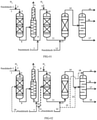
Figure 1 : illustrates a schematic process flow diagram of the invented process; -
Figure 2 : illustrates an embodiment of the invented process; and -
Figure 3 : illustrates a graph between iso to n-paraffin ratio v/s temperature. - For promoting an understanding of the principles of the present disclosure, reference will now be made to the specific embodiments of the present invention further illustrated in the drawings and specific language will be used to describe the same. The foregoing general description and the following detailed description are explanatory of the present disclosure and are not intended to be restrictive thereof. It will nevertheless be understood that no limitation of the scope of the present disclosure is thereby intended, such alterations and further modifications in the illustrated composition, and such further applications of the principles of the present disclosure as illustrated herein being contemplated as would normally occur to one skilled in the art to which the present disclosure relates. Unless otherwise defined, all technical and scientific terms used herein have the same meaning as commonly understood by one of ordinarily skilled in the art to which this present disclosure belongs. The methods, and examples provided herein are illustrative only and not intended to be limiting.
- The present invention discloses a process and a system for producing a plurality of ultra-low aromatic chemicals from a plurality of low value hydrocarbon streams. The process for producing a plurality of ultra-low aromatic chemicals from a plurality of low value hydrocarbon streams includes a first hydrotreating step performed on a hydrocarbon feedstock-1 (1) doped with 50-500ppmw of a nitrogen compound in a first reactor unit (A), wherein, the said first reactor unit (A) is loaded with a dual functional catalyst system having desulfurization and hydrogenation properties to provide a first effluent (4).
- Further, the said process also includes at least one dissolved gas stripping step performed in at least one stripper unit (B) to remove at least one dissolved gas (5) from the said first effluent (4), wherein, the said dissolved gas stripping step provides a stripper effluent (6). At least one adsorption step for a selective adsorption, or a selective desorption of at least one molecule from the second effluent (11), wherein, the selective adsorption is based on the difference in polarity of the molecules to result in an effluent (14). A distillation step for separating out the plurality of ultra-low aromatic chemicals from the said effluent (14).
- Further, the said process includes a second hydrotreating step performed on a hydrocarbon feedstock-2 (7) in a second reactor unit (C), wherein, the second reactor unit (C) is loaded with a hydrogenation catalyst system having aromatic saturation properties to provide a second effluent (11). Wherein, the first hydrotreating step, the second hydrotreating step both differ in operating conditions, hydrotreating catalyst system, and hydrocarbon feedstocks. Further, the first hydrotreating step, the second hydrotreating step both preserves the desired iso-paraffin molecules and convert the undesired aromatic molecules into desired naphthene molecules. Hereinafter, the first reactor unit (A) is referred as "Reactor-1" and the second reactor unit (C) is referred as "Reactor-2".
- Further, the said process includes at least one adsorption step for a selective adsorption, or a selective desorption of at least one molecule from the second effluent (11), wherein, the selective adsorption is based on the difference in polarity of the molecules to result in an effluent (14). Further, the said process also includes a distillation step for separating out the plurality of ultra-low aromatic chemicals from the said effluent (14).
- In one embodiment, the present invention discloses that Feedstock-1 (1), comprises of hydrocarbon streams boiling between 90°C and 370°C, is subjected to hydro-treatment in a hydrotreating reactor system (Reactor-1) in presence of hydrogen and hydro-treating catalyst system known in the art. Also, it is further disclosed that the resulting reactor effluent is low in sulphur as well as aromatic content as compared to Feedstock-1 (1).
- In the detailed embodiment, the present invention discloses that the boiling range of Feedstock-1 (1) is between 90°C and 370°C, preferably between 85°C and 340°C and most preferably between 80°C and 320°C. The Feedstock-1 (1) is comprised of hydrocarbon streams; the hydrocarbon streams may be either obtained from atmospheric distillation unit or catalytic/thermal cracking unit (i.e., fluid catalytic cracking unit (FCC)/delayed coker unit (DCU)) or hydro-cracking unit or a mixture thereof. The hydrocarbon streams obtained from crude oil distillation unit is referred as "straight run streams" whereas the streams obtained from catalytic/thermal cracking unit are referred as "cracked streams". It may be noted that the aromatic content of the cracked streams is significantly higher as compared to the straight run streams; accordingly, the operating severity of Reactor-1 is optimized depending on the proportion of the cracked stream in Feedstock-1 (1).
- The aromatic content of Feedstock-1 (1) is preferably between 20 wt% and 50 wt%, more preferably between 20-40 wt% and most preferably between 25-40 wt%. The sulfur content in Feedstock-1 (1) is between 0.5-2 wt%, more preferably 0.5-1.5 wt% and most preferably 0.5 wt% and 1 wt%. It is further disclosed that for production of high flash and high viscous specialty solvents/chemicals the lighter boiling component i.e., 80°C-160°C, more preferably 80°C-180°C is preferably less than 60 wt%, more preferably less than 50 wt% and most preferably less than 30 wt% as this will affect the yield of high flash and high viscous grade specialty solvents/chemicals.
- The catalyst system for Reactor-1 should have both desulfurization and hydrogenation function. The Reactor-1 catalyst system is comprised of at least one Group VI metal, preferably molybdenum and at least one Group VIII metal, preferably nickel on alumina or any other material having high or at least same surface area and stability as alumina.
- The system for producing multiple grades of ultra-low aromatic chemicals from a plurality of low value hydrocarbon streams includes at least two reactor units (A, C) for hydrotreating a plurality of hydrocarbon feedstocks in the presence of a hydrogen gas stream and a hydrotreating catalyst system. The at least two reactor units includes a first reactor unit (A) hereinafter referred as "Reactor-1" and a second reactor unit (C) hereinafter referred as "Reactor-2". The system further includes at least one stripper unit (B) placed in between the said at least two reactor units for stripping out at least one dissolved gas from the hydrotreated hydrocarbon feedstocks. Further, the system also includes at least one adsorption unit (D) for a selective adsorption, or a selective desorption of at least one molecule from the hydrotreated hydrocarbon feedstock, wherein, a temperature for the selective adsorption is between 35-120°C, and a temperature for the selective desorption is 200-300°C. The system further includes at least one distillation unit (E) for fractional distillation of the said hydrotreated hydrocarbon feedstocks.
- The Weighted Average Bed Temperature (WABT) for Reactor-1 is preferably between 150°C and 400°C, more preferably between 200°C and 370°C and most preferably between 250°C and 350°C. The hydrogen partial pressure is between 10 bar g and 120 bar g, more preferably between 30-90 bar g and most preferably between 35-75 bar g. The liquid hourly space velocity (LHSV) is maintained in the range of 0.5-5 h-1, more preferably 0.5-2.5 h-1 and most preferably 0.5-1.5 h-1. Depending upon the feed rate, catalyst volume and reactor dimension, the Reactor-1 may comprise of single or multiple reactor system. The Gas to oil ratio for Reactor-1 is in the range of 50-1200 Nm3/m3, more preferably 200-1000 Nm3/m3 and most preferably 300-800 Nm3/m3. For maintaining WABT in Reactor-1, provision for either gaseous or liquid quench as known in the art is provided. The gaseous quench comprises of a mixture of gases with H2 concentration more than 90 vol.%, more preferably 92 vol.% and most preferably 95 vol.%. In case if liquid quench is provided, Feedstock-2 (7) or mixture of Feedstock-1 (1) and Feedstock-2 (7) can be used for quenching purpose. In one of the embodiments, it is also disclosed that effluent of Reactor-1 (Effluent-1) or Stripper bottom or effluent of Reactor-2 (Effluent-2) or any stream of final products may also be used as liquid quench.
- In another embodiment related to Reactor-1, it is disclosed that the operating severity is controlled in Reactor-1 so that the sulphur content in Effluent-1 is in the range 0-50 ppmw, more preferably in the range 0-20 ppmw and most preferably between 0-5 ppmw. The aromatic content in Effluent-1 is preferably below 25 wt%, more preferably below 15 wt% and most preferably below 7 wt%. The benzene content in the Effluent-1 is preferably below 500 ppmw, more preferably below 100 ppmw and most preferably below 50 ppmw.
- In another embodiment, the present invention discloses that deep desulfurization and dearomatization in Reactor-1, leads to an increase in lighter fraction in the Effluent-1. The lighter fractions generate in Reactor-1 have boiling range often between 34°C and 100°C, more often between 34°C and 90°C and most often between 34°C and 75°C. The lighter fractions have very limited use as specialty solvent/chemicals in the industries. In order to limit the generation of lighter fractions in Reactor-1, nitrogen compounds are doped in Feedstock-1 (1). The nitrogen compounds are preferably selected from the class of amine compounds which decompose at reaction condition to generate ammonia (NH3). The ammonia suppresses the side chain chopping reaction during desulfurization and dearomatization reactions and thereby reduces generation of lighter fractions. The concentration of ammonia in gas-phase in Reactor-1 is maintained between 50 ppmw and 500 ppmw, more preferably between 50 ppmw and 250 ppmw and most preferably between 50 ppmw and 100 ppmw. In the same embodiment it is further disclosed that doping of nitrogen compounds in Feedstock-1 (1) reduces lighter fraction generation by 20-30%, more preferably between 30-50% and most preferably between 50-70%. It is further disclosed that excess doping of nitrogen compounds also affects desulfurization reaction adversely. In the same incarnation it is also calcified that the support for the catalyst system for Reactor-1 is preferably alumina and does not have any inherent acidity (Lewis or Bronsted). However, in the reaction condition during deep desulfurization and dearomatization mild acidity may develop temporarily leading to generation of lighter fraction in Effluent-1, which will be suppressed in presence of ammonia.
- In another embodiment, it is disclosed that the effluent of Reactor-1 (Effluent-1) is sent to stripper for stripping out dissolved H2S. The H2S content in stripper bottom is preferably below 0.2 ppmw, more preferably below 0.1 ppmw and most preferably below 0.05 ppmw. The steam is used for stripping purpose in the stripper.
- In another embodiment, it is disclosed that the stripper bottom is combined with Feedstock-2 (7), and called combined stream-1, prior to feeding in Reactor-2. The Feedstock-2 (7) comprises of hydrocarbon stream from hydrocracker unit or diesel hydrotreater unit (DHDS) or mixtures thereof. The boiling rage of Feedstock-2 (7) is preferably between 100°C and 250°C, and more preferably between 120 and 240°C, and most preferably between 140°C and 220°C. In the same embodiment it is further disclosed that the sulphur and aromatic content of Feedstock-2 (7) is lower or at least in the similar range of Effluent-1. The hydrocarbon streams of hydrocracker unit or DHDT unit or mixtures thereof are selected because of higher iso-paraffinic and naphthenic content compared to Feedstock-1 (1). The iso-paraffin in Feedstock-2 (7) is preferably between 50 wt% and 80 wt%, more between 60 wt% and 75 wt%, and most preferably between 65 wt% and 70 wt%. The naphthenic content in Feedstock-2 (7) is between 20 wt% and 50 wt%, more preferably between 20 wt% and 40 wt% and most preferably between 25 wt% and 35 wt%.
- In yet another embodiment, it is disclosed that the resulted combined Stream-1 (mixture of Effluent-1 and Feedstock-2) thus formed has aromatic content less than 25 wt%, more preferably 15 wt% and most preferably 5 wt%. In the same embodiment it is further disclosed that sulphur content of the combined stream is less than 2 ppmw, more preferably 1 ppmw and most preferably 0.5 ppmw. The benzene content of this stream is preferably below 500 ppmw, more preferably below 250 ppmw and most preferably below 100 ppmw.
- In another embodiment, it is disclosed that the combined stream is sent to Reactor-2. The Reactor-2 catalyst system has high hydrogenation activity and the primary objective is aromatic saturation. The catalyst system is either Nickel (Ni) based or noble metal (Pd/Pt) based or combination thereof and selected from the catalyst portfolio known in the art.
- The WABT for Reactor-2 is preferably between 90°C and 350°C, more preferably between 130°C and 300°C, and most preferably between 150°C and 250°C. The hydrogen partial pressure is between 5 bar g and 75 bar g, more preferably between 15-70 bar g and most preferably between 25-65 bar g. The liquid hourly space velocity (LHSV) is maintained in the range of 0.2-5 h-1, more preferably 0.2-2.5 h-1 and most preferably 0.2-1.5 h-1. Depending upon the feed rate, catalyst volume and reactor dimension the Reactor-2 may comprise of single or multiple reactor system. The gas to oil ratio for Reactor-2 is in the range of 50-1200 Nm3/m3, more preferably 200-1000 Nm3/m3 and most preferably 250-900 Nm3/m3. For maintaining WABT in Reactor-2, provision for either gaseous or liquid quench as known in the art is provided. The gaseous quench comprises of mixture of gases with H2 concentration more than 90 Vol %, more preferably 92 vol% and most preferably 95 vol%. The H2S concentration in the quench gas is preferably below 0.5 ppmw, and most preferably 0.05 ppmw. In case if liquid quench is provided, Feedstock-3 (12) or mixture of Feedstock-2 (7) and Feedstock-3 (12) can be used for quenching purpose. In one of the embodiments, it is also disclosed that effluent of Reactor-2 (Effluent-2) or adsorption unit effluent or any stream of final products can be also used for quench purpose.
- In another embodiment related to Reactor-2, it is disclosed that the aromatic content in Effluent-2 is preferably below 5 wt%, more preferably below 1 wt% and most preferably below 0.5 wt%. The benzene content in the Effluent-1 is preferably below 100 ppmw, more preferably below 50 ppmw and most preferably below 5 ppmw.
In one embodiment it is disclosed that the operating condition, particularly, WABT in Reactor-2 is so maintained that it favors dearomatization reaction as well as preserves iso-paraffin molecules present in the Feedstock-2. It is well known in the art that isomerization reactions are mildly exothermic and equilibrium between iso-paraffin and n-paraffin is favorable towards iso-paraffin at lower temperature (Fig-03), therefore, in Reactor-2, the operating conditions are controlled in such a way (by varying catalyst type and metal, catalyst volume and activity, feed rate, operating temperature condition, operating pressure condition, etc.) that favors the isomerization, if any. Further, as explained in previous paragraphs, iso-paraffin molecules have better solvency effect compared to n-paraffin, hence, Feedstock-2 is purposefully introduced in Reactor-2 to avoid adverse effect on equilibrium in Reactor-2. It is further disclosed that since the catalyst system chosen for Reactor-2 is capable of performing deep hydrodesulfurization and dearomatization reactions under the operating conditions explained hereinabove in addition to the thermodynamics (operating temperature and pressure) and is the additional tool only for preserving the iso-paraffin compounds in the product. - In another embodiment, it is disclosed that the Effluent-2 is mixed with Feedstock-3 (12), and called combined Stream-2, and sent to adsorption unit. The Feedstock-3 (12) comprises of hydrocarbon stream from hydrocracker unit or isomerization unit or alkylation unit or mixtures thereof. The boiling range of Feedstock-3 (12) is between 65°C and 160°C, more preferably between 70°C and 140°C and most preferably between 85°C and 120°C. In the same embodiment it is also disclosed that the sulphur content in Feedstock-3 (12) is below 5 ppmw, more preferably 2 ppmw and most preferably 0.5 ppmw. The aromatic content is preferably below 0.5 wt%, more preferably 0.1 wt% and most preferably 0.05 wt%. It is further disclosed that the Feedstock-3 (12) is preferably rich in iso-paraffin molecules. The iso-paraffin content of Feedstock-3 (12) is in the range of 50-80%, more preferably 60-75% and most preferably 65-70%.
- In yet another embodiment, it is disclosed that operating severity of the adsorption step is controlled in such a way (by varying catalyst volume and activity, feed rate, operating temperature, pressure, etc.) that the resulted combined stream thus formed has aromatic content less than 3 wt%, more preferably 0.8 wt% and most preferably 0.3 wt%. In the same embodiment, it is further disclosed that sulphur content of the combined stream is less than 2 ppmw, more preferably 1 ppmw and most preferably 0.5 ppmw. The benzene content of this stream is preferably below 70 ppmw, more preferably below 30 ppmw and most preferably below 5 ppmw.
- In one of the embodiments, it is disclosed that the combined Stream-2 (mixture of Effluent-2 and Feedstock-3) is routed to adsorption unit. The adsorption unit may constitute of multiple adsorption reactors loaded with adsorbents depending on the final aromatic concentrations required in the product streams. The adsorbents are the zeolite based molecular sieves known in the art. The adsorbents selectively adsorb the molecules in the combined feed stream based on the difference in polarity. In the adsorbent reactor, the retention times of the different molecules are different. The aromatic molecules because of their polar nature have the highest retention time compared to the saturated molecules. The adsorption reactors are operated in cycles. In the adsorption unit some reactors are in adsorption stages while the others are in desorption/regeneration stage; hence, the product rates are continuous from the adsorption unit. Desorption/regeneration of absorbents is done by the hot fuel gas or any other inert gas. The temperature maintained during adsorption stage is preferably between 35°C and 120°C, while desorption is done at 200-300°C. The effluent from adsorption unit is sent to distillation unit for fractionation purpose.
- In one embodiment, it is disclosed that the operating severity of the adsorption step is controlled in such a way (by varying adsorbent volume, feed rate, operating temperature, pressure, etc.) that effluent from adsorption unit contains aromatics less than 300 ppmw, more preferably less than 100 ppmw and most preferably less than 30 ppmw. In the same embodiment, it is further disclosed that the benzene content is less than 0.5 ppmw, more preferably less than 0.1 ppmw and most preferably less than 0.01 ppmw.
- In yet another embodiment, it is disclosed that effluent of adsorption unit is fractionated in a distillation column for producing multiple grade dearomatized solvents/chemical. It is further disclosed that boiling range and Flash point of dearomatized solvent are adjusted by distillation of the entire product stream obtained after adoption. As known in the art the specialty solvents/chemicals are classified based on either boiling range or flash point.
- The broad classifications based on boiling points are:
- Type-1 Solvent/Chemicals: Final Boiling Point (FBP) less than 185°C
- Type-2 Solvent/Chemicals: Initial Boiling Point (IBP) more than 185°C ad FBP less than 260°C
- Type-3 Solvent/Chemicals: FBP more than 260°C.
- The broad classifications based on the Flash point (FP) are:
- Type-A Solvent/Chemicals: Low flash point solvents/chemicals (FP < 50°C)
- Type-B Solvent/Chemicals: Medium flash point solvent/chemicals (FP > 50°C and <90)
- Type-C Solvent/Chemicals: High flash point solvents/chemicals (FP> 90°C).
- In another embodiment, it is disclosed that all the types of specialty solvents/chemicals discussed above can be produced by the configuration scheme disclosed in the present innovation. It is further disclosed that, the present scheme discusses only about the production of solvents based on the broad specifications discussed above, however, it not restricted to these solvents/chemicals only.
- It is further disclosed that the distillation column may be single or multiple. The side stripper for each draw off product can be used for finer tuning of the boiling points and flash point.
- The Type-1 solvent/chemicals are withdrawn from the top of the distillation column. The aromatics content in Type-1 solvent/chemical is preferably less than 30 ppm, more preferably less than 20 ppm, and most preferably less than 10 ppm. It is further, disclosed that the benzene content in Type-1 solvent is preferably less than 1 ppmw, more preferably less than 0.5 ppmw and most preferably less than 0.1. The Type-1 solvent/chemicals, contains isoparaffins higher than 60 wt%, more preferably 70 wt% and most preferably 80 wt%. In the same embodiment, it is further disclosed that boiling range of the Type-1 solvent is also adjusted to meet the flash criteria of Type-A solvents/chemicals. The Type-1/Type-A solvent finds applications high in cosmetic, pharmaceutical, hand soaps, aerosols, thinners for paints and resins.
- The middle cut obtains from the distillation column meets Type-2 solvents/chemicals specification. The aromatic content in Type-2 solvents/chemicals is preferably less than 100 ppm, more preferably less than 50 ppm and most preferably less than 30 ppm. This product contains naphthenes higher than 60 wt%, more preferably 70 wt% and most preferably 80 wt%. In the same embodiment, it is further disclosed that boiling range of the Type-2 solvent is also adjusted to meet the flash criteria of Type-B solvents/chemicals. Type-2/Type-B solvents finds applications in polyolefin synthesis, drilling fluids, metal working fluids, aluminum rolling oils, ink industries, silicon sealants, viscosity depressants for PVC, explosives, transmission fluids, concrete demoulding, paints and decorative coatings.
- The Type-3 solvents/chemicals are obtained from the bottom of distillation column. The aromatic content in Type-3 solvents/chemicals is preferably less than 500 ppm, more preferably less than 300 ppm and most preferably less than 150 ppm. In the same embodiment, it is further disclosed that boiling range of the Type-3 solvent is also adjusted to meet the flash criteria of Type-C solvents/chemicals. The Type-3/Type-C solvents/chemicals finds application in crop protection fluids, polymeric composition used in mining operation, water treatment, paper manufacture, drilling fluids, metal working fluids, aluminum rolling oils, ink industries, silicon sealants, viscosity depressants for PVC, explosives, transmission fluids, concrete demoulding, paints and decorative coatings and pharmaceutical applications.
- In one embodiment, it is further disclosed that a part of Feedstock-3 (12) can be also blended with top cut of distillation column without changing the aromatic and benzene concentration of Type-1/ Type-A solvents. The Feedstock-2 (7) can be also blended directly with middle and bottom cut of distillation column without changing the aromatic, benzene, flash point and viscosity of the Type-2/Type-B and Type-3/Type-3 solvents/chemicals respectively. Similarly many other obvious variations in the processing scheme and configurations are possible and whatever the configurations are disclosed in the present invention is just an illustration of the spirit of the idea.
- Feedstock-D doped with tert-butylamine is hydrotreated at 360°C WABT and 75 bar g H2 partial pressure in presence of Ni-Co-Mo Catalyst system. The other operating parameters i.e., LHSV and H2/HC ratio are maintained similar to any commercial hydrotreating unit. The reactor effluent is stripped offline to remove dissolved H2S. The characterization of Feedstock-D and stripped hydrotreater effluent (Effluent-1) are given in Table 1.
- Further, the Effluent-1 is mixed with Feedstock-E to generate combined stream-1. The combined stream-1 is hydrotreated at 30 bar g pressure, 250°C WABT and 1.5 h-1 LHSV in presence of Ni-Based catalyst system. The H2/HC ratio has been maintained in the range 250-0700 Nm3/m3. The detailed characterization of Feedstock-E, combined stream-1 and hydrotreated effluent (Effluent-2) are given in Table 2.
- The Intermediate-2 is further combined with Feedstock-F to generate combined stream-2 (Table-3). This combined stream-2 is subjected to adsorption at ambient temperature and 10 bar g H2 partial pressure. The effluent from adsorption unit is fractionated into 3 different cuts. The Properties of Cut-1, Cut-2 and Cut-3 are shown in Table 4.
Table 1: Properties of Feedstock D and Effluent-1 S. No. Property Feedstock D Effluent-1 1. Sulfur (wt%/ ppmw) 1 <10 2. Boiling range (°C) -ASTM D 2887 140-320 135-240 3. Nitrogen (ppmw) 25 <0.5 4. Aromatics (wt%) - by HPLC 37 15 5. Density (g/cc) 0.8011 0.7998 6. Naphthenes (wt%) - by NMR 20 35 7. Benzene (ppmw) - by GC 80 22 Table 2: Properties of Feedstock-E, Combined stream-1 and Effluent-2 S. No. Property Feedstock-E Combined stream-1 Effluent-2 1. Sulfur (ppmw) <0.5 <0.5 <0.5 2. Boiling range (°C) - ASTM D 2887 140-240 130-320 125-320 3. Nitrogen (ppmw) <0.5 <0.5 <0.5 4. Aromatics (wt%) -By HPLC and UV 5 13 0.1 5. Density (g/cc) 0.835 0.832 0.831 6. Naphthenes (wt%) - by NMR 75.6 60 83 7. Benzene (ppmw) - by GC 50 100 <1 Table 3: Properties of Feedstock-F, Combined stream-2 S. No. Property Feedstock- F Combined stream-2 1. Sulfur (ppmw) <0.5 <0.5 2. Boiling range (°C) 90-140 90-320 3. Nitrogen (ppmw) <0.5 <0.5 4. Aromatics (wt%) by UV 0.05 0.5 5. Density (g/cc) 0.776 0.829 6. Naphthenes (wt%) - by NMR 20 70 7. Benzene (ppmw) - by GC 3 20 8. Iso-paraffin (wt%) -by NMR 80 28 Table 4: Properties of cuts S. No. Properties Cut-1 Cut-2 Cut-3 1. Sulfur (ppmw) <0.5 <0.5 <0.5 2. Boiling range (°C) 90-185 186-260 261-320 3. Aromatics (ppmw) - by UV 12 22 29 4. Benzene (ppmw) - by GC <1 <1 <1 5. Flash point (°C) <50 85 >90 6. Iso-paraffin (wt%)- by NMR 65 15 10 7. Naphthene (wt%) - by NMR 35 75 90 - In continuation with Example-1, a part of Feedstock-F (30%) is combined with Cut-1 and the rest 70% is mixed with Effluent-2 to form the combined stream-2. The combined stream-Y is then subjected to adsorption and then fractionated to generate 3 cuts. The properties of combined stream-Y and the 3 cuts are given in Table 5.
Table 5: Properties of combined streams and the cuts generated S. No. Property Combined stream-Y Cut-1 Cut-2 Cut-3 1. Sulfur (ppmw) <0.5 <0.5 <0.5 <0.5 2. Boiling range (°C) 90-320 90-185 186-260 261-320 3. Nitrogen (ppmw) <0.5 <0.5 <0.5 <0.5 4. Aromatics (wt% / ppmw) by UV 0.5 12 22 29 5. Density (g/cc) 0.859 - - - 6. Naphthenes (wt%) - by NMR 70 28 78 90 7. Benzene (ppmw) - by GC 20 <1 <1 <1 8. Iso-paraffin (wt%) - by NMR 28 72 12 10 - In this example the effect of amine doping in Reactor-1 has been illustrated by hydrotreating Feedstock-D without (Case-1) and with (Case-2) amine (tert-butylamine) doping at 360°C WABT and 75 bar g H2 partial pressure in presence of Ni-Co-Mo Catalyst system. The other operating parameters i.e., LHSV and H2/HC ratio are maintained similar to any commercial hydrotreating unit. The characterizations of Feedstock-D along with effluent generated in two cases are given in Table 6.
Table-6: Characterizations of Feedstock-D and effluent of Case-1 and Case-2 S. No. Property Feedstock D Case-1 (without amine doping) Case-2 (with amine doping) 1. Sp. Gravity 2. Sulfur (wt%/ ppmw) 1 8 5 3. Nitrogen (ppmw) <0.5 <0.5 4. Boiling range (°C) - ASTMD 2887 IBP 90 33 85 10% 120 75 119 30% 140 112 140 50% 200 180 200 90% 290 270 290 FBP 320 320 320
Claims (15)
- A process for producing a plurality of ultra-low aromatic chemicals from a plurality of low value hydrocarbon streams, wherein, the process comprising steps of:a first hydrotreating step performed on a hydrocarbon feedstock-1 (1) doped with 50-500ppmw of a nitrogen compound in a first reactor unit (A), wherein, the said first reactor unit (A) is loaded with a dual functional catalyst system having desulfurization and hydrogenation properties to provide a first effluent (4), wherein the said dual functional catalyst system comprises active metals selected from Molybdenum (Mo), Nickel (Ni), or a combination thereof impregnated on an alumina support;at least one dissolved gas stripping step performed in at least one stripper unit (B) to remove at least one dissolved gas (5) from the said first effluent (4), wherein, the said dissolved gas stripping step provides a stripper effluent (6);a second hydrotreating step performed on a hydrocarbon feedstock-2 (7) in a second reactor unit (C), wherein, the second reactor unit (C) is loaded with a hydrogenation catalyst system having aromatic saturation properties to provide a second effluent (11);at least one adsorption step for a selective adsorption, or a selective desorption of at least one molecule from the second effluent (11), wherein, the selective adsorption is based on the difference in polarity of the molecules to result in an effluent (14); anda distillation step for separating out the plurality of ultra-low aromatic chemicals from the said effluent (14).
- The process as claimed in claim 1, wherein, the first hydrotreating step, the second hydrotreating step both preserves the desired iso-paraffin molecules and convert the undesired aromatic molecules into desired naphthene molecules.
- The process as claimed in claim 1, wherein, the first hydrotreating step comprises hydrotreating the hydrocarbon feedstock-1 (1) having a boiling temperature between 90°C-370°C, an aromatic content between 20 wt%-50 wt%, and a sulfur content between 0.5-2 wt%, wherein, hydrotreating the hydrocarbon feedstock-1 (1) results in a first effluent (4) having a sulfur content in the range of 0-50 ppmw, an aromatic content below 25wt% and benzene content below 500 ppmw.
- The process as claimed in claim 1, wherein, at least one dissolved gas stripping step removes a dissolved H2S gas (5) from the first effluent (4) with the help of steam thereby resulting into a stripper effluent (6) having H2S content below 0.2 ppmw, the stripper effluent (6) is subjected to the second hydrotreating step along with the said hydrocarbon feedstock-2 (7), wherein, the second hydrotreating step outputs the second effluent (11) having an aromatic content below 5 wt% and benzene content below 100 ppmw.
- The process as claimed in claim 1, wherein, the second hydrotreating step comprises hydrotreating the hydrocarbon feedstock-2 (7) having a boiling range between 140°C-220°C, an iso-paraffin content between 50wt%-80wt%, and a naphthenic content between 20wt%-50wt%.
- The process as claimed in claim 1, wherein, the said hydrogenation catalyst system comprises active metals selected from Nickel (Ni), Palladium (Pd), Platinum (Pt) or a combination thereof impregnated on a support.
- The process as claimed in claim 1, wherein, the said second effluent (11) along with a hydrocarbon feedstock-3 (12) is subjected through at least one adsorption step performed within at least one adsorption unit (D) to result the effluent (14), wherein, the said hydrocarbon feedstock-3 (12) have an aromatic content less than 0.5 wt%, a sulphur content less than 5 ppmw and an iso-paraffin content in the range of 50-80%.
- The process as claimed in claim 7, wherein, the effluent from the adsorption unit (D) has an aromatic content less than 300 ppmw, a benzene content below 0.5 ppmw, and the said an effluent from the adsorption unit (D) is subjected to the said distillation step for separating out plurality of ultra-low aromatic chemicals.
- A system for producing multiple grades of ultra-low aromatic chemicals from a plurality of low value hydrocarbon streams, wherein, the system comprises:at least two reactor units (A, C) for hydrotreating a plurality of hydrocarbon feedstocks in the presence of a hydrogen gas stream and a hydrotreating catalyst system;at least one stripper unit (B) placed in between the said at least two reactor units for stripping out at least one dissolved gas from the hydrotreated hydrocarbon feedstocks;at least one adsorption unit (D) for a selective adsorption, or a selective desorption of at least one molecule from the hydrotreated hydrocarbon feedstock, wherein, a temperature for the selective adsorption is between 35-120°C, and a temperature for the selective desorption is 200-300°C; andat least one distillation unit (E) for fractional distillation of the said hydrotreated hydrocarbon feedstocks, wherein, the said at least one distillation unit (E) perform fractional distillation on an adsorption unit effluent (14) as received from the said adsorption unit (D), wherein, the said fractional distillation separates out plurality of ultra-low aromatic chemicals (15,16,17).
- The system as claimed in claim 9, wherein, at least two reactor units (A, C) comprises:a first reactor unit (A) having a weighted average bed temperature (WABT) between 150-400°C, a hydrogen partial pressure between 10-120 bar g, a liquid hourly space velocity (LHSV) in the range of 0.5-5 h-1, a gas to oil ratio in the range of 50-1200 Nm3/m3, wherein, the first reactor unit (A) is supplied with a hydrocarbon feedstock-1 (1) having a boiling range between 90-370°C, an aromatic content between 20-50 wt%, and a sulfur content between 0.5-2 wt%.; anda second reactor unit (C) having a weighted average bed temperature (WABT) between 90-350°C, a hydrogen partial pressure between 5-75 bar g, a liquid hourly space velocity (LHSV) in the range of 0.2-5 h-1, a gas to oil ratio in the range of 50-1200 Nm3/m3, wherein, the weighted average bed temperature (WABT) in the second reactor unit (C) favors a dearomatization reaction and preserves an iso-paraffin content of the feedstock-2 (7).
- The system as claimed in claim 10, wherein, the weighted average bed temperature (WABT) in the first reactor and in the second reactor is maintained through a gaseous quench process, a liquid quench process, wherein, gaseous quench process comprises of a mixture of gases with H2 concentration more than 90 vol.%, and wherein, liquid quench process comprises using a hydrocarbon feedstock-1 (1), a hydrocarbon feedstock-2 (7), a hydrocarbon feedstock-3 (12), or a combination thereof.
- The system as claimed in claim 10, wherein, the first reactor unit (A) comprises a dual functional catalyst system having desulfurization and hydrogenation properties, wherein, the said dual functional catalyst system comprises active metals selected from Molybdenum (Mo), Nickel (Ni), or a combination thereof impregnated on an alumina support.
- The system as claimed in claim 10, wherein, the first reactor unit (A) outputs a first effluent (4), wherein, the first effluent (4) is sent to the said at least one stripper unit (B) for stripping out at least one dissolved gas (5) and outputting a stripper effluent (6), wherein, the at least one dissolved gas is a H2S gas.
- The system as claimed in claim 10, wherein, the second reactor unit (C) comprising a hydrogenation catalyst system is supplied with the stripper effluent (6) together with a feedstock-2 (7) having a boiling range between 140-220°C, an iso-paraffin content between 65-70wt%, and a naphthenic content between 25-35 wt%, wherein, the second reactor unit (C) outputs a second effluent (11), wherein, the said hydrogenation catalyst system has active metals selected from Nickel (Ni), Palladium (Pd), Platinum (Pt) or a combination thereof impregnated on a support.
- The system as claimed in claim 9, wherein, the at least one adsorption unit (D) comprises a plurality of adsorption reactors each loaded with an adsorbent for the selective adsorption, or the selective desorption of at least one molecule from the said second effluent (11) and the said hydrocarbon feedstock-3 (12) supplied to the said adsorption unit (D).
Applications Claiming Priority (1)
| Application Number | Priority Date | Filing Date | Title |
|---|---|---|---|
| IN202021040820 | 2020-09-21 |
Publications (1)
| Publication Number | Publication Date |
|---|---|
| EP3971267A1 true EP3971267A1 (en) | 2022-03-23 |
Family
ID=77864451
Family Applications (1)
| Application Number | Title | Priority Date | Filing Date |
|---|---|---|---|
| EP21197873.9A Pending EP3971267A1 (en) | 2020-09-21 | 2021-09-21 | A process and a system for production of multiple grade de-aromatized solvents from hydrocarbon streams |
Country Status (4)
| Country | Link |
|---|---|
| US (1) | US11999914B2 (en) |
| EP (1) | EP3971267A1 (en) |
| PH (1) | PH12021050465A1 (en) |
| SA (1) | SA121430164B1 (en) |
Citations (8)
| Publication number | Priority date | Publication date | Assignee | Title |
|---|---|---|---|---|
| BR9801691A (en) * | 1998-05-26 | 2000-01-04 | Petroleo Brasileiro Sa | Dearomatization process of hydrocarbons by adsorption. |
| WO2001081507A1 (en) * | 2000-04-20 | 2001-11-01 | Exxonmobil Research And Engineering Company | Production of low sulfur/low aromatics distillates |
| EP1319701A1 (en) * | 2001-12-17 | 2003-06-18 | Chevron USA, Inc. | Process for the production of high quality middle distillates from mild hydrocrackers and vacuum gas oil hydrotreaters in combination with external feeds in the middle distillate boiling range |
| CN100478426C (en) * | 2002-09-28 | 2009-04-15 | 中国石油化工股份有限公司 | Process of desulfurizing and eliminating aromatic hydrocarbons deeply for diesel oil |
| US8114273B2 (en) | 2005-01-21 | 2012-02-14 | Exxonmobil Research And Engineering Company | Two stage hydrotreating of distillates with improved hydrogen management |
| US8545694B2 (en) | 2004-09-08 | 2013-10-01 | Exxonmobil Research And Engineering Company | Aromatics saturation process for lube oil boiling range feedstreams |
| US8968552B2 (en) | 2011-11-04 | 2015-03-03 | Saudi Arabian Oil Company | Hydrotreating and aromatic saturation process with integral intermediate hydrogen separation and purification |
| US9956541B2 (en) * | 2014-12-12 | 2018-05-01 | Exxonmobil Research And Engineering Company | Methods of separating aromatic compounds from lube base stocks |
Family Cites Families (17)
| Publication number | Priority date | Publication date | Assignee | Title |
|---|---|---|---|---|
| US3481996A (en) * | 1968-12-04 | 1969-12-02 | Sun Oil Co | Process for hydrodesulfurization of cracked gas oils and the production of dimethyldecalins and fuel oil blending components |
| US3859203A (en) * | 1974-01-22 | 1975-01-07 | Gulf Research Development Co | Removal of sulfur from residual oil with downstream ammonia addition |
| US4469590A (en) * | 1983-06-17 | 1984-09-04 | Exxon Research And Engineering Co. | Process for the hydrogenation of aromatic hydrocarbons |
| US4875992A (en) * | 1987-12-18 | 1989-10-24 | Exxon Research And Engineering Company | Process for the production of high density jet fuel from fused multi-ring aromatics and hydroaromatics |
| ES2071419T3 (en) * | 1991-06-21 | 1995-06-16 | Shell Int Research | CATALYST AND HYDROGENATION PROCEDURE. |
| WO1994017017A1 (en) * | 1991-07-15 | 1994-08-04 | Exxon Research And Engineering Company | Benzene removal from gasoline boiling range streams |
| US5454933A (en) * | 1991-12-16 | 1995-10-03 | Exxon Research And Engineering Company | Deep desulfurization of distillate fuels |
| US5520799A (en) * | 1994-09-20 | 1996-05-28 | Mobil Oil Corporation | Distillate upgrading process |
| US5928498A (en) * | 1996-08-23 | 1999-07-27 | Exxon Research And Engineering Co. | Desulfurization and ring opening of petroleum streams |
| US5928497A (en) * | 1997-08-22 | 1999-07-27 | Exxon Chemical Pateuts Inc | Heteroatom removal through countercurrent sorption |
| US6723229B2 (en) * | 2001-05-11 | 2004-04-20 | Exxonmobil Research And Engineering Company | Process for the production of medicinal white oil using M41S and sulfur sorbent |
| US7575668B1 (en) * | 2004-10-06 | 2009-08-18 | Uop Llc | Conversion of kerosene to produce naphtha and isobutane |
| US7763163B2 (en) * | 2006-10-20 | 2010-07-27 | Saudi Arabian Oil Company | Process for removal of nitrogen and poly-nuclear aromatics from hydrocracker feedstocks |
| US20130270155A1 (en) * | 2010-11-19 | 2013-10-17 | Indian Oil Corporation Limited | Process for desulfurization of diesel with reduced hydrogen consumption |
| US20130109895A1 (en) * | 2011-09-23 | 2013-05-02 | Exxonmobil Research And Engineering Company | Low temperature adsorbent for removing sulfur from fuel |
| US20190048270A1 (en) * | 2015-12-02 | 2019-02-14 | Haldor Topsøe A/S | Single stage process combining non-noble and noble metal catalyst loading |
| WO2019164776A1 (en) * | 2018-02-23 | 2019-08-29 | Exxonmobil Research And Engineering Company | Removal of polynuclear aromatics from severely hydrotreated base stocks |
-
2021
- 2021-09-20 SA SA121430164A patent/SA121430164B1/en unknown
- 2021-09-21 EP EP21197873.9A patent/EP3971267A1/en active Pending
- 2021-09-21 US US17/481,077 patent/US11999914B2/en active Active
- 2021-09-21 PH PH1/2021/050465A patent/PH12021050465A1/en unknown
Patent Citations (8)
| Publication number | Priority date | Publication date | Assignee | Title |
|---|---|---|---|---|
| BR9801691A (en) * | 1998-05-26 | 2000-01-04 | Petroleo Brasileiro Sa | Dearomatization process of hydrocarbons by adsorption. |
| WO2001081507A1 (en) * | 2000-04-20 | 2001-11-01 | Exxonmobil Research And Engineering Company | Production of low sulfur/low aromatics distillates |
| EP1319701A1 (en) * | 2001-12-17 | 2003-06-18 | Chevron USA, Inc. | Process for the production of high quality middle distillates from mild hydrocrackers and vacuum gas oil hydrotreaters in combination with external feeds in the middle distillate boiling range |
| CN100478426C (en) * | 2002-09-28 | 2009-04-15 | 中国石油化工股份有限公司 | Process of desulfurizing and eliminating aromatic hydrocarbons deeply for diesel oil |
| US8545694B2 (en) | 2004-09-08 | 2013-10-01 | Exxonmobil Research And Engineering Company | Aromatics saturation process for lube oil boiling range feedstreams |
| US8114273B2 (en) | 2005-01-21 | 2012-02-14 | Exxonmobil Research And Engineering Company | Two stage hydrotreating of distillates with improved hydrogen management |
| US8968552B2 (en) | 2011-11-04 | 2015-03-03 | Saudi Arabian Oil Company | Hydrotreating and aromatic saturation process with integral intermediate hydrogen separation and purification |
| US9956541B2 (en) * | 2014-12-12 | 2018-05-01 | Exxonmobil Research And Engineering Company | Methods of separating aromatic compounds from lube base stocks |
Also Published As
| Publication number | Publication date |
|---|---|
| SA121430164B1 (en) | 2024-01-18 |
| US20220089960A1 (en) | 2022-03-24 |
| US11999914B2 (en) | 2024-06-04 |
| PH12021050465A1 (en) | 2022-04-04 |
Similar Documents
| Publication | Publication Date | Title |
|---|---|---|
| EP2501784B1 (en) | Process for the production of hydrocarbon fluids having a low aromatic content | |
| KR102325122B1 (en) | Method for obtaining hydrocarbon solvents having a boiling temperature higher than 300°c and a pour point lower than or equal to -25℃ | |
| RU2671862C2 (en) | Process for preparing heavy base oil | |
| US5951848A (en) | Process for highly shape selective dewaxing which retards catalyst aging | |
| JP5692545B2 (en) | Method for producing high quality naphthenic base oil | |
| EP2501785B1 (en) | Process for the production of hydrocarbon fluids having a low aromatic content | |
| EP3077485B1 (en) | Hydrocracking of gas oils with increased distillate yield | |
| US20120000829A1 (en) | Process for the preparation of group ii and group iii lube base oils | |
| EP3066177B1 (en) | Production of low cloud point diesel fuels | |
| EP3536765B1 (en) | Process for production of petrochemicals from cracked streams | |
| JP7137585B2 (en) | Production of diesel and base stocks from crude oil | |
| JP5893617B2 (en) | Method for producing Group II and Group III lubricating base oils | |
| US10023822B2 (en) | Production of base oils from petrolatum | |
| US3915841A (en) | Process for hydrodesulfurizing and hydrotreating lubricating oils from sulfur-containing stock | |
| KR20060005384A (en) | Process for producing lubricant base oils | |
| EP2978527B1 (en) | Production of low cloud point distillate fuels | |
| EP2625250B1 (en) | Process for improving a re-refined lube oil stream | |
| EP3397723B1 (en) | Lubricant base stock production from disadvantaged feeds | |
| US11999914B2 (en) | Process and a system for production of multiple grade de-aromatized solvents from hydrocarbon streams | |
| EP3995559B1 (en) | Simultaneous processing of catalytic and thermally cracked middle distillate for petrochemical feedstock | |
| US11441085B2 (en) | Process to make finished base oils and white oils from dewaxed bulk base oils | |
| EP3870680B1 (en) | Deep desulphurization of low sulphur content feedstock | |
| JP2009513726A (en) | Method for producing lubricating base oil | |
| EP1762606A1 (en) | A process for hydrodesulphurisation of a hydrocarbonaceous feedstock | |
| HK1174051A (en) | Process for the production of hydrocarbon fluids having a low aromatic content |
Legal Events
| Date | Code | Title | Description |
|---|---|---|---|
| PUAI | Public reference made under article 153(3) epc to a published international application that has entered the european phase |
Free format text: ORIGINAL CODE: 0009012 |
|
| STAA | Information on the status of an ep patent application or granted ep patent |
Free format text: STATUS: THE APPLICATION HAS BEEN PUBLISHED |
|
| AK | Designated contracting states |
Kind code of ref document: A1 Designated state(s): AL AT BE BG CH CY CZ DE DK EE ES FI FR GB GR HR HU IE IS IT LI LT LU LV MC MK MT NL NO PL PT RO RS SE SI SK SM TR |
|
| STAA | Information on the status of an ep patent application or granted ep patent |
Free format text: STATUS: REQUEST FOR EXAMINATION WAS MADE |
|
| 17P | Request for examination filed |
Effective date: 20220909 |
|
| RBV | Designated contracting states (corrected) |
Designated state(s): AL AT BE BG CH CY CZ DE DK EE ES FI FR GB GR HR HU IE IS IT LI LT LU LV MC MK MT NL NO PL PT RO RS SE SI SK SM TR |
|
| P01 | Opt-out of the competence of the unified patent court (upc) registered |
Effective date: 20230712 |
|
| STAA | Information on the status of an ep patent application or granted ep patent |
Free format text: STATUS: EXAMINATION IS IN PROGRESS |
|
| 17Q | First examination report despatched |
Effective date: 20241121 |