EP3971164A1 - Method and compound useful in preparation of orexin-2 receptor antagonist, and lemborexant having few impurities - Google Patents
Method and compound useful in preparation of orexin-2 receptor antagonist, and lemborexant having few impurities Download PDFInfo
- Publication number
- EP3971164A1 EP3971164A1 EP20806704.1A EP20806704A EP3971164A1 EP 3971164 A1 EP3971164 A1 EP 3971164A1 EP 20806704 A EP20806704 A EP 20806704A EP 3971164 A1 EP3971164 A1 EP 3971164A1
- Authority
- EP
- European Patent Office
- Prior art keywords
- formula
- compound
- mixture
- content
- mass
- Prior art date
- Legal status (The legal status is an assumption and is not a legal conclusion. Google has not performed a legal analysis and makes no representation as to the accuracy of the status listed.)
- Granted
Links
Classifications
-
- A—HUMAN NECESSITIES
- A61—MEDICAL OR VETERINARY SCIENCE; HYGIENE
- A61P—SPECIFIC THERAPEUTIC ACTIVITY OF CHEMICAL COMPOUNDS OR MEDICINAL PREPARATIONS
- A61P25/00—Drugs for disorders of the nervous system
- A61P25/20—Hypnotics; Sedatives
-
- C—CHEMISTRY; METALLURGY
- C07—ORGANIC CHEMISTRY
- C07D—HETEROCYCLIC COMPOUNDS
- C07D401/00—Heterocyclic compounds containing two or more hetero rings, having nitrogen atoms as the only ring hetero atoms, at least one ring being a six-membered ring with only one nitrogen atom
- C07D401/02—Heterocyclic compounds containing two or more hetero rings, having nitrogen atoms as the only ring hetero atoms, at least one ring being a six-membered ring with only one nitrogen atom containing two hetero rings
- C07D401/12—Heterocyclic compounds containing two or more hetero rings, having nitrogen atoms as the only ring hetero atoms, at least one ring being a six-membered ring with only one nitrogen atom containing two hetero rings linked by a chain containing hetero atoms as chain links
-
- C—CHEMISTRY; METALLURGY
- C07—ORGANIC CHEMISTRY
- C07C—ACYCLIC OR CARBOCYCLIC COMPOUNDS
- C07C67/00—Preparation of carboxylic acid esters
- C07C67/14—Preparation of carboxylic acid esters from carboxylic acid halides
-
- A—HUMAN NECESSITIES
- A61—MEDICAL OR VETERINARY SCIENCE; HYGIENE
- A61K—PREPARATIONS FOR MEDICAL, DENTAL OR TOILETRY PURPOSES
- A61K31/00—Medicinal preparations containing organic active ingredients
- A61K31/33—Heterocyclic compounds
- A61K31/395—Heterocyclic compounds having nitrogen as a ring hetero atom, e.g. guanethidine or rifamycins
- A61K31/495—Heterocyclic compounds having nitrogen as a ring hetero atom, e.g. guanethidine or rifamycins having six-membered rings with two or more nitrogen atoms as the only ring heteroatoms, e.g. piperazine or tetrazines
- A61K31/505—Pyrimidines; Hydrogenated pyrimidines, e.g. trimethoprim
- A61K31/506—Pyrimidines; Hydrogenated pyrimidines, e.g. trimethoprim not condensed and containing further heterocyclic rings
-
- A—HUMAN NECESSITIES
- A61—MEDICAL OR VETERINARY SCIENCE; HYGIENE
- A61P—SPECIFIC THERAPEUTIC ACTIVITY OF CHEMICAL COMPOUNDS OR MEDICINAL PREPARATIONS
- A61P43/00—Drugs for specific purposes, not provided for in groups A61P1/00-A61P41/00
-
- C—CHEMISTRY; METALLURGY
- C07—ORGANIC CHEMISTRY
- C07B—GENERAL METHODS OF ORGANIC CHEMISTRY; APPARATUS THEREFOR
- C07B61/00—Other general methods
-
- C—CHEMISTRY; METALLURGY
- C07—ORGANIC CHEMISTRY
- C07C—ACYCLIC OR CARBOCYCLIC COMPOUNDS
- C07C29/00—Preparation of compounds having hydroxy or O-metal groups bound to a carbon atom not belonging to a six-membered aromatic ring
- C07C29/132—Preparation of compounds having hydroxy or O-metal groups bound to a carbon atom not belonging to a six-membered aromatic ring by reduction of an oxygen containing functional group
- C07C29/136—Preparation of compounds having hydroxy or O-metal groups bound to a carbon atom not belonging to a six-membered aromatic ring by reduction of an oxygen containing functional group of >C=O containing groups, e.g. —COOH
- C07C29/147—Preparation of compounds having hydroxy or O-metal groups bound to a carbon atom not belonging to a six-membered aromatic ring by reduction of an oxygen containing functional group of >C=O containing groups, e.g. —COOH of carboxylic acids or derivatives thereof
-
- C—CHEMISTRY; METALLURGY
- C07—ORGANIC CHEMISTRY
- C07C—ACYCLIC OR CARBOCYCLIC COMPOUNDS
- C07C303/00—Preparation of esters or amides of sulfuric acids; Preparation of sulfonic acids or of their esters, halides, anhydrides or amides
- C07C303/26—Preparation of esters or amides of sulfuric acids; Preparation of sulfonic acids or of their esters, halides, anhydrides or amides of esters of sulfonic acids
- C07C303/28—Preparation of esters or amides of sulfuric acids; Preparation of sulfonic acids or of their esters, halides, anhydrides or amides of esters of sulfonic acids by reaction of hydroxy compounds with sulfonic acids or derivatives thereof
-
- C—CHEMISTRY; METALLURGY
- C07—ORGANIC CHEMISTRY
- C07C—ACYCLIC OR CARBOCYCLIC COMPOUNDS
- C07C309/00—Sulfonic acids; Halides, esters, or anhydrides thereof
- C07C309/63—Esters of sulfonic acids
- C07C309/72—Esters of sulfonic acids having sulfur atoms of esterified sulfo groups bound to carbon atoms of six-membered aromatic rings of a carbon skeleton
- C07C309/73—Esters of sulfonic acids having sulfur atoms of esterified sulfo groups bound to carbon atoms of six-membered aromatic rings of a carbon skeleton to carbon atoms of non-condensed six-membered aromatic rings
-
- C—CHEMISTRY; METALLURGY
- C07—ORGANIC CHEMISTRY
- C07C—ACYCLIC OR CARBOCYCLIC COMPOUNDS
- C07C31/00—Saturated compounds having hydroxy or O-metal groups bound to acyclic carbon atoms
- C07C31/27—Polyhydroxylic alcohols containing saturated rings
-
- C—CHEMISTRY; METALLURGY
- C07—ORGANIC CHEMISTRY
- C07C—ACYCLIC OR CARBOCYCLIC COMPOUNDS
- C07C33/00—Unsaturated compounds having hydroxy or O-metal groups bound to acyclic carbon atoms
- C07C33/40—Halogenated unsaturated alcohols
- C07C33/50—Halogenated unsaturated alcohols containing six-membered aromatic rings and other rings
-
- C—CHEMISTRY; METALLURGY
- C07—ORGANIC CHEMISTRY
- C07C—ACYCLIC OR CARBOCYCLIC COMPOUNDS
- C07C41/00—Preparation of ethers; Preparation of compounds having groups, groups or groups
- C07C41/01—Preparation of ethers
- C07C41/09—Preparation of ethers by dehydration of compounds containing hydroxy groups
-
- C—CHEMISTRY; METALLURGY
- C07—ORGANIC CHEMISTRY
- C07C—ACYCLIC OR CARBOCYCLIC COMPOUNDS
- C07C69/00—Esters of carboxylic acids; Esters of carbonic or haloformic acids
- C07C69/62—Halogen-containing esters
- C07C69/63—Halogen-containing esters of saturated acids
-
- C—CHEMISTRY; METALLURGY
- C07—ORGANIC CHEMISTRY
- C07C—ACYCLIC OR CARBOCYCLIC COMPOUNDS
- C07C69/00—Esters of carboxylic acids; Esters of carbonic or haloformic acids
- C07C69/66—Esters of carboxylic acids having esterified carboxylic groups bound to acyclic carbon atoms and having any of the groups OH, O—metal, —CHO, keto, ether, acyloxy, groups, groups, or in the acid moiety
- C07C69/67—Esters of carboxylic acids having esterified carboxylic groups bound to acyclic carbon atoms and having any of the groups OH, O—metal, —CHO, keto, ether, acyloxy, groups, groups, or in the acid moiety of saturated acids
-
- C—CHEMISTRY; METALLURGY
- C07—ORGANIC CHEMISTRY
- C07D—HETEROCYCLIC COMPOUNDS
- C07D213/00—Heterocyclic compounds containing six-membered rings, not condensed with other rings, with one nitrogen atom as the only ring hetero atom and three or more double bonds between ring members or between ring members and non-ring members
- C07D213/02—Heterocyclic compounds containing six-membered rings, not condensed with other rings, with one nitrogen atom as the only ring hetero atom and three or more double bonds between ring members or between ring members and non-ring members having three double bonds between ring members or between ring members and non-ring members
- C07D213/04—Heterocyclic compounds containing six-membered rings, not condensed with other rings, with one nitrogen atom as the only ring hetero atom and three or more double bonds between ring members or between ring members and non-ring members having three double bonds between ring members or between ring members and non-ring members having no bond between the ring nitrogen atom and a non-ring member or having only hydrogen or carbon atoms directly attached to the ring nitrogen atom
- C07D213/60—Heterocyclic compounds containing six-membered rings, not condensed with other rings, with one nitrogen atom as the only ring hetero atom and three or more double bonds between ring members or between ring members and non-ring members having three double bonds between ring members or between ring members and non-ring members having no bond between the ring nitrogen atom and a non-ring member or having only hydrogen or carbon atoms directly attached to the ring nitrogen atom with hetero atoms or with carbon atoms having three bonds to hetero atoms with at the most one bond to halogen, e.g. ester or nitrile radicals, directly attached to ring carbon atoms
- C07D213/72—Nitrogen atoms
- C07D213/73—Unsubstituted amino or imino radicals
-
- C—CHEMISTRY; METALLURGY
- C07—ORGANIC CHEMISTRY
- C07D—HETEROCYCLIC COMPOUNDS
- C07D239/00—Heterocyclic compounds containing 1,3-diazine or hydrogenated 1,3-diazine rings
- C07D239/02—Heterocyclic compounds containing 1,3-diazine or hydrogenated 1,3-diazine rings not condensed with other rings
- C07D239/24—Heterocyclic compounds containing 1,3-diazine or hydrogenated 1,3-diazine rings not condensed with other rings having three or more double bonds between ring members or between ring members and non-ring members
- C07D239/28—Heterocyclic compounds containing 1,3-diazine or hydrogenated 1,3-diazine rings not condensed with other rings having three or more double bonds between ring members or between ring members and non-ring members with hetero atoms or with carbon atoms having three bonds to hetero atoms with at the most one bond to halogen, directly attached to ring carbon atoms
- C07D239/32—One oxygen, sulfur or nitrogen atom
- C07D239/34—One oxygen atom
-
- G—PHYSICS
- G01—MEASURING; TESTING
- G01N—INVESTIGATING OR ANALYSING MATERIALS BY DETERMINING THEIR CHEMICAL OR PHYSICAL PROPERTIES
- G01N30/00—Investigating or analysing materials by separation into components using adsorption, absorption or similar phenomena or using ion-exchange, e.g. chromatography or field flow fractionation
- G01N30/02—Column chromatography
-
- C—CHEMISTRY; METALLURGY
- C07—ORGANIC CHEMISTRY
- C07C—ACYCLIC OR CARBOCYCLIC COMPOUNDS
- C07C2601/00—Systems containing only non-condensed rings
- C07C2601/02—Systems containing only non-condensed rings with a three-membered ring
Definitions
- the present invention relates to a compound and a method that are useful for preparation of Lemborexant which is useful as an orexin-2 receptor antagonist. Furthermore, the present invention relates to Lemborexant comprising a small amount of impurities.
- Orexin receptors are G protein-coupled receptors that are dominantly observed in the brain.
- the intrinsic ligands of orexin receptors, orexin-A and orexin-B, are expressed by neurons that are localized in the hypothalamic area.
- Orexin-A is a peptide of 33 amino acids
- orexin-B is composed of 28 amino acids ( Sakurai T. et al., Cell, 1998, Vol. 92, pp. 573 to 585 ).
- Orexins stimulate food consumption in rats and orexin signaling can play a role in principal feedback mechanisms for adjusting eating behaviors. Orexins have also been observed to control the arousal-sleep state ( Chemelli R. M. et al., Cell, 1999, Vol. 98, pp. 437 to 451 ). Orexins are also capable of playing a role in brain changes accompanied by opioid and nicotine addiction ( S. L. Borgland et al., Neuron, 2006, Vol. 49, pp. 598 to 601 ; C. J. Winrow et al. Neuropharmacology, 2010, Vol. 58, pp.
- Patent Literature 1 As a method for producing Lemborexant, the method described in Patent Literature 1 is known; however, in Patent Literature 1, Lemborexant is synthesized from a compound Prep 14-2 of Production Example 14 through a compound Prep 14-3.
- Patent Literature 2 As a method for producing Lemborexant, the method described in Patent Literature 2 is known; however, in Patent Literature 2, Lemborexant is synthesized from a compound 5 through a compound 6 by acetylation in which an enzyme is used.
- an objective of the present application is to provide such a synthesis method and such an intermediate.
- Lemborexant comprising a small amount of impurities which is a useful pharmaceutical. Therefore, another objective of the present application is to provide Lemborexant comprising a small amount of impurities.
- Lemborexant which is useful as an orexin-2 receptor antagonist
- Lemborexant comprising a small amount of impurities
- the Grignard reagent is cyclohexylmagnesium chloride.
- the step of allowing the compound of Formula VII to react with the oxidant is performed by sequentially adding sodium hypochlorite and sodium chlorite as the oxidant.
- the oxidation in the step a) is catalyzed with an effective amount of 2,2,6,6-tetramethylpiperidin 1-oxyl (TEMPO).
- TEMPO 2,2,6,6-tetramethylpiperidin 1-oxyl
- a method for producing the compound of Formula IV comprising: adding a mixture of ii) p-toluenesulfonyl chloride, toluene and acetonitrile to a composition comprising i) a compound of Formula III: produced by the method described above, toluene, triethylamine and 1-methylimidazole.
- a method for producing the compound of Formula II comprising: adding methanol to a composition comprising a compound of Formula I: toluene, tetrahydrofuran and sodium borohydride.
- a compound of Formula XI wherein a content of a compound of Formula XII is 0.10 mass% or less, and a content of all related substances including compounds of Formula VI, Formula IX, Formula X, Formula XIII, Formula XIV and Formula XV is 1.0 mass% or less.
- a compound comprising a compound of Formula XI and a compound of Formula XII, wherein a content of the compound of Formula XI is 97.0 mass% or more, and a content of the compound of Formula XII is 0.10 mass% or less.
- a compound comprising a compound of Formula XI, a compound of Formula XII and all related substances including compounds of Formula VI, Formula IX, Formula X, Formula XIII, Formula XIV and Formula XV, wherein a content of the compound of Formula XI is 97.0 mass% or more, a content of the compound of Formula XII is 0.10 mass% or less, and a content of all related substances including the compounds of Formula VI, Formula IX, Formula X, Formula XIII, Formula XIV and Formula XV is 1.0 mass% or less.
- a compound comprising a compound of Formula XI and a compound of Formula VI, wherein a content of the compound of Formula XI is 97.0 mass% or more, and a content of the compound of Formula VI is 0.05 mass% or less.
- a compound of Formula comprising a compound of Formula XI and a compound of Formula IX, wherein a content of the compound of Formula XI is 97.0 mass% or more, and a content of the compound of Formula IX is 0.05 mass% or less.
- a compound comprising a compound of Formula XI and a compound of Formula X, wherein a content of the compound of Formula XI is 97.0 mass% or more, and a content of the compound of Formula X is 0.05 mass% or less.
- a compound comprising a compound of Formula XI and a compound of Formula XIII, wherein a content of the compound of Formula XI is 97.0 mass% or more, and a content of the compound of Formula XIII is 0.05 mass% or less.
- a compound comprising a compound of Formula XI and a compound of Formula XIV, wherein a content of the compound of Formula XI is 97.0 mass% or more, and a content of the compound of Formula XIV is 0.05 mass% or less.
- a compound comprising a compound of Formula XI and a compound of Formula XV, wherein a content of the compound of Formula XI is 97.0 mass% or more, and a content of the compound of Formula XV is 0.05 mass% or less.
- the present invention is capable of providing a synthesis method and an intermediate that are useful in preparation of an orexin-2 receptor antagonist. Furthermore, the present invention is capable of providing Lemborexant comprising a small amount of impurities.
- the structural formula of a compound is not limited to the formula expressed for convenience, and the compound may form a salt.
- the compound may have crystal polymorphism and, similarly, may be any of single crystal forms or a mixture thereof with no limitations and may be a hydrate or a solvate other than an anhydride, all of which are included in the present invention.
- a salt examples include a hydrohalic acid salt (for example, hydrofluoric acid salt, hydrochloride, hydrobromide, hydroiodide or the like), an inorganic salt (for example, sulfate, nitrate, perchlorate, phosphate, carbonate, bicarbonate or the like) and the like.
- a hydrohalic acid salt for example, hydrofluoric acid salt, hydrochloride, hydrobromide, hydroiodide or the like
- an inorganic salt for example, sulfate, nitrate, perchlorate, phosphate, carbonate, bicarbonate or the like
- a compound that is described in the present specification can be provided as a salt, for example, a pharmaceutically acceptable salt.
- a pharmaceutically acceptable salt refers to a salt that retains a desired biological activity of the parent compound, but imparts no undesirable toxicological actions.
- the pharmaceutically acceptable salt include inorganic acid salts (sulfate, nitrate, perchlorate, phosphate, carbonate, bicarbonate, hydrofluoric acid salt, hydrochloride, hydrobromide, hydroiodide and the like), organic carboxylates (acetate, oxalate, maleate, tartrate, fumarate, citrate and the like), organic sulfonates (methanesulfonate, trifluoromethanesulfonate, ethanesulfonate, benzene sulfonate, toluene sulfonate, camphor sulfonate and the like), amino acid salts (aspartate, glutamate and the like), quaternary amine salts, alkali metal salts (sodium salts, potassium salts and the like) and alkaline earth metal salts (magnesium salts, calcium salts and the like).
- inorganic acid salts sulfate, n
- the present invention includes the isotope-labelled compounds of a compound that is described in the specification and production methods in which the compound is used.
- the isotope-labelled compound is the same as the compound that is described in the specification except that one or more atoms are replaced with an atom having a different atomic mass or mass number from the atomic mass or mass number that generally occurs in nature.
- An isotopic element that can be incorporated into the compound of the present invention is, for example, the isotopic element of hydrogen, carbon, nitrogen, oxygen, fluorine, chlorine, phosphorus, sulfur and iodine, and examples thereof include 2 H, 3 H, 11 C, 14 C, 13 N, 15 O, 18 F, 32 P, 35 S, 123 I, 125 I and the like.
- the compound of the present invention containing such an isotopic element and/or other isotopic elements and a pharmaceutically acceptable derivative (for example, a salt) of the compound are also included in the scope of the present claims.
- the isotope-labelled compound of the present invention for example, a compound into which a radioactive isotope such as 3 H and/or 14 C, has been incorporated is useful for tissue distribution assay of pharmaceuticals and/or matrixes.
- 3 H and 14 C are considered to be useful due to their easiness in preparation and detection.
- Isotopic elements 11 C and 18 F are considered to be useful for positron emission tomography (PET)
- PET positron emission tomography
- an isotopic element 125 I is considered to be useful for single photon emission computed tomography (SPECT)
- SPECT single photon emission computed tomography
- Substitution with a heavier isotopic element such as 2 H allows a certain type of therapeutic advantage such as an increase in in vivo half-life or a decrease in a required dose attributed to higher metabolic stability and is thus considered to be useful in certain situations.
- a structure shown in the present specification means to also include all enantiomeric, diastereomeric and geometric (or conformational) forms of the structure; for example, R-type and S-type configurations regarding each asymmetric center, (Z)-type and (E)-type double-bond isomers and (Z)-type and (E)-type conformational isomers. Therefore, single stereochemical isomers, enantiomers, diastereomers and geometric (or conformational) mixtures of the compound of the present invention are within the scope of the present invention. Unless otherwise described, tautomeric forms of the compound of the present invention are all within the scope of the present invention.
- a compound in the present specification refers to a compound that comprises 90 mass% or more of the compound itself and may comprise a starting material or a possible by-product in production process of the compound as a related substance.
- the compound of Formula XI comprises 90 mass% or more of the compound of Formula XI and may comprise a starting material, a possible by-product or the like in each production process of the compound of Formula VI, the compound of Formula IX, the compound of Formula X, the compound of Formula XII, the compound of Formula XIII, the compound of Formula XIV or the compound of Formula XV Therefore, "a compound” in the present specification may comprise a by-product or the like as impurities and thus also has an aspect of "a composition".
- the content is based on the total mass of the compound of Formula XI.
- the content of all related substances in the present specification refers to the total amount (mass%) of related substances including Formula VI, Formula IX, Formula X, Formula XIII, Formula XIV or Formula XV
- a compound for example, an intermediate compound useful for the preparation of (1R,2S)-2-(((2,4-dimethylpyrimidin-5-yl)oxy)methyl)-2-(3-fluorophenyl)-N-(5-fluoropyridin-2-yl)cyclopropanecarboxamide (Lemborexant), which is known as a potent orexin receptor antagonist and useful for treatments for sleep disorders such as insomnia and other therapeutic applications, and a production method thereof are provided. Furthermore, in the present specification, Lemborexant comprising a small amount of impurities is provided. Lemborexant
- the step a) may be performed at 60°C or lower, and the step b) may be performed at 20°C or lower.
- the Grignard reagent is cyclohexylmagnesium chloride.
- a reaction solvent may be ethyl acetate, and the temperature of the step of stirring a mixture may be 70°C.
- a reaction solvent may be a liquid mixture of toluene and water, and a reaction temperature may be 35°C or lower.
- the step of reacting the compound of Formula VII with the oxidant is performed by sequentially adding sodium hypochlorite and sodium chlorite as the oxidant.
- a reaction solvent in the step a) and the step b) may be a liquid mixture of toluene and water, and a reaction temperature may be 25°C or lower.
- the oxidation in the step a) is catalyzed with an effective amount of 2,2,6,6-tetramethylpiperidin-1-oxyl (TEMPO).
- TEMPO 2,2,6,6-tetramethylpiperidin-1-oxyl
- a reaction solvent may be a liquid mixture of toluene, N-methylpyrrolidone, acetonitrile and water, and a reaction temperature may be 40°C.
- a reaction solvent in the step a) may be a liquid mixture of N-methylpyrrolidone and acetonitrile
- a reaction temperature may be 50°C
- a reaction solvent in the step b) may be a liquid mixture of toluene, N-methylpyrrolidone and acetonitrile
- a reaction temperature may be 50°C.
- a method for producing the compound of Formula IV comprising: adding a mixture of ii) p-toluenesulfonyl chloride, toluene and acetonitrile to a composition comprising
- a reaction solvent may be a liquid mixture of toluene and acetonitrile, and a reaction temperature may be 8°C.
- a method for producing the compound of Formula II comprising: adding methanol to a composition comprising a compound of Formula I: toluene, tetrahydrofuran and sodium borohydride.
- a reaction solvent may be a liquid mixture of toluene, tetrahydrofuran and methanol, and a reaction temperature may be 50°C or lower.
- a compound of Formula XI wherein a content of a compound of Formula XII is 0.10 mass% or less, and a content of all related substances including compounds of Formula VI, Formula IX, Formula X, Formula XIII, Formula XIV and Formula XV is 1.0 mass% or less.
- a stereochemically pure compound has approximately more than 75 weight% of one stereoisomer of the compound and approximately less than 25 weight% of another stereoisomer, approximately more than 80 weight% of one stereoisomer of the compound and approximately less than 20 weight% of another stereoisomer, approximately more than 85 weight% of one stereoisomer of the compound and approximately less than 15 weight% of another stereoisomer, approximately more than 90 weight% of one stereoisomer of the compound and approximately less than 10 weight% of another stereoisomer, approximately more than 95 weight% of one stereoisomer of the compound and approximately less than 5 weight% of another stereoisomer, approximately more than 97 weight% of one stereoisomer of the compound and approximately less than 3 weight% of another stereoisomer or approximately more than 98 weight% of one stereoisomer of the compound and approximately less less
- a compound that is described in the present specification can be provided as a salt, for example, a pharmaceutically acceptable salt.
- a certain embodiment makes it possible to produce the compound of Formula XI wherein the content of the compound of Formula XII is 0.10 mass% or less, the content of each of the compounds of Formula VI, Formula IX, Formula X, Formula XIII, Formula XIV and Formula XV is 0.05 mass% or less, and the content of all related substances including the compounds of Formula VI, Formula IX, Formula X, Formula XIII, Formula XIV and Formula XV is 1.0 mass% or less.
- a certain embodiment makes it possible to produce the compound of Formula XI wherein the content of the compound of Formula XI is 97.0 mass% or more, 98.0 mass% or more or 98.5 mass% or more and 102.0 mass% or less, 100.0 mass% or less, 99.9 mass% or less, 99.0 mass% or less or 98.9 mass% or less.
- the content of the compound of Formula XI is determined by high performance liquid chromatography (HPLC).
- HPLC is performed under conditions described in the section of "Purity test" of the following examples, and the content is shown by a numerical value obtained by dividing the peak area of the compound of Formula XI, which is a specimen, by the peak area of a standard product of the compound of Formula XI on a chromatogram.
- Another embodiment of the present invention is a pharmaceutical composition containing the compound of Formula XI or crystals thereof and a pharmaceutically acceptable additive.
- the pharmaceutical composition can be produced by mixing the pharmaceutically acceptable additive with the compound of Formula XI or the crystals thereof.
- the pharmaceutical composition according to the present invention can be produced according to a known method, for example, the method described in the general rules for preparation of Japanese Pharmacopoeia 17th Editi on.
- Root temperature in the following examples generally indicates approximately 10°C to approximately 35°C. Unless particularly otherwise described, "%" indicates weight percentages.
- HPLC high performance liquid chromatography
- Toluene (409 kg) and 35% hydrochloric acid (287 kg, 2753 mol, 3.10 equiv.) were added to the solution obtained in (A-2-2-step 1).
- the mixture was stirred at an internal temperature of 55°C to 65°C, and the end of a reaction was confirmed by HPLC analysis. After the internal temperature was confirmed to reach 35°C, the mixture was left to stand, the water layer was discharged, then, toluene (172 kg) and a 7% sodium hydrogen carbonate aqueous solution (482 kg) were added to an organic layer, stirred and then left to stand. After the water layer was discharged, water (480 kg) was added to the organic layer, stirred and then left to stand.
- the water layer was discharged, and the content of (1S,5R)-1-(3-fluorophenyl)-3-oxabicyclo[3.1.0]hexan-2-one in the organic layer was calculated.
- the solvent was distilled away under reduced pressure, and ethanol (614 kg) was then added thereto. After the solvent was distilled away under reduced pressure, ethanol was added thereto such that the total volume reached an amount twice the content of (1S,5R)-1-(3-fluorophenyl)-3-oxabicyclo[3.1.0]hexan-2-one.
- the solvent was distilled away under reduced pressure, the obtained residue was dissolved in toluene (1319 kg) at 55°C (internal temperature) and then cooled to an internal temperature of 5°C, and a precipitated solid was filtered. The obtained solid was washed with an appropriate amount of toluene, thereby obtaining a wet body (dry-equivalent yield of 343.9 kg, yield of 80%) of a title compound.
- the compound of Formula VIb can also be produced by a method as described below.
- the obtained reaction mixture was stirred at room temperature, and then an organic layer was separated and washed with salt water (250 mL of water and 27.8 g of salt).
- the solvent was distilled away from this organic layer (168.5 g) under reduced pressure, and acetonitrile (60 mL) was added to the obtained residue (1-(4-nitrophenoxy)propan-2-one (compound of Formula VIa); net: 16.7 g, 85.6 mmol) to distill away the solvent under reduced pressure.
- Triethylamine (5.3 mL, 38.2 mmol) and chloroacetone (3.0 mL, 36.4 mmol) were added to a mixture of 4-nitrophenol (5.57 g, 40.1 mmol) and acetonitrile (17 mL) at 18°C (internal temperature) and stirred at 55°C (external temperature) for 69 hours.
- N,N-dimethylformamide dimethyl acetal (7.3 mL, 54.6 mmol) was added to the reaction mixture at 30°C (external temperature) and stirred at 80°C (external temperature) for 43 hours.
- N,N-dimethylformamide dimethyl acetal (7.3 mL, 54.6 mmol) was added to the reaction mixture at 36°C (internal temperature) and stirred at 80°C (external temperature) for 18.5 hours.
- the internal temperature was cooled to 45°C or lower, toluene (40 mL) was then added thereto, and the solvent was distilled away under reduced pressure.
- Toluene (111 mL) and acetonitrile (5.6 mL) were added to the obtained residue and stirred at 80°C (external temperature), methanol (4.4 mL) was added thereto and then cooled to 6°C (external temperature), and a precipitated solid was filtered.
- the obtained solid was washed with an appropriate amount of toluene and then dried at 50°C under reduced pressure, thereby obtaining a title compound (3.97 g, yield of 44%).
- the obtained concentrated liquid was cooled to 8°C (internal temperature), toluene (316 kg) was then added thereto, and concentrated hydrochloric acid (310.3 kg, 2978.8 mmol) was added thereto at an internal temperature of 0°C to 15°C.
- Ethyl acetate (328 kg) was added thereto to separate a liquid.
- a water layer was separated and washed with toluene-ethyl acetate (316 kg-328 kg).
- Ethyl acetate (1311 kg) was added to the obtained water layer, the water layer was cooled to 5°C (internal temperature), and a 5 mol/l sodium hydroxide aqueous solution was added thereto such that the pH of the reaction mixture reached 6.5.
- Cyclohexyl magnesium chloride (1 mol/kg tetrahydrofuran solution) (349 kg, 349 mol, 1.02 equiv.) was added to a mixture of a [(1S,2R)-1-(3-fluorophenyl)cyclopropan-1,2-diyl]dimethanol toluene solution (equivalent to 67.2 kg of [(1S,2R)-1-(3-fluorophenyl)cyclopropan-1,2-diyl]dimethanol, 342 mol, 1.00 equiv.) and tetrahydrofuran (269 L) and stirred at 60°C or lower.
- the obtained solution was added to a mixture of ethyl acetate (336 L) and acetyl chloride (29.6 kg, 377 mol, 1.10 equiv.) and stirred at 20°C or lower.
- the end of a reaction was confirmed by HPLC analysis, water (202 L) was added thereto, stirred and then left to stand. After a water layer was discharged, a 6% hydrogen sodium carbonate aqueous solution (215 kg) was added to an organic layer, stirred and then left to stand. After the water layer was discharged, a 4% sodium chloride aqueous solution (175 kg) was added to the organic layer, stirred and then left to stand.
- a detector, a column, a column temperature, mobile phases, a flow rate, an injection amount and a sample rack temperature were the same as in (C-1).
- Potassium tert-butoxide (46.1 kg, 411 mol, 1.20 equiv.) was added to a mixture of 2,4-dimethylpyrimidin-5-ol (51.0 kg, 411 mol, 1.20 equiv.), N-methylpyrrolidone (273 L) and acetonitrile (85 L) and stirred at an external temperature of 50°C.
- a [(1R,2S)-2-(3-fluorophenyl)-2-( ⁇ [(4-methylphenyl)sulfonyl]oxy ⁇ methyl)cyclopropyl]methyl acetate solution was added to the obtained solution and stirred at an external temperature of 50°C.
- A25% sodium hydroxide aqueous solution (39 L) was added thereto, stirred at an external temperature of 70°C for one hour, cooled to 50°C or lower and left to stand.
- a water layer was stored, water (23 L) was added to an organic layer, stirred and then left to stand.
- the organic layer was discharged, the water layer was mixed, toluene (139 L) and a 5N hydrochloric acid aqueous solution were added to adjust the pH to 2.5 to 4.0, and the mixture was left to stand.
- water (93 L) was added to the organic layer, stirred and then left to stand. The water layer was discharged, and the solvent was distilled away from the obtained organic layer under reduced pressure.
- a sodium sulfite aqueous solution (17.3 kg of sodium sulfite and 166 L of water) was added thereto and stirred.
- A25% sodium hydroxide aqueous solution (85.9 L) was added thereto, heated and stirred at an external temperature of 70°C, cooled to 50°C or lower and left to stand.
- a water layer was stored, water (41 L) was added to an organic layer, stirred and then left to stand. The organic layer was discharged, the water layer was mixed, toluene (248 L) and a 5N hydrochloric acid aqueous solution were added to adjust the pH to 2.5 to 4.0, and the mixture was left to stand.
- Acetonitrile was added to a concentrated residue containing substantially 84.9 kg of (1R,2S)-2- ⁇ [(2,4-dimethylpyrimidin-5-yl)oxy]methyl ⁇ -2-(3-fluorophenyl)cyclopropane carboxylic acid to adjust the total volume to 497 L.
- This mixture was dissolved under stirring at an external temperature of 65°C. After cooling, 83 g of seed crystals were added thereto, and precipitation of crystals was confirmed.
- the mixture was heated to an internal temperature of 40°C or higher and cooled to 10°C or lower at -20 °C/H, and a precipitated solid was filtered and washed with acetonitrile.
- a mixture prepared by adding ethyl acetate to a concentrated residue (containing substantially 75.3 kg of lemborexant) such that the total volume reached 256 L was heated and dissolved under stirring at an external temperature of 60°C and then cooled to 45°C or lower by adding n-heptane (12.8 kg) thereto.
- Ethyl acetate (31 L) was added thereto, the mixture was cooled to 35°C or lower, and then n-heptane (670 kg) was added thereto. After that, a suspension was cooled to 10°C or lower, and a solid in the mixture was filtered and washed with a liquid mixture of ethyl acetate and n-heptane. The obtained solid was dried at an external temperature of 60°C under reduced pressure, thereby obtaining lemborexant (70 kg) in a yield of 87%.
- a standard product of the compound of Formula XI produced by the method of International Publication WO. 2013/123240 was used as an external contrast, and the peak areas of impurities in the standard product and in a sample were compared with each other, thereby calculating the mass percentage of each compound in the sample.
- the total of impurities detected to exceed 0.05 mass% was regarded as the content of total related substances.
- the retention time of the compound represented by Formula XI was 28 ⁇ 3 minutes.
- the relative retention time of each impurity with respect to the retention time of the compound of Formula XI was as described below.
Landscapes
- Chemical & Material Sciences (AREA)
- Organic Chemistry (AREA)
- Health & Medical Sciences (AREA)
- Chemical Kinetics & Catalysis (AREA)
- Life Sciences & Earth Sciences (AREA)
- General Health & Medical Sciences (AREA)
- Medicinal Chemistry (AREA)
- Veterinary Medicine (AREA)
- Public Health (AREA)
- Animal Behavior & Ethology (AREA)
- Pharmacology & Pharmacy (AREA)
- General Chemical & Material Sciences (AREA)
- Bioinformatics & Cheminformatics (AREA)
- Nuclear Medicine, Radiotherapy & Molecular Imaging (AREA)
- Engineering & Computer Science (AREA)
- Epidemiology (AREA)
- Neurosurgery (AREA)
- Neurology (AREA)
- Biomedical Technology (AREA)
- Anesthesiology (AREA)
- Analytical Chemistry (AREA)
- Pathology (AREA)
- Biochemistry (AREA)
- General Physics & Mathematics (AREA)
- Physics & Mathematics (AREA)
- Immunology (AREA)
- Pharmaceuticals Containing Other Organic And Inorganic Compounds (AREA)
- Plural Heterocyclic Compounds (AREA)
- Organic Low-Molecular-Weight Compounds And Preparation Thereof (AREA)
- Nitrogen And Oxygen Or Sulfur-Condensed Heterocyclic Ring Systems (AREA)
- Acyclic And Carbocyclic Compounds In Medicinal Compositions (AREA)
- Heterocyclic Carbon Compounds Containing A Hetero Ring Having Nitrogen And Oxygen As The Only Ring Hetero Atoms (AREA)
Abstract
Description
- The present invention relates to a compound and a method that are useful for preparation of Lemborexant which is useful as an orexin-2 receptor antagonist. Furthermore, the present invention relates to Lemborexant comprising a small amount of impurities.
- Orexin receptors are G protein-coupled receptors that are dominantly observed in the brain. The intrinsic ligands of orexin receptors, orexin-A and orexin-B, are expressed by neurons that are localized in the hypothalamic area. Orexin-Ais a peptide of 33 amino acids, and orexin-B is composed of 28 amino acids (Sakurai T. et al., Cell, 1998, Vol. 92, pp. 573 to 585). There are two subtypes of orexin receptors, OX1 and OX2, and OX1 preferentially binds to orexin-A, while OX2 binds to both orexin-A and orexin-B. It has been suggested (by Sakurai et al., mentioned above) that orexins stimulate food consumption in rats and orexin signaling can play a role in principal feedback mechanisms for adjusting eating behaviors. Orexins have also been observed to control the arousal-sleep state (Chemelli R. M. et al., Cell, 1999, Vol. 98, pp. 437 to 451). Orexins are also capable of playing a role in brain changes accompanied by opioid and nicotine addiction (S. L. Borgland et al., Neuron, 2006, Vol. 49, pp. 598 to 601; C. J. Winrow et al. Neuropharmacology, 2010, Vol. 58, pp. 185 to 194) and ethanol addition (J. R. Shoblock et al., Psychopharmacology, 2011, Vol. 215, pp. 191 to 203). Furthermore, it has been suggested that orexins play a role in some of stress reactions (T. Ida et al., Biochem. Biophys. Res. Commun., 2000, Vol. 270, pp. 318 to 323).
- It is known that compounds such as (1R,2S)-2-(((2,4-dimethylpyrimidin-5-yl)oxy)methyl)-2-(3-fluorophenyl)-N-(5-fluoropyridin-2-yl)cyclopropanecarboxamide (Lemborexant) are potent orexin receptor antagonists and these compounds are useful for treatments for sleep disorders such as insomnia and other therapeutic applications.

-
- [Patent Literature 1]
WO 2012/039371 - [Patent Literature 2]
WO 2013/123240 -
- [Non-Patent Literature 1] Sakurai T. et al., Cell, 1998, Vol. 92, pp. 573 to 585
- [Non-Patent Literature 2] Chemelli R. M. et al., Cell, 1999, Vol. 98, pp. 437 to 451
- [Non-Patent Literature 3] S. L. Borgland et al., Neuron, 2006, Vol. 49, pp. 598 to 601
- [Non-Patent Literature 4] C. J. Winrow et al. Neuropharmacology, 2010, Vol. 58, pp. 185 to 194
- [Non-Patent Literature 5] J. R. Shoblock et al., Psychopharmacology, 2011, Vol. 215, pp. 191 to 203
- [Non-Patent Literature 6] T. Ida et al., BioChem. Biophys. Res. Commun., 2000, Vol. 270, pp. 318 to 323
- As a method for producing Lemborexant, the method described in Patent Literature 1 is known; however, in Patent Literature 1, Lemborexant is synthesized from a compound Prep 14-2 of Production Example 14 through a compound Prep 14-3.

- Since the yield is low in this production method, there is still a problem with the use of the above-described production method for industrial production.
- As a method for producing Lemborexant, the method described in Patent Literature 2 is known; however, in Patent Literature 2, Lemborexant is synthesized from a compound 5 through a compound 6 by acetylation in which an enzyme is used.

- In this production method, since it is necessary to take the enzyme remaining during washing of a facility into account, there is still a problem with the use of the production method for industrial production.
- In addition, the present inventors found that, in the production of Lemborexant, compounds of Formula VI, Formula IX, Formula X, Formula XII, Formula XIII, Formula XIV and Formula XV are contained as impurities.


- There is a need for a synthesis method and an intermediate that are useful in the preparation of Lemborexant, which is a useful pharmaceutical. Therefore, an objective of the present application is to provide such a synthesis method and such an intermediate. In addition, there is another need for Lemborexant comprising a small amount of impurities, which is a useful pharmaceutical. Therefore, another objective of the present application is to provide Lemborexant comprising a small amount of impurities.
- In the present specification, a compound and a method that are useful for preparation of Lemborexant, which is useful as an orexin-2 receptor antagonist, are provided. Furthermore, Lemborexant comprising a small amount of impurities is provided.
- There is provided a method for producing a compound of Formula III:

- a) adding a Grignard reagent to a mixture comprising a compound of Formula II:

- b) adding the mixture to a mixture comprising acetyl chloride and ethyl acetate.
- In one embodiment, the Grignard reagent is cyclohexylmagnesium chloride.
- There is provided a method for producing a compound of Formula XI:

a manufacturing process for producing the compound of Formula III described above. - There is provided the method for producing a compound of Formula XI described above, comprising:
stirring a mixture of - i) a compound of Formula IX:

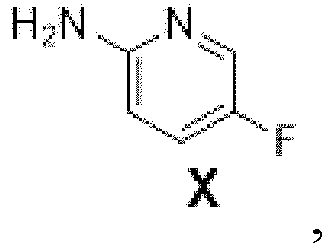
- ii) a compound of Formula X:
- iii) ethyl acetate,
- iv) N,N-diisopropylethylamine, and
- v) 1-propanephosphonic acid
- There is provided a method for producing the compound of Formula IX:

producing the compound of Formula III described above. - There is provided a method for producing the compound of Formula IX:

allowing a compound of Formula VII:
- In one embodiment, the step of allowing the compound of Formula VII to react with the oxidant is performed by sequentially adding sodium hypochlorite and sodium chlorite as the oxidant.
- There is provided a method for producing the compound of Formula IX:

- a) oxidizing a compound of Formula VII:


- b) oxidizing the aldehyde with sodium chlorite.
- In one embodiment, the oxidation in the step a) is catalyzed with an effective amount of 2,2,6,6-tetramethylpiperidin 1-oxyl (TEMPO).
- There is provided a method for producing a compound of Formula VII:

- a manufacturing process for producing the compound of Formula III described above, and
- adding a sodium hydroxide aqueous solution to a compound of Formula V:

- There is provided a method for producing the compound of Formula V:

- a) adding potassium tert-butoxide to a mixture of
- i) a compound of Formula VI:

- ii) N-methylpyrrolidone, and
- iii) acetonitrile and
stirring the mixture at a temperature of 40°C to 70°C, and
- i) a compound of Formula VI:
- b) stirring a mixture obtained by adding
- i) a compound of Formula IV:

- i) a compound of Formula IV:
- There is provided a method for producing the compound of Formula IV:

adding a mixture of ii) p-toluenesulfonyl chloride, toluene and acetonitrile to a composition comprising i) a compound of Formula III:
- There is provided a method for producing the compound of Formula II:

adding methanol to a composition comprising a compound of Formula I:
- There is provided a compound of Formula XI, wherein a content of a compound of Formula XII is 0.10 mass% or less.

- There is provided the compound of Formula XI described above, wherein the content of the compound of Formula XII is determined by high performance liquid chromatography (HPLC).
- There is provided a compound of Formula XI, wherein a content of all related substances including compounds of Formula VI, Formula IX, Formula X, Formula XIII, Formula XIV and Formula XV is 1.0 mass% or less.


- There is provided the compound of Formula XI described above, wherein the content of all related substances including the compounds of Formula VI, Formula IX, Formula X, Formula XIII, Formula XIV and Formula XV is determined by high performance liquid chromatography (HPLC).
- There is provided a compound of Formula XI, wherein a content of a compound of Formula XII is 0.10 mass% or less, and a content of all related substances including compounds of Formula VI, Formula IX, Formula X, Formula XIII, Formula XIV and Formula XV is 1.0 mass% or less.


- There is provided the compound of Formula XI described above, wherein the contents of the compound of Formula XII and all related substances including the compounds of Formula VI, Formula IX, Formula X, Formula XIII, Formula XIV and Formula XV are determined by high performance liquid chromatography (HPLC).
- There is provided a compound of Formula XI, wherein a content of a compound of Formula VI is 0.05 mass% or less.

- There is provided the compound of Formula XI described above, wherein the content of the compound of Formula VI is determined by high performance liquid chromatography (HPLC).
- There is provided a compound of Formula XI, wherein a content of a compound of Formula IX is 0.05 mass% or less.
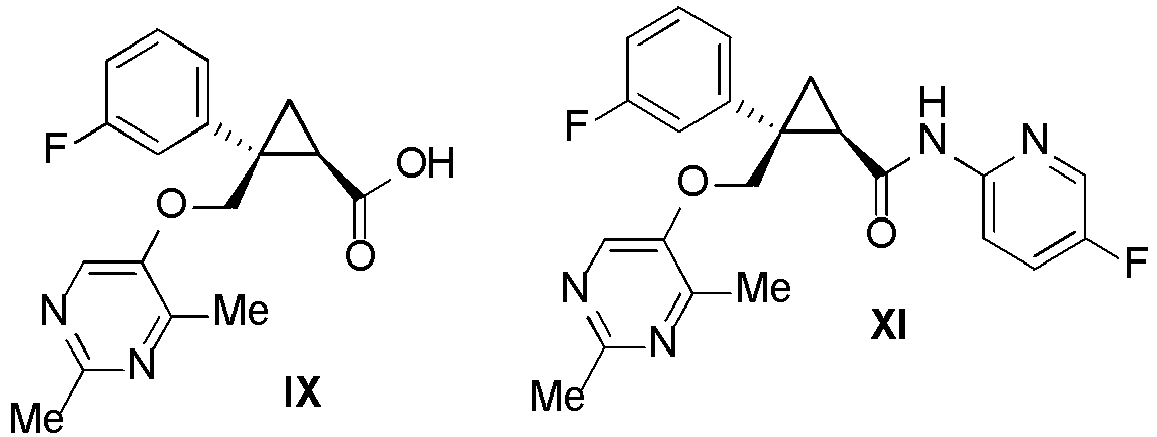
- There is provided the compound of Formula XI described above, wherein the content of the compound of Formula IX is determined by high performance liquid chromatography (HPLC).
- There is provided a compound of Formula XI, wherein a content of a compound of Formula X is 0.05 mass% or less.

- There is provided the compound of Formula XI described above, wherein the content of the compound of Formula X is determined by high performance liquid chromatography (HPLC).
- There is provided a compound of Formula XI, wherein a content of a compound of Formula XIII is 0.05 mass% or less.

- There is provided the compound of Formula XI described above, wherein the content of the compound of Formula XIII is determined by high performance liquid chromatography (HPLC).
- There is provided a compound of Formula XI, wherein a content of a compound of Formula XIV is 0.05 mass% or less.

- There is provided the compound of Formula XI described above, wherein the content of the compound of Formula XIV is determined by high performance liquid chromatography (HPLC).
- There is provided a compound of Formula XI, wherein a content of a compound of Formula XV is 0.05 mass% or less.

- There is provided the compound of Formula XI described above, wherein the content of the compound of Formula XV is determined by high performance liquid chromatography (HPLC).
- There is provided the compound of Formula XI described above, wherein a content of the compound of Formula XI is 97.0 mass% or more.
- There is provided the compound of Formula XI described above, wherein the content of the compound of Formula XI is determined by high performance liquid chromatography (HPLC).
- There is provided a compound comprising a compound of Formula XI and a compound of Formula XII, wherein a content of the compound of Formula XI is 97.0 mass% or more, and a content of the compound of Formula XII is 0.10 mass% or less.

- There is provided the compound described above, wherein the contents of the compound of Formula XI and the compound of Formula XII are determined by high performance liquid chromatography (HPLC).
- There is provided a compound comprising a compound of Formula XI, a compound of Formula XII and all related substances including compounds of Formula VI, Formula IX, Formula X, Formula XIII, Formula XIV and Formula XV, wherein a content of the compound of Formula XI is 97.0 mass% or more, a content of the compound of Formula XII is 0.10 mass% or less, and a content of all related substances including the compounds of Formula VI, Formula IX, Formula X, Formula XIII, Formula XIV and Formula XV is 1.0 mass% or less.


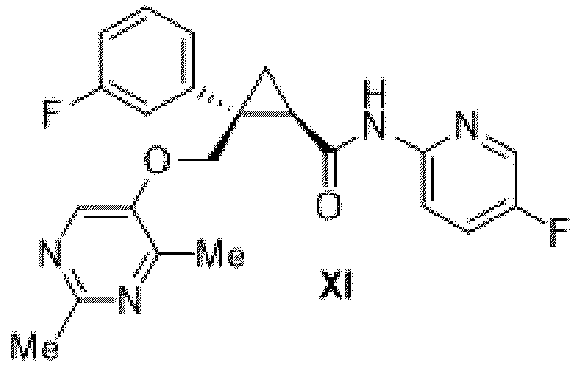
- There is provided the compound described above, wherein the contents of the compound of Formula XI, the compound of Formula XII, and all related substances including the compounds of Formula VI, Formula IX, Formula X, Formula XIII, Formula XIV and Formula XV are determined by high performance liquid chromatography (HPLC).
- There is provided a compound comprising a compound of Formula XI and a compound of Formula VI, wherein a content of the compound of Formula XI is 97.0 mass% or more, and a content of the compound of Formula VI is 0.05 mass% or less.

- There is provided the compound described above, wherein the contents of the compound of Formula XI and the compound of Formula VI are determined by high performance liquid chromatography (HPLC).
- There is provided a compound of Formula comprising a compound of Formula XI and a compound of Formula IX, wherein a content of the compound of Formula XI is 97.0 mass% or more, and a content of the compound of Formula IX is 0.05 mass% or less.

- There is provided the compound described above, wherein the contents of the compound of Formula XI and the compound of Formula IX are determined by high performance liquid chromatography (HPLC).
- There is provided a compound comprising a compound of Formula XI and a compound of Formula X, wherein a content of the compound of Formula XI is 97.0 mass% or more, and a content of the compound of Formula X is 0.05 mass% or less.

- There is provided the compound described above, wherein the contents of the compound of Formula XI and the compound of Formula X are determined by high performance liquid chromatography (HPLC).
- There is provided a compound comprising a compound of Formula XI and a compound of Formula XIII, wherein a content of the compound of Formula XI is 97.0 mass% or more, and a content of the compound of Formula XIII is 0.05 mass% or less.
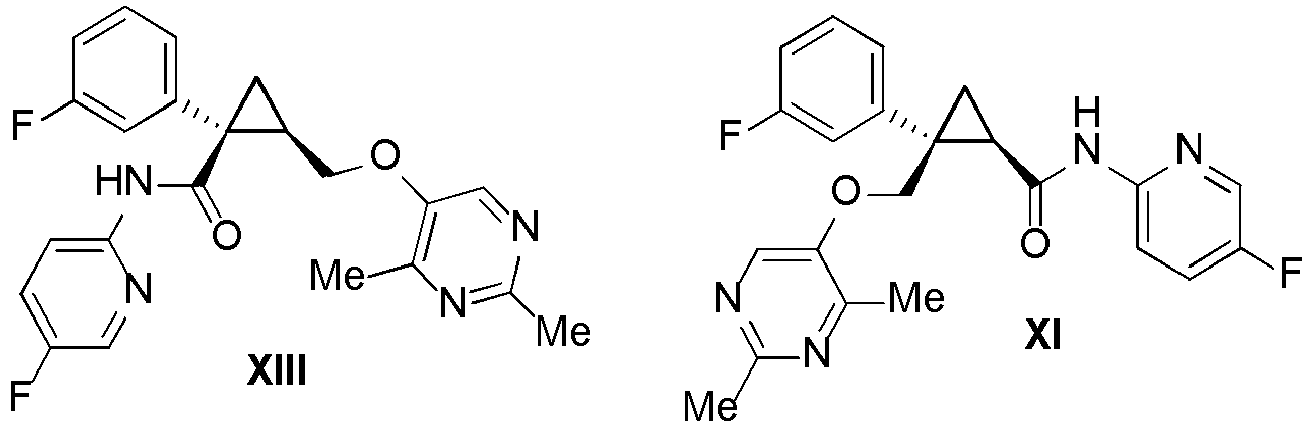
- There is provided the compound described above, wherein the contents of the compound of Formula XI and the compound of Formula XIII are determined by high performance liquid chromatography (HPLC).
- There is provided a compound comprising a compound of Formula XI and a compound of Formula XIV, wherein a content of the compound of Formula XI is 97.0 mass% or more, and a content of the compound of Formula XIV is 0.05 mass% or less.

- There is provided the compound described above, wherein the contents of the compound of Formula XI and the compound of Formula XIV are determined by high performance liquid chromatography (HPLC).
- There is provided a compound comprising a compound of Formula XI and a compound of Formula XV, wherein a content of the compound of Formula XI is 97.0 mass% or more, and a content of the compound of Formula XV is 0.05 mass% or less.

- There is provided the compound described above, wherein the contents of the compound of Formula XI and the compound of Formula XV are determined by high performance liquid chromatography (HPLC).
- The present invention is capable of providing a synthesis method and an intermediate that are useful in preparation of an orexin-2 receptor antagonist. Furthermore, the present invention is capable of providing Lemborexant comprising a small amount of impurities.
- Hereinafter, the meanings of reference signs, terminologies and the like used in the present specification will be described, and the present specification will be described in detail.
- In the present specification, the structural formula of a compound is not limited to the formula expressed for convenience, and the compound may form a salt. Furthermore, the compound may have crystal polymorphism and, similarly, may be any of single crystal forms or a mixture thereof with no limitations and may be a hydrate or a solvate other than an anhydride, all of which are included in the present invention.
- In the present specification, unless particularly otherwise described, specific examples of a salt include a hydrohalic acid salt (for example, hydrofluoric acid salt, hydrochloride, hydrobromide, hydroiodide or the like), an inorganic salt (for example, sulfate, nitrate, perchlorate, phosphate, carbonate, bicarbonate or the like) and the like.
- In one embodiment, a compound that is described in the present specification can be provided as a salt, for example, a pharmaceutically acceptable salt. "A pharmaceutically acceptable salt" refers to a salt that retains a desired biological activity of the parent compound, but imparts no undesirable toxicological actions. Specific examples of the pharmaceutically acceptable salt include inorganic acid salts (sulfate, nitrate, perchlorate, phosphate, carbonate, bicarbonate, hydrofluoric acid salt, hydrochloride, hydrobromide, hydroiodide and the like), organic carboxylates (acetate, oxalate, maleate, tartrate, fumarate, citrate and the like), organic sulfonates (methanesulfonate, trifluoromethanesulfonate, ethanesulfonate, benzene sulfonate, toluene sulfonate, camphor sulfonate and the like), amino acid salts (aspartate, glutamate and the like), quaternary amine salts, alkali metal salts (sodium salts, potassium salts and the like) and alkaline earth metal salts (magnesium salts, calcium salts and the like).
- The present invention includes the isotope-labelled compounds of a compound that is described in the specification and production methods in which the compound is used. The isotope-labelled compound is the same as the compound that is described in the specification except that one or more atoms are replaced with an atom having a different atomic mass or mass number from the atomic mass or mass number that generally occurs in nature. An isotopic element that can be incorporated into the compound of the present invention is, for example, the isotopic element of hydrogen, carbon, nitrogen, oxygen, fluorine, chlorine, phosphorus, sulfur and iodine, and examples thereof include 2H, 3H, 11C, 14C, 13N, 15O, 18F, 32P, 35S, 123I, 125I and the like. The compound of the present invention containing such an isotopic element and/or other isotopic elements and a pharmaceutically acceptable derivative (for example, a salt) of the compound are also included in the scope of the present claims.
- The isotope-labelled compound of the present invention, for example, a compound into which a radioactive isotope such as 3H and/or 14C, has been incorporated is useful for tissue distribution assay of pharmaceuticals and/or matrixes. 3H and 14C are considered to be useful due to their easiness in preparation and detection. Isotopic elements 11C and 18F are considered to be useful for positron emission tomography (PET), an isotopic element 125I is considered to be useful for single photon emission computed tomography (SPECT), and these isotopic elements are all useful for brain imaging. Substitution with a heavier isotopic element such as 2H allows a certain type of therapeutic advantage such as an increase in in vivo half-life or a decrease in a required dose attributed to higher metabolic stability and is thus considered to be useful in certain situations.
- A structure shown in the present specification means to also include all enantiomeric, diastereomeric and geometric (or conformational) forms of the structure; for example, R-type and S-type configurations regarding each asymmetric center, (Z)-type and (E)-type double-bond isomers and (Z)-type and (E)-type conformational isomers. Therefore, single stereochemical isomers, enantiomers, diastereomers and geometric (or conformational) mixtures of the compound of the present invention are within the scope of the present invention. Unless otherwise described, tautomeric forms of the compound of the present invention are all within the scope of the present invention.
- "A compound" in the present specification refers to a compound that comprises 90 mass% or more of the compound itself and may comprise a starting material or a possible by-product in production process of the compound as a related substance. For example, "the compound of Formula XI" comprises 90 mass% or more of the compound of Formula XI and may comprise a starting material, a possible by-product or the like in each production process of the compound of Formula VI, the compound of Formula IX, the compound of Formula X, the compound of Formula XII, the compound of Formula XIII, the compound of Formula XIV or the compound of Formula XV Therefore, "a compound" in the present specification may comprise a by-product or the like as impurities and thus also has an aspect of "a composition". Here, in the case of showing the content of an impurity such as the compound of Formula VI, the compound of Formula IX, the compound of Formula X, the compound of Formula XII, the compound of Formula XIII, the compound of Formula XIV or the compound of Formula XV, the content is based on the total mass of the compound of Formula XI.
- "The content of all related substances" in the present specification refers to the total amount (mass%) of related substances including Formula VI, Formula IX, Formula X, Formula XIII, Formula XIV or Formula XV


- In the present specification, a compound (for example, an intermediate compound) useful for the preparation of (1R,2S)-2-(((2,4-dimethylpyrimidin-5-yl)oxy)methyl)-2-(3-fluorophenyl)-N-(5-fluoropyridin-2-yl)cyclopropanecarboxamide (Lemborexant), which is known as a potent orexin receptor antagonist and useful for treatments for sleep disorders such as insomnia and other therapeutic applications, and a production method thereof are provided. Furthermore, in the present specification, Lemborexant comprising a small amount of impurities is provided.

- There is provided a method for producing a compound of Formula III:

- a) adding a Grignard reagent to a mixture comprising
a compound of Formula II: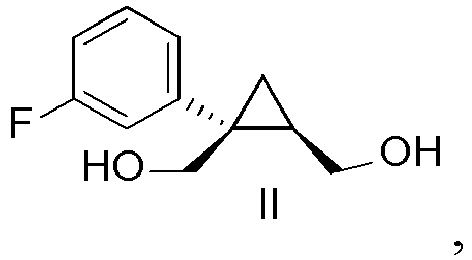
- b) adding the mixture to a mixture comprising acetyl chloride and ethyl acetate.
- In the above-described method, the step a) may be performed at 60°C or lower, and the step b) may be performed at 20°C or lower.
- In one embodiment, the Grignard reagent is cyclohexylmagnesium chloride.
- There is provided a method for producing a compound of Formula XI:

producing the compound of Formula III described above. - There is provided the method for producing a compound of Formula XI described above, comprising
stirring a mixture of - i) a compound of Formula IX:

- ii) a compound of Formula X:

- iii) ethyl acetate,
- iv) N,N-diisopropylethylamine, and
- v) 1-propanephosphonic acid
- In the above-described method, a reaction solvent may be ethyl acetate, and the temperature of the step of stirring a mixture may be 70°C.
- There is provided a method for producing the compound of Formula IX:

producing the compound of Formula III described above. - There is provided a method for producing the compound of Formula IX:

allowing a compound of Formula VII
- In the above-described method, a reaction solvent may be a liquid mixture of toluene and water, and a reaction temperature may be 35°C or lower.
- In one embodiment, the step of reacting the compound of Formula VII with the oxidant is performed by sequentially adding sodium hypochlorite and sodium chlorite as the oxidant.
- There is provided a method for producing the compound of Formula IX:

- a) oxidizing a compound of Formula VII:

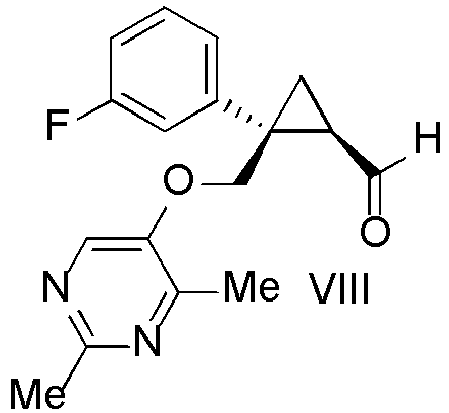
- b) oxidizing the aldehyde with sodium chlorite.
- In the above-described method, a reaction solvent in the step a) and the step b) may be a liquid mixture of toluene and water, and a reaction temperature may be 25°C or lower.
- In one embodiment, the oxidation in the step a) is catalyzed with an effective amount of 2,2,6,6-tetramethylpiperidin-1-oxyl (TEMPO).
- There is provided a method for producing a compound of Formula VII:

- a manufacturing process for producing the compound of Formula III described above and
- adding a sodium hydroxide aqueous solution to a compound of Formula V:

- In the above-described method, a reaction solvent may be a liquid mixture of toluene, N-methylpyrrolidone, acetonitrile and water, and a reaction temperature may be 40°C.
- There is provided a method for producing the compound of Formula V:

- a) adding potassium tert-butoxide to a mixture of
- i) a compound of Formula VI:

- ii) N-methylpyrrolidone, and
- iii) acetonitrile and
stirring both at a temperature of 40°C to 70°C and
- i) a compound of Formula VI:
- b) stirring a mixture obtained by adding
- i) a compound of Formula IV:

- i) a compound of Formula IV:
- In the above-described method, a reaction solvent in the step a) may be a liquid mixture of N-methylpyrrolidone and acetonitrile, a reaction temperature may be 50°C, a reaction solvent in the step b) may be a liquid mixture of toluene, N-methylpyrrolidone and acetonitrile, and a reaction temperature may be 50°C.
- There is provided a method for producing the compound of Formula IV:
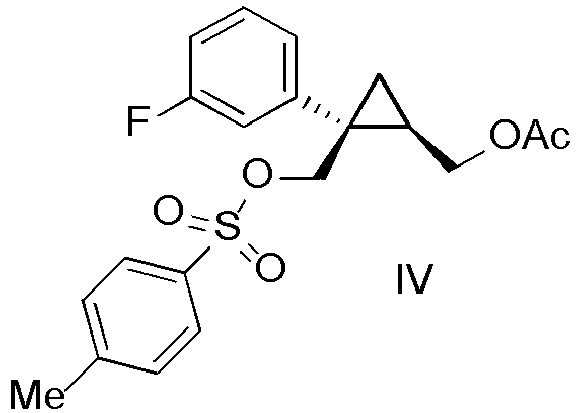
adding a mixture of ii) p-toluenesulfonyl chloride, toluene and acetonitrile to a composition comprising - i) a compound of Formula III:

- In the above-described method, a reaction solvent may be a liquid mixture of toluene and acetonitrile, and a reaction temperature may be 8°C.
- There is provided a method for producing the compound of Formula II:

adding methanol to a composition comprising a compound of Formula I:
- In the above-described method, a reaction solvent may be a liquid mixture of toluene, tetrahydrofuran and methanol, and a reaction temperature may be 50°C or lower.
- There is provided a compound of Formula XI, wherein a content of a compound of Formula XII is 0.10 mass% or less.

- There is provided the compound of Formula XI described above, wherein the content of the compound of Formula XII is determined by high performance liquid chromatography (HPLC).
- There is provided a compound of Formula XI, wherein a content of all related substances including compounds of Formula VI, Formula IX, Formula X, Formula XIII, Formula XIV and Formula XV is 1.0 mass% or less.


- There is provided the compound of Formula XI described above, wherein the content of all related substances including the compounds of Formula VI, Formula IX, Formula X, Formula XIII, Formula XIV and Formula XV is determined by high performance liquid chromatography (HPLC).
- There is provided a compound of Formula XI, wherein a content of a compound of Formula XII is 0.10 mass% or less, and a content of all related substances including compounds of Formula VI, Formula IX, Formula X, Formula XIII, Formula XIV and Formula XV is 1.0 mass% or less.


- There is provided the compound of Formula XI described above, wherein the contents of the compound of Formula XII and all related substances including the compounds of Formula VI, Formula IX, Formula X, Formula XIII, Formula XIV and Formula XV are determined by high performance liquid chromatography (HPLC).
- There is provided a compound of Formula XI, wherein a content of a compound of Formula VI is 0.05 mass% or less.
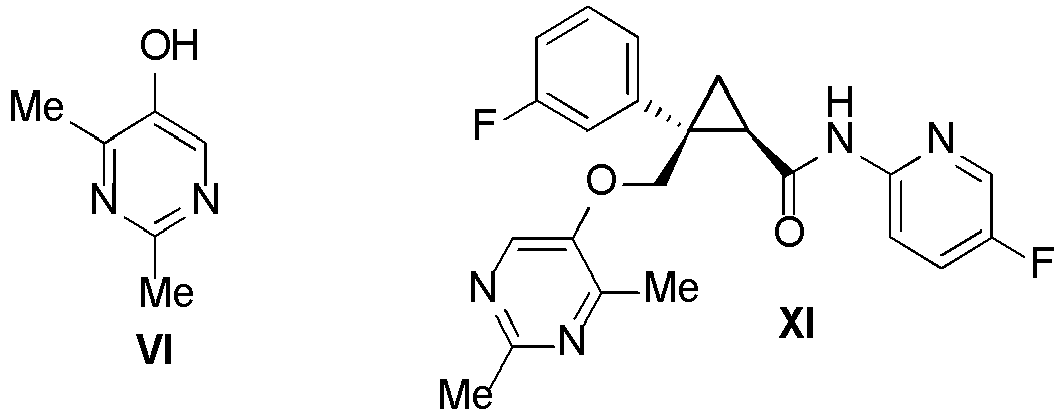
- There is provided the compound of Formula XI described above, wherein the content of the compound of Formula VI is determined by high performance liquid chromatography (HPLC).
- There is provided a compound of Formula XI, wherein a content of a compound of Formula IX is 0.05 mass% or less.

- There is provided the compound of Formula XI described above, wherein the content of the compound of Formula IX is determined by high performance liquid chromatography (HPLC).
- There is provided a compound of Formula XI, wherein a content of a compound of Formula X is 0.05 mass% or less.

- There is provided the compound of Formula XI described above, wherein the content of the compound of Formula X is determined by high performance liquid chromatography (HPLC).
- There is provided a compound of Formula XI, wherein a content of a compound of Formula XIII is 0.05 mass% or less.

- There is provided the compound of Formula XI described above, wherein the content of the compound of Formula XIII is determined by high performance liquid chromatography (HPLC).
- There is provided a compound of Formula XI, wherein a content of a compound of Formula XIV is 0.05 mass% or less.

- There is provided the compound of Formula XI described above, wherein the content of the compound represented by Formula XIV is determined by high performance liquid chromatography (HPLC).
- There is provided a compound of Formula XI, wherein a content of a compound of Formula XV is 0.05 mass% or less.

- There is provided the compound of Formula XI described above, wherein the content of the compound of Formula XV is determined by high performance liquid chromatography (HPLC).
- Any of the compounds that are exemplified above and used in the methods disclosed in the present specification can be provided in a stereochemically pure form, and these are supposed to be understood to be included in the present disclosure. In one embodiment, a stereochemically pure compound has approximately more than 75 weight% of one stereoisomer of the compound and approximately less than 25 weight% of another stereoisomer, approximately more than 80 weight% of one stereoisomer of the compound and approximately less than 20 weight% of another stereoisomer, approximately more than 85 weight% of one stereoisomer of the compound and approximately less than 15 weight% of another stereoisomer, approximately more than 90 weight% of one stereoisomer of the compound and approximately less than 10 weight% of another stereoisomer, approximately more than 95 weight% of one stereoisomer of the compound and approximately less than 5 weight% of another stereoisomer, approximately more than 97 weight% of one stereoisomer of the compound and approximately less than 3 weight% of another stereoisomer or approximately more than 98 weight% of one stereoisomer of the compound and approximately less than 2 weight% of another stereoisomer. In one embodiment, the stereochemically pure compound has approximately more than 99 weight% of one stereoisomer of the compound and approximately less than 1 weight% of another stereoisomer.
- As described above, in one embodiment, a compound that is described in the present specification can be provided as a salt, for example, a pharmaceutically acceptable salt.
- A certain embodiment makes it possible to produce the compound of Formula XI wherein the content of the compound of Formula XII is 0.10 mass% or less, the content of each of the compounds of Formula VI, Formula IX, Formula X, Formula XIII, Formula XIV and Formula XV is 0.05 mass% or less, and the content of all related substances including the compounds of Formula VI, Formula IX, Formula X, Formula XIII, Formula XIV and Formula XV is 1.0 mass% or less.
- A certain embodiment makes it possible to produce the compound of Formula XI wherein the content of the compound of Formula XI is 97.0 mass% or more, 98.0 mass% or more or 98.5 mass% or more and 102.0 mass% or less, 100.0 mass% or less, 99.9 mass% or less, 99.0 mass% or less or 98.9 mass% or less. Here, the content of the compound of Formula XI is determined by high performance liquid chromatography (HPLC). More specifically, HPLC is performed under conditions described in the section of "Purity test" of the following examples, and the content is shown by a numerical value obtained by dividing the peak area of the compound of Formula XI, which is a specimen, by the peak area of a standard product of the compound of Formula XI on a chromatogram.
- Another embodiment of the present invention is a pharmaceutical composition containing the compound of Formula XI or crystals thereof and a pharmaceutically acceptable additive. The pharmaceutical composition can be produced by mixing the pharmaceutically acceptable additive with the compound of Formula XI or the crystals thereof. The pharmaceutical composition according to the present invention can be produced according to a known method, for example, the method described in the general rules for preparation of Japanese Pharmacopoeia 17th Edition.
- Hereinafter, the present invention will be described in detail using examples. However, the present invention is not limited to these examples. In addition, abbreviations that are used in the following examples are common abbreviations well known to those skilled in the art, and several abbreviations are as described below.
- Chemical shifts in a proton nuclear magnetic resonance (1H-NMR) spectrum are recorded in δ units (ppm) with respect to tetramethylsilane, and coupling constants are recorded in Hertz (Hz). In patterns, s, d, br and m means singlet, doublet, broad and multiplet, respectively.
- 1H-NMR) spectra and 13C-NMR spectra were measured using Varian 400, a 500 MHz spectrometer or JNM-AL400 type nuclear magnetic resonance spectrometer (400 MHz) manufactured by JEOL Ltd.
- "Room temperature" in the following examples generally indicates approximately 10°C to approximately 35°C. Unless particularly otherwise described, "%" indicates weight percentages.
-

-

- A solution obtained by mixing (3-fluorophenyl)acetonitrile (120 kg, 888 mol, 1.0 equiv.) and tetrahydrofuran (9.0 kg) was added dropwise at -10°C to 0°C to a solution obtained by mixing sodium tert-butoxide (188 kg, 1954 mol, 2.2 equiv.) and tetrahydrofuran (890 kg). After the solution was stirred for one hour or longer, (2R)-2-(chloromethyl)oxirane (94.5 kg, 1021 mol, 1.15 equiv.) was added dropwise thereto at -12°C to 18°C. After the end of a reaction was confirmed by high performance liquid chromatography (hereinafter, referred to as "HPLC") analysis, water (50 kg) was added thereto and stirred. The solvent was distilled away under reduced pressure, and a (1S,2R)-1-(3-fluorophenyl)-2-(hydroxymethyl)cyclopropan-1-carbonitrile solution was obtained and used as it was in the next step.
- Conditions for HPLC for confirming the above-described reaction:
Reagents and mobile phases: - Purified water
- Acetonitrile (Kanto Chemical Co., Inc., Catalog No. 01031-2B, for high performance liquid chromatograph or equivalent product)
- Perchloric acid (70%) (Wako Pure Chemical Industries, Ltd., Catalog No. 162-00695, special grade chemical or equivalent product)
- Mobile phase A liquid: Liquid mixture of water, acetonitrile and perchloric acid (70%) (950:50:1, v/v/v)
- Mobile phase B liquid: Liquid mixture of water, acetonitrile and perchloric acid (70%) (100:900:1, v/v/v)
- Solution: Liquid mixture of water and acetonitrile (50:50, v/v)
- Rinse agent for needle in HPLC device: Liquid mixture of water and acetonitrile (50:50, v/v)
- Standard sample of (3-fluorophenyl)acetonitrile
- Detector: Shimadzu SPD-20A ultraviolet absorptiometer (measurement wavelength: 262 nm) or equivalent product
- Column: Stainless steel pipe having an inner diameter of 4.6 mm and a length of 15 cm and filled with 2.7 µm octadecyl-silylated silica gel for liquid chromatography
- Example: Meteoric Core C18 (YMC), (equivalent to USP packing type L1)
- Column temperature: Constant temperature near 30°C
- A liquid: Liquid mixture of water, acetonitrile and perchloric acid (70%) (950:50:1, v/v/v)
- B liquid: Liquid mixture of water, acetonitrile and perchloric acid (70%) (100:900:1, v/v/v)
- Flow rate: 0.9 mL/min
- Injection amount: 10 µL
- Sample rack temperature: Constant temperature near 5°C
- Area measurement range: 30 Minutes
-

- Sodium bis(trimethylsilyl)amide (tetrahydrofuran solution) (150 mL, 0.30 mol, 2.00 equiv.) was added dropwise at 0°C to 7°C to a solution obtained by mixing (3-fluorophenyl)acetonitrile (20 g, 0.15 mol, 1.00 equiv.) and tetrahydrofuran (150 mL). After the mixture was stirred for 0.5 hours, (2R)-2-(chloromethyl)oxirane (11.8 mL, 0.15 mol, 1.00 equiv.) was added dropwise thereto at 17°C. The mixture was stirred at 5°C for two hours and stirred at room temperature for three days, water (10 mL) was then added thereto, and the mixture was stirred. The solvent was distilled away under reduced pressure, and (1S,2R)-1-(3-fluorophenyl)-2-(hydroxymethyl)cyclopropan-1-carbonitrile was obtained and used as it was in the next step.
- Ethanol (150 mL) and a 2M potassium hydroxide aqueous solution (148 mL, 0.30 mol, 2.00 equiv.) were added to the obtained (1S,2R)-1-(3-fluorophenyl)-2-(hydroxymethyl)cyclopropan-1-carbonitrile, the mixture was stirred at 80°C for four hours, and then water (66 mL) and concentrated hydrochloric acid (47.5 mL, 0.57 mol, 3.80 equiv.) were added thereto. The mixture was stirred at 60°C for one hour and further stirred at room temperature for 45 hours. A precipitated solid was filtered, washed with water until the pH was confirmed to reach five and dried under a nitrogen stream, thereby obtaining (1S,5R)-1-(3-fluorophenyl)-3-oxabicyclo[3.1.0]hexan-2-one (23 g) in an yield of 81% (total yield from (3-fluorophenyl)acetonitrile).
- Ethanol (237 kg), water (237 kg) and a 25% sodium hydroxide aqueous solution (220 kg, 1376 mol, 1.55 equiv.) were added to the (1S,2R)-1-(3-fluorophenyl)-2-(hydroxymethyl)cyclopropan-1-carbonitrile solution, and the mixture was stirred at an internal temperature of 77°C to 87°C. After the end of a reaction was confirmed by HPLC analysis, the solvent was distilled away under reduced pressure, toluene (624 kg) and water (60 kg) were added thereto, stirred and then left to stand. After an organic layer was discharged, toluene (624 kg) was added to a water layer, stirred and then left to stand. The organic layer was discharged and used as it was in the next step.
- Conditions for HPLC for confirming the above-described reaction:
- Reagents and mobile phases:
- Purified water, acetonitrile, perchloric acid (70%), a mobile phase A liquid, a mobile phase B liquid, a solution and a rinse agent for a needle in an HPLC device were the same as in (A-1).
- Standard sample of (1S,2R)-1-(3-fluorophenyl)-2-(hydroxymethyl)cyclopropan-1-carbonitrile
- HPLC conditions:
Same as in (A-1). - Toluene (409 kg) and 35% hydrochloric acid (287 kg, 2753 mol, 3.10 equiv.) were added to the solution obtained in (A-2-2-step 1). The mixture was stirred at an internal temperature of 55°C to 65°C, and the end of a reaction was confirmed by HPLC analysis. After the internal temperature was confirmed to reach 35°C, the mixture was left to stand, the water layer was discharged, then, toluene (172 kg) and a 7% sodium hydrogen carbonate aqueous solution (482 kg) were added to an organic layer, stirred and then left to stand. After the water layer was discharged, water (480 kg) was added to the organic layer, stirred and then left to stand. The water layer was discharged, and the content of (1S,5R)-1-(3-fluorophenyl)-3-oxabicyclo[3.1.0]hexan-2-one in the organic layer was calculated. The solvent was distilled away under reduced pressure, and ethanol (614 kg) was then added thereto. After the solvent was distilled away under reduced pressure, ethanol was added thereto such that the total volume reached an amount twice the content of (1S,5R)-1-(3-fluorophenyl)-3-oxabicyclo[3.1.0]hexan-2-one.
- (1S,5R)-1-(3-Fluorophenyl)-3-oxabicyclo[3.1.0]hexan-2-one was heated and dissolved under stirring at an internal temperature of 60°C to 65°C, and water was added thereto as much as 0.8 times the content of (1S,5R)-1-(3-fluorophenyl)-3-oxabicyclo[3.1.0]hexan-2-one. After cooling, 60 g of seed crystals were added thereto at an internal temperature of 40°C to 50°C, and precipitation of crystals was confirmed. The mixture was stirred at an internal temperature of 40°C to 50°C for one hour or longer and cooled to -5°C to 5°C or lower at -10 °C/H to -20 °C/H, and a precipitated solid was filtered and washed with ethanol. The obtained solid was dried at an external temperature of 45°C or lower under reduced pressure, thereby obtaining (1S,5R)-1-(3-fluorophenyl)-3-oxabicyclo[3.1.0]hexan-2-one (103 kg) in an yield of 60% (total yield from (3-fluorophenyl)acetonitrile).
- Conditions for HPLC for confirming the above-described reaction:
Reagents and mobile phases: - Purified water, acetonitrile, perchloric acid (70%), a mobile phase A liquid, a mobile phase B liquid, a solution and a rinse agent for a needle in an HPLC device were the same as in (A-1).
- (1S,2R)-1-(3-Fluorophenyl)-2-(hydroxymethyl)cyclopropan-1-carboxylic acid solution (concentration of approximately 0.5 mg/mL)
- (1S,5R)-1-(3-fluorophenyl)-3-oxabicyclo[3.1.0]hexan-2-one:
- 1H NMR (500 MHz, DMSO-d6) δ 7.43-7.36 (m, 1H), 7.35-7.31 (m, 1H), 7.31-7.28 (m, 1H), 7.14-7.08 (m, 1H), 4.46 (dd, J = 9.1, 4.6 Hz, 1H), 4.25 (d, J= 9.1 Hz, 1H), 2.80 (dt, J = 8.0, 4.6 Hz, 1H), 1.72 (dd, J = 7.9, 4.8 Hz, 1H), 1.37 (t, J = 4.8 Hz, 1H);
- 13C NMR(126 MHz, DMSO-d6) δ 175.35, 161.98 (d, JCF = 243.1 Hz), 137.67 (d, JCF = 8.2 Hz), 130.15 (d, JCF = 8.6 Hz), 124.19 (d, JCF = 2.8 Hz), 115.01 (d, JCF = 22.4 Hz), 113.95 (d, JCF = 20.9 Hz), 67.93, 30.70 (d, JCF = 2.4 Hz), 25.57,19.99.
-

-

- A mixture of 4-nitrophenol (305.0 kg, 2192.5 mmol), potassium carbonate (318.2 kg, 2302.1 mmol) and acetonitrile (1678 kg) was stirred at 60°C for 30 minutes. Chloroacetone (net: 213.0 kg, 2302.1 mmol) was added dropwise to the reaction mixture at 60°C, and the obtained mixture was stirred at 60°C (external temperature) for seven hours. The reaction mixture was cooled in an ice bath, and toluene (1847 kg) and water (1830 kg) were added to the reaction mixture at the same temperature. The obtained reaction mixture was stirred at room temperature, and then an organic layer was separated and washed with salt water (1525 kg of water and 170.8 kg of salt). The solvent was distilled away under reduced pressure, the obtained residue was dissolved in toluene (1319 kg) at 55°C (internal temperature) and then cooled to an internal temperature of 5°C, and a precipitated solid was filtered. The obtained solid was washed with an appropriate amount of toluene, thereby obtaining a wet body (dry-equivalent yield of 343.9 kg, yield of 80%) of a title compound.
- 1H-NMR (CD3Cl) δ (ppm): 2.31 (3H, s), 4.67 (2H, s), 6.95 (2H, d, J = 9.3 Hz), 8.22 (2H, d, J = 9.3 Hz).
-

- Toluene (1785 kg) was added to 1-(4-nitrophenoxy)propan-2-one (dry equivalent: 343.9 kg, 1762.1 mmol) and partially concentrated, and then N,N-dimethylformamide dimethyl acetal (231.0 kg, 1938.3 mmol) was added thereto and stirred at 78°C (internal temperature) for 20 hours. Toluene (595 kg) was added to the reaction mixture at the same temperature, and methanol (163 kg) was added thereto at an internal temperature of 55°C, aged for 30 minutes and then cooled to 5°C. A precipitated solid was filtered. The obtained solid was washed with an appropriate amount of toluene, thereby obtaining a wet body (dry-equivalent yield of 159.0 kg, yield of 36%) of a title compound.
- 1H-NMR (CD3Cl) δ (ppm): 2.00 (3H, brs), 3.01 (6H, s), 6.90-7.16 (2H, brm), 7.16-7.46 (1H, brs), 8.22 (2H, d, J = 8.8 Hz).
- In addition, the compound of Formula VIb can also be produced by a method as described below.
-

- Acetonitrile (15 mL) was added to 1-(4-nitrophenoxy)propan-2-one (15.0 g, 76.9 mmol) and 4-nitrophenol (802 mg, 5.76 mmol), and N,N-dimethylformamide dimethyl acetal (15.4 mL, 115 mmol) was added thereto and stirred at 78°C (external temperature) for 19 hours. Toluene (300 mL) was added to the reaction mixture at 50°C (external temperature) and cooled to 5°C (external temperature), and a precipitated solid was filtered. The obtained solid was washed with an appropriate amount of toluene and then dried at 50°C under reduced pressure, thereby obtaining a title compound (12.4 g, yield of 64%).
-

- A mixture of 4-nitrophenol (50.0 g, 359 mmol), potassium carbonate (52.2 g, 377 mmol) and acetonitrile (350 mL) was stirred at 60°C (external temperature) for one hour. Chloroacetone (31.5 mL, 377 mmol) was added dropwise to the reaction mixture at the same temperature, and the obtained mixture was stirred at the same temperature for 25 hours. The reaction mixture was stirred under ice chilled water, and toluene (350 mL) and water (300 mL) were added to the reaction mixture at 13°C (internal temperature). The obtained reaction mixture was stirred at room temperature, and then an organic layer was separated and washed with salt water (250 mL of water and 27.8 g of salt). The solvent was distilled away from this organic layer (168.5 g) under reduced pressure, and acetonitrile (60 mL) was added to the obtained residue (1-(4-nitrophenoxy)propan-2-one (compound of Formula VIa); net: 16.7 g, 85.6 mmol) to distill away the solvent under reduced pressure. After acetonitrile (60 mL) was added to the obtained residue to distill away the solvent under reduced pressure, acetonitrile (16.7 mL) was added to and dissolved in the residue, and then N,N-dimethylformamide dimethyl acetal (17.2 mL, 128 mmol) was added thereto and stirred at 78°C (external temperature) for 19.5 hours. Toluene (200 mL) was added to the reaction mixture at the same temperature and cooled to 6°C (external temperature), and a precipitated solid was filtered. The obtained solid was washed with an appropriate amount of toluene and then dried at 50°C under reduced pressure, thereby obtaining a title compound (12.3 g, yield of 58%).
-
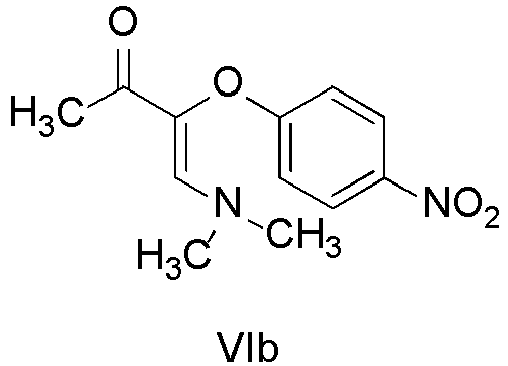
- Triethylamine (5.3 mL, 38.2 mmol) and chloroacetone (3.0 mL, 36.4 mmol) were added to a mixture of 4-nitrophenol (5.57 g, 40.1 mmol) and acetonitrile (17 mL) at 18°C (internal temperature) and stirred at 55°C (external temperature) for 69 hours. N,N-dimethylformamide dimethyl acetal (7.3 mL, 54.6 mmol) was added to the reaction mixture at 30°C (external temperature) and stirred at 80°C (external temperature) for 43 hours. N,N-dimethylformamide dimethyl acetal (7.3 mL, 54.6 mmol) was added to the reaction mixture at 36°C (internal temperature) and stirred at 80°C (external temperature) for 18.5 hours. The internal temperature was cooled to 45°C or lower, toluene (40 mL) was then added thereto, and the solvent was distilled away under reduced pressure. Toluene (111 mL) and acetonitrile (5.6 mL) were added to the obtained residue and stirred at 80°C (external temperature), methanol (4.4 mL) was added thereto and then cooled to 6°C (external temperature), and a precipitated solid was filtered. The obtained solid was washed with an appropriate amount of toluene and then dried at 50°C under reduced pressure, thereby obtaining a title compound (3.97 g, yield of 44%).
-

- A mixture of 4-nitrophenol (50.0 g, 359 mmol), potassium carbonate (49.6 g, 359 mmol) and acetonitrile (350 mL) was stirred at room temperature for 25 minutes. Chloroacetone (33.3 g, 359 mmol) was added dropwise to the mixture at the same temperature, and the mixture was stirred at 60°C (external temperature) for 14 hours. Toluene (350 mL) and water (300 mL) were added to the obtained reaction mixture (a mixture of 1-(4-nitrophenoxy)propan-2-one (compound of Formula VIa) and 4-nitrophenol (97:3)) and stirred. An organic layer was separated and washed with water (250 mL). The solvent in the organic layer was distilled away under reduced pressure, toluene (500 mL) was added to the obtained residue (284 g), and the solvent was distilled away under reduced pressure. Toluene (103 g) and N,N-dimethylformamide dimethyl acetal (52.9 mL, 395 mmol) were added to the obtained residue (149 g) and stirred at 80°C (external temperature) for 15 hours. The obtained reaction mixture was cooled to room temperature, aged for three hours, then, cooled to 5°C (external temperature) and aged for two hours. The precipitated solid was filtered and washed with an appropriate amount of toluene. The solid was dried at 50°C under reduced pressure, thereby obtaining a title compound (55.7 g, yield of 62%).
-
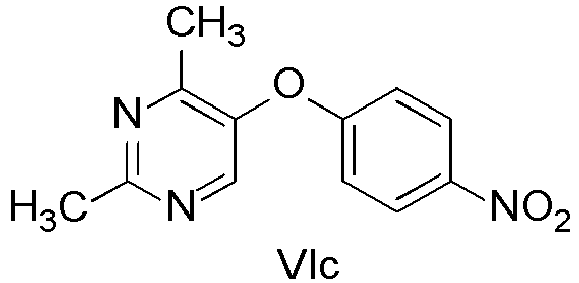
- A sodium ethoxide 20% ethanol solution (518.8 kg, 1524.9 mol), ethanol (213 kg) and acetamidinium chloride (net: 144.2 kg, 1524.9 mmol) were added and stirred at 25°C (internal temperature) for 94 minutes. (Z)-4-(dimethylamino)-3-(4-nitrophenoxy)but-3-en-2-one (dry equivalent: 159.0 kg, 635.4 mmol) was fed, and a mixture was stirred at 60°C (internal temperature) for five hours. The reaction mixture was cooled to 5°C (internal temperature), then, water (2385 kg) was added thereto, and a precipitated solid was filtered. The obtained solid was washed with an appropriate amount of water, thereby obtaining a wet body (dry-equivalent yield of 146.1 kg, yield of 94%) of a title compound.
- 1H-NMR (CD3Cl) δ (ppm): 2.40 (3H, s), 2.75 (3H, s), 6.96 (2H, d, J = 9.0 Hz), 8.24 (2H, d, J = 9.0 Hz), 8.32 (1H, s).
-

- A mixture of 2-4-dimethyl-5-(4-nitrophenoxy)pyrimidine (dry equivalent: 146.1 kg, 595.8 mmol), methanol (579 kg) and a sodium hydroxide aqueous solution (71.5 kg of sodium hydroxide and 77.5 kg of water, 1787.3 mmol) was stirred at 60°C (internal temperature) for 13 hours. Toluene (1264 kg) and water (584 kg) were added to the reaction mixture, stirred and left to stand, and then a water layer was separated and concentrated under reduced pressure. The obtained concentrated liquid was cooled to 8°C (internal temperature), toluene (316 kg) was then added thereto, and concentrated hydrochloric acid (310.3 kg, 2978.8 mmol) was added thereto at an internal temperature of 0°C to 15°C. Ethyl acetate (328 kg) was added thereto to separate a liquid. A water layer was separated and washed with toluene-ethyl acetate (316 kg-328 kg). Ethyl acetate (1311 kg) was added to the obtained water layer, the water layer was cooled to 5°C (internal temperature), and a 5 mol/l sodium hydroxide aqueous solution was added thereto such that the pH of the reaction mixture reached 6.5. An organic layer was separated, and the water layer was extracted again with ethyl acetate (1311 kg). The obtained organic layer was combined and then washed with water (44 kg), and the solvent was distilled away under reduced pressure. Toluene (379 kg) was added to the obtained residue to suspend and stir the residue at 50°C (internal temperature) for two hours. The mixture was cooled to 10°C (internal temperature), stirred for two hours and then filtered. The obtained solid was washed with an appropriate amount of toluene and then dried at 45°C under reduced pressure, thereby obtaining a title compound (63.7 kg, 86%).
- 1H-NMR (CD3Cl) δ (ppm): 2.51 (3H, s), 2.65 (3H, s), 8.02 (1H, s), 10.01 (1H, brs).
-

-

- Methanol (58.3 kg, 1821 mol, 5.00 equiv.) was added to a mixture of (1S,5R)-1-(3-fluorophenyl)-3-oxabicyclo[3.1.0]hexan-2-one (70 kg, 364 mol, 1.00 equiv.), toluene (350 L), tetrahydrofuran (350 L) and sodium borohydride (13.8 kg, 364 mol, 1.00 equiv.) and stirred at 50°C or lower. After the end of a reaction was confirmed by HPLC analysis, the reaction liquid and toluene (140 L) were added to a 20% citric acid aqueous solution (350 kg), stirred and then left to stand. After a water layer was discharged, a 5% hydrogen sodium carbonate aqueous solution (140 kg) was added to an organic layer, stirred and then left to stand. The water layer was discharged, a 5% sodium chloride aqueous solution (140 kg) was added to the organic layer, stirred and then left to stand. The water layer was discharged, the solvent was distilled away under reduced pressure, and a [(1S,2R)-1-(3-fluorophenyl)cyclopropan-1,2-diyl]dimethanol (equivalent to 67.2 kg, yield of 94%) toluene solution was obtained and used as it was in the next step.
- Conditions for HPLC for confirming the above-described reaction:
Reagents and mobile phases: - Purified water
- Acetonitrile (Kanto Chemical Co., Inc., Catalog No. 01031-2B, for high performance liquid chromatograph or equivalent product)
- Trifluoroacetic acid (Wako Pure Chemical Industries, Ltd., Catalog No. 208-02741, special grade chemical or equivalent product)
- Mobile phase A liquid: Liquid mixture of water and trifluoroacetic acid (1000/1, v/v)
- Mobile phase B liquid: Liquid mixture of acetonitrile and trifluoroacetic acid (1000/1, v/v)
- Solution: Liquid mixture of water, acetonitrile and trifluoroacetic acid (500/500/1, v/v/v)
- Rinse agent for needle in HPLC device: Liquid mixture of water and acetonitrile (100/900, v/v)
- Standard sample of (1S,5R)-1-(3-fluorophenyl)-3-oxabicyclo[3.1.0]hexan-2-one
- Detector: Shimadzu SPD-20A ultraviolet absorptiometer (measurement wavelength: 220 nm) or equivalent product
- Column: Stainless steel pipe having an inner diameter of 4.6 mm and a length of 15 cm and filled with 3.5 µm octadecyl-silylated silica gel for liquid chromatograph
- Example: SunFire C18 (Waters) (equivalent to USP packing L1)
- Column temperature: Constant temperature near 40°C
- A liquid: Liquid mixture of water and trifluoroacetic acid (1000/1, v/v)
- B liquid: Liquid mixture of acetonitrile and trifluoroacetic acid (1000/1, v/v)
- Injection amount: 5 µL
- Sample rack temperature: Constant temperature near 10°C
- Needle rinse agent: Liquid mixture of water and acetonitrile (10/90, v/v)
- Area measurement target range: Up to 34 minutes
-

- Cyclohexyl magnesium chloride (1 mol/kg tetrahydrofuran solution) (349 kg, 349 mol, 1.02 equiv.) was added to a mixture of a [(1S,2R)-1-(3-fluorophenyl)cyclopropan-1,2-diyl]dimethanol toluene solution (equivalent to 67.2 kg of [(1S,2R)-1-(3-fluorophenyl)cyclopropan-1,2-diyl]dimethanol, 342 mol, 1.00 equiv.) and tetrahydrofuran (269 L) and stirred at 60°C or lower. The obtained solution was added to a mixture of ethyl acetate (336 L) and acetyl chloride (29.6 kg, 377 mol, 1.10 equiv.) and stirred at 20°C or lower. The end of a reaction was confirmed by HPLC analysis, water (202 L) was added thereto, stirred and then left to stand. After a water layer was discharged, a 6% hydrogen sodium carbonate aqueous solution (215 kg) was added to an organic layer, stirred and then left to stand. After the water layer was discharged, a 4% sodium chloride aqueous solution (175 kg) was added to the organic layer, stirred and then left to stand. The water layer was discharged, the solvent was distilled away under reduced pressure, and toluene (134 L) was added thereto. The solvent was distilled away under reduced pressure, and a [(1R,2S)-2-(3-fluorophenyl)-2-(hydroxymethyl)cyclopropyl]methyl=acetate toluene solution was obtained and used as it was in the next step.
- Conditions for HPLC for confirming the reaction:
- Reagents and mobile phases:
- Purified water, acetonitrile, trifluoroacetic acid, a mobile phase A liquid, a mobile phase B liquid, and a rinse agent for a needle in an HPLC device were the same as in (C-1).
- Solution: Water/acetonitrile (500:500, v/v)
- [(1S,2R)-1-(3-fluorophenyl)cyclopropan-1,2-diyl]dimethanol solution (concentration of approximately 0.5 mg/mL)
- HPLC conditions
- A detector, a column, a column temperature, mobile phases, a flow rate, an injection amount and a sample rack temperature were the same as in (C-1).
-
Time (minutes) Percentage of mobile phase B liquid (%) 0 5 > Linear gradient 7 30 30 30 > Linear gradient 44 100 49 100 49.01 5 60 Stop Area measurement target range: Up to 44 minutes -
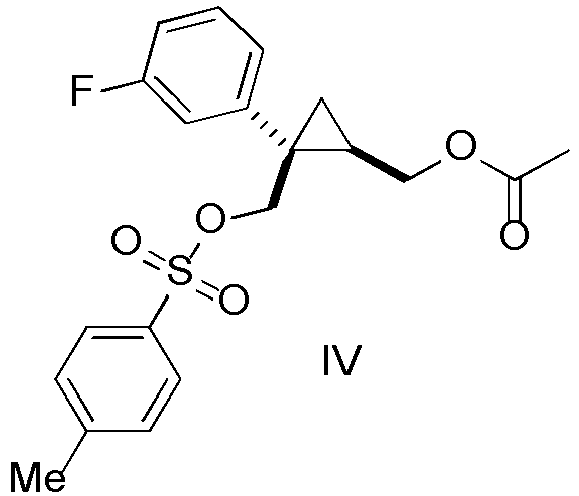
- Toluene (34 L) of p-toluenesulfonyl chloride (71.8 kg, 377 mol, 1.10 equiv.) and an acetonitrile (69 L) solution were added to a mixture of a [(1R,2S)-2-(3-fluorophenyl)-2-(hydroxymethyl)cyclopropyl]methyl=acetate toluene solution (equivalent to 81.6 kg of [(1R,2S)-2-(3-fluorophenyl)-2-(hydroxymethyl)cyclopropyl]methyl=acetate, 342 mol, 1.00 equiv.), toluene (294 L) (including the amount of toluene in the toluene solution), triethylamine (69.3 kg, 685 mol, 2.00 equiv.) and 1-methylimidazole (1.41 kg, 17 mol, 0.05 equiv.) at 30°C or lower and then stirred at an external temperature of 8°C. After the end of a reaction was confirmed by HPLC analysis, acetonitrile (34 L) was added thereto and stirred. Triethylamine hydrochloride was removed by filtration, a filtered substance was washed with a liquid mixture of toluene (51 L) and acetonitrile (51 L) and mixed, whereby a [(1R,2S)-2-(3-fluorophenyl)-2-({[(4-methylphenyl)sulfonyl]oxy}methyl)cyclopropyl]methyl=acetate solution was obtained and used as it was in the next step.
- Conditions for HPLC for confirming the above-described reaction:
- Reagents and mobile phases:
- Purified water, acetonitrile, trifluoroacetic acid, a mobile phase A liquid, a mobile phase B liquid, and a rinse agent for a needle in an HPLC device were the same as in (C-1).
- Solution: Acetonitrile
- [(1R,2S)-2-(3-fluorophenyl)-2-(hydroxymethyl)cyclopropyl]methyl=acetate toluene solution (final product of the prior step)
- HPLC conditions
Same as in (C-1). -

- Potassium tert-butoxide (46.1 kg, 411 mol, 1.20 equiv.) was added to a mixture of 2,4-dimethylpyrimidin-5-ol (51.0 kg, 411 mol, 1.20 equiv.), N-methylpyrrolidone (273 L) and acetonitrile (85 L) and stirred at an external temperature of 50°C. A [(1R,2S)-2-(3-fluorophenyl)-2-({[(4-methylphenyl)sulfonyl]oxy}methyl)cyclopropyl]methyl=acetate solution was added to the obtained solution and stirred at an external temperature of 50°C. After the end of a reaction was confirmed by HPLC analysis, water (547 L) was added thereto, stirred and then left to stand at 30°C or lower. After liquid separation, an organic layer was stored, and toluene (220 L) was added to a water layer, stirred and then left to stand. The water layer was discharged, and the organic layer was mixed, whereby a [(1R,2S)-2-{[(2,4-dimethylpyrimidin-5-yl)oxy]methyl} -2-(3-fluorophenyl)cyclopropyl]methyl=acetate solution was obtained and used as it was in the next step.
- Conditions for HPLC for confirming the above-described reaction:
- Reagents and mobile phases:
- Purified water, acetonitrile, trifluoroacetic acid, a mobile phase A liquid, a mobile phase B liquid, and a rinse agent for a needle in an HPLC device were the same as in (C-1).
- Solution: Acetonitrile
- [(1R,2S)-2-(3-fluorophenyl)-2-({[(4-methylphenyl)sulfonyl]oxy}methyl)cyclopropyl]methyl=acetate solution (concentration of approximately 1 mg/mL)
- HPLC conditions
Same as in (C-1). -
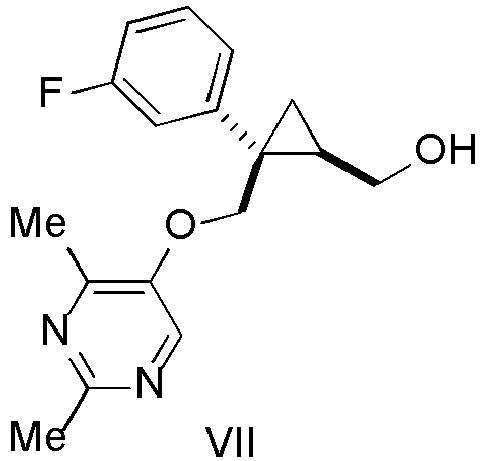
- Water (734 L) and a 25% sodium hydroxide aqueous solution (107 L, 856 mol, 2.50 equiv.) were added to a [(1R,2S)-2-{[(2,4-dimethylpyrimidin-5-yl)oxy]methyl}-2-(3-fluorophenyl)cyclopropyl]methyl=acetate solution and stirred at an external temperature of 40°C. After the end of a reaction was confirmed by HPLC analysis, the reaction product was cooled and left to stand. After a water layer was discharged, a sodium dihydrogenphosphate aqueous solution (41.4 kg of sodium dihydrogenphosphate and 255 L of water) was added to an organic layer, stirred and then left to stand. After the water layer was discharged, water (204 L) was added to the organic layer, stirred and then left to stand. The water layer was discharged, toluene (86 L) was added thereto, and a [(1R,2S)-2-{[(2,4-dimethylpyrimidin-5-yl)oxy]methyl}-2-(3-fluorophenyl)cyclopropyl]methanol toluene solution was obtained and used as it was in the next step.
- Conditions for HPLC for confirming the above-described reaction:
- Reagents and mobile phases:
- Purified water, acetonitrile, trifluoroacetic acid, a mobile phase A liquid, a mobile phase B liquid, and a rinse agent for a needle in an HPLC device were the same as in (C-1).
- Solution: Liquid mixture of water and acetonitrile (1/1, v/v)
- [(1R,2S)-2-{[(2,4-dimethylpyrimidin-5-yl)oxy]methyl} -2-(3-fluorophenyl)cyclopropyl]methyl=acetate solution (concentration of approximately 1 mg/mL)
- HPLC conditions
Same as in (C-1) except that the measurement wavelength of the detector was 283 nm. -

- A mixture of [(1R,2S)-2-{[(2,4-dimethylpyrimidin-5-yl)oxy]methyl}-2-(3-fluorophenyl)cyclopropyl]methanol) in toluene solution (equivalent to 46.48 kg of [(1R,2S)-2-{[(2,4-dimethylpyrimidin-5-yl)oxy]methyl}-2-(3-fluorophenyl)cyclopropyl]methanol, 154 mol, 1.00 equiv.), a 2,2,6,6-tetramethylpiperidin 1-oxyl free radical (0.48 kg, 3.1 mol, 0.02 equiv.), toluene (186 L) and a sodium dihydrogenphosphate aqueous solution (6.1 kg of sodium dihydrogenphosphate, 51 mol, 0.33 equiv. and 56 kg of water) was cooled at an external temperature of 7°C, and a 12% sodium hypochlorite aqueous solution (9.1 kg, 15.4 mol, 0.10 equiv.) was added thereto and stirred. A25% sodium chlorite aqueous solution (61.2 kg, 169 mol, 1.10 equiv.) was added thereto at 25°C. After the end of a reaction was confirmed by HPLC analysis, a sodium sulfite aqueous solution (9.7 kg of sodium sulfite and 93 L of water) was added thereto and stirred. A25% sodium hydroxide aqueous solution (39 L) was added thereto, stirred at an external temperature of 70°C for one hour, cooled to 50°C or lower and left to stand. A water layer was stored, water (23 L) was added to an organic layer, stirred and then left to stand. The organic layer was discharged, the water layer was mixed, toluene (139 L) and a 5N hydrochloric acid aqueous solution were added to adjust the pH to 2.5 to 4.0, and the mixture was left to stand. After the water layer was discharged, water (93 L) was added to the organic layer, stirred and then left to stand. The water layer was discharged, and the solvent was distilled away from the obtained organic layer under reduced pressure. Addition of acetonitrile (232 L) and distillation of the solvent under reduced pressure were performed once or more. Acetonitrile (232 L) was added thereto, a (1R,2S)-2-{[(2,4-dimethylpyrimidin-5-yl)oxy]methyl}-2-(3-fluorophenyl)cyclopropane carboxylic acid solution was obtained, and then the solvent was partially distilled away under reduced pressure. Acetonitrile was added to a concentrated residue containing substantially 47.7 kg of (1R,2S)-2-{[(2,4-dimethylpyrimidin-5-yl)oxy]methyl}-2-(3-fluorophenyl)cyclopropane carboxylic acid to adjust the total volume to 232 L. This mixture was dissolved under stirring at an external temperature of 65°C. After the cooling of the mixture, precipitation of crystals was confirmed. The mixture was heated to an internal temperature of 40°C or higher and cooled to an internal temperature of -15°C or lower at -20 °C/H, and a precipitated solid was filtered and washed with acetonitrile. The obtained solid was dried at an external temperature of 50°C under reduced pressure, and 43.5 kg of (1R,2S)-2-{[(2,4-dimethylpyrimidin-5-yl)oxy]methyl}-2-(3-fluorophenyl)cyclopropane carboxylic acid was obtained.
- A mixture of [(1R,2S)-2-{[(2,4-dimethylpyrimidin-5-yl)oxy]methyl}-2-(3-fluorophenyl)cyclopropyl]methanol) toluene solution (equivalent to 82.8 kg of [(1R,2S)-2-{[(2,4-dimethylpyrimidin-5-yl)oxy]methyl}-2-(3-fluorophenyl)cyclopropyl]methanol, 274 mol, 1.00 equiv.), a 2,2,6,6-tetramethylpiperidin 1-oxyl free radical (0.856 kg, 5.48 mol, 0.02 equiv.), toluene (25 L) and a sodium dihydrogenphosphate aqueous solution (10.8 kg of sodium dihydrogenphosphate, 90 mol, 0.33 equiv. and 82.8 kg of water) was cooled at an external temperature of 8°C, and a 12% sodium hypochlorite aqueous solution (48.5 kg, 82 mol, 0.30 equiv.) was added thereto and stirred at 35°C or lower. After the progress of a reaction was confirmed by HPLC analysis, the mixture was left to stand, and a water layer was discharged. A 25% sodium chlorite aqueous solution (119 kg, 329 mol, 1.20 equiv.) was added to a mixture of an organic layer and a sodium dihydrogenphosphate aqueous solution (16.4 kg of sodium dihydrogenphosphate, 137 mol, 0.50 equiv. and 82.8 kg of water) at 35°C or lower. After the end of a reaction was confirmed by HPLC analysis, a sodium sulfite aqueous solution (17.3 kg of sodium sulfite and 166 L of water) was added thereto and stirred. A25% sodium hydroxide aqueous solution (85.9 L) was added thereto, heated and stirred at an external temperature of 70°C, cooled to 50°C or lower and left to stand. A water layer was stored, water (41 L) was added to an organic layer, stirred and then left to stand. The organic layer was discharged, the water layer was mixed, toluene (248 L) and a 5N hydrochloric acid aqueous solution were added to adjust the pH to 2.5 to 4.0, and the mixture was left to stand. After the water layer was discharged, water (166 L) was added to the organic layer, stirred and then left to stand. The water layer was discharged, and the solvent was distilled away from the obtained organic layer under reduced pressure. Addition of acetonitrile (414 L) and distillation of the solvent under reduced pressure were performed once or more. Acetonitrile (414 L) was added thereto, a (1R,2S)-2- {[(2,4-dimethylpyrimidin-5-yl)oxy]methyl}-2-(3-fluorophenyl)cyclopropane carboxylic acid solution was obtained, and then the solvent was partially distilled away under reduced pressure. Acetonitrile was added to a concentrated residue containing substantially 84.9 kg of (1R,2S)-2-{[(2,4-dimethylpyrimidin-5-yl)oxy]methyl}-2-(3-fluorophenyl)cyclopropane carboxylic acid to adjust the total volume to 497 L. This mixture was dissolved under stirring at an external temperature of 65°C. After cooling, 83 g of seed crystals were added thereto, and precipitation of crystals was confirmed. The mixture was heated to an internal temperature of 40°C or higher and cooled to 10°C or lower at -20 °C/H, and a precipitated solid was filtered and washed with acetonitrile. The obtained solid was dried at an external temperature of 60°C or lower under reduced pressure, thereby obtaining 62 kg of (1R,2S)-2-{[(2,4-dimethylpyrimidin-5-yl)oxy]methyl}-2-(3-fluorophenyl)cyclopropane carboxylic acid in an yield of 54% (total yield from (1S,5R)-1-(3-fluorophenyl)-3-oxabicyclo[3.1.0]hexan-2-one).
- Conditions for HPLC for confirming the above-described reaction:
- Reagents and mobile phases:
- Purified water, acetonitrile, trifluoroacetic acid, a mobile phase A liquid, a mobile phase B liquid, and a rinse agent for a needle in an HPLC device were the same as in (C-1).
- Solution: Liquid mixture of water and acetonitrile (1/1, v/v)
- [(1R,2S)-2-{[(2,4-dimethylpyrimidin-5-yl)oxy]methyl}-2-(3-fluorophenyl)cyclopropyl]methanol solution (concentration of approximately 1 mg/mL)
- HPLC conditions
Same as in (C-1) except that the measurement wavelength of the detector was 283 nm. - (1R,2S)-2-(((2,4-dimethylpyrimidin-5-yl)oxy)methyl)-2-(3-fluorophenyl)-cyclopropane carboxylic acid:
- 1H NMR (500 MHz, DMSO-d6) δ 12.47 (s, 1H), 8.17 (s, 1H), 7.39 (td, J = 8.0, 6.4 Hz, 1H), 7.29 (d, J = 7.9 Hz, 1H), 7.27-7.22 (m, 1H), 7.10 (td, J = 8.3, 2.1 Hz, 1H), 4.63 (d, J = 10.2 Hz, 1H), 4.30 (d, J = 10.2 Hz, 1H), 2.46 (s, 3H), 2.26 (s, 3H), 2.13 (dd, J = 7.7, 6.6 Hz, 1H), 1.63-1.54 (m, 2H);
- 13C NMR (126 MHz, DMSO-d6) δ 172.65, 162.48 (d, JCF= 243.6 Hz), 159.08,156.24,149.45,145.15 (d,JCF = 7.5Hz), 139.60, 130.71 (d,JCF = 8.5 Hz), 124.79 (d, JCF = 2.6 Hz), 115.60 (d, JCF = 21.8 Hz), 114.32 (d, JCF = 20.8 Hz), 71.15, 33.92 (d, JCF = 2.0 Hz), 26.46, 24.96,19.72, 18.70.
-

- A mixture of (1R,2S)-2-{[(2,4-dimethylpynmidm-5-yl)oxy]methyl}-2-(3-fluorophenyl)cyclopropane carboxylic acid (62.4 kg, 197 mol, 1.00 equiv.), 5-fluoropyrimidin-2-amine (24.3 kg, 217 mol, 1.10 equiv.), ethyl acetate (499 L), N,N-diisopropylethylamine (53.5 kg, 414 mol, 2.10 equiv.) and 1-propanephosphoric acid anhydride (50% ethyl acetate solution) (188 kg, 296 mol, 1.50 equiv.) was heated at an external temperature of 70°C, and the end of a reaction was confirmed by HPLC analysis. After a reaction liquid was cooled, 312 L of purified water was added thereto, stirred and then left to stand. After a water layer was discharged, a sodium carbonate aqueous solution (68.9 kg of sodium carbonate and 312 L of water) was added to an organic layer, stirred and then left to stand. After the water layer was discharged, purified water (187 L) was added to the organic layer, stirred and then left to stand. The water layer was discharged, and purified water (187 L) was added to the organic layer, stirred and then left to stand. The water layer was discharged, and the organic layer was filtered. A clarification filtration line was rinsed with ethyl acetate, and the solvent was then partially distilled away under reduced pressure. A mixture prepared by adding ethyl acetate to a concentrated residue (containing substantially 75.3 kg of lemborexant) such that the total volume reached 256 L was heated and dissolved under stirring at an external temperature of 60°C and then cooled to 45°C or lower by adding n-heptane (12.8 kg) thereto. Ethyl acetate (31 L) was added thereto, the mixture was cooled to 35°C or lower, and then n-heptane (670 kg) was added thereto. After that, a suspension was cooled to 10°C or lower, and a solid in the mixture was filtered and washed with a liquid mixture of ethyl acetate and n-heptane. The obtained solid was dried at an external temperature of 60°C under reduced pressure, thereby obtaining lemborexant (70 kg) in a yield of 87%.
- Conditions for HPLC for confirming the above-described reaction:
- Reagents and mobile phases:
- Purified water, acetonitrile, trifluoroacetic acid, a mobile phase Aliquid, a mobile phase B liquid, and a rinse agent for a needle in an HPLC device were the same as in (C-1).
- Solution: Liquid mixture of water and acetonitrile (1/1, v/v)
- Standard sample of (1R,2S)-2-{[(2,4-dimethylpyrimidin-5-yl)oxy]methyl}-2-(3-fluorophenyl)-cyclopropane carboxylic acid
- HPLC conditions
Same as in (C-1) except that the measurement wavelength of the detector was 283 nm. - (1R,2S)-2-(((2,4-dimethylpyrimidm-5-yl)oxy)methyl)-2-(3-fluorophenyl)-N-(5-fluoropyridin-2-yl)cyclopropanecarboxamide:
- 1H NMR (500 MHz, DMSO-d6) δ 11.19 (s, 1H), 8.31 (d, J = 3.0 Hz, 1H), 8.12 (s, 1H), 7.94-7.85 (m, 1H), 7.62 (tt, J= 8.7, 3.1 Hz, 1H), 7.44 (dd, J = 10.6, 1.5 Hz, 1H), 7.41-7.40 (m, 1H), 7.39 (s, 1H), 7.14-7.06 (m, 1H), 4.67 (d, J = 10.2 Hz, 1H), 4.29 (t, J = 9.9 Hz, 1H), 2.63 (t, J = 7.0 Hz, 1H), 2.38 (s, 3H), 2.03 (s, 3H), 1.76-1.64 (m, 1H), 1.49 (dd, J = 8.0, 4.8 Hz, 1H);
- 13C NMR (125 MHz, DMSO-d6) δ 168.68, 161.98 (d, JCF= 242.3 Hz), 158.46,155.15, 155.38 (d, JCF = 247.9 Hz), 148.90, 148.51, 145.00 (d, JCF = 7.7 Hz), 139.37, 135.15 (d, JCF= 24.9 Hz), 130.06 (d, JCF = 8.4 Hz), 125.05 (d, JCF = 19.5 Hz), 124.70 (d, JCF = 2.6 Hz), 115.71 (d, JCF = 21.7 Hz), 114.20 (d, JCF = 4.1 Hz), 113.70 (d, JCF = 20.9 Hz), 70.80, 34.09 (d, JCF = 1.9 Hz), 26.90,24.38, 18.37, 17.78.
- A standard product of the compound of Formula XI produced by the method of International Publication
WO. 2013/123240 was used as an external contrast, and the peak areas of impurities in the standard product and in a sample were compared with each other, thereby calculating the mass percentage of each compound in the sample. The total of impurities detected to exceed 0.05 mass% was regarded as the content of total related substances. - Quantitation method of compound of Formula XI

- AT: Peak area of compound of Formula XI in sample solution
- As: Peak area of compound of Formula XI in standard solution
- CT: Concentration of compound of Formula XI in sample solution (mg/mL)
- Cs: Concentration of compound of Formula XI in standard solution (mg/mL)
- Total related substances (%) = Total of related substances in sample solution
- AT: Peak area of each related substance in sample solution
- AS: Peak area of compound of Formula XI in 1% standard solution
- CT: Concentration of compound of Formula XI in sample solution (mg/mL)
- Cs: Concentration of compound of Formula XI in standard solution (mg/mL)
-
- Sample solution: The present product is dissolved with a diluted solution (approximately 0.5 mg/mL)
- Standard solution of compound of Formula XI: A standard substance of the compound of Formula XI is dissolved with a diluted solution (approximately 0.5 mg/mL)
- 1% Standard solution: The standard solution (approximately 0.5 mg/mL) of the compound of Formula XI is diluted 100 times with a diluted solution
- Diluted solution: Liquid mixture of methanol and water (7:3)
- Injection amount: 10 µL
- Measurement area range: 70 minutes after injection of the sample solution
-
- HPLC conditions:
- Measurement wavelength: 281 nm
- Column: Stainless steel pipe having an inner diameter of 4.6 mm and a length of 15 cm and filled with 2.7 µm octadecyl-silylated silica gel for liquid chromatograph
- Example: Meteoric Core C18 (YMC) (or equivalent product)
- Column temperature: Constant temperature near 40°C
- Mobile phases:
- A liquid: Liquid mixture of water, acetonitrile and ammonium formate (950:50:1, v/v/w)
- B liquid: Liquid mixture of acetonitrile, water and ammonium formate (900:100:1, v/v/w)
- Flow rate: Constant flow rate of approximately 1.0 mL/min
- The results of the purities analyzed using liquid chromatography for the compound represented by Formula XI obtained in the above-described example and the compounds of Formula XI obtained in different embodiments 1 to 5 in which the same test as in the example was performed are shown in Table 2.
[Table 2] Example Different embodiment 1 2 3 4 5 Content of compound of Formula XI 99.8 98.6 98.7 98.7 100.0 99.6 Content of compound of Formula XII 0.06 0.07 0.08 0.06 0.07 0.07 Content of each of other related substance ≤0.05 ≤0.05 ≤0.05 ≤0.05 ≤0.05 ≤0.05 Content of all related substances 0.1 0.07 0.08 0.06 0.1 0.1 (mass%) - The retention time of the compound represented by Formula XI was 28 ± 3 minutes. The relative retention time of each impurity with respect to the retention time of the compound of Formula XI was as described below.
- Compound of Formula XV: 0.08
- Compound of Formula VI: 0.11
- Compound of Formula X: 0.16
- Compound of Formula IX: 0.39
- Compound of Formula XIV: 0.41
- Compound of Formula XII: 0.76
- Compound of Formula XIII: 1.36
HPLC conditions:
Mobile phases:
Gradient conditions:
| Time (minutes) | Percentage of mobile phase B liquid (%) |
| 0 | 20 |
| 30 | 20 > Linear gradient |
| 40 | 100 |
| 45 | 100 |
| 45.01 | 20 |
| 55 | 20 |
HPLC conditions:
A detector, a column, a column temperature, mobile phases, a flow rate, an injection amount and a sample rack temperature were the same as in (A-1). Gradient conditions:
| Time (minutes) | Percentage of mobile phase B liquid (%) |
| 0 | 15 |
| 15 | 15 > Linear gradient |
| 35 | 40 > Linear gradient |
| 40 | 100 |
| 45 | 100 |
| 45.01 | 15 |
| 55 | 15 |
Area measurement range: 40 Minutes
HPLC conditions:
Mobile phases:
Flow rate: Constant flow rate of approximately 1.0 mL/min
Gradient conditions:
| Time (minutes) | Percentage of mobile phase B liquid (%) |
| 0 | 5 > Linear gradient |
| 7 | 30 |
| 20 | 30 > Linear gradient |
| 34 | 100 |
| 39 | 100 |
| 39.01 | 5 |
| 50 | Stop |

| Solution sending of mobile phase | ||
| Time after injection (minutes) | Mobile phase A (vol%) | Mobile phase B (vol%) |
| 0 to 10 | 95 to 67 | 5 to 33 |
| 10 to 40 | 67 | 33 |
| 40 to 65 | 67 to 0 | 33 to 100 |
| 65 to 70 | 0 | 100 |
Claims (23)
- A method for producing a compound of Formula III:
 a) adding a Grignard reagent to a mixture comprising a compound of Formula II:
 b) adding the mixture to a mixture comprising acetyl chloride and ethyl acetate.
 - The method according to claim 1, wherein the Grignard reagent is cyclohexylmagnesium chloride.
- A method for producing a compound of Formula XI:

a manufacturing process for producing the compound of Formula III according to claim 1. - The method according to claim 3, comprising:
stirring a mixture ofi) a compound of Formula IX: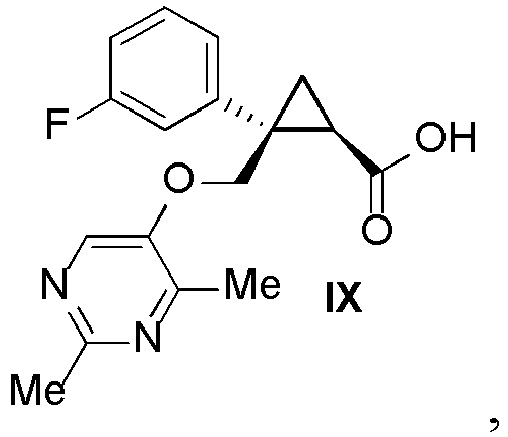 ii) a compound of Formula X:
 iii) ethyl acetate,iv) N,N-diisopropylethylamine, andv) 1-propanephosphonic acid at a temperature of 60°C to 80°C.
 - A method for producing a compound of Formula IX:

producing the compound of Formula III according to claim 1. - A method for producing a compound of Formula IX:

allowing a compound of Formula VII:
- The method according to claim 6, comprising:
sequentially adding sodium hypochlorite and sodium chlorite as the oxidant. - A method for producing a compound of Formula IX:
 a) oxidizing a compound of Formula VII:
 b) oxidizing the aldehyde with sodium chlorite.
 - The method according to claim 8, wherein the oxidation in the step a) is catalyzed with an effective amount of 2,2,6,6-tetramethylpiperidin 1-oxyl (TEMPO).
- A method for producing a compound of Formula VII:
 a manufacturing process for producing the compound of Formula III according to claim 1; andadding a sodium hydroxide aqueous solution to a compound of Formula V:
- A method for producing a compound of Formula V:
 a) adding potassium tert-butoxide to a mixture ofi) a compound of Formula VI:
 ii) N-methylpyrrolidone, andiii) acetonitrile and
stirring the mixture at a temperature of 40°C to 70°C; andb) stirring a mixture obtained by addingi) a compound of Formula IV:
- A method for producing a compound of Formula IV:

adding a mixture of ii) p-toluenesulfonyl chloride, toluene and acetonitrile to a composition comprising i) a compound of Formula III:
- A method for producing a compound of Formula II:

adding methanol to a composition comprising a compound of Formula I:
- A compound of Formula XI, wherein a content of a compound of Formula XII is 0.10 mass% or less,

- The compound of Formula XI according to claim 14, wherein the content of the compound of Formula XII is determined by high performance liquid chromatography (HPLC).
- A compound of Formula XI, wherein a content of a compound of Formula XII is 0.10 mass% or less, and a content of all related substances including compounds of Formula VI, Formula IX, Formula X, Formula XIII, Formula XIV and Formula XV is 1.0 mass% or less,


- The compound of Formula XI according to claim 16, wherein the contents of the compound of Formula XII and all related substances including the compounds of Formula VI, Formula IX, Formula X, Formula XIII, Formula XIV and Formula XV are determined by high performance liquid chromatography (HPLC).
- The compound of Formula XI according to any one of claims 14 to 17, wherein the content of the compound of Formula XI is 97.0 mass% or more.
- The compound of Formula XI according to claim 18, wherein the content of the compound of Formula XI is determined by high performance liquid chromatography (HPLC).
- A compound comprising a compound of Formula XI and a compound of Formula XII, wherein a content of the compound of Formula XI is 97.0 mass% or more, and a content of the compound of Formula XII is 0.10 mass% or less,

- The compound according to claim 20, wherein the contents of the compound of Formula XI and the compound of Formula XII are determined by high performance liquid chromatography (HPLC).
- A compound comprising a compound of Formula XI, a compound of Formula XII and all related substances including compounds of Formula VI, Formula IX, Formula X, Formula XIII, Formula XIV and Formula XV, wherein a content of the compound of Formula XI is 97.0 mass% or more, a content of the compound of Formula XII is 0.10 mass% or less, and a content of all related substances including the compounds of Formula VI, Formula IX, Formula X, Formula XIII, Formula XIV and Formula XV is 1.0 mass% or less,
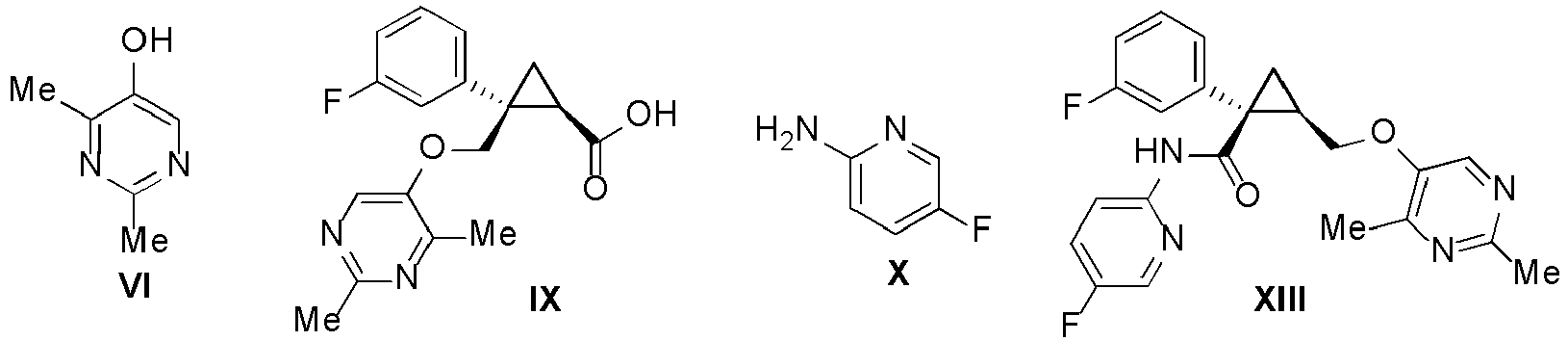

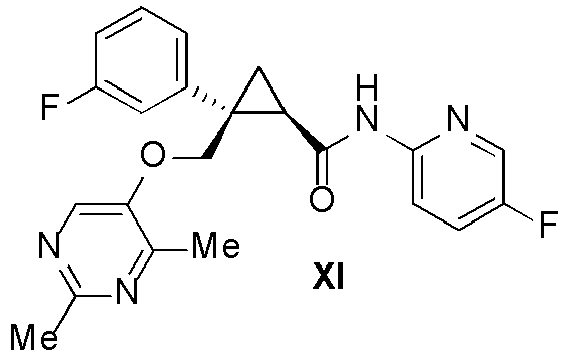
- The compound according to claim 22, wherein the contents of the compound of Formula XI, the compound of Formula XII, and all related substances including the compounds of Formula VI, Formula IX, Formula X, Formula XIII, Formula XIV and Formula XV are determined by high performance liquid chromatography (HPLC).
Priority Applications (1)
| Application Number | Priority Date | Filing Date | Title |
|---|---|---|---|
| EP24222228.9A EP4506325A3 (en) | 2019-05-15 | 2020-05-13 | Method and compound useful in preparation of orexin-2 receptor antagonist, and lemborexant having few impurities |
Applications Claiming Priority (3)
| Application Number | Priority Date | Filing Date | Title |
|---|---|---|---|
| JP2019092254 | 2019-05-15 | ||
| JP2019238904 | 2019-12-27 | ||
| PCT/JP2020/019037 WO2020230800A1 (en) | 2019-05-15 | 2020-05-13 | Method and compound useful in preparation of orexin-2 receptor antagonist, and lemborexant having few impurities |
Related Child Applications (2)
| Application Number | Title | Priority Date | Filing Date |
|---|---|---|---|
| EP24222228.9A Division EP4506325A3 (en) | 2019-05-15 | 2020-05-13 | Method and compound useful in preparation of orexin-2 receptor antagonist, and lemborexant having few impurities |
| EP24222228.9A Division-Into EP4506325A3 (en) | 2019-05-15 | 2020-05-13 | Method and compound useful in preparation of orexin-2 receptor antagonist, and lemborexant having few impurities |
Publications (4)
| Publication Number | Publication Date |
|---|---|
| EP3971164A1 true EP3971164A1 (en) | 2022-03-23 |
| EP3971164A4 EP3971164A4 (en) | 2023-01-04 |
| EP3971164C0 EP3971164C0 (en) | 2025-01-29 |
| EP3971164B1 EP3971164B1 (en) | 2025-01-29 |
Family
ID=73288847
Family Applications (2)
| Application Number | Title | Priority Date | Filing Date |
|---|---|---|---|
| EP20806704.1A Active EP3971164B1 (en) | 2019-05-15 | 2020-05-13 | Method and compound useful in preparation of orexin-2 receptor antagonist, and lemborexant having few impurities |
| EP24222228.9A Withdrawn EP4506325A3 (en) | 2019-05-15 | 2020-05-13 | Method and compound useful in preparation of orexin-2 receptor antagonist, and lemborexant having few impurities |
Family Applications After (1)
| Application Number | Title | Priority Date | Filing Date |
|---|---|---|---|
| EP24222228.9A Withdrawn EP4506325A3 (en) | 2019-05-15 | 2020-05-13 | Method and compound useful in preparation of orexin-2 receptor antagonist, and lemborexant having few impurities |
Country Status (12)
| Country | Link |
|---|---|
| US (2) | US12479819B2 (en) |
| EP (2) | EP3971164B1 (en) |
| JP (2) | JP7489971B2 (en) |
| KR (1) | KR102930546B1 (en) |
| CN (2) | CN113727962B (en) |
| CA (1) | CA3136188A1 (en) |
| ES (1) | ES3013667T3 (en) |
| HU (1) | HUE070717T2 (en) |
| IL (1) | IL287031A (en) |
| MX (2) | MX2021012833A (en) |
| TW (2) | TWI834874B (en) |
| WO (1) | WO2020230800A1 (en) |
Families Citing this family (4)
| Publication number | Priority date | Publication date | Assignee | Title |
|---|---|---|---|---|
| WO2023178702A1 (en) * | 2022-03-25 | 2023-09-28 | 浙江华海药业股份有限公司 | Method for preparing lemborexant and method for preparing lemborexant intermediate compound |
| CN118871427A (en) * | 2022-03-25 | 2024-10-29 | 浙江华海药业股份有限公司 | A preparation method of lebroxan and its intermediates |
| CN121045084A (en) * | 2024-06-01 | 2025-12-02 | 常州市第四制药厂有限公司 | A key intermediate for Leborresen and its synthesis method |
| CN119285556B (en) * | 2024-12-13 | 2025-02-28 | 四川健林药业有限责任公司 | Synthesis and purification method of lebol Lei Sheng intermediate |
Family Cites Families (8)
| Publication number | Priority date | Publication date | Assignee | Title |
|---|---|---|---|---|
| RU2190609C2 (en) | 1996-12-10 | 2002-10-10 | Бристол-Маерс Сквибб Компани | Derivatives of benzodioxol, benzofuran, dihydrobenzofuran and benzodioxane and compositions comprising thereof |
| US8030495B2 (en) | 2007-05-23 | 2011-10-04 | Coleman Paul J | Cyclopropyl pyrrolidine orexin receptor antagonists |
| SI2626350T1 (en) * | 2010-09-22 | 2015-09-30 | Eisai R&D Management Co., Ltd. | Cyclopropane compound |
| US20120165339A1 (en) * | 2010-12-22 | 2012-06-28 | Eisai R&D Management Co., Ltd. | Cyclopropane derivatives |
| WO2013123240A1 (en) * | 2012-02-17 | 2013-08-22 | Eisai R&D Management Co., Ltd | Methods and compounds useful in the synthesis of orexin-2 receptor antagonists |
| ES2731648T3 (en) * | 2014-08-06 | 2019-11-18 | Eisai R&D Man Co Ltd | Method for producing a pyrimidine-1-ol compound and intermediate compound thereof |
| CN115710250A (en) * | 2017-08-01 | 2023-02-24 | 博健制药有限责任公司 | Crystal form of orexin receptor antagonist as well as preparation method and application thereof |
| WO2020050339A1 (en) * | 2018-09-07 | 2020-03-12 | 住友化学株式会社 | Method for manufacturing cyclopropane compound |
-
2020
- 2020-05-13 KR KR1020217033639A patent/KR102930546B1/en active Active
- 2020-05-13 TW TW109115855A patent/TWI834874B/en active
- 2020-05-13 WO PCT/JP2020/019037 patent/WO2020230800A1/en not_active Ceased
- 2020-05-13 JP JP2021519446A patent/JP7489971B2/en active Active
- 2020-05-13 CN CN202080030535.7A patent/CN113727962B/en active Active
- 2020-05-13 ES ES20806704T patent/ES3013667T3/en active Active
- 2020-05-13 CA CA3136188A patent/CA3136188A1/en active Pending
- 2020-05-13 CN CN202411351603.6A patent/CN119264110A/en not_active Withdrawn
- 2020-05-13 TW TW113112699A patent/TW202432509A/en unknown
- 2020-05-13 US US17/604,527 patent/US12479819B2/en active Active
- 2020-05-13 EP EP20806704.1A patent/EP3971164B1/en active Active
- 2020-05-13 MX MX2021012833A patent/MX2021012833A/en unknown
- 2020-05-13 HU HUE20806704A patent/HUE070717T2/en unknown
- 2020-05-13 EP EP24222228.9A patent/EP4506325A3/en not_active Withdrawn
-
2021
- 2021-10-06 IL IL287031A patent/IL287031A/en unknown
- 2021-10-20 MX MX2024011469A patent/MX2024011469A/en unknown
-
2024
- 2024-05-14 JP JP2024078557A patent/JP2024100824A/en active Pending
-
2025
- 2025-10-27 US US19/370,431 patent/US20260049069A1/en active Pending
Also Published As
| Publication number | Publication date |
|---|---|
| TW202432509A (en) | 2024-08-16 |
| US20220194925A1 (en) | 2022-06-23 |
| EP4506325A2 (en) | 2025-02-12 |
| CN113727962A (en) | 2021-11-30 |
| JPWO2020230800A1 (en) | 2020-11-19 |
| US12479819B2 (en) | 2025-11-25 |
| HUE070717T2 (en) | 2025-06-28 |
| KR102930546B1 (en) | 2026-02-25 |
| ES3013667T3 (en) | 2025-04-14 |
| TWI834874B (en) | 2024-03-11 |
| CA3136188A1 (en) | 2020-11-19 |
| MX2024011469A (en) | 2024-09-25 |
| TW202108550A (en) | 2021-03-01 |
| MX2021012833A (en) | 2021-11-25 |
| IL287031A (en) | 2021-12-01 |
| CN113727962B (en) | 2024-10-22 |
| WO2020230800A1 (en) | 2020-11-19 |
| EP3971164A4 (en) | 2023-01-04 |
| KR20220008804A (en) | 2022-01-21 |
| JP2024100824A (en) | 2024-07-26 |
| EP3971164C0 (en) | 2025-01-29 |
| CN119264110A (en) | 2025-01-07 |
| US20260049069A1 (en) | 2026-02-19 |
| JP7489971B2 (en) | 2024-05-24 |
| EP4506325A3 (en) | 2025-04-30 |
| EP3971164B1 (en) | 2025-01-29 |
Similar Documents
| Publication | Publication Date | Title |
|---|---|---|
| EP3971164B1 (en) | Method and compound useful in preparation of orexin-2 receptor antagonist, and lemborexant having few impurities | |
| EP4155313B1 (en) | Five-membered heteroaromatic imidazole compound and use thereof | |
| EP4151277B1 (en) | Substituted piperidine compound and application thereof | |
| EP2694472B1 (en) | Sulfonamide derivative and use thereof | |
| EP3845532A1 (en) | Quinolino-pyrrolidin-2-one derivative and application thereof | |
| EP2684877B1 (en) | Pharmaceutically acceptable salt of (e)-n-[4-[[3-chloro-4-(2-pyridylmethoxy)phenyl]amino]-3-cyano-7-ethoxy-6-quinolyl]-3-[(2r)-1-methylpyrrolidin-2-yl]prop-2-enamide, preparation method therefor, and medical use thereof | |
| KR102788829B1 (en) | Crystalline forms of Janus kinase inhibitors | |
| EP4301748B1 (en) | Triazolyl-methyl substituted alpha-d-galactopyranoside derivatives | |
| EP3626241B1 (en) | Deuterated n-benzenesulfonylbenzamide compound for inhibiting bcl-2 protein and composition and use thereof | |
| EP3286190B1 (en) | Pharmaceutical salt forms of an inhibitor of semicarbazide-sensitive amine oxidase (ssao) | |
| EP3606524B1 (en) | Deuterated (s)-2-(4-(piperidin-3-yl)phenyl)-2h-indazole-7-carboxamide | |
| RU2823998C2 (en) | Method and compound useful in preparing orexin-2 receptor antagonist, and lemborexant containing small amount of impurities | |
| EP3286189B1 (en) | Crystalline mesylate salt as semicarbazide-sensitive amine oxidase (ssao) enzyme inhibitor | |
| EP4387730B1 (en) | Solid forms of a rock inhibitor | |
| EP4345103A1 (en) | Thiazole-lactam-spiroheterocyclic compounds and applications thereof | |
| EP4361143A1 (en) | Method for producing monocyclic pyridine derivative | |
| WO2025146480A1 (en) | 2-azabicyclo[2.1.1]hexane derivatives useful in the treatment of mitochondrial disorders | |
| WO2025146478A1 (en) | Pharmaceutical compounds | |
| KR20110023887A (en) | Fluoro-substituted 3,4-diaryl-4,5-dihydro-1H-pyrazole-1-carboxamidine derivatives with CBı-antagonistic activity | |
| HK40079616B (en) | Aliphatic acid amide derivative | |
| HK1249906B (en) | Pharmaceutical salt forms of an inhibitor of semicarbazide-sensitive amine oxidase (ssao) | |
| KR20260044269A (en) | Crystalline form of 6-(6-(((1R,2R,3S,5S)-2-fluoro-9-azabicyclo[3.3.1]nonane-3-yl)(methyl)amino)pyridazine-3-yl)-2-methylbenzo[D]oxazole-5-ol, a splicing modifier for the treatment of Huntington's disease |
Legal Events
| Date | Code | Title | Description |
|---|---|---|---|
| STAA | Information on the status of an ep patent application or granted ep patent |
Free format text: STATUS: THE INTERNATIONAL PUBLICATION HAS BEEN MADE |
|
| PUAI | Public reference made under article 153(3) epc to a published international application that has entered the european phase |
Free format text: ORIGINAL CODE: 0009012 |
|
| STAA | Information on the status of an ep patent application or granted ep patent |
Free format text: STATUS: REQUEST FOR EXAMINATION WAS MADE |
|
| 17P | Request for examination filed |
Effective date: 20211014 |
|
| AK | Designated contracting states |
Kind code of ref document: A1 Designated state(s): AL AT BE BG CH CY CZ DE DK EE ES FI FR GB GR HR HU IE IS IT LI LT LU LV MC MK MT NL NO PL PT RO RS SE SI SK SM TR |
|
| DAV | Request for validation of the european patent (deleted) | ||
| DAX | Request for extension of the european patent (deleted) | ||
| RIC1 | Information provided on ipc code assigned before grant |
Ipc: C07B 61/00 20060101ALI20221028BHEP Ipc: A61P 43/00 20060101ALI20221028BHEP Ipc: A61P 25/20 20060101ALI20221028BHEP Ipc: A61K 31/506 20060101ALI20221028BHEP Ipc: C07D 401/12 20060101ALI20221028BHEP Ipc: C07D 239/34 20060101ALI20221028BHEP Ipc: C07C 309/73 20060101ALI20221028BHEP Ipc: C07C 303/28 20060101ALI20221028BHEP Ipc: C07C 69/63 20060101ALI20221028BHEP Ipc: C07C 33/50 20060101ALI20221028BHEP Ipc: C07C 29/147 20060101ALI20221028BHEP Ipc: C07C 67/14 20060101AFI20221028BHEP |
|
| A4 | Supplementary search report drawn up and despatched |
Effective date: 20221202 |
|
| RIC1 | Information provided on ipc code assigned before grant |
Ipc: C07B 61/00 20060101ALI20221128BHEP Ipc: A61P 43/00 20060101ALI20221128BHEP Ipc: A61P 25/20 20060101ALI20221128BHEP Ipc: A61K 31/506 20060101ALI20221128BHEP Ipc: C07D 401/12 20060101ALI20221128BHEP Ipc: C07D 239/34 20060101ALI20221128BHEP Ipc: C07C 309/73 20060101ALI20221128BHEP Ipc: C07C 303/28 20060101ALI20221128BHEP Ipc: C07C 69/63 20060101ALI20221128BHEP Ipc: C07C 33/50 20060101ALI20221128BHEP Ipc: C07C 29/147 20060101ALI20221128BHEP Ipc: C07C 67/14 20060101AFI20221128BHEP |
|
| P01 | Opt-out of the competence of the unified patent court (upc) registered |
Effective date: 20230512 |
|
| STAA | Information on the status of an ep patent application or granted ep patent |
Free format text: STATUS: EXAMINATION IS IN PROGRESS |
|
| 17Q | First examination report despatched |
Effective date: 20231116 |
|
| GRAP | Despatch of communication of intention to grant a patent |
Free format text: ORIGINAL CODE: EPIDOSNIGR1 |
|
| STAA | Information on the status of an ep patent application or granted ep patent |
Free format text: STATUS: GRANT OF PATENT IS INTENDED |
|
| INTG | Intention to grant announced |
Effective date: 20240823 |
|
| GRAS | Grant fee paid |
Free format text: ORIGINAL CODE: EPIDOSNIGR3 |
|
| GRAA | (expected) grant |
Free format text: ORIGINAL CODE: 0009210 |
|
| STAA | Information on the status of an ep patent application or granted ep patent |
Free format text: STATUS: THE PATENT HAS BEEN GRANTED |
|
| AK | Designated contracting states |
Kind code of ref document: B1 Designated state(s): AL AT BE BG CH CY CZ DE DK EE ES FI FR GB GR HR HU IE IS IT LI LT LU LV MC MK MT NL NO PL PT RO RS SE SI SK SM TR |
|
| REG | Reference to a national code |
Ref country code: GB Ref legal event code: FG4D |
|
| REG | Reference to a national code |
Ref country code: CH Ref legal event code: EP |
|
| REG | Reference to a national code |
Ref country code: DE Ref legal event code: R096 Ref document number: 602020045553 Country of ref document: DE |
|
| REG | Reference to a national code |
Ref country code: IE Ref legal event code: FG4D |
|
| U01 | Request for unitary effect filed |
Effective date: 20250220 |
|
| P04 | Withdrawal of opt-out of the competence of the unified patent court (upc) registered |
Free format text: CASE NUMBER: APP_9048/2025 Effective date: 20250222 |
|
| U07 | Unitary effect registered |
Designated state(s): AT BE BG DE DK EE FI FR IT LT LU LV MT NL PT RO SE SI Effective date: 20250226 |
|
| REG | Reference to a national code |
Ref country code: ES Ref legal event code: FG2A Ref document number: 3013667 Country of ref document: ES Kind code of ref document: T3 Effective date: 20250414 |
|
| REG | Reference to a national code |
Ref country code: HU Ref legal event code: AG4A Ref document number: E070717 Country of ref document: HU |
|
| U20 | Renewal fee for the european patent with unitary effect paid |
Year of fee payment: 6 Effective date: 20250528 |
|
| PG25 | Lapsed in a contracting state [announced via postgrant information from national office to epo] |
Ref country code: RS Free format text: LAPSE BECAUSE OF FAILURE TO SUBMIT A TRANSLATION OF THE DESCRIPTION OR TO PAY THE FEE WITHIN THE PRESCRIBED TIME-LIMIT Effective date: 20250429 |
|
| PG25 | Lapsed in a contracting state [announced via postgrant information from national office to epo] |
Ref country code: PL Free format text: LAPSE BECAUSE OF FAILURE TO SUBMIT A TRANSLATION OF THE DESCRIPTION OR TO PAY THE FEE WITHIN THE PRESCRIBED TIME-LIMIT Effective date: 20250129 |
|
| PGFP | Annual fee paid to national office [announced via postgrant information from national office to epo] |
Ref country code: GB Payment date: 20250527 Year of fee payment: 6 |
|
| PG25 | Lapsed in a contracting state [announced via postgrant information from national office to epo] |
Ref country code: NO Free format text: LAPSE BECAUSE OF FAILURE TO SUBMIT A TRANSLATION OF THE DESCRIPTION OR TO PAY THE FEE WITHIN THE PRESCRIBED TIME-LIMIT Effective date: 20250429 Ref country code: IS Free format text: LAPSE BECAUSE OF FAILURE TO SUBMIT A TRANSLATION OF THE DESCRIPTION OR TO PAY THE FEE WITHIN THE PRESCRIBED TIME-LIMIT Effective date: 20250529 |
|
| PGFP | Annual fee paid to national office [announced via postgrant information from national office to epo] |
Ref country code: HU Payment date: 20250528 Year of fee payment: 6 |
|
| PG25 | Lapsed in a contracting state [announced via postgrant information from national office to epo] |
Ref country code: HR Free format text: LAPSE BECAUSE OF FAILURE TO SUBMIT A TRANSLATION OF THE DESCRIPTION OR TO PAY THE FEE WITHIN THE PRESCRIBED TIME-LIMIT Effective date: 20250129 |
|
| PG25 | Lapsed in a contracting state [announced via postgrant information from national office to epo] |
Ref country code: GR Free format text: LAPSE BECAUSE OF FAILURE TO SUBMIT A TRANSLATION OF THE DESCRIPTION OR TO PAY THE FEE WITHIN THE PRESCRIBED TIME-LIMIT Effective date: 20250430 |
|
| PGFP | Annual fee paid to national office [announced via postgrant information from national office to epo] |
Ref country code: CH Payment date: 20250601 Year of fee payment: 6 |
|
| PGFP | Annual fee paid to national office [announced via postgrant information from national office to epo] |
Ref country code: IE Payment date: 20250521 Year of fee payment: 6 |
|
| PG25 | Lapsed in a contracting state [announced via postgrant information from national office to epo] |
Ref country code: SM Free format text: LAPSE BECAUSE OF FAILURE TO SUBMIT A TRANSLATION OF THE DESCRIPTION OR TO PAY THE FEE WITHIN THE PRESCRIBED TIME-LIMIT Effective date: 20250129 |
|
| PGFP | Annual fee paid to national office [announced via postgrant information from national office to epo] |
Ref country code: ES Payment date: 20250630 Year of fee payment: 6 |
|
| PG25 | Lapsed in a contracting state [announced via postgrant information from national office to epo] |
Ref country code: CZ Free format text: LAPSE BECAUSE OF FAILURE TO SUBMIT A TRANSLATION OF THE DESCRIPTION OR TO PAY THE FEE WITHIN THE PRESCRIBED TIME-LIMIT Effective date: 20250129 |
|
| PG25 | Lapsed in a contracting state [announced via postgrant information from national office to epo] |
Ref country code: SK Free format text: LAPSE BECAUSE OF FAILURE TO SUBMIT A TRANSLATION OF THE DESCRIPTION OR TO PAY THE FEE WITHIN THE PRESCRIBED TIME-LIMIT Effective date: 20250129 |
|
| PLBE | No opposition filed within time limit |
Free format text: ORIGINAL CODE: 0009261 |
|
| STAA | Information on the status of an ep patent application or granted ep patent |
Free format text: STATUS: NO OPPOSITION FILED WITHIN TIME LIMIT |
|
| 26N | No opposition filed |
Effective date: 20251030 |
|
| PG25 | Lapsed in a contracting state [announced via postgrant information from national office to epo] |
Ref country code: MC Free format text: LAPSE BECAUSE OF FAILURE TO SUBMIT A TRANSLATION OF THE DESCRIPTION OR TO PAY THE FEE WITHIN THE PRESCRIBED TIME-LIMIT Effective date: 20250129 |
|
| U1N | Appointed representative for the unitary patent procedure changed after the registration of the unitary effect |
Representative=s name: KILBURN & STRODE LLP; GB |