EP3969443B1 - Solid state forms of tafamidis and salts thereof - Google Patents
Solid state forms of tafamidis and salts thereof Download PDFInfo
- Publication number
- EP3969443B1 EP3969443B1 EP20731638.1A EP20731638A EP3969443B1 EP 3969443 B1 EP3969443 B1 EP 3969443B1 EP 20731638 A EP20731638 A EP 20731638A EP 3969443 B1 EP3969443 B1 EP 3969443B1
- Authority
- EP
- European Patent Office
- Prior art keywords
- tafamidis
- crystalline form
- theta
- degrees
- solid state
- Prior art date
- Legal status (The legal status is an assumption and is not a legal conclusion. Google has not performed a legal analysis and makes no representation as to the accuracy of the status listed.)
- Active
Links
Images




Classifications
-
- C—CHEMISTRY; METALLURGY
- C07—ORGANIC CHEMISTRY
- C07D—HETEROCYCLIC COMPOUNDS
- C07D263/00—Heterocyclic compounds containing 1,3-oxazole or hydrogenated 1,3-oxazole rings
- C07D263/52—Heterocyclic compounds containing 1,3-oxazole or hydrogenated 1,3-oxazole rings condensed with carbocyclic rings or ring systems
- C07D263/54—Benzoxazoles; Hydrogenated benzoxazoles
- C07D263/56—Benzoxazoles; Hydrogenated benzoxazoles with only hydrogen atoms, hydrocarbon or substituted hydrocarbon radicals, directly attached in position 2
- C07D263/57—Aryl or substituted aryl radicals
-
- A—HUMAN NECESSITIES
- A61—MEDICAL OR VETERINARY SCIENCE; HYGIENE
- A61K—PREPARATIONS FOR MEDICAL, DENTAL OR TOILETRY PURPOSES
- A61K31/00—Medicinal preparations containing organic active ingredients
- A61K31/33—Heterocyclic compounds
- A61K31/395—Heterocyclic compounds having nitrogen as a ring hetero atom, e.g. guanethidine or rifamycins
- A61K31/41—Heterocyclic compounds having nitrogen as a ring hetero atom, e.g. guanethidine or rifamycins having five-membered rings with two or more ring hetero atoms, at least one of which being nitrogen, e.g. tetrazole
- A61K31/42—Oxazoles
- A61K31/423—Oxazoles condensed with carbocyclic rings
-
- A—HUMAN NECESSITIES
- A61—MEDICAL OR VETERINARY SCIENCE; HYGIENE
- A61P—SPECIFIC THERAPEUTIC ACTIVITY OF CHEMICAL COMPOUNDS OR MEDICINAL PREPARATIONS
- A61P25/00—Drugs for disorders of the nervous system
- A61P25/02—Drugs for disorders of the nervous system for peripheral neuropathies
-
- C—CHEMISTRY; METALLURGY
- C07—ORGANIC CHEMISTRY
- C07B—GENERAL METHODS OF ORGANIC CHEMISTRY; APPARATUS THEREFOR
- C07B2200/00—Indexing scheme relating to specific properties of organic compounds
- C07B2200/13—Crystalline forms, e.g. polymorphs
Definitions
- the present disclosure relates to solid state forms of Tafamidis and salts thereof, processes for preparation thereof and pharmaceutical compositions thereof.
- Tafamidis has the chemical name 2-(3,5-dichlorophenyl)-1,3-benzoxazole-6-carboxylic acid. Tafamidis has the following chemical structure:
- Tafamidis meglumine has the chemical name 2-(3,5-dichlorophenyl)-1,3-benzoxazole-6-carboxylic acid mono (1-deoxy-1-methylamino-D-glucitol).
- Tafamidis meglumine has the following chemical structure:
- VYNDAQEL tafamidis meglumine
- VYNDAMAX tafamidis
- FDA Food and Drug Administration
- VYNDAQEL and VYNDAMAX for the treatment of cardiomyopathy of wild type or hereditary transthyretin-mediated amyloidosis in adults to reduce cardiovascular mortality and cardiovascular-related hospitalization
- EMA has approved VYNDAQEL for the treatment of transthyretin amyloidosis in adult patients with stage 1 symptomatic polyneuropathy to delay peripheral neurologic impairment.
- Tafamidis is known from U.S. Patent No. 7,214,695 .
- Solid state forms of tafamidis meglumine are known from U.S. Patent No. 9,249,112 , International Publication No. WO2017190682 and International Publication No. WO2019175263 .
- Solid state forms of tafamidis are known from U.S. Patent No. 9,770,441 (corresponding to US 2017/273953 ) and International Publication No. WO2019175263 .
- Polymorphism the occurrence of different crystal forms, is a property of some molecules and molecular complexes.
- a single compound like tafamidis, may give rise to a variety of polymorphs having distinct crystal structures and physical properties like melting point, thermal behaviors (e.g. measured by thermogravimetric analysis - "TGA”, or differential scanning calorimetry - “DSC”), powder X-ray diffraction (PXRD) pattern, infrared absorption fingerprint, Raman absorption fingerprint, and solid state ( 13 C-) NMR spectrum.
- TGA thermogravimetric analysis -
- DSC differential scanning calorimetry -
- PXRD powder X-ray diffraction
- Different salts and solid state forms (including solvated forms) of an active pharmaceutical ingredient may possess different properties. Such variations in the properties of different salts and solid state forms and solvates may provide a basis for improving formulation, for example, by facilitating better processing or handling characteristics, improving the dissolution profile, or improving stability (polymorph as well as chemical stability) and shelf-life. These variations in the properties of different salts and solid state forms may also provide improvements to the final dosage form, for instance, if they serve to improve bioavailability. Different salts and solid state forms and solvates of an active pharmaceutical ingredient may also give rise to a variety of polymorphs or crystalline forms, which may in turn provide additional opportunities to use variations in the properties and characteristics of a solid active pharmaceutical ingredient for providing an improved product.
- Discovering new salts, solid state forms, and solvates of a pharmaceutical product can provide materials having desirable processing properties, such as ease of handling, ease of processing, storage stability, and ease of purification, or as desirable intermediate crystal forms that facilitate conversion to other salts or polymorphic forms.
- New salts, polymorphic forms and solvates of a pharmaceutically useful compound can also provide an opportunity to improve the performance characteristics of a pharmaceutical product (dissolution profile, bioavailability, etc.). It enlarges the repertoire of materials that a formulation scientist has available for formulation optimization, for example by providing a product with different properties, e.g., a different crystal habit, higher crystallinity, or polymorphic stability, or solubility, which may offer better processing or handling characteristics, improved dissolution profile, or improved shelf life.
- the present disclosure relates to crystalline Form V of tafamidis, to processes for preparation thereof, and to pharmaceutical compositions thereof, as defined in the claims.
- the present disclosure also provides uses of crystalline Form V of tafamidis for preparing other solid state forms of tafamidis, tafamidis salts and solid state forms thereof.
- the present disclosure relates to anhydrous crystalline Form V of tafamidis for use as a medicament, in embodiments for the treatment of transthyretin-mediated amyloidosis.
- the present disclosure further provides the use of anhydrous crystalline Form V of tafamidis described according to any embodiment herein, for the preparation of a pharmaceutical composition or a pharmaceutical formulation of tafamidis, wherein the tafamidis in the pharmaceutical composition or formulation is in a solid form, wherein the solid form may be any crystalline form or an amorphous form.
- the present disclosure further provides pharmaceutical compositions including anhydrous crystalline Form V of tafamidis according to the present disclosure.
- the present disclosure encompasses pharmaceutical formulations including anhydrous crystalline Form V of tafamidis and at least one pharmaceutically acceptable excipient, in embodiments for oral administration in dosage forms such as tablets, capsules, etc.
- the present disclosure encompasses processes to prepare said pharmaceutical formulations of tafamidis by combining anhydrous crystalline Form V of tafamidis and at least one pharmaceutically acceptable excipient.
- Anhydrous Crystalline Form V of tafamidis as defined herein, as well as the pharmaceutical compositions or formulations of anhydrous crystalline Form V of tafamidis, can be used as medicaments, in embodiments for the treatment of transthyretin-mediated amyloidosis.
- the present disclosure also provides use of anhydrous crystalline Form V of tafamidis of the present disclosure, or at least one of the above pharmaceutical compositions or formulations, for the manufacture of a medicament for treating transthyretin-mediated amyloidosis.
- the present disclosure relates to crystalline Form V of tafamidis, processes for preparation thereof, and pharmaceutical compositions including said form.
- Crystalline Form V of tafamidis may have advantageous properties selected from at least one of: chemical or polymorphic purity, flowability, solubility, dissolution rate, bioavailability, morphology or crystal habit, stability - such as chemical stability as well as thermal and mechanical stability with respect to polymorphic conversion, stability towards dehydration and/or storage stability, a lower degree of hygroscopicity, low content of residual solvents, and advantageous processing and handling characteristics such as compressibility, or bulk density.
- a crystal form may be referred to herein as being characterized by graphical data "as depicted in" a Figure.
- Such data include, for example, powder X-ray diffractograms and solid state NMR spectra.
- the graphical data potentially provides additional technical information to further define the respective solid state form (a so-called "fingerprint") which can not necessarily be described by reference to numerical values or peak positions alone.
- the skilled person will understand that such graphical representations of data may be subject to small variations, e.g., in peak relative intensities and peak positions due to factors such as variations in instrument response and variations in sample concentration and purity, which are well known to the skilled person.
- a crystal form of tafamidis and salts thereof referred to herein as being characterized by graphical data "as depicted in" a Figure will thus be understood to include any crystal forms of the tafamidis and salts thereof, characterized with the graphical data having such small variations, as are well known to the skilled person, in comparison with the Figure.
- a solid state form may be referred to herein as polymorphically pure or substantially free of any other solid state (or polymorphic) forms.
- the expression “substantially free of any other forms” will be understood to mean that the solid state form contains about 20% or less, about 10% or less, about 5% or less, about 2% or less, about 1% or less, or about 0% of any other forms of the subject compound as measured, for example, by PXRD.
- solid state forms of tafamidis and tafamidis salts described herein as substantially free of any other solid state forms, would be understood to contain greater than about 80% (w/w), greater than about 90% (w/w), greater than about 95% (w/w), greater than about 98% (w/w), greater than about 99% (w/w), or about 100% (w/w) of the subject solid state form of tafamidis and/or tafamidis salts.
- the described solid state forms of tafamidis and/or tafamidis salts may contain from about 1% to about 20% (w/w), from about 5% to about 20% (w/w), or from about 5% to about 10% (w/w) of one or more other solid state forms of the same tafamidis and/or tafamidis salts.
- the term "isolated" in reference to solid state forms of tafamidis and tafamidis salts of the present disclosure corresponds to solid state forms of tafamidis and tafamidis salts that are physically separated from the reaction mixture in which it is formed.
- a thing e.g., a reaction mixture
- room temperature often abbreviated "RT.”
- RT room temperature
- room temperature is from about 20°C to about 30°C, or about 22°C to about 27°C, or about 25°C.
- a process or step may be referred to herein as being carried out “overnight.” This refers to a time interval, e.g., for the process or step, that spans the time during the night, when that process or step may not be actively observed. This time interval is from about 8 to about 20 hours, or about 10 to about 18 hours, in embodiments about 16 hours.
- solvate refers to a crystal form that incorporates a solvent in the crystal structure.
- the solvent is water, the solvate is often referred to as a "hydrate.”
- the solvent in a solvate may be present in either a stoichiometric or in a non-stoichiometric amount.
- the crystal hydrate indicated by water analysis by Karl Fischer (KF) titration or by TGA analysis of the product is believed to have been produced as a result of water introduced from the atmosphere in which this material was processed, or by traces of water present in the solvents that were in contact with the material, or a combination of these factors.
- the amount of solvent employed in a chemical process may be referred to herein as a number of "volumes” or “vol” or “V.”
- a material may be referred to as being suspended (or dissolved) in 10 volumes (or 10 vol or 10V) of a solvent.
- this expression would be understood to mean milliliters of the solvent per gram of the material being suspended (or dissolved), such that suspending (or dissolving) 5 grams of a material in 10 volumes of a solvent means that the solvent is used in an amount of 10 milliliters of the solvent per gram of the material that is being suspended (or dissolved) or, in this example, 50 mL of the solvent.
- v/v may be used to indicate the number of volumes of a solvent that are added to a liquid mixture based on the volume of that mixture. For example, adding methyl tert-butyl ether (MTBE) (1.5 v/v) to a 100 ml reaction mixture would indicate that 150 mL of MTBE was added.
- MTBE methyl tert-butyl ether
- reduced pressure refers to a pressure of about 10 mbar to about 50 mbar.
- U.S. Patent No. 9,770,441 describes form 4 having a powder X-ray diffraction pattern comprising peaks at diffraction angles (2-theta) of 15.9 ⁇ 0.2, 16.9 ⁇ 0.2, 18.0 ⁇ 0.2, and 27.3 ⁇ 0.2.
- said crystalline form has a powder X-ray diffraction pattern comprising peaks at diffraction angles (2-theta) essentially the same as shown in Figure 7 .
- 13 C CP/MAS NMR spectra reported herein are measured at 125 MHz, preferably at a temperature of at 293 K ⁇ 3°C.
- Tafamidis amorphous form can be characterized by a PXRD pattern as depicted in Figure 1 .
- the present disclosure includes a crystalline form of tafamidis designated as form I.
- the crystalline form I of tafamidis can be characterized by data selected from one or more of the following: a PXRD pattern having peaks at 5.1, 8.4, 18.5, 21.0 and 25.8 degrees 2-theta ⁇ 0.2 degrees 2-theta; a PXRD pattern as depicted in Figure 2 , and combinations of these data.
- Crystalline form I of tafamidis may be further characterized by a PXRD pattern having peaks at 5.1, 8.4, 18.5, 21.0 and 25.8 degrees 2-theta ⁇ 0.2 degrees 2-theta, and also having one, two, three, four or five additional peaks at 10.2, 10.5, 15.3, 24.4 and 27.1 degrees 2-theta ⁇ 0.2 degrees 2-theta.
- Crystalline form I of tafamidis may be characterized by each of the above characteristics alone or by all possible combinations, e.g., by a PXRD pattern having peaks at 5.1, 8.4, 18.5, 21.0 and 25.8 degrees 2-theta ⁇ 0.2 degrees 2-theta and a PXRD pattern as depicted in Figure 2 .
- Crystalline form I of tafamidis may alternatively be characterized by a PXRD pattern having peaks at 5.1, 8.4, 10.2, 10.5, 15.3, 18.5, 21.0, 24.4, 25.8 and 27.1 degrees 2-theta ⁇ 0.2 degrees 2-theta.
- Crystalline form I of tafamidis may be a hydrate.
- the present disclosure includes a crystalline form of tafamidis designated as form II.
- the crystalline form II of tafamidis can be characterized by data selected from one or more of the following: a PXRD pattern having peaks at 3.9, 11.3, 13.3, 16.0 and 27.2 degrees 2-theta ⁇ 0.2 degrees 2-theta; a PXRD pattern as depicted in Figure 3 and combinations of these data.
- Crystalline form II of tafamidis may be further characterized by a PXRD pattern having peaks at 3.9, 11.3, 13.3, 16.0 and 27.2 degrees 2-theta ⁇ 0.2 degrees 2-theta, and also having one, two, three, four or five additional peaks at 5.3, 6.4, 17.8, 19.2 and 22.0 degrees 2-theta ⁇ 0.2 degrees 2-theta.
- Crystalline form II of tafamidis may be characterized by each of the above characteristics alone or by all possible combinations, e.g., by a PXRD pattern having peaks at 3.9, 11.3, 13.3, 16.0 and 27.2 degrees 2-theta ⁇ 0.2 degrees 2-theta and a PXRD pattern as depicted in Figure 3 .
- Crystalline form II of tafamidis may alternatively be characterized by a PXRD pattern having peaks at 3.9, 5.3, 6.4, 11.3, 13.3, 16.0, 17.8, 19.2, 22.0 and 27.2 degrees 2-theta ⁇ 0.2 degrees 2-theta.
- the present disclosure includes a crystalline form of tafamidis designated as form III.
- the crystalline form III of tafamidis can be characterized by data selected from one or more of the following: a PXRD pattern having peaks at 5.5, 10.9, 14.7, 19.6 and 21.7 degrees 2-theta ⁇ 0.2 degrees 2-theta; a PXRD pattern as depicted in Figure 4 ; and combinations of these data.
- Crystalline form III of tafamidis may be further characterized by a PXRD pattern having peaks at 5.5, 10.9, 14.7, 19.6 and 21.7 degrees 2-theta ⁇ 0.2 degrees 2-theta, and also having one, two, three, four or five additional peaks at 10.3, 11.3, 16.3, 18.6 and 25.7 degrees 2-theta ⁇ 0.2 degrees 2-theta.
- Crystalline form III of tafamidis may be characterized by each of the above characteristics alone or by all possible combinations, e.g., by a PXRD pattern having peaks at 5.5, 10.9, 14.7, 19.6 and 21.7 degrees 2-theta ⁇ 0.2 degrees 2-theta and a PXRD pattern as depicted in Figure 4 .
- Crystalline form III of tafamidis may alternatively be characterized by a PXRD pattern having peaks at 5.5, 10.3, 10.9, 11.3, 14.7, 16.3, 18.6, 19.6, 21.7 and 25.7 degrees 2-theta ⁇ 0.2 degrees 2-theta.
- Crystalline form III of tafamidis may be an acetic acid solvate.
- the present disclosure includes a crystalline form of tafamidis designated as form IV.
- the crystalline form IV of tafamidis can be characterized by data selected from one or more of the following: a PXRD pattern having peaks at 7.5, 12.9, 15.1, 17.7 and 25.4 degrees 2-theta ⁇ 0.2 degrees 2-theta; a PXRD pattern as depicted in Figure 5 ; and combinations of these data.
- Crystalline form IV of tafamidis may be further characterized by a PXRD pattern having peaks at 7.5, 12.9, 15.1, 17.7 and 25.4 degrees 2-theta ⁇ 0.2 degrees 2-theta, and also having one, two, three, four or five additional peaks at 20.2, 21.3, 22.7, 23.7 and 27.0 degrees 2-theta ⁇ 0.2 degrees 2-theta.
- Crystalline form IV of tafamidis may be characterized by each of the above characteristics alone or by all possible combinations, e.g., by a PXRD pattern having peaks at 7.5, 12.9, 15.1, 17.7 and 25.4 degrees 2-theta ⁇ 0.2 degrees 2-theta and a PXRD pattern as depicted in Figure 5 .
- Crystalline form IV of tafamidis may alternatively be characterized by a PXRD pattern having peaks at 7.5, 12.9, 15.1, 17.7, 20.2, 21.3, 22.7, 23.7, 25.4 and 27.0 degrees 2-theta ⁇ 0.2 degrees 2-theta.
- Crystalline form IV of tafamidis may be an acetic acid solvate.
- the present disclosure includes a crystalline form of tafamidis designated as form V, which is characterized by a PXRD pattern having peaks at 6.0, 19.9, 20.6, 23.9 and 29.2 degrees 2-theta ⁇ 0.2 degrees 2-theta.
- the crystalline form V of tafamidis can be characterized by data selected from one or more of the following: a PXRD pattern having peaks at 6.0, 19.9, 20.6, 23.9 and 29.2 degrees 2-theta ⁇ 0.2 degrees 2-theta; or a PXRD pattern as depicted in Figure 6 or Figure 6A .
- Crystalline form V of tafamidis may be further characterized by a PXRD pattern having peaks at 6.0, 19.9, 20.6, 23.9 and 29.2 degrees 2-theta ⁇ 0.2 degrees 2-theta, and also having one, two, three or four additional peaks at 17.8, 25.8, 27.3 and 31.1 degrees 2-theta ⁇ 0.2 degrees 2-theta.
- Crystalline form V of tafamidis may be characterized by each of the above characteristics alone or by all possible combinations, e.g., by a PXRD pattern having peaks at 6.0, 19.9, 20.6, 23.9 and 29.2 degrees 2-theta ⁇ 0.2 degrees 2-theta and a PXRD pattern as depicted in Figure 6 or Figure 6A .
- Crystalline form V of tafamidis may be an anhydrous form or a solvated form.
- crystalline form V may be an anhydrous form or a methanol solvate.
- Crystalline form V of tafamidis may alternatively be characterized by a PXRD pattern having peaks at 6.0, 17.8,19.9, 20.6, 23.9, 25.8, 27.3, 29.2 and 31.1 degrees 2-theta ⁇ 0.2 degrees 2-theta.
- crystalline form V may be an anhydrous form or a methanol solvate.
- anhydrous Form V of tafamidis may alternatively or additionally be characterized by a solid state 13 C NMR spectrum having peaks at 171.5, 161.0, 149.1, 144.7, 131.0 ⁇ 0.2 ppm.
- Anhydrous Form V of tafamidis may alternatively or additionally be characterized by a solid state 13 C NMR spectrum having the following chemical shift absolute differences from a reference peak at 109.5 ppm ⁇ 0.2 ppm of 62.1, 51.6, 39.6, 35.2, 21.5 ⁇ 0.1 ppm.
- anhydrous Form V of tafamidis may alternatively or additionally be characterized by a solid state 13 C NMR spectrum substantially as depicted in Figure 8 .
- solid state forms of tafamidis and tafamidis salts disclosed herein may be used for preparing other solid state forms of tafamidis, tafamidis salts and solid state forms thereof.
- the present disclosure further encompasses processes for preparing other solid state forms of tafamidis, or solid state forms thereof, as well as other tafamidis salts or solid state forms thereof.
- the process includes preparing crystalline Form V of tafamidis, and converting it to other solid state forms of tafamidis.
- the process includes preparing crystalline Form V of tafamidis, and converting it to tafamidis salt.
- the conversion can be done, for example, by a process including reacting the obtained tafamidis with an appropriate base such as meglumine, alkali/alkaline earth metal bases such as potassium, sodium, calcium, magnesium, ammonia or alkyl amines (in embodiments C 1-6 mono-, di- or trialkylamines).
- alkali/alkaline earth metal bases are selected from the group consisting of potassium hydroxide, potassium carbonate, potassium hydrogen carbonate, sodium hydroxide, sodium carbonate, sodium hydrogen carbonate, calcium hydroxide or magnesium hydroxide.
- the present disclosure encompasses anhydrous crystalline Form V of tafamidis, for use in the preparation of pharmaceutical compositions and/or formulations, in embodiments for the treatment of transthyretin-mediated amyloidosis.
- the present disclosure encompasses the use of anhydrous crystalline Form V of tafamidis for the preparation of a pharmaceutical composition comprising tafamidis or salt thereof.
- the present disclosure relates to the use of anhydrous crystalline Form V of tafamidis for the preparation of pharmaceutical compositions and/or formulations, in embodiments oral formulations, e.g., tablets or capsules.
- the present disclosure encompasses anhydrous crystalline Form V of tafamidis for the preparation of a pharmaceutical composition or formulation, in embodiments an oral formulation in the form of a dispersion including tafamidis or salt thereof.
- the present disclosure further provides pharmaceutical compositions including anhydrous crystalline Form V of tafamidis, according to the present disclosure.
- the present disclosure encompasses pharmaceutical formulations including anhydrous crystalline Form V of tafamidis, and at least one pharmaceutically acceptable excipient.
- compositions of the present disclosure contain anhydrous crystalline Form V of tafamidis of the present disclosure.
- the pharmaceutical formulations of the present disclosure can contain one or more excipients. Excipients are added to the formulation for a variety of purposes.
- Diluents increase the bulk of a solid pharmaceutical composition, and can make a pharmaceutical dosage form containing the composition easier for the patient and caregiver to handle.
- Diluents for solid compositions include, for example, microcrystalline cellulose (e.g. Avicel ® ), microfine cellulose, lactose, starch, pregelatinized starch, calcium carbonate, calcium sulfate, sugar, dextrates, dextrin, dextrose, dibasic calcium phosphate dihydrate, tribasic calcium phosphate, kaolin, magnesium carbonate, magnesium oxide, maltodextrin, mannitol, polymethacrylates (e.g. Eudragit ® ), potassium chloride, powdered cellulose, sodium chloride, sorbitol, and talc.
- microcrystalline cellulose e.g. Avicel ®
- microfine cellulose lactose
- starch pregelatinized starch
- calcium carbonate calcium sulfate
- sugar dextrates
- Solid pharmaceutical compositions that are compacted into a dosage form, such as a tablet can include excipients whose functions include helping to bind the active ingredient and other excipients together after compression.
- Binders for solid pharmaceutical compositions include acacia, alginic acid, carbomer (e.g. carbopol), carboxymethylcellulose sodium, dextrin, ethyl cellulose, gelatin, guar gum, hydrogenated vegetable oil, hydroxyethyl cellulose, hydroxypropyl cellulose (e.g. Klucel ® ), hydroxypropyl methyl cellulose (e.g.
- Methocel ® liquid glucose, magnesium aluminum silicate, maltodextrin, methylcellulose, polymethacrylates, povidone (e.g. Kollidon ® , Plasdone ® ), pregelatinized starch, sodium alginate, and starch.
- povidone e.g. Kollidon ® , Plasdone ®
- pregelatinized starch sodium alginate, and starch.
- the dissolution rate of a compacted solid pharmaceutical composition in the patient's stomach can be increased by the addition of a disintegrant to the composition.
- Disintegrants include alginic acid, carboxymethylcellulose calcium, carboxymethylcellulose sodium (e.g. Ac-Di-Sol ® , Primellose ® ), colloidal silicon dioxide, croscarmellose sodium, crospovidone (e.g. Kollidon ® , Polyplasdone ® ), guar gum, magnesium aluminum silicate, methyl cellulose, microcrystalline cellulose, polacrilin potassium, powdered cellulose, pregelatinized starch, sodium alginate, sodium starch glycolate (e.g. Explotab ® ), and starch.
- alginic acid include alginic acid, carboxymethylcellulose calcium, carboxymethylcellulose sodium (e.g. Ac-Di-Sol ® , Primellose ® ), colloidal silicon dioxide, croscarmellose sodium, crospovidone (e
- Glidants can be added to improve the flowability of a non-compacted solid composition and to improve the accuracy of dosing.
- Excipients that can function as glidants include colloidal silicon dioxide, magnesium trisilicate, powdered cellulose, starch, talc, and tribasic calcium phosphate.
- a dosage form such as a tablet
- the composition is subjected to pressure from a punch and dye.
- Some excipients and active ingredients have a tendency to adhere to the surfaces of the punch and dye, which can cause the product to have pitting and other surface irregularities.
- a lubricant can be added to the composition to reduce adhesion and ease the release of the product from the dye.
- Lubricants include magnesium stearate, calcium stearate, glyceryl monostearate, glyceryl palmitostearate, hydrogenated castor oil, hydrogenated vegetable oil, mineral oil, polyethylene glycol, sodium benzoate, sodium lauryl sulfate, sodium stearyl fumarate, stearic acid, talc, and zinc stearate.
- Flavoring agents and flavor enhancers make the dosage form more palatable to the patient.
- Common flavoring agents and flavor enhancers for pharmaceutical products that can be included in the composition of the present disclosure include maltol, vanillin, ethyl vanillin, menthol, citric acid, fumaric acid, ethyl maltol, and tartaric acid.
- Solid and liquid compositions can also be dyed using any pharmaceutically acceptable colorant to improve their appearance and/or facilitate patient identification of the product and unit dosage level.
- liquid pharmaceutical compositions of the present disclosure the active ingredient and any other solid excipients are dissolved or suspended in a liquid carrier such as water, vegetable oil, alcohol, polyethylene glycol, propylene glycol, or glycerin.
- a liquid carrier such as water, vegetable oil, alcohol, polyethylene glycol, propylene glycol, or glycerin.
- Liquid pharmaceutical compositions can contain emulsifying agents to disperse uniformly throughout the composition an active ingredient or other excipient that is not soluble in the liquid carrier.
- Emulsifying agents that can be useful in liquid compositions of the present disclosure include, for example, gelatin, egg yolk, casein, cholesterol, acacia, tragacanth, chondrus, pectin, methyl cellulose, carbomer, cetostearyl alcohol, and cetyl alcohol.
- Liquid pharmaceutical compositions of the present disclosure can also contain a viscosity enhancing agent to improve the mouth-feel of the product and/or coat the lining of the gastrointestinal tract.
- a viscosity enhancing agent include acacia, alginic acid bentonite, carbomer, carboxymethylcellulose calcium or sodium, cetostearyl alcohol, methyl cellulose, ethylcellulose, gelatin guar gum, hydroxyethyl cellulose, hydroxypropyl cellulose, hydroxypropyl methyl cellulose, maltodextrin, polyvinyl alcohol, povidone, propylene carbonate, propylene glycol alginate, sodium alginate, sodium starch glycolate, starch tragacanth, and xanthan gum.
- Sweetening agents such as sorbitol, saccharin, sodium saccharin, sucrose, aspartame, fructose, mannitol, and invert sugar can be added to improve the taste.
- Preservatives and chelating agents such as alcohol, sodium benzoate, butylated hydroxyl toluene, butylated hydroxyanisole, and ethylenediamine tetraacetic acid can be added at levels safe for ingestion to improve storage stability.
- a liquid composition can also contain a buffer such as gluconic acid, lactic acid, citric acid, or acetic acid, sodium gluconate, sodium lactate, sodium citrate, or sodium acetate. Selection of excipients and the amounts used can be readily determined by the formulation scientist based upon experience and consideration of standard procedures and reference works in the field.
- a buffer such as gluconic acid, lactic acid, citric acid, or acetic acid, sodium gluconate, sodium lactate, sodium citrate, or sodium acetate.
- the solid compositions of the present disclosure include powders, granulates, aggregates, and compacted compositions.
- the dosages include dosages suitable for oral, buccal, rectal, parenteral (including subcutaneous, intramuscular, and intravenous), inhalant, and ophthalmic administration. Although the most suitable administration in any given case will depend on the nature and severity of the condition being treated, in embodiments the route of administration is oral.
- the dosages can be conveniently presented in unit dosage form and prepared by any of the methods well-known in the pharmaceutical arts.
- Dosage forms include solid dosage forms like tablets, powders, capsules, suppositories, sachets, troches, and lozenges, as well as liquid syrups, suspensions, and elixirs.
- the dosage form of the present disclosure can be a capsule containing the composition, in embodiments a powdered or granulated solid composition of the disclosure, within either a hard or soft shell.
- the shell can be made from gelatin and optionally contain a plasticizer such as glycerin and sorbitol, and an opacifying agent or colorant.
- compositions and dosage forms can be formulated into compositions and dosage forms according to methods known in the art.
- a composition for tableting or capsule filling can be prepared by wet granulation.
- wet granulation some or all of the active ingredients and excipients in powder form are blended and then further mixed in the presence of a liquid, in embodiments water, that causes the powders to clump into granules.
- the granulate is screened and/or milled, dried, and then screened and/or milled to the desired particle size.
- the granulate can then be tableted, or other excipients can be added prior to tableting, such as a glidant and/or a lubricant.
- a tableting composition can be prepared conventionally by dry blending.
- the blended composition of the actives and excipients can be compacted into a slug or a sheet and then comminuted into compacted granules. The compacted granules can subsequently be compressed into a tablet.
- a blended composition can be compressed directly into a compacted dosage form using direct compression techniques.
- Direct compression produces a more uniform tablet without granules.
- Excipients that are particularly well suited for direct compression tableting include microcrystalline cellulose, spray dried lactose, dicalcium phosphate dihydrate, and colloidal silica. The proper use of these and other excipients in direct compression tableting is known to those in the art with experience and skill in particular formulation challenges of direct compression tableting.
- a capsule filling of the present disclosure can include any of the aforementioned blends and granulates that were described with reference to tableting, but they are not subjected to a final tableting step.
- a pharmaceutical formulation of tafamidis may be formulated for administration to a mammal, in embodiments a human.
- Tafamidis can be formulated, for example, as a viscous liquid solution or suspension, in embodiments a clear solution, for injection.
- the formulation can contain one or more solvents.
- a suitable solvent can be selected by considering the solvent's physical and chemical stability at various pH levels, viscosity (which would allow for syringeability), fluidity, boiling point, miscibility, and purity. Suitable solvents include alcohol USP, benzyl alcohol NF, benzyl benzoate USP, and Castor oil USP.
- the present disclosure encompasses a process to prepare said formulations of tafamidis by combining anhydrous crystalline Form V of tafamidis and at least one pharmaceutically acceptable excipient.
- anhydrous crystalline Form V of tafamidis as well as the pharmaceutical compositions or formulations of tafamidis can be used as medicaments, in embodiments for the treatment of transthyretin-mediated amyloidosis.
- the present disclosure also provides the use anhydrous crystalline Form V of tafamidis of the present disclosure, or at least one of the above pharmaceutical compositions or formulations for the manufacture of a medicament for treating transthyretin-mediated amyloidosis, in embodiments cardiomyopathy of wild type or hereditary transthyretin-mediated amyloidosis, or transthyretin amyloidosis in adult patients with stage 1 symptomatic polyneuropathy, to delay peripheral neurologic impairment.
- Powder X-ray diffraction pattern (“PXRD”) method:
- Solid state NMR spectra was measured at 11.7 T using a Bruker Avance III HD 500 US/WB NMR spectrometer (Karlsruhe, Germany, 2013).
- the 13 C CP/MAS NMR spectra employing cross-polarization were acquired using the standard pulse scheme at spinning frequency of 11 kHz.
- the recycle delay was 8 s and the cross-polarization contact time was 2 ms.
- the 13 C NMR scale was referenced to ⁇ -glycine (176.03 ppm). Frictional heating of the spinning samples was offset by active cooling, and the temperature calibration was performed with Pb(NO 3 ) 2 . The NMR spectrometer was completely calibrated and all experimental parameters were carefully optimized prior the investigation. Magic angle was set using KBr during standard optimization procedure and homogeneity of magnetic field was optimized using adamantane sample (resulting line-width at half-height ⁇ 1/2 was less than 3.5 Hz at 250 ms of acquisition time).
- Tafamidis can be prepared according to the procedure described in U.S. Patent No. 7,214,695 . Examples marked with an asterisk (*) are provided for reference only.
- Tafamidis amorphous form obtained according to Example 1 (100 mg) was exposed to water vapour for 33 days at 25°C. Obtained solid was analyzed. Tafamidis Form I was confirmed by PXRD.
- Tafamidis amorphous form obtained according to Example 1 (100 mg) was exposed to 100% of relative humidity at 25°C, for 30 days. Obtained solid was analyzed. Tafamidis Form I was confirmed by PXRD.
- Tafamidis 1000 mg was dissolved in 50 ml of tetrahydrofuran (THF) at room temperature. Obtained solution was added dropwise to 200 ml of water cooled to temperature of 10 °C. The crystallization was obtained momentarily and suspension was mixed additionally for one hour. Obtained solid was isolated by vacuum filtration (973 mg), and analyzed by PXRD. Tafamidis Form I was obtained.
- Tafamidis (122 mg) was dissolved in 7 mL of 2-methyl tetrahydrofuran at 61 °C. Obtained solution was crash cooled in cold bath, and at 7 °C the crystallization was obtained. Obtained solid was isolated by vacuum filtration (33 mg), and analyzed by PXRD. Tafamidis Form II was obtained.
- Tafamidis (20 mg) was dissolved in 4 mL of 2-methyl tetrahydrofuran at 25 °C. Obtained solution was left to slowly evaporate at room temperature by loosely attaching the lid for 7 days. Obtained solid was analyzed by PXRD. Tafamidis Form II was obtained.
- Tafamidis (20 mg) was dissolved in acetic acid (6 ml) at reflux temperature (118°C). Obtained solution was left to slowly evaporate. After 24 hours crystallization was obtained. Obtained solid was isolated by vacuum filtration and analyzed by PXRD. Tafamidis Form III was obtained.
- Tafamidis (113 mg) was dissolved in 20.5 mL of acetic acid at 92 °C. Obtained solution was crash cooled in cold bath, and at 65 °C the crystallization was obtained. Obtained solid was isolated by vacuum filtration (75 mg), and analyzed by PXRD. Tafamidis Form III was obtained.
- Tafamidis (100 mg) was stirred in 1 mL of acetic acid at 50 °C. Obtained solid was analyzed by PXRD after 2 hours. Tafamidis Form III was obtained.
- Tafamidis (511 mg,) was dissolved in acetic acid (35 ml) at a temperature of 105 °C. Obtained solution was slow (spontaneously) cooled. Crystallization was obtained at 89 °C. Suspension was stirred for one hour and then isolated by vacuum filtration (495 mg). Obtained solid was analyzed by PXRD. Tafamidis Form IV (acetic acid solvate) was obtained.
- Form III (Acetic acid solvate) obtained from crash cooling crystallization (Example 11) was dried in vacuum dryer at 100 °C for 1 hour. Obtained solid was analyzed by PXRD. Pure Form 4 was obtained.
- Form I (hydrate form), obtained from solvent antisolvent reverse crystallization (Example 6), was dried in vacuum dryer at 150 °C for 20 minutes. Obtained solid was analyzed by PXRD. Pure Form 4 was obtained.
- Form V obtained from solvent antisolvent crystallization (Example 15), was heated in DSC up to 160°C, for 10 minutes. Obtained solid was analyzed by PXRD. Pure Form 4 was obtained.
- Tafamidis (1.0 gram, 3.25 mmol, Form 1) was dissolved in mixture of solvents toluene/NMP (15 V; 15 % NMP) by heating up to 70-75 °C. The solution was spontaneously cooled down to 30 °C and slowly added to cold methanol (30 V) at 0-5 °C. Crystallization was momentary. The obtained suspension was stirred at 0-5 °C for 2 hours. The obtained crystals were isolated by vacuum filtration. Obtained solid was washed with methanol (10 V) and dried in vacuum dryer at 80 °C, 20 mbar for 6 hours (0.9 grams of crystals was obtained, chrom. purity 99 %). Obtained solid was analyzed by PXRD. Tafamidis form V was obtained.
- Tafamidis (498 mg, Form 1) was dissolved in THF (28 ml) at room temperature. Antisolvent (Methanol) was cooled to 0 °C (ice bath) and added dropwise into solution (92 ml). Crystallization was momentary. Suspension was stirred for one hour and then isolated by vacuum filtration (427 mg). Obtained solid was washed with solvent mixture THF:Methanol (1:4). Obtained solid was analyzed by XRD. Tafamidis form V (Methanol solvate) was obtained. Obtained solid was subjected to heating in vacuum dryer at 80°C for 2 hours. Obtained solid was analyzed by PXRD. Tafamidis Form V (anhydrous) was obtained.
- the reaction mixture was added dropwise to cold methanol (750 ml; previously cooled down to 0-5 °C) during 1 hour. Crystallization occurred. The suspension was stirred at 0-5 °C for additional 3 hours. Crystals of Tafamidis methanol solvate were filtered off over Buchner funnel and washed with methanol (2 x 100 ml). Wet crystals were suspended in fresh methanol (375 ml) at 20-25 °C for 3-6 h. Crystals of Tafamidis methanol solvate were filtered off over Buchner funnel, washed with methanol (2 x 50 ml) and dried at 80 °C, 20 mbar, 10 hours. White crystals of Tafamidis anhydrous form V were obtained.
- Tafamidis (100 mg) was stirred in 1 mL of acetic acid at room temperature (25°C) for 4 hours. The mixture was filtered and the obtained solid was analyzed by PXRD. Tafamidis Form III was obtained.
- Tafamidis (100 mg) was stirred in 1 mL of acetic acid at 50 °C for 2 hours. The mixture was filtered and the obtained solid was analyzed by PXRD. Tafamidis Form III was obtained.
Landscapes
- Chemical & Material Sciences (AREA)
- Organic Chemistry (AREA)
- Health & Medical Sciences (AREA)
- General Health & Medical Sciences (AREA)
- Public Health (AREA)
- Veterinary Medicine (AREA)
- Animal Behavior & Ethology (AREA)
- Life Sciences & Earth Sciences (AREA)
- Pharmacology & Pharmacy (AREA)
- Medicinal Chemistry (AREA)
- General Chemical & Material Sciences (AREA)
- Nuclear Medicine, Radiotherapy & Molecular Imaging (AREA)
- Chemical Kinetics & Catalysis (AREA)
- Neurosurgery (AREA)
- Neurology (AREA)
- Engineering & Computer Science (AREA)
- Bioinformatics & Cheminformatics (AREA)
- Biomedical Technology (AREA)
- Epidemiology (AREA)
- Pharmaceuticals Containing Other Organic And Inorganic Compounds (AREA)
- Medicinal Preparation (AREA)
- Acyclic And Carbocyclic Compounds In Medicinal Compositions (AREA)
Description
- The present disclosure relates to solid state forms of Tafamidis and salts thereof, processes for preparation thereof and pharmaceutical compositions thereof.
- Tafamidis has the chemical name 2-(3,5-dichlorophenyl)-1,3-benzoxazole-6-carboxylic acid. Tafamidis has the following chemical structure:

- Tafamidis meglumine has the chemical name 2-(3,5-dichlorophenyl)-1,3-benzoxazole-6-carboxylic acid mono (1-deoxy-1-methylamino-D-glucitol). Tafamidis meglumine has the following chemical structure:


- VYNDAQEL (tafamidis meglumine) and VYNDAMAX (tafamidis), are both capsules for oral administration and contain tafamidis as the active moiety. The U.S. Food and Drug Administration ("FDA") has approved VYNDAQEL and VYNDAMAX for the treatment of cardiomyopathy of wild type or hereditary transthyretin-mediated amyloidosis in adults to reduce cardiovascular mortality and cardiovascular-related hospitalization. EMA has approved VYNDAQEL for the treatment of transthyretin amyloidosis in adult patients with stage 1 symptomatic polyneuropathy to delay peripheral neurologic impairment.
- Tafamidis is known from
U.S. Patent No. 7,214,695 . - Solid state forms of tafamidis meglumine are known from
U.S. Patent No. 9,249,112 WO2017190682 and International Publication No.WO2019175263 . Solid state forms of tafamidis are known fromU.S. Patent No. 9,770,441 US 2017/273953 ) and International Publication No.WO2019175263 . - Polymorphism, the occurrence of different crystal forms, is a property of some molecules and molecular complexes. A single compound, like tafamidis, may give rise to a variety of polymorphs having distinct crystal structures and physical properties like melting point, thermal behaviors (e.g. measured by thermogravimetric analysis - "TGA", or differential scanning calorimetry - "DSC"), powder X-ray diffraction (PXRD) pattern, infrared absorption fingerprint,
Raman absorption fingerprint, and solid state (13C-) NMR spectrum. One or more of these techniques may be used to distinguish different polymorphic forms of a compound. - Different salts and solid state forms (including solvated forms) of an active pharmaceutical ingredient may possess different properties. Such variations in the properties of different salts and solid state forms and solvates may provide a basis for improving formulation, for example, by facilitating better processing or handling characteristics, improving the dissolution profile, or improving stability (polymorph as well as chemical stability) and shelf-life. These variations in the properties of different salts and solid state forms may also provide improvements to the final dosage form, for instance, if they serve to improve bioavailability. Different salts and solid state forms and solvates of an active pharmaceutical ingredient may also give rise to a variety of polymorphs or crystalline forms, which may in turn provide additional opportunities to use variations in the properties and characteristics of a solid active pharmaceutical ingredient for providing an improved product.
- Discovering new salts, solid state forms, and solvates of a pharmaceutical product can provide materials having desirable processing properties, such as ease of handling, ease of processing, storage stability, and ease of purification, or as desirable intermediate crystal forms that facilitate conversion to other salts or polymorphic forms. New salts, polymorphic forms and solvates of a pharmaceutically useful compound can also provide an opportunity to improve the performance characteristics of a pharmaceutical product (dissolution profile, bioavailability, etc.). It enlarges the repertoire of materials that a formulation scientist has available for formulation optimization, for example by providing a product with different properties, e.g., a different crystal habit, higher crystallinity, or polymorphic stability, or solubility, which may offer better processing or handling characteristics, improved dissolution profile, or improved shelf life.
- For at least these reasons, crystalline forms (including solvated forms) of tafamidis and salts thereof having desirable properties remain desirable.
- The present disclosure relates to crystalline Form V of tafamidis, to processes for preparation thereof, and to pharmaceutical compositions thereof, as defined in the claims.
- The present disclosure also provides uses of crystalline Form V of tafamidis for preparing other solid state forms of tafamidis, tafamidis salts and solid state forms thereof.
- In another embodiment, the present disclosure relates to anhydrous crystalline Form V of tafamidis for use as a medicament, in embodiments for the treatment of transthyretin-mediated amyloidosis.
- In a further embodiment, the present disclosure further provides the use of anhydrous crystalline Form V of tafamidis described according to any embodiment herein, for the preparation of a pharmaceutical composition or a pharmaceutical formulation of tafamidis, wherein the tafamidis in the pharmaceutical composition or formulation is in a solid form, wherein the solid form may be any crystalline form or an amorphous form.
- The present disclosure further provides pharmaceutical compositions including anhydrous crystalline Form V of tafamidis according to the present disclosure.
- In yet another embodiment, the present disclosure encompasses pharmaceutical formulations including anhydrous crystalline Form V of tafamidis and at least one pharmaceutically acceptable excipient, in embodiments for oral administration in dosage forms such as tablets, capsules, etc.
- The present disclosure encompasses processes to prepare said pharmaceutical formulations of tafamidis by combining anhydrous crystalline Form V of tafamidis and at least one pharmaceutically acceptable excipient.
- Anhydrous Crystalline Form V of tafamidis as defined herein, as well as the pharmaceutical compositions or formulations of anhydrous crystalline Form V of tafamidis, can be used as medicaments, in embodiments for the treatment of transthyretin-mediated amyloidosis.
- The present disclosure also provides use of anhydrous crystalline Form V of tafamidis of the present disclosure, or at least one of the above pharmaceutical compositions or formulations, for the manufacture of a medicament for treating transthyretin-mediated amyloidosis.
-
-
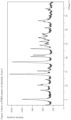
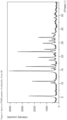
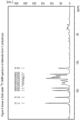
Figure 1 shows a powder X-ray diffraction pattern ("powder XRD" or "PXRD") of tafamidis amorphous form. -
Figure 2 shows a PXRD of tafamidis form I. -
Figure 3 shows a PXRD of tafamidis form II. -
Figure 4 shows a PXRD of tafamidis form III. -
Figure 5 shows a PXRD of tafamidis form IV. -
Figure 6 shows a PXRD of tafamidis form V. -
Figure 6A shows a PXRD of tafamidis form V. -
Figure 7 shows a PXRD of tafamidis form 4. -
Figure 8 shows 13C NMR of anhydrous form V of tafamidis. - The present disclosure relates to crystalline Form V of tafamidis, processes for preparation thereof, and pharmaceutical compositions including said form.
- Crystalline Form V of tafamidis according to the present disclosure may have advantageous properties selected from at least one of: chemical or polymorphic purity, flowability, solubility, dissolution rate, bioavailability, morphology or crystal habit, stability - such as chemical stability as well as thermal and mechanical stability with respect to polymorphic conversion, stability towards dehydration and/or storage stability, a lower degree of hygroscopicity, low content of residual solvents, and advantageous processing and handling characteristics such as compressibility, or bulk density.
- A crystal form may be referred to herein as being characterized by graphical data "as depicted in" a Figure. Such data include, for example, powder X-ray diffractograms and solid state NMR spectra. As is well-known in the art, the graphical data potentially provides additional technical information to further define the respective solid state form (a so-called "fingerprint") which can not necessarily be described by reference to numerical values or peak positions alone. In any event, the skilled person will understand that such graphical representations of data may be subject to small variations, e.g., in peak relative intensities and peak positions due to factors such as variations in instrument response and variations in sample concentration and purity, which are well known to the skilled person. Nonetheless, the skilled person would readily be capable of comparing the graphical data in the Figures herein with graphical data generated for an unknown crystal form and confirm whether the two sets of graphical data are characterizing the same crystal form or two different crystal forms. A crystal form of tafamidis and salts thereof referred to herein as being characterized by graphical data "as depicted in" a Figure will thus be understood to include any crystal forms of the tafamidis and salts thereof, characterized with the graphical data having such small variations, as are well known to the skilled person, in comparison with the Figure.
- A solid state form (or polymorph) may be referred to herein as polymorphically pure or substantially free of any other solid state (or polymorphic) forms. As used herein in this context, the expression "substantially free of any other forms" will be understood to mean that the solid state form contains about 20% or less, about 10% or less, about 5% or less, about 2% or less, about 1% or less, or about 0% of any other forms of the subject compound as measured, for example, by PXRD. Thus, solid state forms of tafamidis and tafamidis salts, described herein as substantially free of any other solid state forms, would be understood to contain greater than about 80% (w/w), greater than about 90% (w/w), greater than about 95% (w/w), greater than about 98% (w/w), greater than about 99% (w/w), or about 100% (w/w) of the subject solid state form of tafamidis and/or tafamidis salts. Accordingly, in some embodiments of the disclosure, the described solid state forms of tafamidis and/or tafamidis salts may contain from about 1% to about 20% (w/w), from about 5% to about 20% (w/w), or from about 5% to about 10% (w/w) of one or more other solid state forms of the same tafamidis and/or tafamidis salts.
- As used herein, unless stated otherwise, PXRD peaks reported herein are measured using CuK α radiation, λ = 1.5418Å.
- As used herein, the term "isolated" in reference to solid state forms of tafamidis and tafamidis salts of the present disclosure corresponds to solid state forms of tafamidis and tafamidis salts that are physically separated from the reaction mixture in which it is formed.
- A thing, e.g., a reaction mixture, may be characterized herein as being at, or allowed to come to "room temperature", often abbreviated "RT." This means that the temperature of the thing is close to, or the same as, that of the space, e.g., the room or fume hood, in which the thing is located. Typically, room temperature is from about 20°C to about 30°C, or about 22°C to about 27°C, or about 25°C. A process or step may be referred to herein as being carried out "overnight." This refers to a time interval, e.g., for the process or step, that spans the time during the night, when that process or step may not be actively observed. This time interval is from about 8 to about 20 hours, or about 10 to about 18 hours, in embodiments about 16 hours.
- The term "solvate", as used herein and unless indicated otherwise, refers to a crystal form that incorporates a solvent in the crystal structure. When the solvent is water, the solvate is often referred to as a "hydrate." The solvent in a solvate may be present in either a stoichiometric or in a non-stoichiometric amount.
- The crystal hydrate indicated by water analysis by Karl Fischer (KF) titration or by TGA analysis of the product is believed to have been produced as a result of water introduced from the atmosphere in which this material was processed, or by traces of water present in the solvents that were in contact with the material, or a combination of these factors.
- The amount of solvent employed in a chemical process, e.g., a reaction or a crystallization, may be referred to herein as a number of "volumes" or "vol" or "V." For example, a material may be referred to as being suspended (or dissolved) in 10 volumes (or 10 vol or 10V) of a solvent. In this context, this expression would be understood to mean milliliters of the solvent per gram of the material being suspended (or dissolved), such that suspending (or dissolving) 5 grams of a material in 10 volumes of a solvent means that the solvent is used in an amount of 10 milliliters of the solvent per gram of the material that is being suspended (or dissolved) or, in this example, 50 mL of the solvent. In another context, the term "v/v" may be used to indicate the number of volumes of a solvent that are added to a liquid mixture based on the volume of that mixture. For example, adding methyl tert-butyl ether (MTBE) (1.5 v/v) to a 100 ml reaction mixture would indicate that 150 mL of MTBE was added.
- As used herein, the term "reduced pressure" refers to a pressure of about 10 mbar to about 50 mbar.
- As used herein tafamidis form 4 is described in
U.S. Patent No. 9,770,441 U.S. Patent No. 9,770,441 Figure 7 . - As used herein, unless stated otherwise, 13C CP/MAS NMR spectra reported herein are measured at 125 MHz, preferably at a temperature of at 293 K ± 3°C.
- The present disclosure encompasses an amorphous form of tafamidis. Tafamidis amorphous form can be characterized by a PXRD pattern as depicted in
Figure 1 . - The present disclosure includes a crystalline form of tafamidis designated as form I. The crystalline form I of tafamidis can be characterized by data selected from one or more of the following: a PXRD pattern having peaks at 5.1, 8.4, 18.5, 21.0 and 25.8 degrees 2-theta ± 0.2 degrees 2-theta; a PXRD pattern as depicted in
Figure 2 , and combinations of these data. - Crystalline form I of tafamidis may be further characterized by a PXRD pattern having peaks at 5.1, 8.4, 18.5, 21.0 and 25.8 degrees 2-theta ± 0.2 degrees 2-theta, and also having one, two, three, four or five additional peaks at 10.2, 10.5, 15.3, 24.4 and 27.1 degrees 2-theta ± 0.2 degrees 2-theta.
- Crystalline form I of tafamidis may be characterized by each of the above characteristics alone or by all possible combinations, e.g., by a PXRD pattern having peaks at 5.1, 8.4, 18.5, 21.0 and 25.8 degrees 2-theta ± 0.2 degrees 2-theta and a PXRD pattern as depicted in
Figure 2 . - Crystalline form I of tafamidis may alternatively be characterized by a PXRD pattern having peaks at 5.1, 8.4, 10.2, 10.5, 15.3, 18.5, 21.0, 24.4, 25.8 and 27.1 degrees 2-theta ± 0.2 degrees 2-theta.
- Crystalline form I of tafamidis according to any of the above disclosures may be a hydrate.
- The present disclosure includes a crystalline form of tafamidis designated as form II. The crystalline form II of tafamidis can be characterized by data selected from one or more of the following: a PXRD pattern having peaks at 3.9, 11.3, 13.3, 16.0 and 27.2 degrees 2-theta ± 0.2 degrees 2-theta; a PXRD pattern as depicted in
Figure 3 and combinations of these data. - Crystalline form II of tafamidis may be further characterized by a PXRD pattern having peaks at 3.9, 11.3, 13.3, 16.0 and 27.2 degrees 2-theta ± 0.2 degrees 2-theta, and also having one, two, three, four or five additional peaks at 5.3, 6.4, 17.8, 19.2 and 22.0 degrees 2-theta ± 0.2 degrees 2-theta.
- Crystalline form II of tafamidis may be characterized by each of the above characteristics alone or by all possible combinations, e.g., by a PXRD pattern having peaks at 3.9, 11.3, 13.3, 16.0 and 27.2 degrees 2-theta ± 0.2 degrees 2-theta and a PXRD pattern as depicted in
Figure 3 . - Crystalline form II of tafamidis may alternatively be characterized by a PXRD pattern having peaks at 3.9, 5.3, 6.4, 11.3, 13.3, 16.0, 17.8, 19.2, 22.0 and 27.2 degrees 2-theta ± 0.2 degrees 2-theta.
- The present disclosure includes a crystalline form of tafamidis designated as form III. The crystalline form III of tafamidis can be characterized by data selected from one or more of the following: a PXRD pattern having peaks at 5.5, 10.9, 14.7, 19.6 and 21.7 degrees 2-theta ± 0.2 degrees 2-theta; a PXRD pattern as depicted in
Figure 4 ; and combinations of these data. - Crystalline form III of tafamidis may be further characterized by a PXRD pattern having peaks at 5.5, 10.9, 14.7, 19.6 and 21.7 degrees 2-theta ± 0.2 degrees 2-theta, and also having one, two, three, four or five additional peaks at 10.3, 11.3, 16.3, 18.6 and 25.7 degrees 2-theta ± 0.2 degrees 2-theta.
- Crystalline form III of tafamidis may be characterized by each of the above characteristics alone or by all possible combinations, e.g., by a PXRD pattern having peaks at 5.5, 10.9, 14.7, 19.6 and 21.7 degrees 2-theta ± 0.2 degrees 2-theta and a PXRD pattern as depicted in
Figure 4 . - Crystalline form III of tafamidis may alternatively be characterized by a PXRD pattern having peaks at 5.5, 10.3, 10.9, 11.3, 14.7, 16.3, 18.6, 19.6, 21.7 and 25.7 degrees 2-theta ± 0.2 degrees 2-theta.
- Crystalline form III of tafamidis according to any of the above disclosures may be an acetic acid solvate.
- The present disclosure includes a crystalline form of tafamidis designated as form IV. The crystalline form IV of tafamidis can be characterized by data selected from one or more of the following: a PXRD pattern having peaks at 7.5, 12.9, 15.1, 17.7 and 25.4 degrees 2-theta ± 0.2 degrees 2-theta; a PXRD pattern as depicted in
Figure 5 ; and combinations of these data. - Crystalline form IV of tafamidis may be further characterized by a PXRD pattern having peaks at 7.5, 12.9, 15.1, 17.7 and 25.4 degrees 2-theta ± 0.2 degrees 2-theta, and also having one, two, three, four or five additional peaks at 20.2, 21.3, 22.7, 23.7 and 27.0 degrees 2-theta ± 0.2 degrees 2-theta.
- Crystalline form IV of tafamidis may be characterized by each of the above characteristics alone or by all possible combinations, e.g., by a PXRD pattern having peaks at 7.5, 12.9, 15.1, 17.7 and 25.4 degrees 2-theta ± 0.2 degrees 2-theta and a PXRD pattern as depicted in
Figure 5 . - Crystalline form IV of tafamidis may alternatively be characterized by a PXRD pattern having peaks at 7.5, 12.9, 15.1, 17.7, 20.2, 21.3, 22.7, 23.7, 25.4 and 27.0 degrees 2-theta ± 0.2 degrees 2-theta.
- Crystalline form IV of tafamidis according to any of the above disclosures may be an acetic acid solvate.
- The present disclosure includes a crystalline form of tafamidis designated as form V, which is characterized by a PXRD pattern having peaks at 6.0, 19.9, 20.6, 23.9 and 29.2 degrees 2-theta ± 0.2 degrees 2-theta.
- Alternatively, the crystalline form V of tafamidis can be characterized by data selected from one or more of the following: a PXRD pattern having peaks at 6.0, 19.9, 20.6, 23.9 and 29.2 degrees 2-theta ± 0.2 degrees 2-theta; or a PXRD pattern as depicted in
Figure 6 orFigure 6A . - Crystalline form V of tafamidis may be further characterized by a PXRD pattern having peaks at 6.0, 19.9, 20.6, 23.9 and 29.2 degrees 2-theta ± 0.2 degrees 2-theta, and also having one, two, three or four additional peaks at 17.8, 25.8, 27.3 and 31.1 degrees 2-theta ± 0.2 degrees 2-theta.
- Crystalline form V of tafamidis may be characterized by each of the above characteristics alone or by all possible combinations, e.g., by a PXRD pattern having peaks at 6.0, 19.9, 20.6, 23.9 and 29.2 degrees 2-theta ± 0.2 degrees 2-theta and a PXRD pattern as depicted in
Figure 6 orFigure 6A . - Crystalline form V of tafamidis may be an anhydrous form or a solvated form. In specific embodiments, crystalline form V may be an anhydrous form or a methanol solvate.
- Crystalline form V of tafamidis may alternatively be characterized by a PXRD pattern having peaks at 6.0, 17.8,19.9, 20.6, 23.9, 25.8, 27.3, 29.2 and 31.1 degrees 2-theta ± 0.2 degrees 2-theta.
- In any embodiment of the invention, crystalline form V may be an anhydrous form or a methanol solvate.
- In any embodiment of the present invention anhydrous Form V of tafamidis may alternatively or additionally be characterized by a solid state 13C NMR spectrum having peaks at 171.5, 161.0, 149.1, 144.7, 131.0 ± 0.2 ppm. Anhydrous Form V of tafamidis may alternatively or additionally be characterized by a solid state 13C NMR spectrum having the following chemical shift absolute differences from a reference peak at 109.5 ppm ± 0.2 ppm of 62.1, 51.6, 39.6, 35.2, 21.5 ±0.1 ppm. In any embodiment of the present invention, anhydrous Form V of tafamidis may alternatively or additionally be characterized by a solid state 13C NMR spectrum substantially as depicted in
Figure 8 . - The solid state forms of tafamidis and tafamidis salts disclosed herein may be used for preparing other solid state forms of tafamidis, tafamidis salts and solid state forms thereof.
- The present disclosure further encompasses processes for preparing other solid state forms of tafamidis, or solid state forms thereof, as well as other tafamidis salts or solid state forms thereof. The process includes preparing crystalline Form V of tafamidis, and converting it to other solid state forms of tafamidis. Alternatively, the process includes preparing crystalline Form V of tafamidis, and converting it to tafamidis salt. The conversion can be done, for example, by a process including reacting the obtained tafamidis with an appropriate base such as meglumine, alkali/alkaline earth metal bases such as potassium, sodium, calcium, magnesium, ammonia or alkyl amines (in embodiments C1-6 mono-, di- or trialkylamines). In embodiments, the alkali/alkaline earth metal bases are selected from the group consisting of potassium hydroxide, potassium carbonate, potassium hydrogen carbonate, sodium hydroxide, sodium carbonate, sodium hydrogen carbonate, calcium hydroxide or magnesium hydroxide.
- In another embodiment the present disclosure encompasses anhydrous crystalline Form V of tafamidis, for use in the preparation of pharmaceutical compositions and/or formulations, in embodiments for the treatment of transthyretin-mediated amyloidosis. In embodiments the present disclosure encompasses the use of anhydrous crystalline Form V of tafamidis for the preparation of a pharmaceutical composition comprising tafamidis or salt thereof.
- In another embodiment the present disclosure relates to the use of anhydrous crystalline Form V of tafamidis for the preparation of pharmaceutical compositions and/or formulations, in embodiments oral formulations, e.g., tablets or capsules. In embodiments the present disclosure encompasses anhydrous crystalline Form V of tafamidis for the preparation of a pharmaceutical composition or formulation, in embodiments an oral formulation in the form of a dispersion including tafamidis or salt thereof.
- The present disclosure further provides pharmaceutical compositions including anhydrous crystalline Form V of tafamidis, according to the present disclosure.
- In yet another embodiment, the present disclosure encompasses pharmaceutical formulations including anhydrous crystalline Form V of tafamidis, and at least one pharmaceutically acceptable excipient.
- Pharmaceutical formulations of the present disclosure contain anhydrous crystalline Form V of tafamidis of the present disclosure. In addition to the active ingredient, the pharmaceutical formulations of the present disclosure can contain one or more excipients. Excipients are added to the formulation for a variety of purposes.
- Diluents increase the bulk of a solid pharmaceutical composition, and can make a pharmaceutical dosage form containing the composition easier for the patient and caregiver to handle. Diluents for solid compositions include, for example, microcrystalline cellulose (e.g. Avicel®), microfine cellulose, lactose, starch, pregelatinized starch, calcium carbonate, calcium sulfate, sugar, dextrates, dextrin, dextrose, dibasic calcium phosphate dihydrate, tribasic calcium phosphate, kaolin, magnesium carbonate, magnesium oxide, maltodextrin, mannitol, polymethacrylates (e.g. Eudragit®), potassium chloride, powdered cellulose, sodium chloride, sorbitol, and talc.
- Solid pharmaceutical compositions that are compacted into a dosage form, such as a tablet, can include excipients whose functions include helping to bind the active ingredient and other excipients together after compression. Binders for solid pharmaceutical compositions include acacia, alginic acid, carbomer (e.g. carbopol), carboxymethylcellulose sodium, dextrin, ethyl cellulose, gelatin, guar gum, hydrogenated vegetable oil, hydroxyethyl cellulose, hydroxypropyl cellulose (e.g. Klucel®), hydroxypropyl methyl cellulose (e.g. Methocel®), liquid glucose, magnesium aluminum silicate, maltodextrin, methylcellulose, polymethacrylates, povidone (e.g. Kollidon®, Plasdone®), pregelatinized starch, sodium alginate, and starch.
- The dissolution rate of a compacted solid pharmaceutical composition in the patient's stomach can be increased by the addition of a disintegrant to the composition. Disintegrants include alginic acid, carboxymethylcellulose calcium, carboxymethylcellulose sodium (e.g. Ac-Di-Sol®, Primellose®), colloidal silicon dioxide, croscarmellose sodium, crospovidone (e.g. Kollidon®, Polyplasdone®), guar gum, magnesium aluminum silicate, methyl cellulose, microcrystalline cellulose, polacrilin potassium, powdered cellulose, pregelatinized starch, sodium alginate, sodium starch glycolate (e.g. Explotab®), and starch.
- Glidants can be added to improve the flowability of a non-compacted solid composition and to improve the accuracy of dosing. Excipients that can function as glidants include colloidal silicon dioxide, magnesium trisilicate, powdered cellulose, starch, talc, and tribasic calcium phosphate.
- When a dosage form such as a tablet is made by the compaction of a powdered composition, the composition is subjected to pressure from a punch and dye. Some excipients and active ingredients have a tendency to adhere to the surfaces of the punch and dye, which can cause the product to have pitting and other surface irregularities. A lubricant can be added to the composition to reduce adhesion and ease the release of the product from the dye. Lubricants include magnesium stearate, calcium stearate, glyceryl monostearate, glyceryl palmitostearate, hydrogenated castor oil, hydrogenated vegetable oil, mineral oil, polyethylene glycol, sodium benzoate, sodium lauryl sulfate, sodium stearyl fumarate, stearic acid, talc, and zinc stearate.
- Flavoring agents and flavor enhancers make the dosage form more palatable to the patient. Common flavoring agents and flavor enhancers for pharmaceutical products that can be included in the composition of the present disclosure include maltol, vanillin, ethyl vanillin, menthol, citric acid, fumaric acid, ethyl maltol, and tartaric acid.
- Solid and liquid compositions can also be dyed using any pharmaceutically acceptable colorant to improve their appearance and/or facilitate patient identification of the product and unit dosage level.
- In liquid pharmaceutical compositions of the present disclosure, the active ingredient and any other solid excipients are dissolved or suspended in a liquid carrier such as water, vegetable oil, alcohol, polyethylene glycol, propylene glycol, or glycerin.
- Liquid pharmaceutical compositions can contain emulsifying agents to disperse uniformly throughout the composition an active ingredient or other excipient that is not soluble in the liquid carrier. Emulsifying agents that can be useful in liquid compositions of the present disclosure include, for example, gelatin, egg yolk, casein, cholesterol, acacia, tragacanth, chondrus, pectin, methyl cellulose, carbomer, cetostearyl alcohol, and cetyl alcohol.
- Liquid pharmaceutical compositions of the present disclosure can also contain a viscosity enhancing agent to improve the mouth-feel of the product and/or coat the lining of the gastrointestinal tract. Such agents include acacia, alginic acid bentonite, carbomer, carboxymethylcellulose calcium or sodium, cetostearyl alcohol, methyl cellulose, ethylcellulose, gelatin guar gum, hydroxyethyl cellulose, hydroxypropyl cellulose, hydroxypropyl methyl cellulose, maltodextrin, polyvinyl alcohol, povidone, propylene carbonate, propylene glycol alginate, sodium alginate, sodium starch glycolate, starch tragacanth, and xanthan gum.
- Sweetening agents such as sorbitol, saccharin, sodium saccharin, sucrose, aspartame, fructose, mannitol, and invert sugar can be added to improve the taste.
- Preservatives and chelating agents such as alcohol, sodium benzoate, butylated hydroxyl toluene, butylated hydroxyanisole, and ethylenediamine tetraacetic acid can be added at levels safe for ingestion to improve storage stability.
- According to the present disclosure, a liquid composition can also contain a buffer such as gluconic acid, lactic acid, citric acid, or acetic acid, sodium gluconate, sodium lactate, sodium citrate, or sodium acetate. Selection of excipients and the amounts used can be readily determined by the formulation scientist based upon experience and consideration of standard procedures and reference works in the field.
- The solid compositions of the present disclosure include powders, granulates, aggregates, and compacted compositions. The dosages include dosages suitable for oral, buccal, rectal, parenteral (including subcutaneous, intramuscular, and intravenous), inhalant, and ophthalmic administration. Although the most suitable administration in any given case will depend on the nature and severity of the condition being treated, in embodiments the route of administration is oral. The dosages can be conveniently presented in unit dosage form and prepared by any of the methods well-known in the pharmaceutical arts.
- Dosage forms include solid dosage forms like tablets, powders, capsules, suppositories, sachets, troches, and lozenges, as well as liquid syrups, suspensions, and elixirs.
- The dosage form of the present disclosure can be a capsule containing the composition, in embodiments a powdered or granulated solid composition of the disclosure, within either a hard or soft shell. The shell can be made from gelatin and optionally contain a plasticizer such as glycerin and sorbitol, and an opacifying agent or colorant.
- The active ingredient and excipients can be formulated into compositions and dosage forms according to methods known in the art.
- A composition for tableting or capsule filling can be prepared by wet granulation. In wet granulation, some or all of the active ingredients and excipients in powder form are blended and then further mixed in the presence of a liquid, in embodiments water, that causes the powders to clump into granules. The granulate is screened and/or milled, dried, and then screened and/or milled to the desired particle size. The granulate can then be tableted, or other excipients can be added prior to tableting, such as a glidant and/or a lubricant.
- A tableting composition can be prepared conventionally by dry blending. For example, the blended composition of the actives and excipients can be compacted into a slug or a sheet and then comminuted into compacted granules. The compacted granules can subsequently be compressed into a tablet.
- As an alternative to dry granulation, a blended composition can be compressed directly into a compacted dosage form using direct compression techniques. Direct compression produces a more uniform tablet without granules. Excipients that are particularly well suited for direct compression tableting include microcrystalline cellulose, spray dried lactose, dicalcium phosphate dihydrate, and colloidal silica. The proper use of these and other excipients in direct compression tableting is known to those in the art with experience and skill in particular formulation challenges of direct compression tableting.
- A capsule filling of the present disclosure can include any of the aforementioned blends and granulates that were described with reference to tableting, but they are not subjected to a final tableting step.
- A pharmaceutical formulation of tafamidis may be formulated for administration to a mammal, in embodiments a human. Tafamidis can be formulated, for example, as a viscous liquid solution or suspension, in embodiments a clear solution, for injection. The formulation can contain one or more solvents. A suitable solvent can be selected by considering the solvent's physical and chemical stability at various pH levels, viscosity (which would allow for syringeability), fluidity, boiling point, miscibility, and purity. Suitable solvents include alcohol USP, benzyl alcohol NF, benzyl benzoate USP, and Castor oil USP. Additional substances can be added to the formulation such as buffers, solubilizers, and antioxidants, among others, including those disclosed in Ansel et al., Pharmaceutical Dosage Forms and Drug Delivery Systems, 7th ed. The present disclosure encompasses a process to prepare said formulations of tafamidis by combining anhydrous crystalline Form V of tafamidis and at least one pharmaceutically acceptable excipient.
- The anhydrous crystalline Form V of tafamidis, as well as the pharmaceutical compositions or formulations of tafamidis can be used as medicaments, in embodiments for the treatment of transthyretin-mediated amyloidosis.
- The present disclosure also provides the use anhydrous crystalline Form V of tafamidis of the present disclosure, or at least one of the above pharmaceutical compositions or formulations for the manufacture of a medicament for treating transthyretin-mediated amyloidosis, in embodiments cardiomyopathy of wild type or hereditary transthyretin-mediated amyloidosis, or transthyretin amyloidosis in adult patients with stage 1 symptomatic polyneuropathy, to delay peripheral neurologic impairment.
- Having described the invention with reference to certain preferred embodiments, other embodiments will become apparent to one skilled in the art from consideration of the specification. The invention is further illustrated by reference to the following examples describing in detail the preparation of the composition and methods of use of the composition. It will be apparent to those skilled in the art that many modifications, both to materials and methods, may be practiced without departing from the scope of the disclosure.
- Sample after being powdered in a mortar and pestle is applied directly on a silicon plate holder. The X-ray powder diffraction pattern was measured with Philips X'Pert PRO X-ray powder diffractometer, equipped with Cu irradiation source =1.54184 Å (Angstrom), X'Celerator (2.022° 20) detector. Scanning parameters: angle range: 3-40 deg., step size 0.0167, time per step 37 s, continuous scan.
- Solid state NMR spectra was measured at 11.7 T using a Bruker
Avance III HD 500 US/WB NMR spectrometer (Karlsruhe, Germany, 2013). The 13C CP/MAS NMR spectra employing cross-polarization were acquired using the standard pulse scheme at spinning frequency of 11 kHz. The recycle delay was 8 s and the cross-polarization contact time was 2 ms. The strength of spin-locking fields B1 (13C) expressed in frequency units ω)1/2π=γB1 was 64 kHz. - The 13C NMR scale was referenced to α-glycine (176.03 ppm). Frictional heating of the spinning samples was offset by active cooling, and the temperature calibration was performed with Pb(NO3)2. The NMR spectrometer was completely calibrated and all experimental parameters were carefully optimized prior the investigation. Magic angle was set using KBr during standard optimization procedure and homogeneity of magnetic field was optimized using adamantane sample (resulting line-width at half-height Δν1/2 was less than 3.5 Hz at 250 ms of acquisition time).
- Tafamidis can be prepared according to the procedure described in
U.S. Patent No. 7,214,695 . Examples marked with an asterisk (*) are provided for reference only. - Tafamidis (2.730 grams) was subjected to milling in ball mill (agate jar, 3 agate balls Φ = 7 mm, frequency: 25 Hz, time: 6 h). Obtained solid was analyzed. Amorphous form of Tafamidis was confirmed by PXRD.
- Tafamidis amorphous form obtained according to Example 1 (100 mg) was exposed to water/acetone solvent mixture (volume ratio water/acetone = 97/3) vapour for 33 days at 25°C. Obtained solid was analyzed. Tafamidis Form I was confirmed by PXRD.
- Tafamidis amorphous form obtained according to Example 1 (100 mg) was exposed to water/methanol solvent mixture (volume ratio water/methanol = 99/1) vapour for 33 days at 25°C. Obtained solid was analyzed. Tafamidis Form I was confirmed by PXRD.
- Tafamidis amorphous form obtained according to Example 1 (100 mg) was exposed to water vapour for 33 days at 25°C. Obtained solid was analyzed. Tafamidis Form I was confirmed by PXRD.
- Tafamidis amorphous form obtained according to Example 1 (100 mg) was exposed to 100% of relative humidity at 25°C, for 30 days. Obtained solid was analyzed. Tafamidis Form I was confirmed by PXRD.
- Tafamidis (1000 mg) was dissolved in 50 ml of tetrahydrofuran (THF) at room temperature. Obtained solution was added dropwise to 200 ml of water cooled to temperature of 10 °C. The crystallization was obtained momentarily and suspension was mixed additionally for one hour. Obtained solid was isolated by vacuum filtration (973 mg), and analyzed by PXRD. Tafamidis Form I was obtained.
- Tafamidis (122 mg) was dissolved in 7 mL of 2-methyl tetrahydrofuran at 61 °C. Obtained solution was crash cooled in cold bath, and at 7 °C the crystallization was obtained. Obtained solid was isolated by vacuum filtration (33 mg), and analyzed by PXRD. Tafamidis Form II was obtained.
- Tafamidis (20 mg) was dissolved in 4 mL of 2-methyl tetrahydrofuran at 25 °C. Obtained solution was left to slowly evaporate at room temperature by loosely attaching the lid for 7 days. Obtained solid was analyzed by PXRD. Tafamidis Form II was obtained.
- Tafamidis (20 mg) was dissolved in acetic acid (6 ml) at reflux temperature (118°C). Obtained solution was left to slowly evaporate. After 24 hours crystallization was obtained. Obtained solid was isolated by vacuum filtration and analyzed by PXRD. Tafamidis Form III was obtained.
- Tafamidis (100 mg) was subjected to milling in ball mill (agate jar, 5 agate balls Φ= 7 mm, frequency: 25 Hz, time: 30 minutes). Acetic acid was added dropwise (three drops) in ball mill. Obtained solid was analyzed by PXRD. Tafamidis Form III was obtained.
- Tafamidis (113 mg) was dissolved in 20.5 mL of acetic acid at 92 °C. Obtained solution was crash cooled in cold bath, and at 65 °C the crystallization was obtained. Obtained solid was isolated by vacuum filtration (75 mg), and analyzed by PXRD. Tafamidis Form III was obtained.
- Tafamidis (100 mg) was stirred in 1 mL of acetic acid at room temperature (25°C). Obtained solid was analyzed by PXRD after 4 hours Tafamidis Form III was obtained.
- Tafamidis (100 mg) was stirred in 1 mL of acetic acid at 50 °C. Obtained solid was analyzed by PXRD after 2 hours. Tafamidis Form III was obtained.
- Tafamidis (511 mg,) was dissolved in acetic acid (35 ml) at a temperature of 105 °C. Obtained solution was slow (spontaneously) cooled. Crystallization was obtained at 89 °C. Suspension was stirred for one hour and then isolated by vacuum filtration (495 mg). Obtained solid was analyzed by PXRD. Tafamidis Form IV (acetic acid solvate) was obtained.
- Tafamidis (172 mg) was dissolved in THF (12 ml) at room temperature. Antisolvent (Methanol) was cooled to 0 °C (ice bath) and added dropwise into solution (48 ml). Crystallization was momentary. Suspension was stirred for one hour and then isolated by vacuum filtration (108 mg). Obtained solid was washed with solvent mixture THF:Methanol (1:4). Obtained solid was analyzed by PXRD. Tafamidis Form V was obtained.
- Form II (2-Methyl THF solvate) obtained from crash cooling crystallization (Example 7) was dried in vacuum dryer at 150 °C for 20 minutes. Obtained solid was analyzed by PXRD. Pure Form 4 was obtained (HPLC purity: 99.99%).
- Form III (Acetic acid solvate) obtained from crash cooling crystallization (Example 11) was dried in vacuum dryer at 100 °C for 1 hour. Obtained solid was analyzed by PXRD. Pure Form 4 was obtained.
- Form IV (Acetic acid solvate) was dried in a vacuum dryer at 80 °C. After 5 hours Form IV started to convert to mixture of Form IV and Form 4. The sample was left to dry for 22 hours. Obtained solid was analyzed by PXRD. The result was pure Form 4.
- Form I (hydrate form), obtained from solvent antisolvent reverse crystallization (Example 6), was dried in vacuum dryer at 150 °C for 20 minutes. Obtained solid was analyzed by PXRD. Pure Form 4 was obtained.
- Form V obtained from solvent antisolvent crystallization (Example 15), was heated in DSC up to 160°C, for 10 minutes. Obtained solid was analyzed by PXRD. Pure Form 4 was obtained.
- Tafamidis (1.0 gram, 3.25 mmol, Form 1) was dissolved in mixture of solvents toluene/NMP (15 V; 15 % NMP) by heating up to 70-75 °C. The solution was spontaneously cooled down to 30 °C and slowly added to cold methanol (30 V) at 0-5 °C. Crystallization was momentary. The obtained suspension was stirred at 0-5 °C for 2 hours. The obtained crystals were isolated by vacuum filtration. Obtained solid was washed with methanol (10 V) and dried in vacuum dryer at 80 °C, 20 mbar for 6 hours (0.9 grams of crystals was obtained, chrom. purity 99 %). Obtained solid was analyzed by PXRD. Tafamidis form V was obtained.
- Tafamidis (498 mg, Form 1) was dissolved in THF (28 ml) at room temperature. Antisolvent (Methanol) was cooled to 0 °C (ice bath) and added dropwise into solution (92 ml). Crystallization was momentary. Suspension was stirred for one hour and then isolated by vacuum filtration (427 mg). Obtained solid was washed with solvent mixture THF:Methanol (1:4). Obtained solid was analyzed by XRD. Tafamidis form V (Methanol solvate) was obtained. Obtained solid was subjected to heating in vacuum dryer at 80°C for 2 hours. Obtained solid was analyzed by PXRD. Tafamidis Form V (anhydrous) was obtained.
- 4-(3,5-dichlorobenzamido)-3-hydroxybenzoic acid (25.00 grams; 76.7 mmol), toluene (281.3 ml), N-methyl-pyrrolidone (93.8 ml) and methanesulfonic acid (14.9 ml; 230.0 mmol: 3.0 eq) were charged into reactor at 20-25 °C. The reaction mixture was heated to reflux temperature (117-119 °C) and stirred until the reaction was completed (about 15 hours). The reaction mixture was then cooled down to 100-110 °C and pH was adjusted to 1.4-1.8 with triethylamine addition (32 ml; 230.0 mmol; 3.0 eq.). The reaction mixture was added dropwise to cold methanol (750 ml; previously cooled down to 0-5 °C) during 1 hour. Crystallization occurred. The suspension was stirred at 0-5 °C for additional 3 hours. Crystals of Tafamidis methanol solvate were filtered off over Buchner funnel and washed with methanol (2 x 100 ml). Wet crystals were suspended in fresh methanol (375 ml) at 20-25 °C for 3-6 h. Crystals of Tafamidis methanol solvate were filtered off over Buchner funnel, washed with methanol (2 x 50 ml) and dried at 80 °C, 20 mbar, 10 hours. White crystals of Tafamidis anhydrous form V were obtained.
- Tafamidis (100 mg) was stirred in 1 mL of acetic acid at room temperature (25°C) for 4 hours. The mixture was filtered and the obtained solid was analyzed by PXRD. Tafamidis Form III was obtained.
- Tafamidis (100 mg) was stirred in 1 mL of acetic acid at 50 °C for 2 hours. The mixture was filtered and the obtained solid was analyzed by PXRD. Tafamidis Form III was obtained.
Claims (15)
- A crystalline form of tafamidis designated as form V , which is characterized by a PXRD pattern having peaks at 6.0, 19.9, 20.6, 23.9 and 29.2 degrees 2-theta ± 0.2 degrees 2-theta; wherein the PXRD data is measured using a Cu irradiation source with a wavelength of 1.54184 Ǻ.
- A crystalline form of tafamidis according to Claim 1, which is characterized by a PXRD pattern having peaks at 6.0, 19.9, 20.6, 23.9 and 29.2 degrees 2-theta ± 0.2 degrees 2-theta, and also having one, two, three or four additional peaks at 17.8, 25.8, 27.3 and 31.1 degrees 2-theta ± 0.2 degrees 2-theta.
- A crystalline form of tafamidis according to Claim 1 or Claim 2, characterized by a PXRD pattern having peaks at 6.0, 17.8,19.9, 20.6, 23.9, 25.8, 27.3, 29.2 and 31.1 degrees 2-theta ± 0.2 degrees 2-theta; or a PXRD pattern as depicted in Figure 6 or Figure 6A.
- A crystalline form of tafamidis according to any of Claims 1-3, which is further characterized by data selected from:(i) a solid state 13C NMR spectrum having peaks at 171.5, 161.0, 149.1, 144.7, 131.0 ± 0.2 ppm;(ii) a solid state 13C NMR spectrum having the following chemical shift absolute differences from a reference peak at 109.5 ppm ± 0.2 ppm of 62.1, 51.6, 39.6, 35.2, 21.5 ± 0.1 ppm; and(iii) a solid state 13C NMR spectrum as depicted in Figure 8,wherein the 13C NMR data is measured at 125 MHz and at a temperature of 293 ± 0.3 K.
- A crystalline form of tafamidis according to any of Claims 1, 2, 3 or 4, which is an anhydrous form.
- A crystalline form of tafamidis according to any of Claims 1, 2 or 3, which is a methanol solvate.
- Use of a crystalline form of tafamidis according to any of Claims 1, 2, 3, 4, 5, or 6, for preparing other solid state forms of tafamidis, tafamidis salts and solid state forms of tafamidis salts.
- A process for preparing other solid state forms of tafamidis, other tafamidis salts or solid state forms thereof, comprising preparing a crystalline form of tafamidis according to any of Claims 1, 2, 3, 4, 5, or 6, and converting it to other solid state forms or salts of tafamidis, optionally wherein the process comprises reacting the crystalline form of tafamidis with an base, to form a salt, preferably wherein the base is selected from meglumine, or an alkali/alkaline earth metal bases, preferably wherein the alkali/alkaline earth metal base is selected from the group consisting of potassium hydroxide, potassium carbonate, potassium hydrogen carbonate, sodium hydroxide, sodium carbonate, sodium hydrogen carbonate, calcium hydroxide or magnesium hydroxide ammonia or alkyl amines, preferably C1-6 mono-, di- or tri(C1-6 alkyl)amines.
- Use of a crystalline form of tafamidis according to Claim 5, for preparing a pharmaceutical formulation or a pharmaceutical composition, or a pharmaceutical formulation or pharmaceutical composition comprising another solid state form of tafamidis or a tafamidis salt, optionally wherein the pharmaceutical formulation is an oral formulation, preferably wherein the oral formulation is a tablet or capsule, or wherein the pharmaceutical formulation is a capsule, preferably a softgel capsule.
- A pharmaceutical composition comprising a crystalline form of tafamidis according to Claim 5, which is optionally in the form of a dispersion.
- A pharmaceutical formulation comprising a crystalline form of tafamidis according to Claim 5, and at least one pharmaceutically acceptable excipient.
- A pharmaceutical formulation according to Claim 11, wherein which is an oral formulation, preferably wherein the oral formulation is a tablet or capsule, and preferably wherein the oral formulation is a softgel capsule.
- A process for preparing a pharmaceutical formulation according to Claim 12 comprising combining a crystalline form of tafamidis according to Claim 5, with at least one pharmaceutically acceptable excipient.
- A crystalline form of tafamidis according to Claim 5; a pharmaceutical composition according to Claim 10; or a pharmaceutical formulation according to Claim 11 or Claim 12, for use as a medicament, optionally for use in the treatment of transthyretin-mediated amyloidosis, preferably for use in the treatment of familial amyloid polyneuropathy, cardiomyopathy of wild type or hereditary transthyretin-mediated amyloidosis, or transthyretin amyloidosis in adult patients with stage 1 symptomatic polyneuropathy.
- Use of a crystalline form of tafamidis according to Claim 5; a pharmaceutical composition according to Claim 10; or the pharmaceutical formulation according to Claim 11 or Claim 12, for the manufacture of a medicament for treating transthyretin-mediated amyloidosis, preferably for treating familial amyloid polyneuropathy, cardiomyopathy of wild type or hereditary transthyretin-mediated amyloidosis, or transthyretin amyloidosis in adult patients with stage 1 symptomatic polyneuropathy.
Priority Applications (2)
| Application Number | Priority Date | Filing Date | Title |
|---|---|---|---|
| HRP20250159TT HRP20250159T1 (en) | 2019-05-16 | 2020-05-15 | SOLID FORMS OF TAFAMIDIS AND ITS SALTS |
| EP24213870.9A EP4512399A3 (en) | 2019-05-16 | 2020-05-15 | Solid state forms of tafamidis and salts thereof |
Applications Claiming Priority (5)
| Application Number | Priority Date | Filing Date | Title |
|---|---|---|---|
| US201962848800P | 2019-05-16 | 2019-05-16 | |
| US201962871249P | 2019-07-08 | 2019-07-08 | |
| US201962909903P | 2019-10-03 | 2019-10-03 | |
| US201962927913P | 2019-10-30 | 2019-10-30 | |
| PCT/US2020/033039 WO2020232325A1 (en) | 2019-05-16 | 2020-05-15 | Solid state forms of tafamidis and salts thereof |
Related Child Applications (1)
| Application Number | Title | Priority Date | Filing Date |
|---|---|---|---|
| EP24213870.9A Division EP4512399A3 (en) | 2019-05-16 | 2020-05-15 | Solid state forms of tafamidis and salts thereof |
Publications (2)
| Publication Number | Publication Date |
|---|---|
| EP3969443A1 EP3969443A1 (en) | 2022-03-23 |
| EP3969443B1 true EP3969443B1 (en) | 2024-11-20 |
Family
ID=71069945
Family Applications (2)
| Application Number | Title | Priority Date | Filing Date |
|---|---|---|---|
| EP20731638.1A Active EP3969443B1 (en) | 2019-05-16 | 2020-05-15 | Solid state forms of tafamidis and salts thereof |
| EP24213870.9A Pending EP4512399A3 (en) | 2019-05-16 | 2020-05-15 | Solid state forms of tafamidis and salts thereof |
Family Applications After (1)
| Application Number | Title | Priority Date | Filing Date |
|---|---|---|---|
| EP24213870.9A Pending EP4512399A3 (en) | 2019-05-16 | 2020-05-15 | Solid state forms of tafamidis and salts thereof |
Country Status (8)
| Country | Link |
|---|---|
| US (2) | US12391656B2 (en) |
| EP (2) | EP3969443B1 (en) |
| KR (1) | KR102911660B1 (en) |
| CN (1) | CN113993853B (en) |
| ES (1) | ES3011468T3 (en) |
| HR (1) | HRP20250159T1 (en) |
| IL (1) | IL288062A (en) |
| WO (1) | WO2020232325A1 (en) |
Families Citing this family (16)
| Publication number | Priority date | Publication date | Assignee | Title |
|---|---|---|---|---|
| SI4349406T1 (en) | 2014-09-08 | 2026-02-27 | Pfizer Inc. | CRYSTALLINE SOLID FORMS OF 6-CARBOXY-2-(3,5-DICHLOROPHENYL)-BENZOXAZOLE FOR USE AS A MEDICINAL PRODUCT |
| JP2023503833A (en) | 2019-11-15 | 2023-02-01 | ▲蘇▼州科睿思制▲葯▼有限公司 | Crystalline form of tafamidis, its preparation method and its use |
| WO2021232619A1 (en) * | 2020-05-19 | 2021-11-25 | 苏州科睿思制药有限公司 | Crystal form of tafamidis free acid, preparation method therefor and use thereof |
| CN114989106A (en) * | 2021-02-09 | 2022-09-02 | 齐鲁制药有限公司 | Novel crystal form of chlorobenzoic acid and preparation method thereof |
| WO2022185333A1 (en) * | 2021-03-01 | 2022-09-09 | Cipla Limited | Solid state forms of 2-(3,5-dichlorophenyl)-1,3-benzoxazole-6-carboxylic acid or its pharmaceutically acceptable salts and polymorphs thereof |
| EP4083027A1 (en) | 2021-04-26 | 2022-11-02 | Química Sintética, S.A. | A solid state form of tafamidis and a process for its preparation |
| WO2022239020A1 (en) * | 2021-05-11 | 2022-11-17 | Dr. Reddy’S Laboratories Limited | Solid forms of tafamidis and preparative processes thereof |
| JP7699467B2 (en) * | 2021-05-21 | 2025-06-27 | 沢井製薬株式会社 | Tafamidis-containing solid preparation and its manufacturing method |
| EP4355737A4 (en) * | 2021-06-16 | 2025-06-11 | Honour Lab Limited | POLYMORPHS OF 2-(3,5-DICHLOROPHENYL)-L,3-BENZOXAZOLE-6-CARBOXYLIC ACID |
| WO2023091534A1 (en) | 2021-11-17 | 2023-05-25 | Teva Pharmaceuticals International Gmbh | Solid state form of tafamidis |
| US11523993B1 (en) | 2021-11-18 | 2022-12-13 | Nuray Chemicals Private Limited | Dosage forms of tafamidis and its pharmaceutically acceptable salt thereof |
| CN119604278A (en) * | 2022-07-28 | 2025-03-11 | 辉瑞大药厂 | Clofentazone pharmaceutical composition |
| US11980685B1 (en) | 2022-12-23 | 2024-05-14 | Tap Pharmaceuticals, Ag | Liquid pharmaceutical formulations of tafamidis |
| US11878081B1 (en) | 2022-12-23 | 2024-01-23 | Tap Pharmaceuticals Ag | Pharmaceutical formulations of tafamidis |
| EP4717261A1 (en) | 2024-09-26 | 2026-04-01 | Galenicum Health S.L.U. | Pharmaceutical compositions of 2-(3,5-dichlorophenyl)-1,3-benzoxazole-6-carboxylic acid |
| EP4717262A1 (en) | 2024-09-26 | 2026-04-01 | Galenicum Health S.L.U. | Pharmaceutical compositions of 2-(3,5-dichlorophenyl)-1,3-benzoxazole-6-carboxylic acid |
Family Cites Families (8)
| Publication number | Priority date | Publication date | Assignee | Title |
|---|---|---|---|---|
| ATE405840T1 (en) | 2002-12-19 | 2008-09-15 | Scripps Research Inst | COMPOSITIONS AND METHODS FOR STABILIZING TRANSTHYRETIN AND INHIBITING TRANSTHYRETIN MISFOLDING |
| RU2586330C2 (en) | 2011-09-16 | 2016-06-10 | Пфайзер Инк. | Solid forms of transthyretin dissociation inhibitor |
| CN102432559B (en) * | 2011-12-30 | 2016-04-20 | 江苏天容集团股份有限公司 | Use solid light legal system for the synthetic method of 2,6-dichloro benzoxazole |
| SI4349406T1 (en) * | 2014-09-08 | 2026-02-27 | Pfizer Inc. | CRYSTALLINE SOLID FORMS OF 6-CARBOXY-2-(3,5-DICHLOROPHENYL)-BENZOXAZOLE FOR USE AS A MEDICINAL PRODUCT |
| CN107344927A (en) | 2016-05-05 | 2017-11-14 | 苏州晶云药物科技有限公司 | Crystal formation E of Tafamidis meglumine salts and its production and use |
| US20180273499A1 (en) * | 2017-03-17 | 2018-09-27 | Teva Pharmaceuticals International Gmbh | Salts and solid state forms of vortioxetine |
| GB2571950A (en) * | 2018-03-13 | 2019-09-18 | Azad Pharma Ag | New polymorph and new path to synthesize tafamidis |
| WO2021232619A1 (en) | 2020-05-19 | 2021-11-25 | 苏州科睿思制药有限公司 | Crystal form of tafamidis free acid, preparation method therefor and use thereof |
-
2020
- 2020-05-15 US US17/610,195 patent/US12391656B2/en active Active
- 2020-05-15 ES ES20731638T patent/ES3011468T3/en active Active
- 2020-05-15 CN CN202080044108.4A patent/CN113993853B/en active Active
- 2020-05-15 KR KR1020217041164A patent/KR102911660B1/en active Active
- 2020-05-15 EP EP20731638.1A patent/EP3969443B1/en active Active
- 2020-05-15 HR HRP20250159TT patent/HRP20250159T1/en unknown
- 2020-05-15 WO PCT/US2020/033039 patent/WO2020232325A1/en not_active Ceased
- 2020-05-15 EP EP24213870.9A patent/EP4512399A3/en active Pending
-
2021
- 2021-11-13 IL IL288062A patent/IL288062A/en unknown
-
2025
- 2025-08-07 US US19/293,434 patent/US20250361215A1/en active Pending
Also Published As
| Publication number | Publication date |
|---|---|
| US12391656B2 (en) | 2025-08-19 |
| WO2020232325A1 (en) | 2020-11-19 |
| HRP20250159T1 (en) | 2025-03-28 |
| US20220259162A1 (en) | 2022-08-18 |
| CN113993853B (en) | 2024-12-24 |
| KR20220017932A (en) | 2022-02-14 |
| KR102911660B1 (en) | 2026-01-14 |
| IL288062A (en) | 2022-01-01 |
| CN113993853A (en) | 2022-01-28 |
| EP4512399A2 (en) | 2025-02-26 |
| EP3969443A1 (en) | 2022-03-23 |
| EP4512399A3 (en) | 2025-09-03 |
| US20250361215A1 (en) | 2025-11-27 |
| ES3011468T3 (en) | 2025-04-07 |
Similar Documents
| Publication | Publication Date | Title |
|---|---|---|
| US20250361215A1 (en) | Solid state forms of tafamidis and salts thereof | |
| US20240246949A1 (en) | Solid state forms of lanifibranor and process for preparation thereof | |
| EP3672968B1 (en) | Solid state form of ribociclib succinate | |
| WO2020185812A1 (en) | Solid state forms of ripretinib | |
| US20240368348A1 (en) | Solid state forms of sugammadex sodium | |
| EP4423085A1 (en) | Solid state forms of ensifentrine and process for preparation thereof | |
| EP4630120A1 (en) | Solid state forms of zipalertinib and process for preparation thereof | |
| WO2024134498A1 (en) | Solid state forms of aficamten and process for preparation thereof | |
| US12421214B2 (en) | Solid state forms of aprocitentan and process for preparation thereof | |
| US20250042864A1 (en) | Solid state form of tafamidis | |
| US20230278990A1 (en) | Solid state forms of n-[2-(2-{4-[2-(6,7-dimethoxy-3,4-dihydro-2(1h)-isoquinolinyl)ethyl]phenyl}-2h-tetrazol-5-yl)-4,5-dimethoxyphenyl]-4-oxo-4h-chromene-2-carboxamide mesylate salt | |
| WO2023287938A1 (en) | Solid state forms of amcenestrant | |
| US20230271967A1 (en) | Solid state forms of fezolinetant and salts thereof | |
| WO2022177927A1 (en) | Unhydrous crystalline form of omecamtiv mecarbil dihydrobromide salt | |
| WO2021216628A1 (en) | Solid state forms of trifarotene and process for preparation thereof | |
| EP4211136B1 (en) | Solid state forms of at-001 and process for preparation thereof | |
| WO2025017530A1 (en) | Solid state forms of buntanetap and process for preparation thereof | |
| WO2025078973A1 (en) | Solid state forms of linerixibat and process for preparation thereof | |
| WO2022256215A1 (en) | Solid state form of centanafadine hcl and process for preparation thereof | |
| EP4646406A1 (en) | Solid state forms of brilaroxazine and brilaroxazine salts | |
| EP4594313A1 (en) | Solid state forms of denifanstat | |
| WO2020154581A1 (en) | Solid state forms of fedovapagon-salicyclic acid co-crystal | |
| EP4298088A1 (en) | Solid state forms of tideglusib and process for preparation thereof | |
| WO2021025969A1 (en) | Solid state forms of berotralstat |
Legal Events
| Date | Code | Title | Description |
|---|---|---|---|
| REG | Reference to a national code |
Ref country code: HR Ref legal event code: TUEP Ref document number: P20250159T Country of ref document: HR |
|
| STAA | Information on the status of an ep patent application or granted ep patent |
Free format text: STATUS: UNKNOWN |
|
| STAA | Information on the status of an ep patent application or granted ep patent |
Free format text: STATUS: THE INTERNATIONAL PUBLICATION HAS BEEN MADE |
|
| PUAI | Public reference made under article 153(3) epc to a published international application that has entered the european phase |
Free format text: ORIGINAL CODE: 0009012 |
|
| STAA | Information on the status of an ep patent application or granted ep patent |
Free format text: STATUS: REQUEST FOR EXAMINATION WAS MADE |
|
| 17P | Request for examination filed |
Effective date: 20211202 |
|
| AK | Designated contracting states |
Kind code of ref document: A1 Designated state(s): AL AT BE BG CH CY CZ DE DK EE ES FI FR GB GR HR HU IE IS IT LI LT LU LV MC MK MT NL NO PL PT RO RS SE SI SK SM TR |
|
| DAV | Request for validation of the european patent (deleted) | ||
| DAX | Request for extension of the european patent (deleted) | ||
| P01 | Opt-out of the competence of the unified patent court (upc) registered |
Effective date: 20230523 |
|
| STAA | Information on the status of an ep patent application or granted ep patent |
Free format text: STATUS: EXAMINATION IS IN PROGRESS |
|
| 17Q | First examination report despatched |
Effective date: 20230823 |
|
| GRAP | Despatch of communication of intention to grant a patent |
Free format text: ORIGINAL CODE: EPIDOSNIGR1 |
|
| STAA | Information on the status of an ep patent application or granted ep patent |
Free format text: STATUS: GRANT OF PATENT IS INTENDED |
|
| INTG | Intention to grant announced |
Effective date: 20240612 |
|
| GRAS | Grant fee paid |
Free format text: ORIGINAL CODE: EPIDOSNIGR3 |
|
| GRAA | (expected) grant |
Free format text: ORIGINAL CODE: 0009210 |
|
| STAA | Information on the status of an ep patent application or granted ep patent |
Free format text: STATUS: THE PATENT HAS BEEN GRANTED |
|
| AK | Designated contracting states |
Kind code of ref document: B1 Designated state(s): AL AT BE BG CH CY CZ DE DK EE ES FI FR GB GR HR HU IE IS IT LI LT LU LV MC MK MT NL NO PL PT RO RS SE SI SK SM TR |
|
| REG | Reference to a national code |
Ref country code: GB Ref legal event code: FG4D |
|
| REG | Reference to a national code |
Ref country code: CH Ref legal event code: EP |
|
| REG | Reference to a national code |
Ref country code: DE Ref legal event code: R096 Ref document number: 602020041658 Country of ref document: DE |
|
| REG | Reference to a national code |
Ref country code: IE Ref legal event code: FG4D |
|
| REG | Reference to a national code |
Ref country code: DE Ref legal event code: R081 Ref document number: 602020041658 Country of ref document: DE Owner name: ASSIA CHEMICAL INDUSTRIES LTD, IL Free format text: FORMER OWNER: TEVA PHARMACEUTICALS INTERNATIONAL GMBH, JONA, CH |
|
| RAP2 | Party data changed (patent owner data changed or rights of a patent transferred) |
Owner name: ASSIA CHEMICAL INDUSTRIES LTD. |
|
| REG | Reference to a national code |
Ref country code: GB Ref legal event code: 732E Free format text: REGISTERED BETWEEN 20250213 AND 20250219 |
|
| REG | Reference to a national code |
Ref country code: LT Ref legal event code: MG9D |
|
| REG | Reference to a national code |
Ref country code: NL Ref legal event code: MP Effective date: 20241120 |
|
| REG | Reference to a national code |
Ref country code: HR Ref legal event code: T1PR Ref document number: P20250159 Country of ref document: HR |
|
| REG | Reference to a national code |
Ref country code: ES Ref legal event code: FG2A Ref document number: 3011468 Country of ref document: ES Kind code of ref document: T3 Effective date: 20250407 |
|
| PG25 | Lapsed in a contracting state [announced via postgrant information from national office to epo] |
Ref country code: PT Free format text: LAPSE BECAUSE OF FAILURE TO SUBMIT A TRANSLATION OF THE DESCRIPTION OR TO PAY THE FEE WITHIN THE PRESCRIBED TIME-LIMIT Effective date: 20250320 Ref country code: IS Free format text: LAPSE BECAUSE OF FAILURE TO SUBMIT A TRANSLATION OF THE DESCRIPTION OR TO PAY THE FEE WITHIN THE PRESCRIBED TIME-LIMIT Effective date: 20250320 |
|
| PG25 | Lapsed in a contracting state [announced via postgrant information from national office to epo] |
Ref country code: NL Free format text: LAPSE BECAUSE OF FAILURE TO SUBMIT A TRANSLATION OF THE DESCRIPTION OR TO PAY THE FEE WITHIN THE PRESCRIBED TIME-LIMIT Effective date: 20241120 Ref country code: FI Free format text: LAPSE BECAUSE OF FAILURE TO SUBMIT A TRANSLATION OF THE DESCRIPTION OR TO PAY THE FEE WITHIN THE PRESCRIBED TIME-LIMIT Effective date: 20241120 |
|
| REG | Reference to a national code |
Ref country code: AT Ref legal event code: MK05 Ref document number: 1743478 Country of ref document: AT Kind code of ref document: T Effective date: 20241120 |
|
| PG25 | Lapsed in a contracting state [announced via postgrant information from national office to epo] |
Ref country code: BG Free format text: LAPSE BECAUSE OF FAILURE TO SUBMIT A TRANSLATION OF THE DESCRIPTION OR TO PAY THE FEE WITHIN THE PRESCRIBED TIME-LIMIT Effective date: 20241120 |
|
| PG25 | Lapsed in a contracting state [announced via postgrant information from national office to epo] |
Ref country code: NO Free format text: LAPSE BECAUSE OF FAILURE TO SUBMIT A TRANSLATION OF THE DESCRIPTION OR TO PAY THE FEE WITHIN THE PRESCRIBED TIME-LIMIT Effective date: 20250220 |
|
| PG25 | Lapsed in a contracting state [announced via postgrant information from national office to epo] |
Ref country code: LV Free format text: LAPSE BECAUSE OF FAILURE TO SUBMIT A TRANSLATION OF THE DESCRIPTION OR TO PAY THE FEE WITHIN THE PRESCRIBED TIME-LIMIT Effective date: 20241120 Ref country code: AT Free format text: LAPSE BECAUSE OF FAILURE TO SUBMIT A TRANSLATION OF THE DESCRIPTION OR TO PAY THE FEE WITHIN THE PRESCRIBED TIME-LIMIT Effective date: 20241120 Ref country code: GR Free format text: LAPSE BECAUSE OF FAILURE TO SUBMIT A TRANSLATION OF THE DESCRIPTION OR TO PAY THE FEE WITHIN THE PRESCRIBED TIME-LIMIT Effective date: 20250221 |
|
| PG25 | Lapsed in a contracting state [announced via postgrant information from national office to epo] |
Ref country code: PL Free format text: LAPSE BECAUSE OF FAILURE TO SUBMIT A TRANSLATION OF THE DESCRIPTION OR TO PAY THE FEE WITHIN THE PRESCRIBED TIME-LIMIT Effective date: 20241120 |
|
| PG25 | Lapsed in a contracting state [announced via postgrant information from national office to epo] |
Ref country code: RS Free format text: LAPSE BECAUSE OF FAILURE TO SUBMIT A TRANSLATION OF THE DESCRIPTION OR TO PAY THE FEE WITHIN THE PRESCRIBED TIME-LIMIT Effective date: 20250220 |
|
| REG | Reference to a national code |
Ref country code: BE Ref legal event code: PD Owner name: ASSIA CHEMICAL INDUSTRIES LTD.; IL Free format text: DETAILS ASSIGNMENT: CHANGE OF OWNER(S), ASSIGNMENT; FORMER OWNER NAME: TEVA PHARMACEUTICALS INTERNATIONAL GMBH Effective date: 20250214 |
|
| REG | Reference to a national code |
Ref country code: HR Ref legal event code: ODRP Ref document number: P20250159 Country of ref document: HR Payment date: 20250507 Year of fee payment: 6 |
|
| PG25 | Lapsed in a contracting state [announced via postgrant information from national office to epo] |
Ref country code: SM Free format text: LAPSE BECAUSE OF FAILURE TO SUBMIT A TRANSLATION OF THE DESCRIPTION OR TO PAY THE FEE WITHIN THE PRESCRIBED TIME-LIMIT Effective date: 20241120 |
|
| PGFP | Annual fee paid to national office [announced via postgrant information from national office to epo] |
Ref country code: DE Payment date: 20250423 Year of fee payment: 6 |
|
| PG25 | Lapsed in a contracting state [announced via postgrant information from national office to epo] |
Ref country code: DK Free format text: LAPSE BECAUSE OF FAILURE TO SUBMIT A TRANSLATION OF THE DESCRIPTION OR TO PAY THE FEE WITHIN THE PRESCRIBED TIME-LIMIT Effective date: 20241120 |
|
| PGFP | Annual fee paid to national office [announced via postgrant information from national office to epo] |
Ref country code: GB Payment date: 20250423 Year of fee payment: 6 Ref country code: ES Payment date: 20250602 Year of fee payment: 6 |
|
| PGFP | Annual fee paid to national office [announced via postgrant information from national office to epo] |
Ref country code: BE Payment date: 20250423 Year of fee payment: 6 Ref country code: IT Payment date: 20250423 Year of fee payment: 6 |
|
| PGFP | Annual fee paid to national office [announced via postgrant information from national office to epo] |
Ref country code: HR Payment date: 20250507 Year of fee payment: 6 |
|
| PG25 | Lapsed in a contracting state [announced via postgrant information from national office to epo] |
Ref country code: EE Free format text: LAPSE BECAUSE OF FAILURE TO SUBMIT A TRANSLATION OF THE DESCRIPTION OR TO PAY THE FEE WITHIN THE PRESCRIBED TIME-LIMIT Effective date: 20241120 |
|
| PGFP | Annual fee paid to national office [announced via postgrant information from national office to epo] |
Ref country code: FR Payment date: 20250424 Year of fee payment: 6 |
|
| PGFP | Annual fee paid to national office [announced via postgrant information from national office to epo] |
Ref country code: CH Payment date: 20250601 Year of fee payment: 6 |
|
| PG25 | Lapsed in a contracting state [announced via postgrant information from national office to epo] |
Ref country code: RO Free format text: LAPSE BECAUSE OF FAILURE TO SUBMIT A TRANSLATION OF THE DESCRIPTION OR TO PAY THE FEE WITHIN THE PRESCRIBED TIME-LIMIT Effective date: 20241120 |
|
| PG25 | Lapsed in a contracting state [announced via postgrant information from national office to epo] |
Ref country code: SK Free format text: LAPSE BECAUSE OF FAILURE TO SUBMIT A TRANSLATION OF THE DESCRIPTION OR TO PAY THE FEE WITHIN THE PRESCRIBED TIME-LIMIT Effective date: 20241120 |
|
| PGFP | Annual fee paid to national office [announced via postgrant information from national office to epo] |
Ref country code: TR Payment date: 20250428 Year of fee payment: 6 |
|
| PG25 | Lapsed in a contracting state [announced via postgrant information from national office to epo] |
Ref country code: CZ Free format text: LAPSE BECAUSE OF FAILURE TO SUBMIT A TRANSLATION OF THE DESCRIPTION OR TO PAY THE FEE WITHIN THE PRESCRIBED TIME-LIMIT Effective date: 20241120 |
|
| REG | Reference to a national code |
Ref country code: DE Ref legal event code: R097 Ref document number: 602020041658 Country of ref document: DE |
|
| PG25 | Lapsed in a contracting state [announced via postgrant information from national office to epo] |
Ref country code: SE Free format text: LAPSE BECAUSE OF FAILURE TO SUBMIT A TRANSLATION OF THE DESCRIPTION OR TO PAY THE FEE WITHIN THE PRESCRIBED TIME-LIMIT Effective date: 20241120 |
|
| PLBE | No opposition filed within time limit |
Free format text: ORIGINAL CODE: 0009261 |
|
| STAA | Information on the status of an ep patent application or granted ep patent |
Free format text: STATUS: NO OPPOSITION FILED WITHIN TIME LIMIT |
|
| 26N | No opposition filed |
Effective date: 20250821 |
|
| PG25 | Lapsed in a contracting state [announced via postgrant information from national office to epo] |
Ref country code: LU Free format text: LAPSE BECAUSE OF NON-PAYMENT OF DUE FEES Effective date: 20250515 |
|
| PG25 | Lapsed in a contracting state [announced via postgrant information from national office to epo] |
Ref country code: MC Free format text: LAPSE BECAUSE OF FAILURE TO SUBMIT A TRANSLATION OF THE DESCRIPTION OR TO PAY THE FEE WITHIN THE PRESCRIBED TIME-LIMIT Effective date: 20241120 |
|
| PG25 | Lapsed in a contracting state [announced via postgrant information from national office to epo] |
Ref country code: IE Free format text: LAPSE BECAUSE OF NON-PAYMENT OF DUE FEES Effective date: 20250515 |