EP3969327B1 - Rear-view camera for pick-up trucks with open tailgates - Google Patents
Rear-view camera for pick-up trucks with open tailgates Download PDFInfo
- Publication number
- EP3969327B1 EP3969327B1 EP20731642.3A EP20731642A EP3969327B1 EP 3969327 B1 EP3969327 B1 EP 3969327B1 EP 20731642 A EP20731642 A EP 20731642A EP 3969327 B1 EP3969327 B1 EP 3969327B1
- Authority
- EP
- European Patent Office
- Prior art keywords
- camera
- tailgate
- vehicle
- image
- view
- Prior art date
- Legal status (The legal status is an assumption and is not a legal conclusion. Google has not performed a legal analysis and makes no representation as to the accuracy of the status listed.)
- Active
Links
Images





Classifications
-
- B—PERFORMING OPERATIONS; TRANSPORTING
- B60—VEHICLES IN GENERAL
- B60R—VEHICLES, VEHICLE FITTINGS, OR VEHICLE PARTS, NOT OTHERWISE PROVIDED FOR
- B60R1/00—Optical viewing arrangements; Real-time viewing arrangements for drivers or passengers using optical image capturing systems, e.g. cameras or video systems specially adapted for use in or on vehicles
- B60R1/20—Real-time viewing arrangements for drivers or passengers using optical image capturing systems, e.g. cameras or video systems specially adapted for use in or on vehicles
- B60R1/22—Real-time viewing arrangements for drivers or passengers using optical image capturing systems, e.g. cameras or video systems specially adapted for use in or on vehicles for viewing an area outside the vehicle, e.g. the exterior of the vehicle
- B60R1/23—Real-time viewing arrangements for drivers or passengers using optical image capturing systems, e.g. cameras or video systems specially adapted for use in or on vehicles for viewing an area outside the vehicle, e.g. the exterior of the vehicle with a predetermined field of view
- B60R1/26—Real-time viewing arrangements for drivers or passengers using optical image capturing systems, e.g. cameras or video systems specially adapted for use in or on vehicles for viewing an area outside the vehicle, e.g. the exterior of the vehicle with a predetermined field of view to the rear of the vehicle
-
- B—PERFORMING OPERATIONS; TRANSPORTING
- B60—VEHICLES IN GENERAL
- B60R—VEHICLES, VEHICLE FITTINGS, OR VEHICLE PARTS, NOT OTHERWISE PROVIDED FOR
- B60R1/00—Optical viewing arrangements; Real-time viewing arrangements for drivers or passengers using optical image capturing systems, e.g. cameras or video systems specially adapted for use in or on vehicles
- B60R1/002—Optical viewing arrangements; Real-time viewing arrangements for drivers or passengers using optical image capturing systems, e.g. cameras or video systems specially adapted for use in or on vehicles specially adapted for covering the peripheral part of the vehicle, e.g. for viewing tyres, bumpers or the like
- B60R1/003—Optical viewing arrangements; Real-time viewing arrangements for drivers or passengers using optical image capturing systems, e.g. cameras or video systems specially adapted for use in or on vehicles specially adapted for covering the peripheral part of the vehicle, e.g. for viewing tyres, bumpers or the like for viewing trailer hitches
-
- B—PERFORMING OPERATIONS; TRANSPORTING
- B60—VEHICLES IN GENERAL
- B60R—VEHICLES, VEHICLE FITTINGS, OR VEHICLE PARTS, NOT OTHERWISE PROVIDED FOR
- B60R1/00—Optical viewing arrangements; Real-time viewing arrangements for drivers or passengers using optical image capturing systems, e.g. cameras or video systems specially adapted for use in or on vehicles
- B60R1/20—Real-time viewing arrangements for drivers or passengers using optical image capturing systems, e.g. cameras or video systems specially adapted for use in or on vehicles
- B60R1/22—Real-time viewing arrangements for drivers or passengers using optical image capturing systems, e.g. cameras or video systems specially adapted for use in or on vehicles for viewing an area outside the vehicle, e.g. the exterior of the vehicle
- B60R1/28—Real-time viewing arrangements for drivers or passengers using optical image capturing systems, e.g. cameras or video systems specially adapted for use in or on vehicles for viewing an area outside the vehicle, e.g. the exterior of the vehicle with an adjustable field of view
-
- B—PERFORMING OPERATIONS; TRANSPORTING
- B60—VEHICLES IN GENERAL
- B60R—VEHICLES, VEHICLE FITTINGS, OR VEHICLE PARTS, NOT OTHERWISE PROVIDED FOR
- B60R11/00—Arrangements for holding or mounting articles, not otherwise provided for
- B60R11/04—Mounting of cameras operative during drive; Arrangement of controls thereof relative to the vehicle
-
- B—PERFORMING OPERATIONS; TRANSPORTING
- B62—LAND VEHICLES FOR TRAVELLING OTHERWISE THAN ON RAILS
- B62D—MOTOR VEHICLES; TRAILERS
- B62D33/00—Superstructures for load-carrying vehicles
- B62D33/02—Platforms; Open load compartments
- B62D33/023—Sideboard or tailgate structures
- B62D33/027—Sideboard or tailgate structures movable
- B62D33/0273—Movable tailboards for vehicles comprising non-movable sideboards, e.g. pick-up trucks
-
- B—PERFORMING OPERATIONS; TRANSPORTING
- B60—VEHICLES IN GENERAL
- B60R—VEHICLES, VEHICLE FITTINGS, OR VEHICLE PARTS, NOT OTHERWISE PROVIDED FOR
- B60R11/00—Arrangements for holding or mounting articles, not otherwise provided for
- B60R2011/0001—Arrangements for holding or mounting articles, not otherwise provided for characterised by position
- B60R2011/004—Arrangements for holding or mounting articles, not otherwise provided for characterised by position outside the vehicle
-
- B—PERFORMING OPERATIONS; TRANSPORTING
- B60—VEHICLES IN GENERAL
- B60R—VEHICLES, VEHICLE FITTINGS, OR VEHICLE PARTS, NOT OTHERWISE PROVIDED FOR
- B60R2300/00—Details of viewing arrangements using cameras and displays, specially adapted for use in a vehicle
- B60R2300/10—Details of viewing arrangements using cameras and displays, specially adapted for use in a vehicle characterised by the type of camera system used
- B60R2300/101—Details of viewing arrangements using cameras and displays, specially adapted for use in a vehicle characterised by the type of camera system used using cameras with adjustable capturing direction
-
- B—PERFORMING OPERATIONS; TRANSPORTING
- B60—VEHICLES IN GENERAL
- B60R—VEHICLES, VEHICLE FITTINGS, OR VEHICLE PARTS, NOT OTHERWISE PROVIDED FOR
- B60R2300/00—Details of viewing arrangements using cameras and displays, specially adapted for use in a vehicle
- B60R2300/10—Details of viewing arrangements using cameras and displays, specially adapted for use in a vehicle characterised by the type of camera system used
- B60R2300/105—Details of viewing arrangements using cameras and displays, specially adapted for use in a vehicle characterised by the type of camera system used using multiple cameras
-
- B—PERFORMING OPERATIONS; TRANSPORTING
- B60—VEHICLES IN GENERAL
- B60R—VEHICLES, VEHICLE FITTINGS, OR VEHICLE PARTS, NOT OTHERWISE PROVIDED FOR
- B60R2300/00—Details of viewing arrangements using cameras and displays, specially adapted for use in a vehicle
- B60R2300/70—Details of viewing arrangements using cameras and displays, specially adapted for use in a vehicle characterised by an event-triggered choice to display a specific image among a selection of captured images
Definitions
- This invention relates to advanced driver assist systems and, in particular, to a system having a rear-view camera system that provides the driver with a simultaneous view or indication of objects that may be behind and that may be crossing the vehicle.
- Rear-view cameras are required on all new U.S. vehicles.
- the camera field of view commonly covers the immediate area directly behind the vehicle.
- the information collected by the rear-view camera may be used by multiple safety and assistance systems in the vehicles.
- Such systems may include but are not limited to, vehicle backing assist systems, parking assist system, trailer towing assistance systems, etc.
- FIG 1A One common mounting location for such rear-view cameras on pick-up trucks may be on the truck tailgate proximate to the tailgate handle, as shown in FIG 1A .
- the camera field of view provided by such a mounting location is shown in FIG 1B .
- truck operators regularly open or lower the bed of a pick-up truck to accommodate goods longer than the bed length or for various other reasons.
- FIG 1C When the tailgate is in an open position the camera field of view has changed, shown in FIG 1C .
- US 2018/086283 A1 showing the preamble of claims 1 and 4, discloses a camera pivotably connected to a tailgate, an orientation sensor which detects the orientation of the tailgate and/or of the camera, and an actuator which pivots the camera relative to the tailgate based upon the detected position of the tailgate and/or of the camera.
- orientation sensor a geomagnetic field sensor, an accelerometer and/or a gyroscope is used.
- a pickup vehicle comprising a first rear view camera located at a pivotable tailgate and a second, center high-mounted stop light camera is described.
- the images of the first rear view camera or the second rear view camera may be analyzed to determine whether they are obstructed.
- a controller of the apparatus augments a rear view display, wherein the controller is configured to determine whether the gate of the vehicle bed is in the closed position by performing an image analysis on an image received from a rear view camera.
- US 2018/001820 A1 discloses a vehicle comprising a vehicle video system including a first rear video camera, that captures a first field of view at least partially rearward of a rear bumper assembly of the vehicle body with the tailgate assembly in the raised configuration, and a second rear video camera, that captures a second field of view rearward of the tailgate assembly with the tailgate assembly in the lowered configuration.
- a control unit operates the cameras depending on the position of the tailgate, wherein the position of the tailgate is determined by a tailgate position sensor.
- a vehicle monitoring device mounted on a vehicle that is equipped with an imaging means for taking images of the side of the vehicle body, the rear, and the rear side of the vehicle is described.
- the monitoring device comprises an image comparison unit that compares the captured image captured by the imaging means with the reference image read from the memory to detect an abnormal state of the vehicle body.
- the driver assistance system also includes a camera system having at least one rear camera constructed and arranged to obtain an image of an area behind a rear of the vehicle; a tailgate position determining system constructed and arranged to determine a position of a tailgate of the vehicle, and where the image provided by the camera system of the rear of the vehicle is selected based upon the position of the tailgate of the vehicle.
- Implementations may include one or more of the following features.
- the system the electronic control unit includes a processor circuit constructed and arranged to create the image from the data received from the camera system.
- the system includes a first camera located on a tailgate of the vehicle and a second camera located proximate a central rear brake light of the vehicle.
- the system may include a first camera located on a tailgate of the vehicle and a second camera located on a tailgate of the vehicle.
- the second camera is on an opposing side of a tailgate lift handle.
- the camera is moveable between a first position and a second position.
- the system may include an actuator system capable of moving the camera between the first position and the second position.
- the display system includes a display screen.
- One general aspect includes a method of providing a rear image for a vehicle as defined in claim 4.
- the method of providing also includes providing an image of an area behind a rear of the vehicle with at least a first camera; determining a tailgate position with a tailgate position determining system, and selecting the image provided based upon the position of the tailgate of the vehicle.
- Implementations may include one or more of the following features.
- the method the electronic control unit includes a processor circuit constructed and arranged to create the image from the data received from the camera system.
- the method includes a first camera located on a tailgate of the vehicle and a second camera located proximate a central rear brake light of the vehicle.
- the method may include a first camera located on a tailgate of the vehicle and a second camera located on a tailgate of the vehicle.
- the second camera is on an opposing side of a tailgate lift handle.
- the camera is moveable between a first position and a second position.
- the method may include an actuator system capable of moving the camera between the first position and the second position.
- the display system includes a display screen.
- a rear-view camera system for a vehicle 102, is shown generally indicated at 100.
- the system 100 includes a plurality of cameras 120 mounted to the vehicle 102 and constructed and arranged to obtain an image of an area proximate to and surrounding the vehicle 102.
- the plurality of cameras 120 may be a monocular camera, binocular camera, or another type of sensing device capable of providing a view of the front, side or rear field-of-view of the vehicle 102.
- the vehicle controller 110 executes a tailgate position determination system 116 which determines whether a tailgate 104 of the vehicle 102 is in a closed (lifted) position 106a or open (lowered) position 106b and provides a rear-view image according to the determination as explained in further detail below.
- a first camera 120a is a rear-view camera mounted to the tailgate 104 of the vehicle 102.
- Other camera may include front view cameras 120b, side view cameras 120c, d and possibly additional rear-view cameras 120e.
- the camera(s) 120, 120a-e send information to the controller 110 for use by and for various vehicle safety and assist systems 160.
- the tailgate position determining system 116 detects the tailgate position 106a, 106b using image processing and automatically select the camera source arrangement for the rear view based on the tailgate position 106a, 106b.
- the tailgate position system 116 uses image analysis to determine if the camera 120, 120a-e is pointing toward the ground, i.e. tailgate is open and camera 120, 120a-e is downward, not rearward of the vehicle 102.
- the tailgate position may be detected by another type of sensors, such as a position sensor.
- the tailgate position determining system 116 may work with a user interface 150 to allow a vehicle operator to manually select the appropriate camera source.
- the user interface 150 includes a display 152 and/or speakers 154.
- the display 152 is a touch screen display.
- the display 152 is in communication with one or more input mechanisms allowing the driver to input data or make a selection on the display 152.
- the input mechanism may be a rotary knob or a mouse.
- the display system 152 can be located at the center console 153 of the vehicle 102 be controlled by the ECU to display to a driver of the vehicle, the image 122 obtained by the rear-view camera(s) 120, 120a, 120e and the image 122 developed by the ECU 110. The driver may manually select the image 122 from the desired camera 120, 120a-e.
- the display screen 152 can be incorporated in the rear view mirror of the vehicle, or the images 122 can be shown via a heads-up display system or can be projected onto any surface of the vehicle 102.
- tailgate position determining system 116 detects the tailgate position 106a, 106b using image processing and automatically select the camera source arrangement for the rear view based on the tailgate position 106a, 106b. Specifically selecting use of the first camera 120a and/or second camera 120e. Alternatively, the tailgate position may be detected by another type of sensors, such as a position sensor. Finally, the tailgate position determining system 116 may work with a user interface 150 to allow a vehicle operator to manually select the appropriate camera source.
- FIGS 3A-4 a first embodiment of a camera system 100 for a vehicle 102 according to the invention is schematically illustrated.
- the system includes at least a first rear view camera 102a mounted on a tailgate 104 of the vehicle proximate to the tailgate lift handle 108.
- a second rear-view camera 102e is mounted to a rear brake light 109 proximate to the top of the passenger cab 103.
- the first rear camera 120a When the tailgate 104 is in the closed position 106a the first rear camera 120a is typically used to provide an image 122 to the vehicle safety and assist systems 160. Alternately, the second rear camera 120e may be used alone or in combination with first camera 120a by stitching the images together. Further that image may also be shown on a display 152. Field of view provided by both cameras 120a, 120e when the tail gate is closed is not illustrated.
- both the first camera 120a and the second rear camera 120e are used to provide the image 122.
- the images from both cameras 120a, 120e may be stitched together into a single image 122.
- Field of view provided by the cameras 120a, 120e when the tail gate is open is illustrated at 124a plus 124b.
- FIGS 5A-5C a second embodiment of a camera system 100 for a vehicle 102 is schematically illustrated.
- the system includes a rear-view camera 102a mounted on a tailgate 104 of the vehicle proximate to the tailgate lift handle 108.
- the camera 102a is moveably secured to the tailgate 104 by an actuator system 200.
- the actuator 210 (not shown) may be an electromechanical actuator capable of moving the camera 102a from a first position 220a, illustrated in Fig 5A to a second position 220b, illustrated in FIG 5B .
- the camera 120a is located in a camera housing 212 which rotates about a hinged attachment 214.
- the tailgate position determining system 116 may detect the tailgate position 106a, 106b and activate the actuator system 200 to move the camera 102a to the appropriate position 220a, 220b.
- the first camera position 220a is used to provide an image 122 to the vehicle safety and assist systems 160.
- the second camera position 220b is used to provide the image 122.
- Field of view provided by the second camera position 220b when the tail gate is open is illustrated at 124b.
- tailgate position determining system 116 may detect the tailgate position 106a, 106b using image processing and automatically select the camera source arrangement for the rear view based on the tailgate position 106a, 106b.
- the tailgate position may be detected by another type of sensors, such as a position sensor.
- the tailgate position determining system 116 may work with a user interface 150 to allow a vehicle operator to manually select the appropriate camera source. Based on the determined position the tailgate position determining system 116 may send a signal to the actuator system to activate the actuator 200 to move toward the desired first or second position 220a, 220b based upon the determination.
- FIGS 6A and 6B a third embodiment of a camera system 100 for a vehicle 102 is schematically illustrated.
- the system includes at least a first rear view camera 102a mounted on a tailgate 104 of the vehicle proximate to the tailgate lift handle 108.
- a second rear-view camera 102e is also mounted on the tailgate 104 of the vehicle proximate to the tailgate lift handle 108.
- the first camera 120a and second camera 120e may be located on opposing sides of the handle 108.
- the first camera 120a and second camera 120e both have fixed positions. When the tailgate 104 is in the closed position 106a the first rear camera 120a is used to provide an image 122 to the vehicle safety and assist systems 160. Field of view provided by the first cameras 120e when the tail gate is closed is illustrated at 124a.
- the second camera 120e When the tailgate 104 is in the open position 106b the second camera 120e is used to provide the image 122. Field of view provided by the second camera 120e when the tail gate is open is illustrated at 124b.
- tailgate position determining system 116 may detect the tailgate position 106a, 106b using image processing and automatically select the camera source arrangement for the rear view based on the tailgate position 106a, 106b. Specifically selecting use of the first camera 120a and/or second camera 120e. Alternatively, the tailgate position may be detected by another type of sensors, such as a position sensor. Finally, the tailgate position determining system 116 may work with a user interface 150 to allow a vehicle operator to manually select the appropriate camera source.
- a method, shown at 700, of providing a rear image for a vehicle is described here.
- the method of providing also includes providing an image of an area behind a rear of the vehicle with at least a first camera, step 710; determining a tailgate position with a tailgate position determining system, step 720;, and selecting the image provided based upon the position of the tailgate of the vehicle, step 730.
- Implementations may include one or more of the following features.
- the method the electronic control unit includes a processor circuit constructed and arranged to create the image from the data received from the camera system, step 740.
- the computing device 800 includes a processor 810, memory 820, a storage device 830, a high-speed interface/controller 840 connecting to the memory 820 and high-speed expansion ports 850, and a low speed interface/controller 860 connecting to low speed bus 870 and storage device 830.
- Each of the components 810, 820, 830, 840, 850, and 860, are interconnected using various busses, and may be mounted on a common motherboard or in other manners as appropriate.
- the processor 810 can process instructions for execution within the computing device 800, including instructions stored in the memory 820 or on the storage device 830 to display graphical information for a graphical user interface (GUI) on an external input/output device, such as display 880 coupled to high speed interface 840.
- GUI graphical user interface
- multiple processors and/or multiple buses may be used, as appropriate, along with multiple memories and types of memory.
- multiple computing devices 800 may be connected, with each device providing portions of the necessary operations (e.g., as a server bank, a group of blade servers, or a multi-processor system).
- the memory 820 stores information non-transitorily within the computing device 800.
- the memory 820 may be a computer-readable medium, a volatile memory unit(s), or non-volatile memory unit(s).
- the non-transitory memory 820 may be physical devices used to store programs (e.g., sequences of instructions) or data (e.g., program state information) on a temporary or permanent basis for use by the computing device 800.
- non-volatile memory examples include, but are not limited to, flash memory and read-only memory (ROM) / programmable read-only memory (PROM) / erasable programmable read-only memory (EPROM) / electronically erasable programmable read-only memory (EEPROM) (e.g., typically used for firmware, such as boot programs).
- volatile memory examples include, but are not limited to, random access memory (RAM), dynamic random access memory (DRAM), static random access memory (SRAM), phase change memory (PCM) as well as disks or tapes.
- the storage device 830 is capable of providing mass storage for the computing device 800.
- the storage device 830 is a computer-readable medium.
- the storage device 830 may be a floppy disk device, a hard disk device, an optical disk device, or a tape device, a flash memory or other similar solid state memory device, or an array of devices, including devices in a storage area network or other configurations.
- a computer program product is tangibly embodied in an information carrier.
- the computer program product contains instructions that, when executed, perform one or more methods, such as those described above.
- the information carrier is a computer- or machine-readable medium, such as the memory 820, the storage device 830, or memory on processor 810.
- the high-speed controller 840 manages bandwidth-intensive operations for the computing device 800, while the low speed controller 860 manages lower bandwidth-intensive operations. Such allocation of duties is exemplary only.
- the high-speed controller 840 is coupled to the memory 820, the display 880 (e.g., through a graphics processor or accelerator), and to the high-speed expansion ports 850, which may accept various expansion cards (not shown).
- the low-speed controller 860 is coupled to the storage device 830 and low-speed expansion port 870.
- the low-speed expansion port 870 which may include various communication ports (e.g., USB, Bluetooth, Ethernet, wireless Ethernet), may be coupled to one or more input/output devices, such as a keyboard, a pointing device, a scanner, or a networking device such as a switch or router, e.g., through a network adapter.
- input/output devices such as a keyboard, a pointing device, a scanner, or a networking device such as a switch or router, e.g., through a network adapter.
- the computing device 800 may be implemented in a number of different forms, as shown in the figure. For example, it may be implemented as a standard server 800a or multiple times in a group of such servers 800a, as a laptop computer 800b, or as part of a rack server system 800c.
- implementations of the systems and techniques described here can be realized in digital electronic and/or optical circuitry, integrated circuitry, specially designed ASICs (application specific integrated circuits), computer hardware, firmware, software, and/or combinations thereof.
- ASICs application specific integrated circuits
- These various implementations can include implementation in one or more computer programs that are executable and/or interpretable on a programmable system including at least one programmable processor, which may be special or general purpose, coupled to receive data and instructions from, and to transmit data and instructions to, a storage system, at least one input device, and at least one output device.
- Implementations of the subject matter and the functional operations described in this specification can be implemented in digital electronic circuitry, or in computer software, firmware, or hardware, including the structures disclosed in this specification and their structural equivalents, or in combinations of one or more of them.
- subject matter described in this specification can be implemented as one or more computer program products, i.e., one or more modules of computer program instructions encoded on a computer readable medium for execution by, or to control the operation of, data processing apparatus.
- the computer readable medium can be a machine-readable storage device, a machine-readable storage substrate, a memory device, a composition of matter effecting a machine-readable propagated signal, or a combination of one or more of them.
- data processing apparatus encompass all apparatus, devices, and machines for processing data, including by way of example a programmable processor, a computer, or multiple processors or computers.
- the apparatus can include, in addition to hardware, code that creates an execution environment for the computer program in question, e.g., code that constitutes processor firmware, a protocol stack, a database management system, an operating system, or a combination of one or more of them.
- a propagated signal is an artificially generated signal, e.g., a machine-generated electrical, optical, or electromagnetic signal, that is generated to encode information for transmission to suitable receiver apparatus.
- a computer program (also known as an application, program, software, software application, script, or code) can be written in any form of programming language, including compiled or interpreted languages, and it can be deployed in any form, including as a stand-alone program or as a module, component, subroutine, or other unit suitable for use in a computing environment.
- a computer program does not necessarily correspond to a file in a file system.
- a program can be stored in a portion of a file that holds other programs or data (e.g., one or more scripts stored in a markup language document), in a single file dedicated to the program in question, or in multiple coordinated files (e.g., files that store one or more modules, sub programs, or portions of code).
- a computer program can be deployed to be executed on one computer or on multiple computers that are located at one site or distributed across multiple sites and interconnected by a communication network.
- the processes and logic flows described in this specification can be performed by one or more programmable processors executing one or more computer programs to perform functions by operating on input data and generating output.
- the processes and logic flows can also be performed by, and apparatus can also be implemented as, special purpose logic circuitry, e.g., an FPGA (field programmable gate array) or an ASIC (application specific integrated circuit).
- processors suitable for the execution of a computer program include, by way of example, both general and special purpose microprocessors, and any one or more processors of any kind of digital computer.
- a processor will receive instructions and data from a read only memory or a random access memory or both.
- the essential elements of a computer are a processor for performing instructions and one or more memory devices for storing instructions and data.
- a computer will also include, or be operatively coupled to receive data from or transfer data to, or both, one or more mass storage devices for storing data, e.g., magnetic, magneto optical disks, or optical disks.
- mass storage devices for storing data, e.g., magnetic, magneto optical disks, or optical disks.
- a computer need not have such devices.
- a computer can be embedded in another device, e.g., a mobile telephone, a personal digital assistant (PDA), a mobile audio player, a Global Positioning System (GPS) receiver, to name just a few.
- Computer readable media suitable for storing computer program instructions and data include all forms of non-volatile memory, media and memory devices, including by way of example semiconductor memory devices, e.g., EPROM, EEPROM, and flash memory devices; magnetic disks, e.g., internal hard disks or removable disks; magneto optical disks; and CD ROM and DVD-ROM disks.
- the processor and the memory can be supplemented by, or incorporated in, special purpose logic circuitry.
- one or more aspects of the disclosure can be implemented on a computer having a display device, e.g., a CRT (cathode ray tube), LCD (liquid crystal display) monitor, or touch screen for displaying information to the user and optionally a keyboard and a pointing device, e.g., a mouse or a trackball, by which the user can provide input to the computer.
- a display device e.g., a CRT (cathode ray tube), LCD (liquid crystal display) monitor, or touch screen for displaying information to the user and optionally a keyboard and a pointing device, e.g., a mouse or a trackball, by which the user can provide input to the computer.
- Other kinds of devices can be used to provide interaction with a user as well; for example, feedback provided to the user can be any form of sensory feedback, e.g., visual feedback, auditory feedback, or tactile feedback; and input from the user can be received in any form, including acoustic, speech, or tactile input
- One or more aspects of the disclosure can be implemented in a computing system that includes a backend component, e.g., as a data server, or that includes a middleware component, e.g., an application server, or that includes a frontend component, e.g., a client computer having a graphical user interface or a Web browser through which a user can interact with an implementation of the subject matter described in this specification, or any combination of one or more such backend, middleware, or frontend components.
- the components of the system can be interconnected by any form or medium of digital data communication, e.g., a communication network.
- Examples of communication networks include a local area network (“LAN”) and a wide area network (“WAN”), an inter-network (e.g., the Internet), and peer-to-peer networks (e.g., ad hoc peer-to-peer networks).
- LAN local area network
- WAN wide area network
- inter-network e.g., the Internet
- peer-to-peer networks e.g., ad hoc peer-to-peer networks.
- the computing system can include clients and servers.
- a client and server are generally remote from each other and typically interact through a communication network. The relationship of client and server arises by virtue of computer programs running on the respective computers and having a client-server relationship to each other.
- a server transmits data (e.g., an HTML page) to a client device (e.g., for purposes of displaying data to and receiving user input from a user interacting with the client device).
- client device e.g., for purposes of displaying data to and receiving user input from a user interacting with the client device.
- Data generated at the client device e.g., a result of the user interaction
Landscapes
- Engineering & Computer Science (AREA)
- Multimedia (AREA)
- Mechanical Engineering (AREA)
- Chemical & Material Sciences (AREA)
- Combustion & Propulsion (AREA)
- Transportation (AREA)
- Studio Devices (AREA)
- User Interface Of Digital Computer (AREA)
Description
- This invention relates to advanced driver assist systems and, in particular, to a system having a rear-view camera system that provides the driver with a simultaneous view or indication of objects that may be behind and that may be crossing the vehicle.
- Rear-view cameras are required on all new U.S. vehicles. The camera field of view commonly covers the immediate area directly behind the vehicle. The information collected by the rear-view camera may be used by multiple safety and assistance systems in the vehicles. Such systems may include but are not limited to, vehicle backing assist systems, parking assist system, trailer towing assistance systems, etc.
- One common mounting location for such rear-view cameras on pick-up trucks may be on the truck tailgate proximate to the tailgate handle, as shown in
FIG 1A . The camera field of view provided by such a mounting location is shown inFIG 1B . However, truck operators regularly open or lower the bed of a pick-up truck to accommodate goods longer than the bed length or for various other reasons. When the tailgate is in an open position the camera field of view has changed, shown inFIG 1C . - While driving in this position the camera is not providing a field of view that meets the requirements associated with rear-view cameras. Additionally, the information provided to the safety and assistance systems in the vehicles may not be available due to fact that the field of view is not aimed in the necessary direction. Thus, there is a need to provide a driver assistance system having a rear-view camera that provides a desired field of view even when the tailgate is in an open position.
-
US 2018/086283 A1 , showing the preamble of claims 1 and 4, discloses a camera pivotably connected to a tailgate, an orientation sensor which detects the orientation of the tailgate and/or of the camera, and an actuator which pivots the camera relative to the tailgate based upon the detected position of the tailgate and/or of the camera. As orientation sensor, a geomagnetic field sensor, an accelerometer and/or a gyroscope is used. - In
US20180220081 A1 , a pickup vehicle comprising a first rear view camera located at a pivotable tailgate and a second, center high-mounted stop light camera is described. The images of the first rear view camera or the second rear view camera may be analyzed to determine whether they are obstructed. A controller of the apparatus augments a rear view display, wherein the controller is configured to determine whether the gate of the vehicle bed is in the closed position by performing an image analysis on an image received from a rear view camera. -
US 2018/001820 A1 discloses a vehicle comprising a vehicle video system including a first rear video camera, that captures a first field of view at least partially rearward of a rear bumper assembly of the vehicle body with the tailgate assembly in the raised configuration, and a second rear video camera, that captures a second field of view rearward of the tailgate assembly with the tailgate assembly in the lowered configuration. A control unit operates the cameras depending on the position of the tailgate, wherein the position of the tailgate is determined by a tailgate position sensor. - In
WO 2018/151327 A1 , a vehicle monitoring device mounted on a vehicle that is equipped with an imaging means for taking images of the side of the vehicle body, the rear, and the rear side of the vehicle is described. The monitoring device comprises an image comparison unit that compares the captured image captured by the imaging means with the reference image read from the memory to detect an abnormal state of the vehicle body. - The background description provided herein is for the purpose of generally presenting the context of the disclosure. Work of the presently named inventors, to the extent it is described in this background section, as well as aspects of the description that may not otherwise qualify as prior art at the time of filing, are neither expressly nor impliedly admitted as prior art against the present disclosure.
- One general aspect includes a driver assistance system for a vehicle as defined in claim 1. The driver assistance system also includes a camera system having at least one rear camera constructed and arranged to obtain an image of an area behind a rear of the vehicle; a tailgate position determining system constructed and arranged to determine a position of a tailgate of the vehicle, and where the image provided by the camera system of the rear of the vehicle is selected based upon the position of the tailgate of the vehicle.
- Implementations may include one or more of the following features. The system the electronic control unit includes a processor circuit constructed and arranged to create the image from the data received from the camera system.
- According to the invention, the system includes a first camera located on a tailgate of the vehicle and a second camera located proximate a central rear brake light of the vehicle.
- The system may include a first camera located on a tailgate of the vehicle and a second camera located on a tailgate of the vehicle.
- The second camera is on an opposing side of a tailgate lift handle.
- The camera is moveable between a first position and a second position.
- The system may include an actuator system capable of moving the camera between the first position and the second position.
- The display system includes a display screen.
- One general aspect includes a method of providing a rear image for a vehicle as defined in claim 4. The method of providing also includes providing an image of an area behind a rear of the vehicle with at least a first camera; determining a tailgate position with a tailgate position determining system, and selecting the image provided based upon the position of the tailgate of the vehicle.
- Implementations may include one or more of the following features. The method the electronic control unit includes a processor circuit constructed and arranged to create the image from the data received from the camera system.
- According to the invention, the method includes a first camera located on a tailgate of the vehicle and a second camera located proximate a central rear brake light of the vehicle.
- The method may include a first camera located on a tailgate of the vehicle and a second camera located on a tailgate of the vehicle.
- The second camera is on an opposing side of a tailgate lift handle.
- The camera is moveable between a first position and a second position.
- The method may include an actuator system capable of moving the camera between the first position and the second position.
- The display system includes a display screen.
- Other objects, features and characteristics of the present invention, as well as the methods of operation and the functions of the related elements of the structure, the combination of parts and economics of manufacture will become more apparent upon consideration of the following detailed description and appended claims with reference to the accompanying drawings, all of which form a part of this specification. It should be understood that the detailed description and specific examples, while indicating the preferred embodiment of the disclosure, are intended for purposes of illustration only and are not intended to limit the scope of the disclosure.
- The invention will be better understood from the following detailed description of the preferred embodiments thereof, taken in conjunction with the accompanying drawings, wherein like reference numerals refer to like parts, in which:
-
FIG. 1A is a schematic illustration of a vehicle having a rear-view camera system of the prior art. -
FIG. 1B is a schematic illustration of a field of view when a vehicle tailgate is closed for the rear-view camera system of the prior art. -
FIG. 1C is a schematic illustration of a field of view when a vehicle tailgate is open for the rear-view camera system of the prior art. -
FIG. 2 is a schematic view of a vehicle having the rear-view camera system of the present invention. -
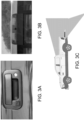
FIG. 3A is a schematic illustration of a vehicle of a first embodiment having a first camera of a rear-view camera system of the present invention. -
FIG. 3B is a schematic illustration of a vehicle of the first embodiment having a second camera of the rear-view camera system of the present invention. -
FIG. 3C is a schematic illustration of a field of view when the vehicle tailgate is open for the first embodiment of the rear-view camera system ofFigs 3A-3B . -
FIG. 4 is a schematic illustration of the vehicle of the first embodiment of the rear-view camera system ofFigs 3A-3C . -
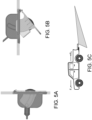
FIG. 5A is a schematic illustration of a camera position the vehicle tailgate is closed for a second embodiment of the rear-view camera system not according to the invention. -
FIG. 5B is a schematic illustration of a camera position the vehicle tailgate is open for the second embodiment of the rear-view camera system. -
FIG. 5C is a schematic illustration of a field of view when the vehicle tailgate is open for the second embodiment of the rear-view camera system of Figs 4A-4B. -
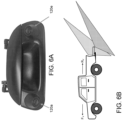
FIG. 6A and 6B are schematic illustrations of a third embodiment of a camera system for a vehicle not according to the invention. -
FIG. 7 shows a method of providing a rear image for a vehicle. -
FIG.8 is a schematic view of an example computing device that may be used to implement the systems and methods described in this document. - With reference to
FIGS. 2-6B , a rear-view camera system, for avehicle 102, is shown generally indicated at 100. Thesystem 100 includes a plurality of cameras 120 mounted to thevehicle 102 and constructed and arranged to obtain an image of an area proximate to and surrounding thevehicle 102. The plurality of cameras 120 may be a monocular camera, binocular camera, or another type of sensing device capable of providing a view of the front, side or rear field-of-view of thevehicle 102. - The
vehicle 102 may include acontroller 110 that includes a computing device (or hardware processor) 112 (e.g., central processing unit having one or more computing processors) in communication with non-transitory memory or hardware memory 114 (e.g., a hard disk, flash memory, random-access memory) capable of storing instructions executable on the computing processor(s) 112. - The
vehicle controller 110 executes a tailgate position determination system 116 which determines whether atailgate 104 of thevehicle 102 is in a closed (lifted) position 106a or open (lowered) position 106b and provides a rear-view image according to the determination as explained in further detail below. - A
first camera 120a is a rear-view camera mounted to thetailgate 104 of thevehicle 102. Other camera may include front view cameras 120b, side view cameras 120c, d and possibly additional rear-view cameras 120e. The camera(s) 120, 120a-e send information to thecontroller 110 for use by and for various vehicle safety and assistsystems 160. - The tailgate position determining system 116 detects the tailgate position 106a, 106b using image processing and automatically select the camera source arrangement for the rear view based on the tailgate position 106a, 106b. The tailgate position system 116 uses image analysis to determine if the
camera 120, 120a-e is pointing toward the ground, i.e. tailgate is open andcamera 120, 120a-e is downward, not rearward of thevehicle 102. Alternatively, the tailgate position may be detected by another type of sensors, such as a position sensor. Finally, the tailgate position determining system 116 may work with auser interface 150 to allow a vehicle operator to manually select the appropriate camera source. - For embodiments which also include the
user interface 150 that allows the driver and thecontroller 110 to exchange information. In some examples, theuser interface 150 includes adisplay 152 and/orspeakers 154. In some examples, thedisplay 152 is a touch screen display. In other examples, thedisplay 152 is in communication with one or more input mechanisms allowing the driver to input data or make a selection on thedisplay 152. The input mechanism may be a rotary knob or a mouse. Thedisplay system 152 can be located at the center console 153 of thevehicle 102 be controlled by the ECU to display to a driver of the vehicle, the image 122 obtained by the rear-view camera(s) 120, 120a, 120e and the image 122 developed by theECU 110. The driver may manually select the image 122 from the desiredcamera 120, 120a-e. - Further, instead of providing the
display screen 152 in the console, thedisplay screen 152 can be incorporated in the rear view mirror of the vehicle, or the images 122 can be shown via a heads-up display system or can be projected onto any surface of thevehicle 102. - As discussed above, tailgate position determining system 116 detects the tailgate position 106a, 106b using image processing and automatically select the camera source arrangement for the rear view based on the tailgate position 106a, 106b. Specifically selecting use of the
first camera 120a and/orsecond camera 120e. Alternatively, the tailgate position may be detected by another type of sensors, such as a position sensor. Finally, the tailgate position determining system 116 may work with auser interface 150 to allow a vehicle operator to manually select the appropriate camera source. - Referring to
FIGS 3A-4 , a first embodiment of acamera system 100 for avehicle 102 according to the invention is schematically illustrated. The system includes at least a first rear view camera 102a mounted on atailgate 104 of the vehicle proximate to the tailgate lift handle 108. A second rear-view camera 102e is mounted to arear brake light 109 proximate to the top of the passenger cab 103. - When the
tailgate 104 is in the closed position 106a the firstrear camera 120a is typically used to provide an image 122 to the vehicle safety and assistsystems 160. Alternately, the secondrear camera 120e may be used alone or in combination withfirst camera 120a by stitching the images together. Further that image may also be shown on adisplay 152. Field of view provided by bothcameras - When the
tailgate 104 is in the open position both thefirst camera 120a and the secondrear camera 120e are used to provide the image 122. The images from bothcameras cameras - Referring to
FIGS 5A-5C , a second embodiment of acamera system 100 for avehicle 102 is schematically illustrated. The system includes a rear-view camera 102a mounted on atailgate 104 of the vehicle proximate to the tailgate lift handle 108. The camera 102a is moveably secured to thetailgate 104 by an actuator system 200. The actuator 210 (not shown) may be an electromechanical actuator capable of moving the camera 102a from a first position 220a, illustrated inFig 5A to a second position 220b, illustrated inFIG 5B . Thecamera 120a is located in a camera housing 212 which rotates about a hinged attachment 214. - The tailgate position determining system 116 may detect the tailgate position 106a, 106b and activate the actuator system 200 to move the camera 102a to the appropriate position 220a, 220b. When the
tailgate 104 is in the closed position 106a the first camera position 220a is used to provide an image 122 to the vehicle safety and assistsystems 160. When thetailgate 104 is in the open position 106b the second camera position 220b is used to provide the image 122. Field of view provided by the second camera position 220b when the tail gate is open is illustrated at 124b. - As discussed above, tailgate position determining system 116 may detect the tailgate position 106a, 106b using image processing and automatically select the camera source arrangement for the rear view based on the tailgate position 106a, 106b.
- Alternatively, the tailgate position may be detected by another type of sensors, such as a position sensor. Finally, the tailgate position determining system 116 may work with a
user interface 150 to allow a vehicle operator to manually select the appropriate camera source. Based on the determined position the tailgate position determining system 116 may send a signal to the actuator system to activate the actuator 200 to move toward the desired first or second position 220a, 220b based upon the determination. - Referring to
FIGS 6A and 6B , a third embodiment of acamera system 100 for avehicle 102 is schematically illustrated. The system includes at least a first rear view camera 102a mounted on atailgate 104 of the vehicle proximate to the tailgate lift handle 108. A second rear-view camera 102e is also mounted on thetailgate 104 of the vehicle proximate to the tailgate lift handle 108. Thefirst camera 120a andsecond camera 120e may be located on opposing sides of the handle 108. - The
first camera 120a andsecond camera 120e both have fixed positions. When thetailgate 104 is in the closed position 106a the firstrear camera 120a is used to provide an image 122 to the vehicle safety and assistsystems 160. Field of view provided by thefirst cameras 120e when the tail gate is closed is illustrated at 124a. - When the
tailgate 104 is in the open position 106b thesecond camera 120e is used to provide the image 122. Field of view provided by thesecond camera 120e when the tail gate is open is illustrated at 124b. - As discussed above, tailgate position determining system 116 may detect the tailgate position 106a, 106b using image processing and automatically select the camera source arrangement for the rear view based on the tailgate position 106a, 106b. Specifically selecting use of the
first camera 120a and/orsecond camera 120e. Alternatively, the tailgate position may be detected by another type of sensors, such as a position sensor. Finally, the tailgate position determining system 116 may work with auser interface 150 to allow a vehicle operator to manually select the appropriate camera source. - A method, shown at 700, of providing a rear image for a vehicle is described here. The method of providing also includes providing an image of an area behind a rear of the vehicle with at least a first camera,
step 710; determining a tailgate position with a tailgate position determining system,step 720;, and selecting the image provided based upon the position of the tailgate of the vehicle,step 730. - Implementations may include one or more of the following features. The method the electronic control unit includes a processor circuit constructed and arranged to create the image from the data received from the camera system,
step 740. - The method includes a first camera located on a tailgate of the vehicle and a second camera located proximate a central rear brake light of the vehicle. The method may include a first camera located on a tailgate of the vehicle and a second camera located on a tailgate of the vehicle. The second camera is on an opposing side of a tailgate lift handle. The camera is moveable between a first position and a second position,
step 750. The method may include an actuator system capable of moving the camera between the first position and the second position. The display system includes a display screen. -
FIG. 8 is schematic view of anexample computing device 800 that may be used to implement the systems and methods described in this document. Thecomputing device 800 is intended to represent various forms of digital computers, such as laptops, desktops, workstations, personal digital assistants, servers, blade servers, mainframes, and other appropriate computers. The components shown here, their connections and relationships, and their functions, are meant to be exemplary only, and are not meant to limit implementations of the inventions described and/or claimed in this document. - The
computing device 800 includes aprocessor 810,memory 820, astorage device 830, a high-speed interface/controller 840 connecting to thememory 820 and high-speed expansion ports 850, and a low speed interface/controller 860 connecting tolow speed bus 870 andstorage device 830. Each of thecomponents processor 810 can process instructions for execution within thecomputing device 800, including instructions stored in thememory 820 or on thestorage device 830 to display graphical information for a graphical user interface (GUI) on an external input/output device, such asdisplay 880 coupled tohigh speed interface 840. In other implementations, multiple processors and/or multiple buses may be used, as appropriate, along with multiple memories and types of memory. Also,multiple computing devices 800 may be connected, with each device providing portions of the necessary operations (e.g., as a server bank, a group of blade servers, or a multi-processor system). - The
memory 820 stores information non-transitorily within thecomputing device 800. Thememory 820 may be a computer-readable medium, a volatile memory unit(s), or non-volatile memory unit(s). Thenon-transitory memory 820 may be physical devices used to store programs (e.g., sequences of instructions) or data (e.g., program state information) on a temporary or permanent basis for use by thecomputing device 800. Examples of non-volatile memory include, but are not limited to, flash memory and read-only memory (ROM) / programmable read-only memory (PROM) / erasable programmable read-only memory (EPROM) / electronically erasable programmable read-only memory (EEPROM) (e.g., typically used for firmware, such as boot programs). Examples of volatile memory include, but are not limited to, random access memory (RAM), dynamic random access memory (DRAM), static random access memory (SRAM), phase change memory (PCM) as well as disks or tapes. - The
storage device 830 is capable of providing mass storage for thecomputing device 800. In some implementations, thestorage device 830 is a computer-readable medium. In various different implementations, thestorage device 830 may be a floppy disk device, a hard disk device, an optical disk device, or a tape device, a flash memory or other similar solid state memory device, or an array of devices, including devices in a storage area network or other configurations. In additional implementations, a computer program product is tangibly embodied in an information carrier. The computer program product contains instructions that, when executed, perform one or more methods, such as those described above. The information carrier is a computer- or machine-readable medium, such as thememory 820, thestorage device 830, or memory onprocessor 810. - The high-
speed controller 840 manages bandwidth-intensive operations for thecomputing device 800, while thelow speed controller 860 manages lower bandwidth-intensive operations. Such allocation of duties is exemplary only. In some implementations, the high-speed controller 840 is coupled to thememory 820, the display 880 (e.g., through a graphics processor or accelerator), and to the high-speed expansion ports 850, which may accept various expansion cards (not shown). In some implementations, the low-speed controller 860 is coupled to thestorage device 830 and low-speed expansion port 870. The low-speed expansion port 870, which may include various communication ports (e.g., USB, Bluetooth, Ethernet, wireless Ethernet), may be coupled to one or more input/output devices, such as a keyboard, a pointing device, a scanner, or a networking device such as a switch or router, e.g., through a network adapter. - The
computing device 800 may be implemented in a number of different forms, as shown in the figure. For example, it may be implemented as astandard server 800a or multiple times in a group ofsuch servers 800a, as alaptop computer 800b, or as part of arack server system 800c. - Various implementations of the systems and techniques described here can be realized in digital electronic and/or optical circuitry, integrated circuitry, specially designed ASICs (application specific integrated circuits), computer hardware, firmware, software, and/or combinations thereof. These various implementations can include implementation in one or more computer programs that are executable and/or interpretable on a programmable system including at least one programmable processor, which may be special or general purpose, coupled to receive data and instructions from, and to transmit data and instructions to, a storage system, at least one input device, and at least one output device.
- These computer programs (also known as programs, software, software applications or code) include machine instructions for a programmable processor, and can be implemented in a high-level procedural and/or object-oriented programming language, and/or in assembly/machine language. As used herein, the terms "machine-readable medium" and "computer-readable medium" refer to any computer program product, non-transitory computer readable medium, apparatus and/or device (e.g., magnetic discs, optical disks, memory, Programmable Logic Devices (PLDs)) used to provide machine instructions and/or data to a programmable processor, including a machine-readable medium that receives machine instructions as a machine-readable signal. The term "machine-readable signal" refers to any signal used to provide machine instructions and/or data to a programmable processor.
- Implementations of the subject matter and the functional operations described in this specification can be implemented in digital electronic circuitry, or in computer software, firmware, or hardware, including the structures disclosed in this specification and their structural equivalents, or in combinations of one or more of them. Moreover, subject matter described in this specification can be implemented as one or more computer program products, i.e., one or more modules of computer program instructions encoded on a computer readable medium for execution by, or to control the operation of, data processing apparatus. The computer readable medium can be a machine-readable storage device, a machine-readable storage substrate, a memory device, a composition of matter effecting a machine-readable propagated signal, or a combination of one or more of them. The terms "data processing apparatus", "computing device" and "computing processor" encompass all apparatus, devices, and machines for processing data, including by way of example a programmable processor, a computer, or multiple processors or computers. The apparatus can include, in addition to hardware, code that creates an execution environment for the computer program in question, e.g., code that constitutes processor firmware, a protocol stack, a database management system, an operating system, or a combination of one or more of them. A propagated signal is an artificially generated signal, e.g., a machine-generated electrical, optical, or electromagnetic signal, that is generated to encode information for transmission to suitable receiver apparatus.
- A computer program (also known as an application, program, software, software application, script, or code) can be written in any form of programming language, including compiled or interpreted languages, and it can be deployed in any form, including as a stand-alone program or as a module, component, subroutine, or other unit suitable for use in a computing environment. A computer program does not necessarily correspond to a file in a file system. A program can be stored in a portion of a file that holds other programs or data (e.g., one or more scripts stored in a markup language document), in a single file dedicated to the program in question, or in multiple coordinated files (e.g., files that store one or more modules, sub programs, or portions of code). A computer program can be deployed to be executed on one computer or on multiple computers that are located at one site or distributed across multiple sites and interconnected by a communication network.
- The processes and logic flows described in this specification can be performed by one or more programmable processors executing one or more computer programs to perform functions by operating on input data and generating output. The processes and logic flows can also be performed by, and apparatus can also be implemented as, special purpose logic circuitry, e.g., an FPGA (field programmable gate array) or an ASIC (application specific integrated circuit).
- Processors suitable for the execution of a computer program include, by way of example, both general and special purpose microprocessors, and any one or more processors of any kind of digital computer. Generally, a processor will receive instructions and data from a read only memory or a random access memory or both. The essential elements of a computer are a processor for performing instructions and one or more memory devices for storing instructions and data. Generally, a computer will also include, or be operatively coupled to receive data from or transfer data to, or both, one or more mass storage devices for storing data, e.g., magnetic, magneto optical disks, or optical disks. However, a computer need not have such devices. Moreover, a computer can be embedded in another device, e.g., a mobile telephone, a personal digital assistant (PDA), a mobile audio player, a Global Positioning System (GPS) receiver, to name just a few. Computer readable media suitable for storing computer program instructions and data include all forms of non-volatile memory, media and memory devices, including by way of example semiconductor memory devices, e.g., EPROM, EEPROM, and flash memory devices; magnetic disks, e.g., internal hard disks or removable disks; magneto optical disks; and CD ROM and DVD-ROM disks. The processor and the memory can be supplemented by, or incorporated in, special purpose logic circuitry.
- To provide for interaction with a user, one or more aspects of the disclosure can be implemented on a computer having a display device, e.g., a CRT (cathode ray tube), LCD (liquid crystal display) monitor, or touch screen for displaying information to the user and optionally a keyboard and a pointing device, e.g., a mouse or a trackball, by which the user can provide input to the computer. Other kinds of devices can be used to provide interaction with a user as well; for example, feedback provided to the user can be any form of sensory feedback, e.g., visual feedback, auditory feedback, or tactile feedback; and input from the user can be received in any form, including acoustic, speech, or tactile input. In addition, a computer can interact with a user by sending documents to and receiving documents from a device that is used by the user; for example, by sending web pages to a web browser on a user's client device in response to requests received from the web browser.
- One or more aspects of the disclosure can be implemented in a computing system that includes a backend component, e.g., as a data server, or that includes a middleware component, e.g., an application server, or that includes a frontend component, e.g., a client computer having a graphical user interface or a Web browser through which a user can interact with an implementation of the subject matter described in this specification, or any combination of one or more such backend, middleware, or frontend components. The components of the system can be interconnected by any form or medium of digital data communication, e.g., a communication network. Examples of communication networks include a local area network ("LAN") and a wide area network ("WAN"), an inter-network (e.g., the Internet), and peer-to-peer networks (e.g., ad hoc peer-to-peer networks).
- The computing system can include clients and servers. A client and server are generally remote from each other and typically interact through a communication network. The relationship of client and server arises by virtue of computer programs running on the respective computers and having a client-server relationship to each other. In some implementations, a server transmits data (e.g., an HTML page) to a client device (e.g., for purposes of displaying data to and receiving user input from a user interacting with the client device). Data generated at the client device (e.g., a result of the user interaction) can be received from the client device at the server.
- While this specification contains many specifics, these should not be construed as limitations on the scope of the disclosure or of what may be claimed, but rather as descriptions of features specific to particular implementations of the disclosure. Certain features that are described in this specification in the context of separate implementations can also be implemented in combination in a single implementation. Conversely, various features that are described in the context of a single implementation can also be implemented in multiple implementations separately or in any suitable sub-combination. Moreover, although features may be described above as acting in certain combinations and even initially claimed as such, one or more features from a claimed combination can in some cases be excised from the combination, and the claimed combination may be directed to a sub-combination or variation of a sub-combination.
- Similarly, while operations are depicted in the drawings in a particular order, this should not be understood as requiring that such operations be performed in the particular order shown or in sequential order, or that all illustrated operations be performed, to achieve desirable results. In certain circumstances, multi-tasking and parallel processing may be advantageous. Moreover, the separation of various system components in the embodiments described above should not be understood as requiring such separation in all embodiments, and it should be understood that the described program components and systems can generally be integrated together in a single software product or packaged into multiple software products.
Claims (6)
- A driver assistance system for a vehicle (102) comprising:a camera system having at least two rear cameras (120) constructed and arranged to obtain an image (122) of an area behind a rear of the vehicle (102);a tailgate position determining system (116) constructed and arranged to determine a position of a tailgate (104) of the vehicle; andwherein the image (122) provided by the camera system of the rear of the vehicle (102) is selected based upon the position of the tailgate (104) of the vehicle (102),characterized in,
that the camera system comprises a first camera (120a) located on a tailgate (104) of the vehicle (102) and a second camera (120e) located proximate a central rear brake light (109) of the vehicle (102) and proximate to the top of the passenger cab (103), wherein the tailgate position determining system (116) is adapted to detect the tailgate position (106a, 106b) using image processing and to automatically select the first camera (102a) and/or the second camera (120b) for the rear view based on the tailgate position (106a, 106b). - The system of claim 1, further comprising an electronic control unit (110) including a processor circuit constructed and arranged to create the image (122) from the data received from the camera system.
- The system of claim 1, further comprising a display system including a display screen (152) for displaying the rear view.
- A method of providing a rear image for a vehicle (102) comprising:providing an image (122) of an area behind a rear of the vehicle (102) with at least two rear cameras (120) including a first camera (120a) located on a tailgate (104) of the vehicle (102) and a second camera (120e) located proximate a central rear brake light (109) of the vehicle (102) and proximate to the top of the passenger cab (103);determining a tailgate position (106a, 106b) with a tailgate position determining system (116); andselecting the image (122) provided based upon the position of the tailgate (104) of the vehicle (102), wherein the tailgate position determining system (116) detects the tailgate position (106a, 106b) using image processing and automatically selects the first camera (102a) and/or the second camera (120b) for the rear view based on the tailgate position (106a, 106b).
- The method of claim 4, wherein an electronic control unit including a processor circuit constructed and arranged to create the image (122) from the data received from the camera system is used.
- The method of claim 4, wherein a display system including a display screen (152) is used for displaying the rear view.
Applications Claiming Priority (2)
| Application Number | Priority Date | Filing Date | Title |
|---|---|---|---|
| US201962848405P | 2019-05-15 | 2019-05-15 | |
| PCT/US2020/033102 WO2020232346A1 (en) | 2019-05-15 | 2020-05-15 | Rear-view camera for pick-up trucks with open tailgates |
Publications (2)
| Publication Number | Publication Date |
|---|---|
| EP3969327A1 EP3969327A1 (en) | 2022-03-23 |
| EP3969327B1 true EP3969327B1 (en) | 2025-03-12 |
Family
ID=71069949
Family Applications (1)
| Application Number | Title | Priority Date | Filing Date |
|---|---|---|---|
| EP20731642.3A Active EP3969327B1 (en) | 2019-05-15 | 2020-05-15 | Rear-view camera for pick-up trucks with open tailgates |
Country Status (4)
| Country | Link |
|---|---|
| US (1) | US11884215B2 (en) |
| EP (1) | EP3969327B1 (en) |
| JP (1) | JP7405869B2 (en) |
| WO (1) | WO2020232346A1 (en) |
Families Citing this family (11)
| Publication number | Priority date | Publication date | Assignee | Title |
|---|---|---|---|---|
| US11701954B2 (en) * | 2020-05-14 | 2023-07-18 | Extang Corporation | Integrated vehicle cover |
| US11643016B2 (en) * | 2021-01-20 | 2023-05-09 | Robert Bosch Gmbh | Rearview camera field of view with alternative tailgate positions |
| US11667335B2 (en) * | 2021-03-18 | 2023-06-06 | AISIN Technical Center of America, Inc. | Counteracting backdrive in a power tailgate system |
| US11738810B2 (en) * | 2021-10-29 | 2023-08-29 | AISIN Technical Center of America, Inc. | Power tailgate cargo load sensor |
| US12441414B2 (en) * | 2022-02-14 | 2025-10-14 | Chester Dwayne Smith | Truck tailgate assembly |
| CA3194509A1 (en) * | 2022-03-29 | 2023-09-29 | Steve DESIMONE | Vehicle camera system |
| US12583400B2 (en) * | 2022-04-08 | 2026-03-24 | AUMOVIO Autonomous Mobility US, LLC. | System and method for operating a vehicle access point |
| US12437553B2 (en) * | 2023-01-09 | 2025-10-07 | GM Global Technology Operations LLC | Removing fixed objects from rear view camera |
| US12179675B2 (en) | 2023-02-20 | 2024-12-31 | Ford Global Technologies, Llc | Vehicle closure having automatic position adjusting sensor |
| US20240393450A1 (en) * | 2023-05-24 | 2024-11-28 | Ford Global Technologies, Llc | Detection system for a vehicle |
| US20250135998A1 (en) * | 2023-10-27 | 2025-05-01 | Oshkosh Corporation | Multiple backup cameras for refuse vehicle |
Citations (1)
| Publication number | Priority date | Publication date | Assignee | Title |
|---|---|---|---|---|
| WO2018151327A1 (en) * | 2017-02-20 | 2018-08-23 | 株式会社アルファ | Vehicular monitoring device |
Family Cites Families (13)
| Publication number | Priority date | Publication date | Assignee | Title |
|---|---|---|---|---|
| US6550949B1 (en) | 1996-06-13 | 2003-04-22 | Gentex Corporation | Systems and components for enhancing rear vision from a vehicle |
| JP2007131252A (en) | 2005-11-14 | 2007-05-31 | Fujitsu Ten Ltd | In-vehicle camera control device and in-vehicle confirmation camera device |
| JP2012165138A (en) | 2011-02-04 | 2012-08-30 | Panasonic Corp | Driving support information providing device |
| US10040406B2 (en) * | 2013-12-31 | 2018-08-07 | Huf North America Automotive Parts Manufacturing Corp. | Multi-positioning of a camera or other sensing device |
| US10053010B2 (en) | 2015-12-04 | 2018-08-21 | Dura Operating, Llc | Dynamic perspective shifting system and method |
| US10621445B2 (en) * | 2016-06-29 | 2020-04-14 | Toyota Motor Engineering & Manufacturing North America, Inc. | Vehicle video systems including rear mounted video cameras |
| JP2018043643A (en) | 2016-09-14 | 2018-03-22 | 株式会社東海理化電機製作所 | Vehicular visual confirmation device |
| US10328867B2 (en) | 2016-09-26 | 2019-06-25 | Panasonic Automotive Systems Company Of America, Division Of Panasonic Corporation Of North America | Swivel tailgate bracket |
| JP2018069861A (en) | 2016-10-26 | 2018-05-10 | パナソニックIpマネジメント株式会社 | Electronic mirror device |
| US20180220081A1 (en) * | 2017-01-30 | 2018-08-02 | GM Global Technology Operations LLC | Method and apparatus for augmenting rearview display |
| US11034295B2 (en) * | 2017-02-02 | 2021-06-15 | Magna Electronics Inc. | Vehicle vision system using at least two cameras |
| US10703301B2 (en) | 2017-10-20 | 2020-07-07 | Derk Hartland | Backup camera enabling device |
| US10607092B2 (en) * | 2018-01-25 | 2020-03-31 | GM Global Technology Operations LLC | System and method for detecting the position of a tailgate and adjusting operation of a user interface device based on the tailgate position |
-
2020
- 2020-05-15 US US17/595,211 patent/US11884215B2/en active Active
- 2020-05-15 JP JP2021568162A patent/JP7405869B2/en active Active
- 2020-05-15 EP EP20731642.3A patent/EP3969327B1/en active Active
- 2020-05-15 WO PCT/US2020/033102 patent/WO2020232346A1/en not_active Ceased
Patent Citations (1)
| Publication number | Priority date | Publication date | Assignee | Title |
|---|---|---|---|---|
| WO2018151327A1 (en) * | 2017-02-20 | 2018-08-23 | 株式会社アルファ | Vehicular monitoring device |
Also Published As
| Publication number | Publication date |
|---|---|
| US11884215B2 (en) | 2024-01-30 |
| JP7405869B2 (en) | 2023-12-26 |
| WO2020232346A1 (en) | 2020-11-19 |
| US20220212603A1 (en) | 2022-07-07 |
| JP2022533611A (en) | 2022-07-25 |
| EP3969327A1 (en) | 2022-03-23 |
Similar Documents
| Publication | Publication Date | Title |
|---|---|---|
| EP3969327B1 (en) | Rear-view camera for pick-up trucks with open tailgates | |
| US10403147B2 (en) | Systems and methods for automatically documenting an accident | |
| CN107545232B (en) | Lane detection system and method | |
| US11299125B2 (en) | ADAS-linked active hood apparatus for always-on operation | |
| DE112018003002T5 (en) | Driver assistance method, driver assistance program and vehicle control device | |
| US20180173224A1 (en) | Vehicle and a control method thereof | |
| GB2555185A (en) | Vehicle exterior monitoring | |
| CN112477879B (en) | Mobile work machines with object detection and machine path visualization | |
| DE112012004778T5 (en) | Universal bus in the car | |
| DE102020210159A1 (en) | MOBILE WORKING MACHINE WITH OBJECT RECOGNITION USING VISUAL RECOGNITION | |
| US9025819B2 (en) | Apparatus and method for tracking the position of a peripheral vehicle | |
| CN104925112B (en) | Autonomous vehicle with reconfigurable internal configuration | |
| CN109327660B (en) | Image acquisition method and device | |
| EP3785995A1 (en) | System and method for providing a driving mode dependent side mirror functionality within a vehicle | |
| US20150296140A1 (en) | Panoramic view blind spot eliminator system and method | |
| CN109314765B (en) | Vehicle display control device, display system, display control method, and program | |
| JP7666549B2 (en) | Image Processing Device | |
| DE112017007151T5 (en) | VEHICLE HOLDER FOR MOBILE DEVICES | |
| KR102923050B1 (en) | Vehicle control method and vehicle system performing the same | |
| GB2557438A (en) | Pedestrian face detection | |
| CN113386757B (en) | Vehicle and control device thereof | |
| CN120573115A (en) | Automatic emergency braking target obstacle screening method, device, equipment and vehicle | |
| KR20210071454A (en) | Vehicle and control method thereof | |
| CN107031549B (en) | Autonomous vehicle constraint selection | |
| US20240112147A1 (en) | Systems and methods to provide services to a disabled vehicle |
Legal Events
| Date | Code | Title | Description |
|---|---|---|---|
| STAA | Information on the status of an ep patent application or granted ep patent |
Free format text: STATUS: UNKNOWN |
|
| STAA | Information on the status of an ep patent application or granted ep patent |
Free format text: STATUS: THE INTERNATIONAL PUBLICATION HAS BEEN MADE |
|
| PUAI | Public reference made under article 153(3) epc to a published international application that has entered the european phase |
Free format text: ORIGINAL CODE: 0009012 |
|
| STAA | Information on the status of an ep patent application or granted ep patent |
Free format text: STATUS: REQUEST FOR EXAMINATION WAS MADE |
|
| 17P | Request for examination filed |
Effective date: 20211215 |
|
| AK | Designated contracting states |
Kind code of ref document: A1 Designated state(s): AL AT BE BG CH CY CZ DE DK EE ES FI FR GB GR HR HU IE IS IT LI LT LU LV MC MK MT NL NO PL PT RO RS SE SI SK SM TR |
|
| DAV | Request for validation of the european patent (deleted) | ||
| DAX | Request for extension of the european patent (deleted) | ||
| RAP1 | Party data changed (applicant data changed or rights of an application transferred) |
Owner name: CONTINENTAL AUTONOMOUS MOBILITY US, LLC |
|
| STAA | Information on the status of an ep patent application or granted ep patent |
Free format text: STATUS: EXAMINATION IS IN PROGRESS |
|
| 17Q | First examination report despatched |
Effective date: 20231005 |
|
| GRAP | Despatch of communication of intention to grant a patent |
Free format text: ORIGINAL CODE: EPIDOSNIGR1 |
|
| STAA | Information on the status of an ep patent application or granted ep patent |
Free format text: STATUS: GRANT OF PATENT IS INTENDED |
|
| INTG | Intention to grant announced |
Effective date: 20241021 |
|
| GRAS | Grant fee paid |
Free format text: ORIGINAL CODE: EPIDOSNIGR3 |
|
| GRAA | (expected) grant |
Free format text: ORIGINAL CODE: 0009210 |
|
| STAA | Information on the status of an ep patent application or granted ep patent |
Free format text: STATUS: THE PATENT HAS BEEN GRANTED |
|
| AK | Designated contracting states |
Kind code of ref document: B1 Designated state(s): AL AT BE BG CH CY CZ DE DK EE ES FI FR GB GR HR HU IE IS IT LI LT LU LV MC MK MT NL NO PL PT RO RS SE SI SK SM TR |
|
| REG | Reference to a national code |
Ref country code: GB Ref legal event code: FG4D |
|
| REG | Reference to a national code |
Ref country code: CH Ref legal event code: EP |
|
| REG | Reference to a national code |
Ref country code: DE Ref legal event code: R096 Ref document number: 602020047581 Country of ref document: DE |
|
| REG | Reference to a national code |
Ref country code: IE Ref legal event code: FG4D |
|
| PG25 | Lapsed in a contracting state [announced via postgrant information from national office to epo] |
Ref country code: RS Free format text: LAPSE BECAUSE OF FAILURE TO SUBMIT A TRANSLATION OF THE DESCRIPTION OR TO PAY THE FEE WITHIN THE PRESCRIBED TIME-LIMIT Effective date: 20250612 |
|
| PG25 | Lapsed in a contracting state [announced via postgrant information from national office to epo] |
Ref country code: FI Free format text: LAPSE BECAUSE OF FAILURE TO SUBMIT A TRANSLATION OF THE DESCRIPTION OR TO PAY THE FEE WITHIN THE PRESCRIBED TIME-LIMIT Effective date: 20250312 |
|
| PGFP | Annual fee paid to national office [announced via postgrant information from national office to epo] |
Ref country code: DE Payment date: 20250531 Year of fee payment: 6 |
|
| PG25 | Lapsed in a contracting state [announced via postgrant information from national office to epo] |
Ref country code: ES Free format text: LAPSE BECAUSE OF FAILURE TO SUBMIT A TRANSLATION OF THE DESCRIPTION OR TO PAY THE FEE WITHIN THE PRESCRIBED TIME-LIMIT Effective date: 20250312 |
|
| REG | Reference to a national code |
Ref country code: LT Ref legal event code: MG9D |
|
| PG25 | Lapsed in a contracting state [announced via postgrant information from national office to epo] |
Ref country code: NO Free format text: LAPSE BECAUSE OF FAILURE TO SUBMIT A TRANSLATION OF THE DESCRIPTION OR TO PAY THE FEE WITHIN THE PRESCRIBED TIME-LIMIT Effective date: 20250612 |
|
| PG25 | Lapsed in a contracting state [announced via postgrant information from national office to epo] |
Ref country code: HR Free format text: LAPSE BECAUSE OF FAILURE TO SUBMIT A TRANSLATION OF THE DESCRIPTION OR TO PAY THE FEE WITHIN THE PRESCRIBED TIME-LIMIT Effective date: 20250312 |
|
| REG | Reference to a national code |
Ref country code: NL Ref legal event code: MP Effective date: 20250312 |
|
| PG25 | Lapsed in a contracting state [announced via postgrant information from national office to epo] |
Ref country code: LV Free format text: LAPSE BECAUSE OF FAILURE TO SUBMIT A TRANSLATION OF THE DESCRIPTION OR TO PAY THE FEE WITHIN THE PRESCRIBED TIME-LIMIT Effective date: 20250312 |
|
| PGFP | Annual fee paid to national office [announced via postgrant information from national office to epo] |
Ref country code: FR Payment date: 20250528 Year of fee payment: 6 |
|
| PG25 | Lapsed in a contracting state [announced via postgrant information from national office to epo] |
Ref country code: BG Free format text: LAPSE BECAUSE OF FAILURE TO SUBMIT A TRANSLATION OF THE DESCRIPTION OR TO PAY THE FEE WITHIN THE PRESCRIBED TIME-LIMIT Effective date: 20250312 Ref country code: GR Free format text: LAPSE BECAUSE OF FAILURE TO SUBMIT A TRANSLATION OF THE DESCRIPTION OR TO PAY THE FEE WITHIN THE PRESCRIBED TIME-LIMIT Effective date: 20250613 |
|
| REG | Reference to a national code |
Ref country code: AT Ref legal event code: MK05 Ref document number: 1774771 Country of ref document: AT Kind code of ref document: T Effective date: 20250312 |
|
| PG25 | Lapsed in a contracting state [announced via postgrant information from national office to epo] |
Ref country code: NL Free format text: LAPSE BECAUSE OF FAILURE TO SUBMIT A TRANSLATION OF THE DESCRIPTION OR TO PAY THE FEE WITHIN THE PRESCRIBED TIME-LIMIT Effective date: 20250312 |
|
| PG25 | Lapsed in a contracting state [announced via postgrant information from national office to epo] |
Ref country code: SE Free format text: LAPSE BECAUSE OF FAILURE TO SUBMIT A TRANSLATION OF THE DESCRIPTION OR TO PAY THE FEE WITHIN THE PRESCRIBED TIME-LIMIT Effective date: 20250312 |
|
| PG25 | Lapsed in a contracting state [announced via postgrant information from national office to epo] |
Ref country code: SM Free format text: LAPSE BECAUSE OF FAILURE TO SUBMIT A TRANSLATION OF THE DESCRIPTION OR TO PAY THE FEE WITHIN THE PRESCRIBED TIME-LIMIT Effective date: 20250312 |
|
| PG25 | Lapsed in a contracting state [announced via postgrant information from national office to epo] |
Ref country code: PT Free format text: LAPSE BECAUSE OF FAILURE TO SUBMIT A TRANSLATION OF THE DESCRIPTION OR TO PAY THE FEE WITHIN THE PRESCRIBED TIME-LIMIT Effective date: 20250714 |
|
| PG25 | Lapsed in a contracting state [announced via postgrant information from national office to epo] |
Ref country code: PL Free format text: LAPSE BECAUSE OF FAILURE TO SUBMIT A TRANSLATION OF THE DESCRIPTION OR TO PAY THE FEE WITHIN THE PRESCRIBED TIME-LIMIT Effective date: 20250312 Ref country code: IT Free format text: LAPSE BECAUSE OF FAILURE TO SUBMIT A TRANSLATION OF THE DESCRIPTION OR TO PAY THE FEE WITHIN THE PRESCRIBED TIME-LIMIT Effective date: 20250312 |
|
| PG25 | Lapsed in a contracting state [announced via postgrant information from national office to epo] |
Ref country code: AT Free format text: LAPSE BECAUSE OF FAILURE TO SUBMIT A TRANSLATION OF THE DESCRIPTION OR TO PAY THE FEE WITHIN THE PRESCRIBED TIME-LIMIT Effective date: 20250312 |
|
| PG25 | Lapsed in a contracting state [announced via postgrant information from national office to epo] |
Ref country code: EE Free format text: LAPSE BECAUSE OF FAILURE TO SUBMIT A TRANSLATION OF THE DESCRIPTION OR TO PAY THE FEE WITHIN THE PRESCRIBED TIME-LIMIT Effective date: 20250312 Ref country code: CZ Free format text: LAPSE BECAUSE OF FAILURE TO SUBMIT A TRANSLATION OF THE DESCRIPTION OR TO PAY THE FEE WITHIN THE PRESCRIBED TIME-LIMIT Effective date: 20250312 |
|
| PG25 | Lapsed in a contracting state [announced via postgrant information from national office to epo] |
Ref country code: RO Free format text: LAPSE BECAUSE OF FAILURE TO SUBMIT A TRANSLATION OF THE DESCRIPTION OR TO PAY THE FEE WITHIN THE PRESCRIBED TIME-LIMIT Effective date: 20250312 |
|
| PG25 | Lapsed in a contracting state [announced via postgrant information from national office to epo] |
Ref country code: SK Free format text: LAPSE BECAUSE OF FAILURE TO SUBMIT A TRANSLATION OF THE DESCRIPTION OR TO PAY THE FEE WITHIN THE PRESCRIBED TIME-LIMIT Effective date: 20250312 |
|
| PG25 | Lapsed in a contracting state [announced via postgrant information from national office to epo] |
Ref country code: IS Free format text: LAPSE BECAUSE OF FAILURE TO SUBMIT A TRANSLATION OF THE DESCRIPTION OR TO PAY THE FEE WITHIN THE PRESCRIBED TIME-LIMIT Effective date: 20250712 |
|
| REG | Reference to a national code |
Ref country code: DE Ref legal event code: R097 Ref document number: 602020047581 Country of ref document: DE |
|
| REG | Reference to a national code |
Ref country code: CH Ref legal event code: W10 Free format text: ST27 STATUS EVENT CODE: U-0-0-W10-W00 (AS PROVIDED BY THE NATIONAL OFFICE) Effective date: 20251217 |
|
| REG | Reference to a national code |
Ref country code: CH Ref legal event code: H13 Free format text: ST27 STATUS EVENT CODE: U-0-0-H10-H13 (AS PROVIDED BY THE NATIONAL OFFICE) Effective date: 20251223 |
|
| PG25 | Lapsed in a contracting state [announced via postgrant information from national office to epo] |
Ref country code: DK Free format text: LAPSE BECAUSE OF FAILURE TO SUBMIT A TRANSLATION OF THE DESCRIPTION OR TO PAY THE FEE WITHIN THE PRESCRIBED TIME-LIMIT Effective date: 20250312 |
|
| RAP4 | Party data changed (patent owner data changed or rights of a patent transferred) |
Owner name: AUMOVIO AUTONOMOUS MOBILITY US, LLC |
|
| PG25 | Lapsed in a contracting state [announced via postgrant information from national office to epo] |
Ref country code: LU Free format text: LAPSE BECAUSE OF NON-PAYMENT OF DUE FEES Effective date: 20250515 |
|
| PLBE | No opposition filed within time limit |
Free format text: ORIGINAL CODE: 0009261 |
|
| STAA | Information on the status of an ep patent application or granted ep patent |
Free format text: STATUS: NO OPPOSITION FILED WITHIN TIME LIMIT |
|
| PG25 | Lapsed in a contracting state [announced via postgrant information from national office to epo] |
Ref country code: CH Free format text: LAPSE BECAUSE OF NON-PAYMENT OF DUE FEES Effective date: 20250531 |
|
| REG | Reference to a national code |
Ref country code: CH Ref legal event code: L10 Free format text: ST27 STATUS EVENT CODE: U-0-0-L10-L00 (AS PROVIDED BY THE NATIONAL OFFICE) Effective date: 20260121 |
|
| REG | Reference to a national code |
Ref country code: BE Ref legal event code: MM Effective date: 20250531 |
|
| PG25 | Lapsed in a contracting state [announced via postgrant information from national office to epo] |
Ref country code: MC Free format text: LAPSE BECAUSE OF FAILURE TO SUBMIT A TRANSLATION OF THE DESCRIPTION OR TO PAY THE FEE WITHIN THE PRESCRIBED TIME-LIMIT Effective date: 20250312 |
|
| 26N | No opposition filed |
Effective date: 20251215 |
|
| PGFP | Annual fee paid to national office [announced via postgrant information from national office to epo] |
Ref country code: GB Payment date: 20260313 Year of fee payment: 7 |
|
| PG25 | Lapsed in a contracting state [announced via postgrant information from national office to epo] |
Ref country code: IE Free format text: LAPSE BECAUSE OF NON-PAYMENT OF DUE FEES Effective date: 20250515 |
|
| PG25 | Lapsed in a contracting state [announced via postgrant information from national office to epo] |
Ref country code: BE Free format text: LAPSE BECAUSE OF NON-PAYMENT OF DUE FEES Effective date: 20250531 |