EP3968600A1 - Controlling a communication between a vehicle and a backend device - Google Patents
Controlling a communication between a vehicle and a backend device Download PDFInfo
- Publication number
- EP3968600A1 EP3968600A1 EP20195710.7A EP20195710A EP3968600A1 EP 3968600 A1 EP3968600 A1 EP 3968600A1 EP 20195710 A EP20195710 A EP 20195710A EP 3968600 A1 EP3968600 A1 EP 3968600A1
- Authority
- EP
- European Patent Office
- Prior art keywords
- vehicle
- timer
- message
- control unit
- electronic control
- Prior art date
- Legal status (The legal status is an assumption and is not a legal conclusion. Google has not performed a legal analysis and makes no representation as to the accuracy of the status listed.)
- Granted
Links
Images
Classifications
-
- H—ELECTRICITY
- H04—ELECTRIC COMMUNICATION TECHNIQUE
- H04L—TRANSMISSION OF DIGITAL INFORMATION, e.g. TELEGRAPHIC COMMUNICATION
- H04L67/00—Network arrangements or protocols for supporting network services or applications
- H04L67/14—Session management
- H04L67/143—Termination or inactivation of sessions, e.g. event-controlled end of session
- H04L67/145—Termination or inactivation of sessions, e.g. event-controlled end of session avoiding end of session, e.g. keep-alive, heartbeats, resumption message or wake-up for inactive or interrupted session
-
- H—ELECTRICITY
- H04—ELECTRIC COMMUNICATION TECHNIQUE
- H04W—WIRELESS COMMUNICATION NETWORKS
- H04W76/00—Connection management
- H04W76/20—Manipulation of established connections
- H04W76/25—Maintenance of established connections
-
- H—ELECTRICITY
- H04—ELECTRIC COMMUNICATION TECHNIQUE
- H04L—TRANSMISSION OF DIGITAL INFORMATION, e.g. TELEGRAPHIC COMMUNICATION
- H04L67/00—Network arrangements or protocols for supporting network services or applications
- H04L67/01—Protocols
- H04L67/12—Protocols specially adapted for proprietary or special-purpose networking environments, e.g. medical networks, sensor networks, networks in vehicles or remote metering networks
- H04L67/125—Protocols specially adapted for proprietary or special-purpose networking environments, e.g. medical networks, sensor networks, networks in vehicles or remote metering networks involving control of end-device applications over a network
-
- H—ELECTRICITY
- H04—ELECTRIC COMMUNICATION TECHNIQUE
- H04L—TRANSMISSION OF DIGITAL INFORMATION, e.g. TELEGRAPHIC COMMUNICATION
- H04L67/00—Network arrangements or protocols for supporting network services or applications
- H04L67/14—Session management
- H04L67/141—Setup of application sessions
-
- H—ELECTRICITY
- H04—ELECTRIC COMMUNICATION TECHNIQUE
- H04W—WIRELESS COMMUNICATION NETWORKS
- H04W4/00—Services specially adapted for wireless communication networks; Facilities therefor
- H04W4/30—Services specially adapted for particular environments, situations or purposes
- H04W4/40—Services specially adapted for particular environments, situations or purposes for vehicles, e.g. vehicle-to-pedestrians [V2P]
- H04W4/44—Services specially adapted for particular environments, situations or purposes for vehicles, e.g. vehicle-to-pedestrians [V2P] for communication between vehicles and infrastructures, e.g. vehicle-to-cloud [V2C] or vehicle-to-home [V2H]
-
- H—ELECTRICITY
- H04—ELECTRIC COMMUNICATION TECHNIQUE
- H04W—WIRELESS COMMUNICATION NETWORKS
- H04W76/00—Connection management
- H04W76/10—Connection setup
- H04W76/14—Direct-mode setup
-
- H—ELECTRICITY
- H04—ELECTRIC COMMUNICATION TECHNIQUE
- H04L—TRANSMISSION OF DIGITAL INFORMATION, e.g. TELEGRAPHIC COMMUNICATION
- H04L67/00—Network arrangements or protocols for supporting network services or applications
- H04L67/50—Network services
- H04L67/55—Push-based network services
Definitions
- the invention is related to a method for controlling a communication between a vehicle and at least one backend device in a vehicle-to-cloud-system, especially from the vehicle side of the system, according to the independent method claim. Further, the invention is related to an electronic control unit according to the independent device claim. Furthermore, the invention is related to a vehicle comprising a corresponding electronic control unit according to the second independent device claim. Moreover, the invention is related to a computer program product for a corresponding method according to the independent product claim.
- Vehicle communication systems using a publish-subscribe messaging protocol are basically known, for example from DE 10 2018 130 216 A1 .
- a backend device for example cloud server
- the vehicle sends a connect message to the backend device with a defined keep alive timer. If the open connection is not used for a time set with the keep alive timer, the vehicle will generate a ping request message and expect to receive a ping response message from the backend device to keep the connection open. Ping messages have no useful content and cause non-useful traffic for the network.
- the aim of the present invention is to provide a method for controlling a communication between a vehicle and at least one backend device in a vehicle-to-cloud-system, especially from the vehicle side of the system, with improved connectivity.
- the aim of the present invention is especially to provide a method for controlling a communication between a vehicle and at least one backend device in a vehicle-to-cloud-system, which enables to keep the connection between the vehicle and the backend device open in an easy, but useful way, preferably without non-useful traffic for the network.
- the aim of the invention is to provide a corresponding electronic control unit for the vehicle, a corresponding vehicle and a related computer program product for the inventive method.
- the invention provides a method for controlling a communication between a vehicle and at least one backend device in a vehicle-to-cloud-system, especially from the vehicle side of the system, with the features of the independent method claim.
- the invention provides an electronic control unit with the features of the independent device claim.
- the invention provides a vehicle comprising a corresponding electronic control unit with the features of the independent device claim. Also an aspect of the invention is a corresponding vehicle-to-cloud-system.
- the invention provides a computer program product for a corresponding method with the features of the independent product claim. Details and features disclosed on individual aspects of the invention also apply to the other aspects of the invention and vice versa.
- embodiments of the invention provide a method for controlling a (preferably wireless) communication (over a network, for example over a mobile phone network) between a vehicle and at least one backend device (on the cloud side of the system) in a vehicle-to-cloud-system, especially from the vehicle side of the system, the method comprising:
- Embodiments of the method may be carried out in the given order or in a modified order. In some embodiments, certain method steps may be carried out simultaneously and/or repeatedly to allow a flowing process, for example for different connections. In some embodiments, sending a message may be carried out periodically with the period equal to the timer being set.
- the inventive idea is to publish useful messages to keep the connection open, without waste to the network with non-useful messages, just inside the maximum timeout window defined with the keep alive timer. For this aim, a special timer may be set. Then a useful message, that is the message having a payload, may be sent.
- a status information moving, parking, motor on, motor off or the like
- the payload of the status information is not large. Also no answer or acknowledgment message to the message with the status information is needed from the cloud. Thus, the network will not be unnecessarily overloaded. No other participants in the vehicle-to-cloud-system are needed to keep the connection open between the vehicle and the at least one backend device. Also, no separate efforts are needed from the side of the backend device.
- the invention may provide improved connectivity in a publish-subscribe messaging environment ensuring that the established connection is open. Especially the invention may provide fast, reliable and highly responsive mobile online services for the vehicle devices in a publish-subscribe messaging environment ensuring that the network is not overloaded. Latency times may be reduced or even avoided. Also, the functionality of the electronic control unit and the vehicle may be considerably improved in this way for more safety, intelligence, environmental friendliness and customer-friendly and comfortable operations as well as enjoyable operations.
- the payload in the message contains a vehicle state, and/or the message is published by a vehicle state provider.
- the traffic in the network may be reduced. No answer to such message is needed.
- the backend device may optimize some services concerning the vehicle.
- a vehicle is not in motion, for example, it does not need updated GPS data.
- a moving vehicle for example, does not need comfort services such as automatically switching the light on or off.
- the payload in the message contains application-specific data from at least one vehicle device and/or the message is published by at least one of the following vehicle devices:
- the timer is set as the keep alive timer minus 1 second or the timer is set to a time in a range of (that is a time between two time moments) 0,5 to 0,99, especially 0,7 to 0,95, preferably 0,9 times the time of the keep alive timer.
- a range of that is a time between two time moments
- 0,7 to 0,95 especially 0,7 to 0,95, preferably 0,9 times the time of the keep alive timer.
- the timer is set manually by an user of the vehicle, especially by operating an input device, preferably a display device at a vehicle dashboard, of the vehicle.
- an input device preferably a display device at a vehicle dashboard
- a user being able to set the timer may increase user friendliness and/or customer satisfaction.
- the timer is set automatically by an electronic control unit of the vehicle.
- automatic settings for the timer may be provided.
- a confirmation and/or adjustment possibility of the timer is provided for an user of the vehicle, especially by operating an input device, for example a display device at a vehicle dashboard, of the vehicle.
- an input device for example a display device at a vehicle dashboard
- the method further comprises, before sending the message, carrying out a verification if sending is possible, wherein especially a communication test to the backend device is carried out.
- a verification if sending is possible, wherein especially a communication test to the backend device is carried out.
- the invention provides an electronic control unit comprising: a memory, in which a program code is stored, and a computing unit, wherein when carrying out the program code by the computing unit, a method is performed as described above.
- a memory in which a program code is stored
- a computing unit wherein when carrying out the program code by the computing unit, a method is performed as described above.
- the electronic control unit comprises a vehicle state provider configured to provide the payload in the message, wherein especially the electronic control unit comprise a power manager connected to the vehicle state provider.
- the power control of the vehicle may be improved with the inventive functionality.
- the network may be facilitated.
- the safety, efficiency and the latency of online services provided by the backend device to the vehicle may then be improved.
- the online services provided by the backend device may be adapted to the current state of the vehicle in an advantageous way.
- the electronic control unit comprises a wakeup manager, whereas the wakeup manager is configured to be deactivated or inactive if embodiments of the above described method are performed, and wherein the wakeup manager is configured to reactivate the connection by sending a PING request message to the at least one corresponding backend device.
- the electronic control unit comprises a managing connecting gateway for routing the messages between a plurality of vehicle devices and a variety of backend devices, wherein the managing connecting gateway is configured to transmit the message to the variety of backend devices.
- the multiple cross connections between different vehicle devices and various backend devices may be kept open.
- the invention provides a vehicle comprising an embodiment of the electronic control unit as described above.
- a vehicle comprising an embodiment of the electronic control unit as described above.
- the same advantages may be achieved as with corresponding embodiments of the method described above. Full reference is made to these advantages in the present case.
- a vehicle according to the invention may comprise a plurality of vehicle devices, the plurality of vehicle devices being communicatively coupled (e.g. via a wireless connection, such as Wi-Fi or via a wired connection such as a CAN-bus, a LIN-Bus or an Ethernet connection) to the electronic control unit for connection to the at least one corresponding backend device, wherein the plurality of vehicle devices comprise at least one of the following devices:
- Another advantage of the invention may be achieved with providing a corresponding vehicle-to-cloud-system.
- the invention provides a computer program product comprising a program code for carrying out a method as described above.
- the computer program product comprises instructions which, when the program is executed by a computer, cause the computer to carry out an embodiment of the method as described above.
- embodiments of the computer program product the same advantages may be achieved as with corresponding embodiments of the method described above. Full reference is made to these advantages in the present case.
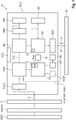
- Figure 1 serves to show different aspects of the invention, such as a method for controlling a communication between a vehicle 10 and at least one backend device 20 (for example a cloud server) in a vehicle-to-cloud-system, a corresponding electronic control unit ECU, a corresponding vehicle 10 (not shown in detail for reasons of simplicity only) as well as a corresponding computer program product. Furthermore, a corresponding vehicle-to-cloud-system may be also provided.
- Embodiments of the method for controlling a communication between the vehicle 10 and the at least one backend device 20 comprise the following.
- at least one (network) connection D is established between the vehicle 10 and the at least one backend device 20 with a keep alive timer Tkat, especially by an online connectivity unit OCU of an electronic control unit ECU of the vehicle 10 sending a connect and/or subscribe message m to the backend device 20.
- a timer T (may also be called keep open timer) is set smaller (or less) than or equal to the keep alive timer Tkat.
- a message m is sent from the vehicle 10 to the at least one backend device 20.
- the message contains a payload pl.
- the message m may be a connect, subscribe or a publish message-
- the message m is sent, if no communication has occurred between the vehicle 10 and the at least one backend device 20 within the timer T, that is when no messages m between the vehicle 10 and the at least one backend device 20 were sent within the timer T, in order to keep the connection D open.
- the idea is to provide a useful message m containing a payload pl to keep the connection D open, without waste to the network with non-useful messages. That is, the connection D is kept op with messages with payload without using messages sent for the sole purpose to keep the connection upon instead or additionally.
- the useful message m is sent just inside the keep alive timer Tkat as maximum.
- a timer T is set.
- the timer T may be set as the keep alive timer Tkat minus 1 second.
- the timer T may be set as a time in a range of 0,5 to 0,99, especially 0,7 to 0,95, preferably 0,9 times the time of the keep alive timer Tkat.
- an easy mechanism to set a timer T may be provided.
- a user may set the timer T manually, for example by operating an input device, for example in the form of a display device at a vehicle dashboard 12.
- the timer T may be set automatically by an electronic control unit ECU of the vehicle 10.
- automatic setting of the timer T may be provided.
- a confirmation and/or adjustment possibility of the automatically set timer T may be provided for a user of the vehicle 10, for example by operating an input device, for example in the form of a display device at a vehicle dashboard.
- a verification may be carried out, if sending is possible, wherein especially a communication test to the backend device 20 may be carried out.
- the message m may be published by a vehicle state provider VSP.
- the vehicle state provider VSP may be connected to a power manager PM of the vehicle 10.
- the added information to the message m cannot be too large. No answer to such message m is needed.
- the backend device 20 may optimize many online services for the vehicle 10.
- the payload pl in the message m may contain application-specific data from at least one vehicle device MOD.
- the message m may be published by at least one of the following vehicle devices MOD:
- the part of the electronic control unit ECU shown in figure 1 may also be called online connectivity unit OCU.
- the electronic control unit ECU has a memory M, in which a program code is stored, and a computing unit CU, wherein when carrying out the program code by the computing unit CU, a method may be performed as described above.
- the electronic control unit ECU comprises a vehicle state provider VSP configured to provide the payload pl in the message m. Additionally, the electronic control unit ECU comprises a power manager PM connected to the vehicle state provider VSP. Nevertheless, the invention may provide that the electronic control unit ECU comprises a wakeup manager WUM, whereas the wakeup manager WUM may be deactivated or inactive, when the method according to one of the proceeding claims is performed. Thus, the wakeup manager WUM may provide a fail back option to reactivate the connection D by sending a PING request message to the at least one corresponding backend device 20.
- the electronic control unit ECU may provide connectivity subunits C, so called Message Queuing Telemetry Transport (MQTT) clients, for the vehicle devices MOD.
- MQTT Message Queuing Telemetry Transport
- the backend device 20 may then be called MQTT server.
- Figure 1 shows only schematically the example of one vehicle device MOD and one backend device 20, wherein a plurality of vehicle devices MOD and a variety of backend devices 20 may be provided within the meaning of the invention.
- the vehicle devices MOD may subscribe to a publish-subscribe messaging environment pub/sub using different topics t provided by the at least one backend device 20 or even various backend devices 20.
- the publish-subscribe messaging environment pub/sub may use ,for example, the MQTT protocol.
- the at least one backend device 20 or even various backend devices 20 may provide mobile online services (or in other words cloud-computing applications) for the vehicle devices MOD.
- the electronic control unit ECU may comprise a managing connecting gateway GP for routing the messages m between a plurality of vehicle devices MOD and a variety of backend devices 20, whereas the message m is transmitted by the managing connecting gateway GP to the variety of backend devices 20.
- the managing connecting gateway GP may provide bridges to the various backend devices 20 for different vehicle devices MOD according to the topics t to which the vehicle devices MOD are subscribed.
- the electronic control unit ECU may comprise a project connecting gateway PGP (for example in form of local MQTT broker of Mosquitto type) connected to the plurality of the connectivity subunits C over corresponding communication lines L.
- the project connecting gateway PGP is connected to the a managing connecting gateway GP over a communication line TLS by means of a TLS-Server TLS-S.
- the project connecting gateway PGP may provide a MQTT bridge MB to the managing connecting gateway GP.
- the managing connecting gateway GP may use a manifest manager MM and an MQTT manifest manager interface MMI to identify the connectivity subunits C connected to the project connecting gateway PGP. Further, the managing connecting gateway GP may use a service router SR to translate the topics t to which the connectivity subunits C are subscribed.
- the managing connecting gateway GP may comprise a subscription mapping repository Map for the different topics t provided by various backend devices X, Y, Z and for the connectivity subunits C subscribed to the different topics t.
- the managing connecting gateway GP may address messages m using a topic routing to distribute the messages m to the right backend device 20. If a message m published by one vehicle device MOD has a topic t that is supported by multiple backend devices 20, then this message m may be correspondingly forwarded to matching backend devices 20. Also, if a message m published by a backend device 20 has a topic t to which multiple vehicle devices MOD are subscribed, this message m may be correspondingly forwarded to matching vehicle devices MOD.
- the managing connecting gateway GP may comprise a proxy server SGP to translate the messages m and/or to provide authentication and/or authorization between the plurality of the vehicle device MOD and the various backend devices 20.
- the invention may foresee that the managing connecting gateway GP decrypts the messages m for purposes of routing to the various backend devices 20. After assigning messages m to the corresponding backend devices 20, the messages m may be encrypted again.
- the message m containing the payload pl will be transmitted by the managing connecting gateway GP to all backend devices 20 to keep all bridges or all connections D to all backend devices 20 open.
Landscapes
- Engineering & Computer Science (AREA)
- Computer Networks & Wireless Communication (AREA)
- Signal Processing (AREA)
- Health & Medical Sciences (AREA)
- General Health & Medical Sciences (AREA)
- Cardiology (AREA)
- Computing Systems (AREA)
- Medical Informatics (AREA)
- Small-Scale Networks (AREA)
- Mobile Radio Communication Systems (AREA)
- Traffic Control Systems (AREA)
Abstract
Description
- The invention is related to a method for controlling a communication between a vehicle and at least one backend device in a vehicle-to-cloud-system, especially from the vehicle side of the system, according to the independent method claim. Further, the invention is related to an electronic control unit according to the independent device claim. Furthermore, the invention is related to a vehicle comprising a corresponding electronic control unit according to the second independent device claim. Moreover, the invention is related to a computer program product for a corresponding method according to the independent product claim.
- Vehicle communication systems using a publish-subscribe messaging protocol are basically known, for example from
DE 10 2018 130 216 A1 . By establishing a connection between a vehicle and a backend device, for example cloud server, the vehicle sends a connect message to the backend device with a defined keep alive timer. If the open connection is not used for a time set with the keep alive timer, the vehicle will generate a ping request message and expect to receive a ping response message from the backend device to keep the connection open. Ping messages have no useful content and cause non-useful traffic for the network. - The aim of the present invention is to provide a method for controlling a communication between a vehicle and at least one backend device in a vehicle-to-cloud-system, especially from the vehicle side of the system, with improved connectivity. The aim of the present invention is especially to provide a method for controlling a communication between a vehicle and at least one backend device in a vehicle-to-cloud-system, which enables to keep the connection between the vehicle and the backend device open in an easy, but useful way, preferably without non-useful traffic for the network. Also, the aim of the invention is to provide a corresponding electronic control unit for the vehicle, a corresponding vehicle and a related computer program product for the inventive method.
- According to the first aspect, the invention provides a method for controlling a communication between a vehicle and at least one backend device in a vehicle-to-cloud-system, especially from the vehicle side of the system, with the features of the independent method claim. According to the second aspect, the invention provides an electronic control unit with the features of the independent device claim. According to the third aspect, the invention provides a vehicle comprising a corresponding electronic control unit with the features of the independent device claim. Also an aspect of the invention is a corresponding vehicle-to-cloud-system.
- According to the fourth aspect, the invention provides a computer program product for a corresponding method with the features of the independent product claim. Details and features disclosed on individual aspects of the invention also apply to the other aspects of the invention and vice versa.
- According to the first aspect, embodiments of the invention provide a method for controlling a (preferably wireless) communication (over a network, for example over a mobile phone network) between a vehicle and at least one backend device (on the cloud side of the system) in a vehicle-to-cloud-system, especially from the vehicle side of the system, the method comprising:
- establishing a connection (preferably network connection) between the vehicle and the at least one backend device (for example cloud server) with a keep alive timer, especially by an online connectivity unit of an electronic control unit of the vehicle sending a connect and/or subscribe message to the backend device,
- setting a timer (may also be called keep open timer) smaller (or less) than or equal to the keep alive timer,
- sending a message containing a payload from the vehicle to the at least one backend device, if no communication (in other words, when no messages were sent) between the vehicle and the at least one backend device has occurred within the timer (within the period set by the timer or until the time set by the timer), in order to keep the connection open.
- Embodiments of the method may be carried out in the given order or in a modified order. In some embodiments, certain method steps may be carried out simultaneously and/or repeatedly to allow a flowing process, for example for different connections. In some embodiments, sending a message may be carried out periodically with the period equal to the timer being set.
- The inventive idea is to publish useful messages to keep the connection open, without waste to the network with non-useful messages, just inside the maximum timeout window defined with the keep alive timer. For this aim, a special timer may be set. Then a useful message, that is the message having a payload, may be sent. In case no useful information can be provided by the vehicle to the cloud, at least a status information (moving, parking, motor on, motor off or the like) may be sent to the backend device. The payload of the status information is not large. Also no answer or acknowledgment message to the message with the status information is needed from the cloud. Thus, the network will not be unnecessarily overloaded. No other participants in the vehicle-to-cloud-system are needed to keep the connection open between the vehicle and the at least one backend device. Also, no separate efforts are needed from the side of the backend device.
- The invention may provide improved connectivity in a publish-subscribe messaging environment ensuring that the established connection is open. Especially the invention may provide fast, reliable and highly responsive mobile online services for the vehicle devices in a publish-subscribe messaging environment ensuring that the network is not overloaded. Latency times may be reduced or even avoided. Also, the functionality of the electronic control unit and the vehicle may be considerably improved in this way for more safety, intelligence, environmental friendliness and customer-friendly and comfortable operations as well as enjoyable operations.
- In some embodiments, the payload in the message contains a vehicle state, and/or the message is published by a vehicle state provider. Thus, the traffic in the network may be reduced. No answer to such message is needed. When knowing the vehicle state, the backend device may optimize some services concerning the vehicle. When a vehicle is not in motion, for example, it does not need updated GPS data. A moving vehicle, for example, does not need comfort services such as automatically switching the light on or off.
- In some embodiments, the payload in the message contains application-specific data from at least one vehicle device and/or the message is published by at least one of the following vehicle devices:
- sensor device, such as crash-sensor, velocity sensor, and so on,
- safety device, such as breakdown call, emergency call,
- environment device, such as weather forecast, pollutant load sensor, environmental zone detection unit,
- information device, for example for online traffic information, online destination import, online route import, online POI search, my POIs, petrol stations, parking spaces, vehicle state report, time manager, weather, news and so on,
- entertainment device, for example for streaming services, and/or
- comfort device, such as door closing detectors, light off detectors, parking position detectors, vehicle state and/or condition detector, trip data base, user calendar, information call and so on.
- In some embodiments, the timer is set as the keep alive timer minus 1 second or the timer is set to a time in a range of (that is a time between two time moments) 0,5 to 0,99, especially 0,7 to 0,95, preferably 0,9 times the time of the keep alive timer. Thus, an easy mechanism with reduced computing effort may be provided to set the timer.
- In some embodiments, the timer is set manually by an user of the vehicle, especially by operating an input device, preferably a display device at a vehicle dashboard, of the vehicle. A user being able to set the timer may increase user friendliness and/or customer satisfaction.
- In some embodiments, the timer is set automatically by an electronic control unit of the vehicle. Thus, automatic settings for the timer may be provided.
- In some embodiments, a confirmation and/or adjustment possibility of the timer is provided for an user of the vehicle, especially by operating an input device, for example a display device at a vehicle dashboard, of the vehicle. Thus, the user may keep an overview of the timer, without the burden of making the decisions about the timer.
- In some embodiments, the method further comprises, before sending the message, carrying out a verification if sending is possible, wherein especially a communication test to the backend device is carried out. In this way, the situations may be tracked where the connectivity is lost not by lack of use of the connection but by network problems, for example by driving through a tunnel, bad network coverage and so on.
- According to the second aspect, the invention provides an electronic control unit comprising: a memory, in which a program code is stored, and a computing unit, wherein when carrying out the program code by the computing unit, a method is performed as described above. With embodiments of the electronic control unit the same advantages may be achieved as with corresponding embodiments of the method described above. Full reference is made to these advantages in the present case.
- In some embodiments, the electronic control unit comprises a vehicle state provider configured to provide the payload in the message, wherein especially the electronic control unit comprise a power manager connected to the vehicle state provider. In this way, the power control of the vehicle may be improved with the inventive functionality. Thus, the network may be facilitated. The safety, efficiency and the latency of online services provided by the backend device to the vehicle may then be improved. Also the online services provided by the backend device may be adapted to the current state of the vehicle in an advantageous way.
- In some embodiments, the electronic control unit comprises a wakeup manager, whereas the wakeup manager is configured to be deactivated or inactive if embodiments of the above described method are performed, and wherein the wakeup manager is configured to reactivate the connection by sending a PING request message to the at least one corresponding backend device. Thus, a double safety mechanism to keep the open connection alive may be provided. In some embodiments, the electronic control unit comprises a managing connecting gateway for routing the messages between a plurality of vehicle devices and a variety of backend devices, wherein the managing connecting gateway is configured to transmit the message to the variety of backend devices. Thus, the multiple cross connections between different vehicle devices and various backend devices may be kept open.
- According to the third aspect, the invention provides a vehicle comprising an embodiment of the electronic control unit as described above. With embodiments of such vehicle the same advantages may be achieved as with corresponding embodiments of the method described above. Full reference is made to these advantages in the present case.
- A vehicle according to the invention may comprise a plurality of vehicle devices, the plurality of vehicle devices being communicatively coupled (e.g. via a wireless connection, such as Wi-Fi or via a wired connection such as a CAN-bus, a LIN-Bus or an Ethernet connection) to the electronic control unit for connection to the at least one corresponding backend device, wherein the plurality of vehicle devices comprise at least one of the following devices:
- sensor device, such as crash-sensor, velocity sensor, and so on,
- safety device, such as breakdown call, emergency call,
- environment device, such as a weather forecast, pollutant load sensor, environmental zone detection unit,
- information device, for example for online traffic information, online destination import, online route import, online POI search, my POIs, petrol stations, parking spaces, vehicle state report, time manager, weather, news and so on,
- entertainment device, for example for streaming services, and/or
- comfort device, such as door closing detectors, light off detectors, parking position detectors, vehicle state and/or condition detector, trip data base, user calendar, information call and so on.
- Another advantage of the invention may be achieved with providing a corresponding vehicle-to-cloud-system.
- According to the fourth aspect, the invention provides a computer program product comprising a program code for carrying out a method as described above. In other words, the computer program product comprises instructions which, when the program is executed by a computer, cause the computer to carry out an embodiment of the method as described above. With embodiments of the computer program product the same advantages may be achieved as with corresponding embodiments of the method described above. Full reference is made to these advantages in the present case.
- The invention and its further developments as well as its advantages will be explained in more detail below using figures. The figures show schematically:
-
Fig. 1 a schematic design of an electronic control unit within the meaning of the invention. -
Figure 1 serves to show different aspects of the invention, such as a method for controlling a communication between avehicle 10 and at least one backend device 20 (for example a cloud server) in a vehicle-to-cloud-system, a corresponding electronic control unit ECU, a corresponding vehicle 10 (not shown in detail for reasons of simplicity only) as well as a corresponding computer program product. Furthermore, a corresponding vehicle-to-cloud-system may be also provided. - Embodiments of the method for controlling a communication between the
vehicle 10 and the at least onebackend device 20 comprise the following. First, at least one (network) connection D is established between thevehicle 10 and the at least onebackend device 20 with a keep alive timer Tkat, especially by an online connectivity unit OCU of an electronic control unit ECU of thevehicle 10 sending a connect and/or subscribe message m to thebackend device 20. Additionally, a timer T (may also be called keep open timer) is set smaller (or less) than or equal to the keep alive timer Tkat. A message m is sent from thevehicle 10 to the at least onebackend device 20. The message contains a payload pl. The message m may be a connect, subscribe or a publish message- The message m is sent, if no communication has occurred between thevehicle 10 and the at least onebackend device 20 within the timer T, that is when no messages m between thevehicle 10 and the at least onebackend device 20 were sent within the timer T, in order to keep the connection D open. - The idea is to provide a useful message m containing a payload pl to keep the connection D open, without waste to the network with non-useful messages. That is, the connection D is kept op with messages with payload without using messages sent for the sole purpose to keep the connection upon instead or additionally. The useful message m is sent just inside the keep alive timer Tkat as maximum.
- For this purpose, a timer T is set. The timer T may be set as the keep alive timer Tkat minus 1 second. Alternatively, the timer T may be set as a time in a range of 0,5 to 0,99, especially 0,7 to 0,95, preferably 0,9 times the time of the keep alive timer Tkat. Thus, an easy mechanism to set a timer T may be provided.
- It is possible that a user may set the timer T manually, for example by operating an input device, for example in the form of a display device at a vehicle dashboard 12.
- Instead of a manual setting of the timer or in addition to this, the timer T may be set automatically by an electronic control unit ECU of the
vehicle 10. Thus, automatic setting of the timer T may be provided. In such case a confirmation and/or adjustment possibility of the automatically set timer T may be provided for a user of thevehicle 10, for example by operating an input device, for example in the form of a display device at a vehicle dashboard. - Before sending the message m, a verification may be carried out, if sending is possible, wherein especially a communication test to the
backend device 20 may be carried out. - With respect to the message m, the payload pl may provide information about a vehicle state (such as pl=start or stop). In this case, the message m may be published by a vehicle state provider VSP. The vehicle state provider VSP may be connected to a power manager PM of the
vehicle 10. To send the vehicle state start or stop, the added information to the message m cannot be too large. No answer to such message m is needed. Also, when knowing thevehicle 10 state start or stop, thebackend device 20 may optimize many online services for thevehicle 10. - Instead of, or in addition to, a vehicle state start or stop, the payload pl in the message m may contain application-specific data from at least one vehicle device MOD. In this case, the message m may be published by at least one of the following vehicle devices MOD:
- sensor device, such as crash-sensor, velocity sensor, and so on,
- safety device, such as breakdown call, emergency call,
- environment device, such as weather forecast, pollutant load sensor, environmental one detection unit,
- information device, for example for online traffic information, online destination import, online route import, online Point-of-Interest (POI) search, my POIs, petrol stations, parking spaces, vehicle state report, time manager, weather, news and so on,
- entertainment device, for example for streaming services, and/or
- comfort device, such as door closing detectors, light off detectors, parking position detectors, vehicle state and/or condition detector, trip data base, user calendar, information call and so on.
- The part of the electronic control unit ECU shown in
figure 1 may also be called online connectivity unit OCU. The electronic control unit ECU has a memory M, in which a program code is stored, and a computing unit CU, wherein when carrying out the program code by the computing unit CU, a method may be performed as described above. - In the embodiment depicted in
figure 1 , the electronic control unit ECU comprises a vehicle state provider VSP configured to provide the payload pl in the message m. Additionally, the electronic control unit ECU comprises a power manager PM connected to the vehicle state provider VSP. Nevertheless, the invention may provide that the electronic control unit ECU comprises a wakeup manager WUM, whereas the wakeup manager WUM may be deactivated or inactive, when the method according to one of the proceeding claims is performed. Thus, the wakeup manager WUM may provide a fail back option to reactivate the connection D by sending a PING request message to the at least onecorresponding backend device 20. - The electronic control unit ECU may provide connectivity subunits C, so called Message Queuing Telemetry Transport (MQTT) clients, for the vehicle devices MOD. The
backend device 20 may then be called MQTT server.Figure 1 shows only schematically the example of one vehicle device MOD and onebackend device 20, wherein a plurality of vehicle devices MOD and a variety ofbackend devices 20 may be provided within the meaning of the invention. - The vehicle devices MOD may subscribe to a publish-subscribe messaging environment pub/sub using different topics t provided by the at least one
backend device 20 or even variousbackend devices 20. The publish-subscribe messaging environment pub/sub may use ,for example, the MQTT protocol. The at least onebackend device 20 or even variousbackend devices 20 may provide mobile online services (or in other words cloud-computing applications) for the vehicle devices MOD. - As it may be further seen from
figure 1 , the electronic control unit ECU may comprise a managing connecting gateway GP for routing the messages m between a plurality of vehicle devices MOD and a variety ofbackend devices 20, whereas the message m is transmitted by the managing connecting gateway GP to the variety ofbackend devices 20. The managing connecting gateway GP may provide bridges to thevarious backend devices 20 for different vehicle devices MOD according to the topics t to which the vehicle devices MOD are subscribed. - As
figure 1 schematically indicates, the electronic control unit ECU may comprise a project connecting gateway PGP (for example in form of local MQTT broker of Mosquitto type) connected to the plurality of the connectivity subunits C over corresponding communication lines L. The project connecting gateway PGP is connected to the a managing connecting gateway GP over a communication line TLS by means of a TLS-Server TLS-S. The project connecting gateway PGP may provide a MQTT bridge MB to the managing connecting gateway GP. - At the MQTT bridge MB the managing connecting gateway GP may use a manifest manager MM and an MQTT manifest manager interface MMI to identify the connectivity subunits C connected to the project connecting gateway PGP. Further, the managing connecting gateway GP may use a service router SR to translate the topics t to which the connectivity subunits C are subscribed.
- Advantageously the managing connecting gateway GP may comprise a subscription mapping repository Map for the different topics t provided by various backend devices X, Y, Z and for the connectivity subunits C subscribed to the different topics t. The managing connecting gateway GP may address messages m using a topic routing to distribute the messages m to the
right backend device 20. If a message m published by one vehicle device MOD has a topic t that is supported bymultiple backend devices 20, then this message m may be correspondingly forwarded to matchingbackend devices 20. Also, if a message m published by abackend device 20 has a topic t to which multiple vehicle devices MOD are subscribed, this message m may be correspondingly forwarded to matching vehicle devices MOD. - The managing connecting gateway GP may comprise a proxy server SGP to translate the messages m and/or to provide authentication and/or authorization between the plurality of the vehicle device MOD and the
various backend devices 20. The invention may foresee that the managing connecting gateway GP decrypts the messages m for purposes of routing to thevarious backend devices 20. After assigning messages m to thecorresponding backend devices 20, the messages m may be encrypted again. - If a plurality of
backend devices 20 are connected to thevehicle 10, the message m containing the payload pl will be transmitted by the managing connecting gateway GP to allbackend devices 20 to keep all bridges or all connections D to allbackend devices 20 open. - The above description of the figures describes the present invention only in the context of examples. Of course, individual features of the embodiments may be combined with each other, provided it is technically reasonable, without leaving the scope of the invention.
-
- 10
- vehicle
- 20
- backend device
- pub/sub
- publish-subscribe messaging environment
- t
- topic
- m
- message
- pl
- payload
- D
- connection
- T
- timer
- Tkat
- keep alive timer
- ECU
- electronic control unit
- OCU
- online connectivity unit
- CU
- computing unit
- M
- memory
- VSP
- vehicle state provider
- start, stop
- vehicle state
- VUM
- wake up manager
- PM
- power manager
- C
- connectivity subunits
- MOD
- vehicle device
- GP
- managing connecting gateway
- Map
- subscription mapping repository
- PGP
- project connecting gateway
- MB
- MQTT bridge
- MM
- manifest manager
- MMI
- MQTT manifest manager interface
- SR
- service router
- TLS
- TLS communication line
- TLS-S
- TLS server
- L
- communication line
- SGP
- proxy server
Claims (15)
- A method for controlling a communication between a vehicle (10) and at least one backend device (20) in a vehicle-to-cloud-system, the method comprising:- establishing a connection (D) between the vehicle (10) and the at least one backend device (20) with a keep alive timer (Tkat);- setting a timer (T) less than or equal to the keep alive timer (Tkat); and- sending a message (m) containing a payload (pl) from the vehicle (10) to the at least one backend device (20), if no communication between the vehicle (10) and the at least one backend device (20) has occurred within the timer (T), in order to keep the connection (D) open.
- The method according to claim 1,
characterized in that
the payload (pl) in the message (m) contains a vehicle state (start, stop), and/or the message (m) is published by a vehicle state provider (VSP). - The method according to claim 1 or 2,
characterized in that
the payload (pl) in the message (m) contains application-specific data from at least one vehicle device (MOD) and/or the message (m) is published by at least one of the following vehicle devices (MOD):- sensor device,- safety device,- environment device,- information device,- entertainment device, and/or- comfort device. - A method according to one of the preceding claims,
characterized in that
the timer (T) is set as the keep alive timer (Tkat) minus 1 second or the timer (T) is set to a time in a range of 0,5 to 0,99, especially 0,7 to 0,95, preferably 0,9 times the time of the keep alive timer (Tkat). - A method according to one of the preceding claims,
characterized in that
the timer (T) is set manually by a user of the vehicle (10), especially by operating an input device, preferably a display device at a vehicle dashboard, of the vehicle (10). - A method according to one of the preceding claims,
characterized in that
the timer (T) is set automatically by an electronic control unit (ECU) of the vehicle (10). - The method according to the preceding claim,
characterized in that
a confirmation and/or adjustment possibility of the timer (T) is provided for a user of the vehicle (10), especially by operating an input device, for example a display device at a vehicle dashboard, of the vehicle (10). - The method according to one of the preceding claims,
characterized in that
the method further comprises, before sending the message, carrying out a verification if sending is possible, wherein especially a communication test to the backend device (20) is carried out. - An electronic control unit (ECU) comprising:a memory (M), in which a program code is stored, anda computing unit (CU), wherein when carrying out the program code by the computing unit (CU), a method according to one of the preceding claims is performed.
- The electronic control unit (ECU) according to the preceding claim,
characterized in that
the electronic control unit (ECU) comprises a vehicle state provider (VSP) configured to provide the payload (pl) in the message (m),
wherein especially the electronic control unit (ECU) comprises a power manager (PM) connected to the vehicle state provider (VSP). - The electronic control unit (ECU) according to one of the preceding claims 9 or 10,
characterized in that
the electronic control unit (ECU) comprises a wakeup manager (WUM),
wherein the wakeup manager (WUM) is configured to be deactivated or inactive, if the method according to one of claims 1 - 8 is performed,
and wherein the wakeup manager (WUM) is configured to reactivate the connection (D) by sending a PING request message to the at least one corresponding backend device (20). - An electronic control unit (ECU) according to one of the preceding claims 9 to 11,
characterized in that
the electronic control unit (ECU) comprises a managing connecting gateway (GP) for routing messages between a plurality of vehicle devices (MOD) and a variety of backend devices (20),
wherein the managing connecting gateway (GP) is configured to transmit the message to the variety of backend devices (20). - A vehicle (10) comprising an electronic control unit (ECU) according to one of the preceding claims 9 to 12.
- A vehicle (10) according to the preceding claim,
characterized in that
the vehicle further comprises a plurality of vehicle devices (MOD), the plurality of vehicle devices (MOD) being communicatively coupled to the electronic control unit (ECU) for connection to the at least one corresponding backend device (20), wherein the plurality of vehicle devices comprise at least one of the following devices:- sensor device,- safety device,- environment device,- information device,- entertainment device, and/or- comfort device. - A computer program product comprising instructions which, when the program is executed by a computer, cause the computer to carry out a method according to any one of claims 1 to 8.
Priority Applications (2)
| Application Number | Priority Date | Filing Date | Title |
|---|---|---|---|
| EP20195710.7A EP3968600B1 (en) | 2020-09-11 | 2020-09-11 | Controlling a communication between a vehicle and a backend device |
| US17/469,459 US20220086943A1 (en) | 2020-09-11 | 2021-09-08 | Method for controlling a communication between a vehicle and a backend device |
Applications Claiming Priority (1)
| Application Number | Priority Date | Filing Date | Title |
|---|---|---|---|
| EP20195710.7A EP3968600B1 (en) | 2020-09-11 | 2020-09-11 | Controlling a communication between a vehicle and a backend device |
Publications (2)
| Publication Number | Publication Date |
|---|---|
| EP3968600A1 true EP3968600A1 (en) | 2022-03-16 |
| EP3968600B1 EP3968600B1 (en) | 2024-11-06 |
Family
ID=72473457
Family Applications (1)
| Application Number | Title | Priority Date | Filing Date |
|---|---|---|---|
| EP20195710.7A Active EP3968600B1 (en) | 2020-09-11 | 2020-09-11 | Controlling a communication between a vehicle and a backend device |
Country Status (2)
| Country | Link |
|---|---|
| US (1) | US20220086943A1 (en) |
| EP (1) | EP3968600B1 (en) |
Citations (4)
| Publication number | Priority date | Publication date | Assignee | Title |
|---|---|---|---|---|
| EP1670213A1 (en) * | 2004-12-08 | 2006-06-14 | Microsoft Corporation | Verifying and maintaining connection liveliness in a reliable messaging for web services environment |
| US8736438B1 (en) * | 2012-08-15 | 2014-05-27 | Google Inc. | Computing device as a vehicle key |
| CN107819642A (en) * | 2017-09-15 | 2018-03-20 | 中国科学院计算技术研究所 | Based on distributed adaptive heartbeat method and system |
| DE102018130216A1 (en) | 2017-12-01 | 2019-06-06 | GM Global Technology Operations LLC | Vehicle communication using a publish-subscribe messaging protocol |
Family Cites Families (23)
| Publication number | Priority date | Publication date | Assignee | Title |
|---|---|---|---|---|
| US6311186B1 (en) * | 1998-02-20 | 2001-10-30 | Priority Call Management, Inc. | Telecommunications switching system utilizing a channelized database access mechanism |
| US6760775B1 (en) * | 1999-03-05 | 2004-07-06 | At&T Corp. | System, method and apparatus for network service load and reliability management |
| US7706299B2 (en) * | 2004-10-13 | 2010-04-27 | Cisco Technology, Inc. | Upstream bandwidth estimation |
| US20070274233A1 (en) * | 2006-05-25 | 2007-11-29 | Amnon Ptashek | Method, apparatus and system for multi peer to peer services |
| US7885616B2 (en) * | 2006-08-16 | 2011-02-08 | Research In Motion Limited | Method and system for coordinating necessary radio transmission events with unrelated opportunistic events to optimize battery life and network resources |
| US8023432B2 (en) * | 2007-03-12 | 2011-09-20 | Microsoft Corporation | Cost reduction of NAT connection state keep-alive |
| US20100110899A1 (en) * | 2008-10-31 | 2010-05-06 | Vanzante Craig A | Stressing a network device |
| US9313800B2 (en) * | 2009-06-23 | 2016-04-12 | Nokia Technologies Oy | Method and apparatus for optimizing energy consumption for wireless connectivity |
| US8335853B2 (en) * | 2009-12-17 | 2012-12-18 | Sonus Networks, Inc. | Transparent recovery of transport connections using packet translation techniques |
| US9350550B2 (en) * | 2013-09-10 | 2016-05-24 | M2M And Iot Technologies, Llc | Power management and security for wireless modules in “machine-to-machine” communications |
| GB2512502B (en) * | 2014-02-25 | 2015-03-11 | Cambridge Silicon Radio Ltd | Device authentication |
| US9716762B2 (en) * | 2014-03-31 | 2017-07-25 | Ford Global Technologies Llc | Remote vehicle connection status |
| AU2015395037A1 (en) * | 2014-05-16 | 2017-01-12 | Khalifa University of Science and Technology | Self-powered microsensors for in-situ spatial and temporal measurements and methods of using same in hydraulic fracturing |
| US10104454B2 (en) * | 2015-10-05 | 2018-10-16 | Parkifi, Inc. | Parking data aggregation and distribution |
| US10672242B2 (en) * | 2015-10-16 | 2020-06-02 | Vivint, Inc. | Proximity based security monitoring |
| CN106161586B (en) * | 2016-06-07 | 2019-03-19 | 四川长虹电器股份有限公司 | Realize intelligent terminal to the long poll control system and method for vehicle device |
| CN106856502A (en) * | 2016-12-02 | 2017-06-16 | 北京京东尚科信息技术有限公司 | Unmanned vehicle control method, unmanned vehicle, server and unmanned vehicle system |
| DE112017006689T5 (en) * | 2016-12-30 | 2019-09-12 | Intel Corporation | PROCESS AND DEVICES FOR RADIO COMMUNICATION |
| US11294949B2 (en) * | 2018-09-04 | 2022-04-05 | Toyota Connected North America, Inc. | Systems and methods for querying a distributed inventory of visual data |
| US11188099B2 (en) * | 2019-04-25 | 2021-11-30 | GM Global Technology Operations LLC | Method, system and apparatus for an autonomous routing algorithm with a failsafe provision at a final drop-off location |
| US11827237B2 (en) * | 2019-12-27 | 2023-11-28 | Toyota Connected North America, Inc. | Systems and methods for real-time crash detection using telematics data |
| US11115482B1 (en) * | 2020-03-31 | 2021-09-07 | Xevo Inc. | System and method for correlating keep-alive connection communications with unary connection communications |
| US11622414B2 (en) * | 2020-07-17 | 2023-04-04 | Qualcomm Incorporated | Enhanced connection release techniques for wireless communications systems |
-
2020
- 2020-09-11 EP EP20195710.7A patent/EP3968600B1/en active Active
-
2021
- 2021-09-08 US US17/469,459 patent/US20220086943A1/en active Pending
Patent Citations (5)
| Publication number | Priority date | Publication date | Assignee | Title |
|---|---|---|---|---|
| EP1670213A1 (en) * | 2004-12-08 | 2006-06-14 | Microsoft Corporation | Verifying and maintaining connection liveliness in a reliable messaging for web services environment |
| US8736438B1 (en) * | 2012-08-15 | 2014-05-27 | Google Inc. | Computing device as a vehicle key |
| CN107819642A (en) * | 2017-09-15 | 2018-03-20 | 中国科学院计算技术研究所 | Based on distributed adaptive heartbeat method and system |
| DE102018130216A1 (en) | 2017-12-01 | 2019-06-06 | GM Global Technology Operations LLC | Vehicle communication using a publish-subscribe messaging protocol |
| US20190173951A1 (en) * | 2017-12-01 | 2019-06-06 | GM Global Technology Operations LLC | Vehicle communication using publish-subscribe messaging protocol |
Also Published As
| Publication number | Publication date |
|---|---|
| EP3968600B1 (en) | 2024-11-06 |
| US20220086943A1 (en) | 2022-03-17 |
Similar Documents
| Publication | Publication Date | Title |
|---|---|---|
| US11653222B2 (en) | Optimizing wireless networking using a virtual geographic information system overlay | |
| US8249596B2 (en) | Location based handoff | |
| US8005483B2 (en) | Mobile caching and data relay vectoring systems and methods | |
| CN107071725B (en) | Method, network entity, mobile terminal and medium for cellular network services | |
| KR100814532B1 (en) | Network presence updating apparatus and method | |
| US20130344802A1 (en) | System and method for multi-tier automatic transit system updating | |
| US20160119165A1 (en) | Methods and systems to manage network connections | |
| US10395532B2 (en) | Method for operating a vehicle, and motor vehicle | |
| CN104581640B (en) | It is a kind of to realize that car networking connects the Cloud Server of people's function, system and method | |
| EP3378244B1 (en) | Providing location information of a terminal in a communication network | |
| WO2015166481A1 (en) | System interfacing a fleet management system and a ride sharing system | |
| Ojanperä et al. | Use cases and communications architecture for 5G-enabled road safety services | |
| EP3293893B1 (en) | Ground direction of aircraft datalinks | |
| US12363510B2 (en) | V2X network communication | |
| CN116801421A (en) | Backhaul link establishment method, apparatus, electronic device and storage medium | |
| US9565618B1 (en) | Air to ground management of multiple communication paths | |
| EP3968602A1 (en) | An online connectivity unit for an electronic control unit of a vehicle | |
| Ucar et al. | Platoon as a mobile vehicular cloud | |
| EP3968600B1 (en) | Controlling a communication between a vehicle and a backend device | |
| WO2006136109A1 (en) | Vehicle communications system | |
| Munoz et al. | 5GCroCo barcelona trial site for cross-border anticipated cooperative collision avoidance | |
| Šandor et al. | Vehicle2X communication proposal for Adaptive AUTOSAR | |
| US20240349157A1 (en) | Switching a Communication Connection | |
| US12438828B2 (en) | Systems and methods for brokering device communications within distributed publisher-subscriber networks | |
| CN102954797A (en) | Navigation method, navigation server and terminal |
Legal Events
| Date | Code | Title | Description |
|---|---|---|---|
| PUAI | Public reference made under article 153(3) epc to a published international application that has entered the european phase |
Free format text: ORIGINAL CODE: 0009012 |
|
| STAA | Information on the status of an ep patent application or granted ep patent |
Free format text: STATUS: THE APPLICATION HAS BEEN PUBLISHED |
|
| AK | Designated contracting states |
Kind code of ref document: A1 Designated state(s): AL AT BE BG CH CY CZ DE DK EE ES FI FR GB GR HR HU IE IS IT LI LT LU LV MC MK MT NL NO PL PT RO RS SE SI SK SM TR |
|
| STAA | Information on the status of an ep patent application or granted ep patent |
Free format text: STATUS: REQUEST FOR EXAMINATION WAS MADE |
|
| 17P | Request for examination filed |
Effective date: 20220916 |
|
| RBV | Designated contracting states (corrected) |
Designated state(s): AL AT BE BG CH CY CZ DE DK EE ES FI FR GB GR HR HU IE IS IT LI LT LU LV MC MK MT NL NO PL PT RO RS SE SI SK SM TR |
|
| STAA | Information on the status of an ep patent application or granted ep patent |
Free format text: STATUS: EXAMINATION IS IN PROGRESS |
|
| 17Q | First examination report despatched |
Effective date: 20231107 |
|
| REG | Reference to a national code |
Ref country code: DE Ref legal event code: R079 Free format text: PREVIOUS MAIN CLASS: H04L0029080000 Ipc: H04L0067125000 Ref country code: DE Ref legal event code: R079 Ref document number: 602020040714 Country of ref document: DE Free format text: PREVIOUS MAIN CLASS: H04L0029080000 Ipc: H04L0067125000 |
|
| GRAP | Despatch of communication of intention to grant a patent |
Free format text: ORIGINAL CODE: EPIDOSNIGR1 |
|
| STAA | Information on the status of an ep patent application or granted ep patent |
Free format text: STATUS: GRANT OF PATENT IS INTENDED |
|
| RIC1 | Information provided on ipc code assigned before grant |
Ipc: H04L 67/55 20220101ALN20240404BHEP Ipc: H04L 67/141 20220101ALI20240404BHEP Ipc: H04L 67/145 20220101ALI20240404BHEP Ipc: H04L 67/125 20220101AFI20240404BHEP |
|
| INTG | Intention to grant announced |
Effective date: 20240422 |
|
| GRAS | Grant fee paid |
Free format text: ORIGINAL CODE: EPIDOSNIGR3 |
|
| GRAA | (expected) grant |
Free format text: ORIGINAL CODE: 0009210 |
|
| STAA | Information on the status of an ep patent application or granted ep patent |
Free format text: STATUS: THE PATENT HAS BEEN GRANTED |
|
| AK | Designated contracting states |
Kind code of ref document: B1 Designated state(s): AL AT BE BG CH CY CZ DE DK EE ES FI FR GB GR HR HU IE IS IT LI LT LU LV MC MK MT NL NO PL PT RO RS SE SI SK SM TR |
|
| REG | Reference to a national code |
Ref country code: GB Ref legal event code: FG4D |
|
| REG | Reference to a national code |
Ref country code: CH Ref legal event code: EP |
|
| REG | Reference to a national code |
Ref country code: DE Ref legal event code: R096 Ref document number: 602020040714 Country of ref document: DE |
|
| REG | Reference to a national code |
Ref country code: IE Ref legal event code: FG4D |
|
| REG | Reference to a national code |
Ref country code: LT Ref legal event code: MG9D |
|
| REG | Reference to a national code |
Ref country code: NL Ref legal event code: MP Effective date: 20241106 |
|
| PG25 | Lapsed in a contracting state [announced via postgrant information from national office to epo] |
Ref country code: HR Free format text: LAPSE BECAUSE OF FAILURE TO SUBMIT A TRANSLATION OF THE DESCRIPTION OR TO PAY THE FEE WITHIN THE PRESCRIBED TIME-LIMIT Effective date: 20241106 Ref country code: IS Free format text: LAPSE BECAUSE OF FAILURE TO SUBMIT A TRANSLATION OF THE DESCRIPTION OR TO PAY THE FEE WITHIN THE PRESCRIBED TIME-LIMIT Effective date: 20250306 Ref country code: PT Free format text: LAPSE BECAUSE OF FAILURE TO SUBMIT A TRANSLATION OF THE DESCRIPTION OR TO PAY THE FEE WITHIN THE PRESCRIBED TIME-LIMIT Effective date: 20250306 |
|
| PG25 | Lapsed in a contracting state [announced via postgrant information from national office to epo] |
Ref country code: NL Free format text: LAPSE BECAUSE OF FAILURE TO SUBMIT A TRANSLATION OF THE DESCRIPTION OR TO PAY THE FEE WITHIN THE PRESCRIBED TIME-LIMIT Effective date: 20241106 Ref country code: FI Free format text: LAPSE BECAUSE OF FAILURE TO SUBMIT A TRANSLATION OF THE DESCRIPTION OR TO PAY THE FEE WITHIN THE PRESCRIBED TIME-LIMIT Effective date: 20241106 |
|
| REG | Reference to a national code |
Ref country code: AT Ref legal event code: MK05 Ref document number: 1740646 Country of ref document: AT Kind code of ref document: T Effective date: 20241106 |
|
| PG25 | Lapsed in a contracting state [announced via postgrant information from national office to epo] |
Ref country code: BG Free format text: LAPSE BECAUSE OF FAILURE TO SUBMIT A TRANSLATION OF THE DESCRIPTION OR TO PAY THE FEE WITHIN THE PRESCRIBED TIME-LIMIT Effective date: 20241106 |
|
| PG25 | Lapsed in a contracting state [announced via postgrant information from national office to epo] |
Ref country code: ES Free format text: LAPSE BECAUSE OF FAILURE TO SUBMIT A TRANSLATION OF THE DESCRIPTION OR TO PAY THE FEE WITHIN THE PRESCRIBED TIME-LIMIT Effective date: 20241106 |
|
| PG25 | Lapsed in a contracting state [announced via postgrant information from national office to epo] |
Ref country code: NO Free format text: LAPSE BECAUSE OF FAILURE TO SUBMIT A TRANSLATION OF THE DESCRIPTION OR TO PAY THE FEE WITHIN THE PRESCRIBED TIME-LIMIT Effective date: 20250206 |
|
| PG25 | Lapsed in a contracting state [announced via postgrant information from national office to epo] |
Ref country code: LV Free format text: LAPSE BECAUSE OF FAILURE TO SUBMIT A TRANSLATION OF THE DESCRIPTION OR TO PAY THE FEE WITHIN THE PRESCRIBED TIME-LIMIT Effective date: 20241106 Ref country code: GR Free format text: LAPSE BECAUSE OF FAILURE TO SUBMIT A TRANSLATION OF THE DESCRIPTION OR TO PAY THE FEE WITHIN THE PRESCRIBED TIME-LIMIT Effective date: 20250207 Ref country code: AT Free format text: LAPSE BECAUSE OF FAILURE TO SUBMIT A TRANSLATION OF THE DESCRIPTION OR TO PAY THE FEE WITHIN THE PRESCRIBED TIME-LIMIT Effective date: 20241106 |
|
| PG25 | Lapsed in a contracting state [announced via postgrant information from national office to epo] |
Ref country code: PL Free format text: LAPSE BECAUSE OF FAILURE TO SUBMIT A TRANSLATION OF THE DESCRIPTION OR TO PAY THE FEE WITHIN THE PRESCRIBED TIME-LIMIT Effective date: 20241106 |
|
| PG25 | Lapsed in a contracting state [announced via postgrant information from national office to epo] |
Ref country code: RS Free format text: LAPSE BECAUSE OF FAILURE TO SUBMIT A TRANSLATION OF THE DESCRIPTION OR TO PAY THE FEE WITHIN THE PRESCRIBED TIME-LIMIT Effective date: 20250206 |
|
| PG25 | Lapsed in a contracting state [announced via postgrant information from national office to epo] |
Ref country code: SM Free format text: LAPSE BECAUSE OF FAILURE TO SUBMIT A TRANSLATION OF THE DESCRIPTION OR TO PAY THE FEE WITHIN THE PRESCRIBED TIME-LIMIT Effective date: 20241106 |
|
| PG25 | Lapsed in a contracting state [announced via postgrant information from national office to epo] |
Ref country code: DK Free format text: LAPSE BECAUSE OF FAILURE TO SUBMIT A TRANSLATION OF THE DESCRIPTION OR TO PAY THE FEE WITHIN THE PRESCRIBED TIME-LIMIT Effective date: 20241106 |
|
| PG25 | Lapsed in a contracting state [announced via postgrant information from national office to epo] |
Ref country code: EE Free format text: LAPSE BECAUSE OF FAILURE TO SUBMIT A TRANSLATION OF THE DESCRIPTION OR TO PAY THE FEE WITHIN THE PRESCRIBED TIME-LIMIT Effective date: 20241106 |
|
| PG25 | Lapsed in a contracting state [announced via postgrant information from national office to epo] |
Ref country code: RO Free format text: LAPSE BECAUSE OF FAILURE TO SUBMIT A TRANSLATION OF THE DESCRIPTION OR TO PAY THE FEE WITHIN THE PRESCRIBED TIME-LIMIT Effective date: 20241106 |
|
| PG25 | Lapsed in a contracting state [announced via postgrant information from national office to epo] |
Ref country code: SK Free format text: LAPSE BECAUSE OF FAILURE TO SUBMIT A TRANSLATION OF THE DESCRIPTION OR TO PAY THE FEE WITHIN THE PRESCRIBED TIME-LIMIT Effective date: 20241106 |
|
| PG25 | Lapsed in a contracting state [announced via postgrant information from national office to epo] |
Ref country code: CZ Free format text: LAPSE BECAUSE OF FAILURE TO SUBMIT A TRANSLATION OF THE DESCRIPTION OR TO PAY THE FEE WITHIN THE PRESCRIBED TIME-LIMIT Effective date: 20241106 |
|
| PG25 | Lapsed in a contracting state [announced via postgrant information from national office to epo] |
Ref country code: IT Free format text: LAPSE BECAUSE OF FAILURE TO SUBMIT A TRANSLATION OF THE DESCRIPTION OR TO PAY THE FEE WITHIN THE PRESCRIBED TIME-LIMIT Effective date: 20241106 |
|
| REG | Reference to a national code |
Ref country code: DE Ref legal event code: R097 Ref document number: 602020040714 Country of ref document: DE |
|
| PG25 | Lapsed in a contracting state [announced via postgrant information from national office to epo] |
Ref country code: SE Free format text: LAPSE BECAUSE OF FAILURE TO SUBMIT A TRANSLATION OF THE DESCRIPTION OR TO PAY THE FEE WITHIN THE PRESCRIBED TIME-LIMIT Effective date: 20241106 |
|
| PLBE | No opposition filed within time limit |
Free format text: ORIGINAL CODE: 0009261 |
|
| STAA | Information on the status of an ep patent application or granted ep patent |
Free format text: STATUS: NO OPPOSITION FILED WITHIN TIME LIMIT |
|
| PGFP | Annual fee paid to national office [announced via postgrant information from national office to epo] |
Ref country code: DE Payment date: 20250930 Year of fee payment: 6 |
|
| 26N | No opposition filed |
Effective date: 20250807 |
|
| PGFP | Annual fee paid to national office [announced via postgrant information from national office to epo] |
Ref country code: FR Payment date: 20250925 Year of fee payment: 6 |
|
| P01 | Opt-out of the competence of the unified patent court (upc) registered |
Free format text: CASE NUMBER: UPC_APP_0014665_3968600/2025 Effective date: 20251125 |
|
| REG | Reference to a national code |
Ref country code: CH Ref legal event code: H13 Free format text: ST27 STATUS EVENT CODE: U-0-0-H10-H13 (AS PROVIDED BY THE NATIONAL OFFICE) Effective date: 20260504 |