EP3968246A1 - Systems and methods for data collection from maintenance-prone vehicle components - Google Patents
Systems and methods for data collection from maintenance-prone vehicle components Download PDFInfo
- Publication number
- EP3968246A1 EP3968246A1 EP21196356.6A EP21196356A EP3968246A1 EP 3968246 A1 EP3968246 A1 EP 3968246A1 EP 21196356 A EP21196356 A EP 21196356A EP 3968246 A1 EP3968246 A1 EP 3968246A1
- Authority
- EP
- European Patent Office
- Prior art keywords
- sensors
- edge node
- measurement data
- wheel assembly
- computer
- Prior art date
- Legal status (The legal status is an assumption and is not a legal conclusion. Google has not performed a legal analysis and makes no representation as to the accuracy of the status listed.)
- Ceased
Links
Images


Classifications
-
- G—PHYSICS
- G06—COMPUTING OR CALCULATING; COUNTING
- G06Q—INFORMATION AND COMMUNICATION TECHNOLOGY [ICT] SPECIALLY ADAPTED FOR ADMINISTRATIVE, COMMERCIAL, FINANCIAL, MANAGERIAL OR SUPERVISORY PURPOSES; SYSTEMS OR METHODS SPECIALLY ADAPTED FOR ADMINISTRATIVE, COMMERCIAL, FINANCIAL, MANAGERIAL OR SUPERVISORY PURPOSES, NOT OTHERWISE PROVIDED FOR
- G06Q10/00—Administration; Management
- G06Q10/20—Administration of product repair or maintenance
-
- G—PHYSICS
- G07—CHECKING-DEVICES
- G07C—TIME OR ATTENDANCE REGISTERS; REGISTERING OR INDICATING THE WORKING OF MACHINES; GENERATING RANDOM NUMBERS; VOTING OR LOTTERY APPARATUS; ARRANGEMENTS, SYSTEMS OR APPARATUS FOR CHECKING NOT PROVIDED FOR ELSEWHERE
- G07C5/00—Registering or indicating the working of vehicles
- G07C5/006—Indicating maintenance
-
- G—PHYSICS
- G01—MEASURING; TESTING
- G01D—MEASURING NOT SPECIALLY ADAPTED FOR A SPECIFIC VARIABLE; ARRANGEMENTS FOR MEASURING TWO OR MORE VARIABLES NOT COVERED IN A SINGLE OTHER SUBCLASS; TARIFF METERING APPARATUS; MEASURING OR TESTING NOT OTHERWISE PROVIDED FOR
- G01D21/00—Measuring or testing not otherwise provided for
- G01D21/02—Measuring two or more variables by means not covered by a single other subclass
-
- G—PHYSICS
- G06—COMPUTING OR CALCULATING; COUNTING
- G06N—COMPUTING ARRANGEMENTS BASED ON SPECIFIC COMPUTATIONAL MODELS
- G06N20/00—Machine learning
-
- G—PHYSICS
- G06—COMPUTING OR CALCULATING; COUNTING
- G06N—COMPUTING ARRANGEMENTS BASED ON SPECIFIC COMPUTATIONAL MODELS
- G06N5/00—Computing arrangements using knowledge-based models
- G06N5/04—Inference or reasoning models
- G06N5/046—Forward inferencing; Production systems
-
- G—PHYSICS
- G07—CHECKING-DEVICES
- G07C—TIME OR ATTENDANCE REGISTERS; REGISTERING OR INDICATING THE WORKING OF MACHINES; GENERATING RANDOM NUMBERS; VOTING OR LOTTERY APPARATUS; ARRANGEMENTS, SYSTEMS OR APPARATUS FOR CHECKING NOT PROVIDED FOR ELSEWHERE
- G07C5/00—Registering or indicating the working of vehicles
- G07C5/008—Registering or indicating the working of vehicles communicating information to a remotely located station
-
- G—PHYSICS
- G07—CHECKING-DEVICES
- G07C—TIME OR ATTENDANCE REGISTERS; REGISTERING OR INDICATING THE WORKING OF MACHINES; GENERATING RANDOM NUMBERS; VOTING OR LOTTERY APPARATUS; ARRANGEMENTS, SYSTEMS OR APPARATUS FOR CHECKING NOT PROVIDED FOR ELSEWHERE
- G07C5/00—Registering or indicating the working of vehicles
- G07C5/08—Registering or indicating performance data other than driving, working, idle, or waiting time, with or without registering driving, working, idle or waiting time
- G07C5/0808—Diagnosing performance data
-
- G—PHYSICS
- G07—CHECKING-DEVICES
- G07C—TIME OR ATTENDANCE REGISTERS; REGISTERING OR INDICATING THE WORKING OF MACHINES; GENERATING RANDOM NUMBERS; VOTING OR LOTTERY APPARATUS; ARRANGEMENTS, SYSTEMS OR APPARATUS FOR CHECKING NOT PROVIDED FOR ELSEWHERE
- G07C5/00—Registering or indicating the working of vehicles
- G07C5/08—Registering or indicating performance data other than driving, working, idle, or waiting time, with or without registering driving, working, idle or waiting time
- G07C5/0841—Registering performance data
- G07C5/085—Registering performance data using electronic data carriers
- G07C5/0858—Registering performance data using electronic data carriers wherein the data carrier is removable
-
- H—ELECTRICITY
- H04—ELECTRIC COMMUNICATION TECHNIQUE
- H04L—TRANSMISSION OF DIGITAL INFORMATION, e.g. TELEGRAPHIC COMMUNICATION
- H04L67/00—Network arrangements or protocols for supporting network services or applications
- H04L67/01—Protocols
- H04L67/12—Protocols specially adapted for proprietary or special-purpose networking environments, e.g. medical networks, sensor networks, networks in vehicles or remote metering networks
-
- H—ELECTRICITY
- H04—ELECTRIC COMMUNICATION TECHNIQUE
- H04W—WIRELESS COMMUNICATION NETWORKS
- H04W4/00—Services specially adapted for wireless communication networks; Facilities therefor
- H04W4/30—Services specially adapted for particular environments, situations or purposes
- H04W4/38—Services specially adapted for particular environments, situations or purposes for collecting sensor information
-
- H—ELECTRICITY
- H04—ELECTRIC COMMUNICATION TECHNIQUE
- H04W—WIRELESS COMMUNICATION NETWORKS
- H04W4/00—Services specially adapted for wireless communication networks; Facilities therefor
- H04W4/30—Services specially adapted for particular environments, situations or purposes
- H04W4/40—Services specially adapted for particular environments, situations or purposes for vehicles, e.g. vehicle-to-pedestrians [V2P]
- H04W4/42—Services specially adapted for particular environments, situations or purposes for vehicles, e.g. vehicle-to-pedestrians [V2P] for mass transport vehicles, e.g. buses, trains or aircraft
-
- H—ELECTRICITY
- H04—ELECTRIC COMMUNICATION TECHNIQUE
- H04W—WIRELESS COMMUNICATION NETWORKS
- H04W4/00—Services specially adapted for wireless communication networks; Facilities therefor
- H04W4/30—Services specially adapted for particular environments, situations or purposes
- H04W4/40—Services specially adapted for particular environments, situations or purposes for vehicles, e.g. vehicle-to-pedestrians [V2P]
- H04W4/44—Services specially adapted for particular environments, situations or purposes for vehicles, e.g. vehicle-to-pedestrians [V2P] for communication between vehicles and infrastructures, e.g. vehicle-to-cloud [V2C] or vehicle-to-home [V2H]
Definitions
- Various embodiments of the present disclosure relate generally to the field of vehicle maintenance analytics and more particularly, to systems and methods for generating predictive analytics to avoid operational interruptions of maintenance-prone vehicle components.
- the airlines compensate for this by performing routine (e.g., daily or prior to every departure) visual inspections of the tires and brakes.
- Standard procedure for such an inspection involves a pilot or other technician/inspector walk-around before the departure of an aircraft to perform a visual inspection of the tires and brakes. If an issue is detected, pilots or technicians/inspectors issue a ticket for immediate repair or grounding the flight if necessary. Alternatively, if no issues are detected, then the aircraft is dispatched.
- Such visual inspections take significant time and are susceptible to limitations of human perception. Therefore a need exists for inspecting aircraft/vehicles tires and brakes beyond what is typically discernable during existing visual inspections.
- the aviation industry traditionally employs a manual entry procedure for storing and tracking maintenance issues on airline computing systems.
- This process involves a maintenance worker manually keying in maintenance related issues into a computer system.
- the computer system functions as ledger keeping track of maintenance issues for record keeping purposes.
- the computer system is able to leverage the historical data to determine the expected life of an aircraft component, which in turn allows airlines to implement a one-size-fits-all routine maintenance cycle without regard to the actual state of the aircraft component.
- aircraft components are sometimes replaced based on a schedule, instead of based on actual wear.
- the present disclosure is directed to overcoming one or more of these above-referenced challenges.
- systems and methods are disclosed for data collection from landing gear components and for providing predictive analytics.
- a computer-implemented method for receiving and storing measurement data from a wheel assembly and providing predictive analytics based on the measurement data.
- the method includes: sending, by an edge node, a signal to one or more sensors associated with a wheel assembly; wherein, sending the signal, by the edge node, excites the one or more sensors causing the one or more sensors to perform measurements on respective wheel assembly components of the one or more sensors; and receiving, by the edge node, a return signal from the one or more sensors, the return signal encoded with the measurement data sensed by the one or more sensors; and storing, the sensed measurement data on a memory storage device, located on the wheel assembly, housed in the edge node, and/or on a remote server in the cloud.
- a system for receiving and storing measurement data from a wheel assembly and for providing predictive analytics based on the measurement data.
- the system comprises: a memory having processor-readable instructions stored therein; and a processor configured to access the memory and execute the processor-readable instructions, which when executed by the processor configures the processor to perform a plurality of functions, including functions for: sending, by an edge node, a signal to one or more sensors associated with a wheel assembly; wherein, sending the signal, by the edge node, excites the one or more sensors causing the one or more sensors to perform measurements on respective wheel assembly components of the one or more sensors; and receiving, by the edge node, a return signal from the one or more sensors, the return signal encoded with the measurement data sensed by the one or more sensors; and storing, the sensed measurement data on a memory storage device, located on the wheel assembly, housed in the edge node and/or on a remote server in the cloud.
- a non-transitory computer-readable medium for receiving and storing measurement data from a wheel assembly and for providing predictive analytics based on the measurement data.
- a non-transitory, tangible computer readable medium having instructions stored thereon that, in response to instructions by a computer-based system, cause the computer-based system to perform operations comprising: sending, by an edge node, a signal to one or more sensors associated with a wheel assembly; wherein, sending the signal, by the edge node, excites the one or more sensors causing the one or more sensors to perform measurements on respective wheel assembly components of the one or more sensors; and receiving, by the edge node, a return signal from the one or more sensors, the return signal encoded with the measurement data sensed by the one or more sensors; and storing, the sensed measurement data on a memory storage device, located on the wheel assembly, housed in the edge node and/or on a remote server in the cloud.
- a computer-implemented method for receiving and storing measurement data from a wheel assembly comprising: sending, by an edge node, e.g. a mobile device, a first signal to one or more sensors, e.g. passive sensors, associated with a wheel assembly, the first signal exciting the one or more sensors and causing the one or more sensors to perform measurements on respective wheel assembly components of the one or more sensors, optionally wherein the one or more sensors are at least configured to measure tire pressure, tire temperature, brake wear, and/or brake temperature data; receiving, by the edge node, e.g.
- a return signal from the one or more sensors the return signal encoded with the measurement data sensed by the one or more sensors; sending, by the edge node, e.g. mobile device, the sensed measurement data to a memory storage device, e.g. an RFID card, such as a passive RFID card, comprising segmented memory located on the wheel assembly; and storing the sensed measurement data, on the memory, e.g. RFID card.
- a memory storage device e.g. an RFID card, such as a passive RFID card, comprising segmented memory located on the wheel assembly
- a computer system for receiving and storing measurement data from a wheel assembly, the computer system comprising: sending, by an edge node, e.g. a mobile device, a first signal to one or more sensors, e.g. passive sensors, associated with a wheel assembly, the first signal exciting the one or more sensors and causing the one or more sensors to perform measurements on respective wheel assembly components of the one or more sensors, optionally wherein the one or more sensors are at least configured to measure tire pressure, tire temperature, brake wear, and/or brake temperature data; receiving, by the edge node, e.g.
- a return signal from the one or more sensors the return signal encoded with the measurement data sensed by the one or more sensors; sending, by the edge node, e.g. mobile device, the sensed measurement data to a memory storage device, e.g. an RFID card, such as a passive RFID card, comprising segmented memory located on the wheel assembly; and storing the sensed measurement data, on the memory, e.g. RFID card.
- a memory storage device e.g. an RFID card, such as a passive RFID card, comprising segmented memory located on the wheel assembly
- Measurement data may be collected from a vehicle wheel assembly, stored at an edge node, RFID card and/or a remote server, and analyzed in comparison to data collected from other vehicle wheel assemblies on other vehicles to implement real-time maintenance decisions.
- the following systems and methods provide more precise insight into the health and performance to wheel assembly components, than the modern visual inspections.
- FIG. 1 depicts a block diagram of an example vehicle component environment and system 100 in which a wheel assembly 102, edge node 120, and cloud services 140 exchange vehicle component measurement information 116 via a network 130.
- wheel assembly 102 comprises a plurality of sensors 107 and an RFID card 108.
- the plurality of sensors 107 may comprise a tire pressure and/or tire temperature sensor or plug-in 104 and/or a brake wear and/or brake temperature sensor or plug-in 106.
- the RFID card 108 may comprise a memory 110 and a network interface 112.
- the edge node 120 may be configured to send an exciting signal 114 to one or more of sensors 107 for exciting the plurality of sensors 107, e.g., the tire pressure and/or tire temperature 104 and/or brake wear and/or brake temperature sensor 106.
- the exciting signal 114 exciting the sensors 107 causes the sensors 107 to collect measurement data from their respective wheel assembly components.
- the sensors 107 then transmit measurement information 116 (e.g. tire pressure, tire temperature, brake wear, brake temperature, etc.) to the edge node 120.
- the edge node 120 then transmits the tire pressure, tire temperature, brake wear, brake temperature, or other measurement information 116 to an RFID card 108 and/or cloud services 140 to be stored.
- the wheel assembly 102 may physically house both the sensors 107 and the RFID card 108.
- Each of the sensors 107 may be a passive sensor or an active plug-in sensor. Additionally, the sensors 107 may take measurements via a displacement differential component, a magnetic resistance component, a circuit component and/or an optical component.
- the RFID card 108 may be a passive or active card capable of withstanding extreme conditions in either non-pressurized or pressurized environments.
- the RFID card 108 houses at least memory 110 and a network interface 112 (e.g. an NFC antenna) which enable an edge node 120 to communicate with the RFID card 108 without direct line of site.
- the network interface 112 of RFID card 108 may be configured for communicating via low frequency (125-150KHz), high frequency and near-field communication (13.56MHz) and/or Ultra High Frequency (865-960MHz).
- the RFID card 108 may be a low-memory or high-memory RFID card.
- the memory 110 of RFID card 108 may be segmented such that certain types of data are stored in distinct sections. For example, a section of memory 110 may be dedicated to data that will be permanently stored is not able to be written over, such as a birth record and serial data. Another section of memory may be allocated to store rewritable data.
- the edge node 120 may be any device capable of sending and receiving data, for example, a computer, a mobile device (e.g. PDA, mobile phone, or a tablet), a scanner or a reader, etc.
- the edge node 120 may also have a storage medium, for example, removable memory based media (USB memory devices/readers, removable hard drives, flash drives, thumb drives, jump drives, key drives, readable/rewritable DVDs, readable/rewritable CDs, and floppy disks) or memory card (SD, CompactFlash, miniSD, microSD, and xD cards), etc.
- the edge node 120 may also be configured for wireless communication, for example, via Bluetooth (e.g.
- All signals and communication communicating to and from the edge node 120 may be encrypted to meet standards outlined in the ATA SPEC 2000.
- the edge node 120 may be configured to be operated by maintenance technician 122, but could also be utilized by a pilot, flight crew, and/or ground services operator.
- the ability of the edge node 120 to excite sensors 107, and read and receive data from sensors 107 may be a function of the proximity (i.e., predetermined distance) of the edge node 120 from the sensors 107 (e.g., tire pressure and/or tire temperature plug-ins 104, and/or the brake wear and/or brake temperature plug-ins 106).
- the sensors 107 e.g., tire pressure and/or tire temperature plug-ins 104, and/or the brake wear and/or brake temperature plug-ins 106.
- Cloud services 140 may comprises one or more servers (e.g., one or more remote servers), one or more computers, and may include any known computing components, such as a processing unit 142 (e.g., a processor and modules) and a database 144. Additionally, the cloud services processing unit 142 may comprise predictive maintenance modules configured to process and analyze aggregated measurement information 116 obtained from sensors 107, such as tire pressure, tire temperature, brake wear, brake temperature, or any other measurement information 116 used to predict vehicle component performance and health.
- a processing unit 142 e.g., a processor and modules
- the cloud services processing unit 142 may comprise predictive maintenance modules configured to process and analyze aggregated measurement information 116 obtained from sensors 107, such as tire pressure, tire temperature, brake wear, brake temperature, or any other measurement information 116 used to predict vehicle component performance and health.
- the predictive maintenance modules of cloud services 140 may select information according to various criteria, triggers, machine learning algorithms, or any combination thereof. Further, cloud services 140 may be configured to cross analyze tire pressure, tire temperature, brake wear, brake temperature, and/or any other measurement information 116 with the information received from other vehicles in order to analyze performance of maintenance-prone vehicle components across an entire fleet of vehicles. For example, in the context of aircraft vehicles in the airline industry, analytics may be performed across all aircraft within an airline's fleet. This fleet-wide analysis may be mined to provide additional data pertaining to costs related to parts, components that perform well or poorly, unique part identification numbers, information pertaining to how certain components perform under certain conditions, etc.
- the sensors 107 may transmit measurement information 116 (e.g. tire pressure, tire temperature, brake wear, and/or brake temperature information), but additional information may be collected during the data transmission from the sensors 107 to the edge node 120.
- the edge node 120 may additionally receive historical information, a unique identification number for the particular sensor, a unique identification number for a specific component, location information pertaining to where the component is located on the vehicle (e.g., aircraft), etc.
- the RFID card 108 once excited, may be configured to return information pertaining to data already stored on the RFID card memory 110, such as, historical information, a unique identification number for the particular sensor 107, a unique identification number for a specific component associated with the sensor, location information pertaining to where the component is located on the vehicle (e.g. aircraft), unique identification information pertaining to the RFID card 108, etc.
- the network 130 may be the Internet, VPN, LAN, WAN, Airborne Wireless Network (AWN), a vehicle-to-vehicle network, 3G/4G/5G wireless signal, WiMax, CDMA, LTE, satellite uplink or any combination thereof.
- AWN Airborne Wireless Network
- FIG. 2 illustrates an alternative vehicle component environment and system 200 that is similar in some respects to the vehicle component environment and system 100 in FIG. 1 , except that in the system of FIG. 2 , a flight management system 220 is provided in direct communication with wheel assembly 202 and cloud services 240.
- flight management system 220 sends an exciting signal 226 exciting sensors 207, such as tire pressure and/or tire temperature plug-ins 204 and/or brake wear and/or brake temperature plug-ins 206.
- flight management system 220 may send a signal 226 to sensors 207 (similar to exciting signal 114 for exciting the sensors 107), which causes the sensors 207 to collect measurement data from their respective wheel assembly components.
- the sensors 207 then transmit measurement information 214 (e.g., tire pressure, tire temperature, brake wear, brake temperature, and other information) back to the flight management system 220.
- the flight management system 220 then transmits the measurement information 214 to an RFID card 208 and/or cloud services 240 to be stored.
- wheel assembly 202 houses sensors 207 and the RFID card 208.
- Each of the sensors 207 may be a passive sensor or active plug-in sensor. Additionally, the sensors 207 may take measurements via a displacement differential component, a magnetic resistance component, a circuit component and/or an optical component.
- the RFID card 208 may be a passive or active card capable of withstanding extreme conditions in either non-pressurized or pressurized environments.
- the RFID card 208 houses at least memory 210 and a network interface 212 (e.g. an NFC antenna) which enable an edge node 120 to communicate with the RFID card 108 without direct line of site.
- the RFID card 108 network interface may be capable of communicating via low frequency (125-150 KHz), high frequency and near-field communication (13.56 MHz) and/or Ultra High Frequency (865-960 MHz).
- the RFID card 208 may be a low-memory or high-memory RFID card.
- the RFID card memory 210 may be segmented such that certain types of data are stored in distinct sections. For example, a section of memory may be dedicated to data that will be permanently stored is not able to be written over. Another section of memory may be allocated to store rewritable data.
- Cloud services 240 may be a server (e.g. a remote server), a computer or a mobile device and it may include computing components, such as a processing unit (e.g. a processor and modules) 242 and a database 244. Additionally, the cloud services processing unit 242, could include predictive maintenance modules from, such that measurement information 214 (e.g., aggregated tire pressure, tire temperature, brake wear, and brake temperature etc.) can be used to predict performance and health of tire pressure and/or tire temperature sensor 204, and/or brake wear brake temperature sensor 206. The predictive maintenance modules may select information according to various criteria, triggers, machine learning algorithms or any combination thereof.
- measurement information 214 e.g., aggregated tire pressure, tire temperature, brake wear, and brake temperature etc.
- the predictive maintenance modules may select information according to various criteria, triggers, machine learning algorithms or any combination thereof.
- cloud services 240 can cross analyze measurement information 214 (e.g., tire pressure, tire temperature, brake wear, and brake temperature) with the information received from other vehicles in order to analyze performance of landing gear components across an entire fleet. This cross analysis can be mined to provide additional data pertaining to costs related to parts, components that perform well or poorly, unique part identification numbers, information pertaining to how certain components perform under certain conditions, etc. All signals and communication coming to and from cloud services 240 will be encrypted to meet standard outlined in the ATA SPEC 2000.
- measurement information 214 e.g., tire pressure, tire temperature, brake wear, and brake temperature
- the sensors 207 may transmit measurement information 214 (e.g., tire pressure, tire temperature, brake wear, and/or brake temperature), but additional information may be collected during the data transmission from the tire pressure and/or tire temperature sensor 204, and the brake wear and/or brake temperature sensor 206 to the flight management system 220.
- the flight management system 220 may additionally receive historical information, a unique identification number for the particular sensor, a unique identification number for a specific component, location information pertaining to where the component is located on the vehicle (e.g. aircraft), etc.
- the RFID card 208 once excited can return information pertaining to data already stored on the RFID card memory 210, such as historical information, a unique identification number for the particular sensor, a unique identification number for a specific component associated with the sensor, location information pertaining to where the component is located on the vehicle (e.g. aircraft), unique identification information pertaining to the RFID card 108, etc.
- the network 230 may be the internet, VPN, LAN, WAN, Airborne Wireless Network (AWN), a vehicle-to-vehicle network, 3G/4G/5G wireless signal, WiMax, CDMA, LTE, satellite uplink or any combination thereof.
- AWN Airborne Wireless Network
- FIG. 3 depicts a flow diagram of a method 300 for data collection from landing gear components.
- the edge node 120 sends a signal 114 exciting the tire pressure and/or tire temperature 104 and brake wear and/or brake temperature sensor 106 (Step 302).
- the exciting signal 114 exciting the sensors 107 causes sensors 107 to collect measurement data from their respective wheel assembly components (not illustrated).
- the sensors 107 then transmit measurement information 116 (e.g. tire pressure, tire temperature, brake wear, and/or brake temperature) to the edge node 120 (Step 304).
- the edge node 120 transmits the measurement information 116 to an RFID card 108 and/or cloud services 140 to be stored (Step 306).
- cloud services 140 may analyze the received information to generate predictive analytics and maintenance reports (Step 308).
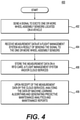
- FIG. 4 depicts a flow diagram of a method 400 for data collection from landing gear components.
- the flight management system 220 sends an exciting signal 226 exciting the sensors 207 (Step 402).
- the exciting signal 226 exciting the sensors 207 causes the sensors 207 to collect measurement information from their respective wheel assembly components (not illustrated).
- the sensors 207 then measurement information 214 (e.g. transmit tire pressure, tire temperature, brake wear, brake temperature) to the flight management system (Step 404).
- the flight management system 220 then transmits the measurement information 214 to an RFID card 208 and/or cloud services 240 to be stored (Step 406).
- cloud services 240 may analyze the received information to generate predictive analytics and maintenance reports (Step 408).
- the aforementioned steps will occur prior to the departure of a vehicle (e.g. preflight) or while the vehicle is parked.
- the method 400 is flexible and is merely illustrative.
- the arrangement of steps is for illustrative purposes only and is not meant to limit the method 400 in any way; as such, it should be understood that the steps can proceed in any order and additional or intervening steps can be included without detracting from embodiments of the invention.
- landing gear information collected is not limited to the examples conveyed in environment 100. Additional relevant information that may be obtained in addition to landing gear information, can include, but is not limited to:
- landing gear sensor is not limited to the examples conveyed in environment 100. Additional landing gear sensors, can include, but are not limited to:
- Machine learning algorithms may be configured and used to process the aforementioned data in light of certain thresholds, criteria, and/or patterns to make real-time decisions, provide trend analysis, transmit alerts, and/or make recommendations. However, a precursor to utilizing said data is determining whether there is sufficient data to produce suitable models. Therefore, in one embodiment, the machine learning algorithm makes a determination as to whether there is sufficient sample data to generate a predictive model by comparing the sample data available to a threshold.
- the threshold may be established by the machine learning algorithm or set by a maintenance technician 122. In the instance where there sample data does not exceed a threshold, an unsupervised machine learning algorithm may be implemented to implement clustering and association techniques to make more inferences about the data.
- a supervised machine learning algorithm may implement linear regression or Random forest techniques to further fine tune a mapping function used to predict outcomes. Further, high performing machine learning algorithms will be able to provide real-time predictive maintenance analytics data as new data becomes available. This predictive maintenance analytics data can be transmitted from cloud services 140 to the edge node 120 and the RFID card 108.
- the aggregated data, machine learning algorithms, and predictive maintenance analytics data may be perceivable and manipulated via a user interface (e.g., a combination of computer, keyboard, mouse, display screen, dashboard, and/or web-site portal) associated with cloud services 140 and/or located on or in, or otherwise associated with, the edge node 120.
- a user interface e.g., a combination of computer, keyboard, mouse, display screen, dashboard, and/or web-site portal
- references to components or modules generally refer to items that logically can be grouped together to perform a function or group of related functions. Like reference numerals are generally intended to refer to the same or similar components.
- Components and modules can be implemented in software, hardware, or a combination of software and hardware.
- the term "software” is used expansively to include not only executable code, for example machine-executable or machine-interpretable instructions, but also data structures, data stores and computing instructions stored in any suitable electronic format, including firmware, and embedded software.
- the terms “information” and “data” are used expansively and includes a wide variety of electronic information, including executable code; content such as text, video data, and audio data, among others; and various codes or flags.
- the terms “information,” “data,” and “content” are sometimes used interchangeably when permitted by context.
Landscapes
- Engineering & Computer Science (AREA)
- General Physics & Mathematics (AREA)
- Physics & Mathematics (AREA)
- Theoretical Computer Science (AREA)
- Software Systems (AREA)
- Signal Processing (AREA)
- Computing Systems (AREA)
- Computer Networks & Wireless Communication (AREA)
- Artificial Intelligence (AREA)
- Business, Economics & Management (AREA)
- Mathematical Physics (AREA)
- General Engineering & Computer Science (AREA)
- Evolutionary Computation (AREA)
- Data Mining & Analysis (AREA)
- Medical Informatics (AREA)
- Human Resources & Organizations (AREA)
- Computational Linguistics (AREA)
- Computer Vision & Pattern Recognition (AREA)
- Marketing (AREA)
- General Business, Economics & Management (AREA)
- Tourism & Hospitality (AREA)
- General Health & Medical Sciences (AREA)
- Strategic Management (AREA)
- Quality & Reliability (AREA)
- Operations Research (AREA)
- Aviation & Aerospace Engineering (AREA)
- Entrepreneurship & Innovation (AREA)
- Health & Medical Sciences (AREA)
- Economics (AREA)
- Arrangements For Transmission Of Measured Signals (AREA)
Abstract
Description
- Various embodiments of the present disclosure relate generally to the field of vehicle maintenance analytics and more particularly, to systems and methods for generating predictive analytics to avoid operational interruptions of maintenance-prone vehicle components.
- All modern aircraft and other complex vehicles are comprised of interoperating equipment, which must be maintained on regular basis, as an essential role in safely and efficiently operating the vehicle.
- On average, in the aviation industry, repairs (labor & material) for tires and brakes account for about $4.2B or 7% of airline maintenance cost. From an operating perspective, this cost is compounded by the fact that events related to tires and brakes are usually the primary reason for unscheduled delays (with an average delay of 30 minutes per event). Further, the aviation industry averages .36 maintenance man-hours per hour of flight, to inspect and maintain aircraft components.
- As a result, the airlines compensate for this by performing routine (e.g., daily or prior to every departure) visual inspections of the tires and brakes. Standard procedure for such an inspection involves a pilot or other technician/inspector walk-around before the departure of an aircraft to perform a visual inspection of the tires and brakes. If an issue is detected, pilots or technicians/inspectors issue a ticket for immediate repair or grounding the flight if necessary. Alternatively, if no issues are detected, then the aircraft is dispatched. Such visual inspections take significant time and are susceptible to limitations of human perception. Therefore a need exists for inspecting aircraft/vehicles tires and brakes beyond what is typically discernable during existing visual inspections.
- As a compliment to the visual inspection process, the aviation industry traditionally employs a manual entry procedure for storing and tracking maintenance issues on airline computing systems. This process involves a maintenance worker manually keying in maintenance related issues into a computer system. The computer system functions as ledger keeping track of maintenance issues for record keeping purposes. In some instances, the computer system is able to leverage the historical data to determine the expected life of an aircraft component, which in turn allows airlines to implement a one-size-fits-all routine maintenance cycle without regard to the actual state of the aircraft component. Thus, aircraft components are sometimes replaced based on a schedule, instead of based on actual wear.
- The present disclosure is directed to overcoming one or more of these above-referenced challenges.
- According to certain aspects of the disclosure, systems and methods are disclosed for data collection from landing gear components and for providing predictive analytics.
- In one embodiment, a computer-implemented method is disclosed for receiving and storing measurement data from a wheel assembly and providing predictive analytics based on the measurement data. The method includes: sending, by an edge node, a signal to one or more sensors associated with a wheel assembly; wherein, sending the signal, by the edge node, excites the one or more sensors causing the one or more sensors to perform measurements on respective wheel assembly components of the one or more sensors; and receiving, by the edge node, a return signal from the one or more sensors, the return signal encoded with the measurement data sensed by the one or more sensors; and storing, the sensed measurement data on a memory storage device, located on the wheel assembly, housed in the edge node, and/or on a remote server in the cloud.
- In accordance with another embodiment, a system is disclosed for receiving and storing measurement data from a wheel assembly and for providing predictive analytics based on the measurement data. The system comprises: a memory having processor-readable instructions stored therein; and a processor configured to access the memory and execute the processor-readable instructions, which when executed by the processor configures the processor to perform a plurality of functions, including functions for: sending, by an edge node, a signal to one or more sensors associated with a wheel assembly; wherein, sending the signal, by the edge node, excites the one or more sensors causing the one or more sensors to perform measurements on respective wheel assembly components of the one or more sensors; and receiving, by the edge node, a return signal from the one or more sensors, the return signal encoded with the measurement data sensed by the one or more sensors; and storing, the sensed measurement data on a memory storage device, located on the wheel assembly, housed in the edge node and/or on a remote server in the cloud.
- In accordance with another embodiment, a non-transitory computer-readable medium is disclosed for receiving and storing measurement data from a wheel assembly and for providing predictive analytics based on the measurement data. A non-transitory, tangible computer readable medium having instructions stored thereon that, in response to instructions by a computer-based system, cause the computer-based system to perform operations comprising: sending, by an edge node, a signal to one or more sensors associated with a wheel assembly; wherein, sending the signal, by the edge node, excites the one or more sensors causing the one or more sensors to perform measurements on respective wheel assembly components of the one or more sensors; and receiving, by the edge node, a return signal from the one or more sensors, the return signal encoded with the measurement data sensed by the one or more sensors; and storing, the sensed measurement data on a memory storage device, located on the wheel assembly, housed in the edge node and/or on a remote server in the cloud.
- Additional objects and advantages of the disclosed embodiments will be set forth in part in the description that follows, and in part will be apparent from the description, or may be learned by practice of the disclosed embodiments. The objects and advantages of the disclosed embodiments will be realized and attained by means of the elements and combinations particularly pointed out in the appended claims.
- In accordance with another embodiment, there is provided a computer-implemented method for receiving and storing measurement data from a wheel assembly, the computer-implemented method comprising: sending, by an edge node, e.g. a mobile device, a first signal to one or more sensors, e.g. passive sensors, associated with a wheel assembly, the first signal exciting the one or more sensors and causing the one or more sensors to perform measurements on respective wheel assembly components of the one or more sensors, optionally wherein the one or more sensors are at least configured to measure tire pressure, tire temperature, brake wear, and/or brake temperature data; receiving, by the edge node, e.g. mobile device, a return signal from the one or more sensors, the return signal encoded with the measurement data sensed by the one or more sensors; sending, by the edge node, e.g. mobile device, the sensed measurement data to a memory storage device, e.g. an RFID card, such as a passive RFID card, comprising segmented memory located on the wheel assembly; and storing the sensed measurement data, on the memory, e.g. RFID card.
- In accordance with another embodiment, there is provided a computer system for receiving and storing measurement data from a wheel assembly, the computer system comprising: sending, by an edge node, e.g. a mobile device, a first signal to one or more sensors, e.g. passive sensors, associated with a wheel assembly, the first signal exciting the one or more sensors and causing the one or more sensors to perform measurements on respective wheel assembly components of the one or more sensors, optionally wherein the one or more sensors are at least configured to measure tire pressure, tire temperature, brake wear, and/or brake temperature data; receiving, by the edge node, e.g. mobile device, a return signal from the one or more sensors, the return signal encoded with the measurement data sensed by the one or more sensors; sending, by the edge node, e.g. mobile device, the sensed measurement data to a memory storage device, e.g. an RFID card, such as a passive RFID card, comprising segmented memory located on the wheel assembly; and storing the sensed measurement data, on the memory, e.g. RFID card.
- It is to be understood that both the foregoing general description and the following detailed description are exemplary and explanatory only and are not restrictive of the disclosed embodiments, as claimed.
- The accompanying drawings, which are incorporated in and constitute a part of this specification, illustrate various exemplary embodiments and together with the description, serve to explain the principles of the disclosed embodiments.
-
FIG. 1 depicts a block diagram of an exemplary vehicle component environment (e.g., landing gear or wheel assembly) and system for receiving and storing measurement data via an edge node. -
FIG. 2 depicts a block diagram of another exemplary vehicle component environment (e.g., landing gear or wheel assembly) and system for receiving and storing measurement data via an edge node. -
FIG. 3 depicts a flow diagram of an exemplary method of exciting sensors on a wheel assembly via an edge node in order to receive measurement data and store the measurement data in memory. -
FIG. 4 depicts a flow diagram of an exemplary method of exciting sensors on a wheel assembly via flight management system in order to receive measurement data and store the measurement data in memory. - While principles of the present disclosure are described herein with reference to illustrative embodiments for particular applications, it should be understood that the disclosure is not limited thereto. Those having ordinary skill in the art and access to the teachings provided herein, will recognize that the features illustrated or described with respect to one embodiment, may be combined with the features of another embodiment. Therefore, additional modifications, applications, embodiments, and substitution of equivalents, all fall within the scope of the embodiments described herein. Accordingly, the invention is not to be considered as limited by the foregoing description.
- Various non-limiting embodiments of the present disclosure will now be described to provide an overall understanding of the principles of the structure, function, and use of system and method for data collection from maintenance-prone vehicle components (e.g., landing gear and/or other wheel assemblies).
- As described above, there is a need in the field of aviation for systems and methods for receiving and storing measurement data from landing gear (e.g., a wheel assembly) and providing predictive analytics based on the received measurement data. Measurement data may be collected from a vehicle wheel assembly, stored at an edge node, RFID card and/or a remote server, and analyzed in comparison to data collected from other vehicle wheel assemblies on other vehicles to implement real-time maintenance decisions. The following systems and methods provide more precise insight into the health and performance to wheel assembly components, than the modern visual inspections.
-
FIG. 1 depicts a block diagram of an example vehicle component environment andsystem 100 in which awheel assembly 102,edge node 120, andcloud services 140 exchange vehiclecomponent measurement information 116 via anetwork 130. In one embodiment,wheel assembly 102 comprises a plurality ofsensors 107 and anRFID card 108. The plurality ofsensors 107 may comprise a tire pressure and/or tire temperature sensor or plug-in 104 and/or a brake wear and/or brake temperature sensor or plug-in 106. TheRFID card 108 may comprise amemory 110 and anetwork interface 112. - In this embodiment, the
edge node 120 may be configured to send anexciting signal 114 to one or more ofsensors 107 for exciting the plurality ofsensors 107, e.g., the tire pressure and/ortire temperature 104 and/or brake wear and/orbrake temperature sensor 106. Theexciting signal 114 exciting thesensors 107 causes thesensors 107 to collect measurement data from their respective wheel assembly components. Thesensors 107 then transmit measurement information 116 (e.g. tire pressure, tire temperature, brake wear, brake temperature, etc.) to theedge node 120. Theedge node 120 then transmits the tire pressure, tire temperature, brake wear, brake temperature, orother measurement information 116 to anRFID card 108 and/orcloud services 140 to be stored. - As described above, the
wheel assembly 102 may physically house both thesensors 107 and theRFID card 108. Each of thesensors 107 may be a passive sensor or an active plug-in sensor. Additionally, thesensors 107 may take measurements via a displacement differential component, a magnetic resistance component, a circuit component and/or an optical component. TheRFID card 108 may be a passive or active card capable of withstanding extreme conditions in either non-pressurized or pressurized environments. TheRFID card 108 houses at leastmemory 110 and a network interface 112 (e.g. an NFC antenna) which enable anedge node 120 to communicate with theRFID card 108 without direct line of site. Thenetwork interface 112 ofRFID card 108 may be configured for communicating via low frequency (125-150KHz), high frequency and near-field communication (13.56MHz) and/or Ultra High Frequency (865-960MHz). TheRFID card 108 may be a low-memory or high-memory RFID card. Thememory 110 ofRFID card 108 may be segmented such that certain types of data are stored in distinct sections. For example, a section ofmemory 110 may be dedicated to data that will be permanently stored is not able to be written over, such as a birth record and serial data. Another section of memory may be allocated to store rewritable data. - The
edge node 120 may be any device capable of sending and receiving data, for example, a computer, a mobile device (e.g. PDA, mobile phone, or a tablet), a scanner or a reader, etc. Theedge node 120 may also have a storage medium, for example, removable memory based media (USB memory devices/readers, removable hard drives, flash drives, thumb drives, jump drives, key drives, readable/rewritable DVDs, readable/rewritable CDs, and floppy disks) or memory card (SD, CompactFlash, miniSD, microSD, and xD cards), etc. Theedge node 120 may also be configured for wireless communication, for example, via Bluetooth (e.g. Bluetooth 2.1 +EDR), Wi-Fi 802.11 b/g/n, WAN (e.g. WWAN), GPS, 3G/4G/5G wireless signal, WiMax, CDMA, LTE, etc. All signals and communication communicating to and from theedge node 120 may be encrypted to meet standards outlined in the ATA SPEC 2000. Theedge node 120 may be configured to be operated bymaintenance technician 122, but could also be utilized by a pilot, flight crew, and/or ground services operator. Additionally, the ability of theedge node 120 to excitesensors 107, and read and receive data fromsensors 107 may be a function of the proximity (i.e., predetermined distance) of theedge node 120 from the sensors 107 (e.g., tire pressure and/or tire temperature plug-ins 104, and/or the brake wear and/or brake temperature plug-ins 106). - Cloud services 140 may comprises one or more servers (e.g., one or more remote servers), one or more computers, and may include any known computing components, such as a processing unit 142 (e.g., a processor and modules) and a
database 144. Additionally, the cloudservices processing unit 142 may comprise predictive maintenance modules configured to process and analyze aggregatedmeasurement information 116 obtained fromsensors 107, such as tire pressure, tire temperature, brake wear, brake temperature, or anyother measurement information 116 used to predict vehicle component performance and health. - The predictive maintenance modules of
cloud services 140 may select information according to various criteria, triggers, machine learning algorithms, or any combination thereof. Further,cloud services 140 may be configured to cross analyze tire pressure, tire temperature, brake wear, brake temperature, and/or anyother measurement information 116 with the information received from other vehicles in order to analyze performance of maintenance-prone vehicle components across an entire fleet of vehicles. For example, in the context of aircraft vehicles in the airline industry, analytics may be performed across all aircraft within an airline's fleet. This fleet-wide analysis may be mined to provide additional data pertaining to costs related to parts, components that perform well or poorly, unique part identification numbers, information pertaining to how certain components perform under certain conditions, etc. - The
sensors 107 may transmit measurement information 116 (e.g. tire pressure, tire temperature, brake wear, and/or brake temperature information), but additional information may be collected during the data transmission from thesensors 107 to theedge node 120. For example, theedge node 120 may additionally receive historical information, a unique identification number for the particular sensor, a unique identification number for a specific component, location information pertaining to where the component is located on the vehicle (e.g., aircraft), etc. Similarly, theRFID card 108, once excited, may be configured to return information pertaining to data already stored on theRFID card memory 110, such as, historical information, a unique identification number for theparticular sensor 107, a unique identification number for a specific component associated with the sensor, location information pertaining to where the component is located on the vehicle (e.g. aircraft), unique identification information pertaining to theRFID card 108, etc. - The
network 130 may be the Internet, VPN, LAN, WAN, Airborne Wireless Network (AWN), a vehicle-to-vehicle network, 3G/4G/5G wireless signal, WiMax, CDMA, LTE, satellite uplink or any combination thereof. -
FIG. 2 illustrates an alternative vehicle component environment andsystem 200 that is similar in some respects to the vehicle component environment andsystem 100 inFIG. 1 , except that in the system ofFIG. 2 , aflight management system 220 is provided in direct communication withwheel assembly 202 andcloud services 240. In such an embodiment,flight management system 220 sends anexciting signal 226exciting sensors 207, such as tire pressure and/or tire temperature plug-ins 204 and/or brake wear and/or brake temperature plug-ins 206. In one embodiment,flight management system 220 may send asignal 226 to sensors 207 (similar toexciting signal 114 for exciting the sensors 107), which causes thesensors 207 to collect measurement data from their respective wheel assembly components. Thesensors 207 then transmit measurement information 214 (e.g., tire pressure, tire temperature, brake wear, brake temperature, and other information) back to theflight management system 220. Theflight management system 220 then transmits themeasurement information 214 to anRFID card 208 and/orcloud services 240 to be stored. - In one embodiment,
wheel assembly 202houses sensors 207 and theRFID card 208. Each of thesensors 207 may be a passive sensor or active plug-in sensor. Additionally, thesensors 207 may take measurements via a displacement differential component, a magnetic resistance component, a circuit component and/or an optical component. TheRFID card 208 may be a passive or active card capable of withstanding extreme conditions in either non-pressurized or pressurized environments. TheRFID card 208 houses atleast memory 210 and a network interface 212 (e.g. an NFC antenna) which enable anedge node 120 to communicate with theRFID card 108 without direct line of site. TheRFID card 108 network interface may be capable of communicating via low frequency (125-150 KHz), high frequency and near-field communication (13.56 MHz) and/or Ultra High Frequency (865-960 MHz). TheRFID card 208 may be a low-memory or high-memory RFID card. TheRFID card memory 210 may be segmented such that certain types of data are stored in distinct sections. For example, a section of memory may be dedicated to data that will be permanently stored is not able to be written over. Another section of memory may be allocated to store rewritable data. - Cloud services 240 may be a server (e.g. a remote server), a computer or a mobile device and it may include computing components, such as a processing unit (e.g. a processor and modules) 242 and a
database 244. Additionally, the cloudservices processing unit 242, could include predictive maintenance modules from, such that measurement information 214 (e.g., aggregated tire pressure, tire temperature, brake wear, and brake temperature etc.) can be used to predict performance and health of tire pressure and/ortire temperature sensor 204, and/or brake wearbrake temperature sensor 206. The predictive maintenance modules may select information according to various criteria, triggers, machine learning algorithms or any combination thereof. Further,cloud services 240 can cross analyze measurement information 214 (e.g., tire pressure, tire temperature, brake wear, and brake temperature) with the information received from other vehicles in order to analyze performance of landing gear components across an entire fleet. This cross analysis can be mined to provide additional data pertaining to costs related to parts, components that perform well or poorly, unique part identification numbers, information pertaining to how certain components perform under certain conditions, etc. All signals and communication coming to and fromcloud services 240 will be encrypted to meet standard outlined in the ATA SPEC 2000. - The
sensors 207 may transmit measurement information 214 (e.g., tire pressure, tire temperature, brake wear, and/or brake temperature), but additional information may be collected during the data transmission from the tire pressure and/ortire temperature sensor 204, and the brake wear and/orbrake temperature sensor 206 to theflight management system 220. For example, theflight management system 220 may additionally receive historical information, a unique identification number for the particular sensor, a unique identification number for a specific component, location information pertaining to where the component is located on the vehicle (e.g. aircraft), etc. Similarly, theRFID card 208, once excited can return information pertaining to data already stored on theRFID card memory 210, such as historical information, a unique identification number for the particular sensor, a unique identification number for a specific component associated with the sensor, location information pertaining to where the component is located on the vehicle (e.g. aircraft), unique identification information pertaining to theRFID card 108, etc. - The
network 230 may be the internet, VPN, LAN, WAN, Airborne Wireless Network (AWN), a vehicle-to-vehicle network, 3G/4G/5G wireless signal, WiMax, CDMA, LTE, satellite uplink or any combination thereof. -
FIG. 3 depicts a flow diagram of amethod 300 for data collection from landing gear components. Theedge node 120 sends asignal 114 exciting the tire pressure and/ortire temperature 104 and brake wear and/or brake temperature sensor 106 (Step 302). Theexciting signal 114 exciting thesensors 107, causessensors 107 to collect measurement data from their respective wheel assembly components (not illustrated). Thesensors 107 then transmit measurement information 116 (e.g. tire pressure, tire temperature, brake wear, and/or brake temperature) to the edge node 120 (Step 304). Theedge node 120 then transmits themeasurement information 116 to anRFID card 108 and/orcloud services 140 to be stored (Step 306). Upon receipt of themeasurement information 116,cloud services 140 may analyze the received information to generate predictive analytics and maintenance reports (Step 308). -
FIG. 4 depicts a flow diagram of amethod 400 for data collection from landing gear components. Theflight management system 220 sends anexciting signal 226 exciting the sensors 207 (Step 402). Theexciting signal 226 exciting thesensors 207, causes thesensors 207 to collect measurement information from their respective wheel assembly components (not illustrated). Thesensors 207 then measurement information 214 (e.g. transmit tire pressure, tire temperature, brake wear, brake temperature) to the flight management system (Step 404). Theflight management system 220 then transmits themeasurement information 214 to anRFID card 208 and/orcloud services 240 to be stored (Step 406). Upon receipt of themeasurement information 214,cloud services 240 may analyze the received information to generate predictive analytics and maintenance reports (Step 408). - It should be understood by one having ordinary skill in the art, that in an ideal embodiment, the aforementioned steps will occur prior to the departure of a vehicle (e.g. preflight) or while the vehicle is parked. Additionally, it will be understood that the
method 400 is flexible and is merely illustrative. For example, the arrangement of steps is for illustrative purposes only and is not meant to limit themethod 400 in any way; as such, it should be understood that the steps can proceed in any order and additional or intervening steps can be included without detracting from embodiments of the invention. - It should also be understood that the type of landing gear information collected is not limited to the examples conveyed in
environment 100. Additional relevant information that may be obtained in addition to landing gear information, can include, but is not limited to: - The number of landings the landing gear has been subject to
- The number of times per route that the brakes are applied
- Landing impact data
- Excessive sink rate events
- Landing information
- Takeoff information
- In-service load history
- Equipment in use at airport
- Number of landing cycles allowed by the manufacturer
- Ideal load information (F=m·g; wherein F is the force being exerted, m is the mass of the aircraft and g is the acceleration (or deceleration) of the aircraft
- Pitch
- Pitch rate
- Pitch acceleration
- Roll
- Roll rate
- Roll acceleration
- Yaw
- Yaw rate
- Yaw acceleration
- Terrain elevation
- Terrain slope
- Terrain surface type
- Aircraft gross weight
- Record of maintenance for vehicle
- Date maintenance was performed
- Description of the type of maintenance performed
- Manufacturer information
- Services letters
- Work order information
- Troubleshooting information
- Vehicle unique identifier information
- Predictive maintenance analytics data
- Wheel speed
- Wheel spin-up time
- Anti-skid wheel slip error information
- Anti-skid velocity reference information
- Wheel slip velocity
- Additionally, it should also be understood that the type of landing gear sensor is not limited to the examples conveyed in
environment 100. Additional landing gear sensors, can include, but are not limited to: - a landing gear load sensor;
- a wheel speed sensor;
- a proximity sensor;
- an oleo pressure sensor;
- a position sensor;
- a steering angle sensor;
- a towing sensor;
- a sensor for measuring fuel data; and/or
- a brake fluid sensor;
- Machine learning algorithms may be configured and used to process the aforementioned data in light of certain thresholds, criteria, and/or patterns to make real-time decisions, provide trend analysis, transmit alerts, and/or make recommendations. However, a precursor to utilizing said data is determining whether there is sufficient data to produce suitable models. Therefore, in one embodiment, the machine learning algorithm makes a determination as to whether there is sufficient sample data to generate a predictive model by comparing the sample data available to a threshold. The threshold may be established by the machine learning algorithm or set by a
maintenance technician 122. In the instance where there sample data does not exceed a threshold, an unsupervised machine learning algorithm may be implemented to implement clustering and association techniques to make more inferences about the data. In the instance there is enough sample data, a supervised machine learning algorithm may implement linear regression or Random forest techniques to further fine tune a mapping function used to predict outcomes. Further, high performing machine learning algorithms will be able to provide real-time predictive maintenance analytics data as new data becomes available. This predictive maintenance analytics data can be transmitted fromcloud services 140 to theedge node 120 and theRFID card 108. - The aggregated data, machine learning algorithms, and predictive maintenance analytics data may be perceivable and manipulated via a user interface (e.g., a combination of computer, keyboard, mouse, display screen, dashboard, and/or web-site portal) associated with
cloud services 140 and/or located on or in, or otherwise associated with, theedge node 120. - The systems, apparatuses, devices, and methods disclosed herein are described in detail by way of examples and with reference to the figures. The examples discussed herein are examples only and are provided to assist in the explanation of the apparatuses, devices, systems, and methods described herein. None of the features or components shown in the drawings or discussed below should be taken as mandatory for any specific implementation of any of these the apparatuses, devices, systems or methods unless specifically designated as mandatory. For ease of reading and clarity, certain components, modules, or methods may be described solely in connection with a specific figure. In this disclosure, any identification of specific techniques, arrangements, etc. are either related to a specific example presented or are merely a general description of such a technique, arrangement, etc. Identifications of specific details or examples are not intended to be, and should not be, construed as mandatory or limiting unless specifically designated as such. Any failure to specifically describe a combination or sub-combination of components should not be understood as an indication that any combination or sub-combination is not possible. It will be appreciated that modifications to disclosed and described examples, arrangements, configurations, components, elements, apparatuses, devices, systems, methods, etc. can be made and may be desired for a specific application. Also, for any methods described, regardless of whether the method is described in conjunction with a flow diagram, it should be understood that unless otherwise specified or required by context, any explicit or implicit ordering of steps performed in the execution of a method does not imply that those steps must be performed in the order presented but instead may be performed in a different order or in parallel.
- Reference throughout the specification to "various embodiments," "some embodiments," "one embodiment," "some example embodiments," "one example embodiment," or "an embodiment" means that a particular feature, structure, or characteristic described in connection with any embodiment is included in at least one embodiment. Thus, appearances of the phrases "in various embodiments," "in some embodiments," "in one embodiment," "some example embodiments," "one example embodiment, or "in an embodiment" in places throughout the specification are not necessarily all referring to the same embodiment. Furthermore, the particular features, structures, or characteristics may be combined in any suitable manner in one or more embodiments.
- Throughout this disclosure, references to components or modules generally refer to items that logically can be grouped together to perform a function or group of related functions. Like reference numerals are generally intended to refer to the same or similar components. Components and modules can be implemented in software, hardware, or a combination of software and hardware. The term "software" is used expansively to include not only executable code, for example machine-executable or machine-interpretable instructions, but also data structures, data stores and computing instructions stored in any suitable electronic format, including firmware, and embedded software. The terms "information" and "data" are used expansively and includes a wide variety of electronic information, including executable code; content such as text, video data, and audio data, among others; and various codes or flags. The terms "information," "data," and "content" are sometimes used interchangeably when permitted by context.
- It should be noted that although for clarity and to aid in understanding some examples discussed herein might describe specific features or functions as part of a specific component or module, or as occurring at a specific layer of a computing device (for example, a hardware layer, operating system layer, or application layer), those features or functions may be implemented as part of a different component or module or operated at a different layer of a communication protocol stack. Those of ordinary skill in the art will recognize that the systems, apparatuses, devices, and methods described herein can be applied to, or easily modified for use with, other types of equipment, can use other arrangements of computing systems such as client-server distributed systems, and can use other protocols, or operate at other layers in communication protocol stacks, than are described.
- It is intended that the specification and examples be considered as exemplary only, with a true scope and spirit of the disclosure being indicated by the following claims.
Claims (15)
- A computer-implemented method for receiving and storing measurement data from a wheel assembly, comprising:sending, by an edge node, a signal to one or more sensors associated with a wheel assembly, the signal exciting the one or more sensors and causing the one or more sensors to perform measurements on respective wheel assembly components of the one or more sensors;receiving, by the edge node, a return signal from the one or more sensors, the return signal encoded with the measurement data sensed by the one or more sensors; andstoring, the sensed measurement data on a memory storage device located on the wheel assembly, a memory housed in the edge node, and/or on a remote server.
- The computer-implemented method of claim 1, wherein the method comprises:
sending, by the edge node, the sensed measurement data to the memory storage device. - The computer-implemented method of claim 1 or 2, wherein the edge node is a mobile device.
- The computer-implemented method of any of claims 1 to 3, wherein the edge node is configured to send a signal and receive a return signal from the one or more sensors based on a proximity of the edge node to the one or more sensors.
- The computer-implemented method of claim 1, wherein the memory storage device located on the wheel assembly is an RFID card.
- The computer-implemented method of claim 5, wherein the RFID card has a birth record stored in a read-only section of the RFID card memory.
- The computer-implemented method of claim 1, wherein the one or more sensors are configured to measure tire pressure, tire temperature, brake wear, and/or brake temperature data.
- The computer-implemented method of claim 1, wherein the signals are encrypted.
- The computer-implemented method of claim 1, wherein the remote server utilizes machine learning algorithms to generate predictive maintenance analytics data.
- The computer-implemented method of claim 1, further comprising detecting whether the amount of stored sensed measurement data exceeds a threshold;if the amount of stored sensed measurement data exceeds the threshold, then run a supervised machine learning algorithm to generate predictive maintenance analytics data; andif the amount of stored sensed measurement data does not exceed the threshold, then run an unsupervised machine learning algorithm to generate predictive maintenance analytics data.
- A computer system for receiving and storing measurement data from a wheel assembly, comprising:sending, by an edge node, a signal to one or more sensors associated with a wheel assembly, the signal exciting the one or more sensors and causing the one or more sensors to perform measurements on respective wheel assembly components of the one or more sensors;receiving, by the edge node, a return signal from the one or more sensors, the return signal encoded with the measurement data sensed by the one or more sensors; andstoring, the sensed measurement data on a memory storage device located on the wheel assembly, a memory housed in the edge node, and/or on a remote server.
- The computer system of claim 10 further comprising:
sending, by the edge node, the sensed measurement data to the memory storage device. - The computer system of claim 10 or 11, wherein the edge node is a mobile device.
- The computer system of claim11, wherein the edge node is configured to send a signal and receive a return signal from the one or more sensors based on a proximity of the edge node to the one or more sensors.
- The computer system of claim 11, wherein the remote server utilizes machine learning algorithms to generate predictive maintenance analytics data.
Applications Claiming Priority (2)
| Application Number | Priority Date | Filing Date | Title |
|---|---|---|---|
| US16/004,861 US10789785B2 (en) | 2018-06-11 | 2018-06-11 | Systems and methods for data collection from maintenance-prone vehicle components |
| EP19179292.8A EP3582154A1 (en) | 2018-06-11 | 2019-06-10 | Systems and methods for data collection from maintenance-prone vehicle components |
Related Parent Applications (1)
| Application Number | Title | Priority Date | Filing Date |
|---|---|---|---|
| EP19179292.8A Division EP3582154A1 (en) | 2018-06-11 | 2019-06-10 | Systems and methods for data collection from maintenance-prone vehicle components |
Publications (1)
| Publication Number | Publication Date |
|---|---|
| EP3968246A1 true EP3968246A1 (en) | 2022-03-16 |
Family
ID=66866920
Family Applications (2)
| Application Number | Title | Priority Date | Filing Date |
|---|---|---|---|
| EP19179292.8A Ceased EP3582154A1 (en) | 2018-06-11 | 2019-06-10 | Systems and methods for data collection from maintenance-prone vehicle components |
| EP21196356.6A Ceased EP3968246A1 (en) | 2018-06-11 | 2019-06-10 | Systems and methods for data collection from maintenance-prone vehicle components |
Family Applications Before (1)
| Application Number | Title | Priority Date | Filing Date |
|---|---|---|---|
| EP19179292.8A Ceased EP3582154A1 (en) | 2018-06-11 | 2019-06-10 | Systems and methods for data collection from maintenance-prone vehicle components |
Country Status (3)
| Country | Link |
|---|---|
| US (2) | US10789785B2 (en) |
| EP (2) | EP3582154A1 (en) |
| CN (1) | CN110581881A (en) |
Families Citing this family (9)
| Publication number | Priority date | Publication date | Assignee | Title |
|---|---|---|---|---|
| US10789785B2 (en) * | 2018-06-11 | 2020-09-29 | Honeywell International Inc. | Systems and methods for data collection from maintenance-prone vehicle components |
| US10960712B2 (en) * | 2018-06-28 | 2021-03-30 | Nissan North America, Inc. | Tire wear estimation using a hybrid machine learning system and method |
| CN111178555B (en) * | 2019-12-24 | 2023-07-18 | 重庆特斯联智慧科技股份有限公司 | A community security equipment repair method and system based on edge computing |
| JP7419201B2 (en) * | 2020-09-15 | 2024-01-22 | 株式会社東芝 | Information processing device, information processing method, program, and information processing system |
| EP4285195A4 (en) | 2021-01-28 | 2025-04-16 | Odysight.AI Ltd | SYSTEMS AND METHODS FOR MONITORING A POTENTIAL FAILURE IN A MACHINE OR ITS COMPONENT |
| US12190648B1 (en) * | 2021-08-31 | 2025-01-07 | United Services Automobile Association (Usaa) | Systems and methods for maintaining vehicle health |
| GB2614881A (en) * | 2022-01-19 | 2023-07-26 | Airbus Operations Ltd | Predicting tire pressure of a tire of an aircraft |
| EP4514690A4 (en) | 2022-04-27 | 2025-08-27 | Odysight Ai Ltd | MONITORING A MECHANISM OR COMPONENT THEREOF |
| US12067048B1 (en) | 2023-08-16 | 2024-08-20 | Automated Service Point Llc | Apparatus and method for entity data aggregation and analysis |
Citations (2)
| Publication number | Priority date | Publication date | Assignee | Title |
|---|---|---|---|---|
| CA2587750A1 (en) * | 2004-11-18 | 2006-05-26 | Messier-Dowty Inc. | Method and system for health monitoring of aircraft landing gear |
| EP3081402A1 (en) * | 2015-04-15 | 2016-10-19 | Goodrich Corporation | Handheld interrogation and display for remote sensors |
Family Cites Families (47)
| Publication number | Priority date | Publication date | Assignee | Title |
|---|---|---|---|---|
| US7786864B1 (en) | 2000-09-08 | 2010-08-31 | Automotive Technologies International, Inc. | Vehicular RFID and sensor assemblies |
| US7095316B2 (en) * | 2001-11-15 | 2006-08-22 | Siemens Vdo Automotive Corporation | Tire pressure monitoring system transmission protocol |
| US6659233B2 (en) | 2001-12-04 | 2003-12-09 | Hydro-Aire, Inc. | System and method for aircraft braking system usage monitoring |
| US7698148B2 (en) * | 2003-09-12 | 2010-04-13 | Raytheon Company | Web-based risk management tool and method |
| JP4222252B2 (en) * | 2004-05-07 | 2009-02-12 | 株式会社デンソー | Tire pressure detector |
| CA2487704A1 (en) * | 2004-11-18 | 2006-05-18 | R. Kyle Schmidt | Method and system for health monitoring of aircraft landing gear |
| US20060180647A1 (en) * | 2005-02-11 | 2006-08-17 | Hansen Scott R | RFID applications |
| US7474214B2 (en) * | 2005-06-22 | 2009-01-06 | International Business Machines Corporation | Method and system for locating tires using RFID |
| US7551086B2 (en) * | 2005-09-20 | 2009-06-23 | The Boeing Company | System and methods for tracking aircraft components |
| US7589619B2 (en) * | 2007-01-08 | 2009-09-15 | Snap-On Incorporated | Apparatus and method to transfer data from a tire pressure monitor tool to a remote output device such as a printer |
| US9715709B2 (en) * | 2008-05-09 | 2017-07-25 | Visa International Services Association | Communication device including multi-part alias identifier |
| CN101638084B (en) * | 2008-07-30 | 2011-08-31 | 中国科学院自动化研究所 | Vehicle anti-theft method and vehicle anti-theft system |
| US9396279B1 (en) * | 2009-02-17 | 2016-07-19 | Jpmorgan Chase Bank, Na | Collaborative virtual markup |
| US10454693B2 (en) * | 2009-09-30 | 2019-10-22 | Visa International Service Association | Mobile payment application architecture |
| US8355830B2 (en) * | 2010-03-30 | 2013-01-15 | Aurora Flight Sciences Corporation | Aircraft health monitoring and design for condition |
| US8599044B2 (en) * | 2010-08-11 | 2013-12-03 | The Boeing Company | System and method to assess and report a health of a tire |
| US8712634B2 (en) * | 2010-08-11 | 2014-04-29 | The Boeing Company | System and method to assess and report the health of landing gear related components |
| KR20130042674A (en) * | 2011-10-17 | 2013-04-29 | 엘지전자 주식회사 | Display device and method of controling a camera using the same |
| KR20140078912A (en) * | 2012-12-18 | 2014-06-26 | 삼성전자주식회사 | Memory system and SoC comprising thereof |
| US9384597B2 (en) | 2013-03-14 | 2016-07-05 | Telogis, Inc. | System and method for crowdsourcing vehicle-related analytics |
| US20140278573A1 (en) * | 2013-03-15 | 2014-09-18 | State Farm Mutual Automobile Insurance Company | Systems and methods for initiating insurance processing using ingested data |
| KR101420366B1 (en) * | 2013-07-23 | 2014-07-16 | 김현민 | Wireless power transfer apparatus for electric vehicle |
| FR3009152B1 (en) | 2013-07-25 | 2015-07-31 | Thales Sa | METHOD OF MANAGING RF FREQUENCIES IN BROADBAND USE |
| US9552611B2 (en) * | 2013-12-02 | 2017-01-24 | State Farm Mutual Automobile Insurance Company | Systems and methods for modifying resources to manage loss events |
| US10089691B2 (en) * | 2013-12-04 | 2018-10-02 | State Farm Mutual Automobile Insurance Company | Systems and methods for detecting potentially inaccurate insurance claims |
| US9510038B2 (en) * | 2013-12-17 | 2016-11-29 | Google Inc. | Personal measurement devices for media consumption studies |
| CA2976497C (en) * | 2014-03-20 | 2018-08-14 | Foxtrac Inc. | Methods, devices and systems for tracking vehicles |
| WO2015198216A1 (en) * | 2014-06-26 | 2015-12-30 | Bombardier Inc. | Methods and apparatus for assisting in the maintenance of aircraft and other mobile platforms using occurrence probabilities of potential causes of a detected event |
| US20160245279A1 (en) * | 2015-02-23 | 2016-08-25 | Biplab Pal | Real time machine learning based predictive and preventive maintenance of vacuum pump |
| CN107210917A (en) * | 2015-02-20 | 2017-09-26 | 惠普发展公司有限责任合伙企业 | User authentication device |
| US10748352B2 (en) * | 2015-03-17 | 2020-08-18 | Sikorsky Aircraft Corporation | Systems and methods for remotely triggered data acquisition |
| WO2016187112A1 (en) * | 2015-05-15 | 2016-11-24 | Airfusion, Inc. | Portable apparatus and method for decision support for real time automated multisensor data fusion and analysis |
| US10956855B1 (en) * | 2015-08-16 | 2021-03-23 | Palidian Incorporated | Integrated multi-location scheduling, routing, and task management |
| US9524315B1 (en) * | 2016-03-31 | 2016-12-20 | Sas Institute Inc. | Date updating in support of data analysis |
| US20190174207A1 (en) * | 2016-05-09 | 2019-06-06 | StrongForce IoT Portfolio 2016, LLC | Methods and systems for the industrial internet of things |
| US20180284758A1 (en) * | 2016-05-09 | 2018-10-04 | StrongForce IoT Portfolio 2016, LLC | Methods and systems for industrial internet of things data collection for equipment analysis in an upstream oil and gas environment |
| KR102721736B1 (en) * | 2016-07-26 | 2024-10-25 | 에스케이하이닉스 주식회사 | Semiconductor apparatus and system for performing data mapping |
| US9776462B1 (en) * | 2016-08-29 | 2017-10-03 | GM Global Technology Operations LLC | System and method for tire measurement |
| US10464212B2 (en) * | 2017-03-28 | 2019-11-05 | Amazon Technologies, Inc. | Method and system for tele-operated inventory management system |
| KR20190000663A (en) * | 2017-06-23 | 2019-01-03 | 에스케이하이닉스 주식회사 | Storage device and operating method thereof |
| US10580228B2 (en) * | 2017-07-07 | 2020-03-03 | The Boeing Company | Fault detection system and method for vehicle system prognosis |
| WO2019046823A1 (en) * | 2017-08-31 | 2019-03-07 | Chaos Prime, Inc. | High-order psk signaling (hops) techniques for low-power spread spectrum communications |
| FR3079298B1 (en) * | 2018-03-23 | 2020-11-27 | Safran Landing Systems | DEVICE FOR MEASURING A POSITION OF A MOBILE BODY IN RELATION TO A FIXED BODY |
| JP7445928B2 (en) * | 2018-05-07 | 2024-03-08 | ストロング フォース アイオーティ ポートフォリオ 2016,エルエルシー | Methods and systems for data collection, learning, and streaming of machine signals for analysis and maintenance using the industrial Internet of Things |
| US10789785B2 (en) * | 2018-06-11 | 2020-09-29 | Honeywell International Inc. | Systems and methods for data collection from maintenance-prone vehicle components |
| US11036370B2 (en) * | 2018-09-25 | 2021-06-15 | Intel Corporation | Computer-assisted or autonomous driving vehicles social network |
| KR102702780B1 (en) * | 2019-05-03 | 2024-09-05 | 에스케이하이닉스 주식회사 | Electronic device and operating method of electronic device |
-
2018
- 2018-06-11 US US16/004,861 patent/US10789785B2/en active Active
-
2019
- 2019-06-10 EP EP19179292.8A patent/EP3582154A1/en not_active Ceased
- 2019-06-10 EP EP21196356.6A patent/EP3968246A1/en not_active Ceased
- 2019-06-10 CN CN201910498707.2A patent/CN110581881A/en active Pending
-
2020
- 2020-09-10 US US17/017,537 patent/US11495061B2/en active Active
Patent Citations (2)
| Publication number | Priority date | Publication date | Assignee | Title |
|---|---|---|---|---|
| CA2587750A1 (en) * | 2004-11-18 | 2006-05-26 | Messier-Dowty Inc. | Method and system for health monitoring of aircraft landing gear |
| EP3081402A1 (en) * | 2015-04-15 | 2016-10-19 | Goodrich Corporation | Handheld interrogation and display for remote sensors |
Non-Patent Citations (1)
| Title |
|---|
| ANONYMOUS: "Fulfilling ATA Customer Mandates to Commission High Memory Tags", 2 May 2013 (2013-05-02), XP055602279, Retrieved from the Internet <URL:https://www.rfidjournal.net/masterPresentations/rfid_live2013/np/boyle_whiting_may1_310_techInfra.pdf> [retrieved on 20190704] * |
Also Published As
| Publication number | Publication date |
|---|---|
| US20200410779A1 (en) | 2020-12-31 |
| US11495061B2 (en) | 2022-11-08 |
| CN110581881A (en) | 2019-12-17 |
| EP3582154A1 (en) | 2019-12-18 |
| US10789785B2 (en) | 2020-09-29 |
| US20190378353A1 (en) | 2019-12-12 |
Similar Documents
| Publication | Publication Date | Title |
|---|---|---|
| US11495061B2 (en) | Systems and methods for data collection from maintenance-prone vehicle components | |
| US8599044B2 (en) | System and method to assess and report a health of a tire | |
| US9868550B2 (en) | Long and short range storage and transmission system on aircraft parts | |
| EP3091410B1 (en) | Methods and system for data analytics | |
| CN111401676B (en) | System and method for improving maintenance planning in the presence of sensor data | |
| EP2489014B1 (en) | Platform health monitoring apparatus and method | |
| EP2329459B1 (en) | Method and apparatus for obtaining vehicle data | |
| US8791823B2 (en) | Aircraft part control system | |
| CN107273561B (en) | On-board structural load assessment of an aircraft during a flight event | |
| US10650614B2 (en) | Aircraft maintenance event prediction using higher-level and lower-level system information | |
| RU2573735C2 (en) | Method and system for analysis of flight data recorded during aircraft flight | |
| US8712634B2 (en) | System and method to assess and report the health of landing gear related components | |
| US10196078B2 (en) | Diagnostic system for a rail vehicle | |
| US20150274312A1 (en) | Aircraft Prognostics Health System | |
| US20220258748A1 (en) | System and method for managing operations and assets in a multi-entity environment | |
| Rajamani et al. | Developing IVHM requirements for aerospace systems | |
| US12358330B2 (en) | Systems and methods for detecting and removing erroneous tire pressure values | |
| EP4184459A1 (en) | Maintenance system | |
| US20200294118A1 (en) | Tire rental management apparatus, and tire rental management method | |
| Spexet et al. | Data pipeline considerations for aviation maintenance | |
| US20260004616A1 (en) | Apparatuses, computer-implemented methods, and computer program products for implementing vehicle component lifecycle data | |
| Pátkai et al. | Requirements for rfid-based sensor integration in landing gear monitoring–a case study | |
| US12434720B2 (en) | Kinetic insights machine | |
| Algera et al. | Rotary wing structural life tracking architecture | |
| Jimenez et al. | Impact of RFID technologies on helicopter processes: Assessment on customer oriented indicators |
Legal Events
| Date | Code | Title | Description |
|---|---|---|---|
| PUAI | Public reference made under article 153(3) epc to a published international application that has entered the european phase |
Free format text: ORIGINAL CODE: 0009012 |
|
| STAA | Information on the status of an ep patent application or granted ep patent |
Free format text: STATUS: THE APPLICATION HAS BEEN PUBLISHED |
|
| AC | Divisional application: reference to earlier application |
Ref document number: 3582154 Country of ref document: EP Kind code of ref document: P |
|
| AK | Designated contracting states |
Kind code of ref document: A1 Designated state(s): AL AT BE BG CH CY CZ DE DK EE ES FI FR GB GR HR HU IE IS IT LI LT LU LV MC MK MT NL NO PL PT RO RS SE SI SK SM TR |
|
| STAA | Information on the status of an ep patent application or granted ep patent |
Free format text: STATUS: REQUEST FOR EXAMINATION WAS MADE |
|
| 17P | Request for examination filed |
Effective date: 20220527 |
|
| RBV | Designated contracting states (corrected) |
Designated state(s): AL AT BE BG CH CY CZ DE DK EE ES FI FR GB GR HR HU IE IS IT LI LT LU LV MC MK MT NL NO PL PT RO RS SE SI SK SM TR |
|
| STAA | Information on the status of an ep patent application or granted ep patent |
Free format text: STATUS: EXAMINATION IS IN PROGRESS |
|
| 17Q | First examination report despatched |
Effective date: 20230302 |
|
| P01 | Opt-out of the competence of the unified patent court (upc) registered |
Effective date: 20230421 |
|
| STAA | Information on the status of an ep patent application or granted ep patent |
Free format text: STATUS: THE APPLICATION HAS BEEN REFUSED |
|
| 18R | Application refused |
Effective date: 20240312 |