EP3968222A1 - Classification task model training method, apparatus and device and storage medium - Google Patents
Classification task model training method, apparatus and device and storage medium Download PDFInfo
- Publication number
- EP3968222A1 EP3968222A1 EP20802264.0A EP20802264A EP3968222A1 EP 3968222 A1 EP3968222 A1 EP 3968222A1 EP 20802264 A EP20802264 A EP 20802264A EP 3968222 A1 EP3968222 A1 EP 3968222A1
- Authority
- EP
- European Patent Office
- Prior art keywords
- feature
- classification task
- task model
- training
- generator
- Prior art date
- Legal status (The legal status is an assumption and is not a legal conclusion. Google has not performed a legal analysis and makes no representation as to the accuracy of the status listed.)
- Granted
Links
Images




Classifications
-
- G—PHYSICS
- G06—COMPUTING OR CALCULATING; COUNTING
- G06V—IMAGE OR VIDEO RECOGNITION OR UNDERSTANDING
- G06V10/00—Arrangements for image or video recognition or understanding
- G06V10/70—Arrangements for image or video recognition or understanding using pattern recognition or machine learning
- G06V10/82—Arrangements for image or video recognition or understanding using pattern recognition or machine learning using neural networks
-
- G—PHYSICS
- G06—COMPUTING OR CALCULATING; COUNTING
- G06F—ELECTRIC DIGITAL DATA PROCESSING
- G06F18/00—Pattern recognition
- G06F18/20—Analysing
- G06F18/21—Design or setup of recognition systems or techniques; Extraction of features in feature space; Blind source separation
- G06F18/214—Generating training patterns; Bootstrap methods, e.g. bagging or boosting
-
- G—PHYSICS
- G06—COMPUTING OR CALCULATING; COUNTING
- G06F—ELECTRIC DIGITAL DATA PROCESSING
- G06F18/00—Pattern recognition
- G06F18/20—Analysing
- G06F18/22—Matching criteria, e.g. proximity measures
-
- G—PHYSICS
- G06—COMPUTING OR CALCULATING; COUNTING
- G06F—ELECTRIC DIGITAL DATA PROCESSING
- G06F18/00—Pattern recognition
- G06F18/20—Analysing
- G06F18/24—Classification techniques
-
- G—PHYSICS
- G06—COMPUTING OR CALCULATING; COUNTING
- G06F—ELECTRIC DIGITAL DATA PROCESSING
- G06F18/00—Pattern recognition
- G06F18/20—Analysing
- G06F18/24—Classification techniques
- G06F18/243—Classification techniques relating to the number of classes
- G06F18/2431—Multiple classes
-
- G—PHYSICS
- G06—COMPUTING OR CALCULATING; COUNTING
- G06N—COMPUTING ARRANGEMENTS BASED ON SPECIFIC COMPUTATIONAL MODELS
- G06N3/00—Computing arrangements based on biological models
- G06N3/02—Neural networks
- G06N3/04—Architecture, e.g. interconnection topology
- G06N3/045—Combinations of networks
-
- G—PHYSICS
- G06—COMPUTING OR CALCULATING; COUNTING
- G06N—COMPUTING ARRANGEMENTS BASED ON SPECIFIC COMPUTATIONAL MODELS
- G06N3/00—Computing arrangements based on biological models
- G06N3/02—Neural networks
- G06N3/04—Architecture, e.g. interconnection topology
- G06N3/0464—Convolutional networks [CNN, ConvNet]
-
- G—PHYSICS
- G06—COMPUTING OR CALCULATING; COUNTING
- G06N—COMPUTING ARRANGEMENTS BASED ON SPECIFIC COMPUTATIONAL MODELS
- G06N3/00—Computing arrangements based on biological models
- G06N3/02—Neural networks
- G06N3/04—Architecture, e.g. interconnection topology
- G06N3/047—Probabilistic or stochastic networks
-
- G—PHYSICS
- G06—COMPUTING OR CALCULATING; COUNTING
- G06N—COMPUTING ARRANGEMENTS BASED ON SPECIFIC COMPUTATIONAL MODELS
- G06N3/00—Computing arrangements based on biological models
- G06N3/02—Neural networks
- G06N3/04—Architecture, e.g. interconnection topology
- G06N3/0475—Generative networks
-
- G—PHYSICS
- G06—COMPUTING OR CALCULATING; COUNTING
- G06N—COMPUTING ARRANGEMENTS BASED ON SPECIFIC COMPUTATIONAL MODELS
- G06N3/00—Computing arrangements based on biological models
- G06N3/02—Neural networks
- G06N3/08—Learning methods
-
- G—PHYSICS
- G06—COMPUTING OR CALCULATING; COUNTING
- G06N—COMPUTING ARRANGEMENTS BASED ON SPECIFIC COMPUTATIONAL MODELS
- G06N3/00—Computing arrangements based on biological models
- G06N3/02—Neural networks
- G06N3/08—Learning methods
- G06N3/09—Supervised learning
-
- G—PHYSICS
- G06—COMPUTING OR CALCULATING; COUNTING
- G06N—COMPUTING ARRANGEMENTS BASED ON SPECIFIC COMPUTATIONAL MODELS
- G06N3/00—Computing arrangements based on biological models
- G06N3/02—Neural networks
- G06N3/08—Learning methods
- G06N3/094—Adversarial learning
-
- G—PHYSICS
- G06—COMPUTING OR CALCULATING; COUNTING
- G06V—IMAGE OR VIDEO RECOGNITION OR UNDERSTANDING
- G06V10/00—Arrangements for image or video recognition or understanding
- G06V10/70—Arrangements for image or video recognition or understanding using pattern recognition or machine learning
- G06V10/74—Image or video pattern matching; Proximity measures in feature spaces
- G06V10/761—Proximity, similarity or dissimilarity measures
-
- G—PHYSICS
- G06—COMPUTING OR CALCULATING; COUNTING
- G06V—IMAGE OR VIDEO RECOGNITION OR UNDERSTANDING
- G06V10/00—Arrangements for image or video recognition or understanding
- G06V10/70—Arrangements for image or video recognition or understanding using pattern recognition or machine learning
- G06V10/764—Arrangements for image or video recognition or understanding using pattern recognition or machine learning using classification, e.g. of video objects
-
- G—PHYSICS
- G06—COMPUTING OR CALCULATING; COUNTING
- G06V—IMAGE OR VIDEO RECOGNITION OR UNDERSTANDING
- G06V10/00—Arrangements for image or video recognition or understanding
- G06V10/70—Arrangements for image or video recognition or understanding using pattern recognition or machine learning
- G06V10/77—Processing image or video features in feature spaces; using data integration or data reduction, e.g. principal component analysis [PCA] or independent component analysis [ICA] or self-organising maps [SOM]; Blind source separation
- G06V10/7715—Feature extraction, e.g. by transforming the feature space, e.g. multi-dimensional scaling [MDS]; Mappings, e.g. subspace methods
-
- G—PHYSICS
- G06—COMPUTING OR CALCULATING; COUNTING
- G06V—IMAGE OR VIDEO RECOGNITION OR UNDERSTANDING
- G06V10/00—Arrangements for image or video recognition or understanding
- G06V10/70—Arrangements for image or video recognition or understanding using pattern recognition or machine learning
- G06V10/77—Processing image or video features in feature spaces; using data integration or data reduction, e.g. principal component analysis [PCA] or independent component analysis [ICA] or self-organising maps [SOM]; Blind source separation
- G06V10/774—Generating sets of training patterns; Bootstrap methods, e.g. bagging or boosting
-
- G—PHYSICS
- G16—INFORMATION AND COMMUNICATION TECHNOLOGY [ICT] SPECIALLY ADAPTED FOR SPECIFIC APPLICATION FIELDS
- G16H—HEALTHCARE INFORMATICS, i.e. INFORMATION AND COMMUNICATION TECHNOLOGY [ICT] SPECIALLY ADAPTED FOR THE HANDLING OR PROCESSING OF MEDICAL OR HEALTHCARE DATA
- G16H30/00—ICT specially adapted for the handling or processing of medical images
- G16H30/40—ICT specially adapted for the handling or processing of medical images for processing medical images, e.g. editing
-
- G—PHYSICS
- G16—INFORMATION AND COMMUNICATION TECHNOLOGY [ICT] SPECIALLY ADAPTED FOR SPECIFIC APPLICATION FIELDS
- G16H—HEALTHCARE INFORMATICS, i.e. INFORMATION AND COMMUNICATION TECHNOLOGY [ICT] SPECIALLY ADAPTED FOR THE HANDLING OR PROCESSING OF MEDICAL OR HEALTHCARE DATA
- G16H50/00—ICT specially adapted for medical diagnosis, medical simulation or medical data mining; ICT specially adapted for detecting, monitoring or modelling epidemics or pandemics
- G16H50/20—ICT specially adapted for medical diagnosis, medical simulation or medical data mining; ICT specially adapted for detecting, monitoring or modelling epidemics or pandemics for computer-aided diagnosis, e.g. based on medical expert systems
Definitions
- Embodiments of this application relate to the field of machine learning technologies, and in particular, to training of a classification task model.
- the machine learning technology realizes a good performance in processing classification tasks.
- a classification task model is constructed based on deep neural networks, and the model is trained based on appropriate training samples.
- the trained classification task model may be used to process classification tasks such as classification tasks of image recognition and speech recognition.
- the numbers of training samples included in different classes may be imbalanced. For example, the number of positive samples is far less than the number of negative samples.
- Such a training dataset may be referred to as a class imbalanced dataset. If a classification task model is trained by using a class imbalanced dataset, the finally trained classification task model may have a poor performance.
- An artificial intelligence-based method and apparatus for training a classification task model, a device, and a storage medium are provided according to embodiments of this application, which can be used to solve the technical problem that a high accurate classification task model cannot be obtained by using an up-sampling method in the related art.
- the technical solutions are described as follows.
- a method for training a classification task model is provided in the embodiments of this application.
- the method is performed by a computer device, and the method includes:
- an apparatus for training a classification task model includes: a first training module, a first construction module, a second training module, a second construction module and a third training module.
- the first training module is configured to train an initial feature extractor by using a first dataset to obtain a feature extractor, the first dataset is a class imbalanced dataset including first class samples and second class samples, and the number of the first class samples is greater than the number of the second class samples.
- the first dataset is determined based on medical images.
- the first construction module is configured to construct a generative adversarial network.
- the generative adversarial network includes the feature extractor and an initial feature generator, and the initial feature generator is configured to generate a feature vector of the same dimension as the feature extractor.
- the second training module is configured to train the generative adversarial network by using the second class samples to obtain a feature generator.
- the second construction module is configured to construct a classification task model, and the classification task model includes the feature generator and the feature extractor.
- the third training module is configured to train the classification task model by using the first dataset, the feature generator is configured to augment the second class samples in a feature space during a training process.
- the trained classification task model is configured to perform lesion classification based on a medical image.
- a computer device in the embodiments of this application, which includes: a processor, a communication interface, a memory, and a communication bus.
- the communication bus is configured to perform communication between the processor, the communication interface, and the memory.
- the communication interface is an interface of a communication module.
- the memory is configured to store a program code and transmit the program code to the processor.
- the processor is configured to call instructions of the program code in the memory to perform the method for training a classification task model in the foregoing aspect.
- a storage medium in the embodiments of this application, which is configured to store a computer program.
- the computer program is configured to perform the method for training a classification task model in the foregoing aspect.
- a computer program product including instructions is provided in the embodiments of this application.
- the instructions when run on a computer, cause the computer to perform the method for training a classification task model in the foregoing aspect.
- a feature generator is obtained by training a generative adversarial network, and minority class samples (that is, a class of training samples of the smaller number in a class imbalanced dataset) are augmented in a feature space by using the feature generator. Augmentation is performed at a feature aspect instead of simply duplicating minority class samples by up-sampling, so that overfitting in a finally trained classification task model is prevented, thus improving the accuracy of the final trained classification task model.
- a feature generator is obtained by training a generative adversarial network, and minority class samples (that is, a class of training samples of the smaller number in a class imbalanced dataset) are augmented in a feature space by using the feature generator. Augmentation is performed at a feature aspect instead of simply duplicating minority class samples by up-sampling, so that overfitting in a finally trained classification task model is prevented, thus improving the accuracy of the final trained classification task model.
- the feature extractor is a part configured to extract sample features in the classification task model, and the feature extractor is also referred to as an encoder.
- the classification task model includes a feature extractor and a classifier. An output of the feature extractor is connected to an input of the classifier.
- the feature extractor is configured to extract a feature vector from an inputted sample of the model.
- the classifier is configured to determine a class of the inputted sample based on the feature vector.
- the feature extractor is configured to perform mapping encoding on an inputted image, and output a feature vector with a dimension smaller than that of pixels of the inputted image, so that the feature extractor obtains a non-linear, local-to-global feature mapping, which combines low-level visual features and high-level semantic information.
- the feature extractor is obtained by initially training the initial feature extractor in step 101.
- the input of the initial feature generator does not completely include the noisy data. If the feature vector similar to a real sample is generated completely based on the noisy data, there is a lack of effective constraint. Therefore, the input of the initial feature generator is a superposition of the priori data and the noisy data, which can prevent problems of non-convergence and potential failure in the training process of the generative adversarial network, thereby increasing the robustness of the generative adversarial network.
- the feature generator obtained by training the generative adversarial network is used to augment minority class samples in the feature space, so that a class imbalanced learning task is transformed to a class balanced learning task, and a re-trained classification task model is obtained.
- the classification task model further includes a data cleaning unit.
- Abnormal feature vectors outputted by the feature generator and the feature extractor are filtered out by using the data cleaning unit.
- the data cleaning unit may be a functional unit realized by software, hardware, or a combination of software and hardware. Abnormal feature vectors generated by the feature generator are suppressed by using appropriate data cleaning technology (such as a Tomek Link algorithm), so that the accuracy of the final trained classification task model is further improved.
- a feature generator is obtained by training a generative adversarial network, and minority class samples (that is, a class of training samples of a smaller number in a class imbalanced dataset) are augmented in a feature space by using the feature generator. Augmentation is performed at a feature aspect instead of simply duplicating minority class samples by up-sampling, so that overfitting in a finally trained classification task model is prevented, thus improving the accuracy of the final trained classification task model.
- abnormal feature vectors outputted by the feature generator and the feature extractor are filtered out by using the data cleaning unit, so that abnormal feature vectors generated by the feature generator are suppressed, thereby further improving the accuracy of the finally trained classification task model.
- a final classification task model is trained.
- a training dataset may include multiple sub-images extracted from medical images, where some of the sub-images are positive samples (that is, images of lesion regions), and some are negative samples (that is, images of non-lesion regions), and the number of the negative samples is much larger than the number of the positive samples.
- the classification task model may be referred to as a radiology lesion determining model.
- An input of the model includes a sub-image extracted from a medical image, and an output includes a determining result of whether the sub-image represents a lesion region.
- a feature generator is obtained by training a generative adversarial network, the feature generator is used to augment minority class sample in a feature space, and finally a more accurate radiology lesion determining model is trained to assist a doctor in diagnosis and analysis of lesions, for example, detection and analysis of lumps in a mammography image.
- This solution is performed for test by using a dataset including 2194 mammography images and a Camelyon 2016 pathology image dataset. Regions of interest (ROI) are extracted from the images to obtain a set of sub-images, and imbalance ratios of 1: 10 and 1:20 are used. Test results are shown in Table-1 and Table-2 below.
- ROI Regions of interest
- Solution 1 represents that no processing is performed on the datasets.
- Solution 2 represents that the datasets are down-sampled.
- Solution 3 represents that the datasets are up-sampled.
- Solution 4 represents that the datasets are augmented in a sample space.
- Solution 5 represents that the datasets are augmented in a feature space by using the technical solution of this application and a data cleaning step is not included.
- Solution 6 represents that the datasets are augmented in a feature space by using the technical solution of this application and a data cleaning step is included.
- the part (a) in FIG. 7 shows ROC curves and corresponding AUC values of the six solutions when using the Camelyon 2016 pathology image datasets, with the class imbalance ratio of 1:10.
- the part (b) in FIG. 7 shows ROC curves and corresponding AUC values of the six solutions when using the Camelyon 2016 pathology image datasets, with the class imbalance ratio of 1:20.
- FIG. 8 is a block diagram of an apparatus for training a classification task model according to an embodiment of this application.
- the apparatus has functions of implementing the foregoing method examples. The functions may be implemented by using hardware, or may be implemented by executing corresponding software by the hardware.
- the apparatus may be a computer device or may be arranged in a computer device.
- the apparatus 800 may include: a first training module 810, a first construction module 820, a second training module 830, a second construction module 840, and a third training module 850.
- the first training module 810 is configured to train an initial feature extractor by using a first dataset to obtain a feature extractor.
- the first dataset is a class imbalanced dataset including first class samples and second class samples, the number of the first class samples is greater than the number of the second class samples, and the first dataset is determined based on medical images.
- the first construction module 820 is configured to construct a generative adversarial network.
- the generative adversarial network includes the feature extractor and an initial feature generator, and the initial feature generator is configured to generate a feature vector of the same dimension as the feature extractor.
- the second construction module 840 is configured to construct a classification task model, the classification task model includes the feature generator and the feature extractor.
- a feature generator is obtained by training a generative adversarial network, and minority class samples (that is, a class of training samples of the smaller number in a class imbalanced dataset) are augmented in a feature space by using the feature generator. Augmentation is performed at a feature aspect instead of simply duplicating minority class samples by up-sampling, so that overfitting in a finally trained classification task model is prevented, thus improving the accuracy of the final trained classification task model.
- the generative adversarial network further includes a domain classifier.
- the domain classifier is configured to distinguish between a feature vector outputted by the feature extractor and a feature vector outputted by the feature generator.
- the second training module 830 is further configured to perform a first parameter update and a second parameter update in each training process of the generative adversarial network.
- the first parameter update includes: assigning a first label to an input of the feature extractor, and assigning a second label to an input of the feature generator; calculating a first loss function value of the domain classifier; and updating parameters of the domain classifier based on the first loss function value.
- the second parameter update includes: blocking the input of the feature extractor, and assigning the first label to the input of the feature generator; calculating a second loss function value of the domain classifier; and updating parameters of the feature generator based on the second loss function value.
- an input of the initial feature generator includes a superposition of a priori data and noisy data.
- the a priori data is extracted from the second class samples of the first dataset, or the a priori data is extracted from samples in a second dataset that are of the same class as the second class samples.
- the first training module 810 is further configured to: construct an initial classification task model, the initial classification task model including the initial feature extractor and an initial classifier; and train the initial classification task model by using the first dataset to obtain the feature extractor.
- the apparatus provided in the foregoing embodiments implements functions of the apparatus
- the division of the foregoing functional modules is merely used as an example for description.
- the functions may be assigned to and completed by different functional modules according to requirements, that is, the internal structure of the device is divided into different functional modules, to implement all or some of the functions described above.
- the apparatus and method embodiments provided in the foregoing embodiments belong to the same concept. For the specific implementation process, reference may be made to the method embodiments, and details are not described herein again.
- the basic I/O system 906 includes a display 908 configured to display information, and an input device 909 used by a user to input information, such as a mouse or a keyboard.
- the display 908 and the input device 909 are both connected to the CPU 901 by using an I/O controller 910 connected to the system bus 905.
- the basic I/O system 906 may further include the I/O controller 910 for receiving and processing input from multiple other devices such as a keyboard, a mouse, an electronic stylus, or the like.
- the I/O controller 910 further provides output to a display screen, a printer, or another type of output device.
- the mass storage device 907 is connected to the CPU 901 through a mass storage controller (not shown) connected to the system bus 905.
- the mass storage device 907 and an associated computer-readable medium provide non-volatile storage for the computer device 900.
- the mass storage device 907 may include a computer-readable medium (not shown) such as a hard disk or a CD-ROM drive.
- the computer-readable media may include a computer storage medium and a communication medium.
- the computer storage medium includes volatile and non-volatile medium, and removable and non-removable medium implemented by using any method or technology used for storing information such as computer-readable instructions, data structures, program modules, or other data.
- the computer-storage medium includes a RAM, a ROM, an EPROM, an EEPROM, a flash memory or another solid-state storage technology, a CD-ROM, a DVD or another optical storage, a magnetic cassette, a magnetic tape, or a magnetic disk storage or another magnetic storage device.
- a person skilled in the art may know that the computer storage medium is not limited to the foregoing several types.
- the system memory 904 and the mass storage device 907 may be collectively referred to as a memory.
- the computer device 900 may further be connected, through a network such as the Internet, to a remote computer on the network for running. That is, the computer device 900 may be connected to a network 912 by using a network interface unit 911 connected to the system bus 905, or may be connected to another type of network or a remote computer system (not shown) by using a network interface unit 911.
- the memory stores at least one instruction, at least one section of program, a code set, or an instruction set, and the at least one instruction, the at least one section of program, the code set, or the instruction set is configured to be executed by one or more processors to implement the method for training a classification task model provided in the foregoing embodiments.
- a computer-readable storage medium is further provided in the embodiments of this application.
- the storage medium is configured to store a computer program, the computer program is configured to perform the method for training a classification task model provided in the foregoing embodiments.
- the computer-readable storage medium may be a ROM, a RAM, a CD-ROM, a magnetic tape, a floppy disk, an optical data storage device.
- a computer program product is further provided.
- the computer program product when executed, performs the method for training a classification task model provided in the foregoing embodiments.
Landscapes
- Engineering & Computer Science (AREA)
- Theoretical Computer Science (AREA)
- Physics & Mathematics (AREA)
- Evolutionary Computation (AREA)
- Artificial Intelligence (AREA)
- General Physics & Mathematics (AREA)
- Data Mining & Analysis (AREA)
- Health & Medical Sciences (AREA)
- Computer Vision & Pattern Recognition (AREA)
- General Health & Medical Sciences (AREA)
- Computing Systems (AREA)
- Software Systems (AREA)
- Life Sciences & Earth Sciences (AREA)
- General Engineering & Computer Science (AREA)
- Medical Informatics (AREA)
- Databases & Information Systems (AREA)
- Biomedical Technology (AREA)
- Multimedia (AREA)
- Biophysics (AREA)
- Computational Linguistics (AREA)
- Mathematical Physics (AREA)
- Molecular Biology (AREA)
- Bioinformatics & Cheminformatics (AREA)
- Bioinformatics & Computational Biology (AREA)
- Evolutionary Biology (AREA)
- Public Health (AREA)
- Epidemiology (AREA)
- Primary Health Care (AREA)
- Pathology (AREA)
- Probability & Statistics with Applications (AREA)
- Nuclear Medicine, Radiotherapy & Molecular Imaging (AREA)
- Radiology & Medical Imaging (AREA)
- Image Analysis (AREA)
- Information Retrieval, Db Structures And Fs Structures Therefor (AREA)
Abstract
Description
- This application claims priority to
Chinese Patent Application No. 201910377510.3 - Embodiments of this application relate to the field of machine learning technologies, and in particular, to training of a classification task model.
- The machine learning technology realizes a good performance in processing classification tasks. For example, a classification task model is constructed based on deep neural networks, and the model is trained based on appropriate training samples. The trained classification task model may be used to process classification tasks such as classification tasks of image recognition and speech recognition.
- In a training dataset used for training a classification task model, the numbers of training samples included in different classes may be imbalanced. For example, the number of positive samples is far less than the number of negative samples. Such a training dataset may be referred to as a class imbalanced dataset. If a classification task model is trained by using a class imbalanced dataset, the finally trained classification task model may have a poor performance.
- An artificial intelligence-based method and apparatus for training a classification task model, a device, and a storage medium are provided according to embodiments of this application, which can be used to solve the technical problem that a high accurate classification task model cannot be obtained by using an up-sampling method in the related art. The technical solutions are described as follows.
- In an aspect, a method for training a classification task model is provided in the embodiments of this application. The method is performed by a computer device, and the method includes:
- training an initial feature extractor by using a first dataset to obtain a feature extractor, the first dataset being a class imbalanced dataset which includes first class samples and second class samples, the number of the first class samples being greater than the number of the second class samples, the first dataset being determined based on medical images;
- constructing a generative adversarial network, the generative adversarial network including the feature extractor and an initial feature generator, the initial feature generator being configured to generate a feature vector of the same dimension as the feature extractor;
- training the generative adversarial network by using the second class samples to obtain a feature generator;
- constructing a classification task model, the classification task model including the feature generator and the feature extractor; and
- training the classification task model by using the first dataset, the feature generator being configured to augment the second class samples in a feature space during a training process, the trained classification task model being configured to perform lesion classification based on a medical image.
- In another aspect, an apparatus for training a classification task model is provided in the embodiments of this application. The apparatus includes: a first training module, a first construction module, a second training module, a second construction module and a third training module. The first training module is configured to train an initial feature extractor by using a first dataset to obtain a feature extractor, the first dataset is a class imbalanced dataset including first class samples and second class samples, and the number of the first class samples is greater than the number of the second class samples. The first dataset is determined based on medical images. The first construction module is configured to construct a generative adversarial network. The generative adversarial network includes the feature extractor and an initial feature generator, and the initial feature generator is configured to generate a feature vector of the same dimension as the feature extractor. The second training module is configured to train the generative adversarial network by using the second class samples to obtain a feature generator. The second construction module is configured to construct a classification task model, and the classification task model includes the feature generator and the feature extractor. The third training module is configured to train the classification task model by using the first dataset, the feature generator is configured to augment the second class samples in a feature space during a training process. The trained classification task model is configured to perform lesion classification based on a medical image.
- In another aspect, a computer device is provided in the embodiments of this application, which includes: a processor, a communication interface, a memory, and a communication bus. The communication bus is configured to perform communication between the processor, the communication interface, and the memory. The communication interface is an interface of a communication module. The memory is configured to store a program code and transmit the program code to the processor. The processor is configured to call instructions of the program code in the memory to perform the method for training a classification task model in the foregoing aspect.
- In another aspect, a storage medium is provided in the embodiments of this application, which is configured to store a computer program. The computer program is configured to perform the method for training a classification task model in the foregoing aspect.
- In another aspect, a computer program product including instructions is provided in the embodiments of this application. The instructions, when run on a computer, cause the computer to perform the method for training a classification task model in the foregoing aspect.
- The technical solutions provided in the embodiments of this application achieve at least the following beneficial effects. According to the technical solution provided in the embodiments of this application, a feature generator is obtained by training a generative adversarial network, and minority class samples (that is, a class of training samples of the smaller number in a class imbalanced dataset) are augmented in a feature space by using the feature generator. Augmentation is performed at a feature aspect instead of simply duplicating minority class samples by up-sampling, so that overfitting in a finally trained classification task model is prevented, thus improving the accuracy of the final trained classification task model.
- To describe the technical solutions of the embodiments of this application more clearly, the following briefly introduces the drawings required for describing the embodiments. Apparently, the drawings in the following description show only some embodiments of this application, and a person of ordinary skill in the art may still derive other drawings from these drawings without creative efforts.
-
FIG. 1 is a flowchart of a method for training a classification task model according to an embodiment of this application. -
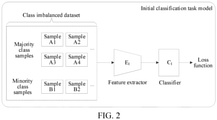
FIG. 2 exemplarily shows a schematic structural diagram of an initial classification task model. -
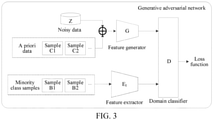
FIG. 3 exemplarily shows a schematic structural diagram of a generative adversarial network. -
FIG. 4 exemplarily shows a schematic structural diagram of a classification task model. -
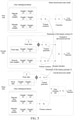
FIG. 5 exemplarily shows a diagram of an overall architecture of a technical solution of this application. -
FIG. 6 andFIG. 7 exemplarily show schematic diagrams of two groups of experimental results. -
FIG. 8 is a block diagram of an apparatus for training a classification task model according to an embodiment of this application. -
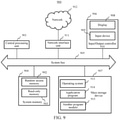
FIG. 9 is a schematic structural diagram of a computer device according to an embodiment of this application. - To make the objectives, technical solutions, and advantages of this application clearer, the following further describes embodiments of this application in detail with reference to the drawings.
- According to the technical solution provided in the embodiments of this application, a feature generator is obtained by training a generative adversarial network, and minority class samples (that is, a class of training samples of the smaller number in a class imbalanced dataset) are augmented in a feature space by using the feature generator. Augmentation is performed at a feature aspect instead of simply duplicating minority class samples by up-sampling, so that overfitting in a finally trained classification task model is prevented, thus improving the accuracy of the final trained classification task model.
- In the embodiments of this application, machine learning (ML) in an artificial intelligence (AI) technologies and deep learning (DL) in the machine learning are involved, which includes various types of artificial neural networks (ANNs).
- AI represents a theory, method, technology and application system which use digital computers or machines controlled by digital computers to simulate, extend and expand human intelligence, perceive the environment, acquire knowledge, and use knowledge to obtain optimum results. In other words, AI represents a comprehensive technology of computer sciences. AI intends to understand the essence of intelligence and produce a new kind of intelligent machine that can react in a similar way to human intelligence. AI intends to study the design principles and implementation methods of various intelligent machines, to enable the machines to have the functions of perception, reasoning and decision-making.
- AI technology is a comprehensive discipline, and involves a wide range of fields, including both hardware-level technology and software-level technology. Basic AI technologies generally include technologies such as a sensor, a dedicated AI chip, cloud computing, distributed storage, a big data processing technology, an operating/interaction system, and electromechanical integration. AI software technologies mainly include several major directions such as a computer vision technology, a speech processing technology, a natural language processing technology, and machine learning/deep learning.
- In the embodiments of this application, a computer device that performs the method for training a classification task model may have machine learning capabilities, so as to train the classification task model by means of the machine learning capabilities.
- Machine learning is an interdisciplinarity, and involves multiple disciplines such as a probability theory, statistics, an approximation theory, a convex analysis, and an algorithm complexity theory. The machine learning specializes in studying how a computer simulates or implements a human learning behavior to obtain new knowledge or skills, and reorganize an existing knowledge structure, so as to keep improving its performance. The machine learning is the core of artificial intelligence, is a basic way to make the computer intelligent, and is applied to various fields of artificial intelligence. Machine learning and deep learning usually include technologies such as an artificial neural network.
- The classification task model in the embodiments of this application is a machine learning model obtained by training through machine learning and is configured to process classification tasks. The classification task model may be a deep learning classification task model, that is, a classification task model constructed based on a deep neural network, for example, a classification task model constructed based on a deep convolutional neural network. In addition to performing a classification task of lesion recognition based on medical images, the classification task model may be configured to perform classification tasks such as image recognition and speech recognition. The specific application scenarios of the classification task model are not limited in the embodiments of this application.
- In the method provided in the embodiments of this application, the steps may be performed by a computer device. The computer device is an electronic device such as a personal computer (PC) or a server with data calculation, processing, and storage capabilities.
- Reference is made to
FIG. 1 , which is a flowchart of a method for training a classification task model according to an embodiment of this application. The method may include the followingsteps 101 to 105. - In
step 101, an initial feature extractor is trained by using a first dataset to obtain a feature extractor. The first dataset is a class imbalanced dataset including first class samples and second class samples, and the number of the first class samples is greater than the number of the second class samples. - The first class samples and the second class samples are two different classes of samples in the first dataset. For example, the first class samples are positive samples, and the second class samples are negative samples. Alternatively, the first class samples are negative samples, and the second class samples are positive samples. The number of the first class samples is greater than the number of the second class samples. That is, the first class samples may be referred to as majority class samples, and the second class samples may be referred to as minority class samples. In most scenarios, the number of the negative samples is larger or even much larger than the number of the positive samples. Therefore, the first class samples may be negative samples, and correspondingly, the second class samples are positive samples.
- The feature extractor is a part configured to extract sample features in the classification task model, and the feature extractor is also referred to as an encoder. The classification task model includes a feature extractor and a classifier. An output of the feature extractor is connected to an input of the classifier. The feature extractor is configured to extract a feature vector from an inputted sample of the model. The classifier is configured to determine a class of the inputted sample based on the feature vector. For example, in a case that the classification task model is used for image recognition, the feature extractor is configured to perform mapping encoding on an inputted image, and output a feature vector with a dimension smaller than that of pixels of the inputted image, so that the feature extractor obtains a non-linear, local-to-global feature mapping, which combines low-level visual features and high-level semantic information.
- In an exemplary embodiment, the classification task model is constructed based on a deep convolutional neural network, and the feature extractor may include multiple convolutional layers. For example, the classification task model is an Inception-v3 model. The Inception-v3 model is a deep neural network model, which may achieve a good performance on image classification tasks. In addition, another advantage of the Inception-v3 model is that a pre-trained Inception-v3 model may be used as an initialized classification task model without having to initialize parameters of a classification task model randomly, which facilitates improving the training efficiency of a model. The classifier may be a normalized exponential function (Softmax) classifier or another classifier, which is not limited in the embodiments of this application.
- In an exemplary embodiment,
step 101 includes the followingsub-steps - In
sub-step 1, an initial classification task model is constructed. The initial classification task model includes the initial feature extractor and an initial classifier. - As described above, the initial classification task model may be a pre-trained Inception-v3 model.
- In
sub-step 2, the initial classification task model is trained by using the first dataset to obtain the feature extractor. The feature extractor is obtained by initially training the initial feature extractor. - The first dataset includes first class samples and second class samples, and each training sample is provided with a label corresponding to its class. For example, a label of a first class sample is 1, and a label of a second class sample is 0. Alternatively, a label of the first class sample is 0, and a label of the second class sample is 1. Training samples (including the first class samples and the second class samples) in the first dataset are inputted into the initial classification task model, a classification result outputted by the model is compared with the labels, and a loss function value corresponding to the model is calculated. A gradient of each parameter in the model is calculated based on the loss function value by using a backpropagation algorithm. Finally, the parameter in the model is updated based on the gradient, and a frequency of the update is controlled by a learning rate. The loss function may be a cross entropy (CE) loss function.
- If the initial classification task model meets a training stop condition, the training of the model is stopped, and an initially trained classification task model is obtained. The initially trained classification task model includes an initially trained feature extractor. The initially trained feature extractor is used in a generative adversarial network as described below. The training stop condition of the initial classification task model may be set in advance. For example, the training stop condition may be that the accuracy of the model reaches a preset requirement, the number of times for training reaches a preset number, or a time length of training reaches a preset time length, which is not limited in the embodiments of this application.
-
FIG. 2 exemplarily shows a schematic structural diagram of an initial classification task model. The initial classification task model includes a feature extractor EI and a classifier Ci. An input of the feature extractor EI serves as an input of the model. An output of the feature extractor EI is connected to an input of the classifier CI. An output of the classifier CI serves as an output of the model. The initial classification task model is trained by using the first dataset (including majority class samples and minority class samples) to obtain an initially trained classification task model. The initially trained classification task model includes an initially trained feature extractor EI and an initially trained classifier CI. - In
step 102, a generative adversarial network is constructed. The generative adversarial network includes the feature extractor and an initial feature generator. - In the generative adversarial network, an output of the feature generator and an output of the feature extractor are connected to an input of the domain classifier.
- The feature extractor is obtained by initially training the initial feature extractor in
step 101. - The initial feature generator is configured to generate a feature vector of the same dimension as the feature extractor. For example, if a dimension of a feature vector outputted by the feature extractor is 20, a dimension of a feature vector generated by the initial feature generator is also 20. The initial feature generator may be alternatively constructed by using multiple convolutional layers. If the initial feature generator includes six convolutional layers, a size of a convolution kernel of the first five convolutional layers is represented as 3∗3, and a size of a convolution kernel of the last convolutional layer is represented as 1∗1. The numbers of outputted feature maps of the convolutional layers are respectively 64, 128, 256, 512, 1024, and 2048. Each convolutional layer may be followed by a batch norm layer and an activation function layer, such as a rectified linear unit (ReLU) layer.
- In a possible implementation, the generative adversarial network may further include a domain classifier. The domain classifier is configured to distinguish between a feature vector outputted by the feature extractor and a feature vector outputted by the feature generator. The domain classifier adjusts the feature generator through adversarial learning, so that a feature vector outputted by the domain classifier is as close as possible to the feature vector outputted by the feature extractor. Through such an adversarial learning process, model parameters of max-min game equilibrium are determined.
- In
step 103, the generative adversarial network is trained by using the second class samples to obtain a feature generator. - During the process of training the generative adversarial network, parameters of the feature extractor are fixed, that is, the parameters of the feature extractor are not updated. An input of the feature extractor includes the second class samples, that is, minority class samples, and an output of the feature extractor includes a feature vector extracted from the second class samples.
- Input of the initial feature generator includes a superposition of a priori data and noisy data, and output of the initial feature generator includes a feature vector of the same dimension as the feature extractor. The a priori data may be extracted from the second class samples of the first dataset, or may be extracted from samples in a second dataset that are of the same class as the second class samples. The second dataset may be another dataset different from the first dataset in the same task. The noisy data may be random noisy data. Taking priori data being a 64∗64 image as an example, the noisy data may be a 64∗64 image, while pixel values of pixels in the image of the noisy data are randomly generated. The priori data is superposed to the noisy data, that is, a weighted sum is performed on pixel values of pixels at the same position in the a priori data and in the noisy data, to finally obtain a superimposed image.
- The initial feature generator extracts the feature vector from the superimposed image. In addition, in consideration of that the number of network layers of the feature generator may be small, the input of the feature generator cannot be excessively large. Therefore, the a priori data may be a small-size sample image obtained by scaling down a sample image, for example, a 64∗64 sample image.
- In the embodiments of this application, in a possible implementation, the input of the initial feature generator does not completely include the noisy data. If the feature vector similar to a real sample is generated completely based on the noisy data, there is a lack of effective constraint. Therefore, the input of the initial feature generator is a superposition of the priori data and the noisy data, which can prevent problems of non-convergence and potential failure in the training process of the generative adversarial network, thereby increasing the robustness of the generative adversarial network.
- In an exemplary embodiment,
step 103 includes the followingsub-steps 1 to 6. - In
sub-step 1, a first parameter update and a second parameter update are performed during each training process of the generative adversarial network. The first parameter update includes: assigning a first label to an input of the feature extractor, and assigning a second label to an input of the feature generator. - In
sub-step 2, a first loss function value of the domain classifier is calculated. - In
sub-step 3, parameters of the domain classifier are updated based on the first loss function value. - In
sub-step 4, the second parameter update includes: blocking the input of the feature extractor, and assigning the first label to the input of the feature generator. - In
sub-step 5, a second loss function value of the domain classifier is calculated. - In
sub-step 6, parameters of the feature generator are updated based on the second loss function value. - During a training process of the generative adversarial network, the initial feature generator and the domain classifier are adversarial to each other. That is, two backpropagation calculations are performed during each training process. In the first backpropagation calculation, parameters of the initial feature generator are fixed, and parameters of the domain classifier are updated. In the second backpropagation calculation, the parameters of the domain classifier are fixed, and the parameters of the initial feature generator are updated. The first label and the second label are two different labels. For example, the first label is 1, and the second label is 0. Alternatively, the first label is 0 and the second label is 1.
- For example, a label of 1 is assigned to the input of the feature extractor, and a label of 0 is assigned to the input of the initial feature generator. A first loss function value of the domain classifier is calculated, and the parameters of the domain classifier are adjusted by backpropagation based on the first loss function value. Next, the input of the feature extractor is blocked, the label of 1 is assigned to the input of the initial feature generator, a second loss function value of the domain classifier is calculated, and the parameters of the initial feature generator are adjusted by backpropagation based on the second loss function value.
- As shown in
FIG. 3 , which exemplarily shows a schematic structural diagram of a generative adversarial network. The generative adversarial network includes a feature extractor EI, a feature generator G, and a domain classifier D. An output of the feature extractor EI and an output of the feature generator G are connected to an input of the domain classifier D. An input of the feature generator G includes a superposition of priori data and noisy data, and an input of the feature extractor EI includes minority class samples in a first dataset. The feature generator G is used in the following classification task model. - In
step 104, a classification task model is constructed. The classification task model includes the feature generator and the feature extractor. The classification task model may further include a classifier. - In the classification task model, an output of the feature generator and an output of the feature extractor are connected to an input of the classifier.
- The feature generator is obtained by training the generative adversarial network in
step 103. The feature extractor and the classifier in this step adopt the same structure and configuration as that in the initial classification task model instep 101. In an embodiment, the feature extractor in this step is initialized with the parameters of the feature extractor trained instep 101. - In
Step 105, the classification task model is trained by using the first dataset. The feature generator is configured to augment the second class samples in a feature space. - During a training process of the classification task model, for an original class imbalanced first dataset, the feature generator obtained by training the generative adversarial network is used to augment minority class samples in the feature space, so that a class imbalanced learning task is transformed to a class balanced learning task, and a re-trained classification task model is obtained.
- In an exemplary embodiment, the classification task model further includes a data cleaning unit. Abnormal feature vectors outputted by the feature generator and the feature extractor are filtered out by using the data cleaning unit. The data cleaning unit may be a functional unit realized by software, hardware, or a combination of software and hardware. Abnormal feature vectors generated by the feature generator are suppressed by using appropriate data cleaning technology (such as a Tomek Link algorithm), so that the accuracy of the final trained classification task model is further improved.
- In an exemplary embodiment, by using the data cleaning unit, a feature vector pair that meets a preset condition may be selected from the feature vectors outputted by the feature generator and the feature extractor. The feature vector pair that meets the preset condition includes two feature vectors with different labels and a similarity that conforms to a threshold, for example, a feature vector pair with the highest similarity or multiple feature vector pairs with high similarities.
- Next, the feature vector pair that meets the preset condition is filtered out as the abnormal feature vectors. The similarity between two feature vectors may be calculated by using a Euclidean distance algorithm or another similarity algorithm, which is not limited in the embodiments in this application. For example, for each of all feature vectors outputted by the feature generator and the feature extractor, another feature vector that is most similar to the feature vector is determined, and labels of the two feature vectors are compared to determine whether the labels are the same. If the labels of the two feature vectors are different, for example, if the label of one feature vector is 1, and the label of the other is 0, the two feature vectors are determined as a feature vector pair that meets a preset condition, and the two feature vectors are filtered out as abnormal feature vectors.
-
FIG. 4 exemplarily shows a schematic structural diagram of a classification task model. The classification task model includes a feature generator G, a feature extractor EF, a classifier CF, and a data cleaning unit. An output of the feature generator G and an output of the feature extractor EF are connected to an input of the data cleaning unit, and an output of the data cleaning unit is connected to an input of the classifier CF. The feature extractor EF has the same structure and configuration as the feature extractor EI in the classification task model shown inFIG. 2 , and the classifier CF has the same structure and configuration as the classifier CI in the classification task model shown inFIG. 2 . The first dataset (including majority class samples and minority class samples) is used to train the classification task model. When a preset training stop condition is met, the training of the classification task model is stopped, and the classification task model is obtained. The preset training stop condition may be that, for example, the accuracy of the model reaches a preset requirement, the number of times for training reaches a preset number, or a time length of training reaches a preset time length, which is not limited in the embodiments of this application. - In summary, according to the technical solution provided in the embodiments of this application, a feature generator is obtained by training a generative adversarial network, and minority class samples (that is, a class of training samples of a smaller number in a class imbalanced dataset) are augmented in a feature space by using the feature generator. Augmentation is performed at a feature aspect instead of simply duplicating minority class samples by up-sampling, so that overfitting in a finally trained classification task model is prevented, thus improving the accuracy of the final trained classification task model.
- In addition, according to the technical solution provided in the embodiments of this application, during the training process of the classification task model, abnormal feature vectors outputted by the feature generator and the feature extractor are filtered out by using the data cleaning unit, so that abnormal feature vectors generated by the feature generator are suppressed, thereby further improving the accuracy of the finally trained classification task model.
- In addition, in the embodiments of this application, the input of the feature generator does not completely include noisy data. If the feature vector similar to a real sample is generated completely based on the noisy data, there is a lack of effective constraint. Therefore, the input of the feature generator includes a superposition of a priori data and noisy data, which can prevent problems of non-convergence and potential failure during the training process of the generative adversarial network, thus increasing the robustness of the generative adversarial network.
- Hereinafter, the technical solution provided in the embodiments of this application is described with reference to
FIG. 5 . The training process of the classification task model provided in the embodiments of this application may include the following three steps. - In a first step, an initial feature extractor is trained.
- In this step, an initial classification task model is constructed, which includes a feature extractor EI and a classifier CI, and the initial classification task model is trained by using a class imbalanced dataset to obtain a feature extractor EI.
- In a second step, a feature generator is trained.
- In this step, a generative adversarial network is constructed, which includes the initially trained feature extractor EI, an initial feature generator G, and a domain classifier D. During the training process, parameters of the feature extractor EI are fixed, and the feature generator G is obtained by training the generative adversarial network.
- In a third step, a final classification task model is trained.
- In this step, a classification task model is constructed, which includes a feature generator G, a feature extractor EF, a data cleaning unit, and a classifier EF. During the training process, parameters of the feature generator G are fixed, for an original class imbalanced dataset, the feature generator G is used to augment minority class samples in the feature space, so that a class imbalanced learning task is transformed to a class balanced learning task, and a finally trained classification task model is obtained.
- The technical solution provided in the embodiments of this application is applicable to a model training process of a machine learning classification task in the AI field, and is particularly suitable for a training process of a classification task model with a training dataset being a class imbalanced dataset. Taking a classification task of a class imbalanced medical image as an example, a training dataset may include multiple sub-images extracted from medical images, where some of the sub-images are positive samples (that is, images of lesion regions), and some are negative samples (that is, images of non-lesion regions), and the number of the negative samples is much larger than the number of the positive samples. In this application scenario, the classification task model may be referred to as a radiology lesion determining model. An input of the model includes a sub-image extracted from a medical image, and an output includes a determining result of whether the sub-image represents a lesion region. A feature generator is obtained by training a generative adversarial network, the feature generator is used to augment minority class sample in a feature space, and finally a more accurate radiology lesion determining model is trained to assist a doctor in diagnosis and analysis of lesions, for example, detection and analysis of lumps in a mammography image.
- This solution is performed for test by using a dataset including 2194 mammography images and a Camelyon 2016 pathology image dataset. Regions of interest (ROI) are extracted from the images to obtain a set of sub-images, and imbalance ratios of 1: 10 and 1:20 are used. Test results are shown in Table-1 and Table-2 below.
Table-1 Class imbalanced ratio Evaluation indicator Solution 1 Solution 2Solution 3Solution 4Solution 5Solution 61:10 Acc 0.8379 0.8555 0.8287 0.8423 0.8430 0.8665 AUC 0.8452 0.8878 0.8204 0.9071 0.9082 0.9083 1:20 Acc 0.8087 0.8180 0.8047 0.8125 0.8070 0.8258 AUC 0.7797 0.8417 0.7798 0.8453 0.8587 0.8704 Table-2 Class imbalanced ratio Evaluation indicator Solution 1 Solution 2Solution 3Solution 4Solution 5Solution 61:10 Acc 0.8999 0.9243 0.8882 0.9062 0.9023 0.9307 AUC 0.9157 0.9417 0.9047 0.9597 0.9601 0.9615 1:20 Acc 0.8516 0.8887 0.8506 0.8760 0.8809 0.9043 AUC 0.8921 0.9175 0.8764 0.9521 0.9424 0.9459 - Table-1 shows a test result based on a mammography image dataset, and Table-2 shows a test result based on a Camelyon 2016 pathology image dataset.
- In Table-1 and Table-2,
Solution 1 represents that no processing is performed on the datasets.Solution 2 represents that the datasets are down-sampled.Solution 3 represents that the datasets are up-sampled.Solution 4 represents that the datasets are augmented in a sample space.Solution 5 represents that the datasets are augmented in a feature space by using the technical solution of this application and a data cleaning step is not included.Solution 6 represents that the datasets are augmented in a feature space by using the technical solution of this application and a data cleaning step is included. - In Table-1 and Table-2, Acc (accuracy) and AUC (area under the ROC curve) are both model evaluation parameters. Acc represents an accuracy of a finally trained classification task model. A large Acc represents that the model has a good performance, and a small Acc represents that the model has a poor performance. AUC represents an area under a receiver operating characteristic (ROC) curve. AUC intuitively reflects a classification ability expressed by the ROC curve. A large AUC represents that the model has a good performance, and a small AUC represents that the model has a poor performance.
- The part (a) in
FIG. 6 shows ROC curves and corresponding AUC values of the six solutions when using the mammography image datasets, with the class imbalance ratio of 1: 10. The part (b) inFIG. 6 shows ROC curves and corresponding AUC values of the six solutions when using the mammography image datasets, with the class imbalance ratio of 1:20. - The part (a) in
FIG. 7 shows ROC curves and corresponding AUC values of the six solutions when using the Camelyon 2016 pathology image datasets, with the class imbalance ratio of 1:10. The part (b) inFIG. 7 shows ROC curves and corresponding AUC values of the six solutions when using the Camelyon 2016 pathology image datasets, with the class imbalance ratio of 1:20. - It can be seen from graphs of the test results that the technical solution of this application has a better effect than other solutions such as up-sampling, down-sampling, and sample space augmentation technologies. In addition, if the data cleaning step is added, the solution can further improve the performance of the finally trained classification task model.
- The following describes apparatus embodiments of this application, which can be used for executing the method embodiments of this application. For details not disclosed in the apparatus embodiments of this application, refer to the method embodiments of this application.
-
FIG. 8 is a block diagram of an apparatus for training a classification task model according to an embodiment of this application. The apparatus has functions of implementing the foregoing method examples. The functions may be implemented by using hardware, or may be implemented by executing corresponding software by the hardware. The apparatus may be a computer device or may be arranged in a computer device. Theapparatus 800 may include: afirst training module 810, afirst construction module 820, asecond training module 830, asecond construction module 840, and athird training module 850. - The
first training module 810 is configured to train an initial feature extractor by using a first dataset to obtain a feature extractor. The first dataset is a class imbalanced dataset including first class samples and second class samples, the number of the first class samples is greater than the number of the second class samples, and the first dataset is determined based on medical images. - The
first construction module 820 is configured to construct a generative adversarial network. The generative adversarial network includes the feature extractor and an initial feature generator, and the initial feature generator is configured to generate a feature vector of the same dimension as the feature extractor. - The
second training module 830 is configured to train the generative adversarial network by using the second class samples to obtain a feature generator. - The
second construction module 840 is configured to construct a classification task model, the classification task model includes the feature generator and the feature extractor. - The
third training module 850 is configured to train the classification task model by using the first dataset, the feature generator is configured to augment the second class samples in a feature space in a training process. - In summary, according to the technical solution provided in the embodiments of this application, a feature generator is obtained by training a generative adversarial network, and minority class samples (that is, a class of training samples of the smaller number in a class imbalanced dataset) are augmented in a feature space by using the feature generator. Augmentation is performed at a feature aspect instead of simply duplicating minority class samples by up-sampling, so that overfitting in a finally trained classification task model is prevented, thus improving the accuracy of the final trained classification task model.
- In some possible designs, the generative adversarial network further includes a domain classifier. The domain classifier is configured to distinguish between a feature vector outputted by the feature extractor and a feature vector outputted by the feature generator. The
second training module 830 is further configured to perform a first parameter update and a second parameter update in each training process of the generative adversarial network. The first parameter update includes: assigning a first label to an input of the feature extractor, and assigning a second label to an input of the feature generator; calculating a first loss function value of the domain classifier; and updating parameters of the domain classifier based on the first loss function value. The second parameter update includes: blocking the input of the feature extractor, and assigning the first label to the input of the feature generator; calculating a second loss function value of the domain classifier; and updating parameters of the feature generator based on the second loss function value. - In some possible designs, an input of the initial feature generator includes a superposition of a priori data and noisy data. The a priori data is extracted from the second class samples of the first dataset, or the a priori data is extracted from samples in a second dataset that are of the same class as the second class samples.
- In some possible designs, the classification task model further includes a data cleaning unit. The third training module is further configured to: filter out, by using the data cleaning unit, abnormal feature vectors outputted by the feature generator and the feature extractor.
- In some possible designs, the third training module is further configured to: select, by using the data cleaning unit, a feature vector pair that meets a preset condition from the feature vectors outputted by the feature generator and the feature extractor, the feature vector pair that meets the preset condition including two feature vectors with different labels and a similarity that is greater than a threshold; and filter out the feature vector pair that meets the preset condition as the abnormal feature vectors.
- In some possible designs, the
first training module 810 is further configured to: construct an initial classification task model, the initial classification task model including the initial feature extractor and an initial classifier; and train the initial classification task model by using the first dataset to obtain the feature extractor. - It is to be noted that when the apparatus provided in the foregoing embodiments implements functions of the apparatus, the division of the foregoing functional modules is merely used as an example for description. In practice, the functions may be assigned to and completed by different functional modules according to requirements, that is, the internal structure of the device is divided into different functional modules, to implement all or some of the functions described above. In addition, the apparatus and method embodiments provided in the foregoing embodiments belong to the same concept. For the specific implementation process, reference may be made to the method embodiments, and details are not described herein again.
-
FIG. 9 is a schematic structural diagram of a computer device according to an embodiment of this application. The computer device may be any electronic device with a data processing function and a data storage function, for example, a PC or a server. The computer device is configured to perform the method for training a classification task model in the foregoing embodiments. - The
computer device 900 includes a central processing unit (CPU) 901, asystem memory 904 including a random access memory (RAM) 902 and a read-only memory (ROM) 903, and asystem bus 905 connecting thesystem memory 904 and theCPU 901. Thecomputer device 900 further includes a basic input/output (I/O)system 906 configured to transmit information between components in a computer, and amass storage device 907 configured to store anoperating system 913, anapplication 914, and anotherprogram module 915. - The basic I/
O system 906 includes adisplay 908 configured to display information, and aninput device 909 used by a user to input information, such as a mouse or a keyboard. Thedisplay 908 and theinput device 909 are both connected to theCPU 901 by using an I/O controller 910 connected to thesystem bus 905. The basic I/O system 906 may further include the I/O controller 910 for receiving and processing input from multiple other devices such as a keyboard, a mouse, an electronic stylus, or the like. Similarly, the I/O controller 910 further provides output to a display screen, a printer, or another type of output device. - The
mass storage device 907 is connected to theCPU 901 through a mass storage controller (not shown) connected to thesystem bus 905. Themass storage device 907 and an associated computer-readable medium provide non-volatile storage for thecomputer device 900. In other words, themass storage device 907 may include a computer-readable medium (not shown) such as a hard disk or a CD-ROM drive. - Without loss of generality, the computer-readable media may include a computer storage medium and a communication medium. The computer storage medium includes volatile and non-volatile medium, and removable and non-removable medium implemented by using any method or technology used for storing information such as computer-readable instructions, data structures, program modules, or other data. The computer-storage medium includes a RAM, a ROM, an EPROM, an EEPROM, a flash memory or another solid-state storage technology, a CD-ROM, a DVD or another optical storage, a magnetic cassette, a magnetic tape, or a magnetic disk storage or another magnetic storage device. In addition, a person skilled in the art may know that the computer storage medium is not limited to the foregoing several types. The
system memory 904 and themass storage device 907 may be collectively referred to as a memory. - According to the various embodiments of this application, the
computer device 900 may further be connected, through a network such as the Internet, to a remote computer on the network for running. That is, thecomputer device 900 may be connected to anetwork 912 by using anetwork interface unit 911 connected to thesystem bus 905, or may be connected to another type of network or a remote computer system (not shown) by using anetwork interface unit 911. - The memory stores at least one instruction, at least one section of program, a code set, or an instruction set, and the at least one instruction, the at least one section of program, the code set, or the instruction set is configured to be executed by one or more processors to implement the method for training a classification task model provided in the foregoing embodiments.
- In an exemplary embodiment, a computer-readable storage medium is further provided in the embodiments of this application. The storage medium is configured to store a computer program, the computer program is configured to perform the method for training a classification task model provided in the foregoing embodiments. In an exemplary embodiment, the computer-readable storage medium may be a ROM, a RAM, a CD-ROM, a magnetic tape, a floppy disk, an optical data storage device.
- In an exemplary embodiment, a computer program product is further provided. The computer program product, when executed, performs the method for training a classification task model provided in the foregoing embodiments.
- It is to be noted that "multiple" mentioned herein means two or more. "And/or" is used to describe an association relationship for describing associated objects and represents that three relationships may exist. For example, A and/or B may represent the following three cases: only A exists, both A and B exist, and only B exists. The character "/" generally indicates an "or" relationship between the associated objects. In addition, the numbers of steps described herein merely exemplarily show a possible execution sequence of the steps. In some other embodiments, the steps may not be performed according to the number sequence. For example, two steps with different numbers may be performed simultaneously, or two steps with different numbers may be performed according to a sequence contrary to the sequence shown in the figure. This is not limited in the embodiments of this application.
- The foregoing descriptions are merely examples of the embodiments of this application, but are not intended to limit this application. Any modification, equivalent replacement, or improvement made without departing from the spirit and principle of this application shall fall within the protection scope of this application.
Claims (15)
- A method for training a classification task model, the method being performed by a computer device, the method comprising:training an initial feature extractor by using a first dataset to obtain a feature extractor, the first dataset being a class imbalanced dataset which comprises first class samples and second class samples, the number of the first class samples being greater than the number of the second class samples, the first dataset being determined based on medical images;constructing a generative adversarial network, the generative adversarial network comprising the feature extractor and an initial feature generator, the initial feature generator being configured to generate a feature vector of the same dimension as the feature extractor;training the generative adversarial network by using the second class samples to obtain a feature generator;constructing a classification task model, the classification task model comprising the feature generator and the feature extractor; andtraining the classification task model by using the first dataset, the feature generator being configured to augment the second class samples in a feature space during a training process, the trained classification task model being configured to perform lesion classification based on a medical image.
- The method according to claim 1, wherein the generative adversarial network further comprises a domain classifier, the domain classifier is configured to distinguish between a feature vector outputted by the feature extractor and a feature vector outputted by the feature generator, and the training the generative adversarial network by using the second class samples to obtain a feature generator comprises:performing a first parameter update and a second parameter update during each training process of the generative adversarial network, whereinthe first parameter update comprises:assigning a first label to an input of the feature extractor, and assigning a second label to an input of the initial feature generator;calculating a first loss function value of the domain classifier; andupdating parameters of the domain classifier based on the first loss function value,the second parameter update comprises:blocking the input of the feature extractor, and assigning the first label to the input of the initial feature generator;calculating a second loss function value of the domain classifier; andupdating parameters of the initial feature generator based on the second loss function value.
- The method according to claim 1, wherein an input of the initial feature generator comprises a superposition of priori data and noisy data, and
the priori data is extracted from the second class samples of the first dataset, or the priori data is extracted from samples in a second dataset that are of the same class as the second class samples. - The method according to any one of claims 1 to 3, wherein the classification task model further comprises a data cleaning unit, and in a process of training the classification task model by using the first dataset, the method further comprises:
filtering out, by using the data cleaning unit, abnormal feature vectors outputted by the feature generator and the feature extractor. - The method according to claim 4, wherein the filtering out, by using the data cleaning unit, abnormal feature vectors outputted by the feature generator and the feature extractor comprises:selecting, by using the data cleaning unit, a feature vector pair that meets a preset condition from feature vectors outputted by the feature generator and the feature extractor, the feature vector pair that meets the preset condition comprising two feature vectors with different labels and a similarity that is greater than a threshold; andfiltering out the feature vector pair that meets the preset condition as the abnormal feature vectors.
- The method according to any one of claims 1 to 3, the training an initial feature extractor by using a first dataset to obtain a feature extractor comprises:constructing an initial classification task model, the initial classification task model comprising the initial feature extractor; andtraining the initial classification task model by using the first dataset to obtain the feature extractor.
- An apparatus for training a classification task model, the apparatus comprising:a first training module, configured to train an initial feature extractor by using a first dataset to obtain a feature extractor, the first dataset being a class imbalanced dataset which comprises first class samples and second class samples, the number of the first class samples being greater than the number of the second class samples, the first dataset being determined based on medical images;a first construction module, configured to construct a generative adversarial network, the generative adversarial network comprising the feature extractor and an initial feature generator, the initial feature generator being configured to generate a feature vector of the same dimension as the feature extractor;a second training module, configured to train the generative adversarial network by using the second class samples to obtain a feature generator;a second construction module, configured to construct a classification task model, the classification task model comprising the trained feature generator and feature extractor; anda third training module, configured to train the classification task model by using the first dataset, the feature generator being configured to augment the second class samples in a feature space during a training process.
- The apparatus according to claim 7, wherein the generative adversarial network further comprises a domain classifier, the domain classifier is configured to distinguish between a feature vector outputted by the feature extractor and a feature vector outputted by the feature generator, and the second training module is further configured to:perform a first parameter update and a second parameter update during each training process of the generative adversarial network, whereinthe first parameter update comprises:assign a first label to an input of the feature extractor, and assign a second label to an input of the feature generator;calculate a first loss function value of the domain classifier; andupdate parameters of the domain classifier based on the first loss function value,the second parameter update comprises:blocking the input of the feature extractor, and assigning the first label to the input of the feature generator;calculating a second loss function value of the domain classifier; andupdating parameters of the feature generator based on the second loss function value.
- The apparatus according to claim 7, wherein an input of the initial feature generator comprises a superposition of a priori data and noisy data, and
the priori data is extracted from the second class samples of the first dataset, or the a priori data is extracted from samples in a second dataset that are of the same class as the second class samples. - The apparatus according to any one of claims 7 to 9, wherein the classification task model further comprises a data cleaning unit, and the third training module is further configured to:
filter out, by using the data cleaning unit, abnormal feature vectors outputted by the feature generator and the feature extractor. - The apparatus according to claim 10, wherein the third training module is further configured to:select, by using the data cleaning unit, a feature vector pair that meets a preset condition from the feature vectors outputted by the feature generator and the feature extractor, the feature vector pair that meets the preset condition comprising two feature vectors with different labels and a similarity that is greater than a threshold; andfilter out the feature vector pair that meets the preset condition as the abnormal feature vectors.
- The apparatus according to any one of claims 7 to 9, wherein the first training module is further configured to:construct an initial classification task model, the initial classification task model comprising the initial feature extractor; andtrain the initial classification task model by using the first dataset to obtain the feature extractor.
- A computer device, comprising:a processor, a communication interface, a memory, and a communication bus, whereinthe communication bus is configured to perform communication between the processor, the communication interface, and the memory;the communication interface is an interface of a communication module;the memory is configured to store a program code and transmit the program code to the processor; andthe processor is configured to call instructions of the program code in the memory to perform the method according to any one of claims 1 to 6.
- A computer-readable storage medium, configured to store a computer program, the computer program being configured to perform the method according to any one of claims 1 to 6.
- A computer program product comprising instructions, the instructions, when run on a computer, causing the computer to perform the data processing method according to any one of claims 1 to 12.
Applications Claiming Priority (2)
| Application Number | Priority Date | Filing Date | Title |
|---|---|---|---|
| CN201910377510.3A CN110097130B (en) | 2019-05-07 | 2019-05-07 | Training method, device and equipment for classification task model and storage medium |
| PCT/CN2020/085006 WO2020224403A1 (en) | 2019-05-07 | 2020-04-16 | Classification task model training method, apparatus and device and storage medium |
Publications (3)
| Publication Number | Publication Date |
|---|---|
| EP3968222A1 true EP3968222A1 (en) | 2022-03-16 |
| EP3968222A4 EP3968222A4 (en) | 2022-06-29 |
| EP3968222B1 EP3968222B1 (en) | 2024-01-17 |
Family
ID=67447198
Family Applications (1)
| Application Number | Title | Priority Date | Filing Date |
|---|---|---|---|
| EP20802264.0A Active EP3968222B1 (en) | 2019-05-07 | 2020-04-16 | Classification task model training method, apparatus and device and storage medium |
Country Status (4)
| Country | Link |
|---|---|
| US (1) | US12536782B2 (en) |
| EP (1) | EP3968222B1 (en) |
| CN (1) | CN110097130B (en) |
| WO (1) | WO2020224403A1 (en) |
Families Citing this family (45)
| Publication number | Priority date | Publication date | Assignee | Title |
|---|---|---|---|---|
| CN110598840B (en) * | 2018-06-13 | 2023-04-18 | 富士通株式会社 | Knowledge migration method, information processing apparatus, and storage medium |
| CN110097130B (en) * | 2019-05-07 | 2022-12-13 | 深圳市腾讯计算机系统有限公司 | Training method, device and equipment for classification task model and storage medium |
| CN110570492B (en) * | 2019-09-11 | 2021-09-03 | 清华大学 | CT artifact suppression method, device and medium based on neural network |
| CN110888911A (en) * | 2019-10-11 | 2020-03-17 | 平安科技(深圳)有限公司 | Sample data processing method, device, computer equipment and storage medium |
| CN110732139B (en) * | 2019-10-25 | 2024-03-05 | 腾讯科技(深圳)有限公司 | Training method of detection model and detection method and device of user data |
| CN110706738B (en) | 2019-10-30 | 2020-11-20 | 腾讯科技(深圳)有限公司 | Protein structure information prediction method, device, equipment and storage medium |
| CN110807332B (en) * | 2019-10-30 | 2024-02-27 | 腾讯科技(深圳)有限公司 | Training method, semantic processing method, device and storage medium for semantic understanding model |
| CN111126503B (en) * | 2019-12-27 | 2023-09-26 | 北京同邦卓益科技有限公司 | Training sample generation method and device |
| CN111241969A (en) * | 2020-01-06 | 2020-06-05 | 北京三快在线科技有限公司 | Target detection method and device and corresponding model training method and device |
| CN114930329A (en) * | 2020-01-17 | 2022-08-19 | 罗伯特·博世有限公司 | Method for training module and method for preventing capture of AI module |
| CN111444967B (en) * | 2020-03-30 | 2023-10-31 | 腾讯科技(深圳)有限公司 | Training method, generating method, device, equipment and medium for generating countermeasure network |
| CN111582647A (en) * | 2020-04-09 | 2020-08-25 | 上海淇毓信息科技有限公司 | User data processing method, device and electronic device |
| CN111291841B (en) * | 2020-05-13 | 2020-08-21 | 腾讯科技(深圳)有限公司 | Image recognition model training method and device, computer equipment and storage medium |
| CN111832404B (en) * | 2020-06-04 | 2021-05-18 | 中国科学院空天信息创新研究院 | A small sample remote sensing feature classification method and system based on feature generation network |
| EP3923193B1 (en) * | 2020-06-12 | 2024-03-27 | Robert Bosch GmbH | Measurement of sensitivity of image classifiers against changes in the input image |
| CN111950656B (en) * | 2020-08-25 | 2021-06-25 | 深圳思谋信息科技有限公司 | Image recognition model generation method and device, computer equipment and storage medium |
| CN112466436B (en) * | 2020-11-25 | 2024-02-23 | 北京小白世纪网络科技有限公司 | Intelligent TCM prescription model training method and device based on recurrent neural network |
| CN114666188A (en) * | 2020-12-24 | 2022-06-24 | 华为技术有限公司 | Information generation method and related device |
| CN112463972B (en) * | 2021-01-28 | 2021-05-18 | 成都数联铭品科技有限公司 | Text sample classification method based on class imbalance |
| CN112905325B (en) * | 2021-02-10 | 2023-01-10 | 山东英信计算机技术有限公司 | Method, system and medium for distributed data cache accelerated training |
| CN113642621B (en) * | 2021-08-03 | 2024-06-28 | 南京邮电大学 | Zero sample image classification method based on generation countermeasure network |
| CN113723519B (en) * | 2021-08-31 | 2023-07-25 | 平安科技(深圳)有限公司 | Electrocardiogram data processing method and device based on contrast learning and storage medium |
| CN113610191B (en) * | 2021-09-07 | 2023-08-29 | 中原动力智能机器人有限公司 | Garbage classification model modeling method and garbage classification method |
| CN113869398B (en) * | 2021-09-26 | 2024-06-21 | 平安科技(深圳)有限公司 | Imbalanced text classification method, device, equipment and storage medium |
| CN114186617B (en) * | 2021-11-23 | 2022-08-30 | 浙江大学 | Mechanical fault diagnosis method based on distributed deep learning |
| CN114330499B (en) * | 2021-11-30 | 2025-12-12 | 腾讯科技(深圳)有限公司 | Training methods, devices, equipment, storage media, and program products for classification models |
| CN113902131B (en) | 2021-12-06 | 2022-03-08 | 中国科学院自动化研究所 | An Update Method for Node Models Resisting Discrimination Propagation in Federated Learning |
| CN114360008B (en) * | 2021-12-23 | 2023-06-20 | 上海清鹤科技股份有限公司 | Generation method, authentication method, device and storage medium of face authentication model |
| CN116416485B (en) * | 2021-12-31 | 2025-12-30 | 杭州堃博生物科技有限公司 | Methods for generating bronchial images, electronic devices and computer-readable storage media |
| CN114358282B (en) * | 2022-01-05 | 2024-10-29 | 深圳大学 | Deep network adversarial robustness improvement model, construction method, equipment, and medium |
| CN114545255B (en) * | 2022-01-18 | 2022-08-26 | 广东工业大学 | Lithium battery SOC estimation method based on competitive generation type antagonistic neural network |
| CN114493808B (en) * | 2022-01-28 | 2024-11-26 | 中山大学 | A privacy-preserving incentive mechanism training method based on reverse auction in federated learning |
| CN114861762B (en) * | 2022-04-08 | 2026-04-17 | 联合汽车电子有限公司 | An information processing method, apparatus, storage medium, and vehicle-mounted electronic controller |
| CN114841314B (en) * | 2022-04-19 | 2025-09-12 | 深圳市国电科技通信有限公司 | InceptionTS model establishment method, device and electricity theft detection method and device |
| CN114925855B (en) * | 2022-05-20 | 2025-07-29 | 深圳前海微众银行股份有限公司 | Information processing method, apparatus, device, storage medium, and program product |
| CN114912540B (en) * | 2022-05-30 | 2026-03-17 | 上海商汤智能科技有限公司 | Transfer learning methods, devices, equipment and storage media |
| US12204857B2 (en) * | 2022-06-24 | 2025-01-21 | Salesforce, Inc. | Systems and methods for text classification using label modular prompts |
| CN116206150A (en) * | 2023-01-09 | 2023-06-02 | 阿里巴巴(中国)有限公司 | Task processing method, ground object classification method and task model training method |
| TWI872590B (en) * | 2023-02-09 | 2025-02-11 | 致伸科技股份有限公司 | User gesture behavior emulation system and user gesture behavior emulation method applied thereto |
| CN116452905A (en) * | 2023-02-21 | 2023-07-18 | 哈尔滨工程大学 | SAR image countermeasure sample generation system and method based on deep features |
| CN116934385B (en) * | 2023-09-15 | 2024-01-19 | 山东理工昊明新能源有限公司 | Construction method of user churn prediction model, user churn prediction method and device |
| EP4647972A1 (en) | 2024-05-09 | 2025-11-12 | Scoretarget Unipessoal, Lda | Method and system for detecting small-distance adversarial examples |
| CN118262181B (en) * | 2024-05-29 | 2024-08-13 | 山东鲁能控制工程有限公司 | Automatic data processing system based on big data |
| CN118447342B (en) * | 2024-07-08 | 2024-10-22 | 杭州心智医联科技有限公司 | Small sample image classification method and system based on hierarchical information propagation |
| CN121544957A (en) * | 2026-01-16 | 2026-02-17 | 宁波市互联网信息办公室 | Data security governance methods, systems, computer equipment, and storage media based on machine vision |
Family Cites Families (36)
| Publication number | Priority date | Publication date | Assignee | Title |
|---|---|---|---|---|
| CN106097355A (en) * | 2016-06-14 | 2016-11-09 | 山东大学 | The micro-Hyperspectral imagery processing method of gastroenteric tumor based on convolutional neural networks |
| CN106650721B (en) * | 2016-12-28 | 2019-08-13 | 吴晓军 | A Method of Industrial Character Recognition Based on Convolutional Neural Network |
| US10962939B1 (en) * | 2017-04-18 | 2021-03-30 | Amazon Technologies, Inc. | Fine-grain content moderation to restrict images |
| JP6928371B2 (en) * | 2017-08-01 | 2021-09-01 | 国立研究開発法人情報通信研究機構 | Classifier, learning method of classifier, classification method in classifier |
| US10769524B1 (en) * | 2017-09-05 | 2020-09-08 | A9.Com, Inc. | Non-binary gender filter |
| CN110832596B (en) * | 2017-10-16 | 2021-03-26 | 因美纳有限公司 | Deep Learning-Based Deep Convolutional Neural Network Training Method |
| US11120337B2 (en) * | 2017-10-20 | 2021-09-14 | Huawei Technologies Co., Ltd. | Self-training method and system for semi-supervised learning with generative adversarial networks |
| CN108171112B (en) * | 2017-12-01 | 2021-06-01 | 西安电子科技大学 | Vehicle Recognition and Tracking Method Based on Convolutional Neural Network |
| CN108537743B (en) * | 2018-03-13 | 2022-05-20 | 杭州电子科技大学 | Face image enhancement method based on generation countermeasure network |
| CN108388905B (en) * | 2018-03-21 | 2019-07-19 | 合肥工业大学 | A Light Source Estimation Method Based on Convolutional Neural Network and Neighborhood Context |
| CN108389251B (en) * | 2018-03-21 | 2020-04-17 | 南京大学 | Projection full convolution network three-dimensional model segmentation method based on fusion of multi-view features |
| CN110363293A (en) * | 2018-03-26 | 2019-10-22 | 腾讯科技(深圳)有限公司 | Training of neural network model, generation method and device of time-lapse photography video |
| CN108734673B (en) * | 2018-04-20 | 2019-11-15 | 平安科技(深圳)有限公司 | Descreening system training method, descreening method, device, equipment and medium |
| CN108629314B (en) * | 2018-05-07 | 2021-08-10 | 山东大学 | Micro-expression recognition method based on active transfer learning |
| CN108763874A (en) * | 2018-05-25 | 2018-11-06 | 南京大学 | A kind of chromosome classification method and device based on generation confrontation network |
| CN108734143A (en) * | 2018-05-28 | 2018-11-02 | 江苏迪伦智能科技有限公司 | A kind of transmission line of electricity online test method based on binocular vision of crusing robot |
| CN108805188B (en) * | 2018-05-29 | 2020-08-21 | 徐州工程学院 | An Image Classification Method Based on Feature Recalibration Generative Adversarial Networks |
| CN108846355B (en) * | 2018-06-11 | 2020-04-28 | 腾讯科技(深圳)有限公司 | Image processing method, face recognition device and computer equipment |
| CN109165666A (en) * | 2018-07-05 | 2019-01-08 | 南京旷云科技有限公司 | Multi-tag image classification method, device, equipment and storage medium |
| US10635939B2 (en) * | 2018-07-06 | 2020-04-28 | Capital One Services, Llc | System, method, and computer-accessible medium for evaluating multi-dimensional synthetic data using integrated variants analysis |
| CN109300107B (en) * | 2018-07-24 | 2021-01-22 | 深圳先进技术研究院 | Plaque processing method, apparatus and computing device for magnetic resonance blood vessel wall imaging |
| CN110008971B (en) * | 2018-08-23 | 2022-08-09 | 腾讯科技(深圳)有限公司 | Image processing method, image processing device, computer-readable storage medium and computer equipment |
| CN109360170B (en) * | 2018-10-24 | 2020-08-14 | 北京工商大学 | A face inpainting method based on advanced features |
| CN109447149B (en) * | 2018-10-25 | 2021-11-02 | 腾讯医疗健康(深圳)有限公司 | A detection model training method, device and terminal equipment |
| US11106903B1 (en) * | 2018-11-02 | 2021-08-31 | Amazon Technologies, Inc. | Object detection in image data |
| CN109523526B (en) * | 2018-11-08 | 2021-10-22 | 腾讯科技(深圳)有限公司 | Tissue nodule detection and its model training method, device, equipment and system |
| CN109617909B (en) * | 2019-01-07 | 2021-04-27 | 福州大学 | Malicious domain name detection method based on SMOTE and BI-LSTM network |
| CN109522973A (en) * | 2019-01-17 | 2019-03-26 | 云南大学 | Medical big data classification method and system based on production confrontation network and semi-supervised learning |
| CN109919251B (en) * | 2019-03-21 | 2024-08-09 | 腾讯科技(深圳)有限公司 | Image-based target detection method, model training method and device |
| CN109919252B (en) * | 2019-03-26 | 2020-09-01 | 中国科学技术大学 | Method for generating classifier by using few labeled images |
| CN109784424B (en) * | 2019-03-26 | 2021-02-09 | 腾讯科技(深圳)有限公司 | An image classification model training method, image processing method and device |
| US11049239B2 (en) * | 2019-03-29 | 2021-06-29 | GE Precision Healthcare LLC | Deep neural network based identification of realistic synthetic images generated using a generative adversarial network |
| CN110135579A (en) * | 2019-04-08 | 2019-08-16 | 上海交通大学 | Unsupervised Domain Adaptation Method, System and Medium Based on Adversarial Learning |
| CN110059465B (en) * | 2019-04-24 | 2023-07-25 | 腾讯科技(深圳)有限公司 | Identity verification method, device and equipment |
| CN110111340B (en) * | 2019-04-28 | 2021-05-14 | 南开大学 | Weak supervision example segmentation method based on multi-path segmentation |
| CN110097130B (en) * | 2019-05-07 | 2022-12-13 | 深圳市腾讯计算机系统有限公司 | Training method, device and equipment for classification task model and storage medium |
-
2019
- 2019-05-07 CN CN201910377510.3A patent/CN110097130B/en active Active
-
2020
- 2020-04-16 WO PCT/CN2020/085006 patent/WO2020224403A1/en not_active Ceased
- 2020-04-16 EP EP20802264.0A patent/EP3968222B1/en active Active
-
2021
- 2021-06-23 US US17/355,310 patent/US12536782B2/en active Active
Also Published As
| Publication number | Publication date |
|---|---|
| EP3968222B1 (en) | 2024-01-17 |
| EP3968222A4 (en) | 2022-06-29 |
| WO2020224403A1 (en) | 2020-11-12 |
| CN110097130B (en) | 2022-12-13 |
| US12536782B2 (en) | 2026-01-27 |
| US20210319258A1 (en) | 2021-10-14 |
| CN110097130A (en) | 2019-08-06 |
Similar Documents
| Publication | Publication Date | Title |
|---|---|---|
| EP3968222B1 (en) | Classification task model training method, apparatus and device and storage medium | |
| US11967151B2 (en) | Video classification method and apparatus, model training method and apparatus, device, and storage medium | |
| EP3961500B1 (en) | Medical image detection method based on deep learning, and related device | |
| US20250005797A1 (en) | Processing images using self-attention based neural networks | |
| US20250104397A1 (en) | Image classification method and apparatus | |
| CN113822851B (en) | Image segmentation method, device, equipment and storage medium | |
| US11875898B2 (en) | Automatic condition diagnosis using an attention-guided framework | |
| US20230326173A1 (en) | Image processing method and apparatus, and computer-readable storage medium | |
| EP3923233A1 (en) | Image denoising method and apparatus | |
| CN109196526A (en) | Method and system for generating multimodal digital images | |
| US20220383489A1 (en) | Automatic condition diagnosis using a segmentation-guided framework | |
| CN111767760A (en) | Living body detection method and device, electronic device and storage medium | |
| EP4386662A1 (en) | Three-dimensional medical image recognition method and apparatus, and device, storage medium and product | |
| US20240185577A1 (en) | Reinforced attention | |
| CN117274491A (en) | Training methods, devices, equipment and media for three-dimensional reconstruction models | |
| US11562467B2 (en) | Method and system for designing an optical filter | |
| KR20260042395A (en) | Method, apparatus and program to diagnose central serous chorioretinopathy based on ai | |
| Patra et al. | Multimodal continual learning with sonographer eye-tracking in fetal ultrasound | |
| CN114187582B (en) | Artificial heart-lung machine data recording method based on artificial neural network technology | |
| Gao et al. | An optimized seven-layer convolutional neural network with data augmentation for classification of chinese fingerspelling sign language | |
| CA3091650C (en) | Method and system for designing an optical filter | |
| EP4732233A1 (en) | Generative photo uncropping and recomposition | |
| CN118741201A (en) | Information interaction method, device, equipment, storage medium and program product | |
| Ogiela et al. | Image Processing, Pattern Recognition, and Semantic Understanding Techniques |
Legal Events
| Date | Code | Title | Description |
|---|---|---|---|
| STAA | Information on the status of an ep patent application or granted ep patent |
Free format text: STATUS: THE INTERNATIONAL PUBLICATION HAS BEEN MADE |
|
| PUAI | Public reference made under article 153(3) epc to a published international application that has entered the european phase |
Free format text: ORIGINAL CODE: 0009012 |
|
| STAA | Information on the status of an ep patent application or granted ep patent |
Free format text: STATUS: REQUEST FOR EXAMINATION WAS MADE |
|
| 17P | Request for examination filed |
Effective date: 20210617 |
|
| AK | Designated contracting states |
Kind code of ref document: A1 Designated state(s): AL AT BE BG CH CY CZ DE DK EE ES FI FR GB GR HR HU IE IS IT LI LT LU LV MC MK MT NL NO PL PT RO RS SE SI SK SM TR |
|
| A4 | Supplementary search report drawn up and despatched |
Effective date: 20220601 |
|
| RIC1 | Information provided on ipc code assigned before grant |
Ipc: G06K 9/62 20220101AFI20220525BHEP |
|
| RAP3 | Party data changed (applicant data changed or rights of an application transferred) |
Owner name: TENCENT TECHNOLOGY (SHENZHEN) COMPANY LIMITED |
|
| DAV | Request for validation of the european patent (deleted) | ||
| DAX | Request for extension of the european patent (deleted) | ||
| REG | Reference to a national code |
Ref country code: DE Free format text: PREVIOUS MAIN CLASS: G06K0009620000 Ref country code: DE Ref legal event code: R079 Ref document number: 602020024572 Country of ref document: DE Free format text: PREVIOUS MAIN CLASS: G06K0009620000 Ipc: G06N0003080000 |
|
| GRAP | Despatch of communication of intention to grant a patent |
Free format text: ORIGINAL CODE: EPIDOSNIGR1 |
|
| STAA | Information on the status of an ep patent application or granted ep patent |
Free format text: STATUS: GRANT OF PATENT IS INTENDED |
|
| RIC1 | Information provided on ipc code assigned before grant |
Ipc: G06N 3/08 20060101AFI20230914BHEP |
|
| INTG | Intention to grant announced |
Effective date: 20231011 |
|
| GRAS | Grant fee paid |
Free format text: ORIGINAL CODE: EPIDOSNIGR3 |
|
| GRAA | (expected) grant |
Free format text: ORIGINAL CODE: 0009210 |
|
| STAA | Information on the status of an ep patent application or granted ep patent |
Free format text: STATUS: THE PATENT HAS BEEN GRANTED |
|
| AK | Designated contracting states |
Kind code of ref document: B1 Designated state(s): AL AT BE BG CH CY CZ DE DK EE ES FI FR GB GR HR HU IE IS IT LI LT LU LV MC MK MT NL NO PL PT RO RS SE SI SK SM TR |
|
| REG | Reference to a national code |
Ref country code: GB Ref legal event code: FG4D |
|
| REG | Reference to a national code |
Ref country code: CH Ref legal event code: EP |
|
| REG | Reference to a national code |
Ref country code: DE Ref legal event code: R096 Ref document number: 602020024572 Country of ref document: DE |
|
| REG | Reference to a national code |
Ref country code: IE Ref legal event code: FG4D |
|
| REG | Reference to a national code |
Ref country code: LT Ref legal event code: MG9D |
|
| REG | Reference to a national code |
Ref country code: NL Ref legal event code: MP Effective date: 20240117 |
|
| REG | Reference to a national code |
Ref country code: AT Ref legal event code: MK05 Ref document number: 1651036 Country of ref document: AT Kind code of ref document: T Effective date: 20240117 |
|
| PG25 | Lapsed in a contracting state [announced via postgrant information from national office to epo] |
Ref country code: NL Free format text: LAPSE BECAUSE OF FAILURE TO SUBMIT A TRANSLATION OF THE DESCRIPTION OR TO PAY THE FEE WITHIN THE PRESCRIBED TIME-LIMIT Effective date: 20240117 |
|
| PG25 | Lapsed in a contracting state [announced via postgrant information from national office to epo] |
Ref country code: NL Free format text: LAPSE BECAUSE OF FAILURE TO SUBMIT A TRANSLATION OF THE DESCRIPTION OR TO PAY THE FEE WITHIN THE PRESCRIBED TIME-LIMIT Effective date: 20240117 |
|
| PG25 | Lapsed in a contracting state [announced via postgrant information from national office to epo] |
Ref country code: IS Free format text: LAPSE BECAUSE OF FAILURE TO SUBMIT A TRANSLATION OF THE DESCRIPTION OR TO PAY THE FEE WITHIN THE PRESCRIBED TIME-LIMIT Effective date: 20240517 |
|
| PG25 | Lapsed in a contracting state [announced via postgrant information from national office to epo] |
Ref country code: LT Free format text: LAPSE BECAUSE OF FAILURE TO SUBMIT A TRANSLATION OF THE DESCRIPTION OR TO PAY THE FEE WITHIN THE PRESCRIBED TIME-LIMIT Effective date: 20240117 |
|
| PG25 | Lapsed in a contracting state [announced via postgrant information from national office to epo] |
Ref country code: GR Free format text: LAPSE BECAUSE OF FAILURE TO SUBMIT A TRANSLATION OF THE DESCRIPTION OR TO PAY THE FEE WITHIN THE PRESCRIBED TIME-LIMIT Effective date: 20240418 |
|
| PG25 | Lapsed in a contracting state [announced via postgrant information from national office to epo] |
Ref country code: RS Free format text: LAPSE BECAUSE OF FAILURE TO SUBMIT A TRANSLATION OF THE DESCRIPTION OR TO PAY THE FEE WITHIN THE PRESCRIBED TIME-LIMIT Effective date: 20240417 Ref country code: HR Free format text: LAPSE BECAUSE OF FAILURE TO SUBMIT A TRANSLATION OF THE DESCRIPTION OR TO PAY THE FEE WITHIN THE PRESCRIBED TIME-LIMIT Effective date: 20240117 |
|
| PG25 | Lapsed in a contracting state [announced via postgrant information from national office to epo] |
Ref country code: ES Free format text: LAPSE BECAUSE OF FAILURE TO SUBMIT A TRANSLATION OF THE DESCRIPTION OR TO PAY THE FEE WITHIN THE PRESCRIBED TIME-LIMIT Effective date: 20240117 |
|
| PG25 | Lapsed in a contracting state [announced via postgrant information from national office to epo] |
Ref country code: AT Free format text: LAPSE BECAUSE OF FAILURE TO SUBMIT A TRANSLATION OF THE DESCRIPTION OR TO PAY THE FEE WITHIN THE PRESCRIBED TIME-LIMIT Effective date: 20240117 |
|
| PG25 | Lapsed in a contracting state [announced via postgrant information from national office to epo] |
Ref country code: RS Free format text: LAPSE BECAUSE OF FAILURE TO SUBMIT A TRANSLATION OF THE DESCRIPTION OR TO PAY THE FEE WITHIN THE PRESCRIBED TIME-LIMIT Effective date: 20240417 Ref country code: NO Free format text: LAPSE BECAUSE OF FAILURE TO SUBMIT A TRANSLATION OF THE DESCRIPTION OR TO PAY THE FEE WITHIN THE PRESCRIBED TIME-LIMIT Effective date: 20240417 Ref country code: LT Free format text: LAPSE BECAUSE OF FAILURE TO SUBMIT A TRANSLATION OF THE DESCRIPTION OR TO PAY THE FEE WITHIN THE PRESCRIBED TIME-LIMIT Effective date: 20240117 Ref country code: IS Free format text: LAPSE BECAUSE OF FAILURE TO SUBMIT A TRANSLATION OF THE DESCRIPTION OR TO PAY THE FEE WITHIN THE PRESCRIBED TIME-LIMIT Effective date: 20240517 Ref country code: HR Free format text: LAPSE BECAUSE OF FAILURE TO SUBMIT A TRANSLATION OF THE DESCRIPTION OR TO PAY THE FEE WITHIN THE PRESCRIBED TIME-LIMIT Effective date: 20240117 Ref country code: GR Free format text: LAPSE BECAUSE OF FAILURE TO SUBMIT A TRANSLATION OF THE DESCRIPTION OR TO PAY THE FEE WITHIN THE PRESCRIBED TIME-LIMIT Effective date: 20240418 Ref country code: FI Free format text: LAPSE BECAUSE OF FAILURE TO SUBMIT A TRANSLATION OF THE DESCRIPTION OR TO PAY THE FEE WITHIN THE PRESCRIBED TIME-LIMIT Effective date: 20240117 Ref country code: ES Free format text: LAPSE BECAUSE OF FAILURE TO SUBMIT A TRANSLATION OF THE DESCRIPTION OR TO PAY THE FEE WITHIN THE PRESCRIBED TIME-LIMIT Effective date: 20240117 Ref country code: BG Free format text: LAPSE BECAUSE OF FAILURE TO SUBMIT A TRANSLATION OF THE DESCRIPTION OR TO PAY THE FEE WITHIN THE PRESCRIBED TIME-LIMIT Effective date: 20240117 Ref country code: AT Free format text: LAPSE BECAUSE OF FAILURE TO SUBMIT A TRANSLATION OF THE DESCRIPTION OR TO PAY THE FEE WITHIN THE PRESCRIBED TIME-LIMIT Effective date: 20240117 |
|
| PG25 | Lapsed in a contracting state [announced via postgrant information from national office to epo] |
Ref country code: PL Free format text: LAPSE BECAUSE OF FAILURE TO SUBMIT A TRANSLATION OF THE DESCRIPTION OR TO PAY THE FEE WITHIN THE PRESCRIBED TIME-LIMIT Effective date: 20240117 Ref country code: PT Free format text: LAPSE BECAUSE OF FAILURE TO SUBMIT A TRANSLATION OF THE DESCRIPTION OR TO PAY THE FEE WITHIN THE PRESCRIBED TIME-LIMIT Effective date: 20240517 |
|
| PG25 | Lapsed in a contracting state [announced via postgrant information from national office to epo] |
Ref country code: SE Free format text: LAPSE BECAUSE OF FAILURE TO SUBMIT A TRANSLATION OF THE DESCRIPTION OR TO PAY THE FEE WITHIN THE PRESCRIBED TIME-LIMIT Effective date: 20240117 Ref country code: PT Free format text: LAPSE BECAUSE OF FAILURE TO SUBMIT A TRANSLATION OF THE DESCRIPTION OR TO PAY THE FEE WITHIN THE PRESCRIBED TIME-LIMIT Effective date: 20240517 Ref country code: PL Free format text: LAPSE BECAUSE OF FAILURE TO SUBMIT A TRANSLATION OF THE DESCRIPTION OR TO PAY THE FEE WITHIN THE PRESCRIBED TIME-LIMIT Effective date: 20240117 Ref country code: LV Free format text: LAPSE BECAUSE OF FAILURE TO SUBMIT A TRANSLATION OF THE DESCRIPTION OR TO PAY THE FEE WITHIN THE PRESCRIBED TIME-LIMIT Effective date: 20240117 |
|
| PG25 | Lapsed in a contracting state [announced via postgrant information from national office to epo] |
Ref country code: DK Free format text: LAPSE BECAUSE OF FAILURE TO SUBMIT A TRANSLATION OF THE DESCRIPTION OR TO PAY THE FEE WITHIN THE PRESCRIBED TIME-LIMIT Effective date: 20240117 |
|
| PG25 | Lapsed in a contracting state [announced via postgrant information from national office to epo] |
Ref country code: SM Free format text: LAPSE BECAUSE OF FAILURE TO SUBMIT A TRANSLATION OF THE DESCRIPTION OR TO PAY THE FEE WITHIN THE PRESCRIBED TIME-LIMIT Effective date: 20240117 |
|
| REG | Reference to a national code |
Ref country code: DE Ref legal event code: R097 Ref document number: 602020024572 Country of ref document: DE |
|
| PG25 | Lapsed in a contracting state [announced via postgrant information from national office to epo] |
Ref country code: EE Free format text: LAPSE BECAUSE OF FAILURE TO SUBMIT A TRANSLATION OF THE DESCRIPTION OR TO PAY THE FEE WITHIN THE PRESCRIBED TIME-LIMIT Effective date: 20240117 Ref country code: CZ Free format text: LAPSE BECAUSE OF FAILURE TO SUBMIT A TRANSLATION OF THE DESCRIPTION OR TO PAY THE FEE WITHIN THE PRESCRIBED TIME-LIMIT Effective date: 20240117 |
|
| PG25 | Lapsed in a contracting state [announced via postgrant information from national office to epo] |
Ref country code: SK Free format text: LAPSE BECAUSE OF FAILURE TO SUBMIT A TRANSLATION OF THE DESCRIPTION OR TO PAY THE FEE WITHIN THE PRESCRIBED TIME-LIMIT Effective date: 20240117 |
|
| PG25 | Lapsed in a contracting state [announced via postgrant information from national office to epo] |
Ref country code: SM Free format text: LAPSE BECAUSE OF FAILURE TO SUBMIT A TRANSLATION OF THE DESCRIPTION OR TO PAY THE FEE WITHIN THE PRESCRIBED TIME-LIMIT Effective date: 20240117 Ref country code: SK Free format text: LAPSE BECAUSE OF FAILURE TO SUBMIT A TRANSLATION OF THE DESCRIPTION OR TO PAY THE FEE WITHIN THE PRESCRIBED TIME-LIMIT Effective date: 20240117 Ref country code: RO Free format text: LAPSE BECAUSE OF FAILURE TO SUBMIT A TRANSLATION OF THE DESCRIPTION OR TO PAY THE FEE WITHIN THE PRESCRIBED TIME-LIMIT Effective date: 20240117 Ref country code: EE Free format text: LAPSE BECAUSE OF FAILURE TO SUBMIT A TRANSLATION OF THE DESCRIPTION OR TO PAY THE FEE WITHIN THE PRESCRIBED TIME-LIMIT Effective date: 20240117 Ref country code: DK Free format text: LAPSE BECAUSE OF FAILURE TO SUBMIT A TRANSLATION OF THE DESCRIPTION OR TO PAY THE FEE WITHIN THE PRESCRIBED TIME-LIMIT Effective date: 20240117 Ref country code: CZ Free format text: LAPSE BECAUSE OF FAILURE TO SUBMIT A TRANSLATION OF THE DESCRIPTION OR TO PAY THE FEE WITHIN THE PRESCRIBED TIME-LIMIT Effective date: 20240117 |
|
| PG25 | Lapsed in a contracting state [announced via postgrant information from national office to epo] |
Ref country code: MC Free format text: LAPSE BECAUSE OF FAILURE TO SUBMIT A TRANSLATION OF THE DESCRIPTION OR TO PAY THE FEE WITHIN THE PRESCRIBED TIME-LIMIT Effective date: 20240117 |
|
| PLBE | No opposition filed within time limit |
Free format text: ORIGINAL CODE: 0009261 |
|
| STAA | Information on the status of an ep patent application or granted ep patent |
Free format text: STATUS: NO OPPOSITION FILED WITHIN TIME LIMIT |
|
| PG25 | Lapsed in a contracting state [announced via postgrant information from national office to epo] |
Ref country code: MC Free format text: LAPSE BECAUSE OF FAILURE TO SUBMIT A TRANSLATION OF THE DESCRIPTION OR TO PAY THE FEE WITHIN THE PRESCRIBED TIME-LIMIT Effective date: 20240117 |
|
| REG | Reference to a national code |
Ref country code: CH Ref legal event code: PL |
|
| PG25 | Lapsed in a contracting state [announced via postgrant information from national office to epo] |
Ref country code: IT Free format text: LAPSE BECAUSE OF FAILURE TO SUBMIT A TRANSLATION OF THE DESCRIPTION OR TO PAY THE FEE WITHIN THE PRESCRIBED TIME-LIMIT Effective date: 20240117 |
|
| PG25 | Lapsed in a contracting state [announced via postgrant information from national office to epo] |
Ref country code: LU Free format text: LAPSE BECAUSE OF NON-PAYMENT OF DUE FEES Effective date: 20240416 |
|
| 26N | No opposition filed |
Effective date: 20241018 |
|
| REG | Reference to a national code |
Ref country code: BE Ref legal event code: MM Effective date: 20240430 |
|
| PG25 | Lapsed in a contracting state [announced via postgrant information from national office to epo] |
Ref country code: LU Free format text: LAPSE BECAUSE OF NON-PAYMENT OF DUE FEES Effective date: 20240416 Ref country code: IT Free format text: LAPSE BECAUSE OF FAILURE TO SUBMIT A TRANSLATION OF THE DESCRIPTION OR TO PAY THE FEE WITHIN THE PRESCRIBED TIME-LIMIT Effective date: 20240117 |
|
| PG25 | Lapsed in a contracting state [announced via postgrant information from national office to epo] |
Ref country code: BE Free format text: LAPSE BECAUSE OF NON-PAYMENT OF DUE FEES Effective date: 20240430 |
|
| PG25 | Lapsed in a contracting state [announced via postgrant information from national office to epo] |
Ref country code: BE Free format text: LAPSE BECAUSE OF NON-PAYMENT OF DUE FEES Effective date: 20240430 Ref country code: CH Free format text: LAPSE BECAUSE OF NON-PAYMENT OF DUE FEES Effective date: 20240430 |
|
| PG25 | Lapsed in a contracting state [announced via postgrant information from national office to epo] |
Ref country code: IE Free format text: LAPSE BECAUSE OF NON-PAYMENT OF DUE FEES Effective date: 20240416 |
|
| PG25 | Lapsed in a contracting state [announced via postgrant information from national office to epo] |
Ref country code: SI Free format text: LAPSE BECAUSE OF FAILURE TO SUBMIT A TRANSLATION OF THE DESCRIPTION OR TO PAY THE FEE WITHIN THE PRESCRIBED TIME-LIMIT Effective date: 20240117 |
|
| PGFP | Annual fee paid to national office [announced via postgrant information from national office to epo] |
Ref country code: DE Payment date: 20250417 Year of fee payment: 6 |
|
| PGFP | Annual fee paid to national office [announced via postgrant information from national office to epo] |
Ref country code: FR Payment date: 20250415 Year of fee payment: 6 |
|
| PG25 | Lapsed in a contracting state [announced via postgrant information from national office to epo] |
Ref country code: CY Free format text: LAPSE BECAUSE OF FAILURE TO SUBMIT A TRANSLATION OF THE DESCRIPTION OR TO PAY THE FEE WITHIN THE PRESCRIBED TIME-LIMIT; INVALID AB INITIO Effective date: 20200416 |
|
| PG25 | Lapsed in a contracting state [announced via postgrant information from national office to epo] |
Ref country code: HU Free format text: LAPSE BECAUSE OF FAILURE TO SUBMIT A TRANSLATION OF THE DESCRIPTION OR TO PAY THE FEE WITHIN THE PRESCRIBED TIME-LIMIT; INVALID AB INITIO Effective date: 20200416 |
|
| PGFP | Annual fee paid to national office [announced via postgrant information from national office to epo] |
Ref country code: GB Payment date: 20260324 Year of fee payment: 7 |