EP3968180A1 - Image processing method and apparatus, computer-readable medium and electronic device - Google Patents
Image processing method and apparatus, computer-readable medium and electronic device Download PDFInfo
- Publication number
- EP3968180A1 EP3968180A1 EP20801637.8A EP20801637A EP3968180A1 EP 3968180 A1 EP3968180 A1 EP 3968180A1 EP 20801637 A EP20801637 A EP 20801637A EP 3968180 A1 EP3968180 A1 EP 3968180A1
- Authority
- EP
- European Patent Office
- Prior art keywords
- target regions
- feature
- image
- image processing
- processed image
- Prior art date
- Legal status (The legal status is an assumption and is not a legal conclusion. Google has not performed a legal analysis and makes no representation as to the accuracy of the status listed.)
- Granted
Links
Images


Classifications
-
- G—PHYSICS
- G06—COMPUTING OR CALCULATING; COUNTING
- G06V—IMAGE OR VIDEO RECOGNITION OR UNDERSTANDING
- G06V10/00—Arrangements for image or video recognition or understanding
- G06V10/40—Extraction of image or video features
- G06V10/44—Local feature extraction by analysis of parts of the pattern, e.g. by detecting edges, contours, loops, corners, strokes or intersections; Connectivity analysis, e.g. of connected components
- G06V10/443—Local feature extraction by analysis of parts of the pattern, e.g. by detecting edges, contours, loops, corners, strokes or intersections; Connectivity analysis, e.g. of connected components by matching or filtering
- G06V10/449—Biologically inspired filters, e.g. difference of Gaussians [DoG] or Gabor filters
- G06V10/451—Biologically inspired filters, e.g. difference of Gaussians [DoG] or Gabor filters with interaction between the filter responses, e.g. cortical complex cells
- G06V10/454—Integrating the filters into a hierarchical structure, e.g. convolutional neural networks [CNN]
-
- G—PHYSICS
- G06—COMPUTING OR CALCULATING; COUNTING
- G06F—ELECTRIC DIGITAL DATA PROCESSING
- G06F16/00—Information retrieval; Database structures therefor; File system structures therefor
- G06F16/50—Information retrieval; Database structures therefor; File system structures therefor of still image data
- G06F16/58—Retrieval characterised by using metadata, e.g. metadata not derived from the content or metadata generated manually
- G06F16/583—Retrieval characterised by using metadata, e.g. metadata not derived from the content or metadata generated manually using metadata automatically derived from the content
-
- G—PHYSICS
- G06—COMPUTING OR CALCULATING; COUNTING
- G06F—ELECTRIC DIGITAL DATA PROCESSING
- G06F16/00—Information retrieval; Database structures therefor; File system structures therefor
- G06F16/50—Information retrieval; Database structures therefor; File system structures therefor of still image data
- G06F16/56—Information retrieval; Database structures therefor; File system structures therefor of still image data having vectorial format
-
- G—PHYSICS
- G06—COMPUTING OR CALCULATING; COUNTING
- G06F—ELECTRIC DIGITAL DATA PROCESSING
- G06F18/00—Pattern recognition
- G06F18/20—Analysing
- G06F18/21—Design or setup of recognition systems or techniques; Extraction of features in feature space; Blind source separation
- G06F18/211—Selection of the most significant subset of features
- G06F18/2111—Selection of the most significant subset of features by using evolutionary computational techniques, e.g. genetic algorithms
-
- G—PHYSICS
- G06—COMPUTING OR CALCULATING; COUNTING
- G06F—ELECTRIC DIGITAL DATA PROCESSING
- G06F18/00—Pattern recognition
- G06F18/20—Analysing
- G06F18/21—Design or setup of recognition systems or techniques; Extraction of features in feature space; Blind source separation
- G06F18/214—Generating training patterns; Bootstrap methods, e.g. bagging or boosting
-
- G—PHYSICS
- G06—COMPUTING OR CALCULATING; COUNTING
- G06N—COMPUTING ARRANGEMENTS BASED ON SPECIFIC COMPUTATIONAL MODELS
- G06N3/00—Computing arrangements based on biological models
- G06N3/02—Neural networks
- G06N3/04—Architecture, e.g. interconnection topology
- G06N3/045—Combinations of networks
-
- G—PHYSICS
- G06—COMPUTING OR CALCULATING; COUNTING
- G06N—COMPUTING ARRANGEMENTS BASED ON SPECIFIC COMPUTATIONAL MODELS
- G06N3/00—Computing arrangements based on biological models
- G06N3/02—Neural networks
- G06N3/04—Architecture, e.g. interconnection topology
- G06N3/0464—Convolutional networks [CNN, ConvNet]
-
- G—PHYSICS
- G06—COMPUTING OR CALCULATING; COUNTING
- G06N—COMPUTING ARRANGEMENTS BASED ON SPECIFIC COMPUTATIONAL MODELS
- G06N3/00—Computing arrangements based on biological models
- G06N3/02—Neural networks
- G06N3/08—Learning methods
-
- G—PHYSICS
- G06—COMPUTING OR CALCULATING; COUNTING
- G06N—COMPUTING ARRANGEMENTS BASED ON SPECIFIC COMPUTATIONAL MODELS
- G06N3/00—Computing arrangements based on biological models
- G06N3/02—Neural networks
- G06N3/08—Learning methods
- G06N3/09—Supervised learning
-
- G—PHYSICS
- G06—COMPUTING OR CALCULATING; COUNTING
- G06T—IMAGE DATA PROCESSING OR GENERATION, IN GENERAL
- G06T7/00—Image analysis
- G06T7/10—Segmentation; Edge detection
- G06T7/11—Region-based segmentation
-
- G—PHYSICS
- G06—COMPUTING OR CALCULATING; COUNTING
- G06V—IMAGE OR VIDEO RECOGNITION OR UNDERSTANDING
- G06V10/00—Arrangements for image or video recognition or understanding
- G06V10/20—Image preprocessing
- G06V10/25—Determination of region of interest [ROI] or a volume of interest [VOI]
-
- G—PHYSICS
- G06—COMPUTING OR CALCULATING; COUNTING
- G06V—IMAGE OR VIDEO RECOGNITION OR UNDERSTANDING
- G06V10/00—Arrangements for image or video recognition or understanding
- G06V10/70—Arrangements for image or video recognition or understanding using pattern recognition or machine learning
- G06V10/77—Processing image or video features in feature spaces; using data integration or data reduction, e.g. principal component analysis [PCA] or independent component analysis [ICA] or self-organising maps [SOM]; Blind source separation
- G06V10/771—Feature selection, e.g. selecting representative features from a multi-dimensional feature space
-
- G—PHYSICS
- G06—COMPUTING OR CALCULATING; COUNTING
- G06V—IMAGE OR VIDEO RECOGNITION OR UNDERSTANDING
- G06V10/00—Arrangements for image or video recognition or understanding
- G06V10/70—Arrangements for image or video recognition or understanding using pattern recognition or machine learning
- G06V10/82—Arrangements for image or video recognition or understanding using pattern recognition or machine learning using neural networks
-
- G—PHYSICS
- G06—COMPUTING OR CALCULATING; COUNTING
- G06T—IMAGE DATA PROCESSING OR GENERATION, IN GENERAL
- G06T2207/00—Indexing scheme for image analysis or image enhancement
- G06T2207/20—Special algorithmic details
- G06T2207/20021—Dividing image into blocks, subimages or windows
-
- G—PHYSICS
- G06—COMPUTING OR CALCULATING; COUNTING
- G06T—IMAGE DATA PROCESSING OR GENERATION, IN GENERAL
- G06T2207/00—Indexing scheme for image analysis or image enhancement
- G06T2207/20—Special algorithmic details
- G06T2207/20081—Training; Learning
Definitions
- the disclosure relates to the field of computer and communication technologies, and particularly, to an image processing method and apparatus, a computer-readable medium, and an electronic device.
- a feature vector extracted from an image greatly affects accuracy of an image processing result.
- a feature extraction manner provided in the related art has low inaccuracy of an extracted feature vector, which impacts on a final processing result.
- Embodiments of the disclosure provide an image processing method and apparatus, a computer-readable medium, and an electronic device, to improve accuracy and appropriateness of a determined image feature vector at least to some extent.
- an image processing method including: extracting a feature map of a to-be-processed image; dividing the feature map into target regions; determining weights of the target regions according to feature vectors of the target regions; and generating a feature vector of the to-be-processed image according to the weights of the target regions and the feature vectors of the target regions.
- an image processing method including: inputting a to-be-processed image into an image processing model, the image processing model including a convolution module, a visual attention module, and a feature combination module, the convolution module being configured to extract a feature map of the to-be-processed image, the visual attention module being configured to: divide the feature map into target regions, and determine weights of the target regions according to feature vectors of the target regions, and the feature combination module being configured to generate a feature vector of the to-be-processed image according to the weights of the target regions and the feature vectors of the target regions; and obtaining the feature vector of the to-be-processed image that is generated by the image processing model.
- the image processing model including a convolution module, a visual attention module, and a feature combination module, the convolution module being configured to extract a feature map of the to-be-processed image, the visual attention module being configured to: divide the feature map into target regions, and determine weights of the target regions according to feature vectors of the target regions
- an image processing apparatus including: an extraction unit, configured to extract a feature map of a to-be-processed image; a division unit, configured to divide the feature map into target regions; a determining unit, configured to determine weights of the target regions according to feature vectors of the target regions; and a generation unit, configured to generate a feature vector of the to-be-processed image according to the weights of the target regions and the feature vectors of the target regions.
- the division unit is configured to: divide the feature map in a predetermined region division manner, to obtain the target regions; or perform a region of interest (ROI) pooling operation on the feature map, to map ROIs to the feature map to obtain the target regions.
- ROI region of interest
- the division unit is configured to: divide the feature map in one or more predetermined region division manners, to obtain feature map regions corresponding to the region division manners; and use the feature map regions corresponding to the region division manners as the target regions.
- the determining unit is configured to: perform dimension reduction on the feature vectors of the target regions, to obtain feature scalars corresponding to the target regions; and normalize the feature scalars corresponding to the target regions, to obtain the weights of the target regions.
- the determining unit is configured to: input the feature vectors of the target regions into a fully connected layer of which an output dimension is one dimension, and determine the feature scalars corresponding to the target regions according to an output of the fully connected layer.
- the generation unit is configured to: calculate weighted feature vectors of the target regions according to the weights of the target regions and the feature vectors of the target regions; and generate the feature vector of the to-be-processed image according to the weighted feature vectors of the target regions.
- the generation unit is configured to: combine the weighted feature vectors of the target regions, to obtain the feature vector of the to-be-processed image; or combine the weighted feature vectors of the target regions, and normalize feature vectors after the combination, to obtain the feature vector of the to-be-processed image.
- the image processing apparatus further includes: a retrieval unit, configured to retrieve, according to the feature vector of the to-be-processed image, an image matching the to-be-processed image.
- an image processing apparatus including: a processing unit, configured to input a to-be-processed image into an image processing model, the image processing model including a convolution module, a visual attention module, and a feature combination module, the convolution module being configured to extract a feature map of the to-be-processed image, the visual attention module being configured to: divide the feature map into target regions, and determine weights of the target regions according to feature vectors of the target regions, and the feature combination module being configured to generate a feature vector of the to-be-processed image according to the weights of the target regions and the feature vectors of the target regions; and an obtaining unit, configured to obtain the feature vector of the to-be-processed image that is generated by the image processing model.
- the image processing apparatus further includes: a training unit, configured to obtain an image sample labeled with a feature vector; and train the image processing model by using the image sample.
- the processing unit is configured to extract the feature map of the to-be-processed image by using any convolutional layer in the convolution module.
- a computer-readable medium storing a computer program, the computer program being executed by at least one processor to perform the image processing method according to the foregoing embodiment.
- an electronic device including: one or more processors; and a storage apparatus, configured to store one or more programs, the one or more programs, when executed by the one or more processors, causing the one or more processors to implement the image processing method according to the foregoing embodiment.
- a feature map of a to-be-processed image is divided into a plurality of target regions; and weights of the target regions are determined according to feature vectors of the target regions, to generate a feature vector of the to-be-processed image according to the weights of the target regions and the feature vectors of the target regions.
- the target regions can be weighted according to the feature vectors of the target regions in the image, so that a non-salient region (for example, a background region) in the image can be weakened, and a salient region (for example, a foreground region) in the image can be highlighted, thereby effectively improving accuracy and appropriateness of the generated feature vector of the image, and helping improve an image retrieval effect.
- a non-salient region for example, a background region
- a salient region for example, a foreground region
- Example implementations will now be described with reference to the accompanying drawings. However, the example implementations may be implemented in various forms, and are not to be understood as being limited to the examples described herein. Instead, the implementations are provided to make the disclosure more thorough and complete and fully convey the idea of the example implementations to a person skilled in the art.
- the block diagrams shown in the accompanying drawings are merely functional entities and do not necessarily correspond to physically independent entities. That is, the functional entities may be implemented in a software form, or in one or more hardware modules or integrated circuits, or in different networks and/or processor apparatuses and/or microcontroller apparatuses.
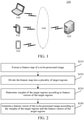
- FIG. 1 shows a schematic diagram of an example system architecture to which a technical solution according to an embodiment of the disclosure is applicable.
- the system architecture may include a terminal device (which may be any one or more of a smart phone 101, a tablet computer 102, and a portable computer 103 shown in FIG. 1 , or may be a desktop computer, and the like), a network 104, and a server 105.
- the network 104 is configured to provide a medium of a communication link between the terminal device and the server 105.
- the network 104 may include various connection types, for example, a wired communication link and a wireless communication link.
- the quantities of terminal devices, networks, and servers in FIG. 1 are merely examples. There may be any quantities of terminal devices, networks, and servers according to an implementation requirement.
- the server 105 may be a server cluster including a plurality of servers.
- a user may specify a to-be-processed image by using a terminal device (the smart phone 101, the tablet computer 102, or the portable computer 103 shown in FIG. 1 ).
- a terminal device the smart phone 101, the tablet computer 102, or the portable computer 103 shown in FIG. 1 .
- the user transmits a to-be-processed image to the server 105 by using the terminal device, or the user selects, by using the terminal device, a to-be-processed image from images provided by the server 105.
- the server 105 may extract a feature map of the to-be-processed image.
- the server may extract a feature map of the to-be-processed image by using any convolutional layer in a convolutional neural network (CNN) model.
- CNN convolutional neural network
- the feature map may be divided into a plurality of target regions; subsequently weights of the target regions are determined according to feature vectors of the target regions; and then a feature vector of the to-be-processed image may be generated according to the weights of target regions and the feature vectors of the target regions.
- the target regions when the feature vector of the image is determined, the target regions may be weighted according to the feature vectors of the target regions in the image, so that a non-salient region in the image can be weakened, and a salient region in the image can be highlighted, thereby effectively improving accuracy and appropriateness of the generated feature vector of the image, and improving an image processing effect, for example, improving an image retrieval effect and accuracy in image recognition.
- the image processing method provided in the embodiments of the disclosure may be performed by the server 105, and correspondingly, an image processing apparatus may be disposed in the server 105.
- the terminal device may have functions similar to those of the server, so as to perform an image processing solution provided in the embodiments of the disclosure.
- FIG. 2 shows a flowchart of an image processing method according to an embodiment of the disclosure.
- the image processing method may be performed by a device having a computing processing function, for example, the server 105 shown in FIG. 1 .
- the image processing method includes at least operations S210 to S240, which are described below in detail:
- a server extracts a feature map of a to-be-processed image.
- the to-be-processed image may be an image from which a feature vector needs to be extracted, an image that needs to be retrieved, an image that needs to be recognized, or the like.
- a feature map of the to-be-processed image may be extracted by using any convolutional layer in a CNN model.
- the server divides the feature map into a plurality of target regions.
- the feature map of the to-be-processed image may be divided in a predetermined region division manner, to obtain the plurality of target regions.
- one or more region division manners may be predetermined (for example, three region division manners are predetermined), then the feature map is divided in the one or more region division manners, to obtain feature map regions corresponding to the region division manners, and the feature map regions corresponding to the region division manners are used as target regions obtained through division.
- a size of an output feature map of a region of interest (ROI) pooling operation may alternatively be set, and then an ROI pooling operation is performed on the feature map of the to-be-processed image, to map ROIs to the feature map of the to-be-processed image so as to obtain a plurality of target regions.
- ROI region of interest
- the server determines weights of the target regions according to feature vectors of the target regions.
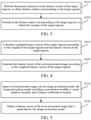
- a process of determining the weights of the target regions in operation S230 may include operation S310 and operation S320 as follows:
- the server performs dimension reduction on the feature vectors of the target regions, to obtain feature scalars corresponding to the target regions.
- the feature scalars are physical quantities used for representing sizes of features.
- the feature vectors of the target regions may be inputted into a fully connected layer of which an output dimension is one dimension, to determine the feature scalars corresponding to the target regions according to an output of the fully connected layer.
- the server normalizes the feature scalars corresponding to the target regions, to obtain the weights of the target regions.
- the feature scalars corresponding to the target regions may be normalized by using an L1 norm, an L2 norm, or a softmax function (referred to as a normalized exponential function).
- the weights of the target regions may be determined according to the feature vectors of the target regions, and then a non-salient region (for example, a background region) in the image may be weakened by using the determined weights, and a salient region (for example, a foreground region) in the image may be highlighted, thereby improving accuracy and appropriateness of the generated feature vector of the image.
- a non-salient region for example, a background region
- a salient region for example, a foreground region
- the server in operation S240, the server generates a feature vector of the to-be-processed image according to the weights of the target regions and the feature vectors of the target regions.
- the process of generating a feature vector of the to-be-processed image according to the weights of the target regions and the feature vectors of the target regions in operation S240 may include operation S410 and operation S420 as follows:
- the server calculates weighted feature vectors of the target regions according to the weights of the target regions and the feature vectors of the target regions.
- the weights of the target regions may be dotmultiplied by the feature vectors of the target regions (that is, a scalar product is calculated), to obtain weighted feature vectors of the target regions.
- the server In operation S420, the server generates the feature vector of the to-be-processed image according to the weighted feature vectors of the target regions.
- the weighted feature vectors of the target regions may be combined, to obtain the feature vector of the to-be-processed image.
- feature vectors after the combination may be normalized (for example, be normalized by using an L2 norm), to obtain the feature vector of the to-be-processed image.
- an image matching the to-be-processed image may be retrieved according to the feature vector of the to-be-processed image, or image recognition is further performed based on the feature vector.
- the target regions may be weighted according to the feature vectors of the target regions in the image, so that a non-salient region in the image may be weakened, and a salient region in the image may be highlighted, thereby effectively improving accuracy and appropriateness of the generated feature vector of the image, improving an image retrieval effect, and also helping improve an image recognition effect.
- FIG. 5 shows a flowchart of an image processing method according to an embodiment of the disclosure.
- the image processing method may be performed by a device having a computing processing function, for example, the server 105 shown in FIG. 1 .
- the image processing method includes at least operations S510 and S520, which are described below in detail:
- a to-be-processed image is inputted an image processing model, the image processing model including a convolution module, a visual attention module, and a feature combination module.
- the convolution module is configured to extract a feature map of the to-be-processed image.
- the visual attention module is configured to: divide the feature map into a plurality of target regions, and determine weights of the target regions according to feature vectors of the target regions.
- the feature combination module is configured to generate a feature vector of the to-be-processed image according to the weights of the target regions and the feature vectors of the target regions.
- the convolution module may be a convolutional neural network, and a feature map of the to-be-processed image may be extracted by using any convolutional layer in the convolution module.
- the visual attention module may divide the feature map of the to-be-processed image in a predetermined region division manner, to obtain the plurality of target regions.
- a predetermined region division manner For example, one or more region division manners may be predetermined, then the feature map is divided in the one or more region division manners, to obtain feature map regions corresponding to the region division manners, and the feature map regions corresponding to the region division manners are used as target regions obtained through division.
- the visual attention module may alternatively set a size of an output feature map of a region of interest (ROI) pooling operation, and then perform an ROI pooling operation on the feature map of the to-be-processed image, to map ROIs to the feature map of the to-be-processed image so as to obtain a plurality of target regions.
- ROI region of interest
- a solution in which the visual attention module determines the weights of the target regions according to the feature vectors of the target regions may be similar to the solution shown in FIG. 3 in the foregoing embodiments. Details are not described herein again.
- a solution in which the feature combination module generates a feature vector of the to-be-processed image according to the weights of the target regions and the feature vectors of the target regions may be similar to the solution shown in FIG. 4 in the foregoing embodiments. Details are not described herein again.
- the server obtains the feature vector of the to-be-processed image that is generated by the image processing model.
- an image matching the to-be-processed image may be retrieved according to the feature vector of the to-be-processed image.
- the to-be-processed image may be recognized according to the feature vector of the to-be-processed image.
- the feature vector of the to-be-processed image is generated by using the image processing model, and the image processing model is trained in a peer-to-peer training manner while accuracy and appropriateness of the generated feature vector of the image are ensured. Accordingly, the feature vector of the image may be conveniently generated by using the image processing model.
- a manner of training the image processing model may be: obtaining an image sample labeled with a feature vector; and train the image processing model by using the image sample, until a loss function of the image processing model converges.
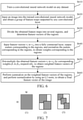
- an image processing method may include operation S610 to operation S660, which are described in detail as follows:
- a server trains a convolutional neural network model on any dataset.
- the convolutional neural network model may be a residual network (ResNet), a ResNeXt, a visual geometry group network (VGGNet), an InceptionNet, or the like.
- ResNet residual network
- VGNet visual geometry group network
- InceptionNet an InceptionNet
- the training on any dataset may mean that the dataset is used as a training set, to train the convolutional neural network model.
- the server inputs an image into the trained convolutional neural network model, and obtains a group of feature maps outputted by any convolutional layer.
- a size of a feature map outputted by the convolutional neural network model may be C ⁇ W ⁇ H, where C represents a quantity of channels, and H and W respectively represent a length and a width.
- the two or more convolutional layers may be parallel. That is, the image is processed by the convolutional layers respectively, to output feature maps corresponding to the convolutional layers, that is, the group of feature maps described above.
- the server divides the obtained feature maps into several regions, and determines feature vectors of the regions.
- regions may be designed for the image in advance, and then a pooling (e.g., max pooling) operation is performed in the regions, to obtain features of the regions.
- a pooling e.g., max pooling
- the part (1) in FIG. 7 indicates that the entire image is regarded as one region, that is, Ri;
- the part (2) in FIG. 7 indicates that the entire image is approximately divided into four regions (to avoid unclearness due to excessive region overlaps, only two regions thereof are shown), an overlap rate between two adjacent regions is set to ⁇ (0 ⁇ 1), and the four regions are denoted as R 2 , R 3 , R 4 , and R 5 respectively;
- the entire image is approximately divided into nine regions (to avoid unclearness due to excessive region overlaps, only three regions thereof are shown), an overlap rate between two adjacent regions is set to ⁇ (0 ⁇ 1), and the nine regions are denoted as R 6 , R 7 , R 8 , R 9 , R 10 , R 11 , R 12 , R 13 , and R 14 respectively.
- the entire image may alternatively be divided into more regions.
- the image may be divided in the three manners shown in FIG. 7 , to obtain 14 regions R 1 to R 14 . Then a max pooling operation is performed in each region according to a coordinate position of the each region, to determine a feature vector v of the each region.
- a size of an output feature map of an ROI pooling layer may alternatively be set.
- a size of an output feature map is set to 3 ⁇ 3, and after an input feature map of a size of W ⁇ H is inputted into the ROI pooling layer, the output feature map is approximately divided into 3 ⁇ 3 parts on average by using an algorithm. For each part, a maximum value is obtained as an output, to output a 3 ⁇ 3 feature map.
- Feature vectors of the 14 regions are v 1 to v 14 respectively.
- a dimension of each feature vector is C, which is used for representing a feature in the corresponding region.
- the server inputs the obtained feature vectors v 1 to v 14 into a fully connected layer, outputs scalars corresponding to the regions, and normalizes the scalars corresponding to the regions, to obtain weights corresponding to the regions.
- a parameter of the fully connected layer may be w ⁇ R c ⁇ 1 , which indicates that an input dimension of the fully connected layer is C dimensions, and an output dimension thereof is one dimension.
- the 14 scalars may be normalized, for example, be normalized by using an L1 norm, an L2 norm, or a softmax function, to obtain ⁇ 1 to ⁇ 14 , so that ⁇ 1 to ⁇ 14 respectively represent weights of the feature vectors v 1 to v 14 , that is, weights of the regions.
- the server dot-multiplies the obtained feature vectors v 1 to v 14 by the corresponding weights ⁇ 1 to ⁇ 14 respectively, to obtain weighted feature vectors of the regions.
- weighted feature vectors of the 14 regions may be represented as ⁇ 1 v 1 to ⁇ 14 v 1 respectively, that is, to perform processing on the image by using a visual attention mechanism.
- the processing may be implemented in a dot-multiplication manner. A design of the process is simple without requiring addition of a particular neural network layer. The dot-multiplication process is performed only to multiply a region feature vector by a region weight that corresponds thereto.
- the server performs summation on the weighted feature vectors of the regions, and performs normalization by using an L2 norm, to obtain a final feature vector of the image.
- processing for example, image retrieval processing or image recognition processing, may be performed based on the feature vector.
- an image retrieval model that may perform peer-to-peer training may be constructed based on the technical solution shown in FIG. 6 , and as shown in FIG. 8 , may include a CNN network 801, a visual attention module 803, a summation module 804, and an L2 normalization layer 805.
- the visual attention module 803 may include an ROI pooling layer, a fully connected layer, a normalization layer, and a dot-multiplication module.
- the CNN network 801 is configured to perform operation S620 shown in FIG. 6 , to obtain a feature map 802; the visual attention module 803 is configured to perform operation S630 to operation S650 shown in FIG.
- the image retrieval model may further include a similarity determining module, configured to determine a similarity between different images based on feature vectors of the images, to determine similar images based on the similarity.
- the constructed image retrieval model may be finely adjusted on a classification task, by using a metric learning method, or the like, until a loss function of the image reduction model converges.
- calculated weights of the regions are annotated in the image, illustratively shown in FIG. 9 .
- a box denoted as "GT" shown in FIG. 9 represents a region in which a salient object is located in each image. It can be seen from FIG. 9 that a weight of a region including a salient object is generally relatively large, and a weight of a region including no salient object is generally relatively small. In this way, a feature of a foreground region may be strengthened, and a feature of a background region may be weakened, thereby implementing more appropriate and more accurate image feature encoding, and greatly improving image retrieval performance.
- test is performed by using image retrieval datasets Paris6k, Oxford5k, Paris106k, and Oxford105k that are commonly recognized in the pertinent art, and a mean average precision (MAP) is used as a quantitative index of a test result.
- MAP mean average precision
- the quantitative indexes may be effectively improved.
- the quantitative index is increased by 7.36% on the dataset Paris106k, and the quantitative index is increased by 11.25% on the dataset Oxford105k.
- retrieval may be performed according to the extracted feature vectors, and then retrieved images are sequentially returned in descending order based on similarity.
- the 5 th returned image, the 10 th returned image, the 20 th returned image, and the 30 th returned image are shown in FIG. 10 . It can be seen that, according to the technical solution of an example embodiment of the disclosure, an appropriate and accurate feature is extracted, so that an image including a relatively large non-target region may still be well retrieved.
- the technical solution of an example embodiment of the disclosure is applicable to the image retrieval field and the video retrieval field, and may be specifically applied to similar video recommendation, similar video deduplication, image recommendation or deduplication, and the like.
- apparatus embodiments of the disclosure may be used for performing the image processing method in the foregoing embodiments of the disclosure.
- the foregoing embodiment of the image processing method of the disclosure may be referred to.
- FIG. 11 shows a block diagram of an image processing apparatus according to an embodiment of the disclosure.
- an image processing apparatus 1100 includes: an extraction unit 1102, a division unit 1104, a determining unit 1106 and a generation unit 1108.
- the extraction unit 1102 is configured to extract a feature map of a to-be-processed image.
- the division unit 1104 is configured to divide the feature map into a plurality of target regions.
- the determining unit 1106 is configured to determine weights of the target regions according to feature vectors of the target regions.
- the generation unit 1108 is configured to generate a feature vector of the to-be-processed image according to the weights of the target regions and the feature vectors of the target regions.
- the division unit 1104 is configured to: divide the feature map in a predetermined region division manner, to obtain the plurality of target regions; or perform an ROI pooling operation on the feature map, to map ROIs to the feature map to obtain the plurality of target regions.
- the division unit 1104 is configured to: divide the feature map in one or more predetermined region division manners, to obtain feature map regions corresponding to the region division manners; and use the feature map regions corresponding to the region division manners as the target regions.
- the determining unit 1106 is configured to: perform dimension reduction on the feature vectors of the target regions, to obtain feature scalars corresponding to the target regions; and normalize the feature scalars corresponding to the target regions, to obtain the weights of the target regions.
- the determining unit 1106 is configured to: input the feature vectors of the target regions into a fully connected layer of which an output dimension is one dimension, and determine the feature scalars corresponding to the target regions according to an output of the fully connected layer.
- the generation unit 1108 is configured to: calculate weighted feature vectors of the target regions according to the weights of the target regions and the feature vectors of the target regions; and generate the feature vector of the to-be-processed image according to the weighted feature vectors of the target regions.
- the generation unit 1108 is configured to: combine the weighted feature vectors of the target regions, to obtain the feature vector of the to-be-processed image; or combine the weighted feature vectors of the target regions, and normalize feature vectors after the combination, to obtain the feature vector of the to-be-processed image.
- the image processing apparatus 1100 further includes: a retrieval unit, configured to retrieve, according to the feature vector of the to-be-processed image, an image matching the to-be-processed image.
- FIG. 12 shows a block diagram of an image processing apparatus according to an embodiment of the disclosure.
- an image processing apparatus 1200 includes: a processing unit 1202 and an obtaining unit 1204.
- the processing unit 1202 is configured to input a to-be-processed image into an image processing model, the image processing model including a convolution module, a visual attention module, and a feature combination module, the convolution module being configured to extract a feature map of the to-be-processed image.
- the visual attention module is configured to: divide the feature map into a plurality of target regions, and determine weights of the target regions according to feature vectors of the target regions.
- the feature combination module is configured to generate a feature vector of the to-be-processed image according to the weights of the target regions and the feature vectors of the target regions.
- the obtaining unit 1204 is configured to obtain the feature vector of the to-be-processed image that is generated by the image processing model.
- the image processing apparatus 1200 further includes: a training unit, configured to obtain an image sample labeled with a feature vector; and train the image processing model by using the image sample.
- the processing unit 1202 is configured to extract the feature map of the to-be-processed image by using any convolutional layer in the convolution module.
- FIG. 13 is a schematic structural diagram of a computer system adapted to implement an electronic device according to an embodiment of the disclosure.
- a computer system 1300 of the electronic device shown in FIG. 13 is merely an example, and does not constitute any limitation on functions and use ranges of the embodiments of the disclosure.
- the computer system 1300 includes a central processing unit (CPU) 1301, which may perform various suitable actions and processing based on a program stored in a read-only memory (ROM) 1302 or a program loaded from a storage part 1308 into a random access memory (RAM) 1303, for example, perform the method described in the foregoing embodiments.
- the RAM 1303 further stores various programs and data required for system operations.
- the CPU 1301, the ROM 1302, and the RAM 1303 are connected to each other by using a bus 1304.
- An input/output (I/O) interface 1305 is also connected to the bus 1304.
- the following components are connected to the I/O interface 1305: an input part 1306 including a keyboard, a mouse, or the like, an output part 1307 including a cathode ray tube (CRT), a liquid crystal display (LCD), a speaker, or the like, a storage part 1308 including a hard disk, or the like, and a communication part 1309 including a network interface card such as a local area network (LAN) card or a modem.
- the communication portion 1309 performs communication processing by using a network such as the Internet.
- a driver 1310 is also connected to the I/O interface 1305 as required.
- a removable medium 1311 such as a magnetic disk, an optical disc, a magneto-optical disk, or a semiconductor memory, is installed on the drive 1310 as required, so that a computer program read from the removable medium is installed into the storage part 1308 as required.
- an example embodiment of the disclosure includes a computer program product, the computer program product includes a computer program carried on a computer-readable medium, and the computer program includes program code used for performing the methods shown in the flowcharts.
- the computer program may be downloaded and installed from a network through the communication part 1309, and/or installed from the removable medium 1311.
- the various functions defined in the system of the disclosure are executed.
- the computer-readable medium shown in the embodiments of the disclosure may be a computer-readable signal medium or a computer-readable storage medium or any combination of the two.
- the computer-readable storage medium may be, for example, but is not limited to, an electric, magnetic, optical, electromagnetic, infrared, or semi-conductive system, apparatus, or component, or any combination of the above.
- a more specific example of the computer-readable storage medium may include but is not limited to: an electrical connection having one or more wires, a portable computer magnetic disk, a hard disk, a random access memory (RAM), a read-only memory (ROM), an erasable programmable read-only memory (EPROM), a flash memory, an optical fiber, a compact disk read-only memory (CD-ROM), an optical storage device, a magnetic storage device, or any appropriate combination thereof.
- the computer-readable storage medium may be any tangible medium containing or storing a program, and the program may be used by or used in combination with an instruction execution system, an apparatus, or a device.
- a computer-readable signal medium may include a data signal being in a baseband or propagated as a part of a carrier wave, the data signal carrying computer-readable program code.
- a data signal propagated in such a way may assume a plurality of forms, including, but not limited to, an electromagnetic signal, an optical signal, or any appropriate combination thereof.
- the computer-readable signal medium may be further any computer readable medium in addition to a computer-readable storage medium.
- the computer readable medium may send, propagate, or transmit a program that is used by or used in conjunction with an instruction execution system, an apparatus, or a device.
- the program code included in the computer-readable medium may be transmitted by using any suitable medium, including but not limited to: a wireless medium, a wire, or the like, or any suitable combination thereof.
- Each box in a flowchart or a block diagram may represent a module, a program segment, or a part of code.
- the module, the program segment, or the part of code includes one or more executable instructions used for implementing specified logic functions.
- functions annotated in boxes may alternatively occur in a sequence different from that annotated in an accompanying drawing. For example, actually two boxes shown in succession may be performed basically in parallel, and sometimes the two boxes may be performed in a reverse sequence. This is determined by a related function.
- Each box in a block diagram and/or a flowchart and a combination of boxes in the block diagram and/or the flowchart may be implemented by using a dedicated hardware-based system configured to perform a specified function or operation, or may be implemented by using a combination of dedicated hardware and a computer instruction.
- a related unit described in the embodiments of the disclosure may be implemented in a software manner, or may be implemented in a hardware manner, and the unit described may also be set in a processor. Names of the units do not constitute a limitation on the units in a specific case.
- the disclosure further provides a computer-readable medium.
- the computer-readable medium may be included in the electronic device described in the foregoing embodiments, or may exist alone and is not disposed in the electronic device.
- the computer-readable medium carries one or more programs, the one or more programs, when executed by the electronic device, causing the electronic device to implement the method described in the foregoing embodiments.
- the example implementations described herein may be implemented by using software, or may be implemented by combining software and necessary hardware. Therefore, the technical solutions of the embodiments of the disclosure may be implemented in a form of a software product.
- the software product may be stored in a non-volatile storage medium (which may be a CD-ROM, a USB flash drive, a removable hard disk, or the like) or on the network, including several instructions for instructing a computing device (which may be a personal computer, a server, a touch terminal, a network device, or the like) to perform the methods according to the embodiments of the disclosure.
Landscapes
- Engineering & Computer Science (AREA)
- Theoretical Computer Science (AREA)
- Physics & Mathematics (AREA)
- General Physics & Mathematics (AREA)
- Evolutionary Computation (AREA)
- Artificial Intelligence (AREA)
- Computer Vision & Pattern Recognition (AREA)
- Health & Medical Sciences (AREA)
- General Health & Medical Sciences (AREA)
- Data Mining & Analysis (AREA)
- Computing Systems (AREA)
- Multimedia (AREA)
- Life Sciences & Earth Sciences (AREA)
- General Engineering & Computer Science (AREA)
- Software Systems (AREA)
- Molecular Biology (AREA)
- Biomedical Technology (AREA)
- Databases & Information Systems (AREA)
- Computational Linguistics (AREA)
- Biophysics (AREA)
- Mathematical Physics (AREA)
- Medical Informatics (AREA)
- Bioinformatics & Cheminformatics (AREA)
- Bioinformatics & Computational Biology (AREA)
- Evolutionary Biology (AREA)
- Biodiversity & Conservation Biology (AREA)
- Library & Information Science (AREA)
- Physiology (AREA)
- Image Analysis (AREA)
- Information Retrieval, Db Structures And Fs Structures Therefor (AREA)
Abstract
Description
- This application claims priority to
Chinese Patent Application No. 201910369974.X, entitled "IMAGE PROCESSING METHOD AND APPARATUS, COMPUTER-READABLE MEDIUM, AND ELECTRONIC DEVICE" filed on May 6, 2019 - The disclosure relates to the field of computer and communication technologies, and particularly, to an image processing method and apparatus, a computer-readable medium, and an electronic device.
- In the field of image processing, for example, in technologies of image retrieval and image recognition, a feature vector extracted from an image greatly affects accuracy of an image processing result. A feature extraction manner provided in the related art has low inaccuracy of an extracted feature vector, which impacts on a final processing result.
- Embodiments of the disclosure provide an image processing method and apparatus, a computer-readable medium, and an electronic device, to improve accuracy and appropriateness of a determined image feature vector at least to some extent.
- Other features and advantages of the disclosure become obvious through the following detailed descriptions, or may be partially learned through the practice of the disclosure.
- According to an aspect of the embodiments of the disclosure, an image processing method is provided, including: extracting a feature map of a to-be-processed image; dividing the feature map into target regions; determining weights of the target regions according to feature vectors of the target regions; and generating a feature vector of the to-be-processed image according to the weights of the target regions and the feature vectors of the target regions.
- According to an aspect of the embodiments of the disclosure, an image processing method is provided, including: inputting a to-be-processed image into an image processing model, the image processing model including a convolution module, a visual attention module, and a feature combination module, the convolution module being configured to extract a feature map of the to-be-processed image, the visual attention module being configured to: divide the feature map into target regions, and determine weights of the target regions according to feature vectors of the target regions, and the feature combination module being configured to generate a feature vector of the to-be-processed image according to the weights of the target regions and the feature vectors of the target regions; and obtaining the feature vector of the to-be-processed image that is generated by the image processing model.
- According to an aspect of the embodiments of the disclosure, an image processing apparatus is provided, including: an extraction unit, configured to extract a feature map of a to-be-processed image; a division unit, configured to divide the feature map into target regions; a determining unit, configured to determine weights of the target regions according to feature vectors of the target regions; and a generation unit, configured to generate a feature vector of the to-be-processed image according to the weights of the target regions and the feature vectors of the target regions.
- In some embodiments of the disclosure, based on the foregoing solution, the division unit is configured to: divide the feature map in a predetermined region division manner, to obtain the target regions; or perform a region of interest (ROI) pooling operation on the feature map, to map ROIs to the feature map to obtain the target regions.
- In some embodiments of the disclosure, based on the foregoing solution, the division unit is configured to: divide the feature map in one or more predetermined region division manners, to obtain feature map regions corresponding to the region division manners; and use the feature map regions corresponding to the region division manners as the target regions.
- In some embodiments of the disclosure, based on the foregoing solution, the determining unit is configured to: perform dimension reduction on the feature vectors of the target regions, to obtain feature scalars corresponding to the target regions; and normalize the feature scalars corresponding to the target regions, to obtain the weights of the target regions.
- In some embodiments of the disclosure, based on the foregoing solution, the determining unit is configured to: input the feature vectors of the target regions into a fully connected layer of which an output dimension is one dimension, and determine the feature scalars corresponding to the target regions according to an output of the fully connected layer.
- In some embodiments of the disclosure, based on the foregoing solution, the generation unit is configured to: calculate weighted feature vectors of the target regions according to the weights of the target regions and the feature vectors of the target regions; and generate the feature vector of the to-be-processed image according to the weighted feature vectors of the target regions.
- In some embodiments of the disclosure, based on the foregoing solution, the generation unit is configured to: combine the weighted feature vectors of the target regions, to obtain the feature vector of the to-be-processed image; or combine the weighted feature vectors of the target regions, and normalize feature vectors after the combination, to obtain the feature vector of the to-be-processed image.
- In some embodiments of the disclosure, based on the foregoing solution, the image processing apparatus further includes: a retrieval unit, configured to retrieve, according to the feature vector of the to-be-processed image, an image matching the to-be-processed image.
- According to an aspect of the embodiments of the disclosure, an image processing apparatus is provided, including: a processing unit, configured to input a to-be-processed image into an image processing model, the image processing model including a convolution module, a visual attention module, and a feature combination module, the convolution module being configured to extract a feature map of the to-be-processed image, the visual attention module being configured to: divide the feature map into target regions, and determine weights of the target regions according to feature vectors of the target regions, and the feature combination module being configured to generate a feature vector of the to-be-processed image according to the weights of the target regions and the feature vectors of the target regions; and an obtaining unit, configured to obtain the feature vector of the to-be-processed image that is generated by the image processing model.
- In some embodiments of the disclosure, based on the foregoing solution, the image processing apparatus further includes: a training unit, configured to obtain an image sample labeled with a feature vector; and train the image processing model by using the image sample.
- In some embodiments of the disclosure, based on the foregoing solution, the processing unit is configured to extract the feature map of the to-be-processed image by using any convolutional layer in the convolution module.
- According to an aspect of the embodiments of the disclosure, a computer-readable medium is provided, storing a computer program, the computer program being executed by at least one processor to perform the image processing method according to the foregoing embodiment.
- According to an aspect of the embodiments of the disclosure, an electronic device is provided, including: one or more processors; and a storage apparatus, configured to store one or more programs, the one or more programs, when executed by the one or more processors, causing the one or more processors to implement the image processing method according to the foregoing embodiment.
- In the technical solutions provided in some embodiments of the disclosure, a feature map of a to-be-processed image is divided into a plurality of target regions; and weights of the target regions are determined according to feature vectors of the target regions, to generate a feature vector of the to-be-processed image according to the weights of the target regions and the feature vectors of the target regions. In this way, when the feature vector of the image is determined, the target regions can be weighted according to the feature vectors of the target regions in the image, so that a non-salient region (for example, a background region) in the image can be weakened, and a salient region (for example, a foreground region) in the image can be highlighted, thereby effectively improving accuracy and appropriateness of the generated feature vector of the image, and helping improve an image retrieval effect.
- It is to be understood that, the foregoing general descriptions and the following detailed descriptions are merely for illustration and explanation purposes and are not intended to limit the disclosure.
- Accompanying drawings herein are incorporated into the specification and constitute a part of this specification, show example embodiments that conform to the disclosure, and are used for describing a principle of an inventive concept of the disclosure together with this specification. The accompanying drawings described below are merely some embodiments of the disclosure, and a person of ordinary skill in the art may further obtain other accompanying drawings according to the accompanying drawings without creative efforts.
-
FIG. 1 shows a schematic diagram of an example system architecture to which a technical solution according to an embodiment of the disclosure is applicable. -
FIG. 2 shows a flowchart of an image processing method according to an embodiment of the disclosure. -
FIG. 3 shows a flowchart of determining weights of target regions according to an embodiment of the disclosure. -
FIG. 4 shows a flowchart of generating a feature vector of a to-be-processed image according to weights of target regions and feature vectors of the target regions according to an embodiment of the disclosure. -
FIG. 5 shows a flowchart of an image processing method according to an embodiment of the disclosure. -
FIG. 6 shows a flowchart of an image processing method according to an embodiment of the disclosure. -
FIG. 7 shows a schematic diagram of region division manners according to an embodiment of the disclosure. -
FIG. 8 shows a schematic structural diagram of an image retrieval model according to an embodiment of the disclosure. -
FIG. 9 shows a schematic diagram of weights of regions in an image according to an embodiment of the disclosure. -
FIG. 10 shows a schematic diagram of image retrieval results according to an embodiment of the disclosure. -
FIG. 11 shows a block diagram of an image processing apparatus according to an embodiment of the disclosure. -
FIG. 12 shows a block diagram of an image processing apparatus according to an embodiment of the disclosure. -
FIG. 13 shows a schematic structural diagram of a computer system adapted to implement an electronic device according to an embodiment of the disclosure. - Example implementations will now be described with reference to the accompanying drawings. However, the example implementations may be implemented in various forms, and are not to be understood as being limited to the examples described herein. Instead, the implementations are provided to make the disclosure more thorough and complete and fully convey the idea of the example implementations to a person skilled in the art.
- In addition, the described features, structures or characteristics may be combined in one or more embodiments in any appropriate manner. In the following descriptions, specific details are provided to give a comprehensive understanding of the embodiments of the disclosure. However, a person of ordinary skill in the art is to be aware that, the technical solutions in the disclosure may be implemented without one or more of the particular details, or another method, unit, apparatus, or operation may be used. In other cases, well-known methods, apparatuses, implementations, or operations are not shown or described in detail, in order not to obscure the aspects of the disclosure.
- The block diagrams shown in the accompanying drawings are merely functional entities and do not necessarily correspond to physically independent entities. That is, the functional entities may be implemented in a software form, or in one or more hardware modules or integrated circuits, or in different networks and/or processor apparatuses and/or microcontroller apparatuses.
- The flowcharts shown in the accompanying drawings are merely examples, do not need to include all content and operations/operations, and do not need to be performed in the described orders either. For example, some operations/operations may be further divided, while some operations/operations may be combined or partially combined. Therefore, an actual execution order may change according to an embodiment.
-
FIG. 1 shows a schematic diagram of an example system architecture to which a technical solution according to an embodiment of the disclosure is applicable. - As shown in
FIG. 1 , the system architecture may include a terminal device (which may be any one or more of asmart phone 101, atablet computer 102, and aportable computer 103 shown inFIG. 1 , or may be a desktop computer, and the like), anetwork 104, and aserver 105. Thenetwork 104 is configured to provide a medium of a communication link between the terminal device and theserver 105. Thenetwork 104 may include various connection types, for example, a wired communication link and a wireless communication link. - It is to be understood that the quantities of terminal devices, networks, and servers in
FIG. 1 are merely examples. There may be any quantities of terminal devices, networks, and servers according to an implementation requirement. For example, theserver 105 may be a server cluster including a plurality of servers. - In an embodiment of the disclosure, a user may specify a to-be-processed image by using a terminal device (the
smart phone 101, thetablet computer 102, or theportable computer 103 shown inFIG. 1 ). For example, the user transmits a to-be-processed image to theserver 105 by using the terminal device, or the user selects, by using the terminal device, a to-be-processed image from images provided by theserver 105. - In an embodiment of the disclosure, after determining the to-be-processed image, the
server 105 may extract a feature map of the to-be-processed image. For example, the server may extract a feature map of the to-be-processed image by using any convolutional layer in a convolutional neural network (CNN) model. After the feature map of the to-be-processed image is extracted, the feature map may be divided into a plurality of target regions; subsequently weights of the target regions are determined according to feature vectors of the target regions; and then a feature vector of the to-be-processed image may be generated according to the weights of target regions and the feature vectors of the target regions. According to the technical solution of the example embodiments of the disclosure, when the feature vector of the image is determined, the target regions may be weighted according to the feature vectors of the target regions in the image, so that a non-salient region in the image can be weakened, and a salient region in the image can be highlighted, thereby effectively improving accuracy and appropriateness of the generated feature vector of the image, and improving an image processing effect, for example, improving an image retrieval effect and accuracy in image recognition. - The image processing method provided in the embodiments of the disclosure may be performed by the
server 105, and correspondingly, an image processing apparatus may be disposed in theserver 105. However, in another embodiment of the disclosure, the terminal device may have functions similar to those of the server, so as to perform an image processing solution provided in the embodiments of the disclosure. - The implementation details of the technical solutions in the embodiments of the disclosure are described below in detail.
-
FIG. 2 shows a flowchart of an image processing method according to an embodiment of the disclosure. The image processing method may be performed by a device having a computing processing function, for example, theserver 105 shown inFIG. 1 . Referring toFIG. 2 , the image processing method includes at least operations S210 to S240, which are described below in detail: - In operation S210, a server extracts a feature map of a to-be-processed image.
- In an embodiment of the disclosure, the to-be-processed image may be an image from which a feature vector needs to be extracted, an image that needs to be retrieved, an image that needs to be recognized, or the like.
- In an embodiment of the disclosure, a feature map of the to-be-processed image may be extracted by using any convolutional layer in a CNN model.
- In operation S220, the server divides the feature map into a plurality of target regions.
- In an embodiment of the disclosure, the feature map of the to-be-processed image may be divided in a predetermined region division manner, to obtain the plurality of target regions. For example, one or more region division manners may be predetermined (for example, three region division manners are predetermined), then the feature map is divided in the one or more region division manners, to obtain feature map regions corresponding to the region division manners, and the feature map regions corresponding to the region division manners are used as target regions obtained through division.
- In an embodiment of the disclosure, a size of an output feature map of a region of interest (ROI) pooling operation may alternatively be set, and then an ROI pooling operation is performed on the feature map of the to-be-processed image, to map ROIs to the feature map of the to-be-processed image so as to obtain a plurality of target regions.
- Still referring to
FIG. 2 , in operation S230, the server determines weights of the target regions according to feature vectors of the target regions. - In an embodiment of the disclosure, as shown in
FIG. 3 , a process of determining the weights of the target regions in operation S230 may include operation S310 and operation S320 as follows: - In operation S310, the server performs dimension reduction on the feature vectors of the target regions, to obtain feature scalars corresponding to the target regions.
- In an embodiment of the disclosure, the feature scalars are physical quantities used for representing sizes of features. For example, the feature vectors of the target regions may be inputted into a fully connected layer of which an output dimension is one dimension, to determine the feature scalars corresponding to the target regions according to an output of the fully connected layer.
- In operation S320, the server normalizes the feature scalars corresponding to the target regions, to obtain the weights of the target regions.
- In an embodiment of the disclosure, the feature scalars corresponding to the target regions may be normalized by using an L1 norm, an L2 norm, or a softmax function (referred to as a normalized exponential function).
- According to the technical solution of the example embodiment shown in
FIG. 3 , the weights of the target regions may be determined according to the feature vectors of the target regions, and then a non-salient region (for example, a background region) in the image may be weakened by using the determined weights, and a salient region (for example, a foreground region) in the image may be highlighted, thereby improving accuracy and appropriateness of the generated feature vector of the image. - Still referring to
FIG. 2 , in operation S240, the server generates a feature vector of the to-be-processed image according to the weights of the target regions and the feature vectors of the target regions. - In an embodiment of the disclosure, as shown in
FIG. 4 , the process of generating a feature vector of the to-be-processed image according to the weights of the target regions and the feature vectors of the target regions in operation S240 may include operation S410 and operation S420 as follows: - In operation S410, the server calculates weighted feature vectors of the target regions according to the weights of the target regions and the feature vectors of the target regions.
- In an embodiment of the disclosure, the weights of the target regions may be dotmultiplied by the feature vectors of the target regions (that is, a scalar product is calculated), to obtain weighted feature vectors of the target regions.
- In operation S420, the server generates the feature vector of the to-be-processed image according to the weighted feature vectors of the target regions.
- In an embodiment of the disclosure, the weighted feature vectors of the target regions may be combined, to obtain the feature vector of the to-be-processed image. Alternatively, after the weighted feature vectors of the target regions are combined, feature vectors after the combination may be normalized (for example, be normalized by using an L2 norm), to obtain the feature vector of the to-be-processed image.
- Based on the technical solution of the embodiment shown in
FIG. 2 , in an embodiment of the disclosure, after the feature vector of the to-be-processed image is obtained, an image matching the to-be-processed image may be retrieved according to the feature vector of the to-be-processed image, or image recognition is further performed based on the feature vector. - According to the technical solutions of the example embodiments shown in
FIG. 2 to FIG. 4 , when the feature vector of the image is determined, the target regions may be weighted according to the feature vectors of the target regions in the image, so that a non-salient region in the image may be weakened, and a salient region in the image may be highlighted, thereby effectively improving accuracy and appropriateness of the generated feature vector of the image, improving an image retrieval effect, and also helping improve an image recognition effect. -
FIG. 5 shows a flowchart of an image processing method according to an embodiment of the disclosure. The image processing method may be performed by a device having a computing processing function, for example, theserver 105 shown inFIG. 1 . Referring toFIG. 5 , the image processing method includes at least operations S510 and S520, which are described below in detail: - In operation S510, a to-be-processed image is inputted an image processing model, the image processing model including a convolution module, a visual attention module, and a feature combination module. The convolution module is configured to extract a feature map of the to-be-processed image. The visual attention module is configured to: divide the feature map into a plurality of target regions, and determine weights of the target regions according to feature vectors of the target regions. The feature combination module is configured to generate a feature vector of the to-be-processed image according to the weights of the target regions and the feature vectors of the target regions.
- In an embodiment of the disclosure, the convolution module may be a convolutional neural network, and a feature map of the to-be-processed image may be extracted by using any convolutional layer in the convolution module.
- In an embodiment of the disclosure, the visual attention module may divide the feature map of the to-be-processed image in a predetermined region division manner, to obtain the plurality of target regions. For example, one or more region division manners may be predetermined, then the feature map is divided in the one or more region division manners, to obtain feature map regions corresponding to the region division manners, and the feature map regions corresponding to the region division manners are used as target regions obtained through division.
- In an embodiment of the disclosure, the visual attention module may alternatively set a size of an output feature map of a region of interest (ROI) pooling operation, and then perform an ROI pooling operation on the feature map of the to-be-processed image, to map ROIs to the feature map of the to-be-processed image so as to obtain a plurality of target regions.
- In an embodiment of the disclosure, a solution in which the visual attention module determines the weights of the target regions according to the feature vectors of the target regions may be similar to the solution shown in
FIG. 3 in the foregoing embodiments. Details are not described herein again. - In an embodiment of the disclosure, a solution in which the feature combination module generates a feature vector of the to-be-processed image according to the weights of the target regions and the feature vectors of the target regions may be similar to the solution shown in
FIG. 4 in the foregoing embodiments. Details are not described herein again. - Still referring to
FIG. 5 , in operation S520, the server obtains the feature vector of the to-be-processed image that is generated by the image processing model. - In an embodiment of the disclosure, after the feature vector of the to-be-processed image that is generated by the image processing model is obtained, an image matching the to-be-processed image may be retrieved according to the feature vector of the to-be-processed image.
- In an embodiment of the disclosure, after the feature vector of the to-be-processed image that is generated by the image processing model is obtained, the to-be-processed image may be recognized according to the feature vector of the to-be-processed image.
- In the technical solution of the embodiment shown in
FIG. 5 , the feature vector of the to-be-processed image is generated by using the image processing model, and the image processing model is trained in a peer-to-peer training manner while accuracy and appropriateness of the generated feature vector of the image are ensured. Accordingly, the feature vector of the image may be conveniently generated by using the image processing model. In an embodiment of the disclosure, a manner of training the image processing model may be: obtaining an image sample labeled with a feature vector; and train the image processing model by using the image sample, until a loss function of the image processing model converges. - The implementation details of the technical solutions in the embodiments of the disclosure are described below in detail with reference to
FIG. 6 to FIG. 10 . - As shown in
FIG. 6 , an image processing method according to an embodiment of the disclosure may include operation S610 to operation S660, which are described in detail as follows: - In operation S610, a server trains a convolutional neural network model on any dataset.
- In an embodiment of the disclosure, the convolutional neural network model may be a residual network (ResNet), a ResNeXt, a visual geometry group network (VGGNet), an InceptionNet, or the like.
- The training on any dataset may mean that the dataset is used as a training set, to train the convolutional neural network model.
- In operation S620, the server inputs an image into the trained convolutional neural network model, and obtains a group of feature maps outputted by any convolutional layer.
- In an embodiment of the disclosure, a size of a feature map outputted by the convolutional neural network model may be C×W×H, where C represents a quantity of channels, and H and W respectively represent a length and a width.
- For a convolutional neural network , when the convolutional neural network model has two or more convolutional layers, the two or more convolutional layers may be parallel. That is, the image is processed by the convolutional layers respectively, to output feature maps corresponding to the convolutional layers, that is, the group of feature maps described above.
- In operation S630, the server divides the obtained feature maps into several regions, and determines feature vectors of the regions.
- In an embodiment of the disclosure, several regions may be designed for the image in advance, and then a pooling (e.g., max pooling) operation is performed in the regions, to obtain features of the regions. As shown in
FIG. 7 , the part (1) inFIG. 7 indicates that the entire image is regarded as one region, that is, Ri; the part (2) inFIG. 7 indicates that the entire image is approximately divided into four regions (to avoid unclearness due to excessive region overlaps, only two regions thereof are shown), an overlap rate between two adjacent regions is set to α (0<α<1), and the four regions are denoted as R2, R3, R4, and R5 respectively; and the part (3) inFIG. 7 indicates that the entire image is approximately divided into nine regions (to avoid unclearness due to excessive region overlaps, only three regions thereof are shown), an overlap rate between two adjacent regions is set to α (0<α<1), and the nine regions are denoted as R6, R7, R8, R9, R10, R11, R12, R13, and R14 respectively. In an embodiment, the entire image may alternatively be divided into more regions. - In an embodiment of the disclosure, the image may be divided in the three manners shown in
FIG. 7 , to obtain 14 regions R1 to R14. Then a max pooling operation is performed in each region according to a coordinate position of the each region, to determine a feature vector v of the each region. - In an embodiment of the disclosure, a size of an output feature map of an ROI pooling layer may alternatively be set. For example, a size of an output feature map is set to 3×3, and after an input feature map of a size of W×H is inputted into the ROI pooling layer, the output feature map is approximately divided into 3×3 parts on average by using an algorithm. For each part, a maximum value is obtained as an output, to output a 3×3 feature map.
- A description is made by using an example in which the foregoing 14 regions R1 to R14 are obtained. Feature vectors of the 14 regions are v 1 to v 14 respectively. A dimension of each feature vector is C, which is used for representing a feature in the corresponding region.
- In operation S640, the server inputs the obtained feature vectors v 1 to v 14 into a fully connected layer, outputs scalars corresponding to the regions, and normalizes the scalars corresponding to the regions, to obtain weights corresponding to the regions.
- In an embodiment of the disclosure, a parameter of the fully connected layer may be w ∈ R c×1, which indicates that an input dimension of the fully connected layer is C dimensions, and an output dimension thereof is one dimension. After 14 scalars are obtained by using the fully connected layer, the 14 scalars may be normalized, for example, be normalized by using an L1 norm, an L2 norm, or a softmax function, to obtain β 1 to β 14, so that β 1 to β 14 respectively represent weights of the feature vectors v 1 to v 14, that is, weights of the regions. By using L1-norm normalization as an example, a weight of a feature vector may be calculated by using the following formula (1):

- In operation S650, the server dot-multiplies the obtained feature vectors v 1 to v 14 by the corresponding weights β 1 to β 14 respectively, to obtain weighted feature vectors of the regions.
- In an embodiment of the disclosure, weighted feature vectors of the 14 regions may be represented as β 1 v 1 to β 14 v 1 respectively, that is, to perform processing on the image by using a visual attention mechanism. The processing may be implemented in a dot-multiplication manner. A design of the process is simple without requiring addition of a particular neural network layer. The dot-multiplication process is performed only to multiply a region feature vector by a region weight that corresponds thereto.
- In operation S660, the server performs summation on the weighted feature vectors of the regions, and performs normalization by using an L2 norm, to obtain a final feature vector of the image. After the feature vector of the image is obtained, processing, for example, image retrieval processing or image recognition processing, may be performed based on the feature vector. In an embodiment of the disclosure, the final feature vector of the image may be calculated by using the following formula (2):

- In an embodiment of the disclosure, an image retrieval model that may perform peer-to-peer training may be constructed based on the technical solution shown in
FIG. 6 , and as shown inFIG. 8 , may include aCNN network 801, avisual attention module 803, asummation module 804, and anL2 normalization layer 805. Thevisual attention module 803 may include an ROI pooling layer, a fully connected layer, a normalization layer, and a dot-multiplication module. TheCNN network 801 is configured to perform operation S620 shown inFIG. 6 , to obtain afeature map 802; thevisual attention module 803 is configured to perform operation S630 to operation S650 shown inFIG. 6 ; and thesummation module 804 and theL2 normalization layer 805 are configured to perform operation S660 shown inFIG. 6 , to obtain afeature vector 806 of the image. The image retrieval model may further include a similarity determining module, configured to determine a similarity between different images based on feature vectors of the images, to determine similar images based on the similarity. - In an embodiment of the disclosure, the constructed image retrieval model may be finely adjusted on a classification task, by using a metric learning method, or the like, until a loss function of the image reduction model converges.
- For ease of description of the effects of the technical solution of an example embodiment of the disclosure, in this embodiment of the disclosure, calculated weights of the regions are annotated in the image, illustratively shown in
FIG. 9 . A box denoted as "GT" shown inFIG. 9 represents a region in which a salient object is located in each image. It can be seen fromFIG. 9 that a weight of a region including a salient object is generally relatively large, and a weight of a region including no salient object is generally relatively small. In this way, a feature of a foreground region may be strengthened, and a feature of a background region may be weakened, thereby implementing more appropriate and more accurate image feature encoding, and greatly improving image retrieval performance. - In an embodiment of the disclosure, based on a VGG-16 or ResNet-101 network architecture, test is performed by using image retrieval datasets Paris6k, Oxford5k, Paris106k, and Oxford105k that are commonly recognized in the pertinent art, and a mean average precision (MAP) is used as a quantitative index of a test result. Specific test results are shown in Table 1:
Table 1 Network architecture Method Paris6k Oxford5k Paris106k Oxford 105k VGG-16 Related Art 83.0 66.9 75.7 61.6 Solution of example embodiment of the disclosure 86.89 74.31 81.28 71.11 ResNet-101 Related Art 85.2 69.4 77.8 63.7 Solution of example embodiment of the disclosure 89.47 77.26 85.16 74.95 - It can be seen from Table 1 that, by using the technical solution of an example embodiment of the disclosure, the quantitative indexes may be effectively improved. Particularly, when the ResNet-101 architecture is selected, the quantitative index is increased by 7.36% on the dataset Paris106k, and the quantitative index is increased by 11.25% on the dataset Oxford105k.
- To further verify the effect of the technical solution of an example embodiment of the disclosure, in an embodiment of the disclosure, after feature vectors of to-be-retrieved images are extracted according to the technical solution of an example embodiment of the disclosure, retrieval may be performed according to the extracted feature vectors, and then retrieved images are sequentially returned in descending order based on similarity. The 5th returned image, the 10th returned image, the 20th returned image, and the 30th returned image are shown in
FIG. 10 . It can be seen that, according to the technical solution of an example embodiment of the disclosure, an appropriate and accurate feature is extracted, so that an image including a relatively large non-target region may still be well retrieved. - In addition, the technical solution of an example embodiment of the disclosure is applicable to the image retrieval field and the video retrieval field, and may be specifically applied to similar video recommendation, similar video deduplication, image recommendation or deduplication, and the like.
- The following describes apparatus embodiments of the disclosure, and the apparatus embodiments may be used for performing the image processing method in the foregoing embodiments of the disclosure. For details not disclosed in the apparatus embodiments of the disclosure, the foregoing embodiment of the image processing method of the disclosure may be referred to.
-
FIG. 11 shows a block diagram of an image processing apparatus according to an embodiment of the disclosure. - Referring to
FIG. 11 , animage processing apparatus 1100 according to an embodiment of the disclosure includes: anextraction unit 1102, adivision unit 1104, a determiningunit 1106 and ageneration unit 1108. - The
extraction unit 1102 is configured to extract a feature map of a to-be-processed image. Thedivision unit 1104 is configured to divide the feature map into a plurality of target regions. The determiningunit 1106 is configured to determine weights of the target regions according to feature vectors of the target regions. Thegeneration unit 1108 is configured to generate a feature vector of the to-be-processed image according to the weights of the target regions and the feature vectors of the target regions. - In some embodiments of the disclosure, based on the foregoing solution, the
division unit 1104 is configured to: divide the feature map in a predetermined region division manner, to obtain the plurality of target regions; or perform an ROI pooling operation on the feature map, to map ROIs to the feature map to obtain the plurality of target regions. - In some embodiments of the disclosure, based on the foregoing solution, the
division unit 1104 is configured to: divide the feature map in one or more predetermined region division manners, to obtain feature map regions corresponding to the region division manners; and use the feature map regions corresponding to the region division manners as the target regions. - In some embodiments of the disclosure, based on the foregoing solution, the determining
unit 1106 is configured to: perform dimension reduction on the feature vectors of the target regions, to obtain feature scalars corresponding to the target regions; and normalize the feature scalars corresponding to the target regions, to obtain the weights of the target regions. - In some embodiments of the disclosure, based on the foregoing solution, the determining
unit 1106 is configured to: input the feature vectors of the target regions into a fully connected layer of which an output dimension is one dimension, and determine the feature scalars corresponding to the target regions according to an output of the fully connected layer. - In some embodiments of the disclosure, based on the foregoing solution, the
generation unit 1108 is configured to: calculate weighted feature vectors of the target regions according to the weights of the target regions and the feature vectors of the target regions; and generate the feature vector of the to-be-processed image according to the weighted feature vectors of the target regions. - In some embodiments of the disclosure, based on the foregoing solution, the
generation unit 1108 is configured to: combine the weighted feature vectors of the target regions, to obtain the feature vector of the to-be-processed image; or combine the weighted feature vectors of the target regions, and normalize feature vectors after the combination, to obtain the feature vector of the to-be-processed image. - In some embodiments of the disclosure, based on the foregoing solution, the
image processing apparatus 1100 further includes: a retrieval unit, configured to retrieve, according to the feature vector of the to-be-processed image, an image matching the to-be-processed image. -
FIG. 12 shows a block diagram of an image processing apparatus according to an embodiment of the disclosure. - Referring to
FIG. 12 , animage processing apparatus 1200 according to an embodiment of the disclosure includes: aprocessing unit 1202 and an obtainingunit 1204. - The
processing unit 1202 is configured to input a to-be-processed image into an image processing model, the image processing model including a convolution module, a visual attention module, and a feature combination module, the convolution module being configured to extract a feature map of the to-be-processed image. The visual attention module is configured to: divide the feature map into a plurality of target regions, and determine weights of the target regions according to feature vectors of the target regions. The feature combination module is configured to generate a feature vector of the to-be-processed image according to the weights of the target regions and the feature vectors of the target regions. The obtainingunit 1204 is configured to obtain the feature vector of the to-be-processed image that is generated by the image processing model. - In some embodiments of the disclosure, based on the foregoing solution, the
image processing apparatus 1200 further includes: a training unit, configured to obtain an image sample labeled with a feature vector; and train the image processing model by using the image sample. - In some embodiments of the disclosure, based on the foregoing solution, the
processing unit 1202 is configured to extract the feature map of the to-be-processed image by using any convolutional layer in the convolution module. -
FIG. 13 is a schematic structural diagram of a computer system adapted to implement an electronic device according to an embodiment of the disclosure. - A
computer system 1300 of the electronic device shown inFIG. 13 is merely an example, and does not constitute any limitation on functions and use ranges of the embodiments of the disclosure. - As shown in
FIG. 13 , thecomputer system 1300 includes a central processing unit (CPU) 1301, which may perform various suitable actions and processing based on a program stored in a read-only memory (ROM) 1302 or a program loaded from astorage part 1308 into a random access memory (RAM) 1303, for example, perform the method described in the foregoing embodiments. TheRAM 1303 further stores various programs and data required for system operations. TheCPU 1301, theROM 1302, and theRAM 1303 are connected to each other by using abus 1304. An input/output (I/O)interface 1305 is also connected to thebus 1304. - The following components are connected to the I/O interface 1305: an
input part 1306 including a keyboard, a mouse, or the like, anoutput part 1307 including a cathode ray tube (CRT), a liquid crystal display (LCD), a speaker, or the like, astorage part 1308 including a hard disk, or the like, and acommunication part 1309 including a network interface card such as a local area network (LAN) card or a modem. Thecommunication portion 1309 performs communication processing by using a network such as the Internet. Adriver 1310 is also connected to the I/O interface 1305 as required. A removable medium 1311, such as a magnetic disk, an optical disc, a magneto-optical disk, or a semiconductor memory, is installed on thedrive 1310 as required, so that a computer program read from the removable medium is installed into thestorage part 1308 as required. - Particularly, according to an embodiment of the disclosure, the processes described in the following by referring to the flowcharts may be implemented as computer software programs. For example, an example embodiment of the disclosure includes a computer program product, the computer program product includes a computer program carried on a computer-readable medium, and the computer program includes program code used for performing the methods shown in the flowcharts. In such an embodiment, the computer program may be downloaded and installed from a network through the
communication part 1309, and/or installed from theremovable medium 1311. When the computer program is executed by theCPU 1301, the various functions defined in the system of the disclosure are executed. - The computer-readable medium shown in the embodiments of the disclosure may be a computer-readable signal medium or a computer-readable storage medium or any combination of the two. The computer-readable storage medium may be, for example, but is not limited to, an electric, magnetic, optical, electromagnetic, infrared, or semi-conductive system, apparatus, or component, or any combination of the above. A more specific example of the computer-readable storage medium may include but is not limited to: an electrical connection having one or more wires, a portable computer magnetic disk, a hard disk, a random access memory (RAM), a read-only memory (ROM), an erasable programmable read-only memory (EPROM), a flash memory, an optical fiber, a compact disk read-only memory (CD-ROM), an optical storage device, a magnetic storage device, or any appropriate combination thereof. In the disclosure, the computer-readable storage medium may be any tangible medium containing or storing a program, and the program may be used by or used in combination with an instruction execution system, an apparatus, or a device. In the disclosure, a computer-readable signal medium may include a data signal being in a baseband or propagated as a part of a carrier wave, the data signal carrying computer-readable program code. A data signal propagated in such a way may assume a plurality of forms, including, but not limited to, an electromagnetic signal, an optical signal, or any appropriate combination thereof. The computer-readable signal medium may be further any computer readable medium in addition to a computer-readable storage medium. The computer readable medium may send, propagate, or transmit a program that is used by or used in conjunction with an instruction execution system, an apparatus, or a device. The program code included in the computer-readable medium may be transmitted by using any suitable medium, including but not limited to: a wireless medium, a wire, or the like, or any suitable combination thereof.
- The flowcharts and block diagrams in the accompanying drawings illustrate possible system architectures, functions and operations that may be implemented by a system, a method, and a computer program product according to various embodiments of the disclosure. Each box in a flowchart or a block diagram may represent a module, a program segment, or a part of code. The module, the program segment, or the part of code includes one or more executable instructions used for implementing specified logic functions. In some implementations used as substitutes, functions annotated in boxes may alternatively occur in a sequence different from that annotated in an accompanying drawing. For example, actually two boxes shown in succession may be performed basically in parallel, and sometimes the two boxes may be performed in a reverse sequence. This is determined by a related function. Each box in a block diagram and/or a flowchart and a combination of boxes in the block diagram and/or the flowchart may be implemented by using a dedicated hardware-based system configured to perform a specified function or operation, or may be implemented by using a combination of dedicated hardware and a computer instruction.
- A related unit described in the embodiments of the disclosure may be implemented in a software manner, or may be implemented in a hardware manner, and the unit described may also be set in a processor. Names of the units do not constitute a limitation on the units in a specific case.
- According to another aspect, the disclosure further provides a computer-readable medium. The computer-readable medium may be included in the electronic device described in the foregoing embodiments, or may exist alone and is not disposed in the electronic device. The computer-readable medium carries one or more programs, the one or more programs, when executed by the electronic device, causing the electronic device to implement the method described in the foregoing embodiments.
- Although a plurality of modules or units of a device configured to perform actions are discussed in the foregoing detailed description, such division is not mandatory. Actually, according to the implementations of the disclosure, the features and functions of two or more modules or units described above may be specifically implemented in one module or unit. On the contrary, the features and functions of one module or unit described above may be further divided to be embodied by a plurality of modules or units.
- According to the foregoing descriptions of the implementations, a person skilled in the art may readily understand that the example implementations described herein may be implemented by using software, or may be implemented by combining software and necessary hardware. Therefore, the technical solutions of the embodiments of the disclosure may be implemented in a form of a software product. The software product may be stored in a non-volatile storage medium (which may be a CD-ROM, a USB flash drive, a removable hard disk, or the like) or on the network, including several instructions for instructing a computing device (which may be a personal computer, a server, a touch terminal, a network device, or the like) to perform the methods according to the embodiments of the disclosure.
- After considering the specification and practicing the implementations of the disclosure, a person skilled in the art may conceive of other implementations of the disclosure. This application is intended to cover any variations, uses, or adaptive changes of the disclosure. The variations, uses, or adaptive changes follow the general principles of the disclosure and may include common general knowledge or common technical means in the art, which are not disclosed in the disclosure. It is to be understood that the disclosure is not limited to the precise structures described above and shown in the accompanying drawings, and various modifications and changes may be made without departing from the scope of the disclosure. The scope of the disclosure is subject only to the appended claims.
Claims (15)
- An image processing method, comprising:extracting a feature map of a to-be-processed image;dividing the feature map into a plurality of target regions;determining weights of the target regions according to feature vectors of the target regions; andgenerating a feature vector of the to-be-processed image according to the weights of the target regions and the feature vectors of the target regions.
- The image processing method according to claim 1, wherein the dividing the feature map into a plurality of target regions comprises:dividing the feature map in a predetermined region division manner, to obtain the plurality of target regions; orperforming a region of interest (ROI) pooling operation on the feature map, to map ROIs to the feature map to obtain the plurality of target regions.
- The image processing method according to claim 2, wherein the dividing the feature map in a predetermined region division manner comprises:dividing the feature map by using one or more predetermined region division manners, to obtain feature map regions corresponding to the region division manners; andusing the feature map regions corresponding to the region division manners as the target regions.
- The image processing method according to claim 1, wherein the determining weights of the target regions according to feature vectors of the target regions comprises:performing dimension reduction on the feature vectors of the target regions, to obtain feature scalars corresponding to the target regions; andnormalizing the feature scalars corresponding to the target regions, to obtain the weights of the target regions.
- The image processing method according to claim 4, wherein the performing dimension reduction on the feature vectors of the target regions, to obtain feature scalars corresponding to the target regions comprises:
inputting the feature vectors of the target regions into a fully connected layer of which an output dimension is one dimension, and determining the feature scalars corresponding to the target regions according to an output of the fully connected layer. - The image processing method according to claim 1, wherein the generating a feature vector of the to-be-processed image according to the weights of the target regions and the feature vectors of the target regions comprises:calculating weighted feature vectors of the target regions according to the weights of the target regions and the feature vectors of the target regions; andgenerating the feature vector of the to-be-processed image according to the weighted feature vectors of the target regions.
- The image processing method according to claim 6, wherein the generating the feature vector of the to-be-processed image according to the weighted feature vectors of the target regions comprises:combining the weighted feature vectors of the target regions, to obtain the feature vector of the to-be-processed image; orcombining the weighted feature vectors of the target regions, and normalizing feature vectors after the combination, to obtain the feature vector of the to-be-processed image.
- The image processing method according to any one of claims 1 to 7, further comprising:retrieving, according to the feature vector of the to-be-processed image, an image matching the to-be-processed image.
- An image processing method, comprising:inputting a to-be-processed image into an image processing model, the image processing model comprising a convolution module, a visual attention module, and a feature combination module,the convolution module being configured to extract a feature map of the to-be-processed image, the visual attention module being configured to: divide the feature map into a plurality of target regions, and determine weights of the target regions according to feature vectors of the target regions, and the feature combination module being configured to generate a feature vector of the to-be-processed image according to the weights of the target regions and the feature vectors of the target regions; andobtaining the feature vector of the to-be-processed image of the image processing model.
- The image processing method according to claim 9, further comprising:obtaining an image sample labeled with a feature vector; andtraining the image processing model by using the image sample.
- The image processing method according to claim 9 or 10, wherein the feature map of the to-be-processed image is extracted by using any convolutional layer in the convolution module.
- An image processing apparatus, comprising:an extraction unit, configured to extract a feature map of a to-be-processed image;a division unit, configured to divide the feature map into a plurality of target regions;a determining unit, configured to determine weights of the target regions according to feature vectors of the target regions; anda generation unit, configured to generate a feature vector of the to-be-processed image according to the weights of the target regions and the feature vectors of the target regions.
- An image processing apparatus, comprising:a processing unit, configured to input a to-be-processed image into an image processing model, the image processing model comprising a convolution module, a visual attention module, and a feature combination module,the convolution module being configured to extract a feature map of the to-be-processed image, the visual attention module being configured to: divide the feature map into a plurality of target regions, and determine weights of the target regions according to feature vectors of the target regions, and the feature combination module being configured to generate a feature vector of the to-be-processed image according to the weights of the target regions and the feature vectors of the target regions; andan obtaining unit, configured to obtain the feature vector of the to-be-processed image that is generated by the image processing model.
- A computer-readable medium, storing a computer program, the computer program, when executed by a processor, implementing the image processing method according to any one of claims 1 to 8, or implementing the image processing method according to any one of claims 9 to 11.
- An electronic device, comprising:one or more processors; anda storage apparatus, configured to store one or more programs, the one or more programs, when executed by the one or more processors, causing the one or more processors to implement the image processing method according to any one of claims 1 to 8, or implement the image processing method according to any one of claims 9 to 11.
Applications Claiming Priority (2)
| Application Number | Priority Date | Filing Date | Title |
|---|---|---|---|
| CN201910369974.XA CN110222220B (en) | 2019-05-06 | 2019-05-06 | Image processing method, device, computer readable medium and electronic equipment |
| PCT/CN2020/085021 WO2020224405A1 (en) | 2019-05-06 | 2020-04-16 | Image processing method and apparatus, computer-readable medium and electronic device |
Publications (4)
| Publication Number | Publication Date |
|---|---|
| EP3968180A1 true EP3968180A1 (en) | 2022-03-16 |
| EP3968180A4 EP3968180A4 (en) | 2022-07-06 |
| EP3968180C0 EP3968180C0 (en) | 2025-07-16 |
| EP3968180B1 EP3968180B1 (en) | 2025-07-16 |
Family
ID=67820356
Family Applications (1)
| Application Number | Title | Priority Date | Filing Date |
|---|---|---|---|
| EP20801637.8A Active EP3968180B1 (en) | 2019-05-06 | 2020-04-16 | Image processing method and apparatus, computer-readable medium and electronic device |
Country Status (5)
| Country | Link |
|---|---|
| US (1) | US11978241B2 (en) |
| EP (1) | EP3968180B1 (en) |
| JP (1) | JP7163504B2 (en) |
| CN (1) | CN110222220B (en) |
| WO (1) | WO2020224405A1 (en) |
Families Citing this family (23)
| Publication number | Priority date | Publication date | Assignee | Title |
|---|---|---|---|---|
| CN110222220B (en) * | 2019-05-06 | 2024-05-10 | 腾讯科技(深圳)有限公司 | Image processing method, device, computer readable medium and electronic equipment |
| US20220245829A1 (en) * | 2019-05-27 | 2022-08-04 | Nippon Telegraph And Telephone Corporation | Movement status learning apparatus, movement status recognition apparatus, model learning method, movement status recognition method and program |
| CN110472627B (en) * | 2019-07-02 | 2022-11-08 | 五邑大学 | An end-to-end SAR image recognition method, device and storage medium |
| CN110796594B (en) * | 2019-10-28 | 2021-11-09 | 腾讯科技(深圳)有限公司 | Image generation method, device and equipment |
| CN111695419B (en) * | 2020-04-30 | 2024-06-28 | 华为技术有限公司 | Image data processing method and related device |
| US11797603B2 (en) | 2020-05-01 | 2023-10-24 | Magic Leap, Inc. | Image descriptor network with imposed hierarchical normalization |
| CN111639654B (en) * | 2020-05-12 | 2023-12-26 | 博泰车联网(南京)有限公司 | Image processing method, device and computer storage medium |
| CN112052350B (en) * | 2020-08-25 | 2024-03-01 | 腾讯科技(深圳)有限公司 | Picture retrieval method, device, equipment and computer readable storage medium |
| CN112102167B (en) * | 2020-08-31 | 2024-04-26 | 深圳市航宇数字视觉科技有限公司 | Image super-resolution method based on visual perception |
| CN112183666B (en) * | 2020-10-28 | 2025-02-28 | 阳光保险集团股份有限公司 | Image description method, device, electronic device and storage medium |
| CN113704506B (en) * | 2021-04-06 | 2025-07-15 | 腾讯科技(深圳)有限公司 | A media content deduplication method and related device |
| US12169518B2 (en) * | 2021-04-16 | 2024-12-17 | Georgetown University | Document retrieval using intra-image relationships |
| CN113256661A (en) * | 2021-06-23 | 2021-08-13 | 北京蜂巢世纪科技有限公司 | Image processing method, apparatus, device, medium, and program product |
| JP7741670B2 (en) * | 2021-09-15 | 2025-09-18 | キヤノン株式会社 | Image processing device, its control method, and program |
| CN116051385A (en) * | 2021-10-28 | 2023-05-02 | 北京三星通信技术研究有限公司 | Image processing method, device, electronic device and storage medium |
| JP7765252B2 (en) * | 2021-11-12 | 2025-11-06 | 日本放送協会 | Motion section detection device, motion section learning device, and their programs |
| CN114202696B (en) * | 2021-12-15 | 2023-01-24 | 安徽大学 | SAR target detection method and device based on context vision and storage medium |
| CN116823847B (en) * | 2022-03-22 | 2025-09-16 | 腾讯科技(深圳)有限公司 | Picture display area extraction method and related device |
| CN115017571B (en) * | 2022-04-27 | 2025-03-18 | 阿里巴巴(中国)有限公司 | Method and electronic device for providing information on spatial structure |
| CN115205120A (en) * | 2022-07-26 | 2022-10-18 | 中国电信股份有限公司 | Image processing method, image processing device, medium and electronic device |
| CN115019151B (en) * | 2022-08-05 | 2022-10-21 | 成都图影视讯科技有限公司 | Non-salient feature region accelerated neural network architecture, method and apparatus |
| CN119316616A (en) * | 2023-07-11 | 2025-01-14 | 华为技术有限公司 | Coding and decoding method and device |
| CN121302080A (en) * | 2025-12-11 | 2026-01-09 | 中国电气装备集团科学技术研究院有限公司 | Partial discharge type detection methods, devices, electronic equipment and storage media |
Family Cites Families (10)
| Publication number | Priority date | Publication date | Assignee | Title |
|---|---|---|---|---|
| JP2007079616A (en) * | 2005-09-09 | 2007-03-29 | Canon Inc | Information search device, information search device control method, and control program |
| JP2010211484A (en) * | 2009-03-10 | 2010-09-24 | Nippon Telegr & Teleph Corp <Ntt> | Device, method, and program for retrieving similar image under consideration of position weighting by existence probability |
| JP5143773B2 (en) * | 2009-03-19 | 2013-02-13 | ヤフー株式会社 | Image search device |
| JP5014479B2 (en) * | 2010-10-05 | 2012-08-29 | ヤフー株式会社 | Image search apparatus, image search method and program |
| US10354159B2 (en) * | 2016-09-06 | 2019-07-16 | Carnegie Mellon University | Methods and software for detecting objects in an image using a contextual multiscale fast region-based convolutional neural network |
| CN107169090A (en) * | 2017-05-12 | 2017-09-15 | 深圳市唯特视科技有限公司 | A kind of special object search method of utilization content rings around information extraction characterization image |
| CN108229468B (en) * | 2017-06-28 | 2020-02-21 | 北京市商汤科技开发有限公司 | Vehicle appearance feature recognition and vehicle retrieval method and device, storage medium and electronic equipment |
| CN107577758B (en) * | 2017-08-31 | 2020-06-16 | 桂林电子科技大学 | Image convolution characteristic generation method based on multi-region cross weight |
| CN108171260B (en) * | 2017-12-15 | 2022-02-11 | 百度在线网络技术(北京)有限公司 | Picture identification method and system |
| CN110222220B (en) * | 2019-05-06 | 2024-05-10 | 腾讯科技(深圳)有限公司 | Image processing method, device, computer readable medium and electronic equipment |
-
2019
- 2019-05-06 CN CN201910369974.XA patent/CN110222220B/en active Active
-
2020
- 2020-04-16 WO PCT/CN2020/085021 patent/WO2020224405A1/en not_active Ceased
- 2020-04-16 EP EP20801637.8A patent/EP3968180B1/en active Active
- 2020-04-16 JP JP2021542181A patent/JP7163504B2/en active Active
-
2021
- 2021-06-21 US US17/352,822 patent/US11978241B2/en active Active
Also Published As
| Publication number | Publication date |
|---|---|
| US11978241B2 (en) | 2024-05-07 |
| EP3968180C0 (en) | 2025-07-16 |
| WO2020224405A1 (en) | 2020-11-12 |
| US20210319243A1 (en) | 2021-10-14 |
| CN110222220B (en) | 2024-05-10 |
| JP2022517835A (en) | 2022-03-10 |
| EP3968180B1 (en) | 2025-07-16 |
| JP7163504B2 (en) | 2022-10-31 |
| CN110222220A (en) | 2019-09-10 |
| EP3968180A4 (en) | 2022-07-06 |
Similar Documents
| Publication | Publication Date | Title |
|---|---|---|
| EP3968180A1 (en) | Image processing method and apparatus, computer-readable medium and electronic device | |
| US12198048B2 (en) | Modality adaptive information retrieval | |
| CN110929780B (en) | Video classification model construction method, video classification device, video classification equipment and medium | |
| CN108205699B (en) | Generating outputs for neural network output layers | |
| CN110377740B (en) | Emotion polarity analysis method and device, electronic equipment and storage medium | |
| US10685012B2 (en) | Generating feature embeddings from a co-occurrence matrix | |
| CN113553386B (en) | Embedding representation model training method, question answering method and device based on knowledge graph | |
| CN114841142B (en) | Text generation method, device, electronic device and storage medium | |
| CN112861940A (en) | Binocular disparity estimation method, model training method and related equipment | |
| CN110826327A (en) | Emotion analysis method and device, computer readable medium and electronic equipment | |
| CN112149699A (en) | Method and device for generating models and method and device for recognizing images | |
| CN114064859A (en) | Knowledge extraction method, apparatus, device, medium, and program product | |
| US12283104B2 (en) | Method, electronic device, and computer program product for extracting target frame | |
| CN112560412A (en) | Information completion method, device, equipment and storage medium | |
| CN113779186A (en) | A text generation method and device | |
| CN120654756A (en) | Model training method, question and answer information processing method, device, equipment and medium | |
| US20240412043A1 (en) | Method and apparatus for training noise data determining model and determining noise data | |
| WO2022012178A1 (en) | Method for generating objective function, apparatus, electronic device and computer readable medium | |
| CN108399249B (en) | Data normalization method, user portrait providing device and storage medium | |
| CN114926322A (en) | Image generation method and device, electronic equipment and storage medium | |
| CN110209878B (en) | Video processing method and device, computer readable medium and electronic equipment | |
| CN114282101A (en) | Training method and device of product recommendation model, electronic equipment and storage medium | |
| CN116894091B (en) | A method and apparatus for text smoothness detection | |
| CN111191025B (en) | Methods, devices, readable media and electronic equipment for determining article relevance | |
| HK40062834B (en) | Method, system and storage medium for generating an output for a neural network output layer |
Legal Events
| Date | Code | Title | Description |
|---|---|---|---|
| STAA | Information on the status of an ep patent application or granted ep patent |
Free format text: STATUS: THE INTERNATIONAL PUBLICATION HAS BEEN MADE |
|
| PUAI | Public reference made under article 153(3) epc to a published international application that has entered the european phase |
Free format text: ORIGINAL CODE: 0009012 |
|
| STAA | Information on the status of an ep patent application or granted ep patent |
Free format text: STATUS: REQUEST FOR EXAMINATION WAS MADE |
|
| 17P | Request for examination filed |
Effective date: 20210617 |
|
| AK | Designated contracting states |
Kind code of ref document: A1 Designated state(s): AL AT BE BG CH CY CZ DE DK EE ES FI FR GB GR HR HU IE IS IT LI LT LU LV MC MK MT NL NO PL PT RO RS SE SI SK SM TR |
|
| REG | Reference to a national code |
Ref country code: DE Ref legal event code: R079 Ref country code: DE Ref legal event code: R079 Ref document number: 602020054677 Country of ref document: DE Free format text: PREVIOUS MAIN CLASS: G06F0016583000 Ipc: G06F0016560000 |
|
| A4 | Supplementary search report drawn up and despatched |
Effective date: 20220602 |
|
| RIC1 | Information provided on ipc code assigned before grant |
Ipc: G06N 3/04 20060101ALN20220527BHEP Ipc: G06N 3/08 20060101ALI20220527BHEP Ipc: G06V 10/82 20220101ALI20220527BHEP Ipc: G06T 7/11 20170101ALI20220527BHEP Ipc: G06V 10/44 20220101ALI20220527BHEP Ipc: G06V 10/25 20220101ALI20220527BHEP Ipc: G06K 9/62 20220101ALI20220527BHEP Ipc: G06F 16/56 20190101AFI20220527BHEP |
|
| RAP3 | Party data changed (applicant data changed or rights of an application transferred) |
Owner name: TENCENT TECHNOLOGY (SHENZHEN) COMPANY LIMITED |
|
| DAV | Request for validation of the european patent (deleted) | ||
| DAX | Request for extension of the european patent (deleted) | ||
| STAA | Information on the status of an ep patent application or granted ep patent |
Free format text: STATUS: EXAMINATION IS IN PROGRESS |
|
| 17Q | First examination report despatched |
Effective date: 20250102 |
|
| GRAP | Despatch of communication of intention to grant a patent |
Free format text: ORIGINAL CODE: EPIDOSNIGR1 |
|
| STAA | Information on the status of an ep patent application or granted ep patent |
Free format text: STATUS: GRANT OF PATENT IS INTENDED |
|
| RIC1 | Information provided on ipc code assigned before grant |
Ipc: G06V 10/771 20220101ALN20250131BHEP Ipc: G06N 3/045 20230101ALN20250131BHEP Ipc: G06F 18/2111 20230101ALN20250131BHEP Ipc: G06N 3/04 20060101ALN20250131BHEP Ipc: G06N 3/08 20060101ALI20250131BHEP Ipc: G06V 10/82 20220101ALI20250131BHEP Ipc: G06T 7/11 20170101ALI20250131BHEP Ipc: G06V 10/44 20220101ALI20250131BHEP Ipc: G06V 10/25 20220101ALI20250131BHEP Ipc: G06F 16/56 20190101AFI20250131BHEP |
|
| INTG | Intention to grant announced |
Effective date: 20250212 |
|
| GRAS | Grant fee paid |
Free format text: ORIGINAL CODE: EPIDOSNIGR3 |
|
| GRAA | (expected) grant |
Free format text: ORIGINAL CODE: 0009210 |
|
| STAA | Information on the status of an ep patent application or granted ep patent |
Free format text: STATUS: THE PATENT HAS BEEN GRANTED |
|
| AK | Designated contracting states |
Kind code of ref document: B1 Designated state(s): AL AT BE BG CH CY CZ DE DK EE ES FI FR GB GR HR HU IE IS IT LI LT LU LV MC MK MT NL NO PL PT RO RS SE SI SK SM TR |
|
| REG | Reference to a national code |
Ref country code: GB Ref legal event code: FG4D |
|
| REG | Reference to a national code |
Ref country code: CH Ref legal event code: EP |
|
| REG | Reference to a national code |
Ref country code: DE Ref legal event code: R096 Ref document number: 602020054677 Country of ref document: DE |
|
| REG | Reference to a national code |
Ref country code: IE Ref legal event code: FG4D |
|
| U01 | Request for unitary effect filed |
Effective date: 20250731 |
|
| U07 | Unitary effect registered |
Designated state(s): AT BE BG DE DK EE FI FR IT LT LU LV MT NL PT RO SE SI Effective date: 20250811 |
|
| PG25 | Lapsed in a contracting state [announced via postgrant information from national office to epo] |
Ref country code: IS Free format text: LAPSE BECAUSE OF FAILURE TO SUBMIT A TRANSLATION OF THE DESCRIPTION OR TO PAY THE FEE WITHIN THE PRESCRIBED TIME-LIMIT Effective date: 20251116 |
|
| PG25 | Lapsed in a contracting state [announced via postgrant information from national office to epo] |
Ref country code: NO Free format text: LAPSE BECAUSE OF FAILURE TO SUBMIT A TRANSLATION OF THE DESCRIPTION OR TO PAY THE FEE WITHIN THE PRESCRIBED TIME-LIMIT Effective date: 20251016 |
|
| PG25 | Lapsed in a contracting state [announced via postgrant information from national office to epo] |
Ref country code: HR Free format text: LAPSE BECAUSE OF FAILURE TO SUBMIT A TRANSLATION OF THE DESCRIPTION OR TO PAY THE FEE WITHIN THE PRESCRIBED TIME-LIMIT Effective date: 20250716 |
|
| PG25 | Lapsed in a contracting state [announced via postgrant information from national office to epo] |
Ref country code: GR Free format text: LAPSE BECAUSE OF FAILURE TO SUBMIT A TRANSLATION OF THE DESCRIPTION OR TO PAY THE FEE WITHIN THE PRESCRIBED TIME-LIMIT Effective date: 20251017 |
|
| PG25 | Lapsed in a contracting state [announced via postgrant information from national office to epo] |
Ref country code: PL Free format text: LAPSE BECAUSE OF FAILURE TO SUBMIT A TRANSLATION OF THE DESCRIPTION OR TO PAY THE FEE WITHIN THE PRESCRIBED TIME-LIMIT Effective date: 20250716 |
|
| PG25 | Lapsed in a contracting state [announced via postgrant information from national office to epo] |
Ref country code: RS Free format text: LAPSE BECAUSE OF FAILURE TO SUBMIT A TRANSLATION OF THE DESCRIPTION OR TO PAY THE FEE WITHIN THE PRESCRIBED TIME-LIMIT Effective date: 20251016 |
|
| PG25 | Lapsed in a contracting state [announced via postgrant information from national office to epo] |
Ref country code: ES Free format text: LAPSE BECAUSE OF FAILURE TO SUBMIT A TRANSLATION OF THE DESCRIPTION OR TO PAY THE FEE WITHIN THE PRESCRIBED TIME-LIMIT Effective date: 20250716 |
|
| PG25 | Lapsed in a contracting state [announced via postgrant information from national office to epo] |
Ref country code: SM Free format text: LAPSE BECAUSE OF FAILURE TO SUBMIT A TRANSLATION OF THE DESCRIPTION OR TO PAY THE FEE WITHIN THE PRESCRIBED TIME-LIMIT Effective date: 20250716 |
|
| PG25 | Lapsed in a contracting state [announced via postgrant information from national office to epo] |
Ref country code: CZ Free format text: LAPSE BECAUSE OF FAILURE TO SUBMIT A TRANSLATION OF THE DESCRIPTION OR TO PAY THE FEE WITHIN THE PRESCRIBED TIME-LIMIT Effective date: 20250716 |
|
| PG25 | Lapsed in a contracting state [announced via postgrant information from national office to epo] |
Ref country code: SK Free format text: LAPSE BECAUSE OF FAILURE TO SUBMIT A TRANSLATION OF THE DESCRIPTION OR TO PAY THE FEE WITHIN THE PRESCRIBED TIME-LIMIT Effective date: 20250716 |