EP3967762A1 - Genetically modified microorganism for producing 3-hydroxyhexanedioic acid, (e)-hex-2-enedioic acid and/or hexanedioic acid, and production method for said chemicals - Google Patents
Genetically modified microorganism for producing 3-hydroxyhexanedioic acid, (e)-hex-2-enedioic acid and/or hexanedioic acid, and production method for said chemicals Download PDFInfo
- Publication number
- EP3967762A1 EP3967762A1 EP20806208.3A EP20806208A EP3967762A1 EP 3967762 A1 EP3967762 A1 EP 3967762A1 EP 20806208 A EP20806208 A EP 20806208A EP 3967762 A1 EP3967762 A1 EP 3967762A1
- Authority
- EP
- European Patent Office
- Prior art keywords
- coa
- acid
- serratia
- seq
- genetically modified
- Prior art date
- Legal status (The legal status is an assumption and is not a legal conclusion. Google has not performed a legal analysis and makes no representation as to the accuracy of the status listed.)
- Pending
Links
Images
Classifications
-
- C—CHEMISTRY; METALLURGY
- C12—BIOCHEMISTRY; BEER; SPIRITS; WINE; VINEGAR; MICROBIOLOGY; ENZYMOLOGY; MUTATION OR GENETIC ENGINEERING
- C12P—FERMENTATION OR ENZYME-USING PROCESSES TO SYNTHESISE A DESIRED CHEMICAL COMPOUND OR COMPOSITION OR TO SEPARATE OPTICAL ISOMERS FROM A RACEMIC MIXTURE
- C12P7/00—Preparation of oxygen-containing organic compounds
- C12P7/40—Preparation of oxygen-containing organic compounds containing a carboxyl group including Peroxycarboxylic acids
- C12P7/42—Hydroxy-carboxylic acids
-
- C—CHEMISTRY; METALLURGY
- C12—BIOCHEMISTRY; BEER; SPIRITS; WINE; VINEGAR; MICROBIOLOGY; ENZYMOLOGY; MUTATION OR GENETIC ENGINEERING
- C12N—MICROORGANISMS OR ENZYMES; COMPOSITIONS THEREOF; PROPAGATING, PRESERVING, OR MAINTAINING MICROORGANISMS; MUTATION OR GENETIC ENGINEERING; CULTURE MEDIA
- C12N1/00—Microorganisms; Compositions thereof; Processes of propagating, maintaining or preserving microorganisms or compositions thereof; Processes of preparing or isolating a composition containing a microorganism; Culture media therefor
- C12N1/20—Bacteria; Culture media therefor
-
- C—CHEMISTRY; METALLURGY
- C12—BIOCHEMISTRY; BEER; SPIRITS; WINE; VINEGAR; MICROBIOLOGY; ENZYMOLOGY; MUTATION OR GENETIC ENGINEERING
- C12N—MICROORGANISMS OR ENZYMES; COMPOSITIONS THEREOF; PROPAGATING, PRESERVING, OR MAINTAINING MICROORGANISMS; MUTATION OR GENETIC ENGINEERING; CULTURE MEDIA
- C12N15/00—Mutation or genetic engineering; DNA or RNA concerning genetic engineering, vectors, e.g. plasmids, or their isolation, preparation or purification; Use of hosts therefor
- C12N15/09—Recombinant DNA-technology
- C12N15/63—Introduction of foreign genetic material using vectors; Vectors; Use of hosts therefor; Regulation of expression
- C12N15/70—Vectors or expression systems specially adapted for E. coli
-
- C—CHEMISTRY; METALLURGY
- C12—BIOCHEMISTRY; BEER; SPIRITS; WINE; VINEGAR; MICROBIOLOGY; ENZYMOLOGY; MUTATION OR GENETIC ENGINEERING
- C12N—MICROORGANISMS OR ENZYMES; COMPOSITIONS THEREOF; PROPAGATING, PRESERVING, OR MAINTAINING MICROORGANISMS; MUTATION OR GENETIC ENGINEERING; CULTURE MEDIA
- C12N9/00—Enzymes; Proenzymes; Compositions thereof; Processes for preparing, activating, inhibiting, separating or purifying enzymes
- C12N9/10—Transferases (2.)
- C12N9/12—Transferases (2.) transferring phosphorus containing groups, e.g. kinases (2.7)
- C12N9/1205—Phosphotransferases with an alcohol group as acceptor (2.7.1), e.g. protein kinases
-
- C—CHEMISTRY; METALLURGY
- C12—BIOCHEMISTRY; BEER; SPIRITS; WINE; VINEGAR; MICROBIOLOGY; ENZYMOLOGY; MUTATION OR GENETIC ENGINEERING
- C12P—FERMENTATION OR ENZYME-USING PROCESSES TO SYNTHESISE A DESIRED CHEMICAL COMPOUND OR COMPOSITION OR TO SEPARATE OPTICAL ISOMERS FROM A RACEMIC MIXTURE
- C12P19/00—Preparation of compounds containing saccharide radicals
- C12P19/26—Preparation of nitrogen-containing carbohydrates
- C12P19/28—N-glycosides
- C12P19/30—Nucleotides
- C12P19/32—Nucleotides having a condensed ring system containing a six-membered ring having two N-atoms in the same ring, e.g. purine nucleotides, nicotineamide-adenine dinucleotide
-
- C—CHEMISTRY; METALLURGY
- C12—BIOCHEMISTRY; BEER; SPIRITS; WINE; VINEGAR; MICROBIOLOGY; ENZYMOLOGY; MUTATION OR GENETIC ENGINEERING
- C12P—FERMENTATION OR ENZYME-USING PROCESSES TO SYNTHESISE A DESIRED CHEMICAL COMPOUND OR COMPOSITION OR TO SEPARATE OPTICAL ISOMERS FROM A RACEMIC MIXTURE
- C12P7/00—Preparation of oxygen-containing organic compounds
- C12P7/40—Preparation of oxygen-containing organic compounds containing a carboxyl group including Peroxycarboxylic acids
- C12P7/44—Polycarboxylic acids
-
- C—CHEMISTRY; METALLURGY
- C12—BIOCHEMISTRY; BEER; SPIRITS; WINE; VINEGAR; MICROBIOLOGY; ENZYMOLOGY; MUTATION OR GENETIC ENGINEERING
- C12P—FERMENTATION OR ENZYME-USING PROCESSES TO SYNTHESISE A DESIRED CHEMICAL COMPOUND OR COMPOSITION OR TO SEPARATE OPTICAL ISOMERS FROM A RACEMIC MIXTURE
- C12P7/00—Preparation of oxygen-containing organic compounds
- C12P7/64—Fats; Fatty oils; Ester-type waxes; Higher fatty acids, i.e. having at least seven carbon atoms in an unbroken chain bound to a carboxyl group; Oxidised oils or fats
- C12P7/6436—Fatty acid esters
-
- C—CHEMISTRY; METALLURGY
- C12—BIOCHEMISTRY; BEER; SPIRITS; WINE; VINEGAR; MICROBIOLOGY; ENZYMOLOGY; MUTATION OR GENETIC ENGINEERING
- C12Y—ENZYMES
- C12Y101/00—Oxidoreductases acting on the CH-OH group of donors (1.1)
- C12Y101/01—Oxidoreductases acting on the CH-OH group of donors (1.1) with NAD+ or NADP+ as acceptor (1.1.1)
- C12Y101/01157—3-Hydroxybutyryl-CoA dehydrogenase (1.1.1.157)
-
- C—CHEMISTRY; METALLURGY
- C12—BIOCHEMISTRY; BEER; SPIRITS; WINE; VINEGAR; MICROBIOLOGY; ENZYMOLOGY; MUTATION OR GENETIC ENGINEERING
- C12R—INDEXING SCHEME ASSOCIATED WITH SUBCLASSES C12C - C12Q, RELATING TO MICROORGANISMS
- C12R2001/00—Microorganisms ; Processes using microorganisms
- C12R2001/01—Bacteria or Actinomycetales ; using bacteria or Actinomycetales
- C12R2001/185—Escherichia
- C12R2001/19—Escherichia coli
-
- C—CHEMISTRY; METALLURGY
- C12—BIOCHEMISTRY; BEER; SPIRITS; WINE; VINEGAR; MICROBIOLOGY; ENZYMOLOGY; MUTATION OR GENETIC ENGINEERING
- C12R—INDEXING SCHEME ASSOCIATED WITH SUBCLASSES C12C - C12Q, RELATING TO MICROORGANISMS
- C12R2001/00—Microorganisms ; Processes using microorganisms
- C12R2001/01—Bacteria or Actinomycetales ; using bacteria or Actinomycetales
- C12R2001/425—Serratia
Definitions
- the present invention relates to a genetically modified microorganism in which a nucleic acid encoding a polypeptide involved in the production of a substance of interest is introduced or the expression of the polypeptide is enhanced, and to a method of producing the substance by using the microorganism.
- 3-Hydroxyadipic acid (IUPAC name: 3-hydroxyhexanedioic acid), ⁇ -hydromuconic acid (IUPAC name: (E)-hex-2-enedioic acid), and adipic acid (IUPAC name: hexanedioic acid) are dicarboxylic acids containing six carbon atoms. These dicarboxylic acids can be polymerized with a polyhydric alcohol or a polyfunctional amine, to be used as raw materials for the production of polyesters or polyamides, respectively. Additionally, these dicarboxylic acids can be used alone after ammonia addition at a terminal position in these chemicals to form lactams as raw materials for the production of polyamides.
- Patent Document 1 describes a method of producing 1,3-butadiene by using a microorganism in which a relevant metabolic pathway is modified, wherein 3-hydroxyadipic acid (3-hydroxyadipate) is described to be a metabolic intermediate in the metabolic pathway for biosynthesis of 1,3-butadiene from acetyl-CoA and succinyl-CoA.
- Patent Document 2 describes a method of producing muconic acid by using a microorganism in which a relevant metabolic pathway is modified, wherein ⁇ -hydromuconic acid (2,3-dehydroadipate) is described to be a metabolic intermediate in the metabolic pathway for biosynthesis of trans , trans -muconic acid from acetyl-CoA and succinyl-CoA.
- Patent Documents 3 and 4 describe a method of producing adipic acid and hexamethylene diamine (HMDA) by using a non-natural microorganism, wherein the biosynthetic pathways for these substances are described to share a common reaction to synthesize 3-oxoadipyl-CoA from acetyl-CoA and succinyl-CoA but diverge after the synthesis of 3-oxoadipyl-CoA.
- HMDA hexamethylene diamine
- Patent Document 3 describes the pyruvate kinase gene as a candidate gene that is additionally deleted from the metabolic pathway to improve the HMDA formation coupled with proliferation for the HMDA production, but a potential relationship between pyruvate kinase deficiency and increased adipic acid production is not mentioned in this document.
- Patent Documents 5 and 6 describe methods of producing 3-hydroxyadipic acid and ⁇ -hydromuconic acid by using a microorganism of the genus Serratia , respectively.
- the patent documents disclose that the efficiency of producing 3-hydroxyadipic acid and ⁇ -hydromuconic acid can be increased particularly by enhancing the activity of an acyl transferase that catalyzes a reaction to produce 3-oxoadipyl-CoA from acetyl-CoA and succinyl-CoA, but these documents have no description related to pyruvate kinase.
- Patent Document 7 a method of modifying a microorganism based on an in silico analysis is disclosed in Patent Document 7, in which the production of succinic acid is increased by deleting genes encoding pyruvate kinase and a phosphotransferase system enzyme in Escherichia coli ( E. coli ), pykF , pykA , and ptsG , and culturing the resulting E. coli bacteria under anaerobic conditions.
- Patent Documents 1 and 2 describe metabolic pathways by which the microorganisms can produce 3-hydroxyadipic acid and ⁇ -hydromuconic acid, but have no description about interruption of the metabolic pathways to allow the microorganisms to secrete 3-hydroxyadipic acid or ⁇ -hydromuconic acid into culture medium. Moreover, the prior studies described in Patent Documents 1 to 4 have not examined whether or not 3-hydroxyadipic acid, ⁇ -hydromuconic acid, or adipic acid can be actually produced by using a non-natural microorganism in which a nucleic acid encoding an enzyme that catalyzes a reaction to reduce 3-oxoadipyl-CoA to 3-hydroxyadipyl-CoA has been introduced.
- an object of the present invention is to provide a genetically modified microorganism for producing 3-hydroxyadipic acid, ⁇ -hydromuconic acid, and/or adipic acid in high yield and a method of producing a substance by using the modified microorganism, wherein the modified microorganism is based on a genetically modified microorganism in which a nucleic acid encoding an enzyme that exhibits excellent activity in 3-oxoadipyl-CoA reduction reaction is introduced or the expression of the enzyme is enhanced, and wherein the modified microorganism is further modified to have an altered metabolic pathway.
- 3-hydroxyadipic acid, ⁇ -hydromuconic acid, and/or adipic acid can be produced in high yield by a genetically modified microorganism in which a nucleic acid encoding an enzyme that exhibits excellent activity in 3-oxoadipyl-CoA reduction reaction is introduced or the expression of the enzyme is enhanced and the function of pyruvate kinase is further impaired, to complete the present invention.
- the present invention provides the following:
- the genetically modified microorganism according to the present invention which expresses an enzyme that exhibits excellent activity in a reaction to reduce 3-oxoadipyl-CoA to 3-hydroxyadipyl-CoA and, furthermore, has an impaired pyruvate kinase function, can produce 3-hydroxyadipic acid, ⁇ -hydromuconic acid, and/or adipic acid in high yield compared to a parental strain of the microorganism in which pyruvate kinase is not impaired.
- the method of producing a substance according to the present invention uses the genetically modified microorganism which is excellent in the production of 3-hydroxyadipic acid, ⁇ -hydromuconic acid, and/or adipic acid via production of 3-hydroxyadipyl-CoA and thus can greatly increase the production of those substances.
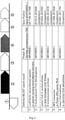
- FIG. 1 shows a gene cluster composed of a 3-hydroxybutyryl-CoA dehydrogenase gene and a 5-aminolevulinic acid synthase gene.
- the microorganism according to the present invention is a genetically modified microorganism in which a nucleic acid encoding a polypeptide described in (a) to (c) below is introduced or the expression of the polypeptide is enhanced and the function of pyruvate kinase is impaired:
- 3-oxoadipyl-CoA reductase An enzyme that catalyzes the reaction of reducing 3-oxoadipyl-CoA to 3-hydroxyadipyl-CoA is hereinafter referred to as "3-oxoadipyl-CoA reductase" in the specification.
- 3-hydroxyadipic acid, ⁇ -hydromuconic acid, and adipic acid may be abbreviated as 3HA, HMA, and ADA, respectively, in this specification.
- introducing a nucleic acid means introducing a nucleic acid from the outside to the inside of a microorganism to give the microorganism an ability to produce a polypeptide encoded by the nucleic acid.
- the method of introduction of a nucleic acid is not limited to a particular method, and examples of the method that can be used include a method in which a nucleic acid of interest is integrated into an expression vector capable of autonomous replication in a microorganism and then integrated into a host microorganism, and a method in which a nucleic acid of interest is integrated into the genome of a microorganism.
- enhancing the expression of a polypeptide means enhancing the expression of a polypeptide which a microorganism originally has.
- the method of enhancement of expression is not limited to a particular method, and examples of the method include a method in which a nucleic acid encoding a polypeptide of interest is increased in copy number, and a method in which a promoter region or a ribosome-binding sequence upstream of the region coding for a polypeptide of interest is modified. These methods may be carried out individually or in combination.
- nucleic acids may be introduced.
- introduction of a nucleic acid and the enhancement of polypeptide expression may be combined.
- the range represented by the phrase "one or several” is preferably 10 or less, more preferably 5 or less, especially preferably 4 or less, and most preferably 1 or 2 or less.
- amino acid substitution the activity of the original polypeptide is more likely to be maintained when an amino acid(s) is/are replaced by an amino acid(s) with similar properties (so-called conservative substitution).
- the physiological properties of the original polypeptide are often maintained when an amino acid(s) is/arc replaced by an amino acid(s) with similar properties. Therefore, in the case of substitution, a given amino acid is preferably replaced by another amino acid with similar properties. That is, the 20 amino acids that make up natural proteins can be divided into groups of amino acids with similar properties, such as neutral amino acids with a less polar side chain (Gly, Ile, Val, Leu, Ala, Met, Pro), neutral amino acids with a hydrophilic side chain (Asn, Gln, Thr, Ser, Tyr, Cys), acidic amino acids (Asp, Glu), and basic amino acids (Arg, Lys, His), and aromatic amino acids (Phe, Tyr, Trp). It is often the case that substitution between amino acids in the same group does not change the properties of the original polypeptide.
- groups of amino acids with similar properties such as neutral amino acids with a less polar side chain (Gly, Ile, Val, Leu, Ala, Met, Pro), neutral amino acids with
- the sequence identity is preferably not less than 80%, more preferably not less than 85%, further preferably not less than 90%, still further preferably not less than 95%, yet further preferably not less than 97%, and even further preferably not less than 99%.
- sequence identity means a ratio (percentage) of the number of identical amino acid or nucleotide residues relative to the total number of amino acid or nucleotide residues over the overlapping portion of an amino acid sequence alignment (including an amino acid corresponding to the translation start site) or a nucleotide sequence alignment (including the start codon), which is obtained by aligning two amino acid or nucleotide sequences with or without introduction of gaps for an optimal match, and is calculated by the following formula (1).
- the length of a shorter sequence being compared is not less than 400 amino acids; in cases where the length of the shorter sequence is less than 400 amino acids, the sequence identity is not defined.
- sequence identity can be easily determined using BLAST (Basic Local Alignment Search Tool), an algorithm widely used in this field.
- BLAST is publicly available on a website, such as that of NCBI (National Center for Biotechnology Information) or KEGG (Kyoto Encyclopedia of Genes and Genomes), on which the sequence identity can be easily determined using default parameters.
- sequence identity can also be determined using a similar function implemented in a software program such as Genetyx.
- Sequence identity % the number of matches without counting the number of gaps / the length of a shorter sequence excluding the terminal gaps ⁇ 100
- All the polypeptides represented by SEQ ID NOs: 1 to 7 as described above in (a) contain a common sequence 1 composed of 24 amino acid residues and represented by SEQ ID NO: 173 within a region from the 15th to the 38th amino acid residues from the N terminus (hereinafter, an amino acid residue at the n-th position from the N terminus may conveniently be represented by n "a.a.”; for example, the region from the 15th to the 38th amino acid residues from the N terminus may be thus simply represented by "15 to 38 a.a.”).
- Xaa represents an arbitrary amino acid residue
- the 13 a.a. is preferably a phenylalanine or leucine
- the common sequence 1 corresponds to the region including the NAD + -binding residue and the surrounding amino acid residues.
- the 24th amino acid residue in the common sequence 1 is an aspartic acid, as described in Biochimie., 2012 Feb, 94 (2): 471-8 ., but in the common sequence 1, the residue is an asparagine, which is characteristic. It is thought that the presence of the common sequence 1 causes the polypeptides represented by SEQ ID NOs: 1 to 7 to show excellent enzymatic activity as 3-oxoadipyl-CoA reductases.
- the polypeptides as described above in (b) and (c) also preferably contain the common sequence 1 composed of 24 amino acid residues and represented by SEQ ID NO: 173 within a region from 1 to 200 a.a.
- the common sequence is more preferably located within a region from 1 to 150 a.a., and further preferably within a region from 1 to 100 a.a.
- Specific examples of the polypeptides include those with the amino acid sequences represented by SEQ ID NOs: 8 to 86.
- the amino acid sequences represented by SEQ ID NOs: 8 to 86 contain the common sequence 1 composed of 24 amino acid residues and represented by SEQ ID NO: 173 within a region from 15 to 38 a.a.
- amino acid sequences represented by SEQ ID NOs: 8 to 86 have a sequence identity of not less than 90% to the amino acid sequence represented by any one of SEQ ID NOs: 1 to 7.
- sequence identity is presented in Tables 2-1 to 2-3 and Tables 3-1 to 3-3.
- the nucleic acids encoding the polypeptides described in (a) to (c) according to the present invention may contain an additional sequence that encodes a peptide or protein added to the original polypeptides at the N terminus and/or the C terminus.
- a peptide or protein can include secretory signal sequences, translocation proteins, binding proteins, peptide tags for purification, and fluorescent proteins.
- a peptide or protein with a desired function can be selected depending on the purpose and can be added to the polypeptides of the present invention by those skilled in the art. It should be noted that the amino acid sequence of such a peptide or protein is excluded from the calculation of sequence identity.
- the nucleic acids encoding the polypeptides represented by SEQ ID NOs: 1 to 86 are not specifically limited, provided that the nucleic acids have nucleotide sequences that can be translated to the amino acid sequences represented by SEQ ID NOs: 1 to 86, and the nucleotide sequences can be determined considering the set of codons (standard genetic code) corresponding to each amino acid. In this respect, the nucleotide sequences may be redesigned using codons that are frequently used by a host microorganism used in the present invention.
- nucleotide sequences of the nucleic acids that encode the polypeptides with the amino acid sequences represented by SEQ ID NOs: 1 to 86 include the nucleotide sequences represented by SEQ ID NOs: 87 to 172.
- a polypeptide encoded by a certain nucleic acid has 3-oxoadipyl-CoA reductase activity is determined as follows: transformants A and B below are produced and grown in a culture test; if 3-hydroxyadipic acid or ⁇ -hydromuconic acid is confirmed in the resulting culture medium, it is judged that the nucleic acid encodes a polypeptide having 3-oxoadipyl-CoA reductase activity.
- the determination method will be described using the scheme 1 below which shows a biosynthesis pathway.
- the above scheme 1 shows an exemplary reaction pathway required for the production of 3-hydroxyadipic acid, ⁇ -hydromuconic acid, and/or adipic acid.
- the reaction A represents a reaction that generates 3-oxoadipyl-CoA and coenzyme A from acetyl-CoA and succinyl-CoA.
- the reaction B represents a reaction that generates 3-hydroxyadipyl-CoA from 3-oxoadipyl-CoA.
- the reaction C represents a reaction that generates 2,3-dehydroadipyl-CoA from 3-hydroxyadipyl-CoA.
- the reaction D represents a reaction that generates adipyl-CoA from 2,3-dehydroadipyl-CoA.
- the reaction E represents a reaction that generates 3-hydroxyadipic acid from 3-hydroxyadipyl-CoA.
- the reaction F represents a reaction that generates ⁇ -hydromuconic acid from 2,3-dehydroadipyl-CoA.
- the reaction G represents a reaction that generates adipic acid from adipyl-CoA.
- the transformant A has enzymes that catalyze the reactions A, E, and F.
- the transformant B has enzymes that catalyze the reactions A, C, E, and F.
- the transformant A is first produced. Plasmids for the expression of the enzymes that catalyze the reactions A, E, and F, respectively, are produced. The reactions E and F can be catalyzed by an identical enzyme.
- the plasmids are introduced into Escherichia coli strain BL21 (DE3), which is a microorganism strain lacking abilities to produce all of 3-hydroxyadipic acid, ⁇ -hydromuconic acid, and adipic acid.
- E3 Escherichia coli strain BL21
- an expression plasmid carrying a nucleic acid that encodes a polypeptide to be analyzed for the presence of the enzymatic activity of interest and is integrated downstream of an appropriate promoter is introduced to obtain the transformant A.
- the transformant A is cultured, and the post-culture fluid is examined for the presence of 3-hydroxyadipic acid. Once the presence of 3-hydroxyadipic acid in the culture fluid is confirmed, the transformant B is then produced.
- the transformant B is obtained by producing a plasmid for the expression of an enzyme that catalyzes the reaction C and introducing the resulting plasmid into the transformant A.
- the transformant B is cultured, and the post-culture fluid is examined for the presence of ⁇ -hydromuconic acid.
- pcaF from Pseudomonas putida strain KT2440 (NCBI Gene ID: 1041755; SEQ ID NO: 174) is used.
- a continuous sequence including the full lengths of pcaI and pcaJ from Pseudomonas putida strain KT2440 (NCBI Gene IDs: 1046613 and 1046612; SEQ ID NOs: 175 and 176) is used.
- the polypeptides encoded by pcaI and pcaJ forms a complex and then catalyze the reactions E and F.
- the paaF gene from Pseudomonas putida strain KT2440 (NCBI Gene ID: 1046932, SEQ ID NO: 177) is used.
- the method of culturing the transformant A and the transformant B is as follows. Antibiotics for stable maintenance of the plasmids and inducer substances for induction of expression of the polypeptides encoded by the incorporated nucleic acids may be added as appropriate to the culture. A loopful of either the transformant A or B is inoculated into 5 mL of the culture medium I (10 g/L Bacto Tryptone (manufactured by Difco Laboratories), 5 g/L Bacto Yeast Extract (manufactured by Difco Laboratories), 5 g/L sodium chloride) adjusted at pH 7 and is cultured at 30°C with shaking at 120 min -1 for 18 hours to prepare a preculture fluid.
- the culture medium I (10 g/L Bacto Tryptone (manufactured by Difco Laboratories), 5 g/L Bacto Yeast Extract (manufactured by Difco Laboratories), 5 g/L sodium chloride) adjusted at pH 7 and is cultured at
- the preculture fluid is added to 5 mL of the culture medium II (10 g/L succinic acid, 10 g/L glucose, 1 g/L ammonium sulfate, 50 mM potassium phosphate, 0.025 g/L magnesium sulfate, 0.0625 mg/L iron sulfate, 2.7 mg/L manganese sulfate, 0.33 mg/L calcium chloride, 1.25 g/L sodium chloride, 2.5 g/L Bacto Tryptone, 1.25 g/L Bacto Yeast Extract) adjusted to pH 6.5 and is cultured at 30°C with shaking at 120 min -1 for 24 hours. The obtained culture fluid is examined for the presence of 3-hydroxyadipic acid or ⁇ -hydromuconic acid.
- the culture medium II 10 g/L succinic acid, 10 g/L glucose, 1 g/L ammonium sulfate, 50 mM potassium phosphate, 0.025 g/L magnesium sulfate, 0.06
- the presence of 3-hydroxyadipic acid or ⁇ -hydromuconic acid in the culture fluid can be confirmed by centrifuging the culture fluid and analyzing the supernatant with LC-MS/MS.
- the analysis conditions are as described below:
- the 3-oxoadipyl-CoA reductase activity value can be calculated by quantifying 3-hydroxyadipyl-CoA generated from 3-oxoadipyl-CoA used as a substrate by using purified 3-oxoadipyl-CoA reductase, wherein the 3-oxoadipyl-CoA is prepared from 3-oxoadipic acid by an enzymatic reaction.
- the specific method is as follows.
- 3-Oxoadipic acid can be prepared by a known method (for example, a method described in Reference Example 1 of WO 2017/099209 ).
- the plasmid is introduced into E. coli BL21 (DE3), and the enzyme is expressed from the plasmid under isopropyl- ⁇ -thiogalactopyranoside (IPTG) induction and is then purified using the histidine tag from the culture fluid in accordance with routine procedures to obtain a CoA transferase solution.
- IPTG isopropyl- ⁇ -thiogalactopyranoside
- the solution is used to prepare an enzymatic reaction solution for 3-oxoadipyl-CoA preparation with the following composition, and the enzymatic reaction solution is kept at 25°C for 3 minutes to allow the reaction to proceed and is then filtered through a UF membrane (Amicon Ultra-0.5mL 10K; manufactured by Merck Millipore) to remove the enzyme, and the obtained filtrate is designated as 3-oxoadipyl-CoA solution.
- a UF membrane Amicon Ultra-0.5mL 10K; manufactured by Merck Millipore
- a PCR using the genomic DNA of a microorganism strain as a template is performed in accordance with routine procedures, to amplify a nucleic acid encoding 3-oxoadipyl-CoA reductase in the full-length form.
- the nucleotide sequences of primers used in this PCR are, for example, those represented by SEQ ID NOs: 196 and 197.
- the amplified fragment is inserted into the Bam HI site of pACYCDuet-1 (manufactured by Novagen), an expression vector for E. coli , in-frame with the histidine-tag sequence.
- the plasmid is introduced into E.
- the 3-oxoadipyl-CoA reductase activity can be determined by using the enzyme solution to prepare an enzymatic reaction solution with the following composition and quantifying 3-hydroxyadipyl-CoA generated at 25°C.
- the genetically modified microorganism in which the expression of any one of the polypeptides described in (a) to (c) is enhanced is a microorganism as a host which originally has a nucleic acid encoding any one of the polypeptides described in (a) to (c) and is genetically modified for increased expression of any one of the polypeptides described in (a) to (c) which are owned by the host microorganism.
- microorganisms which originally has a nucleic acid encoding any one of the polypeptides described in (a) to (c) include the following microorganisms of the genus Serratia, including Serratia marcescens (a microorganism having the sequences represented by SEQ ID NOs: 1, 18 to 28, 30 to 33, 35 to 66, 69, 70, 72 to 78, and 79), Serratia nematodiphila (a microorganism having the sequences represented by SEQ ID NOs: 2, 29, and 67), Serratia plymuthica (a microorganism having the sequences represented by SEQ ID NOs: 3, 79 to 84, and 86), Serratia proleamaculans (a microorganism having the sequences represented by SEQ ID NOs: 4 and 85), Serratia ureilytica (a microorganism having the sequence represented by SEQ ID NO: 5), Serratia sp.
- Serratia marcescens a microorganis
- BW106 (a microorganism having the sequence represented by SEQ ID NO: 6), Serratia liquefaciens (a microorganism having the sequence represented by SEQ ID NO: 7), Serratia sp. S119 (a microorganism having the sequence represented by SEQ ID NO: 8), Serratia sp. YD25 (a microorganism having the sequence represented by SEQ ID NO: 9), Serratia sp. FS14 (a microorganism having the sequence represented by SEQ ID NO: 10), Serratia sp. HMSC15F11 (a microorganism having the sequence represented by SEQ ID NO: 11), Serratia sp.
- JKS000199 (a microorganism having the sequence represented by SEQ ID NO: 12), Serratia sp. TEL (a microorganism having the sequence represented by SEQ ID NO: 13), Serratia sp. ISTD04 (a microorganism having the sequence represented by SEQ ID NO: 14), Serratia sp. SCBI (a microorganism having the sequence represented by SEQ ID NO: 15), Serratia sp. S4 (a microorganism having the sequence represented by SEQ ID NO: 16), Serratia sp. C-1 (a microorganism having the sequence represented by SEQ ID NO: 17), Serratia sp.
- OMLW3 (a microorganism having the sequence represented by SEQ ID NO: 34), Serratia sp. OLEL1 (a microorganism having the sequence represented by SEQ ID NO: 68), Serratia sp. OLEL2 (a microorganism having the sequence represented by SEQ ID NO: 71), and the like.
- Each of the polypeptides as described above in (a), (b), and (c) also has 3-hydroxybutyryl-CoA dehydrogenase activity, and the 3-hydroxybutyryl-CoA dehydrogenase is encoded by a 3-hydroxybutyryl-CoA dehydrogenase gene, which forms a gene cluster with the 5-aminolevulinic acid synthase gene in the microorganisms of the genus Serratia.
- the term “gene cluster” in the phrase “the 3-hydroxybutyryl-CoA dehydrogenase gene, which forms a gene cluster with 5-aminolevulinic acid synthase gene in the microorganisms of the genus Serratia” refers to a region in which a set of nucleic acids encoding proteins with related functions are located in close proximity to each other.
- Specific components in a gene cluster include, for example, nucleic acids which are transcribed under the control of a single transcription regulator, and those in an operon which are transcribed under the control of a single transcription promoter.
- Whether or not a certain nucleic acid is a nucleic acid component of a gene cluster can also be investigated using an online gene cluster search program, such as antiSMASH. Additionally, whether or not a certain polypeptide is classified as a 3-hydroxybutyryl-CoA dehydrogenase or a 5-aminolevulinic acid synthase can be determined by BLAST (Basic Local Alignment Search Tool) searching on a website, such as that of NCBI (National Center for Biotechnology Information) or KEGG (Kyoto Encyclopedia of Genes and Genomes), to find any enzyme with a high degree of homology to the polypeptide in amino acid sequence.
- BLAST Basic Local Alignment Search Tool
- amino acid sequence represented by SEQ ID NO: 4 is registered in an NCBI database under Protein ID: ABV40935.1, which is annotated as a putative protein with 3-hydroxybutyryl-CoA dehydrogenase activity, as judged from the amino acid sequence.
- a gene encoding the amino acid sequence represented by SEQ ID NO: 4 is registered in an NCBI database under Gene ID: CP000826.1 and can be identified through a database search as conserved in the genome of Serratia proteamaculans strain 568 or as conserved in the region from 2015313 to 2016842 bp on the sequence of Gene ID: CP000826.1.
- the positional information of the gene can lead to identification of the sequences of flanking genes, from which the gene can be found to form a gene cluster with the 5-aminolevulinic acid synthase gene (Protein ID: ABV40933.1), as shown in FIG. 1 .
- the amino acid sequences represented by SEQ ID NOs: 1 to 3, 6 to 20, 22 to 30, 32 to 35, 37, 38, 40, 42 to 48, 51 to 56, 59 to 63, 65, 66, 68 to 73, 75 to 81, and 83 to 85 the information can be checked on the NCBI site with the Protein IDs and Gene IDs presented in Tables 3-4 and 3-5.
- WP 033637938.1 43 AP013063.1:1329259..1330788 WP 041034581.1 44 MQRJ01000O04.1:178926..180455 WP 074026553.1 45 HG738868.1:1928329..1929858 WP 060437960.1 [Table 3-5]
- a nucleic acid encoding a polypeptide encoded by the 3-hydroxybutyryl-CoA dehydrogenase gene of a microorganism of the genus Serratia , which forms a gene cluster with the 5-aminolevulinic acid synthase gene, is hereinafter referred to as "the 3-hydroxybutyryl-CoA dehydrogenase gene used in the present invention," and the polypeptide encoded by the 3-hydroxybutyryl-CoA dehydrogenase gene is referred as "the 3-hydroxybutyryl-CoA dehydrogenase used in the present invention.”
- a gene cluster including the 3-hydroxybutyryl-CoA dehydrogenase gene used in the present invention may include other nucleic acids, provided that the gene cluster includes at least the 3-hydroxybutyryl-CoA dehydrogenase gene and the 5-aminolevulinic acid synthase gene.
- FIG. 1 shows a specific example of the gene cluster including the 3-hydroxybutyryl-CoA dehydrogenase gene used in the present invention.
- microorganisms of the genus Serratia that contain the above gene cluster include S. marcescens , S. nematodiphila , S. plymuthica , S. proleamaculans , S. ureilytica , S. liquefaciens , Serratia sp. BW106, Serratia sp. S119, Serratia sp. YD25, Serratia sp. FS14, Serratia sp. HMSC15F11, Serratia sp. JKS000199, Serratia sp. TEL, Serratia sp. ISTD04, Serratia sp. SCBI, Serratia sp. S4, Serratia sp. C-1, Serratia sp. OMLW3, Serratia sp. OLEL1, Serratia sp. OLEL2, and S . liquefaciens.
- the 3-hydroxybutyryl-CoA dehydrogenase used in the present invention has an excellent 3-oxoadipyl-CoA reductase activity. Whether or not a 3-hydroxybutyryl-CoA dehydrogenase-encoding nucleic acid has a 3-oxoadipyl-CoA reductase activity can be determined by the same method as described above.
- polypeptide encoded by the 3-hydroxybutyryl-CoA dehydrogenase gene used in the present invention is characterized by containing the common sequence 1.
- Specific examples of amino acid sequences of such polypeptides include the amino acid sequences represented by SEQ ID NOs: 1 to 86.
- a nucleic acid encoding a polypeptide composed of the same amino acid sequence as that represented by any one of SEQ ID NOs: 8 to 86, except that one or several amino acids are substituted, deleted, inserted, and/or added, and having an enzymatic activity that catalyzes a reaction to reduce 3-oxoadipyl-CoA to 3-hydroxyadipyl-CoA can also be suitable for use, provided that the common sequence 1 is contained in the polypeptide.
- the range represented by the phrase "one or several” is preferably 10 or less, more preferably 5 or less, especially preferably 4 or less, and most preferably one or two.
- a nucleic acid encoding a polypeptide composed of an amino acid sequence with a sequence identity to not less than 70%, preferably not less than 80%, more preferably not less than 85%, further preferably not less than 90%, still further preferably not less than 95%, yet further preferably not less than 97%, even further preferably not less than 99%, to the sequence represented by any one of SEQ ID NOs: 8 to 86 and having an enzymatic activity that catalyzes a reaction to reduce 3-oxoadipyl-CoA to 3-hydroxyadipyl-CoA can also be suitably used.
- examples of a polypeptide that is not the 3-hydroxybutyryl-CoA dehydrogenase used in the present invention but has 3-oxoadipyl-CoA reductase activity include PaaH from Pseudomonas putida strain KT2440 (SEQ ID NO: 178), PaaH from Escherichia coli strain K-12 substrain MG1655 (SEQ ID NO: 179), DcaH from Acinetobacter baylyi strain ADP1 (SEQ ID NO: 180), and PaaH from Serratia plymuthica strain NBRC102599 (SEQ ID NO: 181). As shown in Tables 4 and 5, these polypeptides are found not to contain the common sequence 1.
- those polypeptides are neither (b) polypeptides composed of the same amino acid sequence as that represented by any one of SEQ ID NOs: 1 to 7, except that one or several amino acids are substituted, deleted, inserted, and/or added, and having an enzymatic activity that catalyzes a reaction to reduce 3-oxoadipyl-CoA to 3-hydroxyadipyl-CoA, nor (c) polypeptides having an amino acid sequence with a sequence identity of not less than 70% to the sequence represented by any one of SEQ ID NOs: 1 to 7 and having an enzymatic activity that catalyzes a reaction to reduce 3-oxoadipyl-CoA to 3-hydroxyadipyl-CoA.
- impairing the function of pyruvate kinase or a phosphotransferase system enzyme means impairing the enzymatic activity of the enzyme.
- the method of impairment of the function is not limited to a particular method, but the function can be impaired, for example, by disrupting a gene that encodes the enzyme, such as via partial or complete deletion of the gene by mutagenesis with a chemical mutagen, ultraviolet irradiation, or the like, or by site-directed mutagenesis or the like, or via introduction of a frame-shift mutation or a stop codon into the nucleotide sequence of the gene.
- recombinant DNA technologies can be used to disrupt the gene by partial or complete deletion of the nucleotide sequence or by partial or complete substitution of the nucleotide sequence with another nucleotide sequence. Among those, the methods for partial or complete deletion of the nucleotide sequence are preferred.
- Pyruvate kinase is classified as EC 2.7.1.40 and is an enzyme that catalyzes a reaction to dephosphorylate phosphoenolpyruvic acid (in this specification, also referred to as PEP) to pyruvic acid and ATP.
- pyruvate kinase examples include pykF (NCBI-Protein ID: NP_416191, SEQ ID NO: 182) and pykA (NCBI-Protein ID: NP_416368, SEQ ID NO: 183) from Escherichia coli strain K-12 substrain MG1655, and pykF (SEQ ID NO: 184) and pykA (SEQ ID NO: 185) from Serratia grimesii strain NBRC13537.
- a microorganism used in the present invention has two or more genes that each encode a pyruvate kinase, as illustrated in the metabolic pathway shown in the scheme 2 below, it is desirable to impair the function of all the pyruvate kinases.
- a polypeptide encoded by a certain gene of a microorganism used in the present invention is a pyruvate kinase may be determined by BLAST (Basic Local Alignment Search Tool) searching on a website, such as that of NCBI (National Center for Biotechnology Information) or KEGG (Kyoto Encyclopedia of Genes and Genomes).
- the phosphotransferase system enzyme is relevant to the phosphoenolpyruvate (PEP)-dependent phosphotransferase system (PTS) (in this specification, also referred to as a PTS enzyme).
- PTS is a major mechanism for the uptake of carbohydrates such as hexose, hexitol, and disaccharide into a cell, as illustrated in the metabolic pathway shown in the scheme 2 below.
- PTS involves uptake of carbohydrates into a cell and simultaneous conversion of the carbohydrates to a phosphate ester, while converting a phosphate donor, PEP, to pyruvic acid. Therefore, the conversion reaction from PEP to pyruvic acid is inhibited in a mutant microorganism with a disrupted PTS enzyme gene.
- PTS enzymes are composed of two common enzymes that exert their functions on any type of carbohydrate, phosphoenolpyruvate sugar phosphotransferase enzyme I and phospho carrier protein HPr, and membrane-bound sugar specific permeases (enzymes II) that are specific for particular carbohydrates.
- the enzymes II are further composed of sugar-specific components IIA, IIB, and IIC.
- the enzymes II exist as independent proteins or as fused domains in a single protein, and this depends on the organism which those enzymes are originated from.
- phosphoenolpyruvate sugar phosphotransferase enzyme I is encoded by the ptsI gene
- phospho carrier protein HPr is encoded by the ptsH gene
- glucose-specific enzyme IIA is encoded by the crr gene
- glucose-specific enzymes IIB and IIC are encoded by the ptsG gene.
- the enzyme encoded by the ptsG gene is classified as EC 2.7.1.199 and is called protein-Npi-phosphohistidine-D-glucose phosphotransferase.
- one or more of the above PTS enzyme genes may be disrupted.
- any of the above PTS enzyme genes may be disrupted, it is desirable to impair an enzyme gene that is involved in glucose uptake, particularly the ptsG gene.
- Specific examples of the ptsG gene include ptsG from Escherichia coli strain K-12 substrain MG1655 (NCBI-Gene ID: 945651) and ptsG from Serratia grimesii strain NBRC13537 (SEQ ID NO: 238).
- Whether or not a polypeptide encoded by a certain gene of a microorganism used in the present invention is a protein-Npi-phosphohistidine-D-glucose phosphotransferase may be determined by BLAST searching on a website, such as that of NCBI or KEGG.
- E. coli is a microorganism that has an ability to produce 3-hydroxyadipic acid and ⁇ -hydromuconic acid
- JP 2008-527991 A describes production of a genetically modified E. coli strain with defects in the pykF and pykA genes, which each encode a pyruvate kinase, and in the ptsG gene, which encodes a phosphotransferase system enzyme, wherein the yield of succinic acid is increased, and the yields of acetic acid and ethanol are decreased, by culturing the genetically modified strain under anaerobic conditions.
- acetic acid and ethanol are compounds generated from the metabolism of acetyl-CoA, as illustrated in the metabolic pathway shown in the above scheme 2. That is, in JP 2008-527991 A , it is presumed that the defects of the ptsG, pykF , and pykA genes in E. coli resulted in a reduced supply of acetyl-CoA and in turn a lower yield of acetic acid and ethanol.
- the 3-hydroxyadipic acid, ⁇ -hydromuconic acid, and/or adipic acid produced by the method of the present invention are compounds generated through reactions in the metabolism of 3-oxoadipyl-CoA, which is produced from acetyl-CoA and succinyl-CoA by the reaction A, as described above. Accordingly, from the description in JP 2008-527991 A , it is expected that disruption of genes encoding pyruvate kinase and a phosphotransferase system enzyme also results in a decreased yields of 3-hydroxyadipic acid, ⁇ -hydromuconic acid, and/or adipic acid due to the reduced supply of acetyl-CoA.
- disruption of genes encoding pyruvate kinase and a phosphotransferase system enzyme increases the yields of 3-hydroxyadipic acid, ⁇ -hydromuconic acid, and/or adipic acid and also the yields of acetic acid and ethanol in a genetically modified microorganism expressing an enzyme that exhibits excellent activity in a reaction to reduce 3-oxoadipyl-CoA to 3-hydroxyadipyl-CoA, which is contrary to the above expectation.
- examples of the microorganism that can be used as a host to obtain the genetically modified microorganism include microorganisms belonging to the genera Escherichia, Serratia , Hafnia , Pseudomonas, Corynebacterium, Bacillus, Streptomyces, Cupriavidus , Acinetobacter, Alcaligenes, Brevibacterium, Delftia , Shimwellia, Aerobacter, Rhizobium, Thermobifida, Clostridium, Schizosaccharomyces, Kluyveromyces, Pichia, and Candida.
- microorganisms belonging to the genera Escherichia, Serratia , Hafnia , and Pseudomonas are preferred.
- microorganism that has an ability to produce 3-hydroxyadipic acid As a microorganism that has an ability to produce 3-hydroxyadipic acid, a microorganism that has an ability to generate 3-oxoadipyl-CoA and coenzyme A from acetyl-CoA and succinyl-CoA (the reaction A), and an ability to generate 3-hydroxyadipic acid from 3-hydroxyadipyl-CoA (the reaction E) is used.
- the microorganism with these production abilities can be used as a host microorganism to obtain a genetically modified microorganism according to the present invention with an ability to abundantly produce 3-hydroxyadipic acid.
- Microorganisms that are speculated to originally have abilities to catalyze the above reactions A and E include microorganisms belonging to the following species:
- microorganism that originally has no abilities to catalyze the reactions A and/or E can also be used as the aforementioned host microorganism when an appropriate combination of nucleic acids that encode enzymes catalyzing the reactions A and E is introduced into the microorganism to impart those production abilities.
- a microorganism that has an ability to produce ⁇ -hydromuconic acid As a microorganism that has an ability to produce ⁇ -hydromuconic acid, a microorganism that has an ability to generate 3-oxoadipyl-CoA and coenzyme A from acetyl-CoA and succinyl-CoA (the reaction A), an ability to generate 2,3-dehydroadipyl-CoA from 3-hydroxyadipyl-CoA through dehydration (the reaction C), and an ability to generate ⁇ -hydromuconic acid from 2,3-dehydroadipyl-CoA (the reaction F) is used.
- the microorganism with these production abilities can be used as a host microorganism to obtain a genetically modified microorganism according to the present invention with an ability to abundantly produce ⁇ -hydromuconic acid.
- Microorganisms that are speculated to originally have abilities to catalyze the above reactions A, C, and F include microorganisms belonging to the following species:
- microorganism that originally has no abilities to catalyze the reactions A, C, and/or F can also be used as the aforementioned host microorganism when an appropriate combination of nucleic acids that encode enzymes catalyzing the reactions A, C, and F is introduced into the microorganism to impart those production abilities.
- a microorganism that has an ability to produce adipic acid As a microorganism that has an ability to produce adipic acid, a microorganism that has an ability to generate 3-oxoadipyl-CoA and coenzyme A from succinyl-CoA (the reaction A), an ability to generate 2,3-dehydroadipyl-CoA from 3-hydroxyadipyl-CoA through dehydration (the reaction C), an ability to reduce 2,3-dehydroadipyl-CoA to adipyl-CoA (the reaction D), and an ability to generate adipic acid from adipyl-CoA (the reaction G) is used.
- the microorganism with these production abilities can be used as a host microorganism to obtain a genetically modified microorganism with an ability to abundantly produce adipic acid.
- Microorganisms that are speculated to originally have abilities to catalyze the above reactions A, C, D, and G include microorganisms of the genus Thermobifida , such as Thermobifida fusca.
- microorganism that originally has no abilities to catalyze the reactions A, C, D, and G can also be used as the aforementioned host microorganism when an appropriate combination of nucleic acids that encode enzymes catalyzing the reactions A, C, D, and G is introduced into the microorganism to impart those production abilities.
- an acyl transferase As an enzyme that catalyzes the reaction A to generate 3-oxoadipyl-CoA, for example, an acyl transferase ( ⁇ -ketothiolase) can be used.
- the acyl transferase is not limited to a particular number in the EC classification but is preferably an acyl transferase classified into EC 2.3.1.-, specifically including an enzyme classified as 3-oxoadipyl-CoA thiolase and classified into EC number 2.3.1.174, an enzyme classified as acetyl-CoA C-acetyltransferase and classified into EC number 2.3.1.9, and an enzyme classified as acetyl-CoA C-acyl transferase and classified into EC number 2.3.1.16.
- PaaJ from Escherichia coli strain MG1655 (NCBI-Protein ID: NP_415915)
- PcaF from Pseudomonas putida strain KT2440 (NCBI-Protein ID: NP_743536), and the like can be suitably used.
- acyl transferases can generate 3-oxoadipyl-CoA from succinyl-CoA and acetyl-CoA as substrates can be determined by measuring a decrease in NADH coupled with reduction of 3-oxoadipyl-CoA in a combination of the reaction catalyzed by purified acyl transferase to generate 3-oxoadipyl-CoA and a reaction catalyzed by purified 3-oxoadipyl-CoA reductase to reduce 3-oxoadipyl-CoA as a substrate.
- the specific measurement method is, for example, as follows.
- a PCR using the genomic DNA of a subject microorganism strain as a template is performed in accordance with routine procedures, to amplify a nucleic acid encoding an acyl transferase in the full-length form.
- the amplified fragment is inserted into the Sac I site of pACYCDuet-1 (manufactured by Novagen), an expression vector for E. coli, in-frame with the histidine-tag sequence.
- the plasmid is introduced into E.
- acyl transferase activity can be determined by using the enzyme solution to prepare an enzymatic reaction solution with the following composition and measuring a decrease in absorbance at 340 nm coupled with oxidation of NADH at 30°C.
- Whether or not an enzyme originally expressed in a host microorganism used in the present invention has acyl transferase activity can be determined by performing the above-described measurement using cell homogenate (cell free extract: CFE) instead of purified acyl transferase.
- CFE cell free extract
- CFE A loopful of E. coli strain MG1655 to be subjected to the measurement of the activity is inoculated into 5 mL of a culture medium (culture medium composition: 10 g/L tryptone, 5 g/L yeast extract, 5 g/L sodium chloride) adjusted to pH 7, and incubated at 30°C with shaking for 18 hours.
- culture medium composition 10 g/L tryptone, 5 g/L yeast extract, 5 g/L sodium chloride
- the obtained culture fluid is added to 5 mL of a culture medium (culture medium composition: 10 g/L tryptone, 5 g/L yeast extract, 5 g/L sodium chloride, 2.5 mM ferulic acid, 2.5 mM p -coumaric acid, 2.5 mM benzoic acid, 2.5 mM cis,cis-muconic acid, 2.5 mM protocatechuic acid, 2.5 mM catechol, 2.5 mM 3OA, 2.5 mM 3-hydroxyadipic acid, 2.5 mM ⁇ -hydromuconic acid, 2.5 mM adipic acid, 2.5 mM phenylethylamine) adjusted to pH 7, and incubated at 30°C with shaking for 3 hours.
- a culture medium culture medium composition: 10 g/L tryptone, 5 g/L yeast extract, 5 g/L sodium chloride, 2.5 mM ferulic acid, 2.5 mM p -coumaric acid, 2.5 mM benzoic acid
- the obtained culture fluid is supplemented with 10 mL of 0.9% sodium chloride and then centrifuged to remove the supernatant from bacterial cells, and this operation is repeated three times in total to wash the bacterial cells.
- the washed bacterial cells are suspended in 1 mL of a Tris-HCl buffer composed of 100 mM Tris-HCl (pH 8.0) and 1 mM dithiothreitol, and glass beads (with a diameter of 0.1 mm) are added to the resulting suspension to disrupt the bacterial cells at 4°C with an ultrasonic disruptor.
- the resulting bacterial homogenate is centrifuged to obtain the supernatant, and 0.5 mL of the supernatant is filtered through a UF membrane (Amicon Ultra-0.5mL 10K; manufactured by Merck Millipore) to remove the resulting filtrate, followed by application of 0.4 mL of the Tris-HCl buffer to the UF membrane, and this operation is repeated three times in total to remove lowmolecular-weight impurities, and the resulting supernatant is then resuspended in the Tris-HCl buffer to a final volume of 0.1 mL, which is designated as CFE.
- CFE a final volume of 0.1 mL
- 0.05 mL of the CFE is added to a total of 0.1 mL of the enzymatic reaction solution to determine the enzymatic activity.
- an enoyl-CoA hydratase As an enzyme that catalyzes the reaction C to generate 2,3-dehydroadipyl-CoA, for example, an enoyl-CoA hydratase can be used.
- the enoyl-CoA hydratase is not limited by a particular number in the EC classification, and is preferably an enoyl-CoA hydratase classified into EC 4.2.1.-, specifically including an enzyme classified as enoyl-CoA hydratase or 2,3-dehydroadipyl-CoA hydratase and classified into EC 4.2.1.17.
- PaaF from Escherichia coli strain MG1655 (NCBI-ProteinID: NP_415911)
- PaaF from Pseudomonas putida strain KT2440 (NCBI-ProteinID: NP_745427), and the like can be suitably used.
- the reaction catalyzed by enoyl-CoA hydratase is generally reversible, whether or not an enoyl-CoA hydratase has an activity to catalyze a reaction that generates 2,3-dehydroadipyl-CoA from 3-hydroxyadipyl-CoA used as a substrate can be determined by detecting 3-hydroxyadipyl-CoA generated using purified enoyl-CoA hydratase with 2,3-dehydroadipyl-CoA used as a substrate thereof, which is prepared from ⁇ -hydromuconic acid through an enzymatic reaction.
- the specific measurement method is, for example, as follows.
- the ⁇ -hydromuconic acid used in the above reaction can be prepared by a known method (for example, a method described in Reference Example 1 of WO 2016/199858 A1 ).
- a PCR using the genomic DNA of a subject microorganism strain as a template is performed in accordance with routine procedures, to amplify a nucleic acid encoding an enoyl-CoA hydratase in the full-length form.
- the amplified fragment is inserted into the Nde I site of pET-16b (manufactured by Novagen), an expression vector for E. coli, in-frame with the histidine-tag sequence.
- the plasmid is introduced into E.
- coli BL21 (DE3), and expression of the enzyme is induced with isopropyl- ⁇ -thiogalactopyranoside (IPTG) in accordance with routine procedures and the enzyme is purified using the histidine tag from the culture fluid to obtain an enoyl-CoA hydratase solution.
- IPTG isopropyl- ⁇ -thiogalactopyranoside
- the solution is used to prepare an enzymatic reaction solution with the following composition, which is allowed to react at 30°C for 10 minutes and then filtered through a UF membrane (Amicon Ultra-0.5mL 10K; manufactured by Merck Millipore) to remove the enzyme.
- the enoyl-CoA hydratase activity can be confirmed by detecting 3-hydroxyadipyl-CoA in the resulting filtrate on high-performance liquid chromatograph-tandem mass spectrometer (LC-MS/MS) (Agilent Technologies, Inc.).
- Whether or not an enzyme originally expressed in a host microorganism used in the present invention has enoyl-CoA hydratase activity can be determined by adding 0.05 mL of the CFE, instead of purified enoyl-CoA hydratase, to a total of 0.1 mL of the enzymatic reaction solution and performing the above-described measurement.
- the specific CFE preparation method targeted to E. coli is as described for that used in determination of acyl transferase activity.
- an enoyl-CoA reductase As an enzyme that catalyzes the reaction D to generate adipyl-CoA, for example, an enoyl-CoA reductase can be used.
- the enoyl-CoA reductase is not limited by a particular number in the EC classification, and is preferably an enoyl-CoA reductase classified into EC 1.3.-.-, specifically including an enzyme classified as trans-2-enoyl-CoA reductase and classified into EC 1.3.1.44, and an enzyme classified as acyl-CoA dehydrogenase and classified into EC 1.3.8.7.
- JP 2011-515111 A J Appl Microbiol.
- TER from Euglena gracilis strain Z (UniProtKB: Q5EU90), Tfu_1647 from Thermobifida fusca strain YX (NCBI-ProteinID: AAZ55682), DcaA from Acinetobacter baylyi strain ADP1 (NCBI-ProteinID: AAL09094.1), and the like can be suitably used.
- Whether or not an enoyl-CoA reductase has an activity to generate adipyl-CoA from 2,3-dehydroadipyl-CoA used as a substrate can be determined by measuring a decrease in NADH coupled with reduction of 2,3-dehydroadipyl-CoA in a reaction using purified enoyl-CoA reductase with 2,3-dehydroadipyl-CoA used as a substrate thereof, which is prepared from ⁇ -hydromuconic acid through another enzymatic reaction.
- a PCR using the genomic DNA of a subject microorganism strain as a template is performed in accordance with routine procedures, to amplify a nucleic acid encoding an enoyl-CoA reductase in the full-length form.
- the amplified fragment is inserted into the Nde I site of pET-16b (manufactured by Novagen), an expression vector for E. coli, in-frame with the histidine-tag sequence.
- the plasmid is introduced into E.
- enoyl-CoA reductase activity can be determined by using the enzyme solution to prepare an enzymatic reaction solution with the following composition and measuring a decrease in absorbance at 340 nm coupled with oxidation of NADH at 30°C.
- Whether or not an enzyme originally expressed in a host microorganism used in the present invention has enoyl-CoA reductase activity can be determined by adding 0.05 mL of the CFE, instead of purified enoyl-CoA reductase, to a total of 0.1 mL of the enzymatic reaction solution and performing the above-described measurement.
- the specific CFE preparation method targeted to E. coli is as described for that used in determination of acyl transferase activity.
- the reaction E As an enzyme that catalyzes the reaction E to generate 3-hydroxyadipic acid, the reaction F to generate ⁇ -hydromuconic acid, and the reaction G to generate adipic acid, for example, a CoA transferase or an acyl-CoA hydrolase, preferably a CoA transferase, can be used.
- a CoA transferase or an acyl-CoA hydrolase preferably a CoA transferase
- the CoA transferase is not limited by a particular number in the EC classification, and is preferably a CoA transferase classified into EC 2.8.3.-, specifically including an enzyme classified as CoA transferase or acyl-CoA transferase and classified into EC 2.8.3.6, and the like.
- CoA transferase refers to an enzyme with activity (CoA transferase activity) to catalyze a reaction that generates carboxylic acid and succinyl-CoA from acyl-CoA and succinic acid used as substrates.
- PcaI and PcaJ from Pseudomonas putida strain KT2440 (NCBI-ProteinlDs: NP 746081 and NP_746082), and the like can be suitably used, among others.
- DcaI and DcaJ from Acinetobacter baylyi strain ADP1 (NCBI-ProteinIDs: CAG68538 and CAG68539), and the like can be suitably used.
- the CoA transferase activity against 3-hydroxyadipyl-CoA, 2,3-dehydroadipyl-CoA, or adipyl-CoA used as a substrate can be determined by detecting 3-hydroxyadipyl-CoA, 2,3-dehydroadipyl-CoA, or adipyl-CoA generated respectively using purified CoA transferase with 3-hydroxyadipic acid and succinyl-CoA, ⁇ -hydromuconic acid and succinyl-CoA, or adipic acid and succinyl-CoA used as substrates thereof.
- the specific measurement method is, for example, as follows.
- Preparation of 3-hydroxyadipic acid is performed according to the method described in Reference Example 1 of WO 2016/199856 A1 .
- a PCR using the genomic DNA of a subject microorganism strain as a template is performed in accordance with routine procedures, to amplify a nucleic acid encoding a CoA transferase in the full-length form.
- the amplified fragment is inserted into the Kpn I site of pRSF-1b (manufactured by Novagen), an expression vector for E. coli, in-frame with the histidine-tag sequence.
- the plasmid is introduced into E.
- coli BL21 (DE3), and expression of the enzyme is induced with isopropyl- ⁇ -thiogalactopyranoside (IPTG) in accordance with routine procedures and the enzyme is purified using the histidine tag from the culture fluid to obtain a CoA transferase solution.
- the solution is used to prepare an enzymatic reaction solution with the following composition, which is allowed to react at 30°C for 10 minutes and then filtered through a UF membrane (Amicon Ultra-0.5mL 10K; manufactured by Merck Millipore) to remove the enzyme.
- the CoA transferase activity can be confirmed by detecting 3-hydroxyadipyl-CoA in the resulting filtrate on high-performance liquid chromatograph-tandem mass spectrometer (LC-MS/MS) (Agilent Technologies, Inc.).
- Preparation of ⁇ -hydromuconic acid is performed according to the method described in Reference Example 1 of WO 2016/199858 A1 .
- a PCR using the genomic DNA of a subject microorganism strain as a template is performed in accordance with routine procedures, to amplify a nucleic acid encoding a CoA transferase in the full-length form.
- the amplified fragment is inserted into the Kpn I site of pRSF-1b (manufactured by Novagen), an expression vector for E. coli, in-frame with the histidine-tag sequence.
- the plasmid is introduced into E.
- coli BL21 (DE3), and expression of the enzyme is induced with isopropyl- ⁇ -thiogalactopyranoside (IPTG) in accordance with routine procedures and the enzyme is purified using the histidine tag from the culture fluid to obtain a CoA transferase solution.
- IPTG isopropyl- ⁇ -thiogalactopyranoside
- the solution is used to prepare an enzymatic reaction solution with the following composition, which is allowed to react at 30°C for 10 minutes and then filtered through a UF membrane (Amicon Ultra-0.5mL 10K; manufactured by Merck Millipore) to remove the enzyme.
- CoA transferase activity can be confirmed by detecting 2,3-dehydroadipyl-CoA in the resulting filtrate on high-performance liquid chromatograph-tandem mass spectrometer (LC-MS/MS) (Agilent Technologies, Inc.).
- a PCR using the genomic DNA of a subject microorganism strain as a template is performed in accordance with routine procedures, to amplify a nucleic acid encoding a CoA transferase in the full-length form.
- the amplified fragment is inserted into the Kpn I site of pRSF-1b (manufactured by Novagen), an expression vector for E . coli, in-frame with the histidine-tag sequence.
- the plasmid is introduced into E .
- coli BL21 (DE3), and expression of the enzyme is induced with isopropyl- ⁇ -thiogalactopyranoside (IPTG) in accordance with routine procedures and the enzyme is purified using the histidine tag from the culture fluid to obtain a CoA transferase solution.
- the solution is used to prepare an enzymatic reaction solution with the following composition, which is allowed to react at 30°C for 10 minutes and then filtered through a UF membrane (Amicon Ultra-0.5mL 10K; manufactured by Merck Millipore) to remove the enzyme.
- the CoA transferase activity can be confirmed by detecting adipyl-CoA in the resulting filtrate on high-performance liquid chromatograph-tandem mass spectrometer (LC-MS/MS) (Agilent Technologies, Inc.).
- Whether or not an enzyme originally expressed in a host microorganism used in the present invention has CoA transferase activity can be determined by adding 0.05 mL of the CFE, instead of purified CoA transferase, to a total of 0.1 mL of the enzymatic reaction solution and performing the above-described measurement.
- the specific CFE preparation method targeted to E. coli is as described for that used in determination of acyl transferase activity.
- Either the polypeptides described in (a) to (c) or the 3-hydroxybutyryl-CoA dehydrogenase in the present invention is characterized by having higher activity than 3-oxoadipyl-CoA reductases used in conventional techniques.
- the phrase "higher activity” refers to production of 3-hydroxyadipic acid, ⁇ -hydromuconic acid, or adipic acid with a higher yield in a genetically modified microorganism expressing any one of the polypeptides than in a genetically modified microorganism expressing a conventional 3-oxoadipyl-CoA reductase when those microorganisms are derived from the same host microorganism species and are cultured under the same expression conditions in a culture medium containing a carbon source as a material for fermentation.
- the yield of 3-hydroxyadipic acid is calculated according to the formula (2).
- the yield of ⁇ -hydromuconic acid or adipic acid is calculated according to the formula (2), where 3-hydroxyadipic acid is replaced by ⁇ -hydromuconic acid or adipic acid, respectively.
- Yeld % amount of generated 3 ⁇ hydroxyadipic acid mol / amount of consumed carbon source mol ⁇ 100
- the specific method to confirm the higher activity of either the polypeptides described in (a) to (c) or the 3-hydroxybutyryl-CoA dehydrogenase in the present invention compared to the activity of 3-oxoadipyl-CoA reductases used in conventional techniques is as follows.
- the pBBR1MCS-2 vector which is able to self-replicate in E. coli ( ME Kovach, (1995), Gene 166: 175-176 ), is cleaved with Xho I to obtain pBBR1MCS-2/XhoI.
- an upstream 200-b region (SEQ ID NO: 186) of gapA (NCBI Gene ID: NC_000913.3) is amplified by PCR using the genomic DNA of Escherichia coli K-12 MG1655 as a template in accordance with routine procedures (for example, primers represented by SEQ ID NOs: 187 and 188 are used), and the obtained fragment and the pBBR1MCS-2/XhoI are ligated together using the In-Fusion HD Cloning Kit (manufactured by Takara Bio Inc.) to obtain the plasmid pBBR1MCS-2::Pgap.
- the pBBR1MCS-2::Pgap is cleaved with Sca I to obtain pBBR1MCS-2::Pgap/ScaI.
- a nucleic acid encoding an acyl transferase in the full length form is amplified by PCR in accordance with routine procedures (for example, primers represented by SEQ ID NOs: 190 and 191 are used), and the obtained fragment and pBBR1MCS-2::Pgap/ScaI are ligated together using the In-Fusion HD Cloning Kit to obtain the plasmid pBBR1MCS-2::AT.
- the pBBR1MCS-2::AT is cleaved with Hpa I to obtain pBBR1MCS-2::AT/HpaI.
- a nucleic acid encoding a CoA transferase in the full length form is amplified by PCR in accordance with routine procedures (for example, primers represented by SEQ ID NOs: 194 and 195 are used), and the obtained fragment and pBBR1MCS-2::AT/HpaI are ligated together using "the In-Fusion HD Cloning Kit" to obtain the plasmid pBBR1MCS-2::ATCT.
- the pACYCDuet-1 expression vector (manufactured by Novagen), which is able to self-replicate in E. coli, is cleaved with Bam HI to obtain pACYCDuet-1/BamHI.
- a nucleic acid encoding a polypeptide represented by any one of SEQ ID NOs: 1 to 86 or encoding a conventionally used 3-oxoadipyl-CoA reductase is amplified by PCR in accordance with routine procedures (for example, primers represented by SEQ ID NOs: 196 and 197 are used), and the obtained fragment and pACYCDuet-1/BamHI are ligated together using the In-Fusion HD Cloning Kit (manufactured by Takara Bio Inc.) to obtain a plasmid that expresses the polypeptide represented by any one of SEQ ID NOs: 1 to 86 or expresses the conventionally used 3-oxoadipyl-CoA reductase.
- the obtained plasmid and the pBBR1MCS-2::ATCT are introduced into E . coli strain BL21 (DE3) by electroporation ( NM Calvin, PC Hanawalt. J. Bacteriol, 170 (1988), pp. 2796-2801 ).
- a loopful of the strain after the introduction is inoculated into 5 mL of the culture medium I (10 g/L Bacto Tryptone (manufactured by Difco Laboratories), 5 g/L Bacto Yeast Extract (manufactured by Difco Laboratories), 5 g/L sodium chloride, 25 ⁇ g/mL kanamycin, and 15 ⁇ g/mL chloramphenicol) adjusted to pH 7, and incubated at 30°C with shaking at 120 min -1 for 18 hours.
- the culture medium I 10 g/L Bacto Tryptone (manufactured by Difco Laboratories), 5 g/L Bacto Yeast Extract (manufactured by Difco Laboratories), 5 g/L sodium chloride, 25 ⁇ g/mL kanamycin, and 15 ⁇ g/mL chloramphenicol) adjusted to pH 7, and incubated at 30°C with shaking at 120 min -1 for 18 hours.
- the culture fluid is added to 5 mL of the culture medium II (10 g/L succinic acid, 10 g/L glucose, 1 g/L ammonium sulfate, 50 mM potassium phosphate,0.025 g/L magnesium sulfate,0.0625 mg/L iron sulfate, 2.7 mg/L manganese sulfate, 0.33 mg/L calcium chloride, 1.25 g/L sodium chloride, 2.5 g/L Bacto Tryptone, 1.25 g/L Bacto Yeast Extract, 25 ⁇ g/mL kanamycin, 15 ⁇ g/mL chloramphenicol, and 0.01 mM IPTG) adjusted to pII 6.5, and incubated at 30°C with shaking at 120 min -1 for 24 hours.
- the culture medium II 10 g/L succinic acid, 10 g/L glucose, 1 g/L ammonium sulfate, 50 mM potassium phosphate,0.025 g/L magnesium
- the supernatant separated from bacterial cells by centrifugation of the culture fluid is processed by membrane treatment using Millex-GV (0.22 ⁇ m; PVDF; manufactured by Merck KGaA), and the resulting filtrate is analyzed to measure the 3-hydroxyadipic acid and carbon source concentrations in the culture supernatant. Quantitative analysis of 3-hydroxyadipic acid on LC-MS/MS is performed under the following conditions.
- the nucleic acid may be artificially synthesized based on the amino acid sequence information of the enzyme in a database, or isolated from the natural environment. In cases where the nucleic acid is artificially synthesized, the usage frequency of codons corresponding to each amino acid in the nucleic acid sequence may be changed depending on the host microorganism into which the nucleic acid is introduced.
- the method of introducing a nucleic acid encoding any one selected from the group of the acyl transferase, the CoA transferase, the enoyl-CoA hydratase, and the enoyl-CoA reductase into the host microorganism method is not limited to a particular method; for example, a method in which the nucleic acid is integrated into an expression vector capable of autonomous replication in the host microorganism and then introduced into the host microorganism, a method in which the nucleic acid is integrated into the genome of the host microorganism, and the like can be used.
- the sources of the genes are not limited to particular organisms, and examples of the organisms include those of the genus Acinetobacter, such as Acinetobacter baylyi and Acinetobacter radioresistens ; the genus Aerobacter, such as Aerobacter cloacae; the genus Alcaligenes, such as Alcaligenes faecalis ; the genus Bacillus , such as Bacillus badius , Bacillus magaterium, and Bacillus roseus ; the genus Brevibacterium , such as Brevibacterium iodinum ; the genus Corynebacterium, such as Corynebacterium acetoacidophilum, Corynebacterium acetoglutamicum, Corynebacterium ammoniagenes, and Corynebacterium glutamicum; the genus Cupriavidus , such as Cupriavidus
- nucleic acid encoding a polypeptide expressed in the present invention is integrated into an expression vector or the genome of a host microorganism
- the nucleic acid being integrated into the expression vector or the genome is preferably composed of a promoter, a ribosome-binding sequence, a nucleic acid encoding the polypeptide to be expressed, and a transcription termination sequence, and may additionally contain a gene that controls the activity of the promoter.
- the promoter used in the present invention is not limited to a particular promoter, provided that the promoter drives expression of the enzyme in the host microorganism; examples of the promoter include gap promoter, trp promoter, lac promoter, tac promoter, and T7 promoter.
- the expression vector is not limited to a particular vector, provided that the vector is capable of autonomous replication in the microorganism; examples of the vector include pBBR1MCS vector, pBR322 vector, pMW vector, pET vector, pRSF vector, pCDF vector, pACYC vector, and derivatives of the above vectors.
- the nucleic acid for genome integration is introduced by site-specific homologous recombination.
- the method for site-specific homologous recombination is not limited to a particular method, and examples of the method include a method in which ⁇ Red recombinase and FLP recombinase are used ( Proc Natl Acad Sci U.S.A. 2000 Jun 6; 97 (12): 6640-6645 .), and a method in which ⁇ Red recombinase and the sacB gene are used ( Biosci Biotechnol Biochem. 2007 Dec;71 (12):2905-11 .).
- the method of introducing the expression vector or the nucleic acid for genome integration is not limited to a particular method, provided that the method is for introduction of a nucleic acid into a microorganism; examples of the method include the calcium ion method ( Journal of Molecular Biology, 53, 159 (1970 )), and electroporation ( NM Calvin, PC Hanawalt. J. Bacteriol, 170 (1988), pp. 2796-2801 ).
- a genetically modified microorganism in which a nucleic acid encoding a 3-oxoadipyl-CoA reductase is introduced or expression of the corresponding polypeptide is enhanced is cultured in a culture medium, preferably a liquid culture medium, containing a carbon source as a material for fermentation which can be used by ordinary microorganisms.
- the culture medium used contains, in addition to the carbon source that can be used by the genetically modified microorganism, appropriate amounts of a nitrogen source, inorganic salts, and, if necessary, organic trace nutrients such as amino acids and vitamins. Any of natural and synthetic culture media can be used as long as the medium contains the above-described nutrients.
- the material for fermentation is a material that can be metabolized by the genetically modified microorganism.
- the term "metabolize” refers to conversion of a chemical substance, which a microorganism has taken up from the extracellular environment or intracellularly generated from a different chemical substance, to another chemical substance through an enzymatic reaction.
- Sugars can be suitably used as the carbon source.
- Specific examples of the sugars include monosaccharides, such as glucose, sucrose, fructose, galactose, mannose, xylose, and arabinose; disaccharides and polysaccharides formed by linking these monosaccharides; and saccharified starch solution, molasses, and saccharified solution from cellulose-containing biomass, each containing any of those saccharides.
- succinic acid a substrate of the CoA transferase
- a substrate of the CoA transferase can also be added to the culture medium for efficient production of 3-hydroxyadipic acid, ⁇ -hydromuconic acid, and/or adipic acid.
- the concentration of the carbon source in the culture medium is not particularly limited, and can be appropriately selected depending on the type of the carbon source; in the case of sugars, the concentration is preferably from 5 g/L to 300 g/L; in the case of succinic acid, the concentration is preferably from 0.1 g/L to 100 g/L.
- the nitrogen source used for culturing the genetically modified microorganism for example, ammonia gas, aqueous ammonia, ammonium salts, urea, nitric acid salts, other supportively used organic nitrogen sources, such as oil cakes, soybean hydrolysate, casein degradation products, other amino acids; vitamins, corn steep liquor, yeast or yeast extract, meat extract, peptides such as peptone, and bacterial cells and hydrolysate of various fermentative bacteria can be used.
- the concentration of the nitrogen source in the culture medium is not particularly limited, and is preferably from 0.1 g/L to 50 g/L.
- inorganic salts used for culturing the genetically modified microorganism for example, phosphoric acid salts, magnesium salts, calcium salts, iron salts, and manganese salts can be appropriately added to the culture medium and used.
- the culture conditions for the genetically modified microorganism to produce 3-hydroxyadipic acid, ⁇ -hydromuconic acid, and/or adipic acid are set by appropriately adjusting or selecting, for example, the culture medium with the above composition, culture temperature, stirring speed, pH, aeration rate, and inoculation amount, depending on, for example, the species of the genetically modified microorganism and external conditions.
- the pH range of the culture is not specifically limited, provided that the genetically modified microorganism can be grown in the pH range.
- the pH range is preferably from pH 5 to 8, more preferably from pH 5.5 to 6.8.
- aeration rates in the culture is not specifically limited, as long as 3-hydroxyadipic acid, ⁇ -hydromuconic acid, and/or adipic acid can be produced under the aeration conditions. It is desired that oxygen remain in the gaseous phase and/or liquid phase in a culture container for good growth of the mutant microorganism at least at the start of incubation.
- an antifoaming agent such as a mineral oil, silicone oil, or surfactant may be appropriately added to the culture medium.
- the produced products can be recovered.
- the produced products can be recovered, for example isolated, according to a commonly used method, in which the culturing is stopped once a product of interest is accumulated to an appropriate level, and the fermentation product is collected from the culture.
- the products can be isolated from the culture by separation of bacterial cells through, for example, centrifugation or filtration prior to, for example, column chromatography, ion exchange chromatography, activated charcoal treatment, crystallization, membrane separation, or distillation.
- examples include, but are not limited to, a method in which an acidic component is added to salts of the products, and the resulting precipitate is collected; a method in which water is removed from the culture by concentration using, for example, a reverse osmosis membrane or an evaporator to increase the concentrations of the products and the products and/or salts of the products are then crystallized and precipitated by cooling or adiabatic crystallization to recover the crystals of the products and/or salts of the products by, for example, centrifugation or filtration; and a method in which an alcohol is added to the culture to produce esters of the products and the resulting esters of the products are subsequently collected by distillation and then hydrolyzed to recover the products.
- recovery methods can be appropriately selected and optimized depending on, for example, physical properties of the products.
- the pBBR1MCS-2 vector which is capable of autonomous replication in E. coli ( ME Kovach, (1995), Gene 166: 175-176 ), was cleaved with Xho I to obtain pBBR1 MCS-2/XhoI.
- primers SEQ ID NOs: 187 and 188 were designed to amplify the upstream 200-b region (SEQ ID NO: 186) of gapA (NCBI Gene ID: NC_000913.3) by PCR using the genomic DNA of Escherichia coli K-12 MG1655 as a template, and a PCR reaction was performed in accordance with routine procedures.
- the obtained fragment and pBBR1 MCS-2/XhoI were ligated together using the In-Fusion HD Cloning Kit (manufactured by Takara Bio Inc.), and the resulting plasmid was introduced into E. coli strain DH5 ⁇ .
- the nucleotide sequence on the plasmid isolated from the obtained recombinant E. coli strain was confirmed in accordance with routine procedures, and the plasmid was designated as pBBR1MCS-2::Pgap.
- the pBBR1 MCS-2::Pgap was cleaved with Sca I to obtain pBBR1MCS-2::Pgap/ScaI.
- primers SEQ ID NOs: 190 and 191 were designed to amplify the full length of the acyl transferase gene pcaF (NCBI Gene ID: 1041755, SEQ ID NO: 189) by PCR using the genomic DNA of Pseudomonas putida strain KT2440 as a template, and a PCR reaction was performed in accordance with routine procedures.
- the obtained fragment and the pBBR1 MCS-2::Pgap/ScaI were ligated together using the In-Fusion HD Cloning Kit, and the resulting plasmid was introduced into E. coli strain DH5 ⁇ .
- the nucleotide sequence on the plasmid isolated from the obtained recombinant strain was confirmed in accordance with routine procedures, and the plasmid was designated as pBBR1MCS-2::AT. Then, the pBBR1MCS-2::AT was cleaved with Hpa I to obtain pBBR1MCS-2::AT/HpaI.
- primers for amplification of a gene encoding an enzyme catalyzing the reactions D and E, primers (SEQ ID NOs: 194 and 195) were designed to amplify a continuous sequence including the full lengths of genes together encoding a CoA transferase, pcaI and pcaJ (NCBI Gene IDs: 1046613 and 1046612, SEQ ID NOs: 192 and 193) by PCR using the genomic DNA of Pseudomonas putida strain KT2440 as a template, and a PCR reaction was performed in accordance with routine procedures.
- the obtained fragment and the pBBRIMCS-2::AT/HpaI were ligated together using the In-Fusion HD Cloning Kit, and the resulting plasmid was introduced into E. coli strain DH5 ⁇ .
- the nucleotide sequence on the plasmid isolated from the obtained recombinant strain was confirmed in accordance with routine procedures, and the plasmid was designated as pBBR1MCS-2::ATCT.
- the pBBR1MCS-2::ATCT was cleaved with Sca I to obtain pBBR1MCS-2::ATCT/ScaI.
- primers SEQ ID NOs: 196 and 197 were designed to amplify the nucleic acid represented by SEQ ID NO: 87 through PCR using the genomic DNA of Serratia marcescens strain ATCC13880 as a template, and a PCR reaction was performed in accordance with routine procedures.
- primers SEQ ID NOs: 198 and 199 were designed to amplify the nucleic acid represented by SEQ ID NO: 88 through PCR using the genomic DNA of Serratia nematodiphila strain DSM21420 as a template, and a PCR reaction was performed in accordance with routine procedures.
- primers SEQ ID NOs: 200 and 201 were designed to amplify the nucleic acid represented by SEQ ID NO: 89 through PCR using the genomic DNA of Serratia plymuthica strain NBRC102599 as a template, and a PCR reaction was performed in accordance with routine procedures.
- primers SEQ ID NOs: 202 and 203 were designed to amplify the nucleic acid represented by SEQ ID NO: 90 through PCR using the genomic DNA of Serratia proteamaculans strain 568 as a template, and a PCR reaction was performed in accordance with routine procedures.
- primers for amplification of a nucleic acid encoding a polypeptide represented by SEQ ID NO: 5, primers (SEQ ID NOs: 204 and 205) were designed to amplify the nucleic acid represented by SEQ ID NO: 91 through PCR using the genomic DNA of Serratia ureilytica strain Lr5/4 as a template, and a PCR reaction was performed in accordance with routine procedures.
- primers for amplification of a nucleic acid encoding a polypeptide represented by SEQ ID NO: 6
- primers for amplification of a nucleic acid encoding a polypeptide represented by SEQ ID NO: 6
- primers for amplification of a nucleic acid encoding a polypeptide represented by SEQ ID NO: 6
- primers for amplification of a nucleic acid encoding a polypeptide represented by SEQ ID NO: 206 and 207) were designed to amplify the nucleic acid represented by SEQ ID NO: 92
- Each of the obtained fragments and the pBBR1MCS-2::ATCT/ScaI were ligated together using the In-Fusion HD Cloning Kit (manufactured by Takara Bio Inc.), and each of the resulting plasmids was introduced into E. coli strain DH5 ⁇ .
- the nucleotide sequence on the plasmid isolated from each of the obtained recombinant strains was confirmed in accordance with routine procedures.
- the plasmid for expression of the polypeptide represented by SEQ ID NO: 1 was designated as "pBBR1MCS-2::ATCTOR1"; the plasmid for expression of the polypeptide represented by SEQ ID NO: 2 was designated as “pBBR1MCS-2::ATCTOR2"; the plasmid for expression of the polypeptide represented by SEQ ID NO: 3 was designated as "pBBR1MCS-2::ATCTOR3"; the plasmid for expression of the polypeptide represented by SEQ ID NO: 4 was designated as "pBBR1MCS-2::ATCTOR4"; the plasmid for expression of the polypeptide represented by SEQ ID NO: 5 was designated as "pBBR1MCS-2::ATCTOR5"; the plasmid for expression of the polypeptide represented by SEQ ID NO: 6 was designated as "pBBR 1MCS-2::ATCTOR6"; and the plasmid for expression of the polypeptide represented by SEQ ID NO: 7 was
- the pMW119 expression vector (manufactured by Nippon Gene Co., Ltd.), which is capable of autonomous replication in E. coli, was cleaved with Sac I to obtain pMW119/SacI.
- primers SEQ ID NOs: 210 and 211
- SEQ ID NO: 186 of gapA NCBI Gene ID: NC_000913.3
- the obtained fragment and the pMW119/SacI were ligated together using the In-Fusion HD Cloning Kit (manufactured by Takara Bio Inc.), and the resulting plasmid was introduced into E. coli strain DH5 ⁇ .
- the nucleotide sequence on the plasmid isolated from the obtained recombinant E. coli strain was confirmed in accordance with routine procedures, and the plasmid was designated as pMW119::Pgap.
- the pMW119::Pgap was cleaved with Sph I to obtain pMW119::Pgap/SphI.
- primers SEQ ID NOs: 212 and 2163 were designed to amplify the full length of the enoyl-CoA hydratase gene paaF (NCBI Gene ID: 1046932, SEQ ID NO: 176) by PCR using the genomic DNA of Pseudomonas putida strain KT2440 as a template, and a PCR reaction was performed in accordance with routine procedures.
- the obtained fragment and the pMW119::Pgap/SphI were ligated together using the In-Fusion HD Cloning Kit (manufactured by Takara Bio Inc.), and the resulting plasmid was introduced into E. coli strain DH5 ⁇ .
- the nucleotide sequence on the plasmid isolated from the obtained recombinant strain was confirmed in accordance with routine procedures.
- the obtained plasmid was designated as "pMW119::EH".
- primers for amplification of a gene encoding an enzyme catalyzing the reaction G, primers (SEQ ID NOs: 216 and 217) were designed to amplify a continuous sequence including the full lengths of genes together encoding a CoA transferase, dcaI and dcaJ (NCBI Gene ID: CR543861.1, SEQ ID NOs: 214 and 215) by PCR using the genomic DNA of Acinetobacter baylyi strain ADP1 as a template, and a PCR reaction was performed in accordance with routine procedures.
- the nucleotide sequences on the plasmids isolated from the obtained recombinant strains were confirmed in accordance with routine procedures, and the plasmids were designated as pBBR1MCS-2::ATCT2OR1, pBBR1MCS-2::ATCT2OR2, pBBR1MCS-2::ATCT2OR3, pBBR1MCS-2::ATCT2OR4, pBBR1MCS-2::ATCT2OR5, pBBR1MCS-2::ATCT2OR6, and pBBR1MCS-2::ATCT2OR7.
- the pMW119::EH was cleaved with Hind III to obtain pMW119::EH/HindIII.
- primers SEQ ID NOs: 219 and 220
- dcaA NCBI-Protein ID: AAL09094.1, SEQ ID NO: 2128 from Acinetobacter baylyi strain ADP1 by PCR, and a PCR reaction was performed in accordance with routine procedures.
- the obtained fragment and the pMW119::EH/HindIII were ligated together using the In-Fusion HD Cloning Kit (manufactured by Takara Bio Inc.), and the resulting plasmid was introduced into E. coli strain DH5 ⁇ .
- the nucleotide sequence on the plasmid isolated from the obtained recombinant strain was confirmed in accordance with routine procedures, and the plasmid was designated as pMW119::EHER.
- a PCR reaction was performed using pKD4 as a template and oligo DNAs represented by SEQ ID NOs: 221 and 222 as primers to obtain a PCR fragment of 1.6 kb in length for disruption of pykF.
- a FRT recombinase expression plasmid, pKD46 was introduced into Serratia grimesii strain NBRC13537, and an ampicillin-resistant strain was obtained. The obtained strain was inoculated into 5 mL of LB medium containing 500 ⁇ g/mL ampicillin and was cultured at 30°C with shaking for 1 day.
- the culture fluid was inoculated into 50 mL of LB medium containing 500 ⁇ g/mL ampicillin and 50 mM arabinose and was cultured in rotation at 30°C for 2 hours.
- the culture fluid was cooled on ice for 20 minutes, and the bacterial cells were then washed with 10% (w/w) glycerol three times.
- the washed pellet was suspended in 100 ⁇ L of 10% (w/w) glycerol and mixed with 5 ⁇ L of the PCR fragment, and the mixture was then cooled in an electroporation cuvette on ice for 10 minutes.
- Electroporation was performed using a Gene Pulser electroporator (manufactured by Bio-Rad Laboratories, Inc.; 3 kV, 200 ⁇ , 25 ⁇ F), and 1 mL of SOC medium was added to the electroporation cuvette immediately after the electroporation, and the bacterial cells in the cuvette were incubated at 30°C with shaking for 2 hours.
- the total volume of the culture was applied to LB agar medium containing 25 ⁇ g/mL kanamycin and was incubated at 30°C for 1 day.
- Direct colony PCR was performed on the resulting kanamycin-resistant strains to confirm the deletion of the gene of interest and the insertion of a kanamycin resistance gene from the length of the amplified band.
- Oligo DNA primers represented by SEQ ID NOs: 223 and 225 were used.
- one of the kanamycin-resistant strains was inoculated into 5 mL of LB medium and was cultured at 37°C and passaged twice to segregate away the pKD46 and to obtain an ampicillin-sensitive strain.
- the plasmid pCP20 was introduced into the ampicillin-sensitive strain, and ampicillin-resistant strains were again obtained.
- colony direct PCR was performed on the resulting strains to confirm the deletion of the kanamycin resistance gene from the length of the amplified band.
- Oligo DNA primers represented by SEQ ID NOs: 224 and 225 were used.
- one of the kanamycin-sensitive strains was inoculated into 5 mL of LB medium and was cultured at 37°C and passaged twice to segregate away the pCP20.
- the obtained strain was designated as Serratia grimesii NBRC13537 ⁇ pykF.
- a PCR reaction was performed using pKD4 as a template and oligo DNAs represented by SEQ ID NOs: 226 and 227 as primers to obtain a PCR fragment of 1.6 kb in length for disruption of pykA.
- an ampicillin-sensitive strain was obtained by segregating away the pKD46.
- the plasmid pCP20 was introduced into the ampicillin-sensitive strain, and ampicillin-resistant strains were again obtained. Colony direct PCR was performed on the obtained strains to confirm the deletion of the kanamycin resistance gene from the length of the amplified band. Oligo DNA primers represented by SEQ ID NOs: 228 and 229 were used.
- the pCP20 was segregated away from one of the kanamycin-sensitive strains. The obtained strain was designated as Sg ⁇ PP.
- Each of the plasmids produced in Reference Example 1 was introduced into the Sg ⁇ PP produced in Example 1 to generate mutant microorganisms of the genus Serratia. Additionally, a mutant microorganism of the genus Serratia was generated as a control by introducing the pBBR1MCS-2 empty vector into the Sg ⁇ PP.
- the Sg ⁇ PP was inoculated into 5 mL of LB medium and cultured at 30°C with shaking for 1 day. Subsequently, 0.5 mL of the culture fluid was inoculated into 5 mL of LB medium and was cultured at 30°C with shaking for 2 hours. The culture fluid was cooled on ice for 20 minutes, and the bacterial cells were then washed with 10% (w/w) glycerol three times.
- the washed pellet was suspended in 100 ⁇ L of 10% (w/w) glycerol and mixed with 1 ⁇ L of the pBBR1MCS-2 (control), pBBR1MCS-2::ATCTOR1, pBBR1MCS-2::ATCTOR2, pBBR1MCS-2::ATCTOR3, pBBR1MCS-2::ATCTOR4, pBBR1MCS-2::ATCTOR5, pBBR1MCS-2::ATCTOR6, or pBBR1MCS-2::ATCTOR7, and the mixture was then cooled in an electroporation cuvette on ice for 10 minutes.
- Electroporation was performed using a Gene Pulser electroporator (manufactured by Bio-Rad Laboratories, Inc.; 3 kV, 200 ⁇ , 25 ⁇ F), and 1 mL of SOC medium was added to the electroporation cuvette immediately after the electroporation, and the bacterial cells in the cuvette were incubated at 30°C with shaking for 1 hour. Fifty ⁇ L of the culture was applied to LB agar medium containing 25 ⁇ g/mL kanamycin and was incubated at 30°C for 1 day.
- Gene Pulser electroporator manufactured by Bio-Rad Laboratories, Inc.; 3 kV, 200 ⁇ , 25 ⁇ F
- strains were designated as Sg ⁇ PP/pBBR (negative control), Sg ⁇ PP/3HA1, Sg ⁇ PP/3HA2, Sg ⁇ PP/3HA3, Sg ⁇ PP/3HA4, Sg ⁇ PP/3HA5, Sg ⁇ PP/3HA6, and Sg ⁇ PP/3HA7.
- the pBBR1MCS-2 (control), pBBR1MCS-2::ATCTOR1, pBBR1MCS-2::ATCTOR2, pBBR1MCS-2::ATCTOR3, pBBR1MCS-2::ATCTOR4, pBBR1MCS-2::ATCTOR5, pBBR1MCS-2::ATCTOR6, or pBBR1MCS-2::ATCTOR7 was introduced into Serratia grimesii NBRC13537.
- the obtained strains were designated as Sg/pBBR (negative control), Sg/3HA1, Sg/3HA2, Sg/3HA3, Sg/3HA4, Sg/3HA5, Sg/3HA6, and Sg/3HA7.
- a loopful of each mutant produced in Example 2 was inoculated into 5 mL (in a glass test tube of 18-mm diameter with aluminum cap) of the culture medium I (10 g/L Bacto Tryptone (manufactured by Difco Laboratories), 5 g/L Bacto Yeast Extract (manufactured by Difco Laboratories), 5 g/L sodium chloride, 25 ⁇ g/mL kanamycin) adjusted to pH 7 and was cultured at 30°C with shaking at 120 min -1 for 24 hours.
- the culture medium I (10 g/L Bacto Tryptone (manufactured by Difco Laboratories), 5 g/L Bacto Yeast Extract (manufactured by Difco Laboratories), 5 g/L sodium chloride, 25 ⁇ g/mL kanamycin) adjusted to pH 7 and was cultured at 30°C with shaking at 120 min -1 for 24 hours.
- the culture fluid was added to 5 mL (in a glass test tube of 18-mm diameter with aluminum cap) of the culture medium II (50g/L glucose, 1 g/L ammonium sulfate, 50 mM potassium phosphate, 0.025 g/L magnesium sulfate, 0.0625 mg/L iron sulfate, 2.7 mg/L manganese sulfate, 0.33 mg/L calcium chloride, 1.25 g/L sodium chloride, 2.5 g/L Bacto Tryptone, 1.25 g/L Bacto Yeast Extract, 25 ⁇ g/mL kanamycin) adjusted to pH 6.5 and was cultured at 30°C with shaking at 120 min -1 for 24 hours.
- the culture medium II 50g/L glucose, 1 g/L ammonium sulfate, 50 mM potassium phosphate, 0.025 g/L magnesium sulfate, 0.0625 mg/L iron sulfate, 2.7 mg/L manganese sul
- the supernatant separated from bacterial cells by centrifugation of each culture fluid was processed by membrane treatment using Millex-GV (0.22 ⁇ m; PVDF; manufactured by Merck KGaA), and the resulting filtrate was analyzed by the following methods to quantify the concentrations of 3-hydroxyadipic acid, ⁇ -hydromuconic acid, and other products accumulated in the culture supernatant and the concentration of sugars remaining unused in the culture medium.
- the yields of 3-hydroxyadipic acid and ⁇ -hydromuconic acid calculated using the above formula (2) from the measurement results are shown in Table 7. However, a concentration of not more than 0.1 mg/L is considered to be below the detection limit in the quantitative LC-MS/MS analysis and is hereinafter denoted in each table as N.D.
- the mutant microorganisms of the genus Serratia produced in Reference Example 5 were cultured in the same manner as in Example 3.
- the concentrations of 3-hydroxyadipic acid, ⁇ -hydromuconic acid, and other products accumulated in the culture supernatant and the concentration of sugars remaining unused in the culture medium were quantified.
- the yields of 3-hydroxyadipic acid and ⁇ -hydromuconic acid calculated using the above formula (2) from the measurement results are shown in Table 7.
- a PCR reaction was performed using pKD4 as a template and oligo DNAs represented by SEQ ID NOs: 230 and 231 as primers to obtain a PCR fragment of 1.6 kb in length for disruption of pykF.
- the obtained strain was inoculated into 5 mL of LB medium containing 100 ⁇ g/mL ampicillin and cultured at 30°C with shaking for 1 day.
- 0.5 mL of the culture fluid was inoculated into 50 mL of LB medium containing 100 ⁇ g/mL ampicillin and 50 mM arabinose, and was cultured in rotation at 30°C for 2 hours.
- the culture fluid was cooled on ice for 20 minutes, and the bacterial cells were then washed with 10% (w/w) glycerol three times.
- the washed pellet was suspended in 100 ⁇ L of 10% (w/w) glycerol and mixed with 5 ⁇ L of the PCR fragment, and the mixture was then cooled in an electroporation cuvette on ice for 10 minutes. Electroporation was performed using a Gene Pulser electroporator (manufactured by Bio-Rad Laboratories, Inc.; 3 kV, 200 ⁇ , 25 ⁇ F), and 1 mL of SOC medium was added to the electroporation cuvette immediately after the electroporation, and the bacterial cells in the cuvette were incubated at 30°C with shaking for 2 hours.
- a Gene Pulser electroporator manufactured by Bio-Rad Laboratories, Inc.; 3 kV, 200 ⁇ , 25 ⁇ F
- the total volume of the culture was applied to LB agar medium containing 25 ⁇ g/mL kanamycin and was incubated at 30°C for 1 day. Direct colony PCR was performed on the resulting kanamycin-resistant strains to confirm the deletion of the gene of interest and the insertion of a kanamycin resistance gene from the length of the amplified band. Oligo DNA primers represented by SEQ ID NOs: 223 and 233 were used.
- one of the kanamycin-resistant strains was inoculated into 5 mL of LB medium and was cultured at 37°C and passaged twice to segregate away the pKD46 and to obtain an ampicillin-sensitive strain.
- the plasmid pCP20 was introduced into the ampicillin-sensitive strain, and ampicillin-resistant strains were again obtained.
- direct colony PCR was performed on the resulting strains to confirm the deletion of the kanamycin resistance gene from the length of the amplified band. Oligo DNA primers represented by SEQ ID NOs: 232 and 233 were used.
- one of the kanamycin-sensitive strains was inoculated into 5 mL of LB medium and was cultured at 37°C and passaged twice to segregate away the pCP20.
- the obtained strain was designated as Escherichia coli MG1655 ⁇ pykF.
- a PCR reaction was performed using pKD4 as a template and oligo DNAs represented by SEQ ID NOs: 234 and 235 as primers to obtain a PCR fragment of 1.6 kb in length for disruption of pykA.
- pykA was disrupted in the Escherichia coli MG1655 ⁇ pykF strain.
- the PCR fragment used for disruption of pykA was introduced to the resulting strain.
- Direct colony PCR was performed on the resulting kanamycin-resistant strains to confirm the deletion of the gene of interest and the insertion of a kanamycin resistance gene from the length of the amplified band.
- Oligo DNA primers represented by SEQ ID NOs: 223 and 224 were used.
- an ampicillin-sensitive strain was obtained by segregating away the pKD46.
- the plasmid pCP20 was introduced into the ampicillin-sensitive strain, and ampicillin-resistant strains were again obtained.
- Direct colony PCR was performed on the obtained strains to confirm the deletion of the kanamycin resistance gene from the length of the amplified band.
- Oligo DNA primers represented by SEQ ID NOs: 236 and 237 were used.
- the pCP20 was segregated away from one of the kanamycin-sensitive strains.
- the obtained strain was designated as Ec ⁇ PP.
- Each of the plasmids produced in Reference Example 1 was introduced into the Ec ⁇ PP produced in Example 4 to generate E. coli mutants.
- the Ec ⁇ PP was inoculated into 5 mL of LB medium and cultured at 30°C with shaking for 1 day. Subsequently, 0.5 mL of the culture fluid was inoculated into 5 mL of LB medium and was cultured at 30°C with shaking for 2 hours. The culture fluid was cooled on ice for 20 minutes, and the bacterial cells were then washed with 10% (w/w) glycerol three times.
- the washed pellet was suspended in 100 ⁇ L of 10% (w/w) glycerol and mixed with 1 ⁇ L of the pBBR1MCS-2 (negative control), pBBR1MCS-2::ATCTOR1, pBBR1MCS-2::ATCTOR2, pBBR1MCS-2::ATCTOR3, pBBR1MCS-2::ATCTOR4, pBBR1MCS-2::ATCTOR5, pBBR1 MCS-2::ATCTOR6, or pBBR1MCS-2::ATCTOR7, and the mixture was then cooled in an electroporation cuvette on ice for 10 minutes.
- Electroporation was performed using a Gene Pulser electroporator (manufactured by Bio-Rad Laboratories, Inc.; 3 kV, 200 ⁇ , 25 ⁇ F), and 1 mL of SOC medium was added to the electroporation cuvette immediately after the electroporation, and the bacterial cells in the cuvette were incubated at 30°C with shaking for 1 hour. Fifty ⁇ L of the culture was applied to LB agar medium containing 25 ⁇ g/mL kanamycin and was incubated at 30°C for 1 day. The obtained strains were designated as Ec ⁇ PP/pBBR (negative control), Ec ⁇ PP/3HA1, Ec ⁇ PP/3HA2, Ec ⁇ PP/3HA3, Ec ⁇ PP/3HA4. Ec ⁇ PP/3HA5, Ec ⁇ PP/3HA6, and Ec ⁇ PP/3HA7.
- a Gene Pulser electroporator manufactured by Bio-Rad Laboratories, Inc.; 3 kV, 200 ⁇ , 25 ⁇ F
- SOC medium 1 mL of
- the pBBR1MCS-2 (control), pBBR1MCS-2::ATCTOR1, pBBR1MCS-2::ATCTOR2, pBBR1MCS-2::ATCTOR3, pBBR1MCS-2::ATCTOR4, pBBR1MCS-2::ATCTOR5, pBBR1MCS-2::ATCTOR6, or pBBR1MCS-2::ATCTOR7 was introduced into Escherichia coli MG1655.
- the obtained strains were designated as Ec/pBBR (negative control), Ec/3HA1, Ec/3HA2, Ec/3HA3, Ec/3HA4, Ec/3HA5, Ec/3HA6, and Ec/3HA7.
- Example 5 The mutants produced in Example 5 were cultured in the same manner as in Example 3. The concentrations of 3-hydroxyadipic acid, ⁇ -hydromuconic acid, and other products accumulated in the culture supernatant and the concentration of sugars remaining unused in the culture medium were quantified. The yields of 3-hydroxyadipic acid and ⁇ -hydromuconic acid calculated using the above formula (2) from the measured values are shown in Table 8.
- the mutants produced in Reference Example 6 were cultured in the same manner as in Example 6.
- the concentrations of 3-hydroxyadipic acid, ⁇ -hydromuconic acid, and other products accumulated in the culture supernatant and the concentration of sugars remaining unused in the culture medium were quantified.
- the yields of 3-hydroxyadipic acid and ⁇ -hydromuconic acid calculated using the above formula (2) from the measured values are shown in Table 8.
- the plasmid pMW119::EH produced in Reference Example 2 was introduced into each mutant microorganism of the genus Serratia produced in Example 2 to generate mutant microorganisms of the genus Serratia. Additionally, a mutant microorganism of the genus Serratia was generated as a control by introducing the pMW119 empty vector into the Sg ⁇ PP/pBBR produced in Example 2.
- the Sg ⁇ PP/pBBR, Sg ⁇ PP/3HA1, Sg ⁇ PP/3HA2, Sg ⁇ PP/3HA3, Sg ⁇ PP/3HA4, Sg ⁇ PP/3HA5, Sg ⁇ PP/3HA6, or Sg ⁇ PP/3HA7 was inoculated into 5 mL of LB medium containing 25 ⁇ g/mL kanamycin and cultured at 30°C with shaking for 1 day. Subsequently, 0.5 mL of the culture fluid was inoculated into 5 mL of LB medium containing 25 ⁇ g/mL kanamycin and was cultured at 30°C with shaking for 2 hours.
- the culture fluid was cooled on ice for 20 minutes, and the bacterial cells were then washed with 10% (w/w) glycerol three times.
- the washed pellet was suspended in 100 ⁇ L of 10% (w/w) glycerol and mixed with 1 ⁇ L of the pBBR1MCS-2 (control) or pMW119::EH, and the mixture was then cooled in an electroporation cuvette on ice for 10 minutes.
- Electroporation was performed using a Gene Pulser electroporator (manufactured by Bio-Rad Laboratories, Inc.; 3 kV, 200 ⁇ , 25 ⁇ F), and 1 mL of SOC medium was added to the electroporation cuvette immediately after the electroporation, and the bacterial cells in the cuvette were incubated at 30°C with shaking for 1 hour. Fifty ⁇ L of the culture was applied to LB agar medium containing 500 ⁇ g/mL ampicillin and 25 ⁇ g/mL kanamycin and was incubated at 30°C for 1 day.
- Gene Pulser electroporator manufactured by Bio-Rad Laboratories, Inc.; 3 kV, 200 ⁇ , 25 ⁇ F
- strains were designated as Sg ⁇ PP/pBBRpMW (negative control), Sg ⁇ PP/HMA1, Sg ⁇ PP/HMA2, Sg ⁇ PP/HMA3, Sg ⁇ PP/HMA4, Sg ⁇ PP/HMA5, Sg ⁇ PP/HMA6, and Sg ⁇ PP/HMA7.
- the pMW119 (control) or pMW119::EH was introduced into Sg/pBBR, Sg/3HA1, Sg/3HA2, Sg/3HA3, Sg/3HA4, Sg/3HA5, Sg/3IIA6, and Sg/3HA7.
- the obtained strains were designated as Sg/pBBRpMW (negative control), Sg/HMA1, Sg/HMA2, Sg/HMA3, Sg/HMA4, Sg/HMA5, Sg/HMA6, and Sg/HMA7.
- Example 7 The mutants produced in Example 7 were cultured in the same manner as in Example 3, except that ampicillin was added to the culture medium to a final concentration of 500 ⁇ g/mL.
- concentrations of ⁇ -hydromuconic acid and other products accumulated in the culture supernatant and the concentration of sugars remaining unused in the culture medium were quantified.
- the yield of ⁇ -hydromuconic acid calculated using the above formula (2) from the measured values is shown in Table 9.
- the mutants produced in Reference Example 7 were cultured in the same manner as in Example 8.
- the concentrations of ⁇ -hydromuconic acid and other products accumulated in the culture supernatant and the concentration of sugars remaining unused in the culture medium were quantified.
- the yield of a-hydromuconic acid calculated using the above formula (2) from the measured values is shown in Table 9.
- the plasmid pMW119::EH produced in Reference Example 2 was introduced into each of the E. coli mutants produced in Example 5 to generate E. coli mutants. Additionally, an E. coli mutant was generated as a control by introducing the pMW119 empty vector into the Ec ⁇ PP/pBBR produced in Example 5.
- the Ec ⁇ PP/pBBR, Ec ⁇ PP/3HA1, Ec ⁇ PP/3HA2, Ec ⁇ PP/3HA3, Ec ⁇ PP/3HA4, Ec ⁇ PP/3HA5, Ec ⁇ PP/3IIA6, or Ec ⁇ PP/3HA7 was inoculated into 5 mL of LB medium containing 25 ⁇ g/mL kanamycin and cultured at 30°C with shaking for 1 day. Subsequently, 0.5 mL of the culture fluid was inoculated into 5 mL of LB medium containing 25 ⁇ g/mL kanamycin and was cultured at 30°C with shaking for 2 hours. The culture fluid was cooled on ice for 20 minutes, and the bacterial cells were then washed with 10% (w/w) glycerol three times.
- the washed pellet was suspended in 100 ⁇ L of 10% (w/w) glycerol and mixed with 1 ⁇ L of the pBBR1MCS-2 (control) or pMW119::EH, and the mixture was then cooled in an electroporation cuvette on ice for 10 minutes. Electroporation was performed using a Gene Pulser electroporator (manufactured by Bio-Rad Laboratories, Inc.; 3 kV, 200 ⁇ , 25 ⁇ F), and 1 mL of SOC medium was added to the electroporation cuvette immediately after the electroporation, and the bacterial cells in the cuvette were incubated at 30°C with shaking for 1 hour.
- a Gene Pulser electroporator manufactured by Bio-Rad Laboratories, Inc.; 3 kV, 200 ⁇ , 25 ⁇ F
- the pMW119 (control) or pMW119::EH was introduced into the Ec/pBBR, Ec/3HA1, Ec/3HA2, Ec/3HA3, Ec/3HA4, Ec/3HA5, Ec/3HA6, and Ec/3HA7.
- the obtained strains were designated as Ec/pBBRpMW (negative control), Ec/HMA1, Ec/HMA2, Ec/HMA3, Ec/HMA4, Ec/HMA5, Ec/HMA6, and Ec/HMA7.
- the mutants produced in Reference Example 9 were cultured in the same manner as in Example 6, except that ampicillin was added to the culture medium to a concentration of 100 ⁇ g/mL.
- concentrations of ⁇ -hydromuconic acid and other products accumulated in the culture supernatant and the concentration of sugars remaining unused in the culture medium were quantified.
- the yield of a-hydromuconic acid calculated using the above formula (2) from the measured values is shown in Table 10.
- the mutants produced in Reference Example 8 were cultured in the same manner as in Example 10.
- the concentrations of ⁇ -hydromuconic acid and other products accumulated in the culture supernatant and the concentration of sugars remaining unused in the culture medium were quantified.
- the yield of a-hydromuconic acid calculated using the above formula (2) from the measured values is shown in Table 10.
- the pBBR1MCS-2::ATCT2OR1, pBBR1MCS-2::ATCT2OR2, pBBR1MCS-2::ATCT2OR3, pBBR1MCS-2::ATCT2OR4, pBBR1MCS-2::ATCT2OR5, pBBR1MCS-2::ATCT2OR6, or pBBR1MCS-2::ATCT2OR7 produced in Reference Example 3 was introduced into the Sg ⁇ PP.
- the plasmid pMW119::EHER produced in Reference Example 4 was introduced into each of the obtained mutants to generate mutant microorganisms of the genus Serratia.
- the obtained strains were designated as Sg ⁇ PP/ADA1, Sg ⁇ PP/ADA2, Sg ⁇ PP/ADA3, Sg ⁇ PP/ADA4, Sg ⁇ PP/ADA5, Sg ⁇ PP/ADA6, and Sg ⁇ PP/ADA7.
- the pBBR1MCS-2::ATCT2OR1, pBBR1MCS-2::ATCT2OR2, pBBR1MCS-2::ATCT2OR3, pBBR1MCS-2::ATCT2OR4, pBBR1MCS-2::ATCT2OR5, pBBR1MCS-2::ATCT2OR6, or pBBR1MCS-2::ATCT2OR7 produced in Reference Example 3 was introduced into Serratia grimesii NBRC13537.
- the plasmid pMW119::EHER produced in Reference Example 4 was introduced into each of the obtained mutants to generate mutant microorganisms of the genus Serratia.
- the obtained strains were designated as Sg/ADA1, Sg/ADA2, Sg/ADA3, Sg/ADA4, Sg/ADA5, Sg/ADA6, and Sg/ADA7.
- Example 11 The mutants produced in Example 11 and the Sg ⁇ PP/pBBRpMW (negative control) were cultured in the same manner as in Example 8.
- the quantification of adipic acid was performed using LC-MS/MS under the same conditions for the quantification of 3-hydroxyadipic acid and ⁇ -hydromuconic acid.
- the yield of adipic acid calculated using the above formula (2) from the measured values is shown in Table 11.
- the mutants produced in Reference Example 9 and the Sg/pBBRpMW were cultured in the same manner as in Example 8.
- the concentrations of adipic acid and other products accumulated in the culture supernatant and the concentration of sugars remaining unused in the culture medium were quantified.
- the yield of adipic acid calculated using the above formula (2) from the measured values is shown in Table 11.
- the PBBR1MCS-2::ATCT2OR1, pBBR1MCS-2::ATCT2OR2, pBBR1MCS-2::ATCT2OR3, pBBR1MCS-2::ATCT2OR4, pBBR1MCS-2::ATCT2OR5, pBBR1MCS-2::ATCT2OR6, or pBBR1MCS-2::ATCT2OR7 produced in Reference Example 3 was introduced into the Ec ⁇ PP.
- the plasmid pMW119::EHER produced in Reference Example 4 was introduced into each of the obtained mutants to generate E. coli mutants.
- the obtained strains were designated as Ec ⁇ PP/ADA1, Ec ⁇ PP/ADA2, Ec ⁇ PP/ADA3, Ec ⁇ PP/ADA4, Ec ⁇ PP/ADA5, Ec ⁇ PP/ADA6, and Ec ⁇ PP/ADA7.
- the pBBR1MCS-2::ATCT2OR1, pBBR1MCS-2::ATCT2OR2, pBBR1MCS-2::ATCT2OR3, pBBR1MCS-2::ATCT2OR4, pBBR1MCS-2::ATCT2OR5, pBBR1MCS-2::ATCT2OR6, or pBBR1MCS-2::ATCT2OR7 produced in Reference Example 3 was introduced into Escherichia coli MG1655.
- the plasmid pMW119::EHER produced in Reference Example 4 was introduced into each of the obtained mutants to generate E. coli mutants.
- the obtained strains were designated as Ec/ADA1, Ec/ADA2, Ec/ADA3, Ec/ADA4, Ec/ADA5, Ec/ADA6, and Ec/ADA7.
- Example 13 The mutants produced in Example 13 and the Ec ⁇ PP/pBBRpMW were cultured in the same manner as in Example 10.
- the quantification of adipic acid was performed using LC-MS/MS under the same conditions for the quantification of 3-hydroxyadipic acid and ⁇ -hydromuconic acid.
- the yield of adipic acid calculated using the above formula (2) from the measured values is shown in Table 12.
- the mutants produced in Reference Example 10 and the Ec/pBBRpMW were cultured in the same manner as in Example 10.
- the concentrations of adipic acid and other products accumulated in the culture supernatant and the concentration of sugars remaining unused in the culture medium were quantified.
- the yield of adipic acid calculated using the above formula (2) from the measured values is shown in Table 12.
- the mutant microorganisms of the genus Serratia produced in Example 2 were cultured in the same manner as in Example 3, except that the mutant microorganisms were cultured statically using the culture medium II.
- the concentrations of 3-hydroxyadipic acid, ⁇ -hydromuconic acid, and other products accumulated in the culture supernatant and the concentration of sugars remaining unused in the culture medium were quantified.
- the yields of 3-hydroxyadipic acid and ⁇ -hydromuconic acid calculated using the above formula (2) from the measured values are shown in Table 13.
- the mutants produced in Reference Example 5 were cultured in the same manner as in Example 15.
- the concentrations of 3-hydroxyadipic acid, ⁇ -hydromuconic acid, and other products accumulated in the culture supernatant and the concentration of sugars remaining unused in the culture medium were quantified.
- the yields of 3-hydroxyadipic acid and ⁇ -hydromuconic acid calculated using the above formula (2) from the measured values are shown in Table 13.
- the E. coli mutants produced in Example 5 were cultured in the same manner as in Example 6, except that the mutants were cultured statically using the culture medium II.
- the concentrations of 3-hydroxyadipic acid, ⁇ -hydromuconic acid, and other products accumulated in the culture supernatant and the concentration of sugars remaining unused in the culture medium were quantified.
- the yields of 3-hydroxyadipic acid and ⁇ -hydromuconic acid calculated using the above formula (2) from the measured values are shown in Table 14.
- the mutants produced in Reference Example 6 were cultured in the same manner as in Example 16.
- the concentrations of 3-hydroxyadipic acid, ⁇ -hydromuconic acid, and other products accumulated in the culture supernatant and the concentration of sugars remaining unused in the culture medium were quantified.
- the yields of 3-hydroxyadipic acid and ⁇ -hydromuconic acid calculated using the above formula (2) from the measured values are shown in Table 14.
- the production test of adipic acid was conducted using the mutant microorganisms of the genus Serratia produced in Example 11 under anaerobic conditions.
- the mutant microorganisms of the genus Serratia produced in Example 11 were cultured in the same manner as in Example 12, except that the mutant microorganisms were cultured statically using the culture medium II.
- the concentrations of adipic acid and other products accumulated in the culture supernatant and the concentration of sugars remaining unused in the culture medium were quantified.
- the yield of adipic acid calculated using the above formula (2) from the measured values is shown in Table 15.
- the mutants produced in Reference Example 9 were cultured in the same manner as in Example 17.
- the concentrations of adipic acid and other products accumulated in the culture supernatant and the concentration of sugars remaining unused in the culture medium were quantified.
- the yield of adipic acid calculated using the above formula (2) from the measured values is shown in Table 15.
- the production test of adipic acid was conducted using the E. coli mutants produced in Example 13 under anaerobic conditions.
- Example 13 The E. coli mutants produced in Example 13 were cultured in the same manner as in Example 14, except that the mutants were cultured statically using the culture medium II.
- the yield of adipic acid calculated using the above formula (2) from the measured values is shown in Table 16.
- the mutants produced in Reference Example 10 were cultured in the same manner as in Example 18.
- the concentrations of adipic acid and other products accumulated in the culture supernatant and the concentration of sugars remaining unused in the culture medium were quantified.
- the yield of adipic acid calculated using the above formula (2) from the measured values is shown in Table 16.
- a mutant microorganism of the genus Serratia with impaired function of both pyruvate kinase and a phosphotransferase system enzyme was generated by disrupting a gene encoding a phosphotransferase, ptsG, in the Sg ⁇ PP strain produced in Example 1.
- a PCR reaction was performed using pKD4 as a template and oligo DNAs represented by SEQ ID NOs: 239 and 240 as primers to obtain a PCR fragment of 1.6 kb in length for disruption of ptsG.
- the introduction of pKD46 into the above strain was followed by the introduction of the PCR fragment for disruption of ptsG into the resulting strain.
- Direct colony PCR was performed on the resulting kanamycin-resistant strains to confirm the deletion of the gene of interest and the insertion of a kanamycin resistance gene from the length of the amplified band.
- Oligo DNA primers represented by SEQ ID NOs: 223 and 242 were used.
- an ampicillin-sensitive strain was obtained by segregating away the pKD46.
- the plasmid pCP20 was introduced into the ampicillin-sensitive strain, and ampicillin-resistant strains were again obtained.
- Direct colony PCR was performed on the obtained strains to confirm the deletion of the kanamycin resistance gene from the length of the amplified band.
- Oligo DNA primers represented by SEQ ID NOs: 241 and 242 were used.
- the pCP20 was segregated away from one of the kanamycin-sensitive strains.
- the obtained strain is hereinafter referred to as Sg ⁇ PPG.
- Example 2 a plasmid produced in Reference Example 1, pBBR1MCS-2::ATCTOR1, was introduced into the Sg ⁇ PPG strain produced in Example 19, and the obtained mutant microorganism of the genus Serratia was designated as Sg ⁇ PPG/3HA1.
- Example 21 By comparing the results of Example 21 and Example 15, it was found that the yields of 3-hydroxyadipic acid and ⁇ -hydromuconic acid were further increased in the mutant microorganism of the genus Serratia with defects in the genes encoding pyruvate kinase and the phosphotransferase system enzyme and with enhanced activity of an enzyme that catalyzes the reaction of reducing 3-oxoadipyl-CoA to 3-hydroxyadipyl-CoA.
- Example 21 Sg ⁇ PPG/3HA1 6.06 0.180 60.6 36.8 52.2 Comparative Example 11 Sg/3HA1 1.68 0.0482 7.26 35.1 38.8
- E. coli mutant with impaired function of both pyruvate kinase and a phosphotransferase system enzyme was generated by disrupting a gene encoding a phosphotransferase, ptsG, in the Ec ⁇ PP produced in Example 4.
- a PCR reaction was performed using pKD4 as a template and oligo DNAs represented by SEQ ID NOs: 243 and 244 as primers to obtain a PCR fragment of 1.6 kb in length for disruption of ptsG.
- the introduction of pKD46 into the above strain was followed by the introduction of the PCR fragment for disruption of ptsG into the resulting strain.
- Direct colony PCR was performed on the resulting kanamycin-resistant strains to confirm the deletion of the gene of interest and the insertion of a kanamycin resistance gene from the length of the amplified band.
- Oligo DNA primers represented by SEQ ID NOs: 223 and 246 were used.
- an ampicillin-sensitive strain was obtained by segregating away the pKD46.
- the plasmid pCP20 was introduced into the ampicillin-sensitive strain, and ampicillin-resistant strains were again obtained.
- Direct colony PCR was performed on the obtained strains to confirm the deletion of the kanamycin resistance gene from the length of the amplified band.
- Oligo DNA primers represented by SEQ ID NOs: 245 and 246 were used.
- the pCP20 was segregated away from one of the kanamycin-sensitive strains.
- the obtained strain is hereinafter referred to as Ec ⁇ PPG.
- Example 24 By comparing the results of Example 24 and Example 16, it was found that the yields of 3-hydroxyadipic acid and ⁇ -hydromuconic acid were further increased in the E. coli mutant with defects in the genes encoding pyruvate kinase and the phosphotransferase system enzyme and with enhanced activity of an enzyme that catalyzes the reaction of reducing 3-oxoadipyl-CoA to 3-hydroxyadipyl-CoA.
Landscapes
- Chemical & Material Sciences (AREA)
- Organic Chemistry (AREA)
- Life Sciences & Earth Sciences (AREA)
- Engineering & Computer Science (AREA)
- Health & Medical Sciences (AREA)
- Wood Science & Technology (AREA)
- Zoology (AREA)
- Genetics & Genomics (AREA)
- Bioinformatics & Cheminformatics (AREA)
- Biotechnology (AREA)
- General Engineering & Computer Science (AREA)
- General Health & Medical Sciences (AREA)
- Biochemistry (AREA)
- Microbiology (AREA)
- General Chemical & Material Sciences (AREA)
- Chemical Kinetics & Catalysis (AREA)
- Biomedical Technology (AREA)
- Molecular Biology (AREA)
- Medicinal Chemistry (AREA)
- Physics & Mathematics (AREA)
- Plant Pathology (AREA)
- Biophysics (AREA)
- Oil, Petroleum & Natural Gas (AREA)
- Virology (AREA)
- Tropical Medicine & Parasitology (AREA)
- Preparation Of Compounds By Using Micro-Organisms (AREA)
- Micro-Organisms Or Cultivation Processes Thereof (AREA)
- Enzymes And Modification Thereof (AREA)
Abstract
Description
- The present invention relates to a genetically modified microorganism in which a nucleic acid encoding a polypeptide involved in the production of a substance of interest is introduced or the expression of the polypeptide is enhanced, and to a method of producing the substance by using the microorganism.
- 3-Hydroxyadipic acid (IUPAC name: 3-hydroxyhexanedioic acid), α-hydromuconic acid (IUPAC name: (E)-hex-2-enedioic acid), and adipic acid (IUPAC name: hexanedioic acid) are dicarboxylic acids containing six carbon atoms. These dicarboxylic acids can be polymerized with a polyhydric alcohol or a polyfunctional amine, to be used as raw materials for the production of polyesters or polyamides, respectively. Additionally, these dicarboxylic acids can be used alone after ammonia addition at a terminal position in these chemicals to form lactams as raw materials for the production of polyamides.
- The following documents related to the production of 3-hydroxyadipic acid or α-hydromuconic acid using a microorganism are known.
-
Patent Document 1 describes a method of producing 1,3-butadiene by using a microorganism in which a relevant metabolic pathway is modified, wherein 3-hydroxyadipic acid (3-hydroxyadipate) is described to be a metabolic intermediate in the metabolic pathway for biosynthesis of 1,3-butadiene from acetyl-CoA and succinyl-CoA. -
Patent Document 2 describes a method of producing muconic acid by using a microorganism in which a relevant metabolic pathway is modified, wherein α-hydromuconic acid (2,3-dehydroadipate) is described to be a metabolic intermediate in the metabolic pathway for biosynthesis of trans,trans-muconic acid from acetyl-CoA and succinyl-CoA. -
Patent Documents Patent Document 3 describes the pyruvate kinase gene as a candidate gene that is additionally deleted from the metabolic pathway to improve the HMDA formation coupled with proliferation for the HMDA production, but a potential relationship between pyruvate kinase deficiency and increased adipic acid production is not mentioned in this document. - Additionally, all the biosynthetic pathways mentioned in
Patent Documents 1 to 4 are described to share a common enzymatic reaction that reduces 3-oxoadipyl-CoA to 3-hydroxyadipyl-CoA. -
Patent Documents - Moreover, a method of modifying a microorganism based on an in silico analysis is disclosed in Patent Document 7, in which the production of succinic acid is increased by deleting genes encoding pyruvate kinase and a phosphotransferase system enzyme in Escherichia coli (E. coli), pykF, pykA, and ptsG, and culturing the resulting E. coli bacteria under anaerobic conditions.
-
- Patent Document 1:
JP 2013-535203 A - Patent Document 2:
US 2011/0124911 A1 - Patent Document 3:
JP 2015-146810 A - Patent Document 4:
JP 2011-515111 A - Patent Document 5:
WO 2017/209102 - Patent Document 6:
WO 2017/209103 - Patent Document 7:
JP 2008-527991 A -
Patent Documents Patent Documents 1 to 4 have not examined whether or not 3-hydroxyadipic acid, α-hydromuconic acid, or adipic acid can be actually produced by using a non-natural microorganism in which a nucleic acid encoding an enzyme that catalyzes a reaction to reduce 3-oxoadipyl-CoA to 3-hydroxyadipyl-CoA has been introduced. Accordingly, it is not known whether the enzyme that catalyzes a reaction to reduce 3-oxoadipyl-CoA to 3-hydroxyadipyl-CoA, as described inPatent Documents 1 to 4, also exhibits excellent activity in the production of 3-hydroxyadipic acid, α-hydromuconic acid, and/or adipic acid. - Accordingly, an object of the present invention is to provide a genetically modified microorganism for producing 3-hydroxyadipic acid, α-hydromuconic acid, and/or adipic acid in high yield and a method of producing a substance by using the modified microorganism, wherein the modified microorganism is based on a genetically modified microorganism in which a nucleic acid encoding an enzyme that exhibits excellent activity in 3-oxoadipyl-CoA reduction reaction is introduced or the expression of the enzyme is enhanced, and wherein the modified microorganism is further modified to have an altered metabolic pathway.
- The inventors intensively studied in order to achieve the above-described object and consequently found that 3-hydroxyadipic acid, α-hydromuconic acid, and/or adipic acid can be produced in high yield by a genetically modified microorganism in which a nucleic acid encoding an enzyme that exhibits excellent activity in 3-oxoadipyl-CoA reduction reaction is introduced or the expression of the enzyme is enhanced and the function of pyruvate kinase is further impaired, to complete the present invention.
- That is, the present invention provides the following:
- (1) A genetically modified microorganism in which a nucleic acid encoding any one of the polypeptides described in (a) to (c) below is introduced or the expression of the polypeptide is enhanced and the function of pyruvate kinase is impaired:
- (a) a polypeptide composed of an amino acid sequence represented by any one of SEQ ID NOs: 1 to 7;
- (b) a polypeptide composed of the same amino acid sequence as that represented by any one of SEQ ID NOs: 1 to 7, except that one or several amino acids are substituted, deleted, inserted, and/or added, and having an enzymatic activity that catalyzes a reaction to reduce 3-oxoadipyl-CoA to 3-hydroxyadipyl-CoA;
- (c) a polypeptide composed of an amino acid sequence with a sequence identity of not less than 70% to the sequence represented by any one of SEQ ID NOs: 1 to 7 and having an enzymatic activity that catalyzes a reaction to reduce 3-oxoadipyl-CoA to 3-hydroxyadipyl-CoA.
- (2) The genetically modified microorganism according to (1), wherein a polypeptide selected from the above (b) and (c) contains a region composed of an amino acid sequence represented by SEQ ID NO: 173.
- (3) The genetically modified microorganism according to (2), wherein the amino acid sequence represented by SEQ ID NO: 173 contains a phenylalanine or leucine residue at the 13th amino acid position from the N terminus, a leucine or glutamine residue at the 15th amino acid position from the N terminus, a lysine or asparagine residue at the 16th amino acid position from the N terminus, a glycine or serine residue at the 17th amino acid position from the N terminus, a proline or arginine residue at the 19th amino acid position from the N terminus, and a leucine, methionine, or valine residue at the 21 st amino acid position from the N terminus.
- (4) The genetically modified microorganism according to any one of (1) to (3), which is a genetically modified microorganism belonging to a genus selected from the group consisting of Escherichia, Serratia, Hafnia, and Pseudomonas.
- (5) The genetically modified microorganism according to any one of (1) to (4), which has an ability to generate 3-oxoadipyl-CoA and coenzyme A from acetyl-CoA and succinyl-CoA and an ability to generate 3-hydroxyadipic acid from 3-hydroxyadipyl-CoA.
- (6) The genetically modified microorganism according to any one of (1) to (4), which has an ability to generate 3-oxoadipyl-CoA and coenzyme A from acetyl-CoA and succinyl-CoA, an ability to generate 2,3-dehydroadipyl-CoA from 3-hydroxyadipyl-CoA, and an ability to generate α-hydromuconic acid from 2,3-dehydroadipyl-CoA.
- (7) The genetically modified microorganism according to any one of (1) to (4), which has an ability to generate 3-oxoadipyl-CoA and coenzyme A from acetyl-CoA and succinyl-CoA, an ability to generate 2,3-dehydroadipyl-CoA from 3-hydroxyadipyl-CoA, an ability to generate adipyl-CoA from 2,3-dehydroadipyl-CoA, and an ability to generate adipic acid from adipyl-CoA.
- (8) The genetically modified microorganism according to any one of (1) to (7), wherein the function of a phosphotransferase system enzyme is further impaired.
- (9) A method of producing 3-hydroxyadipic acid, comprising culturing the genetically modified microorganism according to any one of (1) to (5) and (8) in a culture medium containing a carbon source as a raw material for fermentation.
- (10) A method of producing α-hydromuconic acid, comprising culturing the genetically modified microorganism according to any one of (1) to (4), (6) and (8) in a culture medium containing a carbon source as a raw material for fermentation.
- (11) A method of producing adipic acid, comprising culturing the genetically modified microorganism according to any one of (1) to (4), (7) and (8) in a culture medium containing a carbon source as a raw material for fermentation.
- (12) A method of producing one or more substances selected from the group consisting of 3-hydroxyadipic acid, α-hydromuconic acid, and adipic acid, comprising culturing a genetically modified microorganism in a culture medium containing a carbon source as a raw material for fermentation, wherein a nucleic acid encoding a polypeptide encoded by the 3-hydroxybutyryl-CoA dehydrogenase gene of a microorganism of the genus Serratia, which forms a gene cluster with 5-aminolevulinic acid synthase gene in the microorganism, is introduced or the expression of the polypeptide is enhanced and the function of pyruvate kinase is impaired in the genetically modified microorganism.
- (13) The method according to (12), wherein the genetically modified microorganism is a microorganism in which the function of a phosphotransferase system enzyme is further impaired.
- The genetically modified microorganism according to the present invention, which expresses an enzyme that exhibits excellent activity in a reaction to reduce 3-oxoadipyl-CoA to 3-hydroxyadipyl-CoA and, furthermore, has an impaired pyruvate kinase function, can produce 3-hydroxyadipic acid, α-hydromuconic acid, and/or adipic acid in high yield compared to a parental strain of the microorganism in which pyruvate kinase is not impaired.
- The method of producing a substance according to the present invention uses the genetically modified microorganism which is excellent in the production of 3-hydroxyadipic acid, α-hydromuconic acid, and/or adipic acid via production of 3-hydroxyadipyl-CoA and thus can greatly increase the production of those substances.
-
FIG. 1 shows a gene cluster composed of a 3-hydroxybutyryl-CoA dehydrogenase gene and a 5-aminolevulinic acid synthase gene. - The microorganism according to the present invention is a genetically modified microorganism in which a nucleic acid encoding a polypeptide described in (a) to (c) below is introduced or the expression of the polypeptide is enhanced and the function of pyruvate kinase is impaired:
-
- (a) a polypeptide composed of an amino acid sequence represented by any one of SEQ ID NOs: 1 to 7;
- (b) a polypeptide composed of the same amino acid sequence as that represented by any one of SEQ ID NOs: 1 to 7, except that one or several amino acids are substituted, deleted, inserted, and/or added, and having an enzymatic activity that catalyzes a reaction to reduce 3-oxoadipyl-CoA to 3-hydroxyadipyl-CoA;
- (c) a polypeptide composed of an amino acid sequence with a sequence identity of not less than 70% to the sequence represented by any one of SEQ ID NOs: 1 to 7 and having activity in reduction of 3-oxoadipyl-CoA to 3-hydroxyadipyl-CoA.
- An enzyme that catalyzes the reaction of reducing 3-oxoadipyl-CoA to 3-hydroxyadipyl-CoA is hereinafter referred to as "3-oxoadipyl-CoA reductase" in the specification. Additionally, 3-hydroxyadipic acid, α-hydromuconic acid, and adipic acid may be abbreviated as 3HA, HMA, and ADA, respectively, in this specification.
- In the present invention, introducing a nucleic acid means introducing a nucleic acid from the outside to the inside of a microorganism to give the microorganism an ability to produce a polypeptide encoded by the nucleic acid. The method of introduction of a nucleic acid is not limited to a particular method, and examples of the method that can be used include a method in which a nucleic acid of interest is integrated into an expression vector capable of autonomous replication in a microorganism and then integrated into a host microorganism, and a method in which a nucleic acid of interest is integrated into the genome of a microorganism.
- In the present invention, enhancing the expression of a polypeptide means enhancing the expression of a polypeptide which a microorganism originally has. The method of enhancement of expression is not limited to a particular method, and examples of the method include a method in which a nucleic acid encoding a polypeptide of interest is increased in copy number, and a method in which a promoter region or a ribosome-binding sequence upstream of the region coding for a polypeptide of interest is modified. These methods may be carried out individually or in combination.
- Additionally, one or more of the above nucleic acids may be introduced. Moreover, the introduction of a nucleic acid and the enhancement of polypeptide expression may be combined.
- For the polypeptide used in the present invention and composed of the same amino acid sequence as that represented by any one of SEQ ID NOs: 1 to 7, except that one or several amino acids are substituted, deleted, inserted, and/or added, and having 3-oxoadipyl-CoA reductase activity, the range represented by the phrase "one or several" is preferably 10 or less, more preferably 5 or less, especially preferably 4 or less, and most preferably 1 or 2 or less. In the case of amino acid substitution, the activity of the original polypeptide is more likely to be maintained when an amino acid(s) is/are replaced by an amino acid(s) with similar properties (so-called conservative substitution). That is, the physiological properties of the original polypeptide are often maintained when an amino acid(s) is/arc replaced by an amino acid(s) with similar properties. Therefore, in the case of substitution, a given amino acid is preferably replaced by another amino acid with similar properties. That is, the 20 amino acids that make up natural proteins can be divided into groups of amino acids with similar properties, such as neutral amino acids with a less polar side chain (Gly, Ile, Val, Leu, Ala, Met, Pro), neutral amino acids with a hydrophilic side chain (Asn, Gln, Thr, Ser, Tyr, Cys), acidic amino acids (Asp, Glu), and basic amino acids (Arg, Lys, His), and aromatic amino acids (Phe, Tyr, Trp). It is often the case that substitution between amino acids in the same group does not change the properties of the original polypeptide.
- For the polypeptide used in the present invention and having an amino acid sequence with a sequence identity of not less than 70% to the sequence represented by any one of SEQ ID NOs: 1 to 7 and having 3-oxoadipyl-CoA reductase activity, the sequence identity is preferably not less than 80%, more preferably not less than 85%, further preferably not less than 90%, still further preferably not less than 95%, yet further preferably not less than 97%, and even further preferably not less than 99%.
- In the present invention, the term "sequence identity" means a ratio (percentage) of the number of identical amino acid or nucleotide residues relative to the total number of amino acid or nucleotide residues over the overlapping portion of an amino acid sequence alignment (including an amino acid corresponding to the translation start site) or a nucleotide sequence alignment (including the start codon), which is obtained by aligning two amino acid or nucleotide sequences with or without introduction of gaps for an optimal match, and is calculated by the following formula (1). In the formula (1), the length of a shorter sequence being compared is not less than 400 amino acids; in cases where the length of the shorter sequence is less than 400 amino acids, the sequence identity is not defined. The sequence identity can be easily determined using BLAST (Basic Local Alignment Search Tool), an algorithm widely used in this field. For example, BLAST is publicly available on a website, such as that of NCBI (National Center for Biotechnology Information) or KEGG (Kyoto Encyclopedia of Genes and Genomes), on which the sequence identity can be easily determined using default parameters. Additionally, the sequence identity can also be determined using a similar function implemented in a software program such as Genetyx.

- By using a function of Genetyx (% Identity Matrix) to calculate sequence identities based on the formula (1) among the amino acid sequences represented by SEQ ID NOs: 1 to 7, the lowest sequence identity of 71.51% is found between the sequences represented by SEQ ID NOs: 2 and 4, and the sequence identities among the amino acid sequences represented by SEQ ID NOs: 1 to 7 are found to be at least not less than 70%. The results of calculation of sequence identity using Genetyx are presented in Table 1. In Tables 1 to 5 below, the numbers in the leftmost column represent SEQ ID NOs.
[Table 1] [GENETYX : %Identity Matrix] ∗Gaps are NOT taken into account. [%] 1 Serratia 2 Serratia 3 Serratia 4 Serratia 5 Serratia 6 Serratia 7 Serratia 1 Serratia marcescens ATCC13880 ∗ 2 Serratia nematodiphila DSM21420 98.23 ∗ 3 Serratia plymuthica NBRC102599 72.10 71.51 ∗ 4 Serratia proteamaculans 568 72.29 71.51 86.24 ∗ 5 Serratia ureilytica Lr5/4 90.76 90.76 72.88 73.28 ∗ 6 Serratia sp. BW106 72.29 71.90 87.03 92.33 73.67 ∗ 7 Serratia liquefaciens FK01 72.29 71.70 84.67 86.83 73.47 87.81 ∗ [Match Count/Length] 1 Serratia 2 Serratia 3 Serratia 4 Serratia 5 Serratia 6 Serratia 7 Serratia 1 Serratia marcescens ATCC13880 ∗ 2 Serratia nematodiphila DSM21420 500/509 ∗ 3 Serratia plymuthica NBRC102599 367/509 364/509 ∗ 4 Serratia proteamaculans 568 368/509 364/509 439/509 ∗ 5 Serratia ureilytica Lr5/4 462/509 462/509 371/509 373/509 ∗ 6 Serratia sp. BW106 368/509 366/509 443/509 470/509 375/509 ∗ 7 Serratia liquefaciens FK01 368/509 365/509 431/509 442/509 374/509 447/509 ∗ - When each of the amino acid sequences represented by SEQ ID NO: 1 to 7 as queries was compared using BLASTP to al the amino acid sequences registered in the NCBI amino acid database (non-redundant protein sequences) to determine sequence identities, all sequences with a sequence identity of not less than 70% were found to be from bacteria of the genus Serratia.
- All the polypeptides represented by SEQ ID NOs: 1 to 7 as described above in (a) contain a
common sequence 1 composed of 24 amino acid residues and represented by SEQ ID NO: 173 within a region from the 15th to the 38th amino acid residues from the N terminus (hereinafter, an amino acid residue at the n-th position from the N terminus may conveniently be represented by n "a.a."; for example, the region from the 15th to the 38th amino acid residues from the N terminus may be thus simply represented by "15 to 38 a.a."). In thecommon sequence 1, Xaa represents an arbitrary amino acid residue, and the 13 a.a. is preferably a phenylalanine or leucine, and the 15 a.a. is preferably a leucine or glutamine, and the 16 a.a. is preferably a lysine or asparagine, and the 17 a.a. is a glycine or serine, more preferably a glycine, and the 19 a.a. is preferably a proline or arginine, and the 21 a.a. is preferably a leucine, methionine, or valine. Thecommon sequence 1 corresponds to the region including the NAD+-binding residue and the surrounding amino acid residues. In the NAD+-binding residues, the 24th amino acid residue in thecommon sequence 1 is an aspartic acid, as described in Biochimie., 2012 Feb, 94 (2): 471-8., but in thecommon sequence 1, the residue is an asparagine, which is characteristic. It is thought that the presence of thecommon sequence 1 causes the polypeptides represented by SEQ ID NOs: 1 to 7 to show excellent enzymatic activity as 3-oxoadipyl-CoA reductases. - The polypeptides as described above in (b) and (c) also preferably contain the
common sequence 1 composed of 24 amino acid residues and represented by SEQ ID NO: 173 within a region from 1 to 200 a.a. The common sequence is more preferably located within a region from 1 to 150 a.a., and further preferably within a region from 1 to 100 a.a. Specific examples of the polypeptides include those with the amino acid sequences represented by SEQ ID NOs: 8 to 86. The amino acid sequences represented by SEQ ID NOs: 8 to 86 contain thecommon sequence 1 composed of 24 amino acid residues and represented by SEQ ID NO: 173 within a region from 15 to 38 a.a. The amino acid sequences represented by SEQ ID NOs: 8 to 86 have a sequence identity of not less than 90% to the amino acid sequence represented by any one of SEQ ID NOs: 1 to 7. The results of calculation of sequence identity using Genetyx are presented in Tables 2-1 to 2-3 and Tables 3-1 to 3-3. -
[Table 2-1] [GENETYX : %Identity Matrix] ∗Gaps are NOT taken into account. [%] 1 Serratia 2 Serratia 3 Serratia 4 Serratia 5 Serratia 6 Serratia 7 Serratia 1 Serratia marcescens ATCC13880 ∗ 2 Serratia nematodiphila DSM21420 98.23 ∗ 3 Serratia plymuthica NBRC102599 72.10 71.51 ∗ 4 Serratia proteamaculans 568 72.29 71.51 86.24 ∗ 5 Serratia ureilytica Lr5/4 90.76 90.76 72.88 73.28 ∗ 6 Serratia sp. BW106 72.29 71.90 87.03 92.33 73.67 ∗ 7 Serratia liquefaciens FK01 72.29 71.70 84.67 86.83 73.47 87.81 ∗ 8 Serratia sp. S119 94.89 94.30 72.88 72.49 91.55 73.08 72.88 9 Serratia sp. YD25 92.33 92.33 72.49 72.49 93.51 72.69 72.88 10 Serratia sp. FS14 98.62 99.60 71.70 71.70 91.15 72.10 72.10 11 Serratia sp. HMSC15F11 94.89 94.30 73.28 73.28 91.35 73.47 73.47 12 Serratia sp JKS000199 90.76 90.76 72.69 73.08 99.41 73.47 73.28 13 Serratia sp. TEL 90.56 90.56 72.88 73.28 99.80 73.67 73.47 14 Serratia sp. ISTD04 90.56 90.56 72.49 73.08 99.41 73.47 73.28 15 Serratia sp. SCSI 90.76 90.76 72.88 73.28 99.60 73.47 73.47 16 Serratia sp. S4 72.10 71.31 86.44 98.62 73.08 91.94 86.64 17 Serratia sp C-1 72.49 71.90 98.03 86.05 73.28 86.64 84.08 18 Serratia marcescens 532 99.80 98.03 72.29 72.10 90.56 72.10 72.10 19 Serratia marcescens 2880STDY5683033 99.60 97.83 72.10 72.29 90.37 72.10 72.29 20 Serratia marcescens WW4 98.42 99.41 71.90 71.90 90.96 72.29 71.90 21 Serratia marcescens K27 98.23 99.21 71.31 71.31 90.96 71.70 71.70 22 Serratia marcescens 280 98.42. 99.41 71.70 71.70 90.96 72.10 72.10 23 Serratia marcescens 19F 98. 42 99. 41 71.51 71.70 90.96 72.10 72.10 24 Serratia marcescens 1185 98.23 99.60 71.31 71.31 90.37 71.70 71.51 -
[Table 2-2] 25 Serratia marcescens S217 98.23 99.21 71.31 71.51 90.96 71.90 71.90 26 Serratia marcescens KHCo-24B 98.03 99.60 71.31 71.31 90.56 71.70 71.90 27 Serratia marcescens Z6 98.03 99.01 71.70 71.90 90.56 72.29 71.90 28 Serratia marcescens 546 97.83 99.21 71.51 71.70 90.37 72.10 71.70 29 Serratia nematodiphila MB307 98.03 99.60 71.31 71.51 90.56 71.90 71.70 30 Serratia marcescens VGH107 98.03 99.01 71.31 71.51 90.56 71.90 71.90 31 Serratia marcescens MCB 95.48 95.28 72.29 72.69 91.15 72.88 72.69 32 Serratia marcescens AH0660 95.67 95.48 72.29 72.69 90.76 73.28 72.69 33 Serratia marcescens UMH12 95.48 95.28 72.10 72.49 90.56 73.08 72.49 34 Serratia sp. OMLW3 95.48 95.28 72.29 72.49 90.76 73.28 72.69 35 Serratia marcescens UMH11 95.28 95.08 72.10 72.69 90.56 73.47 72.49 36 Serratia marcescens UMH1 95.08 94.89 72.29 72.49 90.17 73.08 72.29 37 Serratia marcescens 2880STDY568302D 95.48 94.89 73.08 72.69 92.14 73.28 73.08 36 Serratia marcescens 99 95.48 94.69 73.28 72.88 91.55 73.67 73.28 39 Serratia marcescens 374 94.89 94.69 72.29 72.29 90.17 73.08 72.29 40 Serratia marcescens 2880STDY5683036 95.28 94.49 73.08 72.69 91.35 73.47 73.08 41 Serratia marcescens 2880STDY5683034 95.28 94.69 73.08 72.69 91.94 73.28 73.08 42 Serratia marceacens 2880STDY5682892 95.28 94.69 73.28 72.88 91.94 73.47 73.28 43 Serratia marcescens SM39 95.08 94.49 73.28 72.69 92.14 73.28 73.28 44 Serratia marcescens 189 95.08 94.49 73.28 72.88 92.14 73.47 73.28 45 Serratia marcescens SMB2099 95.08 94.49 73.47 72.69 91.74 73.67 73.47 46 Serratia marcescens 2880STDY5682862 94.89 94.30 73.47 72.88 91.55 73.47 73.47 47 Serratia marcescens SE4145 94.89 94.30 73.08 72.49 91.94 73.08 73.08 48 Serratia marcescens 2880STDY5682876 95.08 94.49 73.28 72.88 91.74 73.47 73.28 49 Serratia marcescens 709 95.08 94.49 73.08 72.69 91.74 73.28 73.08 50 Serratia marcescens MGH136 94.89 94.30 72.88 72.49 91.94 73.08 72.88 61 Serratia marcescens 2880STDY5682884 94.69 94.10 72.88 72.49 91.74 73.08 73.08 52 Serratia marcescens D-3 95.08 94.49 73.08 72.69 91.74 73.28 73.08 53 Serratia marcescens 2880STDY5682957 94.89 94.30 72.88 72.69 91.55 73.28 72.88 54 Serratia marcescens YDC563 94.69 94.10 72.88 72.69 91.35 73.28 72.88 55 Serratia marcescens 2880STDY5683035 94.89 94.30 73.08 72.69 91.55 73.28 73.08 - [Table 2-3]
56 Serratia marcescens 28806STDY5682930 94.69 94.10 72.88 72.49 91.35 73.08 72.88 57 Serratia marcescens 790 94.49 94.30 73.28 72.88 91.35 73.47 73.28 58 Serratia marcescens UMH5 93.51 92.92 72.69 72.88 90.37 72.69 72.49 59 Sarratia marcescens 2880STDY5682988 93.32 92.73 72.69 72.88 90.17 72.69 72.49 60 Serratia marcescens 945154301 94.89 94.30 73.28 73.28 91.35 73.67 73.47 61 Serratia marcescens at10508 94.69 94.10 73.47 73.47 91.15 73.67 73.67 62 Serratia marcescens ML2637 94.49 93.90 73.28 73.47 90.96 73.67 73.67 63 Serratia marcescens SW1978 94.30 93.71 73.28 73.28 90.76 73.67 73.67 64 Serratia marcescens PWN146 94.10 93.51 72.88 72.88 90.96 72.88 73.28 65 Serratia marcescens H1q 92.53 92.53 72.49 72.49 93.51 72.69 73.08 66 Serratia marcescens UMH6 91.15 91.15 72.69 73.08 99.60 73.47 73.28 67 Serratia nematodiphila WCU338 91.15 91.15 72.69 73.08 99.41 73.47 73.28 68 Serratia sp. 0LEL1 90.96 90.96 72.88 73.28 99.80 73.67 73.47 69 Serratia marcescens 7209 90.96 90.96 72.49 72.88 99.41 73.28 73.08 70 Serratia marcescens sicaria (Ss1) 90.96 90.96 72.69 73.08 99.41 73.28 73.28 71 Serratia sp. 0LFL2 90.76 90.76 72.69 73.08 99.60 73.47 73.28 72 Serratia marcescens BIDMC 81 90.76 90.76 72.88 73.28 99.60 73.67 73.47 73 Serratia marcescens BIDMC 50 90.76 90.76 72.69 73.08 99.21 73.47 73.28 74 Serratia marcescens UMH7 90.56 90.56 72.88 73.28 99.80 73.67 73.47 75 Serratia marcescens RSC-14 90.56 90.56 72.88 73.47 99.21 73.87 73.67 76 Serratia marcescens SM03 92.33 92.33 72.29 72.29 93.51 72.49 72.88 77 Serratia marcescens 90-166 90.17 89.78 72.49 73.47 96.66 73.67 73.08 78 Serratia marcescens UMH2 90.76 90.76 72.88 73.28 99.21 73.67 73.47 79 Serratia plymuthica AS9 72.49 71.90 96.66 85.06 73.47 86.05 83.69 80 Serratia plymuthica tumat 205 72.69 72.10 98.03 86.24 73.47 86.64 84.28 81 Serratia plymuthica A30 72.29 71.70 98.82 85.65 72.88 86.44 84.08 82 Serratia plymuthica 4Rx13 72.29 71.70 97.83 85.85 73.08 86.44 84.28 83 Serratia plymuthica V4 72.29 71.70 98.42 85.85 73.08 86.44 84.28 84 Serratia plymuthica 3Rp8 72.29 71.70 98.62 86.05 73.08 86.64 84.08 85 Serratia proteamaculans MFPA44A14 72.29 71.90 87.03 92.53 73.28 98.82 87.22 86 Serratia plymuthica A153 72.10 71.51 99.21 86.05 72.88 86.64 84.47 -
[Table 3-1] [Match Count/Length] 1 Serratia 2 Serratia 3 Serratia 4 Serratia 5 Serratia 6 Serratia 7 Serratia 1 Serratia marcescens ATCC13880 ∗ 2 Serratia nenatodiphila DSM21420 500/509 ∗ 3 Serratia plymuthica NBRC102599 367/509 364/509 ∗ 4 Serratia proteamaculans 568 368/509 364/609 439/509 ∗ 5 Serratia ureilytica Lr5/4 462/509 462/509 371/509 373/509 ∗ 6 Serratia sp. BW106 368/509 366/509 443/509 470/509 375/509 ∗ 7 Serratia liquefaciens FK01 368/50 9 365/509 431/509 442/509 374/509 447/509 ∗ 8 Serratia sp. S119 483/509 480/509 371/509 369/509 466/509 372/509 371/509 9 Serratia sp. YD25 470/509 470/509 369/509 369/509 476/509 370/509 371/509 10 Serratia sp. FS14 502/509 507/509 365/509 365/509 464/509 367/509 367/509 11 Serratia sp. HMSC15F11 483/509 480/509 373/506 373/509 485/509 374/509 374/509 12 Serratia sp. JKS000199 482/509 462/509 370/506 372/509 506/509 374/509 373/509 13 Serratia sp. TEL 461/509 461/509 371/509 373/509 508/509 375/509 374/509 14 Serratia sp. ISTD04 461/509 461/509 369/509 372/509 506/509 374/509 373/509 15 Serratia sp. SCBI 462/509 462/509 371/509 373/509 507/509 374/509 374/509 16 Serratia sp. S4 367/509 363/509 440/509 502/509 372/509 468/509 441/509 17 Serratia sp. C-1 369/509 366/509 499/509 438/509 373/509 441/509 428/509 18 Serratia marcescens 532 508/506 499/509 368/509 367/509 461/509 367/509 367/509 19 Serratia marcescens 2880STDY5683033 507/509 498/509 367/509 368/509 460/509 367/509 368/509 20 Serratia marcescens WW4 501/509 506/509 366/509 366/509 463/509 368/509 366/509 21 Serratia marcescens K27 500/509 506/509 363/509 363/509 463/509 365/509 365/509 22 Serratia marcescens 280 501/509 506/509 365/509 365/509 463/509 367/509 367/509 23 Serratia marcescens 19F 501/509 506/509 364/509 365/509 463/509 367/509 367/509 24 Serratia marcescens 1185 500/509 507/509 383/509 363/509 460/509 365/509 364/509 -
[Table 3-2] 25 Serratia marcescens S217 500/509 505/509 363/509 364/509 463/509 366/509 366/509 26 Serratia marcescens KHCo-24B 499/509 508/509 363/509 363/509 461/509 365/509 366/509 27 Serratia marcescens Z6 499/509 504/509 385/509 366/509 461/509 368/509 366/509 28 Serratia marcescens 546 498/509 506/509 364/509 365/509 460/509 367/509 365/509 29 Serratia nematodiphila MB307 499/509 508/509 363/609 364/509 461/509 366/509 365/509 30 Serratia marcescens VGH107 499/509 504/509 363/509 364/509 461/509 366/509 366/509 31 Serratia marcescens MC8 486/509 486/509 368/509 370/509 464/509 371/509 370/509 32 Serrata marcescens AH0650 487/509 486/509 368/509 370/509 462/509 373/509 370/509 33 Serratia marcescens UMH12 486/509 485/509 367/509 369/509 461/509 372/509 369/509 34 Serratia sp. OMLW3 486/509 486/509 368/509 369/509 462/509 373/509 370/509 35 Serratia marcescens UMH11 485/509 484/509 367/509 370/509 461/509 374/509 369/509 36 Serratia marcescens UMH1 484/509 483/509 368/509 369/509 459/509 372/509 368/509 37 Serratia marcescens 2880STDY5683020 486/509 483/509 372/509 370/509 469/509 373/509 372/509 38 Serratia marcescens 99 486/509 482/509 373/509 371/509 466/509 375/509 373/509 39 Serratia marcescens 374 483/509 482/509 368/509 368/509 459/509 372/509 368/509 40 Serratia marcescens 2880STDY5683036 485/509 481/509 372/509 370/509 465/509 374/509 372/509 41 Serratia, marcescens 2880STDY5683034 485/509 482/509 372/509 370/509 468/509 373/509 372/509 42 Serratia marcescens 2880STDY5682892 485/509 482/509 373/509 371/509 468/509 374/509 373/509 43 Serratia marcescens SM39 484/509 481/509 373/509 370/509 469/509 373/509 373/509 44 Serratia marcescens 189 484/509 481/509 373/509 371/509 469/509 374/509 373/509 45 Serratia marcescens SMB2099 484/509 481/509 374/509 370/509 467/509 375/509 374/509 46 Serratia marcescens 2880STDY5682862 483/509 480/509 374/509 371/509 466/509 374/509 374/509 47 Serratia marcescens SE4145 483/509 480/509 372/509 369/509 468/509 372/509 372/509 48 Serratia, marcescens 2880STDY5682876 484/509 481/509 373/509 371/509 467/509 374/509 373/509 49 Serratia marcescens 709 484/509 481/509 372/509 370/509 467/509 373/509 372/509 50 Serratia marcescens MGH136 483/509 480/509 371/509 369/509 468/509 372/509 371/509 51 Serratia, marcescens 2880STDY5682884 482/509 479/509 371/509 369/509 467/509 372/509 372/509 52 Serratia marcescens D-3 484/509 481/509 372/509 370/509 467/509 373/509 372/509 53 Serratia marcescens 2880STDY5682957 483/509 480/509 371/509 370/509 466/509 373/509 371/509 54 Serratia marcescens YDC563 482/509 479/509 371/509 370/509 465/509 313/509 371/509 55 Serratia marcescens 2880STDY5683035 483/509 480/509 372/509 370/509 466/509 373/509 372/509 -
[Table 3-3] 56 Serratia marcescens 2880STDY5682930 482/509 479/509 371/509 369/509 465/509 372/509 371/509 57 Serratia marcescens 790 481/509 480/509 373/509 371/509 466/509 374/509 373/509 58 Serratia marcescens UMH5 476/509 473/509 370/509 371/509 460/509 370/509 369/509 59 Serratia marcescens 2880STDY5682988 475/509 472/509 370/509 371/509 460/509 370/509 369/509 60 Serratia marcescens 945154301 483/509 480/509 373/509 373/509 465/509 375/509 374/509 61 Serratia marcescens at10508 482/509 479/509 374/509 374/509 464/509 375/509 375/509 62 Serratia marcescens ML2637 481/509 478/509 373/509 374/509 463/509 375/509 375/509 63 Serratia mrcescens SM1978 480/509 477/509 373/509 373/509 462/509 375/509 375/509 64 Serratia marcescens PWN146 479/509 476/509 371/509 371/509 463/509 371/509 373/509 65 Serratia marcescens H1q 471/509 471/509 369/509 369/509 476/509 370/509 372/509 66 Serratia marcescens UMH6 464/509 464/509 370/609 372/509 507/509 374/509 373/509 67 Serratia nematodiphila WCU338 464/509 464/509 370/509 372/509 506/509 374/509 373/509 68 Serratia sp. OLEL1 463/509 463/509 371/509 373/509 508/509 375/509 374/509 69 Serratia marcescens 7209 463/509 463/509 369/509 371/509 506/509 373/509 372/509 70 Serratia marcescens sicaria (Ss1) 463/509 463/509 370/509 372/509 506/509 373/509 373/509 71 Serratia sp. OLFL2 462/509 462/509 370/509 372/509 507/509 374/509 373/509 72 Serratia marcescens BIDMC 81 462/509 462/509 371/509 373/509 507/509 375/509 374/509 73 Serratia marcescens BIDMC 50 462/509 462/509 370/509 372/509 505/509 374/509 373/509 74 Serratia marcescens UMH7 461/509 461/509 371/509 373/509 508/509 375/509 374/509 75 Serratia marcescens RSC-14 461/509 461/509 371/509 374/509 505/509 376/509 375/509 76 Serratia marcescens SM03 470/509 470/509 368/509 368/509 476/509 369/509 371/509 77 Serratia marcescens 90-166 459/509 457/509 369/509 374/509 492/509 375/509 372/509 78 Serratia marcescens UMH2 462/509 462/509 371/509 373/509 505/509 375/509 374/509 79 Serratia plymuthica AS9 369/509 368/509 492/509 433/509 374/509 438/509 426/509 80 Serratia plymuthica tumat 205 370/509 367/509 499/509 439/509 374/509 441/509 429/509 81 Serratia plymuthica A30 368/509 365/509 503/509 436/509 371/509 440/509 428/509 82 Serratia plymuthica 4Rx13 368/509 365/509 408/509 437/509 372/509 440/509 429/509 83 Serratia plymuthica V4 368/509 365/509 501/509 437/509 372/509 440/509 429/509 84 Serratia plymuthica 3Rp8 368/509 366/509 502/509 438/509 372/509 441/509 428/509 85 Serratia proteamaculans MFPA44A14 368/509 366/509 443/509 471/509 373/509 503/509 444/509 86 Serratia plymuthica A153 367/509 364/509 505/509 438/509 371/509 441/509 430/509 - The nucleic acids encoding the polypeptides described in (a) to (c) according to the present invention may contain an additional sequence that encodes a peptide or protein added to the original polypeptides at the N terminus and/or the C terminus. Examples of such a peptide or protein can include secretory signal sequences, translocation proteins, binding proteins, peptide tags for purification, and fluorescent proteins. Among those peptides or proteins, a peptide or protein with a desired function can be selected depending on the purpose and can be added to the polypeptides of the present invention by those skilled in the art. It should be noted that the amino acid sequence of such a peptide or protein is excluded from the calculation of sequence identity.
- The nucleic acids encoding the polypeptides represented by SEQ ID NOs: 1 to 86 are not specifically limited, provided that the nucleic acids have nucleotide sequences that can be translated to the amino acid sequences represented by SEQ ID NOs: 1 to 86, and the nucleotide sequences can be determined considering the set of codons (standard genetic code) corresponding to each amino acid. In this respect, the nucleotide sequences may be redesigned using codons that are frequently used by a host microorganism used in the present invention.
- Specific examples of the nucleotide sequences of the nucleic acids that encode the polypeptides with the amino acid sequences represented by SEQ ID NOs: 1 to 86 include the nucleotide sequences represented by SEQ ID NOs: 87 to 172.
- In the present invention, whether or not a polypeptide encoded by a certain nucleic acid has 3-oxoadipyl-CoA reductase activity is determined as follows: transformants A and B below are produced and grown in a culture test; if 3-hydroxyadipic acid or α-hydromuconic acid is confirmed in the resulting culture medium, it is judged that the nucleic acid encodes a polypeptide having 3-oxoadipyl-CoA reductase activity. The determination method will be described using the
scheme 1 below which shows a biosynthesis pathway.
- The
above scheme 1 shows an exemplary reaction pathway required for the production of 3-hydroxyadipic acid, α-hydromuconic acid, and/or adipic acid. In this scheme, the reaction A represents a reaction that generates 3-oxoadipyl-CoA and coenzyme A from acetyl-CoA and succinyl-CoA. The reaction B represents a reaction that generates 3-hydroxyadipyl-CoA from 3-oxoadipyl-CoA. The reaction C represents a reaction that generates 2,3-dehydroadipyl-CoA from 3-hydroxyadipyl-CoA. The reaction D represents a reaction that generates adipyl-CoA from 2,3-dehydroadipyl-CoA. The reaction E represents a reaction that generates 3-hydroxyadipic acid from 3-hydroxyadipyl-CoA. The reaction F represents a reaction that generates α-hydromuconic acid from 2,3-dehydroadipyl-CoA. The reaction G represents a reaction that generates adipic acid from adipyl-CoA. - The transformant A has enzymes that catalyze the reactions A, E, and F. The transformant B has enzymes that catalyze the reactions A, C, E, and F.
- The transformant A is first produced. Plasmids for the expression of the enzymes that catalyze the reactions A, E, and F, respectively, are produced. The reactions E and F can be catalyzed by an identical enzyme. The plasmids are introduced into Escherichia coli strain BL21 (DE3), which is a microorganism strain lacking abilities to produce all of 3-hydroxyadipic acid, α-hydromuconic acid, and adipic acid. Into the obtained transformant, an expression plasmid carrying a nucleic acid that encodes a polypeptide to be analyzed for the presence of the enzymatic activity of interest and is integrated downstream of an appropriate promoter is introduced to obtain the transformant A. The transformant A is cultured, and the post-culture fluid is examined for the presence of 3-hydroxyadipic acid. Once the presence of 3-hydroxyadipic acid in the culture fluid is confirmed, the transformant B is then produced. The transformant B is obtained by producing a plasmid for the expression of an enzyme that catalyzes the reaction C and introducing the resulting plasmid into the transformant A. The transformant B is cultured, and the post-culture fluid is examined for the presence of α-hydromuconic acid. When the presence of α-hydromuconic acid in the post-culture fluid is confirmed, it indicates that 3-hydroxyadipic acid produced in the transformant A and α-hydromuconic acid produced in the transformant B are generated via production of 3-hydroxyadipyl-CoA, and that the polypeptide of interest has 3-oxoadipyl-CoA reductase activity.
- As the gene encoding the enzyme that catalyzes the reaction A, pcaF from Pseudomonas putida strain KT2440 (NCBI Gene ID: 1041755; SEQ ID NO: 174) is used.
- As the genes encoding the enzyme that catalyzes the reactions E and F, a continuous sequence including the full lengths of pcaI and pcaJ from Pseudomonas putida strain KT2440 (NCBI Gene IDs: 1046613 and 1046612; SEQ ID NOs: 175 and 176) is used. The polypeptides encoded by pcaI and pcaJ forms a complex and then catalyze the reactions E and F.
- As the nucleic acid encoding the enzyme that catalyzes the reaction C, the paaF gene from Pseudomonas putida strain KT2440 (NCBI Gene ID: 1046932, SEQ ID NO: 177) is used.
- The method of culturing the transformant A and the transformant B is as follows. Antibiotics for stable maintenance of the plasmids and inducer substances for induction of expression of the polypeptides encoded by the incorporated nucleic acids may be added as appropriate to the culture. A loopful of either the transformant A or B is inoculated into 5 mL of the culture medium I (10 g/L Bacto Tryptone (manufactured by Difco Laboratories), 5 g/L Bacto Yeast Extract (manufactured by Difco Laboratories), 5 g/L sodium chloride) adjusted at pH 7 and is cultured at 30°C with shaking at 120 min-1 for 18 hours to prepare a preculture fluid. Subsequently, 0.25 mL of the preculture fluid is added to 5 mL of the culture medium II (10 g/L succinic acid, 10 g/L glucose, 1 g/L ammonium sulfate, 50 mM potassium phosphate, 0.025 g/L magnesium sulfate, 0.0625 mg/L iron sulfate, 2.7 mg/L manganese sulfate, 0.33 mg/L calcium chloride, 1.25 g/L sodium chloride, 2.5 g/L Bacto Tryptone, 1.25 g/L Bacto Yeast Extract) adjusted to pH 6.5 and is cultured at 30°C with shaking at 120 min-1 for 24 hours. The obtained culture fluid is examined for the presence of 3-hydroxyadipic acid or α-hydromuconic acid.
- The presence of 3-hydroxyadipic acid or α-hydromuconic acid in the culture fluid can be confirmed by centrifuging the culture fluid and analyzing the supernatant with LC-MS/MS. The analysis conditions are as described below:
-
- HPLC: 1290 Infinity (manufactured by Agilent Technologies, Inc.)
- Column: Synergi hydro-RP (manufactured by Phenomenex Inc.), length: 100 mm, internal diameter: 3 mm, particle size: 2.5 µm
- Mobile phase: 0.1% aqueous formic acid solution / methanol = 70/30
- Flow rate: 0.3 mL/min
- Column temperature: 40°C
- LC detector: DAD (210 nm)
- MS/MS: Triple-Quad LC/MS (manufactured by Agilent Technologies, Inc.) Ionization method: ESI in negative mode.
- The 3-oxoadipyl-CoA reductase activity value can be calculated by quantifying 3-hydroxyadipyl-CoA generated from 3-oxoadipyl-CoA used as a substrate by using purified 3-oxoadipyl-CoA reductase, wherein the 3-oxoadipyl-CoA is prepared from 3-oxoadipic acid by an enzymatic reaction. The specific method is as follows.
- 3-Oxoadipic acid can be prepared by a known method (for example, a method described in Reference Example 1 of
WO 2017/099209 ). - Preparation of 3-oxoadipyl-CoA solution: A PCR using the genomic DNA of Pseudomonas putida strain KT2440 as a template is performed in accordance with routine procedures, to amplify a nucleic acid encoding a CoA transferase (pcaI and pcaJ; NCBI-GeneIDs: 1046613 and 1046612) in the full-length form. The nucleotide sequences of primers used in this PCR are, for example, those represented by SEQ ID NOs: 194 and 195. The amplified fragment is inserted into the KpnI site of pRSF-1b (manufactured by Novagen), an expression vector for E. coli, in-frame with the histidine-tag sequence. The plasmid is introduced into E. coli BL21 (DE3), and the enzyme is expressed from the plasmid under isopropyl-β-thiogalactopyranoside (IPTG) induction and is then purified using the histidine tag from the culture fluid in accordance with routine procedures to obtain a CoA transferase solution. The solution is used to prepare an enzymatic reaction solution for 3-oxoadipyl-CoA preparation with the following composition, and the enzymatic reaction solution is kept at 25°C for 3 minutes to allow the reaction to proceed and is then filtered through a UF membrane (Amicon Ultra-0.5mL 10K; manufactured by Merck Millipore) to remove the enzyme, and the obtained filtrate is designated as 3-oxoadipyl-CoA solution.
-
- 100 mM Tris-HCl (pH 8.2)
- 10 mM MgCl2
- 0.5 mM succinyl-CoA
- 5 mM 3-oxoadipic acid sodium salt
- 2 µM CoA transferase.
- Identification of 3-oxoadipyl-CoA reductase activity: A PCR using the genomic DNA of a microorganism strain as a template is performed in accordance with routine procedures, to amplify a nucleic acid encoding 3-oxoadipyl-CoA reductase in the full-length form. The nucleotide sequences of primers used in this PCR are, for example, those represented by SEQ ID NOs: 196 and 197. The amplified fragment is inserted into the BamHI site of pACYCDuet-1 (manufactured by Novagen), an expression vector for E. coli, in-frame with the histidine-tag sequence. The plasmid is introduced into E. coli BL21 (DE3), and the enzyme is expressed from the plasmid under isopropyl-p-thiogalactopyranoside (IPTG) induction and is then purified using the histidine tag from the culture fluid in accordance with routine procedures to obtain a 3-oxoadipyl-CoA reductase solution. The 3-oxoadipyl-CoA reductase activity can be determined by using the enzyme solution to prepare an enzymatic reaction solution with the following composition and quantifying 3-hydroxyadipyl-CoA generated at 25°C.
-
- 100 mM Tris-HCl (pH 8.2)
- 10 mM MgCl2
- 150 µL/mL 3-oxoadipyl-CoA solution
- 0.5 mM NADH
- 1 mM dithiothreitol
- 10 µM 3-oxoadipyl-CoA reductase.
- In the present invention, the genetically modified microorganism in which the expression of any one of the polypeptides described in (a) to (c) is enhanced is a microorganism as a host which originally has a nucleic acid encoding any one of the polypeptides described in (a) to (c) and is genetically modified for increased expression of any one of the polypeptides described in (a) to (c) which are owned by the host microorganism.
- Specific examples of the microorganism which originally has a nucleic acid encoding any one of the polypeptides described in (a) to (c) include the following microorganisms of the genus Serratia, including Serratia marcescens (a microorganism having the sequences represented by SEQ ID NOs: 1, 18 to 28, 30 to 33, 35 to 66, 69, 70, 72 to 78, and 79), Serratia nematodiphila (a microorganism having the sequences represented by SEQ ID NOs: 2, 29, and 67), Serratia plymuthica (a microorganism having the sequences represented by SEQ ID NOs: 3, 79 to 84, and 86), Serratia proleamaculans (a microorganism having the sequences represented by SEQ ID NOs: 4 and 85), Serratia ureilytica (a microorganism having the sequence represented by SEQ ID NO: 5), Serratia sp. BW106 (a microorganism having the sequence represented by SEQ ID NO: 6), Serratia liquefaciens (a microorganism having the sequence represented by SEQ ID NO: 7), Serratia sp. S119 (a microorganism having the sequence represented by SEQ ID NO: 8), Serratia sp. YD25 (a microorganism having the sequence represented by SEQ ID NO: 9), Serratia sp. FS14 (a microorganism having the sequence represented by SEQ ID NO: 10), Serratia sp. HMSC15F11 (a microorganism having the sequence represented by SEQ ID NO: 11), Serratia sp. JKS000199 (a microorganism having the sequence represented by SEQ ID NO: 12), Serratia sp. TEL (a microorganism having the sequence represented by SEQ ID NO: 13), Serratia sp. ISTD04 (a microorganism having the sequence represented by SEQ ID NO: 14), Serratia sp. SCBI (a microorganism having the sequence represented by SEQ ID NO: 15), Serratia sp. S4 (a microorganism having the sequence represented by SEQ ID NO: 16), Serratia sp. C-1 (a microorganism having the sequence represented by SEQ ID NO: 17), Serratia sp. OMLW3 (a microorganism having the sequence represented by SEQ ID NO: 34), Serratia sp. OLEL1 (a microorganism having the sequence represented by SEQ ID NO: 68), Serratia sp. OLEL2 (a microorganism having the sequence represented by SEQ ID NO: 71), and the like.
- Each of the polypeptides as described above in (a), (b), and (c) also has 3-hydroxybutyryl-CoA dehydrogenase activity, and the 3-hydroxybutyryl-CoA dehydrogenase is encoded by a 3-hydroxybutyryl-CoA dehydrogenase gene, which forms a gene cluster with the 5-aminolevulinic acid synthase gene in the microorganisms of the genus Serratia.
- As used herein, the term "gene cluster" in the phrase "the 3-hydroxybutyryl-CoA dehydrogenase gene, which forms a gene cluster with 5-aminolevulinic acid synthase gene in the microorganisms of the genus Serratia" refers to a region in which a set of nucleic acids encoding proteins with related functions are located in close proximity to each other. Specific components in a gene cluster include, for example, nucleic acids which are transcribed under the control of a single transcription regulator, and those in an operon which are transcribed under the control of a single transcription promoter. Whether or not a certain nucleic acid is a nucleic acid component of a gene cluster can also be investigated using an online gene cluster search program, such as antiSMASH. Additionally, whether or not a certain polypeptide is classified as a 3-hydroxybutyryl-CoA dehydrogenase or a 5-aminolevulinic acid synthase can be determined by BLAST (Basic Local Alignment Search Tool) searching on a website, such as that of NCBI (National Center for Biotechnology Information) or KEGG (Kyoto Encyclopedia of Genes and Genomes), to find any enzyme with a high degree of homology to the polypeptide in amino acid sequence. For example, the amino acid sequence represented by SEQ ID NO: 4 is registered in an NCBI database under Protein ID: ABV40935.1, which is annotated as a putative protein with 3-hydroxybutyryl-CoA dehydrogenase activity, as judged from the amino acid sequence. A gene encoding the amino acid sequence represented by SEQ ID NO: 4 is registered in an NCBI database under Gene ID: CP000826.1 and can be identified through a database search as conserved in the genome of Serratia proteamaculans strain 568 or as conserved in the region from 2015313 to 2016842 bp on the sequence of Gene ID: CP000826.1. Furthermore, the positional information of the gene can lead to identification of the sequences of flanking genes, from which the gene can be found to form a gene cluster with the 5-aminolevulinic acid synthase gene (Protein ID: ABV40933.1), as shown in
FIG. 1 . Similarly, for the amino acid sequences represented by SEQ ID NOs: 1 to 3, 6 to 20, 22 to 30, 32 to 35, 37, 38, 40, 42 to 48, 51 to 56, 59 to 63, 65, 66, 68 to 73, 75 to 81, and 83 to 85, the information can be checked on the NCBI site with the Protein IDs and Gene IDs presented in Tables 3-4 and 3-5.[Table 3-4] SEQ ID NO: Gene ID: position (from..to) Protein ID 1 JMPQ01000047.1:133194..134723 KFD11732.1 2 JPUX00000000.1:4202615..4204144 WP 033633399.1 3 BCTU01000013.1:85647..87176 WP 063199278.1 4 CP000826.1:2015313..2016842 ABV40935.1 6 MCGS01000002.1:43811..45340 WP 099061672.1 7 CP006252.1:1825868..1827397 AGQ30498.1 8 MSFH01000022.1:147976..149505 ONK16968.1 9 CP016948.1:1213474..1215003 AOE98783.1 10 CP005927.1 :4244665..4246194 WP 044031504.1 11 LWNG01000196.1:83086..84615 OFS85208.1 12 LT907843.1:1172733..1174262 SNY82966.1 13 LDEG01000005.1:19627..21156 KLE40298.1 14 MBDW01000089.1 :53478..55007 ODJ15373.1 15 CP003424.1:1869825..1871300 AIM21329.1 16 APLA01000003.1:1964823..1966352 WP 017892361.1 17 CAQO01000118.1:101692..103221 WP 062792820.1 18 JVDI01000070.1:19399..20928 WP 049300487.1 19 FCGF01000001.1:938090..939619 WP 060444298.1 20 NC 020211.1:1963542..1965071 WP 015377392.1 22 JVNC01000043.1 :47711..49240 WP 049187553.1 23 MCNK01000010.1:591271..592800 WP 076740355.1 24 JVZV01000138.1 :53080..54609 WP 049277247.1 25 CP021984.1:1963542..1965071 WP 088381461.1 26 NERL01000025.1:86571..88100 WP 060559176.1 27 MTEH01000001.1:215863..217392 WP 085336366.1 28 JVCS01000001.1:19397..20926 WP_049239700.1 29 MTBJ01000002.1 :216232..217761 WP 082996863.1 30 AORJ01000010.1:70272..71801 WP 033645451.1 32 LFJS01000012.1:944087..945616 WP 025302345.1 33 CP018930.1:1161338..1162867 WP 060447438.1 34 MSTK01000013.1:54046..55575 WP 099817374.1 35 CP018929.1 :1167577..1170106 WP 089180755.1 37 FCGS01000006.1:98915..100444 WP 060438851.1 38 MQRI01000002.1:585500..587029 WP 060387554.1 40 FCFE01000001.1:962839..964368 WP 060435888.1 42 FCI001000002.1:145369146898.. WP 033637938.1 43 AP013063.1:1329259..1330788 WP 041034581.1 44 MQRJ01000O04.1:178926..180455 WP 074026553.1 45 HG738868.1:1928329..1929858 WP 060437960.1 [Table 3-5] SEQ ID NO: Gene ID: position (from..to) Protein ID 46 FCHQ01000006.1:51377..52906 WP 060420535.1 47 NPGG01000001.1:301231..302760 WP 047568134.1 48 FCME01000002.1:205632..207161 WP 060443161.1 51 FCIH01000014.1:52403..53932 WP 060429049.1 52 NBWV01000007.1:110621..112150 WP 039566649.1 53 FCKI01000001.1:594106..595635 WP 060429902.1 54 JPOB01000010.1:81351..82880 WP 033654196.1 55 FCFI01000001.1:582222..583751 WP 060443342.1 56 FCML01000001.1:1005802.. 1007331 WP 060456892.1 59 FCMR01000001.1:1873566..1875095 WP 060440240.1 60 LJEV02000002.1:115432..116961 WP 047727865.1 61 NP1X01000027.1 :38249..39778 WP 094461128.1 62 NDXU01000091.1:70343..71872 WP 048233299.1 63 FNXW01000055.1:13619..15148 WP 080490898.1 65 AYM001000023.1:23978..25507 WP 025160335.1 66 CP018926.1:1215941..1217470 WP 089191486.1 68 MORG01000026.1:13723..15252 WP 099782744.1 69 PEHC01000008.1:57274..58803 PHY81681.1 70 MEDA01000063.1:13491..15020 WP 072627918.1 71 MORII01000030.1:13633..15162 WP 099789708.1 72 KK214286.1:392757..394286 WP 033650708.1 73 KI929259.1:1574567..1576096 WP 033642621.1 75 CP012639.1:230596..232125 WP 060659686.1 76 LZOB01000011.1:1613417..1614946 WP 074054551.1 77 LCWI01000024.1:46336..47865 WP 046899223.1 78 CP018924.1:1213305..1214834 WP 089194521.1 79 NC 015567.1:1930552..1932081 WP 013812379.1 80 MQML01000205.1:9362..10891 WP 073439751.1 81 AMSV01000032.1:251478..253007 WP 006324610.1 83 CP007439.1:1991332..1992861 AHY06789.1 84 CP012096.1:319897..321426 WP 037432641.1 85 FWWG01000018.1:38528..40057 WP 085116175.1 - A nucleic acid encoding a polypeptide encoded by the 3-hydroxybutyryl-CoA dehydrogenase gene of a microorganism of the genus Serratia, which forms a gene cluster with the 5-aminolevulinic acid synthase gene, is hereinafter referred to as "the 3-hydroxybutyryl-CoA dehydrogenase gene used in the present invention," and the polypeptide encoded by the 3-hydroxybutyryl-CoA dehydrogenase gene is referred as "the 3-hydroxybutyryl-CoA dehydrogenase used in the present invention."
- A gene cluster including the 3-hydroxybutyryl-CoA dehydrogenase gene used in the present invention may include other nucleic acids, provided that the gene cluster includes at least the 3-hydroxybutyryl-CoA dehydrogenase gene and the 5-aminolevulinic acid synthase gene.
FIG. 1 shows a specific example of the gene cluster including the 3-hydroxybutyryl-CoA dehydrogenase gene used in the present invention. - Specific examples of the microorganisms of the genus Serratia that contain the above gene cluster include S. marcescens, S. nematodiphila, S. plymuthica, S. proleamaculans, S. ureilytica, S. liquefaciens, Serratia sp. BW106, Serratia sp. S119, Serratia sp. YD25, Serratia sp. FS14, Serratia sp. HMSC15F11, Serratia sp. JKS000199, Serratia sp. TEL, Serratia sp. ISTD04, Serratia sp. SCBI, Serratia sp. S4, Serratia sp. C-1, Serratia sp. OMLW3, Serratia sp. OLEL1, Serratia sp. OLEL2, and S. liquefaciens.
- The 3-hydroxybutyryl-CoA dehydrogenase used in the present invention has an excellent 3-oxoadipyl-CoA reductase activity. Whether or not a 3-hydroxybutyryl-CoA dehydrogenase-encoding nucleic acid has a 3-oxoadipyl-CoA reductase activity can be determined by the same method as described above.
- The polypeptide encoded by the 3-hydroxybutyryl-CoA dehydrogenase gene used in the present invention is characterized by containing the
common sequence 1. Specific examples of amino acid sequences of such polypeptides include the amino acid sequences represented by SEQ ID NOs: 1 to 86. - In the present invention, a nucleic acid encoding a polypeptide composed of the same amino acid sequence as that represented by any one of SEQ ID NOs: 8 to 86, except that one or several amino acids are substituted, deleted, inserted, and/or added, and having an enzymatic activity that catalyzes a reaction to reduce 3-oxoadipyl-CoA to 3-hydroxyadipyl-CoA can also be suitable for use, provided that the
common sequence 1 is contained in the polypeptide. In this respect, the range represented by the phrase "one or several" is preferably 10 or less, more preferably 5 or less, especially preferably 4 or less, and most preferably one or two. In the case of amino acid substitution, the activity of the original polypeptide is more likely to be maintained when an amino acid(s) is/are replaced by an amino acid(s) with similar properties (i.e., conservative substitution as described above). A nucleic acid encoding a polypeptide composed of an amino acid sequence with a sequence identity to not less than 70%, preferably not less than 80%, more preferably not less than 85%, further preferably not less than 90%, still further preferably not less than 95%, yet further preferably not less than 97%, even further preferably not less than 99%, to the sequence represented by any one of SEQ ID NOs: 8 to 86 and having an enzymatic activity that catalyzes a reaction to reduce 3-oxoadipyl-CoA to 3-hydroxyadipyl-CoA can also be suitably used. - On the other hand, examples of a polypeptide that is not the 3-hydroxybutyryl-CoA dehydrogenase used in the present invention but has 3-oxoadipyl-CoA reductase activity include PaaH from Pseudomonas putida strain KT2440 (SEQ ID NO: 178), PaaH from Escherichia coli strain K-12 substrain MG1655 (SEQ ID NO: 179), DcaH from Acinetobacter baylyi strain ADP1 (SEQ ID NO: 180), and PaaH from Serratia plymuthica strain NBRC102599 (SEQ ID NO: 181). As shown in Tables 4 and 5, these polypeptides are found not to contain the
common sequence 1. It should be noted that those polypeptides are neither (b) polypeptides composed of the same amino acid sequence as that represented by any one of SEQ ID NOs: 1 to 7, except that one or several amino acids are substituted, deleted, inserted, and/or added, and having an enzymatic activity that catalyzes a reaction to reduce 3-oxoadipyl-CoA to 3-hydroxyadipyl-CoA, nor (c) polypeptides having an amino acid sequence with a sequence identity of not less than 70% to the sequence represented by any one of SEQ ID NOs: 1 to 7 and having an enzymatic activity that catalyzes a reaction to reduce 3-oxoadipyl-CoA to 3-hydroxyadipyl-CoA.
[Table 5] 5 10 15 20 25 30 35 40 Consensus sequencel GAGTMGRGIAYLXAXXXIXTXLYN 44. 44 Serratia marcescens 189 MAESNAA QSAA IGAG MGRG I AYLFAQKG I RTVLYHRM 45. 45 Serrat a marcescens SMB2099 MAESNAA QSAA GAG MGRG I AYLFAQKG I R VLYNRN 46. 46 Serrat a marcescens 2880STDY5882862 MAESNAA QSAA GAG MGRGIAYLFAQKGIR VLYNRN 47. 47 Serratia marcescens SE4145 MAESNAE I QSAA I GAGTMGRG AYLFAOKQ IR VLYNRN 48. 48 Serratia marcescens 2880STDY5682876 MAESNAA I QSAA GAGTMGRG AYLFAQKG I RTVLYNRN 40. 49 Serrat a marcescens 709 MAESNAA I QSAA GAGTMGRG I AYLFAQKG I RTVLYNRN 50. 50 Serrat a marcescens MGH136 MAESNAA I QSAA I I GAG MGRGIAYLFAQKGIR VLYNRN 51. 51 Serratia marcescens 2880STDY5682884 MAESNAA I QSAA I I GAG MGRG I AYLFAQKG I R VLYNRN 52 52 Serratia marcescens D-3 MAESNAA I QSAA I GAG MGRG AYLFAQKG I RTVLYNRN 58 53 Serratia macescens 2880STDY5882957 MAESNAA QSAA I GAGTMGRG AYLFAQKG RTVLYNRN 54. 54 Serratia marcescens YDC563 MAESNAA QSAA IGAGTMGRGIAYLFAQKG RTVLYNRN 55. 55 Serratia macescens 2880STDY5683035 MAESNAA QSAA I GAGTMGRG I AYLFAQKG R VLYNRN 56. 56 Serrat a marcescens 2880STDY5882930 MAESNAA QSAA GAGTMGRGIAYLFAQKGIR VLYNRN 57. 57 Serrat a marcescens 790 MAESNAA QSAA GAG MORGI AYLFAQKG I R VLYNRN 58. 58 Serrat a marcescens UMH5 MAESNAA I QSAA GAG MGRGIAYLFAQKGIR VLYNRN 59. 59 Serrat a macescens 2880STDY5682088 I MAESNAA QSAA GAGTMGRG I AYLFAQKG I R VLYNRN 60. 60 Serrat a macescens 945154301 MAESNAA QSAA GAGTMGRGIAYLFAQKGIR VLYNRN 61. 61 Serratia marcescens at00508 MAESNAA I QSAA GAGTMGRGI AYLFAQKGI RTVLYNRN 62. 62 Serratia marcescens WL2637 MAESNAA I QSAA I I GAGT MGRGI AYLFAQKG I RTVLYNRN 63. 63 Serrat a macescens SM1978 -MAESNAA QSAA I GAG MGRGIAYLFAQKGIR VLYNRN 64. 64 Serrat a mrcescens PWN146 MAESNAA QSAA GAGTMGRG AYLFAQKG I R VLYNRN 65. 65 Serrat a macescens Hlq MAERNAA QSAA I GAGTMGRG AYLFAQKG IR VLYNRN 66. 66 Serrat a marcescens UMH6 MAESNAA QSAA GAG MGRGI AYLFAQKS I R VLYNRN 67. 67 Serrat a nematodlphila WCU338 MAESNAA QSAA GAG MGRGAYLFAQKS IR VLYNRN 68. 68 Serrat a sp. OLEL1 MAESNAA QSAA GAG IIGRG AYLLAQKS IR VLYNRN 69. 69 Serrat a marcescens 7209 MAESNAA QSAA GAG MGRGAYLFAQKS IR VLYNRN 70. 70 Serrat a marcescens sicar ia (Ss1) MAESNAA QSAA GAG IGRSI AYLFAQKS RTVLYNRN 71. 71 Serrat a sp. OLFL2 MAESNAA QSAA GABTMGRG AYLLAQKS RTVLYNRN 72. 72 Serratia marcescens BIDMC 81 MAESNAA QSAA I GAGTMGRG AYLLAQKS I RTVLYNRN 73. 73 Serrat a macescens BIDMC 50 MAESNAA QSAA' I GAG MGRGIAYLFAQKS I RTVLNRN 74. 74 Serrat a macescens UH7 MAESNAA QSAA I GAG MGRGIAYLLAQKSIR VLYNRN 75. 75 Serratia macescens RSC-14 MAESNAA QSAA I GAG MGRGI AYLLAQKS I R VLYNRN 76 76 Serratia macescens SM03 MAERNAA I QSAA GAG MGRGAYLFAQKG I RTVLYNRN 77. 77 Serrat a macescens 90-166 MAESNAA IQSAA GAG MGRGAYLFAQKG I R VLYNRN 78. 78 Serrat a marcescens UMH2 MAESNAA QSAA GAGTMGRGIAYLLAQKS R VLYNRN 79. 79 Serrat a plynuthca AS9 MAENNSA RSAAV GAGTMGRG IAYLLALNG RTVLYNRN 80. 80 Serrat a plynuthica tumat 205 MAENNSA RSAAV GAGMGRGAYLLALNG RTVLYNRN 81. 81 Serratia plynuthca A30 MAENNSA RSAAV GAG MGRG AYLLALNG RTVLYNRN 82. 82 Serrat a plymuthica 4Rx13 MAENNSA I RSAAV GAGTNGRG IAYLLALNG RTVLYNRN 83. 83 Serrat a plynuthica V4 MAENNSA RSAAV GAGTMGRG I AYLLALNG RTVLYNRN 84. 84 Serrat 3Rp8 AENNSA RSAAV I GAGTMGRG I AYLLALNG I RTVLYNRN 85. 85 a plynuthca Serrat a proteanculans NFPA44A14 MAENNSA HSVAV GAG MGRGIAYLLAQNGIRTLLYNRS 86. 86 Serratia plymthica A153 MAENNSA I RSAAV GAG MGRGI AYLLALNG I RTVLYNRN - In the present invention, impairing the function of pyruvate kinase or a phosphotransferase system enzyme means impairing the enzymatic activity of the enzyme. The method of impairment of the function is not limited to a particular method, but the function can be impaired, for example, by disrupting a gene that encodes the enzyme, such as via partial or complete deletion of the gene by mutagenesis with a chemical mutagen, ultraviolet irradiation, or the like, or by site-directed mutagenesis or the like, or via introduction of a frame-shift mutation or a stop codon into the nucleotide sequence of the gene. Alternatively, recombinant DNA technologies can be used to disrupt the gene by partial or complete deletion of the nucleotide sequence or by partial or complete substitution of the nucleotide sequence with another nucleotide sequence. Among those, the methods for partial or complete deletion of the nucleotide sequence are preferred.
- Pyruvate kinase is classified as EC 2.7.1.40 and is an enzyme that catalyzes a reaction to dephosphorylate phosphoenolpyruvic acid (in this specification, also referred to as PEP) to pyruvic acid and ATP. Specific examples of pyruvate kinase include pykF (NCBI-Protein ID: NP_416191, SEQ ID NO: 182) and pykA (NCBI-Protein ID: NP_416368, SEQ ID NO: 183) from Escherichia coli strain K-12 substrain MG1655, and pykF (SEQ ID NO: 184) and pykA (SEQ ID NO: 185) from Serratia grimesii strain NBRC13537.
- In cases where a microorganism used in the present invention has two or more genes that each encode a pyruvate kinase, as illustrated in the metabolic pathway shown in the
scheme 2 below, it is desirable to impair the function of all the pyruvate kinases. Whether or not a polypeptide encoded by a certain gene of a microorganism used in the present invention is a pyruvate kinase may be determined by BLAST (Basic Local Alignment Search Tool) searching on a website, such as that of NCBI (National Center for Biotechnology Information) or KEGG (Kyoto Encyclopedia of Genes and Genomes). - In the genetically modified microorganism of the present invention, it is desirable to further impair the function of a phosphotransferase system enzyme. The phosphotransferase system enzyme is relevant to the phosphoenolpyruvate (PEP)-dependent phosphotransferase system (PTS) (in this specification, also referred to as a PTS enzyme). PTS is a major mechanism for the uptake of carbohydrates such as hexose, hexitol, and disaccharide into a cell, as illustrated in the metabolic pathway shown in the
scheme 2 below. PTS involves uptake of carbohydrates into a cell and simultaneous conversion of the carbohydrates to a phosphate ester, while converting a phosphate donor, PEP, to pyruvic acid. Therefore, the conversion reaction from PEP to pyruvic acid is inhibited in a mutant microorganism with a disrupted PTS enzyme gene.
- PTS enzymes are composed of two common enzymes that exert their functions on any type of carbohydrate, phosphoenolpyruvate sugar phosphotransferase enzyme I and phospho carrier protein HPr, and membrane-bound sugar specific permeases (enzymes II) that are specific for particular carbohydrates. The enzymes II are further composed of sugar-specific components IIA, IIB, and IIC. The enzymes II exist as independent proteins or as fused domains in a single protein, and this depends on the organism which those enzymes are originated from. In microorganisms, phosphoenolpyruvate sugar phosphotransferase enzyme I is encoded by the ptsI gene, and phospho carrier protein HPr is encoded by the ptsH gene, and glucose-specific enzyme IIA is encoded by the crr gene, and glucose-specific enzymes IIB and IIC are encoded by the ptsG gene. The enzyme encoded by the ptsG gene is classified as EC 2.7.1.199 and is called protein-Npi-phosphohistidine-D-glucose phosphotransferase.
- In the present invention, one or more of the above PTS enzyme genes may be disrupted. Although any of the above PTS enzyme genes may be disrupted, it is desirable to impair an enzyme gene that is involved in glucose uptake, particularly the ptsG gene. Specific examples of the ptsG gene include ptsG from Escherichia coli strain K-12 substrain MG1655 (NCBI-Gene ID: 945651) and ptsG from Serratia grimesii strain NBRC13537 (SEQ ID NO: 238).
- Whether or not a polypeptide encoded by a certain gene of a microorganism used in the present invention is a protein-Npi-phosphohistidine-D-glucose phosphotransferase may be determined by BLAST searching on a website, such as that of NCBI or KEGG.
- As described below, E. coli is a microorganism that has an ability to produce 3-hydroxyadipic acid and α-hydromuconic acid, and
JP 2008-527991 A above scheme 2. That is, inJP 2008-527991 A - The 3-hydroxyadipic acid, α-hydromuconic acid, and/or adipic acid produced by the method of the present invention are compounds generated through reactions in the metabolism of 3-oxoadipyl-CoA, which is produced from acetyl-CoA and succinyl-CoA by the reaction A, as described above. Accordingly, from the description in
JP 2008-527991 A - In the present invention, examples of the microorganism that can be used as a host to obtain the genetically modified microorganism include microorganisms belonging to the genera Escherichia, Serratia, Hafnia, Pseudomonas, Corynebacterium, Bacillus, Streptomyces, Cupriavidus, Acinetobacter, Alcaligenes, Brevibacterium, Delftia, Shimwellia, Aerobacter, Rhizobium, Thermobifida, Clostridium, Schizosaccharomyces, Kluyveromyces, Pichia, and Candida. Among those, microorganisms belonging to the genera Escherichia, Serratia, Hafnia, and Pseudomonas are preferred.
- The method of producing 3-hydroxyadipic acid, α-hydromuconic acid, and/or adipic acid by using a genetically modified microorganism of the present invention will be described.
- As a microorganism that has an ability to produce 3-hydroxyadipic acid, a microorganism that has an ability to generate 3-oxoadipyl-CoA and coenzyme A from acetyl-CoA and succinyl-CoA (the reaction A), and an ability to generate 3-hydroxyadipic acid from 3-hydroxyadipyl-CoA (the reaction E) is used. The microorganism with these production abilities can be used as a host microorganism to obtain a genetically modified microorganism according to the present invention with an ability to abundantly produce 3-hydroxyadipic acid.
- Microorganisms that are speculated to originally have abilities to catalyze the above reactions A and E include microorganisms belonging to the following species:
- species of the genus Escherichia, such as Escherichia fergusonii and Escherichia coli;
- species of the genus Pseudomonas, such as Pseudomonas chlororaphis, Pseudomonas putida, Pseudomonas azotoformans, and Pseudomonas chlororaphis subsp. aureofaciens;
- species of the genus Hafnia, such as Hafnia alvei;
- species of the genus Corynebacterium, such as Corynebacterium acetoacidophilum, Corynebacterium acetoglutamicum, Corynebacterium ammoniagenes, and Corynebacterium glutamicum;
- species of the genus Bacillus, such as Bacillus badius, Bacillus magaterium, and Bacillus roseus;
- species of the genus Streptomyces, such as Streptomyces vinaceus, Streptomyces karnatakensis, and Streptomyces olivaceus;
- species of the genus Cupriavidus, such as Cupriavidus metallidurans, Cupriavidus necator, and Cupriavidus oxalaticus;
- species of the genus Acinetobacter, such as Acinetobacter baylyi and Acinetobacter radioresistens;
- species of the genus Alcaligenes, such as Alcaligenes faecalis;
- species of the genus Nocardioides, such as Nocardioides albus;
- species of the genus Brevibacterium, such as Brevibacterium iodinum;
- species of the genus Delftia, such as Delftia acidovorans;
- species of the genus Shimwellia, such as Shimwellia blattae;
- species of the genus Aerobacter, such as Aerobacter cloacae;
- species of the genus Rhizobium, such as Rhizobium radiobacter;
- species of the genus Serratia, such as Serratia grimesii, Serratia ficaria, Serratia fonticola, Serratia odorifera, Serratia plymuthica, Serratia entomophila, and Serratia nematodiphila.
- Even a microorganism that originally has no abilities to catalyze the reactions A and/or E can also be used as the aforementioned host microorganism when an appropriate combination of nucleic acids that encode enzymes catalyzing the reactions A and E is introduced into the microorganism to impart those production abilities.
- As a microorganism that has an ability to produce α-hydromuconic acid, a microorganism that has an ability to generate 3-oxoadipyl-CoA and coenzyme A from acetyl-CoA and succinyl-CoA (the reaction A), an ability to generate 2,3-dehydroadipyl-CoA from 3-hydroxyadipyl-CoA through dehydration (the reaction C), and an ability to generate α-hydromuconic acid from 2,3-dehydroadipyl-CoA (the reaction F) is used. The microorganism with these production abilities can be used as a host microorganism to obtain a genetically modified microorganism according to the present invention with an ability to abundantly produce α-hydromuconic acid.
- Microorganisms that are speculated to originally have abilities to catalyze the above reactions A, C, and F include microorganisms belonging to the following species:
- species of the genus Escherichia, such as Escherichia fergusonii and Escherichia coli;
- species of the genus Pseudomonas, such as Pseudomonas fluoresceins, Pseudomonas putida, Pseudomonas azotoformans, and Pseudomonas chlororaphis subsp. aureofaciens;
- species of the genus Hafnia, such as Hafnia alvei;
- species of the genus Bacillus, such as Bacillus badius;
- species of the genus Cupriavidus, such as Cupriavidus metallidurans, Cupriavidus numazuensis, and Cupriavidus oxalaticus;
- species of the genus Acinetobacter, such as Acinetobacter baylyi and A cinetobacter radioresistens;
- species of the genus Alcaligenes, such as Alcaligenes faecalis;
- species of the genus Delftia, such as Delftia acidovorans;
- species of the genus Shimwellia, such as Shimwellia blattae;
- species of the genus Serratia, such as Serratia grimesii, Serratia ficaria, Serratia fonticola, Serratia odorifera, Serratia plymuthica, Serratia entomophila, and Serratia nematodiphila.
- Even a microorganism that originally has no abilities to catalyze the reactions A, C, and/or F can also be used as the aforementioned host microorganism when an appropriate combination of nucleic acids that encode enzymes catalyzing the reactions A, C, and F is introduced into the microorganism to impart those production abilities.
- As a microorganism that has an ability to produce adipic acid, a microorganism that has an ability to generate 3-oxoadipyl-CoA and coenzyme A from succinyl-CoA (the reaction A), an ability to generate 2,3-dehydroadipyl-CoA from 3-hydroxyadipyl-CoA through dehydration (the reaction C), an ability to reduce 2,3-dehydroadipyl-CoA to adipyl-CoA (the reaction D), and an ability to generate adipic acid from adipyl-CoA (the reaction G) is used. The microorganism with these production abilities can be used as a host microorganism to obtain a genetically modified microorganism with an ability to abundantly produce adipic acid.
- Microorganisms that are speculated to originally have abilities to catalyze the above reactions A, C, D, and G include microorganisms of the genus Thermobifida, such as Thermobifida fusca.
- Even a microorganism that originally has no abilities to catalyze the reactions A, C, D, and G can also be used as the aforementioned host microorganism when an appropriate combination of nucleic acids that encode enzymes catalyzing the reactions A, C, D, and G is introduced into the microorganism to impart those production abilities.
- Specific examples of the enzymes that catalyze the reactions A and C to G are presented below.
- As an enzyme that catalyzes the reaction A to generate 3-oxoadipyl-CoA, for example, an acyl transferase (β-ketothiolase) can be used. The acyl transferase is not limited to a particular number in the EC classification but is preferably an acyl transferase classified into EC 2.3.1.-, specifically including an enzyme classified as 3-oxoadipyl-CoA thiolase and classified into EC number 2.3.1.174, an enzyme classified as acetyl-CoA C-acetyltransferase and classified into EC number 2.3.1.9, and an enzyme classified as acetyl-CoA C-acyl transferase and classified into EC number 2.3.1.16. Among these, PaaJ from Escherichia coli strain MG1655 (NCBI-Protein ID: NP_415915), PcaF from Pseudomonas putida strain KT2440 (NCBI-Protein ID: NP_743536), and the like can be suitably used.
- Whether or not the above acyl transferases can generate 3-oxoadipyl-CoA from succinyl-CoA and acetyl-CoA as substrates can be determined by measuring a decrease in NADH coupled with reduction of 3-oxoadipyl-CoA in a combination of the reaction catalyzed by purified acyl transferase to generate 3-oxoadipyl-CoA and a reaction catalyzed by purified 3-oxoadipyl-CoA reductase to reduce 3-oxoadipyl-CoA as a substrate. The specific measurement method is, for example, as follows.
- Identification of acyl transferase activity: A PCR using the genomic DNA of a subject microorganism strain as a template is performed in accordance with routine procedures, to amplify a nucleic acid encoding an acyl transferase in the full-length form. The amplified fragment is inserted into the SacI site of pACYCDuet-1 (manufactured by Novagen), an expression vector for E. coli, in-frame with the histidine-tag sequence. The plasmid is introduced into E. coli BL21 (DE3), and expression of the enzyme is induced with isopropyl-β-thiogalactopyranoside (IPTG) in accordance with routine procedures and the enzyme is purified using the histidine tag from the culture fluid to obtain an acyl transferase solution. The acyl transferase activity can be determined by using the enzyme solution to prepare an enzymatic reaction solution with the following composition and measuring a decrease in absorbance at 340 nm coupled with oxidation of NADH at 30°C.
-
- 100 mM Tris-HCl (pH 8.0)
- 10 mM MgCl2
- 0.1 mM succinyl-CoA
- 0.2 mM acetyl-CoA
- 0.2 mM NADH
- 1 mM dithiothreitol
- 10 µg/mL 3-oxoadipyl-CoA reductase
- 5 µg/mL acyl transferase.
- Whether or not an enzyme originally expressed in a host microorganism used in the present invention has acyl transferase activity can be determined by performing the above-described measurement using cell homogenate (cell free extract: CFE) instead of purified acyl transferase. The specific measurement method targeted to E. coli is, for example, as follows.
- Preparation of CFE: A loopful of E. coli strain MG1655 to be subjected to the measurement of the activity is inoculated into 5 mL of a culture medium (culture medium composition: 10 g/L tryptone, 5 g/L yeast extract, 5 g/L sodium chloride) adjusted to pH 7, and incubated at 30°C with shaking for 18 hours. The obtained culture fluid is added to 5 mL of a culture medium (culture medium composition: 10 g/L tryptone, 5 g/L yeast extract, 5 g/L sodium chloride, 2.5 mM ferulic acid, 2.5 mM p-coumaric acid, 2.5 mM benzoic acid, 2.5 mM cis,cis-muconic acid, 2.5 mM protocatechuic acid, 2.5 mM catechol, 2.5 mM 3OA, 2.5 mM 3-hydroxyadipic acid, 2.5 mM α-hydromuconic acid, 2.5 mM adipic acid, 2.5 mM phenylethylamine) adjusted to pH 7, and incubated at 30°C with shaking for 3 hours.
- The obtained culture fluid is supplemented with 10 mL of 0.9% sodium chloride and then centrifuged to remove the supernatant from bacterial cells, and this operation is repeated three times in total to wash the bacterial cells. The washed bacterial cells are suspended in 1 mL of a Tris-HCl buffer composed of 100 mM Tris-HCl (pH 8.0) and 1 mM dithiothreitol, and glass beads (with a diameter of 0.1 mm) are added to the resulting suspension to disrupt the bacterial cells at 4°C with an ultrasonic disruptor. The resulting bacterial homogenate is centrifuged to obtain the supernatant, and 0.5 mL of the supernatant is filtered through a UF membrane (Amicon Ultra-0.5mL 10K; manufactured by Merck Millipore) to remove the resulting filtrate, followed by application of 0.4 mL of the Tris-HCl buffer to the UF membrane, and this operation is repeated three times in total to remove lowmolecular-weight impurities, and the resulting supernatant is then resuspended in the Tris-HCl buffer to a final volume of 0.1 mL, which is designated as CFE. Instead of purified enzyme, 0.05 mL of the CFE is added to a total of 0.1 mL of the enzymatic reaction solution to determine the enzymatic activity.
- As an enzyme that catalyzes the reaction C to generate 2,3-dehydroadipyl-CoA, for example, an enoyl-CoA hydratase can be used. The enoyl-CoA hydratase is not limited by a particular number in the EC classification, and is preferably an enoyl-CoA hydratase classified into EC 4.2.1.-, specifically including an enzyme classified as enoyl-CoA hydratase or 2,3-dehydroadipyl-CoA hydratase and classified into EC 4.2.1.17. Among them, PaaF from Escherichia coli strain MG1655 (NCBI-ProteinID: NP_415911), PaaF from Pseudomonas putida strain KT2440 (NCBI-ProteinID: NP_745427), and the like can be suitably used.
- Since the reaction catalyzed by enoyl-CoA hydratase is generally reversible, whether or not an enoyl-CoA hydratase has an activity to catalyze a reaction that generates 2,3-dehydroadipyl-CoA from 3-hydroxyadipyl-CoA used as a substrate can be determined by detecting 3-hydroxyadipyl-CoA generated using purified enoyl-CoA hydratase with 2,3-dehydroadipyl-CoA used as a substrate thereof, which is prepared from α-hydromuconic acid through an enzymatic reaction. The specific measurement method is, for example, as follows.
- The α-hydromuconic acid used in the above reaction can be prepared by a known method (for example, a method described in Reference Example 1 of
WO 2016/199858 A1 ). - Preparation of 2,3-dehydroadipyl-CoA solution: A PCR using the genomic DNA of Pseudomonas putida strain KT2440 as a template is performed in accordance with routine procedures, to amplify a nucleic acid encoding a CoA transferase (including pcaI and pcaJ; NCBI-GeneIDs: 1046613 and 1046612) in the full-length form. The amplified fragment is inserted into the KpnI site of pRSF-1b (manufactured by Novagen), an expression vector for E. coli, in-frame with the histidine-tag sequence. The plasmid is introduced into E. coli BL21 (DE3), and expression of the enzyme is induced with isopropyl-β-thiogalactopyranoside (IPTG) in accordance with routine procedures and the enzyme is purified using the histidine tag from the culture fluid to obtain a CoA transferase solution. The solution is used to prepare an enzymatic reaction solution for 2,3-dehydroadipyl-CoA preparation with the following composition, which is allowed to react at 30°C for 10 minutes and then filtered through a UF membrane (Amicon Ultra-0.5mL 10K; manufactured by Merck Millipore) to remove the enzyme, and the obtained filtrate is designated as 2,3-dehydroadipyl-CoA solution.
-
- 100 mM Tris-IICl (pH 8.0)
- 10 mM MgCl2
- 0.4 mM succinyl-CoA
- 2 mM α-hydromuconic acid sodium salt
- 20 µg/mL CoA transferase.
- Identification of enoyl-CoA hydratase activity: A PCR using the genomic DNA of a subject microorganism strain as a template is performed in accordance with routine procedures, to amplify a nucleic acid encoding an enoyl-CoA hydratase in the full-length form. The amplified fragment is inserted into the NdeI site of pET-16b (manufactured by Novagen), an expression vector for E. coli, in-frame with the histidine-tag sequence. The plasmid is introduced into E. coli BL21 (DE3), and expression of the enzyme is induced with isopropyl-β-thiogalactopyranoside (IPTG) in accordance with routine procedures and the enzyme is purified using the histidine tag from the culture fluid to obtain an enoyl-CoA hydratase solution. The solution is used to prepare an enzymatic reaction solution with the following composition, which is allowed to react at 30°C for 10 minutes and then filtered through a UF membrane (Amicon Ultra-0.5mL 10K; manufactured by Merck Millipore) to remove the enzyme. The enoyl-CoA hydratase activity can be confirmed by detecting 3-hydroxyadipyl-CoA in the resulting filtrate on high-performance liquid chromatograph-tandem mass spectrometer (LC-MS/MS) (Agilent Technologies, Inc.).
-
- 100 mM Tris-HCl (pH 8.0)
- 10 mM MgCl2
- 300 µL/
mL 2,3-dehydroadipyl-CoA solution - 1 mM dithiothreitol
- 20 µg/mL enoyl-CoA hydratase.
- Whether or not an enzyme originally expressed in a host microorganism used in the present invention has enoyl-CoA hydratase activity can be determined by adding 0.05 mL of the CFE, instead of purified enoyl-CoA hydratase, to a total of 0.1 mL of the enzymatic reaction solution and performing the above-described measurement. The specific CFE preparation method targeted to E. coli is as described for that used in determination of acyl transferase activity.
- As an enzyme that catalyzes the reaction D to generate adipyl-CoA, for example, an enoyl-CoA reductase can be used. The enoyl-CoA reductase is not limited by a particular number in the EC classification, and is preferably an enoyl-CoA reductase classified into EC 1.3.-.-, specifically including an enzyme classified as trans-2-enoyl-CoA reductase and classified into EC 1.3.1.44, and an enzyme classified as acyl-CoA dehydrogenase and classified into EC 1.3.8.7. These specific examples are disclosed in, for example
JP 2011-515111 A - Whether or not an enoyl-CoA reductase has an activity to generate adipyl-CoA from 2,3-dehydroadipyl-CoA used as a substrate can be determined by measuring a decrease in NADH coupled with reduction of 2,3-dehydroadipyl-CoA in a reaction using purified enoyl-CoA reductase with 2,3-dehydroadipyl-CoA used as a substrate thereof, which is prepared from α-hydromuconic acid through another enzymatic reaction.
- Preparation of α-hydromuconic acid and of 2,3-dehydroadipyl-CoA solution can be performed in the same manner as described above.
- Identification of enoyl-CoA reductase activity: A PCR using the genomic DNA of a subject microorganism strain as a template is performed in accordance with routine procedures, to amplify a nucleic acid encoding an enoyl-CoA reductase in the full-length form. The amplified fragment is inserted into the NdeI site of pET-16b (manufactured by Novagen), an expression vector for E. coli, in-frame with the histidine-tag sequence. The plasmid is introduced into E. coli BL21 (DE3), and expression of the enzyme is induced with isopropyl-p-thiogalactopyranoside (IPTG) in accordance with routine procedures and the enzyme is purified using the histidine tag from the culture fluid to obtain an enoyl-CoA reductase solution. The enoyl-CoA reductase activity can be determined by using the enzyme solution to prepare an enzymatic reaction solution with the following composition and measuring a decrease in absorbance at 340 nm coupled with oxidation of NADH at 30°C.
-
- 100 mM Tris-HCl (pH 8.0)
- 10 mM MgCl2
- 300 µL/
mL 2,3-dehydroadipyl-CoA solution - 0.2 mM NADH
- 1 mM dithiothreitol
- 20 µg/mL enoyl-CoA reductase.
- Whether or not an enzyme originally expressed in a host microorganism used in the present invention has enoyl-CoA reductase activity can be determined by adding 0.05 mL of the CFE, instead of purified enoyl-CoA reductase, to a total of 0.1 mL of the enzymatic reaction solution and performing the above-described measurement. The specific CFE preparation method targeted to E. coli is as described for that used in determination of acyl transferase activity.
- As an enzyme that catalyzes the reaction E to generate 3-hydroxyadipic acid, the reaction F to generate α-hydromuconic acid, and the reaction G to generate adipic acid, for example, a CoA transferase or an acyl-CoA hydrolase, preferably a CoA transferase, can be used.
- The CoA transferase is not limited by a particular number in the EC classification, and is preferably a CoA transferase classified into EC 2.8.3.-, specifically including an enzyme classified as CoA transferase or acyl-CoA transferase and classified into EC 2.8.3.6, and the like.
- In the present invention, the term "CoA transferase" refers to an enzyme with activity (CoA transferase activity) to catalyze a reaction that generates carboxylic acid and succinyl-CoA from acyl-CoA and succinic acid used as substrates.
- As an enzyme that catalyzes the reaction E to generate 3-hydroxyadipic acid and the reaction F to generate α-hydromuconic acid, PcaI and PcaJ from Pseudomonas putida strain KT2440 (NCBI-ProteinlDs: NP 746081 and NP_746082), and the like can be suitably used, among others.
- As an enzyme that catalyzes the reaction G to generate adipic acid, DcaI and DcaJ from Acinetobacter baylyi strain ADP1 (NCBI-ProteinIDs: CAG68538 and CAG68539), and the like can be suitably used.
- Since the above enzymatic reactions are reversible, the CoA transferase activity against 3-hydroxyadipyl-CoA, 2,3-dehydroadipyl-CoA, or adipyl-CoA used as a substrate can be determined by detecting 3-hydroxyadipyl-CoA, 2,3-dehydroadipyl-CoA, or adipyl-CoA generated respectively using purified CoA transferase with 3-hydroxyadipic acid and succinyl-CoA, α-hydromuconic acid and succinyl-CoA, or adipic acid and succinyl-CoA used as substrates thereof. The specific measurement method is, for example, as follows.
- Preparation of 3-hydroxyadipic acid: Preparation of 3-hydroxyadipic acid is performed according to the method described in Reference Example 1 of
WO 2016/199856 A1 . - Identification of CoA transferase activity using 3-hydroxyadipic acid as a substrate: A PCR using the genomic DNA of a subject microorganism strain as a template is performed in accordance with routine procedures, to amplify a nucleic acid encoding a CoA transferase in the full-length form. The amplified fragment is inserted into the KpnI site of pRSF-1b (manufactured by Novagen), an expression vector for E. coli, in-frame with the histidine-tag sequence. The plasmid is introduced into E. coli BL21 (DE3), and expression of the enzyme is induced with isopropyl-β-thiogalactopyranoside (IPTG) in accordance with routine procedures and the enzyme is purified using the histidine tag from the culture fluid to obtain a CoA transferase solution. The solution is used to prepare an enzymatic reaction solution with the following composition, which is allowed to react at 30°C for 10 minutes and then filtered through a UF membrane (Amicon Ultra-0.5mL 10K; manufactured by Merck Millipore) to remove the enzyme. The CoA transferase activity can be confirmed by detecting 3-hydroxyadipyl-CoA in the resulting filtrate on high-performance liquid chromatograph-tandem mass spectrometer (LC-MS/MS) (Agilent Technologies, Inc.).
-
- 100 mM Tris-HCl (pH 8.0)
- 10 mM MgCl2
- 0.4 mM succinyl-CoA
- 2 mM 3-hydroxyadipic acid sodium salt
- 20 µg/mL CoA transferase.
- Preparation of α-hydromuconic acid: Preparation of α-hydromuconic acid is performed according to the method described in Reference Example 1 of
WO 2016/199858 A1 . - Identification of CoA transferase activity using α-hydromuconic acid as a substrate: A PCR using the genomic DNA of a subject microorganism strain as a template is performed in accordance with routine procedures, to amplify a nucleic acid encoding a CoA transferase in the full-length form. The amplified fragment is inserted into the KpnI site of pRSF-1b (manufactured by Novagen), an expression vector for E. coli, in-frame with the histidine-tag sequence. The plasmid is introduced into E. coli BL21 (DE3), and expression of the enzyme is induced with isopropyl-β-thiogalactopyranoside (IPTG) in accordance with routine procedures and the enzyme is purified using the histidine tag from the culture fluid to obtain a CoA transferase solution. The solution is used to prepare an enzymatic reaction solution with the following composition, which is allowed to react at 30°C for 10 minutes and then filtered through a UF membrane (Amicon Ultra-0.5mL 10K; manufactured by Merck Millipore) to remove the enzyme. The CoA transferase activity can be confirmed by detecting 2,3-dehydroadipyl-CoA in the resulting filtrate on high-performance liquid chromatograph-tandem mass spectrometer (LC-MS/MS) (Agilent Technologies, Inc.).
-
- 100 mM Tris-HCl (pH 8.0)
- 10 mM MgCl2
- 0.4 mM succinyl-CoA
- 2 mM α-hydromuconic acid sodium salt
- 20 µg/mL CoA transferase.
- Identification of CoA transferase activity using adipic acid as a substrate: A PCR using the genomic DNA of a subject microorganism strain as a template is performed in accordance with routine procedures, to amplify a nucleic acid encoding a CoA transferase in the full-length form. The amplified fragment is inserted into the KpnI site of pRSF-1b (manufactured by Novagen), an expression vector for E. coli, in-frame with the histidine-tag sequence. The plasmid is introduced into E. coli BL21 (DE3), and expression of the enzyme is induced with isopropyl-β-thiogalactopyranoside (IPTG) in accordance with routine procedures and the enzyme is purified using the histidine tag from the culture fluid to obtain a CoA transferase solution. The solution is used to prepare an enzymatic reaction solution with the following composition, which is allowed to react at 30°C for 10 minutes and then filtered through a UF membrane (Amicon Ultra-0.5mL 10K; manufactured by Merck Millipore) to remove the enzyme. The CoA transferase activity can be confirmed by detecting adipyl-CoA in the resulting filtrate on high-performance liquid chromatograph-tandem mass spectrometer (LC-MS/MS) (Agilent Technologies, Inc.).
-
- 100 mM Tris-HCl (pH 8.0)
- 10 mM MgCl2
- 0.4 mM succinyl-CoA
- 2 mM adipic acid sodium salt
- 20 µg/mL CoA-transferase.
- Whether or not an enzyme originally expressed in a host microorganism used in the present invention has CoA transferase activity can be determined by adding 0.05 mL of the CFE, instead of purified CoA transferase, to a total of 0.1 mL of the enzymatic reaction solution and performing the above-described measurement. The specific CFE preparation method targeted to E. coli is as described for that used in determination of acyl transferase activity.
- Either the polypeptides described in (a) to (c) or the 3-hydroxybutyryl-CoA dehydrogenase in the present invention is characterized by having higher activity than 3-oxoadipyl-CoA reductases used in conventional techniques. In this respect, the phrase "higher activity" refers to production of 3-hydroxyadipic acid, α-hydromuconic acid, or adipic acid with a higher yield in a genetically modified microorganism expressing any one of the polypeptides than in a genetically modified microorganism expressing a conventional 3-oxoadipyl-CoA reductase when those microorganisms are derived from the same host microorganism species and are cultured under the same expression conditions in a culture medium containing a carbon source as a material for fermentation. In this respect, the yield of 3-hydroxyadipic acid is calculated according to the formula (2). The yield of α-hydromuconic acid or adipic acid is calculated according to the formula (2), where 3-hydroxyadipic acid is replaced by α-hydromuconic acid or adipic acid, respectively.

- The specific method to confirm the higher activity of either the polypeptides described in (a) to (c) or the 3-hydroxybutyryl-CoA dehydrogenase in the present invention compared to the activity of 3-oxoadipyl-CoA reductases used in conventional techniques is as follows. The pBBR1MCS-2 vector, which is able to self-replicate in E. coli (ME Kovach, (1995), Gene 166: 175-176), is cleaved with XhoI to obtain pBBR1MCS-2/XhoI. To integrate a constitutive expression promoter into the vector, an upstream 200-b region (SEQ ID NO: 186) of gapA (NCBI Gene ID: NC_000913.3) is amplified by PCR using the genomic DNA of Escherichia coli K-12 MG1655 as a template in accordance with routine procedures (for example, primers represented by SEQ ID NOs: 187 and 188 are used), and the obtained fragment and the pBBR1MCS-2/XhoI are ligated together using the In-Fusion HD Cloning Kit (manufactured by Takara Bio Inc.) to obtain the plasmid pBBR1MCS-2::Pgap. The pBBR1MCS-2::Pgap is cleaved with ScaI to obtain pBBR1MCS-2::Pgap/ScaI. A nucleic acid encoding an acyl transferase in the full length form is amplified by PCR in accordance with routine procedures (for example, primers represented by SEQ ID NOs: 190 and 191 are used), and the obtained fragment and pBBR1MCS-2::Pgap/ScaI are ligated together using the In-Fusion HD Cloning Kit to obtain the plasmid pBBR1MCS-2::AT. The pBBR1MCS-2::AT is cleaved with HpaI to obtain pBBR1MCS-2::AT/HpaI. A nucleic acid encoding a CoA transferase in the full length form is amplified by PCR in accordance with routine procedures (for example, primers represented by SEQ ID NOs: 194 and 195 are used), and the obtained fragment and pBBR1MCS-2::AT/HpaI are ligated together using "the In-Fusion HD Cloning Kit" to obtain the plasmid pBBR1MCS-2::ATCT.
- On the other hand, the pACYCDuet-1 expression vector (manufactured by Novagen), which is able to self-replicate in E. coli, is cleaved with BamHI to obtain pACYCDuet-1/BamHI. A nucleic acid encoding a polypeptide represented by any one of SEQ ID NOs: 1 to 86 or encoding a conventionally used 3-oxoadipyl-CoA reductase, is amplified by PCR in accordance with routine procedures (for example, primers represented by SEQ ID NOs: 196 and 197 are used), and the obtained fragment and pACYCDuet-1/BamHI are ligated together using the In-Fusion HD Cloning Kit (manufactured by Takara Bio Inc.) to obtain a plasmid that expresses the polypeptide represented by any one of SEQ ID NOs: 1 to 86 or expresses the conventionally used 3-oxoadipyl-CoA reductase.
- The obtained plasmid and the pBBR1MCS-2::ATCT are introduced into E. coli strain BL21 (DE3) by electroporation (NM Calvin, PC Hanawalt. J. Bacteriol, 170 (1988), pp. 2796-2801). A loopful of the strain after the introduction is inoculated into 5 mL of the culture medium I (10 g/L Bacto Tryptone (manufactured by Difco Laboratories), 5 g/L Bacto Yeast Extract (manufactured by Difco Laboratories), 5 g/L sodium chloride, 25 µg/mL kanamycin, and 15 µg/mL chloramphenicol) adjusted to pH 7, and incubated at 30°C with shaking at 120 min-1 for 18 hours. Subsequently, 0.25 mL of the culture fluid is added to 5 mL of the culture medium II (10 g/L succinic acid, 10 g/L glucose, 1 g/L ammonium sulfate, 50 mM potassium phosphate,0.025 g/L magnesium sulfate,0.0625 mg/L iron sulfate, 2.7 mg/L manganese sulfate, 0.33 mg/L calcium chloride, 1.25 g/L sodium chloride, 2.5 g/L Bacto Tryptone, 1.25 g/L Bacto Yeast Extract, 25 µg/mL kanamycin, 15 µg/mL chloramphenicol, and 0.01 mM IPTG) adjusted to pII 6.5, and incubated at 30°C with shaking at 120 min-1 for 24 hours. The supernatant separated from bacterial cells by centrifugation of the culture fluid is processed by membrane treatment using Millex-GV (0.22 µm; PVDF; manufactured by Merck KGaA), and the resulting filtrate is analyzed to measure the 3-hydroxyadipic acid and carbon source concentrations in the culture supernatant. Quantitative analysis of 3-hydroxyadipic acid on LC-MS/MS is performed under the following conditions.
-
- HPLC: 1290 Infinity (manufactured by Agilent Technologies, Inc.)
- Column: Synergi hydro-RP (manufactured by Phenomenex Inc.), length: 100 mm, internal diameter: 3 mm, particle size: 2.5 µm
- Mobile phase: 0.1% aqueous formic acid solution / methanol = 70/30
- Flow rate: 0.3 mL/min
- Column temperature: 40°C
- LC detector: DAD (210 nm)
- MS/MS: Triple-Quad LC/MS (manufactured by Agilent Technologies, Inc.) Ionization method: ESI in negative mode.
- Quantitative analysis of carbon sources, such as sugars and succinic acid, on HPLC is performed under the following conditions.
-
- HPLC: Shimazu Prominence (manufactured by Shimadzu Corporation)
- Column: Shodex Sugar SH1011 (manufactured by Showa Denko K.K.), length: 300 mm, internal diameter: 8 mm, particle size: 6 µm
- Mobile phase: 0.05M aqueous sulfuric acid solution
- Flow rate: 0.6 mL/min
- Column temperature: 65°C
- Detector: RI.
- When a nucleic acid encoding any one selected from the group of the acyl transferase, the CoA transferase, the enoyl-CoA hydratase, and the enoyl-CoA reductase is introduced into a host microorganism in the present invention, the nucleic acid may be artificially synthesized based on the amino acid sequence information of the enzyme in a database, or isolated from the natural environment. In cases where the nucleic acid is artificially synthesized, the usage frequency of codons corresponding to each amino acid in the nucleic acid sequence may be changed depending on the host microorganism into which the nucleic acid is introduced.
- In the present invention, the method of introducing a nucleic acid encoding any one selected from the group of the acyl transferase, the CoA transferase, the enoyl-CoA hydratase, and the enoyl-CoA reductase into the host microorganism method is not limited to a particular method; for example, a method in which the nucleic acid is integrated into an expression vector capable of autonomous replication in the host microorganism and then introduced into the host microorganism, a method in which the nucleic acid is integrated into the genome of the host microorganism, and the like can be used.
- In cases where a nucleic acid encoding any one of the enzymes is isolated from the natural environment, the sources of the genes are not limited to particular organisms, and examples of the organisms include those of the genus Acinetobacter, such as Acinetobacter baylyi and Acinetobacter radioresistens; the genus Aerobacter, such as Aerobacter cloacae; the genus Alcaligenes, such as Alcaligenes faecalis; the genus Bacillus, such as Bacillus badius, Bacillus magaterium, and Bacillus roseus; the genus Brevibacterium, such as Brevibacterium iodinum; the genus Corynebacterium, such as Corynebacterium acetoacidophilum, Corynebacterium acetoglutamicum, Corynebacterium ammoniagenes, and Corynebacterium glutamicum; the genus Cupriavidus, such as Cupriavidus metallidurans, Cupriavidus necator, Cupriavidus numazuensis, and Cupriavidus oxalaticus; the genus Delftia, such as Delftia acidovorans; the genus Escherichia, such as Escherichia coli and Escherichia fergusonii; the genus Hafnia, such as Hafnia alvei; the genus Microbacterium, such as Microbacterium ammoniaphilum; the genus Nocardioides, such as Nocardioides albus; the genus Planomicrobium, such as Planomicrobium okeanokoites; the genus Pseudomonas, such as Pseudomonas azotoformans, Pseudomonas chlororaphis, Pseudomonas fluorescens, Pseudomonas fragi, Pseudomonas putida, and Pseudomonas reptilivora; the genus Rhizobium, such as Rhizobium radiobacter; the genus Rhodosporidium, such as Rhodosporidium toruloides; the genus Saccharomyces, such as Saccharomyces cerevisiae; the genus Serratia, such as Serratia entomophila, Serratia ficaria, Serratia fonticola, Serratia grimesii, Serratia nematodiphila, Serratia odorifera, and Serratia plymuthica; the genus Shimwellia, such as Shimwellia blattae; the genus Streptomyces, such as Streptomyces vinaceus, Streptomyces karnatakensis, Streptomyces olivaceus, and Streptomyces vinaceus; the genus Yarrowia, such as Yarrowia lipolytica; the genus Yersinia, such as Yersinia ruckeri; the genus Euglena, such as Euglena gracilis; and the genus Thermobifida, such as Thermobifida fusca. Preferably, the organisms are those of the genera Acinetobacter, Corynebacterium, Escherichia, Pseudomonas, Serratia, Euglena, and Thermobifida.
- When a nucleic acid encoding a polypeptide expressed in the present invention is integrated into an expression vector or the genome of a host microorganism, the nucleic acid being integrated into the expression vector or the genome is preferably composed of a promoter, a ribosome-binding sequence, a nucleic acid encoding the polypeptide to be expressed, and a transcription termination sequence, and may additionally contain a gene that controls the activity of the promoter.
- The promoter used in the present invention is not limited to a particular promoter, provided that the promoter drives expression of the enzyme in the host microorganism; examples of the promoter include gap promoter, trp promoter, lac promoter, tac promoter, and T7 promoter.
- In cases where an expression vector is used in the present invention to introduce the nucleic acid or to enhance the expression of the polypeptide, the expression vector is not limited to a particular vector, provided that the vector is capable of autonomous replication in the microorganism; examples of the vector include pBBR1MCS vector, pBR322 vector, pMW vector, pET vector, pRSF vector, pCDF vector, pACYC vector, and derivatives of the above vectors.
- In cases where a nucleic acid for genome integration is used in the present invention to introduce the nucleic acid or to enhance the expression of the polypeptide, the nucleic acid for genome integration is introduced by site-specific homologous recombination. The method for site-specific homologous recombination is not limited to a particular method, and examples of the method include a method in which λ Red recombinase and FLP recombinase are used (Proc Natl Acad Sci U.S.A. 2000 .), and a method in which λ Red recombinase and the sacB gene are used (Biosci Biotechnol Biochem. 2007 Dec;71 (12):2905-11.).
- The method of introducing the expression vector or the nucleic acid for genome integration is not limited to a particular method, provided that the method is for introduction of a nucleic acid into a microorganism; examples of the method include the calcium ion method (Journal of Molecular Biology, 53, 159 (1970)), and electroporation (NM Calvin, PC Hanawalt. J. Bacteriol, 170 (1988), pp. 2796-2801).
- In the present invention, a genetically modified microorganism in which a nucleic acid encoding a 3-oxoadipyl-CoA reductase is introduced or expression of the corresponding polypeptide is enhanced is cultured in a culture medium, preferably a liquid culture medium, containing a carbon source as a material for fermentation which can be used by ordinary microorganisms. The culture medium used contains, in addition to the carbon source that can be used by the genetically modified microorganism, appropriate amounts of a nitrogen source, inorganic salts, and, if necessary, organic trace nutrients such as amino acids and vitamins. Any of natural and synthetic culture media can be used as long as the medium contains the above-described nutrients.
- The material for fermentation is a material that can be metabolized by the genetically modified microorganism. The term "metabolize" refers to conversion of a chemical substance, which a microorganism has taken up from the extracellular environment or intracellularly generated from a different chemical substance, to another chemical substance through an enzymatic reaction. Sugars can be suitably used as the carbon source. Specific examples of the sugars include monosaccharides, such as glucose, sucrose, fructose, galactose, mannose, xylose, and arabinose; disaccharides and polysaccharides formed by linking these monosaccharides; and saccharified starch solution, molasses, and saccharified solution from cellulose-containing biomass, each containing any of those saccharides.
- Other than the above sugars, succinic acid, a substrate of the CoA transferase, can also be added to the culture medium for efficient production of 3-hydroxyadipic acid, α-hydromuconic acid, and/or adipic acid.
- The above-listed carbon sources may be used individually or in combination. When a carbon source is added, the concentration of the carbon source in the culture medium is not particularly limited, and can be appropriately selected depending on the type of the carbon source; in the case of sugars, the concentration is preferably from 5 g/L to 300 g/L; in the case of succinic acid, the concentration is preferably from 0.1 g/L to 100 g/L.
- As the nitrogen source used for culturing the genetically modified microorganism, for example, ammonia gas, aqueous ammonia, ammonium salts, urea, nitric acid salts, other supportively used organic nitrogen sources, such as oil cakes, soybean hydrolysate, casein degradation products, other amino acids; vitamins, corn steep liquor, yeast or yeast extract, meat extract, peptides such as peptone, and bacterial cells and hydrolysate of various fermentative bacteria can be used. The concentration of the nitrogen source in the culture medium is not particularly limited, and is preferably from 0.1 g/L to 50 g/L.
- As the inorganic salts used for culturing the genetically modified microorganism, for example, phosphoric acid salts, magnesium salts, calcium salts, iron salts, and manganese salts can be appropriately added to the culture medium and used.
- The culture conditions for the genetically modified microorganism to produce 3-hydroxyadipic acid, α-hydromuconic acid, and/or adipic acid are set by appropriately adjusting or selecting, for example, the culture medium with the above composition, culture temperature, stirring speed, pH, aeration rate, and inoculation amount, depending on, for example, the species of the genetically modified microorganism and external conditions.
- The pH range of the culture is not specifically limited, provided that the genetically modified microorganism can be grown in the pH range. However, the pH range is preferably from
pH 5 to 8, more preferably from pH 5.5 to 6.8. - Although the range of aeration rates in the culture is not specifically limited, as long as 3-hydroxyadipic acid, α-hydromuconic acid, and/or adipic acid can be produced under the aeration conditions. It is desired that oxygen remain in the gaseous phase and/or liquid phase in a culture container for good growth of the mutant microorganism at least at the start of incubation.
- In cases where foam is formed in a liquid culture, an antifoaming agent such as a mineral oil, silicone oil, or surfactant may be appropriately added to the culture medium.
- After a recoverable amount of 3-hydroxyadipic acid, α-hydromuconic acid, and/or adipic acid is produced during culturing of the microorganism, the produced products can be recovered. The produced products can be recovered, for example isolated, according to a commonly used method, in which the culturing is stopped once a product of interest is accumulated to an appropriate level, and the fermentation product is collected from the culture. Specifically, the products can be isolated from the culture by separation of bacterial cells through, for example, centrifugation or filtration prior to, for example, column chromatography, ion exchange chromatography, activated charcoal treatment, crystallization, membrane separation, or distillation. More specifically, examples include, but are not limited to, a method in which an acidic component is added to salts of the products, and the resulting precipitate is collected; a method in which water is removed from the culture by concentration using, for example, a reverse osmosis membrane or an evaporator to increase the concentrations of the products and the products and/or salts of the products are then crystallized and precipitated by cooling or adiabatic crystallization to recover the crystals of the products and/or salts of the products by, for example, centrifugation or filtration; and a method in which an alcohol is added to the culture to produce esters of the products and the resulting esters of the products are subsequently collected by distillation and then hydrolyzed to recover the products. These recovery methods can be appropriately selected and optimized depending on, for example, physical properties of the products.
- The present invention will be specifically described below with reference to examples.
- Production of plasmids each expressing an enzyme catalyzing a reaction to generate 3-oxoadipyl-CoA and coenzyme A (the reaction A), an enzyme catalyzing a reaction to generate 3-hydroxyadipic acid from 3-hydroxyadipyl-CoA (the reaction E) and a reaction to generate α-hydromuconic acid from 2,3-dehydroadipyl-CoA (the reaction F), and a polypeptidc represented by SEQ ID NO: 1, 2, 3, 4, 5, 6, or 7
- The pBBR1MCS-2 vector, which is capable of autonomous replication in E. coli (ME Kovach, (1995), Gene 166: 175-176), was cleaved with XhoI to obtain pBBR1 MCS-2/XhoI. To integrate a constitutive expression promoter into the vector, primers (SEQ ID NOs: 187 and 188) were designed to amplify the upstream 200-b region (SEQ ID NO: 186) of gapA (NCBI Gene ID: NC_000913.3) by PCR using the genomic DNA of Escherichia coli K-12 MG1655 as a template, and a PCR reaction was performed in accordance with routine procedures. The obtained fragment and pBBR1 MCS-2/XhoI were ligated together using the In-Fusion HD Cloning Kit (manufactured by Takara Bio Inc.), and the resulting plasmid was introduced into E. coli strain DH5α. The nucleotide sequence on the plasmid isolated from the obtained recombinant E. coli strain was confirmed in accordance with routine procedures, and the plasmid was designated as pBBR1MCS-2::Pgap. Then, the pBBR1 MCS-2::Pgap was cleaved with ScaI to obtain pBBR1MCS-2::Pgap/ScaI. For amplification of a gene encoding an enzyme catalyzing the reaction A, primers (SEQ ID NOs: 190 and 191) were designed to amplify the full length of the acyl transferase gene pcaF (NCBI Gene ID: 1041755, SEQ ID NO: 189) by PCR using the genomic DNA of Pseudomonas putida strain KT2440 as a template, and a PCR reaction was performed in accordance with routine procedures. The obtained fragment and the pBBR1 MCS-2::Pgap/ScaI were ligated together using the In-Fusion HD Cloning Kit, and the resulting plasmid was introduced into E. coli strain DH5α. The nucleotide sequence on the plasmid isolated from the obtained recombinant strain was confirmed in accordance with routine procedures, and the plasmid was designated as pBBR1MCS-2::AT. Then, the pBBR1MCS-2::AT was cleaved with HpaI to obtain pBBR1MCS-2::AT/HpaI. For amplification of a gene encoding an enzyme catalyzing the reactions D and E, primers (SEQ ID NOs: 194 and 195) were designed to amplify a continuous sequence including the full lengths of genes together encoding a CoA transferase, pcaI and pcaJ (NCBI Gene IDs: 1046613 and 1046612, SEQ ID NOs: 192 and 193) by PCR using the genomic DNA of Pseudomonas putida strain KT2440 as a template, and a PCR reaction was performed in accordance with routine procedures. The obtained fragment and the pBBRIMCS-2::AT/HpaI were ligated together using the In-Fusion HD Cloning Kit, and the resulting plasmid was introduced into E. coli strain DH5α. The nucleotide sequence on the plasmid isolated from the obtained recombinant strain was confirmed in accordance with routine procedures, and the plasmid was designated as pBBR1MCS-2::ATCT.
- The pBBR1MCS-2::ATCT was cleaved with ScaI to obtain pBBR1MCS-2::ATCT/ScaI. For amplification of a nucleic acid encoding a polypeptide represented by SEQ ID NO: 1, primers (SEQ ID NOs: 196 and 197) were designed to amplify the nucleic acid represented by SEQ ID NO: 87 through PCR using the genomic DNA of Serratia marcescens strain ATCC13880 as a template, and a PCR reaction was performed in accordance with routine procedures. For amplification of a nucleic acid encoding a polypeptide represented by SEQ ID NO: 2, primers (SEQ ID NOs: 198 and 199) were designed to amplify the nucleic acid represented by SEQ ID NO: 88 through PCR using the genomic DNA of Serratia nematodiphila strain DSM21420 as a template, and a PCR reaction was performed in accordance with routine procedures. For amplification of a nucleic acid encoding a polypeptide represented by SEQ ID NO: 3, primers (SEQ ID NOs: 200 and 201) were designed to amplify the nucleic acid represented by SEQ ID NO: 89 through PCR using the genomic DNA of Serratia plymuthica strain NBRC102599 as a template, and a PCR reaction was performed in accordance with routine procedures. For amplification of a nucleic acid encoding a polypeptide represented by SEQ ID NO: 4, primers (SEQ ID NOs: 202 and 203) were designed to amplify the nucleic acid represented by SEQ ID NO: 90 through PCR using the genomic DNA of Serratia proteamaculans strain 568 as a template, and a PCR reaction was performed in accordance with routine procedures. For amplification of a nucleic acid encoding a polypeptide represented by SEQ ID NO: 5, primers (SEQ ID NOs: 204 and 205) were designed to amplify the nucleic acid represented by SEQ ID NO: 91 through PCR using the genomic DNA of Serratia ureilytica strain Lr5/4 as a template, and a PCR reaction was performed in accordance with routine procedures. For amplification of a nucleic acid encoding a polypeptide represented by SEQ ID NO: 6, primers (SEQ ID NOs: 206 and 207) were designed to amplify the nucleic acid represented by SEQ ID NO: 92 through PCR using the genomic DNA of Serratia sp. strain BW106 as a template, and a PCR reaction was performed in accordance with routine procedures. For amplification of a nucleic acid encoding a polypeptide represented by SEQ ID NO: 7, primers (SEQ ID NOs: 208 and 209) were designed to amplify the nucleic acid represented by SEQ ID NO: 93 through PCR using the genomic DNA of Serratia liquefaciens strain FK01 as a template, and a PCR reaction was performed in accordance with routine procedures. Each of the obtained fragments and the pBBR1MCS-2::ATCT/ScaI were ligated together using the In-Fusion HD Cloning Kit (manufactured by Takara Bio Inc.), and each of the resulting plasmids was introduced into E. coli strain DH5α. The nucleotide sequence on the plasmid isolated from each of the obtained recombinant strains was confirmed in accordance with routine procedures.
- The plasmid for expression of the polypeptide represented by SEQ ID NO: 1 was designated as "pBBR1MCS-2::ATCTOR1"; the plasmid for expression of the polypeptide represented by SEQ ID NO: 2 was designated as "pBBR1MCS-2::ATCTOR2"; the plasmid for expression of the polypeptide represented by SEQ ID NO: 3 was designated as "pBBR1MCS-2::ATCTOR3"; the plasmid for expression of the polypeptide represented by SEQ ID NO: 4 was designated as "pBBR1MCS-2::ATCTOR4"; the plasmid for expression of the polypeptide represented by SEQ ID NO: 5 was designated as "pBBR1MCS-2::ATCTOR5"; the plasmid for expression of the polypeptide represented by SEQ ID NO: 6 was designated as "pBBR 1MCS-2::ATCTOR6"; and the plasmid for expression of the polypeptide represented by SEQ ID NO: 7 was designated as "pBBR1MCS-2::ATCTOR7"; and these plasmids are listed in Table 6.
[Table 6] Plasmid Originating organism Gene ID SEQ ID NO: pBBR1MCS-2::ATCTOR1 Serratia marcescens ATCC 13880 JMPQ01000047.1 87 pBBR1MCS-2::ATCTOR2 Serratia nematodiphila DSM21420 JPUX00000000.1 88 pBBR1MCS-2::ATCTOR3 Serratia plymuthica NBRC102599 BCTU01000013.1 89 pBBR1MCS-2:: ATCTOR4 Serratia proteamaculans 568 CP000826.1 90 pBBR1MCS-2::ATCTOR5 Serratia ureilytica Lr5/4 JSFB01000001 91 pBBR1MCS-2::ATCTOR6 Serratia sp. BW106 MCGS01000002.1 92 pBBR1MCS-2::ATCTOR7 Serratia liquefaciens FK01 CP006252.1 93 - The pMW119 expression vector (manufactured by Nippon Gene Co., Ltd.), which is capable of autonomous replication in E. coli, was cleaved with SacI to obtain pMW119/SacI. To integrate a constitutive expression promoter into the vector, primers (SEQ ID NOs: 210 and 211) were designed to amplify the upstream 200-b region (SEQ ID NO: 186) of gapA (NCBI Gene ID: NC_000913.3) by PCR using the genomic DNA of Escherichia coli K-12 MG1655 as a template, and a PCR reaction was performed in accordance with routine procedures. The obtained fragment and the pMW119/SacI were ligated together using the In-Fusion HD Cloning Kit (manufactured by Takara Bio Inc.), and the resulting plasmid was introduced into E. coli strain DH5α. The nucleotide sequence on the plasmid isolated from the obtained recombinant E. coli strain was confirmed in accordance with routine procedures, and the plasmid was designated as pMW119::Pgap. Then, the pMW119::Pgap was cleaved with SphI to obtain pMW119::Pgap/SphI. For amplification of a gene encoding an enzyme catalyzing the reaction C, primers (SEQ ID NOs: 212 and 213) were designed to amplify the full length of the enoyl-CoA hydratase gene paaF (NCBI Gene ID: 1046932, SEQ ID NO: 176) by PCR using the genomic DNA of Pseudomonas putida strain KT2440 as a template, and a PCR reaction was performed in accordance with routine procedures. The obtained fragment and the pMW119::Pgap/SphI were ligated together using the In-Fusion HD Cloning Kit (manufactured by Takara Bio Inc.), and the resulting plasmid was introduced into E. coli strain DH5α. The nucleotide sequence on the plasmid isolated from the obtained recombinant strain was confirmed in accordance with routine procedures. The obtained plasmid was designated as "pMW119::EH".
- For amplification of a gene encoding an enzyme catalyzing the reaction G, primers (SEQ ID NOs: 216 and 217) were designed to amplify a continuous sequence including the full lengths of genes together encoding a CoA transferase, dcaI and dcaJ (NCBI Gene ID: CR543861.1, SEQ ID NOs: 214 and 215) by PCR using the genomic DNA of Acinetobacter baylyi strain ADP1 as a template, and a PCR reaction was performed in accordance with routine procedures. The obtained fragment and each of the fragments obtained by cleaving the pBBR1MCS-2::ATCTOR1, pBBR1MCS-2::ATCTOR2, pBBR1MCS-2::ATCTOR3, pBBR1MCS-2::ATCTOR4, pBBR1MCS-2::ATCTOR5, pBBR1MCS-2::ATCTOR6, and pBBR1MCS-2::ATCTOR7 with HpaI, which were produced in Reference Example 1, were ligated together using the In-Fusion HD Cloning Kit, and each of the resulting plasmids was introduced into E. coli strain DH5α. The nucleotide sequences on the plasmids isolated from the obtained recombinant strains were confirmed in accordance with routine procedures, and the plasmids were designated as pBBR1MCS-2::ATCT2OR1, pBBR1MCS-2::ATCT2OR2, pBBR1MCS-2::ATCT2OR3, pBBR1MCS-2::ATCT2OR4, pBBR1MCS-2::ATCT2OR5, pBBR1MCS-2::ATCT2OR6, and pBBR1MCS-2::ATCT2OR7.
- The pMW119::EH was cleaved with HindIII to obtain pMW119::EH/HindIII. For amplification of a gene encoding an enzyme catalyzing the reaction D, primers (SEQ ID NOs: 219 and 220) were designed to amplify the full length of dcaA (NCBI-Protein ID: AAL09094.1, SEQ ID NO: 218) from Acinetobacter baylyi strain ADP1 by PCR, and a PCR reaction was performed in accordance with routine procedures. The obtained fragment and the pMW119::EH/HindIII were ligated together using the In-Fusion HD Cloning Kit (manufactured by Takara Bio Inc.), and the resulting plasmid was introduced into E. coli strain DH5α. The nucleotide sequence on the plasmid isolated from the obtained recombinant strain was confirmed in accordance with routine procedures, and the plasmid was designated as pMW119::EHER.
- Genes encoding the pyruvate kinase of a microorganism of the genus Serratia, pykF and pykA, were disrupted to generate a mutant microorganism of the genus Serratia with impaired pyruvate kinase function.
- The procedure for disrupting pykF and pykA followed the method described in Proc Natl Acad Sci U S A., 2000 .
- A PCR reaction was performed using pKD4 as a template and oligo DNAs represented by SEQ ID NOs: 221 and 222 as primers to obtain a PCR fragment of 1.6 kb in length for disruption of pykF. A FRT recombinase expression plasmid, pKD46, was introduced into Serratia grimesii strain NBRC13537, and an ampicillin-resistant strain was obtained. The obtained strain was inoculated into 5 mL of LB medium containing 500 µg/mL ampicillin and was cultured at 30°C with shaking for 1 day. Subsequently, 0.5 mL of the culture fluid was inoculated into 50 mL of LB medium containing 500 µg/mL ampicillin and 50 mM arabinose and was cultured in rotation at 30°C for 2 hours. The culture fluid was cooled on ice for 20 minutes, and the bacterial cells were then washed with 10% (w/w) glycerol three times. The washed pellet was suspended in 100 µL of 10% (w/w) glycerol and mixed with 5 µL of the PCR fragment, and the mixture was then cooled in an electroporation cuvette on ice for 10 minutes. Electroporation was performed using a Gene Pulser electroporator (manufactured by Bio-Rad Laboratories, Inc.; 3 kV, 200 Ω, 25 µF), and 1 mL of SOC medium was added to the electroporation cuvette immediately after the electroporation, and the bacterial cells in the cuvette were incubated at 30°C with shaking for 2 hours. The total volume of the culture was applied to LB agar medium containing 25 µg/mL kanamycin and was incubated at 30°C for 1 day. Direct colony PCR was performed on the resulting kanamycin-resistant strains to confirm the deletion of the gene of interest and the insertion of a kanamycin resistance gene from the length of the amplified band. Oligo DNA primers represented by SEQ ID NOs: 223 and 225 were used.
- Subsequently, one of the kanamycin-resistant strains was inoculated into 5 mL of LB medium and was cultured at 37°C and passaged twice to segregate away the pKD46 and to obtain an ampicillin-sensitive strain. The plasmid pCP20 was introduced into the ampicillin-sensitive strain, and ampicillin-resistant strains were again obtained. After culturing the obtained strains at 40°C, colony direct PCR was performed on the resulting strains to confirm the deletion of the kanamycin resistance gene from the length of the amplified band. Oligo DNA primers represented by SEQ ID NOs: 224 and 225 were used. Subsequently, one of the kanamycin-sensitive strains was inoculated into 5 mL of LB medium and was cultured at 37°C and passaged twice to segregate away the pCP20. The obtained strain was designated as Serratia grimesii NBRC13537 ΔpykF.
- A PCR reaction was performed using pKD4 as a template and oligo DNAs represented by SEQ ID NOs: 226 and 227 as primers to obtain a PCR fragment of 1.6 kb in length for disruption of pykA.
- By the same method as used for the generation of the pykF-deficient strain, pykA was disrupted in the Serratia grimesii NBRC13537 ΔpykF strain. After the plasmid pKD46 was introduced into the above strain, the PCR fragment used for disruption of pykA was introduced to the resulting strain. Direct colony PCR was performed on the resulting kanamycin-resistant strains to confirm the deletion of the gene of interest and the insertion of a kanamycin resistance gene from the length of the amplified band. Oligo DNA primers represented by SEQ ID NOs: 223 and 229 were used.
- Subsequently, an ampicillin-sensitive strain was obtained by segregating away the pKD46. The plasmid pCP20 was introduced into the ampicillin-sensitive strain, and ampicillin-resistant strains were again obtained. Colony direct PCR was performed on the obtained strains to confirm the deletion of the kanamycin resistance gene from the length of the amplified band. Oligo DNA primers represented by SEQ ID NOs: 228 and 229 were used. The pCP20 was segregated away from one of the kanamycin-sensitive strains. The obtained strain was designated as SgΔPP.
- Each of the plasmids produced in Reference Example 1 was introduced into the SgΔPP produced in Example 1 to generate mutant microorganisms of the genus Serratia. Additionally, a mutant microorganism of the genus Serratia was generated as a control by introducing the pBBR1MCS-2 empty vector into the SgΔPP.
- The SgΔPP was inoculated into 5 mL of LB medium and cultured at 30°C with shaking for 1 day. Subsequently, 0.5 mL of the culture fluid was inoculated into 5 mL of LB medium and was cultured at 30°C with shaking for 2 hours. The culture fluid was cooled on ice for 20 minutes, and the bacterial cells were then washed with 10% (w/w) glycerol three times. The washed pellet was suspended in 100 µL of 10% (w/w) glycerol and mixed with 1 µL of the pBBR1MCS-2 (control), pBBR1MCS-2::ATCTOR1, pBBR1MCS-2::ATCTOR2, pBBR1MCS-2::ATCTOR3, pBBR1MCS-2::ATCTOR4, pBBR1MCS-2::ATCTOR5, pBBR1MCS-2::ATCTOR6, or pBBR1MCS-2::ATCTOR7, and the mixture was then cooled in an electroporation cuvette on ice for 10 minutes. Electroporation was performed using a Gene Pulser electroporator (manufactured by Bio-Rad Laboratories, Inc.; 3 kV, 200 Ω, 25 µF), and 1 mL of SOC medium was added to the electroporation cuvette immediately after the electroporation, and the bacterial cells in the cuvette were incubated at 30°C with shaking for 1 hour. Fifty µL of the culture was applied to LB agar medium containing 25 µg/mL kanamycin and was incubated at 30°C for 1 day. The obtained strains were designated as SgΔPP/pBBR (negative control), SgΔPP/3HA1, SgΔPP/3HA2, SgΔPP/3HA3, SgΔPP/3HA4, SgΔPP/3HA5, SgΔPP/3HA6, and SgΔPP/3HA7.
- By the same method as in Example 2, the pBBR1MCS-2 (control), pBBR1MCS-2::ATCTOR1, pBBR1MCS-2::ATCTOR2, pBBR1MCS-2::ATCTOR3, pBBR1MCS-2::ATCTOR4, pBBR1MCS-2::ATCTOR5, pBBR1MCS-2::ATCTOR6, or pBBR1MCS-2::ATCTOR7 was introduced into Serratia grimesii NBRC13537. The obtained strains were designated as Sg/pBBR (negative control), Sg/3HA1, Sg/3HA2, Sg/3HA3, Sg/3HA4, Sg/3HA5, Sg/3HA6, and Sg/3HA7.
- The production test of 3-hydroxyadipic acid and α-hydromuconic acid was conducted using the mutant microorganisms of the genus Serratia produced in Example 2.
- A loopful of each mutant produced in Example 2 was inoculated into 5 mL (in a glass test tube of 18-mm diameter with aluminum cap) of the culture medium I (10 g/L Bacto Tryptone (manufactured by Difco Laboratories), 5 g/L Bacto Yeast Extract (manufactured by Difco Laboratories), 5 g/L sodium chloride, 25 µg/mL kanamycin) adjusted to pH 7 and was cultured at 30°C with shaking at 120 min-1 for 24 hours. Subsequently, 0.25 mL of the culture fluid was added to 5 mL (in a glass test tube of 18-mm diameter with aluminum cap) of the culture medium II (50g/L glucose, 1 g/L ammonium sulfate, 50 mM potassium phosphate, 0.025 g/L magnesium sulfate, 0.0625 mg/L iron sulfate, 2.7 mg/L manganese sulfate, 0.33 mg/L calcium chloride, 1.25 g/L sodium chloride, 2.5 g/L Bacto Tryptone, 1.25 g/L Bacto Yeast Extract, 25 µg/mL kanamycin) adjusted to pH 6.5 and was cultured at 30°C with shaking at 120 min-1 for 24 hours.
- The supernatant separated from bacterial cells by centrifugation of each culture fluid was processed by membrane treatment using Millex-GV (0.22 µm; PVDF; manufactured by Merck KGaA), and the resulting filtrate was analyzed by the following methods to quantify the concentrations of 3-hydroxyadipic acid, α-hydromuconic acid, and other products accumulated in the culture supernatant and the concentration of sugars remaining unused in the culture medium. The yields of 3-hydroxyadipic acid and α-hydromuconic acid calculated using the above formula (2) from the measurement results are shown in Table 7. However, a concentration of not more than 0.1 mg/L is considered to be below the detection limit in the quantitative LC-MS/MS analysis and is hereinafter denoted in each table as N.D.
-
- HPLC: 1290 Infinity (manufactured by Agilent Technologies, Inc.)
- Column: Synergi hydro-RP (manufactured by Phenomenex Inc.), length: 100 mm, internal diameter: 3 mm, particle size: 2.5 µm
- Mobile phase: 0.1% aqueous formic acid solution / methanol = 70/30
- Flow rate: 0.3 mL/min
- Column temperature: 40°C
- LC detector: 1260DAD VL+ (210 nm)
- MS/MS: Triple-Quad LC/MS (manufactured by Agilent Technologies, Inc.) Ionization method: ESI in negative mode.
-
- HPLC:LC-10A (manufactured by Shimadzu Corporation)
- Column: Shim-pack SPR-H (manufactured by Shimadzu GLC Ltd.), length: 250 mm, internal diameter: 7.8 mm, particle size: 8 µm
- Shim-pack SCR-101H (manufactured by Shimadzu GLC Ltd.) length: 250 mm, internal diameter: 7.8 mm, particle size: 10 µm
- Mobile phase: 5 mM p-toluenesulfonic acid
- Reaction solution: 5 mM p-toluenesulfonic acid, 0.1 mM EDTA, 20 mM Bis-Tris Flow rate: 0.8 mL/min
- Column temperature: 45°C
- Detector: CDD-10Avp (manufactured by Shimadzu Corporation)
-
- HPLC: Shimazu Prominence (manufactured by Shimadzu Corporation)
- Column: Shodex Sugar SH1011 (manufactured by Showa Denko K.K.), length: 300 mm, internal diameter: 8 mm, particle size: 6 µm
- Mobile phase: 0.05M aqueous sulfuric acid solution
- Flow rate: 0.6 mL/min
- Column temperature: 65°C
- Detector: RID-10A (manufactured by Shimadzu Corporation).
- The mutant microorganisms of the genus Serratia produced in Reference Example 5 were cultured in the same manner as in Example 3. The concentrations of 3-hydroxyadipic acid, α-hydromuconic acid, and other products accumulated in the culture supernatant and the concentration of sugars remaining unused in the culture medium were quantified. The yields of 3-hydroxyadipic acid and α-hydromuconic acid calculated using the above formula (2) from the measurement results are shown in Table 7.
- By comparing the results of Comparative Example 1 and Example 3, it was found that the yields of 3-hydroxyadipic acid and α-hydromuconic acid were increased by impairing the function of pyruvate kinase in the microorganism of the genus Serratia.
[Table 7] Strain Yield of 3HA (%) Yield of HMA (%) Example 3 SgΔPP/pBBR 0.0362 0.0113 SgΔPP/3HA1 3.47 0.0782 SgΔPP/3HA2 5.78 0.0960 SgΔPP/3HA3 5.24 0.0846 SgΔPP/3HA4 5.10 0.0909 SgΔPP/3HA5 6.21 0.107 SgΔPP/3HA6 6.28 0.103 SgΔPP/3HA7 4.96 0.0638 Comparative Example 1 Sg/pBBR N.D. N.D. Sg/3HA1 0.784 0.0293 Sg/3HA2 1.15 0.0470 Sg/3HA3 0.942 0.0461 Sg/3HA4 0.875 0.0418 Sg/3HA5 1.01 0.0529 Sg/3HA6 1.03 0.0366 Sg/3HA7 0.943 0.0237 - Genes encoding the pyruvate kinase of E. coli, pykF and pykA, were disrupted to generate an E. coli mutant with impaired pyruvate kinase function. The procedure for disrupting pykF and pykA followed the method described in Proc Natl Acad Sci USA., 2000 .
- A PCR reaction was performed using pKD4 as a template and oligo DNAs represented by SEQ ID NOs: 230 and 231 as primers to obtain a PCR fragment of 1.6 kb in length for disruption of pykF.
- A FRT recombinase expression plasmid, pKD46, was introduced into Escherichia coli strain MG1655, and an ampicillin-resistant strain was obtained. The obtained strain was inoculated into 5 mL of LB medium containing 100 µg/mL ampicillin and cultured at 30°C with shaking for 1 day. Subsequently, 0.5 mL of the culture fluid was inoculated into 50 mL of LB medium containing 100 µg/mL ampicillin and 50 mM arabinose, and was cultured in rotation at 30°C for 2 hours. The culture fluid was cooled on ice for 20 minutes, and the bacterial cells were then washed with 10% (w/w) glycerol three times. The washed pellet was suspended in 100 µL of 10% (w/w) glycerol and mixed with 5 µL of the PCR fragment, and the mixture was then cooled in an electroporation cuvette on ice for 10 minutes. Electroporation was performed using a Gene Pulser electroporator (manufactured by Bio-Rad Laboratories, Inc.; 3 kV, 200 Ω, 25 µF), and 1 mL of SOC medium was added to the electroporation cuvette immediately after the electroporation, and the bacterial cells in the cuvette were incubated at 30°C with shaking for 2 hours. The total volume of the culture was applied to LB agar medium containing 25 µg/mL kanamycin and was incubated at 30°C for 1 day. Direct colony PCR was performed on the resulting kanamycin-resistant strains to confirm the deletion of the gene of interest and the insertion of a kanamycin resistance gene from the length of the amplified band. Oligo DNA primers represented by SEQ ID NOs: 223 and 233 were used.
- Subsequently, one of the kanamycin-resistant strains was inoculated into 5 mL of LB medium and was cultured at 37°C and passaged twice to segregate away the pKD46 and to obtain an ampicillin-sensitive strain. The plasmid pCP20 was introduced into the ampicillin-sensitive strain, and ampicillin-resistant strains were again obtained. After culturing the obtained strains at 40°C, direct colony PCR was performed on the resulting strains to confirm the deletion of the kanamycin resistance gene from the length of the amplified band. Oligo DNA primers represented by SEQ ID NOs: 232 and 233 were used. Subsequently, one of the kanamycin-sensitive strains was inoculated into 5 mL of LB medium and was cultured at 37°C and passaged twice to segregate away the pCP20. The obtained strain was designated as Escherichia coli MG1655 ΔpykF.
- A PCR reaction was performed using pKD4 as a template and oligo DNAs represented by SEQ ID NOs: 234 and 235 as primers to obtain a PCR fragment of 1.6 kb in length for disruption of pykA.
- By the same method as used for the generation of the pykF-deficient strain, pykA was disrupted in the Escherichia coli MG1655 ΔpykF strain. After the plasmid pKD46 was introduced into the above strain, the PCR fragment used for disruption of pykA was introduced to the resulting strain. Direct colony PCR was performed on the resulting kanamycin-resistant strains to confirm the deletion of the gene of interest and the insertion of a kanamycin resistance gene from the length of the amplified band. Oligo DNA primers represented by SEQ ID NOs: 223 and 224 were used.
- Subsequently, an ampicillin-sensitive strain was obtained by segregating away the pKD46. The plasmid pCP20 was introduced into the ampicillin-sensitive strain, and ampicillin-resistant strains were again obtained. Direct colony PCR was performed on the obtained strains to confirm the deletion of the kanamycin resistance gene from the length of the amplified band. Oligo DNA primers represented by SEQ ID NOs: 236 and 237 were used. The pCP20 was segregated away from one of the kanamycin-sensitive strains. The obtained strain was designated as EcΔPP.
- Each of the plasmids produced in Reference Example 1 was introduced into the EcΔPP produced in Example 4 to generate E. coli mutants.
- The EcΔPP was inoculated into 5 mL of LB medium and cultured at 30°C with shaking for 1 day. Subsequently, 0.5 mL of the culture fluid was inoculated into 5 mL of LB medium and was cultured at 30°C with shaking for 2 hours. The culture fluid was cooled on ice for 20 minutes, and the bacterial cells were then washed with 10% (w/w) glycerol three times. The washed pellet was suspended in 100 µL of 10% (w/w) glycerol and mixed with 1 µL of the pBBR1MCS-2 (negative control), pBBR1MCS-2::ATCTOR1, pBBR1MCS-2::ATCTOR2, pBBR1MCS-2::ATCTOR3, pBBR1MCS-2::ATCTOR4, pBBR1MCS-2::ATCTOR5, pBBR1 MCS-2::ATCTOR6, or pBBR1MCS-2::ATCTOR7, and the mixture was then cooled in an electroporation cuvette on ice for 10 minutes. Electroporation was performed using a Gene Pulser electroporator (manufactured by Bio-Rad Laboratories, Inc.; 3 kV, 200 Ω, 25 µF), and 1 mL of SOC medium was added to the electroporation cuvette immediately after the electroporation, and the bacterial cells in the cuvette were incubated at 30°C with shaking for 1 hour. Fifty µL of the culture was applied to LB agar medium containing 25 µg/mL kanamycin and was incubated at 30°C for 1 day. The obtained strains were designated as EcΔPP/pBBR (negative control), EcΔPP/3HA1, EcΔPP/3HA2, EcΔPP/3HA3, EcΔPP/3HA4. EcΔPP/3HA5, EcΔPP/3HA6, and EcΔPP/3HA7.
- By the same method as in Example 5, the pBBR1MCS-2 (control), pBBR1MCS-2::ATCTOR1, pBBR1MCS-2::ATCTOR2, pBBR1MCS-2::ATCTOR3, pBBR1MCS-2::ATCTOR4, pBBR1MCS-2::ATCTOR5, pBBR1MCS-2::ATCTOR6, or pBBR1MCS-2::ATCTOR7 was introduced into Escherichia coli MG1655. The obtained strains were designated as Ec/pBBR (negative control), Ec/3HA1, Ec/3HA2, Ec/3HA3, Ec/3HA4, Ec/3HA5, Ec/3HA6, and Ec/3HA7.
- The mutants produced in Example 5 were cultured in the same manner as in Example 3. The concentrations of 3-hydroxyadipic acid, α-hydromuconic acid, and other products accumulated in the culture supernatant and the concentration of sugars remaining unused in the culture medium were quantified. The yields of 3-hydroxyadipic acid and α-hydromuconic acid calculated using the above formula (2) from the measured values are shown in Table 8.
- The mutants produced in Reference Example 6 were cultured in the same manner as in Example 6. The concentrations of 3-hydroxyadipic acid, α-hydromuconic acid, and other products accumulated in the culture supernatant and the concentration of sugars remaining unused in the culture medium were quantified. The yields of 3-hydroxyadipic acid and α-hydromuconic acid calculated using the above formula (2) from the measured values are shown in Table 8.
- By comparing the results of Comparative Example 2 and Example 6, it was found that the yields of 3-hydroxyadipic acid and α-hydromuconic acid were increased by impairing the function of pyruvate kinase in E. coli.
[Table 8] Strain Yield of 3HA (%) Yield of HMA (%) Example 6 EcΔPP/pBBR 0.0427 0.0132 EcΔPP/3HA1 2.54 0.0292 EcΔPP/3HA2 3.97 0.0333 EcΔPP/3HA3 3.64 0.0273 EcΔPP/3HA4 2.86 0.0257 EcΔPP/3HA5 3.67 0.0269 EcΔPP/3HA6 3.57 0.0348 EcΔPP/3HA7 3.13 0.0274 Comparative Example 2 Ec/pBBR N.D. N.D. Ec/3HA1 1.48 0.0172 Ec/3HA2 2.59 0.0160 Ec/3HA3 2.64 0.0167 Ec/3HA4 1.82 0.0186 Ec/3HA5 2.47 0.0166 Ec/3HA6 2.66 0.0228 Ec/3HA7 1.78 0.0172 - Generation of mutant microorganisms of the genus Serratia with impaired pyruvate kinase function and carrying plasmids expressing enzymes that catalyze the reactions A, B, C, E, and F
- The plasmid pMW119::EH produced in Reference Example 2 was introduced into each mutant microorganism of the genus Serratia produced in Example 2 to generate mutant microorganisms of the genus Serratia. Additionally, a mutant microorganism of the genus Serratia was generated as a control by introducing the pMW119 empty vector into the SgΔPP/pBBR produced in Example 2.
- The SgΔPP/pBBR, SgΔPP/3HA1, SgΔPP/3HA2, SgΔPP/3HA3, SgΔPP/3HA4, SgΔPP/3HA5, SgΔPP/3HA6, or SgΔPP/3HA7 was inoculated into 5 mL of LB medium containing 25 µg/mL kanamycin and cultured at 30°C with shaking for 1 day. Subsequently, 0.5 mL of the culture fluid was inoculated into 5 mL of LB medium containing 25 µg/mL kanamycin and was cultured at 30°C with shaking for 2 hours. The culture fluid was cooled on ice for 20 minutes, and the bacterial cells were then washed with 10% (w/w) glycerol three times. The washed pellet was suspended in 100 µL of 10% (w/w) glycerol and mixed with 1 µL of the pBBR1MCS-2 (control) or pMW119::EH, and the mixture was then cooled in an electroporation cuvette on ice for 10 minutes. Electroporation was performed using a Gene Pulser electroporator (manufactured by Bio-Rad Laboratories, Inc.; 3 kV, 200 Ω, 25 µF), and 1 mL of SOC medium was added to the electroporation cuvette immediately after the electroporation, and the bacterial cells in the cuvette were incubated at 30°C with shaking for 1 hour. Fifty µL of the culture was applied to LB agar medium containing 500 µg/mL ampicillin and 25 µg/mL kanamycin and was incubated at 30°C for 1 day. The obtained strains were designated as SgΔPP/pBBRpMW (negative control), SgΔPP/HMA1, SgΔPP/HMA2, SgΔPP/HMA3, SgΔPP/HMA4, SgΔPP/HMA5, SgΔPP/HMA6, and SgΔPP/HMA7.
- Generation of mutant microorganisms of the genus Serratia with intact pyruvate kinase function and carrying plasmids expressing enzymes that catalyze the reactions A, B, C, E, and F
- By the same method as in Example 7, the pMW119 (control) or pMW119::EH was introduced into Sg/pBBR, Sg/3HA1, Sg/3HA2, Sg/3HA3, Sg/3HA4, Sg/3HA5, Sg/3IIA6, and Sg/3HA7. The obtained strains were designated as Sg/pBBRpMW (negative control), Sg/HMA1, Sg/HMA2, Sg/HMA3, Sg/HMA4, Sg/HMA5, Sg/HMA6, and Sg/HMA7.
- The mutants produced in Example 7 were cultured in the same manner as in Example 3, except that ampicillin was added to the culture medium to a final concentration of 500 µg/mL. The concentrations of α-hydromuconic acid and other products accumulated in the culture supernatant and the concentration of sugars remaining unused in the culture medium were quantified. The yield of α-hydromuconic acid calculated using the above formula (2) from the measured values is shown in Table 9.
- The mutants produced in Reference Example 7 were cultured in the same manner as in Example 8. The concentrations of α-hydromuconic acid and other products accumulated in the culture supernatant and the concentration of sugars remaining unused in the culture medium were quantified. The yield of a-hydromuconic acid calculated using the above formula (2) from the measured values is shown in Table 9.
- By comparing the results of Comparative Example 3 and Example 8, it was found that the yield of α-hydromuconic acid was increased by impairing the function of pyruvate kinase in the microorganism of the genus Serralia.
[Table 9] Strain Yield of HMA (%) Example 8 SgΔPP/pBBRpMW 0.0119 SgΔPPHMA1 0.156 SgΔPP/HMA2 0.179 SgΔPP/HMA3 0.153 SgΔPP/HMA4 0.118 SgΔPP/HMA5 0.217 SgΔPP/HMA6 0.241 SgΔPP/HMA7 0.140 Comparative Example 3 Sg/pBBRpMW N.D. Sg/HMA1 0.0495 Sg/HMA2 0.0584 Sg/HMA3 0.0434 Sg/HMA4 0.0524 Sg/HMA5 0.0587 Sg/HMA6 0.0618 Sg/HMA 7 0.0519 - The plasmid pMW119::EH produced in Reference Example 2 was introduced into each of the E. coli mutants produced in Example 5 to generate E. coli mutants. Additionally, an E. coli mutant was generated as a control by introducing the pMW119 empty vector into the EcΔPP/pBBR produced in Example 5.
- The EcΔPP/pBBR, EcΔPP/3HA1, EcΔPP/3HA2, EcΔPP/3HA3, EcΔPP/3HA4, EcΔPP/3HA5, EcΔPP/3IIA6, or EcΔPP/3HA7 was inoculated into 5 mL of LB medium containing 25 µg/mL kanamycin and cultured at 30°C with shaking for 1 day. Subsequently, 0.5 mL of the culture fluid was inoculated into 5 mL of LB medium containing 25 µg/mL kanamycin and was cultured at 30°C with shaking for 2 hours. The culture fluid was cooled on ice for 20 minutes, and the bacterial cells were then washed with 10% (w/w) glycerol three times. The washed pellet was suspended in 100 µL of 10% (w/w) glycerol and mixed with 1 µL of the pBBR1MCS-2 (control) or pMW119::EH, and the mixture was then cooled in an electroporation cuvette on ice for 10 minutes. Electroporation was performed using a Gene Pulser electroporator (manufactured by Bio-Rad Laboratories, Inc.; 3 kV, 200 Ω, 25 µF), and 1 mL of SOC medium was added to the electroporation cuvette immediately after the electroporation, and the bacterial cells in the cuvette were incubated at 30°C with shaking for 1 hour. Fifty µL of the culture was applied to LB agar medium containing 100 µg/mL ampicillin and 25 µg/mL kanamycin and was incubated at 30°C for 1 day. The obtained strains were designated as EcΔPP/pBBRpMW (negative control), EcΔPP/HMA1, EcΔPP/HMA2, EcΔPP/HMA3, EcΔPP/HMA4, EcΔPP/HMA5, EcΔPP/HMA6, and EcΔPP/HMA7.
- By the same method as in Example 9, the pMW119 (control) or pMW119::EH was introduced into the Ec/pBBR, Ec/3HA1, Ec/3HA2, Ec/3HA3, Ec/3HA4, Ec/3HA5, Ec/3HA6, and Ec/3HA7. The obtained strains were designated as Ec/pBBRpMW (negative control), Ec/HMA1, Ec/HMA2, Ec/HMA3, Ec/HMA4, Ec/HMA5, Ec/HMA6, and Ec/HMA7.
- The mutants produced in Reference Example 9 were cultured in the same manner as in Example 6, except that ampicillin was added to the culture medium to a concentration of 100 µg/mL. The concentrations of α-hydromuconic acid and other products accumulated in the culture supernatant and the concentration of sugars remaining unused in the culture medium were quantified. The yield of a-hydromuconic acid calculated using the above formula (2) from the measured values is shown in Table 10.
- The mutants produced in Reference Example 8 were cultured in the same manner as in Example 10. The concentrations of α-hydromuconic acid and other products accumulated in the culture supernatant and the concentration of sugars remaining unused in the culture medium were quantified. The yield of a-hydromuconic acid calculated using the above formula (2) from the measured values is shown in Table 10.
- By comparing the results of Comparative Example 4 and Example 10, it was found that the yield of α-hydromuconic acid was increased by impairing the function of pyruvate kinase in E. coli.
[Table 10] Strain Yield of HMA (%) Example 10 EcΔPP/pBBRpMW 0.0167 EcΔPP/HMA1 0.0511 EcΔPP/HMA2 0.0818 EcΔPP/HMA3 0.0717 EcΔPP/HMA4 0.0688 EcΔPP/HMA5 0.0765 EcΔPP/HMA6 0.0761 EcΔPP/HMA7 0.0599 Comparative Example 4 Ec/pBBRpMW N.D. Ec/HMA1 0.0362 Ec/HMA2 0.0636 Ec/HMA3 0.0569 Ec/HMA4 0.0624 Ec/HMA5 0.0621 Ec/HMA6 0.0640 Ec/HMA7 0.0491 - By the same method as in Example 2, the pBBR1MCS-2::ATCT2OR1, pBBR1MCS-2::ATCT2OR2, pBBR1MCS-2::ATCT2OR3, pBBR1MCS-2::ATCT2OR4, pBBR1MCS-2::ATCT2OR5, pBBR1MCS-2::ATCT2OR6, or pBBR1MCS-2::ATCT2OR7 produced in Reference Example 3 was introduced into the SgΔPP. By the same method as in Example 7, the plasmid pMW119::EHER produced in Reference Example 4 was introduced into each of the obtained mutants to generate mutant microorganisms of the genus Serratia. The obtained strains were designated as SgΔPP/ADA1, SgΔPP/ADA2, SgΔPP/ADA3, SgΔPP/ADA4, SgΔPP/ADA5, SgΔPP/ADA6, and SgΔPP/ADA7.
- By the same method as in Example 11, the pBBR1MCS-2::ATCT2OR1, pBBR1MCS-2::ATCT2OR2, pBBR1MCS-2::ATCT2OR3, pBBR1MCS-2::ATCT2OR4, pBBR1MCS-2::ATCT2OR5, pBBR1MCS-2::ATCT2OR6, or pBBR1MCS-2::ATCT2OR7 produced in Reference Example 3 was introduced into Serratia grimesii NBRC13537. By the same method as in Example 7, the plasmid pMW119::EHER produced in Reference Example 4 was introduced into each of the obtained mutants to generate mutant microorganisms of the genus Serratia. The obtained strains were designated as Sg/ADA1, Sg/ADA2, Sg/ADA3, Sg/ADA4, Sg/ADA5, Sg/ADA6, and Sg/ADA7.
- The mutants produced in Example 11 and the SgΔPP/pBBRpMW (negative control) were cultured in the same manner as in Example 8. The concentrations of adipic acid and other products accumulated in the culture supernatant and the concentration of sugars remaining unused in the culture medium were quantified. The quantification of adipic acid was performed using LC-MS/MS under the same conditions for the quantification of 3-hydroxyadipic acid and α-hydromuconic acid. The yield of adipic acid calculated using the above formula (2) from the measured values is shown in Table 11.
- Production test of adipic acid using mutant microorganisms of the genus Serratia with intact pyruvate kinase function
- The mutants produced in Reference Example 9 and the Sg/pBBRpMW were cultured in the same manner as in Example 8. The concentrations of adipic acid and other products accumulated in the culture supernatant and the concentration of sugars remaining unused in the culture medium were quantified. The yield of adipic acid calculated using the above formula (2) from the measured values is shown in Table 11.
- By comparing the results of Comparative Example 5 and Example 12, it was found that the yield of adipic acid was increased by impairing the function of pyruvate kinase in the microorganism of the genus Serratia.
[Table 11] Strain Yield of ADA (%) Example 12 SgΔPP/pBBRpMW N.D. SgΔPP/ADA1 0.0783 SgΔPP/ADA2 0.110 SgΔPP/ADA3 0.0861 SgΔPP/ADA4 0.116 SgΔPP/ADA5 0.108 SgΔPP/ADA6 0.136 SgΔPP/ADA7 0.0958 Comparative Example 5 Sg/pBBRpMW N.D. Sg/ADA1 0.0244 Sg/ADA2 0.0325 Sg/ADA3 0.0254 Sg/ADA4 0.0246 Sg/ADA5 0.0314 Sg/ADA6 0.0264 Sg/ADA7 0.0289 - By the same method as in Example 5, the PBBR1MCS-2::ATCT2OR1, pBBR1MCS-2::ATCT2OR2, pBBR1MCS-2::ATCT2OR3, pBBR1MCS-2::ATCT2OR4, pBBR1MCS-2::ATCT2OR5, pBBR1MCS-2::ATCT2OR6, or pBBR1MCS-2::ATCT2OR7 produced in Reference Example 3 was introduced into the EcΔPP. By the same method as in Example 9, the plasmid pMW119::EHER produced in Reference Example 4 was introduced into each of the obtained mutants to generate E. coli mutants. The obtained strains were designated as EcΔPP/ADA1, EcΔPP/ADA2, EcΔPP/ADA3, EcΔPP/ADA4, EcΔPP/ADA5, EcΔPP/ADA6, and EcΔPP/ADA7.
- By the same method as in Example 13, the pBBR1MCS-2::ATCT2OR1, pBBR1MCS-2::ATCT2OR2, pBBR1MCS-2::ATCT2OR3, pBBR1MCS-2::ATCT2OR4, pBBR1MCS-2::ATCT2OR5, pBBR1MCS-2::ATCT2OR6, or pBBR1MCS-2::ATCT2OR7 produced in Reference Example 3 was introduced into Escherichia coli MG1655. By the same method as in Example 9, the plasmid pMW119::EHER produced in Reference Example 4 was introduced into each of the obtained mutants to generate E. coli mutants. The obtained strains were designated as Ec/ADA1, Ec/ADA2, Ec/ADA3, Ec/ADA4, Ec/ADA5, Ec/ADA6, and Ec/ADA7.
- The mutants produced in Example 13 and the EcΔPP/pBBRpMW were cultured in the same manner as in Example 10. The concentrations of adipic acid and other products accumulated in the culture supernatant and the concentration of sugars remaining unused in the culture medium were quantified. The quantification of adipic acid was performed using LC-MS/MS under the same conditions for the quantification of 3-hydroxyadipic acid and α-hydromuconic acid. The yield of adipic acid calculated using the above formula (2) from the measured values is shown in Table 12.
- The mutants produced in Reference Example 10 and the Ec/pBBRpMW were cultured in the same manner as in Example 10. The concentrations of adipic acid and other products accumulated in the culture supernatant and the concentration of sugars remaining unused in the culture medium were quantified. The yield of adipic acid calculated using the above formula (2) from the measured values is shown in Table 12.
- By comparing the results of Comparative Example 6 and Example 14, it was found that the yield of adipic acid was increased by impairing the function of pyruvate kinase in E. coli.
[Table 12] Strain Yield of ADA (%) Example 14 EcΔPP/pBBRpMW N.D. EcΔPP/ADA1 0.0213 EcΔPP/ADA2 0.0338 EcΔPP/ADA3 0.0293 EcΔPP/ADA4 0.0315 EcΔPP/ADA5 0.0382 EcΔPP/ADA6 0.0407 EcΔPP/ADA7 0.0235 Comparative Example 6 Ec/pBBRpMW N.D. Ec/ADA1 0.0148 Ec/ADA2 0.0153 Ec/ADA3 0.0107 Ec/ADA4 0.0192 Ec/ADA5 0.0139 Ec/ADA6 0.0147 Ec/ADA7 0.0167 - The production test of 3-hydroxyadipic acid and α-hydromuconic acid was conducted using the mutant microorganisms of the genus Serratia produced in Example 2 under anaerobic conditions.
- The mutant microorganisms of the genus Serratia produced in Example 2 were cultured in the same manner as in Example 3, except that the mutant microorganisms were cultured statically using the culture medium II. The concentrations of 3-hydroxyadipic acid, α-hydromuconic acid, and other products accumulated in the culture supernatant and the concentration of sugars remaining unused in the culture medium were quantified. The yields of 3-hydroxyadipic acid and α-hydromuconic acid calculated using the above formula (2) from the measured values are shown in Table 13.
- The mutants produced in Reference Example 5 were cultured in the same manner as in Example 15. The concentrations of 3-hydroxyadipic acid, α-hydromuconic acid, and other products accumulated in the culture supernatant and the concentration of sugars remaining unused in the culture medium were quantified. The yields of 3-hydroxyadipic acid and α-hydromuconic acid calculated using the above formula (2) from the measured values are shown in Table 13.
- By comparing the results of Comparative Example 7 and Example 15, it was found that the yields of 3-hydroxyadipic acid and α-hydromuconic acid were increased even under anaerobic conditions by impairing the function of pyruvate kinase in the microorganism of the genus Serratia.
[Table 13] Strain Yield of 3HA (%) Yield of HMA (%) Example 15 SgΔPP/pBBR 0.0485 0.0224 SgΔPP/3HA1 4.84 0.159 SgΔPP/3HA2 6.07 0.171 SgΔPP/3HA3 5.99 0.143 SgΔPP/3HA4 5.30 0.195 SgΔPP/3HA5 5.84 0.180 SgΔPP/3HA6 6.02 0.202 SgΔPP/3HA7 5.98 0.160 Comparative Example 7 Sg/pBBR N.D. N.D. Sg/3HA1 1.68 0.0482 Sg/3HA2 2.46 0.0577 Sg/3HA3 1.94 0.0471 Sg/3HA4 1.99 0.0527 Sg/3HA5 2.29 0.0523 Sg/3HA6 2.95 0.0627 Sg/3HA7 1.66 0.0595 - The production test of 3-hydroxyadipic acid and α-hydromuconic acid was conducted under anaerobic conditions using the E. coli mutants produced in Example 5.
- The E. coli mutants produced in Example 5 were cultured in the same manner as in Example 6, except that the mutants were cultured statically using the culture medium II. The concentrations of 3-hydroxyadipic acid, α-hydromuconic acid, and other products accumulated in the culture supernatant and the concentration of sugars remaining unused in the culture medium were quantified. The yields of 3-hydroxyadipic acid and α-hydromuconic acid calculated using the above formula (2) from the measured values are shown in Table 14.
- The mutants produced in Reference Example 6 were cultured in the same manner as in Example 16. The concentrations of 3-hydroxyadipic acid, α-hydromuconic acid, and other products accumulated in the culture supernatant and the concentration of sugars remaining unused in the culture medium were quantified. The yields of 3-hydroxyadipic acid and α-hydromuconic acid calculated using the above formula (2) from the measured values are shown in Table 14.
- By comparing the results of Comparative Example 8 and Example 16, it was found that the yields of 3-hydroxyadipic acid and α-hydromuconic acid were increased even under anaerobic conditions by impairing the function of pyruvate kinase in E. coli.
[Table 14] Strain Yield of 3HA (%) Yield of HMA (%) Example 16 EcΔPP/pBBR 0.0669 0.0113 EcΔPP/3HA1 13.2 0.0213 EcΔPP/3HA2 14.9 0.0277 EcΔPP/3HA3 13.9 0.0268 EcΔPP/3HA4 14.1 0.0224 EcΔPP/3HA5 14.3 0.0259 EcΔPP/3HA6 14.7 0.0226 EcΔPP/3HA7 13.2 0.0213 Comparative Example 8 Ec/pBBR N.D. N.D. Ec/3HA1 1.32 0.0171 Ec/3HA2 2.00 0.0154 Ec/3HA3 1.82 0.0130 Ec/3HA4 1.47 0.0136 Ec/3HA5 2.17 0.0138 Ec/3HA6 1.77 0.0166 Ec/3HA7 1.14 0.0179 - The production test of adipic acid was conducted using the mutant microorganisms of the genus Serratia produced in Example 11 under anaerobic conditions.
- The mutant microorganisms of the genus Serratia produced in Example 11 were cultured in the same manner as in Example 12, except that the mutant microorganisms were cultured statically using the culture medium II. The concentrations of adipic acid and other products accumulated in the culture supernatant and the concentration of sugars remaining unused in the culture medium were quantified. The yield of adipic acid calculated using the above formula (2) from the measured values is shown in Table 15.
- The mutants produced in Reference Example 9 were cultured in the same manner as in Example 17. The concentrations of adipic acid and other products accumulated in the culture supernatant and the concentration of sugars remaining unused in the culture medium were quantified. The yield of adipic acid calculated using the above formula (2) from the measured values is shown in Table 15.
- By comparing the results of Comparative Example 9 and Example 17, it was found that the yield of adipic acid was increased even under anaerobic conditions by impairing the function of pyruvate kinase in the microorganism of the genus Serratia.
[Table 15] Strain Yield of ADA (%) Example 17 SgΔPP/pBBRpMW N.D. SgΔPP/ADA1 0.0359 SgΔPP/ADA2 0.0480 SgΔPP/ADA3 0.0379 SgΔPP/ADA4 0.0395 SgΔPP/ADA5 0.0431 SgΔPP/ADA6 0.0490 SgΔPP/ADA7 0.0375 Comparative Example 9 Sg/pBBRpMW N.D. Sg/ADA1 0.0152 Sg/ADA2 0.0181 Sg/ADA3 0.0188 Sg/ADA4 0.0179 Sg/ADA5 0.0135 Sg/ADA6 0.0130 Sg/ADA7 0.0093 - The production test of adipic acid was conducted using the E. coli mutants produced in Example 13 under anaerobic conditions.
- The E. coli mutants produced in Example 13 were cultured in the same manner as in Example 14, except that the mutants were cultured statically using the culture medium II. The concentrations of adipic acid and other products accumulated in the culture supernatant and the concentration of sugars remaining unused in the culture medium were quantified. The yield of adipic acid calculated using the above formula (2) from the measured values is shown in Table 16.
- The mutants produced in Reference Example 10 were cultured in the same manner as in Example 18. The concentrations of adipic acid and other products accumulated in the culture supernatant and the concentration of sugars remaining unused in the culture medium were quantified. The yield of adipic acid calculated using the above formula (2) from the measured values is shown in Table 16.
- By comparing the results of Comparative Example 10 and Example 18, it was found that the yield of adipic acid was increased even under anaerobic conditions by impairing the function of pyruvate kinase in E. coli.
[Table 16] Strain Yield of ADA (%) Example 18 EcΔPP/pBBRpMW N.D. EcΔPP/ADA1 0.0255 EcΔPP/ADA2 0.0254 EcΔPP/ADA3 0.0269 EcΔPP/ADA4 0.0248 EcΔPP/ADA5 0.0212 EcΔPP/ADA6 0.0278 EcΔPP/ADA7 0.0212 Comparative Example 10 Ec/pBBRpMW N.D. Ec/ADA1 0.0166 Ec/ADA2 0.0180 Ec/ADA3 0.0140 Ec/ADA4 0.0161 Ec/ADA5 0.0148 Ec/ADA6 0.0219 Ec/ADA7 0.0123 - A mutant microorganism of the genus Serratia with impaired function of both pyruvate kinase and a phosphotransferase system enzyme was generated by disrupting a gene encoding a phosphotransferase, ptsG, in the SgΔPP strain produced in Example 1.
- A PCR reaction was performed using pKD4 as a template and oligo DNAs represented by SEQ ID NOs: 239 and 240 as primers to obtain a PCR fragment of 1.6 kb in length for disruption of ptsG. The introduction of pKD46 into the above strain was followed by the introduction of the PCR fragment for disruption of ptsG into the resulting strain. Direct colony PCR was performed on the resulting kanamycin-resistant strains to confirm the deletion of the gene of interest and the insertion of a kanamycin resistance gene from the length of the amplified band. Oligo DNA primers represented by SEQ ID NOs: 223 and 242 were used.
- Subsequently, an ampicillin-sensitive strain was obtained by segregating away the pKD46. The plasmid pCP20 was introduced into the ampicillin-sensitive strain, and ampicillin-resistant strains were again obtained. Direct colony PCR was performed on the obtained strains to confirm the deletion of the kanamycin resistance gene from the length of the amplified band. Oligo DNA primers represented by SEQ ID NOs: 241 and 242 were used. The pCP20 was segregated away from one of the kanamycin-sensitive strains. The obtained strain is hereinafter referred to as SgΔPPG.
- By the same method as in Example 2, a plasmid produced in Reference Example 1, pBBR1MCS-2::ATCTOR1, was introduced into the SgΔPPG strain produced in Example 19, and the obtained mutant microorganism of the genus Serratia was designated as SgΔPPG/3HA1.
- By the same method as in Example 15, the production test of 3-hydroxyadipic acid and α-hydromuconic acid was conducted using the mutant microorganism of the genus Serratia produced in Example 20.
- By the same method as in Comparative Example 7, the production test of 3-hydroxyadipic acid and α-hydromuconic acid was conducted using the Sg/3HA1 strain produced in Reference Example 5.
- By comparing the results of Example 21 and Example 15, it was found that the yields of 3-hydroxyadipic acid and α-hydromuconic acid were further increased in the mutant microorganism of the genus Serratia with defects in the genes encoding pyruvate kinase and the phosphotransferase system enzyme and with enhanced activity of an enzyme that catalyzes the reaction of reducing 3-oxoadipyl-CoA to 3-hydroxyadipyl-CoA. Additionally, by comparing the results of Example 21 and Comparative Example 11, it was found that the yields of acetic acid and ethanol, both of which were generated by conversion of acetyl-CoA, were also increased in the mutant with defects in the genes encoding pyruvate kinase and the phosphotransferase system enzyme.
[Table 17] Strain Yield of 3HA (%) Yield of HMA (%) Yield of succinic acid (%) Yield of acetic acid (%) Yield of ethanol (%) Example 21 SgΔPPG/3HA1 6.06 0.180 60.6 36.8 52.2 Comparative Example 11 Sg/3HA1 1.68 0.0482 7.26 35.1 38.8 - An E. coli mutant with impaired function of both pyruvate kinase and a phosphotransferase system enzyme was generated by disrupting a gene encoding a phosphotransferase, ptsG, in the EcΔPP produced in Example 4.
- A PCR reaction was performed using pKD4 as a template and oligo DNAs represented by SEQ ID NOs: 243 and 244 as primers to obtain a PCR fragment of 1.6 kb in length for disruption of ptsG. The introduction of pKD46 into the above strain was followed by the introduction of the PCR fragment for disruption of ptsG into the resulting strain. Direct colony PCR was performed on the resulting kanamycin-resistant strains to confirm the deletion of the gene of interest and the insertion of a kanamycin resistance gene from the length of the amplified band. Oligo DNA primers represented by SEQ ID NOs: 223 and 246 were used.
- Subsequently, an ampicillin-sensitive strain was obtained by segregating away the pKD46. The plasmid pCP20 was introduced into the ampicillin-sensitive strain, and ampicillin-resistant strains were again obtained. Direct colony PCR was performed on the obtained strains to confirm the deletion of the kanamycin resistance gene from the length of the amplified band. Oligo DNA primers represented by SEQ ID NOs: 245 and 246 were used. The pCP20 was segregated away from one of the kanamycin-sensitive strains. The obtained strain is hereinafter referred to as EcΔPPG.
- By the same method as in Example 5, the pBBR1MCS-2::ATCTOR1 produced in Reference Example 1 was introduced into the EcΔPPG strain produced in Example 22, and the obtained E. coli mutant was designated as EcΔPPG/3HA1.
- Production test of 3-hydroxyadipic acid and α-hydromuconic acid using an E. coli mutant with impaired function of both pyruvate kinase and a phosphotransferase system enzyme and carrying a plasmid expressing enzymes that catalyze the reactions A, B, E, and F
- By the same method as in Example 16, the production test of 3-hydroxyadipic acid and α-hydromuconic acid was conducted using the E. coli mutant produced in Example 23.
- By the same method as in Comparative Example 8, the production test of 3-hydroxyadipic acid and α-hydromuconic acid was conducted using the Ec/3HA1 produced in Reference Example 6.
- By comparing the results of Example 24 and Example 16, it was found that the yields of 3-hydroxyadipic acid and α-hydromuconic acid were further increased in the E. coli mutant with defects in the genes encoding pyruvate kinase and the phosphotransferase system enzyme and with enhanced activity of an enzyme that catalyzes the reaction of reducing 3-oxoadipyl-CoA to 3-hydroxyadipyl-CoA. Additionally, by comparing the results of Example 24 and Comparative Example 12, it was found that the yields of acetic acid and ethanol, both of which were generated by conversion of acetyl-CoA, were also increased in the mutant with defects in the genes encoding pyruvate kinase and the phosphotransferase system enzyme.
[Table 18] Strain Yield of 3HA (%) Yield of HMA (%) Yield of succinic acid (%) Yield of acetic acid (%) Yield of ethanol (%) Example 24 EcΔPPG/3HA1 15.4 0.0439 60.2 51.3 58.0 Comparative Example 12 Ec/3HA1 1.32 0.0171 12.6 36.7 40.7 


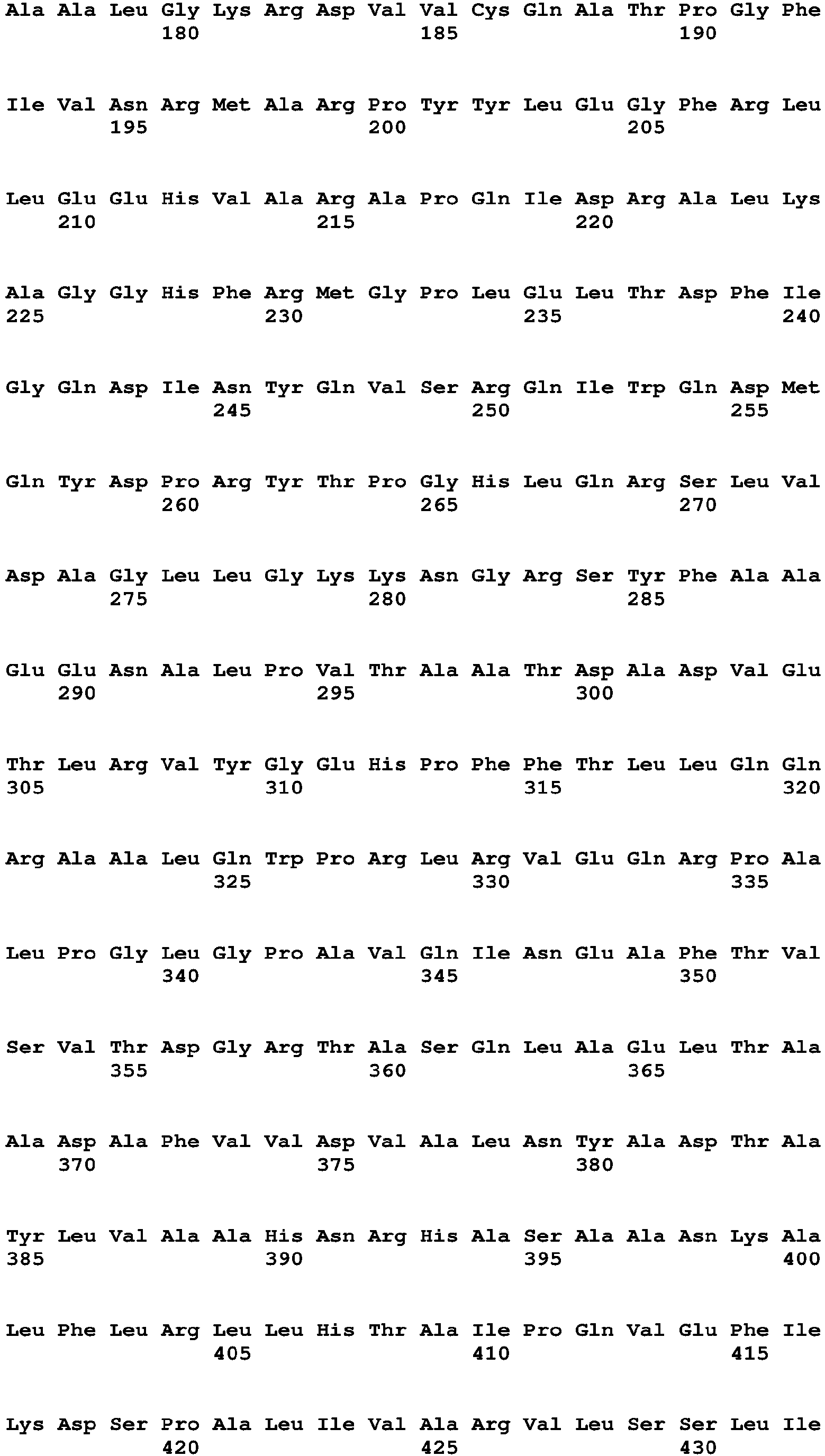
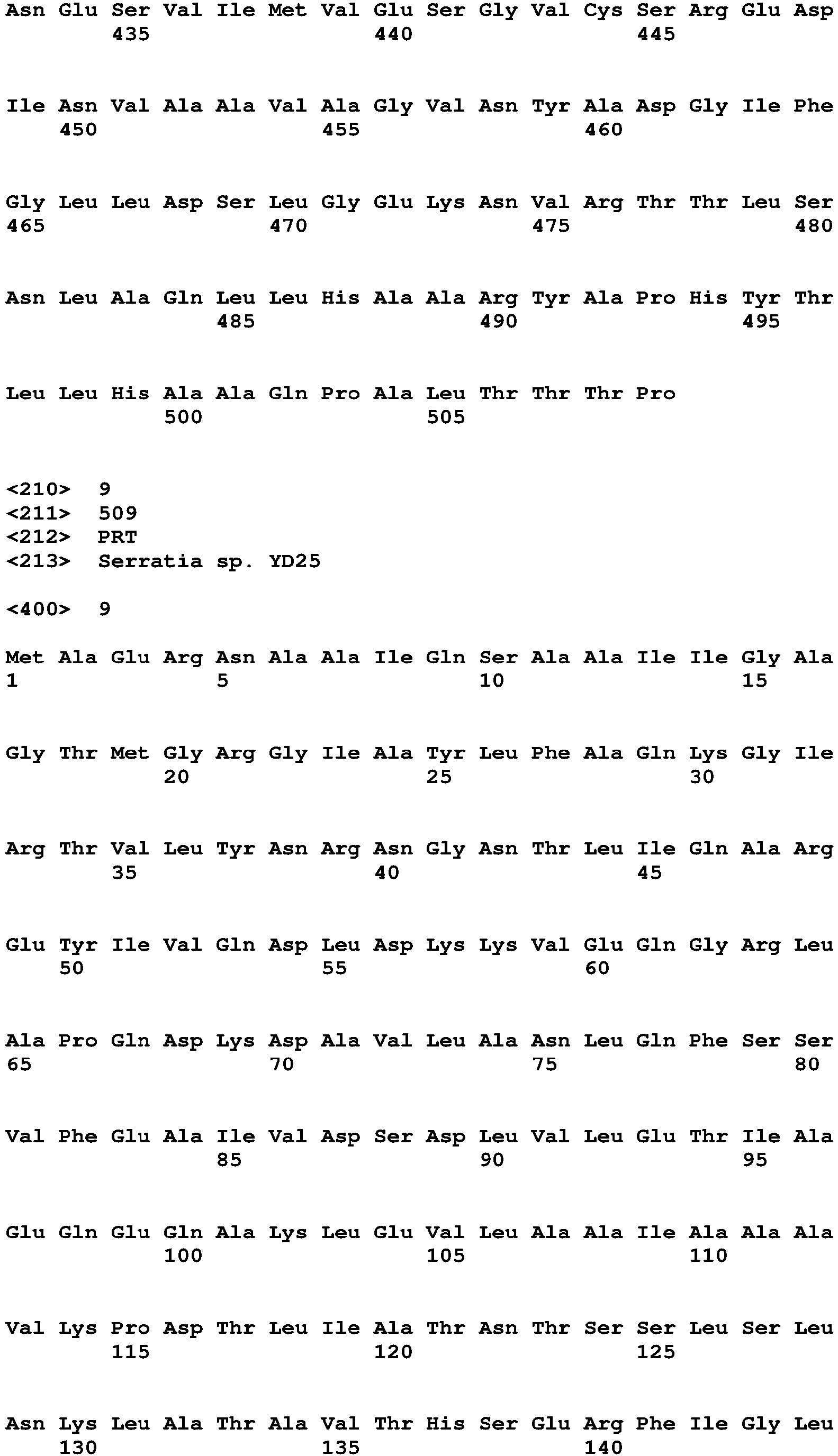


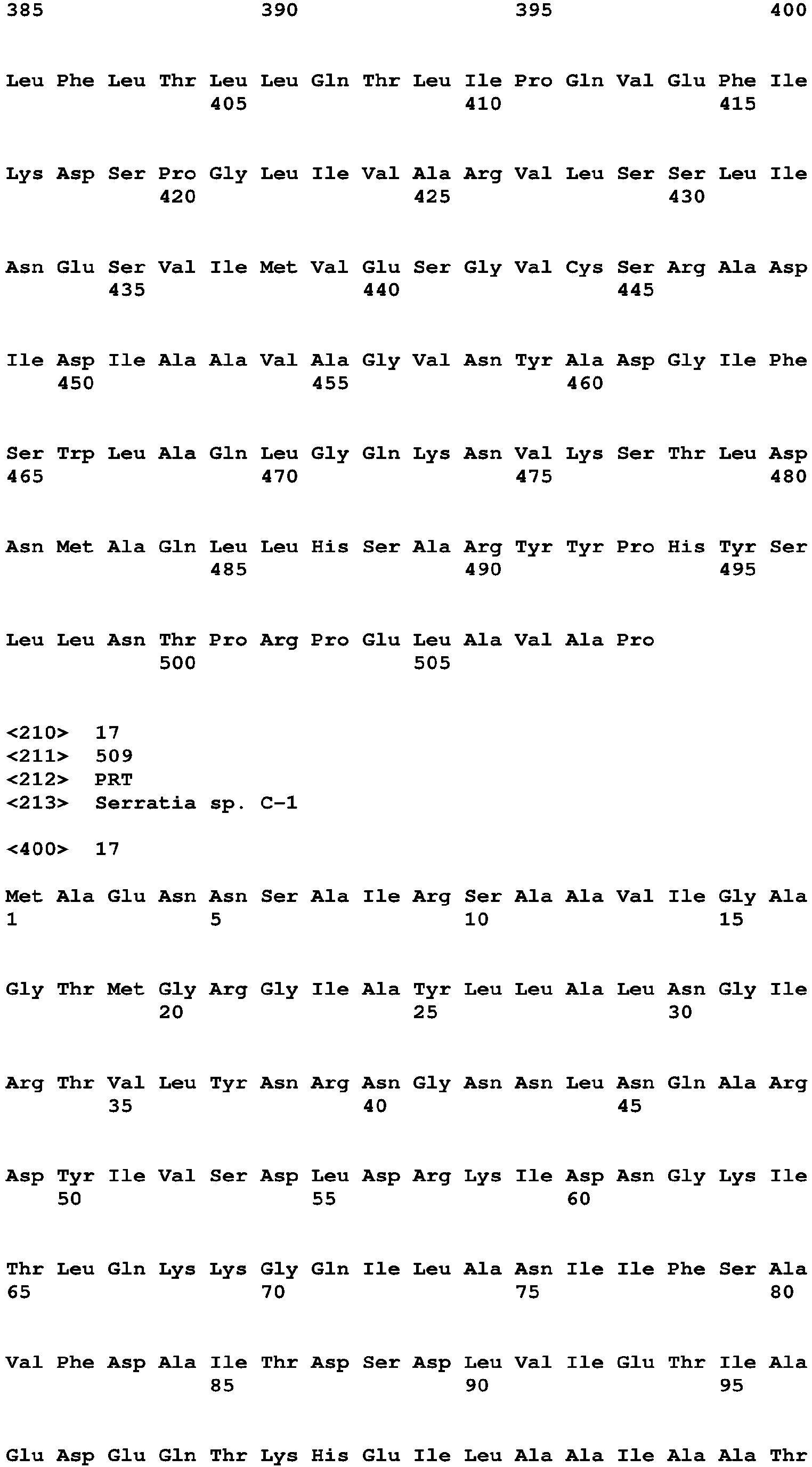








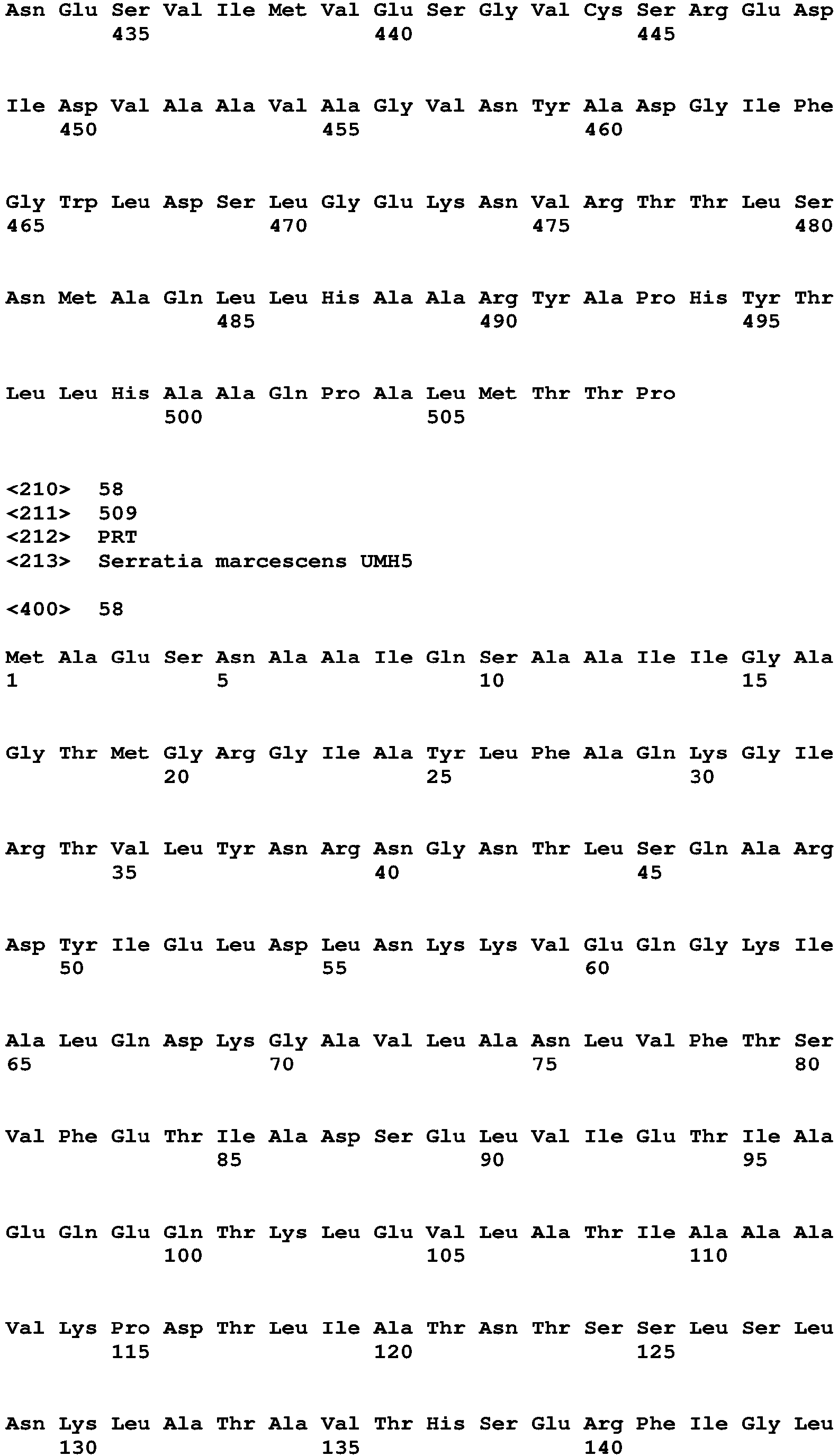


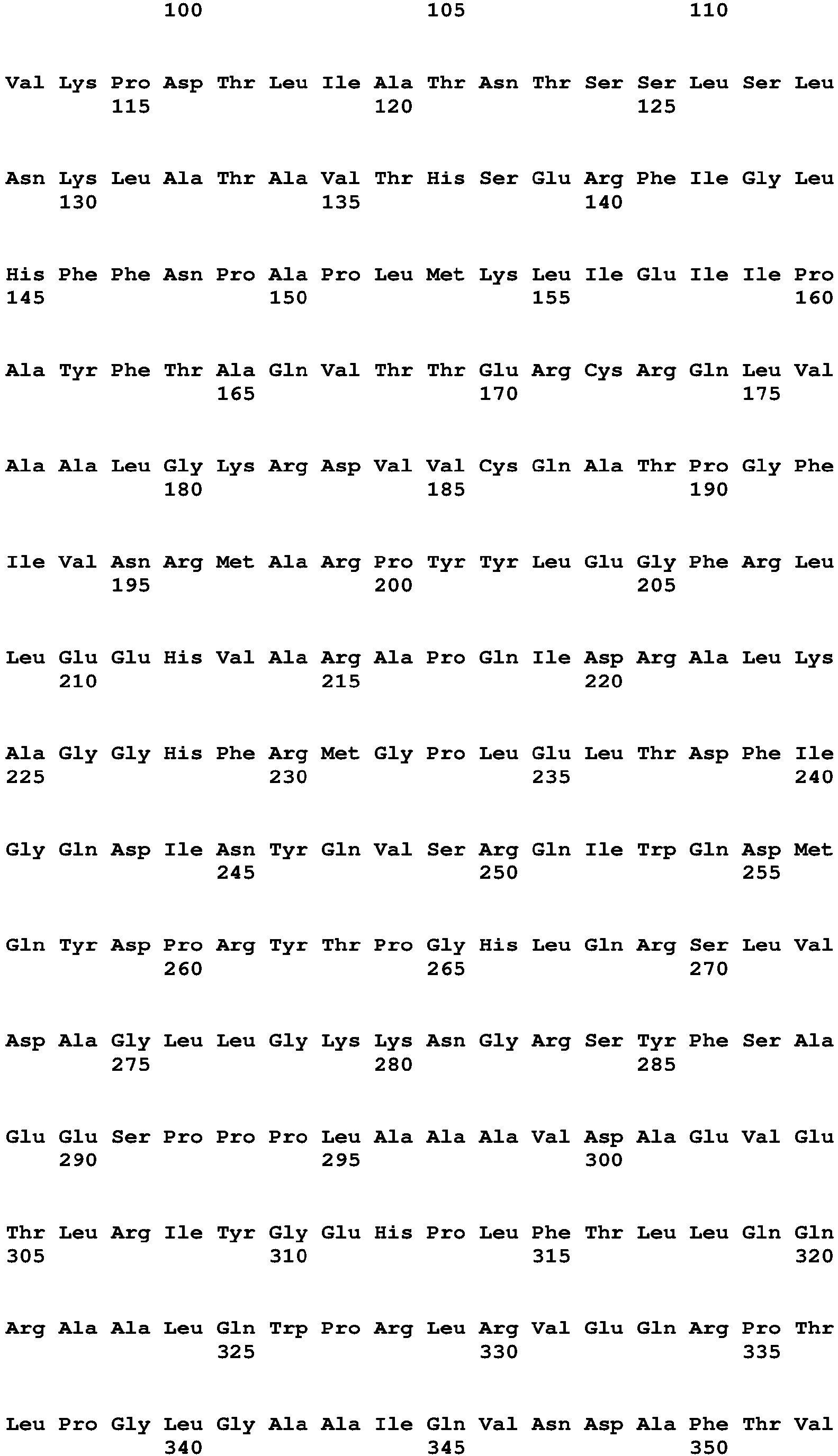

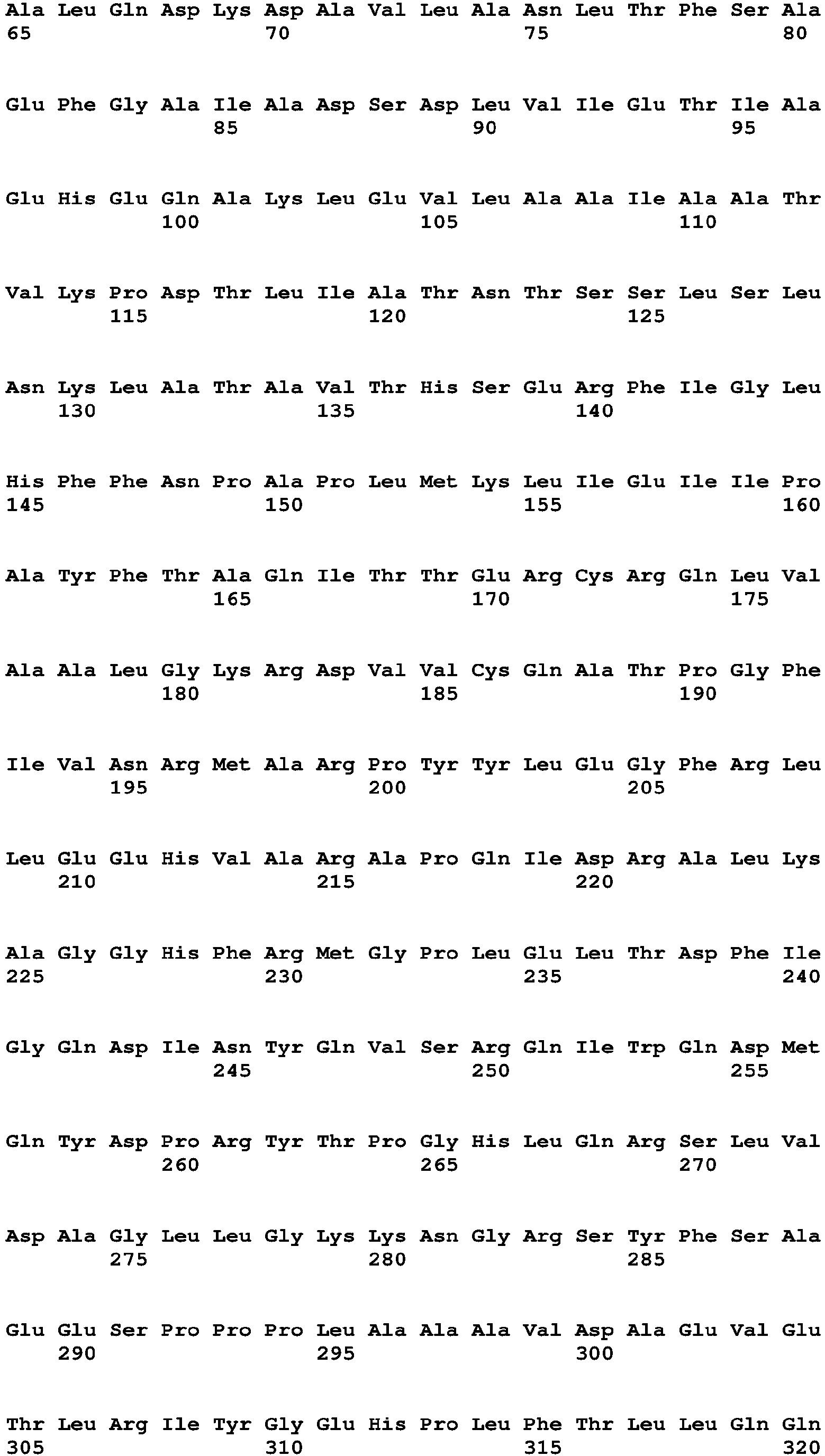


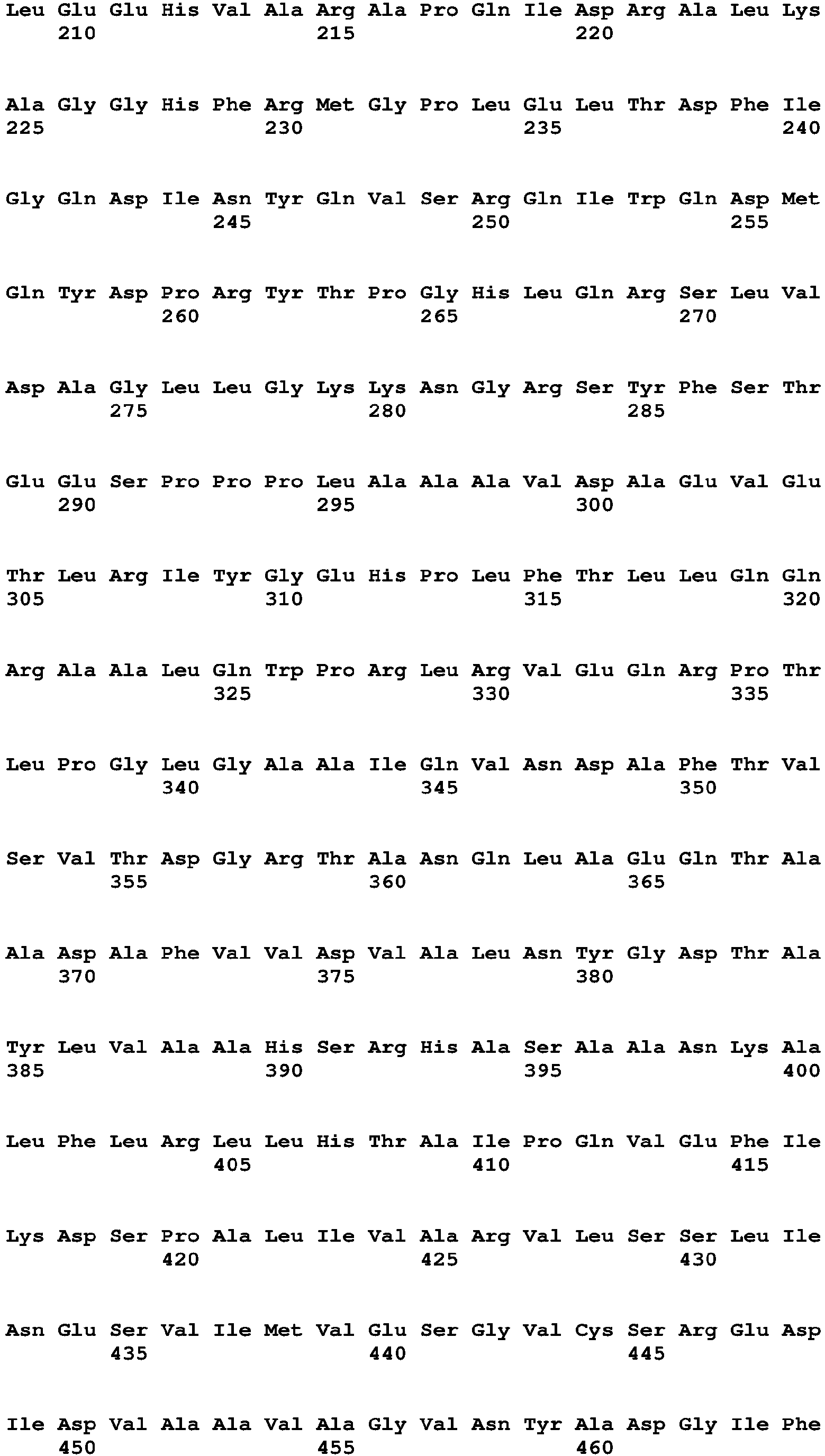
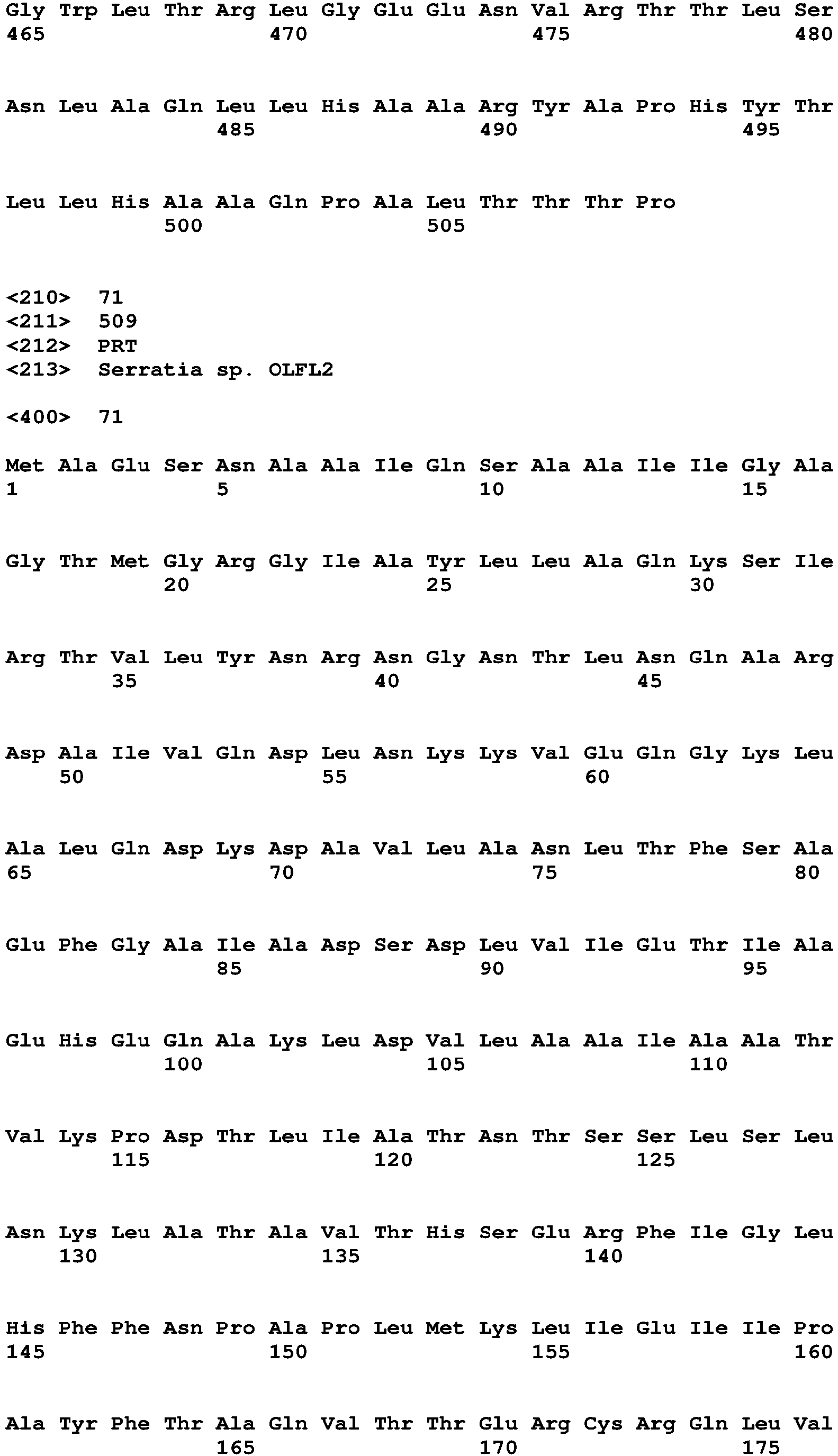


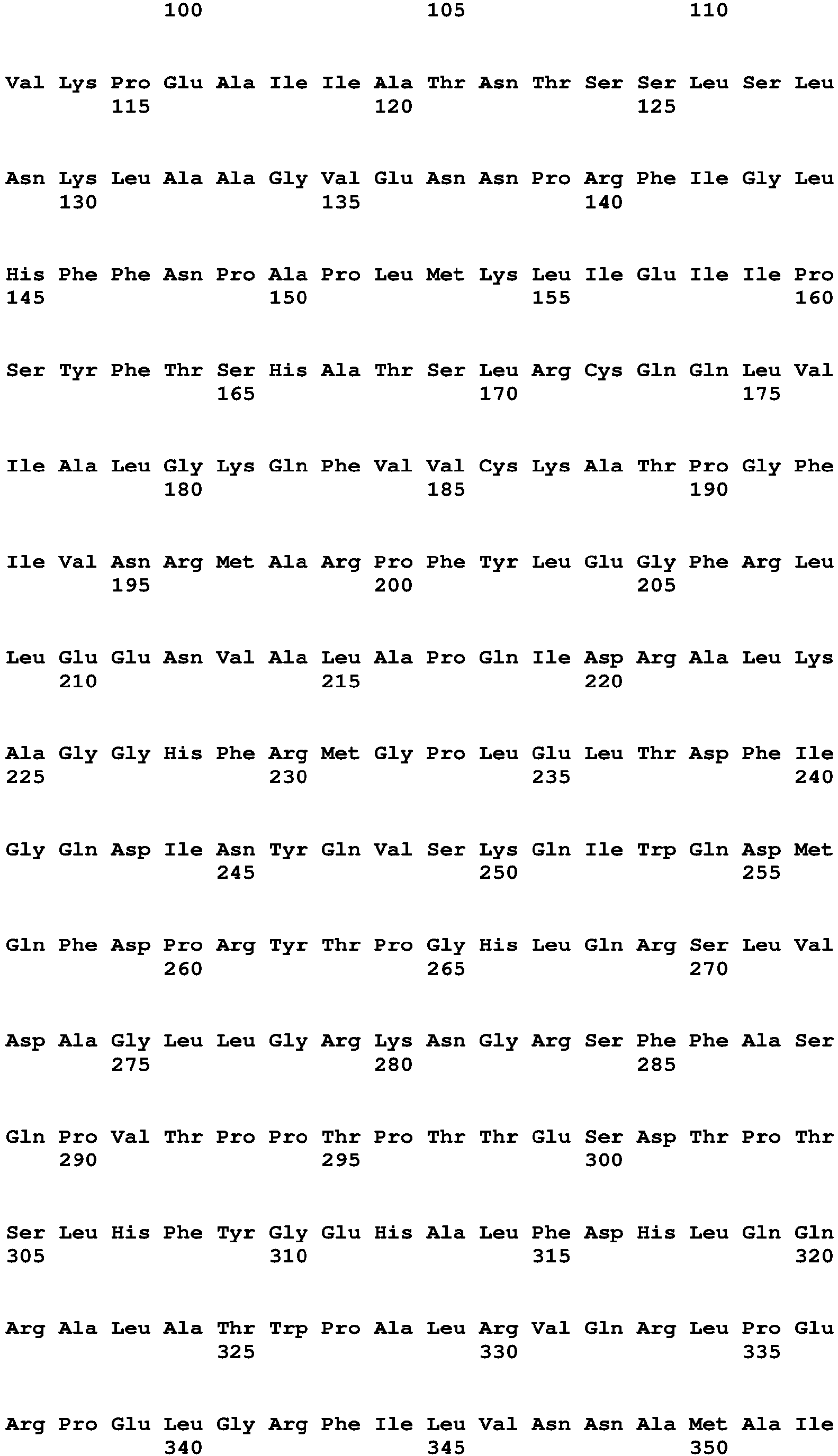


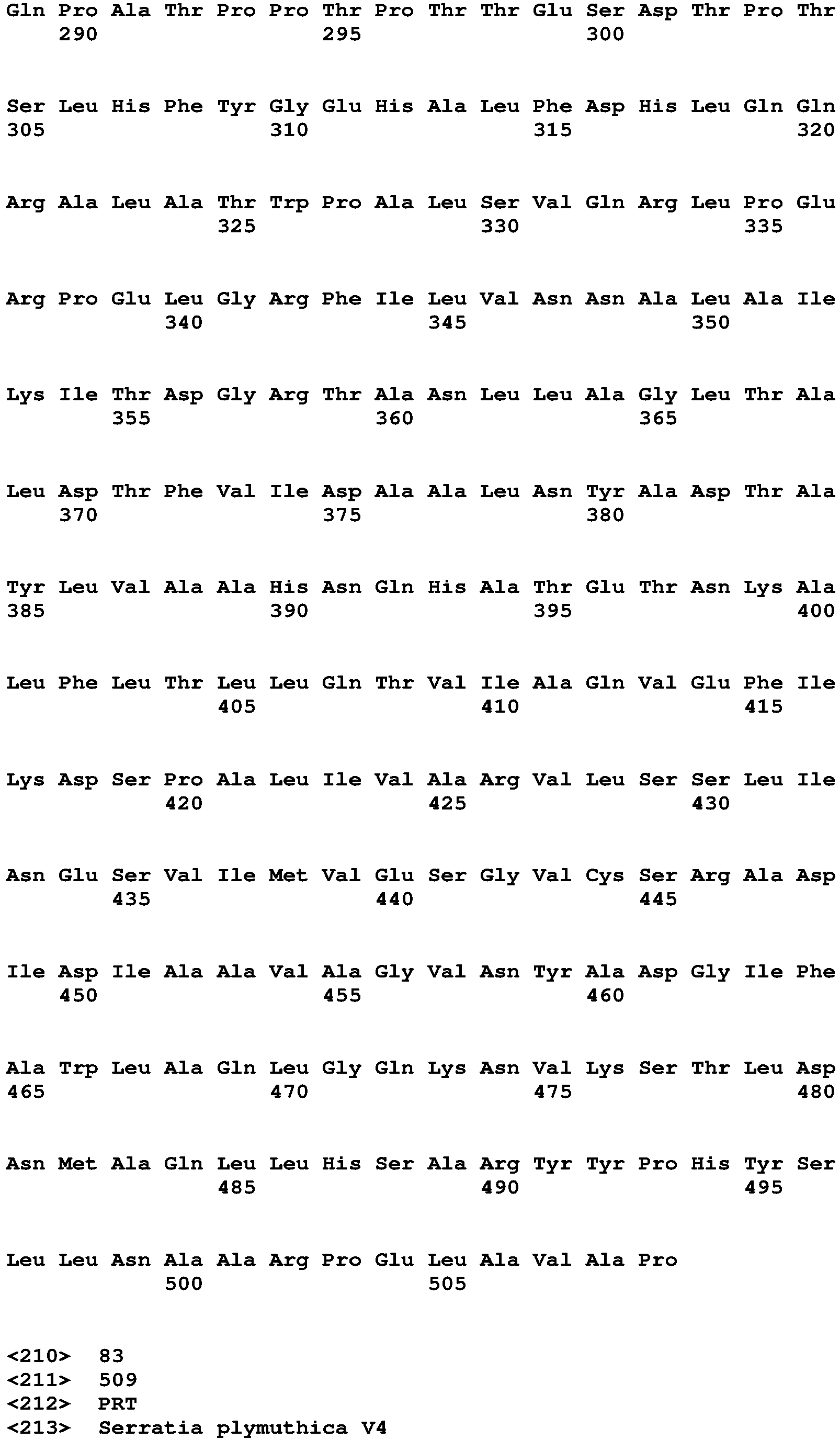


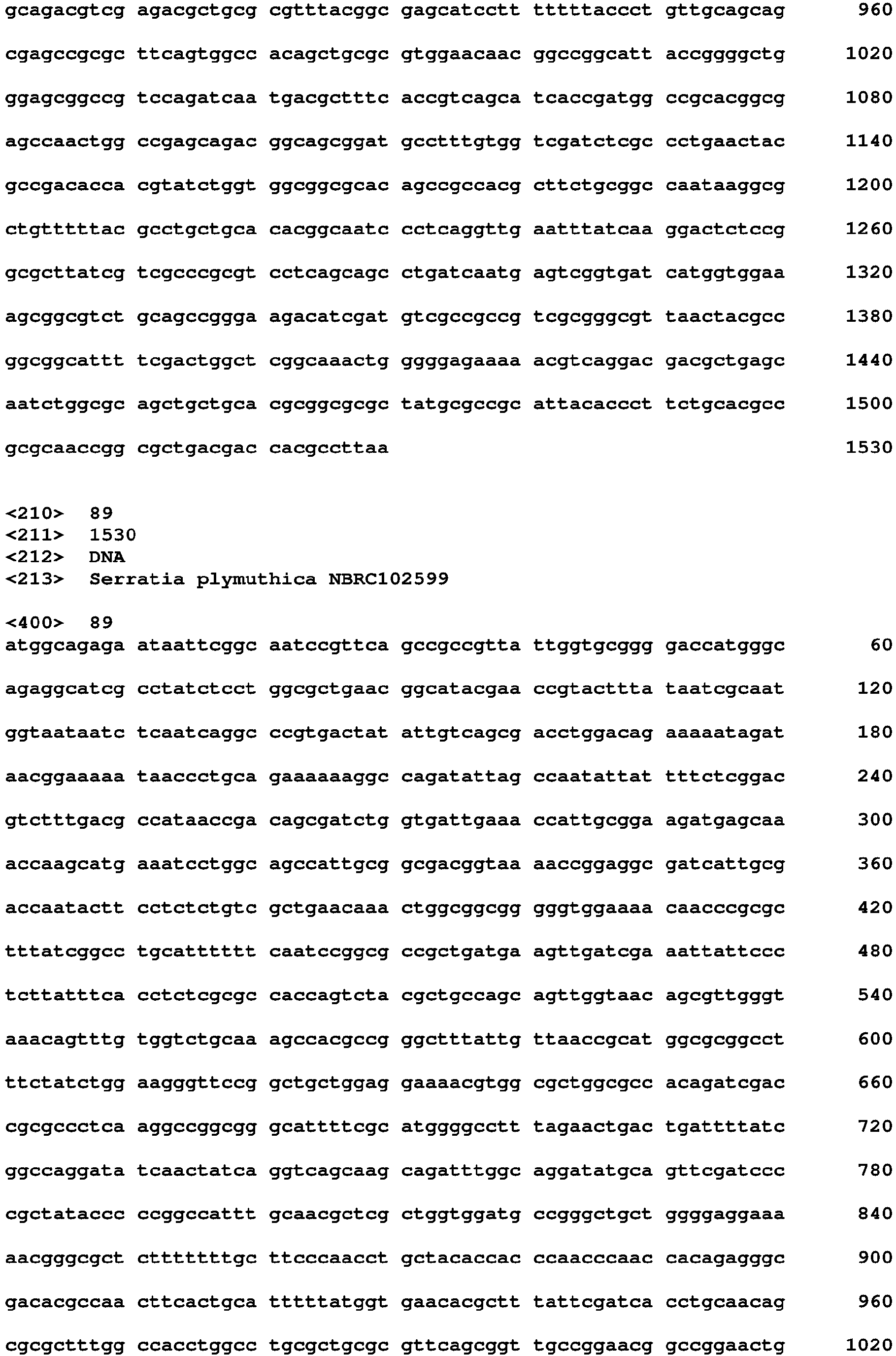








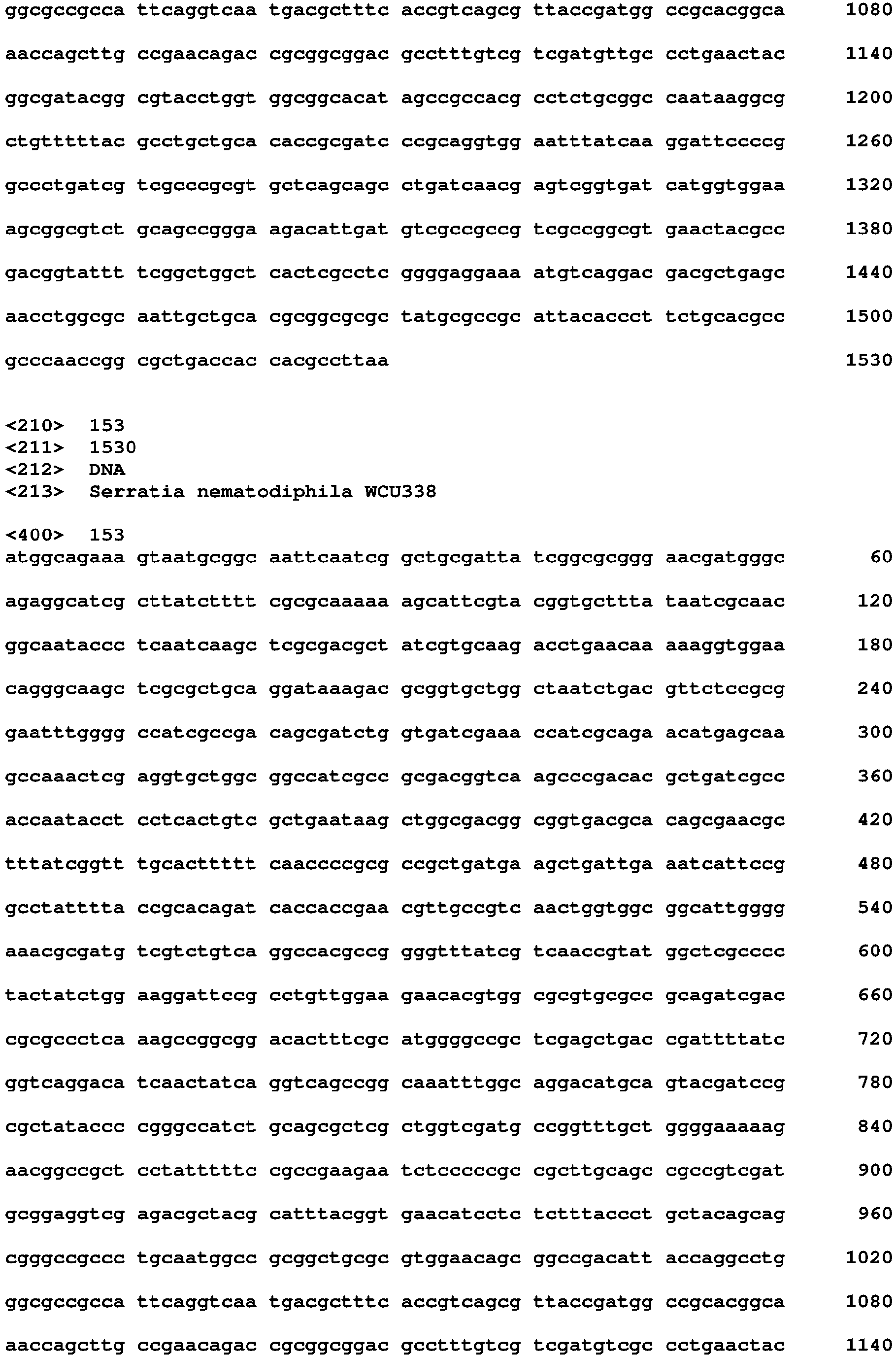


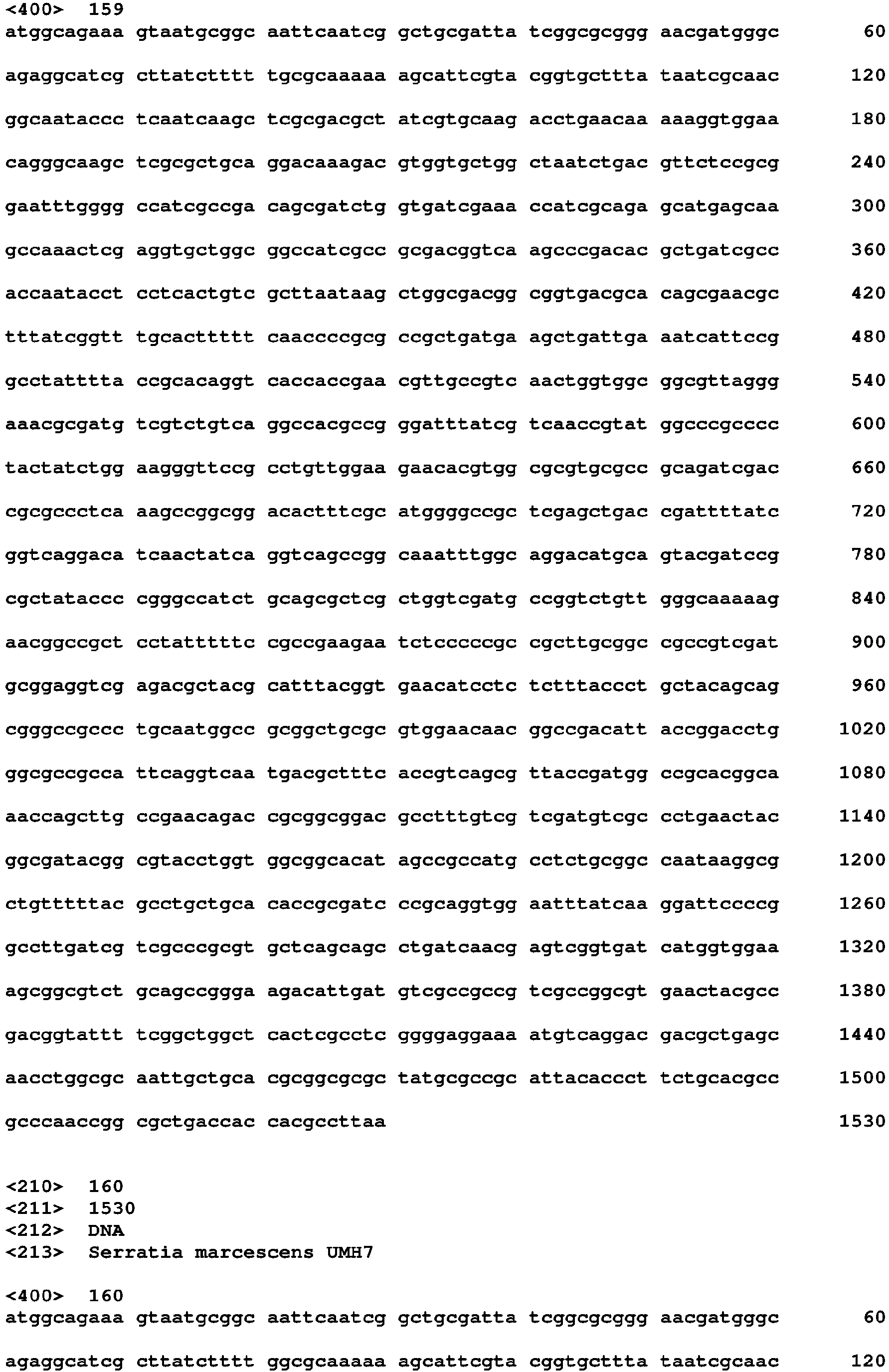


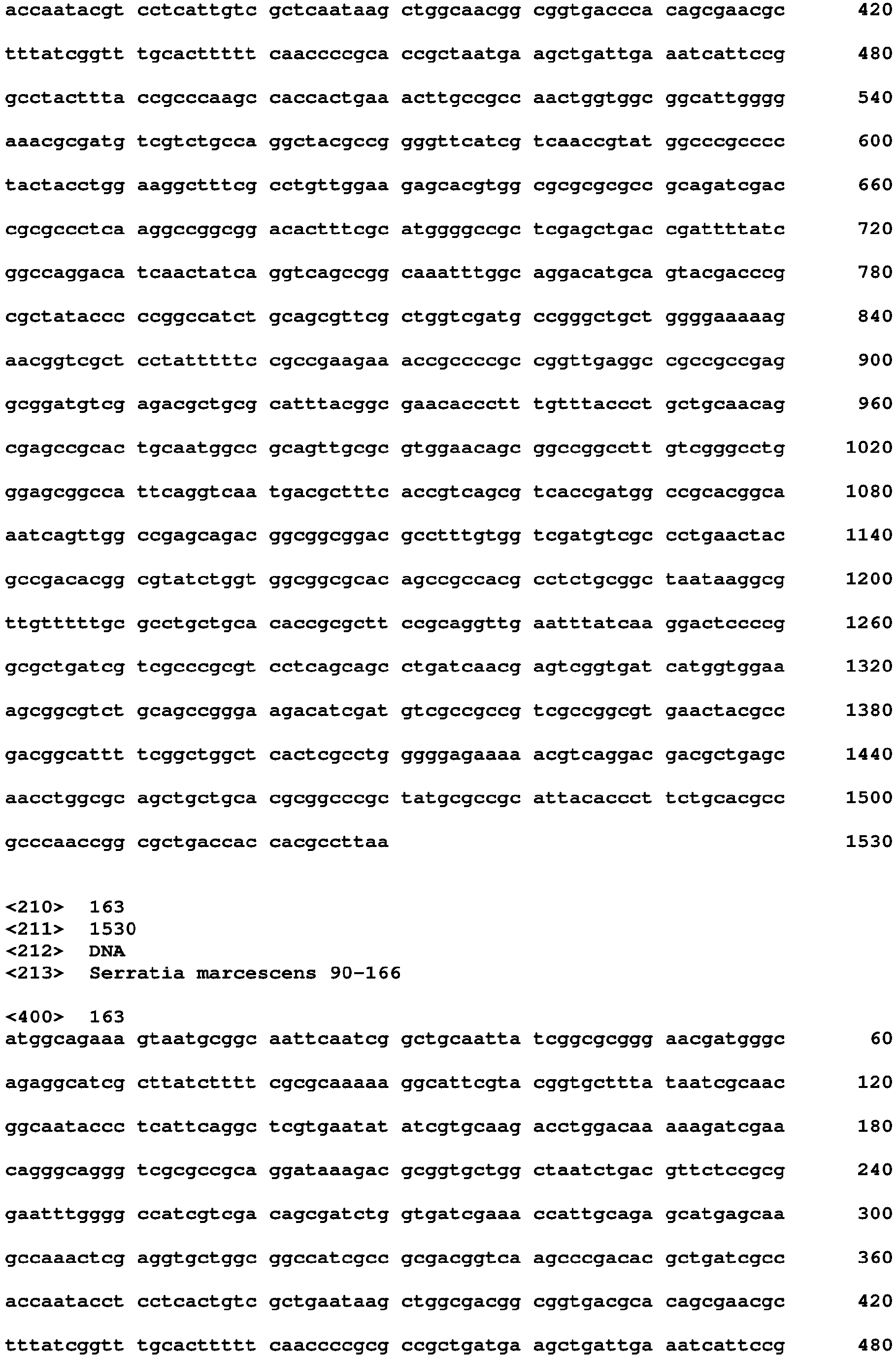


Claims (13)
- A genetically modified microorganism in which a nucleic acid encoding any one of the polypeptides described in (a) to (c) below is introduced or the expression of the polypeptide is enhanced and the function of pyruvate kinase is impaired:(a) a polypeptide composed of an amino acid sequence represented by any one of SEQ ID NOs: 1 to 7;(b) a polypeptide composed of the same amino acid sequence as that represented by any one of SEQ ID NOs: 1 to 7, except that one or several amino acids are substituted, deleted, inserted, and/or added, and having an enzymatic activity that catalyzes a reaction to reduce 3-oxoadipyl-CoA to 3-hydroxyadipyl-CoA;(c) a polypeptide composed of an amino acid sequence with a sequence identity of not less than 70% to the sequence represented by any one of SEQ ID NOs: 1 to 7 and having an enzymatic activity that catalyzes a reaction to reduce 3-oxoadipyl-CoA to 3-hydroxyadipyl-CoA.
- The genetically modified microorganism according to claim 1, wherein a polypeptide selected from the above (b) and (c) contains a region composed of an amino acid sequence represented by SEQ ID NO: 173.
- The genetically modified microorganism according to claim 2, wherein the amino acid sequence represented by SEQ ID NO: 173 contains a phenylalanine or leucine residue at the 13th amino acid position from the N terminus, a leucine or glutamine residue at the 15th amino acid position from the N terminus, a lysine or asparagine residue at the 16th amino acid position from the N terminus, a glycine or serine residue at the 17th amino acid position from the N terminus, a proline or arginine residue at the 19th amino acid position from the N terminus, and a leucine, methionine, or valine residue at the 21st amino acid position from the N terminus.
- The genetically modified microorganism according to any one of claims 1 to 3, which is a genetically modified microorganism belonging to a genus selected from the group consisting of Escherichia, Serralia, Hafnia, and Pseudomonas.
- The genetically modified microorganism according to any one of claims 1 to 4, which has an ability to generate 3-oxoadipyl-CoA and coenzyme A from acetyl-CoA and succinyl-CoA and an ability to generate 3-hydroxyadipic acid from 3-hydroxyadipyl-CoA.
- The genetically modified microorganism according to any one of claims 1 to 4, which has an ability to generate 3-oxoadipyl-CoA and coenzyme A from acetyl-CoA and succinyl-CoA, an ability to generate 2,3-dehydroadipyl-CoA from 3-hydroxyadipyl-CoA, and an ability to generate α-hydromuconic acid from 2,3-dehydroadipyl-CoA.
- The genetically modified microorganism according to any one of claims 1 to 4, which has an ability to generate 3-oxoadipyl-CoA and coenzyme A from acetyl-CoA and succinyl-CoA, an ability to generate 2,3-dehydroadipyl-CoA from 3-hydroxyadipyl-CoA, an ability to generate adipyl-CoA from 2,3-dehydroadipyl-CoA, and an ability to generate adipic acid from adipyl-CoA.
- The genetically modified microorganism according to any one of claims 1 to 7, wherein the function of a phosphotransferase system enzyme is further impaired.
- A method of producing 3-hydroxyadipic acid, comprising culturing the genetically modified microorganism according to any one of claims 1 to 5 and 8 in a culture medium containing a carbon source as a raw material for fermentation.
- A method of producing α-hydromuconic acid, comprising culturing the genetically modified microorganism according to any one of claims 1 to 4, 6 and 8 in a culture medium containing a carbon source as a raw material for fermentation.
- A method of producing adipic acid, comprising culturing the genetically modified microorganism according to any one of claims 1 to 4, 7 and 8 in a culture medium containing a carbon source as a raw material for fermentation.
- A method of producing one or more substances selected from the group consisting of 3-hydroxyadipic acid, α-hydromuconic acid, and adipic acid, comprising culturing a genetically modified microorganism in a culture medium containing a carbon source as a raw material for fermentation, wherein a nucleic acid encoding a polypeptide encoded by the 3-hydroxybutyryl-CoA dehydrogenase gene of a microorganism of the genus Serratia, which forms a gene cluster with 5-aminolevulinic acid synthase gene in the microorganism, is introduced or the expression of the polypeptide is enhanced and the function of pyruvate kinase is impaired in the genetically modified microorganism.
- The method according to claim 12, wherein the genetically modified microorganism is a microorganism in which the function of a phosphotransferase system enzyme is further impaired.
Applications Claiming Priority (2)
| Application Number | Priority Date | Filing Date | Title |
|---|---|---|---|
| JP2019089770 | 2019-05-10 | ||
| PCT/JP2020/018663 WO2020230718A1 (en) | 2019-05-10 | 2020-05-08 | Genetically modified microorganism for producing 3-hydroxyhexanedioic acid, (e)-hex-2-enedioic acid and/or hexanedioic acid, and production method for said chemicals |
Publications (2)
| Publication Number | Publication Date |
|---|---|
| EP3967762A1 true EP3967762A1 (en) | 2022-03-16 |
| EP3967762A4 EP3967762A4 (en) | 2023-07-19 |
Family
ID=73290002
Family Applications (1)
| Application Number | Title | Priority Date | Filing Date |
|---|---|---|---|
| EP20806208.3A Pending EP3967762A4 (en) | 2019-05-10 | 2020-05-08 | Genetically modified microorganism for producing 3-hydroxyhexanedioic acid, (e)-hex-2-enedioic acid and/or hexanedioic acid, and production method for said chemicals |
Country Status (5)
| Country | Link |
|---|---|
| US (1) | US20220213514A1 (en) |
| EP (1) | EP3967762A4 (en) |
| JP (1) | JP7530554B2 (en) |
| CN (1) | CN113785069A (en) |
| WO (1) | WO2020230718A1 (en) |
Cited By (1)
| Publication number | Priority date | Publication date | Assignee | Title |
|---|---|---|---|---|
| CN111386339A (en) * | 2017-11-30 | 2020-07-07 | 东丽株式会社 | Genetically modified microorganism for the production of 3-hydroxyadipic acid, alpha-hydrogenated adipic acid and/or adipic acid and method for producing the chemical product |
Families Citing this family (4)
| Publication number | Priority date | Publication date | Assignee | Title |
|---|---|---|---|---|
| EP4245844A4 (en) * | 2020-11-11 | 2025-10-01 | Toray Industries | Genetically modified microorganism for producing 3-hydroxydipiic acid and/or alpha-hydromuconic acid, and process for producing a chemical product |
| EP4481050A1 (en) | 2022-02-15 | 2024-12-25 | Toray Industries, Inc. | Genetically modified microorganism for producing 3-hydroxyadipic acid and/or alpha-hydromuconic acid, and method for producing chemical product |
| CN115287238B (en) * | 2022-09-09 | 2023-04-14 | 哈尔滨工业大学 | A kind of Serratia marcescens strain and its application |
| JPWO2024242124A1 (en) * | 2023-05-23 | 2024-11-28 |
Family Cites Families (17)
| Publication number | Priority date | Publication date | Assignee | Title |
|---|---|---|---|---|
| KR100630836B1 (en) | 2005-04-08 | 2006-10-02 | 한국과학기술원 | Strain improvement method through in silico analysis |
| ES2656790T3 (en) * | 2008-03-27 | 2018-02-28 | Genomatica, Inc. | Microorganisms for the production of adipic acid and other compounds |
| EP2427544B1 (en) | 2009-05-07 | 2019-07-17 | Genomatica, Inc. | Microorganisms and methods for the biosynthesis of adipate, hexamethylenediamine and 6-aminocaproic acid |
| EP3190174A1 (en) | 2009-08-05 | 2017-07-12 | Genomatica, Inc. | Semi-synthetic terephthalic acid via microorganisms that produce muconic acid |
| PH12013500158A1 (en) | 2010-07-26 | 2013-03-11 | Genomatica Inc | Microorganisms and methods for the biosynthesis of aromatics, 2,4-pentadienoate and 1,3-butadiene |
| WO2012031079A2 (en) * | 2010-09-01 | 2012-03-08 | University Of Florida Research Foundation, Inc. | L-malate production by metabolically engineered escherichia coli |
| EP3312267B1 (en) * | 2012-01-30 | 2020-03-11 | PTT Global Chemical Public Company Limited | Production of muconic acid from genetically engineered microorganisms |
| WO2014099725A1 (en) * | 2012-12-17 | 2014-06-26 | Genomatica, Inc. | Microorganisms and methods for enhancing the availability of reducing equivalents in the presence of methanol, and for producing adipate, 6-aminocaproate, hexamethylenediamine or caprolactam related thereto |
| CA3297132A1 (en) * | 2014-12-23 | 2026-03-02 | Genomatica, Inc. | Method of producing & processing diamines |
| CA2988566A1 (en) | 2015-06-10 | 2016-12-15 | Toray Industries, Inc. | Method for producing .alpha.-hydromuconic acid |
| JP6907538B2 (en) | 2015-06-10 | 2021-07-21 | 東レ株式会社 | Method for producing 3-hydroxyadipic acid |
| WO2017033965A1 (en) * | 2015-08-24 | 2017-03-02 | 国立研究開発法人理化学研究所 | Method for producing aromatic compound and derivative thereof |
| CN108368524B (en) | 2015-12-11 | 2022-05-06 | 东丽株式会社 | The production method of 3-oxoadipic acid |
| WO2017209103A1 (en) | 2016-05-31 | 2017-12-07 | 東レ株式会社 | Method for producing α-hydromuconic acid |
| CA3025885A1 (en) | 2016-05-31 | 2017-12-07 | Toray Industries, Inc. | Method for producing 3-hydroxyadipic acid |
| WO2019022083A1 (en) * | 2017-07-24 | 2019-01-31 | 国立研究開発法人理化学研究所 | Decarboxylase and method for producing unsaturated hydrocarbon compound using same |
| BR112020010328A2 (en) * | 2017-11-30 | 2020-11-17 | Toray Industries, Inc. | genetically modified microorganism and methods of producing 3-hydroxydipic acid, a-hydromuconic acid and adipic acid |
-
2020
- 2020-05-08 WO PCT/JP2020/018663 patent/WO2020230718A1/en not_active Ceased
- 2020-05-08 US US17/609,964 patent/US20220213514A1/en active Pending
- 2020-05-08 JP JP2020546523A patent/JP7530554B2/en active Active
- 2020-05-08 EP EP20806208.3A patent/EP3967762A4/en active Pending
- 2020-05-08 CN CN202080033993.6A patent/CN113785069A/en active Pending
Cited By (2)
| Publication number | Priority date | Publication date | Assignee | Title |
|---|---|---|---|---|
| CN111386339A (en) * | 2017-11-30 | 2020-07-07 | 东丽株式会社 | Genetically modified microorganism for the production of 3-hydroxyadipic acid, alpha-hydrogenated adipic acid and/or adipic acid and method for producing the chemical product |
| CN111386339B (en) * | 2017-11-30 | 2024-05-10 | 东丽株式会社 | Genetically modified microorganisms for producing 3-hydroxy adipic acid, alpha-hydrogenated hexadienoic acid and/or adipic acid and method for producing the chemical products |
Also Published As
| Publication number | Publication date |
|---|---|
| JPWO2020230718A1 (en) | 2020-11-19 |
| WO2020230718A1 (en) | 2020-11-19 |
| JP7530554B2 (en) | 2024-08-08 |
| CN113785069A (en) | 2021-12-10 |
| US20220213514A1 (en) | 2022-07-07 |
| EP3967762A4 (en) | 2023-07-19 |
Similar Documents
| Publication | Publication Date | Title |
|---|---|---|
| US12275979B2 (en) | Gene-modified microorganism for producing 3-hydroxyadipic acid, alpha-hydromuconic acid, and/or adipic acid, and production method for said chemical products | |
| EP3967762A1 (en) | Genetically modified microorganism for producing 3-hydroxyhexanedioic acid, (e)-hex-2-enedioic acid and/or hexanedioic acid, and production method for said chemicals | |
| US12577592B2 (en) | Genetically modified microorganism for producing 3-hydroxyhexanedioic acid and/or (e)-hex-2-enedioic acid and production method for said chemicals | |
| EP3498852A1 (en) | Method for producing 3-hydroxyadipic acid | |
| JP7646119B2 (en) | Genetically modified microorganisms for producing 3-hydroxyadipic acid, α-hydromuconic acid and/or adipic acid and methods for producing said chemicals | |
| EP3467113B1 (en) | Method for producing a-hydromuconic acid | |
| US20230392112A1 (en) | Genetically modified microorganism for producing 3-hydroxyadipic acid and/or alpha-hydromuconic acid, and method for producing chemical product | |
| EP4497819A1 (en) | Genetically-modified microorganism for producing 3-hydroxyadipic acid and/or 3-oxoadipic acid and production method for said chemical products | |
| EP4481050A1 (en) | Genetically modified microorganism for producing 3-hydroxyadipic acid and/or alpha-hydromuconic acid, and method for producing chemical product | |
| JP7769868B2 (en) | Genetically modified microorganisms and methods for producing organic acids | |
| EP3431605B1 (en) | Putrescine-producing microorganism and method for producing putrescine using same | |
| JP2024090463A (en) | Genetically modified microorganisms for producing 3-hydroxyadipic acid and/or α-hydromuconic acid and methods for producing said chemicals | |
| US9963721B2 (en) | Method of screening gene for 1,4-BDO production | |
| WO2025063258A1 (en) | GENE-MODIFIED MICROORGANISM FOR PRODUCING α-HYDROMUCONIC ACID AND/OR ADIPIC ACID AND METHOD FOR PRODUCING SAID CHEMICAL PRODUCT | |
| JP2023144366A (en) | Genetically modified microorganism for producing 3-hydroxyadipic acid and/or α-hydromuconic acid and method for producing the chemical product | |
| WO2022181654A1 (en) | Variant acyl-coa hydrolase |
Legal Events
| Date | Code | Title | Description |
|---|---|---|---|
| STAA | Information on the status of an ep patent application or granted ep patent |
Free format text: STATUS: THE INTERNATIONAL PUBLICATION HAS BEEN MADE |
|
| PUAI | Public reference made under article 153(3) epc to a published international application that has entered the european phase |
Free format text: ORIGINAL CODE: 0009012 |
|
| STAA | Information on the status of an ep patent application or granted ep patent |
Free format text: STATUS: REQUEST FOR EXAMINATION WAS MADE |
|
| 17P | Request for examination filed |
Effective date: 20211207 |
|
| AK | Designated contracting states |
Kind code of ref document: A1 Designated state(s): AL AT BE BG CH CY CZ DE DK EE ES FI FR GB GR HR HU IE IS IT LI LT LU LV MC MK MT NL NO PL PT RO RS SE SI SK SM TR |
|
| DAV | Request for validation of the european patent (deleted) | ||
| DAX | Request for extension of the european patent (deleted) | ||
| A4 | Supplementary search report drawn up and despatched |
Effective date: 20230616 |
|
| RIC1 | Information provided on ipc code assigned before grant |
Ipc: C12N 9/12 20060101ALI20230612BHEP Ipc: C12N 9/04 20060101ALI20230612BHEP Ipc: C12N 15/54 20060101ALI20230612BHEP Ipc: C12N 15/53 20060101ALI20230612BHEP Ipc: C12N 1/21 20060101ALI20230612BHEP Ipc: C12P 7/44 20060101ALI20230612BHEP Ipc: C12P 7/42 20060101AFI20230612BHEP |