EP3967673A1 - Method for producing fluorinated iodinated organic compound - Google Patents
Method for producing fluorinated iodinated organic compound Download PDFInfo
- Publication number
- EP3967673A1 EP3967673A1 EP20805493.2A EP20805493A EP3967673A1 EP 3967673 A1 EP3967673 A1 EP 3967673A1 EP 20805493 A EP20805493 A EP 20805493A EP 3967673 A1 EP3967673 A1 EP 3967673A1
- Authority
- EP
- European Patent Office
- Prior art keywords
- group
- substituents
- group optionally
- production method
- optionally
- Prior art date
- Legal status (The legal status is an assumption and is not a legal conclusion. Google has not performed a legal analysis and makes no representation as to the accuracy of the status listed.)
- Pending
Links
Classifications
-
- C—CHEMISTRY; METALLURGY
- C07—ORGANIC CHEMISTRY
- C07C—ACYCLIC OR CARBOCYCLIC COMPOUNDS
- C07C67/00—Preparation of carboxylic acid esters
- C07C67/30—Preparation of carboxylic acid esters by modifying the acid moiety of the ester, such modification not being an introduction of an ester group
- C07C67/307—Preparation of carboxylic acid esters by modifying the acid moiety of the ester, such modification not being an introduction of an ester group by introduction of halogen; by substitution of halogen atoms by other halogen atoms
-
- C—CHEMISTRY; METALLURGY
- C07—ORGANIC CHEMISTRY
- C07B—GENERAL METHODS OF ORGANIC CHEMISTRY; APPARATUS THEREFOR
- C07B39/00—Halogenation
-
- C—CHEMISTRY; METALLURGY
- C07—ORGANIC CHEMISTRY
- C07C—ACYCLIC OR CARBOCYCLIC COMPOUNDS
- C07C17/00—Preparation of halogenated hydrocarbons
- C07C17/013—Preparation of halogenated hydrocarbons by addition of halogens
- C07C17/02—Preparation of halogenated hydrocarbons by addition of halogens to unsaturated hydrocarbons
-
- C—CHEMISTRY; METALLURGY
- C07—ORGANIC CHEMISTRY
- C07C—ACYCLIC OR CARBOCYCLIC COMPOUNDS
- C07C17/00—Preparation of halogenated hydrocarbons
- C07C17/07—Preparation of halogenated hydrocarbons by addition of hydrogen halides
- C07C17/08—Preparation of halogenated hydrocarbons by addition of hydrogen halides to unsaturated hydrocarbons
-
- C—CHEMISTRY; METALLURGY
- C07—ORGANIC CHEMISTRY
- C07C—ACYCLIC OR CARBOCYCLIC COMPOUNDS
- C07C29/00—Preparation of compounds having hydroxy or O-metal groups bound to a carbon atom not belonging to a six-membered aromatic ring
- C07C29/62—Preparation of compounds having hydroxy or O-metal groups bound to a carbon atom not belonging to a six-membered aromatic ring by introduction of halogen; by substitution of halogen atoms by other halogen atoms
-
- C—CHEMISTRY; METALLURGY
- C07—ORGANIC CHEMISTRY
- C07C—ACYCLIC OR CARBOCYCLIC COMPOUNDS
- C07C2601/00—Systems containing only non-condensed rings
- C07C2601/12—Systems containing only non-condensed rings with a six-membered ring
- C07C2601/14—The ring being saturated
Definitions
- the present disclosure relates to a method for producing a fluorinated iodinated organic compound.
- Fluorinated iodinated organic compounds are extremely important compounds as various chemical products, such as functional materials, pharmaceutical and agrochemical compounds, and electronic materials; as well as intermediates thereof.
- Patent Literature (PTL) 1 proposes a method for adding fluorine and iodine to a carbon-carbon double bond of an organic compound in the presence of IF 5 , iodine, and an organic base under more strongly acidic conditions.
- the fluorine source, IF 5 , in PTL 1 is expensive, and there is room for improvement in terms of production cost.
- An object of the present disclosure is to provide a novel method for producing a fluorinated iodinated organic compound.
- the present disclosure includes the following embodiments.
- iodine source is at least one member selected from the group consisting of iodine and alkali metal iodide salts.
- the compound (C) is at least one member selected from the group consisting of peroxides, metal oxides, azo compounds, sulfonium salts, and iodonium salts.
- the compound (C) is at least one member selected from the group consisting of hydrogen peroxide, peracetic acid, perbenzoic acid, metachloroperbenzoic acid, tert-butyl hydroperoxide, cumene hydroperoxide, sodium perborate, potassium persulfate, a potassium hydrogen persulfate-potassium hydrogen sulfate-potassium sulfate mixture, permanganic acid, dichromic acid, tungsten oxide, ruthenium oxide, antimony oxide, osmium oxide, and sulfur trioxide.
- the compound (C) is at least one member selected from the group consisting of hydrogen peroxide, peracetic acid, perbenzoic acid, metachloroperbenzoic acid, tert-butyl hydroperoxide, cumene hydroperoxide, sodium perborate, potassium persulfate, a potassium hydrogen persulfate-potassium hydrogen sulfate-potassium sulfate mixture, permangan
- the solvent is at least one member selected from the group consisting of aliphatic hydrocarbons, aromatic hydrocarbons, halogenated hydrocarbons, ethers, esters, nitriles, and water.
- the solvent is at least one member selected from the group consisting of aliphatic hydrocarbons, halogenated hydrocarbons, ethers, and water.
- R 1 and R 2 are each independently a hydrogen atom, a halogen atom, an alkyl group optionally having one or more substituents, an alkoxy group optionally having one or more substituents, a carboxyl group optionally having one or more substituents, a cycloalkyl group optionally having one or more substituents, an aryl group optionally having one or more substituents, or an aralkyl group optionally having one or more substituents, or R 1 and R 2 optionally form a ring together with the two adjacent carbon atoms.
- a novel method for producing a fluorinated iodinated organic compound is provided.
- the steps, treatments, or operations described in the present specification may be performed at room temperature.
- room temperature can refer to a temperature within the range of 10 to 40°C.
- C n-m (n and m are each a number) indicates that the number of carbon atoms is n or more and m or less, as can be generally understood by a person skilled in the art.
- halogen atom may include fluorine, chlorine, bromine, and iodine.
- the "organic group” refers to a group containing one or more carbon atoms.
- Examples of the “organic group” may include:
- examples of the "hydrocarbon group” may include an alkyl group, an alkenyl group, an alkynyl group, a cycloalkyl group, a cycloalkenyl group, a cycloalkadienyl group, an aryl group, an aralkyl group, and a group that is a combination of these groups.
- examples of the "alkyl group” may include linear or branched C 1- C 16 alkyl groups (e.g., C 1 -C 14 alkyl groups and C 1 -C 12 alkyl groups), such as methyl, ethyl, propyl, isopropyl, butyl, isobutyl, sec-butyl, tert-butyl, pentyl, isopentyl, neopentyl, hexyl, heptyl, octyl, nonyl, and decyl.
- C 1 -C 14 alkyl groups and C 1 -C 12 alkyl groups such as methyl, ethyl, propyl, isopropyl, butyl, isobutyl, sec-butyl, tert-butyl, pentyl, isopentyl, neopentyl, hexyl, heptyl, octyl, nonyl
- alkenyl group may include linear or branched C 2 -C 10 alkenyl groups, such as vinyl, 1-propen-1-yl, 2-propen-1-yl, isopropenyl, 2-buten-1-yl, 4-penten-1-yl, and 5-hexen-1-yl.
- examples of the "alkynyl group” may include linear or branched C 2 -C 10 alkynyl groups, such as ethynyl, 1-propyn-1-yl, 2-propyn-1-yl, 4-pentyn-1-yl, and 5-hexyn-1-yl.
- examples of the "cycloalkyl group” may include C 3 -C 7 cycloalkyl groups, such as cyclopropyl, cyclobutyl, cyclopentyl, cyclohexyl, and cycloheptyl.
- examples of the "cycloalkenyl group” may include C 3 -C 7 cycloalkenyl groups, such as cyclopropenyl, cyclobutenyl, cyclopentenyl, cyclohexenyl, and cycloheptenyl.
- examples of the "cycloalkadienyl group” may include C 4 -C 10 cycloalkadienyl groups, such as cyclobutadienyl, cyclopentadienyl, cyclohexadienyl, cycloheptadienyl, cyclooctadienyl, cyclononadienyl, and cyclodecadienyl.
- aryl group may be monocyclic, bicyclic, tricyclic, or tetracyclic.
- aryl group may be a C 6 -C 18 aryl group.
- examples of the "aryl group” may include phenyl, 1-naphthyl, 2-naphthyl, 2-biphenyl, 3-biphenyl, 4-biphenyl, and 2-anthryl.
- examples of the "aralkyl group” may include benzyl, phenethyl, diphenylmethyl, 1-naphthylmethyl, 2-naphthylmethyl, 2,2-diphenylethyl, 3-phenylpropyl, 4-phenylbutyl, 5-phenylpentyl, 2-biphenylylmethyl, 3-biphenylylmethyl, and 4-biphenylylmethyl.
- non-aromatic heterocyclic group may be monocyclic, bicyclic, tricyclic, or tetracyclic.
- non-aromatic heterocyclic group may be, for example, a non-aromatic heterocyclic group containing, in addition to carbon, 1 to 4 heteroatoms selected from oxygen, sulfur, and nitrogen as a ring-constituting atom.
- non-aromatic heterocyclic group may be saturated or unsaturated.
- examples of the "non-aromatic heterocyclic group” may include tetrahydrofuryl, oxazolidinyl, imidazolinyl (e.g., 1-imidazolinyl, 2-imidazolinyl, and 4-imidazolinyl), aziridinyl (e.g., 1-aziridinyl and 2-aziridinyl), azetidinyl (e.g., 1-azetidinyl and 2-azetidinyl), pyrrolidinyl (e.g., 1-pyrrolidinyl, 2-pyrrolidinyl, and 3-pyrrolidinyl), piperidinyl (e.g., 1-piperidinyl, 2-piperidinyl, and 3-piperidinyl), azepanyl (e.g., 1-azepanyl, 2-azepanyl, 3-azepanyl, and 4-azepanyl),
- heteroaryl group may include monocyclic aromatic heterocyclic groups (e.g., 5- or 6-membered monocyclic aromatic heterocyclic groups) and aromatic condensed heterocyclic groups (e.g., 5- to 18-membered aromatic condensed heterocyclic groups).
- examples of the "5- or 6-membered monocyclic aromatic heterocyclic groups” may include pyrrolyl (e.g., 1-pyrrolyl, 2-pyrrolyl, and 3-pyrrolyl), furyl (e.g., 2-furyl and 3-furyl), thienyl (e.g., 2-thienyl and 3-thienyl), pyrazolyl (e.g., 1-pyrazolyl, 3-pyrazolyl, and 4-pyrazolyl), imidazolyl (e.g., 1-imidazolyl, 2-imidazolyl, and 4-imidazolyl), isoxazolyl (e.g., 3-isoxazolyl, 4-isoxazolyl, and 5-isoxazolyl), oxazolyl (e.g., 2-oxazolyl, 4-oxazolyl, and 5-oxazolyl), isothiazolyl (e.g., 3-isothiazolyl),
- examples of the "5- to 18-membered aromatic condensed heterocyclic groups” may include isoindolyl (e.g., 1-isoindolyl, 2-isoindolyl, 3-isoindolyl, 4-isoindolyl, 5-isoindolyl, 6-isoindolyl, and 7-isoindolyl), indolyl (e.g., 1-indolyl, 2-indolyl, 3-indolyl, 4-indolyl, 5-indolyl, 6-indolyl, and 7-indolyl), benzo[b]furanyl (e.g., 2-benzo[b]furanyl, 3-benzo[b]furanyl, 4-benzo[b]furanyl, 5-benzo[b]furanyl, 6-benzo[b]furanyl, and 7-benzo[b]furanyl), benzo[c]furanyl (e.g., 2-
- examples of "R r O-” may include alkoxy (e.g., C 1 -C 10 alkoxy, such as methoxy, ethoxy, propoxy, and butoxy), cycloalkoxy (e.g., C 3 -C 7 cycloalkoxy, such as cyclopentoxy and cyclohexoxy), aryloxy (e.g., C 6 -C 18 aryloxy, such as phenoxy and naphthoxy), and aralkyloxy (e.g., C 7 -C 19 aralkyloxy, such as benzyloxy and phenethyloxy).
- alkoxy e.g., C 1 -C 10 alkoxy, such as methoxy, ethoxy, propoxy, and butoxy
- cycloalkoxy e.g., C 3 -C 7 cycloalkoxy, such as cyclopentoxy and cyclohexoxy
- aryloxy e.g., C
- R r CO- may include alkylcarbonyl (e.g., (C 1 -C 10 alkyl)carbonyl, such as acetyl, propionyl, and butyryl), cycloalkylcarbonyl (e.g., (C 3 -C 7 cycloalkyl)carbonyl, such as cyclopentanoyl and cyclohexanoyl), arylcarbonyl (e.g., (C 6 -C 18 aryl)carbonyl, such as benzoyl and naphthoyl), and aralkylcarbonyl (e.g., (C 7 -C 19 aralkyl)carbonyl, such as benzylcarbonyl and phenethylcarbonyl).
- alkylcarbonyl e.g., (C 1 -C 10 alkyl)carbonyl, such as acetyl, propionyl, and butyryl
- examples of "R r COO-” may include alkylcarbonyloxy (e.g., (C 1 -C 10 alkyl)carbonyloxy, such as acetyloxy, propionyloxy, and butyryloxy), cycloalkylcarbonyloxy (e.g., (C 3 -C 7 cycloalkyl)carbonyloxy, such as cyclopentanoyloxy and cyclohexanoyloxy), arylcarbonyloxy (e.g., (C 6 -C 18 aryl)carbonyloxy, such as benzoyloxy and naphthoyloxy), and aralkylcarbonyloxy (e.g., (C 7 -C 19 aralkyl)carbonyloxy, such as benzylcarbonyloxy and phenethylcarbonyloxy).
- alkylcarbonyloxy e.g., (C 1 -C 10 alkyl)carbonyloxy, such as
- examples of "R r SO 2 -” may include alkylsulfonyl (e.g., C 1 -C 10 alkylsulfonyl, such as methylsulfonyl, ethylsulfonyl, and propylsulfonyl), cycloalkylsulfonyl (e.g., C 4 -C 8 cycloalkylsulfonyl, such as cyclopentylsulfonyl and cyclohexylsulfonyl), arylsulfonyl (e.g., C 6 -C 18 arylsulfonyl, such as phenylsulfonyl and naphthylsulfonyl), and aralkylsulfonyl (e.g., C 7 -C 19 aralkylsulfonyl, such as benzylsulfonyl and
- examples of "R r OCO-” may include alkoxycarbonyl (e.g., C 1 -C 10 alkoxy)carbonyl, such as methoxycarbonyl, ethoxycarbonyl, and propoxycarbonyl), cycloalkoxycarbonyl (e.g., (C 3 -C 7 cycloalkoxy)carbonyl, such as cyclopentoxycarbonyl and cyclohexoxycarbonyl), aryloxycarbonyl (e.g., (C 6 -C 18 aryloxy)carbonyl, such as phenoxycarbonyl and naphthoxycarbonyl), and aralkyloxycarbonyl (e.g., (C 7 -C 19 aralkyloxy)carbonyl, such as benzyloxycarbonyl and phenethyloxycarbonyl.
- alkoxycarbonyl e.g., C 1 -C 10 alkoxy
- cycloalkoxycarbonyl e
- examples of "R r OSO 2 -” may include alkoxysulfonyl (e.g., C 1 -C 10 alkoxysulfonyl, such as methoxysulfonyl, ethoxysulfonyl, and propoxysulfonyl), cycloalkoxysulfonyl (e.g., C 3 -C 7 cycloalkoxysulfonyl, such as cyclopentoxysulfonyl and cyclohexoxysulfonyl), aryloxysulfonyl (e.g., C 6 -C 18 aryloxysulfonyl, such as phenoxysulfonyl and naphthoxysulfonyl), and aralkyloxysulfonyl (e.g., C 7 -C 19 aralkyloxysulfonyl, such as benzyloxysulfonyl and
- examples of the "substituents" in the "hydrocarbon group optionally having one or more substituents,” "alkyl group optionally having one or more substituents,” “alkenyl group optionally having one or more substituents,” “alkynyl group optionally having one or more substituents,” “cycloalkyl group optionally having one or more substituents,” “cycloalkenyl group optionally having one or more substituents,” “cycloalkadienyl group optionally having one or more substituents,” “aryl group optionally having one or more substituents,” “aralkyl group optionally having one or more substituents,” “non-aromatic heterocyclic group optionally having one or more substituents,” and “heteroaryl group optionally having one or more substituents” may include a halo group, a nitro group, a cyano group, an oxo group, a thioxo group, a carboxyl group, a sulfon-flu
- halo group may include fluoro, chloro, bromo, and iodo.
- the number of substituents may be within the range of 1 to the maximum substitutable number (e.g., 1, 2, 3, 4, 5, or 6).
- the production method according to the present disclosure comprises reacting compound (1) with fluorine source (A), iodine source (B), and compound (C) to add fluorine and iodine to the double bond or triple bond of compound (1).
- R 1 and R 2 may each be independently a hydrogen atom, a halogen atom, an alkyl group optionally having one or more substituents, an alkoxy group optionally having one or more substituents, a carboxyl group optionally having one or more substituents, a cycloalkyl group optionally having one or more substituents, an aryl group optionally having one or more substituents, or an aralkyl group optionally having one or more substituents; more preferably, R 1 and R 2 may each be independently a hydrogen atom, a halogen atom, an alkyl group optionally having one or more substituents, an alkoxy group optionally having one or more substituents, a carboxyl group optionally having one or more substituents, an aryl group optionally having one or more substituents, or an aralkyl group optionally having one or more substituents; and even more preferably, R 1 and R 2 may each be independently a hydrogen atom, a halogen
- R 1 and R 2 are each independently a hydrogen atom, a halogen atom (in particular, fluorine), an alkyl group optionally having one or more substituents, an alkoxy group optionally having one or more substituents, or a carboxyl group optionally having one or more substituents; or that R 1 and R 2 are each independently a hydrogen atom, a halogen atom (in particular, fluorine), or an aryl group optionally having one or more substituents.
- R 1 and R 2 are each an alkyl group, an alkoxy group, a cycloalkyl group, an aryl group, or an aralkyl group
- substituents with which these groups are optionally substituted include a halo group, a hydroxyl group, an alkoxy group, a carboxyl group, an alkylcarbonyl group, an alkylcarbonyloxy group, an alkoxycarbonyl group, and combinations thereof.
- R 1 and R 2 are each a carboxyl group
- substituents with which this group is optionally substituted include a halo group, an alkyl group, and combinations thereof.
- alkyl group optionally having one or more substituents examples include an alkyl group having halo, alkoxy, carboxyl, or a combination thereof as substituent(s) (e.g., a trifluoromethyl group, a perfluoroethyl group, a perfluoropropyl group, a perfluorobutyl group, or like perfluoroalkyl group, a perfluoro (alkoxyalky) group, or - (CF 2 ) p1 -O- (CF 2 ) p2 -COOH, wherein p1 and p2 are each independently an integer of 1 or more, such as -CF 2 OCF 2 CF 2 COOH) .
- substituent(s) e.g., a trifluoromethyl group, a perfluoroethyl group, a perfluoropropyl group, a perfluorobutyl group, or like perfluoroalkyl group, a perflu
- alkoxy group optionally having one or more substituents examples include an alkoxy group having halo, alkoxy, carboxyl, or a combination thereof as substituent(s) (e.g., a trifluoromethoxy group, a perfluoroethoxy group, a perfluoropropoxy group, perfluorobutoxy group, or like perfluoroalkoxy group, a perfluoro(alkoxyalkoxy) group, or -O-(CF 2 ) p3 -COOH, wherein p3 is an integer of 1 or more, such as -OCF 2 CF 2 COOH) .
- substituent(s) e.g., a trifluoromethoxy group, a perfluoroethoxy group, a perfluoropropoxy group, perfluorobutoxy group, or like perfluoroalkoxy group, a perfluoro(alkoxyalkoxy) group, or -O-(CF 2 ) p3
- Examples of the carboxyl group optionally having one or more substituents include R r OCO-. Specific examples thereof include a carboxyl group having alkyl as a substituent (e.g., a methoxycarbonyl group, an ethoxycarbonyl group, or like alkoxycarbonyl group).
- R 1 and R 2 may form a ring together with the two adjacent carbon atoms.
- the ring is formed generally when the symbol is a double bond and n is 2.
- Examples of the ring include cycloalkene rings corresponding to the groups mentioned above as examples of the "cycloalkenyl group,” and non-aromatic heterocyclic rings corresponding to the groups with carbon-carbon double bond(s) among the groups mentioned above as examples of the "non-aromatic heterocyclic group.”
- the ring optionally has one or more substituents.
- substituents may include a hydrocarbon group, a halo group, a nitro group, a cyano group, an oxo group, a thioxo group, a carboxyl group, a sulfo group, a sulfamoyl group, a sulfinamoyl group, a sulfenamoyl group, R r O-, R r CO-, R r COO-, R r SO 2 -, R r OCO-, and R r OSO 2 - (in these formulas, R r is as defined above).
- the number of substituents may be within the range of 1 to the maximum substitutable number (e.g., 1, 2, 3, 4, 5, or 6).
- compound (1) include a compound represented by formula (1a): wherein
- R 11 , R 12 , and R 21 are each independently a hydrogen atom, a halogen atom, an alkyl group optionally having one or more substituents, an alkoxy group optionally having one or more substituents, a carboxyl group optionally having one or more substituents, a cycloalkyl group optionally having one or more substituents, an aryl group optionally having one or more substituents, or an aralkyl group optionally having one or more substituents, and R 22 is a hydrogen atom.
- R 11 , R 12 , and R 21 are each independently a hydrogen atom, a halogen atom, an alkyl group optionally having one or more substituents, an alkoxy group optionally having one or more substituents, a carboxyl group optionally having one or more substituents, or an aryl group optionally having one or more substituents, and R 22 is a hydrogen atom.
- R 11 and R 21 are each independently a hydrogen atom, a halogen atom, an alkyl group optionally having one or more substituents, an alkoxy group optionally having one or more substituents, a carboxyl group optionally having one or more substituents, a cycloalkyl group optionally having one or more substituents, an aryl group optionally having one or more substituents, or an aralkyl group optionally having one or more substituents, and R 12 and R 22 are hydrogen atoms; more preferably, R 11 and R 21 are each independently a hydrogen atom, a halogen atom, an alkyl group optionally having one or more substituents, an alkoxy group optionally having one or more substituents, a carboxyl group optionally having one or more substituents, an aryl group optionally having one or more substituents, or an aralkyl group optionally having one or more substituents, and R 12 and R 22 are hydrogen atoms; more preferably, R
- R 11 and R 12 are each independently a hydrogen atom, a halogen atom, an alkyl group optionally having one or more substituents, an alkoxy group optionally having one or more substituents, or a carboxyl group optionally having one or more substituents, and R 12 and R 22 are hydrogen atoms; or that R 11 and R 12 are each independently a hydrogen atom, a halogen atom, or an aryl group optionally having one or more substituents, and R 12 and R 22 are hydrogen atoms.
- R 11 is a hydrogen atom, a halogen atom, an alkyl group optionally having one or more substituents, an alkoxy group optionally having one or more substituents, a carboxyl group optionally having one or more substituents, or an aryl group optionally having one or more substituents
- R 12 , R 21 , and R 22 are hydrogen atoms
- R 11 is a hydrogen atom, a halogen atom (in particular, fluorine), an alkyl group optionally having one or more substituents, an alkoxy group optionally having one or more substituents, or a carboxyl group optionally having one or more substituents
- R 12 , R 21 , and R 22 are hydrogen atoms.
- R 11 , R 12 , R 21 , and R 22 include those mentioned above as examples of the substituents in R 1 and R 2 .
- alkyl group optionally having one or more substituents examples include an alkyl group having halo, alkoxy, carboxyl, or a combination thereof as substituent(s) (e.g., a trifluoromethyl group, a perfluoroethyl group, a perfluoropropyl group, a perfluorobutyl group, or like perfluoroalkyl group, a perfluoro (alkoxyalky) group, or - (CF 2 ) p1 -O-(CF 2 ) p2 -COOH, wherein p1 and p2 are each independently an integer of 1 or more, such as -CF 2 OCF 2 CF 2 COOH) .
- substituent(s) e.g., a trifluoromethyl group, a perfluoroethyl group, a perfluoropropyl group, a perfluorobutyl group, or like perfluoroalkyl group, a perflu
- alkoxy group optionally having one or more substituents include an alkoxy group having halo, alkoxy, carboxyl, or a combination thereof as substituent(s) (e.g., a trifluoromethoxy group, a perfluoroethoxy group, a perfluoropropoxy group, a perfluorobutoxy group, or like perfluoroalkoxy group; a perfluoro(alkoxyalkoxy) group; or -O-(CF 2 ) p3 -COOH, wherein p3 is an integer of 1 or more, such as -OCF 2 CF 2 COOH) .
- substituent(s) e.g., a trifluoromethoxy group, a perfluoroethoxy group, a perfluoropropoxy group, a perfluorobutoxy group, or like perfluoroalkoxy group; a perfluoro(alkoxyalkoxy) group; or -O-(CF 2 )
- Examples of the carboxyl group optionally having one or more substituents include R r OCO-. Specific examples thereof include a carboxyl group having alkyl as a substituent (e.g., a methoxycarbonyl group, an ethoxycarbonyl group, or like alkoxycarbonyl group).
- R 11 and R 21 form a ring together with the two adjacent carbon atoms
- R 12 and R 22 are hydrogen atoms.
- ring examples include cycloalkene rings corresponding to the groups mentioned above as examples of the "cycloalkenyl group” (e.g., a C 5 -C 7 cycloalkene ring, such as a cyclohexene ring), and non-aromatic heterocyclic rings corresponding to the groups with carbon-carbon double bond(s) among the groups mentioned above as examples of the "non-aromatic heterocyclic group.”
- cycloalkenyl group e.g., a C 5 -C 7 cycloalkene ring, such as a cyclohexene ring
- non-aromatic heterocyclic rings corresponding to the groups with carbon-carbon double bond(s) among the groups mentioned above as examples of the "non-aromatic heterocyclic group.
- the ring optionally has one or more substituents.
- substituents may include a hydrocarbon group, a halo group, a nitro group, a cyano group, an oxo group, a thioxo group, a carboxyl group, a sulfo group, a sulfamoyl group, a sulfinamoyl group, a sulfenamoyl group, R r O-, R r CO-, R r COO-, R r SO 2 -, R r OCO-, and R r OSO 2 - (in these formulas, R r is as defined above).
- the number of substituents may be within the range of 1 to the maximum substitutable number (e.g., 1, 2, 3, 4, 5, or 6).
- compound (1a) examples include olefins (e.g., pentene, hexene, heptene, octene, nonene, decene, undecene, and dodecene), alkenols (e.g., allyl alcohol, butenol, pentenol, hexenol, heptenol, octenol, nonenol, decenol, undecenol, and dodecenol), alkenoic acid (e.g., acrylic acid, methacrylic acid, crotonic acid, isocrotonic acid, pentenoic acid, hexenoic acid, heptenoic acid, octenoic acid, nonenoic acid, decenoic acid, undecenoic acid, and dodecenoic acid) or esters thereof (e.g., alkyl esters, such as methyl ester), fluorinated olefin
- R 13 and R 23 are each independently a hydrogen atom, a halogen atom, an alkyl group optionally having one or more substituents, an alkoxy group optionally having one or more substituents, a carboxyl group optionally having one or more substituents, a cycloalkyl group optionally having one or more substituents, an aryl group optionally having one or more substituents, or an aralkyl group optionally having one or more substituents; more preferably, R 13 and R 23 are each independently a hydrogen atom, a halogen atom, an alkyl group optionally having one or more substituents, an alkoxy group optionally having one or more substituents, a carboxyl group optionally having one or more substituents, an aryl group optionally having one or more substituents, or an aralkyl group optionally having one or more substituents; and even more preferably, R 13 and R 23 are each independently a hydrogen atom, a halogen atom, an
- substituents in R 13 and R 23 include those mentioned above as examples of the substituents in R 1 and R 2 .
- alkyl group optionally having one or more substituents examples include an alkyl group having halo, alkoxy, carboxyl, or a combination thereof as substituent(s) (e.g., a trifluoromethyl group, a perfluoroethyl group, a perfluoropropyl group, a perfluorobutyl group, or like perfluoroalkyl group, a perfluoro (alkoxyalky) group, or - (CF 2 ) p1 -O- (CF 2 ) p2 -COOH, wherein p1 and p2 are each independently an integer of 1 or more, such as -CF 2 OCF 2 CF 2 COOH.
- substituent(s) e.g., a trifluoromethyl group, a perfluoroethyl group, a perfluoropropyl group, a perfluorobutyl group, or like perfluoroalkyl group, a perfluoro
- alkoxy group optionally having one or more substituents examples include an alkoxy group having halo, alkoxy, carboxyl, or a combination thereof as substituent(s) (e.g., a trifluoromethoxy group, a perfluoroethoxy group, a perfluoropropoxy group, a perfluorobutoxy group, or like perfluoroalkoxy group, a perfluoro(alkoxyalkoxy) group, or -O-(CF 2 ) p3 -COOH, wherein p3 is an integer of 1 or more, such as -OCF 2 CF 2 COOH) .
- substituent(s) e.g., a trifluoromethoxy group, a perfluoroethoxy group, a perfluoropropoxy group, a perfluorobutoxy group, or like perfluoroalkoxy group, a perfluoro(alkoxyalkoxy) group, or -O-(CF 2
- Examples of the carboxyl group optionally having one or more substituents include R r OCO-. Specific examples thereof include a carboxyl group having alkyl as a substituent (e.g., a methoxycarbonyl group, an ethoxycarbonyl group, or like alkoxycarbonyl group).
- hydrogen fluoride may be used as an aqueous solution (hydrofluoric acid).
- the aqueous solution may be, for example, an aqueous solution having a hydrogen fluoride concentration of 10 to 70 wt%.
- hydrogen fluoride salts include hydrogen fluoride amine salts and hydrogen fluoride ammonium salts.
- the amine may be a chain amine or a cyclic amine.
- chain amines examples include aliphatic primary amines, aliphatic secondary amines, and aliphatic tertiary amines.
- aliphatic primary amines include C 1 -C 6 alkylamines, such as methylamine, ethylamine, propylamine, butylamine, pentylamine, and hexylamine.
- aliphatic secondary amines include di-C 1 -C 6 alkylamines, such as dimethylamine, diethylamine, dipropylamine, dibutylamine, dipentylamine, and dihexylamine.
- aliphatic tertiary amines include tri-C 1 -C 6 alkylamines, such as trimethylamine, triethylamine, diisopropylethylamine, tributylamine, and N,N,N',N'-tetramethylethylenediamine.
- cyclic amines examples include aliphatic cyclic amines and aromatic cyclic amines.
- aliphatic cyclic amines examples include piperidine, piperazine, pyrrolidine, morpholine, N-methylpiperazine, N-methylpyrrolidine, 5-diazabicyclo[4.3.0]non-5-ene, and 1,4-diazabicyclo[2.2.2]octane.
- aromatic cyclic amines examples include pyridine, pyrimidine, pyrazine, quinoline, and imidazole.
- fluoride salts include a compound represented by formula: M 1 F m1 , wherein M 1 is an alkali metal or an alkaline earth metal; and m1 is 1 or 2.
- M 1 may be preferably Li, Na, K, Ca, or Cs, more preferably Na, K, or Ca, and even more preferably K.
- the fluoride salts may be preferably alkali metal fluoride salts (compounds in which M 1 is an alkali metal, and m1 is 1) .
- Fluorine sources (A) may be used singly, or in a combination of two or more.
- the amount of fluorine source (A) used may be, for example, within the range of 0.1 to 1000 moles, preferably 0.2 to 500 moles, more preferably 0.3 to 100 moles, even more preferably 0.4 to 50 moles, and still even more preferably 0.5 to 10 moles, per mole of compound (1).
- Fluorine source (A) remaining after the reaction may be trapped and discarded; however, it is preferable to recover and reuse it from the viewpoint of production cost.
- the trapped residue after the reaction may be washed with, for example, water or alkaline water.
- examples of iodide salts include tetraalkylammonium iodides and compounds represented by formula: M 2 I m2 , wherein M 2 is an alkali metal or an alkaline earth metal; and m2 is 1 or 2) .
- tetraalkylammonium iodides examples include tetra-C 1 -C 6 alkylammonium iodides, such as tetramethylammonium iodide, tetraethylammonium iodide, ethyltrimethylammonium iodide, and tetrabutylammonium iodide.
- M 2 may be preferably Li, Na, K, Ca, or Cs; more preferably Na, K, or Ca; and even more preferably K.
- Iodine source (B) may be preferably at least one member selected from the group consisting of iodine and alkali metal iodide salts (compounds in which M 2 is an alkali metal, and m2 is 1) .
- Iodine sources (B) may be used singly, or in a combination of two or more.
- the amount of iodine source (B) used may be, for example, within the range of 0.1 to 10 moles, preferably 0.2 to 9 moles, more preferably 0.3 to 8 moles, even more preferably 0.4 to 7 moles, and still even more preferably 0.5 to 6 moles, per mole of compound (1).
- Iodine source (B) remaining after the reaction may be trapped and discarded; however, it is preferable to recover and reuse it from the viewpoint of production cost.
- the trapped residue after the reaction may be washed with, for example, water or alkaline water.
- Compound (C) is not limited and may be, for example, at least one member selected from the group consisting of
- Peroxides (i) may be inorganic peroxides or organic peroxides.
- inorganic peroxides include hydrogen peroxide; and perboric acid, percarbonic acid, perphosphoric acid, persulfuric acid, perchloric acid, permanganic acid, and salts thereof (e.g., alkali metal salts, such as ammonium salts, sodium salts, and potassium salts). These salts may be hydrates.
- persulfates include a potassium hydrogen persulfate-potassium hydrogen sulfate-potassium sulfate mixture.
- organic peroxides examples include
- Examples of compound (i-a) include performic acid, peracetic acid, trifluoroperacetic acid, perpropionic acid, perbenzoic acid, and metachloroperbenzoic acid.
- Examples of compound (i-b) include alkyl hydroperoxides, such as tert-butyl hydroperoxide; and aralkyl hydroperoxides, such as cumene hydroperoxide.
- Examples of compound (i-c) include dialkyl peroxides, such as di-tert-butyl peroxide; diaralkyl peroxides, such as dicumyl peroxide; di(alkylcarbonyl)peroxides, such as diisobutyryl peroxide, and di(arylcarbonyl)peroxide, such as dibenzoyl peroxide.
- dialkyl peroxides such as di-tert-butyl peroxide
- diaralkyl peroxides such as dicumyl peroxide
- di(alkylcarbonyl)peroxides such as diisobutyryl peroxide
- di(arylcarbonyl)peroxide such as dibenzoyl peroxide.
- compound (i-d) examples include di(alkylperoxy)alkanes, such as 2,2-di(t-butylperoxy)butane; and di(alkylperoxy)cycloalkanes, such as 1,1-di(t-butylperoxy)cyclohexane and 1,1-di(t-hexylperoxy)cyclohexane.
- metal oxides (ii) include chromic acid, dichromic acid, tungsten oxide, ruthenium oxide, antimony oxide, osmium oxide, and sulfur trioxide.
- azo compounds (iii) include azonitrile compounds, azoester compounds, azoamide compounds, azoamidine compounds, and azoimidazoline compounds.
- azonitrile compounds examples include 2,2'-azobis(isobutyronitrile), 2,2'-azobis(2-methylbutyronitrile), 4,4'-azobis(4-cyanovaleric acid), 2,2'-azobis(2,4-dimethylvaleronitrile), 2,2'-azobis(4-methoxy-2,4-dimethylvaleronitrile), and 1,1'-azobis(cyclohexane-1-carbonitrile).
- azoester compounds examples include 2,2'-azobis(methyl 2-methylpropionate) and 1,1'-azobis(methyl 1-cyclohexanecarboxylate).
- azoamide compounds examples include 2,2'-azobis(N-butyl-2-methylpropionamide) and 2,2'-azobis[2-methyl-N-(2-hydroxyethyl)propionamide].
- azoamidine compounds examples include 2,2'-azobis(2-methylpropionamide) and 2,2'-azobis[N-(2-carboxyethyl)-2-methylpropionamide] .
- azoimidazoline compounds examples include 2,2'-azobis[2-(2-imidazolin-2-yl)propane].
- sulfonium salts (iv) include triarylsulfonium salts. Preferable examples thereof include triphenylsulfonium salt, diphenyl(4-methylphenyl)sulfonium salt, diphenyl(2,4,6-trimethylphenyl)sulfonium salt, diphenyl(4-methoxyphenyl)sulfonium salt, tris(4-methylphenyl)sulfonium salt, and diphenyl[4-(phenylthio)phenyl]sulfonium salt.
- triphenylsulfonium salt diphenyl(4-methylphenyl)sulfonium salt, diphenyl(2,4,6-trimethylphenyl)sulfonium salt, diphenyl(4-methoxyphenyl)sulfonium salt, tris(4-methylphenyl)sulfonium salt, and diphenyl[4-(phenylthio)pheny
- iodonium salts (v) include bisaryliodonium salts. Preferable examples thereof include diphenyliodonium salt, bis(4-tert-butylphenyl)iodonium salt, bis(4-tert-butylphenyl) iodonium salt, and bis [4-alkyl (C 10-13 ) phenyl] iodonium salt.
- the anions in sulfonium salts (iv) or iodonium salts (v) may be, for example, trifluoromethanesulfonate ion, nonafluorobutanesulfonate ion, p-toluenesulfonate ion, tetrafluoroboronate ion, tetrakis pentafluorophenylboronate ion, hexafluorophosphate ion, or hexafluoroantimonate ion.
- Preferable examples of compound (C) include hydrogen peroxide, peracetic acid, perbenzoic acid, metachloroperbenzoic acid, tert-butyl hydroperoxide, cumene hydroperoxide, sodium perborate, potassium persulfate, a potassium hydrogen persulfate-potassium hydrogen sulfate-potassium sulfate mixture, permanganic acid, dichromic acid, tungsten oxide, ruthenium oxide, antimony oxide, osmium oxide, and sulfur trioxide.
- compound (C) More preferable examples include hydrogen peroxide, peracetic acid, perbenzoic acid, metachloroperbenzoic acid, tert-butyl hydroperoxide, cumene hydroperoxide, sodium perborate, potassium persulfate, and a potassium hydrogen persulfate-potassium hydrogen sulfate-potassium sulfate mixture.
- Compounds (C) may be used singly, or in a combination of two or more.
- the amount of compound (C) used may be, for example, within the range of 0.1 to 10 moles, preferably 0.1 to 8 moles, more preferably 0.1 to 5 moles, and even more preferably 0.1 to 3 moles, per mole of compound (1).
- the reaction in the above step may be performed in the presence or absence of IF 5 , and it is preferred that the reaction is performed in the absence of IF 5 .
- Each component may be added to the reaction system of the step A all at once, in several batches, or continuously.
- the reaction of the above step may be performed in the presence or absence of a solvent.
- the solvent may be a nonpolar solvent or a polar solvent.
- solvent examples include esters, ketones, aromatic hydrocarbons, alcohols, ethers, amines, nitrogen-containing polar organic compounds, nitriles, halogenated hydrocarbons, aliphatic hydrocarbons, fluorine-based solvents, carbonates, other solvents, and combinations thereof.
- esters as the solvent include ethyl acetate, butyl acetate, amyl acetate, ethylene glycol monomethyl ether acetate, and propylene glycol monomethyl ether acetate; and preferably ethyl acetate.
- ketones as the solvent include acetone, methyl ethyl ketone, diethyl ketone, hexanone, methyl isobutyl ketone, heptanone, diisobutyl ketone, acetonylacetone, methylhexanone, acetophenone, cyclohexanone, and diacetone alcohol; and preferably acetone.
- aromatic hydrocarbons examples include benzene, toluene, xylene, and ethylbenzene; and preferably benzene and toluene.
- alcohols as the solvent include methanol, ethanol, n-propanol, isopropanol, n-butanol, pentanol, hexanol, ethylene glycol, diethylene glycol, triethylene glycol, tetraethylene glycol, polyethylene glycol, propylene glycol, dipropylene glycol, tripropylene glycol, polypropylene glycol, trimethylene glycol, and hexanetriol; and preferably methanol and ethanol.
- ethers as the solvent include diethyl ether, dibutyl ether, tetrahydrofuran, tetrahydropyran, dioxane, dimethoxyethane, diethylene glycol diethyl ether, ethylene glycol monomethyl ether, ethylene glycol monoethyl ether, diethylene glycol monomethyl ether, diethylene glycol monoethyl ether, propylene glycol monomethyl ether (PGME; also known as "1-methoxy-2-propanol”), propylene glycol monoethyl ether, triethylene glycol dimethyl ether, triethylene glycol diethyl ether, tetraethylene glycol dimethyl ether, tetraethylene glycol diethyl ether, and anisole; and preferably diethyl ether and tetrahydrofuran.
- PGME also known as "1-methoxy-2-propanol”
- amines as the solvent examples include monoethanolamine, diethanolamine, and triethanolamine.
- nitrogen-containing polar organic compounds as the solvent include N,N-dimethylformamide, N,N-dimethylacetamide, N-methyl-2-pyrrolidone, 2-pyrrolidone, and 1,3-dimethyl-2-imidazolidinone; and preferably N,N-dimethylformamide, N,N-dimethylacetamide, and N-methyl-2-pyrrolidone.
- nitriles as the solvent include acetonitrile, propionitrile, butyronitrile, isobutyronitrile, benzonitrile, and adiponitrile; and preferably acetonitrile.
- halogenated hydrocarbons examples include dichloromethane, dichloroethane, chloroform, carbon tetrachloride, tetrachloroethane, trichloroethane, chlorobenzene, dichlorobenzene, and chlorotoluene; and preferably dichloromethane and chloroform.
- aliphatic hydrocarbons examples include hexane, cyclohexane, heptane, octane, nonane, decane, undecane, dodecane, and mineral spirits; and preferably cyclohexane and heptane.
- fluorine-based solvents examples include perfluorobenzene, trifluorotoluene, ditrifluorobenzene, and trifluoroethanol; and preferably perfluorobenzene and trifluoroethanol.
- carbonates as the solvent examples include tetralin dimethyl carbonate, methyl ethyl carbonate, diethyl carbonate, ethylene carbonate, and propylene carbonate; and preferably ethylene carbonate and propylene carbonate.
- solvents examples include acetic acid, pyridine, dimethylsulfoxide, sulfolane, and water.
- the solvent may be preferably at least one member selected from the group consisting of aliphatic hydrocarbons, aromatic hydrocarbons, halogenated hydrocarbons, ethers, esters, nitriles, and water, more preferably at least one member selected from the group consisting of aliphatic hydrocarbons, halogenated hydrocarbons, ethers, and water, and even more preferably a halogenated hydrocarbon.
- solvents may be used singly, or in a combination of two or more.
- the amount of solvent used may be, for example, generally within the range of 0 to 200 parts by mass, preferably within the range of 0 to 100 parts by mass, and more preferably within the range of 0 to 50 parts by mass, per part by mass of compound (1).
- the temperature of the above step may be generally within the range of -78 to 200°C, preferably within the range of -10 to 100°C, more preferably within the range of 0 to 100°C, and even more preferably within the range of 10 to 40°C.
- the time of the above step may be generally within the range of 0.1 to 72 hours, preferably within the range of 0.5 to 48 hours, and more preferably within the range of 1 to 36 hours.
- a fluorine and iodine adduct of compound (1) can be obtained as described above.
- the fluorine and iodine adduct encompasses one in which one fluorine and one iodine are added to compound (1); and when compound (1) is compound (1b), the fluorine and iodine adduct encompasses one in which two fluorine and two iodine are added to compound (1b).
- the fluorine and iodine adduct in which one fluorine and one iodine are added to compound (1) may be represented by formula (2): wherein
- compound (2) include a compound represented by formula (2a): wherein
- the fluorine and iodine adduct of compound (1) obtained in this manner can be isolated or purified, if desired, by a conventional method, such as filtration, extraction, dissolution, concentration, precipitation, dehydration, adsorption, or chromatography; or a combination of these methods.
- HF/Py complex (HF: 30 mmol) was added to iodine (1 mmol) and dichloromethane. Thereafter, potassium persulfate (1 mmol) and methyl 10-undecenoate (1 mmol) were added thereto, and the mixture was stirred at room temperature for 24 hours. After the reaction, quenching, liquid separation, and silica gel column purification were performed, thereby obtaining methyl 10-fluoro-11-iodoundecanoate in a yield of 70% as a target product.
- Example 2 The same procedure as in Example 1 was performed, except that cyclohexene was used in place of methyl 10-undecenoate, thereby obtaining 1-fluoro-2-iodocyclohexane in a yield of 30% as a target product.
- Example 2 The same procedure as in Example 1 was performed, except that trans-stilbene was used in place of methyl 10-undecenoate, thereby obtaining (1-fluoro-2-iodoethane-1,2-diyl)dibenzene in a yield of 21% as a target product.
- Example 2 The same procedure as in Example 1 was performed, except that 1-dodecene was used in place of methyl 10-undecenoate, thereby obtaining 2-fluoro-1-iodododecane in a yield of 73% as a target product.
- Example 2 The same procedure as in Example 1 was performed, except that 1-octene was used in place of methyl 10-undecenoate, thereby obtaining 2-fluoro-1-iodooctane in a yield of 57% as a target product.
- Example 2 The same procedure as in Example 1 was performed, except that 10-undecen-1-ol was used in place of methyl 10-undecenoate, thereby obtaining 10-fluoro-11-iodoundecan-1-ol in a yield of 13% as a target product.
- Example 2 The same procedure as in Example 1 was performed, except that triphenylethylene was used in place of methyl 10-undecenoate, thereby obtaining 1-fluoro-2-iodo-1,1,2-triphenylethane in a yield of 63% as a target product.
- Example 2 The same procedure as in Example 1 was performed, except that ethyl cinnamate was used in place of methyl 10-undecenoate, thereby obtaining ethyl 3-fluoro-2-iodo-3-phenylpropanoate in a yield of 53% as a target product.
- Example 2 The same procedure as in Example 1 was performed, except that allylbenzene was used in place of methyl 10-undecenoate, thereby obtaining (2-fluoro-3-iodopropyl)benzene in a yield of 50% as a target product.
- HF/Py complex (HF: 30 mmol) was added to iodine (0.5 mmol) and ethyl acetate. Thereafter, potassium persulfate (2 mmol) and methyl 10-undecenoate (1 mmol) were added thereto, and the mixture was stirred at room temperature for 24 hours. After the reaction, quenching, liquid separation, and silica gel column purification were performed, thereby obtaining methyl 10-fluoro-11-iodoundecanoate in a yield of 9% as a target product.
- Example 10 The same procedure as in Example 10 was performed, except that acetonitrile was used in place of ethyl acetate, thereby obtaining methyl 10-fluoro-11-iodoundecanoate in a yield of 9% as a target product.
- Example 10 The same procedure as in Example 10 was performed, except that diethyl ether was used in place of ethyl acetate, thereby obtaining methyl 10-fluoro-11-iodoundecanoate in a yield of 11% as a target product.
- Example 10 The same procedure as in Example 10 was performed, except that hexane was used in place of ethyl acetate, thereby obtaining methyl 10-fluoro-11-iodoundecanoate in a yield of 26% as a target product.
- Example 10 The same procedure as in Example 10 was performed, except that toluene was used in place of ethyl acetate, thereby obtaining methyl 10-fluoro-11-iodoundecanoate in a yield of 4% as a target product.
- Example 10 The same procedure as in Example 10 was performed, except that dichloromethane was used in place of ethyl acetate, thereby obtaining methyl 10-fluoro-11-iodoundecanoate in a yield of 40% as a target product.
- Example 15 The same procedure as in Example 15 was performed, except that Oxone (a potassium hydrogen persulfate-potassium hydrogen sulfate-potassium sulfate mixture) (0.5 mmol) was used in place of potassium persulfate (2 mmol), thereby obtaining methyl 10-fluoro-11-iodoundecanoate in a yield of 49% as a target product.
- Oxone a potassium hydrogen persulfate-potassium hydrogen sulfate-potassium sulfate mixture
- Example 15 The same procedure as in Example 15 was performed, except that mCPBA (metachloroperbenzoic acid) (0.5 mmol) was used in place of potassium persulfate (2 mmol), thereby obtaining methyl 10-fluoro-11-iodoundecanoate in a yield of 47% as a target product.
- mCPBA metalachloroperbenzoic acid
- Example 15 The same procedure as in Example 15 was performed, except that NaBO 3 ⁇ 4H 2 O (0.5 mmol) was used in place of potassium persulfate (2 mmol), thereby obtaining methyl 10-fluoro-11-iodoundecanoate in a yield of 32% as a target product.
- Example 15 The same procedure as in Example 15 was performed, except that 30% H 2 O 2 (1.0 mmol) was used in place of potassium persulfate (2 mmol), thereby obtaining methyl 10-fluoro-11-iodoundecanoate in a yield of 48% as a target product.
- Example 2 The same procedure as in Example 1 was performed, except that ethene-1,1-diyldibenzene was used in place of methyl 10-undecenoate, thereby obtaining (1-fluoro-2-iodoethane-1,1-diyl)dibenzene in a yield of 37% as a target product.
- Example 2 The same procedure as in Example 1 was performed, except that octyl acrylate was used in place of methyl 10-undecenoate, thereby obtaining octyl 3-fluoro-2-iodopropanoate in a yield of 39% as a target product.
- HF/Py complex (HF: 30 mmol) was added to iodine (1 mmol) and dichloroethane. Thereafter, sodium persulfate (1 mmol) and methyl cinnamate (1 mmol) were added thereto, and the mixture was stirred at room temperature for 1 hour. After the reaction, quenching, liquid separation, and silica gel column purification were performed, thereby obtaining ethyl 3-fluoro-2-iodo-3-phenylpropanoate in a yield of 75% as a target product.
- HF/Py complex (HF: 30 mmol) was added to iodine (1 mmol) and dichloromethane. Thereafter, potassium persulfate (1 mmol) and 1-dodecyne (1 mmol) were added thereto, and the mixture was stirred at room temperature for 24 hours. After the reaction, quenching, liquid separation, and silica gel column purification were performed, thereby obtaining 2-fluoro-1-iodododec-1-ene and 2,2-difluoro-1,1-diiododecane in a yield of 16% and a yield of 26%, respectively, as target products.
Landscapes
- Chemical & Material Sciences (AREA)
- Organic Chemistry (AREA)
- Organic Low-Molecular-Weight Compounds And Preparation Thereof (AREA)
Abstract
Description
- The present disclosure relates to a method for producing a fluorinated iodinated organic compound.
- Fluorinated iodinated organic compounds are extremely important compounds as various chemical products, such as functional materials, pharmaceutical and agrochemical compounds, and electronic materials; as well as intermediates thereof.
- As a method for producing a fluorinated iodinated organic compound, for example, Patent Literature (PTL) 1 proposes a method for adding fluorine and iodine to a carbon-carbon double bond of an organic compound in the presence of IF5, iodine, and an organic base under more strongly acidic conditions.
- PTL 1:
JP2002-363110A - The fluorine source, IF5, in PTL 1 is expensive, and there is room for improvement in terms of production cost.
- An object of the present disclosure is to provide a novel method for producing a fluorinated iodinated organic compound.
- The present disclosure includes the following embodiments.
- A method for producing a fluorine and iodine adduct of a compound represented by formula (1):

- R1 and R2 are each independently a hydrogen atom, a halogen atom, or an organic group, or R1 and R2 optionally form a ring together with the two adjacent carbon atoms; n is 1 or 2; and
- the symbol
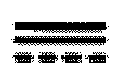
- when the symbol is a triple bond, n is 1,
- when the symbol is a double bond, n is 2,
- two R1s are optionally the same or different,
- two R2s are optionally the same or different, or
- two R1s or two R2s optionally form a ring together with their adjacent carbon atom,
- (A) at least one fluorine source selected from the group consisting of hydrogen fluoride, hydrogen fluoride salts, and fluoride salts,
- (B) at least one iodine source selected from the group consisting of iodine and iodide salts, and
- (C) at least one compound selected from the group consisting of oxidizing agents and radical generators,
- The production method according to Item 1, wherein the fluorine source is at least one member selected from the group consisting of hydrogen fluoride, hydrogen fluoride amine salts, and alkali metal fluoride salts.
- The production method according to Item 1 or 2, wherein the amount of the fluorine source is within the range of 0.1 to 1000 moles, per mole of the compound represented by formula (1).
- The production method according to any one of Items 1 to 3, wherein the iodine source is at least one member selected from the group consisting of iodine and alkali metal iodide salts.
- The production method according to any one of Items 1 to 4, wherein the amount of the iodine source is within the range of 0.1 to 10 moles, per mole of the compound represented by formula (1).
- The production method according to any one of Items 1 to 5, wherein the compound (C) is at least one member selected from the group consisting of peroxides, metal oxides, azo compounds, sulfonium salts, and iodonium salts.
- The production method according to any one of Items 1 to 6, wherein the compound (C) is a peroxide.
- The production method according to Item 7, wherein the peroxide is at least one member selected from the group consisting of
- hydrogen peroxide;
- perboric acid, percarbonic acid, perphosphoric acid, persulfuric acid, perchloric acid, permanganic acid, and salts thereof;
- compounds represented by formula: RaCOOOM, wherein Ra is a hydrocarbon group optionally having one or more substituents, and M is a hydrogen atom or a metal atom;
- compounds represented by formula: RbOOM, wherein Rb is a hydrocarbon group optionally having one or more substituents, and M is a hydrogen atom or a metal atom;
- compounds represented by formula: Rc1OORc2, wherein Rc1 and Rc2 are each independently a hydrocarbon group optionally having one or more substituents or Rc3-CO-, and Rc3 is a hydrocarbon group optionally having one or more substituents; and
- compounds represented by formula:

- The production method according to any one of Items 1 to 6, wherein the compound (C) is at least one member selected from the group consisting of hydrogen peroxide, peracetic acid, perbenzoic acid, metachloroperbenzoic acid, tert-butyl hydroperoxide, cumene hydroperoxide, sodium perborate, potassium persulfate, a potassium hydrogen persulfate-potassium hydrogen sulfate-potassium sulfate mixture, permanganic acid, dichromic acid, tungsten oxide, ruthenium oxide, antimony oxide, osmium oxide, and sulfur trioxide.
- The production method according to any one of Items 1 to 9, wherein the amount of the compound (C) is within the range of 0.1 to 10 moles, per mole of the compound represented by formula (1).
- The production method according to any one of Items 1 to 10, wherein the reaction is performed in the presence of a solvent.
- The production method according to Item 11, wherein the solvent is at least one member selected from the group consisting of aliphatic hydrocarbons, aromatic hydrocarbons, halogenated hydrocarbons, ethers, esters, nitriles, and water.
- The production method according to Item 11 or 12, wherein the solvent is at least one member selected from the group consisting of aliphatic hydrocarbons, halogenated hydrocarbons, ethers, and water.
- The production method according to any one of Items 1 to 13, wherein the reaction is performed in the absence of IF5.
- The production method according to any one of Items 1 to 14, wherein the reaction is performed at room temperature for 1 to 36 hours.
- The production method according to any one of Items 1 to 15, wherein R1 and R2 are each independently a hydrogen atom, a halogen atom, an alkyl group optionally having one or more substituents, an alkoxy group optionally having one or more substituents, a carboxyl group optionally having one or more substituents, a cycloalkyl group optionally having one or more substituents, an aryl group optionally having one or more substituents, or an aralkyl group optionally having one or more substituents, or R1 and R2 optionally form a ring together with the two adjacent carbon atoms.
- The production method according to Item 16, wherein the one or more substituents in the alkyl, alkoxy, cycloalkyl, aryl, or aralkyl group are at least one member selected from the group consisting of halo, hydroxyl, alkoxy, carboxyl, alkylcarbonyl, alkylcarbonyloxy, and alkoxycarbonyl groups, and the one or more substituents in the carboxyl group are at least one member selected from the group consisting of halo and alkyl groups.
- According to the present disclosure, a novel method for producing a fluorinated iodinated organic compound is provided.
- The above overview of the present disclosure is not intended to describe each of the disclosed embodiments or all of the implementations of the present disclosure.
- The following description of the present disclosure more specifically exemplifies the embodiments of the examples.
- Guidance is provided through examples in several parts of the present disclosure, and these examples can be used in various combinations.
- In each case, the group of examples can function as a non-exclusive and representative group.
- All publications, patents, and patent applications cited herein are incorporated herein by reference in their entirety.
- Unless otherwise specified, the symbols and abbreviations in the present specification can be understood in the context of the present specification in the meanings commonly used in the technical field to which the present disclosure belongs.
- In the present specification, the terms "comprise" and "contain" are used with the intention of including the terms "consisting essentially of" and "consisting of."
- Unless otherwise specified, the steps, treatments, or operations described in the present specification may be performed at room temperature.
- In the present specification, room temperature can refer to a temperature within the range of 10 to 40°C.
- In the present specification, the phrase "Cn-m" (n and m are each a number) indicates that the number of carbon atoms is n or more and m or less, as can be generally understood by a person skilled in the art.
- In the present specification, the phrase "compound represented by formula (N)" (N is a number) can be referred to as "compound (N)."
- In the present specification, unless otherwise specified, examples of the "halogen atom" may include fluorine, chlorine, bromine, and iodine.
- In the present specification, the "organic group" refers to a group containing one or more carbon atoms.
- Examples of the "organic group" may include:
- an alkyl group optionally having one or more substituents,
- an alkenyl group optionally having one or more substituents,
- an alkynyl group optionally having one or more substituents,
- a cycloalkyl group optionally having one or more substituents,
- a cycloalkenyl group optionally having one or more substituents,
- a cycloalkadienyl group optionally having one or more substituents,
- an aryl group optionally having one or more substituents,
- an aralkyl group optionally having one or more substituents,
- a non-aromatic heterocyclic group optionally having one or more substituents,
- a heteroaryl group optionally having one or more substituents,
- a cyano group,
- an aldehyde group,
- a carboxyl group,
- RrO-,
- RrCO- ,
- RrCOO- ,
- RrSO2- ,
- RrOCO-, and
- RrOSO2-
- an alkyl group optionally having one or more substituents,
- an alkenyl group optionally having one or more substituents,
- an alkynyl group optionally having one or more substituents,
- a cycloalkyl group optionally having one or more substituents,
- a cycloalkenyl group optionally having one or more substituents,
- a cycloalkadienyl group optionally having one or more substituents,
- an aryl group optionally having one or more substituents,
- an aralkyl group optionally having one or more substituents,
- a non-aromatic heterocyclic group optionally having one or more substituents, or
- a heteroaryl group optionally having one or more substituents).
- In the present specification, unless otherwise specified, examples of the "hydrocarbon group" may include an alkyl group, an alkenyl group, an alkynyl group, a cycloalkyl group, a cycloalkenyl group, a cycloalkadienyl group, an aryl group, an aralkyl group, and a group that is a combination of these groups.
- In the present specification, unless otherwise specified, examples of the "alkyl group" may include linear or branched C1-C16 alkyl groups (e.g., C1-C14 alkyl groups and C1-C12 alkyl groups), such as methyl, ethyl, propyl, isopropyl, butyl, isobutyl, sec-butyl, tert-butyl, pentyl, isopentyl, neopentyl, hexyl, heptyl, octyl, nonyl, and decyl.
- In the present specification, unless otherwise specified, examples of the "alkenyl group" may include linear or branched C2-C10 alkenyl groups, such as vinyl, 1-propen-1-yl, 2-propen-1-yl, isopropenyl, 2-buten-1-yl, 4-penten-1-yl, and 5-hexen-1-yl.
- In the present specification, unless otherwise specified, examples of the "alkynyl group" may include linear or branched C2-C10 alkynyl groups, such as ethynyl, 1-propyn-1-yl, 2-propyn-1-yl, 4-pentyn-1-yl, and 5-hexyn-1-yl.
- In the present specification, unless otherwise specified, examples of the "cycloalkyl group" may include C3-C7 cycloalkyl groups, such as cyclopropyl, cyclobutyl, cyclopentyl, cyclohexyl, and cycloheptyl.
- In the present specification, unless otherwise specified, examples of the "cycloalkenyl group" may include C3-C7 cycloalkenyl groups, such as cyclopropenyl, cyclobutenyl, cyclopentenyl, cyclohexenyl, and cycloheptenyl.
- In the present specification, unless otherwise specified, examples of the "cycloalkadienyl group" may include C4-C10 cycloalkadienyl groups, such as cyclobutadienyl, cyclopentadienyl, cyclohexadienyl, cycloheptadienyl, cyclooctadienyl, cyclononadienyl, and cyclodecadienyl.
- In the present specification, unless otherwise specified, the "aryl group" may be monocyclic, bicyclic, tricyclic, or tetracyclic.
- In the present specification, unless otherwise specified, the "aryl group" may be a C6-C18 aryl group.
- In the present specification, unless otherwise specified, examples of the "aryl group" may include phenyl, 1-naphthyl, 2-naphthyl, 2-biphenyl, 3-biphenyl, 4-biphenyl, and 2-anthryl.
- In the present specification, unless otherwise specified, examples of the "aralkyl group" may include benzyl, phenethyl, diphenylmethyl, 1-naphthylmethyl, 2-naphthylmethyl, 2,2-diphenylethyl, 3-phenylpropyl, 4-phenylbutyl, 5-phenylpentyl, 2-biphenylylmethyl, 3-biphenylylmethyl, and 4-biphenylylmethyl.
- In the present specification, unless otherwise specified, the "non-aromatic heterocyclic group" may be monocyclic, bicyclic, tricyclic, or tetracyclic.
- In the present specification, unless otherwise specified, the "non-aromatic heterocyclic group" may be, for example, a non-aromatic heterocyclic group containing, in addition to carbon, 1 to 4 heteroatoms selected from oxygen, sulfur, and nitrogen as a ring-constituting atom.
- In the present specification, unless otherwise specified, the "non-aromatic heterocyclic group" may be saturated or unsaturated.
- In the present specification, unless otherwise specified, examples of the "non-aromatic heterocyclic group" may include tetrahydrofuryl, oxazolidinyl, imidazolinyl (e.g., 1-imidazolinyl, 2-imidazolinyl, and 4-imidazolinyl), aziridinyl (e.g., 1-aziridinyl and 2-aziridinyl), azetidinyl (e.g., 1-azetidinyl and 2-azetidinyl), pyrrolidinyl (e.g., 1-pyrrolidinyl, 2-pyrrolidinyl, and 3-pyrrolidinyl), piperidinyl (e.g., 1-piperidinyl, 2-piperidinyl, and 3-piperidinyl), azepanyl (e.g., 1-azepanyl, 2-azepanyl, 3-azepanyl, and 4-azepanyl), azocanyl (e.g., 1-azocanyl, 2-azocanyl, 3-azocanyl, and 4-azocanyl), piperazinyl (e.g., 1,4-piperazin-1-yl and 1,4-piperazin-2-yl), diazepinyl (e.g., 1,4-diazepin-1-yl, 1,4-diazepin-2-yl, 1,4-diazepin-5-yl, and 1,4-diazepin-6-yl), diazocanyl (e.g., 1,4-diazocan-1-yl, 1,4-diazocan-2-yl, 1,4-diazocan-5-yl, 1,4-diazocan-6-yl, 1,5-diazocan-1-yl, 1,5-diazocan-2-yl, and 1,5-diazocan-3-yl), tetrahydropyranyl (e.g., tetrahydropyran-4-yl), morpholinyl (e.g., 4-morpholinyl), thiomorpholinyl (e.g., 4-thiomorpholinyl), 2-oxazolidinyl, dihydrofuryl, dihydropyranyl, dihydroquinolyl, and the like.
- In the present specification, unless otherwise specified, examples of the "heteroaryl group" may include monocyclic aromatic heterocyclic groups (e.g., 5- or 6-membered monocyclic aromatic heterocyclic groups) and aromatic condensed heterocyclic groups (e.g., 5- to 18-membered aromatic condensed heterocyclic groups).
- In the present specification, unless otherwise specified, examples of the "5- or 6-membered monocyclic aromatic heterocyclic groups" may include pyrrolyl (e.g., 1-pyrrolyl, 2-pyrrolyl, and 3-pyrrolyl), furyl (e.g., 2-furyl and 3-furyl), thienyl (e.g., 2-thienyl and 3-thienyl), pyrazolyl (e.g., 1-pyrazolyl, 3-pyrazolyl, and 4-pyrazolyl), imidazolyl (e.g., 1-imidazolyl, 2-imidazolyl, and 4-imidazolyl), isoxazolyl (e.g., 3-isoxazolyl, 4-isoxazolyl, and 5-isoxazolyl), oxazolyl (e.g., 2-oxazolyl, 4-oxazolyl, and 5-oxazolyl), isothiazolyl (e.g., 3-isothiazolyl, 4-isothiazolyl, and 5-isothiazolyl), thiazolyl (e.g., 2-thiazolyl, 4-thiazolyl, and 5-thiazolyl), triazolyl (e.g., 1,2,3-triazol-4-yl and 1,2,4-triazol-3-yl), oxadiazolyl (e.g., 1,2,4-oxadiazol-3-yl and 1,2,4-oxadiazol-5-yl), thiadiazolyl (e.g., 1,2,4-thiadiazol-3-yl and 1,2,4-thiadiazol-5-yl), tetrazolyl, pyridyl (e.g., 2-pyridyl, 3-pyridyl, and 4-pyridyl), pyridazinyl (e.g., 3-pyridazinyl and 4-pyridazinyl), pyrimidinyl (e.g., 2-pyrimidinyl, 4-pyrimidinyl, and 5-pyrimidinyl), pyrazinyl, and the like.
- In the present specification, unless otherwise specified, examples of the "5- to 18-membered aromatic condensed heterocyclic groups" may include isoindolyl (e.g., 1-isoindolyl, 2-isoindolyl, 3-isoindolyl, 4-isoindolyl, 5-isoindolyl, 6-isoindolyl, and 7-isoindolyl), indolyl (e.g., 1-indolyl, 2-indolyl, 3-indolyl, 4-indolyl, 5-indolyl, 6-indolyl, and 7-indolyl), benzo[b]furanyl (e.g., 2-benzo[b]furanyl, 3-benzo[b]furanyl, 4-benzo[b]furanyl, 5-benzo[b]furanyl, 6-benzo[b]furanyl, and 7-benzo[b]furanyl), benzo[c]furanyl (e.g., 1-benzo[c]furanyl, 4-benzo[c]furanyl, and 5-benzo[c]furanyl), benzo[b]thienyl (e.g., 2-benzo[b]thienyl, 3-benzo[b]thienyl, 4-benzo[b]thienyl, 5-benzo[b]thienyl, 6-benzo[b]thienyl, and 7-benzo[b]thienyl), benzo[c]thienyl (e.g., 1-benzo[c]thienyl, 4-benzo[c]thienyl, and 5-benzo[c]thienyl), indazolyl (e.g., 1-indazolyl, 2-indazolyl, 3-indazolyl, 4-indazolyl, 5-indazolyl, 6-indazolyl, and 7-indazolyl), benzimidazolyl (e.g., 1-benzimidazolyl, 2-benzimidazolyl, 4-benzimidazolyl, and 5-benzimidazolyl), 1,2-benzisoxazolyl (e.g., 1,2-benzisoxazol-3-yl, 1,2-benzisoxazol-4-yl, 1,2-benzisoxazol-5-yl, 1,2-benzisoxazol-6-yl, and 1,2-benzisoxazol-7-yl), benzoxazolyl (e.g., 2-benzoxazolyl, 4-benzoxazolyl, 5-benzoxazolyl, 6-benzoxazolyl, and 7-benzoxazolyl), 1,2-benzisothiazolyl (e.g., 1,2-benzisothiazol-3-yl, 1,2-benzisothiazol-4-yl, 1,2-benzisothiazol-5-yl, 1,2-benzisothiazol-6-yl, and 1,2-benzisothiazol-7-yl), benzothiazolyl (e.g., 2-benzothiazolyl, 4-benzothiazolyl, 5-benzothiazolyl, 6-benzothiazolyl, and 7-benzothiazolyl), isoquinolyl (e.g., 1-isoquinolyl, 3-isoquinolyl, 4-isoquinolyl, and 5-isoquinolyl), quinolyl (e.g., 2-quinolyl, 3-quinolyl, 4-quinolyl, 5-quinolyl, and 8-quinolyl), cinnolinyl (e.g., 3-cinnolinyl, 4-cinnolinyl, 5-cinnolinyl, 6-cinnolinyl, 7-cinnolinyl, and 8-cinnolinyl), phthalazinyl (e.g., 1-phthalazinyl, 4-phthalazinyl, 5-phthalazinyl, 6-phthalazinyl, 7-phthalazinyl, and 8-phthalazinyl), quinazolinyl (e.g., 2-quinazolinyl, 4-quinazolinyl, 5-quinazolinyl, 6-quinazolinyl, 7-quinazolinyl, and 8-quinazolinyl), quinoxalinyl (e.g., 2-quinoxalinyl, 3-quinoxalinyl, 5-quinoxalinyl, 6-quinoxalinyl, 7-quinoxalinyl, and 8-quinoxalinyl), pyrazolo[1,5-a]pyridyl (e.g., pyrazolo[1,5-a]pyridin-2-yl, pyrazolo[1,5-a]pyridin-3-yl, pyrazolo[1,5-a]pyridin-4-yl, pyrazolo[1,5-a]pyridin-5-yl, pyrazolo[1,5-a]pyridin-6-yl, and pyrazolo[1,5-a]pyridin-7-yl), imidazo[1,2-a]pyridyl (e.g., imidazo[1,2-a]pyridin-2-yl, imidazo[1,2-a]pyridin-3-yl, imidazo[1,2-a]pyridin-5-yl, imidazo[1,2-a]pyridin-6-yl, imidazo[1,2-a]pyridin-7-yl, and imidazo[1,2-a]pyridin-8-yl), and the like
- In the present specification, examples of "RrO-" may include alkoxy (e.g., C1-C10 alkoxy, such as methoxy, ethoxy, propoxy, and butoxy), cycloalkoxy (e.g., C3-C7 cycloalkoxy, such as cyclopentoxy and cyclohexoxy), aryloxy (e.g., C6-C18 aryloxy, such as phenoxy and naphthoxy), and aralkyloxy (e.g., C7-C19 aralkyloxy, such as benzyloxy and phenethyloxy).
- In the present specification, examples of "RrCO-" may include alkylcarbonyl (e.g., (C1-C10 alkyl)carbonyl, such as acetyl, propionyl, and butyryl), cycloalkylcarbonyl (e.g., (C3-C7 cycloalkyl)carbonyl, such as cyclopentanoyl and cyclohexanoyl), arylcarbonyl (e.g., (C6-C18 aryl)carbonyl, such as benzoyl and naphthoyl), and aralkylcarbonyl (e.g., (C7-C19 aralkyl)carbonyl, such as benzylcarbonyl and phenethylcarbonyl).
- In the present specification, examples of "RrCOO-" may include alkylcarbonyloxy (e.g., (C1-C10 alkyl)carbonyloxy, such as acetyloxy, propionyloxy, and butyryloxy), cycloalkylcarbonyloxy (e.g., (C3-C7 cycloalkyl)carbonyloxy, such as cyclopentanoyloxy and cyclohexanoyloxy), arylcarbonyloxy (e.g., (C6-C18 aryl)carbonyloxy, such as benzoyloxy and naphthoyloxy), and aralkylcarbonyloxy (e.g., (C7-C19 aralkyl)carbonyloxy, such as benzylcarbonyloxy and phenethylcarbonyloxy).
- In the present specification, examples of "RrSO2-" may include alkylsulfonyl (e.g., C1-C10 alkylsulfonyl, such as methylsulfonyl, ethylsulfonyl, and propylsulfonyl), cycloalkylsulfonyl (e.g., C4-C8 cycloalkylsulfonyl, such as cyclopentylsulfonyl and cyclohexylsulfonyl), arylsulfonyl (e.g., C6-C18 arylsulfonyl, such as phenylsulfonyl and naphthylsulfonyl), and aralkylsulfonyl (e.g., C7-C19 aralkylsulfonyl, such as benzylsulfonyl and phenethylsulfonyl).
- In the present specification, examples of "RrOCO-" may include alkoxycarbonyl (e.g., C1-C10 alkoxy)carbonyl, such as methoxycarbonyl, ethoxycarbonyl, and propoxycarbonyl), cycloalkoxycarbonyl (e.g., (C3-C7 cycloalkoxy)carbonyl, such as cyclopentoxycarbonyl and cyclohexoxycarbonyl), aryloxycarbonyl (e.g., (C6-C18 aryloxy)carbonyl, such as phenoxycarbonyl and naphthoxycarbonyl), and aralkyloxycarbonyl (e.g., (C7-C19 aralkyloxy)carbonyl, such as benzyloxycarbonyl and phenethyloxycarbonyl.
- In the present specification, examples of "RrOSO2-" may include alkoxysulfonyl (e.g., C1-C10 alkoxysulfonyl, such as methoxysulfonyl, ethoxysulfonyl, and propoxysulfonyl), cycloalkoxysulfonyl (e.g., C3-C7 cycloalkoxysulfonyl, such as cyclopentoxysulfonyl and cyclohexoxysulfonyl), aryloxysulfonyl (e.g., C6-C18 aryloxysulfonyl, such as phenoxysulfonyl and naphthoxysulfonyl), and aralkyloxysulfonyl (e.g., C7-C19 aralkyloxysulfonyl, such as benzyloxysulfonyl and phenethyloxysulfonyl) .
- In the present specification, examples of the "substituents" in the "hydrocarbon group optionally having one or more substituents," "alkyl group optionally having one or more substituents," "alkenyl group optionally having one or more substituents," "alkynyl group optionally having one or more substituents," "cycloalkyl group optionally having one or more substituents," "cycloalkenyl group optionally having one or more substituents," "cycloalkadienyl group optionally having one or more substituents," "aryl group optionally having one or more substituents," "aralkyl group optionally having one or more substituents," "non-aromatic heterocyclic group optionally having one or more substituents," and "heteroaryl group optionally having one or more substituents" may include a halo group, a nitro group, a cyano group, an oxo group, a thioxo group, a carboxyl group, a sulfo group, a sulfamoyl group, a sulfinamoyl group, a sulfenamoyl group, RrO-, RrCO-, RrCOO-, RrSO2-, RrOCO-, and RrOSO2- (in these formulas, Rr is as defined above) .
- Of these substituents, examples of the "halo group" may include fluoro, chloro, bromo, and iodo.
- The number of substituents may be within the range of 1 to the maximum substitutable number (e.g., 1, 2, 3, 4, 5, or 6).
- The production method according to the present disclosure comprises reacting compound (1) with fluorine source (A), iodine source (B), and compound (C) to add fluorine and iodine to the double bond or triple bond of compound (1).
- In compound (1) , preferably, R1 and R2 may each be independently a hydrogen atom, a halogen atom, an alkyl group optionally having one or more substituents, an alkoxy group optionally having one or more substituents, a carboxyl group optionally having one or more substituents, a cycloalkyl group optionally having one or more substituents, an aryl group optionally having one or more substituents, or an aralkyl group optionally having one or more substituents; more preferably, R1 and R2 may each be independently a hydrogen atom, a halogen atom, an alkyl group optionally having one or more substituents, an alkoxy group optionally having one or more substituents, a carboxyl group optionally having one or more substituents, an aryl group optionally having one or more substituents, or an aralkyl group optionally having one or more substituents; and even more preferably, R1 and R2 may each be independently a hydrogen atom, a halogen atom, an alkyl group optionally having one or more substituents, an alkoxy group optionally having one or more substituents, a carboxyl group optionally having one or more substituents, or an aryl group optionally having one or more substituents.
- In compound (1), it is preferred that R1 and R2 are each independently a hydrogen atom, a halogen atom (in particular, fluorine), an alkyl group optionally having one or more substituents, an alkoxy group optionally having one or more substituents, or a carboxyl group optionally having one or more substituents; or that R1 and R2 are each independently a hydrogen atom, a halogen atom (in particular, fluorine), or an aryl group optionally having one or more substituents.
- When R1 and R2 are each an alkyl group, an alkoxy group, a cycloalkyl group, an aryl group, or an aralkyl group, preferable examples of the substituents with which these groups are optionally substituted include a halo group, a hydroxyl group, an alkoxy group, a carboxyl group, an alkylcarbonyl group, an alkylcarbonyloxy group, an alkoxycarbonyl group, and combinations thereof.
- When R1 and R2 are each a carboxyl group, preferable examples of the substituents with which this group is optionally substituted include a halo group, an alkyl group, and combinations thereof.
- Examples of the alkyl group optionally having one or more substituents include an alkyl group having halo, alkoxy, carboxyl, or a combination thereof as substituent(s) (e.g., a trifluoromethyl group, a perfluoroethyl group, a perfluoropropyl group, a perfluorobutyl group, or like perfluoroalkyl group, a perfluoro (alkoxyalky) group, or - (CF2) p1-O- (CF2) p2-COOH, wherein p1 and p2 are each independently an integer of 1 or more, such as -CF2OCF2CF2COOH) .
- Examples of the alkoxy group optionally having one or more substituents include an alkoxy group having halo, alkoxy, carboxyl, or a combination thereof as substituent(s) (e.g., a trifluoromethoxy group, a perfluoroethoxy group, a perfluoropropoxy group, perfluorobutoxy group, or like perfluoroalkoxy group, a perfluoro(alkoxyalkoxy) group, or -O-(CF2)p3-COOH, wherein p3 is an integer of 1 or more, such as -OCF2CF2COOH) .
- Examples of the carboxyl group optionally having one or more substituents include RrOCO-. Specific examples thereof include a carboxyl group having alkyl as a substituent (e.g., a methoxycarbonyl group, an ethoxycarbonyl group, or like alkoxycarbonyl group).
- In compound (1), also preferably, R1 and R2 may form a ring together with the two adjacent carbon atoms. The ring is formed generally when the symbol is a double bond and n is 2.
- Examples of the ring include cycloalkene rings corresponding to the groups mentioned above as examples of the "cycloalkenyl group," and non-aromatic heterocyclic rings corresponding to the groups with carbon-carbon double bond(s) among the groups mentioned above as examples of the "non-aromatic heterocyclic group."
- The ring optionally has one or more substituents.
- Examples of the substituents may include a hydrocarbon group, a halo group, a nitro group, a cyano group, an oxo group, a thioxo group, a carboxyl group, a sulfo group, a sulfamoyl group, a sulfinamoyl group, a sulfenamoyl group, RrO-, RrCO-, RrCOO-, RrSO2-, RrOCO-, and RrOSO2- (in these formulas, Rr is as defined above).
- The number of substituents may be within the range of 1 to the maximum substitutable number (e.g., 1, 2, 3, 4, 5, or 6).
- Preferable examples of compound (1) include a compound represented by formula (1a):

- R11, R12, R21, and R22 are each independently a hydrogen atom, a halogen atom, or an organic group, R11 and R12, or R21 and R22 optionally form a ring together with the adjacent carbon atom, or R11 and R21, R11 and R22, R12 and R21, or R12 and R22 optionally form a ring together with the two adjacent carbon atoms;
- the symbol

- a compound represented by formula (1b):

- In one embodiment of compound (1a) , preferably, R11, R12, and R21 are each independently a hydrogen atom, a halogen atom, an alkyl group optionally having one or more substituents, an alkoxy group optionally having one or more substituents, a carboxyl group optionally having one or more substituents, a cycloalkyl group optionally having one or more substituents, an aryl group optionally having one or more substituents, or an aralkyl group optionally having one or more substituents, and R22 is a hydrogen atom. More preferably, R11, R12, and R21 are each independently a hydrogen atom, a halogen atom, an alkyl group optionally having one or more substituents, an alkoxy group optionally having one or more substituents, a carboxyl group optionally having one or more substituents, or an aryl group optionally having one or more substituents, and R22 is a hydrogen atom.
- In another embodiment of compound (1a), preferably, R11 and R21 are each independently a hydrogen atom, a halogen atom, an alkyl group optionally having one or more substituents, an alkoxy group optionally having one or more substituents, a carboxyl group optionally having one or more substituents, a cycloalkyl group optionally having one or more substituents, an aryl group optionally having one or more substituents, or an aralkyl group optionally having one or more substituents, and R12 and R22 are hydrogen atoms; more preferably, R11 and R21 are each independently a hydrogen atom, a halogen atom, an alkyl group optionally having one or more substituents, an alkoxy group optionally having one or more substituents, a carboxyl group optionally having one or more substituents, an aryl group optionally having one or more substituents, or an aralkyl group optionally having one or more substituents, and R12 and R22 are hydrogen atoms; and even more preferably, R11 and R21 are each independently a hydrogen atom, a halogen atom, an alkyl group optionally having one or more substituents, an alkoxy group optionally having one or more substituents, a carboxyl group optionally having one or more substituents, or an aryl group optionally having one or more substituents, and R12 and R22 are hydrogen atoms.
- In this embodiment, it is preferred that R11 and R12 are each independently a hydrogen atom, a halogen atom, an alkyl group optionally having one or more substituents, an alkoxy group optionally having one or more substituents, or a carboxyl group optionally having one or more substituents, and R12 and R22 are hydrogen atoms; or that R11 and R12 are each independently a hydrogen atom, a halogen atom, or an aryl group optionally having one or more substituents, and R12 and R22 are hydrogen atoms.
- In another embodiment of compound (1a), preferably, R11 is a hydrogen atom, a halogen atom, an alkyl group optionally having one or more substituents, an alkoxy group optionally having one or more substituents, a carboxyl group optionally having one or more substituents, or an aryl group optionally having one or more substituents, and R12, R21, and R22 are hydrogen atoms; and more preferably, R11 is a hydrogen atom, a halogen atom (in particular, fluorine), an alkyl group optionally having one or more substituents, an alkoxy group optionally having one or more substituents, or a carboxyl group optionally having one or more substituents, and R12, R21, and R22 are hydrogen atoms.
- Preferable examples of the substituents in R11, R12, R21, and R22 include those mentioned above as examples of the substituents in R1 and R2.
- Examples of the alkyl group optionally having one or more substituents include an alkyl group having halo, alkoxy, carboxyl, or a combination thereof as substituent(s) (e.g., a trifluoromethyl group, a perfluoroethyl group, a perfluoropropyl group, a perfluorobutyl group, or like perfluoroalkyl group, a perfluoro (alkoxyalky) group, or - (CF2) p1-O-(CF2) p2-COOH, wherein p1 and p2 are each independently an integer of 1 or more, such as -CF2OCF2CF2COOH) .
- Examples of the alkoxy group optionally having one or more substituents include an alkoxy group having halo, alkoxy, carboxyl, or a combination thereof as substituent(s) (e.g., a trifluoromethoxy group, a perfluoroethoxy group, a perfluoropropoxy group, a perfluorobutoxy group, or like perfluoroalkoxy group; a perfluoro(alkoxyalkoxy) group; or -O-(CF2)p3-COOH, wherein p3 is an integer of 1 or more, such as -OCF2CF2COOH) .
- Examples of the carboxyl group optionally having one or more substituents include RrOCO-. Specific examples thereof include a carboxyl group having alkyl as a substituent (e.g., a methoxycarbonyl group, an ethoxycarbonyl group, or like alkoxycarbonyl group).
- In compound (1a), also preferably, R11 and R21 form a ring together with the two adjacent carbon atoms, and R12 and R22 are hydrogen atoms.
- Examples of the ring include cycloalkene rings corresponding to the groups mentioned above as examples of the "cycloalkenyl group" (e.g., a C5-C7 cycloalkene ring, such as a cyclohexene ring), and non-aromatic heterocyclic rings corresponding to the groups with carbon-carbon double bond(s) among the groups mentioned above as examples of the "non-aromatic heterocyclic group."
- The ring optionally has one or more substituents.
- Examples of the substituents may include a hydrocarbon group, a halo group, a nitro group, a cyano group, an oxo group, a thioxo group, a carboxyl group, a sulfo group, a sulfamoyl group, a sulfinamoyl group, a sulfenamoyl group, RrO-, RrCO-, RrCOO-, RrSO2-, RrOCO-, and RrOSO2- (in these formulas, Rr is as defined above).
- The number of substituents may be within the range of 1 to the maximum substitutable number (e.g., 1, 2, 3, 4, 5, or 6).
- Specific examples of compound (1a) include olefins (e.g., pentene, hexene, heptene, octene, nonene, decene, undecene, and dodecene), alkenols (e.g., allyl alcohol, butenol, pentenol, hexenol, heptenol, octenol, nonenol, decenol, undecenol, and dodecenol), alkenoic acid (e.g., acrylic acid, methacrylic acid, crotonic acid, isocrotonic acid, pentenoic acid, hexenoic acid, heptenoic acid, octenoic acid, nonenoic acid, decenoic acid, undecenoic acid, and dodecenoic acid) or esters thereof (e.g., alkyl esters, such as methyl ester), fluorinated olefins (e.g., vinylidene fluoride, trifluoroethylene, chlorotrifluoroethylene, tetrafluoroethylene, and hexafluoropropylene), fluoroalkyl vinyl ethers (e.g., perfluoroalkyl vinyl ethers, such as perfluoromethyl vinyl ether, perfluoroethyl vinyl ether, and perfluoropropyl vinyl ether), aryl olefins (e.g., styrene, methylstyrene, stilbene, diphenylethylene, triphenylethylene, methyl cinnamate, ethyl cinnamate, and allylbenzene), and cycloolefins (e.g., cyclohexene).
- In compound (1b), preferably, R13 and R23 are each independently a hydrogen atom, a halogen atom, an alkyl group optionally having one or more substituents, an alkoxy group optionally having one or more substituents, a carboxyl group optionally having one or more substituents, a cycloalkyl group optionally having one or more substituents, an aryl group optionally having one or more substituents, or an aralkyl group optionally having one or more substituents; more preferably, R13 and R23 are each independently a hydrogen atom, a halogen atom, an alkyl group optionally having one or more substituents, an alkoxy group optionally having one or more substituents, a carboxyl group optionally having one or more substituents, an aryl group optionally having one or more substituents, or an aralkyl group optionally having one or more substituents; and even more preferably, R13 and R23 are each independently a hydrogen atom, a halogen atom (in particular, fluorine), an alkyl group optionally having one or more substituents, an alkoxy group optionally having one or more substituents, or a carboxyl group optionally having one or more substituents.
- Preferable examples of the substituents in R13 and R23 include those mentioned above as examples of the substituents in R1 and R2.
- Examples of the alkyl group optionally having one or more substituents include an alkyl group having halo, alkoxy, carboxyl, or a combination thereof as substituent(s) (e.g., a trifluoromethyl group, a perfluoroethyl group, a perfluoropropyl group, a perfluorobutyl group, or like perfluoroalkyl group, a perfluoro (alkoxyalky) group, or - (CF2) p1-O- (CF2) p2-COOH, wherein p1 and p2 are each independently an integer of 1 or more, such as -CF2OCF2CF2COOH.
- Examples of the alkoxy group optionally having one or more substituents include an alkoxy group having halo, alkoxy, carboxyl, or a combination thereof as substituent(s) (e.g., a trifluoromethoxy group, a perfluoroethoxy group, a perfluoropropoxy group, a perfluorobutoxy group, or like perfluoroalkoxy group, a perfluoro(alkoxyalkoxy) group, or -O-(CF2)p3-COOH, wherein p3 is an integer of 1 or more, such as -OCF2CF2COOH) .
- Examples of the carboxyl group optionally having one or more substituents include RrOCO-. Specific examples thereof include a carboxyl group having alkyl as a substituent (e.g., a methoxycarbonyl group, an ethoxycarbonyl group, or like alkoxycarbonyl group).
- Of fluorine sources (A), hydrogen fluoride may be used as an aqueous solution (hydrofluoric acid). The aqueous solution may be, for example, an aqueous solution having a hydrogen fluoride concentration of 10 to 70 wt%.
- Of fluorine sources (A), examples of hydrogen fluoride salts include hydrogen fluoride amine salts and hydrogen fluoride ammonium salts.
- In the hydrogen fluoride amine salts, the amine may be a chain amine or a cyclic amine.
- Examples of chain amines include aliphatic primary amines, aliphatic secondary amines, and aliphatic tertiary amines.
- Examples of aliphatic primary amines include C1-C6 alkylamines, such as methylamine, ethylamine, propylamine, butylamine, pentylamine, and hexylamine.
- Examples of aliphatic secondary amines include di-C1-C6 alkylamines, such as dimethylamine, diethylamine, dipropylamine, dibutylamine, dipentylamine, and dihexylamine.
- Examples of aliphatic tertiary amines include tri-C1-C6 alkylamines, such as trimethylamine, triethylamine, diisopropylethylamine, tributylamine, and N,N,N',N'-tetramethylethylenediamine.
- Examples of cyclic amines include aliphatic cyclic amines and aromatic cyclic amines.
- Examples of aliphatic cyclic amines include piperidine, piperazine, pyrrolidine, morpholine, N-methylpiperazine, N-methylpyrrolidine, 5-diazabicyclo[4.3.0]non-5-ene, and 1,4-diazabicyclo[2.2.2]octane.
- Examples of aromatic cyclic amines include pyridine, pyrimidine, pyrazine, quinoline, and imidazole.
- Examples of hydrogen fluoride ammonium salts include ammonium hydrogen fluoride (NH4F·HF), hydrogen fluoride-tetraethylammonium fluoride [Et4NF·xHF (x = 1 to 10) ] , and hydrogen fluoride-tetrabutylammonium fluoride [Bu4NF·xHF (x = 1 to 10)].
- Preferable examples of hydrogen fluoride salts include hydrogen fluoride amine salts. More preferable examples thereof include hydrogen fluoride-triethylamine salt [Et3N·xHF (x = 1 to 5) ] and hydrogen fluoride-pyridine salt [Py·xHF (x = 1 to 10) ].
- Of fluorine sources (A), examples of fluoride salts include a compound represented by formula: M1Fm1, wherein M1 is an alkali metal or an alkaline earth metal; and m1 is 1 or 2.
- M1 may be preferably Li, Na, K, Ca, or Cs, more preferably Na, K, or Ca, and even more preferably K.
- The fluoride salts may be preferably alkali metal fluoride salts (compounds in which M1 is an alkali metal, and m1 is 1) .
- Fluorine sources (A) may be used singly, or in a combination of two or more.
- The amount of fluorine source (A) used may be, for example, within the range of 0.1 to 1000 moles, preferably 0.2 to 500 moles, more preferably 0.3 to 100 moles, even more preferably 0.4 to 50 moles, and still even more preferably 0.5 to 10 moles, per mole of compound (1).
- Fluorine source (A) remaining after the reaction may be trapped and discarded; however, it is preferable to recover and reuse it from the viewpoint of production cost. The trapped residue after the reaction may be washed with, for example, water or alkaline water.
- Of iodine sources (B), examples of iodide salts include tetraalkylammonium iodides and compounds represented by formula: M2Im2, wherein M2 is an alkali metal or an alkaline earth metal; and m2 is 1 or 2) .
- Examples of tetraalkylammonium iodides include tetra-C1-C6 alkylammonium iodides, such as tetramethylammonium iodide, tetraethylammonium iodide, ethyltrimethylammonium iodide, and tetrabutylammonium iodide.
- M2 may be preferably Li, Na, K, Ca, or Cs; more preferably Na, K, or Ca; and even more preferably K.
- Iodine source (B) may be preferably at least one member selected from the group consisting of iodine and alkali metal iodide salts (compounds in which M2 is an alkali metal, and m2 is 1) .
- Iodine sources (B) may be used singly, or in a combination of two or more.
- The amount of iodine source (B) used may be, for example, within the range of 0.1 to 10 moles, preferably 0.2 to 9 moles, more preferably 0.3 to 8 moles, even more preferably 0.4 to 7 moles, and still even more preferably 0.5 to 6 moles, per mole of compound (1).
- Iodine source (B) remaining after the reaction may be trapped and discarded; however, it is preferable to recover and reuse it from the viewpoint of production cost. The trapped residue after the reaction may be washed with, for example, water or alkaline water.
- Compound (C) is not limited and may be, for example, at least one member selected from the group consisting of
- (i) peroxides,
- (ii) metal oxides,
- (iii) azo compounds,
- (iv) sulfonium salts, and
- (v) iodonium salts.
- Peroxides (i) may be inorganic peroxides or organic peroxides.
- Examples of inorganic peroxides include hydrogen peroxide; and perboric acid, percarbonic acid, perphosphoric acid, persulfuric acid, perchloric acid, permanganic acid, and salts thereof (e.g., alkali metal salts, such as ammonium salts, sodium salts, and potassium salts). These salts may be hydrates.
Examples of persulfates include a potassium hydrogen persulfate-potassium hydrogen sulfate-potassium sulfate mixture. - Examples of organic peroxides include
- (i-a) a compound represented by formula: RaCOOOM, wherein
Ra is a hydrocarbon group optionally having one or more substituents; and M is a hydrogen atom or a metal atom; - (i-b) a compound represented by formula: RbOOM, wherein
Rb is a hydrocarbon group optionally having one or more substituents; and M is a hydrogen atom or a metal atom; - (i-c) a compound represented by formula: Rc1OORc2, wherein
Rc1 and Rc2 are each independently a hydrocarbon group optionally having one or more substituents or Rc3-CO-, and Rc3 is a hydrocarbon group optionally having one or more substituents; and (i-d) a compound represented by formula:
Rd1 and Rd4 are each independently a hydrocarbon group optionally having one or more substituents, and Rd3 and Rd4 optionally form a ring together with the adjacent carbon atom. - Examples of compound (i-a) include performic acid, peracetic acid, trifluoroperacetic acid, perpropionic acid, perbenzoic acid, and metachloroperbenzoic acid.
- Examples of compound (i-b) include alkyl hydroperoxides, such as tert-butyl hydroperoxide; and aralkyl hydroperoxides, such as cumene hydroperoxide.
- Examples of compound (i-c) include dialkyl peroxides, such as di-tert-butyl peroxide; diaralkyl peroxides, such as dicumyl peroxide; di(alkylcarbonyl)peroxides, such as diisobutyryl peroxide, and di(arylcarbonyl)peroxide, such as dibenzoyl peroxide.
- Examples of compound (i-d) include di(alkylperoxy)alkanes, such as 2,2-di(t-butylperoxy)butane; and di(alkylperoxy)cycloalkanes, such as 1,1-di(t-butylperoxy)cyclohexane and 1,1-di(t-hexylperoxy)cyclohexane.
- Examples of metal oxides (ii) include chromic acid, dichromic acid, tungsten oxide, ruthenium oxide, antimony oxide, osmium oxide, and sulfur trioxide.
- Examples of azo compounds (iii) include azonitrile compounds, azoester compounds, azoamide compounds, azoamidine compounds, and azoimidazoline compounds.
- Examples of azonitrile compounds include 2,2'-azobis(isobutyronitrile), 2,2'-azobis(2-methylbutyronitrile), 4,4'-azobis(4-cyanovaleric acid), 2,2'-azobis(2,4-dimethylvaleronitrile), 2,2'-azobis(4-methoxy-2,4-dimethylvaleronitrile), and 1,1'-azobis(cyclohexane-1-carbonitrile).
- Examples of azoester compounds include 2,2'-azobis(methyl 2-methylpropionate) and 1,1'-azobis(methyl 1-cyclohexanecarboxylate).
- Examples of azoamide compounds include 2,2'-azobis(N-butyl-2-methylpropionamide) and 2,2'-azobis[2-methyl-N-(2-hydroxyethyl)propionamide].
- Examples of azoamidine compounds include 2,2'-azobis(2-methylpropionamide) and 2,2'-azobis[N-(2-carboxyethyl)-2-methylpropionamide] .
- Examples of azoimidazoline compounds include 2,2'-azobis[2-(2-imidazolin-2-yl)propane].
- Examples of sulfonium salts (iv) include triarylsulfonium salts. Preferable examples thereof include triphenylsulfonium salt, diphenyl(4-methylphenyl)sulfonium salt, diphenyl(2,4,6-trimethylphenyl)sulfonium salt, diphenyl(4-methoxyphenyl)sulfonium salt, tris(4-methylphenyl)sulfonium salt, and diphenyl[4-(phenylthio)phenyl]sulfonium salt.
- Examples of iodonium salts (v) include bisaryliodonium salts. Preferable examples thereof include diphenyliodonium salt, bis(4-tert-butylphenyl)iodonium salt, bis(4-tert-butylphenyl) iodonium salt, and bis [4-alkyl (C10-13) phenyl] iodonium salt.
- The anions in sulfonium salts (iv) or iodonium salts (v) may be, for example, trifluoromethanesulfonate ion, nonafluorobutanesulfonate ion, p-toluenesulfonate ion, tetrafluoroboronate ion, tetrakis pentafluorophenylboronate ion, hexafluorophosphate ion, or hexafluoroantimonate ion.
- Preferable examples of compound (C) include hydrogen peroxide, peracetic acid, perbenzoic acid, metachloroperbenzoic acid, tert-butyl hydroperoxide, cumene hydroperoxide, sodium perborate, potassium persulfate, a potassium hydrogen persulfate-potassium hydrogen sulfate-potassium sulfate mixture, permanganic acid, dichromic acid, tungsten oxide, ruthenium oxide, antimony oxide, osmium oxide, and sulfur trioxide.
- More preferable examples of compound (C) include hydrogen peroxide, peracetic acid, perbenzoic acid, metachloroperbenzoic acid, tert-butyl hydroperoxide, cumene hydroperoxide, sodium perborate, potassium persulfate, and a potassium hydrogen persulfate-potassium hydrogen sulfate-potassium sulfate mixture.
- Compounds (C) may be used singly, or in a combination of two or more.
- The amount of compound (C) used may be, for example, within the range of 0.1 to 10 moles, preferably 0.1 to 8 moles, more preferably 0.1 to 5 moles, and even more preferably 0.1 to 3 moles, per mole of compound (1).
- The reaction in the above step may be performed in the presence or absence of IF5, and it is preferred that the reaction is performed in the absence of IF5.
- Each component may be added to the reaction system of the step A all at once, in several batches, or continuously.
- The reaction of the above step may be performed in the presence or absence of a solvent.
- The solvent may be a nonpolar solvent or a polar solvent.
- Examples of the solvent include esters, ketones, aromatic hydrocarbons, alcohols, ethers, amines, nitrogen-containing polar organic compounds, nitriles, halogenated hydrocarbons, aliphatic hydrocarbons, fluorine-based solvents, carbonates, other solvents, and combinations thereof.
- Examples of esters as the solvent include ethyl acetate, butyl acetate, amyl acetate, ethylene glycol monomethyl ether acetate, and propylene glycol monomethyl ether acetate; and preferably ethyl acetate.
- Examples of ketones as the solvent include acetone, methyl ethyl ketone, diethyl ketone, hexanone, methyl isobutyl ketone, heptanone, diisobutyl ketone, acetonylacetone, methylhexanone, acetophenone, cyclohexanone, and diacetone alcohol; and preferably acetone.
- Examples of aromatic hydrocarbons as the solvent include benzene, toluene, xylene, and ethylbenzene; and preferably benzene and toluene.
- Examples of alcohols as the solvent include methanol, ethanol, n-propanol, isopropanol, n-butanol, pentanol, hexanol, ethylene glycol, diethylene glycol, triethylene glycol, tetraethylene glycol, polyethylene glycol, propylene glycol, dipropylene glycol, tripropylene glycol, polypropylene glycol, trimethylene glycol, and hexanetriol; and preferably methanol and ethanol.
- Examples of ethers as the solvent include diethyl ether, dibutyl ether, tetrahydrofuran, tetrahydropyran, dioxane, dimethoxyethane, diethylene glycol diethyl ether, ethylene glycol monomethyl ether, ethylene glycol monoethyl ether, diethylene glycol monomethyl ether, diethylene glycol monoethyl ether, propylene glycol monomethyl ether (PGME; also known as "1-methoxy-2-propanol"), propylene glycol monoethyl ether, triethylene glycol dimethyl ether, triethylene glycol diethyl ether, tetraethylene glycol dimethyl ether, tetraethylene glycol diethyl ether, and anisole; and preferably diethyl ether and tetrahydrofuran.
- Examples of amines as the solvent include monoethanolamine, diethanolamine, and triethanolamine.
- Examples of nitrogen-containing polar organic compounds as the solvent include N,N-dimethylformamide, N,N-dimethylacetamide, N-methyl-2-pyrrolidone, 2-pyrrolidone, and 1,3-dimethyl-2-imidazolidinone; and preferably N,N-dimethylformamide, N,N-dimethylacetamide, and N-methyl-2-pyrrolidone.
- Examples of nitriles as the solvent include acetonitrile, propionitrile, butyronitrile, isobutyronitrile, benzonitrile, and adiponitrile; and preferably acetonitrile.
- Examples of halogenated hydrocarbons as the solvent include dichloromethane, dichloroethane, chloroform, carbon tetrachloride, tetrachloroethane, trichloroethane, chlorobenzene, dichlorobenzene, and chlorotoluene; and preferably dichloromethane and chloroform.
- Examples of aliphatic hydrocarbons as the solvent include hexane, cyclohexane, heptane, octane, nonane, decane, undecane, dodecane, and mineral spirits; and preferably cyclohexane and heptane.
- Examples of fluorine-based solvents include perfluorobenzene, trifluorotoluene, ditrifluorobenzene, and trifluoroethanol; and preferably perfluorobenzene and trifluoroethanol.
- Examples of carbonates as the solvent include tetralin dimethyl carbonate, methyl ethyl carbonate, diethyl carbonate, ethylene carbonate, and propylene carbonate; and preferably ethylene carbonate and propylene carbonate.
- Examples of other solvents include acetic acid, pyridine, dimethylsulfoxide, sulfolane, and water.
- The solvent may be preferably at least one member selected from the group consisting of aliphatic hydrocarbons, aromatic hydrocarbons, halogenated hydrocarbons, ethers, esters, nitriles, and water, more preferably at least one member selected from the group consisting of aliphatic hydrocarbons, halogenated hydrocarbons, ethers, and water, and even more preferably a halogenated hydrocarbon.
- These solvents may be used singly, or in a combination of two or more.
- The amount of solvent used may be, for example, generally within the range of 0 to 200 parts by mass, preferably within the range of 0 to 100 parts by mass, and more preferably within the range of 0 to 50 parts by mass, per part by mass of compound (1).
- The temperature of the above step may be generally within the range of -78 to 200°C, preferably within the range of -10 to 100°C, more preferably within the range of 0 to 100°C, and even more preferably within the range of 10 to 40°C.
- The time of the above step may be generally within the range of 0.1 to 72 hours, preferably within the range of 0.5 to 48 hours, and more preferably within the range of 1 to 36 hours.
- A fluorine and iodine adduct of compound (1) can be obtained as described above.
- The fluorine and iodine adduct encompasses one in which one fluorine and one iodine are added to compound (1); and when compound (1) is compound (1b), the fluorine and iodine adduct encompasses one in which two fluorine and two iodine are added to compound (1b).
- The fluorine and iodine adduct in which one fluorine and one iodine are added to compound (1) may be represented by formula (2):

- R1, R2, and n are as defined above; and
- the symbol
- when the symbol is a double bond, n is 1, and
- when the symbol is a single bond, n is 2.
- Preferable examples of compound (2) include a compound represented by formula (2a):

- R11, R12, R21, and R22 are as defined above, and
- a compound represented by formula (2b):


- The fluorine and iodine adduct of compound (1) obtained in this manner can be isolated or purified, if desired, by a conventional method, such as filtration, extraction, dissolution, concentration, precipitation, dehydration, adsorption, or chromatography; or a combination of these methods.
- One embodiment of the present disclosure is described in more detail below with reference to Examples; however, the present disclosure is not limited thereto.
- An HF/Py complex (HF: 30 mmol) was added to iodine (1 mmol) and dichloromethane. Thereafter, potassium persulfate (1 mmol) and methyl 10-undecenoate (1 mmol) were added thereto, and the mixture was stirred at room temperature for 24 hours. After the reaction, quenching, liquid separation, and silica gel column purification were performed, thereby obtaining methyl 10-fluoro-11-iodoundecanoate in a yield of 70% as a target product.
- The same procedure as in Example 1 was performed, except that cyclohexene was used in place of methyl 10-undecenoate, thereby obtaining 1-fluoro-2-iodocyclohexane in a yield of 30% as a target product.
- The same procedure as in Example 1 was performed, except that trans-stilbene was used in place of methyl 10-undecenoate, thereby obtaining (1-fluoro-2-iodoethane-1,2-diyl)dibenzene in a yield of 21% as a target product.
- The same procedure as in Example 1 was performed, except that 1-dodecene was used in place of methyl 10-undecenoate, thereby obtaining 2-fluoro-1-iodododecane in a yield of 73% as a target product.
- The same procedure as in Example 1 was performed, except that 1-octene was used in place of methyl 10-undecenoate, thereby obtaining 2-fluoro-1-iodooctane in a yield of 57% as a target product.
- The same procedure as in Example 1 was performed, except that 10-undecen-1-ol was used in place of methyl 10-undecenoate, thereby obtaining 10-fluoro-11-iodoundecan-1-ol in a yield of 13% as a target product.
- The same procedure as in Example 1 was performed, except that triphenylethylene was used in place of methyl 10-undecenoate, thereby obtaining 1-fluoro-2-iodo-1,1,2-triphenylethane in a yield of 63% as a target product.
- The same procedure as in Example 1 was performed, except that ethyl cinnamate was used in place of methyl 10-undecenoate, thereby obtaining ethyl 3-fluoro-2-iodo-3-phenylpropanoate in a yield of 53% as a target product.
- The same procedure as in Example 1 was performed, except that allylbenzene was used in place of methyl 10-undecenoate, thereby obtaining (2-fluoro-3-iodopropyl)benzene in a yield of 50% as a target product.
- An HF/Py complex (HF: 30 mmol) was added to iodine (0.5 mmol) and ethyl acetate. Thereafter, potassium persulfate (2 mmol) and methyl 10-undecenoate (1 mmol) were added thereto, and the mixture was stirred at room temperature for 24 hours. After the reaction, quenching, liquid separation, and silica gel column purification were performed, thereby obtaining methyl 10-fluoro-11-iodoundecanoate in a yield of 9% as a target product.
- The same procedure as in Example 10 was performed, except that acetonitrile was used in place of ethyl acetate, thereby obtaining methyl 10-fluoro-11-iodoundecanoate in a yield of 9% as a target product.
- The same procedure as in Example 10 was performed, except that diethyl ether was used in place of ethyl acetate, thereby obtaining methyl 10-fluoro-11-iodoundecanoate in a yield of 11% as a target product.
- The same procedure as in Example 10 was performed, except that hexane was used in place of ethyl acetate, thereby obtaining methyl 10-fluoro-11-iodoundecanoate in a yield of 26% as a target product.
- The same procedure as in Example 10 was performed, except that toluene was used in place of ethyl acetate, thereby obtaining methyl 10-fluoro-11-iodoundecanoate in a yield of 4% as a target product.
- The same procedure as in Example 10 was performed, except that dichloromethane was used in place of ethyl acetate, thereby obtaining methyl 10-fluoro-11-iodoundecanoate in a yield of 40% as a target product.
- The same procedure as in Example 15 was performed, except that Oxone (a potassium hydrogen persulfate-potassium hydrogen sulfate-potassium sulfate mixture) (0.5 mmol) was used in place of potassium persulfate (2 mmol), thereby obtaining methyl 10-fluoro-11-iodoundecanoate in a yield of 49% as a target product.
- The same procedure as in Example 15 was performed, except that mCPBA (metachloroperbenzoic acid) (0.5 mmol) was used in place of potassium persulfate (2 mmol), thereby obtaining methyl 10-fluoro-11-iodoundecanoate in a yield of 47% as a target product.
- The same procedure as in Example 15 was performed, except that NaBO3·4H2O (0.5 mmol) was used in place of potassium persulfate (2 mmol), thereby obtaining methyl 10-fluoro-11-iodoundecanoate in a yield of 32% as a target product.
- The same procedure as in Example 15 was performed, except that 30% H2O2 (1.0 mmol) was used in place of potassium persulfate (2 mmol), thereby obtaining methyl 10-fluoro-11-iodoundecanoate in a yield of 48% as a target product.
- The same procedure as in Example 1 was performed, except that ethene-1,1-diyldibenzene was used in place of methyl 10-undecenoate, thereby obtaining (1-fluoro-2-iodoethane-1,1-diyl)dibenzene in a yield of 37% as a target product.
- The same procedure as in Example 1 was performed, except that octyl acrylate was used in place of methyl 10-undecenoate, thereby obtaining octyl 3-fluoro-2-iodopropanoate in a yield of 39% as a target product.
- An HF/Py complex (HF: 30 mmol) was added to iodine (1 mmol) and dichloroethane. Thereafter, sodium persulfate (1 mmol) and methyl cinnamate (1 mmol) were added thereto, and the mixture was stirred at room temperature for 1 hour. After the reaction, quenching, liquid separation, and silica gel column purification were performed, thereby obtaining ethyl 3-fluoro-2-iodo-3-phenylpropanoate in a yield of 75% as a target product.
- An HF/Py complex (HF: 30 mmol) was added to iodine (1 mmol) and dichloromethane. Thereafter, potassium persulfate (1 mmol) and 1-dodecyne (1 mmol) were added thereto, and the mixture was stirred at room temperature for 24 hours. After the reaction, quenching, liquid separation, and silica gel column purification were performed, thereby obtaining 2-fluoro-1-iodododec-1-ene and 2,2-difluoro-1,1-diiodododecane in a yield of 16% and a yield of 26%, respectively, as target products.
Claims (17)
- A method for producing a fluorine and iodine adduct of a compound represented by formula (1):
 R1 and R2 are each independently a hydrogen atom, a halogen atom, or an organic group, or R1 and R2 optionally form a ring together with the two adjacent carbon atoms;n is 1 or 2; andthe symbolthe method comprising reacting the compound represented by formula (1) with
 when the symbol is a triple bond, n is 1,when the symbol is a double bond, n is 2,two R1s are optionally the same or different,two R2s are optionally the same or different, ortwo R1s or two R2s optionally form a ring together with their adjacent carbon atom,(A) at least one fluorine source selected from the group consisting of hydrogen fluoride, hydrogen fluoride salts, and fluoride salts,(B) at least one iodine source selected from the group consisting of iodine and iodide salts, and(C) at least one compound selected from the group consisting of oxidizing agents and radical generators,to add fluorine and iodine to the double bond or triple bond.
 - The production method according to claim 1, wherein the fluorine source is at least one member selected from the group consisting of hydrogen fluoride, hydrogen fluoride amine salts, and alkali metal fluoride salts.
- The production method according to claim 1 or 2, wherein the amount of the fluorine source is within the range of 0.1 to 1000 moles, per mole of the compound represented by formula (1).
- The production method according to any one of claims 1 to 3, wherein the iodine source is at least one member selected from the group consisting of iodine and alkali metal iodide salts.
- The production method according to any one of claims 1 to 4, wherein the amount of the iodine source is within the range of 0.1 to 10 moles, per mole of the compound represented by formula (1).
- The production method according to any one of claims 1 to 5, wherein the compound (C) is at least one member selected from the group consisting of peroxides, metal oxides, azo compounds, sulfonium salts, and iodonium salts.
- The production method according to any one of claims 1 to 6, wherein the compound (C) is a peroxide.
- The production method according to claim 7, wherein the peroxide is at least one member selected from the group consisting ofhydrogen peroxide;perboric acid, percarbonic acid, perphosphoric acid, persulfuric acid, perchloric acid, permanganic acid, and salts thereof;compounds represented by formula: RaCOOOM, wherein Ra is a hydrocarbon group optionally having one or more substituents, and M is a hydrogen atom or a metal atom;compounds represented by formula: RbOOM, wherein Rb is a hydrocarbon group optionally having one or more substituents, and M is a hydrogen atom or a metal atom;compounds represented by formula: Rc1OORc2, wherein Rc1 and Rc2 are each independently a hydrocarbon group optionally having one or more substituents or Rc3-CO-, and Rc3 is a hydrocarbon group optionally having one or more substituents; andcompounds represented by formula:

- The production method according to any one of claims 1 to 6, wherein the compound (C) is at least one member selected from the group consisting of hydrogen peroxide, peracetic acid, perbenzoic acid, metachloroperbenzoic acid, tert-butyl hydroperoxide, cumene hydroperoxide, sodium perborate, potassium persulfate, a potassium hydrogen persulfate-potassium hydrogen sulfate-potassium sulfate mixture, permanganic acid, dichromic acid, tungsten oxide, ruthenium oxide, antimony oxide, osmium oxide, and sulfur trioxide.
- The production method according to any one of claims 1 to 9, wherein the amount of the compound (C) is within the range of 0.1 to 10 moles, per mole of the compound represented by formula (1).
- The production method according to any one of claims 1 to 10, wherein the reaction is performed in the presence of a solvent.
- The production method according to claim 11, wherein the solvent is at least one member selected from the group consisting of aliphatic hydrocarbons, aromatic hydrocarbons, halogenated hydrocarbons, ethers, esters, nitriles, and water.
- The production method according to claim 11 or 12, wherein the solvent is at least one member selected from the group consisting of aliphatic hydrocarbons, halogenated hydrocarbons, ethers, and water.
- The production method according to any one of claims 1 to 13, wherein the reaction is performed in the absence of IF5.
- The production method according to any one of claims 1 to 14, wherein the reaction is performed at room temperature for 1 to 36 hours.
- The production method according to any one of claims 1 to 15, wherein R1 and R2 are each independently a hydrogen atom, a halogen atom, an alkyl group optionally having one or more substituents, an alkoxy group optionally having one or more substituents, a carboxyl group optionally having one or more substituents, a cycloalkyl group optionally having one or more substituents, an aryl group optionally having one or more substituents, or an aralkyl group optionally having one or more substituents, or R1 and R2 optionally form a ring together with the two adjacent carbon atoms.
- The production method according to claim 16, wherein the one or more substituents in the alkyl, alkoxy, cycloalkyl, aryl, or aralkyl group are at least one member selected from the group consisting of halo, hydroxyl, alkoxy, carboxyl, alkylcarbonyl, alkylcarbonyloxy, and alkoxycarbonyl groups, and the one or more substituents in the carboxyl group are at least one member selected from the group consisting of halo and alkyl groups.
Applications Claiming Priority (3)
| Application Number | Priority Date | Filing Date | Title |
|---|---|---|---|
| JP2019090051 | 2019-05-10 | ||
| JP2019152109 | 2019-08-22 | ||
| PCT/JP2020/018688 WO2020230725A1 (en) | 2019-05-10 | 2020-05-08 | Method for producing fluorinated iodinated organic compound |
Publications (2)
| Publication Number | Publication Date |
|---|---|
| EP3967673A1 true EP3967673A1 (en) | 2022-03-16 |
| EP3967673A4 EP3967673A4 (en) | 2023-06-07 |
Family
ID=73290035
Family Applications (1)
| Application Number | Title | Priority Date | Filing Date |
|---|---|---|---|
| EP20805493.2A Pending EP3967673A4 (en) | 2019-05-10 | 2020-05-08 | PROCESS FOR THE PRODUCTION OF AN ORGANIC FLUORINE AND IODINE COMPOUND |
Country Status (5)
| Country | Link |
|---|---|
| US (1) | US12091382B2 (en) |
| EP (1) | EP3967673A4 (en) |
| JP (1) | JP7201187B2 (en) |
| CN (1) | CN113811521B (en) |
| WO (1) | WO2020230725A1 (en) |
Families Citing this family (5)
| Publication number | Priority date | Publication date | Assignee | Title |
|---|---|---|---|---|
| WO2022131378A1 (en) * | 2020-12-18 | 2022-06-23 | ダイキン工業株式会社 | Method for producing fluorinated organic compound |
| JP7779271B2 (en) * | 2021-01-29 | 2025-12-03 | Agc株式会社 | Method for producing hydrofluorocarbons by hydrogen reduction reaction |
| CN120091987A (en) * | 2022-10-04 | 2025-06-03 | 大金工业株式会社 | Fluorine-containing compound and method for producing the same, and surfactant |
| WO2025071860A1 (en) | 2023-09-25 | 2025-04-03 | Aurorium Holdings Llc | Ester blends for electric drive and cooling application |
| JP2026023580A (en) * | 2024-08-01 | 2026-02-13 | ダイキン工業株式会社 | Method for producing fluorinated organic compounds |
Family Cites Families (15)
| Publication number | Priority date | Publication date | Assignee | Title |
|---|---|---|---|---|
| US3140320A (en) * | 1961-05-23 | 1964-07-07 | Du Pont | Process for preparing pentafluoroiodoethane |
| NL7116784A (en) * | 1970-12-12 | 1972-06-14 | ||
| JPS5268109A (en) * | 1975-11-28 | 1977-06-06 | Onoda Cement Co Ltd | Preparation of perfluoroisopropyl iodide |
| US4051168A (en) * | 1976-05-12 | 1977-09-27 | E. I. Du Pont De Nemours And Company | Fluorination process |
| EP0711264B1 (en) * | 1993-07-29 | 1998-10-14 | E.I. Du Pont De Nemours And Company | Process for the preparation of perfluoroalkyl iodide |
| EP0795530A4 (en) * | 1994-11-09 | 1998-01-21 | Nippon Zeon Co | Process for producing halogenated organic compounds |
| JP2002363110A (en) * | 2001-05-31 | 2002-12-18 | Daikin Ind Ltd | Method for producing fluorinated organic compound and fluorinated reagent |
| JP2002363111A (en) * | 2001-05-31 | 2002-12-18 | Daikin Ind Ltd | Method for producing fluorinated organic compound and fluorinated reagent |
| JP4106520B2 (en) * | 2001-12-19 | 2008-06-25 | ダイキン工業株式会社 | Method for producing fluorine-containing alkyl iodide |
| US6982288B2 (en) | 2002-04-12 | 2006-01-03 | 3M Innovative Properties Company | Medical compositions containing an ionic salt, kits, and methods |
| EP1407819A3 (en) | 2002-10-01 | 2004-06-23 | Rohm And Haas Company | Hydrothermally synthesized Mo-V-M-Nb-X oxide catalysts for the selective oxidation of hydrocarbons |
| KR100569245B1 (en) * | 2004-12-14 | 2006-04-10 | 한국과학기술연구원 | Method for preparing pentafluoroethyl iodide using a metal fluoride catalyst |
| WO2007056148A1 (en) | 2005-11-03 | 2007-05-18 | Honeywell International Inc. | Method for producing fluorinated organic compounds |
| PL3336074T3 (en) | 2006-01-03 | 2025-10-20 | Honeywell International Inc. | Method for producing fluorinated organic compounds |
| WO2017186567A1 (en) | 2016-04-26 | 2017-11-02 | Basf Se | A process and apparatus for producing an aqueous polymer solution |
-
2020
- 2020-05-08 JP JP2021519410A patent/JP7201187B2/en active Active
- 2020-05-08 EP EP20805493.2A patent/EP3967673A4/en active Pending
- 2020-05-08 CN CN202080034665.8A patent/CN113811521B/en active Active
- 2020-05-08 WO PCT/JP2020/018688 patent/WO2020230725A1/en not_active Ceased
-
2021
- 2021-11-09 US US17/522,312 patent/US12091382B2/en active Active
Also Published As
| Publication number | Publication date |
|---|---|
| US12091382B2 (en) | 2024-09-17 |
| WO2020230725A1 (en) | 2020-11-19 |
| US20220064098A1 (en) | 2022-03-03 |
| JPWO2020230725A1 (en) | 2020-11-19 |
| CN113811521A (en) | 2021-12-17 |
| EP3967673A4 (en) | 2023-06-07 |
| JP7201187B2 (en) | 2023-01-10 |
| CN113811521B (en) | 2024-07-09 |
Similar Documents
| Publication | Publication Date | Title |
|---|---|---|
| US12091382B2 (en) | Method for producing fluorinated iodinated organic compound | |
| US20230322649A1 (en) | Method for producing fluorinated organic compound | |
| EP3774741A1 (en) | Antimalarial hexahydropyrimidine analogues | |
| RU2811199C2 (en) | Method of production of fluorined iodined organic compound | |
| EP3778547B1 (en) | Fluorinated organic compound production method | |
| EP4567018A1 (en) | Method for producing fluorinated organic compound | |
| EP3560910A1 (en) | Method for manufacturing difluoromethylene compound | |
| JP7244789B2 (en) | Cyclic carbonate compound and method for producing the same | |
| EP3778548B1 (en) | Fluorinated organic compound production method | |
| US11680037B2 (en) | Branched fluorine-containing compound | |
| US11261148B2 (en) | Method for producing carbonyl compound | |
| JP2026023580A (en) | Method for producing fluorinated organic compounds | |
| JP2018150264A (en) | Cyclic carbonate compound and method for producing the same |
Legal Events
| Date | Code | Title | Description |
|---|---|---|---|
| STAA | Information on the status of an ep patent application or granted ep patent |
Free format text: STATUS: THE INTERNATIONAL PUBLICATION HAS BEEN MADE |
|
| PUAI | Public reference made under article 153(3) epc to a published international application that has entered the european phase |
Free format text: ORIGINAL CODE: 0009012 |
|
| STAA | Information on the status of an ep patent application or granted ep patent |
Free format text: STATUS: REQUEST FOR EXAMINATION WAS MADE |
|
| 17P | Request for examination filed |
Effective date: 20211115 |
|
| AK | Designated contracting states |
Kind code of ref document: A1 Designated state(s): AL AT BE BG CH CY CZ DE DK EE ES FI FR GB GR HR HU IE IS IT LI LT LU LV MC MK MT NL NO PL PT RO RS SE SI SK SM TR |
|
| DAV | Request for validation of the european patent (deleted) | ||
| DAX | Request for extension of the european patent (deleted) | ||
| RAP3 | Party data changed (applicant data changed or rights of an application transferred) |
Owner name: SAGA UNIVERSITY Owner name: DAIKIN INDUSTRIES, LTD. |
|
| A4 | Supplementary search report drawn up and despatched |
Effective date: 20230508 |
|
| RIC1 | Information provided on ipc code assigned before grant |
Ipc: C07C 69/65 20060101ALI20230428BHEP Ipc: C07C 69/63 20060101ALI20230428BHEP Ipc: C07C 67/307 20060101ALI20230428BHEP Ipc: C07C 31/34 20060101ALI20230428BHEP Ipc: C07C 29/62 20060101ALI20230428BHEP Ipc: C07C 23/10 20060101ALI20230428BHEP Ipc: C07C 22/08 20060101ALI20230428BHEP Ipc: C07C 21/18 20060101ALI20230428BHEP Ipc: C07C 19/16 20060101ALI20230428BHEP Ipc: C07C 17/02 20060101ALI20230428BHEP Ipc: C07B 39/00 20060101AFI20230428BHEP |
|
| P01 | Opt-out of the competence of the unified patent court (upc) registered |
Effective date: 20230525 |