EP3967630A1 - Article classification control device, article classification control program, and article classification system - Google Patents
Article classification control device, article classification control program, and article classification system Download PDFInfo
- Publication number
- EP3967630A1 EP3967630A1 EP20832781.7A EP20832781A EP3967630A1 EP 3967630 A1 EP3967630 A1 EP 3967630A1 EP 20832781 A EP20832781 A EP 20832781A EP 3967630 A1 EP3967630 A1 EP 3967630A1
- Authority
- EP
- European Patent Office
- Prior art keywords
- sorting
- article
- destination
- conveyance path
- conveyance
- Prior art date
- Legal status (The legal status is an assumption and is not a legal conclusion. Google has not performed a legal analysis and makes no representation as to the accuracy of the status listed.)
- Granted
Links
Images




Classifications
-
- B—PERFORMING OPERATIONS; TRANSPORTING
- B07—SEPARATING SOLIDS FROM SOLIDS; SORTING
- B07C—POSTAL SORTING; SORTING INDIVIDUAL ARTICLES, OR BULK MATERIAL FIT TO BE SORTED PIECE-MEAL, e.g. BY PICKING
- B07C3/00—Sorting according to destination
- B07C3/02—Apparatus characterised by the means used for distribution
- B07C3/08—Apparatus characterised by the means used for distribution using arrangements of conveyors
-
- B—PERFORMING OPERATIONS; TRANSPORTING
- B65—CONVEYING; PACKING; STORING; HANDLING THIN OR FILAMENTARY MATERIAL
- B65G—TRANSPORT OR STORAGE DEVICES, e.g. CONVEYORS FOR LOADING OR TIPPING, SHOP CONVEYOR SYSTEMS OR PNEUMATIC TUBE CONVEYORS
- B65G43/00—Control devices, e.g. for safety, warning or fault-correcting
- B65G43/08—Control devices operated by article or material being fed, conveyed or discharged
-
- B—PERFORMING OPERATIONS; TRANSPORTING
- B07—SEPARATING SOLIDS FROM SOLIDS; SORTING
- B07C—POSTAL SORTING; SORTING INDIVIDUAL ARTICLES, OR BULK MATERIAL FIT TO BE SORTED PIECE-MEAL, e.g. BY PICKING
- B07C3/00—Sorting according to destination
- B07C3/10—Apparatus characterised by the means used for detection ofthe destination
- B07C3/14—Apparatus characterised by the means used for detection ofthe destination using light-responsive detecting means
-
- B—PERFORMING OPERATIONS; TRANSPORTING
- B07—SEPARATING SOLIDS FROM SOLIDS; SORTING
- B07C—POSTAL SORTING; SORTING INDIVIDUAL ARTICLES, OR BULK MATERIAL FIT TO BE SORTED PIECE-MEAL, e.g. BY PICKING
- B07C5/00—Sorting according to a characteristic or feature of the articles or material being sorted, e.g. by control effected by devices which detect or measure such characteristic or feature; Sorting by manually actuated devices, e.g. switches
- B07C5/36—Sorting apparatus characterised by the means used for distribution
-
- B—PERFORMING OPERATIONS; TRANSPORTING
- B65—CONVEYING; PACKING; STORING; HANDLING THIN OR FILAMENTARY MATERIAL
- B65G—TRANSPORT OR STORAGE DEVICES, e.g. CONVEYORS FOR LOADING OR TIPPING, SHOP CONVEYOR SYSTEMS OR PNEUMATIC TUBE CONVEYORS
- B65G47/00—Article or material-handling devices associated with conveyors; Methods employing such devices
- B65G47/34—Devices for discharging articles or materials from conveyor
- B65G47/46—Devices for discharging articles or materials from conveyor and distributing, e.g. automatically, to desired points
-
- B—PERFORMING OPERATIONS; TRANSPORTING
- B65—CONVEYING; PACKING; STORING; HANDLING THIN OR FILAMENTARY MATERIAL
- B65G—TRANSPORT OR STORAGE DEVICES, e.g. CONVEYORS FOR LOADING OR TIPPING, SHOP CONVEYOR SYSTEMS OR PNEUMATIC TUBE CONVEYORS
- B65G47/00—Article or material-handling devices associated with conveyors; Methods employing such devices
- B65G47/34—Devices for discharging articles or materials from conveyor
- B65G47/46—Devices for discharging articles or materials from conveyor and distributing, e.g. automatically, to desired points
- B65G47/48—Devices for discharging articles or materials from conveyor and distributing, e.g. automatically, to desired points according to bodily destination marks on either articles or load-carriers
- B65G47/49—Devices for discharging articles or materials from conveyor and distributing, e.g. automatically, to desired points according to bodily destination marks on either articles or load-carriers without bodily contact between article or load carrier and automatic control device, e.g. the destination marks being electrically or electronically detected
- B65G47/493—Devices for discharging articles or materials from conveyor and distributing, e.g. automatically, to desired points according to bodily destination marks on either articles or load-carriers without bodily contact between article or load carrier and automatic control device, e.g. the destination marks being electrically or electronically detected by use of light responsive means
-
- B—PERFORMING OPERATIONS; TRANSPORTING
- B65—CONVEYING; PACKING; STORING; HANDLING THIN OR FILAMENTARY MATERIAL
- B65G—TRANSPORT OR STORAGE DEVICES, e.g. CONVEYORS FOR LOADING OR TIPPING, SHOP CONVEYOR SYSTEMS OR PNEUMATIC TUBE CONVEYORS
- B65G47/00—Article or material-handling devices associated with conveyors; Methods employing such devices
- B65G47/34—Devices for discharging articles or materials from conveyor
- B65G47/46—Devices for discharging articles or materials from conveyor and distributing, e.g. automatically, to desired points
- B65G47/51—Devices for discharging articles or materials from conveyor and distributing, e.g. automatically, to desired points according to unprogrammed signals, e.g. influenced by supply situation at destination
- B65G47/5104—Devices for discharging articles or materials from conveyor and distributing, e.g. automatically, to desired points according to unprogrammed signals, e.g. influenced by supply situation at destination for articles
-
- B—PERFORMING OPERATIONS; TRANSPORTING
- B65—CONVEYING; PACKING; STORING; HANDLING THIN OR FILAMENTARY MATERIAL
- B65G—TRANSPORT OR STORAGE DEVICES, e.g. CONVEYORS FOR LOADING OR TIPPING, SHOP CONVEYOR SYSTEMS OR PNEUMATIC TUBE CONVEYORS
- B65G47/00—Article or material-handling devices associated with conveyors; Methods employing such devices
- B65G47/52—Devices for transferring articles or materials between conveyors i.e. discharging or feeding devices
- B65G47/68—Devices for transferring articles or materials between conveyors i.e. discharging or feeding devices adapted to receive articles arriving in one layer from one conveyor lane and to transfer them in individual layers to more than one conveyor lane or to one broader conveyor lane, or vice versa, e.g. combining the flows of articles conveyed by more than one conveyor
- B65G47/682—Devices for transferring articles or materials between conveyors i.e. discharging or feeding devices adapted to receive articles arriving in one layer from one conveyor lane and to transfer them in individual layers to more than one conveyor lane or to one broader conveyor lane, or vice versa, e.g. combining the flows of articles conveyed by more than one conveyor from a single conveyor lane consisting of one conveyor or several adjacent conveyors
- B65G47/684—Devices for transferring articles or materials between conveyors i.e. discharging or feeding devices adapted to receive articles arriving in one layer from one conveyor lane and to transfer them in individual layers to more than one conveyor lane or to one broader conveyor lane, or vice versa, e.g. combining the flows of articles conveyed by more than one conveyor from a single conveyor lane consisting of one conveyor or several adjacent conveyors with recirculation of articles forming a buffer
-
- G—PHYSICS
- G05—CONTROLLING; REGULATING
- G05B—CONTROL OR REGULATING SYSTEMS IN GENERAL; FUNCTIONAL ELEMENTS OF SUCH SYSTEMS; MONITORING OR TESTING ARRANGEMENTS FOR SUCH SYSTEMS OR ELEMENTS
- G05B19/00—Program-control systems
- G05B19/02—Program-control systems electric
- G05B19/418—Total factory control, i.e. centrally controlling a plurality of machines, e.g. direct or distributed numerical control [DNC], flexible manufacturing systems [FMS], integrated manufacturing systems [IMS] or computer integrated manufacturing [CIM]
- G05B19/4189—Total factory control, i.e. centrally controlling a plurality of machines, e.g. direct or distributed numerical control [DNC], flexible manufacturing systems [FMS], integrated manufacturing systems [IMS] or computer integrated manufacturing [CIM] characterised by the transport system
-
- B—PERFORMING OPERATIONS; TRANSPORTING
- B65—CONVEYING; PACKING; STORING; HANDLING THIN OR FILAMENTARY MATERIAL
- B65G—TRANSPORT OR STORAGE DEVICES, e.g. CONVEYORS FOR LOADING OR TIPPING, SHOP CONVEYOR SYSTEMS OR PNEUMATIC TUBE CONVEYORS
- B65G2207/00—Indexing codes relating to constructional details, configuration and additional features of a handling device, e.g. Conveyors
- B65G2207/18—Crossing conveyors
-
- G—PHYSICS
- G05—CONTROLLING; REGULATING
- G05B—CONTROL OR REGULATING SYSTEMS IN GENERAL; FUNCTIONAL ELEMENTS OF SUCH SYSTEMS; MONITORING OR TESTING ARRANGEMENTS FOR SUCH SYSTEMS OR ELEMENTS
- G05B2219/00—Program-control systems
- G05B2219/30—Nc systems
- G05B2219/45—Nc applications
- G05B2219/45047—Sorting
-
- G—PHYSICS
- G05—CONTROLLING; REGULATING
- G05B—CONTROL OR REGULATING SYSTEMS IN GENERAL; FUNCTIONAL ELEMENTS OF SUCH SYSTEMS; MONITORING OR TESTING ARRANGEMENTS FOR SUCH SYSTEMS OR ELEMENTS
- G05B2219/00—Program-control systems
- G05B2219/30—Nc systems
- G05B2219/45—Nc applications
- G05B2219/45054—Handling, conveyor
Definitions
- the processor 21 of the article sorting control apparatus 2 performs initial setting (ST1), allocates a role to each sorting chute 15 of the article sorting apparatus 1, and registers sorting destination management information and a limit on the number of circulations in the auxiliary storage devices 24 or the like.
- the sorting destination management information includes reference conveyance route information for allocating one of the first buffer conveyor 142 and the second buffer conveyor 143 according to each sorting chute 15. Further, the sorting destination management information includes information on the destination allocated to each sorting chute 15. The destination allocated to each sorting chute 15 is a part of the actual destination.
- the article conveyance amount per unit time can be increased.
- the article can be fed to the circulation conveyor 146 in accordance with the conveyance speed of the main conveyor 141.
- the embodiment in which two buffer conveyors are used has been described. However, three or more buffer conveyors may be used, and the diverging device 13 may select one buffer conveyor among the three or more buffer conveyors to distribute the article.
Landscapes
- Engineering & Computer Science (AREA)
- Mechanical Engineering (AREA)
- General Engineering & Computer Science (AREA)
- Manufacturing & Machinery (AREA)
- Quality & Reliability (AREA)
- Physics & Mathematics (AREA)
- General Physics & Mathematics (AREA)
- Automation & Control Theory (AREA)
- Branching, Merging, And Special Transfer Between Conveyors (AREA)
- Discharge Of Articles From Conveyors (AREA)
Abstract
Description
- Embodiments described herein relate generally to an article sorting control apparatus, an article sorting control program, and an article sorting system.
- Sorting systems for automating the sorting of articles, such as luggage, have become widespread. For example, the sorting system reads an image of an article conveyed along a main conveyance path, recognizes destination information included in the image, and designates a sorting destination according to a destination recognition result. The sorting system feeds an article from the main conveyance path to a circulation conveyance path, and sorts the article to a sorting destination according to a destination recognition result of the article circulated and conveyed by the circulation conveyance path.
- Patent Literature 1:
Jpn. Pat. Appln. KOKAI Publication No. 2013-245087 - In recent years, the increasing number of articles needing to be sorted has in turn increased the demand for greater amounts of articles to be processed per given unit time. Although the article throughput per unit time can be boosted simply by increasing the number of sorting machines installed, this cannot be considered an effective solution in consideration of the fact that the installation space is limited and introduction costs have their upper limits.
- An object of the present invention is to provide an article sorting control apparatus, an article sorting control program, and an article sorting system capable of improving article processing efficiency.
- According to an embodiment, an article sorting control apparatus includes a memory, a processor, and a communication interface. The memory stores sorting destination management information for conveying an article from a main conveyance path to a circulation conveyance path, via one of a first conveyance route connected to the circulation conveyance path from the main conveyance path via a first sub-conveyance path, and a second conveyance route connected to the circulation conveyance path from the main conveyance path via a second sub-conveyance path, and for sorting the article to a designated sorting destination among a plurality of sorting destinations while circulating the article in one direction via the circulation conveyance path, the sorting destination management information including reference conveyance route information to allocate one of the first conveyance route and the second conveyance route in accordance with each of the sorting destinations, fixed sorting destination information associating a fixed sorting destination among the destinations to a destination, and dynamic sorting destination information associating a dynamic sorting destination among the sorting destinations to a destination that is allocated in accordance with a situation. The processor selects a first diverging control signal or a second diverging control signal based on a designated sorting destination of the article acquired from information read from the article, the sorting destination management information, and degree of congestion of the first and second sub-conveyance paths, and to allocate an arbitrary destination to the dynamic sorting destination. The communication interface transmits the first or the second diverging control signal selected by the processor to an article sorting apparatus configured to distribute the article from the main conveyance path to the first or the second sub-conveyance path based on the first or the second diverging control signal.
-
-
FIG. 1 is a diagram illustrating an example of a schematic configuration of an article sorting system according to an embodiment. -
FIG. 2 is a block diagram illustrating an example of a schematic configuration of an article sorting control apparatus constituting the article sorting system according to the embodiment. -
FIG. 3 is a block diagram illustrating an example of a schematic configuration of a server included in the article sorting system according to the embodiment. -
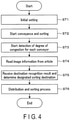
FIG. 4 is a flowchart illustrating an example of an article sorting process performed by the article sorting system according to the embodiment. -
FIG. 5 is a flowchart illustrating an example of distribution and sorting processing by the article sorting system according to the embodiment. -
FIG. 6 is a flowchart illustrating an example of a crowded state process A performed by the article sorting system according to the embodiment. -
FIG. 7 is a flowchart illustrating an example of a crowded state process B performed by the article sorting system according to the embodiment. - Hereinafter, an embodiment will be explained with reference to the accompanying drawings.
-
FIG. 1 is a diagram illustrating an example of a schematic configuration of an article sorting system according to an embodiment. - As shown in
FIG. 1 , an article sorting system S includes anarticle sorting apparatus 1, an article sortingcontrol apparatus 2, and aserver 3. Thearticle sorting apparatus 1 sequentially conveys and diverges a plurality of articles, and sorts the articles to designated sorting destinations based on a sorting destination determination result of the articles. The article sortingcontrol apparatus 2 controls article processing (conveyance, divergence, sorting, and the like) performed by thearticle sorting apparatus 1. Theserver 3 recognizes destination information or the like of the article from an image of the article. - The
article sorting apparatus 1 includes an introducingportion 11, aninformation reading portion 12, and adiverging device 13. Further, thearticle sorting apparatus 1 comprisesvarious conveyors 14. For example, theconveyors 14 include amain conveyor 141 corresponding to a main conveyance path, afirst buffer conveyor 142 corresponding to a first sub-conveyance path, asecond buffer conveyor 143 corresponding to a second sub-conveyance path, a firsttiming adjustment conveyor 144, a secondtiming adjustment conveyor 145, and acirculation conveyor 146 corresponding to a circulation conveyance path. - The
article sorting apparatus 1 includes a plurality ofsorting chutes 15 corresponding to a plurality of sorting destinations, and achuter 16 that feeds articles to eachsorting chute 15. Thesorting chute 15 includes first fixedsorting chutes dynamic sorting chutes reject sorting chute 1513 of the area A, as well as second fixedsorting chutes dynamic sorting chutes reject sorting chute 1523 of the area B. Eachsorting chute 15 is provided with a plurality of article detection sensors that detect articles contained therein, and article detection signals from the plurality of article detection sensors are output to aprocessor 21. Theprocessor 21 monitors the article detection signals from the article detection sensors of eachsorting chute 15 and detects whether or not the free space in eachsorting chute 15 exceeds a reference value. In other words, theprocessor 21 detects whether or not there is a vacancy in eachsorting chute 15 based on the article detection signals from the article detection sensors of eachsorting chute 15. - The
article sorting apparatus 1 further includes a plurality of article detection sensors that detect articles on themain conveyor 141, thefirst buffer conveyor 142, thesecond buffer conveyor 143, the firsttiming adjustment conveyor 144, the secondtiming adjustment conveyor 145, and thecirculation conveyor 146 corresponding to the circulation conveyance path. For example, thearticle sorting apparatus 1 includes a plurality ofarticle detection sensors 17 that detect articles on thefirst buffer conveyor 142 and articles on thesecond buffer conveyor 143. - For example, the article sorting
control apparatus 2 can be realized by one computer or a combination of a plurality of computers, communicates with other apparatuses in a wired or wireless manner, receives and stores information from the other apparatuses, transmits a control signal or the like to the other apparatuses, and controls the other apparatuses. For example, the other apparatuses are thearticle sorting apparatus 1 and theserver 3. - The article sorting
control apparatus 2 monitors article detection signals from a plurality of article detection sensors, traces the conveyance (movement) of each article, and detects or estimates where each article is located. Further, the article sortingcontrol apparatus 2 allocates article detection identification information (hereinafter referred to as an article detection ID (identification information)) to each article detected by the plurality of article detection sensors (each article sequentially introduced from the introducing portion 11). - The articles processed by the article sorting system S include packages of various sizes, shapes, and weights. Destination information (such as a destination address) is recorded in each article, and article identification information (hereinafter referred to as an article ID) is allocated to each article in advance. For example, the destination information is directly or indirectly recorded for each article, and the article ID is directly or indirectly recorded for each article. The article ID may be an article ID recorded by a recording method of either visible printing or invisible printing with ink that absorbs infrared rays or the like. Alternatively, an electronic tag or a wireless tag storing the article ID may be attached to the article.
- The article ID at a minimum includes unique information and is constituted by one or a combination of two or more of a number, a character, a symbol, a bar code, a two-dimensional code, and a QR code (registered trademark). The article sorting
control apparatus 2 stores an article management table for managing an article ID allocated to each article and destination information read and recognized from each article in association with each other. Further, the article sortingcontrol apparatus 2 stores a sorting management table that associates destination information with eachsorting chute 15. - For example, the
server 3 can be realized by one computer or a combination of a plurality of computers, communicates with other apparatuses in a wired or wireless manner, receives and stores information from the other apparatuses, transmits a control signal or the like to the other apparatuses, and controls the other apparatuses. For example, the other apparatus is the article sortingcontrol apparatus 2. Theserver 3 receives image information of an article, recognizes destination information or the like of the article from the image information, and returns a destination recognition result. - The sorter constituted by the
circulation conveyor 146 of thearticle sorting apparatus 1 may be a cross belt sorter, a sliding shoe sorter, or a bomb-bay sorter. The cross belt sorter conveys an article via a conveyance tray constituted by a belt conveyor, and supplies an article on the conveyance tray to atarget sorting chute 15 by the rotation of the belt conveyor. The sliding shoe sorter conveys an article by a conveyance tray, inclines the conveyance tray at a timing when the conveyance tray reaches atarget sorting chute 15, and slides the article on the conveyance tray toward thetarget sorting chute 15. The bomb-bay sorter conveys an article via a conveyance tray having a bottom portion configured to be openable and closable, opens the bottom portion at a timing when the conveyance tray reaches atarget sorting chute 15 or achuter 16 for feeding the article to thetarget sorting chute 15, and drops the article toward thetarget chuter 16. - This embodiment will be described on the assumption that the sorter constituted by the
circulation conveyor 146 is the bomb-bay sorter. Thecirculation conveyor 146 circulates and conveys a plurality of conveyance trays. Each conveyance tray circulated and conveyed by thecirculation conveyor 146 loads and conveys an article fed by the firsttiming adjustment conveyor 144, and loads and conveys the article fed by the secondtiming adjustment conveyor 145. A single conveyance tray loads and conveys one article. - Here, an article conveyance route by each
conveyor 14 of thearticle sorting apparatus 1 will be described. The article conveyance route includes a conveyance route RO1 (first conveyance route) and a conveyance route RO2 (second conveyance route). As shown inFIG. 1 , the conveyance route RO1 is a route from themain conveyor 141 to thecirculation conveyor 146 via thefirst buffer conveyor 142, the firsttiming adjustment conveyor 144, and a first merging point P1 in order. The conveyance route RO2 is a route from themain conveyor 141 to thecirculation conveyor 146 via thesecond buffer conveyor 143, the secondtiming adjustment conveyor 145, and a second merging point P2 in order. Thearticle sorting apparatus 1 conveys an article to thecirculation conveyor 146 by one of the conveyance route RO1 and the conveyance route RO2, and thecirculation conveyor 146 circulates the article in one direction to sort the article to each sortingchute 15. - The introducing
portion 11 receives an article introduced by an operator or an article fed by a conveying belt or the like, and themain conveyor 141 conveys the article received by the introducingportion 11 to theinformation reading portion 12. - The
information reading portion 12 includes a camera, captures an image of an article from an upper surface, a side surface, and a lower surface of the article by the camera, and outputs image information to the article sortingcontrol apparatus 2. Theinformation reading portion 12 measures the size, shape, weight, and the like of the conveyed article, and outputs article measurement information obtained by the measurement to the article sortingcontrol apparatus 2. Furthermore, theinformation reading portion 12 reads the article ID from the article and outputs the read article ID to the article sortingcontrol apparatus 2. When the article ID is a QR code, theinformation reading portion 12 functions as a QR code reader. When the article ID is information stored in the wireless tag, theinformation reading portion 12 functions as a wireless reader and reads the article ID from the wireless tag by wireless communication. Themain conveyor 141 conveys the article to the divergingdevice 13. - The diverging
device 13 distributes articles from themain conveyor 141 to thefirst buffer conveyor 142 based on a diverging control signal S11 transmitted from the article sortingcontrol apparatus 2, and distributes articles from themain conveyor 141 to thesecond buffer conveyor 143 based on a diverging control signal S12 transmitted from the article sortingcontrol apparatus 2. - The
first buffer conveyor 142 and thesecond buffer conveyor 143 are separately driven, so as to accumulate articles without a clearance. The firsttiming adjustment conveyor 144 receives the articles from thefirst buffer conveyor 142 and feeds the articles toward the empty conveyance trays of thecirculation conveyor 146 at the merging point P1. Similarly, the secondtiming adjustment conveyor 145 receives the articles from thesecond buffer conveyor 143 and feeds the articles toward the empty conveyance trays of thecirculation conveyor 146 at the merging point P2. -
FIG. 2 is a block diagram illustrating an example of a schematic configuration of the article sorting control apparatus constituting the article sorting system according to the embodiment. - As illustrated in
FIG. 2 , the article sortingcontrol apparatus 2 includes theprocessor 21, a read-only memory (ROM) 22, a random-access memory (RAM) 23, anauxiliary storage device 24, acommunication interface 25, and an input/output portion 26. - The
processor 21 corresponds to a central portion of a computer that performs processing such as calculation and control necessary for article processing. Theprocessor 21 executes control to realize various functions based on a program such as system software, application software, or firmware stored in at least one of theROM 22 and theauxiliary storage device 24. Theprocessor 21 is, for example, a central processing unit (CPU), a micro processing unit (MPU), or a digital signal processor (DSP). Alternatively, theprocessor 21 is a combination of two or more of these. - The
processor 21 allocates an article detection ID to each article to be detected based on article detection signals from the article detection sensors, traces the conveyance (movement) of each article, and detects or estimates where each article is located. Further, theprocessor 21 monitors the amount of movement of thecirculation conveyor 146 based on a signal from a rotary encoder that detects the amount of movement of thecirculation conveyor 146. For example, theprocessor 21 detects the number of circulations of thecirculation conveyor 146. Theprocessor 21 can also detect the number of circulations of each article by combining the trace of the conveyance of each article and the monitoring of the amount of movement of thecirculation conveyor 146. - The
ROM 22 is a computer-readable storage medium and corresponds to a main storage device of the computer including theprocessor 21 as a center. TheROM 22 is a non-volatile memory (non-transitory storage medium) that is exclusively used for reading data. TheROM 22 may store at least a portion of the programs described above. In addition, theROM 22 stores data or various setting values and the like used when theprocessor 21 performs various processes. - The
RAM 23 is a computer-readable storage medium and corresponds to a main storage device of the computer including theprocessor 21 as a center. TheRAM 23 is a memory used for reading and writing data. TheRAM 23 is utilized as a so-called work area for storing data to be temporarily used when theprocessor 21 performs various processes. - The
auxiliary storage device 24 is a computer-readable storage medium and corresponds to an auxiliary storage device of the computer including theprocessor 21 as a center. Theauxiliary storage device 24 is a non-transitory storage medium such as an electric erasable programmable read-only memory (EEPROM) (registered trademark), a hard disk drive (HDD), or a solid state drive (SSD). Theauxiliary storage device 24 may store at least a portion of the programs described above. In addition, theauxiliary storage device 24 stores data to be used by theprocessor 21 when performing various types of processing, data generated by the processing performed by theprocessor 21, or various setting values, and the like. For example, theauxiliary storage device 24 stores sorting history information for managing a history of destinations and sorting destinations of the respective articles. - The programs stored in at least one of the
ROM 22 and theauxiliary storage device 24 include a program for article processing. As an example, the article sortingcontrol apparatus 2 is transferred to an administrator or the like of the article sortingcontrol apparatus 2 with the program being stored in at least one of theROM 22 and theauxiliary storage device 24. Alternatively, the program may be transferred to the administrator or the like by a non-transitory computer-readable storage medium storing the program. In this case, the program stored in the non-transitory computer-readable storage medium is written to at least one of theROM 22 and theauxiliary storage device 24 through the operation by the administrator or the service person. The non-transitory computer-readable storage medium storing the program is, for example, a removable storage medium, such as a magnetic disk, a magneto-optical disk, an optical disk, or a semiconductor memory. Alternatively, the program may be downloaded via a network or the like and written to at least one of theROM 22 and theauxiliary storage device 24. - The
communication interface 25 is an interface for performing wired or wireless communication with another apparatus via a network or the like, receiving various types of information transmitted from another apparatus, and transmitting various types of information to another apparatus. For example, thecommunication interface 25 receives the article IDs from theserver 3 before starting the article processing. Thecommunication interface 25 also receives the article detection signals from the article detection sensors, the image information, the article measurement information, and the articles ID from theinformation reading portion 12. Further, thecommunication interface 25 transmits the diverging control signal S11 or S12 to the divergingdevice 13, and transmits sorting destination information (information for specifying the sorting chutes 15) associated with the article IDs to thearticle sorting apparatus 1. - The input/
output portion 26 includes a keyboard, a numeric keypad, a mouse, a touch panel display, and the like. The input/output portion 26 receives an instruction input from the operator and notifies theprocessor 21 of the instruction input. The touch panel display displays various types of information for the operator. -
FIG. 3 is a block diagram illustrating an example of a schematic configuration of the server included in the article sorting system according to the embodiment. - As illustrated in
FIG. 3 , theserver 3 includes aprocessor 31, aROM 32, aRAM 33, anauxiliary storage device 34, acommunication interface 35, and an input/output portion 36. - The
processor 31 corresponds to a central portion of a computer that performs processing such as calculation and control necessary for article processing. Theprocessor 31 executes control to realize various functions based on a program such as system software, application software, or firmware stored in at least one of theROM 32 and theauxiliary storage device 34. Theprocessor 21 recognizes destination information included in the image information transmitted from the article sortingcontrol apparatus 2, and outputs a recognition result of the destination information. - The
ROM 32 corresponds to a main storage device of the computer including theprocessor 31 as a center. TheROM 32 is a nonvolatile memory that is used exclusively for reading data. TheROM 32 may store at least a portion of the programs described above. In addition, theROM 32 stores data or various setting values and the like used when theprocessor 31 performs various processes. - The
RAM 33 corresponds to a main storage device of the computer including theprocessor 21 as a center. TheRAM 33 is a memory used for reading and writing data. TheRAM 33 is utilized as a so-called work area for storing data to be temporarily used when theprocessor 31 performs various processes. - The
auxiliary storage device 34 corresponds to an auxiliary storage device of the computer including theprocessor 31 as a center. Theauxiliary storage device 34 may store at least a portion of the programs described above. In addition, theauxiliary storage device 34 stores data to be used by theprocessor 21 when performing various types of processing, data generated by the processing performed by theprocessor 31, or various setting values, and the like. - The programs stored in at least one of the
ROM 32 and theauxiliary storage device 34 include a program for recognizing destination information from image information. - The
communication interface 35 is an interface for performing wired or wireless communication with another apparatus via a network or the like, receiving various types of information transmitted from another apparatus, and transmitting these various types of information to another apparatus. For example, thecommunication interface 35 receives image information of an article transmitted from the article sortingcontrol apparatus 2, and transmits a recognition result of destination information included in the image information of the article to the article sortingcontrol apparatus 2. - The input/
output portion 26 includes a keyboard, a numeric keypad, a mouse, a touch panel display, and the like. -
FIG. 4 is a flowchart illustrating an example of an article sorting process performed by the article sorting system according to the embodiment. - The
processor 21 of the article sortingcontrol apparatus 2 performs initial setting (ST1), allocates a role to each sortingchute 15 of thearticle sorting apparatus 1, and registers sorting destination management information and a limit on the number of circulations in theauxiliary storage devices 24 or the like. The sorting destination management information includes reference conveyance route information for allocating one of thefirst buffer conveyor 142 and thesecond buffer conveyor 143 according to each sortingchute 15. Further, the sorting destination management information includes information on the destination allocated to each sortingchute 15. The destination allocated to each sortingchute 15 is a part of the actual destination. For example, the sorting destination management information includes fixed sorting destination information that associates, among the sortingchutes 15, each of the firstfixed sorting chutes fixed sorting chutes dynamic sorting chutes dynamic sorting chutes circulation conveyor 146. - The
processor 21 allocates thefirst buffer conveyor 142 to the sortingchutes 15 in the area A as the reference conveyance route and allocates thesecond buffer conveyor 143 to the sortingchutes 15 in the area B as the reference conveyance route. - For example, the
processor 21 allocates the reference conveyance route (first buffer conveyor 142) and the destination (destination AD1) to the firstfixed sorting chute 1511a in the area A, allocates the reference conveyance route (first buffer conveyor 142) and undetermined destinations to the firstdynamic sorting chutes reject sorting chute 1513 in the area A. - Furthermore, the
processor 21 allocates the reference conveyance route (second buffer conveyor 143) and the destination (destination AD2) to the secondfixed sorting chute 1521a in the area B, allocates the reference conveyance route (second buffer conveyor 143) and undetermined destinations to the seconddynamic sorting chutes reject sorting chute 1523 in the area B. - The conveyance distance from the merging point P1 to the sorting
chutes 15 in the area A is shorter than the conveyance distance from the merging point P2 to the sorting chutes 15 (first fixedsorting chutes chutes chutes 15 in the area B. - Therefore, in a case where the articles are sorted with respect to the sorting
chutes 15 in the area A, the conveyance distance and the conveyance time by thecirculation conveyor 146 can be shortened by selecting thefirst buffer conveyor 142 rather than thesecond buffer conveyor 143. In a case where the articles are sorted with respect to the sortingchutes 15 in the area B, the conveyance distance and the conveyance time by thecirculation conveyor 146 can be shortened by selecting thesecond buffer conveyor 143 rather than thefirst buffer conveyor 142. - Subsequently, the
processor 21 starts conveyance and sorting of the articles by the article sorting apparatus 1 (ST2). Accordingly, the introducingportion 11 starts introducing the articles, and eachconveyor 14 starts conveying the articles. For example, theprocessor 21 outputs a first speed control signal for controlling thefirst buffer conveyor 142 and thesecond buffer conveyor 143 to a first conveyance speed, outputs a second speed control signal for controlling themain conveyor 141 to a second conveyance speed, and outputs a third speed control signal for controlling thecirculation conveyor 146 to a third conveyance speed. Thefirst buffer conveyor 142 and thesecond buffer conveyor 143 convey the articles in one direction at the first conveyance speed based on the first speed control signal, themain conveyor 141 conveys the articles in one direction at the second conveyance speed based on the second speed control signal, and thecirculation conveyor 146 circulates and conveys the articles in one direction at the third conveyance speed based on the third speed control signal. The second conveyance speed of themain conveyor 141 is greater than the first conveyance speed of thefirst buffer conveyor 142 and thesecond buffer conveyor 143, and is, for example, twice the first conveyance speed or greater. The third conveyance speed is equal to the first conveyance speed. - Further, the
processor 21 monitors article detection signals from the article detection sensors, traces the conveyance (movement) of each article, detects or estimates where each article is located, allocates an article detection ID to the detected or estimated article, and monitors the article based on the article detection ID. Further, determination or estimation of the degree of congestion of eachconveyor 14 is started (ST3). For example, thecommunication interface 25 receives article detection signals from thearticle detection sensors 17. Theprocessor 21 detects or estimates the number of articles in thefirst buffer conveyor 142 and thesecond buffer conveyor 143 based on the article detection signals from thearticle detection sensors 17, and determines or estimates the degree of congestion of the articles in thefirst buffer conveyor 142 and thesecond buffer conveyor 143. For example, theprocessor 21 detects a situation in which the degree of congestion of thefirst buffer conveyor 142 is higher than the degree of congestion of thesecond buffer conveyor 143, or a situation in which the degree of congestion of thesecond buffer conveyor 143 is higher than the degree of congestion of thefirst buffer conveyor 142. - The
information reading portion 12 reads an image of the conveyed article and transmits the read image information to the article sortingcontrol apparatus 2, and thecommunication interface 25 of the article sortingcontrol apparatus 2 receives the image information and transmits the received image information to theserver 3. Theinformation reading portion 12 may transmit the read image information directly to theserver 3. When an article ID is given to the conveyed article, theinformation reading portion 12 reads the article ID and transmits the article ID to the article sortingcontrol apparatus 2. Theprocessor 21 of the article sortingcontrol apparatus 2 registers the article ID read from a certain article and the article detection ID allocated to the same certain article in theauxiliary storage device 34 in association with each other. - The
communication interface 35 of theserver 3 receives the image information, theprocessor 31 of theserver 3 recognizes the destination included in the image information, and thecommunication interface 35 transmits the destination recognition result to the article sortingcontrol apparatus 2. When the destination recognition is successful, the destination recognition result includes a recognition success flag and recognized destination information. When the destination recognition fails, the destination recognition result includes a recognition failure flag. - The
communication interface 25 receives the destination recognition result from theserver 3, and theprocessor 21 determines the designated sorting destination of the article based on the sorting destination management information and the destination recognition result (ST5). The article ID, the article detection ID, and the destination recognition result of the certain article are registered in association with one another, and the processing proceeds to distribution and sorting processing (ST6). -
FIG. 5 is a flowchart illustrating an example of distribution and sorting processing by the article sorting system according to the embodiment. - For example, in the case where the designated sorting destination of the article is the area A, when the degree of congestion of the
first buffer conveyor 142 in the area A of the designated sorting destination of the article is equal to or less than the reference value (ST601, NO), theprocessor 21 executes distribution control for distributing the article to the area A of the designated sorting destination (ST602), and executes sorting control for sorting the article to the designated sorting destination based on the determination of the designated sorting destination of the article (ST603). Similarly, in the case where the designated sorting destination of the article is the area B, when the degree of congestion of thesecond buffer conveyor 143 in the area B of the designated sorting destination of the article is equal to or less than the reference value (ST601, NO), theprocessor 21 executes distribution control for distributing the article to the area B of the designated sorting destination (ST602), and executes sorting control for sorting the article to the designated sorting destination based on the determination of the designated sorting destination of the article (ST603). - For example, when all the
article detection sensors 17 of thefirst buffer conveyor 142 continue to detect articles for a certain period of time or longer, theprocessor 21 determines that the degree of congestion of the area A exceeds the reference value. Similarly, when all thearticle detection sensors 17 of thesecond buffer conveyor 143 continue to detect articles for a certain period of time or longer, theprocessor 21 determines that the degree of congestion of the area B exceeds the reference value. - That is, the
processor 21 selects the diverging control signal S11 or S12 based on the reference conveyance route allocated to the designated sorting destination of the article, and thecommunication interface 25 outputs the selected diverging control signal S11 or S12 to the divergingdevice 13 of the article sorting apparatus 1 (ST602). Further, theprocessor 21 selects a sorting control signal S2 for sorting the article to the designated sorting destination, and thecommunication interface 25 outputs the selected sorting control signal S2 to the article sorting apparatus 1 (ST603). - For example, when the designated sorting destination of the article is determined to be the first
fixed sorting chute 1511a, since thefirst buffer conveyor 142 is allocated to the firstfixed sorting chute 1511a as the reference conveyance route, theprocessor 21 selects the diverging control signal S11 for causing the divergingdevice 13 of thearticle sorting apparatus 1 to distribute the article to thefirst buffer conveyor 142. Alternatively, when the designated sorting destination of the article is determined to be the secondfixed sorting chute 1521a, since thesecond buffer conveyor 143 is allocated to the secondfixed sorting chute 1521a as the reference conveyance route, theprocessor 21 selects the diverging control signal S12 for causing the divergingdevice 13 of thearticle sorting apparatus 1 to distribute the article to thesecond buffer conveyor 143. - The diverging
device 13 distributes the article to thefirst buffer conveyor 142 or thesecond buffer conveyor 143 based on the diverging control signal S11 or S12 (ST604). Thefirst buffer conveyor 142 or thesecond buffer conveyor 143 conveys the article, and the firsttiming adjustment conveyor 144 or the secondtiming adjustment conveyor 145 introduces the article into an empty conveyance tray on thecirculation conveyor 146. Thecirculation conveyor 146 circulates and conveys the article introduced into the conveyance tray. - For example, when the article reaches the position corresponding to the sorting
chute 15 of the designated sorting destination based on the sorting control signal S2 transmitted from the article sortingcontrol apparatus 2 while thecirculation conveyor 146 makes a half-turn, thearticle sorting apparatus 1 opens the bottom portion of the conveyance tray and sorts the article to the sortingchute 15 of the designated sorting destination (ST605). Theprocessor 21 registers information on the destination of the article and the sorting destination in theauxiliary storage device 24 as sorting history information. - On the other hand, in the case where the designated sorting destination of the article is the area A, when the degree of congestion of the
first buffer conveyor 142 of the area A of the designated sorting destination of the article exceeds the reference value (ST601, YES) and the degree of congestion of thesecond buffer conveyor 143 of the other area, namely, the area B, is equal to or less than the reference value (ST606, NO), theprocessor 21 selects the diverging control signal S12, thecommunication interface 25 outputs the selected diverging control signal S12 to the divergingdevice 13 of the article sorting apparatus 1 (ST607), and the divergingdevice 13 distributes the article to thesecond buffer conveyor 143 based on the diverging control signal S12 (ST608). Similarly, in the case where the designated sorting destination of the article is the area B, when the degree of congestion of thesecond buffer conveyor 143 of the area B of the designated sorting destination of the article exceeds the reference value (ST601, YES) and the degree of congestion of thefirst buffer conveyor 142 of the other area, namely, the area A, is equal to or less than the reference value (ST606, NO), theprocessor 21 selects the diverging control signal S11, thecommunication interface 25 outputs the selected diverging control signal S11 to the divergingdevice 13 of the article sorting apparatus 1 (ST607), and the divergingdevice 13 distributes the article to thefirst buffer conveyor 142 based on the diverging control signal S11 (ST608). - In addition, in a case where the destination allocated in accordance with a situation is not associated with the dynamic sorting chute (ST609, YES), the
processor 21 allocates an arbitrary destination to the dynamic sorting chute. For example, theprocessor 21 allocates a destination of the highest frequency as an arbitrary destination to the dynamic sorting chute based on the sorting history information of each article (ST610). Alternatively, theprocessor 21 allocates the destination of the article to be sorted as an arbitrary destination to the dynamic sorting chute based on the destination recognition result received in ST5 (ST610). - Here, some examples of allocation of an arbitrary destination to a dynamic sorting chute will be described. For example, when the designated sorting destination of the article is the area A (in this case, the article is distributed to the area B due to the influence of the degree of congestion), the
processor 21 allocates the destination of the highest frequency to the seconddynamic sorting chute 1522a of the area B, and allocates the destination of the second highest frequency to the seconddynamic sorting chute 1522b of the area B. Further, in this case, theprocessor 21 may allocate the destination of the third highest frequency to the firstdynamic sorting chute 1512a of the area A, and allocate the destination of the fourth highest frequency to the firstdynamic sorting chute 1512b of the area A. - Alternatively, the
processor 21 allocates the destination of the highest frequency to the firstdynamic sorting chute 1512a of the area A and the seconddynamic sorting chute 1522a of the area B, and allocates the destination of the second highest frequency to the firstdynamic sorting chute 1512b of the area A and the seconddynamic sorting chute 1522b of the area B. - Alternatively, the
processor 21 allocates the four destinations from the destination of the highest frequency to the destination of the fourth highest frequency respectively to four dynamic sorting chutes (the seconddynamic sorting chute 1522a, the seconddynamic sorting chute 1522b, the firstdynamic sorting chute 1512a, and the firstdynamic sorting chute 1512b). - Alternatively, the
processor 21 allocates, to a dynamic sorting chute, the destination associated with a designated sorting destination of an article to be distributed to another area. - When the designated sorting destination of the article corresponds to a dynamic sorting chute (ST611, YES) and the free space in the dynamic sorting chute exceeds the reference value (ST612, YES), the
processor 21 selects the sorting control signal S2 for sorting the article to the dynamic sorting destination, and thecommunication interface 25 outputs the selected sorting control signal S2 to the article sorting apparatus 1 (ST613). - When the article reaches the position corresponding to the sorting
chute 15 of the designated sorting destination (the seconddynamic sorting chute 1522a, the seconddynamic sorting chute 1522b, the firstdynamic sorting chute 1512a, or the firstdynamic sorting chute 1512b) based on the sorting control signal S2 transmitted from the article sortingcontrol apparatus 2, thearticle sorting apparatus 1 opens the bottom portion of the conveyance tray and sorts the article to the sortingchute 15 of the designated sorting destination (ST614). Theprocessor 21 registers information on the destination of the article and the sorting destination in theauxiliary storage device 24 as sorting history information. - Further, when the designated sorting destination of the article does not correspond to a dynamic sorting chute (ST611, NO), the
processor 21 selects the sorting control signal S2 for sorting the article to the designated sorting destination, and thecommunication interface 25 outputs the selected sorting control signal S2 to the article sorting apparatus 1 (ST615). - When the article reaches the position corresponding to the sorting
chute 15 of the designated sorting destination (the firstfixed sorting chute fixed sorting chute control apparatus 2, thearticle sorting apparatus 1 opens the bottom portion of the conveyance tray and sorts the article to the sortingchute 15 of the designated sorting destination (ST616). Theprocessor 21 registers information on the destination of the article and the sorting destination in theauxiliary storage device 24 as sorting history information. - When the free space of the dynamic sorting chute is equal to or less than the reference value (ST612, NO), the processing proceeds to a crowded state process A (ST621). When the degree of congestion of the other area, the
first buffer conveyor 142 or thesecond buffer conveyor 143, exceeds the reference value (ST606, YES), the processing proceeds to a crowded state process B (ST622). -
FIG. 6 is a flowchart illustrating an example of the crowded state process A performed by the article sorting system according to the embodiment. - When the free space of the dynamic sorting chute is equal to or less than the reference value (crowded state) (ST612, NO), the
processor 21 selects the reject control signal S3, and thecommunication interface 25 outputs the selected reject control signal S3 to the article sorting apparatus 1 (ST6211). Thearticle sorting apparatus 1 sorts the article to the designated reject destination based on the reject control signal S3 (ST6212). For example, based on the reject control signal S3, thearticle sorting apparatus 1 opens the bottom portion of the conveyance tray at the timing when the article reaches the position corresponding to the firstreject sorting chute 1513 or the secondreject sorting chute 1523, and sorts the article into the firstreject sorting chute 1513 or the secondreject sorting chute 1523 of the designated sorting destination. Theprocessor 21 registers information on the destination of the article and the sorting destination in theauxiliary storage device 24 as sorting history information. - When the container of the dynamic sorting chute in the crowded state is replaced and the crowded state is eliminated (ST6213, YES), the
processor 21 resets the allocation of the dynamic sorting chute (ST6214). As a result, the dynamic sorting chute returns to the dynamic state. -
FIG. 7 is a flowchart illustrating an example of the crowded state process B performed by the article sorting system according to the embodiment. - When the degree of congestion of the
first buffer conveyor 142 or thesecond buffer conveyor 143 in the other area exceeds the reference value (ST606, YES), theprocessor 21 stops the conveyance of the article by the main conveyor 141 (ST6221). When the area of the designated sorting destination of the article is the area A and theprocessor 21 detects that the degree of congestion of thefirst buffer conveyor 142 of the area A is the reference value or less (ST6222, YES), conveyance of the article by themain conveyor 141 is restarted (ST6223), distribution control for distributing the article to the area A of the designated sorting destination is executed (ST6224), and sorting control for sorting the article to the designated sorting destination is executed based on determination of the designated sorting destination of the article (ST6225). The divergingdevice 13 of thearticle sorting apparatus 1 distributes the article to thefirst buffer conveyor 142 or thesecond buffer conveyor 143 in accordance with the distribution control of the processor 21 (ST6226). Further, thearticle sorting apparatus 1 sorts the article into the sortingchute 15 of the designated sorting destination in accordance with the sorting control of the processor 21 (ST6227). Theprocessor 21 registers information on the destination of the article and the sorting destination in theauxiliary storage device 24 as sorting history information. - As described above, according to the present embodiment, it is possible to provide an article sorting control apparatus, an article sorting control program, and an article sorting system with an improved article processing efficiency. For example, even when the reference conveyance route to the designated sorting destination of the article is congested, the article can be efficiently conveyed and sorted by selecting another conveyance route. In addition, when another conveyance route is selected, a sorting destination is allocated to a dynamic sorting chute. Utilizing the dynamic sorting chute makes it possible to compensate for a partial decrease in processing efficiency due to the use of another conveyance route.
- Further, by allocating a sorting destination of a high designation frequency to a dynamic sorting chute or by allocating a designated sorting destination of an article to be distributed to another area to the dynamic sorting chute, the article can be efficiently conveyed and sorted. For example, in the case where an article is distributed to the area B as another area, the article can be sorted by conveyance within a half-turn of the
circulation conveyor 146 by allocating a sorting destination of a high designation frequency to a dynamic sorting chute of the area B, or by allocating a designated sorting destination of an article to be distributed to the area B to a dynamic sorting chute of the area B. - Further, by making the conveyance speed of the
main conveyor 141 greater than the conveyance speed of thefirst buffer conveyor 142 and the second buffer conveyor 143 (for example, double the speed or higher), the article conveyance amount per unit time can be increased. Moreover, by using two buffer conveyors, the article can be fed to thecirculation conveyor 146 in accordance with the conveyance speed of themain conveyor 141. The embodiment in which two buffer conveyors are used has been described. However, three or more buffer conveyors may be used, and the divergingdevice 13 may select one buffer conveyor among the three or more buffer conveyors to distribute the article. - While certain embodiments have been described, these embodiments have been presented by way of example only, and are not intended to limit the scope of the inventions. These novel embodiments may be realized in various other forms, and various omissions, replacements, and changes can be made without departing from the gist of the invention. Such embodiments and modifications are included in the scope and gist of the invention, and are included in the scope of the invention described in the claims and its equivalents.
Claims (10)
- An article sorting control apparatus, comprising:a memory that stores sorting destination management information for conveying an article from a main conveyance path to a circulation conveyance path, via one of a first conveyance route connected to the circulation conveyance path from the main conveyance path via a first sub-conveyance path, and a second conveyance route connected to the circulation conveyance path from the main conveyance path via a second sub-conveyance path, and for sorting the article to a designated sorting destination among a plurality of sorting destinations while circulating the article in one direction via the circulation conveyance path, the sorting destination management information including reference conveyance route information to allocate one of the first conveyance route and the second conveyance route in accordance with each of the sorting destinations, fixed sorting destination information associating a fixed sorting destination among the sorting destinations to a destination, and dynamic sorting destination information associating a dynamic sorting destination among the sorting destinations to a destination that is allocated in accordance with a situation;a processor configured to select a first diverging control signal or a second diverging control signal based on a designated sorting destination of the article acquired from information read from the article, the sorting destination management information, and degree of congestion of the first and second sub-conveyance paths, and to allocate an arbitrary destination to the dynamic sorting destination; anda communication interface configured to transmit the first or the second diverging control signal selected by the processor to an article sorting apparatus configured to distribute the article from the main conveyance path to the first or the second sub-conveyance path based on the first or the second diverging control signal.
- The article sorting control apparatus according to claim 1, whereinthe communication interface receives an article detection signal from a sensor configured to detect an article conveyed by the first and second sub-conveyance paths, andthe processor detects the number of articles in the first and second sub-conveyance paths based on the article detection signal, and determines the degrees of congestion of the first and second sub-conveyance paths based on the number of articles.
- The article sorting control apparatus according to claim 1 or 2, whereinthe memory stores the reference conveyance route information that allocates the first conveyance route to a first designated sorting destination, and the second conveyance route to a second designated sorting destination, andwhen sorting a first article to the first designated sorting destination, the processor selects the first diverging control signal if the degree of congestion of the first sub-conveyance path is equal to or less than a reference value, and selects the second diverging control signal if the degree of congestion of the first sub-conveyance path exceeds the reference value, and when sorting a second article to the second designated sorting destination, the processor selects the second diverging control signal if the degree of congestion of the second sub-conveyance path is equal to or less than the reference value, and selects the first diverging control signal if the degree of congestion of the second sub-conveyance path exceeds the reference value.
- The article sorting control apparatus according to any one of claims 1 to 3, wherein the processor allocates a destination of a highest frequency as the arbitrary destination to the dynamic sorting destination based on sorting history information of each article.
- The article sorting control apparatus according to claim 3, wherein when sorting the first article to the first designated sorting destination, the processor allocates a destination associated with the first designated sorting destination to the dynamic sorting destination if the degree of congestion of the first sub-conveyance path exceeds the reference value, and when sorting the first article to the second designated sorting destination, the processor allocates a destination associated with the second designated sorting destination to the dynamic sorting destination if the degree of congestion of the second sub-conveyance path exceeds the reference value.
- The article sorting control apparatus according to any one of claims 1 to 5, whereinthe processor selects a sorting control signal for sorting the article to a designated sorting destination when sorting the article to the designated sorting destination, andthe communication interface transmits the sorting control signal to the article sorting apparatus.
- The article sorting control apparatus according to any one of claims 1 to 6, wherein the processor controls the first and second sub-conveyance paths at a first conveyance speed and controls the main conveyance path at a second conveyance speed greater than the first conveyance speed.
- The article sorting control apparatus according to any one of claims 1 to 7, wherein the processor acquires a destination recognition result from a server configured to recognize a destination based on image information read from the article, and determines a designated sorting destination of the article based on the sorting destination management information and the destination recognition result.
- A sorting system including the article sorting control apparatus according to any one of claims 1 to 8, and the article sorting apparatus,
the article sorting apparatus comprising:the main conveyance path;the first and second sub-conveyance paths;the circulation conveyance path; anda diverging device configured to distribute the article from the main conveyance path to the first or the second sub-conveyance path based on the first or the second diverging control signal. - An article sorting control program for causing a computer to execute:a procedure to set sorting destination management information, for conveying an article from a main conveyance path to a circulation conveyance path via one of a first conveyance route connected to a circulation conveyance path from a main conveyance path via a first sub-conveyance path, and a second conveyance route connected to the circulation conveyance path from the main conveyance path via a second sub-conveyance path, and for sorting the article to a designated sorting destination among a plurality of sorting destinations while circulating the article in one direction via the circulation conveyance path, the sorting destination management information including reference conveyance route information to allocate one of the first conveyance route and the second conveyance route in accordance with each of the sorting destinations, fixed sorting destination information associating a fixed sorting destination among the sorting destinations to a destination, and dynamic sorting destination information associating a dynamic sorting destination among the sorting destinations to a destination that is allocated in accordance with a situation;a procedure to select a first diverging control signal or a second diverging control signal based on a designated sorting destination of the article acquired from information read from the article, the sorting destination management information, and a degree of congestion of the first and second sub-conveyance paths, and to allocate an arbitrary destination to the dynamic sorting destination; anda procedure to transmit the first or the second diverging control signal to an article sorting apparatus configured to distribute the article from the main conveyance path to the first or the second sub-conveyance path based on the first or the second diverging control signal.
Priority Applications (1)
| Application Number | Priority Date | Filing Date | Title |
|---|---|---|---|
| SI202030598T SI3967630T1 (en) | 2019-06-24 | 2020-06-23 | Article classification control device, article classification control program, and article classification system |
Applications Claiming Priority (2)
| Application Number | Priority Date | Filing Date | Title |
|---|---|---|---|
| JP2019116710A JP7159117B2 (en) | 2019-06-24 | 2019-06-24 | Article Sorting Control Device, Article Sorting Control Program, and Article Sorting System |
| PCT/JP2020/024538 WO2020262349A1 (en) | 2019-06-24 | 2020-06-23 | Article classification control device, article classification control program, and article classification system |
Publications (3)
| Publication Number | Publication Date |
|---|---|
| EP3967630A1 true EP3967630A1 (en) | 2022-03-16 |
| EP3967630A4 EP3967630A4 (en) | 2023-04-26 |
| EP3967630B1 EP3967630B1 (en) | 2025-03-12 |
Family
ID=73994772
Family Applications (1)
| Application Number | Title | Priority Date | Filing Date |
|---|---|---|---|
| EP20832781.7A Active EP3967630B1 (en) | 2019-06-24 | 2020-06-23 | Article classification control device, article classification control program, and article classification system |
Country Status (5)
| Country | Link |
|---|---|
| US (1) | US12179234B2 (en) |
| EP (1) | EP3967630B1 (en) |
| JP (1) | JP7159117B2 (en) |
| SI (1) | SI3967630T1 (en) |
| WO (1) | WO2020262349A1 (en) |
Families Citing this family (8)
| Publication number | Priority date | Publication date | Assignee | Title |
|---|---|---|---|---|
| JP7341915B2 (en) | 2020-01-31 | 2023-09-11 | 株式会社東芝 | Transport auxiliary equipment, transport equipment, and baggage sorting equipment |
| JP7362541B2 (en) | 2020-04-09 | 2023-10-17 | 株式会社東芝 | feeding device |
| CN115569851B (en) * | 2022-10-11 | 2023-06-20 | 广东飞流智能科技有限公司 | A cross-belt intelligent cargo sorting system and method based on the Internet of Things |
| CN115846220A (en) * | 2022-11-12 | 2023-03-28 | 常州工学院 | Terminal storage-oriented article scanning, sorting and grading conveying system and method |
| CN116020755A (en) * | 2022-12-07 | 2023-04-28 | 江西绿萌科技控股有限公司 | A method, device, equipment and storage medium for classifying and selecting items |
| WO2024142382A1 (en) * | 2022-12-28 | 2024-07-04 | ロジスティード株式会社 | Allocation system, allocation method, and program |
| JP7723819B1 (en) | 2024-10-21 | 2025-08-14 | 株式会社Food & Life Companies | specific equipment |
| CN121467359B (en) * | 2026-01-08 | 2026-03-17 | 深圳市今天国际软件技术有限公司 | Production sorting and scheduling system |
Family Cites Families (13)
| Publication number | Priority date | Publication date | Assignee | Title |
|---|---|---|---|---|
| JPH10218352A (en) | 1997-02-10 | 1998-08-18 | Sumitomo Heavy Ind Ltd | Device and method for assorting article |
| US6513641B1 (en) * | 1999-10-12 | 2003-02-04 | Rapistan Systems Advertising Corp. | High rate induction system |
| US7414218B2 (en) * | 2004-08-16 | 2008-08-19 | Lockheed Martin Corporation | Cross circulation mail sorter stacker design with dual ported input, and method of operating the same |
| JP4946743B2 (en) * | 2007-09-06 | 2012-06-06 | 株式会社日立プラントテクノロジー | Sorting system and sorting method |
| US9392462B2 (en) * | 2009-01-28 | 2016-07-12 | Headwater Partners I Llc | Mobile end-user device with agent limiting wireless data communication for specified background applications based on a stored policy |
| WO2011025942A1 (en) * | 2009-08-28 | 2011-03-03 | Dematic Corp. | Conveyor induct |
| US8700892B2 (en) * | 2010-03-19 | 2014-04-15 | F5 Networks, Inc. | Proxy SSL authentication in split SSL for client-side proxy agent resources with content insertion |
| US8530772B2 (en) * | 2011-04-29 | 2013-09-10 | National Presort, Inc. | Document sorting machine |
| JP5712966B2 (en) * | 2012-05-29 | 2015-05-07 | 株式会社ダイフク | Sorting equipment and sorting method |
| JP2014039891A (en) * | 2012-08-21 | 2014-03-06 | Toshiba Corp | Parcel sorting system, video codec server, video coding disk device, and center server |
| WO2014197787A1 (en) * | 2013-06-07 | 2014-12-11 | Intelligrated Headquarters Llc | Conveyor speed control |
| JP5997113B2 (en) | 2013-08-07 | 2016-09-28 | 株式会社フジキカイ | Alignment device |
| DE102017113953B3 (en) * | 2017-06-23 | 2018-10-31 | Flexlink Ab | Passive transport device for transporting conveyed goods and transport system, method and control method for this purpose |
-
2019
- 2019-06-24 JP JP2019116710A patent/JP7159117B2/en active Active
-
2020
- 2020-06-23 EP EP20832781.7A patent/EP3967630B1/en active Active
- 2020-06-23 SI SI202030598T patent/SI3967630T1/en unknown
- 2020-06-23 WO PCT/JP2020/024538 patent/WO2020262349A1/en not_active Ceased
-
2021
- 2021-12-15 US US17/552,092 patent/US12179234B2/en active Active
Also Published As
| Publication number | Publication date |
|---|---|
| EP3967630A4 (en) | 2023-04-26 |
| US20220105543A1 (en) | 2022-04-07 |
| SI3967630T1 (en) | 2025-06-30 |
| CA3140857A1 (en) | 2020-12-30 |
| WO2020262349A1 (en) | 2020-12-30 |
| JP2021001065A (en) | 2021-01-07 |
| EP3967630B1 (en) | 2025-03-12 |
| US12179234B2 (en) | 2024-12-31 |
| JP7159117B2 (en) | 2022-10-24 |
Similar Documents
| Publication | Publication Date | Title |
|---|---|---|
| EP3967630B1 (en) | Article classification control device, article classification control program, and article classification system | |
| US12583688B2 (en) | Article conveyance sorting apparatus, article sorting system, and control server | |
| RU2739726C1 (en) | Apparatus for organizing articles, system for organizing articles and computer-readable storage medium | |
| JP7204592B2 (en) | Article Sorting Control Device, Article Sorting Control Program, and Article Sorting System | |
| US12059710B2 (en) | Stacked-package detection system | |
| US10710812B2 (en) | Physical distribution system, physical distribution method and program | |
| US20230406629A1 (en) | System and computer-readable storage medium | |
| CA3140857C (en) | Article sorting control apparatus, article sorting control program, and article sorting system | |
| US20180307170A1 (en) | Image forming device, transfer medium conveyance device, image forming system, and program | |
| RU2597572C1 (en) | Address recognition device, sorting device, integrated address recognition device and address recognition method | |
| CA3168577C (en) | Article conveyance sorting apparatus, article sorting system, and control server | |
| US20240335860A1 (en) | Sorting apparatus, sorting method, and computer-readable storage medium | |
| JP7664764B2 (en) | Item supply system and item processing system | |
| US12341934B2 (en) | Wireless tag communication device, image forming apparatus, and method | |
| JP2014232436A (en) | Delivery information management server and delivery information management system | |
| US20100114364A1 (en) | Method and system to run multiple sort schemes without interrupting sorting operations | |
| US20050165978A1 (en) | Apparatus and method of managing device jobs using hosts | |
| JP2025178162A (en) | Automatic control system for printer system | |
| JP4160265B2 (en) | Optical character reader, form sorting method, and character reading system | |
| JP2002282797A (en) | Address reading sorter and address reading and sorting method | |
| CN120322394A (en) | Allocation system, allocation method and procedure | |
| JP2016147245A (en) | Delivery processing apparatus, and delivery processing system | |
| JP2007075709A (en) | Paper sheet processing method and paper sheet processing system |
Legal Events
| Date | Code | Title | Description |
|---|---|---|---|
| STAA | Information on the status of an ep patent application or granted ep patent |
Free format text: STATUS: THE INTERNATIONAL PUBLICATION HAS BEEN MADE |
|
| PUAI | Public reference made under article 153(3) epc to a published international application that has entered the european phase |
Free format text: ORIGINAL CODE: 0009012 |
|
| STAA | Information on the status of an ep patent application or granted ep patent |
Free format text: STATUS: REQUEST FOR EXAMINATION WAS MADE |
|
| 17P | Request for examination filed |
Effective date: 20211207 |
|
| AK | Designated contracting states |
Kind code of ref document: A1 Designated state(s): AL AT BE BG CH CY CZ DE DK EE ES FI FR GB GR HR HU IE IS IT LI LT LU LV MC MK MT NL NO PL PT RO RS SE SI SK SM TR |
|
| DAV | Request for validation of the european patent (deleted) | ||
| DAX | Request for extension of the european patent (deleted) | ||
| A4 | Supplementary search report drawn up and despatched |
Effective date: 20230328 |
|
| RIC1 | Information provided on ipc code assigned before grant |
Ipc: B65G 43/08 20060101ALI20230322BHEP Ipc: B07C 5/36 20060101ALI20230322BHEP Ipc: B07C 3/08 20060101ALI20230322BHEP Ipc: B65G 47/46 20060101ALI20230322BHEP Ipc: B65G 1/137 20060101AFI20230322BHEP |
|
| GRAP | Despatch of communication of intention to grant a patent |
Free format text: ORIGINAL CODE: EPIDOSNIGR1 |
|
| STAA | Information on the status of an ep patent application or granted ep patent |
Free format text: STATUS: GRANT OF PATENT IS INTENDED |
|
| INTG | Intention to grant announced |
Effective date: 20241008 |
|
| GRAS | Grant fee paid |
Free format text: ORIGINAL CODE: EPIDOSNIGR3 |
|
| GRAA | (expected) grant |
Free format text: ORIGINAL CODE: 0009210 |
|
| STAA | Information on the status of an ep patent application or granted ep patent |
Free format text: STATUS: THE PATENT HAS BEEN GRANTED |
|
| AK | Designated contracting states |
Kind code of ref document: B1 Designated state(s): AL AT BE BG CH CY CZ DE DK EE ES FI FR GB GR HR HU IE IS IT LI LT LU LV MC MK MT NL NO PL PT RO RS SE SI SK SM TR |
|
| REG | Reference to a national code |
Ref country code: GB Ref legal event code: FG4D |
|
| REG | Reference to a national code |
Ref country code: CH Ref legal event code: EP |
|
| REG | Reference to a national code |
Ref country code: DE Ref legal event code: R096 Ref document number: 602020047683 Country of ref document: DE |
|
| REG | Reference to a national code |
Ref country code: IE Ref legal event code: FG4D |
|
| REG | Reference to a national code |
Ref country code: SE Ref legal event code: TRGR |
|
| PG25 | Lapsed in a contracting state [announced via postgrant information from national office to epo] |
Ref country code: RS Free format text: LAPSE BECAUSE OF FAILURE TO SUBMIT A TRANSLATION OF THE DESCRIPTION OR TO PAY THE FEE WITHIN THE PRESCRIBED TIME-LIMIT Effective date: 20250612 |
|
| PG25 | Lapsed in a contracting state [announced via postgrant information from national office to epo] |
Ref country code: FI Free format text: LAPSE BECAUSE OF FAILURE TO SUBMIT A TRANSLATION OF THE DESCRIPTION OR TO PAY THE FEE WITHIN THE PRESCRIBED TIME-LIMIT Effective date: 20250312 |
|
| PGFP | Annual fee paid to national office [announced via postgrant information from national office to epo] |
Ref country code: DE Payment date: 20250402 Year of fee payment: 6 |
|
| PG25 | Lapsed in a contracting state [announced via postgrant information from national office to epo] |
Ref country code: ES Free format text: LAPSE BECAUSE OF FAILURE TO SUBMIT A TRANSLATION OF THE DESCRIPTION OR TO PAY THE FEE WITHIN THE PRESCRIBED TIME-LIMIT Effective date: 20250312 |
|
| REG | Reference to a national code |
Ref country code: LT Ref legal event code: MG9D |
|
| PG25 | Lapsed in a contracting state [announced via postgrant information from national office to epo] |
Ref country code: NO Free format text: LAPSE BECAUSE OF FAILURE TO SUBMIT A TRANSLATION OF THE DESCRIPTION OR TO PAY THE FEE WITHIN THE PRESCRIBED TIME-LIMIT Effective date: 20250612 |
|
| PG25 | Lapsed in a contracting state [announced via postgrant information from national office to epo] |
Ref country code: HR Free format text: LAPSE BECAUSE OF FAILURE TO SUBMIT A TRANSLATION OF THE DESCRIPTION OR TO PAY THE FEE WITHIN THE PRESCRIBED TIME-LIMIT Effective date: 20250312 |
|
| REG | Reference to a national code |
Ref country code: NL Ref legal event code: MP Effective date: 20250312 |
|
| PG25 | Lapsed in a contracting state [announced via postgrant information from national office to epo] |
Ref country code: LV Free format text: LAPSE BECAUSE OF FAILURE TO SUBMIT A TRANSLATION OF THE DESCRIPTION OR TO PAY THE FEE WITHIN THE PRESCRIBED TIME-LIMIT Effective date: 20250312 |
|
| PGFP | Annual fee paid to national office [announced via postgrant information from national office to epo] |
Ref country code: FR Payment date: 20250508 Year of fee payment: 6 |
|
| PG25 | Lapsed in a contracting state [announced via postgrant information from national office to epo] |
Ref country code: BG Free format text: LAPSE BECAUSE OF FAILURE TO SUBMIT A TRANSLATION OF THE DESCRIPTION OR TO PAY THE FEE WITHIN THE PRESCRIBED TIME-LIMIT Effective date: 20250312 Ref country code: GR Free format text: LAPSE BECAUSE OF FAILURE TO SUBMIT A TRANSLATION OF THE DESCRIPTION OR TO PAY THE FEE WITHIN THE PRESCRIBED TIME-LIMIT Effective date: 20250613 |
|
| PGFP | Annual fee paid to national office [announced via postgrant information from national office to epo] |
Ref country code: SE Payment date: 20250514 Year of fee payment: 6 Ref country code: SI Payment date: 20250424 Year of fee payment: 6 |
|
| REG | Reference to a national code |
Ref country code: AT Ref legal event code: MK05 Ref document number: 1774875 Country of ref document: AT Kind code of ref document: T Effective date: 20250312 |
|
| PG25 | Lapsed in a contracting state [announced via postgrant information from national office to epo] |
Ref country code: NL Free format text: LAPSE BECAUSE OF FAILURE TO SUBMIT A TRANSLATION OF THE DESCRIPTION OR TO PAY THE FEE WITHIN THE PRESCRIBED TIME-LIMIT Effective date: 20250312 |
|
| REG | Reference to a national code |
Ref country code: DE Ref legal event code: R081 Ref document number: 602020047683 Country of ref document: DE Owner name: KABUSHIKI KAISHA TOSHIBA, JP Free format text: FORMER OWNERS: KABUSHIKI KAISHA TOSHIBA, TOKYO, JP; TOSHIBA INFRASTRUCTURE SYSTEMS & SOLUTIONS CORPORATION, KAWASAKI-SHI, KANAGAWA, JP |
|
| RAP2 | Party data changed (patent owner data changed or rights of a patent transferred) |
Owner name: KABUSHIKI KAISHA TOSHIBA |
|
| PG25 | Lapsed in a contracting state [announced via postgrant information from national office to epo] |
Ref country code: SM Free format text: LAPSE BECAUSE OF FAILURE TO SUBMIT A TRANSLATION OF THE DESCRIPTION OR TO PAY THE FEE WITHIN THE PRESCRIBED TIME-LIMIT Effective date: 20250312 |
|
| PG25 | Lapsed in a contracting state [announced via postgrant information from national office to epo] |
Ref country code: PT Free format text: LAPSE BECAUSE OF FAILURE TO SUBMIT A TRANSLATION OF THE DESCRIPTION OR TO PAY THE FEE WITHIN THE PRESCRIBED TIME-LIMIT Effective date: 20250714 |
|
| PG25 | Lapsed in a contracting state [announced via postgrant information from national office to epo] |
Ref country code: PL Free format text: LAPSE BECAUSE OF FAILURE TO SUBMIT A TRANSLATION OF THE DESCRIPTION OR TO PAY THE FEE WITHIN THE PRESCRIBED TIME-LIMIT Effective date: 20250312 Ref country code: IT Free format text: LAPSE BECAUSE OF FAILURE TO SUBMIT A TRANSLATION OF THE DESCRIPTION OR TO PAY THE FEE WITHIN THE PRESCRIBED TIME-LIMIT Effective date: 20250312 |
|
| PG25 | Lapsed in a contracting state [announced via postgrant information from national office to epo] |
Ref country code: AT Free format text: LAPSE BECAUSE OF FAILURE TO SUBMIT A TRANSLATION OF THE DESCRIPTION OR TO PAY THE FEE WITHIN THE PRESCRIBED TIME-LIMIT Effective date: 20250312 |
|
| PG25 | Lapsed in a contracting state [announced via postgrant information from national office to epo] |
Ref country code: CZ Free format text: LAPSE BECAUSE OF FAILURE TO SUBMIT A TRANSLATION OF THE DESCRIPTION OR TO PAY THE FEE WITHIN THE PRESCRIBED TIME-LIMIT Effective date: 20250312 Ref country code: EE Free format text: LAPSE BECAUSE OF FAILURE TO SUBMIT A TRANSLATION OF THE DESCRIPTION OR TO PAY THE FEE WITHIN THE PRESCRIBED TIME-LIMIT Effective date: 20250312 |
|
| PG25 | Lapsed in a contracting state [announced via postgrant information from national office to epo] |
Ref country code: RO Free format text: LAPSE BECAUSE OF FAILURE TO SUBMIT A TRANSLATION OF THE DESCRIPTION OR TO PAY THE FEE WITHIN THE PRESCRIBED TIME-LIMIT Effective date: 20250312 |
|
| PG25 | Lapsed in a contracting state [announced via postgrant information from national office to epo] |
Ref country code: SK Free format text: LAPSE BECAUSE OF FAILURE TO SUBMIT A TRANSLATION OF THE DESCRIPTION OR TO PAY THE FEE WITHIN THE PRESCRIBED TIME-LIMIT Effective date: 20250312 |
|
| PG25 | Lapsed in a contracting state [announced via postgrant information from national office to epo] |
Ref country code: IS Free format text: LAPSE BECAUSE OF FAILURE TO SUBMIT A TRANSLATION OF THE DESCRIPTION OR TO PAY THE FEE WITHIN THE PRESCRIBED TIME-LIMIT Effective date: 20250712 |
|
| REG | Reference to a national code |
Ref country code: SI Ref legal event code: SP73 Owner name: KABUSHIKI KAISHA TOSHIBA; JP Effective date: 20250905 |
|
| REG | Reference to a national code |
Ref country code: DE Ref legal event code: R097 Ref document number: 602020047683 Country of ref document: DE |
|
| PG25 | Lapsed in a contracting state [announced via postgrant information from national office to epo] |
Ref country code: DK Free format text: LAPSE BECAUSE OF FAILURE TO SUBMIT A TRANSLATION OF THE DESCRIPTION OR TO PAY THE FEE WITHIN THE PRESCRIBED TIME-LIMIT Effective date: 20250312 |
|
| PLBE | No opposition filed within time limit |
Free format text: ORIGINAL CODE: 0009261 |
|
| STAA | Information on the status of an ep patent application or granted ep patent |
Free format text: STATUS: NO OPPOSITION FILED WITHIN TIME LIMIT |
|
| REG | Reference to a national code |
Ref country code: CH Ref legal event code: L10 Free format text: ST27 STATUS EVENT CODE: U-0-0-L10-L00 (AS PROVIDED BY THE NATIONAL OFFICE) Effective date: 20260121 |
|
| REG | Reference to a national code |
Ref country code: CH Ref legal event code: H13 Free format text: ST27 STATUS EVENT CODE: U-0-0-H10-H13 (AS PROVIDED BY THE NATIONAL OFFICE) Effective date: 20260127 |
|
| PG25 | Lapsed in a contracting state [announced via postgrant information from national office to epo] |
Ref country code: MC Free format text: LAPSE BECAUSE OF FAILURE TO SUBMIT A TRANSLATION OF THE DESCRIPTION OR TO PAY THE FEE WITHIN THE PRESCRIBED TIME-LIMIT Effective date: 20250312 |
|
| PG25 | Lapsed in a contracting state [announced via postgrant information from national office to epo] |
Ref country code: LU Free format text: LAPSE BECAUSE OF NON-PAYMENT OF DUE FEES Effective date: 20250623 |
|
| 26N | No opposition filed |
Effective date: 20251215 |
|
| GBPC | Gb: european patent ceased through non-payment of renewal fee |
Effective date: 20250623 |
|
| REG | Reference to a national code |
Ref country code: BE Ref legal event code: MM Effective date: 20250630 |
|
| PG25 | Lapsed in a contracting state [announced via postgrant information from national office to epo] |
Ref country code: GB Free format text: LAPSE BECAUSE OF NON-PAYMENT OF DUE FEES Effective date: 20250623 |
|
| PG25 | Lapsed in a contracting state [announced via postgrant information from national office to epo] |
Ref country code: IE Free format text: LAPSE BECAUSE OF NON-PAYMENT OF DUE FEES Effective date: 20250623 |
|
| PG25 | Lapsed in a contracting state [announced via postgrant information from national office to epo] |
Ref country code: BE Free format text: LAPSE BECAUSE OF NON-PAYMENT OF DUE FEES Effective date: 20250630 |
|
| PG25 | Lapsed in a contracting state [announced via postgrant information from national office to epo] |
Ref country code: CH Free format text: LAPSE BECAUSE OF NON-PAYMENT OF DUE FEES Effective date: 20250630 |