EP3967606B1 - Rotorcraft - Google Patents
Rotorcraft Download PDFInfo
- Publication number
- EP3967606B1 EP3967606B1 EP20195366.8A EP20195366A EP3967606B1 EP 3967606 B1 EP3967606 B1 EP 3967606B1 EP 20195366 A EP20195366 A EP 20195366A EP 3967606 B1 EP3967606 B1 EP 3967606B1
- Authority
- EP
- European Patent Office
- Prior art keywords
- engine
- crankshaft
- rotorcraft
- rotation
- propeller
- Prior art date
- Legal status (The legal status is an assumption and is not a legal conclusion. Google has not performed a legal analysis and makes no representation as to the accuracy of the status listed.)
- Active
Links
Images



Classifications
-
- B—PERFORMING OPERATIONS; TRANSPORTING
- B64—AIRCRAFT; AVIATION; COSMONAUTICS
- B64C—AEROPLANES; HELICOPTERS
- B64C27/00—Rotorcraft; Rotors peculiar thereto
- B64C27/02—Gyroplanes
-
- B—PERFORMING OPERATIONS; TRANSPORTING
- B64—AIRCRAFT; AVIATION; COSMONAUTICS
- B64D—EQUIPMENT FOR FITTING IN OR TO AIRCRAFT; FLIGHT SUITS; PARACHUTES; ARRANGEMENT OR MOUNTING OF POWER PLANTS OR PROPULSION TRANSMISSIONS IN AIRCRAFT
- B64D27/00—Arrangement or mounting of power plants in aircraft; Aircraft characterised by the type or position of power plants
- B64D27/02—Aircraft characterised by the type or position of power plants
- B64D27/04—Aircraft characterised by the type or position of power plants of piston type
- B64D27/08—Aircraft characterised by the type or position of power plants of piston type within, or attached to, fuselages
-
- F—MECHANICAL ENGINEERING; LIGHTING; HEATING; WEAPONS; BLASTING
- F01—MACHINES OR ENGINES IN GENERAL; ENGINE PLANTS IN GENERAL; STEAM ENGINES
- F01B—MACHINES OR ENGINES, IN GENERAL OR OF POSITIVE-DISPLACEMENT TYPE, e.g. STEAM ENGINES
- F01B1/00—Reciprocating-piston machines or engines characterised by number or relative disposition of cylinders or by being built-up from separate cylinder-crankcase elements
- F01B1/10—Reciprocating-piston machines or engines characterised by number or relative disposition of cylinders or by being built-up from separate cylinder-crankcase elements with more than one main shaft, e.g. coupled to common output shaft
-
- F—MECHANICAL ENGINEERING; LIGHTING; HEATING; WEAPONS; BLASTING
- F01—MACHINES OR ENGINES IN GENERAL; ENGINE PLANTS IN GENERAL; STEAM ENGINES
- F01B—MACHINES OR ENGINES, IN GENERAL OR OF POSITIVE-DISPLACEMENT TYPE, e.g. STEAM ENGINES
- F01B21/00—Combinations of two or more machines or engines
- F01B21/02—Combinations of two or more machines or engines the machines or engines being all of reciprocating-piston type
-
- F—MECHANICAL ENGINEERING; LIGHTING; HEATING; WEAPONS; BLASTING
- F02—COMBUSTION ENGINES; HOT-GAS OR COMBUSTION-PRODUCT ENGINE PLANTS
- F02B—INTERNAL-COMBUSTION PISTON ENGINES; COMBUSTION ENGINES IN GENERAL
- F02B61/00—Adaptations of engines for driving vehicles or for driving propellers; Combinations of engines with gearing
- F02B61/04—Adaptations of engines for driving vehicles or for driving propellers; Combinations of engines with gearing for driving propellers
-
- F—MECHANICAL ENGINEERING; LIGHTING; HEATING; WEAPONS; BLASTING
- F02—COMBUSTION ENGINES; HOT-GAS OR COMBUSTION-PRODUCT ENGINE PLANTS
- F02B—INTERNAL-COMBUSTION PISTON ENGINES; COMBUSTION ENGINES IN GENERAL
- F02B75/00—Other engines
- F02B75/06—Engines with means for equalising torque
- F02B75/065—Engines with means for equalising torque with double connecting rods or crankshafts
-
- F—MECHANICAL ENGINEERING; LIGHTING; HEATING; WEAPONS; BLASTING
- F02—COMBUSTION ENGINES; HOT-GAS OR COMBUSTION-PRODUCT ENGINE PLANTS
- F02B—INTERNAL-COMBUSTION PISTON ENGINES; COMBUSTION ENGINES IN GENERAL
- F02B75/00—Other engines
- F02B75/16—Engines characterised by number of cylinders, e.g. single-cylinder engines
- F02B75/18—Multi-cylinder engines
- F02B75/20—Multi-cylinder engines with cylinders all in one line
-
- B—PERFORMING OPERATIONS; TRANSPORTING
- B64—AIRCRAFT; AVIATION; COSMONAUTICS
- B64C—AEROPLANES; HELICOPTERS
- B64C27/00—Rotorcraft; Rotors peculiar thereto
- B64C27/82—Rotorcraft; Rotors peculiar thereto characterised by the provision of an auxiliary rotor or fluid-jet device for counter-balancing lifting rotor torque or changing direction of rotorcraft
- B64C2027/8236—Rotorcraft; Rotors peculiar thereto characterised by the provision of an auxiliary rotor or fluid-jet device for counter-balancing lifting rotor torque or changing direction of rotorcraft including pusher propellers
Definitions
- the present invention relates to a rotorcraft.
- lift is used to indicate the component of the force acting on an aircraft that allows vertical lifting thereof during take-off and sustaining it during the flight phase.
- the propulsion force is the component of the force acting on the aircraft that allows it to move forward when in flight and which is directed transversely to the lift.
- a rotorcraft is a particular type of aircraft in which the lift is generated by the setting in rotation of a rotor, i.e. a device provided with a set of blades mounted on a hub associated rotatable with the rotorcraft chassis.
- the rotorcrafts are different from another type of aircraft, the air vehicles, because in the latter the lift is generated by the air relative motion along the external surface of fixed elements, i.e. the wings.
- the propulsion force is generated by the setting in rotation of one or more propellers through a driving unit.
- the rotor of a gyrocopter is not motorized and the respective blades are set in rotation by the aerodynamic flow that invests the rotor itself during flight.
- the rotor is usually positioned in the upper portion of the gyrocopter and its axis of rotation is substantially vertical when the gyrocopter is stationary on the ground.
- the gyrocopter is provided with a propeller connected to an engine assembly that provides the propulsion force necessary to move the gyrocopter.
- the propeller can be of the pushing or pulling type.
- the propeller is of the pushing type and is positioned at the point where the tail of the gyrocopter is located with its own axis of rotation which is positioned horizontally when the gyrocopter is stationary on the ground.
- the engine assembly is usually connected both to the rotor and to the propeller, in order to generate the lift necessary to facilitate the vertical lifting of the gyrocopter.
- the engine assembly is disconnected from the rotor and remains connected only to the propeller.
- Gyrocopters of known type do however have some drawbacks.
- the rotor is no longer affected by the air flow that allows it to rotate.
- the gyrocopter can easily lose altitude or fly in random and irregular trajectories or even fall.
- gyrocopters of known type do not always meet the safety standards required for flying in certain areas of the territory, such as e.g. population centers or water areas.
- the gyrocopters of known type are not provided with an adequate redundancy system that allows continuing the flight and/or landing safely in case of engine assembly failure.
- Rotorcrafts of the known type are also known from patent documents WO2005/086563A2 , US3721405A , US2007/095973A1 , EP3222518A1 , EP2947014A1 and from the document "One Engine With Two Hearts Being Designed for Light Helicopter, UAVs and Fixed Wing".
- the main aim of the present invention is to devise a rotorcraft that allows to be controlled in an easy and safe way in every flight condition, also in the case of a possible failure of the engine assembly.
- Another object of the present invention is to devise a rotorcraft that complies with the safety standards required for flying in most areas of the territory, even in the event of the flight areas being of the type of population centers and/or water areas.
- Another object of the present invention is to devise a rotorcraft that allows overcoming the aforementioned drawbacks of the prior art in a simple, rational, easy, effective to use and low cost solution.
- reference numeral 1 globally indicates a rotorcraft.
- the rotorcraft 1 is of the type of a gyrocopter in ground stationary condition.
- the rotorcraft 1 comprises at least one basic chassis 2.
- the basic chassis 2 is provided with a cockpit 3 and with ground movement means 4 of the rotorcraft 1.
- the ground movement means 4 are used during the maneuvers of the rotorcraft 1 on the ground and during take-off and landing operations.
- the ground movement means 4 comprise a plurality of horizontal axis wheels.
- the rotorcraft 1 comprises:
- the main rotor 5 is mounted on a substantially vertical first rotation shaft 21 and associated rotatable with the basic chassis 2 at the point where the cockpit 3 is located.
- the main axis A coincides with the longitudinal axis of the first rotation shaft 21.
- the main rotor 5 comprises a plurality of main blade elements 5a mounted on a main hub 5b with which the main rotor 5 is provided.
- the main hub 5b is mounted on the first rotation shaft 21.
- the main rotor 5 Thanks to the setting in rotation of the first rotation shaft 21 around the main axis A, the main rotor 5 generates a force on the rotorcraft 1 which is commonly known as "lift” and which is directed in the opposite direction to the weight force.
- the rotorcraft 1 comprises an adjustment device, not shown in the figures, which is adapted to adjust the collective pitch of the blade elements 5a and through which it is possible to vary the intensity of the lift generated by the main rotor 5.
- the lift allows the vertical lifting of the rotorcraft 1 and, therefore, it is usually required to have a high nominal value.
- main rotor 5 is set in rotation by an engine, as will be described in detail below.
- a centerboard 35 consisting e.g. of a rear rudder mounted on the basic chassis 2, which is affected by the airflow.
- the propeller 6 is mounted on a second rotation shaft 22 substantially horizontal and associated rotatable with the basic chassis 2.
- the secondary axis B coincides with the longitudinal axis of the second rotation shaft 22.
- the propeller 6 comprises a plurality of secondary blade elements 6a mounted on a secondary hub 6b with which the propeller 6 is provided.
- the secondary hub 6b is substantially hollow and is mounted on the second rotation shaft 22.
- the propeller 6 is of the pushing type and, therefore, the second rotation shaft 22 is positioned at the point where the tail of the rotorcraft 1 is located.
- propulsion force is directed transversely to the lift and, specifically, is directed along a substantially horizontal direction.
- the propeller 6 is mechanically moved in rotation and is always maintained in rotation during the use of the rotorcraft 1.
- the rotorcraft 1 conveniently comprises at least one engine assembly 20 associated with the basic chassis 2 and adapted to move the main rotor 5 and the propeller 6 in rotation.
- the engine assembly 20 comprises:
- the first crankshaft 8 and the second crankshaft 10 are rotatable around a first rotational axis R1 and a second rotational axis R2, respectively, which are both substantially horizontal.
- crankshafts 8, 10 are different from each other; for example, the crankshafts 8, 10 can be mounted so that, e.g., the rotational axes R1, R2 are both arranged substantially vertically.
- the first engine 9 and the second engine 7 run independently, i.e. it is possible to operate each engine 7, 9 independently from the other engine 7, 9 and adjust the operation thereof.
- the actuation and operation of the main rotor 5 and of the propeller 6 can be adjusted separately.
- the engine assembly 20 comprises at least one central engine block 13, at least one first lateral engine block 14 and at least one second lateral engine block 15.
- the first crankshaft 8 is housed between the first lateral engine block 14 and the central engine block 13 and the second crankshaft 10 is housed between the second lateral engine block 15 and the central engine block 13.
- the first engine 9 comprises a first group 16 of first cylinders 16a in which a plurality of first pistons 16b operating the first crankshaft 8 are housed sliding.
- the first group 16 is associated with the first lateral engine block 14.
- the second engine 7 comprises a second group 18 of second cylinders 18a in which a plurality of second pistons 18b operating the second crankshaft 10 are housed sliding.
- the second group 18 is associated with the second lateral engine block 15.
- both the first group 16 and the second group 18 consist of a single set of components and are associated with the first lateral engine block 14 and with the second lateral engine block 15, respectively, during assembly, e.g. by means of screws, bolts or the like.
- first group 16 and the first lateral engine block 14 are made in a single body piece and/or wherein the second group 18 and the second lateral engine block 15 are made in a single body piece.
- the first pistons 16b operate the first crankshaft 8 in rotation through corresponding first connecting rods 16c which are positioned between the first pistons 16b and the first crankshaft 8.
- the second pistons 18b operate the second crankshaft 10 in rotation through corresponding second connecting rods 18c which are positioned between the second pistons 18b and the second crankshaft 10.
- first cylinders 16a and the second cylinders 18a are arranged horizontally, i.e. they define a substantially horizontal sliding direction of the pistons 16b, 18b.
- first cylinders 16a and the second cylinders 18a are arranged vertically and wherein the sliding directions of the first cylinders 16a and of the second cylinders 18a are substantially vertical.
- the first engine 9 comprises at least one first head 17 for the closure of the first cylinders 16a which is associated with the first group 16.
- the second engine 7 comprises at least one second head 19 for the closure of the second cylinders 18a which is associated with the second group 18.
- the first head 17 and the second head 19 house the intake and exhaust valves, respectively, of each first cylinder 16a and of each second cylinder 18a, respectively.
- the first head 17 and the second head 19 are associated with the first group 16 and with the second group 18, respectively, during assembly e.g. by means of screws, bolts or the like.
- the rotorcraft 1 comprises a motion drive train 11 from the engine assembly 20 to the main rotor 5 and to the propeller 6, the drive train 11 being associated with the basic chassis 2.
- the drive train 11 comprises:
- the first drive train 11a comprises at least one first gear wheel 30, mounted on the first crankshaft 8, and at least one second gear wheel 31 meshed to the first gear wheel 30 and mounted on the second rotation shaft 22.
- the transmission of motion from the first engine 9 to the propeller 6 takes place through a keyed coupling positioned between the first crankshaft 8 and the second rotation shaft 22; in other words, the first crankshaft 8 and the second rotation shaft 22 rotate around the same axis of rotation, i.e. the secondary axis B and the first rotational axis R1 are substantially coincident.
- the second drive train 11b comprises:
- the transmission unit 26 allows transforming the horizontal rotary motion of the driving shaft 12 into vertical motion, so as to allow the setting in rotation of the first rotation shaft 21.
- the transmission unit 26 comprises e.g. bevel gears.
- the second drive train 11b conveniently comprises at least one freewheel mechanism 28 adapted to allow decoupling the main rotor 5 from the second crankshaft 10.
- the freewheel mechanism 28 is positioned, e.g., between the transmission unit 26 and the first rotation shaft 21 and allows decoupling the first rotation shaft 21 from the second engine 7.
- the main rotor 5 can rotate in autorotation when flight conditions require and/or allow it.
- the rotorcraft 1 conveniently comprises adjustment means 32 for adjusting the power delivered by the engine assembly 20.
- the adjustment means 32 are associated with the basic chassis 2.
- the adjustment means 32 comprise:
- the first throttle element 33 and the second throttle element 34 are positioned inside the cockpit 3 and can be operated by the pilot of the rotorcraft 1.
- the first throttle element 33 can be positioned in a first configuration of use wherein the first engine 9 is off and in a plurality of second configurations of use wherein the first engine 9 is on and delivers different powers.
- the second throttle element 34 can be positioned in a first configuration of use wherein the second engine 7 is off and in a plurality of second configurations of use wherein the second engine 7 is on and delivers different powers.
- the pilot can operate the first engine 9 separately from the second engine 7 and can adjust the power delivered by them independently, depending on the needs encountered during the flight.
- the second engine 7 is turned on and it is made to run at high power, so that it sets the main rotor 5 in rotation at high speed to develop the lift needed for take-off.
- the first engine 9 is driven to operate the propeller 6 in rotation.
- the main rotor 5 is able to rotate in autorotation and therefore it can be useful to reduce the power of the second engine 7, or even turn it off.
- the pilot is able to land safely the rotorcraft 1 by means of the power delivered by the second engine 7. This way the main rotor 5 can continue to rotate thus allowing the pilot to land the rotorcraft 1 safely.
- the adjustment means 32 comprise:
- the pilot operates the first engine 9 and the second engine 7 simultaneously through the operating lever and adjusts the power output thereof through the electronic control device.
- the electronic control device is of the type, e.g., of an on-board computer through which the pilot adjusts the power delivered by the first engine 9 and by the second engine 7 according to the needs and flight conditions previously described.
Landscapes
- Engineering & Computer Science (AREA)
- Mechanical Engineering (AREA)
- General Engineering & Computer Science (AREA)
- Chemical & Material Sciences (AREA)
- Combustion & Propulsion (AREA)
- Aviation & Aerospace Engineering (AREA)
- Toys (AREA)
Description
- The present invention relates to a rotorcraft.
- It is well known that in flight mechanics the term "lift" is used to indicate the component of the force acting on an aircraft that allows vertical lifting thereof during take-off and sustaining it during the flight phase.
- The propulsion force is the component of the force acting on the aircraft that allows it to move forward when in flight and which is directed transversely to the lift.
- A rotorcraft is a particular type of aircraft in which the lift is generated by the setting in rotation of a rotor, i.e. a device provided with a set of blades mounted on a hub associated rotatable with the rotorcraft chassis.
- The rotorcrafts are different from another type of aircraft, the air vehicles, because in the latter the lift is generated by the air relative motion along the external surface of fixed elements, i.e. the wings.
- The propulsion force is generated by the setting in rotation of one or more propellers through a driving unit.
- Within the ambit of this treatise, reference is made to a particular type of rotorcraft commonly known as gyrocopter.
- With the exception of the take-off phase only, the rotor of a gyrocopter is not motorized and the respective blades are set in rotation by the aerodynamic flow that invests the rotor itself during flight.
- The rotor is usually positioned in the upper portion of the gyrocopter and its axis of rotation is substantially vertical when the gyrocopter is stationary on the ground.
- The gyrocopter is provided with a propeller connected to an engine assembly that provides the propulsion force necessary to move the gyrocopter.
- The propeller can be of the pushing or pulling type.
- Usually, the propeller is of the pushing type and is positioned at the point where the tail of the gyrocopter is located with its own axis of rotation which is positioned horizontally when the gyrocopter is stationary on the ground.
- During the take-off phase, the engine assembly is usually connected both to the rotor and to the propeller, in order to generate the lift necessary to facilitate the vertical lifting of the gyrocopter.
- As soon as the gyrocopter has reached the desired lift conditions, the engine assembly is disconnected from the rotor and remains connected only to the propeller.
- Gyrocopters of known type do however have some drawbacks.
- First of all, the aforementioned gyrocopters cannot be controlled easily and safely in all flight conditions, especially in case of engine assembly failure.
- In particular, if the gyrocopter is no longer driven by the propulsion force generated by the engine, or to a lesser extent than optimal conditions, the rotor is no longer affected by the air flow that allows it to rotate.
- In such circumstances the gyrocopter can easily lose altitude or fly in random and irregular trajectories or even fall.
- In these cases it is necessary to perform a kinetic energy recovery maneuver that is not always possible in all flight conditions.
- Secondly, gyrocopters of known type do not always meet the safety standards required for flying in certain areas of the territory, such as e.g. population centers or water areas.
- Specifically, the gyrocopters of known type are not provided with an adequate redundancy system that allows continuing the flight and/or landing safely in case of engine assembly failure.
- Rotorcrafts of the known type are also known from patent documents
WO2005/086563A2 ,US3721405A ,US2007/095973A1 ,EP3222518A1 ,EP2947014A1 and from the document "One Engine With Two Hearts Being Designed for Light Helicopter, UAVs and Fixed Wing". - The main aim of the present invention is to devise a rotorcraft that allows to be controlled in an easy and safe way in every flight condition, also in the case of a possible failure of the engine assembly.
- Another object of the present invention is to devise a rotorcraft that complies with the safety standards required for flying in most areas of the territory, even in the event of the flight areas being of the type of population centers and/or water areas.
- Another object of the present invention is to devise a rotorcraft that allows overcoming the aforementioned drawbacks of the prior art in a simple, rational, easy, effective to use and low cost solution.
- The objects set out above are achieved by the present rotorcraft having the characteristics of claim 1.
- Other characteristics and advantages of the present invention will be more evident from the description of a preferred, but not exclusive, embodiment of a rotorcraft, illustrated by way of an indicative, yet non-limiting example, in the attached tables of drawings in which:
-
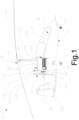
Figure 1 is a side view of a rotorcraft according to the invention; -
Figure 2 is a view from above of the rotorcraft according to the invention; -
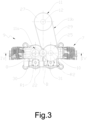
Figure 3 is a front view of some components of the rotorcraft according to the invention; -
Figure 4 is a sectional view along the plane IV - IV ofFigure 3 of some components of the rotorcraft according to the invention; -
Figure 5 is an exploded view of some components of the rotorcraft according to the invention. - With particular reference to these figures, reference numeral 1 globally indicates a rotorcraft.
- In the present discussion it has been assumed that the rotorcraft 1 is of the type of a gyrocopter in ground stationary condition.
- Therefore, the terms "horizontal" and "vertical", as well as the terms derived therefrom, must relate to the aforementioned condition.
- The rotorcraft 1 comprises at least one basic chassis 2.
- The basic chassis 2 is provided with a
cockpit 3 and with ground movement means 4 of the rotorcraft 1. - In particular, the ground movement means 4 are used during the maneuvers of the rotorcraft 1 on the ground and during take-off and landing operations. Preferably, the ground movement means 4 comprise a plurality of horizontal axis wheels.
- The rotorcraft 1 comprises:
- at least one
main rotor 5 associated with the basic chassis 2 and movable in rotation around a main axis A to generate at least one in-flight maintaining force of the rotorcraft 1; - at least one propeller 6 associated with the basic chassis 2 and movable in rotation around a secondary axis B transverse to the main axis A to generate at least one propulsion force to move the rotorcraft 1 when it is maintained in flight.
- The
main rotor 5 is mounted on a substantially verticalfirst rotation shaft 21 and associated rotatable with the basic chassis 2 at the point where thecockpit 3 is located. - The main axis A coincides with the longitudinal axis of the
first rotation shaft 21. - The
main rotor 5 comprises a plurality of main blade elements 5a mounted on amain hub 5b with which themain rotor 5 is provided. - The
main hub 5b is mounted on thefirst rotation shaft 21. - Thanks to the setting in rotation of the
first rotation shaft 21 around the main axis A, themain rotor 5 generates a force on the rotorcraft 1 which is commonly known as "lift" and which is directed in the opposite direction to the weight force. - Additionally, the rotorcraft 1 comprises an adjustment device, not shown in the figures, which is adapted to adjust the collective pitch of the blade elements 5a and through which it is possible to vary the intensity of the lift generated by the
main rotor 5. - During the take-off phase the lift allows the vertical lifting of the rotorcraft 1 and, therefore, it is usually required to have a high nominal value.
- For this reason the
main rotor 5 is set in rotation by an engine, as will be described in detail below. - During the flight phase lift is ensured, at least partly, by the autorotation of the
main rotor 5, which is set into rotation by the airflow that contacts the external surface of the main blade elements 5a during the forward movement of the rotorcraft 1 through the air. - In particular, during flight, the torque generated by the
main rotor 5 is counteracted by acenterboard 35, consisting e.g. of a rear rudder mounted on the basic chassis 2, which is affected by the airflow. - The propeller 6 is mounted on a
second rotation shaft 22 substantially horizontal and associated rotatable with the basic chassis 2. - The secondary axis B coincides with the longitudinal axis of the
second rotation shaft 22. - The propeller 6 comprises a plurality of secondary blade elements 6a mounted on a
secondary hub 6b with which the propeller 6 is provided. - The
secondary hub 6b is substantially hollow and is mounted on thesecond rotation shaft 22. - In the particular embodiment shown in the figures the propeller 6 is of the pushing type and, therefore, the
second rotation shaft 22 is positioned at the point where the tail of the rotorcraft 1 is located. - Alternative embodiments cannot however be ruled out wherein the propeller 6 is of the pulling type; in this case the
second rotation shaft 22 is positioned at the point where the nose of the rotorcraft 1 is located. - Thanks to the setting in rotation of the propeller 6 around the secondary axis B, a thrust is generated that operates on the rotorcraft 1 and allows it to move forward when in flight or during the movement thereof on the ground.
- The aforementioned thrust, commonly known as propulsion force, is directed transversely to the lift and, specifically, is directed along a substantially horizontal direction.
- As will be described in detail below, the propeller 6 is mechanically moved in rotation and is always maintained in rotation during the use of the rotorcraft 1. The rotorcraft 1 conveniently comprises at least one
engine assembly 20 associated with the basic chassis 2 and adapted to move themain rotor 5 and the propeller 6 in rotation. - According to the invention, the
engine assembly 20 comprises: - at least one first piston engine 9 for setting in rotation a
first crankshaft 8 with which theengine assembly 20 is provided, the propeller 6 being associated with thefirst crankshaft 8; - at least one second piston engine 7 for setting in rotation a
second crankshaft 10 with which theengine assembly 20 is provided, themain rotor 5 being associated with thesecond crankshaft 10. - The
first crankshaft 8 and thesecond crankshaft 10 are rotatable around a first rotational axis R1 and a second rotational axis R2, respectively, which are both substantially horizontal. - Alternative arrangements, not claimed, cannot however be ruled out wherein the
crankshafts crankshafts - The first engine 9 and the second engine 7 run independently, i.e. it is possible to operate each engine 7, 9 independently from the other engine 7, 9 and adjust the operation thereof.
- As will be described below, depending on flight requirements, the actuation and operation of the
main rotor 5 and of the propeller 6 can be adjusted separately. - According to the invention, the
engine assembly 20 comprises at least onecentral engine block 13, at least one firstlateral engine block 14 and at least one secondlateral engine block 15. - The
first crankshaft 8 is housed between the firstlateral engine block 14 and thecentral engine block 13 and thesecond crankshaft 10 is housed between the secondlateral engine block 15 and thecentral engine block 13. - The first engine 9 comprises a
first group 16 offirst cylinders 16a in which a plurality offirst pistons 16b operating thefirst crankshaft 8 are housed sliding. - The
first group 16 is associated with the firstlateral engine block 14. - Likewise, the second engine 7 comprises a
second group 18 ofsecond cylinders 18a in which a plurality ofsecond pistons 18b operating thesecond crankshaft 10 are housed sliding. - The
second group 18 is associated with the secondlateral engine block 15. - Preferably, both the
first group 16 and thesecond group 18 consist of a single set of components and are associated with the firstlateral engine block 14 and with the secondlateral engine block 15, respectively, during assembly, e.g. by means of screws, bolts or the like. - Alternative embodiments cannot however be ruled out wherein the
first group 16 and the firstlateral engine block 14 are made in a single body piece and/or wherein thesecond group 18 and the secondlateral engine block 15 are made in a single body piece. - The
first pistons 16b, as a result of the sliding thereof inside thefirst cylinders 16a, operate thefirst crankshaft 8 in rotation through corresponding first connectingrods 16c which are positioned between thefirst pistons 16b and thefirst crankshaft 8. - Similarly, the
second pistons 18b, as a result of the sliding thereof inside thesecond cylinders 18a, operate thesecond crankshaft 10 in rotation through corresponding second connectingrods 18c which are positioned between thesecond pistons 18b and thesecond crankshaft 10. - Preferably, the
first cylinders 16a and thesecond cylinders 18a are arranged horizontally, i.e. they define a substantially horizontal sliding direction of thepistons - Alternative embodiments cannot however be ruled out wherein the
first cylinders 16a and thesecond cylinders 18a are arranged vertically and wherein the sliding directions of thefirst cylinders 16a and of thesecond cylinders 18a are substantially vertical. - Conveniently, the first engine 9 comprises at least one
first head 17 for the closure of thefirst cylinders 16a which is associated with thefirst group 16. Likewise, the second engine 7 comprises at least onesecond head 19 for the closure of thesecond cylinders 18a which is associated with thesecond group 18. - Preferably, the
first head 17 and thesecond head 19 house the intake and exhaust valves, respectively, of eachfirst cylinder 16a and of eachsecond cylinder 18a, respectively. - The
first head 17 and thesecond head 19 are associated with thefirst group 16 and with thesecond group 18, respectively, during assembly e.g. by means of screws, bolts or the like. - According to the invention, the rotorcraft 1 comprises a
motion drive train 11 from theengine assembly 20 to themain rotor 5 and to the propeller 6, thedrive train 11 being associated with the basic chassis 2. - According to the invention, the
drive train 11 comprises: - at least one
first drive train 11a adapted to transmit motion from thefirst crankshaft 8 to the propeller 6; - at least one
second drive train 11b adapted to transmit motion from thesecond crankshaft 10 to themain rotor 5. - According to the invention, the
first drive train 11a comprises at least onefirst gear wheel 30, mounted on thefirst crankshaft 8, and at least onesecond gear wheel 31 meshed to thefirst gear wheel 30 and mounted on thesecond rotation shaft 22. - In alternative configurations, not claimed, the transmission of motion from the first engine 9 to the propeller 6 takes place through a keyed coupling positioned between the
first crankshaft 8 and thesecond rotation shaft 22; in other words, thefirst crankshaft 8 and thesecond rotation shaft 22 rotate around the same axis of rotation, i.e. the secondary axis B and the first rotational axis R1 are substantially coincident. - According to the invention, the
second drive train 11b comprises: - at least one driving
pulley 25 keyed to thesecond crankshaft 10; - at least one driven
pulley 27 mounted on a substantiallyhorizontal driving shaft 12, with which thesecond drive train 11b is provided; - at least one
flexible element 29 closed on itself in a loop and wound partly around the drivingpulley 25 and partly around the drivenpulley 27; - at least one
transmission unit 26 positioned between the drivingshaft 12 and thefirst rotation shaft 21. - The
transmission unit 26 allows transforming the horizontal rotary motion of the drivingshaft 12 into vertical motion, so as to allow the setting in rotation of thefirst rotation shaft 21. - For example, the
transmission unit 26 comprises e.g. bevel gears. - The
second drive train 11b conveniently comprises at least onefreewheel mechanism 28 adapted to allow decoupling themain rotor 5 from thesecond crankshaft 10. - The
freewheel mechanism 28 is positioned, e.g., between thetransmission unit 26 and thefirst rotation shaft 21 and allows decoupling thefirst rotation shaft 21 from the second engine 7. - This way, the
main rotor 5 can rotate in autorotation when flight conditions require and/or allow it. - The rotorcraft 1 conveniently comprises adjustment means 32 for adjusting the power delivered by the
engine assembly 20. - The adjustment means 32 are associated with the basic chassis 2.
- Preferably, the adjustment means 32 comprise:
- at least one
first throttle element 33 adapted to operate the first engine 9 and to adjust the power delivered by the first engine 9 after it has been operated; - at least one
second throttle element 34 adapted to operate the second engine 7 and to adjust the power delivered by the second engine 7 after it has been operated. - Precisely, the
first throttle element 33 and thesecond throttle element 34 are positioned inside thecockpit 3 and can be operated by the pilot of the rotorcraft 1. - The
first throttle element 33 can be positioned in a first configuration of use wherein the first engine 9 is off and in a plurality of second configurations of use wherein the first engine 9 is on and delivers different powers. - Likewise, the
second throttle element 34 can be positioned in a first configuration of use wherein the second engine 7 is off and in a plurality of second configurations of use wherein the second engine 7 is on and delivers different powers. - The pilot can operate the first engine 9 separately from the second engine 7 and can adjust the power delivered by them independently, depending on the needs encountered during the flight.
- For example, during the take-off phase the second engine 7 is turned on and it is made to run at high power, so that it sets the
main rotor 5 in rotation at high speed to develop the lift needed for take-off. - At the same time, the first engine 9 is driven to operate the propeller 6 in rotation.
- During the flight phase, if the first engine 9 delivers a high power, the
main rotor 5 is able to rotate in autorotation and therefore it can be useful to reduce the power of the second engine 7, or even turn it off. - In case the first engine 9 registers a fault or a blockage the pilot is able to land safely the rotorcraft 1 by means of the power delivered by the second engine 7. This way the
main rotor 5 can continue to rotate thus allowing the pilot to land the rotorcraft 1 safely. - According to an alternative embodiment of the rotorcraft 1, not shown in the figures, the adjustment means 32 comprise:
- at least one operating lever of the first engine 9 and of the second engine 7;
- at least one electronic control device to control the power delivered by the first engine 9 and by the second engine 7 when operated by the operating lever.
- In this case, the pilot operates the first engine 9 and the second engine 7 simultaneously through the operating lever and adjusts the power output thereof through the electronic control device.
- The electronic control device is of the type, e.g., of an on-board computer through which the pilot adjusts the power delivered by the first engine 9 and by the second engine 7 according to the needs and flight conditions previously described.
Claims (5)
- Rotorcraft (1) comprising:- at least one basic chassis (2);- at least one main rotor (5) associated with said basic chassis (2) and movable in rotation around a main axis (A) to generate at least one in-flight maintaining force of said rotorcraft (1), said main rotor (5) being mounted on a first rotation shaft (21);- at least one propeller (6) associated with said basic chassis (2) and movable in rotation around a secondary axis (B) transverse to said main axis (A) to generate at least one propulsion force to move said rotorcraft (1) when it is maintained in flight, said propeller (6) being mounted on a second rotation shaft (22);- at least one engine assembly (20) associated with said basic chassis (2) and adapted to move said main rotor (5) and said propeller (6) in rotation, said engine assembly (20) comprising:- at least one first piston engine (9) for setting in rotation a first crankshaft (8) with which said engine assembly (20) is provided, said propeller (6) being associated with said first crankshaft (8);- at least one second piston engine (7) for setting in rotation a second crankshaft (10) with which said engine assembly (20) is provided, said main rotor (5) being associated with said second crankshaft (10);- a motion drive train (11) from said engine assembly (20) to said main rotor (5) and to said propeller (6), said drive train (11) being associated with said basic chassis (2) and comprising:characterized by the fact that:- at least one first drive train (11a) adapted to transmit motion from said first crankshaft (8) to said propeller (6);- at least one second drive train (11b) adapted to transmit motion from said second crankshaft (10) to said main rotor (5);- said engine assembly (20) comprises at least one central engine block (13), at least one first lateral engine block (14) and at least one second lateral engine block (15), said first crankshaft (8) being housed between said first lateral engine block (14) and said central engine block (13) and said second crankshaft (10) being housed between said second lateral engine block (15) and said central engine block (13);- said first engine (9) comprises a first group (16) of first cylinders (16a) in which a plurality of first pistons (16b) operating said first crankshaft (8) are housed sliding, said first group (16) being associated with said first lateral engine block (14);- said second engine (7) comprises a second group (18) of second cylinders (18a) in which a plurality of second pistons (18b) operating said second crankshaft (10) are housed sliding, said second group (18) being associated with said second lateral engine block (15);- said first engine (9) comprises at least one first head (17) for the closure of said first cylinders (16a) associated with said first group (16);- said second engine (7) comprises at least one second head (19) for the closure of said second cylinders (18a) associated with said second group (18);- said first crankshaft (8) and said second crankshaft (10) are rotatable around a first rotational axis (R1) and a second rotational axis (R2), respectively, which are both substantially horizontal and mutually parallel;- said first drive train (11a) comprises at least one first gear wheel (30), mounted on said first crankshaft (8), and at least one second gear wheel (31) meshed to said first gear wheel (30) and mounted on said second rotation shaft (22);- said second drive train (11b) comprises:- at least one driving pulley (25) keyed to said second crankshaft (10);- at least one driven pulley (27) mounted on a substantially horizontal driving shaft (12), with which said second drive train (11b) is provided;- at least one flexible element (29) closed on itself in a loop and wound partly around said driving pulley (25) and partly around said driven pulley (27);- at least one transmission unit (26) positioned between said driving shaft (12) and said first rotation shaft (21).
- Rotorcraft (1) according claim 1, characterized by the fact that said second drive train (11b) comprises at least one freewheel mechanism (28) adapted to allow decoupling said main rotor (5) from said second crankshaft (10).
- Rotorcraft (1) according to one or more of the preceding claims, characterized by the fact that it comprises adjustment means (32) for adjusting the power delivered by said engine assembly (20), said adjustment means (32) being associated with said basic chassis (2).
- Rotorcraft (1) according to claim 3, characterized by the fact that said adjustment means (32) comprise:- at least one first throttle element (33) adapted to operate said first engine (9) and to adjust the power delivered by said first engine (9) after it has been operated;- at least one second throttle element (34) adapted to operate said second engine (7) and to adjust the power delivered by said second engine (7) after it has been operated.
- Rotorcraft (1) according to claim 3, characterized by
the fact that said adjustment means (32) comprise:- at least one operating lever of said first engine (9) and of said second engine (7);- at least one electronic control device to control the power delivered by said first engine (9) and by said second engine (7) when operated by said operating lever.
Priority Applications (1)
| Application Number | Priority Date | Filing Date | Title |
|---|---|---|---|
| EP20195366.8A EP3967606B1 (en) | 2020-09-09 | 2020-09-09 | Rotorcraft |
Applications Claiming Priority (1)
| Application Number | Priority Date | Filing Date | Title |
|---|---|---|---|
| EP20195366.8A EP3967606B1 (en) | 2020-09-09 | 2020-09-09 | Rotorcraft |
Publications (3)
| Publication Number | Publication Date |
|---|---|
| EP3967606A1 EP3967606A1 (en) | 2022-03-16 |
| EP3967606C0 EP3967606C0 (en) | 2024-01-10 |
| EP3967606B1 true EP3967606B1 (en) | 2024-01-10 |
Family
ID=73042999
Family Applications (1)
| Application Number | Title | Priority Date | Filing Date |
|---|---|---|---|
| EP20195366.8A Active EP3967606B1 (en) | 2020-09-09 | 2020-09-09 | Rotorcraft |
Country Status (1)
| Country | Link |
|---|---|
| EP (1) | EP3967606B1 (en) |
Family Cites Families (5)
| Publication number | Priority date | Publication date | Assignee | Title |
|---|---|---|---|---|
| US3721405A (en) * | 1970-05-13 | 1973-03-20 | J Jackson | Azimuthal propulsion-control system |
| ES2277476B1 (en) * | 2004-03-05 | 2008-07-01 | Industria Helicat Y Alas Giratorias, S.L. | SUSTAINABILITY SYSTEM FOR A CONVERTIBLE AIRCRAFT AND CONVERTIBLE AIRCRAFT THAT INCLUDES IT. |
| US20070095973A1 (en) * | 2005-10-27 | 2007-05-03 | Douglas Challis | Aircraft having a helicopter rotor and an inclined front mounted propeller |
| EP2947014B1 (en) * | 2014-05-23 | 2017-03-01 | Robby Moto Engineering S.r.l. | Propulsion device for helicopters |
| ITUA20162036A1 (en) * | 2016-03-25 | 2017-09-25 | Robby Moto Eng S R L | DOUBLE PROPELLER AIRCRAFT |
-
2020
- 2020-09-09 EP EP20195366.8A patent/EP3967606B1/en active Active
Also Published As
| Publication number | Publication date |
|---|---|
| EP3967606C0 (en) | 2024-01-10 |
| EP3967606A1 (en) | 2022-03-16 |
Similar Documents
| Publication | Publication Date | Title |
|---|---|---|
| EP3486168B1 (en) | Extended range tiltrotor aircraft | |
| US8256704B2 (en) | Vertical/short take-off and landing aircraft | |
| US8950698B1 (en) | Convertible compounded rotorcraft | |
| EP3201079B1 (en) | Main rotor rotational speed control for rotorcraft | |
| US8113460B2 (en) | Fast hybrid helicopter with long range and an optimized lift rotor | |
| EP2738091B1 (en) | Vertical take-off and landing (VTOL) aerial vehicle and method of operating such a VTOL aerial vehicle | |
| US8052094B2 (en) | Fast hybrid helicopter with long range with longitudinal trim control | |
| EP3495260A1 (en) | Dual rotor propulsion systems for tiltrotor aircraft | |
| US11673658B2 (en) | Rotor assemblies for scissoring propeller | |
| US20090014599A1 (en) | Convertible aerial vehicle with contra-rotating wing/rotors and twin tilting wing and propeller units | |
| KR20090057504A (en) | Vertical takeoff and landing gear with variable rotorcraft | |
| EP2394914A1 (en) | A rotorcraft with a coaxial rotor system | |
| US10787252B2 (en) | Rotorcraft having a rotary wing and an orientable propeller, and a method applied by the rotorcraft | |
| KR20100026130A (en) | Taking off and landing airplane using variable rotary wings | |
| KR20090054027A (en) | Vertical takeoff and landing gear with variable rotorcraft | |
| US9139298B2 (en) | Rotorcraft control system for rotorcraft with two or more rotor systems | |
| US12312075B2 (en) | Blade pitch coupled to propulsion system tilt | |
| CN110861770A (en) | An unmanned autogyro | |
| RU2458822C1 (en) | Vertical take-off and landing aircraft | |
| US20180086443A1 (en) | Variable ratio gearbox for a rotary wing aircraft tail rotor | |
| KR20030049796A (en) | Three-Fan Lifted Vertical Take-off and Landing Aircraft | |
| RU146302U1 (en) | SPEED COMBINED HELICOPTER | |
| EP3838751B1 (en) | Convertiplane | |
| KR20070001117U (en) | Vertical takeoff and landing machine with variable rotor blades | |
| EP3967606B1 (en) | Rotorcraft |
Legal Events
| Date | Code | Title | Description |
|---|---|---|---|
| PUAI | Public reference made under article 153(3) epc to a published international application that has entered the european phase |
Free format text: ORIGINAL CODE: 0009012 |
|
| STAA | Information on the status of an ep patent application or granted ep patent |
Free format text: STATUS: THE APPLICATION HAS BEEN PUBLISHED |
|
| AK | Designated contracting states |
Kind code of ref document: A1 Designated state(s): AL AT BE BG CH CY CZ DE DK EE ES FI FR GB GR HR HU IE IS IT LI LT LU LV MC MK MT NL NO PL PT RO RS SE SI SK SM TR |
|
| STAA | Information on the status of an ep patent application or granted ep patent |
Free format text: STATUS: REQUEST FOR EXAMINATION WAS MADE |
|
| RBV | Designated contracting states (corrected) |
Designated state(s): AL AT BE BG CH CY CZ DE DK EE ES FI FR GB GR HR HU IE IS IT LI LT LU LV MC MK MT NL NO PL PT RO RS SE SI SK SM TR |
|
| 17P | Request for examination filed |
Effective date: 20220915 |
|
| P01 | Opt-out of the competence of the unified patent court (upc) registered |
Effective date: 20230527 |
|
| GRAP | Despatch of communication of intention to grant a patent |
Free format text: ORIGINAL CODE: EPIDOSNIGR1 |
|
| STAA | Information on the status of an ep patent application or granted ep patent |
Free format text: STATUS: GRANT OF PATENT IS INTENDED |
|
| RIC1 | Information provided on ipc code assigned before grant |
Ipc: F01B 21/02 20060101ALI20230719BHEP Ipc: F01B 1/10 20060101ALI20230719BHEP Ipc: B64C 27/82 20060101ALI20230719BHEP Ipc: F02B 75/00 20060101ALI20230719BHEP Ipc: F16M 1/021 20060101ALI20230719BHEP Ipc: F02B 61/04 20060101ALI20230719BHEP Ipc: F02B 75/06 20060101ALI20230719BHEP Ipc: F02B 75/20 20060101ALI20230719BHEP Ipc: F02B 75/28 20060101ALI20230719BHEP Ipc: B64C 27/02 20060101ALI20230719BHEP Ipc: B64D 27/08 20060101AFI20230719BHEP |
|
| INTG | Intention to grant announced |
Effective date: 20230803 |
|
| GRAS | Grant fee paid |
Free format text: ORIGINAL CODE: EPIDOSNIGR3 |
|
| GRAA | (expected) grant |
Free format text: ORIGINAL CODE: 0009210 |
|
| STAA | Information on the status of an ep patent application or granted ep patent |
Free format text: STATUS: THE PATENT HAS BEEN GRANTED |
|
| AK | Designated contracting states |
Kind code of ref document: B1 Designated state(s): AL AT BE BG CH CY CZ DE DK EE ES FI FR GB GR HR HU IE IS IT LI LT LU LV MC MK MT NL NO PL PT RO RS SE SI SK SM TR |
|
| REG | Reference to a national code |
Ref country code: GB Ref legal event code: FG4D |
|
| REG | Reference to a national code |
Ref country code: CH Ref legal event code: EP |
|
| REG | Reference to a national code |
Ref country code: DE Ref legal event code: R096 Ref document number: 602020024126 Country of ref document: DE |
|
| REG | Reference to a national code |
Ref country code: IE Ref legal event code: FG4D |
|
| U01 | Request for unitary effect filed |
Effective date: 20240208 |
|
| U07 | Unitary effect registered |
Designated state(s): AT BE BG DE DK EE FI FR IT LT LU LV MT NL PT SE SI Effective date: 20240220 |
|
| P04 | Withdrawal of opt-out of the competence of the unified patent court (upc) registered |
Effective date: 20240216 |
|
| PG25 | Lapsed in a contracting state [announced via postgrant information from national office to epo] |
Ref country code: IS Free format text: LAPSE BECAUSE OF FAILURE TO SUBMIT A TRANSLATION OF THE DESCRIPTION OR TO PAY THE FEE WITHIN THE PRESCRIBED TIME-LIMIT Effective date: 20240510 |
|
| PG25 | Lapsed in a contracting state [announced via postgrant information from national office to epo] |
Ref country code: GR Free format text: LAPSE BECAUSE OF FAILURE TO SUBMIT A TRANSLATION OF THE DESCRIPTION OR TO PAY THE FEE WITHIN THE PRESCRIBED TIME-LIMIT Effective date: 20240411 |
|
| PG25 | Lapsed in a contracting state [announced via postgrant information from national office to epo] |
Ref country code: HR Free format text: LAPSE BECAUSE OF FAILURE TO SUBMIT A TRANSLATION OF THE DESCRIPTION OR TO PAY THE FEE WITHIN THE PRESCRIBED TIME-LIMIT Effective date: 20240110 Ref country code: RS Free format text: LAPSE BECAUSE OF FAILURE TO SUBMIT A TRANSLATION OF THE DESCRIPTION OR TO PAY THE FEE WITHIN THE PRESCRIBED TIME-LIMIT Effective date: 20240410 |
|
| PG25 | Lapsed in a contracting state [announced via postgrant information from national office to epo] |
Ref country code: ES Free format text: LAPSE BECAUSE OF FAILURE TO SUBMIT A TRANSLATION OF THE DESCRIPTION OR TO PAY THE FEE WITHIN THE PRESCRIBED TIME-LIMIT Effective date: 20240110 |
|
| PG25 | Lapsed in a contracting state [announced via postgrant information from national office to epo] |
Ref country code: RS Free format text: LAPSE BECAUSE OF FAILURE TO SUBMIT A TRANSLATION OF THE DESCRIPTION OR TO PAY THE FEE WITHIN THE PRESCRIBED TIME-LIMIT Effective date: 20240410 Ref country code: NO Free format text: LAPSE BECAUSE OF FAILURE TO SUBMIT A TRANSLATION OF THE DESCRIPTION OR TO PAY THE FEE WITHIN THE PRESCRIBED TIME-LIMIT Effective date: 20240410 Ref country code: IS Free format text: LAPSE BECAUSE OF FAILURE TO SUBMIT A TRANSLATION OF THE DESCRIPTION OR TO PAY THE FEE WITHIN THE PRESCRIBED TIME-LIMIT Effective date: 20240510 Ref country code: HR Free format text: LAPSE BECAUSE OF FAILURE TO SUBMIT A TRANSLATION OF THE DESCRIPTION OR TO PAY THE FEE WITHIN THE PRESCRIBED TIME-LIMIT Effective date: 20240110 Ref country code: GR Free format text: LAPSE BECAUSE OF FAILURE TO SUBMIT A TRANSLATION OF THE DESCRIPTION OR TO PAY THE FEE WITHIN THE PRESCRIBED TIME-LIMIT Effective date: 20240411 Ref country code: ES Free format text: LAPSE BECAUSE OF FAILURE TO SUBMIT A TRANSLATION OF THE DESCRIPTION OR TO PAY THE FEE WITHIN THE PRESCRIBED TIME-LIMIT Effective date: 20240110 |
|
| PG25 | Lapsed in a contracting state [announced via postgrant information from national office to epo] |
Ref country code: PL Free format text: LAPSE BECAUSE OF FAILURE TO SUBMIT A TRANSLATION OF THE DESCRIPTION OR TO PAY THE FEE WITHIN THE PRESCRIBED TIME-LIMIT Effective date: 20240110 |
|
| PG25 | Lapsed in a contracting state [announced via postgrant information from national office to epo] |
Ref country code: PL Free format text: LAPSE BECAUSE OF FAILURE TO SUBMIT A TRANSLATION OF THE DESCRIPTION OR TO PAY THE FEE WITHIN THE PRESCRIBED TIME-LIMIT Effective date: 20240110 |
|
| REG | Reference to a national code |
Ref country code: DE Ref legal event code: R097 Ref document number: 602020024126 Country of ref document: DE |
|
| PG25 | Lapsed in a contracting state [announced via postgrant information from national office to epo] |
Ref country code: SM Free format text: LAPSE BECAUSE OF FAILURE TO SUBMIT A TRANSLATION OF THE DESCRIPTION OR TO PAY THE FEE WITHIN THE PRESCRIBED TIME-LIMIT Effective date: 20240110 |
|
| PG25 | Lapsed in a contracting state [announced via postgrant information from national office to epo] |
Ref country code: CZ Free format text: LAPSE BECAUSE OF FAILURE TO SUBMIT A TRANSLATION OF THE DESCRIPTION OR TO PAY THE FEE WITHIN THE PRESCRIBED TIME-LIMIT Effective date: 20240110 |
|
| U20 | Renewal fee for the european patent with unitary effect paid |
Year of fee payment: 5 Effective date: 20240918 |
|
| PG25 | Lapsed in a contracting state [announced via postgrant information from national office to epo] |
Ref country code: SK Free format text: LAPSE BECAUSE OF FAILURE TO SUBMIT A TRANSLATION OF THE DESCRIPTION OR TO PAY THE FEE WITHIN THE PRESCRIBED TIME-LIMIT Effective date: 20240110 |
|
| PG25 | Lapsed in a contracting state [announced via postgrant information from national office to epo] |
Ref country code: SM Free format text: LAPSE BECAUSE OF FAILURE TO SUBMIT A TRANSLATION OF THE DESCRIPTION OR TO PAY THE FEE WITHIN THE PRESCRIBED TIME-LIMIT Effective date: 20240110 Ref country code: SK Free format text: LAPSE BECAUSE OF FAILURE TO SUBMIT A TRANSLATION OF THE DESCRIPTION OR TO PAY THE FEE WITHIN THE PRESCRIBED TIME-LIMIT Effective date: 20240110 Ref country code: RO Free format text: LAPSE BECAUSE OF FAILURE TO SUBMIT A TRANSLATION OF THE DESCRIPTION OR TO PAY THE FEE WITHIN THE PRESCRIBED TIME-LIMIT Effective date: 20240110 Ref country code: CZ Free format text: LAPSE BECAUSE OF FAILURE TO SUBMIT A TRANSLATION OF THE DESCRIPTION OR TO PAY THE FEE WITHIN THE PRESCRIBED TIME-LIMIT Effective date: 20240110 |
|
| PLBE | No opposition filed within time limit |
Free format text: ORIGINAL CODE: 0009261 |
|
| STAA | Information on the status of an ep patent application or granted ep patent |
Free format text: STATUS: NO OPPOSITION FILED WITHIN TIME LIMIT |
|
| 26N | No opposition filed |
Effective date: 20241011 |
|
| P05 | Withdrawal of opt-out of the competence of the unified patent court (upc) changed |
Free format text: CASE NUMBER: APP_8422/2024 Effective date: 20240220 |
|
| PG25 | Lapsed in a contracting state [announced via postgrant information from national office to epo] |
Ref country code: MC Free format text: LAPSE BECAUSE OF FAILURE TO SUBMIT A TRANSLATION OF THE DESCRIPTION OR TO PAY THE FEE WITHIN THE PRESCRIBED TIME-LIMIT Effective date: 20240110 |
|
| REG | Reference to a national code |
Ref country code: CH Ref legal event code: PL |
|
| PG25 | Lapsed in a contracting state [announced via postgrant information from national office to epo] |
Ref country code: CH Free format text: LAPSE BECAUSE OF NON-PAYMENT OF DUE FEES Effective date: 20240930 |
|
| PG25 | Lapsed in a contracting state [announced via postgrant information from national office to epo] |
Ref country code: IE Free format text: LAPSE BECAUSE OF NON-PAYMENT OF DUE FEES Effective date: 20240909 |
|
| PGFP | Annual fee paid to national office [announced via postgrant information from national office to epo] |
Ref country code: GB Payment date: 20250929 Year of fee payment: 6 |
|
| U20 | Renewal fee for the european patent with unitary effect paid |
Year of fee payment: 6 Effective date: 20250929 |
|
| PG25 | Lapsed in a contracting state [announced via postgrant information from national office to epo] |
Ref country code: CY Free format text: LAPSE BECAUSE OF FAILURE TO SUBMIT A TRANSLATION OF THE DESCRIPTION OR TO PAY THE FEE WITHIN THE PRESCRIBED TIME-LIMIT; INVALID AB INITIO Effective date: 20200909 |
|
| PG25 | Lapsed in a contracting state [announced via postgrant information from national office to epo] |
Ref country code: HU Free format text: LAPSE BECAUSE OF FAILURE TO SUBMIT A TRANSLATION OF THE DESCRIPTION OR TO PAY THE FEE WITHIN THE PRESCRIBED TIME-LIMIT; INVALID AB INITIO Effective date: 20200909 |