EP3966887B1 - Nested annular metal-air cell and systems containing same - Google Patents
Nested annular metal-air cell and systems containing same Download PDFInfo
- Publication number
- EP3966887B1 EP3966887B1 EP20728608.9A EP20728608A EP3966887B1 EP 3966887 B1 EP3966887 B1 EP 3966887B1 EP 20728608 A EP20728608 A EP 20728608A EP 3966887 B1 EP3966887 B1 EP 3966887B1
- Authority
- EP
- European Patent Office
- Prior art keywords
- electrode
- oxidant
- cell
- fuel
- cells
- Prior art date
- Legal status (The legal status is an assumption and is not a legal conclusion. Google has not performed a legal analysis and makes no representation as to the accuracy of the status listed.)
- Active
Links
Images




Classifications
-
- H—ELECTRICITY
- H01—ELECTRIC ELEMENTS
- H01M—PROCESSES OR MEANS, e.g. BATTERIES, FOR THE DIRECT CONVERSION OF CHEMICAL ENERGY INTO ELECTRICAL ENERGY
- H01M12/00—Hybrid cells; Manufacture thereof
- H01M12/04—Hybrid cells; Manufacture thereof composed of a half-cell of the fuel-cell type and of a half-cell of the primary-cell type
- H01M12/06—Hybrid cells; Manufacture thereof composed of a half-cell of the fuel-cell type and of a half-cell of the primary-cell type with one metallic and one gaseous electrode
-
- H—ELECTRICITY
- H01—ELECTRIC ELEMENTS
- H01M—PROCESSES OR MEANS, e.g. BATTERIES, FOR THE DIRECT CONVERSION OF CHEMICAL ENERGY INTO ELECTRICAL ENERGY
- H01M12/00—Hybrid cells; Manufacture thereof
- H01M12/08—Hybrid cells; Manufacture thereof composed of a half-cell of a fuel-cell type and a half-cell of the secondary-cell type
-
- H—ELECTRICITY
- H01—ELECTRIC ELEMENTS
- H01M—PROCESSES OR MEANS, e.g. BATTERIES, FOR THE DIRECT CONVERSION OF CHEMICAL ENERGY INTO ELECTRICAL ENERGY
- H01M50/00—Constructional details or processes of manufacture of the non-active parts of electrochemical cells other than fuel cells, e.g. hybrid cells
- H01M50/10—Primary casings; Jackets or wrappings
- H01M50/102—Primary casings; Jackets or wrappings characterised by their shape or physical structure
- H01M50/107—Primary casings; Jackets or wrappings characterised by their shape or physical structure having curved cross-section, e.g. round or elliptic
-
- H—ELECTRICITY
- H01—ELECTRIC ELEMENTS
- H01M—PROCESSES OR MEANS, e.g. BATTERIES, FOR THE DIRECT CONVERSION OF CHEMICAL ENERGY INTO ELECTRICAL ENERGY
- H01M50/00—Constructional details or processes of manufacture of the non-active parts of electrochemical cells other than fuel cells, e.g. hybrid cells
- H01M50/20—Mountings; Secondary casings or frames; Racks, modules or packs; Suspension devices; Shock absorbers; Transport or carrying devices; Holders
- H01M50/204—Racks, modules or packs for multiple batteries or multiple cells
- H01M50/207—Racks, modules or packs for multiple batteries or multiple cells characterised by their shape
- H01M50/213—Racks, modules or packs for multiple batteries or multiple cells characterised by their shape adapted for cells having curved cross-section, e.g. round or elliptic
-
- H—ELECTRICITY
- H01—ELECTRIC ELEMENTS
- H01M—PROCESSES OR MEANS, e.g. BATTERIES, FOR THE DIRECT CONVERSION OF CHEMICAL ENERGY INTO ELECTRICAL ENERGY
- H01M50/00—Constructional details or processes of manufacture of the non-active parts of electrochemical cells other than fuel cells, e.g. hybrid cells
- H01M50/50—Current conducting connections for cells or batteries
- H01M50/543—Terminals
- H01M50/552—Terminals characterised by their shape
- H01M50/559—Terminals adapted for cells having curved cross-section, e.g. round, elliptic or button cells
-
- Y—GENERAL TAGGING OF NEW TECHNOLOGICAL DEVELOPMENTS; GENERAL TAGGING OF CROSS-SECTIONAL TECHNOLOGIES SPANNING OVER SEVERAL SECTIONS OF THE IPC; TECHNICAL SUBJECTS COVERED BY FORMER USPC CROSS-REFERENCE ART COLLECTIONS [XRACs] AND DIGESTS
- Y02—TECHNOLOGIES OR APPLICATIONS FOR MITIGATION OR ADAPTATION AGAINST CLIMATE CHANGE
- Y02E—REDUCTION OF GREENHOUSE GAS [GHG] EMISSIONS, RELATED TO ENERGY GENERATION, TRANSMISSION OR DISTRIBUTION
- Y02E60/00—Enabling technologies; Technologies with a potential or indirect contribution to GHG emissions mitigation
- Y02E60/10—Energy storage using batteries
Definitions
- the present disclosure is generally related to electrochemical metal-air cells having nested electrodes provided in an annular configuration, and systems that contain such cells.
- Metal-air cells typically include a fuel electrode at which metal fuel is oxidized, an oxidant electrode at which an oxidant (i.e., oxygen from the air) is reduced, and an ionically conductive medium therebetween for providing ion conductivity between the fuel and oxidant electrodes.
- a wound, rolled, folded, or otherwise compacted configuration may be utilized for enhancing cell space management and arrangement.
- multiple layers are formed that include the fuel electrode, the oxidant electrode, and the ionically conductive medium. Examples of such cells are disclosed in U.S. Patent Nos. 8,309,259 and 8,895,197 .
- EP1723687 discloses a fluid regulating microvalve assembly for use to control fluid flow to a fluid consuming electrode, such as an oxygen reduction electrode, in an electrochemical cell
- the microvalve assembly includes a stationary valve body comprising a polymer, elastomer or rubber having an aperture and a microactuator movable from a first position where the microvalve body aperture is closed to fluid flow to at least a second position where fluid is able to pass through the microvalve body aperture.
- an electrochemical cell as set out in the first of the appending independent claims.
- a system as set out in the second of the appending independent claims.
- an electrochemical cell including: an oxidant electrode for absorbing gaseous oxidant and a fuel electrode for receiving a metal fuel .
- the oxidant electrode has one or more active materials for reducing the gaseous oxidant.
- the cell also includes a liquid ionically conductive medium, that is contained by the oxidant electrode, for conducting ions for supporting electrochemical reactions at the fuel electrode and the oxidant electrode.
- the oxidant electrode and the fuel electrode are each configured in annular form, and the fuel electrode and the oxidant electrode are nested in the cell.
- a system including a sealed container and a plurality of electrochemical cells.
- Each cell includes: an oxidant electrode for absorbing gaseous oxidant and a fuel electrode for oxidizing a metal fuel.
- the oxidant electrode has one or more active materials for reducing the gaseous oxidant.
- the oxidant electrode and the fuel electrode are each configured in annular form, and the oxidant electrode and the fuel electrode are nested.
- a liquid ionically conductive medium for conducting ions for supporting electrochemical reactions at the fuel electrode and the oxidant electrode.
- the sealed container contains the plurality of electrochemical cells therein.
- Each cell may include an oxidant electrode (e.g., an air cathode) and a fuel electrode (e.g., an anode).
- oxidant electrode e.g., an air cathode
- fuel electrode e.g., an anode
- a series of permeable bodies, screens, or current collectors may be provided as part of the fuel electrode.
- An oxygen evolution (or oxygen evolving) electrode may also be provided in the cells, e.g., to act as a charging electrode.
- the fuel electrode may be nested within the oxidant electrode, or vice versa.
- a second oxidant electrode may be included in the cell(s).
- An ionically conductive medium or electrolyte may be contained in the cell.
- Each cell may optionally have its own cell housing, formed by either the air cathode itself or an external housing.
- an air space or pocket may be formed in a cell via an oxidant electrode.
- the container may contain the cells such that they are surrounded by air or a liquid ionically conductive medium/electrolyte.
- the container may include a compartment that is sealed (e.g., via a lid or a cover) to contain the cells therein. Additional features shall be understood by the Figures and description of embodiments provided below.
- first electrode is used interchangeably with fuel electrode and/or anode in this disclosure.
- second electrode is used interchangeably with oxidant electrode.
- oxidant electrode is used interchangeably with oxidant electrode, oxidant reducing electrode, oxidant reduction electrode, air electrode, and/or air cathode.
- the first and second electrodes are electrodes of opposite polarity, e.g., the first electrode has an anodic potential to oxide its active reactant during standard discharge and a cathodic potential to reduce an oxidized species back to the active reactant during standard charge, and the second electrode does the opposite on its active reactant.
- ionically conductive medium may refer to an electrolyte, i.e., ionically conductive liquid electrolyte, liquid ionically conductive medium, and/or an aqueous ionically conductive medium, and such terms may be used interchangeably throughout this disclosure.
- FIG. 1A is a schematic overhead view of an electrochemical metal-air cell 10 in accordance with an embodiment of this disclosure.
- the cell 10 includes at least a first electrode 12 and a second electrode 14.
- the first electrode(s) is a fuel electrode 12 for receiving and oxidizing a metal fuel
- the second electrode 14 is an oxidant electrode 14 (or oxidant reduction electrode) that has one or more active materials for reducing a gas oxidant (e.g., oxygen in air).
- a gas oxidant e.g., oxygen in air
- the fuel electrode 12 acts or functions as an anode where the fuel of the cell or system is oxidized so that electrons given off by the metal fuel, as the fuel is oxidized at the fuel electrode 12, flows to an external load L, and the oxidant electrode 14 acts or functions as an air cathode for absorbing and reducing gaseous oxidant (e.g., oxygen in air) and is configured to receive electrons from the external load L.
- the fuel electrode 12 of each cell 10 has fuel in the form of solid fuel electrodeposited on an electroconductive electrode body, but may be generally referred to as the anode, even when no fuel is present.
- an ionically conductive medium 16 is contained by the oxidant electrode 14, for conducting ions for supporting electrochemical reactions at the fuel electrode(s) 12 and the oxidant electrode 14.
- the fuel electrode 12 includes an internal surface 13 that faces the ionically conductive medium 16 and an external surface 15 that faces the oxidant electrode 14.
- the oxidant electrode 14 includes an internal surface 17 or cell side or face (e.g., facing and contacting electrolyte or ionically conductive medium 16 within the cell 10) that faces the fuel electrode 12 and an external surface 19, or air side or face, that is facing and exposed to oxidant (oxygen or air).
- the external surface 19 of the oxidant electrode 14 may be an outermost surface of the cell 10.
- the fuel electrode 12 is nested within the oxidant electrode 14.
- the oxidant electrode 14 is nested within the fuel electrode 12.
- the term “nested” refers to an electrode/object being placed or stored one inside the other; e.g., in FIG. 1A , the fuel electrode 12 is arranged in a hierarchical structure from a center C of the cell 10 such that it is provided inside the oxidant electrode 14, i.e., the fuel electrode is nested within the oxidant electrode 14.
- an outer wall of the cell 10 is constituted by the oxidant electrode 14. Accordingly, the oxidant electrode 14 forms the primary housing structure for the cell 10. In this configuration, the cell 10 may function in ambient conditions, with no need for active air control.
- the oxidant electrode 14 and the fuel electrode 12 are spaced apart to form a gap or distance D1 therebetween.
- the permeable bodies 12A... 12n may be current collectors or screens plated with a metal (e.g., zinc) and spaced apart from one another.
- the fuel electrode 12 or anode, and/or its permeable bodies 12A... 12n may be a woven screen, a perforated metal sheet, or an expanded metal screen, for example, and may be corrugated or pleated.
- a single fuel electrode/anode in the cell is not intended to be limiting.
- cell 10 may include a charging electrode 18.
- the charging electrode is an oxygen evolution electrode 18 (or oxygen evolving electrode), also referred to herein as OEE 18.
- the OEE 18 may also have an annular shape or form geometrically similar to the fuel electrode 12 and the oxidant electrode 14.
- the OEE 18 may be nested within the oxidant electrode 14, in accordance with an embodiment.
- the oxygen evolution electrode 18 is provided between the fuel electrode 12 and the oxidant electrode 14.
- the fuel electrode 12 and OEE 18 may be immersed in the ionically conductive medium 16.
- the OEE 18 includes an internal surface 21 that faces the fuel electrode 12 and an external surface 23 that faces the oxidant electrode 14.
- the OEE 18 and the oxidant electrode 14 may be spaced apart by a distance D2.
- a controller or circuit is used to control the modes and operation of the cell, as described in greater detail below.
- the controller is configured to apply an external voltage (potential) or current source between the oxidant electrode 14 and the OEE 18 to provide a driving force for oxygen reduction on the oxidant electrode 14 and oxygen evolution on the OEE 18.
- the oxygen evolution electrode 18 may be provided between the oxidant electrode 14 and a first permeable body in the series.
- the first permeable body of the fuel electrode 12 is defined as the permeable body that is closest to the oxidant electrode 14 in the series when the series of permeable bodies is nested within the oxidant electrode 14.
- the first permeable body of the fuel electrode 12 is body 12A, and the OEE 18 is provided between permeable body 12A and the oxidant electrode 14.
- a top portion (or “top”) 40 or cover and/or a bottom portion 20 may be provided as part of the cell 10, which are generally depicted in FIG. 1C .
- the top 40 and/or bottom 20 may be provided in the form of a retainer or a cap.
- the top 40 and/or bottom 20 may include a plastic or molded cap that is placed on either ends of the annular electrode assembly.
- the top 40 and/or bottom 20 of the cell 10 may be used to provide an electrical connection from the cell assembly to a power supply PS, a load L, or other cell assemblies, using electrical leads or terminals.
- the top 40 and/or bottom 20 may include electrode terminals for connecting each first / fuel electrode 12, OEE 18, and each second / oxidant electrode 14.
- the cell terminals may be referred to in conventional nomenclature as the negative and positive terminals, denoting their usage during standard discharging. However, it should be understood that the polarity may be reversed when current is applied thereto for charging operations, and thus reference to the negative and positive terminals is not intended to be limiting for all operational modes.
- a negative terminal may be provided at one end of the cell and a positive terminal may be provided at an opposite end of the cell.
- the bottom 20 of a cell 10 may be used to electrically connect the oxidant electrode 14 and the top 40 of the cell 10 may be used to electrically connect the fuel electrode 12 or anode and OEE 18, or vice versa.
- the anode 12 and cathode 14 may be connected to the top 40.
- one or more bus bars may be contained in the top 40 and/or bottom 20 to connect all the electrodes (12, 14, 18) together for collection or application of current from their respective terminals.
- the fuel electrodes 12 (and optionally OEEs 18) may be attached to a first bus bar and the oxidant electrodes 14 may be attached to a separate, second bus bar.
- the bus bar for the fuel electrodes 12 may be connected directly or indirectly to a negative terminal and the bus bar for the oxidant electrodes 14 may be connected directly or indirectly to a positive terminal.
- top 40 and bottom 20 may be plastic caps which may be attached to the electrode assembly(ies), e.g., with potting epoxy. Plastic injection overmolding could also be used for any of the electrodes.
- the anode 12 and OEE 18 could also be captured in a metal housing utilizing a rubber or thermoplastic insulator to prevent electrolyte transmission to the respective terminals.
- FIG. 2A is a schematic overhead view of an electrochemical metal-air cell 10A in accordance with another embodiment; FIG. 2B shows a perspective view of this cell 10A.
- Cell 10A includes several features as previously described with respect to cell 10. For purposes of clarity and brevity, like elements and components throughout all of the Figures are labeled with same designations and numbering as discussed with reference to FIGS. 1A-1C , for example. Thus, although not discussed entirely in detail herein, one of ordinary skill in the art should understand that various features associated with the cells and systems described throughout the Figures are similar to those features previously discussed. Additionally, it should be understood that the features shown in each of the individual figures is not meant to be limited solely to the illustrated embodiments. That is, the features described throughout this disclosure may be interchanged and/or used with other embodiments than those they are shown and/or described with reference to.
- Cell 10A of FIGS. 2A-2B includes at least first and second electrodes, i.e., an oxidant electrode 14 and a fuel electrode 12, both of annular configuration.
- the fuel electrode 12 is nested within the oxidant electrode 14, much like the configuration of FIG. 1 .
- ionically conductive medium 16 is contained by the oxidant electrode 14, for conducting ions for supporting electrochemical reactions at the fuel electrode(s) 12 and the oxidant electrode 14.
- cell 10A may include an oxygen evolution electrode 18.
- the oxygen evolution electrode 18 may have an annular shape or form geometrically similar to the fuel electrode 12 and the oxidant electrode 14.
- the OEE 18 may be nested within the oxidant electrode 14, in accordance with an embodiment.
- the fuel electrode 12 and OEE 18 may be immersed in the ionically conductive medium 16. As shown in FIG. 1 , in one embodiment, the oxygen evolution electrode 18 is provided between the fuel electrode 12 and the oxidant electrode 14. The oxidant electrode 14 and the fuel electrode 12 may be spaced apart to form a gap or distance (D1) therebetween. The OEE 18 and the oxidant electrode 14 may be spaced apart by a distance (D2).
- the fuel electrode 12 of cell 10A may include multiple permeable bodies (i.e., 12A, 12B... 12n), in accordance with an embodiment.
- cell 10A of FIG. 2A , 2B further includes a cell housing 22 configured to contain the oxidant electrode 14, the fuel electrode 12, and the ionically conductive medium 16 therein.
- the cell housing 22 is an external container that is provided around the assembly of electrodes.
- the cell housing 22 may have any construction or configuration, and the illustrated housing 22 is not intended to be limiting.
- the housing 22 has an annular or cylindrical configuration with an outer circumferential side wall, a top portion (not shown) and a bottom portion (not shown) to house the electrodes 12, 14, 18 therein.
- the side wall of the housing 22 has an internal diameter that is larger than an external diameter of the oxidant electrode 14, so that the inner wall side of the external container / cell housing 22 is spaced apart from external surface 19 of the oxidant electrode 14 by a gap, a space, or distance D3 therebetween. This distance D3 or gap provides an air space 24 between the oxidant electrode 14 and external container 22.
- the housing 22 may have an air flow receiving opening or channel at its top portion, bottom portion, or both, to allow air flow (ambient air) into the air space 24.
- top portion and/or bottom portion of housing 22 of cell 10A may be similar to top 40 and/or bottom 20 as described above with respect to FIG. 1C , and configured to provide an electrical connection from the cell assembly to a power supply PS, a load L, or other cell assemblies, using electrical leads or terminals.
- the top 40 and/or bottom 20 in cell 10A may include the air flow receiving opening or channel for inputting and/or outputting air with respect to air space 24.
- FIG. 3 is a schematic overhead view of an electrochemical metal-air cell 10B in accordance with yet another embodiment of this disclosure.
- Cell 10B includes several features as previously described with respect to cell 10.
- like elements and components throughout all of the Figures are labeled with same designations and numbering as discussed with reference to FIGS. 1A-1C , for example.
- FIGS. 1A-1C for example.
- Cell 10B of FIG. 3 includes at least first and second electrodes, i.e., an oxidant electrode 14 and a fuel electrode 12, both of annular configuration.
- the fuel electrode 12 is nested within the oxidant electrode 14, much like the configuration of FIG. 1 .
- cell 10A may include an oxygen evolution electrode 18.
- the oxygen evolution electrode 18 may have an annular shape or form geometrically similar to the fuel electrode 12 and the oxidant electrode 14.
- the OEE 18 may be nested within the oxidant electrode 14, in accordance with an embodiment. As shown in FIG. 1 , in one embodiment, the oxygen evolution electrode 18 is provided between the fuel electrode 12 and the oxidant electrode 14.
- the oxidant electrode 14 and the fuel electrode 12 may be spaced apart to form a gap or distance (D1) therebetween.
- the OEE 18 and the oxidant electrode 14 may be spaced apart by a distance (D2).
- the fuel electrode 12 of cell 10A may include multiple permeable bodies (i.e., 12A, 12B... 12n), in accordance with an embodiment.
- FIG. 3 shows first and second anode / permeable bodies 12A and 12B provided as part of fuel electrode 12, in accordance with one embodiment.
- These bodies 12A and 12B may be screens or sheets, for example, provided in an essentially cylindrical configuration.
- using two or more anode bodies may help manage maintenance of the cell to avoid out of service time, for example.
- Cell 10B of FIG. 3 further includes an additional oxidant electrode 26. More specifically, in the configuration of FIG. 3 , the oxidant electrode 14 is a first oxidant electrode, and a second oxidant electrode 26 is nested within the electrode assembly.
- the second oxidant electrode 26 may be provided as an "inner" electrode of the electrode assembly, such that it is arranged in hierarchical structure to be closer to a center C of the cell 10 relative to the other electrodes 12, 14, and 18.
- the first oxidant electrode 14 acts as an "outer electrode” with respect to the inner, second oxidant electrode 26, resulting in the donut-like configuration shown in FIG. 3 , when viewed from the top of the cell, for example.
- the second oxidant electrode 26 may be configured in annular form and nested within the fuel electrode 12.
- the second oxidant electrode 26 forms an inner air space 28 of diameter D5 to contain and/or receive air therein. While the size of diameter D5 is not intended to be limiting, in one exemplary embodiment, D5 may be at least approximately fifty millimeters (50 mm) smaller in diameter in relation to an inner diameter of the outer air cathode / oxidant electrode 14. In an embodiment, the minimum diameter D5 of second oxidant electrode 26 is approximately seventy-five millimeters (75 mm).
- the second oxidant electrode 26 includes an internal surface 25 that faces a center C of the cell 10B and is exposed to air within the air space 28, as well as an external surface 27 that faces the ionically conductive medium 16 and fuel electrode 12.
- the internal surface 25 may be configured to receive and/or contain air (e.g., atmospheric air) therein such that second oxidant electrode 26 functions as an air cathode for absorbing and reducing gaseous oxidant (e.g., oxygen in air).
- the second oxidant electrode 26 and the fuel electrode 12 are spaced apart to form a gap or distance D4 therebetween.
- Liquid ionically conductive medium 16 is contained between the first oxidant electrode 14 and the second oxidant electrode 26, for conducting ions for supporting electrochemical reactions at the fuel electrode(s) 12 and the oxidant electrode 14 of the electrode assembly provided therebetween.
- the fuel electrode 12 and OEE 18 may be immersed in the ionically conductive medium 16.
- This second oxidant electrode 26 as added to the cell 10B further increases the air cathode surface area, while reducing the volume of ionically conductive medium 16 therein. This significantly increases the C-rate (i.e., the battery's current handling capability, or the constant current charge rate or discharge rate at which the battery / cell sustains for a particular period of time) of the cell 10B.
- C-rate i.e., the battery's current handling capability, or the constant current charge rate or discharge rate at which the battery / cell sustains for a particular period of time
- top portion and/or bottom portion of cell 10B may be similar to top 40 and/or bottom 20 as described above with respect to FIG. 1C , and configured to provide an electrical connection from the cell assembly to a power supply PS, a load L, or other cell assemblies, using electrical leads or terminals.
- the top 40 and/or bottom 20 in cell 10B may include the air flow receiving opening or channel for inputting and/or outputting air with respect to air space 28.
- the cells 10, 10A, and 10B as described with reference to FIGS. 1A-3 provide an oxidant electrode 14 as part of a nested set of electrodes, thereby making the air electrode 14 the largest electrode in the cell, which improves current density. Further, providing the electrodes (e.g., 12, 14, 18) in annular form avoids issues with edge effects at corners that are typical of rectangular or planar electrodes.
- cells may be sized within a range of approximately 0.5 L (Liters) to approximately 20 L (both inclusive). In another embodiment, the size of the cells may be within a range of approximately 1.0 L (Liters) to approximately 5.0 L (both inclusive).
- some cell dimension targets for 1.3 L and 5L cells are summarized in the following table: Summary of prototypes Outside Diameter (mm) Cathode Cathode Cathode OEE Anode Height (mm) Thickness (mm) 1.3L 110 100 85 140 1.2 5L 175 165 150 225 1.2
- the spacing (distances D1, D2, etc.) between parts and electrodes of the illustrative cells in FIGS. 1A , 2 , and 3 are not limited.
- the chart below provided exemplary distances for D1, D2, D3, D4, and D5 as shown in FIGS. 1A-3 , for a cell 10 of 5.0L: Example Dimensions (mm) for Figs 1A , 2 , 3 - Based off of 5L option described above D1 D2 D3 D4 D5 Fig 1A 12 4 Fig 2 2 Fig 3 15 125
- FIG. 4 is a schematic overhead view of a system 100A containing multiple electrochemical metal-air cells (e.g., cells 10) therein, in accordance with an embodiment of this disclosure.
- the system 100A includes a container 30 or housing for holding and containing multiple (i.e.,. more than two) electrochemical cells.
- the container 30 includes a cell chamber 31 and may be designed to be a sealed container (e.g., via a lid or cover and any optional seals, which are described later).
- a liquid ionically conductive medium 16 for conducting ions for supporting electrochemical reactions at the fuel electrode 12 and the oxidant electrode 14 of the cells therein is also part of system 100A; in particular, in this illustrative embodiment, the ionically conductive medium 16 is contained within each of the cells 10 (e.g., by oxidant electrode 14). As described below, container 30 may help regulate the atmosphere and air flow to the cells 10, and may include safety features.
- system 100A may include cells 10A or 10B in its container 30.
- cells 10A or 10B may be included in the system. Indeed, in certain applications, a large two-dimensional array of parallel electrochemical cells can be created to provide for increased power output.
- the cells may be in series. In some embodiments, the cells may be staggered. The illustrated embodiment is not intended to be limiting in any way and is merely an example.
- each cell 10 in system 100A includes an oxidant electrode 14 for absorbing gaseous oxidant and has one or more active materials for reducing the gaseous oxidant, a fuel electrode 12 for oxidizing a metal fuel, an OEE 18 nested therebetween the fuel electrode 12 and oxidant electrode 14 for charging the cell 10.
- the cells 10 of system 100A have a liquid ionically conductive medium 16 for conducting ions for supporting electrochemical reactions at the fuel electrode 12 and the oxidant electrode 14.
- the cells 10 have the liquid ionically conductive medium 16 contained by the oxidant electrode 14. As shown in FIG.
- each oxidant electrode 14 has its interior surface 17 facing and contacting the electrolyte or ionically conductive medium 16 within the cell 10, and its exterior surface 19 facing and exposed to oxygen or air in cell chamber 31.
- the ionically conductive medium 16 may be contained by the cell chamber 31 of container 30.
- the oxidant electrode 14, OEE 18, and the fuel electrode 12 of the cells 10 are configured in annular form.
- each of the cells 10 have the fuel electrode 12 and OEE 18 nested within the oxidant electrode 14.
- the container 30 contains all of the electrochemical cells 10 therein and supports the components of the electrochemical cell system 100A.
- the container 30 is a sealed container. That is, container 30 may include a lid 35 (see FIG. 7 ), cover portion, or other device that connects to walls of a lower body of container 30, to removably, releasably, and sealingly engage the container 30 to enclose the cells 10 therein.
- the configuration of the container 30 and lid 35 is not intended to be limiting or limited to the exemplary depiction as shown in the drawings, including that of FIG. 7 , and/or the number of cells 10 that may be contained in a container 30 and/or system 100A. Rather, the body of container 30 is designed to include at least one side wall and a bottom, like bottom 38 shown in FIG. 6 .
- the body of the container 30 may be annular, circular, rectangular, polygonal, cylindrical or other shapes configured to include an internal cell chamber 31 for receipt of multiple cells 10 therein.
- One or more seals or gaskets may be optionally provided between the lid and body of container 30 to further seal the cell chamber 31.
- the lid may also include one or more features, e.g., gaskets, designed to connect with and/or seal with the cells 10 such that any gases or fluids, such as an electrolyte or liquid ionically conductive medium 16 within cells 10, are prevented from leaking out of the system 100A and/or into air space 32.
- gaskets designed to connect with and/or seal with the cells 10 such that any gases or fluids, such as an electrolyte or liquid ionically conductive medium 16 within cells 10, are prevented from leaking out of the system 100A and/or into air space 32.
- the cell chamber 31 of sealed container 30 contains air and forms an air space 32 therein to surround the cells 10.
- the container 30 may have an air flow receiving opening or channel in one or more of its walls, including its lid, to allow flow of air (ambient air) into the air space 32 of cell chamber 31.
- the lid may include one or more openings therein to act as an oxidizer input for the electrochemical cells 10 contained therein.
- FIGS. 5 and 6 show another system 100B containing multiple electrochemical metal-air cells in accordance with another embodiment of this disclosure.
- the system 100B includes a container 30 or housing that has a cell chamber 31 for holding and containing and multiple (i.e.,. more than two) electrochemical cells in the chamber 31.
- the container 30 may be a sealed container (e.g., via a lid or cover and any optional seals).
- the container 30 contains all of the electrochemical cells therein and supports the components of the electrochemical cell system 100A.
- the body of the container 30 may be annular, circular, rectangular, polygonal, or other shapes configured to receive multiple cells 10 therein.
- each oxidant electrode 14 may be provided as a most internal layer of in the assembly of electrodes within each cell 10C.
- support tabs may extend from an exterior surface of the bottom 20 of each cell 10C, for placement against the inner surface of bottom 38, in order to space the cells 10C therefrom and allow them to float within the ionically conductive medium 16.
- the lid (not shown) of the container 30 may include one or more structures that connect with the cells 10C in order to suspend them within the container 30.
- the electrode assembly 10 is configured to hang from a top (lid) of the sealed container 30 via external contacts provided by terminals.
- a bracket, a barrier, a wall, or other structure may be provided in the container 30 for connecting with the cells 10C to removably secure them in place within the container 30.
- system 100B may include an air flow generator 34 that is associated with the sealed container 30 to force atmospheric air (from outside of the container 30) into air spaces 28A of the cell 10C, to deliver air to internal surfaces 17A of the oxidant electrodes 14 of each of the electrochemical cells 10C contained therein.
- the generator 14 may be a fan provided in the lid, for example.
- OEE and anode electrode assemblies may function within the annular air cathode “container” for specific cycling purposes.
- the following description relates to different features of the electrodes provided within a cell, that may apply to cells 10, 10A, and/or 10B, as well as cells within systems 100A and/or 100B.
- Fuel electrode 12 - Several features of fuel electrode 12 (or electrodes 12A, 12B, ...12n) have been previously described. As noted, fuel electrode 12 is of generally annular configuration. Fuel electrode 12 may have one or more electroconductive screens, meshes, or bodies on which the metal fuel may be deposited or otherwise collected. In some embodiments, the fuel electrode 12 may include a porous structure with a three-dimensional network of pores, a mesh screen, a plurality of mesh screens (permeable bodies) isolated from one another, or any other suitable electrode. The fuel electrode 12 may include a current collector, which may be a separate element, or the body on which the fuel is received may be electroconductive and thus also be the current collector.
- a current collector which may be a separate element, or the body on which the fuel is received may be electroconductive and thus also be the current collector.
- the fuel electrode 12 is laminated, bonded, or attached to a backing that provides the external surface 15 of the fuel electrode 12.
- this backing may be liquid impermeable or essentially impermeable to the ionic liquid 16 to prevent it from permeating outwardly through the fuel electrode 12 via its external surface 15.
- the backing is also impermeable to air, and particularly oxygen or other oxidant, to prevent any undesirable parasitic reaction, such as oxidant reduction in the presence of the fuel oxidation that occurs at the electrode during discharge.
- the metal fuel may be of any type, and may be electrodeposited, absorbed, physically deposited, or otherwise provided on or constituting the fuel electrode 12.
- the fuel may be of any metal, including alloys or hydrides thereof.
- the fuel may comprise one or more of zinc, iron, aluminum, magnesium, gallium, manganese, vanadium, lithium or any other metal.
- the term metal fuel refers broadly to any fuel comprising a metal, including elemental metal, metal bonded in a molecule, metal alloys, metal hydrides, etc.
- the oxidant electrode 14 generally includes a porous body covered on the outer side by a gas permeable layer through which an oxidizer may diffuse, but the electrolyte may not pass through. That is, the layer is gas permeable, but not permeable by the electrolyte (i.e., it is gas permeable but not liquid permeable). As an option, the porous body may also be covered on the inner side by a liquid permeable layer through which the electrolyte may pass through so that the electrolyte may contact the porous body.
- the porous body of the oxidant electrode 14 has a high surface area and comprises a catalyst material that has a high activity for an oxidizer reduction reaction.
- the oxidant electrode 14 may be a passive or "breathing" cathode that is passively exposed to an oxidizer source (typically oxygen present in ambient air) and absorbs the oxidizer for consumption in the electrochemical cell reactions. That is, the oxidizer, typically oxygen, will permeate from the ambient air into the oxidant electrode 14. Thus, the oxidizer need not be actively pumped or otherwise directed to the cathode, such as via an inlet.
- an oxidizer source typically oxygen present in ambient air
- any part of the oxidant electrode 14 by which the oxidizer is absorbed or otherwise permeates or contacts the oxidant electrode 14 may be generically referred to as an "input.”
- the term input may broadly encompass all ways of delivering oxidizer to the cathode (and that term may similarly be used with reference to any way of delivering fuel to the anode).
- the oxidant electrode 14 may be configured to absorb air or other gaseous oxidants exposed to its external surface 19 or another constituent portion thereof in a manner described below. While in some embodiments the oxidant electrode 14 is configured to receive ambient air, contained sources of oxidants may additionally or alternatively be utilized. Thus, where used herein, air refers to any gaseous oxidant source. When air is exposed to the external surface 19, the oxidant electrode 14 is configured to absorb gaseous oxygen (or another oxidant) for reduction of the oxygen during discharge of the cell 10.
- Some portions of the oxidant electrode 14 may be made porous to provide gaseous oxygen diffusion from the air side of the oxidant electrode 14 to reaction sites within the oxidant electrode 14 and to provide ionic conductivity for reactants and reaction products on the side of the oxidant electrode 14 facing the ionic liquid 16. It may be appreciated that a number of configurations of the oxidant electrode 14 are possible.
- the oxidant electrode 14 includes a catalyst material, such as manganese oxide, nickel, pyrolyzed cobalt, activated carbon, platinum, or any other catalyst material or mixture of materials with high oxygen reduction activity in the electrolyte for catalyzing reduction of the oxidizer.
- the porous body of the oxidant electrode 14 may comprise the catalyst material.
- any number of ionically conductive mediums may be utilized herein in the electrochemical cell 10.
- the ionically conductive medium 16 comprises an ionic liquid
- the ionic liquid may be of any type, including room temperature ionic liquids, and including but not limited to the examples disclosed in U.S. Patent No. 8,895,197 .
- the ionically conductive medium 16 may be an aqueous electrolyte, such as potassium hydroxide dissolved in water. Any such aqueous electrolyte may be used.
- the ionically conductive medium may include sodium hydroxide.
- the electrolytic solution 16 in any of the herein described systems or cells may be any of: potassium hydroxide, sodium hydroxide, zinc chloride, ammonium chloride, magnesium perchlorate, and magnesium bromide.
- Spacers such as non-conductive spacers, may be provided between the first and second electrodes 12 and 14, the first and OEE electrodes 12 and 18, and/or the second and OEE electrodes 14 and 18 (e.g., to provide and maintain the distance D1 and/or D2).
- a flow pump for pumping the ionically conductive medium 16 into and/or through the container 30 may be associated with the system (e.g., system 100A, 100B).
- the principles of the present invention may be broadly applied to any electrochemical cell and system where a fuel, such as a metal fuel, is electrodeposited on the anode.
- a fuel such as a metal fuel
- Such cells may include batteries, such as metal--air batteries, for example.
- the Figures illustrate embodiments of various aspects of the inventions claimed. These embodiments are in no way intended to be limiting, and are intended only as examples for facilitating an understanding of the principles of the claimed inventions.
Landscapes
- Chemical & Material Sciences (AREA)
- Chemical Kinetics & Catalysis (AREA)
- Electrochemistry (AREA)
- General Chemical & Material Sciences (AREA)
- Engineering & Computer Science (AREA)
- Manufacturing & Machinery (AREA)
- Inert Electrodes (AREA)
- Hybrid Cells (AREA)
- Fuel Cell (AREA)
Description
- The present disclosure is generally related to electrochemical metal-air cells having nested electrodes provided in an annular configuration, and systems that contain such cells.
- Metal-air cells typically include a fuel electrode at which metal fuel is oxidized, an oxidant electrode at which an oxidant (i.e., oxygen from the air) is reduced, and an ionically conductive medium therebetween for providing ion conductivity between the fuel and oxidant electrodes. In some embodiments of metal-air cells, or other cells utilizing an oxidant, a wound, rolled, folded, or otherwise compacted configuration may be utilized for enhancing cell space management and arrangement. In some such cells, multiple layers are formed that include the fuel electrode, the oxidant electrode, and the ionically conductive medium. Examples of such cells are disclosed in
U.S. Patent Nos. 8,309,259 and8,895,197 .EP1723687 discloses a fluid regulating microvalve assembly for use to control fluid flow to a fluid consuming electrode, such as an oxygen reduction electrode, in an electrochemical cell, the microvalve assembly includes a stationary valve body comprising a polymer, elastomer or rubber having an aperture and a microactuator movable from a first position where the microvalve body aperture is closed to fluid flow to at least a second position where fluid is able to pass through the microvalve body aperture. - In accordance with an aspect of the present invention, there is provided an electrochemical cell as set out in the first of the appending independent claims. There is also provided, in accordance with another aspect of the present invention, a system as set out in the second of the appending independent claims. Features of various embodiments are set out in the appending dependent claims.
- There is also disclosed herein examples of an electrochemical cell including: an oxidant electrode for absorbing gaseous oxidant and a fuel electrode for receiving a metal fuel . The oxidant electrode has one or more active materials for reducing the gaseous oxidant. The cell also includes a liquid ionically conductive medium, that is contained by the oxidant electrode, for conducting ions for supporting electrochemical reactions at the fuel electrode and the oxidant electrode. The oxidant electrode and the fuel electrode are each configured in annular form, and the fuel electrode and the oxidant electrode are nested in the cell.
- There is also disclosed herein examples of a system including a sealed container and a plurality of electrochemical cells. Each cell includes: an oxidant electrode for absorbing gaseous oxidant and a fuel electrode for oxidizing a metal fuel. The oxidant electrode has one or more active materials for reducing the gaseous oxidant. The oxidant electrode and the fuel electrode are each configured in annular form, and the oxidant electrode and the fuel electrode are nested. Also included in the system is a liquid ionically conductive medium for conducting ions for supporting electrochemical reactions at the fuel electrode and the oxidant electrode. The sealed container contains the plurality of electrochemical cells therein.
- Other features and advantages of the present disclosure will become apparent from the following detailed description, the accompanying drawings, and the appended claims.
-
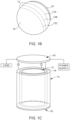
FIG. 1A is a schematic overhead view of an electrochemical metal-air cell. -
FIG. 1B is a detailed view of a portion of the cell ofFIG. 1A . -
FIG. 1C is a schematic perspective view of the cell ofFIG. 1A . -
FIG. 2A is a schematic overhead view of another electrochemical metal-air cell. -
FIG. 2B is a schematic perspective view of the cell ofFIG. 2A . -
FIG. 3 is a schematic overhead view of yet another electrochemical metal-air cell. -
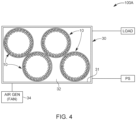
FIG. 4 is a schematic overhead view of a system containing multiple electrochemical metal-air cells. -
FIG. 5 is a schematic overhead view of another system containing multiple electrochemical metal-air cells. -
FIG. 6 is a schematic cross-sectional view taken along line 6-6 of the system ofFIG. 5 . -
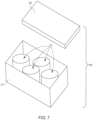
FIG. 7 is a schematic view of a system that includes a sealed container, in accordance an embodiment of this disclosure. - Generally described herein are electrochemical metal-air cells having nested electrodes provided in an annular or a cylindrical configuration. Systems that contain such cells in a container are also provided. Each cell may include an oxidant electrode (e.g., an air cathode) and a fuel electrode (e.g., an anode). A series of permeable bodies, screens, or current collectors may be provided as part of the fuel electrode. An oxygen evolution (or oxygen evolving) electrode may also be provided in the cells, e.g., to act as a charging electrode. The fuel electrode may be nested within the oxidant electrode, or vice versa. Optionally, in some embodiments, a second oxidant electrode may be included in the cell(s). An ionically conductive medium or electrolyte may be contained in the cell. Each cell may optionally have its own cell housing, formed by either the air cathode itself or an external housing. Optionally, an air space or pocket may be formed in a cell via an oxidant electrode. The container may contain the cells such that they are surrounded by air or a liquid ionically conductive medium/electrolyte. The container may include a compartment that is sealed (e.g., via a lid or a cover) to contain the cells therein. Additional features shall be understood by the Figures and description of embodiments provided below.
- The term first electrode is used interchangeably with fuel electrode and/or anode in this disclosure. The term second electrode is used interchangeably with oxidant electrode. The term oxidant electrode is used interchangeably with oxidant electrode, oxidant reducing electrode, oxidant reduction electrode, air electrode, and/or air cathode. The first and second electrodes are electrodes of opposite polarity, e.g., the first electrode has an anodic potential to oxide its active reactant during standard discharge and a cathodic potential to reduce an oxidized species back to the active reactant during standard charge, and the second electrode does the opposite on its active reactant. The term ionically conductive medium may refer to an electrolyte, i.e., ionically conductive liquid electrolyte, liquid ionically conductive medium, and/or an aqueous ionically conductive medium, and such terms may be used interchangeably throughout this disclosure.
-
FIG. 1A is a schematic overhead view of an electrochemical metal-air cell 10 in accordance with an embodiment of this disclosure. Generally, thecell 10 includes at least afirst electrode 12 and asecond electrode 14. In accordance with embodiments herein, the first electrode(s) is afuel electrode 12 for receiving and oxidizing a metal fuel, and thesecond electrode 14 is an oxidant electrode 14 (or oxidant reduction electrode) that has one or more active materials for reducing a gas oxidant (e.g., oxygen in air). In an embodiment, e.g., during standard discharge, thefuel electrode 12 acts or functions as an anode where the fuel of the cell or system is oxidized so that electrons given off by the metal fuel, as the fuel is oxidized at thefuel electrode 12, flows to an external load L, and theoxidant electrode 14 acts or functions as an air cathode for absorbing and reducing gaseous oxidant (e.g., oxygen in air) and is configured to receive electrons from the external load L. In accordance with an embodiment, thefuel electrode 12 of eachcell 10 has fuel in the form of solid fuel electrodeposited on an electroconductive electrode body, but may be generally referred to as the anode, even when no fuel is present. Further, in thecell 10 ofFIG. 1A an ionicallyconductive medium 16 is contained by theoxidant electrode 14, for conducting ions for supporting electrochemical reactions at the fuel electrode(s) 12 and theoxidant electrode 14. - The
fuel electrode 12 includes aninternal surface 13 that faces the ionicallyconductive medium 16 and anexternal surface 15 that faces theoxidant electrode 14. Theoxidant electrode 14 includes aninternal surface 17 or cell side or face (e.g., facing and contacting electrolyte or ionicallyconductive medium 16 within the cell 10) that faces thefuel electrode 12 and anexternal surface 19, or air side or face, that is facing and exposed to oxidant (oxygen or air). In some embodiments, as illustrated inFIG. 1A , theexternal surface 19 of theoxidant electrode 14 may be an outermost surface of thecell 10. - More specifically, as shown, the
oxidant electrode 14 and thefuel electrode 12 are each configured in annular form in thecell 10. In this disclosure, an "annular" configuration is meant to encompass shapes that are integral and continuous, such as a tubular cylinder or a shape with an ovular cross-section. An annular configuration excludes wound, spiral configurations with one or more open ends, but includes configurations having ends that are joined, e.g., by a seam, to form a continuous shape. For example, a square or rectangular shape of material may be rolled such that its ends may be bonded or sealed together, and thus provide an annular form. - In accordance with one embodiment, the
fuel electrode 12 is nested within theoxidant electrode 14. In another embodiment, theoxidant electrode 14 is nested within thefuel electrode 12. Throughout this disclosure, the term "nested" refers to an electrode/object being placed or stored one inside the other; e.g., inFIG. 1A , thefuel electrode 12 is arranged in a hierarchical structure from a center C of thecell 10 such that it is provided inside theoxidant electrode 14, i.e., the fuel electrode is nested within theoxidant electrode 14. In this exemplary illustrated embodiment, an outer wall of thecell 10 is constituted by theoxidant electrode 14. Accordingly, theoxidant electrode 14 forms the primary housing structure for thecell 10. In this configuration, thecell 10 may function in ambient conditions, with no need for active air control. Theoxidant electrode 14 and thefuel electrode 12 are spaced apart to form a gap or distance D1 therebetween. - In some embodiments, the first electrode or the second electrode of the
electrochemical cell 10 may be provided by configurations other than a single electrode. In the non-limiting embodiment illustrated incell 10, for example, in some embodiments, the first orfuel electrode 12 for each cell may be provided by smaller, separate, and individual bodies instead of a larger, single electrode (single anode body). In an embodiment, the first orfuel electrode 12 may include a series of permeable bodies, e.g.,bodies FIG. 1B . Each of thepermeable bodies permeable bodies oxidant electrode 14. Eachpermeable body bodies FIG. 1B as being part of thefuel electrode 12, it should be understood to one of ordinary skill in the art that this number is not intended to be limiting. In accordance with embodiments, two or more permeable bodies may be provided incell 10. In accordance with one embodiment, thepermeable bodies 12A... 12n may be current collectors or screens plated with a metal (e.g., zinc) and spaced apart from one another. Thefuel electrode 12 or anode, and/or itspermeable bodies 12A... 12n (if provided) may be a woven screen, a perforated metal sheet, or an expanded metal screen, for example, and may be corrugated or pleated. Thus, the use of a single fuel electrode/anode in the cell is not intended to be limiting. - In other embodiments, the
oxidant electrode 14 for each cell may be provided by smaller, separate, and individual cathodes (or cathode bodies) instead of a larger, single cathode. That is, similar to the bodies described above with reference tofuel electrode 12, theoxidant electrode 14 may include two or more bodies provided in series. Additionally and/or alternatively, in another embodiment, more than one oxidant electrode may be provided in a cell (an example of which is discussed later with reference toFIG. 3 ). Thus, the use of a single oxidant electrode/air cathode in the cell is not intended to be limiting. - In addition to
fuel electrode 12 andoxidant electrode 14,cell 10 may include a chargingelectrode 18. According to an embodiment, the charging electrode is an oxygen evolution electrode 18 (or oxygen evolving electrode), also referred to herein asOEE 18. TheOEE 18 may also have an annular shape or form geometrically similar to thefuel electrode 12 and theoxidant electrode 14. TheOEE 18 may be nested within theoxidant electrode 14, in accordance with an embodiment. As shown inFIG. 1A , in one embodiment, theoxygen evolution electrode 18 is provided between thefuel electrode 12 and theoxidant electrode 14. Thefuel electrode 12 andOEE 18 may be immersed in the ionicallyconductive medium 16. TheOEE 18 includes aninternal surface 21 that faces thefuel electrode 12 and anexternal surface 23 that faces theoxidant electrode 14. TheOEE 18 and theoxidant electrode 14 may be spaced apart by a distance D2. - The
OEE 18 is configured to evolve oxygen for the purpose of creating mixing or circulation of the electrolyte due to convection driven by rising oxygen bubbles in the ionically conductive medium 16 / liquid electrolyte between the electrodes. By immersing theOEE 18 and positioning it betweenfuel electrode 12 andoxidant electrode 14, oxygen in bubbles that are produced by theoxygen evolving electrode 18 rises up in theelectrolyte 16 and in-between thesurfaces electrodes 12 and 14 (respectively) in the electrode assembly to circulate the electrolyte and prevent stratification. More specifically, oxygen bubbles are created on theOEE 18 by oxidation of hydroxide ions to oxygen gas, countered by the reduction of oxygen gas from air at the air cathode or oxidant reducing electrode 14 (which reduced oxygen may form, e.g., hydroxide ions in the electrolyte solution). That is, theelectrodes electrode 18 and a cathodic potential at theelectrode 14. - Collectively, the
fuel electrode 12,OEE 18, andoxidant electrode 14 may be referred to as an electrode assembly of thecell 10. - Generally, a controller or circuit is used to control the modes and operation of the cell, as described in greater detail below. In the case of utilizing the
oxygen evolving electrode 18, for example, the controller is configured to apply an external voltage (potential) or current source between theoxidant electrode 14 and theOEE 18 to provide a driving force for oxygen reduction on theoxidant electrode 14 and oxygen evolution on theOEE 18. - There are many permutations of OEE and anode electrode assemblies that can function within the annular air cathode "container" for specific cycling purposes. Accordingly, it should be understood by one of ordinary skill in the art that the features and illustrations as described herein are not intended to be limiting. Additional features regarding the electrodes of the cells are further described later.
- When a
cell 10 comprises afuel electrode 12 with multiple permeable bodies (i.e., 12A, 12B... 12n), theoxygen evolution electrode 18 may be provided between theoxidant electrode 14 and a first permeable body in the series. The first permeable body of thefuel electrode 12 is defined as the permeable body that is closest to theoxidant electrode 14 in the series when the series of permeable bodies is nested within theoxidant electrode 14. In this illustrative case ofFIG. 1A-1B , the first permeable body of thefuel electrode 12 isbody 12A, and theOEE 18 is provided betweenpermeable body 12A and theoxidant electrode 14. - A top portion (or "top") 40 or cover and/or a bottom portion 20 (or "bottom") may be provided as part of the
cell 10, which are generally depicted inFIG. 1C . In accordance with an embodiment, the top 40 and/or bottom 20 may be provided in the form of a retainer or a cap. In one embodiment, the top 40 and/or bottom 20 may include a plastic or molded cap that is placed on either ends of the annular electrode assembly. In addition to holding the electrodes in place, the top 40 and/or bottom 20 of thecell 10 may be used to provide an electrical connection from the cell assembly to a power supply PS, a load L, or other cell assemblies, using electrical leads or terminals. In an embodiment, the top 40 and/or bottom 20 may include electrode terminals for connecting each first /fuel electrode 12,OEE 18, and each second /oxidant electrode 14. The cell terminals may be referred to in conventional nomenclature as the negative and positive terminals, denoting their usage during standard discharging. However, it should be understood that the polarity may be reversed when current is applied thereto for charging operations, and thus reference to the negative and positive terminals is not intended to be limiting for all operational modes. In an embodiment, a negative terminal may be provided at one end of the cell and a positive terminal may be provided at an opposite end of the cell. In one embodiment, the bottom 20 of acell 10 may be used to electrically connect theoxidant electrode 14 and the top 40 of thecell 10 may be used to electrically connect thefuel electrode 12 or anode andOEE 18, or vice versa. In another embodiment, theanode 12 andcathode 14 may be connected to the top 40. In an embodiment, one or more bus bars may be contained in the top 40 and/or bottom 20 to connect all the electrodes (12, 14, 18) together for collection or application of current from their respective terminals. For example, the fuel electrodes 12 (and optionally OEEs 18) may be attached to a first bus bar and theoxidant electrodes 14 may be attached to a separate, second bus bar. The bus bar for thefuel electrodes 12 may be connected directly or indirectly to a negative terminal and the bus bar for theoxidant electrodes 14 may be connected directly or indirectly to a positive terminal. - The above noted embodiments and exemplary features are not intended to be limiting with regards to the top 40, bottom 20, and features of the
cell 10. In an embodiment, the top 40 and bottom 20 may be plastic caps which may be attached to the electrode assembly(ies), e.g., with potting epoxy. Plastic injection overmolding could also be used for any of the electrodes. In another embodiment, theanode 12 andOEE 18 could also be captured in a metal housing utilizing a rubber or thermoplastic insulator to prevent electrolyte transmission to the respective terminals. -
FIG. 2A is a schematic overhead view of an electrochemical metal-air cell 10A in accordance with another embodiment;FIG. 2B shows a perspective view of thiscell 10A.Cell 10A includes several features as previously described with respect tocell 10. For purposes of clarity and brevity, like elements and components throughout all of the Figures are labeled with same designations and numbering as discussed with reference toFIGS. 1A-1C , for example. Thus, although not discussed entirely in detail herein, one of ordinary skill in the art should understand that various features associated with the cells and systems described throughout the Figures are similar to those features previously discussed. Additionally, it should be understood that the features shown in each of the individual figures is not meant to be limited solely to the illustrated embodiments. That is, the features described throughout this disclosure may be interchanged and/or used with other embodiments than those they are shown and/or described with reference to. -
Cell 10A ofFIGS. 2A-2B includes at least first and second electrodes, i.e., anoxidant electrode 14 and afuel electrode 12, both of annular configuration. Thefuel electrode 12 is nested within theoxidant electrode 14, much like the configuration ofFIG. 1 . Also, ionically conductive medium 16 is contained by theoxidant electrode 14, for conducting ions for supporting electrochemical reactions at the fuel electrode(s) 12 and theoxidant electrode 14. Further, in an embodiment,cell 10A may include anoxygen evolution electrode 18. Theoxygen evolution electrode 18 may have an annular shape or form geometrically similar to thefuel electrode 12 and theoxidant electrode 14. TheOEE 18 may be nested within theoxidant electrode 14, in accordance with an embodiment. Thefuel electrode 12 andOEE 18 may be immersed in the ionicallyconductive medium 16. As shown inFIG. 1 , in one embodiment, theoxygen evolution electrode 18 is provided between thefuel electrode 12 and theoxidant electrode 14. Theoxidant electrode 14 and thefuel electrode 12 may be spaced apart to form a gap or distance (D1) therebetween. TheOEE 18 and theoxidant electrode 14 may be spaced apart by a distance (D2). - Optionally, the
fuel electrode 12 ofcell 10A may include multiple permeable bodies (i.e., 12A, 12B... 12n), in accordance with an embodiment. - In addition,
cell 10A ofFIG. 2A ,2B further includes acell housing 22 configured to contain theoxidant electrode 14, thefuel electrode 12, and the ionically conductive medium 16 therein. In an embodiment, thecell housing 22 is an external container that is provided around the assembly of electrodes. Thecell housing 22 may have any construction or configuration, and the illustratedhousing 22 is not intended to be limiting. In an embodiment, thehousing 22 has an annular or cylindrical configuration with an outer circumferential side wall, a top portion (not shown) and a bottom portion (not shown) to house theelectrodes housing 22 has an internal diameter that is larger than an external diameter of theoxidant electrode 14, so that the inner wall side of the external container /cell housing 22 is spaced apart fromexternal surface 19 of theoxidant electrode 14 by a gap, a space, or distance D3 therebetween. This distance D3 or gap provides anair space 24 between theoxidant electrode 14 andexternal container 22. Thehousing 22 may have an air flow receiving opening or channel at its top portion, bottom portion, or both, to allow air flow (ambient air) into theair space 24. - Further, the top portion and/or bottom portion of
housing 22 ofcell 10A may be similar to top 40 and/or bottom 20 as described above with respect toFIG. 1C , and configured to provide an electrical connection from the cell assembly to a power supply PS, a load L, or other cell assemblies, using electrical leads or terminals. Optionally, the top 40 and/or bottom 20 incell 10A may include the air flow receiving opening or channel for inputting and/or outputting air with respect toair space 24. -
FIG. 3 is a schematic overhead view of an electrochemical metal-air cell 10B in accordance with yet another embodiment of this disclosure.Cell 10B includes several features as previously described with respect tocell 10. For purposes of clarity and brevity, like elements and components throughout all of the Figures are labeled with same designations and numbering as discussed with reference toFIGS. 1A-1C , for example. Thus, although not discussed entirely in detail herein, one of ordinary skill in the art should understand that various features associated with the cells and systems described throughout the Figures are similar to those features previously discussed. -
Cell 10B ofFIG. 3 includes at least first and second electrodes, i.e., anoxidant electrode 14 and afuel electrode 12, both of annular configuration. Thefuel electrode 12 is nested within theoxidant electrode 14, much like the configuration ofFIG. 1 . Further, in an embodiment,cell 10A may include anoxygen evolution electrode 18. Theoxygen evolution electrode 18 may have an annular shape or form geometrically similar to thefuel electrode 12 and theoxidant electrode 14. TheOEE 18 may be nested within theoxidant electrode 14, in accordance with an embodiment. As shown inFIG. 1 , in one embodiment, theoxygen evolution electrode 18 is provided between thefuel electrode 12 and theoxidant electrode 14. Theoxidant electrode 14 and thefuel electrode 12 may be spaced apart to form a gap or distance (D1) therebetween. TheOEE 18 and theoxidant electrode 14 may be spaced apart by a distance (D2). - Optionally, the
fuel electrode 12 ofcell 10A may include multiple permeable bodies (i.e., 12A, 12B... 12n), in accordance with an embodiment. For example,FIG. 3 shows first and second anode /permeable bodies fuel electrode 12, in accordance with one embodiment. Thesebodies -
Cell 10B ofFIG. 3 further includes anadditional oxidant electrode 26. More specifically, in the configuration ofFIG. 3 , theoxidant electrode 14 is a first oxidant electrode, and asecond oxidant electrode 26 is nested within the electrode assembly. Thesecond oxidant electrode 26 may be provided as an "inner" electrode of the electrode assembly, such that it is arranged in hierarchical structure to be closer to a center C of thecell 10 relative to theother electrodes first oxidant electrode 14 acts as an "outer electrode" with respect to the inner,second oxidant electrode 26, resulting in the donut-like configuration shown inFIG. 3 , when viewed from the top of the cell, for example. Thesecond oxidant electrode 26 may be configured in annular form and nested within thefuel electrode 12. - In an embodiment, the
second oxidant electrode 26 forms aninner air space 28 of diameter D5 to contain and/or receive air therein. While the size of diameter D5 is not intended to be limiting, in one exemplary embodiment, D5 may be at least approximately fifty millimeters (50 mm) smaller in diameter in relation to an inner diameter of the outer air cathode /oxidant electrode 14. In an embodiment, the minimum diameter D5 ofsecond oxidant electrode 26 is approximately seventy-five millimeters (75 mm). - More specifically, the
second oxidant electrode 26 includes aninternal surface 25 that faces a center C of thecell 10B and is exposed to air within theair space 28, as well as anexternal surface 27 that faces the ionically conductive medium 16 andfuel electrode 12. Theinternal surface 25 may be configured to receive and/or contain air (e.g., atmospheric air) therein such thatsecond oxidant electrode 26 functions as an air cathode for absorbing and reducing gaseous oxidant (e.g., oxygen in air). - In accordance with an embodiment, the
second oxidant electrode 26 and thefuel electrode 12 are spaced apart to form a gap or distance D4 therebetween. Liquid ionically conductive medium 16 is contained between thefirst oxidant electrode 14 and thesecond oxidant electrode 26, for conducting ions for supporting electrochemical reactions at the fuel electrode(s) 12 and theoxidant electrode 14 of the electrode assembly provided therebetween. Thefuel electrode 12 andOEE 18 may be immersed in the ionicallyconductive medium 16. - This
second oxidant electrode 26 as added to thecell 10B further increases the air cathode surface area, while reducing the volume of ionically conductive medium 16 therein. This significantly increases the C-rate (i.e., the battery's current handling capability, or the constant current charge rate or discharge rate at which the battery / cell sustains for a particular period of time) of thecell 10B. - Although not shown, it is envisioned that, in some embodiments,
cell 10B may include an external container, likehousing 22 ofFIG. 2A-2B , around the assembly of electrodes (e.g., surrounding first oxidant electrode 14). - Further, the top portion and/or bottom portion of
cell 10B may be similar to top 40 and/or bottom 20 as described above with respect toFIG. 1C , and configured to provide an electrical connection from the cell assembly to a power supply PS, a load L, or other cell assemblies, using electrical leads or terminals. Optionally, the top 40 and/or bottom 20 incell 10B may include the air flow receiving opening or channel for inputting and/or outputting air with respect toair space 28. - Among other things, the
cells FIGS. 1A-3 provide anoxidant electrode 14 as part of a nested set of electrodes, thereby making theair electrode 14 the largest electrode in the cell, which improves current density. Further, providing the electrodes (e.g., 12, 14, 18) in annular form avoids issues with edge effects at corners that are typical of rectangular or planar electrodes. - The measurements and/or dimensions associated with the electrodes and cells is not meant to be limited in any way. In accordance with an embodiment, cells may be sized within a range of approximately 0.5 L (Liters) to approximately 20 L (both inclusive). In another embodiment, the size of the cells may be within a range of approximately 1.0 L (Liters) to approximately 5.0 L (both inclusive). As examples only, some cell dimension targets for 1.3 L and 5L cells are summarized in the following table:
Summary of prototypes Outside Diameter (mm) Cathode Cathode Cathode OEE Anode Height (mm) Thickness (mm) 1.3 L 110 100 85 140 1.2 5L 175 165 150 225 1.2 - Again, the above dimensions are illustrative only and not intended to be limiting in any way.
- Similarly, the spacing (distances D1, D2, etc.) between parts and electrodes of the illustrative cells in
FIGS. 1A ,2 , and3 are not limited. Merely as an example, the chart below provided exemplary distances for D1, D2, D3, D4, and D5 as shown inFIGS. 1A-3 , for acell 10 of 5.0L:Example Dimensions (mm) for Figs 1A ,2 ,3 - Based off of 5L option described aboveD1 D2 D3 D4 D5 Fig 1A 12 4 Fig 2 2 Fig 3 15 125 - These dimensions are illustrative only and not intended to be limiting in any way.
-
FIG. 4 is a schematic overhead view of asystem 100A containing multiple electrochemical metal-air cells (e.g., cells 10) therein, in accordance with an embodiment of this disclosure. Thesystem 100A includes acontainer 30 or housing for holding and containing multiple (i.e.,. more than two) electrochemical cells. Thecontainer 30 includes acell chamber 31 and may be designed to be a sealed container (e.g., via a lid or cover and any optional seals, which are described later). A liquid ionically conductive medium 16 for conducting ions for supporting electrochemical reactions at thefuel electrode 12 and theoxidant electrode 14 of the cells therein is also part ofsystem 100A; in particular, in this illustrative embodiment, the ionically conductive medium 16 is contained within each of the cells 10 (e.g., by oxidant electrode 14). As described below,container 30 may help regulate the atmosphere and air flow to thecells 10, and may include safety features. - A multi-cell container like container 30 (which may be sealed, as described below) can be tailored to deliver a range of power and voltage options. Examples of safety features for the
system 100A and/orcontainer 30 may include fire resistant plastics (v0), electronics logic on the cell controller to bypass and cells that are underperforming. This type of container design further allows a lot of flexibility in targeting many different power/voltage/energy combinations, depending on how the cells are sized and connected (series vs parallel). In certain cases, the battery system may be tailored to output a target range of power/voltage according to a customer request. - Referring back to
FIG. 4 , for illustrative purposes,multiple cells 10 like those ofFIG. 1A are shown in thecell chamber 31 ofcontainer 30 ofsystem 100A. Alternatively, it should be understood thatsystem 100A may includecells container 30. Although a total of four electrochemical cells are illustrated in this embodiment, more or less electrochemical cells may be included in the system. Indeed, in certain applications, a large two-dimensional array of parallel electrochemical cells can be created to provide for increased power output. In other embodiments, the cells may be in series. In some embodiments, the cells may be staggered. The illustrated embodiment is not intended to be limiting in any way and is merely an example. - As discussed previously, each
cell 10 insystem 100A includes anoxidant electrode 14 for absorbing gaseous oxidant and has one or more active materials for reducing the gaseous oxidant, afuel electrode 12 for oxidizing a metal fuel, anOEE 18 nested therebetween thefuel electrode 12 andoxidant electrode 14 for charging thecell 10. Further, thecells 10 ofsystem 100A have a liquid ionically conductive medium 16 for conducting ions for supporting electrochemical reactions at thefuel electrode 12 and theoxidant electrode 14. In this illustrated embodiment, thecells 10 have the liquid ionically conductive medium 16 contained by theoxidant electrode 14. As shown inFIG. 4 , for example, eachoxidant electrode 14 has itsinterior surface 17 facing and contacting the electrolyte or ionically conductive medium 16 within thecell 10, and itsexterior surface 19 facing and exposed to oxygen or air incell chamber 31. In other embodiments (such as shown inFIG. 5 ), the ionically conductive medium 16 may be contained by thecell chamber 31 ofcontainer 30. Again, theoxidant electrode 14,OEE 18, and thefuel electrode 12 of thecells 10 are configured in annular form. Further, each of thecells 10 have thefuel electrode 12 andOEE 18 nested within theoxidant electrode 14. Thecontainer 30 contains all of theelectrochemical cells 10 therein and supports the components of theelectrochemical cell system 100A. - In accordance with an embodiment, the
container 30 is a sealed container. That is,container 30 may include a lid 35 (seeFIG. 7 ), cover portion, or other device that connects to walls of a lower body ofcontainer 30, to removably, releasably, and sealingly engage thecontainer 30 to enclose thecells 10 therein. The configuration of thecontainer 30 andlid 35 is not intended to be limiting or limited to the exemplary depiction as shown in the drawings, including that ofFIG. 7 , and/or the number ofcells 10 that may be contained in acontainer 30 and/orsystem 100A. Rather, the body ofcontainer 30 is designed to include at least one side wall and a bottom, like bottom 38 shown inFIG. 6 . Of course, reference to surface 38 being a "bottom" is not intended to be limiting; rather, it should be understood that thesystem 100A may be oriented in any way. Thus, any directional references are made with regard to the orientation as shown in the drawings, and are not intended to limit a working embodiment to any particular orientation. In an embodiment, the body of thecontainer 30 may be annular, circular, rectangular, polygonal, cylindrical or other shapes configured to include aninternal cell chamber 31 for receipt ofmultiple cells 10 therein. One or more seals or gaskets may be optionally provided between the lid and body ofcontainer 30 to further seal thecell chamber 31. Optionally, the lid may also include one or more features, e.g., gaskets, designed to connect with and/or seal with thecells 10 such that any gases or fluids, such as an electrolyte or liquid ionically conductive medium 16 withincells 10, are prevented from leaking out of thesystem 100A and/or intoair space 32. - In one embodiment, the
cell chamber 31 of sealedcontainer 30 contains air and forms anair space 32 therein to surround thecells 10. Thecontainer 30 may have an air flow receiving opening or channel in one or more of its walls, including its lid, to allow flow of air (ambient air) into theair space 32 ofcell chamber 31. For example, the lid may include one or more openings therein to act as an oxidizer input for theelectrochemical cells 10 contained therein. - The
system 100A ofFIG. 4 may further include anair flow generator 34 that is associated with the sealedcontainer 30, in accordance with an embodiment. Theair flow generator 34 may be configured to force atmospheric air (from outside of the container 30) intoair space 32 of the sealedcontainer 30, to deliver atmospheric air into the sealed container such that said air is delivered to external surfaces of theoxidant electrodes 14 of each of theelectrochemical cells 10 contained therein. - The positioning of the
air flow generator 34 relative to thecontainer 30 is not intended to be limiting, so as long as the air is at least periodically turned over in theair space 32. In an embodiment, thegenerator 34 may be provided in a lid of sealedcontainer 30. In an embodiment, theair flow generator 34 is configured to force air flow into the nested assembly of the cells 10 (e.g., between surfaces of the fuel andoxidant electrodes 12, 14). The use of anair flow generator 34 facilitates delivery of air to the external surface of theoxidant electrode 14. Theair flow generator 32 may be a compressor, an electrically powered fan or impeller, a bellows, or any other device designed to generate airflow. For example, instead of generating positive pressure, a vacuum could generate negative pressure to force air flow throughcontainer 30 as well. The direction of air flow through thecontainer 30 is also not intended to be limiting. In some embodiments, the direction of air flow may be axially through thecells 10. In another embodiment, the air flow may flow longitudinally or horizontally through thecontainer 30. - The positioning of the
cells 10 within thecontainer 30 is also not intended to be limiting. According to one embodiment, thecells 10 may be spaced within the sealedcontainer 30 such that centers of thecells 10 are substantially equidistantly spaced relative to one another therein. In an embodiment, spacing is provided between thecells 10, and thus theoxidant electrodes 14, to permit open air flow directly to the oxidant electrodeexternal surface 19. In another embodiment, theexternal surface 19 of each oxidant electrode is exposed to oxygen / oxidant by permitting permeation of the air through a porous portion of theoxidant electrode 14. - In an embodiment, each of
cells 10 insystem 100A may have afuel electrode 12 that may include a series of permeable bodies, such as previously described with reference toFIG. 1B . The series of permeable bodies in thecells 10 ofsystem 100A may be configured in annular form, and each spaced apart relative to an adjacent permeable body. Additionally, in one embodiment, anoxygen evolution electrode 18 may be provided in thecells 10 ofsystem 100A, such that theOEE 18 is between theoxidant electrode 14 and a first permeable body (e.g., 12A) in the series of bodies, as explained above. -
FIGS. 5 and 6 show anothersystem 100B containing multiple electrochemical metal-air cells in accordance with another embodiment of this disclosure. Likesystem 100A, thesystem 100B includes acontainer 30 or housing that has acell chamber 31 for holding and containing and multiple (i.e.,. more than two) electrochemical cells in thechamber 31. Thecontainer 30 may be a sealed container (e.g., via a lid or cover and any optional seals). Thecontainer 30 contains all of the electrochemical cells therein and supports the components of theelectrochemical cell system 100A. Again, the configuration of thecontainer 30 is not intended to be limiting or limited to the exemplary depiction as shown in the drawings. The body of thecontainer 30 may be annular, circular, rectangular, polygonal, or other shapes configured to receivemultiple cells 10 therein. One or more seals or gaskets may be optionally provided between the lid and body ofcontainer 30 to further seal thecell chamber 31. Optionally, the lid may also include one or more features, e.g., gaskets, designed to connect with and/or seal with thecells 10 such that any gases or fluids, including air inair spaces 28 of thecells 10C, are prevented from leaking out of thesystem 100A and/or intocell chamber 31. - A liquid ionically conductive medium 16 for conducting ions for supporting electrochemical reactions at the
fuel electrode 12 and theoxidant electrode 14 of the cells therein is also part ofsystem 100A. In thissystem 100B,electrochemical cells 10C are provided and contained with a volume of ionically conductive medium 16 / electrolyte within thecell chamber 31 ofcontainer 30. That is, in this illustrative embodiment, the ionically conductive medium 16 is contained within thecell chamber 31, such thatcells 10C are at least partially immersed in the ionicallyconductive medium 16. In accordance with an embodiment, thecontainer 30 is a sealed container. That is,container 30 may include a lid (likelid 35 shownFIG. 7 ), cover portion, or other device that connects to walls of a lower body ofcontainer 30, to removably, releasably, and sealingly engage thecontainer 30 to enclose thecells 10 therein. In one embodiment, the sealedcontainer 30 contains a pool or avolume 36 of liquid ionically conductive medium 16 in an internal space ofcell chamber 31, which surrounds and contacts thecells 10. The liquid ionically conductive medium 16 conducts ions for supporting electrochemical reactions at thefuel electrode 12 and theoxidant electrode 14 of each cell. A level L (seeFIG. 6 ) of ionically conductive medium 16 in thecell chamber 31 may be adjusted based on the position of thecells 10C. For example, in some instances, the level L of ionically conductive medium is provided such that it is lower than theoxidant electrodes 14 of eachcell 10C (that is, a portion of the air cathodes 14 of eachcell 10C extends above the level L (out of) the ionically conductive medium), such as shown inFIG. 6 . In other cases, the level L of ionically conductive medium may be at a similar height as thecells 10C. In an embodiment, thecells 10C and the entire electrode assembly may be immersed in thechamber 30 and theelectrolyte 16 is provided at a level L within thecell chamber 31 such that is above the tops of theelectrodes - Much like
cells 10, which were discussed previously, eachcell 10C insystem 100B includes anoxidant electrode 14 for absorbing gaseous oxidant that has one or more active materials for reducing the gaseous oxidant, afuel electrode 12 for oxidizing a metal fuel, and anOEE 18 for charging thecell 10. Again, theoxidant electrode 14,OEE 18, and thefuel electrode 12 are configured in annular form. However, in this case, theoxidant electrode 14 is arranged in a hierarchical structure from a center of thecell 10 such that it is provided inside the fuel electrode, i.e., theoxidant electrode 14 is nested within thefuel electrode 12 in each ofelectrochemical cells 10C. That is, thecells 10C include outward facing fuel electrodes 12 (outward facing relative tochamber 31 and/or inner walls of the container 30). Thefuel electrode 12 of eachcell 10C has aninternal surface 13A that faces theoxidant electrode 14 and anexternal surface 15A that faces thevolume 36 of ionically conductive medium 16 as contained incell chamber 31. TheOEE 18 of eachcell 10C includes aninternal surface 21A that faces theoxidant electrode 14 and anexternal surface 23A that faces thefuel electrode 12. Thefuel electrode 12 andOEE 18 may thus be immersed in the ionicallyconductive medium 16. TheOEE 18 and theoxidant electrode 14 may be spaced apart by a distance (D2). Thefuel electrode 12 and theoxidant electrode 14 may be spaced apart by a distance (D1). - Further, in an embodiment, each
oxidant electrode 14 forms aninner air space 28A, likeair space 28, to contain and/or receive air therein. Theoxidant electrode 14 includes aninternal surface 17A, or air side or face, that is facing and exposed to oxidant (oxygen or air) and anexternal surface 19A, or cell side or face, facing and contacting electrolyte or ionicallyconductive medium 16. As similarly described above, exposure of theinternal surface 17A to the air inair space 28A allowsoxidant electrode 14 to function as an air cathode for absorbing and reducing gaseous oxidant (e.g., oxygen in air). - Furthermore, in one embodiment, each
oxidant electrode 14 may be provided as a most internal layer of in the assembly of electrodes within eachcell 10C. - Although a total of four electrochemical cells are illustrated in this embodiment of
FIG. 5 , more or less electrochemical cells may be included in the system. Indeed, in certain applications, a large two-dimensional array of parallel electrochemical cells can be created to provide for increased power output. In other embodiments, the cells may be in series. In some embodiments, the cells may be staggered. The illustrated embodiment is not intended to be limiting in any way and is merely an example. - According to one embodiment, such as shown in
FIG. 6 , thecells 10C themselves, and/or at least theoxidant electrodes 14 of thecells 10C, are at least partially suspended within the sealedcontainer 30, such that theoxidant electrodes 14 are configured to float within the ionicallyconductive medium 16. In this case, float refers to positioning each of thecells 10C within thecell chamber 31 such that the electrode assembly of eachcell 10C does not directly contact an inner surface of the bottom 38 of thecontainer 30. In some embodiments, a bottom 20 of eachcell 10C does not directly contact an inner surface of the bottom 38 of thecontainer 30. Any number of structures may be utilized to position thecells 10C such that they float in the medium 16. For example, in one embodiment, support tabs may extend from an exterior surface of the bottom 20 of eachcell 10C, for placement against the inner surface of bottom 38, in order to space thecells 10C therefrom and allow them to float within the ionicallyconductive medium 16. In another embodiment, the lid (not shown) of thecontainer 30 may include one or more structures that connect with thecells 10C in order to suspend them within thecontainer 30. In accordance with an embodiment, theelectrode assembly 10 is configured to hang from a top (lid) of the sealedcontainer 30 via external contacts provided by terminals. In yet another embodiment, a bracket, a barrier, a wall, or other structure may be provided in thecontainer 30 for connecting with thecells 10C to removably secure them in place within thecontainer 30. - Because the
container 30 in thesystem 100B ofFIG. 6 holds (liquid) ionically conductive medium 16 within its walls, the collection ofcells 10C inFIG. 6 as placed into the medium 16 will naturally want to float. That is, thecells 10C are naturally buoyant to the point of forcing the cells to possibly protrude more than may be desired above the electrolyte liquid level L. In an embodiment, a lid (such as lid 35) may be used on/with thecontainer 30 to set the proper or desired height ofcells 10C in relation to the electrolyte level L. In one embodiment, the lid may contain nesting features to capture the lid/tops 40 of each cell; e.g., the lid may be include protrusions, divots, correspondingly shaped receiving openings, and/or other mechanical structures, for capturing and/or receiving the tops of the cells. These lid features could also incorporate a simple valve which may limit air access during idle periods, in some embodiments. The container may also be designed with a floating head lid, in yet another embodiment, which may allow the collection ofcells 10C to float as a group up and down with the electrolyte level, e.g., as it may change over time due to evaporative losses. - In another embodiment, the bottom 20 of each of the
cells 10C may be placed directly on a surface of the bottom 38 of the body of thecontainer 30. The level of ionically conductive medium 16 in thecell chamber 31 may be provided such that a portion of the air cathodes 14 of eachcell 10C extends above the level and out of the ionically conductive medium. - As previously noted, air or oxidant in the
inner air space 28A of eachcell 10C is accessed from the inner exposedsurface 13A of theoxidant electrodes 14. Air may be provided toair space 28A in a number of ways. In one embodiment, the lid (not shown) may include an manifold assembly, in which air flows into the manifold assembly and then into theair spaces 28A of thecells 10C. In another embodiment, a head space may be provided above thefells 10C in thecontainer 30, wherein the head space is a shared air space above thecells 10C and the level of ionically conductive medium 16 contained therein. Thecontainer 30 and/or manifold assembly may include one or more inlets and outlets therein to circulate air into theair spaces 28A of the cells. - As previously described with respect to
system 100A ofFIG. 4 , in an embodiment,system 100B may include anair flow generator 34 that is associated with the sealedcontainer 30 to force atmospheric air (from outside of the container 30) intoair spaces 28A of thecell 10C, to deliver air tointernal surfaces 17A of theoxidant electrodes 14 of each of theelectrochemical cells 10C contained therein. In an embodiment, thegenerator 14 may be a fan provided in the lid, for example. - In an embodiment, each of
cells 10C may include afuel electrode 12 that may have a series of permeable bodies, such as previously described with reference toFIG. 1B . The series of permeable bodies in thecells 10C ofsystem 100B may be configured in annular form, and each spaced apart relative to an adjacent permeable body. Additionally, in one embodiment, anoxygen evolution electrode 18 may be provided in thecells 10C ofsystem 100A, such that theOEE 18 is between theoxidant electrode 14 and a first permeable body (e.g., 12A) in the series of bodies, as explained above. - As shown, the
systems - In an embodiment, the
container 30 ofsystem 100A and/or 100B may be configured to provide an electrical connection from the cells contained therein to a power supply PS, a load L, or other cell assemblies, using electrical leads or terminals. In an embodiment, the fuel electrodes 12 (and optionally OEEs 18) may be attached to a first bus bar and theoxidant electrodes 14 may be attached to a separate, second bus bar. A bus bar connects all the electrodes (12, 14, 18) together for collection or application of current from their respective terminals. The bus bar for thefuel electrodes 12 may be connected directly or indirectly to a negative terminal and the bus bar for theoxidant electrodes 14 may be connected directly or indirectly to a positive terminal. The bus bars may be contained in a cover or top part of thecontainer 30, for example. The use of bus bars is optional, and the electrodes can be connected by other connections, either collectively together or they can each be connected individually by switches or the like. - As previously noted, there are different types of permutations of OEE and anode electrode assemblies that may function within the annular air cathode "container" for specific cycling purposes. The following description relates to different features of the electrodes provided within a cell, that may apply to
cells systems 100A and/or 100B. - Fuel electrode 12 - Several features of fuel electrode 12 (or
electrodes fuel electrode 12 is of generally annular configuration.Fuel electrode 12 may have one or more electroconductive screens, meshes, or bodies on which the metal fuel may be deposited or otherwise collected. In some embodiments, thefuel electrode 12 may include a porous structure with a three-dimensional network of pores, a mesh screen, a plurality of mesh screens (permeable bodies) isolated from one another, or any other suitable electrode. Thefuel electrode 12 may include a current collector, which may be a separate element, or the body on which the fuel is received may be electroconductive and thus also be the current collector. In embodiments, thefuel electrode 12 is laminated, bonded, or attached to a backing that provides theexternal surface 15 of thefuel electrode 12. In some embodiments, this backing may be liquid impermeable or essentially impermeable to theionic liquid 16 to prevent it from permeating outwardly through thefuel electrode 12 via itsexternal surface 15. More preferably, the backing is also impermeable to air, and particularly oxygen or other oxidant, to prevent any undesirable parasitic reaction, such as oxidant reduction in the presence of the fuel oxidation that occurs at the electrode during discharge. - The metal fuel may be of any type, and may be electrodeposited, absorbed, physically deposited, or otherwise provided on or constituting the
fuel electrode 12. The fuel may be of any metal, including alloys or hydrides thereof. For example, the fuel may comprise one or more of zinc, iron, aluminum, magnesium, gallium, manganese, vanadium, lithium or any other metal. As used herein, the term metal fuel refers broadly to any fuel comprising a metal, including elemental metal, metal bonded in a molecule, metal alloys, metal hydrides, etc. - The
oxidant electrode 14 generally includes a porous body covered on the outer side by a gas permeable layer through which an oxidizer may diffuse, but the electrolyte may not pass through. That is, the layer is gas permeable, but not permeable by the electrolyte (i.e., it is gas permeable but not liquid permeable). As an option, the porous body may also be covered on the inner side by a liquid permeable layer through which the electrolyte may pass through so that the electrolyte may contact the porous body. The porous body of theoxidant electrode 14 has a high surface area and comprises a catalyst material that has a high activity for an oxidizer reduction reaction. - The
oxidant electrode 14 may be a passive or "breathing" cathode that is passively exposed to an oxidizer source (typically oxygen present in ambient air) and absorbs the oxidizer for consumption in the electrochemical cell reactions. That is, the oxidizer, typically oxygen, will permeate from the ambient air into theoxidant electrode 14. Thus, the oxidizer need not be actively pumped or otherwise directed to the cathode, such as via an inlet. Any part of theoxidant electrode 14 by which the oxidizer is absorbed or otherwise permeates or contacts theoxidant electrode 14 may be generically referred to as an "input." The term input may broadly encompass all ways of delivering oxidizer to the cathode (and that term may similarly be used with reference to any way of delivering fuel to the anode). - The
oxidant electrode 14 may be configured to absorb air or other gaseous oxidants exposed to itsexternal surface 19 or another constituent portion thereof in a manner described below. While in some embodiments theoxidant electrode 14 is configured to receive ambient air, contained sources of oxidants may additionally or alternatively be utilized. Thus, where used herein, air refers to any gaseous oxidant source. When air is exposed to theexternal surface 19, theoxidant electrode 14 is configured to absorb gaseous oxygen (or another oxidant) for reduction of the oxygen during discharge of thecell 10. Some portions of theoxidant electrode 14 may be made porous to provide gaseous oxygen diffusion from the air side of theoxidant electrode 14 to reaction sites within theoxidant electrode 14 and to provide ionic conductivity for reactants and reaction products on the side of theoxidant electrode 14 facing theionic liquid 16. It may be appreciated that a number of configurations of theoxidant electrode 14 are possible. - The
oxidant electrode 14 includes a catalyst material, such as manganese oxide, nickel, pyrolyzed cobalt, activated carbon, platinum, or any other catalyst material or mixture of materials with high oxygen reduction activity in the electrolyte for catalyzing reduction of the oxidizer. The porous body of theoxidant electrode 14 may comprise the catalyst material. - In various embodiments, any number of ionically conductive mediums may be utilized herein in the
electrochemical cell 10. In some embodiments wherein the ionically conductive medium 16 comprises an ionic liquid, the ionic liquid may be of any type, including room temperature ionic liquids, and including but not limited to the examples disclosed inU.S. Patent No. 8,895,197 . - In some embodiments, the ionically conductive medium 16 may be an aqueous electrolyte, such as potassium hydroxide dissolved in water. Any such aqueous electrolyte may be used. For example, in an embodiment, the ionically conductive medium may include sodium hydroxide. The
electrolytic solution 16 in any of the herein described systems or cells may be any of: potassium hydroxide, sodium hydroxide, zinc chloride, ammonium chloride, magnesium perchlorate, and magnesium bromide. - Spacers, such as non-conductive spacers, may be provided between the first and
second electrodes OEE electrodes OEE electrodes 14 and 18 (e.g., to provide and maintain the distance D1 and/or D2). - In accordance with an embodiment, a flow pump for pumping the ionically conductive medium 16 into and/or through the
container 30 may be associated with the system (e.g.,system - While the principles of the disclosure have been made clear in the illustrative embodiments set forth above, it will be apparent to those skilled in the art that various modifications may be made to the structure, arrangement, proportion, elements, materials, and components used in the practice of the disclosure.
- The principles of the present invention may be broadly applied to any electrochemical cell and system where a fuel, such as a metal fuel, is electrodeposited on the anode. Such cells may include batteries, such as metal--air batteries, for example. The Figures illustrate embodiments of various aspects of the inventions claimed. These embodiments are in no way intended to be limiting, and are intended only as examples for facilitating an understanding of the principles of the claimed inventions.
- It will thus be seen that the features of this disclosure have been fully and effectively accomplished. It will be realized, however, that the foregoing preferred specific embodiments have been shown and described for the purpose of illustrating the functional and structural principles of this disclosure. Therefore, this disclosure includes all modifications encompassed within the scope of the following claims.
Claims (15)
- An electrochemical cell comprising:a first oxidant electrode for absorbing gaseous oxidant and comprising one or more active materials for reducing the gaseous oxidant;a fuel electrode for receiving a metal fuel; anda liquid ionically conductive medium, that is contained by the first oxidant electrode, for conducting ions for supporting electrochemical reactions at the fuel electrode and the first oxidant electrode, wherein the first oxidant electrode and the fuel electrode are each configured in annular form, and wherein the fuel electrode and the oxidant electrode are nested;characterized in that the cell further comprises a second oxidant electrode, the second oxidant electrode being in annular form and nested within the fuel electrode, and wherein the liquid ionically conductive medium is contained between the first oxidant electrode and the second oxidant electrode.
- The electrochemical cell according to claim 1, further comprising an oxygen evolution electrode, wherein the oxygen evolution electrode is configured in annular form and wherein the oxygen evolution electrode is provided between the fuel electrode and the first oxidant electrode.
- The electrochemical cell according to claim 1, wherein the second oxidant electrode forms an inner air space to contain air therein.
- The electrochemical cell according to claim 1, further comprising an oxygen evolution electrode, wherein the oxygen evolution electrode is configured in annular form and wherein the oxygen evolution electrode is provided between the first oxidant electrode and the second oxidant electrode.
- The electrochemical cell according to claim 1, wherein the fuel electrode comprising a series of permeable bodies, wherein the series of permeable bodies are configured in annular form and wherein each permeable body is spaced apart relative to an adjacent permeable body.
- The electrochemical cell according to claim 5, further comprising an oxygen evolution electrode, wherein the oxygen evolution electrode is configured in annular form and wherein the oxygen evolution electrode is provided between the series of permeable bodies of the fuel electrode and the first oxidant electrode.
- A system comprising:a sealed container;a plurality of electrochemical cells according to claim 1,wherein the sealed container contains the plurality of electrochemical cells therein;characterized in that each of the electrochemical cells comprises a cell housing configured to contain the oxidant electrode, the fuel electrode, and the ionically conductive medium therein.
- The system according to claim 7, wherein the fuel electrode and the oxidant electrode are essentially cylindrical, and/or wherein the fuel electrode is nested within the oxidant electrode in each of the plurality of electrochemical cells.
- The system according to claim 7, further comprising an oxygen evolution electrode, wherein the oxygen evolution electrode is configured in annular form and wherein the oxygen evolution electrode is provided between the fuel electrode and the oxidant electrode.
- The system according to claim 8, wherein the liquid ionically conductive medium is contained by the oxidant electrode of each cell and wherein the sealed container further contains air therein to surround the plurality of electrochemical cells, and optionally wherein the system further comprises an air flow generator configured to force atmospheric air into the sealed container, to deliver atmospheric air into the sealed container such that said air is delivered to an external surface of the oxidant electrodes of the plurality of electrochemical cells contained therein.
- The system according to claim 7, wherein the plurality of electrochemical cells are spaced within the sealed container such that centers of the cells are substantially equidistantly spaced relative to one another.
- The system according to claim 7, wherein the oxidant electrode is nested within the fuel electrode in each of the plurality of electrochemical cells, and wherein each oxidant electrode forms an inner air space to contain air therein.
- The system according to claim 12, wherein the liquid ionically conductive medium is contained by the sealed container and wherein the oxidant electrodes of the plurality of electrochemical cells are suspended within the sealed container such that the oxidant electrodes are configured to substantially float within the ionically conductive medium.
- The system according to claim 7, wherein the fuel electrode comprising a series of permeable bodies, wherein the series of permeable bodies are configured in annular form and wherein each permeable body is spaced apart relative to an adjacent permeable body.
- The system according to claim 14, further comprising an oxygen evolution electrode, wherein the oxygen evolution electrode is configured in annular form and wherein the oxygen evolution electrode is provided between the series of permeable bodies of the fuel electrode and the oxidant electrode.
Applications Claiming Priority (2)
| Application Number | Priority Date | Filing Date | Title |
|---|---|---|---|
| US201962846110P | 2019-05-10 | 2019-05-10 | |
| PCT/US2020/031760 WO2020231718A1 (en) | 2019-05-10 | 2020-05-07 | Nested annular metal-air cell and systems containing same |
Publications (2)
| Publication Number | Publication Date |
|---|---|
| EP3966887A1 EP3966887A1 (en) | 2022-03-16 |
| EP3966887B1 true EP3966887B1 (en) | 2025-07-02 |
Family
ID=70857253
Family Applications (1)
| Application Number | Title | Priority Date | Filing Date |
|---|---|---|---|
| EP20728608.9A Active EP3966887B1 (en) | 2019-05-10 | 2020-05-07 | Nested annular metal-air cell and systems containing same |
Country Status (3)
| Country | Link |
|---|---|
| US (1) | US11251476B2 (en) |
| EP (1) | EP3966887B1 (en) |
| WO (1) | WO2020231718A1 (en) |
Families Citing this family (1)
| Publication number | Priority date | Publication date | Assignee | Title |
|---|---|---|---|---|
| JP7548737B2 (en) * | 2020-07-09 | 2024-09-10 | シャープ株式会社 | Metal-air battery |
Citations (1)
| Publication number | Priority date | Publication date | Assignee | Title |
|---|---|---|---|---|
| EP1723687B1 (en) * | 2004-10-29 | 2010-05-19 | Eveready Battery Company, Inc. | Fluid regulating microvalve assembly for fluid consuming cells |
Family Cites Families (248)
| Publication number | Priority date | Publication date | Assignee | Title |
|---|---|---|---|---|
| US2083364A (en) | 1934-08-08 | 1937-06-08 | Jr Charles B Cook | Shield for anodes |
| NL270203A (en) | 1961-07-21 | |||
| US3223611A (en) | 1962-01-31 | 1965-12-14 | W W Wells Ltd | Anode basket with dangler for electrolytic plating |
| NL292912A (en) * | 1962-05-18 | |||
| CH402091A (en) | 1963-05-30 | 1965-11-15 | Bbc Brown Boveri & Cie | Low-temperature fuel element combined with an energy store |
| US3489610A (en) | 1964-06-30 | 1970-01-13 | Mc Donnell Douglas Corp | Battery having a porous insoluble hydrous inorganic oxide separator |
| US3525643A (en) | 1966-04-13 | 1970-08-25 | Anita Ryhiner | Process for producing electrical energy in a fuel cell |
| US3483036A (en) | 1966-08-19 | 1969-12-09 | Harry P Gregor | Fuel cell with ion exchange electrolyte |
| US3532548A (en) | 1966-10-25 | 1970-10-06 | Yardney International Corp | Electrochemical cell utilizing three electrodes |
| US3615843A (en) | 1968-09-03 | 1971-10-26 | Gen Electric | Method of charging a metal-air cell |
| US3615844A (en) | 1968-10-09 | 1971-10-26 | Allis Chalmers Mfg Co | Method of operating a battery having consumable anode material |
| BE756832A (en) | 1969-10-06 | 1971-03-30 | Comp Generale Electricite | RECHARGEABLE ELECTROCHEMICAL GENERATOR WITH ALKALINE ELECTROLYTE |
| US3650837A (en) | 1970-04-06 | 1972-03-21 | Leesona Corp | Secondary metal/air cell |
| US3717505A (en) | 1970-06-25 | 1973-02-20 | Gulf Oil Corp | Electrochemical cell stack |
| US3716413A (en) | 1970-07-15 | 1973-02-13 | Norton Co | Rechargeable electrochemical power supply |
| US3785868A (en) | 1970-11-20 | 1974-01-15 | Gates Rubber Co | Zinc electrode |
| US3728244A (en) | 1971-06-21 | 1973-04-17 | A Cooley | High current density electrolytic cell |
| US3713892A (en) | 1971-06-28 | 1973-01-30 | Gen Electric | Method of charging secondary metal-air cell |
| FR2146142B1 (en) | 1971-07-20 | 1974-03-15 | Alsthom Cgee | |
| US3801376A (en) | 1971-08-16 | 1974-04-02 | Svenska Utvecklings Ab | Auxiliary electrolyte system |
| US3822149A (en) | 1972-02-17 | 1974-07-02 | Du Pont | Rechargeable zinc electrochemical energy conversion device |
| US3840455A (en) | 1972-02-24 | 1974-10-08 | Eastman Kodak Co | Electrolytic cell for recovering metals from solution |
| SE7303685L (en) | 1972-06-05 | 1973-12-06 | United Aircraft Corp | |
| US3886426A (en) | 1973-03-16 | 1975-05-27 | Eagle Picher Ind Inc | Battery switching circuit |
| US3919062A (en) | 1974-04-29 | 1975-11-11 | Grace W R & Co | Electrochemical system graduated porous bed sections |
| US4119772A (en) | 1974-10-31 | 1978-10-10 | Chloride Group Limited | Lead acid cells and batteries |
| US3972727A (en) | 1975-08-13 | 1976-08-03 | The United States Of America As Represented By The Administrator Of The National Aeronautics And Space Administration | Rechargeable battery which combats shape change of the zinc anode |
| US4007059A (en) | 1975-08-20 | 1977-02-08 | General Motors Corporation | Electrochemical cell electrode separator and method of making it and fuel cell containing same |
| FR2373171A1 (en) | 1976-12-03 | 1978-06-30 | Comp Generale Electricite | RECHARGEABLE ELECTROCHEMICAL SYSTEM |
| US4340449A (en) | 1977-10-11 | 1982-07-20 | Texas Instruments Incorporated | Method for selectively electroplating portions of articles |
| CA1092056A (en) | 1977-10-11 | 1980-12-23 | Victor A. Ettel | Electrowinning cell with bagged anode |
| US4385101A (en) | 1980-04-28 | 1983-05-24 | Catanzarite Vincent Owen | Electrochemical cell structure |
| US4317863A (en) | 1980-06-03 | 1982-03-02 | Universal Fuel Systems, Inc. | Fuel cell |
| US4312927A (en) | 1980-06-27 | 1982-01-26 | Minnesota Mining And Manufacturing Company | Energy conversion and storage process |
| EP0058090A1 (en) | 1981-02-09 | 1982-08-18 | Ray-O-Vac Corporation | A cathode assembly for metal-air button cells |
| US4385967A (en) | 1981-10-07 | 1983-05-31 | Chemcut Corporation | Electroplating apparatus and method |
| JPS5927461A (en) | 1982-08-09 | 1984-02-13 | Meidensha Electric Mfg Co Ltd | Electrode for layer-built secondary battery |
| US4447504A (en) | 1983-01-03 | 1984-05-08 | Gte Products Corporation | Electrochemical cell with two rate battery stacks |
| DE3401636A1 (en) | 1984-01-19 | 1985-07-25 | Hoechst Ag, 6230 Frankfurt | ELECTROCHEMICAL METHOD FOR TREATING LIQUID ELECTROLYTE |
| US4521497A (en) | 1984-05-18 | 1985-06-04 | Lth Associates, Ltd. | Electrochemical generators and method for the operation thereof |
| CA1218530A (en) | 1984-07-04 | 1987-03-03 | Bernard H. Morrison | Treatment of anode slimes in a top blown rotary converter |
| EP0184638B1 (en) | 1984-10-17 | 1990-02-28 | Hitachi, Ltd. | Process of producing a flexbile fuel cell electrode from a carbon paper |
| JPH041657Y2 (en) | 1984-12-10 | 1992-01-21 | ||
| FI78197C (en) | 1985-10-11 | 1989-06-12 | Lth Associates Ltd | Electrochemical generator |
| US4693946A (en) | 1986-03-11 | 1987-09-15 | Eltech Systems Corporation | Battery with modular air cathode and anode cage |
| CA1276972C (en) | 1986-10-22 | 1990-11-27 | David S. Strong | Multi-cell metal/air battery |
| AT388063B (en) | 1987-02-02 | 1989-04-25 | Energiespeicher & Antriebssyst | METHOD FOR DEGREASING UNIFORM DEPOSITS ON ELECTRODES OF A BATTERY |
| WO1989005528A1 (en) | 1987-12-10 | 1989-06-15 | Unisearch Limited | Vanadium charging cell and vanadium dual battery system |
| US5009755A (en) | 1990-01-22 | 1991-04-23 | Shor Peter S | Refining method |
| JPH06501128A (en) | 1990-09-18 | 1994-01-27 | アルカン・インターナショナル・リミテッド | aluminum battery |
| US5185218A (en) | 1990-12-31 | 1993-02-09 | Luz Electric Fuel Israel Ltd | Electrodes for metal/air batteries and fuel cells and metal/air batteries incorporating the same |
| US5190833A (en) | 1990-12-31 | 1993-03-02 | Luz Electric Fuel Israel Ltd. | Electrodes for metal/air batteries and fuel cells and bipolar metal/air batteries incorporating the same |
| IL100625A (en) | 1992-01-10 | 1995-03-30 | Electric Fuel Ltd | Electrically and mechanically rechargeable zinc/air battery |
| US5415949A (en) | 1992-10-02 | 1995-05-16 | Voltek, Inc. | Metal-air cell and power system using metal-air cells |
| US5439758A (en) | 1992-10-02 | 1995-08-08 | Voltek, Inc. | Electrochemical power generating system |
| EP0598144B1 (en) | 1992-11-10 | 1996-10-09 | Agfa-Gevaert N.V. | Use of a pH sensitive reference electrode in electrolytic desilvering |
| US5458988A (en) | 1993-08-10 | 1995-10-17 | Matsi, Inc. | Metal-air-cells having improved anode assemblies |
| US5434020A (en) | 1993-11-15 | 1995-07-18 | The Regents Of The University Of California | Continuous-feed electrochemical cell with nonpacking particulate electrode |
| JP2981101B2 (en) | 1994-01-20 | 1999-11-22 | 住友金属工業株式会社 | Method for producing plating-coated NiTi alloy product |
| US5431823A (en) | 1994-08-18 | 1995-07-11 | Electric Fuel(E.F.L.) Ltd. | Process for supporting and cleaning a mesh anode bag |
| US6057052A (en) | 1995-05-25 | 2000-05-02 | Electric Fuel (E.F.L.) Ltd. | Cell for a metal-air battery |
| US5650240A (en) | 1995-08-21 | 1997-07-22 | Hughes Aircraft Company | Multicell battery system with individually controllable cell bypasses |
| US5652068A (en) | 1995-11-14 | 1997-07-29 | Northrop Grumman Corporation | Metal-air battery with improved air supply |
| JPH09199138A (en) | 1996-01-19 | 1997-07-31 | Toyota Motor Corp | METHOD FOR PRODUCING FUEL CELL ELECTRODE OR ELECTRODE / ELECTROLYTE MEMBRANE ASSEMBLY, AND FUEL CELL ELECTRODE |
| SK146098A3 (en) | 1996-04-25 | 1999-05-07 | Frede Sorensen | Coating and construction material and applications thereof |
| US6239579B1 (en) | 1996-07-05 | 2001-05-29 | Estco Battery Management Inc. | Device for managing battery packs by selectively monitoring and assessing the operative capacity of the battery modules in the pack |
| US5972531A (en) | 1996-12-24 | 1999-10-26 | Canon Kabushiki Kaisha | Process and apparatus for recovering constituent components of battery |
| JPH10191574A (en) | 1996-12-26 | 1998-07-21 | Japan Tobacco Inc | Charging device |
| JPH10304588A (en) | 1997-02-25 | 1998-11-13 | Matsushita Electric Ind Co Ltd | Power supply |
| US5935724A (en) | 1997-04-04 | 1999-08-10 | Wilson Greatbatch Ltd. | Electrochemical cell having multiplate electrodes with differing discharge rate regions |
| US6677077B2 (en) | 1997-04-04 | 2004-01-13 | Wilson Greatbatch Ltd. | Electrochemical cell having multiplate electrodes with differing discharge rate regions |
| US5935728A (en) | 1997-04-04 | 1999-08-10 | Wilson Greatbatch Ltd. | Electrochemical cell having multiplate and jellyroll electrodes with differing discharge rate regions |
| US6465638B2 (en) | 1997-06-25 | 2002-10-15 | Ortho-Clinical Diagnostics, Inc. | Multiplexed PCR assay for detecting disseminated Mycobacterium avium complex infection |
| US6046514A (en) | 1997-07-25 | 2000-04-04 | 3M Innovative Properties Company | Bypass apparatus and method for series connected energy storage devices |
| US6451463B1 (en) | 1997-10-06 | 2002-09-17 | Reveo, Inc. | Electro-chemical power generation systems employing arrays of electronically-controllable discharging and/or recharging cells within a unity support structure |
| US6228519B1 (en) | 1997-10-06 | 2001-05-08 | Reveo, Inc. | Metal-air fuel cell battery systems having mechanism for extending the path length of metal-fuel tape during discharging and recharging modes of operation |
| US6306534B1 (en) | 1997-10-06 | 2001-10-23 | Reveo, Inc. | Metal-air fuel cell battery systems employing means for discharging and recharging metal-fuel cards |
| US6472093B2 (en) | 1997-10-06 | 2002-10-29 | Reveo, Inc. | Metal-air fuel cell battery systems having a metal-fuel card storage cartridge, insertable within a fuel cartridge insertion port, containing a supply of substantially planar discrete metal-fuel cards, and fuel card transport mechanisms therein |
| US6569555B1 (en) | 1997-10-06 | 2003-05-27 | Reveo, Inc. | Refuelable and rechargeable metal-air fuel cell battery power supply unit for integration into an appliance |
| US6348277B1 (en) | 1997-10-06 | 2002-02-19 | Reveo, Inc. | Method of and system for producing and supplying electrical power to an electrical power consuming device using a metal-air fuel cell battery (FCB) module and a supply of metal-fuel cards |
| US6296960B1 (en) | 1997-10-06 | 2001-10-02 | Reveo, Inc. | System and method for producing electrical power using metal-air fuel cell battery technology |
| US6641943B1 (en) | 1997-10-06 | 2003-11-04 | Reveo, Inc. | Metal-air fuel cell battery system having means for recording and reading operating parameters during discharging and recharging modes of operation |
| US6558829B1 (en) | 1997-10-06 | 2003-05-06 | Reveo, Inc. | Appliance with refuelable and rechargeable metal-air fuel cell battery power supply unit integrated therein |
| GB9722124D0 (en) | 1997-10-20 | 1997-12-17 | European Community | A reactor |
| US5938899A (en) | 1997-10-28 | 1999-08-17 | Forand; James L. | Anode basket for continuous electroplating |
| JP4109340B2 (en) | 1997-12-26 | 2008-07-02 | 株式会社ルネサステクノロジ | Semiconductor integrated circuit device |
| US6034506A (en) | 1998-01-16 | 2000-03-07 | Space Systems/Loral, Inc. | Lithium ion satellite battery charge control circuit |
| JPH11234916A (en) | 1998-02-16 | 1999-08-27 | Rohm Co Ltd | Lithium ion battery pack |
| US6610440B1 (en) | 1998-03-10 | 2003-08-26 | Bipolar Technologies, Inc | Microscopic batteries for MEMS systems |
| US6025696A (en) | 1998-03-27 | 2000-02-15 | Space Systems/Loral, Inc. | Battery cell bypass module |
| GB9815168D0 (en) | 1998-07-13 | 1998-09-09 | Eastman Kodak Co | Recovery of metal from solution |
| US6277508B1 (en) | 1998-07-17 | 2001-08-21 | International Fuel Cells Corporation | Fuel cell power supply with exhaust recycling for improved water management |
| US20040247969A1 (en) | 1998-08-31 | 2004-12-09 | Faris Sadeg M. | System and method for producing electrical power using metal-air fuel cell battery technology |
| US6091230A (en) | 1998-09-18 | 2000-07-18 | Timex Corporation | Voltage recovery method for a zinc-air battery |
| US6014013A (en) | 1998-12-16 | 2000-01-11 | Space Systems/Loral, Inc. | Battery charge management architecture |
| US6127061A (en) | 1999-01-26 | 2000-10-03 | High-Density Energy, Inc. | Catalytic air cathode for air-metal batteries |
| US6299998B1 (en) | 1999-03-15 | 2001-10-09 | Reveo, Inc. | Movable anode fuel cell battery |
| JP3773694B2 (en) | 1999-04-07 | 2006-05-10 | 三洋電機株式会社 | Manufacturing method of nickel metal hydride storage battery |
| CA2371150A1 (en) | 1999-04-20 | 2000-10-26 | Zinc Air Power Corporation | Lanthanum nickel compound/metal mixture as a third electrode in a metal-air battery |
| US7892681B2 (en) | 2005-07-19 | 2011-02-22 | Pelton Walter E | System of distributed electrochemical cells integrated with microelectronic structures |
| DE19924137C2 (en) | 1999-05-26 | 2003-06-12 | Fraunhofer Ges Forschung | Electrode unit for rechargeable electrochemical cells |
| US6162555A (en) | 1999-07-15 | 2000-12-19 | Metallic Power, Inc. | Particle feeding apparatus for electrochemical power source and method of making same |
| US6355369B1 (en) | 1999-10-29 | 2002-03-12 | Eontech Group, Inc. | Ecologically clean mechanically rechargeable air-metal current source |
| US6924058B2 (en) | 1999-11-17 | 2005-08-02 | Leroy J. Ohlsen | Hydrodynamic transport and flow channel passageways associated with fuel cell electrode structures and fuel cell electrode stack assemblies |
| US6153328A (en) | 1999-11-24 | 2000-11-28 | Metallic Power, Inc. | System and method for preventing the formation of dendrites in a metal/air fuel cell, battery or metal recovery apparatus |
| US6312846B1 (en) | 1999-11-24 | 2001-11-06 | Integrated Fuel Cell Technologies, Inc. | Fuel cell and power chip technology |
| US6211650B1 (en) | 2000-01-12 | 2001-04-03 | Lockheed Martin Corporation | Battery cell by-pass circuit |
| US6296958B1 (en) | 2000-03-08 | 2001-10-02 | Metallic Power, Inc. | Refuelable electrochemical power source capable of being maintained in a substantially constant full condition and method of using the same |
| JP3429741B2 (en) | 2000-03-24 | 2003-07-22 | 松下電器産業株式会社 | Paste positive electrode for alkaline storage batteries and nickel-metal hydride storage batteries |
| AU4258401A (en) | 2000-03-24 | 2001-10-08 | Scient Generics Ltd | Mixed reactant fuel cells |
| GB0007306D0 (en) | 2000-03-24 | 2000-05-17 | Scient Generics Ltd | Concept for a compact mixed-reactant fuel cell or battery |
| CA2406312A1 (en) | 2000-04-18 | 2001-10-25 | Celltech Power, Inc. | An electrochemical device and methods for energy conversion |
| US6558825B1 (en) | 2000-05-12 | 2003-05-06 | Reveo, Inc. | Fuel containment and recycling system |
| US6579637B1 (en) | 2000-05-31 | 2003-06-17 | General Motors Corporation | Fuel cell system having a compact water separator |
| US6271646B1 (en) | 2000-07-05 | 2001-08-07 | The United States Of America As Represented By The Administrator Of The National Aeronautics And Space Administration | Battery cell by-pass circuit |
| US6762587B1 (en) | 2000-09-12 | 2004-07-13 | Recon Industrial Controls Corp. | Device and method for monitoring fuel cell performance and controlling a fuel cell system |
| US6265846B1 (en) | 2000-10-03 | 2001-07-24 | International Business Machines Corporation | Active bypass circuit for extending energy capacity and operational life of a multi-cell battery |
| CA2327838A1 (en) | 2000-12-07 | 2002-06-07 | Alexander M. Iarochenko | A metal-air battery having in-situ generatable electrolyte |
| AU2002215752A1 (en) | 2000-12-08 | 2002-06-18 | Denis Connor | Methods and apparatuses for gas separation by pressure swing adsorption with partial gas product feed to fuel cell power source |
| US20020076602A1 (en) | 2000-12-18 | 2002-06-20 | More Energy Ltd. | Direct liquid fuel cell and a novel binary electrode therefor |
| US6802946B2 (en) | 2000-12-21 | 2004-10-12 | Nutool Inc. | Apparatus for controlling thickness uniformity of electroplated and electroetched layers |
| TW541752B (en) | 2001-01-22 | 2003-07-11 | Evionyx Inc | Electrolyte balance in electrochemical cells |
| WO2002073732A2 (en) | 2001-03-08 | 2002-09-19 | Evionyx, Inc. | Refuelable metal air electrochemical cell with replacable anode structure |
| US6811903B2 (en) | 2001-04-06 | 2004-11-02 | Evlonyx, Inc. | Electrochemical cell recharging system |
| US7126310B1 (en) | 2001-04-20 | 2006-10-24 | Abiomed, Inc. | Apparatus and method for balanced charging of a multiple-cell battery pack |
| WO2002093667A2 (en) | 2001-05-14 | 2002-11-21 | Reveo, Inc. | Metal air cell incorporating ionic isolation systems |
| US20030099882A1 (en) | 2001-06-12 | 2003-05-29 | Hampden-Smith Mark J. | Methods and materials for the preparation of a zinc anode useful for batteries and fuel cells |
| US6822423B2 (en) | 2001-09-03 | 2004-11-23 | Gpe International Limited | Intelligent serial battery charger and charging block |
| CN1791999A (en) | 2001-09-26 | 2006-06-21 | 异能公司 | Rechargeable and refuelable metal air electrochemical cell |
| US6911274B1 (en) | 2001-10-19 | 2005-06-28 | Metallic Power, Inc. | Fuel cell system |
| US6756149B2 (en) | 2001-10-23 | 2004-06-29 | Ballard Power Systems Inc. | Electrochemical fuel cell with non-uniform fluid flow design |
| US7020355B2 (en) | 2001-11-02 | 2006-03-28 | Massachusetts Institute Of Technology | Switchable surfaces |
| US20040175603A1 (en) | 2001-11-20 | 2004-09-09 | De-Qian Yang | Durable and an easy refueling metal-gas battery with soft pocket |
| US6586909B1 (en) | 2001-12-21 | 2003-07-01 | Ron Trepka | Parallel battery charging device |
| KR20040069212A (en) | 2001-12-31 | 2004-08-04 | 에비오닉스, 인크. | Rechargeable metal air electrochemical cell incorporating collapsible cathode assembly |
| US6713206B2 (en) | 2002-01-14 | 2004-03-30 | Board Of Trustees Of University Of Illinois | Electrochemical cells comprising laminar flow induced dynamic conducting interfaces, electronic devices comprising such cells, and methods employing same |
| US7651797B2 (en) | 2002-01-14 | 2010-01-26 | The Board Of Trustees Of The University Of Illinois | Electrochemical cells comprising laminar flow induced dynamic conducting interfaces, electronic devices comprising such cells, and methods employing same |
| US7252898B2 (en) | 2002-01-14 | 2007-08-07 | The Board Of Trustees Of The University Of Illinois | Fuel cells comprising laminar flow induced dynamic conducting interfaces, electronic devices comprising such cells, and methods employing same |
| US7150933B1 (en) | 2002-02-06 | 2006-12-19 | Angstrom Power, Inc. | Method of manufacturing high power density fuel cell layers with micro structured components |
| CN100493670C (en) | 2002-03-14 | 2009-06-03 | 探索空气技术公司 | Apparatus and system for gas separation combining pressure swing and displacement purge |
| US6908500B2 (en) | 2002-04-08 | 2005-06-21 | Motorola, Inc. | System and method for controlling gas transport in a fuel cell |
| US20030198862A1 (en) | 2002-04-19 | 2003-10-23 | Enernext | Liquid gallium alkaline electrolyte fuel cell |
| US20040058226A1 (en) | 2002-04-25 | 2004-03-25 | Lamarre Philip A. | Efficiency lateral micro fuel cell |
| US7368190B2 (en) | 2002-05-02 | 2008-05-06 | Abbott Diabetes Care Inc. | Miniature biological fuel cell that is operational under physiological conditions, and associated devices and methods |
| KR100446406B1 (en) | 2002-05-14 | 2004-09-01 | 한국과학기술연구원 | A Membraneless And Mediatorless Microbial Fuel Cell |
| US6764588B2 (en) | 2002-05-17 | 2004-07-20 | Metallic Power, Inc. | Method of and system for flushing one or more cells in a particle-based electrochemical power source in standby mode |
| US6942105B2 (en) | 2002-05-17 | 2005-09-13 | Metallic Power, Inc. | In-line filtration for a particle-based electrochemical power system |
| US6838203B2 (en) | 2002-06-19 | 2005-01-04 | Yongjian Zheng | Monolithic fuel cell and method of manufacture of same |
| US7270906B2 (en) | 2002-06-24 | 2007-09-18 | Delphi Technologies, Inc. | Solid-oxide fuel cell module for a fuel cell stack |
| US6967064B2 (en) | 2002-06-24 | 2005-11-22 | Delphi Technologies, Inc. | Co-flow anode/cathode supply heat exchanger for a solid-oxide fuel cell assembly |
| US6646418B1 (en) | 2002-07-24 | 2003-11-11 | Motorola, Inc. | Method and apparatus for fuel cell protection |
| EP1385229A1 (en) | 2002-07-26 | 2004-01-28 | Yung-Jen Lin | Granular anode for metal-air fuel cell battery |
| US6787260B2 (en) | 2002-09-12 | 2004-09-07 | Metallic Power, Inc. | Electrolyte-particulate fuel cell anode |
| US20040053132A1 (en) | 2002-09-12 | 2004-03-18 | Smedley Stuart I. | Improved fuel for a zinc-based fuel cell and regeneration thereof |
| WO2004025755A2 (en) | 2002-09-12 | 2004-03-25 | Metallic Power, Inc. | Methods and devices for controlling flow and particle fluidization in a fuel cell |
| US20040058217A1 (en) | 2002-09-20 | 2004-03-25 | Ohlsen Leroy J. | Fuel cell systems having internal multistream laminar flow |
| US7279245B1 (en) | 2002-12-09 | 2007-10-09 | Lockheed Martin Corporation | System for removal of inerts from fuel cell reactants |
| US20040121208A1 (en) * | 2002-12-23 | 2004-06-24 | Doug James | Tubular direct methanol fuel cell |
| US7303835B2 (en) | 2003-01-15 | 2007-12-04 | General Motors Corporation | Diffusion media, fuel cells, and fuel cell powered systems |
| US20040185323A1 (en) | 2003-01-31 | 2004-09-23 | Fowler Burt W. | Monolithic fuel cell structure and method of manufacture |
| US20040157092A1 (en) | 2003-02-07 | 2004-08-12 | Serge Kimberg | Polygonal fuel cell |
| US20040157101A1 (en) | 2003-02-11 | 2004-08-12 | Smedley Stuart I. | Fuel cell electrode assembly |
| US7201857B2 (en) | 2003-03-03 | 2007-04-10 | Texaco Ovonic Battery Systems, Llc | Performance enhancing additive material for the nickel hydroxide positive electrode in rechargeable alkaline cells |
| US20060269826A1 (en) | 2003-03-03 | 2006-11-30 | Eugenii Katz | Novel electrode with switchable and tunable power output and fuel cell using such electrode |
| US20040180246A1 (en) | 2003-03-10 | 2004-09-16 | Smedley Stuart I. | Self-contained fuel cell |
| US20060076295A1 (en) | 2004-03-15 | 2006-04-13 | The Trustees Of Columbia University In The City Of New York | Systems and methods of blood-based therapies having a microfluidic membraneless exchange device |
| ATE510605T1 (en) | 2003-03-14 | 2011-06-15 | Univ Columbia | SYSTEMS AND METHODS FOR BLOOD BASED THERAPY USING A MEMBRANELESS MICROFLUID EXCHANGE DEVICE |
| US20040185328A1 (en) | 2003-03-21 | 2004-09-23 | Lifun Lin | Chemoelectric generating |
| US20070237993A1 (en) | 2003-03-21 | 2007-10-11 | Karin Carlsson | Fuel cell reforming |
| CA2523462C (en) | 2003-04-22 | 2013-09-24 | Benedetto Anthony Iacovelli | Fuel cell, components and systems |
| US20040229107A1 (en) | 2003-05-14 | 2004-11-18 | Smedley Stuart I. | Combined fuel cell and battery |
| US20050019634A1 (en) | 2003-07-23 | 2005-01-27 | Legg Larry K. | Device for extending zinc-air battery life for intermittent use |
| US6998184B2 (en) | 2003-08-07 | 2006-02-14 | Texaco Ovonic Fuel Cell, Llc | Hybrid fuel cell |
| US7238440B2 (en) | 2003-10-03 | 2007-07-03 | E. I. Du Pont De Nemours And Company | Membrane free fuel cell |
| US20050084737A1 (en) | 2003-10-20 | 2005-04-21 | Wine David W. | Fuel cells having cross directional laminar flowstreams |
| NO325620B1 (en) | 2003-10-21 | 2008-06-30 | Revolt Technology Ltd | Electrode, Method of Preparation thereof, Metal / Air Fuel Cell and Metal Hydride Battery Cell |
| JP2005166479A (en) | 2003-12-03 | 2005-06-23 | Nissan Motor Co Ltd | Fuel cell system |
| GB2409101B (en) | 2003-12-08 | 2006-05-24 | Rmg Services Pty Ltd | Improved fuel cell |
| TWI258239B (en) | 2004-06-02 | 2006-07-11 | High Tech Battery Inc | Air electrode constituting multilayer sintered structure and manufacturing method thereof |
| US7482081B2 (en) | 2004-02-11 | 2009-01-27 | Zongxuan Hong | Battery system with in-situ and on-time continuous regeneration of the electrodes |
| JP2007524209A (en) | 2004-02-16 | 2007-08-23 | ミート カンパニー リミテッド | Foldable air battery |
| US20060024551A1 (en) | 2004-02-20 | 2006-02-02 | Nuvant Systems, Inc. | Array fuel cell reactors with a switching system |
| JP4576856B2 (en) | 2004-03-12 | 2010-11-10 | パナソニック株式会社 | Fuel cell system |
| US7709134B2 (en) | 2004-03-15 | 2010-05-04 | St. Louis University | Microfluidic biofuel cell |
| JP4701624B2 (en) | 2004-04-08 | 2011-06-15 | トヨタ自動車株式会社 | Fuel cell system |
| JP4575701B2 (en) | 2004-04-20 | 2010-11-04 | 本田技研工業株式会社 | Fuel cell system |
| US7273541B2 (en) | 2004-05-11 | 2007-09-25 | The Board Of Trustees Of The University Of Illinois | Microfluid device and synthetic methods |
| US20060228622A1 (en) | 2004-06-10 | 2006-10-12 | Cohen Jamie L | Dual electrolyte membraneless microchannel fuel cells |
| US7435503B2 (en) | 2004-06-10 | 2008-10-14 | Cornell Research Foundation, Inc. | Planar membraneless microchannel fuel cell |
| FI116729B (en) | 2004-07-07 | 2006-02-15 | Outokumpu Oy | Method and apparatus for treating anode slurry |
| US7722988B2 (en) | 2005-08-16 | 2010-05-25 | Eveready Battery Company, Inc. | All-temperature LiFeS2 battery with ether and low concentration LiI electrolyte |
| GB0420341D0 (en) | 2004-09-13 | 2004-10-13 | Isis Innovation | Fuel cell |
| US8247135B2 (en) | 2004-09-14 | 2012-08-21 | Case Western Reserve University | Light-weight, flexible edge collected fuel cells |
| WO2006044313A2 (en) | 2004-10-12 | 2006-04-27 | The Trustrees Of The University Of Pennsylvania | Preparation of solid oxide fuel cell electrodes by electrodeposition |
| US7291186B2 (en) | 2004-11-01 | 2007-11-06 | Teck Cominco Metals Ltd. | Solid porous zinc electrodes and methods of making same |
| US20060292407A1 (en) | 2004-12-15 | 2006-12-28 | Dominic Gervasio | Microfluidic fuel cell system and method for portable energy applications |
| US7670724B1 (en) | 2005-01-05 | 2010-03-02 | The United States Of America As Represented By The Secretary Of The Army | Alkali-hydroxide modified poly-vinylidene fluoride/polyethylene oxide lithium-air battery |
| JP4196122B2 (en) | 2005-02-25 | 2008-12-17 | パナソニック株式会社 | Battery pack |
| US7635530B2 (en) | 2005-03-21 | 2009-12-22 | The Board Of Trustees Of The University Of Illinois | Membraneless electrochemical cell and microfluidic device without pH constraint |
| CN101184994B (en) | 2005-04-05 | 2010-11-17 | 能量控制系统工程公司 | Multiplexer and switch-based electrochemical cell monitor and management system and method |
| JP4787559B2 (en) | 2005-07-26 | 2011-10-05 | ルネサスエレクトロニクス株式会社 | Semiconductor device and manufacturing method thereof |
| US20070048577A1 (en) | 2005-08-30 | 2007-03-01 | The Government Of The United States Of America, As Represented By The Secretary Of The Navy Naval Re | Scalable microbial fuel cell with fluidic and stacking capabilities |
| US7559978B2 (en) | 2005-09-19 | 2009-07-14 | General Electric Company | Gas-liquid separator and method of operation |
| CN101326675B (en) | 2005-12-06 | 2012-06-06 | 雷沃尔特科技有限公司 | Dual-function air electrode |
| US7638216B2 (en) | 2005-12-21 | 2009-12-29 | General Electric Company | Fuel cell apparatus and associated method |
| US20070141430A1 (en) | 2005-12-21 | 2007-06-21 | Qunjian Huang | Gas scrubber and method related thereto |
| US20070141440A1 (en) | 2005-12-21 | 2007-06-21 | General Electric Company | Cylindrical structure fuel cell |
| US20070141432A1 (en) | 2005-12-21 | 2007-06-21 | General Electric Company | Third electrode frame structure and method related thereto |
| US20070141450A1 (en) | 2005-12-21 | 2007-06-21 | General Electric Company | Rechargeable fuel cell with double cathode |
| EP1814206A1 (en) | 2006-01-27 | 2007-08-01 | Berner Fachhochschule Hochschule für Technik und Architektur Biel | Battery balancing apparatus |
| US20070224500A1 (en) | 2006-03-22 | 2007-09-27 | White Leo J | Zinc/air cell |
| US20070264550A1 (en) | 2006-03-30 | 2007-11-15 | Magpower Systems Inc. | Air diffusion cathodes for fuel cells |
| US7771884B2 (en) | 2006-04-19 | 2010-08-10 | Delphi Technololgies, Inc. | Solid oxide fuel cell stack having an integral gas distribution manifold |
| US20080008911A1 (en) | 2006-05-03 | 2008-01-10 | Stroock Abraham D | Designs of fuel cell electrode with improved mass transfer from liquid fuels and oxidants |
| US20070259234A1 (en) | 2006-05-06 | 2007-11-08 | David Chua | Metal-air semi-fuel cell with an aqueous acid based cathode |
| US20070278107A1 (en) | 2006-05-30 | 2007-12-06 | Northwest Aluminum Technologies | Anode for use in aluminum producing electrolytic cell |
| US8288999B2 (en) | 2006-08-01 | 2012-10-16 | Aeneas Energy Technology Co., Ltd. | Charging circuit for balance charging serially connected batteries |
| AU2007294812A1 (en) | 2006-09-13 | 2008-03-20 | University Of Akron | Catalysts compositions for use in fuel cells |
| US8914090B2 (en) | 2006-09-27 | 2014-12-16 | The University Of Connecticut | Implantable biosensor and methods of use thereof |
| US7466104B2 (en) | 2006-10-13 | 2008-12-16 | O2 Micro International Limited | System and method for balancing cells in a battery pack with selective bypass paths |
| WO2008058165A2 (en) | 2006-11-06 | 2008-05-15 | Akermin, Inc. | Bioanode and biocathode stack assemblies |
| US20080145721A1 (en) | 2006-12-14 | 2008-06-19 | General Electric Company | Fuel cell apparatus and associated method |
| US7985505B2 (en) | 2006-12-15 | 2011-07-26 | General Electric Company | Fuel cell apparatus and associated method |
| US8343687B2 (en) | 2006-12-19 | 2013-01-01 | General Electric Company | Rechargeable fuel cell system |
| US20080268341A1 (en) | 2007-03-14 | 2008-10-30 | Teck Cominco Metals Ltd. | High power batteries and electrochemical cells and methods of making same |
| EP2135339A4 (en) | 2007-03-20 | 2012-11-07 | Enerdel Inc | SYSTEM AND METHOD FOR BALANCING A CHARGING STATUS OF SERIES CONNECTED CELLS |
| JP2008243740A (en) | 2007-03-28 | 2008-10-09 | Toshiba Corp | Fuel cell |
| JP5269372B2 (en) | 2007-09-25 | 2013-08-21 | 株式会社東芝 | Fuel cell |
| US20090117429A1 (en) | 2007-11-06 | 2009-05-07 | Zillmer Andrew J | Direct carbon fuel cell having a separation device |
| JP2009159726A (en) | 2007-12-26 | 2009-07-16 | Honda Motor Co Ltd | Discharge control device |
| US8168337B2 (en) | 2008-04-04 | 2012-05-01 | Arizona Board Of Regents For And On Behalf Of Arizona State University | Electrochemical cell, and particularly a metal fueled cell with non-parallel flow |
| US20090286149A1 (en) | 2008-05-13 | 2009-11-19 | Board Of Regents Of The University Of Nebraska | Adaptive reconfigurable battery |
| US8309259B2 (en) | 2008-05-19 | 2012-11-13 | Arizona Board Of Regents For And On Behalf Of Arizona State University | Electrochemical cell, and particularly a cell with electrodeposited fuel |
| US8491763B2 (en) | 2008-08-28 | 2013-07-23 | Fluidic, Inc. | Oxygen recovery system and method for recovering oxygen in an electrochemical cell |
| KR100968505B1 (en) | 2008-09-08 | 2010-07-07 | 한국과학기술원 | Metal support solid oxide fuel cell and method for manufacturing same |
| WO2010065890A1 (en) | 2008-12-05 | 2010-06-10 | Fluidic, Llc | Electrochemical cells connected in fluid flow series |
| TWI484683B (en) | 2009-05-11 | 2015-05-11 | Univ Arizona | Metal-air low temperature ionic liquid cell |
| JP4942800B2 (en) | 2009-08-18 | 2012-05-30 | 株式会社ニューフレアテクノロジー | Inspection device |
| CA2772935C (en) | 2009-09-18 | 2016-11-01 | Fluidic, Inc. | Rechargeable electrochemical cell system with a charging electrode charge/discharge mode switching in the cells |
| AU2010303211B2 (en) | 2009-10-08 | 2014-06-12 | Fluidic, Inc. | Rechargeable metal-air cell with flow management system |
| US8632921B2 (en) | 2010-02-04 | 2014-01-21 | Fluidic, Inc. | Electrochemical cell with diffuser |
| WO2011103142A1 (en) | 2010-02-16 | 2011-08-25 | Fluidic, Inc. | Electrochemical cell, and particularly a cell with electro deposited |
| EP3352259B1 (en) | 2010-04-13 | 2020-03-18 | NantEnergy, Inc. | Metal-air electrochemical cell with high energy efficiency mode |
| EP2583348B1 (en) | 2010-06-15 | 2016-12-14 | Fluidic, Inc. | Metal-air cell with tuned hydrophobicity |
| EP2586092B1 (en) | 2010-06-24 | 2017-01-04 | Fluidic, Inc. | Electrochemical cell with stepped scaffold fuel anode |
| WO2012012364A1 (en) | 2010-07-19 | 2012-01-26 | Fluidic, Inc. | Electrochemical cell with catch tray |
| CN102403525B (en) * | 2010-09-16 | 2016-02-03 | 流体公司 | Electrochemical cell system with progressive oxygen evolution electrode/fuel electrode |
| CN106660785B (en) * | 2013-11-01 | 2019-06-14 | 田纳西大学研究基金会 | A catalyst for a two-electron, reversible oxygen reduction reaction |
-
2020
- 2020-05-07 WO PCT/US2020/031760 patent/WO2020231718A1/en not_active Ceased
- 2020-05-07 US US16/868,681 patent/US11251476B2/en active Active
- 2020-05-07 EP EP20728608.9A patent/EP3966887B1/en active Active
Patent Citations (1)
| Publication number | Priority date | Publication date | Assignee | Title |
|---|---|---|---|---|
| EP1723687B1 (en) * | 2004-10-29 | 2010-05-19 | Eveready Battery Company, Inc. | Fluid regulating microvalve assembly for fluid consuming cells |
Also Published As
| Publication number | Publication date |
|---|---|
| WO2020231718A1 (en) | 2020-11-19 |
| US20200358157A1 (en) | 2020-11-12 |
| EP3966887A1 (en) | 2022-03-16 |
| US11251476B2 (en) | 2022-02-15 |
Similar Documents
| Publication | Publication Date | Title |
|---|---|---|
| US11824243B2 (en) | Electrode assembly and flow battery with improved electrolyte distribution | |
| US8202641B2 (en) | Metal electrode assembly for flow batteries | |
| AU2011299439B2 (en) | Metal electrode assembly for flow batteries | |
| US7651602B2 (en) | Electrolyzer | |
| US20100316935A1 (en) | Electrochemical cells connected in fluid flow series | |
| ES2696399T3 (en) | Battery with removable air electrode | |
| US5296110A (en) | Apparatus and method for separating oxygen from air | |
| EP2808937B1 (en) | Air battery and battery pack using same | |
| WO2020129022A2 (en) | Redox flow battery comprising stack of flow frames and redox flow frame thereof | |
| JP6001646B2 (en) | Electrochemical cell with gasket frame as an alternative to sealing material to prevent electrolyte from leaching to the edge | |
| EP3966887B1 (en) | Nested annular metal-air cell and systems containing same | |
| US10158140B2 (en) | Flow battery with enhanced durability | |
| HK40067954B (en) | Nested annular metal-air cell and systems containing same | |
| HK40067954A (en) | Nested annular metal-air cell and systems containing same | |
| EP3321990B1 (en) | Flow battery, process for its manufacture, and use thereof | |
| JP5318458B2 (en) | Fuel cell stack | |
| EP3590144B1 (en) | Novel modular electrochemical cell and stack design | |
| US11367915B2 (en) | Flow battery, process for the manufacture, and use thereof | |
| WO2020240063A1 (en) | Hydrogen-powered fuel cell | |
| CN219889948U (en) | Air conditioning device and refrigeration and freezing device | |
| US20100239939A1 (en) | Tube-type fuel cell | |
| EP4345954A1 (en) | Electrolyte flow field for rebalancing cell of redox flow battery system | |
| US20220013864A1 (en) | Metal-air battery | |
| CZ38010U1 (en) | A flow electrochemical cell with three electrodes and three separated electrode chambers | |
| JP2017084650A (en) | Metal-air battery set |
Legal Events
| Date | Code | Title | Description |
|---|---|---|---|
| STAA | Information on the status of an ep patent application or granted ep patent |
Free format text: STATUS: UNKNOWN |
|
| STAA | Information on the status of an ep patent application or granted ep patent |
Free format text: STATUS: THE INTERNATIONAL PUBLICATION HAS BEEN MADE |
|
| PUAI | Public reference made under article 153(3) epc to a published international application that has entered the european phase |
Free format text: ORIGINAL CODE: 0009012 |
|
| STAA | Information on the status of an ep patent application or granted ep patent |
Free format text: STATUS: REQUEST FOR EXAMINATION WAS MADE |
|
| 17P | Request for examination filed |
Effective date: 20210507 |
|
| AK | Designated contracting states |
Kind code of ref document: A1 Designated state(s): AL AT BE BG CH CY CZ DE DK EE ES FI FR GB GR HR HU IE IS IT LI LT LU LV MC MK MT NL NO PL PT RO RS SE SI SK SM TR |
|
| DAV | Request for validation of the european patent (deleted) | ||
| DAX | Request for extension of the european patent (deleted) | ||
| REG | Reference to a national code |
Ref country code: HK Ref legal event code: DE Ref document number: 40067954 Country of ref document: HK |
|
| STAA | Information on the status of an ep patent application or granted ep patent |
Free format text: STATUS: EXAMINATION IS IN PROGRESS |
|
| 17Q | First examination report despatched |
Effective date: 20231218 |
|
| REG | Reference to a national code |
Ref country code: DE Free format text: PREVIOUS MAIN CLASS: H01M0012060000 Ipc: H01M0050559000 Ref country code: DE Ref legal event code: R079 Ref document number: 602020053784 Country of ref document: DE Free format text: PREVIOUS MAIN CLASS: H01M0012060000 Ipc: H01M0050559000 |
|
| GRAP | Despatch of communication of intention to grant a patent |
Free format text: ORIGINAL CODE: EPIDOSNIGR1 |
|
| STAA | Information on the status of an ep patent application or granted ep patent |
Free format text: STATUS: GRANT OF PATENT IS INTENDED |
|
| RIC1 | Information provided on ipc code assigned before grant |
Ipc: H01M 12/06 20060101ALI20241209BHEP Ipc: H01M 50/559 20210101AFI20241209BHEP |
|
| INTG | Intention to grant announced |
Effective date: 20250107 |
|
| GRAS | Grant fee paid |
Free format text: ORIGINAL CODE: EPIDOSNIGR3 |
|
| GRAA | (expected) grant |
Free format text: ORIGINAL CODE: 0009210 |
|
| STAA | Information on the status of an ep patent application or granted ep patent |
Free format text: STATUS: THE PATENT HAS BEEN GRANTED |
|
| RAP1 | Party data changed (applicant data changed or rights of an application transferred) |
Owner name: FORM ENERGY, INC. |
|
| AK | Designated contracting states |
Kind code of ref document: B1 Designated state(s): AL AT BE BG CH CY CZ DE DK EE ES FI FR GB GR HR HU IE IS IT LI LT LU LV MC MK MT NL NO PL PT RO RS SE SI SK SM TR |
|
| REG | Reference to a national code |
Ref country code: GB Ref legal event code: FG4D |
|
| REG | Reference to a national code |
Ref country code: CH Ref legal event code: EP |
|
| REG | Reference to a national code |
Ref country code: DE Ref legal event code: R096 Ref document number: 602020053784 Country of ref document: DE |
|
| REG | Reference to a national code |
Ref country code: IE Ref legal event code: FG4D |
|
| P01 | Opt-out of the competence of the unified patent court (upc) registered |
Free format text: CASE NUMBER: UPC_APP_8695_3966887/2025 Effective date: 20251001 |
|
| REG | Reference to a national code |
Ref country code: NL Ref legal event code: MP Effective date: 20250702 |
|
| PG25 | Lapsed in a contracting state [announced via postgrant information from national office to epo] |
Ref country code: PT Free format text: LAPSE BECAUSE OF FAILURE TO SUBMIT A TRANSLATION OF THE DESCRIPTION OR TO PAY THE FEE WITHIN THE PRESCRIBED TIME-LIMIT Effective date: 20251103 |
|
| PG25 | Lapsed in a contracting state [announced via postgrant information from national office to epo] |
Ref country code: NL Free format text: LAPSE BECAUSE OF FAILURE TO SUBMIT A TRANSLATION OF THE DESCRIPTION OR TO PAY THE FEE WITHIN THE PRESCRIBED TIME-LIMIT Effective date: 20250702 |
|
| REG | Reference to a national code |
Ref country code: AT Ref legal event code: MK05 Ref document number: 1810347 Country of ref document: AT Kind code of ref document: T Effective date: 20250702 |
|
| PG25 | Lapsed in a contracting state [announced via postgrant information from national office to epo] |
Ref country code: IS Free format text: LAPSE BECAUSE OF FAILURE TO SUBMIT A TRANSLATION OF THE DESCRIPTION OR TO PAY THE FEE WITHIN THE PRESCRIBED TIME-LIMIT Effective date: 20251102 |
|
| PG25 | Lapsed in a contracting state [announced via postgrant information from national office to epo] |
Ref country code: NO Free format text: LAPSE BECAUSE OF FAILURE TO SUBMIT A TRANSLATION OF THE DESCRIPTION OR TO PAY THE FEE WITHIN THE PRESCRIBED TIME-LIMIT Effective date: 20251002 |
|
| REG | Reference to a national code |
Ref country code: LT Ref legal event code: MG9D |
|
| PG25 | Lapsed in a contracting state [announced via postgrant information from national office to epo] |
Ref country code: AT Free format text: LAPSE BECAUSE OF FAILURE TO SUBMIT A TRANSLATION OF THE DESCRIPTION OR TO PAY THE FEE WITHIN THE PRESCRIBED TIME-LIMIT Effective date: 20250702 |
|
| PG25 | Lapsed in a contracting state [announced via postgrant information from national office to epo] |
Ref country code: FI Free format text: LAPSE BECAUSE OF FAILURE TO SUBMIT A TRANSLATION OF THE DESCRIPTION OR TO PAY THE FEE WITHIN THE PRESCRIBED TIME-LIMIT Effective date: 20250702 |
|
| PG25 | Lapsed in a contracting state [announced via postgrant information from national office to epo] |
Ref country code: HR Free format text: LAPSE BECAUSE OF FAILURE TO SUBMIT A TRANSLATION OF THE DESCRIPTION OR TO PAY THE FEE WITHIN THE PRESCRIBED TIME-LIMIT Effective date: 20250702 |
|
| PG25 | Lapsed in a contracting state [announced via postgrant information from national office to epo] |
Ref country code: GR Free format text: LAPSE BECAUSE OF FAILURE TO SUBMIT A TRANSLATION OF THE DESCRIPTION OR TO PAY THE FEE WITHIN THE PRESCRIBED TIME-LIMIT Effective date: 20251003 |
|
| PG25 | Lapsed in a contracting state [announced via postgrant information from national office to epo] |
Ref country code: CZ Free format text: LAPSE BECAUSE OF FAILURE TO SUBMIT A TRANSLATION OF THE DESCRIPTION OR TO PAY THE FEE WITHIN THE PRESCRIBED TIME-LIMIT Effective date: 20250702 Ref country code: SE Free format text: LAPSE BECAUSE OF FAILURE TO SUBMIT A TRANSLATION OF THE DESCRIPTION OR TO PAY THE FEE WITHIN THE PRESCRIBED TIME-LIMIT Effective date: 20250702 |
|
| PG25 | Lapsed in a contracting state [announced via postgrant information from national office to epo] |
Ref country code: LV Free format text: LAPSE BECAUSE OF FAILURE TO SUBMIT A TRANSLATION OF THE DESCRIPTION OR TO PAY THE FEE WITHIN THE PRESCRIBED TIME-LIMIT Effective date: 20250702 |
|
| PG25 | Lapsed in a contracting state [announced via postgrant information from national office to epo] |
Ref country code: BG Free format text: LAPSE BECAUSE OF FAILURE TO SUBMIT A TRANSLATION OF THE DESCRIPTION OR TO PAY THE FEE WITHIN THE PRESCRIBED TIME-LIMIT Effective date: 20250702 Ref country code: PL Free format text: LAPSE BECAUSE OF FAILURE TO SUBMIT A TRANSLATION OF THE DESCRIPTION OR TO PAY THE FEE WITHIN THE PRESCRIBED TIME-LIMIT Effective date: 20250702 |
|
| PG25 | Lapsed in a contracting state [announced via postgrant information from national office to epo] |
Ref country code: RS Free format text: LAPSE BECAUSE OF FAILURE TO SUBMIT A TRANSLATION OF THE DESCRIPTION OR TO PAY THE FEE WITHIN THE PRESCRIBED TIME-LIMIT Effective date: 20251002 |
|
| PG25 | Lapsed in a contracting state [announced via postgrant information from national office to epo] |
Ref country code: ES Free format text: LAPSE BECAUSE OF FAILURE TO SUBMIT A TRANSLATION OF THE DESCRIPTION OR TO PAY THE FEE WITHIN THE PRESCRIBED TIME-LIMIT Effective date: 20250702 |
|
| PG25 | Lapsed in a contracting state [announced via postgrant information from national office to epo] |
Ref country code: SM Free format text: LAPSE BECAUSE OF FAILURE TO SUBMIT A TRANSLATION OF THE DESCRIPTION OR TO PAY THE FEE WITHIN THE PRESCRIBED TIME-LIMIT Effective date: 20250702 |
|
| PG25 | Lapsed in a contracting state [announced via postgrant information from national office to epo] |
Ref country code: DK Free format text: LAPSE BECAUSE OF FAILURE TO SUBMIT A TRANSLATION OF THE DESCRIPTION OR TO PAY THE FEE WITHIN THE PRESCRIBED TIME-LIMIT Effective date: 20250702 |
|
| PG25 | Lapsed in a contracting state [announced via postgrant information from national office to epo] |
Ref country code: IT Free format text: LAPSE BECAUSE OF FAILURE TO SUBMIT A TRANSLATION OF THE DESCRIPTION OR TO PAY THE FEE WITHIN THE PRESCRIBED TIME-LIMIT Effective date: 20250702 |
|
| PG25 | Lapsed in a contracting state [announced via postgrant information from national office to epo] |
Ref country code: EE Free format text: LAPSE BECAUSE OF FAILURE TO SUBMIT A TRANSLATION OF THE DESCRIPTION OR TO PAY THE FEE WITHIN THE PRESCRIBED TIME-LIMIT Effective date: 20250702 Ref country code: SK Free format text: LAPSE BECAUSE OF FAILURE TO SUBMIT A TRANSLATION OF THE DESCRIPTION OR TO PAY THE FEE WITHIN THE PRESCRIBED TIME-LIMIT Effective date: 20250702 |