EP3966433B1 - Computer implemented method for monitoring a combustor in a gas turbine engine and non-transitory computer readable medium - Google Patents
Computer implemented method for monitoring a combustor in a gas turbine engine and non-transitory computer readable medium Download PDFInfo
- Publication number
- EP3966433B1 EP3966433B1 EP20731262.0A EP20731262A EP3966433B1 EP 3966433 B1 EP3966433 B1 EP 3966433B1 EP 20731262 A EP20731262 A EP 20731262A EP 3966433 B1 EP3966433 B1 EP 3966433B1
- Authority
- EP
- European Patent Office
- Prior art keywords
- data
- combustor
- reference database
- health
- dynamics
- Prior art date
- Legal status (The legal status is an assumption and is not a legal conclusion. Google has not performed a legal analysis and makes no representation as to the accuracy of the status listed.)
- Active
Links
Images
Classifications
-
- F—MECHANICAL ENGINEERING; LIGHTING; HEATING; WEAPONS; BLASTING
- F23—COMBUSTION APPARATUS; COMBUSTION PROCESSES
- F23N—REGULATING OR CONTROLLING COMBUSTION
- F23N5/00—Systems for controlling combustion
- F23N5/24—Preventing development of abnormal or undesired conditions, i.e. safety arrangements
- F23N5/242—Preventing development of abnormal or undesired conditions, i.e. safety arrangements using electronic means
-
- F—MECHANICAL ENGINEERING; LIGHTING; HEATING; WEAPONS; BLASTING
- F02—COMBUSTION ENGINES; HOT-GAS OR COMBUSTION-PRODUCT ENGINE PLANTS
- F02C—GAS-TURBINE PLANTS; AIR INTAKES FOR JET-PROPULSION PLANTS; CONTROLLING FUEL SUPPLY IN AIR-BREATHING JET-PROPULSION PLANTS
- F02C9/00—Controlling gas-turbine plants; Controlling fuel supply in air- breathing jet-propulsion plants
- F02C9/26—Control of fuel supply
- F02C9/28—Regulating systems responsive to plant or ambient parameters, e.g. temperature, pressure, rotor speed
-
- F—MECHANICAL ENGINEERING; LIGHTING; HEATING; WEAPONS; BLASTING
- F01—MACHINES OR ENGINES IN GENERAL; ENGINE PLANTS IN GENERAL; STEAM ENGINES
- F01D—NON-POSITIVE DISPLACEMENT MACHINES OR ENGINES, e.g. STEAM TURBINES
- F01D21/00—Shutting-down of machines or engines, e.g. in emergency; Regulating, controlling, or safety means not otherwise provided for
- F01D21/003—Arrangements for testing or measuring
-
- F—MECHANICAL ENGINEERING; LIGHTING; HEATING; WEAPONS; BLASTING
- F01—MACHINES OR ENGINES IN GENERAL; ENGINE PLANTS IN GENERAL; STEAM ENGINES
- F01D—NON-POSITIVE DISPLACEMENT MACHINES OR ENGINES, e.g. STEAM TURBINES
- F01D17/00—Regulating or controlling by varying flow
- F01D17/02—Arrangement of sensing elements
- F01D17/08—Arrangement of sensing elements responsive to condition of working-fluid, e.g. pressure
- F01D17/085—Arrangement of sensing elements responsive to condition of working-fluid, e.g. pressure to temperature
-
- F—MECHANICAL ENGINEERING; LIGHTING; HEATING; WEAPONS; BLASTING
- F05—INDEXING SCHEMES RELATING TO ENGINES OR PUMPS IN VARIOUS SUBCLASSES OF CLASSES F01-F04
- F05D—INDEXING SCHEME FOR ASPECTS RELATING TO NON-POSITIVE-DISPLACEMENT MACHINES OR ENGINES, GAS-TURBINES OR JET-PROPULSION PLANTS
- F05D2260/00—Function
- F05D2260/80—Diagnostics
-
- F—MECHANICAL ENGINEERING; LIGHTING; HEATING; WEAPONS; BLASTING
- F05—INDEXING SCHEMES RELATING TO ENGINES OR PUMPS IN VARIOUS SUBCLASSES OF CLASSES F01-F04
- F05D—INDEXING SCHEME FOR ASPECTS RELATING TO NON-POSITIVE-DISPLACEMENT MACHINES OR ENGINES, GAS-TURBINES OR JET-PROPULSION PLANTS
- F05D2260/00—Function
- F05D2260/96—Preventing, counteracting or reducing vibration or noise
- F05D2260/962—Preventing, counteracting or reducing vibration or noise by means of "anti-noise"
-
- F—MECHANICAL ENGINEERING; LIGHTING; HEATING; WEAPONS; BLASTING
- F05—INDEXING SCHEMES RELATING TO ENGINES OR PUMPS IN VARIOUS SUBCLASSES OF CLASSES F01-F04
- F05D—INDEXING SCHEME FOR ASPECTS RELATING TO NON-POSITIVE-DISPLACEMENT MACHINES OR ENGINES, GAS-TURBINES OR JET-PROPULSION PLANTS
- F05D2260/00—Function
- F05D2260/96—Preventing, counteracting or reducing vibration or noise
- F05D2260/964—Preventing, counteracting or reducing vibration or noise counteracting thermoacoustic noise
-
- F—MECHANICAL ENGINEERING; LIGHTING; HEATING; WEAPONS; BLASTING
- F05—INDEXING SCHEMES RELATING TO ENGINES OR PUMPS IN VARIOUS SUBCLASSES OF CLASSES F01-F04
- F05D—INDEXING SCHEME FOR ASPECTS RELATING TO NON-POSITIVE-DISPLACEMENT MACHINES OR ENGINES, GAS-TURBINES OR JET-PROPULSION PLANTS
- F05D2270/00—Control
- F05D2270/01—Purpose of the control system
- F05D2270/08—Purpose of the control system to produce clean exhaust gases
- F05D2270/083—Purpose of the control system to produce clean exhaust gases by monitoring combustion conditions
-
- F—MECHANICAL ENGINEERING; LIGHTING; HEATING; WEAPONS; BLASTING
- F05—INDEXING SCHEMES RELATING TO ENGINES OR PUMPS IN VARIOUS SUBCLASSES OF CLASSES F01-F04
- F05D—INDEXING SCHEME FOR ASPECTS RELATING TO NON-POSITIVE-DISPLACEMENT MACHINES OR ENGINES, GAS-TURBINES OR JET-PROPULSION PLANTS
- F05D2270/00—Control
- F05D2270/01—Purpose of the control system
- F05D2270/14—Purpose of the control system to control thermoacoustic behaviour in the combustion chambers
-
- F—MECHANICAL ENGINEERING; LIGHTING; HEATING; WEAPONS; BLASTING
- F05—INDEXING SCHEMES RELATING TO ENGINES OR PUMPS IN VARIOUS SUBCLASSES OF CLASSES F01-F04
- F05D—INDEXING SCHEME FOR ASPECTS RELATING TO NON-POSITIVE-DISPLACEMENT MACHINES OR ENGINES, GAS-TURBINES OR JET-PROPULSION PLANTS
- F05D2270/00—Control
- F05D2270/30—Control parameters, e.g. input parameters
- F05D2270/303—Temperature
-
- F—MECHANICAL ENGINEERING; LIGHTING; HEATING; WEAPONS; BLASTING
- F05—INDEXING SCHEMES RELATING TO ENGINES OR PUMPS IN VARIOUS SUBCLASSES OF CLASSES F01-F04
- F05D—INDEXING SCHEME FOR ASPECTS RELATING TO NON-POSITIVE-DISPLACEMENT MACHINES OR ENGINES, GAS-TURBINES OR JET-PROPULSION PLANTS
- F05D2270/00—Control
- F05D2270/80—Devices generating input signals, e.g. transducers, sensors, cameras or strain gauges
- F05D2270/802—Calibration thereof
-
- F—MECHANICAL ENGINEERING; LIGHTING; HEATING; WEAPONS; BLASTING
- F23—COMBUSTION APPARATUS; COMBUSTION PROCESSES
- F23N—REGULATING OR CONTROLLING COMBUSTION
- F23N2223/00—Signal processing; Details thereof
- F23N2223/04—Memory
-
- F—MECHANICAL ENGINEERING; LIGHTING; HEATING; WEAPONS; BLASTING
- F23—COMBUSTION APPARATUS; COMBUSTION PROCESSES
- F23N—REGULATING OR CONTROLLING COMBUSTION
- F23N2225/00—Measuring
- F23N2225/08—Measuring temperature
-
- F—MECHANICAL ENGINEERING; LIGHTING; HEATING; WEAPONS; BLASTING
- F23—COMBUSTION APPARATUS; COMBUSTION PROCESSES
- F23N—REGULATING OR CONTROLLING COMBUSTION
- F23N2227/00—Ignition or checking
- F23N2227/20—Calibrating devices
-
- F—MECHANICAL ENGINEERING; LIGHTING; HEATING; WEAPONS; BLASTING
- F23—COMBUSTION APPARATUS; COMBUSTION PROCESSES
- F23N—REGULATING OR CONTROLLING COMBUSTION
- F23N2241/00—Applications
- F23N2241/20—Gas turbines
-
- F—MECHANICAL ENGINEERING; LIGHTING; HEATING; WEAPONS; BLASTING
- F23—COMBUSTION APPARATUS; COMBUSTION PROCESSES
- F23R—GENERATING COMBUSTION PRODUCTS OF HIGH PRESSURE OR HIGH VELOCITY, e.g. GAS-TURBINE COMBUSTION CHAMBERS
- F23R2900/00—Special features of, or arrangements for continuous combustion chambers; Combustion processes therefor
- F23R2900/00013—Reducing thermo-acoustic vibrations by active means
Definitions
- CDM algorithms Advanced combustion dynamics monitoring algorithms have the capability to detect the precursors of combustion system hardware faults in gas turbine engines. These faults are extremely high consequence events, easily causing $10M+ failures when they occur.
- CDM algorithms identify variations in the dynamics signatures of the combustors to proactively detect precursors to these events, as described in, for example, US 9,752,960 .
- health of combustion components may be inferred using CDM data.
- gas turbine engines are increasingly outfitted with autotuning systems. The autotuning systems naturally tune away the variations in dynamics signatures that the CDM algorithm aims to detect, by altering, for example, the fuel splits to a combustor or combustors. This necessitates an evolution in CDM algorithms to incorporate the activities of the autotuning system and thus maintain the capability to detect fault precursors.
- This disclosure presents subject matter related to new CDM algorithms to fulfill this need.
- US2009/005952 describes an autotuning system for a gas turbine engine.
- the results and advantages of the present algorithms are that it will enable combustion dynamics monitoring to continue to detect combustion system fault precursors for systems with autotuning. This allows issues to be detected before they trip the plant and/or cause an unplanned outage.
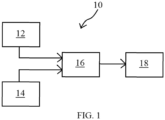
- FIG 1 is a block diagram showing the instructions the non-transitory computer readable medium.
- a non-transitory computer readable medium with instructions stored thereon, the instructions executable by one or more processors for: selecting infrequent or frequent autotuning of a combustor; and determining the health of a combustor.
- Infrequent or frequent autotuning may be selected by an operator based on experience with the gas turbine, age of the gas turbine, by the number of fuel split changes observed over a portion of time, or any combination of experience with the gas turbine, age of the gas turbine, and the number of fuel split changes observed over a portion of time.
- the health of a combustor may be one factor in the observable dynamics of a gas turbine combustion chamber.
- a quantitative health indicator may be representative of an identified anomaly within a gas turbine.
- a health value may be generated and presented to the user as an output, which may be correlated with a potential cause of non-uniformity.
- combustion dynamics monitoring systems collect dynamics data in the time domain.
- Time domain data may comprise pressure oscillations, electromagnetic radiation from the flame (e.g., chemiluminescence or thermal radiation), velocity oscillations, or some other observable related to combustion dynamics.
- Operational data may also be collected, for example, engine power, inlet guide vane angles, ambient temperature and other operational data.
- the related data may be acquired from, without limitation, combustion dynamics monitoring systems, other device data collection systems or directly from sensors associated with the devices.
- a quantitative health indicator is indicative of an anomaly.
- a health indicator value may be generated for the amplitude and frequency of each spectral bin. For example, implementations in certain gas turbine engines generate four spectral bins: Low Frequency Dynamics (LFD), Intermediate Frequency Dynamics, 1 (IFD1), Intermediate Frequency Dynamics, 2 (IFD2), and High Frequency Data (HFD).
- LFD Low Frequency Dynamics
- IFD1 Intermediate Frequency Dynamics
- IFD2 Intermediate Frequency Dynamics
- HFD High Frequency Data
- a health indicator value, or non-uniformity parameter may be determined for the amplitude and frequency of each of the four spectral bins yielding eight non-uniformity parameters associated with, for example, each combustion chamber.
- An anomaly, or a health indicator may be correlated with a potential cause.
- a health indicator, or non-uniformity parameter may be used as a quantitative indicator, or as a threshold output such as high/low or high/medium/low.
- a large value of the indicator for a particular device may be used to make an assessment of device health, or may be considered in conjunction with other operational data.
- other gas turbine engine operational data may include, for example, exit blade path spreads, or air-fuel premixer temperatures.
- Determining the health of a combustor comprises receiving real-time combustor fuel split data and fuel gas temperature data.
- the fuel gas temperature may be up to about 150°C, such as up to abou 149°C.
- the fuel split may range from 0% to 100% fuel and 0% to 100% air, wherein the combination of fuel and air is 100%.
- said determining the health of a combustor comprises comparing the real-time combustor fuel split data and fuel gas temperature data with data in a reference database, wherein the reference database comprises at least one data set selected from the group consisting of normalized load data, wheelspace temperature data, compressor discharge temperature data, dynamics amplitude data, and dynamics frequency data.
- Determining the health of a combustor may comprise comparing the real-time combustor fuel split data and fuel gas temperature data with data in a reference database, wherein the reference database consists of at least one data set selected from the group consisting of normalized load data, wheelspace temperature data, compressor discharge temperature data, dynamics amplitude data, and dynamics frequency data.
- determining the health of a combustor comprises comparing the real-time combustor fuel split data and fuel gas temperature data with data in a reference database, wherein the reference database comprises normalized load data, wheelspace temperature data, compressor discharge temperature data, dynamics amplitude data, and dynamics frequency data.
- Determining the health of a combustor may comprise comparing the real-time combustor fuel split data and fuel gas temperature data with data in a reference database, wherein the reference database consists of the data sets: normalized load data, wheelspace temperature data, compressor discharge temperature data, dynamics amplitude data, and dynamics frequency data.
- Wheelspace temperature and compressor discharge temperature may be collected with the use of a thermocouple.
- Dynamics amplitude and dynamics frequency data may be collected with the use of pressure sensors, and transformed from the time domain to the frequency domain via fast Fourier transform of the data.
- Normalized load may be the percentage of output power of the turbine at a given set of operating conditions divided by its maximum output power under the same operating conditions.
- determining the health of a combustor comprises comparing real time combustion dynamics data and fuel split data with a reference database.
- Combustion dynamics may be pressure waves of defined amplitudes and frequencies that are associated with the natural acoustic modes of the combustion system. For example, in the typical can-annular combustor of a large gas turbine, combustion dynamics may range in frequency from less than 50 Hz to several 1000 Hz. In terms of their impact on turbine components, dynamics of these frequencies can range from benign to highly destructive. Combustion instabilities in industrial gas turbines can produce intolerably large pressure waves, which lead to fatigue, detachment of components, costly outages and repair.
- Combustion dynamics may be compared to a reference database.
- the reference database may contain combustion dynamics data from the past, conditioned on operation parameters similar to current operational parameters.
- Fuel split data may be included in parallel with this operational data, ensuring that the system's autotuning by adjusting the fuel splits is taken into account. This compels the autotuning system to compare dynamics signatures for a similar tuning state.
- the reference database may be configured to be updated by real time combustion dynamics data and fuel split data. According to certain embodiments, data may be streamed to the reference database or uploaded manually via batch upload. In some embodiments, a sliding window of user-defined, variable time determines the relevant values in the reference database as it is updated.
- frequent autotuning may be selected.
- determining the health of a combustor may comprise comparing real time fuel split data with a fuel split reference database.
- determining the health of a combustor may consist of comparing real time fuel split data with a fuel split reference database.
- comparing real time fuel split data with a fuel split reference database comprises selecting data for comparison from the fuel split reference database wherein the combustor exhibited at least one data set similar to data selected from the group consisting of normalized load data, wheelspace temperature data, compressor discharge temperature data, dynamics amplitude data, and dynamics frequency data.
- comparing real time fuel split data with a fuel split reference database comprises selecting data for comparison from the fuel split reference database, wherein the fuel split reference database includes data selected from the group consisting of normalized load data, wheelspace temperature data, compressor discharge temperature data, dynamics amplitude data, and dynamics frequency data.
- comparing real time fuel split data with a fuel split reference database comprises selecting data for comparison from the fuel split reference database, wherein the fuel split reference database consists of normalized load data, wheelspace temperature data, compressor discharge temperature data, dynamics amplitude data, and dynamics frequency data.
- the autotuning algorithm may be, in a sense, somewhat inverted.
- the dynamics signatures may be used as inputs in parallel with operational data, and the algorithm compares current fuel splits from the past wherein the unit exhibited similar dynamics signatures with similar operation data.
- determining the health of a combustor comprises outputting a single number H, wherein H is indicative of the overall health of the combustor.
- Health, H may be a measure of the deviation of combustor dynamics from observable norms given similar operating conditions. Given a populated reference database comprising load data, fuel splits, time of day, load ramp rate, and an observable parameter, which may be, for example, combustor temperature and/or pressure data, which may be a function of time and band, these parameters may be averaged over a given time window, T avg . This averaging across a window can be smoothing the data.
- Typical variation of a given combustor, c may be calculated from observable data, by determining the average observable for all combustors excluding c, determining the average observable for all combustors, and taking the difference.
- Heath, H of a given combustor as a function of time, may be determined by comparing the observable data for a given combustor, given a sufficiently similar vector comprising at least one of load data, fuel splits, time of day, load ramp rate within a given lookback time, with the average, given the expected typical variation.
- the health determination may use the same equation/methodology as described in U.S. Patent No 9,752,960 B2 ; portions of U.S. Patent No 9,752,960 B2 which are pertinent to making the health determination.
- H may be a function of the combustor and frequency band only.
- the non-transitory computer readable medium is configured to be switchable between infrequent or frequent autotuning of a combustor.
- a computer system comprising at least one microprocessor coupled to memory may include the non-transitory computer readable medium, and be configured to execute the instructions thereon.
- the computer system is configured to receive input data from at least one thermocouple.
- the computer system may be configured to receive input data from a plurality of thermocouples.
- the computer system may be included within a gas turbine system with an autotuning system.
- Also provided is a method of monitoring a combustor within a gas turbine engine system comprising: providing a gas turbine engine system, wherein the gas turbine engine includes an autotuning system; selecting infrequent or frequent autotuning of the combustor; and determining the health of the combustor; wherein said determining the health of a combustor comprises receiving real-time fuel gas temperature data from at least one thermocouple.
- Determining the health of a combustor may comprise receiving real-time combustor fuel split data.
- the fuel gas temperature may be up to about 150°C, such as up to about 149°C.
- the fuel split may range from 0% to 100% fuel and 0% to 100% air, wherein the combination of fuel and air is 100%.
- said determining the health of a combustor comprises comparing the real-time combustor fuel split data and fuel gas temperature data with data in a reference database, wherein the reference database comprises at least one data set selected from the group consisting of normalized load data, wheelspace temperature data, compressor discharge temperature data, dynamics amplitude data, and dynamics frequency data.
- Determining the health of a combustor may comprise comparing the real-time combustor fuel split data and fuel gas temperature data with data in a reference database, wherein the reference database consists of at least one data set selected from the group consisting of normalized load data, wheelspace temperature data, compressor discharge temperature data, dynamics amplitude data, and dynamics frequency data.
- determining the health of a combustor comprises comparing the real-time combustor fuel split data and fuel gas temperature data with data in a reference database, wherein the reference database comprises normalized load data, wheelspace temperature data, compressor discharge temperature data, dynamics amplitude data, and dynamics frequency data.
- Determining the health of a combustor may comprise comparing the real-time combustor fuel split data and fuel gas temperature data with data in a reference database, wherein the reference database consists of the data sets: normalized load data, wheelspace temperature data, compressor discharge temperature data, dynamics amplitude data, and dynamics frequency data.
- infrequent autotuning may be selected.
- determining the health of a combustor may comprise comparing real time combustion dynamics data and fuel split data with a reference database.
- the reference database is configured to be updated by real time combustion dynamics data and fuel split data.
- data may be streamed to the reference database or uploaded manually via batch upload.
- a sliding window of user-defined, variable time determines the relevant values in the reference database as it is updated.
- frequent autotuning is selected.
- determining the health of a combustor comprises comparing real time fuel split data with a fuel split reference database.
- data may be streamed to the reference database or uploaded manually via batch upload.
- a sliding window of user-defined, variable time determines the relevant values in the reference database as it is updated.
- comparing real time fuel split data with a fuel split reference database comprises selecting data for comparison from the fuel split reference database wherein the combustor exhibited at least one data set similar to data selected from the group consisting of normalized load data, wheelspace temperature data, compressor discharge temperature data, dynamics amplitude data, and dynamics frequency data.
- comparing real time fuel split data with a fuel split reference database comprises selecting data for comparison from the fuel split reference database wherein the combustor exhibited at least one data set similar to data selected from the group consisting of normalized load data, wheelspace temperature data, compressor discharge temperature data, dynamics amplitude data, and dynamics frequency data.
- comparing real time fuel split data with a fuel split reference database comprises selecting data for comparison from the fuel split reference database, wherein the fuel split reference database includes data selected from the group consisting of normalized load data, wheelspace temperature data, compressor discharge temperature data, dynamics amplitude data, and dynamics frequency data.
- comparing real time fuel split data with a fuel split reference database comprises selecting data for comparison from the fuel split reference database, wherein the fuel split reference database consists of normalized load data, wheelspace temperature data, compressor discharge temperature data, dynamics amplitude data, and dynamics frequency data.
- determining the health of a combustor comprises outputting a single number H, wherein H is indicative of the overall health of the combustor.
- H may be a function of the combustor and frequency band only.
- the non-transitory computer readable medium is configured to be switchable between infrequent or frequent autotuning of a combustor.
- a computer system comprising at least one microprocessor coupled to memory may include the non-transitory computer readable medium, and be configured to execute the instructions thereon.
- the computer system is configured to receive input data from at least one thermocouple.
- the computer system may be configured to receive input data from a plurality of thermocouples.
- the computer system may be included within a gas turbine system with an autotuning system.
- FIG 1 is a block diagram showing the instructions 10 on the non-transitory computer readable medium.
- Input data 12 which may include fuel splits and fuel gas temperature, is input to the algorithm 16.
- reference parameters 14 which may include normalized load data, wheelspace temperature data, compressor discharge data, the dynamics amplitude function, dynamics frequency function, or other operational data.
- infrequent or frequent autotuning may be selected. If infrequent autotuning is selected, combustion dynamics are compared to a reference database.
- the reference database may contain combustion dynamics data from the past, conditioned on operation parameters similar to current operational parameters.
- Fuel split data may be included in parallel with this operational data, ensuring that the system's autotuning by adjusting the fuel splits is taken into account.
- H is indicative of the overall health of the combustor.
- H may be a function of the combustor and frequency band only.
- Health, H may be a measure of the deviation of combustor dynamics from observable norms given similar operating conditions.
- a populated reference database comprising load data, fuel splits, time of day, load ramp rate, and an observable parameter, which may be, for example, combustor temperature and/or pressure data, which may be a function of time and band
- these parameters may be averaged over a given time window, T avg . This averaging across a window can be smoothing the data.
- Typical variation of a given combustor, c may be calculated from observable data, by determining the average observable for all combustors excluding c, determining the average observable for all combustors, and taking the difference.
- Heath, H, of a given combustor as a function of time may be determined by comparing the observable data for a given combustor, given a sufficiently similar vector comprising at least one of load data, fuel splits, time of day, load ramp rate within a given lookback time, with the average, given the expected typical variation.
Landscapes
- Engineering & Computer Science (AREA)
- Mechanical Engineering (AREA)
- General Engineering & Computer Science (AREA)
- Chemical & Material Sciences (AREA)
- Combustion & Propulsion (AREA)
- Control Of Turbines (AREA)
- Testing And Monitoring For Control Systems (AREA)
- Testing Of Engines (AREA)
Description
- Advanced combustion dynamics monitoring algorithms (CDM algorithms) have the capability to detect the precursors of combustion system hardware faults in gas turbine engines. These faults are extremely high consequence events, easily causing $10M+ failures when they occur. CDM algorithms identify variations in the dynamics signatures of the combustors to proactively detect precursors to these events, as described in, for example,
US 9,752,960 -
US2009/005952 describes an autotuning system for a gas turbine engine. - The results and advantages of the present algorithms are that it will enable combustion dynamics monitoring to continue to detect combustion system fault precursors for systems with autotuning. This allows issues to be detected before they trip the plant and/or cause an unplanned outage.
- Provided is a non-transitory computer readable medium with instructions stored thereon, as described in claim 7.
- Also disclosed is a method of monitoring a combustor within a gas turbine engine system as described in claim 1.
- Embodiments of the subject matter are disclosed with reference to the accompanying drawings and are for illustrative purposes only. The subject matter is not limited in its application to the details of construction or the arrangement of the components illustrated in the drawings. As used herein, "at least one" means one or more than one, and "and/or" means items listed may be included exclusively or in combination. Like reference numerals are used to indicate like components, unless otherwise indicated.
-
FIG 1 is a block diagram showing the instructions the non-transitory computer readable medium. - Provided is a non-transitory computer readable medium with instructions stored thereon, the instructions executable by one or more processors for: selecting infrequent or frequent autotuning of a combustor; and determining the health of a combustor. Infrequent or frequent autotuning may be selected by an operator based on experience with the gas turbine, age of the gas turbine, by the number of fuel split changes observed over a portion of time, or any combination of experience with the gas turbine, age of the gas turbine, and the number of fuel split changes observed over a portion of time. The health of a combustor may be one factor in the observable dynamics of a gas turbine combustion chamber. A quantitative health indicator may be representative of an identified anomaly within a gas turbine. According to certain embodiments, a health value may be generated and presented to the user as an output, which may be correlated with a potential cause of non-uniformity.
- In certain embodiments, combustion dynamics monitoring systems collect dynamics data in the time domain. Time domain data may comprise pressure oscillations, electromagnetic radiation from the flame (e.g., chemiluminescence or thermal radiation), velocity oscillations, or some other observable related to combustion dynamics. Operational data may also be collected, for example, engine power, inlet guide vane angles, ambient temperature and other operational data. The related data may be acquired from, without limitation, combustion dynamics monitoring systems, other device data collection systems or directly from sensors associated with the devices.
- A quantitative health indicator is indicative of an anomaly. A health indicator value may be generated for the amplitude and frequency of each spectral bin. For example, implementations in certain gas turbine engines generate four spectral bins: Low Frequency Dynamics (LFD), Intermediate Frequency Dynamics, 1 (IFD1), Intermediate Frequency Dynamics, 2 (IFD2), and High Frequency Data (HFD). A health indicator value, or non-uniformity parameter, may be determined for the amplitude and frequency of each of the four spectral bins yielding eight non-uniformity parameters associated with, for example, each combustion chamber.
- An anomaly, or a health indicator, may be correlated with a potential cause. A health indicator, or non-uniformity parameter, may be used as a quantitative indicator, or as a threshold output such as high/low or high/medium/low. A large value of the indicator for a particular device may be used to make an assessment of device health, or may be considered in conjunction with other operational data. In an embodiment, other gas turbine engine operational data may include, for example, exit blade path spreads, or air-fuel premixer temperatures.
- Determining the health of a combustor comprises receiving real-time combustor fuel split data and fuel gas temperature data. In some embodiments, the fuel gas temperature may be up to about 150°C, such as up to abou 149°C. In some embodiments, the fuel split may range from 0% to 100% fuel and 0% to 100% air, wherein the combination of fuel and air is 100%. In some embodiments, said determining the health of a combustor comprises comparing the real-time combustor fuel split data and fuel gas temperature data with data in a reference database, wherein the reference database comprises at least one data set selected from the group consisting of normalized load data, wheelspace temperature data, compressor discharge temperature data, dynamics amplitude data, and dynamics frequency data. Determining the health of a combustor may comprise comparing the real-time combustor fuel split data and fuel gas temperature data with data in a reference database, wherein the reference database consists of at least one data set selected from the group consisting of normalized load data, wheelspace temperature data, compressor discharge temperature data, dynamics amplitude data, and dynamics frequency data. In some embodiments, determining the health of a combustor comprises comparing the real-time combustor fuel split data and fuel gas temperature data with data in a reference database, wherein the reference database comprises normalized load data, wheelspace temperature data, compressor discharge temperature data, dynamics amplitude data, and dynamics frequency data. Determining the health of a combustor may comprise comparing the real-time combustor fuel split data and fuel gas temperature data with data in a reference database, wherein the reference database consists of the data sets: normalized load data, wheelspace temperature data, compressor discharge temperature data, dynamics amplitude data, and dynamics frequency data. Wheelspace temperature and compressor discharge temperature may be collected with the use of a thermocouple. Dynamics amplitude and dynamics frequency data may be collected with the use of pressure sensors, and transformed from the time domain to the frequency domain via fast Fourier transform of the data. Normalized load may be the percentage of output power of the turbine at a given set of operating conditions divided by its maximum output power under the same operating conditions.
- According to certain embodiments, infrequent autotuning may be selected. In some embodiments, determining the health of a combustor comprises comparing real time combustion dynamics data and fuel split data with a reference database. Combustion dynamics may be pressure waves of defined amplitudes and frequencies that are associated with the natural acoustic modes of the combustion system. For example, in the typical can-annular combustor of a large gas turbine, combustion dynamics may range in frequency from less than 50 Hz to several 1000 Hz. In terms of their impact on turbine components, dynamics of these frequencies can range from benign to highly destructive. Combustion instabilities in industrial gas turbines can produce intolerably large pressure waves, which lead to fatigue, detachment of components, costly outages and repair. Combustion dynamics may be compared to a reference database. The reference database may contain combustion dynamics data from the past, conditioned on operation parameters similar to current operational parameters. Fuel split data may be included in parallel with this operational data, ensuring that the system's autotuning by adjusting the fuel splits is taken into account. This compels the autotuning system to compare dynamics signatures for a similar tuning state.
- The reference database may be configured to be updated by real time combustion dynamics data and fuel split data. According to certain embodiments, data may be streamed to the reference database or uploaded manually via batch upload. In some embodiments, a sliding window of user-defined, variable time determines the relevant values in the reference database as it is updated.
- According to certain embodiments, frequent autotuning may be selected. When frequent autotuning is selected, determining the health of a combustor may comprise comparing real time fuel split data with a fuel split reference database. When frequent autotuning is selected, determining the health of a combustor may consist of comparing real time fuel split data with a fuel split reference database. In some embodiments, comparing real time fuel split data with a fuel split reference database comprises selecting data for comparison from the fuel split reference database wherein the combustor exhibited at least one data set similar to data selected from the group consisting of normalized load data, wheelspace temperature data, compressor discharge temperature data, dynamics amplitude data, and dynamics frequency data. In some embodiments, comparing real time fuel split data with a fuel split reference database comprises selecting data for comparison from the fuel split reference database, wherein the fuel split reference database includes data selected from the group consisting of normalized load data, wheelspace temperature data, compressor discharge temperature data, dynamics amplitude data, and dynamics frequency data. In some embodiments, comparing real time fuel split data with a fuel split reference database comprises selecting data for comparison from the fuel split reference database, wherein the fuel split reference database consists of normalized load data, wheelspace temperature data, compressor discharge temperature data, dynamics amplitude data, and dynamics frequency data. The autotuning algorithm may be, in a sense, somewhat inverted. The dynamics signatures may be used as inputs in parallel with operational data, and the algorithm compares current fuel splits from the past wherein the unit exhibited similar dynamics signatures with similar operation data.
- In some embodiments, determining the health of a combustor comprises outputting a single number H, wherein H is indicative of the overall health of the combustor. Health, H, may be a measure of the deviation of combustor dynamics from observable norms given similar operating conditions. Given a populated reference database comprising load data, fuel splits, time of day, load ramp rate, and an observable parameter, which may be, for example, combustor temperature and/or pressure data, which may be a function of time and band, these parameters may be averaged over a given time window, Tavg. This averaging across a window can be smoothing the data. Typical variation of a given combustor, c, may be calculated from observable data, by determining the average observable for all combustors excluding c, determining the average observable for all combustors, and taking the difference. Heath, H, of a given combustor as a function of time, may be determined by comparing the observable data for a given combustor, given a sufficiently similar vector comprising at least one of load data, fuel splits, time of day, load ramp rate within a given lookback time, with the average, given the expected typical variation. The health determination may use the same equation/methodology as described in
U.S. Patent No 9,752,960 B2 U.S. Patent No 9,752,960 B2 - According to certain embodiments, H may be a function of the combustor and frequency band only. In some embodiments, the non-transitory computer readable medium is configured to be switchable between infrequent or frequent autotuning of a combustor. A computer system comprising at least one microprocessor coupled to memory may include the non-transitory computer readable medium, and be configured to execute the instructions thereon. In some embodiments, the computer system is configured to receive input data from at least one thermocouple. According to certain embodiments, the computer system may be configured to receive input data from a plurality of thermocouples. The computer system may be included within a gas turbine system with an autotuning system.
- Also provided is a method of monitoring a combustor within a gas turbine engine system, comprising: providing a gas turbine engine system, wherein the gas turbine engine includes an autotuning system; selecting infrequent or frequent autotuning of the combustor; and determining the health of the combustor; wherein said determining the health of a combustor comprises receiving real-time fuel gas temperature data from at least one thermocouple.
- Determining the health of a combustor may comprise receiving real-time combustor fuel split data. In some embodiments, the fuel gas temperature may be up to about 150°C, such as up to about 149°C. In some embodiments, the fuel split may range from 0% to 100% fuel and 0% to 100% air, wherein the combination of fuel and air is 100%. In some embodiments, said determining the health of a combustor comprises comparing the real-time combustor fuel split data and fuel gas temperature data with data in a reference database, wherein the reference database comprises at least one data set selected from the group consisting of normalized load data, wheelspace temperature data, compressor discharge temperature data, dynamics amplitude data, and dynamics frequency data. Determining the health of a combustor may comprise comparing the real-time combustor fuel split data and fuel gas temperature data with data in a reference database, wherein the reference database consists of at least one data set selected from the group consisting of normalized load data, wheelspace temperature data, compressor discharge temperature data, dynamics amplitude data, and dynamics frequency data. In some embodiments, determining the health of a combustor comprises comparing the real-time combustor fuel split data and fuel gas temperature data with data in a reference database, wherein the reference database comprises normalized load data, wheelspace temperature data, compressor discharge temperature data, dynamics amplitude data, and dynamics frequency data. Determining the health of a combustor may comprise comparing the real-time combustor fuel split data and fuel gas temperature data with data in a reference database, wherein the reference database consists of the data sets: normalized load data, wheelspace temperature data, compressor discharge temperature data, dynamics amplitude data, and dynamics frequency data.
- According to certain embodiments, infrequent autotuning may be selected. When infrequent autotuning is selected, determining the health of a combustor may comprise comparing real time combustion dynamics data and fuel split data with a reference database. In some embodiments the reference database is configured to be updated by real time combustion dynamics data and fuel split data. According to certain embodiments, data may be streamed to the reference database or uploaded manually via batch upload. In some embodiments, a sliding window of user-defined, variable time determines the relevant values in the reference database as it is updated.
- In some embodiments frequent autotuning is selected. When frequent autotuning is selected, determining the health of a combustor comprises comparing real time fuel split data with a fuel split reference database. According to certain embodiments, data may be streamed to the reference database or uploaded manually via batch upload. In some embodiments, a sliding window of user-defined, variable time determines the relevant values in the reference database as it is updated.
- According to certain embodiments, comparing real time fuel split data with a fuel split reference database comprises selecting data for comparison from the fuel split reference database wherein the combustor exhibited at least one data set similar to data selected from the group consisting of normalized load data, wheelspace temperature data, compressor discharge temperature data, dynamics amplitude data, and dynamics frequency data. In some embodiments comparing real time fuel split data with a fuel split reference database comprises selecting data for comparison from the fuel split reference database wherein the combustor exhibited at least one data set similar to data selected from the group consisting of normalized load data, wheelspace temperature data, compressor discharge temperature data, dynamics amplitude data, and dynamics frequency data.
- In some embodiments, comparing real time fuel split data with a fuel split reference database comprises selecting data for comparison from the fuel split reference database, wherein the fuel split reference database includes data selected from the group consisting of normalized load data, wheelspace temperature data, compressor discharge temperature data, dynamics amplitude data, and dynamics frequency data. In some embodiments, comparing real time fuel split data with a fuel split reference database comprises selecting data for comparison from the fuel split reference database, wherein the fuel split reference database consists of normalized load data, wheelspace temperature data, compressor discharge temperature data, dynamics amplitude data, and dynamics frequency data.
- In some embodiments of the method, determining the health of a combustor comprises outputting a single number H, wherein H is indicative of the overall health of the combustor. According to certain embodiments, H may be a function of the combustor and frequency band only. In some embodiments, the non-transitory computer readable medium is configured to be switchable between infrequent or frequent autotuning of a combustor. A computer system comprising at least one microprocessor coupled to memory may include the non-transitory computer readable medium, and be configured to execute the instructions thereon. In some embodiments, the computer system is configured to receive input data from at least one thermocouple. According to certain embodiments, the computer system may be configured to receive input data from a plurality of thermocouples. The computer system may be included within a gas turbine system with an autotuning system.
-
FIG 1 is a block diagram showing theinstructions 10 on the non-transitory computer readable medium.Input data 12, which may include fuel splits and fuel gas temperature, is input to thealgorithm 16. Also input to the algorithm arereference parameters 14, which may include normalized load data, wheelspace temperature data, compressor discharge data, the dynamics amplitude function, dynamics frequency function, or other operational data. Within thealgorithm 16, infrequent or frequent autotuning may be selected. If infrequent autotuning is selected, combustion dynamics are compared to a reference database. The reference database may contain combustion dynamics data from the past, conditioned on operation parameters similar to current operational parameters. Fuel split data may be included in parallel with this operational data, ensuring that the system's autotuning by adjusting the fuel splits is taken into account. This compels the autotuning system to compare dynamics signatures for a similar tuning state. If frequent autotuning is selected, the autotuning algorithm may be somewhat inverted. The dynamics signatures may be used asinputs 12 in parallel with operational data, and thealgorithm 16 compares current fuel splits from the past wherein the unit exhibited similar dynamics signatures with similar operation data. Presented as anoutput 18 is H, wherein H is indicative of the overall health of the combustor. According to certain embodiments, H may be a function of the combustor and frequency band only. Health, H, may be a measure of the deviation of combustor dynamics from observable norms given similar operating conditions. Given a populated reference database comprising load data, fuel splits, time of day, load ramp rate, and an observable parameter, which may be, for example, combustor temperature and/or pressure data, which may be a function of time and band, these parameters may be averaged over a given time window, Tavg. This averaging across a window can be smoothing the data. Typical variation of a given combustor, c, may be calculated from observable data, by determining the average observable for all combustors excluding c, determining the average observable for all combustors, and taking the difference. Heath, H, of a given combustor as a function of time, may be determined by comparing the observable data for a given combustor, given a sufficiently similar vector comprising at least one of load data, fuel splits, time of day, load ramp rate within a given lookback time, with the average, given the expected typical variation. - It will be understood that the embodiments described herein are merely exemplary, and that one skilled in the art may make variations and modifications without departing from the scope of the invention. All such variations and modifications are intended to be included within the scope of the invention as described and claimed herein. Further, all embodiments disclosed are not necessarily in the alternative, as various embodiments of the invention may be combined to provide the desired result.
Claims (14)
- A computer implemented method for monitoring a combustor within a gas turbine engine system, the method comprising:providing a gas turbine engine system, wherein the gas turbine engine includes an autotuning system;selecting infrequent or frequent autotuning of the combustor; anddetermining the health of the combustor;wherein said determining the health of a combustor comprises receiving real-time fuel gas temperature data from at least one thermocouple and receiving real-time combustor fuel split data; preferablywherein said determining the health of a combustor comprises comparing the real-time combustor fuel split data and fuel gas temperature data with data in a reference database, wherein the reference database comprises at least one data set (14) selected from the group consisting of normalized load data, wheelspace temperature data, compressor discharge temperature data, dynamics amplitude data, and dynamics frequency data; more preferablywherein said determining the health of a combustor comprises comparing the real-time combustor fuel split data and fuel gas temperature data with data in a reference database, wherein the reference database comprises normalized load data, wheelspace temperature data, compressor discharge temperature data, dynamics amplitude data, and dynamics frequency data.
- The method of claim 1, wherein infrequent autotuning is selected, wherein said determining the health of a combustor comprises comparing real time combustion dynamics data and fuel split data with a reference database.
- The method of claim 2, wherein the reference database is configured to be updated by real time combustion dynamics data and fuel split data.
- The method of claim 2, wherein frequent autotuning is selected, wherein said determining the health of a combustor comprises comparing real time fuel split data with a fuel split reference database.
- The method of claim 4, wherein said comparing real time fuel split data with a fuel split reference database comprises selecting data for comparison from the fuel split reference database wherein the combustor exhibited at least one data set (14) similar to data selected from the group consisting of normalized load data, wheelspace temperature data, compressor discharge temperature data, dynamics amplitude data, and dynamics frequency data.
- The method of claim 1, wherein said determining the health of a combustor comprises outputting a single number H, wherein H is indicative of the overall health (18) of the combustor, wherein the non-transitory computer readable medium is configured to be switchable between infrequent or frequent autotuning of a combustor, wherein said determining the health of a combustor comprises receiving real-time fuel gas temperature data from a plurality of thermocouples.
- A non-transitory computer readable medium with instructions (10) stored thereon, the instructions (10) executable by one or more processors for:selecting infrequent or frequent autotuning of a combustor; anddetermining the health of a combustor,wherein said determining the health of a combustor comprises receiving real-time combustor fuel split data and fuel gas temperature data; preferablywherein said determining the health of a combustor comprises comparing the real-time combustor fuel split data and fuel gas temperature data with data in a reference database, wherein the reference database comprises at least one data set (14) selected from the group consisting of normalized load data, wheelspace temperature data, compressor discharge temperature data, dynamics amplitude data, and dynamics frequency data; more preferablywherein said determining the health of a combustor comprises comparing the real-time combustor fuel split data and fuel gas temperature data with data in a reference database, wherein the reference database comprises normalized load data, wheelspace temperature data, compressor discharge temperature data, dynamics amplitude data, and dynamics frequency data.
- The non-transitory computer readable medium of claim 7, wherein when infrequent autotuning is selected, wherein said determining the health of a combustor comprises comparing real time combustion dynamics data and fuel split data with a reference database; preferably
wherein the reference database is configured to be updated by real time combustion dynamics data and fuel split data. - The non-transitory computer readable medium of claim 7, wherein when frequent autotuning is selected, said determining the health of a combustor comprises comparing real time fuel split data with a fuel split reference database.
- The non-transitory computer readable medium of claim 9, wherein said comparing real time fuel split data with a fuel split reference database comprises selecting data for comparison from the fuel split reference database wherein the combustor exhibited at least one data set (14) similar to data selected from the group consisting of normalized load data, wheelspace temperature data, compressor discharge temperature data, dynamics amplitude data, and dynamics frequency data.
- The non-transitory computer readable medium of claim 7, wherein said determining the health of a combustor comprises outputting a single number H, wherein H is indicative of the overall health (18) of the combustor.
- The non-transitory computer readable medium of claim 7, wherein the non-transitory computer readable medium is configured to be switchable between infrequent or frequent autotuning of a combustor.
- A device comprising a computer system comprising at least one microprocessor coupled to memory and the non-transitory computer readable medium of claim 7, wherein the computer system is configured to receive input data (12) from a plurality of thermocouples.
- A gas turbine system comprising an autotuning system and the computer system of claim 13.
Priority Applications (1)
| Application Number | Priority Date | Filing Date | Title |
|---|---|---|---|
| EP23183410.2A EP4242429B1 (en) | 2019-05-10 | 2020-05-09 | Computer implemented method for monitoring a combustor in a gas turbine engine and non-transitory computer readable medium |
Applications Claiming Priority (2)
| Application Number | Priority Date | Filing Date | Title |
|---|---|---|---|
| US16/409,248 US11867397B2 (en) | 2019-05-10 | 2019-05-10 | Gas turbine |
| PCT/US2020/032276 WO2020231885A1 (en) | 2019-05-10 | 2020-05-09 | Gas turbine |
Related Child Applications (1)
| Application Number | Title | Priority Date | Filing Date |
|---|---|---|---|
| EP23183410.2A Division EP4242429B1 (en) | 2019-05-10 | 2020-05-09 | Computer implemented method for monitoring a combustor in a gas turbine engine and non-transitory computer readable medium |
Publications (2)
| Publication Number | Publication Date |
|---|---|
| EP3966433A1 EP3966433A1 (en) | 2022-03-16 |
| EP3966433B1 true EP3966433B1 (en) | 2023-07-05 |
Family
ID=71016627
Family Applications (2)
| Application Number | Title | Priority Date | Filing Date |
|---|---|---|---|
| EP23183410.2A Active EP4242429B1 (en) | 2019-05-10 | 2020-05-09 | Computer implemented method for monitoring a combustor in a gas turbine engine and non-transitory computer readable medium |
| EP20731262.0A Active EP3966433B1 (en) | 2019-05-10 | 2020-05-09 | Computer implemented method for monitoring a combustor in a gas turbine engine and non-transitory computer readable medium |
Family Applications Before (1)
| Application Number | Title | Priority Date | Filing Date |
|---|---|---|---|
| EP23183410.2A Active EP4242429B1 (en) | 2019-05-10 | 2020-05-09 | Computer implemented method for monitoring a combustor in a gas turbine engine and non-transitory computer readable medium |
Country Status (4)
| Country | Link |
|---|---|
| US (1) | US11867397B2 (en) |
| EP (2) | EP4242429B1 (en) |
| JP (1) | JP7547380B2 (en) |
| WO (1) | WO2020231885A1 (en) |
Families Citing this family (3)
| Publication number | Priority date | Publication date | Assignee | Title |
|---|---|---|---|---|
| US11326468B2 (en) * | 2019-11-08 | 2022-05-10 | Pratt & Whitney Canada Corp. | Methods and systems for operating a gas turbine engine |
| US11713725B2 (en) | 2020-05-28 | 2023-08-01 | Electric Power Research Institute, Inc. | Lean blowout precursor detection for gas turbines |
| US20220136404A1 (en) * | 2020-10-29 | 2022-05-05 | General Electric Company | Gas turbine mass differential determination system and method |
Family Cites Families (38)
| Publication number | Priority date | Publication date | Assignee | Title |
|---|---|---|---|---|
| US3946364A (en) | 1975-01-08 | 1976-03-23 | Eldec Corporation | Method and apparatus for sensing, storing, and graphically displaying over-temperature conditions of jet engines |
| US4058975A (en) | 1975-12-08 | 1977-11-22 | General Electric Company | Gas turbine temperature sensor validation apparatus and method |
| JP2618448B2 (en) | 1988-08-09 | 1997-06-11 | 株式会社日立製作所 | Gas turbine combustor condition monitoring apparatus, monitoring method and control method |
| US6354071B2 (en) * | 1998-09-25 | 2002-03-12 | General Electric Company | Measurement method for detecting and quantifying combustor dynamic pressures |
| US6598195B1 (en) * | 2000-08-21 | 2003-07-22 | General Electric Company | Sensor fault detection, isolation and accommodation |
| US6789390B2 (en) | 2002-09-20 | 2004-09-14 | General Electric Company | Methods and apparatus for estimating gas turbine engine governor dynamics |
| US6983603B2 (en) | 2002-10-24 | 2006-01-10 | Pratt & Whitney Canada Corp. | Detection of gas turbine engine hot section condition |
| US7322794B2 (en) | 2003-02-03 | 2008-01-29 | General Electric Company | Method and apparatus for condition-based monitoring of wind turbine components |
| US6741919B1 (en) * | 2003-02-26 | 2004-05-25 | General Electric Company | Methods and apparatus for detecting impending sensor failure |
| US6976351B2 (en) * | 2003-04-04 | 2005-12-20 | General Electric Company | Methods and apparatus for monitoring gas turbine combustion dynamics |
| US7734400B2 (en) | 2003-07-24 | 2010-06-08 | Honeywell International Inc. | Fault detection system and method using augmented data and fuzzy logic |
| US7369965B2 (en) | 2004-06-28 | 2008-05-06 | Honeywell International, Inc. | System and method for turbine engine anomaly detection |
| US20060041368A1 (en) | 2004-08-18 | 2006-02-23 | General Electric Company | Systems, Methods and Computer Program Products for Remote Monitoring of Turbine Combustion Dynamics |
| US7278266B2 (en) | 2004-08-31 | 2007-10-09 | General Electric Company | Methods and apparatus for gas turbine engine lean blowout avoidance |
| US7441411B2 (en) * | 2005-09-16 | 2008-10-28 | General Electric Company | Method and apparatus to detect onset of combustor hardware damage |
| US7584617B2 (en) * | 2006-03-17 | 2009-09-08 | Siemens Energy, Inc. | Monitoring health of a combustion dynamics sensing system |
| US7503177B2 (en) | 2006-03-17 | 2009-03-17 | Siemens Energy, Inc. | Combustion dynamics monitoring |
| US7451122B2 (en) | 2006-03-29 | 2008-11-11 | Honeywell International Inc. | Empirical design of experiments using neural network models |
| US7369932B2 (en) | 2006-05-04 | 2008-05-06 | Honeywell International, Inc. | System and method for turbine engine fault detection using discrete event system modeling |
| US7395188B1 (en) | 2006-12-07 | 2008-07-01 | General Electric Company | System and method for equipment life estimation |
| US7933754B2 (en) | 2006-12-07 | 2011-04-26 | General Electric Company | System and method for damage propagation estimation |
| US7725293B2 (en) | 2006-12-07 | 2010-05-25 | General Electric Company | System and method for equipment remaining life estimation |
| WO2008112220A1 (en) | 2007-03-08 | 2008-09-18 | Davidson Instruments Inc. | Apparatus and methods for monitoring combustion dynamics in a gas turbine engine |
| US7715991B2 (en) | 2007-05-17 | 2010-05-11 | General Electric Company | Systems and methods for monitoring energy system components |
| US7908072B2 (en) | 2007-06-26 | 2011-03-15 | General Electric Company | Systems and methods for using a combustion dynamics tuning algorithm with a multi-can combustor |
| US7853433B2 (en) | 2008-09-24 | 2010-12-14 | Siemens Energy, Inc. | Combustion anomaly detection via wavelet analysis of dynamic sensor signals |
| US9267443B2 (en) | 2009-05-08 | 2016-02-23 | Gas Turbine Efficiency Sweden Ab | Automated tuning of gas turbine combustion systems |
| US8326513B2 (en) | 2009-08-12 | 2012-12-04 | General Electric Company | Gas turbine combustion dynamics control system and method |
| JP5940676B2 (en) | 2011-11-22 | 2016-06-29 | エレクトリック パワー リサーチ インスチテュート インコーポレイテッド | System and method for anomaly detection |
| JP6004392B2 (en) | 2012-05-16 | 2016-10-05 | 学校法人東京理科大学 | Apparatus and method for controlling fuel supply to combustor, and observation apparatus and method |
| EP2682587B1 (en) | 2012-07-05 | 2017-10-11 | Gas Turbine Efficiency Sweden AB | Automated tuning of gas turbine combustion systems |
| US20140020400A1 (en) * | 2012-07-18 | 2014-01-23 | Gianni Ceccherini | System and method for auto-tuning a combustion system of a gas turbine |
| US9803560B2 (en) * | 2013-03-15 | 2017-10-31 | Ansaldo Energia Ip Uk Limited | Dynamic tuning of a gas turbine engine to detect and prevent lean blowout |
| US9677476B2 (en) | 2014-02-26 | 2017-06-13 | General Electric Company | Model-based feed forward approach to coordinated air-fuel control on a gas turbine |
| US9909508B2 (en) | 2014-06-26 | 2018-03-06 | General Electric Company | Automatic combustion system characterization |
| US10302541B2 (en) | 2016-09-14 | 2019-05-28 | United Technologies Corporation | Oil debris monitoring (ODM) using active valve configuration control |
| US10774753B2 (en) * | 2016-10-21 | 2020-09-15 | General Electric Company | Indirect monitoring of aircraft combustor dynamics |
| US11300069B2 (en) * | 2018-11-28 | 2022-04-12 | Honeywell International Inc. | Self-generating engine-specific health monitoring model from generic model base |
-
2019
- 2019-05-10 US US16/409,248 patent/US11867397B2/en active Active
-
2020
- 2020-05-09 WO PCT/US2020/032276 patent/WO2020231885A1/en not_active Ceased
- 2020-05-09 JP JP2021567001A patent/JP7547380B2/en active Active
- 2020-05-09 EP EP23183410.2A patent/EP4242429B1/en active Active
- 2020-05-09 EP EP20731262.0A patent/EP3966433B1/en active Active
Also Published As
| Publication number | Publication date |
|---|---|
| EP3966433A1 (en) | 2022-03-16 |
| US20200355368A1 (en) | 2020-11-12 |
| EP4242429B1 (en) | 2026-01-21 |
| US11867397B2 (en) | 2024-01-09 |
| EP4242429A2 (en) | 2023-09-13 |
| WO2020231885A1 (en) | 2020-11-19 |
| JP2022531963A (en) | 2022-07-12 |
| EP4242429A3 (en) | 2023-11-08 |
| JP7547380B2 (en) | 2024-09-09 |
Similar Documents
| Publication | Publication Date | Title |
|---|---|---|
| EP3966433B1 (en) | Computer implemented method for monitoring a combustor in a gas turbine engine and non-transitory computer readable medium | |
| EP2783092B1 (en) | System and method for anomaly detection | |
| US9500563B2 (en) | System and method for detecting an at-fault combustor | |
| US7451601B2 (en) | Method of tuning individual combustion chambers in a turbine based on a combustion chamber stratification index | |
| JP6628734B2 (en) | Method of monitoring abnormal combustion in gas turbomachine and gas turbomachine including abnormal combustion detection system | |
| US9803560B2 (en) | Dynamic tuning of a gas turbine engine to detect and prevent lean blowout | |
| US7503177B2 (en) | Combustion dynamics monitoring | |
| US20150025814A1 (en) | Method and system for real time dry low nitrogen oxide (dln) and diffusion combustion monitoring | |
| US10047679B2 (en) | System and method to enhance lean blowout monitoring | |
| US10352825B2 (en) | Systems and methods related to detecting blowout occurrences in gas turbines | |
| JP7776447B2 (en) | Lean Blowout Precursor Detection for Gas Turbines | |
| CN103998750B (en) | Method of detecting a fault in a combustor of a gas turbine plant and the gas turbine plant | |
| HK40071727A (en) | Computer implemented method for monitoring a combustor in a gas turbine engine and non-transitory computer readable medium | |
| HK40071727B (en) | Computer implemented method for monitoring a combustor in a gas turbine engine and non-transitory computer readable medium | |
| Noble et al. | Investigation into advanced combustion system health monitoring | |
| CN108119237B (en) | Model-free combustion power auto-tuning | |
| Noble et al. | Advanced gas turbine combustor health monitoring using combustion dynamics data | |
| US20240310443A1 (en) | Spark discharge monitoring system and spark discharge detection device | |
| Weidner et al. | Pulsations in Gas Turbine Operation: Identification and Modeling With the Purpose of Online Engine Monitoring and Optimization | |
| EP3845814A1 (en) | Gas turbine engine with active protection from pulsations and a method of operating a gas turbine engine |
Legal Events
| Date | Code | Title | Description |
|---|---|---|---|
| STAA | Information on the status of an ep patent application or granted ep patent |
Free format text: STATUS: UNKNOWN |
|
| STAA | Information on the status of an ep patent application or granted ep patent |
Free format text: STATUS: THE INTERNATIONAL PUBLICATION HAS BEEN MADE |
|
| PUAI | Public reference made under article 153(3) epc to a published international application that has entered the european phase |
Free format text: ORIGINAL CODE: 0009012 |
|
| STAA | Information on the status of an ep patent application or granted ep patent |
Free format text: STATUS: REQUEST FOR EXAMINATION WAS MADE |
|
| 17P | Request for examination filed |
Effective date: 20211110 |
|
| AK | Designated contracting states |
Kind code of ref document: A1 Designated state(s): AL AT BE BG CH CY CZ DE DK EE ES FI FR GB GR HR HU IE IS IT LI LT LU LV MC MK MT NL NO PL PT RO RS SE SI SK SM TR |
|
| DAV | Request for validation of the european patent (deleted) | ||
| DAX | Request for extension of the european patent (deleted) | ||
| REG | Reference to a national code |
Ref country code: HK Ref legal event code: DE Ref document number: 40071727 Country of ref document: HK |
|
| GRAP | Despatch of communication of intention to grant a patent |
Free format text: ORIGINAL CODE: EPIDOSNIGR1 |
|
| STAA | Information on the status of an ep patent application or granted ep patent |
Free format text: STATUS: GRANT OF PATENT IS INTENDED |
|
| INTG | Intention to grant announced |
Effective date: 20230125 |
|
| GRAS | Grant fee paid |
Free format text: ORIGINAL CODE: EPIDOSNIGR3 |
|
| GRAA | (expected) grant |
Free format text: ORIGINAL CODE: 0009210 |
|
| STAA | Information on the status of an ep patent application or granted ep patent |
Free format text: STATUS: THE PATENT HAS BEEN GRANTED |
|
| AK | Designated contracting states |
Kind code of ref document: B1 Designated state(s): AL AT BE BG CH CY CZ DE DK EE ES FI FR GB GR HR HU IE IS IT LI LT LU LV MC MK MT NL NO PL PT RO RS SE SI SK SM TR |
|
| REG | Reference to a national code |
Ref country code: CH Ref legal event code: EP |
|
| REG | Reference to a national code |
Ref country code: AT Ref legal event code: REF Ref document number: 1585040 Country of ref document: AT Kind code of ref document: T Effective date: 20230715 |
|
| REG | Reference to a national code |
Ref country code: DE Ref legal event code: R096 Ref document number: 602020013367 Country of ref document: DE |
|
| REG | Reference to a national code |
Ref country code: IE Ref legal event code: FG4D |
|
| REG | Reference to a national code |
Ref country code: LT Ref legal event code: MG9D |
|
| REG | Reference to a national code |
Ref country code: NL Ref legal event code: MP Effective date: 20230705 |
|
| REG | Reference to a national code |
Ref country code: AT Ref legal event code: MK05 Ref document number: 1585040 Country of ref document: AT Kind code of ref document: T Effective date: 20230705 |
|
| PG25 | Lapsed in a contracting state [announced via postgrant information from national office to epo] |
Ref country code: NL Free format text: LAPSE BECAUSE OF FAILURE TO SUBMIT A TRANSLATION OF THE DESCRIPTION OR TO PAY THE FEE WITHIN THE PRESCRIBED TIME-LIMIT Effective date: 20230705 |
|
| REG | Reference to a national code |
Ref country code: DE Ref legal event code: R082 Ref document number: 602020013367 Country of ref document: DE Representative=s name: KRAUS & LEDERER PARTGMBB, DE |
|
| PG25 | Lapsed in a contracting state [announced via postgrant information from national office to epo] |
Ref country code: GR Free format text: LAPSE BECAUSE OF FAILURE TO SUBMIT A TRANSLATION OF THE DESCRIPTION OR TO PAY THE FEE WITHIN THE PRESCRIBED TIME-LIMIT Effective date: 20231006 |
|
| PG25 | Lapsed in a contracting state [announced via postgrant information from national office to epo] |
Ref country code: ES Free format text: LAPSE BECAUSE OF FAILURE TO SUBMIT A TRANSLATION OF THE DESCRIPTION OR TO PAY THE FEE WITHIN THE PRESCRIBED TIME-LIMIT Effective date: 20230705 |
|
| PG25 | Lapsed in a contracting state [announced via postgrant information from national office to epo] |
Ref country code: IS Free format text: LAPSE BECAUSE OF FAILURE TO SUBMIT A TRANSLATION OF THE DESCRIPTION OR TO PAY THE FEE WITHIN THE PRESCRIBED TIME-LIMIT Effective date: 20231105 |
|
| PG25 | Lapsed in a contracting state [announced via postgrant information from national office to epo] |
Ref country code: SE Free format text: LAPSE BECAUSE OF FAILURE TO SUBMIT A TRANSLATION OF THE DESCRIPTION OR TO PAY THE FEE WITHIN THE PRESCRIBED TIME-LIMIT Effective date: 20230705 Ref country code: RS Free format text: LAPSE BECAUSE OF FAILURE TO SUBMIT A TRANSLATION OF THE DESCRIPTION OR TO PAY THE FEE WITHIN THE PRESCRIBED TIME-LIMIT Effective date: 20230705 Ref country code: PT Free format text: LAPSE BECAUSE OF FAILURE TO SUBMIT A TRANSLATION OF THE DESCRIPTION OR TO PAY THE FEE WITHIN THE PRESCRIBED TIME-LIMIT Effective date: 20231106 Ref country code: NO Free format text: LAPSE BECAUSE OF FAILURE TO SUBMIT A TRANSLATION OF THE DESCRIPTION OR TO PAY THE FEE WITHIN THE PRESCRIBED TIME-LIMIT Effective date: 20231005 Ref country code: LV Free format text: LAPSE BECAUSE OF FAILURE TO SUBMIT A TRANSLATION OF THE DESCRIPTION OR TO PAY THE FEE WITHIN THE PRESCRIBED TIME-LIMIT Effective date: 20230705 Ref country code: LT Free format text: LAPSE BECAUSE OF FAILURE TO SUBMIT A TRANSLATION OF THE DESCRIPTION OR TO PAY THE FEE WITHIN THE PRESCRIBED TIME-LIMIT Effective date: 20230705 Ref country code: IS Free format text: LAPSE BECAUSE OF FAILURE TO SUBMIT A TRANSLATION OF THE DESCRIPTION OR TO PAY THE FEE WITHIN THE PRESCRIBED TIME-LIMIT Effective date: 20231105 Ref country code: HR Free format text: LAPSE BECAUSE OF FAILURE TO SUBMIT A TRANSLATION OF THE DESCRIPTION OR TO PAY THE FEE WITHIN THE PRESCRIBED TIME-LIMIT Effective date: 20230705 Ref country code: GR Free format text: LAPSE BECAUSE OF FAILURE TO SUBMIT A TRANSLATION OF THE DESCRIPTION OR TO PAY THE FEE WITHIN THE PRESCRIBED TIME-LIMIT Effective date: 20231006 Ref country code: FI Free format text: LAPSE BECAUSE OF FAILURE TO SUBMIT A TRANSLATION OF THE DESCRIPTION OR TO PAY THE FEE WITHIN THE PRESCRIBED TIME-LIMIT Effective date: 20230705 Ref country code: ES Free format text: LAPSE BECAUSE OF FAILURE TO SUBMIT A TRANSLATION OF THE DESCRIPTION OR TO PAY THE FEE WITHIN THE PRESCRIBED TIME-LIMIT Effective date: 20230705 Ref country code: AT Free format text: LAPSE BECAUSE OF FAILURE TO SUBMIT A TRANSLATION OF THE DESCRIPTION OR TO PAY THE FEE WITHIN THE PRESCRIBED TIME-LIMIT Effective date: 20230705 |
|
| PG25 | Lapsed in a contracting state [announced via postgrant information from national office to epo] |
Ref country code: PL Free format text: LAPSE BECAUSE OF FAILURE TO SUBMIT A TRANSLATION OF THE DESCRIPTION OR TO PAY THE FEE WITHIN THE PRESCRIBED TIME-LIMIT Effective date: 20230705 |
|
| REG | Reference to a national code |
Ref country code: DE Ref legal event code: R097 Ref document number: 602020013367 Country of ref document: DE |
|
| PG25 | Lapsed in a contracting state [announced via postgrant information from national office to epo] |
Ref country code: SM Free format text: LAPSE BECAUSE OF FAILURE TO SUBMIT A TRANSLATION OF THE DESCRIPTION OR TO PAY THE FEE WITHIN THE PRESCRIBED TIME-LIMIT Effective date: 20230705 Ref country code: RO Free format text: LAPSE BECAUSE OF FAILURE TO SUBMIT A TRANSLATION OF THE DESCRIPTION OR TO PAY THE FEE WITHIN THE PRESCRIBED TIME-LIMIT Effective date: 20230705 Ref country code: EE Free format text: LAPSE BECAUSE OF FAILURE TO SUBMIT A TRANSLATION OF THE DESCRIPTION OR TO PAY THE FEE WITHIN THE PRESCRIBED TIME-LIMIT Effective date: 20230705 Ref country code: DK Free format text: LAPSE BECAUSE OF FAILURE TO SUBMIT A TRANSLATION OF THE DESCRIPTION OR TO PAY THE FEE WITHIN THE PRESCRIBED TIME-LIMIT Effective date: 20230705 Ref country code: CZ Free format text: LAPSE BECAUSE OF FAILURE TO SUBMIT A TRANSLATION OF THE DESCRIPTION OR TO PAY THE FEE WITHIN THE PRESCRIBED TIME-LIMIT Effective date: 20230705 Ref country code: SK Free format text: LAPSE BECAUSE OF FAILURE TO SUBMIT A TRANSLATION OF THE DESCRIPTION OR TO PAY THE FEE WITHIN THE PRESCRIBED TIME-LIMIT Effective date: 20230705 |
|
| PLBE | No opposition filed within time limit |
Free format text: ORIGINAL CODE: 0009261 |
|
| STAA | Information on the status of an ep patent application or granted ep patent |
Free format text: STATUS: NO OPPOSITION FILED WITHIN TIME LIMIT |
|
| PG25 | Lapsed in a contracting state [announced via postgrant information from national office to epo] |
Ref country code: IT Free format text: LAPSE BECAUSE OF FAILURE TO SUBMIT A TRANSLATION OF THE DESCRIPTION OR TO PAY THE FEE WITHIN THE PRESCRIBED TIME-LIMIT Effective date: 20230705 |
|
| 26N | No opposition filed |
Effective date: 20240408 |
|
| PG25 | Lapsed in a contracting state [announced via postgrant information from national office to epo] |
Ref country code: SI Free format text: LAPSE BECAUSE OF FAILURE TO SUBMIT A TRANSLATION OF THE DESCRIPTION OR TO PAY THE FEE WITHIN THE PRESCRIBED TIME-LIMIT Effective date: 20230705 |
|
| PG25 | Lapsed in a contracting state [announced via postgrant information from national office to epo] |
Ref country code: BG Free format text: LAPSE BECAUSE OF FAILURE TO SUBMIT A TRANSLATION OF THE DESCRIPTION OR TO PAY THE FEE WITHIN THE PRESCRIBED TIME-LIMIT Effective date: 20230705 |
|
| PG25 | Lapsed in a contracting state [announced via postgrant information from national office to epo] |
Ref country code: BG Free format text: LAPSE BECAUSE OF FAILURE TO SUBMIT A TRANSLATION OF THE DESCRIPTION OR TO PAY THE FEE WITHIN THE PRESCRIBED TIME-LIMIT Effective date: 20230705 |
|
| REG | Reference to a national code |
Ref country code: CH Ref legal event code: PL |
|
| PG25 | Lapsed in a contracting state [announced via postgrant information from national office to epo] |
Ref country code: MC Free format text: LAPSE BECAUSE OF FAILURE TO SUBMIT A TRANSLATION OF THE DESCRIPTION OR TO PAY THE FEE WITHIN THE PRESCRIBED TIME-LIMIT Effective date: 20230705 |
|
| PG25 | Lapsed in a contracting state [announced via postgrant information from national office to epo] |
Ref country code: LU Free format text: LAPSE BECAUSE OF NON-PAYMENT OF DUE FEES Effective date: 20240509 |
|
| PG25 | Lapsed in a contracting state [announced via postgrant information from national office to epo] |
Ref country code: MC Free format text: LAPSE BECAUSE OF FAILURE TO SUBMIT A TRANSLATION OF THE DESCRIPTION OR TO PAY THE FEE WITHIN THE PRESCRIBED TIME-LIMIT Effective date: 20230705 Ref country code: LU Free format text: LAPSE BECAUSE OF NON-PAYMENT OF DUE FEES Effective date: 20240509 Ref country code: CH Free format text: LAPSE BECAUSE OF NON-PAYMENT OF DUE FEES Effective date: 20240531 |
|
| REG | Reference to a national code |
Ref country code: BE Ref legal event code: MM Effective date: 20240531 |
|
| PG25 | Lapsed in a contracting state [announced via postgrant information from national office to epo] |
Ref country code: IE Free format text: LAPSE BECAUSE OF NON-PAYMENT OF DUE FEES Effective date: 20240509 |
|
| PG25 | Lapsed in a contracting state [announced via postgrant information from national office to epo] |
Ref country code: BE Free format text: LAPSE BECAUSE OF NON-PAYMENT OF DUE FEES Effective date: 20240531 |
|
| PGFP | Annual fee paid to national office [announced via postgrant information from national office to epo] |
Ref country code: DE Payment date: 20250529 Year of fee payment: 6 |
|
| PGFP | Annual fee paid to national office [announced via postgrant information from national office to epo] |
Ref country code: GB Payment date: 20250527 Year of fee payment: 6 |
|
| PGFP | Annual fee paid to national office [announced via postgrant information from national office to epo] |
Ref country code: FR Payment date: 20250526 Year of fee payment: 6 |
|
| PG25 | Lapsed in a contracting state [announced via postgrant information from national office to epo] |
Ref country code: CY Free format text: LAPSE BECAUSE OF FAILURE TO SUBMIT A TRANSLATION OF THE DESCRIPTION OR TO PAY THE FEE WITHIN THE PRESCRIBED TIME-LIMIT; INVALID AB INITIO Effective date: 20200509 |
|
| PG25 | Lapsed in a contracting state [announced via postgrant information from national office to epo] |
Ref country code: HU Free format text: LAPSE BECAUSE OF FAILURE TO SUBMIT A TRANSLATION OF THE DESCRIPTION OR TO PAY THE FEE WITHIN THE PRESCRIBED TIME-LIMIT; INVALID AB INITIO Effective date: 20200509 |