EP3965490A1 - Resource determination method, resource scheduling method and apparatus - Google Patents
Resource determination method, resource scheduling method and apparatus Download PDFInfo
- Publication number
- EP3965490A1 EP3965490A1 EP19927461.4A EP19927461A EP3965490A1 EP 3965490 A1 EP3965490 A1 EP 3965490A1 EP 19927461 A EP19927461 A EP 19927461A EP 3965490 A1 EP3965490 A1 EP 3965490A1
- Authority
- EP
- European Patent Office
- Prior art keywords
- resource
- bandwidth
- scheduling
- unit
- network device
- Prior art date
- Legal status (The legal status is an assumption and is not a legal conclusion. Google has not performed a legal analysis and makes no representation as to the accuracy of the status listed.)
- Pending
Links
Images




Classifications
-
- H—ELECTRICITY
- H04—ELECTRIC COMMUNICATION TECHNIQUE
- H04L—TRANSMISSION OF DIGITAL INFORMATION, e.g. TELEGRAPHIC COMMUNICATION
- H04L5/00—Arrangements affording multiple use of the transmission path
- H04L5/0001—Arrangements for dividing the transmission path
- H04L5/0003—Two-dimensional division
- H04L5/0005—Time-frequency
-
- H—ELECTRICITY
- H04—ELECTRIC COMMUNICATION TECHNIQUE
- H04W—WIRELESS COMMUNICATION NETWORKS
- H04W72/00—Local resource management
- H04W72/04—Wireless resource allocation
- H04W72/044—Wireless resource allocation based on the type of the allocated resource
- H04W72/0457—Variable allocation of band or rate
-
- H—ELECTRICITY
- H04—ELECTRIC COMMUNICATION TECHNIQUE
- H04W—WIRELESS COMMUNICATION NETWORKS
- H04W72/00—Local resource management
- H04W72/12—Wireless traffic scheduling
-
- H—ELECTRICITY
- H04—ELECTRIC COMMUNICATION TECHNIQUE
- H04L—TRANSMISSION OF DIGITAL INFORMATION, e.g. TELEGRAPHIC COMMUNICATION
- H04L27/00—Modulated-carrier systems
- H04L27/26—Systems using multi-frequency codes
-
- H—ELECTRICITY
- H04—ELECTRIC COMMUNICATION TECHNIQUE
- H04L—TRANSMISSION OF DIGITAL INFORMATION, e.g. TELEGRAPHIC COMMUNICATION
- H04L27/00—Modulated-carrier systems
- H04L27/26—Systems using multi-frequency codes
- H04L27/2601—Multicarrier modulation systems
- H04L27/2602—Signal structure
- H04L27/26025—Numerology, i.e. varying one or more of symbol duration, subcarrier spacing, Fourier transform size, sampling rate or down-clocking
-
- H—ELECTRICITY
- H04—ELECTRIC COMMUNICATION TECHNIQUE
- H04L—TRANSMISSION OF DIGITAL INFORMATION, e.g. TELEGRAPHIC COMMUNICATION
- H04L5/00—Arrangements affording multiple use of the transmission path
- H04L5/0001—Arrangements for dividing the transmission path
- H04L5/0003—Two-dimensional division
- H04L5/0005—Time-frequency
- H04L5/0007—Time-frequency the frequencies being orthogonal, e.g. OFDM(A) or DMT
- H04L5/001—Time-frequency the frequencies being orthogonal, e.g. OFDM(A) or DMT the frequencies being arranged in component carriers
-
- H—ELECTRICITY
- H04—ELECTRIC COMMUNICATION TECHNIQUE
- H04L—TRANSMISSION OF DIGITAL INFORMATION, e.g. TELEGRAPHIC COMMUNICATION
- H04L5/00—Arrangements affording multiple use of the transmission path
- H04L5/0091—Signalling for the administration of the divided path, e.g. signalling of configuration information
- H04L5/0096—Indication of changes in allocation
-
- H—ELECTRICITY
- H04—ELECTRIC COMMUNICATION TECHNIQUE
- H04W—WIRELESS COMMUNICATION NETWORKS
- H04W16/00—Network planning, e.g. coverage or traffic planning tools; Network deployment, e.g. resource partitioning or cells structures
- H04W16/14—Spectrum sharing arrangements between different networks
-
- H—ELECTRICITY
- H04—ELECTRIC COMMUNICATION TECHNIQUE
- H04L—TRANSMISSION OF DIGITAL INFORMATION, e.g. TELEGRAPHIC COMMUNICATION
- H04L5/00—Arrangements affording multiple use of the transmission path
- H04L5/0091—Signalling for the administration of the divided path, e.g. signalling of configuration information
- H04L5/0092—Indication of how the channel is divided
-
- H—ELECTRICITY
- H04—ELECTRIC COMMUNICATION TECHNIQUE
- H04W—WIRELESS COMMUNICATION NETWORKS
- H04W72/00—Local resource management
- H04W72/20—Control channels or signalling for resource management
- H04W72/23—Control channels or signalling for resource management in the downlink direction of a wireless link, i.e. towards a terminal
Definitions
- This disclosure relates to the field of communication technologies.
- enhanced licensed assisted access of the Long Term Evolution (LTE)
- LTE Long Term Evolution
- eLAA enhanced licensed assisted access
- LTE Long Term Evolution
- OCB occupied channel bandwidth
- PSD power spectrum density
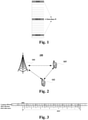
- FIG 1 is an exemplary diagram of an Interlace structure in a 20 MHz bandwidth in LTE.
- an Interlace consists of 10 resource blocks (RBs), and these 10 resource blocks are equally spaced in the 20 MHz bandwidth.
- the Interlace 0 consists of RB0, RB10, RB20, ..., RB90.
- a network device may allocate one or more Interlaces to a terminal equipment via uplink scheduling signaling for uplink data transmission of the terminal equipment.
- data transmission of the eLAA is performed under a framework of carrier aggregation, that is, the terminal equipment first accesses to a network device via a licensed frequency band, and then the network device allocates carriers of unlicensed frequency bands to the terminal equipment, each carrier needing scheduling control signaling to schedule transmission on the carrier.
- a unit of uplink and downlink resource allocation is a resource block group (RBG).
- RBG resource block group
- the number of resource blocks contained in the resource block group may be determined, in a range of ⁇ 2, 4, 8, 16 ⁇ ; and according to a frequency domain position of a bandwidth part (BWP) in the carrier, the number of RBGs included in the bandwidth part may be obtained through calculation.
- BWP bandwidth part
- embodiments of this disclosure provide a resource determination method, a resource scheduling method and apparatuses thereof.
- a resource determination method including:
- a resource determination apparatus including:
- a resource scheduling method including:
- a resource scheduling apparatus including:
- a communication system including:
- the terminal equipment receives the indication information transmitted by the network device, and receives the resource scheduling information transmitted by the network device, the indication information being used to determine whether a spacing bandwidth resource belongs to a scheduling bandwidth resource; and determines a size of a transport block according to the indication information and the resource scheduling information.
- the network device and the terminal equipment may reach a consensus on spectrum resources, and resource utilization may be effectively improved.
- terms “first”, and “second”, etc. are used to differentiate different elements with respect to names, and do not indicate spatial arrangement or temporal orders of these elements, and these elements should not be limited by these terms.
- Terms “and/or” include any one and all combinations of one or more relevantly listed terms.
- Terms “contain”, “include” and “have” refer to existence of stated features, elements, components, or assemblies, but do not exclude existence or addition of one or more other features, elements, components, or assemblies.
- single forms “a”, and “the”, etc. include plural forms, and should be understood as “a kind of' or “a type of' in a broad sense, but should not defined as a meaning of "one”; and the term “the” should be understood as including both a single form and a plural form, except specified otherwise.
- the term “according to” should be understood as “at least partially according to”, the term “based on” should be understood as “at least partially based on”, except specified otherwise.
- the term “communication network” or “wireless communication network” may refer to a network satisfying any one of the following communication standards: long term evolution (LTE), long term evolution-advanced (LTE-A), wideband code division multiple access (WCDMA), and high-speed packet access (HSPA), etc.
- LTE long term evolution
- LTE-A long term evolution-advanced
- WCDMA wideband code division multiple access
- HSPA high-speed packet access
- communication between devices in a communication system may be performed according to communication protocols at any stage, which may, for example, include but not limited to the following communication protocols: 1G (genescalen), 2G 2.5G, 2.75G, 3G, 4G, 4.5G, and 5G and new radio (NR) in the future, etc., and/or other communication protocols that are currently known or will be developed in the future.
- 1G genescalen
- NR new radio
- the term "network device”, for example, refers to a device in a communication system that accesses a terminal equipment to the communication network and provides services for the terminal equipment.
- the network device may include but not limited to the following equipment: a base station (BS), an access point (AP), a transmission reception point (TRP), a broadcast transmitter, a mobile management entity (MME), a gateway, a server, a radio network controller (RNC), a base station controller (BSC), etc.
- the base station may include but not limited to a node B (NodeB or NB), an evolved node B (eNodeB or eNB), and a 5G base station (gNB), etc. Furthermore, it may include a remote radio head (RRH), a remote radio unit (RRU), a relay, or a low-power node (such as a femto, and a pico, etc.).
- NodeB or NB node B
- eNodeB or eNB evolved node B
- gNB 5G base station
- RRH remote radio head
- RRU remote radio unit
- relay or a low-power node (such as a femto, and a pico, etc.).
- base station may include some or all of its functions, and each base station may provide communication coverage for a specific geographical area.
- a term "cell” may refer to a base station and/or its coverage area, which may be expressed as a serving cell, and may be a macro cell or
- the term "user equipment (UE)” or “terminal equipment (TE) or terminal device” refers to, for example, an equipment accessing to a communication network and receiving network services.
- the terminal equipment may be fixed or mobile, and may also be referred to as a mobile station (MS), a terminal, a subscriber station (SS), an access terminal (AT), or a station, etc.
- the terminal equipment may include but not limited to the following devices: a cellular phone, a personal digital assistant (PDA), a wireless modem, a wireless communication device, a hand-held device, a machine-type communication device, a lap-top, a cordless telephone, a smart cell phone, a smart watch, and a digital camera, etc.
- PDA personal digital assistant
- wireless modem a wireless communication device
- hand-held device a machine-type communication device
- a machine-type communication device a lap-top
- a cordless telephone a smart cell phone, a smart watch, and a digital camera, etc.
- the user equipment may also be a machine or a device performing monitoring or measurement.
- the user equipment may include but not limited to a machine-type communication (MTC) terminal, a vehicle mounted communication terminal, a device to device (D2D) terminal, and a machine to machine (M2M) terminal, etc.
- MTC machine-type communication
- D2D device to device
- M2M machine to machine
- network side or “network device side” refers to one side of the network, which may be a certain base station, and may also include one or more network devices as described above.
- user side or “terminal side” or “terminal equipment side” refers to a side of a user or a terminal, which may be a certain UE, and may also include one or more terminal equipments as described above.
- FIG. 2 is a schematic diagram of a communication system of an embodiment of this disclosure, in which a case where a terminal equipment and a network device are taken as examples is schematically shown.
- a communication system 100 may include a network device 101 and terminal equipments 102, 103.
- a network device 101 may include a network device 101 and terminal equipments 102, 103.
- terminal equipments 102, 103 may include a network device 101 and terminal equipments 102, 103.
- FIG. 2 an example having only two terminal equipments and one network device is schematically given in FIG. 2 ; however, the embodiment of this disclosure is not limited thereto.
- existing traffics or traffics that may be implemented in the future may be performed between the network device 101 and the terminal equipments 102, 103.
- traffics may include but not limited to enhanced mobile broadband (eMBB), massive machine type communication (MTC), and ultra-reliable and low-latency communication (URLLC), etc.
- eMBB enhanced mobile broadband
- MTC massive machine type communication
- URLLC ultra-reliable and low-latency communication
- FIG. 2 shows that two terminal equipments 102 and 103 are both within the coverage of the network device 101; however, the embodiment of this disclosure is not limited thereto.
- the two terminal equipments 102 and 103 may not be within the coverage of the network device 101, or one terminal equipment 102 is within the coverage of the network device 101 and the other terminal equipment 103 is outside the coverage of the network device 101.
- FIG. 3 is an exemplary diagram of a BWP in NR Rel. 15.
- a bandwidth part includes 51 RBs from common RB 14 to common RB 64, hence, the bandwidth part includes total 14 resource block groups.
- a first resource block group (RBG 0) includes 2 RBs
- a last resource block group (RBG 13) includes 1 RB
- other resource block groups include 4 RBs.
- Mode 0 indicates an RBG scheduling condition in the bandwidth part (BWP) via a bitmap
- mode 1 indicates a starting RBG and the number of RBGs in multiple scheduled consecutive RBGs via a resource indication value (RIV).
- NR-based access to unlicensed spectrum supports a single carrier frequency with a bandwidth of more than 20 MHz (a bandwidth of a single carrier frequency includes multiple channel idle detection bandwidth units).
- the channel idle detection bandwidth unit is, for example, a frequency-domain unit for channel idle detection when the transmitting device uses unlicensed spectrum to transmit data, which may be, for example, 20 MHz, or may be an integer multiple of 20 MHz.
- FIG. 4 is a schematic diagram of the channel idle detection bandwidth unit.
- Large-bandwidth transmission exceeding 20 MHz of a single carrier frequency bandwidth may include two modes.
- the scheduling bandwidth transmits data only when channels of channel idle detection bandwidth units scheduling data transmission are detected as being idle; and when mode 2 is used, data may be transmitted on one or more bandwidth units with channels detected as being in an idle state. For example, if only a part of the channel idle detection bandwidth units are detected as being in an idle state, the data are transmitted on these bandwidth units detected as being in an idle state.
- spacing bandwidth or also referred to as guard bandwidth
- spacing bandwidth resources need to be reserved at both sides of each bandwidth unit.
- understandings of whether these spacing bandwidth resources are schedulable of a network device and a terminal equipment may possibly be different. Therefore, a consensus on spectrum resources cannot be reached, and resource utilization cannot be effectively improved.
- FIG. 5 is a schematic diagram of the resource determination method of the embodiment of this disclosure. As shown in FIG 5 , the method includes:
- FIG. 5 only schematically illustrates the embodiment of this disclosure; however, this disclosure is not limited thereto.
- an order of execution of the operations may be appropriately adjusted, and furthermore, some other operations may be added, or some operations therein may be reduced.
- appropriate variants may be made by those skilled in the art according to the above contents, without being limited to what is contained in FIG. 5 .
- the terminal equipment may also report capability information to the network device, the capability information at least indicating whether the terminal equipment has a capability to adjust a size of the scheduling bandwidth resource according to the channel idle detection result.
- the transmission bandwidth is adjusted immediately after the channel detection, which requires a processing capability of the UE. Therefore, in the capability information reported to the base station, the UE needs to include capability information on whether the UE supports that the scheduling bandwidth changes according to the channel idle detection result.
- the spacing bandwidth resource may be one or more resource units between at least two bandwidth units configured in a bandwidth part (BWP), or the spacing bandwidth resource may be one or more resource units other than at least one bandwidth unit configured in a bandwidth part (BWP).
- the resource unit may be one or more resource blocks (RBs), or one or more resource block groups (RBGs), or one or more subcarriers; however, this disclosure is not limited thereto.
- At least one bandwidth unit is configured in the bandwidth part (BWP) configured for the terminal equipment (the following description shall be given by taking a subband as an example).
- the bandwidth part (BWP) is further configured with information indicating a starting resource block and the number of resource blocks of the BWP, and resource blocks in the BWP not belonging to the bandwidth unit are taken as spacing bandwidth resources.
- a starting common RB of the BWP and the number of common RBs contained therein are configured first, and then at least one bandwidth unit contained in the BWP is configured.
- RBs not belong to the bandwidth unit in the BWP may be taken as spacing bandwidth resources.
- Table 1 shows an example of a BWP information element (IE). As shown in Table 1, subband denotes a bandwidth unit, and locationAndBandwidth indicates the starting resource block and the number of resource blocks of the BWP.
- resource blocks included in one or more bandwidth units are taken as resource blocks of the BWP, and resource blocks out of the bandwidth units are used as spacing bandwidth resources.
- the common RBs included in the BWP are configured in configuration information of the BWP, and at least one bandwidth unit is configured, common RBs included in the at least one bandwidth unit in the configuration information being the RBs included in the BWP.
- Common RBs between two bandwidth units may be taken as spacing bandwidth resources.
- Table 2 shows another example of the BWP IE; as shown in Table 2, subband denotes a bandwidth unit.
- configuration information of the spacing bandwidth resources is further contained in the configuration information of the BWP and is taken as optional configuration, and at least one configured bandwidth unit and/or the configured spacing bandwidth resources are taken as resources of the BWP.
- the common RBs included in the BWP are configured in the configuration information of the BWP, and in the configuration information of the BWP, in addition to at least one configured bandwidth unit, spacing bandwidth resources are further selected and configured, then, common RBs included in the at least one bandwidth unit and the spacing bandwidth are the RBs included in the BWP; and if at least one bandwidth unit is configured in the configuration information of the BWP and no spacing bandwidth resource is selected to be configured, the common RBs of the at least one bandwidth unit are the RBs included in the BWP.
- Table 3 shows a further example of the BWP IE; as shown in Table 3, subband denotes a bandwidth unit, and guardband denotes a spacing bandwidth.
- the bandwidth unit is configured with information indicating the starting resource block and the number of resource blocks; or, the bandwidth unit is configured with information on the starting resource block. At least two bandwidth units configured in the bandwidth part (BWP) are able to include at least one identical resource block, or any two bandwidth units configured in the bandwidth part (BWP) do not include identical resource blocks.
- the starting common RB and the number of included common RBs may be configured, or one bandwidth unit includes at least one channel idle detection bandwidth unit, and the number of RBs included in one channel idle detection bandwidth unit being of a predefined value.
- the starting common RB and the number of channel idle detection bandwidth units contained in the bandwidth unit may be configured.
- Table 4 shows still another example of the subband IE; as shown in Table 4, subband indicates a bandwidth unit, and locationAndBandwidth indicates the starting resource block and the number of resource blocks of the subband.
- FIG. 6 is an exemplary diagram of the BWP and bandwidth unit of the embodiment of this disclosure. As shown in FIG. 6 , sizes of the two bandwidth units configured in the BWP may be identical or different, and furthermore, the two bandwidth units may contain identical common RBs.
- FIG. 7 is another exemplary diagram of the BWP and bandwidth unit of the embodiment of this disclosure. As shown in FIG. 7 , sizes of the two bandwidth units configured in the BWP may be identical or different, and furthermore, any two bandwidth units configured in the BWP do not contain identical common RBs.
- the bandwidth unit is the channel idle detection bandwidth unit
- the number of RBs contained in one channel idle detection bandwidth unit is of a predefined value
- the configuration information of the bandwidth unit includes the starting RB of the bandwidth unit
- a frequency-domain position of the bandwidth unit may be determined according to the predefined number of RBs.
- Table 5 shows yet another example of the subband IE; as shown in Table 5, subband indicates a bandwidth unit, and StartingRB indicates the starting resource block the subband.
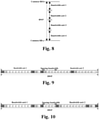
- FIG. 8 is a further exemplary diagram of the BWP and bandwidth unit of the embodiment of this disclosure. As shown in Table 8, any two bandwidth units configured in the BWP do not contain identical common RBs, and sizes thereof are identical.
- the resource allocation is schematically described above, and the resource scheduling unit shall be described below.
- multiple resource units with a frequency-domain spacing of a predetermined value in the bandwidth part (BWP) are divided into one resource scheduling unit.
- a subcarrier cluster with a frequency-domain spacing of a predefined value in the bandwidth part belongs to an uplink resource scheduling unit (interlace); wherein the predefined value is the number of RBs or the number of subcarriers.
- the subcarrier cluster may be a resource block or a resource unit consisting of an integer number of subcarriers.
- the number of subcarriers included in the subcarrier cluster is a predefined value.
- FIG. 9 is an exemplary diagram of Interlace division of the embodiment of this disclosure.
- the subcarrier cluster is an RB
- a predefined frequency-domain spacing value is 9.
- the bandwidth part contains 106 RBs with index values of 0, 1, ..., 105, hence, RBs with a frequency-domain spacing of 9 belong to the same uplink resource scheduling unit, and the bandwidth part contains total 10 uplink resource scheduling units.
- uplink resource scheduling unit 0 includes RB 0, RB 10, RB 20, ..., RB 100
- uplink resource scheduling unit 1 includes RB 1, RB 11, RB 21, ..., RB 101.
- At least one bandwidth unit in the bandwidth part is divided into resource scheduling units respectively, and multiple resource units with a predetermined frequency-domain spacing in one bandwidth unit are divided into one resource scheduling unit.
- the bandwidth units in the bandwidth part are divided into uplink resource scheduling units, and subcarrier clusters with a frequency-domain spacing of a predefined value in the bandwidth units belong to an uplink resource scheduling unit.
- FIG. 10 is another exemplary diagram of Interlace division of the embodiment of this disclosure.
- a bandwidth part contains 106 RBs, wherein frequency-domain resources RB 0 to RB 50 are configured as bandwidth unit 1, frequency-domain resources RB 55 to RB 105 are configured as bandwidth unit 2, and frequency-domain resources RB 51 to RB 54 are spacing bandwidth resources.
- the subcarrier cluster is an RB
- the predefined frequency-domain spacing value is 9
- the uplink resource scheduling unit 0 in bandwidth unit 1 includes RB 0, RB 10, ..., RB 50
- the uplink resource scheduling unit 0 in bandwidth unit 2 includes RB 55, RB 65, ..., RB 105
- the uplink resource scheduling unit 1 in bandwidth unit 1 includes RB1, RB11, ..., RB41
- the uplink resource scheduling unit 1 in bandwidth unit 2 includes RB 56, RB 66, ..., RB 96.
- the network device may configure the terminal equipment with an uplink resource scheduling unit to which resources in the spacing bandwidth resources belong.
- the terminal equipment deems that the spacing bandwidth resources belonging to the uplink resource scheduling unit scheduled by the network device are scheduled.
- the spacing bandwidth resource in FIG 10 includes 4 RBs.
- the network equipment respectively configures the 4 RBs in the spacing bandwidth resource, which belong to uplink resource scheduling units 1, 2, 3 and 4 in an ascending order of index values, that is, RB 51 belongs to uplink resource scheduling unit 1, RB 52 belongs to uplink resource scheduling unit 2, RB 53 belongs to uplink resource scheduling unit 3, and RB 54 belongs to uplink resource scheduling unit 4.
- a spacing bandwidth resource between bandwidth unit 1 and bandwidth unit 2 is a schedulable resource
- the terminal equipment deems that RB 53 in the spacing bandwidth resource is also scheduled at the same time, hence, a size of a transport block may be determined via a size of the scheduled resource.
- the terminal equipment may detect a channel idle state of the channel idle detection bandwidth unit where the scheduled resource is located before transmitting the uplink data. For example, the terminal equipment transmits the uplink data on the scheduled resource only when channel idle detection bandwidth units of all scheduled resources are in an idle state; otherwise, it does not transmit data on the scheduled resource.
- FIG. 11 is a schematic diagram of detecting the bandwidth unit of the embodiment of this disclosure. As shown in FIG 11 , for example, if the channel idle detection bandwidth units in the bandwidth unit are all in an idle state, the terminal equipment transmits data on the scheduled resource; and if there exists at least one channel idle detection bandwidth unit in the bandwidth unit is not in an idle state (that is, in a busy state), the terminal equipment does not transmit data on the scheduled resource.
- a resource scheduling mode shall be described below.
- a configured bandwidth unit may be activated by a network device via a media access control (MAC) control element (CE) or downlink control information (DCI), and an activated configured bandwidth unit is a scheduling bandwidth resource.
- MAC media access control
- CE control element
- DCI downlink control information
- a base station only schedules a resource of one configured bandwidth unit for uplink data transmission.
- the base station activates one of multiple configured bandwidth units via MAC CE signaling, and the base station may only schedule resources in the activated bandwidth unit to transmit data.
- the base station may indicate the scheduled bandwidth unit via an indication field in the DCI, the number of bits included in the indication field being determined by the number of bandwidth units configured in the BWP. For example, if 4 bandwidth units are configured in the BWP, the indication field in the DCI contains 2 bits, in which '00' indicates a bandwidth unit with an index value of 0, and '01' indicates a bandwidth unit with an index value of 1.
- the number of bits contained in the indication field in the DCI is of a predefined value; for example, if the predefined value is 3, a maximum number of bandwidth units configured in the BWP is 8, and a value of the indication field may be one-to-one correspondence with index values of the configured bandwidth units in an ascending order, that is, '000' indicates a bandwidth unit with an index value of 0, '001' indicates a bandwidth unit with an index value of 1, and so on.
- At least one configured bandwidth unit may be activated by the network device via an MAC CE or downlink control information (DCI), and the activated at least one bandwidth unit is a scheduling bandwidth resource.
- DCI downlink control information
- the base station schedules resources of at least one bandwidth unit to transmit data, and frequency-domain resources of any two scheduled bandwidth units do not overlap.
- the base station activates at least one bandwidth unit via the MAC CE signaling, and the base station schedules resources for transmitting data in the at least one activated bandwidth unit.
- the base station indicates the scheduled bandwidth unit via an indication field in the DCI.
- the indication field may indicate a resource indication value (RIV), that is, a starting position of resources and number of the resources are determined by the resource indication value in a triangular binary tree coding mode.
- the UE determines multiple scheduled consecutive bandwidth units according to the value of the indication field.
- the indication field may also be a bitmap, each bit in the bitmap corresponding to the configured bandwidth units one-to-one, and a length of the bitmap being of a predefined value, or the number of bits in the bitmap being equal to the number of bandwidth units configured in the bandwidth part.
- the resource scheduling information indicates at least one resource scheduling unit scheduled by the network device; wherein a resource belonging to the scheduling bandwidth resource in the at least one scheduled resource scheduling unit is used to determine a size of a transport block; or, a resource of the at least one resource scheduling unit overlapping the scheduling bandwidth resource is used to determine a size of a transport block.
- the UE deems that a spacing bandwidth resource between two adjacent bandwidth units scheduled by the base station is a schedulable resource, and if the spacing bandwidth resource contains a resource belonging to the uplink resource scheduling unit scheduled by the base station, the UE deems that a resource in the spacing bandwidth resource belonging to the uplink resource scheduling unit scheduled by the base station is scheduled. If a spacing bandwidth resource is not between two adjacent scheduled bandwidth units, that is, when a resource adjacent to the spacing bandwidth resource includes a bandwidth unit that is not scheduled by the base station, the resources scheduled by the base station do not include resources in the spacing bandwidth resource, the UE deems that the resources in the spacing bandwidth resource are not scheduled.
- FIG. 12 is a schematic diagram of the bandwidth unit of the embodiment of this disclosure.
- the base station schedules uplink resource scheduling units 0 and 1 in bandwidth unit 1 and bandwidth unit 2 in the bandwidth part.
- bandwidth unit 1 and bandwidth unit 2 are consecutive bandwidth units, the UE deems that the spacing bandwidth resources are schedulable resources, wherein resources (such as RB 51) belonging to uplink resource scheduling units 0 and 1 are also scheduled for transmitting uplink data.
- resources such as RB 51 belonging to uplink resource scheduling units 0 and 1 are also scheduled for transmitting uplink data.
- bandwidth unit 3 is not scheduled by the base station, resources in the spacing bandwidth resources between bandwidth units 2 and 3 belonging to uplink resource scheduling units 0 and 1 are not scheduled by the base station.
- the UE may determine sizes of the scheduled resources, thereby calculating the transport block size.
- the indication information may indicate the scheduling bandwidth resources, and the terminal equipment determines whether the spacing bandwidth resources belong to the scheduling bandwidth resources according to the scheduling bandwidth resource.
- the UE may determine whether the spacing bandwidth is scheduled according to the bandwidth units contained in the scheduling bandwidth resources, and if the scheduled bandwidth resources include two adjacent bandwidth units, the UE deems that the spacing bandwidth between the two adjacent bandwidth units belongs to the scheduling bandwidth resources, and a resource in the scheduled uplink resource scheduling unit overlapping with the scheduling bandwidth resource is used to determine the transport block size. And when adjacent bandwidth units at both sides of a spacing bandwidth are not scheduled at the same time, the UE deems that the spacing bandwidth is not scheduled.
- the base station activates at least one configured bandwidth unit and/or spacing bandwidth to be taken as a scheduling bandwidth resource via the MAC CE or downlink control information
- a resource in the scheduled uplink resource scheduling unit overlapping with the scheduling bandwidth resource is used to determine the transport block size. That is, if the spacing bandwidth is activated by the MAC CE or downlink control information, it will be taken as a scheduling bandwidth resource, and if it is not activated, it will not be used as a scheduling bandwidth resource.
- the indication information indicates whether the network device and/or the terminal equipment use(s) a channel idle detection result to adjust the size of the scheduling bandwidth resource.
- the indication information may be transmitted via at least one of the following: radio resource control (RRC) signaling, a media access control (MAC) control element (CE), and downlink control information (DCI); however, this disclosure is not limited thereto.
- RRC radio resource control
- MAC media access control
- DCI downlink control information
- the base station and/or the UE may adopt scheduling bandwidth adaptation (that is, the size of the scheduling bandwidth resource may be adjusted according to the channel idle detection result). And the UE may determine according to the indication information of the base station whether one or more resources in the spacing bandwidth resource are scheduled.
- scheduling bandwidth adaptation that is, the size of the scheduling bandwidth resource may be adjusted according to the channel idle detection result.
- the UE may determine according to the indication information of the base station whether one or more resources in the spacing bandwidth resource are scheduled.
- the terminal equipment determines that a spacing bandwidth resource between two adjacent bandwidth units scheduled by the network device belongs to the scheduling bandwidth resource.
- the terminal equipment determines that the spacing bandwidth resource between two adjacent bandwidth units is not scheduled by the network device.
- the UE determines via the bandwidth unit scheduled by the base station whether the spacing bandwidth resource is a schedulable resource.
- the spacing bandwidth resource between two adjacent bandwidth units scheduled by the base station is a schedulable resource; otherwise, the spacing bandwidth resource is not scheduled by the base station.
- the base station indicates whether the UE adopts transmission and/or reception of scheduling bandwidth adaptation. If the UE adopts scheduling bandwidth adaptation, the spacing bandwidth resource is not scheduled by the base station; and if the UE does not adopt scheduling bandwidth adaptation, the spacing bandwidth resource between two adjacent bandwidth units scheduled by the base station is a schedulable resource; otherwise, the spacing bandwidth resource is not scheduled by the base station.
- FIG. 13 is another exemplary diagram of the BWP of the embodiment of this disclosure. As shown in FIG. 13 , the number of RBGs included in a bandwidth part (BWP) may be used to calculate the number of RBGs in the downlink resource scheduling unit.
- BWP bandwidth part
- FIG. 14 is a further exemplary diagram of the BWP of the embodiment of this disclosure. As shown in FIG. 14 , numbers of RBGs included in bandwidth units may be calculated respectively, a spacing bandwidth resource being taken as an RBG
- the UE may determine according to the indication information of the base station whether the resource in the spacing bandwidth is scheduled. If the base station does not support downlink data transmission of scheduling bandwidth adaptation, the UE may determine via the bandwidth unit scheduled by the base station whether the spacing bandwidth is a schedulable resource.
- the UE deems that the spacing bandwidth is a schedulable bandwidth.
- the UE receives the downlink resource scheduling unit transmitted by the base station, wherein the indication field indicates that RBG 0, RBG 1, RBG 13 and RBG 15 are scheduled, which includes RBG 0 and RBG 1 not shared with the spacing bandwidth in bandwidth unit 1 and RBG 15 not shared with the spacing bandwidth in bandwidth unit 2, the UE deems that a spacing bandwidth between bandwidth units 1 and 2 is a schedulable resource, wherein all RBs in RBG 13 scheduled by the base station are scheduled.
- the UE deems the spacing bandwidth between the two adjacent bandwidth units is an unschedulable resource.
- the UE receives the downlink resource scheduling unit transmitted by the base station, its indication field indicates that RBGs 0-13 are scheduled, which includes RBG 0 to RBG 12 in bandwidth unit 1 that are not shared with the spacing bandwidth, but does not include an RBG in bandwidth unit 2 that is not shared with the spacing bandwidth, then the UE deems that the spacing bandwidth between bandwidth units 1 and 2 is an unschedulable resource. Therefore, RB 51 to RB 54 belonging to the spacing bandwidth in RBG 13 are not scheduled by the base station, and only an RB belonging to bandwidth unit 1 is scheduled.
- the indication field of the downlink resource scheduling unit may indicate the scheduled downlink resource scheduling unit via a bitmap. If a spacing bandwidth between two adjacent bandwidth units indicated in the indication field of the downlink resource scheduling unit is scheduled, the UE deems that the spacing bandwidth is an available resource. And if the spacing bandwidth between two adjacent bandwidth units indicated in the indication field of the downlink resource scheduling unit is not scheduled, the UE deems that the spacing bandwidth is an unschedulable resource.
- the indication field of the downlink resource scheduling unit may indicate the downlink resource scheduling unit by indicating a resource indication value (the resource indication value indicates a starting downlink resource scheduling unit and the number of the downlink resource scheduling units). If the indication field of the downlink resource scheduling unit indicates that downlink resource scheduling units in two adjacent bandwidth units are scheduled by the base station, the UE deems that the spacing bandwidth is an available resource. And if the downlink resource scheduling units indicated in the indication field of the downlink resource scheduling unit contains only a downlink resource scheduling unit of one bandwidth unit in two adjacent bandwidth units, the UE deems that the spacing bandwidth is an unschedulable resource.
- the base station may indicate via RRC or an MAC CE whether to adopt scheduling bandwidth adaptation. If it is indicated that the scheduling bandwidth adaptation is adopted, an indication range of the indication field of the downlink resource scheduling unit does not include a spacing bandwidth resource. If the bitmap indication mode is used, the number of bits contained in the bitmap may be equal to a sum of the number of RBGs contained in bandwidth units in the BWP; and if the resource indication value mode is used, the number of consecutive RBGs indicated by the resource indication value does not include a spacing bandwidth resource.
- FIG. 15 is still another exemplary diagram of the BWP of the embodiment of this disclosure. As shown in FIG. 15 , for example, if the base station schedules 4 RBGs starting from RBG 12, the scheduled RBGs are RBG 12, RBG 13, RBG 14 and RBG 15, which do not include RB 51 to RB 54 included in the spacing bandwidth.
- the base station may indicate via DCI whether to adopt scheduling bandwidth adaptation.
- a total number/range of resource block groups indicated by the indication field of the downlink resource scheduling unit is/are a total number of resource block groups divided above (that is, a calculated total number of RBGs including the spacing bandwidth resources). If the DCI indicates to adopt scheduling bandwidth adaptation, the UE deems that the resources in the spacing bandwidth are not scheduled by the base station.
- the RRC signaling or MAC CE or DCI indicates that scheduling bandwidth adaptation is not used, it is identical to the above-described method in which the base station does not support scheduling bandwidth adaptation.
- the terminal equipment receives the indication information transmitted by the network device, and receives the resource scheduling information transmitted by the network device, the indication information being used to determine whether a spacing bandwidth resource belongs to a scheduling bandwidth resource; and determines a size of a transport block according to the indication information and the resource scheduling information.
- the network device and the terminal equipment may reach a consensus on spectrum resources, and resource utilization may be effectively improved.
- the embodiments of this disclosure provide a resource scheduling method, which shall be described from a network device side, with contents identical to those in Embodiment 1 being not going to be described herein any further.
- FIG. 16 is a schematic diagram of the resource scheduling method of the embodiment of this disclosure. As shown in FIG 16 , the method includes:
- the spacing bandwidth resource is one or more resource units between at least two bandwidth units configured in the bandwidth part (BWP), or the spacing bandwidth resource is one or more resource units outside at least one bandwidth unit configured in the bandwidth part (BWP).
- the indication information indicates the scheduling bandwidth resource
- the terminal equipment determines whether the spacing bandwidth resource belongs to the scheduling bandwidth resource according to the scheduling bandwidth resource.
- the indication information indicates whether the network device and/or the terminal equipment use(s) the channel idle detection result to adjust a size of the scheduling bandwidth resource.
- the indication information is transmitted via at least one of the following: radio resource control (RRC) signaling, a media access control (MAC) control element (CE), downlink control information (DCI).
- RRC radio resource control
- MAC media access control
- DCI downlink control information
- the terminal equipment determines that the spacing bandwidth resource between two adjacent bandwidth units scheduled by the network device belongs to the scheduling bandwidth resource.
- the terminal equipment determines that the spacing bandwidth resource between two adjacent bandwidth units is not scheduled by the network device.
- the network device receives capability information reported by the terminal equipment, the capability information at least indicating whether the terminal equipment has a capability to adjust a size of the scheduling bandwidth resource according to the channel idle detection result.
- the bandwidth part (BWP) configured for the terminal equipment is configured with at least one bandwidth unit.
- the bandwidth part (BWP) is further configured with information indicating a starting resource block and the number of resource blocks of the BWP, and a resource block in the BWP not belonging to the bandwidth unit is taken as a spacing bandwidth resource.
- resource blocks included in the bandwidth unit are taken as resource blocks of the BWP, and resource blocks outside the bandwidth unit are taken as spacing bandwidth resources.
- the bandwidth unit is configured with information indicating the starting resource block and the number of resource blocks; or, the bandwidth unit is configured with information on the starting resource block.
- At least two bandwidth units configured in the bandwidth part (BWP) may include at least one identical resource block, or any two bandwidth units configured in the bandwidth part (BWP) do not include identical resource blocks.
- multiple resource units with a frequency-domain spacing of a predetermined value in the bandwidth part (BWP) are divided into one resource scheduling unit; or, at least one bandwidth unit in the bandwidth part (BWP) is divided into resource scheduling units, respectively, and multiple resource units with a frequency-domain spacing of a predetermined value in a bandwidth unit are divided into one resource scheduling unit.
- the resource unit is one or more resource blocks, or one or more resource block groups, or one or more subcarriers.
- a configured bandwidth unit is activated by a network device via an MAC CE or downlink control information (DCI), and an activated configured bandwidth unit is a scheduling bandwidth resource.
- DCI downlink control information
- At least one configured bandwidth unit is activated by the network device via an MAC CE or downlink control information, and the activated at least one bandwidth unit is a scheduling bandwidth resource.
- the resource scheduling information indicates at least one resource scheduling unit scheduled by the network device; wherein a resource in the scheduled at least one resource scheduling unit belonging to the scheduling bandwidth resource is used to determine the size of the transmission block; or, a resource of the at least one scheduled resource scheduling unit overlapping the scheduling bandwidth resource is used to determine a size of a transport block.
- FIG. 16 only schematically illustrates the embodiment of this disclosure; however, this disclosure is not limited thereto.
- an order of execution of the operations may be appropriately adjusted, and furthermore, some other operations may be added, or some operations therein may be reduced.
- appropriate variants may be made by those skilled in the art according to the above contents, without being limited to what is contained in FIG. 16 .
- the terminal equipment receives the indication information transmitted by the network device, and receives the resource scheduling information transmitted by the network device, the indication information being used to determine whether a spacing bandwidth resource belongs to a scheduling bandwidth resource; and determines a size of a transport block according to the indication information and the resource scheduling information.
- the network device and the terminal equipment may reach a consensus on spectrum resources, and resource utilization may be effectively improved.
- the embodiments of this disclosure provide a resource determination apparatus.
- the apparatus may be, for example, a terminal equipment, or may be one or more components or assemblies configured in a terminal equipment. Contents in the embodiments identical to those in Embodiment 1 shall not be described herein any further.
- FIG. 17 is a schematic diagram of the resource determination apparatus of the embodiment of this disclosure. As shown in FIG. 17 , a resource determination apparatus 1700 includes:
- the spacing bandwidth resource is one or more resource units between at least two bandwidth units configured in a bandwidth part, or the spacing bandwidth resource is one or more resource units other than at least one bandwidth unit configured in a bandwidth part.
- the indication information indicates the scheduling bandwidth resource
- the determining portion 1702 further determines whether the spacing bandwidth resource belongs to the scheduling bandwidth resource according to the scheduling bandwidth resource.
- the indication information indicates whether the network device and/or a terminal equipment adjust(s) a size of the scheduling bandwidth resource by using a channel idle detection result.
- the indication information is transmitted via at least one of radio resource control signaling, a media access control control element, downlink control information.
- the determining portion 1702 determines that a spacing bandwidth resource between two adjacent bandwidth units scheduled by the network device belongs to the scheduling bandwidth resource.
- the determining portion 1702 determines that a spacing bandwidth resource between two adjacent bandwidth units is not scheduled by the network device.
- the resource determination apparatus 1700 may further include: a transmitting portion 1703 configured to report ability information to the network device, the ability information at least indicating whether the terminal equipment has an ability to adjust a size of a scheduling bandwidth resource according to a channel idle detection result.
- At least one bandwidth unit is configured in a bandwidth part configured for the terminal equipment.
- the bandwidth part is further configured with information indicating a starting resource block and the number of resource blocks of the bandwidth part, one or more resource blocks not belonging to the bandwidth unit in the bandwidth part being taken as the spacing bandwidth resource.
- one or more resource blocks included in the bandwidth unit is/are taken as one or more resource blocks of the bandwidth part, and one or more resource blocks out of the bandwidth unit is/are taken as the spacing bandwidth resource.
- the bandwidth unit is configured with information indicating a starting resource block and the number of resource blocks, or the bandwidth unit is configured with information on a starting resource block; and at least two bandwidth units configured in the bandwidth part are able to contain at least one identical resource block, or any two bandwidth units configured in the bandwidth part do not contain identical resource blocks.
- a plurality of resource units of which a frequency-domain spacing is a predetermined value in the bandwidth part are divided into one resource scheduling unit; or, at least one bandwidth unit in the bandwidth part is respectively divided into resource scheduling units, and a plurality of resource units of which a frequency-domain spacing is a predetermined value in one of the bandwidth units are divided into one resource scheduling unit.
- the resource unit is one or more resource blocks, or one or more resource block groups, or one or more subcarriers.
- a configured bandwidth unit is activated by the network device via a media access control control element or downlink control information, the configured bandwidth unit that is activated is the scheduling bandwidth resource.
- At least one configured bandwidth unit is activated by the network device via a media access control control element or downlink control information, the at least one activated bandwidth unit is the scheduling bandwidth resource.
- the resource scheduling information indicates at least one resource scheduling unit scheduled by the network device; wherein a resource belonging to the scheduling bandwidth resource in the at least one scheduled resource scheduling unit is used to determine a size of the transmission block, or a resource in the at least one scheduled resource scheduling unit overlapping with the scheduling bandwidth resource is used to determine a size of the transport block.
- the resource determination apparatus 1700 may further include other components or modules, and reference may be made to related techniques for particulars of these components or modules.
- connection relationships between the components or modules or signal profiles thereof are only illustrated in FIG 17 .
- connection relationships between the components or modules or signal profiles thereof are only illustrated in FIG 17 .
- such related techniques as bus connection, etc. may be adopted.
- the above components or modules may be implemented by hardware, such as a processor, a memory, a transmitter, and a receiver, etc., which are not limited in the embodiment of this disclosure.
- the terminal equipment receives the indication information transmitted by the network device, and receives the resource scheduling information transmitted by the network device, the indication information being used to determine whether a spacing bandwidth resource belongs to a scheduling bandwidth resource; and determines a size of a transport block according to the indication information and the resource scheduling information.
- the network device and the terminal equipment may reach a consensus on spectrum resources, and resource utilization may be effectively improved.
- the embodiments of this disclosure provide a resource scheduling apparatus.
- the apparatus may be, for example, a network device, or may be one or more components or assemblies configured in a network device. Contents in the embodiments identical to those in embodiments 1 and 2 shall not be described herein any further.
- FIG. 18 is a schematic diagram of the resource scheduling apparatus of the embodiment of this disclosure. As shown in FIG 18 , a resource scheduling apparatus 1800 includes:
- the resource scheduling apparatus 1800 may further include: a receiving portion 1802 configured to receive ability information reported by the terminal equipment, the ability information at least indicating whether the terminal equipment has an ability to adjust a size of a scheduling bandwidth resource according to a channel idle detection result.
- the resource scheduling apparatus 1800 may further include other components or modules, and reference may be made to related techniques for particulars of these components or modules.
- connection relationships between the components or modules or signal profiles thereof are only illustrated in FIG 18 .
- connection relationships between the components or modules or signal profiles thereof are only illustrated in FIG 18 .
- such related techniques as bus connection, etc. may be adopted.
- the above components or modules may be implemented by hardware, such as a processor, a memory, a transmitter, and a receiver, etc., which are not limited in the embodiment of this disclosure.
- the terminal equipment receives the indication information transmitted by the network device, and receives the resource scheduling information transmitted by the network device, the indication information being used to determine whether a spacing bandwidth resource belongs to a scheduling bandwidth resource; and determines a size of a transport block according to the indication information and the resource scheduling information.
- the network device and the terminal equipment may reach a consensus on spectrum resources, and resource utilization may be effectively improved.
- the communication system 100 may include:
- the embodiment of this disclosure further provides a network device, which may be, for example, a base station. However, this disclosure is not limited thereto, and it may also be another network device.
- FIG. 19 is a schematic diagram of a structure the network device of the embodiment of this disclosure.
- a network device 1900 may include a processor 1910 (such as a central processing unit (CPU)) and a memory 1920, the memory 1920 being coupled to the processor 1910.
- the memory 1920 may store various data, and furthermore, it may store a program 1930 for data processing, and execute the program 1930 under control of the processor 1910.
- the processor 1910 may be configured to execute a program to carry out the resource scheduling method described in Embodiment 2.
- the processor 1910 may be configured to perform the following control: transmitting indication information to a terminal equipment, the indication information being used by the terminal equipment to determine whether a spacing bandwidth resource belongs to a scheduling bandwidth resource; and transmitting resource scheduling information to the terminal equipment, the indication information and the resource scheduling information being at least used by the terminal equipment to determine a size of a transport block.
- the network device 1900 may include a transceiver 1940, and an antenna 1950, etc. Functions of the above components are similar to those in the relevant art, and shall not be described herein any further. It should be noted that the network device 1900 does not necessarily include all the parts shown in FIG. 19 , and furthermore, the network device 1900 may include parts not shown in FIG. 19 , and the relevant art may be referred to.
- the embodiment of this disclosure further provides a terminal equipment; however, this disclosure is not limited thereto, and it may also be another equipment.
- FIG. 20 is a schematic diagram of the terminal equipment of the embodiment of this disclosure.
- a terminal equipment 2000 may include a processor 2010 and a memory 2020, the memory 2020 storing data and a program and being coupled to the processor 2010. It should be noted that this figure is illustrative only, and other types of structures may also be used, so as to supplement or replace this structure and achieve a telecommunications function or other functions.
- the processor 2010 may be configured to execute a program to carry out the resource determination method as described in Embodiment 1.
- the processor 2010 may be configured to perform the following control: receiving indication information transmitted by a network device, the indication information being used to determine whether a spacing bandwidth resource belongs to a scheduling bandwidth resource; receiving resource scheduling information transmitted by the network device; and determining a size of a transport block according to the indication information and the resource scheduling information.
- the terminal equipment 2000 may further include a communication module 2030, an input unit 2040, a display 2050, and a power supply 2060; wherein functions of the above components are similar to those in the relevant art, which shall not be described herein any further. It should be noted that the terminal equipment 2000 does not necessarily include all the parts shown in FIG. 20 , and the above components are not necessary. Furthermore, the terminal equipment 2000 may include parts not shown in FIG 20 , and the relevant art may be referred to.
- An embodiment of this disclosure provides a computer program, which, when executed in a terminal equipment, will cause the terminal equipment to carry out the resource determination method as described in Embodiment 1.
- An embodiment of this disclosure provides a storage medium, including a computer program, which will cause a terminal equipment to carry out the resource determination method as described in Embodiment 1.
- An embodiment of this disclosure provides a computer program, which, when executed in a network device, will cause the network device to carry out the resource scheduling method as described in Embodiment 2.
- An embodiment of this disclosure provides a storage medium, including a computer program, which will cause a network device to carry out the resource scheduling method as described in Embodiment 2.
- the above apparatuses and methods of this disclosure may be implemented by hardware, or by hardware in combination with software.
- This disclosure relates to such a computer-readable program that when the program is executed by a logic device, the logic device is enabled to carry out the apparatus or components as described above, or to carry out the methods or steps as described above.
- This disclosure also relates to a storage medium for storing the above program, such as a hard disk, a floppy disk, a CD, a DVD, and a flash memory, etc.
- the methods/apparatuses described with reference to the embodiments of this disclosure may be directly embodied as hardware, software modules executed by a processor, or a combination thereof.
- one or more functional block diagrams and/or one or more combinations of the functional block diagrams shown in the drawings may either correspond to software modules of procedures of a computer program, or correspond to hardware modules.
- Such software modules may respectively correspond to the steps shown in the drawings.
- the hardware module for example, may be carried out by firming the soft modules by using a field programmable gate array (FPGA).
- FPGA field programmable gate array
- the soft modules may be located in an RAM, a flash memory, an ROM, an EPROM, and EEPROM, a register, a hard disc, a floppy disc, a CD-ROM, or any memory medium in other forms known in the art.
- a memory medium may be coupled to a processor, so that the processor may be able to read information from the memory medium, and write information into the memory medium; or the memory medium may be a component of the processor.
- the processor and the memory medium may be located in an ASIC.
- the soft modules may be stored in a memory of a mobile terminal, and may also be stored in a memory card of a pluggable mobile terminal.
- the soft modules may be stored in the MEGA-SIM card or the flash memory device of a large capacity.
- One or more functional blocks and/or one or more combinations of the functional blocks in the drawings may be realized as a universal processor, a digital signal processor (DSP), an application-specific integrated circuit (ASIC), a field programmable gate array (FPGA) or other programmable logic devices, discrete gate or transistor logic devices, discrete hardware component or any appropriate combinations thereof carrying out the functions described in this application.
- DSP digital signal processor
- ASIC application-specific integrated circuit
- FPGA field programmable gate array
- the one or more functional block diagrams and/or one or more combinations of the functional block diagrams in the drawings may also be realized as a combination of computing equipment, such as a combination of a DSP and a microprocessor, multiple processors, one or more microprocessors in communication combination with a DSP, or any other such configuration.
- a resource determination method including:
- the spacing bandwidth resource is one or more resource units between at least two bandwidth units configured in a bandwidth part (BWP), or the spacing bandwidth resource is one or more resource units other than at least one bandwidth unit configured in a bandwidth part (BWP).
- Supplement 3 The method according to supplement 1 or 2, wherein the indication information indicates the scheduling bandwidth resource, and the terminal equipment determines whether the spacing bandwidth resource belongs to the scheduling bandwidth resource according to the scheduling bandwidth resource.
- Supplement 4 The method according to any one of supplements 1-3, wherein the indication information indicates whether the network device and/or the terminal equipment adjust(s) a size of the scheduling bandwidth resource by using a channel idle detection result.
- Supplement 5 The method according to any one of supplements 1-4, wherein the indication information is transmitted via at least one of radio resource control (RRC) signaling, a media access control (MAC) control element (CE), downlink control information (DCI).
- RRC radio resource control
- MAC media access control
- DCI downlink control information
- Supplement 6 The method according to any one of supplements 1-5, wherein in a case where the indication information indicates that the network device and/or a terminal equipment do(es) not adjust a size of the scheduling bandwidth resource by using a channel idle detection result, the terminal equipment determines that a spacing bandwidth resource between two adjacent bandwidth units scheduled by the network device belongs to the scheduling bandwidth resource.
- Supplement 7 The method according to any one of supplements 1-5, wherein in a case where the indication information indicates that the network device and/or a terminal equipment adjust(s) a size of the scheduling bandwidth resource by using a channel idle detection result, the terminal equipment determines that a spacing bandwidth resource between two adjacent bandwidth units is not scheduled by the network device.
- Supplement 8 The method according to any one of supplements 1-7, wherein the method further includes: reporting ability information by the terminal equipment to the network device, the ability information at least indicating whether the terminal equipment has an ability to adjust a size of a scheduling bandwidth resource according to a channel idle detection result.
- Supplement 9 The method according to any one of supplements 1-8, wherein at least one bandwidth unit is configured in a bandwidth part (BWP) configured for the terminal equipment.
- BWP bandwidth part
- the bandwidth part (BWP) is further configured with information indicating a starting resource block and the number of resource blocks of the bandwidth part, one or more resource blocks not belonging to the bandwidth unit in the bandwidth part being taken as the spacing bandwidth resource.
- Supplement 11 The method according to supplement 9, wherein one or more resource blocks included in the bandwidth unit is/are taken as one or more resource blocks of the bandwidth part, and one or more resource blocks out of the bandwidth unit is/are taken as the spacing bandwidth resource.
- Supplement 12 The method according to any one of supplements 9-11, wherein the bandwidth unit is configured with information indicating a starting resource block and the number of resource blocks, or the bandwidth unit is configured with information on a starting resource block; and at least two bandwidth units configured in the bandwidth part are able to contain at least one identical resource block, or any two bandwidth units configured in the bandwidth part do not contain identical resource blocks.
- Supplement 13 The method according to any one of supplements 9-12, wherein a plurality of resource units of which a frequency-domain spacing is a predetermined value in the bandwidth part (BWP) are divided into one resource scheduling unit; or, at least one bandwidth unit in the bandwidth part (BWP) is respectively divided into resource scheduling units, and a plurality of resource units of which a frequency-domain spacing is a predetermined value in one of the bandwidth units are divided into one resource scheduling unit.
- Supplement 14 The method according to any one of supplements 9-13, wherein the resource unit is one or more resource blocks, or one or more resource block groups, or one or more subcarriers.
- Supplement 15 The method according to any one of supplements 9-14, wherein a configured bandwidth unit is activated by the network device via an MAC CE or downlink control information (DCI), the configured bandwidth unit that is activated is the scheduling bandwidth resource.
- a configured bandwidth unit is activated by the network device via an MAC CE or downlink control information (DCI)
- DCI downlink control information
- Supplement 16 The method according to any one of supplements 9-14, wherein at least one configured bandwidth unit is activated by the network device via an MAC CE or downlink control information, the at least one activated bandwidth unit is the scheduling bandwidth resource.
- Supplement 17 The method according to any one of supplements 9-16, wherein the resource scheduling information indicates at least one resource scheduling unit scheduled by the network device; wherein a resource belonging to the scheduling bandwidth resource in the at least one scheduled resource scheduling unit is used to determine a size of the transmission block, or a resource in the at least one scheduled resource scheduling unit overlapping with the scheduling bandwidth resource is used to determine a size of the transport block.
- a resource scheduling method including:
- the spacing bandwidth resource is one or more resource units between at least two bandwidth units configured in a bandwidth part (BWP), or the spacing bandwidth resource is one or more resource units other than at least one bandwidth unit configured in a bandwidth part (BWP).
- Supplement 20 The method according to supplement 18 or 19, wherein the indication information indicates the scheduling bandwidth resource, and the terminal equipment determines whether the spacing bandwidth resource belongs to the scheduling bandwidth resource according to the scheduling bandwidth resource.
- Supplement 21 The method according to any one of supplements 18-20, wherein the indication information indicates whether the network device and/or the terminal equipment adjust(s) a size of the scheduling bandwidth resource by using a channel idle detection result.
- Supplement 22 The method according to any one of supplements 18-21, wherein the indication information is transmitted via at least one of radio resource control (RRC) signaling, a media access control (MAC) control element (CE), downlink control information (DCI).
- RRC radio resource control
- MAC media access control
- DCI downlink control information
- Supplement 23 The method according to any one of supplements 18-22, wherein in a case where the indication information indicates that the network device and/or a terminal equipment do(es) not adjust a size of the scheduling bandwidth resource by using a channel idle detection result, the terminal equipment determines that a spacing bandwidth resource between two adjacent bandwidth units scheduled by the network device belongs to the scheduling bandwidth resource.
- Supplement 24 The method according to any one of supplements 18-22, wherein in a case where the indication information indicates that the network device and/or a terminal equipment adjust(s) a size of the scheduling bandwidth resource by using a channel idle detection result, the terminal equipment determines that a spacing bandwidth resource between two adjacent bandwidth units is not scheduled by the network device.
- Supplement 25 The method according to any one of supplements 18-24, wherein the method further includes: receiving, by the network device, ability information reported by the terminal equipment, the ability information at least indicating whether the terminal equipment has an ability to adjust a size of a scheduling bandwidth resource according to a channel idle detection result.
- Supplement 26 The method according to any one of supplements 18-25, wherein at least one bandwidth unit is configured in a bandwidth part (BWP) configured for the terminal equipment.
- BWP bandwidth part
- Supplement 27 The method according to supplement 26, wherein the bandwidth part (BWP) is further configured with information indicating a starting resource block and the number of resource blocks of the bandwidth part, one or more resource blocks not belonging to the bandwidth unit in the bandwidth part being taken as the spacing bandwidth resource.
- Supplement 28 The method according to supplement 26, wherein one or more resource blocks included in the bandwidth unit is/are taken as one or more resource blocks of the bandwidth part, and one or more resource blocks out of the bandwidth unit is/are taken as the spacing bandwidth resource.
- Supplement 29 The method according to any one of supplements 26-28, wherein the bandwidth unit is configured with information indicating a starting resource block and the number of resource blocks, or the bandwidth unit is configured with information on a starting resource block; and at least two bandwidth units configured in the bandwidth part (BWP) are able to contain at least one identical resource block, or any two bandwidth units configured in the bandwidth part (BWP) do not contain identical resource blocks.
- Supplement 30 The method according to any one of supplements 26-29, wherein a plurality of resource units of which a frequency-domain spacing is a predetermined value in the bandwidth part (BWP) are divided into one resource scheduling unit; or, at least one bandwidth unit in the bandwidth part (BWP) is respectively divided into resource scheduling units, and a plurality of resource units of which a frequency-domain spacing is a predetermined value in one of the bandwidth units are divided into one resource scheduling unit.
- Supplement 31 The method according to any one of supplements 26-30, wherein the resource unit is one or more resource blocks, or one or more resource block groups, or one or more subcarriers.
- Supplement 32 The method according to any one of supplements 26-31, wherein a configured bandwidth unit is activated by the network device via an MAC CE or downlink control information (DCI), the configured bandwidth unit that is activated is the scheduling bandwidth resource.
- DCI downlink control information
- Supplement 33 The method according to any one of supplements 26-31, wherein at least one configured bandwidth unit is activated by the network device via an MAC CE or downlink control information, the at least one activated bandwidth unit is the scheduling bandwidth resource.
- Supplement 34 The method according to any one of supplements 26-33, wherein the resource scheduling information indicates at least one resource scheduling unit scheduled by the network device; wherein a resource belonging to the scheduling bandwidth resource in the at least one scheduled resource scheduling unit is used to determine a size of the transmission block, or a resource in the at least one scheduled resource scheduling unit overlapping with the scheduling bandwidth resource is used to determine a size of the transport block.
- a terminal equipment including a memory and a processor, the memory storing a computer program, and the processor being configured to execute the computer program to carry out the resource determination method as described in any one of supplements 1-17.
- a network device including a memory and a processor, the memory storing a computer program, and the processor being configured to execute the computer program to carry out the resource scheduling method as described in any one of supplements 18-34.
Landscapes
- Engineering & Computer Science (AREA)
- Signal Processing (AREA)
- Computer Networks & Wireless Communication (AREA)
- Physics & Mathematics (AREA)
- Mathematical Physics (AREA)
- Mobile Radio Communication Systems (AREA)
Abstract
Description
- This disclosure relates to the field of communication technologies.
- In enhanced licensed assisted access (eLAA) of the Long Term Evolution (LTE), an uplink transmission mechanism for unlicensed frequency bands is introduced. In order to meet requirements of occupied channel bandwidth (OCB) and power spectrum density (PSD), Interlace is adopted in the eLAA as a basic unit of uplink transmission resource allocation.
-
FIG 1 is an exemplary diagram of an Interlace structure in a 20 MHz bandwidth in LTE. For example, an Interlace consists of 10 resource blocks (RBs), and these 10 resource blocks are equally spaced in the 20 MHz bandwidth. For example, theInterlace 0 consists of RB0, RB10, RB20, ..., RB90. - A network device (such as a base station) may allocate one or more Interlaces to a terminal equipment via uplink scheduling signaling for uplink data transmission of the terminal equipment. In addition, data transmission of the eLAA is performed under a framework of carrier aggregation, that is, the terminal equipment first accesses to a network device via a licensed frequency band, and then the network device allocates carriers of unlicensed frequency bands to the terminal equipment, each carrier needing scheduling control signaling to schedule transmission on the carrier.
- In Rel.15 of New Radio (NR), a unit of uplink and downlink resource allocation is a resource block group (RBG). According to the number of resource blocks contained in a carrier bandwidth, the number of resource blocks contained in the resource block group may be determined, in a range of {2, 4, 8, 16}; and according to a frequency domain position of a bandwidth part (BWP) in the carrier, the number of RBGs included in the bandwidth part may be obtained through calculation.
- It should be noted that the above description of the background is merely provided for clear and complete explanation of this disclosure and for easy understanding by those skilled in the art. And it should not be understood that the above technical solution is known to those skilled in the art as it is described in the background of this disclosure.
- It was found by the inventors that in performing resource allocation and scheduling, understandings of whether some resources (such as spacing bandwidth resources) are schedulable of a network device and a terminal equipment may possibly be different. Therefore, a consensus on spectrum resources cannot be reached, and resource utilization cannot be effectively improved.
- Addressed to at least one of the above problems, embodiments of this disclosure provide a resource determination method, a resource scheduling method and apparatuses thereof.
- According to a first aspect of the embodiments of this disclosure, there is provided a resource determination method, including:
- receiving, by a terminal equipment, indication information transmitted by a network device, the indication information being used to determine whether a spacing bandwidth resource belongs to a scheduling bandwidth resource;
- receiving, by the terminal equipment, resource scheduling information transmitted by the network device; and
- determining a size of a transport block by the terminal equipment according to the indication information and the resource scheduling information.
- According to a second aspect of the embodiments of this disclosure, there is provided a resource determination apparatus, including:
- a receiving portion configured to receive indication information transmitted by a network device, and receive resource scheduling information transmitted by the network device, the indication information being used to determine whether a spacing bandwidth resource belongs to a scheduling bandwidth resource; and
- a determining portion configured to determine a size of a transport block according to the indication information and the resource scheduling information.
- According to a third aspect of the embodiments of this disclosure, there is provided a resource scheduling method, including:
- transmitting indication information by a network device to a terminal equipment, the indication information being used by the terminal equipment to determine whether a spacing bandwidth resource belongs to a scheduling bandwidth resource; and
- transmitting resource scheduling information to the terminal equipment, the indication information and the resource scheduling information being at least used by the terminal equipment to determine a size of a transport block.
- According to a fourth aspect of the embodiments of this disclosure, there is provided a resource scheduling apparatus, including:
- a transmitting portion configured to transmit indication information to a terminal equipment, the indication information being used by the terminal equipment to determine whether a spacing bandwidth resource belongs to a scheduling bandwidth resource,
- the transmitting portion further transmitting resource scheduling information to the terminal equipment, and the indication information and the resource scheduling information being at least used by the terminal equipment to determine a size of a transport block.
- According to a fifth aspect of the embodiments of this disclosure, there is provided a communication system, including:
- a terminal equipment configured to receive indication information transmitted by a network device, the indication information being used to determine whether a spacing bandwidth resource belongs to a scheduling bandwidth resource; receive resource scheduling information transmitted by the network device; and determine a size of a transport block according to the indication information and the resource scheduling information; and
- the network device configured to transmit the indication information and the resource scheduling information to the terminal equipment.
- An advantage of the embodiments of this disclosure exists in that the terminal equipment receives the indication information transmitted by the network device, and receives the resource scheduling information transmitted by the network device, the indication information being used to determine whether a spacing bandwidth resource belongs to a scheduling bandwidth resource; and determines a size of a transport block according to the indication information and the resource scheduling information. Hence, the network device and the terminal equipment may reach a consensus on spectrum resources, and resource utilization may be effectively improved.
- With reference to the following description and drawings, the particular embodiments of this disclosure are disclosed in detail, and the principle of this disclosure and the manners of use are indicated. It should be understood that the scope of the embodiments of this disclosure is not limited thereto. The embodiments of this disclosure contain many alternations, modifications and equivalents within the scope of the terms of the appended claims.
- Features that are described and/or illustrated with respect to one embodiment may be used in the same way or in a similar way in one or more other embodiments and/or in combination with or instead of the features of the other embodiments.
- It should be emphasized that the term "comprise/include" when used in this specification is taken to specify the presence of stated features, integers, steps or components but does not preclude the presence or addition of one or more other features, integers, steps, components or groups thereof.
- Elements and features depicted in one drawing or embodiment of the invention may be combined with elements and features depicted in one or more additional drawings or embodiments. Moreover, in the drawings, like reference numerals designate corresponding parts throughout the several views and may be used to designate like or similar parts in more than one embodiment.
-
FIG 1 is an exemplary diagram of a structure of an Interlace in a bandwidth of 20 MHZ in LTE; -
FIG 2 is a schematic diagram of a communication system of an embodiment of this disclosure; -
FIG 3 is an exemplary diagram of a BWP in NR Rel. 15; -
FIG 4 is a schematic diagram of a channel idle detection bandwidth unit; -
FIG 5 is a schematic diagram of the resource determination method of an embodiment of this disclosure; -
FIG 6 is an exemplary diagram of a BWP and a bandwidth unit of the embodiment of this disclosure; -
FIG 7 is another exemplary diagram of the BWP and bandwidth unit of the embodiment of this disclosure; -
FIG 8 is a further exemplary diagram of the BWP and bandwidth unit of the embodiment of this disclosure; -
FIG 9 is an exemplary diagram of Interlace division of the embodiment of this disclosure; -
FIG 10 is another exemplary diagram of Interlace division of the embodiment of this disclosure; -
FIG 11 is a schematic diagram of detecting the bandwidth unit of the embodiment of this disclosure; -
FIG 12 is a schematic diagram of the bandwidth unit of the embodiment of this disclosure; -
FIG 13 is another exemplary diagram of the BWP of the embodiment of this disclosure; -
FIG 14 is a further exemplary diagram of the BWP of the embodiment of this disclosure; -
FIG 15 is still another exemplary diagram of the BWP of the embodiment of this disclosure; -
FIG 16 is a schematic diagram of the resource scheduling method of an embodiment of this disclosure; -
FIG 17 is a schematic diagram of the resource determination apparatus of an embodiment of this disclosure; -
FIG. 18 is a schematic diagram of the resource scheduling apparatus of an embodiment of this disclosure; -
FIG. 19 is a schematic diagram of the network device of an embodiment of this disclosure; and -
FIG. 20 is a schematic diagram of the terminal equipment of an embodiment of this disclosure. - These and further aspects and features of this disclosure will be apparent with reference to the following description and attached drawings. In the description and drawings, particular embodiments of the invention have been disclosed in detail as being indicative of some of the ways in which the principles of the invention may be employed, but it is understood that the invention is not limited correspondingly in scope. Rather, the invention includes all changes, modifications and equivalents coming within the terms of the appended claims.
- In the embodiments of this disclosure, terms "first", and "second", etc., are used to differentiate different elements with respect to names, and do not indicate spatial arrangement or temporal orders of these elements, and these elements should not be limited by these terms. Terms "and/or" include any one and all combinations of one or more relevantly listed terms. Terms "contain", "include" and "have" refer to existence of stated features, elements, components, or assemblies, but do not exclude existence or addition of one or more other features, elements, components, or assemblies.
- In the embodiments of this disclosure, single forms "a", and "the", etc., include plural forms, and should be understood as "a kind of' or "a type of' in a broad sense, but should not defined as a meaning of "one"; and the term "the" should be understood as including both a single form and a plural form, except specified otherwise. Furthermore, the term "according to" should be understood as "at least partially according to", the term "based on" should be understood as "at least partially based on", except specified otherwise.
- In the embodiments of this disclosure, the term "communication network" or "wireless communication network" may refer to a network satisfying any one of the following communication standards: long term evolution (LTE), long term evolution-advanced (LTE-A), wideband code division multiple access (WCDMA), and high-speed packet access (HSPA), etc.
- And communication between devices in a communication system may be performed according to communication protocols at any stage, which may, for example, include but not limited to the following communication protocols: 1G (genescalen), 2G 2.5G, 2.75G, 3G, 4G, 4.5G, and 5G and new radio (NR) in the future, etc., and/or other communication protocols that are currently known or will be developed in the future.
- In the embodiments of this disclosure, the term "network device", for example, refers to a device in a communication system that accesses a terminal equipment to the communication network and provides services for the terminal equipment. The network device may include but not limited to the following equipment: a base station (BS), an access point (AP), a transmission reception point (TRP), a broadcast transmitter, a mobile management entity (MME), a gateway, a server, a radio network controller (RNC), a base station controller (BSC), etc.
- The base station may include but not limited to a node B (NodeB or NB), an evolved node B (eNodeB or eNB), and a 5G base station (gNB), etc. Furthermore, it may include a remote radio head (RRH), a remote radio unit (RRU), a relay, or a low-power node (such as a femto, and a pico, etc.). The term "base station" may include some or all of its functions, and each base station may provide communication coverage for a specific geographical area. And a term "cell" may refer to a base station and/or its coverage area, which may be expressed as a serving cell, and may be a macro cell or a pico cell, depending on a context of the term.
- In the embodiments of this disclosure, the term "user equipment (UE)" or "terminal equipment (TE) or terminal device" refers to, for example, an equipment accessing to a communication network and receiving network services. The terminal equipment may be fixed or mobile, and may also be referred to as a mobile station (MS), a terminal, a subscriber station (SS), an access terminal (AT), or a station, etc.
- The terminal equipment may include but not limited to the following devices: a cellular phone, a personal digital assistant (PDA), a wireless modem, a wireless communication device, a hand-held device, a machine-type communication device, a lap-top, a cordless telephone, a smart cell phone, a smart watch, and a digital camera, etc.
- For another example, in a scenario of the Internet of Things (IoT), etc., the user equipment may also be a machine or a device performing monitoring or measurement. For example, it may include but not limited to a machine-type communication (MTC) terminal, a vehicle mounted communication terminal, a device to device (D2D) terminal, and a machine to machine (M2M) terminal, etc.
- In addition, the term "network side" or "network device side" refers to one side of the network, which may be a certain base station, and may also include one or more network devices as described above. The term "user side" or "terminal side" or "terminal equipment side" refers to a side of a user or a terminal, which may be a certain UE, and may also include one or more terminal equipments as described above.
- Scenarios in the embodiments of this disclosure shall be described below by way of examples; however, this disclosure is not limited thereto.
-
FIG. 2 is a schematic diagram of a communication system of an embodiment of this disclosure, in which a case where a terminal equipment and a network device are taken as examples is schematically shown. As shown inFIG. 2 , acommunication system 100 may include anetwork device 101 andterminal equipments FIG. 2 ; however, the embodiment of this disclosure is not limited thereto. - In an embodiment of this disclosure, existing traffics or traffics that may be implemented in the future may be performed between the
network device 101 and theterminal equipments - It should be noted that
FIG. 2 shows that twoterminal equipments network device 101; however, the embodiment of this disclosure is not limited thereto. The twoterminal equipments network device 101, or oneterminal equipment 102 is within the coverage of thenetwork device 101 and the otherterminal equipment 103 is outside the coverage of thenetwork device 101. -
FIG. 3 is an exemplary diagram of a BWP in NR Rel. 15. As shown inFIG. 3 , in a carrier with a resource block group size of 4 RBs, a bandwidth part includes 51 RBs fromcommon RB 14 tocommon RB 64, hence, the bandwidth part includes total 14 resource block groups. Wherein, a first resource block group (RBG 0) includes 2 RBs, a last resource block group (RBG 13) includes 1 RB, and other resource block groups include 4 RBs. - In NR Rel.15, two uplink and downlink resource allocation modes (
mode 0 and mode 1) are included.Mode 0 indicates an RBG scheduling condition in the bandwidth part (BWP) via a bitmap, andmode 1 indicates a starting RBG and the number of RBGs in multiple scheduled consecutive RBGs via a resource indication value (RIV). - In the 90bis meeting of 3GPP RAN4, an agreement was made on that NR-based access to unlicensed spectrum supports a single carrier frequency with a bandwidth of more than 20 MHz (a bandwidth of a single carrier frequency includes multiple channel idle detection bandwidth units).
- In using an unlicensed spectrum to transmit data, in order to avoid interference, a transmitting device needs to perform channel idle detection, and only when a frequency band where data to be transmitted are located is detected as being in an idle state (that is, there exists no other devices occupying this spectrum to transmit data), can the transmitting device transmit the data in this frequency band; otherwise, the transmitting device cannot use this frequency spectrum to transmit data. The channel idle detection bandwidth unit is, for example, a frequency-domain unit for channel idle detection when the transmitting device uses unlicensed spectrum to transmit data, which may be, for example, 20 MHz, or may be an integer multiple of 20 MHz.
-
FIG. 4 is a schematic diagram of the channel idle detection bandwidth unit. Large-bandwidth transmission exceeding 20 MHz of a single carrier frequency bandwidth may include two modes. As shown inFIG. 4 , whenmode 1 is use, the scheduling bandwidth transmits data only when channels of channel idle detection bandwidth units scheduling data transmission are detected as being idle; and whenmode 2 is used, data may be transmitted on one or more bandwidth units with channels detected as being in an idle state. For example, if only a part of the channel idle detection bandwidth units are detected as being in an idle state, the data are transmitted on these bandwidth units detected as being in an idle state. - As to the above two modes, in order to ensure that out-of-band radiation does not cause interference to adjacent frequency bands, it is needed to reserve spacing bandwidth (or also referred to as guard bandwidth) resources at both sides of a transmission bandwidth. And for
method 2, as a bandwidth unit that may actually transmit data cannot be determined before the channel idle detection, spacing bandwidth resources need to be reserved at both sides of each bandwidth unit. However, understandings of whether these spacing bandwidth resources are schedulable of a network device and a terminal equipment may possibly be different. Therefore, a consensus on spectrum resources cannot be reached, and resource utilization cannot be effectively improved. - The embodiments of this disclosure shall be described below by taking resources of an unlicensed frequency band as an example. However, this disclosure is not limited thereto, for example, for resources of licensed frequency bands, the embodiments of this disclosure are still applicable.
- The embodiments of this disclosure provide a resource determination method, which shall be described from a terminal equipment side.
FIG. 5 is a schematic diagram of the resource determination method of the embodiment of this disclosure. As shown inFIG 5 , the method includes: - 501: a terminal equipment receives indication information transmitted by a network device, the indication information being used to determine whether a spacing bandwidth resource belongs to a scheduling bandwidth resource;
- 502: the terminal equipment receives resource scheduling information transmitted by the network device; and
- 503: the terminal equipment determines a size of a transport block according to the indication information and the resource scheduling information.
- It should be noted that
FIG. 5 only schematically illustrates the embodiment of this disclosure; however, this disclosure is not limited thereto. For example, an order of execution of the operations may be appropriately adjusted, and furthermore, some other operations may be added, or some operations therein may be reduced. And appropriate variants may be made by those skilled in the art according to the above contents, without being limited to what is contained inFIG. 5 . - In an embodiment, the terminal equipment may also report capability information to the network device, the capability information at least indicating whether the terminal equipment has a capability to adjust a size of the scheduling bandwidth resource according to the channel idle detection result.
- For example, in the
above mode 2, the transmission bandwidth is adjusted immediately after the channel detection, which requires a processing capability of the UE. Therefore, in the capability information reported to the base station, the UE needs to include capability information on whether the UE supports that the scheduling bandwidth changes according to the channel idle detection result. - In an embodiment, the spacing bandwidth resource may be one or more resource units between at least two bandwidth units configured in a bandwidth part (BWP), or the spacing bandwidth resource may be one or more resource units other than at least one bandwidth unit configured in a bandwidth part (BWP). The resource unit may be one or more resource blocks (RBs), or one or more resource block groups (RBGs), or one or more subcarriers; however, this disclosure is not limited thereto.
- Resource allocation shall be described below first. And at least one bandwidth unit is configured in the bandwidth part (BWP) configured for the terminal equipment (the following description shall be given by taking a subband as an example).
- In an embodiment, the bandwidth part (BWP) is further configured with information indicating a starting resource block and the number of resource blocks of the BWP, and resource blocks in the BWP not belonging to the bandwidth unit are taken as spacing bandwidth resources.
- For example, a starting common RB of the BWP and the number of common RBs contained therein are configured first, and then at least one bandwidth unit contained in the BWP is configured. RBs not belong to the bandwidth unit in the BWP may be taken as spacing bandwidth resources. Table 1 shows an example of a BWP information element (IE). As shown in Table 1, subband denotes a bandwidth unit, and locationAndBandwidth indicates the starting resource block and the number of resource blocks of the BWP.

- In an embodiment, resource blocks included in one or more bandwidth units are taken as resource blocks of the BWP, and resource blocks out of the bandwidth units are used as spacing bandwidth resources.
- For example, the common RBs included in the BWP are configured in configuration information of the BWP, and at least one bandwidth unit is configured, common RBs included in the at least one bandwidth unit in the configuration information being the RBs included in the BWP. Common RBs between two bandwidth units may be taken as spacing bandwidth resources. Table 2 shows another example of the BWP IE; as shown in Table 2, subband denotes a bandwidth unit.

- In an embodiment, configuration information of the spacing bandwidth resources is further contained in the configuration information of the BWP and is taken as optional configuration, and at least one configured bandwidth unit and/or the configured spacing bandwidth resources are taken as resources of the BWP.
- For example, the common RBs included in the BWP are configured in the configuration information of the BWP, and in the configuration information of the BWP, in addition to at least one configured bandwidth unit, spacing bandwidth resources are further selected and configured, then, common RBs included in the at least one bandwidth unit and the spacing bandwidth are the RBs included in the BWP; and if at least one bandwidth unit is configured in the configuration information of the BWP and no spacing bandwidth resource is selected to be configured, the common RBs of the at least one bandwidth unit are the RBs included in the BWP. Table 3 shows a further example of the BWP IE; as shown in Table 3, subband denotes a bandwidth unit, and guardband denotes a spacing bandwidth.

- In an embodiment, the bandwidth unit is configured with information indicating the starting resource block and the number of resource blocks; or, the bandwidth unit is configured with information on the starting resource block. At least two bandwidth units configured in the bandwidth part (BWP) are able to include at least one identical resource block, or any two bandwidth units configured in the bandwidth part (BWP) do not include identical resource blocks.
- For example, the starting common RB and the number of included common RBs may be configured, or one bandwidth unit includes at least one channel idle detection bandwidth unit, and the number of RBs included in one channel idle detection bandwidth unit being of a predefined value. The starting common RB and the number of channel idle detection bandwidth units contained in the bandwidth unit (i.e. the number of predefined values) may be configured. Table 4 shows still another example of the subband IE; as shown in Table 4, subband indicates a bandwidth unit, and locationAndBandwidth indicates the starting resource block and the number of resource blocks of the subband.

FIG. 6 is an exemplary diagram of the BWP and bandwidth unit of the embodiment of this disclosure. As shown inFIG. 6 , sizes of the two bandwidth units configured in the BWP may be identical or different, and furthermore, the two bandwidth units may contain identical common RBs. -
FIG. 7 is another exemplary diagram of the BWP and bandwidth unit of the embodiment of this disclosure. As shown inFIG. 7 , sizes of the two bandwidth units configured in the BWP may be identical or different, and furthermore, any two bandwidth units configured in the BWP do not contain identical common RBs. - For another example, the bandwidth unit is the channel idle detection bandwidth unit, the number of RBs contained in one channel idle detection bandwidth unit is of a predefined value, the configuration information of the bandwidth unit includes the starting RB of the bandwidth unit, and then a frequency-domain position of the bandwidth unit may be determined according to the predefined number of RBs. Table 5 shows yet another example of the subband IE; as shown in Table 5, subband indicates a bandwidth unit, and StartingRB indicates the starting resource block the subband.

-
FIG. 8 is a further exemplary diagram of the BWP and bandwidth unit of the embodiment of this disclosure. As shown in Table 8, any two bandwidth units configured in the BWP do not contain identical common RBs, and sizes thereof are identical. - The resource allocation is schematically described above, and the resource scheduling unit shall be described below.
- In an embodiment, multiple resource units with a frequency-domain spacing of a predetermined value in the bandwidth part (BWP) are divided into one resource scheduling unit.
- Taking an uplink resource scheduling unit Interlace as an example, for example, a subcarrier cluster with a frequency-domain spacing of a predefined value in the bandwidth part belongs to an uplink resource scheduling unit (interlace); wherein the predefined value is the number of RBs or the number of subcarriers. The subcarrier cluster may be a resource block or a resource unit consisting of an integer number of subcarriers. The number of subcarriers included in the subcarrier cluster is a predefined value.
-
FIG. 9 is an exemplary diagram of Interlace division of the embodiment of this disclosure. As shown inFIG. 9 , for example, the subcarrier cluster is an RB, and a predefined frequency-domain spacing value is 9. The bandwidth part contains 106 RBs with index values of 0, 1, ..., 105, hence, RBs with a frequency-domain spacing of 9 belong to the same uplink resource scheduling unit, and the bandwidth part contains total 10 uplink resource scheduling units. - As shown in
FIG. 9 , for example, uplinkresource scheduling unit 0 includesRB 0,RB 10,RB 20, ...,RB 100, and uplinkresource scheduling unit 1 includesRB 1,RB 11,RB 21, ...,RB 101. - In another embodiment, at least one bandwidth unit in the bandwidth part (BWP) is divided into resource scheduling units respectively, and multiple resource units with a predetermined frequency-domain spacing in one bandwidth unit are divided into one resource scheduling unit.
- Taking the above uplink resource scheduling unit Interlace as an example, for example, the bandwidth units in the bandwidth part are divided into uplink resource scheduling units, and subcarrier clusters with a frequency-domain spacing of a predefined value in the bandwidth units belong to an uplink resource scheduling unit.
-
FIG. 10 is another exemplary diagram of Interlace division of the embodiment of this disclosure. As shown inFIG. 10 , for example, a bandwidth part contains 106 RBs, wherein frequency-domain resources RB 0 toRB 50 are configured asbandwidth unit 1, frequency-domain resources RB 55 toRB 105 are configured asbandwidth unit 2, and frequency-domain resources RB 51 toRB 54 are spacing bandwidth resources. - As shown in
FIG 10 , the subcarrier cluster is an RB, the predefined frequency-domain spacing value is 9, the uplinkresource scheduling unit 0 inbandwidth unit 1 includesRB 0,RB 10, ...,RB 50, and the uplinkresource scheduling unit 0 inbandwidth unit 2 includesRB 55,RB 65, ...,RB 105; the uplinkresource scheduling unit 1 inbandwidth unit 1 includes RB1, RB11, ..., RB41, and the uplinkresource scheduling unit 1 inbandwidth unit 2 includesRB 56,RB 66, ..., RB 96. - In addition, when the network device supports scheduling spacing bandwidth resources, the network device may configure the terminal equipment with an uplink resource scheduling unit to which resources in the spacing bandwidth resources belong. When the network device indicates that the spacing bandwidth resource is a schedulable resource, the terminal equipment deems that the spacing bandwidth resources belonging to the uplink resource scheduling unit scheduled by the network device are scheduled.
- For example, the spacing bandwidth resource in
FIG 10 includes 4 RBs. The network equipment respectively configures the 4 RBs in the spacing bandwidth resource, which belong to uplinkresource scheduling units RB 51 belongs to uplinkresource scheduling unit 1,RB 52 belongs to uplinkresource scheduling unit 2,RB 53 belongs to uplinkresource scheduling unit 3, andRB 54 belongs to uplinkresource scheduling unit 4. - When the network device indicates that a spacing bandwidth resource between
bandwidth unit 1 andbandwidth unit 2 is a schedulable resource, if the network device schedules uplinkresource scheduling unit 3, the terminal equipment deems thatRB 53 in the spacing bandwidth resource is also scheduled at the same time, hence, a size of a transport block may be determined via a size of the scheduled resource. - When the network device transmits indication information for scheduling the terminal equipment to transmit uplink data to the terminal equipment, the terminal equipment may detect a channel idle state of the channel idle detection bandwidth unit where the scheduled resource is located before transmitting the uplink data. For example, the terminal equipment transmits the uplink data on the scheduled resource only when channel idle detection bandwidth units of all scheduled resources are in an idle state; otherwise, it does not transmit data on the scheduled resource.
-
FIG. 11 is a schematic diagram of detecting the bandwidth unit of the embodiment of this disclosure. As shown inFIG 11 , for example, if the channel idle detection bandwidth units in the bandwidth unit are all in an idle state, the terminal equipment transmits data on the scheduled resource; and if there exists at least one channel idle detection bandwidth unit in the bandwidth unit is not in an idle state (that is, in a busy state), the terminal equipment does not transmit data on the scheduled resource. - A resource scheduling mode shall be described below.
- In an embodiment, a configured bandwidth unit may be activated by a network device via a media access control (MAC) control element (CE) or downlink control information (DCI), and an activated configured bandwidth unit is a scheduling bandwidth resource.
- For example, in one time of scheduling, a base station only schedules a resource of one configured bandwidth unit for uplink data transmission. The base station activates one of multiple configured bandwidth units via MAC CE signaling, and the base station may only schedule resources in the activated bandwidth unit to transmit data.
- For another example, the base station may indicate the scheduled bandwidth unit via an indication field in the DCI, the number of bits included in the indication field being determined by the number of bandwidth units configured in the BWP. For example, if 4 bandwidth units are configured in the BWP, the indication field in the DCI contains 2 bits, in which '00' indicates a bandwidth unit with an index value of 0, and '01' indicates a bandwidth unit with an index value of 1. Or, the number of bits contained in the indication field in the DCI is of a predefined value; for example, if the predefined value is 3, a maximum number of bandwidth units configured in the BWP is 8, and a value of the indication field may be one-to-one correspondence with index values of the configured bandwidth units in an ascending order, that is, '000' indicates a bandwidth unit with an index value of 0, '001' indicates a bandwidth unit with an index value of 1, and so on.
- In another embodiment, at least one configured bandwidth unit may be activated by the network device via an MAC CE or downlink control information (DCI), and the activated at least one bandwidth unit is a scheduling bandwidth resource.
- For example, in one time of scheduling, the base station schedules resources of at least one bandwidth unit to transmit data, and frequency-domain resources of any two scheduled bandwidth units do not overlap. The base station activates at least one bandwidth unit via the MAC CE signaling, and the base station schedules resources for transmitting data in the at least one activated bandwidth unit.
- For another example, the base station indicates the scheduled bandwidth unit via an indication field in the DCI. The indication field may indicate a resource indication value (RIV), that is, a starting position of resources and number of the resources are determined by the resource indication value in a triangular binary tree coding mode. The UE determines multiple scheduled consecutive bandwidth units according to the value of the indication field. The indication field may also be a bitmap, each bit in the bitmap corresponding to the configured bandwidth units one-to-one, and a length of the bitmap being of a predefined value, or the number of bits in the bitmap being equal to the number of bandwidth units configured in the bandwidth part.
- In an embodiment, the resource scheduling information indicates at least one resource scheduling unit scheduled by the network device; wherein a resource belonging to the scheduling bandwidth resource in the at least one scheduled resource scheduling unit is used to determine a size of a transport block; or, a resource of the at least one resource scheduling unit overlapping the scheduling bandwidth resource is used to determine a size of a transport block.
- For example, the UE deems that a spacing bandwidth resource between two adjacent bandwidth units scheduled by the base station is a schedulable resource, and if the spacing bandwidth resource contains a resource belonging to the uplink resource scheduling unit scheduled by the base station, the UE deems that a resource in the spacing bandwidth resource belonging to the uplink resource scheduling unit scheduled by the base station is scheduled. If a spacing bandwidth resource is not between two adjacent scheduled bandwidth units, that is, when a resource adjacent to the spacing bandwidth resource includes a bandwidth unit that is not scheduled by the base station, the resources scheduled by the base station do not include resources in the spacing bandwidth resource, the UE deems that the resources in the spacing bandwidth resource are not scheduled.
-
FIG. 12 is a schematic diagram of the bandwidth unit of the embodiment of this disclosure. As shown inFIG 12 , for example, the base station schedules uplinkresource scheduling units bandwidth unit 1 andbandwidth unit 2 in the bandwidth part. Asbandwidth unit 1 andbandwidth unit 2 are consecutive bandwidth units, the UE deems that the spacing bandwidth resources are schedulable resources, wherein resources (such as RB 51) belonging to uplinkresource scheduling units bandwidth unit 3 is not scheduled by the base station, resources in the spacing bandwidth resources betweenbandwidth units resource scheduling units - In an embodiment, the indication information may indicate the scheduling bandwidth resources, and the terminal equipment determines whether the spacing bandwidth resources belong to the scheduling bandwidth resources according to the scheduling bandwidth resource.
- For example, if a system does not support flexible adjustment of the scheduling bandwidth resources, the UE may determine whether the spacing bandwidth is scheduled according to the bandwidth units contained in the scheduling bandwidth resources, and if the scheduled bandwidth resources include two adjacent bandwidth units, the UE deems that the spacing bandwidth between the two adjacent bandwidth units belongs to the scheduling bandwidth resources, and a resource in the scheduled uplink resource scheduling unit overlapping with the scheduling bandwidth resource is used to determine the transport block size. And when adjacent bandwidth units at both sides of a spacing bandwidth are not scheduled at the same time, the UE deems that the spacing bandwidth is not scheduled.
- For another example, if the system does not support flexible adjustment of scheduling bandwidth resources and the base station activates at least one configured bandwidth unit and/or spacing bandwidth to be taken as a scheduling bandwidth resource via the MAC CE or downlink control information, a resource in the scheduled uplink resource scheduling unit overlapping with the scheduling bandwidth resource is used to determine the transport block size. That is, if the spacing bandwidth is activated by the MAC CE or downlink control information, it will be taken as a scheduling bandwidth resource, and if it is not activated, it will not be used as a scheduling bandwidth resource.
- In an embodiment, the indication information indicates whether the network device and/or the terminal equipment use(s) a channel idle detection result to adjust the size of the scheduling bandwidth resource.
- In an embodiment, the indication information may be transmitted via at least one of the following: radio resource control (RRC) signaling, a media access control (MAC) control element (CE), and downlink control information (DCI); however, this disclosure is not limited thereto.
- For example, the base station and/or the UE may adopt scheduling bandwidth adaptation (that is, the size of the scheduling bandwidth resource may be adjusted according to the channel idle detection result). And the UE may determine according to the indication information of the base station whether one or more resources in the spacing bandwidth resource are scheduled.
- In an embodiment, in a case where the indication information indicates that the network device and/or the terminal equipment do(es) not use the channel idle detection result to adjust the size of the scheduling bandwidth resource, the terminal equipment determines that a spacing bandwidth resource between two adjacent bandwidth units scheduled by the network device belongs to the scheduling bandwidth resource.
- In an embodiment, when the indication information indicates that the network device and/or the terminal equipment use(s) the channel idle detection result to adjust the size of the scheduling bandwidth resource, the terminal equipment determines that the spacing bandwidth resource between two adjacent bandwidth units is not scheduled by the network device.
- For example, if the base station does not support transmission or reception of scheduling bandwidth adaptation, the UE determines via the bandwidth unit scheduled by the base station whether the spacing bandwidth resource is a schedulable resource. The spacing bandwidth resource between two adjacent bandwidth units scheduled by the base station is a schedulable resource; otherwise, the spacing bandwidth resource is not scheduled by the base station.
- For another example, the base station indicates whether the UE adopts transmission and/or reception of scheduling bandwidth adaptation. If the UE adopts scheduling bandwidth adaptation, the spacing bandwidth resource is not scheduled by the base station; and if the UE does not adopt scheduling bandwidth adaptation, the spacing bandwidth resource between two adjacent bandwidth units scheduled by the base station is a schedulable resource; otherwise, the spacing bandwidth resource is not scheduled by the base station.
- The above description is given by taking the uplink resource scheduling unit Interlace as an example, and the following description shall be given by taking a downlink resource scheduling unit RBG as an example.
-
FIG. 13 is another exemplary diagram of the BWP of the embodiment of this disclosure. As shown inFIG. 13 , the number of RBGs included in a bandwidth part (BWP) may be used to calculate the number of RBGs in the downlink resource scheduling unit. -
FIG. 14 is a further exemplary diagram of the BWP of the embodiment of this disclosure. As shown inFIG. 14 , numbers of RBGs included in bandwidth units may be calculated respectively, a spacing bandwidth resource being taken as an RBG - For example, the UE may determine according to the indication information of the base station whether the resource in the spacing bandwidth is scheduled. If the base station does not support downlink data transmission of scheduling bandwidth adaptation, the UE may determine via the bandwidth unit scheduled by the base station whether the spacing bandwidth is a schedulable resource.
- For example, if the indication field of the downlink resource scheduling unit indicates that a downlink resource scheduling unit in two adjacent bandwidth units is scheduled and scheduling a downlink resource scheduling unit not shared with the spacing bandwidth is included, the UE deems that the spacing bandwidth is a schedulable bandwidth.
- Taking
FIG. 13 as an example, the UE receives the downlink resource scheduling unit transmitted by the base station, wherein the indication field indicates thatRBG 0,RBG 1,RBG 13 andRBG 15 are scheduled, which includesRBG 0 andRBG 1 not shared with the spacing bandwidth inbandwidth unit 1 andRBG 15 not shared with the spacing bandwidth inbandwidth unit 2, the UE deems that a spacing bandwidth betweenbandwidth units RBG 13 scheduled by the base station are scheduled. - For another example, if a downlink resource scheduling unit in one of the two adjacent bandwidth units that is not shared with the spacing bandwidth is not scheduled, the UE deems the spacing bandwidth between the two adjacent bandwidth units is an unschedulable resource.
- Still taking
FIG. 13 as an example, the UE receives the downlink resource scheduling unit transmitted by the base station, its indication field indicates that RBGs 0-13 are scheduled, which includesRBG 0 toRBG 12 inbandwidth unit 1 that are not shared with the spacing bandwidth, but does not include an RBG inbandwidth unit 2 that is not shared with the spacing bandwidth, then the UE deems that the spacing bandwidth betweenbandwidth units RB 51 toRB 54 belonging to the spacing bandwidth inRBG 13 are not scheduled by the base station, and only an RB belonging tobandwidth unit 1 is scheduled. - For a further example, the indication field of the downlink resource scheduling unit may indicate the scheduled downlink resource scheduling unit via a bitmap. If a spacing bandwidth between two adjacent bandwidth units indicated in the indication field of the downlink resource scheduling unit is scheduled, the UE deems that the spacing bandwidth is an available resource. And if the spacing bandwidth between two adjacent bandwidth units indicated in the indication field of the downlink resource scheduling unit is not scheduled, the UE deems that the spacing bandwidth is an unschedulable resource.
- For still another example, the indication field of the downlink resource scheduling unit may indicate the downlink resource scheduling unit by indicating a resource indication value (the resource indication value indicates a starting downlink resource scheduling unit and the number of the downlink resource scheduling units). If the indication field of the downlink resource scheduling unit indicates that downlink resource scheduling units in two adjacent bandwidth units are scheduled by the base station, the UE deems that the spacing bandwidth is an available resource. And if the downlink resource scheduling units indicated in the indication field of the downlink resource scheduling unit contains only a downlink resource scheduling unit of one bandwidth unit in two adjacent bandwidth units, the UE deems that the spacing bandwidth is an unschedulable resource.
- For example, the base station may indicate via RRC or an MAC CE whether to adopt scheduling bandwidth adaptation. If it is indicated that the scheduling bandwidth adaptation is adopted, an indication range of the indication field of the downlink resource scheduling unit does not include a spacing bandwidth resource. If the bitmap indication mode is used, the number of bits contained in the bitmap may be equal to a sum of the number of RBGs contained in bandwidth units in the BWP; and if the resource indication value mode is used, the number of consecutive RBGs indicated by the resource indication value does not include a spacing bandwidth resource.
-
FIG. 15 is still another exemplary diagram of the BWP of the embodiment of this disclosure. As shown inFIG. 15 , for example, if thebase station schedules 4 RBGs starting fromRBG 12, the scheduled RBGs areRBG 12,RBG 13,RBG 14 andRBG 15, which do not includeRB 51 toRB 54 included in the spacing bandwidth. - For another example, the base station may indicate via DCI whether to adopt scheduling bandwidth adaptation. A total number/range of resource block groups indicated by the indication field of the downlink resource scheduling unit is/are a total number of resource block groups divided above (that is, a calculated total number of RBGs including the spacing bandwidth resources). If the DCI indicates to adopt scheduling bandwidth adaptation, the UE deems that the resources in the spacing bandwidth are not scheduled by the base station.
- If the RRC signaling or MAC CE or DCI indicates that scheduling bandwidth adaptation is not used, it is identical to the above-described method in which the base station does not support scheduling bandwidth adaptation.
- The above implementations only illustrate the embodiment of this disclosure. However, this disclosure is not limited thereto, and appropriate variants may be made on the basis of these implementations. For example, the above implementations may be executed separately, or one or more of them may be executed in a combined manner.
- It can be seen from the above embodiments that the terminal equipment receives the indication information transmitted by the network device, and receives the resource scheduling information transmitted by the network device, the indication information being used to determine whether a spacing bandwidth resource belongs to a scheduling bandwidth resource; and determines a size of a transport block according to the indication information and the resource scheduling information. Hence, the network device and the terminal equipment may reach a consensus on spectrum resources, and resource utilization may be effectively improved.
- The embodiments of this disclosure provide a resource scheduling method, which shall be described from a network device side, with contents identical to those in
Embodiment 1 being not going to be described herein any further. -
FIG. 16 is a schematic diagram of the resource scheduling method of the embodiment of this disclosure. As shown inFIG 16 , the method includes: - 1601: a network device transmits indication information to a terminal equipment, the indication information being used by the terminal equipment to determine whether a spacing bandwidth resource belongs to a scheduling bandwidth resource; and
- 1602: the network device transmits resource scheduling information to the terminal equipment, the indication information and the resource scheduling information being at least used by the terminal equipment to determine a size of a transport block.
- In an embodiment, the spacing bandwidth resource is one or more resource units between at least two bandwidth units configured in the bandwidth part (BWP), or the spacing bandwidth resource is one or more resource units outside at least one bandwidth unit configured in the bandwidth part (BWP).
- In an embodiment, the indication information indicates the scheduling bandwidth resource, and the terminal equipment determines whether the spacing bandwidth resource belongs to the scheduling bandwidth resource according to the scheduling bandwidth resource.
- In an embodiment, the indication information indicates whether the network device and/or the terminal equipment use(s) the channel idle detection result to adjust a size of the scheduling bandwidth resource.
- In an embodiment, the indication information is transmitted via at least one of the following: radio resource control (RRC) signaling, a media access control (MAC) control element (CE), downlink control information (DCI).
- In an embodiment, in a case where the indication information indicates that the network device and/or the terminal equipment do(es) not use the channel idle detection result to adjust the size of the scheduling bandwidth resource, the terminal equipment determines that the spacing bandwidth resource between two adjacent bandwidth units scheduled by the network device belongs to the scheduling bandwidth resource.
- In an embodiment, when the indication information indicates that the network device and/or the terminal equipment use(s) the channel idle detection result to adjust the size of the scheduling bandwidth resource, the terminal equipment determines that the spacing bandwidth resource between two adjacent bandwidth units is not scheduled by the network device.
- In an embodiment, the network device receives capability information reported by the terminal equipment, the capability information at least indicating whether the terminal equipment has a capability to adjust a size of the scheduling bandwidth resource according to the channel idle detection result.
- In an embodiment, the bandwidth part (BWP) configured for the terminal equipment is configured with at least one bandwidth unit.
- In an embodiment, the bandwidth part (BWP) is further configured with information indicating a starting resource block and the number of resource blocks of the BWP, and a resource block in the BWP not belonging to the bandwidth unit is taken as a spacing bandwidth resource.
- In an embodiment, resource blocks included in the bandwidth unit are taken as resource blocks of the BWP, and resource blocks outside the bandwidth unit are taken as spacing bandwidth resources.
- In an embodiment, the bandwidth unit is configured with information indicating the starting resource block and the number of resource blocks; or, the bandwidth unit is configured with information on the starting resource block.
- In an embodiment, at least two bandwidth units configured in the bandwidth part (BWP) may include at least one identical resource block, or any two bandwidth units configured in the bandwidth part (BWP) do not include identical resource blocks.
- In an embodiment, multiple resource units with a frequency-domain spacing of a predetermined value in the bandwidth part (BWP) are divided into one resource scheduling unit; or, at least one bandwidth unit in the bandwidth part (BWP) is divided into resource scheduling units, respectively, and multiple resource units with a frequency-domain spacing of a predetermined value in a bandwidth unit are divided into one resource scheduling unit.
- In an embodiment, the resource unit is one or more resource blocks, or one or more resource block groups, or one or more subcarriers.
- In an embodiment, a configured bandwidth unit is activated by a network device via an MAC CE or downlink control information (DCI), and an activated configured bandwidth unit is a scheduling bandwidth resource.
- In an embodiment, at least one configured bandwidth unit is activated by the network device via an MAC CE or downlink control information, and the activated at least one bandwidth unit is a scheduling bandwidth resource.
- In an embodiment, the resource scheduling information indicates at least one resource scheduling unit scheduled by the network device; wherein a resource in the scheduled at least one resource scheduling unit belonging to the scheduling bandwidth resource is used to determine the size of the transmission block; or, a resource of the at least one scheduled resource scheduling unit overlapping the scheduling bandwidth resource is used to determine a size of a transport block.
- It should be noted that
FIG. 16 only schematically illustrates the embodiment of this disclosure; however, this disclosure is not limited thereto. For example, an order of execution of the operations may be appropriately adjusted, and furthermore, some other operations may be added, or some operations therein may be reduced. And appropriate variants may be made by those skilled in the art according to the above contents, without being limited to what is contained inFIG. 16 . - The above implementations only illustrate the embodiment of this disclosure. However, this disclosure is not limited thereto, and appropriate variants may be made on the basis of these implementations. For example, the above implementations may be executed separately, or one or more of them may be executed in a combined manner.
- It can be seen from the above embodiments that the terminal equipment receives the indication information transmitted by the network device, and receives the resource scheduling information transmitted by the network device, the indication information being used to determine whether a spacing bandwidth resource belongs to a scheduling bandwidth resource; and determines a size of a transport block according to the indication information and the resource scheduling information. Hence, the network device and the terminal equipment may reach a consensus on spectrum resources, and resource utilization may be effectively improved.
- The embodiments of this disclosure provide a resource determination apparatus. The apparatus may be, for example, a terminal equipment, or may be one or more components or assemblies configured in a terminal equipment. Contents in the embodiments identical to those in
Embodiment 1 shall not be described herein any further. -
FIG. 17 is a schematic diagram of the resource determination apparatus of the embodiment of this disclosure. As shown inFIG. 17 , aresource determination apparatus 1700 includes: - a receiving
portion 1701 configured to receive indication information transmitted by a network device, and receive resource scheduling information transmitted by the network device, the indication information being used to determine whether a spacing bandwidth resource belongs to a scheduling bandwidth resource; and - a determining
portion 1702 configured to determine a size of a transport block according to the indication information and the resource scheduling information. - In an embodiment, the spacing bandwidth resource is one or more resource units between at least two bandwidth units configured in a bandwidth part, or the spacing bandwidth resource is one or more resource units other than at least one bandwidth unit configured in a bandwidth part.
- In an embodiment, the indication information indicates the scheduling bandwidth resource, and the determining
portion 1702 further determines whether the spacing bandwidth resource belongs to the scheduling bandwidth resource according to the scheduling bandwidth resource. - In an embodiment, the indication information indicates whether the network device and/or a terminal equipment adjust(s) a size of the scheduling bandwidth resource by using a channel idle detection result.
- In an embodiment, the indication information is transmitted via at least one of radio resource control signaling, a media access control control element, downlink control information.
- In an embodiment, in a case where the indication information indicates that the network device and/or a terminal equipment do(es) not adjust a size of the scheduling bandwidth resource by using a channel idle detection result, the determining
portion 1702 determines that a spacing bandwidth resource between two adjacent bandwidth units scheduled by the network device belongs to the scheduling bandwidth resource. - In an embodiment, in a case where the indication information indicates that the network device and/or a terminal equipment adjust(s) a size of the scheduling bandwidth resource by using a channel idle detection result, the determining
portion 1702 determines that a spacing bandwidth resource between two adjacent bandwidth units is not scheduled by the network device. - In an embodiment, as shown in
FIG 17 , theresource determination apparatus 1700 may further include:
a transmittingportion 1703 configured to report ability information to the network device, the ability information at least indicating whether the terminal equipment has an ability to adjust a size of a scheduling bandwidth resource according to a channel idle detection result. - In an embodiment, at least one bandwidth unit is configured in a bandwidth part configured for the terminal equipment.
- In an embodiment, the bandwidth part is further configured with information indicating a starting resource block and the number of resource blocks of the bandwidth part, one or more resource blocks not belonging to the bandwidth unit in the bandwidth part being taken as the spacing bandwidth resource.
- In an embodiment, one or more resource blocks included in the bandwidth unit is/are taken as one or more resource blocks of the bandwidth part, and one or more resource blocks out of the bandwidth unit is/are taken as the spacing bandwidth resource.
- In an embodiment, the bandwidth unit is configured with information indicating a starting resource block and the number of resource blocks, or the bandwidth unit is configured with information on a starting resource block;
and at least two bandwidth units configured in the bandwidth part are able to contain at least one identical resource block, or any two bandwidth units configured in the bandwidth part do not contain identical resource blocks. - In an embodiment, a plurality of resource units of which a frequency-domain spacing is a predetermined value in the bandwidth part are divided into one resource scheduling unit;
or, at least one bandwidth unit in the bandwidth part is respectively divided into resource scheduling units, and a plurality of resource units of which a frequency-domain spacing is a predetermined value in one of the bandwidth units are divided into one resource scheduling unit. - In an embodiment, the resource unit is one or more resource blocks, or one or more resource block groups, or one or more subcarriers.
- In an embodiment, a configured bandwidth unit is activated by the network device via a media access control control element or downlink control information, the configured bandwidth unit that is activated is the scheduling bandwidth resource.
- In an embodiment, at least one configured bandwidth unit is activated by the network device via a media access control control element or downlink control information, the at least one activated bandwidth unit is the scheduling bandwidth resource.
- In an embodiment, the resource scheduling information indicates at least one resource scheduling unit scheduled by the network device; wherein a resource belonging to the scheduling bandwidth resource in the at least one scheduled resource scheduling unit is used to determine a size of the transmission block, or a resource in the at least one scheduled resource scheduling unit overlapping with the scheduling bandwidth resource is used to determine a size of the transport block.
- It should be noted that the components or modules related to this disclosure are only described above. However, this disclosure is not limited thereto, and the
resource determination apparatus 1700 may further include other components or modules, and reference may be made to related techniques for particulars of these components or modules. - Furthermore, for the sake of simplicity, connection relationships between the components or modules or signal profiles thereof are only illustrated in
FIG 17 . However, it should be understood by those skilled in the art that such related techniques as bus connection, etc., may be adopted. And the above components or modules may be implemented by hardware, such as a processor, a memory, a transmitter, and a receiver, etc., which are not limited in the embodiment of this disclosure. - The above implementations only illustrate the embodiment of this disclosure. However, this disclosure is not limited thereto, and appropriate variants may be made on the basis of these implementations. For example, the above implementations may be executed separately, or one or more of them may be executed in a combined manner.
- It can be seen from the above embodiments that the terminal equipment receives the indication information transmitted by the network device, and receives the resource scheduling information transmitted by the network device, the indication information being used to determine whether a spacing bandwidth resource belongs to a scheduling bandwidth resource; and determines a size of a transport block according to the indication information and the resource scheduling information. Hence, the network device and the terminal equipment may reach a consensus on spectrum resources, and resource utilization may be effectively improved.
- The embodiments of this disclosure provide a resource scheduling apparatus. The apparatus may be, for example, a network device, or may be one or more components or assemblies configured in a network device. Contents in the embodiments identical to those in
embodiments -
FIG. 18 is a schematic diagram of the resource scheduling apparatus of the embodiment of this disclosure. As shown inFIG 18 , aresource scheduling apparatus 1800 includes: - a transmitting
portion 1801 configured to transmit indication information to a terminal equipment, the indication information being used by the terminal equipment to determine whether a spacing bandwidth resource belongs to a scheduling bandwidth resource, - the transmitting
portion 1801 further transmitting resource scheduling information to the terminal equipment, and the indication information and the resource scheduling information being at least used by the terminal equipment to determine a size of a transport block. - As shown in
FIG. 18 , theresource scheduling apparatus 1800 may further include:
a receivingportion 1802 configured to receive ability information reported by the terminal equipment, the ability information at least indicating whether the terminal equipment has an ability to adjust a size of a scheduling bandwidth resource according to a channel idle detection result. - It should be noted that the components or modules related to this disclosure are only described above. However, this disclosure is not limited thereto, and the
resource scheduling apparatus 1800 may further include other components or modules, and reference may be made to related techniques for particulars of these components or modules. - Furthermore, for the sake of simplicity, connection relationships between the components or modules or signal profiles thereof are only illustrated in
FIG 18 . However, it should be understood by those skilled in the art that such related techniques as bus connection, etc., may be adopted. And the above components or modules may be implemented by hardware, such as a processor, a memory, a transmitter, and a receiver, etc., which are not limited in the embodiment of this disclosure. - The above implementations only illustrate the embodiment of this disclosure. However, this disclosure is not limited thereto, and appropriate variants may be made on the basis of these implementations. For example, the above implementations may be executed separately, or one or more of them may be executed in a combined manner.
- It can be seen from the above embodiments that the terminal equipment receives the indication information transmitted by the network device, and receives the resource scheduling information transmitted by the network device, the indication information being used to determine whether a spacing bandwidth resource belongs to a scheduling bandwidth resource; and determines a size of a transport block according to the indication information and the resource scheduling information. Hence, the network device and the terminal equipment may reach a consensus on spectrum resources, and resource utilization may be effectively improved.
- The embodiments of this disclosure provide a communication system, and reference may be made to
FIG. 2 , with contents identical to those in embodiments 1-4 being not going to be described herein any further. In an embodiment, thecommunication system 100 may include: - a
terminal equipment 102 configured to receive indication information transmitted by anetwork device 101, the indication information being used to determine whether a spacing bandwidth resource belongs to a scheduling bandwidth resource; receive resource scheduling information transmitted by thenetwork device 101; and determine a size of a transport block according to the indication information and the resource scheduling information; and - the
network device 101 configured to transmit the indication information and the resource scheduling information to theterminal equipment 102. - The embodiment of this disclosure further provides a network device, which may be, for example, a base station. However, this disclosure is not limited thereto, and it may also be another network device.
-
FIG. 19 is a schematic diagram of a structure the network device of the embodiment of this disclosure. As shown inFIG 19 , anetwork device 1900 may include a processor 1910 (such as a central processing unit (CPU)) and amemory 1920, thememory 1920 being coupled to theprocessor 1910. Thememory 1920 may store various data, and furthermore, it may store aprogram 1930 for data processing, and execute theprogram 1930 under control of theprocessor 1910. - For example, the
processor 1910 may be configured to execute a program to carry out the resource scheduling method described inEmbodiment 2. For example, theprocessor 1910 may be configured to perform the following control: transmitting indication information to a terminal equipment, the indication information being used by the terminal equipment to determine whether a spacing bandwidth resource belongs to a scheduling bandwidth resource; and transmitting resource scheduling information to the terminal equipment, the indication information and the resource scheduling information being at least used by the terminal equipment to determine a size of a transport block. - Furthermore, as shown in
FIG. 19 , thenetwork device 1900 may include atransceiver 1940, and anantenna 1950, etc. Functions of the above components are similar to those in the relevant art, and shall not be described herein any further. It should be noted that thenetwork device 1900 does not necessarily include all the parts shown inFIG. 19 , and furthermore, thenetwork device 1900 may include parts not shown inFIG. 19 , and the relevant art may be referred to. - The embodiment of this disclosure further provides a terminal equipment; however, this disclosure is not limited thereto, and it may also be another equipment.
-
FIG. 20 is a schematic diagram of the terminal equipment of the embodiment of this disclosure. As shown inFIG 20 , aterminal equipment 2000 may include aprocessor 2010 and a memory 2020, the memory 2020 storing data and a program and being coupled to theprocessor 2010. It should be noted that this figure is illustrative only, and other types of structures may also be used, so as to supplement or replace this structure and achieve a telecommunications function or other functions. - For example, the
processor 2010 may be configured to execute a program to carry out the resource determination method as described inEmbodiment 1. For example, theprocessor 2010 may be configured to perform the following control: receiving indication information transmitted by a network device, the indication information being used to determine whether a spacing bandwidth resource belongs to a scheduling bandwidth resource; receiving resource scheduling information transmitted by the network device; and determining a size of a transport block according to the indication information and the resource scheduling information. - As shown in
FIG. 20 , theterminal equipment 2000 may further include acommunication module 2030, aninput unit 2040, adisplay 2050, and apower supply 2060; wherein functions of the above components are similar to those in the relevant art, which shall not be described herein any further. It should be noted that theterminal equipment 2000 does not necessarily include all the parts shown inFIG. 20 , and the above components are not necessary. Furthermore, theterminal equipment 2000 may include parts not shown inFIG 20 , and the relevant art may be referred to. - An embodiment of this disclosure provides a computer program, which, when executed in a terminal equipment, will cause the terminal equipment to carry out the resource determination method as described in
Embodiment 1. - An embodiment of this disclosure provides a storage medium, including a computer program, which will cause a terminal equipment to carry out the resource determination method as described in
Embodiment 1. - An embodiment of this disclosure provides a computer program, which, when executed in a network device, will cause the network device to carry out the resource scheduling method as described in
Embodiment 2. - An embodiment of this disclosure provides a storage medium, including a computer program, which will cause a network device to carry out the resource scheduling method as described in
Embodiment 2. - The above apparatuses and methods of this disclosure may be implemented by hardware, or by hardware in combination with software. This disclosure relates to such a computer-readable program that when the program is executed by a logic device, the logic device is enabled to carry out the apparatus or components as described above, or to carry out the methods or steps as described above. This disclosure also relates to a storage medium for storing the above program, such as a hard disk, a floppy disk, a CD, a DVD, and a flash memory, etc.
- The methods/apparatuses described with reference to the embodiments of this disclosure may be directly embodied as hardware, software modules executed by a processor, or a combination thereof. For example, one or more functional block diagrams and/or one or more combinations of the functional block diagrams shown in the drawings may either correspond to software modules of procedures of a computer program, or correspond to hardware modules. Such software modules may respectively correspond to the steps shown in the drawings. And the hardware module, for example, may be carried out by firming the soft modules by using a field programmable gate array (FPGA).
- The soft modules may be located in an RAM, a flash memory, an ROM, an EPROM, and EEPROM, a register, a hard disc, a floppy disc, a CD-ROM, or any memory medium in other forms known in the art. A memory medium may be coupled to a processor, so that the processor may be able to read information from the memory medium, and write information into the memory medium; or the memory medium may be a component of the processor. The processor and the memory medium may be located in an ASIC. The soft modules may be stored in a memory of a mobile terminal, and may also be stored in a memory card of a pluggable mobile terminal. For example, if equipment (such as a mobile terminal) employs an MEGA-SIM card of a relatively large capacity or a flash memory device of a large capacity, the soft modules may be stored in the MEGA-SIM card or the flash memory device of a large capacity.
- One or more functional blocks and/or one or more combinations of the functional blocks in the drawings may be realized as a universal processor, a digital signal processor (DSP), an application-specific integrated circuit (ASIC), a field programmable gate array (FPGA) or other programmable logic devices, discrete gate or transistor logic devices, discrete hardware component or any appropriate combinations thereof carrying out the functions described in this application. And the one or more functional block diagrams and/or one or more combinations of the functional block diagrams in the drawings may also be realized as a combination of computing equipment, such as a combination of a DSP and a microprocessor, multiple processors, one or more microprocessors in communication combination with a DSP, or any other such configuration.
- This disclosure is described above with reference to particular embodiments. However, it should be understood by those skilled in the art that such a description is illustrative only, and not intended to limit the protection scope of the present invention. Various variants and modifications may be made by those skilled in the art according to the principle of the present invention, and such variants and modifications fall within the scope of the present invention.
- As to implementations containing the above embodiments, following supplements are further disclosed.
-
Supplement 1. A resource determination method, including: - receiving, by a terminal equipment, indication information transmitted by a network device, the indication information being used to determine whether a spacing bandwidth resource belongs to a scheduling bandwidth resource;
- receiving, by the terminal equipment, resource scheduling information transmitted by the network device; and
- determining a size of a transport block by the terminal equipment according to the indication information and the resource scheduling information.
-
Supplement 2. The method according tosupplement 1, wherein the spacing bandwidth resource is one or more resource units between at least two bandwidth units configured in a bandwidth part (BWP), or the spacing bandwidth resource is one or more resource units other than at least one bandwidth unit configured in a bandwidth part (BWP). -
Supplement 3. The method according tosupplement -
Supplement 4. The method according to any one of supplements 1-3, wherein the indication information indicates whether the network device and/or the terminal equipment adjust(s) a size of the scheduling bandwidth resource by using a channel idle detection result. -
Supplement 5. The method according to any one of supplements 1-4, wherein the indication information is transmitted via at least one of radio resource control (RRC) signaling, a media access control (MAC) control element (CE), downlink control information (DCI). -
Supplement 6. The method according to any one of supplements 1-5, wherein in a case where the indication information indicates that the network device and/or a terminal equipment do(es) not adjust a size of the scheduling bandwidth resource by using a channel idle detection result, the terminal equipment determines that a spacing bandwidth resource between two adjacent bandwidth units scheduled by the network device belongs to the scheduling bandwidth resource. -
Supplement 7. The method according to any one of supplements 1-5, wherein in a case where the indication information indicates that the network device and/or a terminal equipment adjust(s) a size of the scheduling bandwidth resource by using a channel idle detection result, the terminal equipment determines that a spacing bandwidth resource between two adjacent bandwidth units is not scheduled by the network device. -
Supplement 8. The method according to any one of supplements 1-7, wherein the method further includes:
reporting ability information by the terminal equipment to the network device, the ability information at least indicating whether the terminal equipment has an ability to adjust a size of a scheduling bandwidth resource according to a channel idle detection result. -
Supplement 9. The method according to any one of supplements 1-8, wherein at least one bandwidth unit is configured in a bandwidth part (BWP) configured for the terminal equipment. -
Supplement 10. The method according tosupplement 9, wherein the bandwidth part (BWP) is further configured with information indicating a starting resource block and the number of resource blocks of the bandwidth part, one or more resource blocks not belonging to the bandwidth unit in the bandwidth part being taken as the spacing bandwidth resource. -
Supplement 11. The method according tosupplement 9, wherein one or more resource blocks included in the bandwidth unit is/are taken as one or more resource blocks of the bandwidth part, and one or more resource blocks out of the bandwidth unit is/are taken as the spacing bandwidth resource. -
Supplement 12. The method according to any one of supplements 9-11, wherein the bandwidth unit is configured with information indicating a starting resource block and the number of resource blocks, or the bandwidth unit is configured with information on a starting resource block;
and at least two bandwidth units configured in the bandwidth part are able to contain at least one identical resource block, or any two bandwidth units configured in the bandwidth part do not contain identical resource blocks. -
Supplement 13. The method according to any one of supplements 9-12, wherein a plurality of resource units of which a frequency-domain spacing is a predetermined value in the bandwidth part (BWP) are divided into one resource scheduling unit;
or, at least one bandwidth unit in the bandwidth part (BWP) is respectively divided into resource scheduling units, and a plurality of resource units of which a frequency-domain spacing is a predetermined value in one of the bandwidth units are divided into one resource scheduling unit. -
Supplement 14. The method according to any one of supplements 9-13, wherein the resource unit is one or more resource blocks, or one or more resource block groups, or one or more subcarriers. -
Supplement 15. The method according to any one of supplements 9-14, wherein a configured bandwidth unit is activated by the network device via an MAC CE or downlink control information (DCI), the configured bandwidth unit that is activated is the scheduling bandwidth resource. -
Supplement 16. The method according to any one of supplements 9-14, wherein at least one configured bandwidth unit is activated by the network device via an MAC CE or downlink control information, the at least one activated bandwidth unit is the scheduling bandwidth resource. -
Supplement 17. The method according to any one of supplements 9-16, wherein the resource scheduling information indicates at least one resource scheduling unit scheduled by the network device;
wherein a resource belonging to the scheduling bandwidth resource in the at least one scheduled resource scheduling unit is used to determine a size of the transmission block, or a resource in the at least one scheduled resource scheduling unit overlapping with the scheduling bandwidth resource is used to determine a size of the transport block. -
Supplement 18. A resource scheduling method, including: - transmitting indication information by a network device to a terminal equipment, the indication information being used by the terminal equipment to determine whether a spacing bandwidth resource belongs to a scheduling bandwidth resource,
- transmitting resource scheduling information by the network device to the terminal equipment, and the indication information and the resource scheduling information being at least used by the terminal equipment to determine a size of a transport block.
-
Supplement 19. The method according to supplement 18, wherein the spacing bandwidth resource is one or more resource units between at least two bandwidth units configured in a bandwidth part (BWP), or the spacing bandwidth resource is one or more resource units other than at least one bandwidth unit configured in a bandwidth part (BWP). -
Supplement 20. The method according to supplement 18 or 19, wherein the indication information indicates the scheduling bandwidth resource, and the terminal equipment determines whether the spacing bandwidth resource belongs to the scheduling bandwidth resource according to the scheduling bandwidth resource. -
Supplement 21. The method according to any one of supplements 18-20, wherein the indication information indicates whether the network device and/or the terminal equipment adjust(s) a size of the scheduling bandwidth resource by using a channel idle detection result. -
Supplement 22. The method according to any one of supplements 18-21, wherein the indication information is transmitted via at least one of radio resource control (RRC) signaling, a media access control (MAC) control element (CE), downlink control information (DCI). -
Supplement 23. The method according to any one of supplements 18-22, wherein in a case where the indication information indicates that the network device and/or a terminal equipment do(es) not adjust a size of the scheduling bandwidth resource by using a channel idle detection result, the terminal equipment determines that a spacing bandwidth resource between two adjacent bandwidth units scheduled by the network device belongs to the scheduling bandwidth resource. -
Supplement 24. The method according to any one of supplements 18-22, wherein in a case where the indication information indicates that the network device and/or a terminal equipment adjust(s) a size of the scheduling bandwidth resource by using a channel idle detection result, the terminal equipment determines that a spacing bandwidth resource between two adjacent bandwidth units is not scheduled by the network device. -
Supplement 25. The method according to any one of supplements 18-24, wherein the method further includes:
receiving, by the network device, ability information reported by the terminal equipment, the ability information at least indicating whether the terminal equipment has an ability to adjust a size of a scheduling bandwidth resource according to a channel idle detection result. -
Supplement 26. The method according to any one of supplements 18-25, wherein at least one bandwidth unit is configured in a bandwidth part (BWP) configured for the terminal equipment. -
Supplement 27. The method according to supplement 26, wherein the bandwidth part (BWP) is further configured with information indicating a starting resource block and the number of resource blocks of the bandwidth part, one or more resource blocks not belonging to the bandwidth unit in the bandwidth part being taken as the spacing bandwidth resource. -
Supplement 28. The method according to supplement 26, wherein one or more resource blocks included in the bandwidth unit is/are taken as one or more resource blocks of the bandwidth part, and one or more resource blocks out of the bandwidth unit is/are taken as the spacing bandwidth resource. -
Supplement 29. The method according to any one of supplements 26-28, wherein the bandwidth unit is configured with information indicating a starting resource block and the number of resource blocks, or the bandwidth unit is configured with information on a starting resource block;
and at least two bandwidth units configured in the bandwidth part (BWP) are able to contain at least one identical resource block, or any two bandwidth units configured in the bandwidth part (BWP) do not contain identical resource blocks. -
Supplement 30. The method according to any one of supplements 26-29, wherein a plurality of resource units of which a frequency-domain spacing is a predetermined value in the bandwidth part (BWP) are divided into one resource scheduling unit;
or, at least one bandwidth unit in the bandwidth part (BWP) is respectively divided into resource scheduling units, and a plurality of resource units of which a frequency-domain spacing is a predetermined value in one of the bandwidth units are divided into one resource scheduling unit. -
Supplement 31. The method according to any one of supplements 26-30, wherein the resource unit is one or more resource blocks, or one or more resource block groups, or one or more subcarriers. -
Supplement 32. The method according to any one of supplements 26-31, wherein a configured bandwidth unit is activated by the network device via an MAC CE or downlink control information (DCI), the configured bandwidth unit that is activated is the scheduling bandwidth resource. -
Supplement 33. The method according to any one of supplements 26-31, wherein at least one configured bandwidth unit is activated by the network device via an MAC CE or downlink control information, the at least one activated bandwidth unit is the scheduling bandwidth resource. -
Supplement 34. The method according to any one of supplements 26-33, wherein the resource scheduling information indicates at least one resource scheduling unit scheduled by the network device;
wherein a resource belonging to the scheduling bandwidth resource in the at least one scheduled resource scheduling unit is used to determine a size of the transmission block, or a resource in the at least one scheduled resource scheduling unit overlapping with the scheduling bandwidth resource is used to determine a size of the transport block. -
Supplement 35. A terminal equipment, including a memory and a processor, the memory storing a computer program, and the processor being configured to execute the computer program to carry out the resource determination method as described in any one of supplements 1-17. - Supplement 36. A network device, including a memory and a processor, the memory storing a computer program, and the processor being configured to execute the computer program to carry out the resource scheduling method as described in any one of supplements 18-34.
Claims (20)
- A resource determination apparatus, comprising:a receiving portion configured to receive indication information transmitted by a network device, and receive resource scheduling information transmitted by the network device, the indication information being used to determine whether a spacing bandwidth resource belongs to a scheduling bandwidth resource; anda determining portion configured to determine a size of a transport block according to the indication information and the resource scheduling information.
- The apparatus according to claim 1, wherein the spacing bandwidth resource is one or more resource units between at least two bandwidth units configured in a bandwidth part, or the spacing bandwidth resource is one or more resource units other than at least one bandwidth unit configured in a bandwidth part.
- The apparatus according to claim 1, wherein the indication information indicates the scheduling bandwidth resource, and the determining portion further determines whether the spacing bandwidth resource belongs to the scheduling bandwidth resource according to the scheduling bandwidth resource.
- The apparatus according to claim 1, wherein the indication information indicates whether the network device and/or a terminal equipment adjust(s) a size of the scheduling bandwidth resource by using a channel idle detection result.
- The apparatus according to claim 1, wherein the indication information is transmitted via at least one of radio resource control signaling, a media access control control element, downlink control information.
- The apparatus according to claim 1, wherein in a case where the indication information indicates that the network device and/or a terminal equipment do(es) not adjust a size of the scheduling bandwidth resource by using a channel idle detection result, the determining portion determines that a spacing bandwidth resource between two adjacent bandwidth units scheduled by the network device belongs to the scheduling bandwidth resource.
- The apparatus according to claim 1, wherein in a case where the indication information indicates that the network device and/or a terminal equipment adjust(s) a size of the scheduling bandwidth resource by using a channel idle detection result, the determining portion determines that a spacing bandwidth resource between two adjacent bandwidth units is not scheduled by the network device.
- The apparatus according to claim 1, wherein the apparatus further comprises:
a transmitting portion configured to report ability information to the network device, the ability information at least indicating whether the terminal equipment has an ability to adjust a size of a scheduling bandwidth resource according to a channel idle detection result. - The apparatus according to claim 1, wherein at least one bandwidth unit is configured in a bandwidth part configured for the terminal equipment.
- The apparatus according to claim 9, wherein the bandwidth part is further configured with information indicating a starting resource block and the number of resource blocks of the bandwidth part, one or more resource blocks not belonging to the bandwidth unit in the bandwidth part being taken as the spacing bandwidth resource.
- The apparatus according to claim 9, wherein one or more resource blocks included in the bandwidth unit is/are taken as one or more resource blocks of the bandwidth part, and one or more resource blocks out of the bandwidth unit is/are taken as the spacing bandwidth resource.
- The apparatus according to claim 9, wherein the bandwidth unit is configured with information indicating a starting resource block and the number of resource blocks, or the bandwidth unit is configured with information on a starting resource block;
at least two bandwidth units configured in the bandwidth part are able to contain at least one identical resource block, or any two bandwidth units configured in the bandwidth part do not contain identical resource blocks. - The apparatus according to claim 9, wherein a plurality of resource units of which a frequency-domain spacing is a predetermined value in the bandwidth part are divided into one resource scheduling unit;
or, at least one bandwidth unit in the bandwidth part is respectively divided into resource scheduling units, and a plurality of resource units of which a frequency-domain spacing is a predetermined value in one of the bandwidth units are divided into one resource scheduling unit. - The apparatus according to claim 9, wherein the resource unit is one or more resource blocks, or one or more resource block groups, or one or more subcarriers.
- The apparatus according to claim 9, wherein a configured bandwidth unit is activated by the network device via a media access control control element or downlink control information, the configured bandwidth unit that is activated is the scheduling bandwidth resource.
- The apparatus according to claim 9, wherein at least one configured bandwidth unit is activated by the network device via a media access control control element or downlink control information, the at least one activated bandwidth unit is the scheduling bandwidth resource.
- The apparatus according to claim 9, wherein the resource scheduling information indicates at least one resource scheduling unit scheduled by the network device;
wherein a resource belonging to the scheduling bandwidth resource in the at least one scheduled resource scheduling unit is used to determine a size of the transmission block, or a resource in the at least one scheduled resource scheduling unit overlapping with the scheduling bandwidth resource is used to determine a size of the transport block. - A resource scheduling apparatus, comprising:a transmitting portion configured to transmit indication information to a terminal equipment, the indication information being used by the terminal equipment to determine whether a spacing bandwidth resource belongs to a scheduling bandwidth resource,the transmitting portion further transmitting resource scheduling information to the terminal equipment, and the indication information and the resource scheduling information being at least used by the terminal equipment to determine a size of a transport block.
- The apparatus according to claim 18, wherein the apparatus further comprises:
a receiving portion configured to receive ability information reported by the terminal equipment, the ability information at least indicating whether the terminal equipment has an ability to adjust a size of a scheduling bandwidth resource according to a channel idle detection result. - A communication system, comprising:a terminal equipment configured to receive indication information transmitted by a network device, the indication information being used to determine whether a spacing bandwidth resource belongs to a scheduling bandwidth resource; receive resource scheduling information transmitted by the network device; and determine a size of a transport block according to the indication information and the resource scheduling information; andthe network device configured to transmit the indication information and the resource scheduling information to the terminal equipment.
Applications Claiming Priority (1)
| Application Number | Priority Date | Filing Date | Title |
|---|---|---|---|
| PCT/CN2019/085316 WO2020220314A1 (en) | 2019-04-30 | 2019-04-30 | Resource determination method, resource scheduling method and apparatus |
Publications (2)
| Publication Number | Publication Date |
|---|---|
| EP3965490A1 true EP3965490A1 (en) | 2022-03-09 |
| EP3965490A4 EP3965490A4 (en) | 2022-05-11 |
Family
ID=73029736
Family Applications (1)
| Application Number | Title | Priority Date | Filing Date |
|---|---|---|---|
| EP19927461.4A Pending EP3965490A4 (en) | 2019-04-30 | 2019-04-30 | RESOURCE DETERMINATION METHOD, RESOURCE PROGRAMMING METHOD AND APPARATUS |
Country Status (6)
| Country | Link |
|---|---|
| US (2) | US12262364B2 (en) |
| EP (1) | EP3965490A4 (en) |
| JP (1) | JP7484934B2 (en) |
| KR (1) | KR20210143271A (en) |
| CN (1) | CN113711664B (en) |
| WO (1) | WO2020220314A1 (en) |
Family Cites Families (27)
| Publication number | Priority date | Publication date | Assignee | Title |
|---|---|---|---|---|
| WO2006092852A1 (en) * | 2005-03-02 | 2006-09-08 | Fujitsu Limited | Ofdm communication system and ofdm communication method |
| US8577283B2 (en) * | 2005-07-15 | 2013-11-05 | Qualcomm Incorporated | TDD repeater |
| US20090147735A1 (en) * | 2007-12-05 | 2009-06-11 | Motorola, Inc. | System and method for non-standard wireless bandwidth communications |
| US9031006B2 (en) * | 2008-03-13 | 2015-05-12 | Samsung Electronics Co., Ltd | Apparatus and method for using guard band as data subcarrier in communication system supporting frequency overlay |
| US9030977B2 (en) * | 2009-10-15 | 2015-05-12 | Qualcomm Incorporated | Methods and apparatus for transport block size determination |
| US9071399B2 (en) * | 2012-08-29 | 2015-06-30 | Intel Mobile Communications GmbH | Method for operating a transceiver circuit and transceiver circuit |
| US10123344B2 (en) * | 2013-03-06 | 2018-11-06 | Qualcomm Incorporated | Methods and apparatus for multi-subframe scheduling |
| US9736842B2 (en) * | 2013-04-23 | 2017-08-15 | Sony Corporation | Communication control apparatus, communication control method, radio communication system and terminal apparatus for an extension band added to the component carrier to an excess frequency band either on an upper side or on a lower side of the component carrier |
| US10285167B2 (en) * | 2013-09-20 | 2019-05-07 | Qualcomm Incorporated | Uplink resource allocation and transport block size determination over unlicensed spectrum |
| US9844072B2 (en) * | 2014-09-26 | 2017-12-12 | Qualcomm Incorporated | Ultra-low latency LTE uplink frame structure |
| US9980257B2 (en) * | 2014-09-26 | 2018-05-22 | Qualcomm Incorporated | Ultra-low latency LTE reference signal transmission |
| US9918302B2 (en) | 2014-12-12 | 2018-03-13 | Qualcomm Incorporated | Techniques for managing transmissions in an unlicensed radio frequency spectrum band |
| WO2016201739A1 (en) | 2015-06-16 | 2016-12-22 | 华为技术有限公司 | Resource scheduling method, apparatus, and device |
| US10405334B2 (en) * | 2015-12-18 | 2019-09-03 | Qualcomm Incorporated | Techniques for switching between downlink and uplink communications |
| US11716388B2 (en) * | 2016-03-21 | 2023-08-01 | Transportation Ip Holdings, Llc | Vehicle control system |
| US20190322299A1 (en) * | 2018-04-20 | 2019-10-24 | General Electric Company | Locomotive control system |
| US10945274B2 (en) * | 2016-05-13 | 2021-03-09 | Huawei Technologies Co., Ltd. | System and method for bandwidth utilization |
| EP3327977A3 (en) * | 2016-11-04 | 2018-08-22 | Nokia Technologies Oy | Methods and apparatuses for use of guard bands supporting mixed numerology use in new radio |
| US11272512B2 (en) * | 2017-01-06 | 2022-03-08 | Sony Corporation | Wireless telecommunications apparatuses and methods |
| US10660095B1 (en) * | 2017-07-05 | 2020-05-19 | Sprint Spectrum L.P. | Method and system for controlling in-band carrier use based on capacity-mode of service on host carrier |
| CN109392100B (en) * | 2017-08-04 | 2021-09-10 | 大唐移动通信设备有限公司 | Method, device and equipment for determining size of transmission block |
| US11064434B2 (en) * | 2017-10-31 | 2021-07-13 | Asustek Computer Inc. | Methods for performing communication for a cell |
| US10750492B2 (en) * | 2017-12-20 | 2020-08-18 | Qualcomm Incorporated | Resource assignment in NR-SS |
| EP4301059A3 (en) | 2018-01-10 | 2024-01-17 | Telefonaktiebolaget LM Ericsson (publ) | Methods for efficient use of unlicensed spectrum |
| US20200045733A1 (en) * | 2018-08-03 | 2020-02-06 | Nokia Technologies Oy | Uplink Scheduling For NR-U |
| US11350452B2 (en) * | 2019-01-18 | 2022-05-31 | Qualcomm Incorporated | Multiple component waveform generation for per subband listen before talk |
| EP4723568A2 (en) * | 2019-02-15 | 2026-04-08 | Electronics and Telecommunications Research Institute | Signal transmission and reception method for unlicensed band communication, and apparatus therefor |
-
2019
- 2019-04-30 WO PCT/CN2019/085316 patent/WO2020220314A1/en not_active Ceased
- 2019-04-30 EP EP19927461.4A patent/EP3965490A4/en active Pending
- 2019-04-30 CN CN201980095486.2A patent/CN113711664B/en active Active
- 2019-04-30 KR KR1020217034315A patent/KR20210143271A/en not_active Ceased
- 2019-04-30 JP JP2021564406A patent/JP7484934B2/en active Active
-
2021
- 2021-10-20 US US17/506,167 patent/US12262364B2/en active Active
-
2025
- 2025-02-25 US US19/062,226 patent/US20250193871A1/en active Pending
Also Published As
| Publication number | Publication date |
|---|---|
| JP7484934B2 (en) | 2024-05-16 |
| WO2020220314A1 (en) | 2020-11-05 |
| EP3965490A4 (en) | 2022-05-11 |
| US20220039105A1 (en) | 2022-02-03 |
| JP2022531212A (en) | 2022-07-06 |
| CN113711664A (en) | 2021-11-26 |
| US12262364B2 (en) | 2025-03-25 |
| KR20210143271A (en) | 2021-11-26 |
| US20250193871A1 (en) | 2025-06-12 |
| CN113711664B (en) | 2024-04-05 |
Similar Documents
| Publication | Publication Date | Title |
|---|---|---|
| US11729784B2 (en) | Apparatus and system for obtaining resources using a coefficient | |
| US11737086B2 (en) | Resource scheduling indication method and apparatus and communication system | |
| US20250081291A1 (en) | Methods and apparatuses for data transmission and reception | |
| US11284402B2 (en) | Resource indication method and apparatus and communication system | |
| WO2019029366A1 (en) | Method, apparatus and system for adjusting frequency domain resource and sending indication information | |
| EP3740008B1 (en) | Method for determining location of control channel, and device and processor-readable storage medium | |
| US11832236B2 (en) | Resource configuration method, resource determination method, apparatuses thereof and communication system | |
| US20190313418A1 (en) | Transmission Apparatus and Method Based on Dynamic Time Division Duplex and Communication System | |
| US20230156779A1 (en) | Uplink signal sending and receiving method and apparatus | |
| US20190273600A1 (en) | Transmission Apparatus and Method of Suppressing Interference Information and Communication System | |
| US11013018B2 (en) | Data multiplexing apparatus and method and communication system | |
| US20220256470A1 (en) | Power allocation method and apparatus | |
| US11588605B2 (en) | Resource scheduling method and apparatus, data transmission method and apparatus and communication system | |
| EP4016900A1 (en) | Method and apparatus for sending uplink signal, and method and apparatus for receiving uplink signal | |
| CN107454672A (en) | A kind of method and apparatus for configuring subframe | |
| US20250193871A1 (en) | Resource determination method, resource scheduling method and apparatuses thereof | |
| EP4518218A1 (en) | Data transceiving method and apparatus |
Legal Events
| Date | Code | Title | Description |
|---|---|---|---|
| STAA | Information on the status of an ep patent application or granted ep patent |
Free format text: STATUS: THE INTERNATIONAL PUBLICATION HAS BEEN MADE |
|
| PUAI | Public reference made under article 153(3) epc to a published international application that has entered the european phase |
Free format text: ORIGINAL CODE: 0009012 |
|
| STAA | Information on the status of an ep patent application or granted ep patent |
Free format text: STATUS: REQUEST FOR EXAMINATION WAS MADE |
|
| 17P | Request for examination filed |
Effective date: 20211022 |
|
| AK | Designated contracting states |
Kind code of ref document: A1 Designated state(s): AL AT BE BG CH CY CZ DE DK EE ES FI FR GB GR HR HU IE IS IT LI LT LU LV MC MK MT NL NO PL PT RO RS SE SI SK SM TR |
|
| REG | Reference to a national code |
Ref country code: DE Ref legal event code: R079 Free format text: PREVIOUS MAIN CLASS: H04W0072040000 Ipc: H04L0005000000 |
|
| A4 | Supplementary search report drawn up and despatched |
Effective date: 20220413 |
|
| RIC1 | Information provided on ipc code assigned before grant |
Ipc: H04W 72/12 20090101ALN20220407BHEP Ipc: H04L 27/26 20060101ALI20220407BHEP Ipc: H04L 5/00 20060101AFI20220407BHEP |
|
| DAV | Request for validation of the european patent (deleted) | ||
| DAX | Request for extension of the european patent (deleted) | ||
| STAA | Information on the status of an ep patent application or granted ep patent |
Free format text: STATUS: EXAMINATION IS IN PROGRESS |
|
| 17Q | First examination report despatched |
Effective date: 20240320 |
|
| RAP1 | Party data changed (applicant data changed or rights of an application transferred) |
Owner name: 1FINITY INC. |