EP3965054A1 - Image distortion correction method and apparatus - Google Patents
Image distortion correction method and apparatus Download PDFInfo
- Publication number
- EP3965054A1 EP3965054A1 EP20833621.4A EP20833621A EP3965054A1 EP 3965054 A1 EP3965054 A1 EP 3965054A1 EP 20833621 A EP20833621 A EP 20833621A EP 3965054 A1 EP3965054 A1 EP 3965054A1
- Authority
- EP
- European Patent Office
- Prior art keywords
- coordinate
- smoothing processing
- acquiring
- image
- processing coefficient
- Prior art date
- Legal status (The legal status is an assumption and is not a legal conclusion. Google has not performed a legal analysis and makes no representation as to the accuracy of the status listed.)
- Granted
Links
Images



Classifications
-
- G—PHYSICS
- G06—COMPUTING OR CALCULATING; COUNTING
- G06T—IMAGE DATA PROCESSING OR GENERATION, IN GENERAL
- G06T5/00—Image enhancement or restoration
- G06T5/80—Geometric correction
-
- G—PHYSICS
- G06—COMPUTING OR CALCULATING; COUNTING
- G06T—IMAGE DATA PROCESSING OR GENERATION, IN GENERAL
- G06T7/00—Image analysis
- G06T7/80—Analysis of captured images to determine intrinsic or extrinsic camera parameters, i.e. camera calibration
-
- G—PHYSICS
- G06—COMPUTING OR CALCULATING; COUNTING
- G06T—IMAGE DATA PROCESSING OR GENERATION, IN GENERAL
- G06T5/00—Image enhancement or restoration
- G06T5/20—Image enhancement or restoration using local operators
-
- G—PHYSICS
- G06—COMPUTING OR CALCULATING; COUNTING
- G06T—IMAGE DATA PROCESSING OR GENERATION, IN GENERAL
- G06T5/00—Image enhancement or restoration
- G06T5/70—Denoising; Smoothing
-
- H—ELECTRICITY
- H04—ELECTRIC COMMUNICATION TECHNIQUE
- H04N—PICTORIAL COMMUNICATION, e.g. TELEVISION
- H04N17/00—Diagnosis, testing or measuring for television systems or their details
- H04N17/002—Diagnosis, testing or measuring for television systems or their details for television cameras
-
- H—ELECTRICITY
- H04—ELECTRIC COMMUNICATION TECHNIQUE
- H04N—PICTORIAL COMMUNICATION, e.g. TELEVISION
- H04N23/00—Cameras or camera modules comprising electronic image sensors; Control thereof
- H04N23/60—Control of cameras or camera modules
- H04N23/68—Control of cameras or camera modules for stable pick-up of the scene, e.g. compensating for camera body vibrations
- H04N23/682—Vibration or motion blur correction
- H04N23/685—Vibration or motion blur correction performed by mechanical compensation
-
- H—ELECTRICITY
- H04—ELECTRIC COMMUNICATION TECHNIQUE
- H04N—PICTORIAL COMMUNICATION, e.g. TELEVISION
- H04N23/00—Cameras or camera modules comprising electronic image sensors; Control thereof
- H04N23/60—Control of cameras or camera modules
- H04N23/698—Control of cameras or camera modules for achieving an enlarged field of view, e.g. panoramic image capture
-
- H—ELECTRICITY
- H04—ELECTRIC COMMUNICATION TECHNIQUE
- H04N—PICTORIAL COMMUNICATION, e.g. TELEVISION
- H04N23/00—Cameras or camera modules comprising electronic image sensors; Control thereof
- H04N23/80—Camera processing pipelines; Components thereof
- H04N23/81—Camera processing pipelines; Components thereof for suppressing or minimising disturbance in the image signal generation
-
- G—PHYSICS
- G06—COMPUTING OR CALCULATING; COUNTING
- G06T—IMAGE DATA PROCESSING OR GENERATION, IN GENERAL
- G06T2207/00—Indexing scheme for image analysis or image enhancement
- G06T2207/20—Special algorithmic details
- G06T2207/20081—Training; Learning
-
- G—PHYSICS
- G06—COMPUTING OR CALCULATING; COUNTING
- G06T—IMAGE DATA PROCESSING OR GENERATION, IN GENERAL
- G06T2207/00—Indexing scheme for image analysis or image enhancement
- G06T2207/30—Subject of image; Context of image processing
- G06T2207/30204—Marker
- G06T2207/30208—Marker matrix
Definitions
- the disclosure relates to a field of image processing technologies, and particularly to a method and an apparatus for correcting a distorted image.
- the smart terminal is provided with a camera module for users to take photographs, in which, it is common to install a wide-angle camera on the smart terminal.
- a wide-angle lens camera has a larger field of vision (FOV), however, there is a large distortion for the wide-angle lens, and the image edge may have a serious distortion.
- FOV field of vision
- the distortion of the image needs to be corrected.
- the disclosure is intended to provide a solution of solving the technical problem in the related art that a corrected distortion image has low resolution due to processing the de-distorted image directly based on an interpolation algorithm.
- a first purpose of the disclosure is to provide a method for correcting a distorted image, to solve a technical problem in the related art that a corrected distortion image has low resolution due to processing the de-distorted image directly based on an interpolation algorithm.
- a second purpose of the disclosure is to provide an apparatus for correcting a distorted image.
- a third purpose of the disclosure is to provide an electronic device.
- a fourth purpose of the disclosure is to provide a non-temporary computer readable storage medium.
- a first aspect of embodiments of the disclosure provides a method for correcting a distorted image.
- the method includes the following steps: acquiring a distorted image to be corrected and a first coordinate of each pixel in the distorted image; acquiring a second coordinate corresponding to the first coordinate, in which the second coordinate is an undistorted coordinate corresponding to the first coordinate; acquiring a distance between the first coordinate and a coordinate of a center point of the distorted image, and determining a smoothing processing coefficient corresponding to the distance based on a smoothing processing function, in which the smoothing processing function is configured to indicate a proportional relationship between the distance and the smoothing processing coefficient; and acquiring a distortion correction image by performing smoothing correction on the first coordinate based on the smoothing processing coefficient and the second coordinate.
- a second aspect of embodiments of the disclosure provides an apparatus for correcting a distorted image.
- the apparatus includes: a first acquiring module, configured to acquire a distorted image to be corrected and a first coordinate of each pixel in the distorted image; a second acquiring module, configured to acquire a second coordinate corresponding to the first coordinate, in which the second coordinate is an undistorted coordinate corresponding to the first coordinate; a third acquiring module, configured to acquire a distance between the first coordinate and a coordinate of a center point of the distorted image; a determining module, configured to determine a smoothing processing coefficient corresponding to the distance based on a preset smoothing processing function, in which the smoothing processing function is configured to indicate a proportional relationship between the distance and the smoothing processing coefficient; and a correction module, configured to acquire a distortion correction image by performing smoothing correction on the first coordinate based on the smoothing processing coefficient and the second coordinate.
- a third aspect of embodiments of the disclosure provides an electronic device.
- the electronic device includes a memory, a processor and computer programs stored on the memory and executable by the processor.
- the computer programs are executed by the processor, the method for correcting a distorted image as described in the first aspect is implemented.
- the method for correcting a distorted image includes the following steps: acquiring a distorted image to be corrected and a first coordinate of each pixel in the distorted image; acquiring a second coordinate corresponding to the first coordinate, in which the second coordinate is an undistorted coordinate corresponding to the first coordinate; acquiring a distance between the first coordinate and a coordinate of a center point of the distorted image, and determining a smoothing processing coefficient corresponding to the distance based on a smoothing processing function, in which the smoothing processing function is configured to indicate a proportional relationship between the distance and the smoothing processing coefficient; and acquiring a distortion correction image by performing smoothing correction on the first coordinate based on the smoothing processing coefficient and the second coordinate.
- a fourth aspect of embodiments of the disclosure provides a non-transitory computer readable storage medium stored with computer programs thereon.
- the method for correcting a distorted image includes the following steps: acquiring a distorted image to be corrected and a first coordinate of each pixel in the distorted image; acquiring a second coordinate corresponding to the first coordinate, in which the second coordinate is an undistorted coordinate corresponding to the first coordinate; acquiring a distance between the first coordinate and a coordinate of a center point of the distorted image, and determining a smoothing processing coefficient corresponding to the distance based on a smoothing processing function, in which the smoothing processing function is configured to indicate a proportional relationship between the distance and the smoothing processing coefficient; and acquiring a distortion correction image by performing smoothing correction on the first coordinate based on the smoothing processing coefficient and the second coordinate.
- the technical solution according to embodiments of the present disclosure may include the following beneficial effects: an improvement is performed based on a conventional wide-angle distortion correction algorithm. Distortion correction processing is performed by additionally using a weighted smoothing function and still using a bilinear interpolation algorithm. Compared with the conventional distortion correction algorithm, a distribution of distortion in the whole image is considered, and it is achieved that the distortion for different regions of the image is distinguished for correction. On the basis of ensuring high timeliness of the algorithm, not only a loss degree of definition of the distortion correction image is weakened, but also the distortion of the image region with a large distortion is completely eliminated, which achieves an optimal photographing experience.
- the method for correcting a distorted image in the embodiment of the disclosure includes the following steps: acquiring a distorted image to be corrected and a first coordinate of each pixel in the distorted image; acquiring a second coordinate corresponding to the first coordinate, in which the second coordinate is an undistorted coordinate corresponding to the first coordinate; acquiring a distance between the first coordinate and a coordinate of a center point of the distorted image, and determining a smoothing processing coefficient corresponding to the distance based on a smoothing processing function, in which the smoothing processing function is configured to indicate a proportional relationship between the distance and the smoothing processing coefficient; and acquiring a distortion correction image by performing smoothing correction on the first coordinate based on the smoothing processing coefficient and the second coordinate.
- acquiring the second coordinate corresponding to the first coordinate includes: determining internal parameters of a camera module for shooting the distorted image; and acquiring the second coordinate by calculating the internal parameters and the first coordinate based on a preset algorithm.
- acquiring the distortion correction image by performing smoothing correction on the first coordinate based on the smoothing processing coefficient and the second coordinate includes: determining a floating point coordinate corresponding to each first coordinate by calculating the smoothing processing coefficient, the second coordinate and the first coordinate based on a preset algorithm; acquiring an integer coordinate and a pixel value of each pixel by performing interpolation calculation on the floating point coordinate; and acquiring the distortion correction image based on the integer coordinate point and the pixel value.
- acquiring the distortion correction image by performing smoothing correction on the first coordinate based on the smoothing processing coefficient and the second coordinate includes: determining a first weight of the second coordinate and a second weight of the first coordinate based on the smoothing processing coefficient, in which the first weight is proportional to the smoothing processing coefficient and the second weight is inversely proportional to the smoothing processing coefficient; calculating a first product of the first weight and the second coordinate, and a second product of the second weight and the first coordinate; and acquiring the distortion correction image by performing smoothing correction on the first coordinate based on a sum of the first product and the second product.
- the apparatus for correcting a distorted image in the embodiment of the disclosure includes a first acquiring module 10, a second acquiring module 20, a third acquiring module 30, a determining module 40 and a correction module 50.
- the first acquiring module 10 is configured to acquire a distorted image to be corrected and a first coordinate of each pixel in the distorted image.
- the second acquiring module 20 is configured to calculate a second coordinate corresponding to the first coordinate, in which the second coordinate is an undistorted coordinate corresponding to the first coordinate.
- the third acquiring module 30 is configured to acquire a distance between the first coordinate and a coordinate of a center point of the distorted image.
- the determining module 40 is configured to determine a smoothing processing coefficient corresponding to the distance based on a preset smoothing processing function, in which the smoothing processing function is configured to indicate a proportional relationship between the distance and the smoothing processing coefficient.
- the correction module 50 is configured to acquire a distortion correction image by performing smoothing correction on the first coordinate based on the smoothing processing coefficient and the second coordinate.
- the second acquiring module 20 includes a first determining unit 21 and a first acquiring unit 22.
- the first determining unit 21 is configured to determine internal parameters of a camera module for shooting the distorted image.
- the first acquiring unit 22 is configured to acquire the second coordinate by calculating the internal parameters and the first coordinate based on a preset algorithm.
- the correction module 50 includes a second determining unit 51, a first calculating unit 52 and a second acquiring unit 53.
- the second determining unit 51 is configured to determine a floating point coordinate corresponding to each first coordinate by calculating the smoothing processing coefficient, the second coordinate and the first coordinate based on a preset algorithm.
- the first calculating unit 52 is configured to acquire an integer coordinate and a pixel value of each pixel by performing interpolation calculation on the floating point coordinate.
- the second acquiring unit 53 is configured to acquire the distortion correction image based on the integer coordinate point and the pixel value.
- the correction module 50 includes a third determining unit 54, a second calculating unit 55 and a correction unit 56.
- the third determining unit 54 is configured to determine a first weight of the second coordinate and a second weight of the first coordinate based on the smoothing processing coefficient, in which the first weight is proportional to the smoothing processing coefficient and the second weight is inversely proportional to the smoothing processing coefficient.
- the second calculating unit 55 is configured to calculate a first product of the first weight and the second coordinate, and a second product of the second weight and the first coordinate.
- the correction unit 56 is configured to acquire the distortion correction image by performing smoothing correction on the first coordinate based on a sum of the first product and the second product.
- the electronic device in the embodiment includes a memory, a processor and computer programs stored on the memory and executable by the processor.
- the computer programs are executed by the processor the following steps are implemented: acquiring a distorted image to be corrected and a first coordinate of each pixel in the distorted image; acquiring a second coordinate corresponding to the first coordinate, in which the second coordinate is an undistorted coordinate corresponding to the first coordinate; acquiring a distance between the first coordinate and a coordinate of a center point of the distorted image, and determining a smoothing processing coefficient corresponding to the distance based on a smoothing processing function, in which the smoothing processing function is configured to indicate a proportional relationship between the distance and the smoothing processing coefficient; and acquiring a distortion correction image by performing smoothing correction on the first coordinate based on the smoothing processing coefficient and the second coordinate.
- the following steps may be further implemented: determining internal parameters of a camera module for shooting the distorted image; and acquiring the second coordinate by calculating the internal parameters and the first coordinate based on a preset algorithm.
- the following steps may be further implemented: determining a floating point coordinate corresponding to each first coordinate by calculating the smoothing processing coefficient, the second coordinate and the first coordinate based on a preset algorithm; acquiring an integer coordinate and a pixel value of each pixel by performing interpolation calculation on the floating point coordinate; and acquiring the distortion correction image based on the integer coordinate point and the pixel value.
- the following steps may be further implemented: determining a first weight of the second coordinate and a second weight of the first coordinate based on the smoothing processing coefficient, the first weight being proportional to the smoothing processing coefficient and the second weight being inversely proportional to the smoothing processing coefficient; calculating a first product of the first weight and the second coordinate, and a second product of the second weight and the first coordinate; and acquiring the distortion correction image by performing smoothing correction on the first coordinate based on a sum of the first product and the second product.
- a non-transitory computer readable storage medium is stored with computer programs thereon in the embodiment of the disclosure.
- the computer programs are executed by the processor, the following steps are implemented: acquiring a distorted image to be corrected and a first coordinate of each pixel in the distorted image; acquiring a second coordinate corresponding to the first coordinate, in which the second coordinate is an undistorted coordinate corresponding to the first coordinate; acquiring a distance between the first coordinate and a coordinate of a center point of the distorted image, and determining a smoothing processing coefficient corresponding to the distance based on a smoothing processing function, in which the smoothing processing function is configured to indicate a proportional relationship between the distance and the smoothing processing coefficient; and acquiring a distortion correction image by performing smoothing correction on the first coordinate based on the smoothing processing coefficient and the second coordinate.
- the following steps may be further implemented: determining internal parameters of a camera module for shooting the distorted image; and acquiring the second coordinate by calculating the internal parameters and the first coordinate based on a preset algorithm.
- the following steps may be further implemented: determining a floating point coordinate corresponding to each first coordinate by calculating the smoothing processing coefficient, the second coordinate and the first coordinate based on a preset algorithm; acquiring an integer coordinate and a pixel value of each pixel by performing interpolation calculation on the floating point coordinate; and acquiring the distortion correction image based on the integer coordinate point and the pixel value.
- the following steps may be further implemented: determining a first weight of the second coordinate and a second weight of the first coordinate based on the smoothing processing coefficient, the first weight being proportional to the smoothing processing coefficient and the second weight being inversely proportional to the smoothing processing coefficient; calculating a first product of the first weight and the second coordinate, and a second product of the second weight and the first coordinate; and acquiring the distortion correction image by performing smoothing correction on the first coordinate based on a sum of the first product and the second product.
- the application body of the method for correcting a distorted image in the embodiment of the disclosure is a smart terminal with a camera module including wide-angle cameras, and the smart terminal may be a mobile phone, a notebook computer, a smart wearable device, etc.
- the influence of gray values of several direct adjacent points around the sample point to be detected is only considered, but the influence of a change rate of the gray values among the adjacent points is not considered, so that a high frequency component of the interpolated image is lost and the image edge becomes blurred to a certain degree. Comparing the output image obtained by the method with the input image, there still exists a problem that the image quality is damaged and the calculation precision is not high due to improper consideration of the interpolation function design.
- the disclosure provides a novel method for distortion correction, which achieves correcting the distortion at different regions of the image in different degrees by introducing a weighted smoothing function, and reduces the loss of image definition as much as possible while ensuring high timeliness of the algorithm.
- the execution body for improving image distortion correction in the embodiments of the disclosure is a CPU of a smart terminal.
- a cmos sensor in a wide-angle camera performs photosensitive processing to convert an optical signal into raw format data; the raw format data is then processed by an image signal processor (ISP) to convert an image into one in a yuv format; calculation is performed by the CPU, distortion correction is performed on the yuv image through previously known camera internal parameters; finally, after the distortion correction processing, the yuv data is sent to a display for displaying, and a Jpeg format coding is performed by a coder and stored in a memory of the smart terminal.
- ISP image signal processor
- FIG. 2 is a flowchart of a method for correcting a distorted image according to an embodiment of the disclosure.
- the image distortion processing in the embodiment of the disclosure is described in taking a distorted image shot by a wide-angle camera as an example.
- the method includes: at 101, a distorted image to be corrected and a first coordinate of each pixel in the distorted image are acquired.
- a distorted image previously shot by the camera module may be read from a system memory, a distorted image shot by the camera module in real time may be obtained, and a distorted image may be an image that is processed by conventional de-distortion. Since the image after distortion processing in the related art is still distorted, it is defined as a distorted image in the disclosure. Further, the first coordinate of each pixel in the distorted image is acquired based on an image recognition algorithm.
- a second coordinate corresponding to the first coordinate is acquired, in which the second coordinate is an undistorted coordinate corresponding to the first coordinate.
- the first coordinate of the distorted image is a coordinate with a certain distortion, assuming that when there is no shooting distortion in the image shot by the camera module for shooting a distorted image, the coordinate corresponding to the first coordinate should be the second coordinate, at this time, in order to achieve the correction of the first coordinate, a second coordinate without distortion may be acquired.
- internal parameters of the camera module for shooting the distorted image are determined, which determine a distortion degree of the first coordinate, and a second coordinate corresponding to the first coordinate is determined based on a corresponding relationship between the internal parameters and the distortion degrees.
- the camera module is controlled to shoot a trained object at a plurality of angles and obtain a plurality of reference images, in which the trained object has a regular shape, a contour mark, etc. so as to quickly find a reference point in the corresponding image for calibrating.
- the trained object may be a checkerboard pattern, so that the pixel of each checkerboard corner is easily detected.
- the checkerboard corner in the checkerboard pattern may be served as a reference point.
- an image coordinate corresponding to the reference point in the trained object in each reference image is acquired, and a world coordinate based on the reference point is pre-measured.
- the internal parameters of the camera module may be calculated based on world coordinates and image coordinates of pre-stored reference points.
- the internal parameters may include an x-coordinate cx and a y-coordinate cy of a principle point, a normalized focal length fx in x direction, a normalized focal length fy in y direction, radial distortion coefficients k1, k2, k3 and tangential distortion coefficients p1, p2. Further, the distorted first coordinate and the internal parameters are calculated based on a preset calculation equation to acquire a second coordinate.
- the plane checkerboard pattern plate is shot at different angles with a camera to obtain 6-9 full-size images, ensuring that the checkerboard pattern is full of the whole FOV of the camera, in which the pixel point of each checkerboard corner is easily detected and the checkerboard corner in the checkerboard pattern may be served as a reference point.
- the checkerboard corner is detected at a sub-pixel scale on the collected 6-9 full-size reference images to obtain image coordinates of the checkerboard corners of each image. Since the checkerboard for calibrating is customized and the coordinate of the corner on a three-dimensional world space is previously known, the world coordinate of the reference point in the checkerboard may be obtained.
- the internal parameters of the camera may be obtained based on a corresponding relationship between image planes and checkerboard planes through the obtained image coordinate of the reference point and the world coordinate of the reference point.
- an original undistorted image is calculated by the x-coordinate cx and y-coordinate cy of the principle point, the normalized focal length fx in x direction, the normalized focal length fy in y direction, the radial distortion coefficients k1, k2, k3, the tangential distortion coefficients p1, p2 and the known distorted images in the obtained internal parameters of the camera.
- the distorted (first) coordinate (ud, vd) corresponding to the undistorted (second) coordinate (u0, v0) in the undistorted image is obtained, and based on the corresponding relationship, the second coordinate may be calculated.
- a depth model is pre-trained based on a large number of sample images, the input of the depth model is a distorted first coordinate, and the output is an undistorted second coordinate. Therefore, a depth model corresponding to the camera module may be acquired, and a corresponding second coordinate may be determined based on the depth model.
- a distance between the first coordinate and a coordinate of a center point of the distorted image is acquired, and a smoothing processing coefficient corresponding to the distance is determined based on a smoothing processing function, in which the smoothing processing function is configured to indicate a proportional relationship between the distance and the smoothing processing coefficient.
- a distance between a distorted coordinate and a coordinate of a center point of the distorted image may be calculated, and a smoothing processing coefficient may be calculated based on the preset smoothing processing function and the distance, in which the smoothing processing coefficient is configured to correct a distorted image.
- the smoothing processing function is configured to indicate a proportional relationship between the distance and the smoothing processing coefficient. That is, the closer to the edge region of the image, the larger the distance, the larger the smoothing processing coefficient, the stronger the correction processing; the further to the edge region of the image, the smaller the distance, the smaller the smoothing processing coefficient, the weaker the correction processing. Therefore, it is obvious that, the smoothing processing function may enable the correction degree of the distorted image from the center to the edge to be gradually enhanced, which accordingly ensures smoothing transition, enhances the authenticity of the processed image, and achieves smoothing correction on the distorted image based on the smoothing processing function.
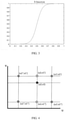
- the corresponding smoothing processing function is illustrated in FIG. 3 , where the horizontal axis is the Euclidean distance, and the longitudinal axis is a value of the smoothing processing coefficient. As illustrated in FIG. 3 , the larger the Euclidean distance, the larger the value of the smoothing processing coefficient. The value of the smoothing processing coefficient is smoothly increased to ensure the processing quality of the subsequent image.
- a distortion correction image is acquired by performing smoothing correction on the first coordinate based on the smoothing processing coefficient and the second coordinate.
- smoothing correction is performed on the first coordinate in combination with the smoothing processing coefficient and the second coordinate.
- the smoothing processing coefficient is related to the distance and is basically a positive correlation function of the distance.
- the distortion amplitude of the central region is relatively small and that of the edge region is relatively large, the sensitivity of the human eye on the definition of the image central region is higher than that on the definition of the edge region. Therefore, it is achieved that the correction degree of central distortion, and the distortion correction degree from the image center point to the image edge may be sequentially smoothly enhanced by the smoothing processing coefficient. In this way, the definition of the image center may be ensured, and the distortion correction degree of the image edge may be also ensured.
- the first coordinate is corrected by a preset equation as illustrated in an equation (3), where (u1, v1) is a floating point coordinate, (u0, v0) is an undistorted coordinate, (ud, vd) is a distorted coordinate, and s is a smoothing coefficient.
- an integer coordinate and a pixel value of each pixel are acquired by performing interpolation calculation on the floating point coordinate; and an undistorted image is acquired based on the integer coordinate and the pixel value.
- the (u1, v1) is often a floating point coordinate, and the actual image coordinate is an integer,. Therefore, a pixel gray value of the integer coordinate (u2, v2) is obtained by performing interpolation calculation on adjacent pixels of the floating point coordinate (u1, v1) (the RGB value of the integer coordinate may be obtained by respectively performing interpolation calculation).
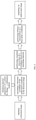
- a bilinear interpolation method may be used to perform linear interpolation in the x and y directions with gray scales of four adjacent pixels of the pixel to be solved.
- (u2, vl') is obtained by performing linear interpolation on (u1", v1') and (ul', vl') in u direction
- (u2, vl") is obtained by performing linear interpolation is performed on (ul", vl") and (u1', vl") in u direction
- a pixel gray value corresponding to the integer coordinate (u2, v2) is obtained by performing linear interpolation on (u2, vl') and (u2, vl") in v direction.
- (u2, v2) sequentially traverses the coordinates of all pixels of the whole image, so as to obtain a distortion correction image.
- FIG. 5 a specific flowchart framework of the algorithm is illustrated in FIG. 5 , where internal parameters of a camera are obtained by Zhang's calibration method, including principal point coordinates (cx, cy), focal lengths (fx, fy), radial distortion coefficients (k1, k2, k3) and tangential distortion coefficients (p1, p2); a distorted coordinate (ud, vd) of the undistorted coordinate (u0, v0) in the distorted image is calculated; weighted fusion is performed on (ud, vd) and (u0, v0) by the smoothing function in the embodiments to obtain a fused floating point coordinate (u1, v1); and bilinear interpolation is performed on the (u1, v1) to obtain a final coordinate (u2, v2) of the distortion correction image.
- a complete distortion correction image may be obtained by traversing all
- a first weight of the second coordinate and a second weight of the first coordinate are determined based on the smoothing processing coefficient, in which the first weight is proportional to the smoothing processing coefficient and the second weight is inversely proportional to the smoothing processing coefficient; a first product of the first weight and the second coordinate, and a second product of the second weight and the first coordinate are calculated; and a distortion correction image is acquired by performing smoothing correction on the first coordinate based on a sum of the first product and the second product.
- the closer to the edge of the distorted image the more stronger the coordinate correction of relevant pixels in a consideration ratio of second coordinate, the closer to the center, the more dependent on the original first coordinate so as to remain the relevant pixels, thereby ensuring the authenticity of the image and improving the smoothness of the corrected pattern.
- correction adjustment degrees may be acquired and correction adjustment coefficients are determined based on the correction adjustment degrees.
- a progress bar of the correction degree may be provided, and the correction adjustment coefficient may be determined based on a corresponding relationship between the progress bar and the correction degree.
- the shot object corresponding to the distorted image may be automatically detected, different correction degrees are determined based on different types and colors of the shot object, for example, a correction degree of the shot object being a face image is relatively high, and the correction degree is higher when the shot image is a night scene image compared to the correction degree when it is shot in daytime.
- a distorted image to be corrected and a first coordinate of each pixel in the distorted image are acquired, and a second coordinate corresponding to the first coordinate is calculated, in which the second coordinate is an undistorted coordinate corresponding to the first coordinate, a distance between the first coordinate and a coordinate of a center point of the distorted image is further calculated, and a smoothing processing coefficient corresponding to the distance is determined based on a preset smoothing processing function, in which the smoothing processing function is configured to indicate a proportional relationship between the distance and the smoothing processing coefficient; and a distortion correction image is acquired by performing smoothing correction on the first coordinate based on the smoothing processing coefficient and the second coordinate.
- an improvement is performed based on a conventional wide-angle distortion correction algorithm, distortion correction processing is performed by additionally using a weighted smoothing function and still using a bilinear interpolation algorithm.
- a distribution of distortion in the whole image is considered, and it is achieved that the distortion for different regions of the image is distinguished for correction, on the basis of ensuring high timeliness of the algorithm, not only a loss degree of definition of the distortion correction image is weakened, but also the distortion of the image region with a large distortion is completely eliminated, which achieves an optimal photographing experience.
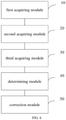
- FIG. 6 is a structural diagram of an apparatus for correcting a distorted image according to an embodiment of the disclosure. As illustrated in FIG. 6 , the apparatus for correcting a distorted image includes a first acquiring module 10, a second acquiring module 20, a third acquiring module 30, a determining module 40 and a correction module 50.
- the first acquiring module 10 is configured to acquire a distorted image to be corrected and a first coordinate of each pixel in the distorted image.
- the first acquiring module 10 may read a distorted image previously shot by the camera module from a system memory, and may also acquire a distorted image shot by the camera module in real time, and a distorted image may be an image that is processed by a conventional de-distortion. Since the image after distortion processing in the related art is still distorted, it is defined as a distorted image in the disclosure. Further, the first acquiring module 10 acquires a first coordinate of each pixel in the distorted image based on an image recognition algorithm.
- the second acquiring module 20 is configured to calculate a second coordinate corresponding to the first coordinate, in which the second coordinate is an undistorted coordinate corresponding to the first coordinate.
- the first coordinate of the distorted image is a coordinate with a certain distortion, assuming that when there is no shooting distortion in the image shot by the camera module for shooting a distorted image, the coordinate corresponding to the first coordinate should be the second coordinate, at this time, in order to achieve the correction of the first coordinate, the second acquiring module 20 may acquire a second coordinate without distortion.
- the second acquiring module 20 includes a first determining unit 21 and a first acquiring unit 22.
- the first determining unit 21 is configured to determine internal parameters of the camera module for shooting the distorted image.
- the first acquiring unit 22 is configured to acquire the second coordinate by calculating the internal parameters and the first coordinate based on a preset algorithm.
- the camera module is controlled to shoot a trained object at a plurality of angles and obtain a plurality of reference images, in which the trained object has a regular shape, a contour mark, etc. so as to quickly find a reference point in the corresponding image for calibrating.
- the trained object may be a checkerboard pattern, so that the pixel of each checkerboard corner is easily detected.
- the checkerboard corner in the checkerboard pattern may be served as a reference point.
- the first determining unit 21 acquires an image coordinate corresponding to the reference point in the trained object in each reference image, and a world coordinate based on the reference point is pre-measured, and internal parameters of the camera module may be calculated based on world coordinates and image coordinates of pre-stored reference points.
- the internal parameters may include an x-coordinate cx and a y-coordinate cy of a principle point, a normalized focal length fx in x direction, a normalized focal length fy in y direction, radial distortion coefficients k1, k2, k3 and tangential distortion coefficients p1, p2.
- the first acquiring unit 22 calculates the distorted first coordinate and the internal parameters based on a preset equation to acquire a second coordinate.
- the third acquiring module 30 is configured to acquire a distance between a first coordinate and a coordinate of a center point of the distorted image.
- the third acquiring module 30 may calculate a distance between a distorted coordinate and a coordinate of a center point of the distorted image, and calculate a smoothing processing coefficient based on the preset smoothing processing function and the distance, in which the smoothing processing coefficient is configured to correct a distorted image.
- the smoothing processing function is configured to indicate a proportional relationship between the distance and the smoothing processing coefficient. That is, the closer to the edge region of the image, the larger the distance, the larger the smoothing processing coefficient, the stronger the correction processing; the further to the edge region of the image, the smaller the distance, the smaller the smoothing processing coefficient, the weaker the correction processing. Therefore, it is obvious that, the smoothing processing function may enable the correction degree of the distorted image from the center to the edge to be gradually enhanced, which accordingly ensures smoothing transition, enhances the authenticity of the processed image, and achieves smoothing correction on the distorted image based on the smoothing processing function.
- the determining module 40 is configured to determine a smoothing processing coefficient corresponding to the distance based on a preset smoothing processing function, in which the smoothing processing function is configured to indicate a proportional relationship between the distance and the smoothing processing coefficient.
- the correction module 50 is configured to acquire a distortion correction image by performing smoothing correction on the first coordinate based on the smoothing processing coefficient and the second coordinate.
- smoothing correction is performed on the first coordinate in combination with the smoothing processing coefficient and the second coordinate.
- the smoothing processing coefficient is related to the distance and is basically a positive correlation function of the distance.
- the correction module 50 achieves reducing the correction degree of central distortion and may achieve that the distortion correction degree from the image center point to the image edge is sequentially smoothly enhanced by the smoothing processing coefficient. In this way, the definition of the image center may be ensured, and the distortion correction degree of the image edge may be also ensured.
- the correction module 50 includes a second determining unit 51, a first calculating unit 52 and a second acquiring unit 53.
- the second determining unit 51 is configured to determine a floating point coordinate corresponding to each first coordinate by calculating the smoothing processing coefficient, the second coordinate and the first coordinate based on a preset algorithm.
- the first calculating unit 52 is configured to acquire an integer coordinate and a pixel value of each pixel by performing interpolation calculation on the floating point coordinate.
- the second acquiring unit 53 is configured to acquire the distortion correction image based on the integer coordinate point and pixel value.
- the correction module 50 includes a third determining unit 54, a second calculating unit 55 and a correction unit 56.
- the third determining unit 54 is configured to determine a first weight of the second coordinate and a second weight of the first coordinate based on the smoothing processing coefficient, in which the first weight is proportional to the smoothing processing coefficient and the second weight is inversely proportional to the smoothing processing coefficient.
- the second calculating unit 55 is configured to calculate a first product of the first weight and the second coordinate, and a second product of the second weight and the first coordinate.
- the correction unit 56 is configured to acquire the distortion correction image by performing smoothing correction on the first coordinate based on a sum of the first product and the second product.
- the apparatus for correcting a distorted image in the embodiment of the disclosure performs improvements based on a conventional wide-angle distortion correction algorithm, and performs distortion correction processing by additionally using a weighted smoothing function and still using a bilinear interpolation algorithm.
- a distribution of distortion in the whole image is considered, and it is achieved that the distortion for different regions of the image is distinguished for correction, on the basis of ensuring high timeliness of the algorithm, not only a loss degree of definition of the distortion correction image is weakened, but also the distortion of the image region with a large distortion is completely eliminated, which achieves an optimal photographing experience.
- the disclosure further provides an electronic device.
- the electronic device includes a memory, a processor and computer programs stored on the memory and executable by the processor.
- the computer programs are executed by the processor, the method for correcting a distorted image as described in the above embodiments is implemented.
- the disclosure further provides a non-transitory computer readable storage medium stored with computer programs thereon, and when the computer programs are executed by a processor, the method for correcting a distorted image as described in the above method embodiments is implemented.
- first and second are only for describing purposes and are not to be construed as indicating or implying relative importance, or implicitly indicating the number of technical features indicated.
- the features defined with the terms “first” and “second” may explicitly or implicitly include at least one of features.
- a plurality of' means at least two, for example, two, three, unless otherwise expressly and specifically stated.
- any process or method described in the flowchart or otherwise described herein may be understood as representing one or more modules, segments, or portions of codes of executable instructions for implementing the steps of a customized logical function or process, and the scope of the preferred embodiments of the present disclosure includes additional implementations, in which the functions may be executed not in the sequence shown or discussed, the scope also including the functions are executed in a substantially simultaneous manner or in a reverse sequence, which will be appreciated by those skilled in the art who the embodiments of the disclosure belong to.
- a "computer readable medium" in the disclosure may be an apparatus that may contain, store, communicate, propagate or transmit a program for use of a system, an apparatus or a device for executing instructions or in combination with the system, the apparatus or the device for executing instructions.
- a more specific example (a non-exhaustive list) of a computer readable medium includes the followings: an electronic connector (an electronic apparatus) with one or more cables, a portable computer disk box (a magnetic device), a random access memory (RAM), a read-only memory (ROM), an electrically programmable read-only memory (an EPROM or a flash memory), an optical fiber apparatus, and a portable optical disk read-only memory (CDROM).
- a computer readable medium even may be paper or other suitable medium on which programs may be printed, since paper or other medium may be optically scanned, and then edited, interpreted or processed in other suitable ways if necessary to obtain electronically programs and store the programs in a computer memory.
- a plurality of steps or methods may be stored in a memory and implemented by a software or a firmware executed by a suitable system for executing instructions.
- a hardware as in the another implementation, it may be implemented by any of the following technologies or their combinations known in the art: a discrete logic circuit with logic gate circuits configured to achieve logic functions on data signals, a special integrated circuit with appropriate combined logic gate circuits, a programmable gate array (PGA), a field programmable gate array (FPGA), etc.
- various functional units in the embodiments of the disclosure may be integrated in one processing module, or each of the units may be physically existed alone, or two or more units may be integrated in one module.
- the integrated module may be achieved by a form of a hardware, and also may be achieved by a form of a software functional module.
- the integrated module may be stored in a computer readable storage medium when it is implemented in a form of a software functional module and sold or used as an independent product.
- the above-mentioned storage medium may be a read-only memory, a magnetic disk or an optical disk.
Landscapes
- Engineering & Computer Science (AREA)
- Physics & Mathematics (AREA)
- General Physics & Mathematics (AREA)
- Theoretical Computer Science (AREA)
- Multimedia (AREA)
- Signal Processing (AREA)
- Health & Medical Sciences (AREA)
- Biomedical Technology (AREA)
- General Health & Medical Sciences (AREA)
- Computer Vision & Pattern Recognition (AREA)
- Image Processing (AREA)
- Geometry (AREA)
Abstract
Description
- The application claims the priority and benefit of Patent Application No.
201910550603.1 filed to China National Intellectual Property Administration on June 24, 2019 - The disclosure relates to a field of image processing technologies, and particularly to a method and an apparatus for correcting a distorted image.
- At present, with the advancement of a smart terminal manufacturing technology, the smart terminal is provided with a camera module for users to take photographs, in which, it is common to install a wide-angle camera on the smart terminal. Compared with a conventional lens camera, a wide-angle lens camera has a larger field of vision (FOV), however, there is a large distortion for the wide-angle lens, and the image edge may have a serious distortion. In the related art, in order to compensate for the distortion of an image shot by the wide-angle camera, the distortion of the image needs to be corrected.
- The disclosure is intended to provide a solution of solving the technical problem in the related art that a corrected distortion image has low resolution due to processing the de-distorted image directly based on an interpolation algorithm.
- For this purpose, a first purpose of the disclosure is to provide a method for correcting a distorted image, to solve a technical problem in the related art that a corrected distortion image has low resolution due to processing the de-distorted image directly based on an interpolation algorithm.
- A second purpose of the disclosure is to provide an apparatus for correcting a distorted image.
- A third purpose of the disclosure is to provide an electronic device.
- A fourth purpose of the disclosure is to provide a non-temporary computer readable storage medium.
- To achieve the above purpose, a first aspect of embodiments of the disclosure provides a method for correcting a distorted image. The method includes the following steps: acquiring a distorted image to be corrected and a first coordinate of each pixel in the distorted image; acquiring a second coordinate corresponding to the first coordinate, in which the second coordinate is an undistorted coordinate corresponding to the first coordinate; acquiring a distance between the first coordinate and a coordinate of a center point of the distorted image, and determining a smoothing processing coefficient corresponding to the distance based on a smoothing processing function, in which the smoothing processing function is configured to indicate a proportional relationship between the distance and the smoothing processing coefficient; and acquiring a distortion correction image by performing smoothing correction on the first coordinate based on the smoothing processing coefficient and the second coordinate.
- A second aspect of embodiments of the disclosure provides an apparatus for correcting a distorted image. The apparatus includes: a first acquiring module, configured to acquire a distorted image to be corrected and a first coordinate of each pixel in the distorted image; a second acquiring module, configured to acquire a second coordinate corresponding to the first coordinate, in which the second coordinate is an undistorted coordinate corresponding to the first coordinate; a third acquiring module, configured to acquire a distance between the first coordinate and a coordinate of a center point of the distorted image; a determining module, configured to determine a smoothing processing coefficient corresponding to the distance based on a preset smoothing processing function, in which the smoothing processing function is configured to indicate a proportional relationship between the distance and the smoothing processing coefficient; and a correction module, configured to acquire a distortion correction image by performing smoothing correction on the first coordinate based on the smoothing processing coefficient and the second coordinate.
- A third aspect of embodiments of the disclosure provides an electronic device. The electronic device includes a memory, a processor and computer programs stored on the memory and executable by the processor. When the computer programs are executed by the processor, the method for correcting a distorted image as described in the first aspect is implemented. The method for correcting a distorted image includes the following steps: acquiring a distorted image to be corrected and a first coordinate of each pixel in the distorted image; acquiring a second coordinate corresponding to the first coordinate, in which the second coordinate is an undistorted coordinate corresponding to the first coordinate; acquiring a distance between the first coordinate and a coordinate of a center point of the distorted image, and determining a smoothing processing coefficient corresponding to the distance based on a smoothing processing function, in which the smoothing processing function is configured to indicate a proportional relationship between the distance and the smoothing processing coefficient; and acquiring a distortion correction image by performing smoothing correction on the first coordinate based on the smoothing processing coefficient and the second coordinate.
- A fourth aspect of embodiments of the disclosure provides a non-transitory computer readable storage medium stored with computer programs thereon. When the computer programs are executed by the processor, the method for correcting a distorted image as described in the first aspect of the disclosure is implemented. The method for correcting a distorted image includes the following steps: acquiring a distorted image to be corrected and a first coordinate of each pixel in the distorted image; acquiring a second coordinate corresponding to the first coordinate, in which the second coordinate is an undistorted coordinate corresponding to the first coordinate; acquiring a distance between the first coordinate and a coordinate of a center point of the distorted image, and determining a smoothing processing coefficient corresponding to the distance based on a smoothing processing function, in which the smoothing processing function is configured to indicate a proportional relationship between the distance and the smoothing processing coefficient; and acquiring a distortion correction image by performing smoothing correction on the first coordinate based on the smoothing processing coefficient and the second coordinate.
- The technical solution according to embodiments of the present disclosure may include the following beneficial effects: an improvement is performed based on a conventional wide-angle distortion correction algorithm. Distortion correction processing is performed by additionally using a weighted smoothing function and still using a bilinear interpolation algorithm. Compared with the conventional distortion correction algorithm, a distribution of distortion in the whole image is considered, and it is achieved that the distortion for different regions of the image is distinguished for correction. On the basis of ensuring high timeliness of the algorithm, not only a loss degree of definition of the distortion correction image is weakened, but also the distortion of the image region with a large distortion is completely eliminated, which achieves an optimal photographing experience.
- Additional aspects and advantages of the present disclosure will be set forth in part in the following description, and in part will become obvious from the following description, or may be learned by practice of the disclosure.
- The above and/or additional aspects and advantages of the present disclosure may become obvious and easily understood in descriptions of embodiments in combination with the drawings, in which:
-
FIG. 1 is a hardware flowchart according to the embodiment of the disclosure; -
FIG. 2 is a flowchart of a method for correcting a distorted image according to an embodiment of the disclosure; -
FIG. 3 is a diagram of a smoothing processing function according to an embodiment of the disclosure; -
FIG. 4 is a diagram of a bilinear interpolation algorithm according to an embodiment of the disclosure; -
FIG. 5 is a flowchart of a method for correcting a distorted image according to a specific embodiment of the disclosure; -
FIG. 6 is a structural diagram of an apparatus for correcting a distorted image according to a first embodiment of the disclosure; -
FIG. 7 is a structural diagram of an apparatus for correcting a distorted image according to a second embodiment of the disclosure; -
FIG. 8 is a structural diagram of an apparatus for correcting a distorted image according to a third embodiment of the disclosure; -
FIG. 9 is a structural diagram of an apparatus for correcting a distorted image according to a fourth embodiment of the disclosure. - Embodiments of the present disclosure are described in detail below, and examples of embodiments are illustrated in the accompanying drawings, throughout which the same or similar labels represent the same or similar elements or elements with the same or similar functions. The embodiments described below with reference to the drawings are exemplary, are intended to explain the present disclosure and are not to be construed as a limitation to the present disclosure.
- Referring to
FIG. 2 , the method for correcting a distorted image in the embodiment of the disclosure includes the following steps: acquiring a distorted image to be corrected and a first coordinate of each pixel in the distorted image; acquiring a second coordinate corresponding to the first coordinate, in which the second coordinate is an undistorted coordinate corresponding to the first coordinate; acquiring a distance between the first coordinate and a coordinate of a center point of the distorted image, and determining a smoothing processing coefficient corresponding to the distance based on a smoothing processing function, in which the smoothing processing function is configured to indicate a proportional relationship between the distance and the smoothing processing coefficient; and acquiring a distortion correction image by performing smoothing correction on the first coordinate based on the smoothing processing coefficient and the second coordinate. - In some embodiments, acquiring the second coordinate corresponding to the first coordinate, includes: determining internal parameters of a camera module for shooting the distorted image; and acquiring the second coordinate by calculating the internal parameters and the first coordinate based on a preset algorithm.
- In some embodiments, the smoothing processing function is:

- In some embodiments, acquiring the distortion correction image by performing smoothing correction on the first coordinate based on the smoothing processing coefficient and the second coordinate, includes: determining a floating point coordinate corresponding to each first coordinate by calculating the smoothing processing coefficient, the second coordinate and the first coordinate based on a preset algorithm; acquiring an integer coordinate and a pixel value of each pixel by performing interpolation calculation on the floating point coordinate; and acquiring the distortion correction image based on the integer coordinate point and the pixel value.
- In some embodiments, acquiring the distortion correction image by performing smoothing correction on the first coordinate based on the smoothing processing coefficient and the second coordinate, includes: determining a first weight of the second coordinate and a second weight of the first coordinate based on the smoothing processing coefficient, in which the first weight is proportional to the smoothing processing coefficient and the second weight is inversely proportional to the smoothing processing coefficient; calculating a first product of the first weight and the second coordinate, and a second product of the second weight and the first coordinate; and acquiring the distortion correction image by performing smoothing correction on the first coordinate based on a sum of the first product and the second product.
- Referring to
FIG. 6 , the apparatus for correcting a distorted image in the embodiment of the disclosure includes a first acquiringmodule 10, a second acquiringmodule 20, a third acquiringmodule 30, a determiningmodule 40 and acorrection module 50. The first acquiringmodule 10 is configured to acquire a distorted image to be corrected and a first coordinate of each pixel in the distorted image. Thesecond acquiring module 20 is configured to calculate a second coordinate corresponding to the first coordinate, in which the second coordinate is an undistorted coordinate corresponding to the first coordinate. The third acquiringmodule 30 is configured to acquire a distance between the first coordinate and a coordinate of a center point of the distorted image. The determiningmodule 40 is configured to determine a smoothing processing coefficient corresponding to the distance based on a preset smoothing processing function, in which the smoothing processing function is configured to indicate a proportional relationship between the distance and the smoothing processing coefficient. Thecorrection module 50 is configured to acquire a distortion correction image by performing smoothing correction on the first coordinate based on the smoothing processing coefficient and the second coordinate. - Referring to
FIG. 7 , the second acquiringmodule 20 includes a first determiningunit 21 and a first acquiringunit 22. The first determiningunit 21 is configured to determine internal parameters of a camera module for shooting the distorted image. The first acquiringunit 22 is configured to acquire the second coordinate by calculating the internal parameters and the first coordinate based on a preset algorithm. - In some embodiments, the smoothing processing function is:

- Referring to
FIG. 8 , in some embodiments, thecorrection module 50 includes a second determiningunit 51, a first calculatingunit 52 and a second acquiringunit 53. The second determiningunit 51 is configured to determine a floating point coordinate corresponding to each first coordinate by calculating the smoothing processing coefficient, the second coordinate and the first coordinate based on a preset algorithm. The first calculatingunit 52 is configured to acquire an integer coordinate and a pixel value of each pixel by performing interpolation calculation on the floating point coordinate. The second acquiringunit 53 is configured to acquire the distortion correction image based on the integer coordinate point and the pixel value. - Referring to
FIG. 9 , in some embodiments, thecorrection module 50 includes a third determiningunit 54, a second calculatingunit 55 and acorrection unit 56. The third determiningunit 54 is configured to determine a first weight of the second coordinate and a second weight of the first coordinate based on the smoothing processing coefficient, in which the first weight is proportional to the smoothing processing coefficient and the second weight is inversely proportional to the smoothing processing coefficient. The second calculatingunit 55 is configured to calculate a first product of the first weight and the second coordinate, and a second product of the second weight and the first coordinate. Thecorrection unit 56 is configured to acquire the distortion correction image by performing smoothing correction on the first coordinate based on a sum of the first product and the second product. - The electronic device in the embodiment includes a memory, a processor and computer programs stored on the memory and executable by the processor. When the computer programs are executed by the processor the following steps are implemented: acquiring a distorted image to be corrected and a first coordinate of each pixel in the distorted image; acquiring a second coordinate corresponding to the first coordinate, in which the second coordinate is an undistorted coordinate corresponding to the first coordinate; acquiring a distance between the first coordinate and a coordinate of a center point of the distorted image, and determining a smoothing processing coefficient corresponding to the distance based on a smoothing processing function, in which the smoothing processing function is configured to indicate a proportional relationship between the distance and the smoothing processing coefficient; and acquiring a distortion correction image by performing smoothing correction on the first coordinate based on the smoothing processing coefficient and the second coordinate.
- In some embodiments, when the computer programs are executed by the processor, the following steps may be further implemented: determining internal parameters of a camera module for shooting the distorted image; and acquiring the second coordinate by calculating the internal parameters and the first coordinate based on a preset algorithm.
- In some embodiments, the smoothing processing function is:

- In some embodiments, when the computer programs are executed by the processor, the following steps may be further implemented: determining a floating point coordinate corresponding to each first coordinate by calculating the smoothing processing coefficient, the second coordinate and the first coordinate based on a preset algorithm; acquiring an integer coordinate and a pixel value of each pixel by performing interpolation calculation on the floating point coordinate; and acquiring the distortion correction image based on the integer coordinate point and the pixel value.
- In some embodiments, when the computer programs are executed by the processor, the following steps may be further implemented: determining a first weight of the second coordinate and a second weight of the first coordinate based on the smoothing processing coefficient, the first weight being proportional to the smoothing processing coefficient and the second weight being inversely proportional to the smoothing processing coefficient; calculating a first product of the first weight and the second coordinate, and a second product of the second weight and the first coordinate; and acquiring the distortion correction image by performing smoothing correction on the first coordinate based on a sum of the first product and the second product.
- A non-transitory computer readable storage medium is stored with computer programs thereon in the embodiment of the disclosure. When the computer programs are executed by the processor, the following steps are implemented: acquiring a distorted image to be corrected and a first coordinate of each pixel in the distorted image; acquiring a second coordinate corresponding to the first coordinate, in which the second coordinate is an undistorted coordinate corresponding to the first coordinate; acquiring a distance between the first coordinate and a coordinate of a center point of the distorted image, and determining a smoothing processing coefficient corresponding to the distance based on a smoothing processing function, in which the smoothing processing function is configured to indicate a proportional relationship between the distance and the smoothing processing coefficient; and acquiring a distortion correction image by performing smoothing correction on the first coordinate based on the smoothing processing coefficient and the second coordinate.
- In some embodiments, when the computer programs are executed by the processor, the following steps may be further implemented: determining internal parameters of a camera module for shooting the distorted image; and acquiring the second coordinate by calculating the internal parameters and the first coordinate based on a preset algorithm.
- In some embodiments, the smoothing processing function is:

- In some embodiments, when the computer programs are executed by the processor, the following steps may be further implemented: determining a floating point coordinate corresponding to each first coordinate by calculating the smoothing processing coefficient, the second coordinate and the first coordinate based on a preset algorithm; acquiring an integer coordinate and a pixel value of each pixel by performing interpolation calculation on the floating point coordinate; and acquiring the distortion correction image based on the integer coordinate point and the pixel value.
- In some embodiments, when the computer programs are executed by the processor, the following steps may be further implemented: determining a first weight of the second coordinate and a second weight of the first coordinate based on the smoothing processing coefficient, the first weight being proportional to the smoothing processing coefficient and the second weight being inversely proportional to the smoothing processing coefficient; calculating a first product of the first weight and the second coordinate, and a second product of the second weight and the first coordinate; and acquiring the distortion correction image by performing smoothing correction on the first coordinate based on a sum of the first product and the second product.
- A method and an apparatus for correcting a distorted image in the embodiments of the disclosure are described with reference to the drawings. The application body of the method for correcting a distorted image in the embodiment of the disclosure is a smart terminal with a camera module including wide-angle cameras, and the smart terminal may be a mobile phone, a notebook computer, a smart wearable device, etc.
- At present, on the smart terminal, the influence of gray values of several direct adjacent points around the sample point to be detected is only considered, but the influence of a change rate of the gray values among the adjacent points is not considered, so that a high frequency component of the interpolated image is lost and the image edge becomes blurred to a certain degree. Comparing the output image obtained by the method with the input image, there still exists a problem that the image quality is damaged and the calculation precision is not high due to improper consideration of the interpolation function design.
- For the technical problem in the related art that the definition of the corrected distortion image obtained directly with a bilinear interpolation algorithm is lost, the disclosure provides a novel method for distortion correction, which achieves correcting the distortion at different regions of the image in different degrees by introducing a weighted smoothing function, and reduces the loss of image definition as much as possible while ensuring high timeliness of the algorithm.
- The execution body for improving image distortion correction in the embodiments of the disclosure is a CPU of a smart terminal. As illustrated in a hardware flowchart of the solution in
FIG. 1 , on the smart terminal, firstly, a cmos sensor in a wide-angle camera performs photosensitive processing to convert an optical signal into raw format data; the raw format data is then processed by an image signal processor (ISP) to convert an image into one in a yuv format; calculation is performed by the CPU, distortion correction is performed on the yuv image through previously known camera internal parameters; finally, after the distortion correction processing, the yuv data is sent to a display for displaying, and a Jpeg format coding is performed by a coder and stored in a memory of the smart terminal. - Specifically,
FIG. 2 is a flowchart of a method for correcting a distorted image according to an embodiment of the disclosure. The image distortion processing in the embodiment of the disclosure is described in taking a distorted image shot by a wide-angle camera as an example. As illustrated inFIG. 2 , the method includes: at 101, a distorted image to be corrected and a first coordinate of each pixel in the distorted image are acquired. - Specifically, a distorted image previously shot by the camera module may be read from a system memory, a distorted image shot by the camera module in real time may be obtained, and a distorted image may be an image that is processed by conventional de-distortion. Since the image after distortion processing in the related art is still distorted, it is defined as a distorted image in the disclosure. Further, the first coordinate of each pixel in the distorted image is acquired based on an image recognition algorithm.
- At 102, a second coordinate corresponding to the first coordinate is acquired, in which the second coordinate is an undistorted coordinate corresponding to the first coordinate.
- Specifically, the first coordinate of the distorted image is a coordinate with a certain distortion, assuming that when there is no shooting distortion in the image shot by the camera module for shooting a distorted image, the coordinate corresponding to the first coordinate should be the second coordinate, at this time, in order to achieve the correction of the first coordinate, a second coordinate without distortion may be acquired.
- In a possible implementation, internal parameters of the camera module for shooting the distorted image are determined, which determine a distortion degree of the first coordinate, and a second coordinate corresponding to the first coordinate is determined based on a corresponding relationship between the internal parameters and the distortion degrees.
- Specifically, in the embodiment, the camera module is controlled to shoot a trained object at a plurality of angles and obtain a plurality of reference images, in which the trained object has a regular shape, a contour mark, etc. so as to quickly find a reference point in the corresponding image for calibrating. For example, the trained object may be a checkerboard pattern, so that the pixel of each checkerboard corner is easily detected. The checkerboard corner in the checkerboard pattern may be served as a reference point. Further, an image coordinate corresponding to the reference point in the trained object in each reference image is acquired, and a world coordinate based on the reference point is pre-measured. The internal parameters of the camera module may be calculated based on world coordinates and image coordinates of pre-stored reference points. The internal parameters may include an x-coordinate cx and a y-coordinate cy of a principle point, a normalized focal length fx in x direction, a normalized focal length fy in y direction, radial distortion coefficients k1, k2, k3 and tangential distortion coefficients p1, p2. Further, the distorted first coordinate and the internal parameters are calculated based on a preset calculation equation to acquire a second coordinate.
- For example, when the trained object is a checkerboard, the plane checkerboard pattern plate is shot at different angles with a camera to obtain 6-9 full-size images, ensuring that the checkerboard pattern is full of the whole FOV of the camera, in which the pixel point of each checkerboard corner is easily detected and the checkerboard corner in the checkerboard pattern may be served as a reference point. The checkerboard corner is detected at a sub-pixel scale on the collected 6-9 full-size reference images to obtain image coordinates of the checkerboard corners of each image. Since the checkerboard for calibrating is customized and the coordinate of the corner on a three-dimensional world space is previously known, the world coordinate of the reference point in the checkerboard may be obtained. The internal parameters of the camera may be obtained based on a corresponding relationship between image planes and checkerboard planes through the obtained image coordinate of the reference point and the world coordinate of the reference point.
- Further, an original undistorted image is calculated by the x-coordinate cx and y-coordinate cy of the principle point, the normalized focal length fx in x direction, the normalized focal length fy in y direction, the radial distortion coefficients k1, k2, k3, the tangential distortion coefficients p1, p2 and the known distorted images in the obtained internal parameters of the camera. Specifically, for a second coordinate (u0, v0), the corresponding camera coordinate (that is, a coordinate corresponding to an undistorted coordinate in a camera coordinate system) is (x0, y0), where


- A coordinate of a distorted point corresponding to the camera coordinate is (x', y'), where


- Further, a distorted coordinate (a first coordinate) of the obtained distorted point in the distorted image is calculated below:


- In this way, the distorted (first) coordinate (ud, vd) corresponding to the undistorted (second) coordinate (u0, v0) in the undistorted image is obtained, and based on the corresponding relationship, the second coordinate may be calculated.
- As another possible implementation, a depth model is pre-trained based on a large number of sample images, the input of the depth model is a distorted first coordinate, and the output is an undistorted second coordinate. Therefore, a depth model corresponding to the camera module may be acquired, and a corresponding second coordinate may be determined based on the depth model.
- At 103, a distance between the first coordinate and a coordinate of a center point of the distorted image is acquired, and a smoothing processing coefficient corresponding to the distance is determined based on a smoothing processing function, in which the smoothing processing function is configured to indicate a proportional relationship between the distance and the smoothing processing coefficient.
- It may be understood that, due to shooting mechanism of the camera module, the closer to the edge of the image, the higher the distortion degree, the closer to the central region, the smaller the distortion degree. Therefore, a distance between a distorted coordinate and a coordinate of a center point of the distorted image may be calculated, and a smoothing processing coefficient may be calculated based on the preset smoothing processing function and the distance, in which the smoothing processing coefficient is configured to correct a distorted image.
- It should be noted that, the smoothing processing function is configured to indicate a proportional relationship between the distance and the smoothing processing coefficient. That is, the closer to the edge region of the image, the larger the distance, the larger the smoothing processing coefficient, the stronger the correction processing; the further to the edge region of the image, the smaller the distance, the smaller the smoothing processing coefficient, the weaker the correction processing. Therefore, it is obvious that, the smoothing processing function may enable the correction degree of the distorted image from the center to the edge to be gradually enhanced, which accordingly ensures smoothing transition, enhances the authenticity of the processed image, and achieves smoothing correction on the distorted image based on the smoothing processing function.
- In an embodiment of the disclosure, a distance may be calculated by an equation (1), where, in the following equation, x is a normalized Euclidean distance value between a current first coordinate (ud, vd) and a coordinate of a center point of the distorted image (u', v'):

- Further, as a possible example, a smoothing processing function is expressed by an equation (2),

FIG. 3 , where the horizontal axis is the Euclidean distance, and the longitudinal axis is a value of the smoothing processing coefficient. As illustrated inFIG. 3 , the larger the Euclidean distance, the larger the value of the smoothing processing coefficient. The value of the smoothing processing coefficient is smoothly increased to ensure the processing quality of the subsequent image. - At 104, a distortion correction image is acquired by performing smoothing correction on the first coordinate based on the smoothing processing coefficient and the second coordinate.
- Specifically, smoothing correction is performed on the first coordinate in combination with the smoothing processing coefficient and the second coordinate. At this time, since an undistorted coordinate is combined when the distortion is corrected, the definition of the image may be greatly improved. Furthermore, the smoothing processing coefficient is related to the distance and is basically a positive correlation function of the distance. In the image of the wide-angle camera, the distortion amplitude of the central region is relatively small and that of the edge region is relatively large, the sensitivity of the human eye on the definition of the image central region is higher than that on the definition of the edge region. Therefore, it is achieved that the correction degree of central distortion, and the distortion correction degree from the image center point to the image edge may be sequentially smoothly enhanced by the smoothing processing coefficient. In this way, the definition of the image center may be ensured, and the distortion correction degree of the image edge may be also ensured.
- As a possible implementation, the first coordinate is corrected by a preset equation as illustrated in an equation (3), where (u1, v1) is a floating point coordinate, (u0, v0) is an undistorted coordinate, (ud, vd) is a distorted coordinate, and s is a smoothing coefficient. Based on the above description, the closer to the edge region, the larger the s, the closer the obtained (u1, v1) is to the distorted coordinate (ud, vd), and the higher the corresponding correction degree is; the closer to the central region, the smaller the s, the closer the obtained (u1, v1) is to the undistorted coordinate (u0, v0), and the smaller the corresponding correction degree:

- Based on the imaging principle, an integer coordinate and a pixel value of each pixel are acquired by performing interpolation calculation on the floating point coordinate; and an undistorted image is acquired based on the integer coordinate and the pixel value.
- Specifically, at this time, the (u1, v1) is often a floating point coordinate, and the actual image coordinate is an integer,. Therefore, a pixel gray value of the integer coordinate (u2, v2) is obtained by performing interpolation calculation on adjacent pixels of the floating point coordinate (u1, v1) (the RGB value of the integer coordinate may be obtained by respectively performing interpolation calculation). A bilinear interpolation method may be used to perform linear interpolation in the x and y directions with gray scales of four adjacent pixels of the pixel to be solved.
- As illustrated in
FIG. 4 , four known floating point coordinates adjacent to an unknown integer coordinate (u2, v2) calculated in u and v directions are (ul', vl'), (u1", vl'), (u1", vl"), (ul', vl"), respectively. At the first step, (u2, vl') is obtained by performing linear interpolation on (u1", v1') and (ul', vl') in u direction, and (u2, vl") is obtained by performing linear interpolation is performed on (ul", vl") and (u1', vl") in u direction; at the second step, a pixel gray value corresponding to the integer coordinate (u2, v2) is obtained by performing linear interpolation on (u2, vl') and (u2, vl") in v direction. (u2, v2) sequentially traverses the coordinates of all pixels of the whole image, so as to obtain a distortion correction image. - Therefore, on the basis of ensuring high timeliness of an algorithm, the loss of image definition after interpolation is weakened as much as possible. As an example, a specific flowchart framework of the algorithm is illustrated in
FIG. 5 , where internal parameters of a camera are obtained by Zhang's calibration method, including principal point coordinates (cx, cy), focal lengths (fx, fy), radial distortion coefficients (k1, k2, k3) and tangential distortion coefficients (p1, p2); a distorted coordinate (ud, vd) of the undistorted coordinate (u0, v0) in the distorted image is calculated; weighted fusion is performed on (ud, vd) and (u0, v0) by the smoothing function in the embodiments to obtain a fused floating point coordinate (u1, v1); and bilinear interpolation is performed on the (u1, v1) to obtain a final coordinate (u2, v2) of the distortion correction image. A complete distortion correction image may be obtained by traversing all coordinates. - As another possible implementation, a first weight of the second coordinate and a second weight of the first coordinate are determined based on the smoothing processing coefficient, in which the first weight is proportional to the smoothing processing coefficient and the second weight is inversely proportional to the smoothing processing coefficient; a first product of the first weight and the second coordinate, and a second product of the second weight and the first coordinate are calculated; and a distortion correction image is acquired by performing smoothing correction on the first coordinate based on a sum of the first product and the second product. Therefore, the closer to the edge of the distorted image, the more stronger the coordinate correction of relevant pixels in a consideration ratio of second coordinate, the closer to the center, the more dependent on the original first coordinate so as to remain the relevant pixels, thereby ensuring the authenticity of the image and improving the smoothness of the corrected pattern.
- Of course, in an embodiment of the disclosure, considering that in different scenarios, when de-distortion processing is performed on the distorted image, the center region with a high definition and the edge region with a high distortion correction degree are different in size ratio, so correction adjustment degrees may be acquired and correction adjustment coefficients are determined based on the correction adjustment degrees. For example, a progress bar of the correction degree may be provided, and the correction adjustment coefficient may be determined based on a corresponding relationship between the progress bar and the correction degree. For another example, the shot object corresponding to the distorted image may be automatically detected, different correction degrees are determined based on different types and colors of the shot object, for example, a correction degree of the shot object being a face image is relatively high, and the correction degree is higher when the shot image is a night scene image compared to the correction degree when it is shot in daytime.
- In summary, with the method for correcting a distorted image in the embodiment of the disclosure, a distorted image to be corrected and a first coordinate of each pixel in the distorted image are acquired, and a second coordinate corresponding to the first coordinate is calculated, in which the second coordinate is an undistorted coordinate corresponding to the first coordinate, a distance between the first coordinate and a coordinate of a center point of the distorted image is further calculated, and a smoothing processing coefficient corresponding to the distance is determined based on a preset smoothing processing function, in which the smoothing processing function is configured to indicate a proportional relationship between the distance and the smoothing processing coefficient; and a distortion correction image is acquired by performing smoothing correction on the first coordinate based on the smoothing processing coefficient and the second coordinate. Thus, an improvement is performed based on a conventional wide-angle distortion correction algorithm, distortion correction processing is performed by additionally using a weighted smoothing function and still using a bilinear interpolation algorithm. Compared with the conventional distortion correction algorithm, a distribution of distortion in the whole image is considered, and it is achieved that the distortion for different regions of the image is distinguished for correction, on the basis of ensuring high timeliness of the algorithm, not only a loss degree of definition of the distortion correction image is weakened, but also the distortion of the image region with a large distortion is completely eliminated, which achieves an optimal photographing experience.
- In order to achieve the above embodiments, the disclosure provides an apparatus for correcting a distorted image.
FIG. 6 is a structural diagram of an apparatus for correcting a distorted image according to an embodiment of the disclosure. As illustrated inFIG. 6 , the apparatus for correcting a distorted image includes a first acquiringmodule 10, a second acquiringmodule 20, a third acquiringmodule 30, a determiningmodule 40 and acorrection module 50. - The first acquiring
module 10 is configured to acquire a distorted image to be corrected and a first coordinate of each pixel in the distorted image. - Specifically, the first acquiring
module 10 may read a distorted image previously shot by the camera module from a system memory, and may also acquire a distorted image shot by the camera module in real time, and a distorted image may be an image that is processed by a conventional de-distortion. Since the image after distortion processing in the related art is still distorted, it is defined as a distorted image in the disclosure. Further, the first acquiringmodule 10 acquires a first coordinate of each pixel in the distorted image based on an image recognition algorithm. - The second acquiring
module 20 is configured to calculate a second coordinate corresponding to the first coordinate, in which the second coordinate is an undistorted coordinate corresponding to the first coordinate. - Specifically, the first coordinate of the distorted image is a coordinate with a certain distortion, assuming that when there is no shooting distortion in the image shot by the camera module for shooting a distorted image, the coordinate corresponding to the first coordinate should be the second coordinate, at this time, in order to achieve the correction of the first coordinate, the second acquiring
module 20 may acquire a second coordinate without distortion. - In an embodiment of the disclosure, as illustrated in
FIG. 7 , on the basis ofFIG. 6 , the second acquiringmodule 20 includes a first determiningunit 21 and a first acquiringunit 22. - The first determining
unit 21 is configured to determine internal parameters of the camera module for shooting the distorted image. - The first acquiring
unit 22 is configured to acquire the second coordinate by calculating the internal parameters and the first coordinate based on a preset algorithm. - Specifically, in the embodiment, the camera module is controlled to shoot a trained object at a plurality of angles and obtain a plurality of reference images, in which the trained object has a regular shape, a contour mark, etc. so as to quickly find a reference point in the corresponding image for calibrating. For example, the trained object may be a checkerboard pattern, so that the pixel of each checkerboard corner is easily detected. The checkerboard corner in the checkerboard pattern may be served as a reference point. Further, the first determining
unit 21 acquires an image coordinate corresponding to the reference point in the trained object in each reference image, and a world coordinate based on the reference point is pre-measured, and internal parameters of the camera module may be calculated based on world coordinates and image coordinates of pre-stored reference points. The internal parameters may include an x-coordinate cx and a y-coordinate cy of a principle point, a normalized focal length fx in x direction, a normalized focal length fy in y direction, radial distortion coefficients k1, k2, k3 and tangential distortion coefficients p1, p2. Further, the first acquiringunit 22 calculates the distorted first coordinate and the internal parameters based on a preset equation to acquire a second coordinate. - The third acquiring
module 30 is configured to acquire a distance between a first coordinate and a coordinate of a center point of the distorted image. - It may be understood that, due to shooting mechanism of the camera module, the closer to the edge of the image, the higher the distortion degree, the closer to the central region, the smaller the distortion degree. Therefore, the third acquiring
module 30 may calculate a distance between a distorted coordinate and a coordinate of a center point of the distorted image, and calculate a smoothing processing coefficient based on the preset smoothing processing function and the distance, in which the smoothing processing coefficient is configured to correct a distorted image. - It should be noted that, the smoothing processing function is configured to indicate a proportional relationship between the distance and the smoothing processing coefficient. That is, the closer to the edge region of the image, the larger the distance, the larger the smoothing processing coefficient, the stronger the correction processing; the further to the edge region of the image, the smaller the distance, the smaller the smoothing processing coefficient, the weaker the correction processing. Therefore, it is obvious that, the smoothing processing function may enable the correction degree of the distorted image from the center to the edge to be gradually enhanced, which accordingly ensures smoothing transition, enhances the authenticity of the processed image, and achieves smoothing correction on the distorted image based on the smoothing processing function.
- The determining
module 40 is configured to determine a smoothing processing coefficient corresponding to the distance based on a preset smoothing processing function, in which the smoothing processing function is configured to indicate a proportional relationship between the distance and the smoothing processing coefficient. - The
correction module 50 is configured to acquire a distortion correction image by performing smoothing correction on the first coordinate based on the smoothing processing coefficient and the second coordinate. - Specifically, smoothing correction is performed on the first coordinate in combination with the smoothing processing coefficient and the second coordinate. At this time, since an undistorted coordinate is combined when the distortion is corrected, the definition of the image may be greatly improved. Furthermore, the smoothing processing coefficient is related to the distance and is basically a positive correlation function of the distance. In the image of the wide-angle camera, the distortion amplitude of the central region is relatively small and that of the edge region is relatively large, the sensitivity of the human eye on the definition of the image central region is higher than on the definition of the edge region. Therefore, the
correction module 50 achieves reducing the correction degree of central distortion and may achieve that the distortion correction degree from the image center point to the image edge is sequentially smoothly enhanced by the smoothing processing coefficient. In this way, the definition of the image center may be ensured, and the distortion correction degree of the image edge may be also ensured. - In an embodiment of the disclosure, as illustrated in
FIG. 8 , on the basis ofFIG. 6 , thecorrection module 50 includes a second determiningunit 51, a first calculatingunit 52 and a second acquiringunit 53. - The second determining
unit 51 is configured to determine a floating point coordinate corresponding to each first coordinate by calculating the smoothing processing coefficient, the second coordinate and the first coordinate based on a preset algorithm. - The first calculating
unit 52 is configured to acquire an integer coordinate and a pixel value of each pixel by performing interpolation calculation on the floating point coordinate. - The second acquiring
unit 53 is configured to acquire the distortion correction image based on the integer coordinate point and pixel value. - As illustrated in
FIG. 9 , on the basis ofFIG. 6 , thecorrection module 50 includes a third determiningunit 54, a second calculatingunit 55 and acorrection unit 56. - The third determining
unit 54 is configured to determine a first weight of the second coordinate and a second weight of the first coordinate based on the smoothing processing coefficient, in which the first weight is proportional to the smoothing processing coefficient and the second weight is inversely proportional to the smoothing processing coefficient. - The second calculating
unit 55 is configured to calculate a first product of the first weight and the second coordinate, and a second product of the second weight and the first coordinate. - The
correction unit 56 is configured to acquire the distortion correction image by performing smoothing correction on the first coordinate based on a sum of the first product and the second product. - It should be noted that, the explanation of the embodiments of the method for correcting a distorted image is applied to an apparatus for correcting a distorted image, which will not be repeated here.
- In summary, the apparatus for correcting a distorted image in the embodiment of the disclosure performs improvements based on a conventional wide-angle distortion correction algorithm, and performs distortion correction processing by additionally using a weighted smoothing function and still using a bilinear interpolation algorithm. Compared with a conventional distortion correction algorithm, a distribution of distortion in the whole image is considered, and it is achieved that the distortion for different regions of the image is distinguished for correction, on the basis of ensuring high timeliness of the algorithm, not only a loss degree of definition of the distortion correction image is weakened, but also the distortion of the image region with a large distortion is completely eliminated, which achieves an optimal photographing experience.
- In order to achieve the above embodiments, the disclosure further provides an electronic device. The electronic device includes a memory, a processor and computer programs stored on the memory and executable by the processor. When the computer programs are executed by the processor, the method for correcting a distorted image as described in the above embodiments is implemented.
- In order to achieve the above embodiments, the disclosure further provides a non-transitory computer readable storage medium stored with computer programs thereon, and when the computer programs are executed by a processor, the method for correcting a distorted image as described in the above method embodiments is implemented.
- In the specification of the disclosure, descriptions with reference to terms "an embodiment", "some embodiments", "example", "specific example" or "some examples" mean specific features, structures, materials or characteristics described in combination with the embodiment or example are included in at least one embodiment or example of the disclosure. In the specification, the schematic representations of the above terms do not have to be the same embodiment or example. Moreover, specific features, structures, materials or characteristics described may be combined in one or more embodiments or examples in a suitable manner. Furthermore, those skilled in the art may combine and integrate the different embodiments or examples described in the specification, as well as features of the different embodiments or examples without conflicting with each other.
- In addition, the terms "first" and "second" are only for describing purposes and are not to be construed as indicating or implying relative importance, or implicitly indicating the number of technical features indicated. Thus, the features defined with the terms "first" and "second" may explicitly or implicitly include at least one of features. In the description of the disclosure, "a plurality of' means at least two, for example, two, three, unless otherwise expressly and specifically stated.
- Any process or method described in the flowchart or otherwise described herein may be understood as representing one or more modules, segments, or portions of codes of executable instructions for implementing the steps of a customized logical function or process, and the scope of the preferred embodiments of the present disclosure includes additional implementations, in which the functions may be executed not in the sequence shown or discussed, the scope also including the functions are executed in a substantially simultaneous manner or in a reverse sequence, which will be appreciated by those skilled in the art who the embodiments of the disclosure belong to.
- The logics and/or steps represented in the flowchart or described in other ways herein, for example, may be considered as an ordered list of executable instructions configured to implement logic functions, which may be specifically implemented in any computer readable medium, for use of a system, an apparatus or a device for executing instructions (such as a computer-based system, a system including a processor, or other systems that may obtain and execute the instructions from the system, the apparatus or the device for executing instructions) or in combination with the system, the apparatus or the device for executing instructions. A "computer readable medium" in the disclosure may be an apparatus that may contain, store, communicate, propagate or transmit a program for use of a system, an apparatus or a device for executing instructions or in combination with the system, the apparatus or the device for executing instructions. A more specific example (a non-exhaustive list) of a computer readable medium includes the followings: an electronic connector (an electronic apparatus) with one or more cables, a portable computer disk box (a magnetic device), a random access memory (RAM), a read-only memory (ROM), an electrically programmable read-only memory (an EPROM or a flash memory), an optical fiber apparatus, and a portable optical disk read-only memory (CDROM). In addition, a computer readable medium even may be paper or other suitable medium on which programs may be printed, since paper or other medium may be optically scanned, and then edited, interpreted or processed in other suitable ways if necessary to obtain electronically programs and store the programs in a computer memory.
- It should be understood that all parts of the present disclosure may be implemented with a hardware, a software, a firmware and their combination. In the above embodiments, a plurality of steps or methods may be stored in a memory and implemented by a software or a firmware executed by a suitable system for executing instructions. For example, if they are implemented with a hardware as in the another implementation, it may be implemented by any of the following technologies or their combinations known in the art: a discrete logic circuit with logic gate circuits configured to achieve logic functions on data signals, a special integrated circuit with appropriate combined logic gate circuits, a programmable gate array (PGA), a field programmable gate array (FPGA), etc.
- Those skilled in the art may understand that all or part of steps in the above method embodiments may be implemented by instructing relevant hardwares with computer programs. The programs may be stored in a computer readable storage medium, and when the programs are executed, one of the steps in the method embodiments or their combination is implemented.
- In addition, various functional units in the embodiments of the disclosure may be integrated in one processing module, or each of the units may be physically existed alone, or two or more units may be integrated in one module. The integrated module may be achieved by a form of a hardware, and also may be achieved by a form of a software functional module. The integrated module may be stored in a computer readable storage medium when it is implemented in a form of a software functional module and sold or used as an independent product.
- The above-mentioned storage medium may be a read-only memory, a magnetic disk or an optical disk. Even though embodiments of the disclosure have been illustrated and described above, it may be understood that, the above embodiments are exemplary and cannot be constructed as a limitation to the disclosure, and various changes, modifications, substitutions and alterations may be made by those skilled in the art for the embodiments within the scope of the disclosure.
Claims (20)
- A method for correcting a distorted image, comprising:acquiring a distorted image to be corrected and a first coordinate of each pixel in the distorted image;acquiring a second coordinate corresponding to the first coordinate, wherein, the second coordinate is an undistorted coordinate corresponding to the first coordinate;acquiring a distance between the first coordinate and a coordinate of a center point of the distorted image, and determining a smoothing processing coefficient corresponding to the distance based on a smoothing processing function, wherein the smoothing processing function is configured to indicate a proportional relationship between the distance and the smoothing processing coefficient; andacquiring a distortion correction image by performing smoothing correction on the first coordinate based on the smoothing processing coefficient and the second coordinate.
- The method of claim 1, wherein, acquiring a second coordinate corresponding to the first coordinate, comprises:determining internal parameters of a camera module for shooting the distorted image; andacquiring the second coordinate by calculating the internal parameters and the first coordinate based on a preset algorithm.
- The method of claim 1, wherein, the smoothing processing function is:

- The method of claim 1, wherein, acquiring a distortion correction image by performing smoothing correction on the first coordinate based on the smoothing processing coefficient and the second coordinate, comprises:determining a floating point coordinate corresponding to each first coordinate by calculating the smoothing processing coefficient, the second coordinate and the first coordinate based on a preset algorithm;acquiring an integer coordinate and a pixel value of each pixel by performing interpolation calculation on the floating point coordinate; andacquiring the distortion correction image based on the integer coordinate point and the pixel value.
- The method of claim 1, wherein, acquiring a distortion correction image by performing smoothing correction on the first coordinate based on the smoothing processing coefficient and the second coordinate, comprises:determining a first weight of the second coordinate and a second weight of the first coordinate based on the smoothing processing coefficient, wherein, the first weight is proportional to the smoothing processing coefficient and the second weight is inversely proportional to the smoothing processing coefficient;calculating a first product of the first weight and the second coordinate, and a second product of the second weight and the first coordinate; andacquiring the distortion correction image by performing smoothing correction on the first coordinate based on a sum of the first product and the second product.
- An apparatus for correcting a distorted image, comprising:a first acquiring module, configured to acquire a distorted image to be corrected and a first coordinate of each pixel in the distorted image;a second acquiring module, configured to acquire a second coordinate corresponding to the first coordinate, wherein, the second coordinate is an undistorted coordinate corresponding to the first coordinate;a third acquiring module, configured to acquire a distance between the first coordinate and a coordinate of a center point of the distorted image;a determining module, configured to determine a smoothing processing coefficient corresponding to the distance based on a preset smoothing processing function, wherein the smoothing processing function is configured to indicate a proportional relationship between the distance and the smoothing processing coefficient; anda correction module, configured to acquire a distortion correction image by performing smoothing correction on the first coordinate based on the smoothing processing coefficient and the second coordinate.
- The apparatus of claim 6, wherein, the second acquiring module, comprises:a first determining unit, configured to determine internal parameters of a camera module for shooting the distorted image; anda first acquiring unit, configured to acquire the second coordinate by calculating the internal parameters and the first coordinate based on a preset algorithm.
- The apparatus of claim 6, wherein, the smoothing processing function is:

- The apparatus of claim 6, wherein, the correction module comprises:a second determining unit, configured to determine a floating point coordinate corresponding to each first coordinate by calculating the smoothing processing coefficient, the second coordinate and the first coordinate based on a preset algorithm;a first calculating unit, configured to acquire an integer coordinate and a pixel value of each pixel by performing interpolation calculation on the floating point coordinate; anda second acquiring unit, configured to acquire the distortion correction image based on the integer coordinate point and pixel value.
- The apparatus of claim 6, wherein, the correction module comprises:a third determining unit, configured to determine a first weight of the second coordinate and a second weight of the first coordinate based on the smoothing processing coefficient, wherein, the first weight is proportional to the smoothing processing coefficient and the second weight is inversely proportional to the smoothing processing coefficient;a second calculating unit, configured to calculate a first product of the first weight and the second coordinate, and a second product of the second weight and the first coordinate; anda correction unit, configured to acquire the distortion correction image by performing smoothing correction on the first coordinate based on a sum of the first product and the second product.
- An electronic device, comprising a memory, a processor and computer programs stored on the memory and executable by the processor, when the computer programs are executed by the processor, the following steps are implemented:acquiring a distorted image to be corrected and a first coordinate of each pixel in the distorted image;acquiring a second coordinate corresponding to the first coordinate, wherein, the second coordinate is an undistorted coordinate corresponding to the first coordinate;acquiring a distance between the first coordinate and a coordinate of a center point of the distorted image, and determining a smoothing processing coefficient corresponding to the distance based on a smoothing processing function, wherein the smoothing processing function is configured to indicate a proportional relationship between the distance and the smoothing processing coefficient; andacquiring a distortion correction image by performing smoothing correction on the first coordinate based on the smoothing processing coefficient and the second coordinate.
- The electronic device of claim 11, wherein, when the computer programs are executed by the processor, the following steps may be further implemented:determining internal parameters of a camera module for shooting the distorted image; andacquiring the second coordinate by calculating the internal parameters and the first coordinate based on a preset algorithm.
- The electronic device of claim 11, wherein, the smoothing processing function is:

- The electronic device of claim 11, wherein, when the computer programs are executed by the processor, the following steps may be further implemented:determining a floating point coordinate corresponding to each first coordinate by calculating the smoothing processing coefficient, the second coordinate and the first coordinate based on a preset algorithm;acquiring an integer coordinate and a pixel value of each pixel by performing interpolation calculation on the floating point coordinate; andacquiring the distortion correction image based on the integer coordinate point and pixel value.
- The electronic device of claim 11, wherein, when the computer programs are executed by the processor, the following steps may be further implemented:determining a first weight of the second coordinate and a second weight of the first coordinate based on the smoothing processing coefficient, wherein, the first weight is proportional to the smoothing processing coefficient and the second weight is inversely proportional to the smoothing processing coefficient;calculating a first product of the first weight and the second coordinate, and a second product of the second weight and the first coordinate; andacquiring the distortion correction image by performing smoothing correction on the first coordinate based on a sum of the first product and the second product.
- A non-transitory computer readable storage medium stored with computer programs thereon, wherein when the computer programs are executed by a processor, the following steps are implemented:acquiring a distorted image to be corrected and a first coordinate of each pixel in the distorted image;acquiring a second coordinate corresponding to the first coordinate, wherein, the second coordinate is an undistorted coordinate corresponding to the first coordinate;acquiring a distance between the first coordinate and a coordinate of a center point of the distorted image, and determining a smoothing processing coefficient corresponding to the distance based on a smoothing processing function, wherein the smoothing processing function is configured to indicate a proportional relationship between the distance and the smoothing processing coefficient; andacquiring a distortion correction image by performing smoothing correction on the first coordinate based on the smoothing processing coefficient and the second coordinate.
- The storage medium of claim 16, wherein, when the computer programs are executed by the processor, the following steps may be further implemented:determining internal parameters of a camera module for shooting the distorted image; andacquiring the second coordinate by calculating the internal parameters and the first coordinate based on a preset algorithm.
- The storage medium of claim 16, wherein, the smoothing processing function is:

- The storage medium of claim 16, wherein, when the computer programs are executed by the processor, the following steps may be further implemented:determining a floating point coordinate corresponding to each first coordinate by calculating the smoothing processing coefficient, the second coordinate and the first coordinate based on a preset algorithm;acquiring an integer coordinate and a pixel value of each pixel by performing interpolation calculation on the floating point coordinate; andacquiring the distortion correction image based on the integer coordinate point and pixel value.
- The storage medium of claim 16, wherein, when the computer programs are executed by the processor, the following steps may be further implemented:determining a first weight of the second coordinate and a second weight of the first coordinate based on the smoothing processing coefficient, wherein, the first weight is proportional to the smoothing processing coefficient and the second weight is inversely proportional to the smoothing processing coefficient;calculating a first product of the first weight and the second coordinate, and a second product of the second weight and the first coordinate; andacquiring the distortion correction image by performing smoothing correction on the first coordinate based on a sum of the first product and the second product.
Applications Claiming Priority (2)
| Application Number | Priority Date | Filing Date | Title |
|---|---|---|---|
| CN201910550603.1A CN110276734B (en) | 2019-06-24 | 2019-06-24 | Image distortion correction method and device |
| PCT/CN2020/095025 WO2020259271A1 (en) | 2019-06-24 | 2020-06-09 | Image distortion correction method and apparatus |
Publications (3)
| Publication Number | Publication Date |
|---|---|
| EP3965054A1 true EP3965054A1 (en) | 2022-03-09 |
| EP3965054A4 EP3965054A4 (en) | 2022-07-13 |
| EP3965054B1 EP3965054B1 (en) | 2025-12-24 |
Family
ID=67961842
Family Applications (1)
| Application Number | Title | Priority Date | Filing Date |
|---|---|---|---|
| EP20833621.4A Active EP3965054B1 (en) | 2019-06-24 | 2020-06-09 | Image distortion correction method and apparatus |
Country Status (4)
| Country | Link |
|---|---|
| US (1) | US11861813B2 (en) |
| EP (1) | EP3965054B1 (en) |
| CN (1) | CN110276734B (en) |
| WO (1) | WO2020259271A1 (en) |
Families Citing this family (26)
| Publication number | Priority date | Publication date | Assignee | Title |
|---|---|---|---|---|
| CN110276734B (en) * | 2019-06-24 | 2021-03-23 | Oppo广东移动通信有限公司 | Image distortion correction method and device |
| CN110728638A (en) * | 2019-09-25 | 2020-01-24 | 深圳疆程技术有限公司 | Image distortion correction method, vehicle machine and vehicle |
| CN112862895B (en) * | 2019-11-27 | 2023-10-10 | 杭州海康威视数字技术股份有限公司 | A fisheye camera calibration method, device and system |
| CN111080542B (en) * | 2019-12-09 | 2024-05-28 | Oppo广东移动通信有限公司 | Image processing method, device, electronic device and storage medium |
| CN111260567B (en) * | 2020-01-10 | 2024-01-19 | 昆山丘钛微电子科技有限公司 | A method and device for image distortion correction |
| CN111325691B (en) * | 2020-02-20 | 2023-11-10 | Oppo广东移动通信有限公司 | Image correction method, device, electronic equipment and computer-readable storage medium |
| CN111355863B (en) * | 2020-04-07 | 2022-07-22 | 北京达佳互联信息技术有限公司 | Image distortion correction method and device, electronic equipment and storage medium |
| US11335022B2 (en) | 2020-06-10 | 2022-05-17 | Snap Inc. | 3D reconstruction using wide-angle imaging devices |
| CN111932622B (en) * | 2020-08-10 | 2022-06-28 | 浙江大学 | A device, method and system for determining the flight height of an unmanned aerial vehicle |
| JP7551419B2 (en) * | 2020-09-23 | 2024-09-17 | キヤノン株式会社 | Information processing device, information processing method, and program |
| JP7633014B2 (en) * | 2020-10-26 | 2025-02-19 | 住友重機械工業株式会社 | Distortion correction processing device, distortion correction method, and program |
| CN113222862B (en) * | 2021-06-04 | 2024-09-17 | 黑芝麻智能科技(上海)有限公司 | Image distortion correction method, device, electronic device and storage medium |
| CN113487540B (en) * | 2021-06-15 | 2023-07-07 | 北京道达天际科技股份有限公司 | A correction method and device for a space-based high-inclination image |
| CN113658053B (en) * | 2021-07-04 | 2024-09-06 | 浙江大华技术股份有限公司 | Image correction method, image correction device, electronic device, and computer-readable storage medium |
| CN116188349A (en) * | 2021-11-26 | 2023-05-30 | 北京三星通信技术研究有限公司 | Image processing method, device, electronic device and storage medium |
| CN114612341A (en) * | 2022-03-28 | 2022-06-10 | Oppo广东移动通信有限公司 | Image distortion correction method and device, computer readable medium and electronic device |
| CN114820787B (en) * | 2022-04-22 | 2024-05-28 | 聊城大学 | Image correction method and system for large field of view plane vision measurement |
| CN117252764B (en) * | 2022-06-07 | 2026-02-27 | 鸿海精密工业股份有限公司 | Distorted image generation methods, electronic devices and storage media |
| CN115334254B (en) * | 2022-07-29 | 2025-08-12 | 深圳市闪剪智能科技有限公司 | Method and related equipment for realizing special effect of rotating distortion video transition |
| CN115240183B (en) * | 2022-08-10 | 2026-04-24 | 合肥工业大学 | A method, apparatus, device, and medium for recognizing distorted text images. |
| CN116894786B (en) * | 2023-07-20 | 2025-09-16 | 浙江舜宇光学有限公司 | Method for correcting distorted image and computer-readable storage medium |
| CN117292155A (en) * | 2023-09-18 | 2023-12-26 | 中海监理有限公司 | Method and device for checking and accepting actual measurement real quantity of building construction engineering |
| WO2025081463A1 (en) * | 2023-10-20 | 2025-04-24 | Kunshan Yunyinggu Electronic Technology Co., Ltd. | System and method for calibrating display |
| CN117173056B (en) * | 2023-11-01 | 2024-04-09 | 欣瑞华微电子(上海)有限公司 | Image processing method, device and readable storage medium for solving information loss |
| CN119648589B (en) * | 2024-10-30 | 2026-01-30 | 北京声迅电子股份有限公司 | Geometric deformation correction methods for X-ray images |
| CN119850732B (en) * | 2024-12-31 | 2025-10-14 | 河海大学 | Target positioning method based on monocular vision on plane |
Family Cites Families (32)
| Publication number | Priority date | Publication date | Assignee | Title |
|---|---|---|---|---|
| US5905530A (en) * | 1992-08-24 | 1999-05-18 | Canon Kabushiki Kaisha | Image pickup apparatus |
| US6924816B2 (en) * | 2000-03-17 | 2005-08-02 | Sun Microsystems, Inc. | Compensating for the chromatic distortion of displayed images |
| US7068852B2 (en) * | 2001-01-23 | 2006-06-27 | Zoran Corporation | Edge detection and sharpening process for an image |
| JP4133029B2 (en) * | 2002-06-25 | 2008-08-13 | 富士フイルム株式会社 | Image processing method and apparatus |
| US7058237B2 (en) * | 2002-06-28 | 2006-06-06 | Microsoft Corporation | Real-time wide-angle image correction system and method for computer image viewing |
| JP2005311473A (en) * | 2004-04-16 | 2005-11-04 | Sharp Corp | IMAGING DEVICE, SIGNAL PROCESSING METHOD, PROGRAM THEREOF, AND RECORDING MEDIUM |
| EP1940180B1 (en) * | 2005-09-29 | 2012-05-30 | Nikon Corporation | Image processing apparatus and image processing method |
| JP5241698B2 (en) * | 2009-12-25 | 2013-07-17 | キヤノン株式会社 | Image processing apparatus and image processing method |
| US20130100310A1 (en) * | 2010-07-05 | 2013-04-25 | Nikon Corporation | Image processing device, imaging device, and image processing program |
| CN104182933A (en) * | 2013-05-28 | 2014-12-03 | 东北大学 | Wide-angle lens image distortion correcting method based on reverse division model |
| CN103426149B (en) * | 2013-07-24 | 2016-02-03 | 玉振明 | Correction processing method for distortion of large-view-angle image |
| CN103559684B (en) * | 2013-10-08 | 2016-04-06 | 清华大学深圳研究生院 | Based on the image recovery method of smooth correction |
| CN104636743B (en) * | 2013-11-06 | 2021-09-03 | 北京三星通信技术研究有限公司 | Method and device for correcting character image |
| US20160065306A1 (en) * | 2014-09-02 | 2016-03-03 | Chin Sheng Henry Chong | System and method for green communication for intelligent mobile internet of things |
| WO2016034709A1 (en) * | 2014-09-05 | 2016-03-10 | Polight As | Depth map based perspective correction in digital photos |
| CN105488775A (en) * | 2014-10-09 | 2016-04-13 | 东北大学 | Six-camera around looking-based cylindrical panoramic generation device and method |
| US10115024B2 (en) * | 2015-02-26 | 2018-10-30 | Mobileye Vision Technologies Ltd. | Road vertical contour detection using a stabilized coordinate frame |
| CN105046657B (en) * | 2015-06-23 | 2018-02-09 | 浙江大学 | A kind of image stretch distortion self-adapting correction method |
| CN104994367B (en) * | 2015-06-30 | 2017-06-13 | 华为技术有限公司 | A kind of image correction method and camera |
| CN107113376B (en) * | 2015-07-31 | 2019-07-19 | 深圳市大疆创新科技有限公司 | A kind of image processing method, device and video camera |
| CN106683068B (en) * | 2015-11-04 | 2020-04-07 | 北京文博远大数字技术有限公司 | Three-dimensional digital image acquisition method |
| KR20170138867A (en) * | 2016-06-08 | 2017-12-18 | 삼성에스디에스 주식회사 | Method and apparatus for camera calibration using light source |
| CN106815869B (en) * | 2016-10-28 | 2020-06-19 | 北京鑫洋泉电子科技有限公司 | Optical center determining method and device of fisheye camera |
| CN107424126A (en) * | 2017-05-26 | 2017-12-01 | 广州视源电子科技股份有限公司 | Image correction method, device, equipment and system, image pickup equipment and display equipment |
| CN108090880B (en) * | 2017-12-29 | 2021-08-10 | 杭州联络互动信息科技股份有限公司 | Image anti-distortion processing method and device |
| CN108761777B (en) * | 2018-03-30 | 2021-04-20 | 京东方科技集团股份有限公司 | Method and equipment for determining distortion quantity and distortion correction of optical device |
| CN109035170B (en) * | 2018-07-26 | 2022-07-01 | 电子科技大学 | Adaptive wide-angle image correction method and device based on single-grid image segmentation mapping |
| CN109255760A (en) * | 2018-08-13 | 2019-01-22 | 青岛海信医疗设备股份有限公司 | Distorted image correction method and device |
| CN109345461A (en) | 2018-09-30 | 2019-02-15 | 中国科学院长春光学精密机械与物理研究所 | An image distortion correction method, device, equipment and storage medium |
| CN109461126B (en) * | 2018-10-16 | 2020-06-30 | 重庆金山科技(集团)有限公司 | Image distortion correction method and system |
| CN109840894B (en) * | 2019-01-30 | 2021-02-09 | 湖北亿咖通科技有限公司 | Disparity map refining method and device and storage medium |
| CN110276734B (en) * | 2019-06-24 | 2021-03-23 | Oppo广东移动通信有限公司 | Image distortion correction method and device |
-
2019
- 2019-06-24 CN CN201910550603.1A patent/CN110276734B/en not_active Expired - Fee Related
-
2020
- 2020-06-09 WO PCT/CN2020/095025 patent/WO2020259271A1/en not_active Ceased
- 2020-06-09 EP EP20833621.4A patent/EP3965054B1/en active Active
-
2021
- 2021-11-12 US US17/525,628 patent/US11861813B2/en active Active
Also Published As
| Publication number | Publication date |
|---|---|
| EP3965054B1 (en) | 2025-12-24 |
| WO2020259271A1 (en) | 2020-12-30 |
| US20220076391A1 (en) | 2022-03-10 |
| EP3965054A4 (en) | 2022-07-13 |
| CN110276734B (en) | 2021-03-23 |
| US11861813B2 (en) | 2024-01-02 |
| CN110276734A (en) | 2019-09-24 |
Similar Documents
| Publication | Publication Date | Title |
|---|---|---|
| EP3965054B1 (en) | Image distortion correction method and apparatus | |
| CN110264426B (en) | Image distortion correction method and device | |
| US11195257B2 (en) | Image processing method, image processing apparatus, imaging apparatus, lens apparatus, storage medium, and image processing system | |
| US8630506B2 (en) | Image correcting device, method for creating corrected image, correction table creating device, method for creating correction table, program for creating correction table, and program for creating corrected image | |
| EP3496383A1 (en) | Image processing method, apparatus and device | |
| CN111368717B (en) | Line-of-sight determination method, line-of-sight determination device, electronic apparatus, and computer-readable storage medium | |
| US20080080852A1 (en) | Single lens auto focus system for stereo image generation and method thereof | |
| CN106651767A (en) | Panoramic image obtaining method and apparatus | |
| CN108805934A (en) | A kind of method for calibrating external parameters and device of vehicle-mounted vidicon | |
| CN102227746A (en) | Stereoscopic image processing device, method, recording medium and stereoscopic imaging apparatus | |
| CN101755190A (en) | Calibration method, calibration device, and calibration system having the device | |
| JP2010041419A (en) | Image processor, image processing program, image processing method, and electronic apparatus | |
| US11205281B2 (en) | Method and device for image rectification | |
| US20180231885A1 (en) | Image processing method and apparatus, and electronic device | |
| CN115115521B (en) | Image stitching method, device, computer readable storage medium and terminal device | |
| CN111325803B (en) | Calibration method for evaluating internal and external participation time synchronization of binocular camera | |
| CN109785225B (en) | A method and device for image correction | |
| US9798950B2 (en) | Feature amount generation device, feature amount generation method, and non-transitory medium saving program | |
| JP6492603B2 (en) | Image processing apparatus, system, image processing method, and program | |
| CN110068308A (en) | A kind of distance measuring method and range-measurement system based on more mesh cameras | |
| CN116134476B (en) | Plane correction method and device, computer readable medium and electronic device | |
| CN114596220A (en) | Method, electronic device and computer storage medium for correcting image lateral chromatic aberration | |
| WO2017187935A1 (en) | Information processing apparatus, information processing method, and program | |
| CN111260538B (en) | Positioning and vehicle-mounted terminal based on long baseline binocular fisheye camera | |
| JP5891751B2 (en) | Inter-image difference device and inter-image difference method |
Legal Events
| Date | Code | Title | Description |
|---|---|---|---|
| STAA | Information on the status of an ep patent application or granted ep patent |
Free format text: STATUS: THE INTERNATIONAL PUBLICATION HAS BEEN MADE |
|
| PUAI | Public reference made under article 153(3) epc to a published international application that has entered the european phase |
Free format text: ORIGINAL CODE: 0009012 |
|
| STAA | Information on the status of an ep patent application or granted ep patent |
Free format text: STATUS: REQUEST FOR EXAMINATION WAS MADE |
|
| 17P | Request for examination filed |
Effective date: 20211130 |
|
| AK | Designated contracting states |
Kind code of ref document: A1 Designated state(s): AL AT BE BG CH CY CZ DE DK EE ES FI FR GB GR HR HU IE IS IT LI LT LU LV MC MK MT NL NO PL PT RO RS SE SI SK SM TR |
|
| A4 | Supplementary search report drawn up and despatched |
Effective date: 20220614 |
|
| RIC1 | Information provided on ipc code assigned before grant |
Ipc: G06T 7/80 20170101ALI20220609BHEP Ipc: G06T 5/20 20060101ALI20220609BHEP Ipc: G06T 5/00 20060101AFI20220609BHEP |
|
| DAV | Request for validation of the european patent (deleted) | ||
| DAX | Request for extension of the european patent (deleted) | ||
| STAA | Information on the status of an ep patent application or granted ep patent |
Free format text: STATUS: EXAMINATION IS IN PROGRESS |
|
| 17Q | First examination report despatched |
Effective date: 20241128 |
|
| REG | Reference to a national code |
Ref country code: DE Ref legal event code: R079 Free format text: PREVIOUS MAIN CLASS: G06T0005000000 Ipc: G06T0005200000 Ref country code: DE Ref legal event code: R079 Ref document number: 602020064513 Country of ref document: DE Free format text: PREVIOUS MAIN CLASS: G06T0005000000 Ipc: G06T0005200000 |
|
| RIC1 | Information provided on ipc code assigned before grant |
Ipc: G06T 5/20 20060101AFI20250801BHEP Ipc: G06T 5/70 20240101ALI20250801BHEP Ipc: G06T 5/80 20240101ALI20250801BHEP Ipc: G06T 7/80 20170101ALI20250801BHEP Ipc: H04N 17/00 20060101ALI20250801BHEP Ipc: H04N 23/68 20230101ALI20250801BHEP |
|
| GRAP | Despatch of communication of intention to grant a patent |
Free format text: ORIGINAL CODE: EPIDOSNIGR1 |
|
| STAA | Information on the status of an ep patent application or granted ep patent |
Free format text: STATUS: GRANT OF PATENT IS INTENDED |
|
| INTG | Intention to grant announced |
Effective date: 20250915 |
|
| GRAS | Grant fee paid |
Free format text: ORIGINAL CODE: EPIDOSNIGR3 |
|
| GRAA | (expected) grant |
Free format text: ORIGINAL CODE: 0009210 |
|
| STAA | Information on the status of an ep patent application or granted ep patent |
Free format text: STATUS: THE PATENT HAS BEEN GRANTED |
|
| AK | Designated contracting states |
Kind code of ref document: B1 Designated state(s): AL AT BE BG CH CY CZ DE DK EE ES FI FR GB GR HR HU IE IS IT LI LT LU LV MC MK MT NL NO PL PT RO RS SE SI SK SM TR |
|
| REG | Reference to a national code |
Ref country code: CH Ref legal event code: F10 Free format text: ST27 STATUS EVENT CODE: U-0-0-F10-F00 (AS PROVIDED BY THE NATIONAL OFFICE) Effective date: 20251224 Ref country code: GB Ref legal event code: FG4D |
|
| REG | Reference to a national code |
Ref country code: DE Ref legal event code: R096 Ref document number: 602020064513 Country of ref document: DE |
|
| REG | Reference to a national code |
Ref country code: LT Ref legal event code: MG9D |
|
| PG25 | Lapsed in a contracting state [announced via postgrant information from national office to epo] |
Ref country code: NO Free format text: LAPSE BECAUSE OF FAILURE TO SUBMIT A TRANSLATION OF THE DESCRIPTION OR TO PAY THE FEE WITHIN THE PRESCRIBED TIME-LIMIT Effective date: 20260324 |
|
| PG25 | Lapsed in a contracting state [announced via postgrant information from national office to epo] |
Ref country code: HR Free format text: LAPSE BECAUSE OF FAILURE TO SUBMIT A TRANSLATION OF THE DESCRIPTION OR TO PAY THE FEE WITHIN THE PRESCRIBED TIME-LIMIT Effective date: 20251224 Ref country code: FI Free format text: LAPSE BECAUSE OF FAILURE TO SUBMIT A TRANSLATION OF THE DESCRIPTION OR TO PAY THE FEE WITHIN THE PRESCRIBED TIME-LIMIT Effective date: 20251224 |
|
| PG25 | Lapsed in a contracting state [announced via postgrant information from national office to epo] |
Ref country code: RS Free format text: LAPSE BECAUSE OF FAILURE TO SUBMIT A TRANSLATION OF THE DESCRIPTION OR TO PAY THE FEE WITHIN THE PRESCRIBED TIME-LIMIT Effective date: 20260324 |
|
| PG25 | Lapsed in a contracting state [announced via postgrant information from national office to epo] |
Ref country code: LV Free format text: LAPSE BECAUSE OF FAILURE TO SUBMIT A TRANSLATION OF THE DESCRIPTION OR TO PAY THE FEE WITHIN THE PRESCRIBED TIME-LIMIT Effective date: 20251224 |
|
| REG | Reference to a national code |
Ref country code: NL Ref legal event code: MP Effective date: 20251224 |
|
| PG25 | Lapsed in a contracting state [announced via postgrant information from national office to epo] |
Ref country code: BG Free format text: LAPSE BECAUSE OF FAILURE TO SUBMIT A TRANSLATION OF THE DESCRIPTION OR TO PAY THE FEE WITHIN THE PRESCRIBED TIME-LIMIT Effective date: 20251224 |
|
| REG | Reference to a national code |
Ref country code: AT Ref legal event code: MK05 Ref document number: 1871500 Country of ref document: AT Kind code of ref document: T Effective date: 20251224 |
|
| PG25 | Lapsed in a contracting state [announced via postgrant information from national office to epo] |
Ref country code: NL Free format text: LAPSE BECAUSE OF FAILURE TO SUBMIT A TRANSLATION OF THE DESCRIPTION OR TO PAY THE FEE WITHIN THE PRESCRIBED TIME-LIMIT Effective date: 20251224 |
|
| PG25 | Lapsed in a contracting state [announced via postgrant information from national office to epo] |
Ref country code: LT Free format text: LAPSE BECAUSE OF FAILURE TO SUBMIT A TRANSLATION OF THE DESCRIPTION OR TO PAY THE FEE WITHIN THE PRESCRIBED TIME-LIMIT Effective date: 20251224 |
|
| PG25 | Lapsed in a contracting state [announced via postgrant information from national office to epo] |
Ref country code: SM Free format text: LAPSE BECAUSE OF FAILURE TO SUBMIT A TRANSLATION OF THE DESCRIPTION OR TO PAY THE FEE WITHIN THE PRESCRIBED TIME-LIMIT Effective date: 20251224 |
|
| PG25 | Lapsed in a contracting state [announced via postgrant information from national office to epo] |
Ref country code: ES Free format text: LAPSE BECAUSE OF FAILURE TO SUBMIT A TRANSLATION OF THE DESCRIPTION OR TO PAY THE FEE WITHIN THE PRESCRIBED TIME-LIMIT Effective date: 20251224 |
|
| PG25 | Lapsed in a contracting state [announced via postgrant information from national office to epo] |
Ref country code: PL Free format text: LAPSE BECAUSE OF FAILURE TO SUBMIT A TRANSLATION OF THE DESCRIPTION OR TO PAY THE FEE WITHIN THE PRESCRIBED TIME-LIMIT Effective date: 20251224 |
|
| PG25 | Lapsed in a contracting state [announced via postgrant information from national office to epo] |
Ref country code: IT Free format text: LAPSE BECAUSE OF FAILURE TO SUBMIT A TRANSLATION OF THE DESCRIPTION OR TO PAY THE FEE WITHIN THE PRESCRIBED TIME-LIMIT Effective date: 20251224 |
|
| PG25 | Lapsed in a contracting state [announced via postgrant information from national office to epo] |
Ref country code: AT Free format text: LAPSE BECAUSE OF FAILURE TO SUBMIT A TRANSLATION OF THE DESCRIPTION OR TO PAY THE FEE WITHIN THE PRESCRIBED TIME-LIMIT Effective date: 20251224 |
|
| PG25 | Lapsed in a contracting state [announced via postgrant information from national office to epo] |
Ref country code: EE Free format text: LAPSE BECAUSE OF FAILURE TO SUBMIT A TRANSLATION OF THE DESCRIPTION OR TO PAY THE FEE WITHIN THE PRESCRIBED TIME-LIMIT Effective date: 20251224 |
|
| PG25 | Lapsed in a contracting state [announced via postgrant information from national office to epo] |
Ref country code: PT Free format text: LAPSE BECAUSE OF FAILURE TO SUBMIT A TRANSLATION OF THE DESCRIPTION OR TO PAY THE FEE WITHIN THE PRESCRIBED TIME-LIMIT Effective date: 20260424 Ref country code: IS Free format text: LAPSE BECAUSE OF FAILURE TO SUBMIT A TRANSLATION OF THE DESCRIPTION OR TO PAY THE FEE WITHIN THE PRESCRIBED TIME-LIMIT Effective date: 20260424 |
|
| PG25 | Lapsed in a contracting state [announced via postgrant information from national office to epo] |
Ref country code: CZ Free format text: LAPSE BECAUSE OF FAILURE TO SUBMIT A TRANSLATION OF THE DESCRIPTION OR TO PAY THE FEE WITHIN THE PRESCRIBED TIME-LIMIT Effective date: 20251224 |
|
| PG25 | Lapsed in a contracting state [announced via postgrant information from national office to epo] |
Ref country code: SK Free format text: LAPSE BECAUSE OF FAILURE TO SUBMIT A TRANSLATION OF THE DESCRIPTION OR TO PAY THE FEE WITHIN THE PRESCRIBED TIME-LIMIT Effective date: 20251224 |
|
| PG25 | Lapsed in a contracting state [announced via postgrant information from national office to epo] |
Ref country code: SE Free format text: LAPSE BECAUSE OF FAILURE TO SUBMIT A TRANSLATION OF THE DESCRIPTION OR TO PAY THE FEE WITHIN THE PRESCRIBED TIME-LIMIT Effective date: 20251224 |