EP3964692B1 - Gas turbine component with an ejection circuit for removing debris from cooling air flowing through the gas turbine component of a gas turbine system - Google Patents
Gas turbine component with an ejection circuit for removing debris from cooling air flowing through the gas turbine component of a gas turbine system Download PDFInfo
- Publication number
- EP3964692B1 EP3964692B1 EP21191570.7A EP21191570A EP3964692B1 EP 3964692 B1 EP3964692 B1 EP 3964692B1 EP 21191570 A EP21191570 A EP 21191570A EP 3964692 B1 EP3964692 B1 EP 3964692B1
- Authority
- EP
- European Patent Office
- Prior art keywords
- gas turbine
- turbine component
- cavity
- impingement insert
- nozzle
- Prior art date
- Legal status (The legal status is an assumption and is not a legal conclusion. Google has not performed a legal analysis and makes no representation as to the accuracy of the status listed.)
- Active
Links
Images


Classifications
-
- F—MECHANICAL ENGINEERING; LIGHTING; HEATING; WEAPONS; BLASTING
- F02—COMBUSTION ENGINES; HOT-GAS OR COMBUSTION-PRODUCT ENGINE PLANTS
- F02C—GAS-TURBINE PLANTS; AIR INTAKES FOR JET-PROPULSION PLANTS; CONTROLLING FUEL SUPPLY IN AIR-BREATHING JET-PROPULSION PLANTS
- F02C7/00—Features, components parts, details or accessories, not provided for in, or of interest apart form groups F02C1/00 - F02C6/00; Air intakes for jet-propulsion plants
- F02C7/04—Air intakes for gas-turbine plants or jet-propulsion plants
- F02C7/05—Air intakes for gas-turbine plants or jet-propulsion plants having provisions for obviating the penetration of damaging objects or particles
-
- F—MECHANICAL ENGINEERING; LIGHTING; HEATING; WEAPONS; BLASTING
- F02—COMBUSTION ENGINES; HOT-GAS OR COMBUSTION-PRODUCT ENGINE PLANTS
- F02C—GAS-TURBINE PLANTS; AIR INTAKES FOR JET-PROPULSION PLANTS; CONTROLLING FUEL SUPPLY IN AIR-BREATHING JET-PROPULSION PLANTS
- F02C7/00—Features, components parts, details or accessories, not provided for in, or of interest apart form groups F02C1/00 - F02C6/00; Air intakes for jet-propulsion plants
- F02C7/04—Air intakes for gas-turbine plants or jet-propulsion plants
- F02C7/05—Air intakes for gas-turbine plants or jet-propulsion plants having provisions for obviating the penetration of damaging objects or particles
- F02C7/052—Air intakes for gas-turbine plants or jet-propulsion plants having provisions for obviating the penetration of damaging objects or particles with dust-separation devices
-
- F—MECHANICAL ENGINEERING; LIGHTING; HEATING; WEAPONS; BLASTING
- F01—MACHINES OR ENGINES IN GENERAL; ENGINE PLANTS IN GENERAL; STEAM ENGINES
- F01D—NON-POSITIVE DISPLACEMENT MACHINES OR ENGINES, e.g. STEAM TURBINES
- F01D5/00—Blades; Blade-carrying members; Heating, heat-insulating, cooling or antivibration means on the blades or the members
- F01D5/12—Blades
- F01D5/14—Form or construction
- F01D5/18—Hollow blades, i.e. blades with cooling or heating channels or cavities; Heating, heat-insulating or cooling means on blades
- F01D5/187—Convection cooling
- F01D5/188—Convection cooling with an insert in the blade cavity to guide the cooling fluid, e.g. forming a separation wall
- F01D5/189—Convection cooling with an insert in the blade cavity to guide the cooling fluid, e.g. forming a separation wall the insert having a tubular cross-section, e.g. airfoil shape
-
- F—MECHANICAL ENGINEERING; LIGHTING; HEATING; WEAPONS; BLASTING
- F01—MACHINES OR ENGINES IN GENERAL; ENGINE PLANTS IN GENERAL; STEAM ENGINES
- F01D—NON-POSITIVE DISPLACEMENT MACHINES OR ENGINES, e.g. STEAM TURBINES
- F01D25/00—Component parts, details, or accessories, not provided for in, or of interest apart from, other groups
- F01D25/08—Cooling; Heating; Heat-insulation
- F01D25/12—Cooling
-
- F—MECHANICAL ENGINEERING; LIGHTING; HEATING; WEAPONS; BLASTING
- F01—MACHINES OR ENGINES IN GENERAL; ENGINE PLANTS IN GENERAL; STEAM ENGINES
- F01D—NON-POSITIVE DISPLACEMENT MACHINES OR ENGINES, e.g. STEAM TURBINES
- F01D11/00—Preventing or minimising internal leakage of working-fluid, e.g. between stages
-
- F—MECHANICAL ENGINEERING; LIGHTING; HEATING; WEAPONS; BLASTING
- F01—MACHINES OR ENGINES IN GENERAL; ENGINE PLANTS IN GENERAL; STEAM ENGINES
- F01D—NON-POSITIVE DISPLACEMENT MACHINES OR ENGINES, e.g. STEAM TURBINES
- F01D25/00—Component parts, details, or accessories, not provided for in, or of interest apart from, other groups
-
- F—MECHANICAL ENGINEERING; LIGHTING; HEATING; WEAPONS; BLASTING
- F01—MACHINES OR ENGINES IN GENERAL; ENGINE PLANTS IN GENERAL; STEAM ENGINES
- F01D—NON-POSITIVE DISPLACEMENT MACHINES OR ENGINES, e.g. STEAM TURBINES
- F01D5/00—Blades; Blade-carrying members; Heating, heat-insulating, cooling or antivibration means on the blades or the members
- F01D5/12—Blades
- F01D5/14—Form or construction
- F01D5/18—Hollow blades, i.e. blades with cooling or heating channels or cavities; Heating, heat-insulating or cooling means on blades
- F01D5/186—Film cooling
-
- F—MECHANICAL ENGINEERING; LIGHTING; HEATING; WEAPONS; BLASTING
- F01—MACHINES OR ENGINES IN GENERAL; ENGINE PLANTS IN GENERAL; STEAM ENGINES
- F01D—NON-POSITIVE DISPLACEMENT MACHINES OR ENGINES, e.g. STEAM TURBINES
- F01D5/00—Blades; Blade-carrying members; Heating, heat-insulating, cooling or antivibration means on the blades or the members
- F01D5/12—Blades
- F01D5/14—Form or construction
- F01D5/18—Hollow blades, i.e. blades with cooling or heating channels or cavities; Heating, heat-insulating or cooling means on blades
- F01D5/187—Convection cooling
-
- F—MECHANICAL ENGINEERING; LIGHTING; HEATING; WEAPONS; BLASTING
- F01—MACHINES OR ENGINES IN GENERAL; ENGINE PLANTS IN GENERAL; STEAM ENGINES
- F01D—NON-POSITIVE DISPLACEMENT MACHINES OR ENGINES, e.g. STEAM TURBINES
- F01D9/00—Stators
- F01D9/02—Nozzles; Nozzle boxes; Stator blades; Guide conduits, e.g. individual nozzles
- F01D9/04—Nozzles; Nozzle boxes; Stator blades; Guide conduits, e.g. individual nozzles forming ring or sector
- F01D9/041—Nozzles; Nozzle boxes; Stator blades; Guide conduits, e.g. individual nozzles forming ring or sector using blades
-
- F—MECHANICAL ENGINEERING; LIGHTING; HEATING; WEAPONS; BLASTING
- F01—MACHINES OR ENGINES IN GENERAL; ENGINE PLANTS IN GENERAL; STEAM ENGINES
- F01D—NON-POSITIVE DISPLACEMENT MACHINES OR ENGINES, e.g. STEAM TURBINES
- F01D9/00—Stators
- F01D9/06—Fluid supply conduits to nozzles or the like
- F01D9/065—Fluid supply or removal conduits traversing the working fluid flow, e.g. for lubrication-, cooling-, or sealing fluids
-
- F—MECHANICAL ENGINEERING; LIGHTING; HEATING; WEAPONS; BLASTING
- F02—COMBUSTION ENGINES; HOT-GAS OR COMBUSTION-PRODUCT ENGINE PLANTS
- F02C—GAS-TURBINE PLANTS; AIR INTAKES FOR JET-PROPULSION PLANTS; CONTROLLING FUEL SUPPLY IN AIR-BREATHING JET-PROPULSION PLANTS
- F02C7/00—Features, components parts, details or accessories, not provided for in, or of interest apart form groups F02C1/00 - F02C6/00; Air intakes for jet-propulsion plants
- F02C7/12—Cooling of plants
- F02C7/16—Cooling of plants characterised by cooling medium
- F02C7/18—Cooling of plants characterised by cooling medium the medium being gaseous, e.g. air
-
- F—MECHANICAL ENGINEERING; LIGHTING; HEATING; WEAPONS; BLASTING
- F05—INDEXING SCHEMES RELATING TO ENGINES OR PUMPS IN VARIOUS SUBCLASSES OF CLASSES F01-F04
- F05D—INDEXING SCHEME FOR ASPECTS RELATING TO NON-POSITIVE-DISPLACEMENT MACHINES OR ENGINES, GAS-TURBINES OR JET-PROPULSION PLANTS
- F05D2220/00—Application
- F05D2220/30—Application in turbines
- F05D2220/32—Application in turbines in gas turbines
-
- F—MECHANICAL ENGINEERING; LIGHTING; HEATING; WEAPONS; BLASTING
- F05—INDEXING SCHEMES RELATING TO ENGINES OR PUMPS IN VARIOUS SUBCLASSES OF CLASSES F01-F04
- F05D—INDEXING SCHEME FOR ASPECTS RELATING TO NON-POSITIVE-DISPLACEMENT MACHINES OR ENGINES, GAS-TURBINES OR JET-PROPULSION PLANTS
- F05D2260/00—Function
- F05D2260/60—Fluid transfer
- F05D2260/607—Preventing clogging or obstruction of flow paths by dirt, dust, or foreign particles
Definitions
- the disclosure relates generally to gas turbine systems and, more particularly, to an ejection circuit for removing debris from a supply of cooling air flowing through a component of a gas turbine system (e.g., a first stage nozzle).
- a component of a gas turbine system e.g., a first stage nozzle
- the present invention relates to gas turbine components.
- Gas turbine systems are one example of turbomachines widely utilized in fields such as power generation.
- a conventional gas turbine system generally includes a compressor section, a combustor section, and a turbine section.
- various components in the system such as nozzle vanes, turbine blades, and shroud segments, are subjected to high temperature gas flows, which can cause the components to fail. Since higher temperature gas flows generally result in increased performance, efficiency, and power output of a gas turbine system, it is advantageous to cool the components that are subjected to high temperature gas flows to allow the gas turbine system to operate at increased temperatures and to extend the lifetime of the components of a gas turbine system.
- Cooling e.g., impingement cooling, convection cooling, etc.
- a cooling fluid e.g., air
- the cooling fluid is provided by bleeding off a portion of the pressurized air discharged by the compressor section of the gas turbine system.
- a cavity within a component of a gas turbine system e.g., a vane of a nozzle
- an insert e.g., an impingement insert
- Such inserts typically include a plurality of small distribution holes dispersed about the walls of the insert.
- US 4 962 640 A describes an apparatus for preventing the plugging of cooling air distribution holes in a hollow gas turbine vane by particles entrained in the cooling air.
- the portion of the cooling air is bled from the vane and discharged into the hot gas downstream of the vane, the shunted bleed air carrying the entrained particles.
- EP 0 974 733 A2 discloses a turbine nozzle including radially outer and inner bands between which a plurality of vanes extend.
- the vanes include impingement baffles having impingement holes for impinging cooling air inside the vane for cooling thereof.
- An air circuit is disposed in the inner band and includes a plurality of outlet holes.
- a transfer tube is disposed in flow communication between respective ones of the baffles and the air circuit for channeling thereto a portion of the cooling air from inside the baffles as pre-impingement air for discharge through the outlet holes.
- US 6 318 963 B1 describes a hollow airfoil having an internal air system in which a cooling gap adjacent the internal surface is formed by a liner insert consisting of a shaped panel. At least some of the cooling air circulating through the gap enters through a screening arrangement, comprising exclusion apertures, which removes particulates over a predetermined size. The air is fed into a plenum chamber which may be formed by a pressing in the insert panel.
- US 5 511 937 A further describes a gas turbine vane airfoil having an aft cavity in which an insert is placed so as to form a cooling air passage between the insert and the walls that form the cavity
- US 2019 / 010 809 A1 describes an insert assembly includes an insert, a reinforcing member, and a retaining member, wherein the insert is fixed to an end of an airfoil body on one side in a radial direction and the reinforcing member is disposed adjacent to an end of the insert on the other side in the radial direction.
- small particles contained in the cooling air entering the insert may accumulate in and potentially block the small distribution holes in the walls of the insert. Such blockage reduces the cooling efficiency of the insert and may lead to oxidation or other damage to portions of the insert.
- a first aspect of the disclosure is directed to a gas turbine component with an ejection circuit for removing debris from cooling air flowing through the gas turbine component, including: an impingement insert disposed within a cavity in the gas turbine component, the impingement insert including an end wall and a plurality of distribution holes for directing cooling air against a wall of the cavity; and a debris ejection circuit, including: a bypass aperture defined in the end wall of the impingement insert, the bypass aperture fluidly coupling an interior of the impingement insert and an end section of the cavity; and an ejection channel defined in an aft section of the gas turbine component, the ejection channel fluidly coupling the end section of the cavity and a wheelspace cavity, the wheelspace cavity being radially inward of the gas turbine component; wherein a pressure differential between the interior of the gas turbine component and the wheelspace cavity directs debris in the cooling air through the bypass aperture and the ejection channel to the wheelspace cavity.
- Another aspect of the disclosure is directed to a gas turbine component having an ejection circuit for removing debris from cooling air flowing through a component of a gas turbine system
- the gas turbine component including: an impingement insert disposed within a cavity in the gas turbine component, the impingement insert including an end wall and a plurality of distribution holes for directing cooling air against a wall of the cavity; and a debris ejection circuit, including: a bypass aperture defined in the end wall of the impingement insert, the bypass aperture fluidly coupling an interior of the impingement insert and an end section of the cavity; and an ejection channel defined in an aft section of the gas turbine component, the ejection channel fluidly coupling the impingement insert and a hot gas path at an exterior of the gas turbine component via the bypass aperture; wherein a pressure differential between the interior of the impingement insert and the exterior of the gas turbine component directs debris in the cooling air through the bypass aperture and the ejection channel to the hot gas path at the exterior of the gas turbine component.
- downstream and upstream are terms that indicate a direction relative to the flow of a fluid, such as the working fluid through the turbine engine or, for example, the flow of air through the combustor or coolant through one of the turbine's component systems.
- the term “downstream” corresponds to the direction of flow of the fluid, and the term “upstream” refers to the direction opposite to the flow.
- forward and aft refer to directions, with “forward” referring to the front or compressor end of the engine, and “aft” referring to the rearward or turbine end of the engine. Additionally, the terms “leading” and “trailing” may be used and/or understood as being similar in description as the terms “forward” and “aft,” respectively.
- the "A" axis represents an axial orientation.
- the terms “axial” and/or “axially” refer to the relative position/direction of objects along axis A, which is substantially parallel with the axis of rotation of the gas turbine system (in particular, the rotor section).
- the terms “radial” and/or “radially” refer to the relative position/direction of objects along a direction “R” (see, FIGS. 1 and 2 ), which is substantially perpendicular with axis A and intersects axis A at only one location.
- the term “circumferential” refers to movement or position around axis A (e.g., direction "C").
- components described as being "fluidly coupled" to or “in fluid communication” with one another can be joined along one or more interfaces.
- these interfaces can include junctions between distinct components, and, in other cases, these interfaces can include a solidly and/or integrally formed interconnection. That is, in some cases, components that are “coupled” to one another can be simultaneously formed to define a single continuous member.
- these coupled components can be formed as separate members and be subsequently joined through known processes (e.g., fastening, ultrasonic welding, bonding).
- FIG. 1 depicts a schematic diagram of a gas turbine system 10 according to various embodiments.
- the gas turbine system 10 includes a compressor section 12 for compressing an incoming flow of air 14 and for delivering a pressurized flow of compressed air 16 to a combustor section 18.
- the combustor section 18 mixes the flow of compressed air 16 with a pressurized supply of fuel 20 and ignites the mixture to create a flow of combustion gases 22.
- the gas turbine system 10 may include any number of combustor sections 18.
- the flow of combustion gases 22 is in turn delivered to a turbine section 24.
- the flow of combustion gases 22 drives the turbine section 24 to produce mechanical work.
- the mechanical work produced in the turbine section 24 drives the compressor section 12 via a shaft 26 and may be used to drive an external load 28, such as an electrical generator and/or the like.
- FIG. 2 depicts a side view of a portion of a turbine section 24 of a gas turbine system (e.g., gas turbine system 10 of FIG. 1 ), including at least one turbine stage 30.
- the turbine stage 30 includes a set of turbine blades 32 (one blade 32 shown) and a corresponding set 34 of nozzles 36 (one nozzle 36 shown) positioned within a casing 38 of the turbine section 24.
- the stage 30 of turbine blades 32 may be the first stage 30 of turbine blades 32 and nozzles 36 in the turbine section 24.
- the set 34 of first stage nozzles 36 is configured to direct a flow of combustion gases 22 onto the turbine blades 32 of the first turbine stage 30.
- Each nozzle 36 in the first set 34 of nozzles 36 may include an inner chordal hinge seal 60 that is configured to create a seal between the nozzle 36 and an inner support ring (not shown) to separate the high pressure compressed air in the region 62 produced by the compressor section 12 ( FIG. 1 ) and the lower pressure hot combustion gases 22 flowing along the hot gas path 64 into the turbine blades 32 of the first stage 30 in the turbine section 24.
- Turbine blades 32 of a particular stage may include a plurality of turbine blades 32, which are coupled to and positioned circumferentially about the rotor 26, and which are driven by the combustion gases 22 produced by a combustor section 18 ( FIG. 1 ) of a gas turbine system.
- the set 34 of nozzles 36 in the first stage 30 includes a plurality of stationary nozzles 36 that are coupled to and positioned circumferentially about the casing 38 of the turbine section 24.
- each nozzle 36 may include a vane 40 positioned between an outer platform 42 and an inner platform 44.
- each turbine blade 32 of the turbine section 24 may include an airfoil 46 extending radially from the rotor 26.
- Each airfoil 46 may include a tip portion 48 and a platform 50 positioned opposite the tip portion 48.
- the turbine blades 32 and the nozzles 36 may be positioned axially adjacent to one another within the casing 38.
- a set 34 of nozzles 36 are shown positioned axially adjacent and upstream of a set of turbine blades 32 in the turbine stage 30.
- the turbine section 24 may include a plurality of stages 30 of turbine blades 32 and nozzles 36, which are positioned axially throughout the casing 38.
- the turbine section 24 of the gas turbine system 10 may include a plurality of stages 52 of shrouds 54 (one stage shown in FIG. 2 ) positioned axially throughout the casing 38.
- a stage 52 of shrouds 54 is shown positioned radially adjacent to and substantially surrounding or encircling the turbine blades 32 of the turbine stage 30.
- the stage 52 of shrouds 54 may also be positioned axially adjacent and/or downstream of the set 34 of nozzles 36.
- the stage 52 of shrouds 54 may be positioned between two adjacent sets 34 of nozzles 36 located on opposing sides of the turbine blades 32 of the turbine stage 30.
- the stage 52 of shrouds 54 may be coupled about the casing 38 of the turbine section 24 using a set of extensions 56, each including an opening 58 configured to receive a corresponding section of a shroud 54.
- an impingement insert 100 is positioned within a cavity 102 formed in a vane 40 of at least one nozzle 36 of at least one set 34 of nozzles 36 in the turbine section 24.
- the impingement insert 100 includes a body 104 having a leading edge wall 106, a trailing edge wall 108, and first and second sidewalls 110, 112 extending between the leading edge wall 106 and trailing edge wall 108 of the body 104.
- a plurality of distribution holes 114 are formed through one or more of leading edge wall 106, trailing edge wall 108, first side wall 110, and/or second side wall 112, and may extend from an interior surface 116 of the impingement insert 100 to an exterior surface 118 of the impingement insert 100.
- a pressurized flow of cooling air 120 which may be provided by bleeding off a portion of the compressed air 16 discharged by the compressor section 12 of a gas turbine system 10 ( FIG. 1 ), may be directed through an opening 122 into an interior 150 of the impingement insert 100.
- At least one nozzle 36 in the set 34 of nozzles 36 includes a debris ejection circuit 130.
- the debris ejection circuit 130 includes at least one bypass aperture 132 extending through a bottom (e.g., end) wall 134 of the impingement insert 100 for fluidly coupling the interior 150 of the impingement insert 100 and a bottom (e.g., end) section 136 of the cavity 102 disposed below the impingement insert 100.
- the debris ejection circuit 130 further includes an ejection channel 138 ( FIGS. 2 and 4 ) extending through the inner platform 44 of the nozzle 36 and fluidly coupling the bottom section 136 of the cavity 102 disposed below the impingement insert 100 and a wheelspace cavity 140 of the turbine section 24.
- small particles e.g., rust flakes from the casings of the compressor section, sand, etc.
- the cooling air 120 entering the impingement insert 100 may accumulate in and potentially block the small distribution holes 114 in the walls 106, 108, 110, and/or 112 of the impingement insert 100.
- Such blockage may reduce the cooling efficiency of the impingement insert 100 and may lead to oxidation or other damage to portions of impingement insert 100.
- debris is removed from the impingement insert 100 by the debris ejection circuit 130 according to the present embodiments.
- FIG. 4 depicts an enlarged view of a debris ejection circuit 130 and its operation.
- the debris ejection circuit 130 may be provided in a nozzle 36 of a first set 34 of nozzles 36 in the first turbine stage 30.
- the impingement insert 100 according to the first aspect of the invention provides impingement cooling to an aft end 131 of the cavity 102 via a plurality of distribution holes 114 formed in the trailing edge wall 108 of the impingement insert 100. To this extent, a flow of cooling air 120 entering the impingement insert 100 will flow downward into the interior 150 of the impingement insert 100 and toward the plurality of distribution holes 114 formed in the trailing edge wall 108 of the body 104 of the impingement insert 100.
- the debris ejection circuit 130 includes at least one bypass aperture 132 (three bypass apertures 132 are depicted in the illustrated embodiment) extending through the bottom wall 134 of the impingement insert 100.
- Each bypass aperture 132 is configured to fluidly couple an interior 150 of the impingement insert 100 and a bottom section 136 of the cavity 102 disposed below the impingement insert 100.
- each bypass aperture 132 may have a diameter that is larger than the size (e.g., width, diameter, etc.) of any debris 142 that may be expected to enter the impingement insert 100 during operation of the gas turbine system.
- a bypass aperture 132 may have a diameter of about 0.10 inches to about 0.15 inches (about 2.54 mm to about 3.91 mm). Although three bypass apertures 132 are illustrated in FIGS. 2-4 , a smaller or larger number of bypass apertures 132 may be used. Further, the bypass apertures 132 may all have the same diameter, or the bypass apertures 132 may have two or more different diameters.
- a flow of cooling air 120 may transport (e.g., carry) debris 142 into the interior 150 of the impingement insert 100.
- the momentum of the debris 142 e.g., due to the velocity of the flow of cooling air 120
- the debris 142 may recirculate for a short time at the bottom of the impingement insert 100 before passing through a bypass aperture 132 in the bottom wall 134 of the impingement insert 100 into the bottom section 136 of the cavity 102.
- cooling air 120 flows into the interior 150 of the impingement insert 100 and into and through the distribution holes 114 formed in the trailing edge wall 108 of the body 104 of the impingement insert 100.
- debris 142 may be deflected by the flow of cooling air 120 toward the trailing edge wall 108 as the debris 142 travels toward the bottom wall 134 of the impingement insert 100.
- the bypass apertures 132 are positioned in the bottom wall 134 toward (e.g., as close as possible) the trailing edge wall 108 of the body 104 of the impingement insert 100 to increase the probability that debris 142 will be captured by and pass through a bypass aperture 132 into the bottom section 136 of the cavity 102.
- the debris ejection circuit 130 further includes an ejection channel 138 extending through the inner platform 44 of the nozzle 36.
- the ejection channel 138 fluidly couples the bottom section 136 of the cavity 102 disposed below the impingement insert 100 and a wheelspace cavity 140 of the turbine section 24.
- the ejection channel 138 may have diameter greater than or equal to the diameter of the bypass apertures 132.
- the ejection channel 138 may be positioned aft of the bypass apertures 132 (e.g., downstream in the direction indicated by arrow A) to facilitate the ejection of debris 142 from the bottom section 136 of the cavity 102. Further, the ejection channel 138 may extend at an angle through the platform 44 of the nozzle 36 toward a trailing edge 144 of the nozzle 36 to facilitate the ejection of debris 142. In other embodiments, the ejection channel 138 may extend perpendicularly through the platform 44 of the nozzle 36.
- the ejection channel 138 When used in a first stage nozzle 36, the ejection channel 138 may be positioned aft of the inner chordal hinge seal 60 to allow the debris 142 to flow into the wheelspace cavity 140 of the turbine section 24.
- an ejection channel 138' may be formed in the trailing edge wall 144 of the nozzle 36 to eject debris 142 directly into the hot gas path 64 instead of into the wheelspace cavity 140.
- a pressure differential exists across the ejection channel 138 that draws the debris 142 out of the bottom section 136 of the cavity 102 and into the wheelspace cavity 140 of the turbine section 24.
- the pressure within the bottom section 136 of the cavity 102 due to the flow of cooling air 120 entering the impingement insert 100 is greater than the pressure within the wheelspace cavity 140.
- This pressure differential creates a flow of air through the ejection channel 138 that propels the debris 142 out of the bottom section 136 of the cavity 102 and into the wheelspace cavity 140. From the wheelspace cavity 140, the debris 142 may flow into the hot gas path 64 of the turbine section 24 and ultimately out of the gas turbine system.
- the pressure ratio across the ejection channel 138 may be in the range of about 1.1 to about 1.8. However, the pressure ratio may vary based on, for example, the number, placement, and/or diameter of the bypass apertures 132; the placement, angle, and/or diameter of the ejection channel 138; and/or other factors (e.g., the flow volume of the cooling air 120, the pressure within the wheelspace cavity 140, etc.).
- FIG. 5 depicts an enlarged view of a debris ejection circuit 230 and its operation according to the second aspect of the invention.
- debris 142 passes: 1) through a bypass aperture 132 in the bottom wall 134 of the impingement insert 100 into the bottom section 136 of the cavity 102; and 2) from the bottom section 136 of the cavity 102 to the wheelspace cavity 140 through the ejection channel 138. As shown in FIG.
- the debris ejection circuit 230 may include an ejection channel 238 that is configured as a tubular structure extending from the bottom of the impingement insert 100 to directly fluidly couple the impingement insert 100 (via a bypass aperture 232) and and, according to an embodiment that is not part of the second aspect of the invention, the wheelspace cavity 140 for removal of debris 142.
- the debris ejection circuit 230 includes at least one bypass aperture 232 extending through the bottom wall 134 of the impingement insert 100. If multiple bypass apertures 232 are used, all of the bypass apertures 232 may be fluidly coupled to the same ejection channel 238. According to such embodiments, a bypass aperture 232 may have a diameter that is larger than the size (e.g., width, diameter, etc.) of any debris 142 that may be expected to enter the impingement insert 100 during operation of the gas turbine system. For example, in a non-limiting example, the bypass aperture 232 may have a diameter of about 0.10 inches to about 0.15 inches (about 2.54 mm to about 3.91 mm). Although one bypass aperture 232 is depicted in FIG.
- bypass apertures 232 may be used. Further, the bypass apertures 232 may all have the same diameter, or the bypass apertures 232 may have two or more different diameters.
- the ejection channel 238 may have diameter greater than or equal to the diameter of the bypass aperture 232.
- a flow of cooling air 120 may transport debris 142 into the interior 150 of the impingement insert 100.
- the momentum of the debris 142 is sufficiently high such that the debris 142 will not be redirected into the distribution holes 114 formed in the walls of the impingement insert 100, but will instead travel toward the bottom wall 134 of the impingement insert 100.
- the debris 142 may recirculate for a short time at the bottom of the impingement insert 100 before passing through the bypass aperture 232 in the bottom wall 134 of the impingement insert 100 and into the ejection channel 238.
- a pressure differential exists across the ejection channel 238 that is configured to draw the debris 142 through the ejection channel 238 and into the wheelspace cavity 140 of the turbine section 24.
- the pressure within the impingement insert 100 due to the flow of cooling air 120 entering the impingement insert 100 is greater than the pressure within the wheelspace cavity 140.
- This pressure differential creates a flow of air through the ejection channel 238 that propels the debris 142 into a bypass aperture 232, through the ejection channel 238, and into the wheelspace cavity 140.
- an ejection channel 238' is configured as a tubular structure extending from the bottom of the impingement insert 100 to directly fluidly couple the impingement insert 100 (via a bypass aperture 232) and the trailing edge wall 144 of the nozzle 36 to eject debris 142 directly into the hot gas path 64 instead of into the wheelspace cavity 140.
- the pressure within the impingement insert 100 due to the flow of cooling air 120 entering the impingement insert 100 is greater than the pressure at the exterior of the gas turbine component.
- This pressure differential creates a flow of air through the ejection channel 238' that propels the debris 142 into a bypass aperture 232, through the ejection channel 238', and directly into the hot gas path 64 of the turbine section 24.
- the ejection channel 238 may extend at an angle through the platform 44 of the nozzle 36 toward a trailing edge 144 of the nozzle 36 to facilitate the ejection of debris 142. In other embodiments, the ejection channel 238 may extend perpendicularly through the platform 44 of the nozzle 36. When used in a first stage nozzle 36, the ejection channel 238 may be positioned aft of the inner chordal hinge seal 60 to allow the debris 142 to flow into the wheelspace cavity 140 of the turbine section 24.
- Various components of the present disclosure may be formed using an additive manufacturing process.
- additive manufacturing enables the design and production of more customizable and intricate features.
- additive manufacturing may include any process of producing an object through the successive layering of material rather than the removal of material, which is the case with conventional processes.
- Additive manufacturing can create complex geometries without the use of any sort of tools, molds or fixtures and with little or no waste material. Instead of machining components from solid billets of plastic or metal, much of which is cut away and discarded, the only material used in additive manufacturing is what is required to shape the part.
- Additive manufacturing processes may include but are not limited to: 3D printing, rapid prototyping (RP), direct digital manufacturing (DDM), binder jetting, selective laser sintering (SLS), selective laser melting (SLM), direct metal laser sintering (DMLS), and direct metal laser melting (DMLM). In the current setting, DMLM or SLM have been found advantageous.
Landscapes
- Engineering & Computer Science (AREA)
- Mechanical Engineering (AREA)
- General Engineering & Computer Science (AREA)
- Chemical & Material Sciences (AREA)
- Combustion & Propulsion (AREA)
- Physics & Mathematics (AREA)
- Fluid Mechanics (AREA)
- Turbine Rotor Nozzle Sealing (AREA)
Description
- The disclosure relates generally to gas turbine systems and, more particularly, to an ejection circuit for removing debris from a supply of cooling air flowing through a component of a gas turbine system (e.g., a first stage nozzle).
- The present invention relates to gas turbine components.
- Gas turbine systems are one example of turbomachines widely utilized in fields such as power generation. A conventional gas turbine system generally includes a compressor section, a combustor section, and a turbine section. During operation of a gas turbine system, various components in the system, such as nozzle vanes, turbine blades, and shroud segments, are subjected to high temperature gas flows, which can cause the components to fail. Since higher temperature gas flows generally result in increased performance, efficiency, and power output of a gas turbine system, it is advantageous to cool the components that are subjected to high temperature gas flows to allow the gas turbine system to operate at increased temperatures and to extend the lifetime of the components of a gas turbine system.
- Cooling (e.g., impingement cooling, convection cooling, etc.) is often provided by directing a pressurized flow of a cooling fluid (e.g., air) through internal passages formed in the components of the gas turbine system. In many cases, the cooling fluid is provided by bleeding off a portion of the pressurized air discharged by the compressor section of the gas turbine system. Often, a cavity within a component of a gas turbine system (e.g., a vane of a nozzle) is fitted with a thin-walled vessel, generally referred to as an insert (e.g., an impingement insert), which is configured to distribute cooling air against the walls of the cavity to provide impingement cooling. Such inserts typically include a plurality of small distribution holes dispersed about the walls of the insert.
-
US 4 962 640 A describes an apparatus for preventing the plugging of cooling air distribution holes in a hollow gas turbine vane by particles entrained in the cooling air. The portion of the cooling air is bled from the vane and discharged into the hot gas downstream of the vane, the shunted bleed air carrying the entrained particles.EP 0 974 733 A2 discloses a turbine nozzle including radially outer and inner bands between which a plurality of vanes extend. The vanes include impingement baffles having impingement holes for impinging cooling air inside the vane for cooling thereof. An air circuit is disposed in the inner band and includes a plurality of outlet holes. A transfer tube is disposed in flow communication between respective ones of the baffles and the air circuit for channeling thereto a portion of the cooling air from inside the baffles as pre-impingement air for discharge through the outlet holes.US 6 318 963 B1 describes a hollow airfoil having an internal air system in which a cooling gap adjacent the internal surface is formed by a liner insert consisting of a shaped panel. At least some of the cooling air circulating through the gap enters through a screening arrangement, comprising exclusion apertures, which removes particulates over a predetermined size. The air is fed into a plenum chamber which may be formed by a pressing in the insert panel.US 5 511 937 A further describes a gas turbine vane airfoil having an aft cavity in which an insert is placed so as to form a cooling air passage between the insert and the walls that form the cavity andUS 2019 / 010 809 A1 describes an insert assembly includes an insert, a reinforcing member, and a retaining member, wherein the insert is fixed to an end of an airfoil body on one side in a radial direction and the reinforcing member is disposed adjacent to an end of the insert on the other side in the radial direction. - During operation of a gas turbine system, small particles contained in the cooling air entering the insert may accumulate in and potentially block the small distribution holes in the walls of the insert. Such blockage reduces the cooling efficiency of the insert and may lead to oxidation or other damage to portions of the insert.
- The problem is solved by the gas turbine component according to a first aspect of the invention defined in claim 1 as well as the gas turbine component according to a second aspect of the invention defined in
claim 10. - A first aspect of the disclosure is directed to a gas turbine component with an ejection circuit for removing debris from cooling air flowing through the gas turbine component, including: an impingement insert disposed within a cavity in the gas turbine component, the impingement insert including an end wall and a plurality of distribution holes for directing cooling air against a wall of the cavity; and a debris ejection circuit, including: a bypass aperture defined in the end wall of the impingement insert, the bypass aperture fluidly coupling an interior of the impingement insert and an end section of the cavity; and an ejection channel defined in an aft section of the gas turbine component, the ejection channel fluidly coupling the end section of the cavity and a wheelspace cavity, the wheelspace cavity being radially inward of the gas turbine component; wherein a pressure differential between the interior of the gas turbine component and the wheelspace cavity directs debris in the cooling air through the bypass aperture and the ejection channel to the wheelspace cavity.
- Another aspect of the disclosure is directed to a gas turbine component having an ejection circuit for removing debris from cooling air flowing through a component of a gas turbine system, the gas turbine component including: an impingement insert disposed within a cavity in the gas turbine component, the impingement insert including an end wall and a plurality of distribution holes for directing cooling air against a wall of the cavity; and a debris ejection circuit, including: a bypass aperture defined in the end wall of the impingement insert, the bypass aperture fluidly coupling an interior of the impingement insert and an end section of the cavity; and an ejection channel defined in an aft section of the gas turbine component, the ejection channel fluidly coupling the impingement insert and a hot gas path at an exterior of the gas turbine component via the bypass aperture; wherein a pressure differential between the interior of the impingement insert and the exterior of the gas turbine component directs debris in the cooling air through the bypass aperture and the ejection channel to the hot gas path at the exterior of the gas turbine component.
- These and other features of this disclosure will be more readily understood from the following detailed description of the various aspects of the disclosure taken in conjunction with the accompanying drawings that depict various embodiments of the disclosure, in which:
-
FIG. 1 depicts a schematic diagram of a gas turbine system, according to embodiments described herein; -
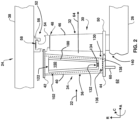
FIG. 2 depicts a side view of a portion of a turbine section of a gas turbine system including a debris ejection circuit, according to embodiments described herein; -
FIG. 3 depicts a perspective view of an impingement insert, according to embodiments described herein; -
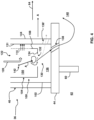
FIG. 4 schematically depicts an enlarged view of a debris ejection circuit and its operation, according to embodiments described herein; and -
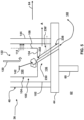
FIG. 5 schematically depicts an enlarged view of a debris ejection circuit and its operation, according to additional embodiments described herein. - It is noted that the drawings of the disclosure are not necessarily to scale. The drawings are intended to depict only typical aspects of the disclosure and therefore should not be considered as limiting the scope of the disclosure. In the drawings, like numbering represents like elements between the drawings.
- Reference will now be made in detail to representative embodiments illustrated in the accompanying drawings. It should be understood that the following descriptions are not intended to limit the embodiments to one preferred embodiment.
- As an initial matter, in order to clearly describe the current disclosure, it will become necessary to select certain terminology when referring to and describing relevant machine components within the scope of this disclosure. When possible, common industry terminology will be used and employed in a manner consistent with its accepted meaning. Unless otherwise stated, such terminology should be given a broad interpretation consistent with the context of the present application and the scope of the appended claims. Those of ordinary skill in the art will appreciate that often a particular component may be referred to using several different or overlapping terms. What may be described herein as being a single part may include and be referenced in another context as consisting of multiple components. Alternatively, what may be described herein as including multiple components may be referred to elsewhere as a single part.
- In addition, several descriptive terms may be used regularly herein, and it should prove helpful to define these terms at the onset of this section. These terms and their definitions, unless stated otherwise, are as follows. As used herein, "downstream" and "upstream" are terms that indicate a direction relative to the flow of a fluid, such as the working fluid through the turbine engine or, for example, the flow of air through the combustor or coolant through one of the turbine's component systems. The term "downstream" corresponds to the direction of flow of the fluid, and the term "upstream" refers to the direction opposite to the flow. The terms "forward" and "aft," without any further specificity, refer to directions, with "forward" referring to the front or compressor end of the engine, and "aft" referring to the rearward or turbine end of the engine. Additionally, the terms "leading" and "trailing" may be used and/or understood as being similar in description as the terms "forward" and "aft," respectively.
- It is often required to describe parts that are at differing radial, axial and/or circumferential positions. The "A" axis represents an axial orientation. As used herein, the terms "axial" and/or "axially" refer to the relative position/direction of objects along axis A, which is substantially parallel with the axis of rotation of the gas turbine system (in particular, the rotor section). As further used herein, the terms "radial" and/or "radially" refer to the relative position/direction of objects along a direction "R" (see,
FIGS. 1 and2 ), which is substantially perpendicular with axis A and intersects axis A at only one location. Finally, the term "circumferential" refers to movement or position around axis A (e.g., direction "C"). - In various embodiments, components described as being "fluidly coupled" to or "in fluid communication" with one another can be joined along one or more interfaces. In some embodiments, these interfaces can include junctions between distinct components, and, in other cases, these interfaces can include a solidly and/or integrally formed interconnection. That is, in some cases, components that are "coupled" to one another can be simultaneously formed to define a single continuous member. However, in other embodiments, these coupled components can be formed as separate members and be subsequently joined through known processes (e.g., fastening, ultrasonic welding, bonding).
- When an element or layer is referred to as being "on", "engaged to", "connected to" or "coupled to" another element, it may be directly on, engaged to, connected to, or coupled to the other element, or intervening elements may be present. In contrast, when an element is referred to as being "directly on," "directly engaged to", "directly connected to" or "directly coupled to" another element, there may be no intervening elements or layers present. Other words used to describe the relationship between elements should be interpreted in a like fashion (e.g., "between" versus "directly between," "adjacent" versus "directly adjacent," etc.). As used herein, the term "and/or" includes any and all combinations of one or more of the associated listed items.
-
FIG. 1 depicts a schematic diagram of agas turbine system 10 according to various embodiments. As shown, thegas turbine system 10 includes acompressor section 12 for compressing an incoming flow ofair 14 and for delivering a pressurized flow ofcompressed air 16 to acombustor section 18. Thecombustor section 18 mixes the flow ofcompressed air 16 with a pressurized supply offuel 20 and ignites the mixture to create a flow ofcombustion gases 22. Although only asingle combustor section 18 is shown, thegas turbine system 10 may include any number ofcombustor sections 18. The flow ofcombustion gases 22 is in turn delivered to aturbine section 24. The flow ofcombustion gases 22 drives theturbine section 24 to produce mechanical work. The mechanical work produced in theturbine section 24 drives thecompressor section 12 via ashaft 26 and may be used to drive anexternal load 28, such as an electrical generator and/or the like. -
FIG. 2 depicts a side view of a portion of aturbine section 24 of a gas turbine system (e.g.,gas turbine system 10 ofFIG. 1 ), including at least oneturbine stage 30. Theturbine stage 30 includes a set of turbine blades 32 (oneblade 32 shown) and acorresponding set 34 of nozzles 36 (onenozzle 36 shown) positioned within acasing 38 of theturbine section 24. For example, as depicted inFIG. 2 , thestage 30 ofturbine blades 32 may be thefirst stage 30 ofturbine blades 32 andnozzles 36 in theturbine section 24. In operation, theset 34 offirst stage nozzles 36 is configured to direct a flow ofcombustion gases 22 onto theturbine blades 32 of thefirst turbine stage 30. Eachnozzle 36 in thefirst set 34 ofnozzles 36 may include an innerchordal hinge seal 60 that is configured to create a seal between thenozzle 36 and an inner support ring (not shown) to separate the high pressure compressed air in theregion 62 produced by the compressor section 12 (FIG. 1 ) and the lower pressurehot combustion gases 22 flowing along thehot gas path 64 into theturbine blades 32 of thefirst stage 30 in theturbine section 24. -
Turbine blades 32 of a particular stage (e.g., first stage 30) may include a plurality ofturbine blades 32, which are coupled to and positioned circumferentially about therotor 26, and which are driven by thecombustion gases 22 produced by a combustor section 18 (FIG. 1 ) of a gas turbine system. Theset 34 ofnozzles 36 in thefirst stage 30 includes a plurality ofstationary nozzles 36 that are coupled to and positioned circumferentially about thecasing 38 of theturbine section 24. In the embodiment shown inFIG. 2 , eachnozzle 36 may include avane 40 positioned between anouter platform 42 and aninner platform 44. Similar to thenozzles 36, eachturbine blade 32 of theturbine section 24 may include anairfoil 46 extending radially from therotor 26. Eachairfoil 46 may include atip portion 48 and aplatform 50 positioned opposite thetip portion 48. - The
turbine blades 32 and thenozzles 36 may be positioned axially adjacent to one another within thecasing 38. InFIG. 2 , for example, aset 34 ofnozzles 36 are shown positioned axially adjacent and upstream of a set ofturbine blades 32 in theturbine stage 30. Theturbine section 24 may include a plurality ofstages 30 ofturbine blades 32 andnozzles 36, which are positioned axially throughout thecasing 38. - The
turbine section 24 of thegas turbine system 10 may include a plurality ofstages 52 of shrouds 54 (one stage shown inFIG. 2 ) positioned axially throughout thecasing 38. InFIG. 2 , for example, astage 52 ofshrouds 54 is shown positioned radially adjacent to and substantially surrounding or encircling theturbine blades 32 of theturbine stage 30. Thestage 52 ofshrouds 54 may also be positioned axially adjacent and/or downstream of theset 34 ofnozzles 36. Further, thestage 52 ofshrouds 54 may be positioned between twoadjacent sets 34 ofnozzles 36 located on opposing sides of theturbine blades 32 of theturbine stage 30. Thestage 52 ofshrouds 54 may be coupled about thecasing 38 of theturbine section 24 using a set ofextensions 56, each including anopening 58 configured to receive a corresponding section of ashroud 54. - Referring to
FIGS. 2-4 , animpingement insert 100 is positioned within acavity 102 formed in avane 40 of at least onenozzle 36 of at least one set 34 ofnozzles 36 in theturbine section 24. As shown in detail inFIG. 3 , theimpingement insert 100 includes abody 104 having aleading edge wall 106, a trailingedge wall 108, and first andsecond sidewalls leading edge wall 106 and trailingedge wall 108 of thebody 104. A plurality ofdistribution holes 114 are formed through one or more of leadingedge wall 106, trailingedge wall 108,first side wall 110, and/orsecond side wall 112, and may extend from aninterior surface 116 of theimpingement insert 100 to anexterior surface 118 of theimpingement insert 100. A pressurized flow of coolingair 120, which may be provided by bleeding off a portion of thecompressed air 16 discharged by thecompressor section 12 of a gas turbine system 10 (FIG. 1 ), may be directed through anopening 122 into an interior 150 of theimpingement insert 100. - A
debris ejection circuit 130 according to a first aspect of the present invention will now be described with regard toFIGS. 2-4 . At least onenozzle 36 in theset 34 of nozzles 36 (e.g., thenozzles 36 of thefirst stage 30 of the turbine section 24) includes adebris ejection circuit 130. As shown, thedebris ejection circuit 130 includes at least onebypass aperture 132 extending through a bottom (e.g., end)wall 134 of theimpingement insert 100 for fluidly coupling theinterior 150 of theimpingement insert 100 and a bottom (e.g., end)section 136 of thecavity 102 disposed below theimpingement insert 100. Thedebris ejection circuit 130 further includes an ejection channel 138 (FIGS. 2 and4 ) extending through theinner platform 44 of thenozzle 36 and fluidly coupling thebottom section 136 of thecavity 102 disposed below theimpingement insert 100 and awheelspace cavity 140 of theturbine section 24. - During operation of the gas turbine system 12 (
FIG. 1 ), small particles (e.g., rust flakes from the casings of the compressor section, sand, etc.) contained in the coolingair 120 entering theimpingement insert 100 may accumulate in and potentially block thesmall distribution holes 114 in thewalls impingement insert 100. Such blockage may reduce the cooling efficiency of theimpingement insert 100 and may lead to oxidation or other damage to portions ofimpingement insert 100. Advantageously, such debris is removed from theimpingement insert 100 by thedebris ejection circuit 130 according to the present embodiments. -
FIG. 4 depicts an enlarged view of adebris ejection circuit 130 and its operation. In the embodiment shown inFIG. 4 , thedebris ejection circuit 130 may be provided in anozzle 36 of afirst set 34 ofnozzles 36 in thefirst turbine stage 30. Theimpingement insert 100 according to the first aspect of the invention provides impingement cooling to anaft end 131 of thecavity 102 via a plurality of distribution holes 114 formed in the trailingedge wall 108 of theimpingement insert 100. To this extent, a flow of coolingair 120 entering theimpingement insert 100 will flow downward into theinterior 150 of theimpingement insert 100 and toward the plurality of distribution holes 114 formed in the trailingedge wall 108 of thebody 104 of theimpingement insert 100. - The
debris ejection circuit 130 includes at least one bypass aperture 132 (threebypass apertures 132 are depicted in the illustrated embodiment) extending through thebottom wall 134 of theimpingement insert 100. Eachbypass aperture 132 is configured to fluidly couple an interior 150 of theimpingement insert 100 and abottom section 136 of thecavity 102 disposed below theimpingement insert 100. According to embodiments, eachbypass aperture 132 may have a diameter that is larger than the size (e.g., width, diameter, etc.) of anydebris 142 that may be expected to enter theimpingement insert 100 during operation of the gas turbine system. For example, in a non-limiting example, abypass aperture 132 may have a diameter of about 0.10 inches to about 0.15 inches (about 2.54 mm to about 3.91 mm). Although threebypass apertures 132 are illustrated inFIGS. 2-4 , a smaller or larger number ofbypass apertures 132 may be used. Further, thebypass apertures 132 may all have the same diameter, or thebypass apertures 132 may have two or more different diameters. - As shown in
FIG. 4 , a flow of coolingair 120 may transport (e.g., carry)debris 142 into theinterior 150 of theimpingement insert 100. The momentum of the debris 142 (e.g., due to the velocity of the flow of cooling air 120) is sufficiently high such that thedebris 142 will not be redirected into the distribution holes 114 formed in the trailingedge wall 108 of thebody 104 of theimpingement insert 100, but will instead travel toward thebottom wall 134 of theimpingement insert 100. Thedebris 142 may recirculate for a short time at the bottom of theimpingement insert 100 before passing through abypass aperture 132 in thebottom wall 134 of theimpingement insert 100 into thebottom section 136 of thecavity 102. - As depicted in
FIG. 4 , coolingair 120 flows into theinterior 150 of theimpingement insert 100 and into and through the distribution holes 114 formed in the trailingedge wall 108 of thebody 104 of theimpingement insert 100. To this extent,debris 142 may be deflected by the flow of coolingair 120 toward the trailingedge wall 108 as thedebris 142 travels toward thebottom wall 134 of theimpingement insert 100. According to the first aspect of the invention, thebypass apertures 132 are positioned in thebottom wall 134 toward (e.g., as close as possible) the trailingedge wall 108 of thebody 104 of theimpingement insert 100 to increase the probability thatdebris 142 will be captured by and pass through abypass aperture 132 into thebottom section 136 of thecavity 102. - The
debris ejection circuit 130 further includes anejection channel 138 extending through theinner platform 44 of thenozzle 36. Theejection channel 138 fluidly couples thebottom section 136 of thecavity 102 disposed below theimpingement insert 100 and awheelspace cavity 140 of theturbine section 24. Theejection channel 138 may have diameter greater than or equal to the diameter of thebypass apertures 132. - According to various embodiments, the
ejection channel 138 may be positioned aft of the bypass apertures 132 (e.g., downstream in the direction indicated by arrow A) to facilitate the ejection ofdebris 142 from thebottom section 136 of thecavity 102. Further, theejection channel 138 may extend at an angle through theplatform 44 of thenozzle 36 toward a trailingedge 144 of thenozzle 36 to facilitate the ejection ofdebris 142. In other embodiments, theejection channel 138 may extend perpendicularly through theplatform 44 of thenozzle 36. When used in afirst stage nozzle 36, theejection channel 138 may be positioned aft of the innerchordal hinge seal 60 to allow thedebris 142 to flow into thewheelspace cavity 140 of theturbine section 24. In an alternate embodiment that is not part of the first and the second aspects of the invention, depicted in phantom inFIG. 4 , an ejection channel 138' may be formed in the trailingedge wall 144 of thenozzle 36 to ejectdebris 142 directly into thehot gas path 64 instead of into thewheelspace cavity 140. - A pressure differential exists across the
ejection channel 138 that draws thedebris 142 out of thebottom section 136 of thecavity 102 and into thewheelspace cavity 140 of theturbine section 24. For example, according to the first aspect of the invention described herein, the pressure within thebottom section 136 of thecavity 102 due to the flow of coolingair 120 entering theimpingement insert 100 is greater than the pressure within thewheelspace cavity 140. This pressure differential creates a flow of air through theejection channel 138 that propels thedebris 142 out of thebottom section 136 of thecavity 102 and into thewheelspace cavity 140. From thewheelspace cavity 140, thedebris 142 may flow into thehot gas path 64 of theturbine section 24 and ultimately out of the gas turbine system. - According to some embodiments, the pressure ratio across the
ejection channel 138 may be in the range of about 1.1 to about 1.8. However, the pressure ratio may vary based on, for example, the number, placement, and/or diameter of thebypass apertures 132; the placement, angle, and/or diameter of theejection channel 138; and/or other factors (e.g., the flow volume of the coolingair 120, the pressure within thewheelspace cavity 140, etc.). -
FIG. 5 depicts an enlarged view of adebris ejection circuit 230 and its operation according to the second aspect of the invention. As previously described with regard to the embodiment depicted inFIG. 4 ,debris 142 passes: 1) through abypass aperture 132 in thebottom wall 134 of theimpingement insert 100 into thebottom section 136 of thecavity 102; and 2) from thebottom section 136 of thecavity 102 to thewheelspace cavity 140 through theejection channel 138. As shown inFIG. 5 , however, thedebris ejection circuit 230 may include anejection channel 238 that is configured as a tubular structure extending from the bottom of theimpingement insert 100 to directly fluidly couple the impingement insert 100 (via a bypass aperture 232) and and, according to an embodiment that is not part of the second aspect of the invention, thewheelspace cavity 140 for removal ofdebris 142. - The
debris ejection circuit 230 includes at least onebypass aperture 232 extending through thebottom wall 134 of theimpingement insert 100. Ifmultiple bypass apertures 232 are used, all of thebypass apertures 232 may be fluidly coupled to thesame ejection channel 238. According to such embodiments, abypass aperture 232 may have a diameter that is larger than the size (e.g., width, diameter, etc.) of anydebris 142 that may be expected to enter theimpingement insert 100 during operation of the gas turbine system. For example, in a non-limiting example, thebypass aperture 232 may have a diameter of about 0.10 inches to about 0.15 inches (about 2.54 mm to about 3.91 mm). Although onebypass aperture 232 is depicted inFIG. 5 , a larger number ofbypass apertures 232 may be used. Further, thebypass apertures 232 may all have the same diameter, or thebypass apertures 232 may have two or more different diameters. Theejection channel 238 may have diameter greater than or equal to the diameter of thebypass aperture 232. - As shown in
FIG. 5 , a flow of coolingair 120 may transportdebris 142 into theinterior 150 of theimpingement insert 100. Again, the momentum of thedebris 142 is sufficiently high such that thedebris 142 will not be redirected into the distribution holes 114 formed in the walls of theimpingement insert 100, but will instead travel toward thebottom wall 134 of theimpingement insert 100. Thedebris 142 may recirculate for a short time at the bottom of theimpingement insert 100 before passing through thebypass aperture 232 in thebottom wall 134 of theimpingement insert 100 and into theejection channel 238. - According to an embodiment that is not part of the second aspect of the invention, a pressure differential exists across the
ejection channel 238 that is configured to draw thedebris 142 through theejection channel 238 and into thewheelspace cavity 140 of theturbine section 24. For example, according to an embodiment that is not part of the second aspect of the invention, the pressure within theimpingement insert 100 due to the flow of coolingair 120 entering theimpingement insert 100 is greater than the pressure within thewheelspace cavity 140. This pressure differential creates a flow of air through theejection channel 238 that propels thedebris 142 into abypass aperture 232, through theejection channel 238, and into thewheelspace cavity 140. From thewheelspace cavity 140, thedebris 142 may flow into thehot gas path 64 of theturbine section 24 and ultimately out of the gas turbine system. According to the second aspect of the invention, depicted in phantom inFIG. 5 , an ejection channel 238' is configured as a tubular structure extending from the bottom of theimpingement insert 100 to directly fluidly couple the impingement insert 100 (via a bypass aperture 232) and the trailingedge wall 144 of thenozzle 36 to ejectdebris 142 directly into thehot gas path 64 instead of into thewheelspace cavity 140. - According to the second aspect of the invention, the pressure within the
impingement insert 100 due to the flow of coolingair 120 entering theimpingement insert 100 is greater than the pressure at the exterior of the gas turbine component. This pressure differential creates a flow of air through the ejection channel 238' that propels thedebris 142 into abypass aperture 232, through the ejection channel 238', and directly into thehot gas path 64 of theturbine section 24. - According to various embodiments, the
ejection channel 238 may extend at an angle through theplatform 44 of thenozzle 36 toward a trailingedge 144 of thenozzle 36 to facilitate the ejection ofdebris 142. In other embodiments, theejection channel 238 may extend perpendicularly through theplatform 44 of thenozzle 36. When used in afirst stage nozzle 36, theejection channel 238 may be positioned aft of the innerchordal hinge seal 60 to allow thedebris 142 to flow into thewheelspace cavity 140 of theturbine section 24. - Various components of the present disclosure may be formed using an additive manufacturing process. Advantageously, additive manufacturing enables the design and production of more customizable and intricate features.
- As used herein, additive manufacturing may include any process of producing an object through the successive layering of material rather than the removal of material, which is the case with conventional processes. Additive manufacturing can create complex geometries without the use of any sort of tools, molds or fixtures and with little or no waste material. Instead of machining components from solid billets of plastic or metal, much of which is cut away and discarded, the only material used in additive manufacturing is what is required to shape the part. Additive manufacturing processes may include but are not limited to: 3D printing, rapid prototyping (RP), direct digital manufacturing (DDM), binder jetting, selective laser sintering (SLS), selective laser melting (SLM), direct metal laser sintering (DMLS), and direct metal laser melting (DMLM). In the current setting, DMLM or SLM have been found advantageous.
- The terminology used herein is for the purpose of describing particular embodiments only and is not intended to be limiting of the disclosure. As used herein, the singular forms "a", "an", and "the" are intended to include the plural forms as well, unless the context clearly indicates otherwise. It will be further understood that the terms "comprises" and/or "comprising," when used in this specification, specify the presence of stated features, integers, steps, operations, elements, and/or components, but do not preclude the presence or addition of one or more other features, integers, steps, operations, elements, components, and/or groups thereof.
- This written description uses examples to disclose the invention, including the best mode, and also to enable any person skilled in the art to practice the invention, including making and using any devices or systems and performing any incorporated methods. The patentable scope of the invention is defined by the claims and may include other examples that occur to those skilled in the art. Such other examples are intended to be within the scope of the claims if they have structural elements that do not differ from the literal language of the claims.
Claims (11)
- A gas turbine component with an ejection circuit (130) for removing debris (142) from cooling air (120) flowing through the gas turbine component of a gas turbine system (10), the gas turbine component comprising:an impingement insert (100) disposed within a cavity (102) in the gas turbine component, the impingement insert (100) including an end wall (134) and a plurality of distribution holes (114) for directing cooling air (120) against a wall of the cavity (102); anda debris (142) ejection circuit, including:a bypass aperture (132, 232) defined in the end wall (134) of the impingement insert (100), the bypass aperture (132, 232) fluidly coupling an interior (150) of the impingement insert (100) and an end section (136) of the cavity (102); andan ejection channel (138, 238) defined in an aft section of the gas turbine component, the ejection channel (138, 238) fluidly coupling the end section (136) of the cavity (102) and a wheelspace cavity (140) cavity (102), the wheelspace cavity (140) being radially inward of the gas turbine component;wherein the gas turbine component is configured to direct debris (142) in the cooling air (120) through the bypass aperture (132, 232) and the ejection channel (138, 238) to the wheelspace cavity (140) due to a pressure differential between the interior (150) of the gas turbine component and the wheelspace cavity (140),wherein the gas turbine component comprises a nozzle (36) of the gas turbine system (10),characterized in that the plurality of distribution holes (114) for directing cooling air (120) against the wall of the cavity (102) is formed in a trailing edge (108) wall of the impingement insert (100), wherein the bypass aperture (132, 232) defined in the end wall (134) of the impingement insert (100) is positioned adjacent the trailing edge (108) wall.
- The gas turbine component according to claim 1, wherein the nozzle (36) is a nozzle (36) in a first stage (30) of a turbine of the gas turbine system (10).
- The gas turbine component according to claim 1, wherein the ejection channel (138, 238) passes through a platform (50) of the nozzle (36) to the wheelspace cavity (140); and wherein the ejection channel (138, 238) is angled toward a downstream end of the nozzle (36).
- The gas turbine component according to claim 3, wherein the ejection channel (138, 238) has an outlet into the wheelspace cavity (140) downstream of an inner chordal hinge seal (60) of the nozzle (36).
- The gas turbine component according to claim 3, wherein the ejection channel (238) is partially defined by a tubular structure extending from the end wall (134) of the impingement insert (100) to the platform (50) of the nozzle (36).
- The gas turbine component according to claim 1, further comprising a plurality of the bypass apertures (132, 232) in the end wall (134) of the impingement insert (100).
- The gas turbine component according to claim 1, wherein the bypass aperture (132, 232) has a diameter of about 2.54 mm to about 3.91 mm.
- The gas turbine component according to claim 1, wherein the ejection channel (138, 238) has a diameter greater than or equal to a diameter of the bypass aperture (132, 232).
- The gas turbine component according to claim 1, wherein the gas turbine component is configured such that a pressure ratio between the interior (150) of the gas turbine component and the wheelspace cavity (140) is about 1.1 to about 1.8.
- A gas turbine component having an ejection circuit for removing debris (142) from cooling air (120) flowing through the gas turbine component of a gas turbine system (10), the gas turbine component comprising:an impingement insert (100) disposed within a cavity (102) in the gas turbine component, the impingement insert (100) including an end wall (134) and a plurality of distribution holes (114) for directing cooling air (120) against a wall of the cavity (102); anda debris (142) ejection circuit, including:
a bypass aperture (232) defined in the end wall (134) of the impingement insert (100), the bypass aperture (232) fluidly couplingan interior (150) of the impingement insert (100) and an end section (136) of the cavity (102); and
an ejection channel (238') defined in an aft section of the gas turbine component, the ejection channel (238') fluidly coupling the impingement insert (100) and a hot gas path (64) at an exterior of the gas turbine component via the bypass aperture (232);wherein the impingement insert (100) is configured to direct debris (142) in the cooling air (120) through the bypass aperture (232) and the ejection channel (238') to the hot gas path (64) at the exterior of the gas turbine component due to a pressure differential between the interior (150) of the impingement insert (100) and the exterior of the gas turbine component, wherein the gas turbine component comprises a nozzle (36) of the gas turbine system (10),characterized in that the ejection channel (238') is partially defined by a tubular structure extending from the end wall (134) of the impingement insert (100) to a trailing edge (144) of the nozzle (36). - The gas turbine component according to claim 10, wherein the nozzle (36) is a nozzle (36) in a first stage (30) of a turbine of the gas turbine system (10).
Applications Claiming Priority (1)
| Application Number | Priority Date | Filing Date | Title |
|---|---|---|---|
| US17/008,775 US11525397B2 (en) | 2020-09-01 | 2020-09-01 | Gas turbine component with ejection circuit for removing debris from cooling air supply |
Publications (3)
| Publication Number | Publication Date |
|---|---|
| EP3964692A2 EP3964692A2 (en) | 2022-03-09 |
| EP3964692A3 EP3964692A3 (en) | 2022-06-22 |
| EP3964692B1 true EP3964692B1 (en) | 2023-12-27 |
Family
ID=77367274
Family Applications (1)
| Application Number | Title | Priority Date | Filing Date |
|---|---|---|---|
| EP21191570.7A Active EP3964692B1 (en) | 2020-09-01 | 2021-08-16 | Gas turbine component with an ejection circuit for removing debris from cooling air flowing through the gas turbine component of a gas turbine system |
Country Status (5)
| Country | Link |
|---|---|
| US (1) | US11525397B2 (en) |
| EP (1) | EP3964692B1 (en) |
| JP (1) | JP2022041963A (en) |
| KR (1) | KR20220029473A (en) |
| CN (1) | CN114109513B (en) |
Families Citing this family (1)
| Publication number | Priority date | Publication date | Assignee | Title |
|---|---|---|---|---|
| US12595741B2 (en) | 2023-09-08 | 2026-04-07 | Rtx Corporation | Dirt and dust free turbine vane cooling |
Family Cites Families (21)
| Publication number | Priority date | Publication date | Assignee | Title |
|---|---|---|---|---|
| US4962640A (en) | 1989-02-06 | 1990-10-16 | Westinghouse Electric Corp. | Apparatus and method for cooling a gas turbine vane |
| US5511937A (en) * | 1994-09-30 | 1996-04-30 | Westinghouse Electric Corporation | Gas turbine airfoil with a cooling air regulating seal |
| US5827043A (en) | 1997-06-27 | 1998-10-27 | United Technologies Corporation | Coolable airfoil |
| JP3495579B2 (en) * | 1997-10-28 | 2004-02-09 | 三菱重工業株式会社 | Gas turbine stationary blade |
| US6065928A (en) * | 1998-07-22 | 2000-05-23 | General Electric Company | Turbine nozzle having purge air circuit |
| GB2350867B (en) * | 1999-06-09 | 2003-03-19 | Rolls Royce Plc | Gas turbine airfoil internal air system |
| EP1191189A1 (en) | 2000-09-26 | 2002-03-27 | Siemens Aktiengesellschaft | Gas turbine blades |
| US6508620B2 (en) | 2001-05-17 | 2003-01-21 | Pratt & Whitney Canada Corp. | Inner platform impingement cooling by supply air from outside |
| US6951444B2 (en) * | 2002-10-22 | 2005-10-04 | Siemens Aktiengesselschaft | Turbine and a turbine vane for a turbine |
| US20100092280A1 (en) * | 2008-10-14 | 2010-04-15 | General Electric Company | Steam Cooled Direct Fired Coal Gas Turbine |
| US8142153B1 (en) * | 2009-06-22 | 2012-03-27 | Florida Turbine Technologies, Inc | Turbine vane with dirt separator |
| US20140341723A1 (en) * | 2013-03-15 | 2014-11-20 | General Electric Company | Gas turbine vane insert to control particulate deposition |
| US9810079B2 (en) * | 2013-03-15 | 2017-11-07 | General Electric Company | Cyclonic dirt separating turbine accelerator |
| US9714612B2 (en) * | 2013-10-04 | 2017-07-25 | Rohr, Inc. | Drag link fitting and vent combination |
| JP6312929B2 (en) * | 2014-09-08 | 2018-04-18 | シーメンス エナジー インコーポレイテッド | In the platform, a cooled turbine vane platform having a front, a middle string and a rear cooling chamber |
| CN107849925B (en) * | 2015-07-06 | 2020-03-17 | 西门子股份公司 | Turbine stator and/or rotor blades with cooling flow regulation features and corresponding method of adapting blades |
| JP6651378B2 (en) * | 2016-02-22 | 2020-02-19 | 三菱日立パワーシステムズ株式会社 | Insert assembly, blade, gas turbine, and method of manufacturing blade |
| US10695704B2 (en) * | 2016-07-20 | 2020-06-30 | General Electric Company | Multi-station debris separation system |
| US11090600B2 (en) * | 2017-01-04 | 2021-08-17 | General Electric Company | Particle separator assembly for a turbine engine |
| US10989067B2 (en) | 2018-07-13 | 2021-04-27 | Honeywell International Inc. | Turbine vane with dust tolerant cooling system |
| US10914192B2 (en) * | 2018-09-25 | 2021-02-09 | Raytheon Technologies Corporation | Impingement cooling for gas turbine engine component |
-
2020
- 2020-09-01 US US17/008,775 patent/US11525397B2/en active Active
-
2021
- 2021-07-30 CN CN202110871785.XA patent/CN114109513B/en active Active
- 2021-08-16 EP EP21191570.7A patent/EP3964692B1/en active Active
- 2021-08-27 KR KR1020210113956A patent/KR20220029473A/en active Pending
- 2021-08-30 JP JP2021139491A patent/JP2022041963A/en active Pending
Also Published As
| Publication number | Publication date |
|---|---|
| CN114109513B (en) | 2026-01-06 |
| CN114109513A (en) | 2022-03-01 |
| US20220065165A1 (en) | 2022-03-03 |
| US11525397B2 (en) | 2022-12-13 |
| JP2022041963A (en) | 2022-03-11 |
| EP3964692A3 (en) | 2022-06-22 |
| EP3964692A2 (en) | 2022-03-09 |
| KR20220029473A (en) | 2022-03-08 |
Similar Documents
| Publication | Publication Date | Title |
|---|---|---|
| EP3444446B1 (en) | Inlet frame for a gas turbine engine | |
| US12312975B2 (en) | Component for a turbine engine with a cooling hole | |
| US11598222B2 (en) | Turbine engine hanger | |
| US10830135B2 (en) | Inlet frame for a gas turbine engine | |
| US10837293B2 (en) | Airfoil with tunable cooling configuration | |
| CN112343665A (en) | Engine components with cooling holes | |
| EP4180626B1 (en) | A turbomachine blade, a coupon for replacing a cutout in an airfoil body and a gas turbine system | |
| JP7419014B2 (en) | a turbine shroud containing cooling passages communicating with the collection plenum; | |
| EP3964692B1 (en) | Gas turbine component with an ejection circuit for removing debris from cooling air flowing through the gas turbine component of a gas turbine system | |
| US20200080427A1 (en) | Cooling arrangement with purge partition | |
| US20180128177A1 (en) | Method for forming a hole in an engine component | |
| CN113074024A (en) | Engine component with a flow deflector in the cooling air circuit | |
| US20170328213A1 (en) | Engine component wall with a cooling circuit | |
| CN112483192A (en) | Nozzle assembly for a turbine engine |
Legal Events
| Date | Code | Title | Description |
|---|---|---|---|
| PUAI | Public reference made under article 153(3) epc to a published international application that has entered the european phase |
Free format text: ORIGINAL CODE: 0009012 |
|
| STAA | Information on the status of an ep patent application or granted ep patent |
Free format text: STATUS: THE APPLICATION HAS BEEN PUBLISHED |
|
| AK | Designated contracting states |
Kind code of ref document: A2 Designated state(s): AL AT BE BG CH CY CZ DE DK EE ES FI FR GB GR HR HU IE IS IT LI LT LU LV MC MK MT NL NO PL PT RO RS SE SI SK SM TR |
|
| PUAL | Search report despatched |
Free format text: ORIGINAL CODE: 0009013 |
|
| AK | Designated contracting states |
Kind code of ref document: A3 Designated state(s): AL AT BE BG CH CY CZ DE DK EE ES FI FR GB GR HR HU IE IS IT LI LT LU LV MC MK MT NL NO PL PT RO RS SE SI SK SM TR |
|
| RIC1 | Information provided on ipc code assigned before grant |
Ipc: F01D 5/18 20060101ALN20220518BHEP Ipc: F01D 9/06 20060101AFI20220518BHEP |
|
| STAA | Information on the status of an ep patent application or granted ep patent |
Free format text: STATUS: REQUEST FOR EXAMINATION WAS MADE |
|
| 17P | Request for examination filed |
Effective date: 20221207 |
|
| RBV | Designated contracting states (corrected) |
Designated state(s): AL AT BE BG CH CY CZ DE DK EE ES FI FR GB GR HR HU IE IS IT LI LT LU LV MC MK MT NL NO PL PT RO RS SE SI SK SM TR |
|
| REG | Reference to a national code |
Ref country code: DE Ref legal event code: R079 Free format text: PREVIOUS MAIN CLASS: F01D0005180000 Ipc: F01D0009060000 Ref document number: 602021008047 Country of ref document: DE |
|
| GRAP | Despatch of communication of intention to grant a patent |
Free format text: ORIGINAL CODE: EPIDOSNIGR1 |
|
| STAA | Information on the status of an ep patent application or granted ep patent |
Free format text: STATUS: GRANT OF PATENT IS INTENDED |
|
| RIC1 | Information provided on ipc code assigned before grant |
Ipc: F01D 9/06 20060101AFI20230428BHEP |
|
| INTG | Intention to grant announced |
Effective date: 20230515 |
|
| GRAS | Grant fee paid |
Free format text: ORIGINAL CODE: EPIDOSNIGR3 |
|
| GRAA | (expected) grant |
Free format text: ORIGINAL CODE: 0009210 |
|
| STAA | Information on the status of an ep patent application or granted ep patent |
Free format text: STATUS: THE PATENT HAS BEEN GRANTED |
|
| RAP1 | Party data changed (applicant data changed or rights of an application transferred) |
Owner name: GENERAL ELECTRIC TECHNOLOGY GMBH |
|
| AK | Designated contracting states |
Kind code of ref document: B1 Designated state(s): AL AT BE BG CH CY CZ DE DK EE ES FI FR GB GR HR HU IE IS IT LI LT LU LV MC MK MT NL NO PL PT RO RS SE SI SK SM TR |
|
| REG | Reference to a national code |
Ref country code: GB Ref legal event code: FG4D |
|
| REG | Reference to a national code |
Ref country code: CH Ref legal event code: EP |
|
| REG | Reference to a national code |
Ref country code: DE Ref legal event code: R096 Ref document number: 602021008047 Country of ref document: DE |
|
| REG | Reference to a national code |
Ref country code: IE Ref legal event code: FG4D |
|
| PG25 | Lapsed in a contracting state [announced via postgrant information from national office to epo] |
Ref country code: GR Free format text: LAPSE BECAUSE OF FAILURE TO SUBMIT A TRANSLATION OF THE DESCRIPTION OR TO PAY THE FEE WITHIN THE PRESCRIBED TIME-LIMIT Effective date: 20240328 |
|
| REG | Reference to a national code |
Ref country code: LT Ref legal event code: MG9D |
|
| PG25 | Lapsed in a contracting state [announced via postgrant information from national office to epo] |
Ref country code: LT Free format text: LAPSE BECAUSE OF FAILURE TO SUBMIT A TRANSLATION OF THE DESCRIPTION OR TO PAY THE FEE WITHIN THE PRESCRIBED TIME-LIMIT Effective date: 20231227 |
|
| PG25 | Lapsed in a contracting state [announced via postgrant information from national office to epo] |
Ref country code: ES Free format text: LAPSE BECAUSE OF FAILURE TO SUBMIT A TRANSLATION OF THE DESCRIPTION OR TO PAY THE FEE WITHIN THE PRESCRIBED TIME-LIMIT Effective date: 20231227 |
|
| PG25 | Lapsed in a contracting state [announced via postgrant information from national office to epo] |
Ref country code: LT Free format text: LAPSE BECAUSE OF FAILURE TO SUBMIT A TRANSLATION OF THE DESCRIPTION OR TO PAY THE FEE WITHIN THE PRESCRIBED TIME-LIMIT Effective date: 20231227 Ref country code: GR Free format text: LAPSE BECAUSE OF FAILURE TO SUBMIT A TRANSLATION OF THE DESCRIPTION OR TO PAY THE FEE WITHIN THE PRESCRIBED TIME-LIMIT Effective date: 20240328 Ref country code: FI Free format text: LAPSE BECAUSE OF FAILURE TO SUBMIT A TRANSLATION OF THE DESCRIPTION OR TO PAY THE FEE WITHIN THE PRESCRIBED TIME-LIMIT Effective date: 20231227 Ref country code: ES Free format text: LAPSE BECAUSE OF FAILURE TO SUBMIT A TRANSLATION OF THE DESCRIPTION OR TO PAY THE FEE WITHIN THE PRESCRIBED TIME-LIMIT Effective date: 20231227 Ref country code: BG Free format text: LAPSE BECAUSE OF FAILURE TO SUBMIT A TRANSLATION OF THE DESCRIPTION OR TO PAY THE FEE WITHIN THE PRESCRIBED TIME-LIMIT Effective date: 20240327 |
|
| REG | Reference to a national code |
Ref country code: NL Ref legal event code: MP Effective date: 20231227 |
|
| REG | Reference to a national code |
Ref country code: AT Ref legal event code: MK05 Ref document number: 1644720 Country of ref document: AT Kind code of ref document: T Effective date: 20231227 |
|
| PG25 | Lapsed in a contracting state [announced via postgrant information from national office to epo] |
Ref country code: NL Free format text: LAPSE BECAUSE OF FAILURE TO SUBMIT A TRANSLATION OF THE DESCRIPTION OR TO PAY THE FEE WITHIN THE PRESCRIBED TIME-LIMIT Effective date: 20231227 |
|
| PG25 | Lapsed in a contracting state [announced via postgrant information from national office to epo] |
Ref country code: SE Free format text: LAPSE BECAUSE OF FAILURE TO SUBMIT A TRANSLATION OF THE DESCRIPTION OR TO PAY THE FEE WITHIN THE PRESCRIBED TIME-LIMIT Effective date: 20231227 Ref country code: RS Free format text: LAPSE BECAUSE OF FAILURE TO SUBMIT A TRANSLATION OF THE DESCRIPTION OR TO PAY THE FEE WITHIN THE PRESCRIBED TIME-LIMIT Effective date: 20231227 Ref country code: NO Free format text: LAPSE BECAUSE OF FAILURE TO SUBMIT A TRANSLATION OF THE DESCRIPTION OR TO PAY THE FEE WITHIN THE PRESCRIBED TIME-LIMIT Effective date: 20240327 Ref country code: NL Free format text: LAPSE BECAUSE OF FAILURE TO SUBMIT A TRANSLATION OF THE DESCRIPTION OR TO PAY THE FEE WITHIN THE PRESCRIBED TIME-LIMIT Effective date: 20231227 Ref country code: LV Free format text: LAPSE BECAUSE OF FAILURE TO SUBMIT A TRANSLATION OF THE DESCRIPTION OR TO PAY THE FEE WITHIN THE PRESCRIBED TIME-LIMIT Effective date: 20231227 Ref country code: HR Free format text: LAPSE BECAUSE OF FAILURE TO SUBMIT A TRANSLATION OF THE DESCRIPTION OR TO PAY THE FEE WITHIN THE PRESCRIBED TIME-LIMIT Effective date: 20231227 |
|
| PG25 | Lapsed in a contracting state [announced via postgrant information from national office to epo] |
Ref country code: IS Free format text: LAPSE BECAUSE OF FAILURE TO SUBMIT A TRANSLATION OF THE DESCRIPTION OR TO PAY THE FEE WITHIN THE PRESCRIBED TIME-LIMIT Effective date: 20240427 |
|
| PG25 | Lapsed in a contracting state [announced via postgrant information from national office to epo] |
Ref country code: CZ Free format text: LAPSE BECAUSE OF FAILURE TO SUBMIT A TRANSLATION OF THE DESCRIPTION OR TO PAY THE FEE WITHIN THE PRESCRIBED TIME-LIMIT Effective date: 20231227 Ref country code: AT Free format text: LAPSE BECAUSE OF FAILURE TO SUBMIT A TRANSLATION OF THE DESCRIPTION OR TO PAY THE FEE WITHIN THE PRESCRIBED TIME-LIMIT Effective date: 20231227 |
|
| PG25 | Lapsed in a contracting state [announced via postgrant information from national office to epo] |
Ref country code: SK Free format text: LAPSE BECAUSE OF FAILURE TO SUBMIT A TRANSLATION OF THE DESCRIPTION OR TO PAY THE FEE WITHIN THE PRESCRIBED TIME-LIMIT Effective date: 20231227 |
|
| PG25 | Lapsed in a contracting state [announced via postgrant information from national office to epo] |
Ref country code: SM Free format text: LAPSE BECAUSE OF FAILURE TO SUBMIT A TRANSLATION OF THE DESCRIPTION OR TO PAY THE FEE WITHIN THE PRESCRIBED TIME-LIMIT Effective date: 20231227 Ref country code: SK Free format text: LAPSE BECAUSE OF FAILURE TO SUBMIT A TRANSLATION OF THE DESCRIPTION OR TO PAY THE FEE WITHIN THE PRESCRIBED TIME-LIMIT Effective date: 20231227 Ref country code: RO Free format text: LAPSE BECAUSE OF FAILURE TO SUBMIT A TRANSLATION OF THE DESCRIPTION OR TO PAY THE FEE WITHIN THE PRESCRIBED TIME-LIMIT Effective date: 20231227 Ref country code: IT Free format text: LAPSE BECAUSE OF FAILURE TO SUBMIT A TRANSLATION OF THE DESCRIPTION OR TO PAY THE FEE WITHIN THE PRESCRIBED TIME-LIMIT Effective date: 20231227 Ref country code: IS Free format text: LAPSE BECAUSE OF FAILURE TO SUBMIT A TRANSLATION OF THE DESCRIPTION OR TO PAY THE FEE WITHIN THE PRESCRIBED TIME-LIMIT Effective date: 20240427 Ref country code: EE Free format text: LAPSE BECAUSE OF FAILURE TO SUBMIT A TRANSLATION OF THE DESCRIPTION OR TO PAY THE FEE WITHIN THE PRESCRIBED TIME-LIMIT Effective date: 20231227 Ref country code: CZ Free format text: LAPSE BECAUSE OF FAILURE TO SUBMIT A TRANSLATION OF THE DESCRIPTION OR TO PAY THE FEE WITHIN THE PRESCRIBED TIME-LIMIT Effective date: 20231227 Ref country code: AT Free format text: LAPSE BECAUSE OF FAILURE TO SUBMIT A TRANSLATION OF THE DESCRIPTION OR TO PAY THE FEE WITHIN THE PRESCRIBED TIME-LIMIT Effective date: 20231227 |
|
| PG25 | Lapsed in a contracting state [announced via postgrant information from national office to epo] |
Ref country code: PL Free format text: LAPSE BECAUSE OF FAILURE TO SUBMIT A TRANSLATION OF THE DESCRIPTION OR TO PAY THE FEE WITHIN THE PRESCRIBED TIME-LIMIT Effective date: 20231227 Ref country code: PT Free format text: LAPSE BECAUSE OF FAILURE TO SUBMIT A TRANSLATION OF THE DESCRIPTION OR TO PAY THE FEE WITHIN THE PRESCRIBED TIME-LIMIT Effective date: 20240429 |
|
| PG25 | Lapsed in a contracting state [announced via postgrant information from national office to epo] |
Ref country code: PT Free format text: LAPSE BECAUSE OF FAILURE TO SUBMIT A TRANSLATION OF THE DESCRIPTION OR TO PAY THE FEE WITHIN THE PRESCRIBED TIME-LIMIT Effective date: 20240429 Ref country code: PL Free format text: LAPSE BECAUSE OF FAILURE TO SUBMIT A TRANSLATION OF THE DESCRIPTION OR TO PAY THE FEE WITHIN THE PRESCRIBED TIME-LIMIT Effective date: 20231227 |
|
| REG | Reference to a national code |
Ref country code: DE Ref legal event code: R097 Ref document number: 602021008047 Country of ref document: DE |
|
| PG25 | Lapsed in a contracting state [announced via postgrant information from national office to epo] |
Ref country code: DK Free format text: LAPSE BECAUSE OF FAILURE TO SUBMIT A TRANSLATION OF THE DESCRIPTION OR TO PAY THE FEE WITHIN THE PRESCRIBED TIME-LIMIT Effective date: 20231227 |
|
| PG25 | Lapsed in a contracting state [announced via postgrant information from national office to epo] |
Ref country code: DK Free format text: LAPSE BECAUSE OF FAILURE TO SUBMIT A TRANSLATION OF THE DESCRIPTION OR TO PAY THE FEE WITHIN THE PRESCRIBED TIME-LIMIT Effective date: 20231227 |
|
| PLBE | No opposition filed within time limit |
Free format text: ORIGINAL CODE: 0009261 |
|
| STAA | Information on the status of an ep patent application or granted ep patent |
Free format text: STATUS: NO OPPOSITION FILED WITHIN TIME LIMIT |
|
| 26N | No opposition filed |
Effective date: 20240930 |
|
| REG | Reference to a national code |
Ref country code: CH Ref legal event code: PL |
|
| PG25 | Lapsed in a contracting state [announced via postgrant information from national office to epo] |
Ref country code: LU Free format text: LAPSE BECAUSE OF NON-PAYMENT OF DUE FEES Effective date: 20240816 |
|
| PG25 | Lapsed in a contracting state [announced via postgrant information from national office to epo] |
Ref country code: SI Free format text: LAPSE BECAUSE OF FAILURE TO SUBMIT A TRANSLATION OF THE DESCRIPTION OR TO PAY THE FEE WITHIN THE PRESCRIBED TIME-LIMIT Effective date: 20231227 Ref country code: MC Free format text: LAPSE BECAUSE OF FAILURE TO SUBMIT A TRANSLATION OF THE DESCRIPTION OR TO PAY THE FEE WITHIN THE PRESCRIBED TIME-LIMIT Effective date: 20231227 Ref country code: CH Free format text: LAPSE BECAUSE OF NON-PAYMENT OF DUE FEES Effective date: 20240831 |
|
| REG | Reference to a national code |
Ref country code: BE Ref legal event code: MM Effective date: 20240831 |
|
| PG25 | Lapsed in a contracting state [announced via postgrant information from national office to epo] |
Ref country code: BE Free format text: LAPSE BECAUSE OF NON-PAYMENT OF DUE FEES Effective date: 20240831 |
|
| PG25 | Lapsed in a contracting state [announced via postgrant information from national office to epo] |
Ref country code: FR Free format text: LAPSE BECAUSE OF NON-PAYMENT OF DUE FEES Effective date: 20240831 |
|
| PG25 | Lapsed in a contracting state [announced via postgrant information from national office to epo] |
Ref country code: IE Free format text: LAPSE BECAUSE OF NON-PAYMENT OF DUE FEES Effective date: 20240816 |
|
| PGFP | Annual fee paid to national office [announced via postgrant information from national office to epo] |
Ref country code: DE Payment date: 20250724 Year of fee payment: 5 |
|
| PG25 | Lapsed in a contracting state [announced via postgrant information from national office to epo] |
Ref country code: CY Free format text: LAPSE BECAUSE OF FAILURE TO SUBMIT A TRANSLATION OF THE DESCRIPTION OR TO PAY THE FEE WITHIN THE PRESCRIBED TIME-LIMIT; INVALID AB INITIO Effective date: 20210816 |
|
| PG25 | Lapsed in a contracting state [announced via postgrant information from national office to epo] |
Ref country code: HU Free format text: LAPSE BECAUSE OF FAILURE TO SUBMIT A TRANSLATION OF THE DESCRIPTION OR TO PAY THE FEE WITHIN THE PRESCRIBED TIME-LIMIT; INVALID AB INITIO Effective date: 20210816 |