EP3964414A1 - Apparatus and method for controlling driving of vehicle - Google Patents
Apparatus and method for controlling driving of vehicle Download PDFInfo
- Publication number
- EP3964414A1 EP3964414A1 EP21195173.6A EP21195173A EP3964414A1 EP 3964414 A1 EP3964414 A1 EP 3964414A1 EP 21195173 A EP21195173 A EP 21195173A EP 3964414 A1 EP3964414 A1 EP 3964414A1
- Authority
- EP
- European Patent Office
- Prior art keywords
- vehicle
- driving
- another vehicle
- route
- specific area
- Prior art date
- Legal status (The legal status is an assumption and is not a legal conclusion. Google has not performed a legal analysis and makes no representation as to the accuracy of the status listed.)
- Granted
Links
Images




Classifications
-
- B—PERFORMING OPERATIONS; TRANSPORTING
- B60—VEHICLES IN GENERAL
- B60W—CONJOINT CONTROL OF VEHICLE SUB-UNITS OF DIFFERENT TYPE OR DIFFERENT FUNCTION; CONTROL SYSTEMS SPECIALLY ADAPTED FOR HYBRID VEHICLES; ROAD VEHICLE DRIVE CONTROL SYSTEMS FOR PURPOSES NOT RELATED TO THE CONTROL OF A PARTICULAR SUB-UNIT
- B60W60/00—Drive control systems specially adapted for autonomous road vehicles
- B60W60/001—Planning or execution of driving tasks
- B60W60/0011—Planning or execution of driving tasks involving control alternatives for a single driving scenario, e.g. planning several paths to avoid obstacles
-
- B—PERFORMING OPERATIONS; TRANSPORTING
- B60—VEHICLES IN GENERAL
- B60W—CONJOINT CONTROL OF VEHICLE SUB-UNITS OF DIFFERENT TYPE OR DIFFERENT FUNCTION; CONTROL SYSTEMS SPECIALLY ADAPTED FOR HYBRID VEHICLES; ROAD VEHICLE DRIVE CONTROL SYSTEMS FOR PURPOSES NOT RELATED TO THE CONTROL OF A PARTICULAR SUB-UNIT
- B60W30/00—Purposes of road vehicle drive control systems not related to the control of a particular sub-unit, e.g. of systems using conjoint control of vehicle sub-units
- B60W30/18—Propelling the vehicle
- B60W30/18009—Propelling the vehicle related to particular drive situations
- B60W30/18145—Cornering
-
- B—PERFORMING OPERATIONS; TRANSPORTING
- B60—VEHICLES IN GENERAL
- B60W—CONJOINT CONTROL OF VEHICLE SUB-UNITS OF DIFFERENT TYPE OR DIFFERENT FUNCTION; CONTROL SYSTEMS SPECIALLY ADAPTED FOR HYBRID VEHICLES; ROAD VEHICLE DRIVE CONTROL SYSTEMS FOR PURPOSES NOT RELATED TO THE CONTROL OF A PARTICULAR SUB-UNIT
- B60W30/00—Purposes of road vehicle drive control systems not related to the control of a particular sub-unit, e.g. of systems using conjoint control of vehicle sub-units
- B60W30/18—Propelling the vehicle
- B60W30/18009—Propelling the vehicle related to particular drive situations
- B60W30/18154—Approaching an intersection
-
- B—PERFORMING OPERATIONS; TRANSPORTING
- B60—VEHICLES IN GENERAL
- B60W—CONJOINT CONTROL OF VEHICLE SUB-UNITS OF DIFFERENT TYPE OR DIFFERENT FUNCTION; CONTROL SYSTEMS SPECIALLY ADAPTED FOR HYBRID VEHICLES; ROAD VEHICLE DRIVE CONTROL SYSTEMS FOR PURPOSES NOT RELATED TO THE CONTROL OF A PARTICULAR SUB-UNIT
- B60W30/00—Purposes of road vehicle drive control systems not related to the control of a particular sub-unit, e.g. of systems using conjoint control of vehicle sub-units
- B60W30/08—Active safety systems predicting or avoiding probable or impending collision or attempting to minimise its consequences
- B60W30/09—Taking automatic action to avoid collision, e.g. braking and steering
-
- B—PERFORMING OPERATIONS; TRANSPORTING
- B60—VEHICLES IN GENERAL
- B60W—CONJOINT CONTROL OF VEHICLE SUB-UNITS OF DIFFERENT TYPE OR DIFFERENT FUNCTION; CONTROL SYSTEMS SPECIALLY ADAPTED FOR HYBRID VEHICLES; ROAD VEHICLE DRIVE CONTROL SYSTEMS FOR PURPOSES NOT RELATED TO THE CONTROL OF A PARTICULAR SUB-UNIT
- B60W30/00—Purposes of road vehicle drive control systems not related to the control of a particular sub-unit, e.g. of systems using conjoint control of vehicle sub-units
- B60W30/08—Active safety systems predicting or avoiding probable or impending collision or attempting to minimise its consequences
- B60W30/095—Predicting travel path or likelihood of collision
- B60W30/0953—Predicting travel path or likelihood of collision the prediction being responsive to vehicle dynamic parameters
-
- B—PERFORMING OPERATIONS; TRANSPORTING
- B60—VEHICLES IN GENERAL
- B60W—CONJOINT CONTROL OF VEHICLE SUB-UNITS OF DIFFERENT TYPE OR DIFFERENT FUNCTION; CONTROL SYSTEMS SPECIALLY ADAPTED FOR HYBRID VEHICLES; ROAD VEHICLE DRIVE CONTROL SYSTEMS FOR PURPOSES NOT RELATED TO THE CONTROL OF A PARTICULAR SUB-UNIT
- B60W30/00—Purposes of road vehicle drive control systems not related to the control of a particular sub-unit, e.g. of systems using conjoint control of vehicle sub-units
- B60W30/08—Active safety systems predicting or avoiding probable or impending collision or attempting to minimise its consequences
- B60W30/095—Predicting travel path or likelihood of collision
- B60W30/0956—Predicting travel path or likelihood of collision the prediction being responsive to traffic or environmental parameters
-
- B—PERFORMING OPERATIONS; TRANSPORTING
- B60—VEHICLES IN GENERAL
- B60W—CONJOINT CONTROL OF VEHICLE SUB-UNITS OF DIFFERENT TYPE OR DIFFERENT FUNCTION; CONTROL SYSTEMS SPECIALLY ADAPTED FOR HYBRID VEHICLES; ROAD VEHICLE DRIVE CONTROL SYSTEMS FOR PURPOSES NOT RELATED TO THE CONTROL OF A PARTICULAR SUB-UNIT
- B60W30/00—Purposes of road vehicle drive control systems not related to the control of a particular sub-unit, e.g. of systems using conjoint control of vehicle sub-units
- B60W30/14—Adaptive cruise control
- B60W30/143—Speed control
- B60W30/146—Speed limiting
-
- B—PERFORMING OPERATIONS; TRANSPORTING
- B60—VEHICLES IN GENERAL
- B60W—CONJOINT CONTROL OF VEHICLE SUB-UNITS OF DIFFERENT TYPE OR DIFFERENT FUNCTION; CONTROL SYSTEMS SPECIALLY ADAPTED FOR HYBRID VEHICLES; ROAD VEHICLE DRIVE CONTROL SYSTEMS FOR PURPOSES NOT RELATED TO THE CONTROL OF A PARTICULAR SUB-UNIT
- B60W30/00—Purposes of road vehicle drive control systems not related to the control of a particular sub-unit, e.g. of systems using conjoint control of vehicle sub-units
- B60W30/18—Propelling the vehicle
- B60W30/18009—Propelling the vehicle related to particular drive situations
- B60W30/18159—Traversing an intersection
-
- B—PERFORMING OPERATIONS; TRANSPORTING
- B60—VEHICLES IN GENERAL
- B60W—CONJOINT CONTROL OF VEHICLE SUB-UNITS OF DIFFERENT TYPE OR DIFFERENT FUNCTION; CONTROL SYSTEMS SPECIALLY ADAPTED FOR HYBRID VEHICLES; ROAD VEHICLE DRIVE CONTROL SYSTEMS FOR PURPOSES NOT RELATED TO THE CONTROL OF A PARTICULAR SUB-UNIT
- B60W30/00—Purposes of road vehicle drive control systems not related to the control of a particular sub-unit, e.g. of systems using conjoint control of vehicle sub-units
- B60W30/18—Propelling the vehicle
- B60W30/18009—Propelling the vehicle related to particular drive situations
- B60W30/18163—Lane change; Overtaking manoeuvres
-
- B—PERFORMING OPERATIONS; TRANSPORTING
- B60—VEHICLES IN GENERAL
- B60W—CONJOINT CONTROL OF VEHICLE SUB-UNITS OF DIFFERENT TYPE OR DIFFERENT FUNCTION; CONTROL SYSTEMS SPECIALLY ADAPTED FOR HYBRID VEHICLES; ROAD VEHICLE DRIVE CONTROL SYSTEMS FOR PURPOSES NOT RELATED TO THE CONTROL OF A PARTICULAR SUB-UNIT
- B60W40/00—Estimation or calculation of non-directly measurable driving parameters for road vehicle drive control systems not related to the control of a particular sub unit, e.g. by using mathematical models
- B60W40/02—Estimation or calculation of non-directly measurable driving parameters for road vehicle drive control systems not related to the control of a particular sub unit, e.g. by using mathematical models related to ambient conditions
-
- B—PERFORMING OPERATIONS; TRANSPORTING
- B60—VEHICLES IN GENERAL
- B60W—CONJOINT CONTROL OF VEHICLE SUB-UNITS OF DIFFERENT TYPE OR DIFFERENT FUNCTION; CONTROL SYSTEMS SPECIALLY ADAPTED FOR HYBRID VEHICLES; ROAD VEHICLE DRIVE CONTROL SYSTEMS FOR PURPOSES NOT RELATED TO THE CONTROL OF A PARTICULAR SUB-UNIT
- B60W40/00—Estimation or calculation of non-directly measurable driving parameters for road vehicle drive control systems not related to the control of a particular sub unit, e.g. by using mathematical models
- B60W40/02—Estimation or calculation of non-directly measurable driving parameters for road vehicle drive control systems not related to the control of a particular sub unit, e.g. by using mathematical models related to ambient conditions
- B60W40/04—Traffic conditions
-
- B—PERFORMING OPERATIONS; TRANSPORTING
- B60—VEHICLES IN GENERAL
- B60W—CONJOINT CONTROL OF VEHICLE SUB-UNITS OF DIFFERENT TYPE OR DIFFERENT FUNCTION; CONTROL SYSTEMS SPECIALLY ADAPTED FOR HYBRID VEHICLES; ROAD VEHICLE DRIVE CONTROL SYSTEMS FOR PURPOSES NOT RELATED TO THE CONTROL OF A PARTICULAR SUB-UNIT
- B60W40/00—Estimation or calculation of non-directly measurable driving parameters for road vehicle drive control systems not related to the control of a particular sub unit, e.g. by using mathematical models
- B60W40/10—Estimation or calculation of non-directly measurable driving parameters for road vehicle drive control systems not related to the control of a particular sub unit, e.g. by using mathematical models related to vehicle motion
- B60W40/105—Speed
-
- B—PERFORMING OPERATIONS; TRANSPORTING
- B60—VEHICLES IN GENERAL
- B60W—CONJOINT CONTROL OF VEHICLE SUB-UNITS OF DIFFERENT TYPE OR DIFFERENT FUNCTION; CONTROL SYSTEMS SPECIALLY ADAPTED FOR HYBRID VEHICLES; ROAD VEHICLE DRIVE CONTROL SYSTEMS FOR PURPOSES NOT RELATED TO THE CONTROL OF A PARTICULAR SUB-UNIT
- B60W40/00—Estimation or calculation of non-directly measurable driving parameters for road vehicle drive control systems not related to the control of a particular sub unit, e.g. by using mathematical models
- B60W40/10—Estimation or calculation of non-directly measurable driving parameters for road vehicle drive control systems not related to the control of a particular sub unit, e.g. by using mathematical models related to vehicle motion
- B60W40/107—Longitudinal acceleration
-
- B—PERFORMING OPERATIONS; TRANSPORTING
- B60—VEHICLES IN GENERAL
- B60W—CONJOINT CONTROL OF VEHICLE SUB-UNITS OF DIFFERENT TYPE OR DIFFERENT FUNCTION; CONTROL SYSTEMS SPECIALLY ADAPTED FOR HYBRID VEHICLES; ROAD VEHICLE DRIVE CONTROL SYSTEMS FOR PURPOSES NOT RELATED TO THE CONTROL OF A PARTICULAR SUB-UNIT
- B60W60/00—Drive control systems specially adapted for autonomous road vehicles
- B60W60/001—Planning or execution of driving tasks
- B60W60/0027—Planning or execution of driving tasks using trajectory prediction for other traffic participants
-
- B—PERFORMING OPERATIONS; TRANSPORTING
- B60—VEHICLES IN GENERAL
- B60W—CONJOINT CONTROL OF VEHICLE SUB-UNITS OF DIFFERENT TYPE OR DIFFERENT FUNCTION; CONTROL SYSTEMS SPECIALLY ADAPTED FOR HYBRID VEHICLES; ROAD VEHICLE DRIVE CONTROL SYSTEMS FOR PURPOSES NOT RELATED TO THE CONTROL OF A PARTICULAR SUB-UNIT
- B60W60/00—Drive control systems specially adapted for autonomous road vehicles
- B60W60/001—Planning or execution of driving tasks
- B60W60/0027—Planning or execution of driving tasks using trajectory prediction for other traffic participants
- B60W60/00274—Planning or execution of driving tasks using trajectory prediction for other traffic participants considering possible movement changes
-
- B—PERFORMING OPERATIONS; TRANSPORTING
- B60—VEHICLES IN GENERAL
- B60W—CONJOINT CONTROL OF VEHICLE SUB-UNITS OF DIFFERENT TYPE OR DIFFERENT FUNCTION; CONTROL SYSTEMS SPECIALLY ADAPTED FOR HYBRID VEHICLES; ROAD VEHICLE DRIVE CONTROL SYSTEMS FOR PURPOSES NOT RELATED TO THE CONTROL OF A PARTICULAR SUB-UNIT
- B60W2520/00—Input parameters relating to overall vehicle dynamics
- B60W2520/10—Longitudinal speed
-
- B—PERFORMING OPERATIONS; TRANSPORTING
- B60—VEHICLES IN GENERAL
- B60W—CONJOINT CONTROL OF VEHICLE SUB-UNITS OF DIFFERENT TYPE OR DIFFERENT FUNCTION; CONTROL SYSTEMS SPECIALLY ADAPTED FOR HYBRID VEHICLES; ROAD VEHICLE DRIVE CONTROL SYSTEMS FOR PURPOSES NOT RELATED TO THE CONTROL OF A PARTICULAR SUB-UNIT
- B60W2520/00—Input parameters relating to overall vehicle dynamics
- B60W2520/10—Longitudinal speed
- B60W2520/105—Longitudinal acceleration
-
- B—PERFORMING OPERATIONS; TRANSPORTING
- B60—VEHICLES IN GENERAL
- B60W—CONJOINT CONTROL OF VEHICLE SUB-UNITS OF DIFFERENT TYPE OR DIFFERENT FUNCTION; CONTROL SYSTEMS SPECIALLY ADAPTED FOR HYBRID VEHICLES; ROAD VEHICLE DRIVE CONTROL SYSTEMS FOR PURPOSES NOT RELATED TO THE CONTROL OF A PARTICULAR SUB-UNIT
- B60W2520/00—Input parameters relating to overall vehicle dynamics
- B60W2520/12—Lateral speed
-
- B—PERFORMING OPERATIONS; TRANSPORTING
- B60—VEHICLES IN GENERAL
- B60W—CONJOINT CONTROL OF VEHICLE SUB-UNITS OF DIFFERENT TYPE OR DIFFERENT FUNCTION; CONTROL SYSTEMS SPECIALLY ADAPTED FOR HYBRID VEHICLES; ROAD VEHICLE DRIVE CONTROL SYSTEMS FOR PURPOSES NOT RELATED TO THE CONTROL OF A PARTICULAR SUB-UNIT
- B60W2520/00—Input parameters relating to overall vehicle dynamics
- B60W2520/12—Lateral speed
- B60W2520/125—Lateral acceleration
-
- B—PERFORMING OPERATIONS; TRANSPORTING
- B60—VEHICLES IN GENERAL
- B60W—CONJOINT CONTROL OF VEHICLE SUB-UNITS OF DIFFERENT TYPE OR DIFFERENT FUNCTION; CONTROL SYSTEMS SPECIALLY ADAPTED FOR HYBRID VEHICLES; ROAD VEHICLE DRIVE CONTROL SYSTEMS FOR PURPOSES NOT RELATED TO THE CONTROL OF A PARTICULAR SUB-UNIT
- B60W2540/00—Input parameters relating to occupants
- B60W2540/18—Steering angle
-
- B—PERFORMING OPERATIONS; TRANSPORTING
- B60—VEHICLES IN GENERAL
- B60W—CONJOINT CONTROL OF VEHICLE SUB-UNITS OF DIFFERENT TYPE OR DIFFERENT FUNCTION; CONTROL SYSTEMS SPECIALLY ADAPTED FOR HYBRID VEHICLES; ROAD VEHICLE DRIVE CONTROL SYSTEMS FOR PURPOSES NOT RELATED TO THE CONTROL OF A PARTICULAR SUB-UNIT
- B60W2552/00—Input parameters relating to infrastructure
- B60W2552/53—Road markings, e.g. lane marker or crosswalk
-
- B—PERFORMING OPERATIONS; TRANSPORTING
- B60—VEHICLES IN GENERAL
- B60W—CONJOINT CONTROL OF VEHICLE SUB-UNITS OF DIFFERENT TYPE OR DIFFERENT FUNCTION; CONTROL SYSTEMS SPECIALLY ADAPTED FOR HYBRID VEHICLES; ROAD VEHICLE DRIVE CONTROL SYSTEMS FOR PURPOSES NOT RELATED TO THE CONTROL OF A PARTICULAR SUB-UNIT
- B60W2554/00—Input parameters relating to objects
- B60W2554/40—Dynamic objects, e.g. animals, windblown objects
- B60W2554/404—Characteristics
- B60W2554/4041—Position
-
- B—PERFORMING OPERATIONS; TRANSPORTING
- B60—VEHICLES IN GENERAL
- B60W—CONJOINT CONTROL OF VEHICLE SUB-UNITS OF DIFFERENT TYPE OR DIFFERENT FUNCTION; CONTROL SYSTEMS SPECIALLY ADAPTED FOR HYBRID VEHICLES; ROAD VEHICLE DRIVE CONTROL SYSTEMS FOR PURPOSES NOT RELATED TO THE CONTROL OF A PARTICULAR SUB-UNIT
- B60W2554/00—Input parameters relating to objects
- B60W2554/40—Dynamic objects, e.g. animals, windblown objects
- B60W2554/404—Characteristics
- B60W2554/4042—Longitudinal speed
-
- B—PERFORMING OPERATIONS; TRANSPORTING
- B60—VEHICLES IN GENERAL
- B60W—CONJOINT CONTROL OF VEHICLE SUB-UNITS OF DIFFERENT TYPE OR DIFFERENT FUNCTION; CONTROL SYSTEMS SPECIALLY ADAPTED FOR HYBRID VEHICLES; ROAD VEHICLE DRIVE CONTROL SYSTEMS FOR PURPOSES NOT RELATED TO THE CONTROL OF A PARTICULAR SUB-UNIT
- B60W2554/00—Input parameters relating to objects
- B60W2554/40—Dynamic objects, e.g. animals, windblown objects
- B60W2554/404—Characteristics
- B60W2554/4044—Direction of movement, e.g. backwards
-
- B—PERFORMING OPERATIONS; TRANSPORTING
- B60—VEHICLES IN GENERAL
- B60W—CONJOINT CONTROL OF VEHICLE SUB-UNITS OF DIFFERENT TYPE OR DIFFERENT FUNCTION; CONTROL SYSTEMS SPECIALLY ADAPTED FOR HYBRID VEHICLES; ROAD VEHICLE DRIVE CONTROL SYSTEMS FOR PURPOSES NOT RELATED TO THE CONTROL OF A PARTICULAR SUB-UNIT
- B60W2554/00—Input parameters relating to objects
- B60W2554/40—Dynamic objects, e.g. animals, windblown objects
- B60W2554/404—Characteristics
- B60W2554/4045—Intention, e.g. lane change or imminent movement
-
- B—PERFORMING OPERATIONS; TRANSPORTING
- B60—VEHICLES IN GENERAL
- B60W—CONJOINT CONTROL OF VEHICLE SUB-UNITS OF DIFFERENT TYPE OR DIFFERENT FUNCTION; CONTROL SYSTEMS SPECIALLY ADAPTED FOR HYBRID VEHICLES; ROAD VEHICLE DRIVE CONTROL SYSTEMS FOR PURPOSES NOT RELATED TO THE CONTROL OF A PARTICULAR SUB-UNIT
- B60W2554/00—Input parameters relating to objects
- B60W2554/80—Spatial relation or speed relative to objects
-
- B—PERFORMING OPERATIONS; TRANSPORTING
- B60—VEHICLES IN GENERAL
- B60W—CONJOINT CONTROL OF VEHICLE SUB-UNITS OF DIFFERENT TYPE OR DIFFERENT FUNCTION; CONTROL SYSTEMS SPECIALLY ADAPTED FOR HYBRID VEHICLES; ROAD VEHICLE DRIVE CONTROL SYSTEMS FOR PURPOSES NOT RELATED TO THE CONTROL OF A PARTICULAR SUB-UNIT
- B60W2720/00—Output or target parameters relating to overall vehicle dynamics
- B60W2720/10—Longitudinal speed
-
- B—PERFORMING OPERATIONS; TRANSPORTING
- B60—VEHICLES IN GENERAL
- B60Y—INDEXING SCHEME RELATING TO ASPECTS CROSS-CUTTING VEHICLE TECHNOLOGY
- B60Y2300/00—Purposes or special features of road vehicle drive control systems
- B60Y2300/18—Propelling the vehicle
- B60Y2300/18008—Propelling the vehicle related to particular drive situations
- B60Y2300/18158—Approaching intersection
-
- B—PERFORMING OPERATIONS; TRANSPORTING
- B60—VEHICLES IN GENERAL
- B60Y—INDEXING SCHEME RELATING TO ASPECTS CROSS-CUTTING VEHICLE TECHNOLOGY
- B60Y2300/00—Purposes or special features of road vehicle drive control systems
- B60Y2300/18—Propelling the vehicle
- B60Y2300/18008—Propelling the vehicle related to particular drive situations
- B60Y2300/18166—Overtaking, changing lanes
Definitions
- the present disclosure relates to an apparatus and a method for controlling the driving of a vehicle, and more particularly, relates to an apparatus and a method for controlling the driving of a vehicle, capable of supporting the driving of the vehicle on a crossroad.
- a vehicle is the most general transportation in a modern society, and the number of people using the vehicle has been increased.
- ADAS advanced driver assist system
- the ADAS mounted in the vehicle includes cross traffic alert (CTA) or cross collision avoidance (CCA).
- CTA cross traffic alert
- CCA cross collision avoidance
- the cross traffic alert (CTA) or cross collision avoidance (CCA) is a collision avoidance system that determines the risk of collision with a counter vehicle or a crossing vehicle under the driving situation on the crossroad, and performs emergency braking in the collision situation.
- the cross traffic alert (CTA) and the cross collision avoidance (CCA) senses and avoids the risk of collision with the vehicle, but there is recently required a technology of determining the status of the counter vehicle during the driving of the vehicle, thereby predicting the collision risk in advance and warning the driver of the collision risk before the vehicle enters the crossroad.
- the vehicle may not cope with when a surrounding vehicle deviates from a turning trajectory or may not cope with the collision risk with the surrounding vehicle turning simultaneously with the vehicle, while the vehicle is turning the crossroad in real time.
- An aspect of the present disclosure provides an apparatus and a method for controlling driving of a vehicle, capable of firmly coping with a driving situation on a crossroad.
- an apparatus for controlling driving of a vehicle may include a sensor to sense a crossroad and to acquire information on driving of another vehicle, and a controller to generate a basic route for driving on the crossroad, to control the driving on the crossroad based on the basic route, and to generate a modified route or control a driving speed based on information on the driving of the another vehicle, when the another vehicle invades a specific area of the basic route or is predicted to invade the specific area.
- the basic route may be a driving route, on which the vehicle, after having entered the crossroad while having followed a center of a driving lane on which the vehicle has been driving, follows a center of a preset driving lane on the crossroad until the vehicle deviates from the crossroad.
- the controller may perform a bias control operation, an acceleration control operation, or a deceleration control operation, based on information on a position of the another vehicle, information on a speed of the another vehicle, or information on a direction of the another vehicle.
- the controller may generate a modified route in a direction away from the another vehicle, when the another vehicle positioned at a side portion of the vehicle enters the crossroad to invade the specific area of the basic route or is predicted to invade the specific area of the basic route.
- the controller may decelerate while maintaining the basic route, when the another vehicle positioned at a side portion of the vehicle accelerates and cuts in front of the vehicle to invade the specific area of the basic route or is predicted to invade the specific area of the basic route.
- the controller may generate a modified route in a direction away from the another vehicle and may decelerate, when the another vehicle positioned at a front side portion of the vehicle cuts in front of the vehicle to invade the specific area of the basic route or is predicted to invade the specific area of the basic route.
- the controller may generate a modified route in a direction away from the another vehicle and may accelerate, when the another vehicle positioned at a rear side portion of the vehicle invades the specific area of the basic route or is predicted to invade the specific area of the basic route such that the another vehicle is positioned or is predicted to be positioned at a rear portion of the vehicle.
- a method for controlling driving of a vehicle may include generating, when sensing a crossroad, a basic route for driving of the vehicle on the crossroad and controlling the driving on the crossroad based on the basic route, acquiring information on driving of another vehicle, and generating a modified route and controlling a driving speed based on the information on the driving of the another vehicle, when the another vehicle invades a specific area of the basic route or is predicted to invade the specific area of the basic route.
- the generating of the basic route for the driving of the vehicle on the crossroad and the controlling of the driving on the crossroad based on the basic route may include generating the basic route as a driving route, on which the vehicle, after having entered the crossroad while having followed a center of a driving lane on which the vehicle has been driving, follows a center of a preset driving lane on the crossroad until the vehicle deviates from the crossroad.
- the generating of the modified route or the controlling of the driving speed based on information on driving of the another vehicle, when the another vehicle invades the specific area of the basic route or is predicted to invade the specific area of the basic route includes performing a bias control operation, an acceleration control operation, or a deceleration control operation, based on information on a position of the another vehicle, information on a speed of the another vehicle, or information on a direction of the another vehicle.
- the generating of the modified route or the controlling of the driving speed based on information on driving of the another vehicle, when the another vehicle invades the specific area of the basic route or is predicted to invade the specific area of the basic route includes generating a modified route in a direction away from the another vehicle, when the another vehicle positioned at a side portion of the vehicle enters the crossroad to invade the specific area of the basic route or is predicted to invade the specific area of the basic route.
- the generating of the modified route or the controlling of the driving speed based on information on driving of the another vehicle, when the another vehicle invades the specific area of the basic route or is predicted to invade the specific area of the basic route includes decelerating while maintaining the basic route, when the another vehicle positioned at a side portion of the vehicle accelerates and cuts in front of the vehicle to invade the specific area of the basic route or is predicted to invade the specific area of the basic route.
- the generating of the modified route or the controlling of the driving speed based on information on driving of the another vehicle, when the another vehicle invades the specific area of the basic route or is predicted to invade the specific area of the basic route includes generating a modified route in a direction away from the another vehicle and decelerating, when the another vehicle positioned at a front side portion of the vehicle cuts in front of the vehicle to invade the specific area of the basic route or is predicted to invade the specific area of the basic route.
- the generating of the modified route or the controlling of the driving speed based on information on driving of the another vehicle, when the another vehicle invades the specific area of the basic route or is predicted to invade the specific area of the basic route includes generating a modified route in a direction away from the another vehicle and accelerating, when the another vehicle positioned at a rear side portion of the vehicle invades the specific area of the basic route or is predicted to invade the specific area of the basic route such that the another vehicle is positioned or is predicted to be positioned at a rear portion of the vehicle.
- FIG. 1 is a block diagram illustrating an apparatus for controlling driving a vehicle, according to an embodiment of the present disclosure
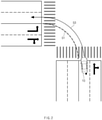
- FIGS. 2 and 3 are views illustrating a basic route generated by an apparatus for controlling driving a vehicle, according to an embodiment of the present disclosure
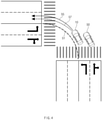
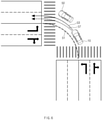
- FIGS. 4 to 7 are views illustrating a basic route modified by an apparatus for controlling driving a vehicle, according to an embodiment of the present disclosure.
- an apparatus for controlling driving of a vehicle may include a global positioning system (GPS) receiver 100, a sensor 200, a map storage 300, a controller 400, and a driving device 500, which are provided in a host vehicle 10.
- GPS global positioning system
- the GPS receiver 100 may measure a current position of the host vehicle 10 by using a signal received from a GPS satellite.
- the sensor 200 may acquire information on a driving status of the host vehicle 10 and information on a driving status of an another vehicle 50 driving on a surrounding lane adjacent to a driving lane of the host vehicle 10.
- the sensor 200 may include an external sensor 210 and an internal sensor 230 to acquire the information on the driving status of the host vehicle 10 and the information on the driving status of the another vehicle 50.
- the external sensor 210 may include a camera sensor 211, which acquires information on an image obtained by photographing a peripheral portion of the host vehicle 10, and a distance measuring sensor 213, which acquires information on the distance to an object positioned around the host vehicle 10, and the distance measuring sensor 213 may include a LIDAR sensor or a RADAR sensor.
- the external sensor 210 may collect the information on the driving status (such as a relative position, a relative speed, or information on the direction of the another vehicle 50) of the another vehicle 50 positioned within a preset detection range.
- the camera sensor 211 may acquire the information on the image of the peripheral portion of the host vehicle 10 through an image sensor, and may perform image processing, such as noise reduction, for the acquired image.
- the distance measuring sensor 213 may measure the distance between the host vehicle 10 and the another vehicle 50 by measuring arrival time of a laser pulse or an electromagnetic wave emitted from the another vehicle 50.
- the internal sensor 230 may include a speed sensor 231, an acceleration sensor 233, a yaw rate sensor 235, and a steering angle sensor 237, and may acquire the information on the driving status, such as an absolute speed, an acceleration, a yaw rate, or a steering angle, of the host vehicle 10.
- the map storage 300 may store, in the form of a database, information on a precise map, which distinguishes between lanes, and clearly shows a straight lane, or a crossroad, and may automatically and periodically update the information on the precise map through wireless communication or may manually update the information on the precise map by a user.
- the driving device 500 which is a component to drive the host vehicle 10 in response to a control signal received from the controller 400, may include components (such as a brake, an accelerator, a transmission, or a steering wheel) to actually control vehicle driving.
- the brake of the driving device 500 may perform a driving control operation to decelerate.
- the accelerator of the driving device 500 may perform a driving control operation to accelerate.
- the steering wheel of the driving device 500 may perform a bias driving control operation.
- the controller 400 may recognize the absolute position of the another vehicle 50, based on the current position of the host vehicle 10, which is received from the GPS receiver 100, the information on the driving status of the host vehicle 10, and the information on the driving status of the another vehicle 50, which are received from the sensor 200.
- the another vehicle 50 may be a vehicle driving on a surrounding lane of the driving lane on which the host vehicle 10 drives.
- the controller 400 may perform a map-matching operation for the current position of the host vehicle 10 and the absolute position of the another vehicle 50 on the precise map, and may calculate the absolute speed, the absolute position, and the direction information of the another vehicle 50 driving on the surrounding lane by using the information on the driving status of the host vehicle 10 and the information on the driving status of the another vehicle 50 which are collected from the sensor 200.
- the controller 400 may calculate the absolute speed and the absolute position of the another vehicle 50 and information on the direction that the another vehicle 50 move forwards, by considering the relative speed of the another vehicle 50 and the relative distance to the another vehicle 50, which are collected through the external sensor 210, and the absolute speed and the steering angle of the host vehicle 10, which are measured through the internal sensor 230.
- the controller 400 may recognize, as the crossroad, a position having a central line 51, which is curved, based on the information on the precise map and the information on lines of a road, which are acquired through the camera sensor 211.
- the controller 400 may perform a control operation to generate a basic route, and may follow the basic route at a constant speed while passing through the crossroad by turning on the crossroad.
- the host vehicle 10 when the host vehicle 10, which attempts to turn left on the crossroad, and recognizes the crossroad through the central line 51, which is curved, in the front image during the driving on a first lane of a straight road, the host vehicle 10 may generate a central line, which extends from a starting point to an end point of the crossroad, of the first lane as the basic route 53, while considering on an offset.
- the controller 400 may perform a control operation to turn left while following the basic route 53 at a constant speed such that the host vehicle 10 passes through the crossroad.
- the host vehicle 10 when the host vehicle 10, which attempts to turn left on the crossroad, recognizes the crossroad through the central line 51, which is curved, in the front image during the driving on a second lane of the straight road, the host vehicle 10 may generate a central line, which extends from a starting point to an end point of the crossroad, of the second lane as the basic route 55, while considering an offset.
- the controller 400 may perform a control operation to turn left while following the basic route 55 at a constant speed such that the host vehicle 10 passes through the crossroad.
- the another vehicle 50 positioned on the second lane which is at a right side of the host vehicle 10, may drive by simultaneously turning left on the crossroad at a similar speed to that of the host vehicle 10.
- the another vehicle 50 may invade the first lane on which the host vehicle 10 is driving, while turning left, such that the another vehicle 50 is positioned at the right side of the host vehicle 10. Accordingly, the another vehicle 50 may collide with the side surface of the host vehicle 10.
- the controller 400 may collect information on the driving status of the another vehicle 50 within a specific range, and may determine whether the collision risk is present between the another vehicle 50 and the host vehicle 10, while the host vehicle 10 is turning on the first lane.
- the controller 400 may generate a modified route 57 obtained by modifying the basic route 53 of the host vehicle 10 to prevent the collision between the host vehicle 10 and the another vehicle 50, when the another vehicle 50 invades the first lane or is predicted to invade the first lane such that the collision risk is present between the host vehicle 10 and the another vehicle 50.
- the controller 400 may generate the modified route 57 more biased with respect to the central line 51, such that the basic route 53 is away from the another vehicle 50. Accordingly, the host vehicle 10 may follow the modified route 57 while turning at a constant speed to pass through the crossroad, thereby preventing the collision between the host vehicle 10 and the another vehicle 50.
- the another vehicle 50 positioned on the second lane which is at the right side of the host vehicle 10, may drive by simultaneously turning left on the crossroad at a similar speed to that of the host vehicle 10.
- the another vehicle 50 may invade the first lane on which the host vehicle 10 is driving, by accelerating while turning left, such that the another vehicle 50 is positioned in front of the host vehicle 10. Accordingly, the another vehicle 50 may collide with the front portion of the host vehicle 10.
- the controller 400 may generate the modified route 57 obtained by modifying the basic route 53 of the host vehicle 10 to prevent the collision between the host vehicle 10 and the another vehicle 50, when the another vehicle 50 invades the first lane or is predicted to invade the first lane such that the front portion of the host vehicle 10 may collide with the another vehicle 50.
- the controller 400 may generate the modified route to maintain the direction of the basic route 53 and to control the speed of the host vehicle 10 to be more reduced than that of the another vehicle 50. Accordingly, the host vehicle 10 may follow the modified path while decelerating to pass through the crossroad.
- the another vehicle 50 may be allowed to drive while preceding the host vehicle 10, thereby preventing the collision between the host vehicle 10 and the another vehicle 50.
- the another vehicle 50 positioned in front of the host vehicle 10 on the second lane may drive by simultaneously turning left on the crossroad at a similar speed to that of the host vehicle 10.
- the another vehicle 50 may invade the first lane on which the host vehicle 10 is driving, while turning left, such that the another vehicle 50 is positioned in front of the host vehicle 10. Accordingly, the another vehicle 50 may collide with the front portion of the host vehicle 10.
- the controller 400 may generate a modified route obtained by modifying the basic route 53 of the host vehicle 10, to prevent the collision between the host vehicle 10 and the another vehicle 50, when the another vehicle 50 invades the first lane or is predicted to invade the first lane such that the collision risk is present between the front portion of the host vehicle 10 and the another vehicle 50.
- the controller 400 may generate the modified route 57 more biased toward the central line 51, such that the basic route 53 is away from the another vehicle 50. Accordingly, the host vehicle 10 may follow the modified route 57 while turning at a constant speed to pass through the crossroad, thereby preventing the collision between the host vehicle 10 and the another vehicle 50.
- the speed of the host vehicle 10 is controlled to be more reduced than that of the another vehicle 50, such that the another vehicle 50 drives while preceding the host vehicle 10, thereby preventing the collision between the host vehicle 10 and the another vehicle 50.
- the another vehicle 50 positioned in back of the host vehicle 10 on the second lane which is at the right side of the host vehicle 10, may drive by simultaneously turning left on the crossroad at a similar speed to that of the host vehicle 10.
- the another vehicle 50 may invade the first lane on which the host vehicle 10 is driving, while turning left, such that the another vehicle 50 is positioned in back of the host vehicle 10. Accordingly, the another vehicle 50 may collide with the rear portion of the host vehicle 10.
- the controller 400 may generate the modified route 57 obtained by modifying the basic route 53 of the host vehicle 10 to prevent the collision between the host vehicle 10 and the another vehicle 50, when the another vehicle 50 invades the first lane or is predicted to invade the first lane such that the collision risk is resent between the rear portion of the host vehicle 10 and the another vehicle 50.
- the controller 400 may generate the modified route 57 more biased toward the central line 51, such that the basic route 53 is away from the another vehicle 50. Accordingly, the host vehicle 10 may follow the modified route 57 while turning at a constant speed to pass through the crossroad, thereby preventing the collision between the host vehicle 10 and the another vehicle 50.
- the speed of the host vehicle 10 is controlled to be more accelerated than that of the another vehicle 50, such that the host vehicle 10 is away from the another vehicle 50, thereby preventing the collision between the host vehicle 10 and the another vehicle 50.
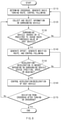
- FIG. 8 is a flowchart illustrating a method for controlling driving a vehicle, according to an embodiment of the present disclosure.
- the apparatus for controlling the driving of the vehicle of FIG. 1 performs a processor of FIG. 8 .
- the controller 400 may generate the basic route 53 on the crossroad and may control the host vehicle 10 to follow the basic route 53, when recognizing the crossroad by using a front image captured by the sensor 200 (S110).
- the controller 400 may collect information on the driving status of the another vehicle 50 within a specific range, and may determine whether the collision risk is present between the another vehicle 50 and the host vehicle 10 while the host vehicle 10 is turning on the first lane (S120).
- the controller 400 may modify the driving route or the driving speed of the host vehicle 10, based on the driving information of the another vehicle 50, which is acquired from the sensor 200.
- the controller 400 may generate the modified route 57 obtained by modifying the basic route 53 of the host vehicle 10 and may allow the host vehicle 10 to follow the modified route 57 while turning at a constant speed to pass through the crossroad, thereby preventing the collision between the host vehicle 10 and the another vehicle 50 (S140).
- the speed of the host vehicle 10 is controlled to be more decelerated or accelerated than that of the another vehicle 50, thereby preventing the collision between the host vehicle 10 and the another vehicle 50 (S160), such that the host vehicle 10 deviates from the crossroad after turning on the crossroad (S170).
- the vehicle turning on the crossroad may calculate a turning trajectory by reflecting information on a line and an object, and may modify a route and a driving speed in real time, thereby performing a longitudinal control or a transversal control.
- the vehicle may calculate a basic route based on the lane on which the vehicle is currently driving, may provide bias driving, and an acceleration control, or a deceleration control based on the condition (the position, the speed, the heading, or the status) of a surrounding object while turning on the crossroad, thereby allowing the host vehicle 10 to turn with an appropriate turning radius on the crossroad, thereby preventing car crash with a vehicle closely turning.
- the collision risk is reduced between vehicles in the turning situation on the crossroad, thereby allowing a driver to feel a burden and a fatigue less when turning on the crossroad such that the driver has a stable phycology.
- the disclosure may firmly cope with the driving situation on the crossroad, thereby preventing collision with the vehicle closely driving.
Landscapes
- Engineering & Computer Science (AREA)
- Automation & Control Theory (AREA)
- Transportation (AREA)
- Mechanical Engineering (AREA)
- Physics & Mathematics (AREA)
- Mathematical Physics (AREA)
- Human Computer Interaction (AREA)
- Control Of Driving Devices And Active Controlling Of Vehicle (AREA)
- Traffic Control Systems (AREA)
Abstract
Description
- This application claims the benefit of priority to
Korean Patent Application No. 10-2020-0114828, filed in the Korean Intellectual Property Office on September 08, 2020 - The present disclosure relates to an apparatus and a method for controlling the driving of a vehicle, and more particularly, relates to an apparatus and a method for controlling the driving of a vehicle, capable of supporting the driving of the vehicle on a crossroad.
- A vehicle is the most general transportation in a modern society, and the number of people using the vehicle has been increased.
- As a vehicle technology has developed, the movement to a long distance is easier, and the convenience of life is more improved. However, in a place, such as our nation, having the higher popular density, a road traffic condition has be worsened, and a traffic congestion has been seriously made.
- Recently, studies and researches have been actively performed on a vehicle equipped with an advanced driver assist system (ADAS) that actively provides a vehicle status, a driver status, and a surrounding environment to reduce the burden on the driver and increase the convenience of the driver.
- For example, the ADAS mounted in the vehicle includes cross traffic alert (CTA) or cross collision avoidance (CCA).
- The cross traffic alert (CTA) or cross collision avoidance (CCA) is a collision avoidance system that determines the risk of collision with a counter vehicle or a crossing vehicle under the driving situation on the crossroad, and performs emergency braking in the collision situation.
- The cross traffic alert (CTA) and the cross collision avoidance (CCA) senses and avoids the risk of collision with the vehicle, but there is recently required a technology of determining the status of the counter vehicle during the driving of the vehicle, thereby predicting the collision risk in advance and warning the driver of the collision risk before the vehicle enters the crossroad.
- However, according to the related art, the vehicle may not cope with when a surrounding vehicle deviates from a turning trajectory or may not cope with the collision risk with the surrounding vehicle turning simultaneously with the vehicle, while the vehicle is turning the crossroad in real time.
- The present disclosure has been made to solve the above-mentioned problems occurring in the prior art while advantages achieved by the prior art are maintained intact.
- An aspect of the present disclosure provides an apparatus and a method for controlling driving of a vehicle, capable of firmly coping with a driving situation on a crossroad.
- The technical problems to be solved by the present disclosure are not limited to the aforementioned problems, and any other technical problems not mentioned herein will be clearly understood from the following description by those skilled in the art to which the present disclosure pertains.
- According to an aspect of the present disclosure, an apparatus for controlling driving of a vehicle may include a sensor to sense a crossroad and to acquire information on driving of another vehicle, and a controller to generate a basic route for driving on the crossroad, to control the driving on the crossroad based on the basic route, and to generate a modified route or control a driving speed based on information on the driving of the another vehicle, when the another vehicle invades a specific area of the basic route or is predicted to invade the specific area.
- According to an embodiment, the basic route may be a driving route, on which the vehicle, after having entered the crossroad while having followed a center of a driving lane on which the vehicle has been driving, follows a center of a preset driving lane on the crossroad until the vehicle deviates from the crossroad.
- According to an embodiment, the controller may perform a bias control operation, an acceleration control operation, or a deceleration control operation, based on information on a position of the another vehicle, information on a speed of the another vehicle, or information on a direction of the another vehicle.
- According to an embodiment, the controller may generate a modified route in a direction away from the another vehicle, when the another vehicle positioned at a side portion of the vehicle enters the crossroad to invade the specific area of the basic route or is predicted to invade the specific area of the basic route.
- According to an embodiment, the controller may decelerate while maintaining the basic route, when the another vehicle positioned at a side portion of the vehicle accelerates and cuts in front of the vehicle to invade the specific area of the basic route or is predicted to invade the specific area of the basic route.
- According to an embodiment, the controller may generate a modified route in a direction away from the another vehicle and may decelerate, when the another vehicle positioned at a front side portion of the vehicle cuts in front of the vehicle to invade the specific area of the basic route or is predicted to invade the specific area of the basic route.
- According to an embodiment, the controller may generate a modified route in a direction away from the another vehicle and may accelerate, when the another vehicle positioned at a rear side portion of the vehicle invades the specific area of the basic route or is predicted to invade the specific area of the basic route such that the another vehicle is positioned or is predicted to be positioned at a rear portion of the vehicle.
- According to another aspect of the present disclosure, a method for controlling driving of a vehicle may include generating, when sensing a crossroad, a basic route for driving of the vehicle on the crossroad and controlling the driving on the crossroad based on the basic route, acquiring information on driving of another vehicle, and generating a modified route and controlling a driving speed based on the information on the driving of the another vehicle, when the another vehicle invades a specific area of the basic route or is predicted to invade the specific area of the basic route.
- According to an embodiment, the generating of the basic route for the driving of the vehicle on the crossroad and the controlling of the driving on the crossroad based on the basic route may include generating the basic route as a driving route, on which the vehicle, after having entered the crossroad while having followed a center of a driving lane on which the vehicle has been driving, follows a center of a preset driving lane on the crossroad until the vehicle deviates from the crossroad.
- According to an embodiment, the generating of the modified route or the controlling of the driving speed based on information on driving of the another vehicle, when the another vehicle invades the specific area of the basic route or is predicted to invade the specific area of the basic route, includes performing a bias control operation, an acceleration control operation, or a deceleration control operation, based on information on a position of the another vehicle, information on a speed of the another vehicle, or information on a direction of the another vehicle.
- According to an embodiment, the generating of the modified route or the controlling of the driving speed based on information on driving of the another vehicle, when the another vehicle invades the specific area of the basic route or is predicted to invade the specific area of the basic route, includes generating a modified route in a direction away from the another vehicle, when the another vehicle positioned at a side portion of the vehicle enters the crossroad to invade the specific area of the basic route or is predicted to invade the specific area of the basic route.
- According to an embodiment, the generating of the modified route or the controlling of the driving speed based on information on driving of the another vehicle, when the another vehicle invades the specific area of the basic route or is predicted to invade the specific area of the basic route, includes decelerating while maintaining the basic route, when the another vehicle positioned at a side portion of the vehicle accelerates and cuts in front of the vehicle to invade the specific area of the basic route or is predicted to invade the specific area of the basic route.
- According to an embodiment, the generating of the modified route or the controlling of the driving speed based on information on driving of the another vehicle, when the another vehicle invades the specific area of the basic route or is predicted to invade the specific area of the basic route, includes generating a modified route in a direction away from the another vehicle and decelerating, when the another vehicle positioned at a front side portion of the vehicle cuts in front of the vehicle to invade the specific area of the basic route or is predicted to invade the specific area of the basic route.
- According to an embodiment, the generating of the modified route or the controlling of the driving speed based on information on driving of the another vehicle, when the another vehicle invades the specific area of the basic route or is predicted to invade the specific area of the basic route, includes generating a modified route in a direction away from the another vehicle and accelerating, when the another vehicle positioned at a rear side portion of the vehicle invades the specific area of the basic route or is predicted to invade the specific area of the basic route such that the another vehicle is positioned or is predicted to be positioned at a rear portion of the vehicle.
- The above and other objects, features and advantages of the present disclosure will be more apparent from the following detailed description taken in conjunction with the accompanying drawings:
-
FIG. 1 is a block diagram illustrating an apparatus for controlling driving a vehicle, according to an embodiment of the present disclosure; -
FIGS. 2 and3 are views illustrating a basic route generated by an apparatus for controlling driving a vehicle, according to an embodiment of the present disclosure; -
FIGS. 4 to 7 are views illustrating a basic route modified by an apparatus for controlling driving a vehicle, according to an embodiment of the present disclosure; and -
FIG. 8 is a flowchart illustrating a method for controlling driving a vehicle, according to an embodiment of the present disclosure. - Hereinafter, some embodiments of the present disclosure will be described in detail with reference to accompanying drawings. In adding the reference numerals to the components of each drawing, it should be noted that the identical or equivalent component is designated by the identical numeral even when they are displayed on other drawings. In addition, in the following description of an embodiment of the present disclosure, a detailed description of well-known features or functions will be ruled out in order not to unnecessarily obscure the gist of the present disclosure.
- In describing the components of the embodiment according to the present disclosure, terms such as first, second, "A", "B", "(a)", "(b)", and the like may be used. These terms are merely intended to distinguish one component from another component, and the terms do not limit the nature, sequence or order of the constituent components. In addition, unless otherwise defined, all terms used herein, including technical or scientific terms, have the same meanings as those generally understood by those skilled in the art to which the present disclosure pertains. Such terms as those defined in a generally used dictionary are to be interpreted as having meanings equal to the contextual meanings in the relevant field of art, and are not to be interpreted as having ideal or excessively formal meanings unless clearly defined as having such in the present application.
- Hereinafter, embodiments of the present disclosure will be described in detail with reference to
FIGS. 1 to 7 . -
FIG. 1 is a block diagram illustrating an apparatus for controlling driving a vehicle, according to an embodiment of the present disclosure,FIGS. 2 and3 are views illustrating a basic route generated by an apparatus for controlling driving a vehicle, according to an embodiment of the present disclosure, andFIGS. 4 to 7 are views illustrating a basic route modified by an apparatus for controlling driving a vehicle, according to an embodiment of the present disclosure. - Referring to
FIG. 1 , according to an embodiment of the present disclosure, an apparatus for controlling driving of a vehicle may include a global positioning system (GPS)receiver 100, asensor 200, amap storage 300, acontroller 400, and adriving device 500, which are provided in ahost vehicle 10. - The
GPS receiver 100 may measure a current position of thehost vehicle 10 by using a signal received from a GPS satellite. - The
sensor 200 may acquire information on a driving status of thehost vehicle 10 and information on a driving status of an anothervehicle 50 driving on a surrounding lane adjacent to a driving lane of thehost vehicle 10. - The
sensor 200 may include anexternal sensor 210 and aninternal sensor 230 to acquire the information on the driving status of thehost vehicle 10 and the information on the driving status of theanother vehicle 50. - The
external sensor 210 may include acamera sensor 211, which acquires information on an image obtained by photographing a peripheral portion of thehost vehicle 10, and adistance measuring sensor 213, which acquires information on the distance to an object positioned around thehost vehicle 10, and thedistance measuring sensor 213 may include a LIDAR sensor or a RADAR sensor. - The
external sensor 210 may collect the information on the driving status (such as a relative position, a relative speed, or information on the direction of the another vehicle 50) of theanother vehicle 50 positioned within a preset detection range. - The
camera sensor 211 may acquire the information on the image of the peripheral portion of thehost vehicle 10 through an image sensor, and may perform image processing, such as noise reduction, for the acquired image. - The
distance measuring sensor 213 may measure the distance between thehost vehicle 10 and theanother vehicle 50 by measuring arrival time of a laser pulse or an electromagnetic wave emitted from theanother vehicle 50. - The
internal sensor 230 may include aspeed sensor 231, anacceleration sensor 233, ayaw rate sensor 235, and asteering angle sensor 237, and may acquire the information on the driving status, such as an absolute speed, an acceleration, a yaw rate, or a steering angle, of thehost vehicle 10. - The
map storage 300 may store, in the form of a database, information on a precise map, which distinguishes between lanes, and clearly shows a straight lane, or a crossroad, and may automatically and periodically update the information on the precise map through wireless communication or may manually update the information on the precise map by a user. - The
driving device 500, which is a component to drive thehost vehicle 10 in response to a control signal received from thecontroller 400, may include components (such as a brake, an accelerator, a transmission, or a steering wheel) to actually control vehicle driving. - For example, when the control signal of the
controller 400 is a signal for indicating a deceleration, the brake of thedriving device 500 may perform a driving control operation to decelerate. When the control signal of thecontroller 400 is a signal for indicating an acceleration, the accelerator of thedriving device 500 may perform a driving control operation to accelerate. When the control signal of thecontroller 400 is a signal for indicating bias driving, the steering wheel of thedriving device 500 may perform a bias driving control operation. - The
controller 400 may recognize the absolute position of the anothervehicle 50, based on the current position of thehost vehicle 10, which is received from theGPS receiver 100, the information on the driving status of thehost vehicle 10, and the information on the driving status of theanother vehicle 50, which are received from thesensor 200. - In this case, the another
vehicle 50 may be a vehicle driving on a surrounding lane of the driving lane on which thehost vehicle 10 drives. - The
controller 400 may perform a map-matching operation for the current position of thehost vehicle 10 and the absolute position of theanother vehicle 50 on the precise map, and may calculate the absolute speed, the absolute position, and the direction information of theanother vehicle 50 driving on the surrounding lane by using the information on the driving status of thehost vehicle 10 and the information on the driving status of the anothervehicle 50 which are collected from thesensor 200. - For example, the
controller 400 may calculate the absolute speed and the absolute position of theanother vehicle 50 and information on the direction that the anothervehicle 50 move forwards, by considering the relative speed of theanother vehicle 50 and the relative distance to theanother vehicle 50, which are collected through theexternal sensor 210, and the absolute speed and the steering angle of thehost vehicle 10, which are measured through theinternal sensor 230. - The
controller 400 may recognize, as the crossroad, a position having acentral line 51, which is curved, based on the information on the precise map and the information on lines of a road, which are acquired through thecamera sensor 211. - Accordingly, when the
host vehicle 10 recognizes the crossroad based on a front image of thehost vehicle 10 during the driving on a straight road, thecontroller 400 may perform a control operation to generate a basic route, and may follow the basic route at a constant speed while passing through the crossroad by turning on the crossroad. - For example, referring to
FIG. 2 , when thehost vehicle 10, which attempts to turn left on the crossroad, and recognizes the crossroad through thecentral line 51, which is curved, in the front image during the driving on a first lane of a straight road, thehost vehicle 10 may generate a central line, which extends from a starting point to an end point of the crossroad, of the first lane as thebasic route 53, while considering on an offset. - Accordingly, when only the
host vehicle 10 drives on the crossroad, thecontroller 400 may perform a control operation to turn left while following thebasic route 53 at a constant speed such that thehost vehicle 10 passes through the crossroad. - For example, referring to
FIG. 3 , when thehost vehicle 10, which attempts to turn left on the crossroad, recognizes the crossroad through thecentral line 51, which is curved, in the front image during the driving on a second lane of the straight road, thehost vehicle 10 may generate a central line, which extends from a starting point to an end point of the crossroad, of the second lane as thebasic route 55, while considering an offset. - Accordingly, when only the
host vehicle 10 drives on the crossroad, thecontroller 400 may perform a control operation to turn left while following thebasic route 55 at a constant speed such that thehost vehicle 10 passes through the crossroad. - Although the description has been made in that the crossroad is recognized based on the front image, a technique of recognizing a crossroad, which is well known in the technical field of the present disclosure, may be employed.
- Meanwhile, referring to
FIG. 4 , while thehost vehicle 10 is driving while following thebasic route 53 on the first lane of the crossroad, the anothervehicle 50 positioned on the second lane, which is at a right side of thehost vehicle 10, may drive by simultaneously turning left on the crossroad at a similar speed to that of thehost vehicle 10. - In this case, the another
vehicle 50 may invade the first lane on which thehost vehicle 10 is driving, while turning left, such that the anothervehicle 50 is positioned at the right side of thehost vehicle 10. Accordingly, the anothervehicle 50 may collide with the side surface of thehost vehicle 10. - The
controller 400 may collect information on the driving status of the anothervehicle 50 within a specific range, and may determine whether the collision risk is present between the anothervehicle 50 and thehost vehicle 10, while thehost vehicle 10 is turning on the first lane. - The
controller 400 may generate a modifiedroute 57 obtained by modifying thebasic route 53 of thehost vehicle 10 to prevent the collision between thehost vehicle 10 and the anothervehicle 50, when the anothervehicle 50 invades the first lane or is predicted to invade the first lane such that the collision risk is present between thehost vehicle 10 and the anothervehicle 50. - Accordingly, the
controller 400 may generate the modifiedroute 57 more biased with respect to thecentral line 51, such that thebasic route 53 is away from the anothervehicle 50. Accordingly, thehost vehicle 10 may follow the modifiedroute 57 while turning at a constant speed to pass through the crossroad, thereby preventing the collision between thehost vehicle 10 and the anothervehicle 50. - Meanwhile, referring to
FIG. 5 , while thehost vehicle 10 is driving while following thebasic route 53 on the first lane of the crossroad, the anothervehicle 50 positioned on the second lane, which is at the right side of thehost vehicle 10, may drive by simultaneously turning left on the crossroad at a similar speed to that of thehost vehicle 10. - In this case, the another
vehicle 50 may invade the first lane on which thehost vehicle 10 is driving, by accelerating while turning left, such that the anothervehicle 50 is positioned in front of thehost vehicle 10. Accordingly, the anothervehicle 50 may collide with the front portion of thehost vehicle 10. - The
controller 400 may generate the modifiedroute 57 obtained by modifying thebasic route 53 of thehost vehicle 10 to prevent the collision between thehost vehicle 10 and the anothervehicle 50, when the anothervehicle 50 invades the first lane or is predicted to invade the first lane such that the front portion of thehost vehicle 10 may collide with the anothervehicle 50. - Accordingly, the
controller 400 may generate the modified route to maintain the direction of thebasic route 53 and to control the speed of thehost vehicle 10 to be more reduced than that of the anothervehicle 50. Accordingly, thehost vehicle 10 may follow the modified path while decelerating to pass through the crossroad. - Accordingly, the another
vehicle 50 may be allowed to drive while preceding thehost vehicle 10, thereby preventing the collision between thehost vehicle 10 and the anothervehicle 50. - Referring to
FIG. 6 , while thehost vehicle 10 is driving by following thebasic route 53 on the first lane of the crossroad, the anothervehicle 50 positioned in front of thehost vehicle 10 on the second lane, may drive by simultaneously turning left on the crossroad at a similar speed to that of thehost vehicle 10. - In this case, the another
vehicle 50 may invade the first lane on which thehost vehicle 10 is driving, while turning left, such that the anothervehicle 50 is positioned in front of thehost vehicle 10. Accordingly, the anothervehicle 50 may collide with the front portion of thehost vehicle 10. - The
controller 400 may generate a modified route obtained by modifying thebasic route 53 of thehost vehicle 10, to prevent the collision between thehost vehicle 10 and the anothervehicle 50, when the anothervehicle 50 invades the first lane or is predicted to invade the first lane such that the collision risk is present between the front portion of thehost vehicle 10 and the anothervehicle 50. - Accordingly, the
controller 400 may generate the modifiedroute 57 more biased toward thecentral line 51, such that thebasic route 53 is away from the anothervehicle 50. Accordingly, thehost vehicle 10 may follow the modifiedroute 57 while turning at a constant speed to pass through the crossroad, thereby preventing the collision between thehost vehicle 10 and the anothervehicle 50. - In this case, even if the
host vehicle 10 follows the modifiedroute 57 while turning at the constant speed to pass through the crossroad, when the collision risk is present between the front portion of thehost vehicle 10 and the anothervehicle 50, the speed of thehost vehicle 10 is controlled to be more reduced than that of the anothervehicle 50, such that the anothervehicle 50 drives while preceding thehost vehicle 10, thereby preventing the collision between thehost vehicle 10 and the anothervehicle 50. - Meanwhile, referring to
FIG. 7 , while thehost vehicle 10 is diving by following thebasic route 53 on the first lane of the crossroad, the anothervehicle 50 positioned in back of thehost vehicle 10 on the second lane which is at the right side of thehost vehicle 10, may drive by simultaneously turning left on the crossroad at a similar speed to that of thehost vehicle 10. - In this case, the another
vehicle 50 may invade the first lane on which thehost vehicle 10 is driving, while turning left, such that the anothervehicle 50 is positioned in back of thehost vehicle 10. Accordingly, the anothervehicle 50 may collide with the rear portion of thehost vehicle 10. - The
controller 400 may generate the modifiedroute 57 obtained by modifying thebasic route 53 of thehost vehicle 10 to prevent the collision between thehost vehicle 10 and the anothervehicle 50, when the anothervehicle 50 invades the first lane or is predicted to invade the first lane such that the collision risk is resent between the rear portion of thehost vehicle 10 and the anothervehicle 50. - Accordingly, the
controller 400 may generate the modifiedroute 57 more biased toward thecentral line 51, such that thebasic route 53 is away from the anothervehicle 50. Accordingly, thehost vehicle 10 may follow the modifiedroute 57 while turning at a constant speed to pass through the crossroad, thereby preventing the collision between thehost vehicle 10 and the anothervehicle 50. - In this case, even if the
host vehicle 10 follows the modifiedroute 57 while turning at a constant speed to pass through the crossroad, when the collision risk is present between the rear portion of thehost vehicle 10 and the anothervehicle 50, the speed of thehost vehicle 10 is controlled to be more accelerated than that of the anothervehicle 50, such that thehost vehicle 10 is away from the anothervehicle 50, thereby preventing the collision between thehost vehicle 10 and the anothervehicle 50. - Hereinafter, a method for controlling the driving of a vehicle, according to another embodiment of the present disclosure will be described in detail with reference to
FIG. 8 . -
FIG. 8 is a flowchart illustrating a method for controlling driving a vehicle, according to an embodiment of the present disclosure. - Hereinafter, it is assumed that the apparatus for controlling the driving of the vehicle of
FIG. 1 performs a processor ofFIG. 8 . - First, the
controller 400 may generate thebasic route 53 on the crossroad and may control thehost vehicle 10 to follow thebasic route 53, when recognizing the crossroad by using a front image captured by the sensor 200 (S110). - The
controller 400 may collect information on the driving status of the anothervehicle 50 within a specific range, and may determine whether the collision risk is present between the anothervehicle 50 and thehost vehicle 10 while thehost vehicle 10 is turning on the first lane (S120). - Thereafter, when the
host vehicle 10 drives while following thebasic route 53 and when the anothervehicle 50 driving around thehost vehicle 10 invades or is predicted to invade a specific area of the driving route of the host vehicle 10 (S130), thecontroller 400 may modify the driving route or the driving speed of thehost vehicle 10, based on the driving information of the anothervehicle 50, which is acquired from thesensor 200. - Accordingly, when the another
vehicle 50 invades or is predicted to invade the specific area of the driving route of thehost vehicle 10, and when the collision risk is present between thehost vehicle 10 and the anothervehicle 50, thecontroller 400 may generate the modifiedroute 57 obtained by modifying thebasic route 53 of thehost vehicle 10 and may allow thehost vehicle 10 to follow the modifiedroute 57 while turning at a constant speed to pass through the crossroad, thereby preventing the collision between thehost vehicle 10 and the another vehicle 50 (S140). - In this case, even if the
host vehicle 10 follows the modifiedroute 57 while turning at a constant speed to pass through the crossroad, when the collision risk is present between the front portion of thehost vehicle 10 and the another vehicle 50 (S150), the speed of thehost vehicle 10 is controlled to be more decelerated or accelerated than that of the anothervehicle 50, thereby preventing the collision between thehost vehicle 10 and the another vehicle 50 (S160), such that thehost vehicle 10 deviates from the crossroad after turning on the crossroad (S170). - As described above, according to the present disclosure, the vehicle turning on the crossroad may calculate a turning trajectory by reflecting information on a line and an object, and may modify a route and a driving speed in real time, thereby performing a longitudinal control or a transversal control. The vehicle may calculate a basic route based on the lane on which the vehicle is currently driving, may provide bias driving, and an acceleration control, or a deceleration control based on the condition (the position, the speed, the heading, or the status) of a surrounding object while turning on the crossroad, thereby allowing the
host vehicle 10 to turn with an appropriate turning radius on the crossroad, thereby preventing car crash with a vehicle closely turning. - In addition, the collision risk is reduced between vehicles in the turning situation on the crossroad, thereby allowing a driver to feel a burden and a fatigue less when turning on the crossroad such that the driver has a stable phycology.
- The disclosure may firmly cope with the driving situation on the crossroad, thereby preventing collision with the vehicle closely driving.
- Besides, a variety of effects directly or indirectly understood through the present disclosure may be provided.
- Hereinabove, although the present disclosure has been described with reference to exemplary embodiments and the accompanying drawings, the present disclosure is not limited thereto, but may be variously modified and altered by those skilled in the art to which the present disclosure pertains without departing from the spirit and scope of the present disclosure claimed in the following claims.
- Therefore, the exemplary embodiments of the present disclosure are provided to explain the spirit and scope of the present disclosure, but not to limit them, so that the spirit and scope of the present disclosure is not limited by the embodiments. The scope of the present disclosure should be construed on the basis of the accompanying claims, and all the technical ideas within the scope equivalent to the claims should be included in the scope of the present disclosure.
Claims (14)
- An apparatus for controlling driving of a vehicle, the apparatus comprising:a sensor configured to sense a crossroad and to acquire information on driving of another vehicle; anda controller configured to:generate a basic route for driving of the vehicle on the crossroad and control the driving of the vehicle based on the generated basic route; andgenerate a modified route or control a driving speed based on the information on the driving of the another vehicle, when the another vehicle invades a specific area of the basic route or is predicted to invade the specific area.
- The apparatus of claim 1, wherein the basic route is configured as a driving route, on which the vehicle, after having entered the crossroad while having followed a center of a driving lane on which the vehicle has been driving, follows a center of a preset driving lane on the crossroad until the vehicle deviates from the crossroad.
- The apparatus of claim 1, wherein the controller is configured to:
perform a bias control operation, an acceleration control operation, or a deceleration control operation, based on information on a position of the another vehicle, information on a speed of the another vehicle, or information on a direction of the another vehicle. - The apparatus of claim 1, wherein the controller is configured to:
generate a modified route in a direction away from the another vehicle, when the another vehicle positioned at a side portion of the vehicle enters the crossroad to invade the specific area of the basic route or is predicted to invade the specific area of the basic route. - The apparatus of claim 1, wherein the controller is configured to:
decelerate while maintaining the basic route, when the another vehicle positioned at a side portion of the vehicle accelerates and cuts in front of the vehicle to invade the specific area of the basic route or is predicted to invade the specific area of the basic route. - The apparatus of claim 1, wherein the controller is configured to:
generate a modified route in a direction away from the another vehicle and decelerate, when the another vehicle positioned at a front side portion of the vehicle cuts in front of the vehicle to invade the specific area of the basic route or is predicted to invade the specific area of the basic route. - The apparatus of claim 1, wherein the controller is configured to:
generate a modified route in a direction away from the another vehicle and accelerate, when the another vehicle positioned at a rear side portion of the vehicle invades the specific area of the basic route or is predicted to invade the specific area of the basic route such that the another vehicle is positioned or is predicted to be positioned at a rear portion of the vehicle. - A method for controlling driving of a vehicle, the method comprising:generating, when sensing a crossroad, a basic route for driving of the vehicle on the crossroad and controlling the driving of the vehicle on the crossroad based on the generated basic route;acquiring information on driving of another vehicle; andgenerating a modified route or controlling a driving speed based on the information on the driving of the another vehicle, when the another vehicle invades a specific area of the basic route or is predicted to invade the specific area of the basic route.
- The method of claim 8, wherein the generating of the basic route for the driving of the vehicle on the crossroad and the controlling of the driving on the crossroad based on the basic route includes:
generating the basic route as a driving route, on which the vehicle, after having entered the crossroad while having followed a center of a driving lane on which the vehicle has been driving, follows a center of a preset driving lane on the crossroad until the vehicle deviates from the crossroad. - The method of claim 8, wherein the generating of the modified route or the controlling of the driving speed based on the information on the driving of the another vehicle, when the another vehicle invades the specific area of the basic route or is predicted to invade the specific area of the basic route, includes:
performing a bias control operation, an acceleration control operation, or a deceleration control operation, based on information on a position of the another vehicle, information on a speed of the another vehicle, or information on a direction of the another vehicle. - The method of claim 8, wherein the generating of the modified route or the controlling of the driving speed based on the information on the driving of the another vehicle, when the another vehicle invades the specific area of the basic route or is predicted to invade the specific area of the basic route, includes:
generating a modified route in a direction away from the another vehicle, when the another vehicle positioned at a side portion of the vehicle enters the crossroad to invade the specific area of the basic route or is predicted to invade the specific area of the basic route. - The method of claim 8, wherein the generating of the modified route or the controlling of the driving speed based on the information on the driving of the another vehicle, when the another vehicle invades the specific area of the basic route or is predicted to invade the specific area of the basic route, includes:
decelerating while maintaining the basic route, when the another vehicle positioned at a side portion of the vehicle accelerates and cuts in front of the vehicle to invade the specific area of the basic route or is predicted to invade the specific area of the basic route. - The method of claim 8, wherein the generating of the modified route or the controlling of the driving speed based on the information on the driving of the another vehicle, when the another vehicle invades the specific area of the basic route or is predicted to invade the specific area of the basic route, includes:
generating a modified route in a direction away from the another vehicle and decelerating, when the another vehicle positioned at a front side portion of the vehicle cuts in front of the vehicle to invade the specific area of the basic route or is predicted to invade the specific area of the basic route. - The method of claim 8, wherein the generating of the modified route or the controlling of the driving speed based on the information on the driving of the another vehicle, when the another vehicle invades the specific area of the basic route or is predicted to invade the specific area of the basic route, includes:
generating a modified route in a direction away from the another vehicle and accelerating, when the another vehicle positioned at a rear side portion of the vehicle invades the specific area of the basic route or is predicted to invade the specific area of the basic route such that the another vehicle is positioned or is predicted to be positioned at a rear portion of the vehicle.
Applications Claiming Priority (1)
| Application Number | Priority Date | Filing Date | Title |
|---|---|---|---|
| KR1020200114828A KR20220032912A (en) | 2020-09-08 | 2020-09-08 | Apparatus for controlling driving of a vehicle and method thereof |
Publications (2)
| Publication Number | Publication Date |
|---|---|
| EP3964414A1 true EP3964414A1 (en) | 2022-03-09 |
| EP3964414B1 EP3964414B1 (en) | 2023-07-05 |
Family
ID=77666166
Family Applications (1)
| Application Number | Title | Priority Date | Filing Date |
|---|---|---|---|
| EP21195173.6A Active EP3964414B1 (en) | 2020-09-08 | 2021-09-07 | Apparatus and method for controlling driving of vehicle |
Country Status (4)
| Country | Link |
|---|---|
| US (1) | US20220073100A1 (en) |
| EP (1) | EP3964414B1 (en) |
| KR (1) | KR20220032912A (en) |
| CN (1) | CN114148328B (en) |
Families Citing this family (3)
| Publication number | Priority date | Publication date | Assignee | Title |
|---|---|---|---|---|
| JP7899194B2 (en) * | 2021-09-15 | 2026-08-03 | ニデック株式会社 | Autonomous driving device and control method for the autonomous driving device |
| CN114954452B (en) * | 2022-07-05 | 2025-01-28 | 江苏理工学院 | Vehicle speed control method and system based on adaptive cruise control |
| CN116588112B (en) * | 2023-07-11 | 2024-01-30 | 广汽埃安新能源汽车股份有限公司 | Intersection vehicle control method and device and vehicle |
Citations (3)
| Publication number | Priority date | Publication date | Assignee | Title |
|---|---|---|---|---|
| EP3441908A1 (en) * | 2017-08-09 | 2019-02-13 | Samsung Electronics Co., Ltd. | Method and apparatus for controlling driving of vehicle |
| US20190197902A1 (en) * | 2017-12-27 | 2019-06-27 | Hyundai Motor Company | System for identifying driving intention of surrounding vehicle and controlling method thereof |
| WO2020035728A2 (en) * | 2018-08-14 | 2020-02-20 | Mobileye Vision Technologies Ltd. | Systems and methods for navigating with safe distances |
Family Cites Families (23)
| Publication number | Priority date | Publication date | Assignee | Title |
|---|---|---|---|---|
| DE102006040538A1 (en) * | 2006-08-30 | 2008-03-06 | Deutsches Zentrum für Luft- und Raumfahrt e.V. | Collision warning system for vehicles, has a sensor for detecting other motorists located in the periphery of the vehicle, and is arranged for identification of impending collision with detected motorist |
| JP2011154003A (en) * | 2010-01-28 | 2011-08-11 | Sony Corp | Navigation apparatus, navigation method and program |
| CN103832434B (en) * | 2012-11-22 | 2016-06-29 | 中国移动通信集团公司 | A kind of traffic safety controls system and method |
| CN103693040B (en) * | 2013-12-10 | 2016-04-13 | 金陵科技学院 | A kind of vehicle collision avoidance system based on double-mode cooperation |
| JP2016168985A (en) * | 2015-03-16 | 2016-09-23 | トヨタ自動車株式会社 | Travel control device |
| KR102378051B1 (en) | 2015-11-13 | 2022-03-24 | 현대모비스 주식회사 | Apparatus and method for controlling rotating and driving of vehicle |
| DE102016201667B4 (en) * | 2016-02-03 | 2019-06-19 | Volkswagen Aktiengesellschaft | Method for determining a desired trajectory for a first road user, in particular for a motor vehicle, for a route section |
| US10640111B1 (en) * | 2016-09-07 | 2020-05-05 | Waymo Llc | Speed planning for autonomous vehicles |
| US10429842B2 (en) * | 2017-07-10 | 2019-10-01 | Toyota Research Institute, Inc. | Providing user assistance in a vehicle based on traffic behavior models |
| US11079487B2 (en) * | 2017-08-22 | 2021-08-03 | Ford Global Technologies, Llc | Communication of infrastructure information to a vehicle via ground penetrating radar |
| JP6613527B2 (en) * | 2017-09-05 | 2019-12-04 | 本田技研工業株式会社 | Vehicle control device, vehicle control method, and program |
| US20210129751A1 (en) * | 2017-09-15 | 2021-05-06 | Mitsubishi Electric Corporation | Side and rear reflection controller and side and rear reflection control method |
| JP6782370B2 (en) * | 2017-10-10 | 2020-11-11 | 本田技研工業株式会社 | Vehicle control device, vehicle control method, and program |
| KR102507115B1 (en) * | 2018-02-27 | 2023-03-07 | 삼성전자주식회사 | Method of motion planning for a vehicle and electronic apparatus therefor |
| CN112262066B (en) * | 2018-06-13 | 2024-09-20 | 日产自动车株式会社 | Driving assistance method and driving assistance device |
| EP3831679B1 (en) * | 2018-08-03 | 2023-10-04 | Nissan Motor Co., Ltd. | Traveling trajectory correction method, traveling control method, and traveling trajectory correction device |
| US11054834B2 (en) * | 2018-10-19 | 2021-07-06 | Waymo Llc | Controlling vehicles through multi-lane turns |
| US11328593B2 (en) * | 2019-07-31 | 2022-05-10 | Toyota Research Institute, Inc. | Autonomous vehicle user interface with predicted trajectories |
| JPWO2021181127A1 (en) * | 2020-03-10 | 2021-09-16 | ||
| JP7621033B2 (en) * | 2020-03-31 | 2025-01-24 | パナソニックオートモーティブシステムズ株式会社 | Object detection device and driving assistance system |
| WO2021217632A1 (en) * | 2020-04-30 | 2021-11-04 | Qualcomm Incorporated | Leader selection in v2x group management |
| JP7680254B2 (en) * | 2021-04-27 | 2025-05-20 | トヨタ自動車株式会社 | Driving Support Devices |
| JP7582158B2 (en) * | 2021-10-29 | 2024-11-13 | トヨタ自動車株式会社 | Image Control System |
-
2020
- 2020-09-08 KR KR1020200114828A patent/KR20220032912A/en active Pending
-
2021
- 2021-09-07 EP EP21195173.6A patent/EP3964414B1/en active Active
- 2021-09-07 CN CN202111043507.1A patent/CN114148328B/en active Active
- 2021-09-08 US US17/469,118 patent/US20220073100A1/en not_active Abandoned
Patent Citations (3)
| Publication number | Priority date | Publication date | Assignee | Title |
|---|---|---|---|---|
| EP3441908A1 (en) * | 2017-08-09 | 2019-02-13 | Samsung Electronics Co., Ltd. | Method and apparatus for controlling driving of vehicle |
| US20190197902A1 (en) * | 2017-12-27 | 2019-06-27 | Hyundai Motor Company | System for identifying driving intention of surrounding vehicle and controlling method thereof |
| WO2020035728A2 (en) * | 2018-08-14 | 2020-02-20 | Mobileye Vision Technologies Ltd. | Systems and methods for navigating with safe distances |
Also Published As
| Publication number | Publication date |
|---|---|
| CN114148328A (en) | 2022-03-08 |
| US20220073100A1 (en) | 2022-03-10 |
| EP3964414B1 (en) | 2023-07-05 |
| CN114148328B (en) | 2024-02-09 |
| KR20220032912A (en) | 2022-03-15 |
Similar Documents
| Publication | Publication Date | Title |
|---|---|---|
| US12311971B2 (en) | Vehicle control system, and vehicle control method | |
| US9902399B2 (en) | Vehicle travelling control device for controlling a vehicle in traffic | |
| US9963149B2 (en) | Vehicle control device | |
| US9902398B2 (en) | Driving control device | |
| US10967876B2 (en) | Vehicle control system, vehicle control method, and vehicle control program | |
| JP4134894B2 (en) | Vehicle driving support device | |
| CN106064626B (en) | Controlling device for vehicle running | |
| JP6237694B2 (en) | Travel control device | |
| US10173680B2 (en) | Vehicle speed control device | |
| CN111731295B (en) | Travel control device, travel control method, and storage medium storing program | |
| US20220306142A1 (en) | Driving assistance device, driving assistance method, and storage medium | |
| EP3964414B1 (en) | Apparatus and method for controlling driving of vehicle | |
| CN105938365A (en) | Vehicle control device | |
| US12403902B2 (en) | Control device, control method, and storage medium | |
| US12503130B2 (en) | Driving assistance device, driving assistance method, and storage medium | |
| US20230311892A1 (en) | Vehicle control device, vehicle control method, and storage medium | |
| US12459514B2 (en) | Vehicle control device, vehicle control method, and storage medium | |
| US20210070302A1 (en) | Vehicle control device, vehicle control method, and storage medium | |
| KR20180126224A (en) | vehicle handling methods and devices during vehicle driving | |
| US11610488B2 (en) | Notification device and vehicle control device | |
| US11861952B2 (en) | Driving support device | |
| JP2018065521A (en) | Vehicle control device | |
| US20240400049A1 (en) | Vehicle control device, vehicle control method, and storage medium | |
| US11970162B2 (en) | Vehicle control device, vehicle control method, and program | |
| US20250304045A1 (en) | Vehicle control device, vehicle control method, and storage medium |
Legal Events
| Date | Code | Title | Description |
|---|---|---|---|
| PUAI | Public reference made under article 153(3) epc to a published international application that has entered the european phase |
Free format text: ORIGINAL CODE: 0009012 |
|
| STAA | Information on the status of an ep patent application or granted ep patent |
Free format text: STATUS: REQUEST FOR EXAMINATION WAS MADE |
|
| 17P | Request for examination filed |
Effective date: 20210907 |
|
| AK | Designated contracting states |
Kind code of ref document: A1 Designated state(s): AL AT BE BG CH CY CZ DE DK EE ES FI FR GB GR HR HU IE IS IT LI LT LU LV MC MK MT NL NO PL PT RO RS SE SI SK SM TR |
|
| RBV | Designated contracting states (corrected) |
Designated state(s): AL AT BE BG CH CY CZ DE DK EE ES FI FR GB GR HR HU IE IS IT LI LT LU LV MC MK MT NL NO PL PT RO RS SE SI SK SM TR |
|
| RIC1 | Information provided on ipc code assigned before grant |
Ipc: B60W 30/095 20120101ALI20221130BHEP Ipc: B60W 30/09 20120101ALI20221130BHEP Ipc: B60W 60/00 20200101ALI20221130BHEP Ipc: B60W 30/18 20120101AFI20221130BHEP |
|
| GRAP | Despatch of communication of intention to grant a patent |
Free format text: ORIGINAL CODE: EPIDOSNIGR1 |
|
| STAA | Information on the status of an ep patent application or granted ep patent |
Free format text: STATUS: GRANT OF PATENT IS INTENDED |
|
| INTG | Intention to grant announced |
Effective date: 20230131 |
|
| GRAS | Grant fee paid |
Free format text: ORIGINAL CODE: EPIDOSNIGR3 |
|
| GRAA | (expected) grant |
Free format text: ORIGINAL CODE: 0009210 |
|
| STAA | Information on the status of an ep patent application or granted ep patent |
Free format text: STATUS: THE PATENT HAS BEEN GRANTED |
|
| AK | Designated contracting states |
Kind code of ref document: B1 Designated state(s): AL AT BE BG CH CY CZ DE DK EE ES FI FR GB GR HR HU IE IS IT LI LT LU LV MC MK MT NL NO PL PT RO RS SE SI SK SM TR |
|
| P01 | Opt-out of the competence of the unified patent court (upc) registered |
Effective date: 20230530 |
|
| REG | Reference to a national code |
Ref country code: CH Ref legal event code: EP |
|
| REG | Reference to a national code |
Ref country code: AT Ref legal event code: REF Ref document number: 1584591 Country of ref document: AT Kind code of ref document: T Effective date: 20230715 |
|
| REG | Reference to a national code |
Ref country code: DE Ref legal event code: R096 Ref document number: 602021003256 Country of ref document: DE |
|
| REG | Reference to a national code |
Ref country code: IE Ref legal event code: FG4D |
|
| REG | Reference to a national code |
Ref country code: LT Ref legal event code: MG9D |
|
| REG | Reference to a national code |
Ref country code: NL Ref legal event code: MP Effective date: 20230705 |
|
| REG | Reference to a national code |
Ref country code: AT Ref legal event code: MK05 Ref document number: 1584591 Country of ref document: AT Kind code of ref document: T Effective date: 20230705 |
|
| PG25 | Lapsed in a contracting state [announced via postgrant information from national office to epo] |
Ref country code: NL Free format text: LAPSE BECAUSE OF FAILURE TO SUBMIT A TRANSLATION OF THE DESCRIPTION OR TO PAY THE FEE WITHIN THE PRESCRIBED TIME-LIMIT Effective date: 20230705 |
|
| PG25 | Lapsed in a contracting state [announced via postgrant information from national office to epo] |
Ref country code: GR Free format text: LAPSE BECAUSE OF FAILURE TO SUBMIT A TRANSLATION OF THE DESCRIPTION OR TO PAY THE FEE WITHIN THE PRESCRIBED TIME-LIMIT Effective date: 20231006 |
|
| PG25 | Lapsed in a contracting state [announced via postgrant information from national office to epo] |
Ref country code: ES Free format text: LAPSE BECAUSE OF FAILURE TO SUBMIT A TRANSLATION OF THE DESCRIPTION OR TO PAY THE FEE WITHIN THE PRESCRIBED TIME-LIMIT Effective date: 20230705 |
|
| PG25 | Lapsed in a contracting state [announced via postgrant information from national office to epo] |
Ref country code: IS Free format text: LAPSE BECAUSE OF FAILURE TO SUBMIT A TRANSLATION OF THE DESCRIPTION OR TO PAY THE FEE WITHIN THE PRESCRIBED TIME-LIMIT Effective date: 20231105 |
|
| PG25 | Lapsed in a contracting state [announced via postgrant information from national office to epo] |
Ref country code: SE Free format text: LAPSE BECAUSE OF FAILURE TO SUBMIT A TRANSLATION OF THE DESCRIPTION OR TO PAY THE FEE WITHIN THE PRESCRIBED TIME-LIMIT Effective date: 20230705 Ref country code: RS Free format text: LAPSE BECAUSE OF FAILURE TO SUBMIT A TRANSLATION OF THE DESCRIPTION OR TO PAY THE FEE WITHIN THE PRESCRIBED TIME-LIMIT Effective date: 20230705 Ref country code: PT Free format text: LAPSE BECAUSE OF FAILURE TO SUBMIT A TRANSLATION OF THE DESCRIPTION OR TO PAY THE FEE WITHIN THE PRESCRIBED TIME-LIMIT Effective date: 20231106 Ref country code: NO Free format text: LAPSE BECAUSE OF FAILURE TO SUBMIT A TRANSLATION OF THE DESCRIPTION OR TO PAY THE FEE WITHIN THE PRESCRIBED TIME-LIMIT Effective date: 20231005 Ref country code: LV Free format text: LAPSE BECAUSE OF FAILURE TO SUBMIT A TRANSLATION OF THE DESCRIPTION OR TO PAY THE FEE WITHIN THE PRESCRIBED TIME-LIMIT Effective date: 20230705 Ref country code: LT Free format text: LAPSE BECAUSE OF FAILURE TO SUBMIT A TRANSLATION OF THE DESCRIPTION OR TO PAY THE FEE WITHIN THE PRESCRIBED TIME-LIMIT Effective date: 20230705 Ref country code: IS Free format text: LAPSE BECAUSE OF FAILURE TO SUBMIT A TRANSLATION OF THE DESCRIPTION OR TO PAY THE FEE WITHIN THE PRESCRIBED TIME-LIMIT Effective date: 20231105 Ref country code: HR Free format text: LAPSE BECAUSE OF FAILURE TO SUBMIT A TRANSLATION OF THE DESCRIPTION OR TO PAY THE FEE WITHIN THE PRESCRIBED TIME-LIMIT Effective date: 20230705 Ref country code: GR Free format text: LAPSE BECAUSE OF FAILURE TO SUBMIT A TRANSLATION OF THE DESCRIPTION OR TO PAY THE FEE WITHIN THE PRESCRIBED TIME-LIMIT Effective date: 20231006 Ref country code: FI Free format text: LAPSE BECAUSE OF FAILURE TO SUBMIT A TRANSLATION OF THE DESCRIPTION OR TO PAY THE FEE WITHIN THE PRESCRIBED TIME-LIMIT Effective date: 20230705 Ref country code: ES Free format text: LAPSE BECAUSE OF FAILURE TO SUBMIT A TRANSLATION OF THE DESCRIPTION OR TO PAY THE FEE WITHIN THE PRESCRIBED TIME-LIMIT Effective date: 20230705 Ref country code: AT Free format text: LAPSE BECAUSE OF FAILURE TO SUBMIT A TRANSLATION OF THE DESCRIPTION OR TO PAY THE FEE WITHIN THE PRESCRIBED TIME-LIMIT Effective date: 20230705 |
|
| PG25 | Lapsed in a contracting state [announced via postgrant information from national office to epo] |
Ref country code: PL Free format text: LAPSE BECAUSE OF FAILURE TO SUBMIT A TRANSLATION OF THE DESCRIPTION OR TO PAY THE FEE WITHIN THE PRESCRIBED TIME-LIMIT Effective date: 20230705 |
|
| REG | Reference to a national code |
Ref country code: DE Ref legal event code: R097 Ref document number: 602021003256 Country of ref document: DE |
|
| PG25 | Lapsed in a contracting state [announced via postgrant information from national office to epo] |
Ref country code: SM Free format text: LAPSE BECAUSE OF FAILURE TO SUBMIT A TRANSLATION OF THE DESCRIPTION OR TO PAY THE FEE WITHIN THE PRESCRIBED TIME-LIMIT Effective date: 20230705 Ref country code: RO Free format text: LAPSE BECAUSE OF FAILURE TO SUBMIT A TRANSLATION OF THE DESCRIPTION OR TO PAY THE FEE WITHIN THE PRESCRIBED TIME-LIMIT Effective date: 20230705 Ref country code: EE Free format text: LAPSE BECAUSE OF FAILURE TO SUBMIT A TRANSLATION OF THE DESCRIPTION OR TO PAY THE FEE WITHIN THE PRESCRIBED TIME-LIMIT Effective date: 20230705 Ref country code: DK Free format text: LAPSE BECAUSE OF FAILURE TO SUBMIT A TRANSLATION OF THE DESCRIPTION OR TO PAY THE FEE WITHIN THE PRESCRIBED TIME-LIMIT Effective date: 20230705 Ref country code: CZ Free format text: LAPSE BECAUSE OF FAILURE TO SUBMIT A TRANSLATION OF THE DESCRIPTION OR TO PAY THE FEE WITHIN THE PRESCRIBED TIME-LIMIT Effective date: 20230705 Ref country code: SK Free format text: LAPSE BECAUSE OF FAILURE TO SUBMIT A TRANSLATION OF THE DESCRIPTION OR TO PAY THE FEE WITHIN THE PRESCRIBED TIME-LIMIT Effective date: 20230705 |
|
| PLBE | No opposition filed within time limit |
Free format text: ORIGINAL CODE: 0009261 |
|
| STAA | Information on the status of an ep patent application or granted ep patent |
Free format text: STATUS: NO OPPOSITION FILED WITHIN TIME LIMIT |
|
| PG25 | Lapsed in a contracting state [announced via postgrant information from national office to epo] |
Ref country code: LU Free format text: LAPSE BECAUSE OF NON-PAYMENT OF DUE FEES Effective date: 20230907 |
|
| REG | Reference to a national code |
Ref country code: BE Ref legal event code: MM Effective date: 20230930 |
|
| PG25 | Lapsed in a contracting state [announced via postgrant information from national office to epo] |
Ref country code: LU Free format text: LAPSE BECAUSE OF NON-PAYMENT OF DUE FEES Effective date: 20230907 Ref country code: IT Free format text: LAPSE BECAUSE OF FAILURE TO SUBMIT A TRANSLATION OF THE DESCRIPTION OR TO PAY THE FEE WITHIN THE PRESCRIBED TIME-LIMIT Effective date: 20230705 Ref country code: MC Free format text: LAPSE BECAUSE OF FAILURE TO SUBMIT A TRANSLATION OF THE DESCRIPTION OR TO PAY THE FEE WITHIN THE PRESCRIBED TIME-LIMIT Effective date: 20230705 |
|
| 26N | No opposition filed |
Effective date: 20240408 |
|
| REG | Reference to a national code |
Ref country code: IE Ref legal event code: MM4A |
|
| PG25 | Lapsed in a contracting state [announced via postgrant information from national office to epo] |
Ref country code: IE Free format text: LAPSE BECAUSE OF NON-PAYMENT OF DUE FEES Effective date: 20230907 |
|
| PG25 | Lapsed in a contracting state [announced via postgrant information from national office to epo] |
Ref country code: IE Free format text: LAPSE BECAUSE OF NON-PAYMENT OF DUE FEES Effective date: 20230907 Ref country code: SI Free format text: LAPSE BECAUSE OF FAILURE TO SUBMIT A TRANSLATION OF THE DESCRIPTION OR TO PAY THE FEE WITHIN THE PRESCRIBED TIME-LIMIT Effective date: 20230705 |
|
| PG25 | Lapsed in a contracting state [announced via postgrant information from national office to epo] |
Ref country code: BE Free format text: LAPSE BECAUSE OF NON-PAYMENT OF DUE FEES Effective date: 20230930 |
|
| PG25 | Lapsed in a contracting state [announced via postgrant information from national office to epo] |
Ref country code: BG Free format text: LAPSE BECAUSE OF FAILURE TO SUBMIT A TRANSLATION OF THE DESCRIPTION OR TO PAY THE FEE WITHIN THE PRESCRIBED TIME-LIMIT Effective date: 20230705 |
|
| PG25 | Lapsed in a contracting state [announced via postgrant information from national office to epo] |
Ref country code: BG Free format text: LAPSE BECAUSE OF FAILURE TO SUBMIT A TRANSLATION OF THE DESCRIPTION OR TO PAY THE FEE WITHIN THE PRESCRIBED TIME-LIMIT Effective date: 20230705 |
|
| REG | Reference to a national code |
Ref country code: CH Ref legal event code: PL |
|
| PG25 | Lapsed in a contracting state [announced via postgrant information from national office to epo] |
Ref country code: CH Free format text: LAPSE BECAUSE OF NON-PAYMENT OF DUE FEES Effective date: 20240930 |
|
| PG25 | Lapsed in a contracting state [announced via postgrant information from national office to epo] |
Ref country code: CY Free format text: LAPSE BECAUSE OF FAILURE TO SUBMIT A TRANSLATION OF THE DESCRIPTION OR TO PAY THE FEE WITHIN THE PRESCRIBED TIME-LIMIT; INVALID AB INITIO Effective date: 20210907 |
|
| PG25 | Lapsed in a contracting state [announced via postgrant information from national office to epo] |
Ref country code: HU Free format text: LAPSE BECAUSE OF FAILURE TO SUBMIT A TRANSLATION OF THE DESCRIPTION OR TO PAY THE FEE WITHIN THE PRESCRIBED TIME-LIMIT; INVALID AB INITIO Effective date: 20210907 |
|
| PGFP | Annual fee paid to national office [announced via postgrant information from national office to epo] |
Ref country code: DE Payment date: 20250721 Year of fee payment: 5 |
|
| PGFP | Annual fee paid to national office [announced via postgrant information from national office to epo] |
Ref country code: GB Payment date: 20250722 Year of fee payment: 5 |
|
| PGFP | Annual fee paid to national office [announced via postgrant information from national office to epo] |
Ref country code: FR Payment date: 20250725 Year of fee payment: 5 |
|
| PG25 | Lapsed in a contracting state [announced via postgrant information from national office to epo] |
Ref country code: TR Free format text: LAPSE BECAUSE OF FAILURE TO SUBMIT A TRANSLATION OF THE DESCRIPTION OR TO PAY THE FEE WITHIN THE PRESCRIBED TIME-LIMIT Effective date: 20230705 |
|
| PG25 | Lapsed in a contracting state [announced via postgrant information from national office to epo] |
Ref country code: CH Free format text: THE PATENT HAS BEEN ANNULLED BY A DECISION OF A NATIONAL AUTHORITY Effective date: 20240930 |