EP3963834B1 - Method for managing flow equalization among consumers on a common distribution network - Google Patents
Method for managing flow equalization among consumers on a common distribution network Download PDFInfo
- Publication number
- EP3963834B1 EP3963834B1 EP20805982.4A EP20805982A EP3963834B1 EP 3963834 B1 EP3963834 B1 EP 3963834B1 EP 20805982 A EP20805982 A EP 20805982A EP 3963834 B1 EP3963834 B1 EP 3963834B1
- Authority
- EP
- European Patent Office
- Prior art keywords
- flow
- consumption
- distribution network
- resources
- value
- Prior art date
- Legal status (The legal status is an assumption and is not a legal conclusion. Google has not performed a legal analysis and makes no representation as to the accuracy of the status listed.)
- Active
Links
Images


Classifications
-
- G—PHYSICS
- G06—COMPUTING OR CALCULATING; COUNTING
- G06Q—INFORMATION AND COMMUNICATION TECHNOLOGY [ICT] SPECIALLY ADAPTED FOR ADMINISTRATIVE, COMMERCIAL, FINANCIAL, MANAGERIAL OR SUPERVISORY PURPOSES; SYSTEMS OR METHODS SPECIALLY ADAPTED FOR ADMINISTRATIVE, COMMERCIAL, FINANCIAL, MANAGERIAL OR SUPERVISORY PURPOSES, NOT OTHERWISE PROVIDED FOR
- G06Q10/00—Administration; Management
-
- G—PHYSICS
- G05—CONTROLLING; REGULATING
- G05D—SYSTEMS FOR CONTROLLING OR REGULATING NON-ELECTRIC VARIABLES
- G05D7/00—Control of flow
- G05D7/06—Control of flow characterised by the use of electric means
- G05D7/0617—Control of flow characterised by the use of electric means specially adapted for fluid materials
- G05D7/0623—Control of flow characterised by the use of electric means specially adapted for fluid materials characterised by the set value given to the control element
-
- G—PHYSICS
- G05—CONTROLLING; REGULATING
- G05D—SYSTEMS FOR CONTROLLING OR REGULATING NON-ELECTRIC VARIABLES
- G05D7/00—Control of flow
- G05D7/06—Control of flow characterised by the use of electric means
- G05D7/0617—Control of flow characterised by the use of electric means specially adapted for fluid materials
- G05D7/0629—Control of flow characterised by the use of electric means specially adapted for fluid materials characterised by the type of regulator means
- G05D7/0635—Control of flow characterised by the use of electric means specially adapted for fluid materials characterised by the type of regulator means by action on throttling means
- G05D7/0641—Control of flow characterised by the use of electric means specially adapted for fluid materials characterised by the type of regulator means by action on throttling means using a plurality of throttling means
- G05D7/0664—Control of flow characterised by the use of electric means specially adapted for fluid materials characterised by the type of regulator means by action on throttling means using a plurality of throttling means the plurality of throttling means being arranged for the control of a plurality of diverging flows from a single flow
-
- G—PHYSICS
- G06—COMPUTING OR CALCULATING; COUNTING
- G06Q—INFORMATION AND COMMUNICATION TECHNOLOGY [ICT] SPECIALLY ADAPTED FOR ADMINISTRATIVE, COMMERCIAL, FINANCIAL, MANAGERIAL OR SUPERVISORY PURPOSES; SYSTEMS OR METHODS SPECIALLY ADAPTED FOR ADMINISTRATIVE, COMMERCIAL, FINANCIAL, MANAGERIAL OR SUPERVISORY PURPOSES, NOT OTHERWISE PROVIDED FOR
- G06Q10/00—Administration; Management
- G06Q10/06—Resources, workflows, human or project management; Enterprise or organisation planning; Enterprise or organisation modelling
-
- G—PHYSICS
- G06—COMPUTING OR CALCULATING; COUNTING
- G06Q—INFORMATION AND COMMUNICATION TECHNOLOGY [ICT] SPECIALLY ADAPTED FOR ADMINISTRATIVE, COMMERCIAL, FINANCIAL, MANAGERIAL OR SUPERVISORY PURPOSES; SYSTEMS OR METHODS SPECIALLY ADAPTED FOR ADMINISTRATIVE, COMMERCIAL, FINANCIAL, MANAGERIAL OR SUPERVISORY PURPOSES, NOT OTHERWISE PROVIDED FOR
- G06Q50/00—Information and communication technology [ICT] specially adapted for implementation of business processes of specific business sectors, e.g. utilities or tourism
- G06Q50/06—Energy or water supply
-
- H—ELECTRICITY
- H02—GENERATION; CONVERSION OR DISTRIBUTION OF ELECTRIC POWER
- H02J—ELECTRIC POWER NETWORKS; CIRCUIT ARRANGEMENTS OR SYSTEMS FOR SUPPLYING OR DISTRIBUTING ELECTRIC POWER; SYSTEMS FOR STORING ELECTRIC ENERGY
- H02J3/00—Circuit arrangements for AC mains or AC distribution networks
- H02J3/12—Arrangements for adjusting voltage in AC networks by changing a characteristic of the network load
- H02J3/14—Arrangements for adjusting voltage in AC networks by changing a characteristic of the network load by switching loads on to, or off from, the networks, e.g. progressively balanced loading
-
- H—ELECTRICITY
- H04—ELECTRIC COMMUNICATION TECHNIQUE
- H04L—TRANSMISSION OF DIGITAL INFORMATION, e.g. TELEGRAPHIC COMMUNICATION
- H04L47/00—Traffic control in data switching networks
- H04L47/10—Flow control; Congestion control
- H04L47/12—Avoiding congestion; Recovering from congestion
- H04L47/127—Avoiding congestion; Recovering from congestion by using congestion prediction
-
- H—ELECTRICITY
- H04—ELECTRIC COMMUNICATION TECHNIQUE
- H04L—TRANSMISSION OF DIGITAL INFORMATION, e.g. TELEGRAPHIC COMMUNICATION
- H04L47/00—Traffic control in data switching networks
- H04L47/10—Flow control; Congestion control
- H04L47/24—Traffic characterised by specific attributes, e.g. priority or QoS
- H04L47/2475—Traffic characterised by specific attributes, e.g. priority or QoS for supporting traffic characterised by the type of applications
-
- H—ELECTRICITY
- H04—ELECTRIC COMMUNICATION TECHNIQUE
- H04L—TRANSMISSION OF DIGITAL INFORMATION, e.g. TELEGRAPHIC COMMUNICATION
- H04L47/00—Traffic control in data switching networks
- H04L47/10—Flow control; Congestion control
- H04L47/24—Traffic characterised by specific attributes, e.g. priority or QoS
- H04L47/2483—Traffic characterised by specific attributes, e.g. priority or QoS involving identification of individual flows
-
- H—ELECTRICITY
- H04—ELECTRIC COMMUNICATION TECHNIQUE
- H04L—TRANSMISSION OF DIGITAL INFORMATION, e.g. TELEGRAPHIC COMMUNICATION
- H04L47/00—Traffic control in data switching networks
- H04L47/10—Flow control; Congestion control
- H04L47/29—Flow control; Congestion control using a combination of thresholds
-
- H—ELECTRICITY
- H02—GENERATION; CONVERSION OR DISTRIBUTION OF ELECTRIC POWER
- H02J—ELECTRIC POWER NETWORKS; CIRCUIT ARRANGEMENTS OR SYSTEMS FOR SUPPLYING OR DISTRIBUTING ELECTRIC POWER; SYSTEMS FOR STORING ELECTRIC ENERGY
- H02J2105/00—Networks for supplying or distributing electric power characterised by their spatial reach or by the load
-
- H—ELECTRICITY
- H02—GENERATION; CONVERSION OR DISTRIBUTION OF ELECTRIC POWER
- H02J—ELECTRIC POWER NETWORKS; CIRCUIT ARRANGEMENTS OR SYSTEMS FOR SUPPLYING OR DISTRIBUTING ELECTRIC POWER; SYSTEMS FOR STORING ELECTRIC ENERGY
- H02J2105/00—Networks for supplying or distributing electric power characterised by their spatial reach or by the load
- H02J2105/30—Networks for supplying or distributing electric power characterised by their spatial reach or by the load the load networks being external to vehicles, i.e. exchanging power with vehicles
- H02J2105/32—Networks for supplying or distributing electric power characterised by their spatial reach or by the load the load networks being external to vehicles, i.e. exchanging power with vehicles for aircrafts
-
- Y—GENERAL TAGGING OF NEW TECHNOLOGICAL DEVELOPMENTS; GENERAL TAGGING OF CROSS-SECTIONAL TECHNOLOGIES SPANNING OVER SEVERAL SECTIONS OF THE IPC; TECHNICAL SUBJECTS COVERED BY FORMER USPC CROSS-REFERENCE ART COLLECTIONS [XRACs] AND DIGESTS
- Y02—TECHNOLOGIES OR APPLICATIONS FOR MITIGATION OR ADAPTATION AGAINST CLIMATE CHANGE
- Y02B—CLIMATE CHANGE MITIGATION TECHNOLOGIES RELATED TO BUILDINGS, e.g. HOUSING, HOUSE APPLIANCES OR RELATED END-USER APPLICATIONS
- Y02B70/00—Technologies for an efficient end-user side electric power management and consumption
- Y02B70/30—Systems integrating technologies related to power network operation and communication or information technologies for improving the carbon footprint of the management of residential or tertiary loads, i.e. smart grids as climate change mitigation technology in the buildings sector, including also the last stages of power distribution and the control, monitoring or operating management systems at local level
- Y02B70/3225—Demand response systems, e.g. load shedding, peak shaving
-
- Y—GENERAL TAGGING OF NEW TECHNOLOGICAL DEVELOPMENTS; GENERAL TAGGING OF CROSS-SECTIONAL TECHNOLOGIES SPANNING OVER SEVERAL SECTIONS OF THE IPC; TECHNICAL SUBJECTS COVERED BY FORMER USPC CROSS-REFERENCE ART COLLECTIONS [XRACs] AND DIGESTS
- Y04—INFORMATION OR COMMUNICATION TECHNOLOGIES HAVING AN IMPACT ON OTHER TECHNOLOGY AREAS
- Y04S—SYSTEMS INTEGRATING TECHNOLOGIES RELATED TO POWER NETWORK OPERATION, COMMUNICATION OR INFORMATION TECHNOLOGIES FOR IMPROVING THE ELECTRICAL POWER GENERATION, TRANSMISSION, DISTRIBUTION, MANAGEMENT OR USAGE, i.e. SMART GRIDS
- Y04S20/00—Management or operation of end-user stationary applications or the last stages of power distribution; Controlling, monitoring or operating thereof
- Y04S20/20—End-user application control systems
- Y04S20/222—Demand response systems, e.g. load shedding, peak shaving
Definitions
- the subject matter of the present disclosure generally relates to a method to manage a prescribed quantity of flow volume among two or more consumer members having the same maximum consumption volume limit (referred to herein as "identical consumer members") connected in series on a common distribution network.
- the method is applied to In-Flight Entertainment (IFE) power distribution loads in an aerospace application.
- IFE In-Flight Entertainment
- JP 2013 099174 A discloses a system having a management device connected with power measurement devices of a plurality of users via a network. Therein, a master controller is connected to each regulator or consumption node to directly communicate with each consumption node.
- US 2018/005325 A1 is related to the identification of attributes of delivered power to a power consumer for identifying whether conventional energy like fossil energy or green electricity, such as from renewable sources like solar, wind, and biomass is consumed.
- This disclosure presents a method to manage a prescribed quantity of flow volume using an existing measurement of flow within the network; thereby removing any added communication between consumer members, in order to achieve flow equalization among two or more identical consumer members in the network.
- the subject matter of the present disclosure generally relates to a method to manage a flow volume using a scaled flow management method which regulates the flow volume for each consumer member, not to exceed a defined maximum input flow volume into a distribution network.
- An objective of this method is to minimize the maximum input flow volume, such that any number of consumer members may operate at full consumption levels while other consumers are operating at less than full consumption, based on predetermined flow volume settings. This enables a flow optimization between all consumers throughout the entire distribution network.
- the scaled flow management method includes a set of equations to manage the flow optimization effectively and efficiently among identical consumer members within the distribution network.
- the flow optimization equation or flow equation is the governing mathematical equation that states the relationship that the sum of all the consumers' consumption, within a common distribution network, is equal to the total amount of input capacity into the network.
- Management boundaries are defined as a predetermined number of volume limit values for the purpose of defining a flow volume level for any given consumer member to maintain a total flow equalization in a distribution network.
- Eq 2 would be a value of 3. Which mean, two boundary levels in addition to the full consumption value.
- a flow level factor is a ratio between the consumption level value (CLV) and the total consumption value, typically set at 100%, for the purpose of maintaining a desired or mandated consumption flow volume by each consumer member.
- the consumption level value is based on the nominal controllability levels of the consumption output amount.
- the number of flow factor values is based on number of management boundaries.
- the flow level factors regulate the maximum flow volumes for any consumer member; where the desired consumption amount of each consumer member may be less than the flow factor set limit.
- a management boundary limit is a value establishing a consumption level, for each member, in which a transition will occur between flow volume settings.
- Equation 4 is derived from equation 3 and substituting the minimum required flow volume for all consumer members into the denominator, thus determining the lower boundary limit.
- This limit value is the minimum amount of flow (n-1) consumer member's base on the use of the lowest flow factor value (Example: FlowFactor3 Eq. 3c).
- the lower management boundaries limit is based on equation 2, which infers the following conditions;
- Equation 5 infers that the maximum flow volume amount of any device within the network is independent of managing the maximum input flow volume for all consumers connected is series on a comment network.
- the next limit is based on the next larder value of Flow factor (Example Eq. 3b) load values distributed across n-1 consumers following this relationship;
- MB Limit Factor ConsumerMaxLimit ⁇ n ⁇ FlowFact ⁇ C onsumerMaxLimit n ⁇ 1 ⁇ C onsumerMaxLimit Which simplifies to;
- MB ⁇ 1 Limit Factor ( n ⁇ FlowFact next larger value ⁇ 1 n ⁇ 1
- the management boundaries limit data will be externally generated and hosted as a data set into the control processor unit within the consumer member device.
- the consumer flow value is based on a ratio of the output flow volume measurement, provided as a measured quality from an output flow detector, by the input flow volume value, provided as a measured quality from a input flow detector,
- the calculated value of consumer flow is used to compare it to the values provided from the management boundaries limits values.
- the scaled flow management method 300 manages a prescribed quantity of flow volume, among two or more consumer members having the same maximum consumption volume limit (referred to herein as "identical consumer members"), connected in series on a common distribution network.
- the scaled flow management method 300 receives two inputs measurements, input flow volume measurement 110 and output flow volume measurement 250 and outputs one flow factor value 320.
- the input flow volume measurement 110 is a qualitative measurement of flow, such as, a fluid flow rate in gallons per minute or electrical current flow rate in amperes.
- Consumers 200 are aligned along the distribution network 105 in series.
- the distribution network transports a media, which may be a fluid, electrical current, data or any other transportable medium.
- Each flow detector communicates 120 - 123 with the scaled flow management system to generate a consumer flow value (310 in Fig. 1 ).
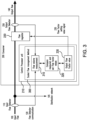
- Fig. 3 illustrates the scaled flow management for an individual consumer 200.
- the input flow is measured 110 and a flow volume measurement 310 is communicated to a scaled flow management system 300 contained within a control processor unit 210.
- the flow volume measurement is compared to the set flow factor value 320 and an output flow factor value 330 is set.
- the flow factor setting value is signaled 230 to flow regulator 220.
- the output flow volume measurement 250 as measured at output flow 140 as a qualitative measurement of flow, such as a fluid flow rate in gallons per minute or electrical current flow rate in amperes.
- the calculate consumer flow value 310 is a mathematical ratio between the output flow volume measurement 250 and input flow volume measurement 110 values.
- the output sampling duty cycle of the calculate consumer flow value 310 will be dependent on the overall flow rate of change for the system. For example, a fluid flow the rate of change can be measured in several hours, therefore the sampling time can be measured once an hour.
- the management boundaries 305 are a mathematical equation based on a total number of consumers in the series to establish the value of flow level factors 306.
- the flow level factor 306 are n number of mathematical equations based on the ratio of consumption level value to the total consumption value, which is typically 100%.
- the value of n is based on the value of management boundaries 305.
- the consumption level value is a deterministic value based on the controllability of the consumption output amount. Exemplary, a consumption output may have prescribed controllability outputs of three levels, the number of levels being based on the value of management boundaries 305, such as, 100%, 75% and 25%.
- next higher management boundary limit 307 corresponds to a mathematical expression not to exceed n-1 equations based on the next larger numerical flow level factor (306) value to be inserted into equation 9.
- next _ Limit Factor ( n ⁇ FlowFact next larger value ⁇ 1 n ⁇ 1
- the last management boundary limit 307 will be 1.0. This represents the full flow consumption for any consumer.
- the output of the set flow factor value 320 is a comparison between each management boundary limit 307 and the calculate consumer flow value 310.
- the output of set flow fact value 320 will be a unique flow level factor 306 value corresponding to the management boundary limit 307 that is the next larger numerical value of the calculate consumer flow value 310.
- the send flow factor 330 is the equivalent flow level factor 306 value by which the flow regulator 400 responds accordingly.
- the communication medium can be analog, digital or wireless.
Landscapes
- Engineering & Computer Science (AREA)
- Business, Economics & Management (AREA)
- Physics & Mathematics (AREA)
- General Physics & Mathematics (AREA)
- Economics (AREA)
- Computer Networks & Wireless Communication (AREA)
- Signal Processing (AREA)
- Strategic Management (AREA)
- Human Resources & Organizations (AREA)
- Marketing (AREA)
- Entrepreneurship & Innovation (AREA)
- Theoretical Computer Science (AREA)
- General Business, Economics & Management (AREA)
- Tourism & Hospitality (AREA)
- Quality & Reliability (AREA)
- Operations Research (AREA)
- Automation & Control Theory (AREA)
- Health & Medical Sciences (AREA)
- Power Engineering (AREA)
- Development Economics (AREA)
- Water Supply & Treatment (AREA)
- Educational Administration (AREA)
- Public Health (AREA)
- Game Theory and Decision Science (AREA)
- General Health & Medical Sciences (AREA)
- Primary Health Care (AREA)
- Remote Monitoring And Control Of Power-Distribution Networks (AREA)
- Management, Administration, Business Operations System, And Electronic Commerce (AREA)
Description
- This patent application claims a benefit to the
May 16, 2019 filing date of United States Provisional Patent Application Serial No. 62/848,642 - The subject matter of the present disclosure generally relates to a method to manage a prescribed quantity of flow volume among two or more consumer members having the same maximum consumption volume limit (referred to herein as "identical consumer members") connected in series on a common distribution network.
- In one embodiment, the method is applied to In-Flight Entertainment (IFE) power distribution loads in an aerospace application.
- Methods and techniques for flow equalization management within a distribution network, such as with electric systems or fluid flow systems, are commonly applied within industry. Current methods for flow equalization or optimization are dependent on a communication network between consumer devices to facilitate the management of flow volume qualities within the distribution network. The addition of communication networks involves an increase in weight, hardware and software complexity to the over-all system.
JP 2013 099174 A US 2018/005325 A1 is related to the identification of attributes of delivered power to a power consumer for identifying whether conventional energy like fossil energy or green electricity, such as from renewable sources like solar, wind, and biomass is consumed. - This disclosure presents a method to manage a prescribed quantity of flow volume using an existing measurement of flow within the network; thereby removing any added communication between consumer members, in order to achieve flow equalization among two or more identical consumer members in the network.
-
-
Figure 1 depicts the Scaled Flow management method data flow diagram -
Figure 2 depicts the flow distribution network among several consumer members -
Figure 3 depicts the Scaled Flow management method illustration. - The subject matter of the present disclosure generally relates to a method to manage a flow volume using a scaled flow management method which regulates the flow volume for each consumer member, not to exceed a defined maximum input flow volume into a distribution network.
- An objective of this method is to minimize the maximum input flow volume, such that any number of consumer members may operate at full consumption levels while other consumers are operating at less than full consumption, based on predetermined flow volume settings. This enables a flow optimization between all consumers throughout the entire distribution network.
- The scaled flow management method includes a set of equations to manage the flow optimization effectively and efficiently among identical consumer members within the distribution network.
- The flow optimization equation or flow equation is the governing mathematical equation that states the relationship that the sum of all the consumers' consumption, within a common distribution network, is equal to the total amount of input capacity into the network.
- The general form for the flow equation relates to the sum of the flow volumes for each consumer (Bx) being equal to the total volume (A1) into the distribution network:

- Another form of the flow equation is:

- Along with the flow equation, several other equations establish a formulation for the scaled flow management method, which are; a number of management boundaries for the system, a management boundaries limit values, consumer flow value, and flow level factors(s).
- Management boundaries are defined as a predetermined number of volume limit values for the purpose of defining a flow volume level for any given consumer member to maintain a total flow equalization in a distribution network.
- For a given collection of consumer members, a practical minimum number of boundaries within a distribution network should be established, besides the full power limit; being one of the boundaries.
- The following equation will establish a minimum number of boundaries - rounding it up to the next whole number:

- For another example; given n=6, then Eq 2 would be a value of 3. Which mean, two boundary levels in addition to the full consumption value.
- A flow level factor is a ratio between the consumption level value (CLV) and the total consumption value, typically set at 100%, for the purpose of maintaining a desired or mandated consumption flow volume by each consumer member.
- The consumption level value is based on the nominal controllability levels of the consumption output amount. The number of flow factor values is based on number of management boundaries.
- The flow level factor value is based on the following equation;

- For example, given MB = 3, a system required three flow setting; FF1 = 100%, FF2 = 75% and FF3 = 25%. Such that;


- The flow level factors regulate the maximum flow volumes for any consumer member; where the desired consumption amount of each consumer member may be less than the flow factor set limit.
- Given a number of management boundaries (MB) from equation 2, a management boundary limit (MBL) is a value establishing a consumption level, for each member, in which a transition will occur between flow volume settings.
- The following are constraints for establishing MBLs:
- a) The nth consumer will not need active flow management below full consumption amount.
Rationale: The nth consumer is the last member of the network and will not limit the flow volume below maximum capacity. - b) No more than (n-1) consumers shall limit their flow volume below a predetermined minimum amount.
Rationale: Input system capacity is too small if more than (n-1) consumer amounts are needed to manage every consumer's consumption. - Equation 4 is derived from equation 3 and substituting the minimum required flow volume for all consumer members into the denominator, thus determining the lower boundary limit. This limit value is the minimum amount of flow (n-1) consumer member's base on the use of the lowest flow factor value (Example: FlowFactor3 Eq. 3c).
- The lower management boundaries limit is based on equation 2, which infers the following conditions;
- 1) C(n-1) equals the full load of the nth consumer,
- 2) All other consumers are set to the lowest flow volume setting

- Equation 5 infers that the maximum flow volume amount of any device within the network is independent of managing the maximum input flow volume for all consumers connected is series on a comment network.
- The next limit is based on the next larder value of Flow factor (Example Eq. 3b) load values distributed across n-1 consumers following this relationship;


- The consumer flow value is based on a ratio of the output flow volume measurement, provided as a measured quality from an output flow detector, by the input flow volume value, provided as a measured quality from a input flow detector,
- For example, if the input flow to the member is 150% and the consumer member is consuming 50%; then the CFV would be

- The calculated value of consumer flow is used to compare it to the values provided from the management boundaries limits values.
- When a consumer flow value exceeds one of the management boundary limits, a new flow factor value will be communicated to the flow regulator.
- Referencing
Fig. 1 , the scaledflow management method 300 manages a prescribed quantity of flow volume, among two or more consumer members having the same maximum consumption volume limit (referred to herein as "identical consumer members"), connected in series on a common distribution network. The scaledflow management method 300 receives two inputs measurements, inputflow volume measurement 110 and outputflow volume measurement 250 and outputs oneflow factor value 320. - Referencing
Fig. 2 , the inputflow volume measurement 110 is a qualitative measurement of flow, such as, a fluid flow rate in gallons per minute or electrical current flow rate in amperes.Consumers 200 are aligned along thedistribution network 105 in series. The distribution network transports a media, which may be a fluid, electrical current, data or any other transportable medium. There is a flow detector 110 - 113 associated with each consumer 200 - 203. Each flow detector communicates 120 - 123 with the scaled flow management system to generate a consumer flow value (310 inFig. 1 ). -
Fig. 3 illustrates the scaled flow management for anindividual consumer 200. The input flow is measured 110 and aflow volume measurement 310 is communicated to a scaledflow management system 300 contained within acontrol processor unit 210. The flow volume measurement is compared to the setflow factor value 320 and an outputflow factor value 330 is set. The flow factor setting value is signaled 230 to flowregulator 220. The outputflow volume measurement 250 as measured atoutput flow 140 as a qualitative measurement of flow, such as a fluid flow rate in gallons per minute or electrical current flow rate in amperes. - The calculate
consumer flow value 310 is a mathematical ratio between the outputflow volume measurement 250 and inputflow volume measurement 110 values. The output sampling duty cycle of the calculateconsumer flow value 310 will be dependent on the overall flow rate of change for the system. For example, a fluid flow the rate of change can be measured in several hours, therefore the sampling time can be measured once an hour. - The management boundaries 305 are a mathematical equation based on a total number of consumers in the series to establish the value of flow level factors 306. The flow level factor 306 are n number of mathematical equations based on the ratio of consumption level value to the total consumption value, which is typically 100%. The value of n is based on the value of management boundaries 305. The consumption level value is a deterministic value based on the controllability of the consumption output amount. Exemplary, a consumption output may have prescribed controllability outputs of three levels, the number of levels being based on the value of management boundaries 305, such as, 100%, 75% and 25%.
- The management boundaries limits 307 are n number of mathematical equations, where each equation is based on a flow level factor 306 value. The value of n is based on the value of management boundaries 305. The lowest numerical management boundaries limit value is based on the smallest numerical flow level factor 306 value in equation 8:

- The next higher management boundary limit 307 corresponds to a mathematical expression not to exceed n-1 equations based on the next larger numerical flow level factor (306) value to be inserted into equation 9.

- The last management boundary limit 307 will be 1.0. This represents the full flow consumption for any consumer.
- The output of the set
flow factor value 320 is a comparison between each management boundary limit 307 and the calculateconsumer flow value 310. The output of set flowfact value 320 will be a unique flow level factor 306 value corresponding to the management boundary limit 307 that is the next larger numerical value of the calculateconsumer flow value 310. - The
send flow factor 330 is the equivalent flow level factor 306 value by which the flow regulator 400 responds accordingly. The communication medium can be analog, digital or wireless.

Claims (10)
- A method (300) for managing consumption of resources by a plurality of consumption devices (200, 201, 202, 203) interconnected by way of a common distribution network (105), the method (300) comprising the following steps:aligning the plurality of consumption devices (200, 201, 202, 203) so as to be interconnected by way of the common distribution network (105) configured to provide a respective amount of the resources to each of the consumption devices (200, 201, 202, 203), at least one of the consumption devices (200, 201, 202, 203) having an input flow detector (110, 111, 112, 113) associated with the respective consumption device (200, 201, 202, 203), an output flow detector (250) associated with the respective consumption device (200, 201, 202, 203), and a regulator for setting a permitted amount of resources available to be consumed by the respective consumption device (200, 201, 202, 203);selecting a plurality of management boundary levels for the common distribution network (105), each management boundary level corresponding to a different permitted proportion of resources the corresponding regulator of a consumption device (200, 201, 202, 203) may be set to; andfor each consumption device (200, 201, 202, 203) having a regulator:calculating a consumer flow value (310) as a ratio of the output detector (250) indication and the input detector indication (110); andsetting the regulator to a permitted proportion of resources selected by determining its corresponding least management boundary level which is still greater than the consumer flow value (310).
- The method (300) of claim 1 wherein the plurality of consumption devices (200, 201, 202, 203) are aligned on the common distribution network (105) in series with respect to their respective input flow detectors (110, 111, 112, 113).
- The method (300) of claim 1 wherein each consumption device (200, 201, 202, 203) has a same maximum consumption volume limit.
- The method (300) of claim 3 wherein the resources include fluids, electricity, or data.
- The method (300) of claim 1 wherein each consumption device (200, 201, 202, 203) has the same consumption levels, but which correspond to different flow values for each consumption device (200, 201, 202, 203).
- The method (300) of claim 1, wherein the different permitted proportions of resources are determined using a ratio of a consumption limit for a device (200, 201, 202, 203) and an available flow volume of the resources.
- The method (300) of claim 1, wherein a lowest management boundary level is determined using a ratio of:

- The method (300) of claim 7, wherein each management boundary level larger than the lowest management boundary level is determined using a ratio of:

- The method (300) of claim 1, wherein a minimum number of management boundary levels are determined according to the number of consumption devices (200, 201, 202, 203) in the common distribution network (105).
- The method (300) of claim 1, wherein the consumer flow value (310) is calculated at a frequency according to a duty cycle dependent on the flow rate of the resource.
Applications Claiming Priority (2)
| Application Number | Priority Date | Filing Date | Title |
|---|---|---|---|
| US201962848642P | 2019-05-16 | 2019-05-16 | |
| PCT/US2020/033307 WO2020232422A1 (en) | 2019-05-16 | 2020-05-16 | Method for managing flow equalization among consumers on a common distribution network |
Publications (3)
| Publication Number | Publication Date |
|---|---|
| EP3963834A1 EP3963834A1 (en) | 2022-03-09 |
| EP3963834A4 EP3963834A4 (en) | 2022-12-28 |
| EP3963834B1 true EP3963834B1 (en) | 2024-07-31 |
Family
ID=73230799
Family Applications (1)
| Application Number | Title | Priority Date | Filing Date |
|---|---|---|---|
| EP20805982.4A Active EP3963834B1 (en) | 2019-05-16 | 2020-05-16 | Method for managing flow equalization among consumers on a common distribution network |
Country Status (5)
| Country | Link |
|---|---|
| US (2) | US20200366093A1 (en) |
| EP (1) | EP3963834B1 (en) |
| JP (1) | JP7368503B2 (en) |
| CA (1) | CA3135457C (en) |
| WO (1) | WO2020232422A1 (en) |
Families Citing this family (1)
| Publication number | Priority date | Publication date | Assignee | Title |
|---|---|---|---|---|
| US12166351B2 (en) * | 2019-05-16 | 2024-12-10 | Astronics Advanced Electronic Systems Corp. | Method for managing flow equalization among consumers on a common distribution network |
Family Cites Families (9)
| Publication number | Priority date | Publication date | Assignee | Title |
|---|---|---|---|---|
| US6233611B1 (en) * | 1998-05-08 | 2001-05-15 | Sony Corporation | Media manager for controlling autonomous media devices within a network environment and managing the flow and format of data between the devices |
| GB2443229B (en) * | 2006-08-23 | 2009-10-14 | Cramer Systems Ltd | Capacity management for data networks |
| US7826663B2 (en) * | 2006-12-12 | 2010-11-02 | International Business Machines Corporation | Real time analytics using hybrid histograms |
| US7911326B2 (en) * | 2007-01-03 | 2011-03-22 | Marvell World Trade Ltd. | Time updating and load management systems |
| JP2013099174A (en) | 2011-11-02 | 2013-05-20 | Toshiba Corp | Energy management system, method and program |
| HK1219707A1 (en) * | 2013-02-28 | 2017-04-13 | Bae Systems Controls Inc. | Seat power systems and methods |
| CN105449719B (en) * | 2014-08-26 | 2019-01-04 | 珠海格力电器股份有限公司 | Distributed energy source control method, device and system |
| US9906420B2 (en) * | 2014-12-22 | 2018-02-27 | International Business Machines Corporation | Dynamic boundary based monitoring and metering |
| WO2016110920A1 (en) * | 2015-01-06 | 2016-07-14 | 日本電気株式会社 | Power identification device, power identification method, and non-transitory computer readable medium storing power identification program |
-
2020
- 2020-05-16 JP JP2021568490A patent/JP7368503B2/en active Active
- 2020-05-16 CA CA3135457A patent/CA3135457C/en active Active
- 2020-05-16 EP EP20805982.4A patent/EP3963834B1/en active Active
- 2020-05-16 US US16/875,997 patent/US20200366093A1/en not_active Abandoned
- 2020-05-16 WO PCT/US2020/033307 patent/WO2020232422A1/en not_active Ceased
-
2024
- 2024-12-09 US US18/974,032 patent/US20250119386A1/en active Pending
Also Published As
| Publication number | Publication date |
|---|---|
| EP3963834A4 (en) | 2022-12-28 |
| JP7368503B2 (en) | 2023-10-24 |
| US20250119386A1 (en) | 2025-04-10 |
| JP2022527668A (en) | 2022-06-02 |
| WO2020232422A1 (en) | 2020-11-19 |
| CA3135457C (en) | 2025-05-06 |
| US20200366093A1 (en) | 2020-11-19 |
| EP3963834A1 (en) | 2022-03-09 |
| CA3135457A1 (en) | 2020-11-19 |
Similar Documents
| Publication | Publication Date | Title |
|---|---|---|
| EP3304687B1 (en) | Automatic network device electrical phase identification | |
| EP3026773B1 (en) | System and method for modelling load in an electrical power network | |
| US7584066B2 (en) | Method for determining power flow in an electrical distribution system | |
| EP3197010A1 (en) | Control device, electrical storage device, control assistance device, control method, control assistance method, and recording medium | |
| WO2013006273A2 (en) | Methods and systems for determining an association between nodes and phases via a smart grid | |
| CN120222343B (en) | Method and system for controlling electric power energy storage system | |
| CN116125361B (en) | Voltage transformer error evaluation method, system, electronic equipment and storage medium | |
| EP2961030A1 (en) | Power flow control system and power flow control method | |
| JPWO2017149618A1 (en) | Control device, power generation control device, control method, system, and program | |
| EP3963834B1 (en) | Method for managing flow equalization among consumers on a common distribution network | |
| Loyola et al. | Individual load monitoring of appliances for home energy management system | |
| CN107749631B (en) | Unit primary frequency modulation capability pre-estimating method | |
| US12166351B2 (en) | Method for managing flow equalization among consumers on a common distribution network | |
| CN116184305A (en) | Metering anomaly monitoring method for special transformer users based on scatter diagram of transformer external characteristics | |
| CN119010054B (en) | A park energy optimization method, device, electronic equipment and storage medium | |
| CN119787342A (en) | A multi-objective optimization scheduling method and system for power grid post-disaster recovery | |
| CN115842346B (en) | Rapid detection and control method, device and equipment for fault ride-through of new energy unit | |
| JPWO2014033893A1 (en) | Power accommodation group creation method and power accommodation group creation device | |
| CN115619097A (en) | Method and system for evaluating and predicting peak load regulation potential based on new grid-connected entities | |
| Seppänen et al. | On the relationship between inter-area modes and power system inertia | |
| CN113554528B (en) | Method and system for analyzing power spot market clearing result | |
| JP6547421B2 (en) | Control device, control method of control device and program | |
| KR101649124B1 (en) | Determination method for optimal sending-end voltage at radial network and determination program | |
| CN119695891A (en) | Temperature sensitive load prediction method, device, equipment and storage medium | |
| CN118713108A (en) | Substation reactive power compensation control method, device, storage medium and system |
Legal Events
| Date | Code | Title | Description |
|---|---|---|---|
| STAA | Information on the status of an ep patent application or granted ep patent |
Free format text: STATUS: THE INTERNATIONAL PUBLICATION HAS BEEN MADE |
|
| PUAI | Public reference made under article 153(3) epc to a published international application that has entered the european phase |
Free format text: ORIGINAL CODE: 0009012 |
|
| STAA | Information on the status of an ep patent application or granted ep patent |
Free format text: STATUS: REQUEST FOR EXAMINATION WAS MADE |
|
| 17P | Request for examination filed |
Effective date: 20211202 |
|
| AK | Designated contracting states |
Kind code of ref document: A1 Designated state(s): AL AT BE BG CH CY CZ DE DK EE ES FI FR GB GR HR HU IE IS IT LI LT LU LV MC MK MT NL NO PL PT RO RS SE SI SK SM TR |
|
| DAV | Request for validation of the european patent (deleted) | ||
| DAX | Request for extension of the european patent (deleted) | ||
| REG | Reference to a national code |
Ref country code: DE Ref legal event code: R079 Free format text: PREVIOUS MAIN CLASS: H04L0012240000 Ipc: H04L0012280000 Ref document number: 602020034966 Country of ref document: DE |
|
| A4 | Supplementary search report drawn up and despatched |
Effective date: 20221124 |
|
| RIC1 | Information provided on ipc code assigned before grant |
Ipc: H04L 47/10 20220101ALI20221118BHEP Ipc: G06Q 50/06 20120101ALI20221118BHEP Ipc: G06Q 10/06 20120101ALI20221118BHEP Ipc: G06Q 10/00 20120101ALI20221118BHEP Ipc: H04N 7/24 20110101ALI20221118BHEP Ipc: H04L 12/28 20060101AFI20221118BHEP |
|
| GRAP | Despatch of communication of intention to grant a patent |
Free format text: ORIGINAL CODE: EPIDOSNIGR1 |
|
| STAA | Information on the status of an ep patent application or granted ep patent |
Free format text: STATUS: GRANT OF PATENT IS INTENDED |
|
| INTG | Intention to grant announced |
Effective date: 20231107 |
|
| GRAJ | Information related to disapproval of communication of intention to grant by the applicant or resumption of examination proceedings by the epo deleted |
Free format text: ORIGINAL CODE: EPIDOSDIGR1 |
|
| STAA | Information on the status of an ep patent application or granted ep patent |
Free format text: STATUS: REQUEST FOR EXAMINATION WAS MADE |
|
| GRAP | Despatch of communication of intention to grant a patent |
Free format text: ORIGINAL CODE: EPIDOSNIGR1 |
|
| STAA | Information on the status of an ep patent application or granted ep patent |
Free format text: STATUS: GRANT OF PATENT IS INTENDED |
|
| INTC | Intention to grant announced (deleted) | ||
| INTG | Intention to grant announced |
Effective date: 20240314 |
|
| P01 | Opt-out of the competence of the unified patent court (upc) registered |
Effective date: 20240328 |
|
| GRAJ | Information related to disapproval of communication of intention to grant by the applicant or resumption of examination proceedings by the epo deleted |
Free format text: ORIGINAL CODE: EPIDOSDIGR1 |
|
| STAA | Information on the status of an ep patent application or granted ep patent |
Free format text: STATUS: REQUEST FOR EXAMINATION WAS MADE |
|
| INTC | Intention to grant announced (deleted) | ||
| GRAP | Despatch of communication of intention to grant a patent |
Free format text: ORIGINAL CODE: EPIDOSNIGR1 |
|
| STAA | Information on the status of an ep patent application or granted ep patent |
Free format text: STATUS: GRANT OF PATENT IS INTENDED |
|
| GRAS | Grant fee paid |
Free format text: ORIGINAL CODE: EPIDOSNIGR3 |
|
| GRAA | (expected) grant |
Free format text: ORIGINAL CODE: 0009210 |
|
| STAA | Information on the status of an ep patent application or granted ep patent |
Free format text: STATUS: THE PATENT HAS BEEN GRANTED |
|
| INTG | Intention to grant announced |
Effective date: 20240611 |
|
| AK | Designated contracting states |
Kind code of ref document: B1 Designated state(s): AL AT BE BG CH CY CZ DE DK EE ES FI FR GB GR HR HU IE IS IT LI LT LU LV MC MK MT NL NO PL PT RO RS SE SI SK SM TR |
|
| REG | Reference to a national code |
Ref country code: CH Ref legal event code: EP Ref country code: GB Ref legal event code: FG4D |
|
| REG | Reference to a national code |
Ref country code: DE Ref legal event code: R096 Ref document number: 602020034966 Country of ref document: DE |
|
| REG | Reference to a national code |
Ref country code: IE Ref legal event code: FG4D |
|
| REG | Reference to a national code |
Ref country code: LT Ref legal event code: MG9D |
|
| REG | Reference to a national code |
Ref country code: NL Ref legal event code: MP Effective date: 20240731 |
|
| PG25 | Lapsed in a contracting state [announced via postgrant information from national office to epo] |
Ref country code: PT Free format text: LAPSE BECAUSE OF FAILURE TO SUBMIT A TRANSLATION OF THE DESCRIPTION OR TO PAY THE FEE WITHIN THE PRESCRIBED TIME-LIMIT Effective date: 20241202 |
|
| REG | Reference to a national code |
Ref country code: AT Ref legal event code: MK05 Ref document number: 1709571 Country of ref document: AT Kind code of ref document: T Effective date: 20240731 |
|
| PG25 | Lapsed in a contracting state [announced via postgrant information from national office to epo] |
Ref country code: PT Free format text: LAPSE BECAUSE OF FAILURE TO SUBMIT A TRANSLATION OF THE DESCRIPTION OR TO PAY THE FEE WITHIN THE PRESCRIBED TIME-LIMIT Effective date: 20241202 |
|
| PG25 | Lapsed in a contracting state [announced via postgrant information from national office to epo] |
Ref country code: NO Free format text: LAPSE BECAUSE OF FAILURE TO SUBMIT A TRANSLATION OF THE DESCRIPTION OR TO PAY THE FEE WITHIN THE PRESCRIBED TIME-LIMIT Effective date: 20241031 |
|
| PG25 | Lapsed in a contracting state [announced via postgrant information from national office to epo] |
Ref country code: FI Free format text: LAPSE BECAUSE OF FAILURE TO SUBMIT A TRANSLATION OF THE DESCRIPTION OR TO PAY THE FEE WITHIN THE PRESCRIBED TIME-LIMIT Effective date: 20240731 Ref country code: NL Free format text: LAPSE BECAUSE OF FAILURE TO SUBMIT A TRANSLATION OF THE DESCRIPTION OR TO PAY THE FEE WITHIN THE PRESCRIBED TIME-LIMIT Effective date: 20240731 Ref country code: PL Free format text: LAPSE BECAUSE OF FAILURE TO SUBMIT A TRANSLATION OF THE DESCRIPTION OR TO PAY THE FEE WITHIN THE PRESCRIBED TIME-LIMIT Effective date: 20240731 Ref country code: GR Free format text: LAPSE BECAUSE OF FAILURE TO SUBMIT A TRANSLATION OF THE DESCRIPTION OR TO PAY THE FEE WITHIN THE PRESCRIBED TIME-LIMIT Effective date: 20241101 |
|
| PG25 | Lapsed in a contracting state [announced via postgrant information from national office to epo] |
Ref country code: BG Free format text: LAPSE BECAUSE OF FAILURE TO SUBMIT A TRANSLATION OF THE DESCRIPTION OR TO PAY THE FEE WITHIN THE PRESCRIBED TIME-LIMIT Effective date: 20240731 |
|
| PG25 | Lapsed in a contracting state [announced via postgrant information from national office to epo] |
Ref country code: LV Free format text: LAPSE BECAUSE OF FAILURE TO SUBMIT A TRANSLATION OF THE DESCRIPTION OR TO PAY THE FEE WITHIN THE PRESCRIBED TIME-LIMIT Effective date: 20240731 |
|
| PG25 | Lapsed in a contracting state [announced via postgrant information from national office to epo] |
Ref country code: AT Free format text: LAPSE BECAUSE OF FAILURE TO SUBMIT A TRANSLATION OF THE DESCRIPTION OR TO PAY THE FEE WITHIN THE PRESCRIBED TIME-LIMIT Effective date: 20240731 Ref country code: IS Free format text: LAPSE BECAUSE OF FAILURE TO SUBMIT A TRANSLATION OF THE DESCRIPTION OR TO PAY THE FEE WITHIN THE PRESCRIBED TIME-LIMIT Effective date: 20241130 |
|
| PG25 | Lapsed in a contracting state [announced via postgrant information from national office to epo] |
Ref country code: HR Free format text: LAPSE BECAUSE OF FAILURE TO SUBMIT A TRANSLATION OF THE DESCRIPTION OR TO PAY THE FEE WITHIN THE PRESCRIBED TIME-LIMIT Effective date: 20240731 |
|
| PG25 | Lapsed in a contracting state [announced via postgrant information from national office to epo] |
Ref country code: RS Free format text: LAPSE BECAUSE OF FAILURE TO SUBMIT A TRANSLATION OF THE DESCRIPTION OR TO PAY THE FEE WITHIN THE PRESCRIBED TIME-LIMIT Effective date: 20241031 Ref country code: ES Free format text: LAPSE BECAUSE OF FAILURE TO SUBMIT A TRANSLATION OF THE DESCRIPTION OR TO PAY THE FEE WITHIN THE PRESCRIBED TIME-LIMIT Effective date: 20240731 |
|
| PG25 | Lapsed in a contracting state [announced via postgrant information from national office to epo] |
Ref country code: RS Free format text: LAPSE BECAUSE OF FAILURE TO SUBMIT A TRANSLATION OF THE DESCRIPTION OR TO PAY THE FEE WITHIN THE PRESCRIBED TIME-LIMIT Effective date: 20241031 Ref country code: PL Free format text: LAPSE BECAUSE OF FAILURE TO SUBMIT A TRANSLATION OF THE DESCRIPTION OR TO PAY THE FEE WITHIN THE PRESCRIBED TIME-LIMIT Effective date: 20240731 Ref country code: NO Free format text: LAPSE BECAUSE OF FAILURE TO SUBMIT A TRANSLATION OF THE DESCRIPTION OR TO PAY THE FEE WITHIN THE PRESCRIBED TIME-LIMIT Effective date: 20241031 Ref country code: NL Free format text: LAPSE BECAUSE OF FAILURE TO SUBMIT A TRANSLATION OF THE DESCRIPTION OR TO PAY THE FEE WITHIN THE PRESCRIBED TIME-LIMIT Effective date: 20240731 Ref country code: LV Free format text: LAPSE BECAUSE OF FAILURE TO SUBMIT A TRANSLATION OF THE DESCRIPTION OR TO PAY THE FEE WITHIN THE PRESCRIBED TIME-LIMIT Effective date: 20240731 Ref country code: IS Free format text: LAPSE BECAUSE OF FAILURE TO SUBMIT A TRANSLATION OF THE DESCRIPTION OR TO PAY THE FEE WITHIN THE PRESCRIBED TIME-LIMIT Effective date: 20241130 Ref country code: HR Free format text: LAPSE BECAUSE OF FAILURE TO SUBMIT A TRANSLATION OF THE DESCRIPTION OR TO PAY THE FEE WITHIN THE PRESCRIBED TIME-LIMIT Effective date: 20240731 Ref country code: GR Free format text: LAPSE BECAUSE OF FAILURE TO SUBMIT A TRANSLATION OF THE DESCRIPTION OR TO PAY THE FEE WITHIN THE PRESCRIBED TIME-LIMIT Effective date: 20241101 Ref country code: FI Free format text: LAPSE BECAUSE OF FAILURE TO SUBMIT A TRANSLATION OF THE DESCRIPTION OR TO PAY THE FEE WITHIN THE PRESCRIBED TIME-LIMIT Effective date: 20240731 Ref country code: ES Free format text: LAPSE BECAUSE OF FAILURE TO SUBMIT A TRANSLATION OF THE DESCRIPTION OR TO PAY THE FEE WITHIN THE PRESCRIBED TIME-LIMIT Effective date: 20240731 Ref country code: BG Free format text: LAPSE BECAUSE OF FAILURE TO SUBMIT A TRANSLATION OF THE DESCRIPTION OR TO PAY THE FEE WITHIN THE PRESCRIBED TIME-LIMIT Effective date: 20240731 Ref country code: AT Free format text: LAPSE BECAUSE OF FAILURE TO SUBMIT A TRANSLATION OF THE DESCRIPTION OR TO PAY THE FEE WITHIN THE PRESCRIBED TIME-LIMIT Effective date: 20240731 |
|
| PG25 | Lapsed in a contracting state [announced via postgrant information from national office to epo] |
Ref country code: DK Free format text: LAPSE BECAUSE OF FAILURE TO SUBMIT A TRANSLATION OF THE DESCRIPTION OR TO PAY THE FEE WITHIN THE PRESCRIBED TIME-LIMIT Effective date: 20240731 Ref country code: SM Free format text: LAPSE BECAUSE OF FAILURE TO SUBMIT A TRANSLATION OF THE DESCRIPTION OR TO PAY THE FEE WITHIN THE PRESCRIBED TIME-LIMIT Effective date: 20240731 Ref country code: RO Free format text: LAPSE BECAUSE OF FAILURE TO SUBMIT A TRANSLATION OF THE DESCRIPTION OR TO PAY THE FEE WITHIN THE PRESCRIBED TIME-LIMIT Effective date: 20240731 |
|
| PG25 | Lapsed in a contracting state [announced via postgrant information from national office to epo] |
Ref country code: EE Free format text: LAPSE BECAUSE OF FAILURE TO SUBMIT A TRANSLATION OF THE DESCRIPTION OR TO PAY THE FEE WITHIN THE PRESCRIBED TIME-LIMIT Effective date: 20240731 |
|
| PG25 | Lapsed in a contracting state [announced via postgrant information from national office to epo] |
Ref country code: CZ Free format text: LAPSE BECAUSE OF FAILURE TO SUBMIT A TRANSLATION OF THE DESCRIPTION OR TO PAY THE FEE WITHIN THE PRESCRIBED TIME-LIMIT Effective date: 20240731 |
|
| PG25 | Lapsed in a contracting state [announced via postgrant information from national office to epo] |
Ref country code: IT Free format text: LAPSE BECAUSE OF FAILURE TO SUBMIT A TRANSLATION OF THE DESCRIPTION OR TO PAY THE FEE WITHIN THE PRESCRIBED TIME-LIMIT Effective date: 20240731 Ref country code: SK Free format text: LAPSE BECAUSE OF FAILURE TO SUBMIT A TRANSLATION OF THE DESCRIPTION OR TO PAY THE FEE WITHIN THE PRESCRIBED TIME-LIMIT Effective date: 20240731 |
|
| REG | Reference to a national code |
Ref country code: DE Ref legal event code: R097 Ref document number: 602020034966 Country of ref document: DE |
|
| PLBE | No opposition filed within time limit |
Free format text: ORIGINAL CODE: 0009261 |
|
| STAA | Information on the status of an ep patent application or granted ep patent |
Free format text: STATUS: NO OPPOSITION FILED WITHIN TIME LIMIT |
|
| 26N | No opposition filed |
Effective date: 20250501 |
|
| PGFP | Annual fee paid to national office [announced via postgrant information from national office to epo] |
Ref country code: DE Payment date: 20250529 Year of fee payment: 6 |
|
| PGFP | Annual fee paid to national office [announced via postgrant information from national office to epo] |
Ref country code: GB Payment date: 20250527 Year of fee payment: 6 |
|
| PGFP | Annual fee paid to national office [announced via postgrant information from national office to epo] |
Ref country code: FR Payment date: 20250526 Year of fee payment: 6 |
|
| PG25 | Lapsed in a contracting state [announced via postgrant information from national office to epo] |
Ref country code: SE Free format text: LAPSE BECAUSE OF FAILURE TO SUBMIT A TRANSLATION OF THE DESCRIPTION OR TO PAY THE FEE WITHIN THE PRESCRIBED TIME-LIMIT Effective date: 20240731 |
|
| REG | Reference to a national code |
Ref country code: CH Ref legal event code: H13 Free format text: ST27 STATUS EVENT CODE: U-0-0-H10-H13 (AS PROVIDED BY THE NATIONAL OFFICE) Effective date: 20251223 |
|
| PG25 | Lapsed in a contracting state [announced via postgrant information from national office to epo] |
Ref country code: LU Free format text: LAPSE BECAUSE OF NON-PAYMENT OF DUE FEES Effective date: 20250516 |
|
| PG25 | Lapsed in a contracting state [announced via postgrant information from national office to epo] |
Ref country code: CH Free format text: LAPSE BECAUSE OF NON-PAYMENT OF DUE FEES Effective date: 20250531 |
|
| REG | Reference to a national code |
Ref country code: BE Ref legal event code: MM Effective date: 20250531 |
|
| PG25 | Lapsed in a contracting state [announced via postgrant information from national office to epo] |
Ref country code: MC Free format text: LAPSE BECAUSE OF FAILURE TO SUBMIT A TRANSLATION OF THE DESCRIPTION OR TO PAY THE FEE WITHIN THE PRESCRIBED TIME-LIMIT Effective date: 20240731 |
|
| PG25 | Lapsed in a contracting state [announced via postgrant information from national office to epo] |
Ref country code: IE Free format text: LAPSE BECAUSE OF NON-PAYMENT OF DUE FEES Effective date: 20250516 |
|
| PG25 | Lapsed in a contracting state [announced via postgrant information from national office to epo] |
Ref country code: BE Free format text: LAPSE BECAUSE OF NON-PAYMENT OF DUE FEES Effective date: 20250531 |