EP3962773B1 - Seat track assembly with memory mechanism - Google Patents
Seat track assembly with memory mechanism Download PDFInfo
- Publication number
- EP3962773B1 EP3962773B1 EP20757201.7A EP20757201A EP3962773B1 EP 3962773 B1 EP3962773 B1 EP 3962773B1 EP 20757201 A EP20757201 A EP 20757201A EP 3962773 B1 EP3962773 B1 EP 3962773B1
- Authority
- EP
- European Patent Office
- Prior art keywords
- memory
- track
- seat
- slider
- movable
- Prior art date
- Legal status (The legal status is an assumption and is not a legal conclusion. Google has not performed a legal analysis and makes no representation as to the accuracy of the status listed.)
- Active
Links
Images





Classifications
-
- B—PERFORMING OPERATIONS; TRANSPORTING
- B60—VEHICLES IN GENERAL
- B60N—SEATS SPECIALLY ADAPTED FOR VEHICLES; VEHICLE PASSENGER ACCOMMODATION NOT OTHERWISE PROVIDED FOR
- B60N2/00—Seats specially adapted for vehicles; Arrangement or mounting of seats in vehicles
- B60N2/02—Seats specially adapted for vehicles; Arrangement or mounting of seats in vehicles the seat or part thereof being movable, e.g. adjustable
- B60N2/04—Seats specially adapted for vehicles; Arrangement or mounting of seats in vehicles the seat or part thereof being movable, e.g. adjustable the whole seat being movable
- B60N2/06—Seats specially adapted for vehicles; Arrangement or mounting of seats in vehicles the seat or part thereof being movable, e.g. adjustable the whole seat being movable slidable
- B60N2/07—Slide construction
- B60N2/0702—Slide construction characterised by its cross-section
- B60N2/0715—C or U-shaped
-
- B—PERFORMING OPERATIONS; TRANSPORTING
- B60—VEHICLES IN GENERAL
- B60N—SEATS SPECIALLY ADAPTED FOR VEHICLES; VEHICLE PASSENGER ACCOMMODATION NOT OTHERWISE PROVIDED FOR
- B60N2/00—Seats specially adapted for vehicles; Arrangement or mounting of seats in vehicles
- B60N2/02—Seats specially adapted for vehicles; Arrangement or mounting of seats in vehicles the seat or part thereof being movable, e.g. adjustable
- B60N2/04—Seats specially adapted for vehicles; Arrangement or mounting of seats in vehicles the seat or part thereof being movable, e.g. adjustable the whole seat being movable
- B60N2/06—Seats specially adapted for vehicles; Arrangement or mounting of seats in vehicles the seat or part thereof being movable, e.g. adjustable the whole seat being movable slidable
- B60N2/08—Seats specially adapted for vehicles; Arrangement or mounting of seats in vehicles the seat or part thereof being movable, e.g. adjustable the whole seat being movable slidable characterised by the locking device
- B60N2/0812—Location of the latch
-
- B—PERFORMING OPERATIONS; TRANSPORTING
- B60—VEHICLES IN GENERAL
- B60N—SEATS SPECIALLY ADAPTED FOR VEHICLES; VEHICLE PASSENGER ACCOMMODATION NOT OTHERWISE PROVIDED FOR
- B60N2/00—Seats specially adapted for vehicles; Arrangement or mounting of seats in vehicles
- B60N2/02—Seats specially adapted for vehicles; Arrangement or mounting of seats in vehicles the seat or part thereof being movable, e.g. adjustable
- B60N2/04—Seats specially adapted for vehicles; Arrangement or mounting of seats in vehicles the seat or part thereof being movable, e.g. adjustable the whole seat being movable
- B60N2/06—Seats specially adapted for vehicles; Arrangement or mounting of seats in vehicles the seat or part thereof being movable, e.g. adjustable the whole seat being movable slidable
- B60N2/08—Seats specially adapted for vehicles; Arrangement or mounting of seats in vehicles the seat or part thereof being movable, e.g. adjustable the whole seat being movable slidable characterised by the locking device
- B60N2/0812—Location of the latch
- B60N2/0825—Location of the latch outside the rail
-
- B—PERFORMING OPERATIONS; TRANSPORTING
- B60—VEHICLES IN GENERAL
- B60N—SEATS SPECIALLY ADAPTED FOR VEHICLES; VEHICLE PASSENGER ACCOMMODATION NOT OTHERWISE PROVIDED FOR
- B60N2/00—Seats specially adapted for vehicles; Arrangement or mounting of seats in vehicles
- B60N2/02—Seats specially adapted for vehicles; Arrangement or mounting of seats in vehicles the seat or part thereof being movable, e.g. adjustable
- B60N2/04—Seats specially adapted for vehicles; Arrangement or mounting of seats in vehicles the seat or part thereof being movable, e.g. adjustable the whole seat being movable
- B60N2/06—Seats specially adapted for vehicles; Arrangement or mounting of seats in vehicles the seat or part thereof being movable, e.g. adjustable the whole seat being movable slidable
- B60N2/08—Seats specially adapted for vehicles; Arrangement or mounting of seats in vehicles the seat or part thereof being movable, e.g. adjustable the whole seat being movable slidable characterised by the locking device
- B60N2/0831—Movement of the latch
- B60N2/0862—Movement of the latch sliding
- B60N2/0875—Movement of the latch sliding in a vertical direction
-
- B—PERFORMING OPERATIONS; TRANSPORTING
- B60—VEHICLES IN GENERAL
- B60N—SEATS SPECIALLY ADAPTED FOR VEHICLES; VEHICLE PASSENGER ACCOMMODATION NOT OTHERWISE PROVIDED FOR
- B60N2/00—Seats specially adapted for vehicles; Arrangement or mounting of seats in vehicles
- B60N2/02—Seats specially adapted for vehicles; Arrangement or mounting of seats in vehicles the seat or part thereof being movable, e.g. adjustable
- B60N2/04—Seats specially adapted for vehicles; Arrangement or mounting of seats in vehicles the seat or part thereof being movable, e.g. adjustable the whole seat being movable
- B60N2/12—Seats specially adapted for vehicles; Arrangement or mounting of seats in vehicles the seat or part thereof being movable, e.g. adjustable the whole seat being movable slidable and tiltable
- B60N2/123—Seats specially adapted for vehicles; Arrangement or mounting of seats in vehicles the seat or part thereof being movable, e.g. adjustable the whole seat being movable slidable and tiltable and provided with memory locks
-
- B—PERFORMING OPERATIONS; TRANSPORTING
- B60—VEHICLES IN GENERAL
- B60N—SEATS SPECIALLY ADAPTED FOR VEHICLES; VEHICLE PASSENGER ACCOMMODATION NOT OTHERWISE PROVIDED FOR
- B60N2/00—Seats specially adapted for vehicles; Arrangement or mounting of seats in vehicles
- B60N2/02—Seats specially adapted for vehicles; Arrangement or mounting of seats in vehicles the seat or part thereof being movable, e.g. adjustable
- B60N2/04—Seats specially adapted for vehicles; Arrangement or mounting of seats in vehicles the seat or part thereof being movable, e.g. adjustable the whole seat being movable
- B60N2/12—Seats specially adapted for vehicles; Arrangement or mounting of seats in vehicles the seat or part thereof being movable, e.g. adjustable the whole seat being movable slidable and tiltable
- B60N2002/126—Seats specially adapted for vehicles; Arrangement or mounting of seats in vehicles the seat or part thereof being movable, e.g. adjustable the whole seat being movable slidable and tiltable the backrest being maintained in its tilted position until the seat has slided to its memorised position
Definitions
- the present invention relates to a seat track assembly for providing forward and rearward movement of a seat assembly along a floor of an automotive vehicle.
- Typical seat track assemblies for providing forward and rearward movement of a seat assembly along a floor of an automotive vehicle are known in the art.
- Typical seat track assemblies include a fixed track adapted to be fixedly secured to the floor of the automotive vehicle and a movable track adapted to be fixedly secured to the seat assembly and slidably coupled to the fixed track.
- a latch mechanism is operatively coupled between the fixed and movable tracks, wherein the latch mechanism prevents sliding movement of the movable track and is selectively disengaged from the fixed track to allow sliding movement of the movable track between a plurality of positions.
- a memory mechanism is operatively coupled to the moveable track and operable between a home position in which a memory plate is disengaged from the fixed track for moving with the moveable track during sliding movement thereof, and a memory position in which the memory plate is engaged with the fixed track to define a previously selected one of the plurality of positions.
- actuation of the memory mechanism to the memory position often disengages the latch mechanism from the fixed track, thereby allowing sliding movement of the movable track in a first direction from the previously selected one of the plurality of positions to an easy-entry position, and in a second direction opposite the first direction from the easy-entry position wherein the memory mechanism stops the movable track at the previously selected one of the plurality of positions, thereby reengaging the latch mechanism with the fixed track and returning the memory mechanism to the home position.
- the seat track assemblies known in the art can be difficult to operate efficiently due to increased friction between the memory mechanism and the moveable track as the memory mechanism moves between the home and memory positions.
- FR 2 882 539 A1 discloses a vehicle front seat having a memory lock and a slide lock actuating device comprising a torsion spring having a rod which, upon rotation of a cam, exerts a force on a memory lock along the actuating direction to displace the lock between a rest position and an actuated position.
- the actuator has a torsion spring having a rolling axis spaced from an axis of rotation of a cam, such that rotation of the cam causes a rod of the spring to be displaced along an actuation direction perpendicular to the axis of rotation.
- the rod exerts a force on a memory lock along the actuation direction during rotation of the cam to displace the lock between its rest position and an actuated position.
- FR 2 902 714 A1 discloses a device for retaining the seat of a vehicle seat in a longitudinal position as long as no force greater than a predetermined value is applied to it after unlocking a main position lock, the device comprising a lever, a first end of which is pivotally mounted about an axis and a second end of which has a downwardly projecting head, this head resting, at rest, behind a lock of a position memory pad of the seat, the lever being forced into its rest position by means of a spring whose force is chosen as a function of the predetermined force to be exerted on the seat during displacement.
- the invention provides a seat track assembly with the features of claim 1
- a seat track assembly 10 operatively interconnects a seat assembly 11 to a floor 12 of an automotive vehicle.
- the seat assembly 11 includes a seat back 13 operatively coupled to a seat cushion 14 for allowing selective pivotal movement of the seat back 13 relative to the seat cushion 14 between a plurality of reclined seating positions.
- the seat back 13 is also pivotally movable to a forwardly folded position for increased ingress and egress room behind the seat assembly 11.
- the seat track assembly 10 includes a primary seat track assembly 15 laterally spaced apart from a secondary seat track assembly 16.
- the primary and secondary seat track assemblies 15, 16 are operatively connected via a cross-talk cable 21 to allow selective longitudinal sliding adjustment of the seat assembly 11 between a plurality of fore/aft seating positions along the floor 12 of the automotive vehicle, including an easy-entry position corresponding with a forwardmost position of the plurality of fore/aft seating positions.
- the seat assembly 11 automatically slides forward from a previously selected fore/aft seating position to the easy-entry position.
- the primary seat track assembly 15 includes a fixed track 17 operatively coupled with a movable track 18, as shown in Figure 1 .
- the fixed track 17 is adapted to be fixedly secured to the floor 12 of the automotive vehicle by a pair of risers.
- the movable track 18 is adapted to be fixedly secured to an underside of the seat cushion 14 and is slidably coupled to the fixed track 17 for longitudinal sliding movement relative thereto.
- the seat assembly 11 moves correspondingly with the moveable track 18 for adjustment between the plurality of fore/aft seating positions.
- the fixed track 17 has a generally U-shaped cross-section that is defined by a horizontal lower portion 19 extending laterally between upwardly-extending outer side walls 20, 22.
- the outer side walls 20, 22 each include an end portion 24, 26 extending laterally inward therefrom and terminating at a downward extending flange 28, 30.
- Each of the end portions 24, 26 define a downward-facing bearing surface 32, 34 extending longitudinally along the fixed track 17.
- the lower portion 19 defines an upward-facing bearing surface 36, 38 generally adjacent to each of the outer side walls 20, 22 and extending longitudinally along the fixed track 17.
- the fixed track 17 and the bearing surfaces 32, 34, 36, 38 may take any suitable shape or arrangement without varying the scope of the invention.
- the movable track 18 has a generally U-shaped cross-section that is inverted relative to the fixed track 17 and is defined by a horizontal upper portion 40 spaced apart from the lower portion 19 of the fixed track 17 and extending laterally between downwardly-extending inner side walls 42, 44, as shown in Figure 2 .
- the inner side walls 42, 44 each include an end portion 46, 48 extending laterally outward therefrom and terminating at an upwardly extending flange 50, 52.
- the inner side walls 42, 44 of the movable track 18 interlock with the outer side walls 20, 22 of the fixed track 17.
- the upwardly extending flanges 50, 52 of the inner side walls 42, 44 are nested within the end portions 24, 26 of the fixed track 17 for engagement of the movable track 18 with the fixed track 17 to help prevent separation thereof if the seat assembly 11 is subjected to large forces.
- Each of the upwardly extending flanges 50, 52 define an upward-facing bearing surface 54, 56 extending longitudinally along the movable track 18.
- each of the end portions 46, 48 define a downward-facing bearing surface 58, 60 extending longitudinally along the movable track 18.
- the moveable track 18 and the bearing surfaces 54, 56, 58, 60 may take any suitable shape or arrangement without varying the scope of the invention.
- the upward-facing bearing surfaces 54, 56 of the movable track 18 are in opposing relation to the downward-facing bearing surfaces 32, 34 of the fixed track 17.
- a plurality of roller bearings 62, 64 are disposed therebetween to provide smooth forward and rearward sliding movement of the movable track 18 relative to the fixed track 17.
- the downward-facing bearing surface 58 of the movable track 18 is in opposing relation to the upward-facing bearing surface 36 of the fixed track 17.
- a plurality of roller bearings 66 are disposed therebetween to provide smooth forward and rearward sliding movement of the movable track 18 relative to the fixed track 17.
- the downward-facing bearing surface 60 of the movable track 18 is in opposing relation to the upward-facing bearing surface 38 of the fixed track 17, and a roller mechanism 68 is disposed therebetween to provide smooth forward and rearward sliding movement of the movable track 18 relative to the fixed track 17.
- the primary seat track assembly 15 includes a latch mechanism 70 for selectively locking the seat assembly 11 in any one of the plurality of fore/aft seating positions, as shown in Figure 2 . More specifically, the latch mechanism 70 is operatively coupled to the movable track 18 for selectively locking the movable track 18 with the fixed track 17 to prevent forward and rearward sliding movement of the movable track 18 relative to the fixed track 17.
- the latch mechanism 70 is disposed generally within a space defined between the lower portion 19 of the fixed track 17 and the upper portion 40 of the movable track 18.
- the latch mechanism 70 includes a latch body 72 that is operatively coupled to an inner surface of the inner side wall 44 of the movable track 18 and is operable between a locked position, as shown in Figure 2 , and an unlocked position.
- a loop latch 74 extends laterally through the inner side wall 44 and the upwardly extending flange 52 of the movable track 18 and is adapted for engaging a plurality of downward-facing latching teeth 76 spaced longitudinally along the downward extending flange 30 of the fixed track 17.
- a leaf spring 78 extends longitudinally through the latch body 72 and is coupled to the inner surface of the inner side wall 44 of the movable track 18 at opposite ends by tabs 79 extending from the movable track 18. The leaf spring 78 biases the latch body 72 upward towards the locked position, wherein the loop latch 74 engages the latching teeth 76 on the fixed track 17, thereby locking the movable track 18 with the fixed track 17, as shown in Figure 2 .
- the latch body 72 is moved downward, against the bias of the leaf spring 78, to disengage the loop latch 74 from the latching teeth 76 in response to actuating a towel bar 80.
- a mounting bracket 82 is fixedly secured to an upper surface of the upper portion 40 of the movable track 18 and a latch release lever 84 is pivotally coupled to the mounting bracket 82 at a pivot 86, which defines a first laterally extending axis 81.
- the latch release lever 84 includes an arm 88 that extends through an opening 83 in the upper portion 40 of the movable track 18 and is adapted for engaging the latch body 72, as shown in Figures 2 and 3 .
- the towel bar 80 includes a cross bar 85 and extension bracket 87.
- the extension bracket 87 of towel bar 80 is pivotally coupled to mounting bracket 82 at pivot 86 and operatively coupled to latch release lever 84 at an interface 89.
- the interface 89 may have any suitable structure or take any suitable configuration or arrangement without varying the scope of the invention.
- the interface 89 may alternatively include a pin and slot configuration, a rivet, or a weld.
- the towel bar 80 is accessible to a seat occupant and is typically located underneath the seat cushion 14.
- the primary seat track assembly 15 also includes a memory mechanism 90 which allows the seat assembly 11 to return to the previously selected fore/aft seating position after the seat assembly 11 is moved to the easy-entry position.
- the memory mechanism 90 includes a memory plate 92 that selectively engages a tooth rack 94 to identify the previously selected fore/aft seating position.
- the tooth rack 94 extends longitudinally along and is fixedly secured to the lower portion 19 of the fixed track 17 and has a plurality of angled teeth 95 extending upwardly therefrom.
- a guide bracket 96 extends longitudinally and is fixedly secured to an inner surface of the inner side wall 42 of the movable track 18.
- the guide bracket 96 includes a guide slot 98 extending longitudinally between a forward end 100 and a rearward end 102.
- a recess 103 extends downwardly from the forward end 100 of the guide slot 98.
- the recess 103 is defined by a front wall 105 extending downwardly from the forward end 100 of the guide slot 98, an opposite rear wall 107, and a floor 111 extending therebetween. Additionally, the recess 103 includes a truncated corner 113 connecting the rear wall 107 to the guide slot 98.
- the memory plate 92 is disposed laterally between the guide bracket 96 and the latch body 72, as shown in Figure 2 .
- the memory plate 92 extends longitudinally between a front end 104 and a rear end 106 and is pivotally and slidably coupled to the guide slot 98 by a pin 108 located substantially equidistant between the front and rear ends 104, 106 thereof.
- the pin 108 defines a second laterally extending axis 109.
- a memory tab 110 extends laterally from the front end 104 of the memory plate 92 and is disposed in the guide slot 98. The memory tab 110 extends along the guide slot between a head portion 117 and an arm portion 128.
- the head portion 117 of the memory tab 110 is adapted to selectively and matingly couple within the front and rear walls 105, 107 of the recess 103, and the arm portion 128 of the memory tab 110 extends partially along the guide slot 98 from the head portion 117 and is adapted to selectively engage the truncated corner 113 of the recess 103.
- a pair of memory teeth 112 extend downward from the rear end 106 of the memory plate 92, as shown in Figures 5-7 and 9 , and are adapted for selective mating engagement with the angled teeth 95 of the tooth rack 94.
- An engagement surface 115 is disposed at the rear end 106 of the memory plate 92, as is described in further detail in the paragraphs below.
- the memory plate 92 rotates about the pin 108 between a home position, as shown in Figures 5 , 6 , and 8 , and a memory position, as shown in Figures 9 and 10 .
- the memory plate 92 is biased to the home position by a coil spring 114 mounted to the guide bracket 96 adjacent the forward end 100 of the guide slot 98, as shown in Figures 6 and 7 .
- the coil spring 114 is adapted to engage the front end 104 of the memory plate 92 to bias the memory tab 110 downward into the recess 103 on the guide bracket 96.
- the memory tab 110 In the home position, the memory tab 110 is disposed in the recess 103 on the guide bracket 96 and the memory teeth 112 are disengaged from the angled teeth 95 of the tooth rack 94.
- the memory plate 92 when in the home position, the memory plate 92 is coupled with the guide bracket 96 and therefore travels with the movable track 18 during sliding movement of the movable track 18 relative to the fixed track 17.
- the seat assembly 11 is movable between the plurality of fore/aft seating positions.
- the memory tab 110 is withdrawn from the recess 103 on the guide bracket 96 and the memory teeth 112 are engaged with the angled teeth 95 of the tooth rack 94 to identify the previously selected fore/aft seating position of the seat assembly 11.
- the guide bracket 96 and the movable track 18 slide relative to the memory plate 92.
- the memory plate 92 is matingly coupled with the angled teeth 95 of the tooth rack 94 and therefore does not travel with the movable track 18 during sliding movement of the movable track 18 relative to the fixed track 17.
- the seat assembly 11 is movable between the previously selected fore/aft seating position and the easy-entry position. Further, as shown in Figure 10 , when the memory plate 92 is in the memory position, the memory tab 110 is trapped in the guide slot 98 during sliding movement of the movable track 18 as the seat assembly 11 moves between the previously selected fore/aft seating position and the easy-entry position. Thus, the memory plate 92 remains in the memory position until the memory tab 110 returns to the recess 103 on the guide bracket 96.
- the memory plate 92 rotates from the home position to the memory position in response to pivoting the seat back 13 from one of the reclined seating positions to the forwardly folded position.
- a cam lever 116 is pivotally coupled to the mounting bracket 82 at pivot 118, which defines a vertically extending axis 119, as shown in Figures 2 and 3 .
- a Bowden-type cable 120 is operatively coupled between the seat back 13 and the cam lever 116 such that pivoting the seat back 13 to the forwardly folded position causes the cam lever 116 to rotate in a first direction about pivot 118.
- the cam lever 116 As the cam lever 116 rotates in the first direction, the cam lever 116 pushes a slider 121 downward and rearward from a raised position, as shown in Figure 5 , to a depressed position, as shown in Figure 9 .
- the slider 121 extends through an opening 122 in the upper portion 40 of the movable track 18 and is adapted to contact the memory plate 92 and the arm 88 of the latch release lever 84.
- the rear end 106 of the memory plate 92 When the memory plate 92 is in the home position, the rear end 106 of the memory plate 92 is in contact with an underside of the slider 121 and maintains the slider 121 in the raised position, as shown in Figure 5 .
- a rearward end 123 of the slider 121 includes a ramped edge 124 facing downward and the arm 88 of the latch release lever 84 includes a ramped edge 125 facing upward, wherein the opposing ramped edges 124, 125 come into contact as the slider 121 moves from the raised position to the depressed position, as shown in Figure 9 .
- the ramped edges 124, 125 are configured such that the slider 121 rotates the memory plate 92 to engage the memory teeth 112 with the angled teeth 95 of the tooth rack 94 before rotating the latch release lever 84 to actuate the latch body 72 to the unlocked position. Further, as the ramped edge 124 at the rearward end 123 of the slider 121 comes into contact with the ramped edge 125 of the latch release lever 84, a forward end 126 of the slider 121 comes into contact with the latch body 72 to prevent the slider 121 from further rotating the memory plate 92.
- At least one side of the slider 121 includes a groove 130 extending downwardly and rearwardly at an angle that corresponds with the downward and rearward movement of the slider 121.
- the groove 130 is aligned with a guide tab 132 formed along an edge of the opening 122 in the upper portion 40 of the movable track 18, as shown in Figure 11 .
- the guide tab 132 cooperates with the groove 130 to guide the slider 121 from the raised position to the depressed position.
- the rearward end 123 of the slider 121 may include a recess or step 134 facing upward that is adapted to maintain the slider 121 in the depressed position while the seat assembly 11 moves between the previously selected fore/aft seating position and the easy-entry position. More specifically, when the slider 121 is in the depressed position, the step 134 is disposed underneath the upper portion 40 of the movable track 18. The step 134 therefore prevents the slider 121 from moving upward while the seat assembly 11 moves between the previously selected fore/aft seating position and the easy-entry position.
- the cam lever 116 will rotate in a second direction about pivot 118 and the bias of the leaf spring 78 will tend to urge the latch body 72, the arm 88 of the latch release lever 84, and the slider 121 upward.
- the slider 121 is prevented from moving upward and remains in the depressed position, which in turn maintains the latch body 72 in the unlocked position.
- the step 134 acts as a hold-open feature for the latch mechanism 70.
- an interlock assembly may be used to prevent the seat back from pivoting to the upright position before the seat assembly is returned to the previously selected fore/aft seating position, as is described in U.S. Patent No. 9,308,834 .
- the step 134 is moved from underneath the upper portion 40 of the movable track 18 in response to contact of the slider 121 with the engagement surface 115 on the memory plate 92 as the seat assembly 11 is returned from the easy-entry position to the previously selected fore/aft seating position. More specifically, as the seat assembly 11 is returned rearward to the previously selected fore/aft seating position, the slider 121 contacts the engagement surface 115 on the memory plate 92.
- the memory plate 92 Since the memory plate 92 is in the memory position coupled with the angled teeth 95 of the tooth rack 94, the memory plate 92 is prevented from moving, and contact between the slider 121 and the memory plate 92 moves the slider forward such that the step 134 is withdrawn from underneath the upper portion 40 of the movable track 18 and the slider 121 is then free to return to the raised position.
- the primary seat track assembly 15 is freely adjustable to move the seat assembly 11 between the plurality of fore/aft seating positions by lifting the towel bar 80.
- the extension bracket 87 and the latch release lever 84 rotate about pivot 86 and the arm 88 of latch release lever 84 pushes the latch body 72 downward from the locked position to the unlocked position.
- the loop latch 74 is disengaged from the latching teeth 76 on the fixed track 17 and the movable track 18 is free to slide relative to the fixed track 17.
- the memory plate 92 is in the home position, wherein the head portion 117 of the memory tab 110 is secured within the front and rear walls 105, 107 of the recess 103 on the guide bracket 96, and the arm portion 128 of the memory tab 110 is engaged with the truncated corner 113, as shown in Figure 8 .
- the memory plate 92 travels therewith.
- the towel bar 80 is released and the leaf spring 78 returns the latch body 72 to the locked position.
- the loop latch 74 is engaged with the latching teeth 76 on the fixed track 17, as shown in Figure 2 , thereby locking the movable track 18 relative to the fixed track 17.
- the seat back 13 is actuated to the forwardly folded position.
- the Bowden-type cable 120 is pulled and causes the cam lever 116 to rotate in the first direction about pivot 118.
- the cam lever 116 rotates in the first direction, the cam lever 116 pushes the slider 121 downward and rearward and the guide tab 132 on the movable track 18 cooperates with the groove 130 on the slider 121 to guide the slider 121 from the raised position to the depressed position, as shown in Figure 9 .
- Movement of the slider 121 from the raised position to the depressed position rotates the memory plate 92 about pivot 108 from the home position to the memory position such that the head portion 117 of the memory tab 110 is no longer secured within the front and rear walls 105, 107 of the recess 103 on the guide bracket 96, and the arm portion 128 of the memory tab 110 is no longer engaged with the truncated corner 113, as shown in Figure 10 .
- the memory teeth 112 on the memory plate 92 are engaged with the angled teeth 95 of the tooth rack 94 to identify the previously selected fore/aft seating position, as shown in Figure 9 .
- the ramped edge 124 on the slider 121 comes into contact with the ramped edge 125 on the arm 88 of latch release lever 84 to rotate the latch release lever 84 about pivot 86 and actuate the latch body 72 from the locked position to the unlocked position.
- the movable track 18 is slid forward relative to the fixed track 17 to move the seat assembly 11 from the previously selected fore/aft seating position to the easy-entry position.
- the movable track 18 is slid rearward relative to the fixed track 17 until the slider 121 contacts the engagement surface 115 on the memory plate 92, which causes the slider 121 to move forward, thereby withdrawing the step 134 from underneath the upper portion 40 of the movable track 18.
- the forward end 100 of the guide slot 98 then contacts the head portion 117 of the memory tab 110, which stops the seat assembly 11 at the previously selected fore/aft seating position. After the seat assembly 11 is stopped at the previously selected fore/aft seating position, continued rearward force applied to the seat back 13 pivots the seat back 13 to the upright position.
- the cam lever 116 rotates in the second direction about pivot 118 and the bias of the leaf spring 78 moves the latch body 72 upward into the locked position, as shown in Figure 2 .
- the arm 88 of the latch release lever 84 moves the slider 121 upward into the raised position.
- the coil spring 114 pushes the front end 104 of the memory plate 92 downward, which rotates the memory plate 92 about pin 108 until the memory tab 110 is again disposed in the recess 103 on the guide bracket 96.
- the memory plate 92 is now in the home position and the movable track 18 is locked relative to the fixed track 17.
Landscapes
- Engineering & Computer Science (AREA)
- Aviation & Aerospace Engineering (AREA)
- Transportation (AREA)
- Mechanical Engineering (AREA)
- Seats For Vehicles (AREA)
Description
- The present invention relates to a seat track assembly for providing forward and rearward movement of a seat assembly along a floor of an automotive vehicle.
- Seat track assemblies for providing forward and rearward movement of a seat assembly along a floor of an automotive vehicle are known in the art. Typical seat track assemblies include a fixed track adapted to be fixedly secured to the floor of the automotive vehicle and a movable track adapted to be fixedly secured to the seat assembly and slidably coupled to the fixed track. Often a latch mechanism is operatively coupled between the fixed and movable tracks, wherein the latch mechanism prevents sliding movement of the movable track and is selectively disengaged from the fixed track to allow sliding movement of the movable track between a plurality of positions. A memory mechanism is operatively coupled to the moveable track and operable between a home position in which a memory plate is disengaged from the fixed track for moving with the moveable track during sliding movement thereof, and a memory position in which the memory plate is engaged with the fixed track to define a previously selected one of the plurality of positions. Additionally, actuation of the memory mechanism to the memory position often disengages the latch mechanism from the fixed track, thereby allowing sliding movement of the movable track in a first direction from the previously selected one of the plurality of positions to an easy-entry position, and in a second direction opposite the first direction from the easy-entry position wherein the memory mechanism stops the movable track at the previously selected one of the plurality of positions, thereby reengaging the latch mechanism with the fixed track and returning the memory mechanism to the home position. However, the seat track assemblies known in the art can be difficult to operate efficiently due to increased friction between the memory mechanism and the moveable track as the memory mechanism moves between the home and memory positions. Additionally, seat track assemblies known in the art can have difficulty efficiently returning to the previously selected one of the plurality of positions after moving from the easy-entry position due to potentially imprecise engagement between the memory mechanism and the fixed track.
FR 2 882 539 A1
FR 2 902 714 A1 - The invention provides a seat track assembly with the features of claim 1
- Advantages of the present disclosure will be readily appreciated as the same becomes better understood by reference to the following detailed description when considered in connection with the accompanying drawings, wherein:
-
Figure 1 is a perspective view of a seat assembly with a seat track assembly according to a primary embodiment of the present invention; -
Figure 2 is a fragmentary rear view of the seat track assembly ofFigure 1 ; -
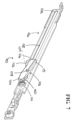
Figure 3 is a fragmentary perspective view of the seat track assembly ofFigure 1 ; -
Figure 4 is a fragmentary perspective view from underneath the seat track assembly ofFigure 1 ; -
Figure 5 is a fragmentary cross-sectional side view of the seat track assembly ofFigure 1 showing a memory plate of a memory mechanism in a home position; -
Figure 6 is a fragmentary perspective view the seat track assembly ofFigure 1 further showing the memory plate of the memory mechanism in the home position; -
Figure 7 is a perspective view of the seat track assembly ofFigure 1 showing a guide bracket and the memory plate; -
Figure 8 is a fragmentary side view of the seat track assembly ofFigure 1 further showing the memory plate of the memory mechanism in the home position; -
Figure 9 is a fragmentary side view of the seat track assembly ofFigure 1 showing the memory plate of the memory mechanism in a memory position; -
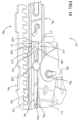
Figure 10 is a fragmentary perspective view of the seat track assembly ofFigure 1 further showing the memory plate of the memory mechanism in the memory position; and -
Figure 11 is a fragmentary perspective view of the seat track assembly ofFigure 1 showing a cam lever and slider. - Referring to the Figures, wherein like numerals indicate like or corresponding parts throughout the several views, a
seat track assembly 10 operatively interconnects aseat assembly 11 to afloor 12 of an automotive vehicle. Referring toFigure 1 , theseat assembly 11 includes a seat back 13 operatively coupled to aseat cushion 14 for allowing selective pivotal movement of theseat back 13 relative to theseat cushion 14 between a plurality of reclined seating positions. Theseat back 13 is also pivotally movable to a forwardly folded position for increased ingress and egress room behind theseat assembly 11. Theseat track assembly 10 includes a primaryseat track assembly 15 laterally spaced apart from a secondaryseat track assembly 16. The primary and secondary seat track assemblies 15, 16 are operatively connected via across-talk cable 21 to allow selective longitudinal sliding adjustment of theseat assembly 11 between a plurality of fore/aft seating positions along thefloor 12 of the automotive vehicle, including an easy-entry position corresponding with a forwardmost position of the plurality of fore/aft seating positions. When theseat back 13 is pivoted to the forwardly folded position, theseat assembly 11 automatically slides forward from a previously selected fore/aft seating position to the easy-entry position. Although only the primaryseat track assembly 15 is described in detail herein, it is to be appreciated that the primary and secondary seat track assemblies 15, 16 are substantially similar and correspondingly move along thefloor 12 of the automotive vehicle. - The primary
seat track assembly 15 includes afixed track 17 operatively coupled with amovable track 18, as shown inFigure 1 . Thefixed track 17 is adapted to be fixedly secured to thefloor 12 of the automotive vehicle by a pair of risers. Themovable track 18 is adapted to be fixedly secured to an underside of theseat cushion 14 and is slidably coupled to thefixed track 17 for longitudinal sliding movement relative thereto. Thus, when themovable track 18 slides along thefixed track 17, theseat assembly 11 moves correspondingly with themoveable track 18 for adjustment between the plurality of fore/aft seating positions. - Referring to
Figure 2 , thefixed track 17 has a generally U-shaped cross-section that is defined by a horizontal lower portion 19 extending laterally between upwardly-extendingouter side walls outer side walls end portion flange end portions bearing surface fixed track 17. In addition, the lower portion 19 defines an upward-facingbearing surface outer side walls fixed track 17. However, it is to be appreciated that thefixed track 17 and thebearing surfaces - The
movable track 18 has a generally U-shaped cross-section that is inverted relative to thefixed track 17 and is defined by a horizontalupper portion 40 spaced apart from the lower portion 19 of thefixed track 17 and extending laterally between downwardly-extendinginner side walls Figure 2 . Theinner side walls end portion flange inner side walls movable track 18 interlock with theouter side walls fixed track 17. More specifically, the upwardly extendingflanges inner side walls end portions fixed track 17 for engagement of themovable track 18 with thefixed track 17 to help prevent separation thereof if theseat assembly 11 is subjected to large forces. Each of the upwardly extendingflanges bearing surface movable track 18. In addition, each of theend portions bearing surface 58, 60 extending longitudinally along themovable track 18. However, it is to be appreciated that themoveable track 18 and thebearing surfaces - Referring to
Figure 2 , the upward-facingbearing surfaces movable track 18 are in opposing relation to the downward-facingbearing surfaces fixed track 17. A plurality ofroller bearings 62, 64 are disposed therebetween to provide smooth forward and rearward sliding movement of themovable track 18 relative to thefixed track 17. Similarly, the downward-facingbearing surface 58 of themovable track 18 is in opposing relation to the upward-facingbearing surface 36 of thefixed track 17. A plurality ofroller bearings 66 are disposed therebetween to provide smooth forward and rearward sliding movement of themovable track 18 relative to thefixed track 17. Further, the downward-facing bearing surface 60 of themovable track 18 is in opposing relation to the upward-facingbearing surface 38 of thefixed track 17, and a roller mechanism 68 is disposed therebetween to provide smooth forward and rearward sliding movement of themovable track 18 relative to thefixed track 17. - The primary
seat track assembly 15 includes alatch mechanism 70 for selectively locking theseat assembly 11 in any one of the plurality of fore/aft seating positions, as shown inFigure 2 . More specifically, thelatch mechanism 70 is operatively coupled to themovable track 18 for selectively locking themovable track 18 with thefixed track 17 to prevent forward and rearward sliding movement of themovable track 18 relative to thefixed track 17. Thelatch mechanism 70 is disposed generally within a space defined between the lower portion 19 of thefixed track 17 and theupper portion 40 of themovable track 18. Thelatch mechanism 70 includes alatch body 72 that is operatively coupled to an inner surface of theinner side wall 44 of themovable track 18 and is operable between a locked position, as shown inFigure 2 , and an unlocked position. Aloop latch 74 extends laterally through theinner side wall 44 and the upwardly extendingflange 52 of themovable track 18 and is adapted for engaging a plurality of downward-facinglatching teeth 76 spaced longitudinally along the downward extendingflange 30 of thefixed track 17. Aleaf spring 78 extends longitudinally through thelatch body 72 and is coupled to the inner surface of theinner side wall 44 of themovable track 18 at opposite ends by tabs 79 extending from themovable track 18. Theleaf spring 78 biases thelatch body 72 upward towards the locked position, wherein theloop latch 74 engages the latchingteeth 76 on the fixedtrack 17, thereby locking themovable track 18 with the fixedtrack 17, as shown inFigure 2 . - Referring to
Figures 2 , thelatch body 72 is moved downward, against the bias of theleaf spring 78, to disengage theloop latch 74 from the latchingteeth 76 in response to actuating atowel bar 80. More specifically, referring toFigures 2 ,3 , and4 , a mountingbracket 82 is fixedly secured to an upper surface of theupper portion 40 of themovable track 18 and alatch release lever 84 is pivotally coupled to the mountingbracket 82 at apivot 86, which defines a first laterally extendingaxis 81. Thelatch release lever 84 includes anarm 88 that extends through anopening 83 in theupper portion 40 of themovable track 18 and is adapted for engaging thelatch body 72, as shown inFigures 2 and3 . Thetowel bar 80 includes across bar 85 andextension bracket 87. Theextension bracket 87 oftowel bar 80 is pivotally coupled to mountingbracket 82 atpivot 86 and operatively coupled to latchrelease lever 84 at aninterface 89. It is to be appreciated that theinterface 89 may have any suitable structure or take any suitable configuration or arrangement without varying the scope of the invention. For example, theinterface 89 may alternatively include a pin and slot configuration, a rivet, or a weld. Thetowel bar 80 is accessible to a seat occupant and is typically located underneath theseat cushion 14. When thetowel bar 80 is lifted, theextension bracket 87 andlatch release lever 84 rotate aboutpivot 86 and thearm 88 oflatch release lever 84 pushes thelatch body 72 downward towards the unlocked position, wherein theloop latch 74 is disengaged from the latchingteeth 76 of the fixedtrack 17, thereby unlocking themovable track 18 from the fixedtrack 17. - Referring to
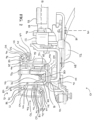
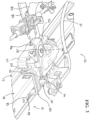
Figures 2 ,5 , and6-7 , the primaryseat track assembly 15 also includes amemory mechanism 90 which allows theseat assembly 11 to return to the previously selected fore/aft seating position after theseat assembly 11 is moved to the easy-entry position. Thememory mechanism 90 includes amemory plate 92 that selectively engages atooth rack 94 to identify the previously selected fore/aft seating position. Thetooth rack 94 extends longitudinally along and is fixedly secured to the lower portion 19 of the fixedtrack 17 and has a plurality ofangled teeth 95 extending upwardly therefrom. Theangled teeth 95 of thetooth rack 94 are tilted rearward relative to the lower portion 19 of the fixedtrack 17 for increasing mating engagement of theangled teeth 95 with thememory plate 92 to accurately identify the previously selected fore/aft seating position. Aguide bracket 96, as shown inFigure 7 , extends longitudinally and is fixedly secured to an inner surface of theinner side wall 42 of themovable track 18. Theguide bracket 96 includes aguide slot 98 extending longitudinally between aforward end 100 and arearward end 102. - Referring to
Figure 8 , arecess 103 extends downwardly from theforward end 100 of theguide slot 98. Therecess 103 is defined by afront wall 105 extending downwardly from theforward end 100 of theguide slot 98, an oppositerear wall 107, and afloor 111 extending therebetween. Additionally, therecess 103 includes atruncated corner 113 connecting therear wall 107 to theguide slot 98. Thememory plate 92 is disposed laterally between theguide bracket 96 and thelatch body 72, as shown inFigure 2 . Referring toFigures 6 and7 , thememory plate 92 extends longitudinally between afront end 104 and arear end 106 and is pivotally and slidably coupled to theguide slot 98 by apin 108 located substantially equidistant between the front andrear ends pin 108 defines a second laterally extendingaxis 109. Referring toFigure 8 , amemory tab 110 extends laterally from thefront end 104 of thememory plate 92 and is disposed in theguide slot 98. Thememory tab 110 extends along the guide slot between ahead portion 117 and anarm portion 128. Thehead portion 117 of thememory tab 110 is adapted to selectively and matingly couple within the front andrear walls recess 103, and thearm portion 128 of thememory tab 110 extends partially along theguide slot 98 from thehead portion 117 and is adapted to selectively engage thetruncated corner 113 of therecess 103. A pair ofmemory teeth 112 extend downward from therear end 106 of thememory plate 92, as shown inFigures 5-7 and9 , and are adapted for selective mating engagement with theangled teeth 95 of thetooth rack 94. Anengagement surface 115 is disposed at therear end 106 of thememory plate 92, as is described in further detail in the paragraphs below. - The
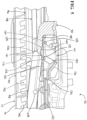
memory plate 92 rotates about thepin 108 between a home position, as shown inFigures 5 ,6 , and8 , and a memory position, as shown inFigures 9 and10 . Thememory plate 92 is biased to the home position by acoil spring 114 mounted to theguide bracket 96 adjacent theforward end 100 of theguide slot 98, as shown inFigures 6 and7 . Thecoil spring 114 is adapted to engage thefront end 104 of thememory plate 92 to bias thememory tab 110 downward into therecess 103 on theguide bracket 96. In the home position, thememory tab 110 is disposed in therecess 103 on theguide bracket 96 and thememory teeth 112 are disengaged from theangled teeth 95 of thetooth rack 94. In other words, when in the home position, thememory plate 92 is coupled with theguide bracket 96 and therefore travels with themovable track 18 during sliding movement of themovable track 18 relative to the fixedtrack 17. Thus, theseat assembly 11 is movable between the plurality of fore/aft seating positions. - Referring to
Figures 9 and10 , when thememory plate 92 is in the memory position, thememory tab 110 is withdrawn from therecess 103 on theguide bracket 96 and thememory teeth 112 are engaged with theangled teeth 95 of thetooth rack 94 to identify the previously selected fore/aft seating position of theseat assembly 11. With thememory plate 92 in the memory position, theguide bracket 96 and themovable track 18 slide relative to thememory plate 92. In other words, when thememory plate 92 is in the memory position, thememory plate 92 is matingly coupled with theangled teeth 95 of thetooth rack 94 and therefore does not travel with themovable track 18 during sliding movement of themovable track 18 relative to the fixedtrack 17. Thus, theseat assembly 11 is movable between the previously selected fore/aft seating position and the easy-entry position. Further, as shown inFigure 10 , when thememory plate 92 is in the memory position, thememory tab 110 is trapped in theguide slot 98 during sliding movement of themovable track 18 as theseat assembly 11 moves between the previously selected fore/aft seating position and the easy-entry position. Thus, thememory plate 92 remains in the memory position until thememory tab 110 returns to therecess 103 on theguide bracket 96. - The
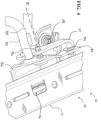
memory plate 92 rotates from the home position to the memory position in response to pivoting the seat back 13 from one of the reclined seating positions to the forwardly folded position. More specifically, acam lever 116 is pivotally coupled to the mountingbracket 82 atpivot 118, which defines a vertically extendingaxis 119, as shown inFigures 2 and3 . A Bowden-type cable 120, as shown inFigure 11 , is operatively coupled between the seat back 13 and thecam lever 116 such that pivoting the seat back 13 to the forwardly folded position causes thecam lever 116 to rotate in a first direction aboutpivot 118. As thecam lever 116 rotates in the first direction, thecam lever 116 pushes aslider 121 downward and rearward from a raised position, as shown inFigure 5 , to a depressed position, as shown inFigure 9 . Theslider 121 extends through anopening 122 in theupper portion 40 of themovable track 18 and is adapted to contact thememory plate 92 and thearm 88 of thelatch release lever 84. When thememory plate 92 is in the home position, therear end 106 of thememory plate 92 is in contact with an underside of theslider 121 and maintains theslider 121 in the raised position, as shown inFigure 5 . As thecam lever 116 pushes theslider 121 from the raised position to the depressed position, theslider 121 pushes against therear end 106 of thememory plate 92 and rotates thememory plate 92 from the home position to the memory position, as shown inFigure 9 . - The movement of the
slider 121 from the raised position to the depressed position also actuates thelatch body 72 from the locked position to the unlocked position. A built-in delay function ensures thememory teeth 112 on thememory plate 92 are engaged with theangled teeth 95 of thetooth rack 94 prior to thelatch body 72 being actuated to the unlocked position. More specifically, arearward end 123 of theslider 121 includes a rampededge 124 facing downward and thearm 88 of thelatch release lever 84 includes a rampededge 125 facing upward, wherein the opposing rampededges slider 121 moves from the raised position to the depressed position, as shown inFigure 9 . The ramped edges 124, 125 are configured such that theslider 121 rotates thememory plate 92 to engage thememory teeth 112 with theangled teeth 95 of thetooth rack 94 before rotating thelatch release lever 84 to actuate thelatch body 72 to the unlocked position. Further, as the rampededge 124 at therearward end 123 of theslider 121 comes into contact with the rampededge 125 of thelatch release lever 84, aforward end 126 of theslider 121 comes into contact with thelatch body 72 to prevent theslider 121 from further rotating thememory plate 92. - At least one side of the
slider 121 includes agroove 130 extending downwardly and rearwardly at an angle that corresponds with the downward and rearward movement of theslider 121. Thegroove 130 is aligned with aguide tab 132 formed along an edge of theopening 122 in theupper portion 40 of themovable track 18, as shown inFigure 11 . As thecam lever 116 pushes theslider 121 downward and rearward, theguide tab 132 cooperates with thegroove 130 to guide theslider 121 from the raised position to the depressed position. - Referring to
Figure 9 , therearward end 123 of theslider 121 may include a recess or step 134 facing upward that is adapted to maintain theslider 121 in the depressed position while theseat assembly 11 moves between the previously selected fore/aft seating position and the easy-entry position. More specifically, when theslider 121 is in the depressed position, thestep 134 is disposed underneath theupper portion 40 of themovable track 18. Thestep 134 therefore prevents theslider 121 from moving upward while theseat assembly 11 moves between the previously selected fore/aft seating position and the easy-entry position. For example, if the seat back 13 is pivoted to an upright position before theseat assembly 11 is returned to the previously selected fore/aft seating position, thecam lever 116 will rotate in a second direction aboutpivot 118 and the bias of theleaf spring 78 will tend to urge thelatch body 72, thearm 88 of thelatch release lever 84, and theslider 121 upward. This would generally result in thelatch body 72 returning to the locked position before theseat assembly 11 is returned to the previously selected fore/aft seating position. However, with thestep 134 disposed underneath theupper portion 40 of themovable track 18, theslider 121 is prevented from moving upward and remains in the depressed position, which in turn maintains thelatch body 72 in the unlocked position. In other words, thestep 134 acts as a hold-open feature for thelatch mechanism 70. Alternatively, rather than a step on the slider, an interlock assembly may be used to prevent the seat back from pivoting to the upright position before the seat assembly is returned to the previously selected fore/aft seating position, as is described inU.S. Patent No. 9,308,834 - Referring to
Figure 5 , thestep 134 is moved from underneath theupper portion 40 of themovable track 18 in response to contact of theslider 121 with theengagement surface 115 on thememory plate 92 as theseat assembly 11 is returned from the easy-entry position to the previously selected fore/aft seating position. More specifically, as theseat assembly 11 is returned rearward to the previously selected fore/aft seating position, theslider 121 contacts theengagement surface 115 on thememory plate 92. Since thememory plate 92 is in the memory position coupled with theangled teeth 95 of thetooth rack 94, thememory plate 92 is prevented from moving, and contact between theslider 121 and thememory plate 92 moves the slider forward such that thestep 134 is withdrawn from underneath theupper portion 40 of themovable track 18 and theslider 121 is then free to return to the raised position. - In operation, beginning with the
memory plate 92 in the home position, as shown inFigure 5 , such that thememory teeth 112 on thememory plate 92 are disengaged from theangled teeth 95 of thetooth rack 94, the primaryseat track assembly 15 is freely adjustable to move theseat assembly 11 between the plurality of fore/aft seating positions by lifting thetowel bar 80. When thetowel bar 80 is lifted, theextension bracket 87 and thelatch release lever 84 rotate aboutpivot 86 and thearm 88 oflatch release lever 84 pushes thelatch body 72 downward from the locked position to the unlocked position. With thelatch body 72 in the unlocked position, theloop latch 74 is disengaged from the latchingteeth 76 on the fixedtrack 17 and themovable track 18 is free to slide relative to the fixedtrack 17. Thememory plate 92 is in the home position, wherein thehead portion 117 of thememory tab 110 is secured within the front andrear walls recess 103 on theguide bracket 96, and thearm portion 128 of thememory tab 110 is engaged with thetruncated corner 113, as shown inFigure 8 . As themovable track 18 slides relative to the fixedtrack 17, thememory plate 92 travels therewith. Once the particular fore/aft seating position is selected, thetowel bar 80 is released and theleaf spring 78 returns thelatch body 72 to the locked position. With thelatch body 72 in the locked position, theloop latch 74 is engaged with the latchingteeth 76 on the fixedtrack 17, as shown inFigure 2 , thereby locking themovable track 18 relative to the fixedtrack 17. - For ingress and egress or additional storage area behind the
seat assembly 11, the seat back 13 is actuated to the forwardly folded position. As the seat back 13 pivots forward to the forwardly folded position, the Bowden-type cable 120 is pulled and causes thecam lever 116 to rotate in the first direction aboutpivot 118. As thecam lever 116 rotates in the first direction, thecam lever 116 pushes theslider 121 downward and rearward and theguide tab 132 on themovable track 18 cooperates with thegroove 130 on theslider 121 to guide theslider 121 from the raised position to the depressed position, as shown inFigure 9 . Movement of theslider 121 from the raised position to the depressed position rotates thememory plate 92 aboutpivot 108 from the home position to the memory position such that thehead portion 117 of thememory tab 110 is no longer secured within the front andrear walls recess 103 on theguide bracket 96, and thearm portion 128 of thememory tab 110 is no longer engaged with thetruncated corner 113, as shown inFigure 10 . Thememory teeth 112 on thememory plate 92 are engaged with theangled teeth 95 of thetooth rack 94 to identify the previously selected fore/aft seating position, as shown inFigure 9 . As thememory teeth 112 on thememory plate 92 engage theangled teeth 95 of thetooth rack 94, the rampededge 124 on theslider 121 comes into contact with the rampededge 125 on thearm 88 oflatch release lever 84 to rotate thelatch release lever 84 aboutpivot 86 and actuate thelatch body 72 from the locked position to the unlocked position. With thememory plate 92 in the memory position and thelatch body 72 in the unlocked position, themovable track 18 is slid forward relative to the fixedtrack 17 to move theseat assembly 11 from the previously selected fore/aft seating position to the easy-entry position. - To return the
seat assembly 11 to the previously selected fore/aft seating position, themovable track 18 is slid rearward relative to the fixedtrack 17 until theslider 121 contacts theengagement surface 115 on thememory plate 92, which causes theslider 121 to move forward, thereby withdrawing thestep 134 from underneath theupper portion 40 of themovable track 18. Theforward end 100 of theguide slot 98 then contacts thehead portion 117 of thememory tab 110, which stops theseat assembly 11 at the previously selected fore/aft seating position. After theseat assembly 11 is stopped at the previously selected fore/aft seating position, continued rearward force applied to the seat back 13 pivots the seat back 13 to the upright position. As the seat back 13 pivots to the upright position, thecam lever 116 rotates in the second direction aboutpivot 118 and the bias of theleaf spring 78 moves thelatch body 72 upward into the locked position, as shown inFigure 2 . As thelatch body 72 moves upward, thearm 88 of thelatch release lever 84 moves theslider 121 upward into the raised position. At the same time, thecoil spring 114 pushes thefront end 104 of thememory plate 92 downward, which rotates thememory plate 92 aboutpin 108 until thememory tab 110 is again disposed in therecess 103 on theguide bracket 96. Thememory plate 92 is now in the home position and themovable track 18 is locked relative to the fixedtrack 17. - The invention has been described in an illustrative manner, and it is to be understood that the terminology which has been used is intended to be in the nature of words of description rather than of limitation. Directional references employed or shown in the description, figures or claims, such as top, bottom, upper, lower, upward, downward, lengthwise, widthwise, longitudinal, lateral, and the like, are relative terms employed for ease of description and are not intended to limit the scope of the invention in any respect. Many modifications and variations of the present invention are possible in light of the above teachings. It is, therefore, to be understood that within the scope of the appended claims, the invention may be practiced other than as specifically described.
Claims (12)
- A seat track assembly (10) for providing forward and rearward movement of a seat assembly (11) along a floor (12) of an automotive vehicle, the seat track assembly (10) comprising:a fixed track (17) adapted to be fixedly secured to the floor (12) of the automotive vehicle;a tooth rack (94) extending along and fixedly secured to the fixed track (17), the tooth rack (94) having a plurality of teeth (95) extending upwardly therefrom;a movable track (18) adapted to be fixedly secured to the seat assembly (11) and slidably coupled to the fixed track (17) ;a latch mechanism (70) operatively coupled between the fixed and movable tracks (17, 18), wherein the latch mechanism (70) prevents sliding movement of the movable track (18) and is selectively disengaged from the fixed track (17) to allow sliding movement of the movable track (18) between a plurality of positions; anda memory mechanism (90) operatively coupled to the moveable track (18) and operable betweena home position in which the memory mechanism (90) is disengaged from the plurality of teeth (95) for moving with the moveable track (18) during sliding movement thereof, anda memory position in which the memory mechanism (90) is engaged with the plurality of teeth (95) for coupling to the fixed track (17) to define a previously selected one of the plurality of positions,wherein actuation of the memory mechanism (90) to the memory position disengages the latch mechanism (70) from the fixed track (17), thereby allowing sliding movement of the movable track (18) in a first direction from the previously selected one of the plurality of positions to an easy-entry position, and in a second direction opposite the first direction from the easy-entry position wherein the memory mechanism (90) stops the movable track (18) at the previously selected one of the plurality of positions, thereby reengaging the latch mechanism with the fixed track (17) and returning the memory mechanism (90) to the home position,wherein the plurality of teeth (95) are angled from a vertical position for increasing engagement with the memory mechanism (90) when in the memory position to further secure the memory mechanism (90) to the fixed track (17) at the previously selected one of the plurality of positions,wherein the plurality of teeth (95) are angled rearward towards the second direction,wherein the latch mechanism (70) is independently operable to disengage the latch mechanism (70) from the fixed track (17) when the memory mechanism (90) is in the home position,wherein the memory mechanism (90) further includes a memory plate (92) extending between a first and an opposite second end (104, 106), the memory plate (92) operatively coupled to the movable track (18) such that the memory plate (92) is disengaged from the plurality of teeth (95) when the memory mechanism (90) is in the home position and the memory plate (92) is engaged with the plurality of teeth (95) when the memory mechanism (90) is in the memory position, andcharacterized in that the movable track (18) includes an elongated slot (98) extending between opposite first and second ends (100, 102), the elongated slot (98) having a recess (103) at the first end (100) thereof.
- The seat track assembly (10) of claim 1, wherein the memory plate (92) includes a memory tab (110) extending laterally therefrom to selectively engage the recess (103) of the elongated slot (98).
- The seat track assembly (10) of claim 2, wherein the memory plate (92) is slidably coupled to the elongated slot (98) such that the memory tab (110) is disposed in the recess (103) when the memory mechanism (90) is in the home position and the memory tab (110) is withdrawn from the recess (103) when the memory mechanism (90) is in the memory position.
- The seat track assembly (10) of claim 3, wherein the first end (100) of the elongated slot (98) contacts the memory tab (110) to stop the movable track (18) at the previously selected one of the plurality of positions in response to sliding movement of the movable track (18) in the second direction.
- The seat track assembly (10) of claim 4, wherein the recess (103) is defined by a front wall (105) extending from the first end (100) of the elongated slot (98), an opposite rear wall (107), a floor (111) extending between the rear and front walls (105, 107), and a truncated corner (113) connecting the front wall (105) of the recess (103) to the elongated slot (98),
preferably wherein the memory tab (110) extends along the elongated slot (98) between a head portion (117) and an arm portion (128) such that the head portion (117) is adapted to selectively and matingly couple within the front and rear wall (105, 107) of the recess (103) and the arm portion (128) is adapted to selectively engage the truncated corner (113) for reducing friction between the recess (103) and the memory tab (110) as the memory mechanism (90) moves to and from the home position. - The seat track assembly (10) of claim 5, wherein the memory plate (92) includes at least one memory tooth (112) extending from the first end (106) thereof for engaging the plurality of teeth (95) of the tooth rack (94) when the memory mechanism (90) is in the memory position,
wherein the memory mechanism (90) is preferably biased towards the home position. - The seat track assembly (10) of claim 6, further comprising a latch release lever (84) pivotally coupled to the movable track (18), wherein the latch release lever (84) directly engages the latch mechanism (70) and is operable to disengage the latch mechanism (70) from the fixed track (17) in response to pivotal movement of the latch release lever (84) .
- The seat track assembly (10) of claim 7, further comprising a slider (121) for engaging the second end of the memory plate (92) and the latch release lever (84), wherein the slider (121) is operable between a raised position when the memory mechanism (90) is in the home position and the latch mechanism (70) is engaged with the fixed track (17), and a depressed position when the memory mechanism (90) is in the memory position and the latch mechanism (70) is disengaged from the fixed track (17),
preferably further comprising a guide tab (132) disposed on the movable track (18), the guide tab (132) adapted and arranged for engaging and guiding the slider (121) between the raised position and the depressed position. - The seat track assembly (10) of claim 8, wherein the movable track (18) contacts the slider (121) in the depressed position to prevent the slider (121) from moving to the raised position during sliding movement of the movable track (18) between the previously selected one of the plurality of positions and the easy-entry position, thereby preventing engagement of the latch mechanism (70) with the fixed track (17) .
- The seat track assembly (10) of claim 9, further comprising a cam lever (116) pivotally coupled to the movable track (18) for engaging the slider (121), wherein pivotal movement of the cam lever (116) in a first direction moves the slider (121) from the raised position to the depressed position.
- The seat track assembly (10) of claim 10, wherein movement of the slider (121) from the raised position to the depressed position actuates the memory mechanism (90) to the memory position prior to disengaging the latch mechanism (70) from the fixed track (17).
- The seat track assembly (10) of claim 11, wherein movement of the slider (121) from the depressed position to the raised position allows the latch mechanism (70) to engage the fixed track (17) prior to allowing the memory mechanism (90) to return to the home position.
Applications Claiming Priority (2)
| Application Number | Priority Date | Filing Date | Title |
|---|---|---|---|
| US201962874716P | 2019-07-16 | 2019-07-16 | |
| PCT/US2020/070276 WO2021011963A2 (en) | 2019-07-16 | 2020-07-15 | Seat track assembly with memory mechanism |
Publications (2)
| Publication Number | Publication Date |
|---|---|
| EP3962773A2 EP3962773A2 (en) | 2022-03-09 |
| EP3962773B1 true EP3962773B1 (en) | 2025-01-01 |
Family
ID=72087327
Family Applications (1)
| Application Number | Title | Priority Date | Filing Date |
|---|---|---|---|
| EP20757201.7A Active EP3962773B1 (en) | 2019-07-16 | 2020-07-15 | Seat track assembly with memory mechanism |
Country Status (5)
| Country | Link |
|---|---|
| US (1) | US12043146B2 (en) |
| EP (1) | EP3962773B1 (en) |
| CN (1) | CN114126918B (en) |
| CA (1) | CA3147645A1 (en) |
| WO (1) | WO2021011963A2 (en) |
Families Citing this family (1)
| Publication number | Priority date | Publication date | Assignee | Title |
|---|---|---|---|---|
| US12208709B2 (en) * | 2023-06-13 | 2025-01-28 | Lear Corporation | Stopper assembly for a seat track assembly |
Citations (1)
| Publication number | Priority date | Publication date | Assignee | Title |
|---|---|---|---|---|
| FR2882539B1 (en) * | 2005-02-28 | 2007-05-18 | Faurecia Sieges Automobile | DEVICE FOR SIMULTANEOUSLY ACTING ON TWO ELEMENTS AND SEAT COMPRISING SUCH A DEVICE |
Family Cites Families (14)
| Publication number | Priority date | Publication date | Assignee | Title |
|---|---|---|---|---|
| NL284764A (en) * | 1961-10-31 | |||
| FR2695885B1 (en) * | 1992-09-22 | 1994-12-02 | Faure Bertrand Automobile | Positioning slide for an internal memory seat cooperating with the fixed profile of the slide. |
| US6102478A (en) * | 1998-01-16 | 2000-08-15 | Lear Corporation | Vehicle seat slide mechanism |
| JP4499595B2 (en) * | 2005-03-31 | 2010-07-07 | 富士機工株式会社 | Seat slide device with memory walk-in lock mechanism |
| FR2902713B1 (en) | 2006-06-21 | 2008-09-05 | Faurecia Sieges Automobile | DEVICE FOR LOCKING A LATCH SLIDER OF A SEAT |
| FR2902714B1 (en) * | 2006-06-21 | 2008-09-05 | Faurecia Sieges Automobile | DEVICE FOR RETAINING A SEAT ON A SLIDE |
| FR2910394B1 (en) | 2006-12-20 | 2009-03-06 | Faurecia Sieges Automobile | SLIDER AND SEAT WITH A LATCHING SYSTEM |
| WO2010097408A2 (en) | 2009-02-24 | 2010-09-02 | Brose Fahrzeugteile Gmbh & Co. Kg, Coburg | Motor vehicle seat |
| DE102009033892B4 (en) * | 2009-07-20 | 2017-03-30 | Lear Corporation | Seat rail assembly with seat lock and memory element for vehicle seat |
| WO2011143758A1 (en) * | 2010-05-17 | 2011-11-24 | Magna Seating Inc. | Easy entry seat system with single position memory and hold open feature |
| CA2819063C (en) | 2010-12-03 | 2018-06-19 | Magna Seating Inc. | Full memory seat track mechanism |
| JP6822298B2 (en) | 2017-04-24 | 2021-01-27 | トヨタ紡織株式会社 | Vehicle slide rail device |
| WO2019195834A1 (en) * | 2018-04-06 | 2019-10-10 | Magna Seating Inc. | Internal full memory seat track with interlock |
| CN109435787B (en) * | 2019-01-02 | 2020-02-07 | 延锋安道拓座椅机械部件有限公司 | Memory module and have seat mounting structure who easily gets into module |
-
2020
- 2020-07-15 EP EP20757201.7A patent/EP3962773B1/en active Active
- 2020-07-15 US US17/627,790 patent/US12043146B2/en active Active
- 2020-07-15 CN CN202080050846.XA patent/CN114126918B/en active Active
- 2020-07-15 CA CA3147645A patent/CA3147645A1/en active Pending
- 2020-07-15 WO PCT/US2020/070276 patent/WO2021011963A2/en not_active Ceased
Patent Citations (1)
| Publication number | Priority date | Publication date | Assignee | Title |
|---|---|---|---|---|
| FR2882539B1 (en) * | 2005-02-28 | 2007-05-18 | Faurecia Sieges Automobile | DEVICE FOR SIMULTANEOUSLY ACTING ON TWO ELEMENTS AND SEAT COMPRISING SUCH A DEVICE |
Also Published As
| Publication number | Publication date |
|---|---|
| US20220324357A1 (en) | 2022-10-13 |
| CA3147645A1 (en) | 2021-01-21 |
| EP3962773A2 (en) | 2022-03-09 |
| US12043146B2 (en) | 2024-07-23 |
| CN114126918A (en) | 2022-03-01 |
| CN114126918B (en) | 2024-04-12 |
| WO2021011963A2 (en) | 2021-01-21 |
| WO2021011963A3 (en) | 2021-03-25 |
Similar Documents
| Publication | Publication Date | Title |
|---|---|---|
| EP2646279B1 (en) | Full memory seat track mechanism | |
| EP2485918B1 (en) | Sliding easy entry release mechanism with rest in full rear position | |
| EP1974984B1 (en) | Seat slide device for vehicle | |
| US8757720B2 (en) | Seat track easy-entry actuation mechanism | |
| US6227596B1 (en) | Slide rail for vehicle seat and seat comprising such a slide rail | |
| US5100092A (en) | Two-way manual seat adjuster with full memory easy entry | |
| US4881774A (en) | Memory seat track assembly for vehicle seat | |
| EP1309466B1 (en) | Easy entry seat adjuster with mid position memory | |
| JP2001238756A (en) | Mechanical neck rest pulling-down device | |
| EP3962773B1 (en) | Seat track assembly with memory mechanism | |
| CN105960351B (en) | Seat slide device for vehicle | |
| EP3752389B1 (en) | Internal full memory seat track with interlock | |
| WO2010066053A1 (en) | Easy entry seat track assembly with memory | |
| CA3096218C (en) | Internal full memory seat track with interlock |
Legal Events
| Date | Code | Title | Description |
|---|---|---|---|
| STAA | Information on the status of an ep patent application or granted ep patent |
Free format text: STATUS: UNKNOWN |
|
| STAA | Information on the status of an ep patent application or granted ep patent |
Free format text: STATUS: THE INTERNATIONAL PUBLICATION HAS BEEN MADE |
|
| PUAI | Public reference made under article 153(3) epc to a published international application that has entered the european phase |
Free format text: ORIGINAL CODE: 0009012 |
|
| STAA | Information on the status of an ep patent application or granted ep patent |
Free format text: STATUS: REQUEST FOR EXAMINATION WAS MADE |
|
| 17P | Request for examination filed |
Effective date: 20211201 |
|
| AK | Designated contracting states |
Kind code of ref document: A2 Designated state(s): AL AT BE BG CH CY CZ DE DK EE ES FI FR GB GR HR HU IE IS IT LI LT LU LV MC MK MT NL NO PL PT RO RS SE SI SK SM TR |
|
| DAV | Request for validation of the european patent (deleted) | ||
| DAX | Request for extension of the european patent (deleted) | ||
| P01 | Opt-out of the competence of the unified patent court (upc) registered |
Effective date: 20230517 |
|
| STAA | Information on the status of an ep patent application or granted ep patent |
Free format text: STATUS: EXAMINATION IS IN PROGRESS |
|
| 17Q | First examination report despatched |
Effective date: 20240318 |
|
| GRAP | Despatch of communication of intention to grant a patent |
Free format text: ORIGINAL CODE: EPIDOSNIGR1 |
|
| STAA | Information on the status of an ep patent application or granted ep patent |
Free format text: STATUS: GRANT OF PATENT IS INTENDED |
|
| INTG | Intention to grant announced |
Effective date: 20240802 |
|
| GRAS | Grant fee paid |
Free format text: ORIGINAL CODE: EPIDOSNIGR3 |
|
| GRAA | (expected) grant |
Free format text: ORIGINAL CODE: 0009210 |
|
| STAA | Information on the status of an ep patent application or granted ep patent |
Free format text: STATUS: THE PATENT HAS BEEN GRANTED |
|
| AK | Designated contracting states |
Kind code of ref document: B1 Designated state(s): AL AT BE BG CH CY CZ DE DK EE ES FI FR GB GR HR HU IE IS IT LI LT LU LV MC MK MT NL NO PL PT RO RS SE SI SK SM TR |
|
| REG | Reference to a national code |
Ref country code: GB Ref legal event code: FG4D |
|
| REG | Reference to a national code |
Ref country code: DE Ref legal event code: R096 Ref document number: 602020044071 Country of ref document: DE |
|
| REG | Reference to a national code |
Ref country code: CH Ref legal event code: EP |
|
| REG | Reference to a national code |
Ref country code: IE Ref legal event code: FG4D |
|
| REG | Reference to a national code |
Ref country code: LT Ref legal event code: MG9D |
|
| REG | Reference to a national code |
Ref country code: NL Ref legal event code: MP Effective date: 20250101 |
|
| REG | Reference to a national code |
Ref country code: AT Ref legal event code: MK05 Ref document number: 1755924 Country of ref document: AT Kind code of ref document: T Effective date: 20250101 |
|
| PG25 | Lapsed in a contracting state [announced via postgrant information from national office to epo] |
Ref country code: NL Free format text: LAPSE BECAUSE OF FAILURE TO SUBMIT A TRANSLATION OF THE DESCRIPTION OR TO PAY THE FEE WITHIN THE PRESCRIBED TIME-LIMIT Effective date: 20250101 |
|
| PG25 | Lapsed in a contracting state [announced via postgrant information from national office to epo] |
Ref country code: FI Free format text: LAPSE BECAUSE OF FAILURE TO SUBMIT A TRANSLATION OF THE DESCRIPTION OR TO PAY THE FEE WITHIN THE PRESCRIBED TIME-LIMIT Effective date: 20250101 |
|
| PG25 | Lapsed in a contracting state [announced via postgrant information from national office to epo] |
Ref country code: PL Free format text: LAPSE BECAUSE OF FAILURE TO SUBMIT A TRANSLATION OF THE DESCRIPTION OR TO PAY THE FEE WITHIN THE PRESCRIBED TIME-LIMIT Effective date: 20250101 |
|
| PG25 | Lapsed in a contracting state [announced via postgrant information from national office to epo] |
Ref country code: ES Free format text: LAPSE BECAUSE OF FAILURE TO SUBMIT A TRANSLATION OF THE DESCRIPTION OR TO PAY THE FEE WITHIN THE PRESCRIBED TIME-LIMIT Effective date: 20250101 |
|
| PG25 | Lapsed in a contracting state [announced via postgrant information from national office to epo] |
Ref country code: NO Free format text: LAPSE BECAUSE OF FAILURE TO SUBMIT A TRANSLATION OF THE DESCRIPTION OR TO PAY THE FEE WITHIN THE PRESCRIBED TIME-LIMIT Effective date: 20250401 Ref country code: IS Free format text: LAPSE BECAUSE OF FAILURE TO SUBMIT A TRANSLATION OF THE DESCRIPTION OR TO PAY THE FEE WITHIN THE PRESCRIBED TIME-LIMIT Effective date: 20250501 |
|
| PG25 | Lapsed in a contracting state [announced via postgrant information from national office to epo] |
Ref country code: HR Free format text: LAPSE BECAUSE OF FAILURE TO SUBMIT A TRANSLATION OF THE DESCRIPTION OR TO PAY THE FEE WITHIN THE PRESCRIBED TIME-LIMIT Effective date: 20250101 |
|
| PG25 | Lapsed in a contracting state [announced via postgrant information from national office to epo] |
Ref country code: LV Free format text: LAPSE BECAUSE OF FAILURE TO SUBMIT A TRANSLATION OF THE DESCRIPTION OR TO PAY THE FEE WITHIN THE PRESCRIBED TIME-LIMIT Effective date: 20250101 Ref country code: PT Free format text: LAPSE BECAUSE OF FAILURE TO SUBMIT A TRANSLATION OF THE DESCRIPTION OR TO PAY THE FEE WITHIN THE PRESCRIBED TIME-LIMIT Effective date: 20250502 |
|
| PGFP | Annual fee paid to national office [announced via postgrant information from national office to epo] |
Ref country code: FR Payment date: 20250610 Year of fee payment: 6 |
|
| PG25 | Lapsed in a contracting state [announced via postgrant information from national office to epo] |
Ref country code: GR Free format text: LAPSE BECAUSE OF FAILURE TO SUBMIT A TRANSLATION OF THE DESCRIPTION OR TO PAY THE FEE WITHIN THE PRESCRIBED TIME-LIMIT Effective date: 20250402 Ref country code: BG Free format text: LAPSE BECAUSE OF FAILURE TO SUBMIT A TRANSLATION OF THE DESCRIPTION OR TO PAY THE FEE WITHIN THE PRESCRIBED TIME-LIMIT Effective date: 20250101 |
|
| PG25 | Lapsed in a contracting state [announced via postgrant information from national office to epo] |
Ref country code: AT Free format text: LAPSE BECAUSE OF FAILURE TO SUBMIT A TRANSLATION OF THE DESCRIPTION OR TO PAY THE FEE WITHIN THE PRESCRIBED TIME-LIMIT Effective date: 20250101 |
|
| PG25 | Lapsed in a contracting state [announced via postgrant information from national office to epo] |
Ref country code: CZ Free format text: LAPSE BECAUSE OF FAILURE TO SUBMIT A TRANSLATION OF THE DESCRIPTION OR TO PAY THE FEE WITHIN THE PRESCRIBED TIME-LIMIT Effective date: 20250101 |
|
| PG25 | Lapsed in a contracting state [announced via postgrant information from national office to epo] |
Ref country code: SE Free format text: LAPSE BECAUSE OF FAILURE TO SUBMIT A TRANSLATION OF THE DESCRIPTION OR TO PAY THE FEE WITHIN THE PRESCRIBED TIME-LIMIT Effective date: 20250101 |
|
| REG | Reference to a national code |
Ref country code: DE Ref legal event code: R097 Ref document number: 602020044071 Country of ref document: DE |
|
| PG25 | Lapsed in a contracting state [announced via postgrant information from national office to epo] |
Ref country code: SM Free format text: LAPSE BECAUSE OF FAILURE TO SUBMIT A TRANSLATION OF THE DESCRIPTION OR TO PAY THE FEE WITHIN THE PRESCRIBED TIME-LIMIT Effective date: 20250101 |
|
| PG25 | Lapsed in a contracting state [announced via postgrant information from national office to epo] |
Ref country code: DK Free format text: LAPSE BECAUSE OF FAILURE TO SUBMIT A TRANSLATION OF THE DESCRIPTION OR TO PAY THE FEE WITHIN THE PRESCRIBED TIME-LIMIT Effective date: 20250101 |
|
| PGFP | Annual fee paid to national office [announced via postgrant information from national office to epo] |
Ref country code: DE Payment date: 20250604 Year of fee payment: 6 |
|
| PG25 | Lapsed in a contracting state [announced via postgrant information from national office to epo] |
Ref country code: IT Free format text: LAPSE BECAUSE OF FAILURE TO SUBMIT A TRANSLATION OF THE DESCRIPTION OR TO PAY THE FEE WITHIN THE PRESCRIBED TIME-LIMIT Effective date: 20250101 |
|
| PG25 | Lapsed in a contracting state [announced via postgrant information from national office to epo] |
Ref country code: EE Free format text: LAPSE BECAUSE OF FAILURE TO SUBMIT A TRANSLATION OF THE DESCRIPTION OR TO PAY THE FEE WITHIN THE PRESCRIBED TIME-LIMIT Effective date: 20250101 |
|
| PG25 | Lapsed in a contracting state [announced via postgrant information from national office to epo] |
Ref country code: RO Free format text: LAPSE BECAUSE OF FAILURE TO SUBMIT A TRANSLATION OF THE DESCRIPTION OR TO PAY THE FEE WITHIN THE PRESCRIBED TIME-LIMIT Effective date: 20250101 |
|
| PG25 | Lapsed in a contracting state [announced via postgrant information from national office to epo] |
Ref country code: SK Free format text: LAPSE BECAUSE OF FAILURE TO SUBMIT A TRANSLATION OF THE DESCRIPTION OR TO PAY THE FEE WITHIN THE PRESCRIBED TIME-LIMIT Effective date: 20250101 |
|
| PLBE | No opposition filed within time limit |
Free format text: ORIGINAL CODE: 0009261 |
|
| STAA | Information on the status of an ep patent application or granted ep patent |
Free format text: STATUS: NO OPPOSITION FILED WITHIN TIME LIMIT |
|
| REG | Reference to a national code |
Ref country code: CH Ref legal event code: L10 Free format text: ST27 STATUS EVENT CODE: U-0-0-L10-L00 (AS PROVIDED BY THE NATIONAL OFFICE) Effective date: 20251112 |
|
| 26N | No opposition filed |
Effective date: 20251002 |
|
| REG | Reference to a national code |
Ref country code: CH Ref legal event code: H13 Free format text: ST27 STATUS EVENT CODE: U-0-0-H10-H13 (AS PROVIDED BY THE NATIONAL OFFICE) Effective date: 20260224 |
|
| PG25 | Lapsed in a contracting state [announced via postgrant information from national office to epo] |
Ref country code: LU Free format text: LAPSE BECAUSE OF NON-PAYMENT OF DUE FEES Effective date: 20250715 |
|
| GBPC | Gb: european patent ceased through non-payment of renewal fee |
Effective date: 20250715 |
|
| REG | Reference to a national code |
Ref country code: BE Ref legal event code: MM Effective date: 20250731 |
|
| PG25 | Lapsed in a contracting state [announced via postgrant information from national office to epo] |
Ref country code: GB Free format text: LAPSE BECAUSE OF NON-PAYMENT OF DUE FEES Effective date: 20250715 |
|
| PG25 | Lapsed in a contracting state [announced via postgrant information from national office to epo] |
Ref country code: BE Free format text: LAPSE BECAUSE OF NON-PAYMENT OF DUE FEES Effective date: 20250731 |
|
| PG25 | Lapsed in a contracting state [announced via postgrant information from national office to epo] |
Ref country code: CH Free format text: LAPSE BECAUSE OF NON-PAYMENT OF DUE FEES Effective date: 20250731 |