EP3962018A1 - Method and device for real-time media stream access, communication device, and terminal - Google Patents
Method and device for real-time media stream access, communication device, and terminal Download PDFInfo
- Publication number
- EP3962018A1 EP3962018A1 EP20798033.5A EP20798033A EP3962018A1 EP 3962018 A1 EP3962018 A1 EP 3962018A1 EP 20798033 A EP20798033 A EP 20798033A EP 3962018 A1 EP3962018 A1 EP 3962018A1
- Authority
- EP
- European Patent Office
- Prior art keywords
- media stream
- real
- communication device
- time
- time media
- Prior art date
- Legal status (The legal status is an assumption and is not a legal conclusion. Google has not performed a legal analysis and makes no representation as to the accuracy of the status listed.)
- Granted
Links
Images





Classifications
-
- H—ELECTRICITY
- H04—ELECTRIC COMMUNICATION TECHNIQUE
- H04L—TRANSMISSION OF DIGITAL INFORMATION, e.g. TELEGRAPHIC COMMUNICATION
- H04L65/00—Network arrangements, protocols or services for supporting real-time applications in data packet communication
- H04L65/10—Architectures or entities
- H04L65/1016—IP multimedia subsystem [IMS]
-
- H—ELECTRICITY
- H04—ELECTRIC COMMUNICATION TECHNIQUE
- H04L—TRANSMISSION OF DIGITAL INFORMATION, e.g. TELEGRAPHIC COMMUNICATION
- H04L65/00—Network arrangements, protocols or services for supporting real-time applications in data packet communication
- H04L65/60—Network streaming of media packets
- H04L65/75—Media network packet handling
-
- H—ELECTRICITY
- H04—ELECTRIC COMMUNICATION TECHNIQUE
- H04L—TRANSMISSION OF DIGITAL INFORMATION, e.g. TELEGRAPHIC COMMUNICATION
- H04L65/00—Network arrangements, protocols or services for supporting real-time applications in data packet communication
- H04L65/10—Architectures or entities
- H04L65/1059—End-user terminal functionalities specially adapted for real-time communication
-
- H—ELECTRICITY
- H04—ELECTRIC COMMUNICATION TECHNIQUE
- H04L—TRANSMISSION OF DIGITAL INFORMATION, e.g. TELEGRAPHIC COMMUNICATION
- H04L65/00—Network arrangements, protocols or services for supporting real-time applications in data packet communication
- H04L65/1066—Session management
- H04L65/1069—Session establishment or de-establishment
-
- H—ELECTRICITY
- H04—ELECTRIC COMMUNICATION TECHNIQUE
- H04L—TRANSMISSION OF DIGITAL INFORMATION, e.g. TELEGRAPHIC COMMUNICATION
- H04L65/00—Network arrangements, protocols or services for supporting real-time applications in data packet communication
- H04L65/40—Support for services or applications
-
- H—ELECTRICITY
- H04—ELECTRIC COMMUNICATION TECHNIQUE
- H04L—TRANSMISSION OF DIGITAL INFORMATION, e.g. TELEGRAPHIC COMMUNICATION
- H04L65/00—Network arrangements, protocols or services for supporting real-time applications in data packet communication
- H04L65/60—Network streaming of media packets
- H04L65/61—Network streaming of media packets for supporting one-way streaming services, e.g. Internet radio
-
- H—ELECTRICITY
- H04—ELECTRIC COMMUNICATION TECHNIQUE
- H04L—TRANSMISSION OF DIGITAL INFORMATION, e.g. TELEGRAPHIC COMMUNICATION
- H04L65/00—Network arrangements, protocols or services for supporting real-time applications in data packet communication
- H04L65/60—Network streaming of media packets
- H04L65/65—Network streaming protocols, e.g. real-time transport protocol [RTP] or real-time control protocol [RTCP]
-
- H—ELECTRICITY
- H04—ELECTRIC COMMUNICATION TECHNIQUE
- H04L—TRANSMISSION OF DIGITAL INFORMATION, e.g. TELEGRAPHIC COMMUNICATION
- H04L67/00—Network arrangements or protocols for supporting network services or applications
- H04L67/14—Session management
- H04L67/141—Setup of application sessions
-
- H—ELECTRICITY
- H04—ELECTRIC COMMUNICATION TECHNIQUE
- H04L—TRANSMISSION OF DIGITAL INFORMATION, e.g. TELEGRAPHIC COMMUNICATION
- H04L67/00—Network arrangements or protocols for supporting network services or applications
- H04L67/14—Session management
- H04L67/146—Markers for unambiguous identification of a particular session, e.g. session cookie or URL-encoding
-
- H—ELECTRICITY
- H04—ELECTRIC COMMUNICATION TECHNIQUE
- H04L—TRANSMISSION OF DIGITAL INFORMATION, e.g. TELEGRAPHIC COMMUNICATION
- H04L69/00—Network arrangements, protocols or services independent of the application payload and not provided for in the other groups of this subclass
- H04L69/22—Parsing or analysis of headers
Definitions
- the present disclosure relates to, but is not limited to, a method and apparatus for real-time media stream access, a communication device, and a terminal.
- IP multimedia subsystem is a subsystem supporting IP multi-media services proposed by a third-generation partnership project (3GPP), which is a direction of developing multi-media communication.
- 3GPP third-generation partnership project
- IMS IP multimedia subsystem
- SIP session initial protocol
- IMS application level gateway ASG
- IMS access gateway IMS application level gateway
- P-CSCF proxy call session control function
- SBC session border controller
- Real-time media streams sent or received by the terminal needs to be forwarded by the SBC. Because packets sent by the terminal usually go through the NAT, the address and port of the SBC at which the media packet actually arriving are different from those carried in a SIP signaling of the terminal. In order to obtain the IP address and port information after the NAT of the terminal, a conventional method is that the SBC usually determines a correspondence between the SBC and the terminal by detecting information of the media packet arriving at a specified local port of the SBC in a manner of first packet learning (see Table 1).
- Table 1 Terminal information table created through first packet learning Terminal identifier IP address of the terminal after NAT Port of the terminal after NAT IP address at local end of SBC Port at local end of SBC 138xxxx 221.135.8.9 17533 202.198.5.5 10000 139xxxx 211.178.9.10 24550 202.198.5.5 20000 together .... .... .... .... .... ....
- the above method may recognize the IP address and port number of the terminal after NAT, however, this method has defects such as occupation of excessive ports.
- Embodiments of the present disclosure provide a method and apparatus for real-time media stream access, a communication device, and a terminal.
- Some embodiments of the present disclosure provide a method for real-time media stream access, which includes: determining, by a communication device, a media stream identifier corresponding to a real-time media stream in a process of establishing a real-time media stream session; allocating, by the communication device, a local port for the real-time media stream, wherein each local port corresponds to one or more real-time media streams; and forwarding, by the communication device, a media packet carrying the real-time media stream after the real-time media stream session is established, wherein the media packet carries the media stream identifier.
- Some embodiments of the present disclosure provide a method for real-time media stream access, which includes: determining, by a terminal, a media stream identifier corresponding to a real-time media stream in a process of establishing a real-time media stream session; and sending, by the terminal, a media packet carrying the real-time media stream after the real-time media stream session is established, wherein the media packet carries the media stream identifier.
- Some embodiments of the present disclosure provide an apparatus for real-time media stream access, which includes: a first determining module, configured to determine a media stream identifier corresponding to a real-time media stream in a process of establishing a real-time media stream session; an allocating module, configured to allocate a local port for the real-time media stream, wherein each local port corresponds to one or more real-time media streams; and a forwarding module, configured to forward a media packet carrying the real-time media stream after the real-time media stream session is established, wherein the media packet carries the media stream identifier.
- Some embodiments of the present disclosure provide a communication device including a memory, a processor, and a computer program stored on the memory and executable by the processor, wherein the processor executes the computer program to perform the method for real-time media stream access.
- Some embodiments of the present disclosure provide an apparatus for real-time media stream access, which includes: a second determining module, configured to determine a media stream identifier corresponding to a real-time media stream in a process of establishing a real-time media stream session; and a sending module, configured to send a media packet carrying the real-time media stream after the real-time media stream session is established, wherein the media packet carries the media stream identifier.
- Some embodiments of the present disclosure provide a terminal including a memory, a processor, and a computer program stored on the memory and executable by the processor, wherein the processor executes the computer program to perform the method for real-time media stream access.
- Some embodiments of the present disclosure provide a computer readable storage medium storing a computer executable instruction, wherein the computer executable instruction is configured to perform the method for real-time media stream access.
- a single IP address can only have up to 65535 ports, which means that a single IP address supports up to 65535 media channels. If it is desired to increase the number of media channels, the number of IP addresses needs to be increased. With the deployment of a 5G network, the access number of terminals has increased dramatically, and the existing mode is not enough to meet the requirements.
- the IP address of SBC When the IP address of SBC is obtained by a malicious software, it is possible to construct a media packet and send the media packet to all the ports.
- the SBC does not judge a content of the media, but only determine whether it is a media packet, which makes the SBC misconception that the media packet constructed is a real one so that the SBC allocates corresponding port to the malicious software, thus resulting in unauthorized occupation of the port.
- media stream identifier negotiation and authentication are added, and functions such as secure access of a media stream and anti-malicious attack are provided.
- an IMS network architecture in the present disclosure mainly includes following network elements.
- SBC100 is configured to provide an access service for a terminal, and may include the following in the embodiments of the present disclosure.
- SBC - a signaling processing module 101 is configured to allocate a media stream identifier to a media stream, or record the media stream identifier when receiving the media stream identifier, and notify a media processing module 102 of the media stream identifier.
- SBC - a media processing module 102 is configured to verify the media stream identifier and establish a media packet transmission path according to a preset policy.
- a call session control function (CSCF) 110 is configured for service triggering and call routing, and has no special requirements in the embodiments of the present disclosure.
- An application server (AS) 115 is configured to provide a communication service for a user, and has no special requirements in the embodiments of the present disclosure.
- a terminal (UE) 120 is configured to indicate in a call request/response that a media authentication capability is supported, record the media stream identifier, and carry the media stream identifier in the media packet.
- the terminal may include the following modules.
- a signaling processing module 121 is configured to indicate in the call request/response that the media authentication capability is supported, record the media stream identifier, and transmit the media stream identifier and an IP address and port information of the SBC to a media processing module 122.
- the media processing module 122 is configured to send the media packet to the IP address and the port of the SBC, and carry the media stream identifier in the media packet.
- a method for real-time media stream access in an embodiment of the present disclosure, applied at a communication device includes the following operations.
- the communication device determines a media stream identifier corresponding to a real-time media stream in a process of establishing a real-time media stream session.
- the communication device may include an SBC that may be a calling side SBC or a called side SBC.
- a case where the communication device includes the calling side SBC is described as follows.
- the media stream identifier is allocated by the communication device.
- the operation 201 may include the following. That is, the communication device receives a service request sent by the calling terminal for the real-time media stream, the service request carries a capability of supporting media stream authentication, and the communication device allocates a globally unique identifier as the media stream identifier corresponding to the real-time media stream.
- the media stream identifier is allocated by a calling terminal, and the communication device determines whether the media stream identifier is available.
- the operation 201 may include the following. That is, the communication device receives a service request sent by the calling terminal for the real-time media stream, and the service request carries the capability of supporting media stream authentication and the media stream identifier allocated by the calling terminal. In response to determining that the media stream identifier allocated by the calling terminal is not occupied, the communication device determines that the media stream identifier allocated by the calling terminal as the media stream identifier corresponding to the real-time media stream.
- the media stream identifier is allocated by the calling terminal, the communication device determines whether the media stream identifier is available, and the communication device allocates the media stream identifier when the media stream identifier is not available.
- the operation 201 may include the following. That is, the communication device receives the service request sent by the calling terminal for the real-time media stream, and the service request carries the capability of supporting media stream authentication and the media stream identifier allocated by the calling terminal. In response to determining that that the media stream identifier allocated by the calling terminal is occupied, the communication device allocates a globally unique identifier as the media stream identifier corresponding to the real-time media stream, and the communication device notifies the calling terminal of the media stream identifier corresponding to the real-time media stream.
- the communication device receives the service request sent by the calling terminal for the real-time media stream, and the service request does not carry the capability of supporting media stream authentication.
- the communication device denies access of the calling terminal.
- the communication device may directly deny the access of the calling terminal, or may perform compatibility processing according to existing processes.
- a response for the service request is received, it is determined that the response does not carry the media stream identifier, the media stream identifier corresponding to the real-time media stream is added to the response, and the response carrying the media stream identifier is forwarded.
- the response for the service request is received, it is determined that the response carries the media stream identifier, the media stream identifier carried in the response is compared with the media stream identifier corresponding to the real-time media stream to determine whether the media stream identifier carried in the response is consistent with the media stream identifier corresponding to the real-time media stream, the media stream identifier carried in the response is replaced with the media stream identifier corresponding to the real-time media stream in response to determining that the media stream identifier carried in the response is inconsistent with the media stream identifier corresponding to the real-time media stream, and the response is forwarded.
- the response is forwarded directly in response to determining that the media stream identifier carried in the response is consistent with the media stream identifier corresponding to the real-time media stream.
- the communication device allocates a local port to the real-time media stream.
- Each local port corresponds to one or more real-time media streams.
- a plurality of real-time media streams may share one local port.
- the SBC determines a total bandwidth corresponding to all the media streams to ensure that a traffic of a UDP port does not exceed a traffic range of a physical port.
- the communication device forwards the media packet carrying the real-time media stream after the real-time media stream session is established.
- the media packet carries the media stream identifier.
- a media stream identifier of the terminal is carried in the media packet, and a plurality of real-time media streams may share one local port, thereby improving a utilization rate of media ports, increasing a system capacity, and meeting a requirement of access of super-large-scale terminals.
- the method further includes the following operations.
- the communication device performs media stream validity judgment by checking the media stream identifier in the media packet.
- the performing of the media stream validity judgment may include the following. That is, the communication device determines that the real-time media stream is valid in response to determining that the media stream identifier carried in the media packet is included in one or more media stream identifiers corresponding to the local port, and the communication device determines that the real-time media stream is invalid in response to determining that the media stream identifier carried in the media packet is not included in the one or more media stream identifiers corresponding to the local port.
- a forwarding route corresponding to source address information in the media packet is recorded, and subsequent media packets carrying the real-time media stream are directly forwarded after being received.
- the source address information includes a combination of a source IP address and a port number (i.e., IP+Port).
- the media stream validity judgment is performed.
- the SBC establishes a correspondence between the media stream identifier and source IP+Port of the terminal to implement fast forwarding.
- a network side of SBC may allocate a separate IP+Port combination for each real-time media stream to implement fast packet forwarding.
- the network side of the SBC may adopt a method in which a plurality of real-time media streams share one port.
- the network side determines a forwarding rule by analyzing the globally unique media stream identifier in the media packet.
- the media message carrying the real-time media stream is discarded.
- the source address information in the media message carrying the real-time media stream is recorded as a blacklist, and subsequent media messages carrying the source address information are directly discarded when being received.
- secure access of media streams is provided to prevent malicious attacks by performing the media stream validity judgment.
- a method for real-time media stream access is applied at a terminal, which includes the following operations.
- the terminal determines a media stream identifier corresponding to a real-time media stream in a process of establishing a real-time media stream session.
- the media stream identifier is allocated by the communication device.
- the operation 301 includes the following. That is, the terminal sends a service request for the real-time media stream, and the service request carries a capability of supporting media stream authentication. The terminal receives a response for the service request, and the response carries the media stream identifier.
- the media stream identifier is allocated by the terminal and determined by the communication device.
- the operation 301 includes the following. That is, the terminal sends a service request for the real-time media stream, and the service request carries a capability of supporting media stream authentication and a media stream identifier allocated by the calling terminal.
- the terminal receives a response for the service request, and determines the media stream identifier corresponding to the real-time media stream according to the media stream identifier carried in the response.
- the operation 301 includes the following. That is, the terminal receives a service request for the real-time media stream, and obtains the media stream identifier from the service request.
- the terminal sends the media packet carrying the real-time media stream after the real-time media stream session is established, and the media packet carries the media stream identifier.
- the media packet includes a real-time transport protocol (RTP) packet
- the terminal carries a parameter of the media stream identifier in a synchronization source SSRC field of the RTP packet.
- RTP real-time transport protocol
- the terminal extends the RTP packet, and carries the media stream identifier in an extended header of the RTP packet.
- a real-time media stream access process of an embodiment of the present disclosure may include the following operations.
- the service request when the calling terminal initiates a service request, the service request carries a capability of supporting media stream authentication.
- the calling side SBC creates a globally unique identifier for each real-time media stream in the current session when receiving the service request from the calling terminal, and inserts the unique identifier into the service request.
- the SBC records a correspondence between a terminal user identifier and the real-time media stream identifier at the local end, and designates a local port for each real-time media stream.
- a plurality of real-time media streams may share one local port.
- the SBC determines a total bandwidth corresponding to all media streams when establishing a correspondence between one local port and a plurality of real-time media streams, to ensure that a traffic of a UDP port does not exceed a traffic range of a physical port.
- the calling side SBC replaces a media address and port of the terminal in an original SIP request with the media address and port of the calling side SBC when sending the service request to a calling CSCF.
- IP addresses at the network side of the SBC are sufficient, a separate IP+Port combination is used to correspond to the real-time media stream (refer to Table 2 and FIG.7 ).
- IP addresses at the network side of the SBC are insufficient, a plurality of media streams may share one network side IP+Port combination (refer to Table 3 and FIG.8 ).
- Terminal identifier Media stream identifier at terminal side IP address at user side of SBC Port number at terminal side IP address at network side of SBC Port number at network side of SBC
- a 13248 192.128.1.1 10000 10.40.5.1 10000 13249 192.128.1.1 10000 10.40.5.1 10002
- terminal identifier Media stream identifier at terminal side IP address at user side of SBC Port number at terminal side IP address at network side of SBC Port number at network side of SBC A 13248 192.128.1.1 10000 10.40.5.1 10000 13249 192.128.1.1 10000 10.40.5.1 10000 B 22128 192.128.1.1 10000 10.40.5.1 10000 22129 192.128.1.1 10000 10.40.5.1 10000 C 30000 192.128.1.1 10000 10.40.5.1 10000 30002 192.128.1.1 10000 10.40.5.1 10000
- user plane ports at the SBC side allow media streams of a plurality of terminals to share the same user plane port at the SBC side, and one user plane port is allocated to each media stream of each terminal on the network side for mapping.
- the calling CSCF forwards the service request to the called side SBC according to an IMS basic call process.
- the called side SBC extracts the real-time media stream identifier, and allocates the local port to be associated with the real-time media stream identifier.
- a plurality of real-time media streams may share one local port.
- the SBC considers a total bandwidth corresponding to all the media streams when establishing a correspondence between one local port and the plurality of real-time media streams, to ensure that a traffic of a UDP port does not exceed a traffic range of a physical port.
- the called side SBC forwards the service request to the called terminal.
- the called terminal parses media information in the service request, and records the correspondence between the media stream identifier and the IP+Port of the media stream.
- the called terminal carries the media stream identifier in the service response when sending the service response.
- the called side SBC inserts the real-time media stream identifier into the service response when receiving the response from the called terminal.
- the SBC compares real-time media stream identifier with the content locally recorded to determine whether they are consistent. If the real-time media stream identifier carried in the response is inconsistent with the content locally recorded, the real-time media stream identifier carried in the response is replaced with the content locally recorded.
- the called side SBC routes the response to the calling side SBC according to the call process of the standard IMS.
- the calling side SBC parses the information in the service response, determines whether the response carries a unique real-time media stream identifier, and if not, inserts in the service response a real-time media stream identifier corresponding to the local end carried in the request. If the service response has already carried the unique real-time media stream identifier, the unique real-time media stream identifier is compared with the real-time media stream identifier in the request to determine whether they are consistent, and if not, the unique real-time media stream identifier in the request is replaced with the real-time media stream identifier in the request.
- the SBC modifies address information of the real-time media stream in the response to the IP+Port corresponding to the local end.
- the calling terminal extracts the real-time media stream identifier and the IP+Port of the SBC after receiving the response forwarded by the calling side SBC.
- Both the calling terminal and the called terminal have established the correspondence between the real-time media stream identifier and the IP+Port of a receiving end at the user side (i.e., a user network interface (UNI)) of the SBC.
- the user side i.e., a user network interface (UNI)
- the calling or called terminal sends the real-time media stream to the IP+Port of the SBC, and carries the real-time media stream identifier in the real-time media stream.
- the SBC first checks whether the source IP+Port has a corresponding forwarding route when receiving the real-time media stream, i.e., the real-time media stream can be forwarded to a destination IP+Port to be forwarded according to the source IP+Port. If the destination IP+Port to be forwarded is found, the real-time media stream is directly forwarded. If the destination IP+Port to be forwarded is not found, the SBC checks and analyzes the real-time media stream identifier in the media packet, and queries whether the real-time media stream identifier is included in real-time media stream identifiers corresponding to the local port of the SBC.
- the real-time media stream identifier is included in the real-time media stream identifiers corresponding to the local port of the SBC, it indicates that the real-time media stream is valid, the source IP+Port of the terminal is recorded in the forwarding route, and subsequent real-time media streams sent by the IP+Port can be directly forwarded, so that the real-time media stream identifier does not need to be determined, thereby improving the processing efficiency. If the real-time media stream identifier is included in a list of the real-time media stream identifiers corresponding to the local port, it indicates that the real-time media stream is invalid and is directly discarded, as shown in FIG. 9 .
- the IP+Port corresponding to the terminal may be recorded in a blacklist, and subsequent packets received from the IP+Port may be directly discarded.
- the SBC forwards the real-time media stream to a peer SBC.
- the SBC determines whether the local end has a unique forwarding relationship according to the IP+Port at the local. If the local end allocates a separate port for each real-time media stream, the local end may determine the forwarding relationship, and the peer SBC directly forwards the media stream according to a routing relationship corresponding to the forwarding relationship.
- IP+Port of a receiving end at the network side i.e., a network node interface (NNI)
- NNI network node interface
- a target port of a corresponding UNI is determined for forwarding by analyzing the unique media stream identifier in the real-time media streams. If a forwarding route cannot be determined based on the media stream identifier in the media stream, the packet is dropped directly, as shown in FIG. 10 .
- SBC realizes the receiving and forwarding of real-time media streams.
- media stream identifier negotiation and authentication are added, and functions such as secure access of media streams and anti-malicious attacks are provided.
- the utilization rate of the user side IP+Port is greatly improved, and the demand for the IP addresses is reduced.
- SIP session initiation protocol
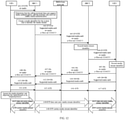
- the SBC1 In 502, the SBC1 generates a unique identifier for each media stream to authenticate the media.
- the SBC1 carries the media stream identifier when forwarding the service request to the next hop.
- the IMS routes the service request to the SBC2 where the called terminal is located, and the request includes the media stream identifier.
- the SBC2 records the media stream identifier, and carries the media stream identifier in the request forwarded to the terminal UE2. If the called terminal is required to forcibly support the media authentication, a header 'Require: media-auth' of a capability of requiring the terminal to support the media authentication is carried in the request. If the called terminal is not required to forcibly support the media authentication, a header 'Supported: media-auth' of a capability of the local end supporting the media authentication is carried in the request.
- the UE2 carries the media stream identifier in a returned 18x response (a general term for a temporary response such as 180 or 183), which indicates that the local end accepts the media stream identifier corresponding to the media stream, and carries a capability flag 'Supported: media-auth' of supporting the media authentication.
- a returned 18x response (a general term for a temporary response such as 180 or 183), which indicates that the local end accepts the media stream identifier corresponding to the media stream, and carries a capability flag 'Supported: media-auth' of supporting the media authentication.
- the SBC2 carries the media stream identifier in the forwarded 18x response.
- the IMS carries the media stream identifier in the 18x response forwarded to the SBC1.
- the SBC1 carries the media stream identifier in the 18x response forwarded to the terminal.
- the calling terminal UE1 records the authentication identifier of each medium stream in the 18x response.
- the UE2 returns 200 OK (a response) to the SBC2 after the user responds.
- the SBC2 forwards the 200 OK response to the IMS.
- the IMS forwards the 200 OK response to the SBC1.
- the SBC1 forwards the 200 OK response to the terminal UE1.
- the calling terminal UE1 sends an acknowledgement request (ACK) to the SBC1, which indicates establishment of the session.
- ACK acknowledgement request
- the SBC1 forwards the ACK request to the IMS.
- the IMS forwards the ACK request to the SBC2.
- the SBC2 forwards the ACK request to the UE2.
- RTP media streams sent by the UE1 and the UE2 carry the media stream identifier.
- FIG. 12 an application example of SBC signaling negotiation process in the IMS network is shown, in which a caller does not support media stream identifier negotiation and a callee supports the media stream identifier negotiation, including the following operations.
- the terminal UE1 initiates a service request to the SBC1, and does not carry the media authentication capability in the INVITE request, which indicates that the local end does not support media authentication.
- the SBC1 generates a unique identifier for each media stream to authenticate the media.
- the SBC1 carries the media stream identifier when forwarding the service request to the next hop.
- the IMS routes the service request to the SBC2 where the called terminal is located, and the request includes the media stream identifier.
- the SBC2 records the media stream identifier, and carries the media stream identifier in the request forwarded to the terminal UE2. If the called terminal is required to forcibly support media authentication, a header 'Require: media-auth' of a capability of requiring the terminal to support the media authentication is carried in the request. If the called terminal is not required to forcibly support the media authentication, a header 'Supported: media-auth' of a capability of the local end supporting the media authentication is carried in the request. In this example, the called terminal is not required to forcibly support the media authentication.
- the UE2 carries the media stream identifier in the returned 18x response, which indicates that the local end accepts the media stream identifier corresponding to the media stream, and carries the capability flag 'Supported: media-auth' of supporting the media authentication.
- the SBC2 carries the media stream identifier in the forwarded 18x response.
- the IMS carries the media stream identifier in the 18x response forwarded to the SBC1.
- the SBC1 carries the media stream identifier in the 18x response forwarded to the terminal.
- the calling terminal UE1 ignores the media stream identifier in the 18x response, does not insert the media stream identifier in the media stream, and performs media negotiation based on a media authentication-free mode.
- the UE2 returns a 200 OK response to the SBC2 after the user responds.
- the SBC2 forwards the 200 OK response to the IMS.
- the IMS forwards the 200 OK response to the SBC1.
- the SBC1 forwards the 200 OK response to the terminal UE1.
- the calling terminal UE1 sends the ACK to the SBC1, which indicates the establishment of the session.
- the SBC1 forwards the ACK request to the IMS.
- the IMS forwards the ACK request to the SBC2.
- the SBC2 forwards the ACK request to the UE2.
- the RTP media stream sent by the UE1 does not carry the media stream identifier, and the RTP media stream sent by the UE2 carries the media stream identifier.
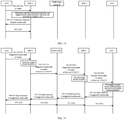
- FIG. 13 an application example of SBC signaling negotiation process in the IMS network is shown, in which the caller supports media stream identifier negotiation and the callee does not support media stream identifier negotiation, including the following operations.
- the terminal UE1 initiates a service request to the SBC1, and carries the media authentication capability in the INVITE request, which indicates that the local end supports the media authentication.
- the SBC1 generates a unique identifier for each media stream to authenticate the media.
- the SBC1 carries the media stream identifier when forwarding the service request to the next hop;
- the IMS routes the service request to the SBC2 where the called terminal is located, and the request includes the media stream identifier.
- the SBC2 records the media stream identifier, and carries the media stream identifier in the request forwarded to the terminal UE2. If the called terminal is required to forcibly support media authentication, a header 'Require: media-auth' of a capability of requiring the terminal to support the media authentication is carried in the request. If the called terminal is not required to forcibly support the media authentication, a header 'Supported: media-auth' of a capability of the local end supporting the media authentication is carried in the request. In this example, the called terminal is not required to forcibly support the media authentication.
- the UE2 does not carry the media stream identifier and the capability flag 'Supported: media-auth' of supporting the media authentication in the returned 18x response, which indicates that the local end does not support the media authentication.
- the SBC2 does not carry the media stream identifier in the forwarded 18x response.
- the IMS does not carry the media stream identifier in the 18x response forwarded to the SBC1.
- the SBC1 inserts previously generated media stream identifier into the 18x response forwarded to the terminal.
- the calling terminal UE1 stores the media stream identifier, inserts the media stream identifier into the media stream, and performs media negotiation based on a media authentication mode.
- the UE2 returns a 200 OK response to the SBC2 after the user responds.
- the SBC2 forwards the 200 OK response to the IMS.
- the IMS forwards the 200 OK response to the SBC1.
- the SBC1 forwards the 200 OK response to the terminal UE1.
- the calling terminal UE1 sends the ACK to the SBC1, which indicates the establishment of the session.
- the SBC1 forwards the ACK request to the IMS.
- the IMS forwards the ACK request to the SBC2.
- the SBC2 forwards the ACK request to the UE2.
- the RTP media stream sent by the UE1 does not carry the media stream identifier
- the RTP media stream sent by the UE2 does not carry the media stream identifier
- FIG. 14 an application example of SBC signaling negotiation process in the IMS network is shown, in which the caller does not support media stream identifier negotiation, and the calling side SBC directly denies, including the following operations.
- the terminal UE1 initiates a service request to the SBC1, and does not carry the media authentication capability in the INVITE request, which indicates that the local end does not support media authentication.
- the SBC1 determines that media authentication needs to be performed this time, but the calling terminal does not support the media authentication, so a '421 Extension Required' failure response is returned which indicates that the terminal is required to support the media authentication.
- the terminal UE1 sends the ACK to end this session.
- FIG. 15 an application example of SBC signaling negotiation process in the IMS network is shown, in which the callee does not support media stream identifier negotiation, and the called SBC directly denies, including the following operations.
- the terminal UE1 initiates a service request to the SBC1, and carries the media authentication capability in the INVITE request, which indicates that the local end supports the media authentication.
- the SBC1 In 902, the SBC1 generates a unique identifier for each media stream to authenticate the media.
- the SBC1 carries the media stream identifier when forwarding the service request to the next hop.
- the IMS routes the service request to the SBC2 where the called terminal is located, and the request includes the media stream identifier.
- the SBC2 records the media stream identifier, and carries the media stream identifier in the request forwarded to the terminal UE2.
- the called terminal is required to forcibly support media authentication, and the request carries a header 'Require: media-auth' of a capability of requiring the terminal to support the media authentication.
- the UE2 finds that the local end does not support the media authentication, and returns a '420 Bad Extension' failure response which indicates that the local end does not support the media authentication capability 'Supported: media-auth'.
- the SBC2 forwards the 420 response to the IMS.
- the IMS forwards the 420 response to the SBC1.
- the SBC1 forwards the 420 response to the terminal 420.
- the calling terminal UE1 sends the ACK to the SBC1, which indicates the establishment of the session.
- the SBC1 forwards the ACK request to the IMS.
- the IMS forwards the ACK request to the SBC2.
- the SBC2 forwards the ACK request to the UE2.
- an embodiment of the present disclosure further provides an apparatus for real-time media stream access applied to a communication device, which includes: a first determining module 1001, configured to determine a media stream identifier corresponding to a real-time media stream in a process of establishing a real-time media stream session; an allocating module 1002, configured to allocate a local port for the real-time media stream, where each local port corresponds to one or more real-time media streams; and a forwarding module 1003, configured to forward a media packet carrying the real-time media stream after the real-time media stream session is established, where the media packet carries the media stream identifier.
- an embodiment of the present disclosure further provides an apparatus for real-time media stream access applied to a terminal, which includes: a second determining module 1101, configured to determine a media stream identifier corresponding to a real-time media stream in a process of establishing a real-time media stream session; and a sending module 1102, configured to send a media packet carrying the real-time media stream after the real-time media stream session is established, where the media packet carries the media stream identifier.
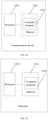
- an embodiment of the present disclosure further provides a communication device including a memory 1201, a processor 1202, and a computer program 1203 stored on the memory 1201 and executable by the processor 1202.
- the processor 1202 executes the computer program 1203 to perform the method for real-time media stream access as shown in FIG. 4 .
- an embodiment of the present disclosure further provides a terminal including a memory 1301, a processor 1302, and a computer program 1303 stored on the memory 1301 and executable by the processor 1302.
- the processor 1302 executes the computer program 1303 to perform the method for real-time media stream access as shown in FIG. 5 .
- An embodiment of the present disclosure further provides a computer readable storage medium storing a computer executable instruction.
- the computer executable instruction is configured to perform the method for real-time media stream access.
- the storage medium may include, but is not limited to, a USB flash drive, a read-only memory (ROM), a random access memory (RAM), a removable hard disk, a magnetic disk, an optical disc, or any other medium that can store program codes.
- the term computer storage medium includes volatile and non-volatile, removable and non-removable media implemented in any method or technique for storing information, such as computer readable instructions, data structures, program modules or other data.
- the computer storage medium includes, but is not limited to, a RAM, ROM, EEPROM, flash memory or other memory technologies, CD-ROM, digital versatile disk (DVD) or other optical disk storage, magnetic cassette, magnetic tape, magnetic disk storage or other magnetic storage device, or any other medium that may be configured to store desired information and that may be accessed by a computer.
- a communication medium typically includes computer readable instructions, data structures, program modules, or other data in a modulated data signal such as a carrier wave or other transmission mechanism, and may include any information delivery medium.
Landscapes
- Engineering & Computer Science (AREA)
- Multimedia (AREA)
- Computer Networks & Wireless Communication (AREA)
- Signal Processing (AREA)
- Business, Economics & Management (AREA)
- General Business, Economics & Management (AREA)
- Data Exchanges In Wide-Area Networks (AREA)
Abstract
Description
- The present disclosure claims the priority of
Chinese patent application No. 201910351703.1 filed on April 28, 2019 - The present disclosure relates to, but is not limited to, a method and apparatus for real-time media stream access, a communication device, and a terminal.
- IP multimedia subsystem (IMS) is a subsystem supporting IP multi-media services proposed by a third-generation partnership project (3GPP), which is a direction of developing multi-media communication. As an application subsystem in the 4G era, IMS enables well-qualified communications between persons in the 4G era, a significant characteristic of IMS is the use of a session initial protocol (SIP) system in which the communication has nothing to do with an access mode, and having various capabilities such as separation between control functions and carrying functions of a variety of multi-media services, separation between a call and a session, separation between an application and a service, separation between a business and a network, convergence of a mobile network and an Internet service, and the like.
- In the 3GPP TS 23.228 standard, logical functions of an IMS application level gateway (ALG) and an IMS access gateway are defined (see
FIG.1 ). In actual applications, the above two logical functions are combined into a proxy call session control function (P-CSCF) or a session border controller (SBC), which serves as a boundary control device and provides functions between an access network and an IMS core network such as net address translation (NAT) traversal, access control, quality of service (QoS) control, signaling and bearer security, IP interworking, and the like. - Real-time media streams sent or received by the terminal needs to be forwarded by the SBC. Because packets sent by the terminal usually go through the NAT, the address and port of the SBC at which the media packet actually arriving are different from those carried in a SIP signaling of the terminal. In order to obtain the IP address and port information after the NAT of the terminal, a conventional method is that the SBC usually determines a correspondence between the SBC and the terminal by detecting information of the media packet arriving at a specified local port of the SBC in a manner of first packet learning (see Table 1).
Table 1 Terminal information table created through first packet learning Terminal identifier IP address of the terminal after NAT Port of the terminal after NAT IP address at local end of SBC Port at local end of SBC 138xxxx 221.135.8.9 17533 202.198.5.5 10000 139xxxx 211.178.9.10 24550 202.198.5.5 20000 ...... ...... ...... ...... ...... - The above method may recognize the IP address and port number of the terminal after NAT, however, this method has defects such as occupation of excessive ports.
- The following is an overview of the subject-matter described in the present disclosure, which is not intended to limit the protection scope of the appended claims.
- Embodiments of the present disclosure provide a method and apparatus for real-time media stream access, a communication device, and a terminal.
- Some embodiments of the present disclosure provide a method for real-time media stream access, which includes: determining, by a communication device, a media stream identifier corresponding to a real-time media stream in a process of establishing a real-time media stream session; allocating, by the communication device, a local port for the real-time media stream, wherein each local port corresponds to one or more real-time media streams; and forwarding, by the communication device, a media packet carrying the real-time media stream after the real-time media stream session is established, wherein the media packet carries the media stream identifier.
- Some embodiments of the present disclosure provide a method for real-time media stream access, which includes: determining, by a terminal, a media stream identifier corresponding to a real-time media stream in a process of establishing a real-time media stream session; and sending, by the terminal, a media packet carrying the real-time media stream after the real-time media stream session is established, wherein the media packet carries the media stream identifier.
- Some embodiments of the present disclosure provide an apparatus for real-time media stream access, which includes: a first determining module, configured to determine a media stream identifier corresponding to a real-time media stream in a process of establishing a real-time media stream session; an allocating module, configured to allocate a local port for the real-time media stream, wherein each local port corresponds to one or more real-time media streams; and a forwarding module, configured to forward a media packet carrying the real-time media stream after the real-time media stream session is established, wherein the media packet carries the media stream identifier.
- Some embodiments of the present disclosure provide a communication device including a memory, a processor, and a computer program stored on the memory and executable by the processor, wherein the processor executes the computer program to perform the method for real-time media stream access.
- Some embodiments of the present disclosure provide an apparatus for real-time media stream access, which includes: a second determining module, configured to determine a media stream identifier corresponding to a real-time media stream in a process of establishing a real-time media stream session; and a sending module, configured to send a media packet carrying the real-time media stream after the real-time media stream session is established, wherein the media packet carries the media stream identifier.
- Some embodiments of the present disclosure provide a terminal including a memory, a processor, and a computer program stored on the memory and executable by the processor, wherein the processor executes the computer program to perform the method for real-time media stream access.
- Some embodiments of the present disclosure provide a computer readable storage medium storing a computer executable instruction, wherein the computer executable instruction is configured to perform the method for real-time media stream access.
- Other aspects will be apparent from reading and understanding the drawings and detailed description.
-
-
FIG. 1 is a schematic diagram of logical functions of an IMS application level gateway and an IMS access gateway; -
FIG. 2 is a schematic diagram of a media stream access mode in a related technology; -
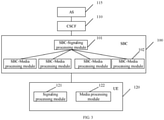
FIG. 3 is a schematic diagram of a system architecture according to an embodiment of the present disclosure; -
FIG. 4 is a flowchart of a method for real-time media stream access (applied at a communication device) according to an embodiment of the present disclosure; -
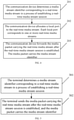
FIG. 5 is a flowchart of a method for real-time media stream access (applied at a terminal) according to an embodiment of the present disclosure; -
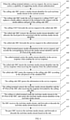
FIG. 6 is a flowchart of a method for real-time media stream access (applied to an IMS system) according to an embodiment of the present disclosure; -
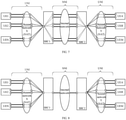
FIG. 7 is a schematic diagram of a network side allocating a port for each real-time media stream according to an embodiment of the present disclosure; -
FIG. 8 is a schematic diagram of a network side allocating a unified port for each real-time media stream according to an embodiment of the present disclosure; -
FIG. 9 is a user side media processing logic diagram illustrating a processing logic of SBC for a user side media according to an embodiment of the present disclosure; -
FIG. 10 is a network side media processing logic diagram illustrating a processing logic of SBC for a network side media according to an embodiment of the present disclosure; -
FIG. 11 is a flowchart of a call in an IMS network of an application example of the present disclosure; -
FIG. 12 is a flowchart of SBC signaling negotiation in an IMS network according to an application example of the present disclosure, in which a caller does not support media stream identifier negotiation, and a callee supports the media stream identifier negotiation. -
FIG. 13 is a flowchart of SBC signaling negotiation in an IMS network according to an application example of the present disclosure, in which a caller supports media stream identifier negotiation, and a callee does not support the media stream identifier negotiation. -
FIG. 14 is a flowchart of SBC signaling negotiation in an IMS network according to an application example of the present disclosure, in which a caller does not support media stream identifier negotiation, and a calling side SBC directly denies the negotiation; -
FIG. 15 is a flowchart of SBC signaling negotiation in an IMS network according to an application example of the present disclosure, in which a callee does not support media stream identifier negotiation, and a called side SBC directly denies the negotiation; -
FIG. 16 is a schematic diagram of an apparatus for real-time media stream access (applied to a communication device) according to an embodiment of the present disclosure; -
FIG. 17 is a schematic diagram of an apparatus for real-time media stream access (applied to a terminal) according to an embodiment of the present disclosure; -
FIG. 18 is a schematic composition diagram of a communication device according to an embodiment of the present disclosure; and -
FIG. 19 is a schematic composition diagram of a terminal according to an embodiment of the present disclosure. - The embodiments of the present disclosure are described in details with reference to the accompanying drawings.
- The operations shown in the flowchart of the accompanying drawings may be performed in a computer system such as a set of computer executable instructions. Although a logical order is shown in the flowchart, in some cases the operations shown or described may be performed in other different orders.
- Currently, a method for SBC accessing media streams of a terminal has the following situations.
- 1. A excessive number of used ports at the SBC side and a high demand for public network IP addresses.
- Referring to
FIG. 2 , different port numbers need to be respectively allocated to each terminal on the SBC in this method, and a correspondence is created through detection of packets sent to a local port. A single IP address can only have up to 65535 ports, which means that a single IP address supports up to 65535 media channels. If it is desired to increase the number of media channels, the number of IP addresses needs to be increased. With the deployment of a 5G network, the access number of terminals has increased dramatically, and the existing mode is not enough to meet the requirements. - 2. Easy to be maliciously scanned and occupied.
- When the IP address of SBC is obtained by a malicious software, it is possible to construct a media packet and send the media packet to all the ports. The SBC does not judge a content of the media, but only determine whether it is a media packet, which makes the SBC misconception that the media packet constructed is a real one so that the SBC allocates corresponding port to the malicious software, thus resulting in unauthorized occupation of the port.
- In embodiments of the present disclosure, media stream identifier negotiation and authentication are added, and functions such as secure access of a media stream and anti-malicious attack are provided.
- Referring to
FIG. 3 , an IMS network architecture in the present disclosure mainly includes following network elements. - SBC100 is configured to provide an access service for a terminal, and may include the following in the embodiments of the present disclosure.
- SBC - a
signaling processing module 101 is configured to allocate a media stream identifier to a media stream, or record the media stream identifier when receiving the media stream identifier, and notify amedia processing module 102 of the media stream identifier. - SBC - a
media processing module 102 is configured to verify the media stream identifier and establish a media packet transmission path according to a preset policy. - A call session control function (CSCF) 110 is configured for service triggering and call routing, and has no special requirements in the embodiments of the present disclosure.
- An application server (AS) 115 is configured to provide a communication service for a user, and has no special requirements in the embodiments of the present disclosure.
- A terminal (UE) 120 is configured to indicate in a call request/response that a media authentication capability is supported, record the media stream identifier, and carry the media stream identifier in the media packet. And the terminal may include the following modules.
- A
signaling processing module 121 is configured to indicate in the call request/response that the media authentication capability is supported, record the media stream identifier, and transmit the media stream identifier and an IP address and port information of the SBC to amedia processing module 122. - The
media processing module 122 is configured to send the media packet to the IP address and the port of the SBC, and carry the media stream identifier in the media packet. - As shown in
FIG. 4 , a method for real-time media stream access in an embodiment of the present disclosure, applied at a communication device, includes the following operations. - In 201, the communication device determines a media stream identifier corresponding to a real-time media stream in a process of establishing a real-time media stream session.
- The communication device may include an SBC that may be a calling side SBC or a called side SBC.
- A case where the communication device includes the calling side SBC is described as follows.
- In an embodiment, the media stream identifier is allocated by the communication device. The
operation 201 may include the following. That is, the communication device receives a service request sent by the calling terminal for the real-time media stream, the service request carries a capability of supporting media stream authentication, and the communication device allocates a globally unique identifier as the media stream identifier corresponding to the real-time media stream. - In an embodiment, the media stream identifier is allocated by a calling terminal, and the communication device determines whether the media stream identifier is available. The
operation 201 may include the following. That is, the communication device receives a service request sent by the calling terminal for the real-time media stream, and the service request carries the capability of supporting media stream authentication and the media stream identifier allocated by the calling terminal. In response to determining that the media stream identifier allocated by the calling terminal is not occupied, the communication device determines that the media stream identifier allocated by the calling terminal as the media stream identifier corresponding to the real-time media stream. - In an embodiment, the media stream identifier is allocated by the calling terminal, the communication device determines whether the media stream identifier is available, and the communication device allocates the media stream identifier when the media stream identifier is not available. The
operation 201 may include the following. That is, the communication device receives the service request sent by the calling terminal for the real-time media stream, and the service request carries the capability of supporting media stream authentication and the media stream identifier allocated by the calling terminal. In response to determining that that the media stream identifier allocated by the calling terminal is occupied, the communication device allocates a globally unique identifier as the media stream identifier corresponding to the real-time media stream, and the communication device notifies the calling terminal of the media stream identifier corresponding to the real-time media stream. - In an embodiment, the communication device receives the service request sent by the calling terminal for the real-time media stream, and the service request does not carry the capability of supporting media stream authentication. The communication device denies access of the calling terminal.
- When the calling terminal does not support the media stream authentication capability, the communication device may directly deny the access of the calling terminal, or may perform compatibility processing according to existing processes.
- For the calling side SBC and the called side SBC, in an embodiment, a response for the service request is received, it is determined that the response does not carry the media stream identifier, the media stream identifier corresponding to the real-time media stream is added to the response, and the response carrying the media stream identifier is forwarded.
- For the calling side SBC and the called side SBC, in an embodiment, the response for the service request is received, it is determined that the response carries the media stream identifier, the media stream identifier carried in the response is compared with the media stream identifier corresponding to the real-time media stream to determine whether the media stream identifier carried in the response is consistent with the media stream identifier corresponding to the real-time media stream, the media stream identifier carried in the response is replaced with the media stream identifier corresponding to the real-time media stream in response to determining that the media stream identifier carried in the response is inconsistent with the media stream identifier corresponding to the real-time media stream, and the response is forwarded.
- Herein, the response is forwarded directly in response to determining that the media stream identifier carried in the response is consistent with the media stream identifier corresponding to the real-time media stream.
- In 202, the communication device allocates a local port to the real-time media stream. Each local port corresponds to one or more real-time media streams.
- In the embodiments of the present disclosure, a plurality of real-time media streams may share one local port. When establishing a correspondence between one local port and a plurality of real-time media streams, the SBC determines a total bandwidth corresponding to all the media streams to ensure that a traffic of a UDP port does not exceed a traffic range of a physical port.
- In 203, the communication device forwards the media packet carrying the real-time media stream after the real-time media stream session is established. The media packet carries the media stream identifier.
- In the embodiments of the present disclosure, a media stream identifier of the terminal is carried in the media packet, and a plurality of real-time media streams may share one local port, thereby improving a utilization rate of media ports, increasing a system capacity, and meeting a requirement of access of super-large-scale terminals.
- In an embodiment, the method further includes the following operations.
- The communication device performs media stream validity judgment by checking the media stream identifier in the media packet.
- The performing of the media stream validity judgment may include the following. That is, the communication device determines that the real-time media stream is valid in response to determining that the media stream identifier carried in the media packet is included in one or more media stream identifiers corresponding to the local port, and the communication device determines that the real-time media stream is invalid in response to determining that the media stream identifier carried in the media packet is not included in the one or more media stream identifiers corresponding to the local port.
- 1. With respect to determining that the real-time media stream is valid.
- A forwarding route corresponding to source address information in the media packet is recorded, and subsequent media packets carrying the real-time media stream are directly forwarded after being received.
- The source address information includes a combination of a source IP address and a port number (i.e., IP+Port).
- When the communication device determines that the source address information in the received media packet has no corresponding forwarding route, the media stream validity judgment is performed.
- The SBC establishes a correspondence between the media stream identifier and source IP+Port of the terminal to implement fast forwarding.
- A network side of SBC may allocate a separate IP+Port combination for each real-time media stream to implement fast packet forwarding. The network side of the SBC may adopt a method in which a plurality of real-time media streams share one port. The network side determines a forwarding rule by analyzing the globally unique media stream identifier in the media packet.
- 2. With respect to determining that the real-time media stream is invalid.
- The media message carrying the real-time media stream is discarded.
- In an embodiment, when it is determined that the real-time media stream is invalid, the source address information in the media message carrying the real-time media stream is recorded as a blacklist, and subsequent media messages carrying the source address information are directly discarded when being received.
- In this embodiment of the present disclosure, secure access of media streams is provided to prevent malicious attacks by performing the media stream validity judgment.
- As shown in
FIG. 5 , a method for real-time media stream access according to an embodiment of the present disclosure is applied at a terminal, which includes the following operations. - In 301, the terminal determines a media stream identifier corresponding to a real-time media stream in a process of establishing a real-time media stream session.
- In an embodiment, when the terminal is a calling terminal, the media stream identifier is allocated by the communication device. The
operation 301 includes the following. That is, the terminal sends a service request for the real-time media stream, and the service request carries a capability of supporting media stream authentication. The terminal receives a response for the service request, and the response carries the media stream identifier. - In an embodiment, when the terminal is a calling terminal, the media stream identifier is allocated by the terminal and determined by the communication device. The
operation 301 includes the following. That is, the terminal sends a service request for the real-time media stream, and the service request carries a capability of supporting media stream authentication and a media stream identifier allocated by the calling terminal. The terminal receives a response for the service request, and determines the media stream identifier corresponding to the real-time media stream according to the media stream identifier carried in the response. - In an embodiment, when the terminal is a called terminal, the
operation 301 includes the following. That is, the terminal receives a service request for the real-time media stream, and obtains the media stream identifier from the service request. - In 302, the terminal sends the media packet carrying the real-time media stream after the real-time media stream session is established, and the media packet carries the media stream identifier.
- In an embodiment, the media packet includes a real-time transport protocol (RTP) packet, and the terminal carries a parameter of the media stream identifier in a synchronization source SSRC field of the RTP packet.
- In an embodiment, the terminal extends the RTP packet, and carries the media stream identifier in an extended header of the RTP packet.
- As shown in
FIG. 6 , a real-time media stream access process of an embodiment of the present disclosure may include the following operations. - In 401, when the calling terminal initiates a service request, the service request carries a capability of supporting media stream authentication.
- In 402, the calling side SBC creates a globally unique identifier for each real-time media stream in the current session when receiving the service request from the calling terminal, and inserts the unique identifier into the service request.
- The SBC records a correspondence between a terminal user identifier and the real-time media stream identifier at the local end, and designates a local port for each real-time media stream. A plurality of real-time media streams may share one local port.
- In an embodiment, the SBC determines a total bandwidth corresponding to all media streams when establishing a correspondence between one local port and a plurality of real-time media streams, to ensure that a traffic of a UDP port does not exceed a traffic range of a physical port.
- In 403, the calling side SBC replaces a media address and port of the terminal in an original SIP request with the media address and port of the calling side SBC when sending the service request to a calling CSCF.
- When IP addresses at the network side of the SBC are sufficient, a separate IP+Port combination is used to correspond to the real-time media stream (refer to Table 2 and
FIG.7 ). When IP addresses at the network side of the SBC are insufficient, a plurality of media streams may share one network side IP+Port combination (refer to Table 3 andFIG.8 ).Table 2 Terminal identifier Media stream identifier at terminal side IP address at user side of SBC Port number at terminal side IP address at network side of SBC Port number at network side of SBC A 13248 192.128.1.1 10000 10.40.5.1 10000 13249 192.128.1.1 10000 10.40.5.1 10002 B 22128 192.128.1.1 10000 10.40.5.1 10004 22129 192.128.1.1 10000 10.40.5.1 10006 C 30000 192.128.1.1 10000 10.40.5.1 10008 30002 192.128.1.1 10000 10.40.5.1 10010 - In Table 2, user plane ports at the SBC side allow media streams of a plurality of terminals to share the same user plane port at the SBC side, and one user plane port is allocated to each media stream of each terminal on the network side for mapping.
Table 3 Terminal identifier Media stream identifier at terminal side IP address at user side of SBC Port number at terminal side IP address at network side of SBC Port number at network side of SBC A 13248 192.128.1.1 10000 10.40.5.1 10000 13249 192.128.1.1 10000 10.40.5.1 10000 B 22128 192.128.1.1 10000 10.40.5.1 10000 22129 192.128.1.1 10000 10.40.5.1 10000 C 30000 192.128.1.1 10000 10.40.5.1 10000 30002 192.128.1.1 10000 10.40.5.1 10000 - In Table 3, user plane ports at the SBC side allow media streams of a plurality of terminals to share the same user plane port at the SBC side, and one user plane port is allocated to each media stream of each terminal on the network side for mapping.
- In 404, the calling CSCF forwards the service request to the called side SBC according to an IMS basic call process.
- In 405, the called side SBC extracts the real-time media stream identifier, and allocates the local port to be associated with the real-time media stream identifier. A plurality of real-time media streams may share one local port.
- In an embodiment, the SBC considers a total bandwidth corresponding to all the media streams when establishing a correspondence between one local port and the plurality of real-time media streams, to ensure that a traffic of a UDP port does not exceed a traffic range of a physical port.
- In 406, the called side SBC forwards the service request to the called terminal.
- In 407, the called terminal parses media information in the service request, and records the correspondence between the media stream identifier and the IP+Port of the media stream.
- In 408, the called terminal carries the media stream identifier in the service response when sending the service response.
- In 409, the called side SBC inserts the real-time media stream identifier into the service response when receiving the response from the called terminal.
- In an embodiment, if the called terminal carries the real-time media stream identifier in the response, the SBC compares real-time media stream identifier with the content locally recorded to determine whether they are consistent. If the real-time media stream identifier carried in the response is inconsistent with the content locally recorded, the real-time media stream identifier carried in the response is replaced with the content locally recorded.
- In 410, the called side SBC routes the response to the calling side SBC according to the call process of the standard IMS.
- In 411, the calling side SBC parses the information in the service response, determines whether the response carries a unique real-time media stream identifier, and if not, inserts in the service response a real-time media stream identifier corresponding to the local end carried in the request. If the service response has already carried the unique real-time media stream identifier, the unique real-time media stream identifier is compared with the real-time media stream identifier in the request to determine whether they are consistent, and if not, the unique real-time media stream identifier in the request is replaced with the real-time media stream identifier in the request. The SBC modifies address information of the real-time media stream in the response to the IP+Port corresponding to the local end.
- In 412, the calling terminal extracts the real-time media stream identifier and the IP+Port of the SBC after receiving the response forwarded by the calling side SBC.
- Both the calling terminal and the called terminal have established the correspondence between the real-time media stream identifier and the IP+Port of a receiving end at the user side (i.e., a user network interface (UNI)) of the SBC.
- In 413, the calling or called terminal sends the real-time media stream to the IP+Port of the SBC, and carries the real-time media stream identifier in the real-time media stream.
- In 414, the SBC first checks whether the source IP+Port has a corresponding forwarding route when receiving the real-time media stream, i.e., the real-time media stream can be forwarded to a destination IP+Port to be forwarded according to the source IP+Port. If the destination IP+Port to be forwarded is found, the real-time media stream is directly forwarded. If the destination IP+Port to be forwarded is not found, the SBC checks and analyzes the real-time media stream identifier in the media packet, and queries whether the real-time media stream identifier is included in real-time media stream identifiers corresponding to the local port of the SBC. If the real-time media stream identifier is included in the real-time media stream identifiers corresponding to the local port of the SBC, it indicates that the real-time media stream is valid, the source IP+Port of the terminal is recorded in the forwarding route, and subsequent real-time media streams sent by the IP+Port can be directly forwarded, so that the real-time media stream identifier does not need to be determined, thereby improving the processing efficiency. If the real-time media stream identifier is included in a list of the real-time media stream identifiers corresponding to the local port, it indicates that the real-time media stream is invalid and is directly discarded, as shown in
FIG. 9 . - The IP+Port corresponding to the terminal may be recorded in a blacklist, and subsequent packets received from the IP+Port may be directly discarded.
- In 415, the SBC forwards the real-time media stream to a peer SBC. When the peer SBC receives the media stream sent by the network side, the SBC determines whether the local end has a unique forwarding relationship according to the IP+Port at the local. If the local end allocates a separate port for each real-time media stream, the local end may determine the forwarding relationship, and the peer SBC directly forwards the media stream according to a routing relationship corresponding to the forwarding relationship. If an IP+Port of a receiving end at the network side (i.e., a network node interface (NNI)) corresponds to a plurality of real-time media streams, a target port of a corresponding UNI is determined for forwarding by analyzing the unique media stream identifier in the real-time media streams. If a forwarding route cannot be determined based on the media stream identifier in the media stream, the packet is dropped directly, as shown in
FIG. 10 . - In this way, SBC realizes the receiving and forwarding of real-time media streams.
- In the embodiments of the present disclosure, media stream identifier negotiation and authentication are added, and functions such as secure access of media streams and anti-malicious attacks are provided. In addition, the utilization rate of the user side IP+Port is greatly improved, and the demand for the IP addresses is reduced.
- Some of application examples are described below.
- Referring to
FIG. 11 , an application example of a call process in an IMS network is shown, a method performed in the IMS network is described taking session initiation protocol (SIP) as an example, which includes the following operations. - In 501, a terminal UE1 initiates a service request to SBC1, and carries a media authentication capability 'Supported: media-auth, m=audio' in the INVITE (invitation) request.
- In 502, the SBC1 generates a unique identifier for each media stream to authenticate the media. The SBC1 carries the media stream identifier when forwarding the service request to the next hop.
- In 503, the IMS routes the service request to the SBC2 where the called terminal is located, and the request includes the media stream identifier.
- In 504, the SBC2 records the media stream identifier, and carries the media stream identifier in the request forwarded to the terminal UE2. If the called terminal is required to forcibly support the media authentication, a header 'Require: media-auth' of a capability of requiring the terminal to support the media authentication is carried in the request. If the called terminal is not required to forcibly support the media authentication, a header 'Supported: media-auth' of a capability of the local end supporting the media authentication is carried in the request.
- In 505, the UE2 carries the media stream identifier in a returned 18x response (a general term for a temporary response such as 180 or 183), which indicates that the local end accepts the media stream identifier corresponding to the media stream, and carries a capability flag 'Supported: media-auth' of supporting the media authentication.
- In 506, the SBC2 carries the media stream identifier in the forwarded 18x response.
- In 507, the IMS carries the media stream identifier in the 18x response forwarded to the SBC1.
- In 508, the SBC1 carries the media stream identifier in the 18x response forwarded to the terminal.
- In 509, the calling terminal UE1 records the authentication identifier of each medium stream in the 18x response.
- In 510, the UE2 returns 200 OK (a response) to the SBC2 after the user responds.
- In 511, the SBC2 forwards the 200 OK response to the IMS.
- In 512, the IMS forwards the 200 OK response to the SBC1.
- In 513, the SBC1 forwards the 200 OK response to the terminal UE1.
- In 514, the calling terminal UE1 sends an acknowledgement request (ACK) to the SBC1, which indicates establishment of the session.
- In515, the SBC1 forwards the ACK request to the IMS.
- In 516, the IMS forwards the ACK request to the SBC2.
- In 517, the SBC2 forwards the ACK request to the UE2.
- In 518, RTP media streams sent by the UE1 and the UE2 carry the media stream identifier.
- Referring to
FIG. 12 , an application example of SBC signaling negotiation process in the IMS network is shown, in which a caller does not support media stream identifier negotiation and a callee supports the media stream identifier negotiation, including the following operations. - In 601, the terminal UE1 initiates a service request to the SBC1, and does not carry the media authentication capability in the INVITE request, which indicates that the local end does not support media authentication.
- In 602, the SBC1 generates a unique identifier for each media stream to authenticate the media. The SBC1 carries the media stream identifier when forwarding the service request to the next hop.
- In 603, the IMS routes the service request to the SBC2 where the called terminal is located, and the request includes the media stream identifier.
- In 604, the SBC2 records the media stream identifier, and carries the media stream identifier in the request forwarded to the terminal UE2. If the called terminal is required to forcibly support media authentication, a header 'Require: media-auth' of a capability of requiring the terminal to support the media authentication is carried in the request. If the called terminal is not required to forcibly support the media authentication, a header 'Supported: media-auth' of a capability of the local end supporting the media authentication is carried in the request. In this example, the called terminal is not required to forcibly support the media authentication.
- In 605, the UE2 carries the media stream identifier in the returned 18x response, which indicates that the local end accepts the media stream identifier corresponding to the media stream, and carries the capability flag 'Supported: media-auth' of supporting the media authentication.
- In 606, the SBC2 carries the media stream identifier in the forwarded 18x response.
- In 607, the IMS carries the media stream identifier in the 18x response forwarded to the SBC1.
- In 608, the SBC1 carries the media stream identifier in the 18x response forwarded to the terminal.
- In 609, the calling terminal UE1 ignores the media stream identifier in the 18x response, does not insert the media stream identifier in the media stream, and performs media negotiation based on a media authentication-free mode.
- In 610, the UE2 returns a 200 OK response to the SBC2 after the user responds.
- In 611, the SBC2 forwards the 200 OK response to the IMS.
- In 612, the IMS forwards the 200 OK response to the SBC1.
- In 613, the SBC1 forwards the 200 OK response to the terminal UE1.
- In 614, the calling terminal UE1 sends the ACK to the SBC1, which indicates the establishment of the session.
- In 615, the SBC1 forwards the ACK request to the IMS.
- In 616, the IMS forwards the ACK request to the SBC2.
- In 617, the SBC2 forwards the ACK request to the UE2.
- In 618, the RTP media stream sent by the UE1 does not carry the media stream identifier, and the RTP media stream sent by the UE2 carries the media stream identifier.
- Referring to
FIG. 13 , an application example of SBC signaling negotiation process in the IMS network is shown, in which the caller supports media stream identifier negotiation and the callee does not support media stream identifier negotiation, including the following operations. - In 701, the terminal UE1 initiates a service request to the SBC1, and carries the media authentication capability in the INVITE request, which indicates that the local end supports the media authentication.
- In 702, the SBC1 generates a unique identifier for each media stream to authenticate the media. The SBC1 carries the media stream identifier when forwarding the service request to the next hop;
- In 703, the IMS routes the service request to the SBC2 where the called terminal is located, and the request includes the media stream identifier.
- In 704, the SBC2 records the media stream identifier, and carries the media stream identifier in the request forwarded to the terminal UE2. If the called terminal is required to forcibly support media authentication, a header 'Require: media-auth' of a capability of requiring the terminal to support the media authentication is carried in the request. If the called terminal is not required to forcibly support the media authentication, a header 'Supported: media-auth' of a capability of the local end supporting the media authentication is carried in the request. In this example, the called terminal is not required to forcibly support the media authentication.
- In 705, the UE2 does not carry the media stream identifier and the capability flag 'Supported: media-auth' of supporting the media authentication in the returned 18x response, which indicates that the local end does not support the media authentication.
- In 706, the SBC2 does not carry the media stream identifier in the forwarded 18x response.
- In 707, the IMS does not carry the media stream identifier in the 18x response forwarded to the SBC1.
- In 708, the SBC1 inserts previously generated media stream identifier into the 18x response forwarded to the terminal.
- In 709, the calling terminal UE1 stores the media stream identifier, inserts the media stream identifier into the media stream, and performs media negotiation based on a media authentication mode.
- In 710, the UE2 returns a 200 OK response to the SBC2 after the user responds.
- In 711, the SBC2 forwards the 200 OK response to the IMS.
- In 712, the IMS forwards the 200 OK response to the SBC1.
- In 713, the SBC1 forwards the 200 OK response to the terminal UE1.
- In 714, the calling terminal UE1 sends the ACK to the SBC1, which indicates the establishment of the session.
- In 715, the SBC1 forwards the ACK request to the IMS.
- In 716, the IMS forwards the ACK request to the SBC2.
- In 717, the SBC2 forwards the ACK request to the UE2.
- In 718, the RTP media stream sent by the UE1 does not carry the media stream identifier, and the RTP media stream sent by the UE2 does not carry the media stream identifier.
- Referring to
FIG. 14 , an application example of SBC signaling negotiation process in the IMS network is shown, in which the caller does not support media stream identifier negotiation, and the calling side SBC directly denies, including the following operations. - In 801, the terminal UE1 initiates a service request to the SBC1, and does not carry the media authentication capability in the INVITE request, which indicates that the local end does not support media authentication.
- In 802, the SBC1 determines that media authentication needs to be performed this time, but the calling terminal does not support the media authentication, so a '421 Extension Required' failure response is returned which indicates that the terminal is required to support the media authentication.
- In 803, the terminal UE1 sends the ACK to end this session.
- Referring to
FIG. 15 , an application example of SBC signaling negotiation process in the IMS network is shown, in which the callee does not support media stream identifier negotiation, and the called SBC directly denies, including the following operations. - In 901, the terminal UE1 initiates a service request to the SBC1, and carries the media authentication capability in the INVITE request, which indicates that the local end supports the media authentication.
- In 902, the SBC1 generates a unique identifier for each media stream to authenticate the media. The SBC1 carries the media stream identifier when forwarding the service request to the next hop.
- In 903, the IMS routes the service request to the SBC2 where the called terminal is located, and the request includes the media stream identifier.
- In 904, the SBC2 records the media stream identifier, and carries the media stream identifier in the request forwarded to the terminal UE2. The called terminal is required to forcibly support media authentication, and the request carries a header 'Require: media-auth' of a capability of requiring the terminal to support the media authentication.
- In 905, the UE2 finds that the local end does not support the media authentication, and returns a '420 Bad Extension' failure response which indicates that the local end does not support the media authentication capability 'Supported: media-auth'.
- In 906, the SBC2 forwards the 420 response to the IMS.
- In 907, the IMS forwards the 420 response to the SBC1.
- In 908, the SBC1 forwards the 420 response to the terminal 420.
- In 909, the calling terminal UE1 sends the ACK to the SBC1, which indicates the establishment of the session.
- In 910, the SBC1 forwards the ACK request to the IMS.
- In 911, the IMS forwards the ACK request to the SBC2.
- In 912, the SBC2 forwards the ACK request to the UE2.
- As shown in
FIG. 16 , an embodiment of the present disclosure further provides an apparatus for real-time media stream access applied to a communication device, which includes: a first determiningmodule 1001, configured to determine a media stream identifier corresponding to a real-time media stream in a process of establishing a real-time media stream session; an allocatingmodule 1002, configured to allocate a local port for the real-time media stream, where each local port corresponds to one or more real-time media streams; and aforwarding module 1003, configured to forward a media packet carrying the real-time media stream after the real-time media stream session is established, where the media packet carries the media stream identifier. - As shown in
FIG. 17 , an embodiment of the present disclosure further provides an apparatus for real-time media stream access applied to a terminal, which includes: a second determiningmodule 1101, configured to determine a media stream identifier corresponding to a real-time media stream in a process of establishing a real-time media stream session; and asending module 1102, configured to send a media packet carrying the real-time media stream after the real-time media stream session is established, where the media packet carries the media stream identifier. - As shown in
FIG. 18 , an embodiment of the present disclosure further provides a communication device including amemory 1201, aprocessor 1202, and acomputer program 1203 stored on thememory 1201 and executable by theprocessor 1202. Theprocessor 1202 executes thecomputer program 1203 to perform the method for real-time media stream access as shown inFIG. 4 . - As shown in
FIG. 19 , an embodiment of the present disclosure further provides a terminal including amemory 1301, aprocessor 1302, and acomputer program 1303 stored on thememory 1301 and executable by theprocessor 1302. Theprocessor 1302 executes thecomputer program 1303 to perform the method for real-time media stream access as shown inFIG. 5 . - An embodiment of the present disclosure further provides a computer readable storage medium storing a computer executable instruction. The computer executable instruction is configured to perform the method for real-time media stream access.
- In this embodiment, the storage medium may include, but is not limited to, a USB flash drive, a read-only memory (ROM), a random access memory (RAM), a removable hard disk, a magnetic disk, an optical disc, or any other medium that can store program codes.
- Those of ordinary skill in the art should appreciate that all or some of the operations, systems, functional modules/units in the apparatus may be implemented as software, firmware, hardware, and appropriate combinations thereof. In a hardware implementation, the division of functional modules/units mentioned in the above description does not necessarily correspond to division of physical components. For example, a physical component may have multiple functions, or a function or operation may be performed by several physical components in cooperation. Some or all components may be implemented as software executed by a processor, such as a digital signal processor or a microprocessor, or as hardware, or as an integrated circuit, such as an application-specific integrated circuit. Such software may be distributed over a computer readable medium, which may include a computer storage medium (or non-transitory medium) and communication medium (or transitory medium). As known to those of ordinary skill in the art, the term computer storage medium includes volatile and non-volatile, removable and non-removable media implemented in any method or technique for storing information, such as computer readable instructions, data structures, program modules or other data. The computer storage medium includes, but is not limited to, a RAM, ROM, EEPROM, flash memory or other memory technologies, CD-ROM, digital versatile disk (DVD) or other optical disk storage, magnetic cassette, magnetic tape, magnetic disk storage or other magnetic storage device, or any other medium that may be configured to store desired information and that may be accessed by a computer. Furthermore, as is well known to those of ordinary skill in the art, a communication medium typically includes computer readable instructions, data structures, program modules, or other data in a modulated data signal such as a carrier wave or other transmission mechanism, and may include any information delivery medium.
Claims (18)
- A method for real-time media stream access, comprising:determining, by a communication device, a media stream identifier corresponding to a real-time media stream in a process of establishing a real-time media stream session;allocating, by the communication device, a local port for the real-time media stream, wherein each local port corresponds to one or more real-time media streams; andforwarding, by the communication device, a media packet carrying the real-time media stream after the real-time media stream session is established, wherein the media packet carries the media stream identifier.
- The method according to claim 1, wherein the communication device comprises a calling side session border controller SBC, and determining, by the communication device, the media stream identifier corresponding to the real-time media stream in the process of establishing the real-time media stream session comprises:receiving, by the communication device, a service request sent by a calling terminal for the real-time media stream, wherein the service request carries a capability of supporting media stream authentication; andallocating, by the communication device, a globally unique identifier as the media stream identifier corresponding to the real-time media stream.
- The method according to claim 1, wherein the communication device comprises a calling side session border controller SBC, and determining, by the communication device, the media stream identifier corresponding to the real-time media stream in the process of establishing the real-time media stream session comprises:receiving, by the communication device, a service request sent by a calling terminal for the real-time media stream, wherein the service request carries a capability of supporting media stream authentication and a media stream identifier allocated by the calling terminal; andin response to determining that the media stream identifier allocated by the calling terminal is not occupied, determining, by the communication device, the media stream identifier allocated by the calling terminal as the media stream identifier corresponding to the real-time media stream.
- The method according to claim 1, wherein the communication device comprises a calling side session border controller SBC, and determining, by the communication device, the media stream identifier corresponding to the real-time media stream in the process of establishing the real-time media stream session comprises:receiving, by the communication device, a service request sent by a calling terminal for the real-time media stream, wherein the service request carries a capability of supporting media stream authentication and a media stream identifier allocated by the calling terminal;in response to determining that the media stream identifier allocated by the calling terminal is occupied, allocating, by the communication device, a globally unique identifier as the media stream identifier corresponding to the real-time media stream; andnotifying, by the communication device, the calling terminal of the media stream identifier corresponding to the real-time media stream.
- The method according to claim 1, wherein the communication device comprises a calling side session border controller SBC, and the method further comprises:receiving, by the communication device, a service request sent by a calling terminal for the real-time media stream, wherein the service request does not carry a capability of supporting media stream authentication; anddenying, by the communication device, access of the calling terminal.
- The method according to claim 1, wherein the communication device comprises a called side session border controller SBC, and determining, by the communication device, the media stream identifier corresponding to the real-time media stream in the process of establishing the real-time media stream session comprises:
receiving, by the communication device, a service request sent by a calling side SBC for the real-time media stream, and obtaining, by the communication device, the media stream identifier from the service request. - The method according to claim 6, further comprising:receiving, by the communication device, a response sent by a called terminal for the service request, wherein the service request does not carry a capability of supporting media stream authentication; anddenying, by the communication device, access of the called terminal.
- The method according to any one of claims 2, 3, 4 and 6, further comprising:receiving, by the communication device, a response for the service request;determining, by the communication device, that the response does not carry the media stream identifier;adding, by the communication device, the media stream identifier corresponding to the real-time media stream to the response; andforwarding, by the communication device, the response carrying the media stream identifier.
- The method according to any one of claims 2, 3, 4 and 6, further comprising:receiving, by the communication device, a response for the service request;determining, by the communication device, that the response carries the media stream identifier;comparing, by the communication device, the media stream identifier carried in the response with the media stream identifier corresponding to the real-time media stream to determine whether the media stream identifier carried in the response is consistent with the media stream identifier corresponding to the real-time media stream; andin response to determining that the media stream identifier carried in the response is inconsistent with the media stream identifier corresponding to the real-time media stream, replacing, by the communication device, the media stream identifier carried in the response with the media stream identifier corresponding to the real-time media stream, and forwarding, by the communication device, the response.
- The method according to claim 1, further comprising:
performing, by the communication device, media stream validity judgment by checking the media stream identifier carried in the media packet. - The method according to claim 10, wherein performing, by the communication device, media stream validity judgment by checking the media stream identifier carried in the media packet comprises:determining, by the communication device, that the real-time media stream is valid in response to determining that the media stream identifier carried in the media packet is included in one or more media stream identifiers corresponding to the local port; anddetermining, by the communication device, that the real-time media stream is invalid in response to determining that the media stream identifier carried in the media packet is not included in the one or more media stream identifiers corresponding to the local port.
- The method according to claim 10, wherein before the communication device performs the media stream validity judgment, the method further comprises:determining, by the communication device, that no corresponding forwarding route is included in source address information in the media packet;wherein the source address information comprises a combination of a source IP address and a port number.
- The method according to claim 10, wherein after the communication device performs the media stream validity judgment, the method further comprises:recording, by the communication device, a forwarding route corresponding to source address information in the media packet in response to determining that the real-time media stream is valid, and forwarding, by the communication device, subsequent media packets carrying the real-time media stream directly after receiving the subsequent media packets; anddiscarding, by the communication device, the media packet carrying the real-time media stream in response to determining that the real-time media stream is invalid.
- The method according to claim 10, wherein after the communication device performs the media stream validity judgment, the method further comprises:
recording, by the communication device, source address information in the media packet carrying the real-time media stream as a blacklist in response to determining that the real-time media stream is invalid, and discarding, by the communication device, subsequent media packets carrying the source address information after receiving the subsequent media packets. - A method for real-time media stream access, comprising:determining, by a terminal, a media stream identifier corresponding to a real-time media stream in a process of establishing a real-time media stream session; andsending, by the terminal, a media packet carrying the real-time media stream after the real-time media stream session is established, wherein the media packet carries the media stream identifier.
- A communication device, comprising: a memory, a processor, and a computer program stored on the memory and executable by the processor, wherein the processor executes the computer program to perform the method for real-time media stream access according to any one of claims 1 to 14.
- A terminal, comprising: a memory, a processor, and a computer program stored on the memory and executable by the processor, wherein the processor executes the computer program to perform the method for real-time media stream access according to claim 15.
- A computer readable storage medium storing a computer executable instruction, wherein the computer executable instruction is configured to perform the method for real-time media stream access according to any one of claims 1 to 15.
Applications Claiming Priority (2)
| Application Number | Priority Date | Filing Date | Title |
|---|---|---|---|
| CN201910351703.1A CN111865875B (en) | 2019-04-28 | 2019-04-28 | Method, device, communication equipment and terminal for accessing real-time media stream |
| PCT/CN2020/085179 WO2020221018A1 (en) | 2019-04-28 | 2020-04-16 | Method and device for real-time media stream access, communication device, and terminal |
Publications (3)
| Publication Number | Publication Date |
|---|---|
| EP3962018A1 true EP3962018A1 (en) | 2022-03-02 |
| EP3962018A4 EP3962018A4 (en) | 2022-06-08 |
| EP3962018B1 EP3962018B1 (en) | 2025-05-28 |
Family
ID=72966325
Family Applications (1)
| Application Number | Title | Priority Date | Filing Date |
|---|---|---|---|
| EP20798033.5A Active EP3962018B1 (en) | 2019-04-28 | 2020-04-16 | Method and device for real-time media stream access, communication device, and terminal |
Country Status (3)
| Country | Link |
|---|---|
| EP (1) | EP3962018B1 (en) |
| CN (1) | CN111865875B (en) |
| WO (1) | WO2020221018A1 (en) |
Families Citing this family (1)
| Publication number | Priority date | Publication date | Assignee | Title |
|---|---|---|---|---|
| CN115604334B (en) * | 2022-09-27 | 2025-01-07 | 深圳市小溪流科技有限公司 | Single-port connection multiplexing management method, device and computer equipment |
Family Cites Families (7)
| Publication number | Priority date | Publication date | Assignee | Title |
|---|---|---|---|---|
| US7756120B2 (en) * | 2007-03-09 | 2010-07-13 | Siemens Enterprise Communications, Inc. | Method for tagging SIP contact headers while preserving the contact header format towards softswitches |
| EP2111014B1 (en) * | 2007-06-20 | 2012-01-11 | Alcatel Lucent | Method and apparatuses of setting up a call-back by a user receiving a media stream |
| CN101378535B (en) * | 2007-08-27 | 2011-12-07 | 华为技术有限公司 | Method, system and apparatus for controlling message by transmission medium flow |
| CN101202749B (en) * | 2007-11-16 | 2011-12-07 | 华为技术有限公司 | Method, system and device for processing medium stream request in SIP network |
| CN101447893B (en) * | 2008-12-31 | 2012-04-25 | 华为技术有限公司 | Method for backing up multimedia business, system thereof, terminal thereof and calling session control server |
| CN104243422A (en) * | 2013-06-19 | 2014-12-24 | 中兴通讯股份有限公司 | Login implement method for user terminal to have access to IMS network and IMS |
| CA2882968C (en) * | 2015-02-23 | 2023-04-25 | Sulfur Heron Cognitive Systems Inc. | Facilitating generation of autonomous control information |
-
2019
- 2019-04-28 CN CN201910351703.1A patent/CN111865875B/en active Active
-
2020
- 2020-04-16 EP EP20798033.5A patent/EP3962018B1/en active Active
- 2020-04-16 WO PCT/CN2020/085179 patent/WO2020221018A1/en not_active Ceased
Also Published As
| Publication number | Publication date |
|---|---|
| CN111865875B (en) | 2023-04-18 |
| WO2020221018A1 (en) | 2020-11-05 |
| EP3962018B1 (en) | 2025-05-28 |
| EP3962018A4 (en) | 2022-06-08 |
| CN111865875A (en) | 2020-10-30 |
Similar Documents
| Publication | Publication Date | Title |
|---|---|---|
| US7684317B2 (en) | Protecting a network from unauthorized access | |
| US6608832B2 (en) | Common access between a mobile communications network and an external network with selectable packet-switched and circuit-switched and circuit-switched services | |
| US20110047282A1 (en) | Systems, methods, and computer readable media for selecting an optimal media-adaptation resource for latency-sensitive applications | |
| CN101202749B (en) | Method, system and device for processing medium stream request in SIP network | |
| CN104038974B (en) | A kind of processing method and processing device of speech business | |
| EP2018756B1 (en) | Address translation in a communication system | |
| US20090185557A1 (en) | Method and Device for Selecting Service Domain | |
| US9578545B2 (en) | Controlling data sessions in a communication system | |
| CN100571258C (en) | Method and system for providing secure communication between communication networks | |
| CN1885787A (en) | Registration abnormity handling method in user registration course | |
| RU2608673C2 (en) | Handling session initiation protocol messages in wireless telecommunications device | |
| EP3962018B1 (en) | Method and device for real-time media stream access, communication device, and terminal | |
| US10313400B2 (en) | Method of selecting a network resource | |
| EP1981246A1 (en) | A method, apparatus and system for checking the validity for globally routable user agent uri | |
| CN101110991B (en) | Method, device and system for identifying abuse of emergency bearer resources in IMS | |
| KR100957432B1 (en) | Media transfer method | |
| CN1980250A (en) | Network protocol multi-media sub-system and method for obtaining access-in point information | |
| HK1098269B (en) | Method and system for providing a secure communication between communication networks |
Legal Events
| Date | Code | Title | Description |
|---|---|---|---|
| STAA | Information on the status of an ep patent application or granted ep patent |
Free format text: STATUS: THE INTERNATIONAL PUBLICATION HAS BEEN MADE |
|
| PUAI | Public reference made under article 153(3) epc to a published international application that has entered the european phase |
Free format text: ORIGINAL CODE: 0009012 |
|
| STAA | Information on the status of an ep patent application or granted ep patent |
Free format text: STATUS: REQUEST FOR EXAMINATION WAS MADE |
|
| 17P | Request for examination filed |
Effective date: 20211127 |
|
| AK | Designated contracting states |
Kind code of ref document: A1 Designated state(s): AL AT BE BG CH CY CZ DE DK EE ES FI FR GB GR HR HU IE IS IT LI LT LU LV MC MK MT NL NO PL PT RO RS SE SI SK SM TR |
|
| A4 | Supplementary search report drawn up and despatched |
Effective date: 20220511 |
|
| RIC1 | Information provided on ipc code assigned before grant |
Ipc: H04L 9/40 20220101ALI20220504BHEP Ipc: H04L 65/65 20220101ALI20220504BHEP Ipc: H04L 65/61 20220101ALI20220504BHEP Ipc: H04L 65/1069 20220101ALI20220504BHEP Ipc: H04L 65/1059 20220101ALI20220504BHEP Ipc: H04L 65/1016 20220101AFI20220504BHEP |
|
| DAV | Request for validation of the european patent (deleted) | ||
| DAX | Request for extension of the european patent (deleted) | ||
| REG | Reference to a national code |
Ref country code: DE Ipc: H04L0067141000 Ref legal event code: R079 Ref document number: 602020052051 Country of ref document: DE Free format text: PREVIOUS MAIN CLASS: H04L0029060000 |
|
| GRAP | Despatch of communication of intention to grant a patent |
Free format text: ORIGINAL CODE: EPIDOSNIGR1 |
|
| STAA | Information on the status of an ep patent application or granted ep patent |
Free format text: STATUS: GRANT OF PATENT IS INTENDED |
|
| RIC1 | Information provided on ipc code assigned before grant |
Ipc: H04L 65/65 20220101ALI20241211BHEP Ipc: H04L 65/61 20220101ALI20241211BHEP Ipc: H04L 65/1069 20220101ALI20241211BHEP Ipc: H04L 65/1059 20220101ALI20241211BHEP Ipc: H04L 65/1016 20220101ALI20241211BHEP Ipc: H04L 69/22 20220101ALI20241211BHEP Ipc: H04L 67/146 20220101ALI20241211BHEP Ipc: H04L 67/141 20220101AFI20241211BHEP |
|
| INTG | Intention to grant announced |
Effective date: 20250103 |
|
| GRAJ | Information related to disapproval of communication of intention to grant by the applicant or resumption of examination proceedings by the epo deleted |
Free format text: ORIGINAL CODE: EPIDOSDIGR1 |
|
| STAA | Information on the status of an ep patent application or granted ep patent |
Free format text: STATUS: REQUEST FOR EXAMINATION WAS MADE |
|
| GRAP | Despatch of communication of intention to grant a patent |
Free format text: ORIGINAL CODE: EPIDOSNIGR1 |
|
| STAA | Information on the status of an ep patent application or granted ep patent |
Free format text: STATUS: GRANT OF PATENT IS INTENDED |
|
| INTC | Intention to grant announced (deleted) | ||
| GRAS | Grant fee paid |
Free format text: ORIGINAL CODE: EPIDOSNIGR3 |
|
| GRAA | (expected) grant |
Free format text: ORIGINAL CODE: 0009210 |
|
| STAA | Information on the status of an ep patent application or granted ep patent |
Free format text: STATUS: THE PATENT HAS BEEN GRANTED |
|
| INTG | Intention to grant announced |
Effective date: 20250401 |
|
| AK | Designated contracting states |
Kind code of ref document: B1 Designated state(s): AL AT BE BG CH CY CZ DE DK EE ES FI FR GB GR HR HU IE IS IT LI LT LU LV MC MK MT NL NO PL PT RO RS SE SI SK SM TR |
|
| REG | Reference to a national code |
Ref country code: GB Ref legal event code: FG4D |
|
| REG | Reference to a national code |
Ref country code: CH Ref legal event code: EP |
|
| REG | Reference to a national code |
Ref country code: IE Ref legal event code: FG4D Ref country code: DE Ref legal event code: R096 Ref document number: 602020052051 Country of ref document: DE |
|
| REG | Reference to a national code |
Ref country code: NL Ref legal event code: MP Effective date: 20250528 |
|
| PG25 | Lapsed in a contracting state [announced via postgrant information from national office to epo] |
Ref country code: ES Free format text: LAPSE BECAUSE OF FAILURE TO SUBMIT A TRANSLATION OF THE DESCRIPTION OR TO PAY THE FEE WITHIN THE PRESCRIBED TIME-LIMIT Effective date: 20250528 Ref country code: FI Free format text: LAPSE BECAUSE OF FAILURE TO SUBMIT A TRANSLATION OF THE DESCRIPTION OR TO PAY THE FEE WITHIN THE PRESCRIBED TIME-LIMIT Effective date: 20250528 |
|
| REG | Reference to a national code |
Ref country code: LT Ref legal event code: MG9D |
|
| PG25 | Lapsed in a contracting state [announced via postgrant information from national office to epo] |
Ref country code: NO Free format text: LAPSE BECAUSE OF FAILURE TO SUBMIT A TRANSLATION OF THE DESCRIPTION OR TO PAY THE FEE WITHIN THE PRESCRIBED TIME-LIMIT Effective date: 20250828 Ref country code: GR Free format text: LAPSE BECAUSE OF FAILURE TO SUBMIT A TRANSLATION OF THE DESCRIPTION OR TO PAY THE FEE WITHIN THE PRESCRIBED TIME-LIMIT Effective date: 20250829 |
|
| PG25 | Lapsed in a contracting state [announced via postgrant information from national office to epo] |
Ref country code: PL Free format text: LAPSE BECAUSE OF FAILURE TO SUBMIT A TRANSLATION OF THE DESCRIPTION OR TO PAY THE FEE WITHIN THE PRESCRIBED TIME-LIMIT Effective date: 20250528 Ref country code: NL Free format text: LAPSE BECAUSE OF FAILURE TO SUBMIT A TRANSLATION OF THE DESCRIPTION OR TO PAY THE FEE WITHIN THE PRESCRIBED TIME-LIMIT Effective date: 20250528 |
|
| PG25 | Lapsed in a contracting state [announced via postgrant information from national office to epo] |
Ref country code: BG Free format text: LAPSE BECAUSE OF FAILURE TO SUBMIT A TRANSLATION OF THE DESCRIPTION OR TO PAY THE FEE WITHIN THE PRESCRIBED TIME-LIMIT Effective date: 20250528 |
|
| PG25 | Lapsed in a contracting state [announced via postgrant information from national office to epo] |
Ref country code: HR Free format text: LAPSE BECAUSE OF FAILURE TO SUBMIT A TRANSLATION OF THE DESCRIPTION OR TO PAY THE FEE WITHIN THE PRESCRIBED TIME-LIMIT Effective date: 20250528 |
|
| PG25 | Lapsed in a contracting state [announced via postgrant information from national office to epo] |
Ref country code: RS Free format text: LAPSE BECAUSE OF FAILURE TO SUBMIT A TRANSLATION OF THE DESCRIPTION OR TO PAY THE FEE WITHIN THE PRESCRIBED TIME-LIMIT Effective date: 20250828 |
|
| PG25 | Lapsed in a contracting state [announced via postgrant information from national office to epo] |
Ref country code: IS Free format text: LAPSE BECAUSE OF FAILURE TO SUBMIT A TRANSLATION OF THE DESCRIPTION OR TO PAY THE FEE WITHIN THE PRESCRIBED TIME-LIMIT Effective date: 20250928 |
|
| PG25 | Lapsed in a contracting state [announced via postgrant information from national office to epo] |
Ref country code: LV Free format text: LAPSE BECAUSE OF FAILURE TO SUBMIT A TRANSLATION OF THE DESCRIPTION OR TO PAY THE FEE WITHIN THE PRESCRIBED TIME-LIMIT Effective date: 20250528 |
|
| REG | Reference to a national code |
Ref country code: AT Ref legal event code: MK05 Ref document number: 1799311 Country of ref document: AT Kind code of ref document: T Effective date: 20250528 |
|
| PG25 | Lapsed in a contracting state [announced via postgrant information from national office to epo] |
Ref country code: AT Free format text: LAPSE BECAUSE OF FAILURE TO SUBMIT A TRANSLATION OF THE DESCRIPTION OR TO PAY THE FEE WITHIN THE PRESCRIBED TIME-LIMIT Effective date: 20250528 Ref country code: SM Free format text: LAPSE BECAUSE OF FAILURE TO SUBMIT A TRANSLATION OF THE DESCRIPTION OR TO PAY THE FEE WITHIN THE PRESCRIBED TIME-LIMIT Effective date: 20250528 Ref country code: DK Free format text: LAPSE BECAUSE OF FAILURE TO SUBMIT A TRANSLATION OF THE DESCRIPTION OR TO PAY THE FEE WITHIN THE PRESCRIBED TIME-LIMIT Effective date: 20250528 |
|
| PG25 | Lapsed in a contracting state [announced via postgrant information from national office to epo] |
Ref country code: CZ Free format text: LAPSE BECAUSE OF FAILURE TO SUBMIT A TRANSLATION OF THE DESCRIPTION OR TO PAY THE FEE WITHIN THE PRESCRIBED TIME-LIMIT Effective date: 20250528 |
|
| PG25 | Lapsed in a contracting state [announced via postgrant information from national office to epo] |
Ref country code: EE Free format text: LAPSE BECAUSE OF FAILURE TO SUBMIT A TRANSLATION OF THE DESCRIPTION OR TO PAY THE FEE WITHIN THE PRESCRIBED TIME-LIMIT Effective date: 20250528 |
|
| PG25 | Lapsed in a contracting state [announced via postgrant information from national office to epo] |
Ref country code: SK Free format text: LAPSE BECAUSE OF FAILURE TO SUBMIT A TRANSLATION OF THE DESCRIPTION OR TO PAY THE FEE WITHIN THE PRESCRIBED TIME-LIMIT Effective date: 20250528 |
|
| PG25 | Lapsed in a contracting state [announced via postgrant information from national office to epo] |
Ref country code: IT Free format text: LAPSE BECAUSE OF FAILURE TO SUBMIT A TRANSLATION OF THE DESCRIPTION OR TO PAY THE FEE WITHIN THE PRESCRIBED TIME-LIMIT Effective date: 20250528 |
|
| REG | Reference to a national code |
Ref country code: DE Ref legal event code: R097 Ref document number: 602020052051 Country of ref document: DE |
|
| PLBE | No opposition filed within time limit |
Free format text: ORIGINAL CODE: 0009261 |
|
| STAA | Information on the status of an ep patent application or granted ep patent |
Free format text: STATUS: NO OPPOSITION FILED WITHIN TIME LIMIT |
|
| PGFP | Annual fee paid to national office [announced via postgrant information from national office to epo] |
Ref country code: GB Payment date: 20260306 Year of fee payment: 7 |
|
| REG | Reference to a national code |
Ref country code: CH Ref legal event code: L10 Free format text: ST27 STATUS EVENT CODE: U-0-0-L10-L00 (AS PROVIDED BY THE NATIONAL OFFICE) Effective date: 20260409 |