EP3961478A1 - Methods and a device for processor optimizations during item scanning and transaction processing - Google Patents
Methods and a device for processor optimizations during item scanning and transaction processing Download PDFInfo
- Publication number
- EP3961478A1 EP3961478A1 EP21180667.4A EP21180667A EP3961478A1 EP 3961478 A1 EP3961478 A1 EP 3961478A1 EP 21180667 A EP21180667 A EP 21180667A EP 3961478 A1 EP3961478 A1 EP 3961478A1
- Authority
- EP
- European Patent Office
- Prior art keywords
- item
- processor
- transaction
- item code
- read
- Prior art date
- Legal status (The legal status is an assumption and is not a legal conclusion. Google has not performed a legal analysis and makes no representation as to the accuracy of the status listed.)
- Granted
Links
Images

Classifications
-
- G—PHYSICS
- G06—COMPUTING OR CALCULATING; COUNTING
- G06K—GRAPHICAL DATA READING; PRESENTATION OF DATA; RECORD CARRIERS; HANDLING RECORD CARRIERS
- G06K7/00—Methods or arrangements for sensing record carriers, e.g. for reading patterns
- G06K7/10—Methods or arrangements for sensing record carriers, e.g. for reading patterns by electromagnetic radiation, e.g. optical sensing; by corpuscular radiation
- G06K7/14—Methods or arrangements for sensing record carriers, e.g. for reading patterns by electromagnetic radiation, e.g. optical sensing; by corpuscular radiation using light without selection of wavelength, e.g. sensing reflected white light
- G06K7/1404—Methods for optical code recognition
-
- G—PHYSICS
- G06—COMPUTING OR CALCULATING; COUNTING
- G06K—GRAPHICAL DATA READING; PRESENTATION OF DATA; RECORD CARRIERS; HANDLING RECORD CARRIERS
- G06K7/00—Methods or arrangements for sensing record carriers, e.g. for reading patterns
- G06K7/10—Methods or arrangements for sensing record carriers, e.g. for reading patterns by electromagnetic radiation, e.g. optical sensing; by corpuscular radiation
- G06K7/14—Methods or arrangements for sensing record carriers, e.g. for reading patterns by electromagnetic radiation, e.g. optical sensing; by corpuscular radiation using light without selection of wavelength, e.g. sensing reflected white light
- G06K7/1404—Methods for optical code recognition
- G06K7/1439—Methods for optical code recognition including a method step for retrieval of the optical code
-
- G—PHYSICS
- G06—COMPUTING OR CALCULATING; COUNTING
- G06F—ELECTRIC DIGITAL DATA PROCESSING
- G06F9/00—Arrangements for program control, e.g. control units
- G06F9/06—Arrangements for program control, e.g. control units using stored programs, i.e. using an internal store of processing equipment to receive or retain programs
- G06F9/46—Multiprogramming arrangements
- G06F9/48—Program initiating; Program switching, e.g. by interrupt
- G06F9/4806—Task transfer initiation or dispatching
- G06F9/4843—Task transfer initiation or dispatching by program, e.g. task dispatcher, supervisor, operating system
- G06F9/485—Task life-cycle, e.g. stopping, restarting, resuming execution
-
- G—PHYSICS
- G06—COMPUTING OR CALCULATING; COUNTING
- G06K—GRAPHICAL DATA READING; PRESENTATION OF DATA; RECORD CARRIERS; HANDLING RECORD CARRIERS
- G06K7/00—Methods or arrangements for sensing record carriers, e.g. for reading patterns
- G06K7/10—Methods or arrangements for sensing record carriers, e.g. for reading patterns by electromagnetic radiation, e.g. optical sensing; by corpuscular radiation
- G06K7/10544—Methods or arrangements for sensing record carriers, e.g. for reading patterns by electromagnetic radiation, e.g. optical sensing; by corpuscular radiation by scanning of the records by radiation in the optical part of the electromagnetic spectrum
- G06K7/10712—Fixed beam scanning
- G06K7/10722—Photodetector array or CCD scanning
-
- G—PHYSICS
- G06—COMPUTING OR CALCULATING; COUNTING
- G06K—GRAPHICAL DATA READING; PRESENTATION OF DATA; RECORD CARRIERS; HANDLING RECORD CARRIERS
- G06K7/00—Methods or arrangements for sensing record carriers, e.g. for reading patterns
- G06K7/10—Methods or arrangements for sensing record carriers, e.g. for reading patterns by electromagnetic radiation, e.g. optical sensing; by corpuscular radiation
- G06K7/14—Methods or arrangements for sensing record carriers, e.g. for reading patterns by electromagnetic radiation, e.g. optical sensing; by corpuscular radiation using light without selection of wavelength, e.g. sensing reflected white light
- G06K7/1404—Methods for optical code recognition
- G06K7/1408—Methods for optical code recognition the method being specifically adapted for the type of code
- G06K7/1417—2D bar codes
-
- G—PHYSICS
- G06—COMPUTING OR CALCULATING; COUNTING
- G06Q—INFORMATION AND COMMUNICATION TECHNOLOGY [ICT] SPECIALLY ADAPTED FOR ADMINISTRATIVE, COMMERCIAL, FINANCIAL, MANAGERIAL OR SUPERVISORY PURPOSES; SYSTEMS OR METHODS SPECIALLY ADAPTED FOR ADMINISTRATIVE, COMMERCIAL, FINANCIAL, MANAGERIAL OR SUPERVISORY PURPOSES, NOT OTHERWISE PROVIDED FOR
- G06Q20/00—Payment architectures, schemes or protocols
- G06Q20/08—Payment architectures
- G06Q20/20—Point-of-sale [POS] network systems
- G06Q20/208—Input by product or record sensing, e.g. weighing or scanner processing
-
- G—PHYSICS
- G06—COMPUTING OR CALCULATING; COUNTING
- G06Q—INFORMATION AND COMMUNICATION TECHNOLOGY [ICT] SPECIALLY ADAPTED FOR ADMINISTRATIVE, COMMERCIAL, FINANCIAL, MANAGERIAL OR SUPERVISORY PURPOSES; SYSTEMS OR METHODS SPECIALLY ADAPTED FOR ADMINISTRATIVE, COMMERCIAL, FINANCIAL, MANAGERIAL OR SUPERVISORY PURPOSES, NOT OTHERWISE PROVIDED FOR
- G06Q30/00—Commerce
- G06Q30/06—Buying, selling or leasing transactions
Definitions
- a transaction terminal is a specialized device configured to interface with peripherals necessary to perform transactions (e.g., item checkouts).
- peripherals necessary to perform transactions (e.g., item checkouts).
- One such peripheral is a scanner, which is designed to read item barcodes that pass over an item reader. Item barcodes are captured as images and then translated into item codes. The scanner can capture the item barcode images at rates of approximately 40 frames per second (fps).
- a scanner can have multiple cameras or imaging sensors, such that a scanner with two imaging sensors captures 80 barcode images in a single second; a scanner with three imagining sensors captures 120 barcode images in a second; etc.
- item codes embedded in the captured item images are one-dimensional (1D - such as traditional barcodes having lines of varying widths and spacing between the lines), others can be two-dimensional (2D -such as Quick Response (QR) codes - geometric patterns using dots and other shapes), and some are integrated as colored dots throughout the surface of an item within the item's packaging (e.g., DIGIMARC ® ).
- 1D one-dimensional
- 2D two-dimensional
- QR codes Quick Response
- a method comprising selectively throttling down first operations associated with item code processing on a device during a transaction; and causing a freed processor utilization for a processor of the device that is released by the selectively throttling to be acquired by a second operation during the transaction.
- selectively throttling further includes determining to perform the selectively throttling based on a type of item code for an item being processed during the transaction.
- determining further includes identifying the type as a two-dimensional barcode or a dispersed dot pattern-based barcode dispersed over a surface of the item and represented in the packaging for the item.
- identifying further includes selectively turning on and off one or more imaging sensors causing a fewer number of item code image frames to be captured resulting in the freed processor utilization when the one or more imaging sensors are off.
- identifying further includes selectively pausing an item code reader from reading item codes of item code image frames resulting in the freed processor utilization.
- selectively pausing further includes pausing the item code reader for a predefined number of milliseconds.
- identifying further includes selectively instructing an item code reader to not send read item codes to a downstream transaction process resulting in the freed processor utilization.
- selectively throttling further includes determining to throttle down the first operations based on evaluation of at least one rule.
- selectively throttling further includes temporarily suspending the first operations to decrease a number of item code image frames for an item from being captured, read, or communicated to a downstream transaction process without affecting processing of a read item code for the item during the transaction.
- the method further comprises, processing the method at an application-level or a user-level of access within an Operating System (OS) for the device.
- OS Operating System
- the method further comprises, processing the method on a single motherboard of the device, wherein the single motherboard comprises integrated scanner hardware and transaction terminal hardware.
- a method comprising monitoring item code processing operations and a processor utilization of a processor on a combined scanner and transaction terminal device (device); stopping and starting one or more of the item code processing operations during a transaction on the device to decrease the processor utilization of the processor; and allowing feed processor utilization for the processor caused during the stopping to be reallocated and assigned by the processor to a transaction process during the stopping.
- the method further comprises, detecting a disable command sent to an item code reader of the device indicating that a read item code was acknowledged by a downstream transaction process for a given item that instructs the item code reader to not send further item codes read for the given item, and overriding the disable command further instructing the item code reader to stop reading the further item codes from item code image frames captured for the given item in addition to not sending the further item codes read for the given item to the downstream transaction process.
- detecting further includes producing additional freed processor based on the overriding of the disable command.
- monitoring further includes identifying types of item codes being processed by the item code processing operations.
- stopping and starting further includes initiate the stopping based on at least two of the types being identified, wherein the types comprise at least three different types.
- stopping and starting further includes stopping a first item code processing operation from being processed by turning one or more imagining sensors of the device off preventing item code image frames from being captured.
- stopping and starting further includes selectively sending a pause reading item codes command to an item code reader of the device and selectively sending a resume reading item codes command to the item code reader causing the item code reader to skip reading some item code image frames for a given item during the transaction.
- a device comprising imagining sensors configured to capture item code image frames for items; a processor; a non-transitory computer-readable storage medium comprising executable instructions for a processor optimization manager, an item code reader, and a downstream transaction process; the processor optimization manager executed by the processor from the non-transitory computer-readable storage medium causing the processor to perform first operations comprising: monitoring item code image frames captured by the imaging sensors that corresponding to a given item during a transaction on the device; monitoring read item codes produced by the item code reader from the item code image frames that correspond to the given item; monitoring sent read item codes sent by the item code reader to the downstream transaction process for the given item; and performing one of more of the following to decrease a processor utilization of the processor during the transaction and create a freed processor utilization for the processor during the transaction for allocation to a transaction process during the transaction: selectively turning one or more of the imaging sensors during capture of the item code image frames that correspond to the given item; selectively sending pause and resume commands to the item
- the device is a Point-Of-Sale (POS) terminal or a Self-Service Terminal (SST).
- POS Point-Of-Sale
- SST Self-Service Terminal
- a method for processor optimizations during item scanning and transaction processing is presented.
- first operations that are associated with item code processing on a device are throttled down during a transaction.
- a freed processor utilization for a processor of the device that is released by the throttling is acquired by a second operation during the transaction.
- the device 100 is a composite device that integrates the hardware and software of both a scanner and a transaction terminal into a single motherboard of a single device.
- hardware associated with cameras and a weigh scale are on a separate Printed Circuit Board (PCB) that is attached to the motherboard.
- PCB Printed Circuit Board
- device 100 is a modified version and enhanced version of a composite device that comprises both scanner and transaction terminal hardware integrated into a same motherboard as a single device (modified and enhanced in the manners discussed herein and below).
- processor optimizations during transactions are performed by controlling capture and retention of item code image frames used for item code reading, controlling when read item codes are sent for further downstream transaction processing, controlling resource priorities, and/or controlling when cameras/imaging sensors 110 are turned on and off.
- Device 100 comprises a plurality of integrated cameras/imaging sensors 110, a plurality of peripheral ports 120, one or more processors 130, and a non-transitory computer-readable storage medium 140.
- Medium 140 comprises executable instructions for scanner item code reader 141, transaction manager 142, and processor optimization manager 143. When the executable instructions are executed by processor 130 from medium 140, this causes processor 130 to perform operations associated with scanner item code reader 141, transaction manager 142, and processor optimization manager 143 (as discussed below with 141-143).
- Cameras/imaging sensors 110 capture images of items and item barcodes at a predefined frame rate (fps). The images are streamed at the predefined fps into a buffer. Scanner item code reader 141 processes the images from the buffer to read item codes for the images, the item codes read (translated from image format to text format) are sent to transaction manager 142. Transaction manager 142 uses the item codes to lookup item details and item pricing (using a network connection between device 100 and a server) during transaction pricing.
- fps frame rate
- Scanner item code reader 141 processes the images from the buffer to read item codes for the images, the item codes read (translated from image format to text format) are sent to transaction manager 142.
- Transaction manager 142 uses the item codes to lookup item details and item pricing (using a network connection between device 100 and a server) during transaction pricing.
- transaction manager 142 includes peripheral management and transaction management processes, such that transaction manager 142 is intended to be all system software processes associated with a transaction terminal and its transaction processing. Therefore, transaction manager 142 is not just item code lookup and transaction workflow processing but includes device driver interaction with peripherals attached to ports 120 and with the integrated scanner of device 100 represented by imaging sensors 110 and scanner item code reader 141.
- Processor optimization manager 143 monitors the above-noted processing on device 100 to optimize processor 130 utilization and control processor 130 utilization. Specifically, and in an embodiment, processor optimization manager 143 monitors when 2D or DIGIMARC ® item codes are read. Customers or operators of terminal 100 do not experience delays and are satisfied with transaction throughput and responsiveness when 1D item codes are processed at 40 fps. However, for 2D and DIGIMARC ® item codes, customer or operator expectations are less than 40 fps.
- processor optimization manager 143 can intervene and throttle the corresponding item barcode reading to achieve a reduction in continuous processor 130 utilization.
- Processor optimization manager 143 instructs scanner item code reader 141 to skip frames, for example read 20 of the 40 frames returned in a second. This can be done by sending a "pause" command to scanner item code reader 141. The timing of sending "pause” and “resume” commands can be controlled by processor optimization manager 143. By pausing item code reader 141, optimization manager 143 is able to cause frames to be skipped and alter the rate in which item codes are read per second.
- the predefined fps are altered by controlling when item code reader 141 is actively processing and reading item codes from the item code images in the buffer. This allows the rate to be controlled at a set frequency to keep an interval between processing the frames constant.
- the constant interval can change as processor load changes. This can be proportional to processor load as processor utilization increases, the delay between frames increases.
- pausing reader 141 can also be used to free up processor 130 utilization during transaction processing on device 100.
- imagining sensors 110 can be turned on and off, item code reader 141 can be instructed not to send read item codes to transaction manager 142.
- processor optimization manager 143 operates at an application level of authority within the operating system (OS) of device/terminal 100. This ensures that scanner item code reader 141 will still read a scanned operational or configuring code (to put the device in an administrative mode of operation, change an operational setting, etc.), since such configuring code would be issued at an administrative level of authority within the OS for device 100.
- OS operating system
- processor optimization manager 143 may also turn one or more cameras/imaging sensors 110 on and off thereby preventing scanner item code reader 141 from reading item codes at its configured rate, such as 40 fps.
- Processor optimization manager 143 may give imaging sensors 110 priority when they are turned back on. For example, for 450 milliseconds (ms) imaging sensors 110 are turned off during which time another application processing on device 100 is able to process images already reside in the buffer from the imagining sensors 110, such as a computer-vision application that is processing for security or fraud detection in real time at device 100 during a checkout.
- ms milliseconds
- processor optimization manager 143 may also instruct scanner item code reader 141 to stop sending read barcodes to transaction manager 142 in order to free up processor 130 utilization during a transaction. That is, as each frame of an item code is read, it is sent to transaction manager 142 for processing but if item code reader 141 only sends every other read item code or every fifth read item code, transaction manager 143 is not processing received read item codes, which reduces processor 130 utilization.
- Processor optimization manager 143 may obtain task processor 130 utilization through the OS's existing process task Application Programming Interface (API) utility. This permits manager 143 to identify current processor 130 utilization and task/process identifiers (ids) along with each task/process id's current processor 130 utilization (a task id associated with item code reader 141 and transaction manager 142).
- API Application Programming Interface
- Customized rules may be enforced by manager 143 to make decisions as to when to reduce the capturing of item codes in the buffer (by selectively turning off and on one or more of the imagining sensors 110), selectively pausing item code reader 141, and/or selectively instructing item code reader 141 to not send item codes read by item code reader 141 to transaction manager 142.
- the rules can include the length of time during which sensors 110 are turned off, a pause is in place for item code reader 141, and a do not send read item code is issued for item code reader 141.
- a typical item that is captured in an image by sensors 110 has at least 40 images per second (40 fps) and there is at least 3 cameras capturing the images for a total of 120 images of one item in one second.
- 40 fps images per second
- transaction manager 142 sends back a command that disables item code reader 141 from sending any additional item codes read for that item.
- further processor 130 utilization can be freed up by optimization manager 143 issuing a pause command to item code reader 141, which pauses item code reader 141 from reading the remaining frames for the already acknowledged item code of the item.
- optimization manager 143 may also stagger pauses to only continue reading some of the remaining frames for the already acknowledged read item.
- Imaging sensors 110 and item code reader 141 are continuously pinging processor 130 during a transaction on device 100 because at least 40 frame images of a single item are buffered and then each frame is attempted to be read (translated or converted from image format to text format representing an item code value) and each read item code sent to transaction manager 142.
- This taxes processor 130 especially when it is considered that typically there may be anywhere from 3 (120 frames or images of the item) to 8 (320 frames or images of the item) imaging sensors 110 integrated into the motherboard of device 100.
- Optimization manager 143 evaluates in real time the type of item codes being read and the processor 130 utilization for device 100.
- Optimization manager 143 may then enforce some default processor optimizations rules for 2D item codes and DIGIMARC ® item codes, these default rules reduce the number of frames captured (by selectively turning sensors 110 on and off), reduce the number of item codes read from the frames (by sending "pause” and “resume” commands to item code reader 141), and/or reduce the number of read item codes sent to transaction manager 143 (by sending a disable or do not send command to item code reader 141).
- embodiments presented herein can work with any scanning-based technology associated with capturing item codes.
- the default rules may be overridden or changed through customized rules, which are dynamically enforced by optimization manager 143.
- device 100 is a Point-Of-Sale (POS) terminal operated by a clerk during a customer-assisted checkout.
- POS Point-Of-Sale
- device 100 is a Self-Service Terminal (SST) operated by a customer during a self-checkout.
- SST Self-Service Terminal
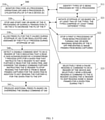
- FIG. 2 is a diagram of a method 200 for processor optimizations during item scanning and transaction processing, according to an example embodiment.
- the software module(s) that implements the method 200 is referred to as a "device processor utilization optimizer.”
- the device processor utilization optimizer is implemented as executable instructions programmed and residing within memory and/or a non-transitory computer-readable (processor-readable) storage medium and executed by one or more processors of a device.
- the processor(s) of the device that executes the device processor utilization optimizer are specifically configured and programmed to process the device processor utilization optimizer.
- the device processor utilization optimizer may have access to one or more network connections during its processing.
- the network connections can be wired, wireless, or a combination of wired and wireless.
- the device that executes the device processor utilization optimizer is transaction terminal and scanner device 100.
- the device processor utilization optimizer is all of or some combination of 141-143.
- the device processor utilization optimizer selectively throttles down first operations associated with item code processing on a device during a transaction on the device.
- the device is a composite device that includes scanner hardware and transaction hardware on a same and a single motherboard of the device.
- the device processor utilization optimizer determines to perform 210 based on a type of item code for an item being processed during the transaction.
- the device processor utilization optimizer identifies the type as a 2D (two-dimensional) barcode or a dispersed dot pattern-based barcode that is dispersed over a surface of an item within the packaging of the item (e.g., DIGIMARC ® ).
- the device processor utilization optimizer selectively turns one or more imagining sensors on and off causing a fewer number of item code image frames to be captured for a given item being processed during the transaction. This results in the freed processor utilization for a processor of the device (discussed at 220 below).
- the device processor utilization optimizer selectively pauses and resumes an item code reader from reading item codes from item code image frames captured for a given item of the transaction by one or more imagining sensors of the device. This results in the freed processor utilization for the processor of the device.
- the device processor utilization optimizer pauses the item code reader for a predefined number of milliseconds resulting in the freed processor utilization for the processor during those milliseconds during which the item code reader is paused.
- the device processor utilization optimizer selectively instructs an item code reader of the device to not send read item codes for the item to a downstream transaction process (transaction terminal system and application processes).
- the device processor utilization optimizer can process one of, some combination of, or all of the embodiments of 213, 214, 215, and/or 216.
- the device processor utilization optimizer determines to throttle down the first operations based on evaluation of at least one rule.
- the rule can be customized, and the rule may identify which of or which combination of embodiments 213, 214, 215, and/or 216 to throttle as the first operations. So, the rule can identify a condition for which the throttle is to be initiated as well as the first operations for which the throttle is to occur.
- the device processor utilization optimizer temporarily suspends the first operations to decrease a number of item code image frames for an item from being captured, read, and/or communicated to a downstream transaction process without affecting processing of a read item code for a given item during the transaction.
- the device processor utilization optimizer causes freed processor utilization for a processor of the device that is released by the throttling down at 210 to be acquired by or assigned to a second operation during the transaction.
- the second operation is associated with a computer vision-based process being processed for item security during the transaction.
- the device processor utilization optimizer is processed at an application-level or user-level of access within an OS for the device. In this manner any code presented associated with configuring the device will still override the device processor utilization optimizer and be processed on the device because such configuration utilities are processed at an administrative-level of access within the OS. That is, any system process requiring codes to be read and processed for the device still operates in a normal manner.
- the device processor utilization optimizer executes and is processed on a single motherboard of the device.
- the single motherboard comprises integrated scanner hardware and transaction terminal hardware.
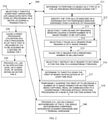
- FIG. 3 is a diagram of another method 300 for processor optimizations during item scanning and transaction processing, according to an example embodiment.
- the software module(s) that implements the method 300 is referred to as a "processor utilization controller.”
- the processor utilization controller is implemented as executable instructions programmed and residing within memory and/or a non-transitory computer-readable (processor-readable) storage medium and executed by one or more processors of a device.
- the processors that execute the processor utilization controller are specifically configured and programmed to process the processor utilization controller.
- the processor utilization controller may have access to one or more network connections during its processing.
- the network connections can be wired, wireless, or a combination of wired and wireless.
- the device that executes the processor utilization controller is the transaction terminal and scanner device 100.
- the processor utilization controller is all or some combination of 141-143 and/or the method 200.
- the processor utilization controller presents another and, in some ways, enhanced processing perspective to that which was described above with the FIG. 2 and the method 200.
- the processor utilization controller monitors item code processing operations and a processor utilization of a processor on a device.
- the processor utilization controller identifies types of item codes being processed by the item code processing operations.
- the processor utilization controller selectively stops and starts one or more of the item code processing operations during a transaction on the device to decrease processor utilization for the processor.
- the processor utilization controller initiates stoppage at 320 based on at least two types of item codes; the types of item codes comprise at least three different types for the item codes.
- the three types comprise 1D barcodes, 2D barcodes, and DIGIMARC ® barcodes.
- the two types for which pauses or skips are processed are associated with 2D barcodes and DIGIMARC ® barcodes.
- the processor utilization controller stops a first item code processing operations from being processed by turning one or more imagining sensors of the device off preventing item code image frames from being captured during the period for which the corresponding imagining sensors are turned off.
- the processor utilization controller selectively sends a pause reading command to an item code reader of the device and selectively sends a resume reading command to the item code reader, which causes the item code reader to skip reading some of the item code image frames for a given item during the transaction.
- the processor utilization controller allows a freed processor utilization for the processor that is caused by 320 to be reallocated and assigned by the processor to a transaction process during the stoppage at 320.
- the processor utilization controller detects a disable command sent to an image code reader of the device indicating that a read item code was acknowledged by a downstream transaction process for a given item. This instructs the item code reader to not send further item codes that are read for the given item to the downstream transaction process. The processor utilization controller then overrides the disable command and further instructs the item code reader to pause reading the further item codes from the item code image frames captured for the given item in addition to not sending the further item codes for the given item to the downstream transaction process.
- the processor utilization controller produces additional feed processor utilization for the processor based on overriding the disable command at 340.
- modules are illustrated as separate modules, but may be implemented as homogenous code, as individual components, some, but not all of these modules may be combined, or the functions may be implemented in software structured in any other convenient manner.
Landscapes
- Engineering & Computer Science (AREA)
- Physics & Mathematics (AREA)
- Theoretical Computer Science (AREA)
- General Physics & Mathematics (AREA)
- Business, Economics & Management (AREA)
- Electromagnetism (AREA)
- Computer Vision & Pattern Recognition (AREA)
- Artificial Intelligence (AREA)
- Accounting & Taxation (AREA)
- Health & Medical Sciences (AREA)
- General Health & Medical Sciences (AREA)
- Toxicology (AREA)
- Finance (AREA)
- Software Systems (AREA)
- General Business, Economics & Management (AREA)
- Strategic Management (AREA)
- General Engineering & Computer Science (AREA)
- Development Economics (AREA)
- Economics (AREA)
- Marketing (AREA)
- Cash Registers Or Receiving Machines (AREA)
Abstract
Description
- Typically, a transaction terminal is a specialized device configured to interface with peripherals necessary to perform transactions (e.g., item checkouts). One such peripheral is a scanner, which is designed to read item barcodes that pass over an item reader. Item barcodes are captured as images and then translated into item codes. The scanner can capture the item barcode images at rates of approximately 40 frames per second (fps). Furthermore, a scanner can have multiple cameras or imaging sensors, such that a scanner with two imaging sensors captures 80 barcode images in a single second; a scanner with three imagining sensors captures 120 barcode images in a second; etc.
- There are also different types of item codes embedded in the captured item images, some are one-dimensional (1D - such as traditional barcodes having lines of varying widths and spacing between the lines), others can be two-dimensional (2D -such as Quick Response (QR) codes - geometric patterns using dots and other shapes), and some are integrated as colored dots throughout the surface of an item within the item's packaging (e.g., DIGIMARC®). Each type requires very different translation or conversion processes to derive the item codes from the item images. Some scanners may not be able to even recognize DIGIMARC® codes, QR codes, or colored item codes.
- Furthermore, when scanners are peripheral devices to the transaction terminal a great deal of communication and synchronization is needed between the two devices during a transaction.
- As a result, a composite device was recently introduced in the industry, which integrates both scanner and transaction terminal hardware onto a same motherboard of a single device. This created a more processing efficient and space efficient device, which was specialized for reading item codes and performing item checkouts during transactions and which made communication and synchronization easier to manage and to control. However, since both the scanner and transaction terminal share the same hardware, it is important that hardware resources be freed when not in use or when not needed by the scanner software or the terminal software to ensure that the processor of the composite device does not become overly taxed and ensure that the processor has the capacity to focus on immediate or higher priority tasks.
- Moreover, features and functions of both scanners and transaction terminals continue to exponentially grow in the industry, which complicates peripheral scanner-based checkout systems and composite scanner/transaction terminal-based systems. For example, a plethora of computer vision-based applications are regularly being added within the industry to checkout system (for real-time fraud detection, item recognition, etc.); these applications necessitate a substantial amount of image processing and can substantially slow the processing throughput during checkouts.
- Accordingly, there is a need to improve scanner and transaction terminal communication and synchronization for purposes of improving and managing transaction throughput during a checkout such that new features and functions of checkout systems can be efficiently integrated.
- In various embodiments, methods and a device for processor optimizations during item scanning and transaction processing are presented.
- According to a first aspect of the present invention there is provided a method, comprising selectively throttling down first operations associated with item code processing on a device during a transaction; and causing a freed processor utilization for a processor of the device that is released by the selectively throttling to be acquired by a second operation during the transaction.
- Aptly, selectively throttling further includes determining to perform the selectively throttling based on a type of item code for an item being processed during the transaction.
- Aptly, determining further includes identifying the type as a two-dimensional barcode or a dispersed dot pattern-based barcode dispersed over a surface of the item and represented in the packaging for the item.
- Aptly, identifying further includes selectively turning on and off one or more imaging sensors causing a fewer number of item code image frames to be captured resulting in the freed processor utilization when the one or more imaging sensors are off.
- Aptly, identifying further includes selectively pausing an item code reader from reading item codes of item code image frames resulting in the freed processor utilization.
- Aptly, selectively pausing further includes pausing the item code reader for a predefined number of milliseconds.
- Aptly, identifying further includes selectively instructing an item code reader to not send read item codes to a downstream transaction process resulting in the freed processor utilization.
- Aptly, selectively throttling further includes determining to throttle down the first operations based on evaluation of at least one rule.
- Aptly, selectively throttling further includes temporarily suspending the first operations to decrease a number of item code image frames for an item from being captured, read, or communicated to a downstream transaction process without affecting processing of a read item code for the item during the transaction.
- Aptly, the method further comprises, processing the method at an application-level or a user-level of access within an Operating System (OS) for the device.
- Aptly, the method further comprises, processing the method on a single motherboard of the device, wherein the single motherboard comprises integrated scanner hardware and transaction terminal hardware.
- According to a second aspect of the present invention there is provided a method, comprising monitoring item code processing operations and a processor utilization of a processor on a combined scanner and transaction terminal device (device); stopping and starting one or more of the item code processing operations during a transaction on the device to decrease the processor utilization of the processor; and allowing feed processor utilization for the processor caused during the stopping to be reallocated and assigned by the processor to a transaction process during the stopping.
- Aptly, the method further comprises, detecting a disable command sent to an item code reader of the device indicating that a read item code was acknowledged by a downstream transaction process for a given item that instructs the item code reader to not send further item codes read for the given item, and overriding the disable command further instructing the item code reader to stop reading the further item codes from item code image frames captured for the given item in addition to not sending the further item codes read for the given item to the downstream transaction process.
- Aptly, detecting further includes producing additional freed processor based on the overriding of the disable command.
- Aptly, monitoring further includes identifying types of item codes being processed by the item code processing operations.
- Aptly, stopping and starting further includes initiate the stopping based on at least two of the types being identified, wherein the types comprise at least three different types.
- Aptly, stopping and starting further includes stopping a first item code processing operation from being processed by turning one or more imagining sensors of the device off preventing item code image frames from being captured.
- Aptly, stopping and starting further includes selectively sending a pause reading item codes command to an item code reader of the device and selectively sending a resume reading item codes command to the item code reader causing the item code reader to skip reading some item code image frames for a given item during the transaction.
- According to a third aspect of the present invention there is provided a device, comprising imagining sensors configured to capture item code image frames for items; a processor; a non-transitory computer-readable storage medium comprising executable instructions for a processor optimization manager, an item code reader, and a downstream transaction process; the processor optimization manager executed by the processor from the non-transitory computer-readable storage medium causing the processor to perform first operations comprising: monitoring item code image frames captured by the imaging sensors that corresponding to a given item during a transaction on the device; monitoring read item codes produced by the item code reader from the item code image frames that correspond to the given item; monitoring sent read item codes sent by the item code reader to the downstream transaction process for the given item; and performing one of more of the following to decrease a processor utilization of the processor during the transaction and create a freed processor utilization for the processor during the transaction for allocation to a transaction process during the transaction: selectively turning one or more of the imaging sensors during capture of the item code image frames that correspond to the given item; selectively sending pause and resume commands to the item code reader as the item code reader translates the item code image frames for the given item into the read item codes for the given item causing the item code reader to skip reading some of the item code image frames for the given item; and selectively sending a do-not-send command to the item code reader causing the item code reader to not send some of the read item codes for the given item to the transaction process; the item code reader executed by the processor from the non-transitory computer-readable storage medium causing the processor to perform second operations comprising: translating or converting the item code image frames captured by the imagining sensors for the given item from an image format into a text format as the read item codes; sending the read item codes to the transaction process; pausing and resuming the translating or the converting based on receiving the pause and resume commands from the processor optimization manager; and stopping the sending of read item codes to the transaction process based on receiving the do-not-send command from the processor optimization manager; and the downstream transaction process executed by the processor from the non-transitory computer-readable storage medium causing the processor to perform third operations comprising: managing read item codes received from the item code reader for the given item during the transaction; and interacting with the transaction process and other transaction processes to: 1) obtain item details for the given item and an item price for the given item based on one of the read item codes for the given item, 2) perform security operations for the transaction or the given item, and 3) process transaction payment to complete the transaction on the device.
- Aptly, the device is a Point-Of-Sale (POS) terminal or a Self-Service Terminal (SST).
- According to an embodiment, a method for processor optimizations during item scanning and transaction processing is presented. As an example, first operations that are associated with item code processing on a device are throttled down during a transaction. A freed processor utilization for a processor of the device that is released by the throttling is acquired by a second operation during the transaction.
- Embodiments of the present invention will now be described hereinafter, by way of example only, with reference to the accompanying drawings in which:
-
FIG. 1 is a diagram of a device for processor optimizations during item scanning and transaction processing, according to an example embodiment. -
FIG. 2 is a diagram of a method for processor optimizations during item scanning and transaction processing, according to an example embodiment. -
FIG. 3 is a diagram of another method for processor optimizations during item scanning and transaction processing, according to an example embodiment. -
FIG. 1 is a diagram of adevice 100 for processor optimizations during item scanning and transaction processing, according to an example embodiment. It is to be noted that the components are shown schematically in greatly simplified form, with only those components relevant to understanding of the embodiments being illustrated. - Furthermore, the various components (that are identified in the
FIG. 1 ) are illustrated and the arrangement of the components is presented for purposes of illustration only. It is to be noted that other arrangements with more or less components are possible without departing from the teachings of processor optimizations during item scanning and transaction processing presented herein and below. - The
device 100 is a composite device that integrates the hardware and software of both a scanner and a transaction terminal into a single motherboard of a single device. In an embodiment, hardware associated with cameras and a weigh scale are on a separate Printed Circuit Board (PCB) that is attached to the motherboard. - In an embodiment,
device 100 is a modified version and enhanced version of a composite device that comprises both scanner and transaction terminal hardware integrated into a same motherboard as a single device (modified and enhanced in the manners discussed herein and below). - As will be discussed in greater detail herein and below, processor optimizations during transactions are performed by controlling capture and retention of item code image frames used for item code reading, controlling when read item codes are sent for further downstream transaction processing, controlling resource priorities, and/or controlling when cameras/
imaging sensors 110 are turned on and off. -
Device 100 comprises a plurality of integrated cameras/imaging sensors 110, a plurality ofperipheral ports 120, one ormore processors 130, and a non-transitory computer-readable storage medium 140.Medium 140 comprises executable instructions for scanneritem code reader 141,transaction manager 142, andprocessor optimization manager 143. When the executable instructions are executed byprocessor 130 frommedium 140, this causesprocessor 130 to perform operations associated with scanneritem code reader 141,transaction manager 142, and processor optimization manager 143 (as discussed below with 141-143). - Cameras/
imaging sensors 110 capture images of items and item barcodes at a predefined frame rate (fps). The images are streamed at the predefined fps into a buffer. Scanneritem code reader 141 processes the images from the buffer to read item codes for the images, the item codes read (translated from image format to text format) are sent totransaction manager 142.Transaction manager 142 uses the item codes to lookup item details and item pricing (using a network connection betweendevice 100 and a server) during transaction pricing. - It is to be noted that as used herein
transaction manager 142 includes peripheral management and transaction management processes, such thattransaction manager 142 is intended to be all system software processes associated with a transaction terminal and its transaction processing. Therefore,transaction manager 142 is not just item code lookup and transaction workflow processing but includes device driver interaction with peripherals attached toports 120 and with the integrated scanner ofdevice 100 represented byimaging sensors 110 and scanneritem code reader 141. -
Processor optimization manager 143 monitors the above-noted processing ondevice 100 to optimizeprocessor 130 utilization andcontrol processor 130 utilization. Specifically, and in an embodiment,processor optimization manager 143 monitors when 2D or DIGIMARC® item codes are read. Customers or operators ofterminal 100 do not experience delays and are satisfied with transaction throughput and responsiveness when 1D item codes are processed at 40 fps. However, for 2D and DIGIMARC® item codes, customer or operator expectations are less than 40 fps. - This means that when 2D and DIGIMARC® item barcodes are read by scanner
item code reader 141,processor optimization manager 143 can intervene and throttle the corresponding item barcode reading to achieve a reduction incontinuous processor 130 utilization.Processor optimization manager 143 instructs scanneritem code reader 141 to skip frames, for example read 20 of the 40 frames returned in a second. This can be done by sending a "pause" command to scanneritem code reader 141. The timing of sending "pause" and "resume" commands can be controlled byprocessor optimization manager 143. By pausingitem code reader 141,optimization manager 143 is able to cause frames to be skipped and alter the rate in which item codes are read per second. Essentially, the predefined fps are altered by controlling whenitem code reader 141 is actively processing and reading item codes from the item code images in the buffer. This allows the rate to be controlled at a set frequency to keep an interval between processing the frames constant. The constant interval can change as processor load changes. This can be proportional to processor load as processor utilization increases, the delay between frames increases. - Other aspects of processing besides or in addition to pausing
reader 141 can also be used to free upprocessor 130 utilization during transaction processing ondevice 100. For example, imaginingsensors 110 can be turned on and off,item code reader 141 can be instructed not to send read item codes totransaction manager 142. - In an embodiment,
processor optimization manager 143 operates at an application level of authority within the operating system (OS) of device/terminal 100. This ensures that scanneritem code reader 141 will still read a scanned operational or configuring code (to put the device in an administrative mode of operation, change an operational setting, etc.), since such configuring code would be issued at an administrative level of authority within the OS fordevice 100. - As mentioned above,
processor optimization manager 143 may also turn one or more cameras/imaging sensors 110 on and off thereby preventing scanneritem code reader 141 from reading item codes at its configured rate, such as 40 fps.Processor optimization manager 143 may giveimaging sensors 110 priority when they are turned back on. For example, for 450 milliseconds (ms)imaging sensors 110 are turned off during which time another application processing ondevice 100 is able to process images already reside in the buffer from the imaginingsensors 110, such as a computer-vision application that is processing for security or fraud detection in real time atdevice 100 during a checkout. - As mentioned above,
processor optimization manager 143 may also instruct scanneritem code reader 141 to stop sending read barcodes totransaction manager 142 in order to free upprocessor 130 utilization during a transaction. That is, as each frame of an item code is read, it is sent totransaction manager 142 for processing but ifitem code reader 141 only sends every other read item code or every fifth read item code,transaction manager 143 is not processing received read item codes, which reducesprocessor 130 utilization. -
Processor optimization manager 143 may obtaintask processor 130 utilization through the OS's existing process task Application Programming Interface (API) utility. This permitsmanager 143 to identifycurrent processor 130 utilization and task/process identifiers (ids) along with each task/process id'scurrent processor 130 utilization (a task id associated withitem code reader 141 and transaction manager 142). - Customized rules may be enforced by
manager 143 to make decisions as to when to reduce the capturing of item codes in the buffer (by selectively turning off and on one or more of the imagining sensors 110), selectively pausingitem code reader 141, and/or selectively instructingitem code reader 141 to not send item codes read byitem code reader 141 totransaction manager 142. The rules can include the length of time during whichsensors 110 are turned off, a pause is in place foritem code reader 141, and a do not send read item code is issued foritem code reader 141. - It is to be noted, a typical item that is captured in an image by
sensors 110 has at least 40 images per second (40 fps) and there is at least 3 cameras capturing the images for a total of 120 images of one item in one second. As a result, by not processing every frame in each second, there is little chance of any degradation in quality or item recognition bydevice 100. However, by selectively forcing some frames to be not captured, not read, or not sent to transaction manager 142 a significant amount ofprocessor 130 utilization can be freed up for other applications that need to be processed during the transaction, such as computer-vision applications used for fraud and security. - Typically, when a read item code is sent to
transaction manager 142 fromitem code reader 141,transaction manager 142 sends back a command that disablesitem code reader 141 from sending any additional item codes read for that item. In this case,further processor 130 utilization can be freed up byoptimization manager 143 issuing a pause command toitem code reader 141, which pausesitem code reader 141 from reading the remaining frames for the already acknowledged item code of the item. Again,optimization manager 143 may also stagger pauses to only continue reading some of the remaining frames for the already acknowledged read item. -
Imaging sensors 110 anditem code reader 141 are continuously pingingprocessor 130 during a transaction ondevice 100 because at least 40 frame images of a single item are buffered and then each frame is attempted to be read (translated or converted from image format to text format representing an item code value) and each read item code sent totransaction manager 142. Thistaxes processor 130 especially when it is considered that typically there may be anywhere from 3 (120 frames or images of the item) to 8 (320 frames or images of the item)imaging sensors 110 integrated into the motherboard ofdevice 100.Optimization manager 143 evaluates in real time the type of item codes being read and theprocessor 130 utilization fordevice 100.Optimization manager 143 may then enforce some default processor optimizations rules for 2D item codes and DIGIMARC® item codes, these default rules reduce the number of frames captured (by selectively turningsensors 110 on and off), reduce the number of item codes read from the frames (by sending "pause" and "resume" commands to item code reader 141), and/or reduce the number of read item codes sent to transaction manager 143 (by sending a disable or do not send command to item code reader 141). - It is noted that other scanning technologies may be used with the embodiments presented herein besides those referenced herein with respect to 1D barcodes, 2D barcodes, and DIGIMARC® codes. Thus, embodiments presented herein can work with any scanning-based technology associated with capturing item codes.
- As mentioned above, the default rules may be overridden or changed through customized rules, which are dynamically enforced by
optimization manager 143. - In an embodiment,
device 100 is a Point-Of-Sale (POS) terminal operated by a clerk during a customer-assisted checkout. - In an embodiment,
device 100 is a Self-Service Terminal (SST) operated by a customer during a self-checkout. - These and other embodiments are now discussed with reference to
FIGS. 2-3 . -
FIG. 2 is a diagram of amethod 200 for processor optimizations during item scanning and transaction processing, according to an example embodiment. The software module(s) that implements themethod 200 is referred to as a "device processor utilization optimizer." The device processor utilization optimizer is implemented as executable instructions programmed and residing within memory and/or a non-transitory computer-readable (processor-readable) storage medium and executed by one or more processors of a device. The processor(s) of the device that executes the device processor utilization optimizer are specifically configured and programmed to process the device processor utilization optimizer. The device processor utilization optimizer may have access to one or more network connections during its processing. The network connections can be wired, wireless, or a combination of wired and wireless. - In an embodiment, the device that executes the device processor utilization optimizer is transaction terminal and
scanner device 100. - In an embodiment, the device processor utilization optimizer is all of or some combination of 141-143.
- At 210, the device processor utilization optimizer selectively throttles down first operations associated with item code processing on a device during a transaction on the device.
- In an embodiment, the device is a composite device that includes scanner hardware and transaction hardware on a same and a single motherboard of the device.
- In an embodiment, at 211, the device processor utilization optimizer determines to perform 210 based on a type of item code for an item being processed during the transaction.
- In an embodiment of 211 and at 212, the device processor utilization optimizer identifies the type as a 2D (two-dimensional) barcode or a dispersed dot pattern-based barcode that is dispersed over a surface of an item within the packaging of the item (e.g., DIGIMARC®).
- In an embodiment of 212 and at 213, the device processor utilization optimizer selectively turns one or more imagining sensors on and off causing a fewer number of item code image frames to be captured for a given item being processed during the transaction. This results in the freed processor utilization for a processor of the device (discussed at 220 below).
- In an embodiment of 212 and at 214, the device processor utilization optimizer selectively pauses and resumes an item code reader from reading item codes from item code image frames captured for a given item of the transaction by one or more imagining sensors of the device. This results in the freed processor utilization for the processor of the device.
- In an embodiment of 212 and at 215, the device processor utilization optimizer pauses the item code reader for a predefined number of milliseconds resulting in the freed processor utilization for the processor during those milliseconds during which the item code reader is paused.
- In an embodiment of 212 and at 216, the device processor utilization optimizer selectively instructs an item code reader of the device to not send read item codes for the item to a downstream transaction process (transaction terminal system and application processes).
- In an embodiment, the device processor utilization optimizer can process one of, some combination of, or all of the embodiments of 213, 214, 215, and/or 216.
- In an embodiment, at 217, the device processor utilization optimizer determines to throttle down the first operations based on evaluation of at least one rule. The rule can be customized, and the rule may identify which of or which combination of
embodiments - In an embodiment, at 218, the device processor utilization optimizer temporarily suspends the first operations to decrease a number of item code image frames for an item from being captured, read, and/or communicated to a downstream transaction process without affecting processing of a read item code for a given item during the transaction.
- At 220, the device processor utilization optimizer causes freed processor utilization for a processor of the device that is released by the throttling down at 210 to be acquired by or assigned to a second operation during the transaction. In an embodiment, the second operation is associated with a computer vision-based process being processed for item security during the transaction.
- In an embodiment, at 230, the device processor utilization optimizer is processed at an application-level or user-level of access within an OS for the device. In this manner any code presented associated with configuring the device will still override the device processor utilization optimizer and be processed on the device because such configuration utilities are processed at an administrative-level of access within the OS. That is, any system process requiring codes to be read and processed for the device still operates in a normal manner.
- In an embodiment, at 240, the device processor utilization optimizer executes and is processed on a single motherboard of the device. The single motherboard comprises integrated scanner hardware and transaction terminal hardware.
-
FIG. 3 is a diagram of anothermethod 300 for processor optimizations during item scanning and transaction processing, according to an example embodiment. The software module(s) that implements themethod 300 is referred to as a "processor utilization controller." The processor utilization controller is implemented as executable instructions programmed and residing within memory and/or a non-transitory computer-readable (processor-readable) storage medium and executed by one or more processors of a device. The processors that execute the processor utilization controller are specifically configured and programmed to process the processor utilization controller. The processor utilization controller may have access to one or more network connections during its processing. The network connections can be wired, wireless, or a combination of wired and wireless. - In an embodiment, the device that executes the processor utilization controller is the transaction terminal and
scanner device 100. - In an embodiment, the processor utilization controller is all or some combination of 141-143 and/or the
method 200. - The processor utilization controller presents another and, in some ways, enhanced processing perspective to that which was described above with the
FIG. 2 and themethod 200. - At 310, the processor utilization controller monitors item code processing operations and a processor utilization of a processor on a device.
- In an embodiment, at 311, the processor utilization controller identifies types of item codes being processed by the item code processing operations.
- At 320, the processor utilization controller selectively stops and starts one or more of the item code processing operations during a transaction on the device to decrease processor utilization for the processor.
- In an embodiment of 311 and 320, at 321, the processor utilization controller initiates stoppage at 320 based on at least two types of item codes; the types of item codes comprise at least three different types for the item codes. In an embodiment, the three types comprise 1D barcodes, 2D barcodes, and DIGIMARC® barcodes. The two types for which pauses or skips are processed are associated with 2D barcodes and DIGIMARC® barcodes.
- In an embodiment, at 322, the processor utilization controller stops a first item code processing operations from being processed by turning one or more imagining sensors of the device off preventing item code image frames from being captured during the period for which the corresponding imagining sensors are turned off.
- In an embodiment, at 323, the processor utilization controller selectively sends a pause reading command to an item code reader of the device and selectively sends a resume reading command to the item code reader, which causes the item code reader to skip reading some of the item code image frames for a given item during the transaction.
- At 330, the processor utilization controller allows a freed processor utilization for the processor that is caused by 320 to be reallocated and assigned by the processor to a transaction process during the stoppage at 320.
- In an embodiment, at 340, the processor utilization controller detects a disable command sent to an image code reader of the device indicating that a read item code was acknowledged by a downstream transaction process for a given item. This instructs the item code reader to not send further item codes that are read for the given item to the downstream transaction process. The processor utilization controller then overrides the disable command and further instructs the item code reader to pause reading the further item codes from the item code image frames captured for the given item in addition to not sending the further item codes for the given item to the downstream transaction process.
- In an embodiment of 340 and at 341, the processor utilization controller produces additional feed processor utilization for the processor based on overriding the disable command at 340.
- It should be appreciated that where software is described in a particular form (such as a component or module) this is merely to aid understanding and is not intended to limit how software that implements those functions may be architected or structured. For example, modules are illustrated as separate modules, but may be implemented as homogenous code, as individual components, some, but not all of these modules may be combined, or the functions may be implemented in software structured in any other convenient manner.
- Furthermore, although the software modules are illustrated as executing on one piece of hardware, the software may be distributed over multiple processors or in any other convenient manner.
- The above description is illustrative, and not restrictive. Many other embodiments will be apparent to those of skill in the art upon reviewing the above description. The scope of embodiments should therefore be determined with reference to the appended claims, along with the full scope of equivalents to which such claims are entitled.
- In the foregoing description of the embodiments, various features are grouped together in a single embodiment for the purpose of streamlining the disclosure. This method of disclosure is not to be interpreted as reflecting that the claimed embodiments have more features than are expressly recited in each claim. Rather, as the following claims reflect, inventive subject matter lies in less than all features of a single disclosed embodiment. Thus, the following claims are hereby incorporated into the Description of the Embodiments, with each claim standing on its own as a separate exemplary embodiment.
Claims (13)
- A method, comprising:selectively throttling down first operations associated with item code processing on a device during a transaction; andcausing a freed processor utilization for a processor of the device that is released by the selectively throttling to be acquired by a second operation during the transaction.
- The method of claim 1, wherein selectively throttling further includes determining to perform the selectively throttling based on a type of item code for an item being processed during the transaction.
- The method of claim 2, wherein determining further includes identifying the type as a two-dimensional barcode or a dispersed dot pattern-based barcode dispersed over a surface of the item and represented in the packaging for the item.
- The method of claim 3, wherein identifying further includes selectively turning on and off one or more imaging sensors causing a fewer number of item code image frames to be captured resulting in the freed processor utilization when the one or more imaging sensors are off.
- The method of claim 4, wherein identifying further includes selectively pausing an item code reader from reading item codes of item code image frames resulting in the freed processor utilization.
- The method of claim 5, wherein selectively pausing further includes pausing the item code reader for a predefined number of milliseconds.
- The method of claim 3, wherein identifying further includes selectively instructing an item code reader to not send read item codes to a downstream transaction process resulting in the freed processor utilization.
- The method of claim 1, wherein selectively throttling further includes determining to throttle down the first operations based on evaluation of at least one rule.
- The method of claim 1, wherein selectively throttling further includes temporarily suspending the first operations to decrease a number of item code image frames for an item from being captured, read, or communicated to a downstream transaction process without affecting processing of a read item code for the item during the transaction.
- The method of claim 1 further comprising, processing the method at an application-level or a user-level of access within an Operating System (OS) for the device.
- The method of claim 1 further comprising, processing the method on a single motherboard of the device, wherein the single motherboard comprises integrated scanner hardware and transaction terminal hardware.
- A device, comprising:imagining sensors configured to capture item code image frames for items;a processor;a non-transitory computer-readable storage medium comprising executable instructions for a processor optimization manager, an item code reader, and a downstream transaction process;the processor optimization manager executed by the processor from the non-transitory computer-readable storage medium causing the processor to perform first operations comprising:monitoring item code image frames captured by the imaging sensors that corresponding to a given item during a transaction on the device;monitoring read item codes produced by the item code reader from the item code image frames that correspond to the given item;monitoring sent read item codes sent by the item code reader to the downstream transaction process for the given item; andperforming one of more of the following to decrease a processor utilization of the processor during the transaction and create a freed processor utilization for the processor during the transaction for allocation to a transaction process during the transaction:selectively turning one or more of the imaging sensors during capture of the item code image frames that correspond to the given item;selectively sending pause and resume commands to the item code reader as the item code reader translates the item code image frames for the given item into the read item codes for the given item causing the item code reader to skip reading some of the item code image frames for the given item; andselectively sending a do-not-send command to the item code reader causing the item code reader to not send some of the read item codes for the given item to the transaction process;the item code reader executed by the processor from the non-transitory computer-readable storage medium causing the processor to perform second operations comprising:translating or converting the item code image frames captured by the imagining sensors for the given item from an image format into a text format as the read item codes;sending the read item codes to the transaction process;pausing and resuming the translating or the converting based on receiving the pause and resume commands from the processor optimization manager; andstopping the sending of read item codes to the transaction process based on receiving the do-not-send command from the processor optimization manager; andthe downstream transaction process executed by the processor from the non-transitory computer-readable storage medium causing the processor to perform third operations comprising:managing read item codes received from the item code reader for the given item during the transaction; andinteracting with the transaction process and other transaction processes to: 1) obtain item details for the given item and an item price for the given item based on one of the read item codes for the given item, 2) perform security operations for the transaction or the given item, and 3) process transaction payment to complete the transaction on the device.
- The device of claim 12, wherein the device is a Point-Of-Sale (POS) terminal or a Self-Service Terminal (SST).
Applications Claiming Priority (1)
| Application Number | Priority Date | Filing Date | Title |
|---|---|---|---|
| US17/005,644 US11275916B1 (en) | 2020-08-28 | 2020-08-28 | Methods and a device for processor optimizations during item scanning and transaction processing |
Publications (2)
| Publication Number | Publication Date |
|---|---|
| EP3961478A1 true EP3961478A1 (en) | 2022-03-02 |
| EP3961478B1 EP3961478B1 (en) | 2024-05-29 |
Family
ID=79877186
Family Applications (1)
| Application Number | Title | Priority Date | Filing Date |
|---|---|---|---|
| EP21180667.4A Active EP3961478B1 (en) | 2020-08-28 | 2021-06-21 | Methods and a device for processor optimizations during item scanning and transaction processing |
Country Status (2)
| Country | Link |
|---|---|
| US (1) | US11275916B1 (en) |
| EP (1) | EP3961478B1 (en) |
Families Citing this family (1)
| Publication number | Priority date | Publication date | Assignee | Title |
|---|---|---|---|---|
| US11928660B2 (en) * | 2022-03-18 | 2024-03-12 | Toshiba Global Commerce Solutions Holdings Corporation | Scanner swipe guidance system |
Citations (3)
| Publication number | Priority date | Publication date | Assignee | Title |
|---|---|---|---|---|
| US20060011725A1 (en) * | 2003-11-13 | 2006-01-19 | Michael Schnee | System for detecting image light intensity reflected off an object in a digital imaging-based bar code symbol reading device |
| EP3291544A1 (en) * | 2016-08-30 | 2018-03-07 | NCR Corporation | Scanner with independent integrated network video capabilities |
| US20200127928A1 (en) * | 2017-02-27 | 2020-04-23 | Ebay Inc. | Rate limiter |
Family Cites Families (1)
| Publication number | Priority date | Publication date | Assignee | Title |
|---|---|---|---|---|
| US8819172B2 (en) * | 2010-11-04 | 2014-08-26 | Digimarc Corporation | Smartphone-based methods and systems |
-
2020
- 2020-08-28 US US17/005,644 patent/US11275916B1/en active Active
-
2021
- 2021-06-21 EP EP21180667.4A patent/EP3961478B1/en active Active
Patent Citations (3)
| Publication number | Priority date | Publication date | Assignee | Title |
|---|---|---|---|---|
| US20060011725A1 (en) * | 2003-11-13 | 2006-01-19 | Michael Schnee | System for detecting image light intensity reflected off an object in a digital imaging-based bar code symbol reading device |
| EP3291544A1 (en) * | 2016-08-30 | 2018-03-07 | NCR Corporation | Scanner with independent integrated network video capabilities |
| US20200127928A1 (en) * | 2017-02-27 | 2020-04-23 | Ebay Inc. | Rate limiter |
Also Published As
| Publication number | Publication date |
|---|---|
| US20220067321A1 (en) | 2022-03-03 |
| US11275916B1 (en) | 2022-03-15 |
| EP3961478B1 (en) | 2024-05-29 |
Similar Documents
| Publication | Publication Date | Title |
|---|---|---|
| EP1323119B1 (en) | Method for automatic exposure control | |
| EP4027263B1 (en) | Capturing a graphic information presentation | |
| US20190213370A1 (en) | Hybrid system and method for reading indicia | |
| US11275916B1 (en) | Methods and a device for processor optimizations during item scanning and transaction processing | |
| US10284748B2 (en) | Image processing system and image processing program | |
| US9398074B2 (en) | Network system, device server, and network system control method | |
| US11095801B2 (en) | Scanner with independent integrated network video capabilities | |
| US20020027668A1 (en) | Image reading method and apparatus | |
| CN105741415A (en) | Intelligent card automatic service terminal system and application method thereof | |
| US10817166B2 (en) | Information processing apparatus, method of controlling information processing apparatus, and recording medium | |
| EP4604009A1 (en) | Data reading systems with multiple image-processing modes | |
| JP6168352B2 (en) | Image forming apparatus and program | |
| US20120109761A1 (en) | Apparatus, method and system for a point of sale terminal | |
| US20200327210A1 (en) | Image processing apparatus and non-transitory computer readable medium | |
| EP4369312A1 (en) | An image processing method, image forming device and electronic device | |
| JP7056427B2 (en) | Information processing equipment and programs | |
| WO2019188443A1 (en) | Information processing device, information processing system, control method, and program | |
| EP2600280B1 (en) | Processing images in an imaging based optical code scanner | |
| CN113791745B (en) | Printing method, system and medium for multi-type files | |
| US11431876B2 (en) | Image inspection device, image forming apparatus, and image inspection method | |
| JP7070225B2 (en) | Printing device, control method of printing device, and control system | |
| JP7279755B2 (en) | Information processing device, information processing system, control method, and program | |
| JP2020174276A5 (en) | ||
| US12387453B2 (en) | Information processing device and information processing system for merchandise registration | |
| US20250298558A1 (en) | Information processing system, non-transitory computer readable medium, and control method |
Legal Events
| Date | Code | Title | Description |
|---|---|---|---|
| PUAI | Public reference made under article 153(3) epc to a published international application that has entered the european phase |
Free format text: ORIGINAL CODE: 0009012 |
|
| STAA | Information on the status of an ep patent application or granted ep patent |
Free format text: STATUS: REQUEST FOR EXAMINATION WAS MADE |
|
| 17P | Request for examination filed |
Effective date: 20210621 |
|
| AK | Designated contracting states |
Kind code of ref document: A1 Designated state(s): AL AT BE BG CH CY CZ DE DK EE ES FI FR GB GR HR HU IE IS IT LI LT LU LV MC MK MT NL NO PL PT RO RS SE SI SK SM TR |
|
| STAA | Information on the status of an ep patent application or granted ep patent |
Free format text: STATUS: EXAMINATION IS IN PROGRESS |
|
| 17Q | First examination report despatched |
Effective date: 20221130 |
|
| P01 | Opt-out of the competence of the unified patent court (upc) registered |
Effective date: 20230506 |
|
| GRAP | Despatch of communication of intention to grant a patent |
Free format text: ORIGINAL CODE: EPIDOSNIGR1 |
|
| STAA | Information on the status of an ep patent application or granted ep patent |
Free format text: STATUS: GRANT OF PATENT IS INTENDED |
|
| RIC1 | Information provided on ipc code assigned before grant |
Ipc: G06Q 30/06 20120101ALI20230724BHEP Ipc: G06K 7/10 20060101ALI20230724BHEP Ipc: G06K 7/14 20060101AFI20230724BHEP |
|
| INTG | Intention to grant announced |
Effective date: 20230814 |
|
| GRAJ | Information related to disapproval of communication of intention to grant by the applicant or resumption of examination proceedings by the epo deleted |
Free format text: ORIGINAL CODE: EPIDOSDIGR1 |
|
| STAA | Information on the status of an ep patent application or granted ep patent |
Free format text: STATUS: EXAMINATION IS IN PROGRESS |
|
| GRAP | Despatch of communication of intention to grant a patent |
Free format text: ORIGINAL CODE: EPIDOSNIGR1 |
|
| STAA | Information on the status of an ep patent application or granted ep patent |
Free format text: STATUS: GRANT OF PATENT IS INTENDED |
|
| INTC | Intention to grant announced (deleted) | ||
| INTG | Intention to grant announced |
Effective date: 20240103 |
|
| RAP3 | Party data changed (applicant data changed or rights of an application transferred) |
Owner name: NCR VOYIX CORPORATION |
|
| GRAS | Grant fee paid |
Free format text: ORIGINAL CODE: EPIDOSNIGR3 |
|
| GRAA | (expected) grant |
Free format text: ORIGINAL CODE: 0009210 |
|
| STAA | Information on the status of an ep patent application or granted ep patent |
Free format text: STATUS: THE PATENT HAS BEEN GRANTED |
|
| AK | Designated contracting states |
Kind code of ref document: B1 Designated state(s): AL AT BE BG CH CY CZ DE DK EE ES FI FR GB GR HR HU IE IS IT LI LT LU LV MC MK MT NL NO PL PT RO RS SE SI SK SM TR |
|
| REG | Reference to a national code |
Ref country code: CH Ref legal event code: EP |
|
| REG | Reference to a national code |
Ref country code: DE Ref legal event code: R084 Ref document number: 602021013734 Country of ref document: DE |
|
| REG | Reference to a national code |
Ref country code: IE Ref legal event code: FG4D |
|
| REG | Reference to a national code |
Ref country code: DE Ref legal event code: R096 Ref document number: 602021013734 Country of ref document: DE |
|
| REG | Reference to a national code |
Ref country code: GB Ref legal event code: 746 Effective date: 20240628 |
|
| REG | Reference to a national code |
Ref country code: LT Ref legal event code: MG9D |
|
| REG | Reference to a national code |
Ref country code: NL Ref legal event code: MP Effective date: 20240529 |
|
| PG25 | Lapsed in a contracting state [announced via postgrant information from national office to epo] |
Ref country code: IS Free format text: LAPSE BECAUSE OF FAILURE TO SUBMIT A TRANSLATION OF THE DESCRIPTION OR TO PAY THE FEE WITHIN THE PRESCRIBED TIME-LIMIT Effective date: 20240929 |
|
| PG25 | Lapsed in a contracting state [announced via postgrant information from national office to epo] |
Ref country code: BG Free format text: LAPSE BECAUSE OF FAILURE TO SUBMIT A TRANSLATION OF THE DESCRIPTION OR TO PAY THE FEE WITHIN THE PRESCRIBED TIME-LIMIT Effective date: 20240529 |
|
| PG25 | Lapsed in a contracting state [announced via postgrant information from national office to epo] |
Ref country code: FI Free format text: LAPSE BECAUSE OF FAILURE TO SUBMIT A TRANSLATION OF THE DESCRIPTION OR TO PAY THE FEE WITHIN THE PRESCRIBED TIME-LIMIT Effective date: 20240529 Ref country code: HR Free format text: LAPSE BECAUSE OF FAILURE TO SUBMIT A TRANSLATION OF THE DESCRIPTION OR TO PAY THE FEE WITHIN THE PRESCRIBED TIME-LIMIT Effective date: 20240529 |
|
| PG25 | Lapsed in a contracting state [announced via postgrant information from national office to epo] |
Ref country code: GR Free format text: LAPSE BECAUSE OF FAILURE TO SUBMIT A TRANSLATION OF THE DESCRIPTION OR TO PAY THE FEE WITHIN THE PRESCRIBED TIME-LIMIT Effective date: 20240830 |
|
| REG | Reference to a national code |
Ref country code: AT Ref legal event code: MK05 Ref document number: 1691247 Country of ref document: AT Kind code of ref document: T Effective date: 20240529 |
|
| PG25 | Lapsed in a contracting state [announced via postgrant information from national office to epo] |
Ref country code: ES Free format text: LAPSE BECAUSE OF FAILURE TO SUBMIT A TRANSLATION OF THE DESCRIPTION OR TO PAY THE FEE WITHIN THE PRESCRIBED TIME-LIMIT Effective date: 20240529 |
|
| PG25 | Lapsed in a contracting state [announced via postgrant information from national office to epo] |
Ref country code: AT Free format text: LAPSE BECAUSE OF FAILURE TO SUBMIT A TRANSLATION OF THE DESCRIPTION OR TO PAY THE FEE WITHIN THE PRESCRIBED TIME-LIMIT Effective date: 20240529 |
|
| PG25 | Lapsed in a contracting state [announced via postgrant information from national office to epo] |
Ref country code: PL Free format text: LAPSE BECAUSE OF FAILURE TO SUBMIT A TRANSLATION OF THE DESCRIPTION OR TO PAY THE FEE WITHIN THE PRESCRIBED TIME-LIMIT Effective date: 20240529 |
|
| PG25 | Lapsed in a contracting state [announced via postgrant information from national office to epo] |
Ref country code: LV Free format text: LAPSE BECAUSE OF FAILURE TO SUBMIT A TRANSLATION OF THE DESCRIPTION OR TO PAY THE FEE WITHIN THE PRESCRIBED TIME-LIMIT Effective date: 20240529 |
|
| PG25 | Lapsed in a contracting state [announced via postgrant information from national office to epo] |
Ref country code: PL Free format text: LAPSE BECAUSE OF FAILURE TO SUBMIT A TRANSLATION OF THE DESCRIPTION OR TO PAY THE FEE WITHIN THE PRESCRIBED TIME-LIMIT Effective date: 20240529 Ref country code: NO Free format text: LAPSE BECAUSE OF FAILURE TO SUBMIT A TRANSLATION OF THE DESCRIPTION OR TO PAY THE FEE WITHIN THE PRESCRIBED TIME-LIMIT Effective date: 20240829 Ref country code: LV Free format text: LAPSE BECAUSE OF FAILURE TO SUBMIT A TRANSLATION OF THE DESCRIPTION OR TO PAY THE FEE WITHIN THE PRESCRIBED TIME-LIMIT Effective date: 20240529 Ref country code: IS Free format text: LAPSE BECAUSE OF FAILURE TO SUBMIT A TRANSLATION OF THE DESCRIPTION OR TO PAY THE FEE WITHIN THE PRESCRIBED TIME-LIMIT Effective date: 20240929 Ref country code: HR Free format text: LAPSE BECAUSE OF FAILURE TO SUBMIT A TRANSLATION OF THE DESCRIPTION OR TO PAY THE FEE WITHIN THE PRESCRIBED TIME-LIMIT Effective date: 20240529 Ref country code: GR Free format text: LAPSE BECAUSE OF FAILURE TO SUBMIT A TRANSLATION OF THE DESCRIPTION OR TO PAY THE FEE WITHIN THE PRESCRIBED TIME-LIMIT Effective date: 20240830 Ref country code: FI Free format text: LAPSE BECAUSE OF FAILURE TO SUBMIT A TRANSLATION OF THE DESCRIPTION OR TO PAY THE FEE WITHIN THE PRESCRIBED TIME-LIMIT Effective date: 20240529 Ref country code: ES Free format text: LAPSE BECAUSE OF FAILURE TO SUBMIT A TRANSLATION OF THE DESCRIPTION OR TO PAY THE FEE WITHIN THE PRESCRIBED TIME-LIMIT Effective date: 20240529 Ref country code: BG Free format text: LAPSE BECAUSE OF FAILURE TO SUBMIT A TRANSLATION OF THE DESCRIPTION OR TO PAY THE FEE WITHIN THE PRESCRIBED TIME-LIMIT Effective date: 20240529 Ref country code: AT Free format text: LAPSE BECAUSE OF FAILURE TO SUBMIT A TRANSLATION OF THE DESCRIPTION OR TO PAY THE FEE WITHIN THE PRESCRIBED TIME-LIMIT Effective date: 20240529 Ref country code: RS Free format text: LAPSE BECAUSE OF FAILURE TO SUBMIT A TRANSLATION OF THE DESCRIPTION OR TO PAY THE FEE WITHIN THE PRESCRIBED TIME-LIMIT Effective date: 20240829 |
|
| PG25 | Lapsed in a contracting state [announced via postgrant information from national office to epo] |
Ref country code: NL Free format text: LAPSE BECAUSE OF FAILURE TO SUBMIT A TRANSLATION OF THE DESCRIPTION OR TO PAY THE FEE WITHIN THE PRESCRIBED TIME-LIMIT Effective date: 20240529 |
|
| PG25 | Lapsed in a contracting state [announced via postgrant information from national office to epo] |
Ref country code: NL Free format text: LAPSE BECAUSE OF FAILURE TO SUBMIT A TRANSLATION OF THE DESCRIPTION OR TO PAY THE FEE WITHIN THE PRESCRIBED TIME-LIMIT Effective date: 20240529 |
|
| PG25 | Lapsed in a contracting state [announced via postgrant information from national office to epo] |
Ref country code: DK Free format text: LAPSE BECAUSE OF FAILURE TO SUBMIT A TRANSLATION OF THE DESCRIPTION OR TO PAY THE FEE WITHIN THE PRESCRIBED TIME-LIMIT Effective date: 20240529 |
|
| PG25 | Lapsed in a contracting state [announced via postgrant information from national office to epo] |
Ref country code: EE Free format text: LAPSE BECAUSE OF FAILURE TO SUBMIT A TRANSLATION OF THE DESCRIPTION OR TO PAY THE FEE WITHIN THE PRESCRIBED TIME-LIMIT Effective date: 20240529 |
|
| PG25 | Lapsed in a contracting state [announced via postgrant information from national office to epo] |
Ref country code: CZ Free format text: LAPSE BECAUSE OF FAILURE TO SUBMIT A TRANSLATION OF THE DESCRIPTION OR TO PAY THE FEE WITHIN THE PRESCRIBED TIME-LIMIT Effective date: 20240529 |
|
| PG25 | Lapsed in a contracting state [announced via postgrant information from national office to epo] |
Ref country code: SK Free format text: LAPSE BECAUSE OF FAILURE TO SUBMIT A TRANSLATION OF THE DESCRIPTION OR TO PAY THE FEE WITHIN THE PRESCRIBED TIME-LIMIT Effective date: 20240529 Ref country code: RO Free format text: LAPSE BECAUSE OF FAILURE TO SUBMIT A TRANSLATION OF THE DESCRIPTION OR TO PAY THE FEE WITHIN THE PRESCRIBED TIME-LIMIT Effective date: 20240529 |
|
| PG25 | Lapsed in a contracting state [announced via postgrant information from national office to epo] |
Ref country code: SM Free format text: LAPSE BECAUSE OF FAILURE TO SUBMIT A TRANSLATION OF THE DESCRIPTION OR TO PAY THE FEE WITHIN THE PRESCRIBED TIME-LIMIT Effective date: 20240529 |
|
| PG25 | Lapsed in a contracting state [announced via postgrant information from national office to epo] |
Ref country code: SM Free format text: LAPSE BECAUSE OF FAILURE TO SUBMIT A TRANSLATION OF THE DESCRIPTION OR TO PAY THE FEE WITHIN THE PRESCRIBED TIME-LIMIT Effective date: 20240529 Ref country code: SK Free format text: LAPSE BECAUSE OF FAILURE TO SUBMIT A TRANSLATION OF THE DESCRIPTION OR TO PAY THE FEE WITHIN THE PRESCRIBED TIME-LIMIT Effective date: 20240529 Ref country code: RO Free format text: LAPSE BECAUSE OF FAILURE TO SUBMIT A TRANSLATION OF THE DESCRIPTION OR TO PAY THE FEE WITHIN THE PRESCRIBED TIME-LIMIT Effective date: 20240529 Ref country code: EE Free format text: LAPSE BECAUSE OF FAILURE TO SUBMIT A TRANSLATION OF THE DESCRIPTION OR TO PAY THE FEE WITHIN THE PRESCRIBED TIME-LIMIT Effective date: 20240529 Ref country code: DK Free format text: LAPSE BECAUSE OF FAILURE TO SUBMIT A TRANSLATION OF THE DESCRIPTION OR TO PAY THE FEE WITHIN THE PRESCRIBED TIME-LIMIT Effective date: 20240529 Ref country code: CZ Free format text: LAPSE BECAUSE OF FAILURE TO SUBMIT A TRANSLATION OF THE DESCRIPTION OR TO PAY THE FEE WITHIN THE PRESCRIBED TIME-LIMIT Effective date: 20240529 |
|
| REG | Reference to a national code |
Ref country code: CH Ref legal event code: PL |
|
| PG25 | Lapsed in a contracting state [announced via postgrant information from national office to epo] |
Ref country code: MC Free format text: LAPSE BECAUSE OF FAILURE TO SUBMIT A TRANSLATION OF THE DESCRIPTION OR TO PAY THE FEE WITHIN THE PRESCRIBED TIME-LIMIT Effective date: 20240529 Ref country code: IT Free format text: LAPSE BECAUSE OF FAILURE TO SUBMIT A TRANSLATION OF THE DESCRIPTION OR TO PAY THE FEE WITHIN THE PRESCRIBED TIME-LIMIT Effective date: 20240529 |
|
| PG25 | Lapsed in a contracting state [announced via postgrant information from national office to epo] |
Ref country code: LU Free format text: LAPSE BECAUSE OF NON-PAYMENT OF DUE FEES Effective date: 20240621 |
|
| REG | Reference to a national code |
Ref country code: DE Ref legal event code: R097 Ref document number: 602021013734 Country of ref document: DE |
|
| PLBE | No opposition filed within time limit |
Free format text: ORIGINAL CODE: 0009261 |
|
| STAA | Information on the status of an ep patent application or granted ep patent |
Free format text: STATUS: NO OPPOSITION FILED WITHIN TIME LIMIT |
|
| PG25 | Lapsed in a contracting state [announced via postgrant information from national office to epo] |
Ref country code: IE Free format text: LAPSE BECAUSE OF NON-PAYMENT OF DUE FEES Effective date: 20240621 |
|
| PG25 | Lapsed in a contracting state [announced via postgrant information from national office to epo] |
Ref country code: SI Free format text: LAPSE BECAUSE OF FAILURE TO SUBMIT A TRANSLATION OF THE DESCRIPTION OR TO PAY THE FEE WITHIN THE PRESCRIBED TIME-LIMIT Effective date: 20240529 Ref country code: BE Free format text: LAPSE BECAUSE OF NON-PAYMENT OF DUE FEES Effective date: 20240630 Ref country code: CH Free format text: LAPSE BECAUSE OF NON-PAYMENT OF DUE FEES Effective date: 20240630 |
|
| REG | Reference to a national code |
Ref country code: BE Ref legal event code: MM Effective date: 20240630 |
|
| 26N | No opposition filed |
Effective date: 20250303 |
|
| PGFP | Annual fee paid to national office [announced via postgrant information from national office to epo] |
Ref country code: DE Payment date: 20250627 Year of fee payment: 5 |
|
| PGFP | Annual fee paid to national office [announced via postgrant information from national office to epo] |
Ref country code: GB Payment date: 20250627 Year of fee payment: 5 |
|
| PGFP | Annual fee paid to national office [announced via postgrant information from national office to epo] |
Ref country code: FR Payment date: 20250625 Year of fee payment: 5 |
|
| PG25 | Lapsed in a contracting state [announced via postgrant information from national office to epo] |
Ref country code: SE Free format text: LAPSE BECAUSE OF FAILURE TO SUBMIT A TRANSLATION OF THE DESCRIPTION OR TO PAY THE FEE WITHIN THE PRESCRIBED TIME-LIMIT Effective date: 20240529 |
|
| PG25 | Lapsed in a contracting state [announced via postgrant information from national office to epo] |
Ref country code: CY Free format text: LAPSE BECAUSE OF FAILURE TO SUBMIT A TRANSLATION OF THE DESCRIPTION OR TO PAY THE FEE WITHIN THE PRESCRIBED TIME-LIMIT; INVALID AB INITIO Effective date: 20210621 |
|
| PG25 | Lapsed in a contracting state [announced via postgrant information from national office to epo] |
Ref country code: HU Free format text: LAPSE BECAUSE OF FAILURE TO SUBMIT A TRANSLATION OF THE DESCRIPTION OR TO PAY THE FEE WITHIN THE PRESCRIBED TIME-LIMIT; INVALID AB INITIO Effective date: 20210621 |