EP3961338A1 - Detection of abnormal behaviour of devices from associated unlabeled sensor observations - Google Patents
Detection of abnormal behaviour of devices from associated unlabeled sensor observations Download PDFInfo
- Publication number
- EP3961338A1 EP3961338A1 EP21182379.4A EP21182379A EP3961338A1 EP 3961338 A1 EP3961338 A1 EP 3961338A1 EP 21182379 A EP21182379 A EP 21182379A EP 3961338 A1 EP3961338 A1 EP 3961338A1
- Authority
- EP
- European Patent Office
- Prior art keywords
- dataset
- unlabeled
- sensor observation
- clusters
- hyper
- Prior art date
- Legal status (The legal status is an assumption and is not a legal conclusion. Google has not performed a legal analysis and makes no representation as to the accuracy of the status listed.)
- Granted
Links
Images


Classifications
-
- G—PHYSICS
- G05—CONTROLLING; REGULATING
- G05B—CONTROL OR REGULATING SYSTEMS IN GENERAL; FUNCTIONAL ELEMENTS OF SUCH SYSTEMS; MONITORING OR TESTING ARRANGEMENTS FOR SUCH SYSTEMS OR ELEMENTS
- G05B23/00—Testing or monitoring of control systems or parts thereof
- G05B23/02—Electric testing or monitoring
- G05B23/0205—Electric testing or monitoring by means of a monitoring system capable of detecting and responding to faults
- G05B23/0218—Electric testing or monitoring by means of a monitoring system capable of detecting and responding to faults characterised by the fault detection method dealing with either existing or incipient faults
- G05B23/0224—Process history based detection method, e.g. whereby history implies the availability of large amounts of data
- G05B23/024—Quantitative history assessment, e.g. mathematical relationships between available data; Functions therefor; Principal component analysis [PCA]; Partial least square [PLS]; Statistical classifiers, e.g. Bayesian networks, linear regression or correlation analysis; Neural networks
-
- G—PHYSICS
- G06—COMPUTING OR CALCULATING; COUNTING
- G06N—COMPUTING ARRANGEMENTS BASED ON SPECIFIC COMPUTATIONAL MODELS
- G06N3/00—Computing arrangements based on biological models
- G06N3/02—Neural networks
- G06N3/08—Learning methods
- G06N3/088—Non-supervised learning, e.g. competitive learning
-
- G—PHYSICS
- G06—COMPUTING OR CALCULATING; COUNTING
- G06N—COMPUTING ARRANGEMENTS BASED ON SPECIFIC COMPUTATIONAL MODELS
- G06N3/00—Computing arrangements based on biological models
- G06N3/02—Neural networks
- G06N3/04—Architecture, e.g. interconnection topology
- G06N3/044—Recurrent networks, e.g. Hopfield networks
- G06N3/0442—Recurrent networks, e.g. Hopfield networks characterised by memory or gating, e.g. long short-term memory [LSTM] or gated recurrent units [GRU]
-
- G—PHYSICS
- G06—COMPUTING OR CALCULATING; COUNTING
- G06N—COMPUTING ARRANGEMENTS BASED ON SPECIFIC COMPUTATIONAL MODELS
- G06N3/00—Computing arrangements based on biological models
- G06N3/02—Neural networks
- G06N3/04—Architecture, e.g. interconnection topology
- G06N3/045—Combinations of networks
-
- G—PHYSICS
- G06—COMPUTING OR CALCULATING; COUNTING
- G06N—COMPUTING ARRANGEMENTS BASED ON SPECIFIC COMPUTATIONAL MODELS
- G06N3/00—Computing arrangements based on biological models
- G06N3/02—Neural networks
- G06N3/04—Architecture, e.g. interconnection topology
- G06N3/045—Combinations of networks
- G06N3/0455—Auto-encoder networks; Encoder-decoder networks
-
- G—PHYSICS
- G06—COMPUTING OR CALCULATING; COUNTING
- G06N—COMPUTING ARRANGEMENTS BASED ON SPECIFIC COMPUTATIONAL MODELS
- G06N3/00—Computing arrangements based on biological models
- G06N3/02—Neural networks
- G06N3/08—Learning methods
- G06N3/084—Backpropagation, e.g. using gradient descent
-
- G—PHYSICS
- G06—COMPUTING OR CALCULATING; COUNTING
- G06N—COMPUTING ARRANGEMENTS BASED ON SPECIFIC COMPUTATIONAL MODELS
- G06N3/00—Computing arrangements based on biological models
- G06N3/02—Neural networks
- G06N3/08—Learning methods
- G06N3/0895—Weakly supervised learning, e.g. semi-supervised or self-supervised learning
-
- G—PHYSICS
- G06—COMPUTING OR CALCULATING; COUNTING
- G06N—COMPUTING ARRANGEMENTS BASED ON SPECIFIC COMPUTATIONAL MODELS
- G06N3/00—Computing arrangements based on biological models
- G06N3/02—Neural networks
- G06N3/08—Learning methods
- G06N3/0985—Hyperparameter optimisation; Meta-learning; Learning-to-learn
Definitions
- the disclosure herein generally relates to analysis of unlabeled sensor observations, and, more particularly, to detection of abnormal behaviour of devices from associated unlabeled sensor observations.
- Embodiments of the present disclosure present technological improvements as solutions to one or more of the above-mentioned technical problems recognized by the inventors in conventional systems. For example, in one aspect, there is provided a processor implemented method for detecting abnormal behaviour of devices from associated unlabeled sensor observations.
- the method comprises obtaining, via one or more hardware processors, a dataset comprising a first unlabeled sensor observation and a second unlabeled sensor observation from at least one sensor respectively, the at least one sensor is attached to a device; computing, via the one or more hardware processors, one or more key performance indicators (KPIs) based on a function of the first unlabeled sensor observation and the second unlabeled sensor observation comprised in the dataset to obtain a modified dataset, wherein the one or more key performance indicators are computed for a plurality of time instances of the first unlabeled sensor observation and the second unlabeled sensor observation; applying, via the one or more hardware processors, a windowing technique on the modified dataset based on a transpose function implemented on the plurality of time instances of the first unlabeled sensor observation and the second unlabeled sensor observation comprised in the modified dataset to obtain a windowed dataset; optimizing, via the one or more hardware processors,, using the windowed dataset, one or more hyper-parameters of
- the step of optimizing one or more hyper parameters of the stacked auto-encoder comprises iteratively fine-tuning the one or more hyper parameters based on the windowed dataset such that a reconstruction error reaches a pre-defined threshold.
- the clustering technique is a density-based clustering technique.
- the at least one cardinality is indicative of the operating status comprises one of a success, a failure, or a transition state.
- the transition state comprises a probability of a change in a first transition state to a second transition state that is different from the first transition state.
- the first transition state and the second transition state are one of a success state or a failure state at one or more time instances of the plurality of time instances.
- the method further comprises generating at least one alert based on the at least one cardinality assigned to the one or more clusters of the plurality of clusters.
- a processor implemented method for detecting abnormal behaviour of devices from associated unlabeled sensor observations comprises a memory storing instructions; one or more communication interfaces; and one or more hardware processors coupled to the memory via the one or more communication interfaces, wherein the one or more hardware processors are configured by the instructions to: obtain a dataset comprising a first unlabeled sensor observation and a second unlabeled sensor observation from at least one sensor respectively, the at least one sensor is attached to a device; compute one or more key performance indicators (KPIs) based on a function of the first unlabeled sensor observation and the second unlabeled sensor observation comprised in the dataset to obtain a modified dataset, wherein the one or more key performance indicators are computed for a plurality of time instances of the first unlabeled sensor observation and the second unlabeled sensor observation; apply a windowing technique on the modified dataset based on a transpose function implemented on the plurality of time instances of the first unlabeled sensor observation and the second unlabeled
- the one or more hyper parameters of the stacked auto-encoder are optimized by iteratively fine-tuning the one or more hyper parameters based on the windowed dataset such that a reconstruction error reaches a pre-defined threshold.
- the clustering technique is a density-based clustering technique.
- the at least one cardinality is indicative of the operating status comprises one of a success, a failure, or a transition state.
- the transition state comprises a probability of a change in a first transition state to a second transition state that is different from the first transition state.
- the first transition state and the second transition state are one of a success state or a failure state at one or more time instances of the plurality of time instances.
- the one or more hardware processors are further configured by the instructions to generate at least one alert based on the at least one cardinality assigned to the one or more clusters of the plurality of clusters.
- a computer program product comprising a non-transitory computer readable medium having a computer readable program embodied therein, wherein the computer readable program, when executed on a computing device causes the computing device to detect abnormal behaviour of devices from associated unlabeled sensor observations by: obtaining a dataset comprising a first unlabeled sensor observation and a second unlabeled sensor observation from at least one sensor respectively, the at least one sensor is attached to a device; computing one or more key performance indicators (KPIs) based on a function of the first unlabeled sensor observation and the second unlabeled sensor observation comprised in the dataset to obtain a modified dataset, wherein the one or more key performance indicators are computed for a plurality of time instances of the first unlabeled sensor observation and the second unlabeled sensor observation; applying a windowing technique on the modified dataset based on a transpose function implemented on the plurality of time instances of the first unlabeled sensor observation and the second unlabeled sensor observation comprised in the
- the step of optimizing one or more hyper parameters of the stacked auto-encoder comprises iteratively fine-tuning the one or more hyper parameters based on the windowed dataset such that a reconstruction error reaches a pre-defined threshold.
- the clustering technique is a density-based clustering technique.
- the at least one cardinality is indicative of the operating status comprises one of a success, a failure, or a transition state.
- the transition state comprises a probability of a change in a first transition state to a second transition state that is different from the first transition state.
- the first transition state and the second transition state are one of a success state or a failure state at one or more time instances of the plurality of time instances.
- the computer readable program when executed on the computing device further causes the computing device to generate at least one alert based on the at least one cardinality assigned to the one or more clusters of the plurality of clusters.
- detecting time when a device is going to fail in real time has been a real challenge given the associated constraints and requirements. Due to absence in any supporting information or annotated data, traditional approaches have failed to detection abnormality in devices.
- Present disclosure provide systems and methods for detecting abnormal behaviour of a device from associated unlabeled sensor observations wherein KPIs are computed based on unlabeled sensor observations of at least two sensor parameters and windowing technique is applied on modified dataset to obtain windowed dataset based on which hyper-parameters of deep learning-based auto-encoder are optimized to obtain set of embeddings. Dimensionality reduction technique is applied on the embeddings to obtain embeddings with reduced dimension.
- Density based clustering technique with hyper-parameters is applied on embeddings with reduced dimension and cluster(s) for unlabeled sensor observations are obtained. Cardinality is assigned to cluster(s) to predict abnormal behaviour of the device. The cardinality is further indicative of operating status of the device comprises one of a success, a failure, or a transition state (e.g., success state to failure state and vice versa).
- FIGS. 1 through 4 where similar reference characters denote corresponding features consistently throughout the figures, there are shown preferred embodiments and these embodiments are described in the context of the following exemplary system and/or method.
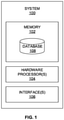
- FIG. 1 depicts a system 100 for detecting abnormal behaviour of devices from associated unlabeled sensor observations, in accordance with an embodiment of the present disclosure.
- the system 100 includes one or more hardware processors 104, communication interface device(s) or input/output (I/O) interface(s) 106 (also referred as interface(s)), and one or more data storage devices or memory 102 operatively coupled to the one or more hardware processors 104.
- the one or more processors 104 may be one or more software processing components and/or hardware processors.
- the hardware processors can be implemented as one or more microprocessors, microcomputers, microcontrollers, digital signal processors, central processing units, state machines, logic circuitries, and/or any devices that manipulate signals based on operational instructions.
- the processor(s) is/are configured to fetch and execute computer-readable instructions stored in the memory.
- the system 100 can be implemented in a variety of computing systems, such as laptop computers, notebooks, hand-held devices, workstations, mainframe computers, servers, a network cloud and the like.
- the I/O interface device(s) 106 can include a variety of software and hardware interfaces, for example, a web interface, a graphical user interface, and the like and can facilitate multiple communications within a wide variety of networks N/W and protocol types, including wired networks, for example, LAN, cable, etc., and wireless networks, such as WLAN, cellular, or satellite.
- the I/O interface device(s) can include one or more ports for connecting a number of devices to one another or to another server.
- the memory 102 may include any computer-readable medium known in the art including, for example, volatile memory, such as static random access memory (SRAM) and dynamic random access memory (DRAM), and/or non-volatile memory, such as read only memory (ROM), erasable programmable ROM, flash memories, hard disks, optical disks, and magnetic tapes.
- volatile memory such as static random access memory (SRAM) and dynamic random access memory (DRAM)
- non-volatile memory such as read only memory (ROM), erasable programmable ROM, flash memories, hard disks, optical disks, and magnetic tapes.
- ROM read only memory
- erasable programmable ROM erasable programmable ROM
- the database 108 further stores key performance indicators (KPIs) computed based on the unlabeled sensor observations, modified dataset obtained based on KPIs, windowed dataset obtained from the modified dataset, information on one or more hyper-parameters of a deep learning-based auto-encoder being optimized, optimum encoder hyper-parameters serve as one or more corresponding embeddings, set of embeddings with reduced dimension, one or more clusters pertaining to the unlabeled sensory observations, reconstruction error of a deep learning-based auto-encoder, pre-defined threshold and the like.
- KPIs key performance indicators
- the database 108 further stores the operating status of the device such as success, failure, and various transition states.
- the information stored in the database 108 further comprises various techniques such as clustering technique(s) as known in the art, windowing technique(s) as known in the art, deep learning based stacked auto encoder such as recurrent neural network, Long Short Term Memory and the like.
- the above-mentioned techniques and auto encoders comprised in the memory 102/database 108 are invoked as per the requirement by the system 100 to perform the methodologies described herein.
- the memory 102 further comprises (or may further comprise) information pertaining to input(s)/output(s) of each step performed by the systems and methods of the present disclosure. In other words, input(s) fed at each step and output(s) generated at each step are comprised in the memory 102 and can be utilized in further processing and analysis.
- FIG. 2 depicts an exemplary flow chart illustrating a method for detecting abnormal behaviour of devices from associated unlabeled sensor observations, using the system 100 of FIG. 1 , in accordance with an embodiment of the present disclosure.
- the system(s) 100 comprises one or more data storage devices or the memory 102 operatively coupled to the one or more hardware processors 104 and is configured to store instructions for execution of steps of the method by the one or more processors 104.
- the steps of the method of the present disclosure will now be explained with reference to components of the system 100 of FIG. 1 , and the flow diagram as depicted in FIG. 2 .
- the one or more hardware processors 104 obtain a dataset comprising a first unlabeled sensor observation and a second unlabeled sensor observation from at least one sensor respectively, the at least one sensor is attached to a device.
- a first unlabeled sensor observation is current (in amperes) consumed by the device (e.g., say water pump)
- a second unlabeled sensor observation is revolutions per minute (RPM) noted/captured for that water pump.
- the current consumed by the device and revolutions per minute (RPM) serve as time series data/sensor data captured by one or more corresponding sensors.
- the dataset is in an input file (e.g., such as word processing document), wherein the unlabeled sensor observations (e.g., the first unlabeled sensor observation and the second unlabeled sensor observation) are represented in one or more rows for various time instance.
- each row in the input file represents sensor observations at a specific instance of time (e.g., say for each second or every 1 second).
- Table 1 is an exemplary dataset comprising the first unlabeled sensor observation (current in amperes) and the second unlabeled sensor observation (frequency in Hertz (Hz)) from one or more sensors attached to one or more devices (e.g., 4 water pumps, namely Pump A, Pump B, Pump C (for sake of brevity not shown - but to be assumed), and Pump D):
- the one or more hardware processors 104 compute one or more key performance indicators (KPIs) based on a function of the first unlabeled sensor observation and the second unlabeled sensor observation comprised in the dataset to obtain a modified dataset.
- KPIs key performance indicators
- the one or more key performance indicators are computed for a plurality of time instances of the first unlabeled sensor observation and the second unlabeled sensor observation.
- KPI is computed as a ratio of current per RPM, in one embodiment of the present disclosure.
- FIG. 3 depicts key performance indicators (KPI) computed as a ratio of current per RPM, using the system 100 of FIG.
- the KPI computed is represented in the form of timeseries data as depicted in FIG. 3 , in one example embodiment.
- This knowledge of what KPI is or can be computed may be via user input (e.g., a domain expert), in one example embodiment. So, two sensor data namely current consumed by it and the RPM noted for that pump and KPI is computed for each of them.
- Table 2 depicts an exemplary windowed dataset with KPIs computed. Table 2 Identifier Timestamp Key Performance Indicator (KPIs) 1 3/6/2019 6:29:56 PM 2.6 2 3/6/2019 6:29:57 PM 2.592922615 ... ... ...
- the one or more hardware processors 104 apply a windowing technique on the modified dataset based on a transpose function implemented on the plurality of time instances of the first unlabeled sensor observation and the second unlabeled sensor observation comprised in the modified dataset to obtain a windowed dataset.
- the windowing technique (also referred as 'window technique and interchangeably used herein, is comprised in the memory 102 and invoked for execution as required by the system 100 of the present disclosure. For example, in the present disclosure out of the entire dataset, rows 0 to 31 (i.e., 32 rows) were taken. And these rows were transposed to create new row 0 with 32 columns. Thus, one row, representing a window of size 32, was created.
- the dataset is in an input file (e.g., such as word processing document), wherein the unlabeled sensor observations (e.g., the first unlabeled sensor observation and the second unlabeled sensor observation) are represented in one or more rows for various time instance.
- each row in the input file represents sensor observations at a specific instance of time (e.g., say for each second or every 1 second).
- the decision is needed to be taken on a minute basis and so 60 such rows are transposed to form columns of these unlabeled sensor observations.
- Table 3 depicts an exemplary windowed dataset as outputted in step 206, provided by way of example: Table 3 Window 1 2 3 ... 31 32 1 2.6 2.592922615 2.59531268 ... 2.607142857 2.595771621 2 2.609361357 2.627951459 2.591150135 ... 2.595238095 ...
- the one or more hardware processors 104 optimize, using the windowed dataset, one or more hyper-parameters of a deep learning-based auto-encoder to obtain one or more optimum encoder hyper-parameters (also referred as hyper-parameters and interchangeably used herein), wherein the one or more optimum encoder hyper-parameters serve as one or more corresponding embeddings.
- the deep learning-based auto-encoder is one of a recurrent neural network(s) or a long short-term memory (LSTM) network/encoder, and the like.
- the deep learning-based auto-encoder is comprised in the memory 102 and invoked for execution as required by the system 100 of the present disclosure.
- LSTM Encoder decoder has been used to find the optimum encoder parameters (e.g., the one or more optimum encoder hyper parameters) for which the reconstruction error is minimized.
- the step of optimizing the one or more hyper parameters of the stacked auto-encoder comprises iteratively fine-tuning the one or more hyper parameters based on the windowed dataset such that a reconstruction error reaches a pre-defined threshold.
- the one or more hyper-parameters include but are not limited to learning rate iteration, early exaggeration, and the like. Reconstruction error can be better understood by way of following exemplary description.
- any deep learning (DL) based encoder is applied on a time series (TS) the goal has been to learn the TS from itself.
- the input to the encoder of the deep learning-based auto-encoder is the TS and subsequently that encoded stream becomes the input for a Decoder of the deep learning-based auto-encoder.
- Output of the decoder is the time series again.
- the reconstruction error is known as the reconstruction error. So, it is required to tune the above-mentioned hyper parameters so that the reconstruction error is minimized.
- the threshold has been computed on a statistics-based approach and it varies for different use cases, in one example embodiment of the present disclosure.
- these are further use to encode the time series/unlabeled sensor observations. Moreover, these embeddings represent the 60-dimensional vector into another new dimensional vector space. This step is used for extract features from the time series without using domain expertise of a signal processing expert. For instance, the hyper-parameters were applied on an input 60 column vector to output a 32-dimensional vector.
- the one or more hardware processors 104 apply a dimensionality reduction technique on the one or more corresponding embeddings (e.g., 32-dimensional vector) to obtain a set of embeddings with reduced dimension.
- the dimensionality reduction technique is comprised in the memory 102 such dimensionality reduction technique is one of a principle component analysis (PCA) technique or a Uniform Manifold Approximation and Projection (UMAP) technique as known in the art.
- PCA principle component analysis
- UMAP Uniform Manifold Approximation and Projection
- UMAP technique was used to reduce this feature vector (e.g., 32-dimensional vector) to a lower 2 or 3-dimensional data.
- UMAP technique helps to plot in 2/3 dimension so that data can be visualized.
- Table 4 depicts an exemplary value for the set of embeddings with reduced dimension, provided by way of example: Table 4 X_0 X_1 0 -1.0265474 -2.681749 1 -1.1274452 1.6927222 2 -3.023633 2.503603 3 -0.5936756 0.24637656 4 0.9676664 -3.1254356 5 0.6661351 -2.6700094 6 -2.5043266 -1.3739654 7 -0.86100155 0.47663715 8 -0.48133633 1.6670678 9 -3.9000165 1.049104 10 0.47728086 3.3720694 ...
- the one or more hardware processors 104 apply a clustering technique on the set of embeddings to obtain a plurality of clusters.
- the clustering technique is a density-based clustering technique such as HDBSCAN clustering technique as known in the art.
- one or more clusters from the plurality of clusters are assigned at least one cardinality wherein the cardinality is indicative of an operating status of the device over a time under consideration.
- the at least one cardinality indicative of the operating status comprises one of a success, a failure, or a transition state.
- the transition state comprises a probability of a change in a first transition state to a second transition state wherein the second transition state is different from the first transition state.
- the transition state comprises a probability of a change from a first transition state to a second transition state wherein the second transition state is different from the first transition state.
- the first transition state and the second transition state are one of a success states or a failure state at one or more time instances of the plurality of time instances. For instance, if the first transition state is success state then the second transition state is considered as a failure state. Similarly, if the first transition state is failure state then the second transition state is considered as a success state.
- the system 100 implements/has implemented density-based clustering technique such as the HDBSCAN clustering technique as known in the art since the HDBSCAN clustering technique can automatically detect an optimum cluster size for a given dataset (e.g., dataset of step 102).
- the density-based clustering technique such as the HDBSCAN clustering technique is comprised in the memory 102 and invoked for execution as required by the system 100 of the present disclosure. More specifically, the HDBSCAN clustering technique has an automatic hyper-parameter training to find the best hyper-parameter combination and uses that for the clustering. Further, HDBSCAN clustering technique gives the user specified clustering quality metrics and the ideal number of the clusters by virtue of the algorithm.
- the soft clustering probability of the data-points/unlabeled sensor observations for their respective hard-clustering assignment also gives the sample silhouette values for each data-point.
- the present disclosure has implemented an optimization technique on two parameters namely silhouette coefficients and the soft clustering probability decided upon the number of clusters to obtain a plurality of clusters based on the set of embeddings with reduced dimension. a Steel Plant pump is being discussed as a use case.
- the silhouette coefficient (SC) has been used to find the ratio of inter cluster and intra cluster. A curve is obtained when the number of clusters are plotted as x axis and the SC as y axis and the optimal point is used hereafter as 'S'.
- the curve plot is not shown in figures by the embodiments of the present disclosure.
- number of states of the pump can be determined, such states for example, comprise but are not limited to: normal, starting to malfunction, malfunctioning, repaired, and the like.
- a plurality of clusters are obtained based on the set of embedding with reduced dimension, in one example embodiment of the present disclosure.
- the ability of the system 100 to reduce the number of features or set of embeddings to 2- or 3-dimension vector e.g., also referred as set of embeddings with reduced dimension
- the system 100 utilizes 2- or 3-dimension vector (e.g., also referred as set of embeddings with reduced dimension) as an input to the density-based clustering technique, the system 100 requires less computing power to performing clustering and obtain one or more clusters specific to the unlabeled sensor observations (e.g., first unlabeled sensor observation and second unlabeled sensor observation).
- 2- or 3-dimension vector e.g., also referred as set of embeddings with reduced dimension
- the system 100 and method utilized the following a subset of the above hyper-parameters for obtaining the plurality of clusters based on the set of embedding with reduced dimension, provided by way of example:
- the system 100 generates at least one alert based on the at least one cardinality assigned to the one or more clusters of the plurality of clusters.
- Example of clusters or cluster labels can be 0, 1 and 2.
- the clusters obtained included cluster labels 0, -1 and the like.
- Table 5 depicts an exemplary set of clusters/cluster labels obtained for the set of embeddings with reduced dimension for the first and second unlabeled sensor observations for the various devices (e.g., Pump A, Pump B (for sake of brevity not shown - but values assumed), Pump C (for sake of brevity not shown - but values assumed), and Pump D), provided by way of example: Table 5 Reference ID Start point End point Pump A (Current) Pump A (Frequency) ...
- FIG. 4 depicts operating status of the device based on the first unlabeled sensor observation and the second unlabeled sensor observation captured by the at least one sensor, in accordance with an example embodiment of the present disclosure.
- Another class is for some abnormal points (e.g., unlabeled sensor observations) which indicates the possibility of failure to success or success to failure transitions. These values are marked to generate an alarm based on its previous class. For example, if these points/unlabeled sensor observations are obtained when the machine is in healthy state, then an alarm is set by the system 100. It is to be understood by a person having ordinary skill in the art or person skilled in the art that there may be no requirement to raise an alarm if the device/machine/water pump is changing from failure transition state to success/good transition state.
- KPI Key performance index
- LSTM auto encoder was used to get an embedding of these windows into a higher dimension of say 60 and similar LSTM decoder was used to reconstruct the time series of the unlabeled sensor observations. The point wise error between original and embedded data was minimized. Once the training was over, the hidden state of the LSTM was extracted for which the reconstruction error was observed to be optimum. Encoder with best model was then used to get a set of embedding and these embeddings were used features. Uniform Manifold Approximation and Projection (UMAP) was used for dimensionality reduction and the number of features were reduced to 2- or 3-dimension vector in prior to applying clustering technique such as density based clustering on lower dimension so as to clearly visualize separation between the clusters.
- UMAP Uniform Manifold Approximation and Projection
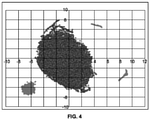
- the set of embeddings with reduced dimension were clustered to obtain a plurality of clusters using HDBSCAN clustering technique wherein three distinct clusters were observed (e.g., refer FIG. 4 ).
- the ability of the system 100 to reduce the number of features or set of embeddings to 2- or 3-dimension vector enables to the system 100 to optimize computational power thereby improving system performance. Since the system 100 utilizes 2- or 3-dimension vector (e.g., also referred as set of embeddings with reduced dimension) as an input to the density-based clustering technique, the system 100 requires less computing power.
- FIG. 4 depicts a plurality of clusters obtained based on the set of embeddings with reduced dimension serving as an input to a clustering technique implemented by the system 100 of FIG. 1 , in accordance with an example embodiment of the present disclosure.
- second cluster of points contained consecutive window identifier and thus time stamp and that cluster was marked as the failure.
- the third cluster is indicative of the points of transition of degrading from good condition to fail and the reverse.
- a model Once a model has been built it can be used in a device such as an edge device to respond in real time. For instance, once unlabeled sensor observations are obtained from the sensors attached with the device or machine parts, a similar window of 32 samples can be accumulated. KPI can be further computed as per the domain knowledge provided by the expert. The already set parameters can be used to obtain the embedding using the LSTM encoder. UMAP can be used to reduce the feature into lesser dimension and then a clustering technique can be applied on the reduced dimension feature set to obtain one or more clusters.
- alerts can be generated based on cardinality assigned to the clusters wherein the alerts can be communication via any communication channel (e.g., ZigBee ® or https) as known in the art to an operator (e.g., a user, administrator) to acquire data from sensors for further processing and analysis.
- any communication channel e.g., ZigBee ® or https
- an operator e.g., a user, administrator
- the hardware device can be any kind of device which can be programmed including e.g. any kind of computer like a server or a personal computer, or the like, or any combination thereof.
- the device may also include means which could be e.g. hardware means like e.g. an application-specific integrated circuit (ASIC), a field-programmable gate array (FPGA), or a combination of hardware and software means, e.g.
- ASIC application-specific integrated circuit
- FPGA field-programmable gate array
- the means can include both hardware means and software means.
- the method embodiments described herein could be implemented in hardware and software.
- the device may also include software means.
- the embodiments may be implemented on different hardware devices, e.g. using a plurality of CPUs.
- the embodiments herein can comprise hardware and software elements.
- the embodiments that are implemented in software include but are not limited to, firmware, resident software, microcode, etc.
- the functions performed by various components described herein may be implemented in other components or combinations of other components.
- a computer-usable or computer readable medium can be any apparatus that can comprise, store, communicate, propagate, or transport the program for use by or in connection with the instruction execution system, apparatus, or device.
- a computer-readable storage medium refers to any type of physical memory on which information or data readable by a processor may be stored.
- a computer-readable storage medium may store instructions for execution by one or more processors, including instructions for causing the processor(s) to perform steps or stages consistent with the embodiments described herein.
- the term "computer-readable medium” should be understood to include tangible items and exclude carrier waves and transient signals, i.e., be non-transitory. Examples include random access memory (RAM), read-only memory (ROM), volatile memory, nonvolatile memory, hard drives, CD ROMs, DVDs, flash drives, disks, and any other known physical storage media.
Landscapes
- Engineering & Computer Science (AREA)
- Physics & Mathematics (AREA)
- Theoretical Computer Science (AREA)
- Evolutionary Computation (AREA)
- Mathematical Physics (AREA)
- Artificial Intelligence (AREA)
- General Physics & Mathematics (AREA)
- Biomedical Technology (AREA)
- Biophysics (AREA)
- Computational Linguistics (AREA)
- General Health & Medical Sciences (AREA)
- Molecular Biology (AREA)
- Computing Systems (AREA)
- General Engineering & Computer Science (AREA)
- Data Mining & Analysis (AREA)
- Life Sciences & Earth Sciences (AREA)
- Software Systems (AREA)
- Health & Medical Sciences (AREA)
- Automation & Control Theory (AREA)
- Testing Or Calibration Of Command Recording Devices (AREA)
- Information Retrieval, Db Structures And Fs Structures Therefor (AREA)
Abstract
Description
- The present application claims priority to
Indian application, Application No. 202021037241 - The disclosure herein generally relates to analysis of unlabeled sensor observations, and, more particularly, to detection of abnormal behaviour of devices from associated unlabeled sensor observations.
- In an industry plant or IoT networks, major failure occurs because of the failure in wear of the components of a device. The mass of the components decreases as the device is going to degrade or lose its useful life. Therefore, detecting the time when the device is going to fail in real time is a real challenge given the associated constraints and requirements. However, due to absence in any supporting information or annotated data, traditional machine learning (ML) approaches have failed to detection abnormality in devices.
- Embodiments of the present disclosure present technological improvements as solutions to one or more of the above-mentioned technical problems recognized by the inventors in conventional systems. For example, in one aspect, there is provided a processor implemented method for detecting abnormal behaviour of devices from associated unlabeled sensor observations. The method comprises obtaining, via one or more hardware processors, a dataset comprising a first unlabeled sensor observation and a second unlabeled sensor observation from at least one sensor respectively, the at least one sensor is attached to a device; computing, via the one or more hardware processors, one or more key performance indicators (KPIs) based on a function of the first unlabeled sensor observation and the second unlabeled sensor observation comprised in the dataset to obtain a modified dataset, wherein the one or more key performance indicators are computed for a plurality of time instances of the first unlabeled sensor observation and the second unlabeled sensor observation; applying, via the one or more hardware processors, a windowing technique on the modified dataset based on a transpose function implemented on the plurality of time instances of the first unlabeled sensor observation and the second unlabeled sensor observation comprised in the modified dataset to obtain a windowed dataset; optimizing, via the one or more hardware processors,, using the windowed dataset, one or more hyper-parameters of a deep learning-based auto-encoder to obtain one or more optimum encoder hyper-parameters, wherein the one or more optimum encoder hyper-parameters serve as one or more corresponding embeddings; applying, via the one or more hardware processors, a dimensionality reduction technique on the one or more corresponding embeddings to obtain a set of embeddings with reduced dimension; and applying, via the one or more hardware processors, a clustering technique on the set of embeddings to obtain a plurality of clusters, wherein one or more clusters from the plurality of clusters is assigned at least one cardinality, the cardinality is indicative of an operating status of the device over a time under consideration.
- In an embodiment, the step of optimizing one or more hyper parameters of the stacked auto-encoder comprises iteratively fine-tuning the one or more hyper parameters based on the windowed dataset such that a reconstruction error reaches a pre-defined threshold.
- In an embodiment, the clustering technique is a density-based clustering technique.
- In an embodiment, the at least one cardinality is indicative of the operating status comprises one of a success, a failure, or a transition state.
- In an embodiment, the transition state comprises a probability of a change in a first transition state to a second transition state that is different from the first transition state.
- In an embodiment, the first transition state and the second transition state are one of a success state or a failure state at one or more time instances of the plurality of time instances.
- In an embodiment, the method further comprises generating at least one alert based on the at least one cardinality assigned to the one or more clusters of the plurality of clusters.
- In another aspect, there is provided a processor implemented method for detecting abnormal behaviour of devices from associated unlabeled sensor observations. The system comprises a memory storing instructions; one or more communication interfaces; and one or more hardware processors coupled to the memory via the one or more communication interfaces, wherein the one or more hardware processors are configured by the instructions to: obtain a dataset comprising a first unlabeled sensor observation and a second unlabeled sensor observation from at least one sensor respectively, the at least one sensor is attached to a device; compute one or more key performance indicators (KPIs) based on a function of the first unlabeled sensor observation and the second unlabeled sensor observation comprised in the dataset to obtain a modified dataset, wherein the one or more key performance indicators are computed for a plurality of time instances of the first unlabeled sensor observation and the second unlabeled sensor observation; apply a windowing technique on the modified dataset based on a transpose function implemented on the plurality of time instances of the first unlabeled sensor observation and the second unlabeled sensor observation comprised in the modified dataset to obtain a windowed dataset; optimize, using the windowed dataset, one or more hyper-parameters of a deep learning-based auto-encoder to obtain one or more optimum encoder hyper-parameters, wherein the one or more optimum encoder hyper-parameters serve as one or more corresponding embeddings; apply a dimensionality reduction technique on the one or more corresponding embeddings to obtain a set of embeddings with reduced dimension; and apply a clustering technique on the set of embeddings to obtain a plurality of clusters, wherein one or more clusters from the plurality of clusters is assigned at least one cardinality, the cardinality is indicative of an operating status of the device over a time under consideration.
- In an embodiment, the one or more hyper parameters of the stacked auto-encoder are optimized by iteratively fine-tuning the one or more hyper parameters based on the windowed dataset such that a reconstruction error reaches a pre-defined threshold.
- In an embodiment, the clustering technique is a density-based clustering technique.
- In an embodiment, the at least one cardinality is indicative of the operating status comprises one of a success, a failure, or a transition state.
- In an embodiment, the transition state comprises a probability of a change in a first transition state to a second transition state that is different from the first transition state.
- In an embodiment, the first transition state and the second transition state are one of a success state or a failure state at one or more time instances of the plurality of time instances.
- In an embodiment, the one or more hardware processors are further configured by the instructions to generate at least one alert based on the at least one cardinality assigned to the one or more clusters of the plurality of clusters.
- In yet another aspect, there is provided a computer program product comprising a non-transitory computer readable medium having a computer readable program embodied therein, wherein the computer readable program, when executed on a computing device causes the computing device to detect abnormal behaviour of devices from associated unlabeled sensor observations by: obtaining a dataset comprising a first unlabeled sensor observation and a second unlabeled sensor observation from at least one sensor respectively, the at least one sensor is attached to a device; computing one or more key performance indicators (KPIs) based on a function of the first unlabeled sensor observation and the second unlabeled sensor observation comprised in the dataset to obtain a modified dataset, wherein the one or more key performance indicators are computed for a plurality of time instances of the first unlabeled sensor observation and the second unlabeled sensor observation; applying a windowing technique on the modified dataset based on a transpose function implemented on the plurality of time instances of the first unlabeled sensor observation and the second unlabeled sensor observation comprised in the modified dataset to obtain a windowed dataset; optimizing, using the windowed dataset, one or more hyper-parameters of a deep learning-based auto-encoder to obtain one or more optimum encoder hyper-parameters, wherein the one or more optimum encoder hyper-parameters serve as one or more corresponding embeddings; applying a dimensionality reduction technique on the one or more corresponding embeddings to obtain a set of embeddings with reduced dimension; and applying a clustering technique on the set of embeddings to obtain a plurality of clusters, wherein one or more clusters from the plurality of clusters is assigned at least one cardinality, the cardinality is indicative of an operating status of the device over a time under consideration.
- In an embodiment, the step of optimizing one or more hyper parameters of the stacked auto-encoder comprises iteratively fine-tuning the one or more hyper parameters based on the windowed dataset such that a reconstruction error reaches a pre-defined threshold.
- In an embodiment, the clustering technique is a density-based clustering technique.
- In an embodiment, the at least one cardinality is indicative of the operating status comprises one of a success, a failure, or a transition state.
- In an embodiment, the transition state comprises a probability of a change in a first transition state to a second transition state that is different from the first transition state.
- In an embodiment, the first transition state and the second transition state are one of a success state or a failure state at one or more time instances of the plurality of time instances.
- In an embodiment, the computer readable program, when executed on the computing device further causes the computing device to generate at least one alert based on the at least one cardinality assigned to the one or more clusters of the plurality of clusters.
- It is to be understood that both the foregoing general description and the following detailed description are exemplary and explanatory only and are not restrictive of the invention, as claimed.
- The accompanying drawings, which are incorporated in and constitute a part of this disclosure, illustrate exemplary embodiments and, together with the description, serve to explain the disclosed principles:
-
FIG. 1 depicts a system for detecting abnormal behaviour of devices from associated unlabeled sensor observations, in accordance with an embodiment of the present disclosure. -
FIG. 2 depicts an exemplary flow chart illustrating a method for detecting abnormal behaviour of devices from associated unlabeled sensor observations, using the system ofFIG. 1 , in accordance with an embodiment of the present disclosure. -
FIG. 3 depicts key performance indicators (KPI) computed as a ratio of current per RPM, using the system ofFIG. 1 , in accordance with an example embodiment of the present disclosure. -
FIG. 4 depicts a plurality of clusters obtained based on the set of embeddings with reduced dimension serving as an input to a clustering technique implemented by the system ofFIG. 1 , in accordance with an example embodiment of the present disclosure. - Exemplary embodiments are described with reference to the accompanying drawings. In the figures, the left-most digit(s) of a reference number identifies the figure in which the reference number first appears. Wherever convenient, the same reference numbers are used throughout the drawings to refer to the same or like parts. While examples and features of disclosed principles are described herein, modifications, adaptations, and other implementations are possible without departing from the scope of the disclosed embodiments.
- Conventionally, detecting time when a device is going to fail in real time has been a real challenge given the associated constraints and requirements. Due to absence in any supporting information or annotated data, traditional approaches have failed to detection abnormality in devices. Present disclosure provide systems and methods for detecting abnormal behaviour of a device from associated unlabeled sensor observations wherein KPIs are computed based on unlabeled sensor observations of at least two sensor parameters and windowing technique is applied on modified dataset to obtain windowed dataset based on which hyper-parameters of deep learning-based auto-encoder are optimized to obtain set of embeddings. Dimensionality reduction technique is applied on the embeddings to obtain embeddings with reduced dimension. Density based clustering technique with hyper-parameters is applied on embeddings with reduced dimension and cluster(s) for unlabeled sensor observations are obtained. Cardinality is assigned to cluster(s) to predict abnormal behaviour of the device. The cardinality is further indicative of operating status of the device comprises one of a success, a failure, or a transition state (e.g., success state to failure state and vice versa).
- Referring now to the drawings, and more particularly to
FIGS. 1 through 4 , where similar reference characters denote corresponding features consistently throughout the figures, there are shown preferred embodiments and these embodiments are described in the context of the following exemplary system and/or method. -
FIG. 1 depicts asystem 100 for detecting abnormal behaviour of devices from associated unlabeled sensor observations, in accordance with an embodiment of the present disclosure. In an embodiment, thesystem 100 includes one ormore hardware processors 104, communication interface device(s) or input/output (I/O) interface(s) 106 (also referred as interface(s)), and one or more data storage devices ormemory 102 operatively coupled to the one ormore hardware processors 104. The one ormore processors 104 may be one or more software processing components and/or hardware processors. In an embodiment, the hardware processors can be implemented as one or more microprocessors, microcomputers, microcontrollers, digital signal processors, central processing units, state machines, logic circuitries, and/or any devices that manipulate signals based on operational instructions. Among other capabilities, the processor(s) is/are configured to fetch and execute computer-readable instructions stored in the memory. In an embodiment, thesystem 100 can be implemented in a variety of computing systems, such as laptop computers, notebooks, hand-held devices, workstations, mainframe computers, servers, a network cloud and the like. - The I/O interface device(s) 106 can include a variety of software and hardware interfaces, for example, a web interface, a graphical user interface, and the like and can facilitate multiple communications within a wide variety of networks N/W and protocol types, including wired networks, for example, LAN, cable, etc., and wireless networks, such as WLAN, cellular, or satellite. In an embodiment, the I/O interface device(s) can include one or more ports for connecting a number of devices to one another or to another server.
- The
memory 102 may include any computer-readable medium known in the art including, for example, volatile memory, such as static random access memory (SRAM) and dynamic random access memory (DRAM), and/or non-volatile memory, such as read only memory (ROM), erasable programmable ROM, flash memories, hard disks, optical disks, and magnetic tapes. In an embodiment, adatabase 108 is comprised in thememory 102, wherein thedatabase 108 comprises unlabeled sensor observations captured by one or more sensors attached to various equipment/ (or devices). Thedatabase 108 further stores key performance indicators (KPIs) computed based on the unlabeled sensor observations, modified dataset obtained based on KPIs, windowed dataset obtained from the modified dataset, information on one or more hyper-parameters of a deep learning-based auto-encoder being optimized, optimum encoder hyper-parameters serve as one or more corresponding embeddings, set of embeddings with reduced dimension, one or more clusters pertaining to the unlabeled sensory observations, reconstruction error of a deep learning-based auto-encoder, pre-defined threshold and the like. Thedatabase 108 further stores the operating status of the device such as success, failure, and various transition states. - The information stored in the
database 108 further comprises various techniques such as clustering technique(s) as known in the art, windowing technique(s) as known in the art, deep learning based stacked auto encoder such as recurrent neural network, Long Short Term Memory and the like. The above-mentioned techniques and auto encoders comprised in thememory 102/database 108 are invoked as per the requirement by thesystem 100 to perform the methodologies described herein. Thememory 102 further comprises (or may further comprise) information pertaining to input(s)/output(s) of each step performed by the systems and methods of the present disclosure. In other words, input(s) fed at each step and output(s) generated at each step are comprised in thememory 102 and can be utilized in further processing and analysis. -
FIG. 2 , with reference toFIG. 1 , depicts an exemplary flow chart illustrating a method for detecting abnormal behaviour of devices from associated unlabeled sensor observations, using thesystem 100 ofFIG. 1 , in accordance with an embodiment of the present disclosure. In an embodiment, the system(s) 100 comprises one or more data storage devices or thememory 102 operatively coupled to the one ormore hardware processors 104 and is configured to store instructions for execution of steps of the method by the one ormore processors 104. The steps of the method of the present disclosure will now be explained with reference to components of thesystem 100 ofFIG. 1 , and the flow diagram as depicted inFIG. 2 . In an embodiment, atstep 202 of the present disclosure, the one ormore hardware processors 104 obtain a dataset comprising a first unlabeled sensor observation and a second unlabeled sensor observation from at least one sensor respectively, the at least one sensor is attached to a device. Consider that a first unlabeled sensor observation is current (in amperes) consumed by the device (e.g., say water pump), and a second unlabeled sensor observation is revolutions per minute (RPM) noted/captured for that water pump. The current consumed by the device and revolutions per minute (RPM) serve as time series data/sensor data captured by one or more corresponding sensors. Say, the dataset is in an input file (e.g., such as word processing document), wherein the unlabeled sensor observations (e.g., the first unlabeled sensor observation and the second unlabeled sensor observation) are represented in one or more rows for various time instance. In other words, each row in the input file represents sensor observations at a specific instance of time (e.g., say for each second or every 1 second). Below Table 1 is an exemplary dataset comprising the first unlabeled sensor observation (current in amperes) and the second unlabeled sensor observation (frequency in Hertz (Hz)) from one or more sensors attached to one or more devices (e.g., 4 water pumps, namely Pump A, Pump B, Pump C (for sake of brevity not shown - but to be assumed), and Pump D):


- In an embodiment, at
step 204 of the present disclosure, the one ormore hardware processors 104 compute one or more key performance indicators (KPIs) based on a function of the first unlabeled sensor observation and the second unlabeled sensor observation comprised in the dataset to obtain a modified dataset. In an embodiment, the one or more key performance indicators are computed for a plurality of time instances of the first unlabeled sensor observation and the second unlabeled sensor observation. For example, KPI is computed as a ratio of current per RPM, in one embodiment of the present disclosure.FIG. 3 , with reference toFIGS. 1 and2 , depicts key performance indicators (KPI) computed as a ratio of current per RPM, using thesystem 100 ofFIG. 1 , in accordance with an example embodiment of the present disclosure. The KPI computed is represented in the form of timeseries data as depicted inFIG. 3 , in one example embodiment. This knowledge of what KPI is or can be computed may be via user input (e.g., a domain expert), in one example embodiment. So, two sensor data namely current consumed by it and the RPM noted for that pump and KPI is computed for each of them. Below table 2 depicts an exemplary windowed dataset with KPIs computed.Table 2 Identifier Timestamp Key Performance Indicator (KPIs) 1 3/6/2019 6:29:56 PM 2.6 2 3/6/2019 6:29:57 PM 2.592922615 ... ... ... 5 3/6/2019 6:30:00 PM 2.609000192 6 3/6/2019 6:30:01 PM 2.595733629 7 3/6/2019 6:30:02 PM 2.595301011 ... ... ... 10 3/6/2019 6:30:05 PM 2.590483166 ... ... ... 63 3/6/2019 6:30:58 PM 2.595238095 64 3/6/2019 6:30:59 PM 2.602447328 - In an embodiment, at
step 206 of the present disclosure, the one ormore hardware processors 104 apply a windowing technique on the modified dataset based on a transpose function implemented on the plurality of time instances of the first unlabeled sensor observation and the second unlabeled sensor observation comprised in the modified dataset to obtain a windowed dataset. The windowing technique (also referred as 'window technique and interchangeably used herein, is comprised in thememory 102 and invoked for execution as required by thesystem 100 of the present disclosure. For example, in the present disclosure out of the entire dataset, rows 0 to 31 (i.e., 32 rows) were taken. And these rows were transposed to create new row 0 with 32 columns. Thus, one row, representing a window of size 32, was created. Process was repeated for remaining rows as well. The above description is better understood by way of the following exemplary description. Say, the dataset is in an input file (e.g., such as word processing document), wherein the unlabeled sensor observations (e.g., the first unlabeled sensor observation and the second unlabeled sensor observation) are represented in one or more rows for various time instance. In other words, each row in the input file represents sensor observations at a specific instance of time (e.g., say for each second or every 1 second). Now the decision is needed to be taken on a minute basis and so 60 such rows are transposed to form columns of these unlabeled sensor observations. Thus if 18,000 data rows with one KPI column were there in the dataset, after transposing it 300 rows with 60 columns are obtained (e.g., also referred as 300 data points with 60-dimensional vector). Below Table 3 depicts an exemplary windowed dataset as outputted instep 206, provided by way of example:Table 3 Window 1 2 3 ... 31 32 1 2.6 2.592922615 2.59531268 ... 2.607142857 2.595771621 2 2.609361357 2.627951459 2.591150135 ... 2.595238095 ... - In an embodiment, at
step 208 of the present disclosure, the one ormore hardware processors 104 optimize, using the windowed dataset, one or more hyper-parameters of a deep learning-based auto-encoder to obtain one or more optimum encoder hyper-parameters (also referred as hyper-parameters and interchangeably used herein), wherein the one or more optimum encoder hyper-parameters serve as one or more corresponding embeddings. The deep learning-based auto-encoder is one of a recurrent neural network(s) or a long short-term memory (LSTM) network/encoder, and the like. The deep learning-based auto-encoder is comprised in thememory 102 and invoked for execution as required by thesystem 100 of the present disclosure. In the present disclosure LSTM Encoder decoder has been used to find the optimum encoder parameters (e.g., the one or more optimum encoder hyper parameters) for which the reconstruction error is minimized. The step of optimizing the one or more hyper parameters of the stacked auto-encoder comprises iteratively fine-tuning the one or more hyper parameters based on the windowed dataset such that a reconstruction error reaches a pre-defined threshold. Examples of the one or more hyper-parameters include but are not limited to learning rate iteration, early exaggeration, and the like. Reconstruction error can be better understood by way of following exemplary description. In the present disclosure, whenever any deep learning (DL) based encoder is applied on a time series (TS) the goal has been to learn the TS from itself. Hence the input to the encoder of the deep learning-based auto-encoder is the TS and subsequently that encoded stream becomes the input for a Decoder of the deep learning-based auto-encoder. Output of the decoder is the time series again. Now the difference between the original and the decoder TS is known as the reconstruction error. So, it is required to tune the above-mentioned hyper parameters so that the reconstruction error is minimized. The threshold has been computed on a statistics-based approach and it varies for different use cases, in one example embodiment of the present disclosure. Now that the one or more optimum encoder hyper-parameters are obtained these are further use to encode the time series/unlabeled sensor observations. Moreover, these embeddings represent the 60-dimensional vector into another new dimensional vector space. This step is used for extract features from the time series without using domain expertise of a signal processing expert. For instance, the hyper-parameters were applied on an input 60 column vector to output a 32-dimensional vector. - In an embodiment, at
step 210 of the present disclosure, the one ormore hardware processors 104 apply a dimensionality reduction technique on the one or more corresponding embeddings (e.g., 32-dimensional vector) to obtain a set of embeddings with reduced dimension. In the present disclosure, the dimensionality reduction technique is comprised in thememory 102 such dimensionality reduction technique is one of a principle component analysis (PCA) technique or a Uniform Manifold Approximation and Projection (UMAP) technique as known in the art. In the present disclosure, UMAP technique was used to reduce this feature vector (e.g., 32-dimensional vector) to a lower 2 or 3-dimensional data. UMAP technique helps to plot in 2/3 dimension so that data can be visualized. Descriptive analytics plays an important role for management, but users cannot visualize any vector beyond 3-dimension. Moreover, some of the conventional clustering algorithms/techniques cannot work on high dimension and hence UMAP technique to reduce the dimension and obtain the set of embeddings with reduced dimension. Below Table 4 depicts an exemplary value for the set of embeddings with reduced dimension, provided by way of example:Table 4 X_0 X_1 0 -1.0265474 -2.681749 1 -1.1274452 1.6927222 2 -3.023633 2.503603 3 -0.5936756 0.24637656 4 0.9676664 -3.1254356 5 0.6661351 -2.6700094 6 -2.5043266 -1.3739654 7 -0.86100155 0.47663715 8 -0.48133633 1.6670678 9 -3.9000165 1.049104 10 0.47728086 3.3720694 ... ... ... 50 1.2877359 -2.4370077 51 0.7135229 -0.2074219 52 0.024096811 2.7424657 53 -0.51461816 2.8483796 54 -2.2853856 5.8992887 - In an embodiment, at
step 212 of the present disclosure, the one ormore hardware processors 104 apply a clustering technique on the set of embeddings to obtain a plurality of clusters. In an embodiment, the clustering technique is a density-based clustering technique such as HDBSCAN clustering technique as known in the art. In an embodiment, one or more clusters from the plurality of clusters are assigned at least one cardinality wherein the cardinality is indicative of an operating status of the device over a time under consideration. In an embodiment, the at least one cardinality indicative of the operating status comprises one of a success, a failure, or a transition state. The transition state comprises a probability of a change in a first transition state to a second transition state wherein the second transition state is different from the first transition state. Alternatively, the transition state comprises a probability of a change from a first transition state to a second transition state wherein the second transition state is different from the first transition state. In an embodiment, the first transition state and the second transition state are one of a success states or a failure state at one or more time instances of the plurality of time instances. For instance, if the first transition state is success state then the second transition state is considered as a failure state. Similarly, if the first transition state is failure state then the second transition state is considered as a success state. - The
system 100 implements/has implemented density-based clustering technique such as the HDBSCAN clustering technique as known in the art since the HDBSCAN clustering technique can automatically detect an optimum cluster size for a given dataset (e.g., dataset of step 102). The density-based clustering technique such as the HDBSCAN clustering technique is comprised in thememory 102 and invoked for execution as required by thesystem 100 of the present disclosure. More specifically, the HDBSCAN clustering technique has an automatic hyper-parameter training to find the best hyper-parameter combination and uses that for the clustering. Further, HDBSCAN clustering technique gives the user specified clustering quality metrics and the ideal number of the clusters by virtue of the algorithm. Besides hard-clustering assignment and scores, it also gives the soft clustering probability of the data-points/unlabeled sensor observations for their respective hard-clustering assignment. It also gives the sample silhouette values for each data-point. The present disclosure has implemented an optimization technique on two parameters namely silhouette coefficients and the soft clustering probability decided upon the number of clusters to obtain a plurality of clusters based on the set of embeddings with reduced dimension. a Steel Plant pump is being discussed as a use case. In the method of the present disclosure, the silhouette coefficient (SC) has been used to find the ratio of inter cluster and intra cluster. A curve is obtained when the number of clusters are plotted as x axis and the SC as y axis and the optimal point is used hereafter as 'S'. The curve plot is not shown in figures by the embodiments of the present disclosure. By determining the optimal number of clusters, number of states of the pump can be determined, such states for example, comprise but are not limited to: normal, starting to malfunction, malfunctioning, repaired, and the like. Some of the hyper parameters of the HDBSCAN clustering technique considered by thesystem 100 and the method of the present disclosure for the device as a water pump are described below by way of examples: - 1. min_cluster_size: Minimum size of clusters.
- 2. min_samples: Number of samples/unlabeled sensor observations in a neighbourhood for a specific unlabeled sensor observation/point to be considered as a core point.
- 3. metric: The metric to use when calculating distance between instances in a feature array. If metric is "precomputed", X is assumed to be a distance matrix and must be square. Multiple values such as 'Euclidean, Manhattan' can be specified for the tuning purpose. These are all hyper-parameters of HDBSCAN clustering algorithm. Euclidian and Manhattan are the distance metric. There is a flexibility for one or more entities (e.g., users, system(s), and the like.) to use the distance metric. Default setting uses Euclidean distance, in one example embodiment of the present disclosure.
- 4. algorithm: HDBSCAN has variants specialized for different characteristics of the data. By default, this is set to best which chooses the "best" algorithm given the nature of the dataset. Other options can also be fitting or configured into the
system 100 and evaluated for performance. Such other options can include but are not limited to generic, prims_kdtree, prims_balltree, boruvka_kdtree, boruvka_balltree, and the like. Multiple values like best, generic, prims_kdtree, and the like can be specified for the tuning purpose. - 5. gen_min_span_tree: Whether to generate the minimum spanning tree with regard to mutual reachability distance for later analysis. These are all hyper-parameters of HDBSCAN clustering algorithm/technique, in one example embodiment of the present disclosure.
- 6. scoring_param_names: Defaults to silhouette_score, calinski_harabasz_score, and the like. The name of the scoring parameters is used to measure the quality of the clusters being outputted.
- 7. scoring_param_for_best_cluster_selection: Defaults to silhouette_score - the name of the scoring parameter to be used for the best clustering selection during the hyper-parameter tuning. It must be one of the members of 'scoring_param_names' property.
- Therefore, by applying the above-mentioned one or more hyper-parameters (e.g.., refer above 7 points) for the HDBSCAN clustering technique by the
system 100, a plurality of clusters are obtained based on the set of embedding with reduced dimension, in one example embodiment of the present disclosure. The ability of thesystem 100 to reduce the number of features or set of embeddings to 2- or 3-dimension vector (e.g., also referred as set of embeddings with reduced dimension) enables to thesystem 100 to optimize computational power thereby improving system performance. In other words, thesystem 100 utilizes 2- or 3-dimension vector (e.g., also referred as set of embeddings with reduced dimension) as an input to the density-based clustering technique, thesystem 100 requires less computing power to performing clustering and obtain one or more clusters specific to the unlabeled sensor observations (e.g., first unlabeled sensor observation and second unlabeled sensor observation). - For instance, during the experiments conducted by present disclosure, the
system 100 and method utilized the following a subset of the above hyper-parameters for obtaining the plurality of clusters based on the set of embedding with reduced dimension, provided by way of example: - a. min_cluster_size: Ideally this is a relatively intuitive parameter to select - it can be set of the smallest size grouping to consider a cluster.
- b. min_samples: This parameter has high impact on the clustering. The larger the value of this parameter makes the clustering more conservative i.e., more points/unlabeled sensor observations would be declared as noise and clusters are being restricted to progressively more dense areas.
- c. scoring_param_for_best cluster selection: This represents the metric to be used for selecting the best cluster. One possible such parameter may be Silhouette coefficient.
- Further, the
system 100 generates at least one alert based on the at least one cardinality assigned to the one or more clusters of the plurality of clusters. Example of clusters or cluster labels can be 0, 1 and 2. In the present disclosure, the clusters obtained included cluster labels 0, -1 and the like. Below Table 5 depicts an exemplary set of clusters/cluster labels obtained for the set of embeddings with reduced dimension for the first and second unlabeled sensor observations for the various devices (e.g., Pump A, Pump B (for sake of brevity not shown - but values assumed), Pump C (for sake of brevity not shown - but values assumed), and Pump D), provided by way of example:Table 5 Reference ID Start point End point Pump A (Current) Pump A (Frequency) ... Pump D (Current) Pump D (Frequency) Cluster label 3232 3136 3360 23 46.63 ... 164.7008362 67.35041809 -1 10784 10688 10912 29 38.63 ... 181.8068542 76 -1 13504 13408 13632 14 58.63 ... 171 70 0 18016 17920 18144 30 10.63 ... 210.2291565 88 -1 20448 20352 20576 10 42.63 ... 200.2291565 84 -1 21120 21024 21248 21 54.63 ... 169.5855865 69 0 34080 33984 34208 57 54.63 ... 160.6025848 65 -1 ... ... ... ... ... ... ... ... ... 45600 45504 45728 9 54.63 ... 1 0 -1 45632 45536 45760 10 26.63 ... 1 0 0 45664 45568 45792 10 58.63 ... 1 0 0 45696 45600 45824 11 30.63 ... 1 0 0 45728 45632 45856 12 2.63 ... 1 0 0 - In the experiment conducted by the present disclosure for the water pump, for anomaly detection (depicting an abnormal behavior) the present disclosure relied upon an observation that majority of the data is belonging to the class success. Based on the experiments, it was found that the cardinality for class 1 is 98% (densely population dots in
FIG. 4 ). These were marked as success.FIG. 4 , with reference toFIGS. 1 through 3 , depicts operating status of the device based on the first unlabeled sensor observation and the second unlabeled sensor observation captured by the at least one sensor, in accordance with an example embodiment of the present disclosure. - As can be realized that once a pump/machine fails or attains a failure operating status it always consumes some time to recover to its healthy condition. So, the class 0, which has almost 1 hour(s) of consecutive data points belonging to that class is labelled as failure.
- Another class is for some abnormal points (e.g., unlabeled sensor observations) which indicates the possibility of failure to success or success to failure transitions. These values are marked to generate an alarm based on its previous class. For example, if these points/unlabeled sensor observations are obtained when the machine is in healthy state, then an alarm is set by the
system 100. It is to be understood by a person having ordinary skill in the art or person skilled in the art that there may be no requirement to raise an alarm if the device/machine/water pump is changing from failure transition state to success/good transition state. It is to be further understood by a person having ordinary skill in the art or person skilled in the art that though the present disclosure implements systems and methods for abnormal behaviour detection, the system and method described herein can also be implemented for determining health index of a device, remaining useful life (RUL) of the device and its associated components, and the like and such implementation shall not be construed as limiting the scope of the present disclosure. - Key performance index (KPI) was computed with the feedback from the domain expert. In a typical realization of pump failure in a steel plant such KPI may be computed as a ratio of current and frequency. A group of consecutive samples presented as consecutive rows in the input .CSV file was considered as window of time series data/unlabeled sensor observations specific to 4 devices (e.g., 4 water pumps, with each water pump having at least 2 sensors or at least one sensor capable of providing 2 distinct sensor values such as current and frequency). In the present disclosure, experiments were conducted by the
system 100 and the method using 32 and 64 window size. Each window consisting of, say 32 samples/unlabeled sensor observation, was considered as an input feature vector/ unlabeled sensor observation(s) of 32 dimension. 7 days data 19000 such windows were obtained. LSTM auto encoder was used to get an embedding of these windows into a higher dimension of say 60 and similar LSTM decoder was used to reconstruct the time series of the unlabeled sensor observations. The point wise error between original and embedded data was minimized. Once the training was over, the hidden state of the LSTM was extracted for which the reconstruction error was observed to be optimum. Encoder with best model was then used to get a set of embedding and these embeddings were used features. Uniform Manifold Approximation and Projection (UMAP) was used for dimensionality reduction and the number of features were reduced to 2- or 3-dimension vector in prior to applying clustering technique such as density based clustering on lower dimension so as to clearly visualize separation between the clusters. In other words, the set of embeddings with reduced dimension were clustered to obtain a plurality of clusters using HDBSCAN clustering technique wherein three distinct clusters were observed (e.g., referFIG. 4 ). As mentioned above, the ability of thesystem 100 to reduce the number of features or set of embeddings to 2- or 3-dimension vector (e.g., also referred as set of embeddings with reduced dimension) enables to thesystem 100 to optimize computational power thereby improving system performance. Since thesystem 100 utilizes 2- or 3-dimension vector (e.g., also referred as set of embeddings with reduced dimension) as an input to the density-based clustering technique, thesystem 100 requires less computing power. - Assumption was made by the system and method of the present disclosure to mark normal set of points. As it is intuitive that most of the data is normal in a plant, the cluster with highest cardinality was marked as the normal (e.g., refer
FIG. 4 ). More specifically,FIG. 4 , with reference toFIGS. 1 through 3 , depicts a plurality of clusters obtained based on the set of embeddings with reduced dimension serving as an input to a clustering technique implemented by thesystem 100 ofFIG. 1 , in accordance with an example embodiment of the present disclosure. - As mentioned above, it was observed that second cluster of points contained consecutive window identifier and thus time stamp and that cluster was marked as the failure. The third cluster is indicative of the points of transition of degrading from good condition to fail and the reverse.
- Once a model has been built it can be used in a device such as an edge device to respond in real time. For instance, once unlabeled sensor observations are obtained from the sensors attached with the device or machine parts, a similar window of 32 samples can be accumulated. KPI can be further computed as per the domain knowledge provided by the expert. The already set parameters can be used to obtain the embedding using the LSTM encoder. UMAP can be used to reduce the feature into lesser dimension and then a clustering technique can be applied on the reduced dimension feature set to obtain one or more clusters. Further alerts can be generated based on cardinality assigned to the clusters wherein the alerts can be communication via any communication channel (e.g., ZigBee® or https) as known in the art to an operator (e.g., a user, administrator) to acquire data from sensors for further processing and analysis.
- The written description describes the subject matter herein to enable any person skilled in the art to make and use the embodiments. The scope of the subject matter embodiments is defined by the claims and may include other modifications that occur to those skilled in the art. Such other modifications are intended to be within the scope of the claims if they have similar elements that do not differ from the literal language of the claims or if they include equivalent elements with insubstantial differences from the literal language of the claims.
- It is to be understood that the scope of the protection is extended to such a program and in addition to a computer-readable means having a message therein; such computer-readable storage means contain program-code means for implementation of one or more steps of the method, when the program runs on a server or mobile device or any suitable programmable device. The hardware device can be any kind of device which can be programmed including e.g. any kind of computer like a server or a personal computer, or the like, or any combination thereof. The device may also include means which could be e.g. hardware means like e.g. an application-specific integrated circuit (ASIC), a field-programmable gate array (FPGA), or a combination of hardware and software means, e.g. an ASIC and an FPGA, or at least one microprocessor and at least one memory with software processing components located therein. Thus, the means can include both hardware means and software means. The method embodiments described herein could be implemented in hardware and software. The device may also include software means. Alternatively, the embodiments may be implemented on different hardware devices, e.g. using a plurality of CPUs.
- The embodiments herein can comprise hardware and software elements. The embodiments that are implemented in software include but are not limited to, firmware, resident software, microcode, etc. The functions performed by various components described herein may be implemented in other components or combinations of other components. For the purposes of this description, a computer-usable or computer readable medium can be any apparatus that can comprise, store, communicate, propagate, or transport the program for use by or in connection with the instruction execution system, apparatus, or device.
- The illustrated steps are set out to explain the exemplary embodiments shown, and it should be anticipated that ongoing technological development will change the manner in which particular functions are performed. These examples are presented herein for purposes of illustration, and not limitation. Further, the boundaries of the functional building blocks have been arbitrarily defined herein for the convenience of the description. Alternative boundaries can be defined so long as the specified functions and relationships thereof are appropriately performed. Alternatives (including equivalents, extensions, variations, deviations, etc., of those described herein) will be apparent to persons skilled in the relevant art(s) based on the teachings contained herein. Such alternatives fall within the scope of the disclosed embodiments. Also, the words "comprising," "having," "containing," and "including," and other similar forms are intended to be equivalent in meaning and be open ended in that an item or items following any one of these words is not meant to be an exhaustive listing of such item or items, or meant to be limited to only the listed item or items. It must also be noted that as used herein and in the appended claims, the singular forms "a," "an," and "the" include plural references unless the context clearly dictates otherwise.
- Furthermore, one or more computer-readable storage media may be utilized in implementing embodiments consistent with the present disclosure. A computer-readable storage medium refers to any type of physical memory on which information or data readable by a processor may be stored. Thus, a computer-readable storage medium may store instructions for execution by one or more processors, including instructions for causing the processor(s) to perform steps or stages consistent with the embodiments described herein. The term "computer-readable medium" should be understood to include tangible items and exclude carrier waves and transient signals, i.e., be non-transitory. Examples include random access memory (RAM), read-only memory (ROM), volatile memory, nonvolatile memory, hard drives, CD ROMs, DVDs, flash drives, disks, and any other known physical storage media.
- It is intended that the disclosure and examples be considered as exemplary only, with a true scope of disclosed embodiments being indicated by the following claims.
Claims (15)
- A processor implemented method for detecting abnormal behaviour of devices from associated unlabeled sensor observations, comprising:obtaining, via one or more hardware processors, a dataset comprising a first unlabeled sensor observation and a second unlabeled sensor observation from at least one sensor respectively, the at least one sensor is attached to a device (202);computing, via the one or more hardware processors, one or more key performance indicators (KPIs) based on a function of the first unlabeled sensor observation and the second unlabeled sensor observation comprised in the dataset to obtain a modified dataset, wherein the one or more key performance indicators are computed for a plurality of time instances of the first unlabeled sensor observation and the second unlabeled sensor observation (204);applying, via the one or more hardware processors, a windowing technique on the modified dataset based on a transpose function implemented on the plurality of time instances of the first unlabeled sensor observation and the second unlabeled sensor observation comprised in the modified dataset to obtain a windowed dataset (206);optimizing via the one or more hardware processors, using the windowed dataset, one or more hyper-parameters of a deep learning-based auto-encoder to obtain one or more optimum encoder hyper-parameters, wherein the one or more optimum encoder hyper-parameters serve as one or more corresponding embeddings (208);applying, via the one or more hardware processors, a dimensionality reduction technique on the one or more corresponding embeddings to obtain a set of embeddings with reduced dimension (210); andapplying via the one or more hardware processors, a clustering technique on the set of embeddings to obtain a plurality of clusters, wherein one or more clusters from the plurality of clusters is assigned at least one cardinality, the cardinality is indicative of an operating status of the device over a time under consideration (212).
- The processor implemented method of claim 1, wherein the step of optimizing one or more hyper parameters of the stacked auto-encoder comprises iteratively fine-tuning the one or more hyper parameters based on the windowed dataset such that a reconstruction error reaches a pre-defined threshold.
- The processor implemented method of claim 1, wherein the clustering technique is a density-based clustering technique.
- The processor implemented method of claim 1, wherein the at least one cardinality indicative of the operating status comprises one of a success, a failure, or a transition state.
- The processor implemented method of claim 4, wherein the transition state comprises a probability of a change in a first transition state to a second transition state that is different from the first transition state.
- The processor implemented method of claim 5, wherein the first transition state and the second transition state are one of a success state or a failure state at one or more time instances of the plurality of time instances.
- The processor implemented method of claim 1, further comprising generating at least one alert based on the at least one cardinality assigned to the one or more clusters of the plurality of clusters.
- A system (100), comprising:a memory (102) storing instructions;one or more communication interfaces (106); andone or more hardware processors (104) coupled to the memory (102) via the one or more communication interfaces (106), wherein the one or more hardware processors (104) are configured by the instructions to:obtain a dataset comprising a first unlabeled sensor observation and a second unlabeled sensor observation from at least one sensor respectively, the at least one sensor is attached to a device;compute one or more key performance indicators (KPIs) based on a function of the first unlabeled sensor observation and the second unlabeled sensor observation comprised in the dataset to obtain a modified dataset, wherein the one or more key performance indicators are computed for a plurality of time instances of the first unlabeled sensor observation and the second unlabeled sensor observation;apply a windowing technique on the modified dataset based on a transpose function implemented on the plurality of time instances of the first unlabeled sensor observation and the second unlabeled sensor observation comprised in the modified dataset to obtain a windowed dataset;optimize, using the windowed dataset, one or more hyper-parameters of a deep learning-based auto-encoder to obtain one or more optimum encoder hyper-parameters, wherein the one or more optimum encoder hyper-parameters serve as one or more corresponding embeddings;apply a dimensionality reduction technique on the one or more corresponding embeddings to obtain a set of embeddings with reduced dimension; andapply a clustering technique on the set of embeddings to obtain a plurality of clusters, wherein one or more clusters from the plurality of clusters is assigned at least one cardinality, the cardinality is indicative of an operating status of the device over a time under consideration.
- The system of claim 8, wherein the one or more hyper parameters of the stacked auto-encoder are optimized by iteratively fine-tuning the one or more hyper parameters based on the windowed dataset such that a reconstruction error reaches a pre-defined threshold.
- The system of claim 8, wherein the clustering technique is a density-based clustering technique.
- The system of claim 8, wherein the at least one cardinality indicative of the operating status comprises one of a success, a failure, or a transition state.
- The system of claim 11, wherein the transition state comprises a probability of a change in a first transition state to a second transition state that is different from the first transition state.
- The system of claim 12, wherein the first transition state and the second transition state are one of a success state or a failure state at one or more time instances of the plurality of time instances.
- The system of claim 8, wherein the one or more hardware processors are further configured by the instructions to generate at least one alert based on the at least one cardinality assigned to the one or more clusters of the plurality of clusters.
- A computer program product comprising a non-transitory computer readable medium having a computer readable program embodied therein, wherein the computer readable program, when executed on a computing device causes the computing device to detect abnormal behaviour of devices from associated unlabeled sensor observations by:obtaining, via one or more hardware processors (104), a dataset comprising a first unlabeled sensor observation and a second unlabeled sensor observation from at least one sensor respectively, the at least one sensor is attached to a device (202);computing, via the one or more hardware processors (104), one or more key performance indicators (KPIs) based on a function of the first unlabeled sensor observation and the second unlabeled sensor observation comprised in the dataset to obtain a modified dataset, wherein the one or more key performance indicators are computed for a plurality of time instances of the first unlabeled sensor observation and the second unlabeled sensor observation (204);applying, via the one or more hardware processors (104), a windowing technique on the modified dataset based on a transpose function implemented on the plurality of time instances of the first unlabeled sensor observation and the second unlabeled sensor observation comprised in the modified dataset to obtain a windowed dataset (206);optimizing via the one or more hardware processors (104), using the windowed dataset, one or more hyper-parameters of a deep learning-based auto-encoder to obtain one or more optimum encoder hyper-parameters, wherein the one or more optimum encoder hyper-parameters serve as one or more corresponding embeddings (208);applying, via the one or more hardware processors (104), a dimensionality reduction technique on the one or more corresponding embeddings to obtain a set of embeddings with reduced dimension (210); andapplying via the one or more hardware processors (104), a clustering technique on the set of embeddings to obtain a plurality of clusters, wherein one or more clusters from the plurality of clusters is assigned at least one cardinality, the cardinality is indicative of an operating status of the device over a time under consideration (212).
Applications Claiming Priority (1)
| Application Number | Priority Date | Filing Date | Title |
|---|---|---|---|
| IN202021037241 | 2020-08-28 |
Publications (3)
| Publication Number | Publication Date |
|---|---|
| EP3961338A1 true EP3961338A1 (en) | 2022-03-02 |
| EP3961338C0 EP3961338C0 (en) | 2024-01-03 |
| EP3961338B1 EP3961338B1 (en) | 2024-01-03 |
Family
ID=77050760
Family Applications (1)
| Application Number | Title | Priority Date | Filing Date |
|---|---|---|---|
| EP21182379.4A Active EP3961338B1 (en) | 2020-08-28 | 2021-06-29 | Detection of abnormal behaviour of devices from associated unlabeled sensor observations |
Country Status (2)
| Country | Link |
|---|---|
| US (1) | US20220092432A1 (en) |
| EP (1) | EP3961338B1 (en) |
Cited By (1)
| Publication number | Priority date | Publication date | Assignee | Title |
|---|---|---|---|---|
| CN118094416A (en) * | 2023-12-13 | 2024-05-28 | 百色市必晟矿业有限公司 | Abnormality detection method and system for manganese alloy production raw material conveying system |
Families Citing this family (3)
| Publication number | Priority date | Publication date | Assignee | Title |
|---|---|---|---|---|
| US20220237468A1 (en) * | 2021-01-27 | 2022-07-28 | The Bank Of New York Mellon | Methods and systems for using machine learning models that generate cluster-specific temporal representations for time series data in computer networks |
| CN117851953B (en) * | 2024-02-22 | 2024-07-12 | 深圳拓安信物联股份有限公司 | Abnormal water use detection method, device, electronic device and storage medium |
| CN120822158B (en) * | 2025-09-17 | 2025-12-26 | 北京能科瑞元数字技术有限公司 | Industrial production networking data anomaly detection method, medium and system |
Citations (3)
| Publication number | Priority date | Publication date | Assignee | Title |
|---|---|---|---|---|
| US20180019910A1 (en) * | 2016-07-13 | 2018-01-18 | Incelligent P.C. | Early warning and recommendation system for the proactive management of wireless broadband networks |
| GB2567850A (en) * | 2017-10-26 | 2019-05-01 | Gb Gas Holdings Ltd | Determining operating state from complex sensor data |
| US20190379589A1 (en) * | 2018-06-12 | 2019-12-12 | Ciena Corporation | Pattern detection in time-series data |
Family Cites Families (9)
| Publication number | Priority date | Publication date | Assignee | Title |
|---|---|---|---|---|
| US8788701B1 (en) * | 2006-08-25 | 2014-07-22 | Fair Isaac Corporation | Systems and methods for real-time determination of the semantics of a data stream |
| US10581637B2 (en) * | 2016-03-01 | 2020-03-03 | Paypal, Inc. | Computational node adaptive correction system |
| EP3482266A1 (en) * | 2016-07-07 | 2019-05-15 | Aspen Technology Inc. | Computer system and method for monitoring key performance indicators (kpis) online using time series pattern model |
| US10685044B2 (en) * | 2017-06-07 | 2020-06-16 | Accenture Global Solutions Limited | Identification and management system for log entries |
| US11915127B2 (en) * | 2018-08-03 | 2024-02-27 | Edifecs, Inc. | Prediction of healthcare outcomes and recommendation of interventions using deep learning |
| US20200097810A1 (en) * | 2018-09-25 | 2020-03-26 | Oracle International Corporation | Automated window based feature generation for time-series forecasting and anomaly detection |
| EP3772411A1 (en) * | 2019-08-06 | 2021-02-10 | Siemens Aktiengesellschaft | Separation of states of mechanical presses by analysing trained patterns in a neural network |
| WO2021188039A1 (en) * | 2020-03-16 | 2021-09-23 | Grabtaxi Holdings Pte. Ltd. | Method and processing apparatus for determining optimal pick-up/drop-off locations for transport services |
| EP4150953A4 (en) * | 2020-05-15 | 2024-01-17 | Telefonaktiebolaget LM Ericsson (publ) | Method of reducing transmission of data in a communications network by using machine learning |
-
2021
- 2021-06-29 US US17/361,974 patent/US20220092432A1/en active Pending
- 2021-06-29 EP EP21182379.4A patent/EP3961338B1/en active Active
Patent Citations (3)
| Publication number | Priority date | Publication date | Assignee | Title |
|---|---|---|---|---|
| US20180019910A1 (en) * | 2016-07-13 | 2018-01-18 | Incelligent P.C. | Early warning and recommendation system for the proactive management of wireless broadband networks |
| GB2567850A (en) * | 2017-10-26 | 2019-05-01 | Gb Gas Holdings Ltd | Determining operating state from complex sensor data |
| US20190379589A1 (en) * | 2018-06-12 | 2019-12-12 | Ciena Corporation | Pattern detection in time-series data |
Cited By (1)
| Publication number | Priority date | Publication date | Assignee | Title |
|---|---|---|---|---|
| CN118094416A (en) * | 2023-12-13 | 2024-05-28 | 百色市必晟矿业有限公司 | Abnormality detection method and system for manganese alloy production raw material conveying system |
Also Published As
| Publication number | Publication date |
|---|---|
| EP3961338C0 (en) | 2024-01-03 |
| EP3961338B1 (en) | 2024-01-03 |
| US20220092432A1 (en) | 2022-03-24 |
Similar Documents
| Publication | Publication Date | Title |
|---|---|---|
| EP3961338B1 (en) | Detection of abnormal behaviour of devices from associated unlabeled sensor observations | |
| CN119071052B (en) | Network anomaly monitoring method and system for switch | |
| CN112306787B (en) | Error log processing method and device, electronic equipment and intelligent sound box | |
| JP6688821B2 (en) | Signal analysis system and method for feature extraction and interpretation thereof | |
| US11294754B2 (en) | System and method for contextual event sequence analysis | |
| US11860615B2 (en) | Method and system for anomaly detection and diagnosis in industrial processes and equipment | |
| CN110796366A (en) | Poor quality cell identification method and device | |
| EP3756151B1 (en) | Method and system for pre-emptive deviation detection for telecom process flow using digital twin | |
| CN117675691B (en) | Remote fault monitoring method, device, equipment and storage medium of router | |
| EP3312765B1 (en) | Anomaly detection by self-learning of sensor signals | |
| CN117170915A (en) | Data center equipment fault prediction method and device and computer equipment | |
| CN116471307B (en) | Internet of things heterogeneous data cascade transmission method, device, equipment and medium | |
| EP4390703A1 (en) | Methods and systems for generation and optimization of metric threshold for anomaly detection | |
| WO2024027127A1 (en) | Fault detection method and apparatus, and electronic device and readable storage medium | |
| CN116976441A (en) | Equipment failure prediction model training method, equipment failure prediction method and device | |
| EP3961519A1 (en) | Annotation of time series data and validation for generating machine learning models | |
| US11589760B2 (en) | System and method for physiological monitoring and feature set optimization for classification of physiological signal | |
| EP3361416A1 (en) | Statistical modeling techniques based neural network models for generating intelligence reports | |
| US11429467B2 (en) | Method and system for prediction of correct discrete sensor data based on temporal uncertainty | |
| EP3444759A1 (en) | Synthetic rare class generation by preserving morphological identity | |
| WO2016200413A1 (en) | Application session analysis and recommendation system | |
| CN120371688A (en) | Multi-variable log-based distributed database anomaly detection method | |
| US20200211568A1 (en) | Features search and selection techniques for speaker and speech recognition | |
| CN117472635A (en) | Equipment failure handling methods and devices, storage media and electronic devices | |
| CN114861753A (en) | A large-scale network-based data classification method and device |
Legal Events
| Date | Code | Title | Description |
|---|---|---|---|
| PUAI | Public reference made under article 153(3) epc to a published international application that has entered the european phase |
Free format text: ORIGINAL CODE: 0009012 |
|
| STAA | Information on the status of an ep patent application or granted ep patent |
Free format text: STATUS: THE APPLICATION HAS BEEN PUBLISHED |
|
| AK | Designated contracting states |
Kind code of ref document: A1 Designated state(s): AL AT BE BG CH CY CZ DE DK EE ES FI FR GB GR HR HU IE IS IT LI LT LU LV MC MK MT NL NO PL PT RO RS SE SI SK SM TR |
|
| STAA | Information on the status of an ep patent application or granted ep patent |
Free format text: STATUS: REQUEST FOR EXAMINATION WAS MADE |
|
| 17P | Request for examination filed |
Effective date: 20220721 |
|
| RBV | Designated contracting states (corrected) |
Designated state(s): AL AT BE BG CH CY CZ DE DK EE ES FI FR GB GR HR HU IE IS IT LI LT LU LV MC MK MT NL NO PL PT RO RS SE SI SK SM TR |
|
| GRAP | Despatch of communication of intention to grant a patent |
Free format text: ORIGINAL CODE: EPIDOSNIGR1 |
|
| STAA | Information on the status of an ep patent application or granted ep patent |
Free format text: STATUS: GRANT OF PATENT IS INTENDED |
|
| INTG | Intention to grant announced |
Effective date: 20230712 |
|
| GRAS | Grant fee paid |
Free format text: ORIGINAL CODE: EPIDOSNIGR3 |
|
| GRAA | (expected) grant |
Free format text: ORIGINAL CODE: 0009210 |
|
| STAA | Information on the status of an ep patent application or granted ep patent |
Free format text: STATUS: THE PATENT HAS BEEN GRANTED |
|
| AK | Designated contracting states |
Kind code of ref document: B1 Designated state(s): AL AT BE BG CH CY CZ DE DK EE ES FI FR GB GR HR HU IE IS IT LI LT LU LV MC MK MT NL NO PL PT RO RS SE SI SK SM TR |
|
| REG | Reference to a national code |
Ref country code: GB Ref legal event code: FG4D |
|
| REG | Reference to a national code |
Ref country code: DE Ref legal event code: R096 Ref document number: 602021008242 Country of ref document: DE |
|
| REG | Reference to a national code |
Ref country code: CH Ref legal event code: EP |
|
| REG | Reference to a national code |
Ref country code: IE Ref legal event code: FG4D |
|
| U01 | Request for unitary effect filed |
Effective date: 20240201 |
|
| U07 | Unitary effect registered |
Designated state(s): AT BE BG DE DK EE FI FR IT LT LU LV MT NL PT SE SI Effective date: 20240209 |
|
| PG25 | Lapsed in a contracting state [announced via postgrant information from national office to epo] |
Ref country code: ES Free format text: LAPSE BECAUSE OF FAILURE TO SUBMIT A TRANSLATION OF THE DESCRIPTION OR TO PAY THE FEE WITHIN THE PRESCRIBED TIME-LIMIT Effective date: 20240103 |
|
| PG25 | Lapsed in a contracting state [announced via postgrant information from national office to epo] |
Ref country code: ES Free format text: LAPSE BECAUSE OF FAILURE TO SUBMIT A TRANSLATION OF THE DESCRIPTION OR TO PAY THE FEE WITHIN THE PRESCRIBED TIME-LIMIT Effective date: 20240103 |
|
| PG25 | Lapsed in a contracting state [announced via postgrant information from national office to epo] |
Ref country code: IS Free format text: LAPSE BECAUSE OF FAILURE TO SUBMIT A TRANSLATION OF THE DESCRIPTION OR TO PAY THE FEE WITHIN THE PRESCRIBED TIME-LIMIT Effective date: 20240503 |
|
| PG25 | Lapsed in a contracting state [announced via postgrant information from national office to epo] |
Ref country code: GR Free format text: LAPSE BECAUSE OF FAILURE TO SUBMIT A TRANSLATION OF THE DESCRIPTION OR TO PAY THE FEE WITHIN THE PRESCRIBED TIME-LIMIT Effective date: 20240404 |
|
| PG25 | Lapsed in a contracting state [announced via postgrant information from national office to epo] |
Ref country code: RS Free format text: LAPSE BECAUSE OF FAILURE TO SUBMIT A TRANSLATION OF THE DESCRIPTION OR TO PAY THE FEE WITHIN THE PRESCRIBED TIME-LIMIT Effective date: 20240403 Ref country code: HR Free format text: LAPSE BECAUSE OF FAILURE TO SUBMIT A TRANSLATION OF THE DESCRIPTION OR TO PAY THE FEE WITHIN THE PRESCRIBED TIME-LIMIT Effective date: 20240103 |
|
| PG25 | Lapsed in a contracting state [announced via postgrant information from national office to epo] |
Ref country code: CZ Free format text: LAPSE BECAUSE OF FAILURE TO SUBMIT A TRANSLATION OF THE DESCRIPTION OR TO PAY THE FEE WITHIN THE PRESCRIBED TIME-LIMIT Effective date: 20240103 |
|
| PG25 | Lapsed in a contracting state [announced via postgrant information from national office to epo] |
Ref country code: RS Free format text: LAPSE BECAUSE OF FAILURE TO SUBMIT A TRANSLATION OF THE DESCRIPTION OR TO PAY THE FEE WITHIN THE PRESCRIBED TIME-LIMIT Effective date: 20240403 Ref country code: NO Free format text: LAPSE BECAUSE OF FAILURE TO SUBMIT A TRANSLATION OF THE DESCRIPTION OR TO PAY THE FEE WITHIN THE PRESCRIBED TIME-LIMIT Effective date: 20240403 Ref country code: IS Free format text: LAPSE BECAUSE OF FAILURE TO SUBMIT A TRANSLATION OF THE DESCRIPTION OR TO PAY THE FEE WITHIN THE PRESCRIBED TIME-LIMIT Effective date: 20240503 Ref country code: HR Free format text: LAPSE BECAUSE OF FAILURE TO SUBMIT A TRANSLATION OF THE DESCRIPTION OR TO PAY THE FEE WITHIN THE PRESCRIBED TIME-LIMIT Effective date: 20240103 Ref country code: GR Free format text: LAPSE BECAUSE OF FAILURE TO SUBMIT A TRANSLATION OF THE DESCRIPTION OR TO PAY THE FEE WITHIN THE PRESCRIBED TIME-LIMIT Effective date: 20240404 Ref country code: CZ Free format text: LAPSE BECAUSE OF FAILURE TO SUBMIT A TRANSLATION OF THE DESCRIPTION OR TO PAY THE FEE WITHIN THE PRESCRIBED TIME-LIMIT Effective date: 20240103 |
|
| U20 | Renewal fee for the european patent with unitary effect paid |
Year of fee payment: 4 Effective date: 20240625 |
|
| PG25 | Lapsed in a contracting state [announced via postgrant information from national office to epo] |
Ref country code: PL Free format text: LAPSE BECAUSE OF FAILURE TO SUBMIT A TRANSLATION OF THE DESCRIPTION OR TO PAY THE FEE WITHIN THE PRESCRIBED TIME-LIMIT Effective date: 20240103 |
|
| PG25 | Lapsed in a contracting state [announced via postgrant information from national office to epo] |
Ref country code: PL Free format text: LAPSE BECAUSE OF FAILURE TO SUBMIT A TRANSLATION OF THE DESCRIPTION OR TO PAY THE FEE WITHIN THE PRESCRIBED TIME-LIMIT Effective date: 20240103 |
|
| REG | Reference to a national code |
Ref country code: DE Ref legal event code: R097 Ref document number: 602021008242 Country of ref document: DE |
|
| PG25 | Lapsed in a contracting state [announced via postgrant information from national office to epo] |
Ref country code: SM Free format text: LAPSE BECAUSE OF FAILURE TO SUBMIT A TRANSLATION OF THE DESCRIPTION OR TO PAY THE FEE WITHIN THE PRESCRIBED TIME-LIMIT Effective date: 20240103 |
|
| PG25 | Lapsed in a contracting state [announced via postgrant information from national office to epo] |
Ref country code: SK Free format text: LAPSE BECAUSE OF FAILURE TO SUBMIT A TRANSLATION OF THE DESCRIPTION OR TO PAY THE FEE WITHIN THE PRESCRIBED TIME-LIMIT Effective date: 20240103 |
|
| PG25 | Lapsed in a contracting state [announced via postgrant information from national office to epo] |
Ref country code: SM Free format text: LAPSE BECAUSE OF FAILURE TO SUBMIT A TRANSLATION OF THE DESCRIPTION OR TO PAY THE FEE WITHIN THE PRESCRIBED TIME-LIMIT Effective date: 20240103 Ref country code: SK Free format text: LAPSE BECAUSE OF FAILURE TO SUBMIT A TRANSLATION OF THE DESCRIPTION OR TO PAY THE FEE WITHIN THE PRESCRIBED TIME-LIMIT Effective date: 20240103 Ref country code: RO Free format text: LAPSE BECAUSE OF FAILURE TO SUBMIT A TRANSLATION OF THE DESCRIPTION OR TO PAY THE FEE WITHIN THE PRESCRIBED TIME-LIMIT Effective date: 20240103 |
|
| PLBE | No opposition filed within time limit |
Free format text: ORIGINAL CODE: 0009261 |
|
| STAA | Information on the status of an ep patent application or granted ep patent |
Free format text: STATUS: NO OPPOSITION FILED WITHIN TIME LIMIT |
|
| 26N | No opposition filed |
Effective date: 20241007 |
|
| PG25 | Lapsed in a contracting state [announced via postgrant information from national office to epo] |
Ref country code: MC Free format text: LAPSE BECAUSE OF FAILURE TO SUBMIT A TRANSLATION OF THE DESCRIPTION OR TO PAY THE FEE WITHIN THE PRESCRIBED TIME-LIMIT Effective date: 20240103 |
|
| PG25 | Lapsed in a contracting state [announced via postgrant information from national office to epo] |
Ref country code: IE Free format text: LAPSE BECAUSE OF NON-PAYMENT OF DUE FEES Effective date: 20240629 |
|
| PGFP | Annual fee paid to national office [announced via postgrant information from national office to epo] |
Ref country code: GB Payment date: 20250617 Year of fee payment: 5 |
|
| U20 | Renewal fee for the european patent with unitary effect paid |
Year of fee payment: 5 Effective date: 20250624 |
|
| PGFP | Annual fee paid to national office [announced via postgrant information from national office to epo] |
Ref country code: CH Payment date: 20250701 Year of fee payment: 5 |
|
| PG25 | Lapsed in a contracting state [announced via postgrant information from national office to epo] |
Ref country code: CY Free format text: LAPSE BECAUSE OF FAILURE TO SUBMIT A TRANSLATION OF THE DESCRIPTION OR TO PAY THE FEE WITHIN THE PRESCRIBED TIME-LIMIT; INVALID AB INITIO Effective date: 20210629 |
|
| PG25 | Lapsed in a contracting state [announced via postgrant information from national office to epo] |
Ref country code: HU Free format text: LAPSE BECAUSE OF FAILURE TO SUBMIT A TRANSLATION OF THE DESCRIPTION OR TO PAY THE FEE WITHIN THE PRESCRIBED TIME-LIMIT; INVALID AB INITIO Effective date: 20210629 |