EP3960082A1 - Apparatus for measuring electrocardiogram and method of recording ecg signals merged with user input - Google Patents
Apparatus for measuring electrocardiogram and method of recording ecg signals merged with user input Download PDFInfo
- Publication number
- EP3960082A1 EP3960082A1 EP20193176.3A EP20193176A EP3960082A1 EP 3960082 A1 EP3960082 A1 EP 3960082A1 EP 20193176 A EP20193176 A EP 20193176A EP 3960082 A1 EP3960082 A1 EP 3960082A1
- Authority
- EP
- European Patent Office
- Prior art keywords
- electrocardiogram
- digital signal
- input
- signal
- user input
- Prior art date
- Legal status (The legal status is an assumption and is not a legal conclusion. Google has not performed a legal analysis and makes no representation as to the accuracy of the status listed.)
- Pending
Links
Images







Classifications
-
- A—HUMAN NECESSITIES
- A61—MEDICAL OR VETERINARY SCIENCE; HYGIENE
- A61B—DIAGNOSIS; SURGERY; IDENTIFICATION
- A61B5/00—Measuring for diagnostic purposes; Identification of persons
- A61B5/24—Detecting, measuring or recording bioelectric or biomagnetic signals of the body or parts thereof
- A61B5/316—Modalities, i.e. specific diagnostic methods
- A61B5/318—Heart-related electrical modalities, e.g. electrocardiography [ECG]
- A61B5/333—Recording apparatus specially adapted therefor
- A61B5/335—Recording apparatus specially adapted therefor using integrated circuit memory devices
-
- A—HUMAN NECESSITIES
- A61—MEDICAL OR VETERINARY SCIENCE; HYGIENE
- A61B—DIAGNOSIS; SURGERY; IDENTIFICATION
- A61B5/00—Measuring for diagnostic purposes; Identification of persons
- A61B5/0002—Remote monitoring of patients using telemetry, e.g. transmission of vital signals via a communication network
- A61B5/0015—Remote monitoring of patients using telemetry, e.g. transmission of vital signals via a communication network characterised by features of the telemetry system
- A61B5/0022—Monitoring a patient using a global network, e.g. telephone networks, internet
-
- A—HUMAN NECESSITIES
- A61—MEDICAL OR VETERINARY SCIENCE; HYGIENE
- A61B—DIAGNOSIS; SURGERY; IDENTIFICATION
- A61B5/00—Measuring for diagnostic purposes; Identification of persons
- A61B5/74—Details of notification to user or communication with user or patient; User input means
- A61B5/7475—User input or interface means, e.g. keyboard, pointing device, joystick
-
- A—HUMAN NECESSITIES
- A61—MEDICAL OR VETERINARY SCIENCE; HYGIENE
- A61B—DIAGNOSIS; SURGERY; IDENTIFICATION
- A61B2560/00—Constructional details of operational features of apparatus; Accessories for medical measuring apparatus
- A61B2560/02—Operational features
- A61B2560/0295—Operational features adapted for recording user messages or annotations
Definitions
- One or more embodiments relate to an apparatus for measuring an electrocardiogram and a method of recording electrocardiogram signals merged with a user input.
- an electrocardiogram refers to recording of a potential change in the surface of the body causing the mechanical activity of the heartbeat, such as contraction or expansion of the heart muscle.
- the electrocardiogram is a non-vascular test that is simply measured, is easily reproduced, is easily repetitively recorded, and is inexpensive to test.
- the electrocardiogram has been used helpfully to diagnose arrhythmia and coronary artery disease (cardiac artery disease) and to monitor the progress of cardiac patients.
- the sensing electrodes of the electrocardiogram are attached to the upper left and right and lower left and right of the chest. And potential differences are detected according to the location of the sensor.
- One or more embodiments include an apparatus for measuring an electrocardiogram and recording an electrocardiogram digital signal in association with a user input.
- an apparatus for measuring an electrocardiogram includes: a signal detector outputting an electrocardiogram analog signal by detecting an electrical signal from the heart of an object; a signal converter receiving the electrocardiogram analog signal and converting the electrocardiogram analog signal into an electrocardiogram digital signal; a processor storing the electrocardiogram digital signal in a memory, transmitting the electrocardiogram digital signal to a user terminal through a near field communication network, and controlling the electrocardiogram digital signal to be stored in a memory of the user terminal; and a power supply unit supplying power to the signal detector, the signal converter, the memory, and the processor, wherein the electrocardiogram digital signal is associated with a user input generated from the user terminal to generate electrocardiogram measurement data.
- an apparatus for measuring an electrocardiogram and associating an electrocardiogram signal with a user input to generate electrocardiogram measurement data includes: a signal detector outputting an electrocardiogram analog signal by detecting an electrical signal from the heart of an object; a signal converter receiving the electrocardiogram analog signal and converting the electrocardiogram analog signal into an electrocardiogram digital signal; a processor receiving a user input from a user terminal, storing, in a memory, the electrocardiogram digital signal in association with the user input, transmitting the electrocardiogram digital signal to the user terminal through a near field communication network, and controlling the electrocardiogram digital signal to be stored in a memory of the user terminal; and a power supply unit supplying power to the signal detector, the signal converter, the memory, and the processor.
- the processor may transmit an input user input posting signal to the user terminal and receive, from the user terminal, a user input that is input in response to the user input posting signal.
- the electrocardiogram digital signal may be synchronized with the user input by using generation time information in the user terminal in which the user input is generated.
- the processor may additionally generate at least one tag of a tag corresponding to an apparatus temperature value sensed through a provided sensor unit, a tag corresponding to the momentum acquired through the provided sensor unit, and a tag corresponding to a heart rate calculated by analyzing the electrocardiogram digital signal, further insert the at least one tag into the electrocardiogram digital signal, and store the electrocardiogram digital signal in the memory.
- the processor may divide the electrocardiogram digital signal into preset time intervals and transmit, to the user terminal, a part of a k-1 st electrocardiogram digital signal for a k th time interval.
- the electrocardiogram digital signal may be stored in the memory or a memory of the user terminal by generating a tag corresponding to touch sensitivity of the user input and inserting the tag into the electrocardiogram digital signal on the basis of generation time information of the touch input.
- an apparatus for measuring an electrocardiogram includes: a signal detector outputting an electrocardiogram analog signal by detecting an electrical signal from the heart of an object; a signal converter receiving the electrocardiogram analog signal and converting the electrocardiogram analog signal into an electrocardiogram digital signal; an input unit receiving at least one type of user input from among a voice input and a text input; a processor storing, in a memory, the electrocardiogram digital signal in association with the user input by using generation time information of the user input; and a power supply unit supplying power to the signal detector, the signal converter, the memory, and the processor.
- the processor may transmit the electrocardiogram digital signal to a user terminal through a near field communication network and control the electrocardiogram digital signal to be stored in a memory of the user terminal.
- the processor may determine an insertion location of the user input in the electrocardiogram digital signal by using generation time information of the user input and store, in the memory, the electrocardiogram digital signal synchronized with the user input at the insertion location.
- the processor may additionally generate at least one of a tag corresponding to an apparatus temperature value detected through a provided sensor unit, a tag corresponding to the momentum acquired through the provided sensor unit, and a tag corresponding to a heart rate calculated by analyzing the electrocardiogram digital signal, insert the at least one tag into the electrocardiogram digital signal, and store the electrocardiogram digital signal in the memory.
- the apparatus for measuring an electrocardiogram may divide the electrocardiogram digital signal into preset time intervals and transmit, to the user terminal, a part of a k-1 st electrocardiogram digital signal for a k th time interval.
- the processor may generate a tag corresponding to touch sensitivity of the user input, insert the tag into the electrocardiogram digital signal on the basis of generation time information of the touch input, and store the electrocardiogram digital signal in the memory.
- the processor may further insert, into the electrocardiogram digital signal, a message received from the user terminal.
- a method of measuring an electrocardiogram includes: outputting an electrocardiogram analog signal by detecting an electrical signal from the heart of an object, the outputting being performed by an apparatus for measuring an electrocardiogram; receiving the electrocardiogram analog signal and converting the electrocardiogram analog signal into an electrocardiogram digital signal, the receiving and converting being performed by the apparatus; and storing the electrocardiogram digital signal in a memory and transmitting the electrocardiogram digital signal to a user terminal through a near field communication network, the storing and transmitting being performed by the apparatus, wherein the electrocardiogram digital signal is modified in the user terminal in association with a user input generated by the user terminal.
- a method of measuring an electrocardiogram includes: outputting an electrocardiogram analog signal by detecting an electrical signal from the heart of an object, the outputting being performed by an apparatus for measuring an electrocardiogram; receiving the electrocardiogram analog signal and converting the electrocardiogram analog signal into an electrocardiogram digital signal, the receiving and converting being performed by the apparatus; receiving, by the apparatus, a user input from a user terminal; storing, in a memory, the electrocardiogram digital signal in association with the user input by using generation time information of the user input and transmitting the electrocardiogram digital signal to the user terminal through a near field communication network, the storing and transmitting being performed by the apparatus.
- the electrocardiogram digital signal may be synchronized with the user input by using generation time information in the user terminal in which the user input is generated.
- the method may further include: additionally generating at least one of a tag corresponding to an apparatus temperature value detected through a provided sensor unit, a tag corresponding to the momentum acquired through the provided sensor unit, and a tag corresponding to a heart rate calculated by analyzing the electrocardiogram digital signal and storing, in the memory, the electrocardiogram digital signal in association with the at least one tag.
- the transmitting may include: dividing the electrocardiogram digital signal into preset time intervals and transmitting, to the user terminal, a part of a k-1 st electrocardiogram digital signal for a k th time interval.
- the electrocardiogram digital signal may be stored in the memory by generating a tag corresponding to touch sensitivity of the user input and inserting the tag into the electrocardiogram digital signal on the basis of generation time information of the touch input
- a method of measuring an electrocardiogram includes: outputting an electrocardiogram analog signal by detecting an electrical signal from the heart of an object, the outputting being performed by an apparatus for measuring an electrocardiogram; receiving the electrocardiogram analog signal and converting the electrocardiogram analog signal into an electrocardiogram digital signal, the receiving and converting being performed by the apparatus; receiving, by the apparatus, at least one type of user input from among a voice input and a text input; storing, in a memory, the electrocardiogram digital signal in association with the user input by using generating time information of the user input, the storing being performed by the apparatus; and by transmitting the electrocardiogram digital signal to a user terminal through a near field communication network, the transmitting being performed the apparatus.
- the method may further include storing the electrocardiogram digital signal in a memory of the user terminal.
- the storing may include: determining an insertion location of the user input in the electrocardiogram digital signal by using generation time information of the user input and storing, in the memory, the electrocardiogram digital signal synchronized with the user input at the insertion location.
- the method may further include: additionally generating at least one of a tag corresponding to an apparatus temperature value detected through a provided sensor unit, a tag corresponding to the momentum acquired through the provided sensor unit, and a tag corresponding to a heart rate calculated by analyzing the electrocardiogram digital signal and storing, in the memory, the electrocardiogram digital signal in association with the at least one tag.
- the transmitting may include: dividing the electrocardiogram digital signal into preset time intervals and transmitting, to the user terminal, a part of a k-1 st electrocardiogram digital signal for a k th time interval.
- the storing may include: when the user input is a touch input, generating a tag corresponding to touch sensitivity of the user input, inserting the tag into the electrocardiogram digital signal on the basis of generation time information of the user input, and store the electrocardiogram digital signal in the memory.
- the method may further include: further inserting, into the electrocardiogram digital signal, a message received from the user terminal.
- a computer program according to one or more embodiments may be stored on a medium to execute, by using a computer, any one of methods according to one or more methods.
- the general terms which are currently and widely used are selected in consideration of functions of structural elements in the various embodiments of the present disclosure.
- meanings of the terms can be changed according to intention, a judicial precedence, the appearance of a new technology, and the like.
- a term which is not commonly used can be selected. In such a case, the meaning of the term will be described in detail at the corresponding portion in the description of the present disclosure. Therefore, the terms used in the various embodiments of the present disclosure should be defined based on the meanings of the terms and the descriptions provided herein.
- Atrial fibrillation is one of the most common kinds of arrhythmia clinically, and an overall prevalence thereof is about 0.4 % to 0.9 %. From the age of 40 onwards, the prevalence of atrial fibrillation increases by about 0.1 % to about 0.2 % each year and increases to about 2 % to about 4% when the age is 60 years or older. When atrial fibrillation is accompanied, atrial-to-ventricular synchronization is lost and ventricular diastolic is shortened, thereby causing respiratory difficulty and cardiac failure. Also, in patients with atrial fibrillation, a thrombus is created in the atrium and causes a systemic embolism such as cerebral infarction, thereby increasing a mortality rate.
- a P-wave component has been used as significant information for predicting and diagnosing such atrial fibrillation. Therefore, it is highly significant to develop electrocardiogram measuring apparatuses capable of generating ECG signals in which P-wave components are well expressed.
- a P-wave component from among ECG signal components may be further enhanced in a process of generating an input analog ECG signal.
- a P-wave component may be enhanced by applying different conversion gains to a signal in a PR interval and a signal in the remaining interval.
- signal gain may be an element for adjusting the magnitude of an electrocardiogram signal in a process of converting an electrocardiogram analog signal into an electrocardiogram digital signal.
- the gain of a PR interval may be 0x66
- the gain of the remaining interval may be 0x33. Note that 0x66 and 0x33 are hexadecimal numbers that determines signal gain. As the gain of the PR interval is greater than that of the remaining interval, the magnitude of a P-wave component may be increased.
- the gain when the gain is set to be constantly high in the entire interval of an electrocardiogram (ECG) signal, signal stability caused by various types of noise, such as body noise and noise due to motions, may be lowered.
- ECG electrocardiogram
- FIG. 1A is a view of a network environment of an apparatus 100 for measuring an electrocardiogram, according to one or more embodiments.
- the apparatus 100 for measuring an electrocardiogram (hereinafter referred to as the electrocardiogram measuring apparatus 100) is an apparatus which is mounted on an object obj noninvasively or invasively to detect an electrocardiogram according to the heartbeat of the object obj.
- the object obj may be a human, an animal, or part of the body of a human or animal such as the chest but is not limited thereto.
- the object obj may include all types of objects from which electrocardiograms may be detected or measured.
- an electrocardiogram is a graph that records changes in a potential appearing on the surface of the body according to the mechanical activity of the heartbeat such as contraction/expansion of the myocardium.
- An apparatus for measuring an electrocardiogram may transmit and receive data with a user terminal by using a communication module.
- the communication module may include various types of communication modules such as a wireless Internet module, a near field communication module, and a mobile communication module.
- the wireless Internet module refers to a module that is connected to an external network to perform communication according to communication protocols such as wireless LAN (WLAN), Wi-Fi, wireless broadband (Wibro), world interoperability for microwave access (Wimax), and high speed downlink packet access (HSDPA).
- WLAN wireless LAN
- Wi-Fi wireless broadband
- Wibro wireless broadband
- Wimax world interoperability for microwave access
- HSDPA high speed downlink packet access
- the near field communication module refers to a module for performing communication with an external device located at a short distance, according to near field communication methods such as Bluetooth, radio frequency identification (RFID), infrared data association (IrDA), ultra wideband (UWB), and ZigBee.
- RFID radio frequency identification
- IrDA infrared data association
- UWB ultra wideband
- ZigBee ZigBee
- the mobile communication module refers to a module that accesses a mobile communication network to perform communication according to various types of mobile communication standards such as 3 rd generation (3G), 3 rd generation partnership project (3GPP), and long term evolution (LTE).
- 3G 3 rd generation
- 3GPP 3 rd generation partnership project
- LTE long term evolution
- the communication module is not limited thereto, and may also apply other types of communication modules capable of performing communication with the electrocardiogram measuring apparatus 100 and transmitting and receiving various types of signals and data, in addition to those described above.
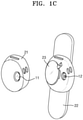
- the electrocardiogram measuring apparatus 100 may further include a band-type mounting part.
- the mounting part may be made of a flexible material that may be deformed to fit a curved surface of the surface of the body, for example, an elastic, i.e., flexible fabric.
- the mounting part may be provided as a patch-type or a wearable type. As long as the electrocardiogram measuring apparatus 100 is worn through the mounting part, the electrocardiogram measuring apparatus 100 may detect a potential generated on the surface of the body by contacting the surface of the body of the object obj.
- the electrocardiogram measuring apparatus 100 may include an input unit 11.
- the electrocardiogram measuring apparatus 100 may receive a preset input through the input unit 11.
- the electrocardiogram measuring apparatus 100 has an outer appearance covered with cases 21 and 22.
- the cases 21 and 22 may form the outer appearance of the electrocardiogram measuring apparatus 100 and may accommodate and protect various elements in a space formed therein.
- the cases 21 and 22 may be made of a plastic material that does not transfer heat or a metal material that is coated with a heat barrier material on the surface thereof.
- the cases 21 and 22 may be manufactured by, for example, an injection molding method, a 3D printing method, or a method of assembling small parts manufactured by injection molding.
- the cases 21 and 22 are not vital elements and may not be installed as needed.
- the input unit 11 may be arranged on the top of the case 21 and receive an input from a user.
- the input unit 11 may receive an on/off input, a touch input, an auditory data input, or the like.
- the input unit 11 may detect the sensitivity of the touch input.
- the input unit 11 may receive the on/off input and the auditory data input together.
- the input unit 11 may be implemented to enable the input of auditory data while the on/off input is generated.
- An input type of the input unit 11 may be the on/off input, the touch input, or the auditory data input, but is not limited thereto, and may be various types.
- the input unit 11 may receive a plurality of types of inputs.
- a battery 23 for supplying power and a button 12 are exposed.
- elements corresponding to a signal detector 110, a signal converter 120, a processor 130, an input unit 140, a power supply unit 150, a memory 160, a sensor unit 170, a communicator 180, and the like for operation of the electrocardiogram measuring apparatus 100 may be exposed.
- FIG. 2 is a block diagram of an apparatus 100 for measuring an electrocardiogram according, to one or more embodiments.
- the apparatus 100 for measuring an electrocardiogram may include the signal detector 110, the signal converter 120, the processor 130, the input unit 140, the power supply unit 150, the memory 160, the sensor unit 170, and the communicator 180 to detect an electrical signal generated from the heart of an object.
- a signal processing unit is not drawn in FIG 2 because the signal processing unit is usually implemented in firmware of the processor 130.
- the signal processing unit is implemented in hardware. But, it is natual that the signal processing unit can be realized in firmware of the processor 130.
- the signal detector 110 outputs an electrocardiogram analog signal by detecting an electrical signal from the heart of the object.
- the signal converter 120 may convert the electrocardiogram analog signal into an electrocardiogram digital signal.
- the processor 130 receives the electrocardiogram digital signal and stores the electrocardiogram digital signal in the memory 160.
- the processor 130 may transmit, to an external terminal, the electrocardiogram digital signal stored in the memory 160.
- the processor 130 may receive a user input and/or generation time information of the user input and store the user input and/or the generation time information of the user input in the memory 160.
- the processor 130 may store, in the memory 160, an electrocardiogram digital signal merged with the user input.
- the processor 130 may receive the user input from the input unit 140 that is electrically connected or a user terminal that is connected through a communication network.
- the processor 130 may convert an electrocardiogram signal by using the received user input and generation time information of the user input.
- the processor 130 may receive a user input from the user terminal that is connected through the communication network.
- the user terminal connected to the electrocardiogram measuring apparatus 100 may be changed to a user interface for receiving a user input.
- the processor 130 may merge the electrocardiogram digital signal with the user input by using the generation time information of the user input and store, in the memory 160, the electrocardiogram digital signal merged with the user input.
- the processor 130 may transmit, to the external terminal, the electrocardiogram digital signal merged with the user input.
- the processor 130 determines an insertion location of the user input in the electrocardiogram digital signal by using the generation time information of the user input and stores, in the memory 160, the electrocardiogram digital signal synchronized with the user input at the insertion location.
- the processor 130 may divide the electrocardiogram digital signal into unit electrocardiogram signals in unit intervals and insert tags corresponding to a user input into the unit electrocardiogram signals in each unit interval. User inputs received in a first unit interval may be inserted into the first unit interval.
- the processor 130 may transmit, to the external terminal, a part of the electrocardiogram digital signal determined on the basis of the generation time information of the user input.
- the processor 130 may merge the electrocardiogram digital signal with the user input, store, in the memory 160, the electrocardiogram digital signal merged with the user input and transmit, to the external terminal, a part of the electrocardiogram digital signal determined by the user input.
- the processor 130 may stop transmitting the electrocardiogram digital signal to the external terminal considering a communication state with the external terminal. For example, the processor 130 may stop transmitting the electrocardiogram digital signal to the external terminal when the communication state with the external terminal is abnormal and restart transmitting the electrocardiogram digital signal to the external terminal when the communication state is normal again. The processor 130 may transmit the electrocardiogram digital signal while the communication state is abnormal.
- the processor 130 may additionally generate a tag corresponding to a sensing value such as an apparatus temperature value detected through the sensor unit 170 and store, in the memory 160, the tag corresponding to the sensing value in association with the electrocardiogram digital signal.
- the sensor unit 170 may be a movement sensor, an aoucstic sensor, and a user input sensor, a temperature sensor, a motion sensor, a proximity sensor, a sound sensor, or the like.
- the processor 130 may store, in the memory 160, information acquired by analyzing the electrocardiogram digital signal and a corresponding tag in association with the electrocardiogram digital signal.
- the information acquired by analyzing the electrocardiogram digital signal may be a heart rate, component information, the maximum magnitude value, time information of an inflection point, magnitude information of the inflection point, or the like.
- the maximum magnitude value refers to the maximum value of the magnitude from among the signal magnitudes of the electrocardiogram digital signal.
- the inflection point refers to a point at which a slope of a differential value of the electrocardiogram digital signal changes from positive to negative or negative to positive.
- the processor 130 may store, in the memory 160, a tag including at least one of the heart rate, the maximum magnitude value, the time information of the inflection point, and the magnitude information of the inflection point acquired by analyzing the electrocardiogram digital signal, in association with the electrocardiogram digital signal.
- the processor 130 may acquire the exercise amount of an object, further generate a tag corresponding to the exercise amount, and store, in the memory 160, the tag corresponding to the momentum in association with the electrocardiogram digital signal.
- the processor 130 may transmit, to the external user terminal, an electrocardiogram digital signal merged with a user input or a tag, in real time.
- the processor 130 may transmit, to the external user terminal, the electrocardiogram digital signal stored in the memory 160.
- the processor 130 may generate a measurement completion signal and start uploading, to the external terminal, the electrocardiogram digital signal stored in the memory 160 by the measurement completion signal.
- the measurement completion signal may be generated by an input from the external user terminal, an input from the input unit 140, or a preset measurement time, or may be generated after a preset measurement time from a measurement start time.
- the processor 130 may be implemented to divide the electrocardiogram digital signal associated with the user input into preset time intervals and transmit, to the external user terminal, an electrocardiogram digital signal in a previous time interval prior to a current time interval.
- the input unit 140 may receive at least one type of user input from among a touch input, an on/off button input, an auditory data input and a motion input.
- the input unit 140 may receive differently extracted information according to the type of input. For example, when the touch input is received, the input unit 140 may receive whether or not a touch is input, the sensitivity of the touch, and the like.
- the input unit 140 may receive whether on or off is input, the number of on-offs per hour, and the like.
- the auditory data input is received, the input unit 140 may receive input auditory data, input time information of the auditory data, and the like.
- the power supply unit 150 supplies power to the signal detector 110, the signal converter 120, the processor 130, the input unit 140, the memory 160, the sensor unit 170, the communicator 180, and the like.
- the power supply unit 150 may use a rechargeable battery or a disposable battery.
- the memory 160 may store data related to measurement of an electrocardiogram.
- the memory 160 may store information about the object, a measurement time, and data related to a measured electrocardiogram.
- the memory 160 may be hardware storing various types of pieces of data processed in the electrocardiogram measuring apparatus 100 and may store pieces of data processed by the processor 130 and pieces of data to be processed by the processor 130.
- the memory 160 may store a generated input, and a tag related to the input.
- the memory 160 may store an electrocardiogram digital signal and an electrocardiogram digital signal synchronized with a tag.
- the memory 160 may be implemented as various types, such as random access memory (RAM) such as dynamic random access memory (DRAM) and static random access memory (SRAM), read-only memory (ROM), and electrically erasable programmable read-only memory (EEPROM).
- RAM random access memory
- DRAM dynamic random access memory
- SRAM static random access memory
- ROM read-only memory
- EEPROM electrically erasable programmable read-only memory
- the sensor unit 170 senses temperature or senses movement.
- the sensor unit 170 may sense movements in x, y, and z-axis directions, movement of rotation in a first direction, and movement of rotation in a second direction.
- the sensor unit 170 may sense the momentum of an apparatus, a temperature value of the apparatus, physical pressure applied to the apparatus, and the like.
- the sensor unit 170 may include an element for sensing temperature, an element for sensing motion, and the like.
- the communicator 180 may receive a control signal from the external user terminal.
- the communicator 180 may transmit measured data to the external user terminal.
- FIGS. 3 through 5 are views of a network environment connected to the electrocardiogram measuring apparatus 100.
- the electrocardiogram measuring apparatus 100 may operate while exchanging data with the user terminal 200.
- the user terminal 200 may be used in a mobile phone, a smartphone, a laptop computer, or the like, but is not limited thereto.
- the user terminal 200 may be a mobile device, and the term “terminal” or “device” may be used interchangeably.
- the electrocardiogram measuring apparatus 100 may transmit a measured electrocardiogram signal to the user terminal 200.
- the electrocardiogram measuring apparatus 100 may store an electrocardiogram signal including a tag related to an abnormal event related to the heart and transmit the electrocardiogram signal including the tag to the user terminal 200.
- the electrocardiogram measuring apparatus 100 may transmit, to the user terminal 200, measurement data generated by linking an electrocardiogram signal to a change in movement detected through a sensor unit, an input obtained through an input unit (a voice input unit, a text input unit, a button input unit, an image input unite, or the like), and input data received through the user terminal 200.
- the electrocardiogram measuring apparatus 100 may transmit, to the user terminal 200, an electrocardiogram signal including a tag related to a user input.
- the electrocardiogram measuring apparatus 100 may transmit, to the user terminal 200, an electrocardiogram signal synchronized with the user input.
- the electrocardiogram measuring apparatus 100 may transmit, to the user terminal 200, an electrocardiogram signal including a tag corresponding to an apparatus temperature value, a tag corresponding to electrocardiogram information such as heart rate, a tag corresponding to momentum information, and the like.
- the user terminal 200 may store a received electrocardiogram signal, an electrocardiogram signal associated with a user input, a synchronized electrocardiogram signal, or an electrocardiogram signal including a tag related to the user input.
- the user terminal 200 may be implemented to input a user input related to an electrocardiogram signal in response to a user input posting signal from the electrocardiogram measuring apparatus 100 but is not limited thereto.
- the user terminal 200 may be implemented to input a user input related to an electrocardiogram signal without any signal from the electrocardiogram measuring apparatus 100.
- the electrocardiogram measuring apparatus 100 may transmit, to the user terminal 200, measurement data in intervals in which an abnormal event occurs.
- the electrocardiogram measuring apparatus 100 may collect generation information of an abnormal event and transmit the collected generation information to the user terminal 200.
- the electrocardiogram measuring apparatus 100 may transmit a measured electrocardiogram according to a request from the user terminal 200.
- the electrocardiogram measuring apparatus 100 may transmit a measured electrocardiogram according to a preset period.
- the electrocardiogram measuring apparatus 100 may be controlled according to a control signal from the user terminal 200.
- the electrocardiogram measuring apparatus 100 may start or end measuring an electrocardiogram signal according to a measurement start signal or a measurement end signal from the user terminal 200.
- the electrocardiogram measuring apparatus 100 may delete data stored in a memory according to a data deletion signal from the user terminal 200.
- the electrocardiogram measuring apparatus 100 may receive a control signal for a detection user input from the user terminal 200. When a user input corresponding to the detection user input is received, the electrocardiogram measuring apparatus 100 may transmit data regarding the detection user input to the user terminal 200. When a threshold heart rate is received as the detection user input, the electrocardiogram measuring apparatus 100 may transmit, to the user terminal 200, data regarding an electrocardiogram signal including a heart rate higher than or equal to the threshold heart rate.
- the electrocardiogram measuring apparatus 100 may transmit information related to power to the user terminal 200.
- the electrocardiogram measuring apparatus 100 may transmit an alarm for the capacity of a power supply unit, whether or not the power supply unit is replaced, whether or not remaining power in the power supply unit is enough, and the like to be output through the user terminal 200.
- An alarm for notifying whether or not the electrocardiogram measuring apparatus 100 operates for a preset time may be also generated and transmitted to the user terminal 200.
- a time at which measurement is determined may be set through the user terminal 200 or may be set through an input unit in the electrocardiogram measuring apparatus 100, for example, may be set such as 24 hours, 48 hours, or the like.
- the electrocardiogram measuring apparatus 100 may transmit information related to sensed movement to the user terminal 200. When the sensed movement is out of an excessive range or an electrocardiogram is not recorded, the electrocardiogram measuring apparatus 100 may transmit an alarm for this to the user terminal 200.
- the input unit 140 has been described as being included only in the electrocardiogram measuring apparatus 100, but an input device included in the user terminal 200 may also be used.
- the electrocardiogram measuring apparatus 100 may merge a measured electrocardiogram digital signal with a user input by using time information of the user input and time-stamp recorded in the electrocardiogram measuring apparatus 100.
- the user terminal 200 that communicates with the electrocardiogram measuring apparatus 100 may be registered through a preset registration process, and a single user terminal 200 or a plurality of user terminals 200 may be provided. As illustrated in FIG. 4 , the electrocardiogram measuring apparatus 100 may operate while exchanging data with the user terminal 200 and an electrocardiogram management server 300.
- the electrocardiogram management server 300 may manage electrocardiogram measurement data received from a plurality of electrocardiogram measuring apparatuses 100 and may use data of the electrocardiogram measuring apparatuses 100.
- the electrocardiogram measurement data may include an electrocardiogram signal itself and processed electrocardiogram data by measuring apparatus 100.
- the electrocardiogram measurement data may include only electrocardiogram data of an interval in which an abnormal event occurs.
- the electrocardiogram management server 300 use data from the electrocardiogram measuring apparatus 100, which and may include information about a time when an electrocardiogram is measured, accumulated time information, information about a time when the electrocardiogram is not measured, information about a time when an abnormal event occurs, and the like.
- the electrocardiogram management server 300 may manage electrocardiogram data from the electrocardiogram measuring apparatus 100 in association with an object.
- the electrocardiogram management server 300 may store electrocardiogram data for a first object in association with the first object.
- the electrocardiogram management server 300 may be designed to provide data of the first object (an electrocardiogram signal, a user input, an abnormal event, power-related information, and the like) to a user having authority over the first object.
- the user having authority over the first object may be at least one of a medical worker, a legal officer, and a person employed for management.
- the electrocardiogram management server 300 may transmit electrocardiogram data of an object requested by a request of the medical worker.
- the electrocardiogram management server 300 may further receive context data from the electrocardiogram measuring apparatus 100.
- the electrocardiogram management server 300 may generate an analysis report by analyzing data received from the electrocardiogram measuring apparatus 100.
- the analysis report may include an event acquired through an electrocardiogram.
- the event may include an event related to movement of the heart, an event recorded by a user, an event recorded in a voice recognition method, movement and exercise amount of the user, a temperature value of a device, the heart rate, and the like.
- the analysis report may include data about an abnormal symptom of the heart.
- the analysis report may store, as separate data, a time point at which an abnormal symptom felt in the heart occurs, an electrocardiogram at the time point of the occurrence, and the like by using a tag related to an abnormal event and the like.
- the electrocardiogram management server 300 may receive measurement data of the electrocardiogram measuring apparatus 100 through the user terminal 200.
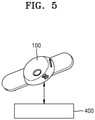
- the electrocardiogram measuring apparatus 100 may be supplied with power through an external charging device 400.
- the external charging device 400 may charge the electrocardiogram measuring apparatus 100 by flowing a current through electromagnetic induction.
- the external charging device 400 may be configured in a pad shape, a cradle shape, an access point (AP) shape, a small base station shape, a stand shape, a ceiling-buried shape, a wall-hanging shape, or the like.
- One external charging device 400 may transmit power to a plurality of electrocardiogram measuring apparatuses 100 in a wireless or wired manner.
- the external charging device 400 may be implemented to check a power state of the electrocardiogram measuring apparatus 100 to automatically stop charging when the capacity of power is charged.
- State information indicating whether or not the electrocardiogram measuring apparatus 100 is charged may be output through the electrocardiogram measuring apparatus 100 or the user terminal 200.
- a notification or alert may be generated through the electrocardiogram measuring apparatus 100 or the user terminal 200.
- the electrocardiogram measuring apparatus 100 may be implemented to have different power consumption for each power level. When a power level of the power supply unit is less than or equal to a preset first minimum value, the electrocardiogram measuring apparatus 100 may use power only to measure and store an electrocardiogram and may not use power to transmit data or the like to another device. When the power level of the power supply unit is less than or equal to a preset second minimum value, the electrocardiogram measuring apparatus 100 may adjust a period for measuring and storing an electrocardiogram longer.
- FIG. 6 is a flowchart of a method of measuring an electrocardiogram, according to one or more embodiments.
- the electrocardiogram measuring apparatus 100 may output an electrocardiogram analog signal by detecting an electrical signal from the heart of an object.
- the electrocardiogram measuring apparatus 100 may convert the electrocardiogram analog signal into an electrocardiogram digital signal.
- the electrocardiogram measuring apparatus 100 may receive at least one type of user input from among a voice input and a text input.
- the electrocardiogram measuring apparatus 100 stores, in a memory, the electrocardiogram digital signal in association with the user input by using generation time information of the user input.
- the electrocardiogram measuring apparatus 100 may transmit, to a user terminal, the electrocardiogram digital signal associated with the user input.
- the electrocardiogram measuring apparatus 100 may divide the electrocardiogram digital signal into packets and transmit the packets to the user terminal.
- the electrocardiogram measuring apparatus 100 may modify the electrocardiogram digital signal to insert the user input received from the user terminal and a message corresponding to the user input.
- FIG. 7 is a flowchart of a method of measuring an electrocardiogram, according to one or more embodiments.
- the electrocardiogram measuring apparatus 100 may output an electrocardiogram analog signal by detecting an electrical signal from the heart of an object.
- the electrocardiogram measuring apparatus 100 may convert the electrocardiogram analog signal into an electrocardiogram digital signal.
- the electrocardiogram measuring apparatus 100 detects a time point at which the abnormal event is detected and a corresponding interval of measurement data and inserts a tag related to an event in association with the interval of the measurement data.
- the electrocardiogram measuring apparatus 100 generates the measurement data on the basis of the electrocardiogram digital signal and stores the measurement data in a memory.
- the electrocardiogram measuring apparatus 100 may detect a time point at which the abnormal event is detected and a corresponding interval of measurement data, insert a tag related to an event in association with the interval of the measurement data, and transmit, to an external user terminal, the measurement data into which the tag is inserted.
- the tag related to the event may be generated by including information about pain related to the heart on the basis of context data detected at a time point at which the abnormal event is detected.
- the tag related to the event may be generated on the basis of data input through an input unit included in the electrocardiogram measuring apparatus 100.
- the tag related to the event may include input voice data, text data, image data, touch data, and the like.
- the tag related to the event may be set through an on/off button.
- the tag related to the event may be received through the user terminal.
- the tag related to the event may be generated by including information about pain related to the heart, life discomfort, and the like on the basis of context data detected at a time point at which the abnormal event is detected.
- the electrocardiogram measuring apparatus 100 may further collect context data in relation to the abnormal event.
- the electrocardiogram measuring apparatus 100 may sense context data through a sensor unit or may receive context data through a user terminal.
- Context data may include a change in movement adjacent to a detection time point of an abnormal event, an input value through an input unit adjacent to the event detection time point, input data input through a user terminal adjacent to the event detection time point, and the like.
- the electrocardiogram measuring apparatus 100 transmits, to a user terminal, the measurement data into which the tag related to the event is inserted.
- the electrocardiogram measuring apparatus 100 may measure an electrocardiogram and simultaneously generate measurement data including an abnormal event occurring in heart activity and a tag related to an event.
- the electrocardiogram measuring apparatus 100 outputs an electrocardiogram analog signal by detecting an electrical signal from the heart of an object.
- the electrocardiogram measuring apparatus 100 may receive the electrocardiogram analog signal and convert the electrocardiogram analog signal into an electrocardiogram digital signal.
- the electrocardiogram measuring apparatus 100 receives, from the user terminal, at least one type of user input from among a voice input and a text input.
- the user terminal that transmits the user input may perform a registration procedure for transmitting the user input to the electrocardiogram measuring apparatus 100, in advance.
- the user terminal inputs a text input, a voice input, a touch input, or the like to be transmitted to the electrocardiogram measuring apparatus 100.
- the electrocardiogram measuring apparatus 100 may be implemented to receive an additional user input from the user terminal while an insertion input is generated through an input unit that is electrically connected.
- the electrocardiogram measuring apparatus 100 determines an insertion location of the user input by using generation time information included in the user input, synchronizes the user input and the electrocardiogram digital signal by using the insertion location, and stores, in a memory, the electrocardiogram digital signal synchronized with the user input.
- the generation time information may be generated by the user terminal or may be generated as a time at which an insertion input in the electrocardiogram measuring apparatus 100 is generated.
- the electrocardiogram measuring apparatus 100 may transmit, to the user terminal, the electrocardiogram digital signal associated with the user input.
- the electrocardiogram measuring apparatus 100 may transmit the electrocardiogram digital signal to the user terminal without operation S330.
- the user terminal that receives the electrocardiogram digital signal may modify the electrocardiogram digital signal to insert the user input generated from the user terminal.
- the electrocardiogram measuring apparatus 100 may generate an electrocardiogram digital signal associated with a user input that is input through the user terminal.
- the electrocardiogram measuring apparatus 100 outputs an electrocardiogram analog signal by detecting an electrical signal from the heart of an object.
- the electrocardiogram measuring apparatus 100 receives the electrocardiogram analog signal and converts the electrocardiogram analog signal into an electrocardiogram digital signal.
- the electrocardiogram measuring apparatus 100 receives a touch input.
- the touch input may be acquired from a user terminal or may be acquired through a provided input unit.
- the electrocardiogram measuring apparatus 100 may generate information to be transmitted and a corresponding tag through the touch input and store, in a memory, the electrocardiogram digital signal in association with the tag.
- the electrocardiogram measuring apparatus 100 may generate the information to be transmitted and the corresponding tag through the touch input, considering an input time point, an input length, an input intensity, and the like of the touch input.
- the electrocardiogram measuring apparatus 100 transmits, to the external user terminal, the electrocardiogram digital signal associated with the tag. Accordingly, the electrocardiogram measuring apparatus 100 may store a tag according to an input time point, an input length, an input intensity, and the like of a touch input, in synchronization with an electrocardiogram signal. According to an input length and an input intensity of a touch, information such as pain felt in the heart may be included.
- the electrocardiogram measuring apparatus 100 may generate an electrocardiogram signal with a tag tagged at each time interval.
- the apparatus described above may be implemented with hardware components, software components, and/or combinations of hardware components and software components.
- the apparatus and components described in one or more embodiments may be implemented, for example, by using one or more general-purpose computers or special-purpose computers such as a processor, a controller, an arithmetic logic unit (ALU), a digital signal processor, a microcomputer, a field programmable gate array (FPGA), a programmable logic unit (PLU), a microprocessor, or any other devices capable of executing and responding to instructions.
- a processing unit may perform an operating system (OS) and one or more software applications executed on the OS. Also, the processing unit may access, store, control, process, and generate data in response to execution of software.
- OS operating system
- the processing unit may access, store, control, process, and generate data in response to execution of software.
- the processing unit may include a plurality of processing elements and/or a plurality of types of processing elements.
- the processing unit may include a plurality of processors or one processor and one controller.
- the processing unit may include another processing configuration such as a parallel processor.
- Software may include a computer program, code, instructions, or a combination of one or more thereof and may configure the processing unit to operate as wanted or instruct the processing unit independently or collectively.
- Software and/or data may be permanently or temporarily embodied in any type of machine, component, physical device, virtual equipment, computer storage medium or device, or transmitted signal wave to be interpreted by the processing unit or to provide the processing unit with instructions or data.
- Software may be distributed over networked computer systems and may be stored or executed in a distributed manner.
- Software and/or data may be stored on one or more computer-readable recording media.
- the method according to one or more embodiments may be implemented in the form of a computer instruction that may be executed through various types of computer units and recorded on a computer-readable recording medium.
- the computer-readable recording medium may include program instructions, data files, data structures, or the like alone or in combination.
- the program instructions recorded on the medium may be specially designed and configured for an embodiment or may be known and available to one of ordinary skill in computer software.
- Examples of the computer-readable recording medium include magnetic media such as hard disks, floppy disks, and magnetic tapes, optical media such as CD-ROM and DVD, magneto-optical media such as floptical disks, and hardware devices specially configured to store and perform program instructions such as ROM, RAM, and flash memory.
- Examples of the program instructions include high-level language code that may be executed by a computer using an interpreter or the like, as well as machine language code made by a compiler.
- the hardware device described above may be configured to operate as one or more software modules to perform operations of the embodiments, and the reverse is the same.
- a user input related to heart movement may be received, and an electrocardiogram digital signal associated with a tag corresponding to the user input may be generated.
- a user input that is input through an external user terminal may be received, and an electrocardiogram signal associated with a tag corresponding to the user input may be generated.
Landscapes
- Health & Medical Sciences (AREA)
- Life Sciences & Earth Sciences (AREA)
- Engineering & Computer Science (AREA)
- Heart & Thoracic Surgery (AREA)
- Molecular Biology (AREA)
- Biophysics (AREA)
- Pathology (AREA)
- Biomedical Technology (AREA)
- Veterinary Medicine (AREA)
- Medical Informatics (AREA)
- Physics & Mathematics (AREA)
- Surgery (AREA)
- Animal Behavior & Ethology (AREA)
- General Health & Medical Sciences (AREA)
- Public Health (AREA)
- Computer Networks & Wireless Communication (AREA)
- Microelectronics & Electronic Packaging (AREA)
- Cardiology (AREA)
- Measurement And Recording Of Electrical Phenomena And Electrical Characteristics Of The Living Body (AREA)
Abstract
An apparatus for measuring an electrocardiogram and storing an electrocardiogram signal merged with a user input includes: a signal detector outputting an electrocardiogram analog signal by detecting an electrical signal from the heart of an object; a signal converter receiving the electrocardiogram analog signal and converting the electrocardiogram analog signal into an electrocardiogram digital signal; an input unit receiving at least one type of user input from among a voice input, a button input, a touch input, and a motion input; a processor receiving the user input, merging the electrocardiogram digital signal with the user input, and storing the electrocardiogram digital signal in an internal memory; and a communicator communicating with an external terminal to transmit the electrocardiogram digital signal to the external terminal.
Description
- This application claims the benefit of Korean Patent Application No.
10-2019-0041055, filed on April 8, 2019 - One or more embodiments relate to an apparatus for measuring an electrocardiogram and a method of recording electrocardiogram signals merged with a user input.
- In order to maintain human life, there is a need for a process of enabling blood released by the heartbeat to flow along the arteries to all parts of the body without clogging and returning blood through the veins back to the heart. Accordingly, oxygen and nutrients may be supplied to the body's tissues, and consumed wastes may be removed through the metabolism.
- However, when the human heart is in a poor condition, blood may not be properly delivered to particular parts of the body or a blood clot or embolism may occur in the blood. As a result, blood may become cloudy, and the cloudy blood may block capillaries, in particular tissues of the body, and cause tissue necrosis, and thus, the human life may be in danger. Therefore, in addition to clinical examinations, imaging tests and the like have been used to examine whether or not the heart is abnormal. Also, as an early diagnosis method, a method of determining whether or not a patient has an abnormality in the heart by measuring an electrocardiogram and displaying the measured electrocardiogram signal in a graph format has also been widely used.
- In other words, an electrocardiogram refers to recording of a potential change in the surface of the body causing the mechanical activity of the heartbeat, such as contraction or expansion of the heart muscle. The electrocardiogram is a non-vascular test that is simply measured, is easily reproduced, is easily repetitively recorded, and is inexpensive to test. The electrocardiogram has been used helpfully to diagnose arrhythmia and coronary artery disease (cardiac artery disease) and to monitor the progress of cardiac patients.
- In general, the sensing electrodes of the electrocardiogram are attached to the upper left and right and lower left and right of the chest. And potential differences are detected according to the location of the sensor.
- One or more embodiments include an apparatus for measuring an electrocardiogram and recording an electrocardiogram digital signal in association with a user input.
- The technical problems to be solved by the present embodiment are not limited to the technical problems as described above, and other technical problems may be inferred from the following embodiments.
- Additional aspects will be set forth in part in the description which follows and, in part, will be apparent from the description, or may be learned by practice of the presented embodiments of the disclosure.
- According to one or more embodiments, an apparatus for measuring an electrocardiogram includes: a signal detector outputting an electrocardiogram analog signal by detecting an electrical signal from the heart of an object; a signal converter receiving the electrocardiogram analog signal and converting the electrocardiogram analog signal into an electrocardiogram digital signal; a processor storing the electrocardiogram digital signal in a memory, transmitting the electrocardiogram digital signal to a user terminal through a near field communication network, and controlling the electrocardiogram digital signal to be stored in a memory of the user terminal; and a power supply unit supplying power to the signal detector, the signal converter, the memory, and the processor, wherein the electrocardiogram digital signal is associated with a user input generated from the user terminal to generate electrocardiogram measurement data.
- According to one or more embodiments, an apparatus for measuring an electrocardiogram and associating an electrocardiogram signal with a user input to generate electrocardiogram measurement data, includes: a signal detector outputting an electrocardiogram analog signal by detecting an electrical signal from the heart of an object; a signal converter receiving the electrocardiogram analog signal and converting the electrocardiogram analog signal into an electrocardiogram digital signal; a processor receiving a user input from a user terminal, storing, in a memory, the electrocardiogram digital signal in association with the user input, transmitting the electrocardiogram digital signal to the user terminal through a near field communication network, and controlling the electrocardiogram digital signal to be stored in a memory of the user terminal; and a power supply unit supplying power to the signal detector, the signal converter, the memory, and the processor.
- The processor may transmit an input user input posting signal to the user terminal and receive, from the user terminal, a user input that is input in response to the user input posting signal.
- The electrocardiogram digital signal may be synchronized with the user input by using generation time information in the user terminal in which the user input is generated.
- The processor may additionally generate at least one tag of a tag corresponding to an apparatus temperature value sensed through a provided sensor unit, a tag corresponding to the momentum acquired through the provided sensor unit, and a tag corresponding to a heart rate calculated by analyzing the electrocardiogram digital signal, further insert the at least one tag into the electrocardiogram digital signal, and store the electrocardiogram digital signal in the memory.
- The processor may divide the electrocardiogram digital signal into preset time intervals and transmit, to the user terminal, a part of a k-1st electrocardiogram digital signal for a kth time interval.
- When the user input is a touch input, the electrocardiogram digital signal may be stored in the memory or a memory of the user terminal by generating a tag corresponding to touch sensitivity of the user input and inserting the tag into the electrocardiogram digital signal on the basis of generation time information of the touch input.
- According to one or more embodiments, an apparatus for measuring an electrocardiogram includes: a signal detector outputting an electrocardiogram analog signal by detecting an electrical signal from the heart of an object; a signal converter receiving the electrocardiogram analog signal and converting the electrocardiogram analog signal into an electrocardiogram digital signal; an input unit receiving at least one type of user input from among a voice input and a text input; a processor storing, in a memory, the electrocardiogram digital signal in association with the user input by using generation time information of the user input; and a power supply unit supplying power to the signal detector, the signal converter, the memory, and the processor.
- The processor may transmit the electrocardiogram digital signal to a user terminal through a near field communication network and control the electrocardiogram digital signal to be stored in a memory of the user terminal.
- The processor may determine an insertion location of the user input in the electrocardiogram digital signal by using generation time information of the user input and store, in the memory, the electrocardiogram digital signal synchronized with the user input at the insertion location.
- The processor may additionally generate at least one of a tag corresponding to an apparatus temperature value detected through a provided sensor unit, a tag corresponding to the momentum acquired through the provided sensor unit, and a tag corresponding to a heart rate calculated by analyzing the electrocardiogram digital signal, insert the at least one tag into the electrocardiogram digital signal, and store the electrocardiogram digital signal in the memory.
- The apparatus for measuring an electrocardiogram may divide the electrocardiogram digital signal into preset time intervals and transmit, to the user terminal, a part of a k-1st electrocardiogram digital signal for a kth time interval.
- When the user input is a touch input, the processor may generate a tag corresponding to touch sensitivity of the user input, insert the tag into the electrocardiogram digital signal on the basis of generation time information of the touch input, and store the electrocardiogram digital signal in the memory.
- The processor may further insert, into the electrocardiogram digital signal, a message received from the user terminal.
- According to one or more embodiments, a method of measuring an electrocardiogram, includes: outputting an electrocardiogram analog signal by detecting an electrical signal from the heart of an object, the outputting being performed by an apparatus for measuring an electrocardiogram; receiving the electrocardiogram analog signal and converting the electrocardiogram analog signal into an electrocardiogram digital signal, the receiving and converting being performed by the apparatus; and storing the electrocardiogram digital signal in a memory and transmitting the electrocardiogram digital signal to a user terminal through a near field communication network, the storing and transmitting being performed by the apparatus, wherein the electrocardiogram digital signal is modified in the user terminal in association with a user input generated by the user terminal.
- According to one or more embodiments, a method of measuring an electrocardiogram, includes: outputting an electrocardiogram analog signal by detecting an electrical signal from the heart of an object, the outputting being performed by an apparatus for measuring an electrocardiogram; receiving the electrocardiogram analog signal and converting the electrocardiogram analog signal into an electrocardiogram digital signal, the receiving and converting being performed by the apparatus; receiving, by the apparatus, a user input from a user terminal; storing, in a memory, the electrocardiogram digital signal in association with the user input by using generation time information of the user input and transmitting the electrocardiogram digital signal to the user terminal through a near field communication network, the storing and transmitting being performed by the apparatus.
- The electrocardiogram digital signal may be synchronized with the user input by using generation time information in the user terminal in which the user input is generated.
- Before the storing, the method may further include: additionally generating at least one of a tag corresponding to an apparatus temperature value detected through a provided sensor unit, a tag corresponding to the momentum acquired through the provided sensor unit, and a tag corresponding to a heart rate calculated by analyzing the electrocardiogram digital signal and storing, in the memory, the electrocardiogram digital signal in association with the at least one tag.
- The transmitting may include: dividing the electrocardiogram digital signal into preset time intervals and transmitting, to the user terminal, a part of a k-1st electrocardiogram digital signal for a kth time interval.
- When the user input is a touch input, the electrocardiogram digital signal may be stored in the memory by generating a tag corresponding to touch sensitivity of the user input and inserting the tag into the electrocardiogram digital signal on the basis of generation time information of the touch input
- According to one or more embodiments, a method of measuring an electrocardiogram includes: outputting an electrocardiogram analog signal by detecting an electrical signal from the heart of an object, the outputting being performed by an apparatus for measuring an electrocardiogram; receiving the electrocardiogram analog signal and converting the electrocardiogram analog signal into an electrocardiogram digital signal, the receiving and converting being performed by the apparatus; receiving, by the apparatus, at least one type of user input from among a voice input and a text input; storing, in a memory, the electrocardiogram digital signal in association with the user input by using generating time information of the user input, the storing being performed by the apparatus; and by transmitting the electrocardiogram digital signal to a user terminal through a near field communication network, the transmitting being performed the apparatus.
- The method may further include storing the electrocardiogram digital signal in a memory of the user terminal.
- The storing may include: determining an insertion location of the user input in the electrocardiogram digital signal by using generation time information of the user input and storing, in the memory, the electrocardiogram digital signal synchronized with the user input at the insertion location.
- Before the storing, the method may further include: additionally generating at least one of a tag corresponding to an apparatus temperature value detected through a provided sensor unit, a tag corresponding to the momentum acquired through the provided sensor unit, and a tag corresponding to a heart rate calculated by analyzing the electrocardiogram digital signal and storing, in the memory, the electrocardiogram digital signal in association with the at least one tag.
- The transmitting may include: dividing the electrocardiogram digital signal into preset time intervals and transmitting, to the user terminal, a part of a k-1st electrocardiogram digital signal for a kth time interval.
- The storing may include: when the user input is a touch input, generating a tag corresponding to touch sensitivity of the user input, inserting the tag into the electrocardiogram digital signal on the basis of generation time information of the user input, and store the electrocardiogram digital signal in the memory.
- The method may further include: further inserting, into the electrocardiogram digital signal, a message received from the user terminal.
- A computer program according to one or more embodiments may be stored on a medium to execute, by using a computer, any one of methods according to one or more methods.
- In addition, provided are other methods, other systems, and computer-readable recording media recording thereon a computer program for executing the method.
- Other aspects, features, and advantages than those described above will become apparent from the following drawings, claims, and detailed description.
- The above and other aspects, features, and advantages of certain embodiments of the disclosure will be more apparent from the following description taken in conjunction with the accompanying drawings, in which:
-
FIG. 1A is a view of an embodiment of an apparatus for measuring an electrocardiogram, according to one or more embodiments;FIGS. 1B and1C are respectively a perspective view and a side view of an apparatus for measuring an electrocardiogram; -
FIG. 2 is a block diagram of an apparatus for measuring an electrocardiogram, according to one or more embodiments; -
FIGS. 3 through 5 are views of a network environment connected to an apparatus for measuring an electrocardiogram; -
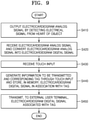
FIGS. 6 through 9 are flowcharts of a method of generating an electrocardiogram signal associated with a user input, according to one or more embodiments; and -
FIG. 10 is an example view of an electrocardiogram signal with tags tagged at each time interval. - Reference will now be made in detail to embodiments, examples of which are illustrated in the accompanying drawings, wherein like reference numerals refer to like elements throughout. In this regard, the present embodiments may have different forms and should not be construed as being limited to the descriptions set forth herein. Accordingly, the embodiments are merely described below, by referring to the figures, to explain aspects of the present description. As used herein, the term "and/or" includes any and all combinations of one or more of the associated listed items. Expressions such as "at least one of," when preceding a list of elements, modify the entire list of elements and do not modify the individual elements of the list.
- With respect to the terms in the various embodiments, the general terms which are currently and widely used are selected in consideration of functions of structural elements in the various embodiments of the present disclosure. However, meanings of the terms can be changed according to intention, a judicial precedence, the appearance of a new technology, and the like. In addition, in certain cases, a term which is not commonly used can be selected. In such a case, the meaning of the term will be described in detail at the corresponding portion in the description of the present disclosure. Therefore, the terms used in the various embodiments of the present disclosure should be defined based on the meanings of the terms and the descriptions provided herein.
- In addition, unless explicitly described to the contrary, the word "comprise" and variations such as "comprises" or "comprising" will be understood to imply the inclusion of stated elements but not the exclusion of any other elements. In addition, the terms "-er", "-or", and "module" described in the specification mean units for processing at least one function and operation and can be implemented by hardware components or software components and combinations thereof.
- Hereinafter, the present disclosure will now be described more fully with reference to the accompanying drawings, in which exemplary embodiments of the present disclosure are shown such that one of ordinary skill in the art may easily work the present disclosure. The disclosure may, however, be embodied in many different forms and should not be construed as being limited to the embodiments set forth herein.
- Hereinafter, one or more embodiments will be described in detail with reference to the accompanying drawings.
- Atrial fibrillation is one of the most common kinds of arrhythmia clinically, and an overall prevalence thereof is about 0.4 % to 0.9 %. From the age of 40 onwards, the prevalence of atrial fibrillation increases by about 0.1 % to about 0.2 % each year and increases to about 2 % to about 4% when the age is 60 years or older. When atrial fibrillation is accompanied, atrial-to-ventricular synchronization is lost and ventricular diastolic is shortened, thereby causing respiratory difficulty and cardiac failure. Also, in patients with atrial fibrillation, a thrombus is created in the atrium and causes a systemic embolism such as cerebral infarction, thereby increasing a mortality rate. The increase in the occurrence of atrial fibrillation along with the increase in the aged population has significant health and sociological meanings in this regard. Because paroxysmal atrial fibrillation may develop into chronic atrial fibrillation, the prediction and diagnosis of the occurrence risk of paroxysmal atrial fibrillation are significant.
- Among ECG signal components, a P-wave component has been used as significant information for predicting and diagnosing such atrial fibrillation. Therefore, it is highly significant to develop electrocardiogram measuring apparatuses capable of generating ECG signals in which P-wave components are well expressed.
- In particular, recently, large hospitals have used expensive ultrasonic medical devices to accurately observe the heart conditions, and thus, the utilization of electrocardiogram measuring apparatuses has gradually decreased. However, P-wave components may not be measured even through ultrasonic medical devices provided in large hospitals or the like.
- According to one or more embodiments, a P-wave component from among ECG signal components may be further enhanced in a process of generating an input analog ECG signal. A P-wave component may be enhanced by applying different conversion gains to a signal in a PR interval and a signal in the remaining interval.
- According to one or more embodiments, signal gain may be an element for adjusting the magnitude of an electrocardiogram signal in a process of converting an electrocardiogram analog signal into an electrocardiogram digital signal. For example, the gain of a PR interval may be 0x66, and the gain of the remaining interval may be 0x33. Note that 0x66 and 0x33 are hexadecimal numbers that determines signal gain. As the gain of the PR interval is greater than that of the remaining interval, the magnitude of a P-wave component may be increased.
- In one or more embodiments, when the gain is set to be constantly high in the entire interval of an electrocardiogram (ECG) signal, signal stability caused by various types of noise, such as body noise and noise due to motions, may be lowered.
-
FIG. 1A is a view of a network environment of anapparatus 100 for measuring an electrocardiogram, according to one or more embodiments. - As illustrated in
FIG. 1A , theapparatus 100 for measuring an electrocardiogram (hereinafter referred to as the electrocardiogram measuring apparatus 100) is an apparatus which is mounted on an object obj noninvasively or invasively to detect an electrocardiogram according to the heartbeat of the object obj. Here, the object obj may be a human, an animal, or part of the body of a human or animal such as the chest but is not limited thereto. The object obj may include all types of objects from which electrocardiograms may be detected or measured. Also, an electrocardiogram is a graph that records changes in a potential appearing on the surface of the body according to the mechanical activity of the heartbeat such as contraction/expansion of the myocardium. Here, the meaning "detect an electrocardiogram" may be the same as the meaning "detect a potential" occurring on the surface of the body according to the heartbeat of an object. An apparatus for measuring an electrocardiogram may transmit and receive data with a user terminal by using a communication module. The communication module may include various types of communication modules such as a wireless Internet module, a near field communication module, and a mobile communication module. - The wireless Internet module refers to a module that is connected to an external network to perform communication according to communication protocols such as wireless LAN (WLAN), Wi-Fi, wireless broadband (Wibro), world interoperability for microwave access (Wimax), and high speed downlink packet access (HSDPA).
- The near field communication module refers to a module for performing communication with an external device located at a short distance, according to near field communication methods such as Bluetooth, radio frequency identification (RFID), infrared data association (IrDA), ultra wideband (UWB), and ZigBee.
- The mobile communication module refers to a module that accesses a mobile communication network to perform communication according to various types of mobile communication standards such as 3rd generation (3G), 3rd generation partnership project (3GPP), and long term evolution (LTE).
- However, the communication module is not limited thereto, and may also apply other types of communication modules capable of performing communication with the
electrocardiogram measuring apparatus 100 and transmitting and receiving various types of signals and data, in addition to those described above. - The
electrocardiogram measuring apparatus 100 may further include a band-type mounting part. The mounting part may be made of a flexible material that may be deformed to fit a curved surface of the surface of the body, for example, an elastic, i.e., flexible fabric. The mounting part may be provided as a patch-type or a wearable type. As long as theelectrocardiogram measuring apparatus 100 is worn through the mounting part, theelectrocardiogram measuring apparatus 100 may detect a potential generated on the surface of the body by contacting the surface of the body of the object obj. - As illustrated in
FIG. 1B , theelectrocardiogram measuring apparatus 100 may include aninput unit 11. Theelectrocardiogram measuring apparatus 100 may receive a preset input through theinput unit 11. Theelectrocardiogram measuring apparatus 100 has an outer appearance covered withcases cases electrocardiogram measuring apparatus 100 and may accommodate and protect various elements in a space formed therein. - The
cases cases - In the
electrocardiogram measuring apparatus 100 according to the embodiment illustrated inFIGS. 1B and1C , thecases - The
input unit 11 may be arranged on the top of thecase 21 and receive an input from a user. Theinput unit 11 may receive an on/off input, a touch input, an auditory data input, or the like. Theinput unit 11 may detect the sensitivity of the touch input. Theinput unit 11 may receive the on/off input and the auditory data input together. Theinput unit 11 may be implemented to enable the input of auditory data while the on/off input is generated. An input type of theinput unit 11 may be the on/off input, the touch input, or the auditory data input, but is not limited thereto, and may be various types. Theinput unit 11 may receive a plurality of types of inputs. - As shown in
FIG. 1C , when thecase 21 of theelectrocardiogram measuring apparatus 100 is removed, abattery 23 for supplying power and abutton 12 are exposed. When thecase 21 is removed, elements corresponding to asignal detector 110, asignal converter 120, aprocessor 130, aninput unit 140, apower supply unit 150, amemory 160, asensor unit 170, acommunicator 180, and the like for operation of theelectrocardiogram measuring apparatus 100 may be exposed. -
FIG. 2 is a block diagram of anapparatus 100 for measuring an electrocardiogram according, to one or more embodiments. - As shown in
FIG. 2 , theapparatus 100 for measuring an electrocardiogram may include thesignal detector 110, thesignal converter 120, theprocessor 130, theinput unit 140, thepower supply unit 150, thememory 160, thesensor unit 170, and thecommunicator 180 to detect an electrical signal generated from the heart of an object. Note that a signal processing unit is not drawn inFIG 2 because the signal processing unit is usually implemented in firmware of theprocessor 130. Here, the signal processing unit is implemented in hardware. But, it is natual that the signal processing unit can be realized in firmware of theprocessor 130. - The
signal detector 110 outputs an electrocardiogram analog signal by detecting an electrical signal from the heart of the object. - The
signal converter 120 may convert the electrocardiogram analog signal into an electrocardiogram digital signal. - The
processor 130 receives the electrocardiogram digital signal and stores the electrocardiogram digital signal in thememory 160. Theprocessor 130 may transmit, to an external terminal, the electrocardiogram digital signal stored in thememory 160. - The
processor 130 may receive a user input and/or generation time information of the user input and store the user input and/or the generation time information of the user input in thememory 160. Theprocessor 130 may store, in thememory 160, an electrocardiogram digital signal merged with the user input. Theprocessor 130 may receive the user input from theinput unit 140 that is electrically connected or a user terminal that is connected through a communication network. Theprocessor 130 may convert an electrocardiogram signal by using the received user input and generation time information of the user input. When an insertion input is received through theinput unit 140 that is electrically connected, theprocessor 130 may receive a user input from the user terminal that is connected through the communication network. When the insertion input is received, the user terminal connected to theelectrocardiogram measuring apparatus 100 may be changed to a user interface for receiving a user input. - The
processor 130 may merge the electrocardiogram digital signal with the user input by using the generation time information of the user input and store, in thememory 160, the electrocardiogram digital signal merged with the user input. Theprocessor 130 may transmit, to the external terminal, the electrocardiogram digital signal merged with the user input. - The
processor 130 determines an insertion location of the user input in the electrocardiogram digital signal by using the generation time information of the user input and stores, in thememory 160, the electrocardiogram digital signal synchronized with the user input at the insertion location. - The
processor 130 may divide the electrocardiogram digital signal into unit electrocardiogram signals in unit intervals and insert tags corresponding to a user input into the unit electrocardiogram signals in each unit interval. User inputs received in a first unit interval may be inserted into the first unit interval. - The
processor 130 may transmit, to the external terminal, a part of the electrocardiogram digital signal determined on the basis of the generation time information of the user input. Theprocessor 130 may merge the electrocardiogram digital signal with the user input, store, in thememory 160, the electrocardiogram digital signal merged with the user input and transmit, to the external terminal, a part of the electrocardiogram digital signal determined by the user input. - The
processor 130 may stop transmitting the electrocardiogram digital signal to the external terminal considering a communication state with the external terminal. For example, theprocessor 130 may stop transmitting the electrocardiogram digital signal to the external terminal when the communication state with the external terminal is abnormal and restart transmitting the electrocardiogram digital signal to the external terminal when the communication state is normal again. Theprocessor 130 may transmit the electrocardiogram digital signal while the communication state is abnormal. - The
processor 130 may additionally generate a tag corresponding to a sensing value such as an apparatus temperature value detected through thesensor unit 170 and store, in thememory 160, the tag corresponding to the sensing value in association with the electrocardiogram digital signal. As used herein, thesensor unit 170 may be a movement sensor, an aoucstic sensor, and a user input sensor, a temperature sensor, a motion sensor, a proximity sensor, a sound sensor, or the like. - The
processor 130 may store, in thememory 160, information acquired by analyzing the electrocardiogram digital signal and a corresponding tag in association with the electrocardiogram digital signal. The information acquired by analyzing the electrocardiogram digital signal may be a heart rate, component information, the maximum magnitude value, time information of an inflection point, magnitude information of the inflection point, or the like. The maximum magnitude value refers to the maximum value of the magnitude from among the signal magnitudes of the electrocardiogram digital signal. The inflection point refers to a point at which a slope of a differential value of the electrocardiogram digital signal changes from positive to negative or negative to positive. Theprocessor 130 may store, in thememory 160, a tag including at least one of the heart rate, the maximum magnitude value, the time information of the inflection point, and the magnitude information of the inflection point acquired by analyzing the electrocardiogram digital signal, in association with the electrocardiogram digital signal. - The
processor 130 may acquire the exercise amount of an object, further generate a tag corresponding to the exercise amount, and store, in thememory 160, the tag corresponding to the momentum in association with the electrocardiogram digital signal. - When the
processor 130 communicates with an external user terminal, theprocessor 130 may transmit, to the external user terminal, an electrocardiogram digital signal merged with a user input or a tag, in real time. Alternatively, when the measurement of the electrocardiogram digital signal is completed, theprocessor 130 may transmit, to the external user terminal, the electrocardiogram digital signal stored in thememory 160. When the measurement of the electrocardiogram digital signal is completed, theprocessor 130 may generate a measurement completion signal and start uploading, to the external terminal, the electrocardiogram digital signal stored in thememory 160 by the measurement completion signal. The measurement completion signal may be generated by an input from the external user terminal, an input from theinput unit 140, or a preset measurement time, or may be generated after a preset measurement time from a measurement start time. - The
processor 130 may be implemented to divide the electrocardiogram digital signal associated with the user input into preset time intervals and transmit, to the external user terminal, an electrocardiogram digital signal in a previous time interval prior to a current time interval. - The
input unit 140 may receive at least one type of user input from among a touch input, an on/off button input, an auditory data input and a motion input. Theinput unit 140 may receive differently extracted information according to the type of input. For example, when the touch input is received, theinput unit 140 may receive whether or not a touch is input, the sensitivity of the touch, and the like. When the on/off input is received, theinput unit 140 may receive whether on or off is input, the number of on-offs per hour, and the like. When the auditory data input is received, theinput unit 140 may receive input auditory data, input time information of the auditory data, and the like. - The
power supply unit 150 supplies power to thesignal detector 110, thesignal converter 120, theprocessor 130, theinput unit 140, thememory 160, thesensor unit 170, thecommunicator 180, and the like. Thepower supply unit 150 may use a rechargeable battery or a disposable battery. - The
memory 160 may store data related to measurement of an electrocardiogram. Thememory 160 may store information about the object, a measurement time, and data related to a measured electrocardiogram. Thememory 160 may be hardware storing various types of pieces of data processed in theelectrocardiogram measuring apparatus 100 and may store pieces of data processed by theprocessor 130 and pieces of data to be processed by theprocessor 130. Thememory 160 may store a generated input, and a tag related to the input. Thememory 160 may store an electrocardiogram digital signal and an electrocardiogram digital signal synchronized with a tag. Thememory 160 may be implemented as various types, such as random access memory (RAM) such as dynamic random access memory (DRAM) and static random access memory (SRAM), read-only memory (ROM), and electrically erasable programmable read-only memory (EEPROM). - The
sensor unit 170 senses temperature or senses movement. Thesensor unit 170 may sense movements in x, y, and z-axis directions, movement of rotation in a first direction, and movement of rotation in a second direction. Thesensor unit 170 may sense the momentum of an apparatus, a temperature value of the apparatus, physical pressure applied to the apparatus, and the like. Thesensor unit 170 may include an element for sensing temperature, an element for sensing motion, and the like. - The
communicator 180 may receive a control signal from the external user terminal. Thecommunicator 180 may transmit measured data to the external user terminal. -
FIGS. 3 through 5 are views of a network environment connected to theelectrocardiogram measuring apparatus 100. - As illustrated in
FIG. 3 , theelectrocardiogram measuring apparatus 100 may operate while exchanging data with theuser terminal 200. Here, theuser terminal 200 may be used in a mobile phone, a smartphone, a laptop computer, or the like, but is not limited thereto. Theuser terminal 200 may be a mobile device, and the term "terminal" or "device" may be used interchangeably. - The
electrocardiogram measuring apparatus 100 may transmit a measured electrocardiogram signal to theuser terminal 200. Theelectrocardiogram measuring apparatus 100 may store an electrocardiogram signal including a tag related to an abnormal event related to the heart and transmit the electrocardiogram signal including the tag to theuser terminal 200. Theelectrocardiogram measuring apparatus 100 may transmit, to theuser terminal 200, measurement data generated by linking an electrocardiogram signal to a change in movement detected through a sensor unit, an input obtained through an input unit (a voice input unit, a text input unit, a button input unit, an image input unite, or the like), and input data received through theuser terminal 200. Theelectrocardiogram measuring apparatus 100 may transmit, to theuser terminal 200, an electrocardiogram signal including a tag related to a user input. Theelectrocardiogram measuring apparatus 100 may transmit, to theuser terminal 200, an electrocardiogram signal synchronized with the user input. Theelectrocardiogram measuring apparatus 100 may transmit, to theuser terminal 200, an electrocardiogram signal including a tag corresponding to an apparatus temperature value, a tag corresponding to electrocardiogram information such as heart rate, a tag corresponding to momentum information, and the like. - The
user terminal 200 may store a received electrocardiogram signal, an electrocardiogram signal associated with a user input, a synchronized electrocardiogram signal, or an electrocardiogram signal including a tag related to the user input. - When user inputs are collected through the
user terminal 200, theuser terminal 200 may be implemented to input a user input related to an electrocardiogram signal in response to a user input posting signal from theelectrocardiogram measuring apparatus 100 but is not limited thereto. Theuser terminal 200 may be implemented to input a user input related to an electrocardiogram signal without any signal from theelectrocardiogram measuring apparatus 100. - The
electrocardiogram measuring apparatus 100 may transmit, to theuser terminal 200, measurement data in intervals in which an abnormal event occurs. Theelectrocardiogram measuring apparatus 100 may collect generation information of an abnormal event and transmit the collected generation information to theuser terminal 200. - The
electrocardiogram measuring apparatus 100 may transmit a measured electrocardiogram according to a request from theuser terminal 200. Theelectrocardiogram measuring apparatus 100 may transmit a measured electrocardiogram according to a preset period. - The
electrocardiogram measuring apparatus 100 may be controlled according to a control signal from theuser terminal 200. Theelectrocardiogram measuring apparatus 100 may start or end measuring an electrocardiogram signal according to a measurement start signal or a measurement end signal from theuser terminal 200. Theelectrocardiogram measuring apparatus 100 may delete data stored in a memory according to a data deletion signal from theuser terminal 200. - The
electrocardiogram measuring apparatus 100 may receive a control signal for a detection user input from theuser terminal 200. When a user input corresponding to the detection user input is received, theelectrocardiogram measuring apparatus 100 may transmit data regarding the detection user input to theuser terminal 200. When a threshold heart rate is received as the detection user input, theelectrocardiogram measuring apparatus 100 may transmit, to theuser terminal 200, data regarding an electrocardiogram signal including a heart rate higher than or equal to the threshold heart rate. - The
electrocardiogram measuring apparatus 100 may transmit information related to power to theuser terminal 200. Theelectrocardiogram measuring apparatus 100 may transmit an alarm for the capacity of a power supply unit, whether or not the power supply unit is replaced, whether or not remaining power in the power supply unit is enough, and the like to be output through theuser terminal 200. An alarm for notifying whether or not theelectrocardiogram measuring apparatus 100 operates for a preset time may be also generated and transmitted to theuser terminal 200. A time at which measurement is determined may be set through theuser terminal 200 or may be set through an input unit in theelectrocardiogram measuring apparatus 100, for example, may be set such as 24 hours, 48 hours, or the like. - The
electrocardiogram measuring apparatus 100 may transmit information related to sensed movement to theuser terminal 200. When the sensed movement is out of an excessive range or an electrocardiogram is not recorded, theelectrocardiogram measuring apparatus 100 may transmit an alarm for this to theuser terminal 200. - For convenience of description, the
input unit 140 has been described as being included only in theelectrocardiogram measuring apparatus 100, but an input device included in theuser terminal 200 may also be used. For example, when auditory data or text data, a touch input, a movement touch, or the like are input through theuser terminal 200, theelectrocardiogram measuring apparatus 100 may merge a measured electrocardiogram digital signal with a user input by using time information of the user input and time-stamp recorded in theelectrocardiogram measuring apparatus 100. - The
user terminal 200 that communicates with theelectrocardiogram measuring apparatus 100 may be registered through a preset registration process, and asingle user terminal 200 or a plurality ofuser terminals 200 may be provided. As illustrated inFIG. 4 , theelectrocardiogram measuring apparatus 100 may operate while exchanging data with theuser terminal 200 and anelectrocardiogram management server 300. - The
electrocardiogram management server 300 may manage electrocardiogram measurement data received from a plurality ofelectrocardiogram measuring apparatuses 100 and may use data of theelectrocardiogram measuring apparatuses 100. The electrocardiogram measurement data may include an electrocardiogram signal itself and processed electrocardiogram data by measuringapparatus 100. Also, the electrocardiogram measurement data may include only electrocardiogram data of an interval in which an abnormal event occurs. Theelectrocardiogram management server 300 use data from theelectrocardiogram measuring apparatus 100, which and may include information about a time when an electrocardiogram is measured, accumulated time information, information about a time when the electrocardiogram is not measured, information about a time when an abnormal event occurs, and the like. - The
electrocardiogram management server 300 may manage electrocardiogram data from theelectrocardiogram measuring apparatus 100 in association with an object. Theelectrocardiogram management server 300 may store electrocardiogram data for a first object in association with the first object. Theelectrocardiogram management server 300 may be designed to provide data of the first object (an electrocardiogram signal, a user input, an abnormal event, power-related information, and the like) to a user having authority over the first object. The user having authority over the first object may be at least one of a medical worker, a legal officer, and a person employed for management. Theelectrocardiogram management server 300 may transmit electrocardiogram data of an object requested by a request of the medical worker. - The
electrocardiogram management server 300 may further receive context data from theelectrocardiogram measuring apparatus 100. Theelectrocardiogram management server 300 may generate an analysis report by analyzing data received from theelectrocardiogram measuring apparatus 100. The analysis report may include an event acquired through an electrocardiogram. The event may include an event related to movement of the heart, an event recorded by a user, an event recorded in a voice recognition method, movement and exercise amount of the user, a temperature value of a device, the heart rate, and the like. The analysis report may include data about an abnormal symptom of the heart. The analysis report may store, as separate data, a time point at which an abnormal symptom felt in the heart occurs, an electrocardiogram at the time point of the occurrence, and the like by using a tag related to an abnormal event and the like. - The
electrocardiogram management server 300 may receive measurement data of theelectrocardiogram measuring apparatus 100 through theuser terminal 200. - As illustrated in
FIG. 5 , theelectrocardiogram measuring apparatus 100 may be supplied with power through anexternal charging device 400. Theexternal charging device 400 may charge theelectrocardiogram measuring apparatus 100 by flowing a current through electromagnetic induction. Theexternal charging device 400 may be configured in a pad shape, a cradle shape, an access point (AP) shape, a small base station shape, a stand shape, a ceiling-buried shape, a wall-hanging shape, or the like. Oneexternal charging device 400 may transmit power to a plurality ofelectrocardiogram measuring apparatuses 100 in a wireless or wired manner. Theexternal charging device 400 may be implemented to check a power state of theelectrocardiogram measuring apparatus 100 to automatically stop charging when the capacity of power is charged. - State information indicating whether or not the
electrocardiogram measuring apparatus 100 is charged may be output through theelectrocardiogram measuring apparatus 100 or theuser terminal 200. When theelectrocardiogram measuring apparatus 100 is completely charged, a notification or alert may be generated through theelectrocardiogram measuring apparatus 100 or theuser terminal 200. - The
electrocardiogram measuring apparatus 100 may be implemented to have different power consumption for each power level. When a power level of the power supply unit is less than or equal to a preset first minimum value, theelectrocardiogram measuring apparatus 100 may use power only to measure and store an electrocardiogram and may not use power to transmit data or the like to another device. When the power level of the power supply unit is less than or equal to a preset second minimum value, theelectrocardiogram measuring apparatus 100 may adjust a period for measuring and storing an electrocardiogram longer. -
FIG. 6 is a flowchart of a method of measuring an electrocardiogram, according to one or more embodiments. - As illustrated in
FIG. 6 , in operation S110, theelectrocardiogram measuring apparatus 100 may output an electrocardiogram analog signal by detecting an electrical signal from the heart of an object. - In operation S120, the
electrocardiogram measuring apparatus 100 may convert the electrocardiogram analog signal into an electrocardiogram digital signal. - In operation S130, the
electrocardiogram measuring apparatus 100 may receive at least one type of user input from among a voice input and a text input. - In operation S140, the
electrocardiogram measuring apparatus 100 stores, in a memory, the electrocardiogram digital signal in association with the user input by using generation time information of the user input. - The
electrocardiogram measuring apparatus 100 may transmit, to a user terminal, the electrocardiogram digital signal associated with the user input. Theelectrocardiogram measuring apparatus 100 may divide the electrocardiogram digital signal into packets and transmit the packets to the user terminal. Theelectrocardiogram measuring apparatus 100 may modify the electrocardiogram digital signal to insert the user input received from the user terminal and a message corresponding to the user input. -
FIG. 7 is a flowchart of a method of measuring an electrocardiogram, according to one or more embodiments. - As shown in
FIG. 7 , in operation S210, theelectrocardiogram measuring apparatus 100 may output an electrocardiogram analog signal by detecting an electrical signal from the heart of an object. - In operation S220, the
electrocardiogram measuring apparatus 100 may convert the electrocardiogram analog signal into an electrocardiogram digital signal. - In operation S230, when an abnormal event is detected from the electrocardiogram digital signal, the
electrocardiogram measuring apparatus 100 detects a time point at which the abnormal event is detected and a corresponding interval of measurement data and inserts a tag related to an event in association with the interval of the measurement data. - The
electrocardiogram measuring apparatus 100 generates the measurement data on the basis of the electrocardiogram digital signal and stores the measurement data in a memory. When an abnormal event is detected from the electrocardiogram digital signal, theelectrocardiogram measuring apparatus 100 may detect a time point at which the abnormal event is detected and a corresponding interval of measurement data, insert a tag related to an event in association with the interval of the measurement data, and transmit, to an external user terminal, the measurement data into which the tag is inserted. - The tag related to the event may be generated by including information about pain related to the heart on the basis of context data detected at a time point at which the abnormal event is detected. The tag related to the event may be generated on the basis of data input through an input unit included in the
electrocardiogram measuring apparatus 100. The tag related to the event may include input voice data, text data, image data, touch data, and the like. The tag related to the event may be set through an on/off button. The tag related to the event may be received through the user terminal. - In another embodiment, the tag related to the event may be generated by including information about pain related to the heart, life discomfort, and the like on the basis of context data detected at a time point at which the abnormal event is detected. The
electrocardiogram measuring apparatus 100 may further collect context data in relation to the abnormal event. Theelectrocardiogram measuring apparatus 100 may sense context data through a sensor unit or may receive context data through a user terminal. Context data may include a change in movement adjacent to a detection time point of an abnormal event, an input value through an input unit adjacent to the event detection time point, input data input through a user terminal adjacent to the event detection time point, and the like. - In operation S240, the
electrocardiogram measuring apparatus 100 transmits, to a user terminal, the measurement data into which the tag related to the event is inserted. - Therefore, the
electrocardiogram measuring apparatus 100 may measure an electrocardiogram and simultaneously generate measurement data including an abnormal event occurring in heart activity and a tag related to an event. - As shown in
FIG. 8 , in operation S310, theelectrocardiogram measuring apparatus 100 outputs an electrocardiogram analog signal by detecting an electrical signal from the heart of an object. - In operation S320, the
electrocardiogram measuring apparatus 100 may receive the electrocardiogram analog signal and convert the electrocardiogram analog signal into an electrocardiogram digital signal. - In operation S330, the
electrocardiogram measuring apparatus 100 receives, from the user terminal, at least one type of user input from among a voice input and a text input. The user terminal that transmits the user input may perform a registration procedure for transmitting the user input to theelectrocardiogram measuring apparatus 100, in advance. The user terminal inputs a text input, a voice input, a touch input, or the like to be transmitted to theelectrocardiogram measuring apparatus 100. - In another embodiment, the
electrocardiogram measuring apparatus 100 may be implemented to receive an additional user input from the user terminal while an insertion input is generated through an input unit that is electrically connected. - In operation S340, the
electrocardiogram measuring apparatus 100 determines an insertion location of the user input by using generation time information included in the user input, synchronizes the user input and the electrocardiogram digital signal by using the insertion location, and stores, in a memory, the electrocardiogram digital signal synchronized with the user input. In this case, the generation time information may be generated by the user terminal or may be generated as a time at which an insertion input in theelectrocardiogram measuring apparatus 100 is generated. - In operation S350, the
electrocardiogram measuring apparatus 100 may transmit, to the user terminal, the electrocardiogram digital signal associated with the user input. - In another embodiment, the
electrocardiogram measuring apparatus 100 may transmit the electrocardiogram digital signal to the user terminal without operation S330. The user terminal that receives the electrocardiogram digital signal may modify the electrocardiogram digital signal to insert the user input generated from the user terminal. - As a result, the
electrocardiogram measuring apparatus 100 may generate an electrocardiogram digital signal associated with a user input that is input through the user terminal. - As shown in
FIG. 9 , in operation S410, theelectrocardiogram measuring apparatus 100 outputs an electrocardiogram analog signal by detecting an electrical signal from the heart of an object. In operation S420, theelectrocardiogram measuring apparatus 100 receives the electrocardiogram analog signal and converts the electrocardiogram analog signal into an electrocardiogram digital signal. - In operation S430, the
electrocardiogram measuring apparatus 100 receives a touch input. The touch input may be acquired from a user terminal or may be acquired through a provided input unit. - In operation S440, the
electrocardiogram measuring apparatus 100 may generate information to be transmitted and a corresponding tag through the touch input and store, in a memory, the electrocardiogram digital signal in association with the tag. Theelectrocardiogram measuring apparatus 100 may generate the information to be transmitted and the corresponding tag through the touch input, considering an input time point, an input length, an input intensity, and the like of the touch input. - In operation S450, the
electrocardiogram measuring apparatus 100 transmits, to the external user terminal, the electrocardiogram digital signal associated with the tag. Accordingly, theelectrocardiogram measuring apparatus 100 may store a tag according to an input time point, an input length, an input intensity, and the like of a touch input, in synchronization with an electrocardiogram signal. According to an input length and an input intensity of a touch, information such as pain felt in the heart may be included. - As shown in
FIG. 10 , theelectrocardiogram measuring apparatus 100 may generate an electrocardiogram signal with a tag tagged at each time interval. - The apparatus described above may be implemented with hardware components, software components, and/or combinations of hardware components and software components. For example, the apparatus and components described in one or more embodiments may be implemented, for example, by using one or more general-purpose computers or special-purpose computers such as a processor, a controller, an arithmetic logic unit (ALU), a digital signal processor, a microcomputer, a field programmable gate array (FPGA), a programmable logic unit (PLU), a microprocessor, or any other devices capable of executing and responding to instructions. A processing unit may perform an operating system (OS) and one or more software applications executed on the OS. Also, the processing unit may access, store, control, process, and generate data in response to execution of software. For convenience of understanding, while one processing unit has been described as being used, it will be understood by one of ordinary skill in the art that the processing unit may include a plurality of processing elements and/or a plurality of types of processing elements. For example, the processing unit may include a plurality of processors or one processor and one controller. Also, the processing unit may include another processing configuration such as a parallel processor.
- Software may include a computer program, code, instructions, or a combination of one or more thereof and may configure the processing unit to operate as wanted or instruct the processing unit independently or collectively. Software and/or data may be permanently or temporarily embodied in any type of machine, component, physical device, virtual equipment, computer storage medium or device, or transmitted signal wave to be interpreted by the processing unit or to provide the processing unit with instructions or data. Software may be distributed over networked computer systems and may be stored or executed in a distributed manner. Software and/or data may be stored on one or more computer-readable recording media.
- The method according to one or more embodiments may be implemented in the form of a computer instruction that may be executed through various types of computer units and recorded on a computer-readable recording medium. The computer-readable recording medium may include program instructions, data files, data structures, or the like alone or in combination. The program instructions recorded on the medium may be specially designed and configured for an embodiment or may be known and available to one of ordinary skill in computer software. Examples of the computer-readable recording medium include magnetic media such as hard disks, floppy disks, and magnetic tapes, optical media such as CD-ROM and DVD, magneto-optical media such as floptical disks, and hardware devices specially configured to store and perform program instructions such as ROM, RAM, and flash memory. Examples of the program instructions include high-level language code that may be executed by a computer using an interpreter or the like, as well as machine language code made by a compiler. The hardware device described above may be configured to operate as one or more software modules to perform operations of the embodiments, and the reverse is the same.
- According to one or more embodiments, a user input related to heart movement may be received, and an electrocardiogram digital signal associated with a tag corresponding to the user input may be generated.
- According to one or more embodiments, a user input that is input through an external user terminal may be received, and an electrocardiogram signal associated with a tag corresponding to the user input may be generated.
- It should be understood that embodiments described herein should be considered in a descriptive sense only and not for purposes of limitation. Descriptions of features or aspects within each embodiment should typically be considered as available for other similar features or aspects in other embodiments. While one or more embodiments have been described with reference to the figures, it will be understood by those of ordinary skill in the art that various changes in form and details may be made therein without departing from the spirit and scope of the disclosure as defined by the following claims.
Claims (15)
- An apparatus for measuring an electrocardiogram and storing an electrocardiogram signal merged with a user input, the apparatus comprising:a signal detector outputting an electrocardiogram analog signal by detecting an electrical signal from the heart of an object;a signal converter receiving the electrocardiogram analog signal and converting the electrocardiogram analog signal into an electrocardiogram digital signal;an input unit receiving at least one type of user input from among a voice input, a button input, a touch input, and a motion input;a processor receiving the user input, merging the electrocardiogram digital signal with the user input, and storing the electrocardiogram digital signal in an internal memory; anda communicator communicating with an external terminal to transmit the electrocardiogram digital signal to the external terminal.
- The apparatus of claim 1, wherein
the communicator wirelessly or wiredly communicates with the external terminal, and the processor transmits, to the external terminal, a part of the electrocardiogram digital signal determined by the user input, as needed. - The apparatus of claim 2, wherein the processor stops transmitting the electrocardiogram digital signal to the external terminal when a communication state with the external terminal is abnormal and restarts transmitting the electrocardiogram digital signal to the external terminal when the communication state with the external terminal returns to be normal.
- The apparatus of claim 3, wherein the processor additionally transmits, to the external terminal, an electrocardiogram digital signal stored while the communication state is abnormal.
- The apparatus of claim 1, wherein the processor uploads, to the external terminal, the electrocardiogram digital signal stored in the internal memory after a measurement completion signal is generated.
- The apparatus of claim 5, wherein the measurement completion signal is generated by an input from the external terminal, an input from the input unit, and a preset measurement time.
- The apparatus of claim 1, wherein the user input additionally includes time information.
- The apparatus of claim 1, whereinthe processor additionally generates at least one tag of a tag corresponding to a sensing value sensed through an additionally provided sensor unit and a tag corresponding to a heart rate calculated by analyzing the electrocardiogram digital signal,further inserts the at least one tag into the electrocardiogram digital signal and stores the electrocardiogram digital signal in the internal memory.
- The apparatus of claim 8, wherein the communicator transmits, to the external terminal, an electrocardiogram digital signal including the at least one tag.
- A method of measuring an electrocardiogram and storing an electrocardiogram digital signal merged with a user input, the method comprising:outputting an electrocardiogram analog signal by detecting an electrical signal from the heart of an object, the outputting being performed by an apparatus for measuring an electrocardiogram;receiving the electrocardiogram analog signal and converting the electrocardiogram analog signal into an electrocardiogram digital signal, the receiving and converting being performed by the apparatus;receiving at least one type of user input from at least one among a voice input, a button input, a touch input, and a motion input, the receiving being performed by the apparatus;receiving the user input, merging the electrocardiogram digital signal with the user input, and storing the electrocardiogram digital signal in an internal memory, the receiving, merging, and storing being performed by the apparatus; andcommunicating with an external terminal to transmit the electrocardiogram digital signal to the external terminal, the communicating being performed by the apparatus.
- The method of claim 10, further comprising uploading, to the external terminal, the electrocardiogram digital signal stored in the internal memory after a measurement completion signal is generated.
- The method of claim 11, wherein the measurement completion signal is generated by an input from the external terminal, an input from a provided input unit, or a preset measurement time.
- The method of claim 10, wherein the user input additionally includes time information.
- The method of claim 10, further comprising additionally generating at least one tag of a tag corresponding to a sensing value detected through an additionally provided sensor unit and a tag corresponding to a heart rate calculated by analyzing the electrocardiogram digital signal, further inserting the at least one tag into the electrocardiogram digital signal, and storing the electrocardiogram digital signal in the internal memory.
- The method of claim 14, further comprising transmitting, to the external terminal, the electrocardiogram digital signal including the at least one tag.
Priority Applications (1)
| Application Number | Priority Date | Filing Date | Title |
|---|---|---|---|
| EP20193176.3A EP3960082A1 (en) | 2020-08-27 | 2020-08-27 | Apparatus for measuring electrocardiogram and method of recording ecg signals merged with user input |
Applications Claiming Priority (1)
| Application Number | Priority Date | Filing Date | Title |
|---|---|---|---|
| EP20193176.3A EP3960082A1 (en) | 2020-08-27 | 2020-08-27 | Apparatus for measuring electrocardiogram and method of recording ecg signals merged with user input |
Publications (1)
| Publication Number | Publication Date |
|---|---|
| EP3960082A1 true EP3960082A1 (en) | 2022-03-02 |
Family
ID=72290798
Family Applications (1)
| Application Number | Title | Priority Date | Filing Date |
|---|---|---|---|
| EP20193176.3A Pending EP3960082A1 (en) | 2020-08-27 | 2020-08-27 | Apparatus for measuring electrocardiogram and method of recording ecg signals merged with user input |
Country Status (1)
| Country | Link |
|---|---|
| EP (1) | EP3960082A1 (en) |
Citations (8)
| Publication number | Priority date | Publication date | Assignee | Title |
|---|---|---|---|---|
| EP1946698A2 (en) * | 2007-01-13 | 2008-07-23 | Enverdis GmbH | Medicinal carrying device |
| WO2009112976A1 (en) * | 2008-03-10 | 2009-09-17 | Koninklijke Philips Electronics N.V. | Cellphone handset with cover for an ecg monitoring system |
| US20170000370A1 (en) * | 2015-07-03 | 2017-01-05 | Elwha Llc | Electrocardiogram systems and related methods |
| US20170155427A1 (en) * | 2015-11-30 | 2017-06-01 | General Electric Company | Wireless network transfer |
| US20180085021A1 (en) * | 2016-09-28 | 2018-03-29 | Medtronic Monitoring, Inc. | System and method for cardiac monitoring using rate-based sensitivity levels |
| CN107871535A (en) * | 2017-11-06 | 2018-04-03 | 北京海思瑞格科技有限公司 | Monitor system of accompanying and retinue monitoring method |
| US20180206751A1 (en) * | 2015-07-21 | 2018-07-26 | Koninklijke Philips N.V. | A method and a system for automatic labeling of activity on ecg data |
| US20180302189A1 (en) * | 2015-10-29 | 2018-10-18 | Koninklijke Philips N.V. | Reliable communication algorithm for wireless medical devices and sensors within monitoring systems |
-
2020
- 2020-08-27 EP EP20193176.3A patent/EP3960082A1/en active Pending
Patent Citations (8)
| Publication number | Priority date | Publication date | Assignee | Title |
|---|---|---|---|---|
| EP1946698A2 (en) * | 2007-01-13 | 2008-07-23 | Enverdis GmbH | Medicinal carrying device |
| WO2009112976A1 (en) * | 2008-03-10 | 2009-09-17 | Koninklijke Philips Electronics N.V. | Cellphone handset with cover for an ecg monitoring system |
| US20170000370A1 (en) * | 2015-07-03 | 2017-01-05 | Elwha Llc | Electrocardiogram systems and related methods |
| US20180206751A1 (en) * | 2015-07-21 | 2018-07-26 | Koninklijke Philips N.V. | A method and a system for automatic labeling of activity on ecg data |
| US20180302189A1 (en) * | 2015-10-29 | 2018-10-18 | Koninklijke Philips N.V. | Reliable communication algorithm for wireless medical devices and sensors within monitoring systems |
| US20170155427A1 (en) * | 2015-11-30 | 2017-06-01 | General Electric Company | Wireless network transfer |
| US20180085021A1 (en) * | 2016-09-28 | 2018-03-29 | Medtronic Monitoring, Inc. | System and method for cardiac monitoring using rate-based sensitivity levels |
| CN107871535A (en) * | 2017-11-06 | 2018-04-03 | 北京海思瑞格科技有限公司 | Monitor system of accompanying and retinue monitoring method |
Similar Documents
| Publication | Publication Date | Title |
|---|---|---|
| US20240156357A1 (en) | Discordance monitoring | |
| JP7043723B2 (en) | A method of recording an electrocardiogram signal merged with a user input and an electrocardiogram measuring device thereof. | |
| CN103932696A (en) | Multifunctional health status detection method and system | |
| US11000235B2 (en) | Monitoring procedure for early warning of cardiac episodes | |
| JP2021533938A (en) | Advanced cardiac waveform analysis | |
| KR102241796B1 (en) | Apparatus for measuring electrocardiogram, and method of operation the apparatus | |
| US20240206805A1 (en) | System for estimating uncertainty of overnight sleep parameters through a stochastic neural network and method of operation thereof | |
| KR102241797B1 (en) | Apparatus for measuring electrocardiogram, method of operation the apparatus | |
| US20220330872A1 (en) | Bio-signal measuring apparatus for detecting abnormal signal section in electrocardiogram data by using heart sound data related to electrocardiogram data, and bio-signal measuring method | |
| US12408859B2 (en) | Apparatus for measuring electrocardiogram and method of recording ECG signals merged with user input | |
| US11602308B2 (en) | System and method for informing of attachment positions of ECG electrodes | |
| US11291399B2 (en) | Apparatus for measuring electrocardiogram, and method of operation the apparatus | |
| US20220313137A1 (en) | A portable ecg device and an ecg system comprising the portable ecg device | |
| CN105326482B (en) | Method and apparatus for recording physiological signals | |
| KR102418544B1 (en) | Biosignal measuring apparatus, biosignal processing apparatus and method of operating thereof | |
| KR20250006473A (en) | Method, system and computer program for managing biometric data through linkage between patch-type bio signal measuring device and smart watch | |
| CN218391116U (en) | Wearable portable heart monitoring equipment | |
| KR20200129961A (en) | Device that receives bio_signal data and processes the bio_signal data in a predetermined method and portable device that transmits bio_signal data measured through the bio_signal measurement device to the device | |
| EP3977932A1 (en) | Bio-signal measuring device and bio-signal measuring method | |
| KR102915945B1 (en) | Noncontact multibiometric signal detection system and method for edge type artificial intelligence SoC | |
| EP4665206A1 (en) | Method and device for user state data acquisition | |
| CN110584617A (en) | Method and device of intelligent detection system for cardiovascular and physiological information of human body |
Legal Events
| Date | Code | Title | Description |
|---|---|---|---|
| PUAI | Public reference made under article 153(3) epc to a published international application that has entered the european phase |
Free format text: ORIGINAL CODE: 0009012 |
|
| STAA | Information on the status of an ep patent application or granted ep patent |
Free format text: STATUS: REQUEST FOR EXAMINATION WAS MADE |
|
| 17P | Request for examination filed |
Effective date: 20200827 |
|
| AK | Designated contracting states |
Kind code of ref document: A1 Designated state(s): AL AT BE BG CH CY CZ DE DK EE ES FI FR GB GR HR HU IE IS IT LI LT LU LV MC MK MT NL NO PL PT RO RS SE SI SK SM TR |
|
| STAA | Information on the status of an ep patent application or granted ep patent |
Free format text: STATUS: EXAMINATION IS IN PROGRESS |
|
| 17Q | First examination report despatched |
Effective date: 20240119 |