EP3960038B1 - Attachment assembly for a dress cover and a cushion of an aircraft seat - Google Patents
Attachment assembly for a dress cover and a cushion of an aircraft seat Download PDFInfo
- Publication number
- EP3960038B1 EP3960038B1 EP21192663.9A EP21192663A EP3960038B1 EP 3960038 B1 EP3960038 B1 EP 3960038B1 EP 21192663 A EP21192663 A EP 21192663A EP 3960038 B1 EP3960038 B1 EP 3960038B1
- Authority
- EP
- European Patent Office
- Prior art keywords
- cushion
- dress cover
- support system
- attachment
- aircraft seat
- Prior art date
- Legal status (The legal status is an assumption and is not a legal conclusion. Google has not performed a legal analysis and makes no representation as to the accuracy of the status listed.)
- Active
Links
Images





Classifications
-
- B—PERFORMING OPERATIONS; TRANSPORTING
- B64—AIRCRAFT; AVIATION; COSMONAUTICS
- B64D—EQUIPMENT FOR FITTING IN OR TO AIRCRAFT; FLIGHT SUITS; PARACHUTES; ARRANGEMENT OR MOUNTING OF POWER PLANTS OR PROPULSION TRANSMISSIONS IN AIRCRAFT
- B64D11/00—Passenger or crew accommodation; Flight-deck installations not otherwise provided for
- B64D11/06—Arrangements of seats, or adaptations or details specially adapted for aircraft seats
- B64D11/0647—Seats characterised by special upholstery or cushioning features
-
- B—PERFORMING OPERATIONS; TRANSPORTING
- B60—VEHICLES IN GENERAL
- B60N—SEATS SPECIALLY ADAPTED FOR VEHICLES; VEHICLE PASSENGER ACCOMMODATION NOT OTHERWISE PROVIDED FOR
- B60N2/00—Seats specially adapted for vehicles; Arrangement or mounting of seats in vehicles
- B60N2/58—Seat coverings
- B60N2/5816—Seat coverings attachments thereof
- B60N2/5825—Seat coverings attachments thereof by hooks, staples, clips, snap fasteners or the like
-
- B—PERFORMING OPERATIONS; TRANSPORTING
- B60—VEHICLES IN GENERAL
- B60N—SEATS SPECIALLY ADAPTED FOR VEHICLES; VEHICLE PASSENGER ACCOMMODATION NOT OTHERWISE PROVIDED FOR
- B60N2/00—Seats specially adapted for vehicles; Arrangement or mounting of seats in vehicles
- B60N2/70—Upholstery springs ; Upholstery
- B60N2/7005—Upholstery springs ; Upholstery detachable
Definitions
- Seats may include components such as a support system, a cushion, and a dress cover.
- the components may be coupled together with one or more attachment assemblies.
- the build of the seat (and any included components within the build) may be required to meet guidelines and/or standards.
- Aircraft seating is disclosed in US 6 241 188 B1 , US 3 744 843 A , DE 20 2011 002719 U1 and US 2015/284093 A1 .
- An aircraft seat is provided as defined by claim 1.
- the wire spring may include at least one curved end.
- the at least one curved end may be configured to prevent the wire spring from disengaging from a tab of the plurality of tabs.
- any reference to “one embodiment” or “some embodiments” means that a particular element, feature, structure, or characteristic described in connection with the embodiment is included in at least one embodiment disclosed herein.
- the appearances of the phrase “in some embodiments” in various places in the specification are not necessarily all referring to the same embodiment.
- Seats include components such as a support system, a cushion, and a dress cover. The components are coupled together with one or more attachment assemblies.
- hook and loop fastener assemblies e.g., Velcro ®
- Velcro ® hook and loop fastener assemblies
- multiple hook and loop fastener assemblies are used, resulting in multiple attachment interfaces within the aircraft seat. For example, a first set of hook and loop fastener assemblies may be sewn into/onto the dress cover and the cushion, while a second set of hook and loop fastener assemblies may be located between the cushion and the support system.
- the multiple attachment interfaces may cause difficulties in alignment of the dress cover, cushion, and/or support system during manufacturing and/or installation of the aircraft seat. In addition, the multiple attachment interfaces may result in increased cost. Further, the multiple attachment interfaces may result in increased wear.
- the build of the seat may be required to meet guidelines and/or standards.
- aircraft seats may be required to meet aviation guidelines and/or standards.
- the select aircraft seats may need to be configured in accordance with aviation guidelines and/or standards put forth by, but not limited to, the Federal Aviation Administration (FAA), the European Aviation Safety Agency (EASA) or any other flight certification agency or organization; the American National Standards Institute (ANSI), Aeronautical Radio, Incorporated (ARINC), or any other standards setting organization or company; the Radio Technical Commission for Aeronautics (RTCA) or any other guidelines agency or organization; or the like.
- Hook and loop fasteners may present difficulties, including failing to meet load requirements (e.g., 9g static load requirements or 16g dynamic load requirements as set forth by the FAA), flammability requirements, or the like.
- the attachment assembly should reduce the usage of hook and loop fastener assemblies, allowing for more efficient review and searching of the seat for issues (e.g., for wear, for dirt or other mess such as airsickness, for contraband, or the like), and easier replacement of the seat components.
- the attachment assembly should reduce the number of attachment interfaces between the support system, the cushion and/or the dress cover.
- the attachment assembly should be configured in accordance with aviation guidelines and/or standards.
- one or more attachment assemblies may be integrated within an aircraft seat 100 installed within an aircraft cabin.
- the aircraft seat 100 may include, but is not limited to, a business class or first-class passenger seat, an economy-class passenger seat, or the like. It is noted herein the terms “aircraft seats” and “passenger seats” may be considered equivalent, for purposes of the disclosure.
- the aircraft seat 100 may be rotatable about an axis (e.g., swivelable).
- the aircraft seat 100 may be fully positionable between the outer limits of motion as defined by the moveable components of the aircraft seat 100.
- the aircraft seat 100 may be fully positionable between the outer limits of motion as defined by one or more passenger compartment monuments of the passenger compartment.
- an upright or raised position may be considered a taxi, takeoff, or landing (TTOL) position during select stages of flight (though the upright or raised position is not limited to use during the select stages of flight as the TTOL position, but also may be used at any point during the flight), for purposes of the present disclosure.
- TTOL taxi, takeoff, or landing
- any position that does not meet the above-defined requirements of the TTOL position may be considered a non-TTOL position, for purposes of the present disclosure.
- the aircraft seat 100 may be actuatable (e.g., translatable and/or rotatable) from the TTOL position to a non-TTOL position, and/or vice versa.
- the aircraft seat 100 may be capable of a fully upright or raised position, and that the TTOL position may have a more reclined seat back cushion and a more angled upward seat pan cushion as compared to the fully upright or raised position. Therefore, the above description should not be interpreted as a limitation on the present disclosure but merely an illustration.
- an aircraft seat 100 of the one or more aircraft seats 100 may be translatable (e.g., trackable or slidable).
- the aircraft seat 100 may be rotatable about an axis cross-wise through the aircraft seat 100 into a position including, but not limited to, the upright or raised position, one or more lounge or reclined positions, and a lie-flat or bed position.
- the aircraft seat 100 may transition directly between the upright or raised position and the lie-flat or bed position.
- the aircraft seat 100 may transition through one or more lounge or reclined positions between the upright or raised position and the lie-flat or bed position.
- the aircraft seat 100 may transition into one or more lounge or reclined positions in a motion separate from the transition between the upright or raised position and the lie-flat or bed position. Therefore, the above description should not be interpreted as a limitation on the scope of the disclosure but merely an illustration.
- the aircraft seat 100 includes a support system 102 and a cushion 104.
- the support system 102 may include, but is not limited to, a seat pan, a seat back, or the like.
- the aircraft seat 100 includes a cushion 104.
- the cushion 104 may include a seat pan cushion, a seat back cushion, or the like.
- the support system 102 includes a diaphragm 106.
- the diaphragm 106 may be a seat pan diaphragm, a seat back diaphragm, or the like.
- the diaphragm 106 may include a plastic diaphragm, a metal diaphragm, a fabric diaphragm, a wire or wireframe diaphragm, or the like.
- the support system 102 may be a rigid structure within the aircraft seat 100, such that the support system 102 does not move.
- the support system 102 may include one or more movable components such that the support system 102 may articulate. For example, the support system 102 may articulate when the aircraft seat 100 actuates between the upright or raised position, the one or more lounge or reclined positions, and/or the lie-flat or bed position.
- the cushion 104 conforms to the support system 102. At least one surface of the cushion 104 conforms to a corresponding surface of the support system 102.
- components of the support system 102 e.g., components including, but not limited to, straps 108 configured to couple the diaphragm 106 to a set of posts of the aircraft seat 100, where the support system 102 is or includes the diaphragm 106) may extend beyond the boundaries of the cushion 104, such that the at least one surface of the cushion 104 does not fully conform to the corresponding surface of the support system 102.
- a portion of the cushion 104 may wrap around or otherwise enclose a portion of the support system 102 (e.g., including, but not limited to, a front edge or leading portion of the cushion 104).
- the support system 102 may conform to a portion of a user (e.g., a passenger, a crew member, or the like), and the cushion 104 may similarly conform to the portion of the user due to the cushion 104 conforming to the support system 102.
- FIGS. 2A-2G illustrate an example of one or more attachment assemblies 200 for attaching the dress cover 110 and the cushion 104 to the support system 102, not in accordance with one or more embodiments of the invention as defined by the claims.
- a particular attachment assembly 200 may include one or more primary attachment features 202.
- a particular primary attachment feature 202 may include a hook 204.
- the hook 204 may be coupled to the dress cover 110 proximate to the perimeter or edge of the dress cover 110.
- the hook 204 may be coupled to the dress cover 110 via a strap 206, such that the primary attachment feature 202 includes the hook 204 and the strap 206.
- the strap 206 may be sewn into the dress cover 110.
- the strap 206 may be a fixed length or may be adjustable (e.g., to center the dress cover 110 and the cushion 104 on the support system 102).
- the hook 204 may be directly coupled to the dress cover 110, such that the primary attachment feature 202 includes only the hook 204.
- the hook 204 may be sewn into the dress cover 110.
- the attachment assembly 200 may include one or more auxiliary attachment features 208 on the support system 102, to which a corresponding primary attachment feature 202 may be configured to mate.
- the auxiliary attachment feature 208 may include a hole within the support system 102 positioned proximate to the perimeter or edge of the support system 102 or within a predetermined distance from the perimeter or edge of the support system 102.
- the predetermined distance may be dependent on an amount of tension necessary to adequately secure the dress cover 110 to the support system 102 via the attachment assembly 200 (e.g., as defined by a tautness of the dress cover 110 over the cushion 104, an amount of movement (or inability of move) of the dress cover 106 and the cushion 104 relative to the support system 102, or other similar metric).
- the one or more primary attachment features 202 may be components of a set.
- the one or more primary attachment features 202 may be in a row within the set.
- each set may include, but are not limited to, three primary attachment features 202 in a row.
- the sets of primary attachment features 202 may be coupled to the side portions of the dress cover 110 (e.g., proximate to a side edge of the dress cover 110) and the corresponding auxiliary attachment features 208 may be positioned along the side portions of the support system 102 (e.g., proximate to a side edge of the support system 102).
- the support system 102 may include sets of auxiliary attachment features 208 corresponding to the sets of primary attachment features 202.
- the primary attachment features 202 and the corresponding auxiliary attachment features 208 may be located within any portion of the dress cover 110 and the support system 102, respectively. Therefore, the above description should not be interpreted as a limitation on the present disclosure but merely an illustration.
- an area of the at least one surface of the cushion 104 conforming to the corresponding surface of the support system 102 may be slightly larger in area than the corresponding surface of the support system 102, such that the dress cover 110 may at least partially wrap underneath the cushion 104 prior to the one or more primary attachment features 202 mating with the one or more auxiliary attachment features 208.
- the one or more primary attachment features 202 and the one or more auxiliary attachment features 208 couple together may be considered an attachment interface of the aircraft seat 100, for purposes of the disclosure.
- the combination of one or more of the mating mechanisms between the one or more primary attachment features 202 and the one or more auxiliary attachment features 208 and/or the at least partially wrapping of the cushion 104 by the dress cover 110 may result in a non-obvious method of attachment and detachment of the dress cover 110 (and the cushion 104) from the support system 102.
- the one or more primary attachment features 202 being mated to the corresponding auxiliary attachment features 208 may secure the cushion 104 and the dress cover 110 to the support system 102 without the use of hook and loop fastener assemblies.
- the mating of the primary attachment features 202 being mated to the corresponding auxiliary attachment features 208, during or following the wrapping of the cushion 104 with the dress cover 110, may cause the cushion 104 to be held in place on the support system 102 along with the dress cover 110, reducing the attachment assembly count to one attachment assembly 200 (and thus the attachment interface count to a single attachment interface).
- existing support systems 102 and dress covers 110 may be modified with the one or more attachment assemblies 200 (e.g., primary attachment features 202 sewn onto the dress cover 110, and auxiliary attachment features 208 being added to the support system 102) without requiring a complete redesign and/or remanufacturing of the aircraft seat 100.
- the one or more attachment assemblies 200 may allow for alignment of the cushion 104 and the dress cover 110, a more efficient review and search of the aircraft seat 100 for issues, and easier replacement of aircraft seat 100 components.
- the cushion 104 may assist in aligning the cushion 104 and the dress cover 110 with the support system 102 during installation in addition to the one or more attachment assemblies 200.
- FIGS. 3A-3J illustrate an example of one or more attachment assemblies 300 for attaching the dress cover 110 and the cushion 104 to the support system 102, in accordance with one or more embodiments of the claimed invention.
- a particular attachment assembly 300 includes one or more primary attachment features 302.
- the one or more primary attachment features 302 include one or more wire springs 302.
- the one or more wire springs 302 may conform to at least a portion of the support system 102.
- the attachment assembly 300 may include a single wire spring 302 configured to conform to at least a portion of the perimeter or edge of the support system 102. It is noted herein, however, the one or more wire springs 302 may be independently-shaped from the at least the portion of the support system 102.
- the attachment assembly 300 includes one or more auxiliary attachment features 304 on the support system 102, to which a corresponding primary attachment features (i.e, a corresponding wire spring 302) are configured to mate.
- the auxiliary attachment feature 304 includes tabs 304 coupled to and/or at least partially integrated with the support system 102 proximate to the perimeter or edge of the support system 102 or within a predetermined distance from the perimeter or edge of the support system 102.
- Each tab 304 includes a groove 306 configured to receive a wire spring 302.
- the attachment assembly 300 including multiple tabs 304, at least some tabs 304 of the multiple tabs 304 face inward toward a center of the support system 102 (e.g., as illustrated in at least FIG. 3C ) and at least some tabs 304 of the multiple tabs 304 face outward away from the center of the support system 102 (e.g., as illustrated in at least FIG. 3D ).
- the one or more wire springs 302 When installed in the tabs 304, the one or more wire springs 302 may be compressed and provide an outward-acting spring force on the tabs 304, securing the one or more wire springs 302 in place.
- the one or more wire springs 302 may include one or more crimped or curved ends 308 configured to prevent the one or more wire springs 302 from disengaging from the tabs 304 and further secure the one or more wire springs 302 in place.
- the one or more wire springs 302 are coupled to the dress cover 110.
- the one or more wire springs 302 may be inserted into one or more sleeves or runways 310 sewn to the dress cover 110 proximate to the perimeter or edge of the dress cover 110.
- the one or more wire springs 302 may be interwoven into the dress cover 110 proximate to the edge of the dress cover 110.
- the dress cover 110 may wrap around or otherwise enclose the cushion 104 and keep the cushion 104 contained, such that the cushion 104 may provide an additional spring force against the dress cover 110 to help the dress cover 110 and cushion 104 stay in place when installed on the support system 102. It is noted herein an area of the at least one surface of the cushion 104 conforming to the corresponding surface of the support system 102 may be slightly larger in area than the corresponding surface of the support system 102, such that the dress cover 110 may at least partially wrap underneath the cushion 104 prior to the one or more primary attachment features 302 mating with the one or more auxiliary attachment features 304.
- the one or more primary attachment features 302 and the one or more auxiliary attachment features 304 couple together may be considered an attachment interface of the aircraft seat 100, for purposes of the disclosure.
- the one or more primary attachment features 302 being mated to the one or more auxiliary attachment features 304 may secure the cushion 104 and the dress cover 110 to the support system 102 without the use of hook and loop fastener assemblies.
- the one or more primary attachment features 302 being mated to the one or more auxiliary attachment features 304, during or following the wrapping of the cushion 104 with the dress cover 110, may cause the cushion 104 to be held in place on the support system 102 along with the dress cover 110, reducing the attachment assembly count to one attachment assembly 300 (and thus the attachment interface count to a single attachment interface).
- existing support systems 102 and dress covers 110 may be modified with the one or more attachment assemblies 300 (e.g., wire springs 302 sewn onto the dress cover 110, and auxiliary attachment features 304 being added to the support system 102) without requiring a complete redesign and/or remanufacturing of the aircraft seat 100.
- the one or more attachment assemblies 300 may allow for alignment of the cushion 104 and the dress cover 110, a more efficient review and search of the aircraft seat 100 for issues, and easier replacement of aircraft seat 100 components.
- the cushion 104 may assist in aligning the cushion 104 and the dress cover 110 with the support system 102 during installation in addition to the one or more attachment assemblies 300.
- FIGS. 4A-4F illustrate an example of one or more attachment assemblies 400 for attaching the dress cover 110 and the cushion 104 to the support system 102, not in accordance with one or more embodiments of the invention as defined by the claims.
- a particular attachment assembly 400 may include one or more primary attachment features 402.
- the one or more primary attachment features 400 may include one or more hooks 402.
- the attachment assembly 400 may include one or more plates 404.
- the one or more hooks 402 may be coupled to or at least partially embedded within the one or more plates 404. It is noted herein, however, the one or more hooks 402 may be protrusions formed within the one or more plates 404, such that the one or more hooks 402 are integrated within the one or more plates 404.
- the one or more plates 404 may be coupled to or integrated with an interior plate within the cushion 104 (e.g., prior to attachment of a fire block of the cushion 104).
- the one or more plates 404 may be coupled to or integrated with an exterior surface of the cushion 104.
- the one or more plates 404 may be sewn into a thermoplastic surface of the cushion 104.
- the one or more plates 404 may be affixed to the cushion 104 with an adhesive, fasteners, or the like.
- the one or more plates 404 may be set within the cushion 104 such that the cushion 104 is overmolded onto the one or more plates 404.
- the one or more hooks 402 may mate to the diaphragm 106 of the support system 102.
- the diaphragm 106 may be a wireframe or metal spring diaphragm with one or more wire supports 406.
- the one or more hooks 402 may be configured to mate with the one or more wire supports 406, with a particular hook 402 fitting within an inside curve of a particular wire support 406.
- the one or more hooks 402 may include one or more grooves 408 configured to engage the one or more wire supports 406.
- the one or more hooks 402 may include one or more grooves 410, which may allow the one or more hooks 402 elastically deform for ease of removal from the support system 102.
- the attachment assembly 400 may include one or more extensions 412 on the dress cover 110.
- an extension 412 may include a flap of fabric sewn to or forming a portion of the dress cover 110.
- a flap 412 may include one or more holes 414 that correspond to the one or more hooks 402.
- the dress cover 110 may wrap around the cushion 104, allowing the one or more holes 414 to engage the one or more hooks 402 prior to the one or more hooks 402 engaging the support system 102.
- the one or more hooks 402 may be coupled to or at least partially embedded within the one or more extensions 412 instead of the plate 404, such that the plate 404 may not be necessary.
- At least one the one or more wire supports 406 of the support system 102 and/or the one or more extensions 412 may be considered auxiliary attachment features of the attachment assembly 400 positioned proximate to the perimeter or edge of the support system 102 or within a predetermined distance from the perimeter or edge of the support system 102, for purposes of the disclosure.
- the predetermined distance may be dependent on an amount of tension necessary to adequately secure the dress cover 110 to the support system 102 via the attachment assembly 400 (e.g., as defined by a tautness of the dress cover 110 over the cushion 104, an amount of movement (or inability of move) of the dress cover 106 and the cushion 104 relative to the support system 102, or other similar metric).
- the one or more primary attachment features 402 and the one or more auxiliary attachment features e.g., the one or more wire supports 406 of the support system 102 and/or the one or more extensions 412) couple together may be considered an attachment interface of the aircraft seat 100, for purposes of the disclosure.
- the combination of one or more of the mating mechanisms between the one or more primary attachment features 402 and the one or more auxiliary attachment features e.g., the one or more wire supports 406 of the support system 102 and/or the one or more extensions 412) and/or the at least partially wrapping of the cushion 104 by the dress cover 110 may result in a non-obvious method of attachment and detachment of the dress cover 110 (and the cushion 104) from the support system 102.
- the one or more primary attachment features 402 being mated to the one or more auxiliary attachment features may secure the cushion 104 and the dress cover 110 to the support system 102 without the use of hook and loop fastener assemblies.
- the attachment assemblies 200, 300, 400 may be configured to work with any aircraft seat 100 and/or any set of components in the aircraft seat 100.
- the attachment assemblies 200, 300, 400 may be configured to take into account any changes in shape (e.g., within the x-y plane) of the components of the aircraft seat 100, where the changes in shape may be caused by or otherwise dependent on the location of the aircraft seat 100 within the aircraft cabin.
- attachment assemblies 200, 300, 400 being integrated within the aircraft seat 100
- the attachment assemblies 200, 300, 400 and/or components of the attachment assemblies 200, 300, 400 are not limited to the aviation environment and/or the aircraft components within the aviation environment.
- the attachment assemblies 200, 300, 400 and/or components of the attachment assemblies 200, 300, 400 may be configured for any type of vehicle known in the art.
- the vehicle may be any air, space, land, or water-based personal equipment or vehicle; any air, space, land, or water-based commercial equipment or vehicle; any air, space, land, or water-based military equipment or vehicle known in the art.
- attachment assemblies 200, 300, 400 and/or components of the attachment assemblies 200, 300, 400 may be configured for commercial or industrial use in either a home or a business. Therefore, the above description should not be interpreted as a limitation on the present disclosure but merely an illustration.
Landscapes
- Engineering & Computer Science (AREA)
- Aviation & Aerospace Engineering (AREA)
- Transportation (AREA)
- Mechanical Engineering (AREA)
- Seats For Vehicles (AREA)
Description
- Seats may include components such as a support system, a cushion, and a dress cover. The components may be coupled together with one or more attachment assemblies. In addition, in select industries the build of the seat (and any included components within the build) may be required to meet guidelines and/or standards. Aircraft seating is disclosed in
US 6 241 188 B1 ,US 3 744 843 A ,DE 20 2011 002719 U1 andUS 2015/284093 A1 . - An aircraft seat is provided as defined by claim 1.
- In some embodiments, the wire spring may be coupled to the dress cover proximate to at least two edges of the dress cover. The plurality of tabs may be integrated with the support system proximate to at least two edges of the support system.
- In some embodiments, the dress cover may include a sleeve coupled to the dress cover proximate to the at least two edges of the dress cover. The wire spring may be inserted into the sleeve.
- In some embodiments, the wire spring may include at least one curved end. The at least one curved end may be configured to prevent the wire spring from disengaging from a tab of the plurality of tabs.
- This Summary is provided solely as an introduction to subject matter that is fully described in the Detailed Description and Drawings. The Summary should not be considered to describe essential features nor be used to determine the scope of the Claims. Moreover, it is to be understood that both the foregoing Summary and the following Detailed Description are examples and explanatory only and are not necessarily restrictive of the subject matter claimed.
- The detailed description is described with reference to the accompanying figures. The use of the same reference numbers in different instances in the description and the figures may indicate similar or identical items. Various embodiments or examples ("examples") of the present disclosure are disclosed in the following detailed description and the accompanying drawings. The drawings are not necessarily to scale. In general, operations of disclosed processes may be performed in an arbitrary order, unless otherwise provided in the claims. In the drawings:
-
FIG. 1 illustrates an exploded perspective view of portions of an aircraft seat, in accordance with one or more embodiments of the claimed invention; -
FIG. 2A illustrates an exploded perspective view of portions of an aircraft seat including an attachment assembly for a dress cover and a cushion, not in accordance with one or more embodiments of the claimed invention; -
FIG. 2B illustrates a plan view of portions of an aircraft seat including an attachment assembly for a dress cover and a cushion, not in accordance with one or more embodiments of the claimed invention; -
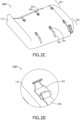
FIG. 2C illustrates a perspective view of portions of an aircraft seat including an attachment assembly for a dress cover and a cushion, not in accordance with one or more embodiments of the claimed invention; -
FIG. 2D illustrates a partial perspective view of portions of an aircraft seat including an attachment assembly for a dress cover and a cushion, not in accordance with one or more embodiments of the claimed invention; -
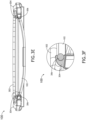
FIG. 2E illustrates an elevation cross-section view of portions of an aircraft seat including an attachment assembly for a dress cover and a cushion, not in accordance with one or more embodiments of the claimed invention; -
FIG. 2F illustrates an elevation cross-section view of portions of an aircraft seat including an attachment assembly for a dress cover and a cushion, not in accordance with one or more embodiments of the claimed invention; -
FIG. 2G illustrates a partial elevation cross-section view of portions of an aircraft seat including an attachment assembly for a dress cover and a cushion, not in accordance with one or more embodiments of the claimed invention; -
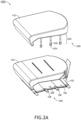
FIG. 3A illustrates an exploded perspective view of portions of an aircraft seat including an attachment assembly for a dress cover and a cushion, in accordance with one or more embodiments of the claimed invention; -
FIG. 3B illustrates a perspective view of portions of an aircraft seat including an attachment assembly for a dress cover and a cushion, in accordance with one or more embodiments of the claimed invention; -
FIG. 3C illustrates a partial perspective view of portions of an aircraft seat including an attachment assembly for a dress cover and a cushion, in accordance with one or more embodiments of the claimed invention; -
FIG. 3D illustrates a partial perspective view of portions of an aircraft seat including an attachment assembly for a dress cover and a cushion, in accordance with one or more embodiments of the claimed invention; -
FIG. 3E illustrates an elevation cross-section view of portions of an aircraft seat including an attachment assembly for a dress cover and a cushion, in accordance with one or more embodiments of the claimed invention; -
FIG. 3F illustrates a partial elevation cross-section view of portions of an aircraft seat including an attachment assembly for a dress cover and a cushion, in accordance with one or more embodiments of the claimed invention; -
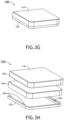
FIG. 3G illustrates a perspective view of portions of an aircraft seat including an attachment assembly for a dress cover and a cushion, in accordance with one or more embodiments of the claimed invention; -
FIG. 3H illustrates an exploded perspective view of portions of an aircraft seat including an attachment assembly for a dress cover and a cushion, in accordance with one or more embodiments of the claimed invention; -
FIG. 3I illustrates a partial perspective view of portions of an aircraft seat including an attachment assembly for a dress cover and a cushion, in accordance with one or more embodiments of the claimed invention; -
FIG. 3J illustrates a partial perspective view of portions of an aircraft seat including an attachment assembly for a dress cover and a cushion, in accordance with one or more embodiments of the claimed invention; -
FIG. 4A illustrates an exploded perspective view of portions of an aircraft seat including an attachment assembly for a dress cover and a cushion, not in accordance with one or more embodiments of the claimed invention; -
FIG. 4B illustrates an exploded perspective view of portions of an aircraft seat including an attachment assembly for a dress cover and a cushion, not in accordance with one or more embodiments of the claimed invention; -
FIG. 4C illustrates a perspective view of portions of an aircraft seat including an attachment assembly for a dress cover and a cushion, not in accordance with one or more embodiments of the claimed invention; -
FIG. 4D illustrates a partial perspective view of portions of an aircraft seat including an attachment assembly for a dress cover and a cushion, not in accordance with one or more embodiments of the claimed invention; -
FIG. 4E illustrates a plan view of portions of an aircraft seat including an attachment assembly for a dress cover and a cushion, not in accordance with one or more embodiments of the claimed invention; and -
FIG. 4F illustrates an elevation cross-section view of portions of an aircraft seat including an attachment assembly for a dress cover and a cushion, not in accordance with one or more embodiments of the claimed invention. - Reference will now be made in detail to the subject matter disclosed, which is illustrated in the accompanying drawings.
- Before explaining one or more embodiments of the disclosure in detail, it is to be understood the embodiments are not limited in their application to the details of construction and the arrangement of the components or steps or methodologies set forth in the following description or illustrated in the drawings. In the following detailed description of embodiments, numerous specific details may be set forth in order to provide a more thorough understanding of the disclosure. However, it will be apparent to one of ordinary skill in the art having the benefit of the instant disclosure the embodiments disclosed herein may be practiced without some of these specific details, insofar as the resulting embodiment falls within the scope of the claims. In other instances, well-known features may not be described in detail to avoid unnecessarily complicating the instant disclosure.
- As used herein a letter following a reference numeral is intended to reference an embodiment of the feature or element that may be similar, but not necessarily identical, to a previously described element or feature bearing the same reference numeral (e.g., 1, 1a, 1b). Such shorthand notations are used for purposes of convenience only and should not be construed to limit the disclosure in any way unless expressly stated to the contrary.
- Further, unless expressly stated to the contrary, "or" refers to an inclusive or and not to an exclusive or. For example, a condition A or B is satisfied by anyone of the following: A is true (or present) and B is false (or not present), A is false (or not present) and B is true (or present), and both A and B are true (or present).
- Finally, as used herein any reference to "one embodiment" or "some embodiments" means that a particular element, feature, structure, or characteristic described in connection with the embodiment is included in at least one embodiment disclosed herein. The appearances of the phrase "in some embodiments" in various places in the specification are not necessarily all referring to the same embodiment.
-
FIGS. 1-4F generally illustrate an attachment assembly for a dress cover and a cushion of an aircraft seat. - Seats include components such as a support system, a cushion, and a dress cover. The components are coupled together with one or more attachment assemblies. In select seat designs, that do not fall within the scope of the claims, hook and loop fastener assemblies (e.g., Velcro®) may be used to attach the dress cover to the cushion, the cushion to a support system, and/or the dress cover to the support system. Often, multiple hook and loop fastener assemblies are used, resulting in multiple attachment interfaces within the aircraft seat. For example, a first set of hook and loop fastener assemblies may be sewn into/onto the dress cover and the cushion, while a second set of hook and loop fastener assemblies may be located between the cushion and the support system. The multiple attachment interfaces may cause difficulties in alignment of the dress cover, cushion, and/or support system during manufacturing and/or installation of the aircraft seat. In addition, the multiple attachment interfaces may result in increased cost. Further, the multiple attachment interfaces may result in increased wear.
- In addition, in select industries the build of the seat (and any included components within the build) may be required to meet guidelines and/or standards. For example, aircraft seats may be required to meet aviation guidelines and/or standards. For instance, the select aircraft seats may need to be configured in accordance with aviation guidelines and/or standards put forth by, but not limited to, the Federal Aviation Administration (FAA), the European Aviation Safety Agency (EASA) or any other flight certification agency or organization; the American National Standards Institute (ANSI), Aeronautical Radio, Incorporated (ARINC), or any other standards setting organization or company; the Radio Technical Commission for Aeronautics (RTCA) or any other guidelines agency or organization; or the like. Hook and loop fasteners may present difficulties, including failing to meet load requirements (e.g., 9g static load requirements or 16g dynamic load requirements as set forth by the FAA), flammability requirements, or the like.
- As such, it would be desirable to provide an attachment assembly for a dress cover and a cushion of an aircraft seat. The attachment assembly should reduce the usage of hook and loop fastener assemblies, allowing for more efficient review and searching of the seat for issues (e.g., for wear, for dirt or other mess such as airsickness, for contraband, or the like), and easier replacement of the seat components. The attachment assembly should reduce the number of attachment interfaces between the support system, the cushion and/or the dress cover. The attachment assembly should be configured in accordance with aviation guidelines and/or standards.
- Referring in general to
FIGS. 1-4F , one or more attachment assemblies may be integrated within anaircraft seat 100 installed within an aircraft cabin. For example, theaircraft seat 100 may include, but is not limited to, a business class or first-class passenger seat, an economy-class passenger seat, or the like. It is noted herein the terms "aircraft seats" and "passenger seats" may be considered equivalent, for purposes of the disclosure. - The
aircraft seat 100 may be rotatable about an axis (e.g., swivelable). Theaircraft seat 100 may be fully positionable between the outer limits of motion as defined by the moveable components of theaircraft seat 100. Where theaircraft seat 100 is installed within a passenger compartment, theaircraft seat 100 may be fully positionable between the outer limits of motion as defined by one or more passenger compartment monuments of the passenger compartment. It is noted herein an upright or raised position may be considered a taxi, takeoff, or landing (TTOL) position during select stages of flight (though the upright or raised position is not limited to use during the select stages of flight as the TTOL position, but also may be used at any point during the flight), for purposes of the present disclosure. In addition, it is noted herein that any position that does not meet the above-defined requirements of the TTOL position may be considered a non-TTOL position, for purposes of the present disclosure. Further, it is noted herein theaircraft seat 100 may be actuatable (e.g., translatable and/or rotatable) from the TTOL position to a non-TTOL position, and/or vice versa. Further, it is noted herein theaircraft seat 100 may be capable of a fully upright or raised position, and that the TTOL position may have a more reclined seat back cushion and a more angled upward seat pan cushion as compared to the fully upright or raised position. Therefore, the above description should not be interpreted as a limitation on the present disclosure but merely an illustration. - In general, an
aircraft seat 100 of the one ormore aircraft seats 100 may be translatable (e.g., trackable or slidable). Theaircraft seat 100 may be rotatable about an axis cross-wise through theaircraft seat 100 into a position including, but not limited to, the upright or raised position, one or more lounge or reclined positions, and a lie-flat or bed position. For example, theaircraft seat 100 may transition directly between the upright or raised position and the lie-flat or bed position. By way of another example, it is noted herein theaircraft seat 100 may transition through one or more lounge or reclined positions between the upright or raised position and the lie-flat or bed position. By way of another example, theaircraft seat 100 may transition into one or more lounge or reclined positions in a motion separate from the transition between the upright or raised position and the lie-flat or bed position. Therefore, the above description should not be interpreted as a limitation on the scope of the disclosure but merely an illustration. - The
aircraft seat 100 includes asupport system 102 and acushion 104. For example, thesupport system 102 may include, but is not limited to, a seat pan, a seat back, or the like. Theaircraft seat 100 includes acushion 104. For example, thecushion 104 may include a seat pan cushion, a seat back cushion, or the like. - The
support system 102 includes adiaphragm 106. For example, thediaphragm 106 may be a seat pan diaphragm, a seat back diaphragm, or the like. By way of another example, thediaphragm 106 may include a plastic diaphragm, a metal diaphragm, a fabric diaphragm, a wire or wireframe diaphragm, or the like. Thesupport system 102 may be a rigid structure within theaircraft seat 100, such that thesupport system 102 does not move. Thesupport system 102 may include one or more movable components such that thesupport system 102 may articulate. For example, thesupport system 102 may articulate when theaircraft seat 100 actuates between the upright or raised position, the one or more lounge or reclined positions, and/or the lie-flat or bed position. - The
cushion 104 conforms to thesupport system 102. At least one surface of thecushion 104 conforms to a corresponding surface of thesupport system 102. By way of another example, components of the support system 102 (e.g., components including, but not limited to,straps 108 configured to couple thediaphragm 106 to a set of posts of theaircraft seat 100, where thesupport system 102 is or includes the diaphragm 106) may extend beyond the boundaries of thecushion 104, such that the at least one surface of thecushion 104 does not fully conform to the corresponding surface of thesupport system 102. By way of another example, a portion of thecushion 104 may wrap around or otherwise enclose a portion of the support system 102 (e.g., including, but not limited to, a front edge or leading portion of the cushion 104). In general, thesupport system 102 may conform to a portion of a user (e.g., a passenger, a crew member, or the like), and thecushion 104 may similarly conform to the portion of the user due to thecushion 104 conforming to thesupport system 102. - The
aircraft seat 100 includes adress cover 110. Thedress cover 110 is configured to fit over at least a portion of thecushion 104. For example, thedress cover 110 may be configured to wrap around or otherwise enclose exterior surfaces of thecushion 104 not proximate to thesupport system 102. Thedress cover 110 may be configured to attach to thesupport system 102 and/or thecushion 104. -
FIGS. 2A-2G illustrate an example of one ormore attachment assemblies 200 for attaching thedress cover 110 and thecushion 104 to thesupport system 102, not in accordance with one or more embodiments of the invention as defined by the claims. - A
particular attachment assembly 200 may include one or more primary attachment features 202. A particularprimary attachment feature 202 may include ahook 204. Thehook 204 may be coupled to thedress cover 110 proximate to the perimeter or edge of thedress cover 110. For example, thehook 204 may be coupled to thedress cover 110 via astrap 206, such that theprimary attachment feature 202 includes thehook 204 and thestrap 206. For instance, thestrap 206 may be sewn into thedress cover 110. In addition, thestrap 206 may be a fixed length or may be adjustable (e.g., to center thedress cover 110 and thecushion 104 on the support system 102). By way of another example, thehook 204 may be directly coupled to thedress cover 110, such that theprimary attachment feature 202 includes only thehook 204. For instance, thehook 204 may be sewn into thedress cover 110. - The
attachment assembly 200 may include one or more auxiliary attachment features 208 on thesupport system 102, to which a correspondingprimary attachment feature 202 may be configured to mate. For example, theauxiliary attachment feature 208 may include a hole within thesupport system 102 positioned proximate to the perimeter or edge of thesupport system 102 or within a predetermined distance from the perimeter or edge of thesupport system 102. For instance, the predetermined distance may be dependent on an amount of tension necessary to adequately secure thedress cover 110 to thesupport system 102 via the attachment assembly 200 (e.g., as defined by a tautness of thedress cover 110 over thecushion 104, an amount of movement (or inability of move) of thedress cover 106 and thecushion 104 relative to thesupport system 102, or other similar metric). - The one or more primary attachment features 202 may be components of a set. For example, the one or more primary attachment features 202 may be in a row within the set. For instance, each set may include, but are not limited to, three primary attachment features 202 in a row. In one non-limiting example where there are sets of primary attachment features 202, the sets of primary attachment features 202 may be coupled to the side portions of the dress cover 110 (e.g., proximate to a side edge of the dress cover 110) and the corresponding auxiliary attachment features 208 may be positioned along the side portions of the support system 102 (e.g., proximate to a side edge of the support system 102). It is noted herein the
support system 102 may include sets of auxiliary attachment features 208 corresponding to the sets of primary attachment features 202. In general, however, the primary attachment features 202 and the corresponding auxiliary attachment features 208 may be located within any portion of thedress cover 110 and thesupport system 102, respectively. Therefore, the above description should not be interpreted as a limitation on the present disclosure but merely an illustration. - It is noted herein an area of the at least one surface of the
cushion 104 conforming to the corresponding surface of thesupport system 102 may be slightly larger in area than the corresponding surface of thesupport system 102, such that thedress cover 110 may at least partially wrap underneath thecushion 104 prior to the one or more primary attachment features 202 mating with the one or more auxiliary attachment features 208. - It is noted herein where the one or more primary attachment features 202 and the one or more auxiliary attachment features 208 couple together may be considered an attachment interface of the
aircraft seat 100, for purposes of the disclosure. - It is noted herein the combination of one or more of the mating mechanisms between the one or more primary attachment features 202 and the one or more auxiliary attachment features 208 and/or the at least partially wrapping of the
cushion 104 by thedress cover 110 may result in a non-obvious method of attachment and detachment of the dress cover 110 (and the cushion 104) from thesupport system 102. - In this regard, the one or more primary attachment features 202 being mated to the corresponding auxiliary attachment features 208 may secure the
cushion 104 and thedress cover 110 to thesupport system 102 without the use of hook and loop fastener assemblies. In addition, the mating of the primary attachment features 202 being mated to the corresponding auxiliary attachment features 208, during or following the wrapping of thecushion 104 with thedress cover 110, may cause thecushion 104 to be held in place on thesupport system 102 along with thedress cover 110, reducing the attachment assembly count to one attachment assembly 200 (and thus the attachment interface count to a single attachment interface). Further, existingsupport systems 102 and dress covers 110 may be modified with the one or more attachment assemblies 200 (e.g., primary attachment features 202 sewn onto thedress cover 110, and auxiliary attachment features 208 being added to the support system 102) without requiring a complete redesign and/or remanufacturing of theaircraft seat 100. Further, the one ormore attachment assemblies 200 may allow for alignment of thecushion 104 and thedress cover 110, a more efficient review and search of theaircraft seat 100 for issues, and easier replacement ofaircraft seat 100 components. It is noted herein that, where a portion of thecushion 104 wraps around or otherwise encloses a portion of thesupport system 102, thecushion 104 may assist in aligning thecushion 104 and thedress cover 110 with thesupport system 102 during installation in addition to the one ormore attachment assemblies 200. -
FIGS. 3A-3J illustrate an example of one ormore attachment assemblies 300 for attaching thedress cover 110 and thecushion 104 to thesupport system 102, in accordance with one or more embodiments of the claimed invention. - A
particular attachment assembly 300 includes one or more primary attachment features 302. The one or more primary attachment features 302 include one or more wire springs 302. The one or more wire springs 302 may conform to at least a portion of thesupport system 102. For example, theattachment assembly 300 may include asingle wire spring 302 configured to conform to at least a portion of the perimeter or edge of thesupport system 102. It is noted herein, however, the one or more wire springs 302 may be independently-shaped from the at least the portion of thesupport system 102. - The
attachment assembly 300 includes one or more auxiliary attachment features 304 on thesupport system 102, to which a corresponding primary attachment features (i.e, a corresponding wire spring 302) are configured to mate. Theauxiliary attachment feature 304 includestabs 304 coupled to and/or at least partially integrated with thesupport system 102 proximate to the perimeter or edge of thesupport system 102 or within a predetermined distance from the perimeter or edge of thesupport system 102. For instance, the predetermined distance may be dependent on an amount of tension necessary to adequately secure thedress cover 110 to thesupport system 102 via the attachment assembly 300 (e.g., as defined by a tautness of thedress cover 110 over thecushion 104, an amount of movement (or inability of move) of thedress cover 106 and thecushion 104 relative to thesupport system 102, or other similar metric). - Each
tab 304 includes agroove 306 configured to receive awire spring 302. Theattachment assembly 300 includingmultiple tabs 304, at least sometabs 304 of themultiple tabs 304 face inward toward a center of the support system 102 (e.g., as illustrated in at leastFIG. 3C ) and at least sometabs 304 of themultiple tabs 304 face outward away from the center of the support system 102 (e.g., as illustrated in at leastFIG. 3D ). - When installed in the
tabs 304, the one or more wire springs 302 may be compressed and provide an outward-acting spring force on thetabs 304, securing the one or more wire springs 302 in place. In addition, the one or more wire springs 302 may include one or more crimped orcurved ends 308 configured to prevent the one or more wire springs 302 from disengaging from thetabs 304 and further secure the one or more wire springs 302 in place. - The one or more wire springs 302 are coupled to the
dress cover 110. For example, the one or more wire springs 302 may be inserted into one or more sleeves orrunways 310 sewn to thedress cover 110 proximate to the perimeter or edge of thedress cover 110. By way of another example, the one or more wire springs 302 may be interwoven into thedress cover 110 proximate to the edge of thedress cover 110. - The
dress cover 110 may wrap around or otherwise enclose thecushion 104 and keep thecushion 104 contained, such that thecushion 104 may provide an additional spring force against thedress cover 110 to help thedress cover 110 and cushion 104 stay in place when installed on thesupport system 102. It is noted herein an area of the at least one surface of thecushion 104 conforming to the corresponding surface of thesupport system 102 may be slightly larger in area than the corresponding surface of thesupport system 102, such that thedress cover 110 may at least partially wrap underneath thecushion 104 prior to the one or more primary attachment features 302 mating with the one or more auxiliary attachment features 304. - It is noted herein where the one or more primary attachment features 302 and the one or more auxiliary attachment features 304 couple together may be considered an attachment interface of the
aircraft seat 100, for purposes of the disclosure. - It is noted herein the combination of one or more of the mating mechanisms between the one or more primary attachment features 302 (e.g., such as the one or more wire springs 302) and the one or more auxiliary attachment features 304, the crimped or curved ends of the one or more wire springs 302, and/or the at least partially wrapping of the
cushion 104 by thedress cover 110 may result in a non-obvious method of attachment and detachment of the dress cover 110 (and the cushion 104) from thesupport system 102. - In this regard, the one or more primary attachment features 302 being mated to the one or more auxiliary attachment features 304 may secure the
cushion 104 and thedress cover 110 to thesupport system 102 without the use of hook and loop fastener assemblies. In addition, the one or more primary attachment features 302 being mated to the one or more auxiliary attachment features 304, during or following the wrapping of thecushion 104 with thedress cover 110, may cause thecushion 104 to be held in place on thesupport system 102 along with thedress cover 110, reducing the attachment assembly count to one attachment assembly 300 (and thus the attachment interface count to a single attachment interface). Further, existingsupport systems 102 and dress covers 110 may be modified with the one or more attachment assemblies 300 (e.g., wire springs 302 sewn onto thedress cover 110, and auxiliary attachment features 304 being added to the support system 102) without requiring a complete redesign and/or remanufacturing of theaircraft seat 100. Further, the one ormore attachment assemblies 300 may allow for alignment of thecushion 104 and thedress cover 110, a more efficient review and search of theaircraft seat 100 for issues, and easier replacement ofaircraft seat 100 components. It is noted herein that, where a portion of thecushion 104 wraps around or otherwise encloses a portion of thesupport system 102, thecushion 104 may assist in aligning thecushion 104 and thedress cover 110 with thesupport system 102 during installation in addition to the one ormore attachment assemblies 300. -
FIGS. 4A-4F illustrate an example of one ormore attachment assemblies 400 for attaching thedress cover 110 and thecushion 104 to thesupport system 102, not in accordance with one or more embodiments of the invention as defined by the claims. - A
particular attachment assembly 400 may include one or more primary attachment features 402. For example, the one or more primary attachment features 400 may include one or more hooks 402. Theattachment assembly 400 may include one ormore plates 404. The one ormore hooks 402 may be coupled to or at least partially embedded within the one ormore plates 404. It is noted herein, however, the one ormore hooks 402 may be protrusions formed within the one ormore plates 404, such that the one ormore hooks 402 are integrated within the one ormore plates 404. - The one or
more plates 404 may be coupled to or integrated with an interior plate within the cushion 104 (e.g., prior to attachment of a fire block of the cushion 104). The one ormore plates 404 may be coupled to or integrated with an exterior surface of thecushion 104. For example, the one ormore plates 404 may be sewn into a thermoplastic surface of thecushion 104. By way of another example, the one ormore plates 404 may be affixed to thecushion 104 with an adhesive, fasteners, or the like. The one ormore plates 404 may be set within thecushion 104 such that thecushion 104 is overmolded onto the one ormore plates 404. - The one or
more hooks 402 may mate to thediaphragm 106 of thesupport system 102. For example, thediaphragm 106 may be a wireframe or metal spring diaphragm with one or more wire supports 406. For instance, the one ormore hooks 402 may be configured to mate with the one or more wire supports 406, with aparticular hook 402 fitting within an inside curve of aparticular wire support 406. In addition, the one ormore hooks 402 may include one ormore grooves 408 configured to engage the one or more wire supports 406. Further, the one ormore hooks 402 may include one ormore grooves 410, which may allow the one ormore hooks 402 elastically deform for ease of removal from thesupport system 102. - The
attachment assembly 400 may include one ormore extensions 412 on thedress cover 110. For example, anextension 412 may include a flap of fabric sewn to or forming a portion of thedress cover 110. Aflap 412 may include one ormore holes 414 that correspond to the one or more hooks 402. For example, thedress cover 110 may wrap around thecushion 104, allowing the one ormore holes 414 to engage the one ormore hooks 402 prior to the one ormore hooks 402 engaging thesupport system 102. It noted herein the one ormore hooks 402 may be coupled to or at least partially embedded within the one ormore extensions 412 instead of theplate 404, such that theplate 404 may not be necessary. - It is noted herein that at least one the one or more wire supports 406 of the
support system 102 and/or the one ormore extensions 412 may be considered auxiliary attachment features of theattachment assembly 400 positioned proximate to the perimeter or edge of thesupport system 102 or within a predetermined distance from the perimeter or edge of thesupport system 102, for purposes of the disclosure. For example, the predetermined distance may be dependent on an amount of tension necessary to adequately secure thedress cover 110 to thesupport system 102 via the attachment assembly 400 (e.g., as defined by a tautness of thedress cover 110 over thecushion 104, an amount of movement (or inability of move) of thedress cover 106 and thecushion 104 relative to thesupport system 102, or other similar metric). - It is noted herein where the one or more primary attachment features 402 and the one or more auxiliary attachment features (e.g., the one or more wire supports 406 of the
support system 102 and/or the one or more extensions 412) couple together may be considered an attachment interface of theaircraft seat 100, for purposes of the disclosure. - It is noted herein the combination of one or more of the mating mechanisms between the one or more primary attachment features 402 and the one or more auxiliary attachment features (e.g., the one or more wire supports 406 of the
support system 102 and/or the one or more extensions 412) and/or the at least partially wrapping of thecushion 104 by thedress cover 110 may result in a non-obvious method of attachment and detachment of the dress cover 110 (and the cushion 104) from thesupport system 102. - In this regard, the one or more primary attachment features 402 being mated to the one or more auxiliary attachment features (e.g., the one or more wire supports 406 of the
support system 102 and/or the one or more extensions 412) may secure thecushion 104 and thedress cover 110 to thesupport system 102 without the use of hook and loop fastener assemblies. In addition, the one or more primary attachment features 402 being mated to the one or more auxiliary attachment features (e.g., the one or more wire supports 406 of thesupport system 102 and/or the one or more extensions 412), during or following the wrapping of thecushion 104 with thedress cover 110, may cause thecushion 104 to be held in place on thesupport system 102 along with thedress cover 110, reducing the attachment assembly count to one attachment assembly 400 (and thus the attachment interface count to a single attachment interface). Further, existingsupport systems 102 and dress covers 110 may be modified with the one or more attachment assemblies 400 (e.g., auxiliary attachment features such asextensions 412 sewn onto thedress cover 110, and primary attachment features 402 being added to thecushion 104 or the extensions 412) without requiring a complete redesign and/or remanufacturing of theaircraft seat 100. Further, the one ormore attachment assemblies 400 may allow for alignment of thecushion 104 and thedress cover 110, a more efficient review and search of theaircraft seat 100 for issues, and easier replacement ofaircraft seat 100 components. It is noted herein that, where a portion of thecushion 104 wraps around or otherwise encloses a portion of thesupport system 102, thecushion 104 may assist in aligning thecushion 104 and thedress cover 110 with thesupport system 102 during installation in addition to the one ormore attachment assemblies 400. - The above description should not be interpreted as a limitation on the present disclosure but merely an illustration.
- It is noted herein the
attachment assemblies aircraft seat 100 and/or any set of components in theaircraft seat 100. For example, theattachment assemblies aircraft seat 100, where the changes in shape may be caused by or otherwise dependent on the location of theaircraft seat 100 within the aircraft cabin. - Although embodiments of the disclosure illustrate the
attachment assemblies aircraft seat 100, it is noted herein, however, that theattachment assemblies attachment assemblies attachment assemblies attachment assemblies attachment assemblies attachment assemblies - Although the disclosure has been described with reference to the embodiments illustrated in the attached drawing figures, equivalents may be employed and substitutions made herein without departing from the scope of the claims. Components illustrated and described herein are merely examples of a system/device and components that may be used to implement embodiments of the disclosure and may be replaced with other devices and components without departing from the scope of the claims. Furthermore, any dimensions, degrees, and/or numerical ranges provided herein are to be understood as non-limiting examples unless otherwise specified in the claims.
Claims (4)
- An aircraft seat (100), comprising:a support system (102) including a diaphragm (106);a cushion (104) including at least one surface configured to conform to a corresponding surface of the support system;a dress cover (110), the dress cover configured to fit over at least a portion of the cushion; andan attachment assembly (300), comprising:a primary attachment feature (302) coupled to the dress cover proximate to at least one edge of the dress cover; andan auxiliary attachment feature (304) integrated within the support system,the attachment assembly configured to secure the at least one surface of the cushion against the corresponding surface of the support system when the primary attachment feature is coupled to the auxiliary attachment feature at a single attachment interface for the support system, the cushion, and the dress cover;the primary attachment feature including a wire spring (302),characterized bythe auxiliary attachment feature including a plurality of tabs (304), each tab of the plurality of tabs including a groove configured to receive the wire spring, at least one tab of the plurality of tabs facing inward toward a center of the support system, at least one tab of the plurality of tabs facing outward away from the center of the support system.
- The aircraft seat of Claim 1, the wire spring (302) being coupled to the dress cover proximate to at least two edges of the dress cover, the plurality of tabs being integrated with the support system proximate to at least two edges of the support system.
- The aircraft seat of Claim 2, the dress cover including a sleeve (310) coupled to the dress cover proximate to the at least two edges of the dress cover, the wire spring being inserted into the sleeve.
- The aircraft seat of any preceding Claim, the wire spring (302) including at least one curved end, the at least one curved end configured to prevent the wire spring from disengaging from a tab of the plurality of tabs.
Applications Claiming Priority (1)
| Application Number | Priority Date | Filing Date | Title |
|---|---|---|---|
| US17/008,296 US11142322B1 (en) | 2020-08-31 | 2020-08-31 | Attachment assembly for a dress cover and a cushion of an aircraft seat |
Publications (2)
| Publication Number | Publication Date |
|---|---|
| EP3960038A1 EP3960038A1 (en) | 2022-03-02 |
| EP3960038B1 true EP3960038B1 (en) | 2025-05-07 |
Family
ID=77447833
Family Applications (1)
| Application Number | Title | Priority Date | Filing Date |
|---|---|---|---|
| EP21192663.9A Active EP3960038B1 (en) | 2020-08-31 | 2021-08-23 | Attachment assembly for a dress cover and a cushion of an aircraft seat |
Country Status (2)
| Country | Link |
|---|---|
| US (1) | US11142322B1 (en) |
| EP (1) | EP3960038B1 (en) |
Families Citing this family (2)
| Publication number | Priority date | Publication date | Assignee | Title |
|---|---|---|---|---|
| US11691738B2 (en) | 2020-12-14 | 2023-07-04 | B/E Aerospace, Inc. | Spring-based seat diaphragm |
| WO2023168348A2 (en) * | 2022-03-03 | 2023-09-07 | MillerKnoll, Inc. | Cover assembly for a chair |
Family Cites Families (25)
| Publication number | Priority date | Publication date | Assignee | Title |
|---|---|---|---|---|
| US1415837A (en) * | 1918-11-18 | 1922-05-09 | Ind Res Corp | Seat spring |
| US1650294A (en) * | 1926-07-28 | 1927-11-22 | Reynolds Spring Co | Base frame for spring structures |
| US1756579A (en) * | 1928-03-26 | 1930-04-29 | Reynolds Spring Co | Base frame for spring-cushion seats |
| US3744843A (en) * | 1969-01-17 | 1973-07-10 | American Seating Co | Vehicle chair unit |
| US3633968A (en) | 1970-10-05 | 1972-01-11 | Isaac W Sears Jr | Seat fabric cover fastener |
| US3656807A (en) * | 1970-10-16 | 1972-04-18 | Gen Motors Corp | Vehicle seat assembly |
| DE2912461C2 (en) * | 1979-03-29 | 1985-04-11 | Bayerische Motoren Werke AG, 8000 München | Seat, in particular a motor vehicle seat, with an upholstery cover provided with upholstery pipes and fastening tabs, and a method for attaching the fastening tabs for adjacent pipes |
| US4364607A (en) | 1980-07-28 | 1982-12-21 | Gilardini S.P.A. | Seat for vehicles |
| FR2623382B1 (en) * | 1987-11-24 | 1991-05-03 | Peugeot Cycles | DEVICE FOR FIXING A COVERING, IN PARTICULAR A SEAT COVERING |
| JPH01171507A (en) | 1987-12-28 | 1989-07-06 | Tokyo Seat Kk | Spring structure for seat for vehicle, or the like |
| GB9824704D0 (en) | 1998-11-12 | 1999-01-06 | Mgr Foamtex Ltd | Aircraft seats |
| GB2356133A (en) | 1999-11-10 | 2001-05-16 | Mgr Foamtex Ltd | Shaped mattress for aircraft seat |
| US6345866B1 (en) * | 2000-08-03 | 2002-02-12 | Usa Products | Adjustable seat covers for high or low back seats |
| JP3863789B2 (en) * | 2002-02-08 | 2006-12-27 | テイ・エス テック株式会社 | Trim cover mounting member for vehicle seat and vehicle seat |
| FR2898859B1 (en) | 2006-03-21 | 2008-06-06 | Faurecia Sieges Automobile | AUTOMOTIVE SEAT ELEMENT TRIM |
| DE102006019740A1 (en) | 2006-04-28 | 2007-11-08 | Faurecia Autositze Gmbh | Reversed, recessed, sewn seam construction for covering of vehicle seat and backrest, includes further component and filling, to be gripped in enlarged base of groove in foam padding |
| JP5155572B2 (en) * | 2007-02-07 | 2013-03-06 | テイ・エス テック株式会社 | Skin material terminal processing member, seat parts and vehicle seat |
| DE102009039153A1 (en) * | 2009-08-27 | 2011-03-17 | Lear Corp., Southfield | Seat arrangement with a reference |
| US8770662B2 (en) | 2010-05-27 | 2014-07-08 | Auto Expressions, Llc | Vehicle seat cover |
| GB2485822B (en) | 2010-11-25 | 2018-02-21 | Mgr Foamtex Ltd | Improvements in and relating to interior trim components for aircraft cabins |
| DE202011002719U1 (en) * | 2011-02-14 | 2011-04-28 | Recaro Aircraft Seating Gmbh & Co. Kg | seat device |
| DE102012018986B4 (en) | 2012-07-20 | 2016-08-04 | Johnson Controls Gmbh | Vehicle seat with a cover |
| US11014675B2 (en) * | 2014-04-03 | 2021-05-25 | Franklin Products, Inc. | Lightweight upholstery cover with edge attachment |
| JP6542638B2 (en) * | 2015-10-27 | 2019-07-10 | 本田技研工業株式会社 | Seat device and front cover |
| KR101758092B1 (en) | 2016-03-28 | 2017-07-14 | 정정호 | Fixing element for car seat cover |
-
2020
- 2020-08-31 US US17/008,296 patent/US11142322B1/en active Active
-
2021
- 2021-08-23 EP EP21192663.9A patent/EP3960038B1/en active Active
Also Published As
| Publication number | Publication date |
|---|---|
| EP3960038A1 (en) | 2022-03-02 |
| US11142322B1 (en) | 2021-10-12 |
Similar Documents
| Publication | Publication Date | Title |
|---|---|---|
| EP3960628B1 (en) | Aircraft seat cover attachment system | |
| EP4086114A1 (en) | Aircraft seatback cover attachment system | |
| EP3960038B1 (en) | Attachment assembly for a dress cover and a cushion of an aircraft seat | |
| EP3848285B1 (en) | Adapter plate for an aircraft seat | |
| US9856022B2 (en) | Stowage bin systems | |
| US11319075B1 (en) | Compressible cushion for an aircraft seat | |
| EP3816049B1 (en) | Bezel-mounted seat privacy closeout | |
| EP4108566B1 (en) | Carriage assembly with overload protection | |
| EP3578456B1 (en) | Puck cover | |
| EP4253143B1 (en) | Flexible wall mount for aircraft cabin seat | |
| US20220242575A1 (en) | Extendable armrest with automatic retraction features | |
| US11299278B1 (en) | Dress cover for expendable cushion | |
| EP3819217B1 (en) | Upholstery cover retention assembly | |
| US12122520B2 (en) | Spring-based seat diaphragm | |
| EP4194261B1 (en) | Aircraft seat base assembly | |
| EP4596407A1 (en) | Composite beam joint for aircraft seat frame | |
| US11572000B1 (en) | Modular aircraft seatback cover attachment system | |
| US20230008304A1 (en) | Passenger seating positioned proximate to an aircraft interior structure | |
| EP4311773A1 (en) | Motion control system for an aircraft seat | |
| US20230234709A1 (en) | Seat assembly having stablization system | |
| EP4311774A1 (en) | Tracking system for an aircraft seat | |
| US11572001B1 (en) | Quick release headrest removal assembly | |
| US20250353598A1 (en) | Modular power box mounting system | |
| EP4382422A1 (en) | Integrated snack bar for commercial aircraft seats | |
| US20240182171A1 (en) | Integrated snack bar for commercial aircraft seats |
Legal Events
| Date | Code | Title | Description |
|---|---|---|---|
| PUAI | Public reference made under article 153(3) epc to a published international application that has entered the european phase |
Free format text: ORIGINAL CODE: 0009012 |
|
| STAA | Information on the status of an ep patent application or granted ep patent |
Free format text: STATUS: THE APPLICATION HAS BEEN PUBLISHED |
|
| AK | Designated contracting states |
Kind code of ref document: A1 Designated state(s): AL AT BE BG CH CY CZ DE DK EE ES FI FR GB GR HR HU IE IS IT LI LT LU LV MC MK MT NL NO PL PT RO RS SE SI SK SM TR |
|
| STAA | Information on the status of an ep patent application or granted ep patent |
Free format text: STATUS: REQUEST FOR EXAMINATION WAS MADE |
|
| 17P | Request for examination filed |
Effective date: 20220902 |
|
| RBV | Designated contracting states (corrected) |
Designated state(s): AL AT BE BG CH CY CZ DE DK EE ES FI FR GB GR HR HU IE IS IT LI LT LU LV MC MK MT NL NO PL PT RO RS SE SI SK SM TR |
|
| STAA | Information on the status of an ep patent application or granted ep patent |
Free format text: STATUS: EXAMINATION IS IN PROGRESS |
|
| 17Q | First examination report despatched |
Effective date: 20230710 |
|
| P01 | Opt-out of the competence of the unified patent court (upc) registered |
Effective date: 20230922 |
|
| REG | Reference to a national code |
Ref country code: DE Ref legal event code: R079 Ipc: B64D0011060000 Ref document number: 602021030299 Country of ref document: DE Free format text: PREVIOUS MAIN CLASS: A47C0031020000 |
|
| GRAP | Despatch of communication of intention to grant a patent |
Free format text: ORIGINAL CODE: EPIDOSNIGR1 |
|
| STAA | Information on the status of an ep patent application or granted ep patent |
Free format text: STATUS: GRANT OF PATENT IS INTENDED |
|
| RIC1 | Information provided on ipc code assigned before grant |
Ipc: B60N 2/70 20060101ALI20241111BHEP Ipc: B60N 2/58 20060101ALI20241111BHEP Ipc: B64D 11/06 20060101AFI20241111BHEP |
|
| INTG | Intention to grant announced |
Effective date: 20241210 |
|
| GRAS | Grant fee paid |
Free format text: ORIGINAL CODE: EPIDOSNIGR3 |
|
| GRAA | (expected) grant |
Free format text: ORIGINAL CODE: 0009210 |
|
| STAA | Information on the status of an ep patent application or granted ep patent |
Free format text: STATUS: THE PATENT HAS BEEN GRANTED |
|
| AK | Designated contracting states |
Kind code of ref document: B1 Designated state(s): AL AT BE BG CH CY CZ DE DK EE ES FI FR GB GR HR HU IE IS IT LI LT LU LV MC MK MT NL NO PL PT RO RS SE SI SK SM TR |
|
| REG | Reference to a national code |
Ref country code: GB Ref legal event code: FG4D |
|
| REG | Reference to a national code |
Ref country code: CH Ref legal event code: EP |
|
| REG | Reference to a national code |
Ref country code: DE Ref legal event code: R096 Ref document number: 602021030299 Country of ref document: DE |
|
| REG | Reference to a national code |
Ref country code: IE Ref legal event code: FG4D |
|
| REG | Reference to a national code |
Ref country code: NL Ref legal event code: MP Effective date: 20250507 |
|
| PG25 | Lapsed in a contracting state [announced via postgrant information from national office to epo] |
Ref country code: PT Free format text: LAPSE BECAUSE OF FAILURE TO SUBMIT A TRANSLATION OF THE DESCRIPTION OR TO PAY THE FEE WITHIN THE PRESCRIBED TIME-LIMIT Effective date: 20250908 Ref country code: ES Free format text: LAPSE BECAUSE OF FAILURE TO SUBMIT A TRANSLATION OF THE DESCRIPTION OR TO PAY THE FEE WITHIN THE PRESCRIBED TIME-LIMIT Effective date: 20250507 Ref country code: FI Free format text: LAPSE BECAUSE OF FAILURE TO SUBMIT A TRANSLATION OF THE DESCRIPTION OR TO PAY THE FEE WITHIN THE PRESCRIBED TIME-LIMIT Effective date: 20250507 |
|
| PGFP | Annual fee paid to national office [announced via postgrant information from national office to epo] |
Ref country code: DE Payment date: 20250724 Year of fee payment: 5 |
|
| REG | Reference to a national code |
Ref country code: LT Ref legal event code: MG9D |
|
| PG25 | Lapsed in a contracting state [announced via postgrant information from national office to epo] |
Ref country code: GR Free format text: LAPSE BECAUSE OF FAILURE TO SUBMIT A TRANSLATION OF THE DESCRIPTION OR TO PAY THE FEE WITHIN THE PRESCRIBED TIME-LIMIT Effective date: 20250808 Ref country code: NO Free format text: LAPSE BECAUSE OF FAILURE TO SUBMIT A TRANSLATION OF THE DESCRIPTION OR TO PAY THE FEE WITHIN THE PRESCRIBED TIME-LIMIT Effective date: 20250807 |
|
| PG25 | Lapsed in a contracting state [announced via postgrant information from national office to epo] |
Ref country code: NL Free format text: LAPSE BECAUSE OF FAILURE TO SUBMIT A TRANSLATION OF THE DESCRIPTION OR TO PAY THE FEE WITHIN THE PRESCRIBED TIME-LIMIT Effective date: 20250507 Ref country code: PL Free format text: LAPSE BECAUSE OF FAILURE TO SUBMIT A TRANSLATION OF THE DESCRIPTION OR TO PAY THE FEE WITHIN THE PRESCRIBED TIME-LIMIT Effective date: 20250507 |
|
| REG | Reference to a national code |
Ref country code: AT Ref legal event code: MK05 Ref document number: 1792244 Country of ref document: AT Kind code of ref document: T Effective date: 20250507 |
|
| PG25 | Lapsed in a contracting state [announced via postgrant information from national office to epo] |
Ref country code: BG Free format text: LAPSE BECAUSE OF FAILURE TO SUBMIT A TRANSLATION OF THE DESCRIPTION OR TO PAY THE FEE WITHIN THE PRESCRIBED TIME-LIMIT Effective date: 20250507 |
|
| PGFP | Annual fee paid to national office [announced via postgrant information from national office to epo] |
Ref country code: GB Payment date: 20250724 Year of fee payment: 5 |
|
| PG25 | Lapsed in a contracting state [announced via postgrant information from national office to epo] |
Ref country code: HR Free format text: LAPSE BECAUSE OF FAILURE TO SUBMIT A TRANSLATION OF THE DESCRIPTION OR TO PAY THE FEE WITHIN THE PRESCRIBED TIME-LIMIT Effective date: 20250507 |
|
| PG25 | Lapsed in a contracting state [announced via postgrant information from national office to epo] |
Ref country code: AT Free format text: LAPSE BECAUSE OF FAILURE TO SUBMIT A TRANSLATION OF THE DESCRIPTION OR TO PAY THE FEE WITHIN THE PRESCRIBED TIME-LIMIT Effective date: 20250507 |
|
| PGFP | Annual fee paid to national office [announced via postgrant information from national office to epo] |
Ref country code: FR Payment date: 20250723 Year of fee payment: 5 |
|
| PG25 | Lapsed in a contracting state [announced via postgrant information from national office to epo] |
Ref country code: RS Free format text: LAPSE BECAUSE OF FAILURE TO SUBMIT A TRANSLATION OF THE DESCRIPTION OR TO PAY THE FEE WITHIN THE PRESCRIBED TIME-LIMIT Effective date: 20250807 |
|
| PG25 | Lapsed in a contracting state [announced via postgrant information from national office to epo] |
Ref country code: IS Free format text: LAPSE BECAUSE OF FAILURE TO SUBMIT A TRANSLATION OF THE DESCRIPTION OR TO PAY THE FEE WITHIN THE PRESCRIBED TIME-LIMIT Effective date: 20250907 |
|
| PG25 | Lapsed in a contracting state [announced via postgrant information from national office to epo] |
Ref country code: LV Free format text: LAPSE BECAUSE OF FAILURE TO SUBMIT A TRANSLATION OF THE DESCRIPTION OR TO PAY THE FEE WITHIN THE PRESCRIBED TIME-LIMIT Effective date: 20250507 |
|
| PG25 | Lapsed in a contracting state [announced via postgrant information from national office to epo] |
Ref country code: DK Free format text: LAPSE BECAUSE OF FAILURE TO SUBMIT A TRANSLATION OF THE DESCRIPTION OR TO PAY THE FEE WITHIN THE PRESCRIBED TIME-LIMIT Effective date: 20250507 Ref country code: SM Free format text: LAPSE BECAUSE OF FAILURE TO SUBMIT A TRANSLATION OF THE DESCRIPTION OR TO PAY THE FEE WITHIN THE PRESCRIBED TIME-LIMIT Effective date: 20250507 |
|
| PG25 | Lapsed in a contracting state [announced via postgrant information from national office to epo] |
Ref country code: CZ Free format text: LAPSE BECAUSE OF FAILURE TO SUBMIT A TRANSLATION OF THE DESCRIPTION OR TO PAY THE FEE WITHIN THE PRESCRIBED TIME-LIMIT Effective date: 20250507 |
|
| PG25 | Lapsed in a contracting state [announced via postgrant information from national office to epo] |
Ref country code: EE Free format text: LAPSE BECAUSE OF FAILURE TO SUBMIT A TRANSLATION OF THE DESCRIPTION OR TO PAY THE FEE WITHIN THE PRESCRIBED TIME-LIMIT Effective date: 20250507 |
|
| PG25 | Lapsed in a contracting state [announced via postgrant information from national office to epo] |
Ref country code: SK Free format text: LAPSE BECAUSE OF FAILURE TO SUBMIT A TRANSLATION OF THE DESCRIPTION OR TO PAY THE FEE WITHIN THE PRESCRIBED TIME-LIMIT Effective date: 20250507 Ref country code: RO Free format text: LAPSE BECAUSE OF FAILURE TO SUBMIT A TRANSLATION OF THE DESCRIPTION OR TO PAY THE FEE WITHIN THE PRESCRIBED TIME-LIMIT Effective date: 20250507 |
|
| PG25 | Lapsed in a contracting state [announced via postgrant information from national office to epo] |
Ref country code: IT Free format text: LAPSE BECAUSE OF FAILURE TO SUBMIT A TRANSLATION OF THE DESCRIPTION OR TO PAY THE FEE WITHIN THE PRESCRIBED TIME-LIMIT Effective date: 20250507 |
|
| REG | Reference to a national code |
Ref country code: DE Ref legal event code: R097 Ref document number: 602021030299 Country of ref document: DE |
|
| PLBE | No opposition filed within time limit |
Free format text: ORIGINAL CODE: 0009261 |
|
| STAA | Information on the status of an ep patent application or granted ep patent |
Free format text: STATUS: NO OPPOSITION FILED WITHIN TIME LIMIT |
|
| REG | Reference to a national code |
Ref country code: CH Ref legal event code: L10 Free format text: ST27 STATUS EVENT CODE: U-0-0-L10-L00 (AS PROVIDED BY THE NATIONAL OFFICE) Effective date: 20260318 |
|
| REG | Reference to a national code |
Ref country code: CH Ref legal event code: H13 Free format text: ST27 STATUS EVENT CODE: U-0-0-H10-H13 (AS PROVIDED BY THE NATIONAL OFFICE) Effective date: 20260324 |
|
| PG25 | Lapsed in a contracting state [announced via postgrant information from national office to epo] |
Ref country code: MC Free format text: LAPSE BECAUSE OF FAILURE TO SUBMIT A TRANSLATION OF THE DESCRIPTION OR TO PAY THE FEE WITHIN THE PRESCRIBED TIME-LIMIT Effective date: 20250507 |
|
| 26N | No opposition filed |
Effective date: 20260210 |
|
| PG25 | Lapsed in a contracting state [announced via postgrant information from national office to epo] |
Ref country code: LU Free format text: LAPSE BECAUSE OF NON-PAYMENT OF DUE FEES Effective date: 20250823 |
|
| PG25 | Lapsed in a contracting state [announced via postgrant information from national office to epo] |
Ref country code: CH Free format text: LAPSE BECAUSE OF NON-PAYMENT OF DUE FEES Effective date: 20250831 |