EP3957233A2 - Glucose control system with automatic adaptation of glucose target - Google Patents
Glucose control system with automatic adaptation of glucose target Download PDFInfo
- Publication number
- EP3957233A2 EP3957233A2 EP21196917.5A EP21196917A EP3957233A2 EP 3957233 A2 EP3957233 A2 EP 3957233A2 EP 21196917 A EP21196917 A EP 21196917A EP 3957233 A2 EP3957233 A2 EP 3957233A2
- Authority
- EP
- European Patent Office
- Prior art keywords
- glucose
- level signal
- glucose level
- control system
- target
- Prior art date
- Legal status (The legal status is an assumption and is not a legal conclusion. Google has not performed a legal analysis and makes no representation as to the accuracy of the status listed.)
- Withdrawn
Links
Images



Classifications
-
- A—HUMAN NECESSITIES
- A61—MEDICAL OR VETERINARY SCIENCE; HYGIENE
- A61B—DIAGNOSIS; SURGERY; IDENTIFICATION
- A61B5/00—Measuring for diagnostic purposes; Identification of persons
- A61B5/145—Measuring characteristics of blood in vivo, e.g. gas concentration or pH-value ; Measuring characteristics of body fluids or tissues, e.g. interstitial fluid or cerebral tissue
- A61B5/14532—Measuring characteristics of blood in vivo, e.g. gas concentration or pH-value ; Measuring characteristics of body fluids or tissues, e.g. interstitial fluid or cerebral tissue for measuring glucose, e.g. by tissue impedance measurement
-
- A—HUMAN NECESSITIES
- A61—MEDICAL OR VETERINARY SCIENCE; HYGIENE
- A61B—DIAGNOSIS; SURGERY; IDENTIFICATION
- A61B5/00—Measuring for diagnostic purposes; Identification of persons
- A61B5/48—Other medical applications
- A61B5/4836—Diagnosis combined with treatment in closed-loop systems or methods
- A61B5/4839—Diagnosis combined with treatment in closed-loop systems or methods combined with drug delivery
-
- A—HUMAN NECESSITIES
- A61—MEDICAL OR VETERINARY SCIENCE; HYGIENE
- A61B—DIAGNOSIS; SURGERY; IDENTIFICATION
- A61B5/00—Measuring for diagnostic purposes; Identification of persons
- A61B5/72—Signal processing specially adapted for physiological signals or for diagnostic purposes
- A61B5/7271—Specific aspects of physiological measurement analysis
- A61B5/7275—Determining trends in physiological measurement data; Predicting development of a medical condition based on physiological measurements, e.g. determining a risk factor
-
- A—HUMAN NECESSITIES
- A61—MEDICAL OR VETERINARY SCIENCE; HYGIENE
- A61M—DEVICES FOR INTRODUCING MEDIA INTO, OR ONTO, THE BODY; DEVICES FOR TRANSDUCING BODY MEDIA OR FOR TAKING MEDIA FROM THE BODY; DEVICES FOR PRODUCING OR ENDING SLEEP OR STUPOR
- A61M5/00—Devices for bringing media into the body in a subcutaneous, intra-vascular or intramuscular way; Accessories therefor, e.g. filling or cleaning devices, arm-rests
- A61M5/14—Infusion devices, e.g. infusing by gravity; Blood infusion; Accessories therefor
- A61M5/168—Means for controlling media flow to the body or for metering media to the body, e.g. drip meters, counters ; Monitoring media flow to the body
- A61M5/172—Means for controlling media flow to the body or for metering media to the body, e.g. drip meters, counters ; Monitoring media flow to the body electrical or electronic
- A61M5/1723—Means for controlling media flow to the body or for metering media to the body, e.g. drip meters, counters ; Monitoring media flow to the body electrical or electronic using feedback of body parameters, e.g. blood-sugar, pressure
-
- G—PHYSICS
- G16—INFORMATION AND COMMUNICATION TECHNOLOGY [ICT] SPECIALLY ADAPTED FOR SPECIFIC APPLICATION FIELDS
- G16H—HEALTHCARE INFORMATICS, i.e. INFORMATION AND COMMUNICATION TECHNOLOGY [ICT] SPECIALLY ADAPTED FOR THE HANDLING OR PROCESSING OF MEDICAL OR HEALTHCARE DATA
- G16H50/00—ICT specially adapted for medical diagnosis, medical simulation or medical data mining; ICT specially adapted for detecting, monitoring or modelling epidemics or pandemics
- G16H50/30—ICT specially adapted for medical diagnosis, medical simulation or medical data mining; ICT specially adapted for detecting, monitoring or modelling epidemics or pandemics for calculating health indices; for individual health risk assessment
-
- A—HUMAN NECESSITIES
- A61—MEDICAL OR VETERINARY SCIENCE; HYGIENE
- A61M—DEVICES FOR INTRODUCING MEDIA INTO, OR ONTO, THE BODY; DEVICES FOR TRANSDUCING BODY MEDIA OR FOR TAKING MEDIA FROM THE BODY; DEVICES FOR PRODUCING OR ENDING SLEEP OR STUPOR
- A61M5/00—Devices for bringing media into the body in a subcutaneous, intra-vascular or intramuscular way; Accessories therefor, e.g. filling or cleaning devices, arm-rests
- A61M5/14—Infusion devices, e.g. infusing by gravity; Blood infusion; Accessories therefor
- A61M5/142—Pressure infusion, e.g. using pumps
- A61M2005/14208—Pressure infusion, e.g. using pumps with a programmable infusion control system, characterised by the infusion program
Definitions
- the present invention is related to the field of medical systems and devices, and more specifically to medical systems and devices for controlling delivery of insulin (including analogs) to a subject to maintain euglycemia.
- glucose target set-point
- a glucose control system controlling delivery of insulin to a subject to maintain euglycemia, e.g., a blood-glucose control system.
- insulin encompasses all forms of insulin-like substances including natural human or animal insulin as well as synthetic insulin in any of a variety of forms (commonly referred to as an "insulin analogs").
- the glucose target adapts based on trends in actual glucose level (e.g., measured blood glucose in the subject), and/or computed doses of a counter-regulatory agent (e.g. glucagon or dextrose).
- a counter-regulatory agent e.g. glucagon or dextrose.
- An adaptation region with upper and lower bounds for the glucose target may be imposed.
- adaptation is based on computed doses of a counter-regulatory agent whether or not such agent is available or actually delivered to the subject, and may be used for example to adjust operation in a bihormonal control system, including during periods in which the counter-regulatory agent is not available for delivery, or in an insulin-only control system where (hypothetical) doses of a counter-regulatory agent are computed even it is absent.
- adaptation can be based on trends in glucose level (including emphasis on the extent and/or duration of low glucose levels or trends and/or the mean glucose) or a combination of trends in glucose level and computed doses of a counter-regulatory agent.
- a technique for automatically modulating the glucose target (set-point) used in an autonomous glucose-control system, whether employing the delivery of only insulin or the delivery of insulin as well as a counter-regulatory agent (e.g. glucagon or dextrose).
- the glucose target automatically adapts based on (a) the usage of a counter-regulatory agent, (b) the otherwise intended usage of a counter-regulatory agent had it been available (e.g. in insulin-only systems or in cases where the counter-regulatory agent or its delivery channel are temporarily unavailable), (c) trends in glucose level (including emphasis on the extent and/or duration of low glucose levels or trends and/or the mean glucose), or (d) any combination of these measures.
- the method may impose upper and/or lower bounds (static or dynamic) for the range over which the dynamic glucose target varies, and may coexist with an option for a user to set a static target on a temporary (including isolated, recurring, or scheduled) basis.
- the method can be implemented within an autonomous glucose-control system or during periods of autonomous control in a semi-autonomous glucose-control system.
- An implementation example is in an automated insulin delivery system for ambulatory diabetes care.
- the glucose target is set to float dynamically online, between lower and upper bounds, depending on the degree of hypoglycemia or near-hypoglycemia that the system records in a moving receding time window.
- the degree or rate at which the glucose target adapts either upwards (towards its upper bound) or downwards (towards its lower bound) for a given degree of hypoglycemia or near-hypoglycemia may be controlled by a system setting or scaling factor.
- the glucose target may be set to float dynamically online, between lower and upper bounds, depending on the degree to which the mean glucose level in a moving receding time window is outside a targeted range of mean glucose level values that are desired. For example, the system dynamically raises the glucose target if the mean glucose level is below a certain threshold, below which there is no predicted benefit of additional glucose lowering, even if the target might not otherwise be raised based on the degree of hypoglycemia.
- the glucose target floats dynamically based on computed counter-regulatory doses over a moving receding time window.
- the method may work identically whether the system is functioning in a multi-hormonal configuration, where the counter-regulatory doses are computed and their delivery is performed or at least intended or attempted as part of the system operation, or in an insulin-only configuration, where the counter-regulatory doses are computed only hypothetically (as if a counter-regulatory agent were available) but are not actually delivered.
- the system automatically responds online by dynamically raising the glucose target.
- the degree or rate at which the glucose target floats upwards (departing from its lower bound and towards its upper bound) for a given amount of computed glucagon doses may be controlled by a system setting or scaling factor. For example, the higher the setting or scaling factor is, the more the glucose target will automatically rise for a given computed glucagon dosing amount.
- FIG 1 illustrates an automated control system 10 for regulating the blood glucose level of an animal subject (subject) 12, which may be a human.
- the subject 12 receives doses of insulin from one or more delivery devices 14, for example infusion pump(s) coupled by catheter(s) to a subcutaneous space of the subject 12.
- the delivery devices 14 may also deliver a counter-regulatory agent such as glucagon for control of blood glucose level under certain circumstances.
- the delivery devices 14 may be mechanically driven infusion mechanisms having dual cartridges for insulin and glucagon respectively.
- glucagon specifically, but it is to be understood that this is for convenience only and that other counter-regulatory agents may be used.
- the term "insulin” herein is to be understood as encompassing all forms of insulin-like substances including natural human or animal insulin as well as synthetic insulin in any of a variety of forms (commonly referred to as an "insulin analogs").
- a glucose sensor 16 is operatively coupled to the subject 12 to continually sample a glucose level of the subject 12. Sensing may be accomplished in a variety of ways.
- a controller 18 controls operation of the delivery device(s) 14 as a function of a glucose level signal 19 from the glucose sensor 16 and subject to programmed input parameters (PARAMS) 20 which may be provided by the patient/user.
- One externally provided parameter is a "setpoint" which establishes a target blood glucose level that the system 10 strives to maintain.
- the externally provided setpoint is referred to as a "raw" target glucose level signal, and identified as "r t ".
- the controller 18 operates based on a difference between a glucose level of the subject, as represented by the glucose level signal 19, and a target glucose level signal.
- the raw target glucose level signal r t is one input to the calculation of a variable target glucose level signal that is used in calculating corrective doses and that represents certain adaptation of the control operation to achieve certain results.
- the controller 18 is an electrical device with control circuitry that provides operating functionality as described herein.
- the controller 18 may be realized as a computerized device having computer instruction processing circuitry that executes one or more computer programs each including respective sets of computer instructions.
- the processing circuitry generally includes one or more processors along with memory and input/output circuitry coupled to the processor(s), where the memory stores computer program instructions and data and the input/output circuitry provides interface(s) to external devices such as the glucose sensor 16 and delivery device(s) 14.
- FIG. 2 shows the functional structure of the controller 18. It includes four separate controllers, namely a counter-regulatory (CTR-REG) controller 22, basal insulin controller 24, corrective insulin controller 26. and other controller(s) 28. Each controller may be realized as a computerized device executing respective computer programs (i.e., counter-regulatory program, basal insulin control program, corrective insulin control program, and other program(s) respectively).
- the counter-regulatory controller 22 generates a counter-regulatory dose control signal 34 provided to a counter-regulatory agent delivery device 14-1.
- Respective outputs 36 - 40 from the insulin controllers 24 -28 are combined to form an overall insulin dose control signal 42 provided to insulin delivery device(s) 14-2.
- the insulin delivery device(s) 14-2 may include devices tailored to deliver different types and/or quantities of insulin, with the exact configuration being known to and under the control of the controllers 24 - 28. For ease of description the collection of one or more insulin delivery devices 14-2 is referred below to in the singular as an insulin delivery device 14-2.
- inter-controller signals 44 enable communication of information from one controller, where the information is developed or generated, to another controller where the information is used for that controller's control function. Details are provided in the description of the control functions below.
- the corrective insulin controller 26 is the primary dynamic regulator of blood glucose level. It may use any of a variety of control schemes, including for example an MPC cost function in a manner described in US patent publication 2008/0208113A1 , the contents of which are incorporated by reference herein.
- a counter-regulatory agent may not be present or may not be used, in which case the counter-regulatory controller 22 may be absent.
- the counter-regulator controller 22 is still present and still generates values of doses of the counter-regulatory agent as information for use by the corrective insulin controller 26, even though no counter-regulatory agent is actually delivered.
- FIG 3 shows the controller 18 in additional detail, according to one embodiment. It includes the corrective controller 26 as well as target adaptation 48.
- the corrective controller 26 carries out the dynamic regulation of glucose level based on an input target glucose level shown as r t '. This dynamic value is generated by the target adaptation 48 partly on the basis of the input (generally fixed) target glucose level signal r t .
- the target adaptation 46 may be in a separate controller (e.g., one of the other controllers 28 of Figure 2 ).
- the dynamic target value may be used by only one or by multiple of the controllers within controller 18.
- Figure 4 illustrates certain operation pertaining to the controller 18 at a high level. Generally it continually calculates an insulin dose control signal (e.g., insulin dose control signal 38) in response to (a) a measured glucose level signal (e.g., glucose level signal 19) and (b) a target glucose level signal, a specific example of which is described below. In doing so, at 50 it calculates corrective insulin doses based on the current (latest) target glucose level signal and variations of the measured glucose level signal occurring on the order of seconds to minutes. This is the function of the corrective control 46 of Figure 3 .
- an insulin dose control signal e.g., insulin dose control signal 38
- the corrective insulin controller 26 continually adjusts the target glucose level signal based on a calculated trend over a longer term of at least one of (a) values of the measured glucose level signal over the longer term and (b) values for computed doses of a counter-regulatory agent over the longer term. This is the function of the target adaptation 48 of Figure 3 .
- r t r t + ⁇ G t + ⁇ y t , r L ⁇ r t ′ ⁇ r H , where G t are computed (intended) doses of a counter-regulatory agent (e.g.
- f(G t ) is some function of G t
- f(y t ) is some function of the glucose level y t
- r L and r H are predetermined lower and upper bounds on r t (which could themselves be dynamic).
- the scaling or gain factors S t y t could take on similar dependencies to those described for S t G t .
- One practical implementation includes S t y t being relatively low (or 0) for high values of y t and progressively higher for lower values of y t , both assessed relative to r t and/or a relevant physiological range (e.g. 70-120 mg/dl). Note that although both Eq. (2) and Eq. (3) are formulated in discrete time, counterpart continuous-time integration formulations are an obvious variant for implementing the described method.
- the computed quantity associated with a counter-regulatory agent may still be present even in systems where the counter-regulatory agent is completely absent, such as in insulin-only systems, by basing the implementation on a signal representing the intended counter-regulatory delivery had it been possible.
- the counter-regulatory agent is temporarily absent in a multi-hormonal system, such as during periods when the counter-regulatory agent or its delivery channel become unavailable or delivery of the counter-regulatory agent via its channel becomes not possible for whatever reasons.
- CGM continuous glucose monitoring
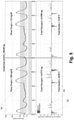
- the glucose target is plotted as a trace 60 spanning across the upper panel of the graph.
- Calculated insulin doses are shown at 62 as extending downward, while calculated glucagon doses are shown at 64 as extending upward.
- Both simulations assume a bihormonal configuration, although the implementation may be the same in the insulin-only configuration where the counter-regulatory agent is absent.
- Figure 5 presents results of a first simulation A, with S t y t ⁇ 0 in Eq. (3) and with S t G t ⁇ S , (i.e. a constant relative to time t and values of G t ) in Eq. (2).
- a glucose-control system employs an adaptive (dynamic) glucose target, including when the target is a single glucose level value or when it represents a range or interval of glucose levels.
- the adaptation of the glucose target may be autonomous in accordance with some mathematical formulation.
- the adaptive glucose target may be constrained to remain within predefined upper and lower bounds.
- the adaptation of the glucose target may be for the purpose of limiting the frequency, duration, or severity of low or near low glucose levels (such as below or near the low end of normal range) in order to provide safer and/or more stable glucose control.
- the adaptation of the glucose target may be for the purpose of maintaining an achieved mean glucose over a period of time to within a range of mean glucose values in order to minimize the long-term complications of diabetes, preferably avoiding a mean glucose level any lower than what is necessary to reduce long-term complications of diabetes.
- the adaptation of the glucose target may be for the purpose of modulating or limiting the actual delivery of or just computation of (hypothetical) doses of a counter-regulatory agent to insulin in order to provide safer and/or more stable glucose control. It may alternatively be for the purpose of modulating or limiting the delivery of insulin in order to provide safer and/or more stable glucose control.
- the adaptation of the glucose target may be based on the glucose levels in a past and/or receding time horizon, and it may be based on glucose levels that fall below a certain threshold in a past and/or receding time horizon.
- the adaptation of the glucose target may be based on actual delivery of or just computation of (hypothetical) doses of a counter-regulatory agent over a past and/or receding time horizon.
- the adaptation of the glucose target may be part of a glucose-control system that employs the delivery of only insulin, or alternatively employs the delivery of insulin and a counter-regulatory agent or agents. or alternatively that employs the delivery of insulin, a counter-regulatory agent or agents, and potentially other agents.
- the adaptation of the glucose target may coexist with an option for the user to set a static glucose target on a temporary (including isolated, recurring, or scheduled) basis.
- the glucose control system may be autonomous or semi-autonomous, and the adaptation of the glucose target may be different depending on whether the counter-regulatory agent is actually delivered or is computed but not actually delivered.
- the disclosed adaptation technique may be used in a variety of types of automatic glucose control system. In one example, it may be used in a glucose control system such as disclosed in US Patent 7,806,854 or PCT International Publication No. WO 2012/058694 A2 .
Landscapes
- Health & Medical Sciences (AREA)
- Life Sciences & Earth Sciences (AREA)
- Engineering & Computer Science (AREA)
- Public Health (AREA)
- Biomedical Technology (AREA)
- General Health & Medical Sciences (AREA)
- Physics & Mathematics (AREA)
- Veterinary Medicine (AREA)
- Animal Behavior & Ethology (AREA)
- Heart & Thoracic Surgery (AREA)
- Medical Informatics (AREA)
- Pathology (AREA)
- Biophysics (AREA)
- Molecular Biology (AREA)
- Surgery (AREA)
- Vascular Medicine (AREA)
- Chemical & Material Sciences (AREA)
- Hematology (AREA)
- Anesthesiology (AREA)
- Diabetes (AREA)
- Pharmacology & Pharmacy (AREA)
- Optics & Photonics (AREA)
- Medicinal Chemistry (AREA)
- Emergency Medicine (AREA)
- Bioinformatics & Cheminformatics (AREA)
- Psychiatry (AREA)
- Computer Vision & Pattern Recognition (AREA)
- Data Mining & Analysis (AREA)
- Databases & Information Systems (AREA)
- Signal Processing (AREA)
- Epidemiology (AREA)
- Physiology (AREA)
- Primary Health Care (AREA)
- Artificial Intelligence (AREA)
- External Artificial Organs (AREA)
- Medicines That Contain Protein Lipid Enzymes And Other Medicines (AREA)
- Infusion, Injection, And Reservoir Apparatuses (AREA)
Abstract
Description
- This invention was made with US Government support under contracts DK097657 and DK101084 awarded by the National Institutes of Health. The Government has certain rights in the invention.
- The present invention is related to the field of medical systems and devices, and more specifically to medical systems and devices for controlling delivery of insulin (including analogs) to a subject to maintain euglycemia.
- Techniques are disclosed for adaptation of a glucose target (set-point) control variable in a glucose control system controlling delivery of insulin to a subject to maintain euglycemia, e.g., a blood-glucose control system. In this description the term "insulin" encompasses all forms of insulin-like substances including natural human or animal insulin as well as synthetic insulin in any of a variety of forms (commonly referred to as an "insulin analogs"). Generally, the glucose target adapts based on trends in actual glucose level (e.g., measured blood glucose in the subject), and/or computed doses of a counter-regulatory agent (e.g. glucagon or dextrose). An adaptation region with upper and lower bounds for the glucose target may be imposed. The disclosed techniques can provide for robust and safe glucose level control. In one embodiment, adaptation is based on computed doses of a counter-regulatory agent whether or not such agent is available or actually delivered to the subject, and may be used for example to adjust operation in a bihormonal control system, including during periods in which the counter-regulatory agent is not available for delivery, or in an insulin-only control system where (hypothetical) doses of a counter-regulatory agent are computed even it is absent. Alternatively, adaptation can be based on trends in glucose level (including emphasis on the extent and/or duration of low glucose levels or trends and/or the mean glucose) or a combination of trends in glucose level and computed doses of a counter-regulatory agent.
- The following aspects are preferred embodiments of the present invention.
- 1. A sensor-driven glucose control system, comprising:
- a glucose sensor continually operative to generate a measured glucose level signal indicative of a measured glucose level of a subject;
- an insulin delivery device operative in response to an insulin dose control signal to deliver doses of insulin for infusion into the subject; and
- a controller operative according to a control scheme to generate the insulin dose control signal in response to (a) the measured glucose level signal and (b) a target glucose level signal by:
- (1) calculating corrective insulin doses based on the target glucose level signal and variations of the measured glucose level signal occurring on the order of seconds to minutes; and
- (2) continually adjusting the target glucose level signal based on a calculated longer term trend represented by at least one of (a) values of the measured glucose level signal over the longer term and (b) values for computed doses of a counter-regulatory agent over the longer term.
- 2. The sensor-driven glucose control system of aspect 1, wherein continually adjusting the target glucose level signal includes calculating the target glucose level signal from a static target glucose level signal provided as an input parameter to the controller.
- 3. The sensor-driven glucose control system of aspect 1, further including a counter-regulatory agent delivery device operative in response to a counter-regulatory dose control signal to deliver doses of the counter-regulatory agent for infusion into the subject, and wherein the controller is further operative according to the control scheme to generate the counter-regulatory agent dose control signal in response to (a) the measured glucose level signal and (b) a target glucose level signal to maintain euglycemia of the subject.
- 4. The sensor-driven glucose control system of aspect 1, wherein continually adjusting the target glucose level signal is based on a function of measured glucose levels over a recent period.
- 5. The sensor-driven glucose control system of aspect 4, wherein the function is a weighted sum using a scaling factor that defines a magnitudes of offsets caused on the target glucose level signal by respective contributions from measured glucose levels.
- 6. The sensor-drive glucose control system of aspect 5, wherein the scaling factor varies depending on a temporal position of contributions of the respective measured glucose levels.
- 7. The sensor-driven glucose control system of aspect 5, wherein the scaling factor varies depending on a magnitude of contributions of the respective measured glucose levels.
- 8. The sensor-driven glucose control system of aspect 7, wherein the scaling factor is a relatively low value for high values of measured glucose level and progressively higher for lower values of measured glucose level.
- 9. The sensor-driven glucose control system of aspect 1, wherein continually adjusting the target glucose level signal is based on a function of the computed doses of a counter-regulatory agent over a recent period.
- 10. The sensor-driven glucose control system of
aspect 9, wherein the function is a weighted sum using a scaling factor that defines a magnitudes of offsets caused on the target glucose level signal by respective contributions from the computed doses of the counter-regulatory agent. - 11. The sensor-drive glucose control system of aspect 10, wherein the scaling factor varies depending on a temporal position of contributions of the respective computed doses of the counter-regulatory agent.
- 12. The sensor-driven glucose control system of aspect 10, wherein the scaling factor varies depending on a magnitude of contributions of the respective computed doses of the counter-regulatory agent.
- 13. The sensor-driven glucose control system of aspect 10, further including a counter-regulatory agent delivery device operative in response to a counter-regulatory dose control signal to deliver the computed doses of the counter-regulatory agent for infusion into the subject.
- 14. The sensor-driven glucose control system of aspect 10, in which the counter-regulatory agent is not actually infused into the subject, and the computed doses of the counter-regulatory agent represent doses that would be infused into the subject if the counter-regulatory agent were being infused into the subject.
- 15. The sensor-driven glucose control system of aspect 1, wherein a past and/or receding time horizon is applied to measured glucose levels or computed counter-regulatory agent doses.
- 16. The sensor-driven glucose control system of aspect 15, wherein thresholding is applied to the measured glucose levels or computed counter-regulatory agent doses for inclusion in the past and/or receding time horizon.
- 17. The sensor-driven glucose control system of aspect 1, configured and operative to accept a user input for inhibiting or overriding glucose adaptation by setting a static glucose target on a temporary basis.
- 18. The sensor-driven glucose control system of aspect 1, operable in both a fully autonomous manner and a semi-autonomous manner.
- 19. The sensor-driven glucose control system of aspect 1, wherein continually adjusting the target glucose level signal is invoked on a time-scale that is on the same time scale or coinciding with the time sale used for obtaining values for computed doses of a counter-regulatory agent or alternatively the time scale used for obtaining values of the measured glucose level signal, or with shorter or longer time scales than either one of the signals.
- 20. A method of operating a sensor-driven glucose control system having a glucose sensor and an insulin delivery device, the glucose sensor continually operative to generate a measured glucose level signal indicative of a measured glucose level of a subject, the insulin delivery device operative in response to an insulin dose control signal to deliver doses of insulin or an insulin analog for infusion into the subject, the method employing a control scheme to generate the insulin dose control signal in response to (a) the measured glucose level signal and (b) a target glucose level signal by:
- (1) calculating corrective insulin doses based on the target glucose level signal and variations of the measured glucose level signal occurring on the order of seconds to minutes; and
- (2) continually adjusting the target glucose level signal based on a calculated longer term trend represented by at least one of (a) values of the measured glucose level signal over the longer term and (b) values for computed doses of a counter-regulatory agent over the longer term.
- The foregoing and other objects, features and advantages will be apparent from the following description of particular embodiments of the invention, as illustrated in the accompanying drawings in which like reference characters refer to the same parts throughout the different views.
-
Figure 1 is a block diagram of a blood glucose level control system; -
Figure 2 is a block diagram of a blood glucose level controller; -
Figure 3 is a block diagram of a corrective insulin controller; -
Figure 4 is a flow diagram of high-level operation of the blood glucose level controller with respect to adjusting target glucose level; and -
Figures 5 and6 are plots of results of simulations of the disclosed operation. - A technique is described for automatically modulating the glucose target (set-point) used in an autonomous glucose-control system, whether employing the delivery of only insulin or the delivery of insulin as well as a counter-regulatory agent (e.g. glucagon or dextrose). The glucose target automatically adapts based on (a) the usage of a counter-regulatory agent, (b) the otherwise intended usage of a counter-regulatory agent had it been available (e.g. in insulin-only systems or in cases where the counter-regulatory agent or its delivery channel are temporarily unavailable), (c) trends in glucose level (including emphasis on the extent and/or duration of low glucose levels or trends and/or the mean glucose), or (d) any combination of these measures. The method may impose upper and/or lower bounds (static or dynamic) for the range over which the dynamic glucose target varies, and may coexist with an option for a user to set a static target on a temporary (including isolated, recurring, or scheduled) basis. The method can be implemented within an autonomous glucose-control system or during periods of autonomous control in a semi-autonomous glucose-control system.
- An implementation example is in an automated insulin delivery system for ambulatory diabetes care. In such a system, the glucose target is set to float dynamically online, between lower and upper bounds, depending on the degree of hypoglycemia or near-hypoglycemia that the system records in a moving receding time window. The degree or rate at which the glucose target adapts either upwards (towards its upper bound) or downwards (towards its lower bound) for a given degree of hypoglycemia or near-hypoglycemia may be controlled by a system setting or scaling factor. For example, the higher the setting or scaling factor is, the more the glucose target will automatically rise for a given recorded degree of hypoglycemia or near hypoglycemia, and likewise fall as the degree of hypoglycemia decreases. Alternatively or additionally, the glucose target may be set to float dynamically online, between lower and upper bounds, depending on the degree to which the mean glucose level in a moving receding time window is outside a targeted range of mean glucose level values that are desired. For example, the system dynamically raises the glucose target if the mean glucose level is below a certain threshold, below which there is no predicted benefit of additional glucose lowering, even if the target might not otherwise be raised based on the degree of hypoglycemia.
- In another implementation the glucose target floats dynamically based on computed counter-regulatory doses over a moving receding time window. The method may work identically whether the system is functioning in a multi-hormonal configuration, where the counter-regulatory doses are computed and their delivery is performed or at least intended or attempted as part of the system operation, or in an insulin-only configuration, where the counter-regulatory doses are computed only hypothetically (as if a counter-regulatory agent were available) but are not actually delivered. In either case, as online computed glucagon doses increase, the system automatically responds online by dynamically raising the glucose target. Moreover, the degree or rate at which the glucose target floats upwards (departing from its lower bound and towards its upper bound) for a given amount of computed glucagon doses may be controlled by a system setting or scaling factor. For example, the higher the setting or scaling factor is, the more the glucose target will automatically rise for a given computed glucagon dosing amount.
-
Figure 1 illustrates an automated control system 10 for regulating the blood glucose level of an animal subject (subject) 12, which may be a human. The subject 12 receives doses of insulin from one ormore delivery devices 14, for example infusion pump(s) coupled by catheter(s) to a subcutaneous space of the subject 12. As described below, thedelivery devices 14 may also deliver a counter-regulatory agent such as glucagon for control of blood glucose level under certain circumstances. For the delivery of both insulin and glucagon, thedelivery devices 14 may be mechanically driven infusion mechanisms having dual cartridges for insulin and glucagon respectively. In the present description, reference is made to glucagon specifically, but it is to be understood that this is for convenience only and that other counter-regulatory agents may be used. Similarly, the term "insulin" herein is to be understood as encompassing all forms of insulin-like substances including natural human or animal insulin as well as synthetic insulin in any of a variety of forms (commonly referred to as an "insulin analogs"). - A glucose sensor 16 is operatively coupled to the subject 12 to continually sample a glucose level of the subject 12. Sensing may be accomplished in a variety of ways. A
controller 18 controls operation of the delivery device(s) 14 as a function of aglucose level signal 19 from the glucose sensor 16 and subject to programmed input parameters (PARAMS) 20 which may be provided by the patient/user. One externally provided parameter is a "setpoint" which establishes a target blood glucose level that the system 10 strives to maintain. In the description below the externally provided setpoint is referred to as a "raw" target glucose level signal, and identified as "rt". Generally thecontroller 18 operates based on a difference between a glucose level of the subject, as represented by theglucose level signal 19, and a target glucose level signal. As described more below, the raw target glucose level signal rt is one input to the calculation of a variable target glucose level signal that is used in calculating corrective doses and that represents certain adaptation of the control operation to achieve certain results. - The
controller 18 is an electrical device with control circuitry that provides operating functionality as described herein. In one embodiment, thecontroller 18 may be realized as a computerized device having computer instruction processing circuitry that executes one or more computer programs each including respective sets of computer instructions. In this case the processing circuitry generally includes one or more processors along with memory and input/output circuitry coupled to the processor(s), where the memory stores computer program instructions and data and the input/output circuitry provides interface(s) to external devices such as the glucose sensor 16 and delivery device(s) 14. -
Figure 2 shows the functional structure of thecontroller 18. It includes four separate controllers, namely a counter-regulatory (CTR-REG)controller 22,basal insulin controller 24,corrective insulin controller 26. and other controller(s) 28. Each controller may be realized as a computerized device executing respective computer programs (i.e., counter-regulatory program, basal insulin control program, corrective insulin control program, and other program(s) respectively). Thecounter-regulatory controller 22 generates a counter-regulatory dose control signal 34 provided to a counter-regulatory agent delivery device 14-1. Respective outputs 36 - 40 from the insulin controllers 24 -28 are combined to form an overall insulindose control signal 42 provided to insulin delivery device(s) 14-2. The insulin delivery device(s) 14-2 may include devices tailored to deliver different types and/or quantities of insulin, with the exact configuration being known to and under the control of the controllers 24 - 28. For ease of description the collection of one or more insulin delivery devices 14-2 is referred below to in the singular as an insulin delivery device 14-2. - Also shown in
Figure 2 are other input/output signals of the various controllers, including theglucose level signal 19 andparameters 20 as well as a set of inter-controller signals 44. The inter-controller signals 44 enable communication of information from one controller, where the information is developed or generated, to another controller where the information is used for that controller's control function. Details are provided in the description of the control functions below. - The
corrective insulin controller 26 is the primary dynamic regulator of blood glucose level. It may use any of a variety of control schemes, including for example an MPC cost function in a manner described inUS patent publication 2008/0208113A1 , the contents of which are incorporated by reference herein. In some embodiments a counter-regulatory agent may not be present or may not be used, in which case thecounter-regulatory controller 22 may be absent. However, as described below, in one scheme thecounter-regulator controller 22 is still present and still generates values of doses of the counter-regulatory agent as information for use by thecorrective insulin controller 26, even though no counter-regulatory agent is actually delivered. This includes situations where the counter-regulatory agent is absent or unavailable or inaccessible for delivery, or the counter-regulatory agent delivery device 14-1 is absent or unavailable or inaccessible for performing the delivery, or both, and whether such situations arise on a temporary, permanent, or intermittent basis. -
Figure 3 shows thecontroller 18 in additional detail, according to one embodiment. It includes thecorrective controller 26 as well astarget adaptation 48. Thecorrective controller 26 carries out the dynamic regulation of glucose level based on an input target glucose level shown as rt'. This dynamic value is generated by thetarget adaptation 48 partly on the basis of the input (generally fixed) target glucose level signal rt. In other embodiments, the target adaptation 46 may be in a separate controller (e.g., one of theother controllers 28 ofFigure 2 ). The dynamic target value may be used by only one or by multiple of the controllers withincontroller 18. -
Figure 4 illustrates certain operation pertaining to thecontroller 18 at a high level. Generally it continually calculates an insulin dose control signal (e.g., insulin dose control signal 38) in response to (a) a measured glucose level signal (e.g., glucose level signal 19) and (b) a target glucose level signal, a specific example of which is described below. In doing so, at 50 it calculates corrective insulin doses based on the current (latest) target glucose level signal and variations of the measured glucose level signal occurring on the order of seconds to minutes. This is the function of the corrective control 46 ofFigure 3 . At 52, thecorrective insulin controller 26 continually adjusts the target glucose level signal based on a calculated trend over a longer term of at least one of (a) values of the measured glucose level signal over the longer term and (b) values for computed doses of a counter-regulatory agent over the longer term. This is the function of thetarget adaptation 48 ofFigure 3 . - A specific example is provided to illustrate the above.
- Using rt to represent the input or "raw" target
glucose level signal 19, and rt' to represent the dynamic target glucose level signal that is used by thecorrective controller 26 andcounter-regulatory controller 22, then one implementation of the target adaptation method is:


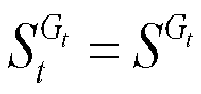


- In one embodiment the computed quantity associated with a counter-regulatory agent may still be present even in systems where the counter-regulatory agent is completely absent, such as in insulin-only systems, by basing the implementation on a signal representing the intended counter-regulatory delivery had it been possible. This similarly applies when the counter-regulatory agent is temporarily absent in a multi-hormonal system, such as during periods when the counter-regulatory agent or its delivery channel become unavailable or delivery of the counter-regulatory agent via its channel becomes not possible for whatever reasons.
-
Figures 5 and6 present results of simulations demonstrating the described method. Both plots show 48-hour simulations using the same recurring 24-hour continuous glucose monitoring (CGM) trace. In both simulations, the first 24-hour period uses the same closed-loop algorithm without the implementation of the described method and using a constant glucose target rt of 100 mg/dl, whereas the second 24-hour periods use the same algorithm with the implementation of Eq. (1), with rt = 100 mg/dl, [rL; rH] = [100; 150] mg/dl, and N corresponding to one day. Generally, N will cover a longer term than the much shorter term (seconds to minutes) over which corrections could be made by thecorrective insulin controller 26. In these plots, the glucose target is plotted as atrace 60 spanning across the upper panel of the graph. Calculated insulin doses are shown at 62 as extending downward, while calculated glucagon doses are shown at 64 as extending upward. Both simulations assume a bihormonal configuration, although the implementation may be the same in the insulin-only configuration where the counter-regulatory agent is absent. -
Figure 5 presents results of a first simulation A, with

-
Figure 6 presents results of a second simulation B, with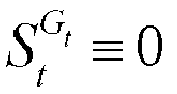


- Relevant results from the two simulations are summarized in Table 1. In both simulations, the control system issued 40.90 U of insulin and 0.6775 mg of glucagon in the first 24 hours. In the second 24-hour period in simulation A (
Figure 5 ) the issued dosing was reduced to 32.85 U for insulin and 0.53 mg for glucagon, and the dynamic target glucose rt' floated around a mean of 112 mg/dl. In the second 24- hour period in simulation B (Figure 6 ), the issued dosing was reduced to 33.45 U for insulin and 0.5675 mg for glucagon, and the dynamic target glucose rt' floated at 111 mg/dl. Thus these simulations demonstrate desirable reductions in total administered insulin over a period while achieving essentially the same control effect over that period.Table 1. Relevant results from simulations A and B of Figures 5 and 6. Simulation A, Figure 5 Simulation B, Figure 6 First 24h Second 24h First 24h Second 24h Mean Target, mg/ dl 100 112 100 111 Insulin, U 40.90 32.85 40.90 33.45 Glucagon, mg 0.6775 0.5300 0.6775 0.5675 - A glucose-control system is disclosed that employs an adaptive (dynamic) glucose target, including when the target is a single glucose level value or when it represents a range or interval of glucose levels. The adaptation of the glucose target may be autonomous in accordance with some mathematical formulation. The adaptive glucose target may be constrained to remain within predefined upper and lower bounds.
- The adaptation of the glucose target may be for the purpose of limiting the frequency, duration, or severity of low or near low glucose levels (such as below or near the low end of normal range) in order to provide safer and/or more stable glucose control.
- The adaptation of the glucose target may be for the purpose of maintaining an achieved mean glucose over a period of time to within a range of mean glucose values in order to minimize the long-term complications of diabetes, preferably avoiding a mean glucose level any lower than what is necessary to reduce long-term complications of diabetes.
- The adaptation of the glucose target may be for the purpose of modulating or limiting the actual delivery of or just computation of (hypothetical) doses of a counter-regulatory agent to insulin in order to provide safer and/or more stable glucose control. It may alternatively be for the purpose of modulating or limiting the delivery of insulin in order to provide safer and/or more stable glucose control.
- The adaptation of the glucose target may be based on the glucose levels in a past and/or receding time horizon, and it may be based on glucose levels that fall below a certain threshold in a past and/or receding time horizon.
- The adaptation of the glucose target may be based on actual delivery of or just computation of (hypothetical) doses of a counter-regulatory agent over a past and/or receding time horizon.
- The adaptation of the glucose target may be part of a glucose-control system that employs the delivery of only insulin, or alternatively employs the delivery of insulin and a counter-regulatory agent or agents. or alternatively that employs the delivery of insulin, a counter-regulatory agent or agents, and potentially other agents.
- The adaptation of the glucose target may coexist with an option for the user to set a static glucose target on a temporary (including isolated, recurring, or scheduled) basis. The glucose control system may be autonomous or semi-autonomous, and the adaptation of the glucose target may be different depending on whether the counter-regulatory agent is actually delivered or is computed but not actually delivered.
- The disclosed adaptation technique may be used in a variety of types of automatic glucose control system. In one example, it may be used in a glucose control system such as disclosed in
US Patent 7,806,854 orPCT International Publication No. WO 2012/058694 A2 . - While various embodiments of the invention have been particularly shown and described, it will be understood by those skilled in the art that various changes in form and details may be made therein without departing from the scope of the invention as defined by the appended claims.
Claims (15)
- A glucose control system comprising:
processing circuitry that includes an input/output interface, a memory, and a processor, wherein:the input/output interface is configured to receive a measured glucose level signal indicative of a measured glucose level of a subject from a glucose sensor and to transmit a dose control signal to a delivery device configured to deliver doses of at least one of an insulin or a counter-regulatory agent into the subj ect;the memory is configured to store specific computer-executable instructions; andthe processor is configured to execute the specific computer-executable instructions to at least:calculate doses of at least one of the insulin or the counter-regulatory agent based on a target glucose level signal and variations of the measured glucose level signal occurring over a short term on the order of seconds to minutes; andadjust the target glucose level signal based on a calculated longer term trend represented by at least values of the measured glucose level signal over a longer term and/or computed doses of the counter-regulatory agent, wherein adjusting the target glucose level signal is based on a function of measured glucose levels over a recent period, wherein the function is a weighted sum computed using a scaling factor with which measured glucose levels are multiplied to determine offsets caused on the target glucose level signal by respective contributions from measured glucose levels. - The glucose control system of claim 1, wherein the processor is further configured to execute a basal insulin control program configured to calculate the doses of the insulin.
- The glucose control system of claim 1, wherein the processor is further configured to execute a corrective insulin control program configured to calculate the doses of the insulin.
- The glucose control system of claim 1, wherein the processor is further configured to generate the dose control signal to cause delivery of a dose of at least one of the insulin or counter-regulatory agent using the adjusted value of the target glucose level signal.
- The glucose control system of claim 4, wherein generating the dose control signal to cause delivery of the dose of at least one of the insulin or counter-regulatory agent using the adjusted value of the target glucose level signal reduces total administered insulin or counter-regulatory agent.
- The glucose control system of claim 1, wherein the longer term exceeds the shorter term.
- The glucose control system of claim 1, wherein the processor is further configured to calculate the dose control signal doses of at least one of the insulin or the counter-regulatory agent based on a temporary static target glucose level signal.
- The glucose control system of claim 1, wherein the processor is configured to adjust the target glucose level signal at least once a day.
- The glucose control system of claim 1, wherein the processor is configured to adjust the target glucose level signal a plurality of times in a day.
- The glucose control system of claim 1, wherein adjusting the target glucose level signal includes calculating the adjusted target glucose level signal from a static target glucose level signal provided as an input parameter to the processor.
- The glucose control system of claim 10, wherein the static target glucose level signal is set temporarily on an isolated, recurring, or scheduled basis.
- The glucose control system of claim 1, wherein the scaling factor varies based on a temporal position of contributions of the respective measured glucose levels.
- The glucose control system of claim 1, wherein the adjusting of the target glucose level signal is based on values of the measured glucose level signal that fall below a certain threshold.
- The glucose control system of claim 1, wherein the adjusting of the target glucose level signal is based on values of the measured glucose level signal in a past or receding time horizon over the longer term.
- The glucose control system of claim 1, wherein the glucose control system is configured to operate autonomously or semi-autonomously.
Applications Claiming Priority (3)
| Application Number | Priority Date | Filing Date | Title |
|---|---|---|---|
| US201562202505P | 2015-08-07 | 2015-08-07 | |
| EP16835748.1A EP3319511B1 (en) | 2015-08-07 | 2016-08-08 | Glucose control system with automatic adaptation of glucose target |
| PCT/US2016/046008 WO2017027459A1 (en) | 2015-08-07 | 2016-08-08 | Glucose control system with automatic adaptation of glucose target |
Related Parent Applications (1)
| Application Number | Title | Priority Date | Filing Date |
|---|---|---|---|
| EP16835748.1A Division EP3319511B1 (en) | 2015-08-07 | 2016-08-08 | Glucose control system with automatic adaptation of glucose target |
Publications (2)
| Publication Number | Publication Date |
|---|---|
| EP3957233A2 true EP3957233A2 (en) | 2022-02-23 |
| EP3957233A3 EP3957233A3 (en) | 2022-05-11 |
Family
ID=57983555
Family Applications (2)
| Application Number | Title | Priority Date | Filing Date |
|---|---|---|---|
| EP21196917.5A Withdrawn EP3957233A3 (en) | 2015-08-07 | 2016-08-08 | Glucose control system with automatic adaptation of glucose target |
| EP16835748.1A Active EP3319511B1 (en) | 2015-08-07 | 2016-08-08 | Glucose control system with automatic adaptation of glucose target |
Family Applications After (1)
| Application Number | Title | Priority Date | Filing Date |
|---|---|---|---|
| EP16835748.1A Active EP3319511B1 (en) | 2015-08-07 | 2016-08-08 | Glucose control system with automatic adaptation of glucose target |
Country Status (5)
| Country | Link |
|---|---|
| US (4) | US10842934B2 (en) |
| EP (2) | EP3957233A3 (en) |
| JP (4) | JP2018525093A (en) |
| DK (1) | DK3319511T3 (en) |
| WO (1) | WO2017027459A1 (en) |
Families Citing this family (31)
| Publication number | Priority date | Publication date | Assignee | Title |
|---|---|---|---|---|
| AU2015274894B2 (en) | 2014-06-10 | 2018-11-15 | Bigfoot Biomedical, Inc. | Insulin delivery systems and methods |
| JP2018525093A (en) | 2015-08-07 | 2018-09-06 | トラスティーズ オブ ボストン ユニバーシティ | Glucose control system with automatic adaptation of glucose targets |
| US10780223B2 (en) | 2016-01-14 | 2020-09-22 | Bigfoot Biomedical, Inc. | Adjusting insulin delivery rates |
| US12383166B2 (en) | 2016-05-23 | 2025-08-12 | Insulet Corporation | Insulin delivery system and methods with risk-based set points |
| US10500334B2 (en) | 2017-01-13 | 2019-12-10 | Bigfoot Biomedical, Inc. | System and method for adjusting insulin delivery |
| EP3568862B1 (en) | 2017-01-13 | 2026-03-18 | Insulet Corporation | System and method for adjusting insulin delivery |
| US10758675B2 (en) | 2017-01-13 | 2020-09-01 | Bigfoot Biomedical, Inc. | System and method for adjusting insulin delivery |
| EP3568860B1 (en) | 2017-01-13 | 2025-12-10 | Insulet Corporation | Insulin delivery methods, systems and devices |
| US10583250B2 (en) | 2017-01-13 | 2020-03-10 | Bigfoot Biomedical, Inc. | System and method for adjusting insulin delivery |
| WO2018132765A1 (en) | 2017-01-13 | 2018-07-19 | Mazlish Bryan | Insulin delivery methods, systems and devices |
| EP3600493A4 (en) | 2017-03-31 | 2020-08-19 | Capillary Biomedical, Inc. | Helical insertion infusion device |
| CN106983951A (en) * | 2017-05-04 | 2017-07-28 | 梁曦 | A kind of analyte monitoring and automatic chemical feeding system |
| CA3059985C (en) | 2017-05-05 | 2023-08-08 | Eli Lilly And Company | Closed loop control of physiological glucose |
| CA3085930A1 (en) | 2017-12-21 | 2019-06-27 | Eli Lilly And Company | Closed loop control of physiological glucose |
| WO2020097552A1 (en) | 2018-11-08 | 2020-05-14 | Capillary Biomedical, Inc | Linear insertion device with rotational drive |
| CA3146872A1 (en) | 2019-07-16 | 2021-01-21 | Beta Bionics, Inc. | Blood glucose control system |
| US11957876B2 (en) | 2019-07-16 | 2024-04-16 | Beta Bionics, Inc. | Glucose control system with automated backup therapy protocol generation |
| DE112020003392T5 (en) | 2019-07-16 | 2022-05-19 | Beta Bionics, Inc. | BLOOD SUGAR CONTROL SYSTEM |
| FR3099043B1 (en) * | 2019-07-25 | 2023-11-03 | Commissariat Energie Atomique | Automated Blood Glucose Control System |
| JP7730109B2 (en) | 2019-10-04 | 2025-08-27 | ベータ バイオニクス,インコーポレイテッド | Blood sugar control system |
| WO2022140204A1 (en) | 2020-12-21 | 2022-06-30 | Beta Bionics, Inc. | Medicament pumps and control systems thereof |
| USD1032624S1 (en) | 2020-03-10 | 2024-06-25 | Beta Bionics, Inc. | Display screen with animated graphical user interface |
| USD1032623S1 (en) | 2020-03-10 | 2024-06-25 | Beta Bionics, Inc. | Display screen with animated graphical user interface |
| US11278661B2 (en) | 2020-03-10 | 2022-03-22 | Beta Bionics, Inc. | Infusion system and components thereof |
| US12214159B2 (en) | 2020-08-28 | 2025-02-04 | Tandem Diabetes Care, Inc | Insulin infusion set |
| US20220189601A1 (en) | 2020-12-07 | 2022-06-16 | Beta Bionics, Inc. | Modular blood glucose control systems |
| US20220199218A1 (en) | 2020-12-07 | 2022-06-23 | Beta Bionics, Inc. | Ambulatory medicament pump with integrated medicament ordering interface |
| US20220265143A1 (en) | 2020-12-07 | 2022-08-25 | Beta Bionics, Inc. | Ambulatory medicament pumps with selective alarm muting |
| US11497852B2 (en) | 2020-12-21 | 2022-11-15 | Beta Bionics, Inc. | Ambulatory medicament device with power saving mode |
| US12465686B2 (en) | 2021-03-25 | 2025-11-11 | Beta Bionics, Inc. | Emergency medicament dose control |
| WO2022234032A2 (en) * | 2021-05-05 | 2022-11-10 | Novo Nordisk A/S | Methods and systems for estimating fasting glucose values |
Citations (2)
| Publication number | Priority date | Publication date | Assignee | Title |
|---|---|---|---|---|
| US20080208113A1 (en) | 2005-05-13 | 2008-08-28 | Trustees Of Boston University | Fully Automated Control System for Type I Diabetes |
| WO2012058694A2 (en) | 2010-10-31 | 2012-05-03 | Trustees Of Boston University | Blood glucose control system |
Family Cites Families (117)
| Publication number | Priority date | Publication date | Assignee | Title |
|---|---|---|---|---|
| US6241704B1 (en) | 1901-11-22 | 2001-06-05 | Sims Deltec, Inc. | Drug pump systems and methods |
| US4280494A (en) | 1979-06-26 | 1981-07-28 | Cosgrove Robert J Jun | System for automatic feedback-controlled administration of drugs |
| US4464170A (en) | 1982-09-29 | 1984-08-07 | Miles Laboratories, Inc. | Blood glucose control apparatus and method |
| WO1989001794A1 (en) | 1987-08-28 | 1989-03-09 | Regents Of The University Of Minnesota | Metabolic sensor for a drug delivery system |
| US5665065A (en) | 1995-05-26 | 1997-09-09 | Minimed Inc. | Medication infusion device with blood glucose data input |
| US6554798B1 (en) | 1998-08-18 | 2003-04-29 | Medtronic Minimed, Inc. | External infusion device with remote programming, bolus estimator and/or vibration alarm capabilities |
| US6669663B1 (en) | 1999-04-30 | 2003-12-30 | Medtronic, Inc. | Closed loop medicament pump |
| US6925393B1 (en) | 1999-11-18 | 2005-08-02 | Roche Diagnostics Gmbh | System for the extrapolation of glucose concentration |
| DE10006044A1 (en) | 2000-02-10 | 2001-08-16 | Roche Diagnostics Gmbh | Arrangement and method for dosing a hormone that regulates a patient's blood glucose |
| US6572542B1 (en) | 2000-03-03 | 2003-06-03 | Medtronic, Inc. | System and method for monitoring and controlling the glycemic state of a patient |
| AU2001292946A1 (en) | 2000-09-26 | 2002-04-08 | Advantage 3D Llc | Method and system for generation, storage and distribution of omni-directional object views |
| US20030073609A1 (en) | 2001-06-29 | 2003-04-17 | Pinkerton Thomas C. | Enhanced pharmacokinetic profile of intradermally delivered substances |
| US6544212B2 (en) | 2001-07-31 | 2003-04-08 | Roche Diagnostics Corporation | Diabetes management system |
| US6827702B2 (en) | 2001-09-07 | 2004-12-07 | Medtronic Minimed, Inc. | Safety limits for closed-loop infusion pump control |
| US6852104B2 (en) | 2002-02-28 | 2005-02-08 | Smiths Medical Md, Inc. | Programmable insulin pump |
| GB0206792D0 (en) | 2002-03-22 | 2002-05-01 | Leuven K U Res & Dev | Normoglycemia |
| US20040010207A1 (en) | 2002-07-15 | 2004-01-15 | Flaherty J. Christopher | Self-contained, automatic transcutaneous physiologic sensing system |
| WO2005061041A1 (en) | 2002-10-11 | 2005-07-07 | Becton, Dickinson And Company | Insulin delivery system with sensor |
| US7655618B2 (en) | 2002-12-27 | 2010-02-02 | Diobex, Inc. | Compositions and methods for the prevention and control of insulin-induced hypoglycemia |
| US9872890B2 (en) | 2003-03-19 | 2018-01-23 | Paul C. Davidson | Determining insulin dosing schedules and carbohydrate-to-insulin ratios in diabetic patients |
| US20050182366A1 (en) | 2003-04-18 | 2005-08-18 | Insulet Corporation | Method For Visual Output Verification |
| US20040253736A1 (en) | 2003-06-06 | 2004-12-16 | Phil Stout | Analytical device with prediction module and related methods |
| US7591801B2 (en) | 2004-02-26 | 2009-09-22 | Dexcom, Inc. | Integrated delivery device for continuous glucose sensor |
| DE102004011135A1 (en) | 2004-03-08 | 2005-09-29 | Disetronic Licensing Ag | Method and apparatus for calculating a bolus amount |
| WO2005113036A1 (en) | 2004-05-13 | 2005-12-01 | The Regents Of The University Of California | Method and apparatus for glucose control and insulin dosing for diabetics |
| US7727147B1 (en) | 2004-05-14 | 2010-06-01 | Flint Hills Scientific Llc | Method and system for implantable glucose monitoring and control of a glycemic state of a subject |
| US20060272652A1 (en) | 2005-06-03 | 2006-12-07 | Medtronic Minimed, Inc. | Virtual patient software system for educating and treating individuals with diabetes |
| US20060276771A1 (en) | 2005-06-06 | 2006-12-07 | Galley Paul J | System and method providing for user intervention in a diabetes control arrangement |
| US7766829B2 (en) | 2005-11-04 | 2010-08-03 | Abbott Diabetes Care Inc. | Method and system for providing basal profile modification in analyte monitoring and management systems |
| CN100446724C (en) | 2005-11-28 | 2008-12-31 | 中国科学院电子学研究所 | Non-invasive blood glucose meter for closed-loop insulin injection |
| US9392969B2 (en) | 2008-08-31 | 2016-07-19 | Abbott Diabetes Care Inc. | Closed loop control and signal attenuation detection |
| US8478557B2 (en) | 2009-07-31 | 2013-07-02 | Abbott Diabetes Care Inc. | Method and apparatus for providing analyte monitoring system calibration accuracy |
| US20070255126A1 (en) | 2006-04-28 | 2007-11-01 | Moberg Sheldon B | Data communication in networked fluid infusion systems |
| JP4918285B2 (en) | 2006-05-24 | 2012-04-18 | シスメックス株式会社 | Biological organ function simulation system and program thereof |
| WO2007149533A2 (en) | 2006-06-19 | 2007-12-27 | Dose Safety | System, method and article for controlling the dispensing of insulin |
| US20110054391A1 (en) | 2006-07-28 | 2011-03-03 | Ward W Kenneth | Analyte sensing and response system |
| US8721584B2 (en) | 2006-11-02 | 2014-05-13 | The University Of North Carolina At Chapel Hill | Methods and systems for determining an intravenous insulin infusion rate to correct hyperglycemia of a patient, to maintain euglycemia of a patient, and to prevent hypoglycemia of a patient |
| US7654127B2 (en) | 2006-12-21 | 2010-02-02 | Lifescan, Inc. | Malfunction detection in infusion pumps |
| US7946985B2 (en) | 2006-12-29 | 2011-05-24 | Medtronic Minimed, Inc. | Method and system for providing sensor redundancy |
| US10154804B2 (en) | 2007-01-31 | 2018-12-18 | Medtronic Minimed, Inc. | Model predictive method and system for controlling and supervising insulin infusion |
| EP2139540A1 (en) | 2007-03-19 | 2010-01-06 | Medingo Ltd. | User interface for selecting bolus doses in a drug delivery device |
| DK1983456T3 (en) | 2007-04-19 | 2013-11-25 | Hoffmann La Roche | Method of setting a basal rate profile for an insulin pump |
| US20080269714A1 (en) | 2007-04-25 | 2008-10-30 | Medtronic Minimed, Inc. | Closed loop/semi-closed loop therapy modification system |
| US20100145262A1 (en) | 2007-05-03 | 2010-06-10 | Novo Nordisk A/S | Safety system for insulin delivery advisory algorithms |
| US7751907B2 (en) | 2007-05-24 | 2010-07-06 | Smiths Medical Asd, Inc. | Expert system for insulin pump therapy |
| ES2576639T3 (en) | 2007-06-20 | 2016-07-08 | F.Hoffmann-La Roche Ag | Method and device to assess the ratio of carbohydrates to insulin |
| JP5183736B2 (en) | 2007-06-21 | 2013-04-17 | ユニバーシティ オブ バージニア パテント ファウンデーション | LQG artificial pancreas control system and related method |
| JP2010531707A (en) | 2007-06-25 | 2010-09-30 | メディンゴ・リミテッド | Adapted basal insulin delivery system |
| JP5209714B2 (en) | 2007-06-27 | 2013-06-12 | エフ ホフマン−ラ ロッシュ アクチェン ゲゼルシャフト | System and method for creating treatments specific to each patient based on patient physiology modeling |
| US20090036753A1 (en) | 2007-07-31 | 2009-02-05 | King Allen B | Continuous glucose monitoring-directed adjustments in basal insulin rate and insulin bolus dosing formulas |
| EP2186480B1 (en) | 2007-09-07 | 2014-05-21 | Terumo Kabushiki Kaisha | Blood sugar measuring device |
| US8377031B2 (en) | 2007-10-23 | 2013-02-19 | Abbott Diabetes Care Inc. | Closed loop control system with safety parameters and methods |
| US20100262117A1 (en) | 2007-11-02 | 2010-10-14 | University Of Virginia Patent Foundation | Predictive control based system and method for control of insulin delivery in diabetes using glucose sensing |
| US9839395B2 (en) | 2007-12-17 | 2017-12-12 | Dexcom, Inc. | Systems and methods for processing sensor data |
| US20090164239A1 (en) | 2007-12-19 | 2009-06-25 | Abbott Diabetes Care, Inc. | Dynamic Display Of Glucose Information |
| US20090177154A1 (en) | 2008-01-08 | 2009-07-09 | Michael Blomquist | Insulin pump with convenience features |
| US20090177142A1 (en) | 2008-01-09 | 2009-07-09 | Smiths Medical Md, Inc | Insulin pump with add-on modules |
| CN103336853B (en) | 2008-04-04 | 2017-03-01 | 海吉雅有限公司 | For optimizing the system of the insulin dosage regimen of patient |
| CN201186082Y (en) | 2008-05-05 | 2009-01-28 | 王安宇 | Intelligent input mechanism for insulins and glucose |
| US7959598B2 (en) | 2008-08-20 | 2011-06-14 | Asante Solutions, Inc. | Infusion pump systems and methods |
| US8622988B2 (en) | 2008-08-31 | 2014-01-07 | Abbott Diabetes Care Inc. | Variable rate closed loop control and methods |
| US8527208B2 (en) | 2008-11-17 | 2013-09-03 | Roche Diagnostics International Ag | Prandial blood glucose excursion optimization method via computation of time-varying optimal insulin profiles and system thereof |
| ES2558700T3 (en) | 2009-02-04 | 2016-02-08 | Sanofi-Aventis Deutschland Gmbh | Medical system and method to provide glycemic control based on glycemic response information |
| DK2393415T3 (en) | 2009-02-04 | 2016-03-07 | Sanofi Aventis Deutschland | MEDICAL SYSTEM AND METHOD FOR PROVISION OF INFORMATION FOR glycemic control |
| EP2399205B1 (en) | 2009-02-25 | 2020-04-08 | University Of Virginia Patent Foundation | Cgm-based prevention of hypoglycemia via hypoglycemia risk assessment and smooth reduction insulin delivery |
| EP2400882B8 (en) | 2009-02-26 | 2017-08-30 | DreaMed Diabetes Ltd | Method and system for automatic monitoring of diabetes related treatments |
| US20100256466A1 (en) | 2009-04-02 | 2010-10-07 | Avraham Shekalim | Metabolite Management System |
| EP4224483A1 (en) | 2009-05-29 | 2023-08-09 | University Of Virginia Patent Foundation | System coordinator and modular architecture for open-loop and closed-loop control of diabetes |
| EP4276652A3 (en) | 2009-07-23 | 2024-01-31 | Abbott Diabetes Care, Inc. | Real time management of data relating to physiological control of glucose levels |
| WO2011028731A1 (en) | 2009-09-01 | 2011-03-10 | University Of Virginia Patent Foundation | System, method and computer program product for adjustment of insulin delivery (aid) in diabetes using nominal open-loop profiles |
| ES2647063T3 (en) | 2009-09-18 | 2017-12-19 | F. Hoffmann-La Roche Ag | Devices, systems and methods for quantifying bolus doses according to user parameters |
| DK2483824T3 (en) | 2009-09-30 | 2017-11-27 | Dreamed Diabetes Ltd | INSULIN CONTROL MONITORING MONITOR |
| US8690820B2 (en) | 2009-10-06 | 2014-04-08 | Illinois Institute Of Technology | Automatic insulin pumps using recursive multivariable models and adaptive control algorithms |
| US20110098638A1 (en) | 2009-10-27 | 2011-04-28 | Medtronic Minimed, Inc. | Sensor-Augmented Medication Infusion System |
| CN102711899B (en) | 2009-11-04 | 2015-05-06 | 海吉雅有限公司 | Apparatus and methods for taking blood glucose measurements and recommending insulin doses |
| US20120277723A1 (en) | 2009-11-04 | 2012-11-01 | Aimedics Pty Ltd | System and method for the integration of fused-data hypoglycaemia alarms into closed-loop glycaemic control systems |
| US8762070B2 (en) | 2010-02-11 | 2014-06-24 | Regents Of The University Of California | Systems, devices and methods to deliver biological factors or drugs to a subject |
| US8579879B2 (en) | 2010-02-19 | 2013-11-12 | Medtronic Minimed, Inc. | Closed-loop glucose control startup |
| US9398869B2 (en) | 2010-03-26 | 2016-07-26 | University Of Virginia Patent Foundation | Method, system, and computer program product for improving the accuracy of glucose sensors using insulin delivery observation in diabetes |
| US9445757B2 (en) | 2010-12-29 | 2016-09-20 | Medtronic Minimed, Inc. | Glycemic health metric determination and application |
| CN103889317B (en) * | 2011-06-23 | 2017-12-29 | 弗吉尼亚大学专利基金会 | A Unified Platform for Monitoring and Controlling Blood Glucose Levels in Diabetics |
| GB2493712B (en) | 2011-08-12 | 2014-07-02 | Gene Onyx Ltd | Insulin pump |
| US10694983B2 (en) | 2012-01-19 | 2020-06-30 | Medtronic Minimed, Inc. | Method and/or system for assessing a patient's glycemic response |
| US9883834B2 (en) | 2012-04-16 | 2018-02-06 | Farid Amirouche | Medication delivery device with multi-reservoir cartridge system and related methods of use |
| US9238100B2 (en) | 2012-06-07 | 2016-01-19 | Tandem Diabetes Care, Inc. | Device and method for training users of ambulatory medical devices |
| US9662445B2 (en) | 2012-08-30 | 2017-05-30 | Medtronic Minimed, Inc. | Regulating entry into a closed-loop operating mode of an insulin infusion system |
| US9901677B2 (en) | 2012-10-16 | 2018-02-27 | Bigfoot Biomedical, Inc. | Infusion pump system and methods |
| US9486578B2 (en) | 2012-12-07 | 2016-11-08 | Animas Corporation | Method and system for tuning a closed-loop controller for an artificial pancreas |
| US9907909B2 (en) | 2012-12-20 | 2018-03-06 | Animas Corporation | Method and system for a hybrid control-to-target and control-to-range model predictive control of an artificial pancreas |
| US9351670B2 (en) | 2012-12-31 | 2016-05-31 | Abbott Diabetes Care Inc. | Glycemic risk determination based on variability of glucose levels |
| CA2897925C (en) | 2013-01-14 | 2017-05-30 | The Regents Of The University Of California | Daily periodic target-zone modulation in the model predictive control problem for artificial pancreas for type 1 diabetes applications |
| US9517306B2 (en) | 2013-03-15 | 2016-12-13 | Animas Corporation | Method and system for closed-loop control of an artificial pancreas |
| US9492608B2 (en) | 2013-03-15 | 2016-11-15 | Tandem Diabetes Care, Inc. | Method and device utilizing insulin delivery protocols |
| EP3030140B1 (en) | 2013-08-05 | 2019-06-19 | Hygieia, Inc. | Systems and devices for alleviating glucotoxicity and restoring pancreatic beta-cell function in advanced diabetes mellitus |
| EP2851823A1 (en) | 2013-09-20 | 2015-03-25 | Sanofi-Aventis Deutschland GmbH | Data management unit for supporting health control |
| US10569015B2 (en) | 2013-12-02 | 2020-02-25 | Bigfoot Biomedical, Inc. | Infusion pump system and method |
| US9486580B2 (en) | 2014-01-31 | 2016-11-08 | Aseko, Inc. | Insulin management |
| CA2938078C (en) | 2014-01-31 | 2019-06-11 | Trustees Of Boston University | Offline glucose control based on preceding periods |
| US9399096B2 (en) * | 2014-02-06 | 2016-07-26 | Medtronic Minimed, Inc. | Automatic closed-loop control adjustments and infusion systems incorporating same |
| US11116924B2 (en) | 2014-05-27 | 2021-09-14 | Resmed Inc. | Remote respiratory therapy device management |
| AU2015274894B2 (en) | 2014-06-10 | 2018-11-15 | Bigfoot Biomedical, Inc. | Insulin delivery systems and methods |
| CN104667379B (en) | 2015-03-06 | 2017-08-15 | 上海交通大学 | The insulin pump of Dynamic Closed Loop Control |
| CN104667368B (en) | 2015-03-06 | 2017-08-15 | 上海交通大学 | Control with calculating the insulin pump dynamic control implementation method separated |
| JP2018525093A (en) | 2015-08-07 | 2018-09-06 | トラスティーズ オブ ボストン ユニバーシティ | Glucose control system with automatic adaptation of glucose targets |
| US10569016B2 (en) | 2015-12-29 | 2020-02-25 | Tandem Diabetes Care, Inc. | System and method for switching between closed loop and open loop control of an ambulatory infusion pump |
| US10780223B2 (en) | 2016-01-14 | 2020-09-22 | Bigfoot Biomedical, Inc. | Adjusting insulin delivery rates |
| US20200254240A1 (en) | 2016-05-15 | 2020-08-13 | Biolinq, Inc. | Devices and Methods For The Incorporation Of A Microneedle Array Analyte-Selective Sensor Into An Infusion Set, Patch Pump, Or Automated Therapeutic Delivery System |
| US10937536B2 (en) | 2016-07-15 | 2021-03-02 | Universität Bern | Estimation of insulin based on reinforcement learning |
| US10994077B2 (en) | 2016-07-21 | 2021-05-04 | Tandem Diabetes Care, Inc. | Enhanced confirmations for touchscreen infusion pump |
| WO2018132765A1 (en) | 2017-01-13 | 2018-07-19 | Mazlish Bryan | Insulin delivery methods, systems and devices |
| US20200384190A1 (en) | 2017-03-29 | 2020-12-10 | Becton, Dickinson And Company | System and method for operating controller of delivery device having swipe and tap to confirm feature |
| US11147920B2 (en) | 2017-04-18 | 2021-10-19 | Lifescan Ip Holdings, Llc | Diabetes management system with automatic basal and manual bolus insulin control |
| CN118750687A (en) | 2018-05-04 | 2024-10-11 | 英赛罗公司 | Safety constraints for drug delivery systems based on control algorithms |
| US10887795B2 (en) | 2018-12-13 | 2021-01-05 | Fortinet, Inc. | Over-the-air (OTA) Wi-Fi offloading |
| US11957876B2 (en) | 2019-07-16 | 2024-04-16 | Beta Bionics, Inc. | Glucose control system with automated backup therapy protocol generation |
| DE112020003392T5 (en) | 2019-07-16 | 2022-05-19 | Beta Bionics, Inc. | BLOOD SUGAR CONTROL SYSTEM |
| CA3146872A1 (en) | 2019-07-16 | 2021-01-21 | Beta Bionics, Inc. | Blood glucose control system |
-
2016
- 2016-08-08 JP JP2018506198A patent/JP2018525093A/en active Pending
- 2016-08-08 EP EP21196917.5A patent/EP3957233A3/en not_active Withdrawn
- 2016-08-08 DK DK16835748.1T patent/DK3319511T3/en active
- 2016-08-08 US US15/748,333 patent/US10842934B2/en active Active
- 2016-08-08 WO PCT/US2016/046008 patent/WO2017027459A1/en not_active Ceased
- 2016-08-08 EP EP16835748.1A patent/EP3319511B1/en active Active
-
2020
- 2020-05-25 JP JP2020090703A patent/JP7048666B2/en active Active
- 2020-11-16 US US17/099,126 patent/US11744945B2/en active Active
-
2022
- 2022-03-24 JP JP2022049164A patent/JP7488293B2/en active Active
-
2023
- 2023-07-18 US US18/223,315 patent/US12280241B2/en active Active
-
2024
- 2024-05-09 JP JP2024076848A patent/JP2024096420A/en active Pending
-
2025
- 2025-03-26 US US19/090,935 patent/US20250303063A1/en active Pending
Patent Citations (3)
| Publication number | Priority date | Publication date | Assignee | Title |
|---|---|---|---|---|
| US20080208113A1 (en) | 2005-05-13 | 2008-08-28 | Trustees Of Boston University | Fully Automated Control System for Type I Diabetes |
| US7806854B2 (en) | 2005-05-13 | 2010-10-05 | Trustees Of Boston University | Fully automated control system for type 1 diabetes |
| WO2012058694A2 (en) | 2010-10-31 | 2012-05-03 | Trustees Of Boston University | Blood glucose control system |
Also Published As
| Publication number | Publication date |
|---|---|
| CA2993830A1 (en) | 2017-02-16 |
| JP7488293B2 (en) | 2024-05-21 |
| EP3319511A4 (en) | 2019-03-20 |
| WO2017027459A1 (en) | 2017-02-16 |
| EP3319511B1 (en) | 2021-10-06 |
| JP2022075971A (en) | 2022-05-18 |
| US10842934B2 (en) | 2020-11-24 |
| US11744945B2 (en) | 2023-09-05 |
| EP3957233A3 (en) | 2022-05-11 |
| US20240165327A1 (en) | 2024-05-23 |
| JP2020142112A (en) | 2020-09-10 |
| JP2024096420A (en) | 2024-07-12 |
| JP7048666B2 (en) | 2022-04-05 |
| US20180220942A1 (en) | 2018-08-09 |
| EP3319511A1 (en) | 2018-05-16 |
| US20210106755A1 (en) | 2021-04-15 |
| JP2018525093A (en) | 2018-09-06 |
| US20250303063A1 (en) | 2025-10-02 |
| DK3319511T3 (en) | 2021-11-01 |
| US12280241B2 (en) | 2025-04-22 |
Similar Documents
| Publication | Publication Date | Title |
|---|---|---|
| US12280241B2 (en) | Glucose control system with automatic adaptation of glucose target | |
| USRE50080E1 (en) | Blood glucose control system | |
| USRE50075E1 (en) | Glucose level control system with offline control based on preceding periods of online control | |
| CA2993830C (en) | Glucose control system with automatic adaptation of glucose target | |
| US20260066081A1 (en) | Adjustment of glucose control parameter(s) based on bolus medicament delivery data | |
| US12431229B2 (en) | Medicament delivery device with an adjustable and piecewise analyte level cost component to address persistent positive analyte level excursions | |
| HK1234480A1 (en) | Offline glucose control based on preceding periods | |
| HK1234480B (en) | Offline glucose control based on preceding periods |
Legal Events
| Date | Code | Title | Description |
|---|---|---|---|
| PUAI | Public reference made under article 153(3) epc to a published international application that has entered the european phase |
Free format text: ORIGINAL CODE: 0009012 |
|
| STAA | Information on the status of an ep patent application or granted ep patent |
Free format text: STATUS: THE APPLICATION HAS BEEN PUBLISHED |
|
| AC | Divisional application: reference to earlier application |
Ref document number: 3319511 Country of ref document: EP Kind code of ref document: P |
|
| AK | Designated contracting states |
Kind code of ref document: A2 Designated state(s): AL AT BE BG CH CY CZ DE DK EE ES FI FR GB GR HR HU IE IS IT LI LT LU LV MC MK MT NL NO PL PT RO RS SE SI SK SM TR |
|
| PUAL | Search report despatched |
Free format text: ORIGINAL CODE: 0009013 |
|
| AK | Designated contracting states |
Kind code of ref document: A3 Designated state(s): AL AT BE BG CH CY CZ DE DK EE ES FI FR GB GR HR HU IE IS IT LI LT LU LV MC MK MT NL NO PL PT RO RS SE SI SK SM TR |
|
| RIC1 | Information provided on ipc code assigned before grant |
Ipc: A61B 5/00 20060101AFI20220406BHEP |
|
| STAA | Information on the status of an ep patent application or granted ep patent |
Free format text: STATUS: THE APPLICATION IS DEEMED TO BE WITHDRAWN |
|
| 18D | Application deemed to be withdrawn |
Effective date: 20221112 |