EP3955483A1 - Data frame retransmission method and device - Google Patents
Data frame retransmission method and device Download PDFInfo
- Publication number
- EP3955483A1 EP3955483A1 EP20787157.5A EP20787157A EP3955483A1 EP 3955483 A1 EP3955483 A1 EP 3955483A1 EP 20787157 A EP20787157 A EP 20787157A EP 3955483 A1 EP3955483 A1 EP 3955483A1
- Authority
- EP
- European Patent Office
- Prior art keywords
- link
- data frame
- retransmission
- transmission
- response
- Prior art date
- Legal status (The legal status is an assumption and is not a legal conclusion. Google has not performed a legal analysis and makes no representation as to the accuracy of the status listed.)
- Withdrawn
Links
Images




Classifications
-
- H—ELECTRICITY
- H04—ELECTRIC COMMUNICATION TECHNIQUE
- H04L—TRANSMISSION OF DIGITAL INFORMATION, e.g. TELEGRAPHIC COMMUNICATION
- H04L1/00—Arrangements for detecting or preventing errors in the information received
- H04L1/12—Arrangements for detecting or preventing errors in the information received by using return channel
- H04L1/16—Arrangements for detecting or preventing errors in the information received by using return channel in which the return channel carries supervisory signals, e.g. repetition request signals
- H04L1/18—Automatic repetition systems, e.g. Van Duuren systems
- H04L1/1867—Arrangements specially adapted for the transmitter end
- H04L1/1874—Buffer management
-
- H—ELECTRICITY
- H04—ELECTRIC COMMUNICATION TECHNIQUE
- H04L—TRANSMISSION OF DIGITAL INFORMATION, e.g. TELEGRAPHIC COMMUNICATION
- H04L1/00—Arrangements for detecting or preventing errors in the information received
- H04L1/12—Arrangements for detecting or preventing errors in the information received by using return channel
- H04L1/16—Arrangements for detecting or preventing errors in the information received by using return channel in which the return channel carries supervisory signals, e.g. repetition request signals
- H04L1/18—Automatic repetition systems, e.g. Van Duuren systems
- H04L1/1829—Arrangements specially adapted for the receiver end
- H04L1/1835—Buffer management
- H04L1/1841—Resequencing
-
- H—ELECTRICITY
- H04—ELECTRIC COMMUNICATION TECHNIQUE
- H04L—TRANSMISSION OF DIGITAL INFORMATION, e.g. TELEGRAPHIC COMMUNICATION
- H04L1/00—Arrangements for detecting or preventing errors in the information received
- H04L1/0001—Systems modifying transmission characteristics according to link quality, e.g. power backoff
- H04L1/0002—Systems modifying transmission characteristics according to link quality, e.g. power backoff by adapting the transmission rate
-
- H—ELECTRICITY
- H04—ELECTRIC COMMUNICATION TECHNIQUE
- H04L—TRANSMISSION OF DIGITAL INFORMATION, e.g. TELEGRAPHIC COMMUNICATION
- H04L1/00—Arrangements for detecting or preventing errors in the information received
- H04L1/12—Arrangements for detecting or preventing errors in the information received by using return channel
- H04L1/16—Arrangements for detecting or preventing errors in the information received by using return channel in which the return channel carries supervisory signals, e.g. repetition request signals
- H04L1/1607—Details of the supervisory signal
-
- H—ELECTRICITY
- H04—ELECTRIC COMMUNICATION TECHNIQUE
- H04L—TRANSMISSION OF DIGITAL INFORMATION, e.g. TELEGRAPHIC COMMUNICATION
- H04L1/00—Arrangements for detecting or preventing errors in the information received
- H04L1/12—Arrangements for detecting or preventing errors in the information received by using return channel
- H04L1/16—Arrangements for detecting or preventing errors in the information received by using return channel in which the return channel carries supervisory signals, e.g. repetition request signals
- H04L1/18—Automatic repetition systems, e.g. Van Duuren systems
- H04L1/1867—Arrangements specially adapted for the transmitter end
- H04L1/1887—Scheduling and prioritising arrangements
-
- H—ELECTRICITY
- H04—ELECTRIC COMMUNICATION TECHNIQUE
- H04L—TRANSMISSION OF DIGITAL INFORMATION, e.g. TELEGRAPHIC COMMUNICATION
- H04L1/00—Arrangements for detecting or preventing errors in the information received
- H04L2001/0092—Error control systems characterised by the topology of the transmission link
- H04L2001/0096—Channel splitting in point-to-point links
Definitions
- the present disclosure generally relates to communication field, and more particularly, to a data frame retransmission method and device.
- Wi-Fi Wireless Fidelity
- MAC Media Access Control
- a data frame retransmission method is provided, wherein the method is applied in a multi-link Wi-Fi system which includes a plurality of links, each of the plurality of links includes a queuing list for determining a transmission order of data frames in the link, and the method includes: transmitting, on a first link, a first data frame at a head of the queuing list of the first link based on obtaining a transmission opportunity at the first link; in response to failing to transmit the first data frame, ranking the first data frame at the head of the queuing list of the first link; and retransmitting the first data frame on the first link based on obtaining a new transmission opportunity at the first link.
- a transmission rate in retransmission is not higher than a transmission rate in a previous transmission.
- the transmission of the first data frame is abandoned, where N is a positive integer.
- the method further includes: in response to the first data frame being transmitted, removing the first data frame from at least one queuing list of at least one link other than the first link, wherein the plurality of links include the first link and the at least one link.
- a data frame retransmission method is provided, wherein the method is applied in a multi-link Wi-Fi system which includes a plurality of links, each of the plurality of links includes a queuing list for determining a transmission order of data frames in the link, and the method includes: transmitting, on a first link, a first data frame at a head of the queuing list of the first link based on obtaining a transmission opportunity at the first link; in response to failing to transmit the first data frame, ranking the first data frame at the head of the queuing list of the first link based on transmission of the first data frame not succeeding, and duplicating the first data frame to at least one other link in a retransmission link set, and ranking the first data frame at at least one head of at least one queuing list of the at least one other link, based on a predetermined condition being further met; and in response to obtaining a new transmission opportunity at any link in the retransmission link set, retransmitting the first
- the predetermined condition is related to a retransmission duration of the first data frame or window occupancy of a buffer.
- a transmission rate in retransmission is not higher than a transmission rate in a previous transmission.
- a rate adjustment mechanism during a data frame retransmission process is independent for each link.
- the transmission of the first data frame is abandoned, where N is a positive integer.
- the method further includes: in response to the first data frame being transmitted, removing the first data frame from at least one queuing list of at least one link other than the link on which the first data frame is being transmitted, based on the predetermined condition being not met.
- the method further includes: in response to the first data frame being transmitted, enabling the first data frame to enter a masked state in at least one queuing list of at least one link other than the link on which the first data frame is being transmitted, based on the predetermined condition being met.
- the method further includes: in response to the first data frame being transmitted, enabling the first data frame to enter a wait state in at least one queuing list of at least one link other than the link on which the first data frame is being transmitted, based on the predetermined condition being met.
- the method further includes: in response to completing transmitting the first data frame, removing the first data frame from at least one queuing list of at least one link other than the link on which the first data frame is being transmitted, based on the predetermined condition being met.
- a data frame retransmission method is provided, wherein the method is applied in a multi-link Wi-Fi system which includes a plurality of links, each of the plurality of links includes a queuing list for determining a transmission order of data frames in the link, and the method includes: transmitting, on a first link, a first data frame at a head of the queuing list of the first link based on obtaining a transmission opportunity at the first link; in response to failing to transmit the first data frame, restoring ranking of the first data frame in queuing lists of links in a retransmission link set, or arranging the first data frame at heads of the queuing lists of the links in the retransmission link set; and based on obtaining a new transmission opportunity at any link in the retransmission link set and the first data frame being at a head of a queuing list of the link, retransmitting the first data frame on the link, wherein the retransmission link set includes the first link and at least
- a transmission rate in retransmission is not higher than a transmission rate in a previous transmission.
- a rate adjustment mechanism during a data frame retransmission process is independent for each link.
- the transmission of the first data frame is abandoned, where N is a positive integer.
- the method further includes: in response to the first data frame being transmitted, enabling the first data frame to enter a masked state in at least one queuing list of at least one link other than the link on which the first data frame is being transmitted.
- the method further includes: in response to completing transmitting the first data frame, removing the first data frame from at least one queuing list of at least one link other than the link on which the first data frame is being transmitted.
- a data frame retransmission device including a memory and a processor
- the memory has a computer program stored therein
- the data frame retransmission method includes: transmitting, on a first link, a first data frame at a head of the queuing list of the first link based on obtaining a transmission opportunity at the first link; in response to failing to transmit the first data frame, ranking the first data frame at the head of the queuing list of the first link; and retransmitting the first data frame on the first link based on obtaining a new transmission opportunity at the first link.
- a data frame retransmission device including a memory and a processor
- the memory has a computer program stored therein, and when the processor executes the computer program, the above data frame retransmission method is performed, wherein the data frame retransmission method includes: transmitting, on a first link, a first data frame at a head of the queuing list of the first link based on obtaining a transmission opportunity at the first link; in response to failing to transmit the first data frame, ranking the first data frame at the head of the queuing list of the first link based on transmission of the first data frame not succeeding, and duplicating the first data frame to at least one other link in a retransmission link set, and ranking the first data frame at at least one head of at least one queuing list of the at least one other link, based on a predetermined condition being further met; and in response to obtaining a new transmission opportunity at any link in the retransmission link set, retransmitting the first data frame on
- a data frame retransmission device including a memory and a processor
- the memory has a computer program stored therein
- the processor executes the computer program, the above data frame retransmission method is performed
- the data frame retransmission method includes: transmitting, on a first link, a first data frame at a head of the queuing list of the first link based on obtaining a transmission opportunity at the first link; in response to failing to transmit the first data frame, restoring ranking of the first data frame in queuing lists of links in a retransmission link set, or arranging the first data frame at heads of the queuing lists of the links in the retransmission link set; and based on obtaining a new transmission opportunity at any link in the retransmission link set and the first data frame being at a head of a queuing list of the link, retransmitting the first data frame on the link.
- Embodiments of the present disclosure may provide following advantages.
- a data frame retransmission method includes: transmitting, on a first link, a first data frame at a head of the queuing list of the first link based on obtaining a transmission opportunity at the first link; in response to failing to transmit the first data frame, ranking the first data frame at the head of the queuing list of the first link; and retransmitting the first data frame on the first link based on obtaining a new transmission opportunity at the first link.
- the retransmission is restricted on an original link, which reduces complexity of design of a multi-link Wi-Fi system and a data frame retransmission mechanism.
- a data frame retransmission method includes: transmitting, on a first link, a first data frame at a head of the queuing list of the first link based on obtaining a transmission opportunity at the first link; in response to failing to transmit the first data frame, ranking the first data frame at the head of the queuing list of the first link based on transmission of the first data frame not succeeding, and duplicating the first data frame to at least one other link in a retransmission link set, and ranking the first data frame at at least one head of at least one queuing list of the at least one other link, based on a predetermined condition being further met; and in response to obtaining a new transmission opportunity at any link in the retransmission link set, retransmitting the first data frame on the link.
- data frame duplication is combined with single link retransmission, which improves a data frame retransmission rate.
- a data frame retransmission method includes: transmitting, on a first link, a first data frame at a head of the queuing list of the first link based on obtaining a transmission opportunity at the first link; in response to failing to transmit the first data frame, restoring ranking of the first data frame in queuing lists of links in a retransmission link set, or arranging the first data frame at heads of the queuing lists of the links in the retransmission link set; and based on obtaining a new transmission opportunity at any link in the retransmission link set and the first data frame being at a head of a queuing list of the link, retransmitting the first data frame on the link.
- the data frame can be retransmitted on multiple links, which may reduce latency and buffer overflow in a Wi-Fi system.
- Figure 1 is a diagram of a multi-link Wi-Fi system according to an embodiment.
- the multi-link Wi-Fi system may include a Station (STA), an Access Point (AP), and multiple links. Data frames are transmitted on the multiple links between the STA and the AP.
- the multi-link Wi-Fi system includes a first link CH1 and a second link CH2.
- the first link CH1 and the second link CH2 may occupy different frequency band resources to implement data transmission.
- the first link CH1 may occupy a frequency band with a center frequency of 2 GHz
- the second link CH2 may occupy a frequency band with a center frequency of 5 GHz.
- the first link CH1 and the second link CH2 may occupy a same frequency band to implement data transmission.
- the frequency band shared by the two links may be relatively wide so as to be used for simultaneous data transmission on the two links, or may be used by the two links for data transmission via time division multiplexing.
- data frames to be transmitted may be arranged into a queuing list of the first link CH1 and a queuing list of the second link CH2, respectively.
- the data frames to be transmitted can be arranged into queuing lists of different links in the form of indexes.
- a network layer includes a MAC layer (Common MAC), and below the MAC layer there are a first sub MAC layer LMAC1, a second sub MAC layer LMAC2, a first physical layer PHY1 and a second physical layer PHY2.
- the first sub MAC layer LMAC1 and the first physical layer PHY1 are configured to enable the STA or the AP to transmit data on the first link CH1
- the second sub MAC layer LMAC2 and the second physical layer PHY2 are configured to enable the STA or the AP to transmit data on the second link CH2.
- the multi-link Wi-Fi system include multiple links, thus, the multi-link Wi-Fi system may include multiple sub MAC layers and multiple corresponding physical layers.
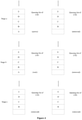
- Figure 2 is a diagram of queuing lists when data transmission is performed in the multi-link Wi-Fi system as shown in Figure 1 .
- the data frames to be transmitted include a data frame A, a data frame B, a data frame C, a data frame D and a data frame E.
- the data frames to be transmitted are arranged in a queuing list of each link, and may be transmitted on any link.
- Figure 3 is a flow chart of a data frame retransmission method according to an embodiment
- Figure 4 is a diagram of queuing lists in the method as shown in Figure 3
- the multi-link Wi-Fi system includes a first link and a second link
- Figure 4 illustrates the queuing lists of the first link CH1 and the second link CH2.
- a transmitter transmits, on a first link, a first data frame at a head of the queuing list of the first link based on obtaining a transmission opportunity at the first link.
- the STA or the AP transmits the first data frame at the head of the queuing list, i.e., the data frame A, on the first link.
- the data frame A in the queuing list of the first link enters an active state and starts to be transmitted.
- the data frame retransmission method further includes: in response to the first data frame being transmitted, removing the first data frame from at least one queuing list of at least one link other than the first link, wherein the plurality of links include the first link and the at least one link. Therefore, in the embodiment as shown in Figure 4 , in response to the data frame A in the queuing list of the first link entering the active state, the data frame A is removed from the queuing list of the second link.
- the STA or the AP transmits on the second link a data frame at a head of the queuing list of the second link. Specifically, in response to the data frame A being transmitted, and based on obtaining a transmission opportunity at the second link, the transmitter transmits the data frame B on the second link.
- the transmitter in response to failing to transmit the first data frame, the transmitter ranks the first data frame at the head of the queuing list of the first link.
- the transmitter ranks the data frame A at the head of the queuing list of the first link.
- the data frame A is originally transmitted on the first link but the transmission does not succeed, then the data frame A becomes a wait state and is still at the head of the queuing list of the first link.
- the transmitter retransmits the first data frame on the first link based on obtaining a new transmission opportunity at the first link.
- the data frame A based on obtaining a new transmission opportunity at the first link, the data frame A enters the active state again, and the transmitter starts to transmit the data frame A on the first link.
- the first link completes the transmission of the data frame A, and the data frame A is removed from the queuing list of the first link.
- a transmission rate in retransmission of the first data frame, is not higher than a previous transmission rate.
- the transmission rate of the data frame in retransmission may decrease linearly or stepwise. The transmission rate is not limited in embodiments of the present disclosure.
- a rate adjustment mechanism during the data frame retransmission is independent.
- the first link and the second link may have different rate adjustment mechanisms, thereby increasing flexibility of the system.
- the transmission of the first data frame in response to failing to retransmit the first data frame for N times, is abandoned, where N is a positive integer. In some embodiments, N may be 10. Specifically, in the embodiment as shown in Figure 4 , in response to failing to retransmit the data frame A for N times, the transmission of the data frame A is abandoned. Before retransmission of the data frame A is completed or the transmission of the data frame A is abandoned, no other data frames are transmitted on the first link.
- the retransmission of data frames is restricted to the original link, which reduces complexity of design of the multi-link Wi-Fi system and the data frame retransmission mechanism.
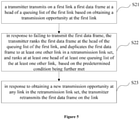
- Figure 5 is a flow chart of a data frame retransmission method according to an embodiment
- Figure 6 is a diagram of queuing lists in the method as shown in Figure 5
- the multi-link Wi-Fi system includes a first link and a second link
- Figure 6 illustrates the queuing lists of the first link CH1 and the second link CH2.
- a transmitter transmits, on a first link, a first data frame at a head of the queuing list of the first link based on obtaining a transmission opportunity at the first link.
- the STA or the AP transmits the first data frame at the head of the queuing list, i.e., the data frame A, on the first link.
- the data frame A in the queuing list of the first link enters an active state and starts to be transmitted.
- the data frame retransmission method further includes: in response to the first data frame being transmitted, removing the first data frame from at least one queuing list of at least one link other than the link on which the first data frame is being transmitted, based on the predetermined condition being not met. Therefore, in the embodiment as shown in Figure 6 , based on the data frame A in the queuing list of the first link entering the active state, the data frame A in the queuing list of the second link is removed.
- the data frame retransmission method further includes: in response to completing transmitting the first data frame, removing the first data frame from at least one queuing list of at least one link other than the link on which the first data frame is being transmitted, based on the predetermined condition being met.
- the STA or the AP transmits on the second link a data frame at a head of the queuing list of the second link. Specifically, in response to the data frame A being transmitted, the transmitter transmits the data frame B on the second link based on obtaining a transmission opportunity at the second link.
- the transmitter in response to failing to transmit the first data frame, the transmitter ranks the first data frame at the head of the queuing list of the first link based on transmission of the first data frame not succeeding, and duplicates the first data frame to at least one other link in a retransmission link set, and ranks the first data frame at at least one head of at least one queuing list of the at least one other link, based on a predetermined condition being further met.
- the retransmission link set includes the first link and at least one link other than the first link, or includes the first link and a portion of the at least one link other than the first link, and the predetermined condition is related to a retransmission duration of the first data frame or window occupancy of a buffer.
- the data frame A based on the predetermined condition being not met, the data frame A merely can be retransmitted on the first link. Based on the predetermined condition being met, the data frame A is duplicated to the at least one other link in the retransmission link set, and ranked at the at least one head of the at least one queuing list of the at least one other link.
- the predetermined condition is that accelerated processing by the system is required, and is related to a retransmission duration of the first data frame or window occupancy of a buffer. Details of the predetermined condition are not limited in embodiments of the present disclosure.
- the predetermined condition may be that the retransmission duration of the first data frame exceeds a retransmission time threshold.
- the retransmission time threshold may be 5 ms. If the retransmission duration of the data frame A on the first link exceeds 5 ms, the data frame A may be duplicated to the at least one queuing list of the at least one other link.
- the predetermined condition may be that the window occupancy of the buffer exceeds an occupancy threshold.
- other subsequent data frames may be transmitted to the STA or the AP, and stored in its buffer.
- buffer capacity of the STA is 64 data frames
- the occupancy threshold may be set to 48 data frames. Based on the number of data frames in the buffer exceeding 48, the data frame A may be duplicated to the at least one queuing list of the at least one other link.
- the retransmission link set includes the first link and the second link.
- the data frame A is duplicated to the second link.
- the data frame A is in a wait state in both the queuing list of the first link and the queuing list of the second link, and is at the heads of both the queuing lists.
- the transmitter in response to obtaining a new transmission opportunity at any link in the retransmission link set, the transmitter retransmits the first data frame on the link.
- the data frame A based on obtaining a new transmission opportunity at the first link or the second link, the data frame A enters the active state again, and starts to be transmitted on the first link or the second link.
- the data frame A in response to the data frame A being transmitted, the data frame A is not removed from the at least one queuing list of the at least one other link, that is, the queuing list of the second link.
- the transmitter in response to the first data frame being transmitted, enables the first data frame to enter a masked state in at least one queuing list of at least one link other than the link on which the first data frame is being transmitted, based on the predetermined condition being met. For example, in response to the data frame A being transmitted on the first link, the data frame A enters a masked state on the second link. Based on obtaining a transmission opportunity at the second link at this time, the transmitter transmits the data frame B on the second link.
- the transmitter in response to the first data frame being transmitted, enables the first data frame to enter a wait state in at least one queuing list of at least one link other than the link on which the first data frame is being transmitted, based on the predetermined condition being met. For example, in response to the data frame A being transmitted on the first link, the data frame A enters a wait state on the second link. Based on obtaining a transmission opportunity at the second link at this time, the data frame A is also transmitted on the second link, which may increase possibility of successful transmission of data frames.
- the transmitter in response to completing transmitting the data frame A on the first link, the transmitter removes the data frame A from the queuing list of the second link based on the predetermined condition being met.
- a transmission rate of the first data frame in retransmission is not higher than a transmission rate in a previous transmission.
- rate adjustment mechanisms during a data frame retransmission process may be the same or different for each link, and are independent for each link. Specifically, the retransmission of the data frame A on one link does not affect the rate adjustment mechanism for retransmission of the data frame A on other links. For example, based on the data frame being retransmitted for the first and third times on the second link, and being retransmitted for the second time on the first link, a first retransmission rate in the rate adjustment mechanism of the first link is applied for the second retransmission of the data frame A on the first link, and a second retransmission rate in the rate adjustment mechanism of the second link is applied for the third retransmission of the data frame A on the second link.
- the transmission of the first data frame in response to failing to retransmit the first data frame for N times, is abandoned, where N is a positive integer.
- data frame duplication is combined with single link retransmission, which improves a data frame retransmission rate.
- Figure 7 is a flow chart of a data frame retransmission method according to an embodiment
- Figure 8 is a diagram of queuing lists in the method as shown in Figure 7
- the multi-link Wi-Fi system includes a first link and a second link
- Figure 8 illustrates the queuing lists of the first link CH1 and the second link CH2.
- a transmitter transmits, on a first link, a first data frame at a head of the queuing list of the first link based on obtaining a transmission opportunity at the first link.
- the STA or the AP transmits the first data frame at the head of the queuing list, i.e., the data frame A, on the first link.
- the data frame A in the queuing list of the first link enters an active state and starts to be transmitted.
- the transmitter in response to the first data frame being transmitted, enables the first data frame to enter a masked state in at least one queuing list of at least one link other than the link on which the first data frame is being transmitted.
- the data frame A in the queuing list of the first link entering the active state based on the data frame A in the queuing list of the first link entering the active state, the data frame A in the queuing list of the second link enters a masked state.
- the STA or the AP transmits on the second link a data frame that is at the head of the queuing list and in a non-masked state. Specifically, in response to the data frame A being transmitted, the data frame A in the queuing list of the second link enters a masked state, and based on obtaining a transmission opportunity at the second link at this time, the transmitter transmits the data frame B on the second link.
- the transmitter restores ranking of the first data frame in queuing lists of links in a retransmission link set, or arranges the first data frame at heads of the queuing lists of the links in the retransmission link set.
- the retransmission link set includes the first link and at least one link other than the first link, or includes the first link and a portion of the at least one link other than the first link.
- the retransmission link set includes the first link and the second link.
- the ranking of the data frame A is restored in the queuing list of the second link. Therefore, the data frame A becomes a wait state in both the queuing list of the first link and the queuing list of the second link, and is at the heads of both the queuing lists.
- the data frame A in response to the data frame A being transmitted on the first link, the data frame A may not be ranked at the at least one head of the at least one queuing list of the at least one other link in the retransmission link set. In response to failing to transmit the first data frame, the first data frame may be arranged at the at least one head of the at least one queuing list of the at least one link in the retransmission link set.
- the transmitter based on obtaining a new transmission opportunity at any link in the retransmission link set and the first data frame being at a head of a queuing list of the link, the transmitter retransmits the first data frame on the link.
- the data frame A based on obtaining a new transmission opportunity at the first link or the second link and the data frame A being at a head of a queuing list of the first or second link, the data frame A enters the active state again, and starts to be transmitted on the first link or the second link.
- the data frame retransmission method further includes: in response to completing transmitting the first data frame, removing the first data frame from at least one queuing list of at least one link other than the link on which the first data frame is being transmitted.
- the data frame A in response to completing transmitting the data frame A on the first link, the data frame A is removed from the queuing list of the first link.
- the data frame retransmission method further includes: in response to completing transmitting the first data frame, removing the first data frame from at least one queuing list of at least one link other than the link on which the first data frame is being transmitted. That is, only in response to completing transmitting the data frame A on one link in the retransmission link set, the data frame A may be removed from the at least one queuing list of the at least one other link.
- a transmission rate of the first data frame in retransmission is not higher than a transmission rate in a previous transmission.
- rate adjustment mechanisms during a data frame retransmission process may be the same or different for each link, and are independent for each link.
- N in response to failing to retransmit the first data frame for N times, the transmission of the first data frame is abandoned, where N is a positive integer. In some embodiments, N may be 10.
- the data frame can be retransmitted on multiple links, which may reduce latency and buffer overflow in the Wi-Fi system.
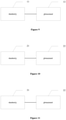
- Figure 9 is a structural diagram of a data frame retransmission device according to an embodiment.
- the device may be applied in a STA or an AP.
- the device includes a memory 11 and a processor 12, where the memory 11 has a computer program stored therein which can be run on the processor 12 and is for implementing steps in the above data frame retransmission method, and when the processor 12 executes the computer program, the steps are performed.
- the memory 11 may include a Read Only Memory (ROM), a Random Access Memory (RAM), a magnetic disk or an optical disk.
- ROM Read Only Memory
- RAM Random Access Memory
- the data frame retransmission method includes: transmitting, on a first link, a first data frame at a head of the queuing list of the first link based on obtaining a transmission opportunity at the first link; in response to failing to transmit the first data frame, ranking the first data frame at the head of the queuing list of the first link; and retransmitting the first data frame on the first link based on obtaining a new transmission opportunity at the first link.
- Figure 10 is a structural diagram of a data frame retransmission device according to an embodiment.
- the device may be applied in a STA or an AP.
- the device includes a memory 21 and a processor 22, where the memory 21 has a computer program stored therein which can be run on the processor 22 and is for implementing steps in the above data frame retransmission method, and when the processor 22 executes the computer program, the steps are performed.
- the memory 21 may include a ROM, a RAM, a magnetic disk or an optical disk.
- the data frame retransmission method includes: transmitting, on a first link, a first data frame at a head of the queuing list of the first link based on obtaining a transmission opportunity at the first link; in response to failing to transmit the first data frame, ranking the first data frame at the head of the queuing list of the first link based on transmission of the first data frame not succeeding, and duplicating the first data frame to at least one other link in a retransmission link set, and ranking the first data frame at at least one head of at least one queuing list of the at least one other link, based on a predetermined condition being further met; and in response to obtaining a new transmission opportunity at any link in the retransmission link set, retransmitting the first data frame on the link.
- FIG 11 is a structural diagram of a data frame retransmission device according to an embodiment.
- the device may be applied in a STA or an AP.
- the device includes a memory 31 and a processor 32, where the memory 31 has a computer program stored therein which can be run on the processor 32 and is for implementing steps in the above data frame retransmission method, and when the processor 32 executes the computer program, the steps are performed.
- the memory 31 may include a ROM, a RAM, a magnetic disk or an optical disk.
- the data frame retransmission method includes: transmitting, on a first link, a first data frame at a head of the queuing list of the first link based on obtaining a transmission opportunity at the first link; in response to failing to transmit the first data frame, restoring ranking of the first data frame in queuing lists of links in a retransmission link set, or arranging the first data frame at heads of the queuing lists of the links in the retransmission link set; and based on obtaining a new transmission opportunity at any link in the retransmission link set and the first data frame being at a head of a queuing list of the link, retransmitting the first data frame on the link.
Landscapes
- Engineering & Computer Science (AREA)
- Computer Networks & Wireless Communication (AREA)
- Signal Processing (AREA)
- Quality & Reliability (AREA)
- Mobile Radio Communication Systems (AREA)
- Detection And Prevention Of Errors In Transmission (AREA)
- Communication Control (AREA)
Abstract
Description
- This application claims the benefit of priority to
Chinese Patent Application No. 201910297051.8, filed on April 12, 2019 - The present disclosure generally relates to communication field, and more particularly, to a data frame retransmission method and device.
- In a conventional Wireless Fidelity (Wi-Fi) system, there is merely one Media Access Control (MAC) layer and one physical layer. Therefore, data frames are transmitted merely on a single link in the Wi-Fi system. When a transmission failure occurs, data frames are retransmitted according to an existing retransmission mechanism. Due to the retransmission mechanism, a transmission rate of a data frame at the physical layer may gradually decrease.
- At present, there are some solutions for multi-link Wi-Fi systems. However, for multi-link Wi-Fi systems, a new data frame retransmission method and device are still needed.
- In an embodiment of the present disclosure, a data frame retransmission method is provided, wherein the method is applied in a multi-link Wi-Fi system which includes a plurality of links, each of the plurality of links includes a queuing list for determining a transmission order of data frames in the link, and the method includes: transmitting, on a first link, a first data frame at a head of the queuing list of the first link based on obtaining a transmission opportunity at the first link; in response to failing to transmit the first data frame, ranking the first data frame at the head of the queuing list of the first link; and retransmitting the first data frame on the first link based on obtaining a new transmission opportunity at the first link.
- Optionally, a transmission rate in retransmission is not higher than a transmission rate in a previous transmission.
- Optionally, in response to failing to retransmit the first data frame for N times, the transmission of the first data frame is abandoned, where N is a positive integer.
- Optionally, the method further includes: in response to the first data frame being transmitted, removing the first data frame from at least one queuing list of at least one link other than the first link, wherein the plurality of links include the first link and the at least one link.
- In an embodiment of the present disclosure, a data frame retransmission method is provided, wherein the method is applied in a multi-link Wi-Fi system which includes a plurality of links, each of the plurality of links includes a queuing list for determining a transmission order of data frames in the link, and the method includes: transmitting, on a first link, a first data frame at a head of the queuing list of the first link based on obtaining a transmission opportunity at the first link; in response to failing to transmit the first data frame, ranking the first data frame at the head of the queuing list of the first link based on transmission of the first data frame not succeeding, and duplicating the first data frame to at least one other link in a retransmission link set, and ranking the first data frame at at least one head of at least one queuing list of the at least one other link, based on a predetermined condition being further met; and in response to obtaining a new transmission opportunity at any link in the retransmission link set, retransmitting the first data frame on the link, wherein the retransmission link set includes the first link and at least one link other than the first link, or includes the first link and a portion of the at least one link other than the first link, and the predetermined condition is that accelerated processing by the system is required.
- Optionally, the predetermined condition is related to a retransmission duration of the first data frame or window occupancy of a buffer.
- Optionally, for each of the links in the retransmission link set, a transmission rate in retransmission is not higher than a transmission rate in a previous transmission.
- Optionally, a rate adjustment mechanism during a data frame retransmission process is independent for each link.
- Optionally, in response to failing to retransmit the first data frame for N times, the transmission of the first data frame is abandoned, where N is a positive integer.
- Optionally, the method further includes: in response to the first data frame being transmitted, removing the first data frame from at least one queuing list of at least one link other than the link on which the first data frame is being transmitted, based on the predetermined condition being not met.
- Optionally, the method further includes: in response to the first data frame being transmitted, enabling the first data frame to enter a masked state in at least one queuing list of at least one link other than the link on which the first data frame is being transmitted, based on the predetermined condition being met.
- Optionally, the method further includes: in response to the first data frame being transmitted, enabling the first data frame to enter a wait state in at least one queuing list of at least one link other than the link on which the first data frame is being transmitted, based on the predetermined condition being met.
- Optionally, the method further includes: in response to completing transmitting the first data frame, removing the first data frame from at least one queuing list of at least one link other than the link on which the first data frame is being transmitted, based on the predetermined condition being met.
- In an embodiment of the present disclosure, a data frame retransmission method is provided, wherein the method is applied in a multi-link Wi-Fi system which includes a plurality of links, each of the plurality of links includes a queuing list for determining a transmission order of data frames in the link, and the method includes: transmitting, on a first link, a first data frame at a head of the queuing list of the first link based on obtaining a transmission opportunity at the first link; in response to failing to transmit the first data frame, restoring ranking of the first data frame in queuing lists of links in a retransmission link set, or arranging the first data frame at heads of the queuing lists of the links in the retransmission link set; and based on obtaining a new transmission opportunity at any link in the retransmission link set and the first data frame being at a head of a queuing list of the link, retransmitting the first data frame on the link, wherein the retransmission link set includes the first link and at least one link other than the first link, or includes the first link and a portion of the at least one link other than the first link.
- Optionally, for each of the links in the retransmission link set, a transmission rate in retransmission is not higher than a transmission rate in a previous transmission.
- Optionally, a rate adjustment mechanism during a data frame retransmission process is independent for each link.
- Optionally, in response to failing to retransmit the first data frame for N times, the transmission of the first data frame is abandoned, where N is a positive integer.
- Optionally, the method further includes: in response to the first data frame being transmitted, enabling the first data frame to enter a masked state in at least one queuing list of at least one link other than the link on which the first data frame is being transmitted.
- Optionally, the method further includes: in response to completing transmitting the first data frame, removing the first data frame from at least one queuing list of at least one link other than the link on which the first data frame is being transmitted.
- In an embodiment of the present disclosure, a data frame retransmission device including a memory and a processor is provided, wherein the memory has a computer program stored therein, and when the processor executes the computer program, the above data frame retransmission method is performed, wherein the data frame retransmission method includes: transmitting, on a first link, a first data frame at a head of the queuing list of the first link based on obtaining a transmission opportunity at the first link; in response to failing to transmit the first data frame, ranking the first data frame at the head of the queuing list of the first link; and retransmitting the first data frame on the first link based on obtaining a new transmission opportunity at the first link.
- In an embodiment of the present disclosure, a data frame retransmission device including a memory and a processor is provided, wherein the memory has a computer program stored therein, and when the processor executes the computer program, the above data frame retransmission method is performed, wherein the data frame retransmission method includes: transmitting, on a first link, a first data frame at a head of the queuing list of the first link based on obtaining a transmission opportunity at the first link; in response to failing to transmit the first data frame, ranking the first data frame at the head of the queuing list of the first link based on transmission of the first data frame not succeeding, and duplicating the first data frame to at least one other link in a retransmission link set, and ranking the first data frame at at least one head of at least one queuing list of the at least one other link, based on a predetermined condition being further met; and in response to obtaining a new transmission opportunity at any link in the retransmission link set, retransmitting the first data frame on the link.
- In an embodiment of the present disclosure, a data frame retransmission device including a memory and a processor is provided, wherein the memory has a computer program stored therein, and when the processor executes the computer program, the above data frame retransmission method is performed, wherein the data frame retransmission method includes: transmitting, on a first link, a first data frame at a head of the queuing list of the first link based on obtaining a transmission opportunity at the first link; in response to failing to transmit the first data frame, restoring ranking of the first data frame in queuing lists of links in a retransmission link set, or arranging the first data frame at heads of the queuing lists of the links in the retransmission link set; and based on obtaining a new transmission opportunity at any link in the retransmission link set and the first data frame being at a head of a queuing list of the link, retransmitting the first data frame on the link.
- Embodiments of the present disclosure may provide following advantages.
- In embodiments of the present disclosure, a data frame retransmission method includes: transmitting, on a first link, a first data frame at a head of the queuing list of the first link based on obtaining a transmission opportunity at the first link; in response to failing to transmit the first data frame, ranking the first data frame at the head of the queuing list of the first link; and retransmitting the first data frame on the first link based on obtaining a new transmission opportunity at the first link. In the embodiments, the retransmission is restricted on an original link, which reduces complexity of design of a multi-link Wi-Fi system and a data frame retransmission mechanism.
- In embodiments of the present disclosure, a data frame retransmission method includes: transmitting, on a first link, a first data frame at a head of the queuing list of the first link based on obtaining a transmission opportunity at the first link; in response to failing to transmit the first data frame, ranking the first data frame at the head of the queuing list of the first link based on transmission of the first data frame not succeeding, and duplicating the first data frame to at least one other link in a retransmission link set, and ranking the first data frame at at least one head of at least one queuing list of the at least one other link, based on a predetermined condition being further met; and in response to obtaining a new transmission opportunity at any link in the retransmission link set, retransmitting the first data frame on the link. In the embodiments, data frame duplication is combined with single link retransmission, which improves a data frame retransmission rate.
- In embodiments of the present disclosure, a data frame retransmission method includes: transmitting, on a first link, a first data frame at a head of the queuing list of the first link based on obtaining a transmission opportunity at the first link; in response to failing to transmit the first data frame, restoring ranking of the first data frame in queuing lists of links in a retransmission link set, or arranging the first data frame at heads of the queuing lists of the links in the retransmission link set; and based on obtaining a new transmission opportunity at any link in the retransmission link set and the first data frame being at a head of a queuing list of the link, retransmitting the first data frame on the link. In the embodiments, the data frame can be retransmitted on multiple links, which may reduce latency and buffer overflow in a Wi-Fi system.
-
-
Figure 1 is a diagram of a multi-link Wi-Fi system according to an embodiment; -
Figure 2 is a diagram of queuing lists when data transmission is performed in the multi-link Wi-Fi system as shown inFigure 1 ; -
Figure 3 is a flow chart of a data frame retransmission method according to an embodiment; -
Figure 4 is a diagram of queuing lists in the method as shown inFigure 3 ; -
Figure 5 is a flow chart of a data frame retransmission method according to an embodiment; -
Figure 6 is a diagram of queuing lists in the method as shown inFigure 5 ; -
Figure 7 is a flow chart of a data frame retransmission method according to an embodiment; -
Figure 8 is a diagram of queuing lists in the method as shown inFigure 7 ; -
Figure 9 is a structural diagram of a data frame retransmission device according to an embodiment; -
Figure 10 is a structural diagram of a data frame retransmission device according to an embodiment; and -
Figure 11 is a structural diagram of a data frame retransmission device according to an embodiment. - Referring to
Figure 1, Figure 1 is a diagram of a multi-link Wi-Fi system according to an embodiment. - The multi-link Wi-Fi system may include a Station (STA), an Access Point (AP), and multiple links. Data frames are transmitted on the multiple links between the STA and the AP. In the embodiment as shown in
Figure 1 , the multi-link Wi-Fi system includes a first link CH1 and a second link CH2. - In some embodiments, the first link CH1 and the second link CH2 may occupy different frequency band resources to implement data transmission. For example, the first link CH1 may occupy a frequency band with a center frequency of 2 GHz, and the second link CH2 may occupy a frequency band with a center frequency of 5 GHz. In some embodiments, the first link CH1 and the second link CH2 may occupy a same frequency band to implement data transmission. In some embodiments, the frequency band shared by the two links may be relatively wide so as to be used for simultaneous data transmission on the two links, or may be used by the two links for data transmission via time division multiplexing.
- In the embodiment as shown in
Figure 1 , at the STA, data frames to be transmitted may be arranged into a queuing list of the first link CH1 and a queuing list of the second link CH2, respectively. In some embodiments, the data frames to be transmitted can be arranged into queuing lists of different links in the form of indexes. - In the embodiment as shown in
Figure 1 , at either the STA or the AP, a network layer includes a MAC layer (Common MAC), and below the MAC layer there are a first sub MAC layer LMAC1, a second sub MAC layer LMAC2, a first physical layer PHY1 and a second physical layer PHY2. Specifically, the first sub MAC layer LMAC1 and the first physical layer PHY1 are configured to enable the STA or the AP to transmit data on the first link CH1, and the second sub MAC layer LMAC2 and the second physical layer PHY2 are configured to enable the STA or the AP to transmit data on the second link CH2. In some embodiments, the multi-link Wi-Fi system include multiple links, thus, the multi-link Wi-Fi system may include multiple sub MAC layers and multiple corresponding physical layers. - Referring to
Figure 2, Figure 2 is a diagram of queuing lists when data transmission is performed in the multi-link Wi-Fi system as shown inFigure 1 . The data frames to be transmitted include a data frame A, a data frame B, a data frame C, a data frame D and a data frame E. In an existing multi-link Wi-Fi system, the data frames to be transmitted are arranged in a queuing list of each link, and may be transmitted on any link. - Referring to
Figures 3 and4 ,Figure 3 is a flow chart of a data frame retransmission method according to an embodiment, andFigure 4 is a diagram of queuing lists in the method as shown inFigure 3 . In the embodiment as shown inFigures 3 and4 , the multi-link Wi-Fi system includes a first link and a second link, andFigure 4 illustrates the queuing lists of the first link CH1 and the second link CH2. - In S11, a transmitter transmits, on a first link, a first data frame at a head of the queuing list of the first link based on obtaining a transmission opportunity at the first link.
- As shown in
Figure 4 , at stage a, based on obtaining a transmission opportunity at the first link, the STA or the AP transmits the first data frame at the head of the queuing list, i.e., the data frame A, on the first link. In some embodiments, based on obtaining the transmission opportunity at the first link, the data frame A in the queuing list of the first link enters an active state and starts to be transmitted. - In some embodiments, the data frame retransmission method further includes: in response to the first data frame being transmitted, removing the first data frame from at least one queuing list of at least one link other than the first link, wherein the plurality of links include the first link and the at least one link. Therefore, in the embodiment as shown in
Figure 4 , in response to the data frame A in the queuing list of the first link entering the active state, the data frame A is removed from the queuing list of the second link. - It should be noted that base on obtaining a transmission opportunity at the second link, the STA or the AP transmits on the second link a data frame at a head of the queuing list of the second link. Specifically, in response to the data frame A being transmitted, and based on obtaining a transmission opportunity at the second link, the transmitter transmits the data frame B on the second link.
- In S12, in response to failing to transmit the first data frame, the transmitter ranks the first data frame at the head of the queuing list of the first link.
- As shown in
Figure 4 , at stage b, in response to failing to transmit the data frame A, the transmitter ranks the data frame A at the head of the queuing list of the first link. - In some embodiments, the data frame A is originally transmitted on the first link but the transmission does not succeed, then the data frame A becomes a wait state and is still at the head of the queuing list of the first link.
- In S13, the transmitter retransmits the first data frame on the first link based on obtaining a new transmission opportunity at the first link.
- In some embodiments, based on obtaining a new transmission opportunity at the first link, the data frame A enters the active state again, and the transmitter starts to transmit the data frame A on the first link.
- As shown in
Figure 4 , at stage c, the first link completes the transmission of the data frame A, and the data frame A is removed from the queuing list of the first link. - In some embodiments, in retransmission of the first data frame, a transmission rate is not higher than a previous transmission rate. In some embodiments, the transmission rate of the data frame in retransmission may decrease linearly or stepwise. The transmission rate is not limited in embodiments of the present disclosure.
- In some embodiments, for each link, a rate adjustment mechanism during the data frame retransmission is independent. Specifically, in the embodiment as shown in
Figure 4 , the first link and the second link may have different rate adjustment mechanisms, thereby increasing flexibility of the system. - In some embodiments, in response to failing to retransmit the first data frame for N times, the transmission of the first data frame is abandoned, where N is a positive integer. In some embodiments, N may be 10. Specifically, in the embodiment as shown in
Figure 4 , in response to failing to retransmit the data frame A for N times, the transmission of the data frame A is abandoned. Before retransmission of the data frame A is completed or the transmission of the data frame A is abandoned, no other data frames are transmitted on the first link. - In the above embodiments, the retransmission of data frames is restricted to the original link, which reduces complexity of design of the multi-link Wi-Fi system and the data frame retransmission mechanism.
- Referring to
Figures 5 and6 ,Figure 5 is a flow chart of a data frame retransmission method according to an embodiment, andFigure 6 is a diagram of queuing lists in the method as shown inFigure 5 . In the embodiment as shown inFigures 5 and6 , the multi-link Wi-Fi system includes a first link and a second link, andFigure 6 illustrates the queuing lists of the first link CH1 and the second link CH2. - In S21, a transmitter transmits, on a first link, a first data frame at a head of the queuing list of the first link based on obtaining a transmission opportunity at the first link.
- As shown in
Figure 6 , at stage a, based on obtaining a transmission opportunity at the first link, the STA or the AP transmits the first data frame at the head of the queuing list, i.e., the data frame A, on the first link. In some embodiments, based on obtaining a transmission opportunity at the first link, the data frame A in the queuing list of the first link enters an active state and starts to be transmitted. - In some embodiments, the data frame retransmission method further includes: in response to the first data frame being transmitted, removing the first data frame from at least one queuing list of at least one link other than the link on which the first data frame is being transmitted, based on the predetermined condition being not met. Therefore, in the embodiment as shown in
Figure 6 , based on the data frame A in the queuing list of the first link entering the active state, the data frame A in the queuing list of the second link is removed. - In some embodiments, the data frame retransmission method further includes: in response to completing transmitting the first data frame, removing the first data frame from at least one queuing list of at least one link other than the link on which the first data frame is being transmitted, based on the predetermined condition being met.
- It should be noted that based on obtaining a transmission opportunity at the second link, the STA or the AP transmits on the second link a data frame at a head of the queuing list of the second link. Specifically, in response to the data frame A being transmitted, the transmitter transmits the data frame B on the second link based on obtaining a transmission opportunity at the second link.
- In S22, in response to failing to transmit the first data frame, the transmitter ranks the first data frame at the head of the queuing list of the first link based on transmission of the first data frame not succeeding, and duplicates the first data frame to at least one other link in a retransmission link set, and ranks the first data frame at at least one head of at least one queuing list of the at least one other link, based on a predetermined condition being further met.
- In some embodiments, the retransmission link set includes the first link and at least one link other than the first link, or includes the first link and a portion of the at least one link other than the first link, and the predetermined condition is related to a retransmission duration of the first data frame or window occupancy of a buffer.
- In some embodiments, based on the predetermined condition being not met, the data frame A merely can be retransmitted on the first link. Based on the predetermined condition being met, the data frame A is duplicated to the at least one other link in the retransmission link set, and ranked at the at least one head of the at least one queuing list of the at least one other link.
- The predetermined condition is that accelerated processing by the system is required, and is related to a retransmission duration of the first data frame or window occupancy of a buffer. Details of the predetermined condition are not limited in embodiments of the present disclosure.
- In some embodiments, the predetermined condition may be that the retransmission duration of the first data frame exceeds a retransmission time threshold. For example, in some real-time applications, the retransmission time threshold may be 5 ms. If the retransmission duration of the data frame A on the first link exceeds 5 ms, the data frame A may be duplicated to the at least one queuing list of the at least one other link.
- In some embodiments, the predetermined condition may be that the window occupancy of the buffer exceeds an occupancy threshold. In response to failing to transmit the data frame A, other subsequent data frames may be transmitted to the STA or the AP, and stored in its buffer. For example, buffer capacity of the STA is 64 data frames, and the occupancy threshold may be set to 48 data frames. Based on the number of data frames in the buffer exceeding 48, the data frame A may be duplicated to the at least one queuing list of the at least one other link.
- In the embodiment as shown in
Figure 6 , the retransmission link set includes the first link and the second link. At stage b, when transmission of the data frame A does not succeed, the data frame A is duplicated to the second link. At this time, the data frame A is in a wait state in both the queuing list of the first link and the queuing list of the second link, and is at the heads of both the queuing lists. - In S23, in response to obtaining a new transmission opportunity at any link in the retransmission link set, the transmitter retransmits the first data frame on the link.
- In the embodiment as shown in
Figure 6 , based on obtaining a new transmission opportunity at the first link or the second link, the data frame A enters the active state again, and starts to be transmitted on the first link or the second link. - In the embodiment as shown in
Figure 6 , in response to the data frame A being transmitted, the data frame A is not removed from the at least one queuing list of the at least one other link, that is, the queuing list of the second link. - In some embodiments, in response to the first data frame being transmitted, the transmitter enables the first data frame to enter a masked state in at least one queuing list of at least one link other than the link on which the first data frame is being transmitted, based on the predetermined condition being met. For example, in response to the data frame A being transmitted on the first link, the data frame A enters a masked state on the second link. Based on obtaining a transmission opportunity at the second link at this time, the transmitter transmits the data frame B on the second link.
- In some embodiments, in response to the first data frame being transmitted, the transmitter enables the first data frame to enter a wait state in at least one queuing list of at least one link other than the link on which the first data frame is being transmitted, based on the predetermined condition being met. For example, in response to the data frame A being transmitted on the first link, the data frame A enters a wait state on the second link. Based on obtaining a transmission opportunity at the second link at this time, the data frame A is also transmitted on the second link, which may increase possibility of successful transmission of data frames.
- As shown in
Figure 6 , at stage c, in response to completing transmitting the data frame A on the first link, the transmitter removes the data frame A from the queuing list of the second link based on the predetermined condition being met. - In some embodiments, for each of the links in the retransmission link set, a transmission rate of the first data frame in retransmission is not higher than a transmission rate in a previous transmission.
- In some embodiments, rate adjustment mechanisms during a data frame retransmission process may be the same or different for each link, and are independent for each link. Specifically, the retransmission of the data frame A on one link does not affect the rate adjustment mechanism for retransmission of the data frame A on other links. For example, based on the data frame being retransmitted for the first and third times on the second link, and being retransmitted for the second time on the first link, a first retransmission rate in the rate adjustment mechanism of the first link is applied for the second retransmission of the data frame A on the first link, and a second retransmission rate in the rate adjustment mechanism of the second link is applied for the third retransmission of the data frame A on the second link.
- In some embodiments, in response to failing to retransmit the first data frame for N times, the transmission of the first data frame is abandoned, where N is a positive integer.
- In the above embodiments, data frame duplication is combined with single link retransmission, which improves a data frame retransmission rate.
- Referring to
Figures 7 and8 ,Figure 7 is a flow chart of a data frame retransmission method according to an embodiment, andFigure 8 is a diagram of queuing lists in the method as shown inFigure 7 . In the embodiment as shown inFigures 7 and8 , the multi-link Wi-Fi system includes a first link and a second link, andFigure 8 illustrates the queuing lists of the first link CH1 and the second link CH2. - In S31, a transmitter transmits, on a first link, a first data frame at a head of the queuing list of the first link based on obtaining a transmission opportunity at the first link.
- As shown in
Figure 8 , at stage a, based on obtaining a transmission opportunity at the first link, the STA or the AP transmits the first data frame at the head of the queuing list, i.e., the data frame A, on the first link. In some embodiments, based on obtaining the transmission opportunity at the first link, the data frame A in the queuing list of the first link enters an active state and starts to be transmitted. - In some embodiments, in response to the first data frame being transmitted, the transmitter enables the first data frame to enter a masked state in at least one queuing list of at least one link other than the link on which the first data frame is being transmitted.
- For example, in the embodiment as shown in
Figure 8 , based on the data frame A in the queuing list of the first link entering the active state, the data frame A in the queuing list of the second link enters a masked state. - It should be noted that based on obtaining a transmission opportunity at the second link, the STA or the AP transmits on the second link a data frame that is at the head of the queuing list and in a non-masked state. Specifically, in response to the data frame A being transmitted, the data frame A in the queuing list of the second link enters a masked state, and based on obtaining a transmission opportunity at the second link at this time, the transmitter transmits the data frame B on the second link.
- In S32, in response to failing to transmit the first data frame, the transmitter restores ranking of the first data frame in queuing lists of links in a retransmission link set, or arranges the first data frame at heads of the queuing lists of the links in the retransmission link set.
- In some embodiments, the retransmission link set includes the first link and at least one link other than the first link, or includes the first link and a portion of the at least one link other than the first link.
- In the embodiment as shown in
Figure 8 , the retransmission link set includes the first link and the second link. At stage b, in response to failing to transmit the data frame A, the ranking of the data frame A is restored in the queuing list of the second link. Therefore, the data frame A becomes a wait state in both the queuing list of the first link and the queuing list of the second link, and is at the heads of both the queuing lists. - In some embodiments, in response to the data frame A being transmitted on the first link, the data frame A may not be ranked at the at least one head of the at least one queuing list of the at least one other link in the retransmission link set. In response to failing to transmit the first data frame, the first data frame may be arranged at the at least one head of the at least one queuing list of the at least one link in the retransmission link set.
- In S33, based on obtaining a new transmission opportunity at any link in the retransmission link set and the first data frame being at a head of a queuing list of the link, the transmitter retransmits the first data frame on the link.
- In the embodiment as shown in
Figure 8 , based on obtaining a new transmission opportunity at the first link or the second link and the data frame A being at a head of a queuing list of the first or second link, the data frame A enters the active state again, and starts to be transmitted on the first link or the second link. - In some embodiments, the data frame retransmission method further includes: in response to completing transmitting the first data frame, removing the first data frame from at least one queuing list of at least one link other than the link on which the first data frame is being transmitted.
- As shown in
Figure 8 , at stage c, in response to completing transmitting the data frame A on the first link, the data frame A is removed from the queuing list of the first link. The data frame retransmission method further includes: in response to completing transmitting the first data frame, removing the first data frame from at least one queuing list of at least one link other than the link on which the first data frame is being transmitted. That is, only in response to completing transmitting the data frame A on one link in the retransmission link set, the data frame A may be removed from the at least one queuing list of the at least one other link. - In some embodiments, for each of the links in the retransmission link set, a transmission rate of the first data frame in retransmission is not higher than a transmission rate in a previous transmission.
- In some embodiments, rate adjustment mechanisms during a data frame retransmission process may be the same or different for each link, and are independent for each link.
- In some embodiments, in response to failing to retransmit the first data frame for N times, the transmission of the first data frame is abandoned, where N is a positive integer. In some embodiments, N may be 10.
- In the above embodiments, the data frame can be retransmitted on multiple links, which may reduce latency and buffer overflow in the Wi-Fi system.
-
Figure 9 is a structural diagram of a data frame retransmission device according to an embodiment. The device may be applied in a STA or an AP. The device includes amemory 11 and aprocessor 12, where thememory 11 has a computer program stored therein which can be run on theprocessor 12 and is for implementing steps in the above data frame retransmission method, and when theprocessor 12 executes the computer program, the steps are performed. Thememory 11 may include a Read Only Memory (ROM), a Random Access Memory (RAM), a magnetic disk or an optical disk. The data frame retransmission method includes: transmitting, on a first link, a first data frame at a head of the queuing list of the first link based on obtaining a transmission opportunity at the first link; in response to failing to transmit the first data frame, ranking the first data frame at the head of the queuing list of the first link; and retransmitting the first data frame on the first link based on obtaining a new transmission opportunity at the first link. -
Figure 10 is a structural diagram of a data frame retransmission device according to an embodiment. The device may be applied in a STA or an AP. The device includes amemory 21 and aprocessor 22, where thememory 21 has a computer program stored therein which can be run on theprocessor 22 and is for implementing steps in the above data frame retransmission method, and when theprocessor 22 executes the computer program, the steps are performed. Thememory 21 may include a ROM, a RAM, a magnetic disk or an optical disk. The data frame retransmission method includes: transmitting, on a first link, a first data frame at a head of the queuing list of the first link based on obtaining a transmission opportunity at the first link; in response to failing to transmit the first data frame, ranking the first data frame at the head of the queuing list of the first link based on transmission of the first data frame not succeeding, and duplicating the first data frame to at least one other link in a retransmission link set, and ranking the first data frame at at least one head of at least one queuing list of the at least one other link, based on a predetermined condition being further met; and in response to obtaining a new transmission opportunity at any link in the retransmission link set, retransmitting the first data frame on the link. -
Figure 11 is a structural diagram of a data frame retransmission device according to an embodiment. The device may be applied in a STA or an AP. The device includes amemory 31 and aprocessor 32, where thememory 31 has a computer program stored therein which can be run on theprocessor 32 and is for implementing steps in the above data frame retransmission method, and when theprocessor 32 executes the computer program, the steps are performed. Thememory 31 may include a ROM, a RAM, a magnetic disk or an optical disk. The data frame retransmission method includes: transmitting, on a first link, a first data frame at a head of the queuing list of the first link based on obtaining a transmission opportunity at the first link; in response to failing to transmit the first data frame, restoring ranking of the first data frame in queuing lists of links in a retransmission link set, or arranging the first data frame at heads of the queuing lists of the links in the retransmission link set; and based on obtaining a new transmission opportunity at any link in the retransmission link set and the first data frame being at a head of a queuing list of the link, retransmitting the first data frame on the link. - Although the present disclosure has been disclosed above with reference to preferred embodiments thereof, it should be understood that the disclosure is presented by way of example only, and not limitation. Those skilled in the art can modify and vary the embodiments without departing from the spirit and scope of the present disclosure.
Claims (22)
- A data frame retransmission method, characterized in that the method is applied in a multi-link Wi-Fi system which comprises a plurality of links, each of the plurality of links comprises a queuing list for determining a transmission order of data frames in the link, and the method comprises:transmitting, on a first link, a first data frame at a head of the queuing list of the first link based on obtaining a transmission opportunity at the first link;in response to failing to transmit the first data frame, ranking the first data frame at the head of the queuing list of the first link; andretransmitting the first data frame on the first link based on obtaining a new transmission opportunity at the first link.
- The method according to claim 1, characterized in that a transmission rate in retransmission is not higher than a transmission rate in a previous transmission.
- The method according to claim 1, characterized in that in response to failing to retransmit the first data frame for N times, the transmission of the first data frame is abandoned, where N is a positive integer.
- The method according to claim 1, characterized by further comprising:
in response to the first data frame being transmitted, removing the first data frame from at least one queuing list of at least one link other than the first link, wherein the plurality of links comprise the first link and the at least one link. - A data frame retransmission method, characterized in that the method is applied in a multi-link Wi-Fi system which comprises a plurality of links, each of the plurality of links comprises a queuing list for determining a transmission order of data frames in the link, and the method comprises:transmitting, on a first link, a first data frame at a head of the queuing list of the first link based on obtaining a transmission opportunity at the first link;in response to failing to transmit the first data frame, ranking the first data frame at the head of the queuing list of the first link based on transmission of the first data frame not succeeding, and duplicating the first data frame to at least one other link in a retransmission link set, and ranking the first data frame at at least one head of at least one queuing list of the at least one other link, based on a predetermined condition being further met; andin response to obtaining a new transmission opportunity at any link in the retransmission link set, retransmitting the first data frame on the link,wherein the retransmission link set comprises the first link and at least one link other than the first link, or comprises the first link and a portion of the at least one link other than the first link, and the predetermined condition is that accelerated processing by the system is required.
- The method according to claim 5, characterized in that the predetermined condition is related to a retransmission duration of the first data frame or window occupancy of a buffer.
- The method according to claim 5, characterized in that for each of the links in the retransmission link set, a transmission rate in retransmission is not higher than a transmission rate in a previous transmission.
- The method according to claim 7, characterized in that a rate adjustment mechanism during a data frame retransmission process is independent for each link.
- The method according to claim 5, characterized in that in response to failing to retransmit the first data frame for N times, the transmission of the first data frame is abandoned, where N is a positive integer.
- The method according to claim 5, characterized by further comprising:
in response to the first data frame being transmitted, removing the first data frame from at least one queuing list of at least one link other than the link on which the first data frame is being transmitted, based on the predetermined condition being not met. - The method according to claim 5, characterized by further comprising:
in response to the first data frame being transmitted, enabling the first data frame to enter a masked state in at least one queuing list of at least one link other than the link on which the first data frame is being transmitted, based on the predetermined condition being met. - The method according to claim 5, characterized by further comprising:
in response to the first data frame being transmitted, enabling the first data frame to enter a wait state in at least one queuing list of at least one link other than the link on which the first data frame is being transmitted, based on the predetermined condition being met. - The method according to claim 5, characterized by further comprising:
in response to completing transmitting the first data frame, removing the first data frame from at least one queuing list of at least one link other than the link on which the first data frame is being transmitted, based on the predetermined condition being met. - A data frame retransmission method, characterized in that the method is applied in a multi-link Wi-Fi system which comprises a plurality of links, each of the plurality of links comprises a queuing list for determining a transmission order of data frames in the link, and the method comprises:transmitting, on a first link, a first data frame at a head of the queuing list of the first link based on obtaining a transmission opportunity at the first link;in response to failing to transmit the first data frame, restoring ranking of the first data frame in queuing lists of links in a retransmission link set, or arranging the first data frame at heads of the queuing lists of the links in the retransmission link set; andbased on obtaining a new transmission opportunity at any link in the retransmission link set and the first data frame being at a head of a queuing list of the link, retransmitting the first data frame on the link,wherein the retransmission link set comprises the first link and at least one link other than the first link, or comprises the first link and a portion of the at least one link other than the first link.
- The method according to claim 14, characterized in that for each of the links in the retransmission link set, a transmission rate in retransmission is not higher than a transmission rate in a previous transmission.
- The method according to claim 15, characterized in that a rate adjustment mechanism during a data frame retransmission process is independent for each link.
- The method according to claim 14, characterized in that in response to failing to retransmit the first data frame for N times, the transmission of the first data frame is abandoned, where N is a positive integer.
- The method according to claim 14, characterized by further comprising:
in response to the first data frame being transmitted, enabling the first data frame to enter a masked state in at least one queuing list of at least one link other than the link on which the first data frame is being transmitted. - The method according to claim 14, characterized by further comprising:
in response to completing transmitting the first data frame, removing the first data frame from at least one queuing list of at least one link other than the link on which the first data frame is being transmitted. - A data frame retransmission device comprising a memory and a processor, characterized in that the memory has a computer program stored therein, and when the processor executes the computer program, the method according to any one of claims 1 to 4 is performed.
- A data frame retransmission device comprising a memory and a processor, characterized in that the memory has a computer program stored therein, and when the processor executes the computer program, the method according to any one of claims 5 to 13 is performed.
- A data frame retransmission device comprising a memory and a processor, characterized in that the memory has a computer program stored therein, and when the processor executes the computer program, the method according to any one of claims 14 to 19 is performed.
Applications Claiming Priority (2)
| Application Number | Priority Date | Filing Date | Title |
|---|---|---|---|
| CN201910297051.8A CN111294146B (en) | 2019-04-12 | 2019-04-12 | Retransmission method and device of data frame |
| PCT/CN2020/078912 WO2020207180A1 (en) | 2019-04-12 | 2020-03-12 | Data frame retransmission method and device |
Publications (2)
| Publication Number | Publication Date |
|---|---|
| EP3955483A1 true EP3955483A1 (en) | 2022-02-16 |
| EP3955483A4 EP3955483A4 (en) | 2023-01-04 |
Family
ID=71026527
Family Applications (1)
| Application Number | Title | Priority Date | Filing Date |
|---|---|---|---|
| EP20787157.5A Withdrawn EP3955483A4 (en) | 2019-04-12 | 2020-03-12 | DATA FRAME RETRANSMISSION METHOD AND DEVICE |
Country Status (4)
| Country | Link |
|---|---|
| US (1) | US11424870B2 (en) |
| EP (1) | EP3955483A4 (en) |
| CN (1) | CN111294146B (en) |
| WO (1) | WO2020207180A1 (en) |
Families Citing this family (3)
| Publication number | Priority date | Publication date | Assignee | Title |
|---|---|---|---|---|
| CN117121539A (en) | 2021-07-14 | 2023-11-24 | 三星电子株式会社 | Method and electronic device for transmitting/receiving data in which a reception error has occurred |
| CN116055009A (en) * | 2021-10-28 | 2023-05-02 | 哲库科技(上海)有限公司 | Data transmission method and related device |
| CN116527208A (en) * | 2023-04-28 | 2023-08-01 | 无锡小天鹅电器有限公司 | Cleaning equipment data uploading method, related equipment, cleaning equipment and system |
Family Cites Families (19)
| Publication number | Priority date | Publication date | Assignee | Title |
|---|---|---|---|---|
| FI20045244A0 (en) * | 2004-06-28 | 2004-06-28 | Nokia Corp | Transmit Power Control |
| US8755407B2 (en) * | 2005-02-18 | 2014-06-17 | Qualcomm Incorporated | Radio link protocols for enhancing efficiency of multi-link communication systems |
| US8634422B2 (en) | 2005-08-17 | 2014-01-21 | Qualcomm Incorporated | Prioritization techniques for quality of service packet transmission over a network lacking quality of service support at the media access control layer |
| CN100433921C (en) | 2005-10-12 | 2008-11-12 | 上海华为技术有限公司 | A method of transmitting data on the downlink |
| WO2008027294A2 (en) * | 2006-08-25 | 2008-03-06 | Bbn Technologies Corp. | Systems and methods for synchronizing communication networks |
| CN101136849A (en) | 2007-01-09 | 2008-03-05 | 中兴通讯股份有限公司 | Method and device for sending and receiving multi-link data |
| US8488610B2 (en) * | 2007-05-16 | 2013-07-16 | Broadcom Corporation | System and method for communicating packet in a wireless multicast and broadcast communication network |
| US9209940B2 (en) * | 2009-03-16 | 2015-12-08 | Lg Electronics Inc. | Method of retransmission for supporting MIMO in synchronous HARQ |
| CN101651963B (en) * | 2009-07-09 | 2012-05-23 | 南京工业大学 | Transmission control method based on differentiated services in IEEE 802.11WLAN |
| US9124325B2 (en) * | 2010-06-21 | 2015-09-01 | Panasonic Intellectual Property Corporation Of America | Terminal apparatus, base station apparatus, retransmission method and resource allocation method |
| CN101938341B (en) | 2010-09-17 | 2012-12-05 | 东华大学 | Cross-node controlled online video stream selective retransmission method |
| US9154370B2 (en) * | 2012-11-05 | 2015-10-06 | Cisco Technology, Inc. | Seamless multipath retransmission using source-routed tunnels |
| CN106550470A (en) * | 2015-09-18 | 2017-03-29 | 中国移动通信集团公司 | A kind of data transmission method and device |
| CN105897579A (en) * | 2015-10-21 | 2016-08-24 | 乐卡汽车智能科技(北京)有限公司 | Data transmission method and device |
| US10630410B2 (en) * | 2016-05-13 | 2020-04-21 | Telefonaktiebolaget Lm Ericsson (Publ) | Network architecture, methods, and devices for a wireless communications network |
| CN107846369A (en) * | 2016-09-19 | 2018-03-27 | 中兴通讯股份有限公司 | Business scheduling method and device and corresponding base station |
| CN108631961A (en) * | 2017-03-24 | 2018-10-09 | 中国移动通信有限公司研究院 | The method and base station that multilink retransmits are realized under a kind of multi-connection |
| US10856348B2 (en) * | 2018-06-27 | 2020-12-01 | Charter Communications Operating, Llc | Methods and apparatus for determining a number of connections to use at a given time and/or the level of error correcting coding to use based on connection scores |
| CN109587052B (en) * | 2019-01-30 | 2022-03-15 | 展讯通信(上海)有限公司 | A kind of multi-link data transmission method and device |
-
2019
- 2019-04-12 CN CN201910297051.8A patent/CN111294146B/en active Active
-
2020
- 2020-03-12 EP EP20787157.5A patent/EP3955483A4/en not_active Withdrawn
- 2020-03-12 US US16/955,817 patent/US11424870B2/en active Active
- 2020-03-12 WO PCT/CN2020/078912 patent/WO2020207180A1/en not_active Ceased
Also Published As
| Publication number | Publication date |
|---|---|
| CN111294146A (en) | 2020-06-16 |
| EP3955483A4 (en) | 2023-01-04 |
| US11424870B2 (en) | 2022-08-23 |
| CN111294146B (en) | 2021-08-10 |
| US20210234641A1 (en) | 2021-07-29 |
| WO2020207180A1 (en) | 2020-10-15 |
Similar Documents
| Publication | Publication Date | Title |
|---|---|---|
| CN109587052B (en) | A kind of multi-link data transmission method and device | |
| MXPA05002750A (en) | System for efficient recovery of node-b buffered data following mac layer reset. | |
| EP4193511B1 (en) | Apparatuses, methods, and systems for increasing the transmission reliability for transmissions of a duplication bearer in a shared spectrum | |
| EP3595219B1 (en) | Method of multi-link retransmission under multiple connections, base station and storage medium | |
| US11424870B2 (en) | Data frame retransmission method and device | |
| US11513985B2 (en) | RoCE over wireless | |
| US11722253B2 (en) | Data packet transmission method and device, storage medium and terminal | |
| US20240422800A1 (en) | Data Transmission Method, Terminal, and Network-Side Device | |
| JP2016535534A (en) | Multi-channel based data transmission method and data transmission apparatus | |
| WO2023093636A1 (en) | Information reporting method and apparatus, information configuration method and apparatus, terminal and network side device | |
| US20210235322A1 (en) | Data transmission method and device | |
| US20140211708A1 (en) | Method and apparatus for receiving fragment as well as method and apparatus for transmitting fragment | |
| KR101559399B1 (en) | Radio Access Device for Transfer Queue Management And Transfer Queue Management Method Using The Same | |
| CN111294858B (en) | Data transmission method and device | |
| US6400698B1 (en) | State machine and random reserve access protocol for IS136 based TDMA packet date mobile stations | |
| US20210235470A1 (en) | Wireless communication system, control method, control apparatus, and control program | |
| US20260019870A1 (en) | Data Receiving Method, Data Transmission Method, and Communication Device | |
| US20250175871A1 (en) | Communication method and apparatus | |
| WO2025108206A1 (en) | Data transmission configuration methods, apparatus, terminal, device and core network element | |
| WO2025247157A1 (en) | Data transmission method, communication apparatus, and communication device | |
| KR20230047926A (en) | Method and apparatus for managing data information for fast data retransmission | |
| WO2025026153A1 (en) | Transmission control method and apparatus, transmission configuration method and apparatus, terminal, and network side device | |
| JP2025524217A (en) | Method, apparatus, UE, network side device, and medium for determining configuration grant CG | |
| CN117279051A (en) | Methods for determining the impact of interruptions, network side equipment and terminals | |
| WO2026021332A1 (en) | Data processing method and apparatus, terminal, and network-side device |
Legal Events
| Date | Code | Title | Description |
|---|---|---|---|
| STAA | Information on the status of an ep patent application or granted ep patent |
Free format text: STATUS: THE INTERNATIONAL PUBLICATION HAS BEEN MADE |
|
| PUAI | Public reference made under article 153(3) epc to a published international application that has entered the european phase |
Free format text: ORIGINAL CODE: 0009012 |
|
| STAA | Information on the status of an ep patent application or granted ep patent |
Free format text: STATUS: REQUEST FOR EXAMINATION WAS MADE |
|
| 17P | Request for examination filed |
Effective date: 20211112 |
|
| AK | Designated contracting states |
Kind code of ref document: A1 Designated state(s): AL AT BE BG CH CY CZ DE DK EE ES FI FR GB GR HR HU IE IS IT LI LT LU LV MC MK MT NL NO PL PT RO RS SE SI SK SM TR |
|
| DAV | Request for validation of the european patent (deleted) | ||
| DAX | Request for extension of the european patent (deleted) | ||
| A4 | Supplementary search report drawn up and despatched |
Effective date: 20221205 |
|
| RIC1 | Information provided on ipc code assigned before grant |
Ipc: H04L 1/18 20060101ALI20221129BHEP Ipc: H04L 1/00 20060101AFI20221129BHEP |
|
| STAA | Information on the status of an ep patent application or granted ep patent |
Free format text: STATUS: THE APPLICATION HAS BEEN WITHDRAWN |
|
| 18W | Application withdrawn |
Effective date: 20250221 |