EP3954884B1 - Air turbine starter with primary and secondary air flow paths - Google Patents
Air turbine starter with primary and secondary air flow paths Download PDFInfo
- Publication number
- EP3954884B1 EP3954884B1 EP21189076.9A EP21189076A EP3954884B1 EP 3954884 B1 EP3954884 B1 EP 3954884B1 EP 21189076 A EP21189076 A EP 21189076A EP 3954884 B1 EP3954884 B1 EP 3954884B1
- Authority
- EP
- European Patent Office
- Prior art keywords
- cavity
- air flow
- primary
- turbine
- flow path
- Prior art date
- Legal status (The legal status is an assumption and is not a legal conclusion. Google has not performed a legal analysis and makes no representation as to the accuracy of the status listed.)
- Active
Links
Images


Classifications
-
- F—MECHANICAL ENGINEERING; LIGHTING; HEATING; WEAPONS; BLASTING
- F02—COMBUSTION ENGINES; HOT-GAS OR COMBUSTION-PRODUCT ENGINE PLANTS
- F02C—GAS-TURBINE PLANTS; AIR INTAKES FOR JET-PROPULSION PLANTS; CONTROLLING FUEL SUPPLY IN AIR-BREATHING JET-PROPULSION PLANTS
- F02C7/00—Features, components parts, details or accessories, not provided for in, or of interest apart form groups F02C1/00 - F02C6/00; Air intakes for jet-propulsion plants
- F02C7/26—Starting; Ignition
- F02C7/268—Starting drives for the rotor, acting directly on the rotor of the gas turbine to be started
- F02C7/275—Mechanical drives
- F02C7/277—Mechanical drives the starter being a separate turbine
-
- F—MECHANICAL ENGINEERING; LIGHTING; HEATING; WEAPONS; BLASTING
- F01—MACHINES OR ENGINES IN GENERAL; ENGINE PLANTS IN GENERAL; STEAM ENGINES
- F01D—NON-POSITIVE DISPLACEMENT MACHINES OR ENGINES, e.g. STEAM TURBINES
- F01D11/00—Preventing or minimising internal leakage of working-fluid, e.g. between stages
- F01D11/001—Preventing or minimising internal leakage of working-fluid, e.g. between stages for sealing space between stator blade and rotor
-
- F—MECHANICAL ENGINEERING; LIGHTING; HEATING; WEAPONS; BLASTING
- F01—MACHINES OR ENGINES IN GENERAL; ENGINE PLANTS IN GENERAL; STEAM ENGINES
- F01D—NON-POSITIVE DISPLACEMENT MACHINES OR ENGINES, e.g. STEAM TURBINES
- F01D25/00—Component parts, details, or accessories, not provided for in, or of interest apart from, other groups
- F01D25/24—Casings; Casing parts, e.g. diaphragms, casing fastenings
-
- F—MECHANICAL ENGINEERING; LIGHTING; HEATING; WEAPONS; BLASTING
- F01—MACHINES OR ENGINES IN GENERAL; ENGINE PLANTS IN GENERAL; STEAM ENGINES
- F01D—NON-POSITIVE DISPLACEMENT MACHINES OR ENGINES, e.g. STEAM TURBINES
- F01D5/00—Blades; Blade-carrying members; Heating, heat-insulating, cooling or antivibration means on the blades or the members
-
- F—MECHANICAL ENGINEERING; LIGHTING; HEATING; WEAPONS; BLASTING
- F01—MACHINES OR ENGINES IN GENERAL; ENGINE PLANTS IN GENERAL; STEAM ENGINES
- F01D—NON-POSITIVE DISPLACEMENT MACHINES OR ENGINES, e.g. STEAM TURBINES
- F01D5/00—Blades; Blade-carrying members; Heating, heat-insulating, cooling or antivibration means on the blades or the members
- F01D5/02—Blade-carrying members, e.g. rotors
- F01D5/08—Heating, heat-insulating or cooling means
- F01D5/085—Heating, heat-insulating or cooling means cooling fluid circulating inside the rotor
-
- F—MECHANICAL ENGINEERING; LIGHTING; HEATING; WEAPONS; BLASTING
- F01—MACHINES OR ENGINES IN GENERAL; ENGINE PLANTS IN GENERAL; STEAM ENGINES
- F01D—NON-POSITIVE DISPLACEMENT MACHINES OR ENGINES, e.g. STEAM TURBINES
- F01D9/00—Stators
-
- F—MECHANICAL ENGINEERING; LIGHTING; HEATING; WEAPONS; BLASTING
- F01—MACHINES OR ENGINES IN GENERAL; ENGINE PLANTS IN GENERAL; STEAM ENGINES
- F01D—NON-POSITIVE DISPLACEMENT MACHINES OR ENGINES, e.g. STEAM TURBINES
- F01D9/00—Stators
- F01D9/06—Fluid supply conduits to nozzles or the like
- F01D9/065—Fluid supply or removal conduits traversing the working fluid flow, e.g. for lubrication-, cooling-, or sealing fluids
-
- F—MECHANICAL ENGINEERING; LIGHTING; HEATING; WEAPONS; BLASTING
- F01—MACHINES OR ENGINES IN GENERAL; ENGINE PLANTS IN GENERAL; STEAM ENGINES
- F01D—NON-POSITIVE DISPLACEMENT MACHINES OR ENGINES, e.g. STEAM TURBINES
- F01D9/00—Stators
- F01D9/02—Nozzles; Nozzle boxes; Stator blades; Guide conduits, e.g. individual nozzles
- F01D9/04—Nozzles; Nozzle boxes; Stator blades; Guide conduits, e.g. individual nozzles forming ring or sector
- F01D9/041—Nozzles; Nozzle boxes; Stator blades; Guide conduits, e.g. individual nozzles forming ring or sector using blades
-
- F—MECHANICAL ENGINEERING; LIGHTING; HEATING; WEAPONS; BLASTING
- F02—COMBUSTION ENGINES; HOT-GAS OR COMBUSTION-PRODUCT ENGINE PLANTS
- F02C—GAS-TURBINE PLANTS; AIR INTAKES FOR JET-PROPULSION PLANTS; CONTROLLING FUEL SUPPLY IN AIR-BREATHING JET-PROPULSION PLANTS
- F02C7/00—Features, components parts, details or accessories, not provided for in, or of interest apart form groups F02C1/00 - F02C6/00; Air intakes for jet-propulsion plants
- F02C7/32—Arrangement, mounting, or driving, of auxiliaries
-
- F—MECHANICAL ENGINEERING; LIGHTING; HEATING; WEAPONS; BLASTING
- F05—INDEXING SCHEMES RELATING TO ENGINES OR PUMPS IN VARIOUS SUBCLASSES OF CLASSES F01-F04
- F05D—INDEXING SCHEME FOR ASPECTS RELATING TO NON-POSITIVE-DISPLACEMENT MACHINES OR ENGINES, GAS-TURBINES OR JET-PROPULSION PLANTS
- F05D2240/00—Components
- F05D2240/10—Stators
- F05D2240/12—Fluid guiding means, e.g. vanes
-
- F—MECHANICAL ENGINEERING; LIGHTING; HEATING; WEAPONS; BLASTING
- F05—INDEXING SCHEMES RELATING TO ENGINES OR PUMPS IN VARIOUS SUBCLASSES OF CLASSES F01-F04
- F05D—INDEXING SCHEME FOR ASPECTS RELATING TO NON-POSITIVE-DISPLACEMENT MACHINES OR ENGINES, GAS-TURBINES OR JET-PROPULSION PLANTS
- F05D2240/00—Components
- F05D2240/10—Stators
- F05D2240/12—Fluid guiding means, e.g. vanes
- F05D2240/126—Baffles or ribs
-
- F—MECHANICAL ENGINEERING; LIGHTING; HEATING; WEAPONS; BLASTING
- F05—INDEXING SCHEMES RELATING TO ENGINES OR PUMPS IN VARIOUS SUBCLASSES OF CLASSES F01-F04
- F05D—INDEXING SCHEME FOR ASPECTS RELATING TO NON-POSITIVE-DISPLACEMENT MACHINES OR ENGINES, GAS-TURBINES OR JET-PROPULSION PLANTS
- F05D2240/00—Components
- F05D2240/55—Seals
-
- F—MECHANICAL ENGINEERING; LIGHTING; HEATING; WEAPONS; BLASTING
- F05—INDEXING SCHEMES RELATING TO ENGINES OR PUMPS IN VARIOUS SUBCLASSES OF CLASSES F01-F04
- F05D—INDEXING SCHEME FOR ASPECTS RELATING TO NON-POSITIVE-DISPLACEMENT MACHINES OR ENGINES, GAS-TURBINES OR JET-PROPULSION PLANTS
- F05D2240/00—Components
- F05D2240/60—Shafts
- F05D2240/61—Hollow
-
- F—MECHANICAL ENGINEERING; LIGHTING; HEATING; WEAPONS; BLASTING
- F05—INDEXING SCHEMES RELATING TO ENGINES OR PUMPS IN VARIOUS SUBCLASSES OF CLASSES F01-F04
- F05D—INDEXING SCHEME FOR ASPECTS RELATING TO NON-POSITIVE-DISPLACEMENT MACHINES OR ENGINES, GAS-TURBINES OR JET-PROPULSION PLANTS
- F05D2260/00—Function
- F05D2260/15—Load balancing
-
- F—MECHANICAL ENGINEERING; LIGHTING; HEATING; WEAPONS; BLASTING
- F05—INDEXING SCHEMES RELATING TO ENGINES OR PUMPS IN VARIOUS SUBCLASSES OF CLASSES F01-F04
- F05D—INDEXING SCHEME FOR ASPECTS RELATING TO NON-POSITIVE-DISPLACEMENT MACHINES OR ENGINES, GAS-TURBINES OR JET-PROPULSION PLANTS
- F05D2260/00—Function
- F05D2260/60—Fluid transfer
- F05D2260/605—Venting into the ambient atmosphere or the like
-
- F—MECHANICAL ENGINEERING; LIGHTING; HEATING; WEAPONS; BLASTING
- F05—INDEXING SCHEMES RELATING TO ENGINES OR PUMPS IN VARIOUS SUBCLASSES OF CLASSES F01-F04
- F05D—INDEXING SCHEME FOR ASPECTS RELATING TO NON-POSITIVE-DISPLACEMENT MACHINES OR ENGINES, GAS-TURBINES OR JET-PROPULSION PLANTS
- F05D2260/00—Function
- F05D2260/60—Fluid transfer
- F05D2260/606—Bypassing the fluid
Definitions
- the disclosure generally relates to an air turbine starter, specifically an air turbine starter for a turbine engine, where the air turbine starter includes a primary air flow path and a secondary air flow path.
- a turbine engine for example a gas turbine engine, is engaged in regular operation to an air turbine starter.
- Air turbine starters are typically mounted to the turbine engine through a gear box or other transmission assembly.
- the transmission assembly transfers power from the air turbine starter to the turbine engine to assist in starting the turbine engine.
- the internal components of both the turbine engine and the air turbine starter spin together such that the air turbine starter can be used to start the turbine engine.
- a typical air turbine starter has a housing that is divided into a dry portion and a wet portion by a seal structure.
- a turbine which is coupled to a drive shaft, is located in the dry portion.
- the drive shaft extends from the turbine in the dry portion, through the seal structure, and into the wet portion.
- a gearbox that receives the drive shaft, is located in the wet portion.
- the gear box selectively engages an output shaft that is coupled to the turbine engine.
- the drive shaft connects to the gear box such that rotation of the turbine rotates the drive shaft.
- the rotating drive shaft can rotate the gear box, which rotates the output shaft.
- a primary air flow enters the air turbine starter through a primary inlet, where the primary air flow then passes into the primary air flow path.
- the primary air flow is guided to the blades of a turbine, which transforms some of the energy of the primary air flow into rotational mechanical energy before the primary air flow exits the air turbine starter through a primary outlet.
- US 2001/028845 relates to a conduit that extends from an upstream face of a turbine wheel, along a central axis, to a buffer cavity, to avoid suction of oil out of a gearbox.
- aspects of the disclosure described herein are directed to a turbine engine with an air turbine starter that includes a primary air flow path and a secondary air flow path.
- a portion of the air flow from the primary air flow path enters a first cavity through a first cavity inlet.
- the first cavity inlet can be a gap located between a plurality of vanes and blades housed within the air turbine starter.
- the portion of the air flow from the primary air flow path that enters the first cavity can increase the pressure differential across a rotor. Increasing the pressure differential across the rotor can result in an axial force on the rotor or a drive shaft coupled to the rotor.
- air from the first cavity can flow out of the first cavity via the secondary air flow path.
- the present disclosure will be described with respect to an air turbine starter for a turbine engine.
- the disclosure can have applicability in a variety of vehicles or engines, and can be used to provide benefits in industrial, commercial, and residential applications.
- Further non-limiting examples of other vehicles or engines to which the disclosure can relate can include boats, aircraft, helicopters, cars, or other aquatic, air, space, or land vehicles.
- Industrial, commercial, or residential applications of the disclosure can include, but are not limited to, marine power plants, wind turbines, or small power plants.
- upstream refers to a direction that is opposite the fluid flow direction
- downstream refers to a direction that is in the same direction as the fluid flow.
- forward means in front of something and "aft” or “rearward” means behind something.
- fore/forward can mean upstream and aft/rearward can mean downstream.
- radial refers to a direction away from a common center.
- radial refers to a direction along a ray extending between a center longitudinal axis of the engine and an outer engine circumference.
- a starter motor or air turbine starter 10 is coupled to an accessory gear box (AGB) 12, also known as a transmission housing, and together are schematically illustrated as being mounted to a turbine engine 14 such as a gas turbine engine.
- AGB accessory gear box
- the turbine engine can be a turbofan engine or it could be a variety of other known turbine engines such as a turboprop or turboshaft.
- the turbine engine 14 comprises an air intake with a fan 16 that supplies air to a high-pressure compression region 18.
- the air intake with a fan 16 and the high-pressure compression region collectively are known as the 'cold section' of the turbine engine 14 upstream of the combustion.
- the high-pressure compression region 18 provides a combustion chamber 20 with high pressure air. In the combustion chamber, the high-pressure air is mixed with fuel and combusted. The hot and pressurized combusted gas passes through a high-pressure turbine region 22 and a low-pressure turbine region 24 before exhausting from the turbine engine 14.
- the turbines extract rotational energy from the flow of the gases passing through the turbine engine 14.
- the high-pressure turbine of the high-pressure turbine region 22 can be coupled to the compression mechanism (not shown) of the high-pressure compression region 18 by way of a shaft to power the compression mechanism.
- the low-pressure turbine can be coupled to the fan 16 of the air intake by way of the shaft to power the fan 16.
- the AGB 12 is coupled to the turbine engine 14 at either the high-pressure turbine region 22 or the low-pressure turbine region 24 by way of a mechanical power take-off 26.
- the mechanical power take-off 26 contains multiple gears and components for mechanical coupling of the AGB 12 to the turbine engine 14.
- the air turbine starter 10 can utilize a source of energy to drive kinetic energy or power from the air turbine starter 10 to initiate self-sustaining combustion or "normal running" operating conditions of the turbine engine 14.
- a source of pressurized air can be utilized to begin rotation of a set of rotors of the turbine engine 14 by way of the AGB 12 and mechanical power take-off 26, until a rotational speed of the set of rotors is high enough to be able to initiate a self-sustaining combustion cycle of turbine engine operation.
- the mechanical power take-off 26 translates power from the turbine engine 14 to the AGB 12 to power accessories of the aircraft for example but not limited to fuel pumps, electrical systems, and cabin environment controls.
- the air turbine starter 10 can be mounted on the outside of either the air intake region containing the fan 16 or on the core near the high-pressure compression region 18.
- an air intake conduit 27 can couple to the air turbine starter 10.
- the air intake conduit 27 can supply the air turbine starter 10 with pressurized air.
- the air turbine starter 10 includes a housing 30 defining an interior 28 having a primary inlet 32 and a primary outlet 34.
- a primary air flow path 36 extends between the primary inlet 32 and the primary outlet 34 for communicating a flow of fluid, including, but not limited to gas, compressed air, or the like, there through.
- the primary outlet 34 can include a plurality of circumferentially arranged openings 38 in a peripheral wall 40 of the housing 30.
- the primary inlet 32 is an axial inlet and the primary outlet 34 is a radial or circumferential outlet alone the periphery of the housing 30.
- the housing 30 can be made up of two or more parts that are combined together or can be integrally formed as a single piece.
- the housing 30 of the air turbine starter 10 generally defines, in an axial series arrangement, an inlet turbine section 44, a gearbox section 46, and a drive section 48.
- a seal structure 50 can be coupled to or unitarily formed with the housing 30. It is contemplated that the seal structure 50 can divide the interior 28 into the inlet turbine section 44 and the gearbox section 46.
- the air turbine starter 10 can be formed by any materials and methods, including, but not limited to, additive manufacturing or die-casting of high strength and lightweight metals such as aluminum, stainless steel, iron, or titanium.
- the housing 30 and the gearbox section 46 can be formed with a thickness sufficient to provide adequate mechanical rigidity without adding unnecessary weight to the air turbine starter 10.
- the inlet turbine section 44 can include the primary inlet 32, the primary air flow path 36, a stationary structure or stator 52, a rotatable portion or turbine 54, the primary outlet 34, and a secondary air flow path 56.
- the stator 52 is located in the interior 28 and defines at least a portion of the primary air flow path 36.
- the stator 52 includes a hub 60 with a plurality of circumferentially spaced vanes 62.
- the hub 60 can include a front face 64 and a rear face 66, where the front face 64 can, in part can define a portion of the primary air flow path 36.
- the turbine 54 is located in the interior 28 downstream of the stator 52.
- the turbine 54 includes a rotor 68 with a plurality of circumferentially spaced blades 70 that extend into the primary air flow path 36.
- a drive shaft 72 can extend from the rotor 68.
- the drive shaft 72 extends from a forward face 74 of the rotor 68 to a back face 76 of the rotor 68. It is contemplated that the drive shaft 72 and the rotor 68 can be unitarily formed or otherwise coupled.
- a first cavity 78 is located between the turbine 54 and the stator 52. That is, the first cavity 78 can be, at least in part, defined by the forward face 74 of the rotor 68 and the rear face 66 of the hub 60.
- the secondary air flow path 56 illustrated schematically with arrows, fluidly couples the first cavity 78 and the primary air flow path 36.
- fluid or air is supplied to the primary inlet 32 from either a ground-operating air cart, an auxiliary power unit, or a cross-bleed start from an engine already operating.
- the air flow having entered the air turbine starter 10, is directed by the hub 60 or the vanes 62 of the stator 52 which define, at least in part, the primary air flow path 36.
- At least a portion of the air flow in the primary air flow path 36 rotates the plurality of circumferentially spaced blades 70 and therefore the rotor 68 of the turbine 54.
- the drive shaft 72 coupled to or formed with the rotor 68, rotates with the turbine 54 allowing for the transfer of energy from the first portion of the air flow to mechanical power.
- the drive shaft 72 can extend through at least a portion of the inlet turbine section 44 or the gearbox section 46.
- the drive shaft 72 can couple the turbine 54 to one or more gears or clutch assemblies, such as a gear train 80, in the gearbox section 46.
- the gearbox section 46 can include at least a gear box 82 that can include the gear train 80, at least one bearing assembly 84, and an output 86.
- the at least one bearing assembly 84 can rotationally support the drive shaft 72 to one of the housing 30 or seal structure 50.
- the gear box 82 can contain the gear train 80 that couples the drive shaft 72 to the output 86, so that when driven by the drive shaft 72, the gear train 80 can transfer mechanical power to the output 86.
- the output 86 can then provide rotational energy to the turbine engine 14 via one or more clutch assemblies, decoupler assemblies, or other known transmitters of mechanical energy in the drive section 48, as understood in the art.
- FIG. 3 further illustrates the secondary air flow path 56, which is illustrated schematically by arrows 56.
- a portion of the air flow 57 from the primary air flow path 36 enters the secondary air flow path 56 downstream of the stator 52 or the vanes 62.
- the portion of the air flow 57 can pass through a gap or a first cavity inlet 88 to the first cavity 78.
- the first cavity inlet 88 can be defined by a rear portion 92 of the stator 52 and a forward portion 94 of the turbine 54. That is, the air flow 57 can enter the first cavity 78 from the primary air flow path 36 via the first cavity inlet 88 located downstream of the stator 52 and upstream of the turbine 54. It is contemplated that once the portion of the air flow 57 enters the first cavity 78, the air flow 57 can circulate within the first cavity 78 in a variety of patterns and with a variety of velocities, including zero.
- the secondary air flow path 56 fluidly connects the first cavity 78 with the primary air flow path 36 downstream of the turbine 54.
- the fluid connection of the first cavity 78 to the primary air flow path 36 via the secondary air flow path 56 reduces the air pressure in the first cavity 78, which balances the air pressure on opposite sides of the rotor 68.
- the axial load on the rotor 68, associated with pressure differential across the rotor 68 is reduced.
- the secondary air flow path 56 that fluidly connects the first cavity 78 with the primary air flow path 36 downstream of the turbine 54 helps balance the air pressure on opposite sides of the rotor 68 by reducing the air pressure in the first cavity 78 which would otherwise tend to want to axially move the rotor 68 or drive shaft 72.
- the vanes 62 of the stator 52 include a root 96 and a tip 98 to define a span-wise direction.
- a first passage 100 can extend from the root 96 to the tip 98 of at least one of the plurality of circumferentially spaced vanes 62. That is, the first passage 100 can fluidly connect the root 96 and the tip 98 of at least one of the plurality of circumferentially spaced vanes 62.
- the secondary air flow path 56 can be, in part defined by the first cavity 78 and the first passage 100.
- the secondary air flow path 56 can optionally further include a second cavity 102 or a second passage 104.
- the first passage 100 fluidly connects the first cavity 78 adjacent the root 96 to the second cavity 102 that is adjacent the tip 98.
- the second cavity 102 can be defined by the housing 30.
- the second passage 104 can fluidly connect the second cavity to the primary air flow path 36.
- the secondary air flow path 56 can fluidly connect the first cavity 78 with ambient air exterior 107 of the housing 30 via at least one ambient air passage or channel 106. It is contemplated that the channel 106 can be in addition to or an alternative of the second passage 104.
- the channel 106 an include a channel outlet 99, where the channel outlet 99 is axially upstream of the primary outlet 34.
- FIG. 4 illustrates additional structures that can be included in the first cavity 78, the first cavity inlet 88, or the first passage 100.
- the first cavity 78 can include at least one deflector 108.
- the at least one deflector 108 as illustrated by way of non-limiting example, can be located adjacent to the first cavity inlet 88.
- the at least one deflector 108 can minimize the volume of the air flow 57 that enters the first cavity 78.
- the at least one deflector 108 can guide the air flow in the first cavity 78 to control speed, direction, or other aspect of the flow. It is further contemplated that the at least one deflector 108 can direct air from the first cavity 78 to a first cavity outlet 110 that fluidly connects the first cavity 78 to the first passage 100.
- a seal 114 can be located adjacent to or in the first cavity inlet 88. While illustrated as an angel seal with angle wing 115, it is contemplated that the seal 114 can be any labyrinth seal or other known seal in the art.
- the first passage 100 can include at least one surface geometry 116.
- the surface geometry 116 is illustrated in dotted lines and can include, in any combination or singularity, forward facing steps, pins, turbulators, aft facing steps, bumps, ridges, or dimples. It is contemplated that surface geometries can also be found in the first cavity 78, the second cavity 102, the second passage 104, or the channel 106.
- the first passage 100 can be at least two physically distinct passages 120, 122 that fluidly connecting the root 96 and the tip 98. It is contemplated that the first passage 100 can be any numbers of distinct or intersecting passages. It is also contemplated that the first passage 100 could be a plexus of passages. It is further contemplated that the first passage 100 or any number of passages can include metering or diffusing portions, that is, the first passage 100 can include changing inner dimensions.
- FIG. 5 is a cross section of a portion of the at least one of the plurality of circumferentially spaced vanes 62. Further illustrated are the at least two distinct passages 120, 122 that pass through at least one of the plurality of circumferentially spaced vanes 62. While illustrated as having a cross section that is an oval or elliptical shape, the at least two distinct passages 120, 122 can have any cross-sectional shape, including, but not limited to, rectangular, circular, triangular, regular polygon, irregular polygon, or any combination therein.
- fluid or air is supplied to the primary inlet 32.
- the air flow having entered the air turbine starter 10, is directed by the hub 60 or the vanes 62 of the stator 52 which define, at least in part, the primary air flow path 36. Downstream of the stator 52, the air flow splits. A first portion of the air flow continues through the primary air flow path 36. A second portion or the portion of the air flow 57 can pass from the primary air flow path 36 into the secondary air flow path 56. That is, the portion of the air flow 57 can flow from the primary air flow path 36 to the first cavity 78 via the first cavity inlet 88, the seal 114, or the at least one deflector 108.
- the second portion of the air flow or the portion of the air flow 57 can pass through the vane 62 via the first passage 100 or the at least two distinct passages 120, 122 to the second cavity 102.
- the portion of the air flow 57 can rejoin the first potion of the air flow in the primary air flow path 36 via the second passage 104. Air can be encouraged to flow through the second passage 104 due to a venturi effect.
- first passage 100 or the at least two distinct passages 120, 122 can extend from the first cavity 78 to the primary air flow path 36, being further defined by a portion of the housing 30. It is further contemplated that the second cavity 102, the first passage 100, or the at least two distinct passages 120, 122 can fluidly connect to ambient air that is the exterior 107 of the housing 30.
- FIG. 6 is another example of an air turbine starter 210.
- the air turbine starter 210 is similar to the air turbine starter 10, therefore, like parts will be identified with like numerals increased by 200, with it being understood that the description of the like parts of the air turbine starter 10 apply to the air turbine starter 210, unless otherwise noted.
- the air turbine starter 210 includes a housing 230 defining the interior 28 having the primary inlet 32 and the primary outlet 34.
- the primary air flow path 36 illustrated schematically with arrows, extends between the primary inlet 32 and the primary outlet 34 for communicating a flow of fluid, including, but not limited to gas, compressed air, or the like, there through.
- the housing 230 of the air turbine starter 210 generally defines, in an axial series arrangement, the inlet turbine section 44, the gearbox section 46, and the drive section 48.
- the air turbine starter 210 can be formed by any materials and methods, including, but not limited to, additive manufacturing or die-casting of high strength and lightweight metals such as aluminum, stainless steel, iron, or titanium.
- the housing 230 and the gearbox section 46 can be formed with a thickness sufficient to provide adequate mechanical rigidity without adding unnecessary weight to the air turbine starter 210.
- the inlet turbine section 44 can include the primary inlet 32, the primary air flow path 36, the stationary structure or stator 52, the rotatable portion or turbine 54, the primary outlet 34, and a secondary air flow path 256.
- the stator 52 is located in the interior 28 and defines at least a portion of the primary air flow path 36.
- the stator 52 includes a hub 60 with a plurality of circumferentially spaced vanes 62.
- the hub 60 can include the front face 64 and the rear face 66.
- the turbine 54 can be located in the interior 28 downstream of the stator 52.
- the turbine 54 can include the rotor 68 with the plurality of circumferentially spaced blades 70 that extend into the primary air flow path 36.
- a drive shaft 272 with at least one hollow portion can extend from the rotor 68.
- the drive shaft 272 extends from the forward face 74 of the rotor 68 to the back face 76 of the rotor 68. It is contemplated that the drive shaft 272 and the rotor 68 can be unitarily formed or otherwise coupled.
- the first cavity 78 is located between the turbine 54 and the stator 52. That is, the first cavity 78 is, at least in part, defined by the forward face 74 of the rotor 68 and the rear face 66 of the hub 60.
- the portion of the air flow 57 can flow from the primary air flow path 36 through the first cavity inlet 88 into the first cavity 78.
- the secondary air flow path 56 can include the first cavity 78, a first passage or shaft channel 300, a second cavity 302, and a second cavity outlet 303.
- the hollow portion of the drive shaft 272 can define the shaft channel 300. That is, the shaft channel 300 extends through a portion of the drive shaft 272.
- the shaft channel 300 fluidly connects the first cavity 78 to the second cavity 302. While the shaft channel 300 is illustrated as extending in an axial and radial direction, any combination of axial or radial channels that to form the shaft channel 300 are contemplated.
- the second cavity 302 can be defined, in part, by the housing 230 and the back face 76 of the rotor 68.
- the second cavity outlet 303 is located at the rear portion 92 of the turbine 54.
- the second cavity outlet 303 is illustrated, by way of non-limiting example, as located adjacent a trailing edge of the plurality of circumferentially spaced blades 70.
- the second cavity outlet 303 can fluidly connect the second cavity 302 to the primary air flow path 36. It is contemplated that additionally, or alternatively, one or more passages or channels 305 defined by the housing 230 can fluidly couple the second cavity 302 to the primary air flow path 36 or the ambient air at the exterior 107 of the housing 230.
- the portion of the air flow 57 that enters the first cavity 78 can increase the pressure in the first cavity 78 relative to the second cavity 302. That is, the portion of the air flow 57 that enters the first cavity 78 can increase the pressure differential across the rotor 68.
- the increase in pressure in the first cavity 78 can result in an axial force on the rotor 68 or drive shaft 272.
- air from the first cavity 78 can flow through the shaft channel 300 in the drive shaft 72 to the second cavity 302.
- the second cavity 302 is downstream of the rotor 68.
- Air from the second cavity 302 can rejoin the primary air flow path 36 or join ambient air through the second cavity outlet 303 or the one or more passages or channels 305 in the housing 230.
- At least one rotor passage 307 can also fluidly connect the first cavity 78 and the second cavity 302.
- the at least one rotor passage can extend through the rotor in an axial direction, however different shapes, sizes, and curvature to the at least one rotor passage are contemplated.
- the air turbine starter 210 can also include a stator channel, illustrated, by way of non-limiting example as a first stator channel 309a and a second stator channel 309b.
- the first and second stator channels 309a, 309b pass through a portion of the stator 52 and a portion of the housing 230.
- the first and second stator channels 309a, 309b fluidly couples the first cavity 78 with ambient air upstream of the stator 52. That is, a stator channel outlet 311 can be located upstream of the primary outlet 34, the vanes 62, the stator 52, or the turbine 54.
- the secondary air flow path 56, 256 can be any combination of one or more of the first passage 100, the second passage 104, the ambient air passage or channel 106, the shaft channel 300, the second cavity outlet 303, the at least one rotor passage 307, or the first and second stator channel 309a, 309b.
- Benefits associated with aspects of the disclosure herein include a reduced pressure differential in the first cavity.
- the decrease in the pressure differential using the first passage, shaft channel, or stator channel results in a decrease in the axial force or load on the rotor.
- a decrease in axial force on the rotor decreases the axial load at the at least one bearing assembly. This results in a reduction of operating temperature of the at least one bearing assembly.
- the temperature of the bearings is often one of the limiting factors in determining the length of time the air turbine starter can operate before requiring cool down time.
- aspects of the present disclosure reduce the temperature of the at least one bearing assemblies and can provide for better alignment of the drive shaft, which increases the amount of time the air turbine starter can operate. This also increases part life.
- the present disclosure provides a reduced thermal load on the at least one bearing assembly or thrust bearing of the air turbine starter.
- aspects of the present disclosure reduce the temperature of the at least one bearing assemblies, which increases the speed at which the rotatable components of the air turbine starter can rotate.
Landscapes
- Engineering & Computer Science (AREA)
- Mechanical Engineering (AREA)
- General Engineering & Computer Science (AREA)
- Chemical & Material Sciences (AREA)
- Combustion & Propulsion (AREA)
- Physics & Mathematics (AREA)
- Fluid Mechanics (AREA)
- Turbine Rotor Nozzle Sealing (AREA)
- Structures Of Non-Positive Displacement Pumps (AREA)
Description
- The disclosure generally relates to an air turbine starter, specifically an air turbine starter for a turbine engine, where the air turbine starter includes a primary air flow path and a secondary air flow path.
- A turbine engine, for example a gas turbine engine, is engaged in regular operation to an air turbine starter. Air turbine starters are typically mounted to the turbine engine through a gear box or other transmission assembly. The transmission assembly transfers power from the air turbine starter to the turbine engine to assist in starting the turbine engine. The internal components of both the turbine engine and the air turbine starter spin together such that the air turbine starter can be used to start the turbine engine.
- A typical air turbine starter has a housing that is divided into a dry portion and a wet portion by a seal structure. A turbine, which is coupled to a drive shaft, is located in the dry portion. The drive shaft extends from the turbine in the dry portion, through the seal structure, and into the wet portion. A gearbox, that receives the drive shaft, is located in the wet portion. The gear box selectively engages an output shaft that is coupled to the turbine engine. The drive shaft connects to the gear box such that rotation of the turbine rotates the drive shaft. The rotating drive shaft can rotate the gear box, which rotates the output shaft.
- In typical air turbine starters, a primary air flow enters the air turbine starter through a primary inlet, where the primary air flow then passes into the primary air flow path. The primary air flow is guided to the blades of a turbine, which transforms some of the energy of the primary air flow into rotational mechanical energy before the primary air flow exits the air turbine starter through a primary outlet.
-
US 2001/028845 relates to a conduit that extends from an upstream face of a turbine wheel, along a central axis, to a buffer cavity, to avoid suction of oil out of a gearbox. - Aspects and advantages of the disclosure will be set forth in part in the following description, or may be obvious from the description, or may be learned through practice of the disclosure.
- According to the invention, there is provided an air turbine starter according to the features of
claims 1 and 9. - These and other features, aspects and advantages of the present disclosure will become better understood with reference to the following description and appended claims. The accompanying drawings, which are incorporated in and constitute a part of this specification, illustrate aspects of the disclosure and, together with the description, serve to explain the principles of the disclosure.
- A full and enabling disclosure of the present disclosure, including the best mode thereof, directed to one of ordinary skill in the art, is set forth in the specification, which makes reference to the appended FIGs., in which:
-
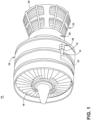
FIG. 1 is a schematic illustration of a turbine engine with an air turbine starter. -
FIG. 2 is an enlarged schematic cross-section view of a portion of the air turbine starter ofFIG. 1 . -
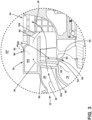
FIG. 3 is a further enlarged view of a portion of the air turbine starter ofFIG. 2 . -
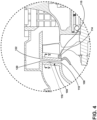
FIG. 4 is a variation of the enlarged portion of the air turbine starter ofFIG. 3 . -
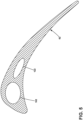
FIG. 5 is a cross section of a portion of the air turbine starter ofFIG. 3 . -
FIG. 6 is a variation of the schematic cross-section of the air turbine starter ofFIG. 2 . - Aspects of the disclosure described herein are directed to a turbine engine with an air turbine starter that includes a primary air flow path and a secondary air flow path. A portion of the air flow from the primary air flow path enters a first cavity through a first cavity inlet. The first cavity inlet can be a gap located between a plurality of vanes and blades housed within the air turbine starter. The portion of the air flow from the primary air flow path that enters the first cavity can increase the pressure differential across a rotor. Increasing the pressure differential across the rotor can result in an axial force on the rotor or a drive shaft coupled to the rotor. To reduce or eliminate the pressure differential across the rotor, air from the first cavity can flow out of the first cavity via the secondary air flow path.
- For purposes of illustration, the present disclosure will be described with respect to an air turbine starter for a turbine engine. The disclosure can have applicability in a variety of vehicles or engines, and can be used to provide benefits in industrial, commercial, and residential applications. Further non-limiting examples of other vehicles or engines to which the disclosure can relate can include boats, aircraft, helicopters, cars, or other aquatic, air, space, or land vehicles. Industrial, commercial, or residential applications of the disclosure can include, but are not limited to, marine power plants, wind turbines, or small power plants.
- As used herein, the term "upstream" refers to a direction that is opposite the fluid flow direction, and the term "downstream" refers to a direction that is in the same direction as the fluid flow. The term "fore" or "forward" means in front of something and "aft" or "rearward" means behind something. For example, when used in terms of fluid flow, fore/forward can mean upstream and aft/rearward can mean downstream.
- Additionally, as used herein, the terms "radial" or "radially" refer to a direction away from a common center. For example, in the overall context of a turbine engine, radial refers to a direction along a ray extending between a center longitudinal axis of the engine and an outer engine circumference.
- All directional references (e.g., radial, axial, proximal, distal, upper, lower, upward, downward, left, right, lateral, front, back, top, bottom, above, below, vertical, horizontal, clockwise, counterclockwise, upstream, downstream, forward, aft, etc.) are only used for identification purposes to aid the reader's understanding of the present disclosure, and do not create limitations, particularly as to the position, orientation, or use of aspects of the disclosure described herein. Connection references (e.g., attached, coupled, secured, fastened, connected, and joined) are to be construed broadly and can include intermediate members between a collection of elements and relative movement between elements unless otherwise indicated. As such, connection references do not necessarily infer that two elements are directly connected and in fixed relation to one another. The exemplary drawings are for purposes of illustration only and the dimensions, positions, order and relative sizes reflected in the drawings attached hereto can vary.
- Referring to
FIG. 1 , a starter motor orair turbine starter 10 is coupled to an accessory gear box (AGB) 12, also known as a transmission housing, and together are schematically illustrated as being mounted to aturbine engine 14 such as a gas turbine engine. The turbine engine can be a turbofan engine or it could be a variety of other known turbine engines such as a turboprop or turboshaft. - The
turbine engine 14 comprises an air intake with afan 16 that supplies air to a high-pressure compression region 18. The air intake with afan 16 and the high-pressure compression region collectively are known as the 'cold section' of theturbine engine 14 upstream of the combustion. The high-pressure compression region 18 provides acombustion chamber 20 with high pressure air. In the combustion chamber, the high-pressure air is mixed with fuel and combusted. The hot and pressurized combusted gas passes through a high-pressure turbine region 22 and a low-pressure turbine region 24 before exhausting from theturbine engine 14. As the pressurized gases pass through the high-pressure turbine (not shown) of the high-pressure turbine region 22 and the low-pressure turbine (not shown) of the low-pressure turbine region 24, the turbines extract rotational energy from the flow of the gases passing through theturbine engine 14. The high-pressure turbine of the high-pressure turbine region 22 can be coupled to the compression mechanism (not shown) of the high-pressure compression region 18 by way of a shaft to power the compression mechanism. The low-pressure turbine can be coupled to thefan 16 of the air intake by way of the shaft to power thefan 16. - The AGB 12 is coupled to the
turbine engine 14 at either the high-pressure turbine region 22 or the low-pressure turbine region 24 by way of a mechanical power take-off 26. The mechanical power take-off 26 contains multiple gears and components for mechanical coupling of the AGB 12 to theturbine engine 14. During starting operating conditions, theair turbine starter 10 can utilize a source of energy to drive kinetic energy or power from theair turbine starter 10 to initiate self-sustaining combustion or "normal running" operating conditions of theturbine engine 14. For example, in one non-limiting example, a source of pressurized air can be utilized to begin rotation of a set of rotors of theturbine engine 14 by way of theAGB 12 and mechanical power take-off 26, until a rotational speed of the set of rotors is high enough to be able to initiate a self-sustaining combustion cycle of turbine engine operation. Under normal running operating conditions, the mechanical power take-off 26 translates power from theturbine engine 14 to the AGB 12 to power accessories of the aircraft for example but not limited to fuel pumps, electrical systems, and cabin environment controls. Theair turbine starter 10 can be mounted on the outside of either the air intake region containing thefan 16 or on the core near the high-pressure compression region 18. Optionally, anair intake conduit 27 can couple to theair turbine starter 10. Theair intake conduit 27 can supply theair turbine starter 10 with pressurized air. - Referring now to
FIG. 2 , an exploded cross section of a portion of theair turbine starter 10. Generally, theair turbine starter 10 includes ahousing 30 defining an interior 28 having aprimary inlet 32 and aprimary outlet 34. A primaryair flow path 36, illustrated schematically with arrows, extends between theprimary inlet 32 and theprimary outlet 34 for communicating a flow of fluid, including, but not limited to gas, compressed air, or the like, there through. Theprimary outlet 34 can include a plurality of circumferentially arrangedopenings 38 in aperipheral wall 40 of thehousing 30. In this configuration, theprimary inlet 32 is an axial inlet and theprimary outlet 34 is a radial or circumferential outlet alone the periphery of thehousing 30. - The
housing 30 can be made up of two or more parts that are combined together or can be integrally formed as a single piece. In the depicted aspects of the disclosure, thehousing 30 of theair turbine starter 10 generally defines, in an axial series arrangement, aninlet turbine section 44, agearbox section 46, and adrive section 48. Aseal structure 50 can be coupled to or unitarily formed with thehousing 30. It is contemplated that theseal structure 50 can divide the interior 28 into theinlet turbine section 44 and thegearbox section 46. Theair turbine starter 10 can be formed by any materials and methods, including, but not limited to, additive manufacturing or die-casting of high strength and lightweight metals such as aluminum, stainless steel, iron, or titanium. Thehousing 30 and thegearbox section 46 can be formed with a thickness sufficient to provide adequate mechanical rigidity without adding unnecessary weight to theair turbine starter 10. - The
inlet turbine section 44 can include theprimary inlet 32, the primaryair flow path 36, a stationary structure orstator 52, a rotatable portion orturbine 54, theprimary outlet 34, and a secondaryair flow path 56. Thestator 52 is located in the interior 28 and defines at least a portion of the primaryair flow path 36. Thestator 52 includes ahub 60 with a plurality of circumferentially spacedvanes 62. Thehub 60 can include afront face 64 and arear face 66, where thefront face 64 can, in part can define a portion of the primaryair flow path 36. - The
turbine 54 is located in the interior 28 downstream of thestator 52. Theturbine 54 includes arotor 68 with a plurality of circumferentially spacedblades 70 that extend into the primaryair flow path 36. Adrive shaft 72 can extend from therotor 68. By way of non-limiting example, thedrive shaft 72 extends from aforward face 74 of therotor 68 to aback face 76 of therotor 68. It is contemplated that thedrive shaft 72 and therotor 68 can be unitarily formed or otherwise coupled. - A
first cavity 78 is located between theturbine 54 and thestator 52. That is, thefirst cavity 78 can be, at least in part, defined by theforward face 74 of therotor 68 and therear face 66 of thehub 60. The secondaryair flow path 56, illustrated schematically with arrows, fluidly couples thefirst cavity 78 and the primaryair flow path 36. - In one non-limiting example fluid or air is supplied to the
primary inlet 32 from either a ground-operating air cart, an auxiliary power unit, or a cross-bleed start from an engine already operating. The air flow, having entered theair turbine starter 10, is directed by thehub 60 or thevanes 62 of thestator 52 which define, at least in part, the primaryair flow path 36. At least a portion of the air flow in the primaryair flow path 36 rotates the plurality of circumferentially spacedblades 70 and therefore therotor 68 of theturbine 54. Thedrive shaft 72, coupled to or formed with therotor 68, rotates with theturbine 54 allowing for the transfer of energy from the first portion of the air flow to mechanical power. Thedrive shaft 72 can extend through at least a portion of theinlet turbine section 44 or thegearbox section 46. - By way of non-limiting example, the
drive shaft 72 can couple theturbine 54 to one or more gears or clutch assemblies, such as agear train 80, in thegearbox section 46. Thegearbox section 46 can include at least agear box 82 that can include thegear train 80, at least one bearingassembly 84, and anoutput 86. The at least one bearingassembly 84 can rotationally support thedrive shaft 72 to one of thehousing 30 orseal structure 50. Thegear box 82 can contain thegear train 80 that couples thedrive shaft 72 to theoutput 86, so that when driven by thedrive shaft 72, thegear train 80 can transfer mechanical power to theoutput 86. Theoutput 86 can then provide rotational energy to theturbine engine 14 via one or more clutch assemblies, decoupler assemblies, or other known transmitters of mechanical energy in thedrive section 48, as understood in the art. -
FIG. 3 further illustrates the secondaryair flow path 56, which is illustrated schematically byarrows 56. A portion of theair flow 57 from the primaryair flow path 36 enters the secondaryair flow path 56 downstream of thestator 52 or thevanes 62. The portion of theair flow 57 can pass through a gap or afirst cavity inlet 88 to thefirst cavity 78. Thefirst cavity inlet 88 can be defined by arear portion 92 of thestator 52 and aforward portion 94 of theturbine 54. That is, theair flow 57 can enter thefirst cavity 78 from the primaryair flow path 36 via thefirst cavity inlet 88 located downstream of thestator 52 and upstream of theturbine 54. It is contemplated that once the portion of theair flow 57 enters thefirst cavity 78, theair flow 57 can circulate within thefirst cavity 78 in a variety of patterns and with a variety of velocities, including zero. - The secondary
air flow path 56 fluidly connects thefirst cavity 78 with the primaryair flow path 36 downstream of theturbine 54. The fluid connection of thefirst cavity 78 to the primaryair flow path 36 via the secondaryair flow path 56 reduces the air pressure in thefirst cavity 78, which balances the air pressure on opposite sides of therotor 68. By balancing the air pressure on opposite sides of therotor 68, the axial load on therotor 68, associated with pressure differential across therotor 68, is reduced. That is, the secondaryair flow path 56 that fluidly connects thefirst cavity 78 with the primaryair flow path 36 downstream of theturbine 54 helps balance the air pressure on opposite sides of therotor 68 by reducing the air pressure in thefirst cavity 78 which would otherwise tend to want to axially move therotor 68 or driveshaft 72. - The
vanes 62 of thestator 52 include aroot 96 and atip 98 to define a span-wise direction. Afirst passage 100 can extend from theroot 96 to thetip 98 of at least one of the plurality of circumferentially spacedvanes 62. That is, thefirst passage 100 can fluidly connect theroot 96 and thetip 98 of at least one of the plurality of circumferentially spacedvanes 62. The secondaryair flow path 56, can be, in part defined by thefirst cavity 78 and thefirst passage 100. - As illustrated, by way of non-limiting example, the secondary
air flow path 56 can optionally further include asecond cavity 102 or asecond passage 104. Thefirst passage 100 fluidly connects thefirst cavity 78 adjacent theroot 96 to thesecond cavity 102 that is adjacent thetip 98. Thesecond cavity 102 can be defined by thehousing 30. Thesecond passage 104 can fluidly connect the second cavity to the primaryair flow path 36. Optionally, the secondaryair flow path 56 can fluidly connect thefirst cavity 78 withambient air exterior 107 of thehousing 30 via at least one ambient air passage orchannel 106. It is contemplated that thechannel 106 can be in addition to or an alternative of thesecond passage 104. Thechannel 106 an include achannel outlet 99, where thechannel outlet 99 is axially upstream of theprimary outlet 34. -
FIG. 4 illustrates additional structures that can be included in thefirst cavity 78, thefirst cavity inlet 88, or thefirst passage 100. Thefirst cavity 78 can include at least onedeflector 108. The at least onedeflector 108, as illustrated by way of non-limiting example, can be located adjacent to thefirst cavity inlet 88. The at least onedeflector 108 can minimize the volume of theair flow 57 that enters thefirst cavity 78. Additionally, or alternatively, the at least onedeflector 108 can guide the air flow in thefirst cavity 78 to control speed, direction, or other aspect of the flow. It is further contemplated that the at least onedeflector 108 can direct air from thefirst cavity 78 to afirst cavity outlet 110 that fluidly connects thefirst cavity 78 to thefirst passage 100. - Optionally, a
seal 114 can be located adjacent to or in thefirst cavity inlet 88. While illustrated as an angel seal withangle wing 115, it is contemplated that theseal 114 can be any labyrinth seal or other known seal in the art. - Optionally, the
first passage 100 can include at least onesurface geometry 116. Thesurface geometry 116 is illustrated in dotted lines and can include, in any combination or singularity, forward facing steps, pins, turbulators, aft facing steps, bumps, ridges, or dimples. It is contemplated that surface geometries can also be found in thefirst cavity 78, thesecond cavity 102, thesecond passage 104, or thechannel 106. - The
first passage 100 can be at least two physicallydistinct passages root 96 and thetip 98. It is contemplated that thefirst passage 100 can be any numbers of distinct or intersecting passages. It is also contemplated that thefirst passage 100 could be a plexus of passages. It is further contemplated that thefirst passage 100 or any number of passages can include metering or diffusing portions, that is, thefirst passage 100 can include changing inner dimensions. -
FIG. 5 is a cross section of a portion of the at least one of the plurality of circumferentially spacedvanes 62. Further illustrated are the at least twodistinct passages vanes 62. While illustrated as having a cross section that is an oval or elliptical shape, the at least twodistinct passages - In operation, fluid or air is supplied to the
primary inlet 32. The air flow, having entered theair turbine starter 10, is directed by thehub 60 or thevanes 62 of thestator 52 which define, at least in part, the primaryair flow path 36. Downstream of thestator 52, the air flow splits. A first portion of the air flow continues through the primaryair flow path 36. A second portion or the portion of theair flow 57 can pass from the primaryair flow path 36 into the secondaryair flow path 56. That is, the portion of theair flow 57 can flow from the primaryair flow path 36 to thefirst cavity 78 via thefirst cavity inlet 88, theseal 114, or the at least onedeflector 108. From thefirst cavity 78, the second portion of the air flow or the portion of theair flow 57 can pass through thevane 62 via thefirst passage 100 or the at least twodistinct passages second cavity 102. The portion of theair flow 57 can rejoin the first potion of the air flow in the primaryair flow path 36 via thesecond passage 104. Air can be encouraged to flow through thesecond passage 104 due to a venturi effect. - Alternatively, it is contemplated that the
first passage 100 or the at least twodistinct passages first cavity 78 to the primaryair flow path 36, being further defined by a portion of thehousing 30. It is further contemplated that thesecond cavity 102, thefirst passage 100, or the at least twodistinct passages exterior 107 of thehousing 30. -
FIG. 6 is another example of anair turbine starter 210. Theair turbine starter 210 is similar to theair turbine starter 10, therefore, like parts will be identified with like numerals increased by 200, with it being understood that the description of the like parts of theair turbine starter 10 apply to theair turbine starter 210, unless otherwise noted. - Generally, the
air turbine starter 210 includes ahousing 230 defining the interior 28 having theprimary inlet 32 and theprimary outlet 34. The primaryair flow path 36, illustrated schematically with arrows, extends between theprimary inlet 32 and theprimary outlet 34 for communicating a flow of fluid, including, but not limited to gas, compressed air, or the like, there through. - In the depicted aspects of the disclosure, the
housing 230 of theair turbine starter 210 generally defines, in an axial series arrangement, theinlet turbine section 44, thegearbox section 46, and thedrive section 48. Theair turbine starter 210 can be formed by any materials and methods, including, but not limited to, additive manufacturing or die-casting of high strength and lightweight metals such as aluminum, stainless steel, iron, or titanium. Thehousing 230 and thegearbox section 46 can be formed with a thickness sufficient to provide adequate mechanical rigidity without adding unnecessary weight to theair turbine starter 210. - The
inlet turbine section 44 can include theprimary inlet 32, the primaryair flow path 36, the stationary structure orstator 52, the rotatable portion orturbine 54, theprimary outlet 34, and a secondaryair flow path 256. Thestator 52 is located in the interior 28 and defines at least a portion of the primaryair flow path 36. Thestator 52 includes ahub 60 with a plurality of circumferentially spacedvanes 62. Thehub 60 can include thefront face 64 and therear face 66. - The
turbine 54 can be located in the interior 28 downstream of thestator 52. Theturbine 54 can include therotor 68 with the plurality of circumferentially spacedblades 70 that extend into the primaryair flow path 36. Adrive shaft 272 with at least one hollow portion can extend from therotor 68. By way of non-limiting example, thedrive shaft 272 extends from theforward face 74 of therotor 68 to theback face 76 of therotor 68. It is contemplated that thedrive shaft 272 and therotor 68 can be unitarily formed or otherwise coupled. - The
first cavity 78 is located between theturbine 54 and thestator 52. That is, thefirst cavity 78 is, at least in part, defined by theforward face 74 of therotor 68 and therear face 66 of thehub 60. The portion of theair flow 57 can flow from the primaryair flow path 36 through thefirst cavity inlet 88 into thefirst cavity 78. The secondaryair flow path 56 can include thefirst cavity 78, a first passage orshaft channel 300, asecond cavity 302, and asecond cavity outlet 303. - The hollow portion of the
drive shaft 272 can define theshaft channel 300. That is, theshaft channel 300 extends through a portion of thedrive shaft 272. Theshaft channel 300 fluidly connects thefirst cavity 78 to thesecond cavity 302. While theshaft channel 300 is illustrated as extending in an axial and radial direction, any combination of axial or radial channels that to form theshaft channel 300 are contemplated. - The
second cavity 302 can be defined, in part, by thehousing 230 and theback face 76 of therotor 68. Thesecond cavity outlet 303 is located at therear portion 92 of theturbine 54. Thesecond cavity outlet 303 is illustrated, by way of non-limiting example, as located adjacent a trailing edge of the plurality of circumferentially spacedblades 70. Thesecond cavity outlet 303 can fluidly connect thesecond cavity 302 to the primaryair flow path 36. It is contemplated that additionally, or alternatively, one or more passages orchannels 305 defined by thehousing 230 can fluidly couple thesecond cavity 302 to the primaryair flow path 36 or the ambient air at theexterior 107 of thehousing 230. - The portion of the
air flow 57 that enters thefirst cavity 78 can increase the pressure in thefirst cavity 78 relative to thesecond cavity 302. That is, the portion of theair flow 57 that enters thefirst cavity 78 can increase the pressure differential across therotor 68. The increase in pressure in thefirst cavity 78 can result in an axial force on therotor 68 or driveshaft 272. To reduce or eliminate the pressure differential across therotor 68 formed by the influx of theair flow 57, air from thefirst cavity 78 can flow through theshaft channel 300 in thedrive shaft 72 to thesecond cavity 302. Thesecond cavity 302 is downstream of therotor 68. As air flows from thefirst cavity 78 to thesecond cavity 302, the pressure is equalized between the cavities and the axial force on therotor 68 is reduced. Air from thesecond cavity 302 can rejoin the primaryair flow path 36 or join ambient air through thesecond cavity outlet 303 or the one or more passages orchannels 305 in thehousing 230. - It is further contemplated that at least one
rotor passage 307 can also fluidly connect thefirst cavity 78 and thesecond cavity 302. The at least one rotor passage can extend through the rotor in an axial direction, however different shapes, sizes, and curvature to the at least one rotor passage are contemplated. - Optionally, the
air turbine starter 210 can also include a stator channel, illustrated, by way of non-limiting example as afirst stator channel 309a and asecond stator channel 309b. The first andsecond stator channels stator 52 and a portion of thehousing 230. The first andsecond stator channels first cavity 78 with ambient air upstream of thestator 52. That is, astator channel outlet 311 can be located upstream of theprimary outlet 34, thevanes 62, thestator 52, or theturbine 54. - It is contemplated that the secondary
air flow path first passage 100, thesecond passage 104, the ambient air passage orchannel 106, theshaft channel 300, thesecond cavity outlet 303, the at least onerotor passage 307, or the first andsecond stator channel - Benefits associated with aspects of the disclosure herein include a reduced pressure differential in the first cavity. The decrease in the pressure differential using the first passage, shaft channel, or stator channel results in a decrease in the axial force or load on the rotor. A decrease in axial force on the rotor decreases the axial load at the at least one bearing assembly. This results in a reduction of operating temperature of the at least one bearing assembly. The temperature of the bearings is often one of the limiting factors in determining the length of time the air turbine starter can operate before requiring cool down time.
- Aspects of the present disclosure reduce the temperature of the at least one bearing assemblies and can provide for better alignment of the drive shaft, which increases the amount of time the air turbine starter can operate. This also increases part life. By reducing the axial load (by reducing pressure differential), the present disclosure provides a reduced thermal load on the at least one bearing assembly or thrust bearing of the air turbine starter.
- Aspects of the present disclosure reduce the temperature of the at least one bearing assemblies, which increases the speed at which the rotatable components of the air turbine starter can rotate.
- This written description uses examples to describe aspects of the disclosure described herein, including the best mode, and also to enable any person skilled in the art to practice aspects of the disclosure, including making and using any devices or systems and performing any incorporated methods. The patentable scope of aspects of the disclosure is defined by the claims, and may include other examples that occur to those skilled in the art.
Claims (12)
- An air turbine starter (10, 210) comprising:a housing (30, 230) defining an interior (28) having a primary inlet (32) and a primary outlet (34) to define a primary air flow path (36) from the primary inlet (32) to the primary outlet (34);a stator (52) located in the interior (28) that defines at least a portion of the primary air flow path (36), where the stator (52) includes a hub (60), with a plurality of circumferentially spaced vanes (62), wherein the plurality of circumferentially spaced vanes (62) include a root (96) and a tip (98) to define a span-wise direction;a turbine (54) located in the interior (28) downstream of the stator (52) and including a rotor (68), with a plurality of circumferentially spaced blades (70) extending into the primary air flow path (36);a first cavity (78) defined by a forward face (74) of the rotor (68) and a rear face (66) of the stator (52); anda secondary air flow path (56, 256) that fluidly connects the first cavity (78) with the primary air flow path (36) downstream of the turbine (54) or ambient air;characterised by:a first passage (100) extending from the root (96) to the tip (98) of at least one of the plurality of circumferentially spaced vanes (62),wherein the secondary air flow path (56, 256) is at least partially defined by the first passage (100).
- The air turbine starter (10, 210) of claim 1, wherein the first passage (100) is at least two physically distinct passages fluidly connecting the root (96) and the tip (98).
- The air turbine starter (10, 210) of claim 1 or 2, further comprising a second passage (104) fluidly connecting the first cavity (78) to the primary air flow path (36) downstream of the turbine (54).
- The air turbine starter (10, 210) of any of any of claims 1-3, wherein the first passage (100) of the at least one of the plurality of circumferentially spaced vanes (62) fluidly connects the first cavity (78) to a second cavity (102, 302) defined by the housing (30, 230).
- The air turbine starter (10, 210) of claim 4, further comprising a channel (106, 305) with a channel outlet (99) that is defined by the housing (30, 230), wherein the channel (99) fluidly couples the second cavity (102, 302) to the ambient air (107) and the channel outlet (99) is located axially upstream of the primary outlet (34).
- The air turbine starter (10, 210) of any of claims 1-5, wherein the first cavity (78) includes a first cavity inlet (88) defined by a rear portion (92) of the stator (52) and a forward portion (94) of the turbine (54).
- The air turbine starter (10, 210) of claim 6, further comprising a deflector (108) coupled to the stator (52) adjacent the first cavity inlet (88).
- The air turbine starter (10, 210) of claim 6 or 7, further comprising a seal (114) located in the first cavity inlet (88).
- An air turbine starter (10, 210) comprising:a housing (30, 230) defining an interior (28) having a primary inlet (32) and a primary outlet (34) to define a primary air flow path (36) from the primary inlet (32) to the primary outlet (34);a stator (52) located in the interior (28) that defines at least a portion of the primary air flow path (36), where the stator (52) includes a hub (60), with a plurality of circumferentially spaced vanes (62);a turbine (54) located in the interior (28) downstream of the stator (52) and including a rotor (68), with a plurality of circumferentially spaced blades (70) extending into the primary air flow path (36);a first cavity (78) defined by a forward face (74) of the rotor (68) and a rear face (66) of the stator (52);a secondary air flow path (56, 256) that fluidly connects the first cavity (78) with the primary air flow path (36) downstream of the turbine (54) or ambient air; anda drive shaft (72) coupled to the turbine (54) and including a shaft channel (300) that passes through a portion of the drive shaft (72), wherein the shaft channel (300) fluidly couples the first cavity (78) with a second cavity (302);characterized by:
a stator channel (309a, 309b) that passes through a portion of the stator (52) and a portion of the housing (30, 230), wherein the stator channel (309a, 309b) fluidly couples the first cavity (78) with ambient air upstream of the stator (52). - The air turbine starter (10, 210) of claim 9, wherein the stator channel (309a, 309b) includes at least a first stator channel (309a, 309b) and a second stator channel (309a, 309b).
- The air turbine starter (10, 210) of claims 9 or 10, wherein the secondary air flow path (56, 256) is partially defined by a second cavity outlet (303) located at a rear portion (92) of the turbine (54), wherein the second cavity outlet (303) fluidly couples the second cavity (103, 302) to the primary air flow path (36) downstream of the turbine (54) or ambient air.
- The combination of claim 9 and any of claims 1 to 3.
Applications Claiming Priority (1)
| Application Number | Priority Date | Filing Date | Title |
|---|---|---|---|
| IN202011034887 | 2020-08-13 |
Publications (2)
| Publication Number | Publication Date |
|---|---|
| EP3954884A1 EP3954884A1 (en) | 2022-02-16 |
| EP3954884B1 true EP3954884B1 (en) | 2024-05-08 |
Family
ID=77168090
Family Applications (1)
| Application Number | Title | Priority Date | Filing Date |
|---|---|---|---|
| EP21189076.9A Active EP3954884B1 (en) | 2020-08-13 | 2021-08-02 | Air turbine starter with primary and secondary air flow paths |
Country Status (3)
| Country | Link |
|---|---|
| US (1) | US11624323B2 (en) |
| EP (1) | EP3954884B1 (en) |
| CN (1) | CN114076035B (en) |
Families Citing this family (3)
| Publication number | Priority date | Publication date | Assignee | Title |
|---|---|---|---|---|
| PL434997A1 (en) * | 2020-08-18 | 2022-02-21 | Unison Industries, Llc | Air turbine starter |
| US12270347B2 (en) * | 2023-04-25 | 2025-04-08 | Unison Industries, Llc | Air turbine starter with damping member |
| CN119878418B (en) * | 2024-12-31 | 2025-10-21 | 中国船舶集团有限公司第七一一研究所 | Starter motor turbine and engine |
Family Cites Families (15)
| Publication number | Priority date | Publication date | Assignee | Title |
|---|---|---|---|---|
| US2429681A (en) | 1942-02-27 | 1947-10-28 | Griffith Alan Arnold | Thrust balancing construction for turbines, compressors, and the like |
| US2441135A (en) | 1943-07-09 | 1948-05-11 | Westinghouse Electric Corp | Turbine apparatus |
| US2636344A (en) | 1946-10-28 | 1953-04-28 | Solar Aircraft Co | Internal-combustion turbine with self-cooling vanes |
| GB866046A (en) * | 1958-04-09 | 1961-04-26 | United Aircraft Corp | Clutch mechanism for connecting a rotary driving member with a rotary driven member |
| US4867633A (en) | 1988-02-18 | 1989-09-19 | Sundstrand Corporation | Centrifugal pump with hydraulic thrust balance and tandem axial seals |
| US6623238B2 (en) * | 1998-08-21 | 2003-09-23 | Honeywell International, Inc. | Air turbine starter with seal assembly |
| US6269628B1 (en) | 1999-06-10 | 2001-08-07 | Pratt & Whitney Canada Corp. | Apparatus for reducing combustor exit duct cooling |
| US6969235B2 (en) | 2003-05-19 | 2005-11-29 | Honeywell International, Inc. | Air turbine starter with angular contact thrust bearing |
| US6991425B2 (en) | 2003-09-12 | 2006-01-31 | Honeywell International, Inc. | Air turbine starter with unitary inlet and stator |
| US8678747B2 (en) * | 2010-02-04 | 2014-03-25 | Hamilton Sundstrand Corporation | Brake mechanism for air turbine starter |
| US8672637B2 (en) | 2010-08-17 | 2014-03-18 | Hamilton Sundstrand Corporation | Air turbine starter turbine blade airfoil |
| US8672638B2 (en) | 2010-08-17 | 2014-03-18 | Hamilton Sundstrand Corporation | Air turbine starter |
| US8651806B2 (en) * | 2010-08-17 | 2014-02-18 | Hamilton Sundstrand Corporation | Air turbine starter inlet housing assembly airflow path |
| DE102013011350A1 (en) | 2013-07-08 | 2015-01-22 | Rolls-Royce Deutschland Ltd & Co Kg | Gas turbine with high pressure turbine cooling system |
| CN108035810B (en) * | 2017-11-06 | 2019-08-27 | 中国航空工业集团公司金城南京机电液压工程研究中心 | Pressure-regulating device before a kind of air turbine starter stage of turbine |
-
2021
- 2021-06-25 US US17/358,169 patent/US11624323B2/en active Active
- 2021-08-02 EP EP21189076.9A patent/EP3954884B1/en active Active
- 2021-08-12 CN CN202110923423.0A patent/CN114076035B/en active Active
Also Published As
| Publication number | Publication date |
|---|---|
| US20220049613A1 (en) | 2022-02-17 |
| CN114076035A (en) | 2022-02-22 |
| CN114076035B (en) | 2024-04-30 |
| EP3954884A1 (en) | 2022-02-16 |
| US11624323B2 (en) | 2023-04-11 |
Similar Documents
| Publication | Publication Date | Title |
|---|---|---|
| EP3859136B1 (en) | Foil-air bearing assembly for engine starter | |
| EP3954884B1 (en) | Air turbine starter with primary and secondary air flow paths | |
| US12188363B2 (en) | Air turbine starter | |
| CN114930001B (en) | Aviation propulsion system with low leakage rate and improved propulsion efficiency | |
| US12215629B2 (en) | Turbine engine including transfer gearbox and accessory gearbox | |
| US12018593B2 (en) | Air turbine starter with shaped vanes | |
| CN120100531A (en) | Variable pitch airfoil assembly for an open fan rotor of an engine having a damping element | |
| EP3842626B1 (en) | Air starter with bearing cooling | |
| CN113137307A (en) | Air turbine starter with lubricated bearing assembly | |
| US11933227B2 (en) | Air starter with offset interface | |
| US20250075662A1 (en) | Turbine Engine having First and Second Accessory Gearboxes | |
| US20250290452A1 (en) | Turbine engine with accessory gearbox |
Legal Events
| Date | Code | Title | Description |
|---|---|---|---|
| PUAI | Public reference made under article 153(3) epc to a published international application that has entered the european phase |
Free format text: ORIGINAL CODE: 0009012 |
|
| STAA | Information on the status of an ep patent application or granted ep patent |
Free format text: STATUS: THE APPLICATION HAS BEEN PUBLISHED |
|
| AK | Designated contracting states |
Kind code of ref document: A1 Designated state(s): AL AT BE BG CH CY CZ DE DK EE ES FI FR GB GR HR HU IE IS IT LI LT LU LV MC MK MT NL NO PL PT RO RS SE SI SK SM TR |
|
| STAA | Information on the status of an ep patent application or granted ep patent |
Free format text: STATUS: REQUEST FOR EXAMINATION WAS MADE |
|
| 17P | Request for examination filed |
Effective date: 20220801 |
|
| RBV | Designated contracting states (corrected) |
Designated state(s): AL AT BE BG CH CY CZ DE DK EE ES FI FR GB GR HR HU IE IS IT LI LT LU LV MC MK MT NL NO PL PT RO RS SE SI SK SM TR |
|
| GRAP | Despatch of communication of intention to grant a patent |
Free format text: ORIGINAL CODE: EPIDOSNIGR1 |
|
| STAA | Information on the status of an ep patent application or granted ep patent |
Free format text: STATUS: GRANT OF PATENT IS INTENDED |
|
| RIC1 | Information provided on ipc code assigned before grant |
Ipc: F01D 9/06 20060101ALI20231116BHEP Ipc: F01D 25/18 20060101ALI20231116BHEP Ipc: F02C 7/277 20060101AFI20231116BHEP |
|
| INTG | Intention to grant announced |
Effective date: 20231212 |
|
| GRAS | Grant fee paid |
Free format text: ORIGINAL CODE: EPIDOSNIGR3 |
|
| GRAA | (expected) grant |
Free format text: ORIGINAL CODE: 0009210 |
|
| STAA | Information on the status of an ep patent application or granted ep patent |
Free format text: STATUS: THE PATENT HAS BEEN GRANTED |
|
| AK | Designated contracting states |
Kind code of ref document: B1 Designated state(s): AL AT BE BG CH CY CZ DE DK EE ES FI FR GB GR HR HU IE IS IT LI LT LU LV MC MK MT NL NO PL PT RO RS SE SI SK SM TR |
|
| REG | Reference to a national code |
Ref country code: GB Ref legal event code: FG4D |
|
| REG | Reference to a national code |
Ref country code: CH Ref legal event code: EP |
|
| REG | Reference to a national code |
Ref country code: DE Ref legal event code: R096 Ref document number: 602021012976 Country of ref document: DE |
|
| P01 | Opt-out of the competence of the unified patent court (upc) registered |
Effective date: 20240419 |
|
| REG | Reference to a national code |
Ref country code: IE Ref legal event code: FG4D |
|
| REG | Reference to a national code |
Ref country code: LT Ref legal event code: MG9D |
|
| REG | Reference to a national code |
Ref country code: NL Ref legal event code: MP Effective date: 20240508 |
|
| PG25 | Lapsed in a contracting state [announced via postgrant information from national office to epo] |
Ref country code: IS Free format text: LAPSE BECAUSE OF FAILURE TO SUBMIT A TRANSLATION OF THE DESCRIPTION OR TO PAY THE FEE WITHIN THE PRESCRIBED TIME-LIMIT Effective date: 20240908 |
|
| PG25 | Lapsed in a contracting state [announced via postgrant information from national office to epo] |
Ref country code: BG Free format text: LAPSE BECAUSE OF FAILURE TO SUBMIT A TRANSLATION OF THE DESCRIPTION OR TO PAY THE FEE WITHIN THE PRESCRIBED TIME-LIMIT Effective date: 20240508 |
|
| PG25 | Lapsed in a contracting state [announced via postgrant information from national office to epo] |
Ref country code: FI Free format text: LAPSE BECAUSE OF FAILURE TO SUBMIT A TRANSLATION OF THE DESCRIPTION OR TO PAY THE FEE WITHIN THE PRESCRIBED TIME-LIMIT Effective date: 20240508 Ref country code: HR Free format text: LAPSE BECAUSE OF FAILURE TO SUBMIT A TRANSLATION OF THE DESCRIPTION OR TO PAY THE FEE WITHIN THE PRESCRIBED TIME-LIMIT Effective date: 20240508 |
|
| PG25 | Lapsed in a contracting state [announced via postgrant information from national office to epo] |
Ref country code: GR Free format text: LAPSE BECAUSE OF FAILURE TO SUBMIT A TRANSLATION OF THE DESCRIPTION OR TO PAY THE FEE WITHIN THE PRESCRIBED TIME-LIMIT Effective date: 20240809 |
|
| PG25 | Lapsed in a contracting state [announced via postgrant information from national office to epo] |
Ref country code: PT Free format text: LAPSE BECAUSE OF FAILURE TO SUBMIT A TRANSLATION OF THE DESCRIPTION OR TO PAY THE FEE WITHIN THE PRESCRIBED TIME-LIMIT Effective date: 20240909 |
|
| REG | Reference to a national code |
Ref country code: AT Ref legal event code: MK05 Ref document number: 1685169 Country of ref document: AT Kind code of ref document: T Effective date: 20240508 |
|
| PG25 | Lapsed in a contracting state [announced via postgrant information from national office to epo] |
Ref country code: NL Free format text: LAPSE BECAUSE OF FAILURE TO SUBMIT A TRANSLATION OF THE DESCRIPTION OR TO PAY THE FEE WITHIN THE PRESCRIBED TIME-LIMIT Effective date: 20240508 |
|
| PG25 | Lapsed in a contracting state [announced via postgrant information from national office to epo] |
Ref country code: ES Free format text: LAPSE BECAUSE OF FAILURE TO SUBMIT A TRANSLATION OF THE DESCRIPTION OR TO PAY THE FEE WITHIN THE PRESCRIBED TIME-LIMIT Effective date: 20240508 |
|
| PG25 | Lapsed in a contracting state [announced via postgrant information from national office to epo] |
Ref country code: AT Free format text: LAPSE BECAUSE OF FAILURE TO SUBMIT A TRANSLATION OF THE DESCRIPTION OR TO PAY THE FEE WITHIN THE PRESCRIBED TIME-LIMIT Effective date: 20240508 |
|
| PG25 | Lapsed in a contracting state [announced via postgrant information from national office to epo] |
Ref country code: PL Free format text: LAPSE BECAUSE OF FAILURE TO SUBMIT A TRANSLATION OF THE DESCRIPTION OR TO PAY THE FEE WITHIN THE PRESCRIBED TIME-LIMIT Effective date: 20240508 |
|
| PG25 | Lapsed in a contracting state [announced via postgrant information from national office to epo] |
Ref country code: LV Free format text: LAPSE BECAUSE OF FAILURE TO SUBMIT A TRANSLATION OF THE DESCRIPTION OR TO PAY THE FEE WITHIN THE PRESCRIBED TIME-LIMIT Effective date: 20240508 |
|
| PG25 | Lapsed in a contracting state [announced via postgrant information from national office to epo] |
Ref country code: PT Free format text: LAPSE BECAUSE OF FAILURE TO SUBMIT A TRANSLATION OF THE DESCRIPTION OR TO PAY THE FEE WITHIN THE PRESCRIBED TIME-LIMIT Effective date: 20240909 Ref country code: PL Free format text: LAPSE BECAUSE OF FAILURE TO SUBMIT A TRANSLATION OF THE DESCRIPTION OR TO PAY THE FEE WITHIN THE PRESCRIBED TIME-LIMIT Effective date: 20240508 Ref country code: NO Free format text: LAPSE BECAUSE OF FAILURE TO SUBMIT A TRANSLATION OF THE DESCRIPTION OR TO PAY THE FEE WITHIN THE PRESCRIBED TIME-LIMIT Effective date: 20240808 Ref country code: NL Free format text: LAPSE BECAUSE OF FAILURE TO SUBMIT A TRANSLATION OF THE DESCRIPTION OR TO PAY THE FEE WITHIN THE PRESCRIBED TIME-LIMIT Effective date: 20240508 Ref country code: LV Free format text: LAPSE BECAUSE OF FAILURE TO SUBMIT A TRANSLATION OF THE DESCRIPTION OR TO PAY THE FEE WITHIN THE PRESCRIBED TIME-LIMIT Effective date: 20240508 Ref country code: IS Free format text: LAPSE BECAUSE OF FAILURE TO SUBMIT A TRANSLATION OF THE DESCRIPTION OR TO PAY THE FEE WITHIN THE PRESCRIBED TIME-LIMIT Effective date: 20240908 Ref country code: HR Free format text: LAPSE BECAUSE OF FAILURE TO SUBMIT A TRANSLATION OF THE DESCRIPTION OR TO PAY THE FEE WITHIN THE PRESCRIBED TIME-LIMIT Effective date: 20240508 Ref country code: GR Free format text: LAPSE BECAUSE OF FAILURE TO SUBMIT A TRANSLATION OF THE DESCRIPTION OR TO PAY THE FEE WITHIN THE PRESCRIBED TIME-LIMIT Effective date: 20240809 Ref country code: FI Free format text: LAPSE BECAUSE OF FAILURE TO SUBMIT A TRANSLATION OF THE DESCRIPTION OR TO PAY THE FEE WITHIN THE PRESCRIBED TIME-LIMIT Effective date: 20240508 Ref country code: ES Free format text: LAPSE BECAUSE OF FAILURE TO SUBMIT A TRANSLATION OF THE DESCRIPTION OR TO PAY THE FEE WITHIN THE PRESCRIBED TIME-LIMIT Effective date: 20240508 Ref country code: BG Free format text: LAPSE BECAUSE OF FAILURE TO SUBMIT A TRANSLATION OF THE DESCRIPTION OR TO PAY THE FEE WITHIN THE PRESCRIBED TIME-LIMIT Effective date: 20240508 Ref country code: AT Free format text: LAPSE BECAUSE OF FAILURE TO SUBMIT A TRANSLATION OF THE DESCRIPTION OR TO PAY THE FEE WITHIN THE PRESCRIBED TIME-LIMIT Effective date: 20240508 Ref country code: RS Free format text: LAPSE BECAUSE OF FAILURE TO SUBMIT A TRANSLATION OF THE DESCRIPTION OR TO PAY THE FEE WITHIN THE PRESCRIBED TIME-LIMIT Effective date: 20240808 |
|
| PG25 | Lapsed in a contracting state [announced via postgrant information from national office to epo] |
Ref country code: DK Free format text: LAPSE BECAUSE OF FAILURE TO SUBMIT A TRANSLATION OF THE DESCRIPTION OR TO PAY THE FEE WITHIN THE PRESCRIBED TIME-LIMIT Effective date: 20240508 |
|
| PG25 | Lapsed in a contracting state [announced via postgrant information from national office to epo] |
Ref country code: EE Free format text: LAPSE BECAUSE OF FAILURE TO SUBMIT A TRANSLATION OF THE DESCRIPTION OR TO PAY THE FEE WITHIN THE PRESCRIBED TIME-LIMIT Effective date: 20240508 |
|
| PG25 | Lapsed in a contracting state [announced via postgrant information from national office to epo] |
Ref country code: CZ Free format text: LAPSE BECAUSE OF FAILURE TO SUBMIT A TRANSLATION OF THE DESCRIPTION OR TO PAY THE FEE WITHIN THE PRESCRIBED TIME-LIMIT Effective date: 20240508 |
|
| PG25 | Lapsed in a contracting state [announced via postgrant information from national office to epo] |
Ref country code: SK Free format text: LAPSE BECAUSE OF FAILURE TO SUBMIT A TRANSLATION OF THE DESCRIPTION OR TO PAY THE FEE WITHIN THE PRESCRIBED TIME-LIMIT Effective date: 20240508 Ref country code: RO Free format text: LAPSE BECAUSE OF FAILURE TO SUBMIT A TRANSLATION OF THE DESCRIPTION OR TO PAY THE FEE WITHIN THE PRESCRIBED TIME-LIMIT Effective date: 20240508 |
|
| PG25 | Lapsed in a contracting state [announced via postgrant information from national office to epo] |
Ref country code: SM Free format text: LAPSE BECAUSE OF FAILURE TO SUBMIT A TRANSLATION OF THE DESCRIPTION OR TO PAY THE FEE WITHIN THE PRESCRIBED TIME-LIMIT Effective date: 20240508 |
|
| PG25 | Lapsed in a contracting state [announced via postgrant information from national office to epo] |
Ref country code: SM Free format text: LAPSE BECAUSE OF FAILURE TO SUBMIT A TRANSLATION OF THE DESCRIPTION OR TO PAY THE FEE WITHIN THE PRESCRIBED TIME-LIMIT Effective date: 20240508 Ref country code: SK Free format text: LAPSE BECAUSE OF FAILURE TO SUBMIT A TRANSLATION OF THE DESCRIPTION OR TO PAY THE FEE WITHIN THE PRESCRIBED TIME-LIMIT Effective date: 20240508 Ref country code: RO Free format text: LAPSE BECAUSE OF FAILURE TO SUBMIT A TRANSLATION OF THE DESCRIPTION OR TO PAY THE FEE WITHIN THE PRESCRIBED TIME-LIMIT Effective date: 20240508 Ref country code: EE Free format text: LAPSE BECAUSE OF FAILURE TO SUBMIT A TRANSLATION OF THE DESCRIPTION OR TO PAY THE FEE WITHIN THE PRESCRIBED TIME-LIMIT Effective date: 20240508 Ref country code: DK Free format text: LAPSE BECAUSE OF FAILURE TO SUBMIT A TRANSLATION OF THE DESCRIPTION OR TO PAY THE FEE WITHIN THE PRESCRIBED TIME-LIMIT Effective date: 20240508 Ref country code: CZ Free format text: LAPSE BECAUSE OF FAILURE TO SUBMIT A TRANSLATION OF THE DESCRIPTION OR TO PAY THE FEE WITHIN THE PRESCRIBED TIME-LIMIT Effective date: 20240508 |
|
| PG25 | Lapsed in a contracting state [announced via postgrant information from national office to epo] |
Ref country code: IT Free format text: LAPSE BECAUSE OF FAILURE TO SUBMIT A TRANSLATION OF THE DESCRIPTION OR TO PAY THE FEE WITHIN THE PRESCRIBED TIME-LIMIT Effective date: 20240508 |
|
| REG | Reference to a national code |
Ref country code: DE Ref legal event code: R097 Ref document number: 602021012976 Country of ref document: DE |
|
| PLBE | No opposition filed within time limit |
Free format text: ORIGINAL CODE: 0009261 |
|
| STAA | Information on the status of an ep patent application or granted ep patent |
Free format text: STATUS: NO OPPOSITION FILED WITHIN TIME LIMIT |
|
| REG | Reference to a national code |
Ref country code: CH Ref legal event code: PL |
|
| 26N | No opposition filed |
Effective date: 20250211 |
|
| PG25 | Lapsed in a contracting state [announced via postgrant information from national office to epo] |
Ref country code: LU Free format text: LAPSE BECAUSE OF NON-PAYMENT OF DUE FEES Effective date: 20240802 |
|
| PG25 | Lapsed in a contracting state [announced via postgrant information from national office to epo] |
Ref country code: SI Free format text: LAPSE BECAUSE OF FAILURE TO SUBMIT A TRANSLATION OF THE DESCRIPTION OR TO PAY THE FEE WITHIN THE PRESCRIBED TIME-LIMIT Effective date: 20240508 Ref country code: MC Free format text: LAPSE BECAUSE OF FAILURE TO SUBMIT A TRANSLATION OF THE DESCRIPTION OR TO PAY THE FEE WITHIN THE PRESCRIBED TIME-LIMIT Effective date: 20240508 Ref country code: CH Free format text: LAPSE BECAUSE OF NON-PAYMENT OF DUE FEES Effective date: 20240831 |
|
| REG | Reference to a national code |
Ref country code: BE Ref legal event code: MM Effective date: 20240831 |
|
| PG25 | Lapsed in a contracting state [announced via postgrant information from national office to epo] |
Ref country code: BE Free format text: LAPSE BECAUSE OF NON-PAYMENT OF DUE FEES Effective date: 20240831 |
|
| PG25 | Lapsed in a contracting state [announced via postgrant information from national office to epo] |
Ref country code: IE Free format text: LAPSE BECAUSE OF NON-PAYMENT OF DUE FEES Effective date: 20240802 |
|
| PG25 | Lapsed in a contracting state [announced via postgrant information from national office to epo] |
Ref country code: SE Free format text: LAPSE BECAUSE OF FAILURE TO SUBMIT A TRANSLATION OF THE DESCRIPTION OR TO PAY THE FEE WITHIN THE PRESCRIBED TIME-LIMIT Effective date: 20240508 |
|
| PGFP | Annual fee paid to national office [announced via postgrant information from national office to epo] |
Ref country code: DE Payment date: 20250724 Year of fee payment: 5 |
|
| PGFP | Annual fee paid to national office [announced via postgrant information from national office to epo] |
Ref country code: GB Payment date: 20250725 Year of fee payment: 5 |
|
| PGFP | Annual fee paid to national office [announced via postgrant information from national office to epo] |
Ref country code: FR Payment date: 20250723 Year of fee payment: 5 |
|
| PG25 | Lapsed in a contracting state [announced via postgrant information from national office to epo] |
Ref country code: CY Free format text: LAPSE BECAUSE OF FAILURE TO SUBMIT A TRANSLATION OF THE DESCRIPTION OR TO PAY THE FEE WITHIN THE PRESCRIBED TIME-LIMIT; INVALID AB INITIO Effective date: 20210802 |
|
| PG25 | Lapsed in a contracting state [announced via postgrant information from national office to epo] |
Ref country code: HU Free format text: LAPSE BECAUSE OF FAILURE TO SUBMIT A TRANSLATION OF THE DESCRIPTION OR TO PAY THE FEE WITHIN THE PRESCRIBED TIME-LIMIT; INVALID AB INITIO Effective date: 20210802 |