EP3953275B1 - Container handling vehicle and method - Google Patents
Container handling vehicle and method Download PDFInfo
- Publication number
- EP3953275B1 EP3953275B1 EP20715290.1A EP20715290A EP3953275B1 EP 3953275 B1 EP3953275 B1 EP 3953275B1 EP 20715290 A EP20715290 A EP 20715290A EP 3953275 B1 EP3953275 B1 EP 3953275B1
- Authority
- EP
- European Patent Office
- Prior art keywords
- power supply
- rechargeable power
- container
- lifting frame
- handling vehicle
- Prior art date
- Legal status (The legal status is an assumption and is not a legal conclusion. Google has not performed a legal analysis and makes no representation as to the accuracy of the status listed.)
- Active
Links
Images

Classifications
-
- B—PERFORMING OPERATIONS; TRANSPORTING
- B65—CONVEYING; PACKING; STORING; HANDLING THIN OR FILAMENTARY MATERIAL
- B65G—TRANSPORT OR STORAGE DEVICES, e.g. CONVEYORS FOR LOADING OR TIPPING, SHOP CONVEYOR SYSTEMS OR PNEUMATIC TUBE CONVEYORS
- B65G1/00—Storing articles, individually or in orderly arrangement, in warehouses or magazines
- B65G1/02—Storage devices
- B65G1/04—Storage devices mechanical
- B65G1/0464—Storage devices mechanical with access from above
-
- B—PERFORMING OPERATIONS; TRANSPORTING
- B65—CONVEYING; PACKING; STORING; HANDLING THIN OR FILAMENTARY MATERIAL
- B65G—TRANSPORT OR STORAGE DEVICES, e.g. CONVEYORS FOR LOADING OR TIPPING, SHOP CONVEYOR SYSTEMS OR PNEUMATIC TUBE CONVEYORS
- B65G1/00—Storing articles, individually or in orderly arrangement, in warehouses or magazines
- B65G1/02—Storage devices
- B65G1/04—Storage devices mechanical
- B65G1/0478—Storage devices mechanical for matrix-arrangements
-
- B—PERFORMING OPERATIONS; TRANSPORTING
- B65—CONVEYING; PACKING; STORING; HANDLING THIN OR FILAMENTARY MATERIAL
- B65G—TRANSPORT OR STORAGE DEVICES, e.g. CONVEYORS FOR LOADING OR TIPPING, SHOP CONVEYOR SYSTEMS OR PNEUMATIC TUBE CONVEYORS
- B65G1/00—Storing articles, individually or in orderly arrangement, in warehouses or magazines
- B65G1/02—Storage devices
- B65G1/04—Storage devices mechanical
- B65G1/0492—Storage devices mechanical with cars adapted to travel in storage aisles
-
- B—PERFORMING OPERATIONS; TRANSPORTING
- B66—HOISTING; LIFTING; HAULING
- B66C—CRANES; LOAD-ENGAGING ELEMENTS OR DEVICES FOR CRANES, CAPSTANS, WINCHES, OR TACKLES
- B66C1/00—Load-engaging elements or devices attached to lifting or lowering gear of cranes or adapted for connection therewith for transmitting lifting forces to articles or groups of articles
- B66C1/10—Load-engaging elements or devices attached to lifting or lowering gear of cranes or adapted for connection therewith for transmitting lifting forces to articles or groups of articles by mechanical means
- B66C1/62—Load-engaging elements or devices attached to lifting or lowering gear of cranes or adapted for connection therewith for transmitting lifting forces to articles or groups of articles by mechanical means comprising article-engaging members of a shape complementary to that of the articles to be handled
- B66C1/66—Load-engaging elements or devices attached to lifting or lowering gear of cranes or adapted for connection therewith for transmitting lifting forces to articles or groups of articles by mechanical means comprising article-engaging members of a shape complementary to that of the articles to be handled for engaging holes, recesses, or abutments on articles specially provided for facilitating handling thereof
- B66C1/663—Load-engaging elements or devices attached to lifting or lowering gear of cranes or adapted for connection therewith for transmitting lifting forces to articles or groups of articles by mechanical means comprising article-engaging members of a shape complementary to that of the articles to be handled for engaging holes, recesses, or abutments on articles specially provided for facilitating handling thereof for containers
-
- B—PERFORMING OPERATIONS; TRANSPORTING
- B66—HOISTING; LIFTING; HAULING
- B66C—CRANES; LOAD-ENGAGING ELEMENTS OR DEVICES FOR CRANES, CAPSTANS, WINCHES, OR TACKLES
- B66C13/00—Other constructional features or details
- B66C13/12—Arrangements of means for transmitting pneumatic, hydraulic, or electric power to movable parts of devices
- B66C13/14—Arrangements of means for transmitting pneumatic, hydraulic, or electric power to movable parts of devices to load-engaging elements or motors associated therewith
-
- B—PERFORMING OPERATIONS; TRANSPORTING
- B66—HOISTING; LIFTING; HAULING
- B66C—CRANES; LOAD-ENGAGING ELEMENTS OR DEVICES FOR CRANES, CAPSTANS, WINCHES, OR TACKLES
- B66C13/00—Other constructional features or details
- B66C13/18—Control systems or devices
- B66C13/40—Applications of devices for transmitting control pulses; Applications of remote control devices
-
- B—PERFORMING OPERATIONS; TRANSPORTING
- B66—HOISTING; LIFTING; HAULING
- B66C—CRANES; LOAD-ENGAGING ELEMENTS OR DEVICES FOR CRANES, CAPSTANS, WINCHES, OR TACKLES
- B66C13/00—Other constructional features or details
- B66C13/18—Control systems or devices
- B66C13/40—Applications of devices for transmitting control pulses; Applications of remote control devices
- B66C13/44—Electrical transmitters
-
- H—ELECTRICITY
- H02—GENERATION; CONVERSION OR DISTRIBUTION OF ELECTRIC POWER
- H02J—ELECTRIC POWER NETWORKS; CIRCUIT ARRANGEMENTS OR SYSTEMS FOR SUPPLYING OR DISTRIBUTING ELECTRIC POWER; SYSTEMS FOR STORING ELECTRIC ENERGY
- H02J7/00—Circuit arrangements for charging or discharging batteries or for supplying loads from batteries
-
- H—ELECTRICITY
- H02—GENERATION; CONVERSION OR DISTRIBUTION OF ELECTRIC POWER
- H02J—ELECTRIC POWER NETWORKS; CIRCUIT ARRANGEMENTS OR SYSTEMS FOR SUPPLYING OR DISTRIBUTING ELECTRIC POWER; SYSTEMS FOR STORING ELECTRIC ENERGY
- H02J7/00—Circuit arrangements for charging or discharging batteries or for supplying loads from batteries
- H02J7/70—Circuit arrangements for charging or discharging batteries or for supplying loads from batteries characterised by the mechanical construction
-
- B—PERFORMING OPERATIONS; TRANSPORTING
- B65—CONVEYING; PACKING; STORING; HANDLING THIN OR FILAMENTARY MATERIAL
- B65G—TRANSPORT OR STORAGE DEVICES, e.g. CONVEYORS FOR LOADING OR TIPPING, SHOP CONVEYOR SYSTEMS OR PNEUMATIC TUBE CONVEYORS
- B65G2201/00—Indexing codes relating to handling devices, e.g. conveyors, characterised by the type of product or load being conveyed or handled
- B65G2201/02—Articles
- B65G2201/0235—Containers
-
- H—ELECTRICITY
- H02—GENERATION; CONVERSION OR DISTRIBUTION OF ELECTRIC POWER
- H02J—ELECTRIC POWER NETWORKS; CIRCUIT ARRANGEMENTS OR SYSTEMS FOR SUPPLYING OR DISTRIBUTING ELECTRIC POWER; SYSTEMS FOR STORING ELECTRIC ENERGY
- H02J2207/00—Details of circuit arrangements for charging or discharging batteries or supplying loads from batteries
- H02J2207/50—Charging of capacitors, supercapacitors, ultra-capacitors or double layer capacitors
Definitions
- the present invention regards a container-handling vehicle and a method for picking up storage containers from a three-dimensional grid of an underlying storage system, and more particularly a container-handling vehicle and method for picking up storage containers from a three-dimensional grid of an underlying storage system without transferring signals and power via lifting bands connecting a lifting frame to the container handling vehicle.
- WO 2017/220651 A1 which was used by the EPO as the 'closest prior art' during the European patent examination procedure, describes a robotic cargo handling system and method.
- An interchange for moving shipping containers and semi-trailers between trains, between train and road vehicles and between road vehicles is described.
- the interchange comprises a structure located above a series or railway tracks forming part of a rail network and a series of roads forming part of a road network.
- the structure comprises tracks supported by the structure, the tracks forming a grid-like pattern above the transport network tracks and roads.
- Robotic load handlers are operable on the tracks of the grid structure and pick up containers from beneath the structure and move said containers to alternative locations, said alternative location including moving the containers between vehicles located beneath the structure.
- US 2004/189031 A1 describes a spreader system without electric cables for lifting goods containers.
- the spreader system comprises a spreader and two pulley sets. Each pulley of the pulley sets is fitted with a geared ring, and gears are fixed on the headblock of the spreader.
- An FALK-flexible coupling is fixed on a gear shaft and is connected to planetary speeder, which is, in turn, connected to a bi-directional plunger pump.
- the bi-directional plunger pump is connected to a hydraulic accumulating power station which comprises a hydraulic accumulator, a nitrogen bottle connected to the hydraulic accumulator through a pipeline, an oil tank, an electric generator, a battery, and an oil motor connected to the electric generator and controlled by a magnetic valve.
- Fig. 1 discloses a framework structure of a typical prior art automated storage and retrieval system 1 and figures 2a and 2b disclose known container-handling vehicles of such a system.
- the storage system is disclosed in detail in for instance NO317366 and WO 2014/090684 A1 .
- the framework structure comprises a plurality of upright members/profiles 2 and a plurality of horizontal members 3, which are supported by the upright members 2.
- the members 2, 3 may typically be made of metal, e.g. extruded aluminium profiles.
- the framework structure defines a storage grid 4 comprising multiple grid columns 12 arranged in rows. Most of the grid columns 12 are storage columns 5 in which storage containers 6, also known as containers, are stacked one on top of another to form stacks 7. Each storage container 6 (or container for short) may typically hold a plurality of product items that may be same or different product types depending on the application.
- the framework structure guards against horizontal movement of the stacks 7 of storage containers 6, and guides vertical movement of the containers 6, but does normally not otherwise support the storage containers 6 when stacked.
- Each container-handling vehicle 9 comprises a lifting device 18 (shown in fig. 2b ) for vertical transportation of storage containers 6, e.g. raising a storage container 6 from and lowering a storage container 6 into a storage column 5.
- the lifting device 18 comprises a lifting frame 17, similar to the one shown in fig. 2b , which is adapted to engage a storage container 6.
- the lifting frame 17 can be lowered from the vehicle body 12 so that the position of the lifting frame 17 with respect to the vehicle body 12 is adjusted in a third direction Z, which is orthogonal the first direction X and the second direction Y.
- Each container-handling vehicle 9 comprises a storage compartment or space for receiving and stowing a storage container 6 when transporting the storage container 6 across the grid 4.
- the storage space may comprise a cavity 21 arranged centrally within the vehicle body 13, e.g. as is described in WO2014/090684A1 .
- the container-handling vehicles may have a cantilever construction, as is described in NO317366.
- a grid In a storage grid, most of the grid columns 12 are storage columns 5, i.e. grid columns where storage containers are stored in stacks.
- a grid normally has at least one grid column 12 which is used not for storing storage containers, but which comprises a location where the container-handling vehicles can drop off and/or pick up storage containers so that they can be transported to an access station where the storage containers 6 can be accessed from outside of the grid or transferred out of or into the grid, i.e. a container handling station.
- a location is normally referred to as a "port" and the grid column in which the port is located may be referred to as a port column.
- the grid 4 in fig. 1 comprises two port columns 19 and 20.
- the first port column 19 may for example be a dedicated drop-off port column where the container-handling vehicles 9 can drop off storage containers to be transported to an access or a transfer station (not shown), and the second port 20 column may be a dedicated pick-up port column where the container-handling vehicles 9 can pick up storage containers that have been transported to the grid 4 from an access or a transfer station.
- the automated storage and retrieval system For monitoring and controlling the automated storage and retrieval system, e.g. monitoring and controlling the location of respective storage containers within the grid 4, the content of each storage container 6 and the movement of the container-handling vehicles 9 so that a desired storage container can be delivered to the desired location at the desired time without the container-handling vehicles 9 colliding with each other, the automated storage and retrieval system comprises a control system, which typically is computerised and comprises a database for keeping track of the storage containers.
- one of the container-handling vehicles 9 is instructed to retrieve the target storage container from its position in the grid 4 and transport it to the drop-off port 19.
- This operation involves moving the container-handling vehicle 9 to a grid location above the storage column 5 in which the target storage container is positioned, retrieving the storage container 6 from the storage column 5 using the container-handling vehicle's lifting device (not shown, being internally arranged in a central cavity of the vehicle, but similar to the lifting device 18 of the second prior art vehicle of fig. 2b ), and transporting the storage container to the drop-off port 19.
- a second prior art vehicle 9 is shown in fig. 2b to better illustrate the general design of the lifting device.
- the lifting devices 18 of both prior art vehicles 9 comprise a set of lifting bands 16 extending in a vertical direction and connected close to the corners of a lifting frame 17 (may also be termed a gripping device) for releasable connection to a storage container.
- the lifting frame 17 features container connecting elements 24 for releasably connecting to a storage container, and guiding pins 30 for aligning a storage container 6 to the lifting frame 17.
- the lifting bands 16 are connected to a band drive assembly.
- the lifting bands 16 are commonly spooled on/off at least two rotating lifting shafts or reels (not shown) arranged in the container-handling vehicle, wherein the lifting shafts are further connected via belts/chains to at least one common rotor shaft providing synchronized rotational movement to the at least two lifting shafts.
- Various designs of the lifting shafts are described in for instance WO2015/193278 A1 and WO2017/129384 .
- a lifting device 18 having a band drive assembly comprising at least one rotor shaft, centrally arranged in an upper section of the vehicle and connected to a lifting motor.
- such lifting devices comprise an assembly of secondary shafts and/or sheaves onto which the lifting bands are spooled on and off.
- the secondary shafts and/or sheaves are rotated by being connected to the centrally arranged rotor shaft via belts/chains and are arranged at the corners of the central cavity to provide the required positioning of the lifting bands 16 relative the lifting frame 17.
- a drawback with these prior art container handling vehicles are related to the lifting frame 17 and the gripper elements.
- the gripper elements receive power and signals, for when to grip and release the containers, via cables embedded in the lifting bands.
- This solution may present complications when the lifting bands get worn.
- the lifting bands are all wound up on a rotary shaft. The constant winding and unwinding of the lifting bands on the shaft every time the lifting frame 17 is either raised or lowered wears on the lifting bands.
- a short circuit in the bands can complicate and delay the system considerably e.g. if it occurs while the container handling vehicle is digging, i.e. moving storage containers on top of a specific storage container to be accessed. If the lifting device breaks down during digging it can be a large operation getting the container handling vehicle off the storage system and getting another container handling vehicle to take over the operation of the first container handling vehicle. Also, there is a risk of damaging the container and the goods in the container. A short circuit can also lead to fire.
- a container-handling vehicle for picking up storage containers from a three-dimensional grid of an underlying storage system, comprising a vehicle body and at least one lifting device with a lifting frame with gripper elements for releasable connection to a storage container, and a transmitter for communicating instructions for controlling the gripper elements, where the lifting frame further comprises a first rechargeable power supply for supplying energy to the gripper elements.
- the container handling vehicle has at least one second rechargeable power supply configured to charging the first rechargeable power supply when the lifting frame is in its top most position, and wherein the at least one second rechargeable power supply is connected to at least one upper charger connector and the first rechargeable power supply is connected to at least one lower charger connector.
- the at least one upper charger connector comprises a spring-biased contact probe, optionally wherein the at least one upper charger connector comprises a contact probe, a spring, a fixing plate, a wire connecting nut, a contact probe fixing nut, and a fixing nut and the lower charger connectors are plates of an electrically conductive material.
- the at least one second rechargeable power supply and the first rechargeable power supply is a Li-ion battery and/or a capacitor.
- the communication for controlling the gripper elements is wireless communication between the transmitter and a receiver situated on the lifting frame, and the wireless communication is light communication, and the light communication is implemented by one or more of Visible Light Communication (VLC), Li-Fi, Irda, Optical Wireless Communication (OWC) or Reasonable Optical Near Joint Access (RONJA).
- VLC Visible Light Communication
- Li-Fi Li-Fi
- Irda Optical Wireless Communication
- OOC Optical Wireless Communication
- RONJA Reasonable Optical Near Joint Access
- the transmitter is a first transceiver and the receiver is a second transceiver, and the transmitter and the receiver is installed to be in line of sight of each other.
- a method for picking up storage containers from a three-dimensional grid of an underlying storage system using a container-handling vehicle comprising a vehicle body and at least one lifting device with a lifting frame with gripper elements for releasable connection to a storage container, and a transmitter for communicating instructions for controlling the gripper elements
- the method comprises the following steps lowering the lifting frame, communicating instructions to the lifting frame by means of the transmitter transmitting a signal to actuate the gripper elements, using a first rechargeable power supply, situated on the lifting frame, for supplying energy to actuate the gripper elements, lifting the lifting frame, using a power reading device to read the charge level of the first rechargeable power supply, using a second rechargeable power supply to charge the first rechargeable power supply if the first rechargeable power supply has a charge level below a set threshold level.
- the method comprises using a first transceiver to communicate instructions to the lifting frame by means of transmitting light signals to a second transceiver to activate the gripper elements.
- the present invention provides a solution where neither signals nor power is transferred directly from the container handling vehicle to the gripper elements on the horizontal lifting frame via electrical leads when the lifting frame is operating within the storage grid.
- the framework structure defines a storage grid 4 comprising multiple grid columns 12 arranged in rows. Most of the grid columns 12 are storage columns 5 in which storage containers 6, also known as containers, are stacked one on top of another to form stacks 7. Each storage container 6 (or container for short) may typically hold a plurality of product items (not shown), and the product items within a storage container 6 may be identical or may be of different product types depending on the application.
- the framework structure guards against horizontal movement of the stacks 7 of storage containers 6, and guides vertical movement of the containers 6, but does normally not otherwise support the storage containers 6 when stacked.
- Fig. 2a is a perspective view of a prior art container handling vehicle with a central cavity for storing containers.
- the lifting device and the lifting frame 17 with the gripper elements is stored inside the central cavity when it is raised.
- the benefit of such a solution is that the container handling vehicle takes up less space of the underlying grid allowing for more container handling vehicles to operate at the same time
- Fig. 2b is a side view of a prior art container handling vehicle wherein the lifting frame 17 is displayed, first in a raised position and second in a slightly lowered position.
- the container handling vehicle presented here is a cantilever solution wherein the lifting device and the lifting frame 17 with the gripper elements are placed adjacent to the main body of the container handling vehicle.
- a benefit with this solution is that the container is placed away from the main power source and the electro motors running the container handling vehicles.
- Fig. 3 is a side view of a container handling vehicle according to an embodiment of the present invention wherein the lifting frame 17 is displayed.
- the container handling vehicle displayed here is a cantilever solution the present invention can just as well be used on a container handling vehicle with a central cavity for storing containers.
- the container handling vehicle comprises a main body and a cantilever extension.
- a second rechargeable power supply 41 In the main body there is a second rechargeable power supply 41.
- This second rechargeable power supply 41 can preferably be a Li-ion battery or a capacitor.
- the second rechargeable power supply 41 delivers power to at least one electrically powered motor.
- the electrically powered motor maneuvers the container handling vehicle on the grid of the underlying storage system.
- the electrically powered motors provide motion to at least two sets of wheels.
- the main body can have a central control center.
- FIG. 3 there is a cantilever extension on the main body where the lifting device is situated.
- the lifting device can be situated inside the body of a central cavity container handling vehicle. This makes no difference to the solution of the present invention.
- the lifting device comprises a lifting band drive assembly connected to the vehicle body. To the lifting band drive assembly there is attached at least one rotatable lifting shaft. To the rotatable lifting shaft there is attached a plurality of lifting bands 16. To the lifting bands 16 there is attached a horizontal lifting frame 17. On this lifting frame 17 there is at least one set of gripping elements for releasable connection to a storage container.
- the upper charger connector 31 is connected to the second rechargeable power supply 41.
- the second rechargeable power supply 41 can charge a first rechargeable power supply 42 situated on the horizontal lifting frame 17. The charging of the first rechargeable power supply 42 is done when the lifting frame 17 is at its upper most position.
- the second rechargeable power supply 41 is the main power supply for the container handling vehicle.
- the power is used for manoeuvring the container handling vehicle and to give power to the lifting of the containers by the horizontal lifting frame 17.
- the second rechargeable power supply 41 is used to power the central controller system, which is the main computer system of the container handling vehicle, and to charge the second rechargeable power supply.
- the first rechargeable power supply 42 is used to power the gripper elements 24 on the horizontal lifting frame 17.
- the first rechargeable power supply 42 is also situated on the horizontal lifting frame 17.
- the at least one upper charge connector is connected to the second rechargeable power supply 41.
- the at least one upper charger connector 31 are touching at least one lower charger connector 33 when the horizontal lifting frame 17 is at its top most position.
- the at least one lower charger connector 33 is attached to the upper side of the horizontal lifting frame 17. From here it is connected to the first rechargeable power supply 42.
- a power reading device 43 can check if the first rechargeable power supply 42 needs to be charged when the horizontal lifting frame 17 is at its top most position. If the first rechargeable power supply 42 needs to be recharged the power is transferred from the second rechargeable power supply 41 to the first rechargeable power supply 42 via the upper and the lower charger connectors 33. If the power reading device concludes that the first rechargeable power supply 42 do not need to be charged, no power is transferred from the second rechargeable power supply 41 to the first rechargeable power supply 42 via the upper and the lower charger connectors 33.
- the first rechargeable power supply 42 can be a Li-ion battery or a capacitor.
- vertical guide pins 30 ensures that the lifting frame 17 is lowered correctly into the shaft and connects properly with the container. There is a vertical guide pin in each corner of the horizontal lifting frame 17.
- the central controller system tells the gripper elements 24 to grip the container.
- the central controller system communicates the information to a transmitter 32 using light as a medium for communication.
- the transmitter 32 is situated in a lower part of the cantilever extension.
- the transmitter 32 transmits information directly downwards to a receiver 34 situated on an upper surface of the horizontal lifting frame 17. From here the information received by the receiver is transmitted along a wire to the gripper elements 24 and the gripper elements 24 either grips a container or releases a container depending on the information sent by the central controller system.
- the gripper element 24 is connected to a gripper sensor 43.
- the gripper sensor 43 gives information regarding if the gripper elements 24 are actually gripping a container.
- the sensor can give this information in the form of feedback to the central controller system. Further, the gripper sensor 43 can also measure the amount of force the gripper elements 24 are using.
- the transmitter 32 can be a first transceiver and the receiver 34 can be a second transceiver ensuring a two-way communication between the lifting frame 17 and the central control system.
- the light communication can be implemented by one or more of Visible Light Communication (VLC), Li-Fi, Irda, Optical Wireless Communication (OWC) or Reasonable Optical Near Joint Access (RONJA).
- VLC Visible Light Communication
- OWC Optical Wireless Communication
- RONJA Reasonable Optical Near Joint Access
- transmitter 32 and the receiver 34 must be in line of sight of each other.
- Fig. 4 is a side view of the charging circuit of how the second rechargeable power supply 41 can charge the first rechargeable power supply 42 according to a preferred embodiment of the present invention.
- the second rechargeable power supply 41 is connected to two upper charger connectors 31.
- the contact probe 35 of the upper charger connectors 31 protrudes from the bottom surface of the cantilever extension. In a central cavity solution, the contact probe 35 of the upper charger connector 31 will protrude slightly from a lower part of the cantilever extension of the container handling vehicle.
- the two upper charger connectors 31 are in physical contact with a corresponding pair of lower charger connectors 33.
- These lower charger connectors 33 according to a preferred embodiment of the present invention is in the form of plates of an electrically conductive material.
- the lower charger connectors 33 are mounted to the top side of the lifting frame 17.
- the lower and the upper charger connectors 31 are adjacent to each other so that they will touch when the lifting frame 17 is in its top most position.
- a power reading device 43 can read of the charge level of the first rechargeable power supply 42 when the upper and the lower charger connectors 33 are in physical contact with each other. If the first rechargeable power supply 42 need to be recharged the second rechargeable power supply 41 will charge the second rechargeable power supply. If the first rechargeable power supply 42 has sufficient charge no power is transferred from the second rechargeable power supply 41 to the first rechargeable power supply 42.
- Each upper charger connector 31 comprises a contact probe 35, a spring 36, a fixing plate 37, a wire connecting nut 38, a contact probe fixing nut 39, and a fixing nut 40.
- the contact probe goes through the center of the entire upper charger connector 31 and is preferably an electrode of conductive metal like e.g. copper.
- the spring 36 biasing the contact probe 35 towards the fixing plate 37 ensures a reliable connection between the upper and the lower charger connector 33.
- the upper charger connector 31 is fixed to a fixing plate with a fixing nut.
- the contact probe is fixed to the rest of the upper charger connector 31 with a contact probe fixing nut.
- the wires from the second rechargeable power supply 41 is fixed between the contact probe fixing nut and a wire connecting nut.
Landscapes
- Engineering & Computer Science (AREA)
- Mechanical Engineering (AREA)
- Automation & Control Theory (AREA)
- Power Engineering (AREA)
- Physics & Mathematics (AREA)
- Mathematical Physics (AREA)
- Warehouses Or Storage Devices (AREA)
- Forklifts And Lifting Vehicles (AREA)
Description
- The present invention regards a container-handling vehicle and a method for picking up storage containers from a three-dimensional grid of an underlying storage system, and more particularly a container-handling vehicle and method for picking up storage containers from a three-dimensional grid of an underlying storage system without transferring signals and power via lifting bands connecting a lifting frame to the container handling vehicle.
-
WO 2017/220651 A1 , which was used by the EPO as the 'closest prior art' during the European patent examination procedure, describes a robotic cargo handling system and method. An interchange for moving shipping containers and semi-trailers between trains, between train and road vehicles and between road vehicles is described. The interchange comprises a structure located above a series or railway tracks forming part of a rail network and a series of roads forming part of a road network. The structure comprises tracks supported by the structure, the tracks forming a grid-like pattern above the transport network tracks and roads. Robotic load handlers are operable on the tracks of the grid structure and pick up containers from beneath the structure and move said containers to alternative locations, said alternative location including moving the containers between vehicles located beneath the structure.US 2004/189031 A1 describes a spreader system without electric cables for lifting goods containers. The spreader system comprises a spreader and two pulley sets. Each pulley of the pulley sets is fitted with a geared ring, and gears are fixed on the headblock of the spreader. An FALK-flexible coupling is fixed on a gear shaft and is connected to planetary speeder, which is, in turn, connected to a bi-directional plunger pump. Through a hydraulic circuit, the bi-directional plunger pump is connected to a hydraulic accumulating power station which comprises a hydraulic accumulator, a nitrogen bottle connected to the hydraulic accumulator through a pipeline, an oil tank, an electric generator, a battery, and an oil motor connected to the electric generator and controlled by a magnetic valve. On the spreader, there is a remote control transmitter in order to transmit signals to the remote control receiver in the cab of a container crane. While the crane hoists the spreader, due to friction, the wire rope will rotate the pulley sets, which will finally drive the bi-directional plunger pump and an accumulative power source will form. -
Fig. 1 discloses a framework structure of a typical prior art automated storage andretrieval system 1 andfigures 2a and 2b disclose known container-handling vehicles of such a system. The storage system is disclosed in detail in for instance NO317366 andWO 2014/090684 A1 . - The framework structure comprises a plurality of upright members/
profiles 2 and a plurality ofhorizontal members 3, which are supported by theupright members 2. Themembers - The framework structure defines a
storage grid 4 comprising multiple grid columns 12 arranged in rows. Most of the grid columns 12 arestorage columns 5 in whichstorage containers 6, also known as containers, are stacked one on top of another to form stacks 7. Each storage container 6 (or container for short) may typically hold a plurality of product items that may be same or different product types depending on the application. The framework structure guards against horizontal movement of the stacks 7 ofstorage containers 6, and guides vertical movement of thecontainers 6, but does normally not otherwise support thestorage containers 6 when stacked. - Each container-
handling vehicle 9 comprises a lifting device 18 (shown infig. 2b ) for vertical transportation ofstorage containers 6, e.g. raising astorage container 6 from and lowering astorage container 6 into astorage column 5. Thelifting device 18 comprises alifting frame 17, similar to the one shown infig. 2b , which is adapted to engage astorage container 6. Thelifting frame 17 can be lowered from the vehicle body 12 so that the position of thelifting frame 17 with respect to the vehicle body 12 is adjusted in a third direction Z, which is orthogonal the first direction X and the second direction Y. - Each container-
handling vehicle 9 comprises a storage compartment or space for receiving and stowing astorage container 6 when transporting thestorage container 6 across thegrid 4. The storage space may comprise a cavity 21 arranged centrally within thevehicle body 13, e.g. as is described inWO2014/090684A1 . - Alternatively, the container-handling vehicles may have a cantilever construction, as is described in NO317366.
- In a storage grid, most of the grid columns 12 are
storage columns 5, i.e. grid columns where storage containers are stored in stacks. However, a grid normally has at least one grid column 12 which is used not for storing storage containers, but which comprises a location where the container-handling vehicles can drop off and/or pick up storage containers so that they can be transported to an access station where thestorage containers 6 can be accessed from outside of the grid or transferred out of or into the grid, i.e. a container handling station. Within the art, such a location is normally referred to as a "port" and the grid column in which the port is located may be referred to as a port column. - The
grid 4 infig. 1 comprises twoport columns first port column 19 may for example be a dedicated drop-off port column where the container-handling vehicles 9 can drop off storage containers to be transported to an access or a transfer station (not shown), and thesecond port 20 column may be a dedicated pick-up port column where the container-handling vehicles 9 can pick up storage containers that have been transported to thegrid 4 from an access or a transfer station. - For monitoring and controlling the automated storage and retrieval system, e.g. monitoring and controlling the location of respective storage containers within the
grid 4, the content of eachstorage container 6 and the movement of the container-handling vehicles 9 so that a desired storage container can be delivered to the desired location at the desired time without the container-handlingvehicles 9 colliding with each other, the automated storage and retrieval system comprises a control system, which typically is computerised and comprises a database for keeping track of the storage containers. - When a
storage container 6 stored in thegrid 4 disclosed infig. 1 is to be accessed, one of the container-handling vehicles 9 is instructed to retrieve the target storage container from its position in thegrid 4 and transport it to the drop-off port 19. This operation involves moving the container-handlingvehicle 9 to a grid location above thestorage column 5 in which the target storage container is positioned, retrieving thestorage container 6 from thestorage column 5 using the container-handling vehicle's lifting device (not shown, being internally arranged in a central cavity of the vehicle, but similar to thelifting device 18 of the second prior art vehicle offig. 2b ), and transporting the storage container to the drop-off port 19. A secondprior art vehicle 9 is shown infig. 2b to better illustrate the general design of the lifting device. Details of thesecond vehicle 9 are described in theNorwegian patent NO317366 lifting devices 18 of bothprior art vehicles 9 comprise a set oflifting bands 16 extending in a vertical direction and connected close to the corners of a lifting frame 17 (may also be termed a gripping device) for releasable connection to a storage container. Thelifting frame 17 featurescontainer connecting elements 24 for releasably connecting to a storage container, and guidingpins 30 for aligning astorage container 6 to thelifting frame 17. - To raise or lower the lifting frame 17 (with or without a connected storage container 6), the
lifting bands 16 are connected to a band drive assembly. In the band drive assembly, thelifting bands 16 are commonly spooled on/off at least two rotating lifting shafts or reels (not shown) arranged in the container-handling vehicle, wherein the lifting shafts are further connected via belts/chains to at least one common rotor shaft providing synchronized rotational movement to the at least two lifting shafts. Various designs of the lifting shafts are described in for instanceWO2015/193278 A1 andWO2017/129384 . - Most prior art container-handling vehicles having a central cavity for receiving a storage bin, as in
fig. 2a , features alifting device 18 having a band drive assembly comprising at least one rotor shaft, centrally arranged in an upper section of the vehicle and connected to a lifting motor. In addition to the centrally arranged rotor shaft, such lifting devices comprise an assembly of secondary shafts and/or sheaves onto which the lifting bands are spooled on and off. The secondary shafts and/or sheaves are rotated by being connected to the centrally arranged rotor shaft via belts/chains and are arranged at the corners of the central cavity to provide the required positioning of thelifting bands 16 relative thelifting frame 17. Having such an assembly of multiple movable parts is not an optimal solution since the lifting devices are relatively service intensive and occupies a large volume inside the robot. - A drawback with these prior art container handling vehicles are related to the
lifting frame 17 and the gripper elements. The gripper elements receive power and signals, for when to grip and release the containers, via cables embedded in the lifting bands. This solution may present complications when the lifting bands get worn. In the current solution the lifting bands are all wound up on a rotary shaft. The constant winding and unwinding of the lifting bands on the shaft every time the liftingframe 17 is either raised or lowered wears on the lifting bands. - When the lifting bands get worn there is a risk of the cables providing the gripper elements with power and operating signals also gets worn and since they are rolled up on the same rotary shaft there is a risk of short circuit. A short circuit in the bands can complicate and delay the system considerably e.g. if it occurs while the container handling vehicle is digging, i.e. moving storage containers on top of a specific storage container to be accessed. If the lifting device breaks down during digging it can be a large operation getting the container handling vehicle off the storage system and getting another container handling vehicle to take over the operation of the first container handling vehicle. Also, there is a risk of damaging the container and the goods in the container. A short circuit can also lead to fire.
- In view of the above it is desirable to provide a container handling vehicle with a lifting device wherein the disadvantages of the prior art are avoided.
- The present invention is defined in
claims - According to a first aspect of the present invention, there is provided a container-handling vehicle for picking up storage containers from a three-dimensional grid of an underlying storage system, comprising a vehicle body and at least one lifting device with a lifting frame with gripper elements for releasable connection to a storage container, and a transmitter for communicating instructions for controlling the gripper elements, where the lifting frame further comprises a first rechargeable power supply for supplying energy to the gripper elements.
- Further, the container handling vehicle has at least one second rechargeable power supply configured to charging the first rechargeable power supply when the lifting frame is in its top most position, and wherein the at least one second rechargeable power supply is connected to at least one upper charger connector and the first rechargeable power supply is connected to at least one lower charger connector.
- The at least one upper charger connector comprises a spring-biased contact probe, optionally wherein the at least one upper charger connector comprises a contact probe, a spring, a fixing plate, a wire connecting nut, a contact probe fixing nut, and a fixing nut and the lower charger connectors are plates of an electrically conductive material.
- The at least one second rechargeable power supply and the first rechargeable power supply is a Li-ion battery and/or a capacitor.
- The communication for controlling the gripper elements is wireless communication between the transmitter and a receiver situated on the lifting frame, and the wireless communication is light communication, and the light communication is implemented by one or more of Visible Light Communication (VLC), Li-Fi, Irda, Optical Wireless Communication (OWC) or Reasonable Optical Near Joint Access (RONJA).
- The transmitter is a first transceiver and the receiver is a second transceiver, and the transmitter and the receiver is installed to be in line of sight of each other.
- According to a second aspect of the present invention, there is provided a method for picking up storage containers from a three-dimensional grid of an underlying storage system, using a container-handling vehicle comprising a vehicle body and at least one lifting device with a lifting frame with gripper elements for releasable connection to a storage container, and a transmitter for communicating instructions for controlling the gripper elements, wherein the method comprises the following steps lowering the lifting frame, communicating instructions to the lifting frame by means of the transmitter transmitting a signal to actuate the gripper elements, using a first rechargeable power supply, situated on the lifting frame, for supplying energy to actuate the gripper elements, lifting the lifting frame,
using a power reading device to read the charge level of the first rechargeable power supply, using a second rechargeable power supply to charge the first rechargeable power supply if the first rechargeable power supply has a charge level below a set threshold level. - Further the method comprises using a first transceiver to communicate instructions to the lifting frame by means of transmitting light signals to a second transceiver to activate the gripper elements.
- So, the present invention provides a solution where neither signals nor power is transferred directly from the container handling vehicle to the gripper elements on the horizontal lifting frame via electrical leads when the lifting frame is operating within the storage grid.
- Certain embodiments will now be described in greater detail by way of example only and with reference to the accompanying drawings, in which:
-
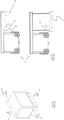
Fig. 1 is a perspective view of an exemplary storage system. -
Fig. 2a is a perspective view of a prior art container handling vehicle with a central cavity for storing containers. -
Fig. 2b is a side view of a prior art container handling vehicle wherein the lifting frame is displayed, first in a raised position and second in a slightly lowered position. -
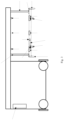
Fig. 3 is a side view of a container handling vehicle according to an embodiment of the present invention wherein the lifting frame is displayed in a slightly lowered position. -
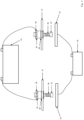
Fig. 4 is a side view of the charging circuit of how the first rechargeable power source can charge the second rechargeable power source. -
Fig. 1 is a perspective view of an exemplary storage system. Here it is disclosed a framework structure of a typical prior art automated storage andretrieval system 1. The framework structure comprises a plurality of upright members/profiles 2 and a plurality ofhorizontal members 3, which are supported by theupright members 2. Themembers - The framework structure defines a
storage grid 4 comprising multiple grid columns 12 arranged in rows. Most of the grid columns 12 arestorage columns 5 in whichstorage containers 6, also known as containers, are stacked one on top of another to form stacks 7. Each storage container 6 (or container for short) may typically hold a plurality of product items (not shown), and the product items within astorage container 6 may be identical or may be of different product types depending on the application. The framework structure guards against horizontal movement of the stacks 7 ofstorage containers 6, and guides vertical movement of thecontainers 6, but does normally not otherwise support thestorage containers 6 when stacked. -
Fig. 2a is a perspective view of a prior art container handling vehicle with a central cavity for storing containers. In this solution the lifting device and the liftingframe 17 with the gripper elements is stored inside the central cavity when it is raised. The benefit of such a solution is that the container handling vehicle takes up less space of the underlying grid allowing for more container handling vehicles to operate at the same time -
Fig. 2b is a side view of a prior art container handling vehicle wherein the liftingframe 17 is displayed, first in a raised position and second in a slightly lowered position. The container handling vehicle presented here is a cantilever solution wherein the lifting device and the liftingframe 17 with the gripper elements are placed adjacent to the main body of the container handling vehicle. A benefit with this solution is that the container is placed away from the main power source and the electro motors running the container handling vehicles. -
Fig. 3 is a side view of a container handling vehicle according to an embodiment of the present invention wherein the liftingframe 17 is displayed. Although the container handling vehicle displayed here is a cantilever solution the present invention can just as well be used on a container handling vehicle with a central cavity for storing containers. - The container handling vehicle comprises a main body and a cantilever extension. In the main body there is a second
rechargeable power supply 41. This secondrechargeable power supply 41 can preferably be a Li-ion battery or a capacitor. The secondrechargeable power supply 41 delivers power to at least one electrically powered motor. The electrically powered motor maneuvers the container handling vehicle on the grid of the underlying storage system. The electrically powered motors provide motion to at least two sets of wheels. Further the main body can have a central control center. - In the embodiment presented in
figure 3 there is a cantilever extension on the main body where the lifting device is situated. In an alternative embodiment the lifting device can be situated inside the body of a central cavity container handling vehicle. This makes no difference to the solution of the present invention. - The lifting device comprises a lifting band drive assembly connected to the vehicle body. To the lifting band drive assembly there is attached at least one rotatable lifting shaft. To the rotatable lifting shaft there is attached a plurality of lifting
bands 16. To the liftingbands 16 there is attached ahorizontal lifting frame 17. On thislifting frame 17 there is at least one set of gripping elements for releasable connection to a storage container. - To the bottom part of the cantilever extension there is attached at least one upper charger connector 31. The upper charger connector 31 is connected to the second
rechargeable power supply 41. The secondrechargeable power supply 41 can charge a firstrechargeable power supply 42 situated on thehorizontal lifting frame 17. The charging of the firstrechargeable power supply 42 is done when the liftingframe 17 is at its upper most position. - The second
rechargeable power supply 41 is the main power supply for the container handling vehicle. The power is used for manoeuvring the container handling vehicle and to give power to the lifting of the containers by thehorizontal lifting frame 17. Further the secondrechargeable power supply 41 is used to power the central controller system, which is the main computer system of the container handling vehicle, and to charge the second rechargeable power supply. - The first
rechargeable power supply 42 is used to power thegripper elements 24 on thehorizontal lifting frame 17. The firstrechargeable power supply 42 is also situated on thehorizontal lifting frame 17. - The at least one upper charge connector is connected to the second
rechargeable power supply 41. The at least one upper charger connector 31 are touching at least onelower charger connector 33 when thehorizontal lifting frame 17 is at its top most position. The at least onelower charger connector 33 is attached to the upper side of thehorizontal lifting frame 17. From here it is connected to the firstrechargeable power supply 42. - A power reading device 43 can check if the first
rechargeable power supply 42 needs to be charged when thehorizontal lifting frame 17 is at its top most position. If the firstrechargeable power supply 42 needs to be recharged the power is transferred from the secondrechargeable power supply 41 to the firstrechargeable power supply 42 via the upper and thelower charger connectors 33. If the power reading device concludes that the firstrechargeable power supply 42 do not need to be charged, no power is transferred from the secondrechargeable power supply 41 to the firstrechargeable power supply 42 via the upper and thelower charger connectors 33. - The first
rechargeable power supply 42 can be a Li-ion battery or a capacitor. - The when the
horizontal lifting frame 17 is lowered into the underlying grid of the storage system, vertical guide pins 30 ensures that the liftingframe 17 is lowered correctly into the shaft and connects properly with the container. There is a vertical guide pin in each corner of thehorizontal lifting frame 17. - When the lifting
frame 17 has connected properly to the container the central controller system tells thegripper elements 24 to grip the container. The central controller system communicates the information to a transmitter 32 using light as a medium for communication. The transmitter 32 is situated in a lower part of the cantilever extension. The transmitter 32 transmits information directly downwards to a receiver 34 situated on an upper surface of thehorizontal lifting frame 17. From here the information received by the receiver is transmitted along a wire to thegripper elements 24 and thegripper elements 24 either grips a container or releases a container depending on the information sent by the central controller system. - The
gripper element 24 is connected to a gripper sensor 43. The gripper sensor 43 gives information regarding if thegripper elements 24 are actually gripping a container. The sensor can give this information in the form of feedback to the central controller system. Further, the gripper sensor 43 can also measure the amount of force thegripper elements 24 are using. - Further the transmitter 32 can be a first transceiver and the receiver 34 can be a second transceiver ensuring a two-way communication between the lifting
frame 17 and the central control system. - The light communication can be implemented by one or more of Visible Light Communication (VLC), Li-Fi, Irda, Optical Wireless Communication (OWC) or Reasonable Optical Near Joint Access (RONJA).
- Further the transmitter 32 and the receiver 34 must be in line of sight of each other.
-
Fig. 4 is a side view of the charging circuit of how the secondrechargeable power supply 41 can charge the firstrechargeable power supply 42 according to a preferred embodiment of the present invention. - The second
rechargeable power supply 41 is connected to two upper charger connectors 31. Thecontact probe 35 of the upper charger connectors 31 protrudes from the bottom surface of the cantilever extension. In a central cavity solution, thecontact probe 35 of the upper charger connector 31 will protrude slightly from a lower part of the cantilever extension of the container handling vehicle. - When the lifting
frame 17 is in its top most position, the two upper charger connectors 31 are in physical contact with a corresponding pair oflower charger connectors 33. Theselower charger connectors 33 according to a preferred embodiment of the present invention is in the form of plates of an electrically conductive material. Thelower charger connectors 33 are mounted to the top side of the liftingframe 17. The lower and the upper charger connectors 31 are adjacent to each other so that they will touch when the liftingframe 17 is in its top most position. - A power reading device 43 can read of the charge level of the first
rechargeable power supply 42 when the upper and thelower charger connectors 33 are in physical contact with each other. If the firstrechargeable power supply 42 need to be recharged the secondrechargeable power supply 41 will charge the second rechargeable power supply. If the firstrechargeable power supply 42 has sufficient charge no power is transferred from the secondrechargeable power supply 41 to the firstrechargeable power supply 42. - Each upper charger connector 31 comprises a
contact probe 35, aspring 36, a fixingplate 37, awire connecting nut 38, a contactprobe fixing nut 39, and a fixingnut 40. The contact probe goes through the center of the entire upper charger connector 31 and is preferably an electrode of conductive metal like e.g. copper. Between thecontact probe 35 and the fixingplate 37, there is aspring 36. Thespring 36 biasing thecontact probe 35 towards the fixingplate 37 ensures a reliable connection between the upper and thelower charger connector 33. The upper charger connector 31 is fixed to a fixing plate with a fixing nut. The contact probe is fixed to the rest of the upper charger connector 31 with a contact probe fixing nut. The wires from the secondrechargeable power supply 41 is fixed between the contact probe fixing nut and a wire connecting nut.
Claims (17)
- A container-handling vehicle (9) for picking up storage containers (6) from a three-dimensional grid (4) of an underlying storage system (1), comprising a vehicle body (13) and at least one lifting device (18) with a horizontal lifting frame (17) with gripper elements (24) for releasable connection to a storage container (6), characterized in that:
the container-handling vehicle (9) further comprises a transmitter (32) for communicating instructions for controlling the gripper elements (24), the horizontal lifting frame (17) further comprises a first rechargeable power supply (42) for supplying energy to the gripper elements (24), and the container handling vehicle (9) has at least one second rechargeable power supply (41) configured to charge the first rechargeable power supply (42) when the horizontal lifting frame (17) is in its top most position, and the at least one second rechargeable power supply (41) is connected to at least one upper charger connector (31) and the first rechargeable power supply (42) is connected to at least one lower charger connector (33), and the at least one lower charger connector (33) is attached to the upper side of the horizontal lifting frame (17) and from here it is connected to the first rechargeable power supply (42), wherein the at least one upper charger connector (31) is touching the at least one lower charger connector (33) when the horizontal lifting frame (17) is at its top most position, and wherein the at least one upper charger connector (31) comprises a spring-biased contact probe (35), a spring (36), a fixing plate (37), a wire connecting nut (38), a contact probe fixing nut (39), and a fixing nut (40). - The container handling vehicle (9) according to claim 1, wherein the spring-biased contact probe comprises an internal spring.
- The container handling vehicle (9) according to claim 1, wherein the lower charger connectors (33) are plates of an electrically conductive material.
- The container handling vehicle (9) according to any of claims 1 to 3, wherein the at least one second rechargeable power supply (41) is a Li-ion battery and/or a capacitor.
- The container handling vehicle (9) according to any preceding claim, wherein the first rechargeable power supply (42) is a Li-ion battery and/or a capacitor.
- The container handling vehicle (9) according to claim 1, wherein the communication for controlling the gripper elements (24) is wireless communication between the transmitter (32) and a receiver (34) situated on the horizontal lifting frame.
- The container handling vehicle (9) according to claim 6, wherein the wireless communication is light communication.
- The container-handling vehicle (9) according to claim 7, wherein the light communication is implemented by one or more of Visible Light Communication (VLC), Li-Fi, Irda, Optical Wireless Communication (OWC) or Reasonable Optical Near Joint Access (RONJA).
- The container handling vehicle (9) according to claim 8, wherein the transmitter (32) is a first transceiver and the receiver (34) is a second transceiver.
- The container-handling vehicle (9) according to claim 6 or 9, wherein the transmitter (32) and the receiver (34) is installed to be in line of sight of each other.
- A method for picking up storage containers (6) from a three-dimensional grid (4) of an underlying storage system (1), using a container-handling vehicle (9) comprising a vehicle body (13) and at least one lifting device (18) with a horizontal lifting frame (17) with gripper elements (24) for releasable connection to a storage container (6), wherein the method comprises the step of lowering the horizontal lifting frame (17), characterized in that:the container-handling vehicle (9) further comprises a transmitter (32) for communicating instructions for controlling the gripper elements (24); and wherein the method further comprises the following steps:- communicating instructions to the horizontal lifting frame (17) by means of the transmitter (32) transmitting a signal to actuate the gripper elements (24),- using a first rechargeable power supply (42), situated on the horizontal lifting frame (17), for supplying energy to actuate the gripper elements (24),- lifting the horizontal lifting frame (17),- using a power reading device (43) to read the charge level of the first rechargeable power supply (42),- using a second rechargeable power supply (41) to charge the first rechargeable power supply (42) if the first rechargeable power supply (42) has a charge level below a set threshold level, and- using at least one second rechargeable power supply (41) of the container handling vehicle (9) to charge the first rechargeable power supply (42) when the horizontal lifting frame (17) is in its topmost position, andwherein:- the at least one second rechargeable power supply (41) is connected to at least one upper charger connector (31) and the first rechargeable power supply (42) is connected to at least one lower charger connector (33);- the at least one lower charger connector (33) is attached to the upper side of the horizontal lifting frame (17) and from here it is connected to the first rechargeable power supply (42);- the at least one upper charger connector (31) is touching the at least one lower charger connector (33) when the horizontal lifting frame (17) is at its top most position; and- the at least one upper charger connector (31) comprises a spring-biased contact probe (35), a spring (36), a fixing plate (37), a wire connecting nut (38), a contact probe fixing nut (39), and a fixing nut (40).
- The method according to claim 11, comprising the step of using a Li-ion battery or a capacitor as the first rechargeable power supply (42).
- The method according to claim 11 or 12, comprising the step of using a Li-ion battery and/or a capacitor as the at least one second rechargeable power supply (41).
- The method according to claim 11, comprising the step of using wireless communication between the transmitter (32) and a receiver (34).
- The method according to claim 14, comprising the step of using light communication as wireless communication between the transmitter (32) and the receiver (34).
- The method according to claim 14, comprising the step of using a first transceiver as the transmitter (32) and a second transceiver as the receiver (34).
- The method according to any of claims 11 to 16, comprising the step of using one or more of Visible Light Communication (VLC), Li-Fi, Irda, Optical Wireless Communication (OWC) or Reasonable Optical Near Joint Access (RONJA) as light communication.
Priority Applications (1)
| Application Number | Priority Date | Filing Date | Title |
|---|---|---|---|
| EP24221602.6A EP4541752A3 (en) | 2019-04-12 | 2020-03-23 | Container handling vehicle and method |
Applications Claiming Priority (2)
| Application Number | Priority Date | Filing Date | Title |
|---|---|---|---|
| NO20190507A NO347473B1 (en) | 2019-04-12 | 2019-04-12 | Li-Fi for data communication in Autostore |
| PCT/EP2020/057985 WO2020207777A1 (en) | 2019-04-12 | 2020-03-23 | Lifting frame with wireless communication |
Related Child Applications (2)
| Application Number | Title | Priority Date | Filing Date |
|---|---|---|---|
| EP24221602.6A Division EP4541752A3 (en) | 2019-04-12 | 2020-03-23 | Container handling vehicle and method |
| EP24221602.6A Division-Into EP4541752A3 (en) | 2019-04-12 | 2020-03-23 | Container handling vehicle and method |
Publications (3)
| Publication Number | Publication Date |
|---|---|
| EP3953275A1 EP3953275A1 (en) | 2022-02-16 |
| EP3953275B1 true EP3953275B1 (en) | 2025-06-25 |
| EP3953275C0 EP3953275C0 (en) | 2025-06-25 |
Family
ID=70057083
Family Applications (2)
| Application Number | Title | Priority Date | Filing Date |
|---|---|---|---|
| EP24221602.6A Pending EP4541752A3 (en) | 2019-04-12 | 2020-03-23 | Container handling vehicle and method |
| EP20715290.1A Active EP3953275B1 (en) | 2019-04-12 | 2020-03-23 | Container handling vehicle and method |
Family Applications Before (1)
| Application Number | Title | Priority Date | Filing Date |
|---|---|---|---|
| EP24221602.6A Pending EP4541752A3 (en) | 2019-04-12 | 2020-03-23 | Container handling vehicle and method |
Country Status (10)
| Country | Link |
|---|---|
| US (2) | US12172831B2 (en) |
| EP (2) | EP4541752A3 (en) |
| JP (2) | JP7597731B2 (en) |
| KR (1) | KR102917610B1 (en) |
| CN (1) | CN113939461A (en) |
| CA (1) | CA3136148A1 (en) |
| ES (1) | ES3041438T3 (en) |
| NO (1) | NO347473B1 (en) |
| PL (1) | PL3953275T3 (en) |
| WO (1) | WO2020207777A1 (en) |
Families Citing this family (4)
| Publication number | Priority date | Publication date | Assignee | Title |
|---|---|---|---|---|
| NO346814B1 (en) * | 2021-04-28 | 2023-01-16 | Autostore Tech As | Container handler and method for handling a storage container |
| US12192193B2 (en) * | 2022-11-04 | 2025-01-07 | Capital One Services, Llc | Li-Fi-based location authentication |
| CN115781727A (en) * | 2022-12-28 | 2023-03-14 | 亿嘉和科技股份有限公司 | Clamp system for automatically grabbing semiconductor workpiece and clamping method |
| EP4624372A1 (en) * | 2024-03-28 | 2025-10-01 | Autostore Technology As | A robotic vehicle for use in an automated storage and retrieval system |
Citations (1)
| Publication number | Priority date | Publication date | Assignee | Title |
|---|---|---|---|---|
| JP2018131334A (en) * | 2009-05-18 | 2018-08-23 | ブルックス オートメーション インコーポレイテッド | Storage system |
Family Cites Families (24)
| Publication number | Priority date | Publication date | Assignee | Title |
|---|---|---|---|---|
| JPH0610629Y2 (en) | 1987-12-22 | 1994-03-16 | 神鋼電機株式会社 | Contactor for battery charging of unmanned vehicles |
| JP3674065B2 (en) * | 1994-11-11 | 2005-07-20 | 株式会社豊田自動織機 | Battery charging method and apparatus in transfer system |
| JPH1149480A (en) | 1997-07-30 | 1999-02-23 | Ishikawajima Harima Heavy Ind Co Ltd | Container crane |
| NO317366B1 (en) | 1999-07-01 | 2004-10-18 | Autostore As | Storage system with remote controlled wagons with two wheelsets and lifting device for operation on rails arranged in cross over columns of storage units separated by vertical profile posts |
| CN1132777C (en) | 2001-06-13 | 2003-12-31 | 上海振华港口机械股份有限公司 | No cable spreader |
| JP2003192106A (en) * | 2001-12-28 | 2003-07-09 | Itoki Crebio Corp | Automated warehouse and transfer and place device used for it |
| US8869944B2 (en) | 2010-03-01 | 2014-10-28 | The Raymond Corporation | Energy storage on an elevated platform and transfer method |
| JP5382470B2 (en) * | 2010-11-04 | 2014-01-08 | 村田機械株式会社 | Transport system and transport method |
| AU2012203426B2 (en) | 2011-06-15 | 2014-08-28 | The Raymond Corporation | Energy storage on an elevated platform and transfer method |
| NO335839B1 (en) | 2012-12-10 | 2015-03-02 | Jakob Hatteland Logistics As | Robot for transporting storage containers |
| GB201314313D0 (en) * | 2013-08-09 | 2013-09-25 | Ocado Ltd | Apparatus for retrieving units from a storage system |
| NO340313B1 (en) * | 2014-01-08 | 2017-03-27 | Jakob Hatteland Logistics As | Remote controlled vehicle for picking up storage containers from a storage system, storage system for storage of containers and method for replacing a power source |
| SE539991C2 (en) * | 2014-01-31 | 2018-02-20 | Logevo Ab | Freight storage arrangement in several floors |
| NO337544B1 (en) | 2014-06-19 | 2016-05-02 | Jakob Hatteland Logistics As | Remote controlled vehicle assembly to pick up storage containers from a storage system |
| CN105059811B (en) | 2015-07-27 | 2017-12-26 | 南京航空航天大学 | A kind of warehousing system and its control method |
| JP6621279B2 (en) | 2015-09-17 | 2019-12-18 | リョーエイ株式会社 | Work transfer device |
| NO20160118A1 (en) | 2016-01-26 | 2017-07-27 | Autostore Tech As | Remotely operated vehicle |
| NO342469B1 (en) * | 2016-02-01 | 2018-05-28 | Autostore Tech As | Cleaning bin for cleaning a storage grid of a storage system and method for the same |
| CN105540497B (en) | 2016-02-29 | 2018-02-23 | 甘莅 | The automatic carrying carrier-and-stacker for returning station charging |
| GB201610837D0 (en) * | 2016-06-21 | 2016-08-03 | Ocado Innovation Ltd | Robotic cargo handling system and method |
| NO344308B1 (en) * | 2016-06-21 | 2019-10-28 | Autostore Tech As | Storage system comprising a charging station assembly and method of replacing the power source of a remotely operated vehicle |
| DE102017200593A1 (en) * | 2017-01-16 | 2018-07-19 | Schunk Bahn- Und Industrietechnik Gmbh | Contact unit for a charging station and method for contacting |
| CN207510238U (en) | 2017-09-25 | 2018-06-19 | 河南英开电气股份有限公司 | A kind of liftable charging equipment |
| CN207281127U (en) | 2017-10-11 | 2018-04-27 | 昆山康信达光电有限公司 | A kind of high power battery tests probe |
-
2019
- 2019-04-12 NO NO20190507A patent/NO347473B1/en unknown
-
2020
- 2020-03-23 WO PCT/EP2020/057985 patent/WO2020207777A1/en not_active Ceased
- 2020-03-23 CA CA3136148A patent/CA3136148A1/en active Pending
- 2020-03-23 PL PL20715290.1T patent/PL3953275T3/en unknown
- 2020-03-23 CN CN202080042610.1A patent/CN113939461A/en active Pending
- 2020-03-23 JP JP2021559808A patent/JP7597731B2/en active Active
- 2020-03-23 ES ES20715290T patent/ES3041438T3/en active Active
- 2020-03-23 KR KR1020217036638A patent/KR102917610B1/en active Active
- 2020-03-23 EP EP24221602.6A patent/EP4541752A3/en active Pending
- 2020-03-23 EP EP20715290.1A patent/EP3953275B1/en active Active
- 2020-03-23 US US17/602,878 patent/US12172831B2/en active Active
-
2024
- 2024-11-01 JP JP2024192782A patent/JP2025013453A/en active Pending
- 2024-11-15 US US18/949,762 patent/US20250074701A1/en active Pending
Patent Citations (1)
| Publication number | Priority date | Publication date | Assignee | Title |
|---|---|---|---|---|
| JP2018131334A (en) * | 2009-05-18 | 2018-08-23 | ブルックス オートメーション インコーポレイテッド | Storage system |
Also Published As
| Publication number | Publication date |
|---|---|
| US20220162000A1 (en) | 2022-05-26 |
| CN113939461A (en) | 2022-01-14 |
| JP2022528922A (en) | 2022-06-16 |
| JP7597731B2 (en) | 2024-12-10 |
| EP3953275A1 (en) | 2022-02-16 |
| WO2020207777A1 (en) | 2020-10-15 |
| KR20210151900A (en) | 2021-12-14 |
| NO20190507A1 (en) | 2020-10-13 |
| NO347473B1 (en) | 2023-11-13 |
| CA3136148A1 (en) | 2020-10-15 |
| EP4541752A3 (en) | 2025-06-18 |
| US20250074701A1 (en) | 2025-03-06 |
| US12172831B2 (en) | 2024-12-24 |
| KR102917610B1 (en) | 2026-01-27 |
| PL3953275T3 (en) | 2025-11-03 |
| EP4541752A2 (en) | 2025-04-23 |
| ES3041438T3 (en) | 2025-11-12 |
| JP2025013453A (en) | 2025-01-24 |
| EP3953275C0 (en) | 2025-06-25 |
Similar Documents
| Publication | Publication Date | Title |
|---|---|---|
| EP3953275B1 (en) | Container handling vehicle and method | |
| US8025474B2 (en) | Battery-changing vehicle with cantilevered boom | |
| US20180244468A1 (en) | Robot for transporting storage bins | |
| US20230125328A1 (en) | Automated storage systems and devices | |
| EP4097028B1 (en) | Apparatus and method for charging a load handling device | |
| NO344326B1 (en) | Storage system comprising a charging station Assembly and a method for exchanging a power source of a vehicle operating in a storage system. | |
| WO2005077789A1 (en) | An automated warehouse, and an autonomous vehicle for transferring load units for said automated warehouse | |
| KR20230149864A (en) | Apparatus for retrieving units from a storage system | |
| EP4114760B1 (en) | Automated storage systems and devices | |
| US20240190017A1 (en) | A method and vehicle for rescuing a stalled container handling vehicle | |
| JP2025524570A (en) | Storage and Retrieval Systems | |
| KR20230169202A (en) | Lifting device assembly for handling delivery containers stored within storage containers | |
| KR102124388B1 (en) | Freight distribution cable robot system having a pulley and freight distribution method using it | |
| HK40062195A (en) | Lifting frame with wireless communication | |
| CN221777506U (en) | A material loading and unloading machine and battery production equipment | |
| JP2001218307A (en) | Method and device for feeding transport truck and transport system using feeding device | |
| WO2025003365A2 (en) | Charging station |
Legal Events
| Date | Code | Title | Description |
|---|---|---|---|
| STAA | Information on the status of an ep patent application or granted ep patent |
Free format text: STATUS: UNKNOWN |
|
| STAA | Information on the status of an ep patent application or granted ep patent |
Free format text: STATUS: THE INTERNATIONAL PUBLICATION HAS BEEN MADE |
|
| PUAI | Public reference made under article 153(3) epc to a published international application that has entered the european phase |
Free format text: ORIGINAL CODE: 0009012 |
|
| STAA | Information on the status of an ep patent application or granted ep patent |
Free format text: STATUS: REQUEST FOR EXAMINATION WAS MADE |
|
| 17P | Request for examination filed |
Effective date: 20211108 |
|
| AK | Designated contracting states |
Kind code of ref document: A1 Designated state(s): AL AT BE BG CH CY CZ DE DK EE ES FI FR GB GR HR HU IE IS IT LI LT LU LV MC MK MT NL NO PL PT RO RS SE SI SK SM TR |
|
| DAV | Request for validation of the european patent (deleted) | ||
| DAX | Request for extension of the european patent (deleted) | ||
| STAA | Information on the status of an ep patent application or granted ep patent |
Free format text: STATUS: EXAMINATION IS IN PROGRESS |
|
| 17Q | First examination report despatched |
Effective date: 20240506 |
|
| 111L | Licence recorded |
Designated state(s): AL AT BE BG CH CY CZ DE DK EE ES FI FR GB GR HR HU IE IS IT LT LU LV MC MK MT NL NO PL PT RO RS SE SI SK SM TR Name of requester: OCADO INNOVATION LIMITED, GB Effective date: 20240515 Designated state(s): AL AT BE BG CH CY CZ DE DK EE ES FI FR GB GR HR HU IE IS IT LT LU LV MC MK MT NL NO PL PT RO RS SE SI SK SM TR Name of requester: OCADO GROUP PLC, GB Effective date: 20240515 Designated state(s): AL AT BE BG CH CY CZ DE DK EE ES FI FR GB GR HR HU IE IS IT LT LU LV MC MK MT NL NO PL PT RO RS SE SI SK SM TR Name of requester: OCADO SOLUTIONS LIMITED, GB Effective date: 20240515 |
|
| GRAP | Despatch of communication of intention to grant a patent |
Free format text: ORIGINAL CODE: EPIDOSNIGR1 |
|
| STAA | Information on the status of an ep patent application or granted ep patent |
Free format text: STATUS: GRANT OF PATENT IS INTENDED |
|
| RIC1 | Information provided on ipc code assigned before grant |
Ipc: B66C 1/66 20060101ALI20241015BHEP Ipc: B66C 13/40 20060101ALI20241015BHEP Ipc: B66C 13/14 20060101ALI20241015BHEP Ipc: B65G 1/04 20060101AFI20241015BHEP |
|
| INTG | Intention to grant announced |
Effective date: 20241031 |
|
| GRAJ | Information related to disapproval of communication of intention to grant by the applicant or resumption of examination proceedings by the epo deleted |
Free format text: ORIGINAL CODE: EPIDOSDIGR1 |
|
| STAA | Information on the status of an ep patent application or granted ep patent |
Free format text: STATUS: EXAMINATION IS IN PROGRESS |
|
| INTC | Intention to grant announced (deleted) | ||
| GRAP | Despatch of communication of intention to grant a patent |
Free format text: ORIGINAL CODE: EPIDOSNIGR1 |
|
| STAA | Information on the status of an ep patent application or granted ep patent |
Free format text: STATUS: GRANT OF PATENT IS INTENDED |
|
| GRAS | Grant fee paid |
Free format text: ORIGINAL CODE: EPIDOSNIGR3 |
|
| INTG | Intention to grant announced |
Effective date: 20250417 |
|
| GRAA | (expected) grant |
Free format text: ORIGINAL CODE: 0009210 |
|
| STAA | Information on the status of an ep patent application or granted ep patent |
Free format text: STATUS: THE PATENT HAS BEEN GRANTED |
|
| 111L | Licence recorded |
Designated state(s): AL AT BE BG CH CY CZ DE DK EE ES FI FR GB GR HR HU IE IS IT LT LU LV MC MK MT NL NO PL PT RO RS SE SI SK SM TR Name of requester: OCADO INNOVATION LIMITED, GB Effective date: 20240515 Designated state(s): AL AT BE BG CH CY CZ DE DK EE ES FI FR GB GR HR HU IE IS IT LT LU LV MC MK MT NL NO PL PT RO RS SE SI SK SM TR Name of requester: OCADO GROUP PLC, GB Effective date: 20240515 Designated state(s): AL AT BE BG CH CY CZ DE DK EE ES FI FR GB GR HR HU IE IS IT LT LU LV MC MK MT NL NO PL PT RO RS SE SI SK SM TR Name of requester: OCADO SOLUTIONS LIMITED, GB Effective date: 20240515 |
|
| AK | Designated contracting states |
Kind code of ref document: B1 Designated state(s): AL AT BE BG CH CY CZ DE DK EE ES FI FR GB GR HR HU IE IS IT LI LT LU LV MC MK MT NL NO PL PT RO RS SE SI SK SM TR |
|
| REG | Reference to a national code |
Ref country code: GB Ref legal event code: FG4D |
|
| REG | Reference to a national code |
Ref country code: CH Ref legal event code: EP |
|
| REG | Reference to a national code |
Ref country code: DE Ref legal event code: R096 Ref document number: 602020053269 Country of ref document: DE |
|
| REG | Reference to a national code |
Ref country code: CH Ref legal event code: EP |
|
| REG | Reference to a national code |
Ref country code: IE Ref legal event code: FG4D |
|
| U01 | Request for unitary effect filed |
Effective date: 20250703 |
|
| U07 | Unitary effect registered |
Designated state(s): AT BE BG DE DK EE FI FR IT LT LU LV MT NL PT RO SE SI Effective date: 20250710 |
|
| PG25 | Lapsed in a contracting state [announced via postgrant information from national office to epo] |
Ref country code: NO Free format text: LAPSE BECAUSE OF FAILURE TO SUBMIT A TRANSLATION OF THE DESCRIPTION OR TO PAY THE FEE WITHIN THE PRESCRIBED TIME-LIMIT Effective date: 20250925 Ref country code: GR Free format text: LAPSE BECAUSE OF FAILURE TO SUBMIT A TRANSLATION OF THE DESCRIPTION OR TO PAY THE FEE WITHIN THE PRESCRIBED TIME-LIMIT Effective date: 20250926 |
|
| PG25 | Lapsed in a contracting state [announced via postgrant information from national office to epo] |
Ref country code: HR Free format text: LAPSE BECAUSE OF FAILURE TO SUBMIT A TRANSLATION OF THE DESCRIPTION OR TO PAY THE FEE WITHIN THE PRESCRIBED TIME-LIMIT Effective date: 20250625 |
|
| PG25 | Lapsed in a contracting state [announced via postgrant information from national office to epo] |
Ref country code: RS Free format text: LAPSE BECAUSE OF FAILURE TO SUBMIT A TRANSLATION OF THE DESCRIPTION OR TO PAY THE FEE WITHIN THE PRESCRIBED TIME-LIMIT Effective date: 20250925 |
|
| REG | Reference to a national code |
Ref country code: ES Ref legal event code: FG2A Ref document number: 3041438 Country of ref document: ES Kind code of ref document: T3 Effective date: 20251112 |
|
| PG25 | Lapsed in a contracting state [announced via postgrant information from national office to epo] |
Ref country code: IS Free format text: LAPSE BECAUSE OF FAILURE TO SUBMIT A TRANSLATION OF THE DESCRIPTION OR TO PAY THE FEE WITHIN THE PRESCRIBED TIME-LIMIT Effective date: 20251025 |
|
| PG25 | Lapsed in a contracting state [announced via postgrant information from national office to epo] |
Ref country code: SM Free format text: LAPSE BECAUSE OF FAILURE TO SUBMIT A TRANSLATION OF THE DESCRIPTION OR TO PAY THE FEE WITHIN THE PRESCRIBED TIME-LIMIT Effective date: 20250625 |
|
| PG25 | Lapsed in a contracting state [announced via postgrant information from national office to epo] |
Ref country code: SK Free format text: LAPSE BECAUSE OF FAILURE TO SUBMIT A TRANSLATION OF THE DESCRIPTION OR TO PAY THE FEE WITHIN THE PRESCRIBED TIME-LIMIT Effective date: 20250625 |
|
| REG | Reference to a national code |
Ref country code: CH Ref legal event code: U11 Free format text: ST27 STATUS EVENT CODE: U-0-0-U10-U11 (AS PROVIDED BY THE NATIONAL OFFICE) Effective date: 20260401 |
|
| PGFP | Annual fee paid to national office [announced via postgrant information from national office to epo] |
Ref country code: GB Payment date: 20260309 Year of fee payment: 7 |
|
| U20 | Renewal fee for the european patent with unitary effect paid |
Year of fee payment: 7 Effective date: 20260309 |
|
| RAP4 | Party data changed (patent owner data changed or rights of a patent transferred) |
Owner name: AUTOSTORE TECHNOLOGY AS |
|
| U1H | Name or address of the proprietor changed after the registration of the unitary effect |
Owner name: AUTOSTORE TECHNOLOGY AS; NO |
|
| U1N | Appointed representative for the unitary patent procedure changed after the registration of the unitary effect |
Representative=s name: KILBURN & STRODE LLP; GB |
|
| PLBE | No opposition filed within time limit |
Free format text: ORIGINAL CODE: 0009261 |
|
| STAA | Information on the status of an ep patent application or granted ep patent |
Free format text: STATUS: NO OPPOSITION FILED WITHIN TIME LIMIT |