EP3952312A1 - Method and apparatus for video frame interpolation, and device and storage medium - Google Patents
Method and apparatus for video frame interpolation, and device and storage medium Download PDFInfo
- Publication number
- EP3952312A1 EP3952312A1 EP21191965.9A EP21191965A EP3952312A1 EP 3952312 A1 EP3952312 A1 EP 3952312A1 EP 21191965 A EP21191965 A EP 21191965A EP 3952312 A1 EP3952312 A1 EP 3952312A1
- Authority
- EP
- European Patent Office
- Prior art keywords
- frame
- image
- motion
- motion level
- deep
- Prior art date
- Legal status (The legal status is an assumption and is not a legal conclusion. Google has not performed a legal analysis and makes no representation as to the accuracy of the status listed.)
- Withdrawn
Links
Images
Classifications
-
- H—ELECTRICITY
- H04—ELECTRIC COMMUNICATION TECHNIQUE
- H04N—PICTORIAL COMMUNICATION, e.g. TELEVISION
- H04N19/00—Methods or arrangements for coding, decoding, compressing or decompressing digital video signals
- H04N19/10—Methods or arrangements for coding, decoding, compressing or decompressing digital video signals using adaptive coding
- H04N19/102—Methods or arrangements for coding, decoding, compressing or decompressing digital video signals using adaptive coding characterised by the element, parameter or selection affected or controlled by the adaptive coding
- H04N19/132—Sampling, masking or truncation of coding units, e.g. adaptive resampling, frame skipping, frame interpolation or high-frequency transform coefficient masking
-
- H—ELECTRICITY
- H04—ELECTRIC COMMUNICATION TECHNIQUE
- H04N—PICTORIAL COMMUNICATION, e.g. TELEVISION
- H04N7/00—Television systems
- H04N7/01—Conversion of standards, e.g. involving analogue television standards or digital television standards processed at pixel level
- H04N7/0135—Conversion of standards, e.g. involving analogue television standards or digital television standards processed at pixel level involving interpolation processes
- H04N7/0137—Conversion of standards, e.g. involving analogue television standards or digital television standards processed at pixel level involving interpolation processes dependent on presence/absence of motion, e.g. of motion zones
-
- G—PHYSICS
- G06—COMPUTING OR CALCULATING; COUNTING
- G06N—COMPUTING ARRANGEMENTS BASED ON SPECIFIC COMPUTATIONAL MODELS
- G06N3/00—Computing arrangements based on biological models
- G06N3/02—Neural networks
- G06N3/04—Architecture, e.g. interconnection topology
- G06N3/0464—Convolutional networks [CNN, ConvNet]
-
- G—PHYSICS
- G06—COMPUTING OR CALCULATING; COUNTING
- G06T—IMAGE DATA PROCESSING OR GENERATION, IN GENERAL
- G06T3/00—Geometric image transformations in the plane of the image
- G06T3/40—Scaling of whole images or parts thereof, e.g. expanding or contracting
- G06T3/4046—Scaling of whole images or parts thereof, e.g. expanding or contracting using neural networks
-
- G—PHYSICS
- G06—COMPUTING OR CALCULATING; COUNTING
- G06T—IMAGE DATA PROCESSING OR GENERATION, IN GENERAL
- G06T7/00—Image analysis
- G06T7/20—Analysis of motion
- G06T7/246—Analysis of motion using feature-based methods, e.g. the tracking of corners or segments
-
- H—ELECTRICITY
- H04—ELECTRIC COMMUNICATION TECHNIQUE
- H04N—PICTORIAL COMMUNICATION, e.g. TELEVISION
- H04N19/00—Methods or arrangements for coding, decoding, compressing or decompressing digital video signals
- H04N19/10—Methods or arrangements for coding, decoding, compressing or decompressing digital video signals using adaptive coding
- H04N19/169—Methods or arrangements for coding, decoding, compressing or decompressing digital video signals using adaptive coding characterised by the coding unit, i.e. the structural portion or semantic portion of the video signal being the object or the subject of the adaptive coding
- H04N19/17—Methods or arrangements for coding, decoding, compressing or decompressing digital video signals using adaptive coding characterised by the coding unit, i.e. the structural portion or semantic portion of the video signal being the object or the subject of the adaptive coding the unit being an image region, e.g. an object
- H04N19/172—Methods or arrangements for coding, decoding, compressing or decompressing digital video signals using adaptive coding characterised by the coding unit, i.e. the structural portion or semantic portion of the video signal being the object or the subject of the adaptive coding the unit being an image region, e.g. an object the region being a picture, frame or field
-
- H—ELECTRICITY
- H04—ELECTRIC COMMUNICATION TECHNIQUE
- H04N—PICTORIAL COMMUNICATION, e.g. TELEVISION
- H04N19/00—Methods or arrangements for coding, decoding, compressing or decompressing digital video signals
- H04N19/50—Methods or arrangements for coding, decoding, compressing or decompressing digital video signals using predictive coding
- H04N19/587—Methods or arrangements for coding, decoding, compressing or decompressing digital video signals using predictive coding involving temporal sub-sampling or interpolation, e.g. decimation or subsequent interpolation of pictures in a video sequence
-
- H—ELECTRICITY
- H04—ELECTRIC COMMUNICATION TECHNIQUE
- H04N—PICTORIAL COMMUNICATION, e.g. TELEVISION
- H04N21/00—Selective content distribution, e.g. interactive television or video on demand [VOD]
- H04N21/20—Servers specifically adapted for the distribution of content, e.g. VOD servers; Operations thereof
- H04N21/21—Server components or server architectures
- H04N21/218—Source of audio or video content, e.g. local disk arrays
- H04N21/2187—Live feed
-
- H—ELECTRICITY
- H04—ELECTRIC COMMUNICATION TECHNIQUE
- H04N—PICTORIAL COMMUNICATION, e.g. TELEVISION
- H04N21/00—Selective content distribution, e.g. interactive television or video on demand [VOD]
- H04N21/20—Servers specifically adapted for the distribution of content, e.g. VOD servers; Operations thereof
- H04N21/23—Processing of content or additional data; Elementary server operations; Server middleware
- H04N21/234—Processing of video elementary streams, e.g. splicing of video streams or manipulating encoded video stream scene graphs
- H04N21/23418—Processing of video elementary streams, e.g. splicing of video streams or manipulating encoded video stream scene graphs involving operations for analysing video streams, e.g. detecting features or characteristics
-
- H—ELECTRICITY
- H04—ELECTRIC COMMUNICATION TECHNIQUE
- H04N—PICTORIAL COMMUNICATION, e.g. TELEVISION
- H04N21/00—Selective content distribution, e.g. interactive television or video on demand [VOD]
- H04N21/20—Servers specifically adapted for the distribution of content, e.g. VOD servers; Operations thereof
- H04N21/23—Processing of content or additional data; Elementary server operations; Server middleware
- H04N21/234—Processing of video elementary streams, e.g. splicing of video streams or manipulating encoded video stream scene graphs
- H04N21/23424—Processing of video elementary streams, e.g. splicing of video streams or manipulating encoded video stream scene graphs involving splicing one content stream with another content stream, e.g. for inserting or substituting an advertisement
-
- H—ELECTRICITY
- H04—ELECTRIC COMMUNICATION TECHNIQUE
- H04N—PICTORIAL COMMUNICATION, e.g. TELEVISION
- H04N21/00—Selective content distribution, e.g. interactive television or video on demand [VOD]
- H04N21/40—Client devices specifically adapted for the reception of or interaction with content, e.g. set-top-box [STB]; Operations thereof
- H04N21/43—Processing of content or additional data, e.g. demultiplexing additional data from a digital video stream; Elementary client operations, e.g. monitoring of home network or synchronising decoder's clock; Client middleware
- H04N21/44—Processing of video elementary streams, e.g. splicing a video clip retrieved from local storage with an incoming video stream or rendering scenes according to encoded video stream scene graphs
- H04N21/44008—Processing of video elementary streams, e.g. splicing a video clip retrieved from local storage with an incoming video stream or rendering scenes according to encoded video stream scene graphs involving operations for analysing video streams, e.g. detecting features or characteristics in the video stream
-
- H—ELECTRICITY
- H04—ELECTRIC COMMUNICATION TECHNIQUE
- H04N—PICTORIAL COMMUNICATION, e.g. TELEVISION
- H04N21/00—Selective content distribution, e.g. interactive television or video on demand [VOD]
- H04N21/40—Client devices specifically adapted for the reception of or interaction with content, e.g. set-top-box [STB]; Operations thereof
- H04N21/43—Processing of content or additional data, e.g. demultiplexing additional data from a digital video stream; Elementary client operations, e.g. monitoring of home network or synchronising decoder's clock; Client middleware
- H04N21/44—Processing of video elementary streams, e.g. splicing a video clip retrieved from local storage with an incoming video stream or rendering scenes according to encoded video stream scene graphs
- H04N21/44016—Processing of video elementary streams, e.g. splicing a video clip retrieved from local storage with an incoming video stream or rendering scenes according to encoded video stream scene graphs involving splicing one content stream with another content stream, e.g. for substituting a video clip
-
- H—ELECTRICITY
- H04—ELECTRIC COMMUNICATION TECHNIQUE
- H04N—PICTORIAL COMMUNICATION, e.g. TELEVISION
- H04N21/00—Selective content distribution, e.g. interactive television or video on demand [VOD]
- H04N21/40—Client devices specifically adapted for the reception of or interaction with content, e.g. set-top-box [STB]; Operations thereof
- H04N21/47—End-user applications
- H04N21/478—Supplemental services, e.g. displaying phone caller identification, shopping application
- H04N21/4788—Supplemental services, e.g. displaying phone caller identification, shopping application communicating with other users, e.g. chatting
-
- G—PHYSICS
- G06—COMPUTING OR CALCULATING; COUNTING
- G06N—COMPUTING ARRANGEMENTS BASED ON SPECIFIC COMPUTATIONAL MODELS
- G06N3/00—Computing arrangements based on biological models
- G06N3/02—Neural networks
- G06N3/04—Architecture, e.g. interconnection topology
- G06N3/045—Combinations of networks
-
- G—PHYSICS
- G06—COMPUTING OR CALCULATING; COUNTING
- G06N—COMPUTING ARRANGEMENTS BASED ON SPECIFIC COMPUTATIONAL MODELS
- G06N3/00—Computing arrangements based on biological models
- G06N3/02—Neural networks
- G06N3/08—Learning methods
-
- G—PHYSICS
- G06—COMPUTING OR CALCULATING; COUNTING
- G06T—IMAGE DATA PROCESSING OR GENERATION, IN GENERAL
- G06T2207/00—Indexing scheme for image analysis or image enhancement
- G06T2207/10—Image acquisition modality
- G06T2207/10016—Video; Image sequence
-
- G—PHYSICS
- G06—COMPUTING OR CALCULATING; COUNTING
- G06T—IMAGE DATA PROCESSING OR GENERATION, IN GENERAL
- G06T2207/00—Indexing scheme for image analysis or image enhancement
- G06T2207/20—Special algorithmic details
- G06T2207/20084—Artificial neural networks [ANN]
Definitions
- Embodiments of the present disclosure relate to the field of computer, specifically to the field of artificial intelligence such as computer vision and deep learning, and particularly to a method and apparatus for video frame interpolation, and a device and a storage medium.
- Embodiments of the present disclosure provide a method and apparatus for video frame interpolation, and a device and a storage medium for the same.
- an embodiment of the present disclosure provides a method for video frame interpolation, and the method includes: acquiring a target video, and acquiring a (t-1) th frame of image and a t th frame of image in the target video, t being a positive integer; acquiring motion level information of pixel points of the (t-1) th frame of image and the t th frame of image; acquiring a deep frame interpolation feature of the (t-1) th frame of image and a deep frame interpolation feature of the t th frame of image, respectively; and performing a frame interpolation operation layer by layer based on the deep frame interpolation features and the motion level information of the (t-1) th frame of image and the t th frame of image to generate an intermediate frame between the (t-1) th frame of image and the t th frame of image, and interpolating the intermediate frame between the (t-1) th frame of image and the t th frame of image.
- an embodiment of the present disclosure provides an apparatus for video frame interpolation, and the apparatus includes: a first acquiring module configured to acquire a target video, and acquire a (t-1) th frame of image and a t th frame of image in the target video, t being a positive integer; a second acquiring module configured to acquire motion level information of pixel points of the (t-1) th frame of image and the t th frame of image; a third acquiring module configured to acquire a deep frame interpolation feature of the (t-1) th frame of image and a deep frame interpolation feature of the t th frame of image, respectively; and a frame interpolating module configured to perform a frame interpolation operation layer by layer based on the deep frame interpolation features and the motion level information of the (t-1) th frame of image and the t th frame of image to generate an intermediate frame between the (t-1) th frame of image and the t th frame of image, and interpolate the intermediate frame between the (
- an embodiment of the present disclosure provides an electronic device including: at least one processor; and a storage device communicated with the at least one processor, where the storage device stores instructions executable by the at least one processor, and the instructions are executed by the at least one processor, to enable the at least one processor to perform the method as described in any one of the implementations of the first aspect.
- an embodiment of the present disclosure provides a non-transitory computer readable storage medium storing computer instructions, where the computer instructions are used to enable a computer to perform the method as described in any one of the implementations of the first aspect.
- an embodiment of the present disclosure provides a computer program product including a computer program, where the computer program, when executed by a processor, implements the method as described in any one of the implementations of the first aspect.
- the target video and the (t-1) th frame of image and the t th frame of image in the target video are first acquired.
- t is the positive integer.
- the motion level information of the pixel points of the (t-1) th frame of image and the t th frame of image is acquired.
- the deep frame interpolation feature of the (t-1) th frame of image and the deep frame interpolation feature of the t th frame of image are respectively acquired.
- the frame interpolation operation is performed layer by layer based on the deep frame interpolation features and the motion level information of the (t-1) th frame of image and the t th frame of image, to generate the intermediate frame between the (t-1) th frame of image and the t th frame of image, and the intermediate frame is interpolated between the (t-1) th frame of image and the t th frame of image.
- the present disclosure provides a method for video frame interpolation based on a layered perception technology. By dividing a video frame into different motion levels, the optical flows of the different levels are separated without affecting each other while being mapped, thus alleviating a problem such as image distortion.
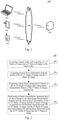
- Fig. 1 illustrates an example system architecture 100 to which an embodiment of a method for video frame interpolation or an apparatus for video frame interpolation according to the present disclosure may be applied.
- the system architecture 100 may include terminal devices 101, 102 and 103, a network 104 and a server 105.
- the network 104 serves as a medium providing a communication link between the terminal devices 101, 102 and 103 and the server 105.
- the network 104 may include various types of connections, for example, wired or wireless communication links, or optical fiber cables.
- a user may use the terminal devices 101, 102 and 103 to interact with the server 105 via the network 104, to receive or send a video frame, etc.
- Various client applications e.g., video software
- the terminal devices 101, 102 and 103 may be hardware or software.
- the terminal devices 101, 102 and 103 may be various electronic devices, the electronic devices including, but not limited to, a smart phone, a tablet computer, a laptop portable computer, a desktop computer, and the like.
- the terminal devices 101, 102 and 103 may be installed in the above listed electronic devices, and the terminal devices may be implemented as a plurality of pieces of software or a plurality of software modules, or may be implemented as a single piece of software or a single software module, which will not be specifically limited herein.
- the server 105 may provide various services.
- the server 105 may analyze and process a video acquired from the terminal devices 101, 102 and 103, and generate a processing result (e.g., an intermediate frame).
- the server 105 may be hardware or software.
- the server 105 may be implemented as a distributed server cluster composed of a plurality of servers, or may be implemented as a single server.
- the server 105 may be implemented as a plurality of pieces of software or a plurality of software modules (e.g., software or software modules for providing a distributed service), or may be implemented as a single piece of software or a single software module, which will not be specifically limited herein.
- the method for video frame interpolation provided in the embodiments of the present disclosure is generally performed by the server 105.
- the apparatus for video frame interpolation is generally provided in the server 105.
- terminal devices the network, and the server in Fig. 1 are merely illustrative. Any number of terminal devices, networks, and servers may be provided based on actual requirements.
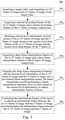
- Fig. 2 illustrates a flow 200 of an embodiment of a method for video frame interpolation according to the present disclosure.
- the method for video frame interpolation includes the following steps 201 to 204.
- Step 201 includes acquiring a target video, and acquiring a (t-1) th frame of image and a t th frame of image in the target video.
- an executing body e.g., the server 105 shown in Fig. 1
- the target video may be a target video on which a user wants to perform a video frame interpolation to improve the smoothness of the playback of the target video and/or solve a problem of the target video such as image distortion and image blurring.
- the executing body After acquiring the target video, the executing body further acquires the (t-1) th frame of image and the t th frame of image in the target video.
- t is a positive integer.
- the (t-1) th frame of image and the t th frame of image are any two adjacent frames of images in the target video.
- the target video may include a plurality of frames of images, that is, a plurality of single-frame images.
- the executing body may acquire any two adjacent frames of images (i.e., the (t-1) th frame of image and the t th frame of image) in the target video by executing a preset application program.
- Step 202 includes acquiring motion level information of pixel points of the (t-1) th frame of image and the t th frame of image.
- the executing body may acquire the motion level information of the pixel points of the (t-1) th frame of image and the t th frame of image, and the motion level information represents motion levels of the pixel points in the (t-1) th frame of image and the t th frame of image.
- the executing body may input the (t-1) th frame of image and the t th frame of image into a pre-trained deep neural network to obtain a motion level deep feature of the (t-1) th frame of image and a motion level deep feature of the t th frame of image, and classify the pixel points of the (t-1) th frame of image and the t th frame of image into different levels based on the motion level deep features.
- the different levels may refer to a motion layer or a stationary layer.
- the deep neural network may be a deep neural network trained in advance using deep feature data, to which no limitation will be made herein. Specifically, pixels having identical motion attributes, objects having identical motion attributes or areas having identical motion attributes are marked as a given level. As an example, if there are three vehicles moving eastward and two pedestrians moving southward in image 1, the three vehicles moving eastward may be marked as a given level (denoted by Level 1), and the two pedestrians moving southward may be marked as a given level (denoted by Level 2).
- the vehicle moving southward may be marked as Level 3
- the other two vehicles moving northward may be marked as Level 4.
- the pixels having the identical motion attributes, the objects having the identical motion attributes or the areas having the identical motion attributes are divided into the given level, thus obtaining the motion levels of the pixel points of the (t-1) th frame of image and the t th frame of image.
- Step 203 includes acquiring a deep frame interpolation feature of the (t-1) th frame of image and a deep frame interpolation feature of the t th frame of image, respectively.
- the executing body may respectively acquire the deep frame interpolation feature of the (t-1) th frame of image and the deep frame interpolation feature of the t th frame of image.
- a deep frame interpolation feature refers to a feature that may be used to perform a frame interpolation operation.
- the executing body may input the (t-1) th frame of image and the t th frame of image into a pre-trained deep frame interpolation neural network to obtain the deep frame interpolation features of the (t-1) th frame of image and the t th frame of image.
- the deep frame interpolation neural network may be a deep frame interpolation neural network trained in advance using deep frame interpolation feature data, to which no limitation will be made herein.
- Step 204 includes performing a frame interpolation operation layer by layer based on the deep frame interpolation features and the motion level information of the (t-1) th frame of image and the t th frame of image, to generate an intermediate frame between the (t-1) th frame of image and the t th frame of image, and interpolating the intermediate frame between the (t-1) th frame of image and the t th frame of image.
- the executing body may perform the frame interpolation operation layer by layer based on the deep frame interpolation features of the (t-1) th frame of image and the t th frame of image that are obtained in step 203 and the motion level information of the pixel points of the (t-1) th frame of image and the t th frame of image that is obtained in step 202, thereby generating the intermediate frame between the (t-1) th frame of image and the t th frame of image.
- the executing body may interpolate the intermediate frame between the (t-1) th frame of image and the t th frame of image.
- the frame interpolation operation may be performed layer by layer based on the motion level information of the pixel points of the (t-1) th frame of image and the t th frame of image and the deep frame interpolation features, thereby generating the intermediate frame.
- the deep frame interpolation features and the motion level information of the (t-1) th frame of image and the t th frame of image may be inputted into a pre-trained frame interpolation model, and the frame interpolation model may perform a frame interpolation operation layer by layer based on the motion level information, thus obtaining intermediate frames of layers.
- the obtained intermediate frames of the layers are combined to obtain the intermediate frame between the (t-1) th frame of image and the t th frame of image, and the intermediate frame is interpolated between the (t-1) th frame of image and the t th frame of image.
- the frame interpolation model may be a deep convolutional neural network model trained in advance and used for a frame interpolation operation, to which no limitation will be made herein.
- the target video and the (t-1) th frame of image and the t th frame of image in the target video are first acquired.
- t is the positive integer.
- the motion level information of the pixel points of the (t-1) th frame of image and the t th frame of image is acquired.
- the deep frame interpolation feature of the (t-1) th frame of image and the deep frame interpolation feature of the t th frame of image are respectively acquired.
- the frame interpolation operation is performed layer by layer based on the deep frame interpolation features and the motion level information of the (t-1) th frame of image and the t th frame of image, to generate the intermediate frame between the (t-1) th frame of image and the t th frame of image, and the intermediate frame is interpolated between the (t-1) th frame of image and the t th frame of image.
- the present disclosure provides a method for video frame interpolation based on a layered perception technology. A video frame is divided into different motion levels, and pixels having similar motion modes are classified into the given level. Accordingly, the difficulty to learn the optical flow is reduced, which makes the optical flow estimation at each level more accurate.
- optical flows of the different levels are separated without affecting each other while being mapped, thus alleviating a problem such as image distortion.
- a static floating layer such as a subtitle layer or a logo (logotype) layer is not interfered by other optical flow information, thereby solving a problem such as image jitter.
- the method for video frame interpolation includes the following steps 301 to 306.
- Step 301 includes acquiring a target video, and acquiring a (t-1) th frame of image and a t th frame of image in the target video, t being a positive integer.
- an executing body e.g., the server 105 shown in Fig. 1
- t is the positive integer.
- Step 301 corresponds to step 201 in the foregoing embodiment. A specific implementation of step 301 may be described with reference to the above description of step 201, and will not be repeatedly described herein.
- Step 302 includes acquiring a motion level deep feature of the (t-1) th frame of image and a motion level deep feature of the t th frame of image, respectively.
- the above executing body may acquire the motion level deep feature of the (t-1) th frame of image and the motion level deep feature of the t th frame of image.
- the (t-1) th frame of image and the t th frame of image may be inputted into a pre-trained deep neural network to obtain the motion level deep feature of the (t-1) th frame of image and the motion level deep feature of the t th frame of image.
- Motion level deep features are used to distinguish motion levels of pixel points.
- Step 303 includes obtaining motion level information of pixel points of the (t-1) th frame of image and the t th frame of image based on the motion level deep feature of the (t-1) th frame of image and the motion level deep feature of the t th frame of image.
- the above executing body may obtain the motion level information of the pixel points of the (t-1) th frame of image and the t th frame of image based on the motion level deep feature of the (t-1) th frame of image and the motion level deep feature of the t th frame of image that are acquired in step 302.
- the executing body marks pixels having identical motion attributes, objects having identical motion attributes or areas having identical motion attributes as a given level based on the motion level deep feature of the (t-1) th frame of image and the motion level deep feature of the t th frame of image, to obtain the motion level information of the pixel points of the (t-1) th frame of image and the t th frame of image.
- motion levels include a motion layer and a stationary layer.
- Step 304 includes acquiring a deep frame interpolation feature of the (t-1) th frame of image and a deep frame interpolation feature of the t th frame of image, respectively.
- the executing body may respectively acquire the deep frame interpolation feature of the (t-1) th frame of image and the deep frame interpolation feature of the t th frame of image.
- Step 304 corresponds to step 203 in the foregoing embodiment. A specific implementation of step 304 may be made with reference to the above description of step 201, and will not be repeatedly described herein.
- Step 305 includes inputting the deep frame interpolation features and the motion level information of the (t-1) th frame of image and the t th frame of image into a pre-trained frame interpolation model, the frame interpolation model performing a frame interpolation operation layer by layer based on the motion level information, to obtain intermediate frames of layers.
- the executing body may input the deep frame interpolation features of the (t-1) th frame of image and the t th frame of image that are acquired in step 304 and the motion level information of the (t-1) th frame of image and the t th frame of image that is obtained in step 303 into the pre-trained frame interpolation model.
- the frame interpolation model performs the frame interpolation operation layer by layer based on the motion level information, thus obtaining the intermediate frames of the layers. Since the pre-trained frame interpolation model itself is composed of a deep convolutional neural network, the model does not involve a complex computation such as a traditional optical flow estimation and a motion compensation, thus having a high computation efficiency.
- the frame interpolation operation is performed layer by layer to generate the intermediate frames corresponding to the motion levels of the layers, which can make the optical flow estimation at each level more accurate.
- the frame interpolation operation for the layers is identical.
- Step 306 includes combining the intermediate frames of the layers to obtain an intermediate frame between the (t-1) th frame of image and the t th frame of image, and interpolating the intermediate frame between the (t-1) th frame of image and the t th frame of image.
- the executing body may combine the intermediate frames of the layers that are obtained in step 305, to generate the intermediate frame between the (t-1) th frame of image and the t th frame of image, and may interpolate the intermediate frame between the (t-1) th frame of image and the t th frame of image.
- the target video and the (t-1) th frame of image and the t th frame of image in the target video are first acquired.
- the motion level deep feature of the (t-1) th frame of image and the motion level deep feature of the t th frame of image are respectively acquired.
- the motion level information of the pixel points of the (t-1) th frame of image and the t th frame of image is obtained based on the motion level deep feature of the (t-1) th frame of image and the motion level deep feature of the t th frame of image.
- the deep frame interpolation feature of the (t-1) th frame of image and the deep frame interpolation feature of the t th frame of image are respectively acquired.
- the deep frame interpolation features and the motion level information of the (t-1) th frame of image and the t th frame of image are inputted into the pre-trained frame interpolation model, and the frame interpolation model performs the frame interpolation operation layer by layer based on the motion level information, to obtain the intermediate frames of the layers.
- the intermediate frames of the layers are combined to obtain the intermediate frame between the (t-1) th frame of image and the t th frame of image, and the intermediate frame is interpolated between the (t-1) th frame of image and the t th frame of image.
- a video frame is divided into different motion levels, and pixels having similar motion modes are classified into the given level. Accordingly, the difficulty to learn the optical flow is reduced, which makes the optical flow estimation at each level more accurate.
- the optical flows of the different levels are separated without affecting each other while being mapped, thus alleviating a problem such as image distortion.
- a static floating layer such as a subtitle layer or a logo layer is not interfered by other optical flow information, thereby solving a problem such as image jitter.
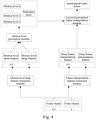
- Fig. 4 is a block diagram of an implementation of the method for video frame interpolation.
- two adjacent frames of images i.e., a (t-1) th frame of image and a t th frame of image
- a motion level deep feature extraction module extracts a motion level deep feature of the (t-1) th frame of image and a motion level deep feature of the t th frame of image, respectively, and inputs the extracted motion level deep features of the (t-1) th frame of image and the t th frame of image into a motion level perception module.
- the motion level perception module divides pixel points into different motion levels based on the motion level deep features, and the motion levels include a plurality of motion layers and one stationary layer, such as motion level 1, motion level 2 ... motion level n and the stationary layer.
- a frame interpolation feature extraction module extracts a deep frame interpolation feature of the (t-1) th frame of image and a deep frame interpolation feature of the t th frame of image, respectively.
- the deep frame interpolation features of the (t-1) th frame of image and the t th frame of image and the motion level information of the pixel points of the (t-1) th frame of image and the t th frame of image are inputted into a layered perceptual frame interpolation module.
- the layered perceptual frame interpolation module performs the frame interpolation operation layer by layer to generate the intermediate frames of the layers, combines the intermediate frames of the layers to obtain a final combined intermediate video frame between the (t-1) th frame of image and the t th frame of image, and interpolates the final combined intermediate frame between the (t-1) th frame of image and the t th frame of image.
- the present disclosure provides an embodiment of an apparatus for video frame interpolation.
- the embodiment of the apparatus corresponds to the embodiment of the method shown in Fig. 2 , and the apparatus may be applied to various electronic devices.
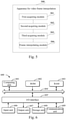
- the apparatus 500 for video frame interpolation in this embodiment may include: a first acquiring module 501, a second acquiring module 502, a third acquiring module 503 and a frame interpolating module 504.
- the first acquiring module 501 is configured to acquire a target video, and acquire a (t-1) th frame of image and a t th frame of image in the target video, t being a positive integer.
- the second acquiring module 502 is configured to acquire motion level information of pixel points of the (t-1) th frame of image and the t th frame of image.
- the third acquiring module 503 is configured to acquire a deep frame interpolation feature of the (t-1) th frame of image and a deep frame interpolation feature of the t th frame of image, respectively.
- the frame interpolating module 504 is configured to perform a frame interpolation operation layer by layer based on the deep frame interpolation features and the motion level information of the (t-1) th frame of image and the t th frame of image to generate an intermediate frame between the (t-1) th frame of image and the t th frame of image, and interpolate the intermediate frame between the (t-1) th frame of image and the t th frame of image.
- the second acquiring module further includes: an acquiring sub-module, configured to acquire a motion level deep feature of the (t-1) th frame of image and a motion level deep feature of the t th frame of image, respectively; and a motion level sub-module, configured to obtain the motion level information of the pixel points of the (t-1) th frame of image and the t th frame of image based on the motion level deep feature of the (t-1) th frame of image and the motion level deep feature of the t th frame of image.
- the motion level sub-module is further configured to: mark pixels having identical motion attributes, objects having identical motion attributes or areas having identical motion attributes as a given level based on the motion level deep feature of the (t-1) th frame of image and the motion level deep feature of the t th frame of image, to obtain the motion level information of the pixel points of the (t-1) th frame of image and the t th frame of image.
- the motion levels include a motion layer and a stationary layer.
- the frame interpolating module is further configured to: input the deep frame interpolation features and the motion level information of the (t-1) th frame of image and the t th frame of image into a pre-trained frame interpolation model, the frame interpolation model performing the frame interpolation operation layer by layer based on the motion level information, to obtain intermediate frames of layers; and combine the intermediate frames of the layers to obtain the intermediate frame between the (t-1) th frame of image and the t th frame of image, and interpolate the intermediate frame between the (t-1) th frame of image and the t th frame of image.
- the frame interpolation operation for the layers is identical.
- the present disclosure further provides an electronic device, a readable storage medium, and a computer program product.
- Fig. 6 is a schematic block diagram of an exemplary electronic device 600 that may be used to implement embodiments of the present disclosure.
- the electronic device is intended to represent various forms of digital computers such as a laptop computer, a desktop computer, a workstation, a personal digital assistant, a server, a blade server, a mainframe computer, and other appropriate computers.
- the electronic device may also represent various forms of mobile apparatuses such as personal digital processing, a cellular telephone, a smart phone, a wearable device and other similar computing apparatuses.
- the parts shown herein, their connections and relationships, and their functions are only as examples, and not intended to limit implementations of the present disclosure as described and/or claimed herein.
- the electronic device 600 includes a computation unit 601, which may execute various appropriate actions and processes in accordance with a computer program stored in a read-only memory (ROM) 602 or a computer program loaded into a random access memory (RAM) 603 from a storage unit 608.
- the RAM 603 alternatively stores various programs and data required by operations of the device 600.
- the computation unit 601, the ROM 602 and the RAM 603 are connected to each other through a bus 604.
- An input/output (I/O) interface 605 is also connected to the bus 604.
- Multiple components of the device 600 are connected to the I/O interface 605, and include: an input unit 606, such as a keyboard and a mouse; an output unit 607, such as various types of displays and a speaker; a storage unit 608, such as a magnetic disk and an optical disk; and a communication unit 609, such as a network card, a modem and a wireless communication transceiver.
- the communication unit 609 allows the device 600 to exchange information or data with other devices through a computer network, such as the Internet and/or various telecommunications networks.
- the computing unit 601 may be various general-purpose and/or specific-purpose processing components having processing and computing capabilities. Some examples of the computing unit 601 include, but are not limited to, a central processing unit (CPU), a graphics processing unit (GPU), various specific artificial intelligence (AI) computing chips, various computing units running machine learning model algorithms, a digital signal processor (DSP), and any appropriate processor, controller, microcontroller and the like.
- the computing unit 601 performs various methods and processing described above, such as the method for video frame interpolation.
- the method for video frame interpolation may be implemented as a computer software program, which is tangibly included in a machine-readable medium, such as the storage unit 608.
- part or all of the computer program may be loaded and/or installed on the device 600 through the ROM 602 and/or the communication unit 609.
- the computer program When the computer program is loaded into the RAM 603 and executed by the computing unit 601, one or more steps of the method for video frame interpolation described above may be performed.
- the computing unit 601 may be configured to perform the method for video frame interpolation in any other appropriate manner (such as through firmware).
- the various implementations of the systems and technologies described herein may be implemented in a digital electronic circuit system, an integrated circuit system, a field programmable gate array (FPGA), an application specific integrated circuit (ASIC), an application specific standard product (ASSP), a system-on-chip (SOC), a complex programmable logic device (CPLD), computer hardware, firmware, software and/or combinations thereof.
- FPGA field programmable gate array
- ASIC application specific integrated circuit
- ASSP application specific standard product
- SOC system-on-chip
- CPLD complex programmable logic device
- the various implementations may include: being implemented in one or more computer programs, where the one or more computer programs may be executed and/or interpreted on a programmable system including at least one programmable processor, and the programmable processor may be a specific-purpose or general-purpose programmable processor, which may receive data and instructions from a storage system, at least one input device and at least one output device, and send the data and instructions to the storage system, the at least one input device and the at least one output device.
- Program codes used to implement the method of the present disclosure may be written in any combination of one or more programming languages. These program codes may be provided to a processor or controller of a general-purpose computer, specific-purpose computer or other programmable data processing apparatus, so that the program codes, when executed by the processor or controller, cause the functions or operations specified in the flowcharts and/or block diagrams to be implemented. These program codes may be executed entirely on a machine, partly on the machine, partly on the machine as a stand-alone software package and partly on a remote machine, or entirely on the remote machine or a server.
- the machine-readable medium may be a tangible medium that may include or store a program for use by or in connection with an instruction execution system, apparatus or device.
- the machine-readable medium may be a machine-readable signal medium or a machine-readable storage medium.
- the machine-readable medium may include, but is not limited to, an electronic, magnetic, optical, electromagnetic, infrared, or semiconductor system, apparatus or device, or any appropriate combination thereof.
- a more specific example of the machine-readable storage medium may include an electronic connection based on one or more lines, a portable computer disk, a hard disk, a random-access memory (RAM), a read-only memory (ROM), an erasable programmable read-only memory (EPROM or flash memory), an optical fiber, a portable compact disk read-only memory (CD-ROM), an optical storage device, a magnetic storage device, or any appropriate combination thereof.
- a portable computer disk a hard disk, a random-access memory (RAM), a read-only memory (ROM), an erasable programmable read-only memory (EPROM or flash memory), an optical fiber, a portable compact disk read-only memory (CD-ROM), an optical storage device, a magnetic storage device, or any appropriate combination thereof.
- the systems and technologies described herein may be implemented on a computer having: a display device (such as a CRT (cathode ray tube) or LCD (liquid crystal display) monitor) for displaying information to the user; and a keyboard and a pointing device (such as a mouse or a trackball) through which the user may provide input to the computer.
- a display device such as a CRT (cathode ray tube) or LCD (liquid crystal display) monitor
- a keyboard and a pointing device such as a mouse or a trackball
- Other types of devices may also be used to provide interaction with the user.
- the feedback provided to the user may be any form of sensory feedback (such as visual feedback, auditory feedback or tactile feedback); and input from the user may be received in any form, including acoustic input, speech input or tactile input.
- the systems and technologies described herein may be implemented in: a computing system including a background component (such as a data server), or a computing system including a middleware component (such as an application server), or a computing system including a front-end component (such as a user computer having a graphical user interface or a web browser through which the user may interact with the implementations of the systems and technologies described herein), or a computing system including any combination of such background component, middleware component or front-end component.
- the components of the systems may be interconnected by any form or medium of digital data communication (such as a communication network). Examples of the communication network include a local area network (LAN), a wide area network (WAN), and the Internet.
- a computer system may include a client and a server.
- the client and the server are generally remote from each other, and generally interact with each other through the communication network.
- a relationship between the client and the server is generated by computer programs running on a corresponding computer and having a client-server relationship with each other.
- steps of reordering, adding or deleting may be executed using the various forms described above.
- steps described in the present disclosure may be executed in parallel or sequentially or in a different order, so long as the expected results of the technical solutions provided in the present disclosure may be realized, and no limitation is imposed herein.
Landscapes
- Engineering & Computer Science (AREA)
- Multimedia (AREA)
- Signal Processing (AREA)
- Physics & Mathematics (AREA)
- Theoretical Computer Science (AREA)
- General Physics & Mathematics (AREA)
- Evolutionary Computation (AREA)
- Databases & Information Systems (AREA)
- Artificial Intelligence (AREA)
- General Engineering & Computer Science (AREA)
- Computer Vision & Pattern Recognition (AREA)
- Life Sciences & Earth Sciences (AREA)
- Mathematical Physics (AREA)
- General Health & Medical Sciences (AREA)
- Molecular Biology (AREA)
- Computing Systems (AREA)
- Computational Linguistics (AREA)
- Biophysics (AREA)
- Data Mining & Analysis (AREA)
- Software Systems (AREA)
- Biomedical Technology (AREA)
- Health & Medical Sciences (AREA)
- Business, Economics & Management (AREA)
- Marketing (AREA)
- Television Systems (AREA)
Abstract
The present disclosure provides a method and apparatus for video frame interpolation, and a device and a storage medium for the same, and relates to the field of artificial intelligence technology, and specifically to the fields of computer vision and deep learning technologies. A specific implementation of the method includes: acquiring a target video, and acquiring a (t-1)<sup>th</sup> frame of image and a t<sup>th</sup> frame of image in the target video; acquiring motion level information of pixel points of the (t-1)<sup>th</sup> frame of image and the t<sup>th</sup> frame of image; acquiring a deep frame interpolation feature of the (t-1)<sup>th</sup> frame of image and a deep frame interpolation feature of the t<sup>th</sup> frame of image, respectively; and performing a frame interpolation operation layer by layer based on the deep frame interpolation features and the motion level information of the (t-1)<sup>th</sup> frame of image and the t<sup>th</sup> frame of image to generate an intermediate frame between the (t-1)<sup>th</sup> frame of image and the t<sup>th</sup> frame of image, and interpolating the intermediate frame between the (t-1)<sup>th</sup> frame of image and the t<sup>th</sup> frame of image. According to this implementation, by dividing a video frame into different motion levels, the optical flows of the different levels are separated without affecting each other while being mapped, thus alleviating a problem such as a screen distortion.
Description
- Embodiments of the present disclosure relate to the field of computer, specifically to the field of artificial intelligence such as computer vision and deep learning, and particularly to a method and apparatus for video frame interpolation, and a device and a storage medium.
- With the rise of live streaming businesses, the costs of bandwidth distribution of servers become the main costs of live streaming business providers. In order to reduce bandwidth costs, one of the most direct approaches is to distribute low frame rate videos. However, the viewing experiences with low frame rate videos are quite different from those with high frame rate videos of 60 FPS (Frames Per Second) or 120 FPS. According to video frame interpolation technologies, intermediate frames may be interpolated between video frames to increase video frame rates, which makes the video viewing smoother. Accordingly, the occurrence of phenomena such as skipping and jitter is reduced, thus greatly improving the user experiences.
- Embodiments of the present disclosure provide a method and apparatus for video frame interpolation, and a device and a storage medium for the same.
- In a first aspect, an embodiment of the present disclosure provides a method for video frame interpolation, and the method includes: acquiring a target video, and acquiring a (t-1)th frame of image and a tth frame of image in the target video, t being a positive integer; acquiring motion level information of pixel points of the (t-1)th frame of image and the tth frame of image; acquiring a deep frame interpolation feature of the (t-1)th frame of image and a deep frame interpolation feature of the tth frame of image, respectively; and performing a frame interpolation operation layer by layer based on the deep frame interpolation features and the motion level information of the (t-1)th frame of image and the tth frame of image to generate an intermediate frame between the (t-1)th frame of image and the tth frame of image, and interpolating the intermediate frame between the (t-1)th frame of image and the tth frame of image.
- In a second aspect, an embodiment of the present disclosure provides an apparatus for video frame interpolation, and the apparatus includes: a first acquiring module configured to acquire a target video, and acquire a (t-1)th frame of image and a tth frame of image in the target video, t being a positive integer; a second acquiring module configured to acquire motion level information of pixel points of the (t-1)th frame of image and the tth frame of image; a third acquiring module configured to acquire a deep frame interpolation feature of the (t-1)th frame of image and a deep frame interpolation feature of the tth frame of image, respectively; and a frame interpolating module configured to perform a frame interpolation operation layer by layer based on the deep frame interpolation features and the motion level information of the (t-1)th frame of image and the tth frame of image to generate an intermediate frame between the (t-1)th frame of image and the tth frame of image, and interpolate the intermediate frame between the (t-1)th frame of image and the tth frame of image.
- In a third aspect, an embodiment of the present disclosure provides an electronic device including: at least one processor; and a storage device communicated with the at least one processor, where the storage device stores instructions executable by the at least one processor, and the instructions are executed by the at least one processor, to enable the at least one processor to perform the method as described in any one of the implementations of the first aspect.
- In a fourth aspect, an embodiment of the present disclosure provides a non-transitory computer readable storage medium storing computer instructions, where the computer instructions are used to enable a computer to perform the method as described in any one of the implementations of the first aspect.
- In a fifth aspect, an embodiment of the present disclosure provides a computer program product including a computer program, where the computer program, when executed by a processor, implements the method as described in any one of the implementations of the first aspect.
- According to the method and apparatus for video frame interpolation, the device and the storage medium that are provided in the embodiments of the present disclosure, the target video and the (t-1)th frame of image and the tth frame of image in the target video are first acquired. Here, t is the positive integer. Then, the motion level information of the pixel points of the (t-1)th frame of image and the tth frame of image is acquired. Next, the deep frame interpolation feature of the (t-1)th frame of image and the deep frame interpolation feature of the tth frame of image are respectively acquired. Finally, the frame interpolation operation is performed layer by layer based on the deep frame interpolation features and the motion level information of the (t-1)th frame of image and the tth frame of image, to generate the intermediate frame between the (t-1)th frame of image and the tth frame of image, and the intermediate frame is interpolated between the (t-1)th frame of image and the tth frame of image. The present disclosure provides a method for video frame interpolation based on a layered perception technology. By dividing a video frame into different motion levels, the optical flows of the different levels are separated without affecting each other while being mapped, thus alleviating a problem such as image distortion.
- It should be understood that the content described in this part is not intended to identify key or important features of the embodiments of the present disclosure, and is not used to limit the scope of the present disclosure. Other features of the present disclosure will be easily understood through the following description.
- In combination of detailed descriptions of nonlimiting embodiments given with reference to the following accompanying drawings, other features, objectives and advantages of the present disclosure will be more apparent. The accompanying drawings are used for a better understanding of the scheme, and do not constitute a limitation to the present disclosure.
-
Fig. 1 is a diagram of an example system architecture diagram to which the present disclosure may be applied; -
Fig. 2 is a flowchart of an embodiment of a method for video frame interpolation according to the present disclosure; -
Fig. 3 is a flowchart of another embodiment of the method for video frame interpolation according to the present disclosure; -
Fig. 4 is a block diagram of an implementation of the method for video frame interpolation; -
Fig. 5 is a schematic structural diagram of an embodiment of an apparatus for video frame interpolation according to the present disclosure; and -
Fig. 6 is a block diagram of an electronic device used to implement a method for video frame interpolation according to embodiments of the present disclosure. - Example embodiments of the present disclosure are described below in combination with the accompanying drawings, and various details of the embodiments of the present disclosure are included in the description to facilitate understanding, and should be considered as examples only. Accordingly, it should be recognized by one of ordinary skill in the art that various changes and modifications may be made to the embodiments described herein without departing from the scope and spirit of the present disclosure. Also, for clarity and conciseness, descriptions of well-known functions and structures are omitted in the following description.
- It should be noted that the embodiments in the present disclosure and the features in the embodiments may be combined with each other on a non-conflict basis. The present disclosure will be described below in detail with reference to the accompanying drawings and in combination with the embodiments.
-
Fig. 1 illustrates anexample system architecture 100 to which an embodiment of a method for video frame interpolation or an apparatus for video frame interpolation according to the present disclosure may be applied. - As shown in
Fig. 1 , thesystem architecture 100 may includeterminal devices network 104 and aserver 105. Thenetwork 104 serves as a medium providing a communication link between theterminal devices server 105. Thenetwork 104 may include various types of connections, for example, wired or wireless communication links, or optical fiber cables. - A user may use the
terminal devices server 105 via thenetwork 104, to receive or send a video frame, etc. Various client applications (e.g., video software) may be installed on theterminal devices - The
terminal devices terminal devices terminal devices - The
server 105 may provide various services. For example, theserver 105 may analyze and process a video acquired from theterminal devices - It should be noted that the
server 105 may be hardware or software. When being the hardware, theserver 105 may be implemented as a distributed server cluster composed of a plurality of servers, or may be implemented as a single server. When being the software, theserver 105 may be implemented as a plurality of pieces of software or a plurality of software modules (e.g., software or software modules for providing a distributed service), or may be implemented as a single piece of software or a single software module, which will not be specifically limited herein. - It should be noted that the method for video frame interpolation provided in the embodiments of the present disclosure is generally performed by the
server 105. Correspondingly, the apparatus for video frame interpolation is generally provided in theserver 105. - It should be appreciated that the numbers of the terminal devices, the network, and the server in
Fig. 1 are merely illustrative. Any number of terminal devices, networks, and servers may be provided based on actual requirements. - Further referring to
Fig. 2, Fig. 2 illustrates aflow 200 of an embodiment of a method for video frame interpolation according to the present disclosure. The method for video frame interpolation includes thefollowing steps 201 to 204. -
Step 201 includes acquiring a target video, and acquiring a (t-1)th frame of image and a tth frame of image in the target video. - In this embodiment, an executing body (e.g., the
server 105 shown inFig. 1 ) of the method for video frame interpolation may acquire the target video, and the target video may be a target video on which a user wants to perform a video frame interpolation to improve the smoothness of the playback of the target video and/or solve a problem of the target video such as image distortion and image blurring. After acquiring the target video, the executing body further acquires the (t-1)th frame of image and the tth frame of image in the target video. Here, t is a positive integer. The (t-1)th frame of image and the tth frame of image are any two adjacent frames of images in the target video. The target video may include a plurality of frames of images, that is, a plurality of single-frame images. After acquiring the target video, the executing body may acquire any two adjacent frames of images (i.e., the (t-1)th frame of image and the tth frame of image) in the target video by executing a preset application program. - Step 202 includes acquiring motion level information of pixel points of the (t-1)th frame of image and the tth frame of image.
- In this embodiment, the executing body may acquire the motion level information of the pixel points of the (t-1)th frame of image and the tth frame of image, and the motion level information represents motion levels of the pixel points in the (t-1)th frame of image and the tth frame of image. Specifically, the executing body may input the (t-1)th frame of image and the tth frame of image into a pre-trained deep neural network to obtain a motion level deep feature of the (t-1)th frame of image and a motion level deep feature of the tth frame of image, and classify the pixel points of the (t-1)th frame of image and the tth frame of image into different levels based on the motion level deep features. The different levels may refer to a motion layer or a stationary layer. Here, there may be a plurality of motion layers, such as a first motion layer and a second motion layer. Here, the deep neural network may be a deep neural network trained in advance using deep feature data, to which no limitation will be made herein. Specifically, pixels having identical motion attributes, objects having identical motion attributes or areas having identical motion attributes are marked as a given level. As an example, if there are three vehicles moving eastward and two pedestrians moving southward in
image 1, the three vehicles moving eastward may be marked as a given level (denoted by Level 1), and the two pedestrians moving southward may be marked as a given level (denoted by Level 2). As another example, if there are three vehicles inimage 2 one of which moves southward and other two of which move northward, the vehicle moving southward may be marked as Level 3, and the other two vehicles moving northward may be marked as Level 4. In this embodiment, the pixels having the identical motion attributes, the objects having the identical motion attributes or the areas having the identical motion attributes are divided into the given level, thus obtaining the motion levels of the pixel points of the (t-1)th frame of image and the tth frame of image. - Step 203 includes acquiring a deep frame interpolation feature of the (t-1)th frame of image and a deep frame interpolation feature of the tth frame of image, respectively.
- In this embodiment, the executing body may respectively acquire the deep frame interpolation feature of the (t-1)th frame of image and the deep frame interpolation feature of the tth frame of image. A deep frame interpolation feature refers to a feature that may be used to perform a frame interpolation operation. Specifically, the executing body may input the (t-1)th frame of image and the tth frame of image into a pre-trained deep frame interpolation neural network to obtain the deep frame interpolation features of the (t-1)th frame of image and the tth frame of image. Here, the deep frame interpolation neural network may be a deep frame interpolation neural network trained in advance using deep frame interpolation feature data, to which no limitation will be made herein.
- Step 204 includes performing a frame interpolation operation layer by layer based on the deep frame interpolation features and the motion level information of the (t-1)th frame of image and the tth frame of image, to generate an intermediate frame between the (t-1)th frame of image and the tth frame of image, and interpolating the intermediate frame between the (t-1)th frame of image and the tth frame of image.
- In this embodiment, the executing body may perform the frame interpolation operation layer by layer based on the deep frame interpolation features of the (t-1)th frame of image and the tth frame of image that are obtained in
step 203 and the motion level information of the pixel points of the (t-1)th frame of image and the tth frame of image that is obtained instep 202, thereby generating the intermediate frame between the (t-1)th frame of image and the tth frame of image. The executing body may interpolate the intermediate frame between the (t-1)th frame of image and the tth frame of image. Since the motion level information of the pixel points of the (t-1)th frame of image and the tth frame of image is already obtained instep 202, the frame interpolation operation may be performed layer by layer based on the motion level information of the pixel points of the (t-1)th frame of image and the tth frame of image and the deep frame interpolation features, thereby generating the intermediate frame. Specifically, the deep frame interpolation features and the motion level information of the (t-1)th frame of image and the tth frame of image may be inputted into a pre-trained frame interpolation model, and the frame interpolation model may perform a frame interpolation operation layer by layer based on the motion level information, thus obtaining intermediate frames of layers. The obtained intermediate frames of the layers are combined to obtain the intermediate frame between the (t-1)th frame of image and the tth frame of image, and the intermediate frame is interpolated between the (t-1)th frame of image and the tth frame of image. Here, the frame interpolation model may be a deep convolutional neural network model trained in advance and used for a frame interpolation operation, to which no limitation will be made herein. - According to the method for video frame interpolation provided in the embodiment of the present disclosure, the target video and the (t-1)th frame of image and the tth frame of image in the target video are first acquired. Here, t is the positive integer. Then, the motion level information of the pixel points of the (t-1)th frame of image and the tth frame of image is acquired. Next, the deep frame interpolation feature of the (t-1)th frame of image and the deep frame interpolation feature of the tth frame of image are respectively acquired. Finally, the frame interpolation operation is performed layer by layer based on the deep frame interpolation features and the motion level information of the (t-1)th frame of image and the tth frame of image, to generate the intermediate frame between the (t-1)th frame of image and the tth frame of image, and the intermediate frame is interpolated between the (t-1)th frame of image and the tth frame of image. The present disclosure provides a method for video frame interpolation based on a layered perception technology. A video frame is divided into different motion levels, and pixels having similar motion modes are classified into the given level. Accordingly, the difficulty to learn the optical flow is reduced, which makes the optical flow estimation at each level more accurate. The optical flows of the different levels are separated without affecting each other while being mapped, thus alleviating a problem such as image distortion. Moreover, a static floating layer such as a subtitle layer or a logo (logotype) layer is not interfered by other optical flow information, thereby solving a problem such as image jitter.
- Further referring to
Fig. 3 that illustrates aflow 300 of another embodiment of the method for video frame interpolation according to the present disclosure, the method for video frame interpolation includes the followingsteps 301 to 306. - Step 301 includes acquiring a target video, and acquiring a (t-1)th frame of image and a tth frame of image in the target video, t being a positive integer.
- In this embodiment, an executing body (e.g., the
server 105 shown inFig. 1 ) of the method for video frame interpolation may acquire the target video and acquire the (t-1)th frame of image and the tth frame of image in the target video. Here, t is the positive integer. Step 301 corresponds to step 201 in the foregoing embodiment. A specific implementation ofstep 301 may be described with reference to the above description ofstep 201, and will not be repeatedly described herein. - Step 302 includes acquiring a motion level deep feature of the (t-1)th frame of image and a motion level deep feature of the tth frame of image, respectively.
- In this embodiment, the above executing body may acquire the motion level deep feature of the (t-1)th frame of image and the motion level deep feature of the tth frame of image. Specifically, the (t-1)th frame of image and the tth frame of image may be inputted into a pre-trained deep neural network to obtain the motion level deep feature of the (t-1)th frame of image and the motion level deep feature of the tth frame of image. Motion level deep features are used to distinguish motion levels of pixel points.
- Step 303 includes obtaining motion level information of pixel points of the (t-1)th frame of image and the tth frame of image based on the motion level deep feature of the (t-1)th frame of image and the motion level deep feature of the tth frame of image.
- In this embodiment, the above executing body may obtain the motion level information of the pixel points of the (t-1)th frame of image and the tth frame of image based on the motion level deep feature of the (t-1)th frame of image and the motion level deep feature of the tth frame of image that are acquired in
step 302. - In some alternative implementations of this embodiment, the executing body marks pixels having identical motion attributes, objects having identical motion attributes or areas having identical motion attributes as a given level based on the motion level deep feature of the (t-1)th frame of image and the motion level deep feature of the tth frame of image, to obtain the motion level information of the pixel points of the (t-1)th frame of image and the tth frame of image. By dividing the pixels in a video frame image into different levels, the optical flows of the different levels are separated without affecting each other while being mapped.
- In some alternative implementations of this embodiment, motion levels include a motion layer and a stationary layer. Here, there may be a plurality of motion layers.
- Step 304 includes acquiring a deep frame interpolation feature of the (t-1)th frame of image and a deep frame interpolation feature of the tth frame of image, respectively.
- In this embodiment, the executing body may respectively acquire the deep frame interpolation feature of the (t-1)th frame of image and the deep frame interpolation feature of the tth frame of image. Step 304 corresponds to step 203 in the foregoing embodiment. A specific implementation of
step 304 may be made with reference to the above description ofstep 201, and will not be repeatedly described herein. - Step 305 includes inputting the deep frame interpolation features and the motion level information of the (t-1)th frame of image and the tth frame of image into a pre-trained frame interpolation model, the frame interpolation model performing a frame interpolation operation layer by layer based on the motion level information, to obtain intermediate frames of layers.
- In this embodiment, the executing body may input the deep frame interpolation features of the (t-1)th frame of image and the tth frame of image that are acquired in
step 304 and the motion level information of the (t-1)th frame of image and the tth frame of image that is obtained instep 303 into the pre-trained frame interpolation model. The frame interpolation model performs the frame interpolation operation layer by layer based on the motion level information, thus obtaining the intermediate frames of the layers. Since the pre-trained frame interpolation model itself is composed of a deep convolutional neural network, the model does not involve a complex computation such as a traditional optical flow estimation and a motion compensation, thus having a high computation efficiency. Moreover, the frame interpolation operation is performed layer by layer to generate the intermediate frames corresponding to the motion levels of the layers, which can make the optical flow estimation at each level more accurate. - In some alternative implementations of this embodiment, the frame interpolation operation for the layers is identical.
- Step 306 includes combining the intermediate frames of the layers to obtain an intermediate frame between the (t-1)th frame of image and the tth frame of image, and interpolating the intermediate frame between the (t-1)th frame of image and the tth frame of image.
- In this embodiment, the executing body may combine the intermediate frames of the layers that are obtained in
step 305, to generate the intermediate frame between the (t-1)th frame of image and the tth frame of image, and may interpolate the intermediate frame between the (t-1)th frame of image and the tth frame of image. - According to the method for video frame interpolation provided in the embodiment of the present disclosure, the target video and the (t-1)th frame of image and the tth frame of image in the target video are first acquired. Then, the motion level deep feature of the (t-1)th frame of image and the motion level deep feature of the tth frame of image are respectively acquired. Next, the motion level information of the pixel points of the (t-1)th frame of image and the tth frame of image is obtained based on the motion level deep feature of the (t-1)th frame of image and the motion level deep feature of the tth frame of image. Then, the deep frame interpolation feature of the (t-1)th frame of image and the deep frame interpolation feature of the tth frame of image are respectively acquired. Moreover, the deep frame interpolation features and the motion level information of the (t-1)th frame of image and the tth frame of image are inputted into the pre-trained frame interpolation model, and the frame interpolation model performs the frame interpolation operation layer by layer based on the motion level information, to obtain the intermediate frames of the layers. Finally, the intermediate frames of the layers are combined to obtain the intermediate frame between the (t-1)th frame of image and the tth frame of image, and the intermediate frame is interpolated between the (t-1)th frame of image and the tth frame of image. According to the method for video frame interpolation provided in the embodiment of the present disclosure, a video frame is divided into different motion levels, and pixels having similar motion modes are classified into the given level. Accordingly, the difficulty to learn the optical flow is reduced, which makes the optical flow estimation at each level more accurate. The optical flows of the different levels are separated without affecting each other while being mapped, thus alleviating a problem such as image distortion. Moreover, a static floating layer such as a subtitle layer or a logo layer is not interfered by other optical flow information, thereby solving a problem such as image jitter.
- Further referring to
Fig. 4, Fig. 4 is a block diagram of an implementation of the method for video frame interpolation. As shown inFig. 4 , two adjacent frames of images (i.e., a (t-1)th frame of image and a tth frame of image) in a target video are first extracted. Then, a motion level deep feature extraction module extracts a motion level deep feature of the (t-1)th frame of image and a motion level deep feature of the tth frame of image, respectively, and inputs the extracted motion level deep features of the (t-1)th frame of image and the tth frame of image into a motion level perception module. The motion level perception module divides pixel points into different motion levels based on the motion level deep features, and the motion levels include a plurality of motion layers and one stationary layer, such asmotion level 1,motion level 2 ... motion level n and the stationary layer. Next, a frame interpolation feature extraction module extracts a deep frame interpolation feature of the (t-1)th frame of image and a deep frame interpolation feature of the tth frame of image, respectively. Then, the deep frame interpolation features of the (t-1)th frame of image and the tth frame of image and the motion level information of the pixel points of the (t-1)th frame of image and the tth frame of image are inputted into a layered perceptual frame interpolation module. The layered perceptual frame interpolation module performs the frame interpolation operation layer by layer to generate the intermediate frames of the layers, combines the intermediate frames of the layers to obtain a final combined intermediate video frame between the (t-1)th frame of image and the tth frame of image, and interpolates the final combined intermediate frame between the (t-1)th frame of image and the tth frame of image. - Further referring to
Fig. 5 , as an implementation of the method shown in the above drawings, the present disclosure provides an embodiment of an apparatus for video frame interpolation. The embodiment of the apparatus corresponds to the embodiment of the method shown inFig. 2 , and the apparatus may be applied to various electronic devices. - As shown in
Fig. 5 , theapparatus 500 for video frame interpolation in this embodiment may include: a first acquiringmodule 501, a second acquiringmodule 502, a third acquiringmodule 503 and aframe interpolating module 504. Here, the first acquiringmodule 501 is configured to acquire a target video, and acquire a (t-1)th frame of image and a tth frame of image in the target video, t being a positive integer. The second acquiringmodule 502 is configured to acquire motion level information of pixel points of the (t-1)th frame of image and the tth frame of image. The third acquiringmodule 503 is configured to acquire a deep frame interpolation feature of the (t-1)th frame of image and a deep frame interpolation feature of the tth frame of image, respectively. Theframe interpolating module 504 is configured to perform a frame interpolation operation layer by layer based on the deep frame interpolation features and the motion level information of the (t-1)th frame of image and the tth frame of image to generate an intermediate frame between the (t-1)th frame of image and the tth frame of image, and interpolate the intermediate frame between the (t-1)th frame of image and the tth frame of image. - In this embodiment, specific processes of the first acquiring
module 501, the second acquiringmodule 502, the third acquiringmodule 503 and theframe interpolating module 504 of theapparatus 500 for video frame interpolation, and their technical effects may be respectively described with reference to relevant descriptions of steps 201-204 in the corresponding embodiment ofFig. 2 , and will not be repeatedly described herein. - In some alternative implementations of this embodiment, the second acquiring module further includes: an acquiring sub-module, configured to acquire a motion level deep feature of the (t-1)th frame of image and a motion level deep feature of the tth frame of image, respectively; and a motion level sub-module, configured to obtain the motion level information of the pixel points of the (t-1)th frame of image and the tth frame of image based on the motion level deep feature of the (t-1)th frame of image and the motion level deep feature of the tth frame of image.
- In some alternative implementations of this embodiment, the motion level sub-module is further configured to: mark pixels having identical motion attributes, objects having identical motion attributes or areas having identical motion attributes as a given level based on the motion level deep feature of the (t-1)th frame of image and the motion level deep feature of the tth frame of image, to obtain the motion level information of the pixel points of the (t-1)th frame of image and the tth frame of image.
- In some alternative implementations of this embodiment, the motion levels include a motion layer and a stationary layer.
- In some alternative implementations of this embodiment, the frame interpolating module is further configured to: input the deep frame interpolation features and the motion level information of the (t-1)th frame of image and the tth frame of image into a pre-trained frame interpolation model, the frame interpolation model performing the frame interpolation operation layer by layer based on the motion level information, to obtain intermediate frames of layers; and combine the intermediate frames of the layers to obtain the intermediate frame between the (t-1)th frame of image and the tth frame of image, and interpolate the intermediate frame between the (t-1)th frame of image and the tth frame of image.
- In some alternative implementations of this embodiment, the frame interpolation operation for the layers is identical.
- According to an embodiment of the present disclosure, the present disclosure further provides an electronic device, a readable storage medium, and a computer program product.
-
Fig. 6 is a schematic block diagram of an exemplaryelectronic device 600 that may be used to implement embodiments of the present disclosure. The electronic device is intended to represent various forms of digital computers such as a laptop computer, a desktop computer, a workstation, a personal digital assistant, a server, a blade server, a mainframe computer, and other appropriate computers. The electronic device may also represent various forms of mobile apparatuses such as personal digital processing, a cellular telephone, a smart phone, a wearable device and other similar computing apparatuses. The parts shown herein, their connections and relationships, and their functions are only as examples, and not intended to limit implementations of the present disclosure as described and/or claimed herein. - As shown in
Fig. 6 , theelectronic device 600 includes acomputation unit 601, which may execute various appropriate actions and processes in accordance with a computer program stored in a read-only memory (ROM) 602 or a computer program loaded into a random access memory (RAM) 603 from astorage unit 608. TheRAM 603 alternatively stores various programs and data required by operations of thedevice 600. Thecomputation unit 601, theROM 602 and theRAM 603 are connected to each other through abus 604. An input/output (I/O)interface 605 is also connected to thebus 604. - Multiple components of the
device 600 are connected to the I/O interface 605, and include: aninput unit 606, such as a keyboard and a mouse; anoutput unit 607, such as various types of displays and a speaker; astorage unit 608, such as a magnetic disk and an optical disk; and acommunication unit 609, such as a network card, a modem and a wireless communication transceiver. Thecommunication unit 609 allows thedevice 600 to exchange information or data with other devices through a computer network, such as the Internet and/or various telecommunications networks. - The
computing unit 601 may be various general-purpose and/or specific-purpose processing components having processing and computing capabilities. Some examples of thecomputing unit 601 include, but are not limited to, a central processing unit (CPU), a graphics processing unit (GPU), various specific artificial intelligence (AI) computing chips, various computing units running machine learning model algorithms, a digital signal processor (DSP), and any appropriate processor, controller, microcontroller and the like. Thecomputing unit 601 performs various methods and processing described above, such as the method for video frame interpolation. For example, in some embodiments, the method for video frame interpolation may be implemented as a computer software program, which is tangibly included in a machine-readable medium, such as thestorage unit 608. In some embodiments, part or all of the computer program may be loaded and/or installed on thedevice 600 through theROM 602 and/or thecommunication unit 609. When the computer program is loaded into theRAM 603 and executed by thecomputing unit 601, one or more steps of the method for video frame interpolation described above may be performed. Alternatively, in other embodiments, thecomputing unit 601 may be configured to perform the method for video frame interpolation in any other appropriate manner (such as through firmware). - The various implementations of the systems and technologies described herein may be implemented in a digital electronic circuit system, an integrated circuit system, a field programmable gate array (FPGA), an application specific integrated circuit (ASIC), an application specific standard product (ASSP), a system-on-chip (SOC), a complex programmable logic device (CPLD), computer hardware, firmware, software and/or combinations thereof. The various implementations may include: being implemented in one or more computer programs, where the one or more computer programs may be executed and/or interpreted on a programmable system including at least one programmable processor, and the programmable processor may be a specific-purpose or general-purpose programmable processor, which may receive data and instructions from a storage system, at least one input device and at least one output device, and send the data and instructions to the storage system, the at least one input device and the at least one output device.
- Program codes used to implement the method of the present disclosure may be written in any combination of one or more programming languages. These program codes may be provided to a processor or controller of a general-purpose computer, specific-purpose computer or other programmable data processing apparatus, so that the program codes, when executed by the processor or controller, cause the functions or operations specified in the flowcharts and/or block diagrams to be implemented. These program codes may be executed entirely on a machine, partly on the machine, partly on the machine as a stand-alone software package and partly on a remote machine, or entirely on the remote machine or a server.
- In the context of the present disclosure, the machine-readable medium may be a tangible medium that may include or store a program for use by or in connection with an instruction execution system, apparatus or device. The machine-readable medium may be a machine-readable signal medium or a machine-readable storage medium. The machine-readable medium may include, but is not limited to, an electronic, magnetic, optical, electromagnetic, infrared, or semiconductor system, apparatus or device, or any appropriate combination thereof. A more specific example of the machine-readable storage medium may include an electronic connection based on one or more lines, a portable computer disk, a hard disk, a random-access memory (RAM), a read-only memory (ROM), an erasable programmable read-only memory (EPROM or flash memory), an optical fiber, a portable compact disk read-only memory (CD-ROM), an optical storage device, a magnetic storage device, or any appropriate combination thereof.
- To provide interaction with a user, the systems and technologies described herein may be implemented on a computer having: a display device (such as a CRT (cathode ray tube) or LCD (liquid crystal display) monitor) for displaying information to the user; and a keyboard and a pointing device (such as a mouse or a trackball) through which the user may provide input to the computer. Other types of devices may also be used to provide interaction with the user. For example, the feedback provided to the user may be any form of sensory feedback (such as visual feedback, auditory feedback or tactile feedback); and input from the user may be received in any form, including acoustic input, speech input or tactile input.
- The systems and technologies described herein may be implemented in: a computing system including a background component (such as a data server), or a computing system including a middleware component (such as an application server), or a computing system including a front-end component (such as a user computer having a graphical user interface or a web browser through which the user may interact with the implementations of the systems and technologies described herein), or a computing system including any combination of such background component, middleware component or front-end component. The components of the systems may be interconnected by any form or medium of digital data communication (such as a communication network). Examples of the communication network include a local area network (LAN), a wide area network (WAN), and the Internet.
- A computer system may include a client and a server. The client and the server are generally remote from each other, and generally interact with each other through the communication network. A relationship between the client and the server is generated by computer programs running on a corresponding computer and having a client-server relationship with each other.
- It should be appreciated that the steps of reordering, adding or deleting may be executed using the various forms described above. For example, the steps described in the present disclosure may be executed in parallel or sequentially or in a different order, so long as the expected results of the technical solutions provided in the present disclosure may be realized, and no limitation is imposed herein.
- The above specific implementations are not intended to limit the scope of the present disclosure. It should be appreciated by those skilled in the art that various modifications, combinations, sub-combinations, and substitutions may be made depending on design requirements and other factors. Any modification, equivalent and modification that fall within the spirit and principles of the present disclosure are intended to be included within the scope of the present disclosure.
Claims (15)
- A method for video frame interpolation, comprising:acquiring (201) a target video, and acquiring a (t-1)th frame of image and a tth frame of image in the target video, t being a positive integer;acquiring (202) motion level information of pixel points of the (t-1)th frame of image and the tth frame of image;acquiring (203) a deep frame interpolation feature of the (t-1)th frame of image and a deep frame interpolation feature of the tth frame of image, respectively; andperforming (204) a frame interpolation operation layer by layer based on the deep frame interpolation features and the motion level information of the (t-1)th frame of image and the tth frame of image to generate an intermediate frame between the (t-1)th frame of image and the tth frame of image, and interpolating the intermediate frame between the (t-1)th frame of image and the tth frame of image.
- The method according to claim 1, wherein the acquiring motion level information of pixel points of the (t-1)th frame of image and the tth frame of image comprises:acquiring (302) a motion level deep feature of the (t-1)th frame of image and a motion level deep feature of the tth frame of image, respectively; andobtaining (303) the motion level information of the pixel points of the (t-1)th frame of image and the tth frame of image based on the motion level deep feature of the (t-1)th frame of image and the motion level deep feature of the tth frame of image.
- The method according to claim 2, wherein the obtaining the motion level information of the pixel points of the (t-1)th frame of image and the tth frame of image based on the motion level deep feature of the (t-1)th frame of image and the motion level deep feature of the tth frame of image comprises:
marking pixels having identical motion attributes, objects having identical motion attributes or areas having identical motion attributes as a given level based on the motion level deep feature of the (t-1)th frame of image and the motion level deep feature of the tth frame of image, to obtain the motion level information of the pixel points of the (t-1)th frame of image and the tth frame of image. - The method according to claim 3, wherein the motion levels comprise a motion layer and a stationary layer.
- The method according to any one of preceding claims, wherein the performing a frame interpolation operation layer by layer based on the deep frame interpolation features and the motion level information of the (t-1)th frame of image and the tth frame of image to generate an intermediate frame between the (t-1)th frame of image and the tth frame of image, and interpolating the intermediate frame between the (t-1)th frame of image and the tth frame of image comprises:inputting (305) the deep frame interpolation features and the motion level information of the (t-1)th frame of image and the tth frame of image into a pre-trained frame interpolation model, the frame interpolation model performing the frame interpolation operation layer by layer based on the motion level information, to obtain intermediate frames of layers; andcombining (306) the intermediate frames of the layers to obtain the intermediate frame between the (t-1)th frame of image and the tth frame of image, and interpolating the intermediate frame between the (t-1)th frame of image and the tth frame of image.
- The method according to claim 5, wherein the frame interpolation operation for the layers is identical.
- An apparatus for video frame interpolation, comprising:a first acquiring module (501), configured to acquire a target video, and acquire a (t-1)th frame of image and a tth frame of image in the target video, t being a positive integer;a second acquiring module (502), configured to acquire motion level information of pixel points of the (t-1)th frame of image and the tth frame of image;a third acquiring module (503), configured to acquire a deep frame interpolation feature of the (t-1)th frame of image and a deep frame interpolation feature of the tth frame of image, respectively; anda frame interpolating module (504), configured to perform a frame interpolation operation layer by layer based on the deep frame interpolation features and the motion level information of the (t-1)th frame of image and the tth frame of image to generate an intermediate frame between the (t-1)th frame of image and the tth frame of image, and interpolate the intermediate frame between the (t-1)th frame of image and the tth frame of image.
- The apparatus according to claim 7, wherein the second acquiring module further comprises:an acquiring sub-module, configured to acquire a motion level deep feature of the (t-1)th frame of image and a motion level deep feature of the tth frame of image, respectively; anda motion level sub-module, configured to obtain the motion level information of the pixel points of the (t-1)th frame of image and the tth frame of image based on the motion level deep feature of the (t-1)th frame of image and the motion level deep feature of the tth frame of image.
- The apparatus according to claim 8, wherein the motion level sub-module is further configured to:
mark pixels having identical motion attributes, objects having identical motion attributes or areas having identical motion attributes as a given level based on the motion level deep feature of the (t-1)th frame of image and the motion level deep feature of the tth frame of image, to obtain the motion level information of the pixel points of the (t-1)th frame of image and the tth frame of image. - The apparatus according to claim 9, wherein the motion levels comprise a motion layer and a stationary layer.
- The apparatus according to any one of claims 7 to 10, wherein the frame interpolating module is further configured to:input the deep frame interpolation features and the motion level information of the (t-1)th frame of image and the tth frame of image into a pre-trained frame interpolation model, the frame interpolation model performing the frame interpolation operation layer by layer based on the motion level information, to obtain intermediate frames of layers; andcombine the intermediate frames of the layers to obtain the intermediate frame between the (t-1)th frame of image and the tth frame of image, and interpolate the intermediate frame between the (t-1)th frame of image and the tth frame of image.
- The apparatus according to claim 11, wherein the frame interpolation operation for the layers is identical.
- An electronic device, comprising:at least one processor; anda storage device, communicated with the at least one processor,wherein the storage device stores instructions executable by the at least one processor, and the instructions are executed by the at least one processor, to enable the at least one processor to perform the method according to any one of claims 1-6.
- A non-transitory computer readable storage medium, storing computer instructions, wherein the computer instructions are used to enable a computer to perform the method according to any one of claims 1-6.
- A computer program product, comprising a computer program, wherein the computer program, when executed by a processor, implements the method according to any one of claims 1-6.
Applications Claiming Priority (1)
| Application Number | Priority Date | Filing Date | Title |
|---|---|---|---|
| CN202110204060.5A CN113014936B (en) | 2021-02-24 | 2021-02-24 | Video frame insertion method, device, equipment and storage medium |
Publications (1)
| Publication Number | Publication Date |
|---|---|
| EP3952312A1 true EP3952312A1 (en) | 2022-02-09 |
Family
ID=76408685
Family Applications (1)
| Application Number | Title | Priority Date | Filing Date |
|---|---|---|---|
| EP21191965.9A Withdrawn EP3952312A1 (en) | 2021-02-24 | 2021-08-18 | Method and apparatus for video frame interpolation, and device and storage medium |
Country Status (3)
| Country | Link |
|---|---|
| US (1) | US11627281B2 (en) |
| EP (1) | EP3952312A1 (en) |
| CN (1) | CN113014936B (en) |
Families Citing this family (9)
| Publication number | Priority date | Publication date | Assignee | Title |
|---|---|---|---|---|
| CN113469930B (en) * | 2021-09-06 | 2021-12-07 | 腾讯科技(深圳)有限公司 | Image processing method and device and computer equipment |
| CN113852776B (en) * | 2021-09-08 | 2024-06-04 | 维沃移动通信有限公司 | Frame inserting method and electronic equipment |
| CN114339313B (en) | 2021-12-28 | 2024-09-13 | 维沃移动通信有限公司 | Frame insertion method, device and electronic equipment |
| CN114827663B (en) * | 2022-04-12 | 2023-11-21 | 咪咕文化科技有限公司 | Distributed live broadcast frame insertion system and method |
| EP4605884A4 (en) * | 2023-05-19 | 2026-01-14 | Samsung Electronics Co Ltd | User interaction management to reduce lag in user-interactive applications |
| CN119728899B (en) * | 2024-12-19 | 2025-10-31 | 苏州盖德光电科技有限公司 | Video intermediate frame determining method, device, equipment and storage medium |
| CN120128757B (en) * | 2025-05-09 | 2025-09-16 | 之江实验室 | Video interpolation method, device, electronic equipment and medium |
| CN120583270B (en) * | 2025-05-16 | 2026-03-06 | 优酷文化科技(北京)有限公司 | Image frame inserting method, device and storage medium in virtual shooting |
| CN121353490B (en) * | 2025-12-16 | 2026-04-28 | 瀚博半导体(上海)股份有限公司 | A method, apparatus and medium for image processing |
Citations (1)
| Publication number | Priority date | Publication date | Assignee | Title |
|---|---|---|---|---|
| US20200394752A1 (en) * | 2018-02-27 | 2020-12-17 | Portland State University | Context-aware synthesis for video frame interpolation |
Family Cites Families (14)
| Publication number | Priority date | Publication date | Assignee | Title |
|---|---|---|---|---|
| CN101621693B (en) * | 2009-07-31 | 2011-01-05 | 重庆大学 | A Frame Rate Improvement Method Combining Target Segmentation and Irregular Block Compensation |
| KR101199166B1 (en) * | 2010-08-27 | 2012-11-07 | 현대자동차주식회사 | A apparatus generating interpolated frames |
| CN103152566B (en) * | 2013-02-22 | 2016-03-09 | 华中科技大学 | A kind of video frame rate method for improving |
| CN108574844B (en) * | 2017-03-13 | 2021-09-28 | 信阳师范学院 | Multi-strategy video frame rate improving method for space-time significant perception |
| US11468318B2 (en) * | 2017-03-17 | 2022-10-11 | Portland State University | Frame interpolation via adaptive convolution and adaptive separable convolution |
| US11568545B2 (en) * | 2017-11-20 | 2023-01-31 | A9.Com, Inc. | Compressed content object and action detection |
| KR102646695B1 (en) * | 2019-01-15 | 2024-03-12 | 포틀랜드 스테이트 유니버시티 | Feature pyramid warping for video frame interpolation |
| CN109922231A (en) * | 2019-02-01 | 2019-06-21 | 重庆爱奇艺智能科技有限公司 | A kind of method and apparatus for generating the interleave image of video |
| CN109905624B (en) * | 2019-03-01 | 2020-10-16 | 北京大学深圳研究生院 | A video frame interpolation method, device and device |
| CN110933497B (en) * | 2019-12-10 | 2022-03-22 | Oppo广东移动通信有限公司 | Video image data frame insertion processing method and related equipment |
| CN111654746B (en) * | 2020-05-15 | 2022-01-21 | 北京百度网讯科技有限公司 | Video frame insertion method and device, electronic equipment and storage medium |
| CN112055249B (en) * | 2020-09-17 | 2022-07-08 | 京东方科技集团股份有限公司 | Video frame interpolation method and device |
| CN112584077B (en) * | 2020-12-11 | 2023-02-21 | 北京百度网讯科技有限公司 | Video frame insertion method, device and electronic equipment |
| CN112584076B (en) * | 2020-12-11 | 2022-12-06 | 北京百度网讯科技有限公司 | Video frame insertion method, device and electronic equipment |
-
2021
- 2021-02-24 CN CN202110204060.5A patent/CN113014936B/en active Active
- 2021-08-18 EP EP21191965.9A patent/EP3952312A1/en not_active Withdrawn
- 2021-08-19 US US17/406,965 patent/US11627281B2/en active Active
Patent Citations (1)
| Publication number | Priority date | Publication date | Assignee | Title |
|---|---|---|---|---|
| US20200394752A1 (en) * | 2018-02-27 | 2020-12-17 | Portland State University | Context-aware synthesis for video frame interpolation |
Non-Patent Citations (2)
| Title |
|---|
| CHOI JINSOO ET AL: "DIFRINT: Deep Iterative Frame Interpolation for Full-Frame Video Stabilization", 2019 IEEE/CVF INTERNATIONAL CONFERENCE ON COMPUTER VISION WORKSHOP (ICCVW), IEEE, 27 October 2019 (2019-10-27), pages 3732 - 3736, XP033732730, DOI: 10.1109/ICCVW.2019.00463 * |
| LIU JIAYING ET AL: "Deep Reference Generation With Multi-Domain Hierarchical Constraints for Inter Prediction", IEEE TRANSACTIONS ON MULTIMEDIA, IEEE, USA, vol. 22, no. 10, 23 December 2019 (2019-12-23), pages 2497 - 2510, XP011810191, ISSN: 1520-9210, [retrieved on 20200922], DOI: 10.1109/TMM.2019.2961504 * |
Also Published As
| Publication number | Publication date |
|---|---|
| US20210385409A1 (en) | 2021-12-09 |
| CN113014936A (en) | 2021-06-22 |
| US11627281B2 (en) | 2023-04-11 |
| CN113014936B (en) | 2022-12-13 |
Similar Documents
| Publication | Publication Date | Title |
|---|---|---|
| US11627281B2 (en) | Method and apparatus for video frame interpolation, and device and storage medium | |
| CN111524166B (en) | Video frame processing method and device | |
| US20220207299A1 (en) | Method and apparatus for building image enhancement model and for image enhancement | |
| CN112584077B (en) | Video frame insertion method, device and electronic equipment | |
| CN113365110B (en) | Model training method, video frame interpolation method, device, equipment and storage medium | |
| US11641446B2 (en) | Method for video frame interpolation, and electronic device | |
| US20230047748A1 (en) | Method of fusing image, and method of training image fusion model | |
| US20220358675A1 (en) | Method for training model, method for processing video, device and storage medium | |
| CN111654723B (en) | Video quality improvement method, device, electronic device and storage medium | |
| CN114693934B (en) | Training method of semantic segmentation model, video semantic segmentation method and device | |
| CN115022679B (en) | Video processing method, device, electronic device and medium | |
| CN113487524B (en) | Image format conversion method, apparatus, device, storage medium, and program product | |
| CN113657518B (en) | Training method, target image detection method, device, electronic device, and medium | |
| CN113409199A (en) | Image processing method, image processing device, electronic equipment and computer readable medium | |
| CN114792355A (en) | Virtual image generation method and device, electronic equipment and storage medium | |
| KR20210131221A (en) | Method and apparatus for processing image, electronic device, storage media and program | |
| WO2021218414A1 (en) | Video enhancement method and apparatus, and electronic device and storage medium | |
| CN114422718A (en) | Video conversion method and device, electronic equipment and storage medium | |
| US11729349B2 (en) | Method, electronic device, and computer program product for video processing | |
| CN112532907A (en) | Video frame frequency improving method, device, equipment and medium | |
| CN114429475A (en) | Image processing method, device, equipment and storage medium | |
| CN110633595B (en) | Target detection method and device by utilizing bilinear interpolation | |
| US20220327663A1 (en) | Video Super-Resolution using Deep Neural Networks | |
| CN120912433A (en) | Fuzzy image super-resolution reconstruction method, device, equipment and storage medium based on event stream | |
| US12400287B2 (en) | Method, electronic device, and computer program product for video processing utilizing template and associated image conversion model |
Legal Events
| Date | Code | Title | Description |
|---|---|---|---|
| PUAI | Public reference made under article 153(3) epc to a published international application that has entered the european phase |
Free format text: ORIGINAL CODE: 0009012 |
|
| STAA | Information on the status of an ep patent application or granted ep patent |
Free format text: STATUS: REQUEST FOR EXAMINATION WAS MADE |
|
| 17P | Request for examination filed |
Effective date: 20210818 |
|
| AK | Designated contracting states |
Kind code of ref document: A1 Designated state(s): AL AT BE BG CH CY CZ DE DK EE ES FI FR GB GR HR HU IE IS IT LI LT LU LV MC MK MT NL NO PL PT RO RS SE SI SK SM TR |
|
| STAA | Information on the status of an ep patent application or granted ep patent |
Free format text: STATUS: THE APPLICATION HAS BEEN WITHDRAWN |
|
| 18W | Application withdrawn |
Effective date: 20240306 |