EP3952287A1 - Method for obtaining image of the moon, electronic device and storage medium - Google Patents
Method for obtaining image of the moon, electronic device and storage medium Download PDFInfo
- Publication number
- EP3952287A1 EP3952287A1 EP21170835.9A EP21170835A EP3952287A1 EP 3952287 A1 EP3952287 A1 EP 3952287A1 EP 21170835 A EP21170835 A EP 21170835A EP 3952287 A1 EP3952287 A1 EP 3952287A1
- Authority
- EP
- European Patent Office
- Prior art keywords
- moon
- image
- obtaining
- camera component
- mode
- Prior art date
- Legal status (The legal status is an assumption and is not a legal conclusion. Google has not performed a legal analysis and makes no representation as to the accuracy of the status listed.)
- Ceased
Links
Images
Classifications
-
- H—ELECTRICITY
- H04—ELECTRIC COMMUNICATION TECHNIQUE
- H04N—PICTORIAL COMMUNICATION, e.g. TELEVISION
- H04N23/00—Cameras or camera modules comprising electronic image sensors; Control thereof
- H04N23/60—Control of cameras or camera modules
- H04N23/67—Focus control based on electronic image sensor signals
- H04N23/675—Focus control based on electronic image sensor signals comprising setting of focusing regions
-
- H—ELECTRICITY
- H04—ELECTRIC COMMUNICATION TECHNIQUE
- H04N—PICTORIAL COMMUNICATION, e.g. TELEVISION
- H04N23/00—Cameras or camera modules comprising electronic image sensors; Control thereof
- H04N23/60—Control of cameras or camera modules
- H04N23/69—Control of means for changing angle of the field of view, e.g. optical zoom objectives or electronic zooming
-
- H—ELECTRICITY
- H04—ELECTRIC COMMUNICATION TECHNIQUE
- H04N—PICTORIAL COMMUNICATION, e.g. TELEVISION
- H04N23/00—Cameras or camera modules comprising electronic image sensors; Control thereof
- H04N23/60—Control of cameras or camera modules
- H04N23/61—Control of cameras or camera modules based on recognised objects
-
- H—ELECTRICITY
- H04—ELECTRIC COMMUNICATION TECHNIQUE
- H04N—PICTORIAL COMMUNICATION, e.g. TELEVISION
- H04N23/00—Cameras or camera modules comprising electronic image sensors; Control thereof
- H04N23/60—Control of cameras or camera modules
- H04N23/62—Control of parameters via user interfaces
-
- H—ELECTRICITY
- H04—ELECTRIC COMMUNICATION TECHNIQUE
- H04N—PICTORIAL COMMUNICATION, e.g. TELEVISION
- H04N23/00—Cameras or camera modules comprising electronic image sensors; Control thereof
- H04N23/60—Control of cameras or camera modules
- H04N23/63—Control of cameras or camera modules by using electronic viewfinders
-
- H—ELECTRICITY
- H04—ELECTRIC COMMUNICATION TECHNIQUE
- H04N—PICTORIAL COMMUNICATION, e.g. TELEVISION
- H04N23/00—Cameras or camera modules comprising electronic image sensors; Control thereof
- H04N23/60—Control of cameras or camera modules
- H04N23/65—Control of camera operation in relation to power supply
-
- H—ELECTRICITY
- H04—ELECTRIC COMMUNICATION TECHNIQUE
- H04N—PICTORIAL COMMUNICATION, e.g. TELEVISION
- H04N23/00—Cameras or camera modules comprising electronic image sensors; Control thereof
- H04N23/60—Control of cameras or camera modules
- H04N23/667—Camera operation mode switching, e.g. between still and video, sport and normal or high- and low-resolution modes
-
- H—ELECTRICITY
- H04—ELECTRIC COMMUNICATION TECHNIQUE
- H04N—PICTORIAL COMMUNICATION, e.g. TELEVISION
- H04N23/00—Cameras or camera modules comprising electronic image sensors; Control thereof
- H04N23/60—Control of cameras or camera modules
- H04N23/68—Control of cameras or camera modules for stable pick-up of the scene, e.g. compensating for camera body vibrations
- H04N23/682—Vibration or motion blur correction
- H04N23/683—Vibration or motion blur correction performed by a processor, e.g. controlling the readout of an image memory
-
- H—ELECTRICITY
- H04—ELECTRIC COMMUNICATION TECHNIQUE
- H04N—PICTORIAL COMMUNICATION, e.g. TELEVISION
- H04N23/00—Cameras or camera modules comprising electronic image sensors; Control thereof
- H04N23/80—Camera processing pipelines; Components thereof
-
- H—ELECTRICITY
- H04—ELECTRIC COMMUNICATION TECHNIQUE
- H04N—PICTORIAL COMMUNICATION, e.g. TELEVISION
- H04N7/00—Television systems
- H04N7/18—Closed-circuit television [CCTV] systems, i.e. systems in which the video signal is not broadcast
Definitions
- the present invention relates to a field of image processing technology, and particularly to a method for obtaining an image of the moon, an electronic device and a storage medium.
- the present invention provides a method and an apparatus for obtaining an image of the moon, an electronic device and a storage medium, to solve the shortcomings of the related technology.
- a method for obtaining an image of the moon includes: obtaining position data of the moon in an original image; and obtaining the image of the moon based on the position data and a current actual zooming multiple of a camera component.
- a central area in the image of the moon contains the moon.
- obtaining the image of the moon may include determining a region of interest in the original image based on the position data and the current actual zooming multiple of the camera component, the moon in the original image being located in a central area of the region of interest; and performing image post-processing on part of the original image located in the region of interest to obtain the image of the moon.
- the method may further include determining whether the camera component meets a preset condition, the preset condition including any one of: 1) a current shooting mode being in a moon mode; and 2) being in the moon mode and the current actual zooming multiple of the camera component exceeding a preset threshold for the zooming multiple.
- determining whether the camera component meets the preset condition may include obtaining the current shooting mode of the camera component; obtaining the current actual zooming multiple of the camera component when the current shooting mode is the moon mode; and determining that the camera component meets the preset condition when the current actual zooming multiple exceeds the preset threshold for the zooming multiple.
- obtaining the current shooting mode of the camera component may include recognizing the original image by using a preset image recognition algorithm so as to obtain an object contained in the original image; and determining that the current shooting mode of the camera component is in the moon mode when the moon is present in the object contained in the original image.
- the method may further include clipping a preview image with a size corresponding to the current actual zooming multiple of the camera component from the original image based on the position data; and displaying the preview image.
- an apparatus for obtaining an image of the moon may include a position data obtaining module configured to obtain position data of the moon in an original image; and an image-of-the-moon obtaining module configured to obtain the image of the moon based on the position data and a current actual zooming multiple of a camera component, in which a central area in the image of the moon contains the moon.
- the image-of-the-moon obtaining module may include a region obtaining unit configured to determine a region of interest in the original image based on the position data and the current actual zooming multiple of the camera component, the moon in the original image being located in a central area of the region of interest; and an image obtaining unit configured to perform image post-processing on part of the original image located in the region of interest to obtain the image of the moon.
- the apparatus may further include a condition determining module configured to determine whether the camera component meets a preset condition, the preset condition including any one of : 1) a current shooting mode being in a moon mode; and 2) being in the moon mode and the current actual zooming multiple of the camera component exceeding a preset threshold for the zooming multiple.
- a condition determining module configured to determine whether the camera component meets a preset condition, the preset condition including any one of : 1) a current shooting mode being in a moon mode; and 2) being in the moon mode and the current actual zooming multiple of the camera component exceeding a preset threshold for the zooming multiple.
- the condition determining module may include a mode obtaining unit configured to obtain the current shooting mode of the camera component; a multiple obtaining unit configured to obtain the current actual zooming multiple of the camera component when the current shooting mode is the moon mode ; and a condition determining unit configured to determine that the camera component meets the preset condition when the actual zooming multiple exceeds the preset threshold for the zooming multiple.
- the mode obtaining unit may include an object obtaining subunit configured to recognize the original image by using a preset image recognition algorithm so as to obtain an object contained in the original image; and a mode determining subunit configured to determine that the current shooting mode of the camera component is in the moon mode when the moon is present in the object contained in the original image.
- the apparatus may further include an image clipping module configured to clip a preview image with a size corresponding to the current actual zooming multiple of the camera component from the original image based on the position data; and an image displaying module configured to display the preview image.
- an image clipping module configured to clip a preview image with a size corresponding to the current actual zooming multiple of the camera component from the original image based on the position data
- an image displaying module configured to display the preview image.
- an electronic device may include a processor; a memory for storing instructions executable by the processor, wherein the processor is configured to perform the method for obtaining the image of the moon according to the above aspects.
- a computer-readable medium including computer-readable instructions which, when being carried out by a computer or signal processor, implement the method for obtaining the image of the moon according to the above aspects.
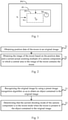
- an image processor may clip an image P1 with a corresponding size from an original image P0 acquired by an image sensor, which has the same size as that of the image sensor, according to a zooming multiple N of the camera component, and then display it on a display to achieve an effect of magnifying N times, as shown in Fig. 1 .
- the image processor always takes a preset position, such as a center position O, in the original image as a center position of the displayed image, such that the shooting area does not match the displayed area.
- the moon would often be moved out of the displayed area, which degrades the shooting experience.
- Fig. 1 shows an example in which the moon M was moved out of the clipped area when it was zoomed in from an N multiple to an N1 multiple such that the moon could not be displayed on an preview image.
- an embodiment of the present invention provides a method for obtaining an image of the moon, with a basic concept of obtaining position data of the moon in an original image; clipping the image of the moon from the original image by taking the position data as a central position in combination with the current actual zooming multiple of the camera component, in which a central area in the image of the moon contains the moon.
- the shooting area matches the displayed area, avoiding the moon being moved out of the displayed area, which is beneficial for improving the user's shooting experience.
- Fig. 2 is a flowchart illustrating a method for obtaining an image of the moon according to an example embodiment, which may be applied to an electronic device.
- the electronic device may include a smart phone, a personal computer or a server.
- a method for obtaining an image of the moon includes blocks 21-22.
- a camera component may be provided on an electronic device.
- a camera component may be enabled, and may be controlled into a shooting state.
- the user may operate a lens of the camera component, for example, increasing or reducing a zooming multiple of the camera component by rotating clockwise or counterclockwise.
- the user may determine whether the size of the moon at the current actual zooming multiple is his desired size, and may adjust it until it reaches the desired size.
- the electronic device may store a preset image recognition algorithm, for example, a recognition algorithm implemented based on machine learning, such as a convolutional neural network, or a recognition algorithm implemented based on feature matching, such as an Oriented Fast and Rotated Brief (ORB), a scale-invariant feature transform (SIFT), etc..
- An appropriate image recognition algorithm may be selected as necessary and is not limited here.
- the electronic device may recognize an object, such as a person, scenery, or the moon, contained in the original image by using the above preset image recognition algorithm.
- the position data of the moon may be obtained.
- the above position data may include an abscissa and an ordinate of the center position of the moon in the original image, and may alternatively or additionally include a width, a length and other data of the moon, which is not limited here.
- the electronic device may further determine whether the camera component meets a preset condition before determining the position data.
- the block 21 is performed after the preset condition is met.
- the preset conditions may include any one of: 1) a current shooting mode being in a moon mode; and 2) being in the moon mode and the current zooming multiple of the camera component exceeding a preset threshold for the zooming multiple.
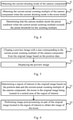
- the electronic device determines whether the camera component meets the preset conditions, and includes obtaining the current shooting mode of the camera component by the electronic device. For example, referring to Fig. 3 , at block 31, the electronic device may recognize an original image by using a preset image recognition algorithm to obtain an object contained in the original image.
- the current shooting mode of the camera component is determined as the moon mode. When the moon is not present in the original image, the current shooting mode may be determined according to the light in the current scene or a historical shooting mode before the camera component is enabled.
- the electronic device may determine that the camera component meets the preset condition when the current shooting mode of the camera component is in the moon mode. Otherwise, it is determined that the preset condition is not met, in which the shooting operation may be performed according to the current shooting mode.
- the current shooting mode of the camera component may be obtained by reading a shooting mode indicator with a value of 1 and using a shooting mode corresponding to the shooting mode indicator as the current shooting mode.
- the above shooting mode may be a moon mode, a portrait mode, a night view mode, or the like.
- the shooting mode indicator of the mode is set to be 1.
- the electronic device may determine whether the camera component meets the preset condition, and, as shown in Fig. 4 , includes obtaining the current shooting mode of the camera component by the electronic device, at block 41.
- the step of determining the shooting mode may be implemented with reference to the previous description.
- the current shooting mode is the moon mode
- the current actual zooming multiple of the camera component is obtained.
- the block 21 may be performed. Otherwise, it is determined that the preset condition is not met, in which the shooting operation may be performed according to the current shooting mode.
- the above preset threshold for the zooming multiple may be determined according to critical zooming multiples of at least two lenses in the camera component. For example, assuming that a zooming multiple of a wide-angle lens is 1.0-3.0, and a zooming multiple of a telephoto lens is 3.0-5.0, the preset threshold for the zooming multiple may be set to be 3.0.
- the above preset threshold for the zooming multiple may alternatively be determined via Big Data, by gathering statistics for zooming multiples of various camera components and respective effects of moon shooting. For example, a zooming multiple corresponding to the best shooting effect may be taken as the preset threshold for the zooming multiple.
- the value of the preset threshold for the zooming multiple may range from 3.0 to 5.0.
- setting the preset threshold for the zooming multiple may prevent the quality of captured images of the moon from being influenced by a zooming multiple that is too large or the user's shaking, and reduce the computation amount for the electronic device to process the data.
- a preview image with a size corresponding to the current actual zooming multiple may be clipped from the original image.
- the electronic device may control a display screen to display the above preview image, so that the user may review the captured image in time.
- the image of the moon is obtained based on the position data and the current actual zooming multiple of the camera component, in which a central area in the image of the moon contains the moon.
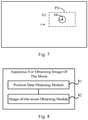
- the electronic device may determine the image of the moon based on the position data of the moon and the current actual zooming multiple of the camera component, and as shown in Fig. 6 , includes determining a region of interest in the original image based on the position data and the current actual zooming multiple of the camera component by the electronic device, at block 61, which is illustrated at a region P2 in Fig. 7 .
- the moon in the original image is located in a central area of the region of interest, with a central position O1 of the moon overlapping with the central position of the region of interest.
- the electronic device may perform an image post-processing, such as automatic focusing, automatic white balance, automatic exposure, or the like, on part of the original image located in the region of interest, to obtain the image of the moon.
- the image of the moon may be obtained according to the position data and the current actual zooming multiple of the camera component by obtaining the position data of the moon in the original image, with the moon located in the central position of the image of the moon.
- the shooting area may match the displayed area, avoiding the moon being moved out of the displayed area at a high focal length, which is beneficial for improving the user's shooting experience.
- the following function may be enabled: disabling the processor for outputting an image with a higher zooming multiple when it is detected that the user has adjusted the current actual zooming multiple of the camera component to a zooming multiple exceeding the preset threshold for the zooming multiple, such that any zooming multiple set by the user beyond the threshold will no longer make ISP increase the zooming multiple of the output image.
- the original image is subjected to a preset moon mode algorithm so as to recognize position data of the moon in the original image.
- the moon mode algorithm clips an image corresponding to the current actual zooming multiple, i.e. a preview image, from the original image by takes the above position data as a center position and controls the display screen to display the preview image.
- the moon mode algorithm may further subject the above position data and the original image to a preset 3A algorithm, which performs an image post-processing on an input image, such as automatic focusing, automatic white balance, automatic exposure, or the like.
- the 3A algorithm defines a region of interest (ROI) in the original image according to the position data of the moon in the original image determined by the moon mode algorithm, and then performs a 3A processing on part of the image in the ROI area to obtain an image of the moon with the moon located in the center area. That is, in the embodiment, the moon is always treated as the ROI, resulting in images with stable parameters and high quality imaging of the moon.
- ROI region of interest
- the embodiments of the present invention further provides an apparatus for obtaining an image of the moon, referring to Fig. 8 , and includes: a position data obtaining module 81 configured to obtain position data of the moon in an original image; and an image-of-the-moon obtaining module 82 configured to obtain the image of the moon based on the position data and the current actual zooming multiple of a camera component, in which a central area in the image of the moon contains the moon.
- the image-of-the-moon obtaining module 82 includes: a region obtaining unit configured to determine a region of interest of the original image based on the position data and the current actual zooming multiple of a camera component, in which the moon in the original image is located in a central area of the region of interest; and an image obtaining unit configured to perform an image post-processing on part of the original image located in the region of interest to obtain the image of the moon.
- the apparatus further includes: a condition determining module configured to determine that the camera component meets a preset condition, the preset condition including any one of: 1) a current shooting mode being in a moon mode; and 2) being in the moon mode and the current zooming multiple of the camera component exceeding a preset threshold for the zooming multiple.
- a condition determining module configured to determine that the camera component meets a preset condition, the preset condition including any one of: 1) a current shooting mode being in a moon mode; and 2) being in the moon mode and the current zooming multiple of the camera component exceeding a preset threshold for the zooming multiple.
- the condition determining module when the preset condition is being in the moon mode and the current zooming multiple of the camera component exceeding the preset threshold for the zooming multiple, includes: a mode obtaining unit configured to obtain the current shooting mode of the camera component; a multiple obtaining unit configured to obtain the current actual zooming multiple of the camera component when the current shooting mode is the moon mode ; and a condition determining unit configured to determine that the camera component meets the preset condition when the current actual zooming multiple exceeds the preset threshold for the zooming multiple.
- the mode obtaining unit includes: an object obtaining subunit configured to recognize the original image by using a preset image recognition algorithm, to obtain the object contained in the original image; and a mode determining subunit configured to determine that the current shooting mode of the camera component is in the moon mode when the moon is present in the object contained in the original image.
- the apparatus further includes: an image clipping module configured to clip a preview image with a size corresponding to the current actual zooming multiple of the camera component from the original image based on the position data; and an image displaying component configured to display the preview image.
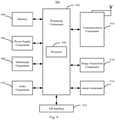
- Fig. 9 is a block diagram illustrating an electronic device according to an example embodiment.
- an electronic device 900 may be a smart phone, a computer, a digital broadcasting terminal, a tablet device, a medical equipment, a fitness equipment, a personal digital assistant, etc.
- the electronic device 900 may include one or more components: a processing component 902, a memory 904, a power supply component 906, a multimedia component 908, an audio component 910, an input/output (I/O) interface 912, a sensor component 914, a communication component 916, and an image collection component 918.
- a processing component 902 a memory 904
- a power supply component 906 a multimedia component 908, an audio component 910, an input/output (I/O) interface 912, a sensor component 914, a communication component 916, and an image collection component 918.
- I/O input/output
- the processing component 902 generally controls the whole operation of the electronic device 900, such as the operations related to display, phone call, data communication, camera operation and recording operation.
- the processing component 902 may include one or more processors 920 to execute a computer program.
- the processing component 902 may include one or more components for the convenience of interaction between the processing component 902 and other components.
- the processing component 902 may include a multimedia component for the convenience of interaction between the multimedia component 908 and the processing component 902.
- the memory 904 is configured to store all types of data to support the operation of the electronic device 900. Examples of the data include computer programs of any applications or methods operated on the electronic device 900, contact data, phone book data, messages, pictures, videos, etc.
- the memory 904 may be implemented by any type of volatile or non-volatile storage devices or their combination, such as Static Random Access Memory (SRAM), Electrically Erasable Programmable Read-Only Memory (EEPROM), Erasable Programmable Read-Only Memory (EPROM), Programmable Read-Only Memory (PROM), Read-Only Memory (ROM), Magnetic Memory, Flash Memory, Magnetic Disk or Optical Disk.
- SRAM Static Random Access Memory
- EEPROM Electrically Erasable Programmable Read-Only Memory
- EPROM Erasable Programmable Read-Only Memory
- PROM Programmable Read-Only Memory
- ROM Read-Only Memory
- Magnetic Memory Flash Memory
- Magnetic Disk Magnetic Disk or Optical Disk.
- the power supply component 906 may provide power for all components of the electronic device 900.
- the power supply component 906 may include power supply management system, a or more power supplies, and other units related to generating, managing and distributing power for the electronic device 900.
- the power supply component 906 may include a power supply chip, and the controller may communicate with a power supply chip, thereby controlling the power supply chip to conduct or disconnect a switch element, so that a battery supplies power or does not supply power to a main board circuit.
- the multimedia component 908 includes an output interface screen provided between the electronic device 900 and the target object.
- a screen may include a liquid crystal display (LCD) and a touch panel (TP). If the screen includes a touch panel, the screen may be implemented as a touch screen to receive an input signal from the target object.
- the touch panel includes one or more touch sensors to sense touching, sliding and gestures on the touch panel. The touch sensor may not only sense the boundary of touch or slide action, but also detect the duration and pressure related to the touching or sliding operation.
- the audio component 910 is configured as output and/or input signal.
- the audio component 910 includes a microphone (MIC).
- the microphone When the electronic device 900 is in operation mode, such as call mode, record mode, and speech recognition mode, the microphone is configured to receive the external audio signals.
- the audio signals received may be further stored in the memory 904 or sent via the communication component 916.
- the audio component 910 further includes a speaker configured to an output audio signal.
- the I/O interface 912 provides an interface for the processing component 902 and the peripheral interface component, and the peripheral interface component may be a keyboard, a click wheel, a button, etc.
- the sensor component 914 includes one or more sensors, configured to provide various aspects of status assessment for the electronic device 900.
- the sensor component 914 may detect the on/off state of the electronic device 900 and the relative positioning of the component.
- the component is a display screen and a keypad of the electronic device 900.
- the sensor component 914 may further detect the location change of the electronic device 900 or one component of the electronic device 900, the presence or absence of contact between the user and the device 900, the orientation or acceleration/deceleration of the device 900, and the temperature change of the device 1300.
- the communication component 916 is configured for the convenience of wire or wireless communication between the electronic device 900 and other devices.
- the electronic device 900 may access wireless networks based on communication standard, such as WiFi, 2G, 3G, 4G, 5G, or their combination.
- the communication component 916 receives broadcast signals or broadcast-related information from an external broadcast management system via a broadcast channel.
- the communication component 916 further includes a near field communication (NFC) component to facilitate short-range communication.
- NFC near field communication
- an NFC component may be implemented based on radio frequency indicator (RFID) technology, infrared data association (IRDA) technology, ultra-wideband (UWB) technology, bluetooth (BT) technology and other technologies.
- RFID radio frequency indicator
- IRDA infrared data association
- UWB ultra-wideband
- BT bluetooth
- the electronic device 900 may be implemented by one or more application specific integrated circuits(ASIC), digital signal processors (DSP), digital signal processing devices (DSPD), programmable logic devices (PLD), field programmable gate arrays (FPGA), controllers, microcontrollers, microprocessors or other electronics components.
- ASIC application specific integrated circuits
- DSP digital signal processors
- DSPD digital signal processing devices
- PLD programmable logic devices
- FPGA field programmable gate arrays
- controllers microcontrollers, microprocessors or other electronics components.
- a non-temporary computer readable storage medium including an executable computer program is further provided, such as a memory 904 including instructions, in which the executable computer program may be executed by a processor.
- a computer readable storage medium may be a ROM, a random access memory (RAM), a CD-ROM, a magnetic tape, a floppy disk, an optical data storage device, etc.
Landscapes
- Engineering & Computer Science (AREA)
- Multimedia (AREA)
- Signal Processing (AREA)
- Human Computer Interaction (AREA)
- Studio Devices (AREA)
Abstract
Description
- The present invention relates to a field of image processing technology, and particularly to a method for obtaining an image of the moon, an electronic device and a storage medium.
- With development of mobile phone imaging technology, users more and more rely on a mobile phone to shoot images of various scenes, such as shooting the moon. In practical applications, when shooting the moon, the user needs to adopt high zooming multiple to make the moon large enough in imaging. However, in an unstable state such as being at a high zooming multiple, the user's slight hand shaking may make the moon move out of a preview interface, so that a satisfied image of the moon cannot be obtained.
- The present invention provides a method and an apparatus for obtaining an image of the moon, an electronic device and a storage medium, to solve the shortcomings of the related technology.
- According to a first aspect of the present invention, a method for obtaining an image of the moon is provided, and includes: obtaining position data of the moon in an original image; and obtaining the image of the moon based on the position data and a current actual zooming multiple of a camera component. A central area in the image of the moon contains the moon.
- In an embodiment, obtaining the image of the moon may include determining a region of interest in the original image based on the position data and the current actual zooming multiple of the camera component, the moon in the original image being located in a central area of the region of interest; and performing image post-processing on part of the original image located in the region of interest to obtain the image of the moon.
- Optionally, before obtaining position data of the moon in an original image, the method may further include determining whether the camera component meets a preset condition, the preset condition including any one of: 1) a current shooting mode being in a moon mode; and 2) being in the moon mode and the current actual zooming multiple of the camera component exceeding a preset threshold for the zooming multiple.
- Optionally, when the preset condition is being in the moon mode and the current actual zooming multiple of the camera component exceeding the preset threshold for the zooming multiple, determining whether the camera component meets the preset condition may include obtaining the current shooting mode of the camera component; obtaining the current actual zooming multiple of the camera component when the current shooting mode is the moon mode; and determining that the camera component meets the preset condition when the current actual zooming multiple exceeds the preset threshold for the zooming multiple.
- Optionally, obtaining the current shooting mode of the camera component may include recognizing the original image by using a preset image recognition algorithm so as to obtain an object contained in the original image; and determining that the current shooting mode of the camera component is in the moon mode when the moon is present in the object contained in the original image.
- Optionally, after obtaining position data of the moon in an original image, the method may further include clipping a preview image with a size corresponding to the current actual zooming multiple of the camera component from the original image based on the position data; and displaying the preview image.
- According to a second aspect of the present invention, an apparatus for obtaining an image of the moon is provided, and may include a position data obtaining module configured to obtain position data of the moon in an original image; and an image-of-the-moon obtaining module configured to obtain the image of the moon based on the position data and a current actual zooming multiple of a camera component, in which a central area in the image of the moon contains the moon.
- Optionally, the image-of-the-moon obtaining module may include a region obtaining unit configured to determine a region of interest in the original image based on the position data and the current actual zooming multiple of the camera component, the moon in the original image being located in a central area of the region of interest; and an image obtaining unit configured to perform image post-processing on part of the original image located in the region of interest to obtain the image of the moon.
- Optionally, the apparatus may further include a condition determining module configured to determine whether the camera component meets a preset condition, the preset condition including any one of : 1) a current shooting mode being in a moon mode; and 2) being in the moon mode and the current actual zooming multiple of the camera component exceeding a preset threshold for the zooming multiple.
- Optionally, when the preset condition is being in the moon mode and the current actual zooming multiple of the camera component exceeding the preset threshold for the zooming multiple, the condition determining module may include a mode obtaining unit configured to obtain the current shooting mode of the camera component; a multiple obtaining unit configured to obtain the current actual zooming multiple of the camera component when the current shooting mode is the moon mode ; and a condition determining unit configured to determine that the camera component meets the preset condition when the actual zooming multiple exceeds the preset threshold for the zooming multiple.
- Optionally, the mode obtaining unit may include an object obtaining subunit configured to recognize the original image by using a preset image recognition algorithm so as to obtain an object contained in the original image; and a mode determining subunit configured to determine that the current shooting mode of the camera component is in the moon mode when the moon is present in the object contained in the original image.
- Optionally, the apparatus may further include an image clipping module configured to clip a preview image with a size corresponding to the current actual zooming multiple of the camera component from the original image based on the position data; and an image displaying module configured to display the preview image.
- According to a third aspect of the present invention, an electronic device is provided, and may include a processor; a memory for storing instructions executable by the processor, wherein the processor is configured to perform the method for obtaining the image of the moon according to the above aspects.
- According to a fourth aspect of the present invention, a computer-readable medium including computer-readable instructions which, when being carried out by a computer or signal processor, implement the method for obtaining the image of the moon according to the above aspects.
- It is to be noted that, the details above and in the following are exemplary and illustrative, and do not constitute the limitation on the present invention.
- The drawings herein are incorporated into the specification and constitute a part of the specification, show embodiments in conformity with embodiments of the present invention, and explain the principle of the present invention together with the specification.
-
Fig. 1 is a diagram illustrating clipping an image of the moon in the related art. -
Fig. 2 is a flowchart illustrating a method for obtaining an image of the moon according to an example embodiment. -
Fig. 3 is a flowchart illustrating determining a moon mode according to an example embodiment. -
Fig. 4 is a flowchart illustrating determining to meet a preset condition according to an example embodiment. -
Fig. 5 is a flowchart illustrating displaying a preview image according to an example embodiment. -
Fig. 6 is a flowchart illustrating obtaining the image of the moon according to an example embodiment. -
Fig. 7 is a diagram illustrating clipping the image of the moon according to an example embodiment. -
Fig. 8 is a block diagram illustrating an apparatus for obtaining an image of the moon according to an example embodiment. -
Fig. 9 is a block diagram illustrating an electronic device according to an example embodiment. - The example embodiments will be described in detail here, and examples thereof are shown in the accompanying drawings. When the following descriptions refer to the accompanying drawings, unless otherwise indicated, the same numbers in different drawings represent the same or similar elements. The implementations described in the following example embodiments do not represent all the implementations consistent with the present invention. Rather, they are merely examples of the apparatus and method consistent with some aspects of the present invention as detailed in the appended claims.
- With development of mobile phone imaging technology, users more and more rely on a mobile phone to shoot images of various scenes, such as moon shooting. In practical applications, when shooting the moon, the user needs to adopt high zooming multiple to make the moon large enough in imaging. However, in an unstable state such as being at a high zooming multiple, the user's slight hand shaking may make the moon moved out of a preview interface, so that a satisfied image of the moon cannot be obtained.
- In the process of implementing the solutions of the embodiments of the present invention, after careful analysis, it can be found that an image processor may clip an image P1 with a corresponding size from an original image P0 acquired by an image sensor, which has the same size as that of the image sensor, according to a zooming multiple N of the camera component, and then display it on a display to achieve an effect of magnifying N times, as shown in
Fig. 1 . However, during the above clipping process, the image processor always takes a preset position, such as a center position O, in the original image as a center position of the displayed image, such that the shooting area does not match the displayed area. With additional influence of the user's hand shaking, the moon would often be moved out of the displayed area, which degrades the shooting experience.Fig. 1 shows an example in which the moon M was moved out of the clipped area when it was zoomed in from an N multiple to an N1 multiple such that the moon could not be displayed on an preview image. - To solve the above technical problems, an embodiment of the present invention provides a method for obtaining an image of the moon, with a basic concept of obtaining position data of the moon in an original image; clipping the image of the moon from the original image by taking the position data as a central position in combination with the current actual zooming multiple of the camera component, in which a central area in the image of the moon contains the moon. In this way, the shooting area matches the displayed area, avoiding the moon being moved out of the displayed area, which is beneficial for improving the user's shooting experience.
-
Fig. 2 is a flowchart illustrating a method for obtaining an image of the moon according to an example embodiment, which may be applied to an electronic device. The electronic device may include a smart phone, a personal computer or a server. Referring toFig. 2 , a method for obtaining an image of the moon includes blocks 21-22. - At
block 21, position data of the moon in an original image is obtained. - In the embodiment, a camera component may be provided on an electronic device. When a user initiates an APP "camera" on a system interface in the electronic device, a camera component may be enabled, and may be controlled into a shooting state.
- In the shooting process, the user may operate a lens of the camera component, for example, increasing or reducing a zooming multiple of the camera component by rotating clockwise or counterclockwise. In combination with a preview image on a display screen of the electronic device, the user may determine whether the size of the moon at the current actual zooming multiple is his desired size, and may adjust it until it reaches the desired size.
- In an embodiment, the electronic device may store a preset image recognition algorithm, for example, a recognition algorithm implemented based on machine learning, such as a convolutional neural network, or a recognition algorithm implemented based on feature matching, such as an Oriented Fast and Rotated Brief (ORB), a scale-invariant feature transform (SIFT), etc.. An appropriate image recognition algorithm may be selected as necessary and is not limited here. When it is detected that the user initiates the shooting operation, the electronic device may recognize an object, such as a person, scenery, or the moon, contained in the original image by using the above preset image recognition algorithm. Thus, when the moon is contained the original image, the position data of the moon may be obtained. The above position data may include an abscissa and an ordinate of the center position of the moon in the original image, and may alternatively or additionally include a width, a length and other data of the moon, which is not limited here.
- In an embodiment, the electronic device may further determine whether the camera component meets a preset condition before determining the position data. The
block 21 is performed after the preset condition is met. Here, the preset conditions may include any one of: 1) a current shooting mode being in a moon mode; and 2) being in the moon mode and the current zooming multiple of the camera component exceeding a preset threshold for the zooming multiple. - In an example, when the preset condition is being in the moon mode and the current zooming multiple of the camera component exceeding a preset threshold for the zooming multiple, the electronic device determines whether the camera component meets the preset conditions, and includes obtaining the current shooting mode of the camera component by the electronic device. For example, referring to
Fig. 3 , atblock 31, the electronic device may recognize an original image by using a preset image recognition algorithm to obtain an object contained in the original image. Atblock 32, when the moon is present in an object contained in the original image, the current shooting mode of the camera component is determined as the moon mode. When the moon is not present in the original image, the current shooting mode may be determined according to the light in the current scene or a historical shooting mode before the camera component is enabled. The electronic device may determine that the camera component meets the preset condition when the current shooting mode of the camera component is in the moon mode. Otherwise, it is determined that the preset condition is not met, in which the shooting operation may be performed according to the current shooting mode. For another example, the current shooting mode of the camera component may be obtained by reading a shooting mode indicator with a value of 1 and using a shooting mode corresponding to the shooting mode indicator as the current shooting mode. The above shooting mode may be a moon mode, a portrait mode, a night view mode, or the like. When the user adjusts the shooting mode of the camera component to a certain mode, the shooting mode indicator of the mode is set to be 1. - In another example, when the preset condition is the current shooting mode being in the moon mode, the electronic device may determine whether the camera component meets the preset condition, and, as shown in
Fig. 4 , includes obtaining the current shooting mode of the camera component by the electronic device, atblock 41. The step of determining the shooting mode may be implemented with reference to the previous description. Atblock 42, when the current shooting mode is the moon mode, the current actual zooming multiple of the camera component is obtained. Atblock 43, when the current actual zooming multiple exceeds the preset threshold for the zooming multiple, it may be determined that the camera component meets the preset condition, and theblock 21 may be performed. Otherwise, it is determined that the preset condition is not met, in which the shooting operation may be performed according to the current shooting mode. - The above preset threshold for the zooming multiple may be determined according to critical zooming multiples of at least two lenses in the camera component. For example, assuming that a zooming multiple of a wide-angle lens is 1.0-3.0, and a zooming multiple of a telephoto lens is 3.0-5.0, the preset threshold for the zooming multiple may be set to be 3.0. Of course, the above preset threshold for the zooming multiple may alternatively be determined via Big Data, by gathering statistics for zooming multiples of various camera components and respective effects of moon shooting. For example, a zooming multiple corresponding to the best shooting effect may be taken as the preset threshold for the zooming multiple. It is understandable that various methods for setting the preset threshold for the zooming multiple that allow to improve the quality of captured images of the moon, may fall within the extent of the invention. In the example, the value of the preset threshold for the zooming multiple may range from 3.0 to 5.0.
- It is to be noted that, in the embodiment, setting the preset threshold for the zooming multiple may prevent the quality of captured images of the moon from being influenced by a zooming multiple that is too large or the user's shaking, and reduce the computation amount for the electronic device to process the data.
- In an embodiment, referring to
Fig. 5 , atblock 51, after the electronic device obtains the position data, a preview image with a size corresponding to the current actual zooming multiple may be clipped from the original image. Atblock 52, the electronic device may control a display screen to display the above preview image, so that the user may review the captured image in time. - At
block 22, the image of the moon is obtained based on the position data and the current actual zooming multiple of the camera component, in which a central area in the image of the moon contains the moon. - In the embodiment, the electronic device may determine the image of the moon based on the position data of the moon and the current actual zooming multiple of the camera component, and as shown in
Fig. 6 , includes determining a region of interest in the original image based on the position data and the current actual zooming multiple of the camera component by the electronic device, atblock 61, which is illustrated at a region P2 inFig. 7 . The moon in the original image is located in a central area of the region of interest, with a central position O1 of the moon overlapping with the central position of the region of interest. Atblock 62, the electronic device may perform an image post-processing, such as automatic focusing, automatic white balance, automatic exposure, or the like, on part of the original image located in the region of interest, to obtain the image of the moon. - Consequently, according to the embodiments of the present invention, the image of the moon may be obtained according to the position data and the current actual zooming multiple of the camera component by obtaining the position data of the moon in the original image, with the moon located in the central position of the image of the moon. In this way, the shooting area may match the displayed area, avoiding the moon being moved out of the displayed area at a high focal length, which is beneficial for improving the user's shooting experience.
- An implementation of the above method for obtaining the image of the moon will be described below in an embodiment in which a user intends to take an image of the moon with a mobile phone, including the following steps.
- When the user uses a camera function of the mobile phone and starts the moon mode, or the camera function automatically switches to the moon mode, the following function may be enabled: disabling the processor for outputting an image with a higher zooming multiple when it is detected that the user has adjusted the current actual zooming multiple of the camera component to a zooming multiple exceeding the preset threshold for the zooming multiple, such that any zooming multiple set by the user beyond the threshold will no longer make ISP increase the zooming multiple of the output image.
- The original image is subjected to a preset moon mode algorithm so as to recognize position data of the moon in the original image. Also, the moon mode algorithm clips an image corresponding to the current actual zooming multiple, i.e. a preview image, from the original image by takes the above position data as a center position and controls the display screen to display the preview image.
- The moon mode algorithm may further subject the above position data and the original image to a preset 3A algorithm, which performs an image post-processing on an input image, such as automatic focusing, automatic white balance, automatic exposure, or the like.
- The 3A algorithm defines a region of interest (ROI) in the original image according to the position data of the moon in the original image determined by the moon mode algorithm, and then performs a 3A processing on part of the image in the ROI area to obtain an image of the moon with the moon located in the center area. That is, in the embodiment, the moon is always treated as the ROI, resulting in images with stable parameters and high quality imaging of the moon.
- On the basis of the above method for obtaining an image of the moon, the embodiments of the present invention further provides an apparatus for obtaining an image of the moon, referring to
Fig. 8 , and includes: a positiondata obtaining module 81 configured to obtain position data of the moon in an original image; and an image-of-the-moon obtaining module 82 configured to obtain the image of the moon based on the position data and the current actual zooming multiple of a camera component, in which a central area in the image of the moon contains the moon. - In an embodiment, the image-of-the-
moon obtaining module 82 includes: a region obtaining unit configured to determine a region of interest of the original image based on the position data and the current actual zooming multiple of a camera component, in which the moon in the original image is located in a central area of the region of interest; and an image obtaining unit configured to perform an image post-processing on part of the original image located in the region of interest to obtain the image of the moon. - In an embodiment, the apparatus further includes: a condition determining module configured to determine that the camera component meets a preset condition, the preset condition including any one of: 1) a current shooting mode being in a moon mode; and 2) being in the moon mode and the current zooming multiple of the camera component exceeding a preset threshold for the zooming multiple.
- In an embodiment, when the preset condition is being in the moon mode and the current zooming multiple of the camera component exceeding the preset threshold for the zooming multiple, the condition determining module includes: a mode obtaining unit configured to obtain the current shooting mode of the camera component; a multiple obtaining unit configured to obtain the current actual zooming multiple of the camera component when the current shooting mode is the moon mode ; and a condition determining unit configured to determine that the camera component meets the preset condition when the current actual zooming multiple exceeds the preset threshold for the zooming multiple.
- In an embodiment, the mode obtaining unit includes: an object obtaining subunit configured to recognize the original image by using a preset image recognition algorithm, to obtain the object contained in the original image; and a mode determining subunit configured to determine that the current shooting mode of the camera component is in the moon mode when the moon is present in the object contained in the original image.
- In an embodiment, the apparatus further includes: an image clipping module configured to clip a preview image with a size corresponding to the current actual zooming multiple of the camera component from the original image based on the position data; and an image displaying component configured to display the preview image.
- It is understandable that the apparatus provided in the present invention corresponds to the above method, therefore, the contents may refer to the contents of the embodiments of the method, which will not be repeated here.
-
Fig. 9 is a block diagram illustrating an electronic device according to an example embodiment. For example, anelectronic device 900 may be a smart phone, a computer, a digital broadcasting terminal, a tablet device, a medical equipment, a fitness equipment, a personal digital assistant, etc. - Referring to
Fig. 9 , theelectronic device 900 may include one or more components: aprocessing component 902, amemory 904, apower supply component 906, amultimedia component 908, anaudio component 910, an input/output (I/O)interface 912, asensor component 914, acommunication component 916, and animage collection component 918. - The
processing component 902 generally controls the whole operation of theelectronic device 900, such as the operations related to display, phone call, data communication, camera operation and recording operation. Theprocessing component 902 may include one ormore processors 920 to execute a computer program. In addition, theprocessing component 902 may include one or more components for the convenience of interaction between theprocessing component 902 and other components. For example, theprocessing component 902 may include a multimedia component for the convenience of interaction between themultimedia component 908 and theprocessing component 902. - The
memory 904 is configured to store all types of data to support the operation of theelectronic device 900. Examples of the data include computer programs of any applications or methods operated on theelectronic device 900, contact data, phone book data, messages, pictures, videos, etc. Thememory 904 may be implemented by any type of volatile or non-volatile storage devices or their combination, such as Static Random Access Memory (SRAM), Electrically Erasable Programmable Read-Only Memory (EEPROM), Erasable Programmable Read-Only Memory (EPROM), Programmable Read-Only Memory (PROM), Read-Only Memory (ROM), Magnetic Memory, Flash Memory, Magnetic Disk or Optical Disk. - The
power supply component 906 may provide power for all components of the electronic device 900.Thepower supply component 906 may include power supply management system, a or more power supplies, and other units related to generating, managing and distributing power for the electronic device 900.Thepower supply component 906 may include a power supply chip, and the controller may communicate with a power supply chip, thereby controlling the power supply chip to conduct or disconnect a switch element, so that a battery supplies power or does not supply power to a main board circuit. - The
multimedia component 908 includes an output interface screen provided between theelectronic device 900 and the target object. In some embodiments, a screen may include a liquid crystal display (LCD) and a touch panel (TP). If the screen includes a touch panel, the screen may be implemented as a touch screen to receive an input signal from the target object. The touch panel includes one or more touch sensors to sense touching, sliding and gestures on the touch panel. The touch sensor may not only sense the boundary of touch or slide action, but also detect the duration and pressure related to the touching or sliding operation. - The
audio component 910 is configured as output and/or input signal. For example, theaudio component 910 includes a microphone (MIC). When theelectronic device 900 is in operation mode, such as call mode, record mode, and speech recognition mode, the microphone is configured to receive the external audio signals. The audio signals received may be further stored in thememory 904 or sent via thecommunication component 916. In some embodiments, theaudio component 910 further includes a speaker configured to an output audio signal. - The I/
O interface 912 provides an interface for theprocessing component 902 and the peripheral interface component, and the peripheral interface component may be a keyboard, a click wheel, a button, etc. - The
sensor component 914 includes one or more sensors, configured to provide various aspects of status assessment for theelectronic device 900. For example, thesensor component 914 may detect the on/off state of theelectronic device 900 and the relative positioning of the component. For example, the component is a display screen and a keypad of theelectronic device 900. Thesensor component 914 may further detect the location change of theelectronic device 900 or one component of theelectronic device 900, the presence or absence of contact between the user and thedevice 900, the orientation or acceleration/deceleration of thedevice 900, and the temperature change of the device 1300. - The
communication component 916 is configured for the convenience of wire or wireless communication between theelectronic device 900 and other devices. Theelectronic device 900 may access wireless networks based on communication standard, such as WiFi, 2G, 3G, 4G, 5G, or their combination. In an exemplary embodiment, thecommunication component 916 receives broadcast signals or broadcast-related information from an external broadcast management system via a broadcast channel. In an exemplary embodiment, thecommunication component 916 further includes a near field communication (NFC) component to facilitate short-range communication. For example, an NFC component may be implemented based on radio frequency indicator (RFID) technology, infrared data association (IRDA) technology, ultra-wideband (UWB) technology, bluetooth (BT) technology and other technologies. - In an exemplary embodiment, the
electronic device 900 may be implemented by one or more application specific integrated circuits(ASIC), digital signal processors (DSP), digital signal processing devices (DSPD), programmable logic devices (PLD), field programmable gate arrays (FPGA), controllers, microcontrollers, microprocessors or other electronics components. - In an exemplary embodiment, a non-temporary computer readable storage medium including an executable computer program is further provided, such as a
memory 904 including instructions, in which the executable computer program may be executed by a processor. In which, a computer readable storage medium may be a ROM, a random access memory (RAM), a CD-ROM, a magnetic tape, a floppy disk, an optical data storage device, etc. - After considering the specification and practicing the invention herein, those skilled in the art will easily think of other embodiments of the present application. The present application is intended to cover any variations, usages, or adaptive changes of the present application. These variations, usages, or adaptive changes follow the general principles of the present application and include common knowledge or conventional technical means in the technical field not disclosed by the present application. The description and the embodiments are to be regarded as exemplary only, and the true scope of the present application are referred to the appended claims.
- The present application is intended to cover any variations, usages, or adaptive changes of the present invention. These variations, usages, or adaptive changes follow the general principles of the present invention and include common knowledge or conventional technical means in the technical field not disclosed by the present invention. The description and the embodiments are to be regarded as exemplary only, and the true scope of the present invention are given by the appended claims. It should be understood that the present invention is not limited to the precise structure described above and shown in the drawings, and various modifications and changes may be made without departing from its scope. The scope of the present application is only limited by the appended claims.
Claims (14)
- A method for obtaining an image of the moon, comprising:obtaining (21) position data of the moon in an original image; andobtaining (22) the image of the moon based on the position data and a current actual zooming multiple of a camera component,wherein a central area in the image of the moon contains the moon.
- The method for obtaining the image of the moon according to claim 1, wherein obtaining the image of the moon comprises:determining (61) a region of interest in the original image based on the position data and the current actual zooming multiple of the camera component, the moon in the original image being located in a central area of the region of interest; andperforming (62) image post-processing on part of the original image located in the region of interest to obtain the image of the moon.
- The method for obtaining the image of the moon according to claim 1 or 2, further comprising:
determining whether the camera component meets a preset condition, the preset condition comprising any one of:1) a current shooting mode being in a moon mode; and2) being in the moon mode and the current actual zooming multiple of the camera component exceeding a preset threshold for the zooming multiple. - The method for obtaining the image of the moon according to claim 3, wherein, when the preset condition is being in the moon mode and the current actual zooming multiple of the camera component exceeding the preset threshold for the zooming multiple, determining whether the camera component meets the preset condition comprises:obtaining (41) the current shooting mode of the camera component;obtaining (42) the current actual zooming multiple of the camera component when the current shooting mode is the moon mode; anddetermining (43) that the camera component meets the preset condition when the current actual zooming multiple exceeds the preset threshold for the zooming multiple.
- The method for obtaining the image of the moon according to claim 4, wherein obtaining the current shooting mode of the camera component comprises:recognizing (31) the original image by using a preset image recognition algorithm so as to obtain an object contained in the original image; anddetermining (32) that the current shooting mode of the camera component is in the moon mode when the moon is present in the object contained in the original image.
- The method for obtaining the image of the moon according to any one of claims 1 to 5, further comprising:clipping (51) a preview image with a size corresponding to the current actual zooming multiple of the camera component from the original image based on the position data; anddisplaying (52) the preview image.
- An apparatus for obtaining an image of the moon, comprising:a position data obtaining module (81) configured to obtain position data of the moon in an original image; andan image-of-the-moon obtaining module (82) configured to obtain the image of the moon based on the position data and a current actual zooming multiple of a camera component,wherein a central area in the image of the moon contains the moon.
- The apparatus for obtaining the image of the moon according to claim 7, wherein the image-of-the-moon obtaining module comprises:a region obtaining unit configured to determine a region of interest in the original image based on the position data and the current actual zooming multiple of the camera component, the moon in the original image being located in a central area of the region of interest; andan image obtaining unit configured to perform image post-processing on part of the original image located in the region of interest to obtain the image of the moon.
- The apparatus for obtaining the image of the moon according to claim 7 or 8, further comprising:
a condition determining module configured to determine whether the camera component meets a preset condition, the preset condition comprising any one of:1) a current shooting mode being in a moon mode; and2) being in the moon mode and the current actual zooming multiple of the camera component exceeding a preset threshold for the zooming multiple. - The apparatus for obtaining the image of the moon according to claim 9, wherein when the preset condition is being in the moon mode and the current actual zooming multiple of the camera component exceeding the preset threshold for the zooming multiple, the condition determining module comprises:a mode obtaining unit configured to obtain the current shooting mode of the camera component;a multiple obtaining unit configured to obtain the current actual zooming multiple of the camera component when the current shooting mode is the moon mode ; anda condition determining unit configured to determine that the camera component meets the preset condition when the actual zooming multiple exceeds the preset threshold for the zooming multiple.
- The apparatus for obtaining the image of the moon according to claim 10, wherein the mode obtaining unit comprises:an object obtaining subunit configured to recognize the original image by using a preset image recognition algorithm so as to obtain an object contained in the original image; anda mode determining subunit configured to determine that the current shooting mode of the camera component is in the moon mode when the moon is present in the object contained in the original image.
- The apparatus for obtaining the image of the moon according to any one of claims 7 to 11, further comprising:an image clipping module configured to clip a preview image with a size corresponding to the current actual zooming multiple of the camera component from the original image based on the position data; andan image displaying module configured to display the preview image.
- An electronic device, comprising:a processor;a memory for storing instructions executable by the processor, wherein the processor is configured to perform the method for obtaining the image of the moon according to any one of claims 1 to 6.
- A computer-readable medium comprising computer-readable instructions which, when being carried out by a computer or signal processor, implement the method for obtaining the image of the moon according to any one of claims 1 to 6.
Applications Claiming Priority (1)
| Application Number | Priority Date | Filing Date | Title |
|---|---|---|---|
| CN202010784863.8A CN114071004B (en) | 2020-08-06 | 2020-08-06 | Moon image acquisition method and device, electronic device, and storage medium |
Publications (1)
| Publication Number | Publication Date |
|---|---|
| EP3952287A1 true EP3952287A1 (en) | 2022-02-09 |
Family
ID=75728648
Family Applications (1)
| Application Number | Title | Priority Date | Filing Date |
|---|---|---|---|
| EP21170835.9A Ceased EP3952287A1 (en) | 2020-08-06 | 2021-04-28 | Method for obtaining image of the moon, electronic device and storage medium |
Country Status (3)
| Country | Link |
|---|---|
| US (1) | US11736798B2 (en) |
| EP (1) | EP3952287A1 (en) |
| CN (1) | CN114071004B (en) |
Families Citing this family (2)
| Publication number | Priority date | Publication date | Assignee | Title |
|---|---|---|---|---|
| CN116684726B (en) * | 2022-11-18 | 2024-04-19 | 荣耀终端有限公司 | Moon detection method and electronic equipment |
| CN120751235A (en) * | 2024-08-09 | 2025-10-03 | 荣耀终端股份有限公司 | Image processing method, electronic device and readable storage medium |
Citations (3)
| Publication number | Priority date | Publication date | Assignee | Title |
|---|---|---|---|---|
| EP2574040A2 (en) * | 2011-09-26 | 2013-03-27 | Sony Mobile Communications Japan, Inc. | Image photography apparatus |
| US20170034410A1 (en) * | 2015-07-27 | 2017-02-02 | Samsung Electronics Co., Ltd. | Method and electronic device for stabilizing video |
| CN109951633A (en) * | 2019-02-18 | 2019-06-28 | 华为技术有限公司 | A kind of method and electronic equipment shooting the moon |
Family Cites Families (12)
| Publication number | Priority date | Publication date | Assignee | Title |
|---|---|---|---|---|
| US20100134641A1 (en) * | 2008-12-01 | 2010-06-03 | Samsung Electronics Co., Ltd. | Image capturing device for high-resolution images and extended field-of-view images |
| US20150189140A1 (en) * | 2009-02-23 | 2015-07-02 | Gary Edwin Sutton | Curved sensor array camera |
| US8228413B2 (en) * | 2009-09-01 | 2012-07-24 | Geovector Corp. | Photographer's guidance systems |
| JP2012065263A (en) * | 2010-09-17 | 2012-03-29 | Olympus Imaging Corp | Imaging apparatus |
| CN104104886B (en) * | 2014-07-24 | 2016-07-06 | 努比亚技术有限公司 | Overexposure image pickup method and device |
| CN107566748A (en) * | 2017-09-22 | 2018-01-09 | 维沃移动通信有限公司 | A kind of image processing method, mobile terminal and computer-readable recording medium |
| JP2019095594A (en) * | 2017-11-22 | 2019-06-20 | キヤノン株式会社 | Focus detection device and method, and imaging apparatus |
| JP7030562B2 (en) * | 2018-02-28 | 2022-03-07 | キヤノン株式会社 | Image processing equipment, image processing methods and programs |
| CN110771140A (en) * | 2018-08-23 | 2020-02-07 | 深圳市大疆创新科技有限公司 | Cloud deck system, image processing method thereof and unmanned aerial vehicle |
| CN111586282B (en) * | 2019-02-18 | 2021-08-10 | 北京小米移动软件有限公司 | Shooting method, shooting device, terminal and readable storage medium |
| CN112153240B (en) * | 2019-06-27 | 2021-11-09 | 深圳Tcl数字技术有限公司 | Method and device for adjusting image quality and readable storage medium |
| CN110913131B (en) * | 2019-11-21 | 2021-05-11 | 维沃移动通信有限公司 | A kind of moon photographing method and electronic device |
-
2020
- 2020-08-06 CN CN202010784863.8A patent/CN114071004B/en active Active
-
2021
- 2021-04-26 US US17/240,096 patent/US11736798B2/en active Active
- 2021-04-28 EP EP21170835.9A patent/EP3952287A1/en not_active Ceased
Patent Citations (3)
| Publication number | Priority date | Publication date | Assignee | Title |
|---|---|---|---|---|
| EP2574040A2 (en) * | 2011-09-26 | 2013-03-27 | Sony Mobile Communications Japan, Inc. | Image photography apparatus |
| US20170034410A1 (en) * | 2015-07-27 | 2017-02-02 | Samsung Electronics Co., Ltd. | Method and electronic device for stabilizing video |
| CN109951633A (en) * | 2019-02-18 | 2019-06-28 | 华为技术有限公司 | A kind of method and electronic equipment shooting the moon |
Non-Patent Citations (1)
| Title |
|---|
| MA M ET AL: "Automatic image cropping for mobile device with built-in camera", CONSUMER COMMUNICATIONS AND NETWORKING CONFERENCE, 2004. CCNC 2004. FI RST IEEE LAS VEGAS, NV, USA 5-8 JAN. 2004, PISCATAWAY, NJ, USA,IEEE, 5 January 2004 (2004-01-05), pages 710 - 711, XP032165313, ISBN: 978-0-7803-8145-2, DOI: 10.1109/CCNC.2004.1286964 * |
Also Published As
| Publication number | Publication date |
|---|---|
| US20220046174A1 (en) | 2022-02-10 |
| CN114071004B (en) | 2024-12-13 |
| CN114071004A (en) | 2022-02-18 |
| US11736798B2 (en) | 2023-08-22 |
Similar Documents
| Publication | Publication Date | Title |
|---|---|---|
| RU2628494C1 (en) | Method and device for generating image filter | |
| EP3076659B1 (en) | Photographing apparatus, control method thereof, and non-transitory computer-readable recording medium | |
| JP2023515788A (en) | Imaging method, device, electronic equipment and storage medium | |
| US10063769B2 (en) | Electronic apparatus | |
| US11770497B2 (en) | Method and device for processing video, and storage medium | |
| US11539888B2 (en) | Method and apparatus for processing video data | |
| CN104216525B (en) | Method and device for mode control of camera application | |
| EP4068119A1 (en) | Model training method and apparatus for information recommendation, electronic device and medium | |
| KR20210133104A (en) | Method and device for shooting image, and storage medium | |
| US11736798B2 (en) | Method for obtaining image of the moon, electronic device and storage medium | |
| CN110399082B (en) | Terminal attribute control method and device, electronic equipment and medium | |
| CN105635573A (en) | Pick-up head visual angle adjusting method and apparatus | |
| CN113079312A (en) | Method and device for adjusting focal length of camera, electronic equipment and storage medium | |
| CN114268745B (en) | Brightness adjustment method, device, equipment and storage medium | |
| CN108108668A (en) | Age Forecasting Methodology and device based on image | |
| CN118053405A (en) | Screen brightness control method and device, electronic equipment, medium and chip | |
| CN115719589A (en) | Brightness control method, device, electronic device and storage medium | |
| CN116206571A (en) | Backlight control method, device, display device and storage medium | |
| US20140301651A1 (en) | Method and device for performing spatial filtering process on image | |
| CN116132789B (en) | Image acquisition methods and apparatuses, electronic devices, and computer-readable storage media | |
| CN115731902B (en) | Methods, devices, electronic equipment, and storage media for adjusting screen brightness | |
| EP4546808A1 (en) | Video recording method, device and medium | |
| CN114339018B (en) | Method and device for switching lenses and storage medium | |
| CN112507156B (en) | Photo management method and device | |
| CN112346795B (en) | Image processing method, device and storage medium |
Legal Events
| Date | Code | Title | Description |
|---|---|---|---|
| PUAI | Public reference made under article 153(3) epc to a published international application that has entered the european phase |
Free format text: ORIGINAL CODE: 0009012 |
|
| STAA | Information on the status of an ep patent application or granted ep patent |
Free format text: STATUS: THE APPLICATION HAS BEEN PUBLISHED |
|
| AK | Designated contracting states |
Kind code of ref document: A1 Designated state(s): AL AT BE BG CH CY CZ DE DK EE ES FI FR GB GR HR HU IE IS IT LI LT LU LV MC MK MT NL NO PL PT RO RS SE SI SK SM TR |
|
| STAA | Information on the status of an ep patent application or granted ep patent |
Free format text: STATUS: REQUEST FOR EXAMINATION WAS MADE |
|
| 17P | Request for examination filed |
Effective date: 20220801 |
|
| RBV | Designated contracting states (corrected) |
Designated state(s): AL AT BE BG CH CY CZ DE DK EE ES FI FR GB GR HR HU IE IS IT LI LT LU LV MC MK MT NL NO PL PT RO RS SE SI SK SM TR |
|
| STAA | Information on the status of an ep patent application or granted ep patent |
Free format text: STATUS: EXAMINATION IS IN PROGRESS |
|
| 17Q | First examination report despatched |
Effective date: 20230530 |
|
| STAA | Information on the status of an ep patent application or granted ep patent |
Free format text: STATUS: THE APPLICATION HAS BEEN REFUSED |
|
| 18R | Application refused |
Effective date: 20250204 |