EP3952181A1 - Processing method and device - Google Patents
Processing method and device Download PDFInfo
- Publication number
- EP3952181A1 EP3952181A1 EP20777369.8A EP20777369A EP3952181A1 EP 3952181 A1 EP3952181 A1 EP 3952181A1 EP 20777369 A EP20777369 A EP 20777369A EP 3952181 A1 EP3952181 A1 EP 3952181A1
- Authority
- EP
- European Patent Office
- Prior art keywords
- base station
- remote
- rim
- interference
- information
- Prior art date
- Legal status (The legal status is an assumption and is not a legal conclusion. Google has not performed a legal analysis and makes no representation as to the accuracy of the status listed.)
- Granted
Links
Images




Classifications
-
- H—ELECTRICITY
- H04—ELECTRIC COMMUNICATION TECHNIQUE
- H04L—TRANSMISSION OF DIGITAL INFORMATION, e.g. TELEGRAPHIC COMMUNICATION
- H04L5/00—Arrangements affording multiple use of the transmission path
- H04L5/003—Arrangements for allocating sub-channels of the transmission path
- H04L5/0053—Allocation of signalling, i.e. of overhead other than pilot signals
-
- H—ELECTRICITY
- H04—ELECTRIC COMMUNICATION TECHNIQUE
- H04B—TRANSMISSION
- H04B17/00—Monitoring; Testing
- H04B17/30—Monitoring; Testing of propagation channels
- H04B17/309—Measuring or estimating channel quality parameters
- H04B17/345—Interference values
-
- H—ELECTRICITY
- H04—ELECTRIC COMMUNICATION TECHNIQUE
- H04B—TRANSMISSION
- H04B17/00—Monitoring; Testing
- H04B17/30—Monitoring; Testing of propagation channels
- H04B17/382—Monitoring; Testing of propagation channels for resource allocation, admission control or handover
-
- H—ELECTRICITY
- H04—ELECTRIC COMMUNICATION TECHNIQUE
- H04L—TRANSMISSION OF DIGITAL INFORMATION, e.g. TELEGRAPHIC COMMUNICATION
- H04L5/00—Arrangements affording multiple use of the transmission path
- H04L5/003—Arrangements for allocating sub-channels of the transmission path
- H04L5/0048—Allocation of pilot signals, i.e. of signals known to the receiver
-
- H—ELECTRICITY
- H04—ELECTRIC COMMUNICATION TECHNIQUE
- H04L—TRANSMISSION OF DIGITAL INFORMATION, e.g. TELEGRAPHIC COMMUNICATION
- H04L5/00—Arrangements affording multiple use of the transmission path
- H04L5/003—Arrangements for allocating sub-channels of the transmission path
- H04L5/0058—Allocation criteria
- H04L5/0062—Avoidance of ingress interference, e.g. ham radio channels
-
- H—ELECTRICITY
- H04—ELECTRIC COMMUNICATION TECHNIQUE
- H04L—TRANSMISSION OF DIGITAL INFORMATION, e.g. TELEGRAPHIC COMMUNICATION
- H04L5/00—Arrangements affording multiple use of the transmission path
- H04L5/003—Arrangements for allocating sub-channels of the transmission path
- H04L5/0058—Allocation criteria
- H04L5/0073—Allocation arrangements that take into account other cell interferences
-
- H—ELECTRICITY
- H04—ELECTRIC COMMUNICATION TECHNIQUE
- H04L—TRANSMISSION OF DIGITAL INFORMATION, e.g. TELEGRAPHIC COMMUNICATION
- H04L5/00—Arrangements affording multiple use of the transmission path
- H04L5/003—Arrangements for allocating sub-channels of the transmission path
- H04L5/0032—Distributed allocation, i.e. involving a plurality of allocating devices, each making partial allocation
- H04L5/0035—Resource allocation in a cooperative multipoint environment
-
- H—ELECTRICITY
- H04—ELECTRIC COMMUNICATION TECHNIQUE
- H04L—TRANSMISSION OF DIGITAL INFORMATION, e.g. TELEGRAPHIC COMMUNICATION
- H04L5/00—Arrangements affording multiple use of the transmission path
- H04L5/0091—Signalling for the administration of the divided path, e.g. signalling of configuration information
- H04L5/0094—Indication of how sub-channels of the path are allocated
-
- H—ELECTRICITY
- H04—ELECTRIC COMMUNICATION TECHNIQUE
- H04L—TRANSMISSION OF DIGITAL INFORMATION, e.g. TELEGRAPHIC COMMUNICATION
- H04L5/00—Arrangements affording multiple use of the transmission path
- H04L5/14—Two-way operation using the same type of signal, i.e. duplex
- H04L5/1469—Two-way operation using the same type of signal, i.e. duplex using time-sharing
Definitions
- the present disclosure relates to the field of wireless communications system, in particular to a processing method and a processing device.
- TDD Time Division Duplexing
- atmospheric ducting interference As a typical remote base station interference, the atmospheric ducting interference will seriously affect the performance of the TDD network.
- a huge number of base stations e.g., all base stations in a city, are affected by the atmospheric ducting interference for a long time period, e.g., several weeks or even several months.
- the remote base station interference mainly has the following characteristics: 1) a downlink signal from a TDD remote base station is propagated over a very large distance due to atmospheric duct, and when a transmission time length of the downlink signal exceeds a TDD uplink/downlink guard period, uplink reception of a local base station is interfered with; 2) interference characteristics are as follows: 2.1) interference distance: 150 kilometers (km) (inland), or 280km to 320km (coastal); 2.2) interference signal intensity: -130 ⁇ -96 dBm/PRB; 2.3) interference period: early in the morning with a peak value at six or seven o'clock (inland), or all day (coastal).
- the TDD remote base station interference is mainly prevented through a personalized scheme provided by each operator.
- a unified TDD network is used globally, so there is an urgent need to prevent the remote interference.
- An object of the present disclosure is to provide a processing method and a processing device, so as to perform remote interference management.
- the present disclosure provides in some embodiments a processing method, including determining, by a first device, a base station set identity and/or a configuration of a Remote Interference Management-Reference Signal (RIM-RS) resource.
- the first device is an aggressor base station or a victim base station.
- the present disclosure provides in some embodiments a processing method, including: detecting, by a Distributed Unit (DU) of a first base station, a remote interference; and when the DU of the first base station detects the remote interference, determining whether to transmit an RIM-RS.
- a processing method including: detecting, by a Distributed Unit (DU) of a first base station, a remote interference; and when the DU of the first base station detects the remote interference, determining whether to transmit an RIM-RS.
- DU Distributed Unit
- the present disclosure provides in some embodiments a processing method, including: receiving, by a Centralized Unit (CU) of a first base station, remote base station interference information from a second base station, and transmitting, by the CU of the first base station, the remote base station interference information to one or more DUs of the first base station; or receiving, by the DU of the first base station, the remote base station interference information from the second base station.
- CU Centralized Unit
- the present disclosure provides in some embodiments a processing method, including: receiving, by a first base station, a CU of the first base station or a DU of the first base station, remote base station interference information from a second base station; and determining whether to continue to transmit an RIM-RS in accordance with the remote base station interference information.
- the present disclosure provides in some embodiments a processing method, including detecting, by a DU of a second base station, an RIM-RS from a first base station.
- the present disclosure provides in some embodiments a processing method, including: determining, by a second base station, a CU of the second base station or a DU of the second base station, a fallback pattern; and performing fallback processing in accordance with the determined fallback pattern.
- the present disclosure provides in some embodiments a processing method, including transmitting, by a CU of a second base station, remote base station interference information to a first base station.
- the present disclosure provides in some embodiments a first device, including a DU and a CU.
- the DU or CU of the first device is configured to determine a base station set identity and/or a configuration of an RIM-RS resource.
- the first device is an aggressor base station or a victim base station.
- the present disclosure provides in some embodiments a first base station, including a DU and a CU.
- the DU of the first base station is configured to detect a remote interference, and when the remote interference is detected, determine whether to transmit an RIM-RS.
- the present disclosure provides in some embodiments a first base station, including a DU and a CU.
- the CU of the first base station is configured to receive remote base station interference information from a second base station and transmit the remote base station interference information to one or more DUs of the first base station, or the DU of the first base station is configured to receive the remote base station interference information from the second base station.
- the present disclosure provides in some embodiments a first base station, including a DU and a CU.
- the CU or DU of the first base station is configured to receive remote base station interference information from a second base station, and the DU of the first base station is further configured to determine whether to continue to transmit an RIM-RS in accordance with the remote base station interference information.
- the present disclosure provides in some embodiments a second base station, including a DU and a CU.
- the DU of the second base station is configured to detect an RIM-RS from a first base station.
- the present disclosure provides in some embodiments a second base station, including a DU and a CU.
- the CU or DU of the second base station is configured to determine a fallback pattern, and the DU of the second base station is further configured to perform fallback processing in accordance with the determined fallback pattern.
- the present disclosure provides in some embodiments a second base station, including a DU and a CU.
- the CU of the second base station is configured to transmit remote base station interference information to a first base station.
- the present disclosure provides in some embodiments a first base station, including a processor, a memory, and a program stored in the memory and executed by the processor.
- the program is executed by the processor so as to implement the steps of the above-mentioned processing methods.
- the present disclosure provides in some embodiments a second base station, including a processor, a memory, and a program stored in the memory and executed by the processor.
- the program is executed by the processor so as to implement the steps of the above-mentioned processing methods.
- the present disclosure has the following beneficial effect.
- the present disclosure is able to manage the remote base station interference under CU-DU architecture.
- the technology described in the context shall not be limited to a 5G system and any subsequently evolved communications system.
- LTE Long Term Evolution
- LTE-A Long Term Evolution-Advanced
- CDMA Code Division Multiple Access
- TDMA Time Division Multiple Access
- FDMA Frequency Division Multiple Access
- OFDMA Orthogonal Frequency Division Multiple Access
- SC-FDMA Single-Carrier Frequency-Division Multiple Access
- the terms “system” and “network” may be replaced with each other.
- the CDMA system may be used to implement such radio technologies as CDMA2000 and Universal Terrestrial Radio Access (UTRA).
- the UTRA may include Wideband Code Division Multiple Access (WCDMA) and the other CDMA variants.
- WCDMA Wideband Code Division Multiple Access
- the TDMA system may be used to implement such a radio technology as Global System for Mobile Communication (GSM).
- GSM Global System for Mobile Communication
- the OFDMA system may be used to implement such radio technologies as Ultra Mobile Broadband (UMB), Evolved-UTRA (E-UTRA), IEEE 802.11 (Wireless Fidelity (Wi-Fi)), IEEE 802.16 (WiMAX), IEEE 802.20, and Flash-OFDM.
- UMB Ultra Mobile Broadband
- E-UTRA Evolved-UTRA
- IEEE 802.11 Wireless Fidelity
- WiMAX IEEE 802.16
- IEEE 802.20 Flash-OFDM.
- the UTRA and the E-UTRA are parts of a Universal Mobile Telecommunications System (UMTS).
- UMTS Universal Mobile Telecommunications System
- LTE and a more advanced LTE e.g., LTE-A
- LTE-A more advanced LTE
- the UTRA, E-UTRA, UMTS, LTE, LTE-A and GSM have been described in documents from the 3 rd Generation Partnership Project (3GPP).
- 3GPP 3 rd Generation Partnership Project
- the technology described in the context may be applied to the above-mentioned systems and radio technologies, or applied to the other systems and radio technologies.
- Fig.3 is a flow chart of a processing method which describes an RIM air interface scheme. As shown in Fig.3 , the processing method includes the following steps.
- Step 301 transmitting a first RS to an aggressor base station when a victim base station detects a remote interference.
- Step 302 detecting, by the aggressor base station, whether the first RS is received, where the first RS is used to indicate that the victim base station is subjected to the remote interference.
- Step 303 performing, by the aggressor base station, interference fallback processing using a remote base station interference function mitigation plan when the aggressor base station receives the first RS.
- Step 304 repairing, by the aggressor base station, an original configuration, and stopping the detection of the RS.
- Step 305 transmitting, by the aggressor base station, a second RS to the victim base station.
- Step 306 starting, by the victim base station, to detect the second RS.
- Step 307 stopping, by the victim base station, the transmission of the first RS.
- Fig.4 is another flow chart of the processing method which describes an RIM backhaul scheme. As shown in Fig.4 , the processing method includes the following steps.
- Step 401 when the victim base station detects the remote interference, transmitting, by the victim base station, an RS to the aggressor base station, where the RS is used to indicate that the victim base station is subjected to the remote interference.
- Step 402 detecting, by the aggressor base station, whether the RS is received.
- Step 403 notifying, by the aggressor base station, the victim base station that the RS is received via a backhaul network when the aggressor base station receives the RS.
- Step 404 performing, by the aggressor base station, interference fallback processing using the remote base station interference function mitigation plan.
- Step 405 repairing, by the aggressor base station, the original configuration, and stopping the detection of the RS.
- Step 406 stopping, by the victim base station, the transmission of the RS.
- Step 407 notifying, by the aggressor base station, the victim base station that the RS disappears.
- Fig.5 is a schematic view of CU-DU architecture.
- a 5G base station gNB
- the CU is further divided into a CU and a DU
- the CU is capable of managing one or more DUs, i.e., the CU is equivalent to a centralized management unit for a plurality of DUs.
- the CU and the DUs need to coordinate to achieve an interference management function.
- the DU takes charge of detecting the remote base station interference.
- the CU is an endpoint of an X2/Xn/NG interface, and through the CU, it is able to manage a set Identity (ID), detect the interference and transmit the RIM-RS in a unified and coordinated manner.
- ID set Identity
- gNB-DU architecture differs from the integrated gNB architecture in terms of information exchange between the CU and the DU, parameter configuration and interference management, and the RIM information exchange and configuration under the CU-DU architecture remain to be studied.
- the present disclosure provides in some embodiments a processing method which describes a process of determining a base station set ID and a configuration of an RIM-RS resource under the CU-DU architecture.
- This method is executed by a first device serving as an aggressor base station and/or a victim base station.
- the first device is a 5G base station, or a network device in any other communications system.
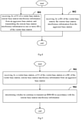
- the processing method includes Step 601 of determining, by a first device, a base station set ID and/or a configuration of an RIM-RS resource.
- the first device is an aggressor base station or a victim base station.
- the configuration of the RIM-RS resource is associated with the base station set ID.
- one or more base stations form a set, and each set corresponds to one base station set ID.
- the base station set ID is used to differentiate identification information about different sets, and the base station set ID is a set identity (set ID). It should be appreciated that, one or more DUs of a same base station, or DUs of different base stations, form a set.
- the configuration of the RIM-RS resource is used to indicate a configuration of a resource desired for transmitting an RIM-RS, e.g., a configuration of a time-domain resource and/or a frequency-domain resource desired for transmitting the RIM-RS. It should be appreciated that, types of the configuration of the RIM-RS resource will not be particularly defined herein.
- the base station set ID and/or the configuration of the RIM-RS resource are determined in the following three modes.
- a same base station set ID and a same RIM-RS, or different base station set IDs and different RIM-RSs, are configured for different DUs connected to the CU of the first device.
- the CU of the first device determines the base station set ID and/or the configuration of the RIM-RS resource in accordance with information about the remote base station interference.
- the DU of the first device transmits the information about the detected remote base station interference to the CU of the first device.
- the determining, by the CU of the first device, the base station set ID and/or the configuration of the RIM-RS resource in accordance with information about the remote base station interference specifically includes: when the remote base station interference occurs, receiving, by the CU of the first device, the information about the remote base station interference from the DU of the first device; enabling, by the CU of the first device, one or more DUs to form a set in accordance with the information about the remote base station interference; and transmitting, by the CU of the first device, the base station set ID and/or the configuration of the RIM-RS resource corresponding to the set to the one or more DUs connected to the CU.
- the aggressor base station or the victim base station determine the base station set ID and/or the configuration of the RIM-RS resource under the CU-DU architecture, thereby to manage the remote base station interference under the CU-DU architecture.
- the present disclosure provides in some embodiments a processing method which describes a process of transmitting an RIM-RS under CU-DU architecture when the remote base station interference is caused due to a remote base station effect.
- This method is executed by a DU of a victim base station (also called as a first base station).
- the processing method includes: Step 701 of detecting, by a DU of the victim base station, a remote interference; and Step 702 of, when the DU of the victim base station detects the remote interference, determining whether to transmit an RIM-RS.
- the DU of the victim base station determines whether to transmit the RIM-RS. It should be appreciated that, when a plurality of DUs connected to a CU of the victim base station detect the remote interference, each DU independently determines whether to transmit the RIM-RS, without any necessity to negotiate with the CU and the other DUs of the victim base station.
- Step 702 specifically includes: when the DU of the victim base station detects the remote interference, transmitting, by the DU of the victim base station, information indicating that the DU is subjected to the remote interference to the CU of the victim base station; receiving, by the DU of the victim base station, first information from the CU of the victim base station, the first information being used to indicate whether the DU of the victim base station transmits the RIM-RS; and determining, by the DU of the victim base station, whether to transmit the RIM-RS in accordance with the first information.
- the CU of the victim base station receives the information indicating that the DU is subjected to the remote interference from the DU of the victim base station, and transmits the first information to the DU of the victim base station in accordance with the information.
- the processing method in the embodiments of the present disclosure it is able for the DU of the victim base station to transmit the RIM-RS when the remote interference is detected, thereby to manage the remote interference under the CU-DU architecture.
- the present disclosure provides in some embodiments a processing method which describes a process of transmitting remote base station interference information under CU-DU architecture, and this method is executed by a victim base station (also called as first base station), a CU of the victim base station or a DU of the victim base station, which receives the remote base station interference information from an aggressor base station through Step 801 or 802.
- the processing method includes the following steps.
- Step 801 receiving, by a CU of the victim base station, remote base station interference information from the aggressor base station, and transmitting, by the CU of the victim base station, the remote base station interference information to one or more DUs of the victim base station.
- the CU of the victim base station receives the remote base station interference information from the aggressor base station through a backhaul network.
- Step 802 receiving, by the DU of the victim base station, the remote base station interference information from the aggressor base station.
- the DU of the aggressor base station receives the remote base station interference information from the aggressor base station through an air interface.
- the remote base station interference information includes one or more of: second information indicating that the aggressor base station detects an RIM-RS from the victim base station; third information indicating that the remote base station interference disappears, the RIM-RS from the victim base station disappears or the aggressor base station fails to detect the RIM-RS from the victim base station; information indicating that the aggressor base station performs interference fallback; and identification information corresponding to the aggressor base station.
- the identification information includes one or more of a base station set ID, a base station ID and a cell identifier.
- the base station ID is identification information for differentiating different base stations, and the base station ID may be a gNB identity (gNB ID).
- the cell identifier is identification information for differentiating different cells, and the cell identifier may be a cell identity (cell ID).
- the processing method in the embodiments of the present disclosure it is able for the CU or DU of the victim base station to receive the remote base station interference information from the aggressor base station, thereby to manage the remote base station interference under the CU-DU architecture.
- the present disclosure provides in some embodiments a processing method which describes a process of determining whether to continue to transmit an RIM-RS after a victim base station receives remote base station interference information from an aggressor base station, and the victim base station is also called as a first base station.
- the processing method includes: Step 901 of receiving, by the victim base station, a CU of the victim base station and a DU of the victim base station, remote base station interference information from an aggressor base station; and Step 902 of determining whether to continue to transmit the RIM-RS in accordance with the remote base station interference information.
- Step 902 specifically includes the following modes.
- the DU of the victim base station determines whether to continue to transmit the RIM-RS in accordance with the remote base station interference information. It should be appreciated that, each DU of the victim base station individually determines whether to continue to transmit the RIM-RS.
- the CU of the victim base station determines fourth information in accordance with the remote base station interference information, and the fourth information is used to indicate whether to transmit the RIM-RS by the DU of the victim base station. Then, the CU of the victim base station transmits the fourth information to the DU of the victim base station, and the DU of the victim base station determines whether to continue to transmit the RIM-RS in accordance with the fourth information.
- the DU of the victim base station determines whether to continue to transmit the RIM-RS after the victim base station receives the remote base station interference information, thereby to manage the remote base station interference under the CU-DU architecture.
- the present disclosure provides in some embodiments a processing method which describes a process of detecting, by an aggressor base station, an RIM-RS from a victim base station under CU-DU architecture, and the aggressor base station is also called as a second base station.
- the processing method includes Step 1001 of detecting, by a DU of the aggressor base station, the RIM-RS from the victim base station.
- a time when the aggressor base station starts to detect the RIM-RS from the victim base station is triggered in the following modes.
- the DU of the aggressor base station determines whether to detect the RIM-RS from the victim base station, and if the DU of the aggressor base station determines to detect the RIM-RS from the victim base station, the DU of the aggressor base station detects the RIM-RS from the victim base station.
- the DU of the aggressor base station determines whether an indicator or configuration is received from a network device, and the indicator or configuration is used to indicate whether the DU of the aggressor base station detects the RIM-RS from the victim base station.
- the DU of the aggressor base station receives the indicator or configuration, the DU of the aggressor base station detects the RIM-RS from the victim base station.
- the network device is an OAM
- the DU of the aggressor base station determines whether to receive an indicator or configuration from a CU of the aggressor base station, and when the DU of the aggressor base station receives the indicator or configuration, the DU of the aggressor base station detects the RIM-RS from the victim base station.
- the indicator or configuration from the CU of the aggressor base station is determined by the CU of the aggressor base station or the other device, and the other device is an OAM.
- the CU of the aggressor base station directly transmits the indicator or configuration to one or more DUs of the aggressor base station.
- the other device transmits the indicator or configuration to the one or more DUs of the aggressor base station through the CU of the aggressor base station. It should be appreciated that, the other device notifies the CU of the aggressor base station, and the CU of the aggressor base station selects to trigger one or more DUs of the aggressor base station to detect the RIM-RS from the victim base station.
- the DU of the aggressor base station is able for the DU of the aggressor base station to detect the RIM-RS, thereby to manage the remote base station interference under the CU-DU architecture.
- the present disclosure provides in some embodiments a processing method which describes a process of performing, by an aggressor base station, fallback processing under CU-DU architecture, and the aggressor base station is also called as a second base station.
- the processing method includes the following steps.
- Step 1101 determining, by the aggressor base station, a CU of the aggressor base station or a DU of the aggressor base station, a fallback pattern.
- the fallback pattern is determined in the following modes.
- the DU of the aggressor base station determines whether it is necessary to perform the fallback processing, and if the DU of the aggressor base station determines to perform the fallback processing, the DU of the aggressor base station determines the fallback pattern. It should be appreciated that, each DU connected to the CU of the aggressor base station individually determines the fallback pattern and performs the fallback processing.
- the CU of the aggressor base station receives a fifth message and/or an interference measurement result from the DU of the aggressor base station, and the fifth message is used to indicate that an RIM-RS is received. Then, the CU of the aggressor base station transmits sixth information to the DU of the aggressor base station in accordance with the fifth message and/or the interference measurement result, and the sixth information is used to indicate whether to perform the fallback processing and/or the fallback pattern.
- Step 1102 performing the fallback processing in accordance with the determined fallback pattern.
- the fallback processing is specifically performed in the following modes.
- the DU of the aggressor base station determines that it is necessary to perform the fallback processing
- the DU of the aggressor base station performs the fallback processing in accordance with the determined fallback pattern.
- the DU of the aggressor base station receives the sixth information from the CU of the aggressor base station, and performs the fallback processing in accordance with the sixth information.
- the aggressor base station it is able for the aggressor base station to perform the fallback processing under the CU-DU architecture, thereby to manage the remote base station interference under the CU-DU architecture.
- the present disclosure provides in some embodiments a processing method which describes a process of transmitting remote base station interference information to a victim base station under CU-DU architecture, and an aggressor base station is also called as a second base station.
- the processing method includes Step 1201 of transmitting, by the aggressor base station or a CU of the aggressor base station, the remote base station interference information to the victim base station.
- the remote base station interference information includes one or more of: second information indicating that the aggressor base station detects an RIM-RS from the victim base station; third information indicating that the remote base station interference disappears, the RIM-RS from the victim base station disappears or the aggressor base station fails to detect the RIM-RS from the victim base station; information indicating that the aggressor base station performs interference fallback; and identification information corresponding to the aggressor base station.
- the identification information includes one or more of a base station set ID, a base station ID and a cell identifier.
- the identification information is one or more of Set ID, gNB ID and cell ID.
- the CU of the aggressor base station transmits the remote base station interference information to the victim base station in the following modes.
- the CU of the aggressor base station receives the remote base station interference information from the DU of the aggressor base station, and transmits the remote base station interference information to the victim base station.
- the CU of the aggressor base station merges the remote base station interference information from a plurality of DUs of the aggressor base station, and transmits the merged remote base station interference information to the victim base station.
- the remote base station interference information is specifically transmitted in the following modes.
- the CU of the aggressor base station transmits the remote base station interference information to the victim base station through a network element.
- the CU of the aggressor base station transmits the remote base station interference information to the victim base station directly via an interface between the base stations, or transmits the remote base station interference information to another network element and then the network element transmits the remote base station interference information to the victim base station.
- the aggressor base station or the CU of the aggressor base station determines identification information about the victim base station, and transmits the remote base station interference information to the victim base station corresponding to the identification information.
- the identification information about the victim base station is a base station ID or a cell identifier.
- the aggressor base station obtains a Tracking Area Identity (TAI), a gNB ID or a cell ID in accordance with a set ID received through the RIM-RS, and transmits information to the victim base station with the gNB ID or the cell ID as a target address.
- TAI Tracking Area Identity
- the aggressor base station or the CU of the aggressor base station transmits the remote base station interference information to the victim base station corresponding to the identification information with the identification information about the victim base station as the target address.
- the CU of the aggressor base station directly transmits the remote base station interference information to the victim base station corresponding to the identification information with the identification information about the victim base station as the target address.
- the aggressor base station or the CU of the aggressor base station transmits the remote base station interference information to a core network, and the core network transmits the remote base station interference information to the victim base station corresponding to the identification information with the identification information about the victim base station as the target address.
- the aggressor base station or the CU of the aggressor base station transmits the remote base station interference information to the victim base station through the core network.
- the CU of the aggressor base station at first transmits information about the set ID received through the RIM-RS and information to be transmitted to the victim base station to the core network.
- the core network merges the information from a plurality of aggressor base stations, obtains the gNB ID or cell ID in accordance with the information about the set ID, and transmits the merged information to the victim base station.
- the aggressor base station or the CU of the aggressor base station determines a set ID of the victim base stations, and transmits the set ID and the remote base station interference information to the core network. Then, the core network determines a target victim base station in accordance with the set ID of the victim base stations and transmits the remote base station interference information to the target victim base station, or the core network process the remote base station interference information from a plurality of aggressor base stations and transmits the processed remote base station interference information to the target victim base station.
- the core network determines the target victim base station in accordance with the set ID of the victim base stations, and directly transmits the remote base station interference information to the target victim base station.
- the core network merges the remote base station interference information from a plurality of aggressor base stations, and transmits the merged remote base station interference information to the target victim base station.
- the core network includes one or more network elements.
- Related information is capable of being forwarded between the network elements, and the related information is forwarded to the first base station through the network element related to the first base station.
- the target victim base station includes one or more victim base stations corresponding to the set ID.
- the processing method in the embodiments of the present disclosure it is able for the CU of the aggressor base station to transmit the remote base station interference information to the victim base station, thereby to manage the remote base station interference under the CU-DU architecture.
- the present disclosure further provides in some embodiments a first device.
- a principle for solving the problem by the first device is similar to that of the processing method mentioned hereinabove, so the implementation of the first device may refer to that of the processing method, which will thus not be particularly defined herein.
- the present disclosure provides in some embodiments a first device 1300, which includes a DU 1301 and a CU 1302.
- the DU 1301 or CU 1302 of the first device is configured to determine a base station set identity and/or a configuration of an RIM-RS resource.
- the first device is an aggressor base station or a victim base station.
- the configuration of the RIM-RS resource is associated with the base station set ID.
- the base station set ID and/or the configuration of the RIM-RS resource are preset by the DU of the first device.
- the DU 1301 of the first device is further configured to receive the base station set ID and/or the configuration of the RIM-RS resource from the other device.
- the other device is an OAM
- a same base station set ID and a same RIM-RS resource, or different base station set IDs and different RIM-RS resources, are configured for different DUs connected to the CU of the first device.
- the base station set ID and/or the configuration of the RIM-RS resource are preset by the CU of the first device.
- the CU 1302 of the first device is further configured to receive the base station set ID and/or the configuration of the RIM-RS resource from the other device, and transmit the base station set ID and/or the configuration of the RIM-RS resource to one or more DUs connected to the CU.
- the CU 1302 of the first device is further configured to, when a remote base station interference occurs, determine the base station set ID and/or the configuration of the RIM-RS resource in accordance with information about the remote base station interference.
- the CU 1302 of the first device is further configured to, when the remote base station interference occurs, receive the information about the remote base station interference from the DU of the first device, enable one or more DUs to form a set in accordance with the information about the remote base station interference, and transmits the base station set ID corresponding to the set and/or the configuration of the RIM-RS resource to the one or more DUs connected to the CU.
- the first device in the embodiments of the present disclosure is capable of implementing the method in Fig.6 , which will thus not be particularly defined herein.
- the first device in the embodiments of the present disclosure, it is able for an aggressor base station or a victim base station to determine the base station set ID and/or the configuration of the RIM-RS resource under the CU-DU architecture, thereby to enable the first device to manage the remote base station interference under the CU-DU architecture.
- the present disclosure further provides in some embodiments a victim base station.
- a principle for solving the problem by the victim base station is similar to that of the processing method mentioned hereinabove, so the implementation of the victim base station may refer to that of the processing method, which will thus not be particularly defined herein.
- the present disclosure further provides in some embodiments a victim base station 1400, also called as a first base station, which includes a DU 1401 and a CU 1402.
- the DU 1401 of the victim base station is configured to detect a remote interference, and when the remote interference is detected, determine whether to transmit an RIM-RS.
- the DU 1401 of the victim base station is further configured to, when the remote interference is detected, determine whether to transmit the RIM-RS.
- the DU 1401 of the victim base station is further configured to: when the remote interference is detected, transmit information indicating that the DU is subjected to the remote base station interference to the CU of the victim base station; receive first information from the CU of the victim base station, the first information being used to indicate whether to transmit the RIM-RS by the DU of the victim base station; and determine whether to transmit the RIM-RS in accordance with the first information.
- the victim base station in the embodiments of the present disclosure is capable of implementing the method in Fig.7 , which will thus not be particularly defined herein.
- the victim base station in the embodiments of the present disclosure, it is able for the DU of the victim base station to transmit the RIM-RS when the remote interference is detected, thereby to enable the victim base station to manage the remote base station interference under the CU-DU architecture.
- the present disclosure further provides in some embodiments a victim base station.
- a principle for solving the problem by the victim base station is similar to that of the processing method mentioned hereinabove, so the implementation of the victim base station may refer to that of the processing method, which will thus not be particularly defined herein.
- the present disclosure further provides in some embodiments a victim base station 1400, which includes a DU 1401 and a CU 1402.
- the CU 1402 of the victim base station is configured to receive remote base station interference information from an aggressor base station and transmit the remote base station interference information to one or more DUs of the victim base station, or the DU 1401 of the victim base station is configured to receive the remote base station interference information from the aggressor base station.
- the remote base station interference information includes one or more of: second information indicating that the aggressor base station detects an RIM-RS from the victim base station; third information indicating that the remote base station interference disappears, the RIM-RS from the victim base station disappears or the aggressor base station fails to detect the RIM-RS from the victim base station; information indicating that the aggressor base station performs interference fallback; and identification information corresponding to the aggressor base station.
- the identification information includes one or more of a base station set ID, a base station ID and a cell ID.
- the victim base station in the embodiments of the present disclosure is capable of implementing the method in Fig.8 , which will thus not be particularly defined herein.
- the victim base station in the embodiments of the present disclosure, it is able for the CU or DU of the victim base station to receive the remote base station interference information from the aggressor base station, thereby to enable the victim base station to manage the remote base station interference under the CU-DU architecture.
- the present disclosure further provides in some embodiments a victim base station.
- a principle for solving the problem by the victim base station is similar to that of the processing method mentioned hereinabove, so the implementation of the victim base station may refer to that of the processing method, which will thus not be particularly defined herein.
- the present disclosure further provides in some embodiments a victim base station 1400, which includes a DU 1401 and a CU 1402.
- the CU 1402 or DU 1401 of the victim base station is configured to receive remote base station interference information from an aggressor base station, and the DU 1401 of the victim base station is further configured to determine whether to continue to transmit an RIM-RS in accordance with the remote base station interference information.
- the DU 1401 of the victim base station is further configured to determine whether to continue to transmit an RIM-RS in accordance with the remote base station interference information.
- the CU 1402 of the victim base station is further configured to: determine fourth information in accordance with the remote base station interference information, the fourth information being used to indicate whether to transmit the RIM-RS by the DU of the victim base station; and transmit the fourth information to the DU of the victim base station.
- the DU 1401 of the victim base station is further configured to determine whether to continue to transmit the RIM-RS in accordance with the fourth information.
- the victim base station in the embodiments of the present disclosure is capable of implementing the method in Fig.9 , which will thus not be particularly defined herein.
- the victim base station in the embodiments of the present disclosure, it is able for the DU of the victim base station to determine whether to continue to transmit the RIM-RS after the victim base station receives the remote base station interference information, thereby to enable the victim base station to manage the remote base station interference under the CU-DU architecture.
- the present disclosure further provides in some embodiments an aggressor base station.
- a principle for solving the problem by the aggressor base station is similar to that of the processing method mentioned hereinabove, so the implementation of the aggressor base station may refer to that of the processing method, which will thus not be particularly defined herein.
- the present disclosure further provides in some embodiments an aggressor base station 1500, also called as a second base station, which includes a DU 1501 and a CU 1502.
- the DU 1501 of the aggressor base station is configured to detect an RIM-RS from a victim base station.
- the DU 1501 of the aggressor base station is further configured to determine whether to detect the RIM-RS from the victim base station, and detect the RIM-RS from the victim base station if the DU 1501 of the aggressor base station determines to detect the RIM-RS from the victim base station.
- the DU 1501 of the aggressor base station is further configured to: determine whether an indicator or configuration is received from a network device, the indicator or configuration being used to indicate whether to detect the RIM-RS from the victim base station by the DU of the aggressor base station; and when the indicator or configuration is received, detect the RIM-RS from the victim base station.
- the network device is an OAM
- the DU 1501 of the aggressor base station is further configured to: determine whether to receive an indicator or configuration from the CU of the aggressor base station; and when the indicator or configuration is received, detect the RIM-RS from the victim base station.
- the aggressor base station in the embodiments of the present disclosure is capable of implementing the method in Fig. 10 , which will thus not be particularly defined herein.
- the aggressor base station in the embodiments of the present disclosure, it is able for the DU of the aggressor base station to detect the RIM-RS, thereby to enable the aggressor base station to manage the remote base station interference under the CU-DU architecture.
- the present disclosure further provides in some embodiments an aggressor base station.
- a principle for solving the problem by the aggressor base station is similar to that of the processing method mentioned hereinabove, so the implementation of the aggressor base station may refer to that of the processing method, which will thus not be particularly defined herein.
- an aggressor base station 1500 which includes a DU 1501 and a CU 1502.
- the CU 1502 or DU 1501 of the aggressor base station is configured to determine a fallback pattern, and the DU 1501 of the aggressor base station is further configured to perform fallback processing in accordance with the determined fallback pattern.
- the DU 1501 of the aggressor base station is further configured to: determine whether it is necessary to perform fallback processing; when it is necessary to perform the fallback processing, determine a fallback pattern; and perform the fallback processing in accordance with the determined fallback pattern.
- the CU 1502 of the aggressor base station is further configured to: receive a first message and/or an interference measurement result from the DU of the aggressor base station, where the fifth message is used to indicate that the RIM-RS is received from the victim base station; and transmit sixth information to the DU of the aggressor base station in accordance with the fifth message and/or the interference measurement result, where the sixth information is used to indicate whether to perform the fallback processing and/or the fallback pattern.
- the DU 1501 of the aggressor base station is further configured to receive the sixth information from the CU of the aggressor base station, and perform the fallback processing in accordance with the sixth information.
- the aggressor base station in the embodiments of the present disclosure is capable of implementing the method in Fig. 11 , which will thus not be particularly defined herein.
- the aggressor base station in the embodiments of the present disclosure, it is able for the aggressor base station to perform the fallback processing under the CU-DU architecture, thereby to enable the aggressor base station to manage the remote base station interference under the CU-DU architecture.
- the present disclosure further provides in some embodiments an aggressor base station.
- a principle for solving the problem by the aggressor base station is similar to that of the processing method mentioned hereinabove, so the implementation of the aggressor base station may refer to that of the processing method, which will thus not be particularly defined herein.
- the present disclosure further provides in some embodiments an aggressor base station 1500 which includes a DU 1501 and a CU 1502.
- the CU 1502 of the aggressor base station is configured to transmit remote base station interference information to a victim base station.
- the remote base station interference information includes one or more of: second information indicating that the aggressor base station detects an RIM-RS from the victim base station; third information indicating that the remote base station interference disappears, the RIM-RS from the victim base station disappears or the aggressor base station fails to detect the RIM-RS from the victim base station; information indicating that the aggressor base station performs interference fallback; and identification information corresponding to the aggressor base station.
- the identification information includes one or more of a base station set ID, a base station ID and a cell ID.
- the CU 1502 of the aggressor base station is further configured to determine identification information about the victim base station, and transmit the remote base station interference information to the victim base station corresponding to the identification information.
- the CU 1502 of the aggressor base station is further configured to: transmit the remote base station interference information to the victim base station corresponding to the identification information with the identification information about the victim base station as a target address; or transmit the remote base station interference information to a core network, so that the core network transmits the remote base station interference information to the victim base station corresponding to the identification information with the identification information about the victim base station as the target address.
- the CU 1502 of the aggressor base station is further configured to: receive the remote base station interference information from the DU of the aggressor base station; and transmit the remote base station interference information to the victim base station.
- the CU 1502 of the aggressor base station is further configured to: merge the remote base station interference information from a plurality of DUs of the aggressor base station; and transmit the merged remote base station interference information to the victim base station.
- the CU 1502 of the aggressor base station is further configured to transmit the remote base station interference information to the victim base station through a network element.
- the CU 1502 of the aggressor base station is further configured to transmit the remote base station interference information to the victim base station through a core network.
- the CU 1502 of the aggressor base station is further configured to: determine a set ID of victim base stations; and transmit the set ID of the victim base stations and the remote base station interference information to the core network, so that the core network determines a target victim base station in accordance with the set ID of the victim base stations and transmits the remote base station interference information to the target victim base station, or processes the remote base station interference information from a plurality of aggressor base stations and transmits the processed remote base station interference information to the target victim base station.
- the aggressor base station in the embodiments of the present disclosure is capable of implementing the method in Fig. 12 , which will thus not be particularly defined herein.
- the aggressor base station in the embodiments of the present disclosure, it is able for the CU of the aggressor base station to transmit the remote base station interference information to the victim base station, thereby to enable the first device to manage the remote base station interference under the CU-DU architecture.
- the present disclosure further provides in some embodiments a first device.
- a principle for solving the problem by the first device is similar to that of the processing method mentioned hereinabove, so the implementation of the first device may refer to that of the processing method, which will thus not be particularly defined herein.
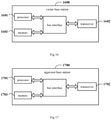
- the present disclosure further provides in some embodiments a victim base station 1600, also called as a first base station, which includes a processor 1601, a transceiver 1602, a memory 1603 and a bus interface.
- the processor 1601 takes charge of managing the bus architecture as well as general processings.
- the memory 1603 stores therein data for the operation of the processor 1601.
- the victim base station 1600 further includes a program stored in the memory 1603 and executed by the processor 1601. The program is executed by the processor 1601 so as to implement the steps of the above-mentioned methods.
- bus architecture includes a number of buses and bridges connected to each other, so as to connect various circuits for one or more processors 1601 and one or more memories 1603.
- the bus architecture is used to connect any other circuits, such as a circuit for a peripheral device, a circuit for a voltage stabilizer and a power management circuit.
- the bus interface is provided, and the transceiver 1602 consists of a plurality of elements, i.e., a transmitter and a receiver for communication with any other devices over a transmission medium.
- the present disclosure further provides in some embodiments a victim base station.
- a principle for solving the problem by the victim base station is similar to that of the processing method mentioned hereinabove, so the implementation of the victim base station may refer to that of the processing method, which will thus not be particularly defined herein.
- an aggressor base station 1700 also called as a second base station, which includes a processor 1701, a transceiver 1702, a memory 1703 and a bus interface.
- the processor 1701 takes charge of managing the bus architecture as well as general processings.
- the memory 1703 stores therein data for the operation of the processor 1701.
- the victim base station 1700 further includes a program stored in the memory 1703 and executed by the processor 1701. The program is executed by the processor 1701 so as to implement the steps of the above-mentioned methods.
- bus architecture includes a number of buses and bridges connected to each other, so as to connect various circuits for one or more processors 1701 and one or more memories 1703.
- the bus architecture is used to connect any other circuits, such as a circuit for a peripheral device, a circuit for a voltage stabilizer and a power management circuit.
- the bus interface is provided, and the transceiver 1702 consists of a plurality of elements, i.e., a transmitter and a receiver for communication with any other devices over a transmission medium.
- the steps of the methods or algorithm described in conjunction with the contents mentioned hereinabove may be implemented through hardware, or implemented by a processor executing instructions.
- the instructions may consist of corresponding modules stored in a Random Access Memory (RAM), a flash memory, a Read-Only Memory (ROM), an Electrically Programmable ROM (EPROM), an Erasable EPROM (EEPROM), a register, a hard disk, a mobile hard disk, a read-only optic disk, or any other known storage medium.
- the storage medium may be connected to the processor, so that the processor is capable of reading information from the storage medium and writing information into the storage medium.
- the storage medium may be a component of the processor.
- the processor and the storage medium may be located in an Application Specific Integrated Circuit (ASIC).
- the ASIC may be located in an interface device of a core network.
- the processor and the storage medium may be located in the interface device of the core network as discrete assemblies.
- the functions described in one or more embodiments of the present disclosure may be achieved through hardware, software, firmware or a combination thereof.
- these functions may be stored in the computer-readable medium or transmitted as one or more instructions or codes on the computer-readable medium.
- the computer-readable medium may include a computer-readable storage medium and a communication medium.
- the communication medium may include any medium capable of transmitting a computer program from one place to another place.
- the storage medium may include any available medium capable of being accessed by a general-purpose or dedicated computer.
- the embodiments of the present disclosure may be implemented by hardware, software, firmware, middleware, microcode or a combination thereof.
- the processor may include one or more of an ASIC, a digital signal processor (Digital Signal Processor, DSP), a DSP device (DSPD), a programmable logic device (Programmable Logic Device, PLD), a Field-Programmable Gate Array (FPGA), a general-purpose processor, a controller, a microcontroller, a microprocessor, any other electronic unit capable of achieving the functions in the present disclosure, or a combination thereof.
- the purposes of the present disclosure may also be implemented by one program or a set of programs running on any computing device, e.g., a known general-purpose computer, or implemented merely by a program product including programs codes capable of implementing the method or device.
- this program product and a storage medium storing therein the program product also constitute a part of the present disclosure.
- the storage medium may be any known storage medium or a storage medium that may occur in future.
- the members and/or steps may be subdivided and/or recombined, which shall also be deemed as equivalents of the present disclosure.
- the steps for executing the above-mentioned processings may be performed in a chronological order. Of course, some steps may also be performed in parallel, or independently of each other.
- the present disclosure may be provided as a method, a system or a computer program product, so the present disclosure may be in the form of full hardware embodiments, full software embodiments, or combinations thereof.
- the present disclosure may be in the form of a computer program product implemented on one or more computer-readable storage mediums (including but not limited to disk memory, compact disc-read only memory (Compact Disc-Read Only Memory, CD-ROM) and optical memory) including computer-readable program codes.
- These computer program instructions may also be stored in a computer readable storage that may guide the computer or the other programmable data process devices to function in a certain way, so that the instructions stored in the computer readable storage may create a product including an instruction unit which achieves the functions assigned in one or more flows in the flow chart and/or one or more blocks in the block diagram.
- These computer program instructions may also be loaded in the computer or the other programmable data process devices, so that a series of operation steps are executed on the computer or the other programmable devices to create processes achieved by the computer. Therefore, the instructions executed in the computer or the other programmable devices provide the steps for achieving the function assigned in one or more flows in the flow chart and/or one or more blocks in the block diagram.
Landscapes
- Engineering & Computer Science (AREA)
- Signal Processing (AREA)
- Computer Networks & Wireless Communication (AREA)
- Physics & Mathematics (AREA)
- Electromagnetism (AREA)
- Quality & Reliability (AREA)
- Mobile Radio Communication Systems (AREA)
Abstract
Description
- This application claims a priority of the
Chinese patent application No.201910244355.8 filed on March 28, 2019 - The present disclosure relates to the field of wireless communications system, in particular to a processing method and a processing device.
- In a Time Division Duplexing (TDD) network, there is a unique interference characteristic, i.e., atmospheric ducting interference. As a typical remote base station interference, the atmospheric ducting interference will seriously affect the performance of the TDD network. In addition, a huge number of base stations, e.g., all base stations in a city, are affected by the atmospheric ducting interference for a long time period, e.g., several weeks or even several months.
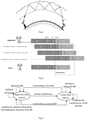
- As shown in
Figs. 1 and 2 , the remote base station interference mainly has the following characteristics: 1) a downlink signal from a TDD remote base station is propagated over a very large distance due to atmospheric duct, and when a transmission time length of the downlink signal exceeds a TDD uplink/downlink guard period, uplink reception of a local base station is interfered with; 2) interference characteristics are as follows: 2.1) interference distance: 150 kilometers (km) (inland), or 280km to 320km (coastal); 2.2) interference signal intensity: -130~-96 dBm/PRB; 2.3) interference period: early in the morning with a peak value at six or seven o'clock (inland), or all day (coastal). - In a Fourth-Generation (4G) era, the TDD remote base station interference is mainly prevented through a personalized scheme provided by each operator. In a Fifth-Generation (5G) era, a unified TDD network is used globally, so there is an urgent need to prevent the remote interference.
- An object of the present disclosure is to provide a processing method and a processing device, so as to perform remote interference management.
- In a first aspect, the present disclosure provides in some embodiments a processing method, including determining, by a first device, a base station set identity and/or a configuration of a Remote Interference Management-Reference Signal (RIM-RS) resource. The first device is an aggressor base station or a victim base station.
- In a second aspect, the present disclosure provides in some embodiments a processing method, including: detecting, by a Distributed Unit (DU) of a first base station, a remote interference; and when the DU of the first base station detects the remote interference, determining whether to transmit an RIM-RS.
- In a third aspect, the present disclosure provides in some embodiments a processing method, including: receiving, by a Centralized Unit (CU) of a first base station, remote base station interference information from a second base station, and transmitting, by the CU of the first base station, the remote base station interference information to one or more DUs of the first base station; or receiving, by the DU of the first base station, the remote base station interference information from the second base station.
- In a fourth aspect, the present disclosure provides in some embodiments a processing method, including: receiving, by a first base station, a CU of the first base station or a DU of the first base station, remote base station interference information from a second base station; and determining whether to continue to transmit an RIM-RS in accordance with the remote base station interference information.
- In a fifth aspect, the present disclosure provides in some embodiments a processing method, including detecting, by a DU of a second base station, an RIM-RS from a first base station.
- In a sixth aspect, the present disclosure provides in some embodiments a processing method, including: determining, by a second base station, a CU of the second base station or a DU of the second base station, a fallback pattern; and performing fallback processing in accordance with the determined fallback pattern.
- In a seventh aspect, the present disclosure provides in some embodiments a processing method, including transmitting, by a CU of a second base station, remote base station interference information to a first base station.
- In an eighth aspect, the present disclosure provides in some embodiments a first device, including a DU and a CU. The DU or CU of the first device is configured to determine a base station set identity and/or a configuration of an RIM-RS resource. The first device is an aggressor base station or a victim base station.
- In a ninth aspect, the present disclosure provides in some embodiments a first base station, including a DU and a CU. The DU of the first base station is configured to detect a remote interference, and when the remote interference is detected, determine whether to transmit an RIM-RS.
- In a tenth aspect, the present disclosure provides in some embodiments a first base station, including a DU and a CU. The CU of the first base station is configured to receive remote base station interference information from a second base station and transmit the remote base station interference information to one or more DUs of the first base station, or the DU of the first base station is configured to receive the remote base station interference information from the second base station.
- In an eleventh aspect, the present disclosure provides in some embodiments a first base station, including a DU and a CU. The CU or DU of the first base station is configured to receive remote base station interference information from a second base station, and the DU of the first base station is further configured to determine whether to continue to transmit an RIM-RS in accordance with the remote base station interference information.
- In a twelfth aspect, the present disclosure provides in some embodiments a second base station, including a DU and a CU. The DU of the second base station is configured to detect an RIM-RS from a first base station.
- In a thirteenth aspect, the present disclosure provides in some embodiments a second base station, including a DU and a CU. The CU or DU of the second base station is configured to determine a fallback pattern, and the DU of the second base station is further configured to perform fallback processing in accordance with the determined fallback pattern.
- In a fourth aspect, the present disclosure provides in some embodiments a second base station, including a DU and a CU. The CU of the second base station is configured to transmit remote base station interference information to a first base station.
- In a fifteenth aspect, the present disclosure provides in some embodiments a first base station, including a processor, a memory, and a program stored in the memory and executed by the processor. The program is executed by the processor so as to implement the steps of the above-mentioned processing methods.
- In a sixteenth aspect, the present disclosure provides in some embodiments a second base station, including a processor, a memory, and a program stored in the memory and executed by the processor. The program is executed by the processor so as to implement the steps of the above-mentioned processing methods.
- The present disclosure has the following beneficial effect.
- According to the embodiments of the present disclosure, it is able to manage the remote base station interference under CU-DU architecture.
-
-
Fig.1 is a schematic view showing a remote base station interference caused by atmospheric duct; -
Fig.2 is another schematic view showing the remote base station interference caused by the atmospheric duct; -
Fig.3 is a flow chart of a processing method; -
Fig.4 is another flow chart of the processing method; -
Fig.5 is a schematic view showing DU-CU architecture; -
Fig.6 is a first flow chart of a processing method according to some embodiments of the present disclosure; -
Fig.7 is a second flow chart of the processing method according to some embodiments of the present disclosure; -
Fig.8 is a third flow chart of the processing method according to some embodiments of the present disclosure; -
Fig.9 is a fourth flow chart of the processing method according to some embodiments of the present disclosure; -
Fig. 10 is a fifth flow chart of the processing method according to some embodiments of the present disclosure; -
Fig. 11 is a sixth flow chart of the processing method according to some embodiments of the present disclosure; -
Fig. 12 is a seventh flow chart of the processing method according to some embodiments of the present disclosure; -
Fig. 13 is a schematic view showing a structure of a first device according to some embodiments of the present disclosure; -
Fig. 14 is a schematic view showing a structure of a victim base station according to some embodiments of the present disclosure; -
Fig. 15 is a schematic view showing a structure of an aggressor base station according to some embodiments of the present disclosure; -
Fig. 16 is another schematic view showing the structure of the victim base station according to some embodiments of the present disclosure; and -
Fig. 17 is another schematic view showing the structure of the aggressor base station according to some embodiments of the present disclosure. - In order to make the objects, the technical solutions and the advantages of the present disclosure more apparent, the present disclosure will be described hereinafter in a clear and complete manner in conjunction with the drawings and embodiments.
- Such words as "first" and "second" involved in the specification and the appended claims are merely used to differentiate different objects rather than to represent any specific order. It should be appreciated that, the data used in this way may be replaced with each other, so as to implement the embodiments in an order other than that shown in the drawings or described in the specification.
- The technology described in the context shall not be limited to a 5G system and any subsequently evolved communications system.
- The technology described in the context shall not be limited to a Long Term Evolution (LTE)/LTE-Advanced (LTE-A) system, and it is also applied to various wireless communications systems, e.g., Code Division Multiple Access (CDMA), Time Division Multiple Access (TDMA), Frequency Division Multiple Access (FDMA), Orthogonal Frequency Division Multiple Access (OFDMA), Single-Carrier Frequency-Division Multiple Access (SC-FDMA), or any other system.
- The terms "system" and "network" may be replaced with each other. The CDMA system may be used to implement such radio technologies as CDMA2000 and Universal Terrestrial Radio Access (UTRA). The UTRA may include Wideband Code Division Multiple Access (WCDMA) and the other CDMA variants. The TDMA system may be used to implement such a radio technology as Global System for Mobile Communication (GSM). The OFDMA system may be used to implement such radio technologies as Ultra Mobile Broadband (UMB), Evolved-UTRA (E-UTRA), IEEE 802.11 (Wireless Fidelity (Wi-Fi)), IEEE 802.16 (WiMAX), IEEE 802.20, and Flash-OFDM. The UTRA and the E-UTRA are parts of a Universal Mobile Telecommunications System (UMTS). The LTE and a more advanced LTE (e.g., LTE-A) are new UMTS versions using the E-UTRA. The UTRA, E-UTRA, UMTS, LTE, LTE-A and GSM have been described in documents from the 3rd Generation Partnership Project (3GPP). The technology described in the context may be applied to the above-mentioned systems and radio technologies, or applied to the other systems and radio technologies.
-
Fig.3 is a flow chart of a processing method which describes an RIM air interface scheme. As shown inFig.3 , the processing method includes the following steps. - Step 301: transmitting a first RS to an aggressor base station when a victim base station detects a remote interference.
- Step 302: detecting, by the aggressor base station, whether the first RS is received, where the first RS is used to indicate that the victim base station is subjected to the remote interference.
- Step 303: performing, by the aggressor base station, interference fallback processing using a remote base station interference function mitigation plan when the aggressor base station receives the first RS.
- Step 304: repairing, by the aggressor base station, an original configuration, and stopping the detection of the RS.
- Step 305: transmitting, by the aggressor base station, a second RS to the victim base station.
- Step 306: starting, by the victim base station, to detect the second RS.
- Step 307: stopping, by the victim base station, the transmission of the first RS.
-
Fig.4 is another flow chart of the processing method which describes an RIM backhaul scheme. As shown inFig.4 , the processing method includes the following steps. - Step 401: when the victim base station detects the remote interference, transmitting, by the victim base station, an RS to the aggressor base station, where the RS is used to indicate that the victim base station is subjected to the remote interference.
- Step 402: detecting, by the aggressor base station, whether the RS is received.
- Step 403: notifying, by the aggressor base station, the victim base station that the RS is received via a backhaul network when the aggressor base station receives the RS.
- Step 404: performing, by the aggressor base station, interference fallback processing using the remote base station interference function mitigation plan.
- Step 405: repairing, by the aggressor base station, the original configuration, and stopping the detection of the RS.
- Step 406: stopping, by the victim base station, the transmission of the RS.
- Step 407: notifying, by the aggressor base station, the victim base station that the RS disappears.
-
Fig.5 is a schematic view of CU-DU architecture. In the CU-DU architecture, a 5G base station (gNB) is further divided into a CU and a DU, and the CU is capable of managing one or more DUs, i.e., the CU is equivalent to a centralized management unit for a plurality of DUs. Under the CU-DU architecture, the CU and the DUs need to coordinate to achieve an interference management function. Taking the victim base station as an example, the DU takes charge of detecting the remote base station interference. The CU is an endpoint of an X2/Xn/NG interface, and through the CU, it is able to manage a set Identity (ID), detect the interference and transmit the RIM-RS in a unified and coordinated manner. - In the processing methods in
Figs.3 and4 , merely integrated gNB architecture is taken into consideration, without taking an RIM process in a scenario where the gNB is further divided into a gNB-CU and a gNB-DU into consideration. The CU-DU architecture differs from the integrated gNB architecture in terms of information exchange between the CU and the DU, parameter configuration and interference management, and the RIM information exchange and configuration under the CU-DU architecture remain to be studied. - In order to perform the RIM under the CU-DU architecture, as shown in
Fig.6 , the present disclosure provides in some embodiments a processing method which describes a process of determining a base station set ID and a configuration of an RIM-RS resource under the CU-DU architecture. This method is executed by a first device serving as an aggressor base station and/or a victim base station. The first device is a 5G base station, or a network device in any other communications system. The processing method includesStep 601 of determining, by a first device, a base station set ID and/or a configuration of an RIM-RS resource. The first device is an aggressor base station or a victim base station. - In some embodiments of the present disclosure, the configuration of the RIM-RS resource is associated with the base station set ID.
- In some embodiments of the present disclosure, one or more base stations form a set, and each set corresponds to one base station set ID. The base station set ID is used to differentiate identification information about different sets, and the base station set ID is a set identity (set ID). It should be appreciated that, one or more DUs of a same base station, or DUs of different base stations, form a set.
- In some embodiments of the present disclosure, the configuration of the RIM-RS resource is used to indicate a configuration of a resource desired for transmitting an RIM-RS, e.g., a configuration of a time-domain resource and/or a frequency-domain resource desired for transmitting the RIM-RS. It should be appreciated that, types of the configuration of the RIM-RS resource will not be particularly defined herein.
- The base station set ID and/or the configuration of the RIM-RS resource are determined in the following three modes.
-
- 1) The base station set ID and/or the configuration of the RIM-RS resource are preset by a DU of the first device.
- 2) The DU of the first device receives the base station set ID and/or the configuration of the RIM-RS resource from the other device, and the other device is an Operation Administration and Maintenance (OAM) entity.
-
- 1) The base station set ID and/or the configuration of the RIM-RS resource are preset by a CU of the first device.
- 2) The CU of the first device receives the base station set ID and/or the configuration of the RIM-RS resource from the other device, and transmits the base station set ID and/or the configuration of the RIM-RS resource to one or more DUs connected to the CU.
- A same base station set ID and a same RIM-RS, or different base station set IDs and different RIM-RSs, are configured for different DUs connected to the CU of the first device.
- When the remote base station interference occurs, the CU of the first device determines the base station set ID and/or the configuration of the RIM-RS resource in accordance with information about the remote base station interference.
- Further, when the remote base station interference occurs, the DU of the first device transmits the information about the detected remote base station interference to the CU of the first device. The determining, by the CU of the first device, the base station set ID and/or the configuration of the RIM-RS resource in accordance with information about the remote base station interference specifically includes: when the remote base station interference occurs, receiving, by the CU of the first device, the information about the remote base station interference from the DU of the first device; enabling, by the CU of the first device, one or more DUs to form a set in accordance with the information about the remote base station interference; and transmitting, by the CU of the first device, the base station set ID and/or the configuration of the RIM-RS resource corresponding to the set to the one or more DUs connected to the CU.
- According to the processing method in the embodiments of the present disclosure, it is able for the aggressor base station or the victim base station to determine the base station set ID and/or the configuration of the RIM-RS resource under the CU-DU architecture, thereby to manage the remote base station interference under the CU-DU architecture.
- As shown in
Fig.7 , the present disclosure provides in some embodiments a processing method which describes a process of transmitting an RIM-RS under CU-DU architecture when the remote base station interference is caused due to a remote base station effect. This method is executed by a DU of a victim base station (also called as a first base station). The processing method includes: Step 701 of detecting, by a DU of the victim base station, a remote interference; and Step 702 of, when the DU of the victim base station detects the remote interference, determining whether to transmit an RIM-RS. - When the DU of the victim base station detects the remote interference, whether each DU transmits the RIM-RS will be described hereinafter in the following modes.
- When the DU of the victim base station detects the remote interference, the DU of the victim base station determines whether to transmit the RIM-RS. It should be appreciated that, when a plurality of DUs connected to a CU of the victim base station detect the remote interference, each DU independently determines whether to transmit the RIM-RS, without any necessity to negotiate with the CU and the other DUs of the victim base station.
- When the DU of the victim base station detects the remote interference, the CU of the victim base station determines whether to transmit the RIM-RS. Step 702 specifically includes: when the DU of the victim base station detects the remote interference, transmitting, by the DU of the victim base station, information indicating that the DU is subjected to the remote interference to the CU of the victim base station; receiving, by the DU of the victim base station, first information from the CU of the victim base station, the first information being used to indicate whether the DU of the victim base station transmits the RIM-RS; and determining, by the DU of the victim base station, whether to transmit the RIM-RS in accordance with the first information.
- In some embodiments of the present disclosure, the CU of the victim base station receives the information indicating that the DU is subjected to the remote interference from the DU of the victim base station, and transmits the first information to the DU of the victim base station in accordance with the information.
- According to the processing method in the embodiments of the present disclosure, it is able for the DU of the victim base station to transmit the RIM-RS when the remote interference is detected, thereby to manage the remote interference under the CU-DU architecture.
- As shown in
Fig.8 , the present disclosure provides in some embodiments a processing method which describes a process of transmitting remote base station interference information under CU-DU architecture, and this method is executed by a victim base station (also called as first base station), a CU of the victim base station or a DU of the victim base station, which receives the remote base station interference information from an aggressor base station throughStep - Step 801: receiving, by a CU of the victim base station, remote base station interference information from the aggressor base station, and transmitting, by the CU of the victim base station, the remote base station interference information to one or more DUs of the victim base station.
- In some embodiments of the present disclosure, the CU of the victim base station receives the remote base station interference information from the aggressor base station through a backhaul network.
- Step 802: receiving, by the DU of the victim base station, the remote base station interference information from the aggressor base station.
- In some embodiments of the present disclosure, the DU of the aggressor base station receives the remote base station interference information from the aggressor base station through an air interface.
- In some embodiments of the present disclosure, the remote base station interference information includes one or more of: second information indicating that the aggressor base station detects an RIM-RS from the victim base station; third information indicating that the remote base station interference disappears, the RIM-RS from the victim base station disappears or the aggressor base station fails to detect the RIM-RS from the victim base station; information indicating that the aggressor base station performs interference fallback; and identification information corresponding to the aggressor base station.
- In some embodiments of the present disclosure, the identification information includes one or more of a base station set ID, a base station ID and a cell identifier.
- The base station ID is identification information for differentiating different base stations, and the base station ID may be a gNB identity (gNB ID). The cell identifier is identification information for differentiating different cells, and the cell identifier may be a cell identity (cell ID).
- According to the processing method in the embodiments of the present disclosure, it is able for the CU or DU of the victim base station to receive the remote base station interference information from the aggressor base station, thereby to manage the remote base station interference under the CU-DU architecture.
- As shown in
Fig.9 , the present disclosure provides in some embodiments a processing method which describes a process of determining whether to continue to transmit an RIM-RS after a victim base station receives remote base station interference information from an aggressor base station, and the victim base station is also called as a first base station. The processing method includes: Step 901 of receiving, by the victim base station, a CU of the victim base station and a DU of the victim base station, remote base station interference information from an aggressor base station; and Step 902 of determining whether to continue to transmit the RIM-RS in accordance with the remote base station interference information. - In some embodiments of the present disclosure,
Step 902 specifically includes the following modes. - The DU of the victim base station determines whether to continue to transmit the RIM-RS in accordance with the remote base station interference information. It should be appreciated that, each DU of the victim base station individually determines whether to continue to transmit the RIM-RS.
- The CU of the victim base station determines fourth information in accordance with the remote base station interference information, and the fourth information is used to indicate whether to transmit the RIM-RS by the DU of the victim base station. Then, the CU of the victim base station transmits the fourth information to the DU of the victim base station, and the DU of the victim base station determines whether to continue to transmit the RIM-RS in accordance with the fourth information.
- According to the processing method in the embodiments of the present disclosure, it is able for the DU of the victim base station to determine whether to continue to transmit the RIM-RS after the victim base station receives the remote base station interference information, thereby to manage the remote base station interference under the CU-DU architecture.
- As shown in
Fig. 10 , the present disclosure provides in some embodiments a processing method which describes a process of detecting, by an aggressor base station, an RIM-RS from a victim base station under CU-DU architecture, and the aggressor base station is also called as a second base station. The processing method includesStep 1001 of detecting, by a DU of the aggressor base station, the RIM-RS from the victim base station. - In some embodiments of the present disclosure, a time when the aggressor base station starts to detect the RIM-RS from the victim base station is triggered in the following modes.
- The DU of the aggressor base station determines whether to detect the RIM-RS from the victim base station, and if the DU of the aggressor base station determines to detect the RIM-RS from the victim base station, the DU of the aggressor base station detects the RIM-RS from the victim base station.
- The DU of the aggressor base station determines whether an indicator or configuration is received from a network device, and the indicator or configuration is used to indicate whether the DU of the aggressor base station detects the RIM-RS from the victim base station. When the DU of the aggressor base station receives the indicator or configuration, the DU of the aggressor base station detects the RIM-RS from the victim base station. The network device is an OAM
- The DU of the aggressor base station determines whether to receive an indicator or configuration from a CU of the aggressor base station, and when the DU of the aggressor base station receives the indicator or configuration, the DU of the aggressor base station detects the RIM-RS from the victim base station.
- In some embodiments of the present disclosure, the indicator or configuration from the CU of the aggressor base station is determined by the CU of the aggressor base station or the other device, and the other device is an OAM. When the indicator or configuration from the CU of the aggressor base station is determined by the CU of the aggressor base station, the CU of the aggressor base station directly transmits the indicator or configuration to one or more DUs of the aggressor base station. When the indicator or configuration from the CU of the aggressor base station is determined by the other device, the other device transmits the indicator or configuration to the one or more DUs of the aggressor base station through the CU of the aggressor base station. It should be appreciated that, the other device notifies the CU of the aggressor base station, and the CU of the aggressor base station selects to trigger one or more DUs of the aggressor base station to detect the RIM-RS from the victim base station.
- According to the processing method in the embodiments of the present disclosure, it is able for the DU of the aggressor base station to detect the RIM-RS, thereby to manage the remote base station interference under the CU-DU architecture.
- As shown in
Fig.11 , the present disclosure provides in some embodiments a processing method which describes a process of performing, by an aggressor base station, fallback processing under CU-DU architecture, and the aggressor base station is also called as a second base station. The processing method includes the following steps. - Step 1101: determining, by the aggressor base station, a CU of the aggressor base station or a DU of the aggressor base station, a fallback pattern.
- In some embodiments of the present disclosure, the fallback pattern is determined in the following modes.
- The DU of the aggressor base station determines whether it is necessary to perform the fallback processing, and if the DU of the aggressor base station determines to perform the fallback processing, the DU of the aggressor base station determines the fallback pattern. It should be appreciated that, each DU connected to the CU of the aggressor base station individually determines the fallback pattern and performs the fallback processing.
- The CU of the aggressor base station receives a fifth message and/or an interference measurement result from the DU of the aggressor base station, and the fifth message is used to indicate that an RIM-RS is received. Then, the CU of the aggressor base station transmits sixth information to the DU of the aggressor base station in accordance with the fifth message and/or the interference measurement result, and the sixth information is used to indicate whether to perform the fallback processing and/or the fallback pattern.
- Step 1102: performing the fallback processing in accordance with the determined fallback pattern.
- In some embodiments of the present disclosure, the fallback processing is specifically performed in the following modes.
- When the DU of the aggressor base station determines that it is necessary to perform the fallback processing, the DU of the aggressor base station performs the fallback processing in accordance with the determined fallback pattern.
- The DU of the aggressor base station receives the sixth information from the CU of the aggressor base station, and performs the fallback processing in accordance with the sixth information.
- According to the processing method in the embodiments of the present disclosure, it is able for the aggressor base station to perform the fallback processing under the CU-DU architecture, thereby to manage the remote base station interference under the CU-DU architecture.
- As shown in
Fig. 12 , the present disclosure provides in some embodiments a processing method which describes a process of transmitting remote base station interference information to a victim base station under CU-DU architecture, and an aggressor base station is also called as a second base station. The processing method includesStep 1201 of transmitting, by the aggressor base station or a CU of the aggressor base station, the remote base station interference information to the victim base station. - In some embodiments of the present disclosure, the remote base station interference information includes one or more of: second information indicating that the aggressor base station detects an RIM-RS from the victim base station; third information indicating that the remote base station interference disappears, the RIM-RS from the victim base station disappears or the aggressor base station fails to detect the RIM-RS from the victim base station; information indicating that the aggressor base station performs interference fallback; and identification information corresponding to the aggressor base station.
- The identification information includes one or more of a base station set ID, a base station ID and a cell identifier. For example, the identification information is one or more of Set ID, gNB ID and cell ID.
- In some embodiments of the present disclosure, the CU of the aggressor base station transmits the remote base station interference information to the victim base station in the following modes.
- The CU of the aggressor base station receives the remote base station interference information from the DU of the aggressor base station, and transmits the remote base station interference information to the victim base station.
- The CU of the aggressor base station merges the remote base station interference information from a plurality of DUs of the aggressor base station, and transmits the merged remote base station interference information to the victim base station.
- In some embodiments of the present disclosure, the remote base station interference information is specifically transmitted in the following modes.
- The CU of the aggressor base station transmits the remote base station interference information to the victim base station through a network element. For example, the CU of the aggressor base station transmits the remote base station interference information to the victim base station directly via an interface between the base stations, or transmits the remote base station interference information to another network element and then the network element transmits the remote base station interference information to the victim base station.
- The aggressor base station or the CU of the aggressor base station determines identification information about the victim base station, and transmits the remote base station interference information to the victim base station corresponding to the identification information. The identification information about the victim base station is a base station ID or a cell identifier. For example, the aggressor base station obtains a Tracking Area Identity (TAI), a gNB ID or a cell ID in accordance with a set ID received through the RIM-RS, and transmits information to the victim base station with the gNB ID or the cell ID as a target address.
- To be specific, the aggressor base station or the CU of the aggressor base station transmits the remote base station interference information to the victim base station corresponding to the identification information with the identification information about the victim base station as the target address. It should be appreciated that, the CU of the aggressor base station directly transmits the remote base station interference information to the victim base station corresponding to the identification information with the identification information about the victim base station as the target address.
- Alternatively, the aggressor base station or the CU of the aggressor base station transmits the remote base station interference information to a core network, and the core network transmits the remote base station interference information to the victim base station corresponding to the identification information with the identification information about the victim base station as the target address.
- The aggressor base station or the CU of the aggressor base station transmits the remote base station interference information to the victim base station through the core network. For example, the CU of the aggressor base station at first transmits information about the set ID received through the RIM-RS and information to be transmitted to the victim base station to the core network. Then, the core network merges the information from a plurality of aggressor base stations, obtains the gNB ID or cell ID in accordance with the information about the set ID, and transmits the merged information to the victim base station.
- Further, the aggressor base station or the CU of the aggressor base station determines a set ID of the victim base stations, and transmits the set ID and the remote base station interference information to the core network. Then, the core network determines a target victim base station in accordance with the set ID of the victim base stations and transmits the remote base station interference information to the target victim base station, or the core network process the remote base station interference information from a plurality of aggressor base stations and transmits the processed remote base station interference information to the target victim base station.
- It should be appreciated that, upon the receipt of the set ID of the victim base stations and the remote base station interference information, the core network determines the target victim base station in accordance with the set ID of the victim base stations, and directly transmits the remote base station interference information to the target victim base station. Alternatively, the core network merges the remote base station interference information from a plurality of aggressor base stations, and transmits the merged remote base station interference information to the target victim base station.
- It should be appreciated that, the core network includes one or more network elements. Related information is capable of being forwarded between the network elements, and the related information is forwarded to the first base station through the network element related to the first base station.
- It should be appreciated that, the target victim base station includes one or more victim base stations corresponding to the set ID.
- According to the processing method in the embodiments of the present disclosure, it is able for the CU of the aggressor base station to transmit the remote base station interference information to the victim base station, thereby to manage the remote base station interference under the CU-DU architecture.
- In order to manage the remote base station interference under the CU-DU architecture, the present disclosure further provides in some embodiments a first device. A principle for solving the problem by the first device is similar to that of the processing method mentioned hereinabove, so the implementation of the first device may refer to that of the processing method, which will thus not be particularly defined herein.
- As shown in
Fig. 13 , the present disclosure provides in some embodiments afirst device 1300, which includes aDU 1301 and aCU 1302. TheDU 1301 orCU 1302 of the first device is configured to determine a base station set identity and/or a configuration of an RIM-RS resource. The first device is an aggressor base station or a victim base station. - In a possible embodiment of the present disclosure, the configuration of the RIM-RS resource is associated with the base station set ID.
- In a possible embodiment of the present disclosure, the base station set ID and/or the configuration of the RIM-RS resource are preset by the DU of the first device.
- In a possible embodiment of the present disclosure, the
DU 1301 of the first device is further configured to receive the base station set ID and/or the configuration of the RIM-RS resource from the other device. - In a possible embodiment of the present disclosure, the other device is an OAM
- In a possible embodiment of the present disclosure, a same base station set ID and a same RIM-RS resource, or different base station set IDs and different RIM-RS resources, are configured for different DUs connected to the CU of the first device.
- In a possible embodiment of the present disclosure, the base station set ID and/or the configuration of the RIM-RS resource are preset by the CU of the first device.
- In a possible embodiment of the present disclosure, the
CU 1302 of the first device is further configured to receive the base station set ID and/or the configuration of the RIM-RS resource from the other device, and transmit the base station set ID and/or the configuration of the RIM-RS resource to one or more DUs connected to the CU. - In a possible embodiment of the present disclosure, the
CU 1302 of the first device is further configured to, when a remote base station interference occurs, determine the base station set ID and/or the configuration of the RIM-RS resource in accordance with information about the remote base station interference. - In a possible embodiment of the present disclosure, the
CU 1302 of the first device is further configured to, when the remote base station interference occurs, receive the information about the remote base station interference from the DU of the first device, enable one or more DUs to form a set in accordance with the information about the remote base station interference, and transmits the base station set ID corresponding to the set and/or the configuration of the RIM-RS resource to the one or more DUs connected to the CU. - The first device in the embodiments of the present disclosure is capable of implementing the method in
Fig.6 , which will thus not be particularly defined herein. - According to the first device in the embodiments of the present disclosure, it is able for an aggressor base station or a victim base station to determine the base station set ID and/or the configuration of the RIM-RS resource under the CU-DU architecture, thereby to enable the first device to manage the remote base station interference under the CU-DU architecture.
- In order to manage the remote base station interference under the CU-DU architecture, the present disclosure further provides in some embodiments a victim base station. A principle for solving the problem by the victim base station is similar to that of the processing method mentioned hereinabove, so the implementation of the victim base station may refer to that of the processing method, which will thus not be particularly defined herein.
- As shown in
Fig.14 , the present disclosure further provides in some embodiments avictim base station 1400, also called as a first base station, which includes aDU 1401 and aCU 1402. TheDU 1401 of the victim base station is configured to detect a remote interference, and when the remote interference is detected, determine whether to transmit an RIM-RS. - In a possible embodiment of the present disclosure, the
DU 1401 of the victim base station is further configured to, when the remote interference is detected, determine whether to transmit the RIM-RS. - In a possible embodiment of the present disclosure, the
DU 1401 of the victim base station is further configured to: when the remote interference is detected, transmit information indicating that the DU is subjected to the remote base station interference to the CU of the victim base station; receive first information from the CU of the victim base station, the first information being used to indicate whether to transmit the RIM-RS by the DU of the victim base station; and determine whether to transmit the RIM-RS in accordance with the first information. - The victim base station in the embodiments of the present disclosure is capable of implementing the method in
Fig.7 , which will thus not be particularly defined herein. - According to the victim base station in the embodiments of the present disclosure, it is able for the DU of the victim base station to transmit the RIM-RS when the remote interference is detected, thereby to enable the victim base station to manage the remote base station interference under the CU-DU architecture.
- In order to manage the remote base station interference under the CU-DU architecture, the present disclosure further provides in some embodiments a victim base station. A principle for solving the problem by the victim base station is similar to that of the processing method mentioned hereinabove, so the implementation of the victim base station may refer to that of the processing method, which will thus not be particularly defined herein.
- As shown in
Fig.14 , the present disclosure further provides in some embodiments avictim base station 1400, which includes aDU 1401 and aCU 1402. TheCU 1402 of the victim base station is configured to receive remote base station interference information from an aggressor base station and transmit the remote base station interference information to one or more DUs of the victim base station, or theDU 1401 of the victim base station is configured to receive the remote base station interference information from the aggressor base station. - In a possible embodiment of the present disclosure, the remote base station interference information includes one or more of: second information indicating that the aggressor base station detects an RIM-RS from the victim base station; third information indicating that the remote base station interference disappears, the RIM-RS from the victim base station disappears or the aggressor base station fails to detect the RIM-RS from the victim base station; information indicating that the aggressor base station performs interference fallback; and identification information corresponding to the aggressor base station.
- In a possible embodiment of the present disclosure, the identification information includes one or more of a base station set ID, a base station ID and a cell ID.
- The victim base station in the embodiments of the present disclosure is capable of implementing the method in
Fig.8 , which will thus not be particularly defined herein. - According to the victim base station in the embodiments of the present disclosure, it is able for the CU or DU of the victim base station to receive the remote base station interference information from the aggressor base station, thereby to enable the victim base station to manage the remote base station interference under the CU-DU architecture.
- In order to manage the remote base station interference under the CU-DU architecture, the present disclosure further provides in some embodiments a victim base station. A principle for solving the problem by the victim base station is similar to that of the processing method mentioned hereinabove, so the implementation of the victim base station may refer to that of the processing method, which will thus not be particularly defined herein.
- As shown in
Fig.14 , the present disclosure further provides in some embodiments avictim base station 1400, which includes aDU 1401 and aCU 1402. TheCU 1402 orDU 1401 of the victim base station is configured to receive remote base station interference information from an aggressor base station, and theDU 1401 of the victim base station is further configured to determine whether to continue to transmit an RIM-RS in accordance with the remote base station interference information. - In a possible embodiment of the present disclosure, the
DU 1401 of the victim base station is further configured to determine whether to continue to transmit an RIM-RS in accordance with the remote base station interference information. - In a possible embodiment of the present disclosure, the
CU 1402 of the victim base station is further configured to: determine fourth information in accordance with the remote base station interference information, the fourth information being used to indicate whether to transmit the RIM-RS by the DU of the victim base station; and transmit the fourth information to the DU of the victim base station. TheDU 1401 of the victim base station is further configured to determine whether to continue to transmit the RIM-RS in accordance with the fourth information. - The victim base station in the embodiments of the present disclosure is capable of implementing the method in
Fig.9 , which will thus not be particularly defined herein. - According to the victim base station in the embodiments of the present disclosure, it is able for the DU of the victim base station to determine whether to continue to transmit the RIM-RS after the victim base station receives the remote base station interference information, thereby to enable the victim base station to manage the remote base station interference under the CU-DU architecture.
- In order to manage the remote base station interference under the CU-DU architecture, the present disclosure further provides in some embodiments an aggressor base station. A principle for solving the problem by the aggressor base station is similar to that of the processing method mentioned hereinabove, so the implementation of the aggressor base station may refer to that of the processing method, which will thus not be particularly defined herein.
- As shown in
Fig. 15 , the present disclosure further provides in some embodiments anaggressor base station 1500, also called as a second base station, which includes aDU 1501 and aCU 1502. TheDU 1501 of the aggressor base station is configured to detect an RIM-RS from a victim base station. - In a possible embodiment of the present disclosure, the
DU 1501 of the aggressor base station is further configured to determine whether to detect the RIM-RS from the victim base station, and detect the RIM-RS from the victim base station if theDU 1501 of the aggressor base station determines to detect the RIM-RS from the victim base station. - In a possible embodiment of the present disclosure, the
DU 1501 of the aggressor base station is further configured to: determine whether an indicator or configuration is received from a network device, the indicator or configuration being used to indicate whether to detect the RIM-RS from the victim base station by the DU of the aggressor base station; and when the indicator or configuration is received, detect the RIM-RS from the victim base station. - In a possible embodiment of the present disclosure, the network device is an OAM
- In a possible embodiment of the present disclosure, the
DU 1501 of the aggressor base station is further configured to: determine whether to receive an indicator or configuration from the CU of the aggressor base station; and when the indicator or configuration is received, detect the RIM-RS from the victim base station. - The aggressor base station in the embodiments of the present disclosure is capable of implementing the method in
Fig. 10 , which will thus not be particularly defined herein. - According to the aggressor base station in the embodiments of the present disclosure, it is able for the DU of the aggressor base station to detect the RIM-RS, thereby to enable the aggressor base station to manage the remote base station interference under the CU-DU architecture.
- In order to manage the remote base station interference under the CU-DU architecture, the present disclosure further provides in some embodiments an aggressor base station. A principle for solving the problem by the aggressor base station is similar to that of the processing method mentioned hereinabove, so the implementation of the aggressor base station may refer to that of the processing method, which will thus not be particularly defined herein.
- As shown in
Fig. 15 , the present disclosure provides in some embodiments anaggressor base station 1500 which includes aDU 1501 and aCU 1502. TheCU 1502 orDU 1501 of the aggressor base station is configured to determine a fallback pattern, and theDU 1501 of the aggressor base station is further configured to perform fallback processing in accordance with the determined fallback pattern. - In a possible embodiment of the present disclosure, the
DU 1501 of the aggressor base station is further configured to: determine whether it is necessary to perform fallback processing; when it is necessary to perform the fallback processing, determine a fallback pattern; and perform the fallback processing in accordance with the determined fallback pattern. - In a possible embodiment of the present disclosure, the
CU 1502 of the aggressor base station is further configured to: receive a first message and/or an interference measurement result from the DU of the aggressor base station, where the fifth message is used to indicate that the RIM-RS is received from the victim base station; and transmit sixth information to the DU of the aggressor base station in accordance with the fifth message and/or the interference measurement result, where the sixth information is used to indicate whether to perform the fallback processing and/or the fallback pattern. - In a possible embodiment of the present disclosure, the
DU 1501 of the aggressor base station is further configured to receive the sixth information from the CU of the aggressor base station, and perform the fallback processing in accordance with the sixth information. - The aggressor base station in the embodiments of the present disclosure is capable of implementing the method in
Fig. 11 , which will thus not be particularly defined herein. - According to the aggressor base station in the embodiments of the present disclosure, it is able for the aggressor base station to perform the fallback processing under the CU-DU architecture, thereby to enable the aggressor base station to manage the remote base station interference under the CU-DU architecture.
- In order to manage the remote base station interference under the CU-DU architecture, the present disclosure further provides in some embodiments an aggressor base station. A principle for solving the problem by the aggressor base station is similar to that of the processing method mentioned hereinabove, so the implementation of the aggressor base station may refer to that of the processing method, which will thus not be particularly defined herein.
- Referring to
Fig. 15 again, the present disclosure further provides in some embodiments anaggressor base station 1500 which includes aDU 1501 and aCU 1502. TheCU 1502 of the aggressor base station is configured to transmit remote base station interference information to a victim base station. - In a possible embodiment of the present disclosure, the remote base station interference information includes one or more of: second information indicating that the aggressor base station detects an RIM-RS from the victim base station; third information indicating that the remote base station interference disappears, the RIM-RS from the victim base station disappears or the aggressor base station fails to detect the RIM-RS from the victim base station; information indicating that the aggressor base station performs interference fallback; and identification information corresponding to the aggressor base station.
- In a possible embodiment of the present disclosure, the identification information includes one or more of a base station set ID, a base station ID and a cell ID.
- In a possible embodiment of the present disclosure, the
CU 1502 of the aggressor base station is further configured to determine identification information about the victim base station, and transmit the remote base station interference information to the victim base station corresponding to the identification information. - In a possible embodiment of the present disclosure, the
CU 1502 of the aggressor base station is further configured to: transmit the remote base station interference information to the victim base station corresponding to the identification information with the identification information about the victim base station as a target address; or transmit the remote base station interference information to a core network, so that the core network transmits the remote base station interference information to the victim base station corresponding to the identification information with the identification information about the victim base station as the target address. - In a possible embodiment of the present disclosure, the
CU 1502 of the aggressor base station is further configured to: receive the remote base station interference information from the DU of the aggressor base station; and transmit the remote base station interference information to the victim base station. - In a possible embodiment of the present disclosure, the
CU 1502 of the aggressor base station is further configured to: merge the remote base station interference information from a plurality of DUs of the aggressor base station; and transmit the merged remote base station interference information to the victim base station. - In a possible embodiment of the present disclosure, the
CU 1502 of the aggressor base station is further configured to transmit the remote base station interference information to the victim base station through a network element. - In a possible embodiment of the present disclosure, the
CU 1502 of the aggressor base station is further configured to transmit the remote base station interference information to the victim base station through a core network. - In a possible embodiment of the present disclosure, the
CU 1502 of the aggressor base station is further configured to: determine a set ID of victim base stations; and transmit the set ID of the victim base stations and the remote base station interference information to the core network, so that the core network determines a target victim base station in accordance with the set ID of the victim base stations and transmits the remote base station interference information to the target victim base station, or processes the remote base station interference information from a plurality of aggressor base stations and transmits the processed remote base station interference information to the target victim base station. The aggressor base station in the embodiments of the present disclosure is capable of implementing the method inFig. 12 , which will thus not be particularly defined herein. - According to the aggressor base station in the embodiments of the present disclosure, it is able for the CU of the aggressor base station to transmit the remote base station interference information to the victim base station, thereby to enable the first device to manage the remote base station interference under the CU-DU architecture.
- In order to manage the remote base station interference under the CU-DU architecture, the present disclosure further provides in some embodiments a first device. A principle for solving the problem by the first device is similar to that of the processing method mentioned hereinabove, so the implementation of the first device may refer to that of the processing method, which will thus not be particularly defined herein.
- As shown in
Fig.16 , the present disclosure further provides in some embodiments avictim base station 1600, also called as a first base station, which includes aprocessor 1601, atransceiver 1602, amemory 1603 and a bus interface. Theprocessor 1601 takes charge of managing the bus architecture as well as general processings. Thememory 1603 stores therein data for the operation of theprocessor 1601. - In some embodiments of the present disclosure, the
victim base station 1600 further includes a program stored in thememory 1603 and executed by theprocessor 1601. The program is executed by theprocessor 1601 so as to implement the steps of the above-mentioned methods. - In
Fig. 16 , bus architecture includes a number of buses and bridges connected to each other, so as to connect various circuits for one ormore processors 1601 and one ormore memories 1603. In addition, as is known in the art, the bus architecture is used to connect any other circuits, such as a circuit for a peripheral device, a circuit for a voltage stabilizer and a power management circuit. The bus interface is provided, and thetransceiver 1602 consists of a plurality of elements, i.e., a transmitter and a receiver for communication with any other devices over a transmission medium. - In order to manage the remote base station interference under the CU-DU architecture, the present disclosure further provides in some embodiments a victim base station. A principle for solving the problem by the victim base station is similar to that of the processing method mentioned hereinabove, so the implementation of the victim base station may refer to that of the processing method, which will thus not be particularly defined herein.
- As shown in
Fig. 17 , the present disclosure provides in some embodiments anaggressor base station 1700, also called as a second base station, which includes aprocessor 1701, atransceiver 1702, amemory 1703 and a bus interface. Theprocessor 1701 takes charge of managing the bus architecture as well as general processings. Thememory 1703 stores therein data for the operation of theprocessor 1701. - In some embodiments of the present disclosure, the
victim base station 1700 further includes a program stored in thememory 1703 and executed by theprocessor 1701. The program is executed by theprocessor 1701 so as to implement the steps of the above-mentioned methods. - In
Fig. 17 , bus architecture includes a number of buses and bridges connected to each other, so as to connect various circuits for one ormore processors 1701 and one ormore memories 1703. In addition, as is known in the art, the bus architecture is used to connect any other circuits, such as a circuit for a peripheral device, a circuit for a voltage stabilizer and a power management circuit. The bus interface is provided, and thetransceiver 1702 consists of a plurality of elements, i.e., a transmitter and a receiver for communication with any other devices over a transmission medium. - The steps of the methods or algorithm described in conjunction with the contents mentioned hereinabove may be implemented through hardware, or implemented by a processor executing instructions. The instructions may consist of corresponding modules stored in a Random Access Memory (RAM), a flash memory, a Read-Only Memory (ROM), an Electrically Programmable ROM (EPROM), an Erasable EPROM (EEPROM), a register, a hard disk, a mobile hard disk, a read-only optic disk, or any other known storage medium. Illustratively, the storage medium may be connected to the processor, so that the processor is capable of reading information from the storage medium and writing information into the storage medium. Of course, the storage medium may be a component of the processor. The processor and the storage medium may be located in an Application Specific Integrated Circuit (ASIC). In addition, the ASIC may be located in an interface device of a core network. Of course, the processor and the storage medium may be located in the interface device of the core network as discrete assemblies.
- It should be appreciated that, the functions described in one or more embodiments of the present disclosure may be achieved through hardware, software, firmware or a combination thereof. When the functions are achieved through software, these functions may be stored in the computer-readable medium or transmitted as one or more instructions or codes on the computer-readable medium. The computer-readable medium may include a computer-readable storage medium and a communication medium. The communication medium may include any medium capable of transmitting a computer program from one place to another place. The storage medium may include any available medium capable of being accessed by a general-purpose or dedicated computer.
- It should be appreciated that, the embodiments of the present disclosure may be implemented by hardware, software, firmware, middleware, microcode or a combination thereof. For the hardware implementation, the processor may include one or more of an ASIC, a digital signal processor (Digital Signal Processor, DSP), a DSP device (DSPD), a programmable logic device (Programmable Logic Device, PLD), a Field-Programmable Gate Array (FPGA), a general-purpose processor, a controller, a microcontroller, a microprocessor, any other electronic unit capable of achieving the functions in the present disclosure, or a combination thereof.
- Hence, the purposes of the present disclosure may also be implemented by one program or a set of programs running on any computing device, e.g., a known general-purpose computer, or implemented merely by a program product including programs codes capable of implementing the method or device. In other words, this program product and a storage medium storing therein the program product also constitute a part of the present disclosure. Obviously, the storage medium may be any known storage medium or a storage medium that may occur in future. It should be further appreciated that, according to the device and the method in the embodiments of the present disclosure, the members and/or steps may be subdivided and/or recombined, which shall also be deemed as equivalents of the present disclosure. In addition, the steps for executing the above-mentioned processings may be performed in a chronological order. Of course, some steps may also be performed in parallel, or independently of each other.
- The objects, the technical solutions and the beneficial effects of the present disclosure have been described hereinabove in details. It should be appreciated that, the above description may be for illustrative purposes only, but shall not be used to limit the scope of the present disclosure. Any modifications, equivalents or improvements shall also fall within the scope of the present disclosure.
- It should be appreciated that, the present disclosure may be provided as a method, a system or a computer program product, so the present disclosure may be in the form of full hardware embodiments, full software embodiments, or combinations thereof. In addition, the present disclosure may be in the form of a computer program product implemented on one or more computer-readable storage mediums (including but not limited to disk memory, compact disc-read only memory (Compact Disc-Read Only Memory, CD-ROM) and optical memory) including computer-readable program codes.
- The present disclosure has been described with reference to the flow charts and/or block diagrams of the method, device (system) and computer program product according to the embodiments of the present disclosure. It should be understood that computer program instructions may be used to implement each of the work flows and/or blocks in the flow charts and/or the block diagrams, and the combination of the work flows and/or blocks in the flow charts and/or the block diagrams. These computer program instructions may be provided to a processor of a common computer, a dedicated computer, an embedded processor or any other programmable data processing devices to create a machine, so that instructions capable of being executed by the processor of the computer or the other programmable data processing devices may create a device to achieve the functions assigned in one or more work flows in the flow chart and/or one or more blocks in the block diagram.
- These computer program instructions may also be stored in a computer readable storage that may guide the computer or the other programmable data process devices to function in a certain way, so that the instructions stored in the computer readable storage may create a product including an instruction unit which achieves the functions assigned in one or more flows in the flow chart and/or one or more blocks in the block diagram.
- These computer program instructions may also be loaded in the computer or the other programmable data process devices, so that a series of operation steps are executed on the computer or the other programmable devices to create processes achieved by the computer. Therefore, the instructions executed in the computer or the other programmable devices provide the steps for achieving the function assigned in one or more flows in the flow chart and/or one or more blocks in the block diagram.
- The above embodiments are for illustrative purposes only, but the present disclosure is not limited thereto. Obviously, a person skilled in the art may make further modifications and improvements without departing from the spirit of the present disclosure, and these modifications and improvements shall also fall within the scope of the present disclosure.
Claims (46)
- A processing method, comprising:
determining, by a first device, a base station set identity (ID) and/or a configuration of a Remote Interference Management-Reference Signal (RIM-RS) resource, wherein the first device is an aggressor base station or a victim base station. - The processing method according to claim 1, wherein the configuration of the RIM-RS resource is associated with the base station set ID.
- The processing method according to claim 1, wherein the base station set ID and/or the configuration of the RIM-RS resource are preset by a Distributed Unit (DU) of the first device.
- The processing method according to claim 1, wherein the determining, by the first device, the base station set ID and/or the configuration of the RIM-RS resource comprises:
receiving, by a DU of the first device, the base station set ID and/or the configuration of the RIM-RS resource from the other device. - The processing method according to claim 4, wherein the other device is an Operation Administration and Maintenance (OAM).
- The processing method according to claim 3 or 4, wherein a same base station set ID and a same RIM-RS resource, or different base station set IDs and different RIM-RS resources, are configured for different DUs connected to a Centralized Unit (CU) of the first device.
- The processing method according to claim 1, wherein the base station set ID and/or the configuration of the RIM-RS resource are preset by a CU of the first device.
- The processing method according to claim 1, wherein the determining, by the first device, the base station set ID and/or the configuration of the RIM-RS resource comprises:receiving, by a CU of the first device, the base station set ID and/or the configuration of the RIM-RS resource; andtransmitting, by the CU of the first device, the base station set ID and/or the configuration of the RIM-RS resource to one or more DUs connected to the CU.
- The processing method according to claim 1, wherein the determining, by the first device, the base station set ID and/or the configuration of the RIM-RS resource comprises:
determining, by a CU of the first device, the base station set ID and/or the configuration of the RIM-RS resource in accordance with information about a remote base station interference when the remote base station interference occurs. - The processing method according to claim 9, wherein the determining, by the CU of the first device, the base station set ID and/or the configuration of the RIM-RS resource in accordance with information about the remote base station interference when the remote base station interference occurs comprises:receiving, by the CU of the first device, the information about the remote base station interference from a DU of the first device when the remote base station interference occurs;enabling, by the CU of the first device, one or more DUs to form a set in accordance with the information about the remote base station interference; andtransmitting, by the CU of the first device, the base station set ID corresponding to the set and/or the configuration of the RIM-RS resource to one or more DUs connected to the CU.
- A processing method, comprising:detecting, by a DU of a first base station, a remote interference; anddetermining whether to transmit an RIM-RS when the DU of the first base station detects the remote interference.
- The processing method according to claim 11, wherein the determining whether to transmit the RIM-RS when the DU of the first base station detects the remote interference comprises:
determining, by the DU of the first base station, whether to transmit the RIM-RS when the DU of the first base station detects the remote interference. - The processing method according to claim 11, wherein the determining whether to transmit the RIM-RS when the DU of the first base station detects the remote interference comprises:transmitting, by the DU of the first base station, information indicating that the DU is subjected to the remote interference to a CU of the first base station when the DU of the first base station detects the remote interference;receiving, by the DU of the first base station, first information from the CU of the first base station, the first information being used to indicate whether to transmit the RIM-RS by the DU of the first base station; anddetermining, by the DU of the first base station, whether to transmit the RIM-RS in accordance with the first information.
- A processing method, comprising:receiving, by a CU of a first base station, remote base station interference information from a second base station, and transmitting, by the CU of the first base station, the remote base station interference information to one or more DUs of the first base station; orreceiving, by a DU of the first base station, the remote base station interference information from the second base station.
- The processing method according to claim 14, wherein the remote base station interference information comprises one or more of:second information indicating that the second base station detects an RIM-RS from the first base station;third information indicating that the remote base station interference disappears, the RIM-RS from the first base station disappears or the second base station fails to detect the RIM-RS from the first base station;information indicating that the second base station performs interference fallback; andidentification information corresponding to the second base station.
- The processing method according to claim 15, wherein the identification information comprises one or more of a base station set ID, a base station ID and a cell ID.
- A processing method, comprising:receiving, by a first base station, a CU of the first base station or a DU of the first base station, remote base station interference information from a second base station; anddetermining whether to continue to transmit an RIM-RS in accordance with the remote base station interference information.
- The processing method according to claim 17, wherein the determining whether to continue to transmit an RIM-RS in accordance with the remote base station interference information comprises determining, by the DU of the first base station, whether to continue to transmit the RIM-RS in accordance with the remote base station interference information.
- The processing method according to claim 17, wherein the determining whether to continue to transmit the RIM-RS in accordance with the remote base station interference information comprises:determining, by the CU of the first base station, fourth information in accordance with the remote base station interference information, the fourth information being used to indicate whether to transmit the RIM-RS by the DU of the first base station;transmitting, by the CU of the first base station, the fourth information to the DU of the first base station; anddetermining, by the DU of the first base station, whether to continue to transmit the RIM-RS in accordance with the fourth information.
- A processing method, comprising detecting, by a DU of a second base station, an RIM-RS from a first base station.
- The processing method according to claim 20, wherein the detecting, by the DU of the second base station, the RIM-RS from the first base station comprises:determining, by the DU of the second base station, whether to detect the RIM-RS from the first base station; andwhen the RIM-RS from the first base station is determined to be detected, transmitting, by the DU of the second base station, the RIM-RS from the first base station.
- The processing method according to claim 20, wherein the detecting, by the DU of the second base station, the RIM-RS from the first base station comprises:determining, by the DU of the second base station, whether an indicator or configuration is received from the other device, the indicator or configuration being used to indicate whether to detect the RIM-RS from the first base station by the DU of the second base station; andwhen the DU of the second base station receives the indicator or configuration, detecting, by the DU of the second base station, the RIM-RS from the first base station.
- The processing method according to claim 22, wherein the other device is an Operation Administration and Maintenance (OAM).
- The processing method according to claim 20, wherein the detecting, by the DU of the second base station, the RIM-RS from the first base station comprises:determining, by the DU of the second base station, whether an indicator or configuration is received from a CU of the second base station; andwhen the DU of the second base station receives the indicator or configuration, detecting, by the DU of the second base station, the RIM-RS from the first base station.
- A processing method, comprising:determining, by a second base station, a CU of the second base station or a DU of the second base station, a fallback pattern; andperforming fallback processing in accordance with the determined fallback pattern.
- The processing method according to claim 25, wherein the determining, by the DU of the second base station, the fallback pattern comprises:determining, by the DU of the second base station, whether it is necessary to perform the fallback processing; andwhen it is necessary to perform the fallback processing, determining, by the DU of the second base station, the fallback pattern,wherein the performing the fallback processing in accordance with the determined fallback pattern comprises performing, by the DU of the second base station, the fallback processing in accordance with the determined fallback pattern.
- The processing method according to claim 25, wherein the determining, by the CU of the second base station, the fallback pattern comprises:receiving, by the CU of the second base station, a fifth message and/or an interference measurement result from the DU of the second base station, the fifth message being used to indicate that an RIM-RS is received from a first base station; andtransmitting, by the CU of the second base station, sixth information to the DU of the second base station in accordance with the fifth message and/or the interference measurement result, the sixth information being used to indicate whether to perform the fallback processing and/or the fallback pattern,wherein the performing the fallback processing in accordance with the determined fallback pattern comprises:receiving, by the DU of the second base station, the sixth information from the CU of the second base station; andperforming, by the DU of the second base station, the fallback processing in accordance with the sixth information.
- A processing method, comprising transmitting, a second base station or a CU of the second base station, remote base station interference information to a first base station.
- The processing method according to claim 28, wherein the remote base station interference information comprises one or more of:second information indicating that the second base station detects an RIM-RS from the first base station;third information indicating that the remote base station interference disappears, the RIM-RS from the first base station disappears or the second base station fails to detect the RIM-RS from the first base station;information indicating that the second base station performs interference fallback; andidentification information corresponding to the second base station.
- The processing method according to claim 29, wherein the identification information comprises one or more of a base station set ID, a base station ID and a cell ID.
- The processing method according to claim 28, wherein the transmitting, by the second base station or the CU of the second base station, the remote base station interference information to the first base station comprises:determining, by the second base station or the CU of the second base station, identification information about the first base station; andtransmitting, by the second base station or the CU of the second base station, the remote base station interference information to the first base station corresponding to the identification information.
- The processing method according to claim 31, wherein the transmitting, by the second base station or the CU of the second base station, the remote base station interference information to the first base station corresponding to the identification information comprises:transmitting, by the second base station or the CU of the second base station, the remote base station interference information to the first base station corresponding to the identification information with the identification information about the first base station as a target address; ortransmitting, by the second base station or the CU of the second base station, the remote base station interference information to a core network, so that the core network transmits the remote base station interference information to the first base station corresponding to the identification information with the identification information about the first base station as the target address.
- The processing method according to claim 28, wherein the transmitting, by the CU of the second base station, the remote base station interference information to the first base station comprises:receiving, by the CU of the second base station, the remote base station interference information from the DU of the second base station; andtransmitting, by the CU of the second base station, the remote base station interference information to the first base station.
- The processing method according to claim 29, wherein the transmitting, by the CU of the second base station, the remote base station interference information to the first base station comprises:merging, by the CU of the second base station, the remote base station interference information from a plurality of DUs of the second base station; andtransmitting, by the CU of the second base station, the merged remote base station interference information to the first base station.
- The processing method according to claim 28, wherein the transmitting, by the second base station or the CU of the second base station, the remote base station interference information to the first base station comprises transmitting, by the second base station or the CU of the second base station, the remote base station interference information to the first base station through a network element.
- The processing method according to claim 28, wherein the transmitting, by the second base station or the CU of the second base station, the remote base station interference information to the first base station comprises transmitting, by the second base station or the CU of the second base station, the remote base station interference information to the first base station through a core network.
- The processing method according to claim 36, wherein the transmitting, by the second base station or the CU of the second base station, the remote base station interference information to the first base station through the core network comprises:determining, by the second base station or the CU of the second base station, a set ID of first base stations; andtransmitting, by the second base station or the CU of the second base station, the set ID of the first base stations and the remote base station interference information to the core network, so that the core network determines a target first base station in accordance with the set ID of the first base stations and transmits the remote base station interference information to the target first base station, or processes the remote base station interference information from a plurality of second base stations and transmits the processed remote base station interference information to the target first base station.
- A first device, comprising a DU and a CU, wherein the DU or CU of the first device is configured to determine a base station set ID and/or a configuration of an RIM-RS resource, and the first device is a second base station or a first base station.
- A first base station, comprising a DU and a CU, wherein the DU of the first base station is configured to detect a remote interference, and when the DU of the first base station detects the remote interference, determine whether to transmit an RIM-RS.
- A first base station, comprising a DU and a CU, whereinthe CU of the first base station is configured to receive remote base station interference information from a second base station, and transmit the remote base station interference information to one or more DUs of the first base station, orthe DU of the first base station is configured to receive the remote base station interference information from the second base station.
- A first base station, comprising a DU and a CU, whereinthe CU or DU of the first base station is configured to receive remote base station interference information from a second base station,the DU of the first base station is further configured to determine whether to continue to transmit an RIM-RS in accordance with the remote base station interference information.
- A second base station, comprising a DU and a CU, wherein the DU of the second base station is configured to detect an RIM-RS from a first base station.
- A second base station, comprising a DU and a CU, whereinthe CU or DU of the second base station is configured to determine a fallback pattern,the DU of the second base station is further configured to perform fallback processing in accordance with the determined fallback pattern.
- A second base station, comprising a DU and a CU, wherein the CU of the second base station is configured to transmit remote base station interference information.
- A first base station, comprising a processor, a memory, and a program stored in the memory and executed by the processor, wherein the program is executed by the processor so as to implement the steps of the processing method according to any one of claims 1 to 10, or the steps of the processing method according to any one of claims 11 to 13, or the steps of the processing method according to any one of claims 14 to 16, or the steps of the processing method according to any one of claims 17 to 19.
- A second base station, comprising a processor, a memory, and a program stored in the memory and executed by the processor, wherein the program is executed by the processor so as to implement the steps of the processing method according to any one of claims 1 to 9, or the steps of the processing method according to any one of claims 20 to 24, or the steps of the processing method according to any one of claims 25 to 27, or the steps of the processing method according to any one of claims 28 to 37.
Applications Claiming Priority (2)
| Application Number | Priority Date | Filing Date | Title |
|---|---|---|---|
| CN201910244355.8A CN111756492B (en) | 2019-03-28 | 2019-03-28 | Processing method and equipment |
| PCT/CN2020/081731 WO2020192764A1 (en) | 2019-03-28 | 2020-03-27 | Processing method and device |
Publications (3)
| Publication Number | Publication Date |
|---|---|
| EP3952181A1 true EP3952181A1 (en) | 2022-02-09 |
| EP3952181A4 EP3952181A4 (en) | 2023-01-11 |
| EP3952181B1 EP3952181B1 (en) | 2026-03-18 |
Family
ID=72611014
Family Applications (1)
| Application Number | Title | Priority Date | Filing Date |
|---|---|---|---|
| EP20777369.8A Active EP3952181B1 (en) | 2019-03-28 | 2020-03-27 | Processing method and device |
Country Status (5)
| Country | Link |
|---|---|
| US (1) | US20220173819A1 (en) |
| EP (1) | EP3952181B1 (en) |
| JP (2) | JP2022528085A (en) |
| CN (1) | CN111756492B (en) |
| WO (1) | WO2020192764A1 (en) |
Families Citing this family (3)
| Publication number | Priority date | Publication date | Assignee | Title |
|---|---|---|---|---|
| CN111866942B (en) * | 2019-04-30 | 2022-09-02 | 华为技术有限公司 | Communication method and communication device |
| WO2024014732A1 (en) * | 2022-07-11 | 2024-01-18 | 삼성전자주식회사 | Electronic device and method for providing remote interference management-reference signal in fronthaul interface |
| EP4554157A4 (en) * | 2022-07-13 | 2025-10-22 | Samsung Electronics Co Ltd | ELECTRONIC DEVICE AND METHOD FOR PROVIDING A REFERENCE SIGNAL FOR REMOTE INTERFERENCE MANAGEMENT IN A FRONT-HAUL INTERFACE |
Family Cites Families (16)
| Publication number | Priority date | Publication date | Assignee | Title |
|---|---|---|---|---|
| US20140056190A1 (en) * | 2011-04-08 | 2014-02-27 | Telefonaktiebolaget L M Ericsson (Publ) | Reducing Interference Caused by an Atmospheric Duct in a Wireless Communication System |
| CN102655652B (en) * | 2012-01-05 | 2015-05-20 | 电信科学技术研究院 | Method and equipment for detecting far-end interference |
| CN102595471B (en) * | 2012-01-10 | 2015-05-06 | 电信科学技术研究院 | Method for determining remote interference distance and equipment |
| US9350398B2 (en) * | 2012-05-21 | 2016-05-24 | L-3 Communications Corporation | Multiple interferer cancellation for communications systems |
| KR101983226B1 (en) * | 2012-05-31 | 2019-05-28 | 퀄컴 인코포레이티드 | Interference mitigation in asymmetric lte deployment |
| US9813178B2 (en) * | 2012-11-26 | 2017-11-07 | Qualcomm Incorporated | Systems and methods for small cell uplink interference cancellation using cooperation between small cells |
| US9651652B2 (en) * | 2013-02-07 | 2017-05-16 | L3 Technologies, Inc. | Interference cancellation system for location and direction finding |
| CN108243444B (en) * | 2016-12-26 | 2020-07-10 | 大唐移动通信设备有限公司 | Interference detection method and device |
| CN108632857B (en) * | 2017-03-24 | 2021-09-10 | 中国移动通信有限公司研究院 | Downlink signal transmission method, device, computer readable storage medium and base station |
| EP3516818B1 (en) * | 2017-08-10 | 2020-06-24 | Ofinno, LLC | Radio resource configuration synchronization |
| US12021789B2 (en) * | 2018-09-10 | 2024-06-25 | Telefonaktiebolaget Lm Ericsson (Publ) | Method for centralizing interference coordination |
| CN110536285B (en) * | 2018-09-26 | 2022-09-20 | 中兴通讯股份有限公司 | Interference control method, message sending method, message forwarding method, device, communication equipment and system |
| WO2020087436A1 (en) * | 2018-11-01 | 2020-05-07 | Qualcomm Incorporated | Cell group configuration and backhaul coordination for remote interference management |
| CN111148126B (en) * | 2018-11-02 | 2022-04-05 | 华为技术有限公司 | A grouping method, device and system |
| KR102867952B1 (en) * | 2019-02-11 | 2025-10-13 | 삼성전자주식회사 | Method for remote interference management in gNB, electronic device and readable storage medium. |
| CN118317359A (en) * | 2019-03-28 | 2024-07-09 | 北京三星通信技术研究有限公司 | Method and device for remote interference coordination of CU-DU split base station |
-
2019
- 2019-03-28 CN CN201910244355.8A patent/CN111756492B/en active Active
-
2020
- 2020-03-27 US US17/599,152 patent/US20220173819A1/en not_active Abandoned
- 2020-03-27 WO PCT/CN2020/081731 patent/WO2020192764A1/en not_active Ceased
- 2020-03-27 EP EP20777369.8A patent/EP3952181B1/en active Active
- 2020-03-27 JP JP2021557721A patent/JP2022528085A/en active Pending
-
2023
- 2023-10-13 JP JP2023177399A patent/JP2023179692A/en active Pending
Also Published As
| Publication number | Publication date |
|---|---|
| JP2022528085A (en) | 2022-06-08 |
| US20220173819A1 (en) | 2022-06-02 |
| CN111756492A (en) | 2020-10-09 |
| JP2023179692A (en) | 2023-12-19 |
| EP3952181B1 (en) | 2026-03-18 |
| EP3952181A4 (en) | 2023-01-11 |
| WO2020192764A1 (en) | 2020-10-01 |
| CN111756492B (en) | 2022-07-22 |
Similar Documents
| Publication | Publication Date | Title |
|---|---|---|
| US10700795B2 (en) | Measurement method, terminal, device, and access network device | |
| JP7305655B2 (en) | Information indication method, information identification method, terminal and base station | |
| US11503543B2 (en) | Signal transmission method and device | |
| AU2019250923B2 (en) | Method for monitoring physical downlink control channel, user equipment, and network side device | |
| CN109286988B (en) | Transmission method, device and computer-readable storage medium in unlicensed frequency band | |
| CN114650499B (en) | Positioning measurement methods, devices, equipment and readable storage media | |
| EP3952181B1 (en) | Processing method and device | |
| CN109327846A (en) | Method, device, terminal and storage medium for beam measurement reporting | |
| CN101815301A (en) | Interference coordination method, system and apparatus | |
| US12250572B2 (en) | Signal transmission method and device | |
| US20220248276A1 (en) | Method, apparatus, mobile terminal, and storage medium for cell reselection | |
| US11399302B2 (en) | Method and apparatus for measuring cell | |
| EP4325975A2 (en) | User equipment | |
| US10701676B2 (en) | Clear channel assessment method, information receiving method, and apparatuses thereof | |
| US20220264649A1 (en) | Methods for pdcch monitoring, user equipment, and base station | |
| US11671882B2 (en) | User equipment | |
| CN110312294A (en) | Timing Adjustment Method, Device and Terminal for Secondary Cell Activation Process | |
| CN114696975A (en) | Rate matching method and device | |
| HK40060244A (en) | Processing method and device | |
| JP2016502366A (en) | CoMP user determination method and apparatus | |
| US20180227767A1 (en) | Terminal device, communication method, and program | |
| WO2023221555A1 (en) | Root sequence index (rsi) conflict processing method, server, and storage medium | |
| WO2016161644A1 (en) | Method and device for reporting measurement result | |
| US20240334351A1 (en) | Out-of-synchronization base station determining method and server | |
| CN110636611B (en) | Method and device for monitoring control channel |
Legal Events
| Date | Code | Title | Description |
|---|---|---|---|
| STAA | Information on the status of an ep patent application or granted ep patent |
Free format text: STATUS: THE INTERNATIONAL PUBLICATION HAS BEEN MADE |
|
| PUAI | Public reference made under article 153(3) epc to a published international application that has entered the european phase |
Free format text: ORIGINAL CODE: 0009012 |
|
| STAA | Information on the status of an ep patent application or granted ep patent |
Free format text: STATUS: REQUEST FOR EXAMINATION WAS MADE |
|
| 17P | Request for examination filed |
Effective date: 20211028 |
|
| AK | Designated contracting states |
Kind code of ref document: A1 Designated state(s): AL AT BE BG CH CY CZ DE DK EE ES FI FR GB GR HR HU IE IS IT LI LT LU LV MC MK MT NL NO PL PT RO RS SE SI SK SM TR |
|
| REG | Reference to a national code |
Ref country code: HK Ref legal event code: DE Ref document number: 40060244 Country of ref document: HK |
|
| DAV | Request for validation of the european patent (deleted) | ||
| DAX | Request for extension of the european patent (deleted) | ||
| A4 | Supplementary search report drawn up and despatched |
Effective date: 20221213 |
|
| RIC1 | Information provided on ipc code assigned before grant |
Ipc: H04L 5/00 20060101AFI20221207BHEP |
|
| GRAP | Despatch of communication of intention to grant a patent |
Free format text: ORIGINAL CODE: EPIDOSNIGR1 |
|
| STAA | Information on the status of an ep patent application or granted ep patent |
Free format text: STATUS: GRANT OF PATENT IS INTENDED |
|
| INTG | Intention to grant announced |
Effective date: 20251208 |
|
| GRAS | Grant fee paid |
Free format text: ORIGINAL CODE: EPIDOSNIGR3 |
|
| GRAA | (expected) grant |
Free format text: ORIGINAL CODE: 0009210 |
|
| STAA | Information on the status of an ep patent application or granted ep patent |
Free format text: STATUS: THE PATENT HAS BEEN GRANTED |
|
| AK | Designated contracting states |
Kind code of ref document: B1 Designated state(s): AL AT BE BG CH CY CZ DE DK EE ES FI FR GB GR HR HU IE IS IT LI LT LU LV MC MK MT NL NO PL PT RO RS SE SI SK SM TR |
|
| REG | Reference to a national code |
Ref country code: CH Ref legal event code: F10 Free format text: ST27 STATUS EVENT CODE: U-0-0-F10-F00 (AS PROVIDED BY THE NATIONAL OFFICE) Effective date: 20260318 Ref country code: GB Ref legal event code: FG4D |
|
| REG | Reference to a national code |
Ref country code: IE Ref legal event code: FG4D |
|
| REG | Reference to a national code |
Ref country code: DE Ref legal event code: R096 Ref document number: 602020068853 Country of ref document: DE |
|
| PGFP | Annual fee paid to national office [announced via postgrant information from national office to epo] |
Ref country code: DE Payment date: 20260324 Year of fee payment: 7 |
|
| PGFP | Annual fee paid to national office [announced via postgrant information from national office to epo] |
Ref country code: FR Payment date: 20260330 Year of fee payment: 7 |